Article

Study on the Risk Zone of Hydrogen Leak Diffusion in High-Pressure Hydrogen Transmission Pipeline Station Fields

1
China National Petroleum Corporation (CNPC) Research Institute of Safety and Environment Protection Technology, Beijing 102206, China
2
College of Safety Ocean Engineering, China University of Petroleum-Beijing, Fuxue Road 18, Changping, Beijing 102249, China
3
Key Laboratory of Oil & Gas Storage and Transportation Safety Risk Prevention, Ministry of Emergency Management, Beijing 102206, China
4
No. 4 Oil Production Plant of Changqing Oilfield Company, Yulin 719000, China
*
Authors to whom correspondence should be addressed.
Fire 2025, 8(12), 464; https://doi.org/10.3390/fire8120464 (registering DOI)
Submission received: 29 October 2025 / Revised: 26 November 2025 / Accepted: 28 November 2025 / Published: 29 November 2025
(This article belongs to the Special Issue Fire and Explosion Safety with Risk Assessment and Early Warning)

Abstract

The safe operation of hydrogen transmission pipeline stations is paramount for the widespread adoption of hydrogen energy. This study addresses the significant hazard of hydrogen leakage in high-pressure pipeline stations by employing numerical simulations to investigate the dispersion behavior under various conditions. It specifically focuses on the complex interplay between meteorological factors, operational parameters, and station layout. A key finding is that the structural configuration of obstacles—namely their height and distance from the leakage source—serves as the dominant mechanism controlling the evolution of the hazard radius, overshadowing the influence of traditional parameters like wind speed and leak diameter in obstructed environments. Based on this insight, a novel and robust predictive model for the dynamic hazard radius was developed using multiple regression analysis. The model accurately quantifies the impact of leakage duration, obstacle spacing, and obstacle height, achieving an excellent fit (R2 = 0.9848) with a prediction error of less than 5% compared to simulation data. This study provides valuable insights for defining risk zones and supports the development of effective safety measures and emergency response strategies for hydrogen infrastructure, thereby contributing to the secure and sustainable deployment of hydrogen energy.

1. Introduction

Against the backdrop of the global energy transition and climate change, hydrogen energy is gaining increasing international attention as a clean and efficient alternative energy source. Its widespread adoption can reduce dependence on fossil fuels, decrease carbon emissions, and enhance energy security and economic sustainability [1,2]. A critical challenge in advancing hydrogen energy applications lies in ensuring the safe and efficient operation of hydrogen transmission pipeline stations, which play vital roles in hydrogen distribution, gas supply, and peak-shaving storage [3]. As the smallest gaseous molecule, hydrogen exhibits high diffusivity, a wide flammability range, and low ignition energy. These properties make leaks difficult to detect and, under specific conditions, prone to cause combustion or explosions, posing significant risks to personnel and infrastructure [4,5,6]. Therefore, systematic investigation of hydrogen leakage and dispersion behavior within such stations is essential for advancing the understanding of leakage dynamics and strengthening the scientific foundation of safety protection measures.
Extensive research has been conducted on hydrogen leakage and dispersion using numerical simulations, which offer a cost-effective and safe alternative to experimental approaches. For instance, Cui et al. employed computational fluid dynamics (CFD) to analyze micro-leak dispersion at hydrogen refueling stations under various conditions, including leak orientation, wind direction, roof geometry, leak diameter, temperature, and humidity, providing insights for improving emergency response strategies [7]. Tanaka et al. validated CFD simulations with experiments to assess the effect of leak orifice size on dispersion distance and studied overpressure resulting from ignition of flammable clouds, highlighting the influence of ignition timing and distance and the mitigating effect of blast walls [8]. Skjold et al. applied the Hydrogen Risk Assessment Model (HyRAM) to estimate leak probabilities from seal failures and used CFD to generate 3D risk profiles for overpressure and thermal radiation, supporting optimized placement of hydrogen detectors [9]. Sun et al. used Fluent to investigate the influence of storage pressure, leak elevation, orientation, and wind conditions on flammable cloud evolution at liquid hydrogen refueling stations, noting that elevated roof temperatures can reduce flammable cloud volume [10]. Han et al. simulated dispersion patterns from leaks at charging stations under varying leak sizes, pressures, and ventilation scenarios, analyzing both flammable cloud development and explosion overpressure [11]. Kim et al. performed simulations using FLACS for an operational refueling station in Korea, determining safe separation distances and explosion pressure distributions to inform safety design standards [12].
Research has also addressed leakage in buried and enclosed settings. Bu et al. numerically studied the effects of ground conditions and soil properties on methane leakage, characterizing soil saturation, porosity, and resistance to define hazard boundaries for natural gas pipeline leaks [13]. Zhang et al. simulated pinhole leaks in medium-pressure buried hydrogen pipelines, examining impacts of pressure, soil properties, pinhole location, and diameter, and derived correlations for leak rate, time to hazard, and surface hazard radius [14]. Shao et al. assessed hydrogen pipeline safety in utility tunnels, concluding that existing alarm systems require enhancement [15]. Li et al. simulated leaks in containers with methane–hydrogen mixtures, finding that mixtures with ≤20% hydrogen behave similarly to pure methane, suggesting safer transport under such conditions [16]. Zhu et al. established an experimental system to study leakage and concentration distribution from buried blended-hydrogen pipelines under various blending ratios, pressures, and leak orientations, identifying key leakage characteristics [17]. Song et al. combined experiments and simulations to analyze risk zones after gas explosions in residential buildings, recommending vent area ratios and rupture pressures for glazing to mitigate explosion risks [18,19]. Swain et al. modeled hydrogen dispersion in enclosed, partially enclosed, and open environments, proposing a risk assessment framework [20]. Liang et al. and Qian et al. conducted quantitative risk assessments for refueling station leaks, identifying wind speed and direction as dominant influencing factors [21,22].
Despite these contributions, a gap remains in current hazard radius prediction models, which largely rely on empirical correlations between source parameters (e.g., pressure and leak size) and ambient conditions (e.g., wind speed). The fluid dynamic control mechanisms imposed by complex obstacle configurations within station layouts—and their central role in such predictive models—have not been sufficiently explored or theoretically established. In fact, refined modeling and control of fluid behavior in complex geometries are critical to achieving accurate predictions, a principle well established in other advanced engineering domains. For example, in the thermal management of new energy vehicle batteries, designs incorporating complex cooling structures such as multi-U-shaped microchannels effectively guide and redistribute coolant flow to achieve uniform temperature control [23]. Such studies underscore that flow-path geometry decisively influences fluid dispersion and transport efficiency. This universal principle strongly supports the present work: within hydrogen pipeline stations, obstacle height and spacing—akin to cooling channel geometry—govern the dispersion cloud and turbulent transport of leaked hydrogen, thereby serving as key controlling parameters in the evolution of hazard zones.
In summary, although significant research has addressed hydrogen dispersion in refueling stations and pipelines, studies focusing on leakage behavior and governing mechanisms inside station areas—particularly under the influence of complex obstacles—remain limited. This study employs numerical simulations to investigate the effects of wind speed, obstacle presence, and operating pressure on hydrogen dispersion in high-pressure hydrogen pipeline stations. It aims to elucidate the dynamic control exerted by obstacle structural parameters (height and spacing) on leakage cloud evolution, thereby providing a scientific basis for safety planning and mitigation. Furthermore, based on least squares and multiple regression theory, a hydrogen dispersion model suitable for high-pressure pipeline stations is developed. This model is designed to accurately simulate and predict post-leak hydrogen behavior, delineate hazardous zones, and improve the efficiency and precision of emergency response. These outcomes are expected to support the safe and sustainable development of the hydrogen economy.

2. Model

2.1. Model Assumptions

The following assumptions are adopted for modeling hydrogen leakage and dispersion within the station:
(1)
Hydrogen and air are treated as ideal gases, undergoing no chemical reactions with other substances and obeying the ideal gas equation of state. This assumption provides reasonable accuracy at ambient temperatures and pressures below 10 MPa, focusing on the leakage and dispersion phase for flammable gas cloud assessment. Modifications would be necessary for scenarios involving extremely low temperatures, very high pressures, or combustion.
(2)
Leakage from the hydrogen pipeline station is modeled as a continuous release, and internal pipeline flow dynamics are not considered.
(3)
During continuous leakage, the mass flow rate and velocity of hydrogen at the leakage orifice remain constant.

2.2. Physical Model

To address the research gap in leakage dynamics for above-ground hydrogen pipeline stations, a physical model was developed. Referring to an actual natural gas station layout, a representative 30 m × 30 m × 30 m computational domain was established, as illustrated in Figure 1. The model features a hydrogen pipeline with a diameter (D) of 800 mm and an inner wall thickness of 15 mm, operating at a design pressure of 8–12 MPa, reflecting industrial standards. Following the small-orifice leakage model criteria (d/D < 0.2) [24], the leakage point was defined as circular holes with diameters (d) of 10 mm, 20 mm, and 30 mm, encompassing a spectrum of credible small-hole leakage scenarios.

2.3. Mathematical Model

Hydrogen leakage and dispersion in a high-pressure pipeline station exhibit irregular flow characteristics consistent with turbulent gas motion. Current turbulent numerical simulation approaches include direct numerical simulation (DNS), large eddy simulation (LES), and Reynolds-averaged Navier–Stokes (RANS) equations [25]. For hydrogen pipeline stations, the leakage and dispersion process adheres to the conservation laws of mass, momentum, and energy, expressed as follows [26]:
Continuity Equation:
ρ t + ρ u i x i = 0
where, ρ is the fluid density, kg/m3, u i is the velocity vector, m/s, and t is time, s.
Momentum Equation:
ρ u i t + u u = p + μ 2 u + ρ f
where, f is the gravitational force vector per unit mass, m/s2; u is the velocity vector, m/s; μ is the dynamic viscosity, Pa·s; and p is the pressure on the fluid element, Pa.
Energy Equation:
ρ E t + u i ρ E + p = k e f f + c p μ t P r t T x j + u i T i j e f f
where, E is the total energy of the fluid element, J; k e f f is the effective thermal conductivity, cm2/kg; c p is the specific heat at constant pressure; μ t is the turbulent viscosity; P r t is the turbulent Prandtl number; T is the temperature, K; T i j e f f is the effective deviatoric stress tensor.
Gas State Equation:
P V = Z R T
where, P is the absolute pressure, Pa; V is the gas volume, m3; R is the ideal gas constant, J/(kmol·K); T is the thermodynamic temperature, K; and Z is the gas compressibility factor.
Component Transport Equation:
t ρ Y i + ρ v Y i = J i
where, Y i is the mass fraction of the i-th substance, which is dimensionless; v denotes the velocity vector, m/s; J i is the diffusion rate of the i-th substance in the turbulent flow, m/s.

2.4. Boundary Conditions

The computational domain is initially filled with air at standard atmospheric pressure, with zero hydrogen concentration. The boundary conditions include:
A pressure inlet at the leakage point, set to the pipeline operating pressure.
A velocity inlet on the right-side boundary of the domain.
Pressure outlets on the surrounding boundaries, set to atmospheric pressure.
Wall boundaries for the pipeline, ground, and structures.

2.5. Mesh Generation and Computational Setup

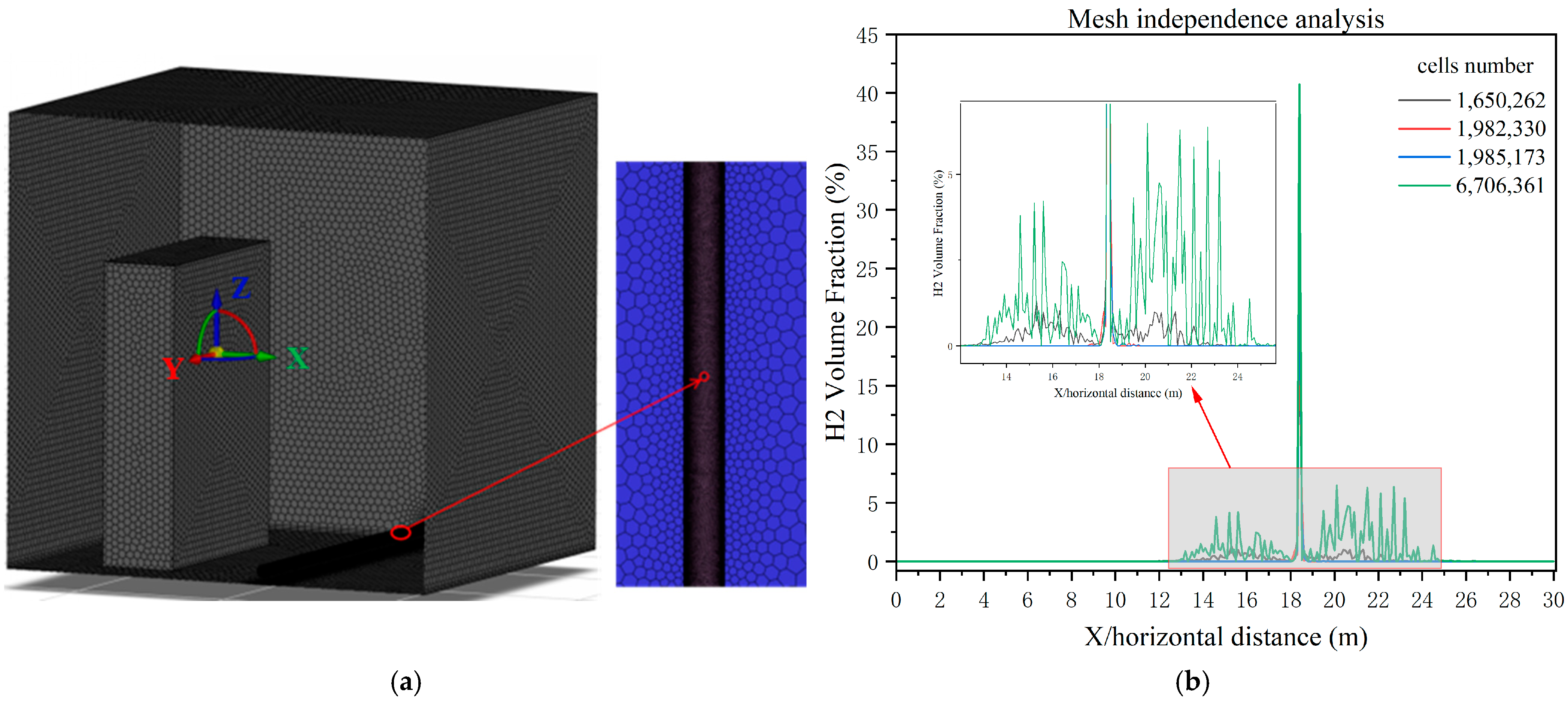
The computational domain was discretized using the mesh generation module in ANSYS 2022, with local mesh refinement applied near the pipeline and leakage orifice (Figure 2a). To ensure numerical accuracy and result independence, four grid schemes with varying resolutions were designed for Case 1, containing 1,650,262, 1,982,330, 1,985,173, and 6,706,361 elements, respectively. By monitoring the diffusion distance of hydrogen concentration in the X-direction at the leakage orifice after 50 s of continuous release (Figure 2b), it was observed that although all grids captured similar trends in hydrogen distribution, noticeable deviations in volume fraction gradients appeared in the grids with 1,650,262 and 6,706,361 elements. Further comparison revealed that the mesh with 1,982,330 elements delivered predictive accuracy comparable to the denser 1,985,173 element mesh while exhibiting better computational stability. Therefore, this grid configuration was adopted in all subsequent simulations, as it achieved an optimal balance between accuracy (minimum cell volume of 1.138085 × 10⁻⁷ m3) and efficiency (growth rate of 1.2).
All numerical simulations were performed using the ANSYS Fluent platform with the following settings:
Solver Type: Pressure-based transient solver
Pressure-Velocity Coupling: PISO scheme
Spatial Discretization: Second-order upwind scheme for momentum and species transport
Multiphase Model: Volume of Fluid (VOF) method for simulating hydrogen dispersion in air
Turbulence Model: Standard k–ε model with scalable wall functions
Gravity: Enabled to account for buoyancy effects due to the low density of hydrogen (0.08988 kg/m3 under standard conditions)
Time Step Size: Set to 0.1 s to adequately capture hydrogen concentration variations while accommodating computational performance constraints.
The mass flow rate through the leak orifice was not prescribed but was dynamically computed by the solver based on the pressure difference between the pipeline interior and the ambient environment, ensuring a physically consistent source term for the dispersion simulation.

2.6. Scenarios

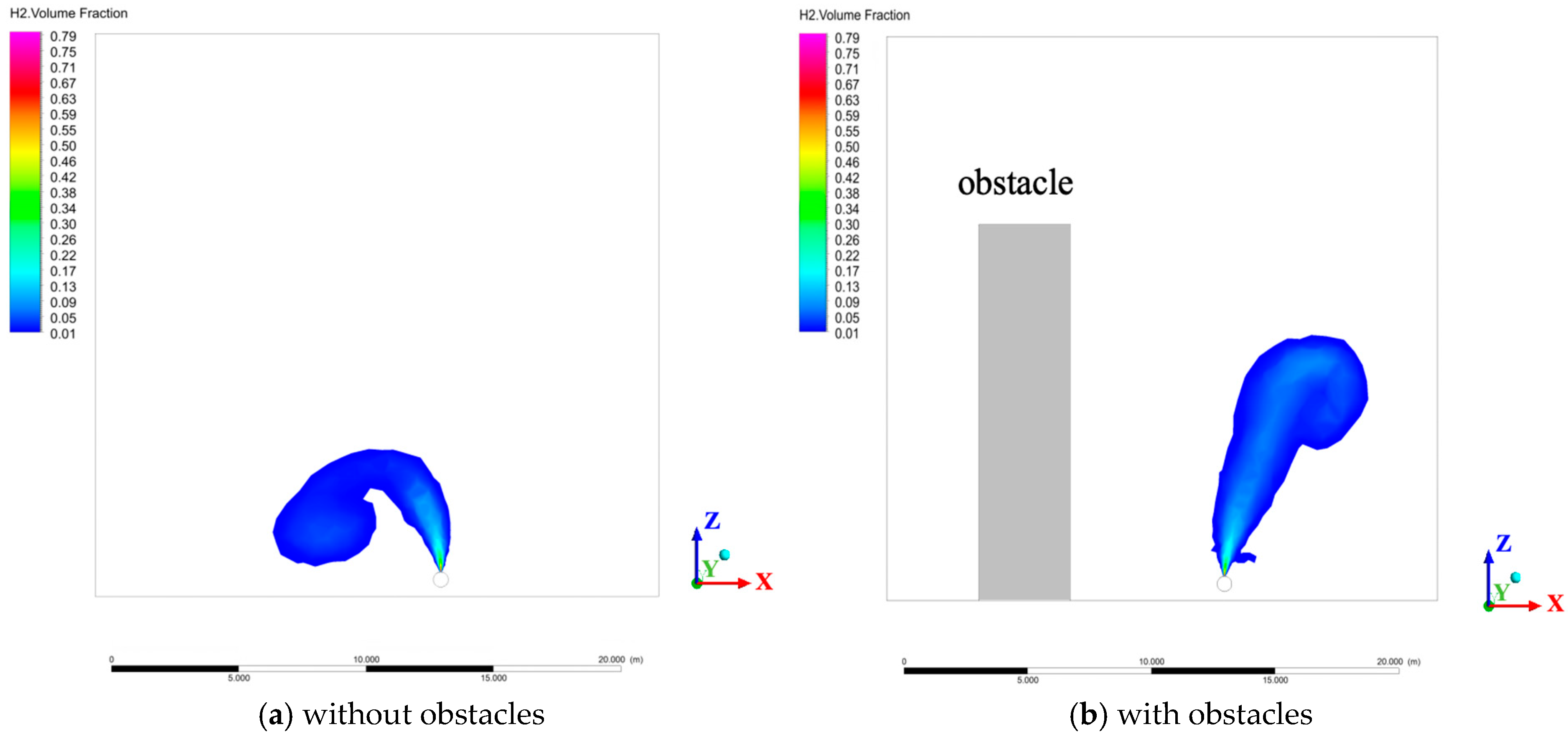
Based on the explosive limits of hydrogen (4–75.6%vol.), the lower explosion limit (LEL) of 4% is used as the evaluation threshold for defining hazardous regions. In analyzing simulation results, only the dispersion radius where hydrogen concentration exceeds 4% is considered. Figure 3 illustrates 2D hydrogen concentration contours on the XZ cross-section at the leakage orifice, comparing scenarios with and without obstacle interference under a wind speed of 4 m/s, pipeline pressure of 10 MPa, and leakage diameter of 20 mm. Among them, the white circle represents the cross-section of the pipeline, the gray square represents the XZ section of the obstacle. The presence of obstacles clearly reduces both the downwind diffusion speed and distance of hydrogen.
To systematically analyze the dispersion behavior after hydrogen leakage, numerical simulations were conducted for various influencing factors. Based on typical meteorological conditions at the station, wind speeds of 4 m/s, 6 m/s and 8 m/s were considered. Key parameters analyzed include wind speed, leakage diameter, obstacle height, distance between leakage point and obstacle, and pipeline operating pressure. The specific scenario parameters are listed in Table 1, with Case 1 defined as the reference scenario.

3. Hydrogen Leakage Dispersion Patterns

3.1. Effect of Wind Speed

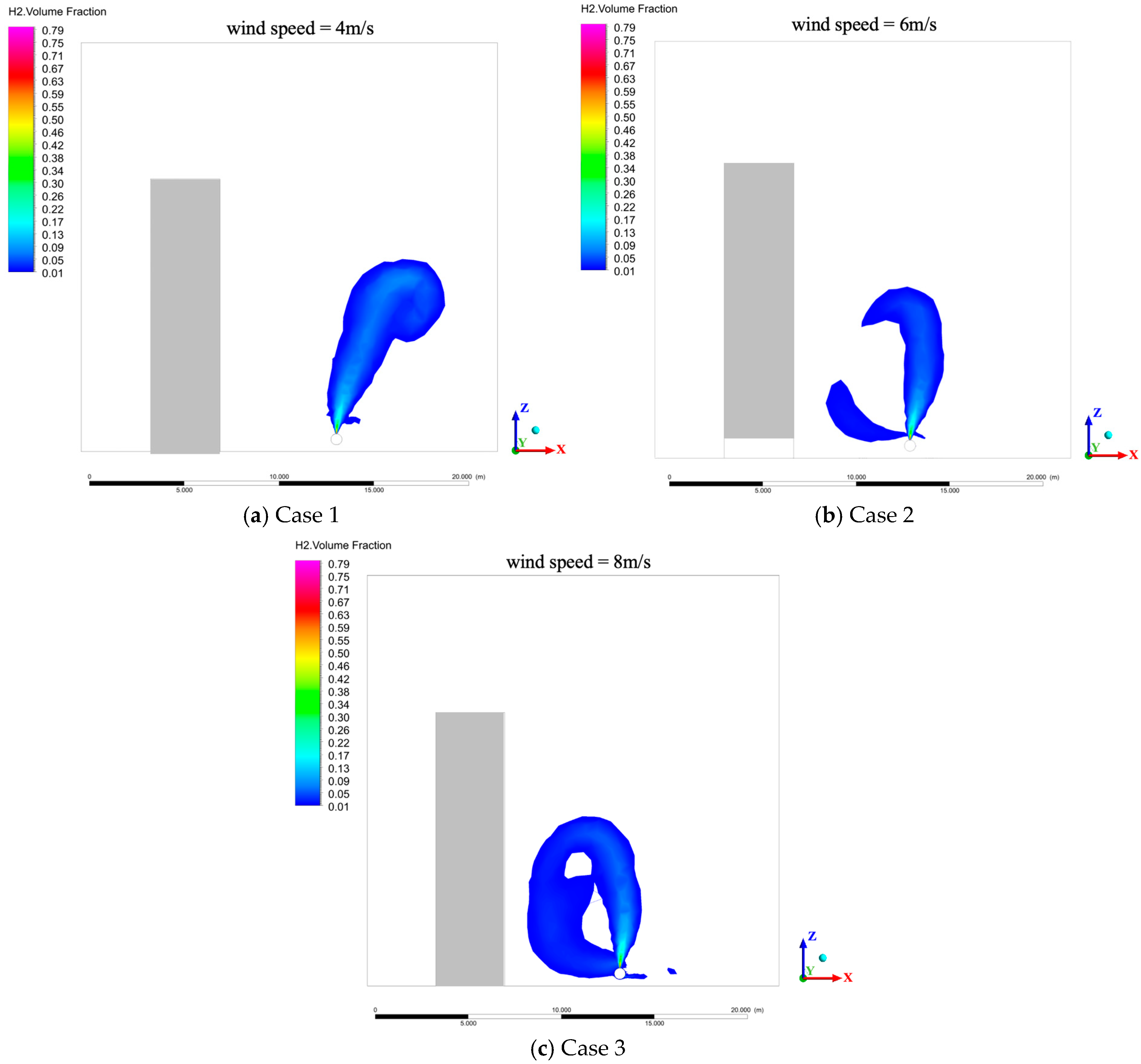
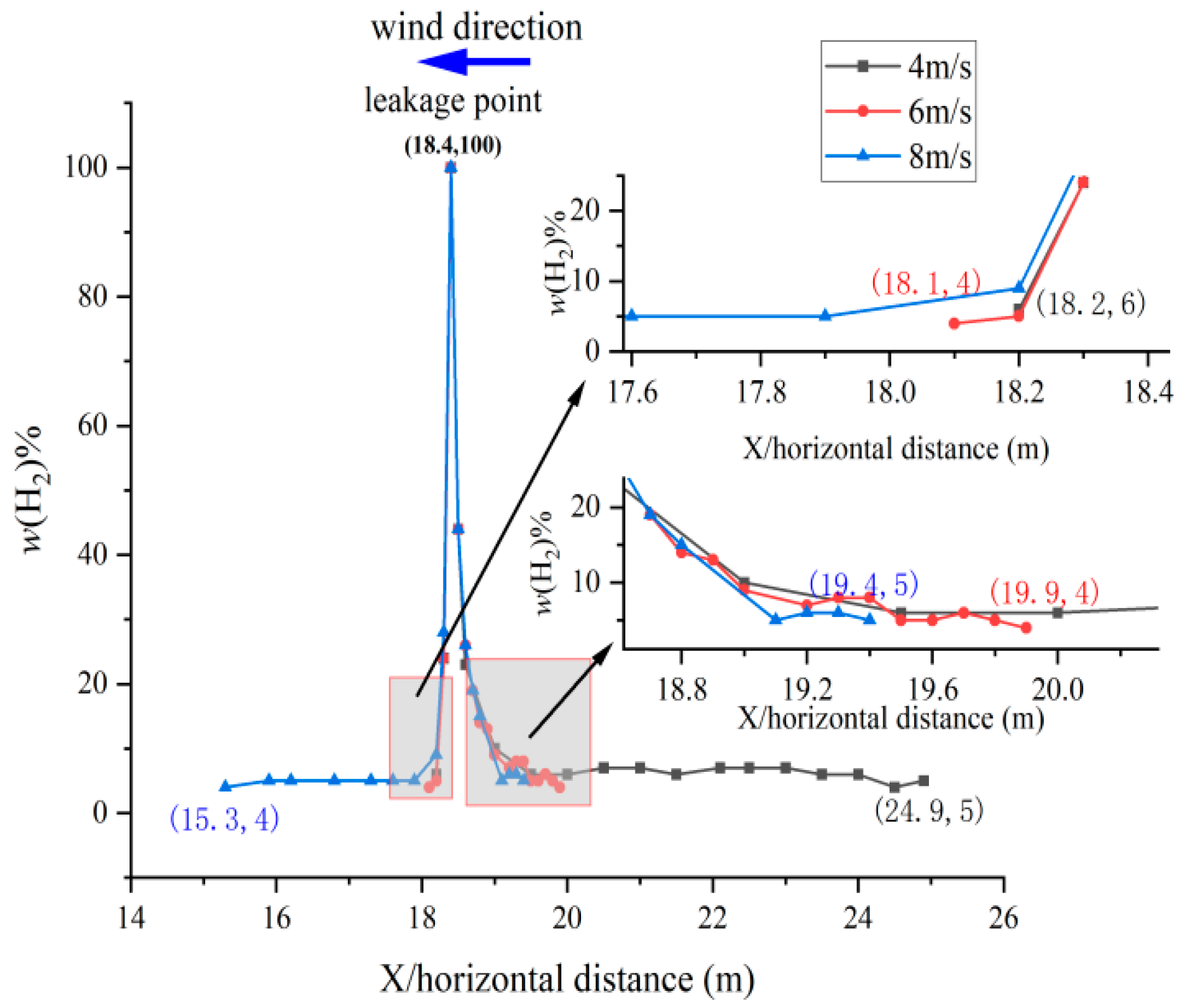
Figure 4 presents the 2D hydrogen concentration contours on the XZ cross-section at the leakage orifice after 100 s of continuous leakage under different wind speeds (Case 1 to 3). Given that hydrogen is less dense than air, wind uplift significantly influences its dispersion range. As wind speed increases from 4 m/s to 8 m/s, the downwind dispersion distance from the leakage point increases, whereas the upwind dispersion distance decreases. Furthermore, lower wind speeds exert a more pronounced effect on the lateral spread of hydrogen, as illustrated in Figure 5.

3.2. Effect of Leakage Orifice Diameter

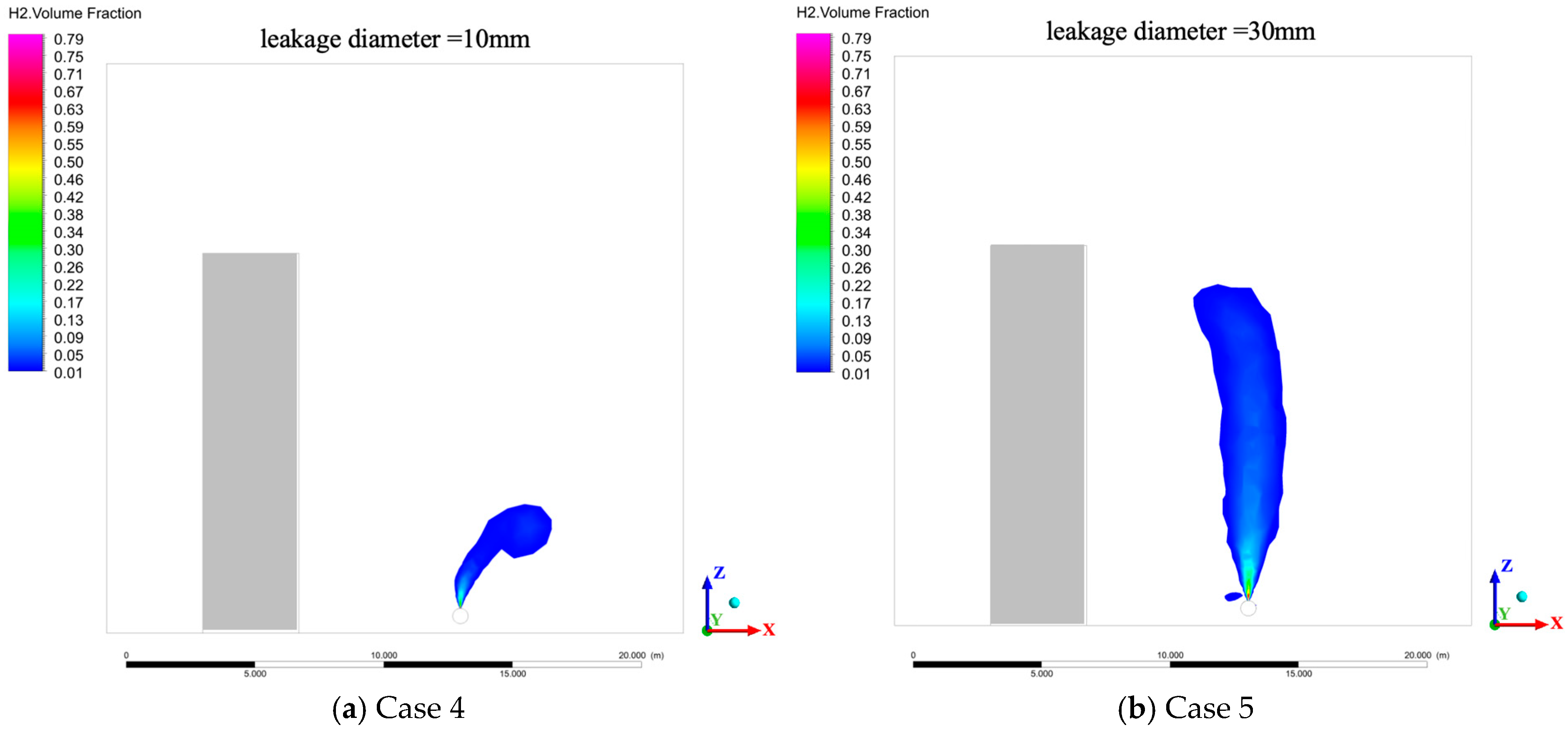
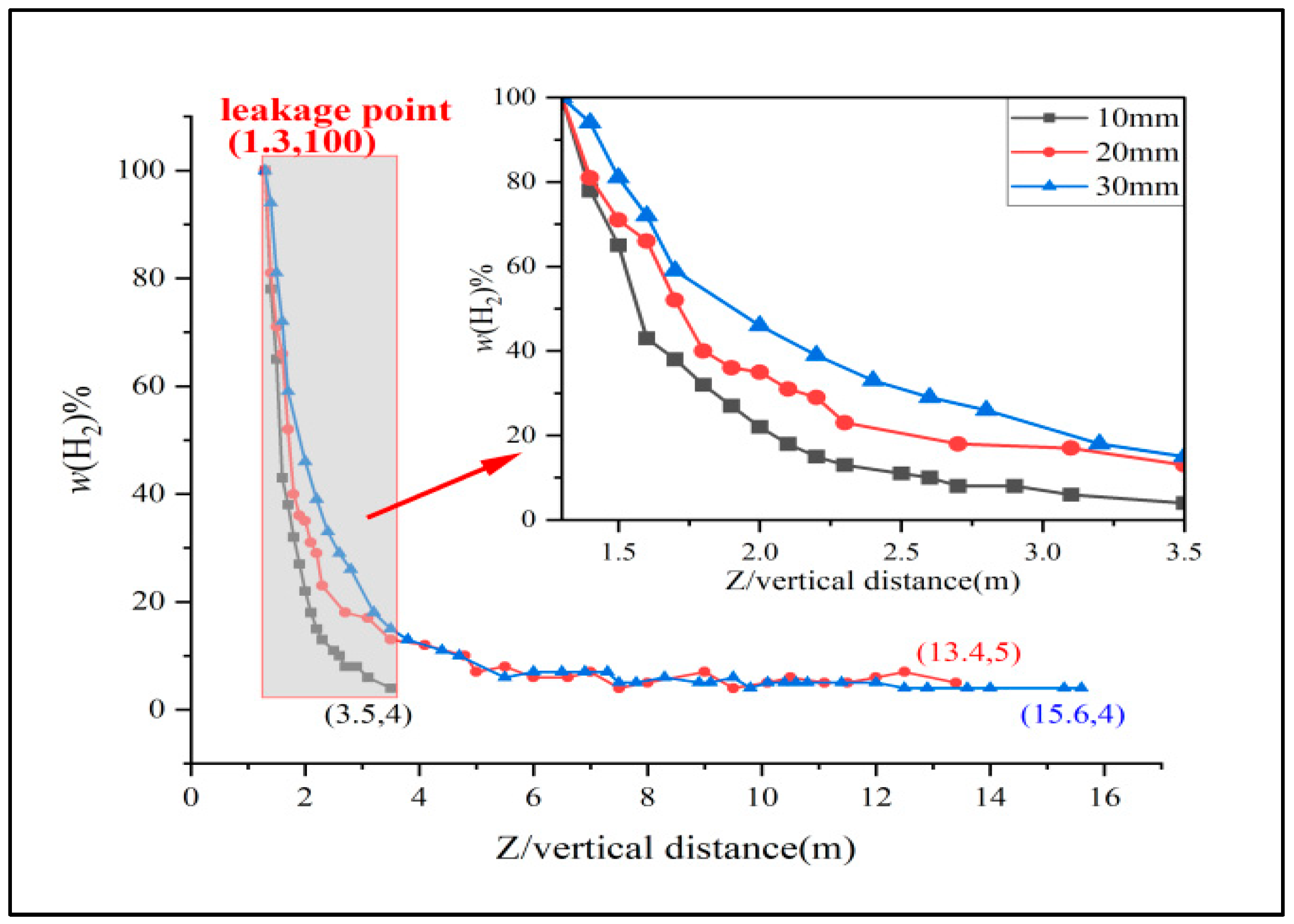
Figure 6 shows the 2D hydrogen concentration contours after 100 s for different leakage orifice diameters (Cases 4 and 5). Variations in the initial kinetic energy of the leaking jet lead to distinct dispersion behaviors. As shown in Figure 7, a larger orifice diameter results in a more pronounced vertical dispersion trend. Under the influence of obstacles, both the hydrogen concentration in the near-ground accumulation zone and the jet region increase with orifice size. From the leakage point up to 3.5 m above, hydrogen concentration and dispersion breadth also increase with orifice diameter. In the presence of an ignition source, the hazardous area expands considerably.

3.3. Effect of Obstacle Height

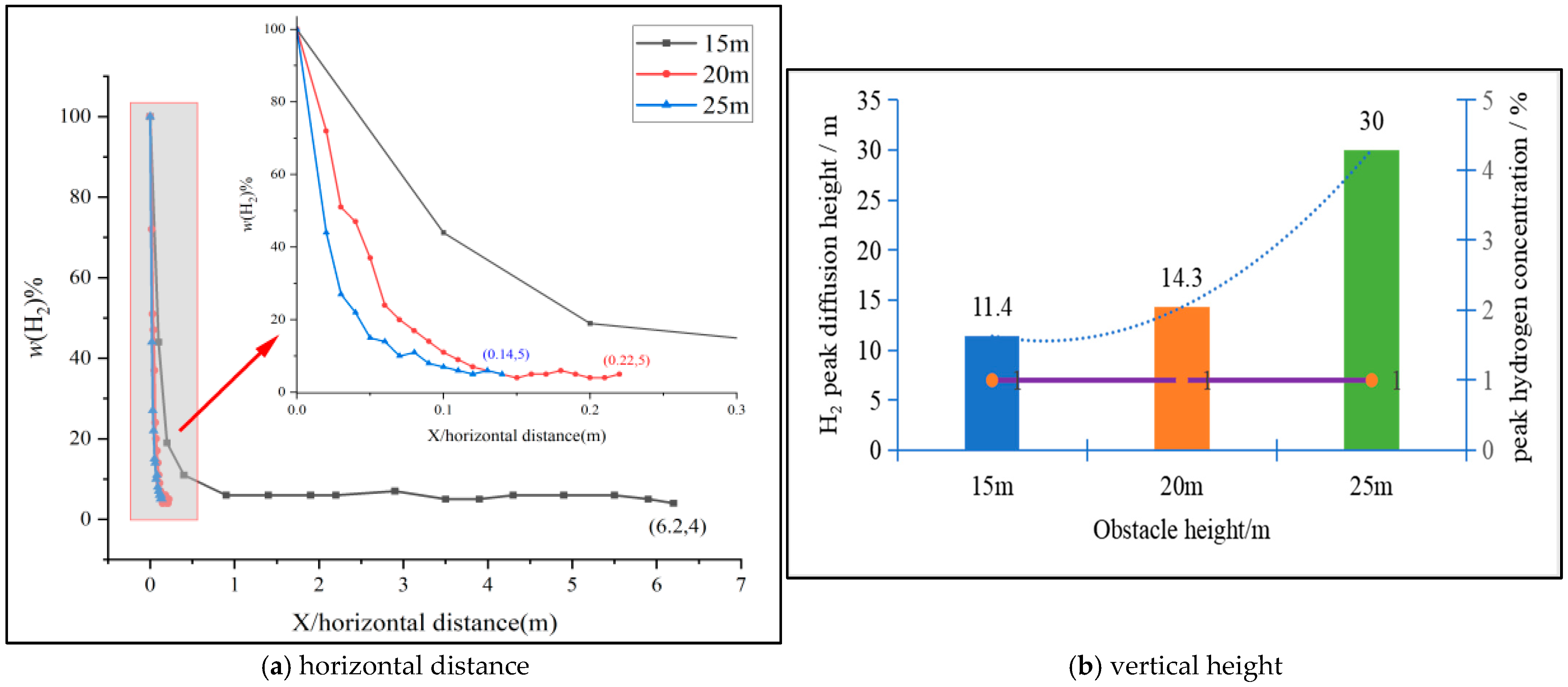
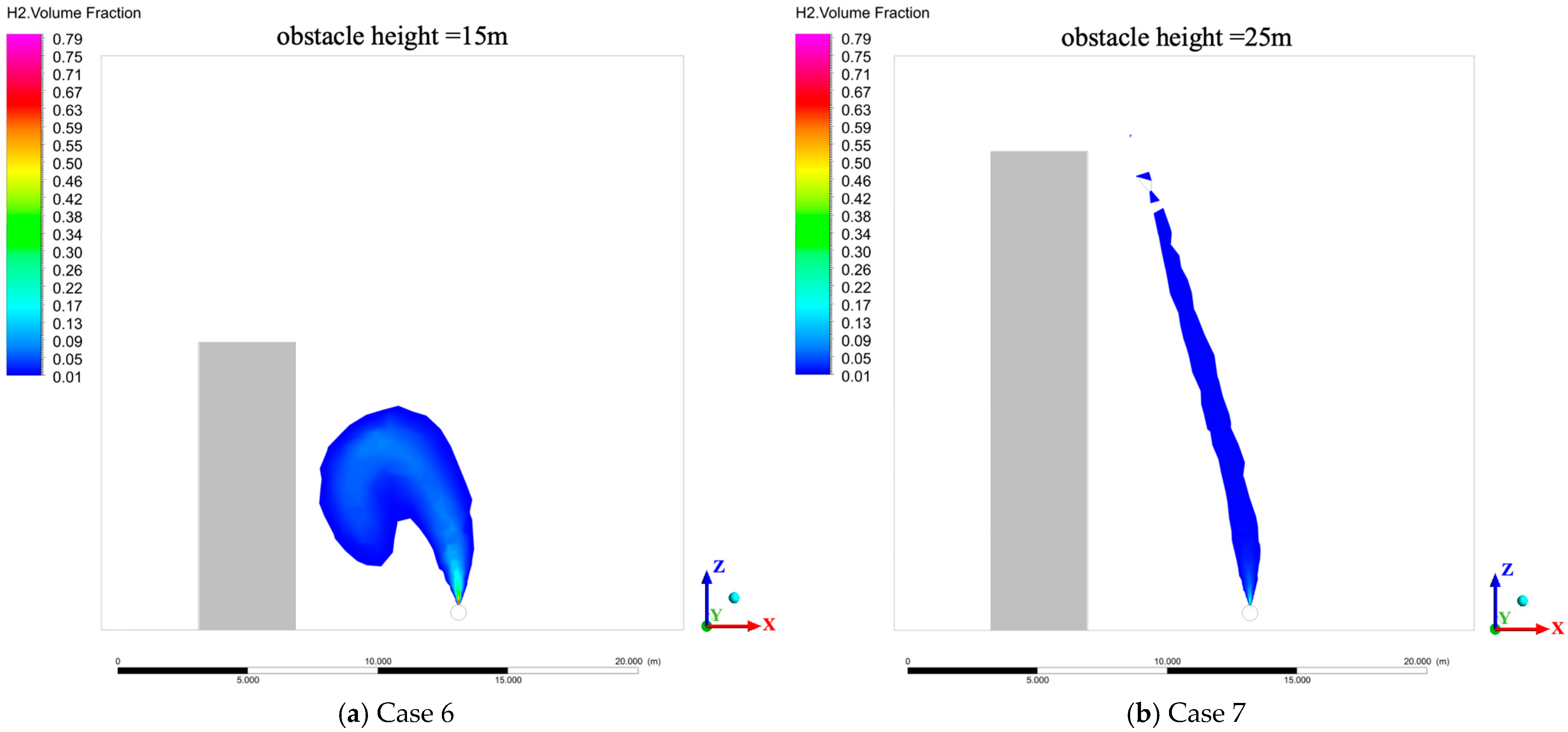
Figure 8 displays the 2D hydrogen concentration contours after 100 s for different obstacle heights (Cases 6 and 7). When a hydrogen leak occurs, the rising plume interacts with the obstacle, forming a more distinct jet region at the top as obstacle height increases, while the initial kinetic energy gradually attenuates. The obstacle suppresses hydrogen dispersion, creating a marked concentration gradient across its surfaces. For a given hydrogen concentration, the peak vertical dispersion height increases with obstacle height (Figure 9). Concurrently, the horizontal dispersion range is significantly reduced, thereby mitigating potential hazard severity.

3.4. Effect of Leakage Source-Obstacle Spacing

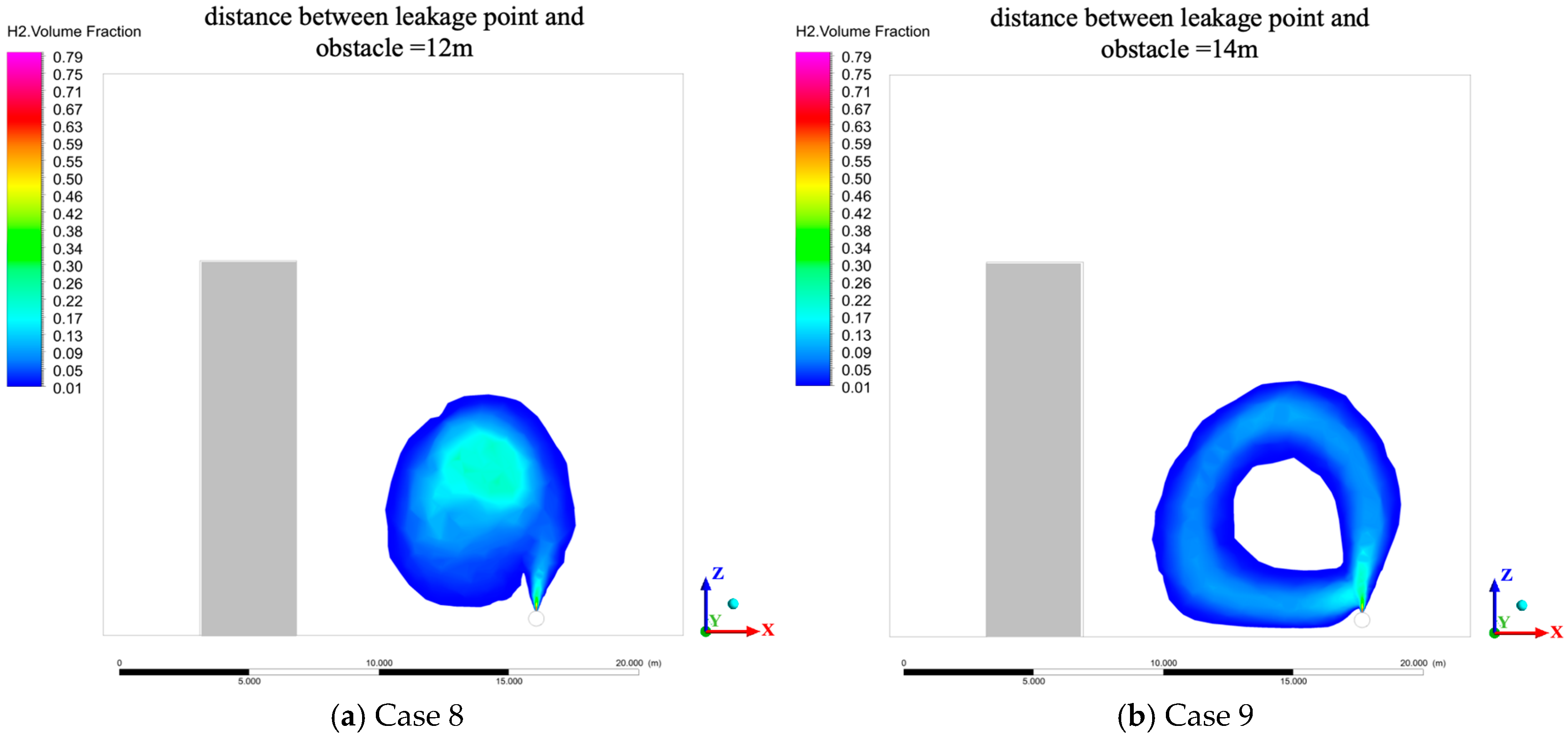
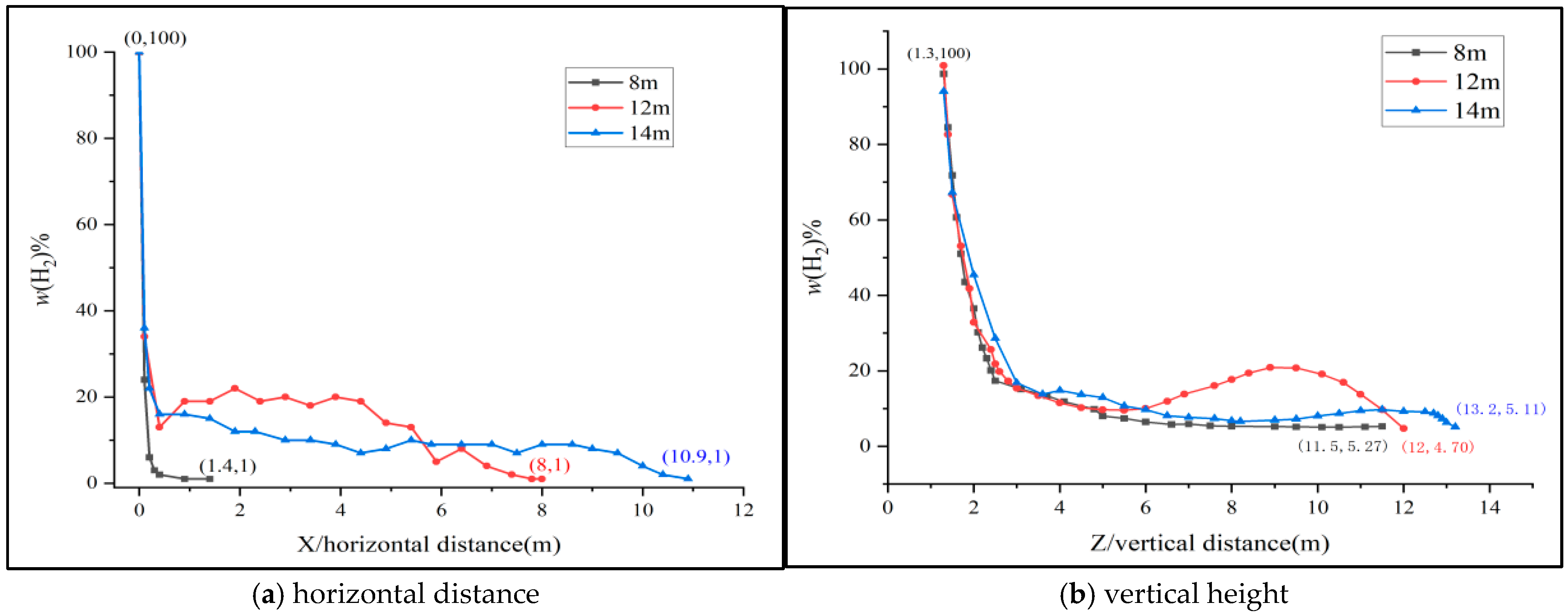
Figure 10 illustrates the 2D hydrogen concentration contours after 100 s for different distances between the leakage point and the obstacle (Cases 8 and 9). At a spacing of 8 m (Case 1), hydrogen impinges on the obstacle, leading to accumulation and vortex formation. At 12 m (Case 8), the vortex region enlarges noticeably. At 14 m (Case 9), energy dissipation and spatial dilution reduce the intensity of vortex activity and hydrogen accumulation. These findings highlight the importance of maintaining a safe separation between pipelines and nearby structures in station layout design, ensuring that localized concentrations remain below the explosive limit. Figure 11 shows the horizontal and vertical dispersion distances under different obstacle spacings. As the distance increases, both horizontal and vertical dispersion extents expand, enlarging the overall hazardous area.

3.5. Effect of Pipeline Operating Pressure

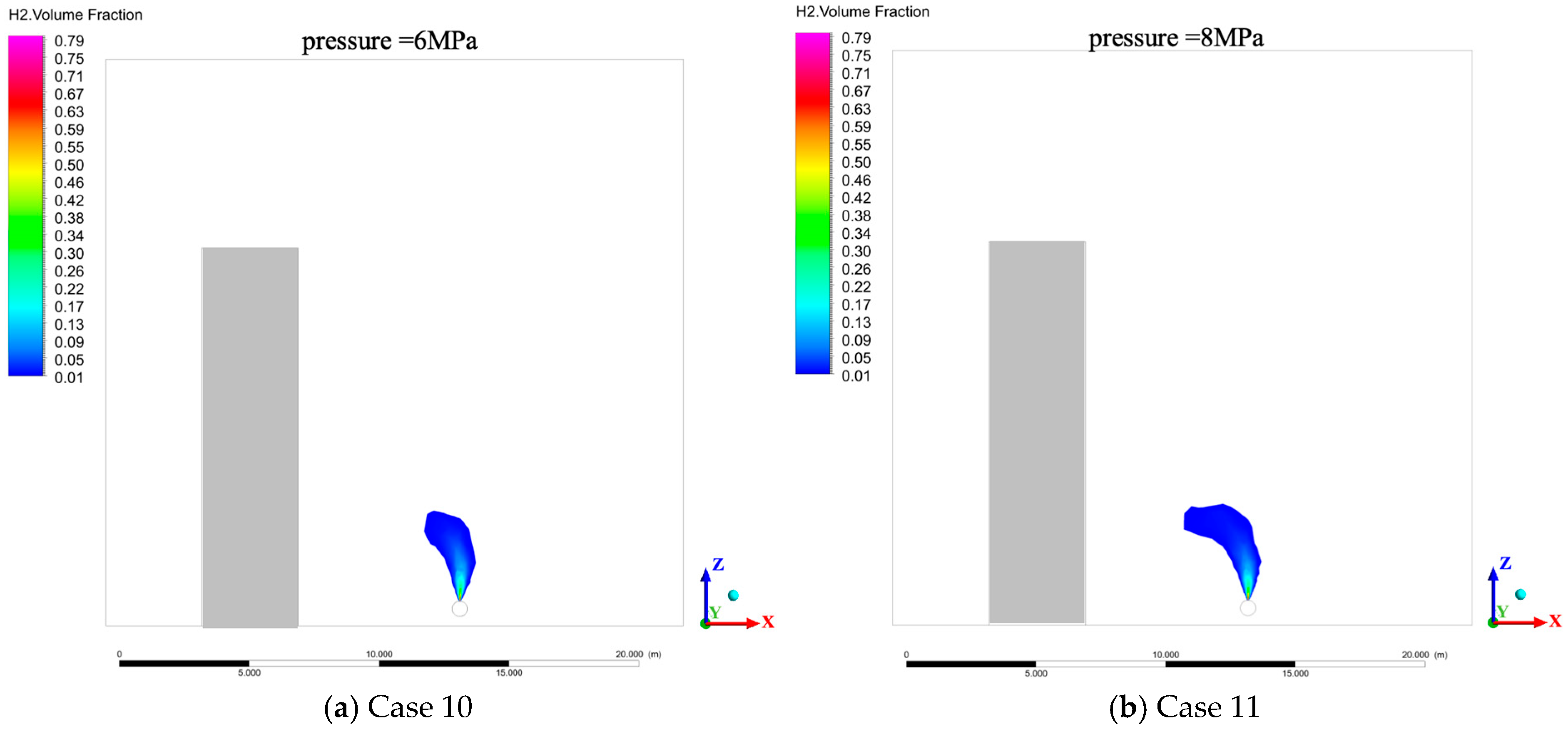
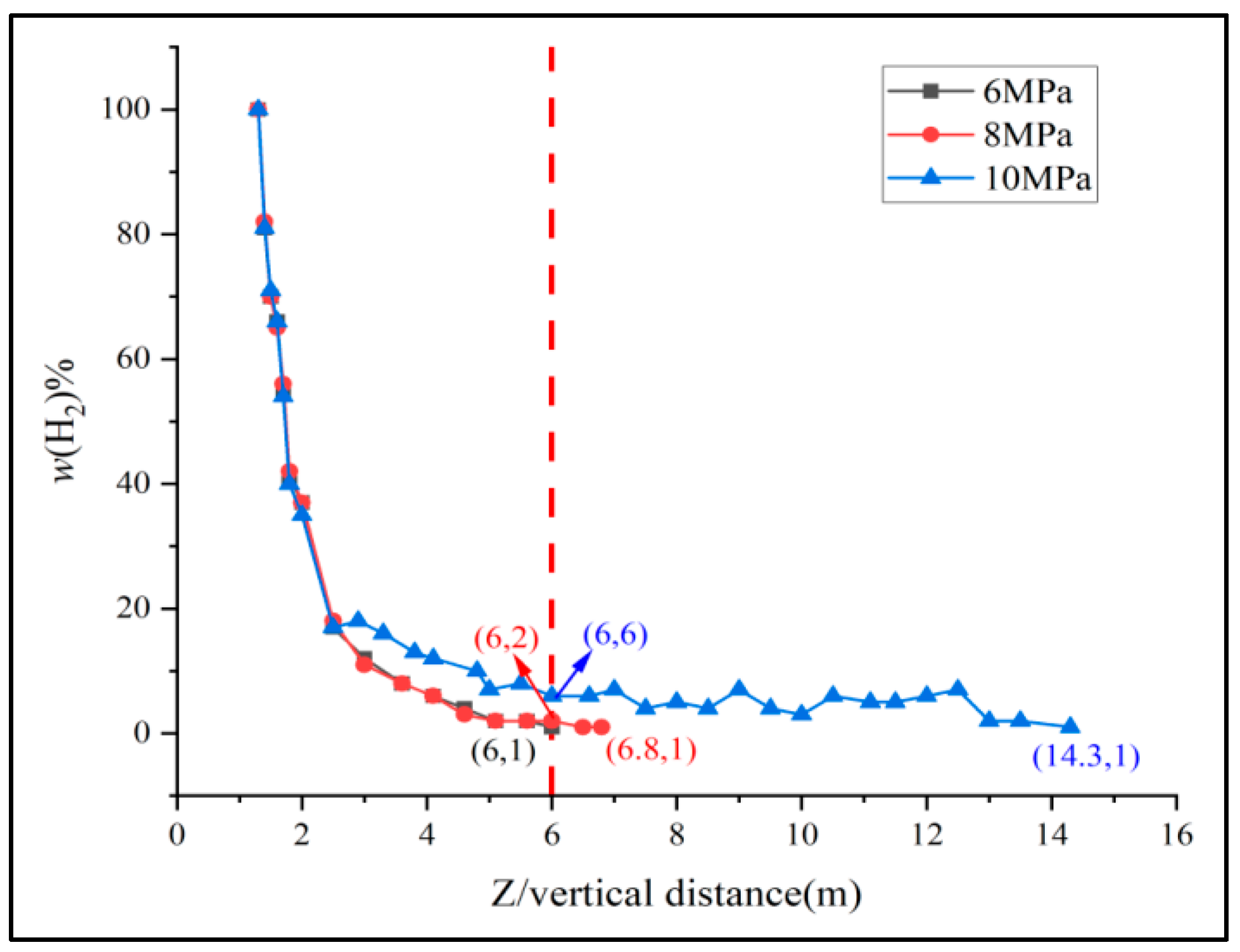
Figure 12 presents the 2D hydrogen concentration contours after 100 s under different pipeline operating pressures (Cases 10 and 11). Higher operating pressures result in a broader hydrogen dispersion range and elevated concentration levels (Figure 13). Increased pressure enhances the initial kinetic energy of the leaking hydrogen, accelerating its dispersion rate. Among them, the dotted line represents the distribution of hydrogen concentration in the vertical direction under different pressures.

3.6. Hazard Radius Prediction

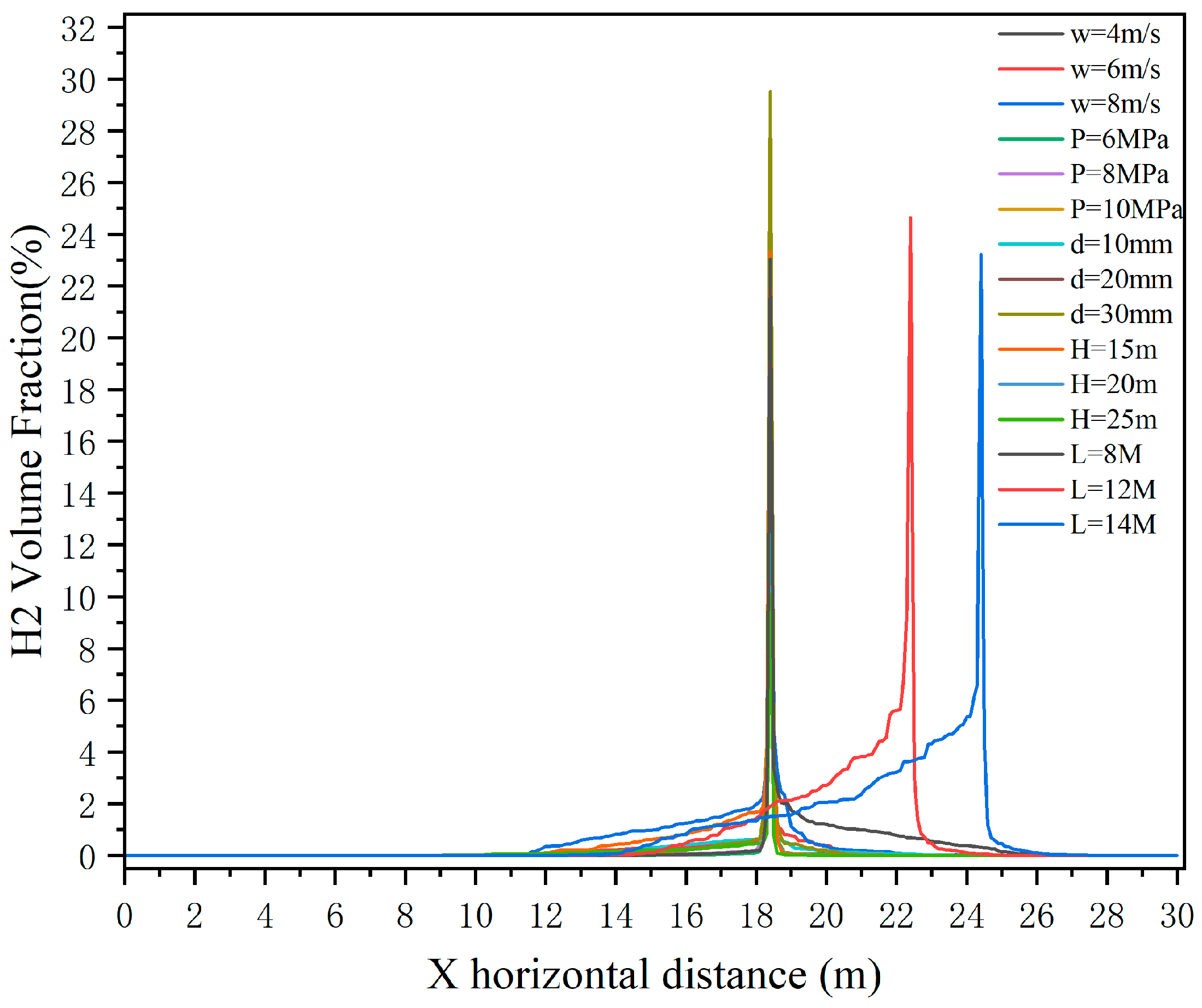
Leakage from a hydrogen pipeline within a station can lead to the accumulation of a flammable hydrogen—driven by human activity and air movement—may reach the flammable range (4–76%vol.), posing fire and explosion risks. In this study, the hazard radius is defined according to the approach of Wang et al. [27] as the average distance from the leakage source to the contour corresponding to the lower flammability limit (LFL, 4%vol.). Figure 14 illustrates the horizontal distance to the LFL contour after 50 s of leakage for the 11 simulated scenarios.
To quantify the influence of key factors on hydrogen dispersion, a predictive model based on multivariate nonlinear regression theory is developed, with the hazard radius R as the dependent variable. The initially considered independent variables include wind speed w, leakage orifice d, pipeline operating pressure P, distance from the leakage source to the obstacle L, and obstacle height H. In addition, leakage duration t is identified as a crucial time-dependent variable.

3.6.1. Model Form

Based on the physical characteristics of hydrogen jet dispersion, a power-law relationship is assumed between the variables, leading to the general model form in Equation (6):
R = k w a d b P c L d H e f ( t )
where k is a constant, and a, b, c, d, e are exponents to be determined. Using linear regression tools, the equation is linearized by taking the natural logarithm of both sides, resulting in Equation (7):
ln ( R ) = ln ( k ) + a ln ( w ) + b ln ( d ) + c ln ( P ) + d ln ( L ) + e ln ( H ) + ln ( f ( t ) )

3.6.2. Model Development Based on Statistical Significance

Simulation data for all parameters (w, d, P, L, H, t) were input into Minitab22 software, and a multiple nonlinear regression was performed using the least squares method. The significance level (p-value) of each variable was calculated, with p < 0.05 serving as the criterion for determining whether a variable contributes significantly to the model.
The fitting results showed that after introducing obstacle-related parameters, the p-values of variables w, d and P were all substantially greater than 0.05, indicating that they do not provide statistically significant explanatory power for variations in the hazard radius R. It is hypothesized that the presence of obstacles fundamentally alters the structure of the leakage flow field. The physical blockage and turbulence induced by obstacles become the dominant mechanisms governing the evolution of the hazard radius, thereby overshadowing or diminishing the direct influence of other parameters. Consequently, a backward elimination procedure—a standard model simplification process—was applied, sequentially removing the non-significant variables with the highest p-values. This resulted in a final hazard radius prediction model that includes only leakage duration t, obstacle spacing L, and obstacle height H. This simplified model exhibits improved robustness and practical engineering applicability. The final model is presented below:
R = 54.18 + 0.038 t 0.92 L 4.63 H + 0.067 L 2 + 0.104 H 2 0.0016 t H , t > 0 0 , t = 0
where R is the hazardous radius, m; t is the leakage duration, s; L is the distance between obstacles and leakage point/pipelines, m; and H is the obstacle height, m. The average calculation error under selected conditions is less than 5%, with a determination coefficient R 2 = 98.48 % , indicating good model fitting.
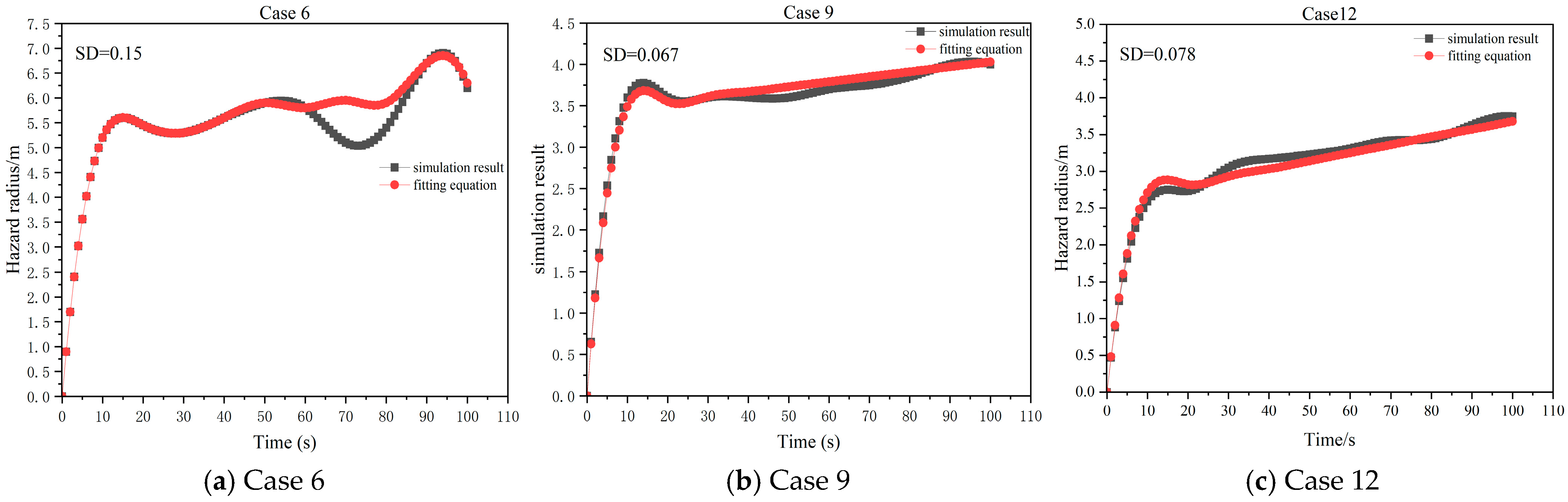
To validate the applicability of Equation (8), a new set of operating conditions (Table 2) was randomly generated based on the influencing parameters listed in Table 1, using the same numerical analysis method as in Case 1. The numerical results were then compared with the predicted simulation outcomes. Additionally, two cases—Case 6 and Case 9—were randomly selected to further assess the accuracy of the predictive model. The results indicate a strong agreement between the predicted and numerically analyzed values of the hazard radius across different leakage durations (Figure 15).
Key conclusions include:
Obstacle blocking effect: The obstacles within the station significantly alter the flow structure and turbulent transport process, creating a pronounced physical blockage to the dispersion of the hydrogen cloud. This effect is identified as a critical engineering factor in controlling the hazard radius.
Identification of dominant parameters: Obstacle height and its relative distance to the leakage source are confirmed as the two controlling variables influencing the evolution of the hazard radius. Their interaction governs the spatial distribution pattern and dispersion path of the flammable cloud.

4. Conclusions

This study systematically investigated the dispersion behavior of hydrogen leakage in above-ground high-pressure pipeline stations through numerical simulation, with a particular focus on the controlling role of obstacle configurations. The main conclusions are summarized as follows:
(1)
Obstacle-Dominated Dispersion Mechanisms: The presence and structural parameters of obstacles (height H and leakage-obstacle distance L) are identified as the dominant factors governing the evolution of the hazard radius, overshadowing the direct influences of wind speed, leakage diameter, and operating pressure in scenarios with complex station layouts. Obstacles fundamentally reshape the leakage flow field by inducing physical blockage, guiding vertical deflection, and enhancing turbulent mixing, which collectively control the flammable cloud’s dispersion path and accumulation pattern.
(2)
Development of a Novel Predictive Model: Moving beyond traditional empirical correlations that rely on source and environmental parameters, this research innovatively established a simplified yet highly accurate hazard radius prediction model based on multivariate nonlinear regression. Its high accuracy, validated against independent scenarios, demonstrates robust predictive capability and superior engineering applicability.
(3)
Quantification of Parametric Influences: The effects of key operating and environmental factors were quantitatively elucidated. Increases in wind speed and pipeline pressure were found to enhance the initial jet momentum, leading to extended downwind dispersion distances and higher local concentrations. Conversely, larger leakage orifice diameters promoted vertical diffusion and increased the volume of the near-field flammable cloud. A critical finding is that a larger leakage-obstacle distance, while reducing immediate concentration buildup, ultimately results in a broader hazardous area due to reduced flow obstruction.
(4)
Guidance for Establishing Safety Distances: The simulation results demonstrate significant practical value for engineering safety design. The maximum hazardous horizontal dispersion distance (to the 4%vol. hydrogen concentration contour) observed across all simulated scenarios is 10.9 m. This empirically derived distance is notably smaller than the fire separation distances stipulated in the Chinese national standard GB 50516-2021 [28] Technical Code for Hydrogen Refueling Stations (e.g., 50 m from storage equipment to important public buildings, and 30–40 m from open flames). Crucially, this maximum predicted distance aligns with the code’s provision that safety distances may be reduced by half, but to no less than 8 m, when qualified physical protection walls are installed. This concordance confirms that the proposed model and findings provide a scientifically grounded and practical methodology for optimizing safety distances in hydrogen pipeline stations and refueling stations, enabling more efficient land use without compromising safety.
The primary scientific contribution of this work lies in shifting the paradigm for hazard radius prediction in obstructed environments—from a source-term-centric view to a geometry-flow-control perspective. The developed model provides a practical and scientifically grounded tool for the optimized layout of pipelines and safety barriers within hydrogen stations, contributing directly to the enhancement of safety design standards and emergency response planning for the emerging hydrogen economy. Future work will focus on experimental validation in a large-scale test facility and extending the model to account for more complex obstacle arrays and leakage orientations.

Author Contributions

Conceptualization, Y.W. and L.Z.; methodology, Y.W. and T.Z.; software, Y.W.; writing—original draft, Y.W.; review & editing, Y.W.; visualization, B.S.; investigation, B.S.; resources, B.S.; formal analysis, S.C.; supervision, S.C.; writing—review & editing, N.L.; funding acquisition, L.Z. All authors have read and agreed to the published version of the manuscript.

Funding

The authors are grateful to China National Petroleum Corporation (CNPC) for financial support for this work. Award number: 2023ZZ1206.

Data Availability Statement

The data involves privacy. If you need to provide it, please contact the corresponding author via email.

Conflicts of Interest

Author Tao Zhao was employed by the company No. 4 Oil Production Plant of Changqing Oilfield Company. The remaining authors declare that the research was conducted in the absence of any commercial or financial relationships that could be construed as a potential conflict of interest.

References

  1. Lebrouhi, B.E.; Djoupo, J.J.; Lamrani, B.; Benabdelaziz, K.; Kousksou, T. Global hydrogen development—A technological and geopolitical overview. Int. J. Hydrogen Energy 2022, 47, 7016–7048. [Google Scholar] [CrossRef]
  2. Shen, X.B.; Xiu, G.L.; Wu, S.Z. Experimental study on the explosion characteristics of methane/air mixtures with hydrogen addition. Appl. Therm. Eng. 2017, 120, 741–747. [Google Scholar] [CrossRef]
  3. Apostolou, D.; Xydis, G. A literature review on hydrogen refuelling stations and infrastructure. Current status and future prospects. Renew. Sustain. Energy Rev. 2019, 113, 109292. [Google Scholar] [CrossRef]
  4. Lei, P.; Wang, C.X.; Han, M.X.; Xu, Z. A study on the characteristics of the deflagration of hydrogen-air mixture under the effect of a mesh aluminum alloy. J. Hazard. Mater. 2015, 299, 174–180. [Google Scholar] [CrossRef] [PubMed]
  5. Shen, X.B.; Wang, Q.S.; Xiao, H.H.; Sun, J. Experimental study on the characteristics stages of premixed hydrogen-air flame propagation in a horizontal rectangular closed duct. Int. J. Hydrogen Energy 2012, 37, 12028–12038. [Google Scholar] [CrossRef]
  6. Makoto, H.; Hiroki, S.; Naoya, K.; Otaki, T. Comparative risk study of hydrogen and gasoline dispensers for vehicles. Int. J. Hydrogen Energy 2018, 43, 12584–12594. [Google Scholar] [CrossRef]
  7. Cui, W.Y.; Yuan, Y.P.; Liang, T.; Shen, B. Numerical simulation of hydrogen leakage diffusion in seaport hydrogen refueling station. Int. J. Hydrogen Energy 2023, 48, 24521–24535. [Google Scholar] [CrossRef]
  8. Tanaka, T.; Azuma, T.; Ecans, J.A.; Cronin, P.M.; Johnson, D.M.; Cleaver, R.P. Experimental study on hydrogen explosions in a full-scale hydrogen filling station model. Int. J. Hydrogen Energy 2007, 32, 2162–2170. [Google Scholar] [CrossRef]
  9. Skjold, T.; Siccama, D.; Hisken, H.; Brambilla, A.; Middha, P.; Groth, K.M.; LaFleur, A.C. 3D risk management for hydrogen installations. Int. J. Hydrogen Energy 2017, 42, 7721–7730. [Google Scholar] [CrossRef]
  10. Sun, R.F.; Liang, P.; Yu, H.S.; Dai, M.; Li, Y. Modeling the diffusion of flammable hydrogen cloud under different liquid hydrogen leakage conditions in a hydrogen refueling station. Int. J. Hydrogen Energy 2022, 47, 25849–25863. [Google Scholar] [CrossRef]
  11. Han, U.; Oh, J.; Lee, H. Safety investigation of hydrogen charging platform package with CFD simulation. Int. J. Hydrogen Energy 2018, 43, 13687–13699. [Google Scholar] [CrossRef]
  12. Kim, E.; Park, J.; Cho, J.; Moon, I. Simulation of hydrogen leak and explosion for the safety design of hydrogen fueling station in Korea. Int. J. Hydrogen Energy 2013, 38, 1737–1743. [Google Scholar] [CrossRef]
  13. Bu, F.X.; Chen, S.Q.; Liu, Y.; Guan, B.; Wang, X.; Shi, Z.; Hao, G. CFD analysis and calculation models establishment of leakage of natural gas pipeline considering real buried environment. Energy Rep. 2022, 8, 3789–3808. [Google Scholar] [CrossRef]
  14. Zhang, Y.K.; Yang, Y.L.; Wu, F.G.; Li, Q.; Wang, J.; Liu, H.; Che, D.; Huang, Z. Numerical investigation on pinhole leakage and diffusion characteristics of medium-pressure buried hydrogen pipeline. Int. J. Hydrogen Energy 2024, 51, 807–817. [Google Scholar] [CrossRef]
  15. Shao, X.Y.; Yang, S.Y.; Yuan, Y.L.; Jia, H.; Zheng, L.; Liang, C. Study on the difference of dispersion behavior between hydrogen and methane in utility tunnel. Int. J. Hydrogen Energy 2022, 47, 8130–8144. [Google Scholar] [CrossRef]
  16. Li, H.; Cao, X.W.; Du, H.M.; Teng, L.; Shao, Y.; Bian, J. Numerical simulation of leakage and diffusion distribution of natural gas and hydrogen mixtures in a closed container. Int. J. Hydrogen Energy 2022, 47, 35928–35939. [Google Scholar] [CrossRef]
  17. Zhu, J.L.; Pan, J.; Zhang, Y.X.; Li, Y.; Li, H.; Feng, H.; Chen, D.; Kou, Y.; Yang, R. Leakage and diffusion behavior of a buried pipeline of hydrogen-blended natural gas. Int. J. Hydrogen Energy 2023, 48, 11592–11610. [Google Scholar] [CrossRef]
  18. Cen, K.; Song, B.; Jiao, W.L.; Yu, W.; Liu, T.; Zhang, H.; Du, J. Quantitative risk assessment of gas leakage and explosion accidents and its security measures in open kitchens. Eng. Fail. Anal. 2021, 130, 105763. [Google Scholar] [CrossRef]
  19. Song, B.; Jiao, W.L.; Cen, K.; Tian, X.; Zhang, H.; Lu, W. Quantitative risk assessment of gas leakage and explosion accident consequences inside residential buildings. Eng. Fail. Anal. 2021, 122, 105257. [Google Scholar] [CrossRef]
  20. Michael, R.S.; Patrick, F.; Eric, S.G.; Swain, M.N. Hydrogen leakage into simple geometric enclosures. Int. J. Hydrogen Energy 2003, 28, 229–248. [Google Scholar] [CrossRef]
  21. Liang, Y.; Pan, X.M.; Zhang, C.M.; Xie, B.; Liu, S. The simulation and analysis of leakage and explosion at a renewable hydrogen refuelling station. Int. J. Hydrogen Energy 2019, 44, 22608–22619. [Google Scholar] [CrossRef]
  22. Qian, J.Y.; Li, X.J.; Gao, Z.X.; Jin, Z.-J. A numerical study of hydrogen leakage and diffusion in a hydrogen refueling station. Int. J. Hydrogen Energy 2020, 25, 14418–14439. [Google Scholar] [CrossRef]
  23. Chen, D.; Chen, T.; Liu, Z. Real-Time Global Optimal Energy Management Strategy for Connected PHEVs Based on Traffic Flow Information. In Proceedings of the 2024 World Congress on Internal Combustion Engines, Tianjin, China, 19–23 April 2024. [Google Scholar]
  24. Bu, F.; Liu, Y.; Wang, Z.; Xu, Z.; Chen, S.; Hao, G.; Guan, B. Analysis of natural gas leakage diffusion characteristics and prediction of invasion distance in utility tunnels. J. Nat. Gas Sci. Eng. 2021, 96, 104270. [Google Scholar] [CrossRef]
  25. Hu, W.C.; Yang, Q.S.; Zhang, J. LES study of turbulent boundary layers over three-dimensional hills. Eng. Mech. 2019, 36, 72–79. [Google Scholar]
  26. Xu, D. Numerical Simulation of Natural Gas Pipeline Leakage; An Hui University of Science and Technology: Huainan, China, 2019. [Google Scholar]
  27. Wang, Y.; Sun, B.; Zhang, L.; Li, G.; Li, J.; Li, P.; Liu, N.; Yang, J.; Chen, X. Study on the hydrogen leakage and diffusion behavior of long-distance high-pressure buried pure-hydrogen pipelines. Int. J. Hydrogen Energy 2025, 141, 212–228. [Google Scholar] [CrossRef]
  28. GB 50516-2021; Technical Code for Hydrogen Refueling Stations. Ministry of Housing and Urban-Rural Development of the People’s Republic of China & State Administration for Market Regulation: Beijing, China, 2021.
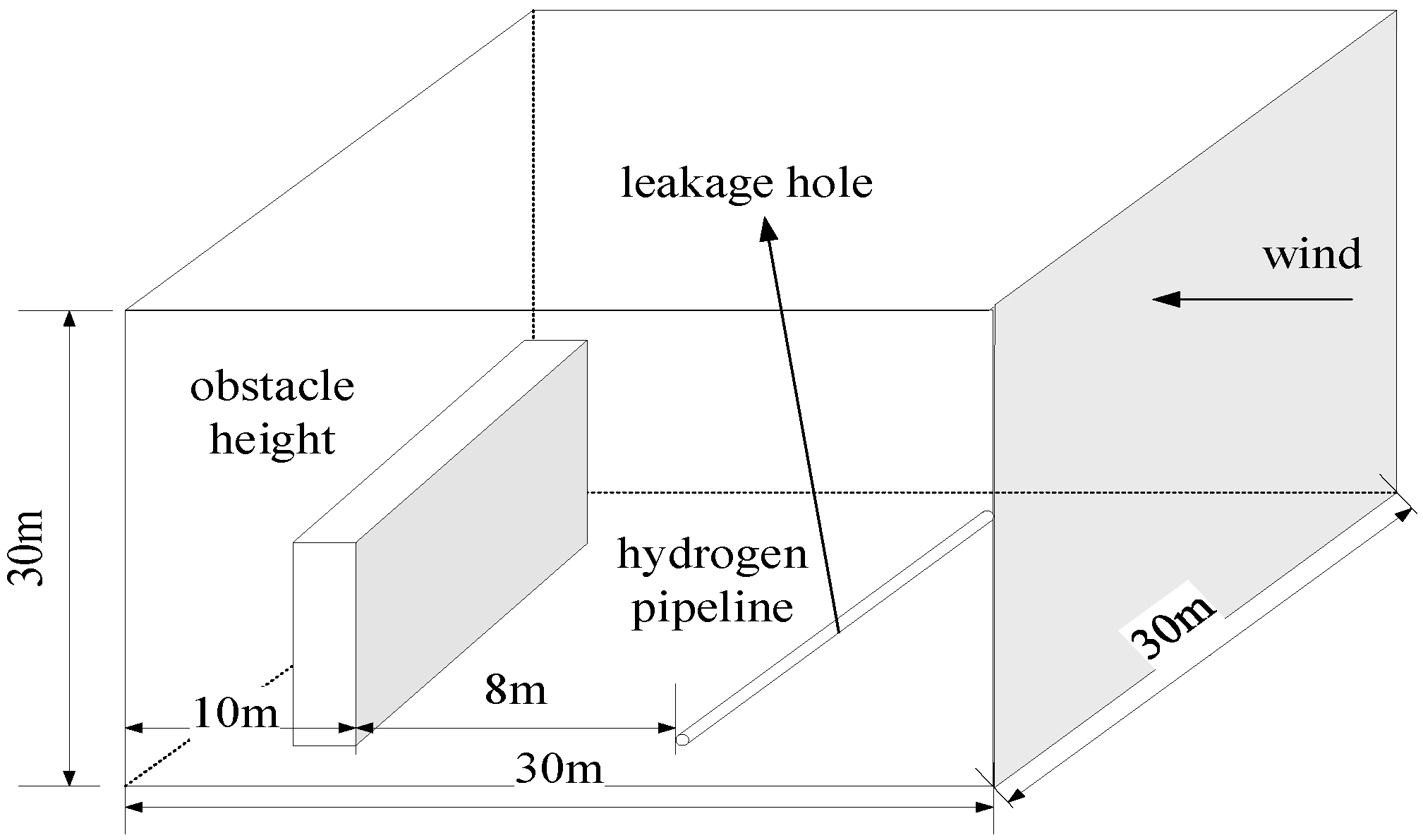
Figure 1. Schematic diagram of hydrogen leakage and diffusion.
Fire 08 00464 g001
Figure 2. Grid independence verification. (a) Local mesh detail. (b) Hydrogen concentration distribution along the X-direction after 50 s leakage (Case 1).
Fire 08 00464 g002
Figure 3. Hydrogen concentration contours on the horizontal plane.
Fire 08 00464 g003
Figure 4. Hydrogen concentration contours under different wind speeds.
Fire 08 00464 g004
Figure 5. Horizontal dispersion distance and concentration distribution under different wind speeds.
Fire 08 00464 g005
Figure 6. Hydrogen concentration contours for different leakage orifice diameters.
Fire 08 00464 g006
Figure 7. Vertical concentration distribution for different leakage orifice diameters.
Fire 08 00464 g007
Figure 8. Hydrogen concentration contours near obstacles of different heights.
Fire 08 00464 g008
Figure 9. (a) Horizontal dispersion distance and concentration; (b) Peak vertical dispersion height for different obstacle heights.
Fire 08 00464 g009
Figure 10. Hydrogen concentration contours for different leakage–obstacle distances.
Fire 08 00464 g010
Figure 11. Horizontal and vertical dispersion distances under different leakage–obstacle spacings.
Fire 08 00464 g011
Figure 12. Hydrogen concentration contours under different pipeline operating pressures.
Fire 08 00464 g012
Figure 13. Vertical dispersion concentration distribution under different pipeline operating pressures.
Fire 08 00464 g013
Figure 14. Hydrogen dispersion distance at t = 50 s.
Fire 08 00464 g014
Figure 15. Validation of the hazard radius prediction model.
Fire 08 00464 g015
Table 1. Scenario cases.
CaseWind Speed
(m/s)
Leak Diameter
(mm)
Obstacle Height
(m)
Leak-Obstacle Spacing
(m)
Operating Pressure
(MPa)
1 (Reference)42020810
262020810
382020810
441020810
543020810
642015810
742025810
8420201210
9420201410
104202088
114202086
Table 2. Parameters of validation case.
CaseWind Speed
(m/s)
Leak Diameter
(mm)
Obstacle Height
(m)
Leak-Obstacle Spacing
(m)
Operating Pressure
(MPa)
1242017510
Disclaimer/Publisher’s Note: The statements, opinions and data contained in all publications are solely those of the individual author(s) and contributor(s) and not of MDPI and/or the editor(s). MDPI and/or the editor(s) disclaim responsibility for any injury to people or property resulting from any ideas, methods, instructions or products referred to in the content.