Article

Simulation of Fire Occurrence Based on Historical Data in Future Climate Scenarios and Its Practical Verification

1
National Forestry and Grassland Fire Monitoring, Early Warning and Prevention Engineering Technology Research Center, Ecology and Nature Conservation Institute, Chinese Academy of Forestry, Beijing 100091, China
2
School of Ecology and Nature Conservation, Beijing Forestry University, Beijing 100083, China
*
Author to whom correspondence should be addressed.
Fire 2024, 7(10), 346; https://doi.org/10.3390/fire7100346
Submission received: 2 August 2024 / Revised: 25 September 2024 / Accepted: 26 September 2024 / Published: 28 September 2024
(This article belongs to the Special Issue Forest Fuel Treatment and Fire Risk Assessment)

Abstract

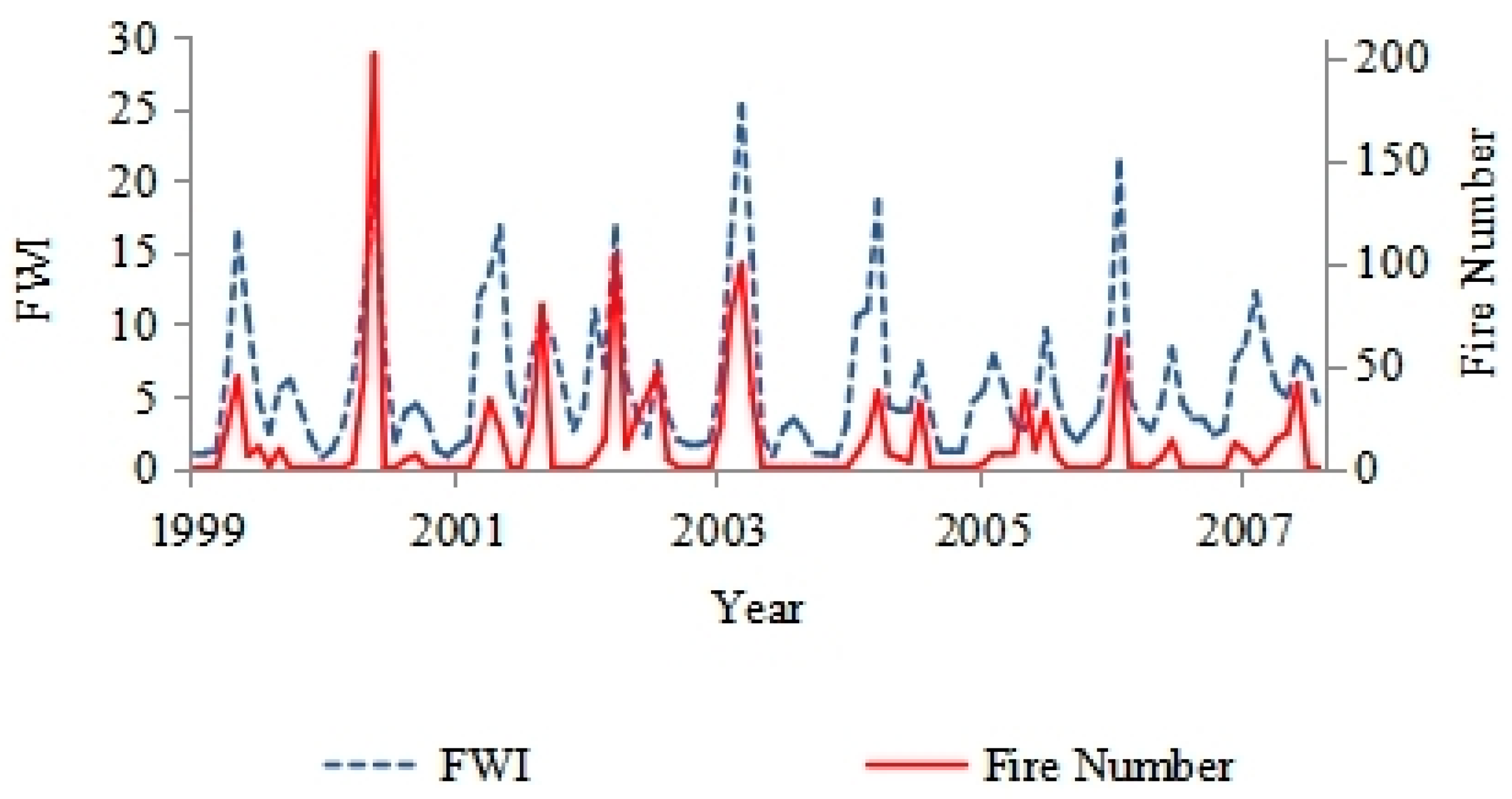
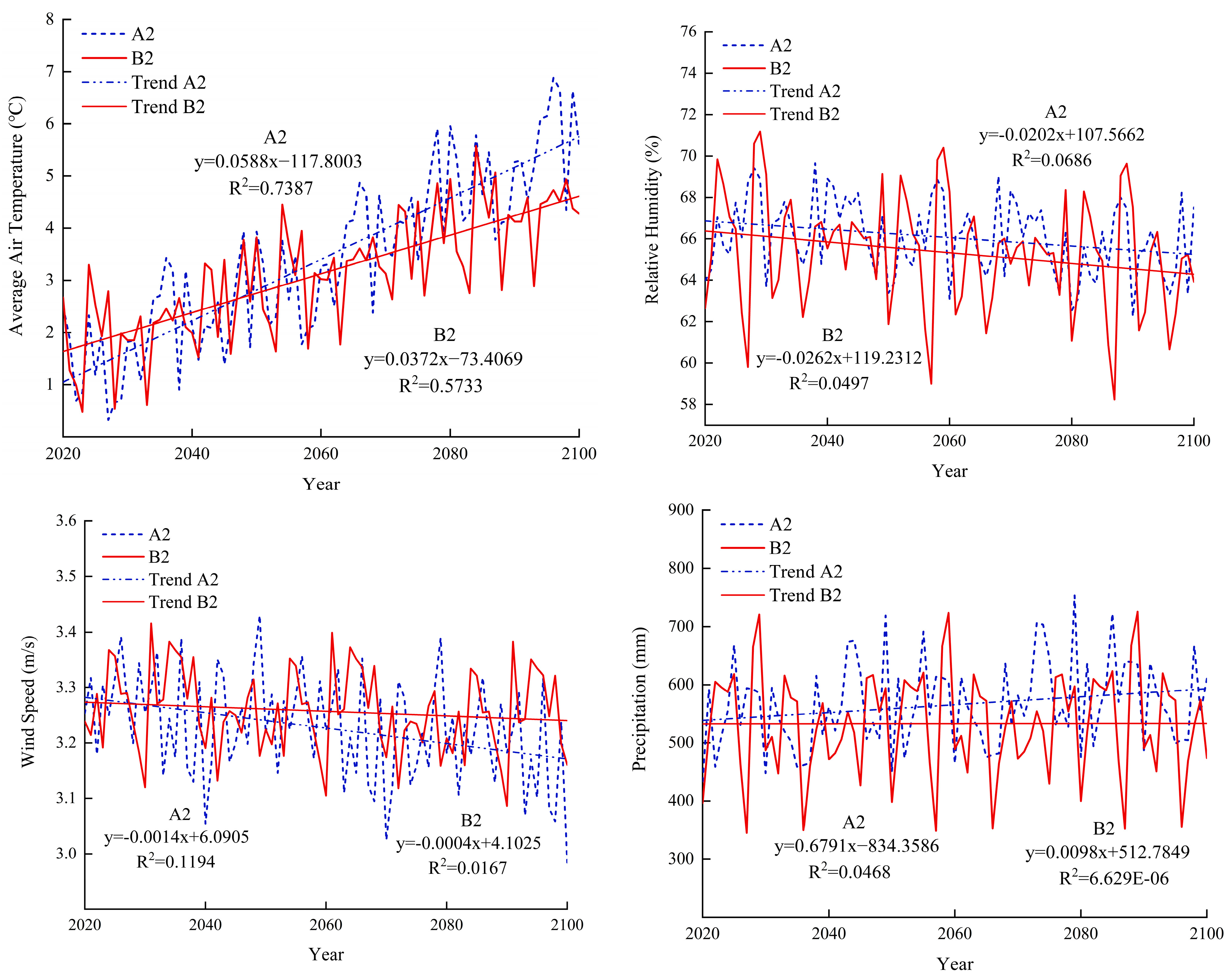
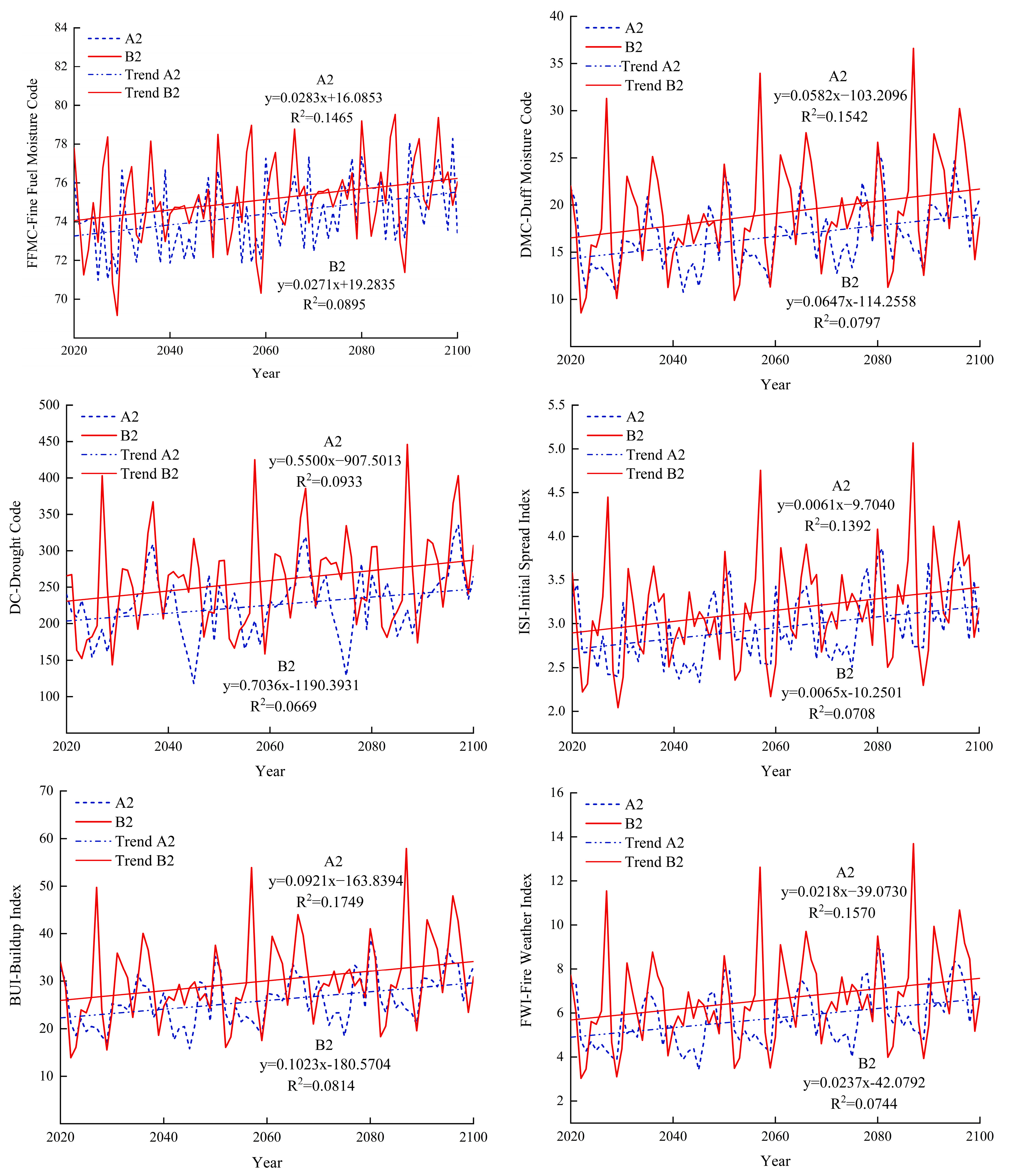
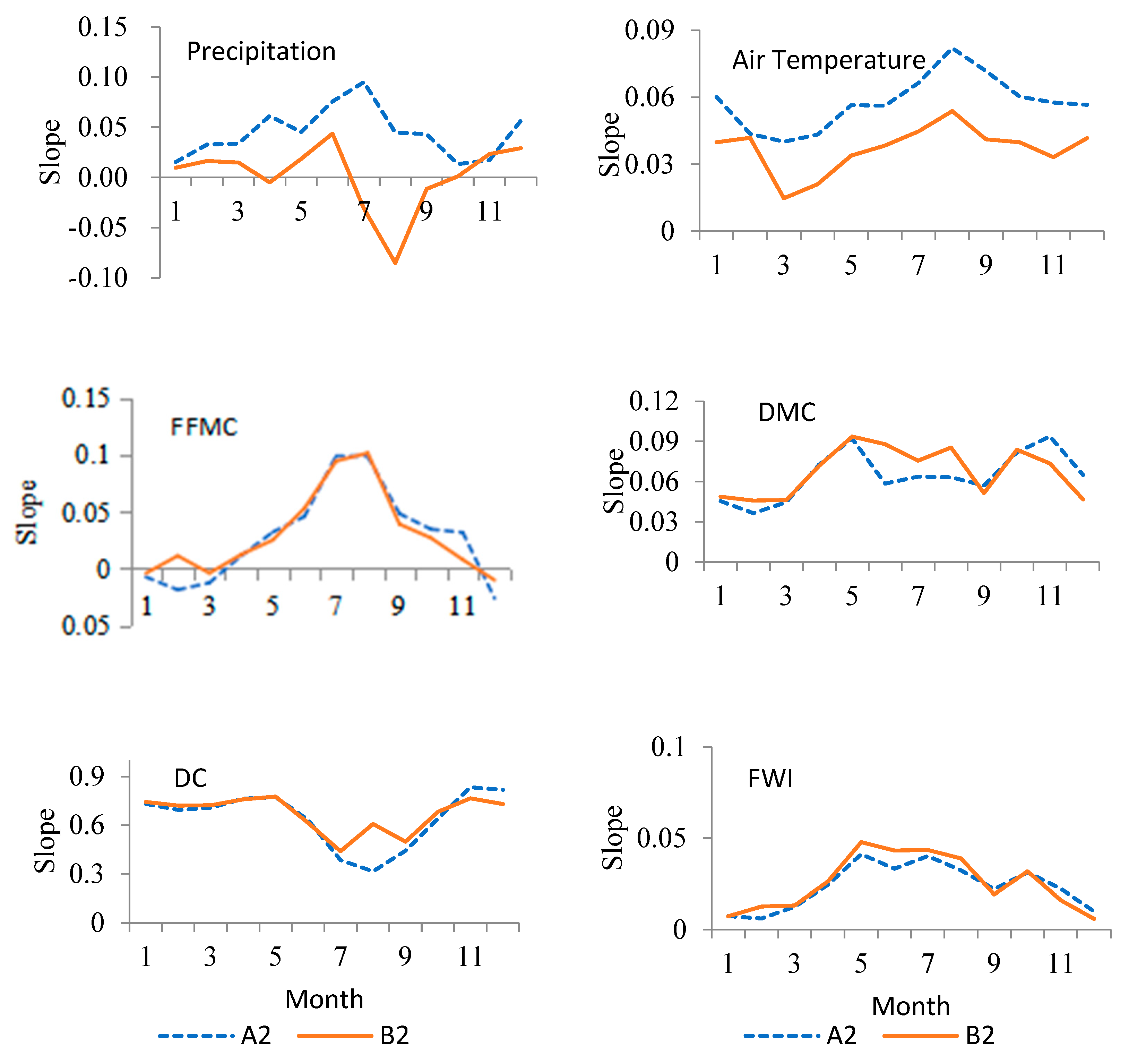
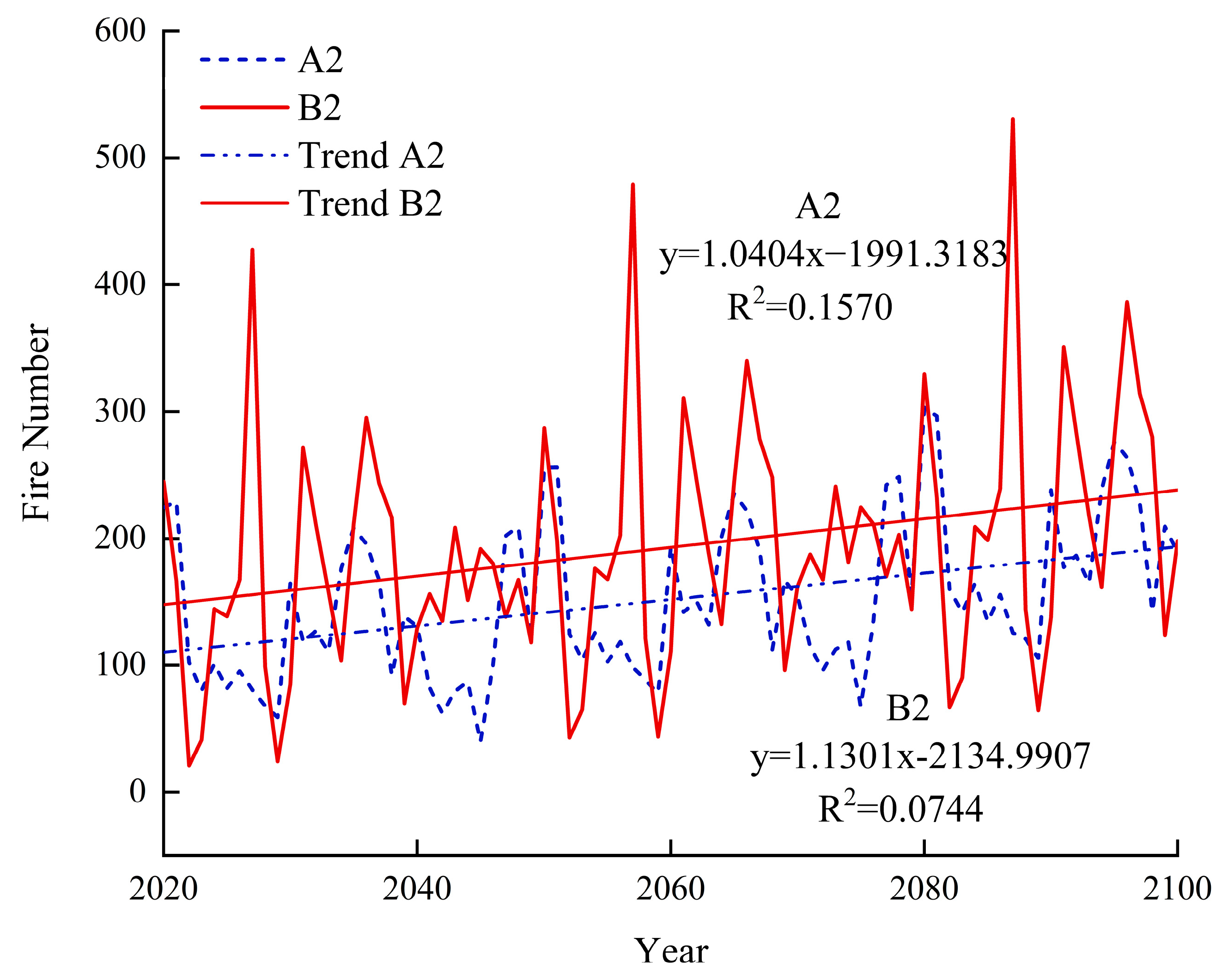
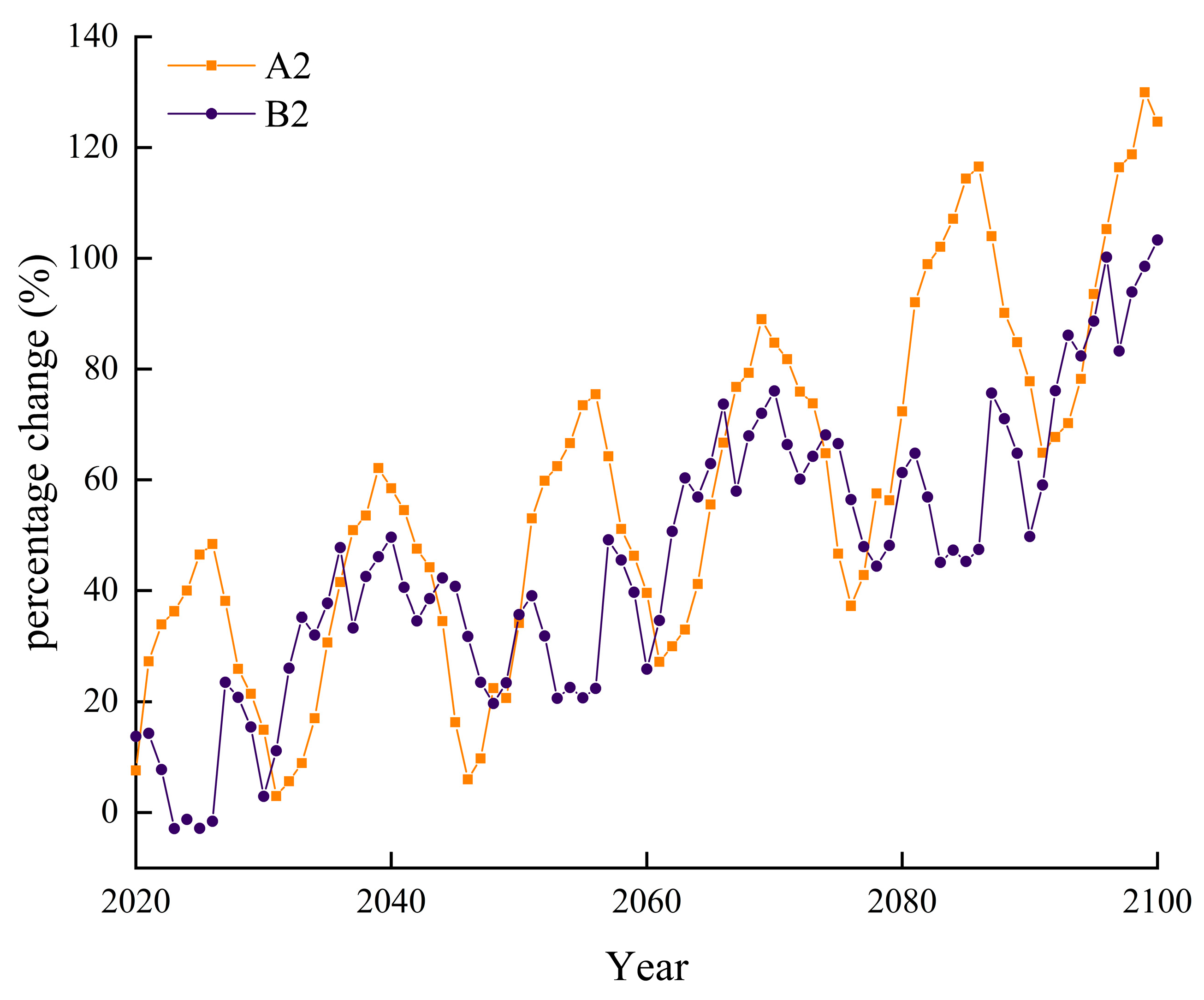
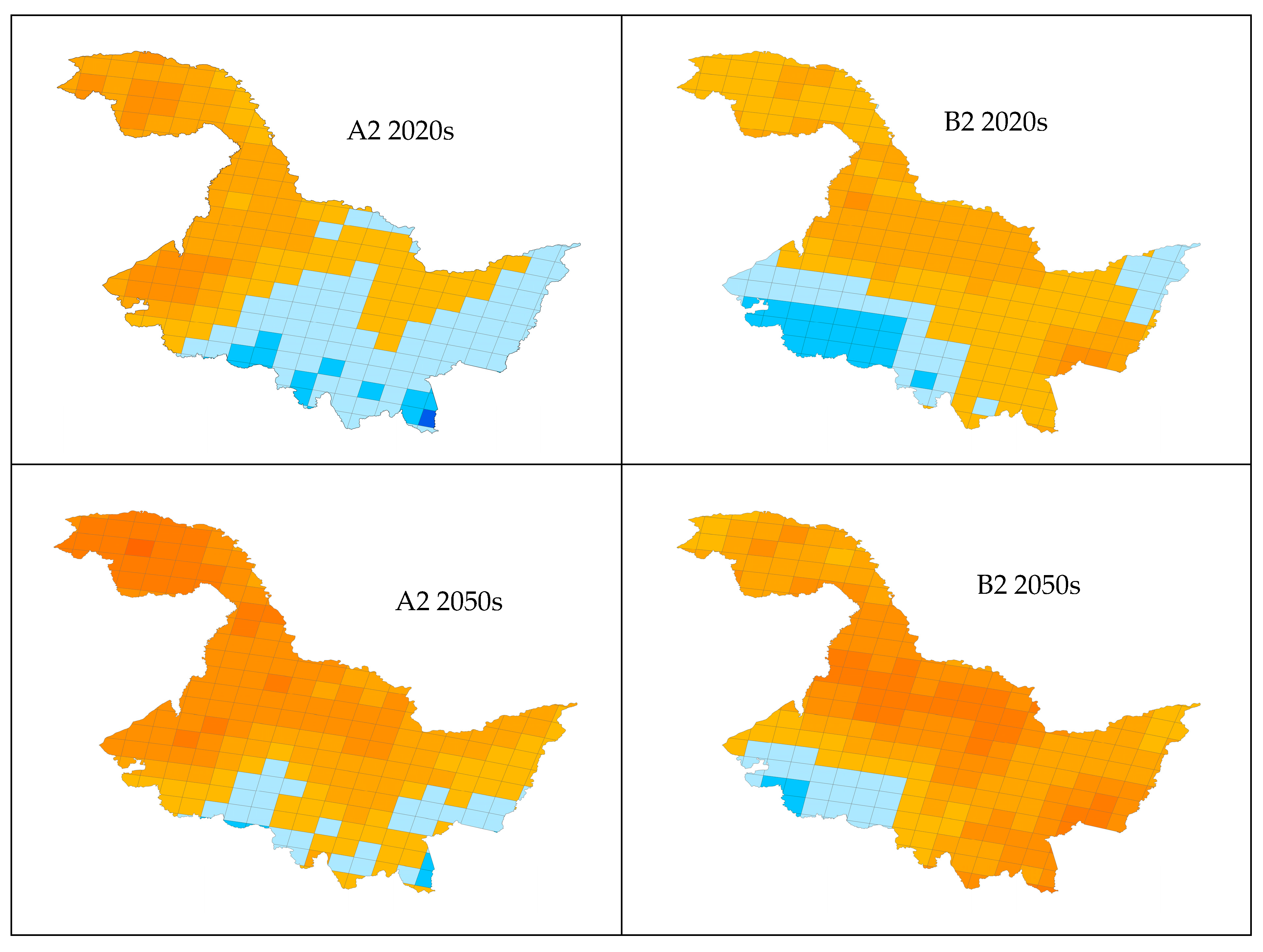
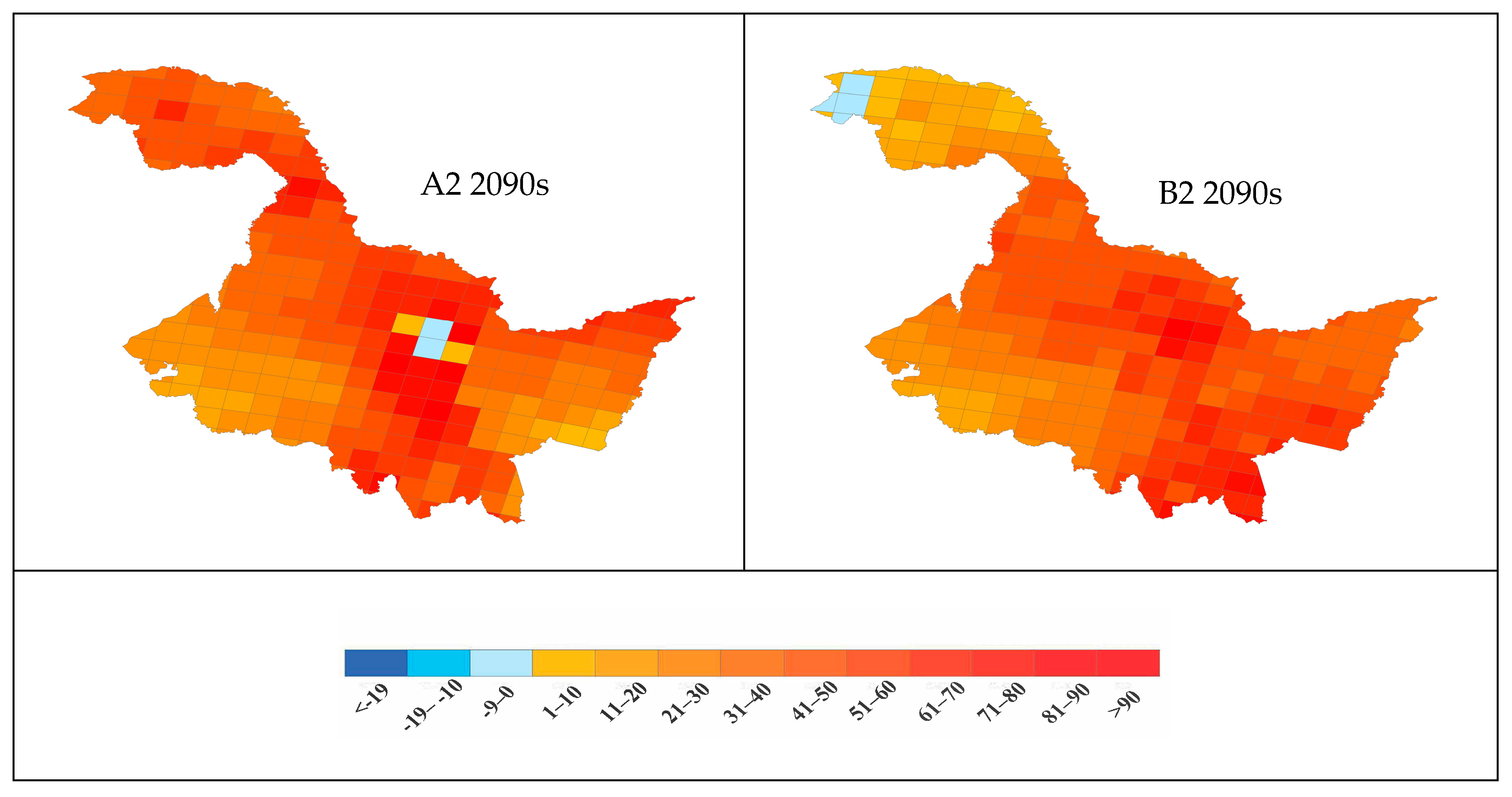
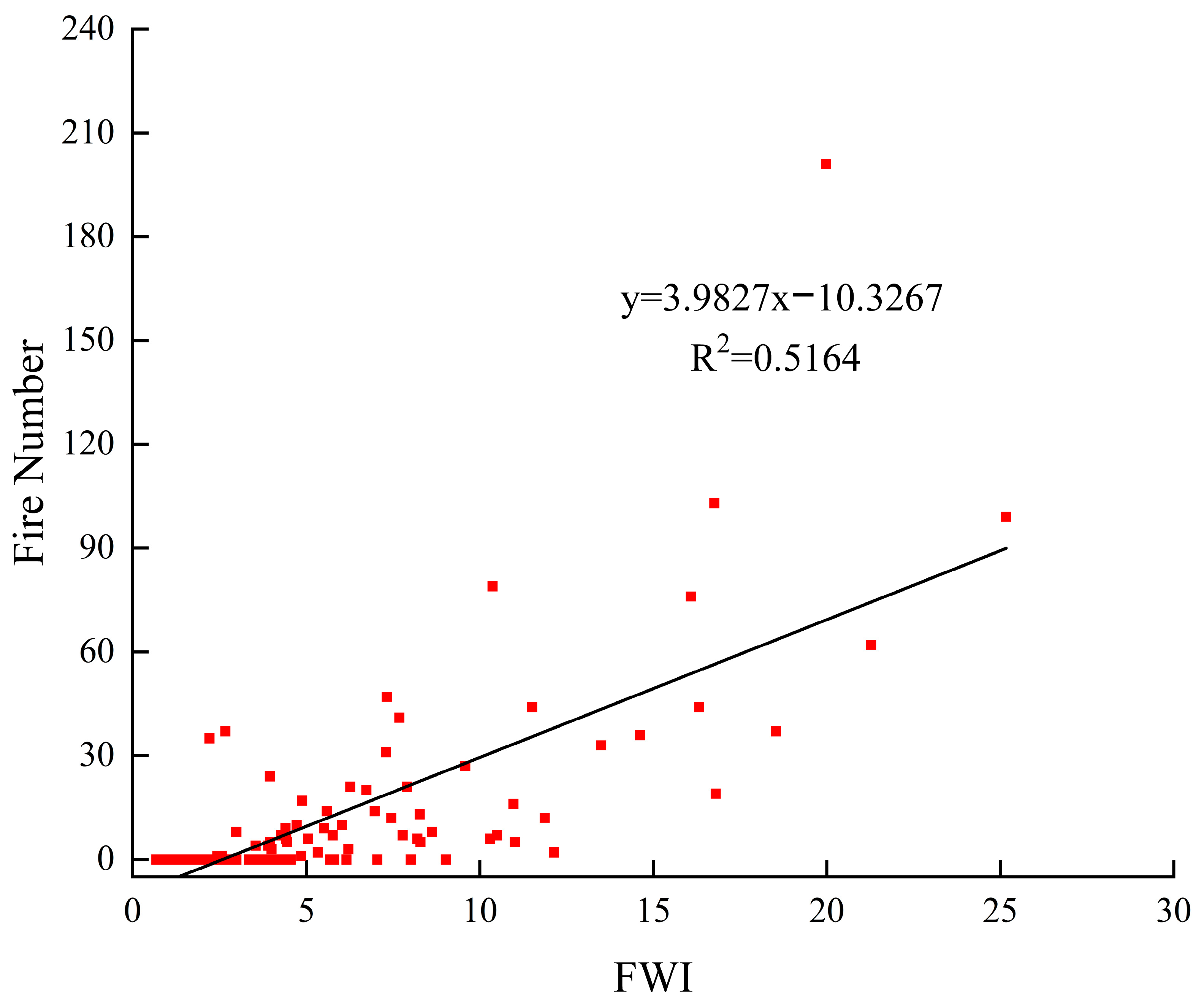
Forest fire is one of the dominant disturbances in the forests of Heilongjiang Province, China, and is one of the most rapid response predictors that indicate the impact of climate change on forests. This study calculated the Canadian FWI (Fire Weather Index) and its components from meteorological record over past years, and a linear model was built from the monthly mean FWI and monthly fire numbers. The significance test showed that fire numbers and FWI had a very pronounced correlation, and monthly mean FWI was suitable for predicting the monthly fire numbers in this region. Then FWI and its components were calculated from the SRES (IPCC Special Report on Emission Scenarios) A2 and B2 climatic scenarios, and the linear model was rebuilt to be suitable for the climatic scenarios. The results indicated that fire numbers would increase by 2.98–129.97% and −2.86–103.30% in the A2 and B2 climatic scenarios during 2020–2090, respectively. The monthly variation tendency of the FWI components is similar in the A2 and B2 climatic scenarios. The increasing fire risk is uneven across months in these two climatic scenarios. The monthly analysis showed that the FFMC (Fine Fuel Moisture Code) would increase dramatically in summer, and the decreasing precipitation in summer would contribute greatly to this tendency. The FWI would increase rapidly from the spring fire season to the autumn fire season, and the FWI would have the most rapid increase in speed in the spring fire season. DMC (Duff Moisture Code) and DC (Drought Code) have relatively balanced rates of increasing from spring to autumn. The change in the FWI in this region is uneven in space as well. In early 21st century, the FWI of the north of Heilongjiang Province would increase more rapidly than the south, whereas the FWI of the middle and south of Heilongjiang Province would gradually catch up with the increasing speed of the north from the middle of 21st century. The changes in the FWI across seasons and space would influence the fire management policy in this region, and the increasing fire numbers and variations in the FWI scross season and space suggest that suitable development of the management of fire sources and forest fuel should be conducted.
Keywords: forest fire; climate change; FWI; fire number; fire season forest fire; climate change; FWI; fire number; fire season