Article

Experimental Investigation of Arc Characteristics Between Piezoelectrically Actuated Contacts in Air, Vacuum, and Nitrogen


1
Department of Electrical Engineering, Faculty of Engineering, Al-Ahliyya Amman University, Amman 19328, Jordan
2
State Key Laboratory of Electrical Insulation and Power Equipment, School of Electrical Engineering, Xi’an Jiaotong University, Xi’an 710049, China
*
Author to whom correspondence should be addressed.
Plasma 2026, 9(2), 13; https://doi.org/10.3390/plasma9020013
Submission received: 8 February 2026 / Revised: 8 April 2026 / Accepted: 9 April 2026 / Published: 8 May 2026

Abstract

Piezoelectric actuators enable ultra-fast switching due to their microsecond-scale response and high acceleration capability. This study experimentally investigates arc behavior in air, vacuum, and nitrogen using round and flat contacts driven by an amplified piezoelectric actuator. Unlike prior work focused mainly on actuation dynamics, this study provides a multi-medium comparison and investigates the coupled effects of drive operating time and contact geometry on arc characteristics. Arc tests were conducted using a capacitor discharge platform, with synchronized electrical measurements and high-speed imaging. In air (140 V, 350 A), arc voltage increased with rise time, reaching 800 V, 840 V, and 1080 V at 0.5 ms, 1 ms, and 2 ms, respectively, while shorter rise times reduced arc duration but promoted reignition. In vacuum (140–200 V), arc voltage stabilized at 80–90 V, with longer rise times extending arc duration; round contacts exhibited faster voltage rise and higher peaks. In nitrogen (140–200 V), higher voltages were obtained at shorter rise times, reaching 2680 V, 2600 V, and 2320 V at 0.5 ms, 1 ms, and 2 ms, respectively, with reduced arc duration. Across all media, round contacts consistently produced higher arc voltages than flat contacts. These results demonstrate that drive dynamics and contact geometry critically influence arc voltage and duration, providing practical guidelines for the design of high-speed piezoelectric-based switching devices.

1. Introduction

Arc behavior is the key to unraveling the intricacies of electric current interruption. Understanding the dynamic characteristics of electrical arcs is central to devising effective switching strategies that balance the needs of rapid interruption, minimal contact wear, and equipment longevity. The increased demand for fast fault clearance and efficient current interruption underscores the need for continued research and innovation in switching technology [1]. Modern power systems, telecommunications, transports, and renewable energy installations require increasingly sophisticated switching solutions to maintain reliability and prevent costly downtime [2]. This heightened demand necessitates a more profound understanding of arc behavior and an exploration of advanced interruption techniques.
One of these promising techniques is the deployment and exploitation of smart materials such as piezoelectric in switchgear actuation [3]. These materials offer precise and rapid control over contact separation, contributing to the overall efficiency and reliability of current interruption systems. In addition, the incorporation of piezoelectric actuators brings a new dimension to the field of current interruption. These materials not only enable faster, rapid, and high accelerated switching but also offer the potential for adaptive and responsive interruption systems [4]. By harnessing the unique properties of piezoelectric actuators, new interruption mechanisms could be developed that can dynamically adjust to changing fault conditions, further enhancing the reliability and performance of electrical switching devices [5]. This combined effect of advanced materials and arc behavior understanding holds great promise in meeting the evolving demands of modern power systems.
Currently, fast switching is mainly dominated by electromagnetic actuators, the most famous being the Thomson coil actuator (TCA) [6]. Nevertheless, it could be argued that piezoelectric actuators are a better option for switching applications, despite their stroke limitations [7]. Previous studies have demonstrated the potential of piezoelectric actuators in achieving ultra-fast switching speeds with sub-millisecond-level response times [3,5,8,9,10,11,12,13,14]. Additionally, their compact size, high precision, and low power consumption make them an attractive candidate for enhancing the performance of current interruption systems [10]. Piezoelectric actuators, either direct or mechanically enhanced, have shown great potential in hybrid circuit breakers (HCBs) acting as fast mechanical switches (FMSs) or Ultra-Fast Disconnectors (UFDs) [8,9,10,11,12,13]. Moreover, they presented higher acceleration travel than TCA as compared in [5,14].
Despite the unique abilities that piezoelectric actuators have demonstrated, their role has been confined to arc-less interruption, with little to no research focusing on arc characteristics when piezoelectric actuators are involved. The only exception, as far as we know, was the utilization of a planar bimorph piezoelectric actuator in an air switch reported in [15]. It was used to open the contacts in a low contact opening velocity circuit breaker and demonstrated successful current limiting performance. Furthermore, the generated arc mobility was investigated and showed unique characteristics of piezoelectrically operated contacts. However, there were no further reports on other interruption mediums, nor on different parameters that might influence the arc behavior.
For this purpose, in this investigation, an amplified piezoelectric actuator (APA) was designed and embedded as an actuation unit for a fast mechanical switch (FMS). This switch was installed in an interruption chamber, first filled with air, then insulated by vacuum and later by nitrogen gas. A test circuit was constructed, and arcing in air, vacuum and nitrogen has been observed. This article proceeds as follows: the experimental measures taken in this study are described in Section 2. The obtained and recorded results are presented and discussed in Section 3, before summarizing study findings and conclusions in Section 4.

2. Experimental Setup

2.1. Operating Mechanism

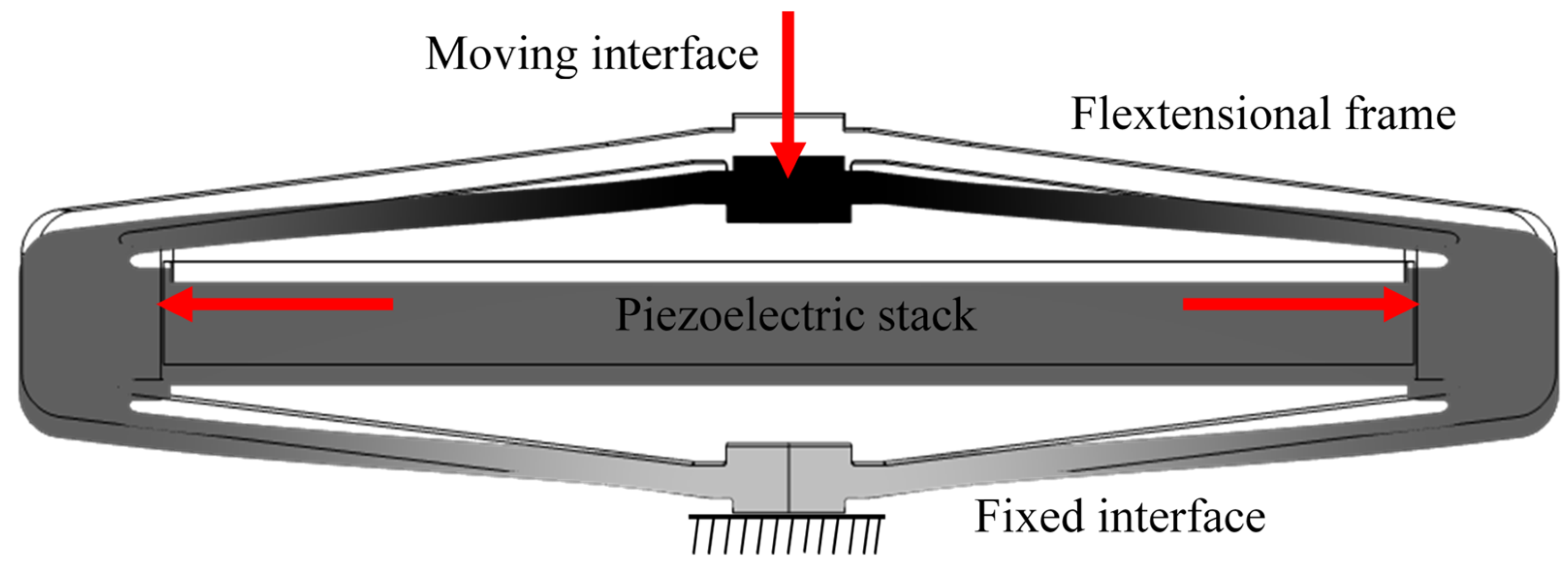
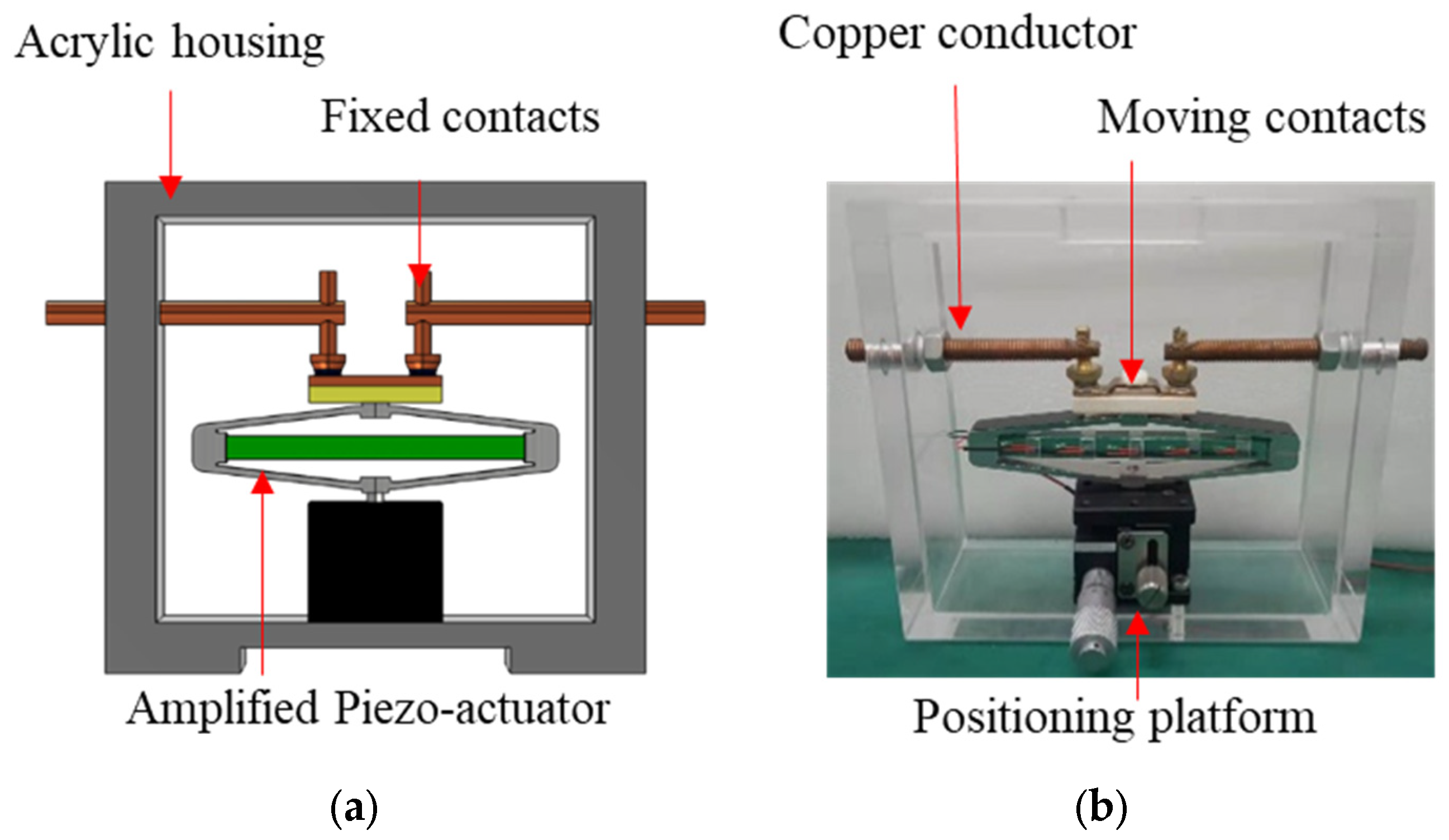
The APA structure and its working principle, previously reported in [5,8], are illustrated in Figure 1. As shown, it contains an elliptic flex-tensional frame of 110 × 27 × 12 mm where within a 18 µF, 90 × 7 × 7 mm piezoelectric stack is embedded in alignment with its great axis. The frame is used to amplify the piezo-stack deformation and provide the necessary prestress for its dynamics [16]. When a voltage signal of 150 V is applied to the piezoelectric actuator, it produces a displacement in the horizontal direction. The mechanical amplifier deforms, yielding a larger displacement in the vertical direction. The APA could actuate for a switch by installing a contact bridge on the moving interface of the actuator, while the other interface is fixed, in what is known as the block-free operational mode. The whole arrangement was mounted in an acrylic frame, and the fast mechanical switch-based amplified piezoelectric actuator (FMS-APA) prototype is shown in Figure 2.
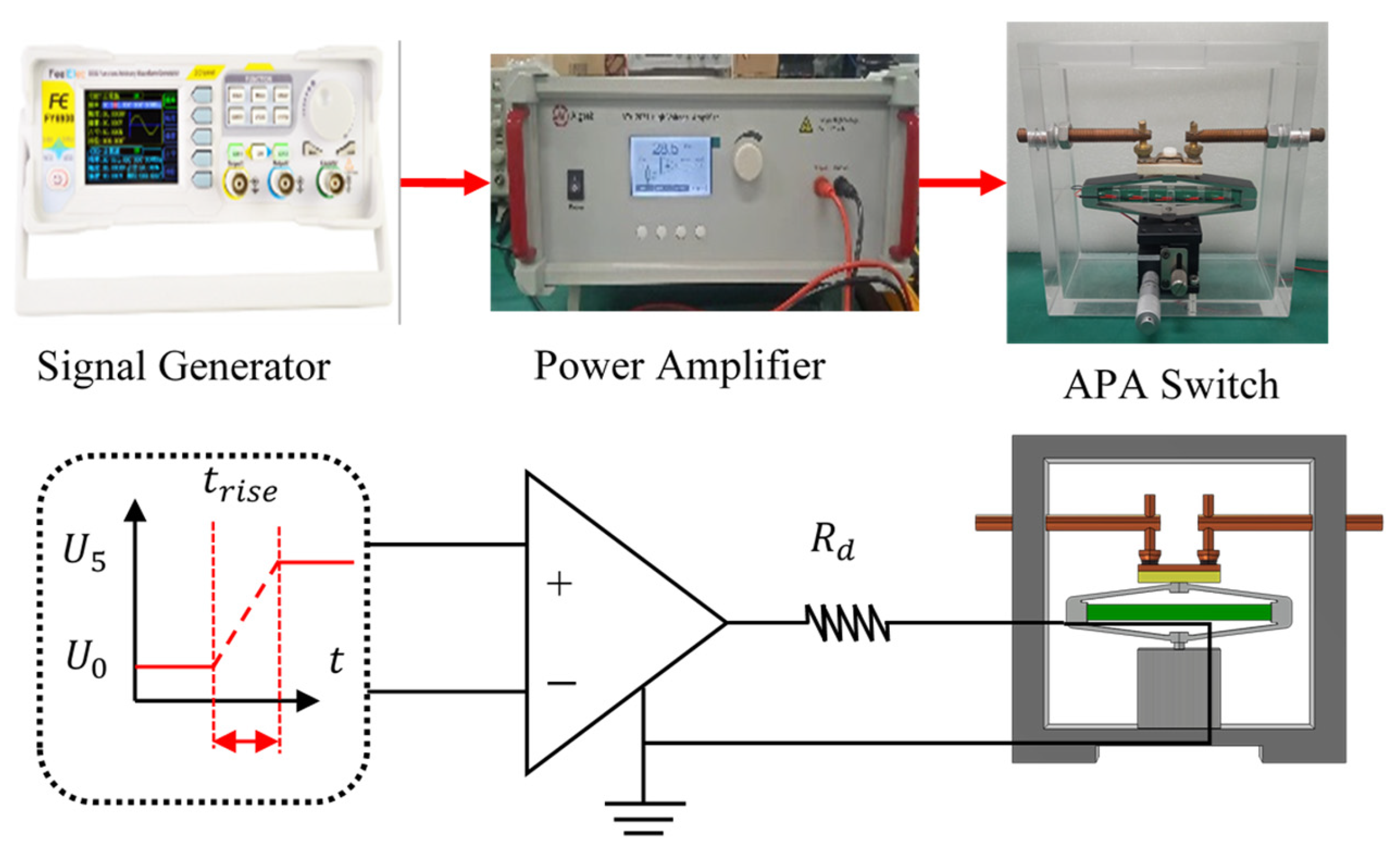
The control system of the presented switch includes a power amplifier (100 kHz, 500 W) with a bandwidth of 0–150 V. A step wave signal generator capable of generating voltages from 0 to 5 V with selectable rise times between 0.5 ms, 1 ms, and 2 ms was employed. The rise times were measured using a digital oscilloscope with an accuracy of ±2 µs, and their stability between repeated tests was within ±3% of the nominal values. In addition, a damping resistor of 10 Ω was connected in series with the APA to eliminate sudden spikes. The control circuit of the FMS-APA is further illustrated in Figure 3.
The actuator performance was examined by mounting an eddy current displacement sensor, of 280 nm resolution at 10 kHz, over the top flat surface of the actuator. The stroke was measured in accordance with the drive voltage. Furthermore, the blocking force, stiffness, frequency, and travel were recorded at step wave times of 0.5, 1 and 2 ms.

2.2. Contact System

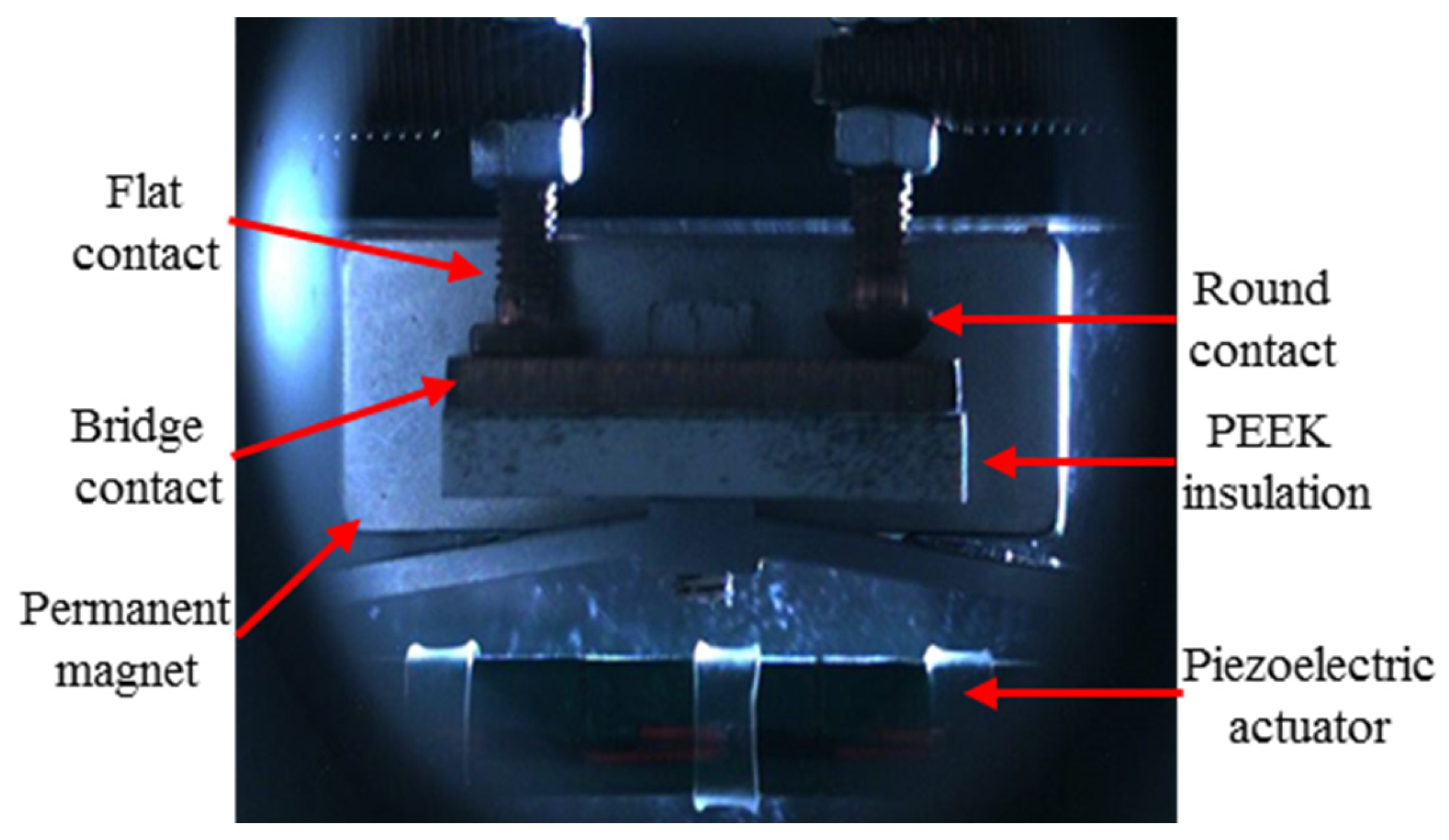
The arc behavior is closely intertwined with the chemical properties and physical conditions of the electrical contacts involved. Moreover, the physical shape and design of electrical contacts can affect arc characteristics [17]. Therefore, two types of copper contacts were examined in this study: the first resembled a spherical head, while the second was made to be flat. The moving contact was a flat copper bridge, separated from the APA frame by a Polyetheretherketone (PEEK) insulation material. In addition, multiple N52-grade permanent magnet plates (60 × 20 × 2 mm) were symmetrically installed adjacent to the contact region, with their magnetic poles oriented to generate a transverse magnetic field across the arc gap. This configuration produces a magnetic blow effect, driving the arc column away from the contact interface through the Lorentz force, thereby promoting arc elongation, cooling, and faster extinction, as established in [18]. The magnets were positioned to ensure a uniform magnetic field distribution along the expected arc path, enhancing arc stability control and reducing contact erosion. The arrangement of the magnets relative to the contact pair, as well as the moving mechanism, is illustrated in Figure 4.

2.3. Quenching Medium

In this study, three insulating media were investigated in the arc chamber: air, vacuum, and nitrogen. The selection of these media was guided by actuator compatibility considerations. Piezoelectric stacks are well known for vacuum compatibility [4], and recent studies have explored their operation in CO2 environments [19]. However, limited data are available for other gases; therefore, nitrogen was selected in consultation with the piezoelectric actuator manufacturer [20].
For air tests, the chamber was operated at ambient atmospheric pressure (~1.01 × 10⁵ Pa), under laboratory conditions (23 ± 1 °C), with no additional conditioning or forced flow. The air inside the chamber was static and not actively controlled in terms of humidity or composition. For vacuum tests, the chamber was evacuated using a rotary vacuum pump connected via an isolation valve. The pressure was monitored using a Pirani gauge, and an absolute pressure of approximately 5 × 10³ Pa was achieved prior to each test. To ensure repeatability, the chamber was pumped down to this pressure level before every trial, and pressure variation during testing was maintained within ±5%. Only this single vacuum level was considered in the present study; therefore, no parametric dependence on pressure is implied.
For nitrogen tests, high-purity nitrogen gas (>99.99%) was used. The chamber was first evacuated to the same base pressure (~5 × 10³ Pa) and then purged and refilled with nitrogen to minimize residual air. This evacuation–refill process was repeated prior to each experiment. The chamber was subsequently pressurized to an absolute pressure of 0.5 MPa (5 × 10⁵ Pa), as indicated by a digital pressure transducer. The gas was maintained under static (no-flow) conditions, and refilling was performed as needed to maintain stable pressure across repeated trials. All experiments were conducted at an ambient temperature of 23 ± 1 °C.

2.4. Test Circuit

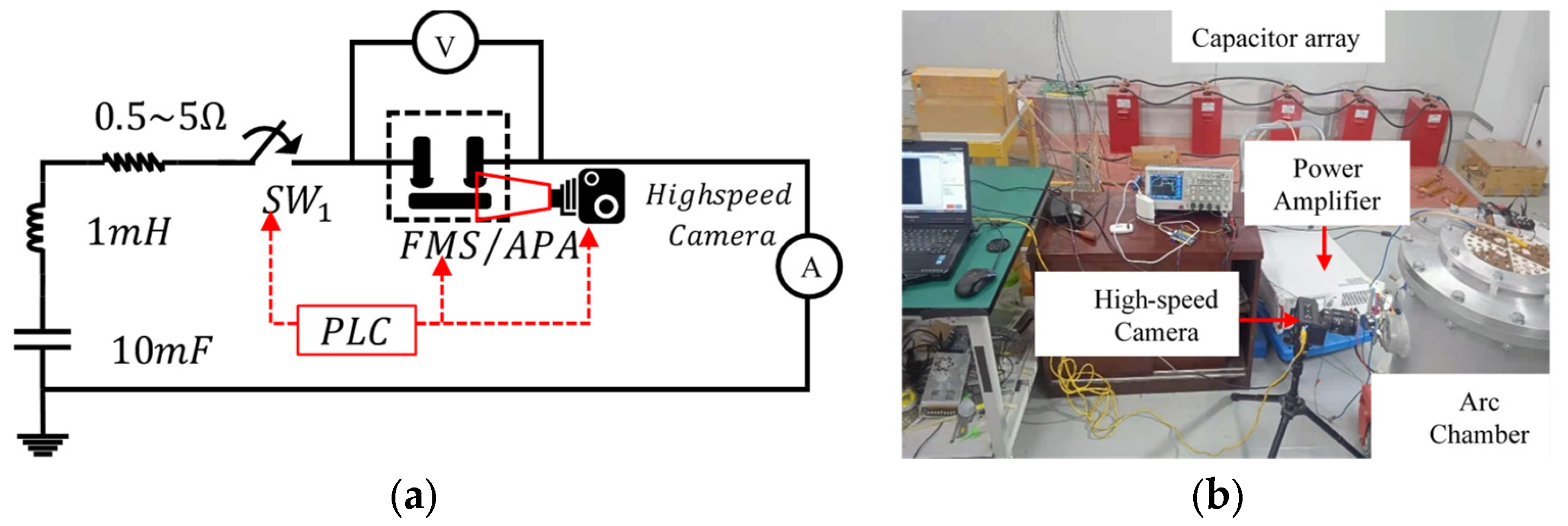
The test circuit of the arc observation test platform is presented in Figure 5a. The testbed includes the FMS-APA installed in the arc chamber and connected to a capacitor discharge circuit, and in between them lays a control switch, triggered by a Programmable Logic Controller (PLC) unit. The PLC was set up to control the capacitor array discharge and the FMS-APA actuation, with a pre-set minor delay. A set of measurement tools were also installed in the test circuit, which included a Hall current probe, to record the main discharge current. In addition, voltage probes were set to measure the arc voltage, the actuator voltage, and the drive signal voltage. In addition, a high-speed camera (5400–18,000 fps) was placed before the arc chamber window to capture the arcing images. The combined optical and electrical measurements provide critical insights into the interaction between mechanical actuation, arc evolution, and energy dissipation in high-speed switching applications. Figure 5b shows the experimental instruments setup.
The test procedures were initiated by charging up the capacitor banks to a voltage range from 140 V to 200 V, which were able to generate currents between 350 A to 500 A, respectively. The discharge current followed a sinusoidal waveform. The discharge was triggered by a PLC signal to close the main circuit switch and subsequently to generate a voltage step signal from the signal generator. Moreover, this signal was tuned to 0.5 ms, 1 ms, and 2 ms rise times and subsequently amplified by the power amplifier to 150 V to actuate; thus, the FMS-APA contacts were separated.
Each experimental condition was repeated multiple times, and a minimum of three consecutive trials exhibiting consistent behavior in terms of peak arc voltage and arc duration were selected for analysis (n = 3). The reported values correspond to the mean ± standard deviation (SD) of these selected trials. The arc duration was defined as the time interval between the instant at which the voltage exceeded 5% of its value and the moment the current decayed to zero. The peak arc voltage and peak current were determined as the maximum instantaneous values recorded during each discharge event.

3. Results

3.1. Actuator Characteristics

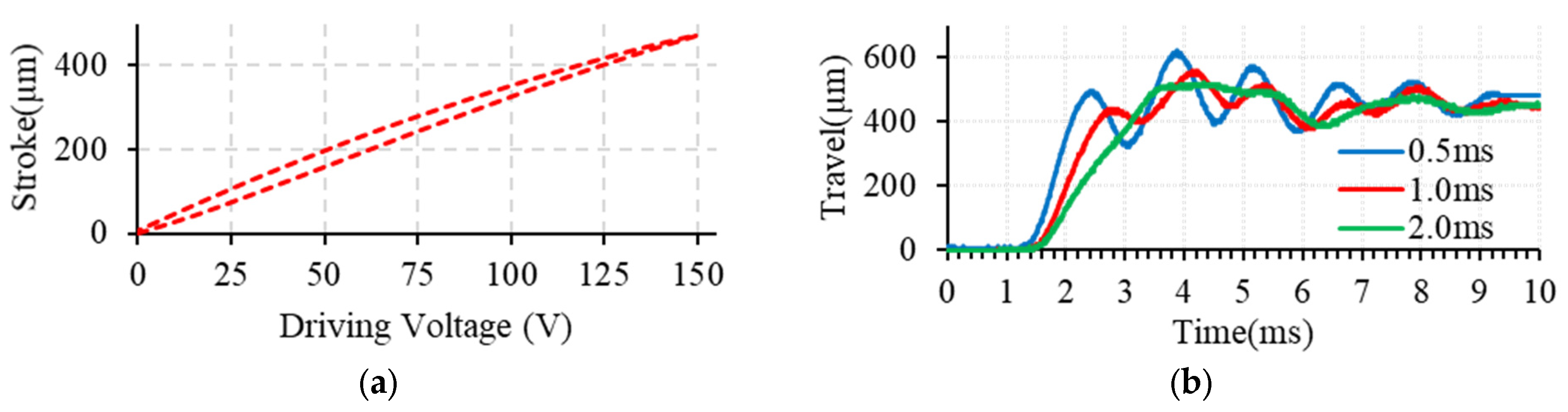
Static and dynamic measurements have been performed to evaluate the FMS-APA stroke and travel, respectively. Figure 6a shows the APA strokes at different drive voltages from 15 V to 150 V. The APA could exert a force of 85 N, achieving a stiffness of 0.18 N/µm, at a frequency of 534.5 Hz. The maximum stroke the APA could reach was 474.5 µm, making the overall gap of the switch 0.95 mm, which theoretically could withstand a voltage of 2.7 kV and 18 kV in air and vacuum, respectively [3].
On the other hand, Figure 6b illustrates the APA displacement for drive voltage rise times of 0 ms, 1 ms, and 2 ms. The actuator stroke is primarily determined by the piezoelectric properties, applied voltage, and amplification mechanism [3,21], while the transient response is strongly influenced by the voltage waveform [13,14]. A rapid voltage rise (tr = 0 ms) induces a sudden force change, exciting the system’s natural frequency and resulting in pronounced overshoot and oscillations. Slower rise times reduce high-frequency excitation, thereby decreasing overshoot and improving stability. As shown in Table 1, the response time increases from 0.296 ms at tr = 0 ms to 0.413 ms and 0.456 ms for tr = 1 ms and 2 ms, respectively, while the actuation time extends from 1.28 ms to 1.52 ms and 2.38 ms. Maximum overshoot decreases from 31% to 26% and 10%, and minimum overshoots reduces from 32% to 25% and 18%. These results indicate that increasing the drive voltage rise time effectively suppresses bouncing and accelerates stabilization.

3.2. Arcing in Air

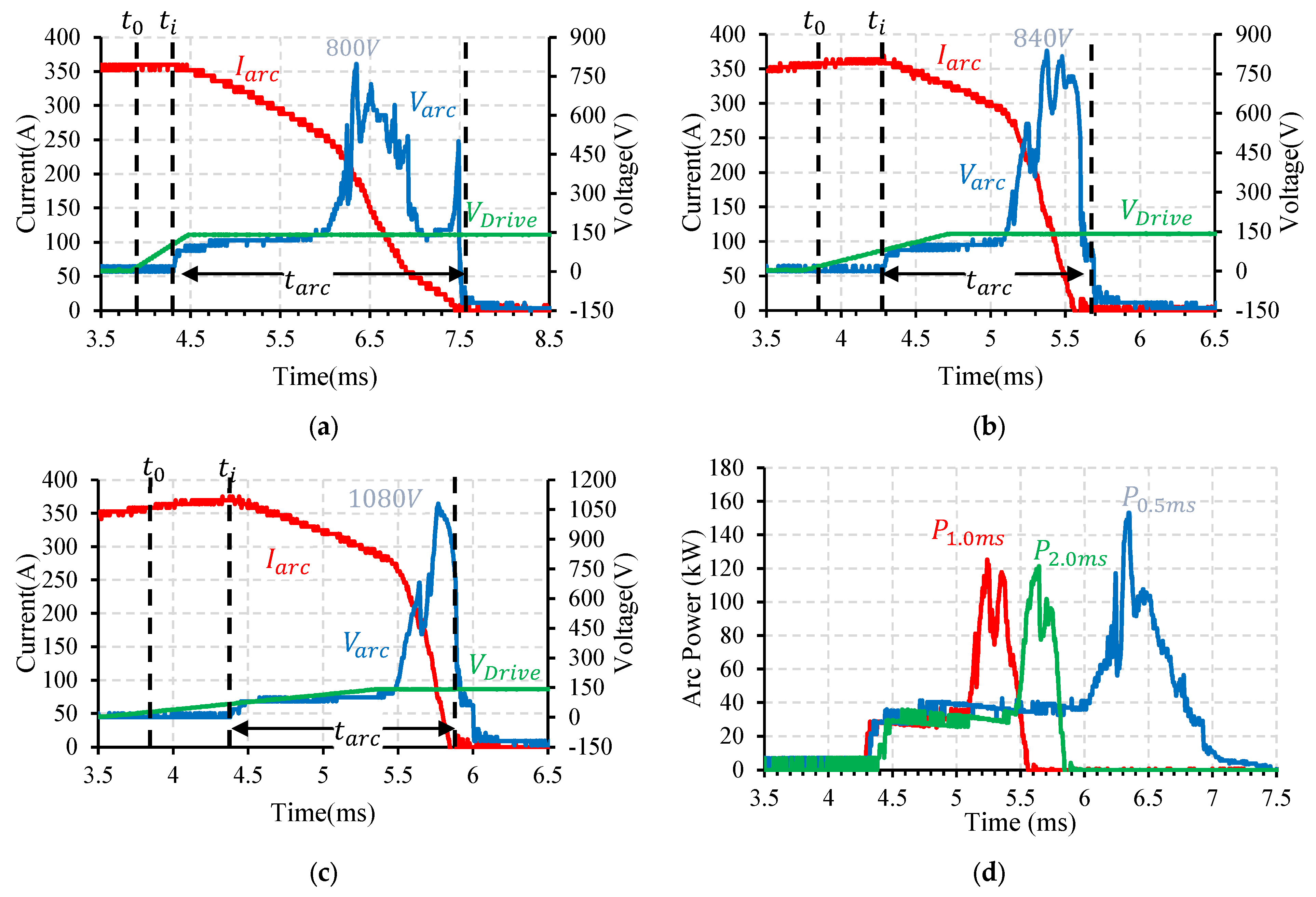
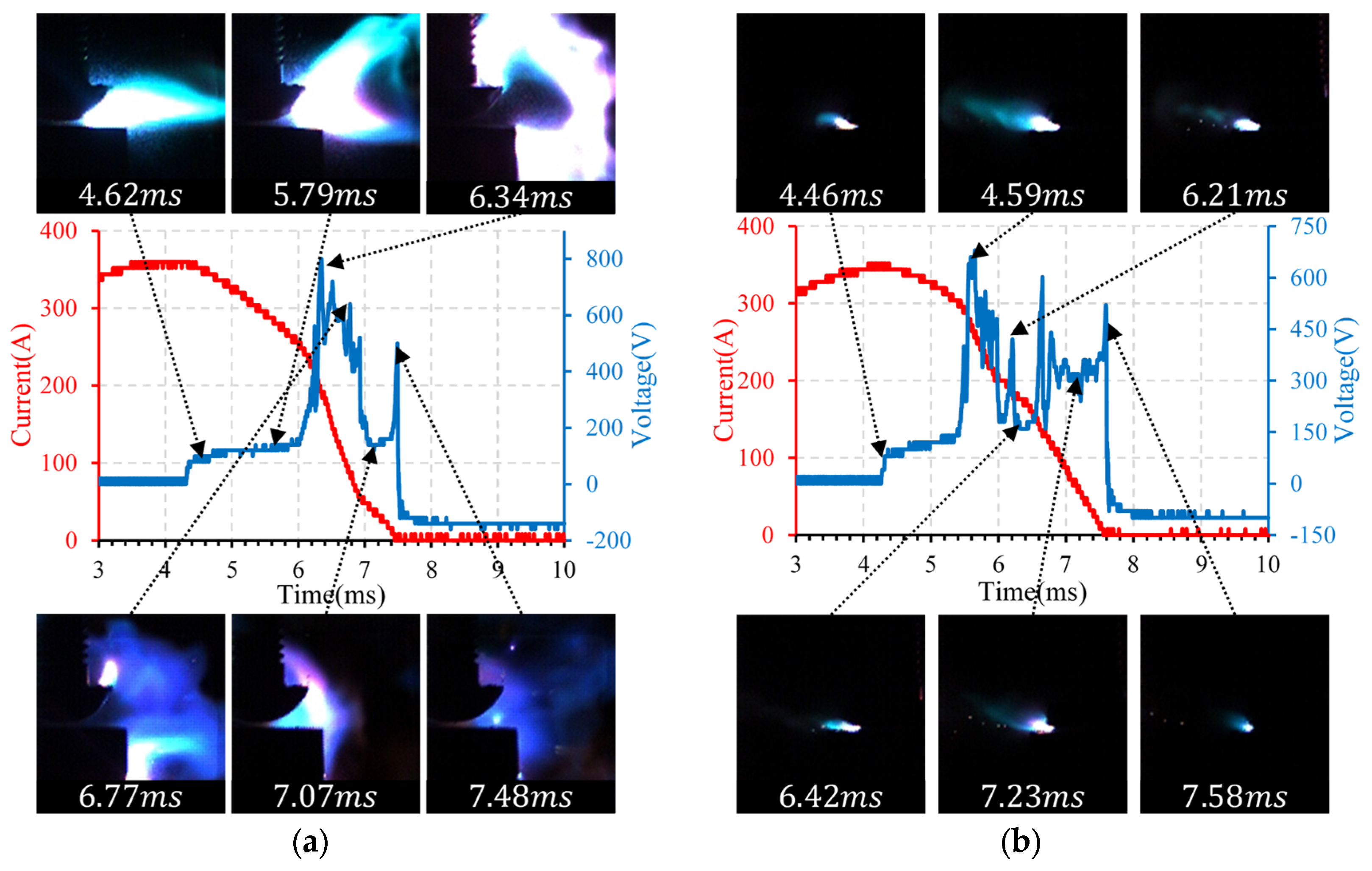
Observations and measurements of air arcs were conducted for a discharge voltage of 140 V, corresponding to a current of 350 A. Three drive voltage rise times (0.5 ms, 1 ms, and 2 ms) were employed, utilizing two fixed contact types (round and flat). The arc voltage, arc current, and the APA drive signal were measured for each test combination, and the results are depicted in Figure 7 through recorded waveforms and signals. In addition, the high-speed images of the air arc in the FMS-APA prototype at 200 V/500 A with 0.5 ms drive time, featuring both round and flat contacts, are presented in Figure 8.
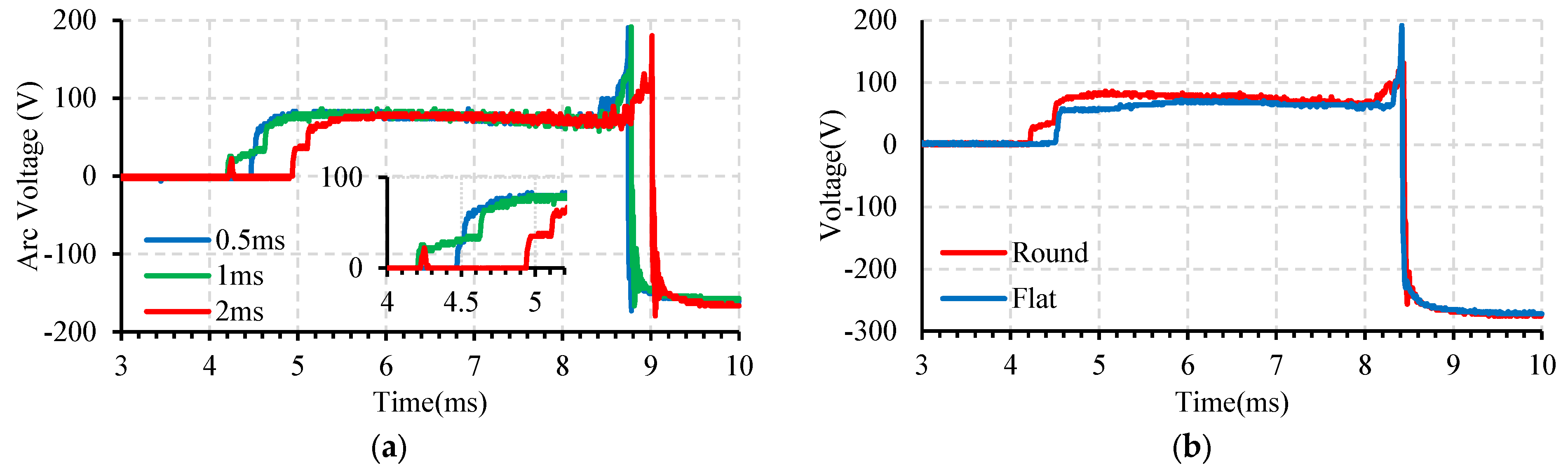
The air arcing durations (tarc) corresponding to drive voltage rise times of 0.5 ms, 1 ms, and 2 ms were recorded as 3.2 ms, 1.4 ms, and 1.6 ms, respectively. Apparently, the arc experienced a reignition at 0.5 ms drive time, which explains the longer arc duration. Faster drive of piezo actuators ultimately leads to massive oscillations as shown in Figure 6b, which leads to arc reignition. In addition, significant variations in arc voltage were observed at distinct drive times, with higher arc voltages noted at longer piezoelectric drive rise times. The maximum recorded arc voltages were 800 V, 840 V, and 1080 V at 0.5 ms, 1 ms, and 2 ms, respectively. Furthermore, as the drive time increased, the arc initiation time ( t i ) also increased, reaching 0.40 ms, 0.41 ms, and 0.46 ms for drive times of 0.5 ms, 1.0 ms, and 2.0 ms, respectively. A comparison of the maximum instantaneous arc power under different drive-time conditions indicates that P 0.5 ms = 150 kW , P 1.0 ms = 122 kW , and P 2.0 ms = 117 kW . These results demonstrate a decreasing trend in the maximum instantaneous arc power with increasing drive time, indicating a strong dependence of arc intensity on the drive voltage rise profile. Additionally, regardless of the drive timing, a consistent pattern was observed in the arcing behavior. As the contacts separate, the arc voltage exhibits a gradual increase, followed by a sudden surge in voltage upon reaching full stroke.
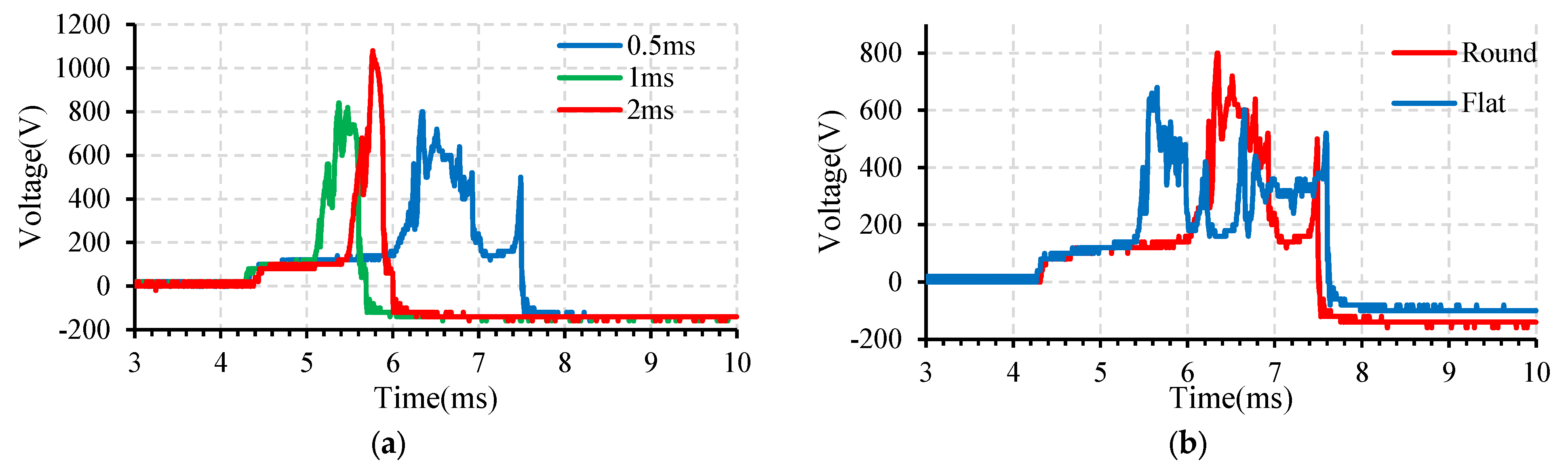
Arc photography reveals distinct differences between arcing in round and flat contacts. Round contacts exhibit a higher arc voltage of approximately 800 V, compared to 680 V for flat contacts under the same drive conditions. The arcing duration also varies with contact geometry, lasting about 3.2 ms for round contacts and 3.45 ms for flat contacts. These differences can be attributed to the effective contact area and contact mechanics. Round contacts have a smaller nominal contact area, concentrating the mechanical load at localized asperities. This generates higher local contact pressure and, consequently, higher current density at micro-contacts, which facilitates earlier arc initiation and leads to higher arc voltage. Flat contacts, by distributing the load over a larger area, produce lower local pressure and current density, resulting in slightly delayed arc ignition and lower peak arc voltage, while providing a more uniform current distribution.
Moreover, contact resistance plays a central role; higher resistance at localized asperities in round contacts increases Joule heating, promoting the formation of plasma channels that enhance arc voltage and cathode spot activity. In flat contacts, the lower local resistance reduces local heating and stabilizes cathode spot formation, extending the arc duration slightly but decreasing peak arc voltage. Figure 9 compares the arc voltage for different drive times and contact types, illustrating how contact geometry, current density, and resistance collectively influence arc behavior.

3.3. Arcing in Vacuum

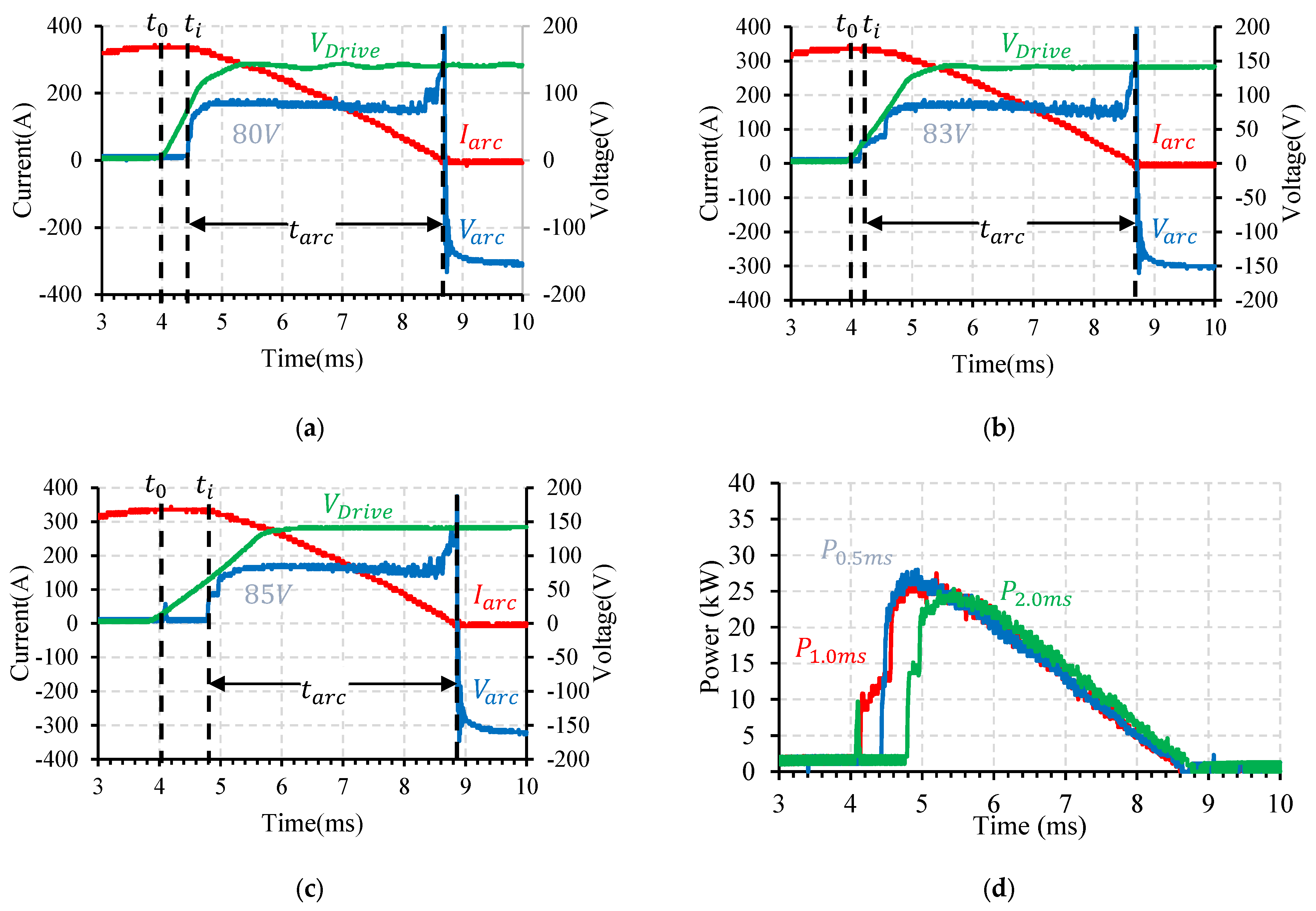
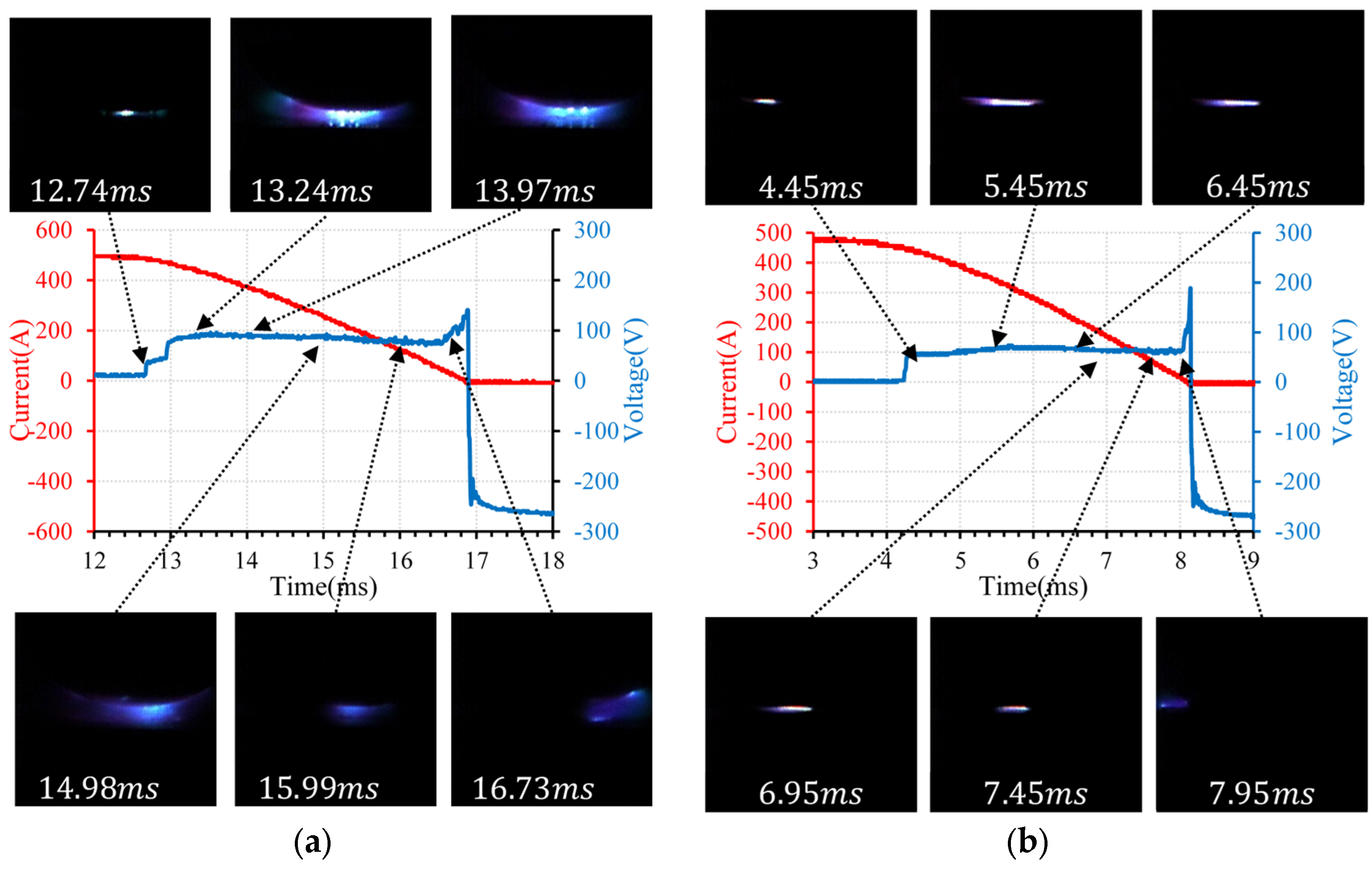
Vacuum arc (VA) observations and measurements were performed under different discharged voltages of 140 and 200 V, which corresponded to currents of 350 and 500 A, respectively. For three voltage rise times (0.5, 1, and 2 ms), two types of fixed contacts (round and flat) were used. At each test combination, the arc voltage and arc current were measured as a function of time together with the APA drive voltage. The recorded waveforms and measured signals are shown in Figure 10. The high-speed images of VA in the presented FMS-APA prototype of 200 V/500 A at 0.5 ms drive time for round and flat contacts are shown in Figure 11.
The results indicate that increasing the drive time leads to a slight increase in arc duration. Specifically, the arc durations corresponding to drive times of 0.5 ms, 1.0 ms, and 2.0 ms were 4.19 ms, 4.46 ms, and 4.68 ms, respectively. It is also observed that shorter drive times enable the faster attainment of higher initial arc voltages. The arc initiation time ( t i ) was the shortest at 1.0 ms, followed by 0.5 ms and 2.0 ms drive conditions. A comparison of the instantaneous power profiles for the three cases shows that the peak power values are relatively similar. However, the evaluation of the arc energy, obtained by integrating the instantaneous power over the arc duration, reveals that the 2.0 ms drive condition results in the lowest total arc energy. Overall, the average arc voltage remains nearly constant across all cases, ranging between 80 V and 85 V.
Regardless of drive time and contact type, it could be seen that the arcing process could be divided into three distinct periods. The initial phase could be categorized as plasma initiation, as the contacts gradually separate and the forming of cathode spots starts [22]. The second phase depicts a relatively stable discharge. The arc voltage stabilizes in the full stroke, between 80 V and 90 V, and the arc seems to form several molten bridges. The third phase could be described as the arc extinction phase, as the sustained arc starts to fade away driven by the continued current drop. The magnetic field manages to blow the arc toward the contact edge, and the arc terminates as the current hits zero.
A similar comparison could also be applied to flat-shaped contacts, and the arcing time corresponding to each drive time showed similar trends as that of round contacts. Flat contacts delivered lower arc voltage than round contacts, and their arc voltage rise rate was significantly slower than that of round contacts at 0.5 ms drive time. The arc between the flat contacts depicted denser discharge spots, as it seemed to be confined and more stationary than that at the round contacts. Figure 12 compares the arc voltage for each drive time with different contact types.

3.4. Arcing in Nitrogen

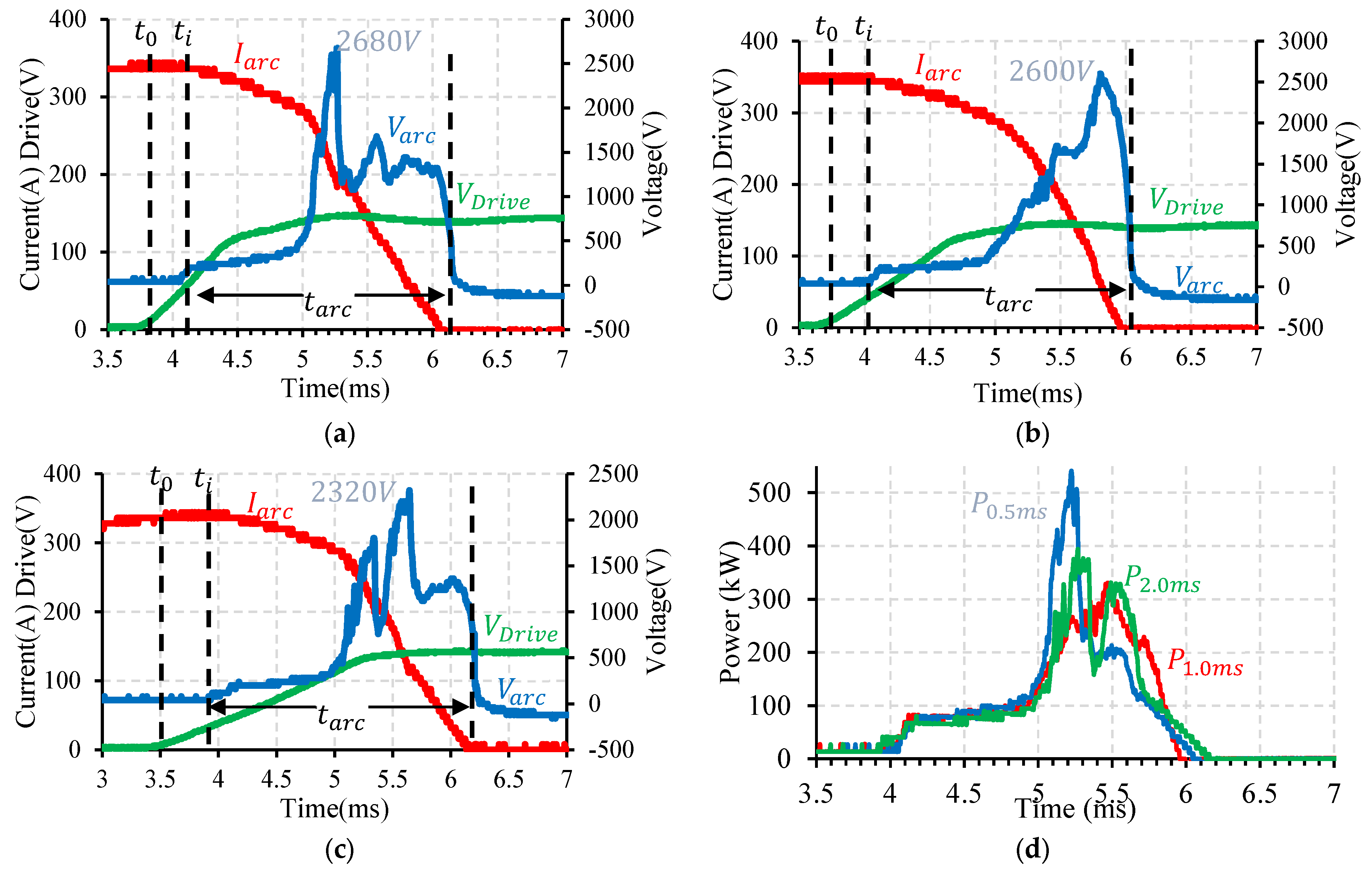
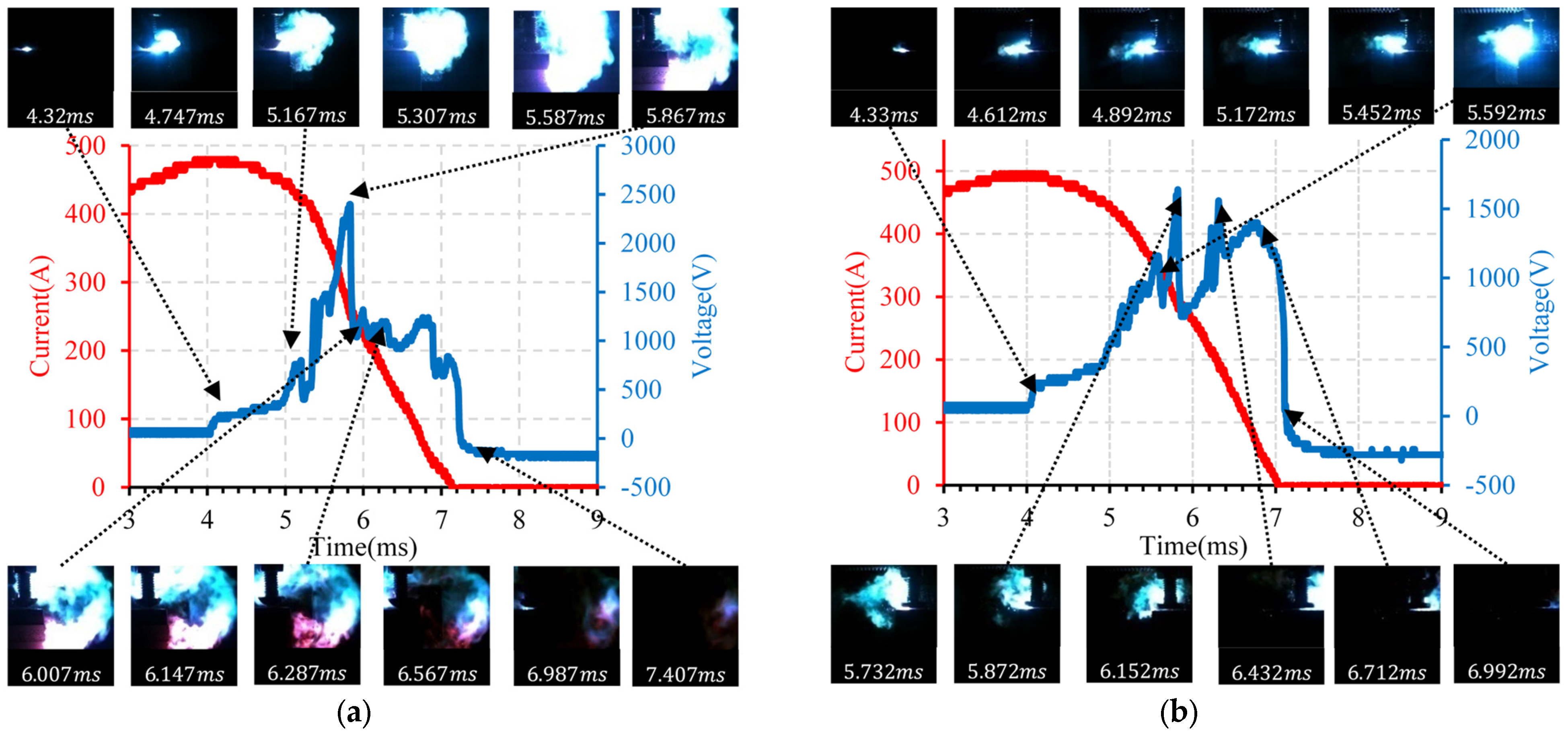
Similarly, nitrogen arc measurements and observations were conducted under different discharged voltages of 140 V and 200 V, corresponding to currents of 350 A and 500 A, respectively. As with the VA, the switch was triggered at three different voltage rise times (0.5, 1, and 2 ms) using two types of fixed contacts (round and flat). For each test arrangement, the arc voltage and arc current were recorded as a function of time alongside the applied driving voltage. The measured signals are shown in Figure 13. High-speed photography was also performed, and the results are shown in Figure 14.
The observed arcing in nitrogen could be categorized into two main distinct intervals: the arc formation, in which the arc intensity gradually increases as the piezo-driven contacts become apart, and the arc degradation, in which the arc is pushed to the contact edge to be extinguished as it cannot be sustained further. In between these intervals lays a key moment where the arc is drastically twisted and revolved behind the contacts. This is marked by a sharp rise in the arc voltage, just after the contact reaches its final stroke.
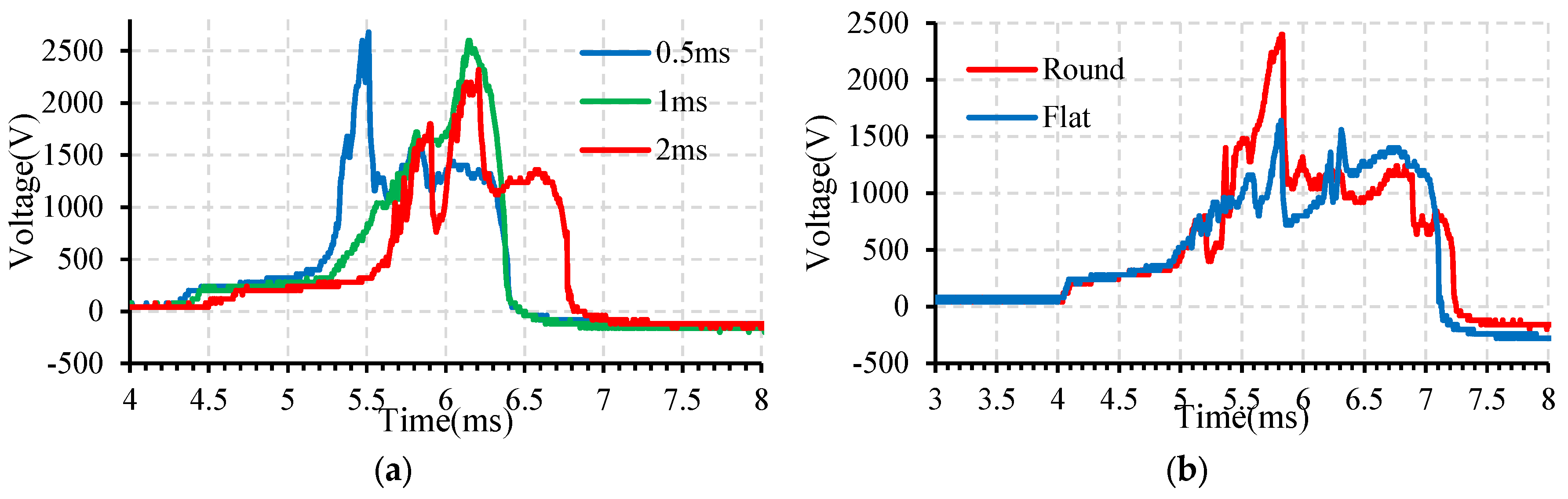
The arc voltage exhibits a clear dependence on the drive time, with higher values observed at shorter piezoelectric drive rise times. The maximum recorded arc voltages were 2680 V, 2600 V, and 2320 V for drive times of 0.5 ms, 1.0 ms, and 2.0 ms, respectively. In addition, shorter drive times result in a more rapid attainment of the peak arc voltage. The drive time also influences the total arc duration, with measured values of 1.972 ms, 1.902 ms, and 2.188 ms for 0.5 ms, 1.0 ms, and 2.0 ms, respectively. Furthermore, the arc initiation time increases with increasing drive time. In terms of power characteristics, higher instantaneous power dissipation is observed at shorter drive times, whereas the total arc energy, obtained by integrating the power over arc duration, remains comparable across the different operating conditions. The effect of drive time on nitrogen arc characteristics is illustrated in Figure 15a.
Comparing arc voltages between different contacts is shown in Figure 15b. It could be seen that round contacts had retained a higher arc voltage of 2400 V, while it was 1640 V between flat contacts. The arcing time also differs at different contact shapes, as the arc lasted about 3.088 ms and 2.972 ms for round and flat contacts, respectively.

4. Discussion

Recorded results showed a different arcing pattern of nitrogen compared with that in vacuum. While the vacuum arc seemed to be confined to circulating between the contacts [23], the nitrogen arc showed the typical behavior of arcs observed in gas-filled contactors (GFCs) [18]. The installed permanent magnetic plates had a significant effect on the nitrogen arc dynamics, while a less significant effect was observed in vacuum until the arc was about to be extinguished. Further comparisons on arc timing and arc voltage were typical and resemble each medium’s distinct characteristics. The influence of piezoelectric actuation was obvious in vacuum as well as in nitrogen. Piezoelectric fast response and high acceleration caused a higher arc voltage rise rate. Similar behaviors were also reported in [15], as speed actuation considerably increased arc elongation, therefore, increasing the convective cooling of the arc column, eventually leading to it being extinguished.
Table 2 demonstrates that both the interruption medium and contact geometry significantly influences arc characteristics under varying drive rise times. In air, round contacts consistently produce higher average arc voltages and slightly faster voltage rise rates than flat contacts, with shorter rise times yielding higher peak voltages and longer arc durations. Vacuum conditions result in substantially lower arc voltages (80–90 V) and longer arc durations, with minor sensitivity to rise time or contact geometry. In nitrogen, arc voltages are markedly higher, particularly for round contacts, and shorter rise times reduce arc duration while slightly increasing dv/dt. Across all media, round contacts generally generate higher voltages than flat contacts, indicating that contact geometry amplifies the electrical stress during interruption. These results confirm that drive dynamics, contact geometry, and medium collectively govern arc formation, evolution, and extinction, providing critical guidance for the design and optimization of high-speed piezoelectrically actuated switching devices.
Additionally, an energy-based thermal assessment was conducted using the measured arc power waveforms (Figure 7d, Figure 10d, and Figure 13d). The arc energy, obtained by integrating P a r c ( t ) , was estimated to be approximately 30–65 J for air, 80–120 J for vacuum, and 100–200 J for nitrogen, depending on the drive condition. The corresponding peak powers were approximately 150 kW (air), 25–30 kW (vacuum), and up to 500 kW (nitrogen), with typical arc durations of ~1–3 ms (air), ~4–5 ms (vacuum), and ~1–2 ms (nitrogen). Assuming a conservative upper bound where the full arc energy is deposited into a small effective contact area, as observed in the high-speed arc images (Figure 8 and Figure 11, and Figure 14), the estimated transient temperature rise ranges from approximately 200 °C to 1000 °C. In practice, only a fraction (typically 10–30%) of the arc energy is transferred to the contacts, with the remainder dissipated through plasma radiation and the surrounding medium. Consequently, the effective temperature rise is significantly lower and confined to the small contact area. These results indicate that, despite high instantaneous power levels, the total energy remains limited, and the associated thermal load is transient and localized, supporting the practical feasibility of the investigated operating conditions.

5. Conclusions

This study, to the best of the authors’ knowledge, presents the first experimental investigation of arc characteristics in vacuum and nitrogen environments using a piezoelectrically actuated contact system. The results establish a clear relationship between the drive dynamics and the resulting arc behavior. It is demonstrated that the drive rise time significantly influences arc initiation time ( t i ), arc voltage, duration, and d v / d t . Shorter drive times generally promote faster arc development, leading to higher peak arc voltages and increased voltage gradients, while longer drive times result in delayed arc initiation and reduced arc intensity. The arc initiation time was found to increase with increasing drive time, confirming the strong dependence of breakdown dynamics on the contact separation rate. The quenching medium plays a critical role in determining arc characteristics. Nitrogen exhibits the highest arc voltages and strongest dependence on drive dynamics, while vacuum arcs maintain relatively low and stable voltage levels with longer arc durations. Air demonstrates intermediate behavior, with noticeable sensitivity to both drive conditions and contact geometry. Contact geometry further affects arc performance, where round contacts generally produce higher arc voltages and steeper d v / d t compared to flat contacts, indicating enhanced field concentration and more rapid arc development. In contrast, flat contacts tend to yield lower arc intensity and more distributed discharge behavior.
Overall, the results highlight that arc characteristics in piezoelectrically actuated systems are governed by a coupled interaction between drive profile, quenching medium, and contact geometry. These findings provide a foundation for optimizing actuation strategies to control arc initiation, intensity, and energy in fast mechanical switching applications.

Author Contributions

Conceptualization, M.A.-D. and Q.W.; methodology, M.A.-D.; software, M.A.-D.; validation, M.B.F., H.R. and Q.W.; formal analysis, M.A.-D.; investigation, M.A.-D.; resources, M.A.-D.; data curation, M.B.F.; writing—original draft preparation, M.A.-D.; writing—review and editing, Q.W.; visualization, H.R.; supervision, Q.W.; project administration, Q.W.; funding acquisition, M.A.-D. All authors have read and agreed to the published version of the manuscript.

Funding

This research was partially funded by the Science and Technology Project of State Grid Corporation of China, grant number 5500-202199527A-0-5-ZN. The APC was funded by Al-ahliyya Amman University.

Data Availability Statement

The data that support the findings of this study are available from the corresponding author upon reasonable request.

Acknowledgments

The authors would like to thank Zhao Yuan from Xi’an Aigtek Electronic Technology Co.

Conflicts of Interest

The authors declare no conflicts of interest. The funders had no role in the design of the study; in the collection, analyses, or interpretation of data; in the writing of the manuscript; or in the decision to publish the results.

References

  1. Mahafzah, K.A.; Obeidat, M.A.; Mansour, A.M.; Al-Shetwi, A.Q.; Ustun, T.S. Artificial-intelligence-based open-circuit fault diagnosis in VSI-Fed PMSMs and a novel fault recovery method. Sustainability 2022, 14, 16504. [Google Scholar] [CrossRef]
  2. Mahafzah, K.A.; Obeidat, M.A. Logic System Design for Fault Detection and Classification of Voltage Source Inverter Driving Induction Motor. Int. J. Circuits Syst. Signal Process. 2022, 16, 1102–1108. [Google Scholar] [CrossRef]
  3. Al-Dweikat, M.; Zhang, G.; Liu, Y.; Cui, J. On the Design of a Fast Mechanical Switch-Based Amplified Piezoelectric Actuator. IEEE Trans. Compon. Packag. Manuf. Technol. 2024, 14, 229–239. [Google Scholar] [CrossRef]
  4. Khare, S.J.; Sharma, N.; Kumar, S. A review on piezoelectric effect and its application with future prospects. J. Electr. Eng. 2016, 10, 8192. [Google Scholar] [CrossRef]
  5. Al-Dweikat, M.; Zhang, G.; Liu, Y.; Jian, C. A comparison of two piezoelectric actuator concepts for fast mechanical switching in DC hybrid circuit breakers. Rev. Sci. Instrum. 2024, 95, 074709. [Google Scholar] [CrossRef] [PubMed]
  6. Al-Dweikat, M.; Cui, J.; Sun, S.; Yang, M.; Zhang, G.; Geng, Y. A review on Thomson coil actuators in fast mechanical switching. Actuators 2022, 11, 154. [Google Scholar] [CrossRef]
  7. Xu, C.; Damle, T.; Graber, L. A survey on mechanical switches for hybrid circuit breakers. In 2019 IEEE Power & Energy Society General Meeting (PESGM); IEEE: New York, NY, USA, 2019; pp. 1–5. [Google Scholar]
  8. Al-Dweikat, M.; Zhang, G.; Liu, Y.; Cui, J. Research on DC switching based piezoelectric actuator. J. Intell. Mater. Syst. Struct. 2024, 35, 1201–1215. [Google Scholar] [CrossRef]
  9. Graber, L.; Smith, S.; Soto, D.; Nowak, I.; Owens, J.; Steurer, M. A new class of high speed disconnect switch based on piezoelectric actuators. In 2015 IEEE Electric Ship Technologies Symposium (ESTS); IEEE: New York, NY, USA, 2015; pp. 312–317. [Google Scholar]
  10. Bosworth, M.; Soto, D.; Agarwal, R.; Steurer, M.; Damle, T.; Graber, L. High speed disconnect switch with piezoelectric actuator for medium voltage direct current grids. In 2017 IEEE Electric Ship Technologies Symposium (ESTS); IEEE: New York, NY, USA, 2017; pp. 419–423. [Google Scholar]
  11. Xu, C.; Damle, T.; Bosworth, M.; Soto, D.; Agarwal, R.; Steurer, M.; Graber, L. Piezoelectrically actuated fast mechanical switch for MVDC protection. IEEE Trans. Power Deliv. 2020, 36, 2955–2964. [Google Scholar] [CrossRef]
  12. He, Y.; Yang, Q.; Li, Y.; Kim, S.; Peng, F.Z.; Bosworth, M.; Wang, L.; Jin, Z.; Shi, Y.; Bonaventura, N.; et al. Control Development and Fault Current Commutation Test for the EDISON Hybrid Circuit Breaker. IEEE Trans. Power Electron. 2023, 38, 8851–8865. [Google Scholar] [CrossRef]
  13. Xu, C.; Jin, Z.; Graber, L. Switching motion control of piezoelectric actuators in hybrid circuit breakers for MVDC system protection. In 2021 IEEE Applied Power Electronics Conference and Exposition (APEC); IEEE: New York, NY, USA, 2021; pp. 2187–2193. [Google Scholar]
  14. Xu, C.; Jin, Z.; Tousi, M.; Graber, L. Critical damping in travel curves of piezoelectrically actuated fast mechanical switches for hybrid circuit breakers. IEEE Trans. Power Deliv. 2022, 37, 3873–3884. [Google Scholar] [CrossRef]
  15. Weaver, P.M.; Pechrach, K.; McBride, J.W. Arc root mobility on piezoelectrically actuated contacts in miniature circuit breakers. IEEE Trans. Compon. Packag. Technol. 2005, 28, 734–740. [Google Scholar] [CrossRef]
  16. Ling, M.; Howell, L.L.; Cao, J.; Chen, G. Kinetostatic and dynamic modeling of flexure-based compliant mechanisms: A survey. Appl. Mech. Rev. 2020, 72, 030802. [Google Scholar] [CrossRef]
  17. Damle, T.; Varenberg, M.; Graber, L. Electric contact material selection for medium and high voltage DC circuit breakers. Trans. Electr. Electron. Mater. 2020, 21, 329–338. [Google Scholar] [CrossRef]
  18. Gonzalez, D.; Gortschakow, S.; Methling, R.; Yu, S.; Werner, F. Switching behavior of a gas-filled model DC-contactor under different conditions. IEEE Trans. Plasma Sci. 2020, 48, 2515–2522. [Google Scholar] [CrossRef]
  19. Xu, C.; Wei, J.; Graber, L. Compatibility analysis of piezoelectric actuators in supercritical carbon dioxide. In 2020 IEEE Electrical Insulation Conference (EIC); IEEE: New York, NY, USA, 2020; pp. 171–174. [Google Scholar]
  20. Harbin Coremorrow Co., Ltd. Piezo Stack User’s Guide. Available online: https://www.coremorrow.com/en/service-58-1.html (accessed on 15 August 2023).
  21. Damle, T.; Munoz, A.; Xu, C.; Graber, L. Design Considerations for Fast Mechanical Switches Using Piezoelectric Actuators. In 2020 IEEE 66th Holm Conference on Electrical Contacts and Intensive Course (HLM); IEEE: New York, NY, USA, 2020; pp. 131–136. [Google Scholar]
  22. Cui, J.; Zhang, G.; Sun, S.; Al-Dweikat, M.; Yang, M.; Geng, Y. Transport Coefficients of H2–Cu/Al2O3 Plasma Mixtures Considering Solid and Liquid Status. IEEE Trans. Plasma Sci. 2023, 51, 2–14. [Google Scholar] [CrossRef]
  23. Feng, D.; Xiu, S.; Li, M.; Yuan, B.; Zhang, Y.; Zhao, L. Experimental investigation on transition characteristics of arcing stages under transverse magnetic field. IEEE Trans. Plasma Sci. 2018, 46, 622–630. [Google Scholar] [CrossRef]
Figure 1. Amplified piezoelectric actuator (FPA).
Plasma 09 00013 g001
Figure 2. Fast mechanical switch-based amplified piezoelectric actuator (FMS-APA) prototype: (a) schematic diagram; (b) prototype.
Plasma 09 00013 g002
Figure 3. Schematic diagram of the switch control circuit.
Plasma 09 00013 g003
Figure 4. The deployed electrical contact system (round and flat contacts were pictured together only for illustration purposes, and each pair was used separately in this study).
Plasma 09 00013 g004
Figure 5. Arc observation test: (a) schematic diagram of the test circuit; (b) experimental test platform.
Plasma 09 00013 g005
Figure 6. Amplified piezoelectric actuator (APA): (a) stroke at different voltages; (b) travel at different voltage rise times.
Plasma 09 00013 g006
Figure 7. Air arc voltage, arc current, and the switch drive voltage of 140 V/350 A at drive signals of (a) 0.5 ms; (b) 1 ms; (c) 2 ms; and (d) instantaneous arc power.
Plasma 09 00013 g007
Figure 8. High-speed images of 140 V/350 A air arc at 0.5 ms voltage drive rise time triggered for (a) round contacts and (b) flat contacts.
Plasma 09 00013 g008
Figure 9. Air arc voltage comparison: (a) 140 V/350 A at different drive rise times; (b) 140 V/350 A with round and flat contacts at 0.5 ms drive time.
Plasma 09 00013 g009
Figure 10. Vacuum arc voltage, arc current, and the switch drive voltage of 140 V/350 A at drive signals of (a) 0.5 ms; (b) 1 ms; (c) 2 ms; and (d) instantaneous arc power.
Plasma 09 00013 g010
Figure 11. High-speed images of 140 V/350 A vacuum arc at 0.5 ms voltage drive rise time triggered for (a) round contacts and (b) flat contacts.
Plasma 09 00013 g011
Figure 12. Vacuum arc voltage comparison: (a) 140 V/350 A at different drive rise times; (b) 200 V/500 A with round and flat contacts at 0.5 ms drive time.
Plasma 09 00013 g012
Figure 13. Nitrogen arc voltage, arc current, and the switch drive voltage of 140 V/350 A at drive signals of (a) 0.5 ms; (b) 1 ms; (c) 2 ms; and (d) instantaneous arc power.
Plasma 09 00013 g013
Figure 14. High-speed images of 140 V/350 A nitrogen arc at 0.5 ms voltage drive time triggered for (a) round contacts and (b) flat contacts.
Plasma 09 00013 g014
Figure 15. Nitrogen arc voltage comparison: (a) 140 V/350 A at different drive rise times; (b) 200 V/500 A with round and flat contacts at 0.5 ms drive time.
Plasma 09 00013 g015
Table 1. Comparative analysis of key performance metrics between signal ramping.
Operation ModePerformance Metrics
Response Time
(t1t0) (ms)
Actuation Time
(t3t0) (ms) *
Max. Overshoot (%)Min. Overshoot (%)
tr = 0 ms0.2961.283132
tr = 1 ms0.4131.522625
tr = 2 ms0.4562.381018
* Total time to first hit nominal stroke.
Table 2. Summary table comparing air/vacuum/nitrogen for each contact type and drive rise time.
Interruption MediumContact SystemDrive Setup (ms)ti (ms)Varc (V)tarc (ms)dv/dt (V/µs)
Air
(140 V/350 A)
Round0.50.40 ± 0.01800 ± 303.20 ± 0.100.31 ± 0.02
1.00.41 ± 0.01840 ± 351.40 ± 0.050.40 ± 0.02
2.00.46 ± 0.021080 ± 401.60 ± 0.060.42 ± 0.02
Flat0.50.43 ± 0.01680 ± 253.45 ± 0.100.19 ± 0.01
1.00.44 ± 0.01700 ± 281.42 ± 0.050.23 ± 0.01
2.00.47 ± 0.02800 ± 331.55 ± 0.060.25 ± 0.01
Vacuum
(140 V/350 A)
Round0.50.50 ± 0.0285 ± 5 *4.19 ± 0.120.15 ± 0.01
1.00.52 ± 0.0285 ± 5 *4.46 ± 0.130.18 ± 0.01
2.00.55 ± 0.0285 ± 5 *4.68 ± 0.140.20 ± 0.01
Flat0.50.51 ± 0.0180 ± 5 *4.20 ± 0.120.12 ± 0.02
1.00.53 ± 0.0280 ± 5 *4.45 ± 0.130.14 ± 0.02
2.00.56 ± 0.0280 ± 5 *4.65 ± 0.140.16 ± 0.02
Nitrogen
(140 V/350 A)
Round0.50.30 ± 0.012680 ± 803.08 ± 0.090.26 ± 0.02
1.00.32 ± 0.012600 ± 701.902 ± 0.060.24 ± 0.02
2.00.35 ± 0.012320 ± 652.188 ± 0.070.22 ± 0.01
Flat0.50.31 ± 0.011640 ± 502.972 ± 0.090.18 ± 0.01
1.00.33 ± 0.011600 ± 501.890 ± 0.060.16 ± 0.01
2.00.36 ± 0.021500 ± 452.180 ± 0.070.14 ± 0.01
t i : arc initiation time. Vacuum arc voltage values represent average steady-state levels, while the rest represent the maximum recorded arc voltage. Values are reported as mean ± standard deviation (SD) of n = 3 selected consecutive measurements exhibiting consistent behavior. * indicate that the vacuum arc voltage values represent average values, in order to distinguish them from the other arc voltage values, which represent the maximum measured arc voltages.
Disclaimer/Publisher’s Note: The statements, opinions and data contained in all publications are solely those of the individual author(s) and contributor(s) and not of MDPI and/or the editor(s). MDPI and/or the editor(s) disclaim responsibility for any injury to people or property resulting from any ideas, methods, instructions or products referred to in the content.