Article

Assessment of Adhesive Protocols on the Repair Bond Strength of Vita Enamic Polymer-Infiltrated Ceramic Network Using Functional Monomer-Containing Universal Adhesives

by
Benyapa Korcharoenrat
1,
Tool Sriamporn
2,*,
Niyom Thamrongananskul
3,
Nantawan Krajangta
1 and
Awiruth Klaisiri
1,*
1
Division of Restorative and Esthetic Dentistry, Faculty of Dentistry, Thammasat University, Pathum Thani 12120, Thailand
2
Department of Prosthodontics, College of Dental Medicine, Rangsit University, Pathum Thani 12000, Thailand
3
Faculty of Dentistry, Burapha University, Chonburi 20130, Thailand
*
Authors to whom correspondence should be addressed.
Ceramics 2026, 9(3), 32; https://doi.org/10.3390/ceramics9030032
Submission received: 14 January 2026 / Revised: 10 March 2026 / Accepted: 12 March 2026 / Published: 14 March 2026

Abstract

The aim of this research was to assess the effects of different adhesive surface treatment protocols using universal adhesives on the shear bond strength (SBS) between a Vita Enamic and resin composite, as well as to analyze the associated failure modes. Eighty Vita Enamic ceramics were prepared, thermocycled, and randomly allocated into eight experimental groups following silane coupling agent pretreatment and adhesive system: Single Bond 2 (SB), silane + SB, Scotchbond Universal Plus (SBP), silane + SBP, Beautibond Xtreme (BEX), silane + BEX, Tetric N-Bond Universal (TUB), and silane + TUB. All specimens were etched with 9% hydrofluoric acid prior to adhesive application. Resin composites were bonded to the treated surfaces and subjected to SBS analysis using a universal testing device. Failure modes were performed under a stereomicroscope. Data were statistically determined using one-way ANOVA and Tukey’s post hoc test (α = 0.05). Statistically significant differences in SBS were indicated among the groups (p < 0.05). In the result, the SB (13.96 ± 2.34 MPa) and TUB (12.39 ± 2.91 MPa) groups exhibited the lowest SBS values and exclusively adhesive failure modes. Groups treated with silane and/or silane-containing universal adhesives (Sl + SB; 18.42 ± 3.11 MPa, SBP; 19.01 ± 2.62 MPa, BEX; 19.20 ± 2.96 MPa and Sl + TUB; 18.16 ± 2.82 MPa) demonstrated significantly higher SBS. The highest SBS values were achieved in the silane + SBP (24.53 ± 2.66 MPa) and silane + BEX (25.12 ± 2.74 MPa) groups, which were statistically comparable to each other and superior to all other groups. These groups also showed increased proportions of mixed and cohesive failures, indicating improved interfacial integrity. In conclusion, the SBS between Vita Enamic and the resin composite was significantly influenced by surface pretreatment and adhesive composition. Hydrofluoric acid etching combined with silane coupling agent pretreatment and silane coupling agent-containing universal adhesives provided the highest bond strength, supporting a multimodal strategy for the reliable repair of Vita Enamic restorations.

1. Introduction

Digital technologies are becoming more integral to many steps of the dental workflow, largely due to developments in computer-aided design/computer-assisted manufacturing (CAD/CAM). The benefits of CAD/CAM include the availability of nearly flawless industrially made dental restorations, improved accuracy and treatment design, greater reproducibility, fast and automated data analyzing, and more efficient data recording and management [1]. Current CAD/CAM technologies include both subtractive milling and additive manufacturing, also known as 3D printing. Additive manufacturing offers several advantages over subtractive milling, such as minimizing material waste and the ability to create intricate shapes, including undercuts and hard-to-reach areas that milling cannot achieve. At present, the majority of hybrid resin–ceramic materials employed as dental restoratives can be fabricated through subtractive milling techniques [2]. The development of novel CAD/CAM material platforms that integrate appropriate ceramic properties, including durability and color stability, alongside improved flexural strength and reduced abrasiveness of composites, has demonstrated the capability to generate current materials such as Vita Enamic [3].
Currently, a wide variety of such materials is available for clinical use. It is essential for dentists and dental workers to understand the system for categorizing ceramic components utilized in restorative dentistry. This understanding is essential for communication regarding material selection (anterior and posterior tooth), the type of restoration suitable (partial or full coverage), and the appropriate bonding technique. In dentistry, ceramic restorative materials are typically categorized into three families, which can be identified based on their structure: polycrystalline, glass matrix, and resin matrix ceramics [4]. However, from a materials science perspective, Vita Enamic cannot be considered a true ceramic, as it consists of a dual-phase structure composed of an interconnected ceramic network infiltrated with a polymer matrix; therefore, it is classified as a resin matrix-based composite material rather than a conventional ceramic [5].
The resin matrix ceramic material can be further categorized into resin nanoceramics (RNCs) and polymer-infiltrated ceramic network (PICN) material. RNCs consist of nanometer-sized ceramic fillers approximately 80% by weight randomly dispersed in a polymer matrix, for example, Lava Ultimate, 3M ESPE, while PICNs are composed of a dual network of a polymer matrix and a porous feldspathic ceramic matrix infiltrated as a Vita Enamic [4]. The dual network existing in Vita Enamic supports clinically delicate and minimally invasive restoration, compared to standard all-ceramic material with tapered, thin, and stable edges up to 0.3 mm. Likely, lower-flexural-strength materials like Vita Enamic (152 MPa) provides closer values compared to enamel and dentin, whose flexural strength is approximately 100–200 MPa [6]. Vita Enamic provides ease in processing and esthetics as well as acceptable mechanical properties. Moreover, it is capable of supporting masticatory forces through a balance of flexural strength and elasticity. To conclude, Vita Enamic is a type of dental restorative material that can be processed efficiently with CAD/CAM support to create long-term restorations such as tooth-colored inlays, onlays, veneers, and crowns [7].
It is essential to understand the structural components of each material, as they significantly affect its role in determining the success of restoration. The selection of appropriate adhesive protocols, including surface treatment technique and type of adhesive employed, is critical in optimizing good longevity and outcome. Traditional bonding protocols typically involve multiple steps for surface treatment. In contrast, a novel adhesive system, referred to as the “universal adhesive,” has recently been introduced to the market. This system is designed to streamline the bonding procedure by decreasing the number of clinical steps and reducing the potential for errors [8]. Universal adhesives are used to integrate effective chemical constituents into one bottle, engineered to bond effectively, as well as to be used in both indirect and direct restorations on ceramic, composite, and metal materials. This offers dentists a broader range of options when selecting the most suitable procedure for bonding with various prepared cavities [9]. Some universal adhesives contain a silane coupling agent that can effectively bond to silica-based materials. In Vita Enamic, the inorganic phase mainly consists of a feldspathic ceramic containing silica. This silica-based ceramic phase can potentially interact with silane coupling agents to promote chemical bonding. In theory, universal adhesives containing silane coupling agents can chemically effectively bond with the inorganic phase of Vita Enamic [8].
In this article, we focus on Vita Enamic material as it is one type of PICN material that contains both glass filler and a resin matrix producing many desirable outcomes. There are previous studies showing the bond strength of Vita Enamic using different surface treatment strategies [10,11] but the appropriate surface treatment protocol of Vita Enamic using universal adhesive remains unknown. Hence, the purpose of this research is to determine the adhesive surface treatment protocol for Vita Enamic utilizing universal adhesive on shear bond strength. The research hypothesis is as follows: There is no statistically significant difference for adhesive surface treatment protocols for Vita Enamic using different functional monomer-containing universal adhesive in the aspect of repair strength.

2. Materials and Methods

2.1. Preparation of Specimen

Sample size estimation was conducted using G*power program version 3.1.9.6 to calculate the effect size based on previous published studies [12] and the significant level was set at 0.05 and power at 0.95. The outcomes reported that the total sample size is 72 specimens. Thus, there are approximately at least 9 specimens per group for each test, which generate power > 0.95 at significance level equal to 0.05. Therefore, the calculated sample size was the minimum required.
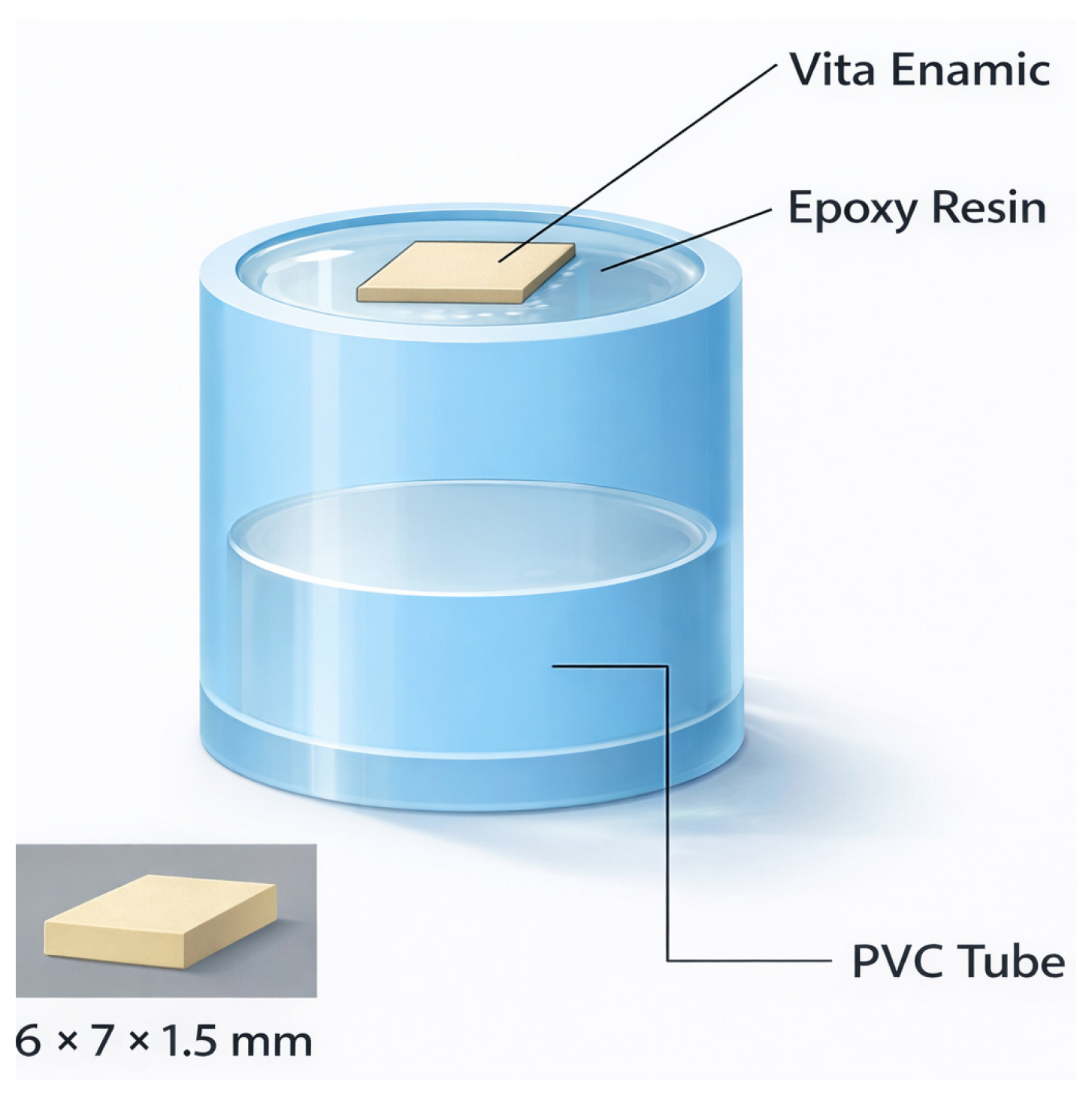
The detail and composition of materials in this study are indicated in Table 1. Eighty pieces of Vita Enamic blocks (VITA Zahnfabrik, Bad Sackingen, Germany) were sectioned into rectangular specimens (6 × 7 mm in dimensions and 1.5 mm in thickness) using a microcutting device (Cutting machine, Struers, Westlake, OH, USA). The ceramic specimens underwent aging through thermocycling (Proto-tech, Microforce, Portland, OR, USA) with 5000 cycles between temperatures of 5 °C and 55 °C, including 30 s of dwell time and 5 s of transfer time per cycle [10]. This thermocycling procedure replicates 6 months of clinical use in the oral environment [13]. The ceramic specimens were inserted in polyvinyl chloride (PVC) tubes with epoxy resin as shown in Figure 1. Following this, all samples underwent a ten-minute rinse in distilled water utilizing ultrasonic cleansing.
The ceramic specimens underwent simple randomization to ensure unbiased distribution, were randomly designed into eight sample groups (n = 10 per group), and were treated with/without silane coupling agent (Sl) (RelyX ceramic primer, 3M ESPE, St. Paul, MN, USA) and/or one of adhesives (Single Bond 2 [SB]; 3M ESPE, St. Paul, MN, USA, Scotchbond Universal Plus [SBP]; 3M, Neuss, Germany, Beautibond Xtreme [BEX]; Shofu Inc., Kyoto, Japan and Tetric N bond Universal [TUB]; Ivoclar Vivadent, Schaan, Liechtenstein), as outlined in Table 2.

2.2. Surface Treatments

2.2.1. Mechanical Surface Treatment Technique

All specimens were etched using a 9% hydrofluoric acid (HF, Ultra-Dent Products, South Jordan, UT, USA) for 60 s. Following this, the HF was rinsed with distilled water and gently dried.

2.2.2. Silane Coupling Agent Application

A silane coupling agent was treated to the specimen surface for 1 min, then air-dried until the surface appeared free of shine.

2.2.3. Universal Adhesive Surface Treatment

A universal adhesive was then applied to the specimen surface using a microbrush for 20 s, and any excess adhesive was removed with a new microbrush. The solvents (ethanol, water, and acetone) from the universal adhesive were gently evaporated, allowing the surface to air dry for approximately 5 s, or until a shiny surface was achieved. Subsequently, a light cure was applied for 20 s.

2.3. Bonding Procedures

The surface-treated specimen was placed at the center of an Ultradent mold (Ultradent Products, Inc., South Jordan, UT, USA) of 2 mm diameter and thickness. A conventional resin composite (Filtek Z350 XT; 3M ESPE, St. Paul, MN, USA) was pressed into the mold and light-cured for 40 s. After that, the mold was removed, and the specimen underwent an additional 40 s of light curing. All specimens were then subjected to a 1-day incubation period in an incubator (Shaking incubator SI500, Stuart, Staffordshire, UK) at 37 °C distilled water.

2.4. Shear Bond Strength (SBS) Testing

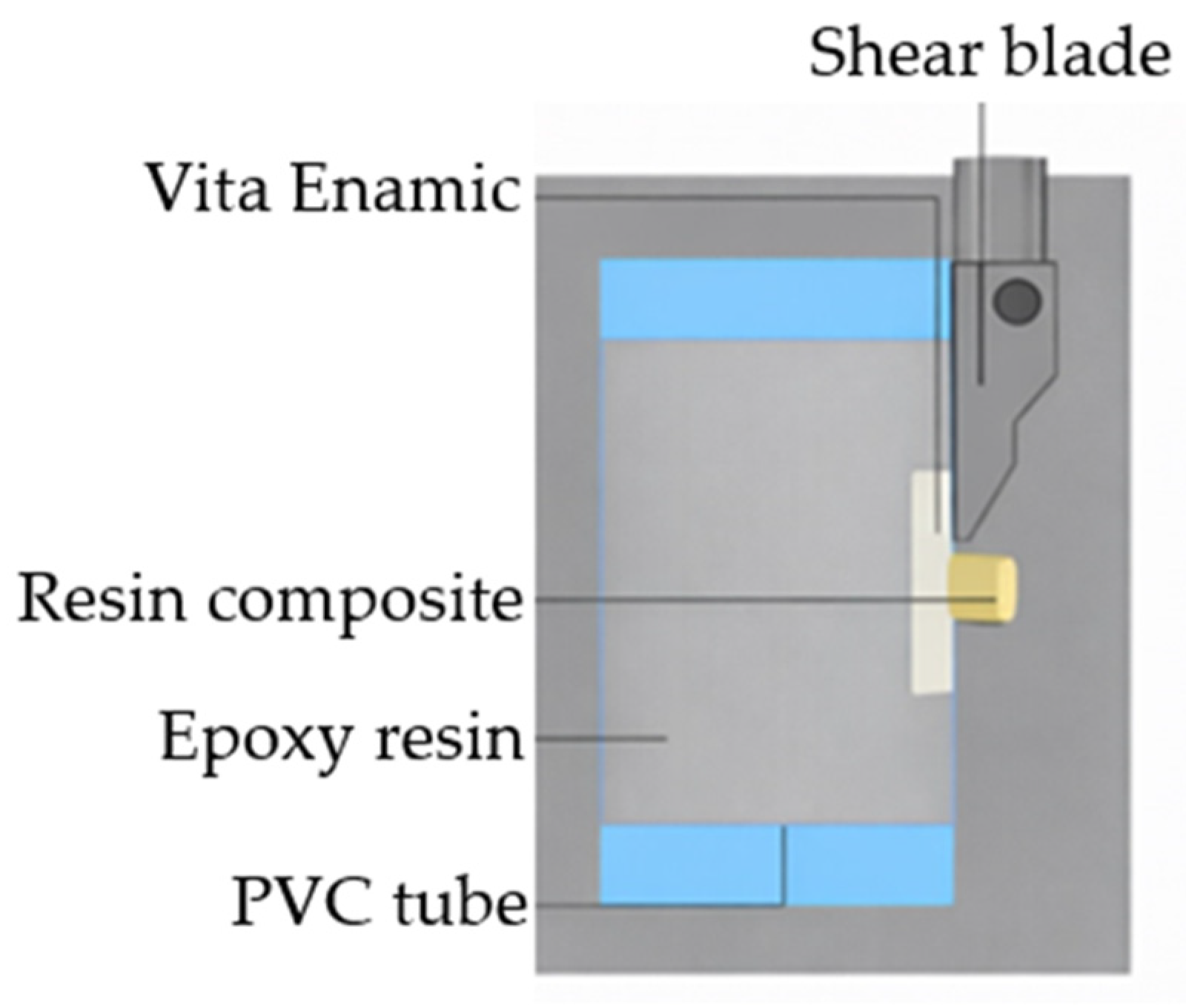
The samples’ SBS was ascertained using a universal testing apparatus (AGS-X 500N, Shimadzu Corporation, Kyoto, Japan). All specimens were securely mounted in the testing device, with the shear blade placed parallel to the interface between the Vita Enamic and resin composite. A shear load was used at a crosshead speed of 0.5 mm/min until failure occurred (Figure 2). By dividing the failure load by the surface area of the bonding interface between the adhesive and Vita Enamic, the SBS (in MPa) was calculated. The bond strength was thus measured by dividing the maximum applied force by the area of bonding.

2.5. Failure Mode Analysis

Following the SBS testing, the debonded surfaces of the Vita Enamic were examined under a stereomicroscope (JCW-6000, NeoscopeTM, Tokyo, Japan) at 50× magnification to assess the failure mode. Three distinct types of failure were identified: (1) adhesive failure, characterized by failure at the interface between the Vita Enamic and resin composite, where less than 40% of the resin composite remains on the surface of the Vita Enamic; (2) cohesive failure, which occurs within the Vita Enamic or resin composite, where at least 60% of the failure is confined to either the Vita Enamic or composite material; and (3) mixed failure, which involves a combination of adhesive and cohesive failure, with one type of failure affecting more than 40%, but less than 60%, of the bonded interface [14,15].

2.6. Statistical Evaluation

The data collected from all groups was analyzed using SPSS 26.0 for Mac (SPSS Inc., Chicago, IL, USA), with a confidence level set at 95% and a significance level of α = 0.05. The normality of the distribution was calculated using the Shapiro-Wilk test. Following this, Levene’s test was conducted to check for homogeneity of variance. The data followed a normal distribution, and shear bond strength was measured using a one-way analysis of variance (ANOVA), with the type of adhesive as the main factor. Tukey’s post hoc test was then used for multiple comparisons.

3. Results

3.1. SBS Test

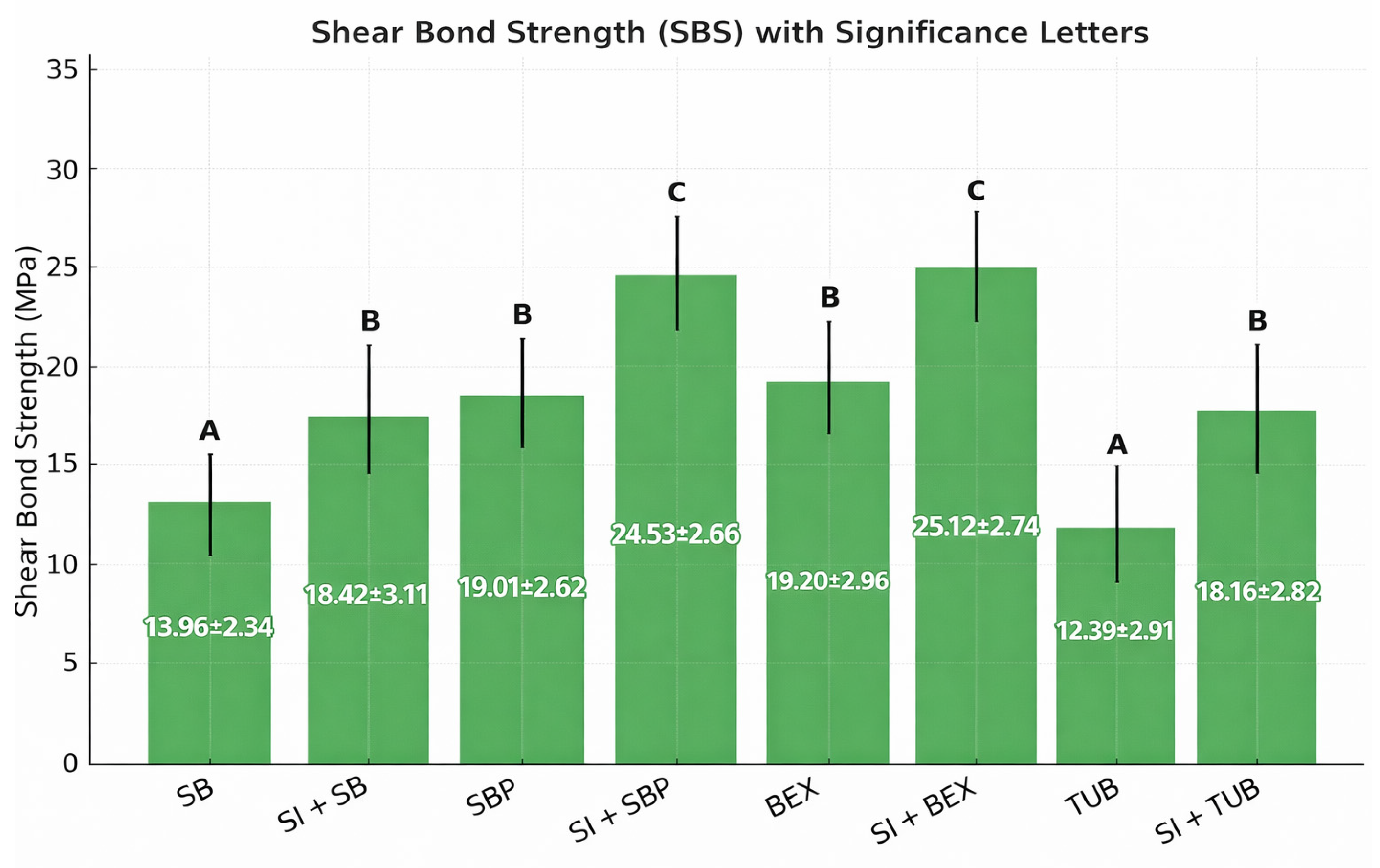
The mean SBS values for all experimental groups demonstrated statistically significant differences (p < 0.05) (Figure 3). The SB (13.96 ± 2.34 MPa) and TUB (12.39 ± 2.91 MPa) groups yielded the lowest SBS values, with no significant difference between them (p > 0.05). These groups, which received neither silane pretreatment nor functional monomer-containing adhesive, showed limited bonding effectiveness. The Supplementary Document includes the experimental data obtained and its statistical analysis, which corroborates the material presented in the Supplementary Data.
Surface pretreatment with silane and/or the use of universal adhesives containing silane markedly improved SBS. The Sl + SB (18.42 ± 3.11 MPa), SBP (19.01 ± 2.62 MPa), BEX (19.20 ± 2.96 MPa), and Sl + TUB (18.16 ± 2.82 MPa) groups demonstrated significantly higher SBS values compared with SB (p = 0.013, p = 0.003, p = 0.02, p = 0.025, respectively) and TUB (p = 0.00, p = 0.00, p = 0.00, p = 0.00, respectively).
The highest SBS values were indicated in the Sl + SBP (24.53 ± 2.66 MPa) and Sl + BEX (25.12 ± 2.74 MPa) groups. These two groups were statistically comparable to each other (p > 0.05) yet significantly superior to all other tested conditions (p < 0.01), indicating a synergistic improvement when silane pretreatment was combined with silane-containing universal adhesives.

3.2. Failure Mode Analysis

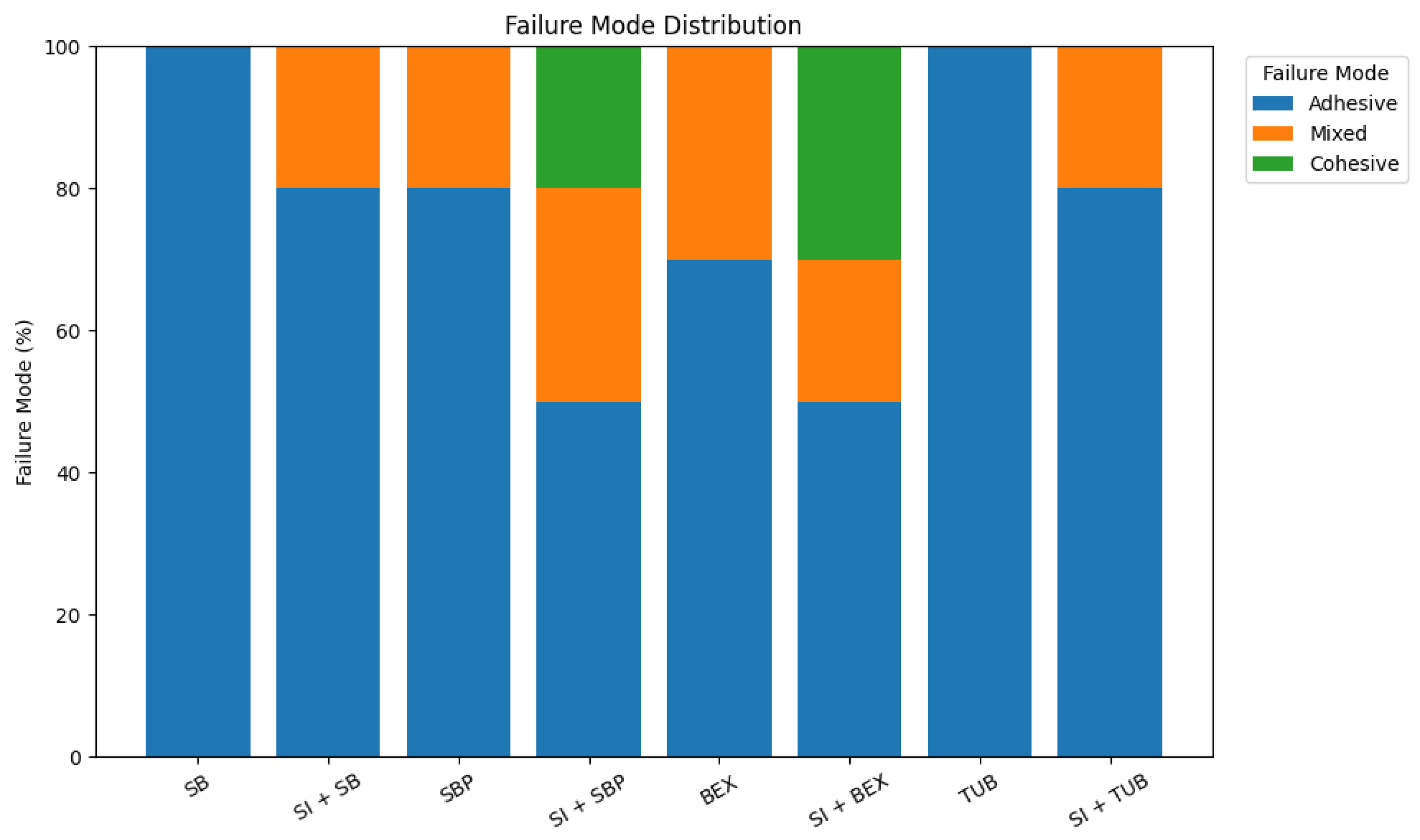
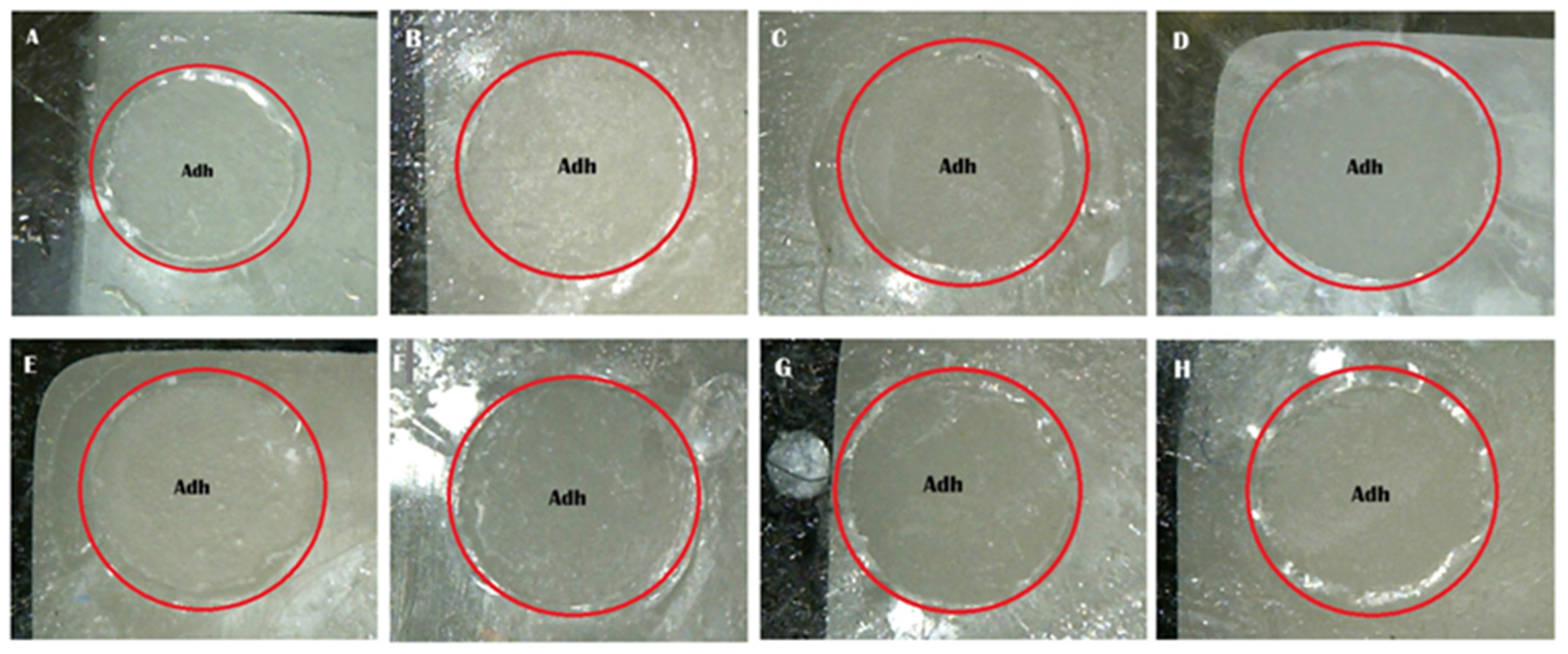
Distinct variations in failure mode distribution were identified across groups (Figure 4). The SB and TUB groups exhibited 100% adhesive failures, consistent with their low SBS values and indicating weak interfacial adhesion between the adhesive and substrate.
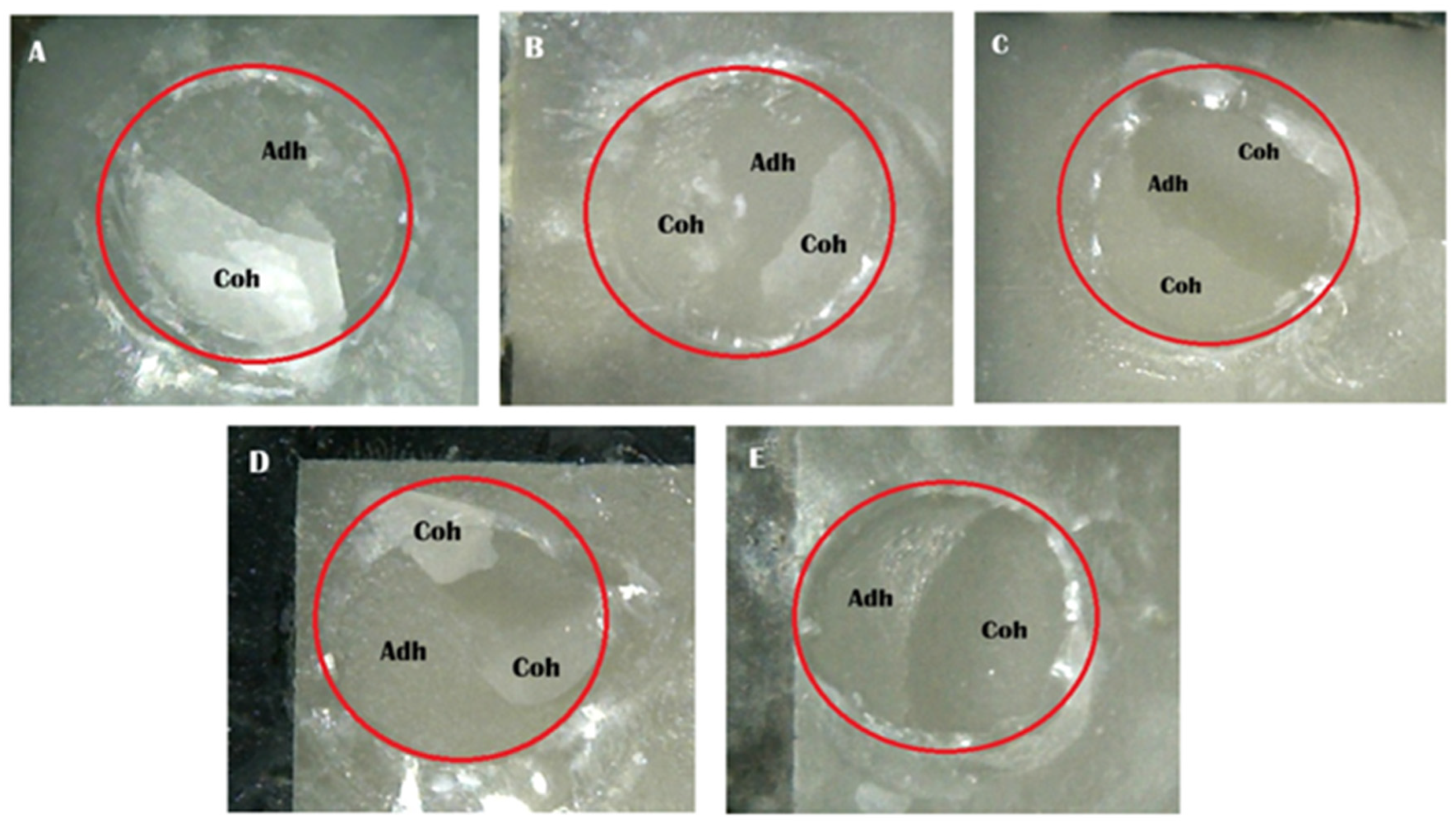
In contrast, groups that received silane pretreatment and/or silane-containing universal adhesives displayed a shift toward more favorable failure mode pattern. The Sl + SB, SBP, BEX, and Sl + TUB groups showed a slight increase in mixed failures (20–30%), though adhesive failure remained predominant.
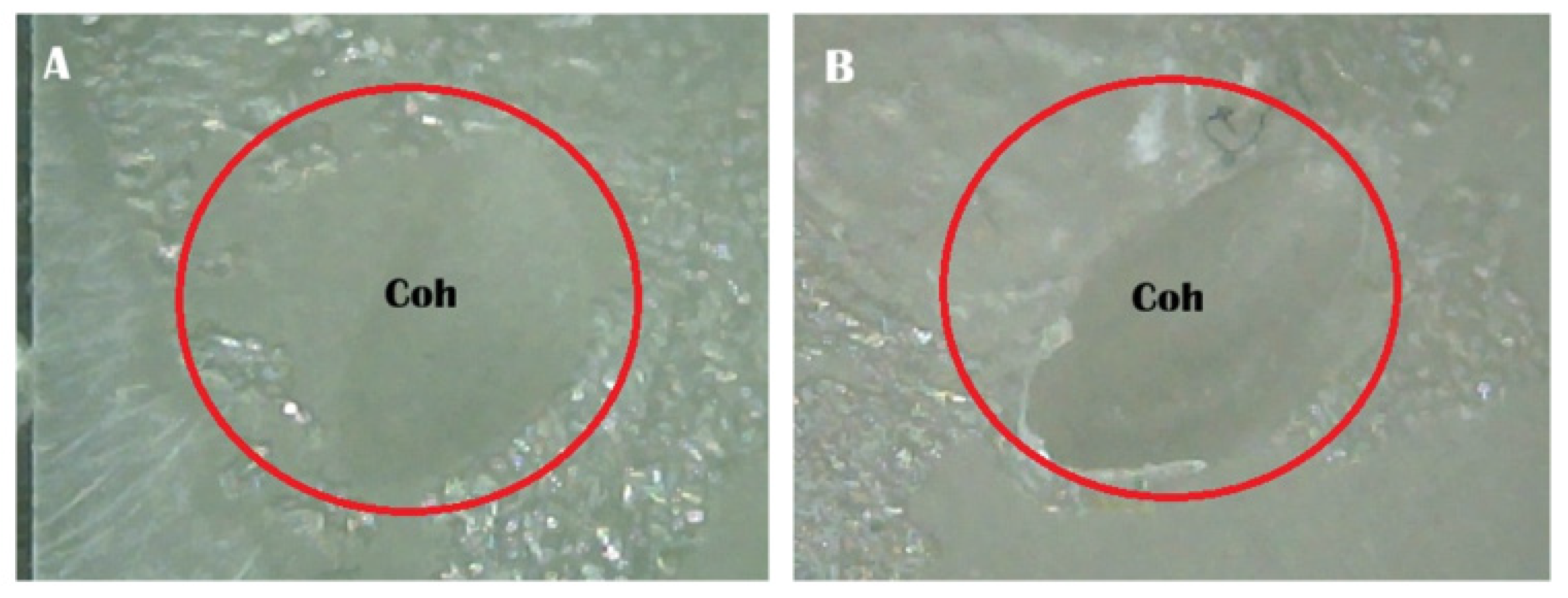
The Sl + SBP and Sl + BEX groups demonstrated the most substantial changes in fracture behavior, with reductions in purely adhesive failures and increased proportions of mixed and cohesive failures: Sl + SBP: 50% adhesive, 30% mixed, 20% cohesive; Sl + BEX: 50% adhesive, 20% mixed, 30% cohesive.
These patterns indicate a reinforced adhesive interface and improved bond integrity, consistent with their superior SBS performance.
Figure 5, Figure 6 and Figure 7 present stereomicroscopic images of the sample groups. The images were captured utilizing a stereomicroscope to thoroughly analyze the surface features and appearance of the specimens.

4. Discussion

The present study comprehensively evaluated the effects of surface pretreatments and functional monomer-containing universal adhesives on the SBS between Vita Enamic and a resin composite, with additional insight provided by failure mode analysis. Significant differences in SBS were identified among the experimental groups, disproving the research hypothesis. These results underscore the critical role of surface modification and adhesive chemistry in achieving reliable bonding to hybrid ceramic substrates.
Current adhesive concepts emphasize that durable bonding is achieved through the synergistic interaction of micromechanical interlocking and chemical adhesion. PICNs such as Vita Enamic, which consist of an interpenetrating ceramic and resin network, pose a particular bonding challenge due to their heterogeneous microstructure [11]. Consequently, effective bonding strategies must promote sufficient surface roughness to facilitate resin infiltration while simultaneously enabling chemical interaction between the adhesive system and the ceramic phase. A clear understanding of how different surface treatment protocols influence these interactions is therefore essential for optimizing repair strength in hybrid ceramic restorations [16].
Regarding micromechanical surface modification, hydrofluoric acid (HF) etching has been consistently exhibited as one of the most effective pretreatment protocols for hybrid ceramics, particularly Vita Enamic. HF selectively dissolves the silica-based ceramic phase, creating a microretentive surface morphology that increases surface area and enhances resin penetration [17]. Previous studies have demonstrated that HF etching produces superior bond strength compared with alternative mechanical treatments, such as airborne particle abrasion, when bonding resin composites to polymer-infiltrated ceramic network materials [11,18]. The effectiveness of HF etching in the present study is therefore consistent with established evidence supporting its role in optimizing micromechanical retention [17,19].
Beyond surface roughening, chemical surface treatment plays a pivotal role in reinforcing the adhesive interface and improving bond durability [20]. Functional molecules such as 10-methacryloyloxydecyl dihydrogen phosphate (MDP) and silane coupling agents have been shown to contribute significantly to chemical bonding with ceramic substrates. MDP is capable of forming stable ionic interactions with ceramic oxides, while silane establishes covalent siloxane bonds with silica-containing phases. Universal adhesives incorporating these functional monomers have therefore been proposed as simplified yet effective bonding agents for hybrid ceramics [21,22,23]. A previous investigation has reported improved bonding to Vita Enamic when universal adhesives containing MDP and/or silane are used in conjunction with appropriate surface pretreatment, supporting the rationale for their application in repair protocols [11].
The findings of the present study further demonstrated that the SB and TUB groups, in which SB lacked both functional monomers and TUB had only the MDP functional monomer, could not bond to the silica component in Vita Enamic [12]. Both SB and TUB exhibited the lowest SBS values and exclusively adhesive failure modes. This outcome highlights the inherent vulnerability of an unconditioned adhesive interface and reinforces the necessity of both micromechanical retention and chemical bonding to establish a stable and durable bond. In the absence of these mechanisms, interfacial failure is more likely to occur under shear stress.
In contrast, a pronounced improvement in SBS was observed when either a separate silane agent or silane-containing universal adhesives was applied. This finding is consistent with previous reports demonstrating enhanced adhesion following chemical surface modification of silica-based materials [12,24]. The presence of an active silane component in SBP and BEX appears to be a key contributor to this improvement, as silane coupling agents promote durable chemical bonding and increase resistance to hydrolytic degradation [12,24]. In addition, silane incorporation enhances surface wettability and facilitates adhesive resin penetration, thereby improving early bond formation [25].
The effectiveness of SBP can be explained by its unique composition of mixed silane coupling agents, including 3-methacryloxypropyltriethoxysilane (3-MPTES), 3-mercaptopropyltrimethoxysilane (3-MPTS), and aminopropyltriethoxysilane (APTES) [12,24,26]. As reported, this multi-silane system enables interaction with both the silica-rich ceramic phase and the polymer network of resin matrix ceramics [24,27]. Following hydrofluoric acid etching, the silica phase of Vita Enamic becomes exposed, allowing hydrolyzed silane molecules to generate siloxane (Si–O–Si) bonds with the ceramic surface [28]. Simultaneously, the methacrylate functional groups of silane copolymerize with the resin matrix of the repair composite during polymerization. The presence of mercapto and amino functional groups further enhances interfacial reactivity by improving silane stability, wettability, and molecular orientation at the interface. This multifaceted chemical interaction explains the improved bond strength and favorable failure patterns observed with SBP. This study found that using the universal adhesives containing silane (SBP) significantly improves bond strength values. This suggests that the silane already present in the universal adhesive formulation was enough to promote interfacial adhesion.
Similarly, the high bonding performance observed in the BEX group can be attributed to the specific molecular architecture of BeautiBond Xtreme, which contains phosphate and carboxylate functional monomers in combination with an acid-resistant silane coupling agent. This formulation might have simultaneous chemical interaction with both ceramic and resin components of hybrid ceramics. The acid-resistant silane within BEX remains stable in the acidic adhesive environment, allowing for sustained siloxane bond formation with the silica phase exposed after hydrofluoric acid etching. This dual chemical affinity enables BEX to function as a molecular bridge between the ceramic and polymer phases of Vita Enamic and the resin composite repair material, resulting in a highly integrated adhesive interface.
The superior performance of the Sl + SBP and Sl + BEX groups, which yielded the highest SBS values in the present study, further underscores the importance of integrating micromechanical and chemical bonding strategies when repairing hybrid ceramics. These groups exhibited a clear transition in failure mode distribution from predominantly adhesive failures toward an increased prevalence of mixed and cohesive failures, a pattern widely interpreted as indicative of a reinforced and mechanically competent adhesive interface (Sl + SBP: 50% adhesive, 30% mixed, 20% cohesive; Sl + BEX: 50% adhesive, 20% mixed, 30% cohesive). Such failure behavior suggests that the interfacial bond ability exceeded the cohesive strength of the adhesive layer or, in some cases, the substrate itself, reflecting enhanced interfacial integrity and more effective chemical coupling. Similarly to this study, it has been reported that the application of a separate silane agent prior to the universal adhesive enhanced the repair bond strength the most and raised the mixed and cohesive failure mode [12,29].
Importantly, although universal adhesives containing a silane coupling agent—such as SBP and BEX—offer a simplified clinical workflow and demonstrated enhanced bonding performance; the additional improvement in SBS and the shift toward more favorable failure modes following separate silane pretreatment indicate that surface modification remains a critical complementary step [11,12,24,25]. Taken together, these findings support a multimodal bonding concept in which hydrofluoric acid etching provides micromechanical retention and exposes reactive silica sites, while silane agents and functional monomer-containing universal adhesives establish stable chemical bridges across the ceramic–resin interface. Such an approach is particularly relevant for hybrid ceramics, whose interpenetrating ceramic–polymer structure demands simultaneous bonding to chemically dissimilar phases. Clinically, the combined use of surface pretreatment and advanced universal adhesives represents an effective and evidence-based strategy for achieving durable repair bonding to Vita Enamic.
The limitation of this study is examining only the initial bond at 24 h after the bonding protocol. It indicates immediate shear bond strength and does not stimulate the long-term oral environment. Therefore, future studies incorporating long-term aging protocols and cyclic loading are warranted to further validate the stability of these chemically complex adhesive interfaces.

5. Conclusions

Within the limitations of this in vitro research, the SBS between Vita Enamic and a resin composite was significantly influenced by both surface pretreatment and adhesive composition. Surface treatment with hydrofluoric acid etching and universal adhesives (SBP and BEX) resulted in higher bond strength values and more favorable mixed and cohesive failure modes. Adhesives (SB and TUB) lacking these silane chemical components exhibited inferior bonding performance and predominantly adhesive failures. The application of a separate silane coupling agent improved bonding performance in all groups. These findings support a multimodal bonding strategy combining appropriate surface pretreatment with chemically active universal adhesives as an effective protocol for achieving reliable repair bonding to a Vita Enamic polymer-infiltrated ceramic network.

Supplementary Materials

The following supporting information can be downloaded at: https://www.mdpi.com/article/10.3390/ceramics9030032/s1.

Author Contributions

Conceptualization, A.K.; methodology, B.K., T.S., N.T. and A.K.; formal analysis, B.K., N.K. and A.K.; investigation, B.K., T.S. and A.K.; data curation, B.K., N.K. and A.K.; writing—original draft preparation, B.K., T.S., N.T., N.K. and A.K.; writing—review and editing, B.K., T.S. and A.K. All authors have read and agreed to the published version of the manuscript.

Funding

This study was supported by the Faculty of Dentistry Thammasat University Research Fund, Contract No. 5/2568.

Institutional Review Board Statement

This research does not include human or animal participants. This study follows institutional protocols for research concerning dental materials.

Data Availability Statement

The original contributions presented in the study are included in the article; further inquiries can be directed to the corresponding authors.

Conflicts of Interest

The authors declare no conflicts of interest.

References

  1. Ruse, N.D.; Sadoun, M.J. Resin-composite blocks for dental CAD/CAM applications. J. Dent. Res. 2014, 93, 1232–1234. [Google Scholar] [CrossRef]
  2. Zimmermann, M.; Ender, A.; Egli, G.; Özcan, M.; Mehl, A. Fracture load of CAD/CAM-fabricated and 3D-printed composite crowns as a function of material thickness. Clin. Oral Investig. 2019, 23, 2777–2784. [Google Scholar] [CrossRef] [PubMed]
  3. Hakibafard, M.; Ezoji, F.; Esmaeili, B.; Bijani, A. Evaluation of the effects of different concentrations of bleaching agents on flexural strength and microhardness of VITA ENAMIC. Dent. Res. J. 2022, 19, 32. [Google Scholar] [CrossRef]
  4. Gracis, S.; Thompson, V.P.; Ferencz, J.L.; Silva, N.R.; Bonfante, E.A. A new classification system for all-ceramic and ceramic-like restorative materials. Int. J. Prosthodont. 2015, 28, 227–235. [Google Scholar] [CrossRef] [PubMed]
  5. Coldea, A.; Swain, M.V.; Thiel, N. Mechanical properties of polymer-infiltrated-ceramic-network materials. Dent. Mater. 2013, 29, 419–426. [Google Scholar] [CrossRef]
  6. Sulaiman, T.A. Materials in digital dentistry-A review. J. Esthet. Restor. Dent. 2020, 32, 171–181. [Google Scholar] [CrossRef]
  7. Steinbrenner, H. Multichromatic and highly translucent hybrid ceramic Vita Enamic. Int. J. Comput. Dent. 2018, 21, 239–250. [Google Scholar]
  8. Alex, G. Universal adhesives: The next evolution in adhesive dentistry? Compend. Contin. Educ. Dent. 2015, 36, 15–26. [Google Scholar]
  9. Wagner, A.; Wendler, M.; Petschelt, A.; Belli, R.; Lohbauer, U. Bonding performance of universal adhesives in different etching modes. J. Dent. 2014, 42, 800–807. [Google Scholar] [CrossRef]
  10. Mao, Z.; Schmidt, F.; Beuer, F.; Yassine, J.; Hey, J.; Prause, E. Effect of surface treatment strategies on bond strength of additively and subtractively manufactured hybrid materials for permanent crowns. Clin. Oral Investig. 2024, 28, 371. [Google Scholar] [CrossRef]
  11. Limsiriwong, W.; Klaisiri, A.; Krajangta, N. Effect of Anti-COVID-19 Mouthwashes on Shear Bond Strength of Resin-Matrix Ceramics Repaired with Resin Composite Using Universal Adhesive: An In Vitro Study. J. Funct. Biomater. 2023, 14, 158. [Google Scholar] [CrossRef] [PubMed]
  12. Prabriputaloong, S.; Krajangta, N.; Klaisiri, A. The Effect of Different Chemical Surface Treatments on the Bond Strength of Resin-Matrix Ceramic Repaired with Resin Composite. Eur. J. Dent. 2025, 19, 165–172. [Google Scholar] [CrossRef] [PubMed]
  13. Gale, M.S.; Darvell, B.W. Thermal cycling procedures for laboratory testing of dental restorations. J. Dent. 1999, 27, 89–99. [Google Scholar] [CrossRef] [PubMed]
  14. Matinlinna, J.P.; Lassila, L.V. Enhanced resin-composite bonding to zirconia framework after pretreatment with selected silane monomers. Dent. Mater. 2011, 27, 273–280. [Google Scholar] [CrossRef]
  15. Klaisiri, A.; Suebnukarn, S.; Krajangta, N.; Rakmanee, T.; Sriamporn, T.; Thamrongananskul, N. The Effect of Morpholine on Composite-to-Composite Repair Strength Contaminated with Saliva. Polymers 2022, 14, 4718. [Google Scholar] [CrossRef]
  16. Fouquet, V.; Lachard, F.; Abdel-Gawad, S.; Dursun, E.; Attal, J.P.; François, P. Shear Bond Strength of a Direct Resin Composite to CAD-CAM Composite Blocks: Relative Contribution of Micromechanical and Chemical Block Surface Treatment. Materials 2022, 15, 5018. [Google Scholar] [CrossRef]
  17. Ozcan, M.; Vallittu, P.K. Effect of surface conditioning methods on the bond strength of luting cement to ceramics. Dent. Mater. 2003, 19, 725–731. [Google Scholar] [CrossRef]
  18. Naderi, N.; Majidinia, S.; Moghaddas, M.J.; Shooshtari, Z.; Hoseinzadeh, M. Surface modification effect on the repair bond strength of hybrid and non-hybrid ceramics. BMC Oral Health 2025, 25, 1131. [Google Scholar] [CrossRef]
  19. Campos, F.; Almeida, C.S.; Rippe, M.P.; de Melo, R.M.; Valandro, L.F.; Bottino, M.A. Resin Bonding to a Hybrid Ceramic: Effects of Surface Treatments and Aging. Oper. Dent. 2016, 41, 171–178. [Google Scholar] [CrossRef]
  20. Tang, C.; Mercelis, B.; Ahmed, M.H.; Yoshihara, K.; Peumans, M.; Van Meerbeek, B. Adhesive Performance Assessment of Universal Adhesives and Universal Adhesive/Composite Cement Combinations. J. Adhes. Dent. 2023, 25, 241–256. [Google Scholar]
  21. Barutcigil, K.; Barutcigil, Ç.; Kul, E.; Özarslan, M.M.; Buyukkaplan, U.S. Effect of Different Surface Treatments on Bond Strength of Resin Cement to a CAD/CAM Restorative Material. J. Prosthodont. 2019, 28, 71–78. [Google Scholar] [CrossRef] [PubMed]
  22. Sismanoglu, S.; Yildirim-Bilmez, Z.; Erten-Taysi, A.; Ercal, P. Influence of different surface treatments and universal adhesives on the repair of CAD-CAM composite resins: An in vitro study. J. Prosthet. Dent. 2020, 124, 238.e1–238.e9. [Google Scholar] [CrossRef] [PubMed]
  23. Awad, M.M.; Albedaiwi, L.; Almahdy, A.; Khan, R.; Silikas, N.; Hatamleh, M.M.; Alkhtani, F.M.; Alrahlah, A. Effect of universal adhesives on microtensile bond strength to hybrid ceramic. BMC Oral Health 2019, 19, 178. [Google Scholar] [CrossRef] [PubMed]
  24. Leelaponglit, S.; Maneenacarith, A.; Wutikhun, T.; Klaisiri, A. The Various Silane Agents in Universal Adhesives on Repair Strength of Resin Composite to Resin Composite. J. Compos. Sci. 2023, 7, 7. [Google Scholar] [CrossRef]
  25. Chen, B.; Lu, Z.; Meng, H.; Chen, Y.; Yang, L.; Zhang, H.; Xie, H.; Chen, C. Effectiveness of pre-silanization in improving bond performance of universal adhesives or self-adhesive resin cements to silica-based ceramics: Chemical and in vitro evidences. Dent. Mater. 2019, 35, 543–553. [Google Scholar] [CrossRef]
  26. Yao, C.; Ahmed, M.H.; De Grave, L.; Yoshihara, K.; Mercelis, B.; Okazaki, Y.; Van Landuyt, K.L.; Huang, C.; Van Meerbeek, B. Optimizing glass-ceramic bonding incorporating new silane technology in an experimental universal adhesive formulation. Dent. Mater. 2021, 37, 894–904. [Google Scholar] [CrossRef]
  27. Sarahneh, O.; Günal-Abduljalil, B. The effect of silane and universal adhesives on the micro-shear bond strength of current resin-matrix ceramics. J. Adv. Prosthodont. 2021, 13, 292–303. [Google Scholar] [CrossRef]
  28. Matinlinna, J.P.; Lung, C.Y.K.; Tsoi, J.K.H. Silane adhesion mechanism in dental applications and surface treatments: A review. Dent. Mater. 2018, 34, 13–28. [Google Scholar] [CrossRef]
  29. Yin, H.; Kwon, S.; Chung, S.H.; Kim, R.J.Y. Performance of Universal Adhesives in Composite Resin Repair. BioMed Res. Int. 2022, 2022, 7663490. [Google Scholar] [CrossRef]
Figure 1. Vita Enamic specimen inserted in the polyvinyl chloride tube with epoxy resin.
Ceramics 09 00032 g001
Figure 2. Shear bond test configuration.
Ceramics 09 00032 g002
Figure 3. Mean shear bond strength (MPa) with standard deviations of each experimental group, where SB—Single Bond 2, Sl—silane, SBP—Scotchbond Universal Plus, BEX—Beautibond Xtreme, TUB—Tetric N bond Universal. Statistically significant differences (p < 0.05) are indicated by bars with different letters. The standard deviation is shown using error bars.
Ceramics 09 00032 g003
Figure 4. The percentage of the experimental groups’ failure modes, where SB—Single Bond 2, Sl—silane, SBP—Scotchbond Universal Plus, BEX—Beautibond Xtreme, TUB—Tetric N bond Universal.
Ceramics 09 00032 g004
Figure 5. Stereomicroscope images of adhesive failure: (A), SB group; (B), Sl + SB group; (C), SBP group; (D), Sl + SBP group; (E), BEX group; (F), Sl + BEX group; (G), TUB group; (H), Sl + TUB group (Adh, adhesive failure). SB—Single Bond 2, Sl—silane, SBP—Scotchbond Universal Plus, BEX—Beautibond Xtreme, TUB—Tetric N bond Universal.
Ceramics 09 00032 g005
Figure 6. Stereomicroscopic images of mixed failure: (A), Sl + SB group; (B), SBP group; (C), Sl + SBP group; (D), BEX group; (E), Sl + BEX group (Adh, adhesive failure; Coh, cohesive failure). Sl—Silane, SB—Single Bond 2, SBP—Scotchbond Universal Plus, BEX—Beautibond Xtreme.
Ceramics 09 00032 g006
Figure 7. Stereomicroscopic images of cohesive failure: (A), Sl + SBP group; (B), Sl + BEX group (Adh, adhesive failure; Coh, cohesive failure), where Sl—silane, SBP—Scotchbond Universal Plus, BEX—Beautibond Xtreme.
Ceramics 09 00032 g007
Table 1. The detail and composition of materials in this study.
MaterialsFunctionComposition
Vita Enamic (VITA Zahnfabrik, Bad Sackingen, Germany)polymer-infiltrated ceramic network (PICN) materialTEGDMA, UDMA,
Silicon dioxide 58–63%
Aluminum oxide 20–23%
Sodium oxide 9–11%
Potassium oxide 4–6%
Boron trioxide 0.5–2%
Zirconia < 1%
Calcium oxide < 1%
RelyX ceramic primer (3M ESPE, St. Paul, MN, USA)Silane coupling agent3-MPS, ethanol, water
Single Bond 2 (3M ESPE, St. Paul, MN, USA)Conventional adhesiveEthanol, water, Bis-GMA, UDMA, HEMA, EDMAB, silane treated silica, glycerol 1,3 dimethacrylate, copolymer of acrylic and itaconic acids, diphenyliodonium hexafluorophosphate
Scotchbond Universal Plus (3M, Neuss, Germany)Universal adhesive10-MDP, HEMA, vitrebond copolymer, filler, ethanol/water, initiators, dimethacrylate resins containing Bis-GMA, APTES, and 3-MPTES, silane
Beautibond Xtreme (Shofu Inc., Kyoto, Japan)Universal adhesiveAcetone, phosphate ester monomers, dithiooctanoate and carboxylic acid monomers, acid-resistant silane coupling agent
Tetric N bond Universal (Ivoclar Vivadent, Schaan, Liechtenstein)Universal adhesive10-MDP, Bis-GMA, UDMA, HEMA, ethanol, diphenyl (2,4,6-trimethylbenzoyl) phosphine oxide
Filtek Z350 XT (3M ESPE, St. Paul, MN, USA)Resin compositeBis-GMA, Bis-EMA, TEGDMA, UDMA, silane treated silica, silane treated zirconia, sliane treated ceramic
Abbreviations: TEGDMA, triethylene glycol dimethacrylate; UDMA, urethane dimethacrylate; 3-MPS, 3-methacryloxypropyltrimethoxysilane; Bis-GMA, bisphenol Aglycidyl dimethacrylate; HEMA, 2-hydroxyethyl methacrylate; EDMAB, ethyl 4-dimethyl aminobenzoate; 10-MDP, 10-methacryloyloxydecyl dihydrogen phosphate; APTES, (3-aminopropyl) triethoxysilane; 3-MPTES, 3-(triethoxysilyl)propyl ester; bis-EMA, 2,2-bis(4-(2-Methacryl-oxyethoxy)phenyl)propane.
Table 2. The groups of specimen surface treatments.
GroupsSurface Treatments
1Treated with Single Bond 2 (SB)
2Treated with Silane and Single Bond 2 (Sl + SB)
3Treated with Scotchbond Universal Plus (SBP)
4Treated with Silane and Scotchbond Universal Plus (Sl + SBP)
5Treated with Beautibond Xtreme (BEX)
6Treated with Silane and Beautibond Xtreme (Sl + BEX)
7Treated with Tetric N bond Universal (TUB)
8Treated with Silane and Tetric N bond Universal (Sl + TUB)
Abbreviations: SB, Single Bond 2; Sl, silane coupling agent; SBP, Scotchbond Universal Plus; BEX, Beautibond Xtreme; TUB, Tetric N bond Universal.
Disclaimer/Publisher’s Note: The statements, opinions and data contained in all publications are solely those of the individual author(s) and contributor(s) and not of MDPI and/or the editor(s). MDPI and/or the editor(s) disclaim responsibility for any injury to people or property resulting from any ideas, methods, instructions or products referred to in the content.