
Article

Early Modern Creole and Iberian Ceramics in Cape Verde: Non-Destructive pXRF Analysis of 16th–18th Century Pottery from Santiago Island

by
Saúl Alberto Guerrero Rivero
1,*,
Leticia da Silva Gondim
1,
Joana B. Torres
2,
André Teixeira
3,
Nireide Pereira Tavares
4,5,
Jaylson Monteiro
5 and
Javier Iñañez
1
1
GPAC (Experimental Space for Innovation in Heritage and Cultural Landscapes), Department of Geography, Prehistory and Archaeology, University of the Basque Country (UPV/EHU), 01006 Vitoria-Gasteiz, Spain
2
CHAM—Centre for the Humanities, FCSH, Universidade NOVA de Lisboa, Av. de Berna, 26 C, 1069-061 Lisbon, Portugal
3
CHAM—Centre for the Humanities and Department of History, FCSH, Universidade NOVA de Lisboa, Av. de Berna, 26 C, 1069-061 Lisbon, Portugal
4
UNIARQ (Centro de Arqueologia da Universidade de Lisboa), Faculdade de Letras, Alameda da Universidade, 1600-214 Lisboa, Portugal
5
IPC—Instituto do Património Cultural, Praia 7600, Cape Verde
*
Author to whom correspondence should be addressed.
Ceramics 2026, 9(2), 13; https://doi.org/10.3390/ceramics9020013
Submission received: 31 October 2025 / Revised: 8 December 2025 / Accepted: 13 January 2026 / Published: 23 January 2026
(This article belongs to the Special Issue Advances in Ceramics, 3rd Edition)

Abstract

Archaeological research on Santiago Island (Cape Verde) offers a strategic framework for investigating ceramic material culture shaped by Iberian and African interactions during the early modern period. This study presents first-stage results from a non-destructive archaeometric analysis of pottery fragments recovered from early colonial sites and curated at the Museu de Arqueologia in Praia. Using portable X-ray fluorescence spectroscopy (pXRF), low-fired, handmade vessels associated with African technological traditions were analysed to determine their elemental composition and potential provenance. The work also focused on sugar moulds, containers used in the refining of this product, one of the most important in Atlantic colonisation. The resulting geochemical data is compared with established reference groups from the Iberian Peninsula, Atlantic Africa, and Macaronesia. Elemental variability indicates the use of diverse clay sources and production techniques, reflecting hybrid technological practices shaped by cultural interaction and provisioning constraints. These results contribute to ongoing research within the CERIBAM (Iberian Atlantic Expansion in North Africa and Macaronesia) and Palarq-funded projects, which aim to reconstruct early colonial ceramic networks and sociotechnical dynamics. By integrating archaeometric data with archaeological and historical perspectives, this study aims to demonstrate the utility of non-invasive analytical protocols for understanding ceramic technology, intercultural exchange, and Atlantic material connectivity in early Creole formations while preserving the integrity of the collections.

1. Introduction

1.1. Historical Context

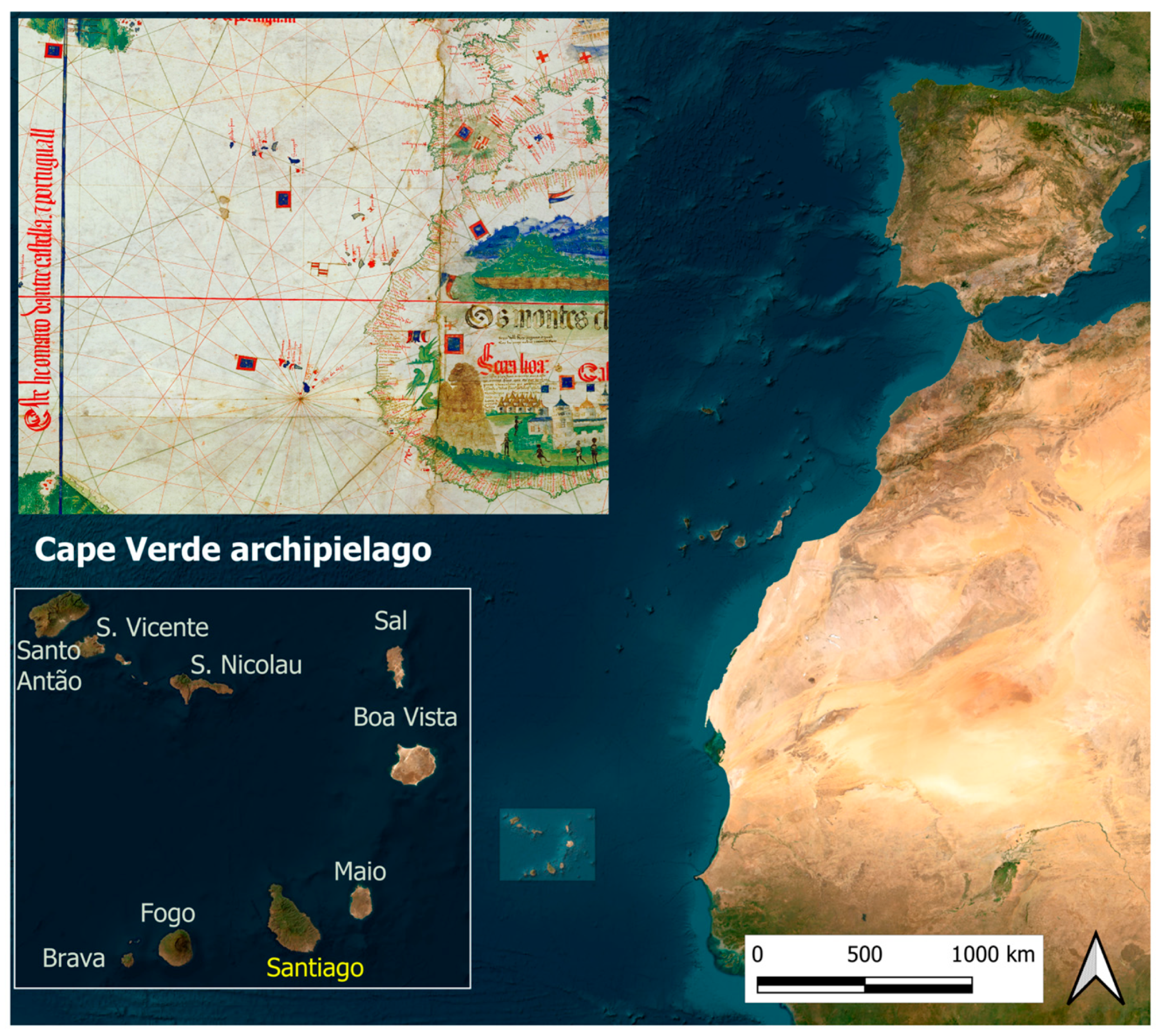
The occupation and development of the Macaronesian archipelagos were deeply intertwined with the political agendas and economic strategies of the Iberian kingdoms during the fifteenth and sixteenth centuries. These Atlantic islands—Madeira, the Azores, Canarias, and Cape Verde—served as laboratories for early Iberian colonial governance and agricultural experimentation, serving as models for transoceanic expansion later replicated in the Americas (Figure 1). The colonisation of Cape Verde, uninhabited before its Portuguese arrival in 1460, began with the settlement of Ribeira Grande (Santiago Island). Owing to its strategic location, this island quickly emerged as a pivotal node for navigation and provisioning, becoming a central hub in the Atlantic slave trade [1,2].
Cape Verde’s colonial trajectory unfolded in successive phases. Its institutional organisation replicated models previously tested in Madeira and in the Azores. Yet, its immediate proximity to the West African coast soon catalysed a distinctive path of interaction, entanglement, and interdependence with neighbouring African communities. From the early sixteenth century onwards, the island of Santiago became a centre for Portuguese commercial activities between Senegal and Sierra Leone, particularly for the enslaved trade. Sustained contact with the Guinea rivers fostered not only economic and logistical connections but also the gradual incorporation—both formal and informal—of African elements into the archipelago’s social fabric. This dynamic was evident in urban areas, like the city of Ribeira Grande—the first capital of the Archipelago–, as well as on rural settlements—like Trindade–, where the Atlantic slave-based society was first tested. It is important to note, however, that Cape Verde was not only the cradle of Atlantic colonial exploitation, but also one of the first cases where it failed. The transfer of the slave trade to the African coast itself in the mid-seventeenth century, where the Portuguese had to contend with competition from other European colonial enterprises, led to the collapse of Cape Verdean slave-owning society and the emergence of a Creole nation [3].
Material culture, namely ceramics, is a crucial means for understanding intercultural dynamics. Unfortunately, there is a significant shortage of studies on this subject in this archipelago. Archaeological excavations carried out so far on the island of Santiago have uncovered a varied range of ceramic wares that, aside from those of clear European origin, included a handmade type that has been considered African. It is assumed that African-derived ceramic traditions, typically handmade and low-fired, persisted and adapted under colonial conditions. However, we do not actually know the origin of these ceramics, namely whether they come from the African continent or whether they represent a local reworking of various traditions; this could be hybrid ceramics resulting from the emergence of a Creole society, embodying multilayered cultural exchanges between European colonisers, enslaved Africans, and free Afro-descendant populations [4,5,6,7].
Another interesting type of pottery, which is found here, is sugar moulds. The study of these objects demonstrated their part in the main Iberian pottery productions of the early years of colonisation [8]. Moreover, other research highlighted that the continuity of sugar production seemed to be associated with local potteries, which reflects the African tradition [9]. It is therefore important to study not only its origins, but also to seek the connections with contemporary traditional pottery [10], which is currently Cape Verde’s Intangible Cultural Heritage.
Building on this perspective, our work explores these material entanglements through an archaeometric investigation of pottery from three sites on Santiago Island: Trindade, Cidade Velha, and Ribeira dos Engenhos. Using portable X-ray fluorescence spectroscopy (pXRF), we examine compositional variability in ceramic fabrics associated with both African and Iberian technological traditions. This research is undertaken within the framework of two complementary projects: Archaeology and Archaeometry of Iberian Atlantic Expansionism in the Atlantic and Macaronesian Islands and the Americas (15th–16th Centuries): Ceramics, Technology, and Trade (CERIBAM), and Archaeology and Heritage in Cape Verde: Ribeira Grande (15th–18th Centuries) from Palarq Foundation. Both initiatives aim to reassess colonial networks and technological hybridity in the early modern Atlantic.

1.2. Geographic and Geological Context

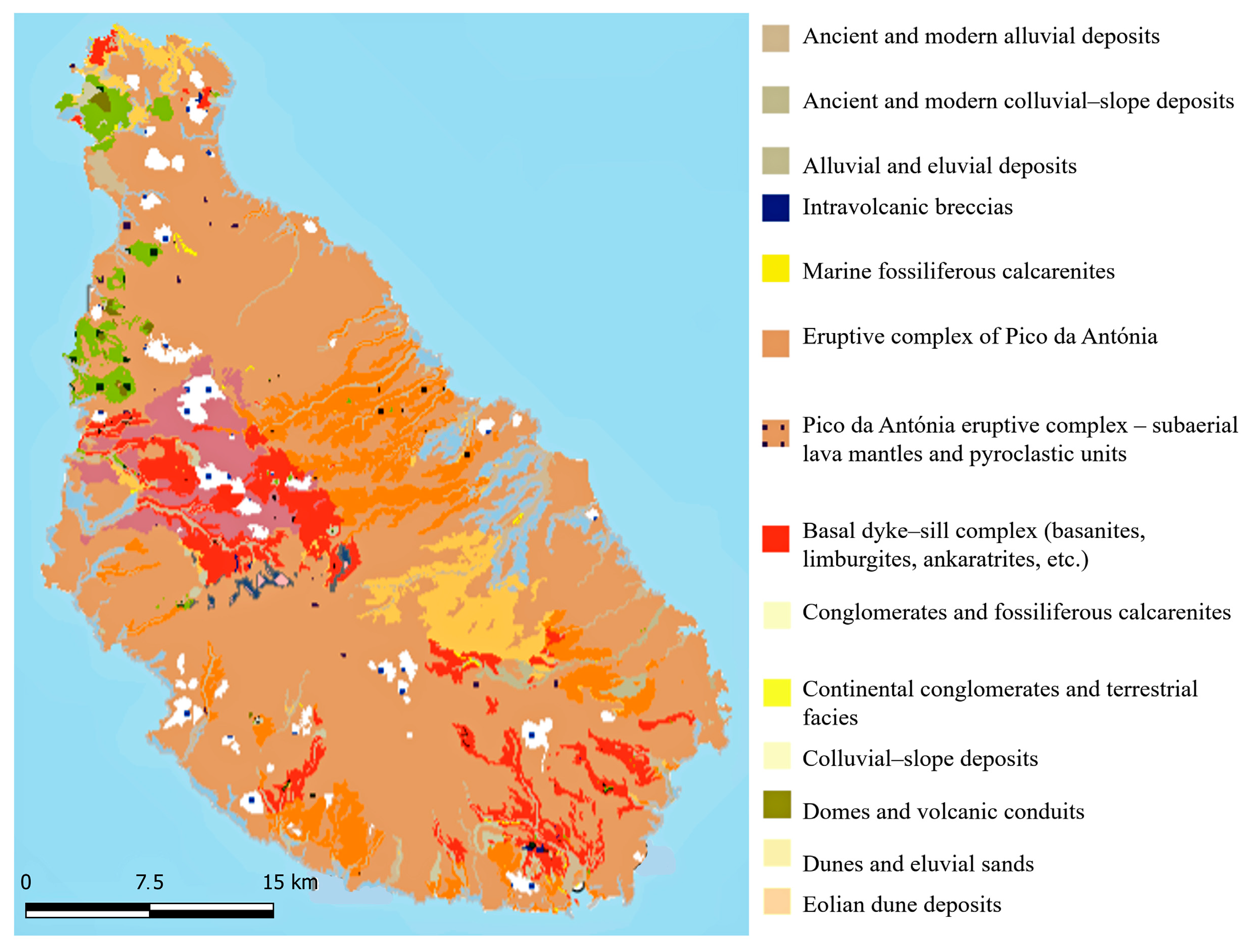
Cape Verde is an oceanic archipelago of volcanic origin, located in the central Atlantic approximately 570 km off the West African coast. The islands display a complex geological history shaped by successive phases of volcanic activity, erosion, and sedimentary deposition. The archipelago formed above an intraplate hotspot, with eruptive episodes spanning from the Miocene to the Holocene, reflecting sustained mantle plume dynamics beneath the region. Inset: Cantino Planisphere (1502), attributed to Pedro Reinel, one of the earliest maps depicting the Atlantic archipelagos, including Cape Verde [11]. The Santiago island, the biggest of the archipelago, has experienced a long-term uplift trend over the last six million years, broadly synchronous with the volcanic activity that shaped its exposed massif [12]. Such vertical movements are characteristic of intraplate ocean-island environments, where mantle-driven dynamics and lithospheric flexure interact to remodel insular topography (Figure 2).
The island’s bedrock geology is dominated by alkaline basaltic lava flows interstratified with pyroclastic deposits, together with intrusive phonolitic and trachytic complexes. In specific sectors, sedimentary horizons enriched with calcareous or clay-rich components are preserved. Its principal lithologies comprise alkaline basalts, tephritic–phonolitic sequences, and interbedded paleosols. These horizons have historically contributed to the development of local clay deposits suitable for ceramic production [13]. A sound understanding of Santiago’s geological characteristics is therefore critical for assessing provenance, technological choices, and material circulation in early Cape Verdean ceramic production.
Figure 2. Geodiversity of the Santiago Island, from the Carta Geológica de Cabo Verde [14] and processed in ArcGIS Pro 3.2.
Ceramics 09 00013 g002

1.3. Archaeological Contexts and Assemblage Provenance

1.3.1. Trindade (TRD)

The archaeological site of Trindade is located on the outskirts of Praia, the country’s capital since the nineteenth century. The area is characterised by the relative abundance of water, originating upstream in Pico d’Antónia. This hydrological feature allowed it to become one of the most prosperous estates on the island.
The first historical reference indicates that in the early sixteenth century, the lands of Ribeira da Trindade belonged to members of the elite citizens (vizinhos) of Ribeira Grande. A charter from the Portuguese king João III in 1540 attests that the nobleman Fernão Fiel de Lugo acquired various agricultural properties from these citizens, consolidating the Trindade estate and incorporating it into a morgadio (majorat estate) [6]. This estate extended over approximately two leagues in length and half a league in width—equivalent to about 11 km by 2.8 km (ca. 31 km2/3100 acres). According to the same document, it comprised a chapel dedicated to the Holy Trinity, two trapiche sugar mills, residential and mill houses, three stone-and-lime water tanks, a cattle corral with 200 breeding cows, a goat pen, around 50 mares, and fifty enslaved men and women. Upon Lugo’s death in 1565, her only descendant ended up selling the property, after royal permission [6]. A century later, in 1665, Jerónimo Álvares Freire re-established the entail and stipulated that after the death of his children, the estate should permanently belong to the Bishops of Cape Verde.
During the French pirate Jacques Cassard’s attack on Ribeira Grande in May 1712, Bishop Frei Francisco de Santo Agostinho took refuge in Trindade, where he remained until he died in 1719. In 1785, the estate became the residence of Governor António Machado de Faria. In the early nineteenth century, Bishop Silvestre de Maria Santíssima leased it to Colonel Guilherme Cardoso Pereira and his wife, Catarina de Sousa Barradas, member of one of the island’s most prominent families [6]. Until the mid-twentieth century, the site served as a recreational area frequented by Praia’s wealthiest families on Sundays and holidays.
Despite its historical and patrimonial significance, the Trindade estate remained archaeologically unexplored until 2010. The excavation of 2010 focused on the ruins of the northern funerary chapel, where a burial associated with Bishop Frei Francisco de Santo Agostinho was recorded. The campaign yielded diverse materials: ceramic fragments—mostly sugar moulds—handmade African-style wares, Iberian ceramics, coins and other metallic objects, and human remains. The pottery assemblage was later studied and published by M. Almeida and J. Monteiro [6].
For our work, a total of 21 ceramic fragments were analysed from the Trindade site, representing the most extensive corpus of this study. The assemblage, predominantly composed of sugar moulds, also includes one sample of handmade and low-fired ware. Although modest in size, this collection is significant because it represents the first archaeometric dataset from a sugar mill estate in Cape Verde.

1.3.2. Cidade Velha (CVL)

Cidade Velha, formerly known as Ribeira Grande, was the first capital of Cape Verde and served as a pivotal node in the transatlantic trade networks linking Europe, Africa, and the Americas between the fifteenth and seventeenth centuries [1]. Established as an outpost for maritime provisioning and redistribution, the town quickly became central to the Atlantic slave trade, supplying labour and goods to multiple colonial circuits, a significance recognised today by its designation as a UNESCO World Heritage Site [15].
Archaeological investigations across different sectors of Cidade Velha’s urban fabric have revealed, besides European and Chinese pottery, fragments of handmade ceramics with technological traits attributed to African traditions. The earliest references come from excavations at the Cathedral, where those ceramics were interpreted as imports from continental Africa [4]. Later findings at the Fortaleza Real de São Filipe suggested that part of this corpus may have been produced locally in Cape Verde [7]. This hypothesis is supported by the recurrent presence of basaltic inclusions—consistent with the island’s volcanic geology—and the continuous presence of these ceramics over time. Such evidence indicates that African-style ceramics in Cape Verde were not merely punctual imports. Instead, they likely reflect local reinterpretations of African traditions, achieved through the selective use of Santiago’s raw materials and adaptive production strategies, resulting in early hybrid technological practices [16].
Overall, these ceramics appear in Cape Verdean contexts from the sixteenth century onwards, becoming increasingly frequent during the seventeenth and eighteenth centuries. They are particularly abundant at the Fortaleza de São Filipe in well-dated early deposits. In contrast, at the Convento de São Francisco, they occur only in surface layers or in contexts predating the convent’s foundation in the late seventeenth century [7]. Some sherds were also collected from late eighteenth-century deposits in Rua Banana, in the city centre [17]. Comparable materials have been identified at Alcatrazes, another early settlement that was rapidly abandoned as one of Santiago’s political centres [5].
These vessels are generally characterised by coarse, red to dark pastes with abundant mineral inclusions, such as non-calcareous tempers enriched with volcanic particles such as basalt, and, in some cases, the addition of grog. Their surface is smoothed, occasionally exhibiting a thin slip, often with incised, pinpricked, or rouletted decoration. Morphologically, they comprise simple utilitarian forms, including cooking pots, bowls, and jars. Functionally, such ceramics have usually been associated with domestic activities, such as cooking, storage, and food consumption, and interpreted as material markers of enslaved or marginalised Afro-descendant communities inhabiting Cidade Velha and its surrounding peri-urban areas [18]. A total of eight handmade ceramic fragments were selected from stratigraphic deposits in the former Cathedral of Cidade Velha, the main religious building in the archipelago. Although limited in number, these sherds are significant as they derive from archaeological contexts within the first capital of the Portuguese Empire in West Africa.

1.3.3. Ribeira dos Engenhos (RBE)

Located in one of the few fertile inland valleys of Santiago Island, Ribeira dos Engenhos (lit. Stream of the Sugar Mills) was settled from the late sixteenth century onwards, owing to its abundant water and agricultural potential. The area remained a sugar-producing landscape until the twentieth century, characterised by small domestic mills that transformed cane into sugar, molasses, and distilled liquor for local consumption and regional markets. Alongside the sugar agro-industry, the valley hosted pottery manufacture workshops, which produced household wares as well as sugar moulds directly associated with cane processing. These ceramics embody the intersection of artisanal traditions, coerced labour, and the plantation economy that integrated Cape Verde into the wider Atlantic system. Of all those potteries, only Fonte Lima remains active today [9,19,20].
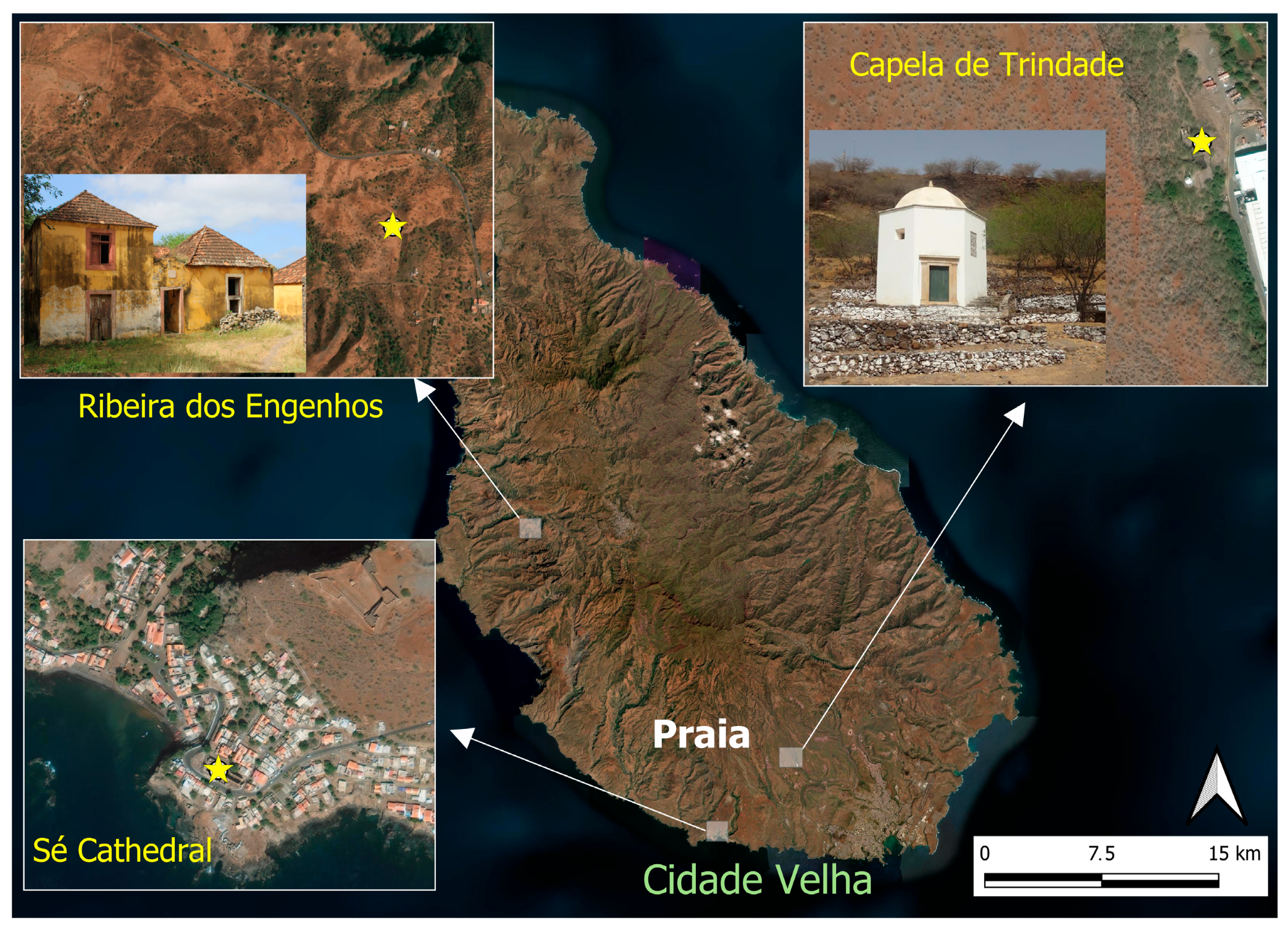
The selected assemblage derives from the first surface archaeological survey conducted in the valley, which is believed to date from a more recent period. The nine sherds examined—comprising sugar-related ceramics and domestic wares—provide valuable evidence of technological practices and their embedding in agro-manufacturing contexts. Despite their fragmentary condition, these materials are highly significant, as they document the persistence of African-derived technological traditions in the most recent rural occupations on Santiago Island and constitute the first study of a pottery tradition that remains in use (Figure 3).

2. Materials and Methods

2.1. Sampling Strategy and Typological Characterisation

This study examines 38 ceramic fragments recovered from three archaeological sites on Santiago Island, Cape Verde: Trindade (TRD, n = 21), Ribeira dos Engenhos (RBE, n = 9), and Cidade Velha (CVL, n = 8) (Table 1). All specimens were analysed using non-destructive portable X-ray fluorescence (pXRF) to determine their elemental composition and establish an empirical basis for discussing provenance, technological variability, and interrelationships between local and regional production systems within the early Atlantic sphere.
The corpus integrates materials from stratigraphic deposits and archaeological surveys. These originate from a religious context in the island’s former capital, a colonial sugar production site on one of its main estates, and an area of both sugar and pottery production area whose occupation extended into more recent times. All sherds were in the Museu de Arqueologia, in Praia, where the assemblages are currently curated, and were analysed during the 2024 field campaign in Cape Verde. The deliberate preservation of the ceramic set’s provenance within the analytical design serves (i) to maximise the representativeness of documented contexts; and (ii) to test the applicability of pXRF protocols to collections that cannot be subjected to invasive methods.
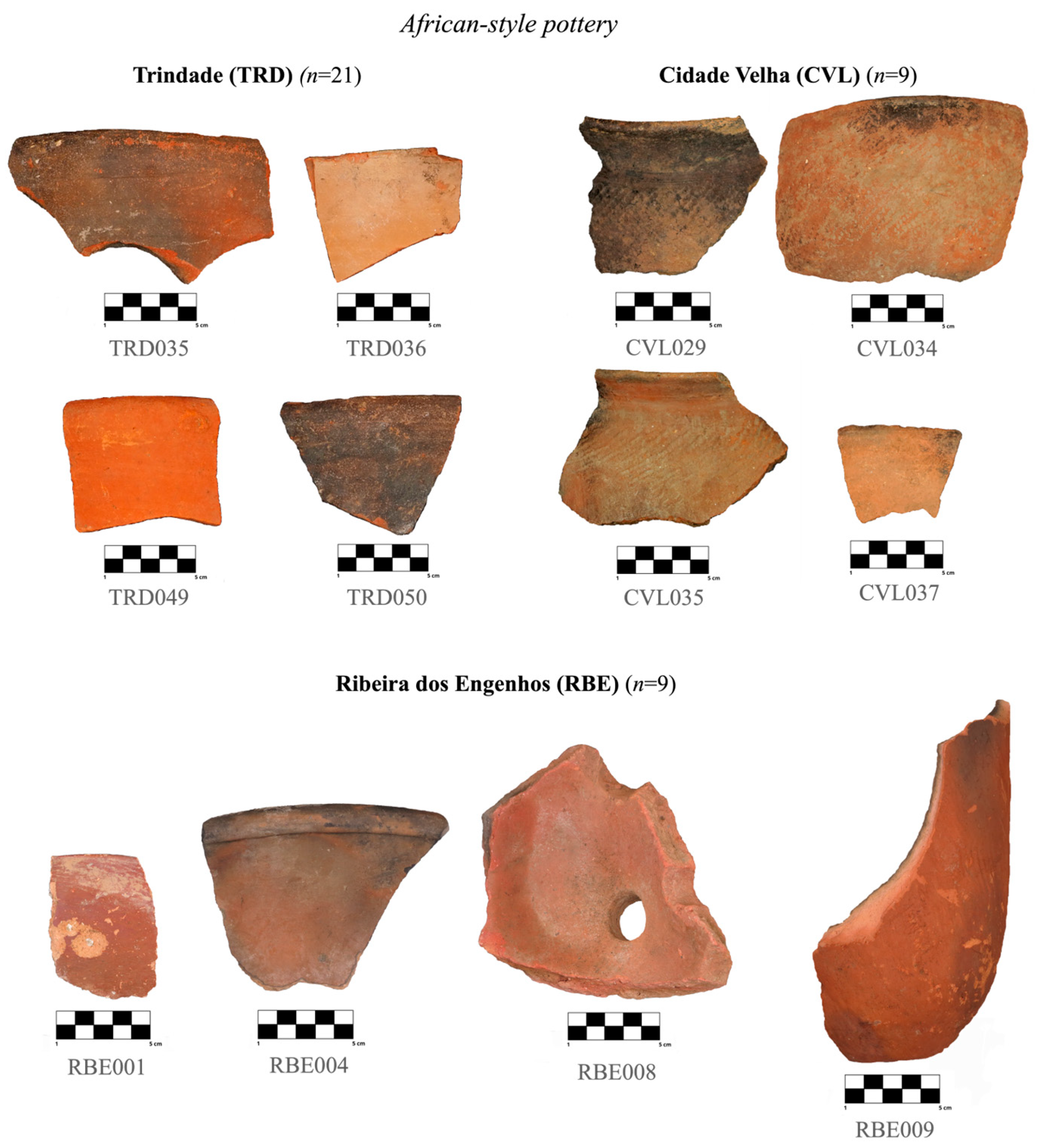
The assemblage is dominated by handmade, low- to medium-fired wares with mineral-tempered fabrics and limited surface refinement, although some sherds are wheel-made. At TRD, the sample consists almost exclusively of wheel-made sugar moulds, from a set that has already been the subject of typological publication [6]. At RBE, the sample comprises handmade conical sugar moulds, couscous pots, and other domestic wares, as yet unpublished. At CVL, the materials correspond primarily to handmade domestic wares (mostly cooking forms), typically with globular bodies, everted rims, thickened lips, and smoothed or lightly burnished surfaces [4]. Chronological attributions at TRD and CVL span the 16th to 18th centuries, while those at RBE extend from the 18th to early 20th centuries. These are based on excavation records and museum documentation associated with the original recoveries (Figure 4).

2.2. Analytical Methods: Portable X-Ray Fluorescence (pXRF)

X-ray fluorescence (XRF) is a non-destructive analytical technique widely employed in the study of inorganic materials, with broad applications in geology, materials science, and archaeometry. The method relies on the emission of secondary (fluorescent) X-rays induced by the interaction of a primary X-ray beam with the atoms of a sample. Effectively, the pXRF functions as an ‘atomic fingerprint reader’; when the sample emits characteristic X-rays, the detector records them as unique energy signatures. By analysing these signals, the instrument identifies which elements are present and provides quantitative data on their relative abundances (for deeper insights into the technique, see [21,22]). The pXRF technique can detect both major elements—such as potassium (K), calcium (Ca), and iron (Fe)—and trace elements highly relevant for determining raw material sources and technological processes, including rubidium (Rb), strontium (Sr), yttrium (Y), and zirconium (Zr). Thanks to its broad spectral range, pXRF can identify light elements, starting with magnesium (Mg), as well as heavier ones, reaching up to uranium (U) at the upper end of the atomic spectrum. Applied to archaeological ceramics, pXRF enables the acquisition of detailed compositional information on major, minor, and trace elements from both ceramic pastes and surface finishes. Therefore, this analytical versatility is crucial for establishing compositional relationships among different ceramic groups and their potential geological source areas [23,24,25,26,27,28].
However, pXRF still faces inherent challenges, particularly regarding sample preparation, instrumental calibration, and the reliable detection of low atomic number elements such as magnesium (Mg), phosphorus (P), and sulfur (S), which are often difficult to quantify due to their low emission energies and susceptibility to matrix interferences [29,30]. To address these limitations, several studies have developed custom calibration protocols using certified reference materials, primarily commercial clays and feldspars, applied to both the interior sections and exterior surfaces of ceramic fragments. These protocols have significantly improved detection limits of various elements and enhanced the reproducibility and inter-laboratory comparability of pXRF results [31,32]. Sodium (Na), despite being theoretically detectable by pXRF, was not considered in this study due to its low fluorescence yield and poor analytical reproducibility under non-destructive measurement conditions, and was therefore excluded from the statistical analyses.

2.3. Instrumentation and Analytical Protocols

Elemental measurements were obtained with a Bruker TRACER 5g portable X-ray fluorescence spectrometer (Bruker Nano GmbH, Berlin, Germany), equipped with a Rh anode (50 kV, 4 W), a 20 mm2 SDD, and a graphene window, using an 8 mm collimator. Analyses covered Mg–U in air and vacuum. Each spectrum was acquired in three 40 s phases (total 120 s per measurement), yielding multi-element data suitable for provenancing studies. For heavy elements, the tube was set at 45 kV, 15 μA with a Ti 25 μm—Al 300 μm filter; for Z < 30, 30 kV, 20 μA; for light elements (Z < 20), 13 kV, 40 μA. The GeoExploration calibration and measurement mode supplied by Bruker was employed.
In this case, the Bruker TRACER 5g was selected for its portability, high resolution, and flexible analytical configuration, which allows for custom parameter adjustments tailored to the matrix of archaeological ceramics. The use of a Rh anode and thin graphene window provides optimal excitation for light and mid-Z elements, which are crucial in differentiating silicate pastes and tempering materials [33].
Given the heterogeneous, low-fired nature of the wares, non-destructive surface pre-treatment was applied; a light mechanical abrasion was performed on the exposed ceramic paste (not on slips or altered surfaces) to remove salts, carbonates, biofilms, or pigments that could bias the signal. This step minimises matrix/surface effects and enhances comparability across fabrics. All measurements targeted fresh paste areas with maximal representativeness of the clay matrix and temper.
Instrument performance and comparability were checked through international CRMs (soils) and the in-house C2-M2-Geosoil™ standard (Bruker). Elements consistently below limits of detection or failing repeatability checks were excluded from statistical treatment. Replicate spectra per analysis were inspected for stability before averaging to a single value per element and sample. This quality-control strategy ensures that the resulting dataset is analytically comparable with data generated by ED-XRF or WD-XRF systems, as it relies on calibrated reference materials, replicated measurements, and the exclusion of unstable variables.
In the initial phase of data processing, raw elemental concentration counts were transformed into oxide percentages using a compositional data analysis (CoDA) approach, as outlined by other authors [34,35]. This step involved converting elemental counts to compositional data by setting the sum to 100%, a necessary procedure to mitigate subcompositional incoherence in archaeometric datasets. By respecting the compositional nature of the data, this approach avoids statistical biases and allows for meaningful multivariate analyses within the constrained geometry of the simplex [36].
Only elements with values above the limit of detection (LOD) were retained for statistical analysis, resulting in the following set of variables: Al2O3, Ba, Ca, Cu, Fe, K2O, MgO, Mn, Ni, P, Pb, Rb, SiO2, Sn, Sr, Ti, Y, Zn, and Zr. Potassium was expressed as K2O, following standard practice in ceramic compositional studies, as K-bearing mineral phases show stable behaviour when reported in oxide-normalised form. In contrast, calcium was retained in elemental form (Ca), since CaO estimation by pXRF is less reliable in low-fired and porous ceramic matrices due to matrix effects and the presence of non-stoichiometric calcium-bearing phases. To balance the disparity in scale between major and trace elements, logarithmic transformations were applied, minimising heteroscedasticity and enhancing the robustness of multivariate analyses.
To address the constrained nature of compositional data and reduce potential bias from the constant-sum effect, chemical concentrations were transformed using log-ratio techniques. Specifically, the additive log-ratio (alr) transformation was employed for Principal Component Analysis (PCA), with the denominator set to the element with the lowest internal variability across the dataset. For Hierarchical Cluster Analysis (HCA), a centred log-ratio (clr) transformation was applied, using the geometric mean of all components as the divisor. Clustering was performed using squared Euclidean distances and visualised through a centroid-based agglomerative algorithm.
All statistical procedures and visualisations were conducted in R (version 4.3.1) [37], using the ArchFlow package (GitHub version 0.1.0, accessed on 15 September 2024), whose routines are available on GitHub [38,39,40]. This methodological framework enables the identification of discrete geochemical groups and technological clusters within the ceramic assemblage, thereby supporting interpretative models of raw material sourcing and craft practices. These analytical strategies have been successfully implemented in previous studies on North African ceramics and early modern colonial assemblages [41].
The application of pXRF allows for in situ, non-destructive characterisation of fragile ceramic sherds, preserving their integrity while generating robust multi-elemental fingerprints. These data provide a solid basis for (a) identifying intra-site and inter-site compositional variability, (b) isolating potential standardised manufacturing recipes—such as those associated with sugar-mould ceramics—and (c) detecting geochemical signals consistent with local volcanic raw materials versus potential exogenous imports.
This compositional baseline is not only methodologically replicable but also strategically designed to support the selection and design of complementary destructive analyses (including petrography, XRD, SEM-EDS, and ICP-MS) in the following research phase, thereby enabling a refined interpretation of provenance and technological traditions within the broader context of Atlantic ceramic production and circulation.

3. Results

3.1. Multivariate Compositional (MVC) Analysis

To assess the internal variability and structural stability of the dataset, we first applied the Compositional Variation Matrix (CVM) calculation, which quantifies total compositional dispersion via the total variation parameter (vt) and helps infer whether the ceramic pastes are monogenic or polygenic in origin [35,42]. Building on that foundation, we then implemented a Multivariate Covariance (MVC) analysis, which extends the CVM by ranking each variable’s contribution to the overall dataset stability.
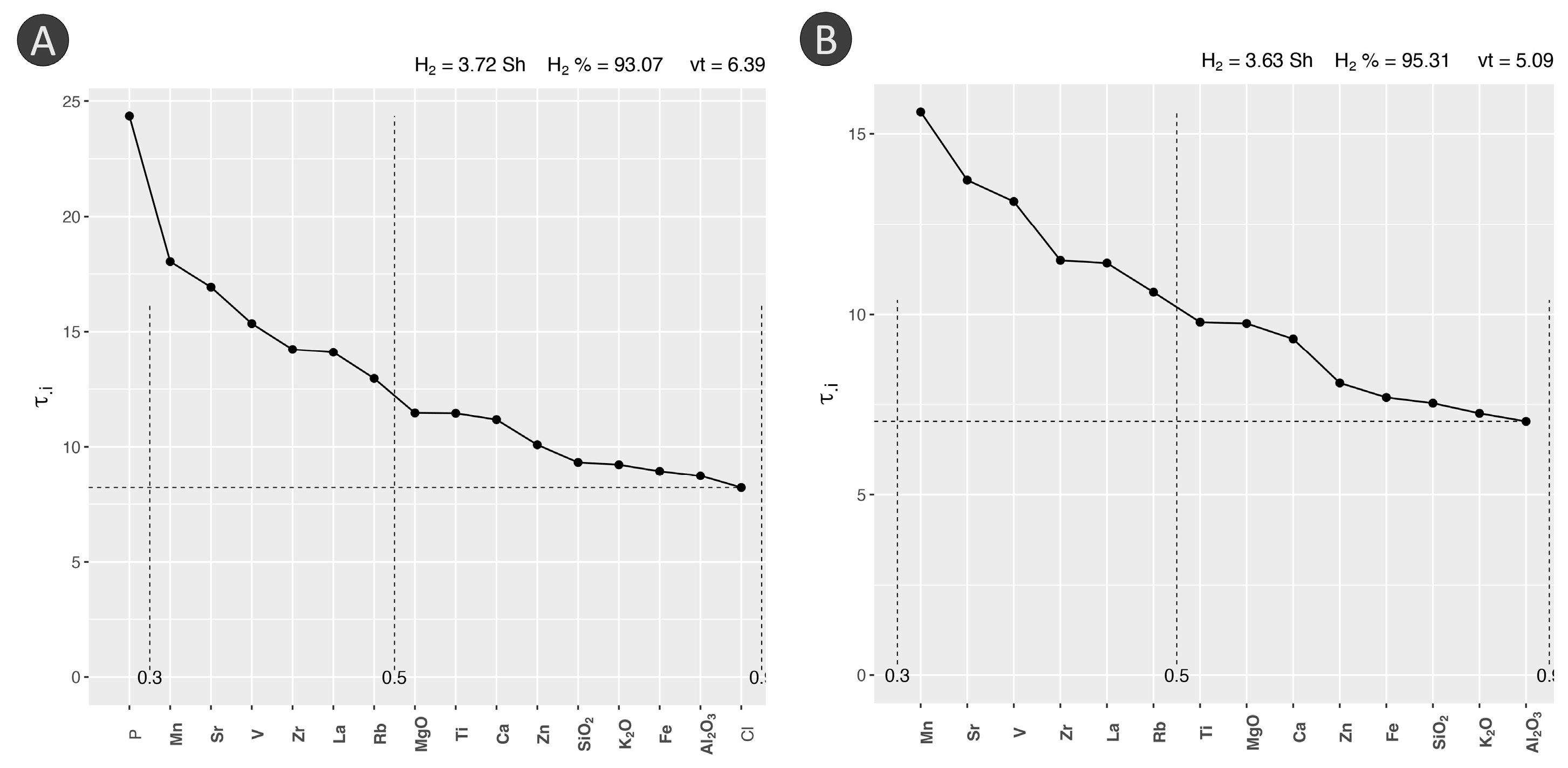
The initial MVC run on the full elemental dataset (n = 38 samples, see note on sample count) yielded a multivariate “coherence” index H2 = 3.72 (Shannon units), which explained 93.07% of the total variance (vt = 6.39). The τi distribution identifies phosphorus (P) as the most unstable variable, with the highest residual variance, followed by manganese (Mn) and strontium (Sr). These elements manifest strong dispersion and low discriminatory power, plausibly reflecting post-depositional contamination processes (for P and Mn) or heterogeneous incorporation. In contrast, trace elements such as Zr, La, and Rb display more constrained τi values, indicating higher relative stability. Principal oxides—MgO, Ti, Ca, Fe, K2O, Al2O3, SiO2—cluster in mid-to-low τᵢ bands, confirming their more substantial contribution to dataset coherence and their robustness as discriminants of raw materials and technological choices (Figure 5A).
Upon removing P and Cl—both flagged as noise-generating and taphonomically unstable—the refined dataset yielded H2 = 3.63, with 95.31% of the variance explained (vt = 5.09). To clarify this point, we explicitly state that P and Cl were excluded from downstream multivariate analyses due to their taphonomic instability, as identified by the MVC screening. This filtering markedly reduced residual error and improved internal uniformity across the compositional space. Under this configuration, the stable elemental subset—Zr, La, Rb, Ti, MgO, Ca, Fe, and K2O—emerges as the most reliable suite for provenance discrimination and technological signature assessment within this dataset, reducing risks of spurious clustering and enhancing resolution (Figure 5B).

3.2. Elemental Distributions by Site and Typology (Boxplots)

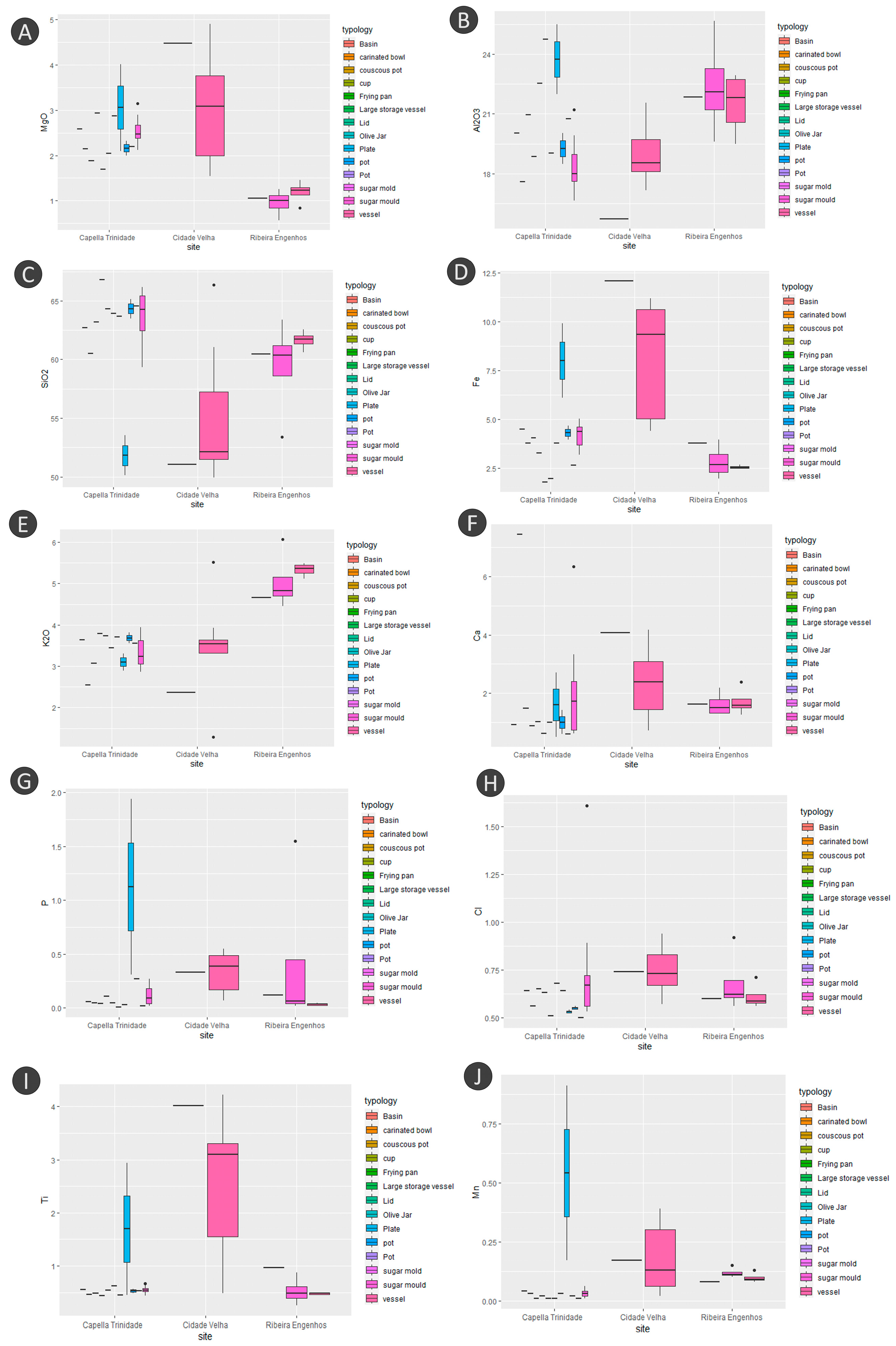
The boxplots (Figure 6) reveal clear between-site contrasts and within-site variability that correlate with both geological context and functional typology. As discussed below, P and Cl display irregular patterns consistent with taphonomic instability and are not used in downstream clustering.
Cidade Velha (CVL) shows significant internal dispersion in handmade domestic wares. Chemically, it is characterised by elevated, dispersed Fe–Ti–Mn and lower SiO2, consistent with the exploitation of basaltic volcanic clays. K2O is heterogeneous (≈2.3–4.0 wt%), and Ca exhibits a wide range of values despite the assemblage consisting exclusively of household vessels (cooking pots and coarse wares). Only two sherds display clearly higher Ca contents (CVL034 ≈ 4.17 wt% and CVL035 ≈ 4.08 wt%), whereas the remaining vessels present medium to low Ca values (e.g., CVL033 = 1.29 wt%, CVL037 = 1.43 wt%, CVL029 = 3.34 wt%). This dispersion reflects differences in clay sources and paste preparation rather than vessel form.
Trindade (TRD) is the most heterogeneous assemblage. It presents intermediate Fe-Ti, SiO2 generally higher than CVL (≈63–66 wt%, with some >66), MgO spanning ≈ 1.8–4.6 wt%, and K2O ≈ 3.0–3.8 wt%. The spread suggests multi-source clay procurement and variable tempering, consistent with the presence of handmade domestic wares, probably local or regional, and sugar mould imports, namely those produced in Portugal [8].
Ribeira dos Engenhos (RBE) forms the most compact chemical group in an area that still maintains a strong pottery tradition. Boxplots show a narrow, elevated K2O range (≈4.7–6.0 wt%), SiO2 constrained around ≈59–62 wt%, and low Fe-Ti-Mn, with Al2O3 at intermediate–high levels but with low dispersion. This configuration indicates a standardised alkali-rich recipe—compatible with illitic/feldspathic or evolved trachytic–phonolitic sources.
These site-level patterns—compact RBE, basaltic-biassed CVL, and dispersed TRD—provide a robust foundation for the subsequent PCA/HCA. The full elemental dataset is provided in Supplementary Table S1 for reproducibility and detailed examination.

3.3. Principal Component Analysis (PCA)

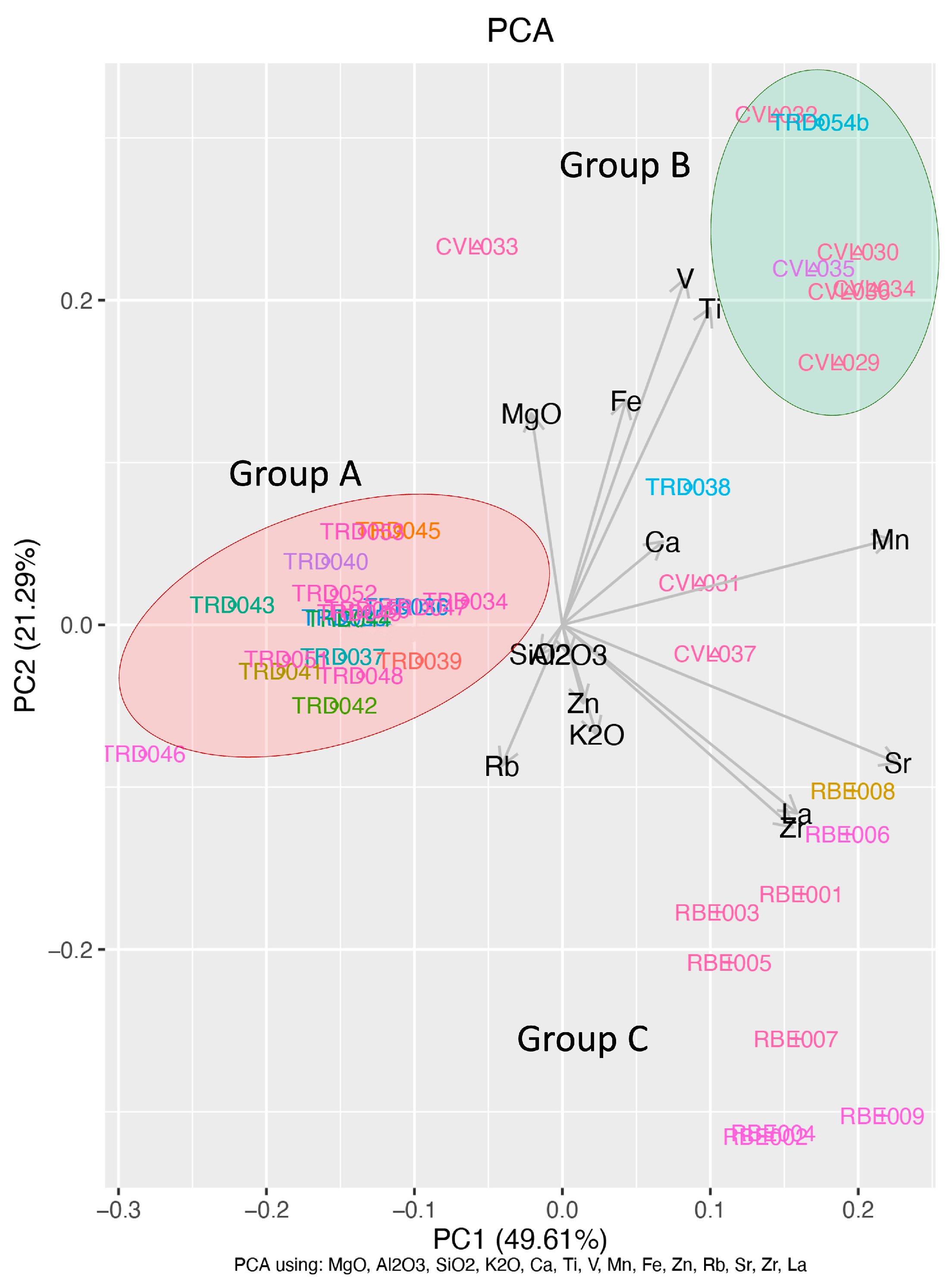
To characterise the overarching compositional structure, we performed a PCA on the stable variable set (MgO, Al2O3, SiO2, K2O, Ca, Ti, V, Mn, Fe, Zn, Rb, Sr, Zr, La) after additive log-ratio (alr) transformation. P and Cl were excluded due to taphonomic instability. The first two components explain 70.9% of the variance (PC1 = 49.61%, PC2 = 21.29%). Loadings show that PC1 contrasts Sr–Mn–(La, Zr) (positive) with Rb–Zn and the SiO2–Al2O3–K2O matrix (negative), whereas PC2 separates Ti–Fe–MgO–V (positive) from La–Zr (negative). Scores resolve three site-dominated groups (Figure 7).

3.3.1. Group A—Trindade-Dominant (TRD; n = 21)

Comprises the vast majority of TRD sherds. Scores plot at PC1−/low PC2, consistent with a Si–Al–K-rich matrix and intermediate Fe–Ti. The group is internally cohesive; TRD038 is slightly displaced toward Ca, and TRD046 shows a modest offset along PC1−, indicating a subtly different Fe–Ca balance. Dispersion reflects paste choices rather than vessel form, since all these specimens are sugar moulds. Previous studies have attributed these ceramics to Portuguese workshops [8].

3.3.2. Group B—Cidade Velha Dominant (CVL; n = 9)

Includes most CVL sherds (e.g., CVL029/030/032/034/035/036) together with TRD054 (Trindade’s only handmade vessel analysed). Scores lie at PC2+, driven by Ti–Fe–MgO (±V) loadings, with lower SiO2 than TRD/RBE, variable K2O (~2.3–4.0 wt%), and broader Ca (~1–4 wt%). This configuration fits basalt-derived clays and multi-source procurement. The position of TRD054b indicates raw-material/technological convergence with CVL pastes despite site differences. All these samples correspond to handmade ceramics said to be of African tradition recovered.

3.3.3. Group C—Ribeira dos Engenhos, Compact (RBE; n = 9)

All RBE samples form a tight score field at PC1+/PC2−, aligned with La–Zr (and away from Fe–Ti–Mn), with moderate SiO2 and consistently elevated K2O (~4.7–6.0 wt%). No sub-partition by form is evident. Although the exact recipe cannot be confirmed without petrography, the limited spread is consistent with repeated use of alkali-bearing pastes. These findings appear to relate to the same pottery production area, which developed here alongside agricultural production over the centuries and remains significant today [9,10].

3.4. Hierarchical Cluster Analysis (HCA)

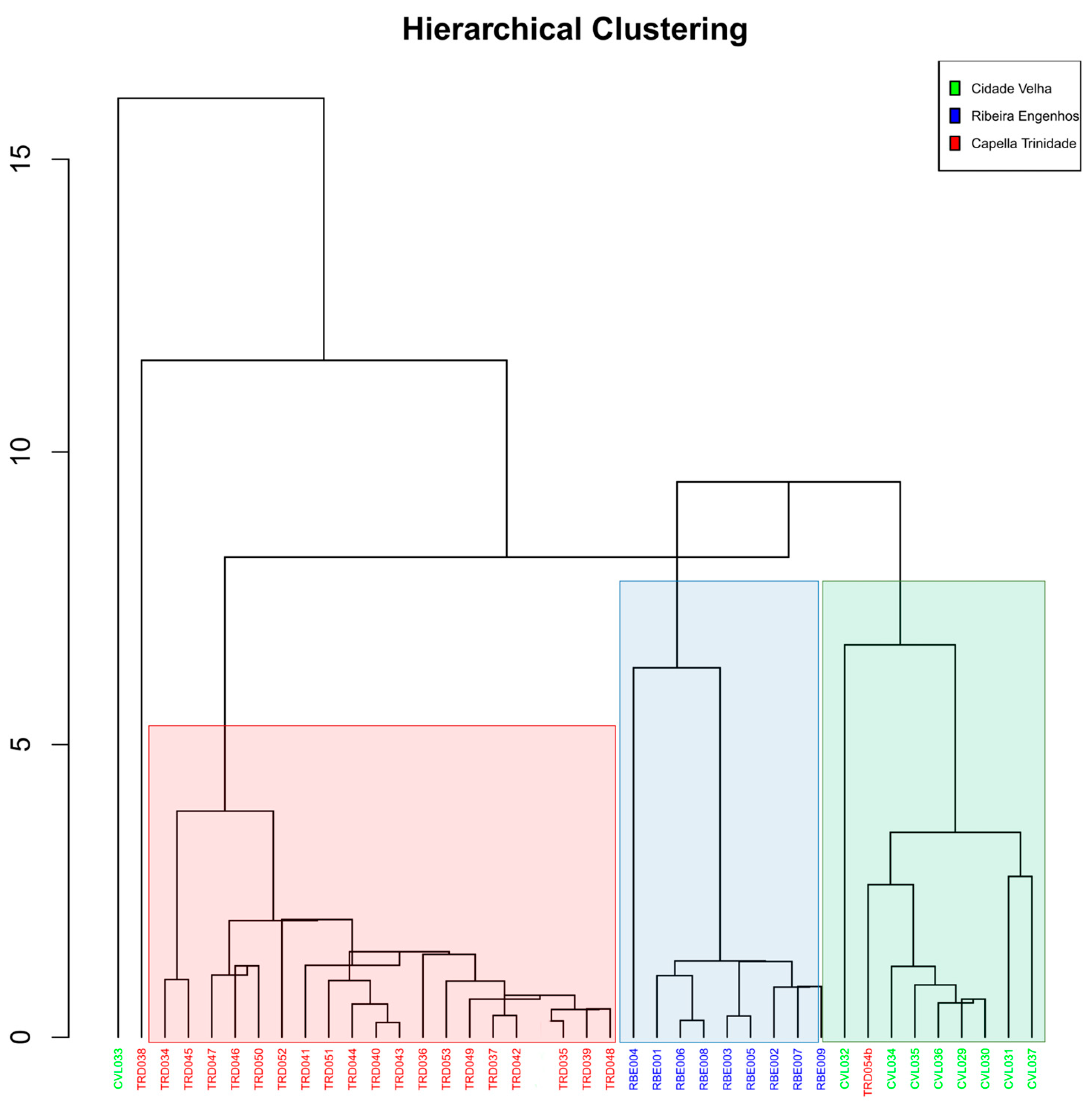
To complement the PCA and refine inter-sample relationships, HCA was performed on centred log-ratio (clr)-transformed compositions within the Aitchison geometry, using squared Euclidean distances and Unweighted Pair Group Method with Centroids (UPGMC) linkage in R/ArchFlow. As mentioned previously, P and Cl were excluded a priori based on their taphonomic instability, as identified by MVC. The dendrogram (Figure 8) resolves three major clusters, consistent with MVC diagnostics and the dispersion structure observed in the PCA.

3.4.1. Group A—Trindade (TRD)

TRD constitutes a broad branch, subdivided into several subclusters, with longer internal distances reflecting greater compositional spread and multi-source procurement/tempering. The group is coherent overall, but TRD038 attaches at a higher linkage height relative to the TRD core, indicating a minor compositional offset (in agreement with its PCA position).

3.4.2. Group B—Cidade Velha (CVL)

Group B gathers most CVL sherds into a differentiated branch with intermediate linkage heights and two recognisable subclusters. Ti marks the chemical signal–Fe–Mn enrichment, lower SiO2 relative to TRD/RBE, variable K2O (≈2.3–4.0 wt%), and broader Ca, consistent with exploitation of basaltic island clays. CVL031 and CVL037 fall within the Group-B core, whereas CVL033 joins at a higher linkage height (more distant leaf), indicating a peripheral variant within the same volcanic-bias domain. The inclusion of TRD054b in Group B points to raw-material/technological convergence, or short-range vessel movement between handmade domestic containers of Trindade and Cidade Velha.

3.4.3. Group C—Ribeira dos Engenhos (RBE)

RBE forms a highly compact cluster with very short terminal branches, indicating minimal internal variance. Geochemically, samples show consistently elevated K2O (≈4.7–6.0 wt%), a narrow SiO2 range (≈59–62 wt%), low Fe–Ti–Mn, and moderate Ca–MgO.

4. Discussion

4.1. Compositional Data

The archaeometric results expose the coexistence on Santiago Island of at least two local production traditions and short-range circulation of wares among sites. This pattern aligns with historical accounts of multi-source provisioning in Atlantic enclaves, where local raw materials were exploited alongside imported supplies from other nodes within the archipelago or adjacent coasts.
In our dataset, Ribeira dos Engenhos (RBE) forms a tight, chemically homogeneous field (boxplots; PCA Group C; HCA), consistent with controlled paste selection for the thermal–mechanical demands of local pottery.
Cidade Velha (CVL) constitutes a coherent, volcanically biassed field (PCA Group B; HCA), marked by Fe–Ti–Mn enrichment and lower SiO2, consistent with basalt-derived clays. Within this branch, CVL033 joins at a higher linkage height, indicating a peripheral variant. Notably, TRD054b plots within the CVL domain (PCA; HCA), pointing to an inter-site convergence in the southern area of the island, between the capital (Cidade Velha), where most of the population resided, and a rural property owned by members of its elite (Trindade). Taken together, the evidence supports a dual insular production scenario—standardised alkali-bearing pastes versus basaltic domestic pastes—with the former in the north of the island and recovered in later contexts at Ribeira dos Engenhos, the latter in the south, detected at the earlier sites of Ribeira Grande and Trindade.
By contrast, Trindade (TRD) exhibits broader dispersion and several sub-branches (PCA Group A; HCA), a signature compatible with multi-source procurement and variable tempering/paste preparation, as suggested by macroscopic analysis [8]. These data demonstrate that, while local production of domestic ceramics developed during the early centuries of colonisation, the sugar moulds production continued to be imported from Europe. In more recent centuries, at least in the north of the island (Ribeira dos Engenhos), pottery production expanded to encompass both domestic and “industrial” wares.

4.2. Raw-Material Signatures and Technological Features

pXRF signals support the use of locally available volcanic resources on Santiago Island. The Ti–Fe–Mn enrichment that characterises CVL accords with basalt-derived clays from the island’s widespread mafic substrates. In contrast, the compact, K2O-rich and SiO2-moderate pastes at RBE (≈4.7–6.0 wt% K2O; ≈59–62 wt% SiO2) indicate alkali-bearing recipes, consistent with illitic/feldspathic inputs and deliberate thermal optimisation for local pottery.
TRD spans higher SiO2 (≈63–66 wt%, with outliers > 66), MgO ≈ 1.8–4.6 wt%, and K2O ≈ 3.0–3.8 wt%, pointing to multiple clay sources and variable tempering. The compositional offset of TRD054 (sugar mould) in PCA/HCA does not reflect Santiago’s geological heterogeneity, but rather its imported origin, consistent with Portuguese production traditions. This reinforces that only the handmade domestic wares can be used to interpret Santiago’s local raw material variability. The predominance of the Si–Al–K matrix in TRD, versus the Ti–Fe–Mn bias in CVL, underscores how insular geology and chaînes opératoires jointly shaped paste fingerprints.

4.3. Comparative Potential Within African and Atlantic Frameworks

This study provides the first compositional baseline for handmade coarse earthenware traditionally described as African-style ceramics in Cape Verde. Nonetheless, compositional overlaps and technological similarities must be interpreted within the specific insular and chronological contexts of production, rather than as direct markers of continental provenance. The assemblages from Ribeira dos Engenhos (RBE) correspond to a late, post-cosmopolitan phase of the island’s colonial trajectory, when ceramic manufacture had become fully localised—most likely centred around the Fonte Lima area—and markedly homogeneous, reflecting limited external supply networks. In contrast, the Trindade (TRD) materials consist almost exclusively of Portuguese sugar-mould fragments, with only a single handmade vessel attributable to the African-style category. By comparison, the Cidade Velha (CVL) assemblage belongs to an earlier horizon, characterised by sustained Iberian contact and active maritime exchange, when handmade cooking wares emulating African forms coexisted with imported objects from Europe and other parts of the world.
Therefore, rather than positing a continental origin for these African-style ceramics, it is suggested that Cape Verdean handmade coarse earthenware be interpreted as the outcome of locally embedded technological adaptations shaped by both African expertise and Atlantic colonial dynamics. Future analytical integration with thin-section petrography, ICP-MS (including REE signatures), SEM-EDS, and comparative reference datasets from West Africa and the Macaronesian archipelagos will be required to refine these hypotheses and assess the extent of such insular technological creolisation.

4.4. Methodological Contribution: Non-Destructive Archaeometry

This work presents the first in situ pXRF application to Cape Verdean ceramics and demonstrates the feasibility of non-destructive protocols for fragile museum/legacy collections. The analytical pipeline—CVM/MVC screening (to identify unstable variables), alr-based PCA, and clr-HCA—provided a robust statistical framework for evaluating compositional coherence. Elements such as Zr, La, Rb, Ti, MgO, Ca, Fe, and K2O behaved as reliable discriminants of provenance and technology. Meanwhile, the exclusion of P and Cl, deemed taphonomically unstable, enhanced interpretive resolution and reduced analytical noise. It is emphasised that pXRF performance is sensitive to surface heterogeneity in low-fired pastes. Our protocol—comprising microsurface preparation, multiple-spot measurements, instrument control against CRMs/standards, and statistical filtering—was devised to mitigate grain size, porosity, and inclusion effects, thereby ensuring that reported signals capture meaningful raw-material and technological information. While pXRF offers speed, portability, and reproducibility for constructing compositional baselines in field or museum settings, inherent constraints—including diminished sensitivity to light elements and potential matrix/texture bias—render complementary methods (thin-section petrography, ICP-MS, SEM-EDS) indispensable for definitive provenance and fine-grained technological attribution.

5. Conclusions

The present research establishes a defensible, island-scale compositional framework for the so-called handmade African-style ceramics in Cape Verde, based on non-destructive pXRF analysis integrated within a CoDA-based workflow. It accomplishes this without overstating provenance unsupported by the current evidentiary base. Rather than reiterating patterns detailed in the Section 3 and Section 4, the emphasis here is on what this framework enables. Firstly, it isolates two recurrent paste features on Santiago—an alkali-rich, thermally resilient regime production tradition (group C) and a basalt-derived tradition (group B)—demonstrating that these are structured at the island scale yet permeable at the site scale, where short-range movement of vessels and know-how can be detected. Secondly, it converts museum and legacy assemblages into archaeometrically analysable evidence through a reproducible analytical protocol that mitigates taphonomic noise and preserves the geochemical signal required for technological interpretation. These advances reposition Cape Verde from a data-scarce sector of the Atlantic archaeometric record to a point of reference for formulating testable hypotheses on production organisation, raw-material selection, and ceramic circulation during early Creole material formation. Thirdly, it sheds light on the island’s pottery tradition, a cultural product that has gained increasing recognition and value. What follows logically from these results is not further descriptive repetition, but targeted experimentation and comparative testing. On the experimental front, the alkali-bearing versus basalt-biassed pastes suggest contrasting performance envelopes that can be evaluated through controlled firing and mechanical tests. Methodologically, inter-instrument intercalibration and error-in-variables models for pXRF will be essential to ensure that expanding datasets remain metrically comparable across laboratories and campaigns. Archaeologically, further investigation of additional, well dated and characterised contexts is required to better understand the colonial past of this Atlantic region.
Most critically, Santiago’s volcanic context must be situated within a broader geological and cultural setting. As Macaronesia and adjacent sub-Saharan West African provinces comprise a mosaic of mafic to evolved volcanic suites, the Cape Verde signatures reported here require benchmarking against compositional and mineralogical baselines from the Canary Islands, Madeira, and the Azores, as well as against well-characterised West African clays and Iberian production centres. Only through such tri-regional comparisons can insular products be discriminated from imports and convergent versus inherited technological choices be exposed. This study is therefore a first approximation; it establishes the metrics, filters, and questions.

Supplementary Materials

The following supporting information can be downloaded at https://www.mdpi.com/article/10.3390/ceramics9020013/s1: Table S1: Compositional dataset of ceramic samples from Santiago Island (Cape Verde) analysed by pXRF (file: CV_Afro_Supplementary_Table_S1.csv).

Author Contributions

Conceptualization, S.A.G.R. and J.I.; methodology, S.A.G.R. and J.I.; software, J.I.; validation, J.I.; formal analysis, S.A.G.R. and J.I.; investigation, S.A.G.R., J.I., L.d.S.G., J.B.T., A.T., J.M. and N.P.T.; resources, J.I.; data curation, J.I.; writing—original draft preparation, S.A.G.R., J.I., L.d.S.G., J.B.T., A.T., J.M. and N.P.T.; writing—review and editing, S.A.G.R., J.I., L.d.S.G., J.B.T., A.T., J.M. and N.P.T.; visualisation, S.A.G.R., J.I. and L.d.S.G.; supervision, J.I.; project administration, J.I.; funding acquisition, J.I. All authors have read and agreed to the published version of the manuscript.

Funding

This research was conducted within the framework of the projects CERIBAM1 and CERIBAM2—Archaeology and Archaeometry of Iberian Expansionism in the Atlantic and Macaronesian Islands and the Americas (15th–16th Centuries): Ceramics, Technology, and Trade (PID2020-113198GB-I00 and PID2024-155871NB-I00), funded by MICIU/AEI/ 10.13039/501100011033 and by European Regional Development Fund (ERDF) “A way of making Europe”, and Archaeology and Heritage in Cape Verde: Ribeira Grande (15th-18th Centuries) (FP23/47), funded by the Fundación Palarq.

Institutional Review Board Statement

Not applicable.

Informed Consent Statement

Not applicable.

Data Availability Statement

Data is contained within the article.

Acknowledgments

The authors wish to express their deepest gratitude to the Museu de Arqueologia in Praia and the Instituto do Património Cultural (IPC) of Cape Verde for granting access to the collections, authorising the study, and providing essential institutional and logistical support. We also acknowledge the dedication and assistance of their staff, whose collaboration was fundamental throughout this research. Special thanks are extended to the University of the Basque Country (UPV/EHU) for institutional support, and to colleagues and collaborators involved in fieldwork, laboratory preparation, and analytical discussions. Additionally, the authors acknowledge the institutional and research environment support provided by CHAM (NOVA FCSH/UAc).

Conflicts of Interest

The authors declare no conflicts of interest.

References

  1. Albuquerque, L.; Santos, M. História Geral de Cabo Verde; Instituto de Investigação Científica Tropical & Direcção Geral do Património Cultural de Cabo Verde: Lisbon, Portugal, 1991; Volume I. [Google Scholar]
  2. Barry, B. Senegambia and the Atlantic Slave Trade; Cambridge University Press: Cambridge, UK, 1998. [Google Scholar]
  3. Silva, A. Noite Escravocrata, Madrugada Camponesa: Cabo Verde Séculos XV–XVIII; Rosa de Porcelana: Lisbon, Portugal, 2023. [Google Scholar]
  4. Amaro, C. Sé da Cidade Velha, República de Cabo Verde, Resultados da 1ª fase de campanhas arqueológicas. In Velhos e Novos Mundos: Estudos da Arqueologia Moderna; Teixeira, A., Bettencourt, J., Eds.; Centro de História de Além-Mar: Lisbon, Portugal, 2012; pp. 451–464. [Google Scholar]
  5. Evans, C.; Sørensen, M.-L.; Castilla-Beltrán, A.; Nogué, S.; Casimiro, T.M.; Detry, C.; Hamilton-Dyer, S.; Lima, J.S. Excavating Alcatrazes, Santiago Island, Cape Verde: Early colonial impacts on land, people and material culture. Antiquity 2025, 99, e63. [Google Scholar] [CrossRef]
  6. Almeida, M.; Monteiro, J. The Pottery Assemblage from the Trindade Archaeological Site, Santiago Island, Cabo Verde. In Europa Postmediaevalis 2018: Post-Medieval Pottery Between (Its) Borders; Blažková, G., Matějková, K., Eds.; Archaeopress: Oxford, UK, 2019; pp. 77–91. [Google Scholar]
  7. Cáceres Gutiérrez, Y.; De Juan Ares, J. Cerámicas autóctonas en Cabo Verde (ss. XVI–XVIII). In XIII Congreso Internacional sobre Cerámica Medieval y Moderna en el Mediterráneo (AIECM3); García Porras, A., Busto Zapico, M., Martín Ramos, L., Peregrina Sánchez, M., Eds.; La Ergástula: Madrid, Spain, 2024; pp. 633–640. [Google Scholar] [CrossRef]
  8. Araújo, J.; Torres, J.; Teixeira, A.; Mendonça, A.; Monteiro, J.; Gondim, L.; Iñañez, J.G. Sugar production in the Atlantic: Ceramic moulds from Madeira, Cape Verde, and São Tomé (Fifteenth to Seventeenth Century). In The Archaeology of Connectivity and Complementarity Reflected Through Salt, Cod, and Sugar; Gaelle, D.G., Losier, C., Eds.; Springer: Berlin/Heidelberg, Germany, 2025; pp. 237–268. [Google Scholar] [CrossRef]
  9. Tavares, N. Kana, Fornadja y kumunidadi: Um caso de estudo da produção e transformação da cana sacarina na Ribeira dos Engenhos (ilha de Santiago). In Arqueologia em Portugal 2020—Estado da Questão; Arnaud, J., Neves, C., Martins, A., Eds.; Associação dos Arqueólogos Portugueses: Lisboa, Portugal, 2023; pp. 2085–2101. [Google Scholar]
  10. Filho, J. Cerámicas de Cabo Verde; Município de Barcelos & Museu da Olaria: Barcelos, Portugal, 2019; pp. 33–61. [Google Scholar]
  11. Holm, P.M.; Grandvuinet, T.; Friis, J.; Wilson, R.; Barker, A.; Plesner, S. An 40Ar–39Ar study of the Cape Verde hot spot: Temporal evolution in a semistationary plate environment. J. Geophys. Res. Solid Earth 2008, 113, B08201. [Google Scholar] [CrossRef]
  12. Ramalho, R.S.; Helffrich, G.; Cosca, M.; Vance, D.; Hoffmann, D.; Schmidt, D.N. Vertical movements of ocean island volcanoes: Insights from a stationary plate environment. Mar. Geol. 2010, 275, 84–95. [Google Scholar] [CrossRef]
  13. Ramalho, R.S.; Helffrich, G.; Schmidt, D.N.; Vance, D. Tracers of uplift and subsidence in the Cape Verde archipelago. J. Geol. Soc. 2010, 167, 519–538. [Google Scholar] [CrossRef]
  14. Direção-Geral de Energia e Geologia (DGEG). Carta Geológica de Cabo Verde; DGEG: Lisbon, Portugal, 2015. [Google Scholar]
  15. UNESCO. Cidade Velha, Historic Centre of Ribeira Grande. Available online: https://whc.unesco.org/en/list/1310 (accessed on 21 October 2025).
  16. Sorensen, M.L.S.; Evans, C.; Casimiro, T.M. Pottery in Cidade Velha (Cabo Verde). In Velhos e Novos Mundos. Estudos de Arqueologia Moderna; Teixeira, A., Bettencourt, J.A., Eds.; Centro de História de Além-Mar: Lisboa, Portugal, 2012; pp. 813–820. [Google Scholar]
  17. Teixeira, A.; Monteiro, J.; Mateus, M.; Tavares, N.; Fonseca, C.; Lopes, G.C.; Bento Torres, J.; Pereira, D.; Bargão, A.; Mayer, A.; et al. Trabalhos arqueológicos na Cidade Velha (Ribeira Grande de Santiago, Cabo Verde): Reflexões sobre um projecto de investigação e divulgação patrimonial. In Arqueologia em Portugal 2020—Estado da Questão; AAP: Lisboa, Portugal, 2020; pp. 2085–2101. [Google Scholar] [CrossRef]
  18. Díez de Cabo, A. Arqueología de Época Moderna en Cabo Verde: Análisis de Cerámicas Criollas de Cidade Velha y Trindade (Isla de Santiago). Bachelor’s Thesis, Universidad del País Vasco (UPV/EHU), Vitoria-Gasteiz, Spain, 2023. [Google Scholar]
  19. Silva, A.L.C. A sociedade agrária gentes das águas: Senhores, escravos e foros. In História Geral de Cabo Verde, 2nd ed.; Albuquerque, L.d., Santos, M.E.M., Eds.; Instituto de Investigação Científica Tropical: Lisboa, Portugal; Instituto Nacional da Cultura de Cabo Verde: Praia, Cape Verde, 2001; Volume II, pp. 275–357. [Google Scholar]
  20. Torrão, M.M.F. Doces grãos e líquido espiritualizante: Cana, açúcar e aguardente nas ilhas de Cabo Verde. Ideias feitas e realidades documentais. In Atas do Colóquio Internacional Cabo Verde e Guiné-Bissau: Percursos do Saber e da Ciência; Instituto de Investigação Científica Tropical: Lisboa, Portugal, 2012; Available online: http://hdl.handle.net/10451/42047 (accessed on 15 April 2025).
  21. Bertin, E.P. Principles and Practice of X-Ray Spectrometric Analysis; Plenum Press: New York, NY, USA, 1975. [Google Scholar]
  22. Haschke, M. Laboratory Micro-X-Ray Fluorescence Spectroscopy: Instrumentation and Applications; Springer: Heidelberg, Germany, 2014. [Google Scholar] [CrossRef]
  23. Pollard, A.M.; Batt, C.M.; Stern, B.; Young, S.M.M. Analytical Chemistry in Archaeology; Cambridge University Press: Cambridge, UK, 2007. [Google Scholar] [CrossRef]
  24. Tykot, R.H. Using nondestructive portable X-ray fluorescence spectrometers on stone, ceramics, metals, and other materials in museums: Advantages and limitations. Appl. Spectrosc. 2016, 70, 42–56. [Google Scholar] [CrossRef] [PubMed]
  25. Weigand, P.C.; Harbottle, G.; Sayre, E. Turquoise sources and source analysis: Mesoamerica and the Southwestern U.S.A. In Exchange Systems in Prehistory; Ericson, J., Earle, T.K., Eds.; Academic Press: New York, NY, USA, 1977; pp. 15–34. [Google Scholar]
  26. Zhou, S.; Wang, J.; Wang, W.; Liao, S. Evaluation of portable X-ray fluorescence analysis and its applicability as a tool in geochemical exploration. Minerals 2023, 13, 166. [Google Scholar] [CrossRef]
  27. Forster, N.; Grave, P.; Vickery, N.; Kealhofer, L. Non-destructive analysis using pXRF: Methodology and application to archaeological ceramics. X-Ray Spectrom. 2011, 40, 389–398. [Google Scholar] [CrossRef]
  28. Frahm, E.; Doonan, R.C.P. The technological versus methodological revolution of portable XRF in archaeology. J. Archaeol. Sci. 2013, 40, 1425–1434. [Google Scholar] [CrossRef]
  29. Holmqvist, E. Handheld Portable Energy-Dispersive X-ray Fluorescence Spectrometry (pXRF). In The Oxford Handbook of Archaeological Ceramic Analysis; Hunt, A.W., Ed.; Oxford University Press: Oxford, UK, 2016; pp. 1–19. [Google Scholar] [CrossRef]
  30. Johnson, J. Accurate measurements of low Z elements in sediments and archaeological ceramics using portable X-ray fluorescence (pXRF). J. Archaeol. Method Theory 2012, 21, 563–588. [Google Scholar] [CrossRef]
  31. Speakman, R.J.; Little, N.C.; Creel, D.; Miller, M.R.; Iñañez, J. Sourcing ceramics with portable XRF spectrometers? A comparison with INAA using Mimbres pottery from the American Southwest. J. Archaeol. Sci. 2011, 38, 3483–3496. [Google Scholar] [CrossRef]
  32. Ceccarelli, L.; Rossetti, I.; Primavesi, L.; Stoddart, S. Non-destructive method for the identification of ceramic production by portable X-rays fluorescence (pXRF): A case study of amphorae manufacture in central Italy. J. Archaeol. Sci. Rep. 2016, 10, 253–262. [Google Scholar] [CrossRef]
  33. Bruker Nano Analytics. Quantification in Cultural Heritage. Cultural Heritage Webinar Series 2023. 2023. Available online: https://www.bruker.com/content/dam/bruker/int/en/webinars/bna/2023/Bruker-Quantification-in-Cultural-Heritage.pdf (accessed on 15 April 2025).
  34. Aitchison, J. The statistical analysis of compositional data. J. R. Stat. Soc. Ser. B Methodol. 1982, 44, 139–177. [Google Scholar] [CrossRef]
  35. Buxeda i Garrigós, J.; Kilikoglou, V. Total variation as a measure of variability in chemical data sets. In Patterns and Process: A Festschrift in Honor of Dr. Edward Sayre; van Zelst, L., Ed.; Smithsonian Center for Materials Research and Education: Washington, DC, USA, 2003; pp. 185–198. [Google Scholar]
  36. Filzmoser, P.; Hron, K.; Reimann, C. Principal component analysis for compositional data with outliers. Environmetrics 2009, 20, 621–632. [Google Scholar] [CrossRef]
  37. R Core Team. R: A Language and Environment for Statistical Computing; R Foundation for Statistical Computing: Vienna, Austria, 2014. [Google Scholar]
  38. Calparsoro, E. Transdisciplinar Methodologies on Medieval and Post-Medieval Pottery Analysis: An Archaeometric Approach to Basque and Riojan Productions. Ph.D. Thesis, University of the Basque Country (UPV/EHU), Vitoria-Gasteiz, Spain, 2019. [Google Scholar]
  39. Calparsoro, E.R. Scripts for Reproducible Research on Archaeological Ceramics Compositional Data. Zenodo 2018. [Google Scholar] [CrossRef]
  40. Calparsoro, E. GitHub Website. Available online: https://github.com/esteful/arch_flow.git (accessed on 15 September 2024).
  41. Guerrero, S.; Iñañez, J.; Torres, J.; Teixeira, A. Applying portable X-ray fluorescence (pXRF) to provenance of colonial ceramics: Comparative case studies from North Africa and the Iberian Peninsula. Archeol. Data 2024, 4, 47–72. [Google Scholar] [CrossRef]
  42. Buxeda i Garrigós, J. Revisiting the Compositional Data: Some Fundamental Questions and New Prospects in Archaeometry and Archaeology. In Proceedings of the CODAWORK’08: The 3rd Compositional Data Analysis Workshop, Girona, Spain, 27–30 May 2008; Daunis-i-Estadella, J., Martín-Fernández, J.A., Eds.; Universitat de Girona: Girona, Spain, 2008; pp. 1–17. Available online: http://hdl.handle.net/10256/749 (accessed on 15 September 2025).
Figure 1. Location of the Cape Verde archipelago.
Ceramics 09 00013 g001
Figure 3. Location of the archaeological sites on Santiago Island (Cape Verde) from which the analysed ceramic materials derive. Yellow stars indicate the archaeological sites discussed in the study.
Ceramics 09 00013 g003
Figure 4. Representative ceramic fragments analysed from Santiago Island (Cape Verde).
Ceramics 09 00013 g004
Figure 5. MVC analysis. (A) Full dataset including all measured elements. (B) Refined dataset excluding P and Cl, showing improved compositional coherence and reduced residual variance. Ci values represent element-wise contribution to total variance; dashed vertical lines indicate the variance threshold used to assess compositional stability. H2, %H2, and vt values summarise the overall dataset coherence before and after variable filtering.
Ceramics 09 00013 g005
Figure 6. Boxplots showing elemental distributions ((AJ) MgO, Al2O3, SiO2, Fe, K2O, Ca, P, Cl, Ti, Mn) across the three sampled sites: Capela de Trindade (TRD), Cidade Velha (CVL), and Ribeira dos Engenhos (RBE). Dots indicate statistical outliers beyond 1.5× the interquartile range.
Ceramics 09 00013 g006
Figure 7. Principal Component Analysis (PCA) biplot of alr-transformed compositions (stable variables: MgO, Al2O3, SiO2, K2O, Ca, Ti, V, Mn, Fe, Zn, Rb, Sr, Zr, La; P and Cl excluded). Scores are coded by site (TRD, CVL, RBE) and typology.
Ceramics 09 00013 g007
Figure 8. Hierarchical Cluster Analysis (HCA) of ceramic samples from Trindade (TRD), Ribeira dos Engenhos (RBE), and Cidade Velha (CVL), computed on clr-transformed compositions (Aitchison geometry) using squared Euclidean distances and UPGMC linkage (R/ArchFlow). Unstable variables P and Cl were excluded after MVC screening; retained variables: MgO, Al2O3, SiO2, K2O, Ca, Ti, V, Mn, Fe, Zn, Rb, Sr, Zr, La. Shaded areas highlight the main compositional clusters identified at the selected dendrogram cut-off (linkage distance), used to visualise the dominant groupings in the HCA.
Ceramics 09 00013 g008
Table 1. Ceramic samples analysed by pXRF from Santiago Island (Cape Verde).
SampleSiteTypologyChronology
TRD034TrindadeSugar mould16th–18th c.
TRD035TrindadeSugar mould16th–18th c.
TRD036TrindadeSugar mould16th–18th c.
TRD037TrindadeSugar mould16th–18th c.
TRD038TrindadeSugar mould16th–18th c.
TRD039TrindadeSugar mould16th–18th c.
TRD040TrindadeSugar mould16th–18th c.
TRD041TrindadeSugar mould16th–18th c.
TRD042TrindadeSugar mould16th–18th c.
TRD043TrindadeSugar mould16th–18th c.
TRD044TrindadeSugar mould16th–18th c.
TRD045TrindadeSugar mould16th–18th c.
TRD046TrindadeSugar mould16th–18th c.
TRD047TrindadeSugar mould16th–18th c.
TRD048TrindadeSugar mould16th–18th c.
TRD049TrindadeSugar mould16th–18th c.
TRD050TrindadeSugar mould16th–18th c.
TRD051TrindadeSugar mould16th–18th c.
TRD052TrindadeSugar mould16th–18th c.
TRD053TrindadeSugar mould16th–18th c.
TRD054TrindadePlate16th–18th c.
CVL029Cidade VelhaPot16th–18th c.
CVL030Cidade VelhaPan16th–18th c.
CVL031Cidade VelhaPot16th–18th c.
CVL032Cidade VelhaPan16th–18th c.
CVL033Cidade VelhaPot16th–18th c.
CVL034Cidade VelhaPan16th–18th c.
CVL035Cidade VelhaPot16th–18th c.
CVL036Cidade VelhaPot16th–18th c.
CVL037Cidade VelhaPan16th–20th c.
RBE001Ribeira dos EngenhosBowl18th–20th c.
RBE002Ribeira dos EngenhosSugar mould18th–20th c.
RBE003Ribeira dos EngenhosJar18th–20th c.
RBE004Ribeira dos EngenhosSugar mould18th–20th c.
RBE005Ribeira dos EngenhosPlate18th–20th c.
RBE006Ribeira dos EngenhosSugar mould18th–20th c
RBE007Ribeira dos EngenhosSugar mould18th–20th c.
RBE008Ribeira dos EngenhosCouscous pot18th–20th c.
RBE009Ribeira dos EngenhosSugar mould18th–20th c.
Disclaimer/Publisher’s Note: The statements, opinions and data contained in all publications are solely those of the individual author(s) and contributor(s) and not of MDPI and/or the editor(s). MDPI and/or the editor(s) disclaim responsibility for any injury to people or property resulting from any ideas, methods, instructions or products referred to in the content.