Article

Effect of Thermomechanical Loading on the Marginal Precision of Different Lithium-Based Glass-Ceramic Onlay Restorations

by
Ahmed H. Albaqawi
1,*,
Mohamed F. Metwally
2,
Sami A. Almohefer
1,
Walid A. Abdelhady
2,
Moazzy I. Almansour
1,
Khaled M. Haggag
2,
Hend M. El Sayed
3,4,
Ferdous Bukhary
5 and
Ahmed A. Madfa
1
1
Department of Restorative Dental Science, Collage of Dentistry, University of Ha’il, Ha’il 55476, Saudi Arabia
2
Department of Crown and Bridge, Faculty of Dental Medicine, Al-Azhar University, Cairo 11511, Egypt
3
Department of Restorative and Prosthetic Dental Sciences, College of Dentistry, Dar Al Uloom University, Riyadh 13313, Saudi Arabia
4
Conservative Dentistry Department, Faculty of Dentistry, Cairo University, Cairo 11553, Egypt
5
Department of Preventive Dental Sciences, College of Dentistry, Dar Al Uloom University, Riyadh 13313, Saudi Arabia
*
Author to whom correspondence should be addressed.
Ceramics 2026, 9(1), 3; https://doi.org/10.3390/ceramics9010003

Submission received: 19 August 2025 / Revised: 12 December 2025 / Accepted: 15 December 2025 / Published: 31 December 2025

Abstract

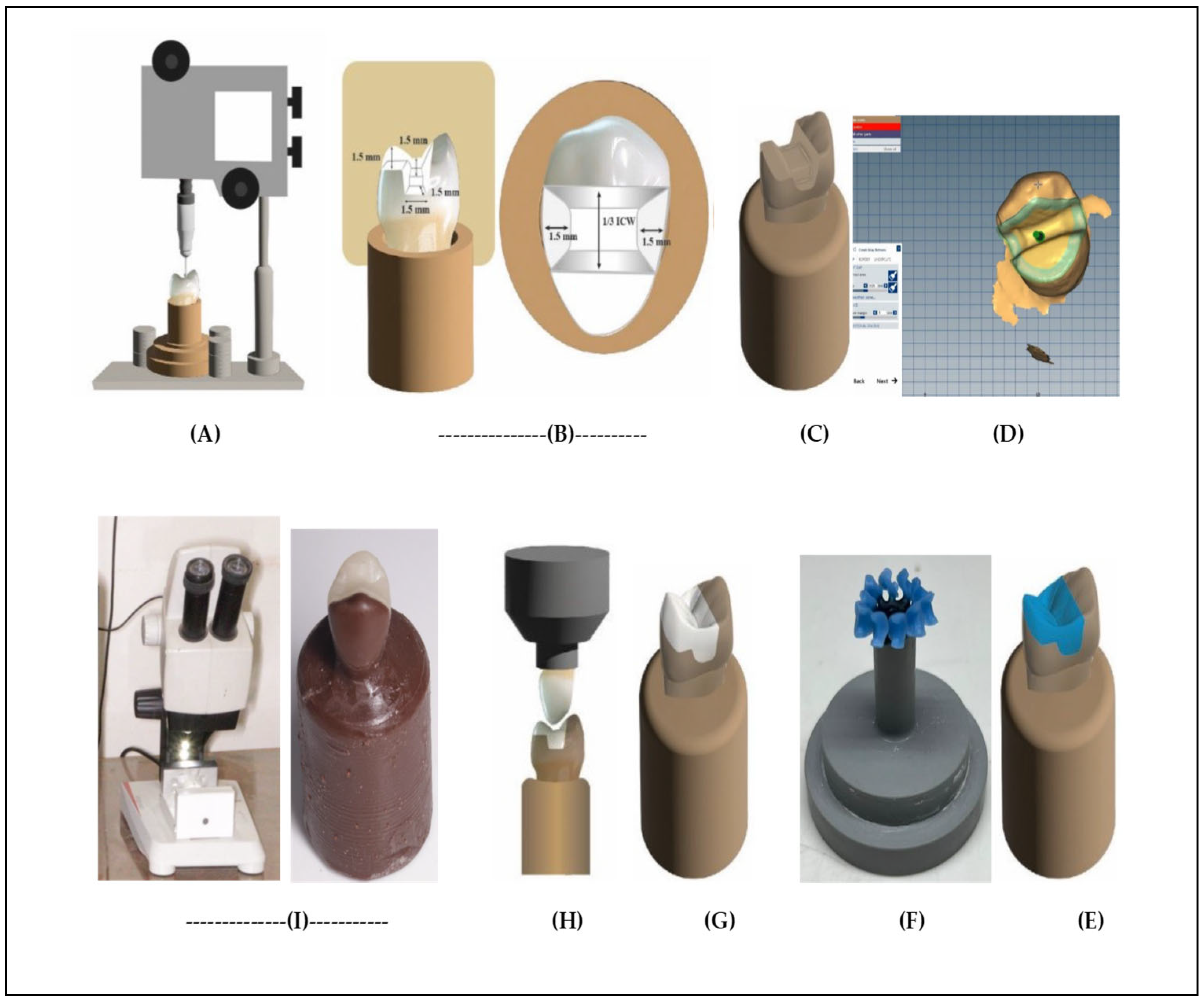
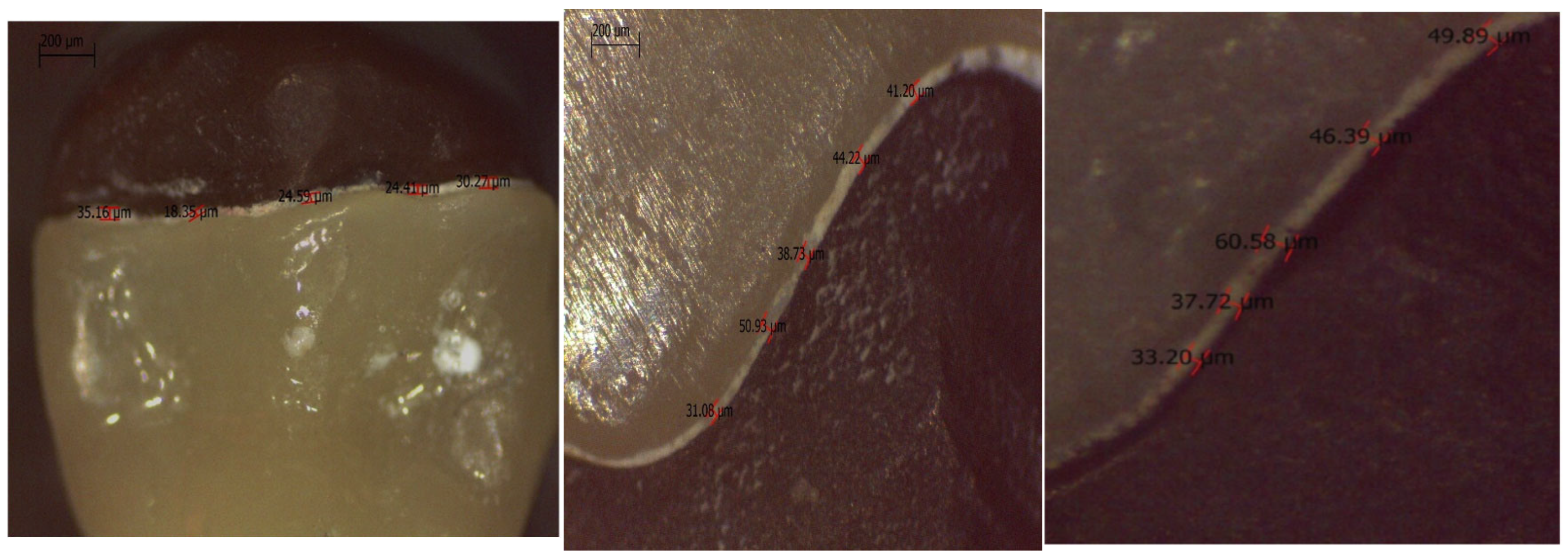
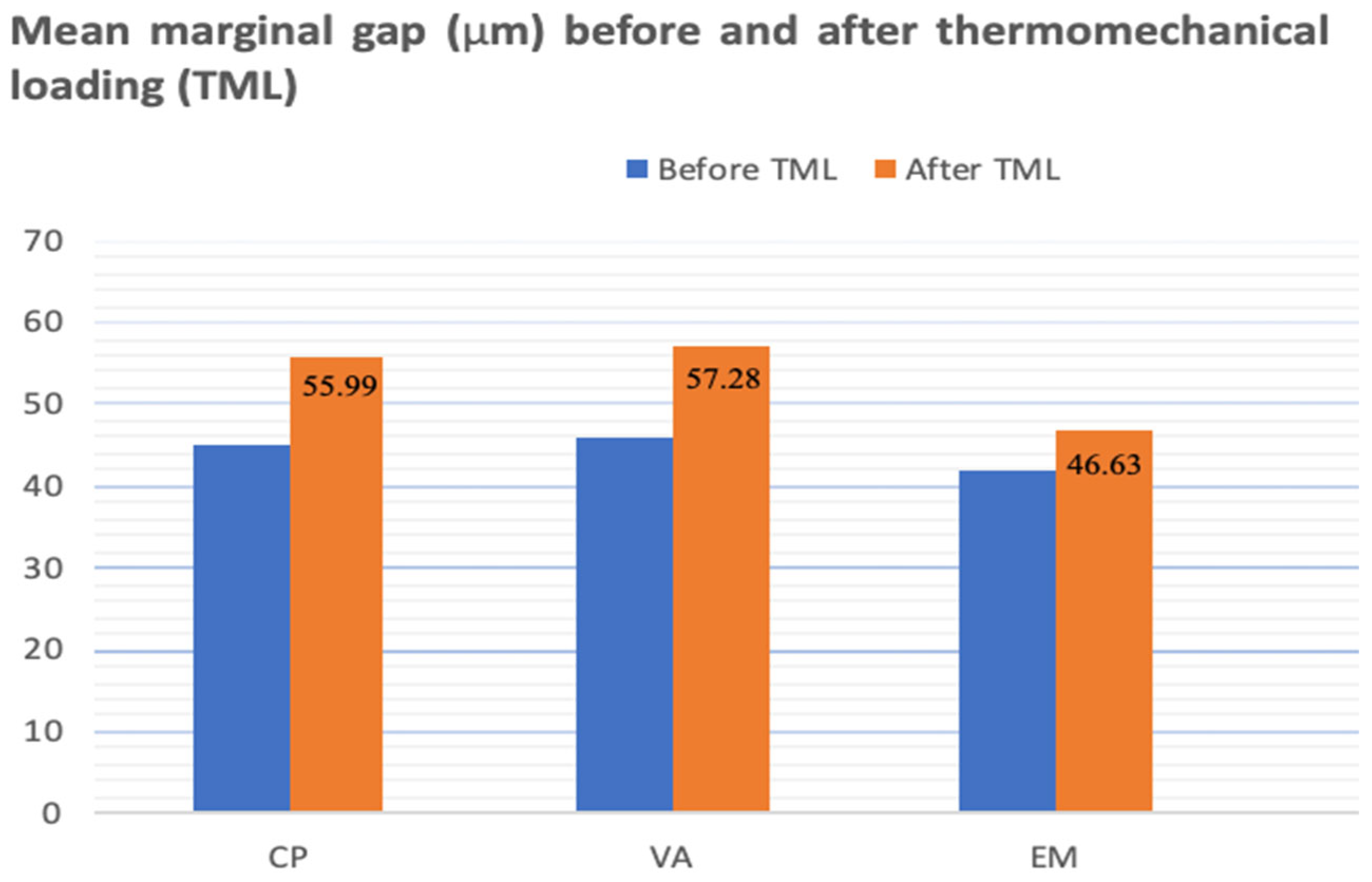
This in vitro investigation evaluated the marginal fit of three pressable glass-ceramic onlay materials: a conventional monolithic lithium disilicate (IPS e.max Press, EM, ivoclar vivadent AG, Schaan, Liechtenstein) and two zirconia-reinforced glass-ceramics (Vita Ambria, VA, VITA Zahnfabrik, Bad Säckingen, Germany; Celtra Press, CP, Sirona Dentsply, Milford, CT, USA). A typodont maxillary first premolar was prepared for an intensive onlay design by a single operator using a milling surveyor. The master die was duplicated with silicone impressions to create 72 identical epoxy resin dies. Seventy-two onlays (n = 24 per material) were fabricated and adhesively cemented to their respective dies. Vertical marginal gaps were recorded under a stereo-electron microscope before and after thermomechanical loading (TML) in a chewing simulator. Data were analyzed with one-way ANOVA and Tukey’s post hoc tests for intergroup comparisons and paired t-tests for pre- versus post-TML values. All groups showed a significant increase in marginal gap following TML. VA exhibited mean gaps of 46.41 µm before and 57.28 µm after loading (p = 0.001). EM demonstrated 41.16 µm before and 46.63 µm after TML (p = 0.002). CP showed 45.70 µm before and 55.99 µm after TML (p = 0.003). Among the three materials, EM maintained the most accurate marginal adaptation both before and after simulated chewing. Despite the increases, all post-loading values remained within the clinically acceptable threshold for marginal discrepancy. These findings indicated that thermomechanical fatigue adversely affected the marginal integrity of pressable glass-ceramic onlays, including zirconia-reinforced formulations. Nevertheless, zirconia-reinforced ceramics (VA and CP) achieved marginal gaps comparable to conventional lithium disilicate and remained within acceptable clinical limits. IPS e.max Press provided the best overall fit, suggesting it may offer superior long-term marginal stability for onlay restorations.
Keywords: marginal gap; pressable zirconia-reinforced lithium disilicate ceramic; onlay restorations; thermomechanical loading marginal gap; pressable zirconia-reinforced lithium disilicate ceramic; onlay restorations; thermomechanical loading