1. Introduction
Zirconium dioxide is a polymorphic, ceramic material without the addition of glass. Zirconium oxide crystals form fine grains of 0.2–0.5 μm [
1]. Zirconium oxide polymorphism consists of three allotropic forms: monoclinic (m), tetragonal (t), and cubic (c). At room temperature, zirconium oxide occurs in the monoclinic form. It changes into the tetragonal form when heated above 1170 °C, and into the cubic form above 2370 °C [
2,
3]. Polymorphic transformations are diffusionless and athermal, occur at the speed of sound, are associated with a change in volume, and depend on the grain size [
4]. The most favourable form from the mechanical point of view is the tetragonal form, which remains stable at high temperatures. In the 1970s, methods were developed to maintain the tetragonal form at room temperature by adding magnesium, calcium, yttrium, or cerium oxides [
5].
The most used form in biomedical applications is 3 mol% Y
2O
3 (Yttrium tetragonal Zirconia Polycrystals, 3Y–TZPs). Ceramics based on zirconium dioxide are chemically composed of 97 mol% ZrO
2 and 3 mol% Y
2O
3 [
6]. Stabilising Y
3+ cations are randomly distributed over the cation sites. The state of electrical neutrality is achieved by creating vacancies after oxygen atoms [
6,
7]. The grains of the tetragonal phase in the material remain in a metastable state. Each propagating crack in the structure causes a small stretching of the material and leads to a local transformation of unstable tetragonal grains into monoclinic grains. The density is 5.56 g/cm
3 for the monoclinic variety, and 6.1 g/cm
3 for the tetragonal variety, which causes an increase in the grain volume of up to 3–5%; this process closes the gap in the ceramic near the crack tip and limits the possibility of the propagation of microcracks in the zirconium dioxide structure [
8]. This phenomenon, known as strengthening transformation, was first described in 1975 [
9]. In turn, phase changes from tetragonal to monoclinic can also lead to the formation of internal stresses and microcracks, and consequently to weakening of the structure. A necessary condition for achieving lasting clinical success in the case of complex prosthetic restorations is a good connection between the substructure and the veneering ceramics. The quality of the connection results from three factors: chemical diffusion connection, connection related to the difference in shrinkage of both materials, and mechanical connection, so-called micro-attachments and penetration of liquid ceramics into the unevenness of the substrate [
5,
10]. For most dental materials, changes in surface roughness occur because of abrasive blasting [
11,
12]. In the case of zirconium oxide-based ceramics, the issue of abrasive blasting is controversial. Although it increases the strength of the connection with the veneering ceramics [
13,
14,
15], it can also cause an unfavourable transformation, LTD, and microcracks of the material, thus reducing the strength of the connection with the ceramics [
16,
17]. Fischer et al. [
17] propose that abrasive blasting is not necessary for surface treatment and that no significant differences in tensile strength were noted between blasted samples and untreated controls. The problem with the processing of zirconia results from the fact that after the sintering process, it is very hard and roughening its surface is difficult [
18,
19]. The use of a coarser abrasive increases the surface roughness, but more aggressive abrasion may affect the mechanical properties of Y-TPZ and promote the phase transformation of t ⟶ m [
16,
17,
19,
20,
21,
22]. Most manufacturers of 3Y-TZP blanks for dental applications advise against the use of sandblasting methods in order to avoid the t ⟶ m transformation on the one hand and to prevent the formation of weakened spots on the surface on the other hand, which, despite the obvious strengthening by stresses resulting from the induced transformation, may lead to a weakening of the long-term strength of the material [
16,
18,
23,
24,
25,
26,
27].
Dental materials are commonly subjected to various forms of abrasion, such as the destructive grinding of finished prosthetic restorations, to adapt them to the conditions prevailing in the oral cavity. The surface after grinding is rough and coarse. This raises two questions: whether grinding processing should be supplemented with polishing, and whether abrasive-stream processing causes a similar unfavourable phase change as grinding and polishing. The aim of this work is to compare the influence of grinding, polishing and abrasive blasting on selected parameters of surface roughness and wettability, as well as on the transformation of the tetragonal phase into the monoclinic phase.
2. Materials and Methods
One hundred and twenty-four samples of zirconia ceramic—3Y-TZP (Ceramill Zi; Amann Girrbach AG, Koblach, Austria)—were sintered in a furnace using the universal programme (8°/min from 200 °C to 1450 °C, 2 h at a constant temperature of 1450 °C, and an appropriate cooling time). The sintering process lasted about 10 h. The material shrinkage was approximately 21%. After sintering, the samples had the following dimensions: diameter 10 and height 10 mm. The chemical composition of zirconia is shown in
Table 1.
The samples were divided into four groups (n = 31) and subjected to one of the following processes: (1) grinding with SiC abrasive paper of grain number 500 on a Metasinex rotary grinder with water cooling; (2) grinding with abrasive paper of grain number 220, 400, 600, 1200, and 2400 on the same device, and then polishing with a polishing disc with a diamond suspension of gradation of 3 μm; (3) Al2O3 abrasive blasting with a grain size of 60 μm at a pressure of 0.2 MPa; and (4) SiC abrasive blasting with a grain size of 60 μm at a pressure of 0.2 MPa. Abrasive blasting was performed with a Mikroblast Duo sandblaster (Prodento-Optimed, Warsaw, Poland), with a working distance of 10 mm, an angle of incidence of the jet of 45°, and a time of 20 s. After processing, the samples were washed in an ultrasonic cleaner in ethyl alcohol for 10 min and dried with compressed air. Five samples from each group, selected randomly due to technical limitations, were designated for microscopic examination, determination of selected roughness parameters, diffraction studies, and determination of surface free energy and wetting angles. Three measurements were performed on each sample at different locations.
2.1. Microscopic Research
To observe differences in the surface topography after processing, the samples were examined under a HITACHI S3000-N scanning electron microscope (SEM S-3000N; Hitachi High Technologies Corp, Tokyo, Japan). Depending on the type of the recorded signal emitted by the sample (under the influence of electron beam excitation), three types of images were recorded: secondary electrons (SEs; surface topography), backscattered BSEs, and 3D BSEs (so-called material contrast).
2.2. Roughness Measurements
To measure selected roughness parameters, profilometric tests were performed. The tests were performed using a Nikon MA 200 confocal laser scanning microscope (Nikon Corp, Tokyo, Japan) with an image resolution of 512 × 512 pixels. An argon laser with a wavelength of ƛ = 488 nm was used to scan the surface of the samples. The measurements were performed at a microscope magnification of 500×. The length of the measurement section was 275 µm. Three images (three different locations) with dimensions of 275 × 275 µm were acquired from each sample. The images were recorded using the EZ-C1 programme version 3.80 for C1si. A detailed analysis of the data obtained using the microscope was performed using the Mountains Map Premium program. Roughness profiles were extracted from each area, i.e., 512 profiles in the north–south and east–west directions. Each individual profile was used to determine the roughness parameters. For the final roughness assessment of the tested surfaces, the arithmetic mean value of all 1024 profiles for three fields was determined. The tests compared selected average roughness parameters: Ra, Rz, and Rq.
2.3. Surface-Free-Energy Measurements
Surface free energy (γs) was determined by measuring the contact angle using the model FM40 EasyDrop device from Krüss GmbH, Hamburg, Germany, and Drop Shape Analyzer software (
https://www.kruss-scientific.com/en/know-how/glossary/drop-shape-analysis, accessed on 22 September 2024), known as Drop Shape Analysis. Two measuring liquids were used: distilled water and diiodomethane. The liquids were selected in such a way that one of them had a low value of the dispersion component of the surface free energy (γdL) and a high value of the polar component of the surface free energy (γpL), and the other one had the opposite: a high value of γdL and a low value of γpL. The liquids were dosed in 0.3 μL amounts. The Owens–Wendt model was used to calculate the values of the individual dispersion (γds) and polar (γps) components of the tested samples [
28]. The components calculated in this way, obtained from five samples, were used to determine the average surface free energy.
2.4. XRD Diffraction
The phase composition of the anodised layer was determined using X-ray diffraction; for this purpose, an X-ray diffractometer was used (Malvern Panalytical Ltd., Malvern, UK) based on Bragg–Brentano geometry in the θ-θ system. The primary X-ray beam (wavelength λ = 1.79 Å) was obtained using an X-ray tube with a cobalt (Co) anode. A parallel X-ray beam was obtained using a Goebel mirror and the following beam optics: divergence slit ½ angles, 1.4 mm antiscattering slit, Soller slit 0.04 rad, and 10 mm mask. The scattered beam was registered with a proportional Xe detector equipped with a PPC collimator and Soller slits of 0.04 rad. The tests were carried out using the following parameters: angular range 2θ = (25–100)°, step of 0.04°, and time per step of 2 s. The phases present in the specimen were determined using High Score Plus software, provided by the manufacturer of the diffractometer, and the ICDD PDF4+ crystallographic database.
2.5. Statistical Analysis
The results were analysed using the PQStat v.1.8.4 statistical package. Averaged results from five measurements per group were subjected to multiple comparisons between the four groups. Comparisons were performed using Student’s t-test for averaged data, and the resulting test probabilities were then corrected using the Sidak method. A test probability of p < 0.05 was considered significant, and a test probability of p < 0.01 was considered highly significant. All reported statistics are based on 5 samples and 3 measurements on each sample at different locations.
3. Results
3.1. Microscopic Research
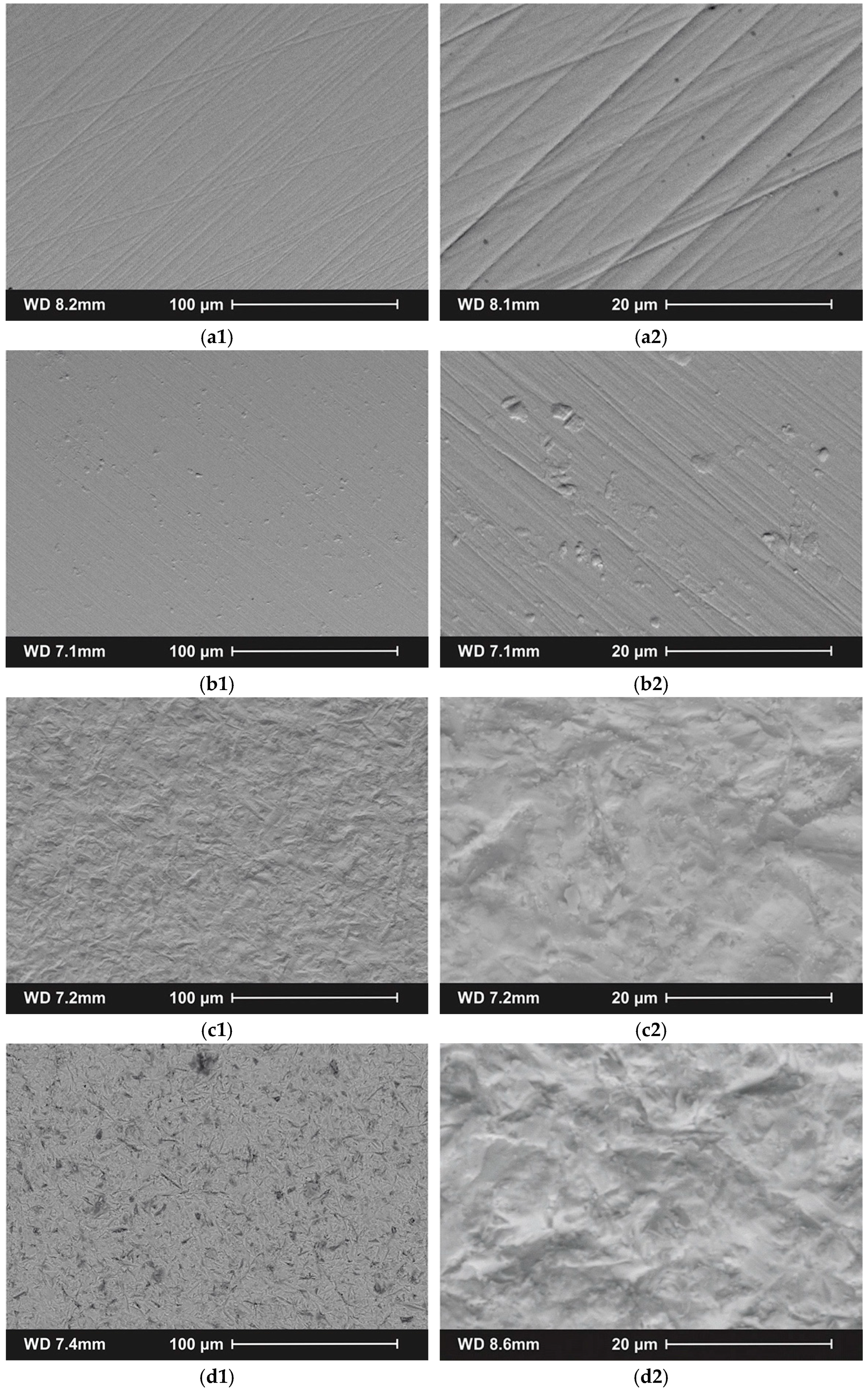
Figure 1 shows selected backscattered electron microscopic images (3D BSE) of the surfaces of zirconia-based ceramic samples after grinding and polishing at 500× and 2500× magnification.
The microscopic examinations carried out showed that after abrasive processing by grinding, scratches appeared on the surface of the samples, which were partially smoothed by polishing. After abrasive blasting, the surfaces of the samples are relatively well developed, and this development is isotropic.
3.2. Roughness Measurements
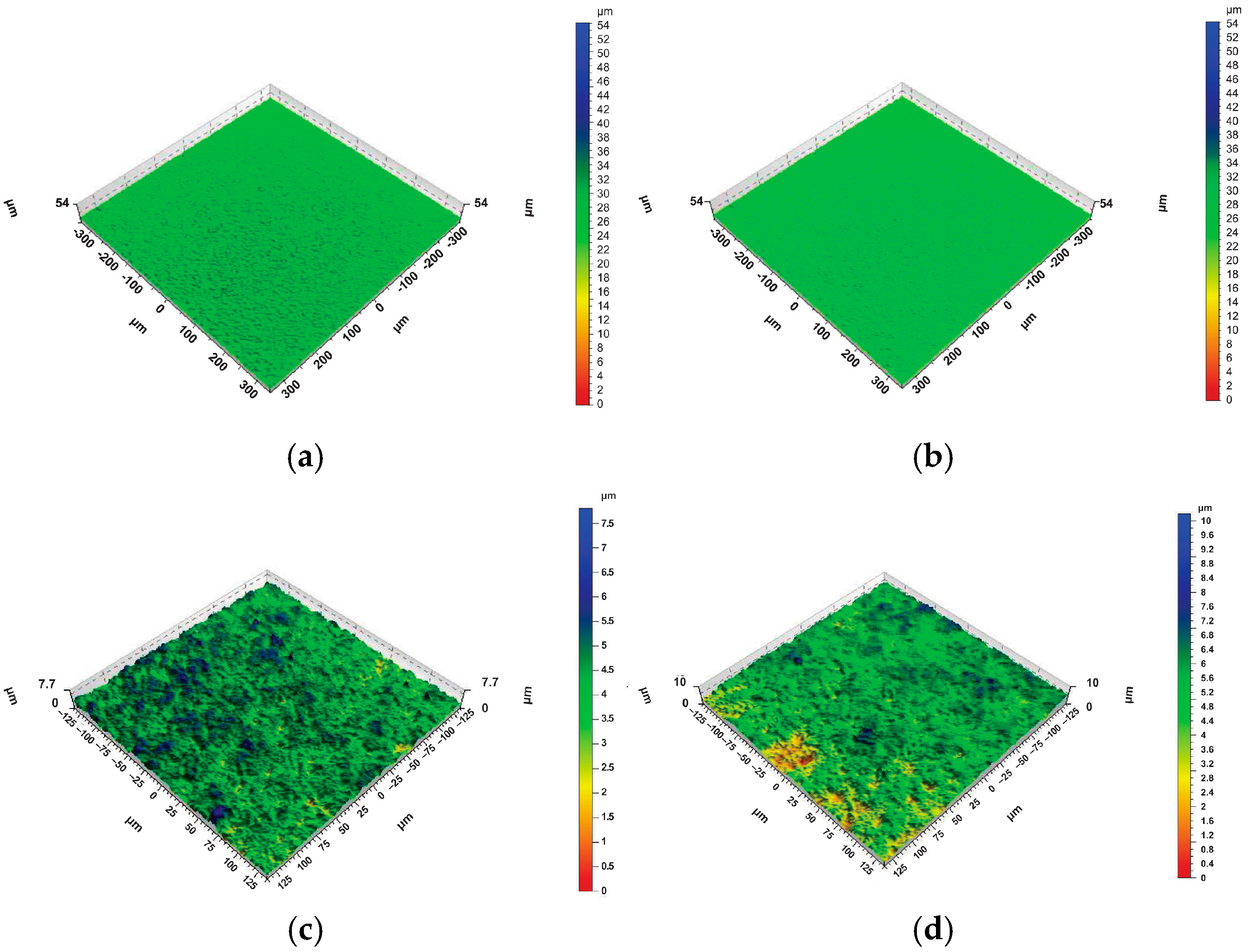
Selected 3D images—obtained using a confocal laser scanning microscope—of scanned surfaces of zirconia-based ceramics after grinding, polishing, and Al
2O
3 and SiC blasting are shown in
Figure 2.
The drawings clearly show changes in the geometric structure of the surface depending on the type of processing. The mean values of selected roughness parameters—
Ra,
Rz, and
Rq—of the analysed zirconium oxide surfaces are presented in
Table 2, and statistical analysis results are shown in
Table 3.
Analysis of the surface roughness parameters (Ra, Rz, and Rq) revealed no significant differences (p > 0.05) between abrasive blasting with Al2O3 and SiC. Grinding produced significantly higher roughness values (p < 0.01) compared with abrasive blasting. In contrast, polishing resulted in the lowest roughness values, which were highly significantly lower (p < 0.01) than those observed in the other groups.
3.3. Surface-Free-Energy Measurements
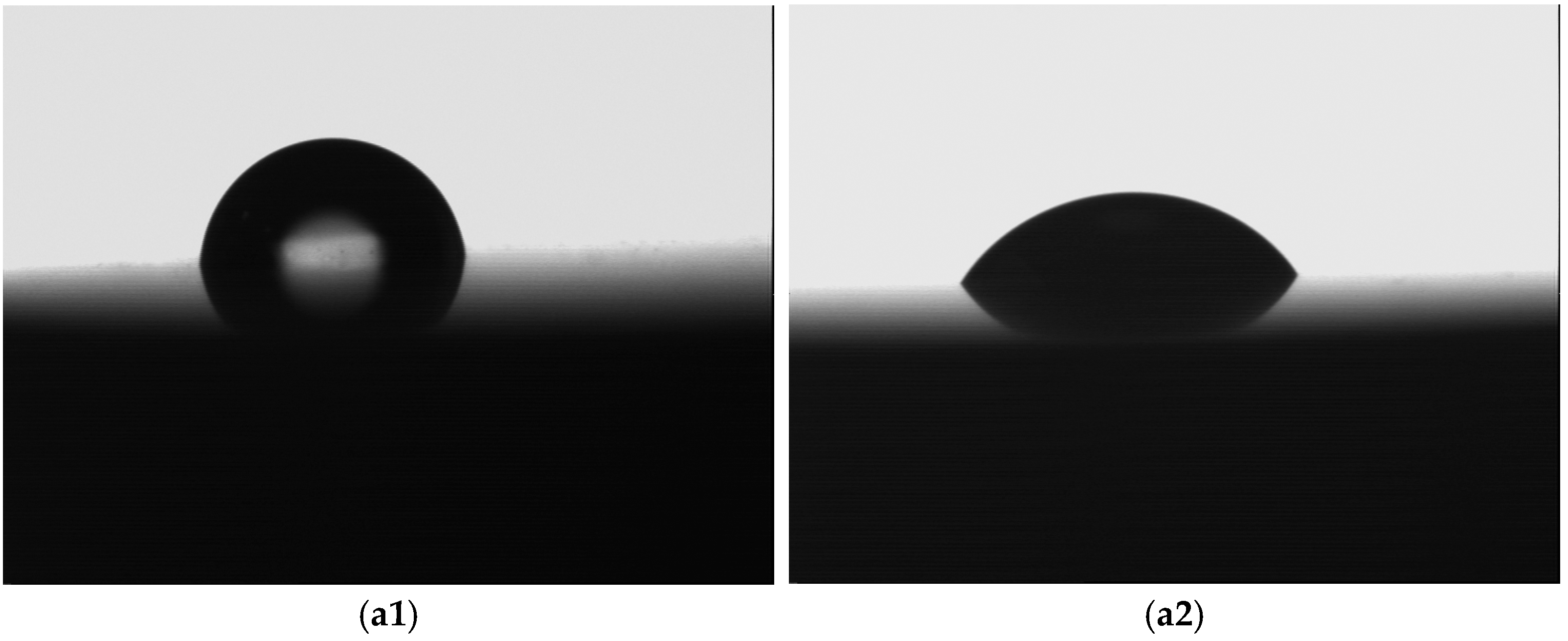
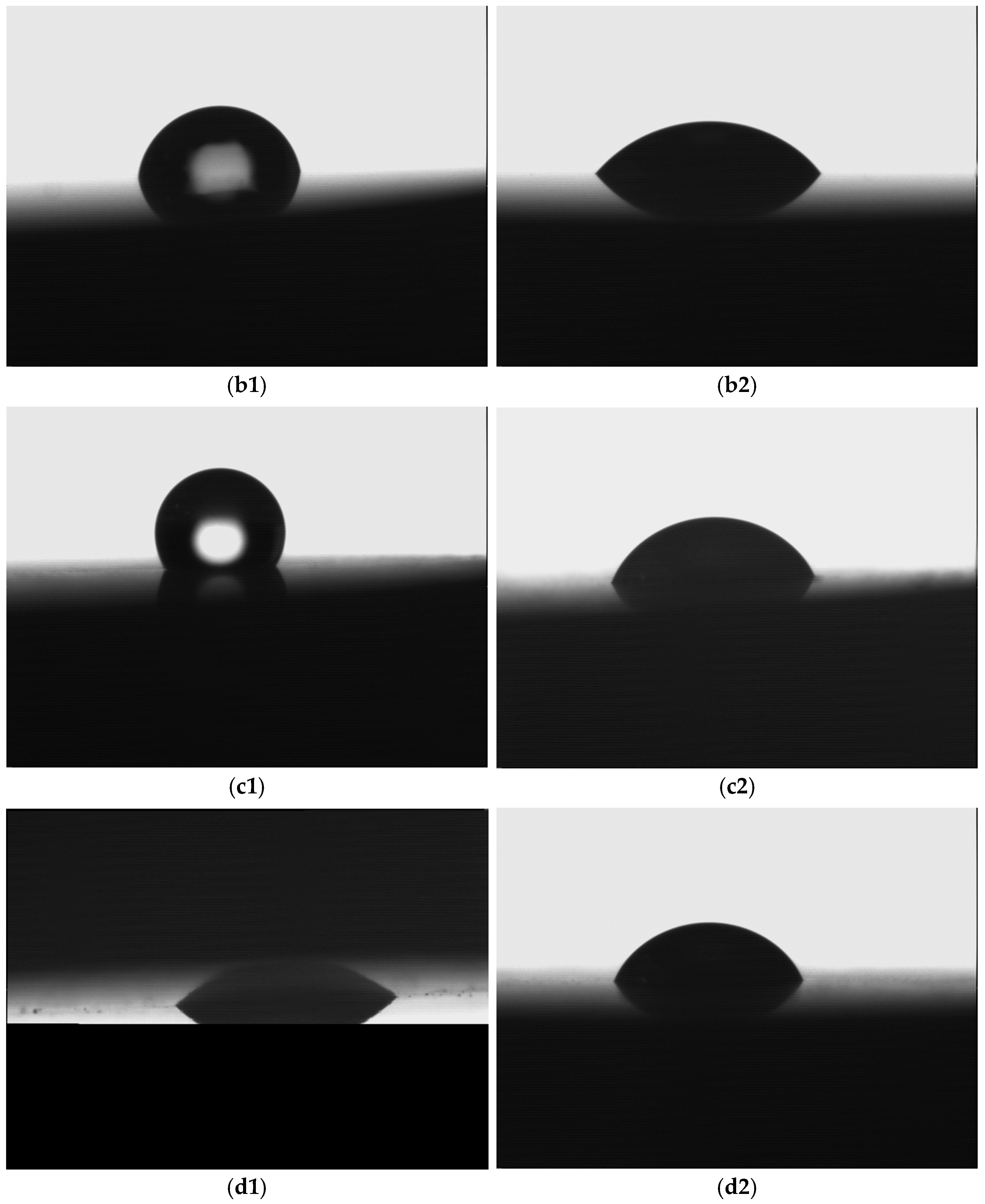
Figure 3 shows sample photos showing the wetting degree of zirconia samples after grinding and polishing with a drop of water (polar liquid) and a drop of diiodomethane (apolar liquid).
Table 4 presents the average values of the wetting angles of the tested surfaces for the two measuring liquids and the statistical analysis in
Table 5.
The mean values of water contact angles θw [deg] after Al2O3 and SiC blasting differed highly significantly (p < 0.01), with higher values after Al2O3 blasting. After grinding, the mean values of water contact angles θw were highly significantly (p < 0.01) lower than after Al2O3 blasting, but highly significantly (p < 0.01) higher than after SiC blasting. After polishing, the mean values of water contact angles θw were highly significantly (p < 0.01) lower than after Al2O3 blasting, but highly significantly (p < 0.01) higher than after SiC blasting. In contrast, the mean values of water contact angles θw after both grinding and polishing did not differ significantly from each other (p > 0.05). The mean values of diiodomethane contact angles θj [deg] after abrasive blasting of both Al2O3 and SiC did not differ significantly (p > 0.05). After grinding, the mean values of diiodomethane contact angles θj were highly significantly (p < 0.01) lower than after abrasive blasting of both Al2O3 and SiC. After polishing, the mean values of diiodomethane contact angles θj were highly significantly (p < 0.01) lower than after abrasive blasting of both Al2O3 and SiC. However, the mean values of diiodomethane contact angles θj after both grinding and polishing did not differ significantly from each other (p > 0.05).
Table 6 presents the average values of the surface free energy, and its polar and dispersion components calculated based on the wetting angles and statistical analysis results in
Table 7.
When comparing the surface-free-energy γs [mJ/m2] values for abrasive blasting with Al2O3 and SiC grains, the results differed highly significantly (p < 0.01), with higher results for abrasive blasting with SiC grains. The surface-free-energy values after grinding did not differ significantly (p > 0.05) from those obtained after abrasive blasting with Al2O3 grains, but they were highly significantly (p < 0.01) lower than those obtained after abrasive blasting with SiC grains. The surface-free-energy values after polishing did not differ significantly (p > 0.05) from those obtained after abrasive blasting with Al2O3 grains, but they were highly significantly (p < 0.01) lower than those obtained after abrasive blasting with SiC grains. However, the surface-free-energy values after grinding and polishing did not differ significantly (p > 0.05). When comparing the results obtained for dispersive components γsd [mJ/m2], abrasive blasting with Al2O3 and SiC grains differed highly significantly (p < 0.01), with higher results for Al2O3 grain treatment. After grinding, they did not differ significantly (p > 0.05) from Al2O3 grain treatment, but the results were significantly (p < 0.05) higher than SiC grain treatment. After polishing, the results obtained for dispersive components did not differ significantly (p > 0.05) from Al2O3 grain treatment but were significantly (p < 0.05) higher than SiC grain treatment. However, the results obtained for dispersive components after grinding and polishing did not differ significantly (p > 0.05). When comparing the results obtained for the polar components γsp [mJ/m2], Al2O3 and SiC abrasive blasting differed highly significantly (p < 0.01), with higher results for SiC. After grinding, the differences were highly significant (p < 0.01) compared to Al2O3, meaning that the treatment had higher results, and highly significant (p < 0.01) compared to SiC, meaning that SiC abrasive blasting had lower results. Polishing was highly significant (p < 0.01) compared to Al2O3, meaning that it had higher results, and the differences in the results were highly significant (p < 0.01) compared to SiC, meaning that SiC had lower results. However, after grinding and polishing, there were no significant differences (p > 0.05).
3.4. XRD Diffraction
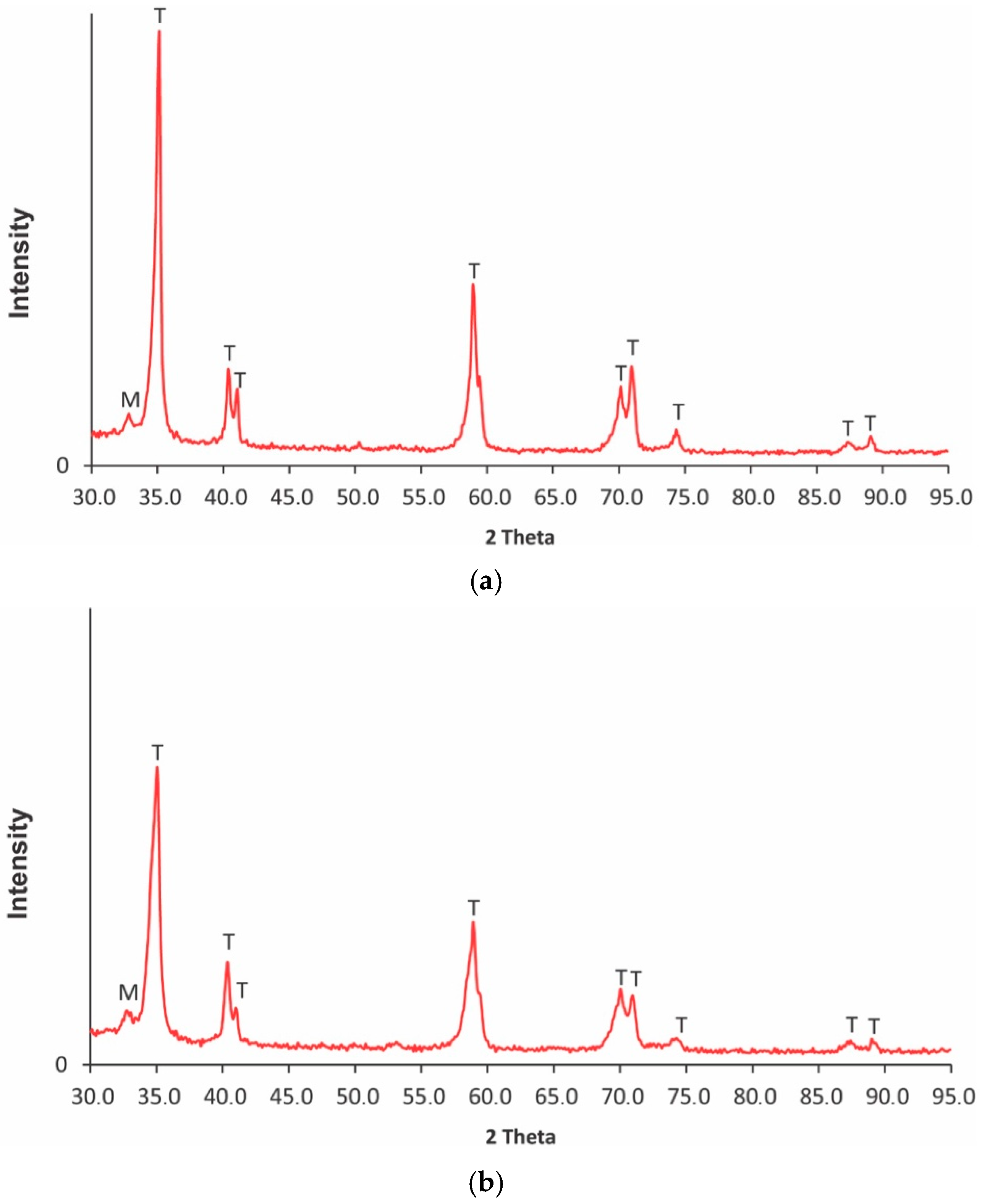
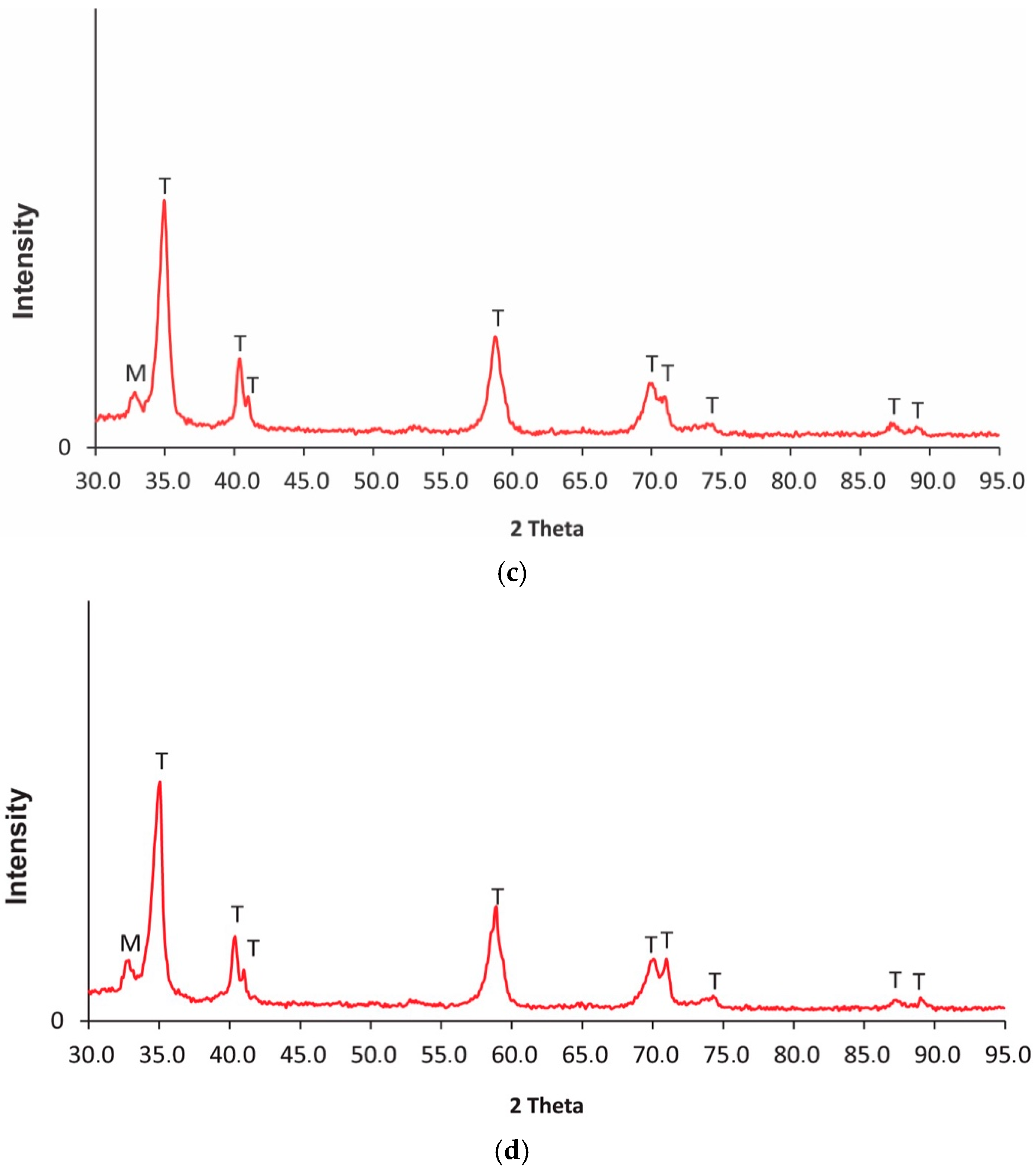
Figure 4 shows diffractograms after grinding, polishing, and abrasive blasting of Al
2O
3 and SiC. These are graphs of the relationship between the intensity of scattered X-ray radiation and the angle of incidence of the X-ray beam on the preparation. They enable the determination of the phase composition and quantitative analysis (evaluation of the percentage share of individual phases) in the tested material.
The diffraction analysis showed the presence of tetragonal and monoclinic phases, without the participation of cubic (regular) forms. Analysing the diffraction patterns, it can be seen that in the samples after abrasive blasting, the monoclinic phase appeared in all samples.
Table 8 shows the share of the tetragonal and monoclinic phases in the diffraction tests calculated using the G-N method on zirconia-based ceramic samples after grinding, polishing, and abrasive blasting with Al
2O
3 and SiC.
A significant transformation from tetragonal to the monoclinic phase was noted in all tested cases: about 14% for the ground sample, 17% for the polished sample, 13.8% for Al2O3 sandblasting, and 13.1% for SiC sandblasting.
4. Discussion
Surface treatment of prosthetic substructure elements is a necessary part of the production of metal alloy and ceramic prostheses. Its main purpose is to increase the strength of the bond between the veneering ceramic and the substructure elements. The clinical application of surface treatments for ceramic veneers is determined by several properties that affect the strength of such a bond. This strength depends on surface parameters such as roughness, wettability, and surface free energy [
29,
30]. Therefore, it is necessary to define these parameters and then investigate the bond strength. In the case of zirconia, it is also important to consider the degree of phase transformation from tetragonal to monoclinic. There is a lack of precise studies defining the permissible amount of monoclinic phase, but it is known that too high a degree of transformation generates stresses that may lead to damage of prosthetic restorations.
Most studies indicate that surface treatment is necessary, and appropriate roughness increases the strength of the bond with the veneering ceramic. This can be achieved by various methods, e.g., sandblasting or grinding, with sandblasting being the most commonly used treatment. A study of the bond between veneering porcelain and the zirconium oxide substructure by Cevik et al. [
31] indicates that a lack of ZrO
2 surface treatment results in a decrease in the bond strength with the veneering material. Therefore, in order to prevent delamination of the ceramic from zirconium oxide, its surface should be treated.
Kim et al. [
14] investigated the strength of zirconia ceramic/veneering ceramic samples after blasting with Al
2O
3 (grain size 110 μm, pressure 0.4 MPa from a distance of 10 mm, and time 10 s). The strength of the samples after blasting was 36.63 MPa, which was higher than that of the control group, which was 32.08 MPa. Abouhelib and Wang [
13] examined the effect of Al
2O
3 blasting from a distance of 10 mm and blasting time of 10 s/cm
2 on biaxial load; the study compared a grain size of 50 μm and a pressure of 0.5 MPa with a grain size of 120 μm and a pressure of 0.3 MPa. Fine abrasive and low-pressure treatment increased the fracture force of the samples (640 ± 226 MPa) compared to coarser grains at higher pressure (518 ± 101 MPa), and even when compared to the control group (576 ± 121 MPa).
However, the applied mechanical treatments initiate the transformation from the metastable tetragonal phase to the stable monoclinic phase in zirconium oxide. In most cases, this causes deterioration of properties that can lead to damage to prosthetic elements [
16,
17]. Therefore, it is important to select the type of treatment and its parameters in order to obtain the appropriate roughness and minimise the degree of transformation. Our findings indicate that a significant transformation from the tetragonal phase to the monoclinic phase took place in all variants: about 14% for the ground sample, about 17% for the polished sample, about 13.8% for the sandblasted sample with aluminium oxide, and about 13.1% for the sandblasted sample with silicon carbide. These values are very high, but the differences between groups (14 vs. 17 vs. 13.1–13.8%) are actually small and may not be clinically significant.
This transformation is caused by the supply of energy to the surface during the treatments. In the case of sandblasting, the main factor is the kinetic energy of the abrasive grains moving in the airstream. In the case of ground samples, the energy is supplied by the pressure exerted by the sharp edges of the abrasive grains. Due to their small surface area, the pressure exerted is very high. In the case of this treatment, similarly, to polishing, the temperature may play an important role, which may be very high locally. The obtained results differ slightly from those presented by other authors. Guazzato et al. [
32], Regulska et al. [
29], and Śmielak et al. [
30] indicate that grinding causes less transformation of the tetragonal phase into monoclinic than abrasive blasting. However, these differences may result from different sandblasting parameters (carrier pressure and abrasive grain size), and in grinding, it may additionally be due to the abrasive grain size, as well as speed, pressure force, and feed, which was widely discussed by Regulska et al. [
29].
Considering the strength of the bond between the veneering ceramic and the substructure, it is necessary to take into account parameters describing the surface, such as roughness, wettability, and surface free energy. The appropriate geometric structure of the surface allows for the creation of mechanical attachments of the ceramic in the substructure. On the other hand, appropriate wettability will ensure the possibility of liquid ceramic flowing into the surface irregularities during its firing. The surface free energy indicates the activity of this surface and has an impact on the bond being formed.
The analysis of roughness parameters showed that the highest values were achieved after the grinding process (
Ra = 0.63;
Rz = 9.29;
Rq = 1.28), and the lowest values were achieved after polishing (
Ra = 0.11;
Rz = 0.71;
Rq = 0.36). Otherwise, intermediate values were achieved for the sandblasted Al
2O
3 samples (
Ra = 0.26;
Rz = 4.21;
Rq = 0.81) and for the sandblasted SiC samples (
Ra = 0.27;
Rz = 4.11;
Rq = 0.79). From this point of view, grinding seems to be the best processing. By selecting the appropriate granulation and processing parameters, similar roughness parameters can be obtained after grinding and sandblasting. However, it should be noted that during sandblasting, we obtain a non-directional surface structure. The effect of this is the possibility of loading the substructure-facing ceramic connection in all directions. After grinding, the structure is directional, and the best results are obtained by loading the joint in the direction perpendicular to the formed cracks [
33]. From this point of view, abrasive blasting seems to be more universal, i.e., for multidirectional loads. Grinding, on the other hand, can be used when it is possible to predict the direction of loads acting on the prosthetic element. When analysing the roughness parameters, it can be assumed that surface polishing should be excluded as a treatment before veneering with ceramics.
Considering the strength of the substructure/veneering ceramic connection, one more aspect should be taken into account, namely, the wettability of the zirconium oxide surface by the liquid ceramic and the free energy of the surface. The better the wettability, the easier it is for the ceramic to flow into the irregularities created after surface treatment, resulting in a better connection. The free energy of the surface, which indicates its activity, also affects the quality of the connection. As shown in [
34], surface treatments affect this parameter. This work showed that within the range of practically used ceramic firing temperatures, the surface treated with aluminium oxide shows slightly better wettability than the ground or polished one. However, these studies were performed only for one grain size and one pressure. In further work, the wettability with liquid ceramics should be determined for different processing parameters. The free energy of the surface and its individual components should be examined similarly.
All samples showed wettability with polar liquids, except for the Al2O3-sandblasted samples (Θ = 121.59°). The best wettability was noted for the SiC-sandblasted samples (Θ = 41.22°) and was slightly lower for the ground ones (Θ = 78.63°) and the lowest for the polished ones (Θ = 80.61°). All treatments showed wettability with apolar liquids (Θ < 90°). The determined values of surface free energy for the samples after grinding, polishing, and sandblasting (Al2O3) were at a similar level. However, sandblasting (SiC) obtained a much higher value for the total surface free energy. From this point of view, it can be assumed that this treatment was the most advantageous.
Abrasive blasting is influenced by the processing time, which was not addressed in the present study. Turp et al. [
35] showed that the degree of monoclinic phase increased with the increase in processing time. Studies by Shimoe et al. [
36] and Moon et al. [
37] showed that increasing the processing time from 10 s to 20 s increased the degree of the monoclinic phase. However, considering that the purpose of abrasive blasting is to develop the surface for the ceramics fired later, there is a certain optimal processing time, usually 20–30 s. Longer periods do not influence the obtained roughness parameters. After some time, an equilibrium can be established between the tetragonal to monoclinic phase transformation in the surface layer and the removal of the layer. Therefore, studies conducted for longer times are of no practical importance.
Therefore, the most beneficial treatment appears to be abrasive blasting. The preferred abrasive should be silicon carbide. However, it should be noted that this treatment causes abrasive particles to be embedded in the treated surface. Their role in the later use of the prostheses is not fully explained. However, the aesthetic aspect is important. Silicon carbide grains are black or dark green, while aluminium oxide grains are white. As a result, the substructure is grey, which can shine through the veneering ceramic, worsening the aesthetics of the prosthetic restoration. It should be noted that, in some cases, it is difficult to give up the grinding process, because the prosthetic restorations must be adjusted to the preparation boundaries, they should have the appropriate shape, and they must also be adjusted to the occlusal conditions in the oral cavity. It is not always possible to predict and solve all these issues during computer design. Therefore, grinding is often necessary.
In addition to the unfavourable transformation from the tetragonal to monoclinic phase, abrasive blasting also has other negative effects. Blasting has been found to negatively impact the surface of zirconia [
38]; however, mild blasting at a pressure of 0.2 MPa and a grain size of 110 µm may be beneficial for the material, because the damages that occur most often concern only the transformed area, where the compressive stress field exists. Stronger blasting (0.4 MPa, 0.4 MPa, and 250 µm), in turn, leads to the formation of much greater damage to the material, which the compressive stress field cannot counteract.
In turn, Stawarczyk [
23] indicates a negative effect of abrasive blasting on the structure of zirconia-based ceramics, and the resulting surface stresses and disturbed phase stability increase susceptibility to degradation. Liu [
24] reports that defects formed during machining were the starting point for material cracking, while microcracks significantly triggered the mechanism of fatigue damage. Zhang [
25] investigated the effects of post-processing damage on the long-term strength of 3Y-TZP. It was found that both abrasive blasting and the use of sharp cuts at low variable loads have a very negative effect on the long-term strength of the material [
25,
26]. The resulting cracks and microcracks can increase the susceptibility to LTD [
24].
As mentioned earlier, the most beneficial of the mechanical treatments currently used seems to be abrasive blasting. Although it increases the development of the monoclinic phase in the surface layers by around 10–20 percent, it seems that by appropriately selecting the processing parameters (sandblasting pressure, abrasive grain size, and processing time), it is possible to reduce the degree of this phase in the surface layer of the processed elements. Further research should therefore focus on determining such parameters of abrasive blasting that can provide the appropriate surface roughness while limiting the development of the monoclinic phase. However, the final verification should be the examination of the strength of the veneering ceramic–zirconium oxide substructure connection.