


Towards Green and Smart Ports: A Review of Digital Twin and Hydrogen Applications in Maritime Management




Abstract
1. Introduction
1.1. Maritime Ports: Operational Challenges, Sustainability, and Technological Innovation
- Environmental sustainability: mitigating harmful outcomes caused by the varied operational and vessel activities occurring near port facilities, including improving energy efficiency and mitigating emissions [11].
- Social sustainability: helping people have a better quality of life through job opportunities, education, and social stability in the port area [12].
- Economic sustainability: boosting economic success through sustainable projects without negatively impacting people or the environment [13].
- RQ1. Does the existing literature provide evidence of an intersection between Digital Twin technologies and the use of hydrogen for smart port management?
- RQ2. What are the open issues, barriers, and future challenges concerning the integration of Digital Twins and hydrogen in the port sector?
1.2. Other Literature Reviews and Our Contribution
- The most recent advances in port management are systematically mapped and synthesized, highlighting separate developments in DT applications and hydrogen technologies while identifying their respective strengths and limitations.
- Future directions for interdisciplinary studies are proposed, with the aim of promoting intelligent, resilient, and sustainable ports by aligning digital transformation strategies with green energy transition initiatives.
2. Review Methodology
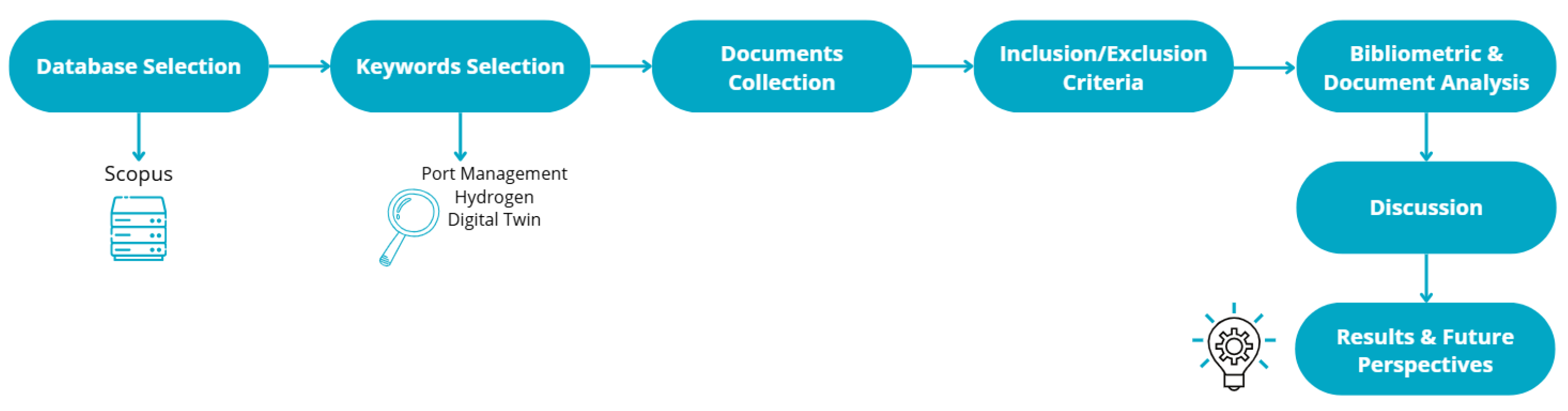
2.1. Database Selection
2.2. Keyword Selection
- “PORT” AND “HYDROGEN” AND “SIMULATION”.
- “MARITIME” AND “DIGITAL TWIN”.
- “PORT MANAGEMENT” AND “DIGITAL TWIN”.
- “HYDROGEN” AND “MARITIME” AND “DIGITAL TWIN”.
- “HYDROGEN” AND “PORT MANAGEMENT” AND “DIGITAL TWIN”.
3. Bibliometric and Document Analysis
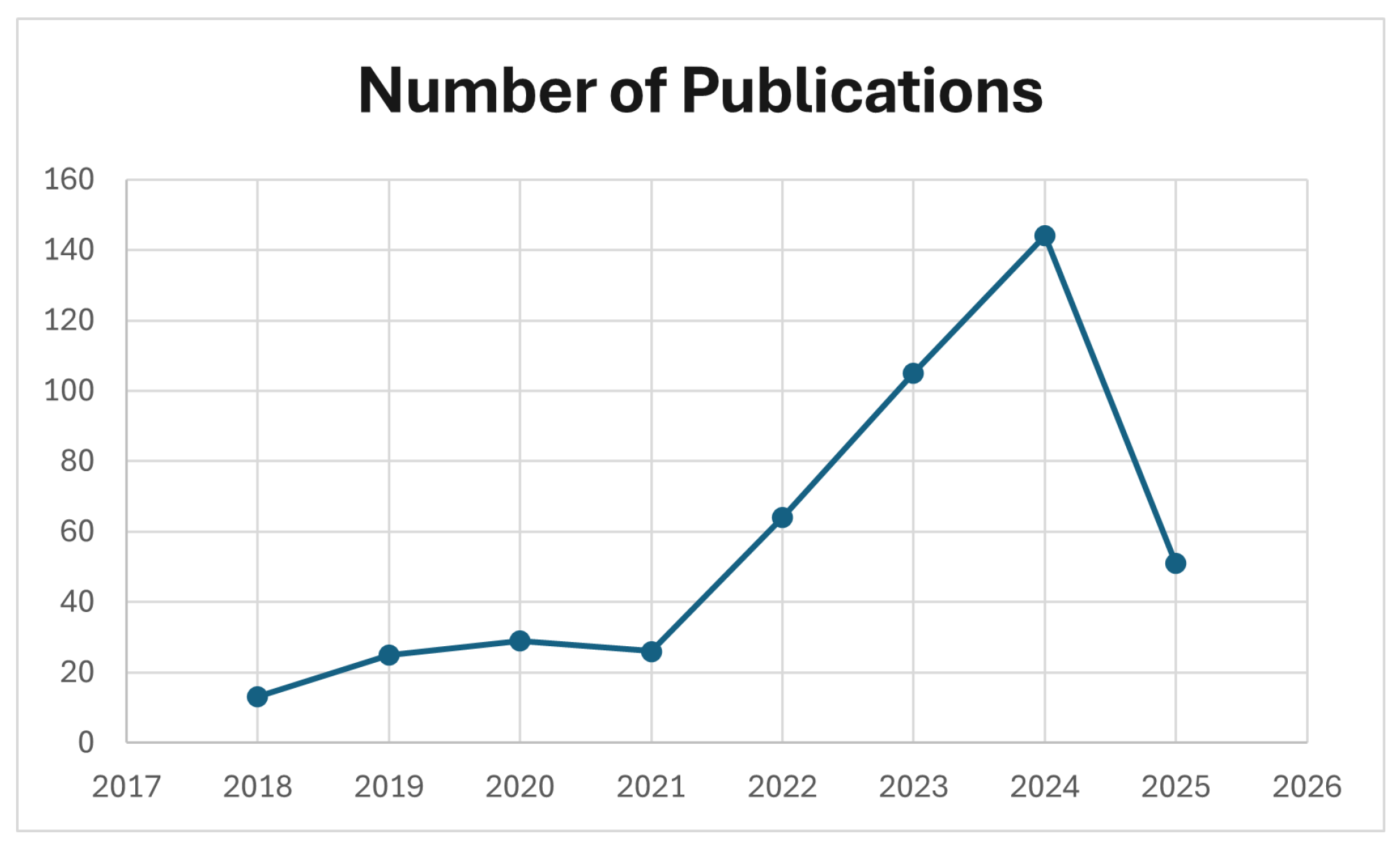
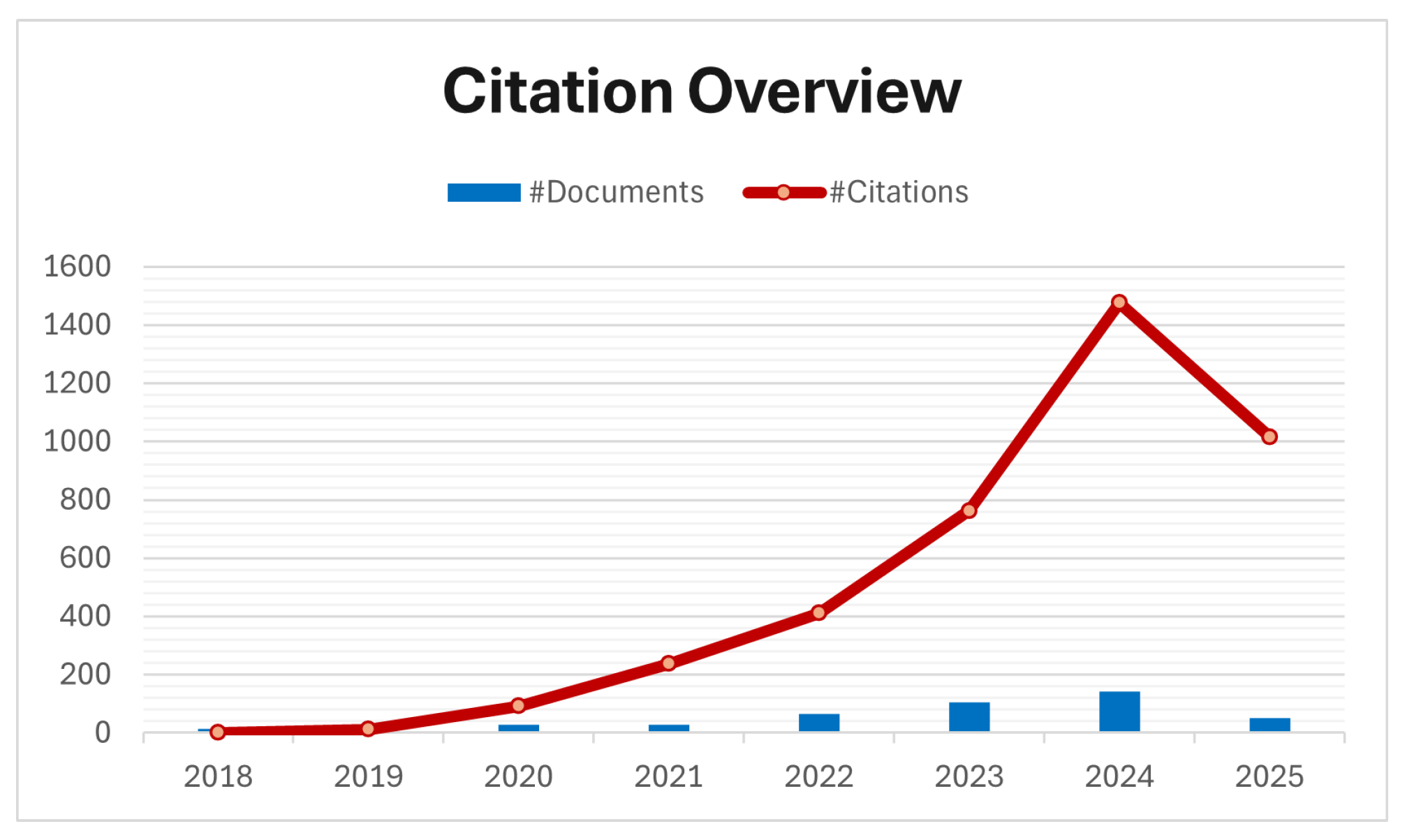
3.1. Publication and Citation Frequency
3.2. Documents by Field, by Country, and per Year by Source
3.3. Keywords Statistics
4. Discussion: Limits and Trends
4.1. Document Analysis
- Articles not based on quantitative approaches (intended mainly as optimization models);
- Articles not relevant to the three selected topics;
- Articles not directly related to simulation.
- Energy consumption optimization (hydrogen storage);
- Use of hydrogen in engines;
- Digital Twins for management and validation in maritime operations.
4.2. Synthesis of Results and Emerging Trends
4.3. Hydrogen Storage and Optimization of Energy Systems
4.4. Use of Hydrogen for Engines
4.5. Digital Twins for Management and Validation in Maritime Operations
4.6. Comparative Overview and Key Insights
4.7. Connecting the Findings to the Research Questions
5. Conclusions
Author Contributions
Funding
Acknowledgments
Conflicts of Interest
References
- Sadiq, M.; Ali, S.W.; Terriche, Y.; Mutarraf, M.U.; Hassan, M.A.; Hamid, K.; Ali, Z.; Sze, J.Y.; Su, C.-L.; Guerrero, J.M. Future greener seaports: A review of new infrastructure, challenges, and energy efficiency measures. IEEE Access 2021, 9, 74976–74999. [Google Scholar] [CrossRef]
- Pivetta, D.; Dall’Armi, C.; Sandrin, P.; Bogar, M.; Taccani, R. The role of hydrogen as enabler of industrial port area decarbonization. Renew. Sustain. Energy Rev. 2024, 189, 113912. [Google Scholar] [CrossRef]
- Saragiotis, P. Business process management in the port sector: A literature review. Marit. Bus. Rev. 2019, 4, 73–87. [Google Scholar] [CrossRef]
- Zhang, Y.; Sun, Z. The coevolutionary process of maritime management of shipping industry in the context of the COVID-19 pandemic. J. Mar. Sci. Eng. 2021, 9, 1293. [Google Scholar] [CrossRef]
- Liu, J.; Qi, Y.; Lyu, W. Port resilience in the post-COVID-19 era. Ocean Coast. Manag. 2023, 238, 106565. [Google Scholar] [CrossRef] [PubMed]
- Yuan, X.; He, X. Enhancement Strategy for Port Resilience: Shipping Route Optimization Methods Based on Network Characteristics of Ports. J. Mar. Sci. Eng. 2025, 13, 325. [Google Scholar] [CrossRef]
- Neugebauer, J.; Heilig, L.; Voß, S. Digital twins in the context of seaports and terminal facilities. Flex. Serv. Manuf. J. 2024, 36, 821–917. [Google Scholar] [CrossRef]
- Song, D.-P. Container Logistics and Maritime Transport; Routledge: Abingdon, UK, 2021. [Google Scholar] [CrossRef]
- Lim, S.; Pettit, S.; Abouarghoub, W.; Beresford, A. Port sustainability and performance: A systematic literature review. Transp. Res. Part D Transp. Environ. 2019, 72, 47–64. [Google Scholar] [CrossRef]
- Surucu-Balci, E.; Iris, Ç.; Balci, G. Digital information in maritime supply chains with blockchain and cloud platforms: Supply chain capabilities, barriers, and research opportunities. Technol. Forecast. Soc. Change 2024, 198, 122978. [Google Scholar] [CrossRef]
- Shiau, T.A.; Chuang, C.C. Social construction of port sustainability indicators: A case study of Keelung Port. Marit. Policy Manag. 2015, 42, 26–42. [Google Scholar] [CrossRef]
- Narula, K. Emerging trends in the shipping industry–transitioning towards sustainability. Marit. Aff. J. Natl. Marit. Found. India 2014, 10, 113–138. [Google Scholar] [CrossRef]
- Cabezas-Basurko, O.; Mesbahi, E.; Moloney, S.R. Methodology for sustainability analysis of ships. Ships Offshore Struct. 2008, 3, 1–11. [Google Scholar] [CrossRef]
- Dragović, B.; Tzannatos, E.; Park, N.K. Simulation modelling in ports and container terminals: Literature overview and analysis by research field, application area and tool. Flex. Serv. Manuf. J. 2017, 29, 4–34. [Google Scholar] [CrossRef]
- Lasi, H.; Fettke, P.; Kemper, H.G.; Feld, T.; Hoffmann, M. Industry 4.0. Bus. Inf. Syst. Eng. 2014, 6, 239–242. [Google Scholar] [CrossRef]
- Cimino, A.; Longo, F.; Mirabelli, G.; Solina, V.; Veltri, P. Enhancing internal supply chain management in manufacturing through a simulation-based digital twin platform. Comput. Ind. Eng. 2024, 198, 110670. [Google Scholar] [CrossRef]
- Elbasheer, M.; Longo, F.; Mirabelli, G.; Nicoletti, L.; Padovano, A.; Solina, V. Shaping the role of the digital twins for human-robot dyad: Connotations, scenarios, and future perspectives. IET Collab. Intell. Manuf. 2023, 5, e12066. [Google Scholar] [CrossRef]
- Zhou, C.; Xu, J.; Miller-Hooks, E.; Zhou, W.; Chen, C.H.; Lee, L.H.; Li, H. Analytics with digital-twinning: A decision support system for maintaining a resilient port. Decis. Support Syst. 2021, 143, 113496. [Google Scholar] [CrossRef]
- Liu, H.; Tian, Z.; Huang, A.; Yang, Z. Analysis of vulnerabilities in maritime supply chains. Reliab. Eng. Syst. Saf. 2018, 169, 475–484. [Google Scholar] [CrossRef]
- Zhang, Z.; Song, C.; Zhang, J.; Chen, Z.; Liu, M.; Aziz, F.; Kurniawan, T.A.; Yap, P.-S. Digitalization and innovation in green ports: A review of current issues, contributions and the way forward in promoting sustainable ports and maritime logistics. Sci. Total Environ. 2024, 912, 169075. [Google Scholar] [CrossRef] [PubMed]
- Duran, C.; Fernandez-Campusano, C.; Carrasco, R.; Carrillo, E. DMLBC: Dependable machine learning for seaports using blockchain technology. J. King Saud Univ.-Comput. Inf. Sci. 2024, 36, 101918. [Google Scholar] [CrossRef]
- Durán, C.; Fernández-Campusano, C.; Espinosa-Leal, L.; Castañeda, C.; Carrillo, E.; Bastias, M.; Villagra, F. Exploring Boost Efficiency in Text Analysis by Using AI Techniques in Port Companies. Appl. Sci. 2025, 15, 4556. [Google Scholar] [CrossRef]
- Holder, D.; Percy, S.D.; Yavari, A. A review of port decarbonisation options: Identified opportunities for deploying hydrogen technologies. Sustainability 2024, 16, 3299. [Google Scholar] [CrossRef]
- Kļaviņš, A.; Kirsanovs, V.; Pakere, I.; Dávid, A. Current trends and solutions for port energy supply transformation: A systematic literature review. Environ. Clim. Technol. 2024, 28, 910–926. [Google Scholar] [CrossRef]
- Mauro, F.; Kana, A.A. Digital twin for ship life-cycle: A critical systematic review. Ocean Eng. 2023, 113479. [Google Scholar] [CrossRef]
- Kamble, S.S.; Gunasekaran, A.; Gawankar, S.A. Sustainable industry 4.0 framework: A systematic literature review identifying the current trends and future perspectives. Process Saf. Environ. Prot. 2018, 117, 408–425. [Google Scholar] [CrossRef]
- Mishra, D.; Gunasekaran, A.; Papadopoulos, T.; Childe, S.J. Big data and supply chain management: A review and bibliometric analysis. Ann. Oper. Res. 2018, 270, 313–336. [Google Scholar] [CrossRef]
- PRISMA Executive. PRISMA (Preferred Reporting Items for Systematic Reviews and Meta-Analyses). PRISMA Statement. 2024. Available online: https://www.prisma-statement.org/ (accessed on 1 September 2025).
- van Eck, N.J.; Waltman, L. Software survey: VOSviewer, a computer program for bibliometric mapping. Scientometrics 2010, 84, 523–538. [Google Scholar] [CrossRef] [PubMed]
- UNCTAD. Maritime Profile: China. 15 April 2025. Available online: https://unctadstat.unctad.org/CountryProfile/MaritimeProfile/en-GB/156/index.html (accessed on 1 September 2025).
- Chen, J.R.; Choi, J.W.; Seo, Y.J. Environmental efficiency assessment of coastal ports in China: Implications for sustainable port management. Mar. Pollut. Bull. 2025, 211, 117436. [Google Scholar] [CrossRef]
- The American Association of Port Authorities (AAPA); Ernst and Young. U.S. Port & Maritime Industry: 2024 Economic Impact Report. 2024. Available online: https://www.aapa-ports.org/files/2024%20Economic%20Impact%20Report.pdf (accessed on 1 September 2025).
- Ambasciata d’Italia Oslo. L’industria Navale in Norvegia. 2021. Available online: https://www.shipmag.it/wp-content/uploads/2021/08/ebook-shipmag.pdf (accessed on 1 September 2025).
- ISTAT. Glossario dei Termini Statistici. Istituto Nazionale di Statistica. 2014. Available online: https://www.istat.it/it/files//2014/11/Glossario.pdf (accessed on 14 July 2025).
- Tang, D.; Ge, P.; Yuan, C.; Ren, H.; Zhong, X.; Dong, M.; Agundis-Tinajero, G.D.; Diaz-Londono, C.; Guerrero, J.M.; Zio, E. Optimal management of coupled hydrogen-electricity energy systems at ports by multi-time scale scheduling. Appl. Energy 2025, 391, 125885. [Google Scholar] [CrossRef]
- Yang, A.; Li, A.; Li, Z.; Sun, Y.; Gao, J. Investment analysis of low-carbon yard cranes: Integrating Monte Carlo simulation and jump diffusion processes with a hybrid American–European real options approach. Energies 2025, 18, 1928. [Google Scholar] [CrossRef]
- Eißler, T.; Groos, U.; Holst, M.; Deringer, P.; Edenhofer, L.; Mendler, F.; Voglstätter, C.; Szolak, R. Optimizing the supply chain for green hydrogen and derivatives: A case study from Australia to Germany including inland transport considerations. Int. J. Hydrogen Energy 2025, 144, 1200–1206. [Google Scholar] [CrossRef]
- Uzun, D.; Okumus, D.; Canbulat, O.; Gunbeyaz, S.A.; Karamperidis, S.; Hudson, D.; Turan, O.; Allan, R. Port energy demand model for implementing onshore power supply and alternative fuels. Transp. Res. Part D Transp. Environ. 2024, 136, 104432. [Google Scholar] [CrossRef]
- Ma, K.; Zhang, Y.; Yang, K.; Guo, S.; Yang, Y.; Yang, J. Optimization of port integrated energy systems considering the dissatisfaction of port operators with hydrogen safety. In Proceedings of the 2024 8th IEEE Conference on Energy Internet and Energy System Integration (EI2), Shenyang, China, 29 November–2 December 2024; pp. 1146–1151. [Google Scholar] [CrossRef]
- Zhang, Q.; Qi, J.; Zhen, L. Optimization of integrated energy system considering multi-energy collaboration in carbon-free hydrogen port. Transp. Res. Part E Logist. Transp. Rev. 2023, 180, 103351. [Google Scholar] [CrossRef]
- Mio, A.; Barbera, E.; Massi Pavan, A.; Danielis, R.; Bertucco, A.; Fermeglia, M. Analysis of the energetic, economic, and environmental performance of hydrogen utilization for port logistic activities. Appl. Energy 2023, 347, 121431. [Google Scholar] [CrossRef]
- Xu, Y.; Fu, H.; Yang, J.; Zhao, L.; Zhang, Y. Two-stage optimization of hydrogen and storage coordination for a multi-region flexible intermodal multi-energy port system. Front. Energy Res. 2024, 11, 1336601. [Google Scholar] [CrossRef]
- Yang, A.; Meng, X.; He, H.; Wang, L.; Gao, J. Towards optimized ARMGs’ low-carbon transition investment decision based on real options. Energies 2022, 15, 5153. [Google Scholar] [CrossRef]
- Vasudev, A.; Soleimani, A.; Hyvonen, J.; Mikulski, M. Feasible route towards decarbonising marine transport with flexible, hydrogen-enriched, reactivity controlled compression ignition mid-speed engines. Int. J. Hydrogen Energy 2025, 142, 1196–1210. [Google Scholar] [CrossRef]
- Pang, S.; Zou, L.; Zhang, L.; Wang, H.; Wang, Y.; Liu, X.; Jiang, J. A hybrid TCN-BiLSTM short-term load forecasting model for ship electric propulsion systems combined with multi-step feature processing. Ocean Eng. 2025, 316, 119808. [Google Scholar] [CrossRef]
- Yang, Z.; Hao, D.; Wang, F.; Qin, C.; Chen, X.; Tian, Y. Quantitative analysis of hydrogen leakage and diffusion processes based on real-time concentration measurement at different spatial positions in a customized chamber. Int. J. Hydrogen Energy 2024, 66, 231–241. [Google Scholar] [CrossRef]
- Meganathan, L.; Esha, M.; Shukla, S.; Doss, A.S.A.; Kannan, R.; Hasan, M.M. Analysis of performance metrics in dual input dual output DC-DC converters for hydrogen-powered electric vehicles. In Proceedings of the 2024 8th International Conference on Electronics, Communication and Aerospace Technology (ICECA), Coimbatore, India, 6–8 November 2024. [Google Scholar] [CrossRef]
- Guilbert, D.; Nahid-Mobarakeh, B.; Pierfederici, S.; Mungporn, P.; Thounthong, P. Comparative study of adaptive Hamiltonian control laws for DC microgrid stabilization: A fuel cell boost converter. Appl. Sci. Eng. Prog. 2022, 15, 5540. [Google Scholar] [CrossRef]
- Vavra, J.; Bortel, I.; Takats, M. A Dual Fuel Hydrogen—Diesel Compression Ignition Engine and Its Potential Application in Road Transport; SAE Technical Paper 2019-01-0564; SAE International: Washington, DC, USA, 2019. [Google Scholar] [CrossRef]
- Kim, H. A real-time lifecycle analysis model with digital twin and novel control method for enhancing the environmental performance of electric/hybrid propulsion ships. Ocean Eng. 2025, 329, 121195. [Google Scholar] [CrossRef]
- Jayasinghe, S.C.; Mahmoodian, M.; Sidiq, A.; Nanayakkara, T.M.; Alavi, A.; Mazaheri, S.; Shahrivar, F.; Sun, Z.; Setunge, S. Innovative digital twin with artificial neural networks for real-time monitoring of structural response: A port structure case study. Ocean Eng. 2024, 312 Pt 2, 119187. [Google Scholar] [CrossRef]
- Fernandes, A.; Gutierres, D.; Fugihara, M.; de Norman, B. Port management digital twin and control tower integration: An approach to support real-time decision making. In Proceedings of the 2024 Winter Simulation Conference (WSC), Orlando, FL, USA, 15–18 December 2024; pp. 2821–2831. [Google Scholar] [CrossRef]
- Wang, K.; Hu, Q.; Zhou, M.; Zun, Z.; Qian, X. Multi-aspect applications and development challenges of digital twin-driven management in global smart ports. Case Stud. Transp. Policy 2021, 9, 1298–1312. [Google Scholar] [CrossRef]
- Liu, J.; Duru, O.; Law, A.W.-K. Assessment of atmospheric pollutant emissions with maritime energy strategies using bayesian simulations and time series forecasting. Environ. Pollut. 2021, 270, 116068. [Google Scholar] [CrossRef] [PubMed]
- Eom, J.-O.; Yoon, J.-H.; Yeon, J.-H.; Kim, S.-W. Port Digital Twin Development for Decarbonization: A Case Study Using the Pusan Newport International Terminal. J. Mar. Sci. Eng. 2023, 11, 1777. [Google Scholar] [CrossRef]
- González-Cancelas, N.; Martínez Martínez, P.; Vaca-Cabrero, J.; Camarero-Orive, A. Optimization of port asset management using digital twin and BIM/GIS in the context of Industry 4.0: A case study of Spanish ports. Processes 2025, 13, 705. [Google Scholar] [CrossRef]
- Zhou, Y.; Fu, Z.; Zhang, J.; Li, W.; Gao, C. A digital twin-based operation status monitoring system for port cranes. Sensors 2022, 22, 3216. [Google Scholar] [CrossRef] [PubMed]
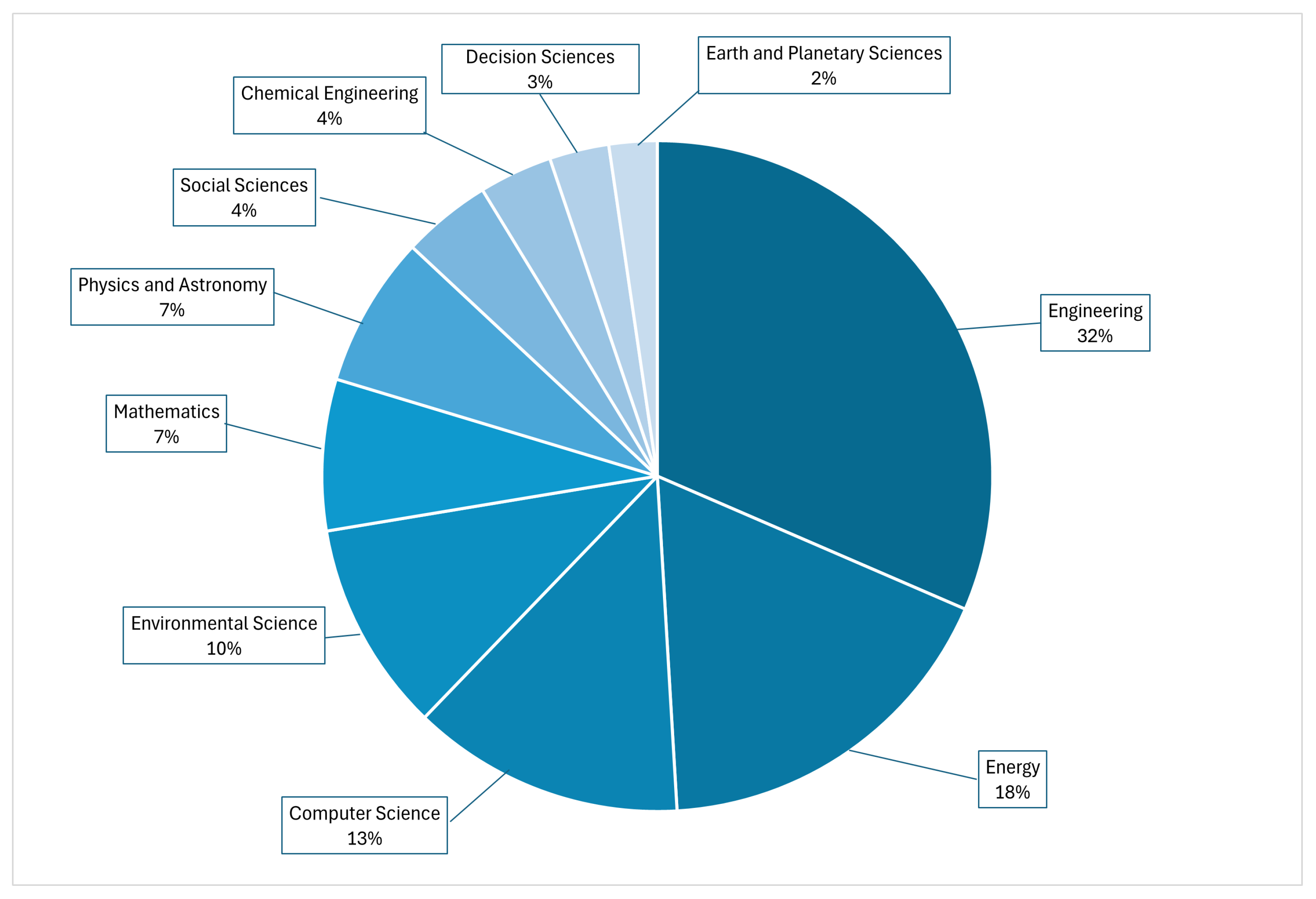
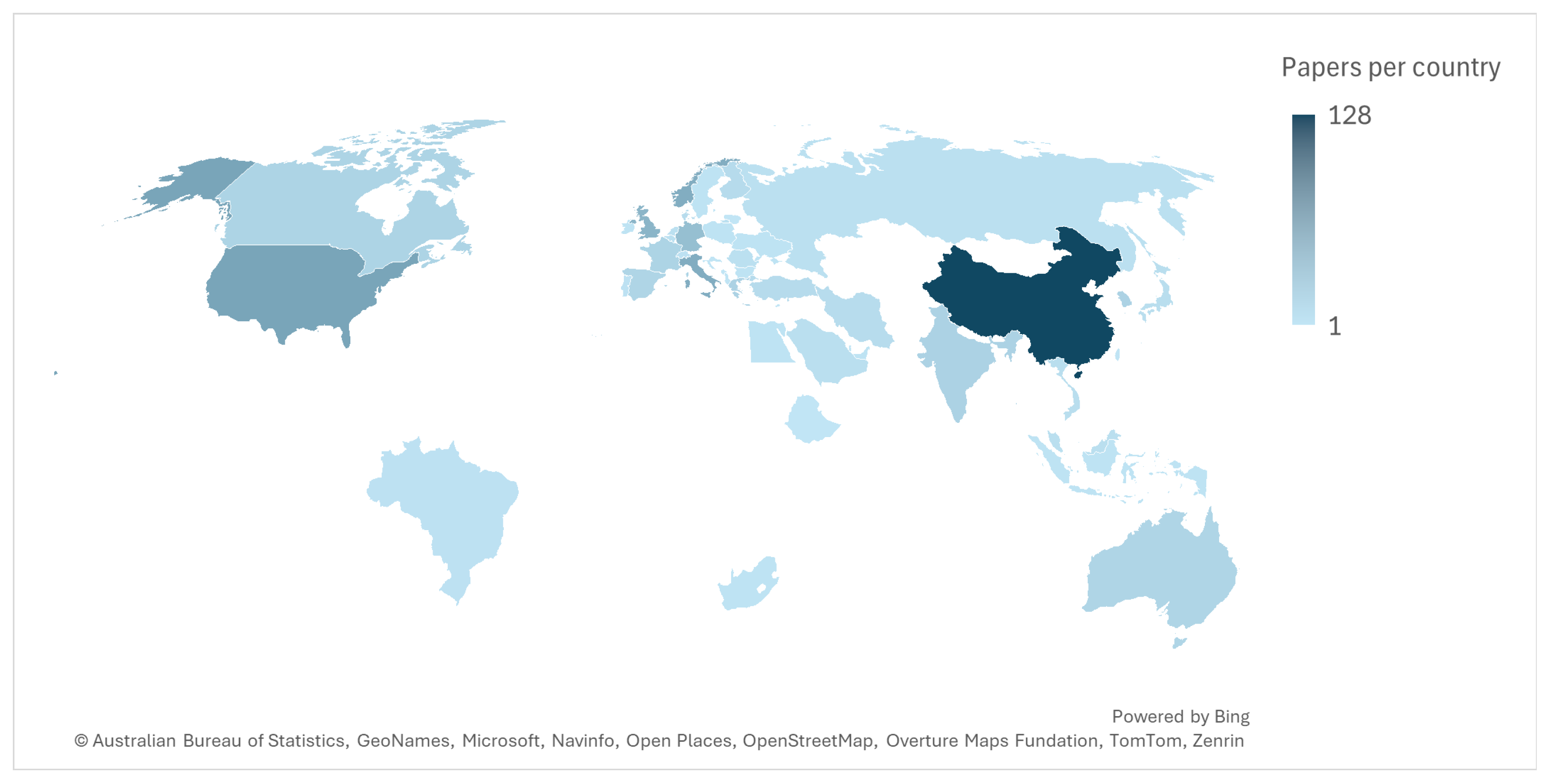
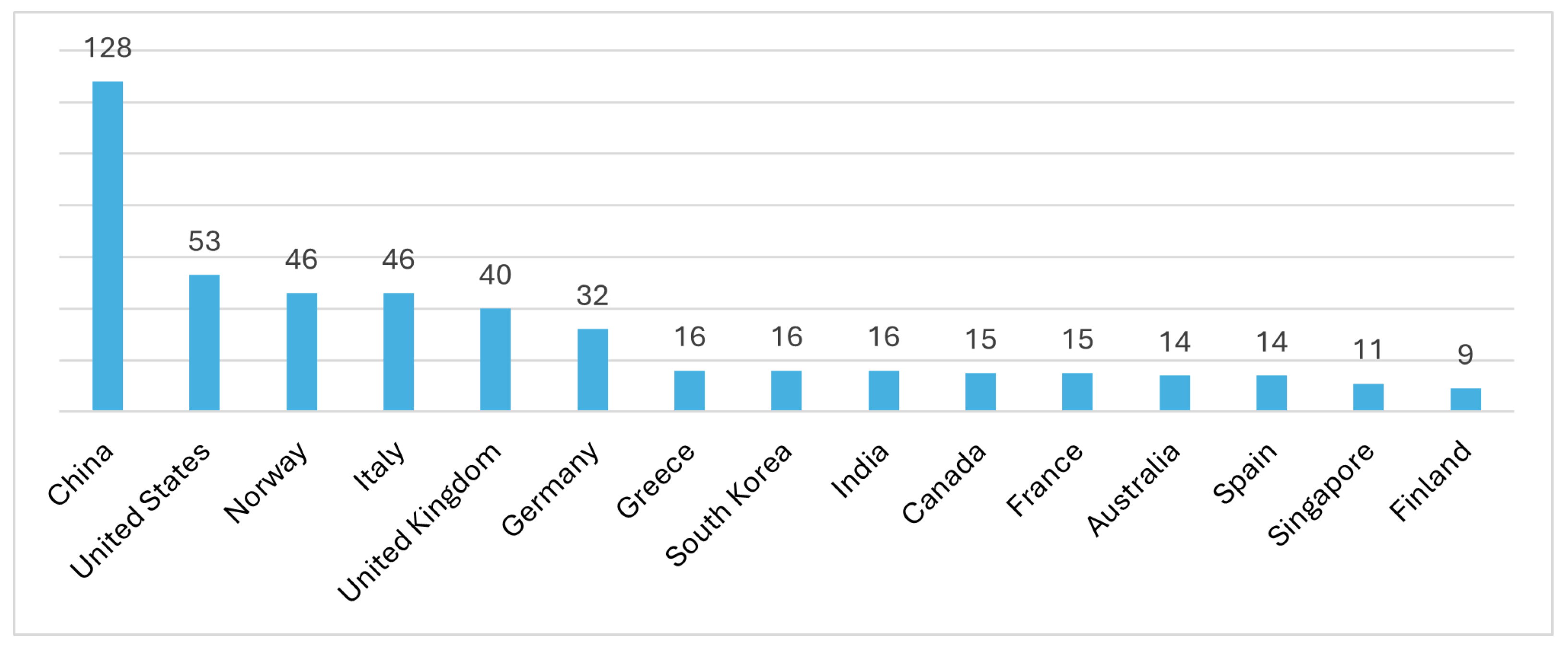
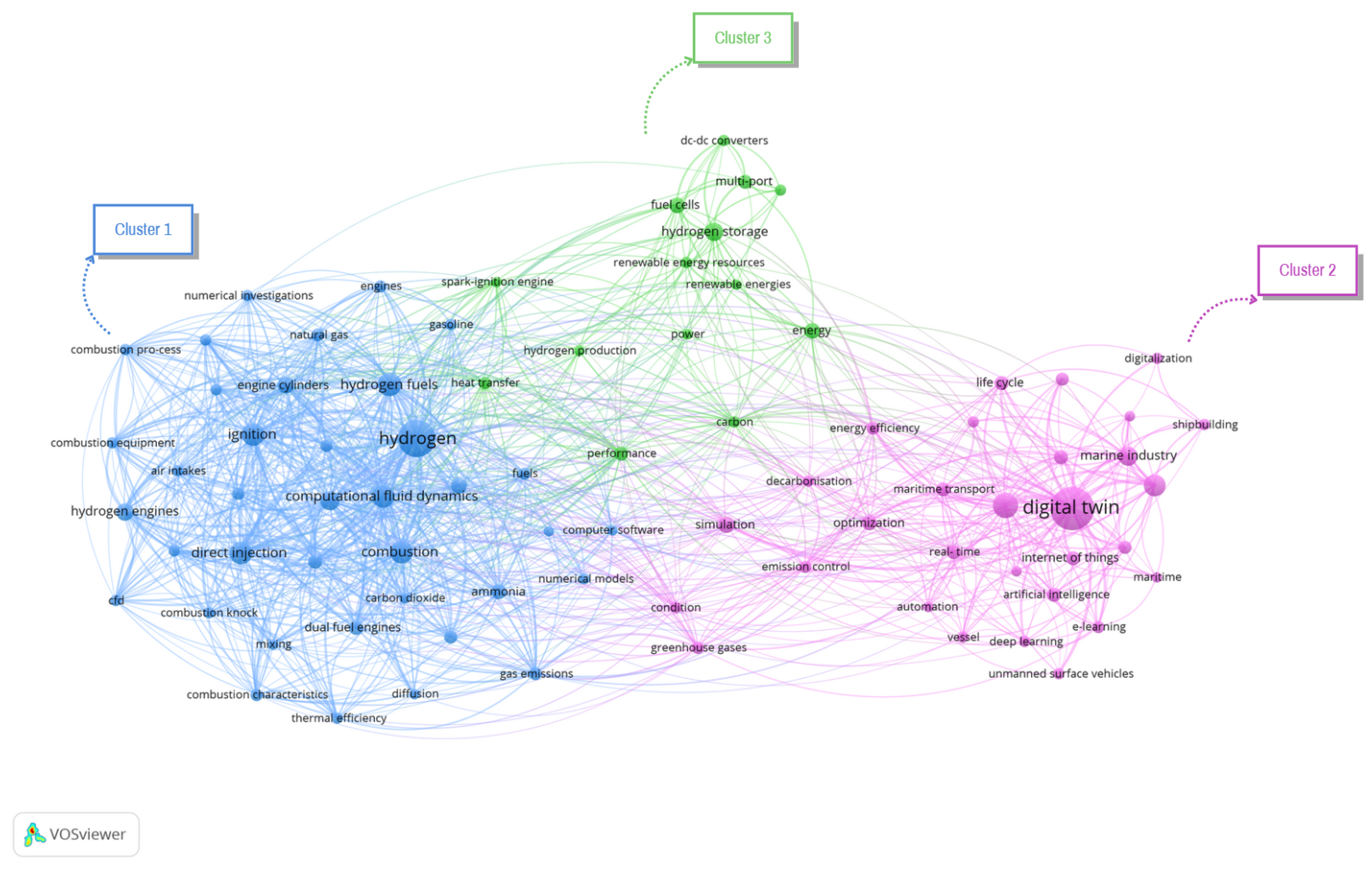

| # Search | Keywords Combination | Results |
|---|---|---|
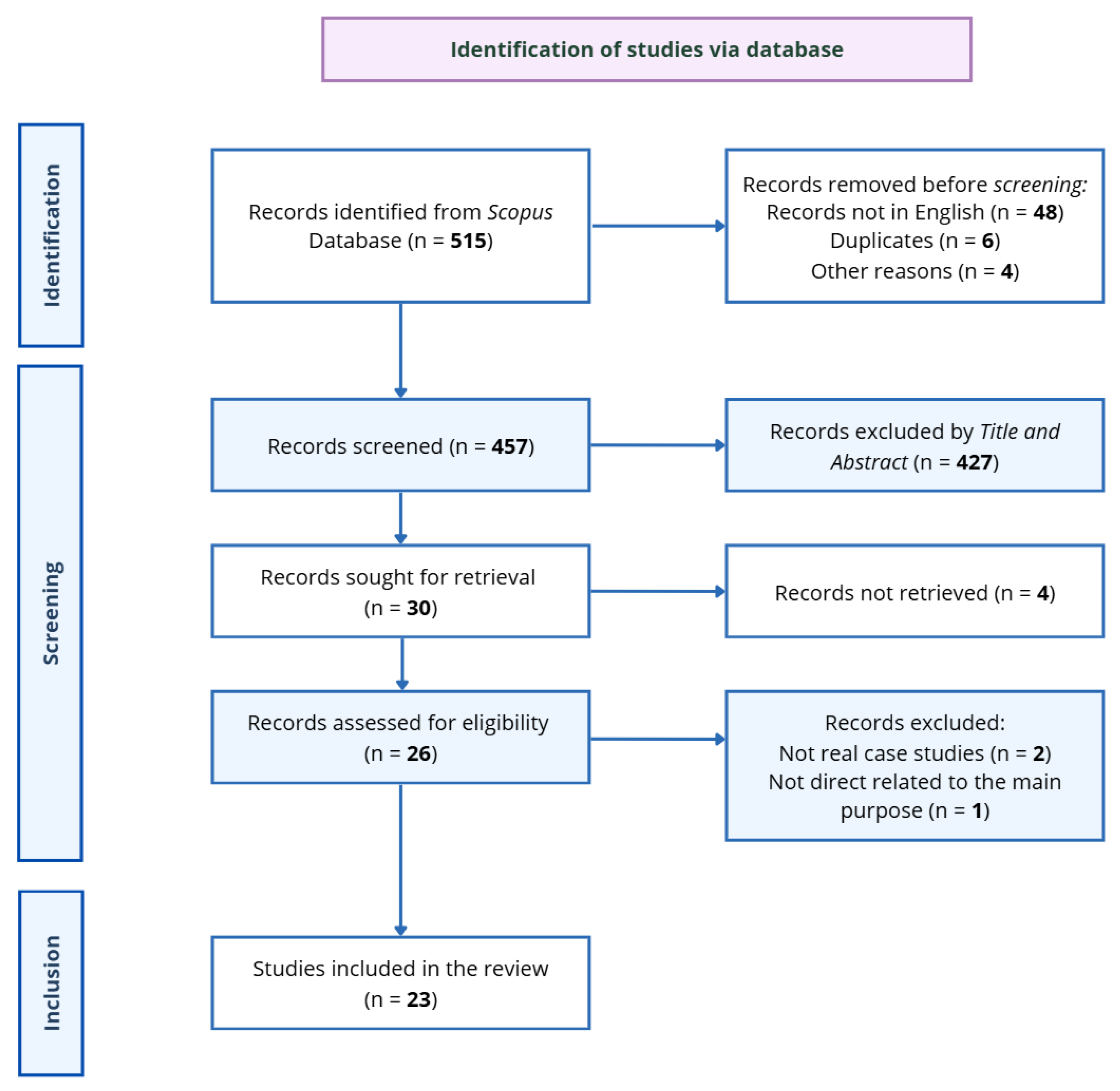
| 1 | “PORT” AND “HYDROGEN” AND “SIMULATION” | 262 |
| 2 | “MARITIME” AND “DIGITAL TWIN” | 240 |
| 3 | “PORT MANAGEMENT” AND “DIGITAL TWIN” | 7 |
| 4 | “HYDROGEN” AND “MARITIME” AND “DIGITAL TWIN” | 6 |
| 5 | “HYDROGEN” AND “PORT MANAGEMENT” AND “DIGITAL TWIN” | 0 |
| TOT | 515 |
| # Search | Keywords Combination | Results |
|---|---|---|
| 1 | “PORT” AND “HYDROGEN” AND “SIMULATION” | 235 |
| 2 | “MARITIME” AND “DIGITAL TWIN” | 211 |
| 3 | “PORT MANAGEMENT” AND “DIGITAL TWIN” | 6 |
| 4 | “HYDROGEN” AND “MARITIME” AND “DIGITAL TWIN” | 5 |
| 5 | “HYDROGEN” AND “PORT MANAGEMENT” AND “DIGITAL TWIN” | 0 |
| TOT | 457 |
| Keywords | No. of Occurrences |
|---|---|
| Digital Twin | 146 |
| Maritime Industry | 102 |
| Hydrogen | 99 |
| Marine Industry | 74 |
| Simulation | 71 |
| Ships | 49 |
| Fuel | 47 |
| Shipbuilding | 46 |
| Direct Injection | 41 |
| Ignition | 40 |
| Hydrogen Fuels | 40 |
| CFD | 40 |
| Combustion | 39 |
| Decision Making | 36 |
| Renewable Energy | 32 |
| Cluster | Title | Key Themes |
|---|---|---|
| 1 | Hydrogen Fuel Simulation and Emission Control | Analysis and optimization of combustion processes and emissions in engines (especially diesel), using numerical models and Computational Fluid Dynamics (CFD) to study various fuel types (ammonia, hydrogen, natural gas) and improve efficiency. |
| 2 | Digital Twin for Decision Making in Maritime Sector | Application of advanced digital technologies such as AI, Digital Twins, and IoT for automation, optimization, and decision support in the maritime and naval sector (including shipbuilding), with a strong emphasis on emission control and greenhouse gas reduction. |
| 3 | Sustainability and Hydrogen Performance | Research and development related to hydrogen as an energy source, including its production and storage, and its application in engines (especially spark-ignition engines), with a focus on performance, power, and heat management, within the broader context of renewable energies and carbon emissions. |
| Ref. | Starting Issue(s) | Contribution |
|---|---|---|
| [35] | Lack of multi-time-scale optimization for Coupled Hydrogen-Electricity Energy Systems (CHEES) with real-time port data. | Proposes multi-time-scale CHEES optimization reducing operating costs (25%), carbon emissions (15%), and boosting renewable energy use. |
| [36] | Lack of systematic quantification for investment value and carbon benefits of green port projects, including cranes. | Dynamic investment model (real options) for green port infrastructure, quantifying carbon reduction benefits despite uncertainties. |
| [37] | Lack of comprehensive techno-economic and transport feasibility studies for large-scale green derivative exports. | Techno-economic analysis and value chain optimization for green derivative export, highlighting cost-effective imports and transport. |
| [38] | Carbon-intensive port operations lack scientific methods for predicting energy requirements based on ship traffic for decarbonization. | Holistic port energy demand model (ships, equipment, land transport) supporting feasibility for zero-emission solutions. |
| [39] | energy research often failed to include safety as a key part of system design, creating a barrier to real-world use due to operator concerns. | Integrates prospect theory and safety dissatisfaction into a hydrogen-safety-integrated port energy system optimization model. |
| [40] | Integrated Energy Systems (IES) research in carbon-free ports often overlooks uncertainty/environmental indicators, with flexible loads/volatile renewables. | Proposes Security-Constrained Unit Commitment (SCUC) optimization for carbon-free ports, coordinating generation/demand response to reduce costs. |
| [41] | Decarbonizing “hard-to-abate” sectors lacks in-depth energy, environmental, and economic analysis for production/colors at port level. | New procedure for sustainability assessment of local production/use for port logistics, extending simulation to estimate EROEI, LCOH, LCA, TCO. |
| [42] | Early research on operational optimization in renewable energy systems with flexible multi-state switches; traditional approaches cause impractical exchange/reduced lifespan. | Novel two-stage multi-regional optimization for intermodal, multi-energy flexible port systems, minimizing direction changes and costs. |
| [43] | Vast energy consumption and emissions from port operations burden public grids; renewable sources introduce geographical uncertainties. | Optimized real options investment for low-carbon transition of ARMGs (hydrogen energy), quantifying carbon reduction benefits via phased investment. |
| Ref. | Starting Issue(s) | Contribution |
|---|---|---|
| [44] | Challenges controlling peak temperatures and NOx emissions in combustion for RCCI engines; intake temperature underexplored. | Uses UVATZ thermo-kinetic model to optimize -GN-diesel mixtures, bridging combustion kinetics and engine control under constraints. |
| [45] | Complex and error-prone prediction of ship propulsion load for vessels, especially under high volatility or near-port operations. | TCN-BiLSTM hybrid model for short-term ship propulsion load, showing high accuracy and adaptability. |
| [46] | Safety concerns with hydrogen energy (flammability, low ignition energy) due to significant incidents from component failures. | In-depth review of hydrogen-related safety issues, covering incident statistics, diffusion, and detonation. |
| [47] | Challenges in modeling and controlling DIDO DC-DC converters for EVs, crucial for efficient energy management and renewable integration. | In-depth study of DIDO DC-DC converters for EVs, assessing performance and integrating fuel cell/battery with PID control for efficient voltage regulation. |
| [48] | Stabilizing DC microgrids with CPLs during disturbances is challenging due to nonlinear circuits; passive damping reduces efficiency. | New adaptive Port-Control Hamiltonian (pCH) technique to stabilize PEMFC-fed DC/DC boost converter voltage, showing superior stability. |
| [49] | Investigating as primary fuel in internal combustion engines ( dual-fuel in van powertrains), where COV IMEP increases with share affecting stability. | Researches as primary fuel in -diesel dual-fuel engine, providing initial impact assessment in a GT-Suite van powertrain model (accounting for mass) and experimental insights on performance/emissions. |
| Ref. | Starting Issue(s) | Contribution |
|---|---|---|
| [50] | Integrating alternative fuels into hybrid systems; static LCA limits for dynamic ship performance without Digital Twin simulation. | DT enhances decision-making, fuel efficiency, and emissions via real-time monitoring; LCA model also analyzes ship’s electrical parameters. |
| [51] | Port infrastructure (e.g., quay conveyor belts) needs real-time analysis for economic expansion and faces monitoring challenges. | Sequential plan for digital twin development for quay conveyor belts, including sensor integration and real-time structural response visualization. |
| [52] | Integrating simulation with real-time IoT data for port optimization (efficiency, communication, resource allocation) in real-world studies. | Pioneering initiative integrating Digital Twin and Control Tower in a Brazilian port to optimize resource allocation and efficiency. |
| [53] | Creating “mirrored” Digital Twins for port processes is complex due to lack of DT-specific modeling tools, data integration paradigms, and sharing mechanisms. | Systematic DT model framework for smart port management (physical, data, model, service, application layers) for effective virtual simulations. |
| [54] | Changing global marine fuel market (IMO 2020) requires reliable simulation to assess alternative low-sulfur fuels’ impact. | Bayesian probabilistic forecasting algorithm with scenario modeling to project pollutant emissions in ports, assessing fueling scenarios for SOx and PM reductions. |
| [55] | Maritime industry’s carbon emissions due to coordination failures, high costs, and lack of real-time data, slowing decarbonization and increasing congestion. | Port Digital Twin for real-time collaborative planning, significantly reducing maritime carbon emissions (95% ETA accuracy, >75% savings). |
| [56] | Port digital transformation hindered by costly, fragmented asset management; existing BIM/GIS neglect post-construction, lacking standard DT exploitation. | Optimized port asset management system integrating DT, BIM, GIS via “Frankenstein Strategy,” improving efficiency and decision-making (20% maintenance cost reduction, 15–20% operational efficiency gain). |
| [57] | Online port crane control faces challenges from lack of integrated real-time data for simulation, poor collection openness, and limited visualization, leading to costly testing. | Digital Twin framework for port crane monitoring (multi-source data via OPC UA), enabling efficient online algorithm testing, reducing swing angles (73–99%). |
| Application in Real Ports | Reduction | Predictive Analysis | Framework/ Simulation Model | |
|---|---|---|---|---|
| H. Kim, 2025 [50] | ✓ | LCA Framework | ||
| S.C. Jayasinghe et al., 2024 [51] | ✓ | ✓ | Artificial Neural Network | |
| A. Fernandes et al., 2024 [52] | ✓ | ✓ | ProModel Simulation Software | |
| K. Wang et al., 2021 [53] | ✓ | ✓ | Building Information Model | |
| J. Liu et al., 2021 [54] | ✓ | ✓ | ✓ | Bayesian Probabilistic Algorithm |
| J. Eom et al., 2023 [55] | ✓ | ✓ | Unity/Oracle DB/Java/Python | |
| N. González-Cancelas et al., 2025 [56] | ✓ | Building Information Model/Geographic Information System | ||
| Y. Zhou et al., 2022 [57] | ✓ | CoppeliaSim V-REP |
| Real-World Application | as a Fuel | Forecasting | Security | Real-Option Theory | LCA | Economic Evaluations | |
|---|---|---|---|---|---|---|---|
| D. Tang et al., 2025 [35] | ✓ | ||||||
| A. Vasudev et al., 2025 [44] | ✓ | ||||||
| A. Yang et al., 2025 [36] | ✓ | ✓ | ✓ | ||||
| S. Pang et al., 2025 [45] | ✓ | ✓ | ✓ | ||||
| M. Holst et al., 2025 [37] | ✓ | ✓ | |||||
| D. Uzun et al., 2024 [38] | ✓ | ✓ | ✓ | ✓ | |||
| Z. Yang et al., 2024 [46] | ✓ | ||||||
| K. Ma et al., 2024 [39] | ✓ | ✓ | |||||
| L. Meganathan et al., 2024 [47] | ✓ | ||||||
| Q. Zhang et al., 2023 [40] | ✓ | ✓ | |||||
| A. Mio et al., 2023 [41] | ✓ | ✓ | ✓ | ||||
| Y. Xu et al., 2024 [42] | ✓ | ✓ | |||||
| D. Guilbert et al., 2022 [48] | |||||||
| A. Yang et al., 2022 [43] | ✓ | ✓ | ✓ | ||||
| J. Vavra et al., 2019 [49] | ✓ | ✓ |
Disclaimer/Publisher’s Note: The statements, opinions and data contained in all publications are solely those of the individual author(s) and contributor(s) and not of MDPI and/or the editor(s). MDPI and/or the editor(s) disclaim responsibility for any injury to people or property resulting from any ideas, methods, instructions or products referred to in the content. |
© 2025 by the authors. Published by MDPI on behalf of the International Institute of Knowledge Innovation and Invention. Licensee MDPI, Basel, Switzerland. This article is an open access article distributed under the terms and conditions of the Creative Commons Attribution (CC BY) license (https://creativecommons.org/licenses/by/4.0/).
Share and Cite
Gazzaneo, L.; Longo, F.; Mirabelli, G.; Pellegrino, M.; Solina, V. Towards Green and Smart Ports: A Review of Digital Twin and Hydrogen Applications in Maritime Management. Appl. Syst. Innov. 2025, 8, 165. https://doi.org/10.3390/asi8060165
Gazzaneo L, Longo F, Mirabelli G, Pellegrino M, Solina V. Towards Green and Smart Ports: A Review of Digital Twin and Hydrogen Applications in Maritime Management. Applied System Innovation. 2025; 8(6):165. https://doi.org/10.3390/asi8060165
Chicago/Turabian StyleGazzaneo, Lucia, Francesco Longo, Giovanni Mirabelli, Melania Pellegrino, and Vittorio Solina. 2025. "Towards Green and Smart Ports: A Review of Digital Twin and Hydrogen Applications in Maritime Management" Applied System Innovation 8, no. 6: 165. https://doi.org/10.3390/asi8060165
APA StyleGazzaneo, L., Longo, F., Mirabelli, G., Pellegrino, M., & Solina, V. (2025). Towards Green and Smart Ports: A Review of Digital Twin and Hydrogen Applications in Maritime Management. Applied System Innovation, 8(6), 165. https://doi.org/10.3390/asi8060165

