


Abstract
This study investigates the spatial variability of benthic foraminiferal assemblages across the shoreface–inner shelf transition of the Porto Pino coastal system (SW Sardinia, western Mediterranean). Porto Pino is a microtidal, wave-dominated embayment characterized by an environmental gradient extending from siliciclastic shoreface sands to mixed bioclastic sediments associated with the Posidonia oceanica meadow. A total of 33 sediment samples were analyzed for grain size, benthic foraminiferal assemblages, morphotypes and diversity indices. Cluster analysis and Principal Component Analysis (PCA) were used to investigate the spatial variability of the assemblages. Three main benthic foraminiferal assemblages were identified, each corresponding to a distinct benthic habitat: shallow unvegetated shoreface sands, a transitional zone near the upper limit of the P. oceanica meadow, and deeper mixed bioclastic sediments associated with its lower boundary. The distribution of the foraminiferal assemblage reflects the combined influence of hydrodynamic energy, substrate composition, water depth, and proximity to the meadow. Diversity indices indicate generally low-stress environmental conditions, whereas morphotype composition reflects changes in habitat structure and substrate characteristics along the shoreface–inner shelf gradient. These results demonstrate that benthic foraminifera effectively track environmental and sedimentological gradients in Mediterranean embayed systems and highlight their value for environmental reconstructions and biomonitoring applications.
1. Introduction
Coastal embayments of the Mediterranean Sea host highly heterogeneous morpho-sedimentary environments shaped by interactions among hydrodynamics, sediment supply, and benthic habitats, including seagrass meadows such as Posidonia oceanica [1,2,3]. These coastal systems are characterized by sharp environmental and sedimentological gradients over relatively short distances, particularly across the transition from the high-energy shoreface to the lower-energy inner shelf. Despite the extensive literature on Mediterranean coastal dynamics, the combined influence of these gradients on benthic communities remains only partially constrained, yet understanding their response is essential for reconstructing present and past environmental conditions and for establishing reliable baselines in areas increasingly affected by coastal development and climate-driven change.
Benthic foraminifera are widespread and highly abundant shelled protists inhabiting modern marine environments [4,5]. Their short life cycles and the large number of specimens that can be recovered from small sediment samples make them particularly effective indicators of both short- and long-term environmental changes in marine and transitional settings. The distribution of benthic foraminifera is controlled by a broad suite of environmental parameters, including substrate texture, bathymetry, temperature, salinity, dissolved oxygen, organic matter content, sedimentation rate and the presence of pollutants or toxins [6,7,8,9,10,11,12,13,14]. Hydrodynamic conditions, particularly bottom currents, exert an additional and often decisive influence on microhabitat availability and assemblage composition [15,16,17,18,19]. However, detailed assessments of how these factors interact across shoreface–inner shelf gradients are still limited for many Mediterranean settings.
In Mediterranean coastal environments, benthic foraminiferal assemblages show marked spatial variability associated with the presence of Posidonia oceanica meadows and macroalgal belts. These vegetated habitats enhance substrate stability, increase habitat complexity and modify local hydrodynamics [20,21,22,23,24], promoting distinct epiphytic assemblages that differ from those in adjacent unvegetated sandy or mixed substrates [25,26,27]. The sharp gradients of the P. oceanica meadow edges, where light availability, organic matter input and sediment composition change over very short distances, play a key role in shaping foraminiferal assemblages. These habitat-specific patterns arise from the combined influence of physico-chemical and biological factors acting at the sediment–water interface. Clarifying the relative importance of these controls is essential for interpreting foraminiferal distributions and fully exploiting their potential in environmental studies.
The coastal system of Porto Pino (SW Sardinia, Italy, western Mediterranean; Figure 1) represents an ideal natural laboratory for investigating these dynamics. This microtidal, wave-dominated embayment exhibits a well-defined transition from siliciclastic shoreface sands to mixed bioclastic sediments toward the upper limit of a dense P. oceanica meadow [28]. Previous studies [28,29,30] have described the geomorphological, sedimentological and hydrodynamic framework of the area, but a comprehensive assessment of benthic foraminiferal assemblages along this gradient has not yet been undertaken. This gap provides the opportunity to examine how foraminiferal communities vary across a well-constrained set of environmental transitions.
Figure 1.
Study area, location of sampling sites and distribution of the Posidonia oceanica meadow at Porto Pino beach (SW Sardinia). The light pink shading indicates the meadow cover.
In this study, we examine the spatial variability of benthic foraminiferal assemblages from the shallow shoreface to the inner shelf of Porto Pino beach. Surface-sediment samples were used to: (1) identify the main environmental factors controlling benthic foraminiferal distribution; (2) evaluate the influence of proximity to the P. oceanica meadow; (3) characterize the environmental condition of the coastal system; and (4) place the observed patterns within the broader context of Mediterranean shallow water environments.
This integrated approach provides new insights into the functioning of a Mediterranean shoreface–inner shelf system and offers a solid basis for environmental and biomonitoring applications. By documenting how benthic foraminiferal assemblages vary along well-defined hydrodynamic, sedimentological and environmental gradients, this study would like to establish a quantitative modern analogue for interpreting Quaternary coastal successions in the Mediterranean region. The same controls observed today (energy regime, grain-size variability, and the position of the P. oceanica meadow) also influence foraminiferal patterns in shallow-water Quaternary deposits. Our dataset, therefore, provides essential reference conditions for environmental reconstructions and for distinguishing natural variability from anthropogenic or climate-driven change.
2. Study Area
Porto Pino beach is a NW–SE-oriented, microtidal, wave-dominated embayment, located between the promontories of Punta Menga to the NW and Punta di Cala Piombo (Capo Teulada) to the S (Figure 1). The Porto Pino coastal system is characterized by sandy shorelines extending for a total length of 5 km, with a wide primary and secondary dune system, a back-barrier lagoon, and a marsh area arranged parallel to the coastline.
Close to the shoreline, shoreface sediments are dominated by a siliciclastic component (mainly quartz and feldspars) grading seaward into mixed sediments increasingly enriched in a bioclastic component towards the upper limit of the Posidonia oceanica meadow [28]. The distribution of the meadow is roughly shore-parallel and occupies a sandy substratum between water depths of about 12 and 35 m.
This coastal area is mainly exposed to wind and waves from the SW and NW [28]. The prevailing winds in summer and winter are NNW and NW, respectively, with the latter being stronger than the former. Waves and wind affecting the dynamics of the surf zone come from the W, SW, SSW and S, and are very intense in winter. High-energy wave events from the NW sector occur episodically; however, their impact on the embayment is mitigated by partial sheltering provided by Sant’Antioco Island to the N and Capo Teulada to the S [28] (Figure 1). The main geographical fetches are documented between 243° and 274° (500 km) and between 176° and 243° (220 and 500 km; [28]). The mean significant wave height calculated from the NOAA dataset for Porto Pino is 0.82 m [30].
In the Porto Pino area, the geological basement, represented by leucogranites and Paleozoic acid dikes (upper Carboniferous to Triassic), and by rhyolitic and dacitic volcanites (upper Carboniferous to Lower Triassic), outcrops in the SE and E sectors (Figure 2). Mesozoic deposits are composed of dolostones (Upper Triassic) and bioclastic limestones (Jurassic) that outcrop at Punta Menga in the NW sector of the embayment [31,32,33,34]. Ancient marine deposits (coastal to littoral conglomerates, sandstones, and biocalcarenites—Pleistocene) and marine-to-continental deposits (Holocene) also outcrop locally (Figure 2). The dune system of Porto Pino beach is composed of recent and modern dunes bounded to the N by marsh and lagoonal deposits.
Figure 2.
Geological scheme of the study area (Reproduced from [28]).
3. Materials and Methods
3.1. Sampling
Sediment samples were collected at 33 stations in March 2015 (Figure 1; Table 1). Two sets of samples were taken by means of a Van Veen grab (5 dm3 capacity) sampler at each site from the shoreface to inner shelf—one for grain-size analysis and one for foraminiferal analysis (0–3 cm of each grab sample). Upon opening the grab, the sediment surface was checked for disturbance. The upper 0–3 cm interval was then isolated and collected with a clean plastic spatula by gently scraping the undisturbed surface layer, avoiding penetration into the underlying sediment. Samples were placed in plastic bottles and stored.
Table 1.
Geographic coordinates of sampling stations (WGS84 Datum), water depth, and sediment grain-size content.
3.2. Sediment Analysis
The grain-size analyses were performed following the ASTM International standard methodology. The <6700 μm and >63 μm fraction from each sample was dry sieved through a battery of sieves spaced at ¼ phi (ø) per unit [35]. The <63 μm fractions were, when present, preserved and analyzed using the pipette sedimentation method [36,37].
3.3. Benthic Foraminiferal Methods
In the laboratory, the upper 0–3 cm of each grab sample was analyzed as a single layer; therefore, epifaunal and shallow infaunal taxa are not differentiated. For each sample, a constant volume of approximately 50 cm3 was dried at 50 °C and weighed. After drying, sediments were washed with water through a 63-μm sieve to remove clay and silt. For each sample, the residual fraction obtained was re-dried at 50 °C and examined under a binocular microscope. Only the >63 μm fraction was retained and analyzed. This fraction represents almost the entire sample (>90% of the total dry weight), consistent with the sandy nature of the sediments. When possible, at least 300 benthic foraminiferal specimens from each sample were picked for analysis. Since the samples were not stained with Rose Bengal, the analysed material corresponds to a thanatocoenosis, as defined in the classical sense of a death assemblage. Test fragments and heavily damaged or unidentifiable specimens were not included in the counts. All identifiable tests, including those showing minor abrasion or partial breakage, were included in the thanatocoenosis. All counted foraminifera were stored in slides and were deposited in the Department of Chemical and Geological Sciences, University of Cagliari repository. The counts have been expressed as percentages, representing the relative abundance of each taxon in the assemblages. Benthic foraminifera were identified following the criteria of Loeblich and Tappan [38], together with other key taxonomic works [39,40,41] and updated according to the WoRMS database [42].
Foraminiferal species diversity was quantified by species richness (S, the number of species in a sample); the Shannon–Weaver index or information function (H) [43], which is based on the number of individuals and the number of taxa. The value ranges from 0 (communities with a single taxon) to high values for communities with many taxa, each with few individuals.
Dominance (D) is expressed as a 1-Simpson index. Ranges are from 0 (all taxa are equally present) to 1 (one taxon completely dominates the community).
Fisher-α index (F-α) [44,45] is extracted from the formula
(where S is the number of taxa, n is the number of individuals and α is the Fisher-α index).
The diversity indices were calculated using the PAST 5.3 statistical software (Oslo, Norway [46]).
To further evaluate the condition of the seagrass meadow, we applied a morphotype-based classification to calculate the FORAM’ Index (FI′) following the formula proposed in [26], as well as the Long vs. Short Life Span Index (ILS) as defined in [26,47]. These classifications provide a baseline for monitoring future changes in foraminiferal assemblages and the ecological status of seagrass habitats in coastal areas affected by intense urbanization.
When possible, benthic foraminiferal species were assigned to morphotypes according to the criteria established in [25] and later refined in [26], based on test morphology, structural features, and behavior.
- Morphotype A* includes flat, encrusting taxa permanently attached to the substrate, typically exhibiting long life spans of about one year.
- Morphotype SB comprises symbiont-bearing species.
- Morphotype B includes temporarily motile taxa with life spans of approximately 2–5 months.
- Morphotype C consists of permanently motile species.
- Morphotype D* represents permanently motile, short-lived, opportunistic taxa.
The FI′ and ILS indices were calculated using the following equations:
Values of FI′ > 4 indicate optimal environmental conditions, whereas values < 2 reflect stressed settings [26]. The ILS ranges from 0 to 36: values near 0 occur when morphotype D* dominates, while values approaching 36 indicate dominance of A* and SB morphotypes [26,47].
We also calculated the Foram Stress Index (FSI) [48], which incorporates the relative abundances of Sensitive (SEN) and Stress-tolerant (STR) species:
The FSI ranges from 0 (azoic sediments) to 10 (pristine environments).
Species classified as SEN in our samples include taxa that are particularly sensitive to organic enrichment and are typically associated with unpolluted environments. These taxa tend to decline or disappear under increased organic load or pollution: Asterigerinata, Cibicides, Discorbis, Elphidium, Lobatula, Neoconorbina, Planorbulina, Peneroplis, Rosalina, Sorites, and Miliolids. Species categorized as STR are tolerant of environmental stressors commonly associated with pollution, such as fluctuations in pH and oxygen levels. These opportunistic taxa are adapted to thrive in disturbed or altered ecosystems: Ammonia, Bolivina, Bulimina, Fursenkoina, Hanzawaia, Nonion and Textularia.
3.4. Multivariate Statistical Methods
Q-mode and R-mode cluster analyses (HCA) and Principal Component Analysis (PCA) were performed using the PAST 5.3 statistical software [46]. The HCA was based on Euclidean-distance correlation coefficients to measure similarity, whereas the Ward’s linkage method was used to arrange pairs and groups into hierarchical dendrograms. The PCA was performed to determine which species were influencing cluster formation. Only species with abundances greater than 5% in at least two samples were included in the statistical analysis.
4. Results
4.1. Sediments
The bottom sediments consist mainly of sand (~96%), with an average of 3% gravel and 0.5% mud (Table 1). However, samples P27, P28, P30, P31, and P33 show a marked increase in the gravel fraction, reaching up to 43.5% in P30 and 30.7% in P31 (Table 1). These gravel-rich samples are located in the southeastern zone of the study area and occur at water depths greater than 15–20 m. When present, the coarser fraction is predominantly composed of bioclasts (mollusc fragments). Water depth varies between 3 m (P8) and 35 m (P29) across the study area (Figure 1).
4.2. Benthic Foraminiferal Analysis
The benthic foraminiferal assemblage at Porto Pino beach included a total of 49 genera and 113 species (Table S1). Only 14 species had a relative abundance greater than 5% in at least two samples (Table 2).
Table 2.
Matrix with the abundance of 14 taxa > 5% in at least two samples utilized in the Q-mode HCA.
The most frequent species (Table 2) were Cibicides refulgens (18.1% mean value; 0–29.7%), Rosalina floridana (12.3% mean value; 0–20.5%) and Asterigerinata mammilla (10.8% mean value; 0–22.7%), followed by Rosalina bradyi (8.9% mean value; 0–20.2%) and Elphidium crispum (6.6% mean value; 0–70.8%). At the genera level, the assemblage was dominated by Cibicides (21.8% mean value; 0–34.6%), Rosalina (21.4% mean value; 0–33.8%) and Elphidium (14.4% mean value; 6.1–70.8%), followed by Asterigerinata (10.8% mean value; 0–22.7%), Ammonia (6.8% mean value; 1.5–13.9%) and Quinqueloculina (6.3% mean value; 1.5–19.0%).
Cibicides refulgens was dominant in the shoreface sediments of Porto Pino beach. Near the upper limit of the Posidonia oceanica meadow (P4, P7, P17 and P20), its relative abundance decreases (<15%), whereas it is almost absent in the samples collected at the lower limit of the meadow (P29–P33). Rosalina floridana reaches its highest relative abundance in samples collected between 5 and 10 m depth, while its occurrence markedly decreases in the deepest stations (P29–P33). Similarly, R. bradyi shows its lowest percentages in the deepest samples and exhibits higher relative abundances in those collected between 10 and 15 m in the central sector of the shoreface of Porto Pino beach. Asterigerinata mamilla and E. crispum display opposite distribution patterns. Elphidium crispum is more abundant in the deeper samples collected near the lower limit of the P. oceanica meadow (P29–P33), whereas A. mamilla shows lower abundances in the samples taken in proximity to the meadow (P1, P7, P15, P17, P20, P29–P33).
Species richness (S) ranged from 12 (P30) to 52 (P7), and Fisher-α (F-α) from 3.9 (P21) to 17.2 (P7; Figure 3). The Shannon–Weaver (H) index had a mean value of 2.5 (min 1.3, P30, and max 3.1, P33). Dominance (D) values were low, ranging from 0.1 to 0.5 (P30). Three indices, ILS, FI′, and FSI, were evaluated to assess environmental conditions within the benthic foraminiferal assemblages. The ILS showed values ranging from 0.2 (P31) to 3.6 (P8), with a mean of 1.5. The FI′ varied between 1.5 (P31) and 3.0 (P8), with an average value of 2.3. Samples with FI′ < 2 are P17, P20, P29–P33, indicating stressed environmental conditions [26]. The FSI ranged from 8.2 (P31) to 9.5 (P27), with a mean of 9.1 (Figure 3).
Figure 3.
Diversity indices: (a): Species Richness—S; Fisher-α index—F-α; Foram Stress Index—FSI; (b): Shannon–Weaver index—H; FORAM’ Index—FI′; Long vs. Short Life Span Index—ILS in the investigated area.
Figure 4 reports the categorization of epiphytic morphotypes [26]. The benthic foraminiferal assemblage of Porto Pino was mainly dominated by morphotype B species (temporary motile taxa), followed by morphotype C (motile) and D* (permanently motile). The permanently attached forms belonging to morphotype A* were poorly represented in all the samples investigated (1.0% on average; Figure 4). Morphotype B ranged from 1.5% (P30) to 80.8% (P26; Figure 4). Morphotype C varied between 6.1% (P5) and 70.8% (P30), and it was mostly represented by keeled elphidiids such as Elphidium crispum, E. complanatum and E. advena. The relative abundance of small miliolids belonging to morphotype D* ranged from 3.3% (P19) to 45.3% (P31). The symbiont-bearing peneroplids (SB) showed a very low relative abundance (from 0% to 12.9%; Figure 4).
Figure 4.
Relative abundance of the epiphytic morphotypes [26] in the investigated area.
4.3. Multivariate Analysis
A cluster analysis carried out on the 14 dominant species divided the stations into clusters I, II, and III and the foraminifera into groups α, β, and γ (Figure 5). Cluster I included the deepest stations (32–35 m; Table 3), close to the lower limit of P. oceanica meadow. Sediments at these sites were mainly sands with the highest proportion of gravel (0.8–43.5%). Cluster I groups samples with foraminiferal assemblage dominated by assemblage Iβ (Figure 5). Species Richness ranged from 12 to 48, H from 1.3 to 3.1, F-α index from 4.3 to 14.6 (average 10.6), whereas D ranged from 0.1 to 0.5 (Table 3). The FI′ varied between 1.5 and 1.7; ILS from 0.2 to 0.3 and FSI from 8.2 to 9.4 (Table 3). The analysis of morphotypes revealed a dominance of the C type (25.7–70.8%, mean 41.7%) followed by groups D* (23.1–45.3%, mean 35.4%) and B (1.5–37.5%, mean 18.5%). The morphotypes SB and A* were very rare (<2%; Table 3).
Figure 5.
Dendrogram classification of species (right) and samples (bottom) produced by R-mode and Q-mode two-way cluster analysis using Euclidean distance. The relative abundance of each species in each sample is categorized on the right using the color scale values.
Table 3.
Range values of relative abundance of main benthic foraminiferal species, morphotypes, depth, grain-size, and diversity indices of the three clusters identified in the studied area.
Clusters II and III grouped the shallowest stations (3–17 m; Table 3), with the latter cluster representing those closest to the upper limit of the meadow. The sediments from the stations in clusters II and III were sandy, with the lowest gravel content (Table 1). The three dominant species at these sites are grouped in γ (Figure 5): R. floridana, A. mamilla and C. refulgens. In the other groups of species (IIα and IIIα), the presence of R. bradyi and Elphidium complanatum was higher in cluster III than in II.
In Cluster II, S ranged from 18 to 34, H index from 2.2 to 2.6, F-α index values between 3.9 and 9.7 (the average value is 6.9), and D ranged from 0.1 to 0.2. The FI′ varied between 2.1 and 3.0; ILS from 0.9–3.6 and FSI from 8.7 to 9.5 (Table 3). The morphotype B (temporary motile species) characterized this cluster, ranging from 62.5% to 80.8%. The sessile forms of morphotype SB were infrequent (1.9–12.9%), whereas groups D* (3.2–18.1%, mean 7.1%) and C (6.1–18.7%, mean 9.9%) were common. The permanently attached forms A* were almost absent, ranging from 0% to 2.0% (Table 3).
In Cluster III, S values ranged between 23 and 52 (mean, 35.5), whereas the H was relatively high (2.3–3.1), with an average value of 2.7. The F-α index ranged from 5.7 to 17.2 (10.3 on average) and D was 0.1 (Table 3). The FI′ ranged between 1.9 and 2.5 (mean 2.2), ILS from 0.5–2.0 and FSI from 8.7–9.5 (Table 3). The morphotype analysis revealed the prevalence of temporary motile forms of morphotype B (61.1–79.5%, mean 69.5%), followed by morphotypes D* (3.7–28.0%, mean 13.8%), and C (7.3–14.2%, mean 10.6%; Table 3). The permanently attached forms (A*) and the symbiont-bearing species (SB) were rare (0.3–5.7%, mean 1.9% and 0–6.9%, mean 2.7%, respectively).
In PCA, 64.6% of the data variance can be explained by the first two principal components (Figure 6a). The eigenvalues of components 1 and 2 were 5.7 and 3.3, respectively (Figure 6b). PC1 separates samples dominated by C. refulgens, R. floridana, A. mamilla from those dominated by Quinqueloculina auberiana and Ammonia beccarii. PC2 opposes samples dominated by R. bradyi, Lobatula lobatula, Cibicides pseudolobatulus, from those dominated by E. advena and Siphonaperta aspera.
Figure 6.
PCA ordination diagram of samples plotting components 1 and 2 based on the percentage of the most frequent species. (a): Component 1 vs. Component 2; (b): eigenvalues of components.
PCA placed the stations in approximately the same groups as obtained with Q-mode cluster analysis. Accordingly, sites belonging to Cluster I are grouped together (Figure 6a) and contain sediment with high values of E. crispum, S. aspera, E. advena, Q. auberiana, whereas those grouped into Cluster III and characterized by high relative abundance of L. lobatula, C. pseudolobatulus, A. beccarii, R. bradyi and E. complanatum are grouped together and close to the samples of Cluster II. This latter group is characterized by higher percentages of R. floridana, A. mamilla, C. refulgens, P. pertusus and A. tepida (Figure 6a).
5. Discussion
5.1. Environmental Controls on the Spatial Distribution of Benthic Foraminiferal Assemblages
The spatial distribution of benthic foraminiferal assemblages across the Porto Pino shoreface–inner shelf system reflects the combined influence of hydrodynamic energy, substrate characteristics, distance from shore and the environmental gradients associated with increasing water depth. The transition from siliciclastic sands in the shallow shoreface to mixed bioclastic sediments toward the Posidonia oceanica meadow creates a marked environmental gradient that structures both species composition and morphotype distribution. Across most of the study area, sediment grain size shows limited variability. Shoreface stations are consistently dominated by sands (around 90%), whereas the deepest sites, located near the lower limit of the P. oceanica meadow, display a marked increase in coarse bioclasts and gravel, reaching up to 50%. These granulometric differences correspond to distinct faunal patterns. Species richness (S) is generally higher in the sandy substrates of the transitional zone, where homogeneous sediments support more diversified communities (assemblage dominated by C. refulgens, A. mamilla and Rosalina spp.), while gravel-rich samples display lower S values due to the dominance of E. crispum. Morphotype distribution follows the same pattern, with morphotype B that prevails in the well-sorted sands of the shallow and intermediate stations and morphotypes C and D* that increase in the deeper, bioclast-rich samples. Overall, even modest granulometric variations exert a measurable influence on assemblage composition along the Porto Pino shoreface–inner shelf gradient.
Because the upper 0–3 cm of each grab sample was analyzed as a single layer and no staining was performed, the dataset represents a thanatocoenosis. Some degree of time-averaging is therefore expected; however, hydrodynamic effects on test preservation do not obscure the spatial patterns, which remain consistent with the main environmental gradients.
Q-mode HCA further summarizes these patterns by identifying distinct foraminiferal assemblages along the Porto Pino beach (Figure 3). Their geographic distribution (Figure 7) delineates an unvegetated shoreface at depths < 10 m (Cluster II), a transitional zone between the shoreface and the upper limit of the seagrass meadow (Cluster III), and a nearshore environment characterized by a continuous P. oceanica meadow (Cluster I). The spatial arrangement of these assemblages along a transect is illustrated in Figure 8.
Figure 7.
Geographic distribution of the three clusters according to the Q-mode HCA of the samples from Porto Pino beach.
Figure 8.
Cross-shore distribution of the main benthic habitats and substrate types at Porto Pino beach. (a) Map with the yellow line indicating the transect location; (b) bathymetric profile, benthic habitats, and main foraminiferal assemblages along the Porto Pino transect (SW Sardinia) (Source: De Muro et al. [29]. Reproduced and modified with permission from the Coastal Education and Research Foundation, Inc. (Charlotte, NC, USA)).
Unvegetated seabed at water depths of less than ≈10 m (samples belonging to Cluster II, assemblage γ: C. refulgens–R. floridana—additional common species: A. mamilla, P. pertusus, R. bradyi).
This assemblage characterizes the shoreface to a depth of around 10 m. This zone is characterized by a mostly siliciclastic fine sand and moderate energy originating from longshore littoral currents and waves [28]. In this unvegetated seabed, the foraminiferal assemblages exhibit moderate species richness and diversity (S and H indices), together with low dominance values (D), indicating relatively stable environmental conditions. The indices (FI′, ILS, FSI) further support this interpretation, pointing to communities not subjected to marked environmental stress. The FSI values, ranging from 8.7 to 9.5, indicate low-stress conditions typical of non-impacted coastal environments and are substantially higher than those reported for organically enriched or polluted settings. The dominance of SEN species over STR taxa further supports the interpretation of good water quality, low organic loading, and the absence of significant anthropogenic disturbance. The clear prevalence of morphotype B, along with the consistent presence of groups C and D*, and the scarcity of sessile SB and A* forms, reflects mobile sandy substrates and limited availability of stable attachment surfaces. Cibicides refulgens, Rosalina spp., and A. mamilla dominated this assemblage associated with P. pertusus and A. tepida. Cibicides refulgens, the most abundant epifaunal species in the study area, is typical of well-oxygenated, high-energy sandy substrates, and is able to colonise both mobile sands and elevated hard particles [5,25,49,50]. Its relative abundance slightly declines toward the upper limit of the meadow, indicating in this area a preference for mobile, siliciclastic sands and higher hydrodynamic conditions. Conversely, its near absence in the deepest stations (P29–P33) suggests that the lower-energy conditions, reduced light availability and bioclast-rich sediments at these depths are less suitable for this taxon. Rosalina floridana and R. bradyi show a similar distribution, with minimum abundances in the deepest stations and higher values at intermediate depths (5–15 m). This pattern is consistent with their preference for moderately energetic environments and mobile sandy substrates, as documented in other Mediterranean infralittoral settings [5,25,51,52]. Asterigerinata mamilla, although traditionally described as an epiphytic species, is widely reported from infralittoral to circalittoral detritic bottoms [25,41,53,54,55]. Its distribution in Porto Pino aligns with the broad habitat tolerance described in the literature, as this species can exploit a range of firm and sediment-rich microhabitats, including moderate-energy shoreface sands [5,25]. The higher abundances of these species observed in unvegetated portions of the Porto Pino seafloor therefore reflect their capacity to occupy stable epifaunal microhabitats where moderate hydrodynamics and sediment availability provide suitable conditions, rather than a strict dependence on P. oceanica cover.
Transitional zone from the shoreface to the upper limit of seagrass meadow (samples belonging to Cluster III, assemblage γ: C. refulgens—Rosalina spp.—additional common species: A. mamilla, E. complanatum, L. lobatula).
This zone includes sampling sites located in the shoreface at depths of approximately 5–15 m, corresponding to the transition between the shoreface and the upper limit of the P. oceanica meadow (Figure 8). The sediment consists of mixed bioclastic–siliciclastic gravelly sand [28]. The foraminiferal assemblages show higher species richness and diversity (S, H) than those of the previously described unvegetated seabed, while maintaining similarly low dominance values (D), indicating a more diversified but still stable community. The ecological indices (FI′, ILS, FSI) fall within ranges comparable to those of the preceding zone, suggesting the absence of marked environmental stress across the Porto Pino shoreface. However, the markedly higher F-α values in this transitional sector indicate greater structural complexity in the assemblages. As in the previous zone, morphotype B dominates the community, but this area is characterized by a higher contribution of morphotype D* and a slightly more balanced distribution among motile forms (B, C, D*). In contrast, permanently attached A* morphotypes and symbiont-bearing SB species remain rare.
The foraminiferal assemblage of this zone is broadly similar to that of the previous one, as both groups of shallow stations (3–17 m) develop on sandy substrates with minimal gravel content. In both cases, the community is dominated by the three species grouped in assemblage γ of the R-mode dendrogram (R. floridana, A. mamilla, C. refulgens; Figure 5), which represent the core of the shallow-water assemblage across the Porto Pino shoreface. However, the multivariate analysis reveals meaningful differences between the two clusters. In Cluster III, the relative abundances of R. bradyi and E. complanatum are noticeably higher than in Cluster II, indicating a slightly more diversified assemblage in the stations located closest to the upper limit of the P. oceanica meadow. This pattern is consistent with the transitional nature of these sites, where the influence of the meadow, whether through attenuation of currents, localized organic enrichment, and/or increased microhabitat heterogeneity, may favor a broader set of shallow water taxa. Within this framework, samples P17 and P20 exhibit a composition that differs from the general pattern observed at the other stations in Cluster III. Instead of the strong dominance of the species of assemblage γ (R. floridana, A. mamilla, C. refulgens), these two samples contain lower proportions of these taxa and comparatively higher percentages of foraminifera of assemblage α (Figure 5). In particular, both samples exhibit increased abundances of A. beccarii, C. pseudolobatulus, L. lobatula, and R. bradyi. Ammonia beccarii is a highly adaptable shallow-water species that thrives in dynamic, nutrient-rich coastal settings across the Mediterranean. It dominates shoreface and inner-shelf assemblages off Valencia (<15 m; [56]) and shows a motile, epiphytic behavior that allows it to exploit a wide range of phytal substrates [26]. The species also reaches high abundances in very shallow prodeltaic environments of the Gulf of Lion [57] and characterizes nutrient-rich shallow belts in the northern Adriatic [58], reflecting its tolerance to fluctuating hydrodynamics and variable organic inputs. Lobatula lobatula and C. pseudolobatulus are epiphytic foraminifera, most abundant in infralittoral environments, on sediment strongly dominated by sands and vegetation cover of P. oceanica [25,26,27,56,59,60]. Their increased abundance in P17 and P20, coupled with the relative decline of C. refulgens and Rosalina spp., therefore reflects a shift from more energetic, mobile sands (typical of the open shoreface) toward microhabitats characterized by reduced hydrodynamics, enhanced sediment baffling, and greater structural complexity near the meadow upper limit. This contrast highlights the environmental differences in these taxa: C. refulgens thrives where sediment mobility and near-bottom turbulence are higher, whereas L. lobatula and C. pseudolobatulus benefit from the more stable, phytal-influenced conditions that develop in transitional zones and intramatte settings. The assemblage shift observed in P20, collected within an intramatte area, is therefore consistent with the fine-scale habitat variability expected at the upper meadow boundary, where small changes in substrate stability and organic retention can substantially modify the balance between dominant and secondary taxa.
Nearshore environment with a continuous seagrass meadow (samples belonging to Cluster I, assemblage β: E. crispum—additional common species of assemblage α: S. aspera, A. tepida, E. advena, R. bradyi).
The β assemblage characterizes the deepest portion of the Porto Pino seabed (32–35 m), corresponding to the lower limit of the P. oceanica meadow. At these depths, the substrate consists of bioclastic gravelly sand (Facies D in [28]) with up to 50% bioclasts, reflecting the accumulation of coarse material exported from the meadow and redistributed along the inner shelf. Diversity values (S = 12–48; H = 1.3–3.1; Fisher α = 4.3–14.6) and low to moderate dominance (0.1–0.5) indicate stable communities with moderate structural complexity, consistent with the transitional nature of the lower meadow boundary. The ecological indices support this interpretation: FI′ (1.5–1.7) and ILS (0.2–0.3) fall within ranges typical of low-stress environments, while FSI values (8.2–9.4) indicate limited environmental disturbance. The morphotype distribution is dominated by C-type forms (25.7–70.8%), followed by D* (23.1–45.3%) and B-type (1.5–37.5%), whereas symbiont-bearing (SB) and permanently attached (A*) morphotypes remain rare (<2%). This pattern reflects assemblages composed mainly of motile epifaunal and shallow infaunal taxa, well adapted to coarse, heterogeneous substrates with good bottom water circulation. The consistently moderate to high values of FI′ and ILS, together with the narrow range of high FSI values (8.2–9.5) and the prevalence of SEN species, confirm that the meadow and adjacent soft-bottom habitats are currently in a healthy environmental state. Despite this overall stability, the spatial variability observed along the shoreface–inner shelf gradient suggests that the system, while functioning well, may remain potentially vulnerable to future increases in hydrodynamic stress or anthropogenic pressure. These results provide a valuable baseline for detecting future deviations linked to anthropogenic pressures or climate-driven changes in water quality.
The dominance of E. crispum in Cluster I aligns well with its broad tolerance across Mediterranean coastal settings. This species is a motile suspension feeder that thrives on heterogeneous substrates, including coarse sands, gravels and detritic bottoms, and is commonly reported as abundant in infralittoral and upper-circalittoral environments [10,52,61,62,63]. Its keeled morphology enhances stability and mobility on moderately energetic, mobile substrates, supporting efficient suspension feeding and the exploitation of small-scale microhabitats. These traits match the conditions of Cluster I at Porto Pino, where coarse bioclastic sands, moderate hydrodynamics and scattered phytal elements near the lower meadow limit create a structurally complex seafloor. Here, E. crispum benefits from both suspended organic particles and the presence of rhizome fragments and bioclasts. Its dominance thus reflects a true environmental preference for infralittoral habitats and meadow-edge zones.
Several additional species contribute to the structure of Cluster I. Siphonaperta aspera is a miliolid occurring in Mediterranean infralittoral settings (13–60 m), typically on silt to sandy silt substrates not directly influenced by river discharge, where it co-occurs with Ammonia spp. and other miliolids [10]. Ammonia tepida, a highly tolerant and opportunistic species, is widely distributed in Mediterranean coastal environments and thrives in settings characterized by variable salinity and elevated organic content [48,52,61,64,65,66]. The relative increase in these assemblage-α taxa in Cluster I, compared with the shallower clusters, reflects the shift from the more energetic, mobile sandy substrates of the open shoreface, where epifaunal taxa such as Cibicides refulgens and Rosalina spp. dominate, toward the more heterogeneous, bioclast-rich and structurally complex conditions that develop at the lower meadow boundary. In this transition, species adapted to coarse bioclastic sands, moderate hydrodynamics, scattered phytal elements and enhanced organic retention (e.g., E. crispum, S. aspera, A. tepida) become more competitive, while taxa preferring higher-energy mobile sands (e.g., C. refulgens) decline. This contrast highlights the environmental differentiation between the open shoreface and the meadow-edge zone, and explains the observed changes in species abundances along the shoreface–inner shelf gradient.
5.2. Comparative Framework with Sardinian and Mediterranean Posidonia-Dominated Systems
The spatial patterns documented at Porto Pino beach fit within a broader framework of benthic foraminiferal distribution observed across Sardinian and Mediterranean coastal systems. In this section, we compare the Porto Pino assemblages with a selected group of Mediterranean studies that investigate coastal environments dominated by P. oceanica. We focus on works developed in settings that share similar environmental conditions, ensuring a coherent regional comparison. Across Sardinia, benthic foraminiferal assemblages are shaped by the combined influence of hydrodynamics, substrate type, and the presence of Posidonia oceanica meadows. In the Gulf of Cagliari (southern Sardinia), for example, sandy substrates associated with P. oceanica host diverse epiphytic and epifaunal assemblages dominated by peneroplids, miliolids and L. lobatula, whereas confined or impacted settings such as the inner harbor and the Lagoon of Santa Gilla show reduced diversity and a marked dominance of opportunistic infaunal taxa, like A. tepida, H. germanica and bolivinids [52]. Similar environmental control is documented along the Poetto beach system (eastern sector of the Gulf of Cagliari), where hydrodynamics, sediment facies, and the distribution of P. oceanica structure benthic communities along the inner shelf, resulting in predominantly epiphytic assemblages in sectors characterized by limited terrestrial input and reduced anthropogenic pressure [67]. Porto Pino shows a comparable configuration, with sediment supply similarly restricted, originating from the extensive lagoon system located landward of the beach, and with human impact even lower, reinforcing its role as a natural reference system.
Comparable patterns emerge from other Sardinian coastal systems. In the shallow-water vegetated settings of northeastern Sardinia (Gallura region) [27], benthic assemblages are closely linked to the distribution of P. oceanica and mixed algal substrates. Sediments are predominantly siliciclastic and grouped into two facies—F1 (terrigenous-dominated sands) and F2 (mixed siliciclastic–carbonate sands). Porto Pino, by contrast, is characterized by well-sorted shoreface sands with a weaker terrigenous imprint, transitioning more gradually into the P. oceanica meadow. These sedimentary differences are reflected in the foraminiferal composition. Benedetti & Frezza [27] report assemblages dominated by L. lobatula, E. crispum, Peneroplis pertusus and P. planatus. Porto Pino hosts many of the same key taxa, but without the strong dominance of Peneroplis spp., that characterizes the most illuminated and terrigenous-influenced Gallura settings. Instead, Porto Pino displays a more balanced distribution of epiphytic taxa across the coastal system, consistent with stable, oligotrophic conditions. Diversity indices and morphotype patterns further reinforce this distinction. While Gallura shows F-α values ranging from ~9 to >18 with peaks in mixed algal–Posidonia substrates, Porto Pino maintains elevated diversity both at the meadow edge and in shoreface sands. Morphotype patterns also differ; in Gallura, morphotype SB (symbiont-bearing taxa such as P. planatus) reaches very high values in the shallowest samples, whereas Porto Pino shows a more even distribution of morphotypes B, C and D*, with SB forms present but never overwhelmingly dominant.
A similar depth-related structuring of epiphytic assemblages is observed when comparing Porto Pino with the P. oceanica meadows in other Mediterranean coastal sites. In the shallow infralittoral zone of Ponza (5–12 m) [55,68], the L. lobatula, P. pertusus, Miliolinella subrotunda assemblage reflects oligotrophic, well-illuminated waters and a balanced contribution of morphotypes B and D, the latter linked to the high abundance and diversity of miliolids. Although symbiont-bearing taxa are less abundant at Porto Pino, the shallow shoreface hosts an analogous epiphytic structure dominated by Rosalina spp., A. mamilla, L. lobatula, C. refulgens and diverse miliolids, indicating similarly clear, low-nutrient conditions. The deeper assemblage of Ponza (13–34.5 m), characterised by L. lobatula and R. bradyi, a decline in P. pertusus, and an increase in morphotype B (>40%) together with the appearance of morphotype A associated with long-lived Posidonia shoots, also finds a close parallel at Porto Pino. The Santa Marinella assemblages, dominated by L. lobatula, R. bradyi, Conorbella hexacamerata (7.5–9 m) and A. mamilla–R. bradyi (8–13.5 m), develop under mesotrophic, terrigenous-rich conditions and include A. beccarii as an indicator of organic inputs. In the deeper meadow sectors of the Sardinian coastal setting, Ammonia and Elphidium begin to appear, mirroring the pattern observed at Santa Marinella and likely reflect slightly reduced light penetration and increased microhabitat heterogeneity, while the epiphytic component remains dominant.
Further insights come from the benthic foraminiferal assemblages recently documented around Linosa Island (Sicily Channel) [69], where P. oceanica meadows, rhodolith beds and coralligenous outcrops form a heterogeneous habitat mosaic. Living assemblages between 50 and 400 m water depth show a clear facies-controlled zonation: epiphytic taxa dominate rhodolith beds near Posidonia meadows, including A. mamilla, L. lobatula, Cyclocibicides vermiculatus, E. crispum, Miniacina miniacea, R. bradyi and Planorbulina mediterranensis. Shallow volcaniclastic–bioclastic sands host photophilic larger foraminifera such as Quinqueloculina, Peneroplis, Sorites and Amphistegina, whereas deeper muddy or encrusted substrates contain infaunal taxa typical of low-energy circalittoral to bathyal settings (Amphicoryna scalaris, Melonis pompiloides, Uvigerina mediterranea, Lenticulina orbicularis). As in the rhodolith-associated habitats of Linosa, the Porto Pino shoreface hosts several epiphytic and epifaunal taxa (e.g., A. mamilla, L. lobatula, E. crispum, Rosalina spp. and miliolids), reflecting the influence of seagrass cover and illuminated substrates. However, Porto Pino lacks the abundant symbiont-bearing larger foraminifera (Peneroplis, Sorites, Amphistegina) that dominate the shallow sands of Linosa, likely due to higher hydrodynamic energy, lower water transparency and the absence of volcanic hardgrounds. Moreover, the circalittoral and bathyal infaunal taxa characteristic of deeper Linosa settings are absent at Porto Pino, whose depth range does not extend into comparable muddy, low-energy environments. Instead, Porto Pino maintains epiphytic and epifaunal dominance across the entire shoreface–inner shelf gradient, with assemblages remaining compositionally stable and lacking the sharp facies-driven contrasts observed at Linosa.
Comparable epiphytic assemblages associated with P. oceanica have also been described in the Balearic Islands [70], where the meadow develops on well-sorted bioclastic sands between 5 and 15 m water depth. These communities are dominated by attached and long-lived taxa such as P. mediterranensis, L. lobatula and Nubecularia lucifuga, accompanied by frequent occurrences of Astrononion stelligerum, Rosalina spp., Planorbulina acervalis, P. variabilis, Peneroplis pertusus, Sorites orbiculus and several species of Quinqueloculina and Siphonaperta. These assemblages are characterized by the prevalence of Morphotype A and by well-sorted, medium-to-fine sands typical of stable seagrass substrates. A similar pattern is observed at Porto Pino, where shallow stations (1–3 m) on well-sorted quartz-bioclastic sands are characterized by abundant Rosalina spp., A. mamilla, C. refulgens, L. lobatula and diverse miliolids.
In the Aegean coastal settings [71], foraminiferal assemblages are structured into three main types: “Assemblage A” reflects typical shallow-marine conditions, with strong dominance of A. beccarii accompanied by Elphidium spp. and small miliolids; “Assemblage B1” is richer and more heterogeneous, marked by abundant P. pertusus, A. tepida, numerous miliolids and small epiphytic rotaliids such as L. lobatula, R. bradyi and Asterigerinata mariae; “Assemblage B2” represents stressed environments and is overwhelmingly dominated by the opportunistic A. tepida. At Porto Pino, both A. beccarii and A. tepida occur, but neither species dominates the assemblage, and no Aegean-type assemblage structure is reproduced. Instead, Porto Pino is consistently characterized by balanced epiphytic–epifaunal communities. The lower relative abundance of A. tepida and the lack of shifts toward opportunistic assemblages indicate stable marine conditions, without freshwater influence or salinity fluctuations, unlike those affecting the Aegean sites.
A useful comparison can also be made with the shallow-water seagrass systems of the Kerkennah archipelago (Gulf of Gabes, Tunisia) [72], where P. oceanica, Cymodocea nodosa and Halophila stipulacea host foraminiferal assemblages dominated by A. beccarii, P. pertusus, P. planatus and E. crispum. These communities include both epiphytic and sediment-dwelling forms, with porcelaneous taxa (Peneroplis, Quinqueloculina) particularly abundant in the coarser sands associated with C. nodosa and H. stipulacea. In contrast, the Porto Pino assemblages lack the strong dominance of Ammonia and Peneroplis observed in Kerkennah and instead display a more balanced epiphytic community characterized by C. refulgens, Rosalina spp. and A. mammilla. Moreover, the opportunistic and nutrient-tolerant taxa typical of the eutrophic conditions of the Gulf of Gabes are absent or rare at Porto Pino, reflecting the markedly lower anthropogenic pressure of this Sardinian system.
The influence of P. oceanica on benthic foraminiferal assemblages is clearly expressed in the Djerba lagoon [73], where a marked faunal shift occurs between the hyperhaline inner sectors and the outer, fully marine zone colonized by the seagrass. Assemblages near the meadow become richer and are dominated by epiphytic and epifaunal taxa such as Rosalina vilardeboana, R. bradyi and Amphistegina lessonii. In this lagoon, the seagrass canopy enhances habitat complexity, stabilizes the substrate, and promotes higher oxygenation and primary productivity, thereby supporting more diverse and specialized communities. A similar environmental filtering effect is evident at Porto Pino, where stations located in the transitional zone between the shoreface and the upper limit of the seagrass meadow host assemblages with higher diversity and a greater proportion of epifaunal taxa compared to adjacent unvegetated sandy bottoms.
Finally, comparison with the shallow-water sand belt of the Levantine shelf (Israeli shelf) [74] highlights both taxonomic affinities and clear environmental divergences. In the 3–30 m water depth range, assemblages are dominated by A. parkinsoniana, Ammonia sp., Buccella granulata, Nubeculina divaricata and small miliolids, all positively associated with well-sorted quartz sands and extremely low Total Organic Carbon (TOC). This community structure reflects a high-energy, vegetation-free setting in which substrate mobility and minimal organic input select for opportunistic, shallow-water taxa with broad environmental tolerances. In contrast, the Porto Pino assemblages, although sharing widespread Mediterranean species such as A. beccarii and E. crispum, develop within a markedly different environmental framework. Here, the presence of P. oceanica meadows strongly structures the benthic community. As a result, epiphytic and epifaunal taxa are consistently more abundant than in the Israeli sand belt. Moreover, the Porto Pino coastal setting does not exhibit the sharp faunal turnover observed around 40 m in the Levant, reflecting the absence of an analogous transition from a sand-dominated littoral cell to a fine-grained, organic-rich outer shelf. While both regions host some of the same shallow-water rotaliids and miliolids, the developmental pathways of their assemblages diverge substantially. The Israeli shallow sand belt represents a siliciclastic, high-energy system dominated by mobile-substrate specialists, whereas Porto Pino corresponds to a seagrass-influenced setting that supports a more diverse and epiphytically enriched community. These differences underscore the strong control exerted by substrate composition, vegetation cover and local hydrodynamics on benthic foraminiferal distribution across Mediterranean shallow-water settings. Within this broader framework, it is important to note that several taxa occurring in our assemblages, such as Elphidium, Lobatula, and Cibicides, are not exclusive to seagrass habitats. As widely documented along Mediterranean shelves, these genera also thrive on unvegetated sandy bottoms, mobile substrates, and moderately energetic infralittoral environments. Their presence at Porto Pino therefore reflects their broad ecological tolerance rather than a strict dependence on P. oceanica. What the meadow does is modulate their relative abundances by altering near-bottom hydrodynamics, substrate stability and microhabitat heterogeneity, producing the spatial gradients observed along the shoreface–inner shelf system. This ecological flexibility is well documented in Mediterranean shallow-water studies and is consistent with the patterns observed at Porto Pino.
To place the modern patterns within a broader temporal context, we also compare them with lower Pleistocene Posidonia meadows. These fossil assemblages provide a useful analogue for evaluating how the environmental gradients observed today were expressed in past coastal systems and for assessing the long-term persistence of seagrass-related foraminiferal communities. A comparable pattern emerges from the lower Pleistocene Posidonia meadow of Fauglia (Tuscany, Italy) [75], where assemblages show high diversity but a strong diagenetic loss of porcelaneous taxa, in contrast with the well-preserved miliolids observed at Porto Pino. Morphotype distributions also differ: at Fauglia, A* and SB forms are rare or absent due to taphonomic filtering, whereas at Porto Pino their low abundance reflects environmental factors such as substrate availability and hydrodynamics. The absence of symbiont-bearing foraminifera at Fauglia indicates that Early Pleistocene temperatures in northern Tuscany were too low to support their development [75]. FI′ and ILS values at Fauglia remain consistently low, while Porto Pino exhibits higher and spatially structured values, indicating a healthier and more stable modern meadow. A species-level comparison further clarifies how the environmental gradients at Porto Pino differ from those recorded in Lower Pleistocene meadows. At Fauglia, assemblages are dominated by robust rotaliids such as C. refulgens, L. lobatula, Reussella spinulosa and several elphidiids (Elphidium aculeatum, E. advenum, E. crispum, E. fichtelianum, E. translucens). Some of these taxa also occur at Porto Pino, but in the fossil meadow, their proportions are strongly altered by diagenesis, which removed porcelaneous forms and enhanced thick-walled epiphytic rotaliids. The marked presence of Cribroelphidium cf. magellanicum and Astrononion stelligerum (tolerant suspension feeders) contrasts with their minor role today, where hydrodynamics and sediment composition support a more balanced morphotype distribution.
The lower Pleistocene assemblages from the Stirone River (Emilia-Romagna, Italy [76]) provide an additional and informative comparison with Porto Pino. The paleoenvironmental reconstruction of the Pinna biofacies indicates a shallow (<15 m) infralittoral seafloor colonized by marine phanerogams and periodically affected by high terrigenous influx. The associated benthic foraminiferal assemblages show a clear seagrass imprint, as demonstrated by the dominance of P. mediterranensis and the abundance of small epiphytic taxa. Community structure is also dominated by Cassidulina carinata, C. refulgens, Neoconorbina terquemi, A. mamilla and Elphidium spp. Morphotype B is the most abundant group, with Cibicididae and Rosalinidae representing the dominant families within the palaeo-meadow deposits. Unlike Fauglia, where porcelaneous taxa are strongly affected by dissolution, morphotype D* is well preserved in all Stirone samples, indicating limited diagenetic alteration. The lower abundance of Ammonia-group foraminifera compared to Fauglia suggests that the Stirone palaeo-meadow developed farther from the coastline, under conditions less influenced by nearshore inputs.
Overall, the Stirone and the Fauglia records [75,76] confirm that the environmental gradients shaping modern Posidonia assemblages were already active in the lower Pleistocene, while highlighting the importance of modern analogues for distinguishing environmental signals from diagenetic overprints.
6. Conclusions
This study provides the first integrated assessment of benthic foraminiferal assemblages along the shoreface–inner shelf coastal system of Porto Pino (SW Sardinia). The results reveal a clear spatial organization of the assemblages, driven primarily by hydrodynamic exposure, sediment texture and proximity to the Posidonia oceanica meadow. Multivariate analyses distinguish three main environmental settings: (i) a shallow, high-energy shoreface dominated by epifaunal taxa such as C. refulgens and Rosalina spp.; (ii) an intermediate sector with mixed epiphytic–epifaunal assemblages and high species richness; and (iii) deeper stations near the lower limit of the P. oceanica meadow, where motile taxa such as E. crispum become more abundant.
Diversity indices, morphotype composition, and ecological indicators (FI′, ILS, FSI) consistently indicate a well-preserved, low-impact coastal system. The absence of stress-tolerant or opportunistic assemblages, together with the persistence of sensitive taxa across the coastal gradient, supports the interpretation of Porto Pino as a natural reference environment for Mediterranean shallow-water settings. In this framework, the Porto Pino system represents an area of exceptionally high naturalness, effectively a reference ‘blank’ in the central Mediterranean, providing a robust baseline for comparisons with more heavily anthropized coastal settings.
In the broader Sardinian and Mediterranean context, the patterns documented at Porto Pino are consistent with those observed in other Posidonia-dominated systems, but they also refine our understanding of how meadow position and energy regime structure foraminiferal communities. These spatial patterns offer a coherent basis for reconstructing habitat transitions, assessing the role of P. oceanica through time, and improving the reliability of environmental interpretations in Mediterranean coastal settings. The Porto Pino dataset constitutes a quantitative reference for future paleoenvironmental reconstructions and targeted biomonitoring applications.
Supplementary Materials
The following supporting information can be downloaded at: https://www.mdpi.com/article/10.3390/quat9040051/s1, Table S1: List of species identified in this study.
Author Contributions
Conceptualization, C.B.; methodology, C.B., A.I., S.D.M.; sampling, C.B., A.I., M.P., D.T., S.D.M.; formal analysis, C.B.; investigation, C.B.; data curation, C.B.; writing—original draft preparation, C.B., A.I., M.P., D.T., S.D.M.; writing—review and editing C.B., A.I., M.P., D.T., S.D.M.; visualization, C.B., A.I., M.P., D.T., S.D.M.; supervision, C.B., A.I., S.D.M.; project administration, S.D.M.; funding acquisition, S.D.M., A.I. All authors have read and agreed to the published version of the manuscript.
Funding
This research was funded by LIFE ‘SOSS DUNES’ project (Safeguard and management of South-western Sardinian Dunes) project [LIFE13NAT/IT/001013]; NEPTUNE project (Natural Erosion Prevision Through Use of Numerical Environment) project [Tender 6, L.R. n. 7/2007]; CAR 2012–2013–2014 Ibba and De Muro; and by the departmental project: ‘Evolution, dynamics, coastal and inner shelf processes in Mediterranean areas and comparison with other areas’.
Data Availability Statement
The dataset generated for this study is available in the Supplementary Materials of this paper.
Acknowledgments
This study forms part of the ‘LIFE SOSS DUNES’ (Safeguard and Management of South-Western Sardinian Dunes) project (LIFE13NAT/IT/001013). The authors also thank Nicola Pusceddu, Paolo Frongia, and Sira Tecchiato for their contribution to the LIFE SOSS DUNES project This study was carried out within the Regione Autonoma della Sardegna under L.R. 7/2007, Promozione della ricerca scientifica e dell’innovazione tecnologica in Sardegna, for the TENDER NEPTUNE project directed by Sandro De Muro, Department of Chemical and Geological Sciences, University of Cagliari. D.T. and M.P. gratefully acknowledge this support. The authors would also like to thank the ‘Mediterranean Geomorphological Coastal and Marine Laboratory’ (MEDCOASTLAB), directed by Sandro De Muro, University of Cagliari. During the preparation of this manuscript, the authors used Microsoft Copilot (June 2026 version) for language editing and text refinement. The authors reviewed and edited all AI-generated content and take full responsibility for the final version of the manuscript.
Conflicts of Interest
The authors declare no conflicts of interest.
Abbreviations
The following abbreviations are used in this manuscript:
| NOAA | National Oceanic and Atmospheric Administration |
| ASTM | American Society for Testing and Materials |
| S | Species richness |
| D | Dominance |
| H | Shannon–Weaver index |
| F-α | Fisher-α index |
| FI′ | FORAM’ Index |
| ILS | Long vs. Short Life Span Index |
| FSI | Foram Stress Index |
| SEN | Sensitive species |
| STR | Stress-tolerant species |
| HCA | Hierarchical Cluster Analysis |
| PCA | Principal Component Analysis |
References
- De Falco, G.; Molinaroli, E.; Conforti, A.; Simeone, S.; Tonielli, R. Biogenic sediments from coastal ecosystems to beach–dune systems: Implications for the adaptation of mixed and carbonate beaches to future sea level rise. Biogeosciences 2017, 14, 3191–3205. [Google Scholar] [CrossRef] [Scilit]
- Vacchi, M.; De Falco, G.; Simeone, S.; Montefalcone, M.; Morri, C.; Ferrari, M.; Bianchi, C.N. Biogeomorphology of the Mediterranean Posidonia oceanica seagrass meadows. Earth Surf. Process. Landf. 2017, 42, 42–54. [Google Scholar] [CrossRef] [Scilit]
- Pergent-Martini, C.; Pergent, G.; Monnier, B.; Boudouresque, C.-F.; Mori, C.; Valette-Sansevin, A. Contribution of Posidonia oceanica meadows in the context of climate change mitigation in the Mediterranean Sea. Mar. Environ. Res. 2021, 165, 105236. [Google Scholar] [CrossRef] [Scilit] [PubMed]
- Debenay, J.-P.; Pawlowski, J.; Decrouez, D. Les Foraminifères Actuels; Masson: Paris, France, 1996; pp. 1–329. [Google Scholar]
- Murray, J.W. Ecology and Applications of Benthic Foraminifera; Cambridge University Press: New York, NY, USA, 2006; pp. 1–426. [Google Scholar]
- Jorissen, F.J.; Barmawidjaja, D.M.; Puskaric, S.; Van Der Zwaan, G.J. Vertical distribution of benthic foraminifera in the northern Adriatic Sea. The relation with the organic flux. Mar. Micropaleontol. 1992, 19, 131–146. [Google Scholar] [CrossRef] [Scilit]
- Jorissen, F.J.; de Stigter, H.C.; Widmark, J.G.V. A conceptual model explaining benthic foraminiferal microhabitats. Mar. Micropaleontol. 1995, 26, 3–15. [Google Scholar] [CrossRef] [Scilit]
- Debenay, J.-P.; Redois, F. Recent foraminifera of the Northern continental shelf of Senegal. Rev. Micropaleontol. 1997, 40, 15–38. [Google Scholar] [CrossRef] [Scilit]
- Yanko, V.; Ahmad, M.; Kaminski, M. Morphological deformities of benthic foraminiferal test in response to pollution by heavy metals: Implications for pollution monitoring. J. Foraminifer. Res. 1998, 28, 177–200. [Google Scholar]
- Mendes, I.; Gonzalez, R.; Dias, J.M.A.; Lobo, F.; Martins, V. Factors influencing recent benthic foraminifera distribution on the Guadiana shelf (southwestern Iberia). Mar. Micropaleontol. 2004, 51, 171–192. [Google Scholar] [CrossRef] [Scilit]
- Diz, P.; Francés, G. Distribution of live benthic foraminifera in the Ría de Vigo (NW Spain). Mar. Micropaleontol. 2008, 66, 165–191. [Google Scholar] [CrossRef] [Scilit]
- Pascual, A.; Rodriguez-Lazaro, J.; Martín-Rubio, M.; Jouanneau, J.M.; Weber, O. A survey of the benthic microfauna (Foraminifera, Ostracoda) on the Basque shelf, southern Bay of Biscay. J. Mar. Syst. 2008, 72, 35–63. [Google Scholar] [CrossRef] [Scilit]
- Armynot Du Châtelet, É.; Bout-Roumazeilles, V.; Riboulleau, A.; Trentesaux, A. Sediment (grain size and clay mineralogy) and organic matter quality control on living benthic foraminifera. Rev. Micropaleontol. 2009, 52, 75–84. [Google Scholar] [CrossRef] [Scilit]
- Mojtahid, M.; Jorissen, F.J.; Lansard, B.; Fontanier, C.; Bombled, B.; Rabouille, C. Spatial distribution of live benthic foraminifera in the Rhône prodelta: Faunal response to a continental–marine organic matter gradient. Mar. Micropaleontol. 2009, 70, 177–200. [Google Scholar] [CrossRef] [Scilit]
- Lutze, G.F.; Thiel, H. Epibenthic foraminifera from elevated microhabitats: Cibicidoides wuellerstorfi and Planulina ariminensis. J. Foraminifer. Res. 1989, 19, 153–158. [Google Scholar] [CrossRef] [Scilit]
- Schmiedl, G.; Mackensen, A. Late Quaternary paleoproductivity and deep water circulation in the eastern South Atlantic Ocean: Evidence from benthic foraminifera. Palaeogeogr. Palaeoclimatol. Palaeoecol. 1997, 130, 43–80. [Google Scholar] [CrossRef] [Scilit]
- Schönfeld, J. The impact of the Mediterranean Outflow Water (MOW) on Benthic foraminiferal assemblages and surface sediments at the southern Portuguese continental margin. Mar. Micropaleontol. 1997, 29, 211–236. [Google Scholar] [CrossRef] [Scilit]
- Schönfeld, J. A new benthic foraminiferal proxy for near-bottom current velocities in the Gulf of Cadiz, northeastern Atlantic Ocean. Deep-Sea Res. I 2002, 49, 1853–1875. [Google Scholar] [CrossRef] [Scilit]
- Schönfeld, J. Recent benthic foraminiferal assemblages in deep high energy environments from the Gulf of Cadiz (Spain). Mar. Micropaleontol. 2002, 44, 141–162. [Google Scholar] [CrossRef] [Scilit]
- Boudouresque, C.F.; Bernard, G.; Pergent, G.; Shili, A.; Verlaque, M. Regression of Mediterranean seagrasses caused by natural processes and anthropogenic disturbances and stress: A critical review. Bot. Mar. 2009, 52, 395–418. [Google Scholar] [CrossRef] [Scilit]
- Ruiz, J.M.; Boudouresque, C.F.; Enriquez, S. Mediterranean seagrasses. Bot. Mar. 2009, 52, 369–381. [Google Scholar] [CrossRef] [Scilit]
- Infantes, E.; Terrados, J.; Orfila, A.; Cañellas, B.; Álvarez-Ellacuria, A. Wave energy and the upper depth limit distribution of Posidonia oceanica. Bot. Mar. 2009, 52, 419–427. [Google Scholar] [CrossRef] [Scilit]
- Vacchi, M.; Montefalcone, M.; Bianchi, C.N.; Morri, C.; Ferrari, M. The influence of coastal dynamics on the upper limit of the Posidonia oceanica meadow. Mar. Ecol. 2010, 31, 546–554. [Google Scholar] [CrossRef] [Scilit]
- Vacchi, M.; Montefalcone, M.; Bianchi, C.N.; Ferrari, M. Hydrodynamic constraints to the seaward development of Posidonia oceanica meadows. Estuar. Coast. Shelf Sci. 2012, 97, 58–65. [Google Scholar] [CrossRef] [Scilit]
- Langer, M.R. Epiphytic foraminifera. Mar. Micropaleontol. 1993, 20, 235–265. [Google Scholar] [CrossRef] [Scilit]
- Mateu-Vicens, G.; Khokhlova, A.; Sebastian-Pastor, T. Epiphytic foraminiferal in dices as bioindicators in Mediterranean seagrass meadows. J. Foraminifer. Res. 2014, 44, 325–339. [Google Scholar] [CrossRef] [Scilit]
- Benedetti, A.; Frezza, V. Benthic foraminiferal assemblages from shallow-water environments of northeastern Sardinia (Italy, Mediterranean Sea). Facies 2016, 62, 14. [Google Scholar] [CrossRef] [Scilit]
- Buosi, C.; Tecchiato, S.; Pusceddu, N.; Frongia, P.; Ibba, A.; De Muro, S. Geomorphology and sedimentology of Porto Pino, SW Sardinia, Western Mediterranean. J. Maps 2017, 13, 470–485. [Google Scholar] [CrossRef] [Scilit]
- De Muro, S.; Tecchiato, S.; Buosi, C.; Porta, M.; Bachis, M.; Ibba, A. Geomorphology, sedimentology, benthic habitat as tool for supporting coastal management: Comparison between Australian and Mediterranean beach systems. J. Coast. Res. 2018, 85, 1526–1530. [Google Scholar] [CrossRef] [Scilit]
- Ruju, A.; Ibba, A.; Porta, M.; Buosi, C.; Passarella, M.; De Muro, S. The role of hydrodynamic forcing, sediment transport processes and bottom substratum in the shoreward development of Posidonia oceanica meadow. Estuar. Coast. Shelf Sci. 2018, 212, 63–72. [Google Scholar] [CrossRef] [Scilit]
- Barca, S.; Costamagna, L.G. Compressive “Alpine” tectonics in Western Sardinia: Geodynamic consequences. C. R. l’Académie Sci.-Ser. IIA-Earth Planet. Sci. 1997, 325, 791–797. [Google Scholar] [CrossRef] [Scilit]
- Costamagna, L.G. Analisi di facies della successione triassico-giurassica di Porto Pino (Sardegna sud-occidentale). Atti Tic. Sci. Terra 2000, 41, 65–82. [Google Scholar]
- Costamagna, L.G.; Barca, S. The “Germanic” Triassic of Sardinia (Italy): A stratigraphic, depositional and paleogeographic review. Riv. Ital. Paleontol. Stratigr. 2002, 108, 67–100. [Google Scholar] [CrossRef] [Scilit] [PubMed]
- Carmignani, L.; Oggiano, G.; Funedda, A.; Contia, P.; Pasci, S. The geological map of Sardinia (Italy) at 1:250,000 scale. J. Maps 2015, 12, 826–835. [Google Scholar] [CrossRef] [Scilit]
- Wentworth, C.K. A scale of grade and class terms for clastic sediments. J. Geol. 1922, 30, 377–392. [Google Scholar] [CrossRef] [Scilit]
- Folk, R.L.; Ward, W. Brazos river bar: A study in the significance of grain size parameters. J. Sediment. Petrol. 1957, 27, 3–26. [Google Scholar] [CrossRef] [Scilit]
- Folk, R.L. The Petrology of Sedimentary Rocks; Hemphill: Austin, TX, USA, 1974; pp. 1–182. [Google Scholar]
- Loeblich, A.R., Jr.; Tappan, H. Foraminiferal Genera and Their Classification; Van Reinhold Company: New York, NY, USA, 1987; pp. 1–970. [Google Scholar]
- Cimerman, F.; Langer, M.R. Mediterranean Foraminifera; Slovenska Akademija Znanosti in Umetnosti: Ljubljana, Slovenia, 1991; pp. 1–93. [Google Scholar]
- Hottinger, L.; Halicz, E.; Reiss, Z. Recent Foraminiferida from the Gulf of Aqaba, Red Sea; Academia Scientiarum et Artium Slovenica: Lubljana, Slovenia, 1993; pp. 1–79. [Google Scholar]
- Sgarrella, F.; Moncharmont Zei, M. Benthic Foraminifera of the Gulf of Naples (Italy): Systematics and autoecology. Boll. Soc. Paleontol. Ital. 1993, 32, 145–264. [Google Scholar]
- Hayward, B.W.; Le Coze, F.; Vachard, D.; Gross, O. World Foraminifera Database. 2026. Available online: https://www.marinespecies.org/foraminifera (accessed on 6 May 2026).
- Shannon, C.E.; Weaver, W. Mathematical Theory of Communication; University of Illinois Press: Urbana, IL, USA, 1963; pp. 1–140. [Google Scholar]
- Fisher, R.A.; Corbet, A.S.; Williams, C.B. The relationship between the number of species and the number of individuals in a random sample of an animal population. J. Anim. Ecol. 1943, 12, 42–58. [Google Scholar] [CrossRef] [Scilit] [PubMed]
- Murray, J.W. Distribution and Ecology of Living Benthic Foraminiferids; Heinemann: London, UK, 1973; pp. 1–274. [Google Scholar]
- Hammer, Ø.; Harper, D.A.T.; Ryan, P.D. PAST: Paleontological statistics software package for education and data analysis. Palaeontol. Electron. 2001, 4, 1–9. [Google Scholar]
- Khokhlova, A.; Gudnitz, M.N.; Ferriol, P.; Tejada, S.; Sureda, A.; Pinya, S.; Mateu-Vicens, G. Epiphytic foraminifers as indicators of heavy-metal pollution in Posidonia oceanica seagrass meadows. Ecol. Indic. 2022, 140, 109006. [Google Scholar] [CrossRef] [Scilit]
- Dimiza, M.D.; Triantaphyllou, M.V.; Koukousioura, O.; Hallock, P.; Simboura, N.; Karageorgis, A.P.; Papathanasiou, E. The Foram Stress Index: A new tool for environmental assessment of soft-bottom environments using benthic foraminifera. A case study from the Saronikos Gulf, Greece, Eastern Mediterranean. Ecol. Indic. 2016, 60, 611–621. [Google Scholar] [CrossRef] [Scilit]
- Diz, P.; Guillermo, F.; Costas, S.; Souto, C.; Alejo, I. Distribution of benthic foraminifera in coarse sediments, Ria de Vigo, NW Iberian Margin. J. Foraminifer. Res. 2004, 34, 258–275. [Google Scholar] [CrossRef] [Scilit]
- Milker, Y.; Schmiedl, G.; Betzler, C.; Römer, M.; Jaramillovogel, D.; Siccha, M. Distribution of recent benthic foraminifera in shelf carbonate environments of the Mediterranean Sea. Mar. Micropaleontol. 2009, 73, 207–225. [Google Scholar] [CrossRef] [Scilit]
- Frezza, V.; Carboni, M.G. Distribution of recent foraminiferal assemblages near the Ombrone River mouth (Northern Tyrrhenian Sea, Italy). Rev. Micropaleontol. 2009, 52, 43–66. [Google Scholar] [CrossRef] [Scilit]
- Buosi, C.; Cherchi, A.; Ibba, A.; Marras, B.; Marrucci, A.; Schintu, M. Benthic foraminiferal assemblages and sedimentological characterisation of the coastal system of the Cagliari area (southern Sardinia, Italy). Boll. Soc. Paleontol. Ital. 2013, 52, 1–9. [Google Scholar] [CrossRef] [Scilit]
- Jorissen, F.J. Benthic foraminifera from the Adriatic Sea; principles of phenotypic variation. Utrecht Micropaleontol. Bull. 1988, 37, 1–176. [Google Scholar]
- Moulfi-El Houari, L.; Ambroise, D.; Mathieu, R. Distribution of recent benthic foraminifera on the continental margin of Algeria (Bou-Ismail Bay). Rev. Micropaleontol. 1999, 42, 315–327. [Google Scholar] [CrossRef] [Scilit]
- Frezza, V.; Bergamin, L.; Di Bella, L. Opportunistic benthic foraminifera as indicators of eutrophicated environments. Actualistic study and comparison with the Santernian middle Tiber Valley (Central Italy). Boll. Soc. Paleontol. Ital. 2005, 44, 193–201. [Google Scholar]
- López-Belzunce, M.; Blázquez, A.M.; Pretus, J.L. Recent benthic foraminiferal assemblages and their relationship to environmental variables on the shoreface and inner shelf off Valencia (western Mediterranean). Mar. Environ. Res. 2014, 101, 169–183. [Google Scholar] [CrossRef] [Scilit] [PubMed]
- Goineau, A.; Fontanier, C.; Jorissen, F.J.; Lansard, B.; Buscail, R.; Mouret, A.; Kerhervé, P.; Zaragosi, S.; Ernoult, E.; Artéro, C.; et al. Live (stained) benthic foraminifera from the Rhône prodelta (Gulf of Lion, NW Mediterranean): Environmental controls on a river-dominated shelf. J. Sea Res. 2011, 65, 58–75. [Google Scholar] [CrossRef] [Scilit]
- Donnici, S.; Serandrei Barbero, R. The benthic foraminiferal communities of the northern Adriatic continental shelf. Mar. Micropaleontol. 2002, 44, 93–123. [Google Scholar] [CrossRef] [Scilit]
- Ferraro, L.; Alberico, I.; Lirer, F.; Vallefuoco, M. Distribution of benthic foraminifera from the southern Tyrrhenian continental shelf (South Italy). Rendiconti Lincei Sci. Fis. Nat. 2012, 23, 103–119. [Google Scholar] [CrossRef] [Scilit]
- Martínez-García, B.; Pascual, A.; Rodríguez-Lázaro, J.; Bodego, A. Recent benthic foraminifers of the Basque continental shelf (Bay of Biscay, northern Spain): Oceanographic implications. Cont. Shelf Res. 2013, 66, 105–122. [Google Scholar] [CrossRef] [Scilit]
- Vidović, J.; Dolenec, M.; Dolenec, T.; Karamarko, V.; Rožič, P.Ž. Benthic foraminifera assemblages as elemental pollution bioindicator in marine sediments around fish farm (Vrgada Island, Central Adriatic, Croatia). Mar. Pollut. Bull. 2014, 83, 198–213. [Google Scholar] [CrossRef] [Scilit] [PubMed]
- Angue Minto’o, C.M.; Bassetti, M.A.; Jouet, G.; Toucanne, S. Distribution of modern ostracoda and benthic foraminifera from the Golo margin (East-Corsica). Rev. Paléobiol. 2013, 32, 607–628. [Google Scholar]
- García-Sanz, I.; Usera, J.; Guillem, J.; Giner-Baixauli, A.; Alberola, C. Geographical and bathymetric distribution of foraminiferal assemblages from the Alboran Sea (western Mediterranean). Quat. Int. 2018, 481, 146–156. [Google Scholar] [CrossRef] [Scilit]
- Barbieri, G.; Rossi, V.; Vaiani, S.C.; Horton, B.P. Benthic ostracoda and foraminifera from the North Adriatic Sea (Italy, Mediterranean Sea): A proxy for the depositional characterisation of river-influenced shelves. Mar. Micropaleontol. 2019, 153, 101772. [Google Scholar] [CrossRef] [Scilit]
- Melis, R.; Covelli, S. Distribution and morphological abnormalities of recent foraminifera in the Marano and Grado Lagoon (North Adriatic Sea, Italy). Mediterr. Mar. Sci. 2013, 14, 432–450. [Google Scholar] [CrossRef] [Scilit]
- Melis, R.; Floreani, F.; Terranova, K.G.; Covelli, S. Comparison of Living and Historical Benthic Foraminifera: Environmental Factors and Anthropogenic Impacts in a Northern Adriatic Lagoon (Italy). Estuaries Coasts 2026, 49, 109. [Google Scholar] [CrossRef] [Scilit]
- De Muro, S.; Ibba, A.; Simeone, S.; Buosi, C.; Brambilla, W. An integrated sea-land approach for mapping geomorphological and sedimentological features in an urban microtidal wave-dominated beach: A case study from S Sardinia, western Mediterranean. J. Maps 2017, 13, 822–835. [Google Scholar] [CrossRef] [Scilit]
- Frezza, V.; Mateu-Vicens, G.; Gaglianone, G.; Baldassarre, A.; Brandano, M. Mixed carbonate-siliclastic sediments and benthic foraminiferal assemblages from Posidonia oceanica seagrass meadows of the central Tyrrhenian continental shelf (Latium, Italy). Ital. J. Geosci. 2011, 130, 352–369. [Google Scholar] [CrossRef] [Scilit]
- Innangi, S.; Ferraro, L.; Innangi, M.; Di Martino, G.; Giordano, L.; Bracchi, V.A.; Tonielli, R. Linosa island: A unique heritage of Mediterranean biodiversity. J. Maps 2024, 20, 2297989. [Google Scholar] [CrossRef] [Scilit]
- Mateu-Vicens, G.; Box, A.; Deudero, S.; Rodrìguez, B. Comparative analaysis of epiphytic foraminiferal signal in sediments colonised by seagrass Posidonia oceanica and invasive macroalgae Caulerpa spp. in the island of Mallorca (Balearic Islands, Spain). J. Foraminifer. Res. 2010, 40, 134–147. [Google Scholar] [CrossRef] [Scilit]
- Dimiza, M.D.; Koukousioura, O.; Triantaphyllou, M.V.; Dermitzakis, M.D. Live and dead benthic foraminiferal assemblages from coastal environments of the Aegean Sea (Greece): Distribution and diversity. Rev. Micropaleontol. 2016, 59, 19–32. [Google Scholar] [CrossRef] [Scilit]
- Trabelsi, R.; Elloumi, J.; Hamza, A.; Ayadi, N.; Zghal, I.; Ayadi, H. Variability of foraminifera associations in seagrass ecosystems in shallow water during winter (Kerkennah– Southern Tunisian coasts). J. Mar. Biol. Assoc. U. K. 2018, 98, 1945–1954. [Google Scholar] [CrossRef] [Scilit]
- El Kateb, A.; Stalder, C.; Neururer, C.; Fentimen, R.; Spangenberg, J.E.; Spezzaferri, S. Distribution of benthic foraminiferal assemblages in the transitional environment of the Djerba lagoon (Tunisia). Swiss J. Geosci. 2018, 111, 589–606. [Google Scholar] [CrossRef] [Scilit]
- Avnaim-Katav, S.; Hyams-Kaphzan, O.; Milker, Y.; Almogi-Labin, A. Bathymetric zonation of modern shelf benthic foraminifera in the Levantine Basin, eastern Mediterranean Sea. J. Sea Res. 2015, 99, 97–106. [Google Scholar] [CrossRef] [Scilit]
- Mariani, L.; Coletti, G.; Mateu-Vicens, G.; Bosio, G.; Collareta, A.; Khokhlova, A.; Di Cencio, A.; Casati, S.; Malinverno, E. Testing an indirect palaeo-seagrass indicator: Benthic foraminifera from the Lower Pleistocene Posidonia meadow of Fauglia (Tuscany, Italy). Mar. Micropaleontol. 2022, 173, 102126. [Google Scholar] [CrossRef] [Scilit]
- Mariani, L.; Coletti, G.; Bosio, G.; Tentorio, C.; Mateu-Vicens, G.; Bracchi, V.A.; Basso, D.; Malinverno, E. Benthic foraminifera as proxy for fossil seagrass from the Lower Pleistocene deposits of the Stirone River (Emilia-Romagna, Italy). Quat. Int. 2022, 640, 73–87. [Google Scholar] [CrossRef] [Scilit]
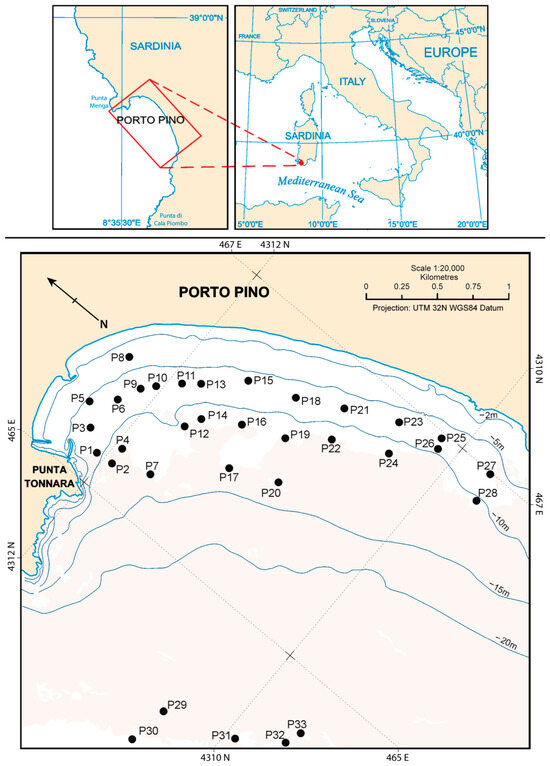
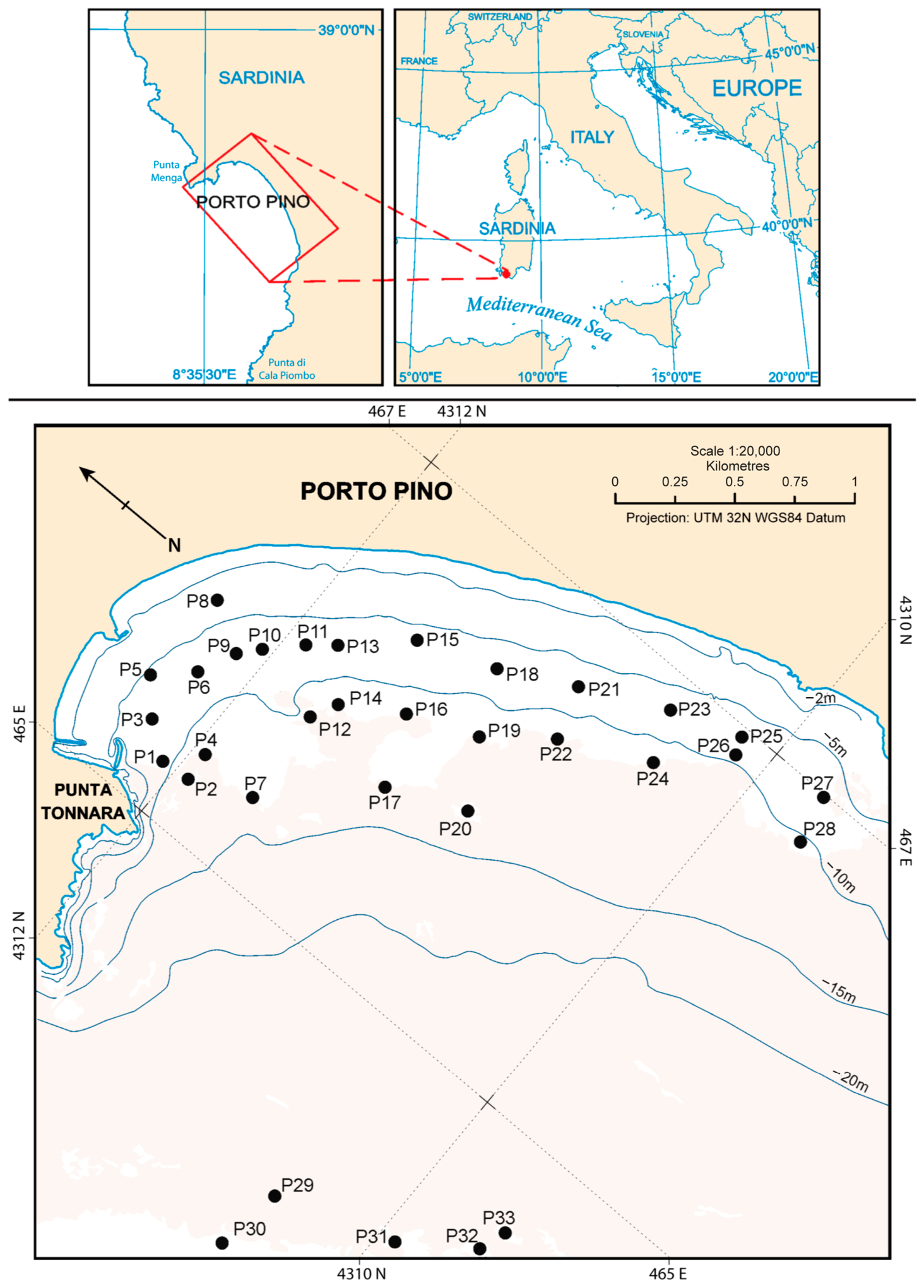
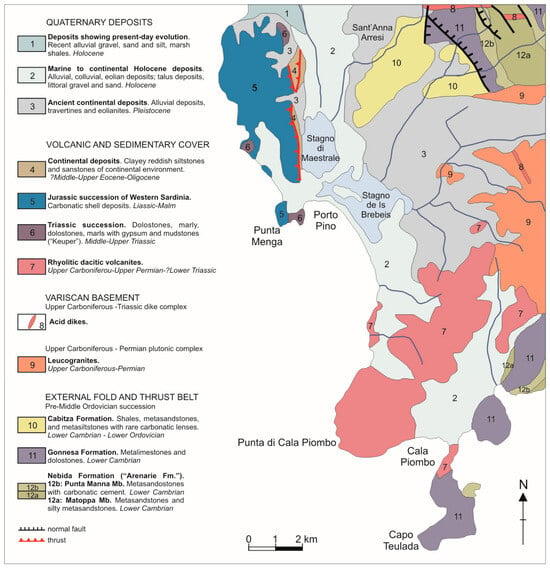
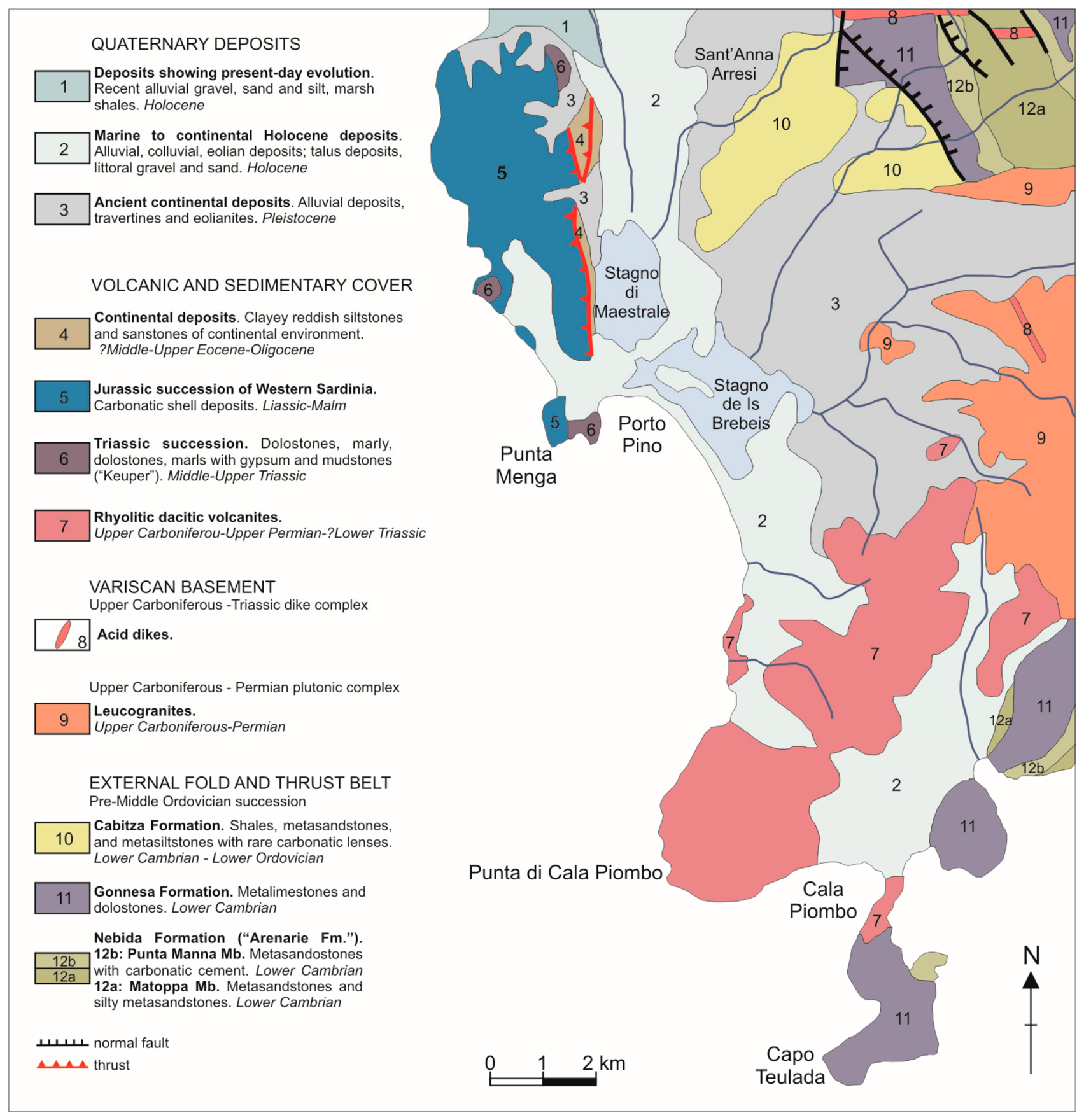
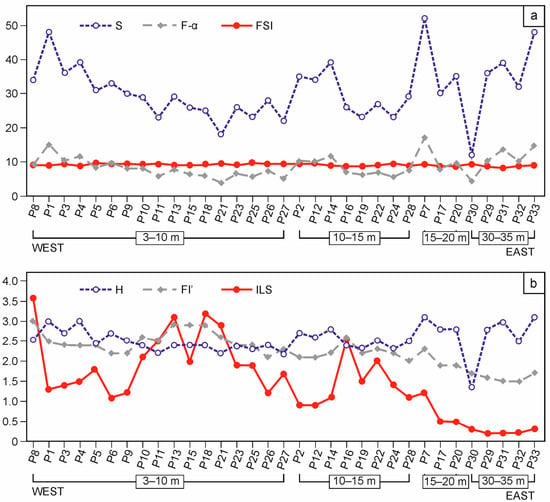
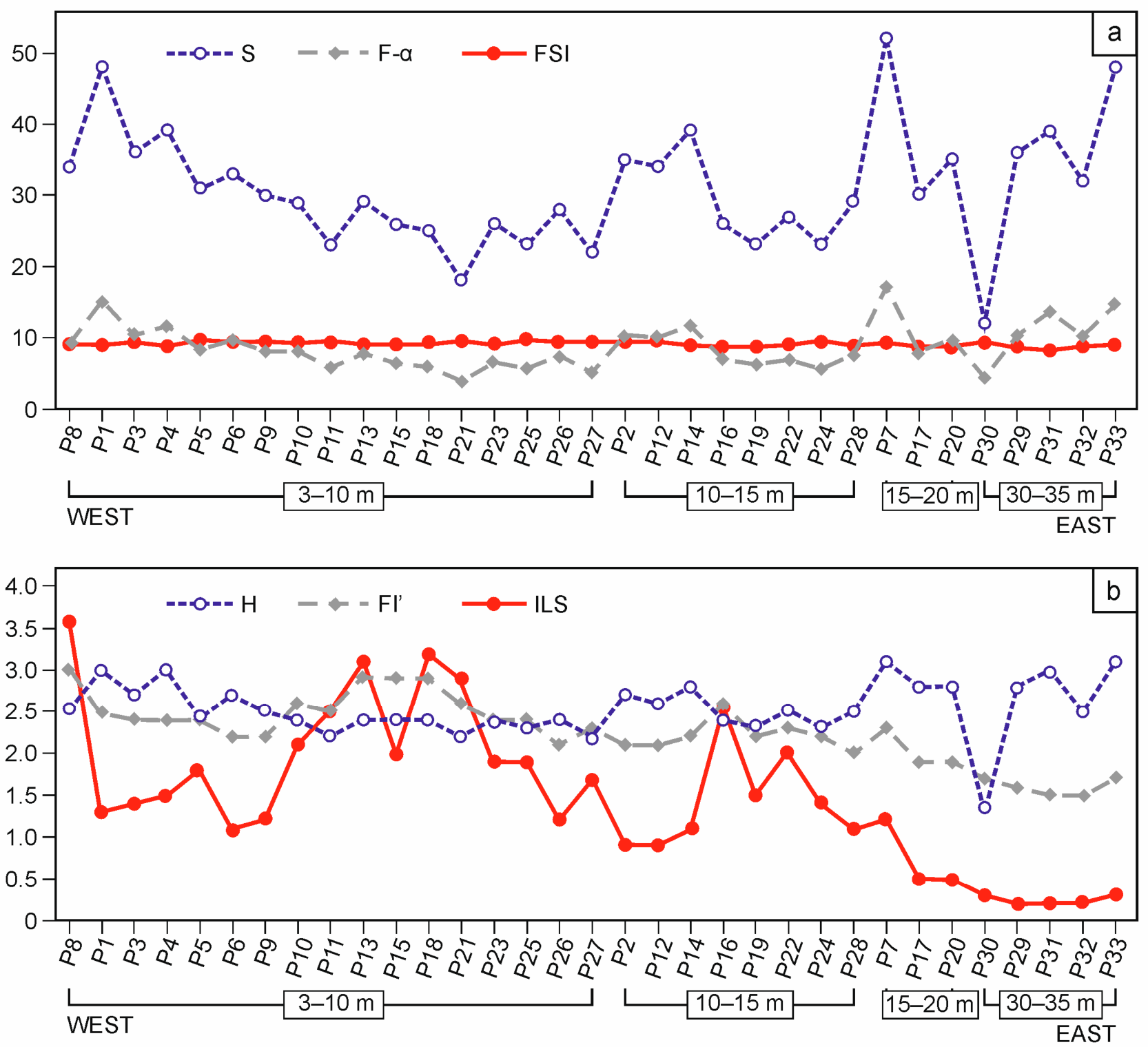
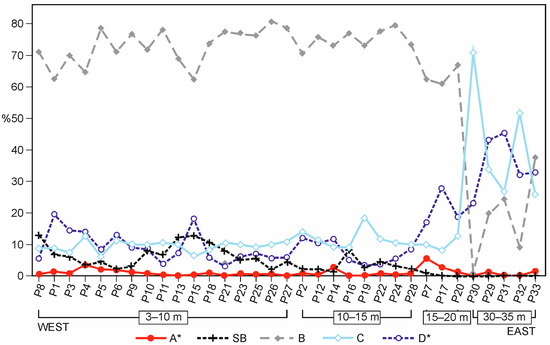
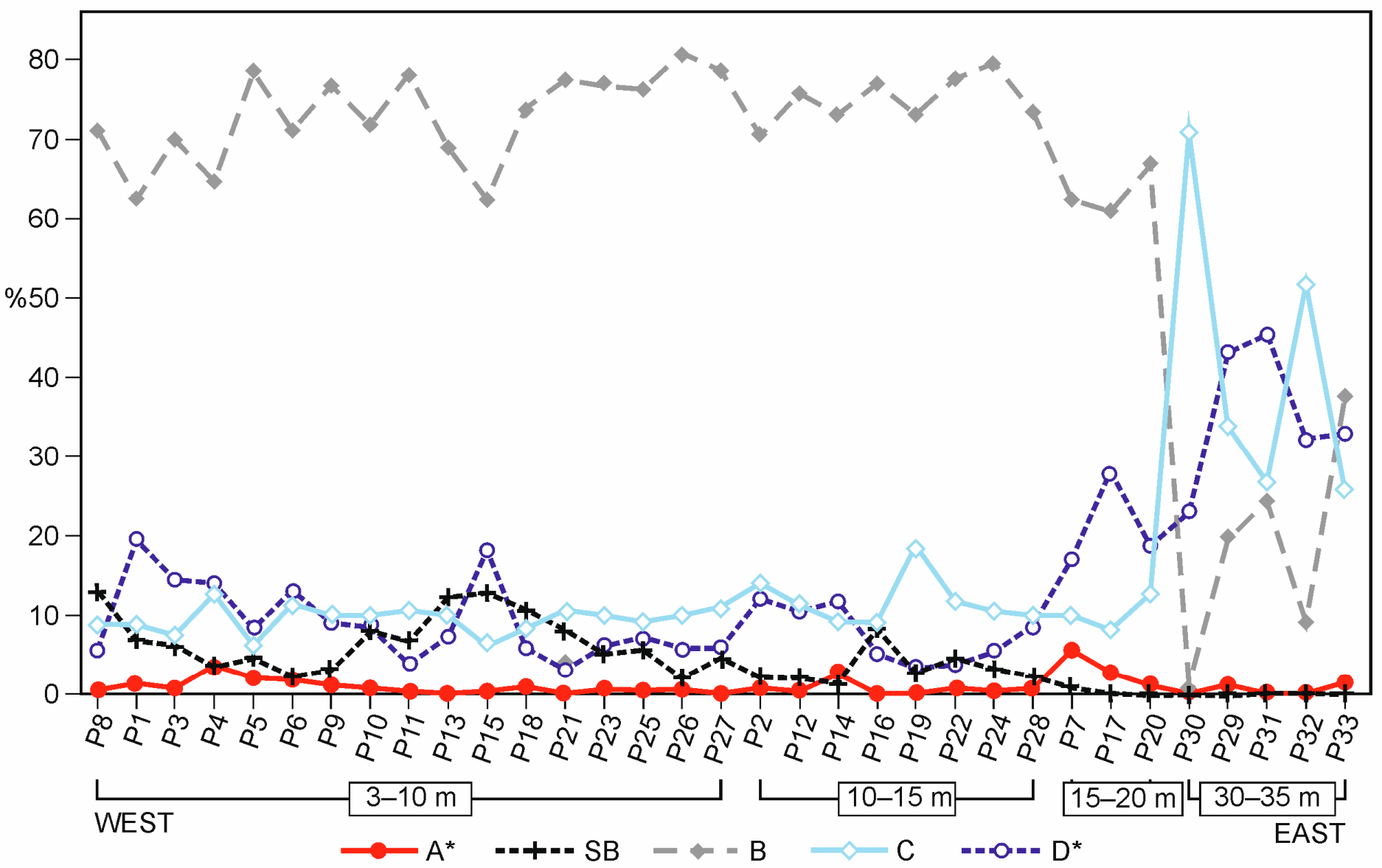
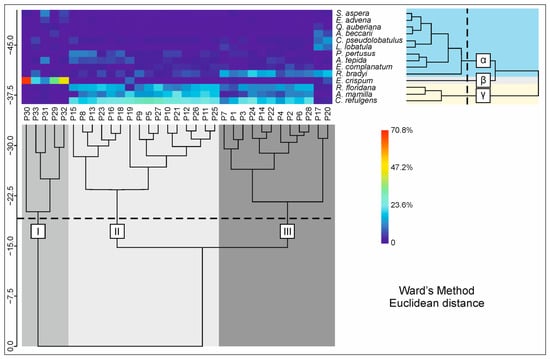
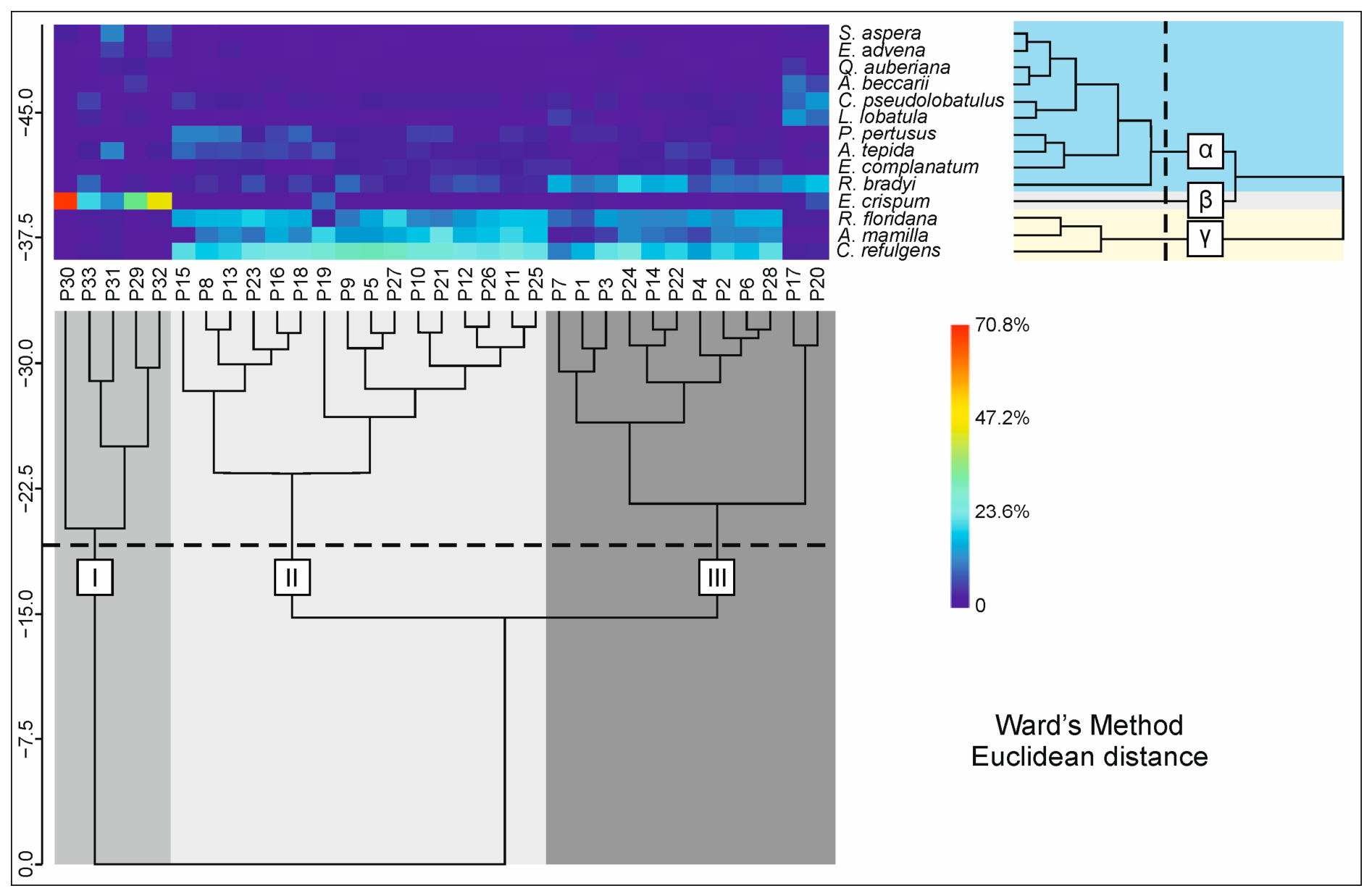
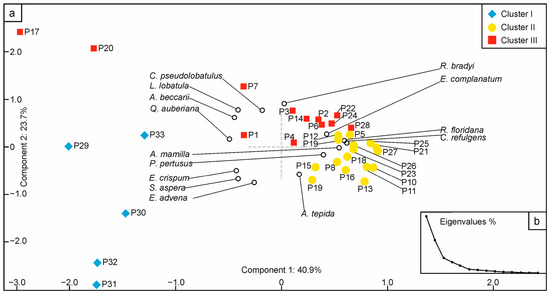
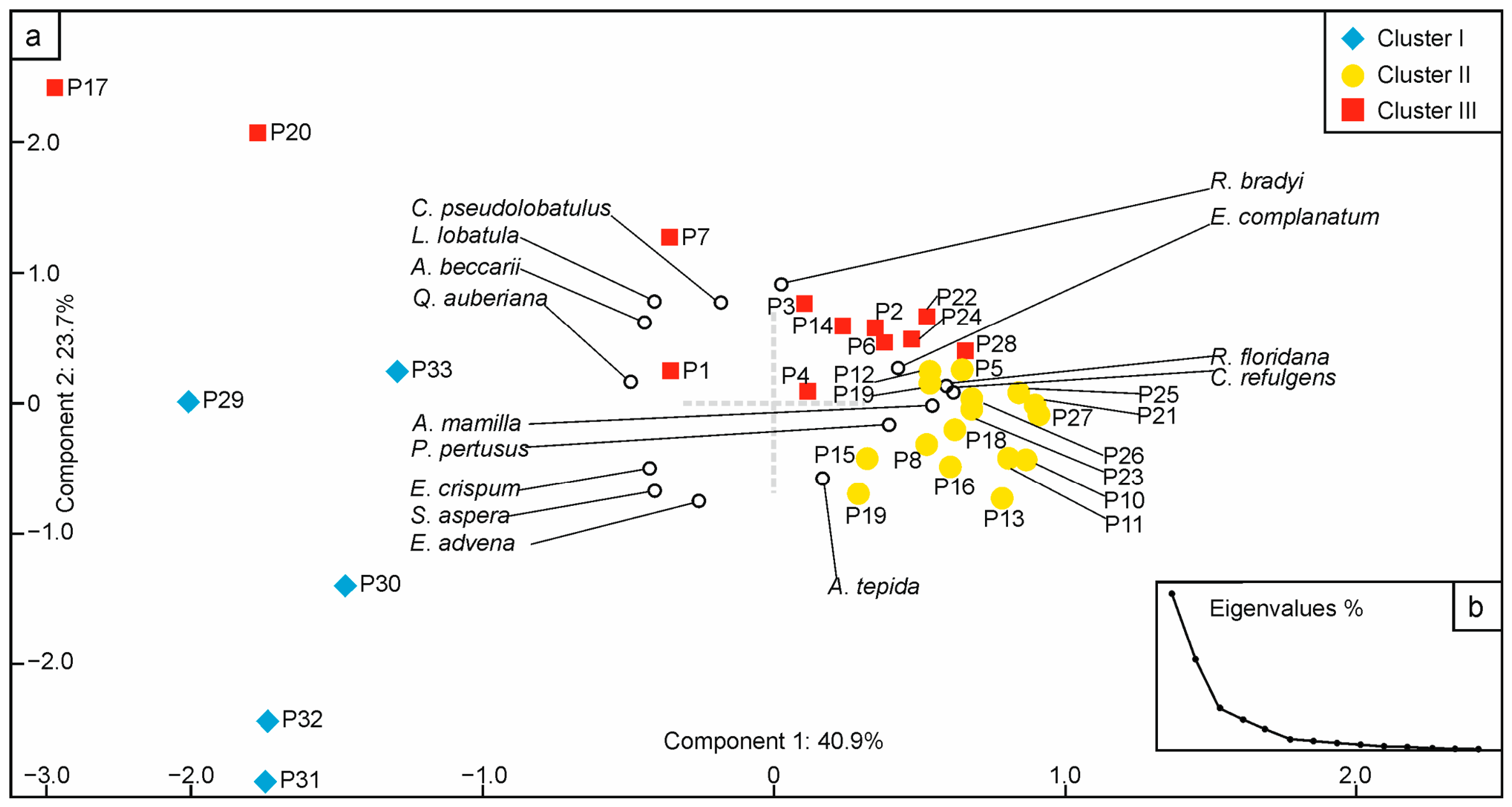
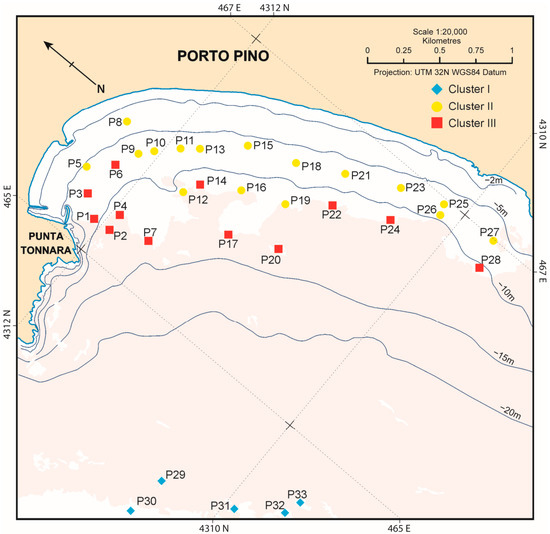
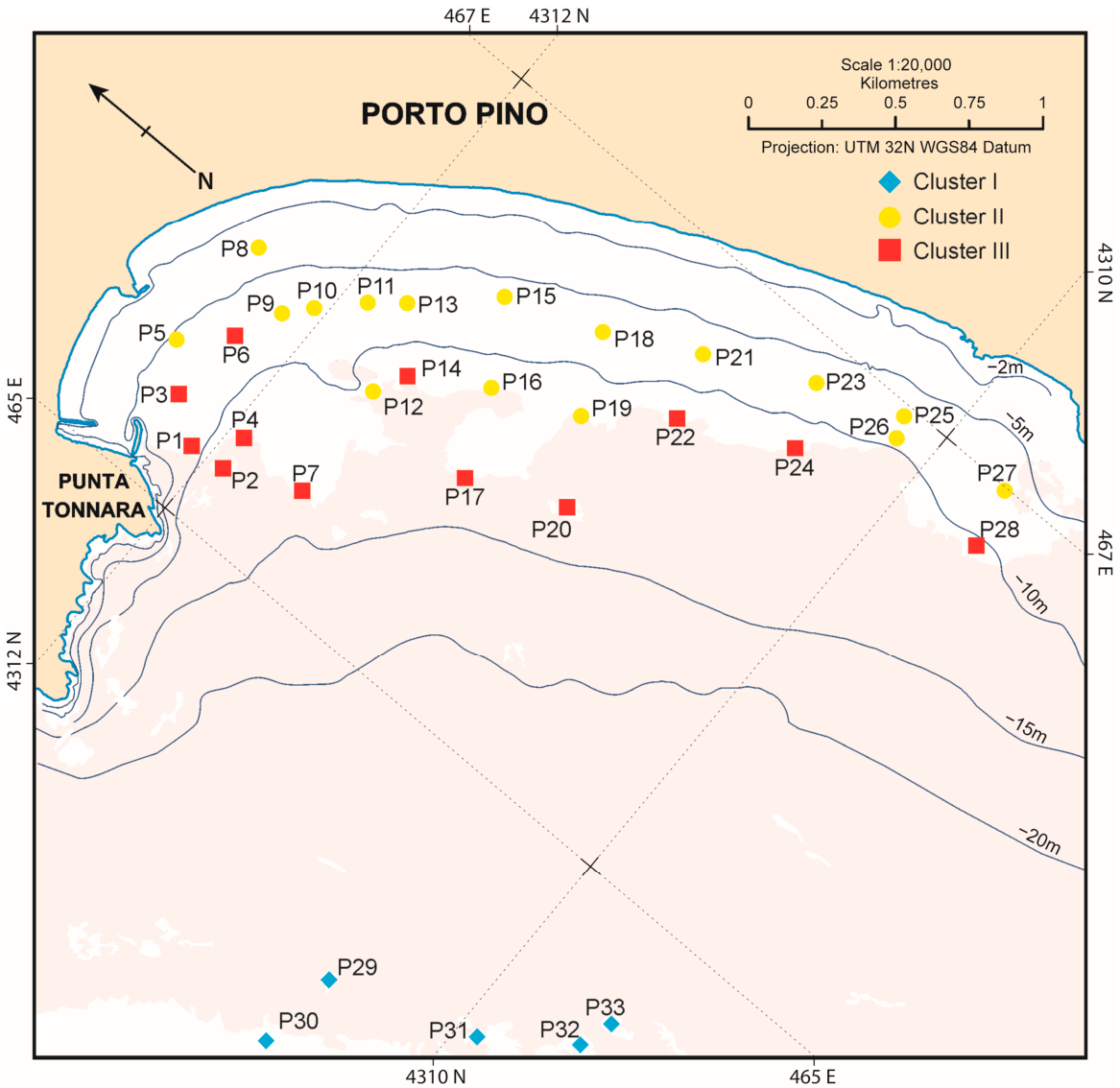
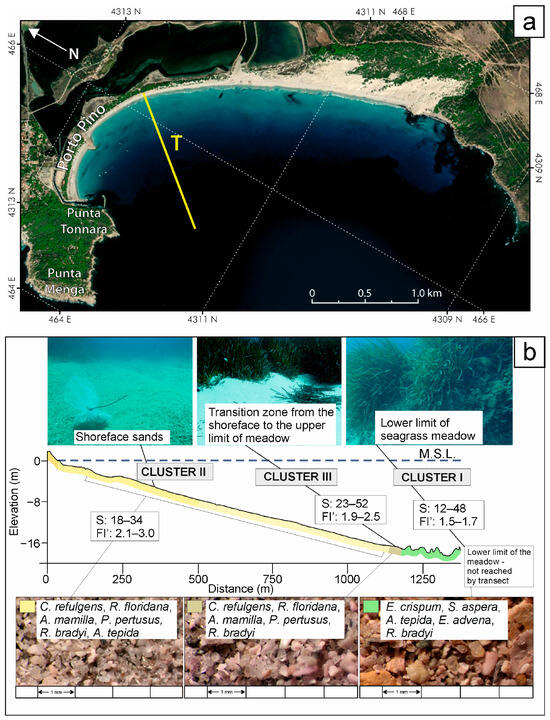
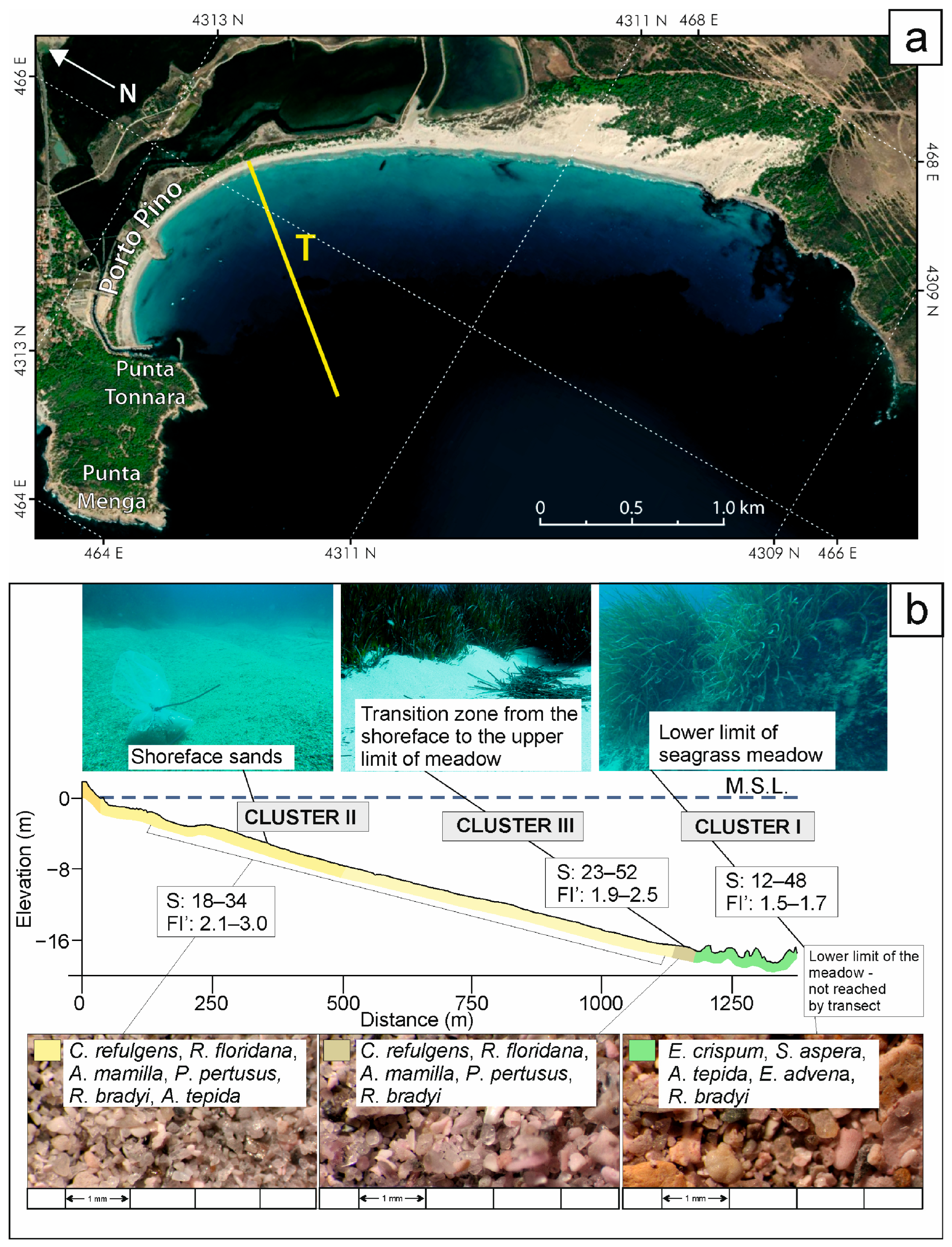

Disclaimer/Publisher’s Note: The statements, opinions and data contained in all publications are solely those of the individual author(s) and contributor(s) and not of MDPI and/or the editor(s). MDPI and/or the editor(s) disclaim responsibility for any injury to people or property resulting from any ideas, methods, instructions or products referred to in the content. |
© 2026 by the authors. Licensee MDPI, Basel, Switzerland. This article is an open access article distributed under the terms and conditions of the Creative Commons Attribution (CC BY) license.