Article

Timing of Soil Profile Development and Its Climatic Background in Alluvial–Proluvial Parent Materials of the Qinghai Lake Basin

1
Qinghai Provincial Key Laboratory of Physical Geography and Environmental Processes, School of Geographical Science, Qinghai Normal University, Xining 810008, China
2
Key Laboratory of Tibetan Plateau Land Surface Processes and Ecological Conservation (Ministry of Education), Qinghai Normal University, Xining 810008, China
3
Xining Center of Natural Resources Comprehensive Survey, CGS, Xining 810021, China
*
Author to whom correspondence should be addressed.
Quaternary 2026, 9(2), 22; https://doi.org/10.3390/quat9020022
Submission received: 14 January 2026 / Revised: 18 February 2026 / Accepted: 24 February 2026 / Published: 2 March 2026

Abstract

Alluvial–proluvial parent-material soils are widely distributed in the Qinghai Lake Basin; however, their timing of development and associated climatic background remain poorly constrained. In this study, two representative alluvial–proluvial fan-covered soil profiles (QRZQ and YXC) from the Qinghai Lake Basin were investigated. Quartz optically stimulated luminescence (OSL) dating was combined with analyses of grain-size composition and soil organic carbon (SOC) to constrain the timing of soil development and its climatic background. The results show that the studied soil profiles are mainly characterized by Ah–As–C and Ah–A–C horizon configurations, with soil development spanning from 15.7 to 1.0 ka. The underlying alluvial–proluvial parent material of the QRZQ profile formed during the Last deglaciation, whereas the oldest OSL ages in the YXC profile occur within a weakly developed A horizon, indicating that this profile had already transitioned from a depositional environment to a pedogenic environment during the Last deglaciation. This contrast reflects staged differences between depositional and pedogenic processes within alluvial–proluvial settings. The soils were formed through upbuilding pedogenesis, in which sediment accumulation and top-down pedogenic modification proceeded concurrently. Grain-size composition and SOC characteristics further indicate that the depositional environment of the YXC profile was relatively stable. Integrating the obtained chronological results with regional climatic changes suggests that climate variability in the Qinghai Lake Basin exerted a primary control on the transformation between sedimentary processes and soil development. In particular, the Late Holocene (0–4 ka), characterized by a generally cold–dry climate accompanied by pronounced humidity fluctuations, represents an important pedogenic stage for alluvial–proluvial parent-material soils in the Qinghai Lake Basin. This study provides a robust chronological framework for further investigating the mechanisms of soil development in alluvial–proluvial environments from a climatic perspective.

1. Introduction

The Qinghai Lake Basin is located in the northeastern Qinghai–Tibetan Plateau and represents a critical component of the plateau ecosystem. It plays an essential role in maintaining regional water resource security, biodiversity conservation, and the stability of ecological barriers [1,2]. Owing to its high sensitivity to climate change and surface processes, Qinghai Lake and its surrounding basin provide an important natural archive for understanding environmental dynamics. Soils developed within the basin contribute substantially to the stability of alpine ecosystems by regulating water retention, nutrient cycling, and carbon sequestration processes [3,4].
Soil development results from the long-term coupling of parent material, climate, organisms, topography, and time [5]. Among these factors, the temporal dimension is fundamental for understanding pedogenic stages and rates of soil evolution. However, constraining soil development time has long been challenged by considerable uncertainties. Conventional radiocarbon dating mainly relies on soil organic matter or buried organic horizons, but continuous inputs, decomposition, and vertical translocation of organic carbon during pedogenesis often cause radiocarbon ages to underestimate the true timing of soil formation or parent-material deposition. This limitation is particularly pronounced in alpine and arid to semi-arid regions [6,7], where low organic carbon contents and strong post-depositional processes may complicate the reconstruction of soil developmental sequences and their relationships with climatic change, thereby restricting robust reconstructions of soil developmental sequences and their relationships with climatic change.
In recent decades, advances in optically stimulated luminescence (OSL) dating have provided an alternative approach for soil chronologies by directly dating mineral grains and avoiding uncertainties associated with organic carbon dynamics [8,9]. Numerous studies have demonstrated that OSL dating is well suited for constraining the ages of aeolian, lacustrine, fluvial deposits and their overlying soils, enabling the establishment of regional environmental evolution frameworks since the Holocene [10,11,12,13,14]. In contrast, studies of alluvial–proluvial parent-material soils in the Qinghai Lake Basin have mainly focused on pedogenic characteristics and general chronological features [15], while the linkage between their developmental timing and climatic background remains insufficiently explored. Given that alluvial–proluvial soils potentially archive valuable signals of regional climate variability, the lack of systematic chronological constraints represents a critical knowledge gap.
Against this background, this study investigates representative alluvial–proluvial parent-material soil profiles in the Qinghai Lake Basin using quartz OSL dating, combined with analyses of grain-size composition and soil organic carbon (SOC). The objectives are to establish a chronological framework for soil development and to clarify its relationship with regional climatic conditions. The results aim to advance the understanding of soil development processes in the Qinghai Lake Basin and to provide chronological constraints relevant to land system evolution and sustainable ecosystem management in alpine regions.

2. Materials and Methods

2.1. Overview of the Study Area and Field Investigation

2.1.1. Study Area

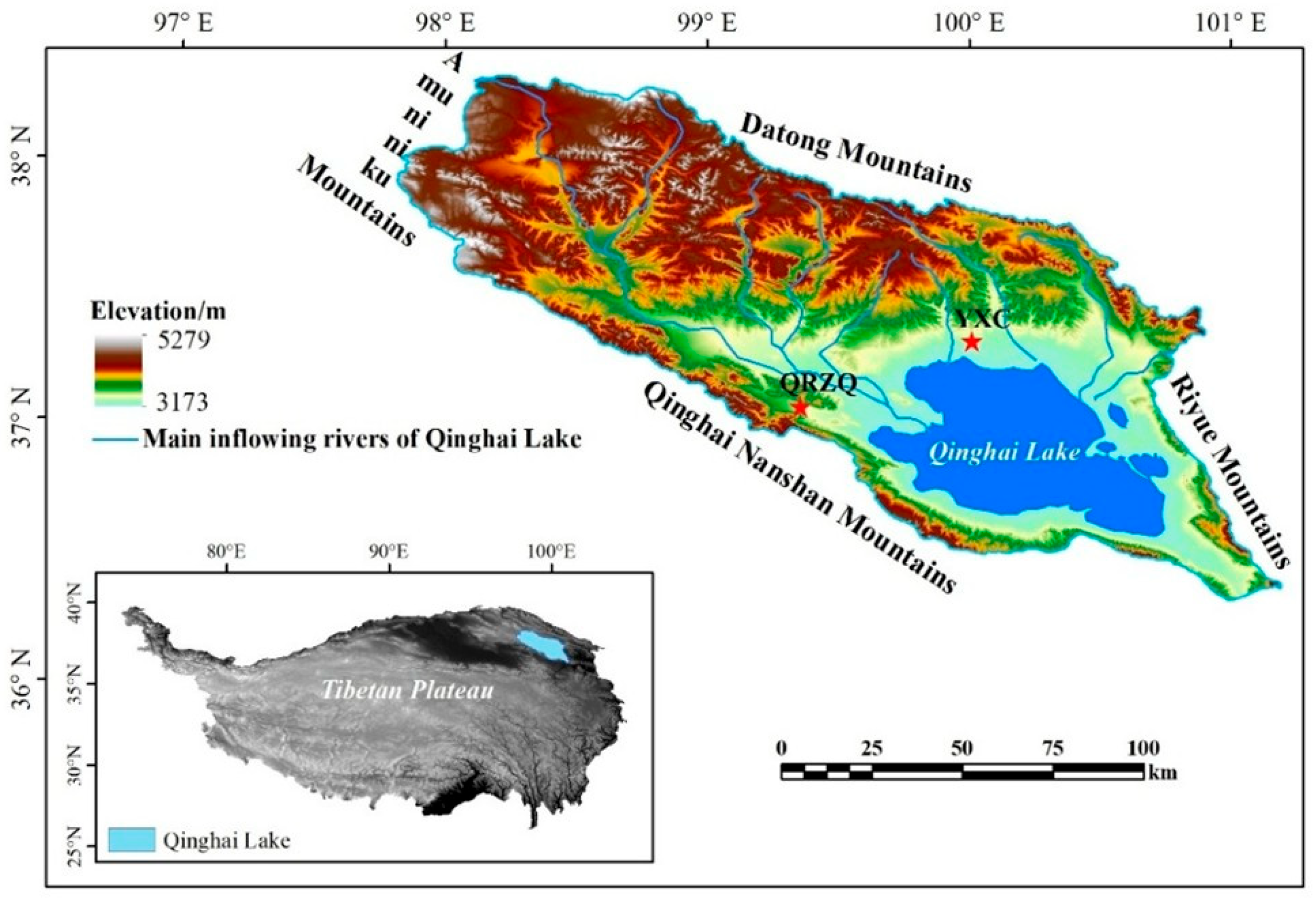
The Qinghai Lake Basin is located in the northeastern Qinghai–Tibetan Plateau (36°21′–37°12′ N, 99°38′–100°45′ E) (Figure 1). Influenced jointly by the plateau monsoon system and the mid-latitude westerlies, the region exhibits a typical alpine semi-arid climate. The basin is bounded by Riyue Mountain to the east, the Qaidam Basin to the west, Datong Mountain to the north, and the Qinghai Nanshan Mountains to the south. Topographically, it forms a closed inland plateau basin surrounded by mountains, with higher elevations in the northwest and lower elevations in the southeast. The Qinghai Lake Basin covers an area of approximately 29,661 km2, with elevations ranging from 3196 to 5174 m a.s.l. Qinghai Lake is the largest inland saline lake in China, with a water surface area of about 4400–4500 km2, and has been designated as a national nature reserve as well as a Ramsar Wetland of International Importance. Medium- to high-elevation alluvial, alluvial–proluvial, and proluvial plains distributed around the lake basin margins represent the most important depositional landforms in the Qinghai Lake Basin. Soils developed on these landforms mainly include chestnut soils, dark chestnut soils, transitional dark chestnut soils, and alpine meadow soils. Vegetation types are diverse and comprise alpine meadow, saline meadow, steppe, and shrubland, among which alpine meadow is the most widely distributed.

2.1.2. Distribution of Sampling Sites

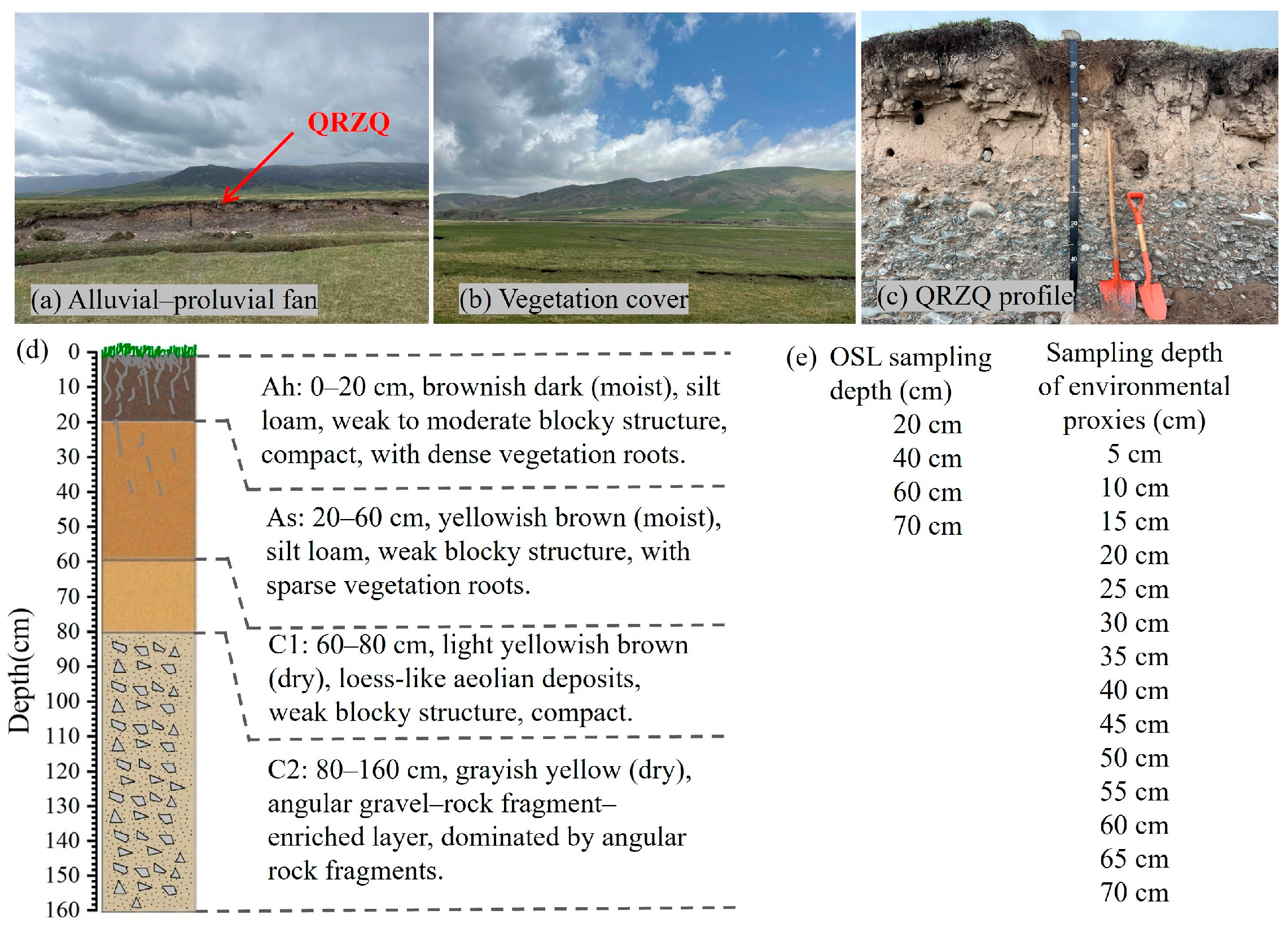
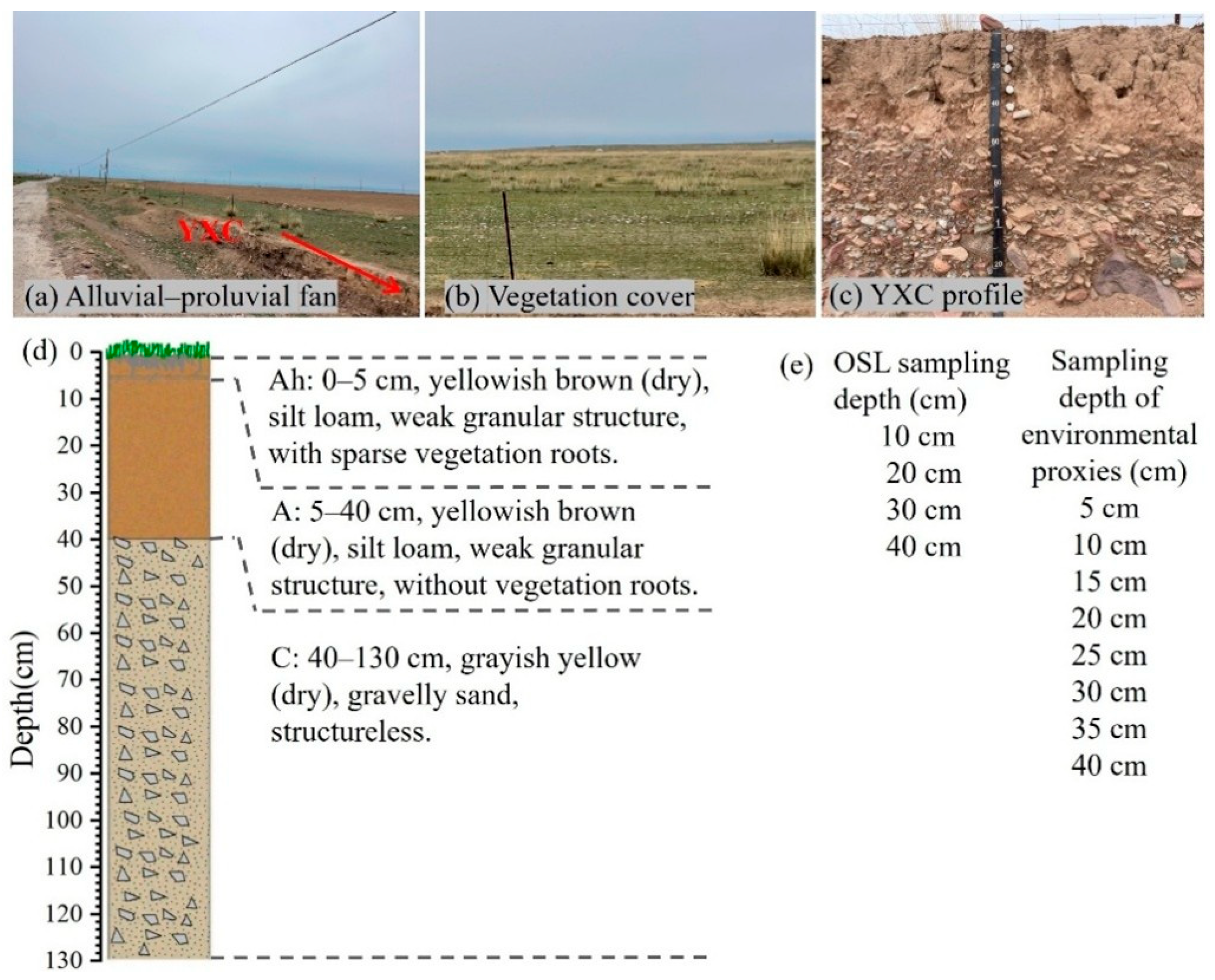
Based on multiple field surveys of soil types, topographic features, and sedimentary structures across the Qinghai Lake Basin, our research group identified that the regional landscape is mainly composed of lake basins, alluvial plains, plateau hills, and mountainous terrains. The Qinghai Lake Basin shows a high degree of representativeness in terms of geomorphic pattern, sedimentary characteristics, and soil types, providing a favorable regional setting for this study. Soil samples were collected from two representative alluvial–proluvial fan-covered soil profiles, namely the Qieririzhaqu (QRZQ) profile and the Yaxiu Village (YXC) profile. The QRZQ profile is situated at 37°02′ N, 99°21′ E, with an elevation of 3432 m a.s.l., whereas the YXC profile is located at 37°17′ N, 100°00′ E, with an elevation of 3281 m a.s.l (Figure 2; Figure 3). Soil horizons were identified and subdivided following internationally accepted soil morphological criteria and horizon nomenclature (FAO–UNESCO and Soil Taxonomy). In the field, horizon boundaries were determined based on observable morphological characteristics, including soil color, texture, structure, and parent material properties. Accordingly, the studied soil profiles commonly exhibit Ah–As–C or Ah–A–C horizon sequences, reflecting weak to moderate pedogenic development. Based on the USDA Soil Taxonomy system, both the QRZQ and YXC profiles are classified as Typic Torrifluvents at the subgroup level. This classification is based on the absence of diagnostic subsurface horizons, the dominance of recent alluvial–proluvial parent materials, and the aridic soil moisture regime of the study area. Vegetation coverage at both sites is approximately 90%, dominated by Kobresia pygmaea and Kobresia humilis, which are typical alpine meadow species in the region. For each soil profile, one OSL dating sample was collected from each pedogenic horizon, and samples for environmental dose rate determination were taken at 5 cm intervals.

2.2. Research Methods

2.2.1. Optically Stimulated Luminescence (OSL) Dating

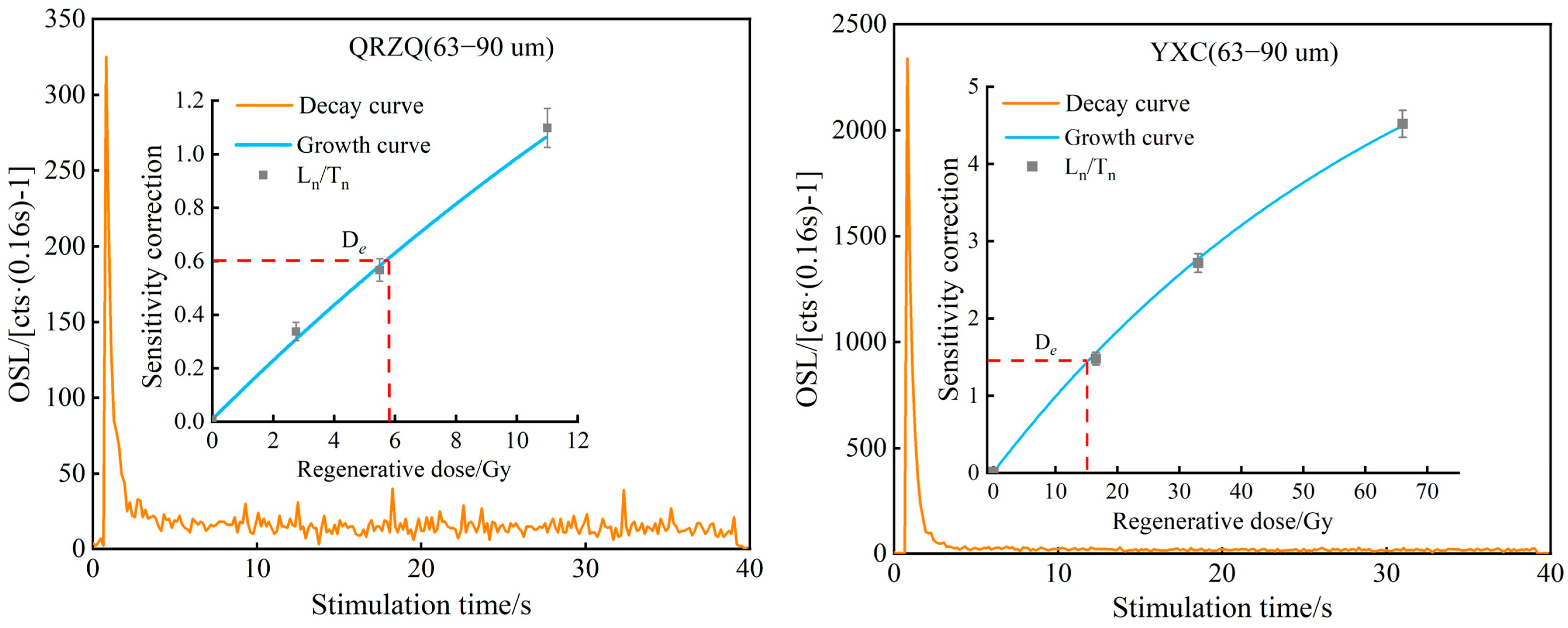
Optically stimulated luminescence (OSL) dating determines the time elapsed since sediment grains were last exposed to sunlight and subsequently buried. The OSL age represents the burial time of quartz grains after their final exposure event. In the laboratory, growth curves are constructed by administering known artificial radiation doses to the samples (Figure 4), allowing the determination of the total radiation energy accumulated since burial, expressed as the equivalent dose (De). The environmental dose rate (Dose rate) represents the amount of radiation energy accumulated by mineral grains per unit time and is influenced by factors such as geographic latitude, altitude, water content, and sampling depth. The OSL age is calculated using the following equation:
Age   ( ka ) = De   ( Gy ) D   ( Gy / ka )
In this study, pretreatment [16] and equivalent dose measurements of the eight OSL samples were conducted under subdued red light conditions (central wavelength approximately 655 ± 30 nm). Equivalent dose measurements were performed using a Risø TL/OSL-DA-20-C/D (DTU Nutech, Roskilde, Denmark) automated luminescence reader equipped with a 90Sr/90Y beta source, with a dose rate of (0.110 ± 0.002) Gy s−1. Quartz equivalent doses were determined using the single-aliquot regenerative-dose (SAR) protocol [9]. Concentrations of uranium (U), thorium (Th), and potassium (K) for environmental dose rate determination were measured at the Xi’an Geological Survey Center using an iCAP 7400 inductively coupled plasma optical emission spectrometer (ICP-OES) and an iCAP RQ inductively coupled plasma mass spectrometer (ICP-MS) (Thermo Fisher Scientific, Waltham, MA, USA). All other laboratory analyses were conducted at the Qinghai Provincial Key Laboratory of Natural Geography and Environmental Processes.

2.2.2. Grain-Size Analysis and Soil Organic Carbon Measurement

Prior to grain-size measurement, soil samples were pretreated following the method described by Lu et al. [17]. Particle-size distributions were determined using a Mastersizer 2000 laser particle size analyzer (Malvern Instruments Ltd., Malvern, Worcestershire, UK), with a measurement range of 0.02–2000 μm. Pretreatment of SOC samples followed the procedure described by Shi et al. [18]. SOC contents were measured using a VELP CN 802 carbon–nitrogen elemental analyzer (VELP Scientifica, Usmate, Lombardy, Italy).

3. Results

3.1. Reliability of OSL Dating Results

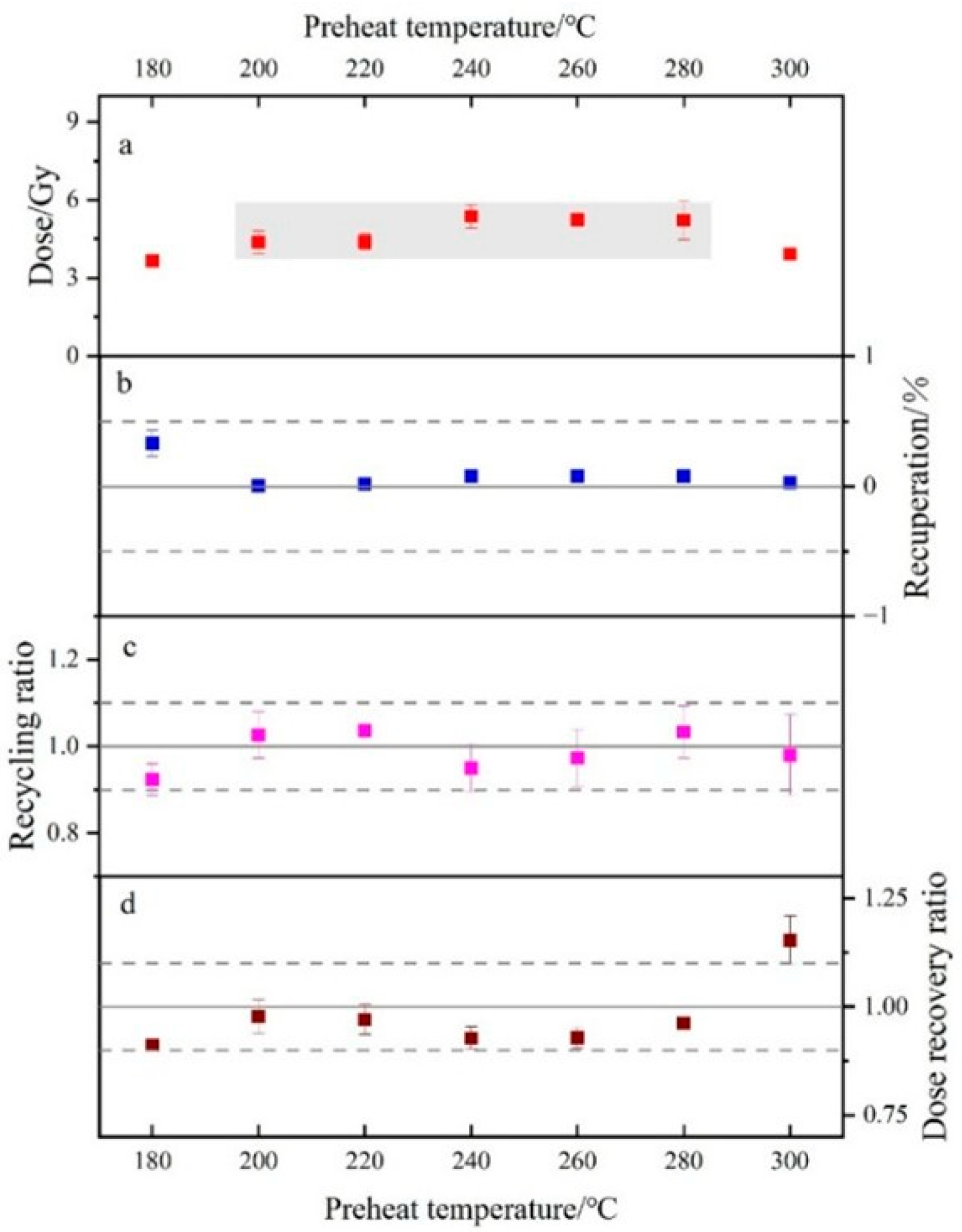
Analysis of the OSL decay curves and dose–response growth curves indicates that all alluvial–proluvial parent-material soil samples exhibit well-bleached quartz OSL signals. As shown in Figure 3, the luminescence signals decay rapidly to background levels within the first ~2 s of stimulation, and the OSL signals are dominated by the fast component, indicating high luminescence sensitivity and sufficient bleaching prior to burial. Dose–response curves for all samples can be well fitted using a combined linear-plus-exponential function (Figure 4), demonstrating appropriate signal growth behavior and suitability for equivalent dose (De) determination. Prior to De determination, preheat plateau tests were conducted to evaluate the thermal stability of the quartz OSL signals. Within the preheating temperature range of 200–260 °C, De values remain stable with relatively small uncertainties (Figure 5a), indicating that the selected preheat temperatures do not significantly influence De estimation. Recuperation values were negligible (close to zero), recycling ratios ranged between 0.9 and 1.1, and dose recovery ratios were close to unity (Figure 5b–d), demonstrating good signal reproducibility, negligible thermal transfer, and reliable performance of the SAR OSL protocol. Collectively, these results confirm that the quartz grains are suitable for SAR OSL measurements and that the equivalent dose determinations under the selected experimental conditions are reliable.

3.2. Dating Results of Soil Profiles Developed on Alluvial–Proluvial Deposits

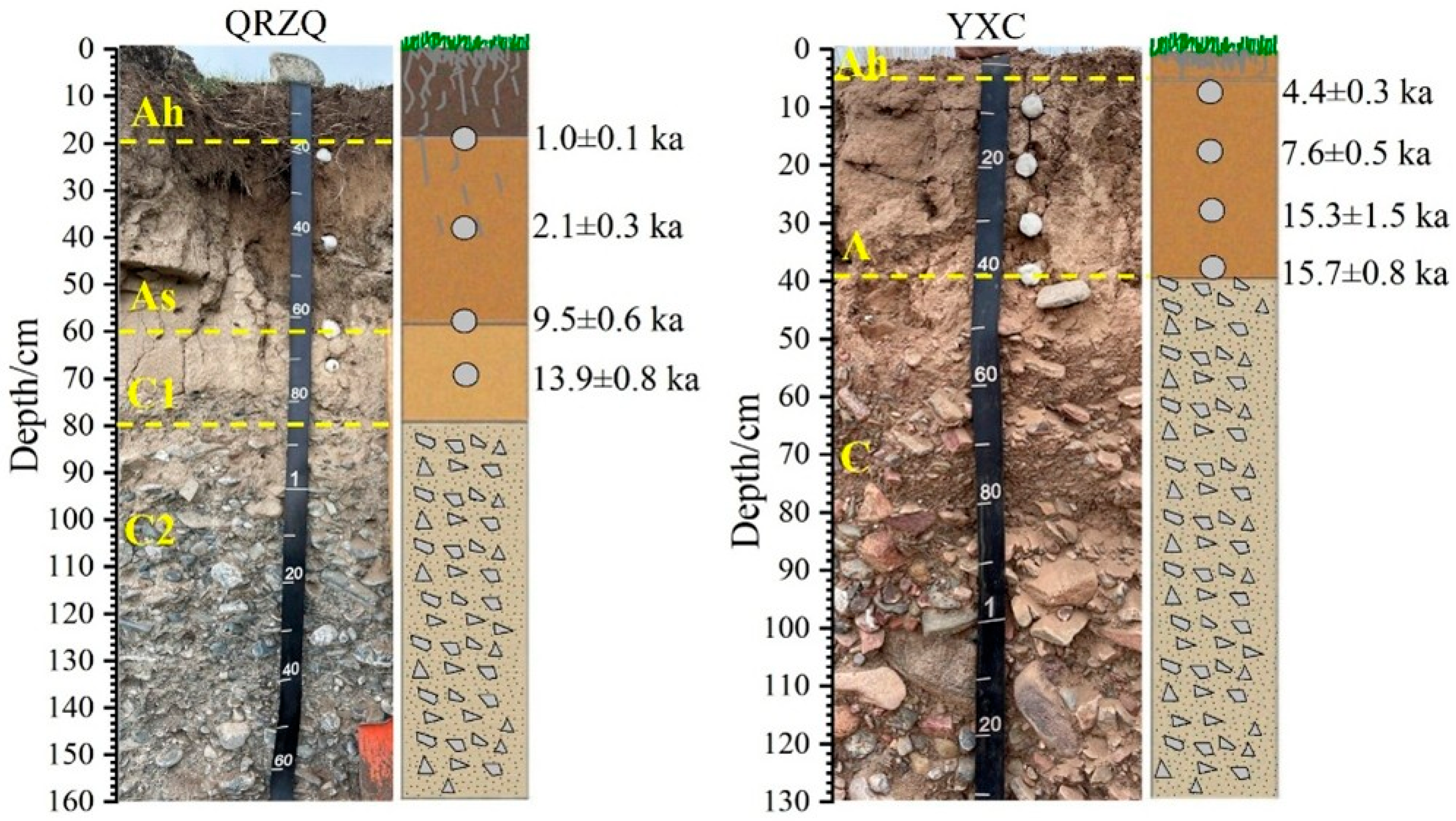
Based on the quartz optically stimulated luminescence (OSL) dating results (Figure 6; Table 1), the alluvial–pluvial parent-material soil profiles in the study area exhibit a clear and well-ordered chronological sequence. While Table 1 provides the numerical OSL age data, Figure 5 visually illustrates the vertical distribution of ages within the soil profiles and their relationship with pedogenic horizons. Overall, OSL ages increase progressively with depth, and no evident age inversions are observed, indicating good stratigraphic consistency and the reliability of the established chronological framework. In the QRZQ profile (Figure 6), the Ah horizon at 20 cm yields an OSL age of 1.0 ± 0.1 ka, indicating that surface soils were still undergoing pedogenic development during the late Holocene. The weakly developed As horizon at 40 cm has an OSL age of 2.1 ± 0.3 ka, reflecting the downward extension of pedogenic processes during the late Holocene. The transitional layer at 60 cm yields an OSL age of 9.5 ± 0.6 ka, while the C1 parent-material horizon at 70 cm corresponds to an OSL age of 13.9 ± 0.8 ka, suggesting that the underlying alluvial–pluvial deposits mainly formed from the early Holocene to the terminal Late Pleistocene. Overall, the QRZQ profile is characterized by Holocene pedogenic horizons superimposed on Late Pleistocene alluvial–pluvial sediments, reflecting a stage-dependent superposition of depositional processes and soil formation on a temporal scale. The YXC profile also displays distinct age-banded characteristics (Figure 6). Four OSL samples collected from the weakly developed A horizon yield ages of 4.4 ± 0.3 ka, 7.6 ± 0.5 ka, 15.3 ± 1.5 ka, and 15.7 ± 0.8 ka, indicating that the deposited materials mainly accumulated during the last deglaciation. Pronounced age differences among pedogenic horizons suggest that this profile experienced a transition from an alluvial–pluvial depositional environment during the Late Pleistocene to a relatively stable pedogenic environment in the Holocene.

3.3. Grain-Size Characteristics and Total Soil Organic Carbon (SOC) Results of Alluvial–Proluvial Soils

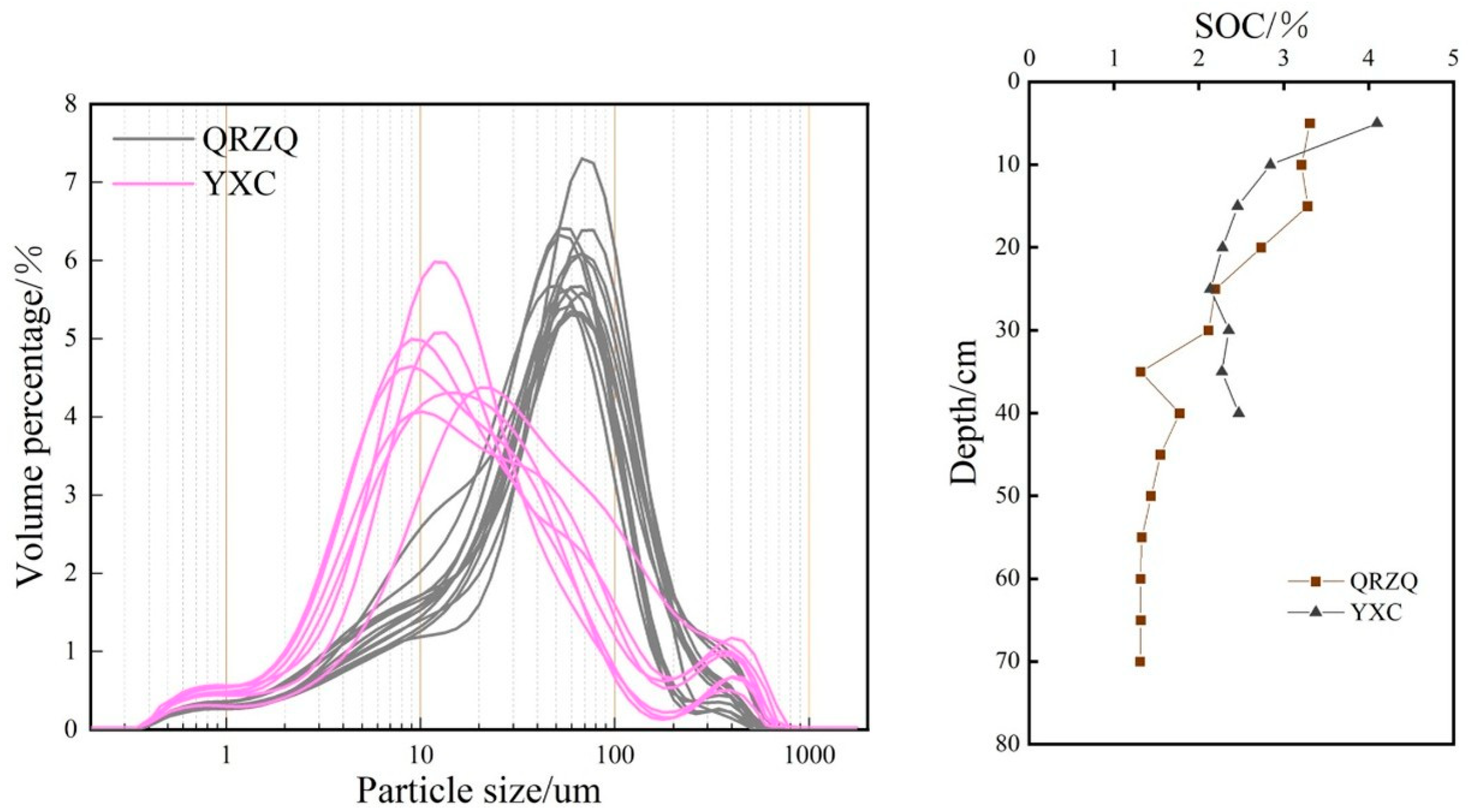
The grain-size composition and soil organic carbon (SOC) contents of the QRZQ and YXC alluvial–pluvial parent-material soil profiles show pronounced differences (Figure 7). The main grain-size mode of the QRZQ profile is concentrated at ~60 μm, whereas that of the YXC profile is centered at ~10 μm. The mean grain size of the QRZQ samples is 39.65 μm, significantly coarser than that of the YXC samples (13.77 μm), indicating that the former is dominated by relatively coarse particles, while the latter is characterized by a higher proportion of fine-grained materials. This contrast reflects substantial differences in depositional energy conditions between the two profiles. SOC contents in the QRZQ profile range from 1.30% to 3.31%, with a mean value of 2.01%, whereas those in the YXC profile range from 2.13% to 4.21%, with a higher mean of 2.61%. The consistently higher SOC levels in the YXC profile indicate comparatively stronger pedogenic development than in the QRZQ profile.

4. Discussion

4.1. Pedogenic Intensity of Alluvial–Proluvial Soil Profiles

Based on grain-size distribution characteristics, pedogenic horizons in the QRZQ profile are generally dominated by medium- to coarse-silt fractions, accompanied by a certain proportion of sand-sized particles. The grain-size distribution curves are relatively broad, with peak positions shifted toward the coarser end, indicating comparatively strong hydrodynamic conditions during alluvial–pluvial deposition. Under such conditions, fine-grained materials are prone to reworking and disturbance during deposition or subsequent pedogenesis. In contrast, pedogenic horizons in the YXC profile are mainly composed of fine silt, with more concentrated grain-size distribution curves, stable main peaks, and markedly lower contents of coarse particles. This suggests that the depositional environment at the YXC site was relatively stable, with weaker hydrodynamic conditions, which is more favorable for the continuous accumulation of fine-grained materials. Such grain-size differences are representative of alluvial–pluvial fan and fluvial terrace soils in the Qinghai Lake Basin and its surrounding areas, and are commonly regarded as a direct reflection of contrasting depositional energy regimes [19,20]. These contrasts in depositional energy and sedimentary environments are further discussed in the context of soil development timing and regional Holocene climate variations, as illustrated in Figure 8.
From a pedogenetic perspective, soil development in the alluvial–pluvial settings of the Qinghai Lake Basin can be interpreted within the framework of upbuilding pedogenesis. During the Holocene, intermittent alluvial deposition and enhanced aeolian input continuously supplied fine-grained materials to the land surface, while pedogenesis proceeded simultaneously rather than after deposition had ceased. This coupling between surface aggradation and ongoing soil formation provides an effective mechanism linking depositional processes with soil development timing [12,13].
In this context, soil formation did not occur following a single, completed depositional event; rather, it accompanied the gradual aggradation of the land surface. As indicated by the staged OSL age distribution (Figure 8), repeated episodes of alluvial deposition contributed to incremental vertical accretion, resulting in a slow but continuous rise of the soil surface. Meanwhile, pedogenic processes operated from the top downward, modifying newly deposited materials through organic matter accumulation, structural development, and geochemical alteration. Such a process conforms to the classic concept of upbuilding pedogenesis, in which sediment accumulation and soil formation proceed concurrently rather than sequentially [21,22,23]. This mechanism provides a coherent explanation for the observed vertical age structure and the relatively weak horizon differentiation in the profiles, as pedogenesis was repeatedly superimposed upon ongoing sediment supply.
SOC contents in the QRZQ profile are generally low and decrease with depth, indicating that strong hydrodynamic disturbance constrained the preservation and accumulation of organic matter in the soil. In contrast, the YXC profile exhibits overall higher SOC contents in pedogenic horizons with relatively minor vertical fluctuations, suggesting that the surface layers have long been exposed to a comparatively stable land-surface environment, which favors continuous organic matter input and sustained pedogenic processes [24]. The enrichment of fine-grained fractions (especially silt) in the YXC profile provides more favorable conditions for organic matter preservation, thereby enhancing SOC stability, whereas the relatively coarser grain-size composition in the QRZQ profile is unfavorable for effective organic carbon fixation [25]. Therefore, the intensity of pedogenesis in alluvial–pluvial parent-material soil profiles in the study area is strongly controlled by depositional energy conditions. The finer grain size and more stable depositional environment of the YXC profile promote the retention of aeolian fine materials and the sustained development of pedogenesis, whereas the coarser grain size and stronger hydrodynamic disturbance in the QRZQ profile result in weaker pedogenic development and limited organic matter accumulation, highlighting pedogenic differentiation driven by contrasts in depositional dynamics.

4.2. Climatic Background of Soil Profile Development on Alluvial–Pluvial Parent Materials in the Qinghai Lake Basin

Comparison of the OSL ages obtained in this study with previously published chronological studies from the Qinghai Lake Basin and its surrounding regions reveals a pronounced regional consistency in the formation ages of alluvial–pluvial parent-material soils. Previous studies have shown [19,26,27] that the pedogenic ages of various soil types in the Qinghai Lake Basin and adjacent areas—such as alpine meadow soils and soils developed from combined aeolian–fluvial parent materials—are mainly concentrated in the Holocene, whereas their underlying parent materials were largely formed during the Late Pleistocene. Integrated studies based on OSL and radiocarbon dating further indicate that the early to middle Holocene represents a period of relatively intensified pedogenesis in the Qinghai Lake Basin, whereas depositional processes dominated during the last deglaciation and earlier stages [27,28]. In this study, the OSL ages of ~9–10 ka and ~13–16 ka correspond closely to key environmental transition phases identified in aeolian–fluvial deposits and paleosol records from the Qinghai Lake Basin, providing favorable environmental conditions for soil development [29].
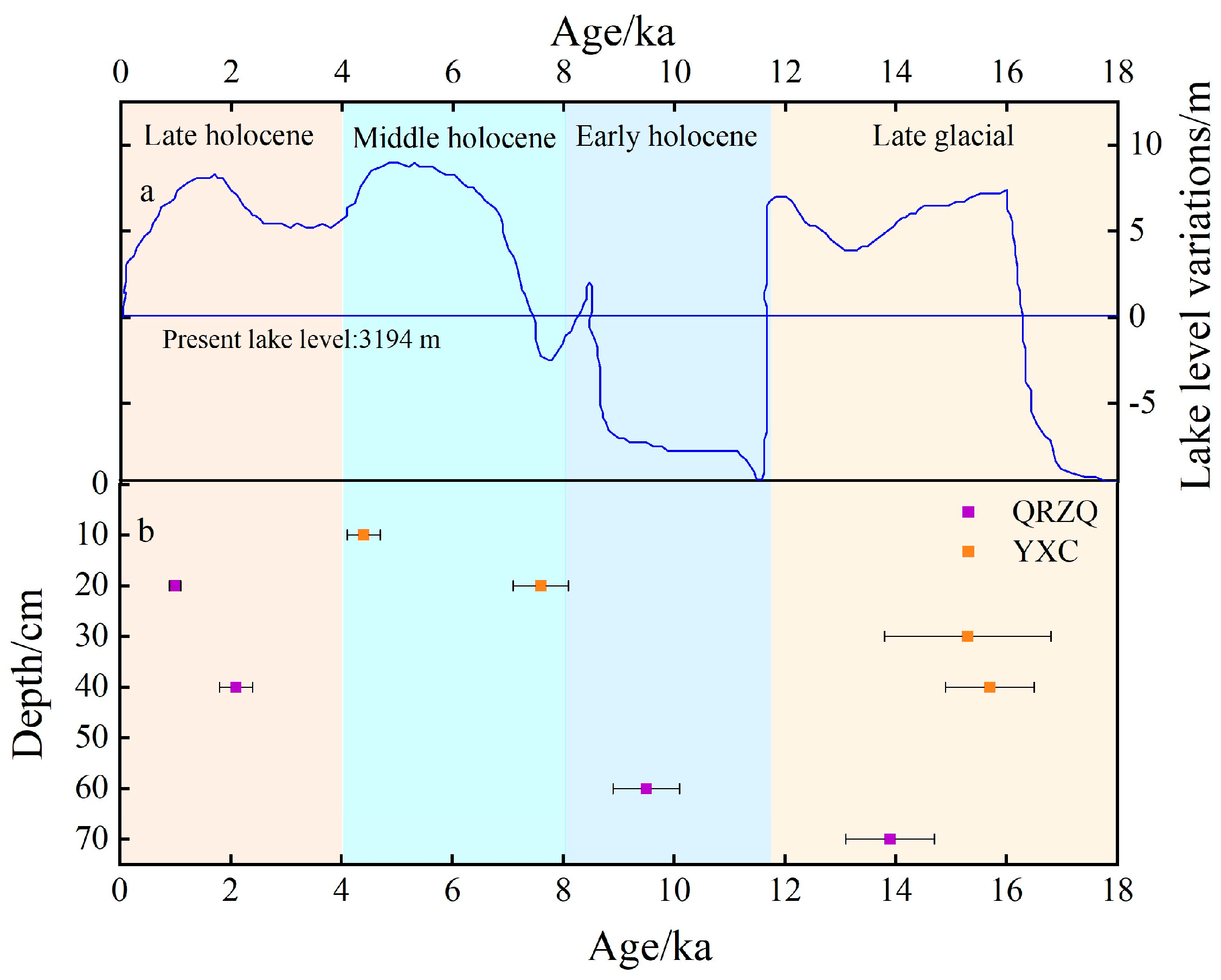
Figure 8. (a) Reconstructed lake level based on the paleoshoreline [29] (b) Age distribution of alluvial–pluvial soil profiles at the QRZQ and YXC sites.
Quaternary 09 00022 g008
A comparison between the age distribution of the studied profiles and the lake-level fluctuations of Qinghai Lake (Figure 8) shows that the OSL ages of ~13–16 ka obtained from the profiles mainly correspond to the last deglaciation. During this period, the Qinghai Lake experienced alternating high- and low-stand fluctuations [29], reflecting a regional climatic transition from cold–dry to relatively more humid conditions. Under such unstable hydrological conditions, surface erosion, transport, and deposition were more active, and the older OSL ages are therefore more likely to record sediment burial events rather than continuous and stable pedogenic development. During the early Holocene (~11.8–8 ka), lake levels reached a low-stand phase within the Holocene (Figure 7). Previous studies have suggested that this interval was characterized by intensified aeolian activity or reduced effective moisture in the Qinghai Lake Basin [19,30,31], with enhanced aeolian input being a key environmental feature. In this study, the QRZQ profile had already begun to form by ~10 ka; however, under the combined influence of early Holocene climatic fluctuations and persistent surface hydrodynamic reworking, pedogenesis remained relatively weak. This interpretation is consistent with the generally low SOC contents and their rapid decrease with depth observed in the QRZQ profile. From the middle Holocene (~8–4 ka) onward, lake levels rose markedly from the early Holocene low stands and reached a relatively high and stable plateau (Figure 8), which is commonly interpreted as a period of enhanced effective moisture and more stable basin-wide hydrological conditions [30]. Such conditions were more favorable for the preservation of fine-grained materials on alluvial–pluvial geomorphic units and provided a solid temporal foundation for soil development. The OSL ages of ~8–4 ka obtained in this study indicate that the development of both profiles shows good consistency with the regional hydrological background (Figure 8). Since the late Holocene (~4 ka), Qinghai Lake levels have not exhibited a unidirectional trend but instead fluctuated repeatedly around a relatively high stand, reflecting unstable regional climatic and hydrological conditions. Previous studies have indicated that aeolian activity intensified in the Qinghai Lake Basin during the late Holocene [19,20,24,32,33], and aeolian input became an important process influencing surface deposition and soil development. Under conditions of persistent aeolian supply associated with cold–dry climatic fluctuations, fine-grained materials were trapped on alluvial–pluvial deposits, providing a crucial material basis for soil formation [15]. The OSL ages of the Ah/As/A horizons in the QRZQ and YXC profiles are mainly concentrated in the ~0–4 ka interval, corresponding well with the phase of enhanced aeolian aggradation during the late Holocene. Although regional climate during this period was overall characterized by pronounced variability, the sustained supply of aeolian materials provided relatively stable material inputs and sufficient time for pedogenesis, making it an important stage of soil formation. In both profiles, SOC contents reach their maximum values within the upper 10–20 cm, consistent with the OSL age range of late Holocene pedogenic horizons, indicating significantly improved conditions for organic matter input and preservation during this period.

5. Conclusions

Alluvial–pluvial parent-material soil profiles in the Qinghai Lake Basin are mainly characterized by Ah–As–C and Ah–A–C horizon configurations, with pedogenic development spanning from the last deglaciation to the Holocene (~15.7–1.0 ka). OSL dating results indicate clear differences in the timing and intensity of soil formation among profiles. In the QRZQ profile, the OSL age obtained from the underlying C horizon (13.9 ka) corresponds to the last deglaciation, suggesting that sediment deposition remained dominant under relatively unstable surface conditions. In contrast, the oldest OSL age in the YXC profile occurs in a weakly developed A horizon at 40 cm (15.7 ka), indicating that this profile had already begun to transition from a depositional environment to a pedogenic environment during the last deglaciation.
Grain-size composition and soil organic carbon (SOC) characteristics further highlight contrasting pedogenic processes between the two profiles. The YXC profile is marked by the enrichment of fine-grained materials and relatively high SOC contents, reflecting a comparatively stable surface environment that favored sustained organic matter input and soil development. Conversely, the QRZQ profile is dominated by coarser fractions and experienced stronger hydrodynamic disturbance, which limited the preservation of fine particles and organic carbon and resulted in weaker pedogenesis.
During the late Holocene, regional climate conditions in the Qinghai Lake Basin were generally cold and dry, accompanied by pronounced moisture fluctuations. These conditions promoted the continued supply and redistribution of fine-grained materials within alluvial–pluvial geomorphic units, creating favorable conditions for soil formation. Consequently, the late Holocene represents a critical stage for the development of alluvial–pluvial parent-material soils in the Qinghai Lake Basin within the broader context of late Quaternary environmental change.

6. Patents

This work is associated with a granted utility model patent concerning soil sampling techniques. The patent, entitled “A soil sampling device with a light-shielding structure” (Chinese utility model patent, No. ZL 2024 2 2912004.9), was granted by the China National Intellectual Property Administration (CNIPA) in 2025 and is relevant to the soil sampling procedures applied in this study.

Author Contributions

Conceptualization, J.X., K.Z. and Q.P.; methodology, J.X. and K.Z.; investigation, J.X., K.Z., P.W., Y.W. and K.L.; data curation, J.X. and K.Z.; writing—original draft preparation, J.X.; writing—review and editing, J.X. and K.Z.; resources and supervision, C.E.; funding acquisition, K.Z. All authors have read and agreed to the published version of the manuscript.

Funding

This research was funded by the National Natural Science Foundation of China (NSFC) (4217011893). The APC was funded by the provincial–ministerial level project “National Technical Support and Services for Gold and Other Strategic Mineral Analysis” (DD20251129).

Data Availability Statement

Research data can be obtained from the first author through email.

Conflicts of Interest

The authors declare no conflicts of interest.

References

  1. Wang, C.; Qiu, Y.; Fan, F.; Li, B.; Niu, D.; Shu, P. Rapid environmental changes in the Lake Qinghai Basin during the late Holocene. Front. Earth Sci. 2023, 11, 1125302. [Google Scholar] [CrossRef]
  2. Chen, Z.; Gao, X.; Liu, Z.; Sun, Y.; Chen, K. Spatiotemporal evolution and driving mechanisms of eco-environmental quality in a typical inland lake basin of the northeastern Tibetan Plateau: A case study of the Qinghai Lake Basin. Land 2025, 14, 1955. [Google Scholar] [CrossRef]
  3. Wang, Y.B.; Fang, X.; Zhang, T.; Chen, F.; Li, J. Soil carbon dynamics in alpine ecosystems of the Tibetan Plateau. Geoderma 2014, 213, 210–218. [Google Scholar]
  4. Chen, F.; Zhang, J.; Liu, J.; Cao, X.; Hou, J.; Liu, X.; Zhang, X.; Xu, Q.; Li, Y.; Li, X.; et al. Climate change, vegetation history, and landscape responses on the Tibetan Plateau during the Holocene: A comprehensive review. Quat. Sci. Rev. 2020, 243, 106444. [Google Scholar] [CrossRef]
  5. Birkeland, P.W. Soils and Geomorphology; Oxford University Press: New York, NY, USA, 1984. [Google Scholar]
  6. Trumbore, S. Radiocarbon and soil carbon dynamics. Annu. Rev. Earth Planet. Sci. 2009, 37, 47–66. [Google Scholar] [CrossRef]
  7. Zhang, Y.; Zhang, M.; Niu, J.; Li, H.; Xiao, R.; Zheng, H.; Bech, J. Rock fragments and soil hydrological processes: Significance and progress. CATENA 2016, 147, 153–166. [Google Scholar] [CrossRef]
  8. Huntley, D.J.; Godfrey-Smith, D.I.; Thewalt, M.L.W. Optical dating of sediments. Nature 1985, 313, 105–107. [Google Scholar] [CrossRef]
  9. Murray, A.S.; Wintle, A.G. Luminescence dating of quartz using an improved single-aliquot regenerative-dose protocol. Radiat. Meas. 2000, 32, 57–73. [Google Scholar] [CrossRef]
  10. Lai, Z.P. Chronology and the upper dating limit for loess samples from the Luochuan section in the Chinese Loess Plateau using quartz OSL SAR protocol. J. Asian Earth Sci. 2010, 37, 176–185. [Google Scholar] [CrossRef]
  11. Zhang, J.; E, C.Y.; Yang, F.; Xianba, J.; Shi, Y.K.; Xie, L.Q. OSL ages and pedogenic mode of Kobresia mattic epipedon on the northeastern Qinghai–Tibetan Plateau. CATENA 2023, 223, 106912. [Google Scholar] [CrossRef]
  12. Shen, J.; Liu, X.Q.; Wang, S.M.; Matsumoto, R. Palaeoclimatic changes in the Qinghai Lake area during the last 18,000 years. Quat. Int. 2005, 136, 131–140. [Google Scholar] [CrossRef]
  13. An, Z.S.; Colman, S.M.; Zhou, W.J.; Li, X.Q.; Brown, E.T.; Jull, A.J.T.; Cai, Y.J.; Huang, Y.S.; Lu, X.F.; Chang, H.; et al. Interplay between the Westerlies and Asian monsoon recorded in Lake Qinghai sediments since 32 ka. Sci. Rep. 2012, 2, 619. [Google Scholar] [CrossRef]
  14. Xue, H.; Zeng, F. Holocene environmental evolution in the Qinghai Lake area recorded by aeolian deposits. Quat. Int. 2021, 580, 67–77. [Google Scholar] [CrossRef]
  15. Zhang, S.Q.; E, C.Y.; Xianba, J.; Li, P.; Peng, Q.; Zhang, Z.K.; Zhang, Q. Soil genesis of alluvial parent material in the Qinghai Lake Basin (NE Qinghai–Tibetan Plateau) revealed using optically stimulated luminescence. Atmosphere 2024, 15, 1066. [Google Scholar] [CrossRef]
  16. Xianba, J.; E, C.Y.; Sun, M.P.; Zhang, J.; Xie, L.Q. Formation age and causes of alpine meadow soil in the Three-River Headwater Region based on optically stimulated luminescence dating. Bull. Soil Water Conserv. 2022, 42, 158–165. [Google Scholar]
  17. Lu, H.Y.; An, Z.S. Experimental study on the effect of pretreatment methods on loess sediment grain-size measurement. Chin. Sci. Bull. 1997, 42, 25–35. [Google Scholar]
  18. Shi, Y.K. Palaeoenvironmental Evolution by Loess in the Menyuan Basin. Ph.D. Thesis, Qinghai Normal University, Xining, China, 2021. [Google Scholar]
  19. Lu, H.; Zhao, C.; Mason, J.A.; Yi, S.; Zhao, H.; Zhou, Y.; Ji, J.; Swinehart, J.; Wang, C. Holocene climatic changes revealed by aeolian deposits from the Qinghai Lake area, northeastern Tibetan Plateau. Holocene 2011, 21, 297–304. [Google Scholar]
  20. Zhang, J.; E, C.Y.; Wu, C.Y.; Sun, Y.J.; Li, P.; Shi, Y.K.; Sun, M.P. An alpine meadow soil chronology based on OSL and radiocarbon dating, Qinghai Lake, northeastern Tibetan Plateau. Quat. Int. 2020, 562, 35–45. [Google Scholar] [CrossRef]
  21. Schaetzl, R.J.; Anderson, S. Soils: Genesis and Geomorphology; Cambridge University Press: Cambridge, UK, 2005; 817p. [Google Scholar]
  22. Almond, P.C.; Tonkin, P.J. Pedogenesis by upbuilding in an extreme leaching and weathering environment, and slow loess accretion, South Westland, New Zealand. Geoderma 1999, 92, 1–36. [Google Scholar] [CrossRef]
  23. Inoue, Y.; Hiradate, T.; Sase, T.; Hosono, M.; Morita, S.; Matsuzaki, H. Using 14C dating of stable humin fractions to assess upbuilding pedogenesis of a buried Holocene humic soil horizon, Towada volcano, Japan. Geoderma 2011, 167–168, 85–90. [Google Scholar] [CrossRef]
  24. E, C.Y.; Zhang, J.; Wu, C.; Sun, Y.; Sun, M.; Yan, W.; Li, P.; Lu, S.; Yang, L. Study of chronology of the meadow soil in the Qinghai Lake Basin by means of optically stimulated luminescence. Acta Pedol. Sin. 2018, 55, 1325–1335. [Google Scholar]
  25. Ji, J.F.; Shen, J.; Balsam, W.; Liu, L.; Liu, X. Asian monsoon oscillations in the northeastern Qinghai–Tibetan Plateau since the late glacial as interpreted from visible reflectance of Qinghai Lake sediments. Earth Planet. Sci. Lett. 2005, 233, 61–70. [Google Scholar] [CrossRef]
  26. Vandenberghe, J. Grain size of fine-grained windblown sediment: A powerful proxy for process identification. Earth-Sci. Rev. 2013, 121, 18–33. [Google Scholar] [CrossRef]
  27. Kaiser, K.; Guggenberger, G. Mineral surfaces and soil organic matter. Eur. J. Soil Sci. 2003, 54, 219–236. [Google Scholar] [CrossRef]
  28. Cotrufo, M.F.; Wallenstein, M.D.; Boot, C.M.; Denef, K.; Paul, E. The microbial efficiency–matrix stabilization (MEMS) framework integrates plant litter decomposition with soil organic matter stabilization. Glob. Change Biol. 2013, 19, 988–995. [Google Scholar] [CrossRef]
  29. Liu, X.J.; Lai, Z.; Madsen, D.; Zeng, F. Last deglacial and Holocene lake-level variations of Qinghai Lake, northeastern Qinghai–Tibetan Plateau. Quat. Sci. 2015, 30, 245–257. [Google Scholar] [CrossRef]
  30. Lu, H.Y.; Wang, X.Y.; Yi, S.W.; Liu, K.B.; Mason, J.A.; Stevens, T.; Xu, Z.W.; Zhang, H.C.; Jin, L.Y.; Zhang, F. Late Quaternary aeolian activity in the Qinghai Lake Basin, northeastern Tibetan Plateau. Quat. Sci. Rev. 2015, 123, 1–14. [Google Scholar]
  31. Qiang, M.R.; Chen, F.H.; Song, L.; Liu, X.J.; Li, M. Late Quaternary aeolian activity in the Gonghe Basin, northeastern Qinghai–Tibetan Plateau, China. Quat. Res. 2013, 79, 403–412. [Google Scholar] [CrossRef]
  32. Nottebaum, V.; Lehmkuhl, F.; Stauch, G.; Hartmann, K.; Wünnemann, B. Regional grain-size variations in aeolian sediments along the transition between Tibetan highlands and northwestern Chinese deserts: The influence of geomorphological settings on aeolian transport pathways. Earth Surf. Process. Landf. 2014, 39, 1960–1978. [Google Scholar] [CrossRef]
  33. Kaiser, K.; Miehe, G.; Barthelmes, A.; Miehe, S.; Schlüter, T.; Zander, A. Turf-bearing topsoils on the central Tibetan Plateau, China: Pedology, botany, and geochronology. Catena 2008, 73, 300–311. [Google Scholar] [CrossRef]
Figure 1. Overview of the study area and profile locations.
Quaternary 09 00022 g001
Figure 2. Morphological characteristics and pedogenic horizon division of the QRZQ profile. (a) surrounding topography of the profile; (b) vegetation cover of the profile; (c) soil profile; (d) pedogenic horizon division of the soil profile; (e) sampling process.
Quaternary 09 00022 g002
Figure 3. Morphological characteristics and pedogenic horizon division of the YXC profile, (a) surrounding topography of the profile; (b) vegetation cover of the profile; (c) soil profile; (d) pedogenic horizon division of the soil profile; (e) sampling process.
Quaternary 09 00022 g003
Figure 4. Decay curve and growth curve of samples.
Quaternary 09 00022 g004
Figure 5. Luminescence characteristics of fluvial–alluvial parent material soil profile samples. (a) The equivalent dose, (b) recuperation, (c) recycling ratio, (d) ratio of dose to given dose recovery.
Quaternary 09 00022 g005
Figure 6. OSL sample positions and age results of the QRZQ and YXC soil profiles.
Quaternary 09 00022 g006
Figure 7. Grain-size distribution curves and vertical variation of soil organic carbon (SOC) in the QRZQ and YXC soil profiles. Sub-samples were collected from the QRZQ profile down to a depth of 80 cm, whereas sampling in the YXC profile was limited to the upper 40 cm.
Quaternary 09 00022 g007
Table 1. Chronology of alluvial–proluvial parent material soils in the Qinghai Lake Basin.
NoSampleDepth/cmU/mg·kg−1Th/mg·kg−1K/%Dose Rate/Gy·kg−1De/GyNumber/DiscsAge/ka
1QRZQ1202.0 ± 0.312.5 ± 0.71.7 ± 0.03.1 ± 0.13.0 ± 0.2141.0 ± 0.1
2QRZQ2402.3 ± 0.314.1 ± 0.81.6 ± 0.03.2 ± 0.16.8 ± 0.8102.1 ± 0.3
3QRZQ3602.5 ± 0.314.6 ± 0.81.7 ± 0.03.3 ± 0.131.3 ± 1.4119.5 ± 0.6
4QRZQ4702.4 ± 0.314.1 ± 0.81.8 ± 0.03.3 ± 0.146.1 ± 1.41413.9 ± 0.8
5YXC1103.7 ± 0.414.4 ± 0.82.2 ± 0.04.0 ± 0.217.9 ± 0.9144.4 ± 0.3
6YXC2203.6 ± 0.414.1 ± 0.82.3 ± 0.04.0 ± 0.230.8 ± 1.1167.6 ± 0.5
7YXC3303.9 ± 0.414.0 ± 0.82.1 ± 0.03.9 ± 0.259.7 ± 5.21115.3 ± 1.5
8YXC4403.9 ± 0.414.6 ± 0.82.7 ± 0.04.4 ± 0.269.7 ± 1.31115.7 ± 0.8
Note: Water content represents the average moisture content used for environmental dose rate calculation. K, Th, and U denote the concentrations of radionuclides required for environmental dose rate determination. Dose rate is calculated from the concentrations of U, Th, and K and the assumed water content. De represents the equivalent dose obtained using the SAR-OSL protocol. Age refers to the quartz OSL age calculated as De divided by the dose rate. Sample refers to the sample identification number. All samples were prepared from the 63–90 μm quartz grain-size fraction. A uniform water content of 10 ± 5% was assumed for all samples in the environmental dose rate calculation. K, Th, and U denote the concentrations of radionuclides required for environmental dose rate determination. Dose rate is calculated from the concentrations of U, Th, and K and the assumed water content. De represents the equivalent dose obtained using the SAR-OSL protocol. Age refers to the quartz OSL age calculated as De divided by the dose rate. Number (discs) refers to the number of aliquots measured for each sample in the OSL dating analysis.
Disclaimer/Publisher’s Note: The statements, opinions and data contained in all publications are solely those of the individual author(s) and contributor(s) and not of MDPI and/or the editor(s). MDPI and/or the editor(s) disclaim responsibility for any injury to people or property resulting from any ideas, methods, instructions or products referred to in the content.