1. Introduction
The focus of geological disaster prevention and mitigation has gradually shifted from single-type disasters to compound disaster chains as research has progressed. Compound geological disaster chains consist of two or more basic disaster types and may trigger secondary phenomena such as river damming, surge waves, and outburst flooding [
1,
2,
3]. These disasters are characterized by coupled failure mechanisms, energy transformation, and long-distance cascading effects. They have become an important concern in disaster-prone mountainous regions, particularly in western China. Representative events include the landslide–debris flow disaster in Sanxi Village, Dujiangyan, Sichuan Province [
4]; the Zhaojiagou landslide–debris flow disaster in Yunnan Province [
5]; and the Xinmo rock avalanche–debris flow disaster in Sichuan Province [
6].
Among various compound geological disaster chains, the landslide–debris flow type is one of the most prominent. When a single landslide transforms into a debris flow, the affected area, disaster scale, and damage intensity can increase sharply. As a result, such disaster chains pose significant risks to transportation networks, public infrastructure, and the safety of lives and property in mountainous regions [
7,
8]. From the perspective of motion mechanics, landslides are characterized by the overall sliding of rock–soil masses caused by the development of localized shear zones [
9,
10,
11]. Their failure process typically involves a distinct evolutionary stage of the sliding surface. In contrast, debris flows are solid–liquid mixtures that move continuously dominated by shear flow. Their motion is commonly accompanied by intense turbulence, particle mixing, and phase transformation [
12,
13,
14]. Because of these fundamental differences in movement mechanisms, landslides and debris flows have been extensively investigated using different approaches. Landslides are often studied with an emphasis on easily sliding strata and structural controls [
15,
16,
17,
18,
19,
20,
21]. Debris flows, by contrast, are mostly examined using various rheological models to describe flow behavior [
22,
23,
24,
25,
26,
27,
28,
29,
30,
31]. Owing to their distinct mechanical characteristics, landslides and debris flows are generally classified as two different types of geological disasters. However, under certain conditions, a landslide can transform into a debris flow and continue to move downslope. This indicates the existence of a transitional stage between the two processes and increases the complexity of disaster chain evolution.
Recent studies have highlighted the importance of sedimentary archives and geomorphological signatures in reconstructing past mass-movement cascades and debris flow processes, particularly in complex chained events where multiple process domains interact. Sedimentary records not only preserve information on flow magnitude and mobility but also provide key constraints for identifying process transitions such as landslide–debris flow transformation and temporary dam formation and failure. For example, investigations of debris flow chains and multi-hazard process linkages have emphasized the role of post-event depositional patterns in understanding cascading behavior, while sedimentological studies have demonstrated how stratigraphic and facies characteristics can be used to reconstruct landslide and debris flow histories. These perspectives form an important scientific basis for the evidence-constrained dynamic inversion adopted in this study [
32,
33].
In post-disaster mountainous catchments, sedimentary and geomorphological records such as deposit extent, channel aggradation, transport distance of coarse clasts, and channel modification constitute the most direct physical evidence of past flow dynamics. Unlike predictive hazard modeling that relies on assumed initial conditions, event-based inversion of debris flow dynamics must be constrained by what the event actually left behind. In this context, sedimentary and geomorphological records play a critical role in bounding flow magnitude, mobility, and runout. However, many previous studies either emphasize detailed sedimentological analyses without explicitly linking them to dynamic inversion, or rely primarily on forward numerical simulations with limited integration of post event sedimentary evidence. As a result, the potential of sedimentary records to constrain the dynamic inversion of landslide debris flow disaster chains has not yet been fully exploited, particularly for quantifying amplification processes associated with temporary channel blockage and breach.
This study investigates the landslide debris flow disaster chain that occurred on 21 July 2024 in the Xujia River catchment, Sichuan Province, China, with the aim of elucidating the dynamic evolution and amplification mechanisms of breach type processes within a compound hazard chain. By integrating post-disaster field evidence with numerical modeling, this study reconstructs the event evolution and constrains debris flow dynamics under different triggering scenarios. Unlike previous studies that primarily focus on forward prediction or single hazard processes, this study adopts an evidence constrained inversion perspective to explicitly compare rainfall-driven and breach-induced debris flow scenarios under comparable hydrometeorological conditions. Through this approach, the relative amplification effects of temporary channel blockage and failure on downstream hazard extent are quantified, providing new insights into the role of breach processes in controlling debris flow mobility and cascading impacts in mountainous catchments.
2. Study Area and Event Description
2.1. Topography and Geomorphology
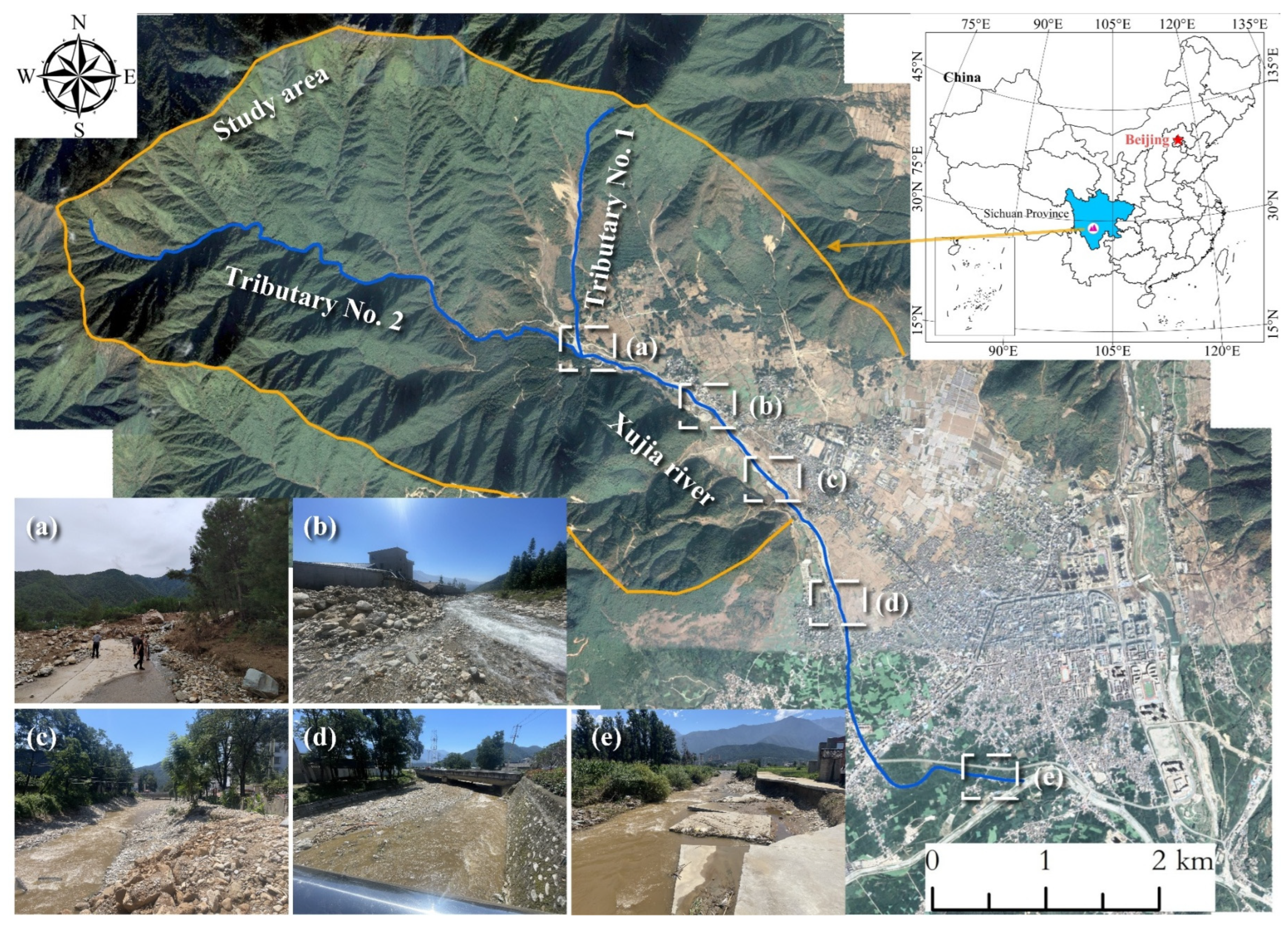
The Xujia River is a tributary of the Nanhe River and located in Gaoyang Subdistrict, Mianning County. The basin exhibits a typical erosion–accumulation geomorphic setting and covers a total drainage area of 27.83 km
2. As shown in
Figure 1, the main gully extends approximately 11.89 km from the mountainous source area toward the downstream alluvial plain, with an average longitudinal gradient of 134.7‰.
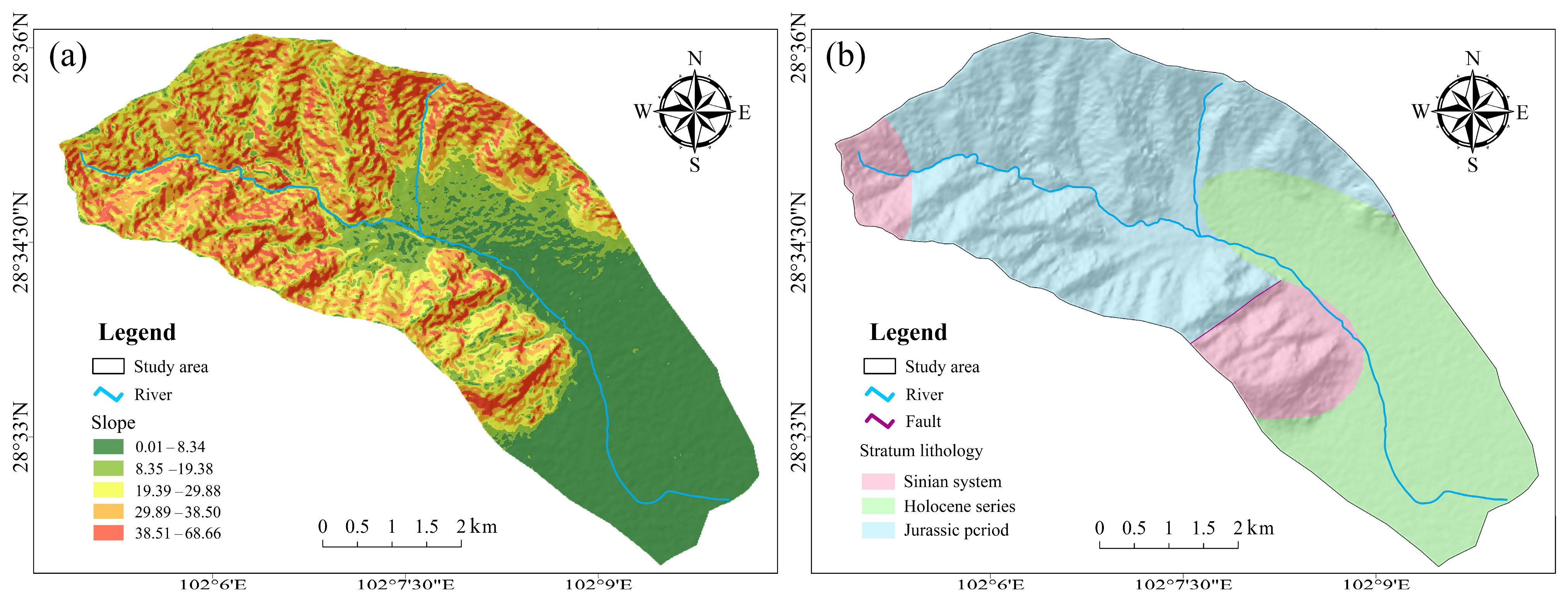
The topography of the basin is characterized by pronounced relief, with elevation decreasing progressively from the northwestern mountainous region toward the southeastern outlet. Elevations range from approximately 3345 m along the northwestern ridge to about 1730 m at the basin outlet, resulting in a relative relief of nearly 1600 m. The slope map derived from the DEM (
Figure 2a) further indicates that steep slopes are widely distributed in the upstream and midstream sections, whereas gentler terrain is mainly developed in the downstream area. This topographic configuration provides favorable conditions for rapid runoff concentration, gravitational instability on steep hillslopes, and sediment accumulation in lower-gradient downstream reaches.
Tributaries within the basin display a dendritic drainage pattern, indicating limited structural control on small-scale channel development. Field photographs taken along representative reaches of the Xujia River document the typical geomorphic and engineering impacts associated with the landslide–debris flow disaster chain in the study area. Specifically,
Figure 1a shows thick mud and debris deposits covering the road surface, indicating direct burial of transportation infrastructure by debris flow materials.
Figure 1b illustrates the accumulation and temporary stagnation of debris flow deposits within the channel, reflecting sediment storage and partial blockage after the event.
Figure 1c presents a narrowed river cross-section caused by debris accumulation, which compressed the original flow path and reduced channel conveyance capacity.
Figure 1d demonstrates the obstruction and constriction of a bridge opening by debris flow deposits, highlighting the interaction between debris flow and hydraulic structures.
Figure 1e shows evident erosion and damage to the road embankment, indicating intensified lateral erosion and undercutting by post-event channel flow. Overall, these field observations reveal the combined effects of material deposition, channel constriction, and infrastructure damage along the main gully. Such features are characteristic of the evolutionary process of landslide-derived debris flows and provide direct evidence of sediment transport, temporary blockage, and subsequent channel adjustment during the disaster chain.
2.2. Stratigraphy Lithology and Structure
Mianning County is situated on the eastern margin of the Tibetan Plateau, within the northeastern segment of the Hengduan Mountains. As shown in
Figure 2b, the geological framework of the study area consists primarily of Sinian and Jurassic bedrock units, which form the fundamental structural skeleton of the basin. The Sinian system is mainly exposed along the northwestern and central mountainous ridges, whereas Jurassic strata are more widely distributed in the downstream valley sectors.
Overlying the bedrock, extensive Quaternary surficial deposits of predominantly Holocene age are developed along valley bottoms, gentle slopes, and parts of the midstream reach. These deposits are composed mainly of colluvial, residual, and alluvial materials, and are generally loose and poorly consolidated. Although they do not represent the regional bedrock stratigraphy, these Holocene surficial materials provide the principal source of mobilizable sediment during intense rainfall events and play a key role in slope instability and debris flow initiation.
Structurally, the area is influenced by the Anning River deep fault zone and the Jinhe-Qinghe fault system, as indicated. These major tectonic structures control the regional geomorphic framework, including the alignment of mountain ridges and drainage systems. Long-term tectonic activity along these faults has also contributed to rock mass fracturing and slope weakening, thereby increasing the susceptibility of the basin to mass-movement hazards. According to the national seismic zonation, the study area corresponds to a seismic fortification intensity of Grade VIII, with a basic design seismic acceleration of 0.3 g and a characteristic response spectrum period of 0.45 s.
2.3. Geotechnical Characteristics of Landslide Material
Field investigations indicate that the landslide source material is mainly composed of highly weathered sandstone and mudstone fragments mixed with a silty clay matrix. The landslide mass exhibits a loose and heterogeneous structure, with poor sorting and a wide grain size distribution ranging from fine soil particles to coarse rock blocks. In the source area and along the transport channel, the material is generally matrix-supported, indicating a high proportion of fine content that promotes fluidization under intense rainfall conditions.
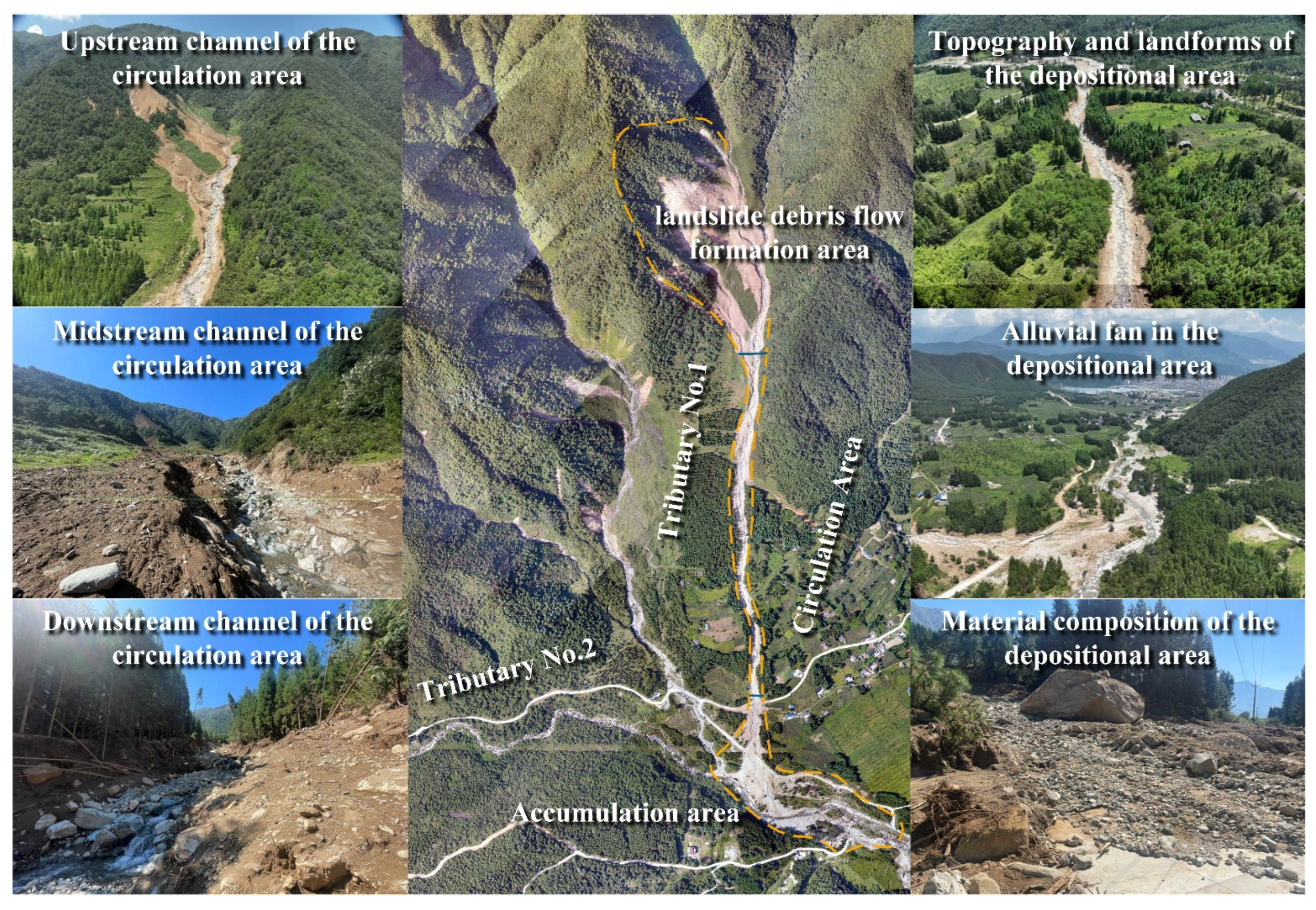
The spatial evolution of these materials from slope failure to final deposition is illustrated in
Figure 3. In the landslide formation area, exposed slopes consist of strongly weathered bedrock and colluvial cover, where rock fragments are embedded within fine-grained soil. During downstream transport, intense channel erosion, shear disturbance, and water entrainment lead to further mixing of coarse and fine particles and an increase in moisture content. These processes reduce interparticle friction and enhance flow mobility.
In the downstream depositional zone, the resulting debris flow deposits form channel fills and an alluvial fan characterized by matrix-supported structures, poor sorting, and the coexistence of large boulders with muddy matrix. Such sedimentary characteristics indicate rapid, high-concentration flow conditions typical of debris flows rather than water-dominated floods. The observed material composition and structural features therefore provide direct field constraints on the rheological behavior and high mobility of the debris flow.
Due to prolonged antecedent rainfall prior to the event, the landslide materials were in a near-saturated state at the time of failure. Field evidence, including softened soil texture, surface seepage, and remolded shear zones, suggests a significant reduction in shear strength and an increase in pore-water pressure during initiation. These hydro-mechanical conditions are favorable for the rapid transition from slope failure to debris flow motion. Although detailed laboratory testing of geotechnical parameters was not available for this event, the observed material characteristics, sedimentary structures, and moisture conditions provide important qualitative constraints on debris flow mobility and transformation behavior. These field-based observations were therefore used to guide the selection of rheological parameters and the interpretation of numerical simulation results.
2.4. Meteorological and Hydrological Characteristics
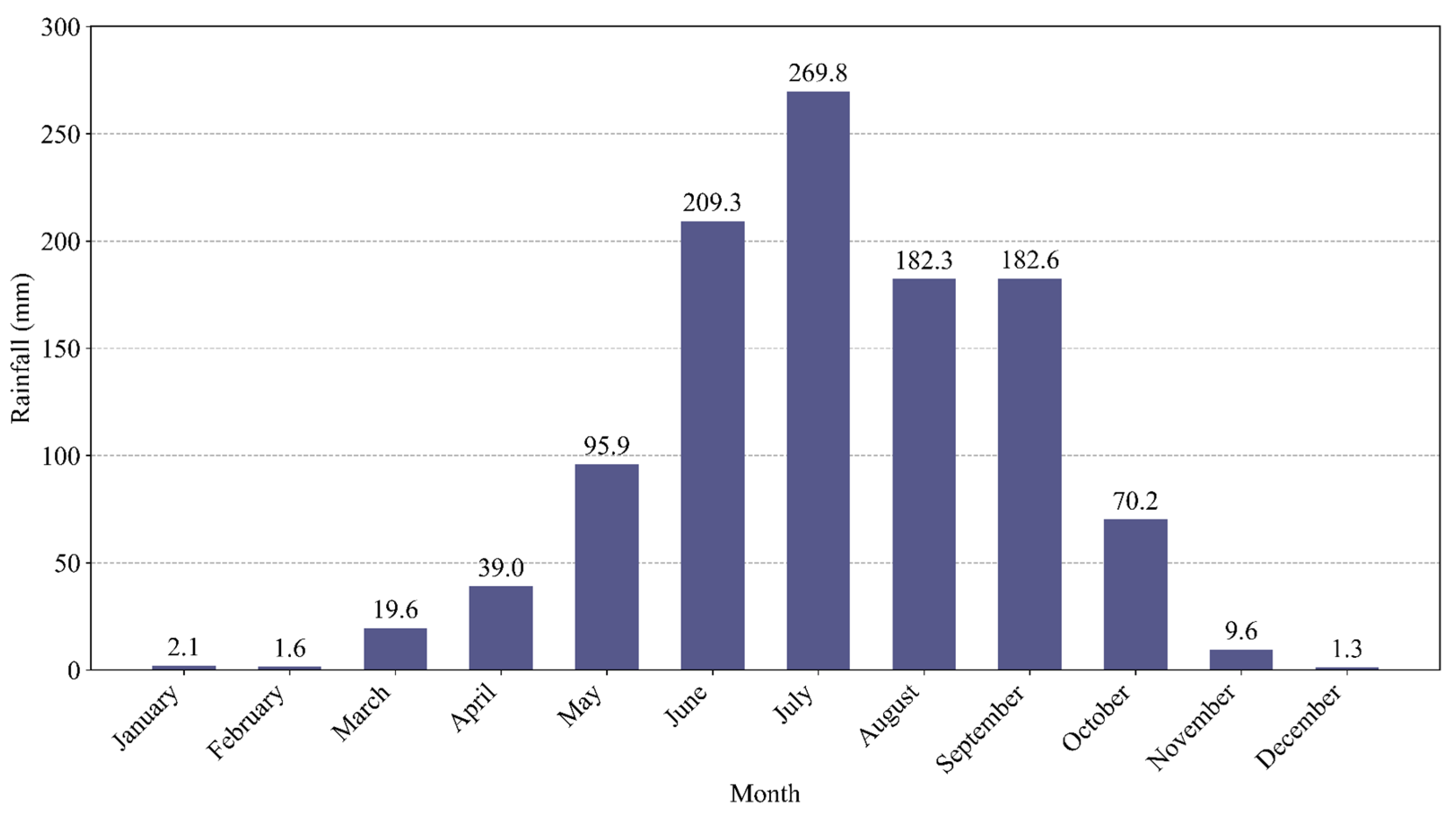
Mianning County experiences abundant precipitation under the influence of the regional monsoon climate. Statistical records from the past eleven years indicate an average annual rainfall of 1083.3 mm, with annual totals ranging from 661.2 mm to 1411.0 mm.
Rainfall monitoring data from the Pingba Station in Hui’an Township (102.11° E, 28.37° N) further illustrate the temporal distribution of precipitation in the study area. The mean monthly precipitation is 106.0 mm, and the mean annual precipitation over the past five years reaches 1271.5 mm. As shown in
Figure 4, rainfall exhibits a pronounced seasonal pattern characterized by a strong summer concentration. Monthly precipitation increases rapidly from May, reaches peak values in June and July, and remains at a high level through August and September before declining sharply in October. In particular, July records the highest mean monthly rainfall, exceeding 260 mm, indicating a pronounced rainfall peak during the mid-summer period. Such concentrated and high-magnitude precipitation provides favorable hydrometeorological conditions for rapid runoff generation and sediment mobilization within the basin.
During extreme events, short-duration rainfall intensity can be particularly high. The maximum recorded rainfall amounts are 147.2 mm within 24 h, 53.2 mm within 6 h, 41.0 mm within 1 h, and 16.7 mm within 10 min. Such rainfall characteristics indicate a high potential for rapid runoff generation and sharp increases in channel discharge within the basin.
3. Data
3.1. Rainfall Data Prior to the Event
To characterize the antecedent rainfall conditions prior to the landslide–debris flow event, daily precipitation data covering approximately 6–7 months before the disaster were collected and analyzed. Meteorological data were obtained from the ERA5-Land reanalysis dataset provided by the Copernicus Climate Data Store, which offers spatially continuous and temporally consistent precipitation records and has been widely applied in hydrometeorological studies.
Based on the geographic location of the study area, daily rainfall data from June to July 2024 were extracted and statistically analyzed.
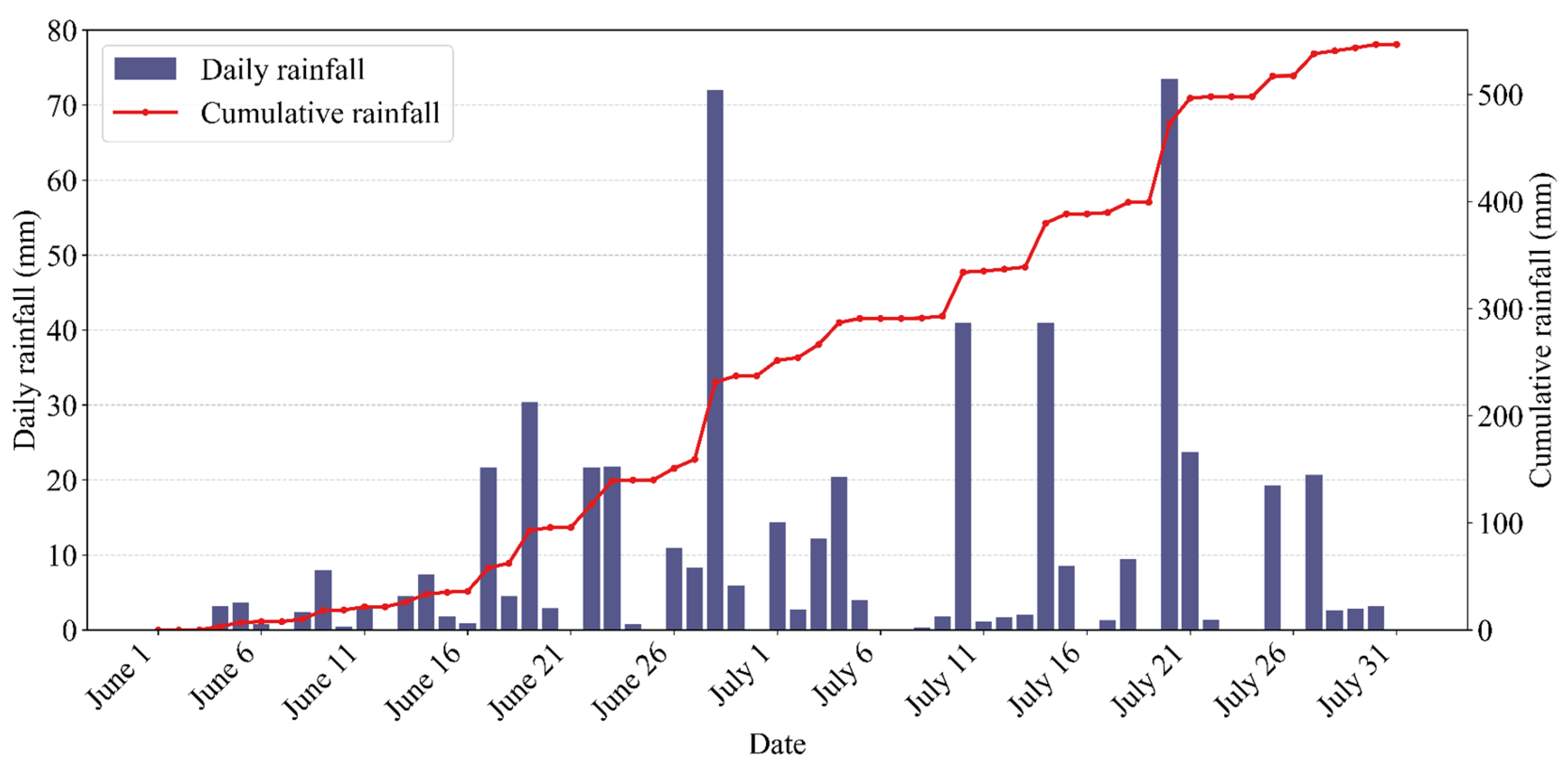
Figure 4 presents the temporal variation in daily rainfall and cumulative rainfall during this period. The results indicate that rainfall occurred frequently and persistently, with a total of 49 rainy days recorded between June and July, accounting for approximately 80.3% of the entire period. From July 1 to July 20 alone, rainfall was observed on 17 days, representing about 85% of the time span.
Several pronounced rainfall peaks can be identified in
Figure 5. Notably, daily precipitation reached 72 mm on June 28 and 73.5 mm on July 20. Correspondingly, the cumulative rainfall increased rapidly during these periods, reaching 496.5 mm by July 21. The continuous accumulation of rainfall during a relatively short time window suggests persistently high antecedent moisture conditions prior to the disaster.
To evaluate the reliability of the ERA5-Land reanalysis data, precipitation characteristics were further compared with records from multiple local rain gauge stations within Mianning County. Observations from these stations show annual precipitation ranging approximately from 700 mm to over 1500 mm, with July consistently representing the month of maximum rainfall in
Table 1. The maximum monthly rainfall recorded at several stations exceeds 470–650 mm, which is comparable to the cumulative rainfall magnitude derived from ERA5-Land during the pre-event period. Moreover, the seasonal rainfall pattern and the occurrence of heavy rainfall peaks are consistent between station observations and reanalysis data. This agreement indicates that ERA5-Land data reasonably capture both the magnitude and temporal evolution of precipitation in the study region and are suitable for representing antecedent rainfall conditions prior to the event.
3.2. Field Investigation Data
A detailed field investigation was conducted in the Xujia River catchment following the debris flow-flash flood event of 21 July 2024. The investigation focused on identifying the source area of the debris flow, characterizing slope and gully geomorphology, and documenting sediment deposition and flood impact in downstream areas. Field surveys were carried out using a combination of visual inspection, tape measurements, handheld GPS positioning, and post-disaster unmanned aerial vehicle (UAV) imagery.
3.2.1. Characteristics of the Debris Flow Source Area
Based on detailed field investigations and interpretation of UAV imagery, the debris flow source area in Tributary No.1 shown in
Figure 1 can be subdivided into several geomorphological units with distinct material characteristics and roles in the debris flow initiation process.
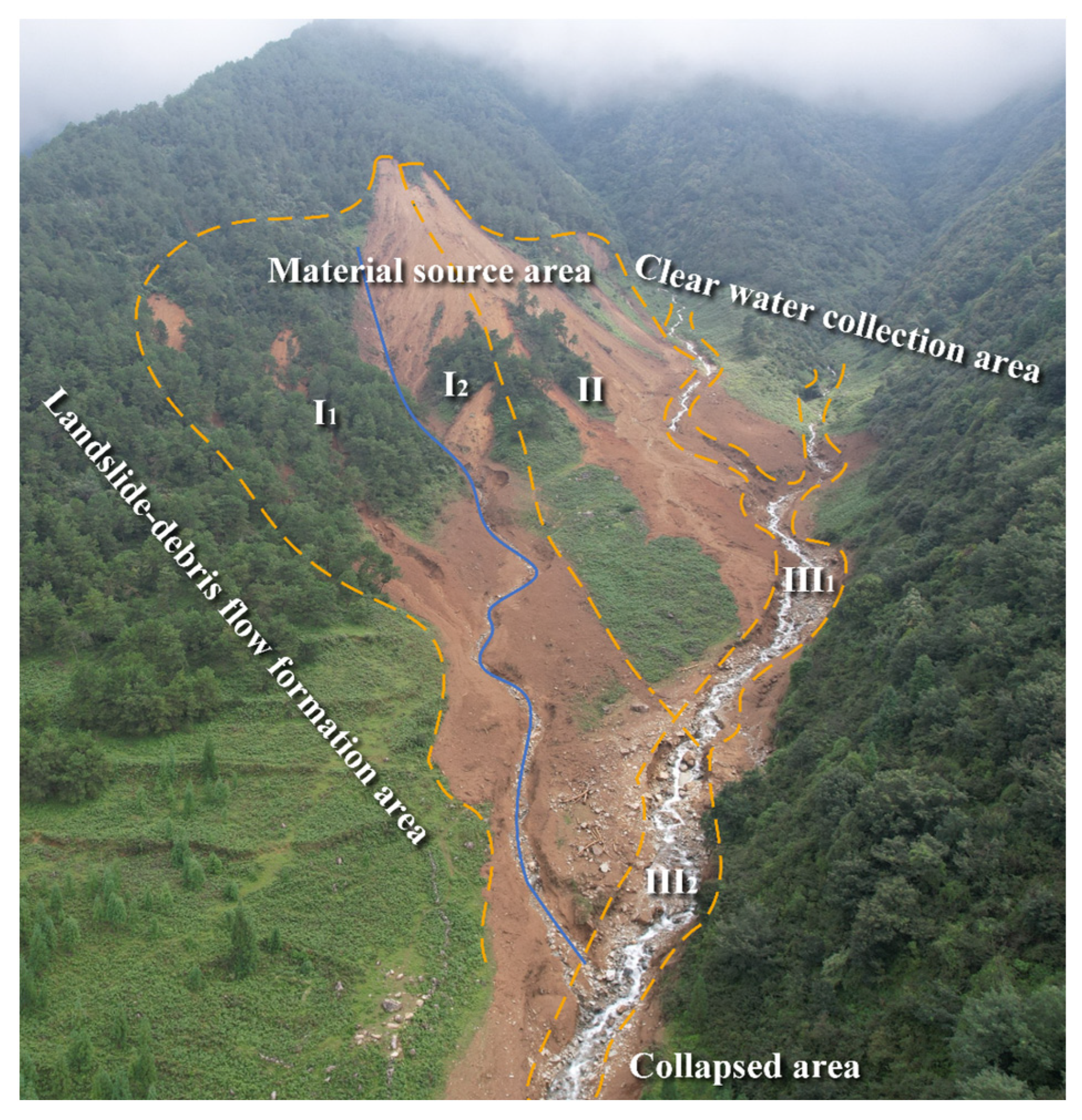
As shown in
Figure 6, the upper part of the catchment is characterized by a clear water collection area, where surface runoff is concentrated but sediment supply is limited. Downslope, the debris source area is composed of multiple unstable slope units (Zones I
1 and I
2), which are mainly distributed on both sides of the gully. Zone I
1 covers an area of approximately 49,038 m
2 with an average thickness of about 1.5 m, while Zone I
2 is separated from Zone I
1 by a small upslope gully. Field observations indicate that these areas are mainly composed of colluvial and residual deposits, with the main components being a mixture of blocky rocks and clay. The structure is loose and poorly consolidated.
Zone II, located upslope of the main gully and bounded by ridge lines, represents the principal material source area of the debris flow. This zone covers an area of approximately 56,260 m2, with an average thickness of 1.5 m and an estimated material volume of about 84,390 m3. The slope gradient in this zone generally exceeds 40°, providing favorable topographic conditions for gravitational failure once material strength is reduced.
Downstream of the source area, the gully enters the debris flow formation and transport zone. As shown in
Figure 6, failed materials from Zones I and II entered the gully channel, resulting in significant channel widening and incision. Field measurements show that the channel width locally reaches approximately 20.0 m, with a maximum erosion depth of up to 5.5 m. The accumulation of failed materials in the lower part of the gully formed a temporary blockage (Zone III
2), which subsequently experienced breaching under concentrated runoff conditions.
The spatial correspondence between the source areas, transport channel, and breach location shown in
Figure 6 and
Figure 7 provides direct field evidence for the landslide–debris flow transformation process in Tributary No. 1 and serves as an important basis for subsequent numerical modeling.
3.2.2. Channel Cross-Sectional Characteristics and Geomorphic Response
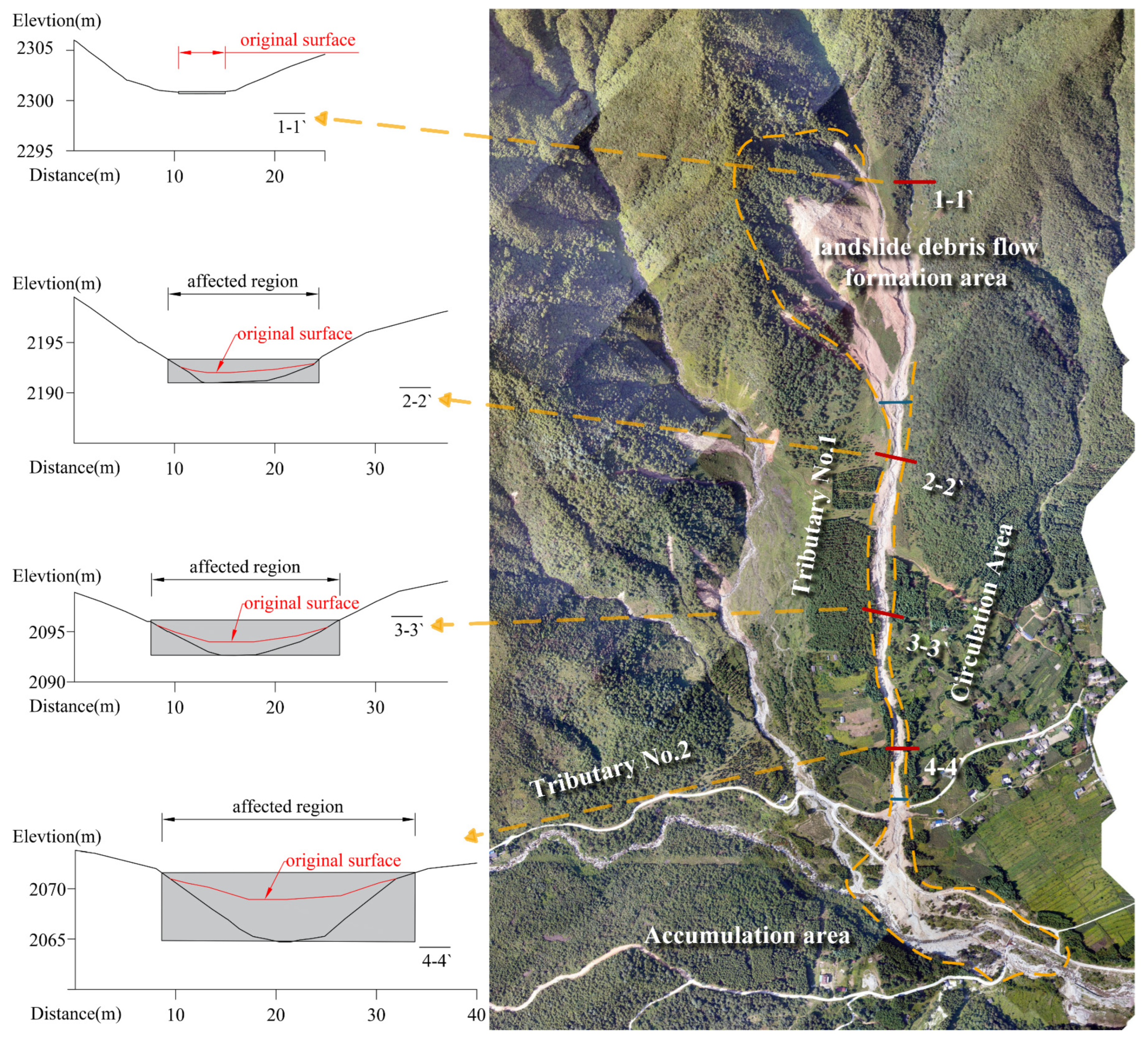
To quantify channel deformation and geomorphic response induced by the landslide–debris flow event, representative cross-sections were extracted along Tributary No. 1 and its downstream reach, as shown in
Figure 3 and
Figure 7. The selected cross-sections (2-2′ to 4-4′) correspond to the upstream formation area, midstream transport section, and downstream accumulation zone.
Cross-section 1-1′, located within the landslide–debris flow formation area, exhibits limited channel incision, indicating that geomorphic modification in this section was dominated by slope material supply rather than channel erosion. In contrast, cross-sections 2-2′ and 3-3′, situated within the circulation (transport) area, show pronounced channel widening and deep incision. Field measurements indicate that the maximum incision depth in this section reaches approximately 5.5 m, accompanied by significant lateral erosion of the channel banks. At cross-section 4-4′, located in the downstream accumulation area, the channel geometry is characterized by substantial infilling due to the deposition of debris flow materials. The comparison between the original channel surface and the post-event affected region reveals those large volumes of solid material accumulated in this section, forming a temporary blockage that altered the local channel profile.
Overall, the spatial variation in cross-sectional morphology along Tributary No. 1 reflects a clear transition from material supply and initiation in the upstream area, to intensive erosion and transport in the midstream section, and finally to deposition and blockage formation in the downstream area. These cross-sectional characteristics provide essential geometric constraints for subsequent hydrological assessment and numerical modeling of debris flow and dam breach processes.
3.3. Event Scale Physical Parameter Constraints
To provide independent physical constraints on the magnitude of debris flow mobilization, bulk density and discharge-related parameters were estimated using field-based reconstruction and hydrodynamic formulations.
Field slurry reconstruction tests conducted in the deposition zone yielded a debris flow bulk density (γc) between 1.60 and 1.68 t/m3, with an average value of 1.65 t/m3. This density is consistent with a matrix-supported debris flow, as indicated by field evidence of high fine particle content, weak sorting, and near-saturated material conditions.
Peak debris flow discharge was linked to rainfall-induced flood peaks through a bulk amplification relationship:
where
Qp is the clear-water flood peak discharge, 1 +
ϕ is the sediment concentration correction factor related to bulk density, and
Dc is a blockage/amplification coefficient reflecting channel obstruction effects observed in the field. These parameters are physically constrained by field observations of channel narrowing, deposit texture, and the independently reconstructed bulk density.
The total event scale sediment outflow (
Qs) was then approximated through a mass-volume relationship:
where
T is the effective flow duration,
γω the density of water, and
γs the density of solid particles. The resulting sediment mobilization is in the order of 10
4 m
3, which agrees with post-event geomorphic evidence, including channel infilling thickness, outlet deposition scale, and downstream sediment accumulation.
These calculations are not intended as precise engineering design values but serve as order-of-magnitude physical constraints linking material properties, flow hydraulics, and geomorphic observations. The density–discharge–volume consistency indicates that the sediment magnitude adopted in the simulations lies within a physically reasonable range.
3.4. Estimation of Debris Flow Deposit Volume Based on Geomorphic Evidence
To quantify the volume of solid material mobilized during the event, the deposit volume was estimated based on post-event geomorphic mapping rather than solely relying on hydrodynamic back-calculation. The deposition area was delineated through interpretation of UAV imagery and field investigation, where the spatial extent of fresh debris flow deposits was clearly identifiable from surface texture, color contrast, and vegetation burial features. Representative deposit thicknesses were measured in the field using tape measurements at exposed sections, channel margins, and depositional lobes. Because thickness varies spatially, the deposition zone was subdivided into several geomorphologically homogeneous subareas according to topographic position (channel bed, overbank area, lobe front, and temporary blockage zone). An average deposit thickness was assigned to each subarea based on multiple field observations.
The total deposit volume was then calculated using an area–thickness integration approach:
where
Ai is the area of subregion
i derived from UAV mapping, and
hi is the representative average deposit thickness obtained from field measurements.
This approach ensures that the sediment volume estimation is directly constrained by observable geomorphic evidence, independent of the hydrodynamic model.
5. Results
5.1. Estimated Debris Flow Magnitude Under Rainfall–Flood Scenarios
Table 2 summarizes the estimated debris flow characteristic parameters of Tributary No.1 under different rainfall frequencies and flow conditions. Under normal conditions, debris flow peak discharge increased progressively with decreasing rainfall frequency, from 14.14 m
3/s at the 20% rainfall frequency to 48.74 m
3/s at the 2% rainfall frequency. Correspondingly, the estimated total sediment volume and solid material outflow exhibited a similar increasing trend.
Under dam breach conditions, debris flow magnitude increased markedly compared with normal conditions at the same rainfall frequency. At the 5% rainfall frequency, the debris flow peak discharge increased from 37.63 m3/s under normal conditions to 86.84 m3/s under dam breach conditions. At the 2% rainfall frequency, the peak discharge further increased to 144.80 m3/s. The estimated solid material outflow under dam breach conditions was approximately an order of magnitude higher than that under normal conditions. These estimated parameters were used as input conditions for subsequent numerical simulations.
5.2. Simulation Results of Breach-Type Debris Flow in Tributary No.1
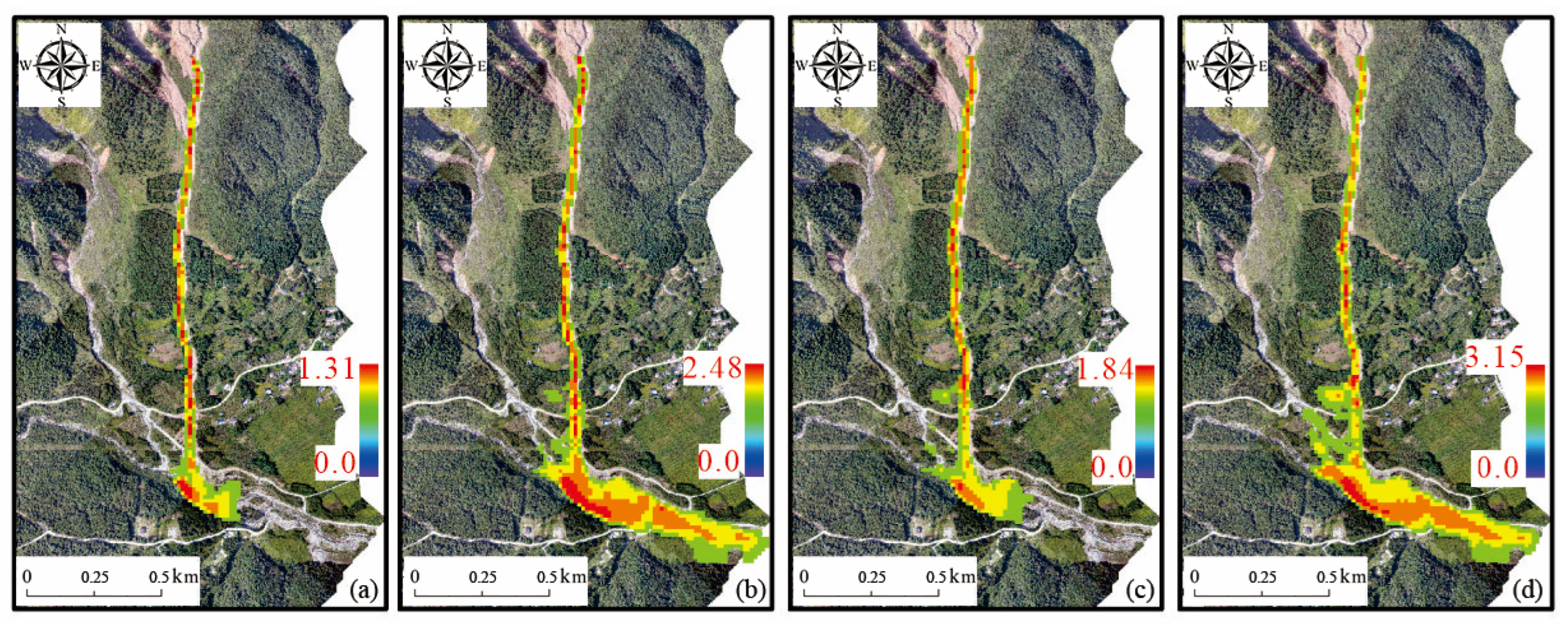
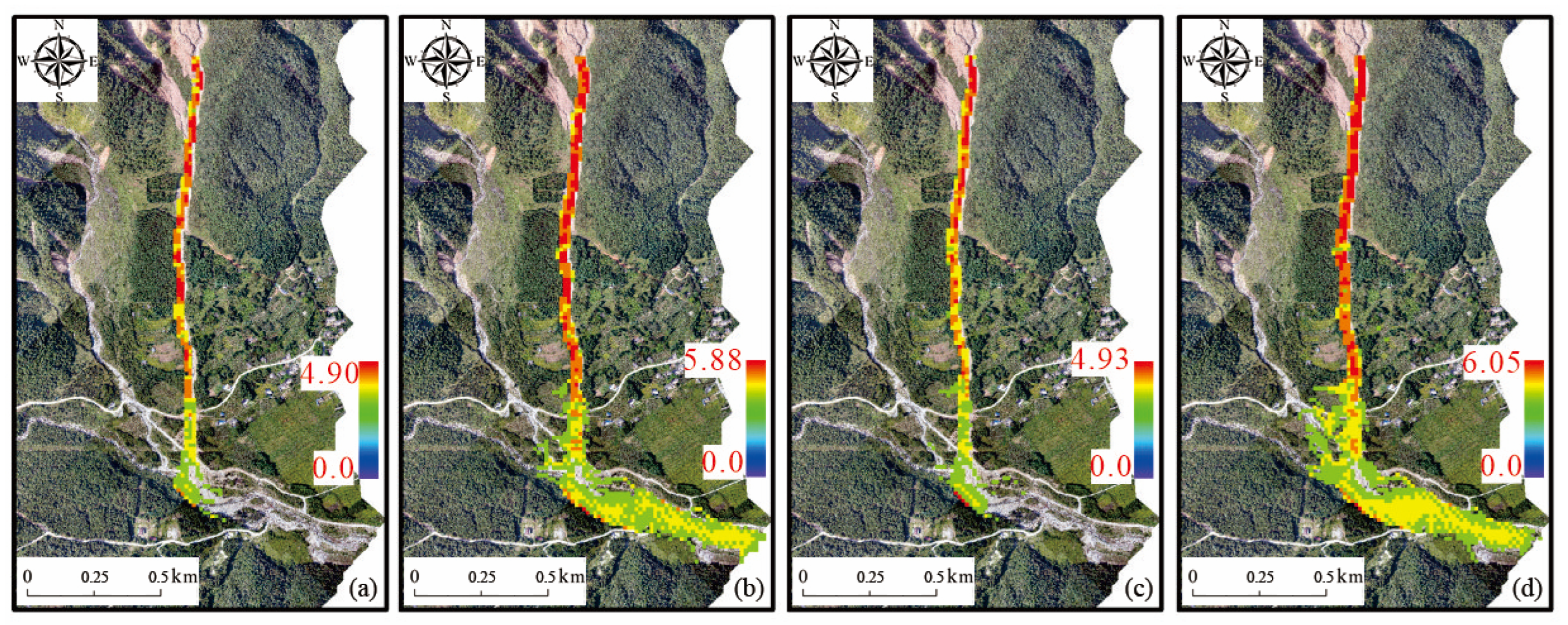
Given the absence of a deposit thickness map, the simulated runout distances are interpreted as falling within the observed inundation and deposition extent, rather than as an exact reconstruction of the delivered sediment volume. Numerical simulations were conducted using the debris flow module of RAMMS to obtain the spatial distributions of maximum flow depth and maximum flow velocity under different rainfall frequencies and flow conditions. The simulation results are summarized in
Table 3 and illustrated in
Figure 8 and
Figure 9.
Under normal conditions, the simulated debris flows exhibited relatively limited runout distances and deposition areas. For rainfall frequencies of 5% and 2%, the maximum flow depth ranged from 1.31 m to 1.84 m, and the maximum flow velocity remained below 5.0 m/s. Differences in runout distance and deposition area between the two rainfall scenarios were minor.
In contrast, dam breach conditions resulted in a substantial increase in debris flow mobility. For the 5% rainfall frequency, the runout distance increased from 187 m to 698 m, and the deposition area expanded from 0.017 km2 to 0.095 km2. Similar trends were observed under the 2% rainfall frequency, with the maximum flow depth reaching 3.15 m and the maximum velocity exceeding 6.0 m/s. Overall, the simulations show that dam breach conditions significantly enhance debris flow velocity, flow depth, runout distance, and deposition extent.
5.3. Predicted Hazard Extent of the Flash Flood–Debris Flow Disaster Chain
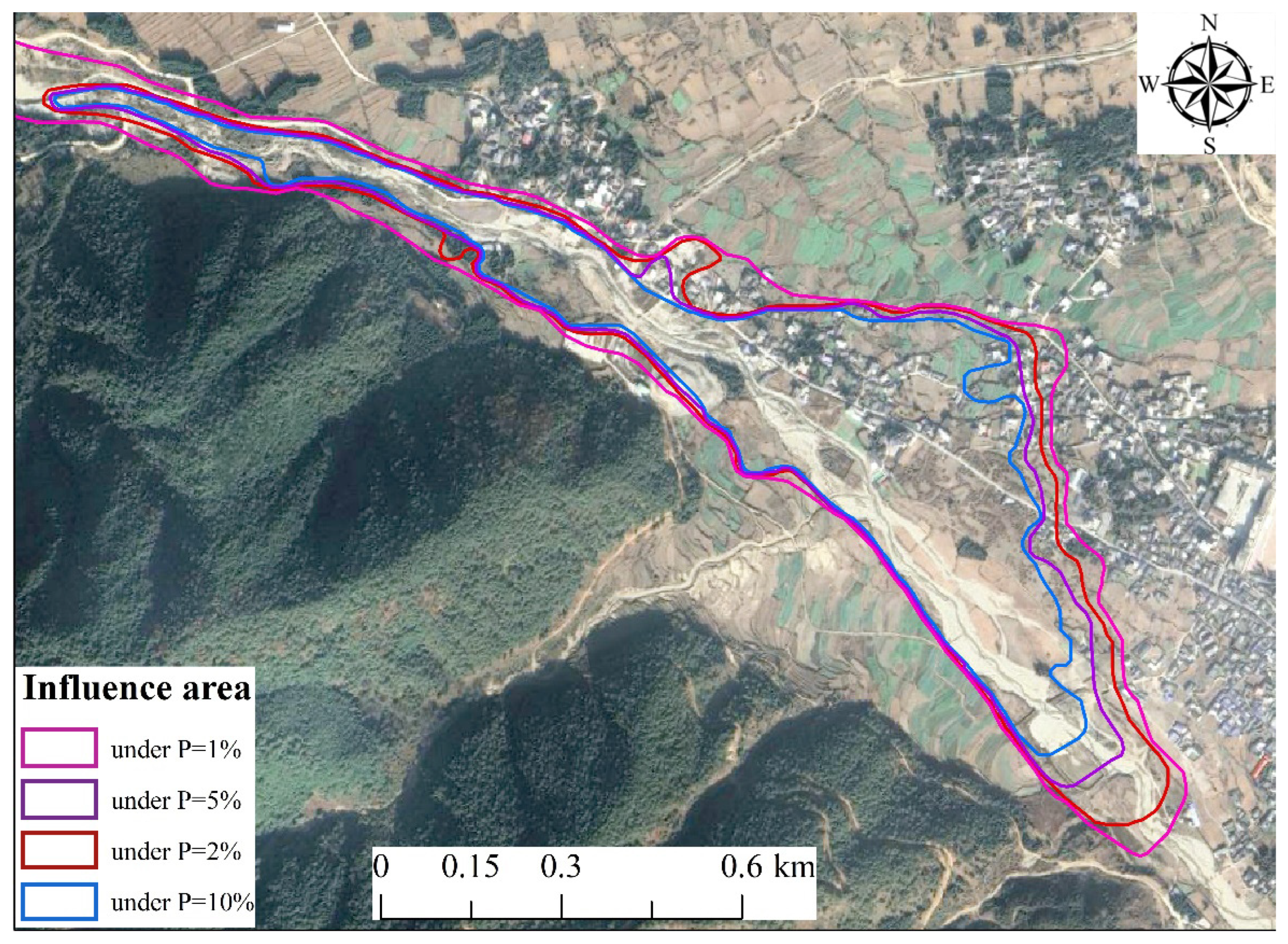
Based on the estimated debris flow inputs and numerical simulations, the hazard extent of the flash flood–debris flow disaster chain in the Xujia River was predicted under different rainfall frequencies. The calculated flash flood and debris flow parameters are summarized in
Table 4, and the spatial hazard ranges are shown in
Figure 10.
In a 10% rainfall frequency scenario, the affected length of the flash flood–debris flow extended approximately 2.16 km downstream from the confluence of Tributary No.1 and the Xujia River, with an influenced area of about 0.30 km2. As rainfall frequency decreased, both the affected length and area increased. In the 1% rainfall frequency scenario, the affected length reached approximately 2.37 km, and the affected area expanded to about 0.52 km2. The simulated hazard extent shows a clear asymmetry across the river channel, with more severe impacts on the left bank due to local topographic constraints.
6. Discussion
6.1. Reconstruction of the Breach-Type Debris Flow Based on Field Evidence
Field investigations provide essential constraints for reconstructing the debris flow event in Tributary No.1 and for interpreting the numerical simulation results. The downstream transport section of the tributary is relatively straight and morphologically stable, which allows a more reliable estimation of debris flow discharge based on depositional features and inundation marks. The estimated peak debris flow discharge of approximately 136.2 m3/s and the solid material deposition at the gully outlet of about 3000 m3 indicate a high-magnitude event.
Meteorological records show that the 24 h rainfall on 20 July 2024 reached only 73.5 mm, which is significantly lower than the 20% rainfall frequency threshold. However, the observed debris flow discharge and solid material outflow were comparable to those estimated under the 2% rainfall frequency scenario. This apparent inconsistency suggests that rainfall intensity alone cannot explain the magnitude of the event and implies the involvement of additional amplification mechanisms.
Field evidence indicates that a temporary blockage formed in the upstream channel, leading to the accumulation of solid materials. The subsequent failure of this blockage resulted in a sudden release of water–sediment mixtures, significantly increasing debris flow discharge and solid material transport capacity. Such breach-type processes have been widely reported as a critical factor in enhancing debris flow magnitude under moderate rainfall conditions. The present case provides a clear example of this mechanism in a small mountainous catchment.
The lack of a spatially continuous deposit thickness map inevitably introduces uncertainty in constraining the absolute delivered sediment volume and runout. However, the objective of this study is not to precisely reconstruct the total sediment yield but to assess the relative amplification effect of dam breach processes compared to rainfall-driven debris flow scenarios under bounded sediment volume conditions. Within this framework, the combination of channel incision depth, erosion patterns, deposition extent, and transport distance of coarse materials provides sufficient first-order constraints to evaluate differences in flow mobility and downstream impact between scenarios.
6.2. Consistency Between Estimated Results and Numerical Simulations
The numerical simulations conducted using the RAMMS model reproduced the main characteristics of the debris flow process under different rainfall–flood scenarios. The absence of quantitative grain size statistics along and across the flow path limits a direct assessment of sediment segregation and its influence on effective friction and flow mobility. However, field observations such as the sustained transport of large boulders over distances exceeding 3.5 km, the widespread presence of matrix-supported muddy deposits, and pronounced channel incision collectively indicate a highly mobile debris flow regime rather than a hyperconcentrated or water-dominated flow. Within this context, the rheological parameters adopted in the numerical simulations should be interpreted as effective bulk representations of flow behavior. They do not represent grain size-specific physical constants but are appropriate for evaluating relative differences between dam breach and rainfall-driven scenarios under comparable uncertainty conditions.
In contrast, simulations assuming rainfall-driven debris flows without blockage failure tend to underestimate both the peak discharge and the extent of downstream impacts. This comparison highlights the importance of explicitly considering breach-type scenarios when modeling debris flow hazards in gullies prone to temporary dam formation. The agreement between simulated results and observed damage patterns supports the rationality of the adopted parameterization and scenario design.
It should be noted that uncertainties remain in the estimation of rheological parameters and entrainment processes. Nevertheless, the consistency between independent field evidence and numerical outcomes suggests that the simulations capture the dominant physical controls governing debris flow propagation in this event.
6.3. Implications for Flash Flood–Debris Flow Disaster Chains
The present event demonstrates the strong coupling between debris flows and downstream flash floods. Part of the solid material discharged from Tributary No.1 was deposited at the gully outlet, while the remaining portion entered the Xujia River and was transported downstream together with floodwaters. This interaction resulted in channel aggradation, reduction of flow capacity, blockage of bridges and culverts, and widespread overbank flooding.
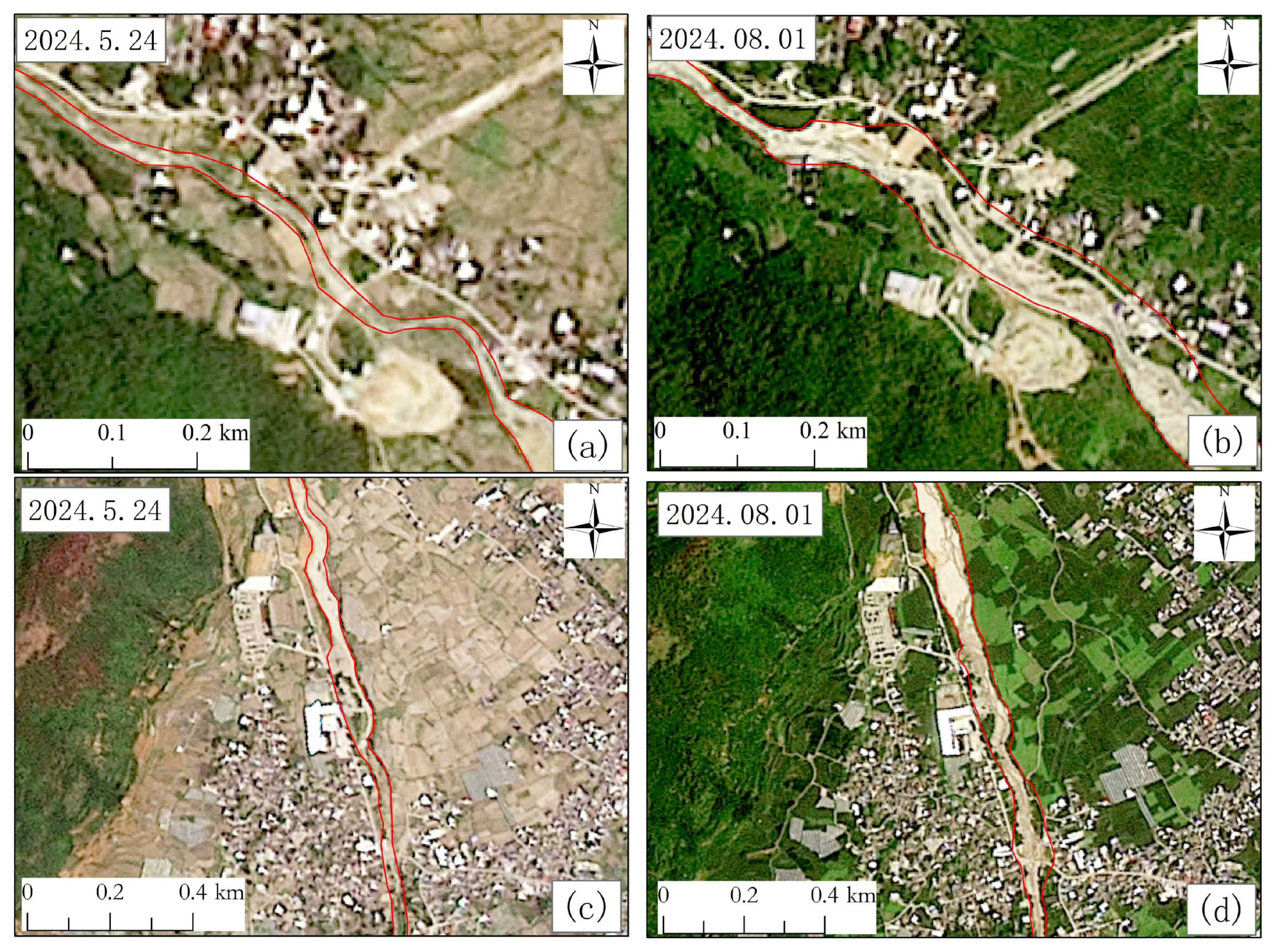
As shown in
Figure 11, satellite images before and after the event reveal that the river channel has widened significantly, and the damaged area along the river has expanded. These observations illustrate how localized debris flow events can trigger cascading hazards at the watershed scale. Such disaster chains pose a substantial threat to downstream infrastructure and communities, even when rainfall intensity does not reach extreme levels.
From a hazard assessment perspective, the results emphasize that conventional rainfall thresholds may be insufficient for early warning in catchments susceptible to blockage formation and sudden breach. Incorporating breach-type debris flow scenarios into numerical simulations and risk assessments is therefore essential for improving the reliability of hazard zoning and emergency planning.
6.4. Uncertainty and Parameter Sensitivity
Despite the integration of field evidence, geomorphic constraints, and physically based modeling, several sources of uncertainty remain in the reconstruction and simulation of the debris flow event. These uncertainties mainly relate to rainfall input, sediment volume estimation, and rheological parameter selection, but they do not alter the main physical interpretation of the event [
36].
Rainfall data prior to and during the event were derived primarily from the ERA5-Land reanalysis dataset. Although reanalysis products provide spatially continuous precipitation fields, they may smooth localized convective peaks in complex mountainous terrain. Comparison with available rain gauge records within Mianning County shows consistent seasonal patterns and comparable magnitudes of heavy rainfall, suggesting that the reanalysis captures regional rainfall characteristics reasonably well. Nevertheless, localized rainfall intensity near the catchment may deviate from the reanalysis value by approximately 10% to 20%, which propagates into the estimation of flood peak discharge. Since the core finding of this study concerns the discrepancy between rainfall-based expectations and the observed debris flow magnitude rather than the exact rainfall value, the interpretation of a breach-amplified process remains robust under this level of rainfall uncertainty.
Uncertainty also exists in estimating the total sediment volume delivered during the event. The deposit volume was derived from geomorphic mapping and representative thickness measurements instead of a spatially continuous thickness map. Given the spatial heterogeneity of deposition and field measurement variability, the total solid material volume is estimated to have an uncertainty of approximately 30%. This uncertainty affects the absolute magnitude of sediment yield but has limited influence on the comparative analysis between rainfall-driven and breach-type scenarios, because both are evaluated within the same bounded sediment volume framework and are primarily used for order-of-magnitude consistency checks.
The rheological parameters μ and ξ used in the numerical simulations represent effective bulk flow resistance rather than grain-scale physical constants. Although these parameters were determined using a geomorphology-constrained inverse approach, a degree of non-uniqueness remains. Sensitivity analyses indicate that increasing μ mainly reduces runout distance and deposition extent, whereas decreasing ξ primarily lowers peak velocity and dynamic impact with a weaker effect on overall runout. Within the physically admissible range for high-mobility surge-type debris flows, the qualitative contrast between rainfall-driven and dam breach scenarios remains unchanged. Therefore, the central conclusion that temporary blockage and subsequent breach processes strongly amplify debris flow magnitude is insensitive to moderate variations in rheological parameters.
7. Conclusions
This study assessed the dynamic evolution of a landslide–debris flow–flash flood hazard chain that occurred in the Xujia River catchment, Sichuan Province, by integrating post-disaster geomorphological and sedimentary evidence with rainfall–flood scenario analysis and physically based numerical simulations. Field investigations and modeling results jointly demonstrate that breach-type processes can significantly amplify debris flow magnitude and downstream impacts, even under moderate rainfall conditions, producing hazard intensities comparable to those associated with much rarer rainfall events. Numerical simulations using RAMMS reproduced the observed patterns of flow depth, velocity, runout distance, and asymmetric downstream hazard distribution, indicating that post-event evidence provides effective constraints for reconstructing debris flow dynamics in small mountainous catchments. By focusing on post-disaster reconstruction rather than long-term predictive modeling, this work highlights the critical role of temporary blockage formation and failure in compound hazard chains and provides practical insights for hazard assessment and risk mitigation in debris flow-prone regions.