
Article

Renal Decompression for Malignant Ureteric Obstruction: A Tertiary Hospital Cohort Analysis
Division of Surgery, Lyell McEwin Hospital, Northern Adelaide Local Health Network, Haydown Road, Elizabeth Vale, Adelaide, SA 5112, Australia
*
Author to whom correspondence should be addressed.
Soc. Int. Urol. J. 2025, 6(5), 62; https://doi.org/10.3390/siuj6050062
Submission received: 17 June 2025 / Revised: 28 September 2025 / Accepted: 16 October 2025 / Published: 21 October 2025

Abstract

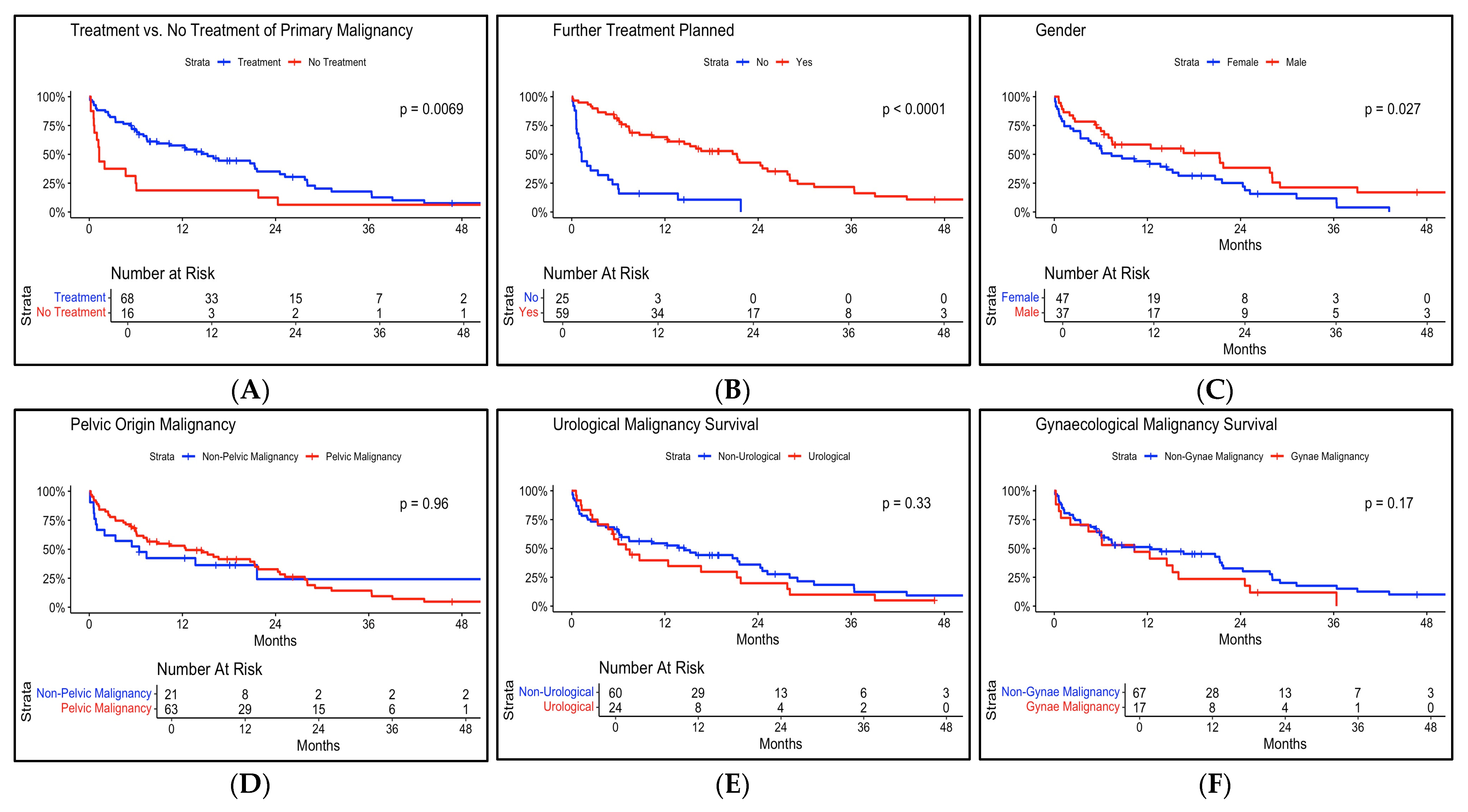
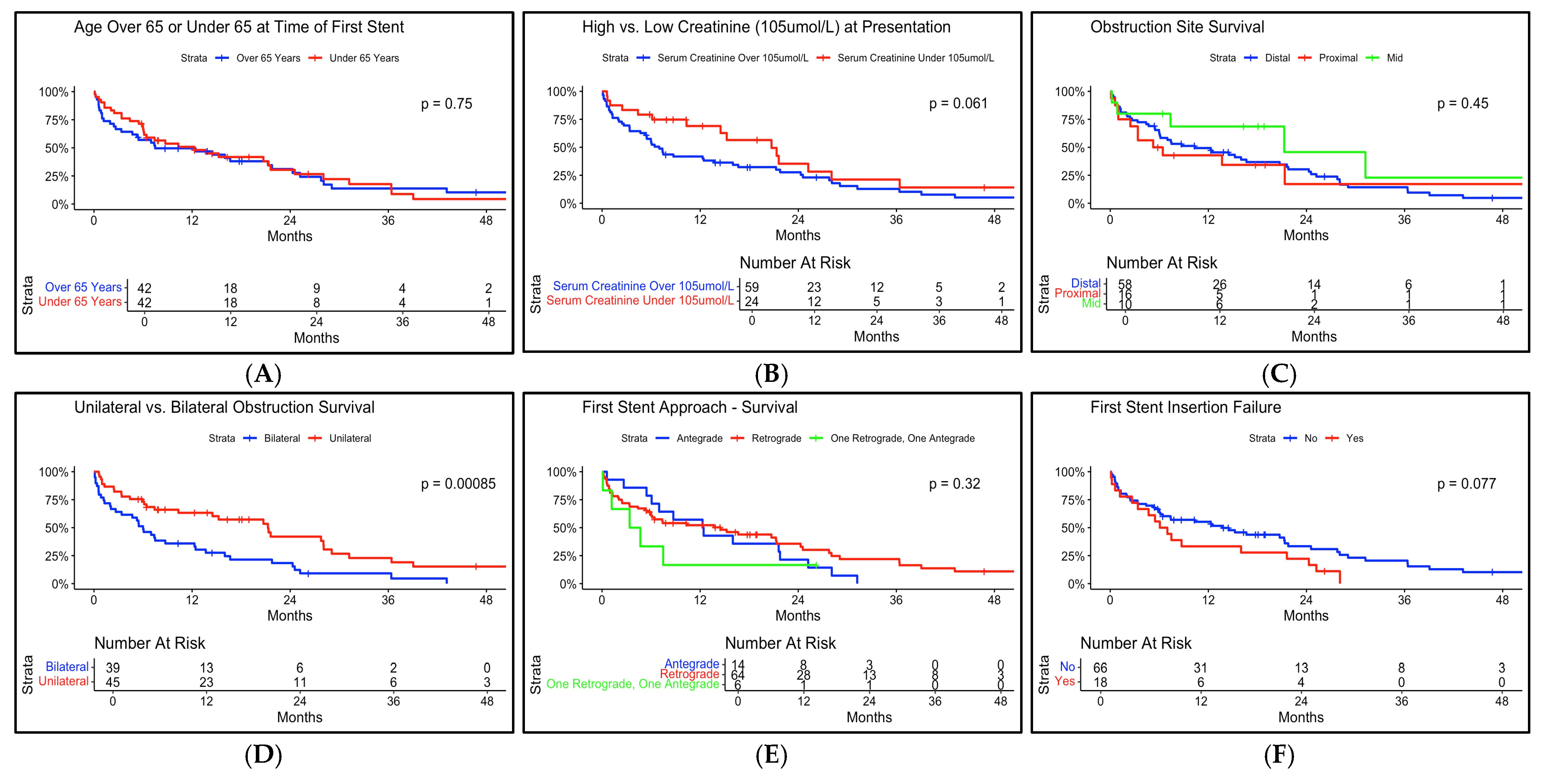
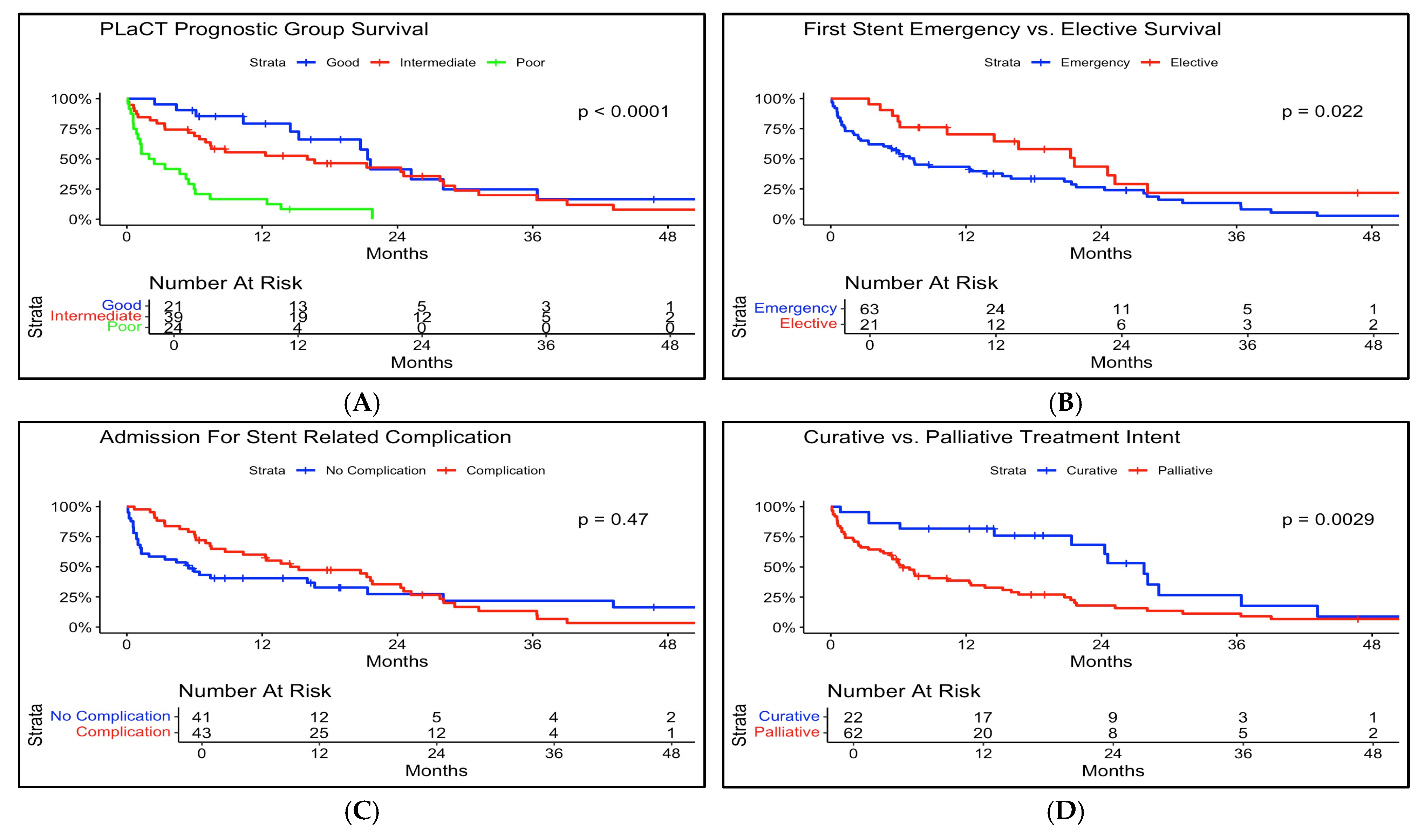
Background/Objectives: Malignant ureteric obstruction is an increasingly common problem; however, its treatment remains challenging due to associated poor survival and quality of life outcomes. There is a lack of consensus on how to best manage these patients. We provide a description of the survival outcomes, renal function outcomes, complications, and prognostic factors associated with the treatment of malignant ureteric obstruction in a cohort of patients at our tertiary Urology unit. Methods: A retrospective review of prospectively identified patients treated for malignant ureteric obstruction at our tertiary Urology unit was performed. Obstruction was relieved with either retrograde insertion of a ureteric stent or percutaneous nephrostomy between the 1st of January 2018, and 31st of December 2023. Renal function, complications, and survival data were recorded. Subgroup analysis and survival analysis were performed to determine prognostic factors. Results: Eighty-four patients underwent treatment for malignant ureteric obstruction with a median survival of 197 days (3–1549 days). A total of 51% percent of patients had a stent-related complication requiring hospitalisation, resulting in a total of 966 additional days in hospital. A total of 78% of patients had improved renal function at 12 months. Factors associated with worse survival included emergency treatment of malignant ureteric obstruction, having no further oncological treatment, receiving no oncological-specific treatment for malignancy, bilateral obstruction, female gender, and poor Primary site, Laterality, serum Creatinine level, and Treatment for primary site (PLaCT) prognosis group (p =< 0.01). Conclusions: Patients with malignant ureteric obstruction have a poor prognosis despite intervention. Treatment is often futile and associated with a significant burden of complications related to ureteric stents and percutaneous nephrostomies.
Keywords: percutaneous nephrostomy; prognosis; quality of life; ureteral catheterization; ureteral obstruction percutaneous nephrostomy; prognosis; quality of life; ureteral catheterization; ureteral obstruction