

Clinical Impact of RSV Vaccination in Hemodialysis Patients: Real-World Evidence on Hospitalization Risk and the Role of Chronic Lung Disease

 ,
, 
Highlights
- In hemodialysis patients, RSV vaccination was associated with a lower risk of hospitalization during respiratory infection episodes.
- In hemodialysis patients, chronic lung disease and a higher comorbidity index were associated with a significantly higher incidence of pneumonia, regardless of RSV vaccination status.
- RSV vaccination may reduce hospital care requirements during respiratory infections in hemodialysis patients.
- Hemodialysis patients with chronic lung disease and a high comorbidity index may require closer clinical surveillance for respiratory infections despite RSV vaccination.
Abstract
1. Introduction
2. Materials and Methods
- demographic characteristics, including age, sex, dialysis vintage, and death during follow-up;
- the cause of end-stage kidney disease (ESKD);
- the presence and type of pulmonary disease, the need for oxygen support, and receipt of influenza and SARS-CoV-2 vaccination during 2024;
- the Charlson Comorbidity Index (CCI), adjusted for age, as a measure of comorbidity burden. The age-adjusted CCI was calculated by adding +1 point for patients aged 50–59 years, +2 for those aged 60–69 years, +3 for those aged 70–79 years, and +4 for those aged ≥80 years. The following comorbid conditions were included: diabetes, congestive heart failure, peripheral vascular disease, CLD, liver disease, hemiplegia, renal disease, hematologic malignancy or metastatic cancer, and acquired immunodeficiency syndrome. Notably, renal disease was considered with the same score in all patients;
- routine laboratory parameters, including hemoglobin, albumin, CRP, white blood cell count, uric acid, and urea. We considered the last blood samples collected before September 2024; in the vaccinated group, these were the last samples obtained before RSV vaccination;
- urine output and HD adequacy, assessed by Kt/V, measured during the month before RSV vaccination, and, for the unvaccinated group, during the equivalent period before September 2024, where K = dialyzer urea clearance (mL/min), t = duration of the dialysis session (minutes), and V = volume of distribution of urea;
- When available, nasopharyngeal swab results for RSV, SARS-CoV-2, and influenza were recorded during hospitalization episodes.
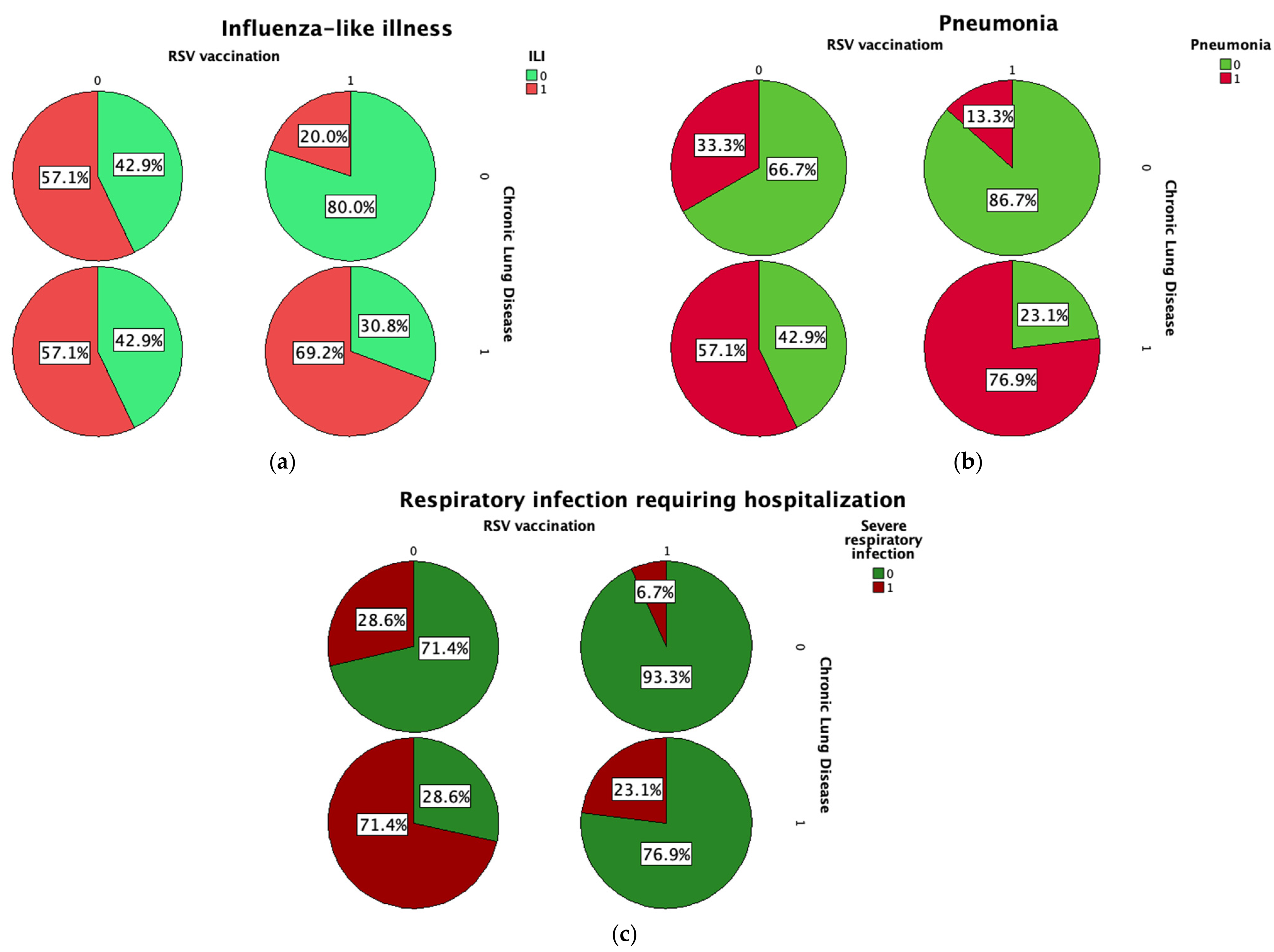
- Influenza-like illness (ILI) was defined as fever or malaise associated with upper respiratory tract symptoms, such as rhinorrhea, cough, or sore throat. Cough was included according to standard epidemiological definitions [39]. Pneumonia was considered separately and required evidence of lower respiratory tract involvement.
- Pneumonia, defined as clinical and/or radiological evidence of lower respiratory tract infection requiring antibiotic treatment.
- Respiratory infection requiring hospitalization, defined as hospitalization during an episode of pneumonia or lower respiratory tract infection (LRTI).
3. Results
3.1. Baseline Characteristics According to Chronic Lung Disease
3.2. Incidence of Outcomes According to RSV Vaccination and Chronic Lung Disease
3.2.1. Influenza-like Illness
3.2.2. Pneumonia
3.2.3. Respiratory Infection Requiring Hospitalization
4. Discussion
4.1. Outcome Incidence
4.2. Clinical Impact of RSV Vaccination
4.3. Clinical Impact of Chronic Lung Disease
4.4. Limitations
5. Conclusions
Author Contributions
Funding
Institutional Review Board Statement
Informed Consent Statement
Data Availability Statement
Conflicts of Interest
Abbreviations
| RSV | Respiratory syncytial virus |
| COPD | Chronic obstructive pulmonary disease |
| CLD | Chronic lung disease |
| HD | Hemodialysis |
| CKD | Chronic kidney disease |
| ESKD | End-stage kidney disease |
| CCI | Charlson comorbidity index |
| ILI | Influenza-like illness |
| SD | Standard deviation |
| IQR | Interquartile range |
References
- Davido, B.; Loubet, P. The silent surge: The under-recognised burden of respiratory syncytial virus, human metapneumovirus, and parainfluenza viruses in adults. Int. J. Infect. Dis. 2025, 159, 108006. [Google Scholar] [CrossRef] [PubMed]
- Foulkes, S.; Munro, K.; Sparkes, D.; Khawam, J.; Russell, S.; Dunne, A.; Timeyin, J.; Hettiarachchi, N.; Cairns, M.; Bradley, D.T.; et al. Prevalence and impact of SARS-CoV-2, influenza, respiratory syncytial virus (RSV) infection and respiratory illness on UK healthcare workers during winter 2023/24 (September 2023 to March 2024): SIREN cohort study. J. Infect. 2025, 91, 106620. [Google Scholar] [CrossRef] [PubMed]
- Alfaro, T.; Froes, F.; Vicente, C.; Costa, R.; Gavina, C.; Baptista, R.; Maio, A.; da Cunha, S.; Neves, J.S.; Leuschner, P.; et al. Respiratory syncytial virus vaccination in older adults and patients with chronic disorders: A position paper from the Portuguese Society of Pulmonology, the Portuguese Association of General and Family Medicine, the Portuguese Society of Cardiology, the Portuguese Society of Infectious Diseases and Clinical Microbiology, the Portuguese Society of Endocrinology, Diabetes and Metabolism, and the Portuguese Society of Internal Medicine. Pulmonology 2025, 31, 2451456. [Google Scholar] [CrossRef] [PubMed]
- Guimarães de Oliveira, D.; Grande, A.; Belchior, F.; Costa, R.; Francisco, R.; Oliveira, N.; Calle, M. Severe respiratory syncytial virus infection in older adults—Burden, clinical outcomes and implications for care. Respir. Med. Res. 2025, 88, 101173. [Google Scholar] [CrossRef] [PubMed]
- Horn, E.K.; La, E.M.; Bektas, M.; Khan, S.; Gerber, S.I. Disparities in Respiratory Syncytial Virus Risk Factors, Diagnosis, and Outcomes in Adults by Race, Ethnicity, and Other Social Determinants of Health in the United States. Expert Rev. Pharmacoeconomics Outcomes Res. 2025, 25, 459–471. [Google Scholar] [CrossRef] [PubMed]
- Buchan, S.A.; Alessandrini, J.; Drover, S.S.M.; Andrew, M.K.; Bronskill, S.E.; Brown, K.A.; Daneman, N.; Deeks, S.L.; Gubbay, J.B.; Johnstone, J.; et al. Incidence of Respiratory Syncytial Virus-Associated Hospitalization Among Adults in Ontario, Canada, 2017–2019. J. Infect. Dis. 2025, 232, e799–e810. [Google Scholar] [CrossRef] [PubMed] [PubMed Central]
- Choi, Y.; Hill-Ricciuti, A.; Branche, A.R.; Sieling, W.D.; Saiman, L.; Walsh, E.E.; Phillips, M.; Falsey, A.R.; Finelli, L. Cost determinants among adults hospitalized with respiratory syncytial virus in the United States, 2017-2019. Influenza Other Respir. Viruses 2022, 16, 151–158. [Google Scholar] [CrossRef] [PubMed] [PubMed Central]
- Falsey, A.R.; Hennessey, P.A.; Formica, M.A.; Cox, C.; Walsh, E.E. Respiratory syncytial virus infection in elderly and high-risk adults. N. Engl. J. Med. 2005, 352, 1749–1759. [Google Scholar] [CrossRef] [PubMed]
- Alfano, F.; Bigoni, T.; Caggiano, F.P.; Papi, A. Respiratory Syncytial Virus Infection in Older Adults: An Update. Drugs Aging 2024, 41, 487–505. [Google Scholar] [CrossRef] [PubMed] [PubMed Central]
- Ambrosch, A.; Luber, D.; Klawonn, F.; Kabesch, M. Focusing on severe infections with the respiratory syncytial virus (RSV) in adults: Risk factors, symptomatology and clinical course compared to influenza A/B and the original SARS-CoV-2 strain. J. Clin. Virol. 2023, 161, 105399. [Google Scholar] [CrossRef] [PubMed] [PubMed Central]
- Cilloniz, C.; Torres, A. Respiratory syncytial virus infections in adults. Med. Clin. 2025, 164, 361–368. [Google Scholar] [CrossRef] [PubMed]
- Osei-Yeboah, R.; Amankwah, S.; Begier, E.; Adedze, M.; Nyanzu, F.; Appiah, P.; Ansah, J.O.B.; Campbell, H.; Sato, R.; Jodar, L.; et al. Burden of Respiratory Syncytial Virus (RSV) Infection Among Adults in Nursing and Care Homes: A Systematic Review. Influenza Other Respir. Viruses 2024, 18, e70008. [Google Scholar] [CrossRef] [PubMed] [PubMed Central]
- Joseph, N.; Passavant, E.D.B.; Lüthi-Corridori, G.; Jaun, F.; Mitrovic, S.; Leuppi, J.D.; Boesing, M. Association of Comorbidities with Adverse Outcomes in Adults Hospitalized with Respiratory Syncytial Virus (RSV) Infection: A Retrospective Cohort Study from Switzerland (2022–2024). Viruses 2025, 17, 1030. [Google Scholar] [CrossRef] [PubMed] [PubMed Central]
- Hill-Ricciuti, A.; Walsh, E.E.; Greendyke, W.G.; Choi, Y.; Barrett, A.; Alba, L.; Branche, A.R.; Falsey, A.R.; Phillips, M.; Finelli, L.; et al. Clinical impact of healthcare-associated respiratory syncytial virus in hospitalized adults. Infect. Control Hosp. Epidemiol. 2023, 44, 433–439. [Google Scholar] [CrossRef] [PubMed] [PubMed Central]
- Prasad, N.; Walker, T.A.; Waite, B.; Wood, T.; Trenholme, A.A.; Baker, M.G.; McArthur, C.; Wong, C.A.; Grant, C.C.; Huang, Q.S.; et al. Respiratory Syncytial Virus-Associated Hospitalizations Among Adults with Chronic Medical Conditions. Clin. Infect. Dis. 2021, 73, e158–e163. [Google Scholar] [CrossRef] [PubMed]
- Bajema, K.L.; Yan, L.; Li, Y.; Argraves, S.; Rajeevan, N.; Fox, A.; Vergun, R.; Berry, K.; Bui, D.; Huang, Y.; et al. Respiratory syncytial virus vaccine effectiveness among US veterans, September, 2023 to March, 2024: A target trial emulation study. Lancet Infect. Dis. 2025, 25, 625–633. [Google Scholar] [CrossRef] [PubMed]
- Walsh, E.E.; Pérez Marc, G.; Zareba, A.M.; Falsey, A.R.; Jiang, Q.; Patton, M.; Polack, F.P.; Llapur, C.; Doreski, P.A.; Ilangovan, K.; et al. Efficacy and Safety of a Bivalent RSV Prefusion F Vaccine in Older Adults. N. Engl. J. Med. 2023, 388, 1465–1477. [Google Scholar] [CrossRef] [PubMed]
- Urchueguía-Fornes, A.; Osei-Yeboah, R.; Jollivet, O.; Johannesen, C.K.; Lehtonen, T.; van Boven, M.; Gideonse, D.; Cohen, R.A.; Orrico-Sánchez, A.; Kramer, R.; et al. Hospitalisation trends of respiratory syncytial virus (RSV) infection in adults, six European countries, before and during COVID-19, 2016 to 2023. Euro Surveill. 2025, 30, 2400624. [Google Scholar] [CrossRef] [PubMed] [PubMed Central]
- Vega-Piris, L.; Carretero, S.G.; Mayordomo, J.L.; Zarzuelo, M.B.R.; Río, V.; García, V.G.; Vázquez, M.G.; Rodríguez, M.; Basile, L.; González-Coviella, N.L.; et al. Severity of respiratory syncytial virus compared with SARS-CoV-2 and influenza among hospitalised adults ≥65 years. J. Infect. 2024, 89, 106292. [Google Scholar] [CrossRef] [PubMed]
- Jain, S.; Self, W.H.; Wunderink, R.G.; Fakhran, S.; Balk, R.; Bramley, A.M.; Reed, C.; Grijalva, C.G.; Anderson, E.J.; Courtney, D.M.; et al. Community-Acquired Pneumonia Requiring Hospitalization among U.S. Adults. N. Engl. J. Med. 2015, 373, 415–427. [Google Scholar] [CrossRef] [PubMed] [PubMed Central]
- Domnich, A.; Calabrò, G.E. Epidemiology and burden of respiratory syncytial virus in Italian adults: A systematic review and meta-analysis. PLoS ONE 2024, 19, e0297608. [Google Scholar] [CrossRef] [PubMed] [PubMed Central]
- Kwok, W.C.; Leung, I.S.H.; Ho, J.C.M.; Tsui, C.K.; Lam, D.C.L.; Ip, M.S.M.; To, K.K.W.; Yap, D.Y.H. In-Hospital Mortality and Severe Respiratory and Renal Outcomes—A Territory-Wide Comparison Between RSV and Influenza. Influenza Other Respir. Viruses 2025, 19, e70130. [Google Scholar] [CrossRef] [PubMed] [PubMed Central]
- Cozzolino, C.; Cozza, A.; Salmaso, L.; Saia, M.; Gentili, D.; Tonon, M.; Russo, F.; Cocchio, S.; Baldo, V. Estimation of the Respiratory Syncytial Virus Hospitalization Burden in Older Adults in the Veneto Region, Italy: A Modeling Study. Infect. Dis. Ther. 2025, 14, 2719–2732. [Google Scholar] [CrossRef] [PubMed] [PubMed Central]
- Campo, S.; Lacquaniti, A.; Trombetta, D.; Smeriglio, A.; Monardo, P. Immune System Dysfunction and Inflammation in Hemodialysis Patients: Two Sides of the Same Coin. J. Clin. Med. 2022, 11, 3759. [Google Scholar] [CrossRef] [PubMed] [PubMed Central]
- Ducloux, D.; Legendre, M.; Bamoulid, J.; Saas, P.; Courivaud, C.; Crepin, T. End-Stage Renal Disease-Related Accelerated Immune Senescence: Is Rejuvenation of the Immune System a Therapeutic Goal? Front. Med. 2021, 8, 720402. [Google Scholar] [CrossRef] [PubMed] [PubMed Central]
- Litjens, N.H.; Huisman, M.; van den Dorpel, M.; Betjes, M.G. Impaired immune responses and antigen-specific memory CD4+ T cells in hemodialysis patients. J. Am. Soc. Nephrol. 2008, 19, 1483–1490. [Google Scholar] [CrossRef] [PubMed] [PubMed Central]
- Caprara, C.; Kinsey, G.R.; Corradi, V.; Xin, W.; Ma, J.Z.; Scalzotto, E.; Martino, F.K.; Okusa, M.D.; Nalesso, F.; Ferrari, F.; et al. The Influence of Hemodialysis on T Regulatory Cells: A Meta-Analysis and Systematic Review. Blood Purif. 2016, 42, 307–313. [Google Scholar] [CrossRef] [PubMed]
- Babel, N.; Hugo, C.; Westhoff, T.H. Vaccination in patients with kidney failure: Lessons from COVID-19. Nat. Rev. Nephrol. 2022, 18, 708–723. [Google Scholar] [CrossRef] [PubMed] [PubMed Central]
- Cohen-Hagai, K.; Rozenberg, I.; Korzets, Z.; Zitman-Gal, T.; Einbinder, Y.; Benchetrit, S. Upper Respiratory Tract Infection among Dialysis Patients. Isr. Med. Assoc. J. 2016, 18, 557–560. [Google Scholar] [PubMed]
- Puspitasari, M.; Sattwika, P.D.; Rahari, D.S.; Wijaya, W.; Hidayat, A.R.P.; Kertia, N.; Purwanto, B.; Thobari, J.A. Outcomes of vaccinations against respiratory diseases in patients with end-stage renal disease undergoing hemodialysis: A systematic review and meta-analysis. PLoS ONE 2023, 18, e0281160. [Google Scholar] [CrossRef] [PubMed] [PubMed Central]
- Sam, R.; Rankin, L.; Ulasi, I.; Frantzen, L.; Nitsch, D.; Henner, D.; Molony, D.; Wagner, J.; Chen, J.; Agarwal, S.K.; et al. Vaccination for Patients Receiving Dialysis. Kidney Med. 2024, 6, 100775. [Google Scholar] [CrossRef] [PubMed] [PubMed Central]
- Bokhari, S.F.H.; Iqbal, A.; Usman, S.; Mushtaq, U.; Mukhtar, Z.; Naseer, B. A comprehensive review of infection risks and management in hemodialysis access sites. Clin. Exp. Nephrol. 2026, 30, 219–230. [Google Scholar] [CrossRef] [PubMed]
- Rteil, A.; Kazma, J.M.; El Sawda, J.; Gharamti, A.; Koubar, S.H.; Kanafani, Z.A. Clinical characteristics, risk factors and microbiology of infections in patients receiving chronic hemodialysis. J. Infect. Public. Health 2020, 13, 1166–1171. [Google Scholar] [CrossRef] [PubMed]
- Dalrymple, L.S.; Go, A.S. Epidemiology of acute infections among patients with chronic kidney disease. Clin. J. Am. Soc. Nephrol. 2008, 3, 1487–1493. [Google Scholar] [CrossRef] [PubMed] [PubMed Central]
- Connolly, R.; Denton, M.D.; Humphreys, H.; McLoughlin, R.M. Would hemodialysis patients benefit from a Staphylococcus aureus vaccine? Kidney Int. 2019, 95, 518–525. [Google Scholar] [CrossRef] [PubMed]
- Abbasi, S.H.; Aftab, R.A.; Chua, S.S. Risk factors associated with nosocomial infections among end stage renal disease patients undergoing hemodialysis: A systematic review. PLoS ONE 2020, 15, e0234376. [Google Scholar] [CrossRef] [PubMed] [PubMed Central]
- Nongnuch, A.; Ngampongpan, W.; Srichatrapimuk, S.; Wongsa, A.; Thongpraphai, S.; Boonarkart, C.; Sanmeema, N.; Chittaganpitch, M.; Auewarakul, P.; Tassaneetrithep, B.; et al. Immune response to influenza vaccination in ESRD patients undergoing hemodialysis vs. hemodiafiltration. PLoS ONE 2020, 15, e0227719. [Google Scholar] [CrossRef] [PubMed] [PubMed Central]
- Rincon-Arevalo, H.; Halleck, F.; Böger, D.; Rosenlehner, E.; Stefanski, A.L.; Carli, C.; Avaniadi, P.D.; Bachmann, F.; Dreveton, L.S.; Henning, A.; et al. RSVPreF3OA vaccine responses in kidney transplant recipients and dialysis patients versus healthy controls. Nephrol. Dial. Transplant. 2026, gfag002. [Google Scholar] [CrossRef] [PubMed]
- Domínguez, À.; Soldevila, N.; Torner, N.; Martínez, A.; Godoy, P.; Rius, C.; Jané, M. Usefulness of Clinical Definitions of Influenza for Public Health Surveillance Purposes. Viruses 2020, 12, 95. [Google Scholar] [CrossRef] [PubMed] [PubMed Central]
- Boccalini, S.; Bechini, A. Assessment of Epidemiological Trend of Influenza-Like Illness in Italy from 2010/2011 to 2023/2024 Season: Key Points to Optimize Future Vaccination Strategies against Influenza. Vaccines 2024, 12, 841. [Google Scholar] [CrossRef] [PubMed] [PubMed Central]
- Amodio, E.; Vitale, F.; d’Angela, D.; Carrieri, C.; Polistena, B.; Spandonaro, F.; Pagliaro, A.; Montuori, E.A. Increased Risk of Hospitalization for Pneumonia in Italian Adults from 2010 to 2019: Scientific Evidence for a Call to Action. Vaccines 2023, 11, 187. [Google Scholar] [CrossRef] [PubMed] [PubMed Central]
- Cocchio, S.; Cozzolino, C.; Furlan, P.; Cozza, A.; Tonon, M.; Russo, F.; Saia, M.; Baldo, V. Pneumonia-Related Hospitalizations among the Elderly: A Retrospective Study in Northeast Italy. Diseases 2024, 12, 254. [Google Scholar] [CrossRef] [PubMed] [PubMed Central]
- Calzolari, M.; Gammone, M.; Cattani, D.; Ottonello, G.; Aleo, G.; Sasso, L.; Zanini, M.; Catania, G.; Bagnasco, A. Attitudes of the Population Toward Vaccines During the COVID-19 Pandemic: The PROACTIVE Study. Public Health Nurs. 2025, 42, 1485–1494. [Google Scholar] [CrossRef] [PubMed] [PubMed Central]
- Narinx, J.; Houbiers, M.; Seidel, L.; Beguin, Y. Adherence to Sars-CoV2 vaccination in hematological patients. Front. Immunol. 2022, 13, 994311. [Google Scholar] [CrossRef] [PubMed] [PubMed Central]
- Payne, A.B.; Watts, J.A.; Mitchell, P.K.; Dascomb, K.; Irving, S.A.; Klein, N.P.; Grannis, S.J.; Ong, T.C.; Ball, S.W.; DeSilva, M.B.; et al. Respiratory syncytial virus (RSV) vaccine effectiveness against RSV-associated hospitalisations and emergency department encounters among adults aged 60 years and older in the USA, October, 2023, to March, 2024: A test-negative design analysis. Lancet 2024, 404, 1547–1559. [Google Scholar] [CrossRef] [PubMed]
- Khoury, D.S.; Cromer, D.; Reynaldi, A.; Schlub, T.E.; Wheatley, A.K.; Juno, J.A.; Subbarao, K.; Kent, S.J.; Triccas, J.A.; Davenport, M.P. Neutralizing antibody levels are highly predictive of immune protection from symptomatic SARS-CoV-2 infection. Nat. Med. 2021, 27, 1205–1211. [Google Scholar] [CrossRef] [PubMed]
- Betjes, M.G. Immune cell dysfunction and inflammation in end-stage renal disease. Nat. Rev. Nephrol. 2013, 9, 255–265. [Google Scholar] [CrossRef] [PubMed]
- Strengert, M.; Becker, M.; Ramos, G.M.; Dulovic, A.; Gruber, J.; Juengling, J.; Lürken, K.; Beigel, A.; Wrenger, E.; Lonnemann, G.; et al. Cellular and humoral immunogenicity of a SARS-CoV-2 mRNA vaccine in patients on haemodialysis. eBioMedicine 2021, 70, 103524. [Google Scholar] [CrossRef] [PubMed] [PubMed Central]
- Dulovic, A.; Strengert, M.; Ramos, G.M.; Becker, M.; Griesbaum, J.; Junker, D.; Lürken, K.; Beigel, A.; Wrenger, E.; Lonnemann, G.; et al. Diminishing Immune Responses against Variants of Concern in Dialysis Patients 4 Months after SARS-CoV-2 mRNA Vaccination. Emerg. Infect. Dis. 2022, 28, 743–750. [Google Scholar] [CrossRef] [PubMed] [PubMed Central]
- Kwiatkowska, E.; Safranow, K.; Wojciechowska-Koszko, I.; Roszkowska, P.; Dziedziejko, V.; Myślak, M.; Różański, J.; Ciechanowski, K.; Stompór, T.; Przybyciński, J.; et al. SARS-CoV-2 mRNA Vaccine-Induced Cellular and Humoral Immunity in Hemodialysis Patients. Biomedicines 2022, 10, 636. [Google Scholar] [CrossRef] [PubMed] [PubMed Central]
- Mastalerz-Migas, A.; Bujnowska-Fedak, M.; Brydak, L.B. Immune efficacy of first and repeat trivalent influenza vaccine in healthy subjects and hemodialysis patients. Adv. Exp. Med. Biol. 2015, 836, 47–54. [Google Scholar] [CrossRef] [PubMed]
- Espi, M.; Charmetant, X.; Barba, T.; Koppe, L.; Pelletier, C.; Kalbacher, E.; Chalencon, E.; Mathias, V.; Ovize, A.; Cart-Tanneur, E.; et al. The ROMANOV study found impaired humoral and cellular immune responses to SARS-CoV-2 mRNA vaccine in virus-unexposed patients receiving maintenance hemodialysis. Kidney Int. 2021, 100, 928–936. [Google Scholar] [CrossRef] [PubMed] [PubMed Central]
- Frutos, A.M.; Cleary, S.; Reeves, E.L.; Ahmad, H.M.; Price, A.M.; Self, W.H.; Zhu, Y.; Safdar, B.; Peltan, I.D.; Gibbs, K.W.; et al. Interim Estimates of 2024-2025 Seasonal Influenza Vaccine Effectiveness—Four Vaccine Effectiveness Networks, United States, October 2024-February 2025. MMWR Morb. Mortal. Wkly. Rep. 2025, 74, 83–90. [Google Scholar] [CrossRef] [PubMed] [PubMed Central]
- Yegorov, S.; Patel, O.D.; Sharma, H.; Khan, T.; Gupta, R.; Yao, M.; Sritharan, A.; Silverman, N.; Pullenayegum, E.; Miller, M.S.; et al. Effectiveness of influenza vaccination to prevent severe disease: A systematic review and meta-analysis of test-negative design studies. Clin. Microbiol. Infect. 2026, 32, 219–229. [Google Scholar] [CrossRef] [PubMed]
- Chrysostomou, C.; Faustini, F.; Segelmark, M.; Carrero, J.J.; Gunnarsson, I.; Barany, P.; Evans, M.; Faucon, A.L. A national cohort study examined the risk of severe infection and infection-related mortality in patients with chronic kidney disease with lupus nephritis in comparison to other chronic kidney disease etiologies. Kidney Int. 2026, 109, 379–389. [Google Scholar] [CrossRef] [PubMed]
- Yang, W.S.; Chang, Y.C.; Hsieh, M.L.; Wang, J.L.; Wu, L.C.; Chang, C.H. Stratified risks of infection-related hospitalization in patients with chronic kidney disease—A prospective cohort study. Sci. Rep. 2020, 10, 4475. [Google Scholar] [CrossRef] [PubMed] [PubMed Central]
- Cui, X.; Gallini, J.W.; Jasien, C.L.; Mrug, M. Autosomal Dominant Polycystic Kidney Disease Does Not Significantly Alter Major COVID-19 Outcomes among Veterans. Kidney360 2021, 2, 983–988. [Google Scholar] [CrossRef] [PubMed] [PubMed Central]
- Kocyigit, I.; Eroglu, E.; Gungor, O. Clinical problems in hemodialysis patients with autosomal dominant polycystic kidney disease. Semin. Dial. 2018, 31, 268–277. [Google Scholar] [CrossRef] [PubMed]
- Corradi, V.; Martino, F.; Gastaldon, F.; Scalzotto, E.; Caprara, C.; Fortunato, A.; Pinaffo, G.; Marchetti, C.; Fabbi, F.; Giavarina, D.; et al. Copeptin levels and kidney function in ADPKD: Case-control study. Clin. Nephrol. 2016, 86, 147–153. [Google Scholar] [CrossRef] [PubMed]
- Rhee, J.J.; Zheng, Y.; Liu, S.; Montez-Rath, M.E.; Hamill, R.J.; Ishida, J.H.; Winkelmayer, W.C. Glycemic Control and Infections Among US Hemodialysis Patients With Diabetes Mellitus. Kidney Int. Rep. 2020, 5, 1014–1025. [Google Scholar] [CrossRef] [PubMed] [PubMed Central]
- Luo, W.; Liu, C.; Zhang, L.; Tang, J.; Chen, J.; Zhao, Y.; Huang, X.; Zheng, X.; Chen, L.; Xie, C.; et al. Characteristics and risk factors for infection in patients with ANCA-associated vasculitis: A systematic review and meta-analysis. Autoimmun. Rev. 2025, 24, 103713. [Google Scholar] [CrossRef] [PubMed]
- Brunelli, S.M.; Claxton, A.; Mehta, S.; Anum, E.A. Consequences of hemolytic uremic syndrome among hemodialysis patients. J. Nephrol. 2015, 28, 361–367. [Google Scholar] [CrossRef] [PubMed] [PubMed Central][Green Version]
- Heerspink, H.; Nolan, S.; Carrero, J.J.; Arnold, M.; Pecoits-Filho, R.; García Sánchez, J.J.; Wittbrodt, E.; Cabrera, C.; Lam, C.S.P.; Chen, H.; et al. Clinical Outcomes in Patients with CKD and Rapid or Non-rapid eGFR Decline: A Report from the DISCOVER CKD Retrospective Cohort. Adv. Ther. 2024, 41, 3264–3277. [Google Scholar] [CrossRef] [PubMed] [PubMed Central]
- Ishigami, J.; Grams, M.E.; Chang, A.R.; Carrero, J.J.; Coresh, J.; Matsushita, K. CKD and Risk for Hospitalization with Infection: The Atherosclerosis Risk in Communities (ARIC) Study. Am. J. Kidney Dis. 2017, 69, 752–761. [Google Scholar] [CrossRef] [PubMed] [PubMed Central]
- Corradi, V.; Gastaldon, F.; Caprara, C.; Giuliani, A.; Martino, F.; Ferrari, F.; Ronco, C. Predictors of rapid disease progression in autosomal dominant polycystic kidney disease. Minerva Med. 2017, 108, 43–56. [Google Scholar] [CrossRef] [PubMed]
- Girndt, M. Vaccinations to Prevent Infections in Adult Individuals With CKD and After Kidney transplantation: A Review. Am. J. Kidney Dis. 2026, 87, 841–851. [Google Scholar] [CrossRef] [PubMed]
- Symes, R.; Whitaker, H.J.; Ahmad, S.; Arnold, D.; Banerjee, S.; Evans, C.M.; Gore, R.; Hart, J.; Heaney, K.; Kon, O.M.; et al. Vaccine effectiveness of a bivalent respiratory syncytial virus (RSV) pre-F vaccine against RSV-associated hospital admission among adults aged 75–79 years in England: A multicentre, test-negative, case-control study. Lancet Infect. Dis. 2026, 26, 229–238. [Google Scholar] [CrossRef] [PubMed]
- Ison, M.G.; Papi, A.; Athan, E.; Feldman, R.G.; Langley, J.M.; Lee, D.G.; Leroux-Roels, I.; Martinon-Torres, F.; Schwarz, T.F.; van Zyl-Smit, R.N.; et al. Efficacy, safety, and immunogenicity of the AS01(E)-adjuvanted respiratory syncytial virus prefusion F protein vaccine (RSVPreF3 OA) in older adults over three respiratory syncytial virus seasons (AReSVi-006): A multicentre, randomised, observer-blinded, placebo-controlled, phase 3 trial. Lancet Respir. Med. 2025, 13, 517–529. [Google Scholar] [CrossRef] [PubMed]
- Stumpf, J.; Schwöbel, J.; Lindner, T.; Anders, L.; Siepmann, T.; Karger, C.; Hüther, J.; Martin, H.; Müller, P.; Faulhaber-Walter, R.; et al. Risk of strong antibody decline in dialysis and transplant patients after SARS-CoV-2mRNA vaccination: Six months data from the observational Dia-Vacc study. Lancet Reg. Health Eur. 2022, 17, 100371. [Google Scholar] [CrossRef] [PubMed] [PubMed Central]
- Wiseman, D.J.; Thwaites, R.S.; Ritchie, A.I.; Finney, L.; Macleod, M.; Kamal, F.; Shahbakhti, H.; van Smoorenburg, L.H.; Kerstjens, H.A.M.; Wildenbeest, J.; et al. Respiratory Syncytial Virus-related Community Chronic Obstructive Pulmonary Disease Exacerbations and Novel Diagnostics: A Binational Prospective Cohort Study. Am. J. Respir. Crit. Care Med. 2024, 210, 994–1001. [Google Scholar] [CrossRef] [PubMed] [PubMed Central]
- Tippett, A.; Ess, G.; Hussaini, L.; Reese, O.; Salazar, L.; Kelly, M.; Taylor, M.; Ciric, C.; Keane, A.; Cheng, A.; et al. Influenza Vaccine Effectiveness Pre-pandemic Among Adults Hospitalized With Congestive Heart Failure or Chronic Obstructive Pulmonary Disease and Older Adults. Clin. Infect. Dis. 2024, 78, 1065–1072. [Google Scholar] [CrossRef] [PubMed]
- Collinson, N.; Snape, N.; Beagley, K.; Fantino, E.; Spann, K. COPD Is Associated with Elevated IFN-β Production by Bronchial Epithelial Cells Infected with RSV or hMPV. Viruses 2021, 13, 911. [Google Scholar] [CrossRef] [PubMed] [PubMed Central]
- Simon, S.; Joean, O.; Welte, T.; Rademacher, J. The role of vaccination in COPD: Influenza, SARS-CoV-2, pneumococcus, pertussis, RSV and varicella zoster virus. Eur. Respir. Rev. 2023, 32, 230034. [Google Scholar] [CrossRef] [PubMed] [PubMed Central]
- Martino, F.; Amici, G.; Grandesso, S.; Ferraro Mortellaro, R.; Lo Cicero, A.; Novara, G. Analysis of the Clinical and Epidemiological Meaning of Screening Test for SARS-CoV-2: Considerations in the Chronic Kidney Disease Patients during the COVID-19 Pandemic. J. Clin. Med. 2021, 10, 1139. [Google Scholar] [CrossRef] [PubMed] [PubMed Central]
- Flynn, M.F.; Kelly, M.; Dooley, J.S.G. Nasopharyngeal Swabs vs. Nasal Aspirates for Respiratory Virus Detection: A Systematic Review. Pathogens 2021, 10, 1515. [Google Scholar] [CrossRef] [PubMed] [PubMed Central]
- Chartrand, C.; Tremblay, N.; Renaud, C.; Papenburg, J. Diagnostic Accuracy of Rapid Antigen Detection Tests for Respiratory Syncytial Virus Infection: Systematic Review and Meta-analysis. J. Clin. Microbiol. 2015, 53, 3738–3749. [Google Scholar] [CrossRef] [PubMed] [PubMed Central]
- Onwuchekwa, C.; Moreo, L.M.; Menon, S.; Machado, B.; Curcio, D.; Kalina, W.; Atwell, J.E.; Gessner, B.D.; Siapka, M.; Agarwal, N.; et al. Underascertainment of Respiratory Syncytial Virus Infection in Adults Due to Diagnostic Testing Limitations: A Systematic Literature Review and Meta-analysis. J. Infect. Dis. 2023, 228, 173–184. [Google Scholar] [CrossRef] [PubMed] [PubMed Central]


| Variables | Whole Population (N = 56) | No RSV Vaccination (N = 28) | RSV Vaccination (N = 28) | p |
|---|---|---|---|---|
| Male | 38 (67.9%) | 19 (67.9%) | 19 (67.9%) | 0.999 |
| Baseline CKD: | 0.82 | |||
| ADPKD | 10 (17.9%) | 4 (14.3%) | 6 (21.4%) | |
| Glomerulonephritis | 8 (14.3%) | 4 (14.3%) | 4 (14.3%) | |
| Nephropathy in systemic disease | 8 (14.3%) | 5 (17.9%) | 3 (10.7%) | |
| Others or Unknown | 30 (53.6%) | 15 (53.6%) | 15 (53.6%) | |
| CLD | 20 (35.7%) | 7 (25%) | 13 (46.4%) | 0.09 |
| O2 support | 5 (8.9%) | 2 (7.1%) | 3 (10.7%) | 0.6 |
| Influenza vaccination | 49 (87.5%) | 26 (92.9%) | 23 (82.1%) | 0.22 |
| SARS-CoV-2 vaccination | 47 (83.9%) | 23 (82.1%) | 24 (85.7%) | 0.72 |
| No urine output | 29 (51.7%) | 14 (50%) | 15 (53.6%) | |
| Age (years) | 74.4 ± 8.7 | 74 ± 9.9 | 74.8 ± 7.6 | 0.91 |
| Dialysis vintage (months) | 41 (24–76.5) | 39 (22.25–52.25) | 48 (24–102) | 0.41 |
| Charlson comorbidity index | 10 (9–11.75) | 9 (8–11) | 11 (10–12) | 0.02 |
| CRP (mg/L) | 1.5 (0.9–4.5) | 1.8 (1.1–4.9) | 1.36 (0.75–2.5) | 0.12 |
| Hemoglobin (g/L) | 106.6 ± 12.1 | 105.3 ± 11.6 | 107.8 ± 12.7 | 0.5 |
| Albumin (g/L) | 35 (33–38.7) | 34 (32.25–37.25) | 36.5 (34–39) | 0.2 |
| KT/V | 1.2 ± 0.18 | 1.26 ±0.25 | 1.2 ± 0.18 | 0.83 |
| BMI (Kg/m2) | 25.8 ± 4.1 | 25.5 ± 2.9 | 26.2 ± 5.3 | 0.47 |
| Covariates | OR | 95% CI | p |
|---|---|---|---|
| Male | 0.36 | 0.11–1.17 | 0.09 |
| Baseline CLD | 2.6 | 0.84–8.07 | 0.098 |
| RSV vaccination | 0.56 | 0.19–1.62 | 0.29 |
| Influenza Vaccination | 1.39 | 0.28–6.86 | 0.69 |
| SARS-CoV-2 Vaccination | 2.27 | 0.51–10.8 | 0.28 |
| No urine output | 1.45 | 0.5–4.2 | 0.49 |
| Age | 0.99 | 0.93–1.05 | 0.64 |
| Dialysis vintage (*) | 1.38 | 0.81–2.3 | 0.23 |
| Charlson comorbidity index (*) | 1.33 | 0.12–14.8 | 0.81 |
| CRP (*) | 1.52 | 0.82–2.8 | 0.18 |
| Hemoglobin | 0.99 | 0.95–1.04 | 0.81 |
| Albumin (*) | 8.1 | 0.19–34.4 | 0.28 |
| KT/V | 0.15 | 0.1–2.4 | 0.18 |
| BMI | 0.98 | 0.8–1.12 | 0.52 |
| Covariates | OR | 95% CI | p |
|---|---|---|---|
| Male | 1.23 | 0.39–3.8 | 0.72 |
| Baseline CLD | 7 | 2.07–23.6 | 0.002 |
| RSV vaccination | 0.86 | 0.3–2.5 | 0.79 |
| Influenza Vaccination | 4.3 | 0.78–24.5 | 0.19 |
| SARS-CoV-2 Vaccination | 3.5 | 0.78–15.9 | 0.1 |
| No urine output | 2.94 | 0.95–9.01 | 0.06 |
| Age | 1.06 | 0.99–1.14 | 0.093 |
| Dialysis vintage (*) | 1.18 | 0.69–1.98 | 0.53 |
| Charlson comorbidity index (*) | 22.03 | 1.17–41.4 | 0.04 |
| CRP (*) | 0.57 | 0.29–1.35 | 0.11 |
| Hemoglobin | 1.001 | 0.96–1.05 | 0.95 |
| Albumin (*) | 0.98 | 0.88–1.1 | 0.79 |
| KT/V | 2.11 | 0.15–29.1 | 0.58 |
| BMI | 0.9 | 0.78–1.04 | 0.16 |
| Covariates | OR | 95% CI | p |
|---|---|---|---|
| Male | 1.6 | 0.47–5.5 | 0.45 |
| Baseline CLD | 2.76 | 0.82–9.33 | 0.1 |
| RSV vaccination | 0.26 | 0.07–0.9 | 0.04 |
| Influenza Vaccination | 0.42 | 0.046–3.78 | 0.44 |
| SARS-CoV-2 Vaccination | 1.46 | 0.31–6.76 | 0.63 |
| No urine output | 2 | 0.58–6.9 | 0.27 |
| Age | 1.06 | 0.98–1.14 | 0.17 |
| Dialysis vintage (*) | 1.38 | 0.75–2.5 | 0.35 |
| Charlson comorbidity index (*) | 14.9 | 0.6–37.3 | 0.1 |
| CRP (*) | 0.68 | 0.33–1.42 | 0.31 |
| Hemoglobin | 0.99 | 0.94–1.04 | 0.57 |
| Albumin (*) | 0.25 | 0.01–9.7 | 0.56 |
| KT/V | 0.68 | 0.036–12.9 | 0.8 |
| BMI | 0.93 | 0.79–1.08 | 0.34 |
Disclaimer/Publisher’s Note: The statements, opinions and data contained in all publications are solely those of the individual author(s) and contributor(s) and not of MDPI and/or the editor(s). MDPI and/or the editor(s) disclaim responsibility for any injury to people or property resulting from any ideas, methods, instructions or products referred to in the content. |
© 2026 by the authors. Published by MDPI on behalf of the Polish Respiratory Society. Licensee MDPI, Basel, Switzerland. This article is an open access article distributed under the terms and conditions of the Creative Commons Attribution (CC BY) license.
Share and Cite
Martino, F.K.; Fioretti, F.; Stefanelli, L.F.; Carraro, G.; Capuano, M.; Scaparrotta, G.; Nalesso, F. Clinical Impact of RSV Vaccination in Hemodialysis Patients: Real-World Evidence on Hospitalization Risk and the Role of Chronic Lung Disease. Adv. Respir. Med. 2026, 94, 45. https://doi.org/10.3390/arm94040045
Martino FK, Fioretti F, Stefanelli LF, Carraro G, Capuano M, Scaparrotta G, Nalesso F. Clinical Impact of RSV Vaccination in Hemodialysis Patients: Real-World Evidence on Hospitalization Risk and the Role of Chronic Lung Disease. Advances in Respiratory Medicine. 2026; 94(4):45. https://doi.org/10.3390/arm94040045
Chicago/Turabian StyleMartino, Francesca K., Francesca Fioretti, Lucia Federica Stefanelli, Gianni Carraro, Miriam Capuano, Giuseppe Scaparrotta, and Federico Nalesso. 2026. "Clinical Impact of RSV Vaccination in Hemodialysis Patients: Real-World Evidence on Hospitalization Risk and the Role of Chronic Lung Disease" Advances in Respiratory Medicine 94, no. 4: 45. https://doi.org/10.3390/arm94040045
APA StyleMartino, F. K., Fioretti, F., Stefanelli, L. F., Carraro, G., Capuano, M., Scaparrotta, G., & Nalesso, F. (2026). Clinical Impact of RSV Vaccination in Hemodialysis Patients: Real-World Evidence on Hospitalization Risk and the Role of Chronic Lung Disease. Advances in Respiratory Medicine, 94(4), 45. https://doi.org/10.3390/arm94040045