1. Introduction
Driven by the goal of carbon-neutrality, the urgency of easily accessible renewable energies and sustainable sources of raw materials is steadily increasing [
1,
2,
3,
4]. With the help of Kolbe electrolysis, liquid energy sources and basic chemicals are efficiently obtained from various carboxylic acids of biomass-based compounds or surfactants of washing water [
5,
6,
7,
8,
9]. However, the electrochemical activity of the superior platinum (Pt) electrocatalysts in this electrolysis reaction gradually decreases, owing to the alkyl compound products inclined to adhere to the Pt plates. Innovative progress on improving the electrochemical activity and working life of Kolbe electrolysis still remains challenging.
The strong dependence of electrochemical performance on the interfacial interactions, during which multiphase mass transfer and energy conversion occur in the electrolysis process, is greatly relevant to the physical and chemical aspects of the electrode surface. Especially, the rapid release of products on the electrode surface is closely related to the wettability of the electrode surface [
10,
11]. Recently, lots of progress has been made in obtaining a superwetting electrocatalyst surface by constructing the hierarchically micro/nanostructured interfaces to facilitate mass transport in the electrocatalytic reactions, such as the oxygen reduction reaction (ORR) [
12,
13], the hydrogen evolution reaction (HER) [
10,
11,
14,
15,
16], and the oxygen evolution reaction (OER) [
17], etc. Theoretically, designing the superwetting of the electrode to facilitate the desorption of alkyl compound products will allow them to overcome the adhesion barriers, leading to a long working life and excellent electrochemical performances of the Pt electrode. In our previous work, underwater superoleophobic Pt electrodes with multiscale structures were inspired by biological materials, enhancing the working life from about 500 to 30,000 s. However, the cost-effectiveness is a non-negligible factor in the carbon-neutrality action, and the cost of the Pt plate and the laser etching obviously clash with the cost-effectiveness of the carbon-neutrality implementation approach. Therefore, designing the electrode with cost-effective, high electrochemical activity is paramount to matching the implementation of the carbon-neutrality policy.
Herein, we report an economical and underwater superoleophobic electrode based on carbon fiber paper to replace the pure Pt plate electrode for a steady performance in the Kolbe electrolytic reaction. The nanostructured Pt particles were coated on carbon fiber by electrodeposition. The electrode surface roughness can be readily controlled by varying the electrodeposition time. The coated Pt particles improve the roughness of the electrode surface and enhance the surface superoleophobicity, thus the as-formed oil products can leave the electrode surface ready to expose more reaction active sites, so that the reaction can maintain a high performance for a long time. Such carbon paper/Pt composite electrodes fully demonstrated their capability of high performance and cost-effectiveness in Kolbe electrolysis and shed light on the potential design of electrodes for other organic electrocatalysis reactions.
2. Materials and Methods
The fabrication of the underwater superoleophobic carbon paper/Pt composite electrodes: Pt NPs were electrodeposited on carbon fiber paper to obtain underwater superoleophobic electrodes. The electrodeposition process employed a three-electrode configuration, comprising carbon paper (Toray Industries, Inc., Tokyo, Japan) as the working electrode, a carbon rod electrode as the counter electrode, and an Ag/AgCl electrode (Shanghai Ledon Industrial Co., Ltd., Shanghai, China) as the reference electrode. The electrolyte solution consisted of a mixture containing 1 mmol·L−1 K2PtCl6·6H2O (Orient Modern Technology Development Co., Ltd., Shanghai, China) and 0.5 mol·L−1 H2SO4 (Dow Corning Corporation, Midland, MI, USA), and different electrodes were obtained by varying the electrodeposition time from 4000 s to 9600 s.
Catalytic activity evaluation: The electrochemical activity of the as-prepared electrodes for the Kolbe reaction was evaluated in an electrolytic cell. The electrolyte was 15 wt% stearic acid (Macklin Inc., Shanghai, China), and a mixture of ethanol (Orient Modern Technology Development Co., Ltd., Shanghai, China) and water (1:1) was used as the solvent. A flat Pt electrode was used as the counter electrode.
Characterization: Scanning electron microscope (SEM) images were acquired using a field-emission SEM (Quanta 250 FEG, Thermo Fisher Scientific, Waltham, MA, USA). The energy dispersive spectroscopy (EDS) analyses were performed using GeminiSEM 300 (Carl Zeiss, Jena, Germany). The electrolysis was carried out using an electrochemical workstation (CHI 760E, Chenhua Instrument Co., Ltd., Shanghai, China). All of the contact angles were measured using an OCA20 CA system (Data-Physics, Filderstadt, Germany) at an ambient temperature. The droplet adhesive force on the electrode surface was measured using a high-sensitivity micro-electromechanical balance system (Dataphysics DCAT11, Filderstadt, Germany). 1,2-Dichloroethane (Macklin Inc., Shanghai, China) was used for the underwater oil droplet contact angle tests, with each measurement taken at five different regions of the sample surface. The composition of the electrolytic product was characterized by mass spectrometry (MS, Agilent qtof6550, Santa Clara, CA, USA).
3. Results
Recently, the concept of mass transport manipulation on superwetting interfaces has been extended to chemical reaction systems to improve the reaction kinetics [
18]. Superwetting interfaces serve as a versatile platform in chemical reactions involving multiphases (i.e., oil, water, and solid) for enhancing chemical reaction efficiency, which is achieved through high-rate mass transport and an effective collection of products. Consequently, the hierarchical micro/nanostructure of the electrode turns out to be an important factor in affecting the equilibrium state of actant/product adsorption/detachment that occurs rapidly in the multiphase electrochemical reactions. Therefore, knowing how to construct the electrode with specific morphology is crucial for rapid mass transport.
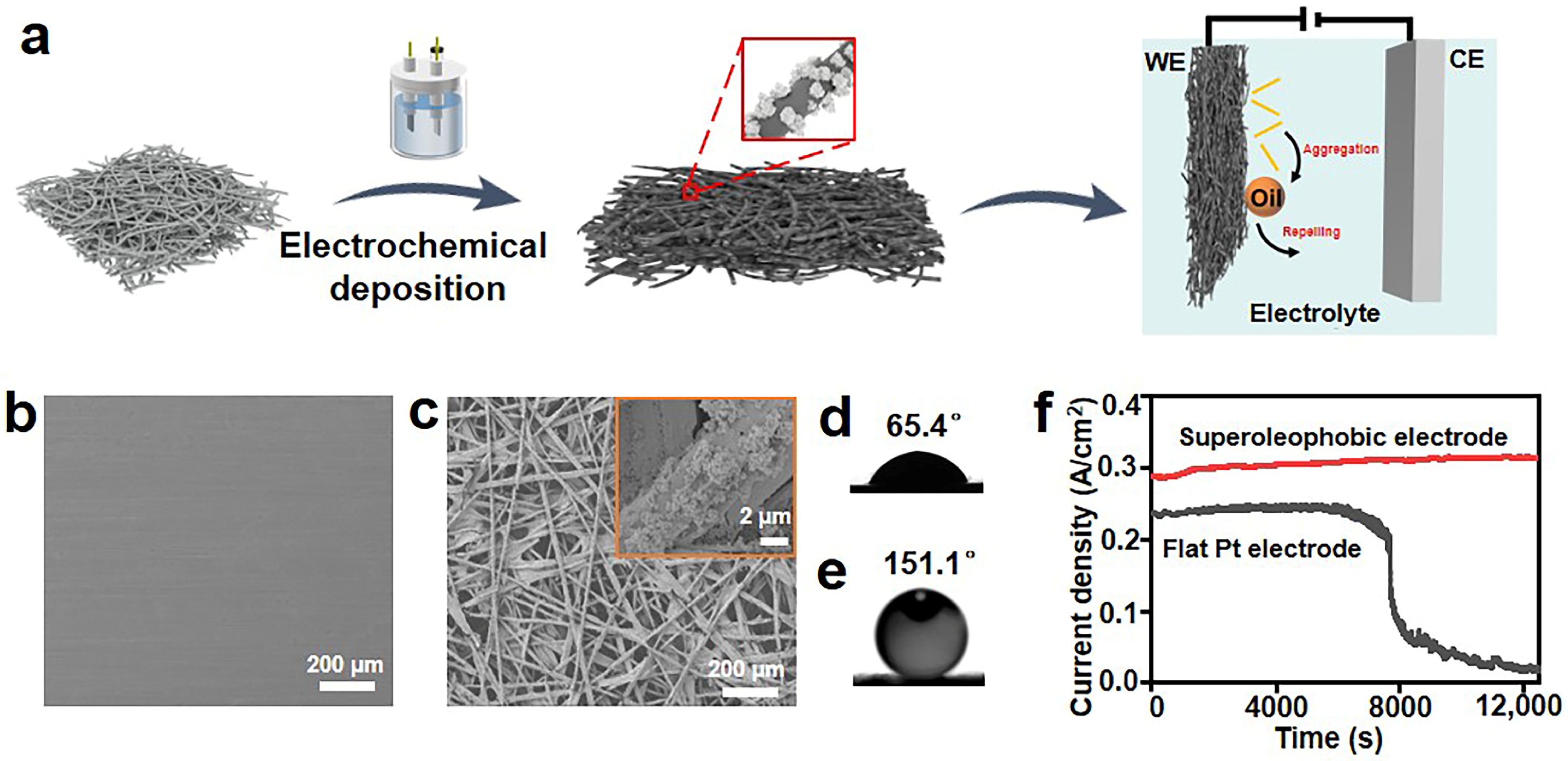
The rich three-phase interfaces are conducive to fast mass transport during the electrocatalytic reaction process, and carbon paper is the optimal candidate due to its large surface area and high porosity. Furthermore, carbon paper with proper 3D architecture has shown a unique advantage in improving Pt utilization when used as a catalyst support. The schematic illustration is depicted in
Figure 1a; the process employed a three-electrode configuration, with carbon fiber paper serving as the working electrode. The direct electrodeposition process can efficiently immobilize the Pt nanoparticles (NPs) on carbon paper without any binder, which can effectively reduce the mass transport resistance and improve the utilization efficiency of Pt. In addition, in situ grown Pt NPs during the electrodeposition process result in a strong adherent force between Pt and conductive substrate, preventing the degradation of Pt NPs, such as detachment, migration and agglomeration that are caused by the weak adherent force between the Pt NPs and the carbon support [
19]. The micro/nanostructure, as well as the special wettability of the electrode, can be manipulated by tailoring the electrodeposition parameters. For the traditional flat Pt electrodes, the SEM images clearly show that their surfaces are smooth at a large scale (
Figure 1b), and the underwater contact angle of the oil droplet is about 65.4° (
Figure 1d), suggesting an oleophilic property. Generally, the Kolbe electrolysis is the decarboxylative dimerization reaction under the function of the electrical field, yielding oleophilic products. Thus, the as-formed oil products during the Kolbe reaction adhere to the Pt sheet, progressively reducing the catalytic active sites, eventually obstructing the reaction and causing the reaction to cease (
Figure 1f). In sharp contrast, the composite electrode exhibits excellent micro/nano multi-scale structure (
Figure 1c) and the underwater oil contact angles are about 152.1° (
Figure 1e). Such an underwater superoleophobic and low adhesion effect enables the electrode to quickly remove the as-formed oil products without leaving oil residue. The current density of the composite electrode is 21.05% higher than that of the flat Pt electrodes at the initial stage of the electrolysis reaction because the micro/nanostructure of the composite electrode exposes more active sites, thereby improving mass transfer efficiency. After working for about 7800 s, the current density of the flat Pt electrode decreased to zero (
Figure 1f), indicating the termination of Kolbe electrolysis. In contrast, the composite electrode (electrodeposition of 8400 s) can work continuously for 12,000 s without any decrease in current density. This indicates that when the Kolbe electrolysis reaction is conducted on the composite electrode instead of the flat Pt electrode, not only a high current density and sustained stable reaction are achieved, but also the working life is effectively extended. In addition, the mass fraction of the Pt NPs electrodeposited in the composite electrode with an electrodeposition time of 8400 s is 72.03 wt%, which is less than one percent of the flat Pt electrode. The use of the composite electrode is very attractive from the point of view of reducing the production costs and improving performance.
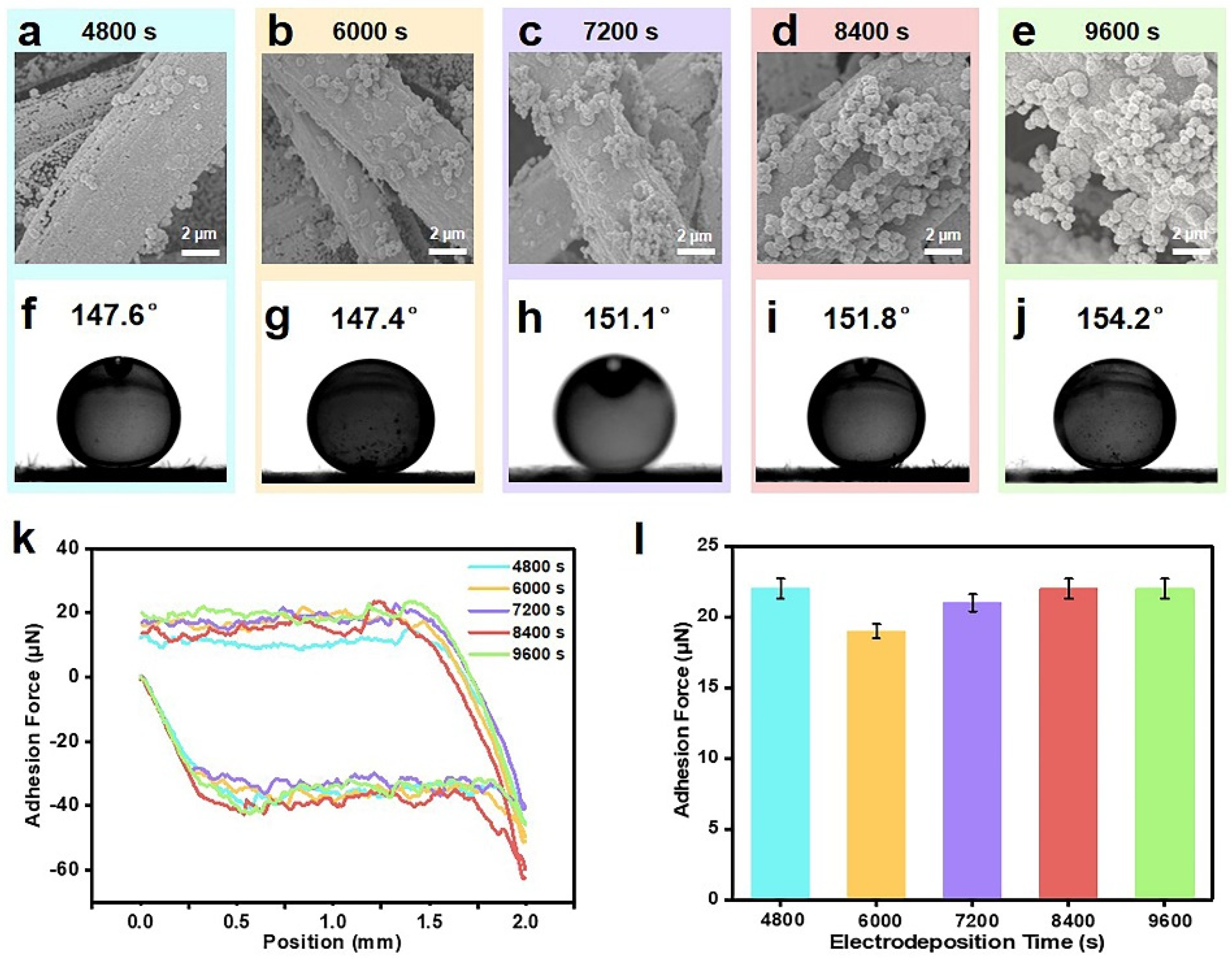
To control the surface superoleophobicity, we tested the micro/nanostructure and superwettability of the as-prepared electrode at various electrodeposition times (
Figure 2a–j). The electrodeposition time of Pt NPs is from 4800 s to 9600 s while maintaining a constant deposition voltage. Compared to the initial underwater oleophilic carbon fiber paper (
Figure S1), SEM analysis confirmed the deposition of Pt NPs over the entire substrate, confirming that a large portion of the carbon fiber was exposed to the electrolyte. Moreover, the mass fraction of Pt NPs in the composite electrode increases with the increase in electrodeposition time (
Figure S2). Most regions of the carbon paper surface were uniformly covered with a layer of Pt NPs within the electrodeposition time of 4800 s, but partial regions of the carbon fiber surface were not completely covered by Pt NPs (
Figure 2a). At 6000 s, the carbon fiber surface was almost entirely covered by Pt NPs, displaying rough nanospherical structures (
Figure 2b). With the increase in electrodeposition time, the Pt NPs aggregate into microspheres on the carbon fiber surface (
Figure 2c) and form more compact hierarchical micro/nanostructures (
Figure 2d). However, the Pt NPs form a discursive pine branch-like stacked structure on the carbon fiber surface when the electrodeposition time reaches 9600 s (
Figure 2e), which may impact the stability of the electrode. The surface oleophobicity of the electrodes obtained at different electrodeposition times was assessed by measuring the underwater oil contact angles (1,2-Dichloroethane, 2 µL). The underwater oil contact angles for electrodes with electrodeposition times of 4800 s, 6000 s, 7200 s, 8400 s, and 9600 s are 147.6°, 147.4°, 151.1°, 151.8°, and 154.2°, respectively (
Figure 2f–j). The electrode surface with only nanospherical structures exhibited high underwater oleophobicity, while the electrode with hierarchical micro/nanostructures achieved underwater superoleophobicity. Therefore, the scale of coarse hierarchical micro/nanostructures, as well as their distribution, is crucial for the underwater oleophobicity of the electrode. To further characterize the dynamic oil adhesion forces of the electrodes in underwater environments, dynamic adhesion tests were performed to assess the capacity of the electrodes to repel oil generated during the reaction process.
Figure 2k,l displays the adhesion force curves and numerical values of the electrode surfaces with different electrodeposition times; the underwater oil adhesion forces are about 22 µN, 19 µN, 21 µN, 22 µN, and 22 µN, respectively. Ordinarily, the adhesion forces can be categorized as extremely low (less than 1 μN) and ultrahigh (about 60 μN) [
20,
21]. Although the adhesion force of the electrode did not reach an extremely low level, this low adhesion force (about 20 µN) is still highly beneficial for the surface transition from an unstable Cassie state to a stable Cassie state, facilitating the timely removal of oil products from the electrode [
22,
23]. These results indicate that the electrodes possess low underwater oil adhesion, which is consistent with the superoleophobic and low-adhesion characteristics. In aqueous media, the hierarchical micro/nanostructure of the electrode surface can capture a continuous water film, resulting in a low adhesion of the electrode surface to the oil droplets, that is, the oil droplets can maintain the Cassie–Baxter state and finally leave the electrode surface readily.
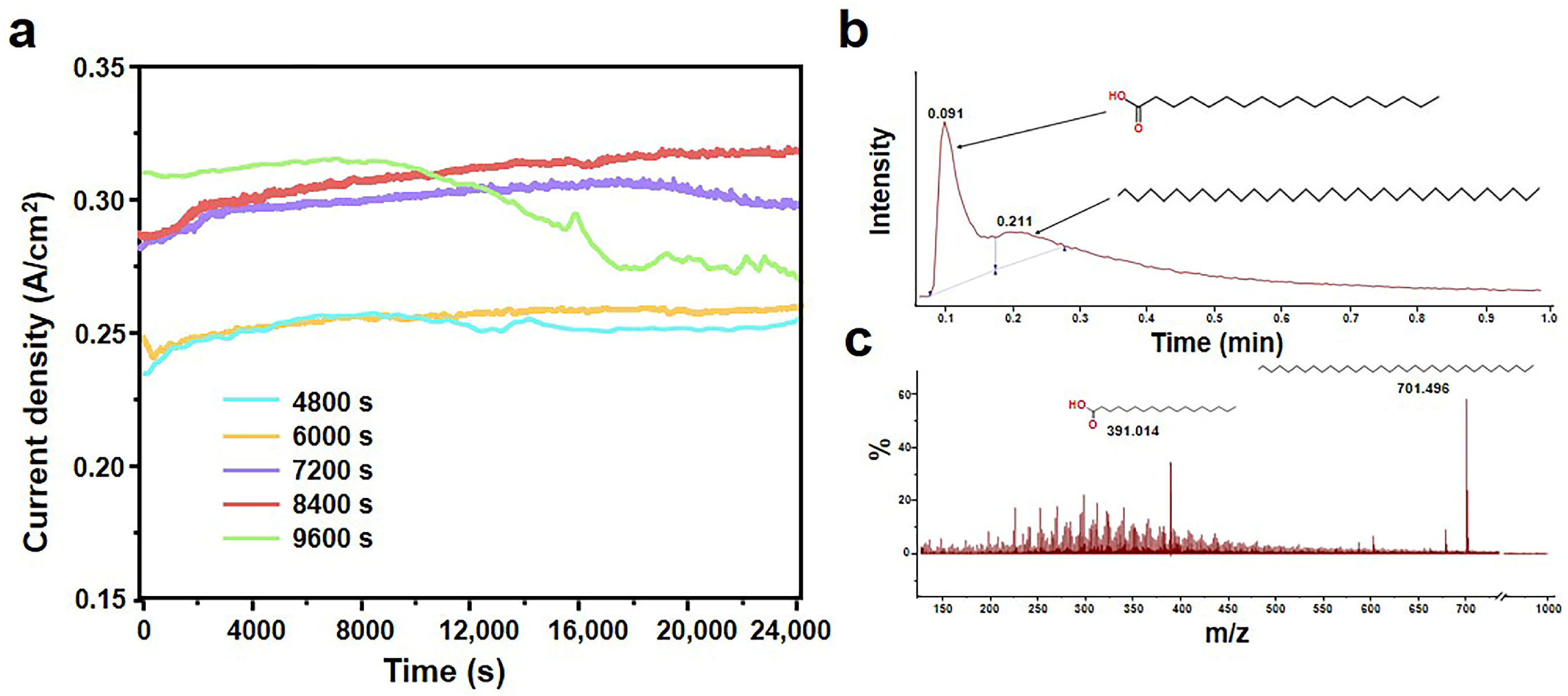
Superwetting surfaces exhibit versatility in manipulating the mass transfer of ions, liquids and gases on solid surfaces, which has been extended to chemical reaction systems to improve reaction kinetics. Superoleophobic electrodes can enhance three-phase interfaces and facilitate mass transport, thereby achieving a high catalytic performance and secular stability. To reveal the impact of the electrode surface microstructure on its electrocatalytic performance, Kolbe electrolysis tests of stearic acid were conducted using electrodes obtained at different electrodeposition times. As shown in
Figure 2a, with the electrodeposition time increasing from 4800 s to 9600 s, the initial current density of the electrolytic reaction gradually increased, indicating that the reaction efficiency could be significantly improved. This is attributed to the increased loading of Pt NPs on the carbon fiber surface with the extension of electrodeposition time, which greatly increases the reaction of the active sites. The electrodes with electrodeposition times of 4800 s and 6000 s have high underwater oleophobicity (underwater oil contact angles are 147.6° and 147.4°, respectively), yielding the initial current density of 0.25 A/cm
2. This is due to the insufficient coverage of the nanospherical structures formed by the Pt NPs, resulting in insufficient reaction active sites. Specifically, the initial current densities of the composite electrodes with electrodeposition times of 7200 s, 8400 s and 9600 s are higher than 0.28 A/cm
2. The as-formed oil products can leave the composite electrode surface ready to expose more reaction active sites owing to the superoleophobicity, so that the reaction can maintain a high performance for a long time. It is worth noting that hierarchical micro/nanostructures can be found on the composite electrode surfaces with electrodeposition times of 7200 s, 8400 s and 9600 s. There is a minor difference in the underwater oil contact angle on the composite electrodes; however, the initial current densities of the composite electrode surfaces with hierarchical micro/nanostructures can improve by about 12% more than that of nanospherical structures. The electrode with an electrodeposition time of 9600 s showed a high initial current density, but a decline in current density was observed around 10,000 s, identifying a decrease in electrolysis efficiency. This is because the micro/nano multiscale structure on the electrode surface, though relatively abundant, lacks stability, with partial structure detachment occurring mid-reaction, leading to a decline in electrochemical performance. Remarkably, the electrode with an electrodeposition time of 8400 s exhibited an optimal electrochemical performance, achieving the highest current density and maintaining a stable and efficient Kolbe reaction over an extended period. This stable and long working life of the underwater superoleophobic electrodes outperforms previously reported electrodes [
24,
25], ensuring the durability and practicality of the Kolbe reaction in industrial applications. The occurrence of the Kolbe reaction was further identified by a mass spectrometry (MS) analysis of the reactant (before Kolbe electrolysis) and product (after Kolbe electrolysis). By comparing the total ion chromatogram (TIC) of the reactant (
Figure S3a), well-resolved peaks appeared in the TIC of the product after electrolysis (
Figure 3b), demonstrating the effectiveness of the superoleophobic electrode in catalyzing the Kolbe reaction. Before the electrolysis reaction, the
m/
z data of the reactant were mainly located at 391.621, demonstrating that the main component was stearic acid (
Figure S3b). After the electrolysis reaction (10 h), the
m/
z signals of the as-formed oil products shifted to 391.014 and 701.496, which indicated the formation of tetratriacontane in the electrochemical reaction (
Figure 3c). The MS results clearly confirmed the presence of tetratriacontane, which was generated during the Kolbe electrolysis.
The durability and stability of the underwater superoleophobic electrode were further assessed and presented in
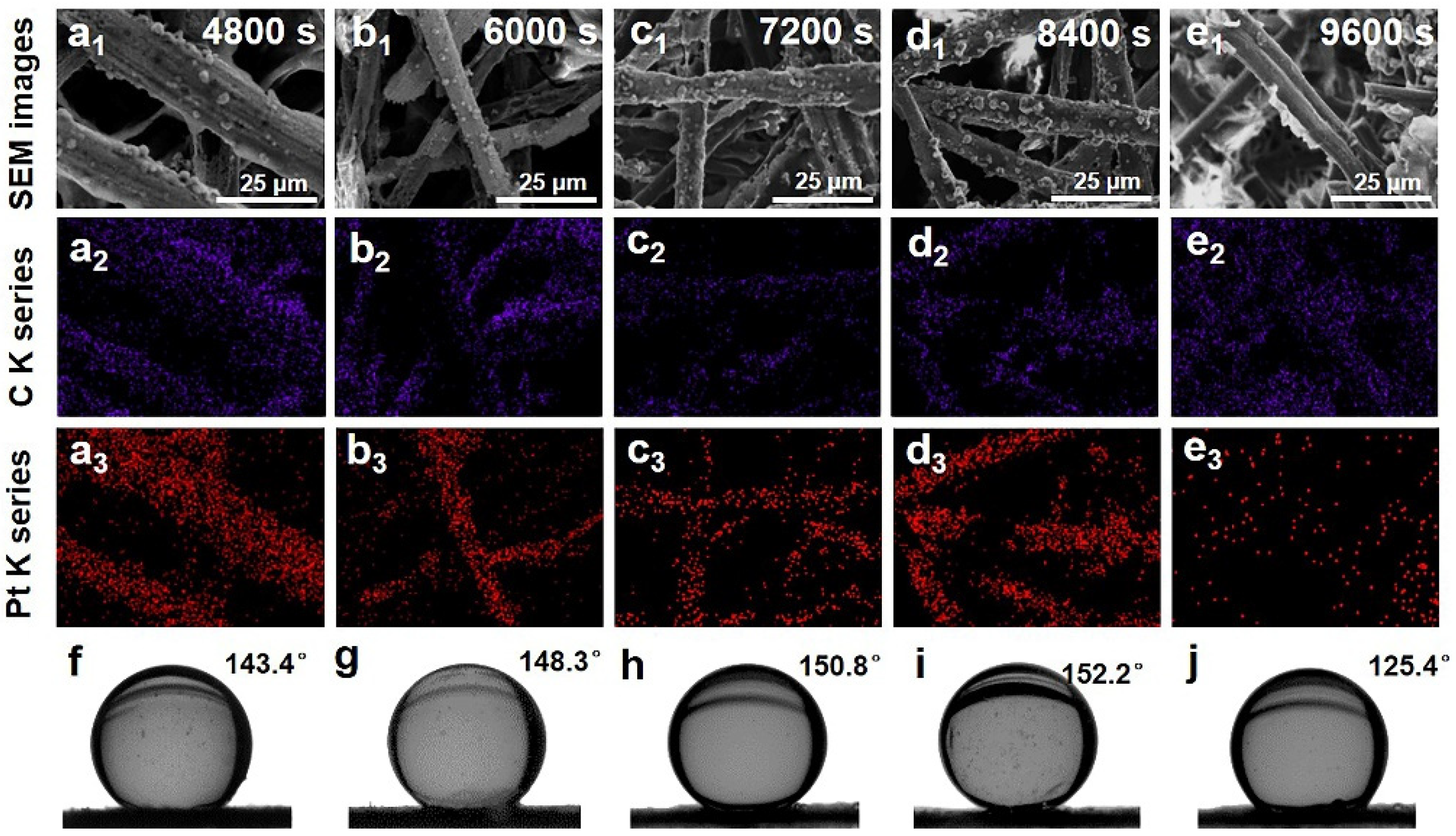
Figure 4. The results reveal that the electrodes with electrodeposition times of 4800 s, 6000 s, 7200 s, and 8400 s exhibited minimal structural changes after the Kolbe reaction (10 h). The morphology showed that the Pt NPs form a discursive pine branch-like stacked structure on the carbon fiber surface when the electrodeposition time reaches 9600 s, and the carbon fiber substrate was exposed after the Kolbe reaction (
Figure 4(e
1)). However, the electrode with an electrodeposition time of 9600 s initially displayed the most abundant micro/nanostructures (
Figure S4), thus a high initial current density on the Kolbe reaction was obtained. To further examine the structural detachment and elemental distribution of the electrode surfaces after the Kolbe reaction, energy dispersive spectroscopy (EDS) mappings of those electrodes were analyzed. The EDS results indicate that the micro/nanostructures formed by Pt NPs on the electrode surface (electrodeposition times of 4800 s, 6000 s, 7200 s, and 8400 s) remained relatively stable, and the Pt elements were evenly distributed over the carbon fiber surface (
Figure 4a–d), maintaining its oleophobic or superoleophobic properties after the Kolbe reaction (
Figure 4f–i). In contrast, the electrode with an electrodeposition time of 9600 s demonstrated significant Pt NP detachment and carbon fiber substrate damage, resulting in disordered C and Pt elemental distribution (
Figure 4(e
2,e
3)). The underwater oil contact angle of the composite electrode with an electrodeposition time of 9600 s decreased to 125.4°, revealing that the superoleophobic property of the electrode with an electrodeposition time of 9600 s was compromised after the Kolbe reaction. This oleophobic property declines due to the structural degradation characterized by Pt particle detachment and the exposure of the carbon fiber substrate (
Figure 4j). The change corroborates that the detachment of micro/nanostructure formed by Pt NPs is the primary factor leading to the degeneration of superoleophobicity, and eventually, a decline in current density on the Kolbe reaction was observed around 10,000 s. These facts are identical to the results of the current density curve measurement. As a result, prolonged electrodeposition time can cause the excessive deposition of Pt NPs, leading to unstable growth and the cracking of micro/nanostructures. Therefore, taking into account both the current density and the working life, the electrode with an electrodeposition time of 8400 s is the optimal deposition condition.
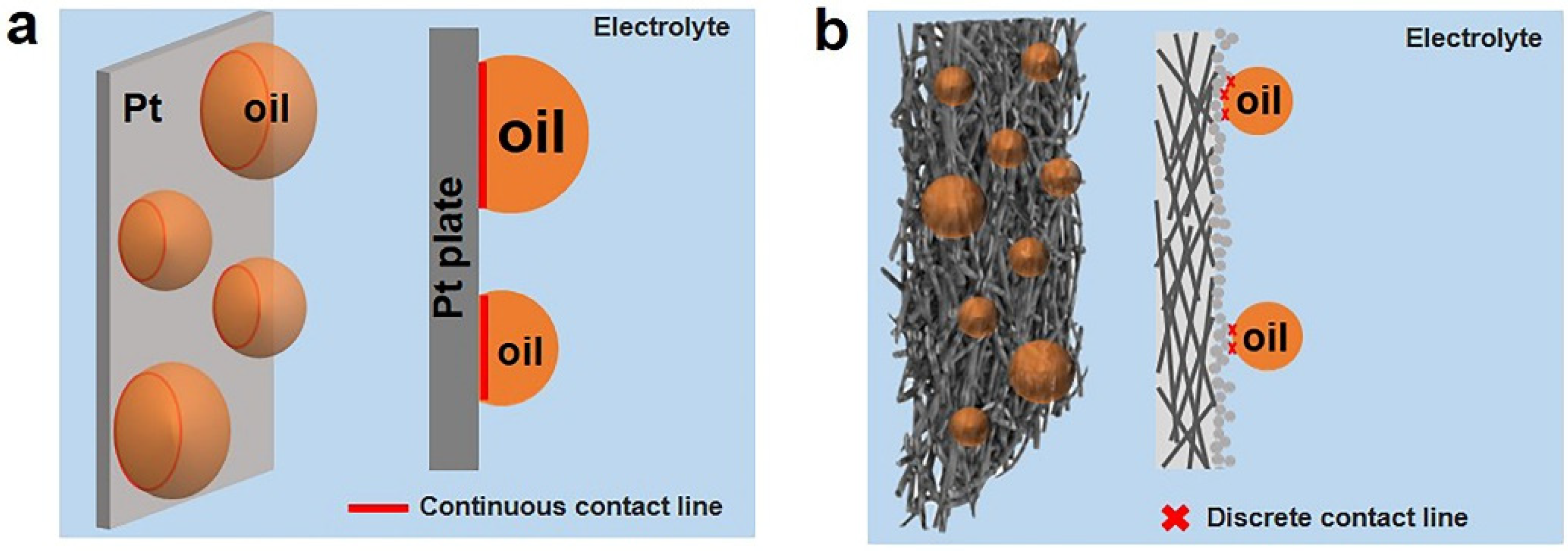
Figure 5 illustrates the suggested mechanism for the adhesion behavior of as-formed oil products on flat Pt electrodes and underwater superoleophobic carbon paper/Pt composite electrodes. Due to the inherent oleophilic property, the as-formed oil products form a continuous contact line with the traditional flat Pt plate electrodes and establish stable attachments (
Figure 5a). This adhesion behavior can mask the active sites and hinder catalytic reactions, leading to a decline in electrode performance, especially in long-term electrochemical reactions. Contrarily, benefiting from the unique micro/nanostructure formed by Pt NPs on the surface of the composite electrode, the contact area between the electrolytic product and the electrode is reduced, forming discrete contact lines and endowing the electrode with underwater superoleophobic capability (
Figure 5b). In our previous study [
26], an underwater superoleophobic Pt electrode was developed and showed its universality for a variety of carboxylic acidic molecules in the Kolbe electrolysis. The composite electrodes with similar micro/nano multiscale structures, arising from their underwater superoleophobicity and low adhesion feature, are fully suitable for use in other Kolbe or organic electrolysis systems. This underwater superoleophobic property effectively minimizes the product adhesion on the electrode surface and promptly removes the as-formed oil products, thereby greatly improving the working life of the electrode and maintaining high electrochemical activity. Moreover, the discrete contact points provide rich three-phase interfaces, which facilitate rapid mass transport during the electrocatalysis reaction process. Thus, in principle, our strategies can also be applied to the Kolbe electrolysis reactions of various carboxylic acid molecules.




 ,
,