
Article

Aqueous Precipitate of Methanolic Extract of Bergenia ciliata Leaves Demonstrate Photoirradiation-Mediated Dual Property of Inhibition and Enhancement of Silver Nanoparticles Synthesis

Nanotechnology and Applied Phytochemistry Laboratory, Department of Biological Sciences, Aliah University, Kolkata 700160, West Bengal, India
*
Author to whom correspondence should be addressed.
Colloids Interfaces 2026, 10(1), 5; https://doi.org/10.3390/colloids10010005 (registering DOI)
Submission received: 26 November 2025 / Revised: 24 December 2025 / Accepted: 25 December 2025 / Published: 30 December 2025
(This article belongs to the Topic New Research on Thin Films and Nanostructures)

Abstract

Background: The aqueous and methanolic extracts (AE and ME) of Bergenia ciliata leaves have contradictory silver nanoparticles (AgNP) synthesis potential, influenced by photoirradiation. Method: In the current study, photoirradiation-mediated AgNP synthesis potential of two sub-extracts of ME, namely aqueous precipitated ME (PME) and aqueous dissolved ME (DME), were studied through comparison of their physicochemical properties. Results: In dark, DME demonstrated significant AgNP synthesis, whereas PME did not synthesize AgNPs. However, photoirradiation reversed the role of both the sub-extracts in nanoparticles synthesis. PME also demonstrated an inhibitory effect on AE-mediated AgNP synthesis in dark. GC-MS identified pyrogallol as the major reducing agent in both the sub-extracts. Photoirradiation significantly influenced the nanoparticle size and percent elemental composition of the AgNP. In dark, PME and DME produced AgNP of approx. 23.94 nm and 31.08 nm diameters, respectively, which significantly increased to 47.26 nm and 47.48 nm, respectively, on photoirradiation. Although no significant change in the percent silver composition was observed in PME-AgNP on photoirradiation (approx. 68%), DME demonstrated enhanced silver percent from approx. 58% to 72% on photoirradiation. Both DME- and PME-AgNPs were stable up to 15 days at 4 °C. Conclusions: PME has photoirradiation-mediated dual property of inhibition and enhancement of AgNPs synthesis.

1. Introduction

Bergenia ciliata (BC), commonly known as hairy Bergenia, is a medicinal herb belonging to the Saxifragaceae family and traditionally used for its medicinal properties by rural Himalayan communities. The traditional applications of this plant include the treatment of respiratory ailments, including colds, coughs, and pulmonary diseases; wound healing; and the management of nephrolithiasis [1]. The phytochemical analysis of various plant parts has reported the presence of various bioactive compounds, including coumarins, benzenoids, carbohydrates, lactones, tannins, phenols, and sterols. Beyond its traditional uses, various scientific studies have demonstrated a range of potential pharmaceutical properties of BC extracts, including antiviral, antifungal, antibacterial, antidiabetic, anti-inflammatory, hepatoprotective, and antioxidant properties [1,2].
Silver ions have long been recognized as a potent antimicrobial agent, with historical use as a disinfectant and wound dressing, even in the form of silver nitrate [3]. The advent of nanotechnology has revitalized interest in silver, particularly in the form of silver nanoparticles (AgNPs). AgNPs of diameter below 50 nm exhibit enhanced antimicrobial activity compared to bulk silver due to their increased surface area and unique physicochemical properties [3]. This enhanced activity extends beyond traditional antimicrobial applications, encompassing anticancer therapies, wound healing, and the control of parasitic infections. In plant-mediated green synthesis, various plant parts such as leaves, roots, rhizomes, seeds, and bark can be employed. Plant extracts that are rich in phytochemicals, including phenolic compounds, alkaloids, saponins, and tannins, function as reducing agents, facilitating the conversion of silver ions (Ag+) to AgNPs. Furthermore, these phytochemicals not only drive the synthesis process but also play a crucial role in determining the physicochemical properties of the resulting AgNPs, such as size, shape, and stability [4]. However, it is well understood that the phytochemical composition of every plant source is unique, and furthermore, the phytochemical extraction process adds to the diversity of their potential for green synthesis of AgNPs. In this regard, of late, it has been reported that photoirradiation by various wavelengths of light can enhance the ability of the extract for nanoparticles synthesis [5,6]. Photoirradiation triggers generation of free radicals, which assists in metal reduction that results in nanoparticles formation. The addition of a photosensitive surfactant can further contribute in photoirradiation-triggered metal nanoparticles synthesis [7]. Furthermore, recent reports of photoirradiation-based synthesis of monometallic and bimetallic nanoparticles using plant extracts such as Erythroxylum coca and Morus macroura have started gaining traction, as it opened possibilities of synthesizing AgNPs that were previously not possible [8,9]. In this context of understanding the role of photoirradiation in nanoparticles synthesis, we explored the possibility of understanding the influence of photoirradiation as a universal catalyst in nanoparticles synthesis or whether the influence is linked to the composition of the phytochemicals in extract.
In our previous study, we performed a comparative analysis of AgNP synthesis potential of aqueous extract (AE) and methanol extract (ME) of the BC leaves. The outcome of the study demonstrated differential outcome of the AgNP synthesis by the AE and ME, with photoirradiation being the major factor [10]. Although the AE demonstrated significant rate of NP synthesis in dark, photoirradiation attenuated the NP synthesis, whereas the ME demonstrated reverse effect with negligible NP synthesis in dark, but enhanced rate of NP synthesis on photoirradiation. This differential response of AgNP synthesis by AE and ME to photoirradiation prompted further investigation to identify the probable mechanism and identification phytochemicals that are responsible for differential response to photoirradiation in AgNP synthesis. In this context, we hypothesized that the ME may be further investigated for differential response of NP synthesis to photoirradiation. The objective of the current study is to demonstrate the responses of the two sub-extracts of the ME, which when exposed to photoirradiation, respond distinctly to AgNP synthesis. Furthermore, we also intend to identify the potential compounds that contribute to this distinct phenomenon of photoirradiation.

2. Materials and Methods

2.1. Materials

The BC leaves were collected during the flowering season in Mungpoo, Darjeeling, India (26°59′38.8″ N, 88°20′43.3″ E). A sample voucher was sent to the Central National Herbarium, Botanical Survey of India, Howrah, India, for identification. Silver nitrate (AgNO3, CAS No. 030087) of analytical grade was purchased from Central Drug House (P) Ltd., Mumbai, India. Sodium carbonate (Na2CO3, Cat. No. 64079), gallic acid (13142), and Folin-Ciocalteu reagent (Cat. No. 39520) were purchased from Sisco Research Laboratories Pvt. Ltd., Mumbai, India. Double-distilled water was used as the solvent for all the experiments that were performed.

2.2. Extract Preparation

Fresh leaves were collected, washed, and dried in a hot air oven. The dried leaves were ground into a fine powder and stored at 4 °C. From this powder, two different extracts were obtained: aqueous extract (AE) and methanol extract (ME) as per the optimized protocol [10]. Furthermore, 70 mg of ME was dissolved in 2 mL of distilled water and vigorously vortexed to ensure complete homogeneity. The solution was then centrifuged at 6000 rpm for 10 min. The pellet and the supernatant were subsequently segregated and dried by desiccation, thus yielding two sub-extracts of ME, namely precipitated methanol extract (PME) and dissolved methanol extract (DME), respectively.

2.3. Estimation of the Total Phenolic Content of PME and DME

In total, 800 µL of the sub-extracts (100 μg mL−1) were mixed with 0.5 mL of Folin-Ciocalteu reagent and 0.4 mL of 1 M Na2CO3 solution. The mixture was incubated at room temperature for 15 min. Subsequently, absorbance was measured at 765 nm using a UV-visible spectrophotometer (make: Shimadzu®, Kyoto, Japan; model: UV-1900i). Gallic acid served as the positive control for the assay.

2.4. Ferric Ion Reducing Antioxidant Potential (FRAP) Assay of PME and DME

Ferric ion reducing antioxidant potential (FRAP) assay was conducted as described in Rumpf et al., with slight modifications [11]. Briefly, 1 mL of FRAP reagent was combined with 120 µL of the sub-extracts of various concentrations, thoroughly vortexed, and then incubated for 10 min at 37 °C. Absorbance was taken at 593 nm. FRAP reagent constituted of 25 mL of 300 mM acetate buffer of pH of 3.6, 2.5 mL of 10 mM TPTZ solution, and 2.5 mL of 10 mM FeCl3 6H2O, respectively. Ascorbic acid was used as a positive control.

2.5. Gas Chromatography-Mass Spectroscopy (GCMS) Analysis of the Extracts

The GC-MS analysis was conducted using an Agilent 7890B GC system (make: Agilent Technolgoies, Santa Clara, CA, USA) coupled with an Agilent 5977A MSD, utilizing an HP-5MS capillary column (30 m × 0.25 mm × 0.25 µm) with helium as the carrier gas at a flow rate of 1 mL/min. Samples were injected in split mode with a 10:1 split ratio. The oven temperature program started at 50 °C with a hold for 2 min, followed by an increase at 10 °C per min to 150 °C, where it was held for 2 min. The temperature then increased at 5 °C per min to 250 °C, with another 5 min hold, and finally, it was ramped at 10 °C per min to 280 °C, holding for 5 min. The injector and transfer line temperatures were set at 250 °C and 100 °C, respectively. The mass spectrometry conditions included an ion source temperature of 230 °C, a quadrupole temperature of 150 °C, a mass range of 35–500 m/z, and a solvent delay of 3 min, with a scan rate of 1.562 scans per second. NIST20.1 library (2020) was then searched to compare the structures of the compounds with those of the NIST database. Compounds were then identified based on the retention times and mass spectra with already known compounds in the NIST library (C:\Database\NIST20.1).

2.6. Green Synthesis of Silver Nanoparticles Under Different Light Conditions

Briefly, 1 mL each of the sub-extracts (1 mg mL−1), namely PME and DME, were dissolved in 10 mL of 1 mM AgNO3 solution individually and incubated for 1 h under two distinct light conditions, i.e., dark and 825 lumens (lm) intensity of white light. Incubations were maintained at a constant temperature of 25 °C within a BOD incubator. Subsequently, spectral analysis was performed using UV-visible spectrophotometer (make: Shimadzu®, Kyoto, Japan; model: UV-1900i) to monitor the rate of change of absorbance intensity at the maximum wavelength (λmax) of each solution.

2.7. Impact of PME on Aqueous Extract-Based Silver Nanoparticles Synthesis

To study the effect of PME on the green synthesis potential of silver nanoparticles by aqueous extract of the BC leaves, varying quantities (20, 50, and 100 µL) of PME (0.7 mg mL−1) were added to the previously optimized green synthesis of silver nanoparticles utilizing AE [10]. Two individual experimental setups were incubated in dark and 825 lm intensity of white light, respectively.

2.8. Physicochemical Characterization of the Silver Nanoparticles

2.8.1. Particle Size Analysis of the Silver Nanoparticles

To investigate the mean diameter and size distribution of the synthesized nanoparticles, dynamic light scattering (DLS) analysis was performed using a Photon Correlation Spectrometer (make: Malvern®, Malvern, UK; model: ZetaSizer®). This technique exploits the Brownian motion of particles suspended in a liquid medium. The scanning angle of the instrument was set to a default setting of 90°. The refractive index of the solution was set to that of water as the dispersing medium.

2.8.2. Morphological Study of the Silver Nanoparticles

The morphologies of the nanoparticles synthesized by PME and DME under distinct light conditions were studied by scanning electron microscopy (SEM) (make: Carl Zeiss®, Oberkochen, Germany). A 20 µL of 100× dilution of the nanocolloidal solutions was added onto 1 cm2 glass slides and dried in a desiccator. Prior to sample loading, the nanoparticle-mounted glass slides were coated with gold coating. The SEM images were captured at 50–75 k× magnification and 15 kV voltage.

2.8.3. Percent Elemental Composition Analysis of the Silver Nanoparticles

The percent elemental analysis of the nanoparticles was conducted using energy-dispersive x-ray spectroscopy (EDX), a module integrated into the SEM (make: Carl Zeiss®, Oberkochen, Germany). This technique exploits the unique outer electron configuration of each element, which can be excited by x-ray irradiation, causing electrons to transition to higher energy orbitals. As these electrons return to their ground state, they release excess energy, which is detected and analyzed to identify and quantify the percent elemental composition of the nanoparticles. This analytical approach enables the determination of the elemental makeup of the nanoparticles with high precision.

2.8.4. Stability Studies of PME-AgNPs and DME-AgNPs

The AgNPs were synthesized through a 1 h incubation period, determined to be optimal for AgNPs formation. Subsequently, the solution was centrifuged to remove any residual extract and silver ions. To check the stability of the synthesized AgNPs, UV-Vis spectral analysis was conducted on alternate days over a two-week period within a wavelength range of 350–700 nm. This study provides valuable insights into the stability of the AgNPs, a crucial factor for their successful implementation in diverse applications.

2.8.5. Statistical Analysis

One-way ANOVA followed by Tukey’s test was used for statistical analyses of results. All experiments were conducted in triplicate three independent times and expressed as ±SD. A p-value < 0.05 was considered statistically significant. Average value and standard error were calculated using Microsoft Excel 2021.

3. Results

3.1. Total Phenolic Content and Ferric Reducing Antioxidant Power Assay

The biosynthesis, capping, and stabilization of the AgNPs are significantly influenced by the presence of phenolic compounds. A comparative analysis of total polyphenol content was conducted on both PME and DME. The total phenolic content was estimated to be 96.68 ± 0.03631 mg GAE/g and 48.19 ± 0.06615 mg GAE/g for DME and PME, respectively. FRAP assay demonstrated significant differential activity between the DME and PME. The DME exhibited a higher metal-reducing ability, with a concentration of 20 µgmL−1 yielding metal-reducing ability equivalent of 80.81824 ± 0.0928 µM of ascorbic acid, whereas PME, at a concentration of 50 µgmL−1, displayed a comparatively lower reducing activity, equivalent of 33.62588 ± 0.0128 µM of ascorbic acid (Figure 1).

3.2. Gas Chromatography-Mass Spectroscopy Analysis of the Extracts

A comparative analysis of the GC-MS data (Supplementary Data) of the three extracts, i.e., ME, PME, and DME, was performed. The PubChem ID of the compounds reported were noted, and the metal-reducing potential of the various compounds was identified by literature review (Table 1). The comparative data identified the major compounds that were present in ME, as well as PME and DME. Amongst them, pyrogallol (PubChem ID: 1057) was identified to be present in maximum quantity in all three extracts. However, majority of the compounds present in the PME constituted various types of fatty acid esters, which was absent in DME, except methyl palmitate (PubChem ID: 8181), which was observed to be in major quantity in DME.

3.3. Green Synthesis of Silver Nanoparticles Under Different Light Conditions

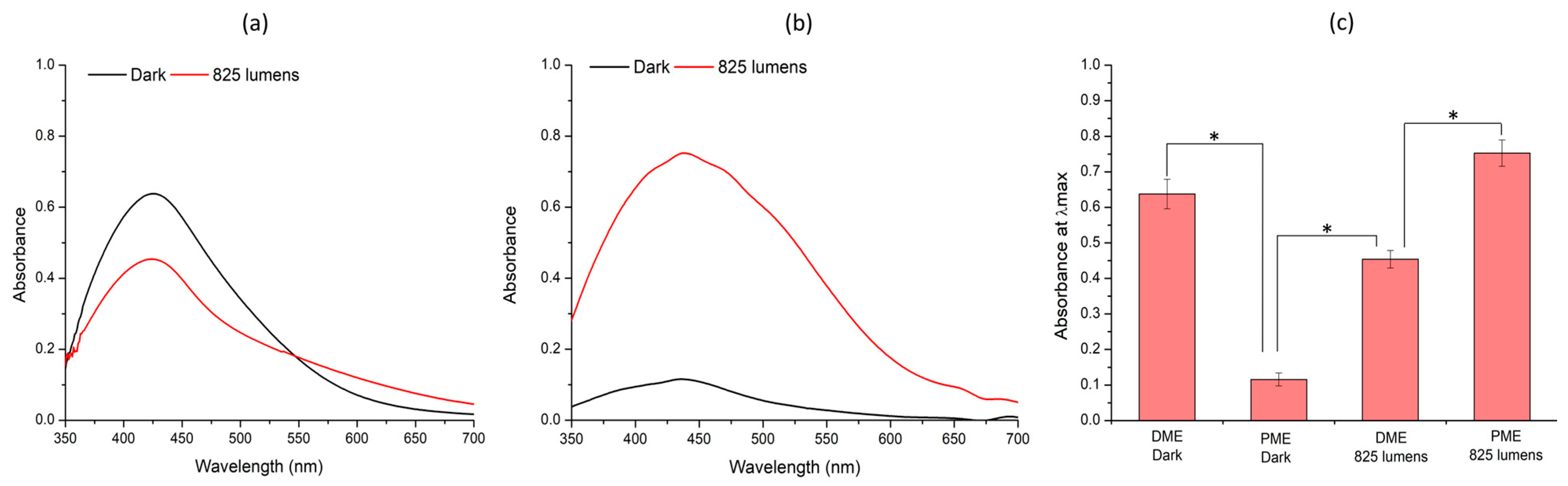
Based on the total phenol content and ferric ion reducing potential of both PME and DME, their potential to synthesize AgNPs was investigated under two distinct light conditions. The AgNP synthesis protocol adhered to our previous work, involving the mixing of 1 mL of 1 mg mL−1 extract with 10 mL of 1 mM AgNO3, followed by readings taken at 1 h of incubation. Both extracts exhibited distinct AgNP synthesis patterns. DME demonstrated the capacity to synthesize AgNPs under both light and dark conditions. However, light appeared to attenuate the rate of NP synthesis. In contrast, PME effectively synthesized AgNPs in the presence of light but exhibited negligible AgNP synthesis under dark conditions (Figure 2).

3.4. Impact of PME on Aqueous Extract-Based Silver Nanoparticles Synthesis

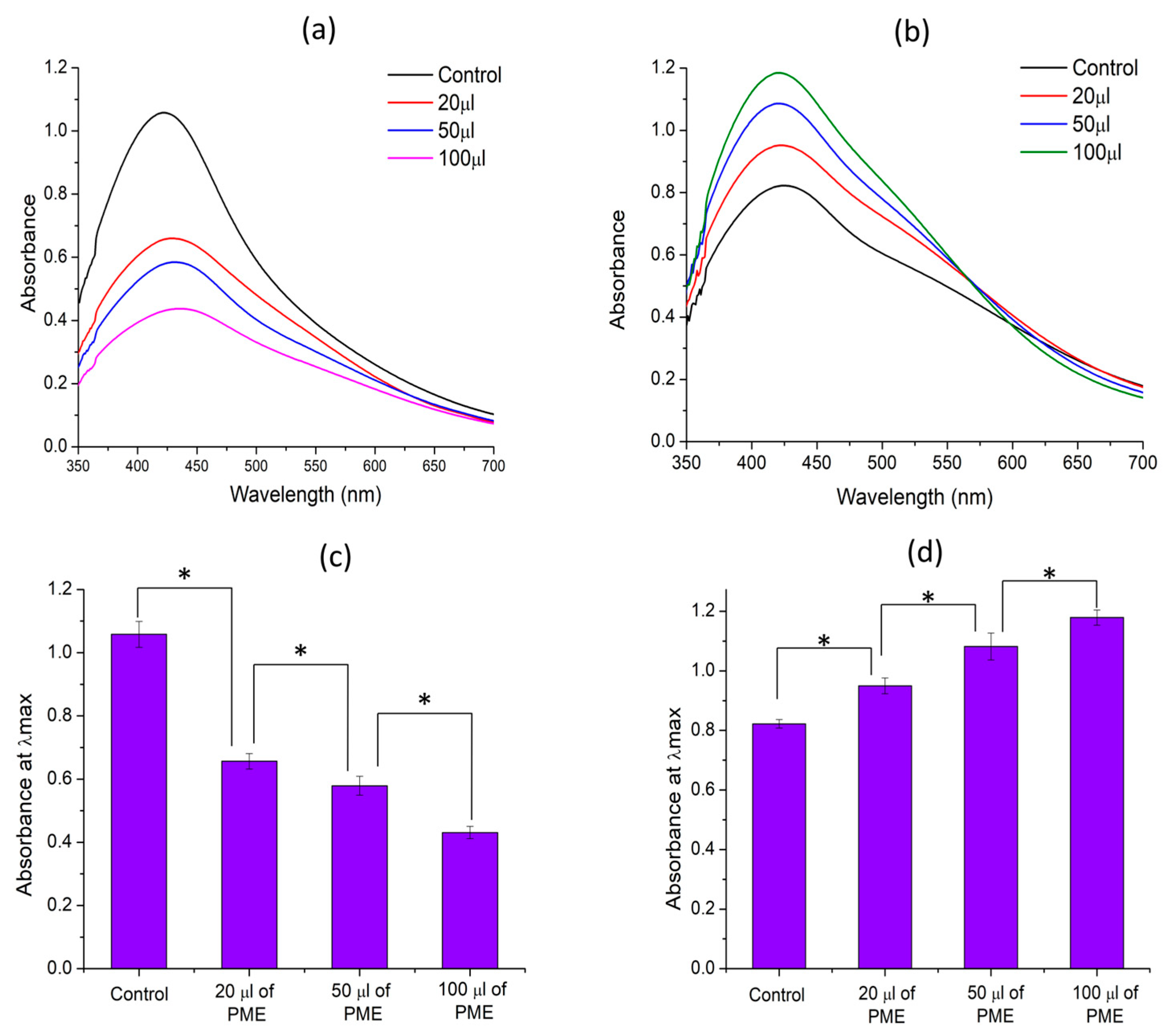
Given the failure of the PME to independently synthesize AgNPs in dark, its influence on AgNP synthesis mediated by the AE (AE-AgNPs) was investigated. Under dark conditions, PME exhibited an inhibitory effect in a dose-dependent manner on the rate of AgNP synthesis by AE. Conversely, on exposure to 825 lm of white light, PME facilitated an enhanced rate of AE-AgNPs (Figure 3). These findings strongly suggest the presence of compounds within the PME that effectively suppress nanoparticle synthesis in the absence of light. This inhibitory effect appears to be reversed upon exposure to light, potentially through photodegradation of the inhibitory compounds or activation of a pathway that counteracts their inhibitory action.

3.5. Particle Size Analysis of AgNPs

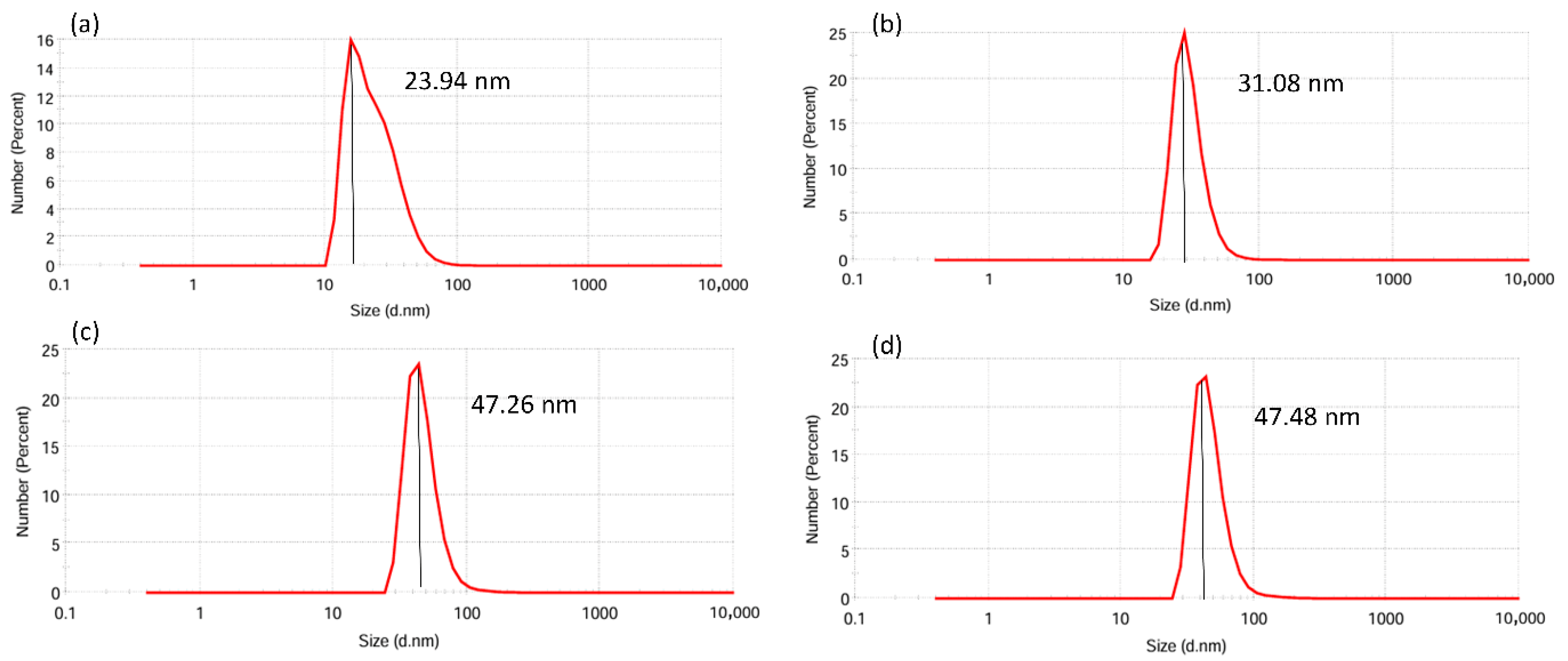
Particle size analysis revealed a considerable influence of light on the particle size of the synthesized AgNPs. Exposure to light resulted in an increase in the particle size of AgNPs synthesized from both the extracts. As for PME, the particle size increased from 23.94 nm to 47.26 nm under light irradiation. Likewise, for DME, the average particle size increased from 31.08 nm to 47.48 nm upon photoirradiation. The consistent increase in particle size for both extracts under light conditions indicates a general trend where photoirradiation promotes the formation of larger AgNPs (Figure 4). Likewise, the polydispersive index (PDI) of all four samples was observed to be in the range of 0.2–0.3, thus suggesting homogeneity of the nanocolloidal solution (Table 2).
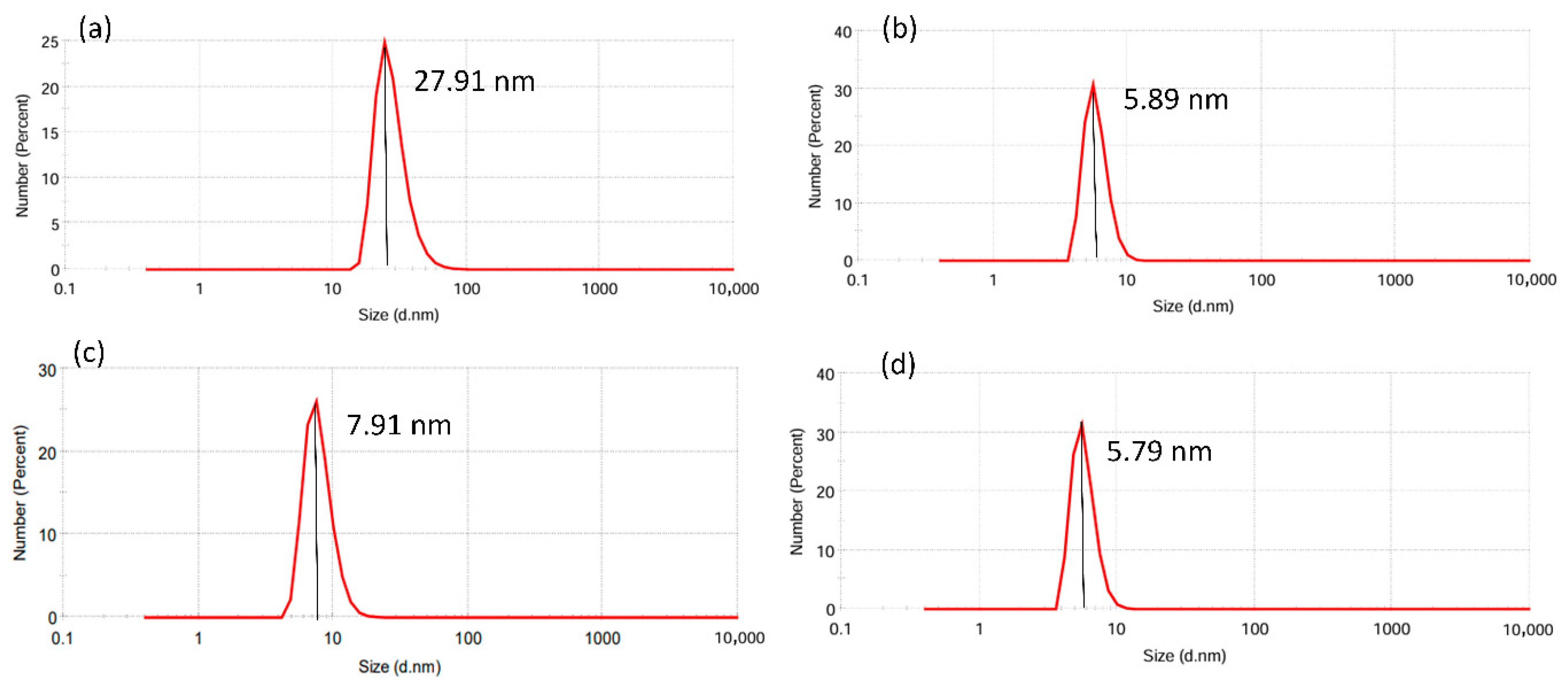
However, the addition of PME in a dose-dependent manner significantly influenced the particle size of AE-AgNPs. In dark, a 20 µL addition of PME resulted in reduction in AE-AgNPs particle size [9]; further addition of 50 µL of PME significantly attenuated the nanoparticle size (Figure 5a,b). On the other hand, under 825 lm of white light, although PME led to a decrease in particle size of the AE-AgNPs (Table 3), there was significant increase in the rate of AE-AgNPs synthesis (Figure 3), which would otherwise be attenuated [10].

3.6. Morphological Study of the Silver Nanoparticles

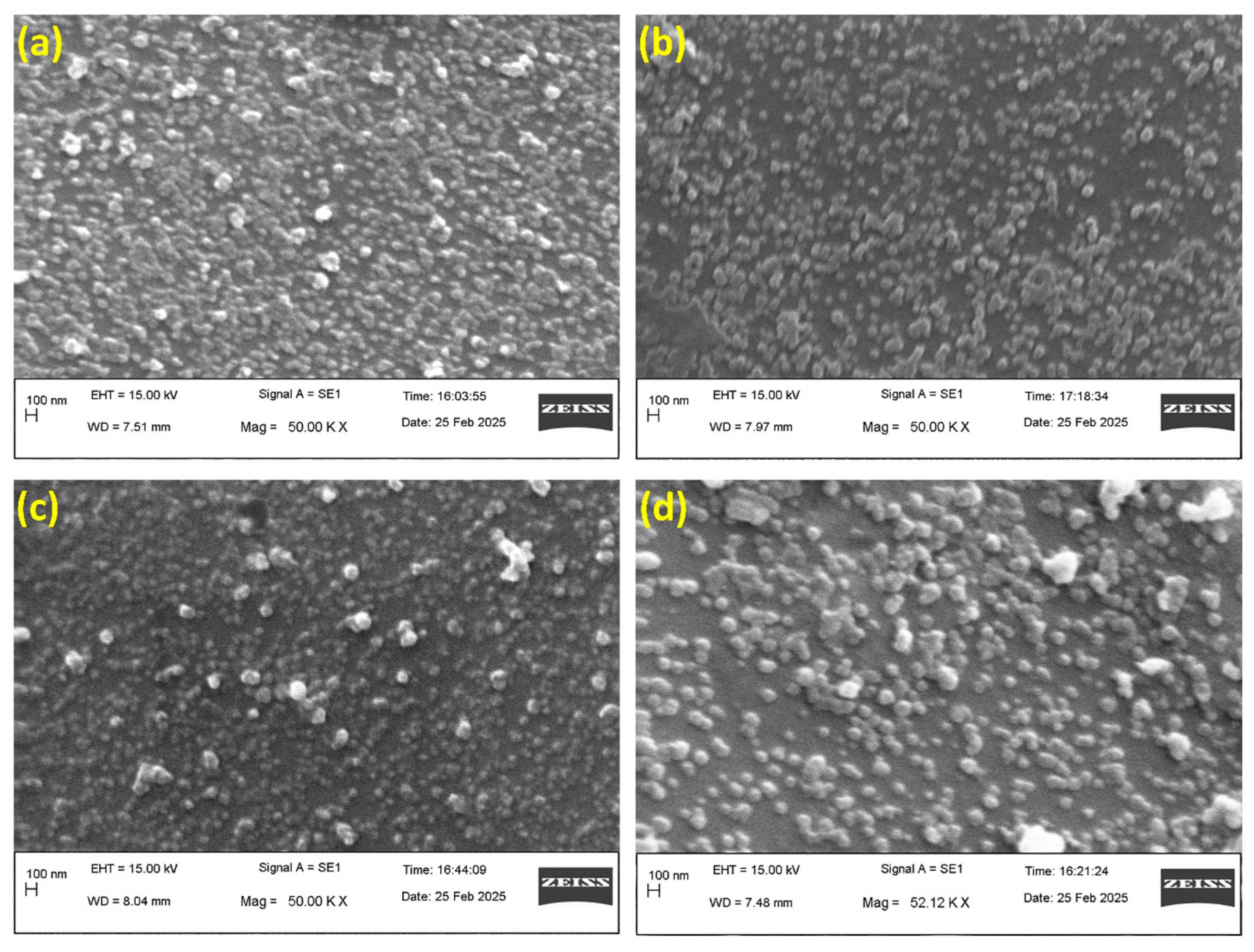
SEM analysis indicated that the AgNPs, regardless of the extract used (PME or DME), presented a uniform and spherical structure. The particle size distribution determined by DLS was in corroboration with the dimensions observed in the SEM images, confirming a consistent size and shape of the nanoparticles (Figure 6).

3.7. Elemental Analysis of the Silver Nanoparticles

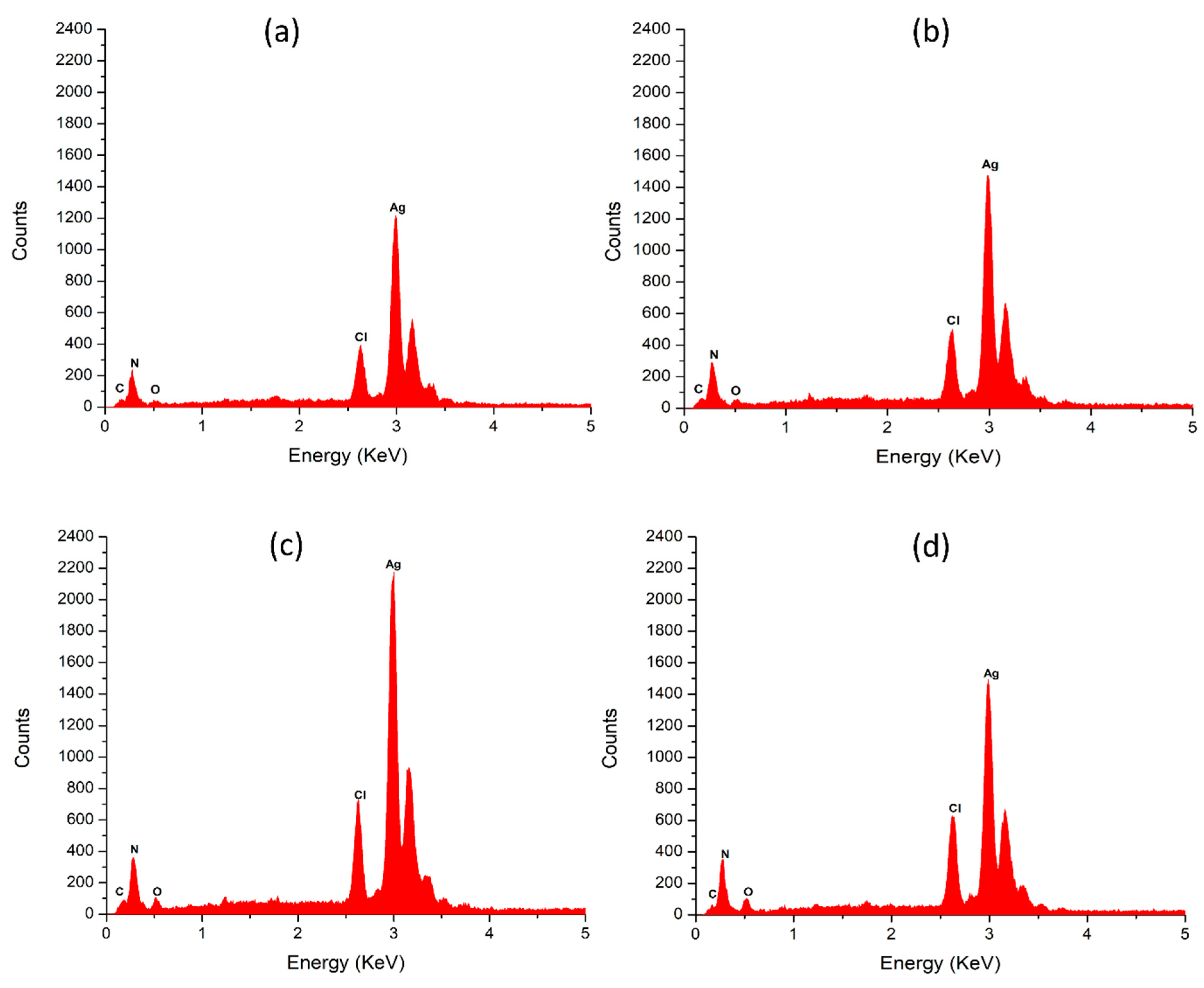
Elemental analysis of the AgNPs by EDX spectroscopy indicated that silver atoms were the predominant element in all the nanoparticles, with carbon, nitrogen, oxygen, and chlorine detected at significantly lower relative abundances (Figure 7). However, a comparative analysis of the nanoparticles demonstrated that the AgNPs produced with DME in dark condition contained the lowest percentage of silver, whereas the same extract in the light condition contained the highest percentage (Table 4).

3.8. Stability Studies of Silver Nanoparticles

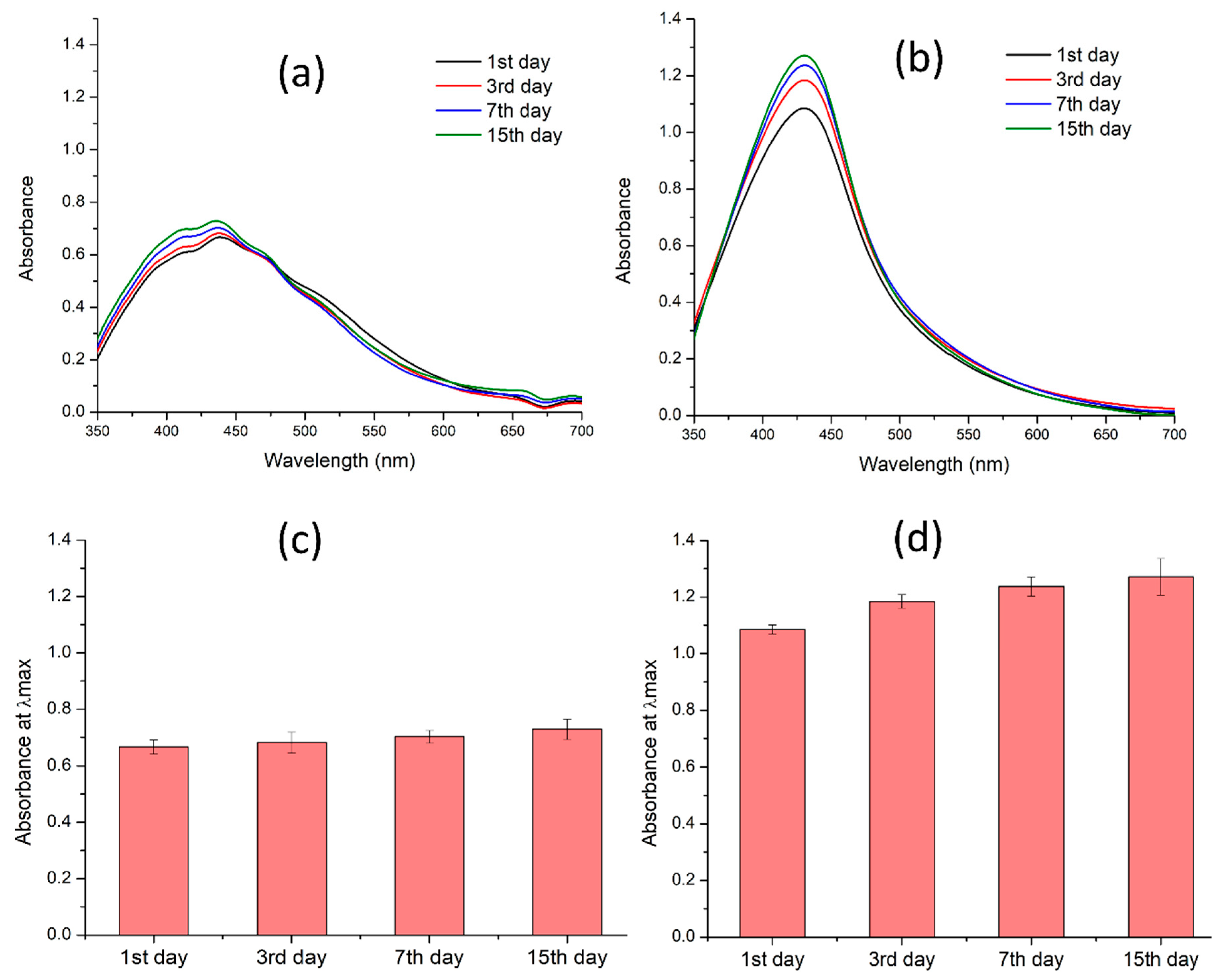
A 15-day study was conducted to evaluate the stability of PME- and DME-based AgNPs by monitoring absorption spectra over time. Consistent spectral profiles, without significant deviations, were observed (Figure 8). The absorbance intensity of PME-AgNPs was observed to be consistently stable, whereas the absorbance intensity of DME-AgNPs was observed not only to be stable but also steadily increasing in quantity, albeit at a much significantly slower rate as compared to the rate of synthesis at room temperature.

4. Discussion

Several factors contribute to AgNP synthesis, including the type of solvent used for extraction, pH, light, temperature, and concentration of both the plant extract and AgNO3. In previous work, we reported the synthesis and characterization of AgNPs using both AE and ME. A notable observation was the inability of the methanol extract to synthesize AgNPs in the absence of light, indicating a potential role for light-sensitive compounds within the ME in the AgNP synthesis mechanism.
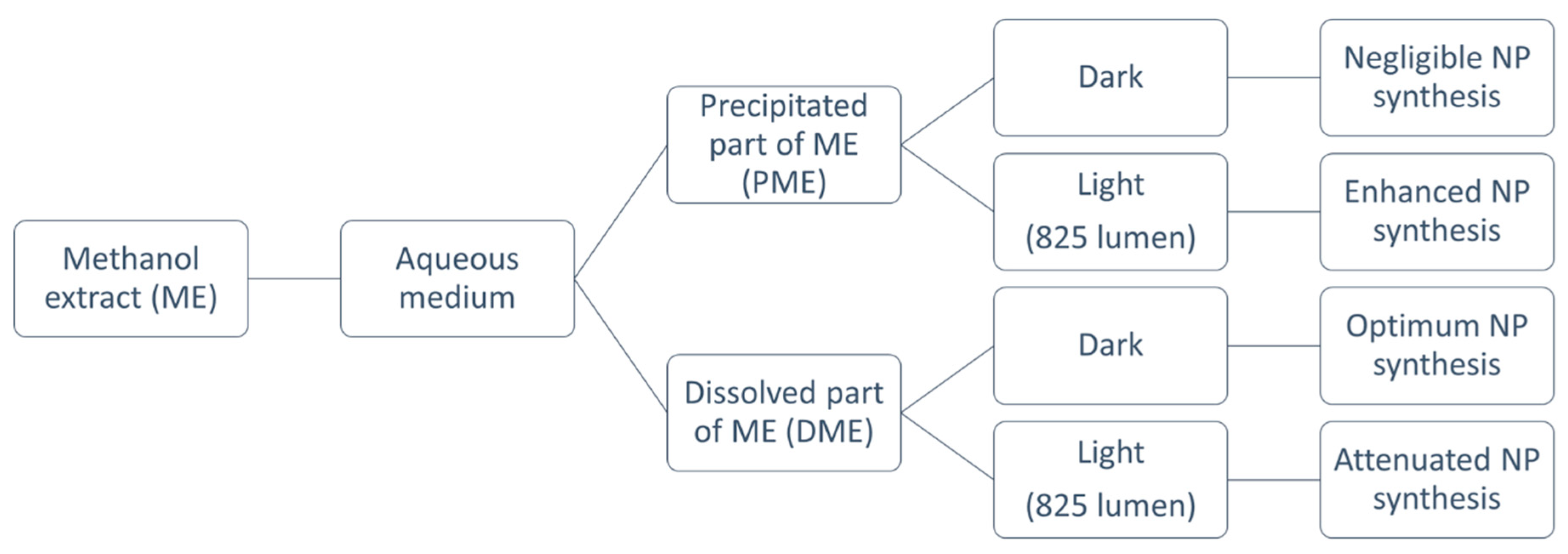
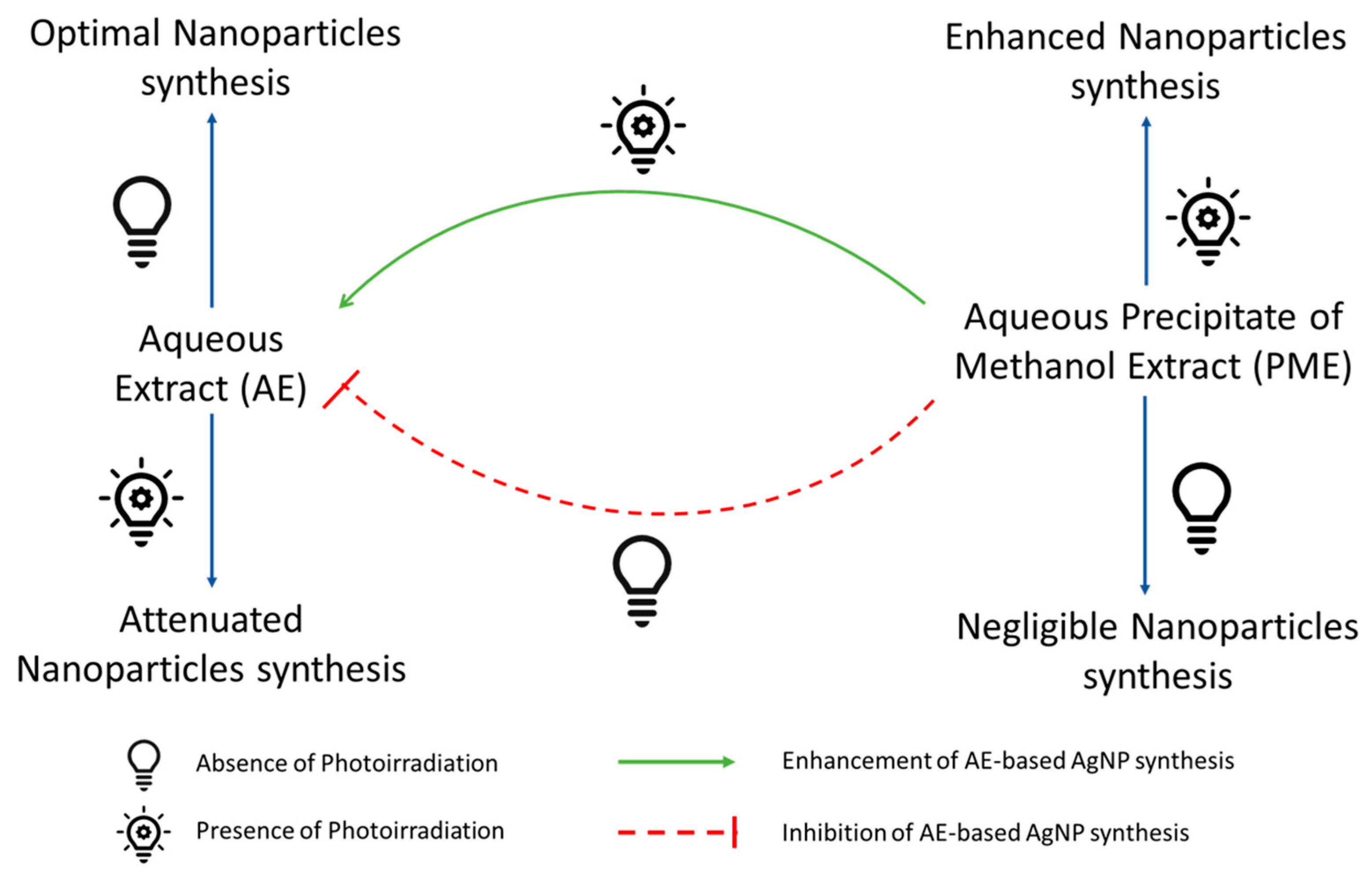
In the current study, we intended to understand the mechanism of AgNP synthesis of methanol extract with light as the controlling factor. We hypothesized that the components of the ME contributed to the dual behavior of enhancement and inhibition of nanoparticles synthesis. Initially, the ME underwent aqueous phase separation, thereby producing PME and DME. These two sub-extracts were then explored for AgNP synthesis in various light conditions, the outcome of which gave distinct results (Figure 9).
The TPC of the two sub-extracts was estimated, and FRAP activity was analyzed. The TPC of DME was estimated to be significantly higher than the PME, which may also be the reason for DME’s higher FRAP activity as compared to PME (Figure 1). The GC-MS analysis confirmed the presence of pyrogallol in the highest quantity in both sub-extracts. However, a higher percentage of pyrogallol (PubChem ID: 1057) in DME as compared to PME (Table 1) possibly could be the reason for significantly high TPC and FRAP activity of DME. Furthermore, the GC-MS data identified several phytochemicals common to both the ME and PME and likewise for ME and DME. Since PME is considerably insoluble in aqueous solvent, its GC-MS profile identified diverse hydrophobic phytochemicals, mainly in the form of palmitic acid and other fatty acid esters. In comparison, the GC-MS profile of DME identified fewer types of phytochemicals, and a majority of which were reported to have significant aqueous solubility. The distinct phytochemical profile of PME and DME indicates their distinct abilities for AgNPs synthesis. The rate of AgNP synthesis by DME was observed to be significantly high in dark conditions; however, in the presence of 825 lm of white light, significant attenuation of AgNPs synthesis was observed, whereas PME synthesized negligible quantities of AgNPs in dark, but the rate of synthesis was significantly enhanced by photoirradiation (Figure 2). This distinct outcome corroborated with the previously observed outcome of AgNP synthesis and attenuation between AE and ME [10], thus indicating the presence of phytochemicals in ME. Subsequently in PME, that may function as light-sensitive inhibitors of AgNPs synthesis in dark. To further confirm our hypothesis, PME was added in dose-dependent manner to AE-based nanoparticles synthesis (Figure 3). The PME significantly attenuated the AE-based NP synthesis in dark, which otherwise demonstrated significantly high rate of AgNP synthesis. This observation of PME confirms the presence of phytochemicals that potentially inhibit the AgNP synthesis. Likewise, when photoirradiated, the rate of AE-based AgNP synthesis, which would otherwise be attenuated, was observed to show significant enhancement in AgNP synthesis (Figure 10). The inhibitory effect of PME on AgNP synthesis in dark, and its reversal due to photoirradiation, may be attributed to the presence of the palmitic acid (PubChem ID: 985), a fatty acid present in high quantity in PME, only after pyrogallol (Table 1). This hypothesis may be based on few reports, suggesting that palmitic acid undergoes degradation on photoirradiation [17,18]. However, this hypothesis about abundant fatty acid in PME being the inhibitor of the AgNP synthesis in dark, which otherwise may be undergoing photodegradation in presence of light, requires further research.
The particle size is also considerably influenced by the type of extract and photoirradiation [10]. In the current study, PME synthesized considerably smaller-sized nanoparticles as compared to DME in dark, which may be attributed to superior rate of AgNP synthesis by DME in dark. However, under photoirradiation, the particle size of both PME and DME is significantly enhanced. In case of PME, this may be attributed to enhanced rate of AgNP synthesis under photoirradiation, but in case of DME, significantly high quantity of pyrogallol may be the attributing factor because photoirradiation attenuates DME-based AgNP synthesis. The particle size of AE-based AgNPs is also significantly influenced by the PME. The rate of AE-based AgNP synthesis in dark is significantly attenuated by PME, which is further corroborated by the DLS data, suggesting that the NP size is significantly diminished (Table 3, Figure 5). Thus, PME may be the preferred sub-extract that can influence the particle size, which in turn influences the application efficacy of the nanoparticles.
Although the percentage of nanoparticles yield and size is significantly influenced by the photoirradiation, the morphology of all the nanoparticles is the same, irrespective of the light conditions and the type of extract. However, there are reports that suggest significant modulation of AgNPs’ shape on photoirradiation using ultraviolet-C (UVC) radiation and specific wavelengths of 465 nm, 595 nm, and 625 nm; however, the reducing agent could be the distinguishing factor [19,20]. Both PME and DME produce morphologically similar nanoparticles, yet the elemental composition of the nanoparticles varies significantly. The EDX analysis suggests that the percent silver composition is not significantly influenced by the light conditions for PME, whereas DME-AgNPs can be significantly influenced by the light conditions. The percent silver is significantly enhanced by photoirradiation, which further corroborates the nanoparticles’ size of the DME-AgNPs (Table 4).
Nanoparticles’ stability is among the major criteria for determination of industrially relevant nanoparticles. In the current study, we observed that both PME-AgNPs and DME-AgNPs were stable at 4 °C up to 14 days. The primary reason for the significant nanoparticle stability may be attributed to significant quantities of fatty acid esters that contribute to the stability of various types of nanoparticles [21,22]. The PME-AgNPs were observed to have no significant change in the absorbance intensity. However, the absorbance intensity increased considerably for a time period for DME-AgNPs. This may be possible because DME synthesizes nanoparticles in dark, albeit at a very slow pace due to lack of sufficient silver ions. Nevertheless, both PME-AgNPs and DME-AgNPs are stable and, thus, may be industrially relevant. Furthermore, PME could have an edge over DME in AgNP synthesis because of its potential to synthesize significantly smaller-sized nanoparticles and higher percentage of Ag entrapment.
The outcome of the study gives a clear insight into the possibilities of controlling the particle size and elemental composition by varying the composition of the extracts. However, among the major limitations of the study is lack of identification of a compound that acts as a photosensitive inhibitor of AgNP synthesis. Although such limitations are well understood in case of green synthesis of AgNP using crude extracts, this study opens scope for future work, wherein fatty acids may be studied as a potential inhibitor of nanoparticles synthesis. Furthermore, it is also true that vast majority of nanoparticles synthesis research is focused on enhancement of synthesis rather than factors that attenuate nanoparticles synthesis. The current work is among the first of its kind, which clearly demonstrates dual property of enhancement and inhibition of nanoparticles synthesis.

5. Conclusions

BC has limited geographical distribution because it has not been explored extensively. The current study intended to understand the significance of photoirradiation in influencing the physicochemical characterization of silver nanoparticles. The ME that previously demonstrated a unique pattern of AgNP synthesis influenced by photoirradiation was observed to be due to the PME part of ME. Both PME and DME had distinct phytochemical compositions, which influenced the efficacy of silver nanoparticles synthesis under photoirradiation. Pyrogallol was identified as the primary reducing agent of both PME- and DME-AgNPs. The wide range of water-insoluble fatty acid and their esters of PME could probably be influencing the photoirradiation-mediated dual property of PME in AgNP synthesis. The PME produced negligible nanoparticles synthesis in dark, whereas photoirradiation significantly enhanced the rate of AgNP synthesis. The PME also inhibited AE-based AgNP synthesis, which would otherwise have significantly high rate of AgNP synthesis in dark condition. Photoirradiation also influenced the nanoparticle size and percent elemental composition. The nanoparticle size increased in both PME- and DME-AgNPs on photoirradiation; however, the influence of photoirradiation on percent silver composition on DME-AgNP was significantly higher as compared to PME-AgNPs. Both the PME- and DME-AgNPs were significantly stable up to 14 days when stored at 4 °C. This characteristic role of PME as both synthesizer and inhibitor, as regulated by photoirradiation, suggests that green synthesis of AgNPs can be modulated to synthesize tailored AgNPs for optimal therapeutic, biomedical, and industrial applications.

Supplementary Materials

The following supporting information can be downloaded at: https://www.mdpi.com/article/10.3390/colloids10010005/s1.

Author Contributions

Conceptualization, M.H.; methodology, M.H. and S.G.; validation, M.S. and S.G.; formal analysis, S.G.; data curation, M.H.; writing—original draft preparation, S.G.; writing—review and editing, S.G. and M.H.; supervision, M.H. All authors have read and agreed to the published version of the manuscript.

Funding

This research received no external funding.

Data Availability Statement

All data are original.

Acknowledgments

We acknowledge funding and infrastructure support from the Ministry of Minority Affairs and Madrasah Education, Government of West Bengal, India.

Conflicts of Interest

The authors declare no conflicts of interest.

Abbreviations

The following abbreviations are used in this manuscript:
MEMethanolic Extracts
AEAqueous Extracts
AgNPSilver Nanoparticles
PMEAqueous Precipitated ME
DMEAqueous Dissolved ME
GCMSGas Chromatography-Mass Spectroscopy
BCBergenia ciliata
FRAPFerric Reducing Antioxidant Power
DLSDynamic Light Scattering
Poly-dispersive indexPDI
EDXX-Ray Spectroscopy
SEMScanning Electron Microscopy

References

  1. Ahmad, M.; Butt, M.A.; Zhang, G.; Sultana, S.; Tariq, A.; Zafar, M. Bergenia ciliata: A Comprehensive Review of Its Traditional Uses, Phytochemistry, Pharmacology and Safety. Biomed. Pharmacother. 2018, 97, 708–721. [Google Scholar] [CrossRef] [PubMed]
  2. Kushwaha, N.; Singh, A. Bergenia ciliata—Phytochemistry and Pharmacology: A Review. Biomed. Mater. Devices 2024, 2, 891–904. [Google Scholar] [CrossRef]
  3. Xu, L.; Wang, Y.Y.; Huang, J.; Chen, C.Y.; Wang, Z.X.; Xie, H. Silver Nanoparticles: Synthesis, Medical Applications and Biosafety. Theranostics 2020, 10, 8996–9031. [Google Scholar] [CrossRef] [PubMed]
  4. Jini, D.; Sharmila, S.; Anitha, A.; Pandian, M.; Rajapaksha, R.M.H. In Vitro and in Silico Studies of Silver Nanoparticles (AgNPs) from Allium Sativum against Diabetes. Sci. Rep. 2022, 12, 22109. [Google Scholar] [CrossRef]
  5. Serunting, M.A.; Zulfikar, M.A.; Setyorini, D.A.; Rizki, W.O.S.; Kurniawan, R.; Setiyanto, H. Facile Sunlight-Irradiation Mediated Green Synthesis of Highly Stable Silver Nanoparticles Using Archidendron bubalinum Pods Extract for Antibacterial Activity Application. Case Stud. Chem. Environ. Eng. 2024, 10, 100811. [Google Scholar] [CrossRef]
  6. Filho, A.C.D.; de Jesus Soares, J.; Carriço, M.R.S.; Viçozi, G.P.; Flores, W.H.; Denardin, C.C.; Roehrs, R.; Denardin, E.L.G. Green Synthesis Silver Nanoparticles Bougainvillea glabra Choisy/LED Light with High Catalytic Activity in the Removal of Methylene Blue Aqueous Solution. Environ. Sci. Pollut. Res. 2023, 30, 36244–36258. [Google Scholar] [CrossRef]
  7. Li, Z.; Fu, J. Formation of Naturally-Occurring Gold Nanoparticles by Photosensitive Surfactant Tween 80/85 under Light Irradiation: A New Origin in Aquatic Environment. J. Mol. Liq. 2024, 401, 124683. [Google Scholar] [CrossRef]
  8. Anjum, S.; Khan, A.K.; Qamar, A.; Fatima, N.; Drouet, S.; Renouard, S.; Blondeau, J.P.; Abbasi, B.H.; Hano, C.; Anjum, S.; et al. Light Tailoring: Impact of UV-C Irradiation on Biosynthesis, Physiognomies, and Clinical Activities of Morus Macroura-Mediated Monometallic (Ag and ZnO) and Bimetallic (Ag–ZnO) Nanoparticles. Int. J. Mol. Sci. 2021, 22, 11294. [Google Scholar] [CrossRef]
  9. Romero, G.G.; Ruíz Ruíz, V.F.; Flores, A.B.; Toledo Jaldin, H.P.; Vilchis-Nestor, A.R.; Ávila-Márquez, D.M.; Contreras, D.R. Light-Driven Synthesis of Silver Nanoparticles Using Erythroxylum coca Extract for Catalytic Reduction of 4-Nitrophenol. Biocatal. Agric. Biotechnol. 2025, 64, 103492. [Google Scholar] [CrossRef]
  10. Gurung, S.; Sarmin, M.; Hoda, M. Implications of White Light-Emitting Diode-Based Photoirradiation on Green Synthesis of Silver Nanoparticles by Methanol- and Aqueous-Based Extracts of Bergenia ciliata Leaves. Nanomaterials 2024, 14, 1327. [Google Scholar] [CrossRef]
  11. Rumpf, J.; Burger, R.; Schulze, M. Statistical Evaluation of DPPH, ABTS, FRAP, and Folin-Ciocalteu Assays to Assess the Antioxidant Capacity of Lignins. Int. J. Biol. Macromol. 2023, 233, 123470. [Google Scholar] [CrossRef]
  12. Ozturk Sarikaya, S.B. Acethylcholinesterase Inhibitory Potential and Antioxidant Properties of Pyrogallol. J. Enzym. Inhib. Med. Chem. 2015, 30, 761–766. [Google Scholar] [CrossRef]
  13. Ganesan, T.; Subban, M.; Christopher Leslee, D.B.; Kuppannan, S.B.; Seedevi, P. Structural Characterization of N-Hexadecanoic Acid from the Leaves of Ipomoea eriocarpa and Its Antioxidant and Antibacterial Activities. Biomass Convers. Biorefin 2024, 14, 14547–14558. [Google Scholar] [CrossRef]
  14. Essien, E.E.; Thomas, P.S.; Ekanem, I.R.; Choudhary, M.I. Isolation and Characterization of 5-Hydroxymethylfurfural, Antiglycation, Antihyperglycaemic, Antioxidant, and Cytotoxic Effects of Garcinia kola Heckel Roots Extract and Fractions. S. Afr. J. Bot. 2021, 140, 62–67. [Google Scholar] [CrossRef]
  15. Chen, Z.; Liu, Q.; Zhao, Z.; Bai, B.; Sun, Z.; Cai, L.; Fu, Y.; Ma, Y.; Wang, Q.; Xi, G. Effect of Hydroxyl on Antioxidant Properties of 2,3-Dihydro-3,5-Dihydroxy-6-Methyl-4H-Pyran-4-One to Scavenge Free Radicals. RSC Adv. 2021, 11, 34456–34461. [Google Scholar] [CrossRef]
  16. Proudfoot, J.M.; Croft, K.D.; Puddey, I.B.; Beilin, L.J. The Role of Copper Reduction by α-Tocopherol in Low-Density Lipoprotein Oxidation. Free Radic. Biol. Med. 1997, 23, 720–728. [Google Scholar] [CrossRef]
  17. Karbalaei Akbari, M.; Hai, Z.; Wei, Z.; Hu, J.; Zhuiykov, S. Wafer-Scale Two-Dimensional Au-TiO2 Bilayer Films for Photocatalytic Degradation of Palmitic Acid under UV and Visible Light Illumination. Mater. Res. Bull. 2017, 95, 380–391. [Google Scholar] [CrossRef]
  18. Shrestha, M.; Luo, M.; Li, Y.; Xiang, B.; Xiong, W.; Grassian, V.H. Let There Be Light: Stability of Palmitic Acid Monolayers at the Air/Salt Water Interface in the Presence and Absence of Simulated Solar Light and a Photosensitizer. Chem. Sci. 2018, 9, 5716–5723. [Google Scholar] [CrossRef]
  19. Gunawardana, N.; Ke, C.Y.; Huang, C.L.; Yang, C.H. One-Pot Synthesis of near-Infrared Absorbing Silver Nanoprisms via a Simple Photochemical Method Using an Ultraviolet-C Light Source. Opt. Mater. 2024, 148, 114932. [Google Scholar] [CrossRef]
  20. Urbina, I.; Herrera, L.J.M.; Etcheverry, M.E.; Villa, C.; Sepúlveda, R.D.M.; Garavaglia, L.; Arce, V.; Tebaldi, M.C. Shape Modification of Silver Nano Triangles under Light Irradiation. Photonics Nanostruct 2025, 67, 101470. [Google Scholar] [CrossRef]
  21. Corzo, C.; Meindl, C.; Lochmann, D.; Reyer, S.; Salar-Behzadi, S. Novel Approach for Overcoming the Stability Challenges of Lipid-Based Excipients. Part 3: Application of Polyglycerol Esters of Fatty Acids for the next Generation of Solid Lipid Nanoparticles. Eur. J. Pharm. Biopharm. 2020, 152, 44–55. [Google Scholar] [CrossRef] [PubMed]
  22. Palomba, R.; Di Francesco, M.; Di Francesco, V.; Piccardi, F.; Catelani, T.; Ferreira, M.; Palange, A.L.; Decuzzi, P. Boosting Nanomedicine Performance by Conditioning Macrophages with Methyl Palmitate Nanoparticles. Mater. Horiz. 2021, 8, 2726–2741. [Google Scholar] [CrossRef] [PubMed]
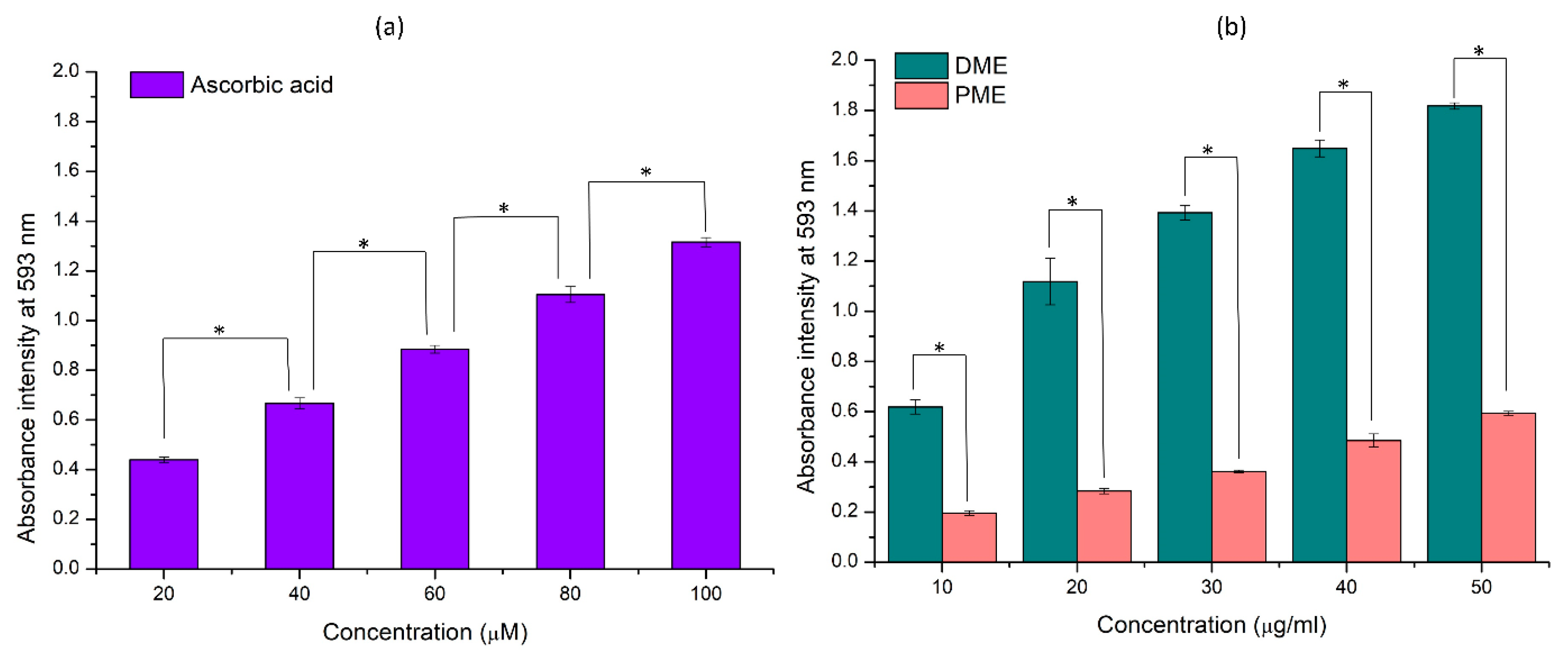
Figure 1. Ferric ion reducing antioxidant potential (FRAP) assay of (a) ascorbic acid [control] and (b) precipitated methanol extract (PME) and dissolved methanol extract (DME). Values presented as mean ± SD. * signifies p < 0.05.
Colloids 10 00005 g001
Figure 2. Absorbance spectra of silver nanoparticles synthesized under dark and 825 lumens white light by (a) PME; (b) DME; and (c) absorbance intensity (λmax) of silver nanoparticles synthesized by PME and DME under dark and 825 lumens white light. Values presented as mean ± SD. * signifies p < 0.05.
Colloids 10 00005 g002
Figure 3. Dose-dependent study on the impact of PME on aqueous extract-based silver nanoparticles synthesis by under (a) dark; (b) 825 lumens of white light; (c) absorbance maxima of silver nanoparticles synthesis under dark; and (d) absorbance maxima of silver nanoparticles synthesis under 825 lumens of white light. Values presented as mean ± SD. * signifies p < 0.05.
Colloids 10 00005 g003
Figure 4. Particle size distribution of (a) PME-AgNPs synthesized under dark condition; (b) DME-AgNPs synthesized under dark conditions; (c) PME-AgNPs synthesized under 825 lumens of white light; and (d) DME-AgNPs synthesized under 825 lumens of white light.
Colloids 10 00005 g004
Figure 5. Particle size distribution of silver nanoparticles synthesized by aqueous extract under dark via addition of (a) 20 µL of PME; (b) 50 µL of PME and under 825 lumens of white light via addition of (c) 20 µL of PME; and (d) 50 µL of PME.
Colloids 10 00005 g005
Figure 6. Scanning electron microscopy-based morphological analysis (a) PME-AgNPs synthesized under dark conditions; (b) DME-AgNPs synthesized under dark conditions; (c) PME-AgNPs synthesized under 825 lumens of white light; and (d) DME-AgNPs synthesized under 825 lumens of white light.
Colloids 10 00005 g006
Figure 7. Percent elemental distribution of (a) PME-AgNPs synthesized under dark conditions; (b) DME-AgNPs synthesized under dark conditions; (c) PME-AgNPs synthesized under 825 lumens of white light; and (d) DME-AgNPs synthesized under 825 lumens of white light.
Colloids 10 00005 g007
Figure 8. Nanoparticles stability study of AgNPs synthesized by (a) PME and (b) DME and absorbance taken at λmax of (c) PME and (d) DME. (c) Absorbance maxima of silver nanoparticles synthesis under dark and (d) absorbance maxima of silver nanoparticles synthesis under 825 lumens of white light. Values presented as mean ± SD. * signifies p < 0.05.
Colloids 10 00005 g008
Figure 9. Flowchart of the outcomes of the silver nanoparticle-synthesizing potential of PME and DME in various light conditions.
Colloids 10 00005 g009
Figure 10. Schematic representation of the effect of photoirradiation and role of PME in silver nanoparticles synthesis by aqueous extract.
Colloids 10 00005 g010
Table 1. Comparative GC-MS analysis of methanol extract (ME), precipitated methanolic extract (PME), and dissolved methanolic extract (DME).
Methanol ExtractPrecipitated Methanolic ExtractDissolved Methanolic Extract
PubChem ID
(Class of Compound)
Area %Metal Reducing PotentialPubChem ID
(Class of Compound)
Area %Metal Reducing PotentialPubChem ID
(Class of Compound)
Area %Metal Reducing Potential
1057 (phenol)32.75[12]1057 (phenol)19.34[12]1057 (phenol)27.14[12]
1176 (urea)1.42--1176 (urea)0.49--1176 (urea) 2.75--
139694 (pyridine)1.29--139694 (pyridine)0.44--139694 (pyridine)2.42--
91694353 (fatty acid ester)8.42--91694353 (fatty acid ester)3.32--------
985 (fatty acid)6.65[13]985 (fatty acid)13.34[13]------
5352845
(fatty alcohol)
1.68--5352845
(fatty alcohol)
2.28--------
533672
(fatty acid ester)
0.71--533672
(fatty acid ester)
1.23--------
214694
(phenol)
1.68--214694
(phenol)
0.6--------
91695431
(fatty acid ester)
0.96--91695431
(fatty acid ester)
2.78--293713
(thiopene)
1.14--
135453913
(imidazone)
0.38--135453913
(imidazone)
0.22--------
237332
(furan)
3.06[14]135443984
(amine)
0.51--135443984
(amine)
1.08--
24466
(pyran)
2.68[15]8181
(fatty acid ester)
0.43--8181
(fatty acid ester)
7.85--
6420230
(thiopene)
0.54--------6420230
(thiopene)
0.62--
293713
(thiopene)
0.4--14985
(vitamin E)
4.67[16]------
Table 2. Particle size analysis and polydispersity index of DME- and PME-based silver nanoparticles under various light conditions.
Extract TypeLight ConditionsSize (d. nm ± SD)PDI
DMEDark31.08 ± 10.700.293
825 lm47.48 ± 17.400.339
PMEDark23.94 ± 11.190.230
825 lm47.26 ± 15.800.208
Table 3. Particle size analysis of aqueous extract-based silver nanoparticles under varying quantities of PME.
Extract TypeLight ConditionsPME (µL)Size (d. nm ± SD)PDI
Aqueous extract (AE)Dark2027.91 ± 8.7490.336
505.898 ± 1.1970.438
825 lm207.919 ± 2.0510.452
505.790 ± 1.1440.466
Table 4. Percentage elemental analysis of silver nanoparticles by energy-dispersive X-ray spectroscopy.
Extract TypeLight ConditionsSilver (% ± SD)Carbon (% ± SD)Oxygen (% ± SD)Nitrogen (% ± SD)
PMEDark68.01 ± 2.31419.86 ± 1.0754.05 ± 0.7341.28 ± 0.676
825 lm69.46 ± 1.19519.66 ± 0.6083.47 ± 0.8201.28 ± 0.395
DMEDark58.11 ± 3.11425.79 ± 1.94910.06 ± 2.1242.24 ± 2.352
825 lm72.43 ± 1.93015.21 ± 1.8875.69 ± 0.5581.18 ± 0.183
Disclaimer/Publisher’s Note: The statements, opinions and data contained in all publications are solely those of the individual author(s) and contributor(s) and not of MDPI and/or the editor(s). MDPI and/or the editor(s) disclaim responsibility for any injury to people or property resulting from any ideas, methods, instructions or products referred to in the content.