Article

Comparative Analysis of the Impact of Additively Manufactured Polymer Tools on the Fiber Configuration of Injection Molded Long-Fiber-Reinforced Thermoplastics


1
Institute of Polymer Technology, University of Erlangen-Nuremberg, 91058 Erlangen, Germany
2
Department of Additive Manufacturing, BMW Group, 85764 Oberschleissheim, Germany
3
Department of Mechanical Engineering, Professorship of Laser-Based Additive Manufacturing, Technical University of Munich, 85748 Munich, Germany
4
Mechanical Engineering Department, Polymer Engineering Center, University of Wisconsin-Madison, Madison, WI 53706, USA
*
Author to whom correspondence should be addressed.
Contributed equally to this work.
J. Compos. Sci. 2020, 4(3), 136; https://doi.org/10.3390/jcs4030136
Submission received: 7 August 2020 / Revised: 7 September 2020 / Accepted: 11 September 2020 / Published: 15 September 2020
(This article belongs to the Special Issue Discontinuous Fiber Composites, Volume II)

Abstract

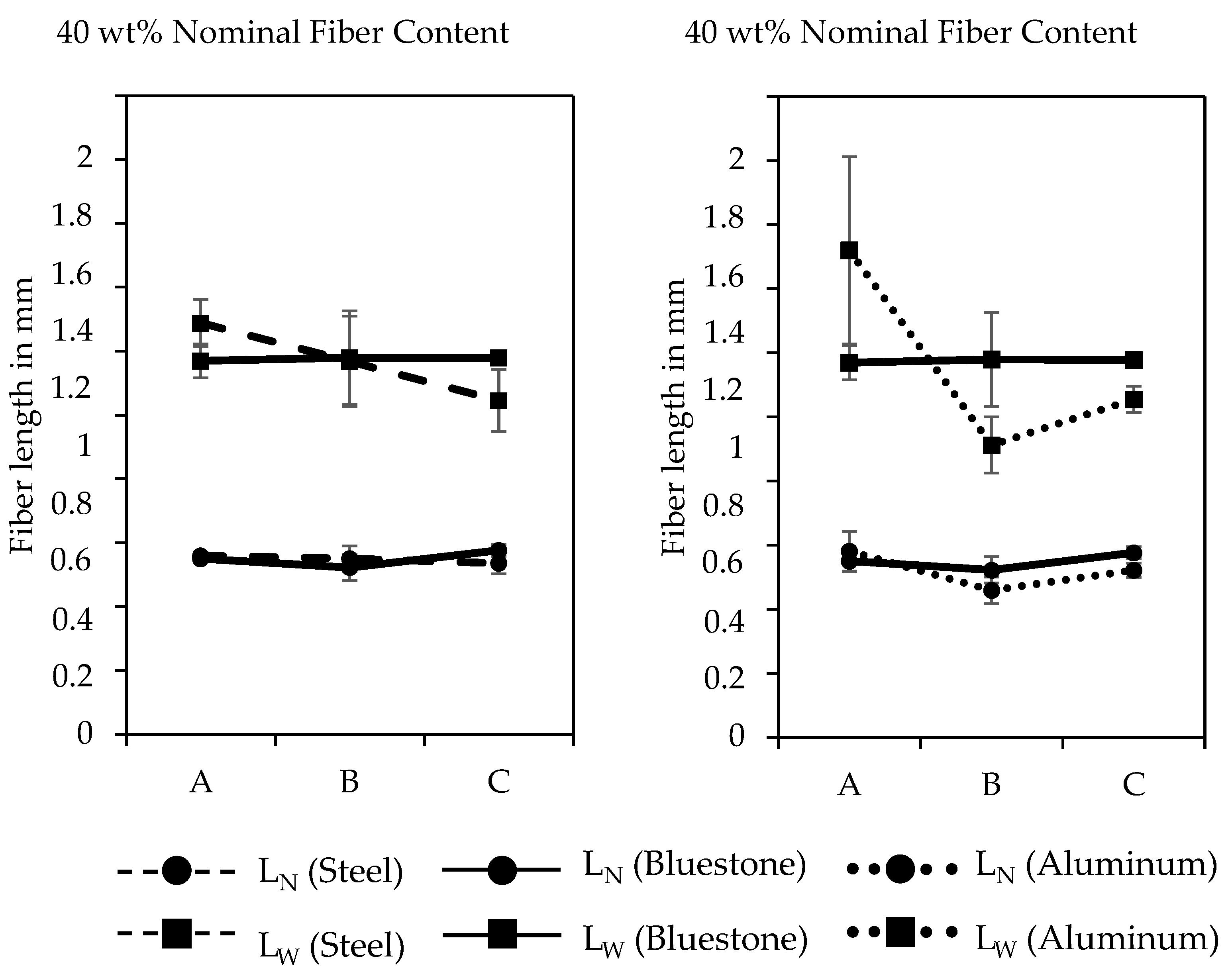
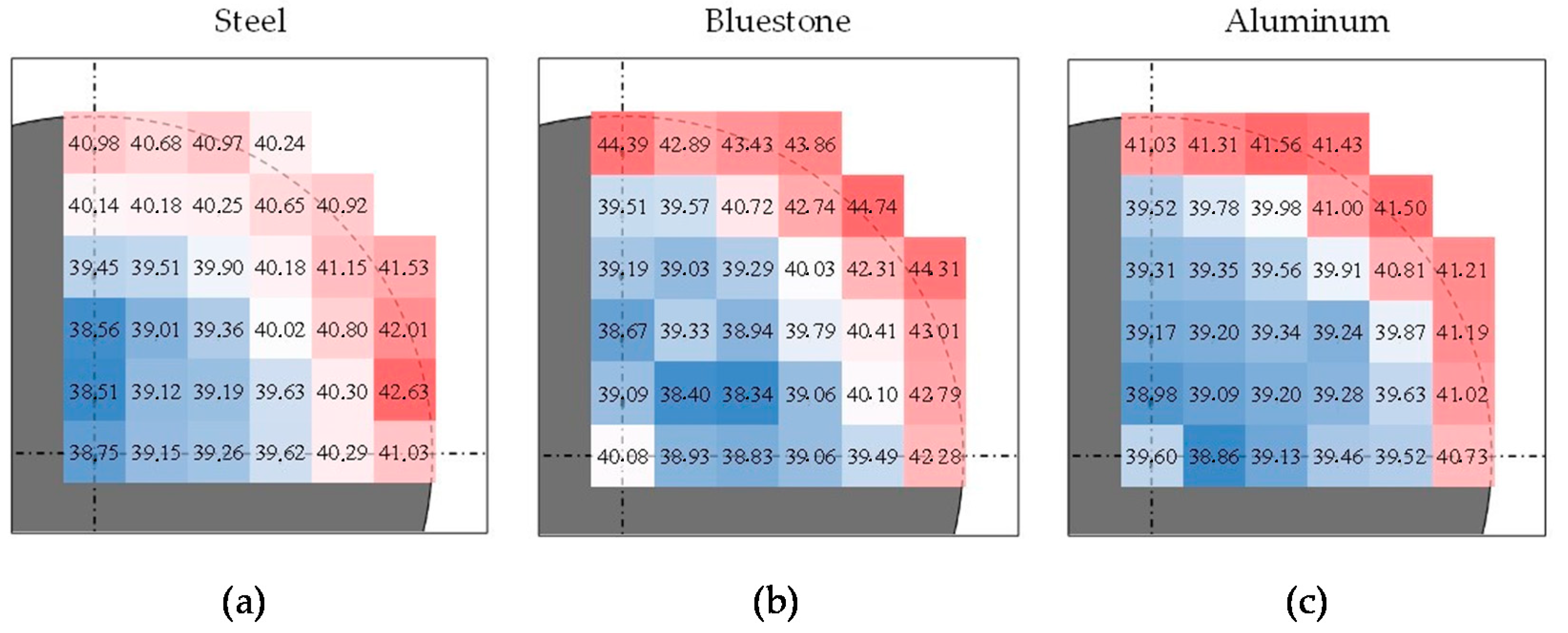
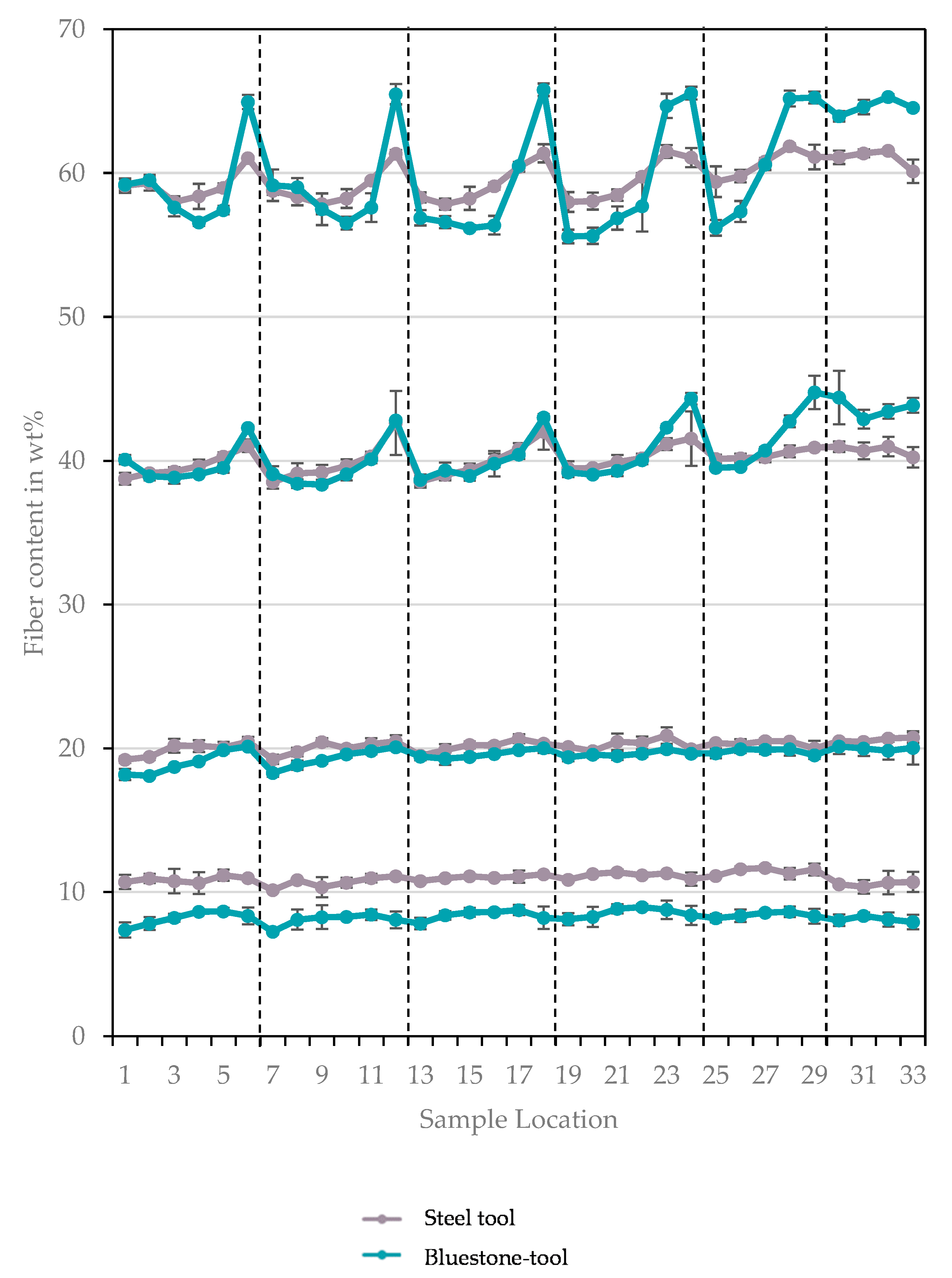
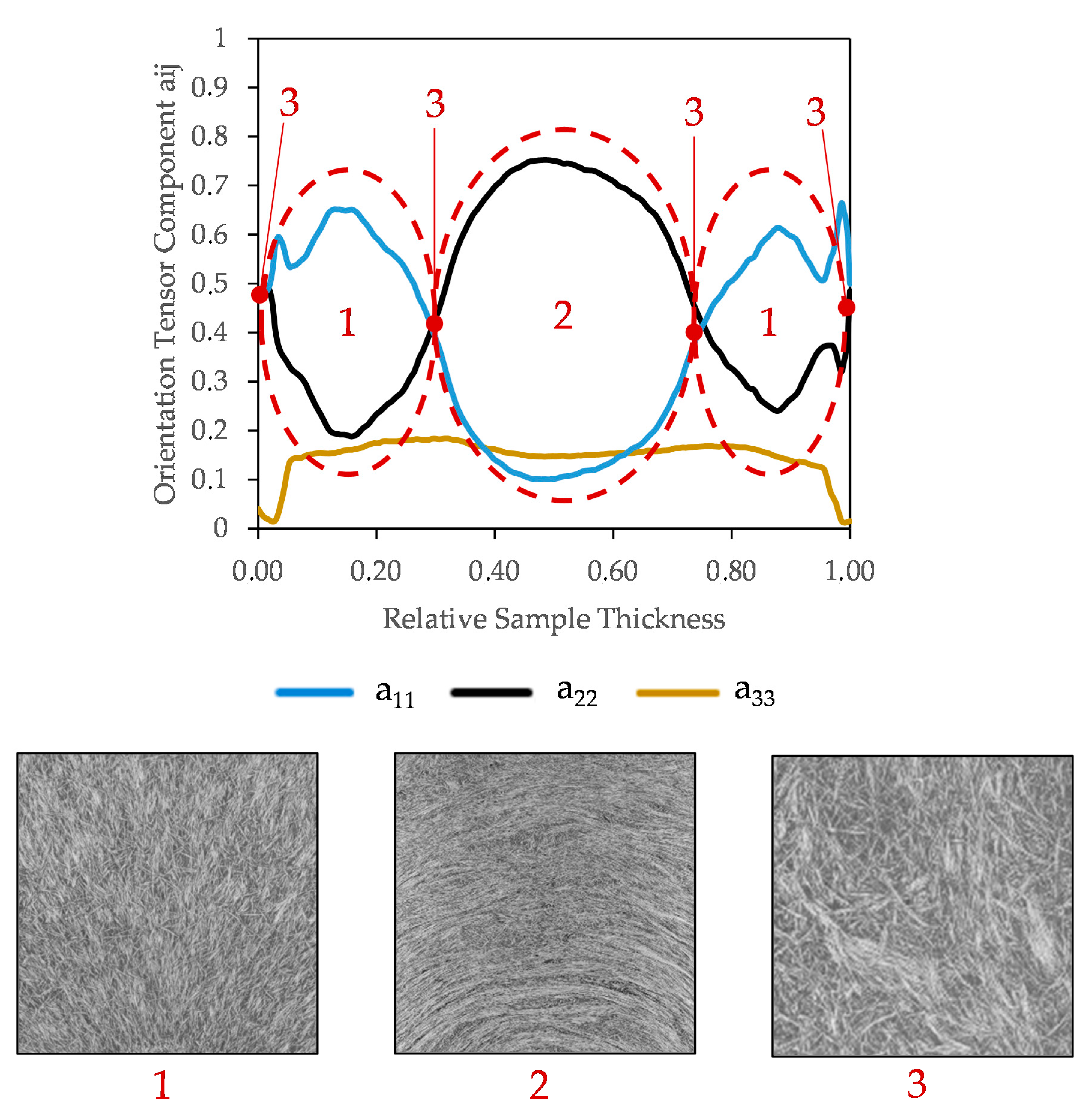
Additive tooling (AT) utilizes the advantages of rapid tooling development while minimizing geometrical limitations of conventional tool manufacturing such as complex design of cooling channels. This investigation presents a comparative experimental analysis of long-fiber-reinforced thermoplastic parts (LFTs), which are produced through additively manufactured injection molding polymer tools. After giving a review on the state of the art of AT and LFTs, additive manufacturing (AM) plastic tools are compared to conventionally manufactured steel and aluminum tools toward their qualification for spare part and small series production as well as functional validation. The assessment of the polymer tools focuses on three quality criteria concerning the LFT parts: geometrical accuracy, mechanical properties, and fiber configuration. The analysis of the fiber configuration includes fiber length, fiber concentration, and fiber orientation. The results show that polymer tools are fully capable of manufacturing LFTs with a cycle number within hundreds before showing critical signs of deterioration or tool failure. The produced LFTs moldings provide sufficient quality in geometrical accuracy, mechanical properties, and fiber configuration. Further, specific anomalies of the fiber configuration can be detected for all tool types, which include the occurrence of characteristic zones dependent on the nominal fiber content and melt flow distance. Conclusions toward the improvement of additively manufactured polymer tool life cycles are drawn based on the detected deteriorations and failure modes.
Keywords: additive tooling; additive manufacturing; rapid tooling; injection molding; polypropylene; long-fiber-reinforced thermoplastics; fiber length; fiber orientation; fiber concentration; stereolithography additive tooling; additive manufacturing; rapid tooling; injection molding; polypropylene; long-fiber-reinforced thermoplastics; fiber length; fiber orientation; fiber concentration; stereolithography