
Article

Evaluation of Tensile Properties of 3D-Printed PA12 Composites with Short Carbon Fiber Reinforcement: Experimental and Machine Learning-Based Predictive Modelling


1
Key Laboratory of Inlet and Exhaust Technology, Ministry of Education, Nanjing 210016, China
2
College of General Aviation and Flight, Nanjing University of Aeronautics and Astronautics, Liyang 213300, China
*
Author to whom correspondence should be addressed.
J. Compos. Sci. 2025, 9(9), 461; https://doi.org/10.3390/jcs9090461
Submission received: 19 July 2025 / Revised: 9 August 2025 / Accepted: 28 August 2025 / Published: 1 September 2025
(This article belongs to the Special Issue 3D Printing and Additive Manufacturing of Composites)

Abstract

The present study investigates the tensile properties of 3D-printed PA12 composites reinforced with short carbon fibers, focusing on the impact of printing parameters on material performance. We employed both experimental testing and machine learning-based predictive modeling to evaluate the influence of layer thickness, extrusion width, and raster angles on failure stress, failure strain, and stress–strain curves. Four machine learning models, including Gaussian process regression (GPR), gradient boosting regression (GBR), random forest (RF), and artificial neural network (ANN), were developed and trained on the experimental data. The results indicated that ANN and GPR models outperformed RF and GBR in predicting mechanical properties, with ANN demonstrating the highest accuracy across all tasks. A SHAP analysis was conducted to interpret the models, revealing that raster angles significantly influence failure stress predictions, while extrusion width predominantly affects failure strain predictions. The ability of the models to predict entire stress–strain curves provides a comprehensive understanding of the material’s mechanical behavior, which is crucial for applications requiring detailed material response data. This study highlights the potential of machine learning models, particularly ANN, in predicting the tensile properties of 3D-printed composites. The findings offer valuable insights for optimizing the 3D printing process to achieve desired material characteristics and pave the way for further research in integrating these predictive tools into additive manufacturing workflows for real-time optimization and quality control.

1. Introduction

The advent of additive manufacturing (AM), particularly fused deposition modeling (FDM), has revolutionized the production of polymer-based composite materials by offering design flexibility, reduced material waste, and the ability to create complex geometries. However, the mechanical properties of 3D-printed composites are often limited by factors such as fiber orientation, printing parameters, and interlayer bonding. Extensive research has been conducted to enhance the tensile performance of these materials through optimized printing processes and the incorporation of reinforcing agents.
Ferreira et al. (2017) demonstrated significant improvements in tensile strength and stiffness of 3D-printed polylactic acid (PLA) composites reinforced with short carbon fibers, highlighting the potential of short fibers in enhancing mechanical performance [1]. Dubey et al. (2024) explored the effects of diverse infill patterns on the mechanical properties of short carbon fiber-reinforced nylon composites, finding that rectilinear patterns yielded the highest tensile strength, while triangular patterns exhibited superior flexural properties [2]. Burnett et al. (2025) revealed that printing parameters such as layer thickness and raster angle significantly impact the mechanical properties of 3D-printed carbon fiber-reinforced polymers [3]. A review by Abualbandora et al. (2025) summarized the effects of 3D printing parameters on the mechanical and failure performance of short carbon fiber-reinforced polymer (CFRP) composites [4].
The mechanical characterization of 3D-printed composites at multiple scales is crucial for understanding their behavior under various loading conditions [5]. Verdejo de Toro et al. (2020) compared the mechanical properties of short carbon fiber-reinforced polyamide produced by FDM and polymer injection molding (PIM), finding that FDM parts exhibited lower tensile strength but comparable stiffness and improved compressive properties [6]. Kubota et al. (2021) revealed that build-up orientation significantly affects tensile strength in short carbon fiber/PA-6 composites, with certain orientations yielding higher strength due to better fiber alignment and interlayer bonding [7]. Hou and Panesar (2023) found that manufacturing-induced interfaces led to a reduction in tensile modulus, emphasizing the need for improved interlayer bonding in FDM processes [8].
Caminero et al. (2019) reported enhanced tensile and flexural properties in 3D-printed PLA composites reinforced with graphene nanoplatelets (GNPs) due to effective stress transfer to the graphene reinforcement [9]. Nikiema et al. (2023) demonstrated that humidity can significantly degrade the tensile strength and stiffness of 3D-printed Onyx parts [10]. Távara et al. (2023) found that anisotropy and aging significantly impact the mechanical properties of short carbon fiber composite parts [11]. Ivey et al. (2017) provided insights into the mechanical properties and failure mechanisms of short-fiber-reinforced composites produced using additive manufacturing, emphasizing the role of fiber orientation and interlayer bonding [12]. Tekinalp et al. (2014) developed highly oriented carbon fiber–polymer composites via additive manufacturing, demonstrating significant improvements in tensile properties due to optimized fiber alignment [13].
Naranjo-Lozada et al. (2019) revealed that continuous fibers yield superior tensile properties compared to chopped fibers, highlighting the importance of fiber continuity in enhancing the mechanical performance of 3D-printed composites [14]. Tandon et al. (2021) found that the triangular pattern significantly improves the tensile strength and stiffness of printed parts, emphasizing the role of infill pattern in determining the mechanical properties [15]. Belei et al. (2022) optimized printing parameters such as extrusion temperature, printing bed temperature, layer height, and printing speed to enhance the tensile performance of short carbon fiber-reinforced polyamide, revealing that layer height and printing bed temperature were the most influential parameters [16]. Calles et al. (2021) found that the type of material and the number of perimeters were the most significant factors affecting tensile strength, while short carbon fiber reinforcements did not improve mechanical properties due to higher porosity in the reinforced specimens [17].
Ramesh et al. (2021) provided a comprehensive review of the influence of process parameters on the properties of additively manufactured fiber-reinforced polymer composite materials [18]. Zhang et al. (2018) revealed that the interfacial bonding strength of short carbon fiber-reinforced acrylonitrile-butadiene-styrene (ABS) composites was significantly influenced by printing parameters and the interaction between the carbon fibers and the polymer matrix [19]. Wang et al. (2023) compared towpreg extrusion and in situ impregnation for short-continuous carbon fiber-reinforced thermoplastic composites, finding that both processes had their advantages and limitations [20]. Bhandari et al. (2019) demonstrated that annealing could significantly improve the interlayer bonding in 3D-printed short carbon fiber reinforced PETG and PLA composites, resulting in enhanced mechanical properties [21].
Simpson (2018) highlighted the potential of stereolithography in producing high-resolution composite parts with improved mechanical properties [22]. Spoerk et al. (2018) found that the mechanical properties of oriented short carbon fiber-filled polypropylene parts were significantly influenced by the fiber orientation [23]. Gupta et al. (2020) conducted a detailed study on the processing, mechanical characterization, and micrography of 3D-printed short carbon fiber-reinforced polycarbonate polymer matrix composite material [24]. Somireddy et al. (2020) revealed that optimizing printing parameters could significantly enhance the mechanical performance of 3D-printed composite parts with short carbon fiber reinforcements [25].
In conclusion, optimizing printing parameters are crucial for enhancing the mechanical properties of 3D-printed short fiber-reinforced composites. Future research should focus on developing advanced printing techniques, optimizing material properties, and exploring efficient methods for predicting mechanical properties. This study aims to provide a comprehensive evaluation of the tensile properties of 3D-printed PA12 composites reinforced with short carbon fibers, offering valuable insights for optimizing the printing process and enhancing the mechanical performance of these materials. Through the design of experiments, the mechanical properties of short fiber-reinforced PA12 composites under different printing parameters are investigated to explore the effects of relevant parameters. Furthermore, various machine learning models are employed to predict the mechanical properties, aiming to develop an efficient performance prediction method. This approach will facilitate future efficient performance evaluation and process parameter optimization.

2. Materials and Methods

2.1. Materials

In this study, the material utilized for 3D printing is Raise3D Industrial PA12 CF, a short carbon fiber-reinforced composite based on modified nylon. This material integrates the optimal characteristics of PA6 and PA12, such as toughness and low moisture absorption, and further enhances the mechanical, thermal, and surface qualities of printed components through the incorporation of 10% short carbon fibers. The physical and mechanical properties of PA12 CF are as follows: a density of 1.03 g/cm3, a heat deflection temperature of 103.6 °C at 1.8 MPa and 142 °C at 0.45 MPa, and a melt index of 9.91 g/10 min. In terms of mechanical properties, the Young’s modulus is 4736 ± 88 MPa in the X-Y direction and 2086 ± 92 MPa in the Z direction; the tensile strength is 86 ± 1 MPa in the X-Y direction and 44.7 ± 2.1 MPa in the Z direction; the elongation at break is 2.8 ± 0.1% in the X–Y direction and 1.9 ± 0.2% in the Z direction. These performance indicators demonstrate significant anisotropy in the mechanical properties of PA12 CF. The characteristics of PA12 CF make it an ideal choice for lightweight, durable end-use applications, such as fixtures, and it is widely used in various functional components in industries like manufacturing, automotive, and aerospace.

2.2. Sample Preparation

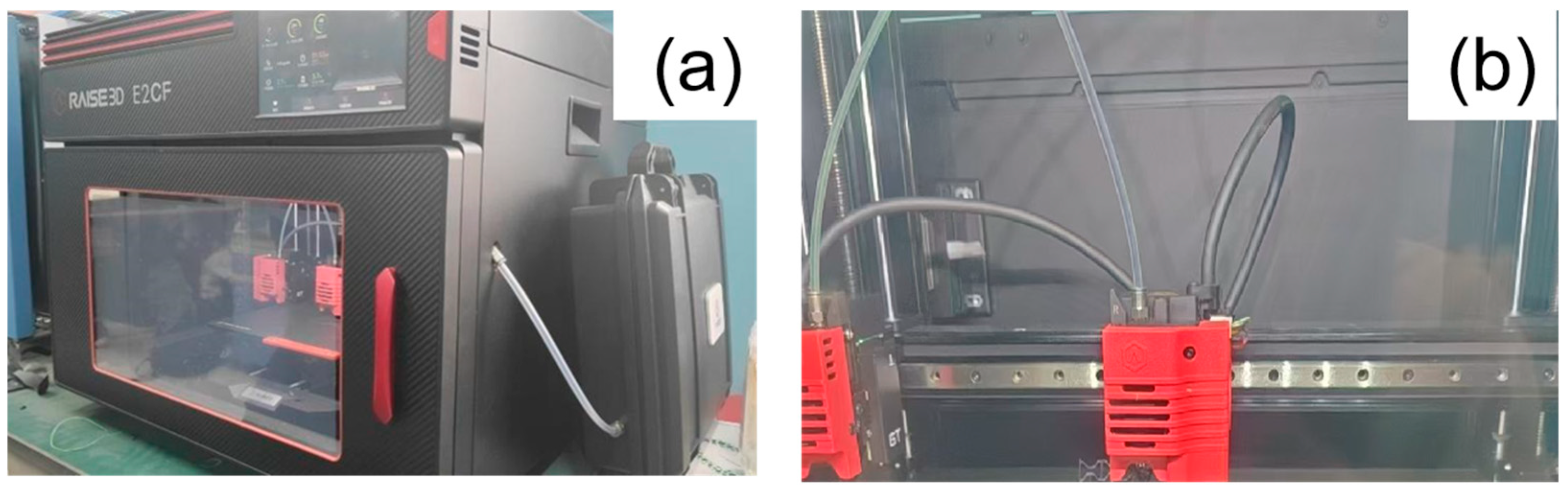
To investigate the mechanical characteristics of 3D-printed PA12 CF specimens, the Raise3D E2CF 3D printer (Raise3D, Shanghai, China) was employed as shown in Figure 1, which is renowned for its precision and reliability in producing high-quality prints. This printer features a maximum nozzle temperature of 300 °C and a heated bed temperature of 110 °C, equipped with a hardened steel nozzle of 0.4 mm diameter.
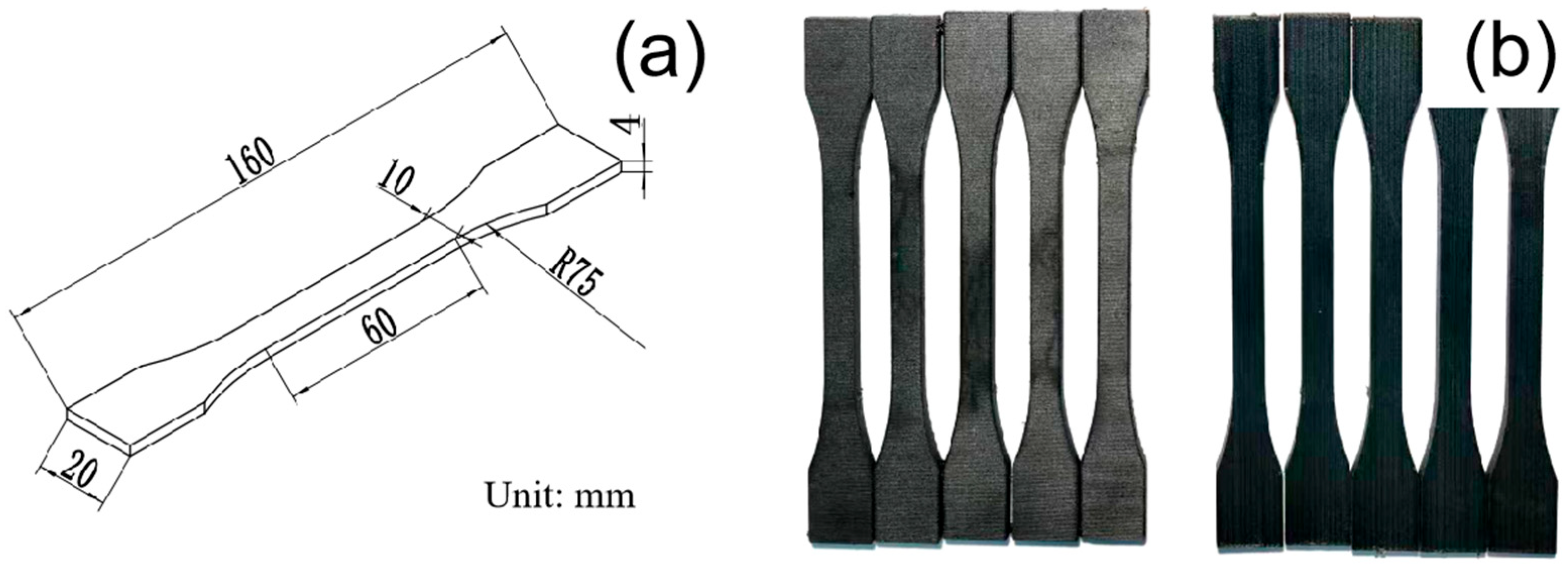
To assess the mechanical properties of the printed PA12 CF specimens, tensile tests were conducted in accordance with ISO 527-2-2012 [26]. As shown in Figure 2, the specimens were printed with two outer layers (perimeters) to enhance adhesion to the build plate and maintain structural integrity during the printing process.
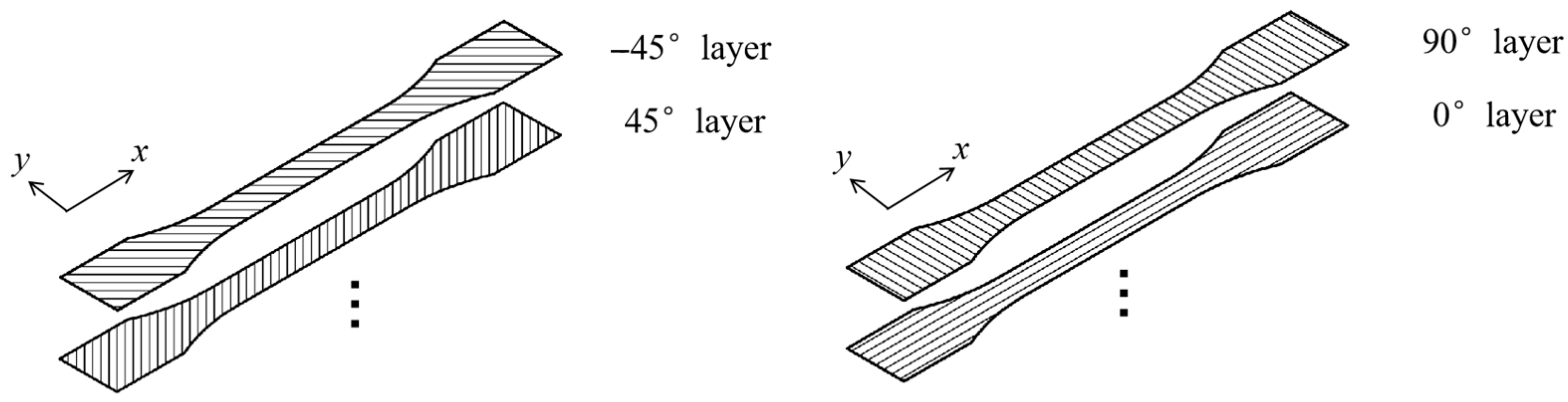
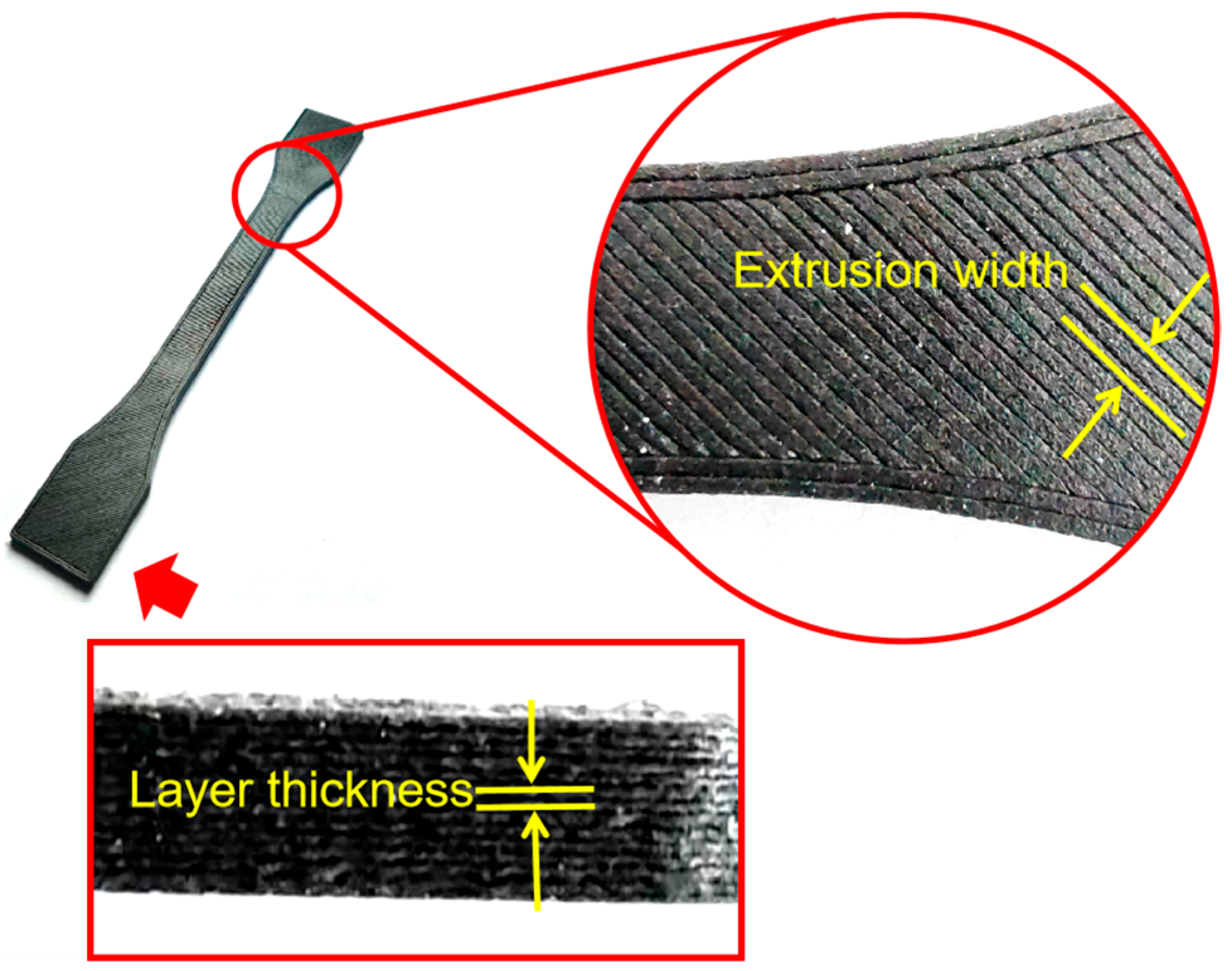
The printing process was meticulously controlled to explore the influence of key parameters on the mechanical properties of the printed specimens. Specifically, three parameters were varied: raster angles (0°/90° and 45°/−45°), layer thickness (0.1 mm and 0.3 mm), and extrusion width (0.4 mm and 0.8 mm). These parameters were chosen to study their impact on the tensile properties of the printed parts as shown in Figure 3 and Figure 4. The experimental design variables are summarized in Table 1. Each specimen was printed horizontally on the build plate with 100% linear infill, ensuring consistent layer deposition. Three replicates were printed for each parameter combination to ensure statistical reliability.
To ensure consistent and reproducible results, several printing parameters were kept constant during the fabrication process. These fixed parameters, detailed in Table 2, were selected based on the manufacturer’s recommendations and established best practices. The printing speed was maintained at 40 mm/s throughout the experiments. They were chosen to isolate the effects of the experimental variables on the mechanical properties of the printed specimens.

2.3. Mechanical Test

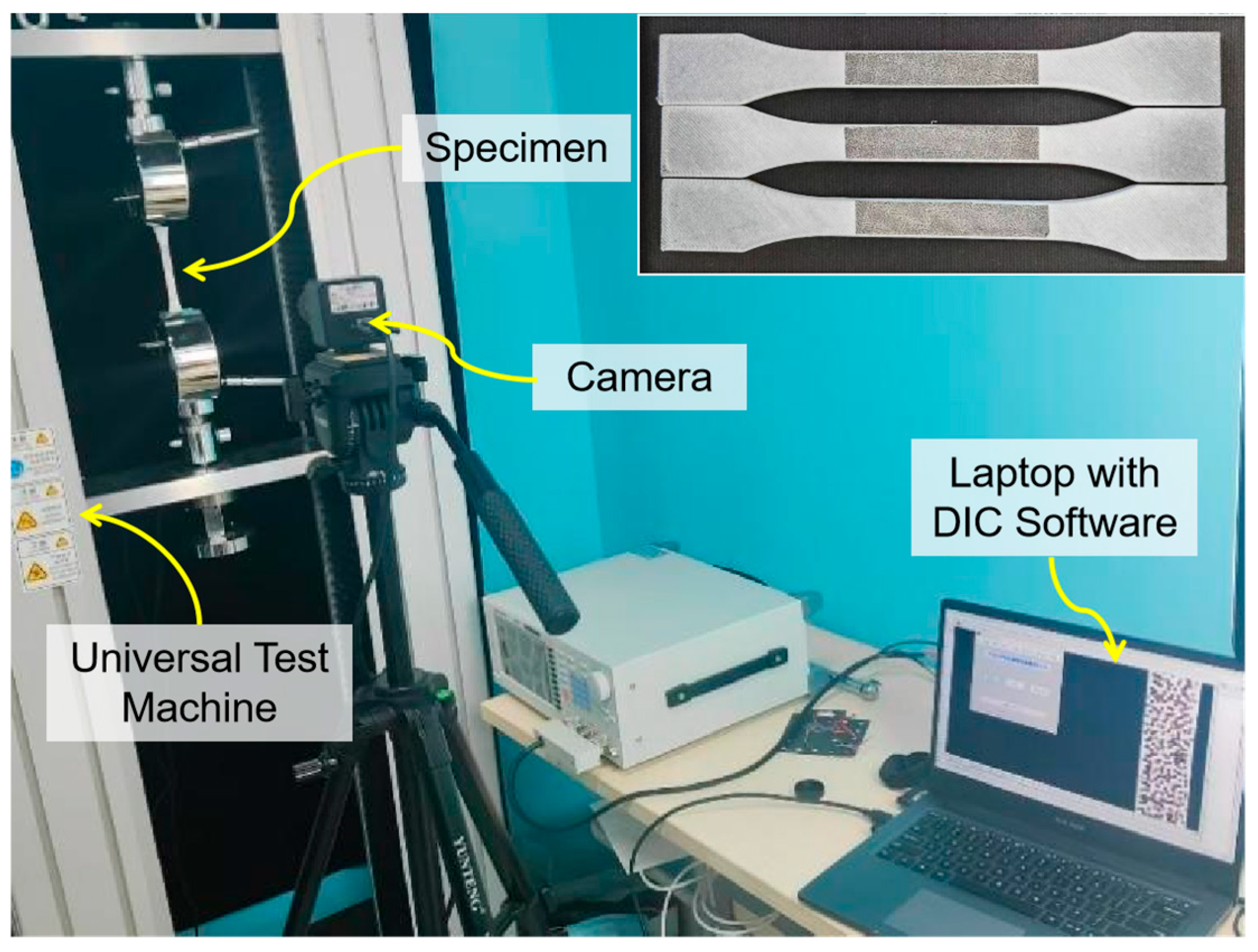
These dogbone-shaped tensile specimens were prepared to measure the mechanical behavior of 3D-printed PA composites with short carbon fiber reinforcement under tensile stress as shown in Figure 2. The specimens had a total length of 160 mm and a thickness of 4 mm, conforming to the standard specifications to ensure the validity of the experimental results. The tensile tests were conducted using an SL-10kN (Suliang Instrument Technology Company, Suzhou, China)universal testing machine, capable of handling a maximum load of 10 kN as shown in Figure 5. The samples were stretched to failure at a constant crosshead speed of 1 mm/min, with all tests performed at ambient temperature. To accurately measure the strain during the tensile tests, a self-developed digital image correlation (DIC) system was employed. The DIC system provided a non-contact method for strain measurement, capturing high-resolution images of the specimen surface during the test. The system tracked the deformation and displacement of the specimen, allowing for precise strain calculations. The DIC system was calibrated to ensure accurate and reliable strain measurements, as depicted in Figure 5.

2.4. Machine Learning-Based Predictive Modelling
Four machine learning models were developed to predict the stress–strain behavior of 3D-printed PA12 composites reinforced with short carbon fibers (CF) based on the printing parameters. The models aim to understand and quantify the influence of layer thickness, extrusion width, and raster angles on the mechanical properties of the printed material.

2.4.1. Data Preparation and Preprocessing

The input parameters for these ML models included four printing parameters: layer thickness, extrusion width, and two raster angles, forming a 4 × N array. The printing parameters were loaded from a CSV file, which included layer thickness, extrusion width, raster angle 1, and raster angle 2 for each specimen.
The output parameters were the stress–strain curves, failure strain, and failure stress. The output data used for training and validating the machine learning models were derived from the mechanical testing of 3D-printed PA12 composites. The stress–strain curves were obtained by integrating the stress data from the testing machine and the strain data from the DIC system. To ensure consistency and compatibility for model training, each stress–strain curve was processed to contain an identical number of data points. Specifically, each curve was resampled to include exactly 100 data points, facilitating uniformity across the dataset. The ultimate failure strain and failure stress were extracted from these processed curves as key mechanical properties for prediction. This preprocessing step ensured that the input data for the machine learning models were standardized and representative of the material’s mechanical behavior under different printing conditions.

2.4.2. Model Architecture and Training Configuration

Gaussian Process Regression (GPR): The GPR model was constructed using a squared exponential kernel function, which is commonly employed for its smoothness and ability to capture complex relationships between input parameters (layer thickness, extrusion width, and raster angles) and output mechanical properties (failure strain, failure stress, and stress–strain curves). The model was trained using a maximum likelihood estimation approach to optimize the kernel parameters, ensuring accurate predictions of the mechanical behavior based on the given printing parameters.
Gradient Boosting Regression (GBR): The GBR model was developed with a series of decision trees as the base learners. The model was configured with a learning rate of 0.1 and a total of 100 trees, which were iteratively built to minimize the mean squared error between the predicted and actual mechanical properties. This configuration allowed the model to effectively capture the non-linear relationships between the printing parameters and the mechanical properties, providing robust predictions for failure strain, failure stress, and stress–strain curves.
Random Forest (RF): The RF model was constructed with an ensemble of 100 decision trees. Each tree was trained on a random subset of the data, and the final prediction was obtained by averaging the outputs of all trees. This approach not only enhanced the model’s robustness against overfitting but also provided a comprehensive understanding of the relationships between the printing parameters and the mechanical properties. The model was configured to handle both regression tasks (predicting failure strain and failure stress) and the prediction of the entire stress–strain curve.
Artificial Neural Network (ANN): The ANN model was designed as a multi-layer perceptron (MLP) with a specific architecture to capture the complex relationships between the printing parameters and the mechanical properties. The input layer consisted of four neurons, corresponding to the four printing parameters: layer thickness, extrusion width, and two raster angles. The hidden layers were composed of three fully connected layers. The first fully connected layer had 128 neurons, followed by batch normalization, ReLU activation, and Dropout with a rate of 0.3. The second fully connected layer included 64 neurons, followed by batch normalization, ReLU activation, and Dropout with a rate of 0.2. The third fully connected layer had 32 neurons with ReLU activation. The output layer consisted of 100 neurons, corresponding to the 100 stress values in the stress–strain curve. The regression layer computed the mean squared error (MSE) loss. The model was trained using the backpropagation algorithm to optimize the weights and biases, minimizing the MSE loss function. This configuration enabled the ANN to accurately predict the failure strain, failure stress, and the stress–strain curves based on the given printing parameters.
All models were implemented and trained using MATLAB R2024a, leveraging its extensive libraries and tools for machine learning. The training process involved splitting the dataset into training and validation sets, with 80% of the data used for training and 20% for validation. The performance of each model was evaluated based on the mean absolute error (MAE), root mean squared error (RMSE), and the coefficient of determination (R2), to ensure the accuracy and reliability of the predictions.

3. Results

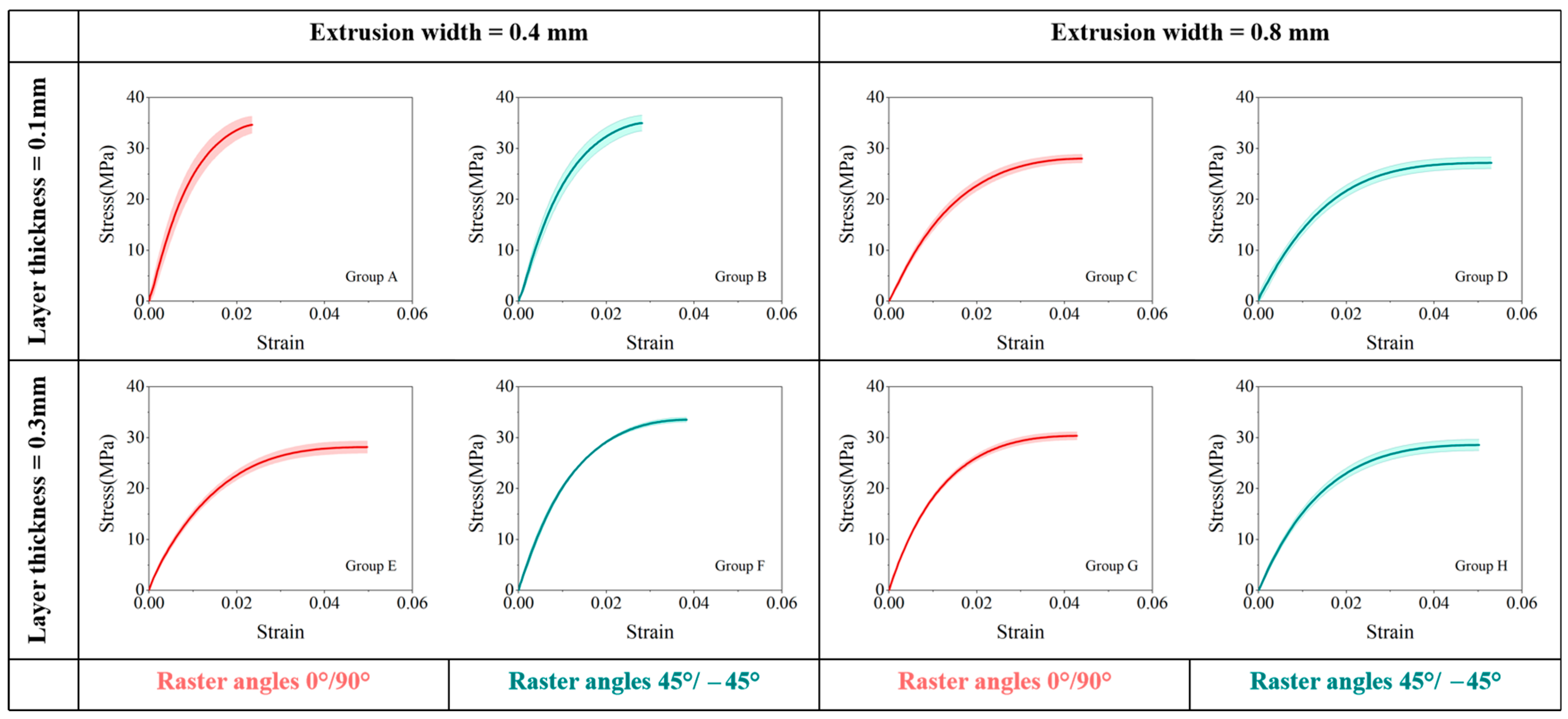
The tensile tests were conducted on eight distinct groups of specimens, each comprising five samples. The groups were differentiated by their layer thickness, extrusion width, and raster angles, as detailed in Table 1. The stress–strain curves for each group are presented in Figure 6, which provide insights into the mechanical behavior of the 3D-printed PA composites with short carbon fiber reinforcement under tensile loading.

3.1. Experimental Results

3.1.1. Stress–Strain Response

Figure 6 presents the experimentally determined stress–strain curves for eight distinct groups (A through H) of 3D-printed PA12 composites, each comprising five test specimens. Each subplot illustrates the average stress–strain curve for a group, with the central bold line representing the mean response and the shaded area indicating the 95% confidence interval of the measurements. This visualization allows for a detailed comparison of the mechanical behavior across different printing parameter configurations.
The stress–strain curves presented in Figure 6 exhibit several common characteristics typical of polymer composite materials. Initially, all curves demonstrate a linear elastic region, where stress is proportional to strain, indicating that the material behaves elastically under low load conditions. This region is followed by a non-linear, plastic-like region where the material undergoes deformation without a proportional increase in stress. This transition signifies the onset of yielding and the beginning of the material’s ability to undergo large deformations before failure.
The non-linearity observed in the curves is indicative of the complex deformation mechanisms occurring within the composite, which may include matrix yielding, fiber-matrix debonding, and fiber breakage. The curves also show a distinct yield point beyond which the material experiences a gradual increase in stress with increasing strain, reflecting the progressive failure of the composite structure.
Comparing groups A and B (0.1 mm layer thickness) with groups E and F (0.3 mm layer thickness), it is evident that the specimens with a finer layer thickness exhibit higher ultimate tensile strengths. This is likely due to the increased number of layers contributing to the load-bearing capacity of the specimen.
Similarly, comparing groups C and D (0.8 mm extrusion width) with groups A and B (0.4 mm extrusion width), the specimens with a narrower extrusion width show higher tensile strengths. This could be attributed to the finer layer resolution, which may lead to better interlayer bonding and thus improved mechanical properties.
The results indicate that both the raster angle and the printing parameters such as layer thickness and extrusion width significantly influence the tensile properties of the 3D-printed PA12 CF. The 45°/−45° raster angle configuration tends to produce specimens with higher ductility, while the 0°/90° configuration results in higher tensile strengths but lower ductility. Finer layer thicknesses and narrower extrusion widths generally lead to improved tensile strengths, suggesting that these parameters can be optimized to tailor the mechanical properties of the printed components for specific applications.
The differences in the curves highlight the importance of printing parameters in determining the performance of 3D-printed materials. Future research could further explore the optimization of these parameters for specific mechanical property requirements.
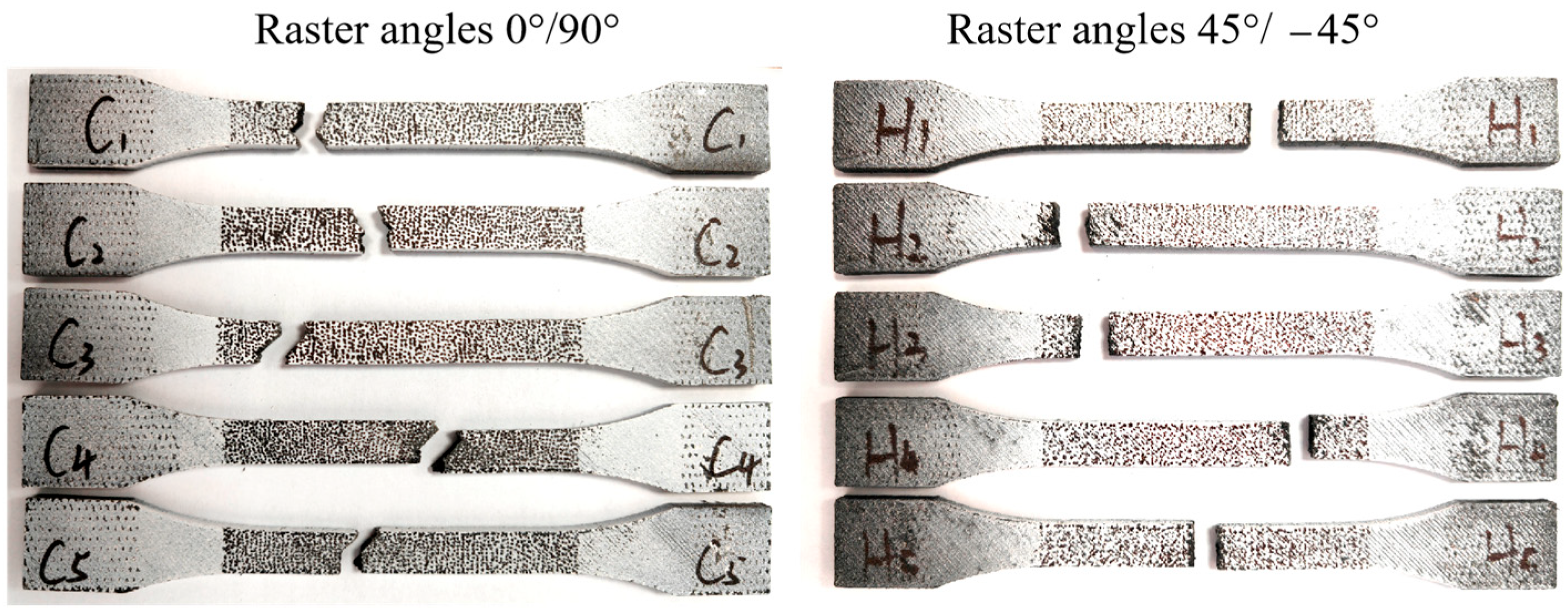
As shown in Figure 7, the images provided depict typical fracture surfaces for selected groups, which are crucial for interpreting the mechanical behavior observed during tensile testing.
The fracture surfaces of the specimens generally exhibit distinct regions that indicate different failure modes. The images show that the specimens fail predominantly in a ductile manner, characterized by extensive plastic deformation and the presence of fine, dimple-like features on the fracture surface. This ductile failure is indicative of energy absorption and plastic flow prior to fracture.

3.1.2. Statistical Analysis of Failure Stress and Failure Strain

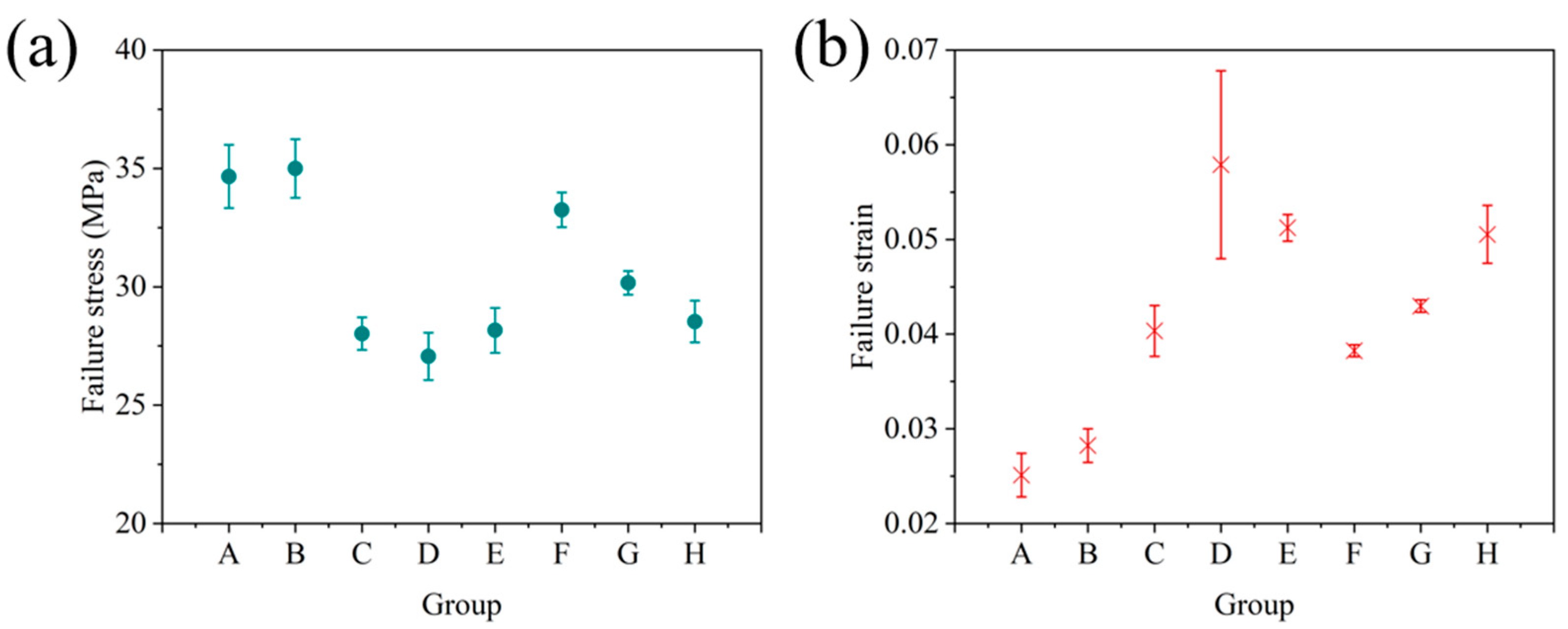
The statistical analysis of the experimentally obtained failure stress and failure strain data for 3D-printed PA12 composites is presented in Figure 8a and Figure 8b, respectively. These figures summarize the mechanical properties across eight distinct groups, each characterized by unique combinations of layer thickness, extrusion width, and raster angles, as detailed in Table 1.
Figure 8a illustrates the failure stress values for each group, with error bars representing the standard deviation. Groups A and B, which both feature a layer thickness of 0.1 mm and an extrusion width of 0.4 mm, exhibit the highest failure stress, with mean values around 35 MPa. This suggests that these parameter settings contribute to enhanced material strength. In contrast, groups E, F, G, and H, characterized by a layer thickness of 0.3 mm, show significantly lower failure stress, averaging around 30 MPa. This decrease in strength with increased layer thickness is consistent with the general understanding that thinner layers can lead to better interlayer bonding and thus higher strength in 3D-printed materials. The influence of raster angles is less straightforward. Groups B and D, both with raster angles of 45°/−45°, do not show a distinct advantage over groups A and C, which have raster angles of 0°/90°. This indicates that while raster angle can affect material properties, its impact may be moderated by other factors such as layer thickness and extrusion width.
Figure 8b presents the failure strain data for each group. The variability in failure strain is more pronounced than in failure stress, with groups C and E showing particularly high variability, as indicated by the longer error bars. Group C, with a layer thickness of 0.1 mm and raster angles of 0°/90°, exhibits the highest mean failure strain, suggesting that these parameters may enhance the material’s ductility. Conversely, groups F and H, both with raster angles of 45°/−45°, show lower mean failure strain, indicating that these settings might reduce material ductility. The influence of extrusion width on failure strain is also evident. Groups C and D, which have an extrusion width of 0.8 mm, generally show higher failure strain compared to groups A and B, which have an extrusion width of 0.4 mm. This suggests that a wider extrusion width might contribute to increased ductility, possibly by allowing for better material flow and layer adhesion during printing.
The statistical analysis of failure stress and failure strain reveals significant variations across different printing parameter combinations. Thinner layer thicknesses (0.1 mm) generally lead to higher failure stress, while wider extrusion widths (0.8 mm) tend to enhance failure strain. The impact of raster angles is more complex, with no clear trend observed between 0°/90° and 45°/−45° configurations. These findings underscore the importance of carefully selecting printing parameters to achieve desired mechanical properties in 3D-printed PA12 composites.

3.2. ML-Based Predictions

In the experimental design, a total of 40 samples across eight distinct groups were utilized. For each group, the last sample was designated as part of the test set, while the remaining samples were included in the training set. This approach ensured that each group was represented in both the training and testing phases, allowing for a robust evaluation of the model’s ability to generalize across different printing parameter configurations. Specifically, this resulted in a training set comprising 32 samples (four samples from each of the eight groups, excluding the last one) and a test set consisting of the remaining eight samples (the last sample from each group). This division of the dataset aimed to provide a comprehensive assessment of the model’s predictive performance on unseen data, thereby validating its effectiveness and reliability in predicting the stress–strain behavior of 3D-printed materials under various printing conditions.

3.2.1. Prediction of Failure Stress and Failure Strain

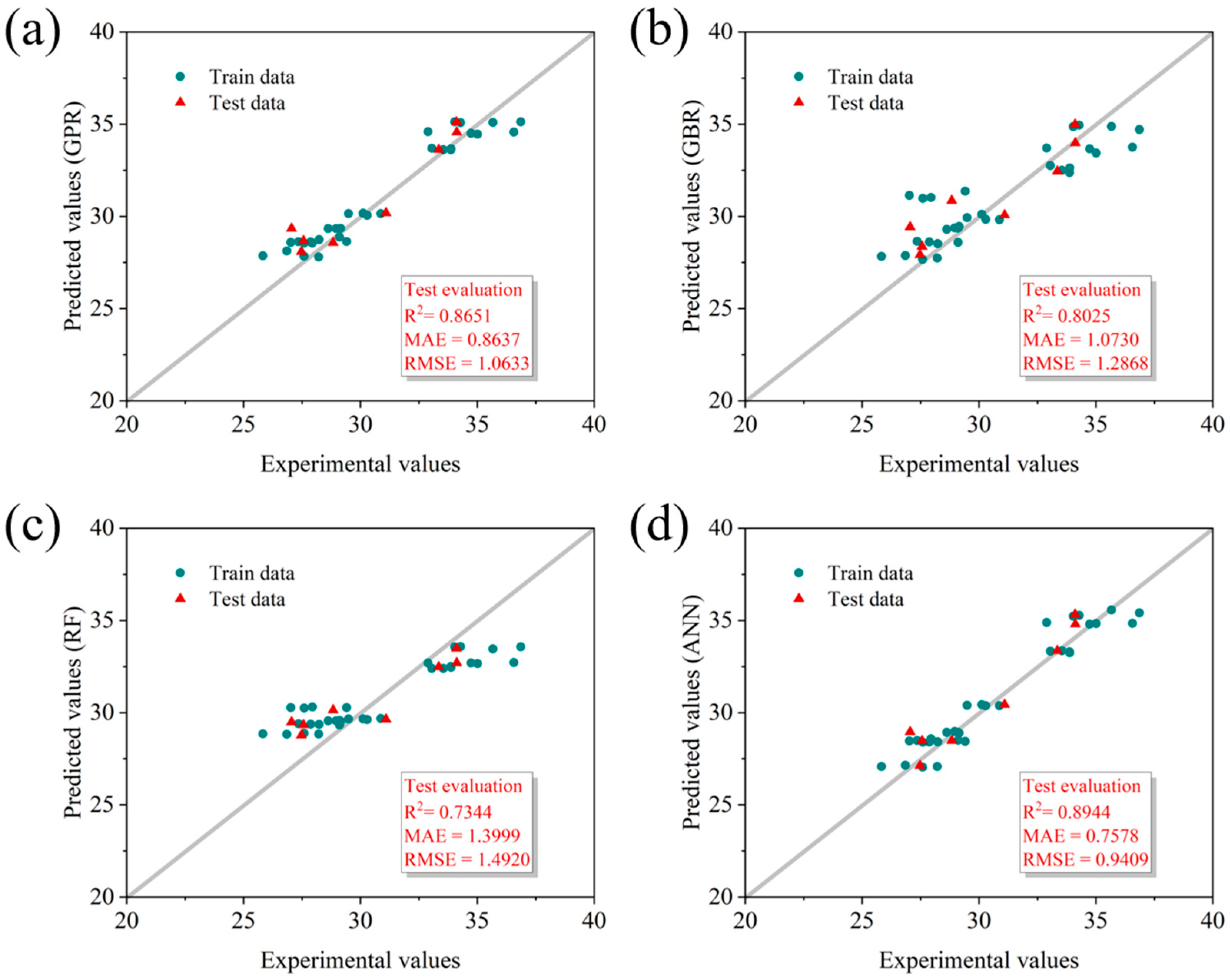
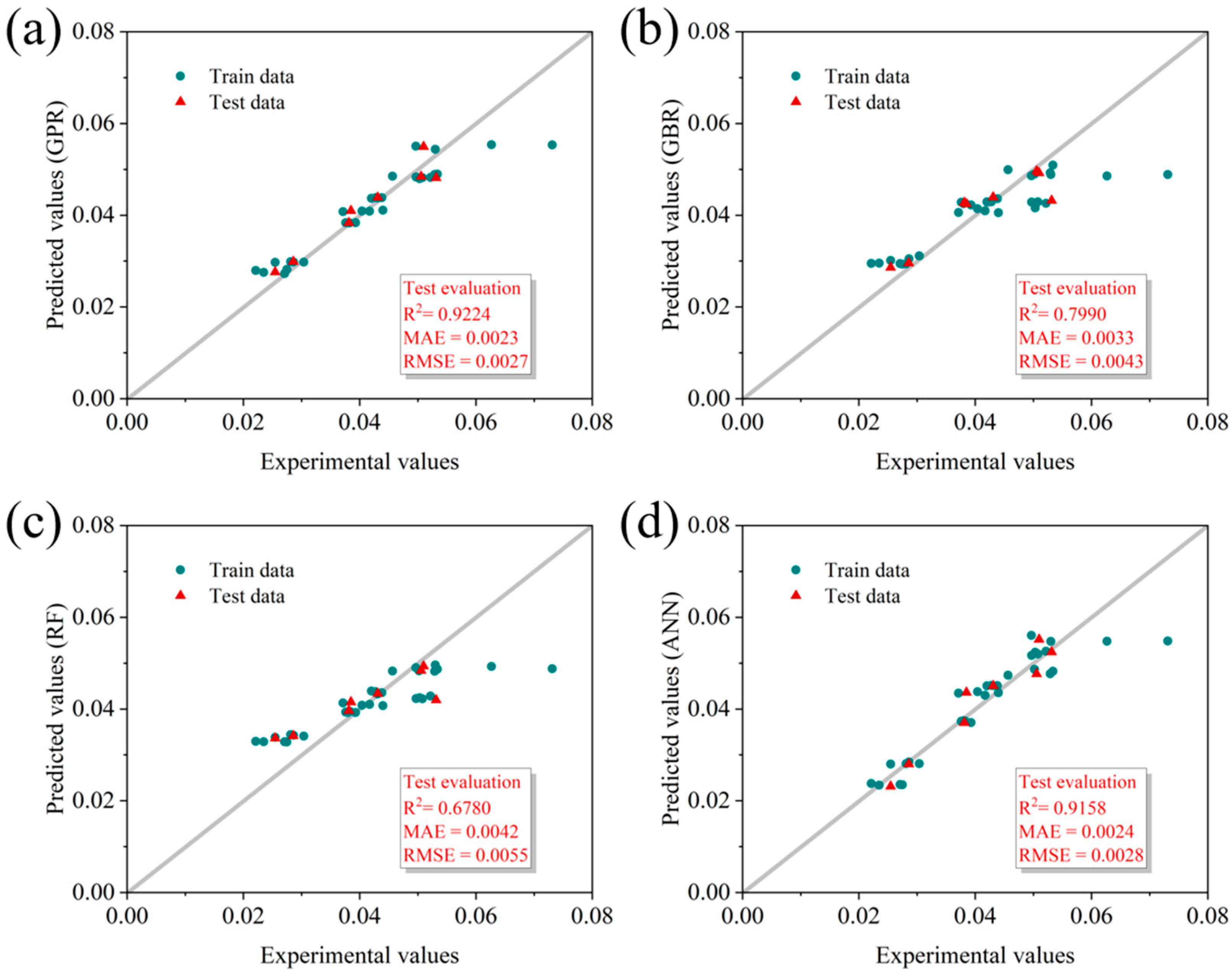
After optimal hyperparameters were determined via grid search, the models were trained on the training set and evaluated on the test set to assess their generalization performance. The predictive accuracy and generalization performance of these models were evaluated using R2, MAE, and RMSE. Figure 9 and Figure 10 display scatter plots of predicted vs. actual values, with the x-axis representing experimental data and the y-axis showing model predictions. Points closer to the diagonal line indicate higher prediction accuracy. Blue and red points correspond to training and test set predictions, respectively.
As illustrated in Figure 9, the prediction accuracy for failure stress of the four ML models is relatively high, with R2 values exceeding 0.70 for both the training and test sets. Among the models, GPR and ANN demonstrate higher accuracy, with R2 values closer to 0.90 for the test data. Overall, the plots demonstrate that GPR and ANN models generally provide more accurate predictions compared to GBR and RF, as evidenced by their higher R2 values and lower error metrics.
Figure 10 illustrates the predictive performance of four distinct ML models when applied to estimate the failure strain. As seen, it is evident that the ANN model and GPR models demonstrate the best performance in predicting failure strain, as indicated by the highest R2 value close to 0.92, the lowest MAE of 0.0024, and the lowest RMSE of 0.0028 among the four models. This suggests that the ANN and GPR models have the strongest predictive capability and generalization performance for failure strain prediction based on the given data. In contrast, the RF model has a lower R2 value, higher MAE and RMSE, indicating a weaker predictive performance compared to GPR and ANN. The GBR model performs better than RF but not as well as GPR and ANN. In summary, the ANN model exhibits the best predictive performance for failure stress and strain, followed closely by Gaussian process regression (GPR), while random forest (RF) and gradient boosting regression (GBR) show relatively lower performance.
Comparing the predictive results for failure strain and failure stress, it is evident that the models generally perform better in predicting failure strain than failure stress. This is indicated by the higher R2 values and lower MAE and RMSE values for failure strain predictions across all models. The closer alignment of points to the diagonal line in the failure strain plots also suggests a tighter correlation between predicted and experimental values, indicating superior model accuracy in capturing the variability in failure strain compared to failure stress. This difference in performance may be attributed to the nature of the data and the underlying relationships that the models are able to capture more effectively for failure strain.

3.2.2. Prediction of Stress–Strain Curves

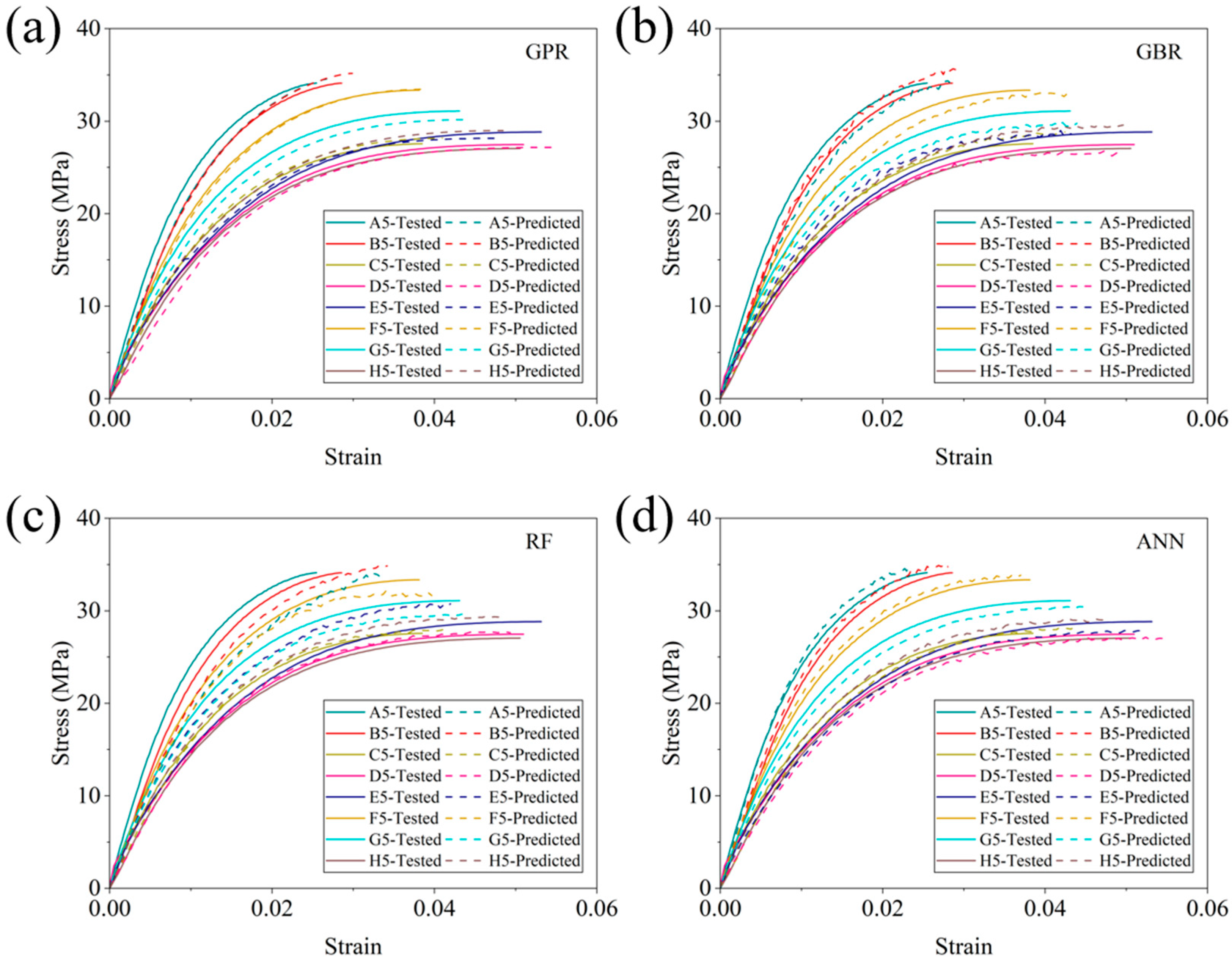
Figure 11a,d presents the predicted stress–strain curves generated by four distinct ML models. Each subplot illustrates the comparison between experimentally obtained stress–strain data (solid lines) and the corresponding predictions (dashed lines) across various samples labeled from A5 to H5 within the testing data set.
Upon examination, it is evident that all four models demonstrate a commendable ability to replicate the general shape and trend of the stress–strain curves. The GPR model, as shown in Figure 11a, closely follows the experimental data across most samples, indicating a robust predictive capability. Similarly, the GBR model in Figure 11b also exhibits a strong performance, with predicted curves closely mirroring the tested data, particularly in the elastic region. The RF model depicted in Figure 11c shows a slightly varied performance, with some deviation from the experimental curves, especially in the plastic region. However, the overall trend is still reasonably well captured. The ANN model, as illustrated in Figure 11d, demonstrates a high degree of accuracy, with the predicted curves closely aligning with the experimental data for all samples.
In terms of predictive performance, the GPR and ANN models appear to outperform the GBR and RF models, as evidenced by the closer proximity of their predicted curves to the experimental data across the entire strain range. This observation is consistent with the previous analysis of scalar predictions of failure strain, where ANN and GPR also showed superior performance. The ability of these models to predict the entire stress–strain curve, rather than just scalar outputs, provides a more comprehensive understanding of the material’s mechanical behavior. This capability is particularly valuable for applications where the complete stress–strain response is critical for design and analysis.
In conclusion, the ML models, especially GPR and ANN, show great potential for predicting the complex, non-linear relationship between stress and strain in 3D-printed materials. Their high predictive accuracy and ability to capture the entire stress–strain curve make them valuable tools for material characterization and performance prediction.
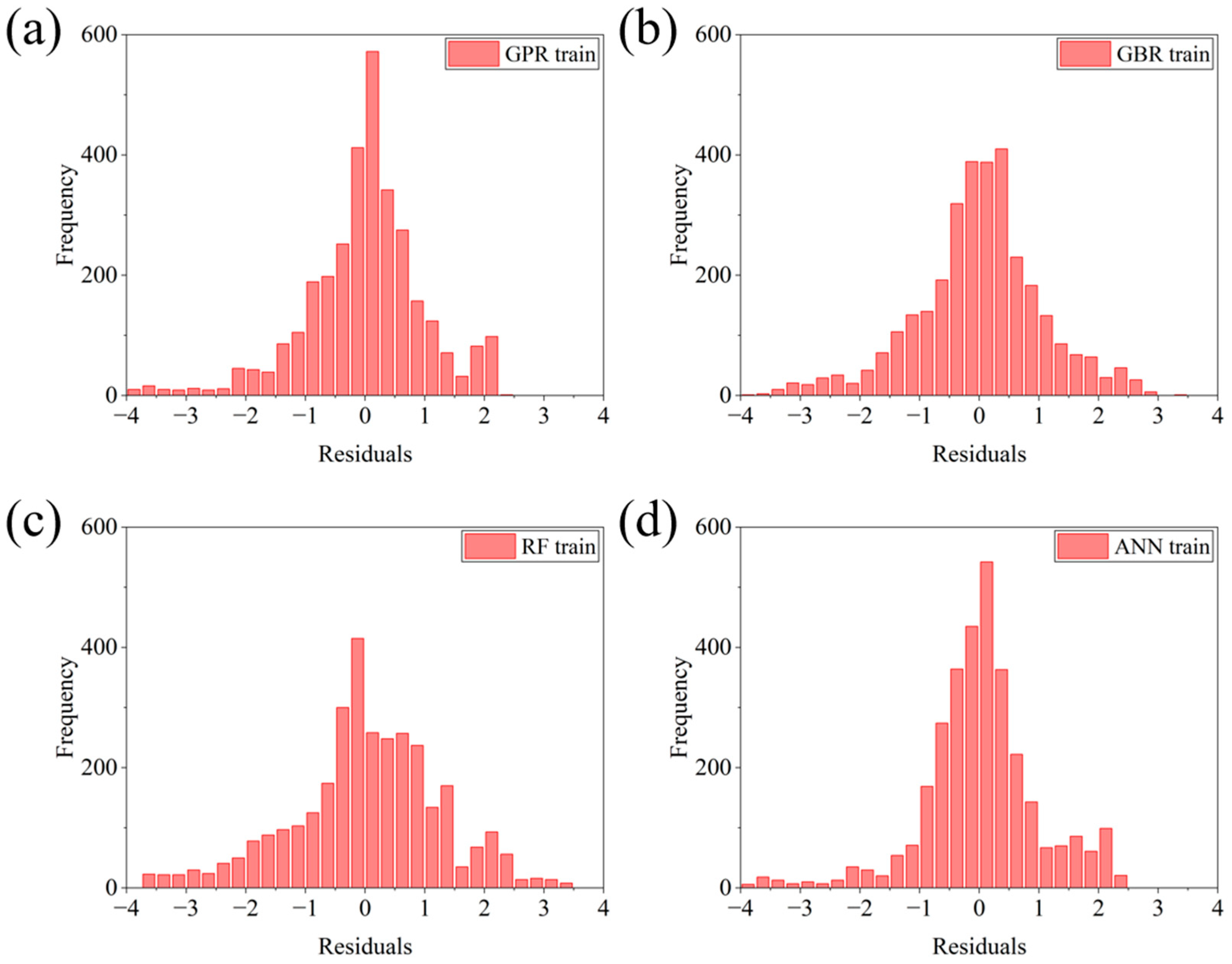
Then, the diagnostic analysis of each model’s performance was performed by plotting the distribution of residuals at training stage as shown in Figure 12. The figures depict the residual histograms for four different ML models during the training stage.
Each histogram represents the distribution of residuals, which are the differences between the predicted and actual values at each point within the stress–strain curves, for the training data. As seen, a near-to-normal residual distribution was observed for each model. All the histograms are approximately symmetric around zero, indicating a balanced error distribution. Most residuals are concentrated between −1 and 1, suggesting that model generally predicts values close to the actual data with a few outliers. In summary, the residual histograms for GPR and ANN show similar patterns, with most residuals concentrated around zero and a few outliers. This suggests that these models generally perform well in predicting values close to the actual data. In contrast, the GBR and RF models show a slightly wider spread of residuals, indicating a higher prediction error compared to the other models. These residual distributions provide valuable insights into the performance and accuracy of each machine learning model during the training stage.
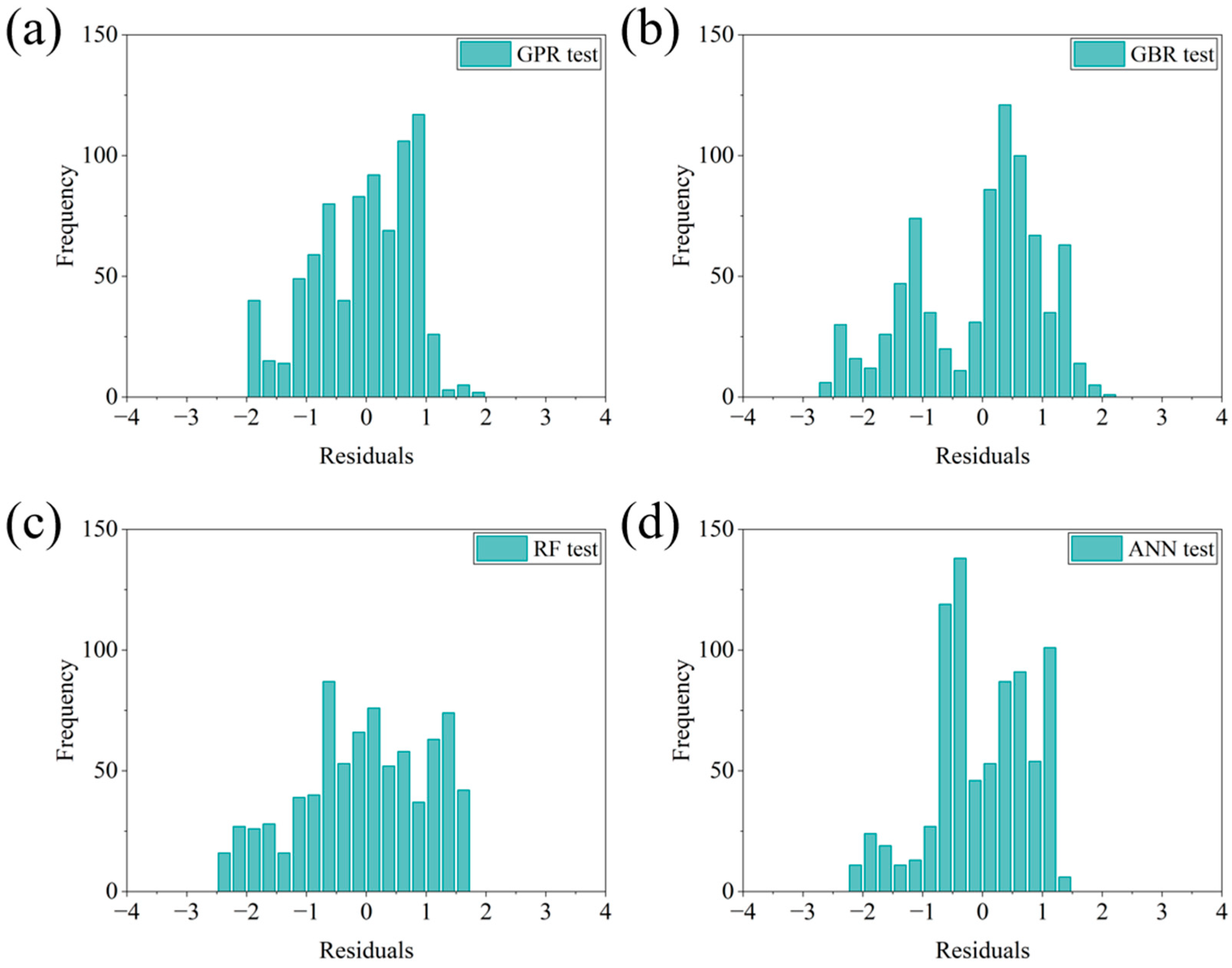
Similarly, the residuals were also plotted for the testing stage as shown in Figure 13. The GPR and GBR models, as shown in Figure 13a,b, exhibit similar distributions that are approximately symmetric around zero, with residuals predominantly falling between −2 and 2. This similarity indicates that both models maintain a consistent level of accuracy on unseen data, reflecting their robust generalization capabilities. In contrast, the RF model, shown in Figure 13c, displays a broader spread of residuals, suggesting a slightly higher prediction error on the test set compared to GPR and GBR. The ANN model, illustrated in Figure 13d, shows a distribution comparable to GPR and GBR, with most residuals also concentrated between −2 and 2, indicating good predictive performance on the test data.
When comparing these test stage distributions to those from the training stage, the test stage histograms tend to be slightly wider, indicating a marginally increased prediction error on unseen data for all models. This widening is particularly noticeable for the RF model, which already showed a broader spread during the training stage. The GPR, GBR, and ANN models, despite the slight increase in spread, continue to demonstrate a balanced error distribution around zero, underscoring their reliability in making accurate predictions on new data.
Overall, while all models perform well during the training stage, subtle differences in their test stage residual distributions highlight variations in their generalization abilities. The GPR and ANN models, in particular, show a high degree of consistency between training and test stages, suggesting their effectiveness in capturing the underlying patterns in the data and making accurate predictions on unseen samples.

3.3. Influence of Features on Composites

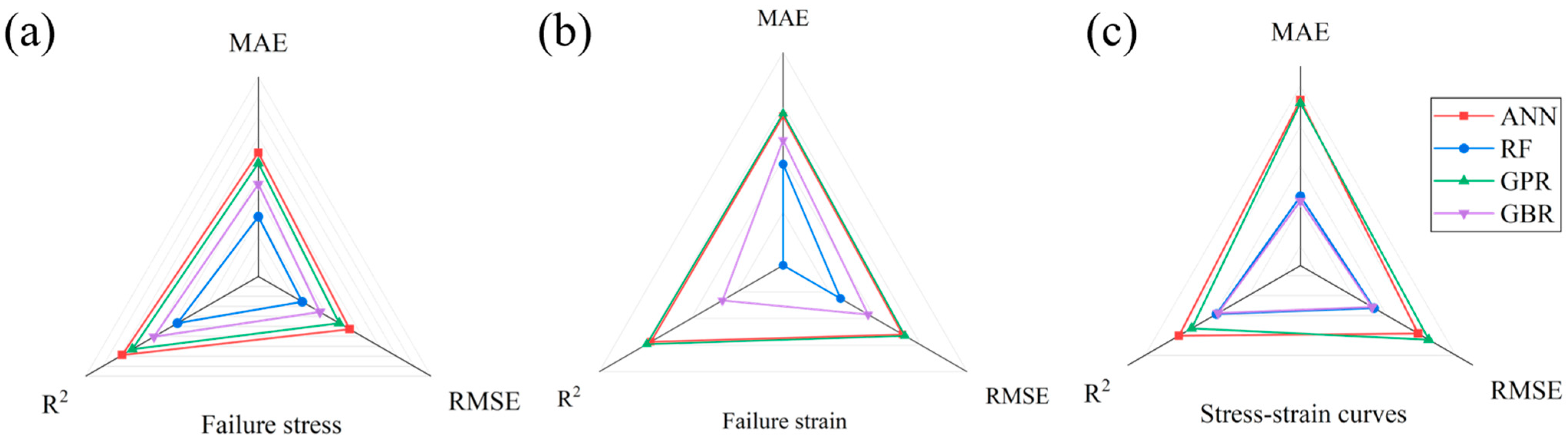
As shown in Figure 14, the radar charts synthesize the performance of four ML models—ANN, RF, GPR, and GBR—across three prediction tasks: failure stress, failure strain, and stress–strain curves. Each chart integrates three key metrics: R2, MAE, and RMSE, offering a holistic view of model accuracy and fit. A clear trend emerges where ANN and GPR consistently outperform RF and GBR, as indicated by their superior R2 values and lower error metrics across all tasks. This comprehensive analysis underscores ANN and GPR as the superior models for predicting mechanical properties, demonstrating their robustness and precision in handling complex material data. Given their outstanding performance, we will proceed with the ANN model for further in-depth analysis to explore its predictive capabilities more extensively.
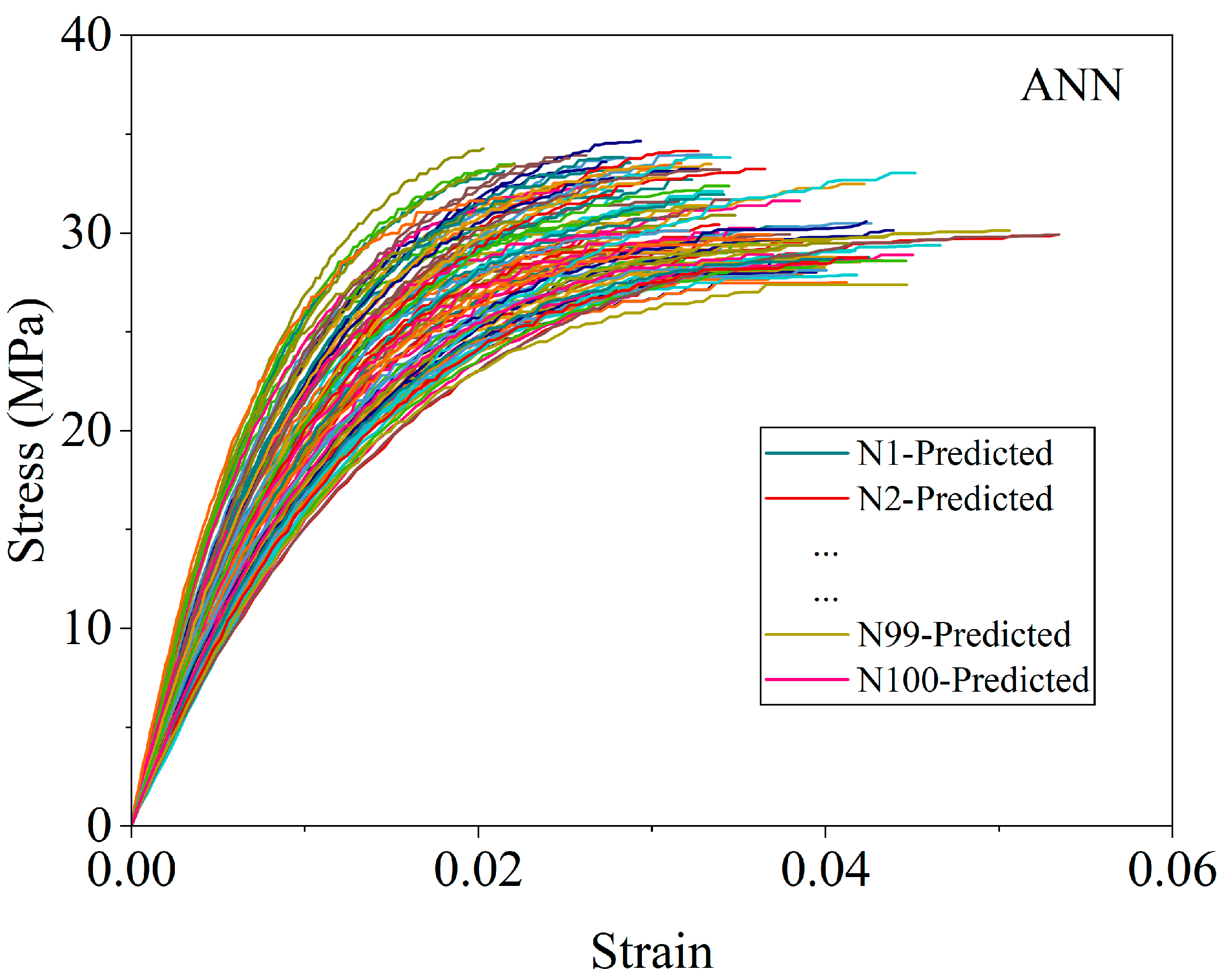
To further explore the predictive capabilities of the ANN model in forecasting the mechanical properties of 3D-printed PA12 CF materials, another 100 sets of printing parameters were randomly generated, adhering to realistic manufacturing constraints. These parameters were then input into the previously trained ANN model to predict the corresponding stress–strain curves.
Figure 15 illustrates the predicted stress–strain curves for these 100 samples, each represented by a distinct line. The variety of curves reflects the model’s ability to predict a range of mechanical responses based on different printing parameters.
The purpose of this analysis is to assess the ANN model’s capacity to generalize and predict outcomes for an unseen dataset, thereby validating its practical utility in material science applications. The diverse yet coherent spread of the predicted curves indicates that the ANN model can effectively capture the complex, non-linear relationships between printing parameters and mechanical properties. This capability is crucial for optimizing the 3D printing process to achieve desired material characteristics.
The close clustering of many curves suggests that certain combinations of printing parameters yield similar mechanical responses, which could guide experimental design and parameter selection in practice. Conversely, the variation among curves highlights the sensitivity of material properties to changes in printing conditions, underscoring the importance of precise control in additive manufacturing.
Overall, this analysis demonstrates the ANN model’s robustness and reliability in predicting the mechanical behavior of 3D-printed materials. By accurately modeling the stress–strain relationship across a spectrum of printing parameters, the ANN model provides a valuable tool for material characterization and process optimization in the field of 3D printing.
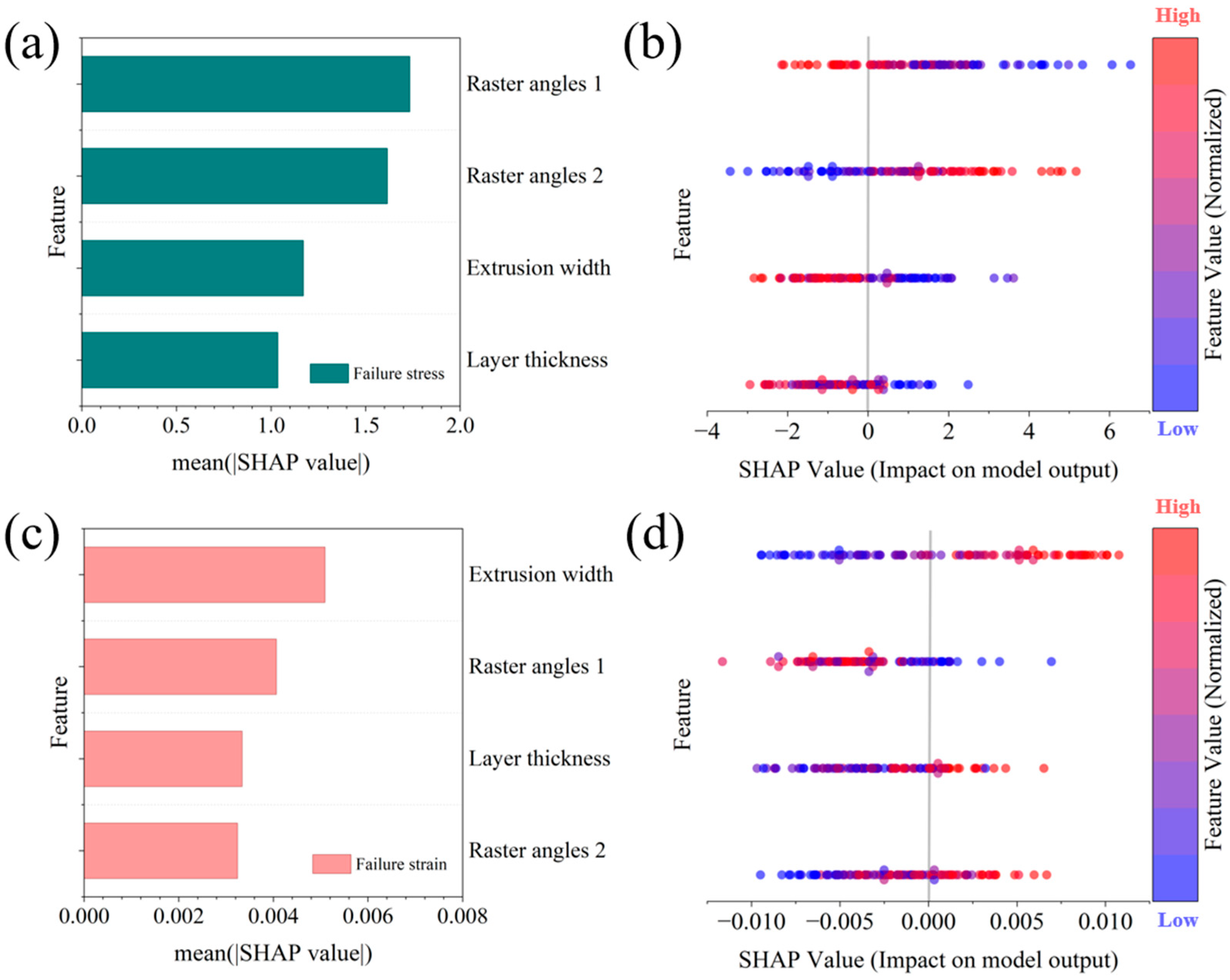
The SHAP values provides a transparent and interpretable understanding of the ANN model’s predictions, enhancing the applicability of ML in materials science and engineering. Figure 16 utilizes SHAP values to elucidate the influence of various printing parameters on the predictions of failure stress and failure strain by the ANN model. Figure 16a,b pertains to failure stress, while Figure 16c,d relates to failure strain.
Figure 16a presents a bar chart of the mean SHAP values for each feature, indicating their average impact on the prediction of failure stress. The features are ordered by their importance, with raster angles 1 and 2 being the most influential, followed by extrusion width, and layer thickness having the least impact. This ranking suggests that the orientation of the print path (raster angles) is a critical factor in determining failure stress. Figure 16b displays the SHAP value distribution for each feature, showing the range and density of SHAP values across all samples. The color gradient from blue to red represents feature values from low to high. The spread and clustering of points for raster angles 1 and 2 indicate that these parameters have a wide range of impacts on failure stress, depending on their specific values. In contrast, the SHAP values for layer thickness are more concentrated around zero, suggesting a more consistent impact across different samples.
Figure 16c shows that extrusion width is the most influential feature in predicting failure strain, with raster angles 1, raster angles 2, and layer thickness having relatively similar and less significant impacts. This suggests that the width of the material extruded has a more direct effect on the material’s ductility, as measured by failure strain. Figure 16d presents the SHAP value distribution for failure strain predictions, confirming the broad impact of extrusion width across different samples. The SHAP values for raster angles and layer thickness are more concentrated, indicating a more consistent influence on failure strain.
The SHAP analysis reveals that raster angles have a significant impact on failure stress, while extrusion width is the most influential parameter for failure strain. This distinction highlights the different material behaviors under stress and strain, and the importance of tailoring printing parameters to achieve desired mechanical properties. The analysis also underscores the importance of considering the specific effects of each parameter, as their influence can vary depending on the type of mechanical property being predicted.
These findings are crucial for optimizing the 3D printing process, as they provide a quantitative basis for adjusting printing parameters to enhance the mechanical performance of 3D-printed materials. By focusing on the most influential parameters, practitioners can more effectively improve the quality and reliability of printed components.

4. Conclusions

This study presents a comprehensive analysis of the tensile properties of 3D-printed PA12 composites reinforced with short carbon fibers, employing both experimental testing and machine learning-based predictive modeling. The primary objectives were to evaluate the influence of printing parameters on mechanical properties and to develop accurate predictive models for failure stress, failure strain, and stress–strain curves.
The experimental results demonstrated the significant impact of printing parameters, particularly layer thickness, extrusion width, and raster angles, on the tensile properties of 3D-printed composites. These findings highlight the need for precise control of printing parameters to optimize material performance.
Four machine learning models, GPR, GBR, RF, and ANN, were developed and trained on the experimental data. The models were evaluated based on their ability to predict failure stress, failure strain, and stress–strain curves. The ANN model emerged as the most accurate predictor across all tasks, followed closely by GPR.
The SHAP analysis provided insights into the relative importance of printing parameters. For failure stress predictions, raster angles were identified as the most influential parameters, while extrusion width had the greatest impact on failure strain predictions. This analysis helps in understanding the underlying relationships between printing parameters and mechanical properties, guiding future experimental design and parameter optimization.
The study successfully demonstrated the utility of machine learning models, especially ANN and GPR, in predicting the tensile properties of 3D-printed composites. The high predictive accuracy of these models, as evidenced by their performance on both training and test datasets, underscores their potential for practical applications in materials science and engineering. The insights gained from the SHAP analysis further enhance the interpretability of the models, providing a clear understanding of which printing parameters are most critical for achieving desired mechanical properties.

Author Contributions

Conceptualization, G.F. and Y.L.; methodology, G.F.; software, X.Z.; validation, Y.L. and J.C.; writing—original draft preparation, G.F.; writing—review and editing, Y.L.; visualization, G.F.; funding acquisition, G.F. All authors have read and agreed to the published version of the manuscript.

Funding

This work was supported by the Key Laboratory of Inlet and Exhaust Technology, Ministry of Education [grant numbers CEPE2024014].

Data Availability Statement

The raw data supporting the conclusions of this article will be made available by the authors on request.

Conflicts of Interest

The authors declare no conflicts of interest.

References

  1. Ferreira, R.T.L.; Amatte, I.C.; Dutra, T.A.; Bürger, D.; Bürger, D. Experimental characterization and micrography of 3D printed PLA and PLA reinforced with short carbon fibers. Compos. Part B Eng. 2017, 108, 274–284. [Google Scholar] [CrossRef]
  2. Dubey, D.; Singh, S.P.; Behera, B.K. Mechanical, thermal, and microstructural analysis of 3D printed short carbon fiber-reinforced nylon composites across diverse infill patterns. Prog. Addit. Manuf. 2024, 10, 1671–1689. [Google Scholar] [CrossRef]
  3. Burnett, C.A.; Graninger, G.; Eren, Z.; Falzon, B.G.; Kazancı, Z. Tensile performance of carbon fibre-reinforced 3D-printed polymers: Effect of printing parameters. Eng. Fail. Anal. 2025, 152, 109577. [Google Scholar] [CrossRef]
  4. Abualbandora, T.A.; Alshneeqat, M.G.; Mourad, A.-H.I. Impact of 3D printing parameters of short carbon fiber reinforced polymer (CFRP) on the mechanical and failure performance: Review and future perspective. Nexus Mater. 2025, 6, 100645. [Google Scholar] [CrossRef]
  5. Bouhamed, A.; Dammak, M.; Hagui, H.; Jrad, H. Multiscale mechanical characterization of 3D-printed PLA composites with carbon fiber reinforcement: Effect of raster angle and layer thickness. Int. J. Adv. Manuf. Technol. 2025, 126, 2443–2456. [Google Scholar] [CrossRef]
  6. Verdejo de Toro, E.; Coello, J.; Coello Sobrino, J.; Martínez, A. Investigation of a Short Carbon Fibre-Reinforced Polyamide and Comparison of Two Manufacturing Processes: Fused Deposition Modelling (FDM) and Polymer Injection Moulding (PIM). Materials 2020, 13, 672. [Google Scholar] [CrossRef] [PubMed]
  7. Kubota, M.; Hayakawa, K.; Todoroki, A. Effect of build-up orientations and process parameters on the tensile strength of 3D printed short carbon fiber/PA-6 composites. Adv. Compos. Mater. 2021, 30, 109–123. [Google Scholar] [CrossRef]
  8. Hou, Y.; Panesar, A. Effect of Manufacture-Induced Interfaces on the Tensile Properties of 3D Printed Polyamide and Short Carbon Fibre-Reinforced Polyamide Composites. Polymers 2023, 15, 773. [Google Scholar] [CrossRef] [PubMed]
  9. Caminero, M.A.; Chacón, J.M.; García Plaza, E.; Núñez, P.J.; Reverte, J.M.; Bécar, J.P. Additive Manufacturing of PLA-Based Composites Using Fused Filament Fabrication: Effect of Graphene Nanoplatelet Reinforcement on Mechanical Properties, Dimensional Accuracy and Texture. Polymers 2019, 11, 799. [Google Scholar] [CrossRef]
  10. Nikiema, D.; Balland, P.; Sergent, A. Study of the Mechanical Properties of 3D-printed Onyx Parts: Investigation on Printing Parameters and Effect of Humidity. Chin. J. Mech. Eng. Addit. Manuf. Front. 2023, 2, 100075. [Google Scholar] [CrossRef]
  11. Távara, L.; Madrigal, C.; Aranda, M.T.; Justo, J. Anisotropy and ageing effect on the mechanical behaviour of 3D-printed short carbon-fibre composite parts. Compos. Struct. 2023, 304, 117196. [Google Scholar] [CrossRef]
  12. Ivey, M.; Melenka, G.W.; Carey, J.P.; Ayranci, C. Characterizing short-fiber-reinforced composites produced using additive manufacturing. Rapid Prototyp. J. 2017, 23, 482–493. [Google Scholar] [CrossRef]
  13. Tekinalp, H.; Kunc, V.; Vélez-García, G.M.; Duty, C.; Love, L.J.; Naskar, A.K.; Blue, C.A.; Ozcan, S. Highly oriented carbon fiber–polymer composites via additive manufacturing. Compos. Sci. Technol. 2014, 105, 144–150. [Google Scholar] [CrossRef]
  14. Naranjo-Lozada, J.; Ahuett-Garza, H.; Orta-Castañón, P.; Muñoz-Rujas, N.; Verbeeten, W.M.H.; Sáiz-González, D. Tensile properties and failure behavior of chopped and continuous carbon fiber composites produced by additive manufacturing. Addit. Manuf. 2019, 27, 140–150. [Google Scholar] [CrossRef]
  15. Tandon, S.; Kacker, R.; Sudhakar, K. Experimental investigation on tensile properties of the polymer and composite specimens printed in a Triangular pattern. J. Manuf. Process. 2021, 68, 106–116. [Google Scholar] [CrossRef]
  16. Belei, C.; Joeressen, J.; Amancio-Filho, S.T. Fused-Filament Fabrication of Short Carbon Fiber-Reinforced Polyamide: Parameter Optimization for Improved Performance under Uniaxial Tensile Loading. Polymers 2022, 14, 1292. [Google Scholar] [CrossRef]
  17. Calles, A.F.; Carou, D.; Ferreira, R.T.L. Experimental Investigation on the Effect of Carbon Fiber Reinforcements in the Mechanical Resistance of 3D Printed Specimens. Appl. Compos. Mater. 2021, 28, 1225–1243. [Google Scholar] [CrossRef]
  18. Ramesh, M.; Rajeshkumar, L.; Balaji, D. Influence of Process Parameters on the Properties of Additively Manufactured Fiber-Reinforced Polymer Composite Materials: A Review. J. Mater. Eng. Perform. 2021, 30, 7147–7164. [Google Scholar] [CrossRef]
  19. Zhang, W.; Cotton, C.; Sun, J.; Heider, D.; Gu, B.; Sun, B.; Sun, B.; Chou, T.-W. Interfacial bonding strength of short carbon fiber/acrylonitrile-butadiene-styrene composites fabricated by fused deposition modeling. Compos. Part B Eng. 2018, 137, 41–48. [Google Scholar] [CrossRef]
  20. Wang, F.; Wang, G.; Wang, H.; Fu, R.; Yang, L.; He, J. 3D Printing Technology for Short-Continuous Carbon Fiber Synchronous Reinforced Thermoplastic Composites: A Comparison between Towpreg Extrusion and In Situ Impregnation Processes. Chin. J. Mech. Eng. Addit. Manuf. Front. 2023, 2, 100092. [Google Scholar] [CrossRef]
  21. Bhandari, S.; Lopez-Anido, R.; Gardner, D.J. Enhancing the interlayer tensile strength of 3D printed short carbon fiber reinforced PETG and PLA composites via annealing. Addit. Manuf. 2019, 28, 100922. [Google Scholar] [CrossRef]
  22. Simpson, P.G. Additive Manufacturing of Short-Fiber Composites via Stereolithography. Doctoral Dissertation, North Dakota State University, Fargo, ND, USA, 2018. [Google Scholar]
  23. Spoerk, M.; Savandaiah, C.; Arbeiter, F.; Traxler, G.; D’hooge, D.R.; Cardon, L.; Holzer, C.; Sapkota, J. Anisotropic properties of oriented short carbon fibre filled polypropylene parts fabricated by extrusion-based additive manufacturing. Compos. Part A Appl. Sci. Manuf. 2018, 113, 165–172. [Google Scholar] [CrossRef]
  24. Gupta, A.; Fidan, I.; Hasanov, S.; Nasirov, A.A. Processing, mechanical characterization, and micrography of 3D-printed short carbon fiber reinforced polycarbonate polymer matrix composite material. Int. J. Adv. Manuf. Technol. 2020, 108, 1669–1683. [Google Scholar] [CrossRef]
  25. Somireddy, M.; Singh, C.V.; Czekanski, A. Mechanical behaviour of 3D printed composite parts with short carbon fiber reinforcements. Eng. Fail. Anal. 2020, 115, 104232. [Google Scholar] [CrossRef]
  26. ISO 527-2-2012; Plastics—Determination of Tensile Properties—Part 2: Test Conditions for Moulding and Extrusion Plastics. International Organization for Standardization: Geneva, Switzerland, 2012.
Figure 1. Sample preparation: (a) the Raise3D E2CF 3D printer, (b) printing procedure.
Jcs 09 00461 g001
Figure 2. Detail of samples: (a) the dimensions of tensile specimen, (b) specimen prior to testing.
Jcs 09 00461 g002
Figure 3. Schematic representation of raster angles in 3D printing tensile specimens.
Jcs 09 00461 g003
Figure 4. Schematic representation of layer thickness and extrusion width in 3D printing tensile specimens.
Jcs 09 00461 g004
Figure 5. Experimental test setup: tensile specimen in test machine and DIC equipment.
Jcs 09 00461 g005
Figure 6. Stress–strain curves of 3D printing tensile specimens.
Jcs 09 00461 g006
Figure 7. Post-testing specimens: groups C and H.
Jcs 09 00461 g007
Figure 8. Comparison of failure properties among different specimen groups: (a) failure stress, (b) failure strain.
Jcs 09 00461 g008
Figure 9. Prediction comparison for failure stress of different ML models: (a) GPR, (b) GBR, (c) RF, (d) ANN.
Jcs 09 00461 g009
Figure 10. Prediction comparison for failure strain of different ML models: (a) GPR, (b) GBR, (c) RF, (d) ANN.
Jcs 09 00461 g010
Figure 11. Prediction comparison for stress–strain curves of different ML models: (a) GPR, (b) GBR, (c) RF, (d) ANN.
Jcs 09 00461 g011
Figure 12. Residual histograms at training stage of different ML models: (a) GPR, (b) GBR, (c) RF, (d) ANN.
Jcs 09 00461 g012
Figure 13. Residual histograms at testing stage of different ML models: (a) GPR, (b) GBR, (c) RF, and (d) ANN.
Jcs 09 00461 g013
Figure 14. Radar chart representation of model accuracy on three target properties: (a) failure stress, (b) failure strain, and (c) stress–strain curve.
Jcs 09 00461 g014
Figure 15. Predicted stress–strain curves for 100 new samples using the trained ANN model.
Jcs 09 00461 g015
Figure 16. SHAP value and summary plots for the two output variables: (a) SHAP value for failure stress, (b) summary plot for failure stress, (c) SHAP value for failure strain, and (d) summary plot for failure strain.
Jcs 09 00461 g016
Table 1. Experimental design variables.
GroupLayer Thickness/mmExtrusion Width/mmRaster Angles
A0.10.40°/90°
B0.10.445°/−45°
C0.10.80°/90°
D0.10.845°/−45°
E0.30.40°/90°
F0.30.445°/−45°
G0.30.80°/90°
H0.30.845°/−45°
Table 2. Fixed printing parameters.
ParameterValue
Nozzle Temperature265 °C
Bed Temperature90 °C
Infill Density100%
Infill PatternLinear
Printing Speed40 mm/s
Disclaimer/Publisher’s Note: The statements, opinions and data contained in all publications are solely those of the individual author(s) and contributor(s) and not of MDPI and/or the editor(s). MDPI and/or the editor(s) disclaim responsibility for any injury to people or property resulting from any ideas, methods, instructions or products referred to in the content.