Article

Upcycling Oyster Shell Waste into Sustainable Polypropylene Biocomposites: Synthesis and Characterization


by
Zahira Benaichouba
1,2,
Bel Abbes Bachir Bouiadjra
2,
Mohamed Mokhtar Bouziane
2,3,
Mokhtar Khaldi
1,
Manoj Kumar Singh
4 and
Sathish Kumar Palaniappan
4,*
1
Department of Mechanical Engineering, Faculty of Science and Technology, University of Mustapha Stambouli, Mascara 29000, Algeria
2
Department of Mechanical Engineering, University of Djillali Liabes, Sidi Bel Abbes 22000, Algeria
3
Department of Hydraulic-Civil Engineering, Faculty of Science and Technology, University of Saïda Dr. Moulay Tahar, Saida 20000, Algeria
4
Natural Composites Research Group Lab, Department of Materials and Production Engineering, The Sirindhorn International Thai-German Graduate School of Engineering, King Mongkut’s University of Technology North Bangkok, Bangsue, Bangkok 10800, Thailand
*
Author to whom correspondence should be addressed.
J. Compos. Sci. 2025, 9(12), 674; https://doi.org/10.3390/jcs9120674
Submission received: 21 October 2025 / Revised: 20 November 2025 / Accepted: 1 December 2025 / Published: 4 December 2025
(This article belongs to the Section Biocomposites)

Abstract

There is a growing interest in the application of natural and waste-derived biofillers for reinforcing thermoplastic polymers, as their utilization helps to reduce the carbon footprint and therefore enhances sustainable development. The aim of this study is to synthesize and characterize a biocomposite based on PP reinforced with OS particles derived from biomass in order to reduce plastic shrinkage after injection molding and to assess their viability as environmentally sustainable materials. The addition of OS particles (10 wt.% and 30 wt.%) significantly reduces the crystallinity of the PP, thereby improving its rigidity, its tensile strength, and its thermal stability. DSC analysis and TGA validated superior thermal properties, whereas mechanical and dynamic mechanical assessments indicated augmented stiffness and energy storage capacity with increasing filler content. The utilization of OS waste, abundant in CaCO3, facilitates a circular economy model, minimizing environmental impact and enhancing waste valorization. The findings underscore the viability of PP/OS biocomposites as sustainable substitutes for traditional mineral-filled polymers in engineering applications.

1. Introduction

Polypropylene (PP) is a thermoplastic resin obtained by polymerizing a propylene monomer. Unlike a homopolymer, a copolymer combines at least two different monomers in the case of PP. The biocomposite materials are fabricated by polymers reinforced by fibers or natural particles as fillers [1]. Various techniques are used to prepare these bio composites such as molding [2], intercalation [3], laser printing [4], solvent casting [5], filament winding [6], fusion mixing [7], etc. If the additives are well chosen, the biocomposites have good thermal and mechanical properties [8]. The effects of biocomposites on the environment are less harmful and, in addition, they are mostly recyclable and can be reused. Despite the extensive research in the field of biocomposites, their usage in the industrial field remains low. The addition of biofillers to a polymer can increase the properties of the composite and improve the biodegradability of the whole composite. Seashells represent an abundant source that can be used as a filler for thermoplastic polymers because of their good thermal stability compared to other fillers [9]. They are suitable to be ground into chips or particles. The main element in the composition of seashell is calcium carbonate (CaCO3). Little research has been published on the application of oyster shell (OS) as fillers in polymers.
Nakatani et al. [10] analyzed the effects of OS particles’ size on the properties of PP/OS composite; the study showed that OS particles improve the thermal stability of PP and its stiffness. It has been shown that seashells can act as fillers in poly(methyl methacrylate) (PMMA) for different medical applications [11]. In the biomedical field, the interest in seashells is in their biocompatibility. Other researchers have confirmed the use of seashell fillers in thermoplastic matrices [8]. CaCO3 is widely used as filler in thermoplastic polymers and, since seashells are mainly composed by this compound, considerable efforts have been made to fill thermoplastics with these shells although the adhesion between the particles and the matrix is not very strong, giving poor mechanical properties [12]. Li et al. [13] presented a technique for recycling seashells for use as biofillers in a PP matrix. Their goal was to improve the interface between the shell particles and the PP. Reports have recommended the recycling of OS waste [14,15,16,17,18]. OS powder is capable of absorbing heavy metals such as CU2+ or Ni2+, which allows it to be used in wastewater treatment. OS has been used in medical and other fields [19,20,21,22]. In this study, a biocomposite based on random PP reinforced with OS particles was synthesized and characterized of its mechanical and thermal performances. Differential scanning calorimetry (DSC) analysis, thermal gravimetric analysis (TGA) analysis, tensile test, impact test, and dynamic mechanical analysis (DMA) were carried out on samples of this prepared biocomposite to assess its performance and to find out its suitable applications.

2. Materials and Methods

2.1. Materials Synthesis

The PP used in this study as a matrix is of grade Adstif HA840 R was supplied by LyondellBasell Industries (Marseille, France). It is a thermoplastic with high-stiffness and high-gloss homopolymer. It is specially developed for use in injection-molded parts where high rigidity is required. PP Adstif HA840 R has an excellent food compatibility due to its low odor, making it especially suitable for the production of food packaging and housewares products.
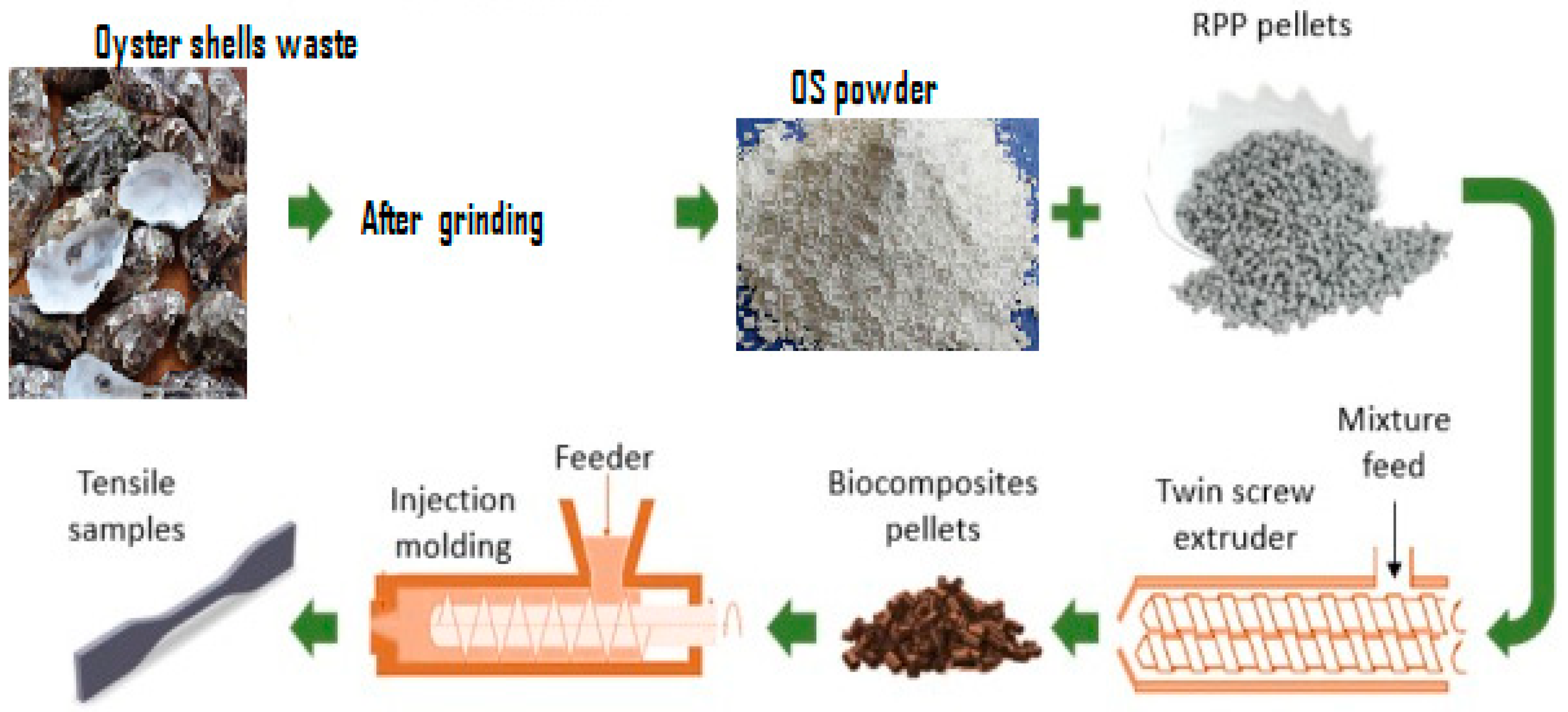
OS were collected from the local market, washed, and dried. OS particles were obtained by grinding the waste and sieved to obtain particles less than 200 µm. The PP resin was first mixed with the biofillers in a rotary mixer at a speed of 90 rpm for 15 min. The mixture was then passed through an extruder by introducing the filler/PP mixture into the extruder barrel. The mixture was melted by heaters placed along the cylinder and pushed into a die where it will exit in the form of filaments that will be cut into pellets. Two proportions, 10 wt.% and 30 wt.%, of OS particles were used in this study. Various samples were produced by injection molding in order to carry out the thermal and mechanical characterizations. Figure 1 illustrates the biocomposites production process.
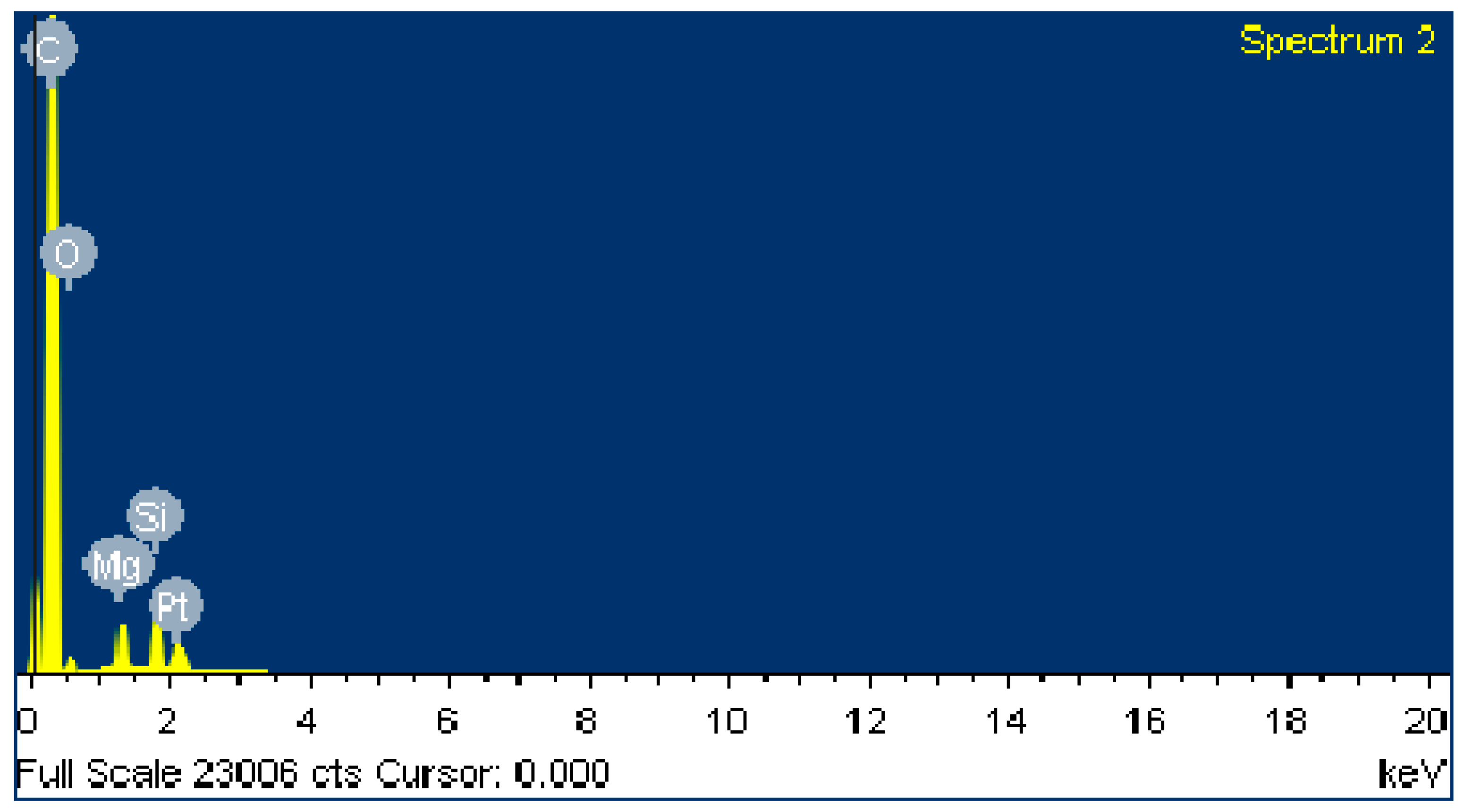
Mineral biofillers are generally added in plastics to modify properties such as stiffness and creep resistance and to reduce the shrinkage of the plastic after molding. Biofillers have a relatively low coefficient of thermal expansion, so when the plastic part is cooled during molding, these additives tend to significantly reduce the plastics shrinkage. The reduction in shrinkage is proportional to the proportion of biofillers. Energy dispersive spectroscopy (EDS) analysis was carried out using a scanning electron microscope (SEM) on OS particles to determine the mineral compound content of these particles. The EDS spectrum is shown in Figure 2 and Table 1 shows the proportions of the various chemical compounds contained in OS particles. CaCO3 is the most dominant chemical compound, with a weight percentage of 86.73%.
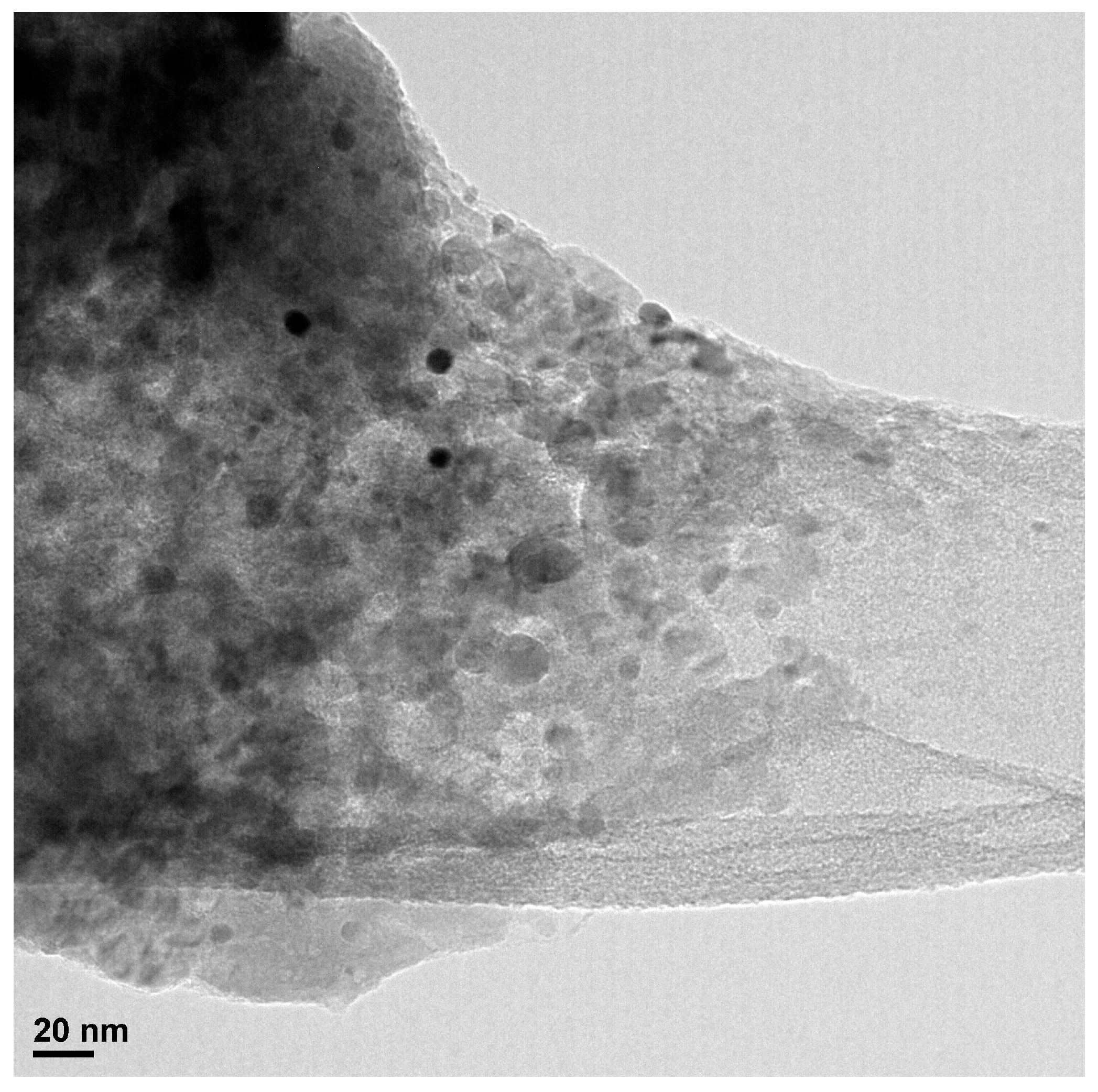
The transmission electronic microscope (TEM) images of the PP/OS biocomposites were obtained using a Siemens Elmiskop 102 microscope (Erlangen, Germany) after preparing ultrathin sections (50–100 nm) with an ultramicrotome and placing them on copper grids. This test is performed under vacuum and high accelerating voltage which allows observation of the internal morphology of the material. The dispersion of the OS mineral particles within the polymer matrix was analyzed and depicted in Figure 3. The darker region corresponds to the mineral particles rich in CaCO3, while the lighter area represents the polymer matrix. At the 20 nm scale, a good dispersion of OS particles within the PP matrix is observed, with no significant aggregation and a relatively well-defined interface between the two phases, indicating satisfactory interfacial adhesion. This homogeneous distribution and effective matrix–filler interaction promote efficient stress transfer, thereby enhancing the overall mechanical strength and thermal stability of the composite material.

2.2. Differential Scanning Calorimetry (DSC)

DSC analysis was performed using a LABSYS evo DSC 131 (Caluire, France) on pure PP and PP/OS biocomposite specimens. This test allowed us to determine the temperature of crystallinity (Tc), the melting temperature (Tm), and the crystallinity rate (Xc). This test was carried out on 5 to 10 mg samples at heating rate of 10 °C/min for a heating and cooling cycle up to 250 °C. The DSC analysis was carried out in accordance with the ISO 11357-1 standard [23]. Xc was determined by the ratio between the enthalpy at the melting peak (ΔH)m and that of 100% crystalline PP (ΔH)0; Xc = (ΔH)m/(ΔH)0.

2.3. Thermal Gravimetric Analysis (TGA)

TGA was performed using a LABSYS evo TGA (Caluire, France) on all the samples to evaluate and compare the degradation temperature. NF EN ISO 11358 standard [24] was employed to reach a temperature to 700 °C from room temperature, at a heating rate of 10 °C/min.

2.4. Tensile Test

Uni-axial tensile tests were carried out using a ZwickRoell universal testing machine (Ulm, Germany) with a capacity of 25 kN, equipped with a test speed control system. A video extensometer was used to measure the variation in strain during the tensile test. All tests were performed at a speed of 5 mm/min. Neat PP and PP/OS specimens with different proportions of the reinforcement were injection molded to ensure good dispersion of the OS particles in the PP. Tensile tests were carried out according to the NF EN ISO 527 standard [25]. Five samples were tested to attain the mean values. The tests were conducted under standard laboratory conditions.

2.5. Impact Test

Impact tests at room temperature were also carried out on PP and PP/OS samples using a Charpy polymer tester (Ulm, Germany) to analyze the effect of OS particles on the impact resistance of reinforced PP. The conditions of the impact test are as follows: sample sizes of 12 × 10 × 3 mm3; distance between support of 62 mm and angle of 150°. The impact speed used is 3.5 m/s and Charpy 5 Joules hammer was used during the test. This test was carried out according to the NF EN ISO 179 standard [26]. Five samples were tested to attain the mean values. The tests were conducted under standard laboratory conditions.

2.6. Dynamic Mechanical Analysis (DMA)

DMA is a technique used to characterize materials, particularly polymers. It applies a displacement to a sample and measures the mechanical response of the bulk material in a temperature-controlled environment. DMA test conditions can be designed to study the bulk mechanical properties of organic polymers and to determine key functional behavior related to:
-
Elasticity: polymer resistance to permanent deformation due to structural elasticity (recovery, stiffness). This resistance is characterized by the determination of the conservation modulus, E′.
-
Viscous response: deformation without fracture due to dissipation of mechanical energy by internal friction which is characterized by the dissipation modulus, E′′ or the damping factor, Tan (δ) = E″/E′.
DMA tests were performed by using TA Instruments RSA3 dynamic mechanical analyzer (Crawley, UK) with the temperature range of 1 °C to 120 °C and a heating rate of 10 °C/min on the pure PP and PP/OS biocomposites according to the NF EN ISO 6721 standard [27].

2.7. Scanning Electron Microscope (SEM)

The SEM observation of pure PP and PP reinforced with OS particles was carried out after careful sample preparation by using FEI Quanta 450 scanning electron microscope (USA). Specimens were cryo-fractured in liquid nitrogen to obtain clean and representative surfaces. After cleaning, each sample was mounted on an aluminum stub using conductive carbon tape. A thin carbon coating was then applied to prevent electrostatic charging. The examination was performed under vacuum, mainly using the secondary electron detector for surface topography and the backscattered electron detector to distinguish the dark polymer matrix from the brighter mineral particles. The accelerating voltage was adjusted between 5 and 15 kV depending on the imaging mode, with a working distance of about 14 mm. EDS analyses were conducted at 10 kV to confirm the presence of calcium and other elements of the OS particles. This procedure provided clear micrographs, revealing a homogeneous dispersion of the OS particles and good interfacial adhesion with the PP matrix.

3. Results and Discussions

3.1. DSC Analysis

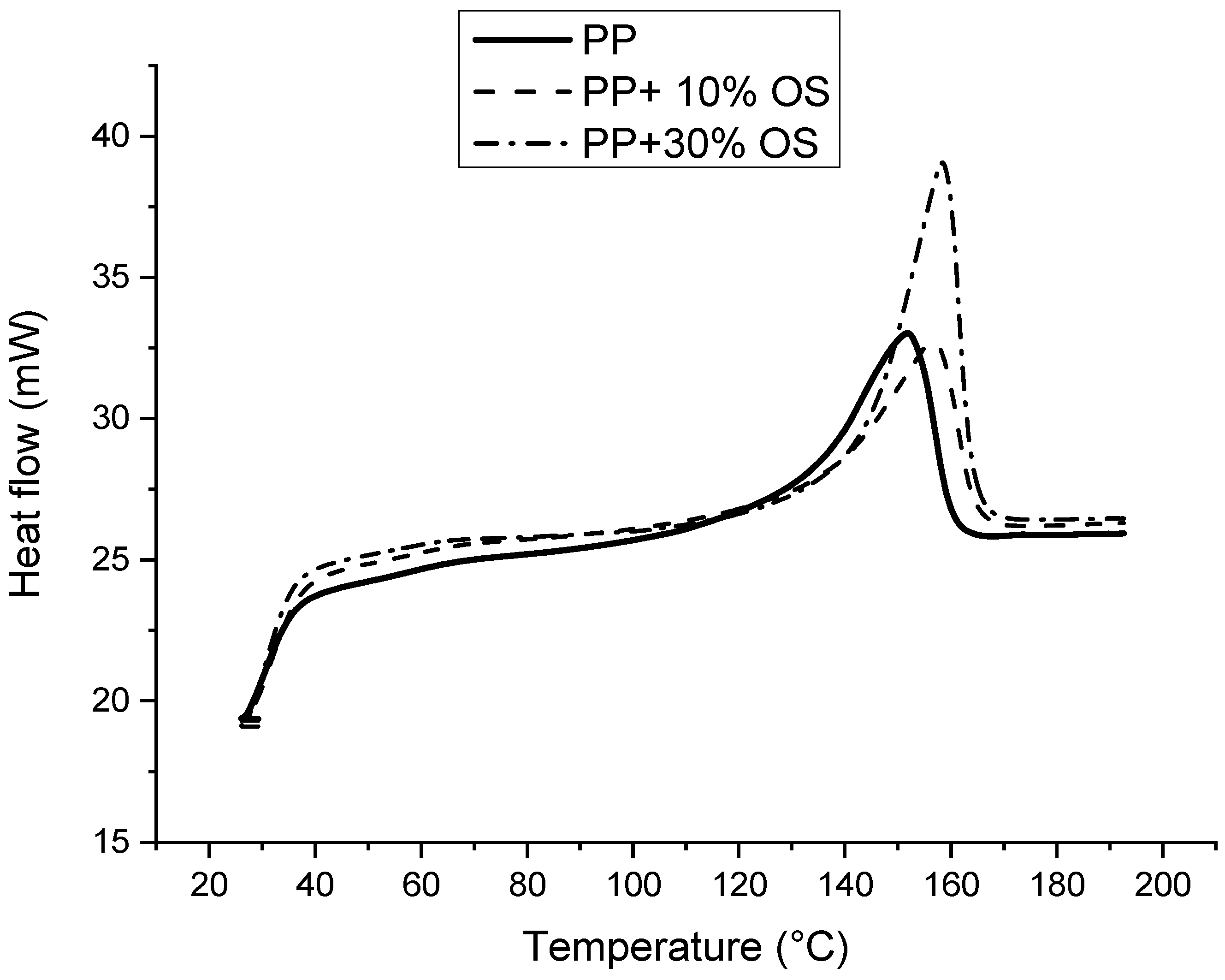
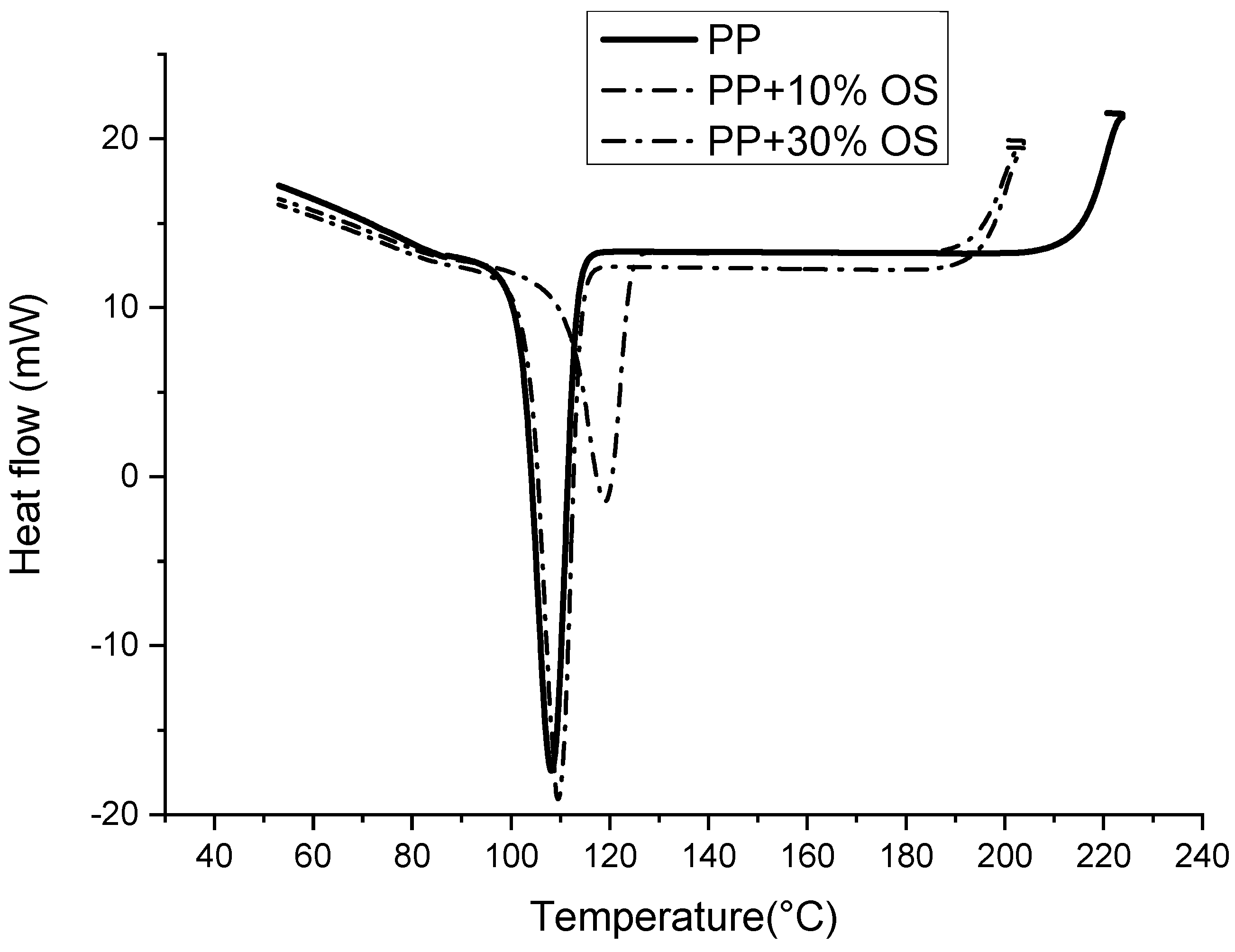
DSC analysis of pure PP and PP reinforced with OS particles is presented in Figure 4 and Figure 5. Figure 4 shows the thermal behavior of PP and its biocomposites when the sample is heated from 25 °C to 200 °C, Figure 5 shows the cooling behavior of the samples, and Table 2 summarizes the results of the two figures. It can be seen that the addition of OS slightly increases the Tc and this increase is proportional to the OS particle content. The same behavior is observed for the Tm. In fact, this temperature increases when the OS content increases, but the rate of increase is fairly low between pure PP and PP with 30 wt.% OS, since it does not exceed 2.5%. On the other hand, Xc is greatly reduced after the addition of OS particles. The rate of reduction in this ratio is of the order of 25% between pure PP and the PP with 30 wt.% OS composites. The reduction in crystallinity certainly improves the rigidity of PP and reduces its shrinkage after injection molding. The addition of OS particles slightly affects the Tm of PP (typically varying by less than ±2–3 °C) but influences its crystallinity in which the particles sometimes act as nucleation sites [12,23]. Depending on the particle size and treatment, either a slight increase in crystallinity (due to improved nucleation) or a decrease (due to poor dispersion) can be observed. This agrees with our results.

3.2. TGA

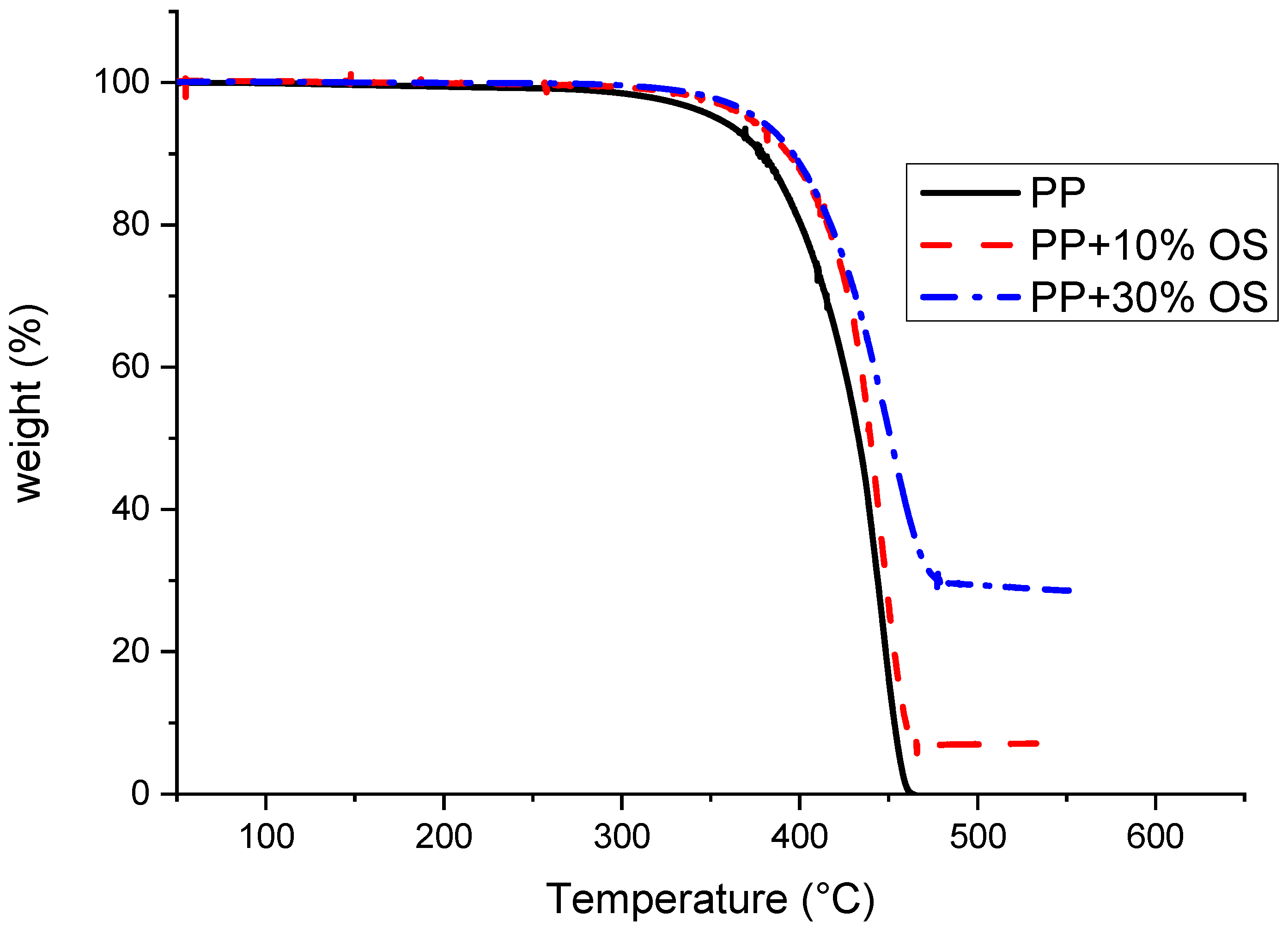
TGA enables us to measure the mass loss of a sample as a function of temperature, thus giving the degradation parameters of a material. Figure 6 shows the TGA curves for PP, PP with 10 wt.% OS biocomposites and PP with 30 wt.% OS biocomposites. For pure PP, the degradation begins at 405 °C and continues until the full degradation temperature of 438 °C is reached. At this temperature, complete degradation of the molecular chains takes place. The addition of OS biofillers slightly increases the degradation temperature to 449 °C for 10 wt.% OS and 471 °C for 30 wt.% OS. On the other hand, TGA shows that random PP contains no inorganic residues, while PP filled with 10 wt.% OS contains 8.5% inorganic residues. When the weight percentage of OS is raised to 30%, inorganic residues are of the order of 29.6% after calcinations of the biocomposites. According to the literature [10,12,28,29], the incorporation of OS particles generally tends to slightly improve the thermal stability of PP (a shift in the degradation onset temperature by a few degrees Celsius, typically +5 °C to –15 °C depending on treatment and filler content), as the inorganic phase slows down thermal degradation and can act as a physical barrier. Treatments such as calcination or surface coating further enhance this effect.

3.3. Tensile Test Results

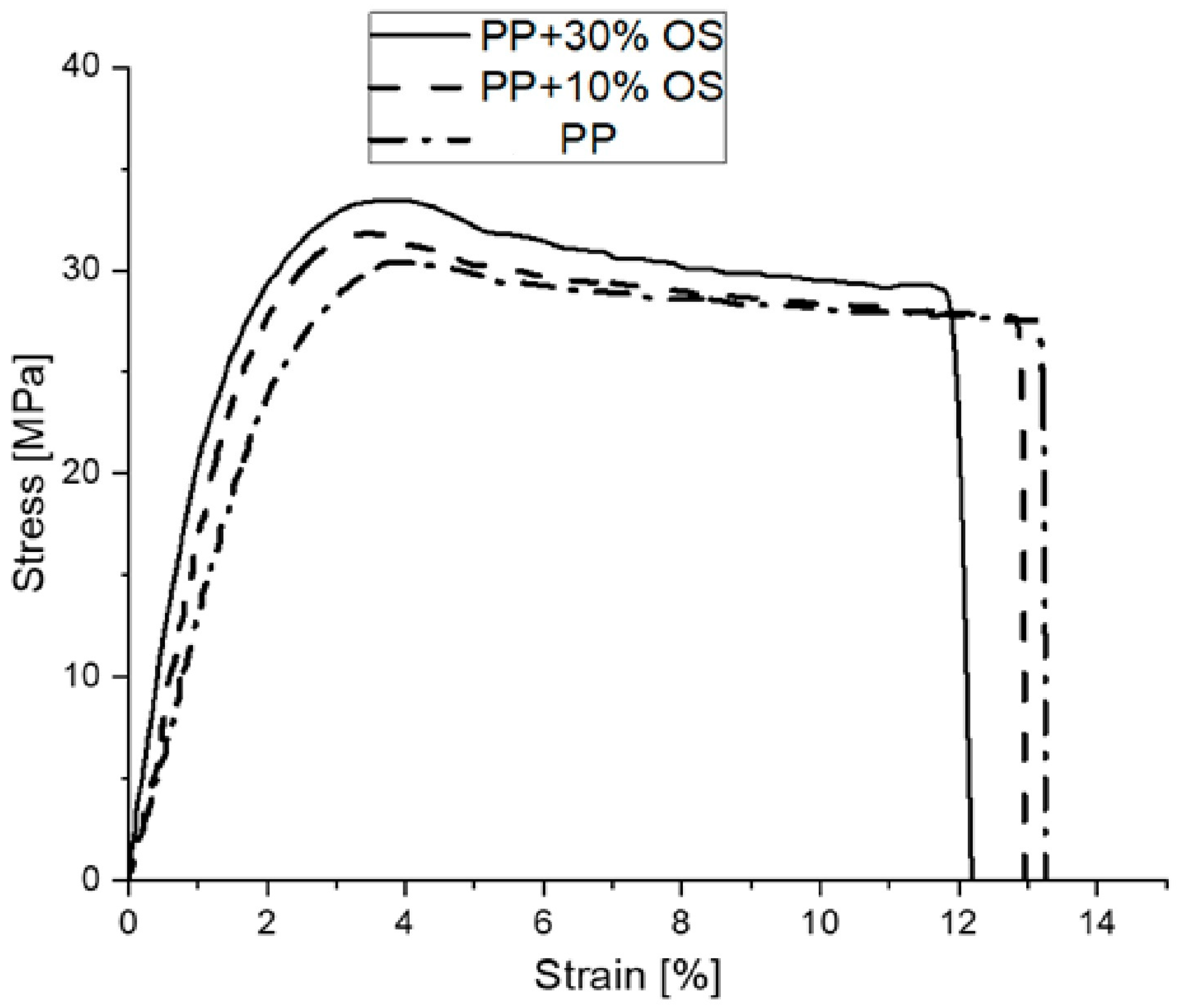
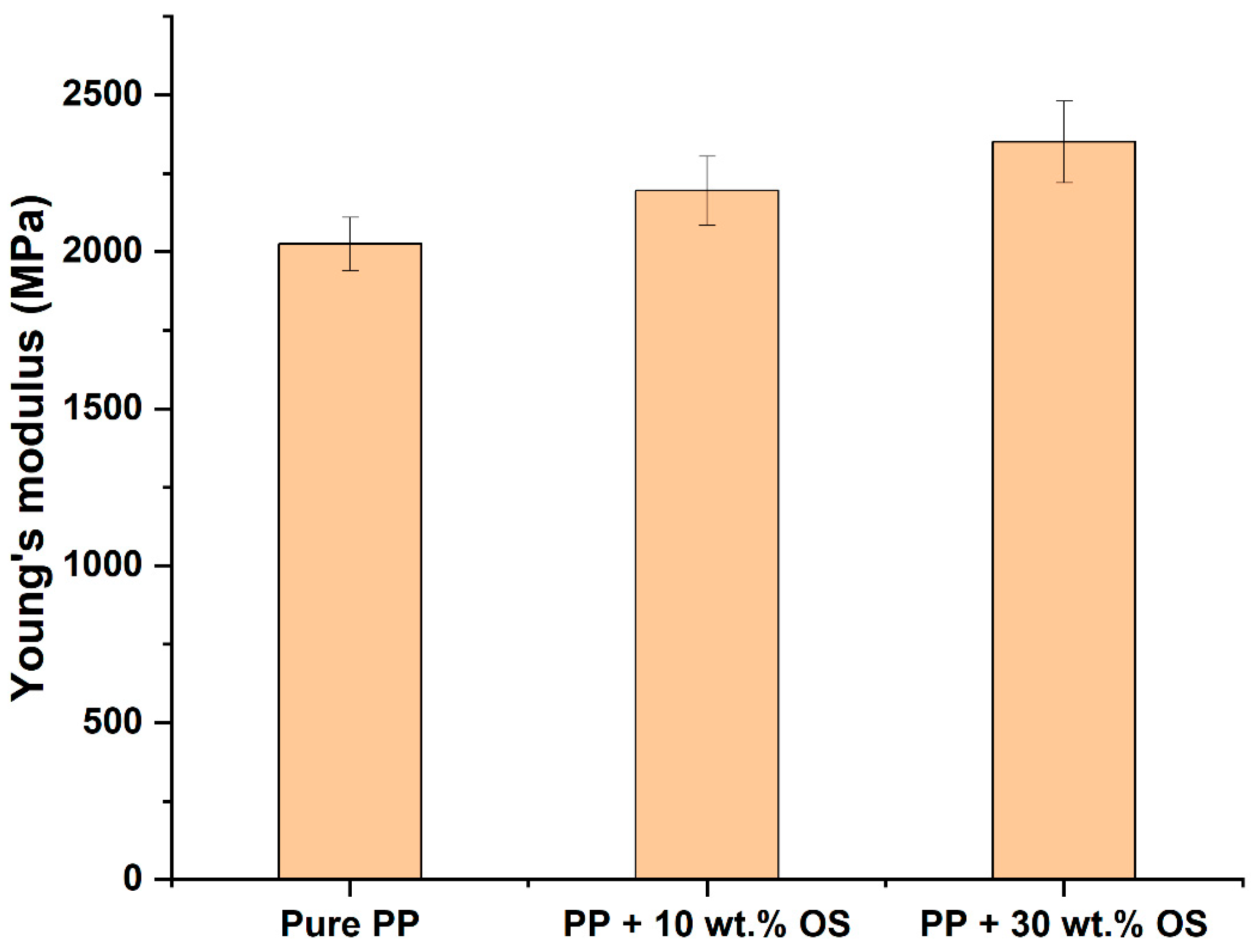
Tensile tests on PP, PP with 10 wt.% OS, and PP with 30 wt.% OS specimens were used to measure the main mechanical properties of PP and its biocomposites. Figure 7 shows the stress–strain curves for PP and its biocomposites (PP with 10 wt.% OS and PP with 30 wt.% OS). The addition of rigid OS particles increases the elastic modulus and tensile strength due to improved stress transfer and reduced polymer chain mobility. However, the presence of hard inorganic particles restricts plastic deformation, leading to earlier crack initiation and reduced strain-to-failure and impact toughness. Agglomeration of OS particles and limited PP/OS interfacial bonding (as seen in SEM) can create stress-concentration zones that further reduce the composite’s ability to undergo large plastic deformation. Figure 8 presents the values of Young’s modulus of the different materials in the form of a histogram. It can be seen from this figure that the modulus of elasticity increases after the addition of the biofillers. Although this increase is significant enough, it can be said that reinforcing PP with OS particles improves the stiffness of the polymer. These results are in line with the work presented by Bouakkaz et al. [30], that the stiffness of PP is slightly improved by the addition of talc microparticles. It is important to note that the composition of talc particles is similar to that of OS particles, since both materials contain mainly CaCO3.
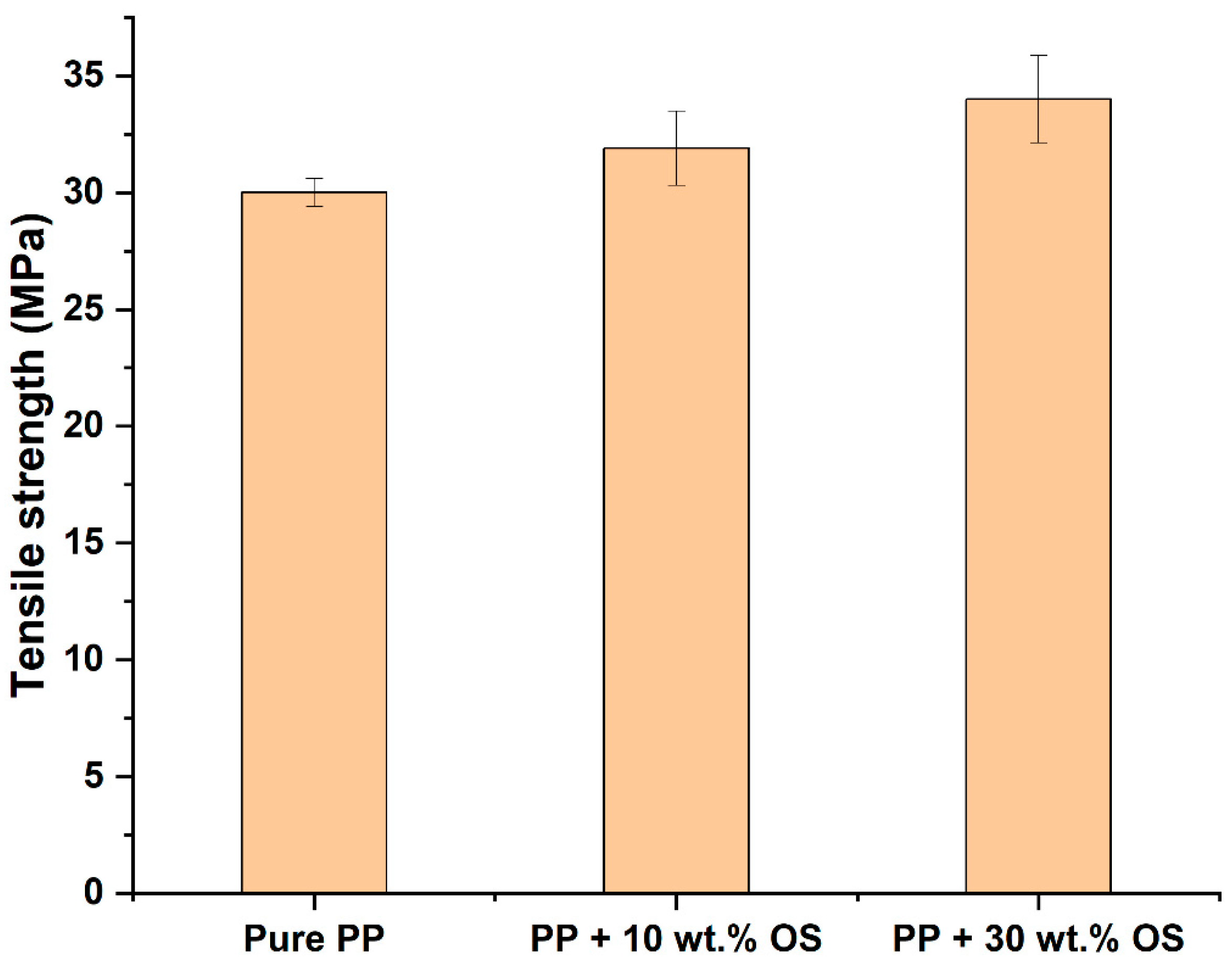
In Figure 9, the values of the tensile strength of pure PP and its biocomposites are presented. It can be noted that the tensile strength of pure PP coincides with that given by the supplier (30 MPa) and the measured value is 30.25 MPa. On the other hand, Figure 9 shows that tensile strength increases with the addition of biofillers, particularly for an OS particle content of 30 wt.%. With 10 wt.% biofiller, the variation in ultimate stress is not significant. The increase in tensile strength will be more significant if the homogeneous distribution of OS particles in the PP matrix was achieved.
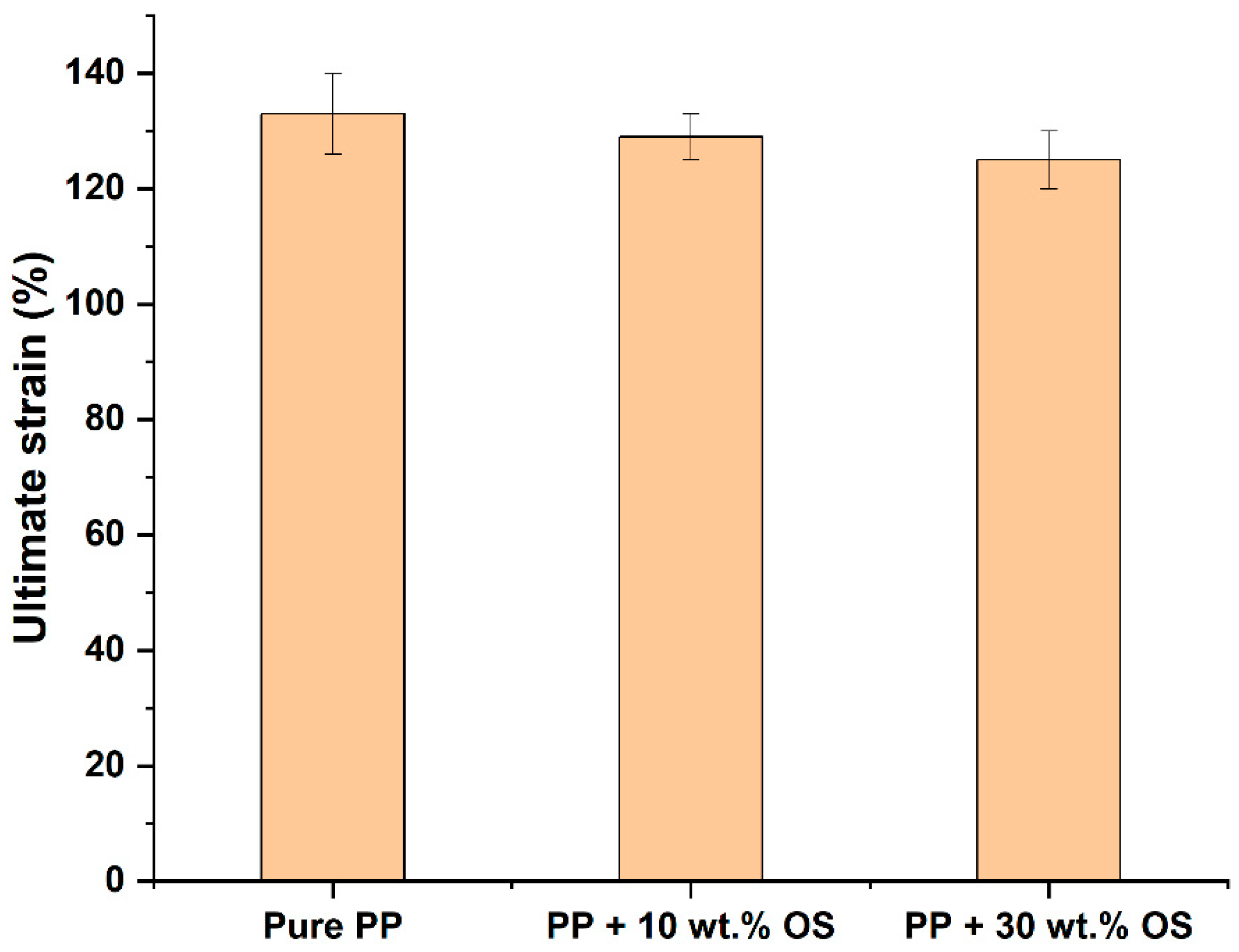
Figure 10 shows the variation in the ultimate deformation of PP and its biocomposites. It is evident that this deformation is reduced by the presence of the biofillers. This reduction is normal since the OS particles increase the stiffness of the polymer. It can be concluded that these biofillers reduce the ductility of the plastic material.

3.4. Impact Test Results

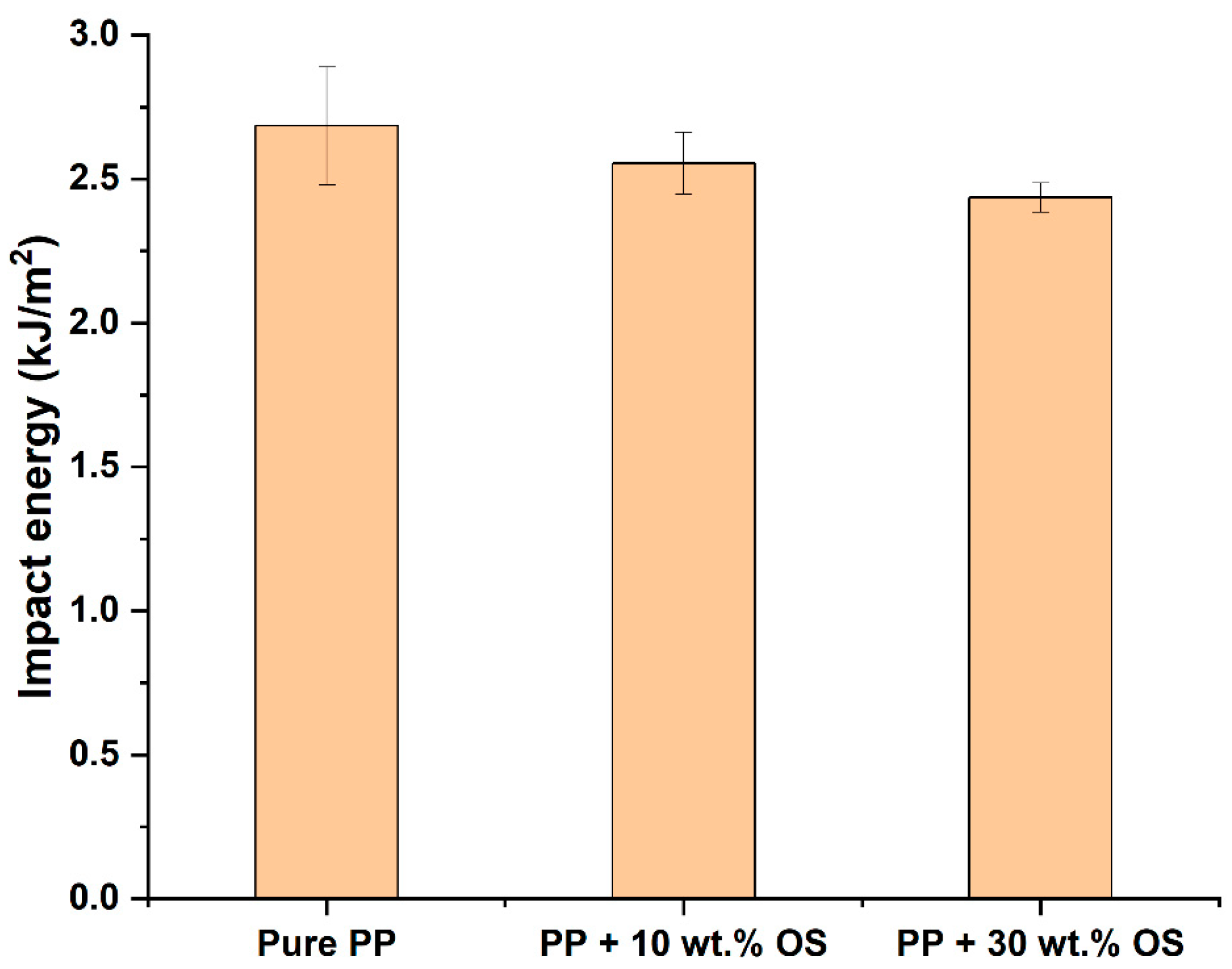
The impact energy values of PP and its biocomposites are shown in Figure 11. It can be seen that this energy decreases after the addition of the biofillers, which shows that the impact resistance is reduced by the biofillers. This behavior is mainly due to the high hardness of the OS particles, which tends to make the material more brittle. This reduction is offset by the increase in the stiffness and the reduction in the crystallinity, which leads to a reduction in plastic shrinkage after injection molding.
According to the literature, impact toughness often decreases (loss of ductility) at high filler loadings and without surface treatment [12]. However, several studies have shown that with reduced particle size, good dispersion, and proper surface treatment (to improve PP/filler compatibility), impact strength can be maintained or even enhanced within an optimal filler content range. In practice, the effect strongly depends on particle size distribution, filler percentage, and compatibilization [31,32].

3.5. DMA

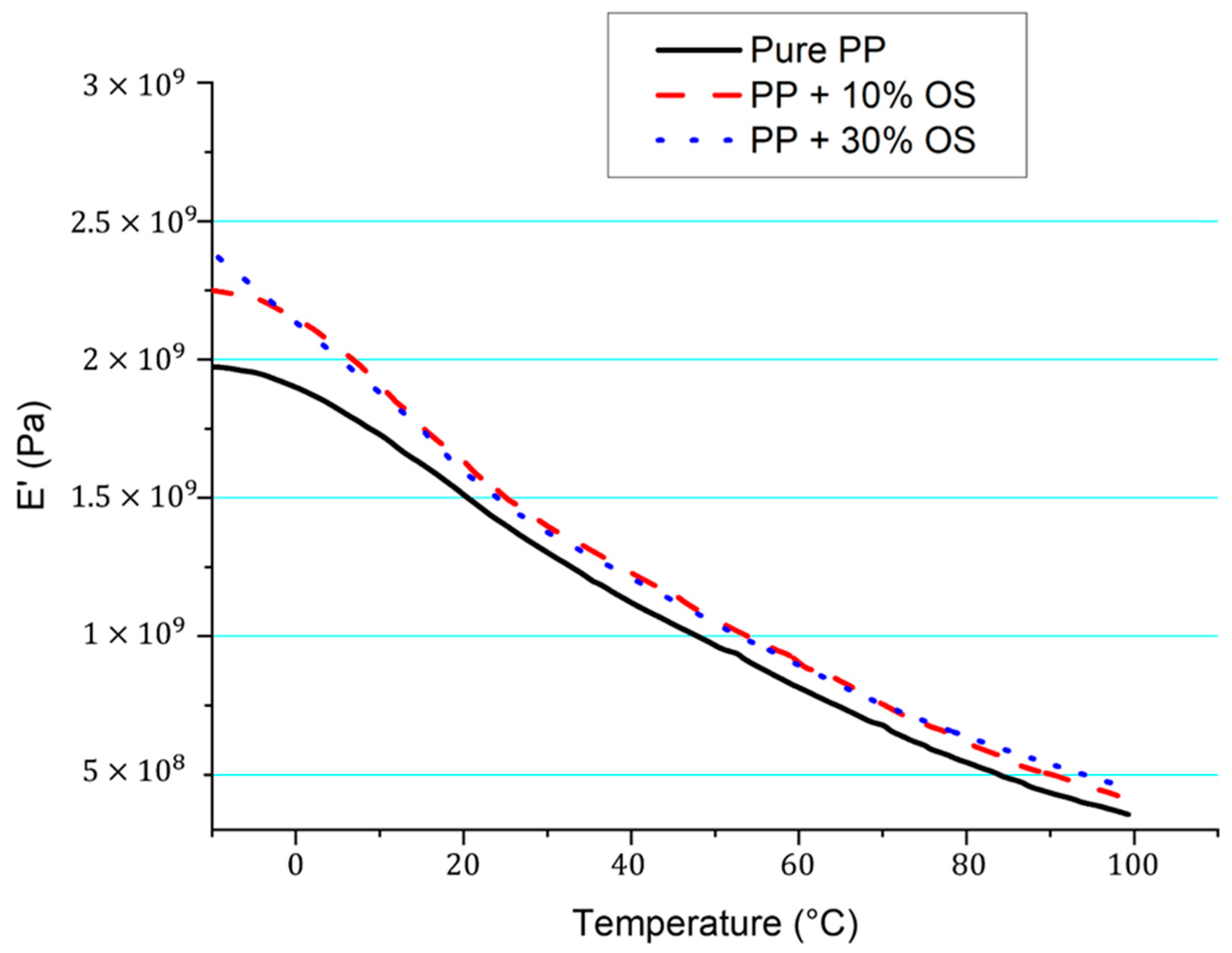
Figure 12 shows the evolution of storage modulus (E′) with increasing temperature for PP and its biocomposites (PP with 10 wt.% OS and PP with 30 wt.% OS). It can be seen that the E′ increases with the addition of OS particles, showing that the presence of OS particles in PP increases the storage modulus, particularly at low temperatures. This increase is proportional to the OS content between 0 °C and 20 °C (polymer service temperature). It can therefore be said that the addition of OS particles improves the polymers ability to restore stored mechanical energy in the form of elastic deformation. As the temperature rises, the E′ values of the three materials decrease significantly and approach each other, which is due to the fact that the stiffness of all three materials deteriorates with increasing temperature.
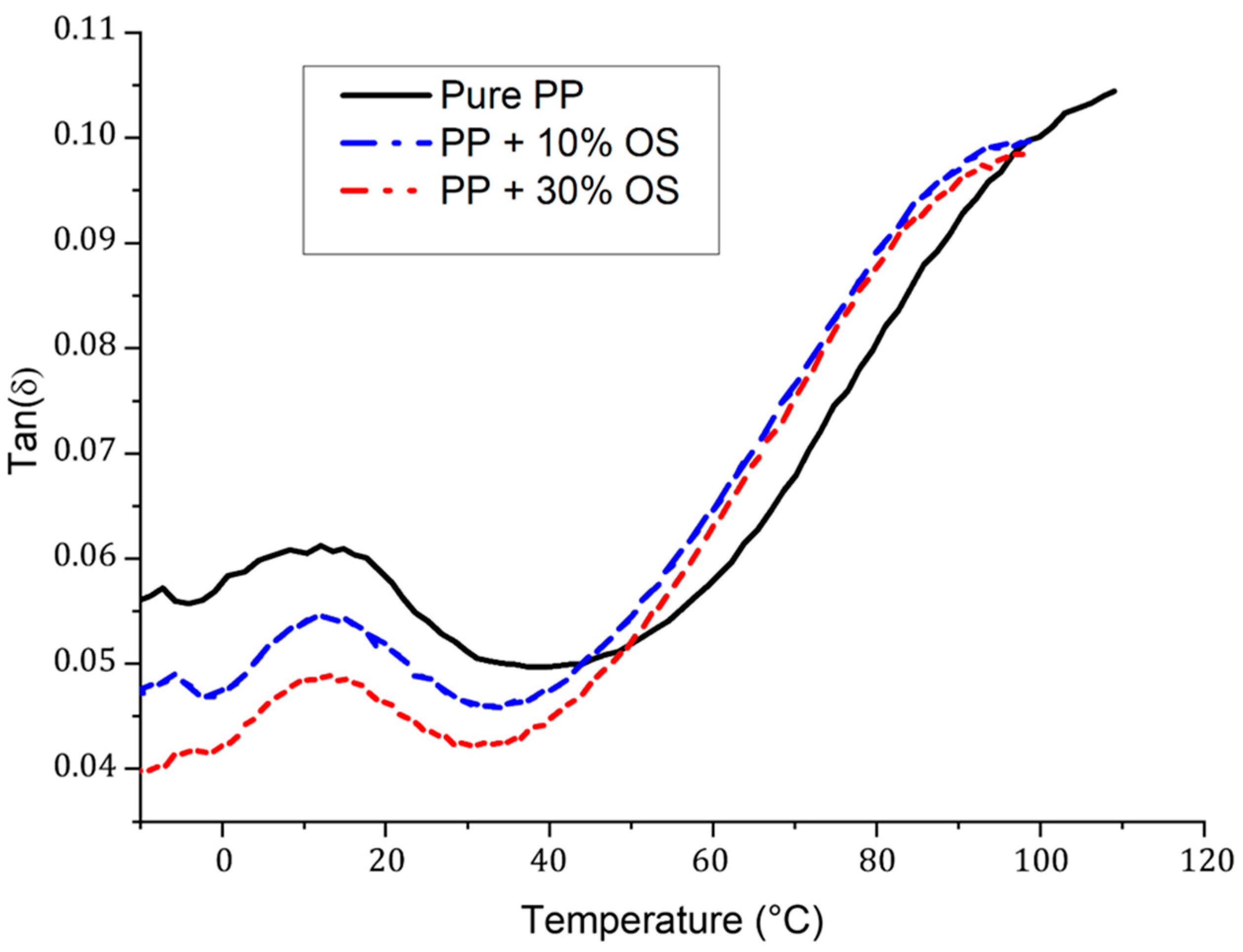
Figure 13 shows the variation in the damping factor (Tan δ) as a function of temperature for PP, PP with 10 wt.% OS, and PP with 30 wt.% OS. This factor is determined by the ratio between the two moduli: the damping dissipation modulus (E″) and the storage modulus (E′):
Tan (δ) = E″/E′
From Figure 12, it is evident that the damping factor of pure PP is higher than that of the two composites (PP with 10 wt.% OS and PP with 30 wt.% OS) at temperatures below 40 °C. This behavior can be explained by the low E′ values of pure PP compared with that of the prepared biocomposites. Pure PP therefore exhibits greater mechanical damping below a temperature of 40 °C. Above this temperature, all three materials have almost the same damping factor. DMA of PP reinforced with OS particles generally show an increase in the E′, indicating a stiffening of the material due to the presence of the mineral phase. Tan δ peak (associated with the glass transition) shifts little or slightly toward higher temperatures when matrix/filler adhesion is improved through surface treatment or the use of a compatibilizer [28]. The amplitude of the Tan δ peak decreases in such cases, reflecting reduced molecular mobility and better stress transfer. Conversely, without treatment or at high filler loadings, poor dispersion and particle agglomeration can reduce cohesion and increase damping. Overall, the viscoelastic behavior strongly depends on particle size distribution, filler content, and interfacial interaction quality, with the best performance observed for moderate and well-dispersed filler contents [33].
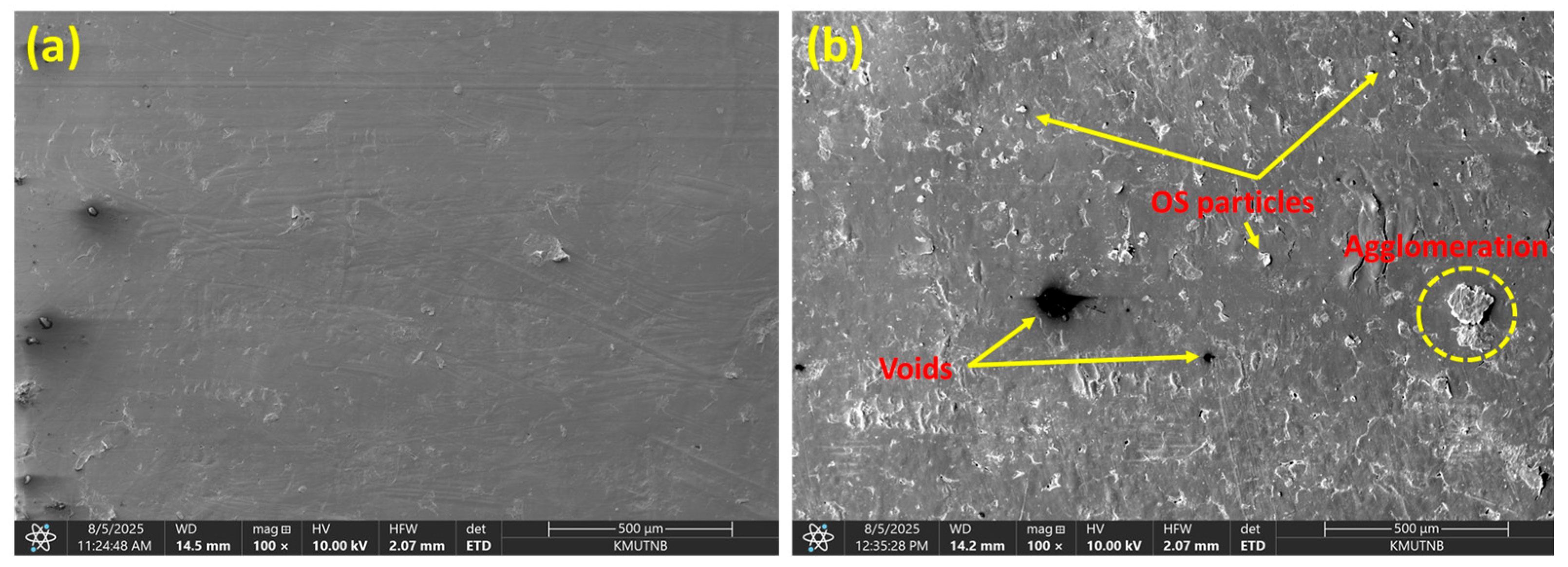
The micro-mechanisms responsible for the reduction in the loss factor integrates the interfacial and morphological evidence observed in the SEM analysis. The addition of OS particles increases stiffness (E′) and reduces the viscous energy dissipation (E″). However, stronger interfacial adhesion restricts molecular mobility near the filler–matrix interface, lowering damping. At higher filler loading (30 wt.%), localized agglomerates create rigid clusters that reduce polymer chain mobility further, thereby decreasing Tan δ. The restricted relaxation behavior of PP chains near CaCO3-rich surfaces reduces the amplitude of the damping peak. These additions provide a unified interpretation linking DMA findings with SEM-observed morphology and interfacial adhesion.

3.6. SEM Analysis

Figure 14 displays the SEM micrographs of neat PP and PP reinforced with 30 wt.% of OS particles. The SEM micrographs reveal clear morphological and structural differences between the pure PP and the PP composite filled with OS particles. The surface of pure PP appears smooth, dense, and homogeneous, typical of a semi-crystalline polymer matrix with well-developed lamellar regions, indicating a relatively high degree of crystallinity and uniform internal structure. In contrast, the PP/OS sample shows irregularly shaped micron-sized particles embedded in the polymer matrix, which significantly modify its morphology. These mineral particles act as heterogeneous nucleation sites, promoting the formation of PP crystallites around their surfaces and thereby influencing the overall crystallization behavior. However, the particle dispersion is not completely uniform; some agglomerates and interfacial voids can be observed, suggesting limited compatibility between the hydrophobic PP matrix and the hydrophilic CaCO3 nature of the OS particles. Such non-uniform distribution can lead to localized stress concentrations and imperfect crystallization, potentially affecting the mechanical cohesion and thermal properties of the composites. Overall, the incorporation of OS particles introduces morphological heterogeneity but enhances local crystallinity near the particle–matrix interfaces, which may result in increased stiffness and improved dimensional stability of the material.
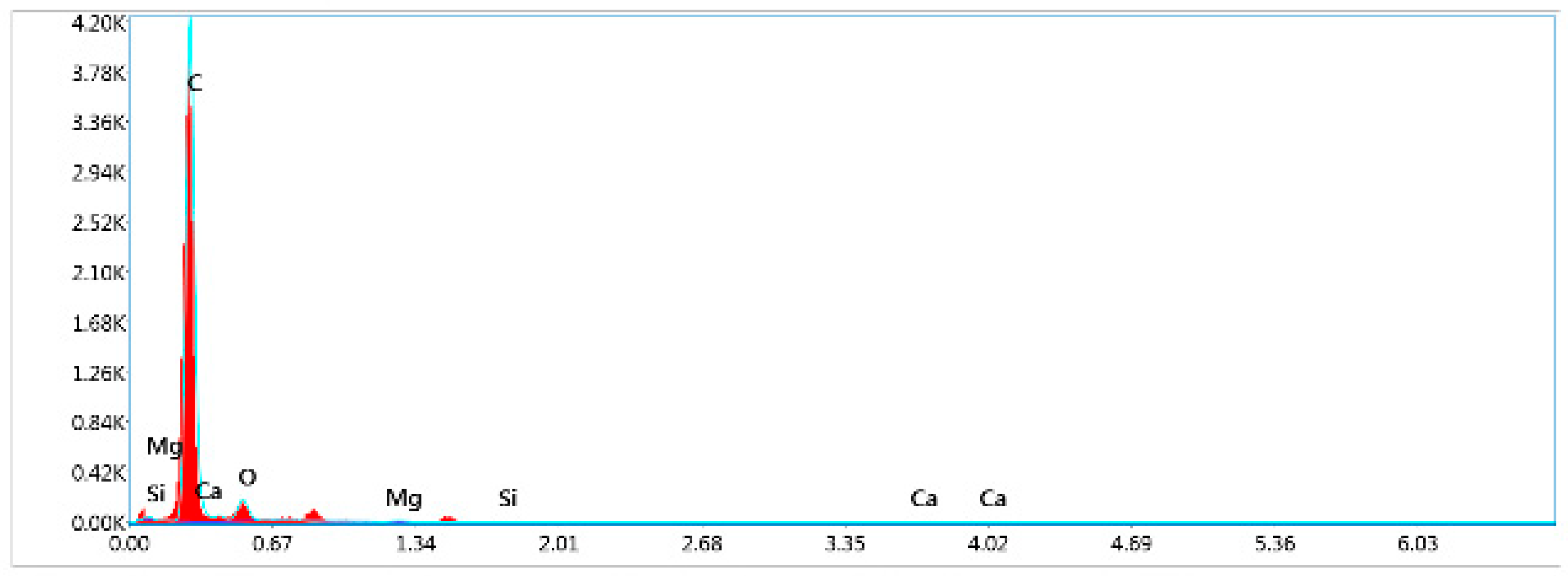
Figure 15 shows the EDS spectrum of PP filled with 30 wt.% of OS particles. This spectrum reveals the presence of carbon (C), oxygen (O), calcium (Ca), magnesium (Mg), and silicon (Si). The strong carbon peak originates from the PP matrix, while the O and Ca peaks confirm the presence of CaCO3, the main constituent of OS. The minor peaks of Mg and Si likely correspond to trace minerals naturally present in the shells, such as dolomite or silicate impurities. The coexistence of these elements demonstrates the successful incorporation and dispersion of OS particles within the PP matrix, indicating the formation of a heterogeneous polymer–mineral composite. The dominance of the carbon peak relative to Ca and O reflects the predominance of the polymer phase, consistent with a composite in which mineral fillers are embedded in a continuous PP matrix.

4. Conclusions

This research illustrates that upcycling OS particles (10 wt.% and 30 wt.%) could be utilized as an efficient and sustainable biofiller for PP matrices. The utilization of OS particles improves the thermal stability and rigidity of PP, while simultaneously decreasing its crystallinity and molding shrinkage. Despite a little decrease in ductility and impact resistance, the overall mechanical performance supports the development of durable and eco-efficient materials. DMA showed that the addition of OS particles improved PP’s ability to retain elastic energy. This effort enhances sustainability by reducing waste, promoting resource circularity and mitigating carbon footprints, converting a marine leftover into a valuable engineering filler. The findings validate that PP/OS biocomposites provide a feasible approach to sustainable polymer systems, with prospective applications in the automotive, packaging, and consumer goods sectors.

Author Contributions

Conceptualization, Z.B., B.A.B.B., M.M.B. and M.K.; methodology, Z.B., B.A.B.B., M.M.B. and M.K.; validation, Z.B., B.A.B.B., M.M.B., M.K., M.K.S. and S.K.P.; formal analysis, Z.B., B.A.B.B., M.M.B. and M.K.; investigation, Z.B., B.A.B.B., M.M.B. and M.K.; resources, Z.B., B.A.B.B., M.M.B., M.K., M.K.S. and S.K.P.; data curation, Z.B., B.A.B.B., M.M.B. and M.K.; writing—original draft preparation, Z.B., B.A.B.B., M.M.B. and M.K.; writing—review and editing, Z.B., B.A.B.B., M.M.B., M.K., M.K.S. and S.K.P.; visualization, Z.B. and M.M.B.; supervision, M.M.B., M.K.S. and S.K.P.; project administration, M.M.B. and S.K.P.; funding acquisition, M.M.B., M.K.S. and S.K.P. All authors have read and agreed to the published version of the manuscript.

Funding

This research was funded by King Mongkut’s University of Technology North Bangkok with Contract no. KMUTNB-69-KNOW-74.

Institutional Review Board Statement

Not applicable.

Data Availability Statement

The original contributions presented in this study are included in the article. Further inquiries can be directed to the corresponding author.

Acknowledgments

Immense thanks to the staff of the Department of Mechanical Engineering at University of Djillali Liabes, Sidi Bel Abbes 22000, Algeria. Thanks for being funded by King Mongkut’s University of Technology North Bangkok with Contract no. KMUTNB-69-KNOW-74.

Conflicts of Interest

The authors declare no conflict of interest.

References

  1. Eriksen, M.K.; Damgaard, A.; Boldrin, A.; Astrup, T.F. Quality assessment and circularity potential of recovery systems for household plastic waste. J. Ind. Ecol. 2019, 23, 156–168. [Google Scholar] [CrossRef]
  2. Singh, A.A.M.M.; Franco, P.A.; Azhagesan, N.; Sharun, V. Exploring seashell and rice husk waste for lightweight hybrid biocomposites: Synthesis, microstructure, and mechanical performance. Biomass Convers. Biorefin. 2024, 14, 30161–30170. [Google Scholar] [CrossRef]
  3. Hiremath, A.; Nayak, S.Y.; Heckadka, S.S.; Pramod, J.J. Mechanical behavior of basalt-reinforced epoxy composites modified with biomass-derived seashell powder. Biomass Convers. Biorefin. 2024, 14, 26281–26291. [Google Scholar] [CrossRef]
  4. Sharma, B.; Malik, P.; Jain, P. Biopolymer reinforced nanocomposites: A comprehensive review. Mater. Today Commun. 2018, 16, 353–363. [Google Scholar] [CrossRef]
  5. Savelyev, M.S.; Gerasimenko, A.Y.; Vasilevsky, P.N.; Fedorova, Y.O.; Groth, T.; Ten, G.N.; Telyshev, D.V. Spectral analysis combined with nonlinear optical measurement of laser printed biopolymer composites comprising chitosan/SWCNT. Anal. Biochem. 2020, 598, 113710. [Google Scholar] [CrossRef]
  6. Misri, S.; Ishak, M.R.; Sapuan, S.M.; Leman, Z. Filament winding process for Kenaf fibre reinforced polymer composites. In Manufacturing of Natural Fibre Reinforced Polymer Composites; Springer International Publishing: Cham, Switzerland, 2015; pp. 369–383. [Google Scholar]
  7. Chieng, B.W.; Ibrahim, N.A.; Then, Y.Y.; Loo, Y.Y. Epoxidized vegetable oils plasticized poly (lactic acid) biocomposites: Mechanical, thermal and morphology properties. Molecules 2014, 19, 16024–16038. [Google Scholar] [CrossRef]
  8. Wu, C.S.; Wu, D.Y.; Wang, S.S. Characterization and functionality of nanocomposite mats containing polyester, seashell, and silica aerogel using an electrospinning fabrication approach. Polym. Bull. 2023, 80, 1545–1563. [Google Scholar] [CrossRef]
  9. Zaman, H.U.; Khan, M.A.; Khan, R.A. Physico-mechanical and degradation properties of banana fiber/LDPE composites: Effect of acrylic monomer and starch. Compos. Interfaces 2011, 18, 685–700. [Google Scholar] [CrossRef]
  10. Nakatani, N.; Takamori, H.; Takeda, K.; Sakugawa, H. Transesterification of soybean oil using combusted oyster shell waste as a catalyst. Bioresour. Technol. 2009, 100, 1510–1513. [Google Scholar] [CrossRef]
  11. Karthick, R.; Sirisha, P.; Sankar, M.R. Mechanical and tribological properties of PMMA-sea shell based biocomposite for dental application. Procedia Mater. Sci. 2014, 6, 1989–2000. [Google Scholar] [CrossRef]
  12. Li, Y.; Huang, P.; Guo, S.; Nie, M. A promising and green strategy for recycling waste oyster shell powder as bio-filler in polypropylene via mycelium-enlightened interfacial interlocking. J. Clean. Prod. 2020, 272, 122694. [Google Scholar] [CrossRef]
  13. Li, Y.; Li, M.E.; Nie, M.; Wang, Q.; Han, R. Reinforcement for polypropylene via self-assembly of β-form nucleating agent: New insight on the perpendicular orientation of lamellae. J. Mater. Sci. 2017, 52, 981–992. [Google Scholar] [CrossRef]
  14. Yao, Z.; Xia, M.; Li, H.; Chen, T.; Ye, Y.; Zheng, H. Bivalve shell: Not an abundant useless waste but a functional and versatile biomaterial. Crit. Rev. Environ. Sci. Technol. 2014, 44, 2502–2530. [Google Scholar] [CrossRef]
  15. Shao, S.; Zhu, H.; Guo, M.; Zhang, Y. Application of waste oyster shells in construction: Overview, constitutive modeling, and life cycle assessment. J. Build. Eng. 2024, 87, 108965. [Google Scholar] [CrossRef]
  16. Yang, E.I.; Kim, M.Y.; Park, H.G.; Yi, S.T. Effect of partial replacement of sand with dry oyster shell on the long-term performance of concrete. Constr. Build. Mater. 2010, 24, 758–765. [Google Scholar] [CrossRef]
  17. Liu, Y.X.; Yang, T.O.; Yuan, D.X.; Wu, X.Y. Study of municipal wastewater treatment with oyster shell as biological aerated filter medium. Desalination 2010, 254, 149–153. [Google Scholar] [CrossRef]
  18. Hsu, T.C. Experimental assessment of adsorption of Cu2+ and Ni2+ from aqueous solution by oyster shell powder. J. Hazard. Mater. 2009, 171, 995–1000. [Google Scholar] [CrossRef]
  19. Vasanthkumar, P.; Balasundaram, R.; Senthilkumar, N.; Palanikumar, K.; Lenin, K.; Deepanraj, B. Thermal and thermo-mechanical studies on seashell incorporated Nylon-6 polymer composites. J. Mater. Res. Technol. 2022, 21, 3154–3168. [Google Scholar] [CrossRef]
  20. Zhang, Y.; Yokogawa, Y.; Feng, X.; Tao, Y.; Li, Y. Preparation and properties of bimodal porous apatite ceramics through slip casting using different hydroxyapatite powders. Ceram. Int. 2010, 36, 107–113. [Google Scholar] [CrossRef]
  21. Gelinsky, M.; Welzel, P.B.; Simon, P.; Bernhardt, A.; König, U. Porous three-dimensional scaffolds made of mineralised collagen: Preparation and properties of a biomimetic nanocomposite material for tissue engineering of bone. Chem. Eng. J. 2008, 137, 84–96. [Google Scholar] [CrossRef]
  22. Yang, Y.; Yao, Q.; Pu, X.; Hou, Z.; Zhang, Q. Biphasic calcium phosphate macroporous scaffolds derived from oyster shells for bone tissue engineering. Chem. Eng. J. 2011, 173, 837–845. [Google Scholar] [CrossRef]
  23. DIN EN ISO 11357-1: 2023; Plastics-Differential Scanning Calorimetry (DSC)-Part 1: General Principles. International Organization for Standardization: Geneva, Switzerland, 2023.
  24. DIN EN ISO 11358-1: 2022; Plastics-Thermogravimetry (TG) of Polymers-Part 1: General Principles. International Organization for Standardization: Geneva, Switzerland, 2022.
  25. DIN EN ISO 527-1: 2019; Plastics-Determination of Tensile Properties-Part 1: General Principles. International Organization for Standardization: Geneva, Switzerland, 2019.
  26. DIN EN ISO 179-1: 2023; Plastics-Determination of Charpy Impact Properties-Part 1: Non-Instrumented Impact Test. International Organization for Standardization: Geneva, Switzerland, 2023.
  27. DIN EN ISO 6721-1: 2019; Plastics-Determination of Dynamic Mechanical Properties-Part 1: General Principles. International Organization for Standardization: Geneva, Switzerland, 2019.
  28. Bouiadjra, B.A.B.; Albedah, A.; Mohammed, S.M.; Abdo, H.S.; Alothman, O.Y.; Bouziane, M.M. Thermal stability and mechanical characterization of oyster shell reinforced recycled polypropylene biocomposite. J. Reinf. Plast. Compos. 2024. [Google Scholar] [CrossRef]
  29. Tsou, C.H.; Wu, C.S.; Hung, W.S.; De Guzman, M.R.; Gao, C.; Wang, R.Y.; Chen, J.; Wan, N.; Peng, Y.J.; Suen, M.C. Rendering polypropylene biocomposites antibacterial through modification with oyster shell powder. Polymer 2019, 160, 265–271. [Google Scholar] [CrossRef]
  30. Bouakkaz, A.O.; Albedah, A.; Bouiadjra, B.B.; Khan, S.M.; Benyahia, F.; Elmeguenni, M. Effect of temperature on the mechanical properties of polypropylene–talc composites. J. Thermoplast. Compos. Mater. 2018, 31, 896–912. [Google Scholar] [CrossRef]
  31. Song, J.I.; Kim, B.S.; Prabhakar, M.N.; Shah, A.U.R.; Lee, D.W. Development and characterization of oyster shell powder filled polypropylene composite. Compos. Res. 2014, 27, 201–206. [Google Scholar] [CrossRef]
  32. Nwanonenyi, S.C.; Obidiegwu, M.U.; Onuchukwu, T.S.; Egbuna, I.C. Studies on the properties of linear low-density polyethylene filled oyster shell powder. Int. J. Eng. Sci. 2013, 2, 42. [Google Scholar]
  33. Collar, E.P.; García-Martínez, J.M. A Dynamic Mechanical Analysis on the Compatibilization Effect of Two Different Polymer Waste-Based Compatibilizers in the Fifty/Fifty Polypropylene/Polyamide 6 Blend. Polymers 2024, 16, 2523. [Google Scholar] [CrossRef]
Figure 1. Illustration of the production process of biocomposites.
Jcs 09 00674 g001
Figure 2. EDS spectrum of OS particles.
Jcs 09 00674 g002
Figure 3. TEM image of the PP/OS biocomposites.
Jcs 09 00674 g003
Figure 4. Heating DSC curves of pure PP and its biocomposites.
Jcs 09 00674 g004
Figure 5. Cooling DSC curves of pure PP and its biocomposites.
Jcs 09 00674 g005
Figure 6. TGA curves of pure PP and its biocomposites.
Jcs 09 00674 g006
Figure 7. Stress–strain curves of pure PP and its biocomposites.
Jcs 09 00674 g007
Figure 8. Young modulus of pure PP and its biocomposites.
Jcs 09 00674 g008
Figure 9. Tensile strength of pure PP and its biocomposites.
Jcs 09 00674 g009
Figure 10. Ultimate strain of pure PP and its biocomposites.
Jcs 09 00674 g010
Figure 11. Impact energy of pure PP and its biocomposites.
Jcs 09 00674 g011
Figure 12. Storage modulus vs. temperature of pure PP and its biocomposites.
Jcs 09 00674 g012
Figure 13. Damping factor vs. temperature of pure PP and its biocomposites.
Jcs 09 00674 g013
Figure 14. SEM images of pure PP (a) and PP reinforced with 30 wt.% of OS particles (b).
Jcs 09 00674 g014
Figure 15. EDS spectrum of PP biocomposites with 30 wt.% OS particles.
Jcs 09 00674 g015
Table 1. Mineral contents of the OS particles.
ElementWeight (%)Atomic (%)
C: CaCO386.7393.87
O: SiO24.343.52
Mg: MgO2.081.11
Si: SiO22.621.21
Pt: Pt4.230.29
Total100.00100.00
Table 2. Summary of DCS analysis for pure PP and its biocomposites.
MaterialsTc (°C)Tm (°C)ΔH (J/g)Xc (%)
PP107.17159.11115.0555.55
PP + 10 wt.% OS110.32162.2591.1844.04
PP + 30 wt.% OS121.45163.0387.3142.02
Disclaimer/Publisher’s Note: The statements, opinions and data contained in all publications are solely those of the individual author(s) and contributor(s) and not of MDPI and/or the editor(s). MDPI and/or the editor(s) disclaim responsibility for any injury to people or property resulting from any ideas, methods, instructions or products referred to in the content.