Article

Comparative Performance of Cement Kiln Dust and Ground Granulated Blast-Furnace Slag as Partial Cement Replacements: A Case Study on Mechanical and Durability Properties of Concrete


by
Rafah Rasheed Abdulmajeed
Scientific Research Center, Erbil Polytechnic University, Erbil 44001, Kurdistan Region, Iraq
J. Compos. Sci. 2026, 10(9), 460; https://doi.org/10.3390/jcs10090460
Submission received: 16 July 2026 / Revised: 21 August 2026 / Accepted: 24 August 2026 / Published: 31 August 2026
(This article belongs to the Special Issue Advanced Composite Materials for Civil Construction Applications)

Abstract

The use of industrial waste materials as partial cement replacement has become a popular topic for research to effectively reduce cement consumption, lower CO2 emissions and improve the sustainability of concrete production. In addition to environmental benefits, these materials have been shown to modify the mechanical and durability performance of concrete positively when used at appropriate amounts. In this study, an investigation was carried out to evaluate the effects of cement kiln dust (CKD) and ground granulated blast-furnace slag (GGBFS) as partial cement replacement at ratios ranging from 0% to 50% on the physical, mechanical, and durability behavior of the modified pervious concrete compared to the control one. The analysis proves that CKD reaches its optimum performance at relatively low replacement rates (from 5 to 10%), which results in increased early compressive strength up to 14.28 MPa (+19.3%) and tensile strength to 2.90 MPa (+55.9%). This is due to a greater particle packing and rapid hydration of cementitious materials. Oppositely, despite the decrease in compressive and flexural strength of concrete at 50% replacement ratio of cement by CKD (6.24 MPa and 1.45 MPa), GGBFS significantly increases the long-term durability. At a replacement ratio equal to 50%, GGBFS leads to permeability of 18.01 mm/s (−57.0%), water absorption of 2.53% (−56.0%), and freeze–thaw weight loss of 5.58%. Overall, low ratios (≤20%) of CKD and GGBFS are preferable for non-structural applications, as they provide performable permeability with enough mechanical and durability capacity.

1. Introduction

As a solution to the flood phenomenon due to the unfilterable surface of the ground, new types of concrete have been developed, which are called pervious concrete, no-fine concrete, or permeable concrete [1,2,3,4,5,6,7,8,9].
Pervious concrete composition is water, cement, and coarse aggregate and may contain a little sand or maybe not, as the unavailability of the sand guarantees the availability of the required void in the concrete. For the same reason, in most situations, the used coarse aggregate is single-sized for protecting the void in the concrete, which varies between 11 and 35% [10,11,12,13,14,15,16,17]. The behavior of the composition in the concrete with the curing method is one of the most important effects on the produced concrete behavior [18,19].
The main difference between normal concrete and pervious concrete is the void rate, which is available in the pervious concrete that allows the water to pass through it and reduces the possibility of flooding by permitting the air exchange between underground and the ground surface [20,21,22,23,24,25].
Due to the available void in the concrete content, it absorbs the sound of traffic, which makes it performable for the highway, especially for the locations that have low traffic [26,27,28,29,30,31,32]. The obtained strength in pervious concrete varies between 2.5 MPa and 21 MPa, which is a low rate compared to normal concrete [33,34,35,36,37,38].
Due to the low compressive strength ability of pervious concrete [39,40,41] and also the increase in the waste materials that collect in the land, much research has been done to modify the composition of pervious concrete as the path for reducing waste material in the land, with reduction of the usage of the raw material, especially in the coarse aggregate content, by replacing part of the coarse aggregate with other materials [42,43,44,45,46,47].
Also, many investigations have been done to use new materials as partial replacements of cement with different rates for different reasons, including improving the bond between the paste and coarse aggregate and reducing the cement production that causes carbon dioxide gas submission to the air, in addition to reducing the powder waste that is placed in the land [48,49,50,51,52,53]. Tang et al. [26] studied the use of ferronickel slag powder as a partial replacement of cement with six different rates, including 0, 10, 20, 30, 40, and 50%, with three different water-to-cement ratios. The result obtained was that with the increase in the used rate of the ferronickel powder, the rate decreases the compressive strength and the value of the permeability coefficient. Kusumaningrum and Risnan [49] investigated the usage of ground granulated blast-furnace slag as a partial replacement of cement with three different rates: 0, 84, and 32%. The result obtained was that the use of GGBFS can cause a decrease in the porosity and increase the density with compressive strength of the modified concrete. Sathiparan and Subramaniam [54] investigated the use of fly ash powder as a partial replacement of cement with five different rates: 0, 5, 10, 15, and 20%. The obtained results showed that the increase in the use of fly ash as a partial replacement of cement up to 15% increases the slump and compressive strength of the modified concrete with a decrease in the density and porosity. Shree et al. [55] investigated the production of geopolymer pervious concrete which contains different types of powder as partial replacements of cement, including GGBFS, palm jaggery, and waste foundry sand. Also, Khan et al. [56] used GGBFS, CKD, volcanic pumice dust, and nano silica in a geopolymer pervious concrete mix. CKD was used with four different rates: 0, 10, 20, and 30%.
The use of CKD up to 20% increases compressive strength, flexural strength, and tensile strength while decreasing porosity and slump value. Using CKD of more than 20% causes decreases in the compressive strength, flexural strength, tensile strength, slump, and porosity. This manuscript deals with the use of CKD and GGBFS separately as partial replacements of cement in pervious concrete, each one with five different rates (0, 5, 10, 20, 30, and 50%), comparing their effect on the produced concrete properties.

2. Research Significant

This manuscript deals with the use of waste CKD and GGBFS separately with six different rates (0, 5, 10, 20, 30, and 50%) as partial replacement of cement, to investigate each rate for each material’s effect on the physical, durability, and mechanical properties of the produced pervious concrete, with the selection of the optimum rate of each used material on the pervious concrete properties. Investigating the possible use of these materials in pervious concrete will cause sustainable cleaning of the land with a possible reduction in the cement production that will cause a reduction in carbon dioxide emission to the atmosphere.

3. Methodology

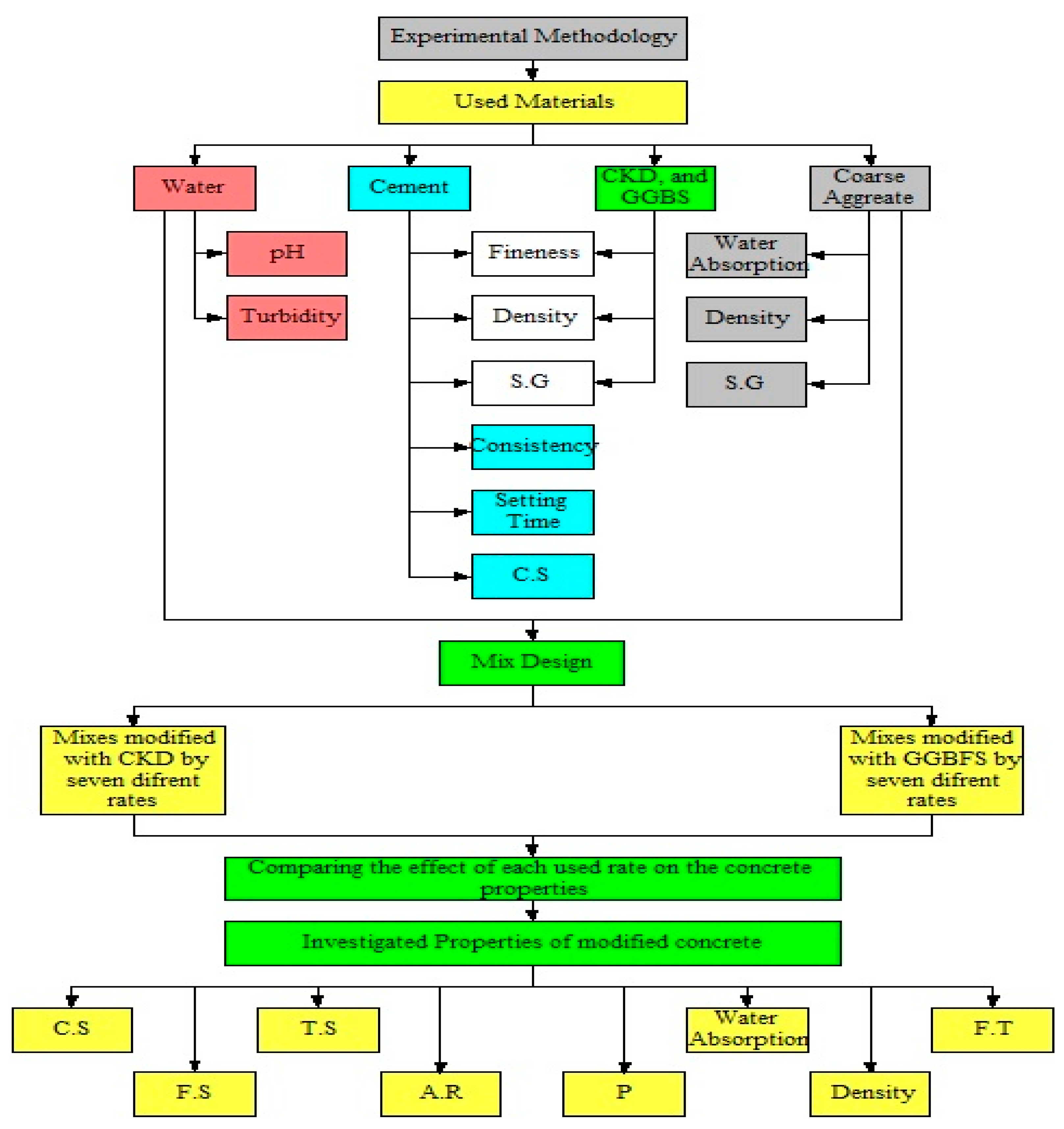
The content of this manuscript is divided into three different steps.
The first step consists of the investigation process for the materials used in the manuscript, including water, cement, CKD, GGBFS, and coarse aggregate.
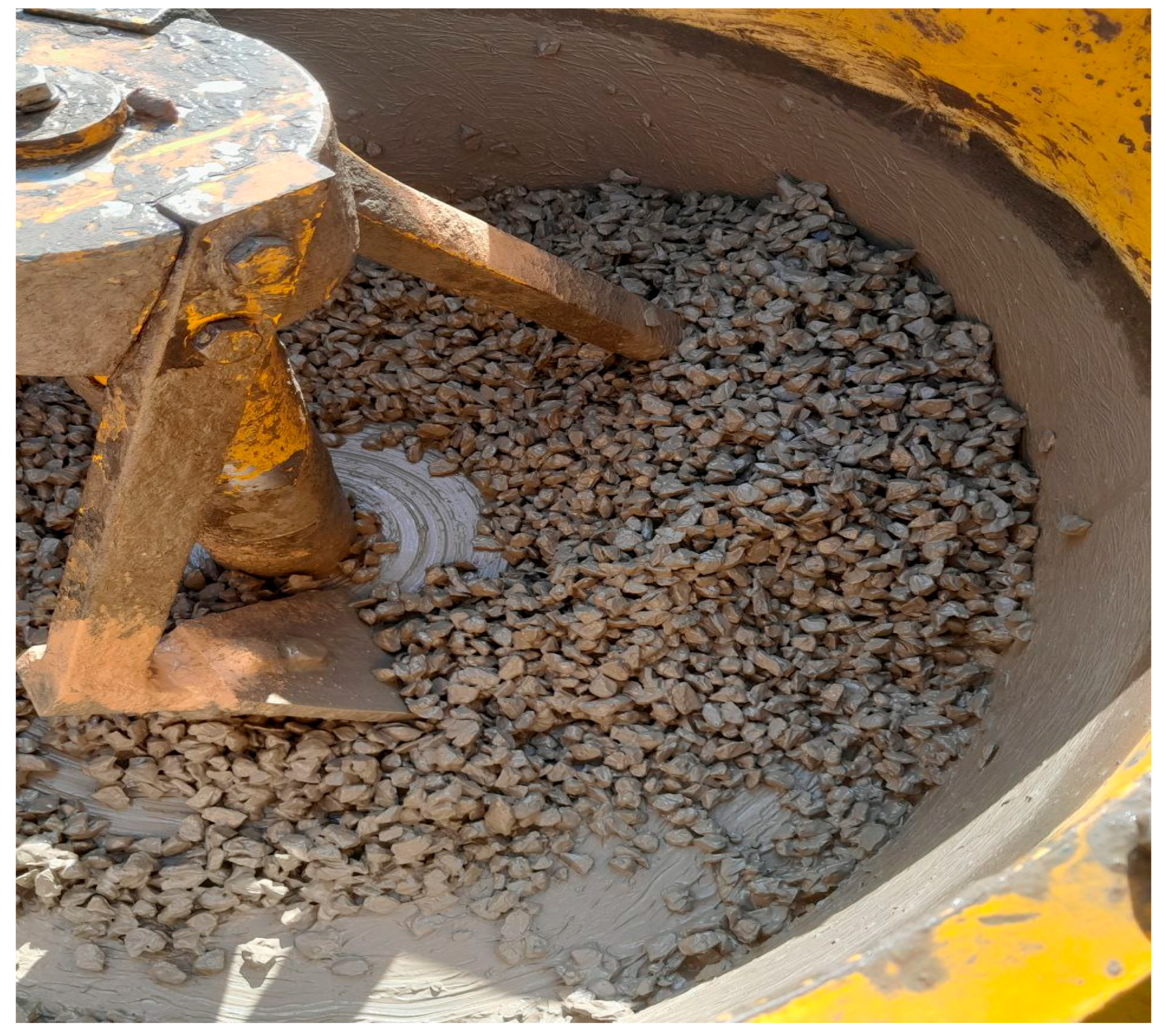
The second step is the mix design process for the modified concrete mixes, which are eleven mixes (the control mix, five mixes modified with CKD, and five mixes modified with GGBFS). After the mix design using the available procedure in ACI 522R-10, the materials are mixed using a laboratory mixer, adding the coarse aggregate to the mixer, followed by the powder content, including the mix of cement with added material previously mixed separately. The last step is to add required water by a two-step process to the mixer. After the mix preparation, the required samples for the investigated properties are prepared.
In the last step, after sample preparations for the properties that require investigation (compressive strength, flexural strength, tensile strength, abrasion resistance, permeability, water absorption, density, and freezing–thawing resistance), samples are dropped out from the mold after 24 h, and all the samples are kept in a water bath at 25 °C. Then, they are tested after the curing time has passed, as expressed in Figure 1.

3.1. Material Properties

The water used in the experimental work was the same as that used by Mohammed et al. [47], with a pH value equal to 7.3, which was measured based on ASTM D1293 [57].
The coarse aggregate used in this article was obtained from the same source as Mohammed et al. [47], from crushed stone with a single size between 9.5 and 12.5 mm, and has the physical properties expressed in Table 1.
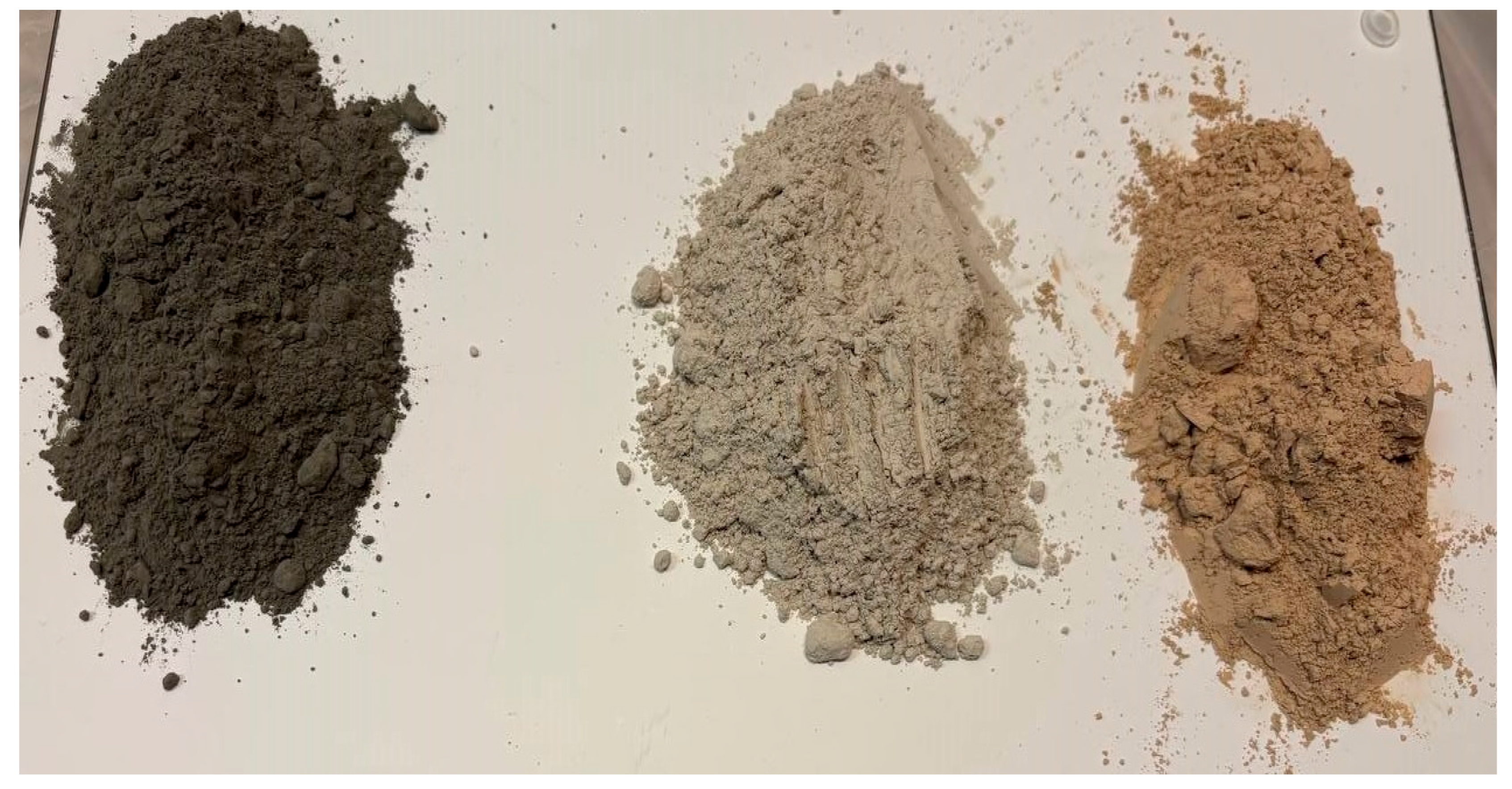
Three different binder materials were used in this manuscript, including cement, cement kiln dust, and ground granulated blast-furnace slag, as shown in Figure 2.
The first used binder was Portland cement, which was obtained from the same source as that used by Mohammed et al. [47] and had the same given properties as in Table 2; compared to the provided limitation in ASTM, C150 was acceptable [60].
The used cement CKD was the same as that used by Ibrahem and Rafiq [61], with 2.44 specific gravity according to ASTM C188 [62] and 7345 cm2/gram fineness based on ASTM C115 [63]. The used GGBFS also has fineness equal to 5666 cm2/gram fineness, based on ASTM C115 [63], and 2.899 specific gravity according to ASTM C188 [62].
Table 2. Physical properties of used cement [47].
Tests NameTests ResultsAllowable LimitUnits
Fineness (ASTM, C115) [63]35362600–4300cm2/gram
Normal consistency (ASTM, C187) [64]27-%
Initial setting time (ASTM, C191) [65]14145 (minimum)Minute
Final setting time (ASTM, C191) [65]192375 (maximum)Minute
Specific Gravity (ASTM, C188) [62]3.14-
Density (ASTM, C188) [62]1.44-gram/cm3

3.2. Mix Design

The mix design process of the control mix was carried out based on the ACI 522R-10 [66], which is expressed in Table 3.

3.3. Investigated Properties of Pervious Concrete

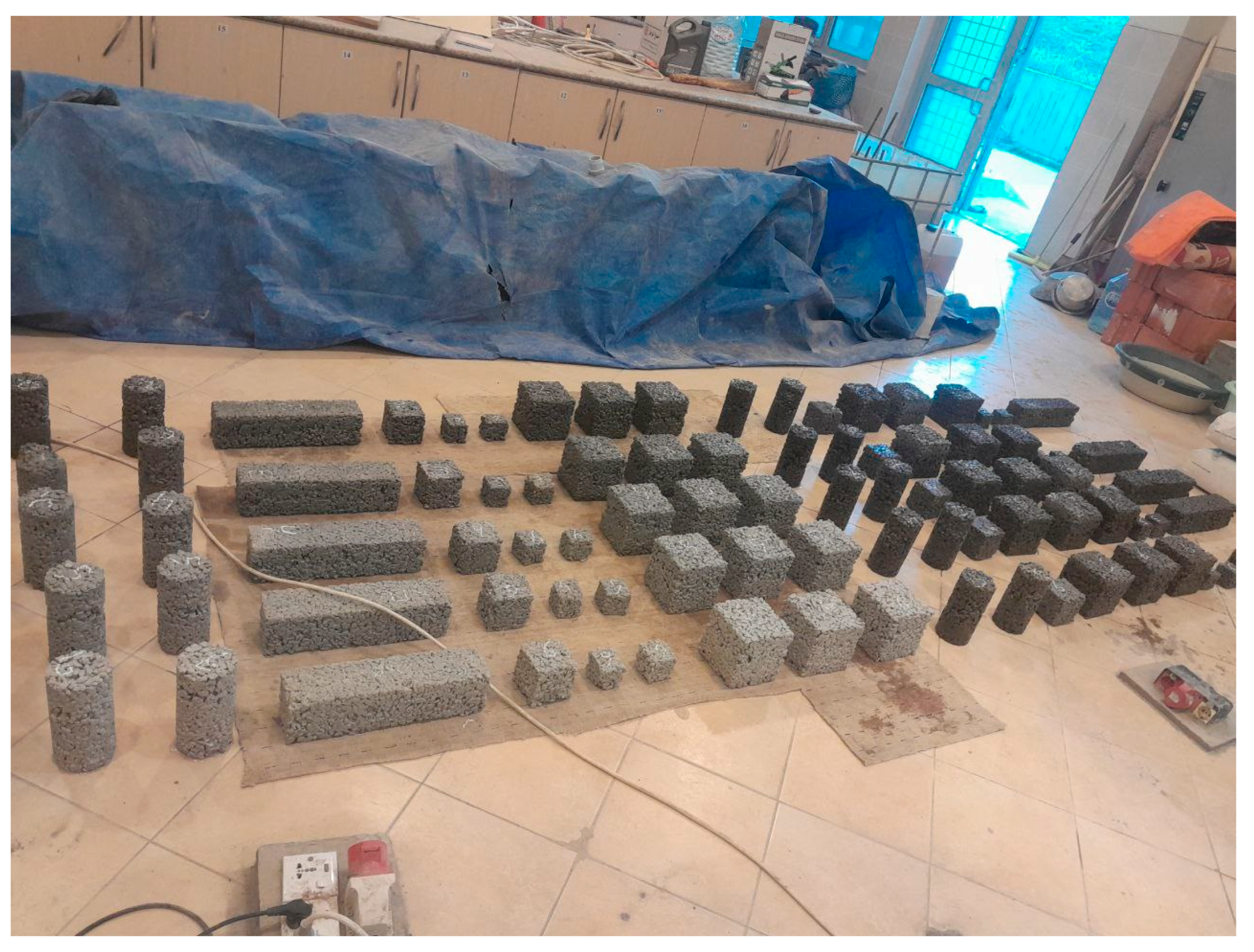
After the mixing process shown in Figure 3, the required samples were prepared for each mix, as shown in Figure 4.
For each mix, three cubic samples with 15 cubic centimeters were prepared and cured for 28 days. After curing time, the samples were tested for compressive strength ability measurement by using 0.25 MPa for each second as a load rate based on the ASTM, C39 [67], and calculating the average value of the three samples.
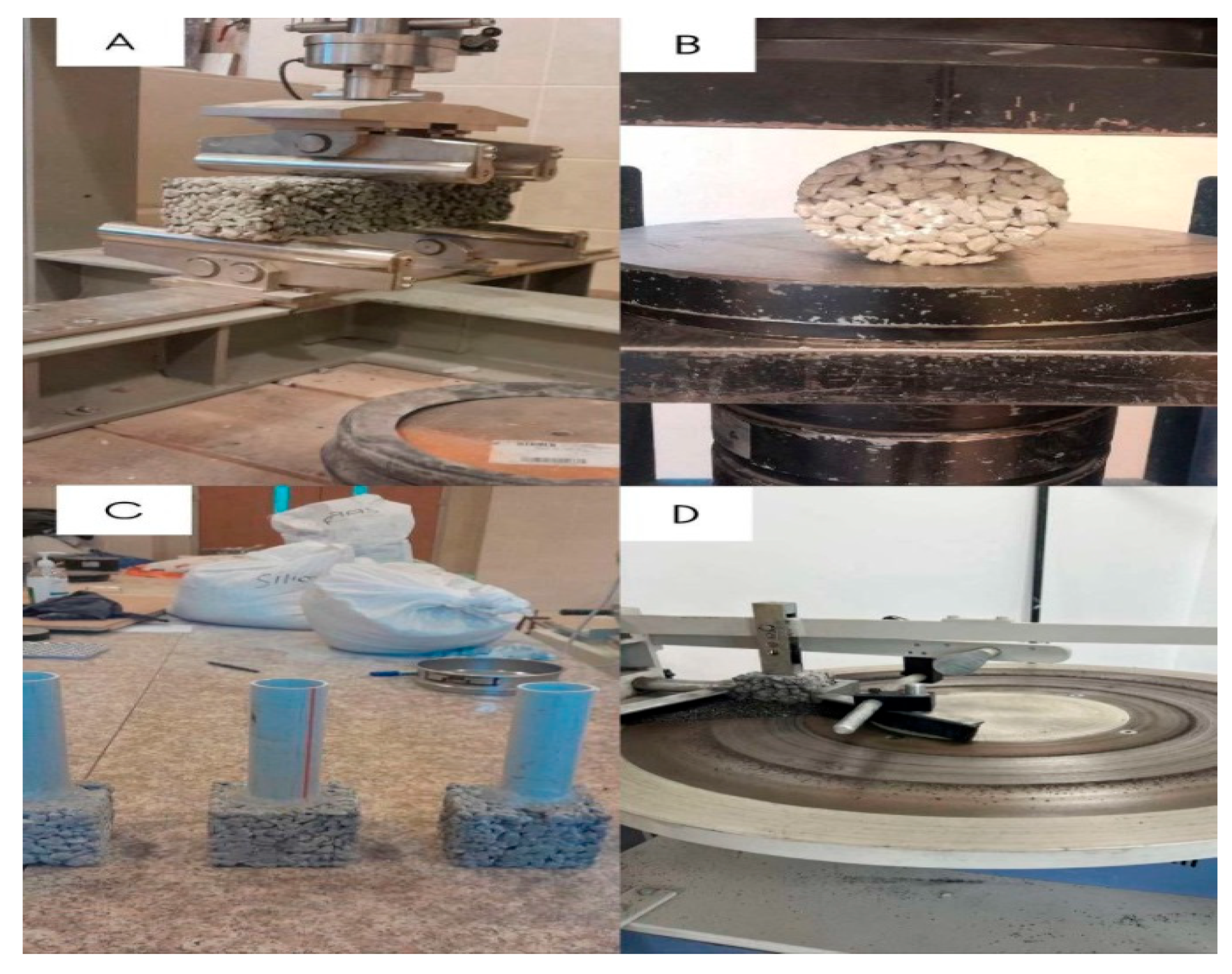
To evaluate the flexural strength, three prism specimens with dimensions of 10 × 10 × 40 cm3 were prepared for each mix. After the specified curing period of 28 days, the specimens were tested under a four-point loading configuration in accordance with ASTM C78 [68], using a loading rate of 20 N/s, as illustrated in Figure 5A.
The indirect tensile strength was also assessed for each mix by casting three cylindrical specimens with dimensions of 100 × 200 mm2. The specimens were cured in a water bath for 28 days and subsequently tested following the procedures outlined in ASTM C496 [69], as shown in Figure 5B.
Permeability is the primary durability property of pervious concrete. Therefore, three cubic specimens of dimensions 10 × 10 × 10 cm were prepared for each mix according to ASTM C1701 [70], as illustrated in Figure 5C. Following the test procedure proposed by Ahmad et al. [46], each specimen was sealed to a constant diameter pipe with waterproof silicone. A measured volume of water was allowed to pass through the specimen, and the permeability coefficient was determined by measuring the flow time and water head.
Due to the unavailability of specific equipment required by ASTM C944 [71], abrasion resistance was tested using an alternative method: for each mix, three specimens with dimensions of 74 × 65 × 65 mm were prepared, as shown in Figure 5D, and then they were tested according to the procedures described by Strzałkowski et al. [72]. The specimens were subjected to axial load with abrasive material placed on the test surface. After completing twenty-two abrasion cycles, the mass loss of each specimen was recorded.
In accordance with ASTM C1754 [73], concrete specimens were oven-dried for 24 h. Once the difference between successive weight measurements was less than 0.5%, the recorded mass was considered the dry weight (Wd). The specimens were then immersed in water for an additional 24 h, removed, and surface water was wiped off to obtain the saturated surface-dry weight (Ws). These values were used to calculate the density and water absorption of the pervious concrete samples.
Following the procedures described in ASTM C666 [74], specimens from each mix were placed in a freezer programmed for the specified number of freeze–thaw cycles and temperature limits. After each cycle, the mass of the specimens was measured. Upon completion of the selected number of cycles, weight loss curves were developed to evaluate freeze–thaw durability.

4. Result and Discussion

4.1. Compressive Strength

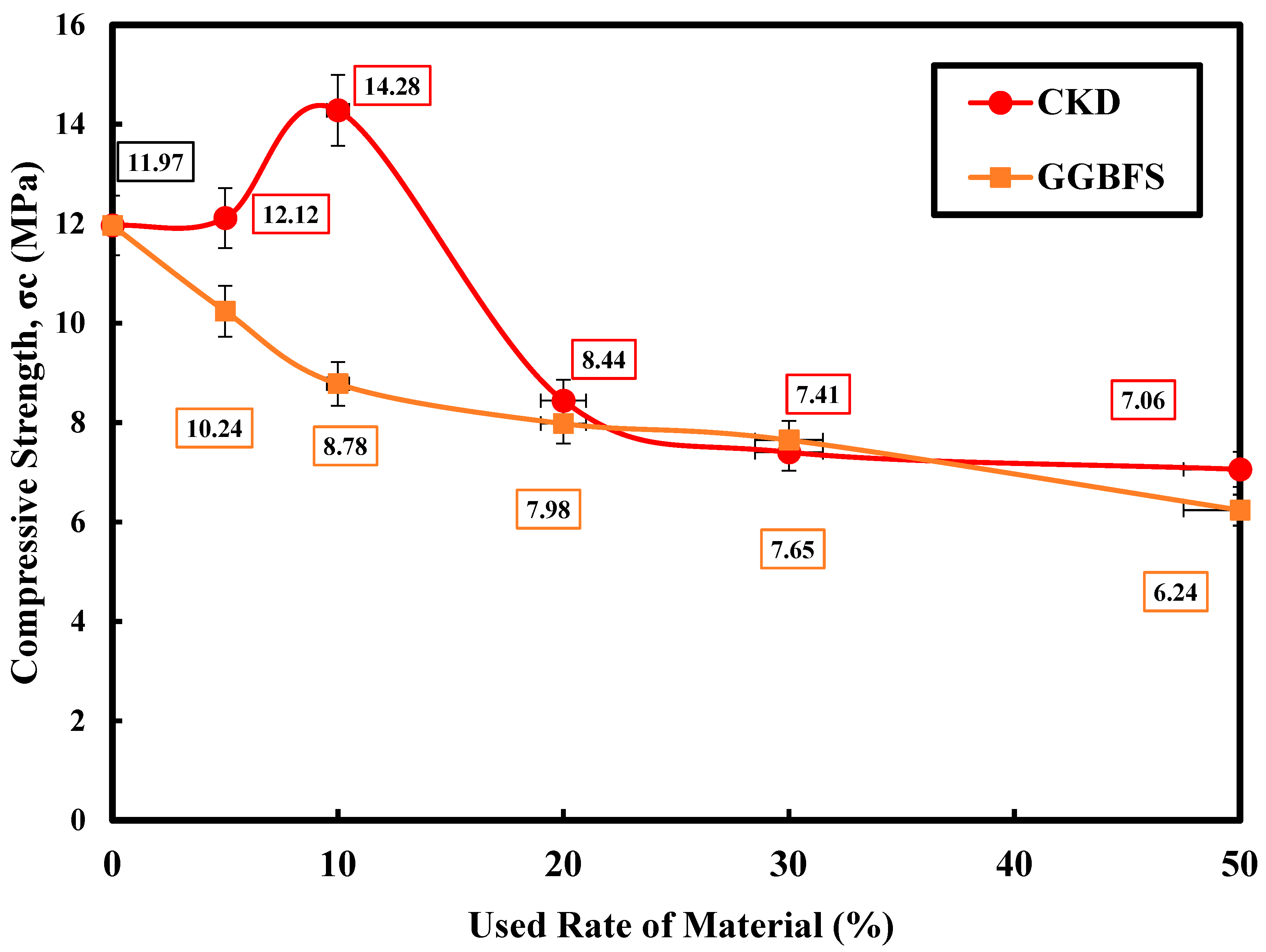
Figure 6 shows the results for the compressive strength of concrete. When we used GGBFS and CKD as cement replacement, the control mix compressive strength test showed a strength of 11.97 MPa, which we used as our reference value. When replacing cement with GGBFS, compressive strength of the concrete exhibited a gradual decline with increasing ratios, reaching as low as 6.24 MPs at the maximum ratio of 50%. This is due to dement dilution and GGBFS’s early hydration retardation.
On the contrary, when CKD was used as partial cement replacement, compressive strength improved at lower ratios, reaching as high as 14.28 MPa, when replacement ratio was at 10%. This can be explained by the improvement in particle packing and accelerated hydration caused by the availability of free lime and alkalis in CKD.
At higher replacement levels, CKD exhibited a reduction in strength due to decreased effective cement content and its limited hydraulic reactivity. Overall, the case study indicates that CKD is effective in enhancing early compressive strength at low replacement levels, while GGBFS replacement leads to a more uniform reduction in strength as the replacement ratio increases. When Opiso et al. [75] used fine sawdust as a partial replacement of cement with seven different rates, including 0, 2, 4, 6, 8, 10, and 12%, in the pervious concrete, the compressive strength had been increased compared to the control mix up to the usage of 8% of fine sawdust, while when Mohammed et al. [47] used fine crumb rubber as the addition in the mix with six different rates, including 0, 2, 4, 6, 8, and 10% as fine material, due to its role in decreasing the bond between the mix compositions, the compressive strength decreased in all mixes.

4.2. Flexural Strength

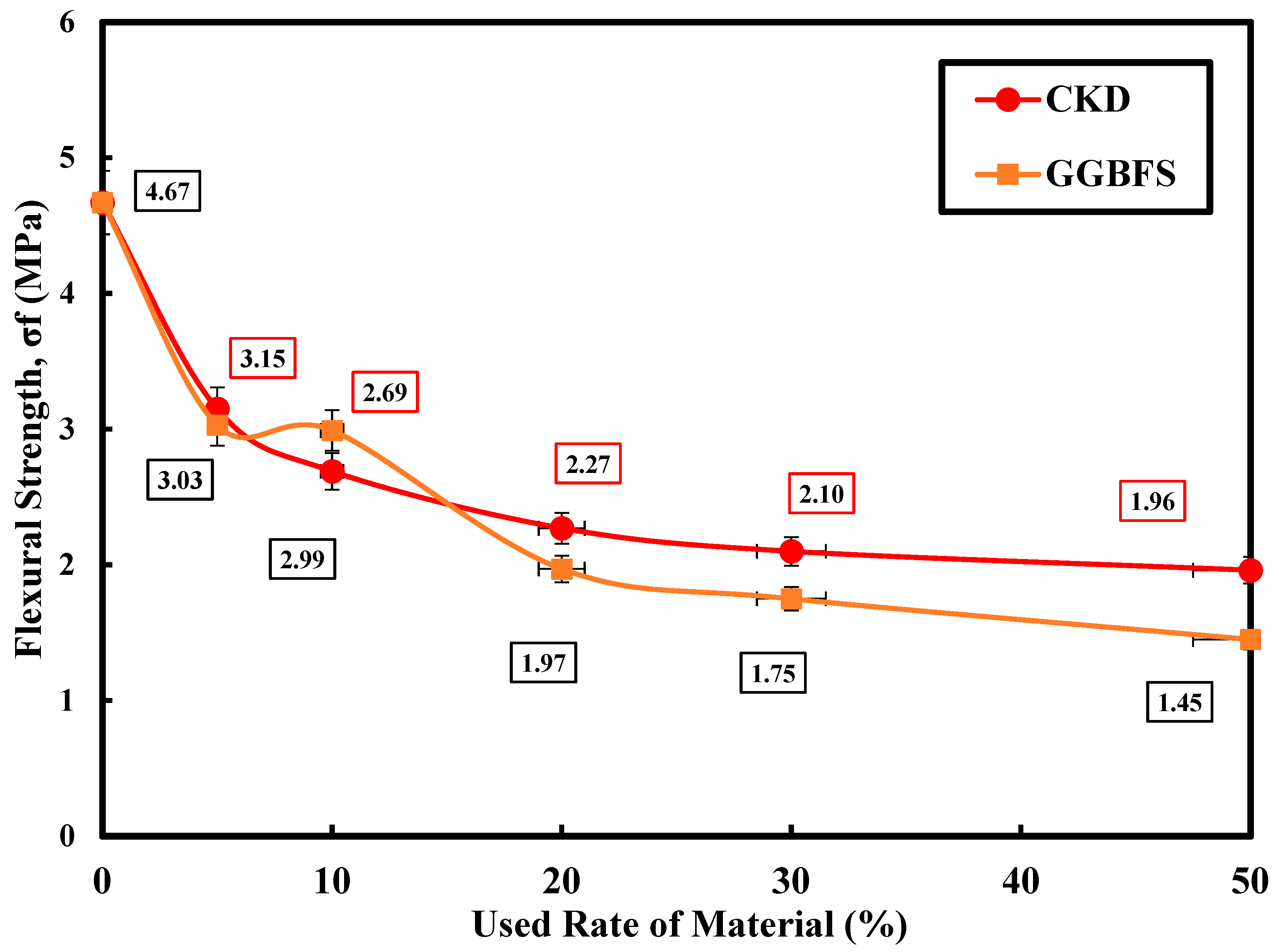
Figure 7 illustrates the flexural strength performance of concrete mixtures incorporating GGBFS and CKD as cement replacement materials. The control mixture recorded a flexural strength of 4.67 MPa and was used as the reference case. When using GGBFS, flexural strength decreased gradually with the increase in replacement ratio, reaching as low as 1.45 MPa at 50% replacement. This is mainly due to cement dilution and early hydration retardation caused by GGBFS, which limits crack resistance under flexural load. In contrast, when using CKD, a slightly higher flexural strength could be seen at most replacement values compared to GGBFS, showing a minimum of 1.96 MPa at 50% replacement. This decrease is linked to the fine filler effect of CKD, which improves particle packing and resistance to crack propagation. Overall, the case study shows that even though both GGBFS and CKD reduce flexural strength relative to control, CKD provides slightly better flexural strength retention at moderate to high replacement ratios. While when Shafabalhsh and Ahamdi [76] used coal ash as partial replacement of cement with ratios of 0, 5, 10, 15 and 20%, the flexural strength improved with ratios of up to 10% when compared to control.

4.3. Tensile Strength

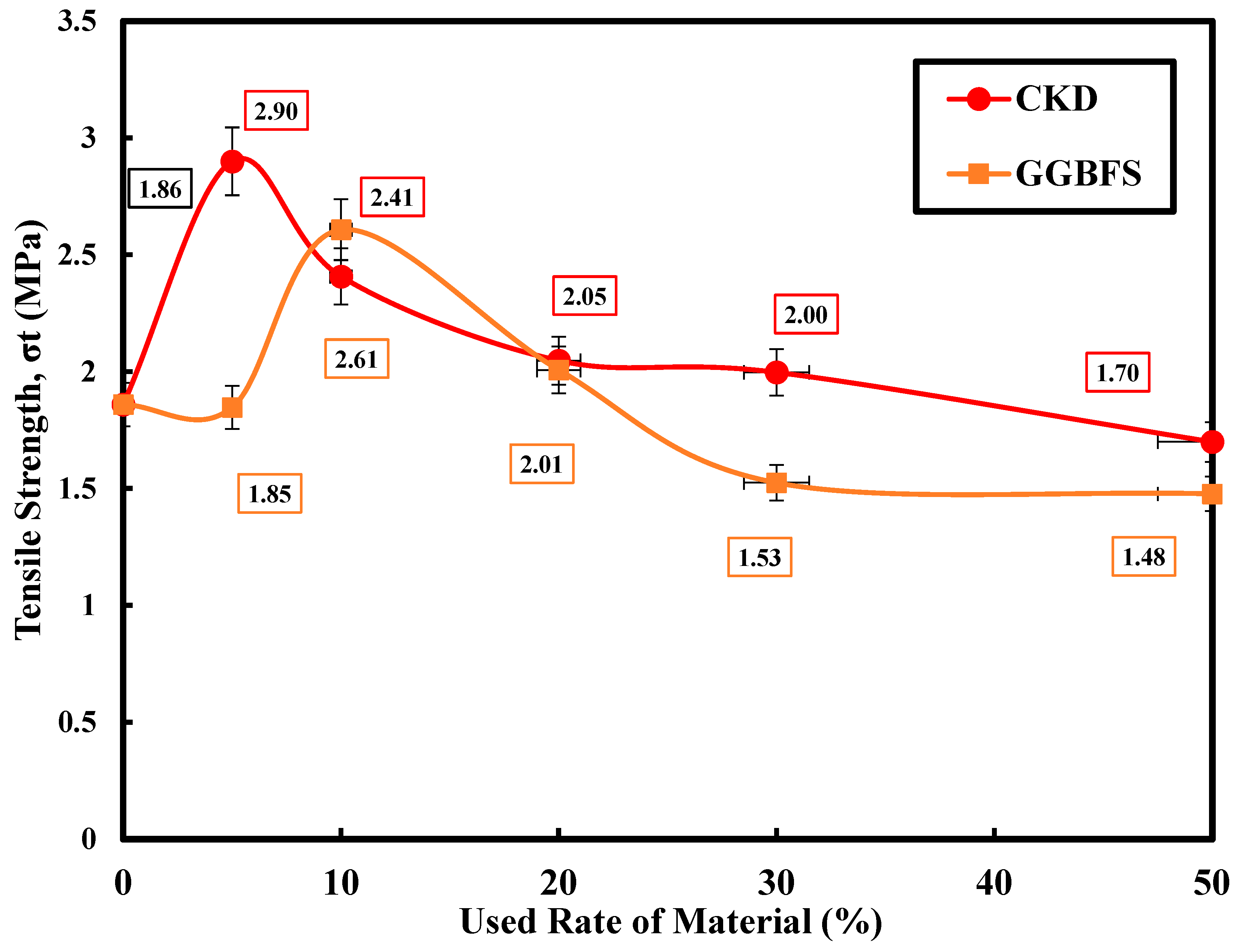
As shown in Figure 8, the tensile strength of concrete varies with the type and ratio of cement replacement. The control mix exhibited a tensile strength of 1.86 MPa. GGBFS replacement improved tensile strength at low to moderate levels, reaching as high as 2.61 MPa at 10% replacement caused by enhanced C-S-H formation and improved paste–aggregate bonding. Past this level, tensile strength gradually decreases, likely because of dilution effects and slower GGBFS hydration. Contrarily, CKD replacement resulted in a sharp strength increase at 5% replacement (2.90 MPa), linked to filler induced densification, and followed by a gradual reduction at higher replacement ratios due to its limited hydraulic reactivity. Overall, Figure 8 shows that GGBFS provides more tensile strength development, but CKD is only useful at low ratios. Also, when Shafabalhsh and Ahamdi [76] used coal ash as partial replacement of cement with ratios of 0, 5, 10, 15 and 20%, the tensile strengths observed in all of them were higher than the control. Also, when Neeladharan et al. [77] used GGBFS as a partial replacement of cement with four rates, including 0, 10, 15, and 20%, the results they obtained from the indirect tensile strength for modified concrete were lower than the control.

4.4. Permeability

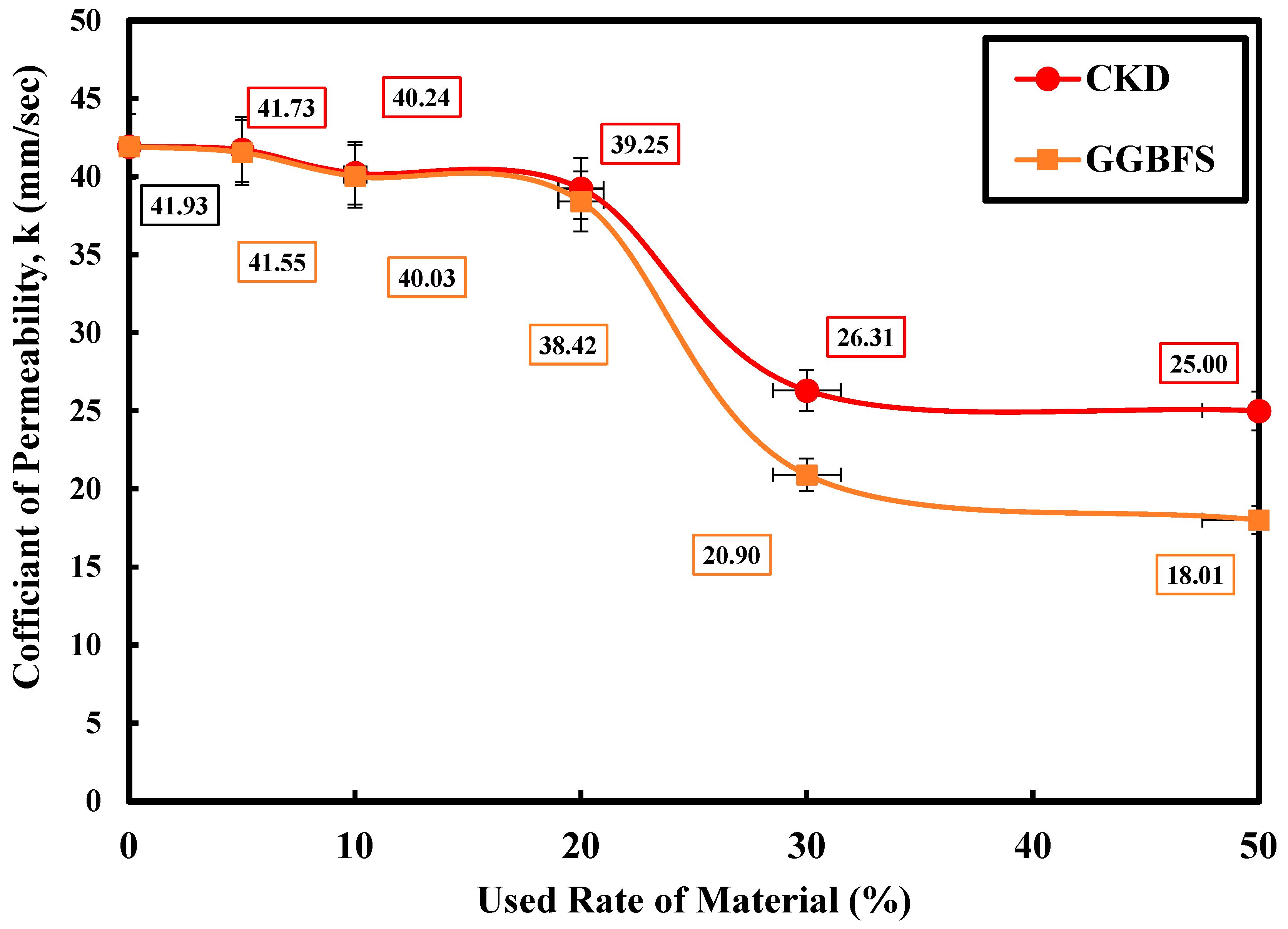
In Figure 9 it can be seen that permeability decreases with an increase in cement replacement in the cases of both GGBFS and CKD mixtures. Control mix had a permeability value of 41.93 mm/s. Replacement of GGBFS caused a significant decrease in permeability up to 18.01 mm/s at 50% replacement owing to latent hydraulic activity and creation of more C-S-H gel, which helps refine the pore structure and reduces fluid flow. On the other hand, CKD replacement caused relatively less decrease in permeability up to 25.00 mm/s at 50% replacement, mainly due to filler effect with some chemical effect. Hence, in Figure 9, it can be observed that GGBFS is more efficient than CKD in terms of reduction in permeability, especially at higher percentage of replacement. In all experiments, the permeability of concrete reduced when finer material than the cement was used as partial replacement of cement. Bilal et al. [78] showed the same results with the use of silica fume and metakaolin as partial replacement of cement with different variable rates. In all mixes, the value of permeability was found to be lower than the control mix.

4.5. Abrasion Resistance

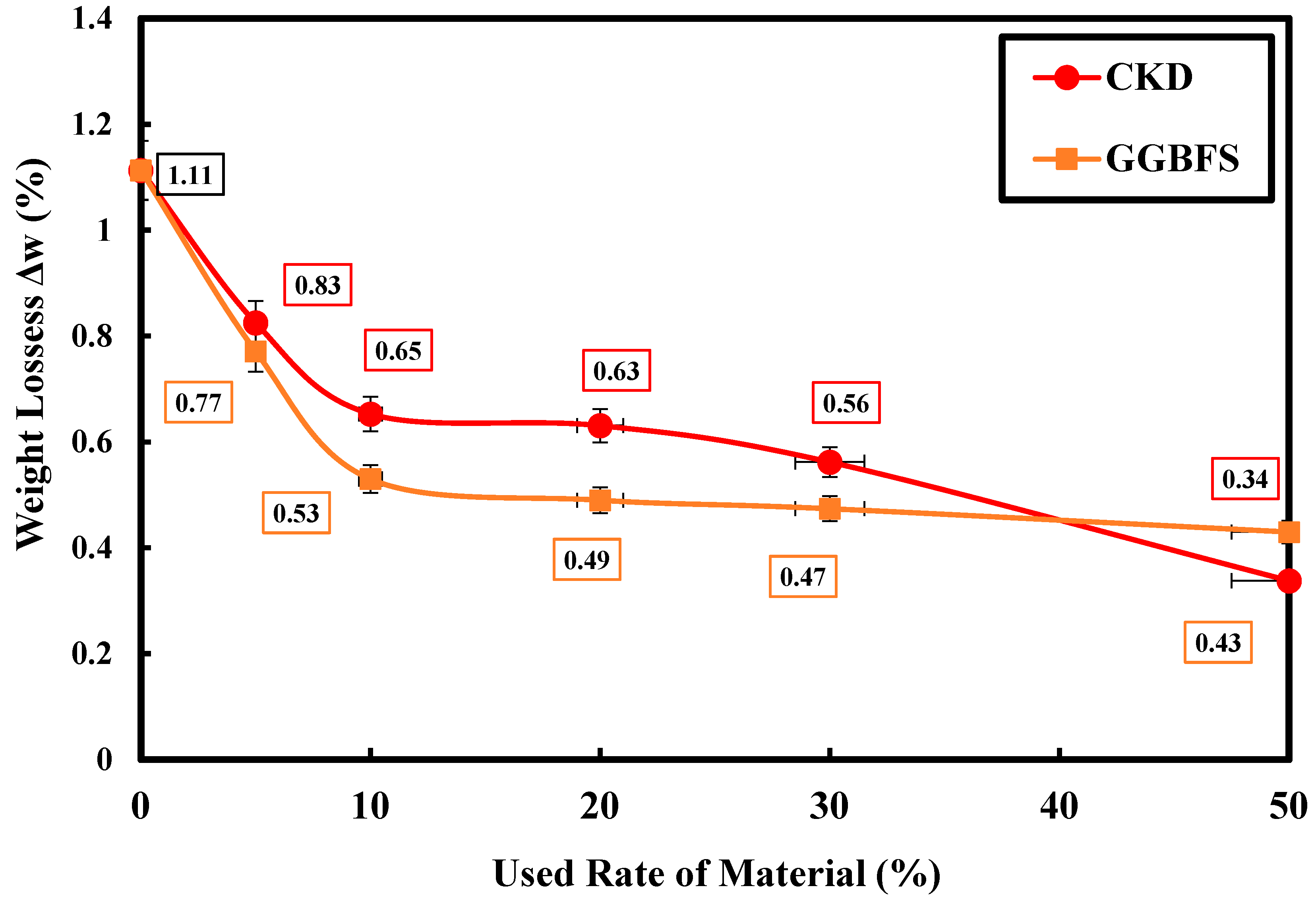
It can be seen in Figure 10 that the abrasion resistance measured according to the British Standard through the weight loss (Δw%) for both the CKD- and GGBFS-based blends is better compared to the control mixture (1.113%). An increase in the replacement rate leads to a consistent decrease in Δw% and, hence, a better abrasion resistance. CKD is the best in abrasion resistance at the replacement rate of 50% (0.338%), mainly because of its fine fillers properties, thus increasing the compaction of the particles. GGBFS demonstrates better abrasion resistance at lower and medium replacement rates (reaches 0.474% at 30%), which is due to the formation of additional C-S-H phases and densification of the structure. However, the slightly higher Δw% for the GGBFS at 50% replacement may be caused by a reduced rate of hydration of GGBFS at higher replacement rates. On the contrary, when Ahmad et al. [46] employed waste glass granular material as a partial substitute for coarse aggregates, the abrasion resistance of the concrete mixture was reduced as the amount of the loss increased with each moveable cycle.

4.6. Density and Water Absorption

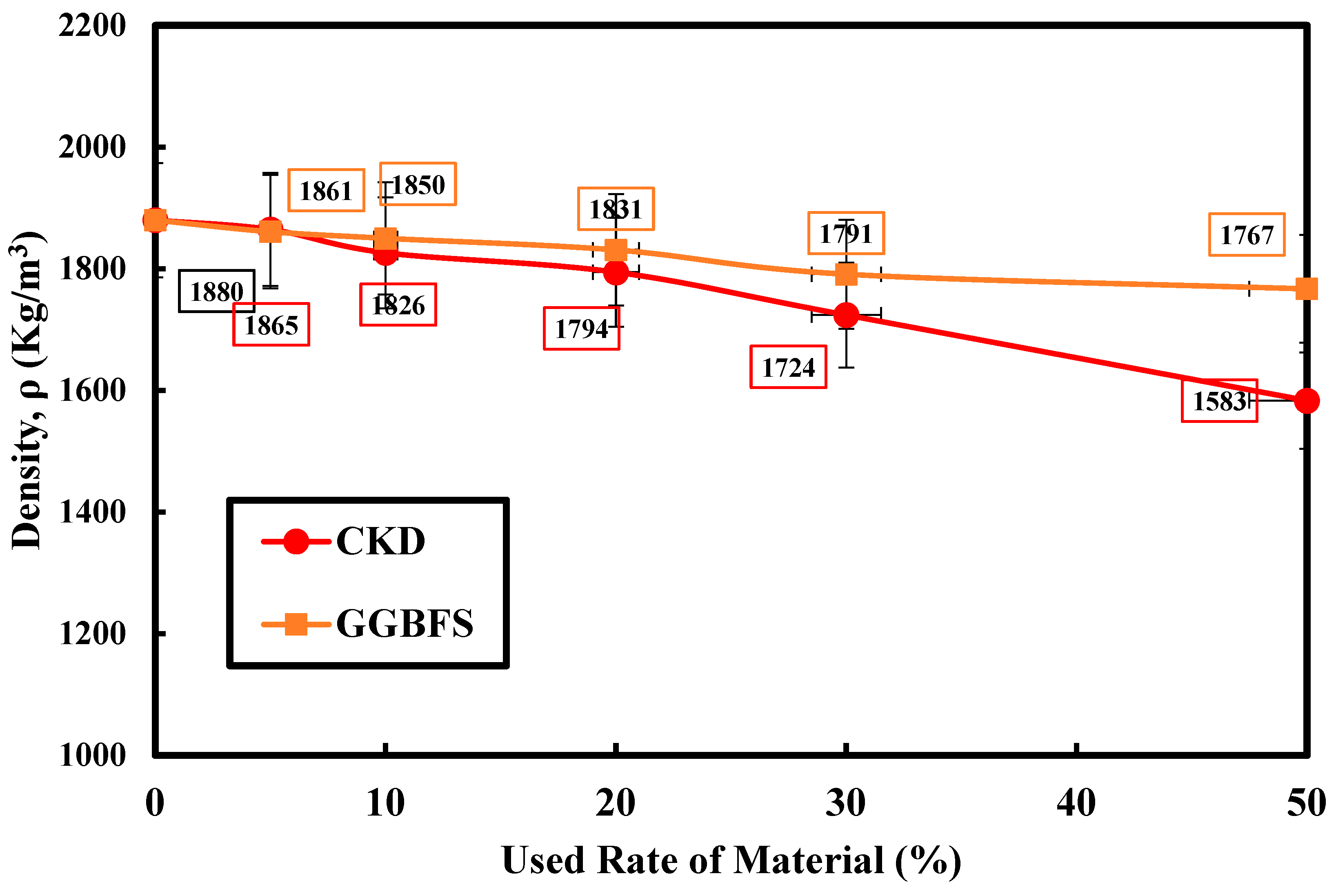
As can be seen in Figure 11, the increase in the percentage of cement replacement in both GGBFS and CKD mixtures leads to decreased density. It also affects the strength of mixes. The control mix has a density of 1880 kg/m3. With GGBFS replacement, the density is moderately decreased to 1767 kg/m3 at 50% cement replacement. However, the matrix remains relatively compact because of the formation of more C-S-H. It facilitates the densification that positively affects stress transfer in the mixture. On the contrary, the density is considerably lowered to 1583 kg/m3 at 50% cement replacement in the CKD. The reduction indicates increased porosity and poor interfacial bonding, which are usually related to decreased compressive strength. In general, Figure 11 reveals that GGBFS has a lower decrease in the density compared to CKD, owing to its better contribution to the compactness of the matrix.
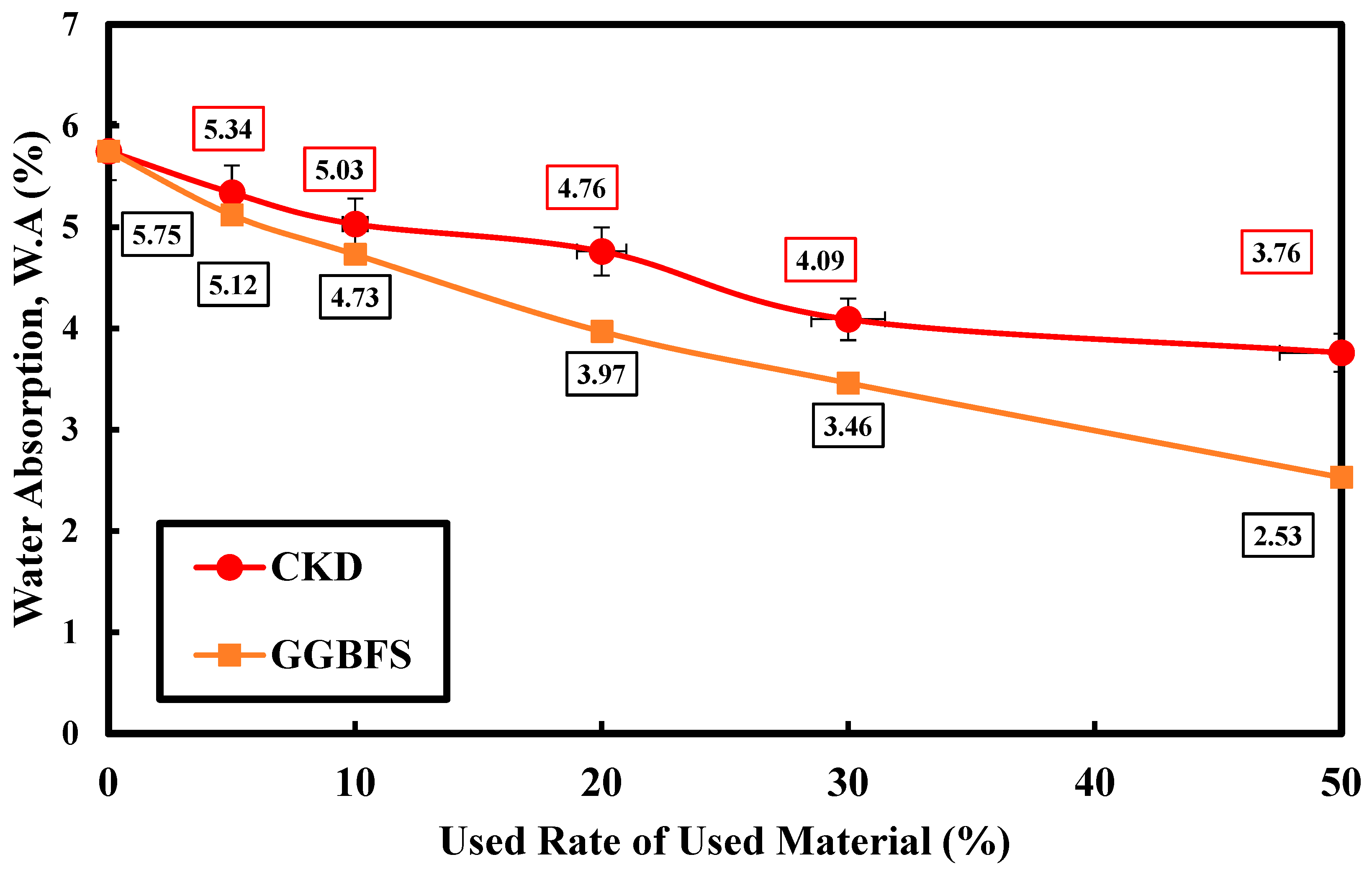
From Figure 12, it is evident that water absorption reduces with the increase in the percentage of cement replacement in both GGBFS and CKD mixes. The control mix has a water absorption rate of 5.75%. With GGBFS replacement, the water absorption is greatly reduced to 2.53% at 50% cement replacement.
On the other hand, the replacement of CKD had less effect on reducing water absorption to only 3.76% at 50% replacement because of its low reactivity and high percentage of soluble compounds, thus preventing further refining of the pores. In summary, it is very clear from Figure 12 that GGBFS is much more efficient than CKD in lowering water absorption and densifying the matrix, especially at medium to high replacements, considering the fact that GGBFS is much finer than CKD at the same replacements. The same conclusion was also reached by El-Hassan and Kianmehr [79], where the use of GGBFS as partial replacement of cement in pervious concrete at various rates resulted in lower density of the mix, in comparison with the control mix, because of the weight of GGBFS relative to the cement.

4.7. Freezing and Thawing

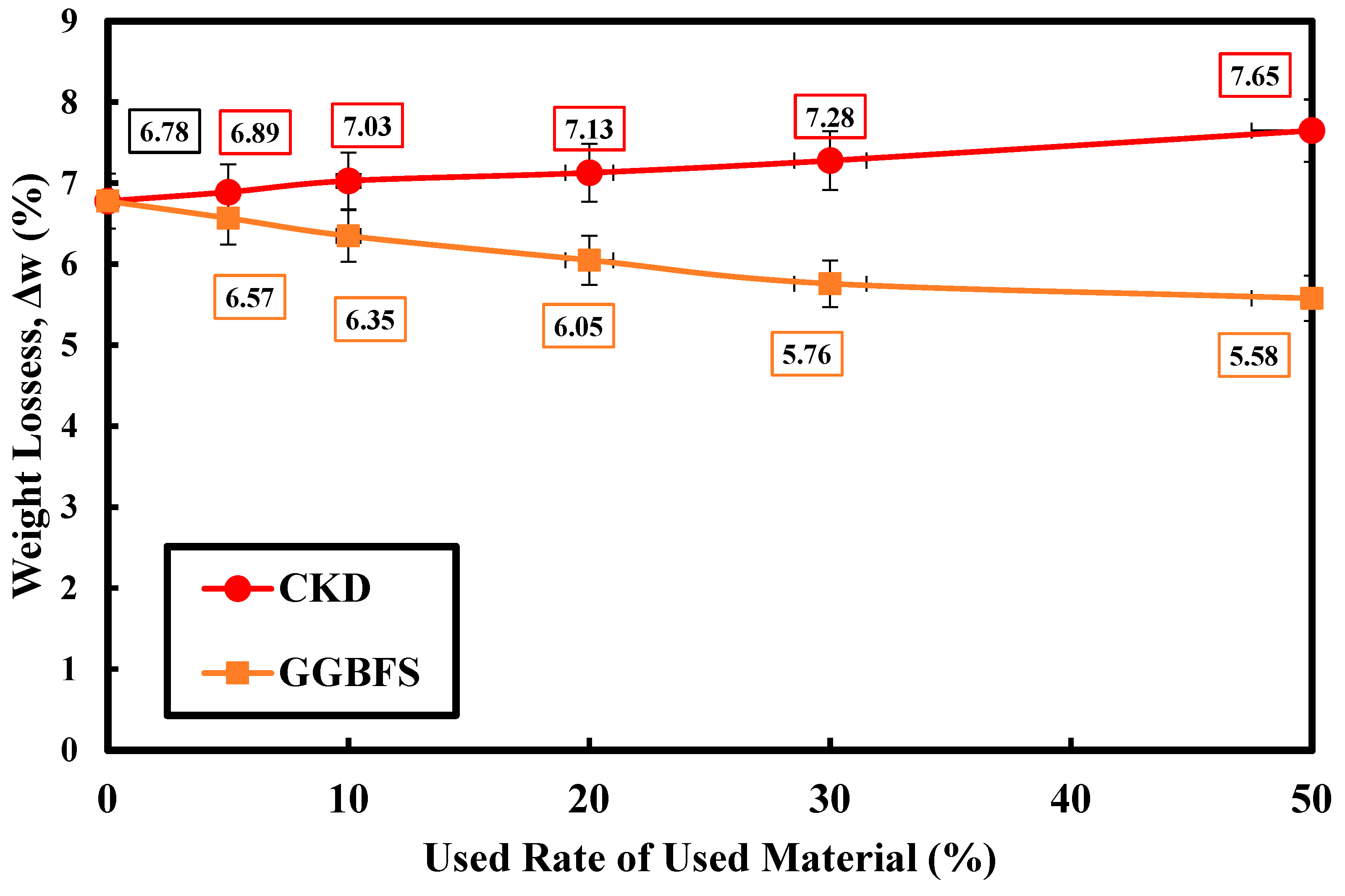
As is shown in Figure 13, the freeze–thaw durability based on weight loss (Δw%) according to ASTM C666 [74] has a considerable difference between cement replacement types. The control mixture showed a Δw% of 6.78%. The higher Δw% was obtained for an increase in CKD replacement, up to 7.65% with 50% replacement. It shows poor resistance to freezing and thawing because of increased porosity, moisture absorption, and soluble compounds causing internal stress due to freezing. On the other hand, the weight loss decreased for GGBFS replacement up to 5.58% for 50% replacement. It is a sign of better performance caused by increased C-S-H formation, pore refinement, and lower moisture absorption. Thus, the graph in Figure 13 illustrates the better performance of GGBFS than CKD, especially in terms of higher replacement rates. Moreover, in the context of the result obtained for GGBFS, it was found by Li et al. [77] that the usage of glass powder can increase the freezing and thawing ability of pervious concrete.

4.8. Final Assessment

The combination of mechanical and durability assessment shows that there is a clear difference in the operational performance of GGBFS and CKD under different ratios of substitution. CKD acts as a strong early-strength accelerator and densifier with the ratio of substitution of 5–10%, providing the maximum compressive (14.28 MPa) and tensile (2.90 MPa) strengths due to the quick hydration process caused by free lime/alkalis and optimization of particle packing. Nevertheless, the excessive use of CKD with the ratio up to 50% leads to degradation of mechanical performance and freeze–thaw stability (Δw% raising to 7.65%) with significant drop of the unit weight (1583 kg/m3) because of high porosity, inactivity of the filler material and soluble substances washing out. On the contrary, although GGBFS causes decreases in short-term compressive and flexural strength due to hydration retardation and dilution of cement paste, it significantly demonstrates advantages in durability indices due to a second pozzolanic reaction and C-S-H formation at higher ratios. GGBFS substantially exceeds CKD in pore structure refinement—it provides lower permeability (18.01 mm/s), less water absorption (2.53%), more preservation of the matrix density (1767 kg/m3) and better freeze–thaw stability (Δw % of 5.58%) by using GGBFS up to 50%.

5. Conclusions

After the application of CKD and GGBFS as partial replacement of cement in pervious concrete separately with different percentages, and comparing between both together, the following conclusions can be drawn:
1. At low percentages of CKD replacement, both compressive and tensile strengths are enhanced due to better particle packing and rapid early hydration because of free lime and alkalis. But at higher percentages, the strength is decreased as a result of dilution of cement and less hydraulic reaction.
2. In the case of GGBFS replacement, gradual reduction in compressive, flexural, and tensile strengths takes place with an increase in replacement percentage due to slow early age hydration and dilution. But, still, the mechanical properties of GGBFS are more stable than those of CKD at higher percentages.
3. The durability properties such as permeability, water absorption, abrasion resistance, and freeze–thaw performances are significantly enhanced by GGBFS replacement, especially at medium to high percentages. This is due to the extra formation of C-S-H and pore structure refinement.
4. Abrasion resistance is moderately increased by CKD, while there is not much change in permeability and water absorption due to its physical filler properties.
5. In density testing, it was found that GGBFS performs better than CKD in terms of maintaining the density of the matrix and mechanical strength at higher replacement rates.
6. It can be concluded from the above analysis that CKD is ideal for low cement replacement with the requirement of early mechanical strength, while GGBFS is ideal for durability purposes.

Future Work

Future research should investigate long-term mechanical and durability performance, combined CKD–GGBFS replacement systems, and detailed microstructural characterization. Field validation studies and assessments of environmental and economic benefits are also recommended to support practical application.

Funding

This research received no external funding.

Data Availability Statement

The original contributions presented in this study are included in the article. Further inquiries can be directed to the corresponding author.

Conflicts of Interest

The author declares no conflicts of interest.

References

  1. Fu, T.C.; Yeih, W.; Chang, J.J.; Huang, R. The influence of aggregate size and binder material on the properties of pervious concrete. Adv. Mater. Sci. Eng. 2014, 2014, 963971. [Google Scholar] [CrossRef] [Scilit]
  2. Li, J.; Zhang, Y.; Liu, G.; Peng, X. Preparation and performance evaluation of an innovative pervious concrete pavement. Constr. Build. Mater. 2017, 138, 479–485. [Google Scholar] [CrossRef] [Scilit]
  3. Li, J.; Zha, W.; Lv, W.; Xu, T.; Wang, B.; Wang, B. Mechanical properties and sulfate resistance of basalt fiber-reinforced alkali-activated fly ash-slag-based coal gangue pervious concrete. Case Stud. Constr. Mater. 2024, 21, e03961. [Google Scholar] [CrossRef] [Scilit]
  4. Yeih, W.; Chang, J.J. The influences of cement type and curing condition on properties of pervious concrete made with electric arc furnace slag as aggregates. Constr. Build. Mater. 2019, 197, 813–820. [Google Scholar] [CrossRef] [Scilit]
  5. López-Carrasquillo, V.; Hwang, S. Comparative assessment of pervious concrete mixtures containing fly ash and nanomaterials for compressive strength, physical durability, permeability, water quality performance and production cost. Constr. Build. Mater. 2017, 139, 148–158. [Google Scholar] [CrossRef] [Scilit]
  6. Bhutta, M.A.R.; Tsuruta, K.; Mirza, J. Evaluation of high-performance porous concrete properties. Constr. Build. Mater. 2012, 31, 67–73. [Google Scholar] [CrossRef] [Scilit]
  7. Li, A.; Qiao, H.; Li, Q.; Hakuzweyezu, T.; Chen, B. Study on the performance of pervious concrete mixed with waste glass powder. Constr. Build. Mater. 2021, 300, 123997. [Google Scholar] [CrossRef] [Scilit]
  8. Khankhaje, E.; Kim, T.; Jang, H.; Kim, C.S.; Kim, J.; Rafieizonooz, M. Properties of pervious concrete incorporating fly ash as partial replacement of cement: A review. Dev. Built Environ. 2023, 14, 100130. [Google Scholar] [CrossRef] [Scilit]
  9. Sun, Z.; Lin, X.; Vollpracht, A. Pervious concrete made of alkali activated slag and geopolymers. Constr. Build. Mater. 2018, 189, 797–803. [Google Scholar] [CrossRef] [Scilit]
  10. Peng, H.; Yin, J.; Song, W. Mechanical and hydraulic behaviors of eco-friendly pervious concrete incorporating fly ash and blast furnace slag. Appl. Sci. 2018, 8, 859. [Google Scholar] [CrossRef] [Scilit]
  11. Koupai, J.A.; Nejad, S.S.; Mostafazadeh-Fard, S.; Behfarnia, K. Reduction of urban storm-runoff pollution using porous concrete containing iron slag adsorbent. J. Environ. Eng. 2016, 142, 04015072. [Google Scholar] [CrossRef] [Scilit]
  12. Sandoval, G.F.; Galobardes, I.; Campos, A.; Toralles, B.M. Assessing the phenomenon of clogging of pervious concrete (Pc): Experimental test and model proposition. J. Build. Eng. 2020, 29, 101203. [Google Scholar] [CrossRef] [Scilit]
  13. Haselbach, L.M.; Freeman, R.M. Vertical porosity distributions in pervious concrete pavement. ACI Mater. J. 2006, 103, 452. [Google Scholar] [CrossRef] [Scilit] [PubMed]
  14. Chen, X.; Wang, G.; Dong, Q.; Zhao, X.; Wang, Y. Microscopic characterizations of pervious concrete using recycled Steel Slag Aggregate. J. Clean. Prod. 2020, 254, 120149. [Google Scholar] [CrossRef] [Scilit]
  15. Nguyen, D.H.; Sebaibi, N.; Boutouil, M.; Leleyter, L.; Baraud, F. A modified method for the design of pervious concrete mix. Constr. Build. Mater. 2014, 73, 271–282. [Google Scholar] [CrossRef] [Scilit]
  16. Hwang, S.S.; Cortes, C.M.M. Properties of mortar and pervious concrete with co-utilization of coal fly ash and waste glass powder as partial cement replacements. Constr. Build. Mater. 2021, 270, 121415. [Google Scholar] [CrossRef] [Scilit]
  17. Sha, F.; Zhang, S.M.; Sun, X.C.; Fan, G.X.; Diao, Y.; Duan, X.F.; Wang, H. Mechanical performance and pore characteristics of pervious concrete. Case Stud. Constr. Mater. 2024, 21, e03674. [Google Scholar] [CrossRef] [Scilit]
  18. Wan, C.; Hou, P.; Zhou, L.; Golewski, G.L.; Zheng, Y.; Zhang, T. The fracture performance of modified recycled concrete: Influence of recycled aggregate and recycled powder. Eng. Fract. Mech. 2025, 331, 111709. [Google Scholar] [CrossRef] [Scilit]
  19. Mejić, L.; Šovljanski, O.; Pezo, M.; Pezo, L.; Milović, T.; Tomić, A. Ready-to-Use or Ready-to-Adapt: Can the Self-Healing Potential of Bacillus licheniformis Be Modified? Bioengineering 2026, 13, 495. [Google Scholar] [CrossRef] [Scilit] [PubMed]
  20. Endawati, J. Permeability and porosity of pervious concrete containing blast furnace slag as a part of binder materials and aggregate. Solid State Phenom. 2017, 266, 272–277. [Google Scholar] [CrossRef] [Scilit]
  21. Al-Madi, W. High Strength Pervious Concrete. Ph.D. Thesis, University of South Wales, Cardiff, UK, 2023. [Google Scholar]
  22. Talsania, S.; Pitroda, J.; Vyas, C.M. A review of pervious concrete by using various industrial waste materials. J. Int. Acad. Res. Multidiscip. 2015, 2, 142–151. [Google Scholar] [CrossRef] [Scilit]
  23. Khankhaje, E.; Kim, T.; Jang, H.; Kim, C.S.; Kim, J.; Rafieizonooz, M. A review of utilization of industrial waste materials as cement replacement in pervious concrete: An alternative approach to sustainable pervious concrete production. Heliyon 2024, 10, e26188. [Google Scholar] [CrossRef] [Scilit] [PubMed]
  24. Toghroli, A.; Shariati, M.; Sajedi, F.; Ibrahim, Z.; Koting, S.; Mohamad, E.T.; Khorami, M. A review on pavement porous concrete using recycled waste materials. Smart Struct. Syst. 2018, 22, 433–440. [Google Scholar]
  25. Xie, X.; Zhang, T.; Yang, Y.; Lin, Z.; Wei, J.; Yu, Q. Maximum paste coating thickness without voids clogging of pervious concrete and its relationship to the rheological properties of cement paste. Constr. Build. Mater. 2018, 168, 732–746. [Google Scholar] [CrossRef] [Scilit]
  26. Tang, Z.; Peng, H.; Mei, P.; Huang, F.; Yi, S.; Feng, F. Performance Analysis of Ferronickel Slag-Ordinary Portland Cement Pervious Concrete. Materials 2024, 17, 1628. [Google Scholar] [CrossRef] [Scilit] [PubMed]
  27. Nguyen-Van, D.; Nguyen-Tuan, T.; Pham-Thanh, T. Experimental study on pervious cement and pervious geopolymer concretes using sea sand and seawater. GEOMATE J. 2022, 23, 63–71. [Google Scholar] [CrossRef] [Scilit]
  28. Xie, C.; Yuan, L.; Tan, H.; Zhang, Y.; Zhao, M.; Jia, Y. Experimental study on the water purification performance of biochar-modified pervious concrete. Constr. Build. Mater. 2021, 285, 122767. [Google Scholar] [CrossRef] [Scilit]
  29. Akkaya, A.; Çağatay, İ.H. Experimental investigation of the use of pervious concrete on high volume roads. Constr. Build. Mater. 2021, 279, 122430. [Google Scholar] [CrossRef] [Scilit]
  30. Lederle, R.; Shepard, T.; Meza, V.D.L.V. Comparison of methods for measuring infiltration rate of pervious concrete. Constr. Build. Mater. 2020, 244, 118339. [Google Scholar] [CrossRef] [Scilit]
  31. El-Hassan, H.; Kianmehr, P.; Tavakoli, D.; El-Mir, A.; Dehkordi, R.S. Synergic effect of recycled aggregates, waste glass, and slag on the properties of pervious concrete. Dev. Built Environ. 2023, 15, 100189. [Google Scholar] [CrossRef] [Scilit]
  32. Yang, C.; Shah, I.; Jing, W.; Khan, N.; Jing, L. Comprehensive test and evaluation analysis of permeable concrete (PC) clogging by using steel slag. Adv. Civ. Eng. 2022, 2022, 2866776. [Google Scholar] [CrossRef] [Scilit]
  33. Adilah, A.N.; Mohammed, S.A.; Ramadhansyah, P.J.; Rokiah, O.; Hainin, M.R. The influence of steel slag as alternative aggregate in permeable concrete pavement. IOP Conf. Ser. Mater. Sci. Eng. 2020, 712, 012011. [Google Scholar] [CrossRef] [Scilit]
  34. Yeih, W.; Fu, T.C.; Chang, J.J.; Huang, R. Properties of pervious concrete made with air-cooling electric arc furnace slag as aggregates. Constr. Build. Mater. 2015, 93, 737–745. [Google Scholar] [CrossRef] [Scilit]
  35. Shen, W.; Liu, Y.; Wu, M.; Zhang, D.; Du, X.; Zhao, D.; Xu, G.; Zhang, B.; Xiong, X. Ecological carbonated steel slag pervious concrete prepared as a key material of sponge city. J. Clean. Prod. 2020, 256, 120244. [Google Scholar] [CrossRef] [Scilit]
  36. Chang, J.J.; Yeih, W.; Chung, T.J.; Huang, R. Properties of pervious concrete made with electric arc furnace slag and alkali-activated slag cement. Constr. Build. Mater. 2016, 109, 34–40. [Google Scholar] [CrossRef] [Scilit]
  37. Wang, G.; Chen, X.; Dong, Q.; Yuan, J.; Hong, Q. Mechanical performance study of pervious concrete using steel slag aggregate through laboratory tests and numerical simulation. J. Clean. Prod. 2020, 262, 121208. [Google Scholar] [CrossRef] [Scilit]
  38. Lang, L.; Duan, H.; Chen, B. Properties of pervious concrete made from steel slag and magnesium phosphate cement. Constr. Build. Mater. 2019, 209, 95–104. [Google Scholar] [CrossRef] [Scilit]
  39. Lori, A.R.; Hassani, A.; Sedghi, R. Investigating the mechanical and hydraulic characteristics of pervious concrete containing copper slag as coarse aggregate. Constr. Build. Mater. 2019, 197, 130–142. [Google Scholar] [CrossRef] [Scilit]
  40. El-Hassan, H.; Kianmehr, P.; Zouaoui, S. Properties of pervious concrete incorporating recycled concrete aggregates and slag. Constr. Build. Mater. 2019, 212, 164–175. [Google Scholar] [CrossRef] [Scilit]
  41. Ibrahim, H.A.; Razak, H.A. Effect of palm oil clinker incorporation on properties of pervious concrete. Constr. Build. Mater. 2016, 115, 70–77. [Google Scholar] [CrossRef] [Scilit]
  42. Ong, S.K.; Wang, K.; Ling, Y.; Shi, G. Pervious Concrete Physical Characteristics and Effectiveness in Stormwater Pollution Reduction (No. 4-2016); Iowa State University, Institute for Transportation: Ames, IA, USA, 2016. [Google Scholar]
  43. Ahmad, S.A.; Ahmed, H.U.; Rafiq, S.K.; Gul-Mohammed, J.F.; Ahmed, D.A.; Rostam, K.J.; Fqi, K.O. Exploring the influence of waste glass granular replacement on compressive strength in concrete mixtures: A normalization and modeling study. J. Build. Pathol. Rehabil. 2024, 9, 52. [Google Scholar] [CrossRef] [Scilit]
  44. Ahmad, S.A.; Ahmed, H.U.; Rafiq, S.K.; Jafer, F.S.; Fqi, K.O. A comparative analysis of simulation approaches for predicting permeability and compressive strength in pervious concrete. Low-Carbon Mater. Green Constr. 2024, 2, 10. [Google Scholar] [CrossRef] [Scilit]
  45. Ahmad, S.A.; Saeed, B.H.; Hussein, S.N.; Ahmed, H.U.; Rafiq, S.K.; Ahmad, D.A.; Fqi, K.O. Impact of substituting coarse aggregate with waste glass granules on the fresh and mechanical properties of pervious concrete: An experimental study. J. Build. Pathol. Rehabil. 2024, 9, 29. [Google Scholar] [CrossRef] [Scilit]
  46. Ahmad, S.A.; Rafiq, S.K.; Husein, S.N.; Fqi, K.O.; Faeq, A.A.; Ahmad, M.S. Effects of Using Waste Glass Granular and Lightweight Pumice Granular on the Abrasion Resistance of Pervious Concrete. J. Stud. Civ. Eng. 2024, 1, 16–33. [Google Scholar] [CrossRef] [Scilit]
  47. Mohammed, B.M.; Amin, T.O.M.; Abdulmajeed, R.R.; Mahmood, H.F.; Ahmad, S.A. Comprehensive investigation on the effect of the crumb rubber as on the mechanical properties, permeability, abrasion, fire resistance, water absorption and density of pervious concrete; experimental investigation. J. Build. Pathol. Rehabil. 2026, 11, 86. [Google Scholar] [CrossRef] [Scilit]
  48. Ahmad, S.A.; Rafiq, S.K.; Hilmi, H.D.M.; Ahmed, H.U. Mathematical modeling techniques to predict the compressive strength of pervious concrete modified with waste glass powders. Asian J. Civ. Eng. 2024, 25, 773–785. [Google Scholar] [CrossRef] [Scilit]
  49. Kusumaningrum, P.; Risnan, M. Utilization of By-Products and Waste GGBFS Materials from Steel Processing Industry to Produce Sustainable Green Pervious Concrete in Indonesia. IOP Conf. Ser. Earth Environ. Sci. 2023, 1245, 012017. [Google Scholar] [CrossRef] [Scilit]
  50. Lo, F.C.; Lo, S.L.; Lee, M.G. Effect of partially replacing ordinary Portland cement with municipal solid waste incinerator ashes and rice husk ashes on pervious concrete quality. Environ. Sci. Pollut. Res. 2020, 27, 23742–23760. [Google Scholar] [CrossRef] [Scilit] [PubMed]
  51. Qin, Y.; Pang, X.; Tan, K.; Bao, T. Evaluation of pervious concrete performance with pulverized biochar as cement replacement. Cem. Concr. Compos. 2021, 119, 104022. [Google Scholar] [CrossRef] [Scilit]
  52. Lo, F.C.; Lee, M.G.; Lo, S.L. Effect of coal ash and rice husk ash partial replacement in ordinary Portland cement on pervious concrete. Constr. Build. Mater. 2021, 286, 122947. [Google Scholar] [CrossRef] [Scilit]
  53. Ali, M.T.; Rashid, M.H. Impact of brick dust addition on the physical and mechanical performance of pervious concrete. Innov. Infrastruct. Solut. 2025, 10, 163. [Google Scholar] [CrossRef] [Scilit]
  54. Sathiparan, N.; Subramaniam, D.N. Optimizing fly ash and rice husk ash as cement replacements on the mechanical characteristics of pervious concrete. Sustain. Struct. 2025, 5, 000065. [Google Scholar] [CrossRef] [Scilit]
  55. Shree, N.; Marathe, S.; Sadowski, Ł.; Akhila, S.; Prashanth, L.D. Effect of bio-admixture on the properties of cement-slag based sustainable pervious concrete mixes for road infrastructure. Road Mater. Pavement Des. 2025, 26, 2237–2261. [Google Scholar] [CrossRef] [Scilit]
  56. Khan, A.H.; Paruthi, S.; Almalki, A.; Magbool, H.M. Influence of cement kiln dust, volcanic pumice dust, and nano silica in heat-cured GGBS-based geopolymer concrete: Experimental and predictive modeling. Innov. Infrastruct. Solut. 2025, 10, 337. [Google Scholar] [CrossRef] [Scilit]
  57. ASTM D1293-18; Standard Test Methods for pH of Water. ASTM International: West Conshohocken, PA, USA, 2018.
  58. ASTM C127-15; Standard Test Method for Relative Density (Specific Gravity) and Absorption of Coarse Aggregate. ASTM International: West Conshohocken, PA, USA, 2015.
  59. ASTM C29/C29M-17a; Standard Test Method for Bulk Density (“Unit Weight”) and Voids in Aggregate. ASTM International: West Conshohocken, PA, USA, 2017.
  60. ASTM C150-05; Standard Specification for Portland Cement. ASTM International: West Conshohocken, PA, USA, 2005.
  61. Ibrahem, H.I.; Rafiq, S.K. A Review and Assessment of the Influence of Cement Kiln Dust on Various Mechanical Properties of Concrete. Kerbala J. Eng. Sci. (KJES) 2023, 3, 114–144. [Google Scholar] [CrossRef] [Scilit]
  62. ASTM C188-17; Standard Test Method for Density of Hydraulic Cement. ASTM International: West Conshohocken, PA, USA, 2017.
  63. ASTM C115/C115M-10e1; Standard Test Method for Fineness of Portland Cement by the Turbidimeter (Withdrawn 2018). ASTM International: West Conshohocken, PA, USA, 2010.
  64. ASTM C187-16; Standard Test Method for Amount of Water Required for Normal Consistency of Hydraulic Cement Paste. ASTM International: West Conshohocken, PA, USA, 2016.
  65. ASTM C191-19; Standard Test Methods for Time of Setting of Hydraulic Cement by Vicat Needle. ASTM International: West Conshohocken, PA, USA, 2019.
  66. American Concrete Institute. ACI 522R-10, Report on Pervious Concrete; ACI Com 522; American Concrete Institute: Farmington Hills, MI, USA, 2010. [Google Scholar]
  67. ASTM C39/C39M-17b; Standard Test Method for Compressive Strength of Cylindrical Concrete Specimens. ASTM International: West Conshohocken, PA, USA, 2017.
  68. ASTM C78/C78M-16; Standard Test Method for Flexural Strength of Concrete (Using Simple Beam with Third-Point Loading). ASTM International: West Conshohocken, PA, USA, 2016.
  69. ASTM C496-11; Standard Test Method for Splitting Tensile Strength of Cylindrical Concrete Specimens. ASTM International: West Conshohocken, PA, USA, 2011.
  70. ASTM C1701/C1701M-17a; Standard Test Method for Infiltration Rate of in Place Pervious Concrete. ASTM International: West Conshohocken, PA, USA, 2017.
  71. ASTM C944/C944M-12; Standard Test Method for Abrasion Resistance of Concrete or Mortar Surfaces by the Rotating-Cutter Method. ASTM International: West Conshohocken, PA, USA, 2012.
  72. Strzałkowski, P.; Kaźmierczak, U.; Wolny, M. Assessment of the method for abrasion resistance determination of sandstones on Böhme abrasion test apparatus. Bull. Eng. Geol. Environ. 2020, 79, 4947–4956. [Google Scholar] [CrossRef] [Scilit]
  73. ASTM C1754/C1754M-12; Standard Test Method for Density and Void Content of Hardened Pervious Concrete. ASTM International: West Conshohocken, PA, USA, 2012.
  74. ASTM C666/C666-15; Standard Test Method for Resistance of Concrete to Rapid Freezing and Thawing. ASTM International: West Conshohocken, PA, USA, 2015.
  75. Opiso, E.M.; Supremo, R.P.; Perodes, J.R. Effects of coal fly ash and fine sawdust on the performance of pervious concrete. Heliyon 2019, 5, e02783. [Google Scholar] [CrossRef] [Scilit] [PubMed]
  76. Shafabakhsh, G.; Ahmadi, S. Evaluation of Coal Waste Ash and Rice Husk Ash on Properties of Pervious Concrete Pavement. Int. J. Eng. 2016, 29, 192–201. [Google Scholar] [CrossRef] [Scilit]
  77. Neeladharan, C.; Shakib, S.; Arshathahamed, Z.; Sivarajeshkumar, P.; Rajaram, P. Behavioural determination of pervious concrete by using ggbs and silica fume. Suraj Punj J. Multidiscipl. Res. 2020, 10, 24–30. [Google Scholar]
  78. Bilal, H.; Chen, T.; Ren, M.; Gao, X.; Su, A. Influence of silica fume, metakaolin & SBR latex on strength and durability performance of pervious concrete. Constr. Build. Mater. 2021, 275, 122124. [Google Scholar] [CrossRef] [Scilit]
  79. El-Hassan, H.; Kianmehr, P. Pervious concrete pavement incorporating GGBS to alleviate pavement runoff and improve urban sustainability. Road Mater. Pavement Des. 2018, 19, 167–181. [Google Scholar] [CrossRef] [Scilit]
Figure 1. Research methodology.
Jcs 10 00460 g001
Figure 2. Binder material used in the manuscript.
Jcs 10 00460 g002
Figure 3. Mixing process for the concrete composition.
Jcs 10 00460 g003
Figure 4. Prepared samples for each mixes.
Jcs 10 00460 g004
Figure 5. (A) Flexural strength test. (B) Splitting tensile strength test. (C) Water permeability test. (D) Abrasion resistance test.
Jcs 10 00460 g005
Figure 6. Compressive strength of concrete incorporating CKD and GGBFS at different replacement ratios.
Jcs 10 00460 g006
Figure 7. Flexural strength of concrete incorporating CKD and GGBFS at different replacement ratios.
Jcs 10 00460 g007
Figure 8. Tensile strength of concrete incorporating CKD and GGBFS at different replacement ratios.
Jcs 10 00460 g008
Figure 9. Permeability coefficient of concrete incorporating CKD and GGBFS at different replacement ratios.
Jcs 10 00460 g009
Figure 10. Weight loss rate of concrete incorporating CKD and GGBFS at different replacement ratios.
Jcs 10 00460 g010
Figure 11. Density of concrete incorporating CKD and GGBFS at different replacement ratios.
Jcs 10 00460 g011
Figure 12. Water absorption of concrete incorporating CKD and GGBFS at different replacement ratios.
Jcs 10 00460 g012
Figure 13. Freezing and thawing resistance of concrete incorporating CKD and GGBFS at different replacement ratios.
Jcs 10 00460 g013
Table 1. Physical properties of crushed coarse aggregate [47].
PropertiesObtained Coarse AggregateStandards
Oven dry specific gravity2.5C127 [58]
Dry compacted density1496 kg/m3C29 [59]
Water absorption0.48%C127 [58]
Table 3. Pervious concrete mix proportions.
Mix Numberw/cWater Content (Kg/m3)Cement Content (Kg/m3)Replacement Ratio (%)CKD Content (Kg/m3)GGBFS Content (Kg/m3)Coarse Aggregate (Kg/m3)Void Ratio (%)
Mix—10.34104305.00000145520
Mix—20.34104289.75511.850145520
Mix—30.34104274.501023.700145520
Mix—40.34104244.002047.400145520
Mix—50.34104213.503071.100145520
Mix—60.34104152.5050118.500145520
Mix—70.34104289.755014.084145520
Mix—80.34104274.5010028.168145520
Mix—90.34104244.0020056.336145520
Mix—100.34104213.5030085.505145520
Mix—110.34104152.50500140.840145520
Disclaimer/Publisher’s Note: The statements, opinions and data contained in all publications are solely those of the individual author(s) and contributor(s) and not of MDPI and/or the editor(s). MDPI and/or the editor(s) disclaim responsibility for any injury to people or property resulting from any ideas, methods, instructions or products referred to in the content.