Article

Influence of Environmental Conditioning on Mechanical Characterization of Continuous Fiber-Reinforced PPS, PP, and PET Thermoplastic Composites


1
Advanced Structures and Composites Center, University of Maine, Orono, ME 04469, USA
2
Department of Composite Materials Engineering, Winona State University, Winona, MN 55987, USA
3
Ground Vehicle Systems Center (GVSC), Combat Capabilities Development Command (DEVCOM), U.S. Army Detroit Arsenal, Warren, MI 48397, USA
*
Author to whom correspondence should be addressed.
J. Compos. Sci. 2026, 10(8), 404; https://doi.org/10.3390/jcs10080404
Submission received: 6 January 2026 / Revised: 30 June 2026 / Accepted: 15 July 2026 / Published: 31 July 2026

Abstract

The effects of ultraviolet (UV) light and moisture environments on the properties of continuous fiber-reinforced thermoplastic composites were investigated in this study. Materials included carbon fiber-reinforced polyphenylene sulfide (CF/PPS), glass fiber-reinforced polyphenylene sulfide (GF/PPS), glass fiber-reinforced polypropylene (GF/PP), and glass fiber-reinforced polyethylene terephthalate (GF/PET). Fiber orientation was noted to affect the response of the materials to UV and moisture environments. For CF/PPS, UV exposure led to enhanced unidirectional tensile and flexure properties, and quasi-isotropic compression strength, but reduced in-plane shear properties of cross-ply laminates and the short-beam shear strength of unidirectional laminates. Exposure to moisture had minimal effect on CF/PPS laminates. UV light caused a slight decrease in tensile strength and strain of unidirectional samples of GF/PPS and a slight increase in these properties with various degrees in quasi-isotropic samples. Exposure to moisture was noted to cause a reduction in most of the mechanical properties with various degrees in unidirectional and quasi-isotropic GF/PPS laminates. For GF/PP, exposure to UV and moisture decreased the tensile and compressive strengths of unidirectional and quasi-isotropic laminates. However, a notable increase in flexure strength was observed in both laminates after UV exposure. The GF/PET quasi-isotropic laminates showed reduced tension, compression, and flexure strengths but increased impact resistance and short-beam strength under UV exposure, while moisture decreased in-plane shear properties of cross-ply laminates and increased the glass transition temperature of unidirectional laminates. Vertical burn and surface flammability and smoke generation tests showed high flame resistance of CF/PPS and GF/PPS composites, and less so for GF/PP and GF/PET composites. The findings highlight the various responses of the materials to extreme environments.

1. Introduction

Automotive, aerospace, marine, and civil infrastructure industries are increasingly adopting multi-material structures, integrating aluminum alloys, high-strength steel, and advanced composites to reduce weight while optimizing performance and cost. In automotive and aerospace applications, carbon fiber (CF)- and glass fiber (GF)-reinforced polymer composites are regarded as the material of choice for lightweight aircraft and vehicle construction due to their exceptional stiffness-to-weight ratio and energy absorption capabilities [1]. Originally limited to low-volume production vehicles, lightweight composites have recently expanded into intermediate-volume consumer applications. For example, woven carbon fiber composite structures in electric vehicle designs have achieved a 28% weight reduction compared to glass fiber-reinforced plastics [2]. However, the high cost of carbon fiber thermoset prepregs and lengthy production cycles have posed challenges for high-volume manufacturing. In response, the composites industry has developed innovative structural thermoplastic composites that offer rapid formability, high toughness, and recyclability, paving the way for broader adoption in automotive applications [3].
Thermoplastic matrices are classified as amorphous (entangled polymer chains) or semi-crystalline (entangled and some rigid ordered chains). The percent crystallinity (Xc) dictates whether the semi-crystalline polymer remains rigid between the glass transition temperature, Tg, and the melting temperature, Tm. Upon cooling, the material solidifies and becomes rigid again, enabling multiple processing cycles, welding, and recycling without emitting volatile organic compounds (VOCs) [4,5]. In continuous fiber-reinforced thermoplastic (CFRTP) materials, the thermoplastic matrix protects and transfers the applied loads to the fibers. The choice of matrix depends on attributes such as toughness, chemical resistance, processability, temperature tolerance, dimensional stability, and cost. Common thermoplastic matrices in CFRTP composites include commodity thermoplastics like polypropylene (PP), engineering thermoplastics such as polyethylene terephthalate (PET), and high-performance thermoplastics such as polyphenylene sulfide (PPS).
Polypropylene is a commodity-grade thermoplastic characterized by moderate-to-high crystallinity, relatively low tensile strength, and low cost. It offers excellent chemical resistance to acids and bases, making it suitable for general-purpose applications. In composite manufacturing, PP is highly valued for its compatibility with flame retardants and its dimensional stability [6]. Glass fiber-reinforced PP (GF/PP) composites are used in automotive body panels due to their impact resistance and low-cost thermoforming capabilities [7].
Polyethylene terephthalate is a semicrystalline engineering thermoplastic known for its excellent gas and moisture barrier properties combined with good structural properties [8]. Although semicrystalline, if processed appropriately (i.e., rapid cooling), PET can achieve an amorphous morphology, which alters its optical properties to appear transparent, rather than translucent in semi-crystalline morphologies [9]. PET is widely utilized in the production of fibers, beverage containers, and films [8]. In fiber applications, PET is valued for its wrinkle resistance, making it a popular alternative to natural fibers such as wool and cotton [10]. Its low moisture absorption and exceptional dimensional stability across a broad range of temperatures and humidity levels have also made it a preferred material for high-performance electrical applications [11]. As a matrix material in CFRTP composites, PET matrix composites have exceptional static and dynamic mechanical properties [12], enabling applications for sporting goods, automotive panels, and even as a component in blast-resistant vehicle and building structures [13].
Polyphenylene sulfide is a semicrystalline high-performance thermoplastic known for its exceptional thermal and dimensional stability, toughness, mechanical strength, chemical and impact resistance, and inherent flame resistance [14]. PPS also offers high rigidity, low creep, and minimal water absorption [15]. PPS composites, often reinforced or modified with fillers, fibers, and other polymers, are widely used in engineering applications due to their outstanding mechanical, thermal, and electrical properties. They have been employed in a variety of industries, including electronics, automotive, aerospace, and precision machinery. PPS composites reinforced with continuous carbon or glass fibers have been used as lightweight alternatives to aluminum in aircraft structures, such as the Airbus A340-500 and A340-600. Their combination of lightweight, impact resistance, and manufacturing versatility makes PPS composites an ideal choice for structural applications, particularly in demanding environments [14]. While the applications of continuous fiber-reinforced PP, PET, and PPS composite laminates continue to grow from small component applications to more demanding structural applications, engineers need data on their long-term performance in realistic service environments.
Although the environmental durability of thermoset composites has been widely studied, comparatively little data exist for CFRTP laminates, particularly under combined UV and moisture exposure. A study of more than seven years of exposure to seawater of GF/epoxy and GF/polyurethane revealed that the modulus of both materials was not affected at room temperature and at 65 °C [16]. A slight decrease in strength was reported for the GF/epoxy composite, but a more significant decrease was reported for the GF/polyurethane by 37% at room temperature and by more than 50% at 65 °C [16]. Similar results were obtained by Hussnain et al. [17] for E-glass fiber/resin infused thermoplastic acrylic resin (Elium) exposed to seawater at 35 °C and 70 °C. The authors reported a decrease in tensile strength of 47% and compression strength of 40% after exposure to seawater at 70 °C, compared with a decrease of 10% tensile and 15% compression strength after exposure at 35 °C. An increase in glass transition temperature, Tg, of the matrix was also observed after aging in seawater at 35 °C and 70 °C by 3 °C and 9 °C, respectively.
The influence of water immersion on dry carbon fiber infused with Elium is reported by Kadiyala et al. [18]. The researchers observed a decrease in flexural strength of 4% and 17% after immersion in water for one month and three months, respectively. Aging in water also decreased the interlaminar shear strength of CF/Elium by 19% and 35% after one month and three months, respectively. The effect of exposure to deionized water on CF/Elium was investigated by Bel Haj Frej et al. [19], who reported a significant decrease in shear modulus and interlaminar shear strength but a mild impact on tensile modulus and tensile strength. Nash et al. [20] studied glass fiber-reinforced thermosets and thermoplastic composites for marine applications by exposure to deionized water and diesel. Results showed the thermoplastic composites maintained the highest Tg of the materials tested, and their interlaminar shear strength was comparable to that of the GF/epoxy sample after exposure.
Commercial automotive applications are driven by compliance with the Society of Automotive Engineers (SAE) environmental criteria for on-road operating conditions, as summarized by Hart et al. [21]; military applications, by contrast, may experience use environments similar to those described in MIL-STD-810-type test schedules and the broad temperature ranges reported by Hart et al. [22]. A recent research effort has indicated that CFRTP composites are sensitive to certain long-term environmental effects, such as seawater and moisture exposure. The objective of this study is to gain a comprehensive understanding of the influence of UV and moisture environments on the mechanical and thermal properties of several continuous fiber-reinforced thermoplastic composites.

2. Materials and Methods

2.1. Description of Materials

Continuous fiber-reinforced thermoplastic materials were selected based on reported properties, cost, type of fiber, and type of polymer matrix, including commodity, engineering, and performance-grade polymers. The polymer matrices selected include Avient polypropylene (PP), Celanese polyethylene terephthalate (PET), and Celanese polyphenylene sulfide (PPS). E-glass fiber (GF) was selected as a reinforcement for all three thermoplastic matrices due to its balance of high mechanical properties and low cost, and AS4 carbon fiber (CF) was selected as a reinforcement with only the higher-performance PPS thermoplastic matrix. The fiber-reinforced thermoplastic materials were all sourced as continuous fiber unidirectional tapes at 60% fiber content by weight. The materials selected for this study are identified in Table 1 below. In order to produce test panels for material characterization, the unidirectional tapes were laid up into unidirectional, cross-ply, and quasi-isotropic laminates and consolidated in a 2-part match metal mold on a hydraulic hot press.

2.2. Fabrication of Panels

A total of 104 square panels ranging in thickness from 1 mm to 6 mm were fabricated for testing. The area of each panel was 305 mm × 480 mm, and the thermoplastic tapes were stacked into unidirectional [0°], cross-ply [0°/90°], and quasi-isotropic [0°/±30°/±60°/90°]S stacking sequences. The details on the number of plies and fiber orientation required for the panels of each material are given in Table 2. The fiber-reinforced thermoplastic tapes were arranged in the desired stacking sequences, placed into a 305 mm × 480 mm mold, and inserted between the platens of a heated hydraulic press for consolidation into laminates. The details of the compression molding cycle are provided in Table 3 for each of the CF/PPS, GF/PPS, GF/PET, and GF/PP composites.

2.3. Test Methods

Testing was performed to determine properties in the material directions, longitudinal and transverse, to provide data for design analysis and simulation, and in quasi-isotropic directions for practical applications in structural components of ground vehicles. A summary of the testing program is shown in Table 4. The properties of UV and moisture-conditioned materials were determined to assess the degradation and durability of the CFRTP materials in the vehicle use environment. Testing included determining constituent contents using ASTM D3171, tensile properties using ASTM D3039, compression properties using ASTM D6641, flexure properties using ASTM D6272, in-plane shear properties using ASTM D7078, short-beam strength using ASTM D2344, Izod impact using ASTM D256, thermal properties using ASTM D7028, and flame, smoke, and toxicity using ASTM E162, E662, and E1354 standards. To understand the influence of UV exposure and moisture on mechanical properties, test specimens were labeled as “Baseline” (no environmental exposure, “UV” (long-term exposure to UV light), and “Moisture” (exposed to hot, wet soak). Baseline specimens were cut, tabbed, bagged, and conditioned according to ASTM D5229 Standard for testing. UV specimens were conditioned in UV light under 40 W UVB-313 lamps, a target irradiance of 0.49 W/(m2 × nm), and an approximate wavelength of 310 nm for 2000 h according to ASTM G154-16-Appendix X2 Cycle 3. Moisture specimens were immersed in tap water (pH level not measured) at 60 °C and weighed regularly until they reached saturation before testing.
Three-dimensional digital image correlation was used for strain measurement in the adaptations of ASTM D3039, ASTM D6641, and ASTM D7078 test methods. A stochastic speckle pattern was spray-painted on the surface of the test specimens, deformation data were recorded and calibrated using ARAMIS 6.1 software, and post-processed for strain data using GOM Correlate 2019 software [23].

3. Results

3.1. Constituent Contents

Tests were performed on every panel manufactured to find the constituent contents of the baseline and conditioned samples using ASTM D3171—A7 Procedure G. Table 5 below shows the density of materials supplied by the manufacturer, followed by the average density measured in fabricated panels.
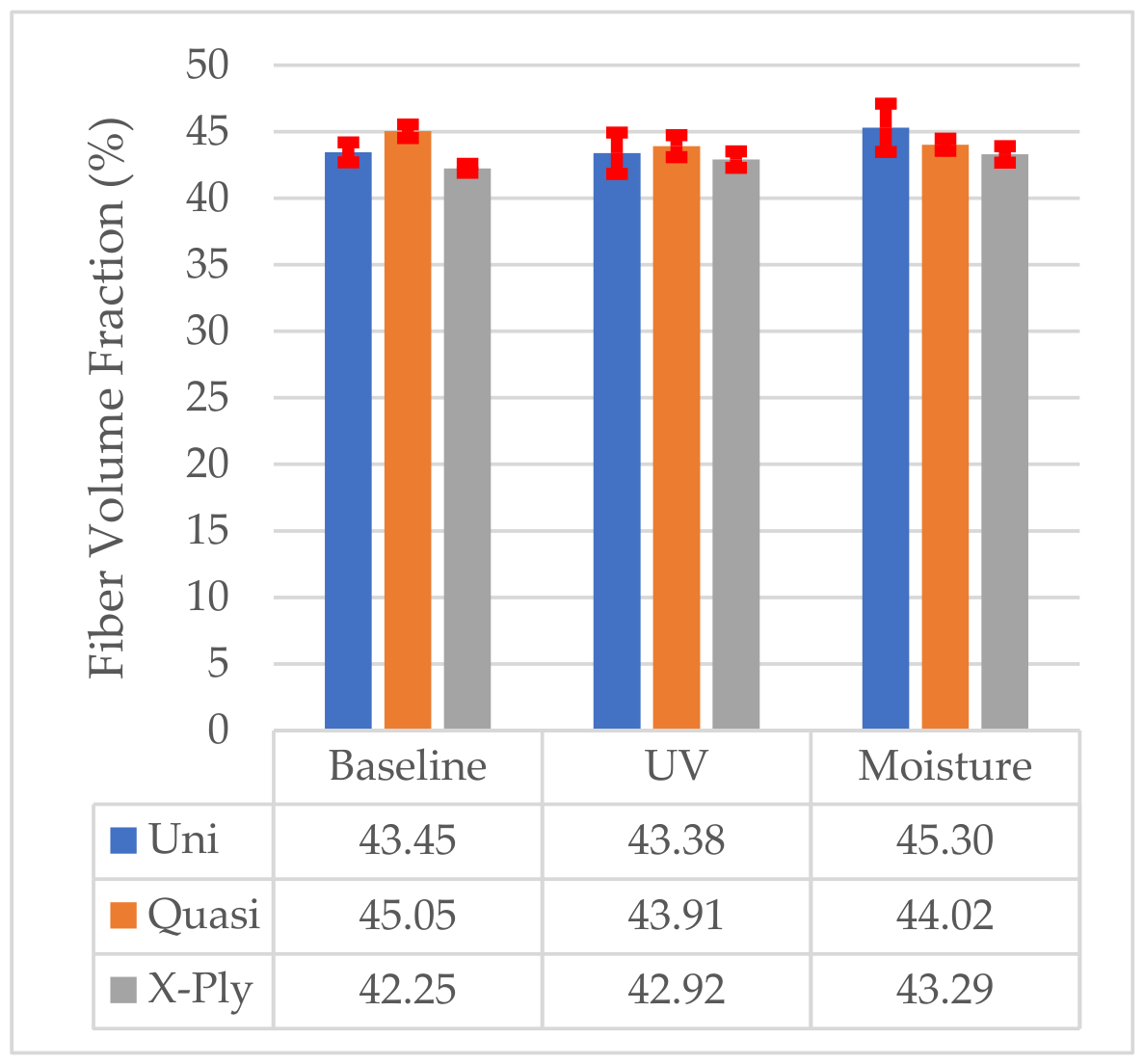
The measured average fiber volume fractions, Vf, in panels were similar to those of the tapes provided by the manufacturers. The average Vf was measured as 53% for CF/PPS, 44% for GF/PPS, 44% for GF/PP, and 43% for GF/PET. It is shown in Figure 1 that fiber content is not affected by environmental conditioning, as the Vf of UV- and moisture-conditioned panels remained almost the same as that of the baseline panels. For example, the GF/PPS unidirectional panels were observed to have Vf of 43%, 43%, and 45% in baseline, UV, and moisture samples, respectively. For quasi-isotropic layup, Vf was 45%, 44%, and 44%, respectively, and for cross-ply layup, Vf was 42%, 43%, and 43%, respectively. Similar results were obtained for the other materials tested in this study.

3.2. Moisture Uptake

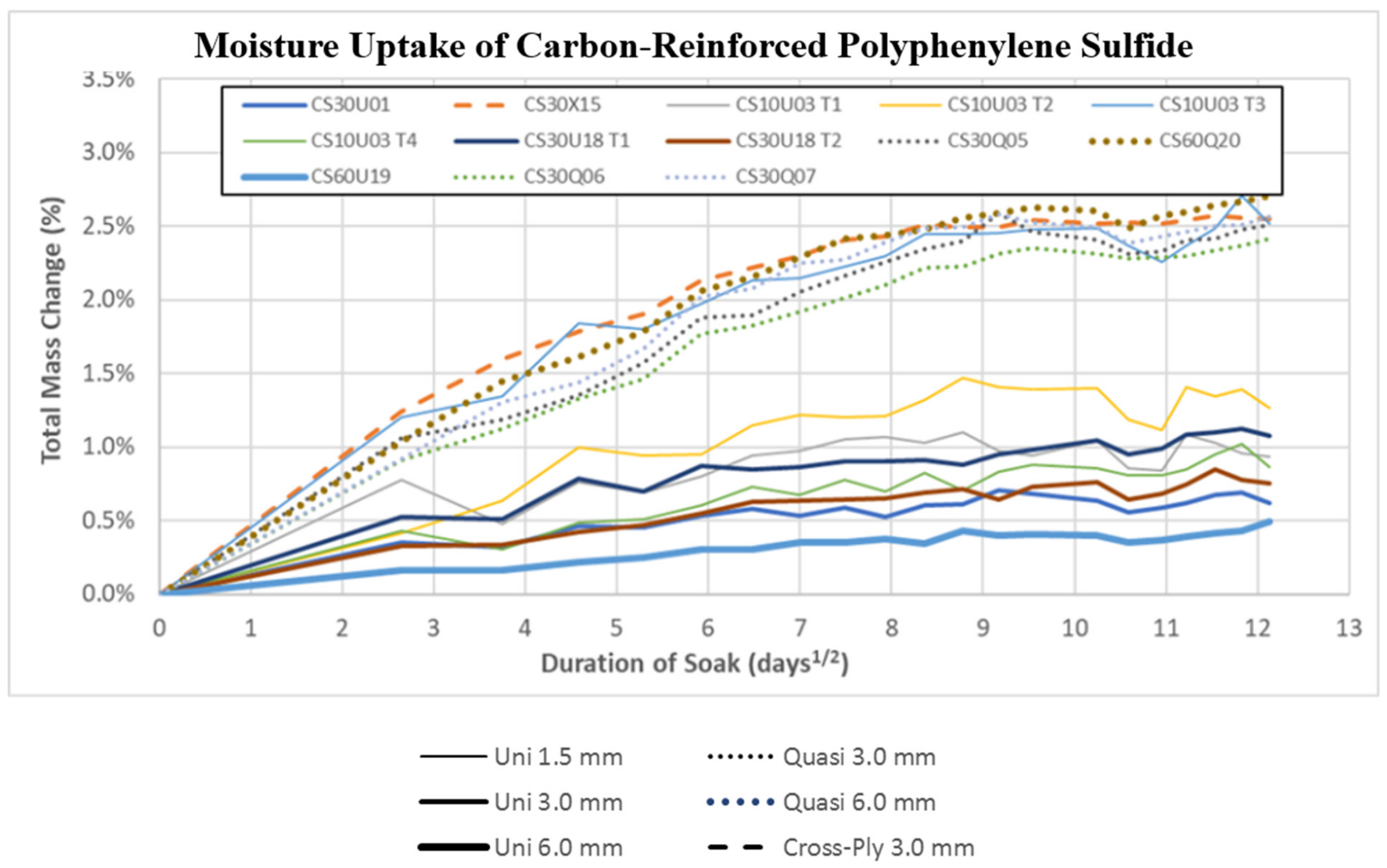
Material samples were conditioned following the procedure specified above. Panels were periodically weighed to determine the moisture uptake. All samples were immersed in 60 °C water up to full saturation, where the measured mass equilibrated, signifying full saturation. Typical moisture uptake graphs of various laminates of CF/PPS are shown in Figure 2 below. At full saturation, graphs of moisture uptake reach a plateau of zero slope, as shown in the figure below.
A key finding across all conditioned sample panels is that the cross-ply and quasi-isotropic laminates exhibited significantly higher moisture uptake than the unidirectional laminates. This can be explained by fibers acting as hydraulic conduits for moisture transport in multiple directions rather than in one direction.

3.3. Tensile Properties

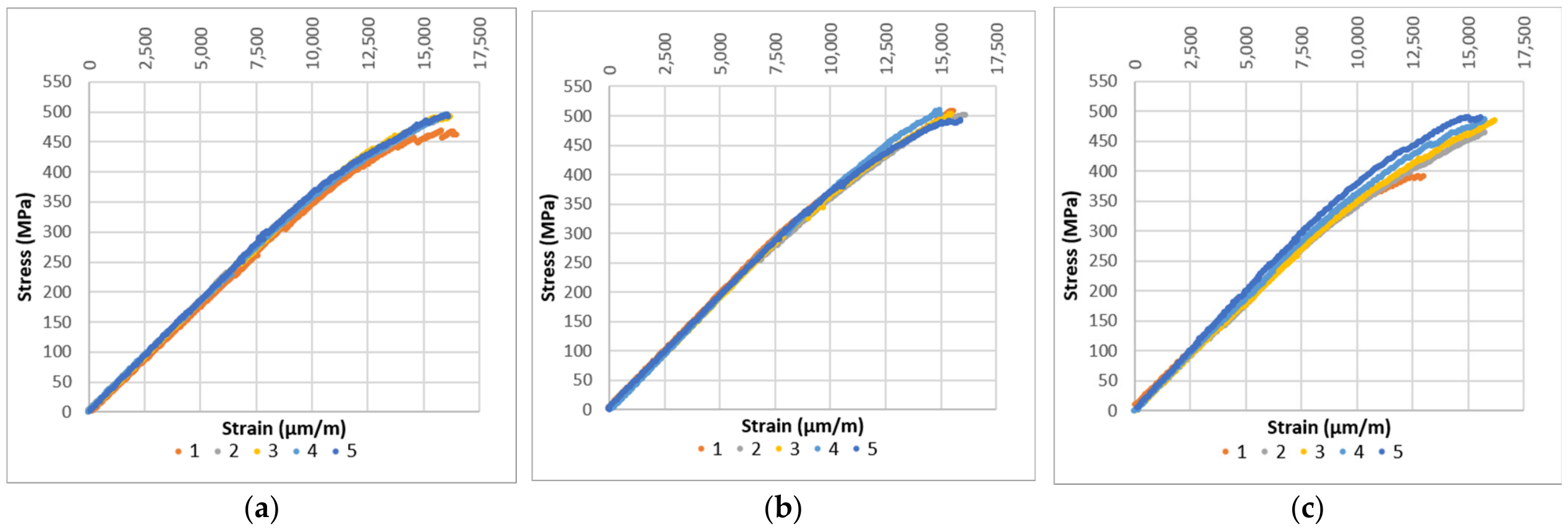
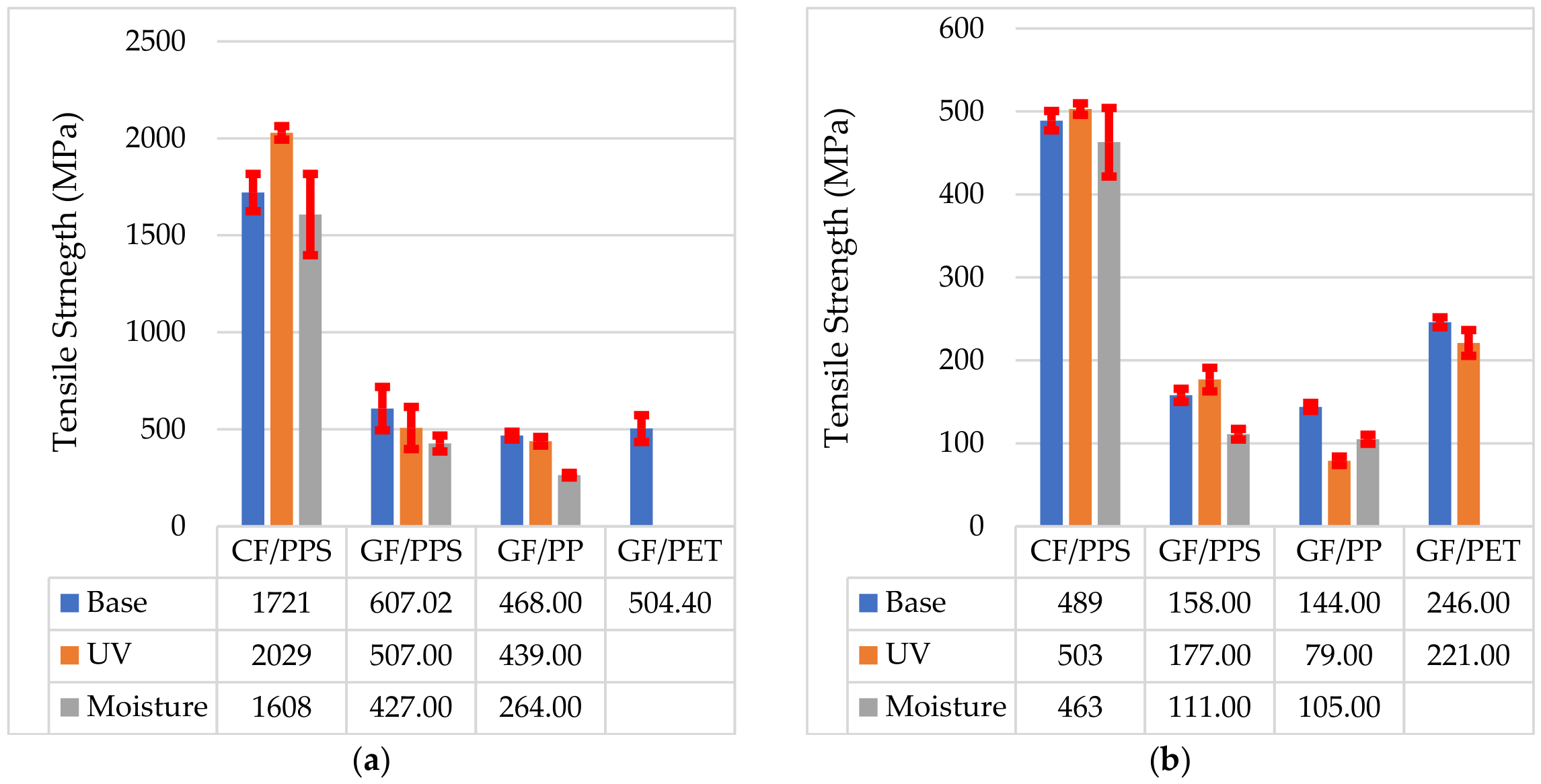
When observing tensile properties of CF/PPS, GF/PPS, GF/PP, and GF/PET in Figure 2, Figure 3, Figure 4 and Figure 5, it became clear that there were significant differences in how UV and moisture affected each of the materials. For instance, the average longitudinal strength of the CF/PPS is 1720 MPa, as shown in Figure 4a, and after 2000 h of accelerated exposure to UV light and condensation, the strength of the CF/PPS increased to an average of 2030 MPa. However, exposure to moisture at 60 °C up to saturation, which took about five months, caused a slight decrease of about 5% in the longitudinal strength compared to the baseline. Similar trends were observed in quasi-isotropic CF/PPS laminates, where the average tensile strength increased slightly after UV exposure and decreased after moisture exposure, as shown in Figure 4b, albeit the effects were much less pronounced compared to those on the unidirectional laminate. Typical tensile stress–strain graphs and data are shown for CF/PPS quasi-isotropic baseline specimens in Figure 3 and Table 6 below.
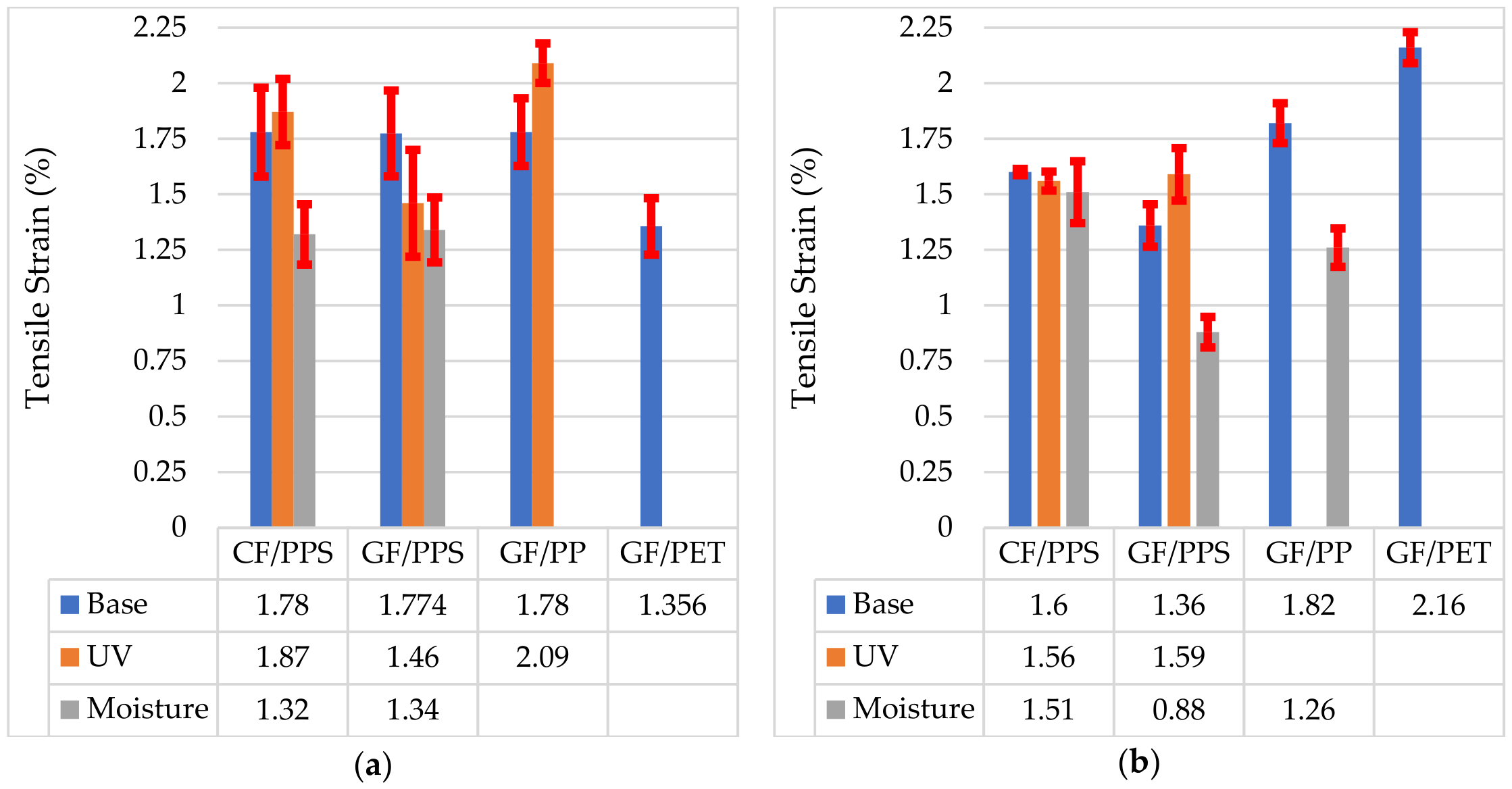
Results of longitudinal strain-at-failure generally mirrored the trends observed in longitudinal strength, with a decrease in strength typically accompanied by reduced strain-to-failure. UV exposure led to an increase of 5% and moisture exposure led to a decrease of 25% in average longitudinal strain for unidirectional CF/PPS laminates, as shown in Figure 5a. For quasi-isotropic CF/PPS laminates, the average axial tensile strain decreased by 3% after UV exposure and by 6% after moisture exposure. For the GF/PPS unidirectional laminates, UV exposure resulted in a decrease of 18% in average longitudinal tensile strain and a decrease of 24% after moisture exposure. For a quasi-isotropic laminate, UV exposure led to an increase of 17%, and moisture exposure led to a decrease of 35% in axial strain. For the unidirectional GF/PP laminates, UV exposure resulted in an increase in longitudinal tensile strain of 17%. In quasi-isotropic laminates, Figure 5b, moisture exposure resulted in a decrease of 31% in axial tensile strain.
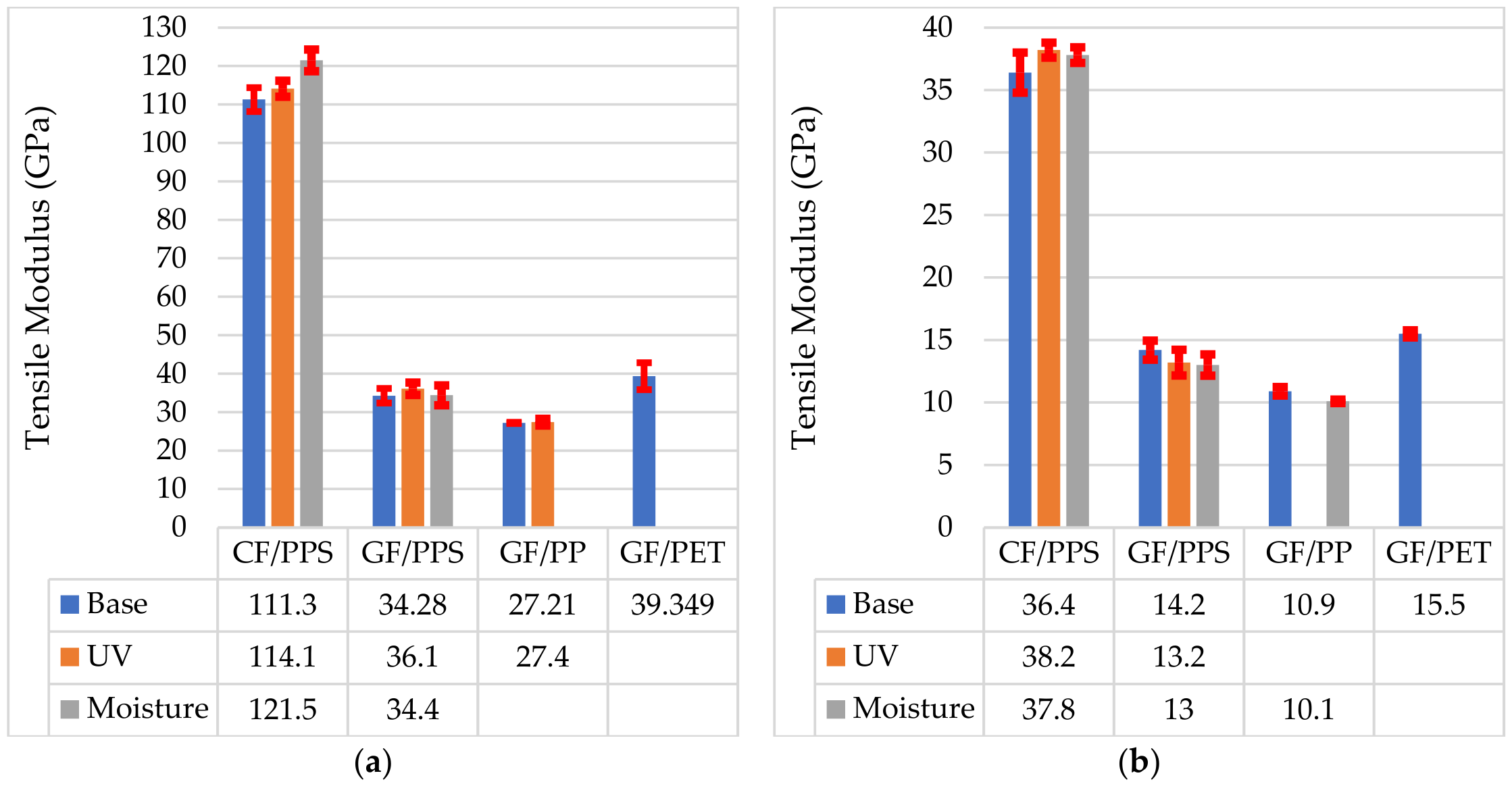
The longitudinal tensile modulus of the unidirectional CF/PPS was determined to be 111 GPa, threefold higher than that of GF/PPS, GF/PP, and GF/PET, as shown in Figure 6a. The modulus increased by 3% with UV exposure and by 9% with moisture exposure. The latter is mostly due to a decrease of 25% in longitudinal strain. For the quasi-isotropic CF/PPS laminates in Figure 6b, UV and moisture exposures resulted in an increase in modulus of 5% and 4%, respectively. These are also a direct result of the decrease in strain noted above. For GF/PPS, the modulus in the unidirectional laminates increased by 5% after UV exposure and was nearly unchanged after moisture exposure. Similarly, for GF/PP, the modulus of the unidirectional laminates was unchanged after UV exposure, whereas after moisture exposure, the modulus of quasi-isotropic laminates was observed to decrease by 7%, indicating consistent degradation of the quasi-isotropic GF/PP in strength, strain, and stiffness in an aqueous environment.
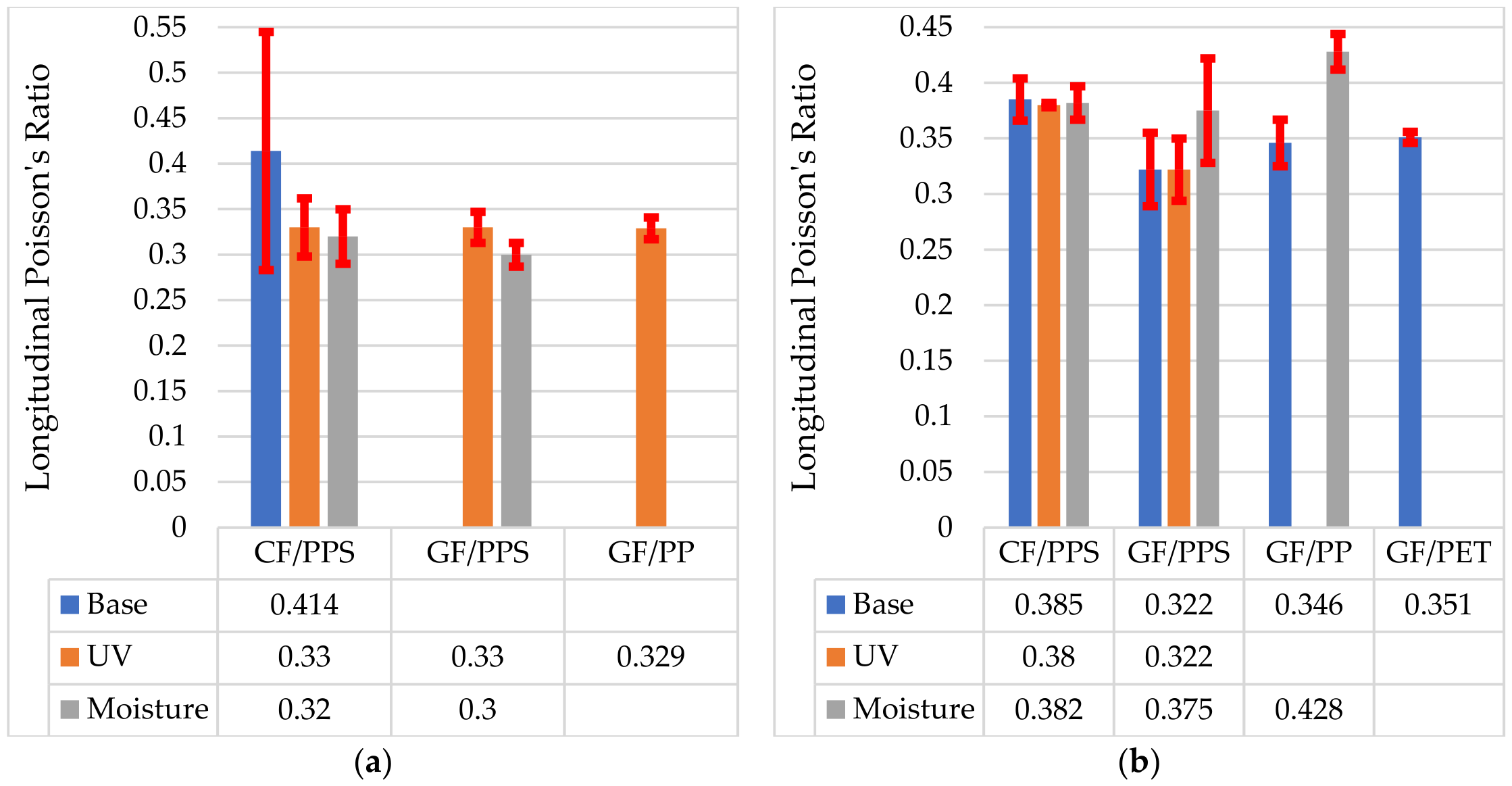
The effects of UV and moisture exposure on Poisson’s ratio of the materials are shown in Figure 7. The decrease in Poisson’s ratio of UV and moisture-conditioned longitudinal samples of CF/PPS and GF/PPS is mostly due to an increase in transverse strain, indicating some plasticity in the matrix. For the quasi-isotropic samples, no noticeable change occurred in Poisson’s ratio of CF/PPS, as shown in Figure 7b. The increase in Poisson’s ratio of the moisture-conditioned GF/PPS and GF/PP in Figure 7b is due to the significant decrease in axial strain, by 35% and 31%, respectively, of these samples as noted above and shown in Figure 5b above.

3.4. Compression Properties

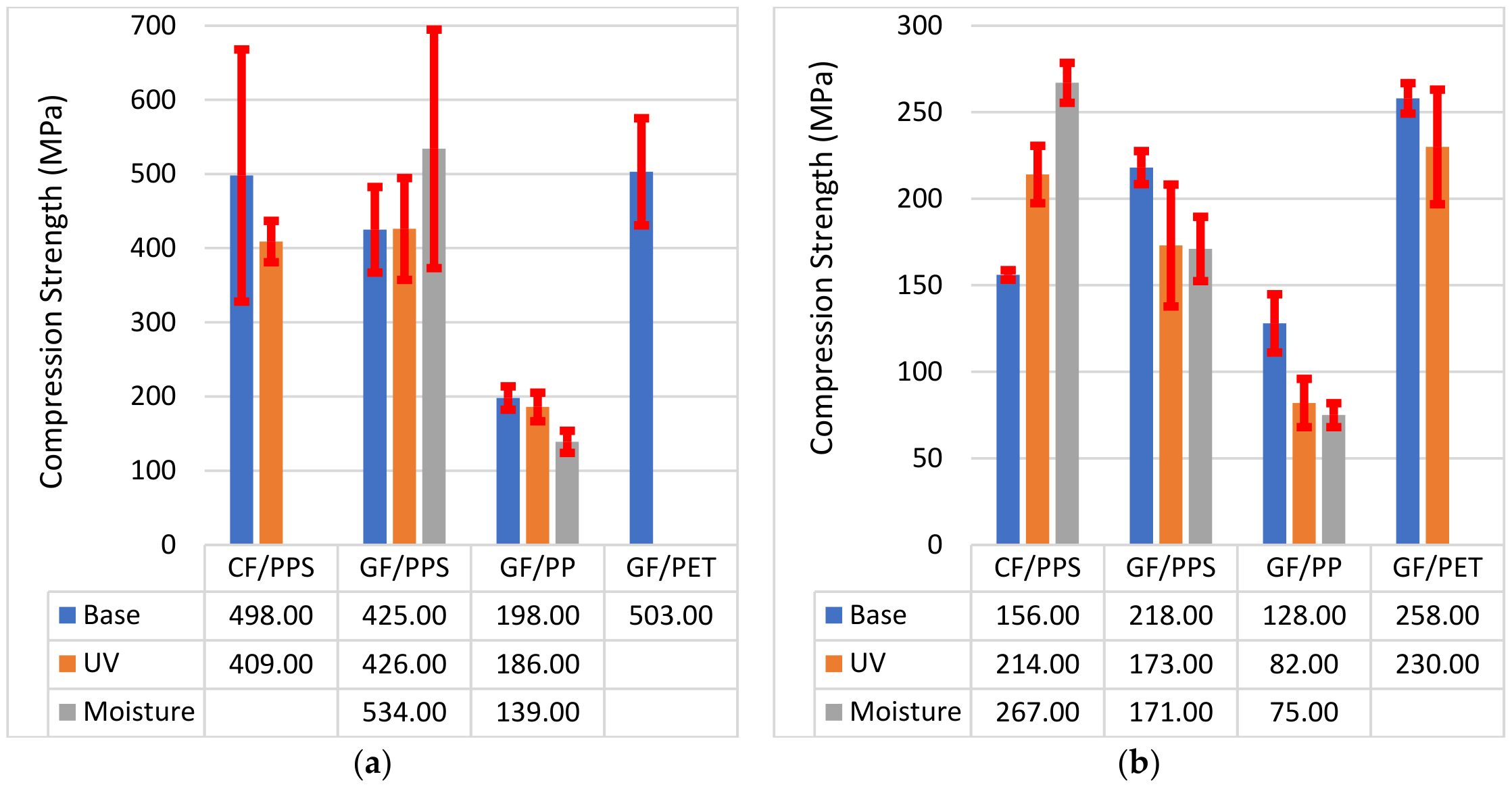
Compression tests were performed according to ASTM D6641 standard. Although the standard is mainly developed to determine the compression modulus of composites, specimens were tabbed and carefully tested to obtain the compression strength of the materials. The average baseline longitudinal compression strengths of CF/PPS, GF/PPS, GF/PP, and GF/PET were 498 MPa, 425 MPa, 198 MPa, and 503 MPa, respectively, as shown in Figure 8a. Determining the compression strength in the longitudinal direction is especially challenging, as shown by the high standard deviation of the samples tested, rendering some results inconclusive. It is shown that UV exposure did not affect the GF/PPS, and that the compression strength of GF/PP was reduced by 6% after UV exposure, and more so, by 30% due to moisture exposure. The data on the influence of moisture were more definitive, as the entire dataset was below the compression strength measured in any baseline specimens. Data on the effect of moisture exposure on the longitudinal compression strength of CF/PPS, GF/PPS, and GF/PET were not conclusive.
For the quasi-isotropic samples, the data were more consistent and showed that UV and moisture exposure resulted in an increase in compression strength of CF/PPS by 37% and 71%, respectively, compared to the baseline, as shown in Figure 8b. However, for the quasi-isotropic GF/PPS laminates, the average compression strength dipped by 21% and 22% after UV and moisture exposure, respectively. While the average effect of UV and moisture was similar, the data on the specimens exposed to moisture were more consistent, and the entire dataset fell below the spread of data in the baseline specimens. For quasi-isotropic GF/PP laminates, the UV and moisture exposure were accompanied by a significant drop in compression strength, by 36% and 41%, respectively. It is also shown that UV exposure reduced the compression strength of GF/PET by 11%. Observation of the results of the quasi-isotropic samples is similar to the previous observation that while UV, and in this case, moisture, exposure may have a post-cure effect in increasing the compression strength of CF/PPS, they have a detrimental effect on the compression strength, most likely at the interface of fiber/matrix, of GF/PPS, GF/PP, and GF/PET.

3.5. Flexural Properties

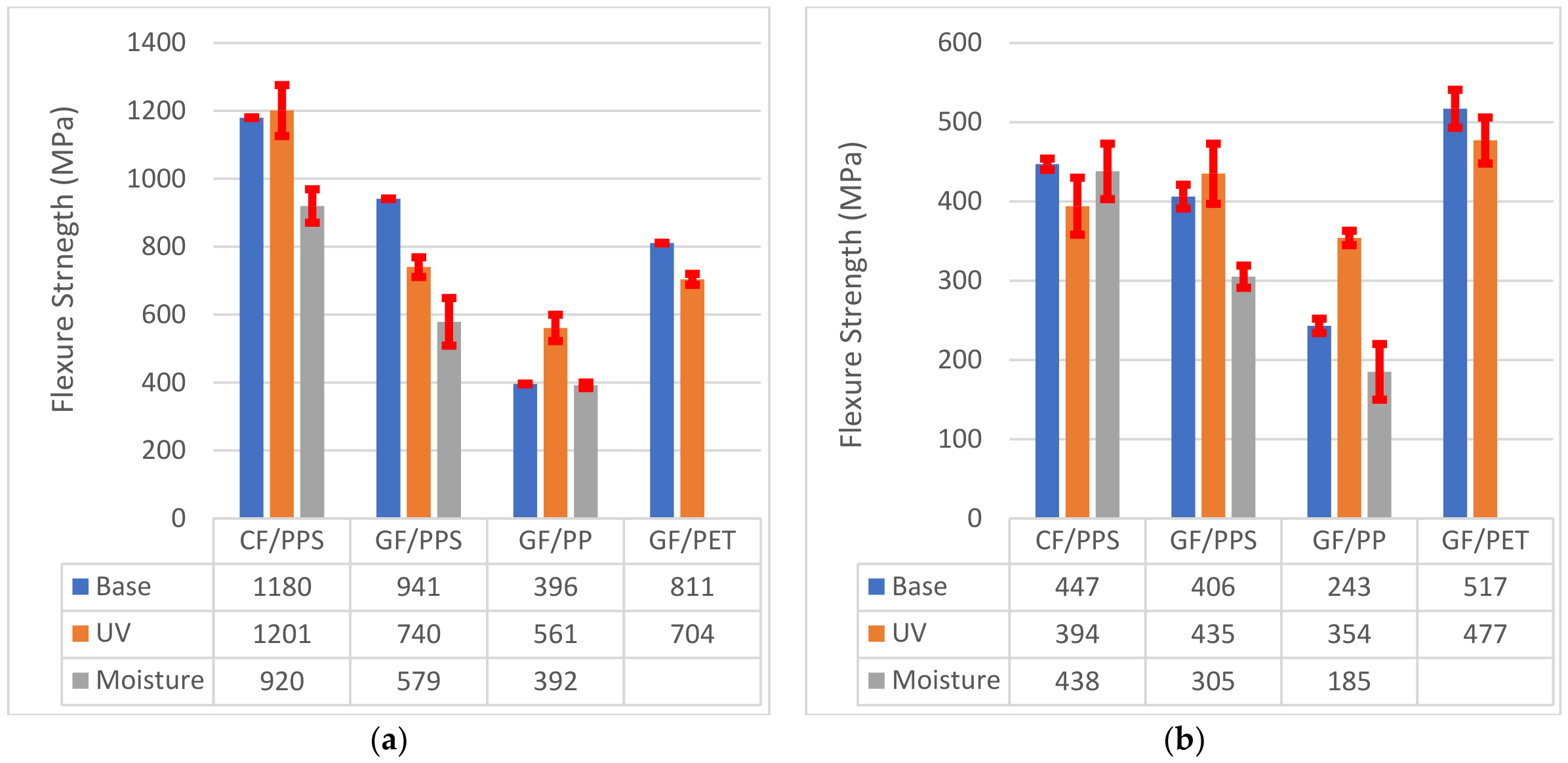
The flexural strength properties are shown in Figure 9a,b. The longitudinal flexure strength of CF/PPS in Figure 9a is similar to the tensile strength of the same material; exposure to UV caused a slight increase in strength, and exposure to moisture caused a decrease of 22% from 1180 MPa to 920 MPa in flexure strength. For quasi-isotropic laminates in Figure 9b, the flexure strength of CF/PPS was reduced by 12% due to UV exposure but was not significantly affected by exposure to moisture. The flexure strength of unidirectional GF/PPS also showed a similar trend to its tensile strength of being negatively affected by both UV and moisture exposure; it was reduced by 21% from 941 MPa to 740 MPa due to UV exposure, and by 38% from 941 MPa to 579 MPa due to moisture exposure, as shown in Figure 9a. For quasi-isotropic GF/PPS laminates, the trend was also similar to tensile strength, where a slight increase in flexure strength was caused by UV exposure, followed by a decrease of 25% due to moisture exposure. These results echo the similar observation of tensile strength, where possible UV-induced post-cure enhances the longitudinal CF/PPS and quasi-isotropic GF/PPS flexure strengths, while moisture attacks the glass fiber/matrix interface, reducing the flexure strengths of unidirectional and quasi-isotropic GF/PPS.
For GF/PP, it is shown in Figure 4a and Figure 8a that UV exposure caused a slight decrease of about 6% in the longitudinal tensile and compression strengths; however, Figure 9a shows a significant increase of 42% in flexural strength due to UV exposure. Similarly, while moisture exposure lowered the longitudinal tensile and compression strengths significantly, it is shown in Figure 9a that it did not influence the longitudinal flexural strength of GF/PP. For quasi-isotropic GF/PP laminates, the UV exposure resulted in a significant increase in flexure strength of 46%, while moisture exposure resulted in a decrease in average flexure strength of 24%, as shown in Figure 9b. The flexure strengths of unidirectional and quasi-isotropic GF/PET laminates were reduced by 13% and 8%, respectively, due to exposure to UV, as shown in Figure 9a,b. Most of the flexural specimens failed on the compression side, so these results indicate that UV might have a positive effect on the polypropylene matrix in resisting compression loading. However, the effect of UV exposure is certainly detrimental to the flexure strength of both longitudinal and quasi-isotropic GF/PET laminates.
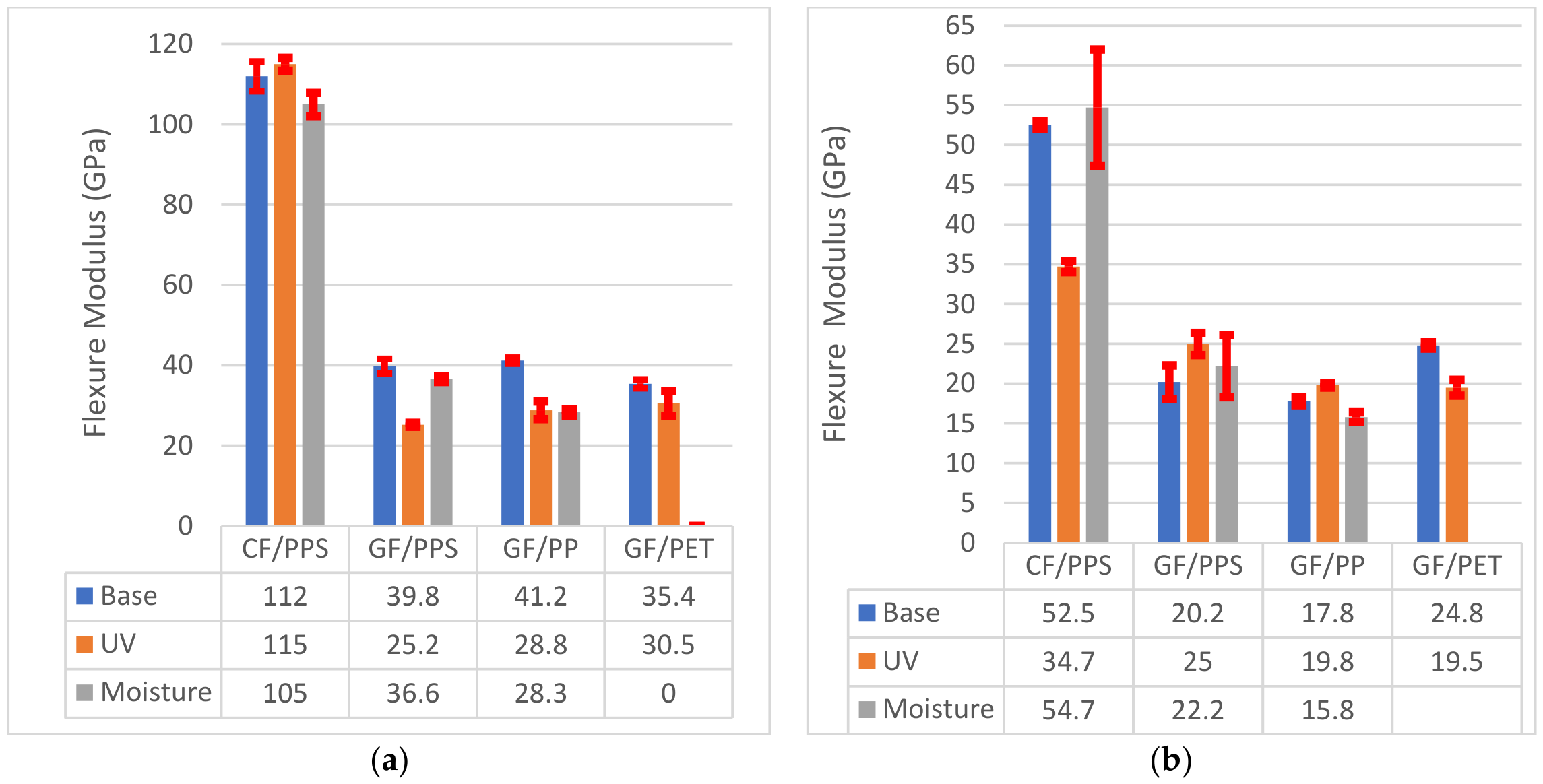
The effects of UV and moisture environments on the flexure modulus of the materials are shown in Figure 10. The baseline longitudinal flexure moduli of the materials are within the same range as the longitudinal tensile moduli of the corresponding materials, as shown in Figure 6a and Figure 10a. The flexure modulus of the unidirectional CF/PPS material was not significantly affected by exposure to UV, as the baseline and UV datasets were within the same range. Moisture exposure was accompanied by a slight decrease in flexural modulus of 6% in unidirectional CF/PPS laminates. For GF/PPS unidirectional laminates, exposure to UV and moisture reduced the modulus by 37% and 8%, respectively. The modulus of unidirectional GF/PP was reduced by 30% due to UV and moisture exposure, while GF/PET was reduced by 14% due to UV exposure, as shown in Figure 10a.
For quasi-isotropic samples shown in Figure 10b, the flexure modulus of CF/PPS was reduced by 34% from 52 GPa to 35 GPa due to exposure to UV, and it was slightly increased by 4% by exposure to moisture. A slight increase in flexure modulus, similar to that of flexure strengths, is exhibited by quasi-isotropic GF/PPS and GF/PP due to UV exposure, while a slight increase in flexure modulus of GF/PPS and a slight decrease in GF/PP are caused by exposure to moisture. However, the GF/PET exhibited a 21% reduction in modulus from 24.8 GPa to 19.5 GPa due to UV exposure, as shown in Figure 10b. The trend of the effects of UV and moisture on the modulus of each material is similar to the trend of these effects on the flexure strengths of the materials, as shown in Figure 9 and Figure 10. The same observations can be made of the possible post-cure influence of UV on the CF/PPS and deterioration at the interface by moisture in the GF/PPS matrix composites.

3.6. In-Plane Shear Properties

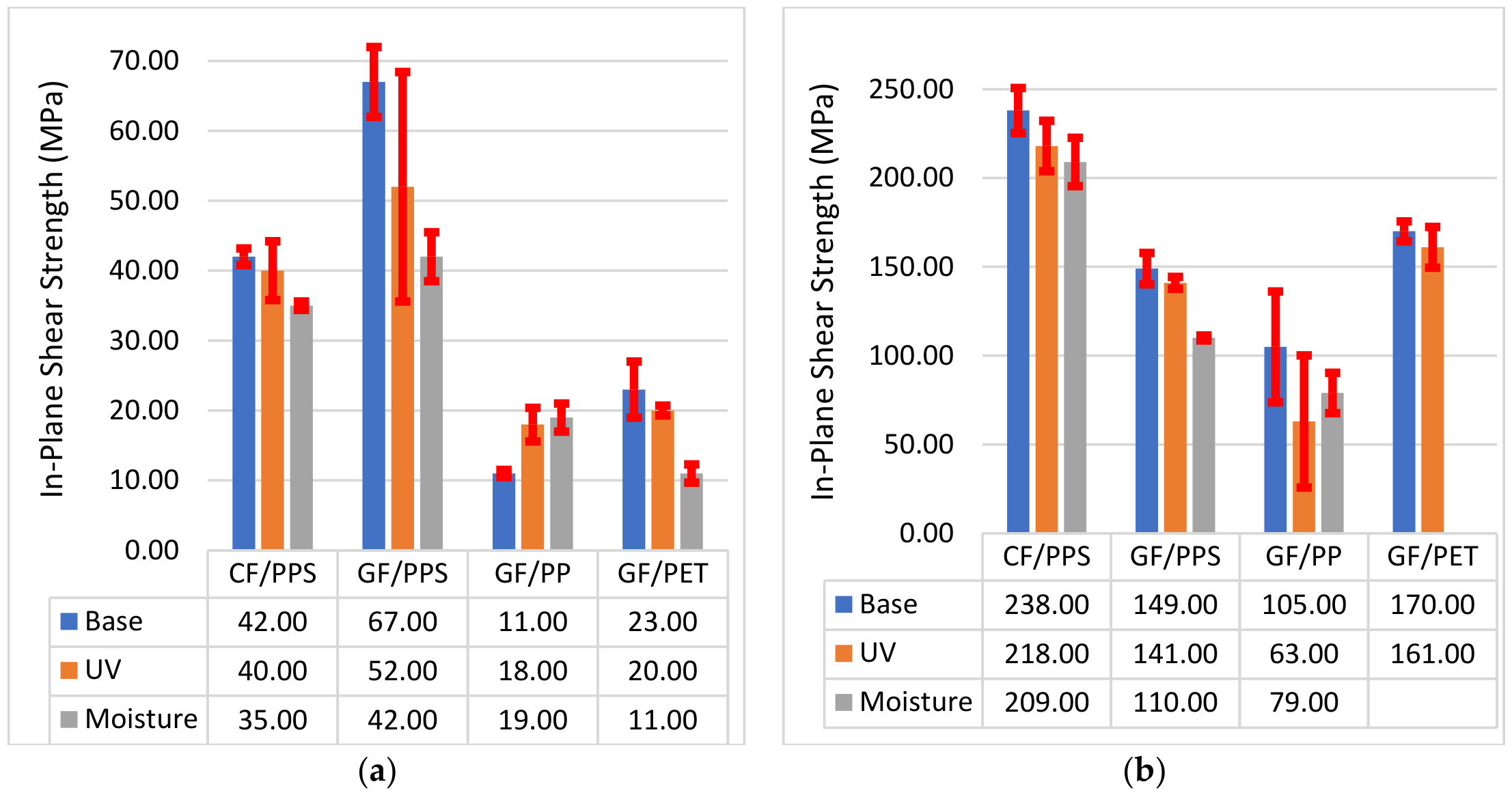
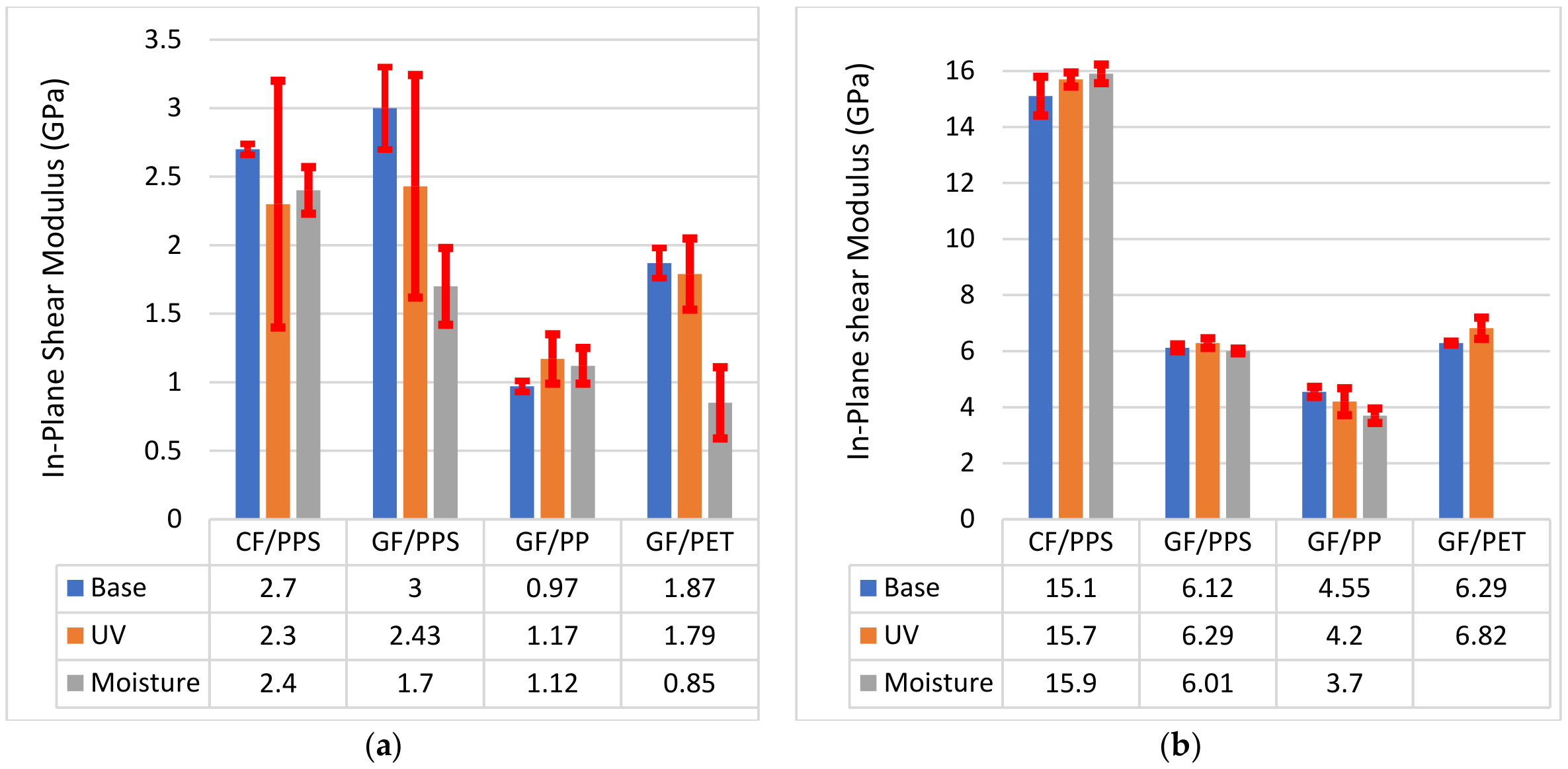
The in-plane shear strengths of the quasi-isotropic [0°/±30°/±60°/90°]2S laminates were markedly higher than those of the cross-ply [0°/90°]6S laminates for each material system tested, as shown in Figure 11. In both layups, a consistent reduction in shear strength was observed due to exposure to UV and moisture environments in all four materials except for the cross-ply GF/PP, which seems to maintain its strength after exposure to both UV and moisture. Figure 11a shows that the reduction in shear strength from the baseline of cross-ply CF/PPS was 5% due to UV exposure and 17% due to moisture exposure; for GF/PPS it was 22% and 37%, respectively, and for GF/PET it was 13% and 52%, respectively. Figure 11b shows that the reduction in baseline shear strength of quasi-isotropic samples due to UV and moisture exposure was 8% and 12%, respectively, for CF/PPS, 5% and 26%, respectively, for GF/PPS, and 40% and 25%, respectively, for GF/PP. The quasi-isotropic GF/PET sample exhibited a reduction of 5% in in-plane shear strength due to UV exposure.
The shear moduli of the quasi-isotropic laminates were significantly higher than those of the cross-ply samples, as seen in Figure 12. The shear modulus of the cross-ply CF/PPS was reduced by 15% and 11% due to UV and moisture exposure, respectively; the GF/PPS cross-ply shear modulus was reduced by 19% and 43%, respectively; the GF/PET cross-ply shear modulus was reduced by 4% and 55%, respectively, while no reduction in cross-ply shear modulus was observed in the cross-ply GF/PP material as shown in Figure 12a. The UV and moisture exposures did not have a significant effect on the shear modulus of the quasi-isotropic laminate specimens compared with their respective baseline moduli, except in the case of the moisture-conditioned GF/PP, which saw a 19% reduction, as shown in Figure 12b. These results may indicate that fiber orientation and laminate layup could mitigate the effects of UV and moisture on the in-plane shear stiffness of CFRTP composites.
The substantially lower apparent in-plane shear strength and modulus of the cross-ply laminates relative to the quasi-isotropic laminates are consistent with prior studies showing that laminate architecture strongly influences shear load path response. In a [0°/90°]6S cross-ply laminates, D7078 in-plane shear loading response is primarily driven by the matrix and fiber/matrix interface within the plies [24].
In contrast, studies have found that [±45] architecture presents the highest performance in V-notch shear testing, where the global shear stresses are redistributed as tensile and compressive stresses through the off-axis fiber reinforcement. In the case of the quasi-isotropic [0°/±30°/±60°/90°]2S architecture used, the higher proportion of off-axis reinforcement fibers allows global shear stress redistribution and increases the apparent laminate shear stiffness and strength [24,25,26].

3.7. Short-Beam Shear Strength

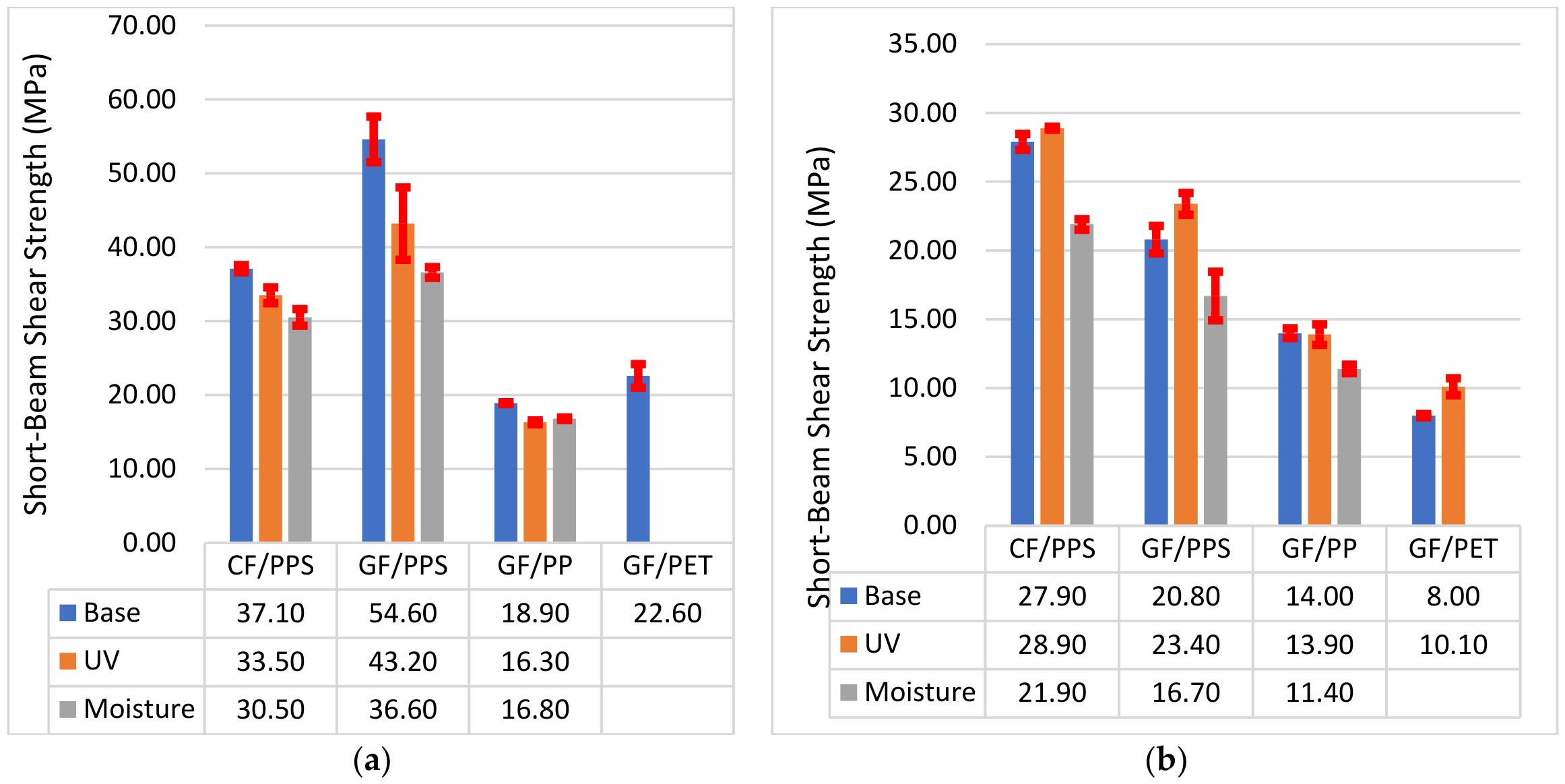
The short-beam shear strength of longitudinal and quasi-isotropic laminates of the four materials tested is shown in Figure 13. Figure 13a shows that the longitudinal short-beam strength of unidirectional GF/PPS was higher than that of CF/PPS, mainly because the stiffer aligned carbon fibers limit deformation and lead to shear failure of the specimens at lower stress. The longitudinal CF/PPS lost 10% of its baseline short-beam strength due to UV exposure and 18% due to moisture exposure. The GF/PPS lost 20% of its baseline short-beam strength of 54.6 MPa due to UV exposure and 33% after saturation in water. It is shown here that the drops in short-beam strengths of the GF/PPS due to UV and moisture exposure are higher than those in the CF/PPS. This indicates that UV and moisture effects are more severe on the E-glass fiber/PPS interface, reducing the short-beam strength and other properties as noted in the sections above. The average short-beam strength of the GF/PP sample was 18.9 MPa and was reduced by 14% due to UV exposure and 11% due to moisture exposure. No conclusive results were obtained for the GF/PET sample.
The short-beam strength results of the quasi-isotropic laminates in Figure 13b were not significantly affected by UV exposure. However, exposure to moisture reduced the baseline short-beam strength by 21%, 20%, and 19% in CF/PPS, GF/PPS, and GF/PP, respectively. Here, it is noticed that, on average, the short-beam strength of the quasi-isotropic laminates is lower than that of the longitudinal laminates for all four materials.

3.8. Izod Impact Resistance

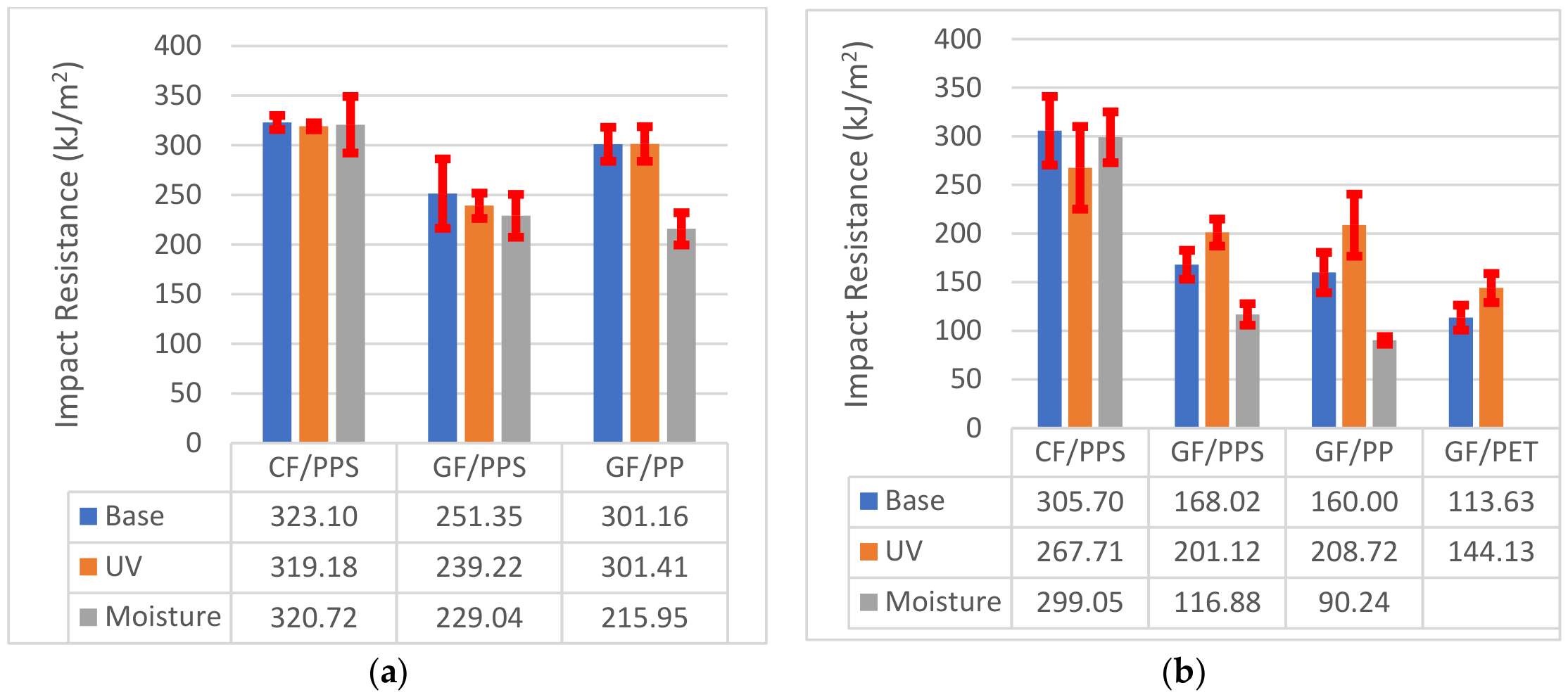
Izod impact test results are shown in Figure 14 below. In Figure 14a, it is observed that the impact resistance of the unidirectional CF/PPS and GF/PPS laminates was not affected by exposure to UV and moisture environments. The GF/PP material was also not affected by UV exposure, but its impact resistance was reduced by 28% due to exposure to moisture.
For the quasi-isotropic laminates in Figure 14b, the impact resistance of CF/PPS was not affected by moisture exposure but was reduced by 12% after exposure to UV. For the GF/PPS and GF/PP laminates, the impact resistance was not affected by UV but was reduced by 30% and 44%, respectively, after exposure to moisture. The impact resistance of quasi-isotropic GF/PET was not negatively affected by exposure to UV; instead, it was increased by 27%, as shown in Figure 14b. No conclusive results were obtained for the effect of moisture on GF/PET. It should be noted here that Izod impact is a material property and that the structural performance under drop-weight impact is completely different, where quasi-isotropic laminates are known to perform much better than unidirectional laminates.

3.9. Matrix Glass-Transition Temperature (Tg) Measured in the Composite

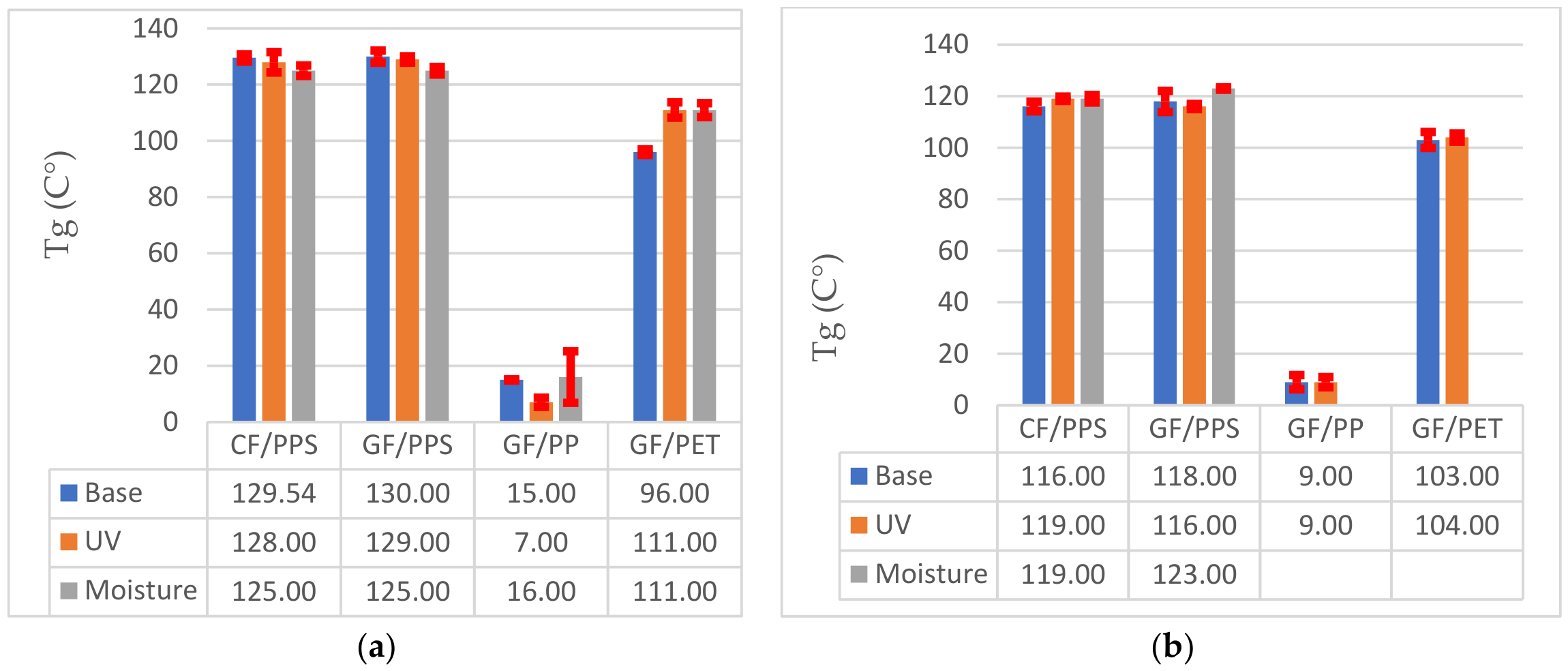
The Tg of neat PPS, PP, and PET polymers was measured using dynamic mechanical analysis (DMA) in accordance with ASTM D7028 and is shown in Table 7. The Tg results for the matrix in baseline and conditioned CF/PPS, GF/PPS, GF/PP, and GF/PET composites are shown in Figure 15. It is clear from the data in the table and the figure that the addition of the continuous reinforcing fibers to the corresponding polymers results in a significant increase in the Tg of the polymer matrices. For example, the matrix Tg measured within the baseline unidirectional and quasi-isotropic PPS composites is higher than the neat polymer by 52% and 36%, respectively. The matrix Tg values of the unidirectional and quasi-isotropic GF/PP are higher than those of the neat polymer by 160% and 136%, respectively; and those of the GF/PET are higher than the neat PET by 30% and 39%, respectively.
It is shown in Figure 15a,b that the Tg of the baseline CF/PPS and GF/PPS composites was not affected by UV and moisture environments. The Tg of the unidirectional GF/PP laminate was reduced by 53% after exposure to UV, but was not significantly affected by exposure to moisture, as shown in Figure 15a. On the other hand, the results in Figure 15b show that the quasi-isotropic laminate of GF/PP was not affected by UV exposure. The Tg of the baseline unidirectional GF/PET laminate was observed to increase by 16% after exposure to UV and moisture, as shown in Figure 15a. The Tg for the quasi-isotropic GF/PET laminate was not affected after exposure to UV. No conclusive results were obtained for the effect of moisture on the quasi-isotropic samples of GF/PP and GF/PET, as shown in Figure 15b.
Since the major increase in Tg was caused by carbon and E-glass fibers, which are not affected by UV and moisture, the resulting effects of these environmental factors on the composites were not significant. However, the difference in the change of Tg between the unidirectional and quasi-isotropic laminates indicates that a slight change in fiber content and fiber orientation may lead to a noticeable change in the Tg of the same composite material.

3.10. Flammability and Smoke Testing

A summary of the CF/PPS, GF/PPS, GF/PET, and GF/PP performances based on the results of the vertical burn tests per ASTM D3801 and heat and visible smoke release rate ASTM E1354 is given in Table 8. It is shown in this table that CF/PPS and GF/PPS materials had superior performance compared to the GF/PET and GF/PP materials. When comparing the CF/PPS and GF/PPS laminates, the CF/PPS had a time to ignition of 316 s compared to 230 s, which was 37% higher than that of GF/PPS. The mass loss and total heat release of 1.8 g/m2 and 53.9MJ/m2 for the CF/PPS were 18% and 13%, respectively, lower than that of the GF/PPS material. For each of the specimens tested from the PPS matrix composite laminates, the after-flame times were less than 10 s, and the material did not drip or release flaming particles. This is indicated by a classification of V-0 as shown in Table 8. For the GF/PP material, the time to ignition was lowest at 40 s, a reduction in time to ignition of 83% compared with the GF/PPS material. The average mass loss rate and total heat release were 86% and 188%, respectively, higher in the GF/PP material compared with the GF/PPS material. The GF/PET material had a time to ignition 70% lower, an average mass loss rate 186% higher, and total heat release 48% higher compared with GF/PPS. Both the GF/PP and GF/PET composite laminates had a V-classification of NO-GO, which indicated that these materials took longer than 30 s to extinguish after removing the heat source and that drips or flaming particles fell from the test specimen.
Surface flammability and smoke generation tests were conducted according to ASTM E162 and E662, respectively, as shown in Table 9. The surface flammability and optical smoke density measurements show that both the CF/PPS and GF/PPS materials had a much lower flame spread index compared with the GF/PP and GF/PET materials. The GF/PP material had the highest flame spread index at 20.1, which was 114% higher than the next highest flame spread index of the GF/PET material at 9.4. Interestingly, the GF/PP composite had a lower maximum specific optical density for the flaming mode, compared to the GF/PPS material; however, for the non-flaming mode, the GF/PP composite had the highest specific optical density of smoke at 40, compared to zero for each of the CF/PPS and GF/PPS materials and 1 for the GF/PET material. The GF/PET composite had the highest maximum specific optical density of smoke for the flaming mode at 39, which was 255% higher than the next-highest reading of 11 for GF/PPS.

4. Discussion

4.1. Carbon Fiber/Polyphenylene Sulfide

UV Effect: Tensile properties, such as tensile strength and tensile strain to failure in unidirectional laminates, were observed to increase by 18% and 5%, respectively, when compared to the unidirectional baseline properties. The increase was attributed to possible UV-induced changes in the PPS matrix (e.g., additional physical aging, crystallinity changes, or limited cross-linking), although such effects were not directly characterized in this study [27,28,29]. Izod impact resistance and Tg of the CF/PPS materials were generally not affected by exposure to UV light and condensation for 2000 h. A few exceptions include a decrease in flexural strength and stiffness of quasi-isotropic samples between 12% and 34%, respectively, a decrease of 15% of the shear modulus in cross-ply laminates, a decrease in short-beam strength by 10% in the longitudinal laminates, and a decrease in the impact resistance of quasi-isotropic laminates by 12%. UV also had a positive effect on some properties, increasing the compression strength of quasi-isotropic laminates by 37%.
Moisture Effect: Moisture had more effect than UV on the mechanical properties of CF/PPS. After soaking samples in water up to saturation, properties were reduced by amounts ranging from 7% in longitudinal tensile strength to about 20% in longitudinal flexure and short-beam strengths. PPS is generally resistant to hydrolysis; therefore, the observed decrease in strain is consistent with moisture-related degradation at the fiber–matrix interface, causing the CF/PPS and GF/PPS materials to be more brittle. Impact resistance and Tg were not affected by moisture.

4.2. Glass Fiber/Polyphenylene Sulfide

UV Effect: UV appeared to affect the PPS matrix, potentially altering its microstructure (e.g., through physical aging, changes in crystallinity, or limited cross-linking) [27,28,29] and maintaining the longitudinal compression strength; on the other hand, it seems to attack the fiber–matrix interface and decreases the longitudinal tensile strengths by 16% and the quasi-isotropic compression strength by 21%. The effect of UV exposure also varied due to fiber orientation, the type of loading, and the mechanical properties. For example, UV exposure decreased the longitudinal tensile strength, flexure strength, and modulus, short-beam strength, and impact resistance of unidirectional laminates but increased them in quasi-isotropic laminates. UV exposure did not affect the compression strength of unidirectional laminates but decreased the compression strength in quasi-isotropic laminates. The Tg of GF/PPS was not significantly affected by exposure to UV.
Moisture Effect: Moisture appeared to have a detrimental influence on the fiber–matrix interface of GF/PPS as it reduced most of the mechanical properties of both unidirectional and quasi-isotropic laminates, except for longitudinal compression strength and quasi-isotropic flexure modulus. The degradation in properties ranged from a 30% decrease in tensile strength to a 39% reduction in longitudinal flexure strength. Moisture did not significantly impact the Tg of the GF/PPS. However, a decrease of 37% in flexure modulus by UV exposure and 30% in quasi-isotropic tensile strength due to exposure to moisture may raise concerns in the use of GF/PPS in these environments.

4.3. Glass Fiber/Polypropylene

UV Effect: Similarly to GF/PPS, the effect of UV on GF/PP properties depended on the type of loading and fiber orientation. The majority of mechanical properties, such as tensile, compression, short-beam strength, and impact strengths of unidirectional samples, were reduced after UV exposure. Other properties, such as longitudinal tensile strain to failure, flexural modulus, and impact resistance of quasi-isotropic samples, were enhanced. The observed degradation in properties ranged from 14% in the short-beam strength of longitudinal samples to 45% in the tensile strength of quasi-isotropic samples. Certain properties increased from 30% in the impact resistance of quasi-isotropic samples to 64% in the in-plane shear strength of cross-ply samples. For unidirectional GF/PP, UV exposure was associated with a ~17% increase in longitudinal strain to failure, which may indicate some softening of the polypropylene matrix due to early-stage photo-oxidization and chain scission under these conditions [30,31]. The Tg of GF/PP was reduced in the unidirectional laminates but was not affected in the quasi-isotropic samples.
Moisture Effect: Exposure to moisture resulted in a reduction in most of the mechanical properties of the GF/PP samples, including tensile strength of unidirectional samples by 44% and impact resistance of quasi-isotropic samples by 45%. Moisture is known to degrade the coupling agent of glass fibers and reduce the bond at the fiber–matrix interface in thermoset composites; however, further investigation is needed to determine the cause of degradation in properties due to UV and moisture in CFRTP composites. The GF/PP composite exhibited fair but inconsistent resistance to UV environments. The large decrease in some of its properties due to moisture exposure may raise concerns for its use in high-moisture environments.

4.4. Glass Fiber/Polyethylene Terephthalate

UV Effect: UV was noted to reduce the tensile (quasi-isotropic), compression, flexure, and in-plane shear properties of GF/PET and enhance the short-beam strength and impact resistance of the material. For instance, the average tensile strength of quasi-isotropic laminates was reduced by 10%, and the average compression strength was reduced by 11% after UV exposure. On the contrary, the short-beam strength and Izod impact resistance of quasi-isotropic GF/PET increased by 26% and 27%, respectively, after UV exposure.
Moisture Effect: Moisture is noted to decrease the in-plane shear properties and increase the Tg of GF/PET. For instance, in-plane shear strength and modulus decreased by 52% and 55%, respectively, after exposure to moisture. Tg was observed to increase by 16% after exposure to moisture. Data on UV and moisture effects on other properties were not obtained due to data acquisition errors.

5. Conclusions

This study was focused on understanding the effects of exposure to UV, moisture, and fire on the properties of continuous fiber-reinforced thermoplastic composite laminates for their use in extreme environments. Materials manufactured and tested in this study included CF/PPS, GF/PPS, GF/PP, and GF/PET. Fabricated samples consisted of unidirectional, symmetric quasi-isotropic, and symmetric cross-ply laminates. The fiber orientation was noted to affect the response of the materials to UV and moisture environments.
For CF/PPS, UV exposure led to enhanced unidirectional tensile and flexure properties and compression strength of quasi-isotropic laminates. This may be due to UV-induced changes to the PPS polymer matrix, such as cross-linking, enhanced crystallinity, and physical aging [27,28,29]; however, these effects were not directly characterized in this study. UV exposure is also noticed to reduce the in-plane shear properties of cross-ply laminates and the short-beam shear strength of unidirectional laminates.
Exposure to moisture had minimal effect on tensile and flexure properties of quasi-isotropic CF/PPS laminates, but it decreased the tensile and flexure strengths and strain of unidirectional laminates, mainly due to possible degradation at the fiber–matrix interface. Similarly, GF/PPS composites exhibited mixed responses to UV exposure, with a slight decrease in tensile strength and strain of unidirectional samples and a slight increase in these properties in quasi-isotropic samples.
Exposure to moisture was noted to cause a reduction in most of the mechanical properties with various degrees in unidirectional vs. quasi-isotropic GF/PPS laminates. For GF/PP, exposure to UV and moisture decreased the tensile and compressive strengths of unidirectional and quasi-isotropic laminates; however, exposure to UV increased the flexure strengths of laminates. The GF/PET composites showed reduced tensile and compression properties but increased impact resistance and short-beam strength under UV exposure, while moisture decreased in-plane shear properties and increased the Tg of the unidirectional layup. The vertical burn tests and surface flammability and smoke generation tests highlighted the superior flame resistance of CF/PPS and GF/PPS composites compared to GF/PET and GF/PP materials. These findings highlight varied material responses and raise important considerations regarding the long-term durability of CFRTP composites in harsh environments.
For applications requiring high flame resistance and environmental durability, such as automotives and military ground vehicle structures, CF/PPS exhibits the most robust performance under UV and moisture conditioning. Further, GF/PP may be suitable for cost-sensitive applications but exhibits substantial property degradation under moisture, warranting cautious use in high-humidity or submerged structures. Further studies are recommended to develop constitutive models that incorporate the changes in physical and mechanical properties of CFRTP composites for design and application in severe environments.

Author Contributions

Conceptualization, R.J.H. and B.M.A.-M.; methodology, B.M.A.-M., R.J.H., D.F.E.J. and R.A.L.-A.; software, K.A.B., J.R.R., B.M.A.-M. and K.M.K.; validation, R.J.H., D.F.E.J. and B.N.D.; formal analysis, B.M.A.-M., K.A.B., R.J.H. and K.M.K.; investigation, K.A.B., B.M.A.-M., D.F.E.J., J.R.R., A.E.L. and D.H.P.; resources, R.J.H. and H.D.; data curation, B.M.A.-M., K.A.B., A.E.L., K.M.K., and J.R.R.; writing—original draft preparation, R.J.H. and B.M.A.-M.; writing—review and editing, B.M.A.-M., R.J.H., J.R.R., R.A.L.-A., K.A.B., B.N.D. and K.M.K.; visualization, B.M.A.-M. and R.J.H.; supervision, B.M.A.-M., D.F.E.J. and J.R.R.; project administration, R.J.H., D.F.E.J., J.R.R., B.N.D. and K.M.K.; funding acquisition, R.J.H., H.D. and D.F.E.J. All authors have read and agreed to the published version of the manuscript.

Funding

This research was funded by the National Center for Manufacturing Sciences (NCMS) Project No. 201986-121017 and Cooperative Agreement HQ0034-15-2-0007 for the Commercial Technologies for Maintenance Activities (CTMA) Program.

Data Availability Statement

The data presented in this study are available on request from the corresponding author due to the policy of the NCMS.

Acknowledgments

The authors acknowledge the technical support of Andrew Smail of the US Army DEVCOM, and the staff of the Advanced Structures and Composites Center (ASCC) at the University of Maine, particularly Ian Freericks, Justin Willis, and Dillan Wells for sample preparation and testing, Mary Hartley for data preparation and management, and Diane Mosely, Marcy Smith, and Kim Mentus for administrative support. Celanese and Avient provided the materials for the research.

Conflicts of Interest

The authors declare no conflicts of interest.

Abbreviations

The following abbreviations are used in this manuscript:
ASCCAdvanced Structures and Composites Center
ASTMAmerican Society for Testing and Materials
CFCarbon Fiber
CFRTPContinuous Fiber-Reinforced Thermoplastic
CTMACommercial Technologies for Maintenance Activities
DMADynamic Mechanical Analysis
FC/wtFiber Content by Weight
VfFiber Volume Fraction
GFGlass Fiber
NCMSNational Center for Manufacturing Sciences
XcPercent Crystallinity
PETPolyethylene Terephthalate
PPSPolyphenylene Sulfide
PPPolypropylene
SAESociety of Automotive Engineers
TgGlass Transition Temperature
TmMelt Temperature
UVUltraviolet
VOCVolatile Organic Compound

References

  1. Krueger, R.; Bergan, A. Advances in Thermoplastic Composites Over Three Decades—A Literature Review; NASA/TM-20240005376; NASA Langley Research Center: Hampton, VA, USA, 2024. Available online: https://ntrs.nasa.gov/api/citations/20240005376/downloads/NASA-TM-20240005376.pdf (accessed on 11 May 2026).
  2. Liu, Q.; Lin, Y.; Zong, Z.; Sun, G.; Li, Q. Lightweight design of carbon twill weave fabric composite body structure for electric vehicle. Compos. Struct. 2013, 97, 231–238. [Google Scholar] [CrossRef]
  3. Knox, M.P. Continuous fiber reinforced thermoplastic composites in the automotive industry. In Proceedings of the Automotive Composites Conference, Troy, MI, USA, 19–20 September 2001. [Google Scholar]
  4. Knox, M.P. Thermoplastic composites—Products, processes and applications. In Proceedings of the 7th International Conference on Flow Processes in Composite Materials (FPCM-7); Advani, S.G., Ed.; University of Delaware: Newark, DE, USA, 2004; pp. 113–120. Available online: https://ecm-academics.plymouth.ac.uk/jsummerscales/fpcm/fpcm07/Extended_abstracts/EA113.pdf (accessed on 25 September 2025).
  5. Lopez-Anido, R.A. (Advanced Structures and Composites Center, University of Maine, Orono, ME, USA); Erb, D.F., Jr. (Advanced Structures and Composites Center, University of Maine, Orono, ME, USA); Roy, J.R. (Advanced Structures and Composites Center, University of Maine, Orono, ME, USA). Unpublished work, 2020.
  6. Shubhra, Q.T.H.; Alam, A.K.M.M.; Quaiyyum, M.A. Mechanical properties of polypropylene composites: A review. J. Thermoplast. Compos. Mater. 2013, 26, 362–391. [Google Scholar] [CrossRef]
  7. Ferreira, J.A.M.; Costa, J.D.M.; Reis, P.N.B.; Richardson, M.O.W. Analysis of fatigue and damage in glass-fibre-reinforced polypropylene composite materials. Compos. Sci. Technol. 1999, 59, 1461–1467. [Google Scholar] [CrossRef]
  8. Viora, L.; Combeau, M.; Pucci, M.F.; Perrin, D.; Liotier, P.-J.; Bouvard, J.-L. A comparative study on crystallisation for virgin and recycled polyethylene terephthalate (PET): Multiscale effects on physico-mechanical properties. Polymers 2023, 15, 4613. [Google Scholar] [CrossRef] [PubMed]
  9. Dhaka, V.; Singh, S.; Anil, A.G.; Kumar Naik, T.S.S.; Garg, S.; Samuel, J.; Kumar, M.; Ramamurthy, P.C.; Singh, J. Occurrence, toxicity and remediation of polyethylene terephthalate plastics—A review. Environ. Chem. Lett. 2022, 20, 1777–1800. [Google Scholar] [CrossRef] [PubMed]
  10. Ibeh, C.C. Basic structures and characteristics of polymers and plastics. In Thermoplastic Materials: Properties, Manufacturing Methods, and Applications; Ibeh, C.C., Ed.; CRC Press: Boca Raton, FL, USA, 2011; pp. 640–660. [Google Scholar] [CrossRef]
  11. Levchik, S.V.; Weil, E.D. Flame retardancy of thermoplastic polyester—A review of the recent literature. Polym. Int. 2005, 54, 11–35. [Google Scholar] [CrossRef]
  12. Ning, J. Experimental investigation on the dynamic properties and failure mode of carbon fiber reinforced thermoplastic composites. Appl. Mech. Mater. 2014, 697, 102–108. [Google Scholar] [CrossRef]
  13. Patton, E.G.; Hart, R.J. Deflection-time characterization on high-pressure impacted thermoplastic–metal hybrid panels. In Proceedings of the 37th Technical Conference of the American Society for Composites; American Society for Composites: Tucson, AZ, USA, 2022; Paper No. 173. [Google Scholar]
  14. Rahate, S.; Nemade, A.; Waghuley, K. Polyphenylene sulfide (PPS): State of the art and applications. Rev. Chem. Eng. 2013, 29, 471–489. [Google Scholar] [CrossRef]
  15. Zhou, S.; Zhang, Q.; Wu, C.; Huang, J. Effect of carbon fiber reinforcement on the mechanical and tribological properties of polyamide 6/polyphenylene sulfide composites. Mater. Des. 2012, 44, 493–499. [Google Scholar] [CrossRef]
  16. Mourad, A.-H.I.; Idrisi, A.H.; Wrage, M.C.; Abdel-Magid, B.M. Long-term durability of thermoset composites in seawater environment. Compos. Part B Eng. 2019, 168, 243–253. [Google Scholar] [CrossRef]
  17. Hussnain, S.M.; Shah, S.Z.H.; Megat-Yusoff, P.S.M.; Choudhry, R.S.; Hussain, M.Z. Hygrothermal effects on the durability of resin-infused thermoplastic E-glass fiber-reinforced composites in marine environment. Polym. Compos. 2024, 45, 13901–13923. [Google Scholar] [CrossRef]
  18. Kadiyala, A.K.; O’Shaughnessy, T.; Lee, S.; Portela, A.; Comer, A.J. Influence of environmental conditioning on mechanical properties of carbon dry fibre preformed thermoplastic matrix composites manufactured via automated placement–resin infusion process. Compos. Commun. 2021, 27, 100864. [Google Scholar] [CrossRef]
  19. Bel Haj Frej, H.; Léger, R.; Perrin, D.; Ienny, P. A novel thermoplastic composite for marine applications: Comparison of the effects of aging on mechanical properties and diffusion mechanisms. Appl. Compos. Mater. 2021, 28, 899–922. [Google Scholar] [CrossRef]
  20. Nash, N.H.; Portela, A.; Bachour-Sirerol, C.I.; Manolakis, I.; Comer, A.J. Effect of environmental conditioning on the properties of thermosetting- and thermoplastic-matrix composite materials by resin infusion for marine applications. Compos. Part B Eng. 2019, 177, 107271. [Google Scholar] [CrossRef]
  21. Hart, R.; Khatib-Shahidi, B.; Patton, E.G.; Smail, A.Q. Modeling dynamic failure of woven carbon fiber thermoplastic composites using empirical- and multiscale-based material cards in LS-DYNA MAT054. SAE Int. J. Mater. Manuf. 2020, 13, 241–255. [Google Scholar] [CrossRef]
  22. Hart, R.J.; Patton, E.G.; Hamilton, J.M.; Cardenas, I.; Luo, H.; Magallanes, J. Characterizing and Modeling Lightweight Structural Composites at High Strain Rates for Use from Arctic to Desert Environments. In Proceedings of the 2024 NDIA Michigan Chapter Ground Vehicle Systems Engineering and Technology Symposium; SAE Technical Paper 2024-01-4109; National Defense Industrial Association Michigan Chapter: Sterling Heights, MI, USA, 2024. [Google Scholar] [CrossRef]
  23. Lepage, W. Available online: https://digitalimagecorrelation.org/ (accessed on 15 August 2024).
  24. Khashaba, U.A. In-plane shear properties of cross-ply composite laminates with different off-axis angles. Compos. Struct. 2004, 65, 167–177. [Google Scholar] [CrossRef]
  25. Bergant, Z.; Kek, T.; Maček, A.; Halilovič, M.; Šturm, R. Multiaxial characterization of cross-ply and quasi-isotropic flax bio-composites using a modified Arcan fixture and digital image correlation. Polym. Test. 2026, 154, 109059. [Google Scholar] [CrossRef]
  26. Adams, D.O.; Moriarty, J.M.; Gallegos, A.M.; Adams, D.F. The V-notched rail shear test. J. Compos. Mater. 2007, 41, 281–297. [Google Scholar] [CrossRef]
  27. Batista, N.L.; Rezende, M.C.; Botelho, E.C. Effect of Crystallinity on CF/PPS Performance under Weather Exposure: Moisture, Salt Fog and UV Radiation. Polym. Degrad. Stab. 2018, 153, 255–261. [Google Scholar] [CrossRef]
  28. Batista, N.L.; Faria, M.C.M.; Iha, K.; de Oliveira, P.C.; Botelho, E.C. Influence of Water Immersion and Ultraviolet Weathering on Mechanical and Viscoelastic Properties of Polyphenylene Sulfide–Carbon Fiber Composites. J. Thermoplast. Compos. Mater. 2015, 28, 340–356. [Google Scholar] [CrossRef]
  29. Zheng, X.X.; Böttger, A.J.; Jansen, K.M.B.; van Turnhout, J.; van Kranendonk, J. Aging of Polyphenylene Sulfide–Glass Composite and Polysulfone in Highly Oxidative and Strong Alkaline Environments. Front. Mater. 2020, 7, 610440. [Google Scholar] [CrossRef]
  30. Brostow, W.; Hagg Lobland, H.E.; Narkis, M.; Singh, R.P. Effects of UV Stabilizers on Polypropylene Outdoors. Materials 2020, 13, 1626. [Google Scholar] [CrossRef] [PubMed]
  31. Ainali, N.M.; Lourmpas, N.; Ktena, A.; Kartsonakis, I.A. Physicochemical Alterations on UV-Aged Polymers Leading to Changes in Mechanical Performance. Polym. Test. 2024, 125, 108162. [Google Scholar] [CrossRef]
Figure 1. Average and standard deviation of fiber volume fraction (Vf) of baseline, UV- and moisture-conditioned GF/PPS samples.
Jcs 10 00404 g001
Figure 2. Final state of moisture conditioning for CF/PPS (CS) test panels.
Jcs 10 00404 g002
Figure 3. ASTM D3039 tensile properties of quasi-isotropic CF/PPS: (a) baseline, (b) UV- and (c) moisture-conditioned.
Jcs 10 00404 g003
Figure 4. Average and standard deviation of tensile strength: (a) longitudinal unidirectional layup, (b) quasi-isotropic layup.
Jcs 10 00404 g004
Figure 5. Average and standard deviation of tensile strain at failure: (a) longitudinal unidirectional layup, (b) quasi-isotropic layup.
Jcs 10 00404 g005
Figure 6. Average and standard deviation of tensile modulus: (a) longitudinal unidirectional layup, (b) quasi-isotropic layup.
Jcs 10 00404 g006
Figure 7. Average and standard deviation of tensile Poisson’s ratio: (a) unidirectional layup, (b) quasi-isotropic layup.
Jcs 10 00404 g007
Figure 8. Average and standard deviation of compression strength: (a) longitudinal unidirectional and (b) quasi-isotropic samples.
Jcs 10 00404 g008
Figure 9. Average and standard deviation of flexure strength: (a) longitudinal unidirectional, and (b) quasi-isotropic samples.
Jcs 10 00404 g009
Figure 10. Average and standard deviation of flexure modulus: (a) longitudinal unidirectional and (b) quasi-isotropic samples.
Jcs 10 00404 g010
Figure 11. Average and standard deviation of In-plane shear strength: (a) cross-ply, (b) quasi-isotropic.
Jcs 10 00404 g011
Figure 12. Average and standard deviation of In-plane shear modulus: (a) cross-ply, (b) quasi-isotropic.
Jcs 10 00404 g012
Figure 13. Average and standard deviation results of the effect of UV and moisture on short-beam strength: (a) longitudinal unidirectional, (b) quasi-isotropic samples.
Jcs 10 00404 g013
Figure 14. Average and standard deviation results of the effect of UV and moisture on impact resistance: (a) longitudinal unidirectional, (b) quasi-isotropic samples.
Jcs 10 00404 g014
Figure 15. Average and standard deviation of change in Tg in UV and moisture environments: (a) longitudinal unidirectional, (b) quasi-isotropic samples.
Jcs 10 00404 g015
Table 1. Summary of materials selected for study.
Material SystemCF/PPSGF/PPSGF/PETGF/PP
ManufacturerCelaneseCelaneseCelaneseAvient
(Polystand)
ProductCELSTRAN CFR-TP PPS CF60-01CELSTRAN CFR-TP PPS GF60-01CELSTRAN CFR-TP PET GF60-04Polystrand
IE 6337
MatrixPPSPPSPETPP copolymer
Fiber typeAS4 CarbonE-glassE-glassE-glass
ColorBlackNaturalBlackNatural
Density (g/cm3)1.551.891.867-
Tape Thickness (mm)0.140.250.220.30
Fiber Content (FC/wt)60%60%60%63%
Fiber Volume Fraction (Vf)53%44%43%-
Tape Areal Weight (g/m2)235620420498
Fiber Areal Weight (g/m2)141382252-
Note: All measurements are as reported by the manufacturers.
Table 2. Layup and number of panels of material.
MaterialOrientation Ply Thickness [mm]Number of Plies per Panel Number of Panels
CF/PPS[0°]80.14810
[0°]36362
[0°/90°]6S242
[0°/±30°/±60°/90°]2S2410
[0°/±30°/±60°/90°]3S362
GF/PPS[0°]120.251210
[0°]24242
[0°/90°]3S122
[0°/±30°/±60°/90°]S129
[0°/±30°/±60°/90°]2S243
GF/PET[0°]140.221410
[0°]24242
[0°/90°]3S122
[0°/±30°/±60°/90°]S129
[0°/±30°/±60°/90°]2S243
GF/PP[0°]100.30107
[0°]12123
[0°]24242
[0°/90°]3S122
[0°/±30°/±60°/90°]S129
[0°/±30°/±60°/90°]2S243
Table 3. General panel processing guidelines using compression molding.
Material Pre-Process DryingHeatingDwellCoolingRemove
TimeTempTempPressureTimeRateTemp
hrs°C
(°F)
°C
(°F)
kPa
(psi)
min°C/min
(°F/min)
°C
(°F)
CF/PPS00340
(645)
580
(84)
55
(9)
135
(275)
GF/PPS00340
(645)
580
(84)
55
(9)
135
(275)
GF/PET493
(200)
290
(555)
580
(84)
25
(9)
65
(150)
GF/PP00174
(345)
193
(28)
25
(9)
52
(125)
Table 4. Material characterization tests and specimen quantities for baseline, UV-conditioned, and moisture-conditioned samples.
Test Description ASTM MethodQty
Baseline
Qty
UV
Qty
Moisture
Dimensions
(mm)
Thickness
(mm)
Constituent ContentD3171All panels--------
Tensile (0°)D3039555250 × 153
Tensile (90°)D3039555175 × 253
Tensile (Q *)D3039555250 × 254.5
Compression (0°)D6641555140 × 133
Compression (90°)D6641555140 × 133
Compression (Q)D6641555140 × 134.5
Flexural (0°)D6272555206 × 133
Flexural (Q)D6272555216 × 134.5
Shear (X **)D7078555Test per ASTM D7078
Shear (Q)D7078555Test per ASTM D7078
Short-Beam Strength (0°)D234455541 × 126
Short-Beam Strength (Q)D234455541 × 126
Izod Impact (0°)D256555Test per ASTM D256
Izod Impact (Q)D256555Test per ASTM D256
Tg (0°)D7028-1533360 × 123
Tg (90°)D7028-1533360 × 123
Storage and Loss
Moduli (Q)
D7028-1533360 × 123
Vertical Burn (X)D380110----125 × 133
Time to Ignition and
Heat Release (X)
E13546----100 × 1006.5
* Q = Quasi-isotropic [0°/+30°/−30°/+60°/−60°/90°]NS; ** X = Cross-ply [0°/90°]NS.
Table 5. Manufacturer vs. measured density.
Material SystemCF/PPS
(g/cm3)
GF/PPS
(g/cm3)
GF/PET
(g/cm3)
GF/PP
(g/cm3)
Density1.5501.8901.870-
Measured Density1.5291.8521.8861.535
Percent Change−1.35%−2.01%0.87%-
Table 6. ASTM D3039 tensile properties of baseline, UV- and moisture-conditioned quasi-isotropic CF/PPS.
Specimen#Tensile Strength (MPa)Tensile Chord Modulus of Elasticity (GPa)Poisson’s Ratio—Chord Method
BaselineUVMoistureBaselineUVMoistureBaselineUVMoisture
146850839235.338.4360.3750.3810.403
249550246536.537.237.40.3950.3840.364
349250348436.838.5370.370.3790.371
449250948736.738.738.40.370.3790.385
549649249036.83840.20.4130.380.385
Mean48950346336.438.237.80.3850.380.382
Std Dev±12±7±41±0.6±0.6±1.6±0.019±0.002±0.015
Table 7. Tg of neat polymers measured through DMA (ASTM D7028).
MaterialTg °C
(°F)
PPS85 (185)
PP−25 (−13)
PET67–81 (153–178)
Table 8. Vertical burn (ASTM D3801) and heat and visible smoke release rate (ASTM E1354) of tested materials.
MaterialTime to Ignition
[s]
Avg. Mass Loss Rate [g/m2]Total Heat Release [MJ/m2]V-Classification
CF/PPS3161.853.9V-0
GF/PPS2302.262.0V-0
GF/PP404.1178.9NO-GO
GF/PET706.391.9NO-GO
Table 9. Surface flammability and smoke generation results of tested materials.
MaterialFlame Spread IndexFlaming Dripping or Running4 min.: Max. Specific Optical Density
(Flaming Mode)
4 min.: Max. Specific Optical Density
(Non-Flaming Mode)
CF/PPS1.1No20
GF/PPS0.6No110
GF/PP20.1No740
GF/PET9.4No391
Disclaimer/Publisher’s Note: The statements, opinions and data contained in all publications are solely those of the individual author(s) and contributor(s) and not of MDPI and/or the editor(s). MDPI and/or the editor(s) disclaim responsibility for any injury to people or property resulting from any ideas, methods, instructions or products referred to in the content.