
Article

Microstructural Evolution and Hardness Behavior of Hot-Consolidated Al95(AlSi)5 Matrix Composite Reinforced with Mechanically Alloyed Al–Cu–Nb and Al–Co–Nb Phases

1
Laboratory of Inorganic Chemistry, LR17-ES-07, Faculty of Science, University of Sfax, Sfax 3018, Tunisia
2
Chemistry Department, College of Science, Imam Mohammad Ibn Saud Islamic University (IMSIU), Riyadh 11623, Saudi Arabia
3
Department of Chemistry, College of Science, Qassim University, Buraidah 51452, Saudi Arabia
4
Department of Physical Sciences, Physics Division, College of Science, Jazan University, P.O. Box 114, Jazan 45142, Saudi Arabia
*
Authors to whom correspondence should be addressed.
J. Compos. Sci. 2026, 10(7), 348; https://doi.org/10.3390/jcs10070348
Submission received: 30 May 2026 / Revised: 13 June 2026 / Accepted: 22 June 2026 / Published: 30 June 2026
(This article belongs to the Section Metal Composites)

Abstract

Hot Consolidation (HC) was employed to prepare high-performance aluminum matrix composites reinforced with mechanically alloyed powders. Two different reinforcements, Al65Cu20Nb15 and Al65Co20Nb15, synthesized by high-energy ball milling, were incorporated into an Al95(AlSi)5 matrix at 20 wt% after homogenization in a Turbula WAB mixer for 2 h. Microstructural characterization using laser granulometry, scanning electron microscopy, and X-ray diffraction confirmed significant particle refinement and the formation of stable intermetallic phases during milling. The Al65Cu20Nb15 system showed the formation of Al2Cu and Nb-containing intermetallic compounds, while the Al65Co20Nb15 reinforcement phases such as Al3Nb, AlNb2, and Al13Co4 were identified. The consolidated composite exhibited high densification levels, reaching relative densities of 99.6% and 96.77% for composite 1 and composite 2, respectively. In addition, the Vickers hardness increased significantly compared with the unreinforced aluminum matrix, attaining values of 96.34 HV and 68.28 HV for composite 1 and composite 2, corresponding to hardness improvement of approximately 182% and 100%, respectively. The superior densification and hardness of composite 1 were attributed to enhanced interfacial bonding, refined microstructure, and the effective strengthening effect of reinforcement phases. These results demonstrate that the combined use of high-energy mechanical alloying and Hot Consolidation proved to be an efficient approach for producing lightweight aluminum matrix composites with improved microstructural and mechanical properties suitable for advanced structural applications.

1. Introduction

Composite materials are made from two or more different physical constituents to produce a final material with their properties being substantially superior to those of individual constituents. Due to their heterogeneity, composites frequently display anisotropic behavior, where the interaction between the matrix and the reinforcement largely governs the overall performance of the material. Depending on the matrix type, composites are categorized as either Organic Matrix Composites (OMCs), Ceramic Matrix Composites (CMCs) or Metal Matrix Composites (MMCs) [1]. Each category provides special advantages for a wide range of applications, extending from structural components to advanced engineering systems. Among MMCs, Aluminum Metal Matrix Composites (AMMCs) have been widely used as advanced engineering materials because of their high stiffness-to-weight ratio, low density, and excellent resistance to thermal and mechanical fatigue [2]. Aluminum and its alloys are extensively employed in engineering industries due to their excellent combination of physical and mechanical properties. Their application extended substantially to automotive, aerospace, and marine applications because of its favorable corrosion resistance, high strength-to-weight ratio, excellent ductility and low density. Aluminum-based materials are particularly attractive for lightweight structural applications because they combine low weight with high stiffness, good fatigue resistance, excellent tensile strength and dimensional stability under demanding service conditions. Consequently, aluminum matrix composites have become increasingly important owing to their superior mechanical behavior and thermal stability during thermomechanical processing. AMMCs exhibit an advantageous balance between strength, toughness, and ductility, while remaining compatible with conventional manufacturing routes, thereby facilitating their industrial-scale production and application [3]. The AMMCs also demonstrate enhanced wear resistance, dimensional stability, fatigue performance, and vibration damping capacity, making them highly promising for aerospace and automotive industries where lightweight, mechanically robust, and thermally stable materials are required for improved performance and sustainability [4].
During the last decade, substantial progress has been achieved in the design, selection, and optimization of aluminum-based composites. Research interest has progressively shifted from conventional ceramic reinforcements such as SiC, B4C, Al2O3 toward metallic reinforcements and high-entropy alloy (HEA)-inspired systems as next generation reinforcement materials [5,6,7]. These advanced reinforcement systems, composed of multiple principal metallic elements, provide an exceptional balance between ductility, strength, thermal stability, and interfacial compatibility, thereby overcoming several limitations commonly associated with ceramic reinforced composites, such as brittle interfaces and severe thermal mismatch effects [8,9]. Nevertheless, the large-scale industrial implementation of such composites remains limited because of their processing complexity and relatively high production cost [10]. Advances in processing for the discontinuous reinforcements (especially fine particles and short fibers) have greatly increased search activities, as shown by Bruski et al., whose early work focused on aluminum composites [11]. They show superior mechanical properties including higher modulus, yield strength, and fatigue resistance, without much to no density penalty [12]. Sometimes they are superior to steel and are suitable for weight-sensitive applications. The types of applications of these composites largely depend on the form of reinforcement. Long fiber reinforcements are prefaced in load-bearing structural members, such as longerons in spacecraft, whereas particulate-reinforcement composites are frequently found on tribological parts, including brake rotors and pipe fittings. Numerous studies have demonstrated that particulate additions can significantly improve wear resistance and oxidation behavior, thereby enhancing the functionality and durability of the material [13,14].
Recently, in situ synthesis methods have been established for MMC preparation [15,16,17]. The in situ composite preparation is also advantageous with respect to fine particle dispersion distribution, interfacial bonding and thermodynamically stable reinforcement as the reinforcement is formed and growing in the matrix. These benefits exceed those of conventional ex situ processes, enabling improved mechanical and tribological performances [18,19]. Moreover, recent reviews point out the practical purpose and service use of HEA-reinforcement MMCs and focus on their capability to maintain microstructural stability in extreme thermal and mechanical environments [20,21]. Combination of metallic powders forms an essential step of aluminum matrix composites fabrication due to the influence upon densification of the matrix in addition to the interparticle bonding and as a general homogeneity of the matrix. Different synthesis pathways for aluminum matrix composite production have been established for some applications, such as stir casting [22,23], powder metallurgy [24,25], centrifugal casting [26,27], ultrasonic-assisted stir casting [28,29], and spray casting [30,31]. For a full picture on MMC fabrication methods, recent research has emphasized powder metallurgy (PM) and stir casting as two advantages. PM provides the exact control of microstructure, homogeneity reinforcement and high reproducibility, particularly when using nanoscale or metallic particulates. As is confirmed in the performance literature, the applied pressuring and sintering conditions in the consolidation stage of PM are crucial for high densification and strong interparticle bonding and thus influence the final mechanical properties of the composite. Conversely, it is estimated that stir casting is one of the most common techniques due to simplification as well as the economic feasibility to scale up the process for industrial processing. Stir casting is versatile and it can be used for a wide variety of reinforcement types and concentrations, as it can be used for laboratory research and commercial purposes [32,33]. However, metal matrix composites (MMCs) show great potential, but their complex and expensive generation and synthesis have led to a paucity of MMCs for industrialization due to high cost [10]. Therefore, the development of efficient consolidation techniques capable of producing dense and homogeneous composites with superior interfacial bonding remains a major challenge. In particular, the consolidation behavior of composite powders critically determines the densification efficiency, microstructural uniformity, and mechanical integrity of the final material [34]. In the present study, two transition-metal-based reinforcement systems, namely Al–Co–Nb and Al–Cu–Nb, were selected to comparatively investigate the influence of Co and Cu additions on phase evolution, densification behavior, and mechanical performance of aluminum-based composites. The incorporation of Co is expected to promote the formation of thermally stable intermetallic phases Al3Nb and Al–Co compounds, thereby improving hardness and thermal resistance, whereas Cu addition may enhance diffusion kinetics, sintering efficiency, and matrix strengthening through solid-solution and precipitation effects [14,35,36].
High-energy ball milling (HEBM) was employed as an effective method to achieve the uniform dispersion of reinforcement phases within the aluminum matrix. During mechanical alloying, powders undergo repeated cycles of cold welding, fracturing, and rewelding resulting in severe plastic deformation and progressive microstructural refinement. Initially developed for production of oxide-dispersion-strengthened superalloys for aerospace, mechanical alloying has recently evolved into a flexible technique for synthesizing metastable materials including supersaturated solid solutions, amorphous alloys, and nanocrystalline intermetallics [37]. Following mechanical alloying, Hot Consolidation (HC) was utilized as a rapid consolidation technique to produce highly dense composites while minimizing excessive grain growth [36,38]. The repeated fracturing and cold-welding phenomena promote grain refinement, homogenous elemental distribution, and enhanced defect density, which significantly contribute to improved sintering activity and mechanical performance of consolidated composites [18,39]. The milled powders are then unified into smaller particles subjected to careful compaction and sintering, which facilitates consistent density increases, better particle adhesion, and high interfacial cohesion. The simultaneous application of high temperature and pressure during HC accelerates densification kinetics and limits undesirable grain coarsening, thereby improving the final microstructural and mechanical characteristics of aluminum matrix composites. In the present work, these combined effects contribute to enhancing diffusion and packing efficiency in sintering and ultimately make Al–Co–Nb and Al–Cu–Nb composites with better density, mechanical strength, and interfacial cohesion.

2. Materials and Methods

2.1. Composite Material Synthesis

The starting materials were high-purity Al, Co, Cu and Nb powders (≥99.8%) to prepare a reinforcement powder with nominal compositions of Al65Cu20Nb15 and Al65Co20Nb15 (at. %). The synthesis was carried out by high-energy ball milling under an argon atmosphere with a Fritsch Pulverisette 7 planetary ball mill (Fritsch GmbH–Milling and Sizing, Idar-Oberstein, Germany). The rotational speed of the main disk was 600 rpm, and the ball-to-powder ratio was 2:1. Milling was carried out for 50 h in total, doing a series of milling for 10 min with a 5 min pause period taking care not to allow overheating and to keep control of the alloying process.
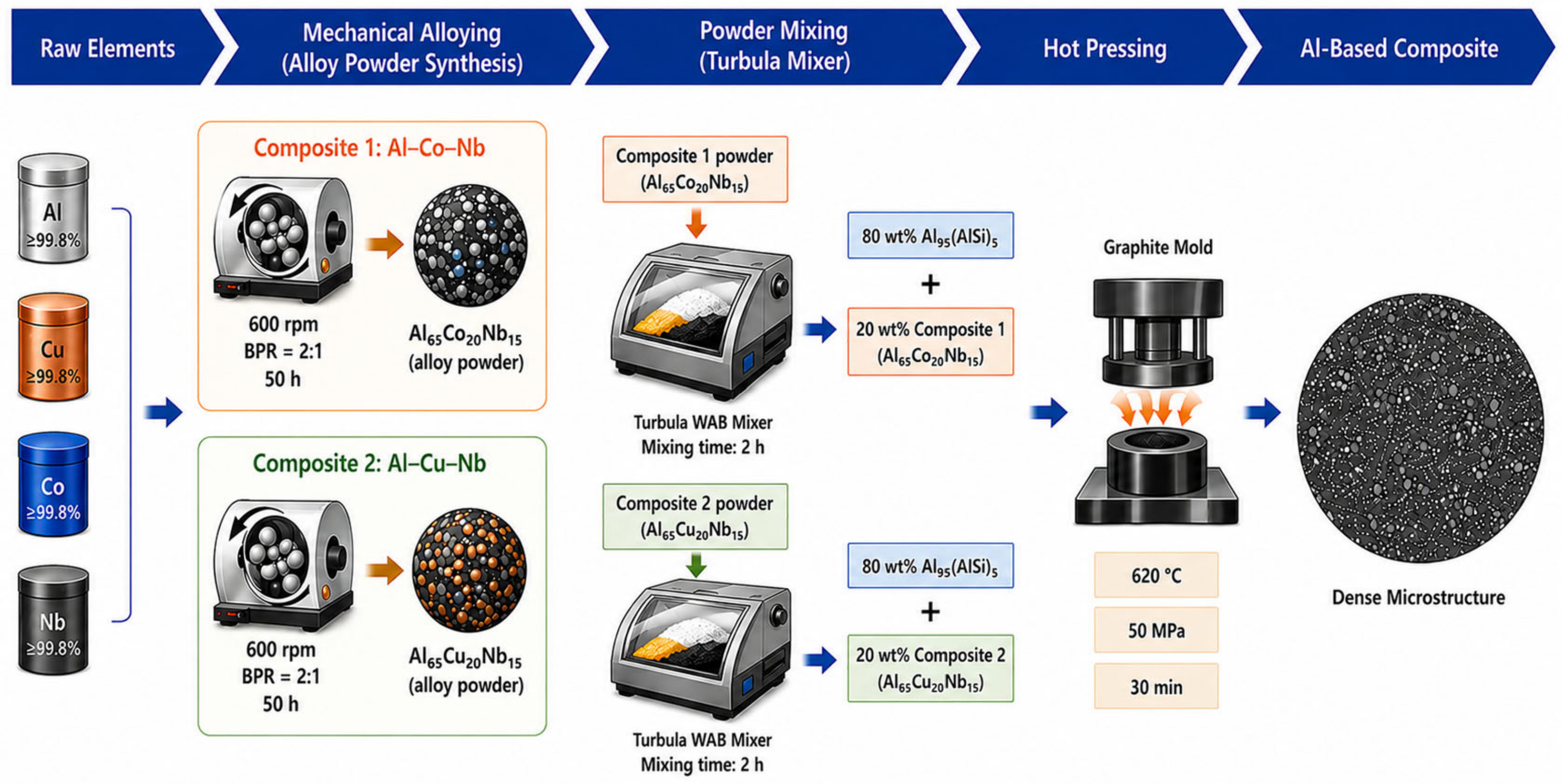
For many years, researchers have worked to produce a single material with variety of desired physical and mechanical properties. This is not possible with conventional monolithic materials, but it can be attained through the design of composite systems. In this study, bulk aluminum-based composites were fabricated to enhance the mechanical performance of the matrix material. The reinforcement used consisted of Al65Co20Nb15 and Al65Cu20Nb15 powders milled for 50 h. The matrix material consisted of a commercial pre-alloyed aluminum powder supplied by “Poudres Hermillon (Maurienne, France)” (Poudres Hermillon, Hermillon, Maurienne, France), with nominal composition of 95 wt% Al and 5 wt% AlSi. The composite formulation was composed of 80 wt% matrix powder and 20 wt% reinforcement powder (Al65Cu20Nb15 or Al65Co20Nb15 milled for 50 h). The reinforcement and matrix powders were mixed for 2 h using a Turbula WAB mixer (Willy A. Bachofen AG, Muttenz, Switzerland) to ensure homogeneous dispersion. The blended powders were subsequently consolidated using a hot-pressing furnace in a cylindrical graphite mold (6 mm diameter, 3 mm thickness) at 620 °C under a uniaxial pressure of 50 MPa for 30 min. The basic diagram of aluminum matrix composites reinforced with mechanically alloyed powders via HC technique is given in Figure 1.

2.2. Material Characterizations

The structural evolution and phase composition of the reinforcement powders, before and after milling, were analyzed by X-ray diffraction (XRD) using a X’Pert PRO MPD diffractometer (PANalytical B.V., Almelo, The Netherlands) configured in Bragg–Brentano θ–θ geometry, equipped with a secondary monochromator and an X’Celerator multi-strip detector. Measurements were carried out over an angular range of 2θ = 8–80°, with a step size of 0.02°. The obtained diffraction patterns were refined using DIFFRAC.EVA software (version 4.3, Bruker AXS GmbH, Karlsruhe, Germany) for phase identification. The morphology and particle size distribution of the starting powders and consolidated materials were characterized by scanning electron microscopy (SEM) in secondary electron mode at an accelerating voltage of 15 kV using a VEGA scanning electron microscope (TESCAN ORSAY Holding, Brno, Czech Republic) and by laser granulometry using a Mastersizer 2000 particle size analyzer (Malvern Instruments Ltd., Malvern, Worcestershire, UK). The relative density of the consolidated composites was determined using Archimedes’ principle, while the Vickers microhardness (HV) was measured with a Wilson Hardness-Vickers tester (Wilson Hardness, Norwood, MA, USA). The thermal stability of the milled powders was assessed using a PerkinElmer DSC 8000 instrument (PerkinElmer Inc., Waltham, MA, USA) with a differential scanning calorimetry (DSC) setup, employing a heating rate of 20 °C/min under an inert atmosphere.

3. Results

3.1. Morphological Study

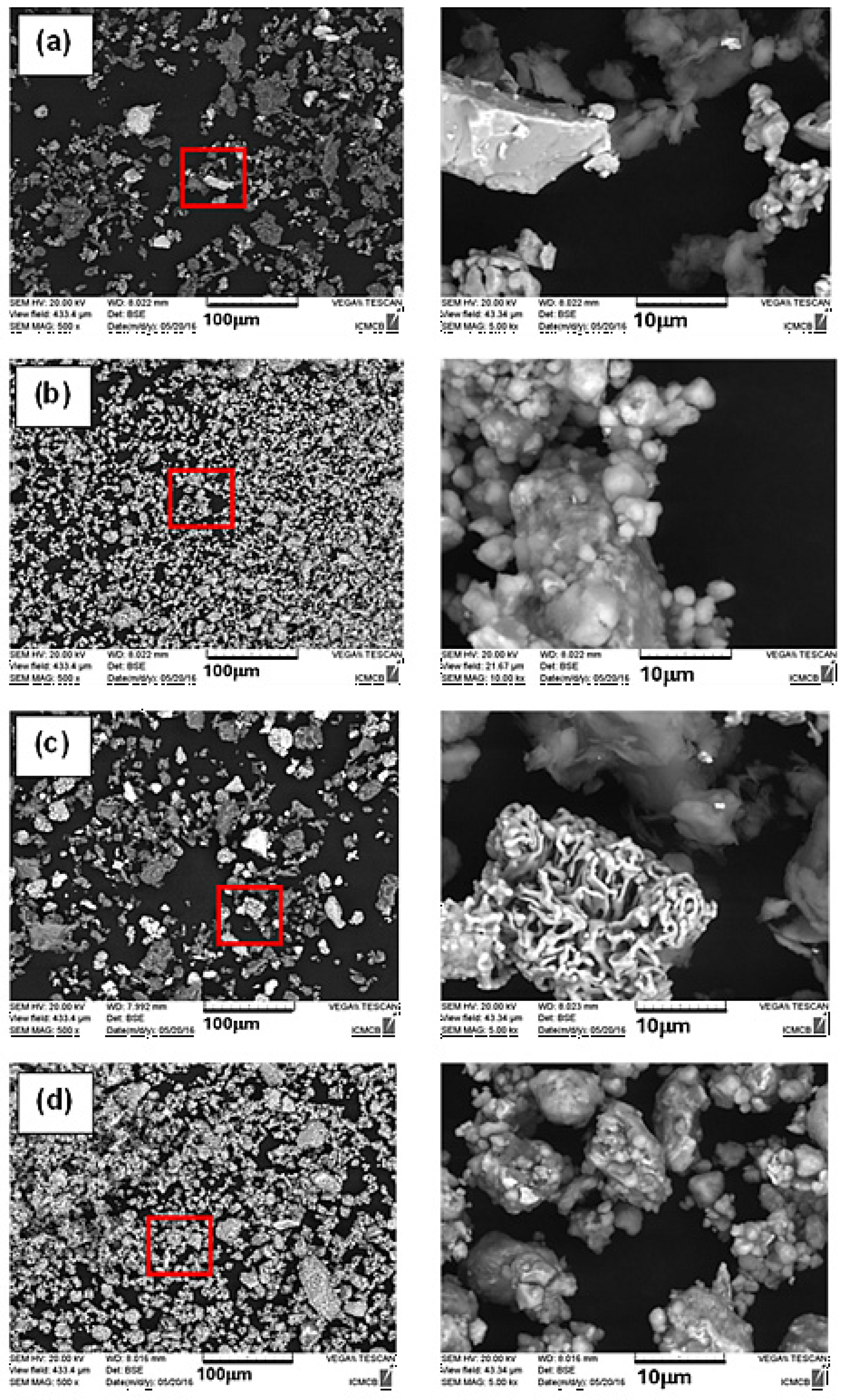
The SEM micrographs of the precursor Al, Cu, Co and Nb powders are shown in Figure 2. One can observe different morphological properties, which are similar to laser granulometric results. The Al powder represents fine particles with a non-structured and slightly flaky morphology due to their smaller typical particle size. The Cu powder exhibits irregular and porous agglomerated particles with rough surfaces and interconnected features, indicating a broad particle size distribution and a strong tendency toward clustering. The Co powder, on the other hand, is coarse (angular grained with well-defined edges and rough surfaces), on par with its grained distribution. The particles of Nb have a moderately elongated shape and show slight agglomeration behavior characteristic of refractory metals with high surface energy.
The high correlation between the SEM images and the particle size data substantiates the quality of the granulometric analysis. These morphological differences are anticipated to affect the powders’ mechanical behavior during high-energy ball milling, whereas fine Al powder encourages cold welding and diffusion, the angular geometry of Co promotes mechanical interlocking, and the elongated form of Nb results in uniform dispersion within the matrix. In contrast, the porous and agglomerated morphology of Cu particles may facilitate fragmentation during milling and enhance the packing density of the powder mixture.
When combined, these complementary traits contribute to a solid basis for obtaining homogeneous microstructural evolution and efficient consolidation from the synthesized composites. Extending the granulometric and morpho-metrological properties of the specific precursor powder-forms, from whose shape and size the formation of particle morphology in the synthesized reinforcement Al65Cu20Nb15 and Al65Co20Nb15, and mixtures following mechanical alloying will be reported next.
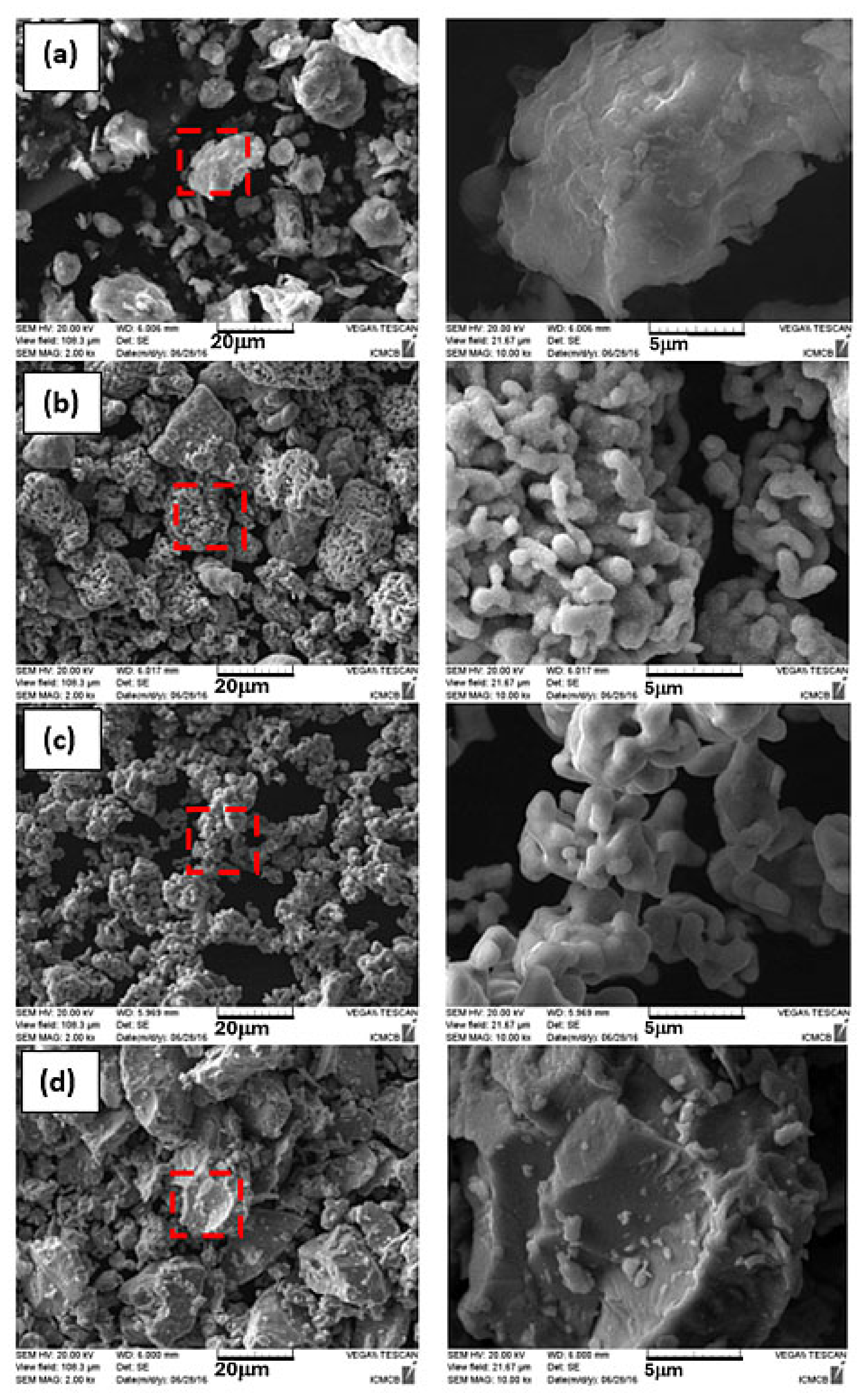
Figure 3 shows the morphological evolution of the reinforcement Al65Cu20Nb15 and Al65Co20Nb15 powders obtained before and after milling for 50 h. Before milling, the particles are nearly equiaxed in shape with an average size of approximately 20 ± 5 μm (Figure 3a,c). Small and unevenly formed agglomerates with an average size of 10 ± 2 μm after 50 h of milling (Figure 3b,d) show a heterogeneous microstructure due to particles being welded together, reflecting the continuous interplay of mechanical alloying [20,40]. With a variety of sizes (both large and small) showing up, the smaller sizes tend to weld together as the larger sizes fracture under steady milling conditions [41,42].
The contrast differences in SEM micrographs in the unmilled Al–Co–Nb powder indicate the elemental distribution: the brighter areas correspond to Nb and the darker areas to Al. Similarly, the unmilled Al–Cu–Nb powder exhibits heterogenous particle morphology with distinguishable contrast variations, where the bright regions are associated with Nb-rich zones while the darker matrix corresponds mainly to Al- and Cu constituents. Following the milling process up to 50 h, the particle size decreases slightly, and the microstructure becomes more homogeneous. For both alloy systems, prolonged milling promotes particle refinement, repeated cold welding, and fracture mechanisms, leading to the formation of more uniformly distributed agglomerates and enhanced compositional homogeneity [42]. The milled Al–Cu–Nb powder additionally reveals a cauliflower-like clustered morphology, characteristic of severe plastic deformation and intensive mechanical alloying during high-energy milling [40,43]. This refinement and improved uniformity are expected to enhance interfacial bonding and contribute to the mechanical strengthening of the consolidated composites [44]. Moreover, the improved dispersion of Nb-containing phases after milling is anticipated to favor load transfer efficiency and microstructural stability during subsequent consolidation processes [41].
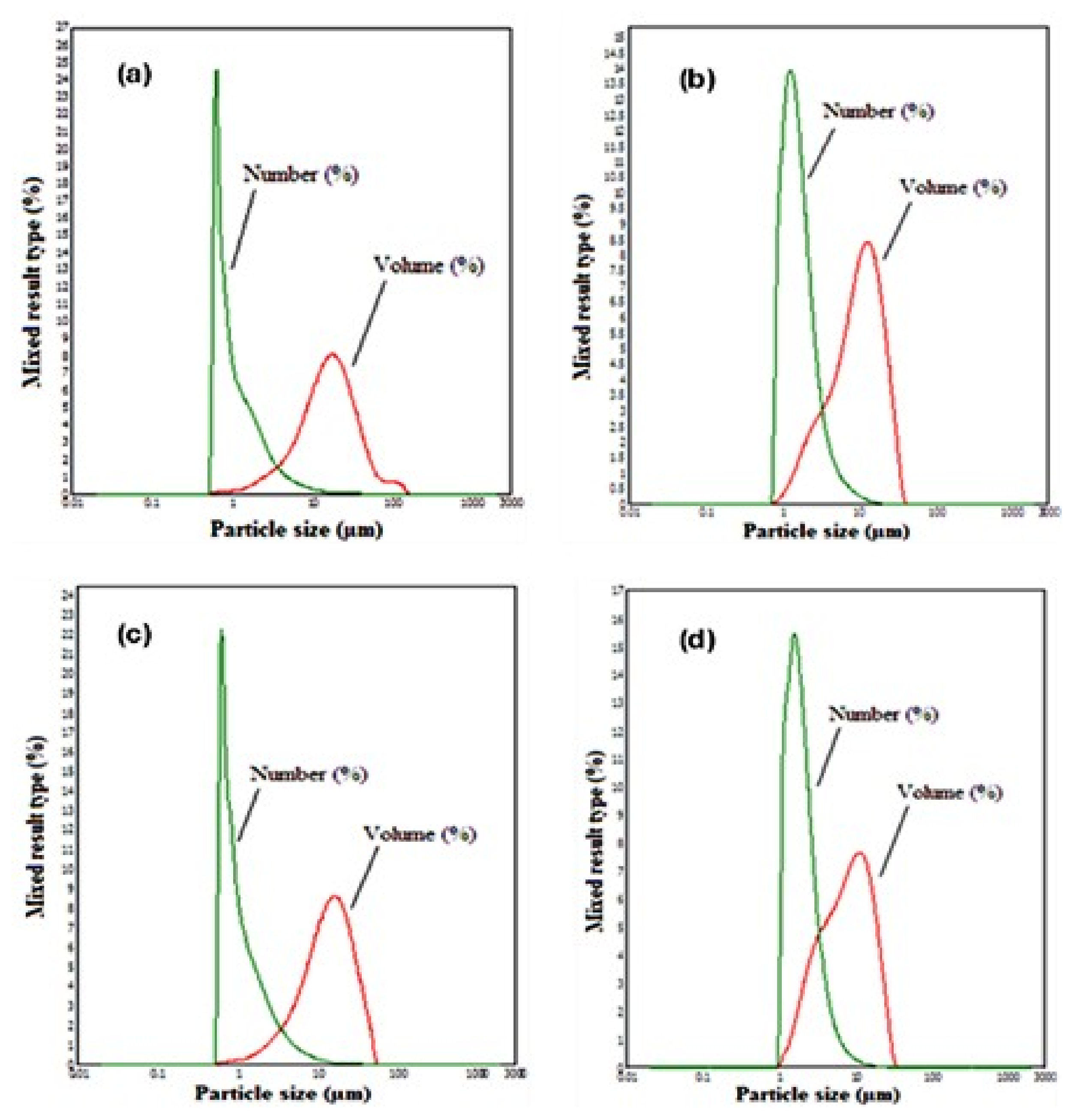
Figure 4 and the corresponding granulometric data summarized in Table 1 illustrate the effect of mechanical milling on the particle size distribution of the Al65Cu20Nb15 and Al65Co20Nb15 powders.
The particle size distributions are expressed in terms of volume (%) and number (%) using the characteristic diameters d0.1, d0.5, and d0.9, corresponding to the particle diameters below which 10%, 50%, and 90% of the particles are distributed, respectively.
For Al65Cu20Nb15, mechanical milling for 50 h resulted in a clear reduction in particle size and a narrower particle size distribution compared with unmilled powder, demonstrating the efficiency of the milling process in refining the particles and improving powder homogeneity. Likewise, the Al65Co20Nb15 alloy exhibited a significant decrease in particle size after milling, accompanied by more uniform distribution, indicating effective fragmentation of coarse particles during mechanical alloying. The number-based and volume-based distributions confirm that the milling process promotes particle refinement through repeated fracturing and cold-welding mechanisms. Such reduction in particle size and improvement in distribution uniformity are expected to enhance powder packing density, interparticle contact, diffusion kinetics, and overall sintering behavior. Consequently, the mechanically milled powders are anticipated to exhibit improved microstructural homogeneity and enhanced mechanical performance after consolidation. Based on this granulometric characterization. The next section focuses on the evolution of crystal structure and phase transformations induced by mechanical alloying.

3.2. XRD Analysis

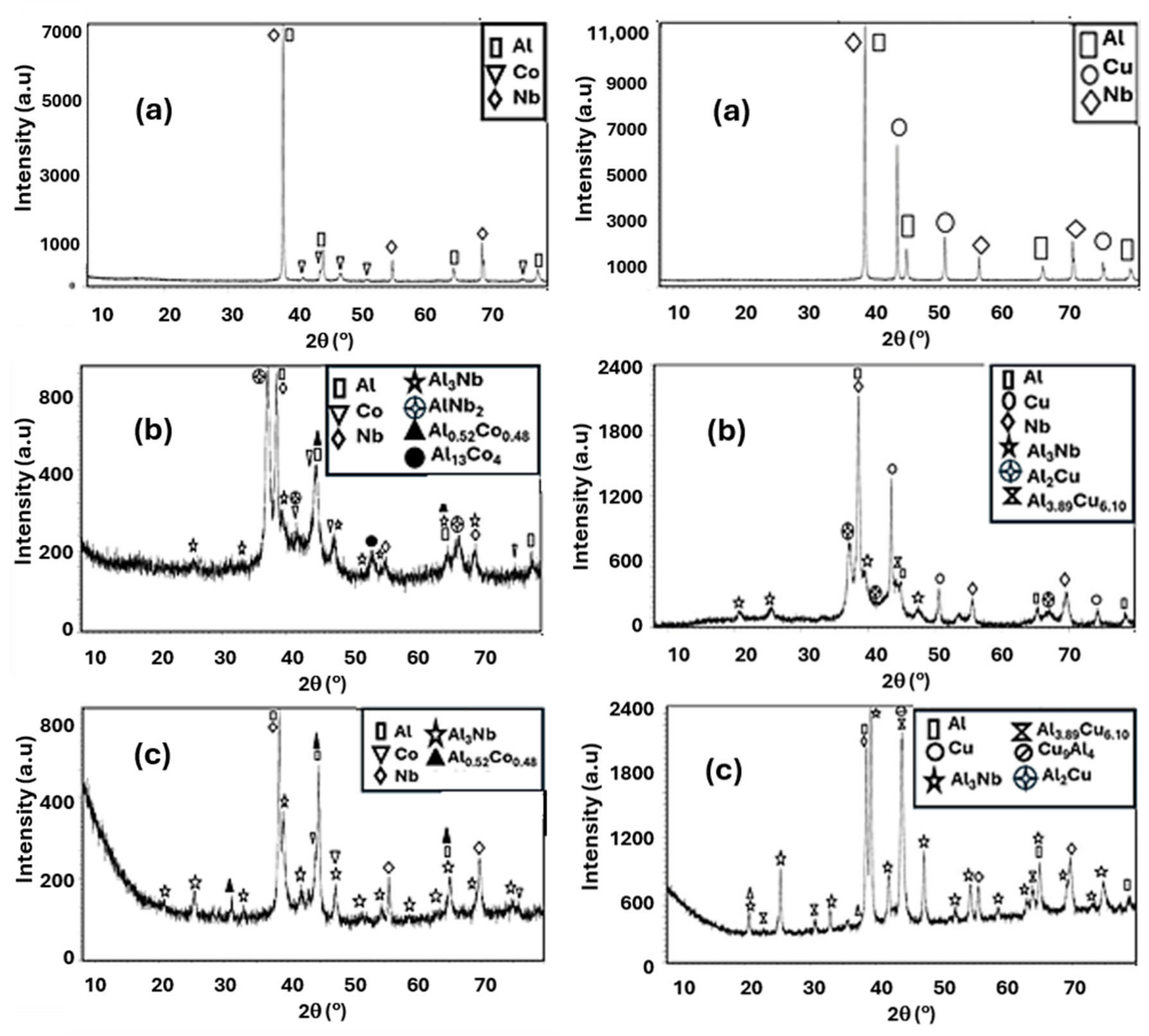
The structural evolution of the reinforcement powders during mechanical alloying and subsequent thermal treatment was investigated by X-ray diffraction analysis, as presented in Figure 5 for Al65Co20Nb15 (left side) and Al65Cu20Nb15 (right side) systems. The obtained diffraction patterns provide clear evidence of the progressive transformation from the initial elemental mixture toward nanostructured intermetallic phases induced by high-energy milling and stabilized after heat treatment at 620 °C. Prior to milling (Figure 5a) the diffraction patterns of both powder mixtures exhibit only the sharp and intense reflections corresponding to the starting elemental constituents, confirming the absence of any solid-state reaction before mechanical processing. For the Al65Co20Nb15 system, the detected peaks are indexed to FCC-Al, FCC-Co, and BCC-Nb phases, whereas the Al65Cu20Nb15 mixture contains FCC-Al, FCC-Cu, and BCC-Nb. The high intensity and narrow width of the peaks indicate the highly crystalline nature and relatively large crystallite size of the initial powders. After 50 h of milling (Figure 5b), substantial changes occur in the diffraction profiles of both alloy systems. The characteristic reflections of the elemental powder become significantly broadened and less intense, revealing the strong effect of repeated cold welding, fracturing and severe plastic deformation during mechanical alloying. Such peak broadening is associated with the refinement of crystallite size to the nanometric scale, the accumulation of lattice defects, and the increase in internal strain. Simultaneously, new diffraction peaks corresponding to intermetallic compounds emerge, confirming the occurrence of diffusion-assisted solid-state reactions between the constituent’s elements. For the Al65Co20Nb15 alloy, the formation of ε-Al3Nb, σ-AlNb2, and Al13Co4 phases is clearly observed after milling. The coexistence of these phases indicates that Nb exhibits strong chemical affinity with Al, leading to the preferential formation of Nb-rich aluminides, while Co participates in the formation of Al13Co4 intermetallic compound. The pronounced peak broadening of these phases confirms their nanocrystalline character and the presence of considerable lattice distortion induced by the milling process. In addition, the diffuse background observed in the diffraction patterns suggests the development of a partially amorphous structure resulting in the high-energy impacts during milling. A similar structural evolution is observed for the Al65Cu20Nb15 powder mixture. After milling, new reflections associated with Al3Nb, Al2Cu, and Al3.89Cu6.10 phases, indicating that the milling process effectively promotes interdiffusion and reaction between Al, Cu and Nb elements. Compared with the Co-containing system, the Cu-containing alloy exhibits a stronger tendency toward the formation of Al–Cu intermetallic compounds, which is attributed to the relatively faster diffusivity of Cu in the Al matrix.
The broad diffraction peaks and elevated background intensity again reveal the formation of highly strained nanocrystalline domains accompanied by partial amorphization. Following heat treatment at 620 °C (Figure 5c), the diffraction peaks become sharper and more intense for both alloy systems, indicating structural relaxation, recovery, and improved crystallinity of the phases formed during milling. The heat treatment promotes atomic rearrangement and the stabilization of the metastable phases generated during mechanical alloying. In the Al65Co20Nb15 alloy, the intermetallic phases become more distinct and better crystallized, while the residual elemental peaks decrease in intensity, suggesting further progression of alloying reactions during heating. Likewise, in the Al65Cu20Nb15 system, the Al-based intermetallic compounds become more stable and well defined after thermal treatment, accompanied by improved phase crystallinity and reduced lattice strains.
The Williamson–Hall (W-H) method was employed to evaluate the average crystalline size and the lattice strain generated in the powder particles because of crystal defects, internal stresses, and lattice distortions developed during mechanical alloying processes in the nanocomposites. The Williamson–Hall relationship (1) is expressed as follows [45]:
β h k l   c o s   θ =     K λ D + 4 ε   s i n   θ
where β corresponds to the full width at half maximum (FWHM) of the diffraction peak, θ is the Bragg diffraction angle, λ represents the X-ray wavelength (1.540 Å for CuKα), and K is the crystallite shape factor taken as 0.9. D denotes the average crystalline size, whereas ε represents the lattice strain associated with structural imperfections and microdeformation within the crystal lattice. Based on this analysis, the average crystallite sizes of the prepared Al–Cu–Nb and Al–Co–Nb reinforcement powders were estimated to be 18.5 nm and 15.23 nm, respectively, while the corresponding lattice strains were calculated as 0.78% and 0.86%. These results indicate that Al–Co–Nb systems exhibit a finer crystallite structure accompanied by higher lattice distortion, suggesting a more pronounced effect of severe plastic deformation and defect accumulation during milling [46,47,48]. The observed crystallite refinement and induced lattice strain are expected to enhance the strengthening efficiency and interfacial stability of the developed nanocomposites. Furthermore, the average crystallite sizes and lattice strains of the heat-treated Al–Cu–Nb and Al–Co–Nb reinforcement powders at 620 °C were also evaluated. The obtained results revealed that the crystallite sizes increased to 35.5 and 38.2 nm for Al–Cu–Nb and Al–Co–Nb systems, respectively. The corresponding lattice strains decreased significantly to 0.21% and 0.12%. These changes clearly indicate the occurrence of recovery and partial recrystallization phenomena during thermal treatment, leading to grain growth and relaxation of the internal lattice distortions. The reduction in lattice strain after heat treatment suggests a decrease in defect density and residual stresses within the crystal structure, whereas the increase in crystallite size reflects enhanced atomic diffusion and structural rearrangement at elevated temperature. Despite this coarsening effect, the retained nanocrystalline nature of the powders remains beneficial for achieving improved densification behavior and balanced mechanical properties in the consolidated composites. On the other hand, microstructural evolution is generally accompanied by an intense accumulation of crystalline defects, particularly dislocations and interfacial imperfections, resulting from repeated cold welding, fracturing and severe plastic deformation of the powder particles. To further evaluate the defect concentration within the milled powders, the dislocation density ( ρ ) was estimated from the obtained microstructural parameters using the following relationship [49]:
ρ ~ 2 3 × ε b × D
where D represents the crystallite size, ε denotes the lattice strain, and b is the Burger’s vector. For aluminum and most Al-based alloys, the Burgers vector is commonly taken as b~0.286 nm. Based on this approach, the dislocation density of the mechanically alloyed powders was estimated to be on the order of ~1014–1015 m−2, demonstrating the formation of an extremely defect-rich nanostructure. The high density of dislocations generated during milling is expected to play a crucial role in enhancing strain hardening, restricting dislocation mobility, and improving the mechanical strengthening of the consolidated composites. Moreover, the large number of interfacial defects and stored energy may promote diffusion-assisted sintering and contribute to improved densification behavior during subsequent thermal consolidation processes.

3.3. DSC Analysis

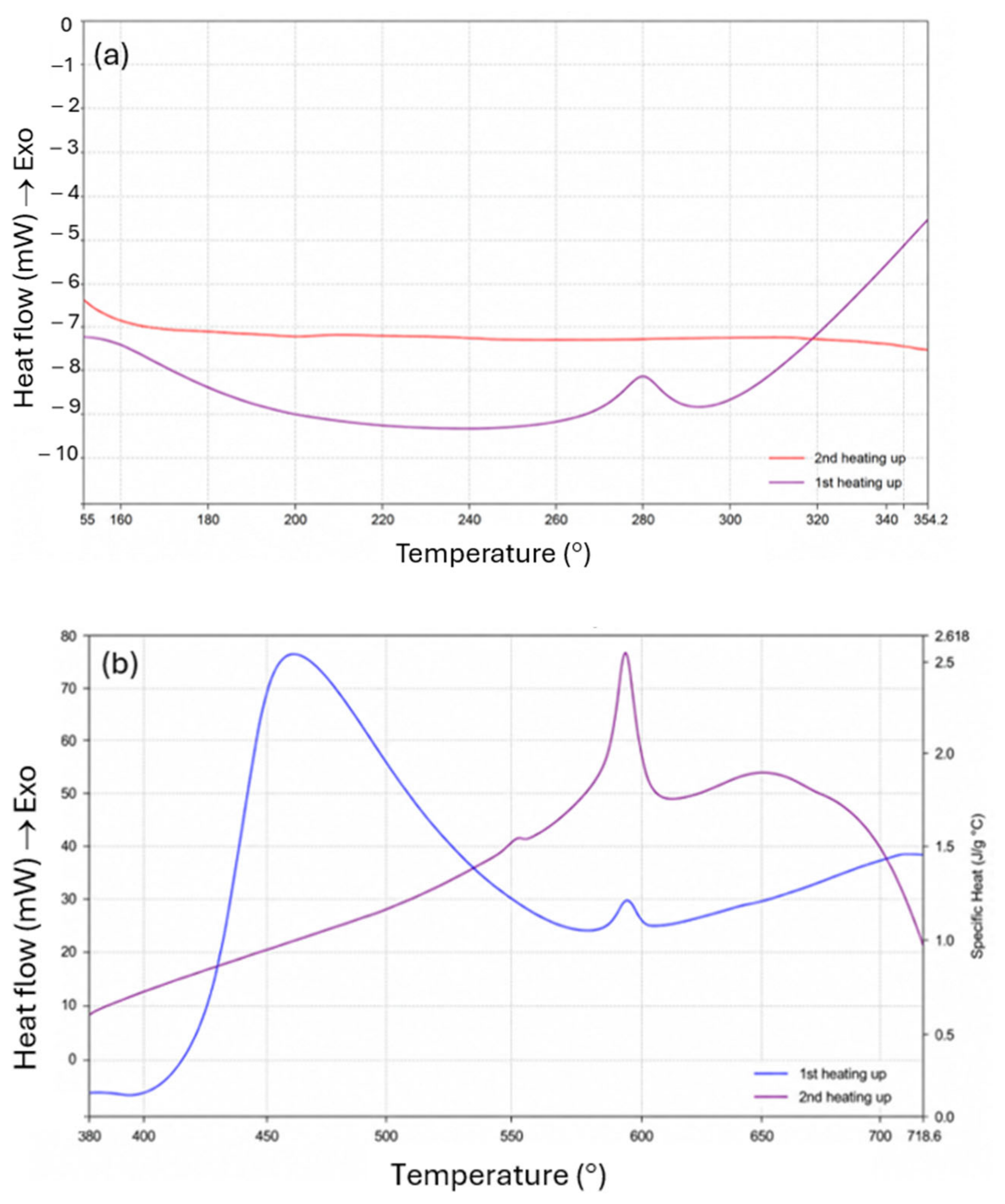
The thermal behavior of the Al–Cu–Nb and Al–Co–Nb alloys milled for 50 h was analyzed over the temperature range up to 720 °C using a controlled heating/cooling program (20 °C/min) and two successive heating cycles to ensure thermal stabilization of mechanically alloyed powders and to distinguish reversible and irreversible transformation processes associated with the milling-induced metastable state. Such an approach is commonly used for mechanically alloyed systems to separate defect recovery and structural relaxation from stable phase transformation. For the Al–Cu–Nb alloy (Figure 6), during the first heating cycle, a distinct exothermic peak is observed in the range [260–300 °C] at T = 280 °C (ΔH = 3.027 J/g), which disappears upon the second heating. This indicates that the transformation is irreversible and is associated with structural relaxation phenomena such as defect recovery and metastable phase rearrangement induced by high-energy milling.
In the higher temperature range [350–720 °C], several exothermic events are detected during the first heating, including a broad transformation extending over [400–575 °C], which is also absent during the second cycle [20,39,50]. This confirms its metastable nature and its link to processing-induced structural instability. The remaining peaks at T = 552.27 °C, 593.17 °C and 650 °C persist after the second heating and may be related to sable eutectic and eutectoid transformations of the Al–Cu system [51,52,53].
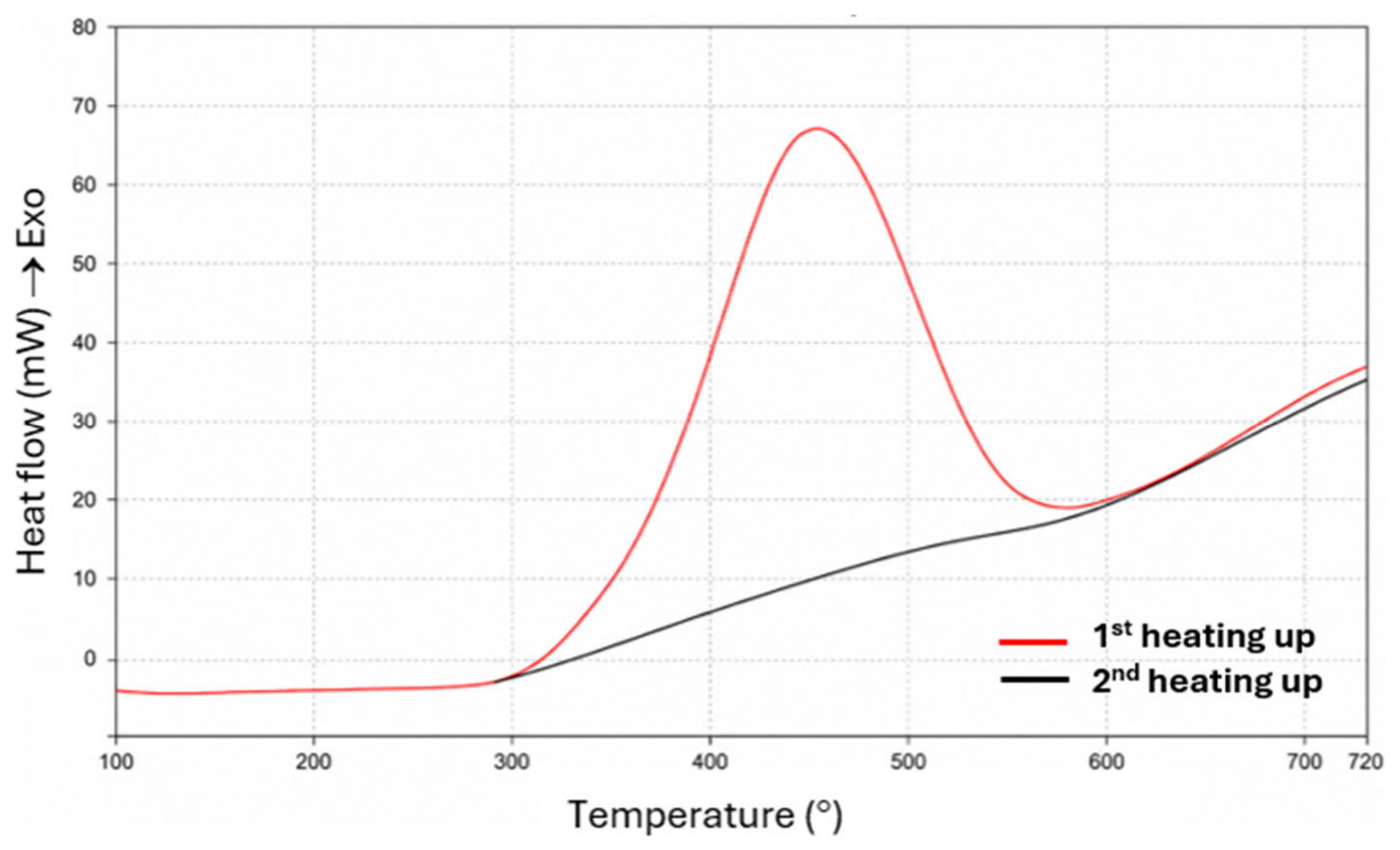
For the Al–Co–Nb alloy (Figure 7), no thermal events are detected up to 300 °C, indicating thermal stability in this range under applied heating conditions. In the interval [350–720 °C], a broad exothermic peak is observed at T = 454.95 °C (ΔH = 829.9927 J/g) that disappears upon reheating, confirming its irreversible nature and its association with recovery of milling-induced lattice defects, structural homogenization, and dissolution of metastable phases.

3.4. Bulk Aluminum-Based Composites

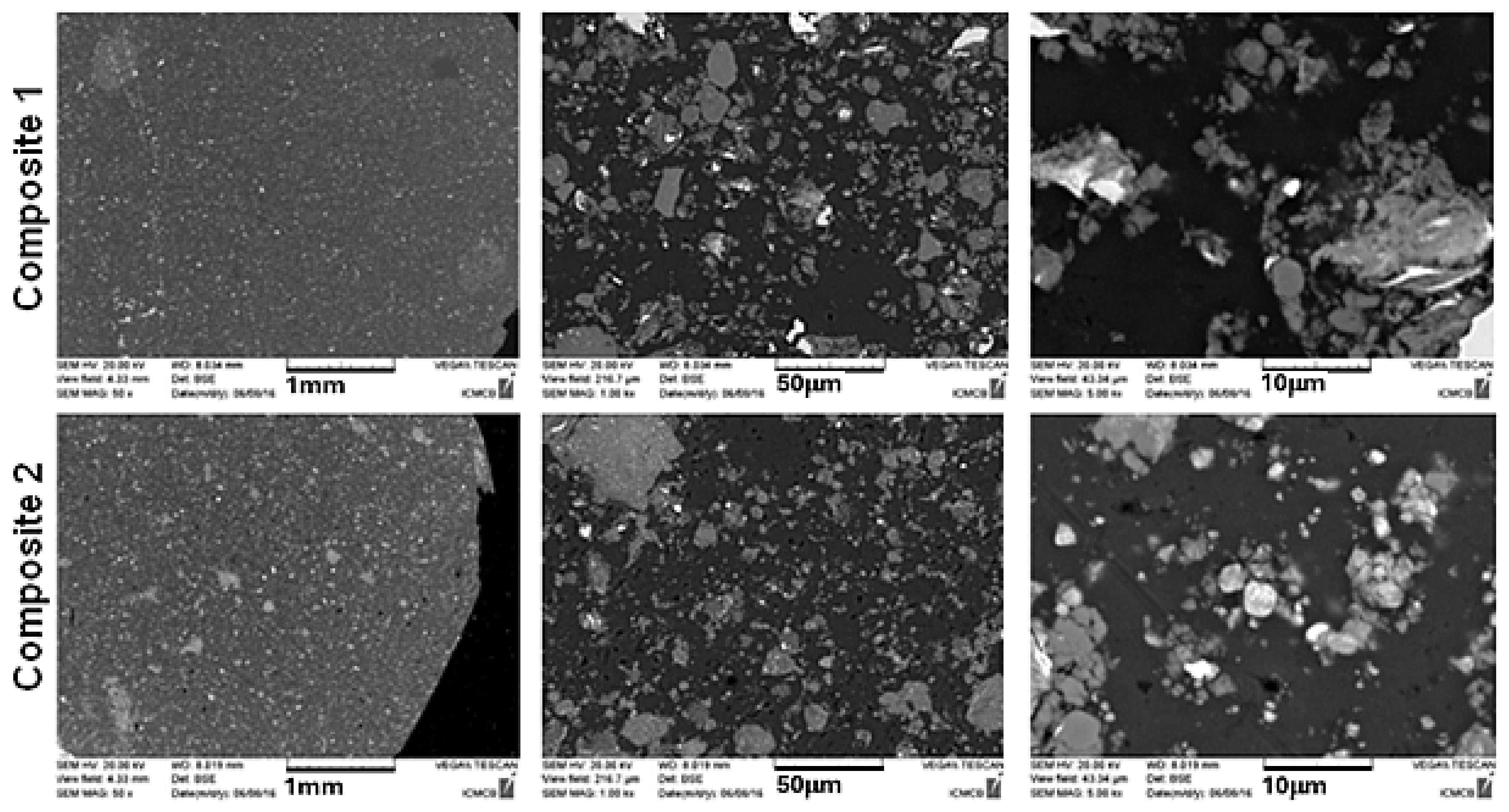
For the consolidation process, we choose a hot-pressing temperature of 620 °C based on DSC analysis of the Al–Cu–Nb and Al–Co–Nb alloys milled for 50 h. The DSC results indicate that irreversible defect recovery occurs at lower temperatures, whereas high-temperature transformations related to eutectic reactions and residual phase evolution appear near or above 630 °C. Therefore, 620 °C is sufficient thermal activation for diffusion and densification while maintaining solid-state consolidation conditions and promoting structural homogenization without excessive liquid-phase formation. In the present work, bulk composites were fabricated to improve the mechanical performance of an aluminum-based matrix using two reinforced powders previously milled for 50 h and fully characterized. For clarity, the designation used throughout this study is as follows: the matrix corresponds to Al95(AlSi)5, while composite 1 is composed of 80% Al95(AlSi)5 and 20%Al65Cu20Nb15 powder milled for 50 h, and composite 2 consists of 80% Al95(AlSi)5 and 20%Al65Co20Nb15 powder milled for 50 h. The composite powders were prepared by blending the matrix and reinforcement powders in a Turbula WAB mixer for 2 h. This conventional mixing technique is widely used for preparation of composite powders due to its effectiveness in ensuring a homogeneous distribution of the reinforcing phases within the matrix [54]. Figure 8 represents the SEM micrographs of the Hot-Consolidated composites at different magnifications, illustrating the influence of the reinforcement system on the densification behavior and microstructural evolution of the materials. Both composites exhibit relatively dense microstructures with good particle cohesion after Hot Consolidation, confirming the effectiveness of the HC process, in promoting rapid consolidation and enhanced interfacial bonding, similar to the SPS technique, due to the simultaneous application of pulsed electric current and uniaxial pressure [55,56]. At low magnification, the micrographs reveal a generally homogenous distribution of the reinforcement phases within the aluminum matrix, with limited evidence of large-scale agglomeration. In addition, the consolidated samples show low residual porosity, indicating that HC effectively promoted particle rearrangement, localized diffusion, and densification mechanisms [14,57]. At higher magnifications, more distinct microstructural features become visible for both composites. Composite 1 exhibits a more compact and interconnected microstructure with relatively larger bright reinforcement regions dispersed within the dark aluminum matrix, suggesting the formation of thermally stable intermetallic compounds and strong metallurgical bonding between the constituent phases [36]. These bright regions may be associated with Nb-rich and Cu-containing phases, which are known to contribute to enhanced hardness, wear resistance, and thermal stability in aluminum-based composites. In contrast, composite 2 displays a finer and more dispersed distribution of reinforcement particles through the matrix, which may be attributed to the enhanced diffusion kinetics induced by Co addition during sintering. This refined dispersion contributes to improved microstructural homogeneity and reduced local heterogeneity. Moreover, the absence of significant interfacial cracks or particle pull-out in both composites indicates good interfacial adhesion between the matrix and reinforcement phases. The observed microstructural refinement can be attributed to the combined effects of high-energy ball milling and Hot Consolidation, where related cold welding and fracturing during milling generated highly activated powder particles with increased defect density and reduced crystallite size [20,39]. Subsequently, HC promoted rapid neck formation and densification while limiting excessive grain growth [56]. The SEM observations demonstrate that both Al–Cu–Nb and Al–Co–Nb composites achieved dense and homogeneous microstructures after HC processing, although noticeable differences in particle morphology, reinforcement distribution, and compactness were observed depending on the alloying element employed.
The relative density of the new composites was evaluated using the Archimedes method, and the results obtained are summarized in Table 2 according to the following Equation (3):
ρ e x p = m d r y m d r y m i m m e r s e d
The relative density was calculated as the ratio of the experimental density to theoretical density, expressed as a percentage using Equation (4):
R e l a t i v e   D e n s i t y ( % ) = ρ e x p ρ t h e o × 100
The obtained values reveal that both composites achieved very high relative densities approaching full densification (Table 2), demonstrating the effectiveness of the HC in consolidating the mechanically alloyed powders [56,57]. Composite 1, composed of 80 wt% Al95(AlSi)5 and 20 wt% Al65Co20Nb15 powder milled for 50 h exhibited the highest densification level with a very low pore volume fraction of approximately 0.4%. This enhanced densification behavior can be attributed to the beneficial influence of Cu on diffusion kinetics during HC, which promotes rapid mass transport, particle rearrangement and interparticle Meck growth during consolidation [20]. Consequently, a more compact and homogenous microstructure was obtained. In contrast, composite 2, consisting of 80 wt% Al95(AlSi)5 and 20 wt% Al65Co20Nb15 powder milled for 50 h, exhibited a slightly lower densification level with a residual porosity of approximately 3.2%. The relatively higher porosity may be associated with the presence of a harder Co-containing phase, which can reduce particle deformability and locally limit diffusion-assisted densification during Hot Consolidation [36]. Nevertheless, the relative density remains very high, confirming the successful consolidation of the composite material.
Furthermore, the small pores observed in SEM micrographs (Figure 8) are not necessarily associated with insufficient sintering but may partially originate from polishing-induced pull-out effects and surface preparation artifacts during metallographic treatment. The low residual porosity values obtained for both composites confirm that HC is a highly efficient consolidation technique capable of producing near fully dense aluminum-based composites with refined microstructures and strong interfacial bonding. Since ideal sintering theoretically corresponds to zero porosity, the obtained results demonstrate that the selected HC parameters were highly suitable for achieving dense and mechanically reliable composite materials. The reinforcement particles are uniformly dispersed within the matrix and exhibit strong interfacial bonding with the aluminum matrix phase, which is a key factor contributing to the enhanced hardness and mechanical performance of the composite. Similar compactness and bonding quality have been reported by Salifu and Olubambi [47] for HEA-reinforced aluminum composites synthesized by spark plasma sintering and by Ammari et al. for air-milled pure aluminum and consolidated by SPS [48].
The hardness testing was carried out on polished specimen surfaces using the Vickers indentation. This method measures the resistance of the material to localized plastic deformation using a pyramidal diamond indenter. In the present work, several indentations were performed for each sample to improve the reliability of the measurements, and the average values were calculated from the two diagonals (D1 and D2) of the indentation imprint. The Vickers hardness (HV) can be determined using the following Equation (5):
H V = 0.189 P d 2
where P is the applied load (29.42 N), and d is the average value of the two measured indentation diagonals (D1 and D2) expressed in mm. The resulting hardness values for the Al95(AlSi)5 matrix and the two consolidated composites are summarized in Table 3. The results clearly demonstrate a significant improvement in hardness after the incorporation of the mechanically milled reinforcement powders into the aluminum matrix. The matrix alloy exhibited a relatively low hardness value of 34.14 HV, whereas composite 1 and 2 reached hardness values of 96.34 HV and 68.28 HV, respectively. This remarkable increase confirms the strengthening effect induced by the addition of 20 wt% of the Al–Cu–Nb and Al–Co–Nb milled powders. In particular, the hardness of composite 1 became nearly three times higher than the matrix, while composite 2 exhibited approximately double the hardness value. The observed hardness enhancement can be attributed to several strengthening mechanisms associated with high-energy mechanical milling and Hot Consolidation, as has been observed for SPS consolidation [20,39,49,54,55].
The significantly higher hardness of composite 1 compared with composite 2 confirms that the Cu-containing reinforcement is more effective in enhancing the mechanical properties of the aluminum matrix. This improvement can be attributed to the combined effects of grain refinement, improved diffusion kinetics during Hot Consolidation, and the formation of finely dispersed strengthening phases, which contribute to a more compact and mechanically resistant microstructure.
During milling, repeated cold welding and fracturing events produced refined microstructures with reduced crystallite size and high defect density, which contribute to strengthening through grain refinement and dislocation hardening. In addition, the homogenous dispersion of hard reinforcement phases within the aluminum matrix restricts dislocation motion and improves resistance to localized deformation. The higher hardness obtained for composite 1 may also be related to the formation of finer and more uniformly distributed strengthening phases promoted by the presence of Cu, which enhances diffusion and interfacial bonding during Hot Consolidation. These findings are in good agreement with previous studies by Gajendra and Khan [56], who reported enhanced hardness in aluminum composites reinforced with mechanically alloyed powders, as well as by Ananiadis et al. [57], who showed a systematic hardness increase with increasing reinforcement content.
To evaluate the reproducibility and dispersion of the hardness measurements, several Vickers indentation tests were performed on each material. The average hardness values and the corresponding variance are summarized in Table 4. From this data the standard deviation (σ) was calculated as the square root of the variance according to the following relation (6):
σ = v
where the variance v is determined using the relation (7):
v = i = 1 p ( d i M ) 2
In these equations, di represents the different measured hardness values, M is the average hardness value, and p corresponds to the number of measurements performed.
The obtained results show that the matrix alloy exhibits the lowest standard deviation, indicating a highly homogenous microstructure and a more uniform distribution of particle size and mechanical response throughout the material. In contrast, both composites present higher dispersion in hardness values due to the introduction of reinforcement particles and the resulting microstructural heterogeneity. Among the two composites, composite 2 exhibits the highest variance and standard deviation, revealing a greater heterogeneity in particle distribution and local mechanical behavior. This behavior may be associated with the wider variation in reinforcement particle size, as well as a less uniform dispersion of the Al–Co–Nb reinforcing phases within the aluminum matrix. On the other hand, composite 1 shows a lower standard deviation and a more homogenous hardness distribution, indicating a better dispersion of the reinforcement particles and stronger interfacial cohesion between the matrix and the Al–Cu–Nb reinforcing phase.
Table 5 compares the relative density and hardness values of the elaborated composites in this work with previously reported Al matrix composites reinforced with high-entropy alloys (HEAs) and processed by mechanical alloying followed by SPS (MA + SPS).
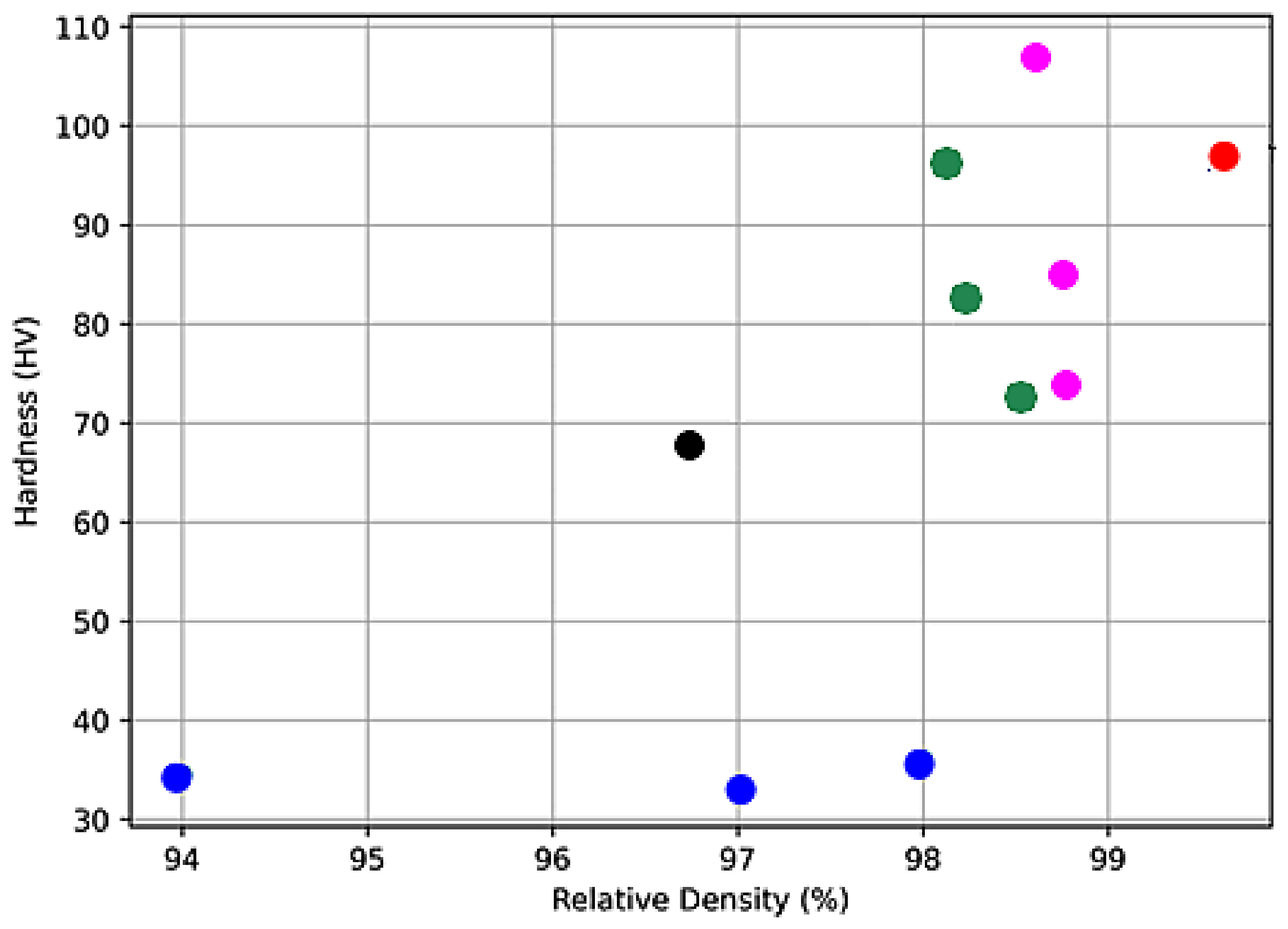
Figure 9 presents the relationship between relative density and hardness for the present composites and comparable aluminum-based composites reported in the literature and given in Table 5. The plot provides a direct visual comparison of the densification and mechanical performance achieved through different processing routes and reinforcement composition. As illustrated in Figure 9, the developed composites achieved high densification levels, with composite 1 exhibiting the highest relative density (99.6%) among the investigated materials, indicating efficient consolidation during the hot-pressing process.
The hardness results also demonstrate a significant improvement in the mechanical performance of the fabricated composites. Composite 1 exhibits a hardness of 96.34 HV, significantly higher than that reported for AA-1050 reinforced with high-entropy AlCrFeMnNi alloy particles (33–36 HV) [57]. Compared with the Al–Cr20Mn20Ni20Cu20Nb10Co10 composites described in ref. [46], composite 1 exhibits a comparable hardness to the Al–10 wt% HEA composite (96 HV) while maintaining a slightly higher relative density. Similarly, its hardness approaches that of the Al–10 wt% CuNbMnCrNiCo composite (107.41 HV) reported in ref. [37], confirming the effectiveness of the adopted fabrication route. Composite 2 exhibited lower hardness (68.28 HV) and relative density than composite 1, which could be related to differences in reinforcement composition, porosity level, and microstructural homogeneity. Nevertheless, its hardness remains significantly higher than that of the AA-1050-based HEA composites described in the literature [57]. The relative density–hardness correlation shown in Figure 9 further demonstrates that the superior performance of the present composites results from the combined effect of the processing route and compositional design. Mechanical alloying promotes grain refinement and defect accumulation, while hot pressing ensures effective densification and strong interfacial bonding [58]. In addition, the incorporation of Nb-containing reinforcement phases contributes to strengthening through the formation of hard phases and improved load transfer. Therefore, the enhanced mechanical performance cannot be attributed solely to either the fabrication process or the reinforcement composition, but rather to their synergistic interaction.
The remarkable performance of composites can be attributed to combined effects of microstructural refinement generated by high-energy mechanical alloying, efficient densification during hot pressing, and the homogeneous distribution of hard reinforcing phases. Compared with similar aluminum-based composites reported in the literature, the combination of processing conditions and reinforcement chemistry contributes to the enhanced mechanical performance observed in the present work.
It should be noted that the present investigation was limited to a reinforcement content of 20 wt% to enable a direct comparison between the Al–Cu–Nb and Al–Co–Nb mechanically alloyed reinforcement systems. Although the obtained results provide valuable insights into the resulting microstructural evolution and hardness behavior, additional investigations involving different reinforcement fractions and suitable control specimens are required to establish composition-dependent trends and quantitatively distinguish the contributions of the various strengthening mechanisms.

4. Conclusions

In this work, nanostructured Al95(AlSi)5 matrix composites, reinforced with Al65Co20Nb15 and Al65Cu20Nb15 powders obtained by mechanical alloying, were successfully fabricated and characterized. High-energy ball milling for 50 h yielded fine and homogeneous reinforcing particles, promoting better powder compaction, reduced porosity, and refined microstructures after Hot Consolidation. XRD analyses confirmed that the mechanical alloying induced solid-state reactions between the constituent elements, leading to the formation of stable intermetallic phases. The Al65Co20Nb15 system exhibited the formation of Al3Nb, AlNb2, and Al13Co4 phases, while the Al65Cu20Nb15 reinforcement promoted the formation of Al2Cu and Nb intermetallic compounds. Mechanical characterization revealed significant improvements in densification and hardness for both composites. The consolidated composites achieved relative densities of 99.6% and 96.77% for composites 1 and 2, respectively. Furthermore, Vickers’ hardness increased significantly, from 34.14 HV for the Al95(AlSi)5 matrix to 96.34 HV and 68.28 HV for composites 1 and 2, respectively, representing hardness improvements of approximately 182% and 100%, respectively. These improvements are primarily attributed to grain refinement, dispersion strengthening, reduced porosity, and strong interfacial adhesion between the matrix and the reinforcing phases.
The obtained results demonstrate that combining a high-energy mechanical alloy with Hot Consolidation is an efficient manufacturing method for dense, nanostructured aluminum matrix composites with improved mechanical performance. The developed Al–Co–Nb and Al–Cu–Nb reinforced composites show strong potential for advanced lightweight structural applications, particularly in the automotive and aerospace sectors.

Author Contributions

Conceptualization, H.R., S.G., M.K. and M.C.; methodology, H.R., M.S. and M.C.; software, H.R., M.S., S.G. and M.K.; validation, M.S., M.K., A.M., M.A.-M. and M.C.; formal analysis, H.R., S.G. and M.C.; data curation, H.R., M.S., M.K., M.A.-M. and Y.M.M. writing—original draft preparation, H.R., S.G., A.M., M.A.-M., Y.M.M. and M.K.; writing—review and editing, M.S., M.K., A.M. and M.C.; visualization, S.G., M.K., M.A.-M. and M.C.; supervision, M.C. All authors have read and agreed to the published version of the manuscript.

Funding

The authors declare that no external funding was received for this work.

Data Availability Statement

The raw data supporting the conclusions of this article will be made available by the authors upon request.

Conflicts of Interest

The authors declare no conflicts of interest.

References

  1. Tanriverdiyev, Y. Classification and properties of composites based on matrix material. World J. Adv. Res. Rev. 2024, 24, 2278–2282. [Google Scholar] [CrossRef]
  2. Chen, G.-Q.; Xiu, Z.-Y.; Yang, W.-S.; Jiang, L.-T.; Wu, G.-H. Effect of thermal-cooling cycle treatment on thermal expansion behavior of particulate reinforced aluminum matrix composites. Trans. Nonferrous Met. Soc. China 2010, 20, 2143–2147. [Google Scholar] [CrossRef]
  3. Mudashiru, L.; Adeodu, A.; Awodoyin, A.; Bello, A.; Oloyede, O.; Aiyedun, P. Evaluation of impact and hardness properties of Al6063-AgNPs composites produced by stir cast technique. IOP Conf. Ser. Mater. Sci. Eng. 2020, 805, 012002. [Google Scholar]
  4. Jiang, H.; Xu, Z.; Xiu, Z.; Jiang, L.; Wu, G. Effects of pulse conditions on microstructure and mechanical properties of Si3N4/6061Al composites prepared by spark plasma sintering. J. Alloys Compd. 2018, 763, 822–834. [Google Scholar]
  5. Kar, A.; Sharma, A.; Kumar, S. A critical review on recent advancements in aluminium-based metal matrix composites. Crystals 2024, 14, 412. [Google Scholar] [CrossRef]
  6. Ren, G.; Zheng, Y.; Zhao, Z.; Xiong, R.; Zhao, C.; Yu, Z.; Li, L. Preparation, microstructure, and mechanical properties of Al matrix composites reinforced with high-entropy alloys: A review. Adv. Eng. Mater. 2024, 26, 2302256. [Google Scholar]
  7. Kareem, S.A.; Anaele, J.U.; Aikulola, E.O.; Adewole, T.A.; Bodunrin, M.O.; Alaneme, K.K. Design and selection of metal matrix composites reinforced with high entropy alloys—Functionality appraisal and applicability in service: A critical review. J. Alloys Metall. Syst. 2024, 5, 100057. [Google Scholar]
  8. Kareem, S.A.; Anaele, J.U.; Aikulola, E.O.; Anamu, U.S. Aluminium matrix composites reinforced with high entropy alloys: A comprehensive review on interfacial reactions, mechanical, corrosion, and tribological characteristics. J. Mater. Res. Technol. 2024, 30, 8161–8186. [Google Scholar] [CrossRef]
  9. Ananiadis, E.A.; Argyris, K.T.; Matikas, T.E.; Sfikas, A.K.; Karantzalis, A.E. Microstructure and corrosion performance of aluminium matrix composites reinforced with refractory high-entropy alloy particulates. Appl. Sci. 2021, 11, 1300. [Google Scholar] [CrossRef]
  10. Bathias, C. Matériaux Composites; Dunod: Paris, France, 2009. [Google Scholar]
  11. Bruski, R.S.; Hudson, L.G.; Skibo, M.D. Cast Composite Material Having a Matrix Containing a Stable Oxide-Forming Element. U.S. Patent 4943490A, 28 August 1990. [Google Scholar]
  12. Rawal, S. Metal-matrix composites for space applications. JOM 2001, 53, 14–17. [Google Scholar] [CrossRef]
  13. Prasad, S.V.; Asthana, R. Aluminum metal–matrix composites for automotive applications: Tribological considerations. Tribol. Lett. 2004, 17, 445–453. [Google Scholar] [CrossRef]
  14. Munir, Z.A.; Anselmi-Tamburini, U.; Ohyanagi, M. The effect of electric field and pressure on the synthesis and consolidation of materials: A review of the spark plasma sintering method. J. Mater. Sci. 2006, 41, 763–777. [Google Scholar] [CrossRef]
  15. Kai, X.; Huang, S.; Wu, L.; Tao, R.; Peng, Y.; Mao, Z.; Chen, F.; Li, G.; Chen, G.; Zhao, Y. High strength and high creep resistant ZrB2/Al nanocomposites fabricated by ultrasonic-chemical in-situ reaction. J. Mater. Sci. Technol. 2019, 35, 2107–2114. [Google Scholar]
  16. Rajan, H.B.M.; Ramabalan, S.; Dinaharan, I.; Vijay, S.J. Effect of TiB2 content and temperature on sliding wear behavior of AA7075/TiB2 in situ aluminum cast composites. Arch. Civ. Mech. Eng. 2014, 14, 72–79. [Google Scholar]
  17. Kumar, S.; Sarma, V.S.; Murty, B.S. High temperature wear behavior of Al–4Cu–TiB2 in situ composites. Wear 2010, 268, 1266–1274. [Google Scholar]
  18. Li, P.; Wu, Y.; Liu, X. Controlled synthesis of different morphologies of TiB2 microcrystals by aluminum melt reaction method. Mater. Res. Bull. 2013, 48, 2044–2048. [Google Scholar] [CrossRef]
  19. Ramesh, C.S.; Ahamed, A. Friction and wear behaviour of cast Al6063 based in situ metal matrix composites. Wear 2011, 271, 1928–1939. [Google Scholar]
  20. Suryanarayana, C. Mechanical alloying: A critical review. Mater. Res. Lett. 2022, 10, 619–647. [Google Scholar] [CrossRef]
  21. Gasha, S.B.; Trautmann, M.; Wagner, G. Effect of milling time and reinforcement volume fraction on microstructure and mechanical properties of SiCp-reinforced AA2017 composite powder produced by high-energy ball milling. Materials 2024, 17, 435. [Google Scholar] [CrossRef] [PubMed]
  22. Pethuraj, M.; Uthayakumar, M.; Rajesh, S.; Majid, M.S.A.; Rajakarunakaran, S.; Niemczewska-Wójcik, M. Dry sliding wear studies on sillimanite and B4C reinforced aluminium hybrid composites fabricated by vacuum-assisted stir casting process. Materials 2023, 16, 259. [Google Scholar]
  23. Kumar, D.; Singh, S.; Angra, S. Dry sliding wear and microstructural behavior of stir-cast Al6061-based composite reinforced with cerium oxide and graphene nanoplatelets. Wear 2023, 516–517, 204615. [Google Scholar]
  24. Surya, M.S.; Prasanthi, G. Effect of SiC weight percentage on tribological characteristics of Al7075/SiC composites. Silicon 2022, 14, 1083–1092. [Google Scholar]
  25. Bai, Y.; Wei, J.; Lei, N.; Li, J.; Guo, Y.; Liu, M. Effect of VN and TiB2–TiCx reinforcement on wear behavior of Al7075-based composites. Materials 2021, 14, 3389. [Google Scholar] [PubMed]
  26. Sam, M.; Radhika, N. Influence of carbide ceramic reinforcements in improving tribological properties of A333 graded hybrid composites. Def. Technol. 2022, 18, 1107–1123. [Google Scholar] [CrossRef]
  27. Kumar, K.; Dabade, B.M.; Wankhade, L.N.; Agrawal, E.; Chavhan, G. Experimental investigation on tribological performance and development of wear prediction equation of aluminium composite at elevated temperatures. Int. J. Interact. Des. Manuf. 2024, 18, 1979–1987. [Google Scholar]
  28. Satish Kumar, T.; Nampoothiri, J.; Shalini, S.; Thankachan, T. Microstructure and wear characteristics of nano-Y2O3 particle reinforced A356 alloy composites synthesized through ultrasonic-assisted stir casting technique. Trans. Indian Inst. Met. 2022, 75, 417–426. [Google Scholar]
  29. Gupta, R.K.; Vashishtha, N.; Sapate, S.G.; Udhayabanu, V.; Peshwe, D.R. Influence of ultrasonic agitation on the abrasive wear characteristics of Al-Cu/2 vol% Grp composite. Surf. Topogr. Metrol. Prop. 2022, 10, 015001. [Google Scholar]
  30. Park, C.-S.; Kim, M.-H.; Lawley, A. Microstructure and wear response of spray cast Al-Si/SiCp composites. Int. J. Powder Metall. 1999, 35, 41–50. [Google Scholar]
  31. Park, C.-S.; Kim, C.-H.; Kim, M.-H.; Lee, C. The effect of particle size and volume fraction of the reinforced phases on the linear thermal expansion in the Al-Si-SiCp system. Mater. Chem. Phys. 2004, 88, 46–52. [Google Scholar]
  32. Martin, P.; Aguilar, C.; Cabrera, J.M. A review on mechanical alloying and spark plasma sintering of refractory high-entropy alloys: Challenges, microstructures, and mechanical behavior. J. Mater. Res. Technol. 2024, 30, 1900–1928. [Google Scholar] [CrossRef]
  33. Pitchayyapillai, G.; Seenikannan, P.; Balasundar, P.; Narayanasamy, P. Effect of nano-silver on microstructure, mechanical and tribological properties of cast 6061 aluminum alloy. Trans. Nonferrous Met. Soc. China 2017, 27, 2137–2145. [Google Scholar] [CrossRef]
  34. Arunkumar, S.; Kumar, A.S. Studies on eggshell and SiC reinforced hybrid metal matrix composite for tribological applications. Silicon 2022, 14, 1959–1967. [Google Scholar]
  35. Torralba, J.M.; da Costa, C.E.; Velasco, F. P/M aluminum matrix composites: An overview. J. Mater. Process. Technol. 2003, 133, 203–206. [Google Scholar] [CrossRef]
  36. Miracle, D.B. Metal matrix composites—From science to technological significance. Compos. Sci. Technol. 2005, 65, 2526–2540. [Google Scholar] [CrossRef]
  37. Salifu, S.; Olubambi, P.A. Field-assisted sintering of high-entropy alloy-reinforced aluminium matrix composites: Phase identification and microstructural properties. Int. J. Adv. Manuf. Technol. 2024, 132, 6019–6031. [Google Scholar]
  38. Olevsky, E.A.; Dudina, D.V. Spark Plasma Sintering of Materials: Advances in Processing and Applications; Elsevier: Amsterdam, The Netherlands, 2019. [Google Scholar]
  39. Koch, C.C. The synthesis and structure of nanocrystalline materials produced by mechanical attrition: A review. Nanostruct. Mater. 1993, 2, 109–129. [Google Scholar] [CrossRef]
  40. Suryanarayana, C.; Al-Joubori, A. Nanostructured materials and nanocomposites by mechanical alloying: An overview. Met. Mater. Int. 2022, 28, 41–53. [Google Scholar] [CrossRef]
  41. Yilmaz, S.O.; Teker, T.; Demir, F. Effect of mechanical alloying on FeCrC reinforced Ni alloys. Mater. Test. 2016, 58, 337–342. [Google Scholar] [CrossRef]
  42. Maurice, D.; Courtney, T.H. Modeling of mechanical alloying: Part I. Deformation, coalescence, and fragmentation mechanisms. Metall. Mater. Trans. A 1994, 25, 147–158. [Google Scholar] [CrossRef]
  43. Aikin, B.J.; Courtney, T.H. The kinetics of composite particle formation during mechanical alloying. Metall. Trans. A 1993, 24, 647–657. [Google Scholar] [CrossRef]
  44. Cherif, A.; Rekik, H.; Escoda, L.; Sunol, J.J.; Saurina, J.; Khitouni, M.; Makhlouf, T. Structural and thermal characterizations of the solid-state reaction between Ni, Al, and Ti powders during mechanical alloying. J. Therm. Anal. Calorim. 2016, 125, 721–727. [Google Scholar] [CrossRef]
  45. Rabiei, M.; Palevicius, A.; Dashti, A.; Nasiri, S.; Monshi, A.; Doustmohammadi, A.; Vilkauskas, A.; Janusas, G. X-ray diffraction analysis and Williamson–Hall method in USDM model for estimating more accurate values of stress–strain of unit cell and super cells (2 × 2 × 2) of hydroxyapatite, confirmed by ultrasonic pulse-echo test. Materials 2021, 14, 2949. [Google Scholar] [CrossRef] [PubMed]
  46. Salifu, S.; Olubambi, P.A.; Teffo, L. Phase stability and microstructural properties of high entropy alloy reinforced aluminium matrix composites consolidated via spark plasma sintering. Heliyon 2024, 10, e24498. [Google Scholar] [CrossRef] [PubMed]
  47. Salifu, S.; Olubambi, P.A. Influence of HEA reinforcement on pulse electric current sintered aluminium composites: Microstructure, density, and nanomechanical properties. Mater. Lett. 2025, 378, 137563. [Google Scholar] [CrossRef]
  48. Ammari, H.; Le Gallet, S.; Cornuault, P.H.; Herbst, F.; Geoffroy, N.; Chemingui, M.; Optasanu, V. Influence of Spark Plasma Sintering Parameters on the Microstructure, Mechanical and Tribological Characteristics of Air-Milled Aluminum. Materials 2025, 18, 5652. [Google Scholar] [CrossRef] [PubMed]
  49. Azabou, M.; Makhlouf, T.; Saurina, J.; Escoda, L.; Suñol, J.J.; Khitouni, M. A study of densification and phase transformations of nanocomposite Cu-Fe prepared by mechanical alloying and consolidation process. Int. J. Adv. Manuf. Technol. 2016, 87, 981–987. [Google Scholar] [CrossRef]
  50. Benjamin, J.S. Dispersion strengthened superalloys by mechanical alloying. Metall. Trans. 1970, 1, 2943–2951. [Google Scholar] [CrossRef]
  51. Massalski, T.B. The Al–Cu (Aluminum–Copper) system. Bull. Alloy Phase Diagr. 1980, 1, 27–33. [Google Scholar] [CrossRef]
  52. García Cordovilla, C.; Louis, E. Characterization of the microstructure of a commercial Al–Cu alloy (2011) by differential scanning calorimetry (DSC). J. Mater. Sci. 1984, 19, 279–290. [Google Scholar] [CrossRef]
  53. Chemingui, M.; Ameur, R.; Optasanu, V.; Khitouni, M. Analysis of phase transformations during precipitation hardening in Al–Zn–Mg alloy (7020). J. Therm. Anal. Calorim. 2019, 136, 1887–1894. [Google Scholar] [CrossRef]
  54. Azabou, M.; Khitouni, M.; Kolsi, A. Characterization of nanocrystalline Al-based alloy produced by mechanical milling followed by cold-pressing consolidation. Mater. Charact. 2009, 60, 499–505. [Google Scholar] [CrossRef]
  55. Makhlouf, T.; Azabou, M.; Ghrib, M.; Ghrib, T.; Yacoubi, N.; Khitouni, M. Study of the nanocrystalline bulk Al alloys synthesized by high-energy mechanical milling followed by room temperature high-pressing consolidation. Phys. Procedia 2009, 2, 1411–1419. [Google Scholar] [CrossRef][Green Version]
  56. Dixit, G.; Khan, M.M. Sliding wear response of an aluminium metal matrix composite: Effect of solid lubricant particle size. Jordan J. Mech. Ind. Eng. 2014, 8, 351–358. [Google Scholar]
  57. Ananiadis, E.A.; Karantzalis, A.E.; Sfikas, A.K.; Georgatis, E.; Matikas, T.E. Aluminium matrix composites reinforced with AlCrFeMnNi HEA particulates: Microstructure, mechanical and corrosion properties. Materials 2023, 16, 5491. [Google Scholar] [CrossRef] [PubMed]
  58. Deng, Q.; Chang, Z.; Su, N.; Luo, J.; Liang, Y.; Jin, Y.; Wu, Y.; Peng, L.; Ding, W. Developing a Novel High-Strength Mg-Gd-Y-Zn-Mn Alloy for Laser Powder Bed Fusion Additive Manufacturing Process. J. Magnes. Alloy. 2025, 13, 3713–3724. [Google Scholar] [CrossRef]
Figure 1. The basic diagram of aluminum matrix composites reinforced with mechanically alloyed Al–Cu–Nb and Al–Co–Nb powders via HC technique (Blue arrows represent the direction of the processing route and material flow during composite fabrication.).
Jcs 10 00348 g001
Figure 2. SEM micrographs of (a) Al, (b) Cu, (c) Co, and (d) Nb particle powders and the corresponding high magnifications. Red dashed boxes indicate the enlarged areas.
Jcs 10 00348 g002
Figure 3. SEM micrographs of (a) unmilled Al65Co20Nb15, (b) milled Al65Co20Nb15, (c) unmilled Al65Cu20Nb15, (d) milled Al65Cu20Nb15. Red dashed boxes indicate the enlarged areas.
Jcs 10 00348 g003
Figure 4. Curves of particle size distribution of the (a) unmilled Al65Cu20Nb15 and (b) milled Al65Cu20Nb15 powder, (c) unmilled Al65Co20Nb15 and (d) milled Al65Co20Nb15 powder.
Jcs 10 00348 g004
Figure 5. XRD patterns for the reinforcement (left side) Al65Co20Nb15 and (right side) Al65Cu20Nb15 powders obtained (a) before milling, (b) after 50 h of milling and (c) after milling followed by heat treatment at 620 °C.
Jcs 10 00348 g005
Figure 6. DSC analysis for the reinforcement Al65Cu20Nb15 milled for 50 h in the temperature ranges (a) [155–350 °C] and (b) [350–720 °C].
Jcs 10 00348 g006
Figure 7. DSC analysis for the reinforcement Al65Co20Nb15.
Jcs 10 00348 g007
Figure 8. SEM micrographs of the consolidated composites; composite 1: Al95(AlSi)5-20 wt% Al65Cu20Nb15, and composite 2: Al95(AlSi)5-20 wt% Al65Co20Nb15.
Jcs 10 00348 g008
Figure 9. Relationship between relative density and Vickers hardness of the present Al-based composites (composite 1 (Jcs 10 00348 i001), and composite 2 (Jcs 10 00348 i002)), and comparable mechanically alloyed composites reported in the literature ([57] (Jcs 10 00348 i003), [46] (Jcs 10 00348 i004), and [37] (Jcs 10 00348 i005)).
Jcs 10 00348 g009
Table 1. Granulometric characteristics of the reinforcement Al65Co20Nb15 and Al65Cu20Nb15 powders obtained before and after mechanical milling.
AlloyMilling ConditionVolume (%)Number (%)
d0.1d0.5d0.9d0.1d0.5d0.9
Al65Co20Nb15Before milling5.014.329.70.60.82.3
After 50 h of milling2.29.520.670.91.32.5
Al65Cu20Nb15Before milling5.916.336.40.60.82.7
After 50 h of milling3.210.322.50.81.33.1
Table 2. Experimental and theoretical density values of the two consolidated composite materials determined by the Archimedes method.
Composite 1Composite 2
mdry (g)0.16390.2451
mimmersed (g)0.11050.1626
ρexp (g/cm3)3.06922.9709
ρtheo (g/cm3)3.083.07
Density (%)99.696.77
Table 3. Vickers hardness values of the matrix and consolidated composite materials.
MaterialD1 (μm)D2 (μm)Hardness (HV)
Matrix403.66403.8434.14
Composite 1239.90240.8496.34
Composite 2282.98289.3368.28
Table 4. Statistical parameters of the hardness values for the matrix and consolidated composite materials.
Material Mean Hardness ( M ) Variance ( v ) Standard Deviation ( σ )
Matrix34.140.430.65
Composite 1 96.349.773.12
Composite 268.2831.785.63
Table 5. Comparison of the relative density and hardness of the developed aluminum matrix composites with previously reported HEA-reinforced aluminum composites processed by mechanical alloying and spark plasma sintering (MA + SPS).
Material/CompositeProcessing MethodRelative Density (%)Hardness (HV)Ref.
Composite 1MA + HC99.696.34Present work
Composite 2MA + HC96.7768.28Present work
AA-1050-1 wt% AlCrFeMnNi HEAMA + SPS~9733[57]
AA-1050-3 wt% AlCrFeMnNi HEAMA + SPS~9434.5
AA-1050-5 wt% AlCrFeMnNi HEAMA + SPS~9836
Al-5 wt% Cr20Mn20Ni20Cu20Nb10Co10 HEAMA + SPS98.572.6[46]
Al-7 wt% Cr20Mn20Ni20Cu20Nb10Co10 HEAMA + SPS98.282.4
Al-10 wt% Cr20Mn20Ni20Cu20Nb10Co10 HEA MA + SPS98.196.0
Al-5 wt%CuNbMnCrNiCo HEAMA + SPS98.874.05[37]
Al-7 wt%CuNbMnCrNiCo HEAMA + SPS98.7785.34
Al-10 wt%CuNbMnCrNiCo HEAMA + SPS98.6107.41
Disclaimer/Publisher’s Note: The statements, opinions and data contained in all publications are solely those of the individual author(s) and contributor(s) and not of MDPI and/or the editor(s). MDPI and/or the editor(s) disclaim responsibility for any injury to people or property resulting from any ideas, methods, instructions or products referred to in the content.