Article

Development of Highly Ductile (εf~49%), Biocompatible, and Eco-Friendly Mg-1Zn-1Ca Alloy and the Effect of Nano ZnO Reinforcement and Cryogenic Treatments


1
Central Institute of Petrochemicals Engineering & Technology, Head Office, T.V.K. Industrial Estate, Guindy, Chennai 600032, India
2
Department of Mechanical Engineering, National University of Singapore, 9 Engineering, Drive 1, Singapore 117575, Singapore
3
Department of Mechanical Engineering, National Institute of Technology Calicut, Kozhikode 673601, India
*
Author to whom correspondence should be addressed.
J. Compos. Sci. 2026, 10(7), 340; https://doi.org/10.3390/jcs10070340 (registering DOI)
Submission received: 11 April 2026 / Revised: 23 June 2026 / Accepted: 23 June 2026 / Published: 26 June 2026
(This article belongs to the Special Issue Feature Papers in Journal of Composites Science in 2026)

Abstract

The development of eco-friendly magnesium (Mg)-based materials that possess acceptable mechanical properties, good biodegradability, and non-toxicity in biomedical applications has become more attractive in recent years, particularly for engineering and biomedical applications. This work investigates the effects of nano-ZnO (2 wt.%) reinforcement and cryogenic treatment (CT) on the microstructural, mechanical, thermal, and corrosion behavior of a non-toxic Mg-1Zn-1Ca alloy. Disintegrated melt deposition (DMD) was the synthesis starting point, while refrigeration at −20 °C (RF20) and liquid-nitrogen exposure at −196 °C (LN) were employed as the CT methods. CT significantly refined the grain size of the alloy and composite materials by more than 31.3%, down to 4.4–4.5 μm in diameter, leading to enhanced mechanical performance through grain boundary strengthening. RF20-treated Mg-1Zn-1Ca alloy exhibited the best damping properties (attenuation coefficient and damping capacity improved by 52.1% and 48.7%, respectively). Compressive response was also improved due to the combined effect of refined grains and reinforcement, with LN-treated Mg-1Zn-1Ca-2ZnO exhibiting the best combination of compression properties, i.e., YS—165 MPa, UCS—634 MPa, ε—43.6%, and Wf—175 MJ/m3. Ignition resistance was also improved with the addition of ZnO reinforcement (3.8% increase in ignition temperature). A significant reduction in corrosion rate was achieved with RF20 treatment, leading to corrosion rate reductions of 62% and 40% in PBS (simulated human body fluid) and salt solution, respectively, primarily due to equiaxed grains and stable microstructure. These results demonstrate the efficacy of ZnO reinforcement and CT conducted at different temperatures in selectively enhancing and tailoring the properties of eco-friendly, biocompatible Mg-alloys and composites for biomedical and strength-based applications.

1. Introduction

Magnesium (Mg)-based materials have garnered significant attention in biomedical applications due to a combination of their good mechanical properties, biodegradability, and biocompatibility behavior [1,2]. Conventional titanium (Ti)-, cobalt (Co)-, and iron (Fe)-based metallic materials used in medical contexts suffer from stress shielding as a result of their significantly higher modulus of elasticity in comparison with cortical bone as well as the release of toxic metallic ions during their biodegradation, requiring secondary surgery to remove them once the healing process has completed [3,4,5]. The density (ρ = 1.74–1.84 g/cm3) and Young’s modulus of elasticity (41–45 GPa) of Mg-based materials are similar to natural bone (ρ = 1.80–2.10 g/cm3, E = 10–30 GPa), and, as a result, the effects of stress shielding are minimized [6]. The Mg2+ ions released are non-toxic to the human body, and excess ions are excreted from the body through urine or sweat [7]. In addition, the need for secondary surgical interventions is completely eliminated due to biodegradation of magnesium alloys in the human body [8]. However, this is also a major limitation of Mg-based materials, as their higher degradation rate in the physiological environment can lead to premature implant failure, as well as the evolution of a large amount of hydrogen gas [9].
Zinc (Zn) and calcium (Ca) are essential trace elements for various biological functions in the human body. The addition of Zn and Ca with Mg has been shown to improve mechanical properties and corrosion resistance [10,11,12] while also retaining the biocompatibility of these base elements [12,13]. Furthermore, Zn also helps to overcome the detrimental effects of impurities, such as iron (Fe) and nickel (Ni), present in Mg alloys [14], while Ca ions help the bone healing process [15]. It was found that an increase in Zn content increases the yield strength of the alloys due to the reduced grain size, but the corrosion resistance decreases due to the increase in the presence of secondary-phase MgZn2 [16]. The Mg-1Zn alloy, with a microstructure of single solid solution, exhibited good biocompatibility and a lower evolution of hydrogen gas than many other binary Mg alloys in simulated body fluid [17,18]. The maximum solid solubility of Ca in Mg is low (1.34 wt.% at 789.5 K); addition of more than 1 wt.% Ca compromises the mechanical properties of Mg-based alloys due to precipitation of the Mg2Ca phase along the grain boundaries, resulting in hot tearing or sticking during synthesis [19,20]. Therefore, in this study, a Mg-1Zn-1Ca alloy is designed and selected based on the optimal property for biomedical applications, with emphasis on strength-based use cases. To further note, such alloys can simultaneously be used in weight-critical engineering applications to mitigate greenhouse gas emissions as well as soil and water toxicity, as Mg, Zn, and Ca are all nutritional elements for plants, humans, and animals.
In addition to alloying, particle reinforcement has emerged as an effective approach to further tailor the microstructure and performance of Mg-based alloys [21]. The previous literature reports that incorporating ceramic nanoparticles (e.g., SiC, Al2O3, and TiO2) can significantly enhance mechanical properties and corrosion response through mechanisms including grain refinement, load transfer, and barrier effects against corrosion [22,23]. Among potential reinforcements, ZnO nanoparticles are particularly attractive due to their biocompatibility, biodegradability, antibacterial properties, and ability to promote tissue integration [24,25,26]. The recent literature suggests that ZnO also improves corrosion resistance by stabilizing the Mg(OH)2 passive layer and modifying degradation kinetics [27]. Despite these advantages, the use of nano-sized ZnO as a reinforcement in Mg-based biodegradable alloy systems remains relatively underexplored, particularly in conjunction with an optimized ternary Mg-1Zn-1Ca alloy.
The disintegrated melt deposition (DMD) technique has emerged as an effective processing route for synthesizing Mg-based materials with refined microstructures and enhanced properties [28,29]. Furthermore, post-processing approaches such as cryogenic treatment (CT) can induce additional microstructural modifications, including increased precipitation and defect redistribution, thereby improving mechanical performance and corrosion resistance [30].
Accordingly, the present study aims to investigate the combined effect of nano-ZnO reinforcement and CT at different temperatures on the microstructural evolution, mechanical properties, and corrosion response of a Mg-1Zn-1Ca (wt.%) biocompatible ternary alloy system.

2. Materials and Methods

2.1. Synthesis

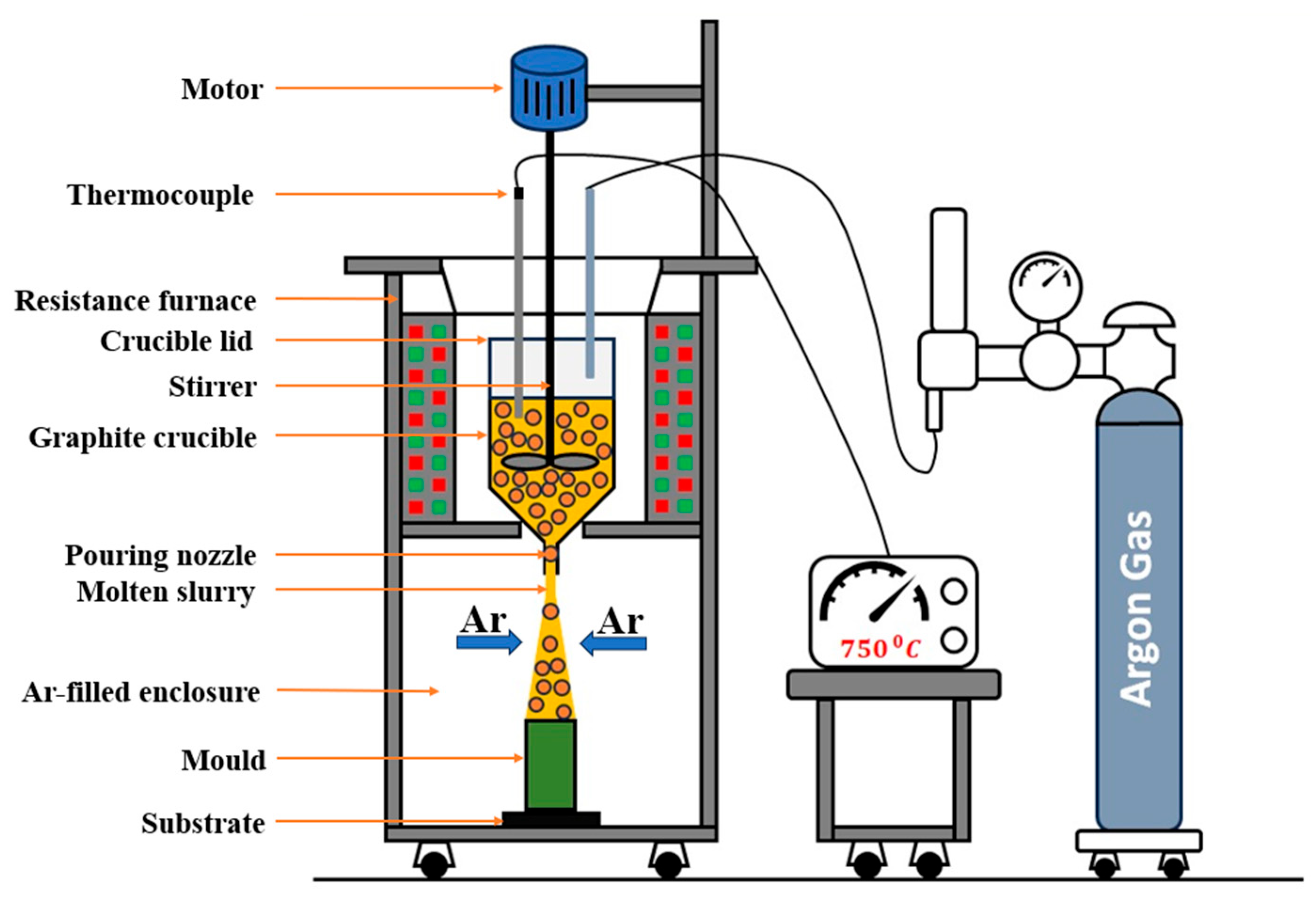
The Mg-1Zn-1Ca alloy and the Mg-1Zn-1Ca-2ZnO (wt.%) composite were synthesized via the DMD technique under an argon gas atmosphere using the raw materials listed in Table 1. The melt was superheated to 750 °C and stirred at 500 rpm for 5 min using a coated steel impeller. A schematic representation of the processing route is shown in Figure 1.
The cast ingot obtained (40 mm in diameter) was machined on a lathe to obtain billets of ɸ 35.5 mm × 45 mm length. These billets were then coated with colloidal graphite and homogenized at a temperature of 400 °C for 2 h prior to hot extrusion with an 8 mm diameter die at 350 °C. Samples cut from the extruded rod with an obtained diameter of ɸ 7.90 mm were then used for characterization. In addition, samples were subjected to two types of CT: refrigeration in a freezer at −20 °C (RF20) and liquid-nitrogen exposure (immersion in a sealed container) at −196 °C (LN), as detailed in Table 2 [30,31,32]. Table 3 outlines the number of CT samples subject to further testing. In both cases, the samples were held at the respective temperatures for 24 h. Upon completion of CT, the samples were removed from the low-temperature environment and allowed to warm naturally in ambient air, reaching room temperature (25 °C) within 5 min (heating rate of approx. 9 °C/min and 44 °C/min for the RF20 and LN-treated samples, respectively). Where applicable, samples were characterized both prior to and post-CT, and comparisons made against untreated (as-extruded) counterparts.

2.2. Density and Porosity

The density and porosity values of the materials were determined using Archimedes’ principle. A total of 5 samples were characterized from each material composition. The mass of the samples was measured in air and deionized (DI) water using the electronic weighing machine GH-252 equipped with a density determination kit (AD-1653, AND Company, Tokyo, Japan).

2.3. Microstructural Characterization

The microstructure and chemical constituents were observed using a field-emission scanning electron microscope (S-4300, FESEM, Hitachi, Tokyo, Japan) equipped with energy-dispersive spectroscopy (EDS). In preparation, the characterized sample surface was ground flat and parallel, finely polished with a 0.05 µm alumina suspension, and then examined at multiple locations, both before and after CT, to ensure representative results.
The same sample surfaces were chemically etched with an etchant containing 20 mL of acetic acid, 1 mL of nitric acid, 60 mL of ethylene glycol, and 20 mL of DI water for a duration of 6 s prior to obtaining grain images using a Hitachi S-4300 FESEM. MATLAB 2013b software was used to measure the average grain diameter of the samples.
X-ray diffraction (XRD-6000, XRD, Shimadzu, Kyoto, Japan) measurements with a Cu K(α) X-ray source of wavelength 1.5418 Å were conducted on longitudinal sample surfaces. This was done with a scanning range of 10–80° and a scanning speed of 2°/min.

2.4. Damping Characterization

Damping characteristics and Young’s modulus were evaluated using resonance-frequency damping analyzer (RFDA) software (Version 8.1.2, IMCE, Genk, Belgium) by subjecting impulse excitation to a 5 cm long sample and analyzing subsequent vibration response signals.

2.5. Thermal Characterization

A thermogravimetric analyzer (DTG-60H, Shimadzu Corporation, Kyoto, Japan) was used to characterize the ignition resistance of the sample (15 mg weight, 2 mm × 2 mm × 2 mm), which was exposed to a temperature range of 30–1400 °C with a heating rate of 10 °C/min in a purified air atmosphere and a controlled flow rate of 50 mL/min.
A thermomechanical analyzer (TMA PT 1000, Linseis Messgeraete GmbH, Selb, Germany) was used to evaluate the coefficient of thermal expansion (CTE) of the sample (4–5 mm thickness), which was exposed to a temperature range of 50–400 °C with a heating rate of 5 °C/min in an argon gas environment and a controlled flow rate of 0.1 L/min.

2.6. Mechanical Characterization

Compression response was characterized on flat and parallel samples with an L/D ratio of 1 using a compressive tester machine (MTS E-44, MTS Systems, Eden Prairie, MN, USA) by subjecting them to a quasi-static compressive load with a strain rate of 0.000083 s−1, according to the ASTM E9-09 standard. A minimum of 3 representative results were used to evaluate the average compression properties. The fractured surface morphology was analyzed using a Hitachi S-4300 FESEM.

2.7. Corrosion Response

Corrosion characterization was carried out on 2-mm-thick discs, according to the ASTM G31-72 standard, in phosphate buffer saline (PBS, Thermo Fisher Scientific Inc., Waltham, MA, USA) solution maintained at 37 °C and a solution of 3.5 wt.% NaCl at ambient temperature (25 °C). For each material, weight loss was measured daily (24 h intervals) on one sample for 28 days or until the samples dissolved completely, whichever occurred earlier. A solution (200 g/L CrO3 and 19 g/L AgNO3 in DI water) was used to remove the corrosion products, followed by rinsing with DI water prior to the weight loss measurements. The average corrosion rate was calculated as given below in Equation (1) [33].
Corrosion rate (mm/year) = 87.6 × W/DAT
where W is weight loss (mg); D is experimental density (g/cm3); A is surface area of the disc (cm2); and T is immersion time (h).

3. Results and Discussion

3.1. Synthesis

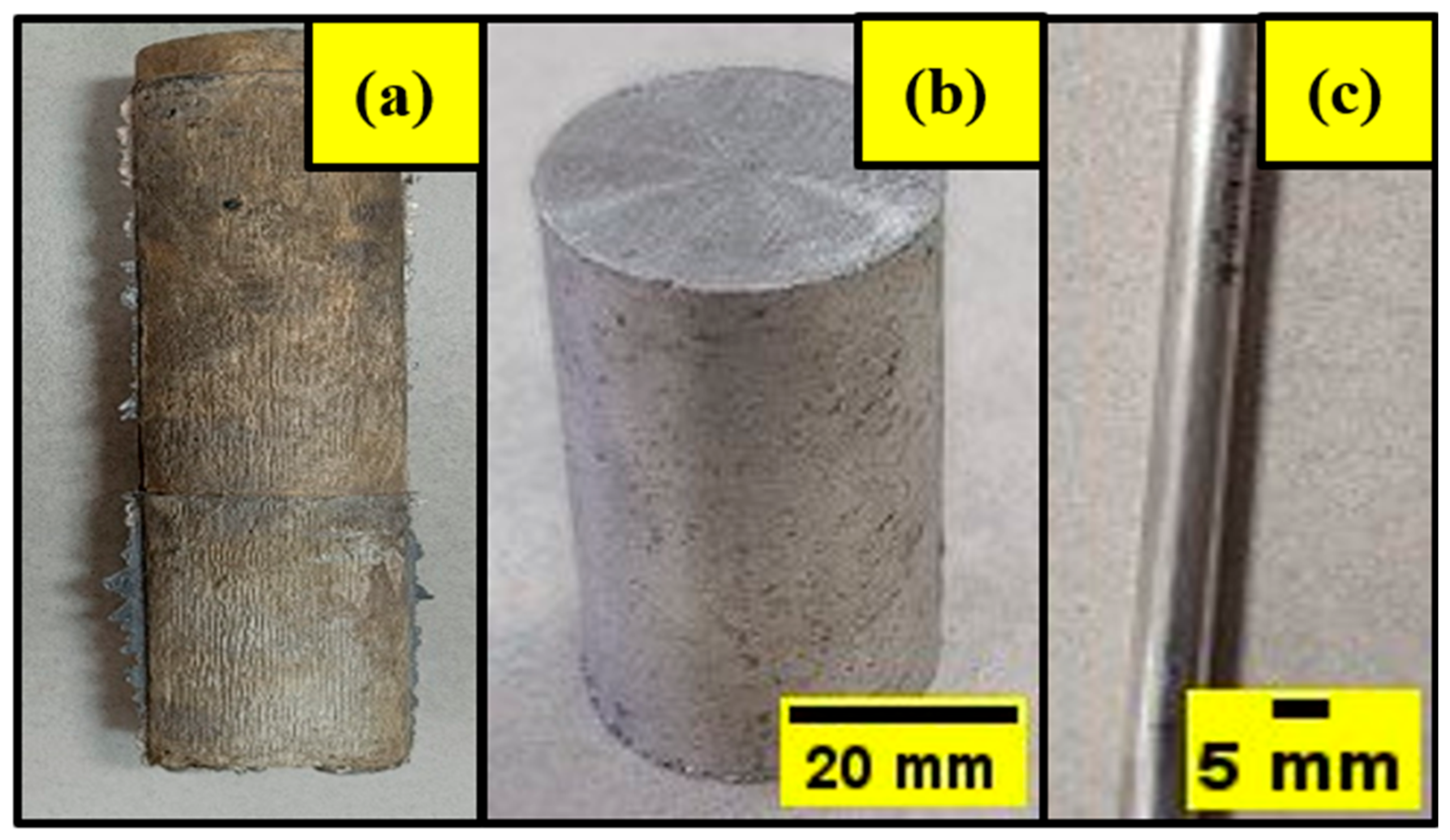
The Mg-1Zn-1Ca alloy and Mg-1Zn-1Ca-2ZnO composite were synthesized successfully, as depicted in Figure 2. Careful consideration is necessary when incorporating the alloying elements Ca and Zn into Mg to prevent extrusion defects, such as the reduced processability and hot tearing linked with Ca and Zn, respectively [34]. Furthermore, in the Mg-Zn-Ca ternary phase diagram, a critical atomic ratio (Zn/Ca < 1.4) results in formation of a Mg2Ca intermetallic phase, which adversely affects the alloy’s formability [35]. However, an appropriate design of materials, along with the selection and optimization of synthesis parameters, effectively addresses the challenges linked to the Mg-Zn-Ca alloy system.

3.2. Density and Porosity

The density and porosity values of the Mg-1Zn-1Ca alloy and the Mg-1Zn-1Ca-2ZnO composite subjected to CT are summarized in Table 4. A decrease in experimental density, and, consequently, an increase in porosity is observed with the materials that underwent CT. The slight decrease in density is attributed to lattice contraction of the Mg alloy and the additional space created for the precipitation of the lower-atomic-density intermetallic Mg2Ca phase (r~1.72 g/cc) induced by CT [30,32,36], as substantiated by the XRD results.

3.3. Microstructure

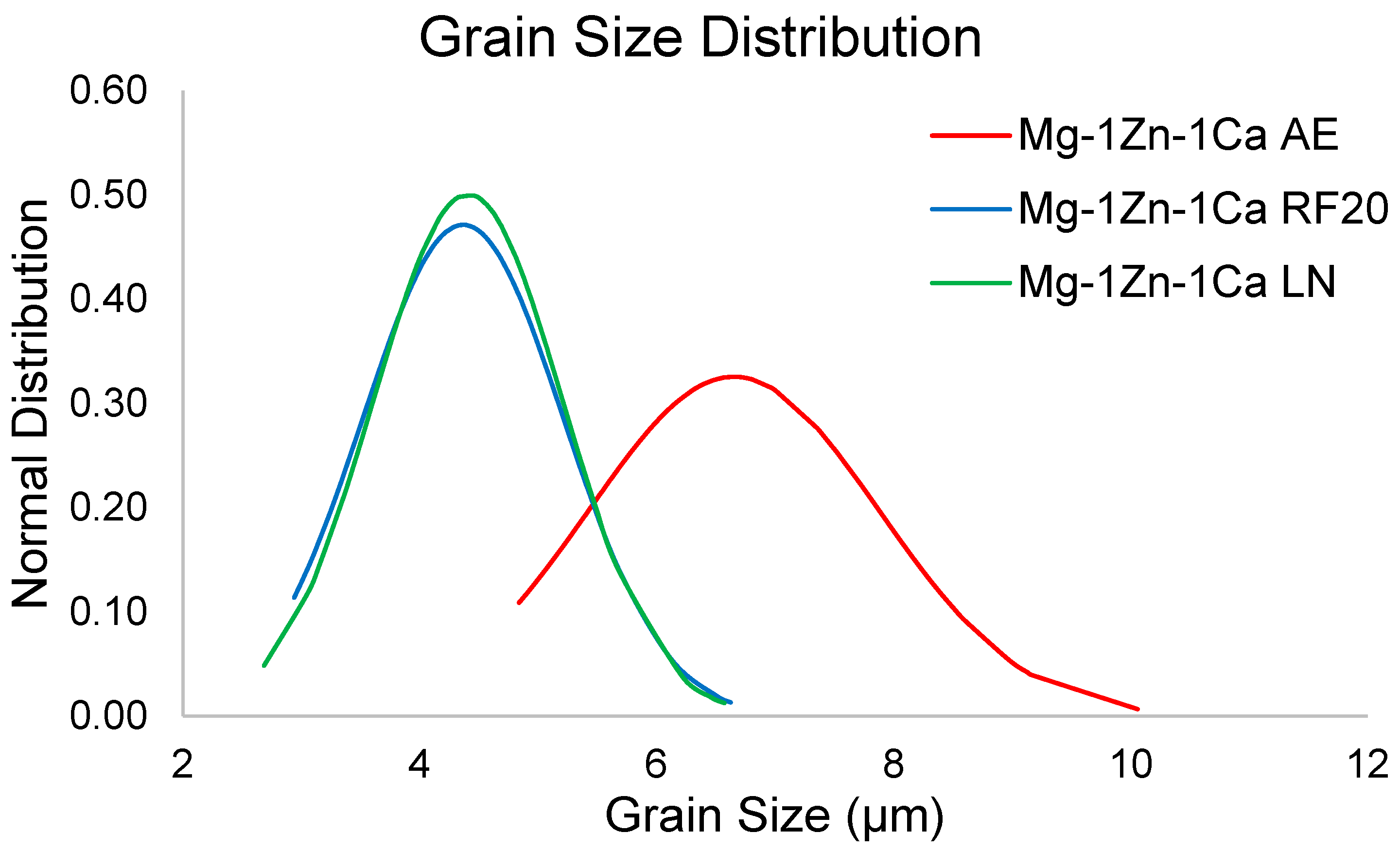
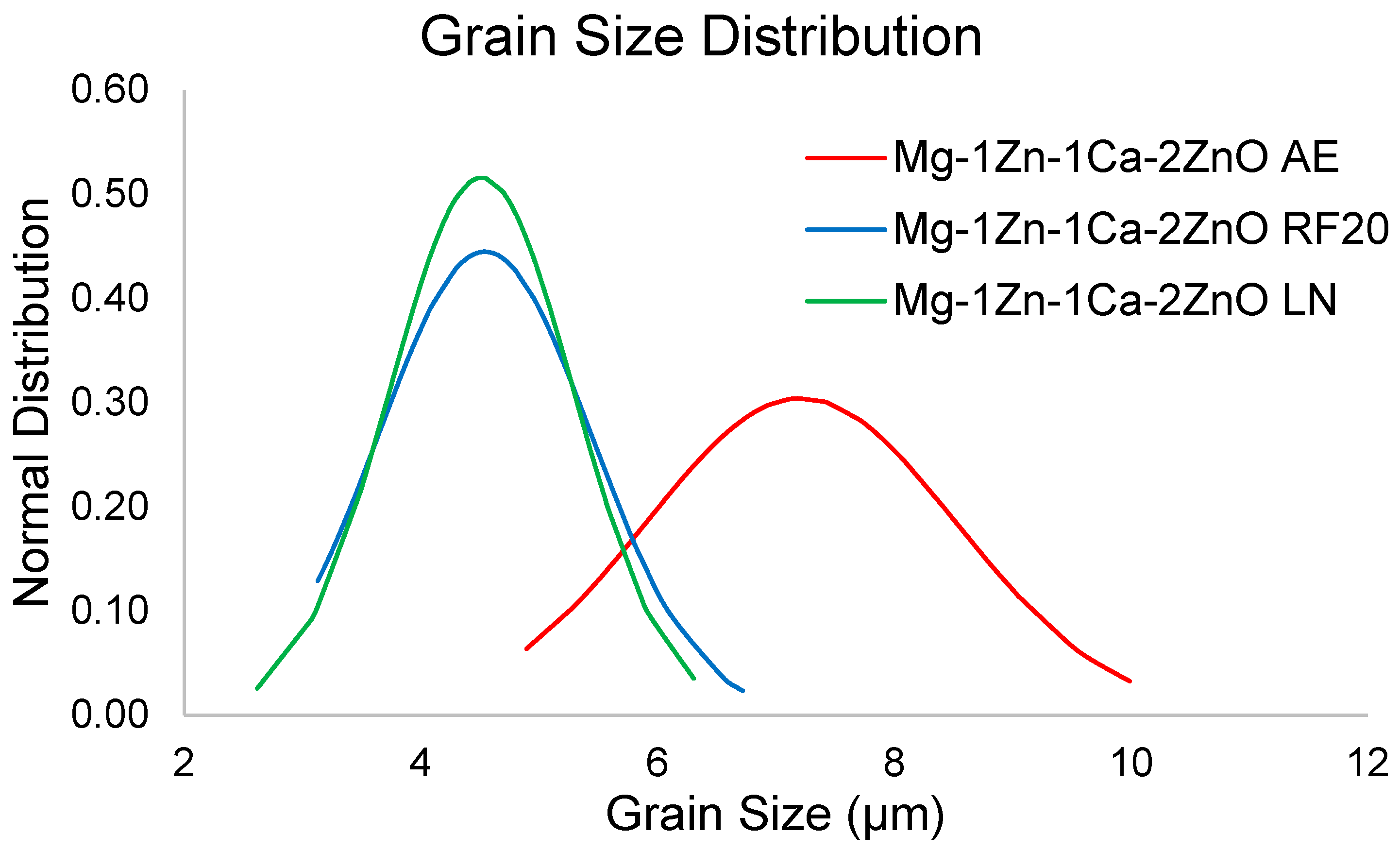
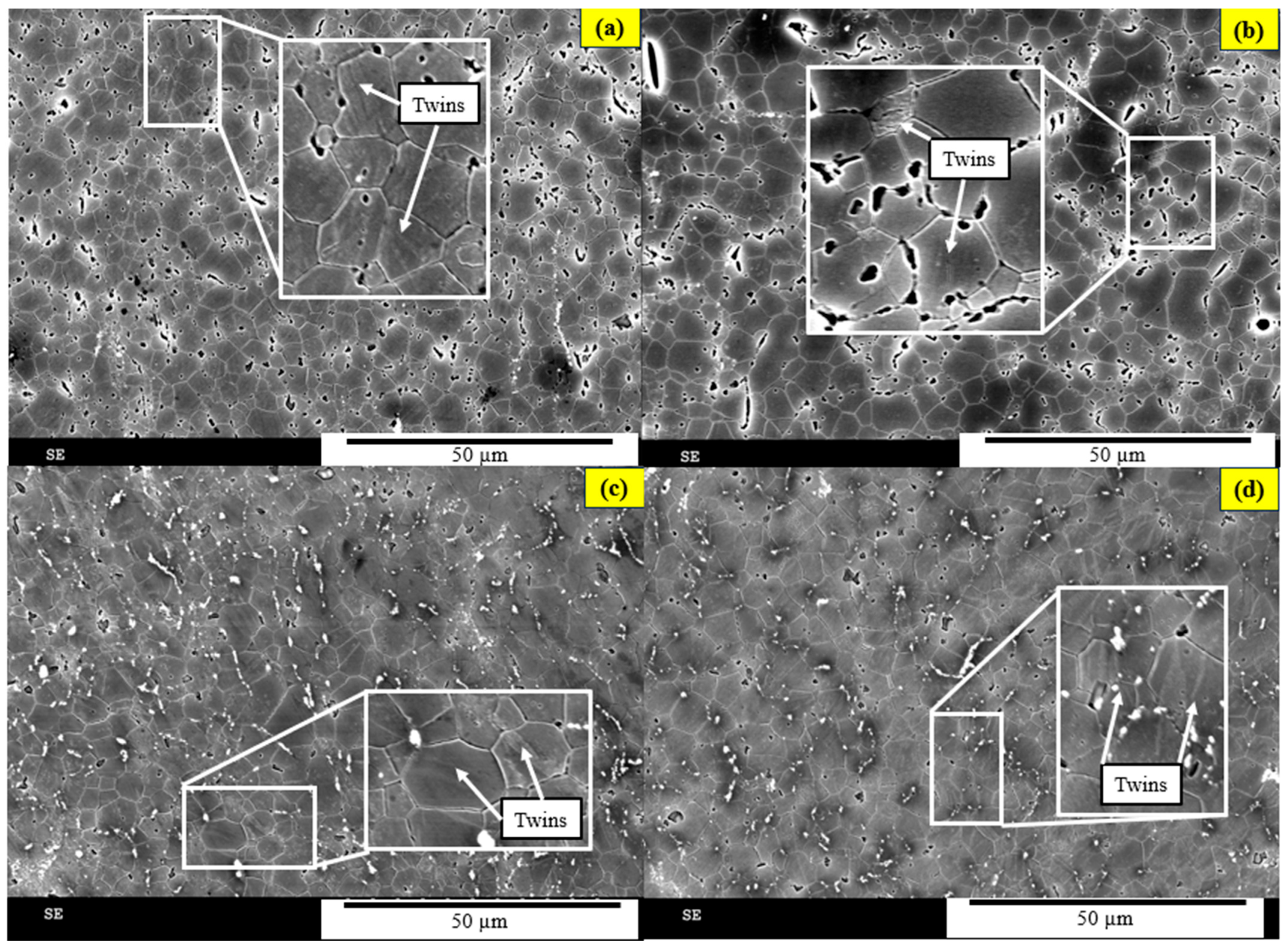
The average grain size of the explored materials is summarized in Table 5, and the grain size distributions are shown in Figure 3 and Figure 4. Grain refinement occurred post-CT for both materials down to 4.4–4.5 μm (which represents 30–40% refinement). LN treatment also resulted in a more consistent grain distribution. CT promoted twin formation (Figure 5), increasing twin boundary density and restricting dislocation slip, thereby leading to grain refinement. These results are consistent with previous findings on the CT of Mg-based materials [37,38,39]. Moreover, the refinement of grains can also be attributed to the inclusion of grain-refining elements (Ca and Zn).
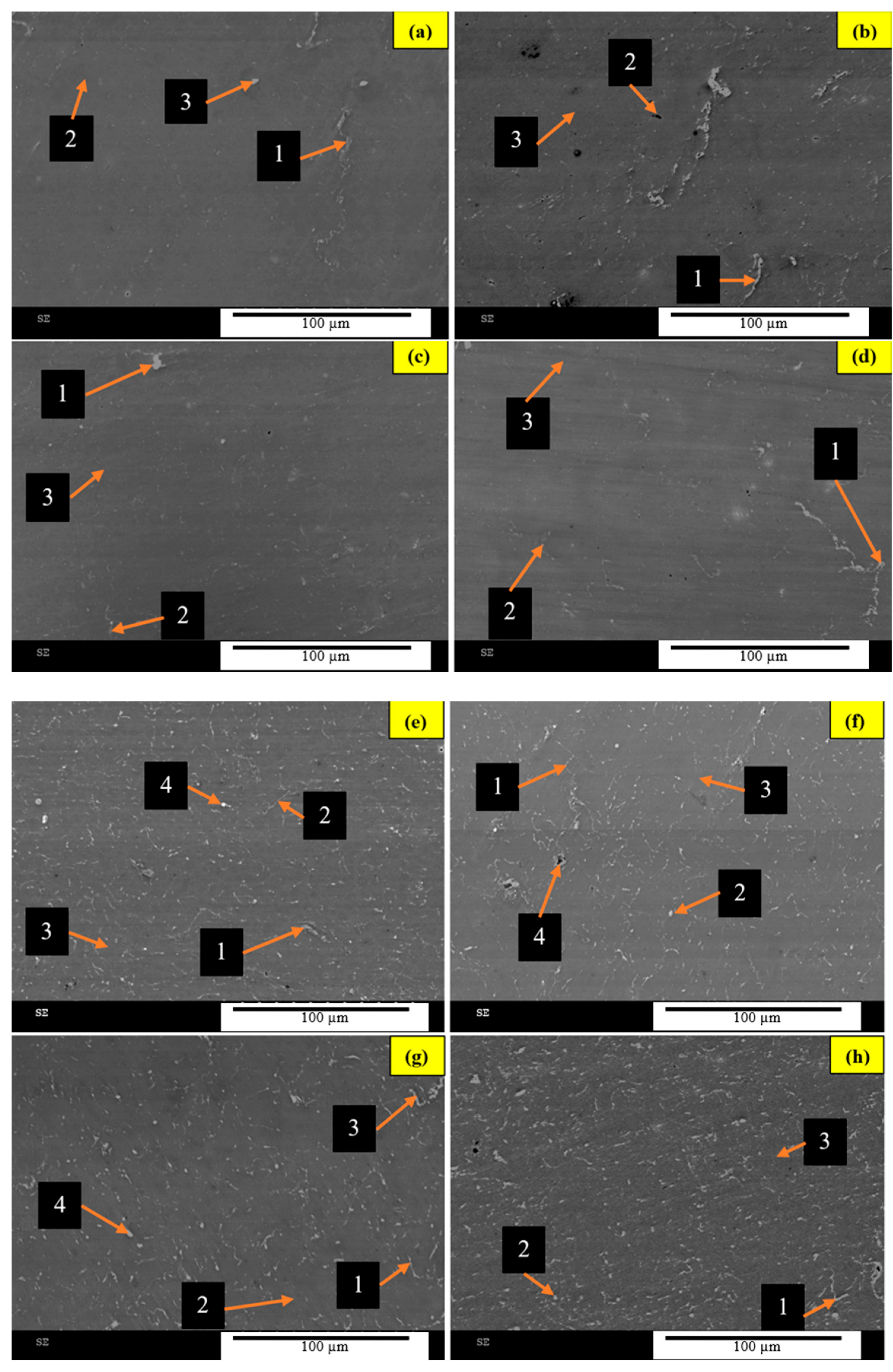
FESEM micrographs (Figure 6) and EDS spectrum results (Table 6) show no significant visual differences in the microstructure after CT. Higher Zn and Ca content was detected in bright phases against the darker Mg matrix. These bright phases can be attributed to the insolubility of Ca in Mg at ambient temperature and are reported in various studies as Mg2Ca and Mg6Zn3Ca2 phases with Mg-Zn-Ca alloys [40,41,42]. The observed findings are also in good agreement with the Mg-Zn-Ca phase diagrams, which predict the formation of the observed intermetallic phases within the investigated Zn and Ca addition range [43].
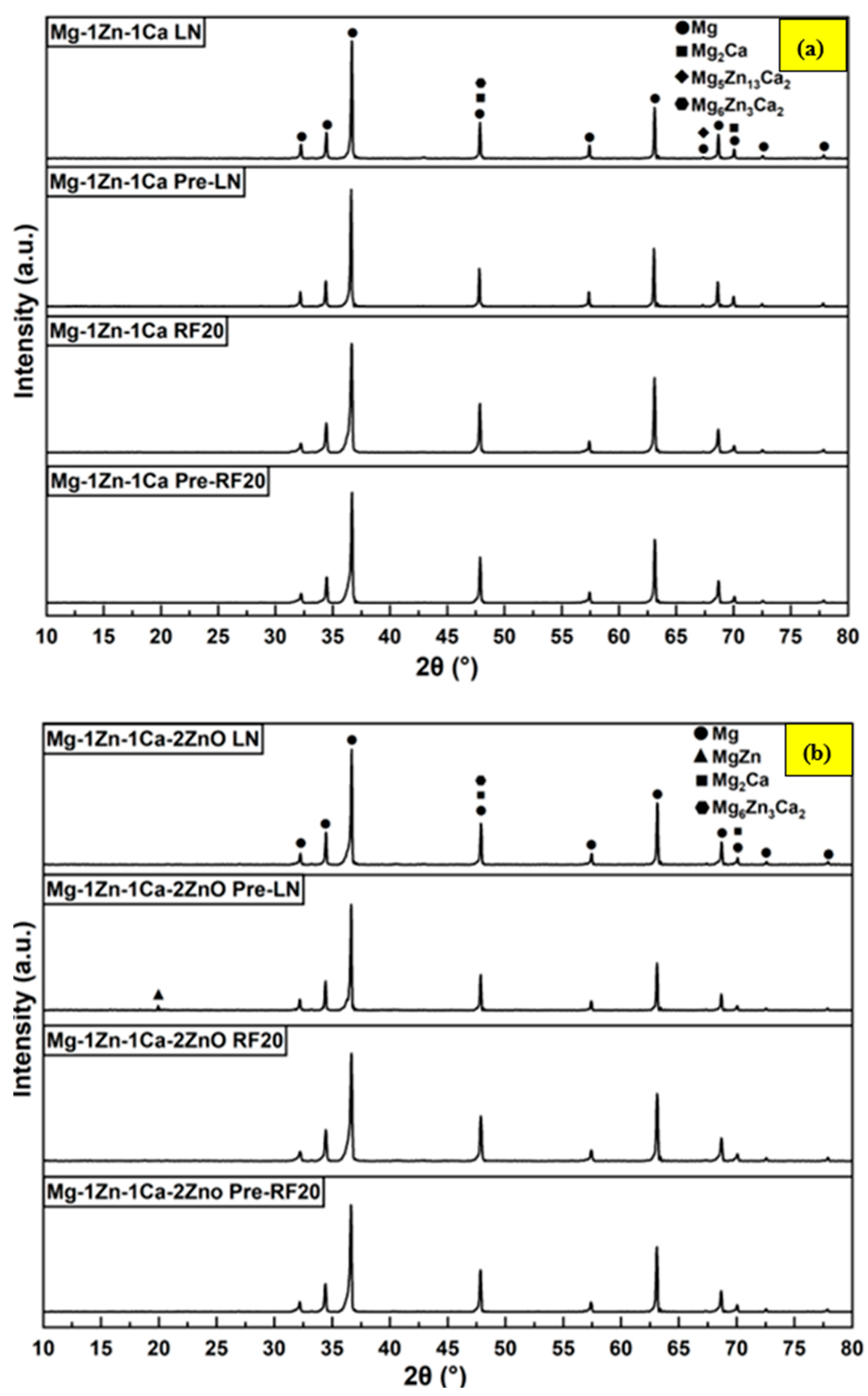
Figure 7 shows the X-Ray diffractograms, with peaks verified using JCPDS cards (from PDF-5+) [44] with card numbers for Mg: 00-004-0770, Mg2Ca: 00-013-0450, 00-053-0461, Mg5Zn13Ca2: 00-012-0569, Mg6Zn3Ca2: 00-012-0266, and MgZn: 00-040-1334. These peaks were previously reported in the literature on Mg-Zn-Ca alloy systems [40,45,46]. The pyramidal texture (2θ~37°) is observed to be dominant in all explored materials (Table 7).

3.4. Thermal Properties

The CTE and ignition temperatures characterized are presented in Table 8. These values are notably lower than that of pure Mg (26 × 10−6 K−1) [47]. This reduction can be attributed to the formation of the Mg2Ca phase, which exhibits a comparatively lower CTE of ~10.5 × 10⁻⁶ K−1 [48]. The incorporation of thermally stable ZnO particles reduced the CTE further to ~24.3 × 10⁻⁶ K−1. Following LN treatment, an increase of 7.8% was observed for Mg-1Zn-1Ca-2ZnO. Nevertheless, taking the standard deviation into account, the CTE values of the explored materials remain lower than those of pure Mg (26 × 10−6 K−1).
Table 8. Coefficient of thermal expansion and ignition temperature of Mg-1Zn-1Ca alloy with ZnO reinforcement and CT alongside pure Mg and commercial alloys.
MaterialConditionAverage CTE
(×10−6 K−1)
Ignition Temperature (°C)
Pure Mg [49]AE-590
AZ31 [49,50]AE-628
AZ91 [51]AE-580–600
WE43 [50,51,52,53]AE-644–750
Mg-1Zn-1CaAE25.0 ± 0.3730
RF2024.8 ± 0.3 (↓ 0.8%)708 (↓ 3.0%)
LN24.1 ± 1.0 (↓ 4.0%)720 (↓ 1.4%)
Mg-1Zn-1Ca-2ZnOAE24.3 ± 0.2758
RF2024.5 ± 0.2 (↑ 0.8%)713 (↓ 5.9%)
LN26.2 ± 0.4 (↑ 7.8%)741 (↓ 2.2%)
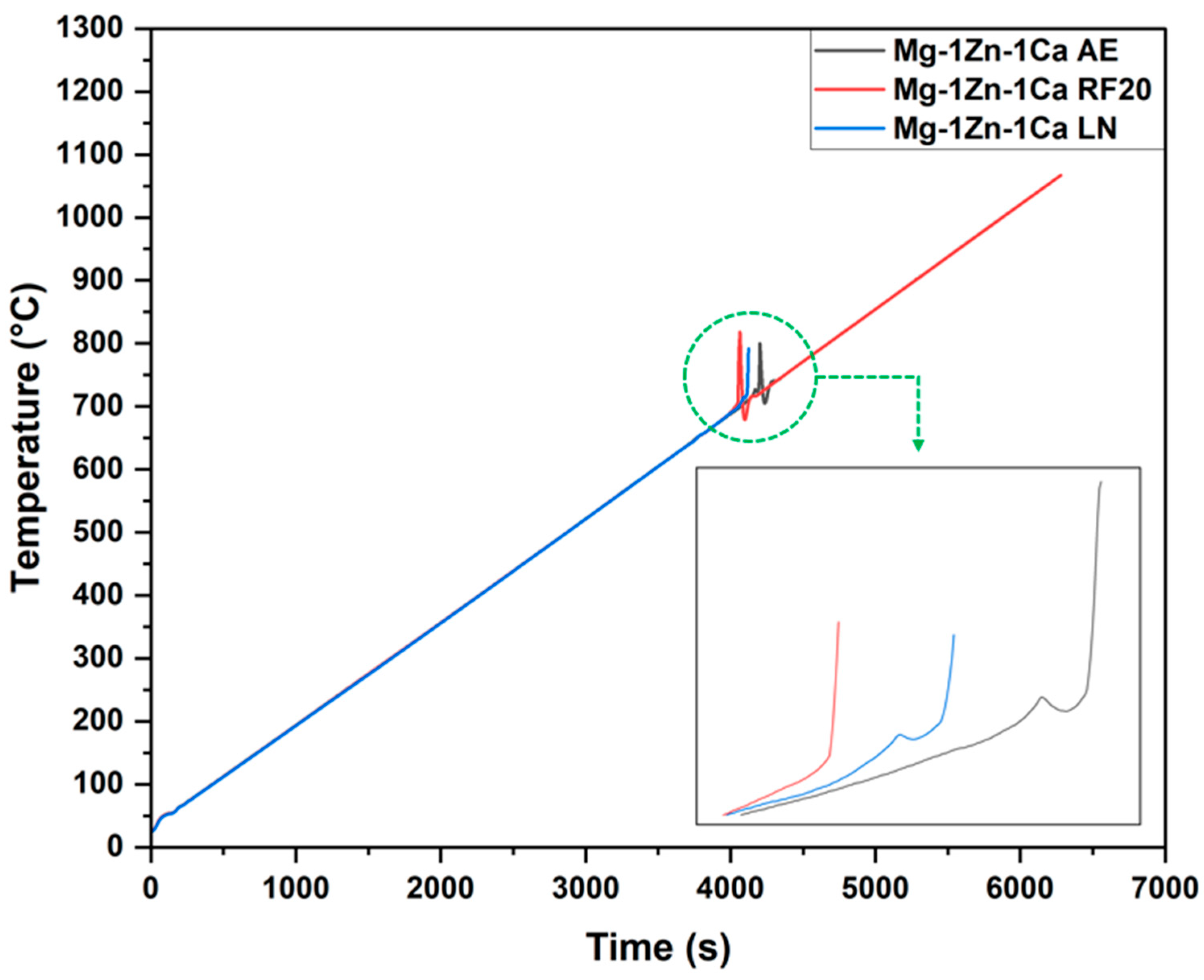
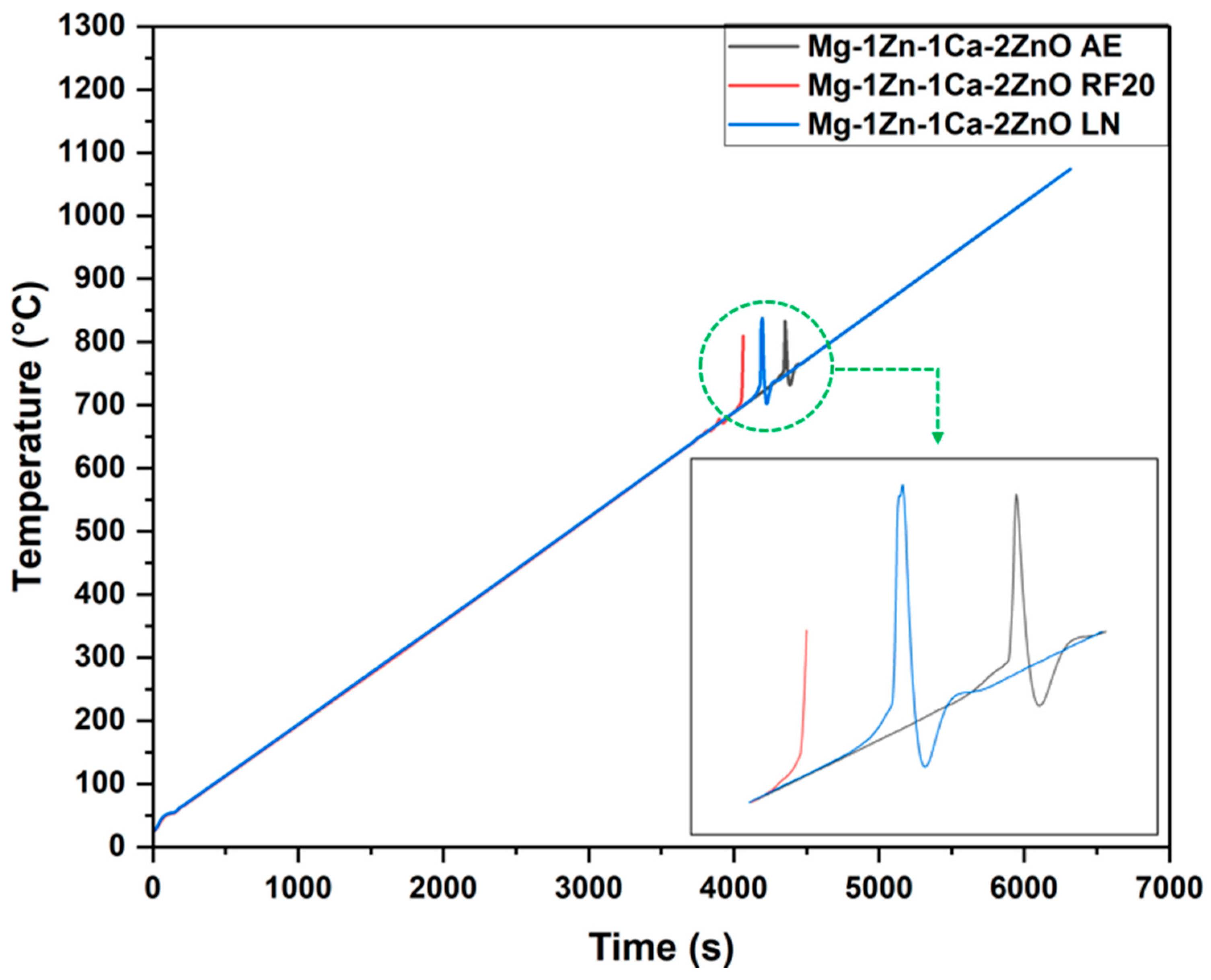
The ignition response of the specimens is presented in Figure 8 and Figure 9, with the ignition temperature defined as the point of a distinct inflection characterized by a sharp rise in temperature, followed by subsequent recovery. The ignition temperature after ZnO reinforcement increased by 3.8%. However, subsequent CT has slightly compromised ignition resistance; this is attributed to increased porosity, which enhances oxygen penetration and provides a greater number of active sites for localized heating and auto-ignition. Despite these sites, the ignition resistance values of these materials remained higher than that of pure Mg (590 °C) [49], and are competitive relative to commercially available alloys such as AZ31, AZ91, and WE43 (~580 °C to 750 °C) [49,50,51,52,53].

3.5. Damping Characterization

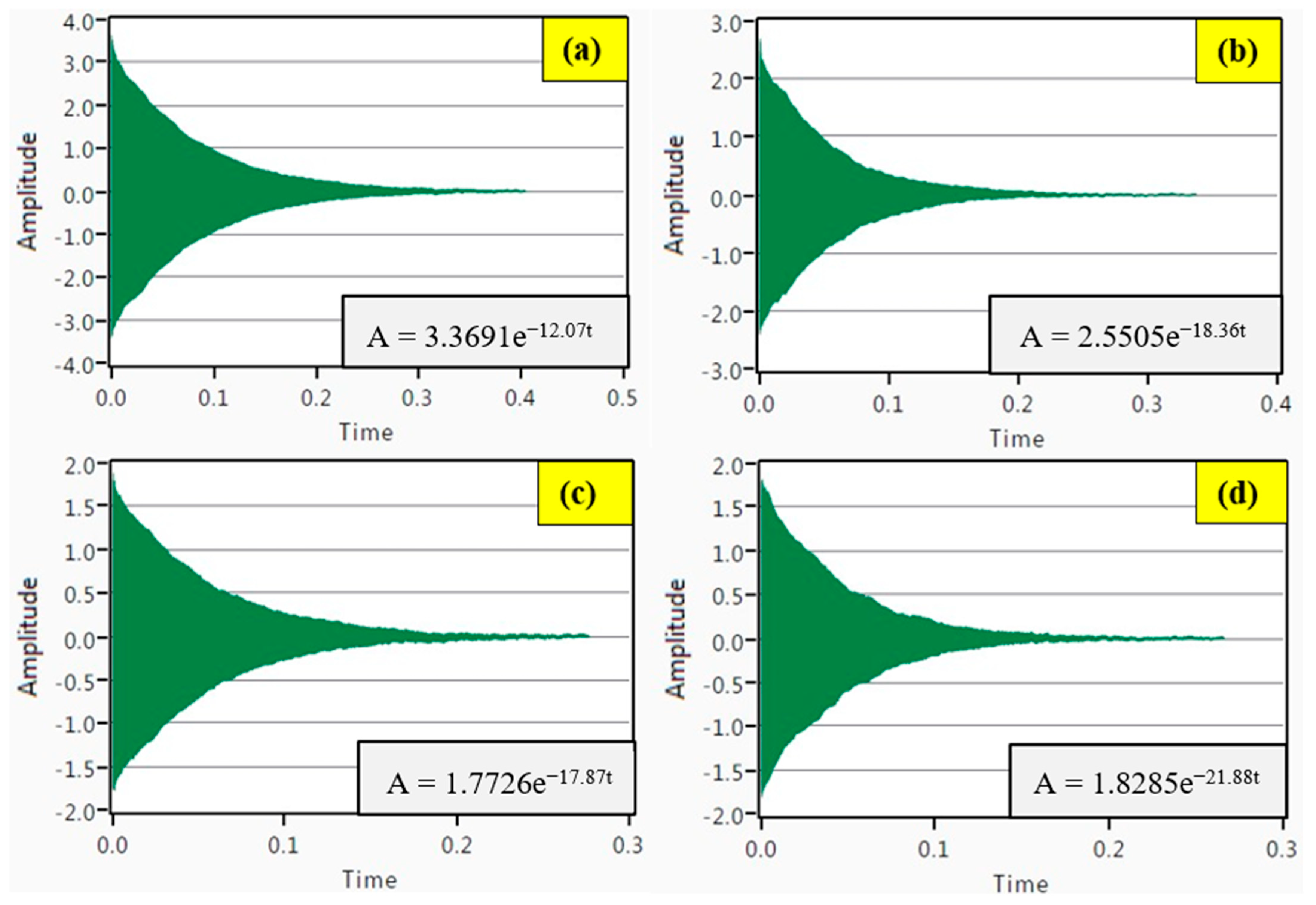
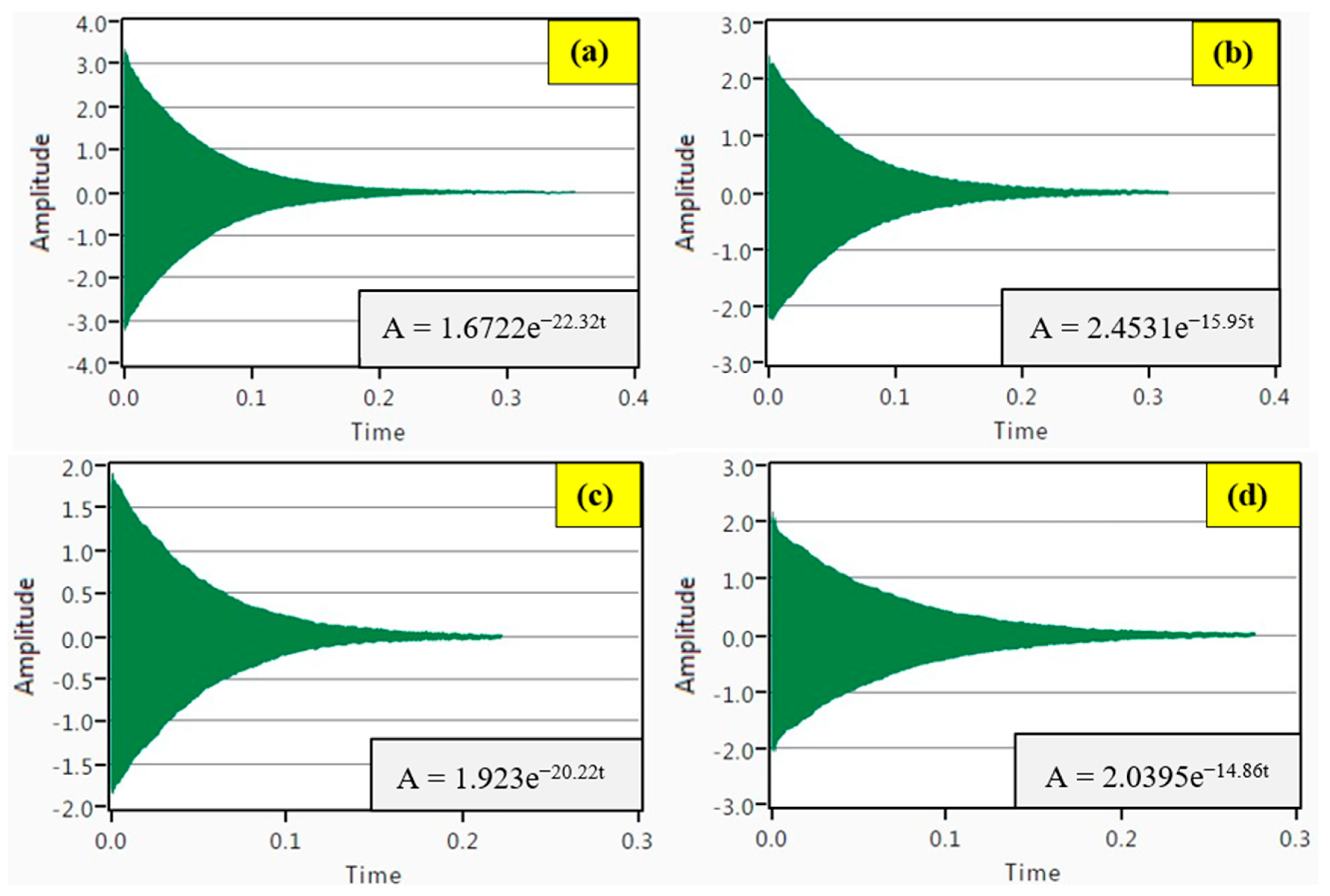
The damping properties of the Mg-1Zn-1Ca alloy with ZnO reinforcement and CT are summarized in Table 9, and their corresponding vibration signals are shown in Figure 10 and Figure 11. The response curves of vibration signals are matched with the damped sinusoidal vibration equation, and the corresponding amplitude at any time t can be evaluated using Equation (2).
At = Aoe−αt + C
where At is the amplitude at time t; Ao is the initial amplitude; α is the attenuation coefficient; t is time; and C is a constant.
The attenuation coefficient and damping capacity of the Mg-1Zn-1Ca alloy increased with CT at both temperatures, whereas the ZnO reinforcement showed a decreasing trend. The Mg alloys show a dislocation-damping mechanism at low temperatures [54]. Furthermore, it has been reported that the presence of dislocations and porosity in the material is a crucial mechanism in elucidating the damping behavior of lightweight metallic materials, such as Mg and Al [55,56]. The significant increase in attenuation coefficient and damping capacity (by 52.1% and 48.7%, respectively, after RF20 treatment) can be linked to increased porosity, which enhances the damping capacity of the alloy via enhanced local stress and local plastic deformation in the vicinity of pores, along with increased dislocation movement induced by CT [57,58], as well as microstructural refinement and alleviation of residual stresses [59].
The ZnO-reinforced Mg-1Zn-1Ca alloy, with its fine-grain microstructure (4.5 µm) following CT, possesses compromised damping response. This highlights the conflicting effects of grain size, and incorporating reinforcement into the magnesium matrix often refines the grain microstructure to enhance mechanical performance while potentially diminishing damping capabilities [60]. Nanoparticles also decrease the length of movable dislocation lines and hinder dislocation mobility, which results in a decrease in room-temperature damping capacity [55].
The elastic modulus (~45GPa) of the Mg-1Zn-1Ca alloy with ZnO reinforcement and CT remains mostly unchanged.

3.6. Mechanical Response

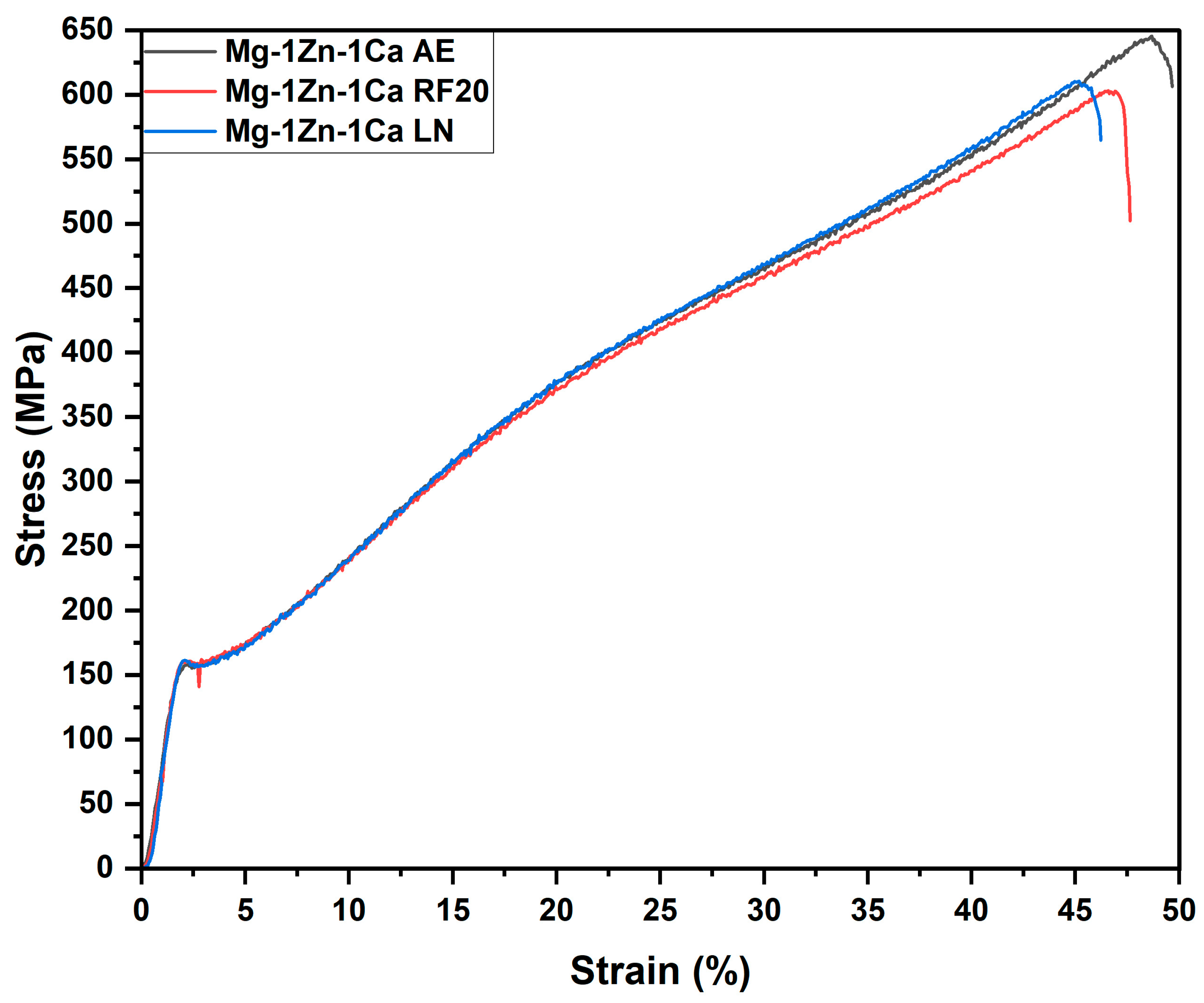
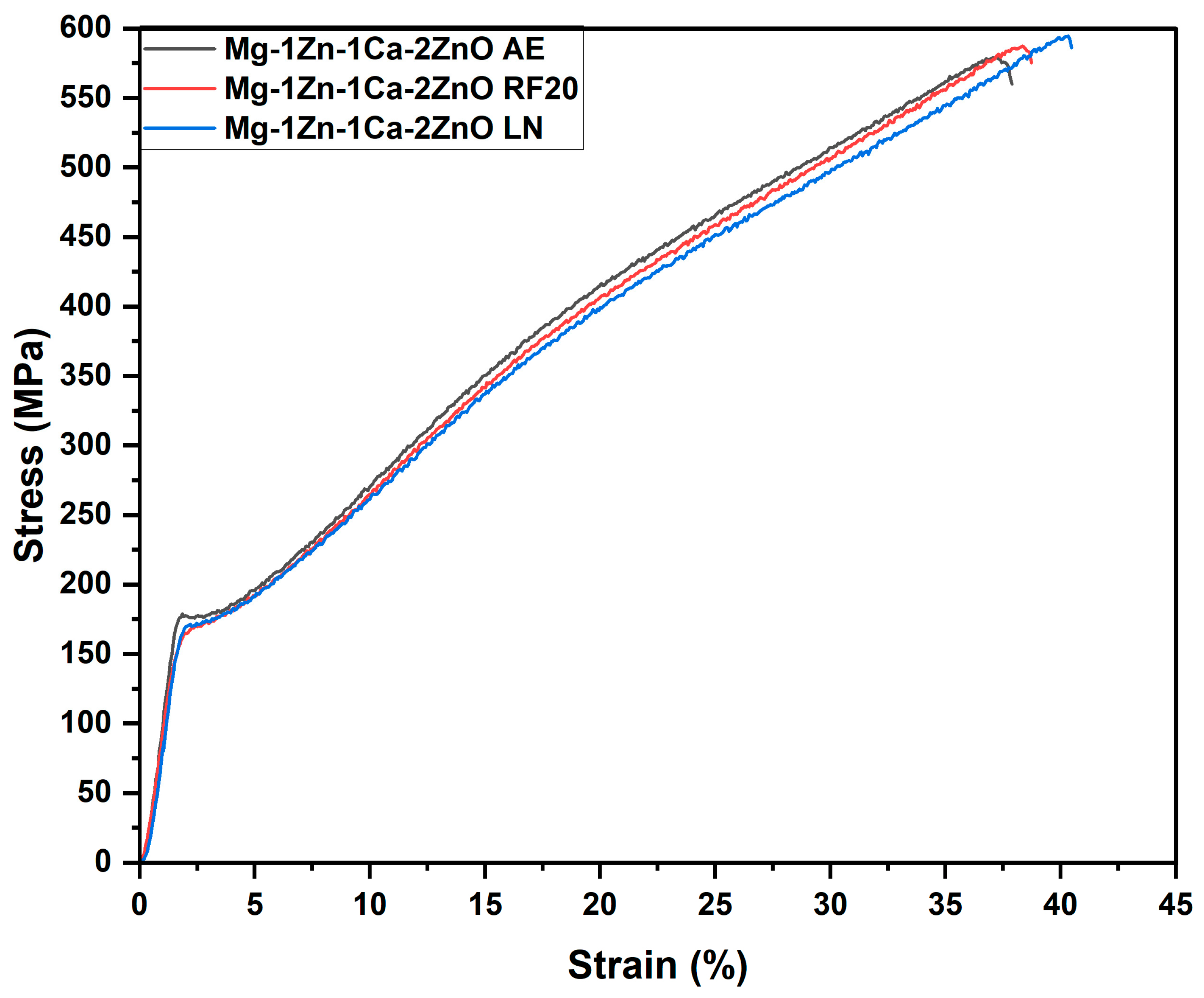
The compression properties are summarized in Table 10, and the resulting compressive stress–strain curves are shown in Figure 12 and Figure 13. The explored materials demonstrated significant improvements in yield strength (YS, by 114%), ultimate compressive strength (UCS, by 85%), fracture strain (by 66%), and work of fracture (by 245%) compared with those of pure Mg [49]. The enhancement in strength can primarily be ascribed to the dispersion strengthening and solid-solution strengthening induced by Zn and Ca additions. Owing to their atomic size mismatch with Mg, the diffusion of Zn and Ca atoms into the Mg lattice generates significant lattice distortions, thereby impeding dislocation motion [61]. In addition, these alloying elements promote the formation of dispersoids within the Mg matrix, which act as effective pinning sites for dislocations, further contributing to the observed strengthening [61].
The addition of ZnO reinforcement further increased the YS (by 14.0%) by providing effective load-bearing and dislocation-pinning sites. However, this improvement was accompanied by compromises in UCS, fracture strain, and work of fracture (by 8.0%, 23.0%, and 26.0%, respectively), highlighting a trade-off between strength and ductility. The loss of ductility is attributed to stress concentrations from ZnO particles and secondary precipitates, promoting microvoid formation, as observed by SEM analysis [62].
RF20 treatment enhanced the yield strength (7.3%) of the Mg-1Zn-1Ca alloy. However, these treatments resulted in reductions in UCS by 4.2%, whereas the average ductility marginally reduced but remained similar, considering the standard deviation. For LN treatment, YS improved while UCS and ductility reduced marginally by 3.2 and 5.2%, respectively. These reductions are attributed to embrittlement associated with microstructural inhomogeneities and stress localization associated with the increased level of precipitation triggered, particularly with deep cryogenic treatment.
In contrast, the ZnO-reinforced material exhibited the opposite effect, with a reduction in YS of 5.3% after RF20 treatment and an improvement in UCS by 8.4% after LN treatment. This contrasting behavior is likely due to the synergistic effect of ZnO particles and CT: while cryogenic contraction can weaken the load-transfer efficiency of ZnO particles, it simultaneously refines the microstructure, reduces internal defects, and enhances particle–matrix interfacial bonding, thereby improving compressive strength, fracture strain, and overall fracture resistance [63,64]. Overall, the Mg-1Zn-1Ca-2ZnO LN material exhibited the best combination of compressive properties for strength-based applications.
Mechanical response improvements can be attributed to the Hall–Petch effect, arising from grain refinement and grain boundary strengthening [65]. In the present study, plastic deformation in all specimens was predominantly governed by mechanical twinning, as indicated by the characteristic features of the stress–strain curves, including a distinct yield point, a concave-down curvature in the early plastic regime, and a low initial work-hardening rate [66]. Owing to their hexagonal close-packed (HCP) crystal structure, Mg-based alloys possess limited slip systems, which makes mechanical twinning the dominant deformation mechanism, as observed earlier [67,68]. The materials developed in this study demonstrated a compressive response superior to that of human cortical bone (UCS: 154 MPa) [69], showcasing their potential suitability for load-bearing biomedical applications [9,70]. Fracture strain values exceeding 38.3% were also exhibited, which are markedly higher than those of natural bone (1–6%) and pure Mg (23%) [49,71].
Table 10. Compression properties of the Mg-1Zn-1Ca alloy with ZnO reinforcement and CT.
MaterialConditionAverage 0.2%Yield
Strength (MPa)
Average Ultimate Compressive
Strength (MPa)
Fracture Strain
(%)
Average Work of
Fracture (MJ/m3)
Pure Mg [49]AE70 ± 8314 ± 1423 ± 2.542 ± 4
Human Cortical Bone [69]-148 ± 16154 ± 221.3 ± 0.31.3 ± 0.7
Mg-1Zn-1CaAE150 ± 2636 ± 1149.7 ± 1.6196 ± 9
RF20161 ± 4 (↑ 7.1%)609 ± 10 (↓ 4.3%)48.2 ± 0.9 (↓ 3.0%)188 ± 6 (↓ 4.1%)
LN159 ± 2 (↑ 6.0%)616 ± 5 (↓ 3.2%)47.1 ± 0.7 (↓ 5.2%)184 ± 5 (↓ 6.4%)
Mg-1Zn-1Ca-2ZnOAE171 ± 3585 ± 1138.3 ± 1.0145 ± 6
RF20162 ± 5 (↓ 5.5%)581 ± 17 (↓ 0.7%)40.1 ± 1.2 (↑ 4.7%)151 ± 7 (↑ 3.9%)
LN165 ± 3 (↓ 3.3%)634 ± 14 (↑ 8.4%)43.6 ± 1.1 (↑ 13.8%)175 ± 10 (↑ 20.8%)
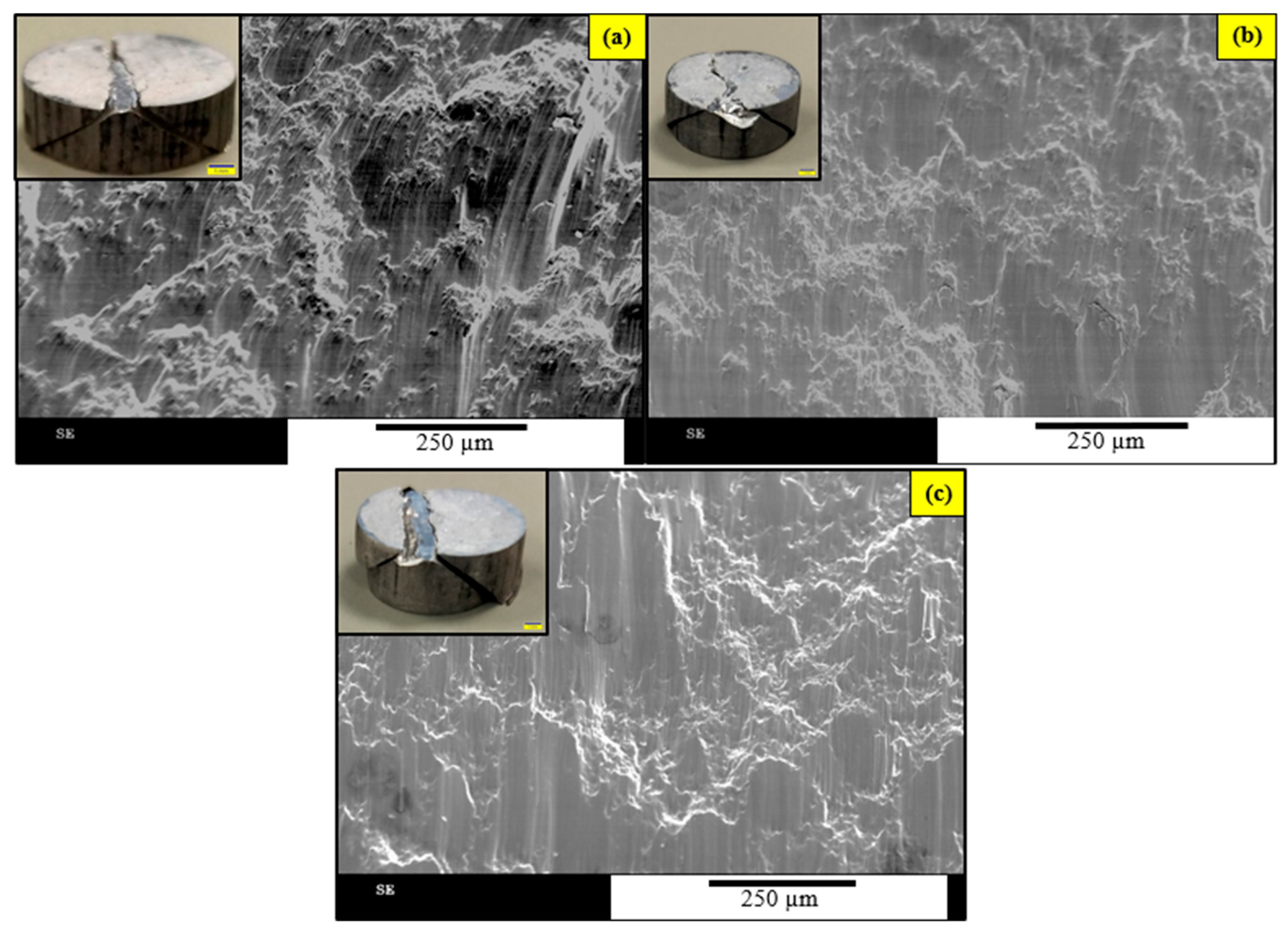
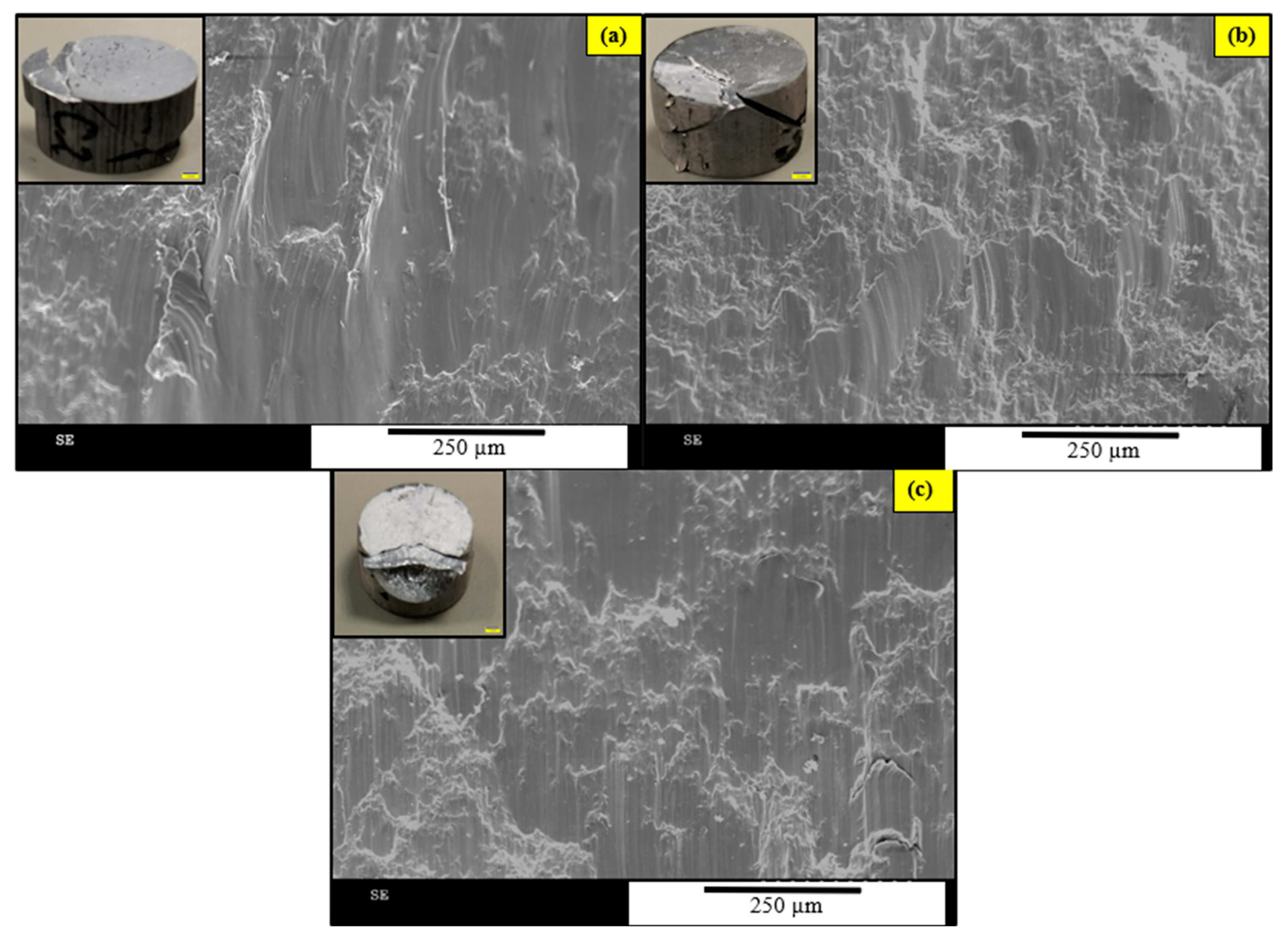
Figure 14 and Figure 15 present the fractured surface morphology of the specimens post-compression, exhibiting characteristic features of plastic deformation and shear fracture. Macroscale fracture images of the Mg-1Zn-1Ca specimens reveal shear-dominated failure with a fracture angle of ~63°, where the crack initiates at one edge and propagates toward the midpoint of the opposite side. The ZnO-reinforced materials also exhibited shear failure, attributed to the sliding of planes oriented at ~45° to the compression axis, corresponding to the planes of maximum shear stress. Plastic deformation under compression resulted in the formation of shear bands with minimal microcracking, along with compression ridges on the fracture surfaces, which appeared nearly identical in all materials. The fracture behavior of the explored materials is associated with the activation of the pyramidal slip system, as confirmed by XRD analysis. This correlation between slip activity and characteristic fracture angles has also been reported in other Mg-based materials [34,62].

3.7. Corrosion Response

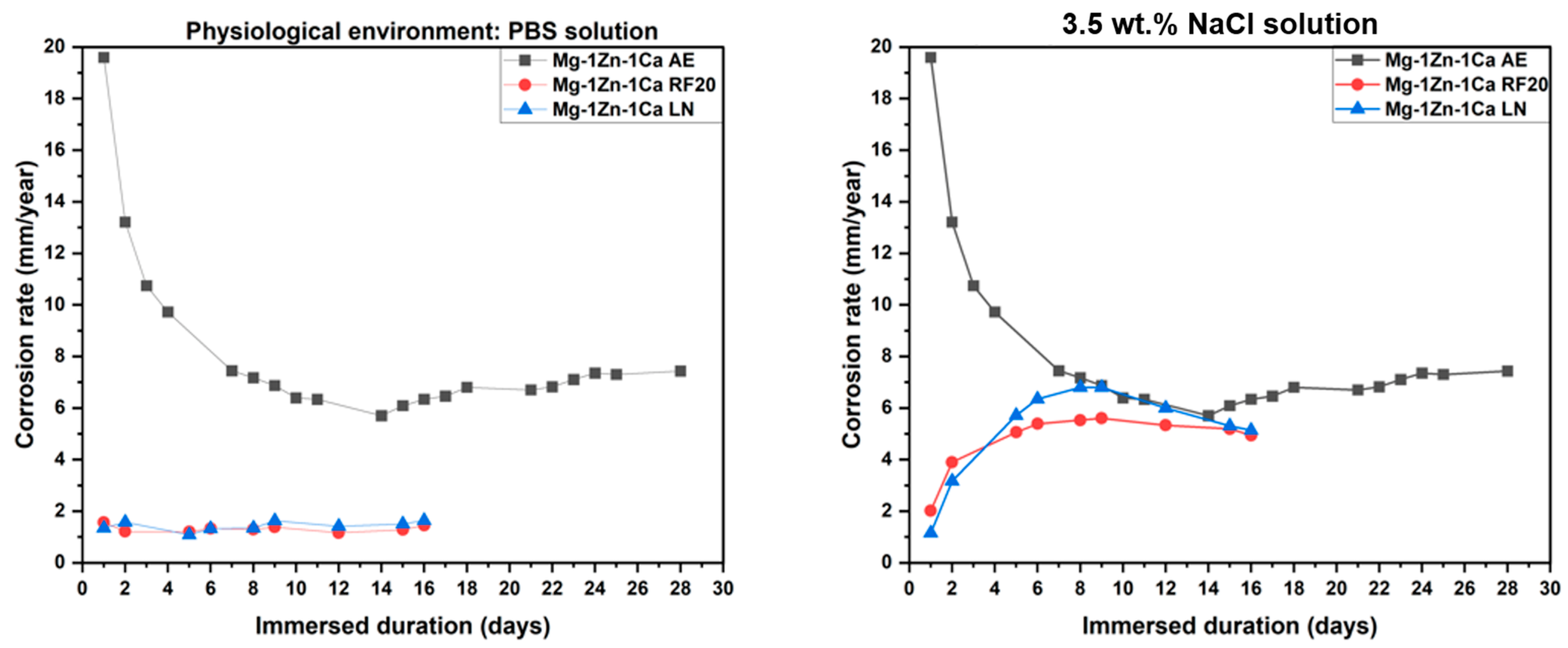
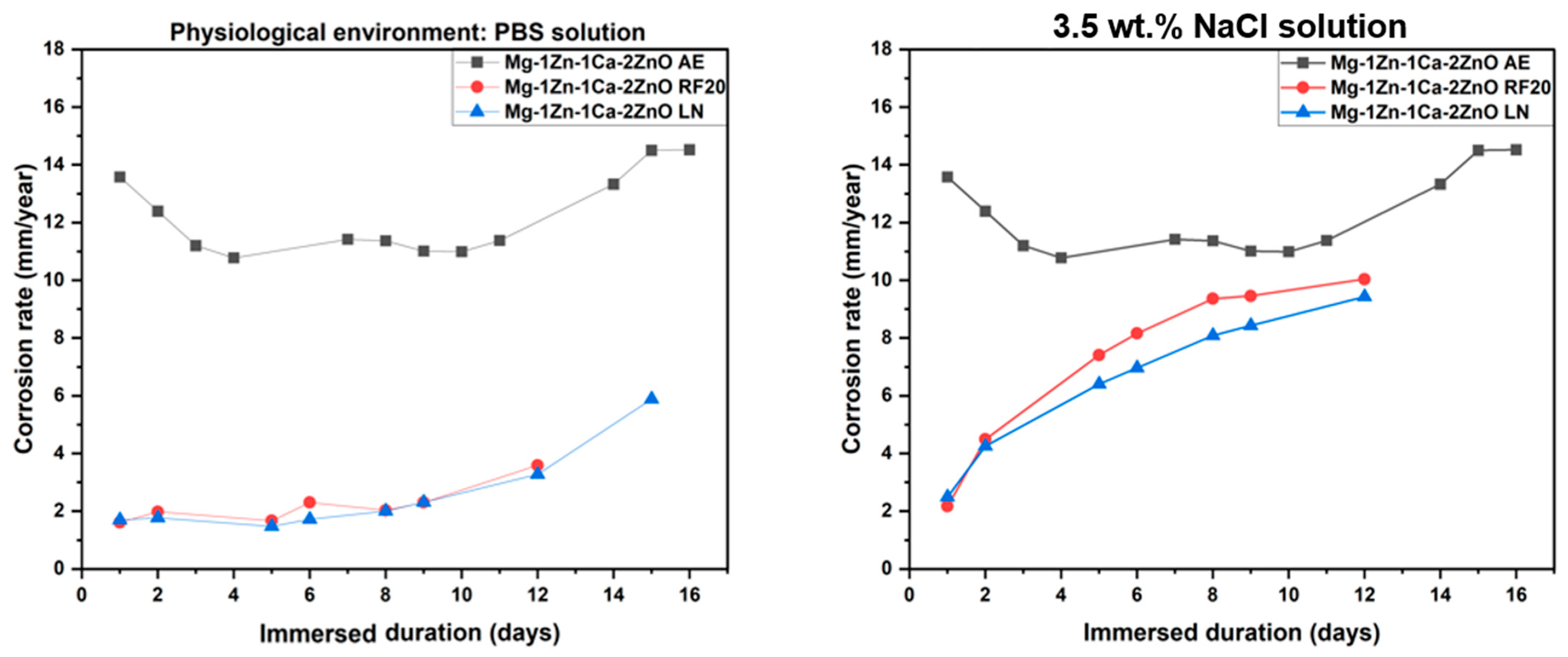
The corrosion responses of the materials explored are summarized in Table 11. Incorporation of ZnO reinforcement increased the corrosion rate to 7.25 mm/y, likely due to the introduction of additional galvanic sites at the particle–matrix interface arising from the semiconducting nature of ZnO [72]. That said, RF20 treatment proved most effective in reducing corrosion rates by 62.2% and 69.5% for the monolithic and nanocomposite material, respectively, suggesting that cryogenic processing mitigates galvanic effects by promoting phase stabilization, refining the microstructure, and improving the integrity of the passive film [73]. The day-by-day corrosion behavior of the materials is presented in Figure 16 and Figure 17.
The corrosion of Mg in a physiological environment is governed by the cathodic and anodic reactions [74]:
Mg → Mg2+(aq) + 2e
2H2O(aq) + 2e → H2(g) + 2(OH)(aq)
Mg2+(aq) + 2(OH)(aq) → Mg(OH)2(s)
Mg(OH)2 is the primary corrosion product that precipitates on the surface and provides a barrier against further degradation owing to its Pilling–Bedworth ratio (PBR) of 1.77 [75]. The presence of Cl ions aggravates corrosion by transforming the protective Mg(OH)2 layer into soluble MgCl2 [10]. Consequently, both the Mg-1Zn-1Ca alloy and the ZnO-reinforced composite showed reduced corrosion resistance in NaCl solution, whereas CT significantly enhanced their resistance. The increase in corrosion resistance of the materials is consistent with earlier research findings on Mg-based materials exposed to CT [34,76]. CT led to an increase in the basal texture intensity, and strong basal texture is correlated with the corrosion resistance of Mg-based alloys [77]. The improved corrosion resistance is also attributed to equiaxed grain structure, promoting protective corrosion film formation. Furthermore, CT-induced compressive residual stresses inhibit corrosion microcrack growth on magnesium alloys [38,78,79].

4. Conclusions

The present study investigates the potential of DMD and hot-extruded Mg-1Zn-1Ca alloy reinforced with ZnO and CT for its suitability as a biocompatible material. The following key findings have been made, and conclusions can be drawn:
  • Significant grain refinement was observed after CT. RF20-treated Mg-1Zn-1Ca-2ZnO underwent a 40.8% decrease in grain diameter compared with an as-extruded counterpart and all materials, exhibiting a 4.4 to 4.5 μm grain diameter.
  • Damping performance was most improved for Mg-1Zn-1Ca after RF20 treatment (attenuation coefficient and damping capacity increased by 52.1 and 48.7%, respectively). The ZnO-containing nanocomposite, while possessing superior damping properties in the as-extruded form, experienced compromises after CT instead.
  • LN-treated Mg-1Zn-1Ca-2ZnO exhibited the optimal overall combination of compressive properties, i.e., YS—165 MPa, UCS—634 MPa, ε—43.6%, and Wf—175 MJ/m3, far in excess when compared with pure Mg, and suitable for strength-based applications.
  • Thermal stability was enhanced compared to pure Mg, with ignition temperatures increasing by a minimum of 108 °C. CT resulted in no significant compromise to this.
  • RF20 CT proved significant in enhancing corrosion resistance in simulated bio-environments, achieving a minimum corrosion rate reduction of 62% in simulated body fluid, and 40% in saltwater.
These findings suggest that, in conjunction with compositional control, CT temperature selection can not only modify but also tailor the microstructure and resulting properties of Mg materials. This underscores the importance of judicious synthesis parameter optimization to enhance the feasibility of otherwise biocompatible materials suitable for strength-based applications in demanding service environments.
Furthermore, positive property changes can be conferred by RF20 treatment, which has lower energy consumption; this was seen with the Mg-1Zn-1Ca alloy, which exhibited the most significant improvements.

Author Contributions

Conceptualization, M.G.; Methodology, M.J., A.K.S., J.T. and M.G.; Validation, H.K.P. and M.J.; Formal Analysis, H.K.P. and M.J.; Investigation, H.K.P., M.J., A.K.S. and J.T.; Resources, M.J., A.K.S., J.T. and M.G.; Data Curation, H.K.P. and M.J.; Writing—Original Draft Preparation, H.K.P.; Writing—Review and Editing, H.K.P., M.J. and M.G.; Visualization, H.K.P. and M.J.; Supervision, M.J., A.K.S., J.T. and M.G.; Project Administration, M.G.; Funding Acquisition, J.T. All authors have read and agreed to the published version of the manuscript.

Funding

This research was funded by the Scheme for Promotion of Academic and Research Collaboration (SPARC), Ministry of Human Resource Development, Government of India, grant number P2330 (2024–2026).

Data Availability Statement

Data produced have been presented in this study. Further enquiries may be directed to the corresponding author.

Acknowledgments

The authors acknowledge Juraimi Bin Madon for material extrusion and Ng Hong Wei for assistance with DSC, TGA, and CTE testing.

Conflicts of Interest

The authors declare no conflicts of interest.

References

  1. Gholap, S.S.; Kale, K. Optimization and analysis of sustainable magnesium-based alloy (Mg-Zn-Ca-Y) for biomedical applications. J. Alloys Metall. Syst. 2024, 6, 100068. [Google Scholar] [CrossRef]
  2. Radha, R.; Sreekanth, D. Mechanical and corrosion behaviour of hydroxyapatite reinforced Mg-Sn alloy composite by squeeze casting for biomedical applications. J. Magnes. Alloys 2020, 8, 452–460. [Google Scholar] [CrossRef]
  3. Hussein, M.; Azeem, M.; Kumar, A.M.; Emara, N.M. Processing and in vitro corrosion analysis of sustainable and economical eggshell reinforced Mg and Mg-Zr matrix composite for biomedical applications. Mater. Today Commun. 2022, 32, 103944. [Google Scholar] [CrossRef]
  4. Xu, R.; Zhang, W.; Shao, Z.; Wang, Y.; Xu, B.; Zhu, C.; Wu, X.; Zhang, C.; Gao, Q.; Yu, B.; et al. Corrosion resistance and biocompatibility of magnesium alloy with bioactive glass-reinforced hydrogel composite coatings. J. Mater. Res. Technol. 2024, 33, 4176–4191. [Google Scholar] [CrossRef]
  5. Shirazi, N.H.A.; Jafari, H.; Sadeghzadeh, A. Investigating the corrosion behavior of biodegradable Mg–5Zn alloy coated with hydroxyapatite reinforced composite fabricated by friction stir process. J. Mater. Res. Technol. 2024, 29, 5198–5213. [Google Scholar] [CrossRef]
  6. Li, K.; Zhou, S.; Bao, W.; Chen, J.; Li, J.; Xie, G. New biodegradable Mg–Zn–Ca bulk metallic glass composite with large plasticity reinforced by SnZn alloy. Mater. Sci. Eng. A 2023, 873, 145045. [Google Scholar] [CrossRef]
  7. Wang, X.; Liu, X.; Dai, Y.; She, J.; Zhang, D.; Qi, F.; Wei, W.; Ouyang, X. A novel Ca-Mg-P/PDA composite coating of Mg alloys to improve corrosion resistance for orthopedic implant materials. Surf. Coat. Technol. 2023, 471, 129920. [Google Scholar] [CrossRef]
  8. Wu, G.-L.; Yen, C.-E.; Hsu, W.-C.; Yeh, M.-L. Incorporation of cerium oxide nanoparticles into the micro-arc oxidation layer promotes bone formation and achieves structural integrity in magnesium orthopedic implants. Acta Biomater. 2024, 191, 80–97. [Google Scholar] [CrossRef] [PubMed]
  9. Bommala, V.K.; Krishna, M.G.; Rao, C.T. Magnesium matrix composites for biomedical applications: A review. J. Magnes. Alloys 2019, 7, 72–79. [Google Scholar] [CrossRef]
  10. Abdel-Gawad, S.A.; Shoeib, M.A. Corrosion studies and microstructure of Mg−Zn−Ca alloys for biomedical applications. Surf. Interfaces 2019, 14, 108–116. [Google Scholar] [CrossRef]
  11. Zhang, S.; Zhang, X.; Zhao, C.; Li, J.; Song, Y.; Xie, C.; Tao, H.; Zhang, Y.; He, Y.; Jiang, Y.; et al. Research on an Mg–Zn alloy as a degradable biomaterial. Acta Biomater. 2010, 6, 626–640. [Google Scholar] [CrossRef] [PubMed]
  12. Rezaei-Baravati, A.; Kasiri-Asgarani, M.; Bakhsheshi-Rad, H.R.; Omidi, M.; Karamian, E. Microstructure, Biodegradation, and Mechanical Properties of Biodegradable Mg-Based Alloy Containing Calcium for Biomedical Applications. Phys. Mesomech. 2023, 26, 176–195. [Google Scholar] [CrossRef]
  13. Persaud-Sharma, D.; Budiansky, N.; McGoron, A.J. Biocompatibility Assessment of Novel Bioresorbable Alloys Mg-Zn-Se and Mg-Zn-Cu for Endovascular Applications: In Vitro Studies. J. Biomim. Biomater. Tissue Eng. 2013, 17, 25–43. [Google Scholar] [CrossRef] [PubMed]
  14. Huan, Z.G.; Leeflang, M.A.; Zhou, J.; Fratila-Apachitei, L.E.; Duszczyk, J. In vitro degradation behavior and cytocompatibility of Mg–Zn–Zr alloys. J. Mater. Sci. Mater. Med. 2010, 21, 2623–2635. [Google Scholar] [CrossRef] [PubMed]
  15. Pulido-González, N.; Torres, B.; Rodrigo, P.; Hort, N.; Rams, J. Microstructural, mechanical and corrosion characterization of an as-cast Mg–3Zn–0.4Ca alloy for biomedical applications. J. Magnes. Alloys 2020, 8, 510–522. [Google Scholar] [CrossRef]
  16. Zhao, W.; Wang, J.; Weiyang, J.; Qiao, B.; Wang, Y.; Li, Y.; Jiang, D. A novel biodegradable Mg-1Zn-0.5Sn alloy: Mechanical properties, corrosion behavior, biocompatibility, and antibacterial activity. J. Magnes. Alloys 2020, 8, 374–386. [Google Scholar] [CrossRef]
  17. Jiang, W.; Yu, W. In Vitro Degradation Behavior, Mechanical Properties, and Cytocompatibility of Biodegradable Mg-1Zn-xSn Alloys. Crystals 2022, 12, 1219. [Google Scholar] [CrossRef]
  18. Ghayad, I.M.; Maamoun, M.A.; Metwally, W.A.; El-Baradie, Z.M.; Abdel-Azim, A.N. Corrosion Behavior and Surface Modification of Mg-Zn Implant Alloys. J. Mater. Eng. Perform. 2016, 25, 4171–4180. [Google Scholar] [CrossRef]
  19. Li, Z.; Gu, X.; Lou, S.; Zheng, Y. The development of binary Mg–Ca alloys for use as biodegradable materials within bone. Biomaterials 2008, 29, 1329–1344. [Google Scholar] [CrossRef] [PubMed]
  20. Witte, F.; Hort, N.; Vogt, C.; Cohen, S.; Kainer, K.U.; Willumeit, R.; Feyerabend, F. Degradable biomaterials based on magnesium corrosion. Curr. Opin. Solid State Mater. Sci. 2008, 12, 63–72. [Google Scholar] [CrossRef]
  21. Jeen Robert, R.B.; Muthuraman Subbiah Sivaraj, M.; Thiruramanathan, P.; Anuradha, C.T.; Magudeaswaran, P.; Rajkumar, S.; Hikku, G.S. Improving the mechanical properties of magnesium alloys using nano reinforcements. Adv. Mater. Process. Technol. 2025, 11, 3539–3554. [Google Scholar] [CrossRef]
  22. Faris, S.Z.; Eqal, A.K.; Mohammed, B.R.; Hussein, H.A. Mechanical and microstructural properties of TiO2-enhanced magnesium composites prepared by powder metallurgy. Next Mater. 2026, 10, 101470. [Google Scholar] [CrossRef]
  23. Habibnejad-Korayem, M.; Mahmudi, R.; Poole, W. Enhanced properties of Mg-based nano-composites reinforced with Al2O3 nano-particles. Mater. Sci. Eng. A 2009, 519, 198–203. [Google Scholar] [CrossRef]
  24. Azeem, M.; Kumar, A.M.; Abdelaal, A.F.; Hussein, M. Processing, mechanical, corrosion, and wear behavior of ZnO-reinforced Mg and Mg–Zr matrix composites for bioimplant applications. Mater. Chem. Phys. 2024, 314, 128884. [Google Scholar] [CrossRef]
  25. Tanweer, T.; Rana, N.F.; Saleem, I.; Shafique, I.; Alshahrani, S.M.; Almukhlifi, H.A.; Alotaibi, A.S.; Alshareef, S.A.; Menaa, F. Dental Composites with Magnesium Doped Zinc Oxide Nanoparticles Prevent Secondary Caries in the Alloxan-Induced Diabetic Model. Int. J. Mol. Sci. 2022, 23, 15926. [Google Scholar] [CrossRef] [PubMed]
  26. Esmaielzadeh, O.; Eivani, A.R.; Mehdizade, M.; Tajali, N.; Anijdan, S.H.M.; Jafarian, H.R. Investigation of bioactivity and biodegradability of Mg-bioceramic implants: An in vitro study for biomedical applications. J. Cent. South Univ. 2024, 31, 2992–3013. [Google Scholar] [CrossRef]
  27. Tayebi, M.; Bizari, D.; Hassanzade, Z. Investigation of mechanical properties and biocorrosion behavior of in situ and ex situ Mg composite for orthopedic implants. Mater. Sci. Eng. C 2020, 113, 110974. [Google Scholar] [CrossRef] [PubMed]
  28. Tun, K.S.; Nahata, A.; Vincent, S.; Gupta, M. Development of a Low Entropy, Lightweight, Multicomponent, High Performance (Hardness + Strength + Ductility) Magnesium-Based Alloy. JOM 2023, 75, 459–469. [Google Scholar] [CrossRef]
  29. Nguyen, Q.B.; Gupta, M. Enhancing compressive response of AZ31B using nano-Al2O3 and copper additions. J. Alloys Compd. 2010, 490, 382–387. [Google Scholar] [CrossRef]
  30. Dieringa, H. Influence of Cryogenic Temperatures on the Microstructure and Mechanical Properties of Magnesium Alloys: A Review. Metals 2017, 7, 38. [Google Scholar] [CrossRef]
  31. Gupta, S.; Parande, G.; Gupta, M. Comparison of Shallow (−20 °C) and Deep Cryogenic Treatment (−196 °C) to Enhance the Properties of a Mg/2wt.%CeO2 Nanocomposite. Technologies 2024, 12, 14. [Google Scholar] [CrossRef]
  32. Liu, Y.; Shao, S.; Xu, C.-S.; Zeng, X.-S.; Yang, X.-J. Effect of cryogenic treatment on the microstructure and mechanical properties of Mg–1.5Zn–0.15Gd magnesium alloy. Mater. Sci. Eng. A 2013, 588, 76–81. [Google Scholar] [CrossRef]
  33. Singh, I.; Singh, M.; Das, S. A comparative corrosion behavior of Mg, AZ31 and AZ91 alloys in 3.5% NaCl solution. J. Magnes. Alloys 2015, 3, 142–148. [Google Scholar] [CrossRef]
  34. Sole, K.; Johanes, M.; Gupta, M. Enhancing Microstructural, Thermal, Mechanical, and Corrosion Response of a Bio/Eco-Compatible Mg–2Zn–1Ca–0.3Mn Alloy Using Two Types of Cryogenic Treatments. Adv. Eng. Mater. 2024, 26, 2400738. [Google Scholar]
  35. Avey, T.; Cho, D.; Zhang, J.; Miao, J.; Dean, D.; Luo, A.A. Determining critical Zn/Ca atomic ratio and its role in mechanical and corrosion properties of biodegradable Mg-Ca-Zn-Mn alloys. Materialia 2024, 37, 102203. [Google Scholar] [CrossRef]
  36. Pang, H.; Lu, L.; Wang, L.; Zhang, H.; Ma, M.; Jing, L.; Yang, G.; Jiang, B. Improvement of microstructure and mechanical properties of Mg-4.5Al-2.5Zn alloy by changing second-pass cross-rolling reduction and cryogenic treatment. J. Alloys Compd. 2025, 1016, 178928. [Google Scholar] [CrossRef]
  37. Che, B.; Lu, L.; Zhang, J.; Zhang, J.; Ma, M.; Wang, L.; Qi, F. Effects of cryogenic treatment on microstructure and mechanical properties of AZ31 magnesium alloy rolled at different paths. Mater. Sci. Eng. A 2022, 832, 142475. [Google Scholar] [CrossRef]
  38. Pan, Y.; Wang, J.; Cui, H.; Feng, R.; Gong, B.; Zhao, X.; Hou, N.; Cui, B.; Song, Y.; Yang, T. Effect of deep cryogenic treatment on the microstructure and corrosion behavior of the microarc oxidized Mg-2.0Zn-0.5Ca alloy. J. Mater. Res. Technol. 2020, 9, 3943–3949. [Google Scholar] [CrossRef]
  39. Dong, N.; Sun, L.; Ma, H.; Jin, P. Effects of cryogenic treatment on microstructures and mechanical properties of Mg-2Nd-4Zn alloy. Mater. Lett. 2021, 305, 130699. [Google Scholar] [CrossRef]
  40. Zhou, M.; Huang, X.; Morisada, Y.; Fujii, H.; Chino, Y. Effects of Ca and Sr additions on microstructure, mechanical properties, and ignition temperature of hot-rolled Mg–Zn alloy. Mater. Sci. Eng. A 2020, 769, 138474. [Google Scholar] [CrossRef]
  41. Bazhenov, V.; Li, A.; Komissarov, A.; Koltygin, A.; Tavolzhanskii, S.; Bautin, V.; Voropaeva, O.; Mukhametshina, A.; Tokar, A. Microstructure and mechanical and corrosion properties of hot-extruded Mg–Zn–Ca–(Mn) biodegradable alloys. J. Magnes. Alloys 2021, 9, 1428–1442. [Google Scholar] [CrossRef]
  42. Yu, B.; Jiang, H.; Zhang, Y. Linking the discharge behavior and microstructure of ternary Mg–Ca–Zn alloy anodes for magnesium-air cells. J. Power Sources 2023, 571, 233067. [Google Scholar] [CrossRef]
  43. Pulido-González, N.; García-Rodríguez, S.; Torres, B.; Rams, J. Microstructure and Wear Behavior of Heat-Treated Mg-1Zn-1Ca Alloy for Biomedical Applications. Materials 2024, 17, 70. [Google Scholar] [CrossRef] [PubMed]
  44. Kabekkodu, S.N.; Dosen, A.; Blanton, T.N. PDF-5+: A comprehensive Powder Diffraction File™ for materials characterization. Powder Diffr. 2024, 39, 47–59. [Google Scholar] [CrossRef]
  45. Zhang, B.; Wang, Y.; Geng, L.; Lu, C. Effects of calcium on texture and mechanical properties of hot-extruded Mg–Zn–Ca alloys. Mater. Sci. Eng. A 2012, 539, 56–60. [Google Scholar] [CrossRef]
  46. Zhang, B.; Hou, Y.; Wang, X.; Wang, Y.; Geng, L. Mechanical properties, degradation performance and cytotoxicity of Mg–Zn–Ca biomedical alloys with different compositions. Mater. Sci. Eng. C 2011, 31, 1667–1673. [Google Scholar] [CrossRef]
  47. Guo, T.; Wu, S.; Zhou, X.; Lü, S.; Xia, L. Effects of Si content and Ca modification on microstructure and thermal expansion property of Mg–Si alloys. Mater. Chem. Phys. 2020, 253, 123260. [Google Scholar] [CrossRef]
  48. Wang, C.; Dong, Z.; Jiang, B.; Zheng, Z.; Wu, S.; Song, J.; Zhang, A.; Xu, J.; Yang, B.; Zheng, C.; et al. Lowering thermal expansion of Mg with the enhanced strength by Ca alloying. J. Mater. Res. Technol. 2023, 24, 1293–1303. [Google Scholar] [CrossRef]
  49. Tekumalla, S.; Yang, C.; Seetharaman, S.; Wong, W.L.E.; Goh, C.S.; Shabadi, R.; Gupta, M. Enhancing overall static/dynamic/damping/ignition response of magnesium through the addition of lower amounts (2%) of yttrium. J. Alloys Compd. 2016, 689, 350–358. [Google Scholar] [CrossRef]
  50. Liu, M.; Shih, D.S.; Parish, C.; Atrens, A. The ignition temperature of Mg alloys WE43, AZ31 and AZ91. Corros. Sci. 2012, 54, 139–142. [Google Scholar] [CrossRef]
  51. Tekumalla, S.; Nandigam, Y.; Bibhanshu, N.; Rajashekara, S.; Yang, C.; Suwas, S.; Gupta, M. A strong and deformable in-situ magnesium nanocomposite igniting above 1000 °C. Sci. Rep. 2018, 8, 7038. [Google Scholar] [CrossRef] [PubMed]
  52. Johanes, M.; Bin Gombari, A.A.; Gupta, M. Enhancing Multiple Properties of a Multicomponent Mg-Based Alloy Using a Sinterless Turning-Induced Deformation Technique. Technologies 2023, 11, 181. [Google Scholar] [CrossRef]
  53. Kumar, N.R.; Blandin, J.; Suéry, M.; Grosjean, E. Effect of alloying elements on the ignition resistance of magnesium alloys. Scr. Mater. 2003, 49, 225–230. [Google Scholar] [CrossRef]
  54. Wang, J.; Wan, Z.; Dang, C.; Zou, Y.; Wang, J.; Pan, F. Research Progress on the Damping Mechanism of Magnesium Alloys. Materials 2023, 16, 7318. [Google Scholar] [CrossRef] [PubMed]
  55. Ebrahimi, M.; Zhang, L.; Wang, Q.; Zhou, H.; Li, W. Damping performance of SiC nanoparticles reinforced magnesium matrix composites processed by cyclic extrusion and compression. J. Magnes. Alloys 2023, 11, 1608–1617. [Google Scholar] [CrossRef]
  56. Li, Z.; Yan, H.; Chen, J.; Xia, W.; Zhu, H.; Su, B.; Li, X.; Song, M. Enhancing damping capacity and mechanical properties of Al-Mg alloy by high strain rate hot rolling and subsequent cold rolling. J. Alloys Compd. 2022, 908, 164677. [Google Scholar] [CrossRef]
  57. Pang, H.; Lu, L.; Yang, R.; Ma, M.; Wang, X.; Wu, Y.; Jing, L.; Dong, J.; Zhang, S. Investigation into Mg-4.5Al-2.5Zn Mg alloy applying cryogenic treatment and cross-rolling at diverse temperatures. J. Mater. Res. Technol. 2025, 37, 4064–4076. [Google Scholar] [CrossRef]
  58. Li, Q.; Jiang, G.; Dong, J.; Hou, J.; He, G. Damping behavior and energy absorption capability of porous magnesium. J. Alloys Compd. 2016, 680, 522–530. [Google Scholar] [CrossRef]
  59. Fang, Y.; Johanes, M.; Gupta, M. Effect of Cryogenic Treatment on Low-Density Magnesium Multicomponent Alloys with Exceptional Ductility. Materials 2026, 19, 100. [Google Scholar] [CrossRef] [PubMed]
  60. Anasori, B.B.; Michel, W. Energy damping in magnesium alloy composites reinforced with TiC or Ti2AlC particles. Mater. Sci. Eng. A 2016, 653, 53–62. [Google Scholar] [CrossRef]
  61. Verma, V.; Singh, S.; Pal, K. Exploring the potential of Mg-Zn-Mn-Ca/ZnO composites as a biodegradable alternative for fracture fixation: Microstructural, mechanical, and in-vitro biocompatibility analysis. Compos. Struct. 2023, 323, 117431. [Google Scholar] [CrossRef]
  62. Verma, V.; Singh, S.; Pal, K. Comprehensive Study on the Age-Strengthened Mg-Zn-Mn-Ca/ZnO Composites for Fracture Fixation: Microstructure, Mechanical, and In Vitro Biocompatibility Evaluation. ACS Appl. Bio Mater. 2024, 7, 203–219. [Google Scholar] [PubMed]
  63. Deshmukh, P.; Johanes, M.; Sathiaraj, D.; Gupta, M. Effects of Cyclic Cryogenic Treatment on Pure Magnesium and the Effect of Nano ZnO Particles Processed using Microwave Sintering. Prog. Compos. Mater. 2025, 1, 3. [Google Scholar] [CrossRef]
  64. Xiong, H.; Gu, L.; Wang, J.; Zhou, L.; Ying, T.; Wang, S.; Zhou, H.; Li, J.; Gao, Y.; Zeng, X. The interface structure and property of magnesium matrix composites: A review. J. Magnes. Alloys 2024, 12, 2595–2623. [Google Scholar] [CrossRef]
  65. Teo, Z.M.B.; Parande, G.; Manakari, V.; Gupta, M. Using low-temperature sinterless powder method to develop exceptionally high amount of zinc containing Mg–Zn–Ca alloy and Mg–Zn–Ca/SiO2 nanocomposite. J. Alloys Compd. 2021, 853, 156957. [Google Scholar] [CrossRef]
  66. Thool, K.; Yazar, K.U.; Kavimani, V.; Gupta, A.; Choi, S.-H. Microstructural and Textural Evolution in Hexagonal Close-Packed Metals: The Case of Zirconium, Magnesium, and Titanium. Crystals 2024, 14, 727. [Google Scholar] [CrossRef]
  67. Cui, C.; He, J.; Wang, W.; Chen, W.; Zhang, W.; Chen, X.; Hou, J. Unveiling the microstructure evolution based on deformation mechanisms and dynamic recrystallization in as-extruded AZ31 Mg alloys during uniaxial compression. J. Alloys Compd. 2022, 894, 162417. [Google Scholar] [CrossRef]
  68. Patel, M.; Paudel, Y.; Mujahid, S.; Rhee, H.; El Kadiri, H. Self-Consistent Crystal Plasticity Modeling of Slip-Twin Interactions in Mg Alloys. Crystals 2023, 13, 653. [Google Scholar] [CrossRef]
  69. Mirzaali, M.J.; Schwiedrzik, J.J.; Thaiwichai, S.; Best, J.P.; Michler, J.; Zysset, P.K.; Wolfram, U. Mechanical properties of cortical bone and their relationships with age, gender, composition and microindentation properties in the elderly. Bone 2016, 93, 196–211. [Google Scholar] [CrossRef] [PubMed]
  70. Tan, J.; Ramakrishna, S. Applications of Magnesium and Its Alloys: A Review. Appl. Sci. 2021, 11, 6861. [Google Scholar] [CrossRef]
  71. Bairagi, D.; Mandal, S. A comprehensive review on biocompatible Mg-based alloys as temporary orthopaedic implants: Current status, challenges, and future prospects. J. Magnes. Alloys 2022, 10, 627–669. [Google Scholar] [CrossRef]
  72. Xia, D.; Yang, H.; Cui, C.; Yang, G.; Guo, K.; Luo, A.; Zhang, P.; Wu, T.; Gupta, M.; Xu, L. Synthesis and characterization of ZnO reinforced zinc matrix composites via in-situ oxidation process. J. Mater. Res. Technol. 2025, 39, 5832–5846. [Google Scholar] [CrossRef]
  73. Hu, J.; Yang, G.; Liu, Z.; Fu, S.; Gao, H. Effects of deep cryogenic treatment on microstructure, mechanical, and corrosion of ZK60 Mg alloy. J. Mater. Res. Technol. 2023, 26, 3686–3700. [Google Scholar] [CrossRef]
  74. Sampatirao, H.; Radhakrishnapillai, S.; Dondapati, S.; Parfenov, E.; Nagumothu, R. Developments in plasma electrolytic oxidation (PEO) coatings for biodegradable magnesium alloys. Mater. Today Proc. 2021, 46, 1407–1415. [Google Scholar] [CrossRef]
  75. Ghali, E. 2—Activity and Passivity of Magnesium (Mg) and Its Alloys, in Corrosion of Magnesium Alloys; Song, G.-L., Ed.; Woodhead Publishing: Cambridge, UK, 2011; pp. 66–114. [Google Scholar]
  76. Sidhu, H.S.; Singh, B.; Kumar, P. Effect of cryogenic treatment on corrosion behavior of friction stir processed magnesium alloy AZ91. Mater. Today Proc. 2021, 46, 10389–10395. [Google Scholar] [CrossRef]
  77. Behera, M.; Shabadi, R.; Gruescu, C. Engineering Corrosion Resistance in Magnesium Alloys for Biomedical Applications: A Synergy of Zn/Ca Atomic Ratio and Texture-Based Approach. Metals 2024, 14, 1002. [Google Scholar] [CrossRef]
  78. Li, Y.; Wang, F.; Du, X.; Mao, P.; Zhou, L.; Wei, Z.; Li, J. Effect of microstructure evolution on the corrosion behavior of extrusion-shearing Mg-3Zn-XCa-0.6Zr alloys. J. Alloys Compd. 2025, 1010, 177838. [Google Scholar] [CrossRef]
  79. Panemangalore, D.B.; Shabadi, R.; Tingaud, D.; Touzin, M.; Ji, G. Biocompatible silica-based magnesium composites. J. Alloys Compd. 2019, 772, 49–57. [Google Scholar] [CrossRef]
Figure 1. Schematic representation of the DMD process.
Jcs 10 00340 g001
Figure 2. Images of (a) cast ingot; (b) machined billet; and (c) extruded rod.
Jcs 10 00340 g002
Figure 3. Grain size distribution of Mg-1Zn-1Ca alloy in this study.
Jcs 10 00340 g003
Figure 4. Grain size distribution of Mg-1Zn-1Ca-2ZnO composite in this study.
Jcs 10 00340 g004
Figure 5. SEM micrographs showing grain morphology after CT: (a) Mg-1Zn-1Ca (RF20); (b) Mg-1Zn-1Ca (LN); (c) Mg-1Zn-1Ca-2ZnO (RF20); and (d) Mg-1Zn-1Ca-2ZnO (LN). Twins are marked by white arrows.
Jcs 10 00340 g005
Figure 6. Scanning electron micrographs with selected regions for EDS spectrum of (a) Mg-1Zn-1Ca (pre-RF20); (b) Mg-1Zn-1Ca (RF20); (c) Mg-1Zn-1Ca (pre-LN); (d) Mg-1Zn-1Ca (LN); (e) Mg-1Zn-1Ca-2ZnO (pre-RF20); (f) Mg-1Zn-1Ca-2ZnO (RF20); (g) Mg-1Zn-1Ca-2ZnO (pre-LN); (h) Mg-1Zn-1Ca-2ZnO (LN).
Jcs 10 00340 g006
Figure 7. XRD patterns of (a) Mg-1Zn-1Ca alloy and (b) Mg-1Zn-1Ca-2ZnO composite under different CT conditions.
Jcs 10 00340 g007
Figure 8. Ignition temperature of Mg-1Zn-1Ca alloy with CT.
Jcs 10 00340 g008
Figure 9. Ignition temperature of Mg-1Zn-1Ca-2ZnO composite with CT.
Jcs 10 00340 g009
Figure 10. Damping characteristics of (a) Mg-1Zn-1Ca (pre-RF20); (b) Mg-1Zn-1Ca (RF20); (c) Mg-1Zn-1Ca (pre-LN); and (d) Mg-1Zn-1Ca (LN).
Jcs 10 00340 g010
Figure 11. Damping characteristics of (a) Mg-1Zn-1Ca-2ZnO (pre-RF20); (b) Mg-1Zn-1Ca-2ZnO (RF20); (c) Mg-1Zn-1Ca-2ZnO (pre-LN); (d) Mg-1Zn-1Ca-2ZnO (LN).
Jcs 10 00340 g011
Figure 12. Representative compressive stress–strain curves of Mg-1Zn-1Ca alloys.
Jcs 10 00340 g012
Figure 13. Representative compressive stress–strain curves of Mg-1Zn-1Ca-2ZnO composites.
Jcs 10 00340 g013
Figure 14. Fractographs of (a) Mg-1Zn-1Ca (AE), (b) Mg-1Zn-1Ca (RF20), and (c) Mg-1Zn-1Ca (LN) specimens following compression loading.
Jcs 10 00340 g014
Figure 15. Fractographs of (a) Mg-1Zn-1Ca-2ZnO (AE), (b) Mg-1Zn-1Ca-2ZnO (RF20), and (c) Mg-1Zn-1Ca-2ZnO (LN) specimens following compression loading.
Jcs 10 00340 g015
Figure 16. Corrosion response of Mg-1Zn-1Ca alloy subjected to CT in PBS and 3.5 wt.% NaCl solution.
Jcs 10 00340 g016
Figure 17. Corrosion response of Mg-1Zn-1Ca-2ZnO composite subjected to CT in PBS and 3.5 wt.% NaCl solution.
Jcs 10 00340 g017
Table 1. Raw materials used in this study.
Raw MaterialFormPuritySizeSupplier
MgTurnings>99.90%-ThermoFisher Scientific, Waltham, MA, USA
CaGranules99.99%9 mesh (2.2 mm)Alfa Aesar GmbH & Co KG, Haverhill, MA, USA
ZnShots98.80%-
ZnONanoparticles99.00%20 nmNanostructured and Amorphous Materials, Houston, TX, USA
Table 2. Material designation and corresponding CT performed on materials in this study.
Material Condition DesignationPost-Extrusion Processing
AENo CT, as-extruded condition
RF20Refrigeration in freezer at −20 °C for 24 h
LNImmersion in LN within sealed container at −196 °C for 24 h
Table 3. Specimen dimensions and number of samples used for CT in this study.
CharacterizationSample Dimensions No. of Samples/Condition
(AE, RF20, and LN)
Density and Porosityɸ 7.90 mm × 8 mm (length)5
Microstructural Analysisɸ 7.90 mm × 8 mm (length)3
Dampingɸ 7.90 mm × 50 mm (length)1
Thermalɸ 7.90 mm × 8 mm (length)1
Mechanicalɸ 7.90 mm × 8 mm (length)4
Corrosionɸ 7.90 mm × 8 mm (length)1
Table 4. Density results of the Mg-1Zn-1Ca alloy with ZnO reinforcement and CT.
MaterialConditionExperimental Density
(g/cm3)
Change in Porosity (%)
Before
Treatment
After
Treatment
Mg-1Zn-1CaAE1.7549 ± 0.0004--
RF201.7571 ± 0.00151.7544 ± 0.0009
(↓ 0.2%)
↑ 32.9%
LN1.7566 ± 0.00131.7544 ± 0.0008
(↓ 0.1%)
↑ 28.3%
Mg-1Zn-1Ca-2ZnOAE1.7797 ± 0.0007--
RF201.7839 ± 0.00181.7789 ± 0.0004
(↓ 0.3%)
↑ 49.0%
LN1.7824 ± 0.00111.7804 ± 0.0010
(↓ 0.1%)
↑ 22.2%
Table 5. Average grain size of the Mg-1Zn-1Ca alloy with ZnO reinforcement and CT.
MaterialConditionAverage Grain Size (µm)
Before TreatmentAfter Treatment
Mg-1Zn-1CaAE6.7 ± 1.2-
RF206.4 ± 1.34.4 ± 0.8
(↓ 31.3%)
LN6.7 ± 1.24.4 ± 0.8
(↓ 34.3%)
Mg-1Zn-1Ca-2ZnOAE7.2 ± 1.3-
RF207.6 ± 1.34.5 ± 0.9
(↓ 40.8%)
LN7.2 ± 1.34.5 ± 0.8
(↓ 37.5%)
Table 6. EDS analysis of the Mg-1Zn-1Ca alloy with ZnO reinforcement and CT.
MaterialConditionSpectrumDetected Element (wt. %)
MgZnCaO
Mg-1Zn-1CaPre-RF20183.70.71.913.7
297.30.40.22.1
394.71.40.33.6
RF20185.41.11.512.0
294.61.92.31.2
397.21.80.10.9
Pre-LN164.90.70.334.1
269.29.915.65.3
396.91.60.21.3
LN198.01.20.40.4
298.00.50.21.3
396.51.50.21.8
Mg-1Zn-1Ca-2ZnOPre-RF20186.02.52.19.4
289.52.80.67.1
395.01.81.22.0
493.22.80.33.7
RF20197.21.80.10.9
295.13.60.31.0
395.42.20.12.3
496.03.10.20.7
Pre-LN177.915.95.01.2
297.01.40.21.4
381.74.71.911.8
455.934.12.57.5
LN190.73.10.65.6
297.01.80.11.2
397.61.90.10.4
Table 7. XRD results of Mg crystallographic planes in this work.
MaterialTreatmentCrystallographic Plane
10-10 Prismatic0002 Basal10-11 Pyramidal
II/ImaxII/ImaxII/Imax
Mg-1Zn-1CaPre-RF202220.08606040.233925821
RF202010.08376470.269424021
Pre-LN4460.12667620.216235241
LN4910.11799200.220941651
Mg-1Zn-1Ca-2ZnOPre-RF201780.09385000.263418981
RF201670.08765500.288419071
Pre-LN1710.10334560.275516551
LN3070.09798710.277731371
To note, after RF 20 CT treatment, the basal texture strengthened while the prismatic and pyramidal textures were compromised. However, after LN treatment, all the prismatic, basal, and pyramidal textures strengthened, indicating clearly that CT at different sub-zero temperatures affects atomic microstructural alignment differently.
Table 9. Damping properties of the Mg-1Zn-1Ca alloy with ZnO reinforcement and CT.
MaterialConditionAttenuation CoefficientDamping CapacityE-Modulus (GPa)
Pre-TreatmentPost-TreatmentPre-TreatmentPost-TreatmentPre-TreatmentPost-Treatment
Mg-1Zn-1CaAE20.33-0.000492-43.92-
RF2012.0718.36 (↑ 52.1%)0.0003100.000461 (↑ 48.7%)44.8945.05
LN17.8721.88 (↑ 22.4%)0.0004580.000528 (↑ 15.3%)44.4244.42
Mg-1Zn-1Ca-2ZnOAE16.19-0.000398-45.37-
RF2022.3215.95 (↓ 28.5%)0.0005510.000404 (↓ 26.7%)44.9344.89
LN20.2214.86 (↓ 26.5%)0.0005170.000376 (↓ 27.3%)44.8144.81
Table 11. Average corrosion rates of Mg-1Zn-1Ca alloy with ZnO reinforcement and CT.
MaterialConditionOverall Corrosion Rate (mm/year)
PBS Solution
at 37 °C
3.5 wt.% NaCl
Solution at RT
Mg-1Zn-1CaAE3.498.08
RF201.32 (↓ 62.2%)4.77 (↓ 41.0%)
LN1.43 (↓ 59.0%)5.16 (↓ 36.1%)
Mg-1Zn-1Ca-2ZnOAE7.2512.21
RF202.21 (↓ 69.5%)7.30 (↓ 40.2%)
LN2.52 (↓ 65.2%)6.58 (↓ 46.1%)
Disclaimer/Publisher’s Note: The statements, opinions and data contained in all publications are solely those of the individual author(s) and contributor(s) and not of MDPI and/or the editor(s). MDPI and/or the editor(s) disclaim responsibility for any injury to people or property resulting from any ideas, methods, instructions or products referred to in the content.