
Article

Copper Recovery from Waste Wire Harness Using Alkali Hydroxides
Graduate School of Engineering, Chiba University, 1-33, Yayoi-cho, Inage-ku, Chiba 263-8522, Japan
*
Author to whom correspondence should be addressed.
J. Compos. Sci. 2026, 10(7), 330; https://doi.org/10.3390/jcs10070330 (registering DOI)
Submission received: 9 February 2026 / Revised: 10 June 2026 / Accepted: 16 June 2026 / Published: 23 June 2026
(This article belongs to the Special Issue Research on Recycling Methods or Reuse of Composite Materials)

Abstract

Waste wire harnesses composed of thin copper wires coated with polyvinyl chloride (PVC) are difficult to recycle due to hydrogen chloride (HCl) emission during conventional thermal treatment. In this study, copper recovery from waste wire harnesses was investigated using alkali hydroxide-assisted pyrolysis with sodium hydroxide (NaOH) or potassium hydroxide (KOH) under an inert atmosphere. The coexistent heating with alkali hydroxides enabled the decomposition and carbonization of PVC while effectively capturing chlorine species, thereby suppressing HCl gas release. As a result, thin copper wires were successfully separated and recovered. The addition of alkali hydroxides significantly improved PVC gasification efficiency and copper–PVC separation compared with pyrolysis without alkali hydroxides. No notable differences were observed between NaOH and KOH in terms of chlorine capture or gaseous byproduct formation. These findings demonstrate a simple and effective method for recovering copper from waste wire harnesses without HCl emission.

1. Introduction

Wire harnesses are thin copper wires of several hundred µm to several mm diameter coated with polyvinyl chloride (PVC). Wire harnesses are mainly used in vehicles and electrical and electronic equipment (EEE) [1,2]. The number of end-of-life vehicles (ELVs) in the EU in 2030 is estimated to be approximately 50% higher than that in 2005 [3]. Moreover, it is estimated that more than three million ELVs are produced in Japan annually [4]. Also, comparing vehicles in the 1960s with today’s, wire harnesses have increased in weight from 3–5 kg to about 30 kg and length from about 100 m to about 5 km [5]. As a result, the number of waste wire harnesses is also expected to increase. Therefore, effective recycling technologies are needed to promote resource efficiency, reduce dependence on primary copper resources, and support SDG 12, “Responsible Consumption and Production.”
Copper is now an essential resource for society, as it is used in various fields and situations, including daily necessities, buildings, and electrical cables. The Japanese Government has identified copper as an essential mineral resource in a wide range of areas, both in the renewable energy sector and in the automotive sector, where electric and fuel cell vehicles are expected to become widespread. Demand for copper is expected to increase to help realize a decarbonized society, particularly as electric vehicles use more copper per vehicle than gasoline and hybrid cars. However, as Japan relies on imports for 100% of its copper demand, there is a need for domestic copper recycling. Recycling copper wire discharged from wire harnesses is an important issue in Japan.
Conventional treatments for waste wire harnesses can be roughly divided into three categories: physical, chemical, and pyrolysis treatment [6]. Physical treatments are mainly used to strip the coating via mechanical liberation and subsequent separation; however, for thin wires, incomplete liberation and cross-contamination between copper and PVC can remain challenges [7]. Chemical treatments are mainly used to dissolve or swell the coating in a solvent to facilitate separation, but the separated PVC coating and the generation of large volumes of leachate/spent solvent are persistent issues requiring downstream treatment [8]. Pyrolysis (thermal decomposition) is highly versatile, but harmful HCl gas can be generated from the PVC coating due to dehydrochlorination, making chlorine management (capture/neutralization and corrosion control) a central technical requirement [9].
The authors have tried to recycle various wastes using sodium hydroxide (NaOH). For example, recovery of tantalum from tantalum capacitors by pyrolyzing and gasifying resin in the presence of alkali hydroxide [10] and pyrolysis/gasification of resin in waste glass wool insulation to reduce the volume by solubilizing glass fiber [11] were studied. Also, gasification of the resin portion of waste Glass Fiber-Reinforced Plastics (GFRPs) by pyrolysis treatment with NaOH and solubilization of glass fiber by alkali fusion were simultaneously performed, and reduction in waste GFRP by carbonization of the resin component and extraction of the glass component into distilled water were successful [12,13].
This study focused on recovering copper wire from wire harnesses by heating it with alkali hydroxide. Heating with alkali hydroxide accelerates fuel gasification and carbonization of the PVC coating, and the generated HCl gas can be captured as alkali salt. The PVC coating is detached from the copper wire as fuel gas and carbonized powder, enabling effective utilization of the coated part and recovery of the copper fine wire.
In previous studies, by heating wire harnesses after immersing 20 mmol NaOH solution under an inert atmosphere, NaOH captures HCl gas, gas production is increased by accelerating the gasification of the PVC coating, and allows the effective separation of copper wire from the waste wire harness [14,15]. Although the potential of new wire harness recycling technology has been demonstrated, little information is available on the behavior of pyrolysis with alkali hydroxides for copper recovery from waste wire harnesses.
In this study, we attempted to recover copper wires by pyrolyzing the PVC coating of wire harnesses with alkali hydroxides, sodium hydroxide (NaOH) and potassium hydroxide (KOH), without releasing HCl gas.

2. Experiment

2.1. Sample

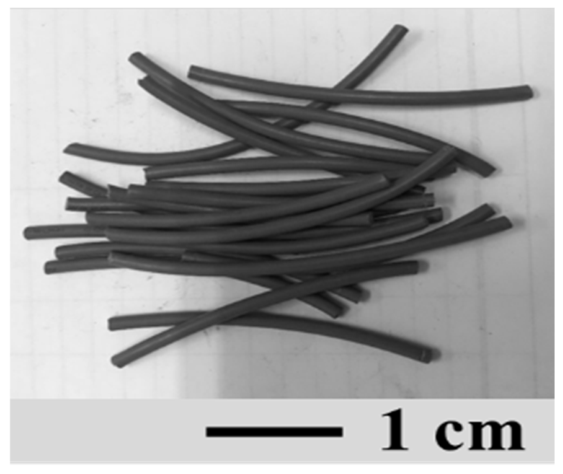
Waste wire harnesses provided by a domestic company were used in the experiment. Figure 1 shows a photo of the sample used, and Table 1 shows its composition. It is noted that the diameter of this sample is 2 mm. The cable was manually separated into the metallic wire (Cu) and the polymeric coating, and the mass of each fraction was measured to determine the cable composition. The coating was analyzed by scanning electron microscopy–energy dispersive X-ray spectroscopy (SEM-EDS) (JSM-6510A and JED-2300 Analysis Station Plus, JEOL, Ltd., Tokyo, Japan) for elemental and morphological analyses. The copper content of the metallic wire fraction was found to be 40.5 wt%, with a variation of approximately 0.2 wt% based on preliminary measurements of different waste wire harness samples. Chlorine (Cl) is derived from PVC, while aluminum (Al), calcium (Ca), and silicon (Si), present as Al2O3, CaCO3, and SiO2, are attributed to additives in the polymeric coating.

2.2. Experimental Procedure

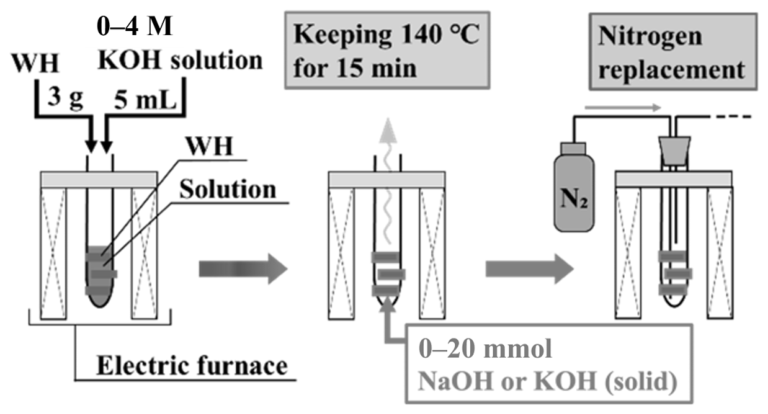
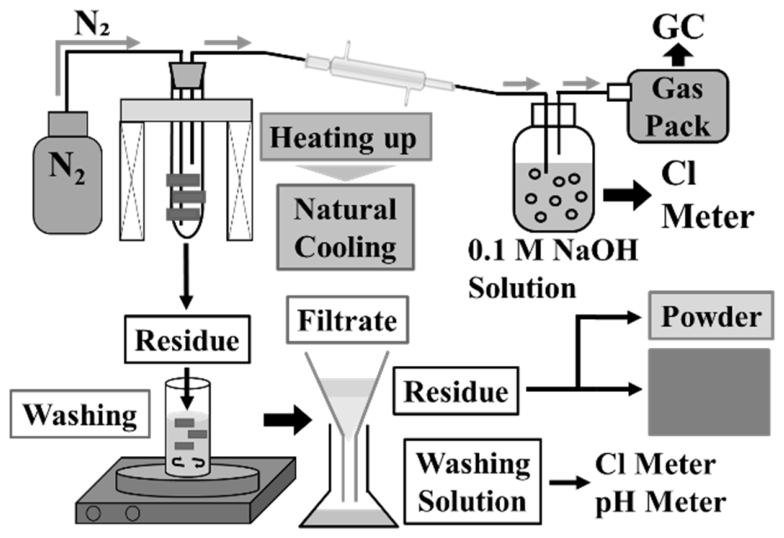
The experiment was performed as follows: For coating treatment of alkali hydroxides for wire harness (Figure 2), a 0–4 M alkali hydroxide (NaOH or KOH) solution (5 mL) was placed in a reactor along with a waste wire harness (3 g) and immersed in the solution. The reactor was heated to 140 °C for 15 min and kept for 15 min to evaporate water, leaving 0–20 mmol of alkali hydroxide solid with the sample. Then, nitrogen gas was flowed into the reactor at 200 mL/min for 15 min to replace the inside of the reactor with nitrogen gas. After the replacement, the flow rate of nitrogen gas was changed to 20 mL/min, and the temperature was raised to 500 °C in 45 min under a nitrogen atmosphere, followed by natural cooling for 30 min. Gases generated during heating were collected with 0.1 M NaOH solution (200 mL) for Cl gas by dissolving, and non-condensable gases (H2, CH4) were collected with a 2 L polyvinylidene fluoride (PVDF) gas sampling bag. The amount of Cl gas and non-condensable gas evolved was measured with a chlorine ion meter (CL-10Z, KRK, Co., Ltd., Kyoto, Japan) and gas chromatography (GC-8A, Shimadzu Corporation, Kyoto, Japan) to calculate the generated gas amounts, respectively, as follows:
V C l = C C l V s o l  
V C l : the amount of generated Cl gas (mol); C C l : the Cl ion solution of NaOH solution (mol/L); and V s o l : the volume of NaOH solution (L).
V H 2 , C H 4 = C H 2 , C H 4 V 0
V H 2 , C H 4 : the amount of H2 and CH4 gas (mL); C H 2 , C H 4 : detection rates of each component by gas chromatography; and V 0 : the total gas volume (mL).
The residue, after heating, was removed from the reactor and washed with 100 mL distilled water at 40 °C for 1 h. After filtration and drying, the solid residue and copper wire were separated by sieving with a 2 mm hole diameter sieve. The washing solution was measured for chlorine concentration with a chlorine ion meter and pH with a pH meter (HORIBA, Ltd., Kyoto, Japan) (Figure 3). The morphologies of the obtained residue were observed using SEM.

3. Results and Discussion

3.1. Potassium Hydroxide

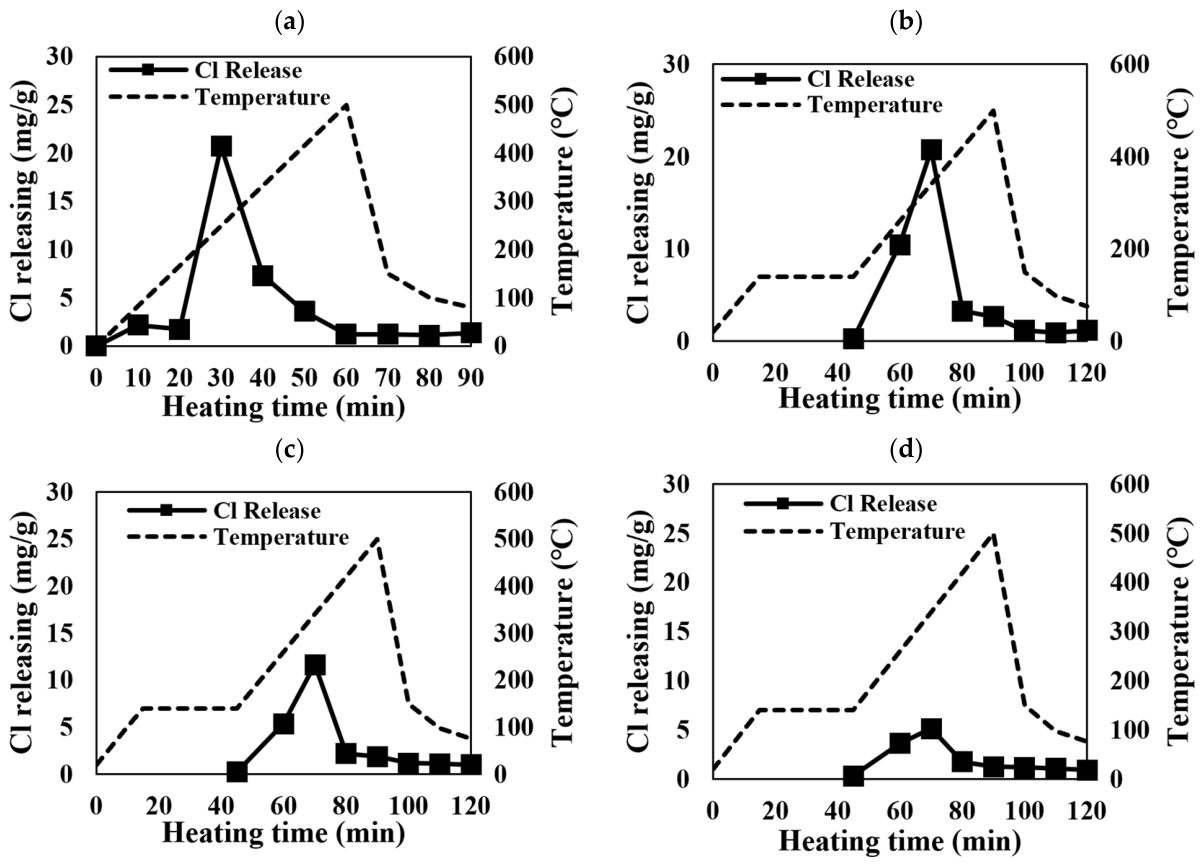
Figure 4 shows the amount of generated HCl gas during heating with KOH of 0–20 mmol. Without KOH, HCl gas was generated at around 300 °C. The generated HCl gas decreased with increasing KOH addition and was almost zero for KOH addition of 20 mmol.
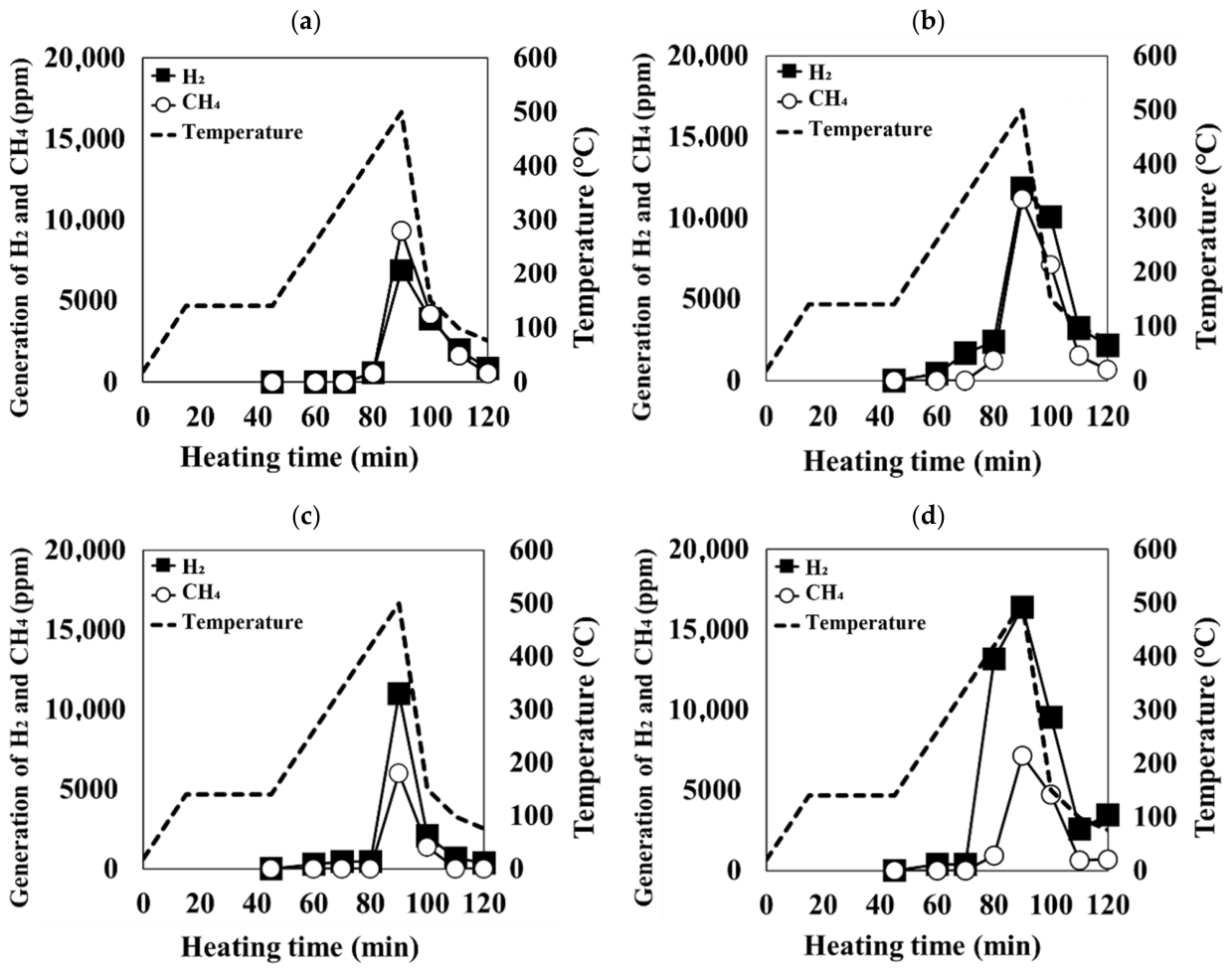
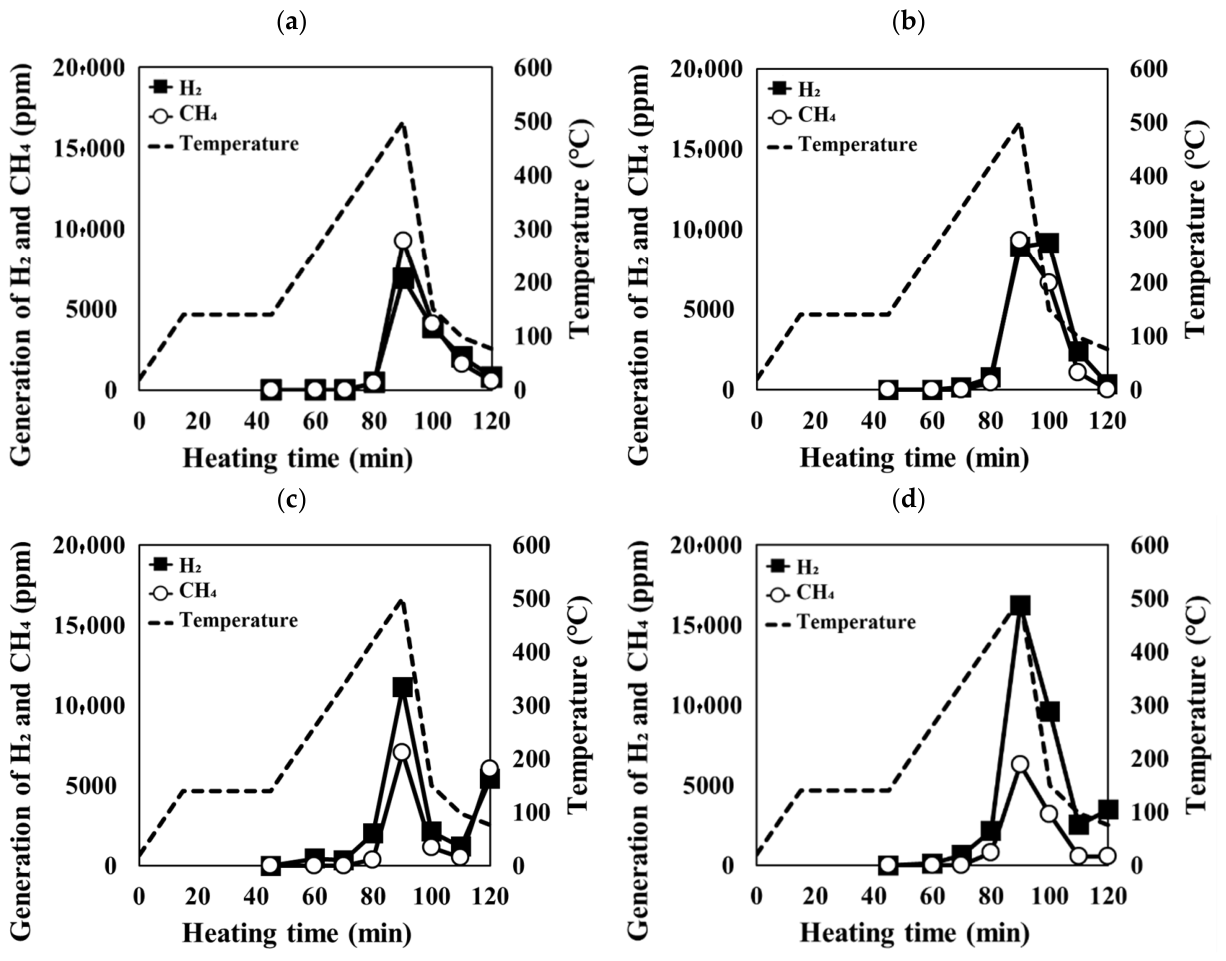
Figure 5 shows the amounts of H2 and CH4 generated during heating with KOH of 0–20 mmol. No significant change in the amount of H2 and CH4 was observed for the addition of 0 to 10 mmol, but the amount of H2 gas increased for adding 20 mmol. An increase in H2 at 20 mmol KOH is attributable to enhanced dehydrochlorination of PVC by efficient HCl scavenging (neutralization), which promotes subsequent gasification of the carbonaceous residue, releasing additional H2 [16]. On the other hand, the amount of CH4 gas did not change significantly with the increase in KOH added.
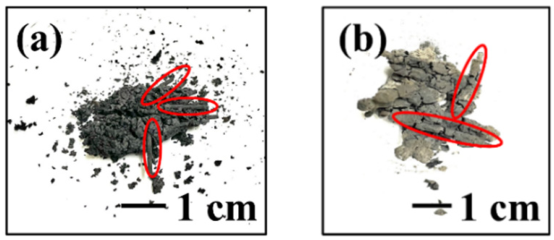
Figure 6 shows the appearance of the residue after heating with KOH of 0 and 20 mmol before washing. Without KOH, the copper wire (indicated by red circles) was covered with black, fine-grained carbonized residue, while with 20 mmol KOH, a gray and dry residue covered the copper wire. The residue yield excluding recovered copper after pyrolysis with 20 mmol KOH was 32.3 ± 3.2 wt% of the total sample mass (n = 3).
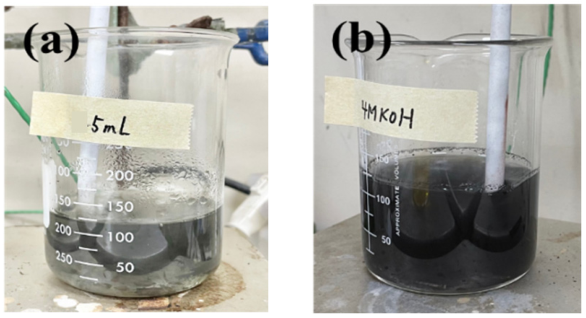
Figure 7 shows the residue with 0 and 20 mmol KOH in distilled water after washing for 10 min. The solution with residue without KOH addition was translucent because the residue was not completely dissolved, while the residue with KOH addition dissolved and the solution became black.
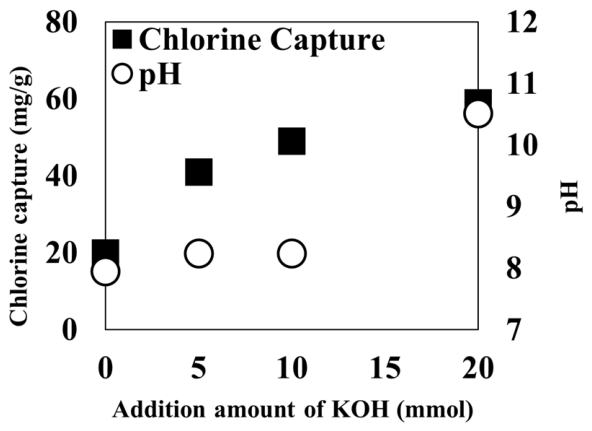
Figure 8 shows the captured Cl in the washing solution and the pH of the solution obtained from washing the residue after pyrolysis. The amount of captured Cl increased as the amount of KOH added increased. At 20 mmol KOH addition, the captured Cl in the washing solution was approximately 5.98 wt% relative to the total sample mass, which is consistent with the initial Cl content (5.1 wt%, Table 1), confirming that virtually all the chlorine generated during pyrolysis was successfully captured as KCl. The pH did not change significantly (pH 8) until 10 mmol KOH residue was added but increased to pH 10.5 by adding 20 mmol KOH. It is thought that 20 mmol KOH was reacted with HCl, and the surplus unreacted KOH remained in the residue. It is noted that an increase in H2 generation was observed at 20 mmol (Figure 5d), which may be due to the presence of surplus KOH.
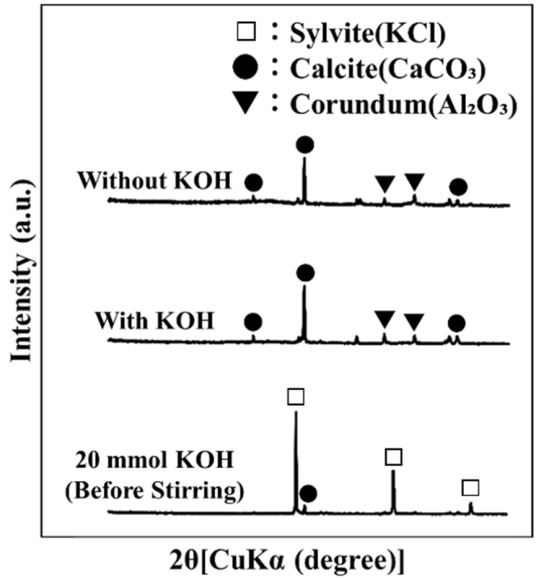
Figure 9 shows the XRD pattern of the residue obtained by drying and sieving after washing the residue obtained by pyrolysis with and without KOH. The residue obtained by 20 mmol KOH addition before washing showed the sylvite peaks (KCl), while the XRD pattern after washing showed no sylvite peaks, and the peaks of calcite (CaCO3) and corundum (Al2O3) appeared. It is noted that the XRD pattern of the residue with and without KOH after washing is almost the same. KOH captured HCl gas to form KCl, and the elution of KCl occurred by washing to appear at the peaks of calcite and corundum.
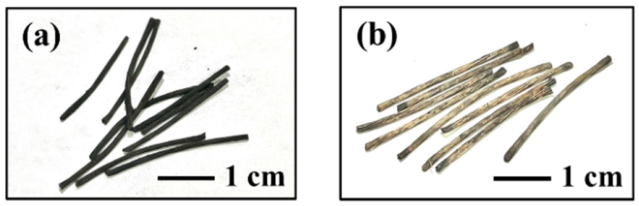
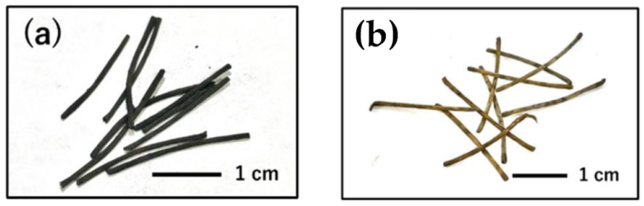
Figure 10 shows the copper wire recovered from the residue with 0 and 20 mmol KOH by sieving after washing and drying. Without KOH addition, the recovered copper wire had a black surface without exfoliating the residue. In contrast, with KOH addition, the residue was exfoliated, and the metallic luster of copper could be observed. The copper recovery rate was 100.0 ± 0.6% (mean ± SD, n = 3) in replicate experiments conducted using 20 mmol KOH, indicating that virtually all the copper was successfully recovered.
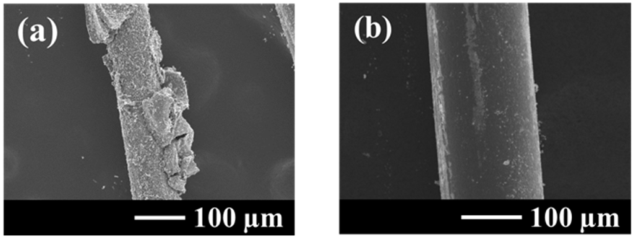
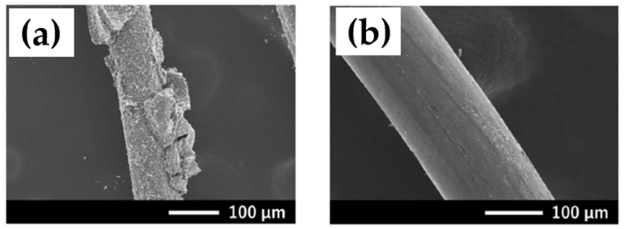
Figure 11 shows SEM images of the surface of the copper wire obtained by stirring, drying, and sieving the residue obtained from pyrolysis with and without KOH. The surface of the copper wire obtained with KOH addition was almost smooth without adhering to the object, while that without KOH was covered with some residues of coating. This residue is mainly attributable to carbonaceous residues generated during PVC thermal degradation, which can deposit on the copper surface.

3.2. Sodium Hydroxide

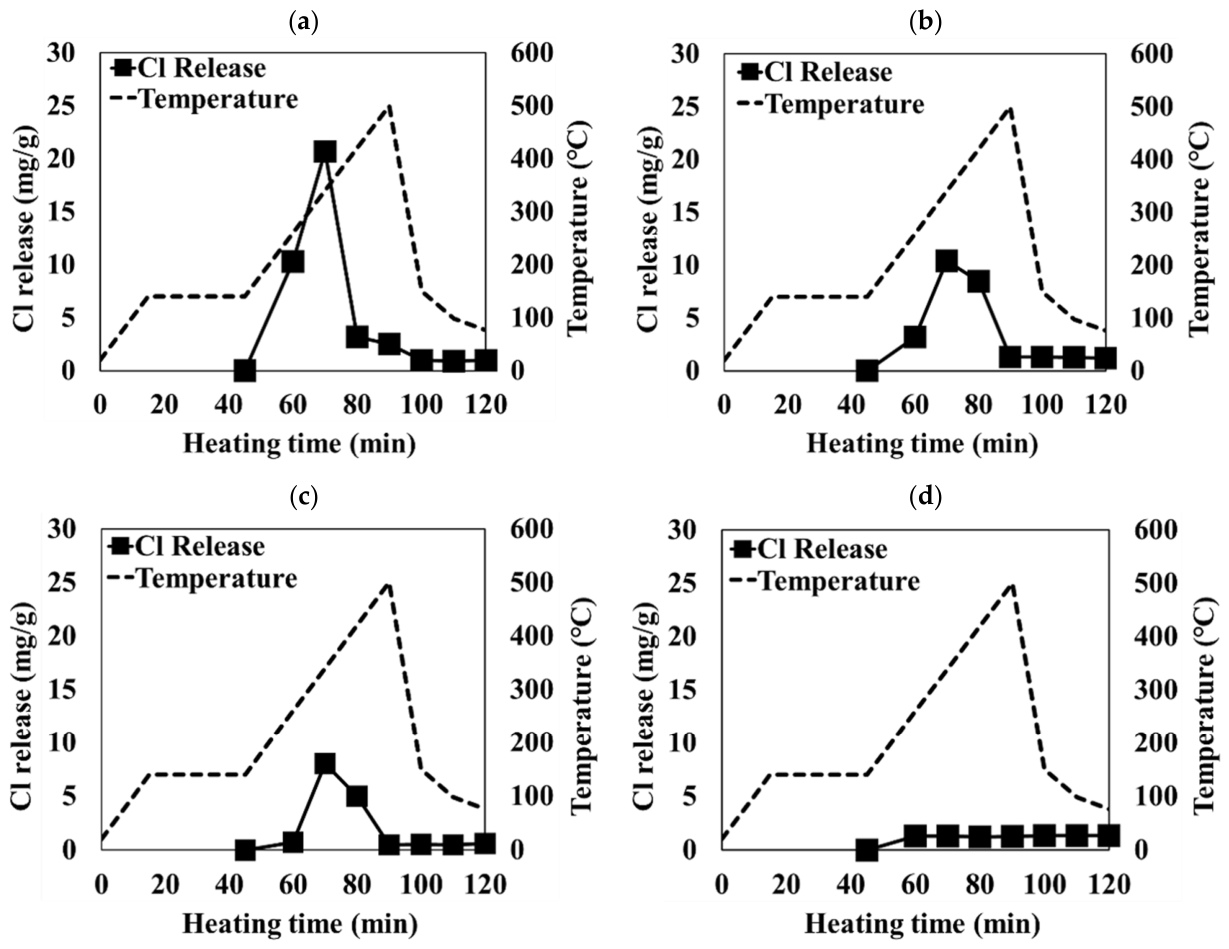
Figure 12 shows the amount of HCl gas generated during heating with NaOH of 0–20 mmol. Without NaOH, HCl gas was generated at around 300 °C. The HCl gas generated decreased with increasing NaOH addition and was almost zero for NaOH addition of 20 mmol. The trend of HCl gas generated during heating with NaOH was almost the same as that of KOH.
Figure 13 shows the amounts of H2 and CH4 generated during heating with NaOH of 0–20 mmol. No significant change in the amount of H2 and CH4 was observed for adding 0 to 10 mmol, but the amount of H2 gas increased for adding 20 mmol. On the other hand, the amount of CH4 gas did not change significantly with the increase in NaOH added. The trend of H2 and CH4 generated during heating with NaOH was the same as that of KOH, but the total amount of H2 was low. It is thought that KOH has an advantage in converting to H2 gas than NaOH. This is likely because molten KOH exhibits higher fluidity than NaOH, which enhances contact with PVC and increases the effective reaction interface. In addition, potassium species are generally more effective gasification catalysts than sodium species, promoting dehydrochlorination, carbon–oxygen bond cleavage, and subsequent char gasification reactions. These effects collectively accelerate the conversion of PVC-derived carbonaceous intermediates into gaseous products [16].
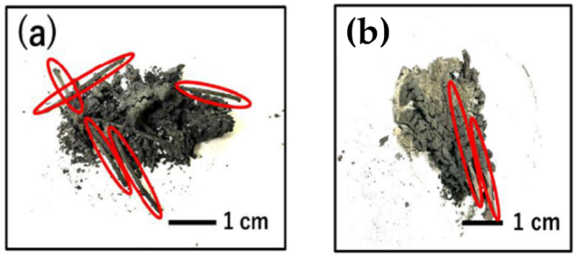
Figure 14 shows the appearance of the residue after heating with NaOH of 0 and 20 mmol. Without NaOH, the copper wire (indicated by red circles) was covered with black, fine-grained carbonized residue, while with 20 mmol NaOH, a gray and dry residue covered the copper wire. The residue yield excluding recovered copper after pyrolysis with 20 mmol NaOH was 35.6 ± 5.3 wt% of the total sample mass (n = 3). The trend of the appearance of the residue after heating with NaOH was the same as that of KOH.
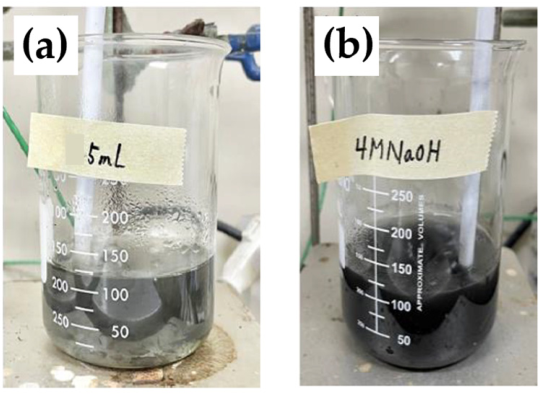
Figure 15 shows the residue with 0 and 20 mmol NaOH in distilled water after washing for 10 min. The solution with residue without NaOH addition was translucent because the residue was not completely dissolved, while the residue with NaOH addition dissolved, and the solution became black. Compared to KOH, the trend of distilled water was the same.
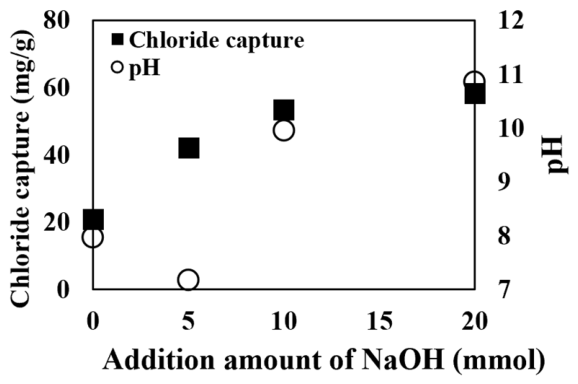
Figure 16 shows the captured Cl in the washing solution and the pH of the solution obtained from washing the residue after pyrolysis. The amount of captured Cl increased as the amount of NaOH added increased. At 20 mmol NaOH addition, the captured Cl in the washing solution was approximately 5.83 wt% relative to the total sample mass, which is consistent with the initial Cl content (5.1 wt%, Table 1), confirming that virtually all the chlorine generated during pyrolysis was successfully captured as NaCl. The pH did not change significantly (pH 8) until 5 mmol NaOH residue was added but increased to pH 10 by adding 10 mmol NaOH. The trend of chloride capture and pH using KOH is the same as that using NaOH.
Figure 17 shows the copper wire recovered from the residue with 0 and 20 mmol NaOH by sieving after washing and drying. Without NaOH addition, the recovered copper wire had a black surface without exfoliating the residue. In contrast, with NaOH addition, the residue was exfoliated, and the metallic luster of copper could be observed. The copper recovery rate was 100.2 ± 1.0% (mean ± SD, n = 3) in replicate experiments conducted using 20 mmol NaOH, indicating that virtually all the copper was successfully recovered. Compared to KOH, the trend of the recovered copper wire was the same.
Figure 18 shows SEM images of the surface of the copper wire obtained by stirring, drying, and sieving the residue obtained from pyrolysis with and without NaOH. The surface of the copper wire obtained with NaOH addition was almost smooth without adhering to objects, while that without NaOH was covered with some objects. The trend of the surface of the copper wire after heating with NaOH was the same as that of KOH.

4. Conclusions

In this study, we attempted to recover copper wires by treating wire harnesses with alkali hydroxide coexistent pyrolysis, without releasing HCl gas.
The results showed that the addition of alkali hydroxides improved HCl capture, enhanced PVC gasification, and promoted the separation of copper wire from the wire harness by pyrolysis, while pyrolysis without alkali hydroxides showed lower separation efficiency. Similar results were obtained for both NaOH and KOH. These results suggested that thin copper wire can be recovered effectively using pyrolysis with KOH and NaOH, without releasing HCl gas, from waste wire harnesses.
To validate the reproducibility of the proposed process, replicate experiments (n = 3) were conducted for copper recovery using 20 mmol KOH and NaOH, yielding recovery rates of 100.0 ± 0.6% and 100.2 ± 1.0%, respectively, demonstrating the reproducibility of the copper recovery process. A partial mass balance was constructed for pyrolysis with 20 mmol alkali hydroxide. The copper recovery accounted for 40.5 wt%, the residue excluding copper for approximately 32–36 wt%, and chlorine capture in the liquid phase for approximately 6.0 wt%. The remaining fraction (approximately 18–21 wt%) is considered to be attributed to gaseous products (H2 and CH4) and carbonaceous materials dissolved into the washing solution. Chlorine capture in the liquid phase and gaseous product yields (HCl, H2, and CH4) were also measured, though these represent single measurements. Replicate measurements across all the experimental conditions and a more complete mass balance remain as future work due to the limited availability of waste wire harness samples. Systematic benchmarking against conventional chlorine sorbents (CaO, Na2CO3, etc.) and discussions regarding environmental and economic feasibility using LCA and other methods also remain future challenges.

Author Contributions

Conceptualization, T.W.; methodology, T.W.; validation, N.K., K.K., and T.W.; formal analysis, K.K.; investigation, N.K. and K.K.; resources, T.W.; data curation, N.K. and T.W.; writing—original draft preparation, N.K. and K.K.; writing—review and editing, N.K. and T.W.; visualization, N.K.; supervision, T.W.; project administration, T.W. All authors have read and agreed to the published version of the manuscript.

Funding

This research received no external funding.

Data Availability Statement

The data supporting the findings of this study are available within the article but are not publicly available due to commercial confidentiality.

Acknowledgments

We appreciate helpful discussions with members of the Environmental Recycling Laboratory. We are grateful to the corporation for providing waste samples.

Conflicts of Interest

The authors declare no conflicts of interest.

References

  1. Nguyen, H.G.; Kuhn, M.; Franke, J. Manufacturing automation for automotive wiring harnesses. Procedia CIRP 2021, 97, 379–384. [Google Scholar] [CrossRef]
  2. Reis, B.; Cella, H.D.; Ferreira, M.; Vas, S.; Cossolino, G.; Montes, R.; Ferreira, F.F.V.M. Systematic Review of Auto Motive Wiring Harness Innovations. SAE Technical Paper Series. 2023-36-0057. Available online: https://saemobilus.sae.org/papers/a-systematic-review-automotive-wiring-harness-innovations-2023-36-0057 (accessed on 15 June 2026).
  3. Andersen, F.M.; Larsen, H.V.; Skovgaard, M. Projection of End-of-Life Vehicles: Development of a Projection Model and Estimates of ELVs for 2005–2030; European Topic Centre on Resource and Waste Management (ETC/RWM) Working Paper, 2008/2; European Topic Centre on Resource and Waste Management: Copenhagen, Denmark, 2008; pp. 1–28. [Google Scholar]
  4. Despeisse, M.; Kishita, Y.; Nakano, M.; Barwood, M. Towards a circular economy for end-of-life vehicles: A comparative study UK–Japan. Procedia CIRP 2015, 29, 668–673. [Google Scholar] [CrossRef]
  5. Villanueva-Rey, P.; Belo, S.; Quinteiro, P.; Arroja, L.; Dias, A.C. Wiring in the automobile industry: Life cycle assessment of an innovative cable solution. J. Clean. Prod. 2018, 204, 237–246. [Google Scholar] [CrossRef]
  6. Li, L.; Liu, G.; Pan, D.; Wang, W.; Wu, Y.; Zuo, T. Overview of the recycling technology for copper-containing cables. Resour. Conserv. Recycl. 2017, 126, 132–140. [Google Scholar] [CrossRef]
  7. Xu, J.; Kumagai, S.; Kameda, T.; Saito, Y.; Takahashi, K.; Hayashi, H.; Yoshioka, T. Separation of copper and polyvinyl chloride from thin waste electric cables: A combined PVC-swelling and centrifugal approach. Waste Manag. 2019, 89, 27–36. [Google Scholar] [CrossRef] [PubMed]
  8. Kumar, H.; Kumagai, S.; Kameda, T.; Saito, Y.; Yoshioka, T. Simultaneous recovery of high-purity Cu and poly(vinyl chloride) from waste wire harness via swelling followed by ball milling. Sci. Rep. 2020, 10, 10754. [Google Scholar] [CrossRef] [PubMed]
  9. Kumar, H.; Kumagai, S.; Kameda, T.; Saito, Y.; Yoshioka, T. One-pot wet ball-milling for waste wire-harness recycling. J. Mater. Cycles Waste Manag. 2021, 23, 461–469. [Google Scholar] [CrossRef]
  10. Katano, S.; Wajima, T.; Nakagome, H. Recovery of tantalum sintered compact from used tantalum condenser using steam gasification with sodium hydroxide. APCBEE Procedia 2014, 10, 182–186. [Google Scholar] [CrossRef]
  11. Wajima, T. Decomposition of mould resin in spent capacitors by NaOH for the recovery of tantalum. Int. J. Environ. Sci. Dev. 2017, 8, 285–289. [Google Scholar] [CrossRef]
  12. Wajima, T.; Matsuka, S. A new recycling process of waste glass wool using pyrolysis with sodium hydroxide. Int. J. Chem. Eng. Appl. 2019, 10, 75–79. [Google Scholar] [CrossRef]
  13. Baba, K.; Wajima, T. Recycling Technology of Fiber-Reinforced Plastics Using Sodium Hydroxide. Mech. Mater. Eng. J. 2017, 9, 150–155. [Google Scholar] [CrossRef] [PubMed]
  14. Miyazawa, M.; Wajima, T. Recycling technology for waste glass fiber reinforced plastics (GFRP) using pyrolysis with NaOH. Resour. Process. 2021, 68, 51–56. [Google Scholar] [CrossRef]
  15. Wajima, T. Pyrolysis behavior of polyvinyl chloride with sodium hydroxide and application to copper recovery from multiwire tinned copper cables. Int. J. Soc. Mater. Eng. Resour. 2022, 25, 70–77. [Google Scholar] [CrossRef]
  16. Wajima, T.; Yamamoto, K. Recovery of carbon fiber from carbon fiber reinforced plastics using alkali molten hydroxide. Sci. Rep. 2025, 15, 310. [Google Scholar] [CrossRef] [PubMed]
Figure 1. Photo of the sample.
Jcs 10 00330 g001
Figure 2. Coating treatment of alkali hydroxide for wire harnesses.
Jcs 10 00330 g002
Figure 3. Experimental procedure for pyrolysis.
Jcs 10 00330 g003
Figure 4. HCl gas release during heating with KOH of (a) 0 mmol, (b) 5 mmol, (c) 10 mmol and (d) 20 mmol.
Jcs 10 00330 g004
Figure 5. Amount of H2 and CH4 generated during heating with KOH of (a) 0 mmol, (b) 5 mmol, (c) 10 mmol and (d) 20 mmol.
Jcs 10 00330 g005
Figure 6. Residue after heating with KOH of (a) 0 mmol and (b) 20 mmol.
Jcs 10 00330 g006
Figure 7. Residue in distilled water after washing for 10 min with (a) 0 mmol and (b) 20 mmol KOH.
Jcs 10 00330 g007
Figure 8. Captured Cl and pH of washing solution at each KOH addition amount.
Jcs 10 00330 g008
Figure 9. XRD pattern of the residue obtained by drying and sieving after stirring the residue obtained by pyrolysis with and without KOH.
Jcs 10 00330 g009
Figure 10. Copper wire recovered by sieving after drying of the residue with (a) 0 mmol and (b) 20 mmol KOH.
Jcs 10 00330 g010
Figure 11. SEM images of the surface of copper wires with KOH: (a) 0 mmol and (b) 20 mmol.
Jcs 10 00330 g011
Figure 12. HCl gas release during heating with NaOH of (a) 0 mmol, (b) 5 mmol, (c) 10 mmol and (d) 20 mmol.
Jcs 10 00330 g012
Figure 13. Amount of H2 and CH4 generated during heating with NaOH of (a) 0 mmol, (b) 5 mmol, (c) 10 mmol and (d) 20 mmol.
Jcs 10 00330 g013
Figure 14. Residue after heating with NaOH of (a) 0 mmol and (b) 20 mmol.
Jcs 10 00330 g014
Figure 15. Residue in distilled water after washing for 10 min with (a) 0 mmol and (b) 20 mmol NaOH.
Jcs 10 00330 g015
Figure 16. Captured Cl and pH of washing solution at each NaOH addition amount.
Jcs 10 00330 g016
Figure 17. Copper wire recovered by sieving after drying of the residue with (a) 0 mmol and (b) 20 mmol NaOH.
Jcs 10 00330 g017
Figure 18. SEM images of the surface of copper wires with NaOH: (a) 0 mmol, (b) 20 mmol.
Jcs 10 00330 g018
Table 1. The composition of the sample.
Cu WireCovering
ClCOAlCaSi
Content
(wt.%)
40.55.138.911.30.72.70.6
Disclaimer/Publisher’s Note: The statements, opinions and data contained in all publications are solely those of the individual author(s) and contributor(s) and not of MDPI and/or the editor(s). MDPI and/or the editor(s) disclaim responsibility for any injury to people or property resulting from any ideas, methods, instructions or products referred to in the content.