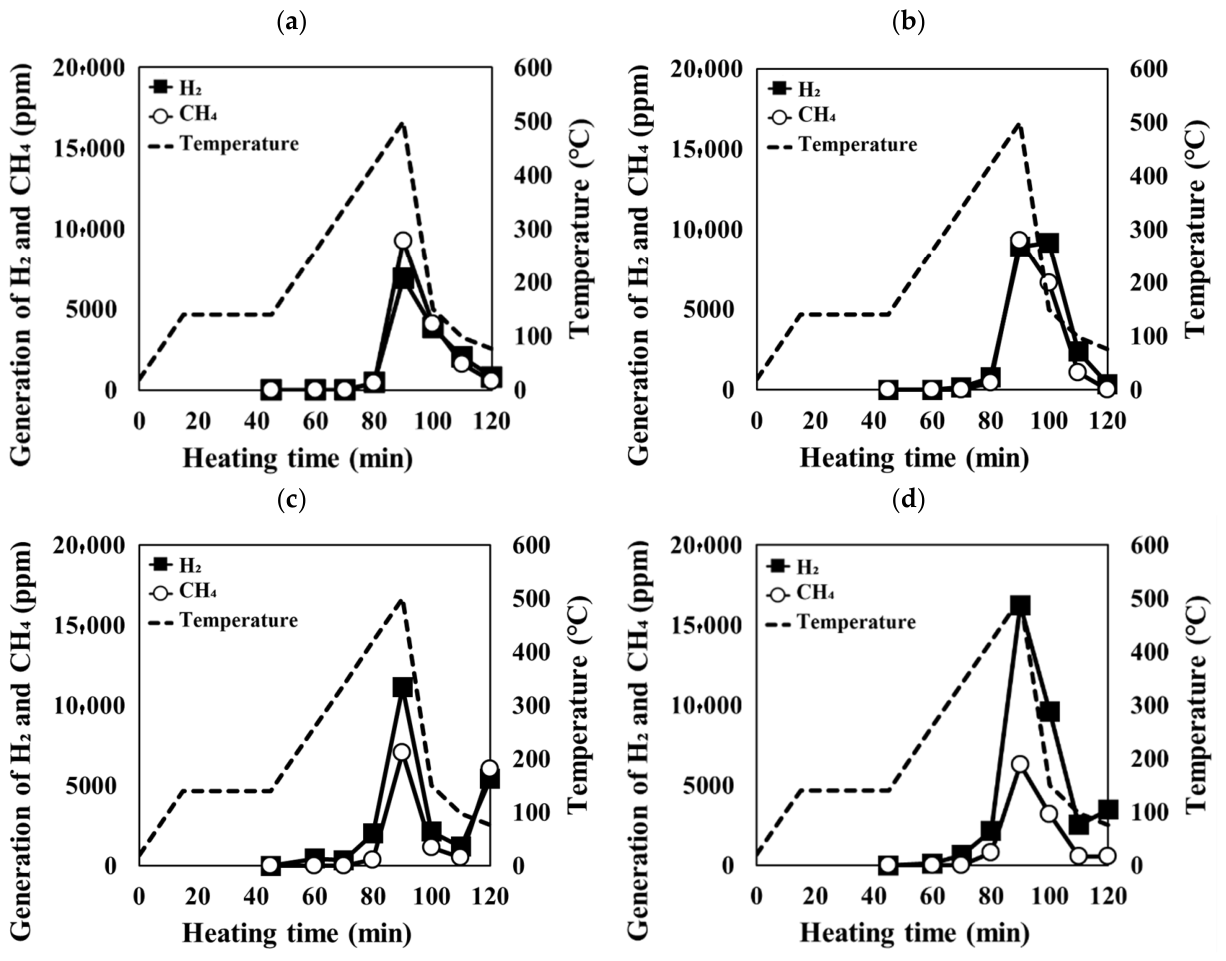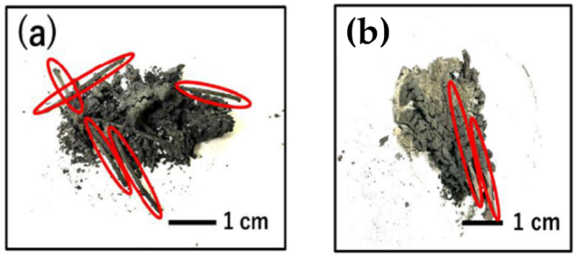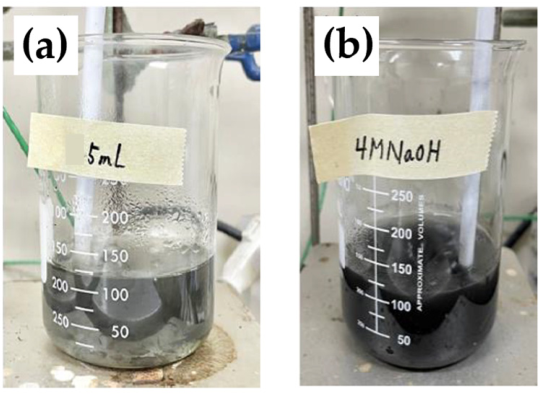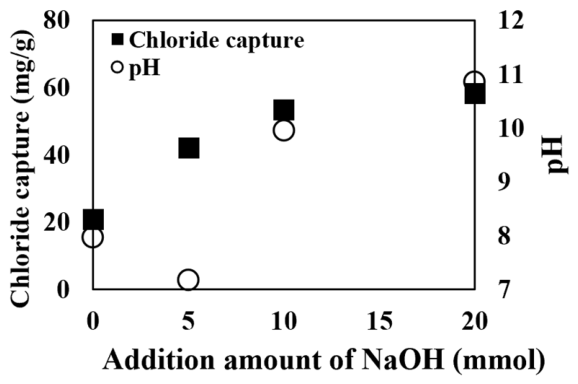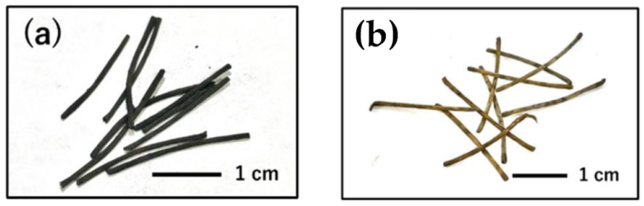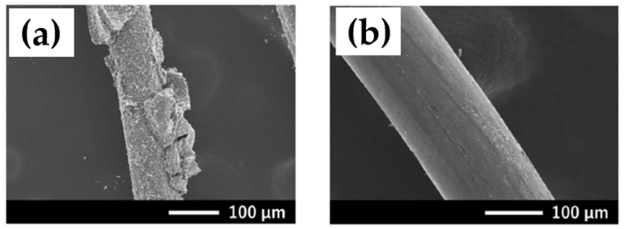


Copper Recovery from Waste Wire Harness Using Alkali Hydroxides


Abstract
1. Introduction
2. Experiment
2.1. Sample
2.2. Experimental Procedure
3. Results and Discussion
3.1. Potassium Hydroxide
3.2. Sodium Hydroxide
4. Conclusions
Author Contributions
Funding
Data Availability Statement
Acknowledgments
Conflicts of Interest
References
- Nguyen, H.G.; Kuhn, M.; Franke, J. Manufacturing automation for automotive wiring harnesses. Procedia CIRP 2021, 97, 379–384. [Google Scholar] [CrossRef]
- Reis, B.; Cella, H.D.; Ferreira, M.; Vas, S.; Cossolino, G.; Montes, R.; Ferreira, F.F.V.M. Systematic Review of Auto Motive Wiring Harness Innovations. SAE Technical Paper Series. 2023-36-0057. Available online: https://saemobilus.sae.org/papers/a-systematic-review-automotive-wiring-harness-innovations-2023-36-0057 (accessed on 15 June 2026).
- Andersen, F.M.; Larsen, H.V.; Skovgaard, M. Projection of End-of-Life Vehicles: Development of a Projection Model and Estimates of ELVs for 2005–2030; European Topic Centre on Resource and Waste Management (ETC/RWM) Working Paper, 2008/2; European Topic Centre on Resource and Waste Management: Copenhagen, Denmark, 2008; pp. 1–28. [Google Scholar]
- Despeisse, M.; Kishita, Y.; Nakano, M.; Barwood, M. Towards a circular economy for end-of-life vehicles: A comparative study UK–Japan. Procedia CIRP 2015, 29, 668–673. [Google Scholar] [CrossRef]
- Villanueva-Rey, P.; Belo, S.; Quinteiro, P.; Arroja, L.; Dias, A.C. Wiring in the automobile industry: Life cycle assessment of an innovative cable solution. J. Clean. Prod. 2018, 204, 237–246. [Google Scholar] [CrossRef]
- Li, L.; Liu, G.; Pan, D.; Wang, W.; Wu, Y.; Zuo, T. Overview of the recycling technology for copper-containing cables. Resour. Conserv. Recycl. 2017, 126, 132–140. [Google Scholar] [CrossRef]
- Xu, J.; Kumagai, S.; Kameda, T.; Saito, Y.; Takahashi, K.; Hayashi, H.; Yoshioka, T. Separation of copper and polyvinyl chloride from thin waste electric cables: A combined PVC-swelling and centrifugal approach. Waste Manag. 2019, 89, 27–36. [Google Scholar] [CrossRef] [PubMed]
- Kumar, H.; Kumagai, S.; Kameda, T.; Saito, Y.; Yoshioka, T. Simultaneous recovery of high-purity Cu and poly(vinyl chloride) from waste wire harness via swelling followed by ball milling. Sci. Rep. 2020, 10, 10754. [Google Scholar] [CrossRef] [PubMed]
- Kumar, H.; Kumagai, S.; Kameda, T.; Saito, Y.; Yoshioka, T. One-pot wet ball-milling for waste wire-harness recycling. J. Mater. Cycles Waste Manag. 2021, 23, 461–469. [Google Scholar] [CrossRef]
- Katano, S.; Wajima, T.; Nakagome, H. Recovery of tantalum sintered compact from used tantalum condenser using steam gasification with sodium hydroxide. APCBEE Procedia 2014, 10, 182–186. [Google Scholar] [CrossRef]
- Wajima, T. Decomposition of mould resin in spent capacitors by NaOH for the recovery of tantalum. Int. J. Environ. Sci. Dev. 2017, 8, 285–289. [Google Scholar] [CrossRef]
- Wajima, T.; Matsuka, S. A new recycling process of waste glass wool using pyrolysis with sodium hydroxide. Int. J. Chem. Eng. Appl. 2019, 10, 75–79. [Google Scholar] [CrossRef]
- Baba, K.; Wajima, T. Recycling Technology of Fiber-Reinforced Plastics Using Sodium Hydroxide. Mech. Mater. Eng. J. 2017, 9, 150–155. [Google Scholar] [CrossRef] [PubMed]
- Miyazawa, M.; Wajima, T. Recycling technology for waste glass fiber reinforced plastics (GFRP) using pyrolysis with NaOH. Resour. Process. 2021, 68, 51–56. [Google Scholar] [CrossRef]
- Wajima, T. Pyrolysis behavior of polyvinyl chloride with sodium hydroxide and application to copper recovery from multiwire tinned copper cables. Int. J. Soc. Mater. Eng. Resour. 2022, 25, 70–77. [Google Scholar] [CrossRef]
- Wajima, T.; Yamamoto, K. Recovery of carbon fiber from carbon fiber reinforced plastics using alkali molten hydroxide. Sci. Rep. 2025, 15, 310. [Google Scholar] [CrossRef] [PubMed]



| Cu Wire | Covering | ||||||
|---|---|---|---|---|---|---|---|
| Cl | C | O | Al | Ca | Si | ||
| Content (wt.%) | 40.5 | 5.1 | 38.9 | 11.3 | 0.7 | 2.7 | 0.6 |
Disclaimer/Publisher’s Note: The statements, opinions and data contained in all publications are solely those of the individual author(s) and contributor(s) and not of MDPI and/or the editor(s). MDPI and/or the editor(s) disclaim responsibility for any injury to people or property resulting from any ideas, methods, instructions or products referred to in the content. |
© 2026 by the authors. Licensee MDPI, Basel, Switzerland. This article is an open access article distributed under the terms and conditions of the Creative Commons Attribution (CC BY) license.
Share and Cite
Kawagoe, N.; Kagawa, K.; Wajima, T. Copper Recovery from Waste Wire Harness Using Alkali Hydroxides. J. Compos. Sci. 2026, 10, 330. https://doi.org/10.3390/jcs10070330
Kawagoe N, Kagawa K, Wajima T. Copper Recovery from Waste Wire Harness Using Alkali Hydroxides. Journal of Composites Science. 2026; 10(7):330. https://doi.org/10.3390/jcs10070330
Chicago/Turabian StyleKawagoe, Nobuyuki, Koto Kagawa, and Takaaki Wajima. 2026. "Copper Recovery from Waste Wire Harness Using Alkali Hydroxides" Journal of Composites Science 10, no. 7: 330. https://doi.org/10.3390/jcs10070330
APA StyleKawagoe, N., Kagawa, K., & Wajima, T. (2026). Copper Recovery from Waste Wire Harness Using Alkali Hydroxides. Journal of Composites Science, 10(7), 330. https://doi.org/10.3390/jcs10070330