
Research Status and Development Trends of Ambient-Temperature Reactive High-Performance Asphalt Binders
 ,
,
Abstract
1. Introduction
2. Types and Characteristics of Ambient-Temperature Reactive Asphalt Binders
2.1. Ambient-Temperature Epoxy Resin Asphalt Binders
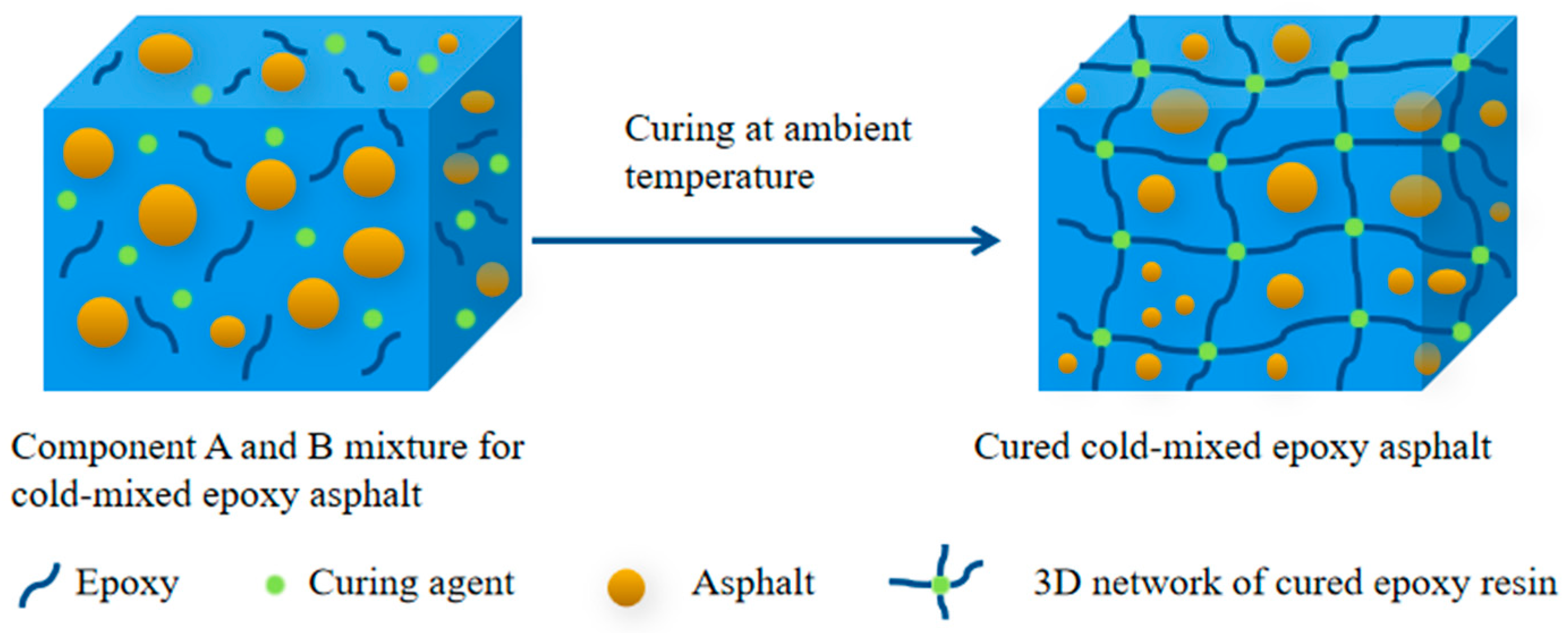
2.1.1. Composition and Strength Formation Mechanism of Epoxy Resin Asphalt Binders
2.1.2. Mix Design of Ambient-Temperature Epoxy Asphalt Binders
2.2. Ambient-Temperature Waterborne Epoxy Emulsified Asphalt Binders
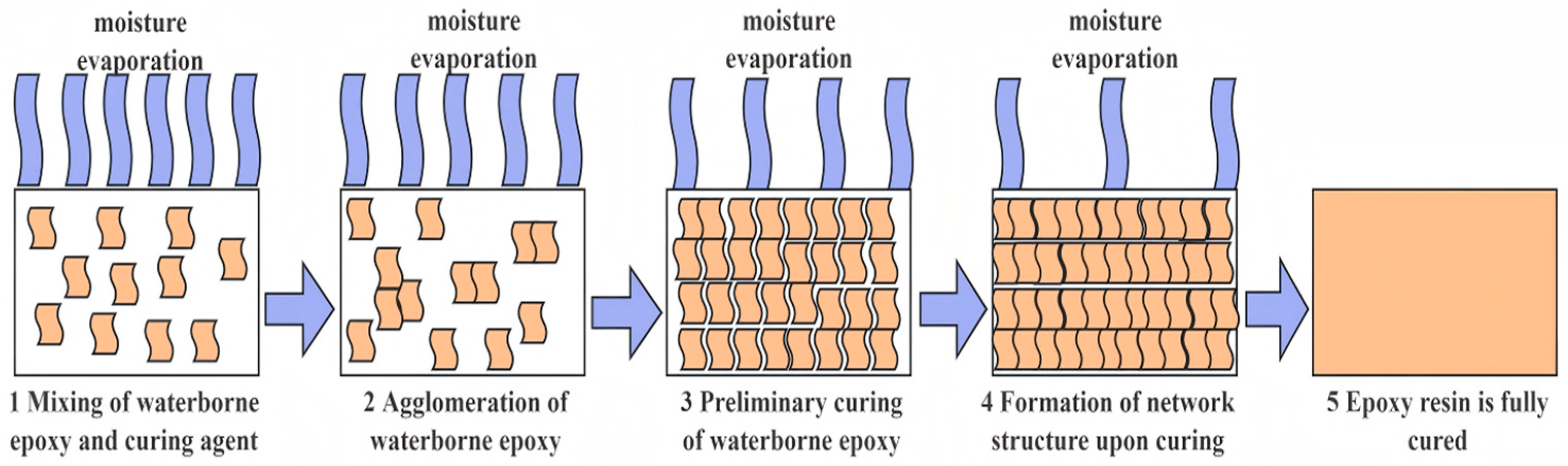
2.2.1. Composition and Strength Formation Mechanism of Ambient-Temperature Waterborne Epoxy Asphalt Binders
2.2.2. Mix Design of Ambient-Temperature Waterborne Epoxy Asphalt Binders
2.3. Ambient-Temperature Waterborne Polyurethane-Based Asphalt Binders
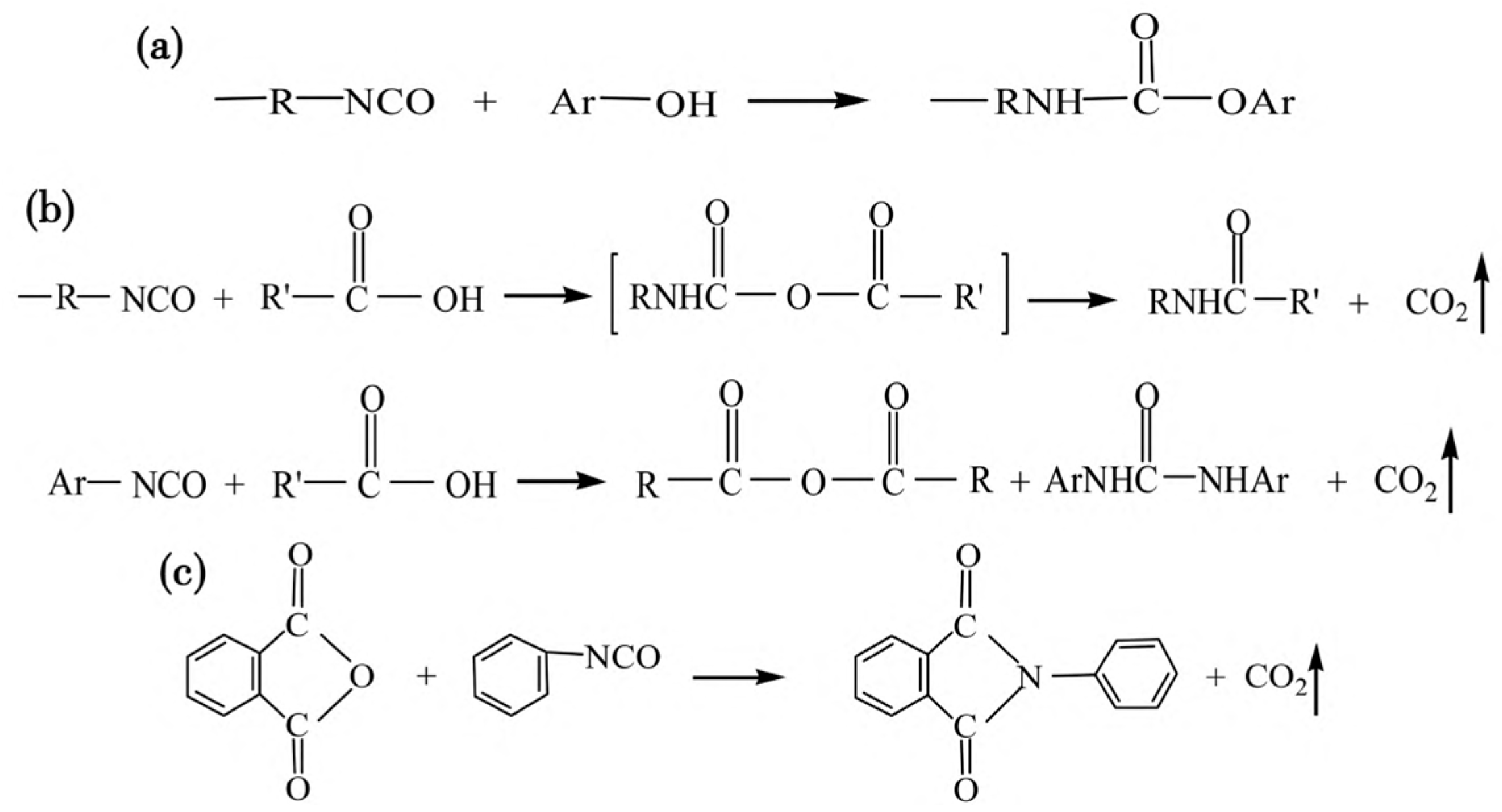
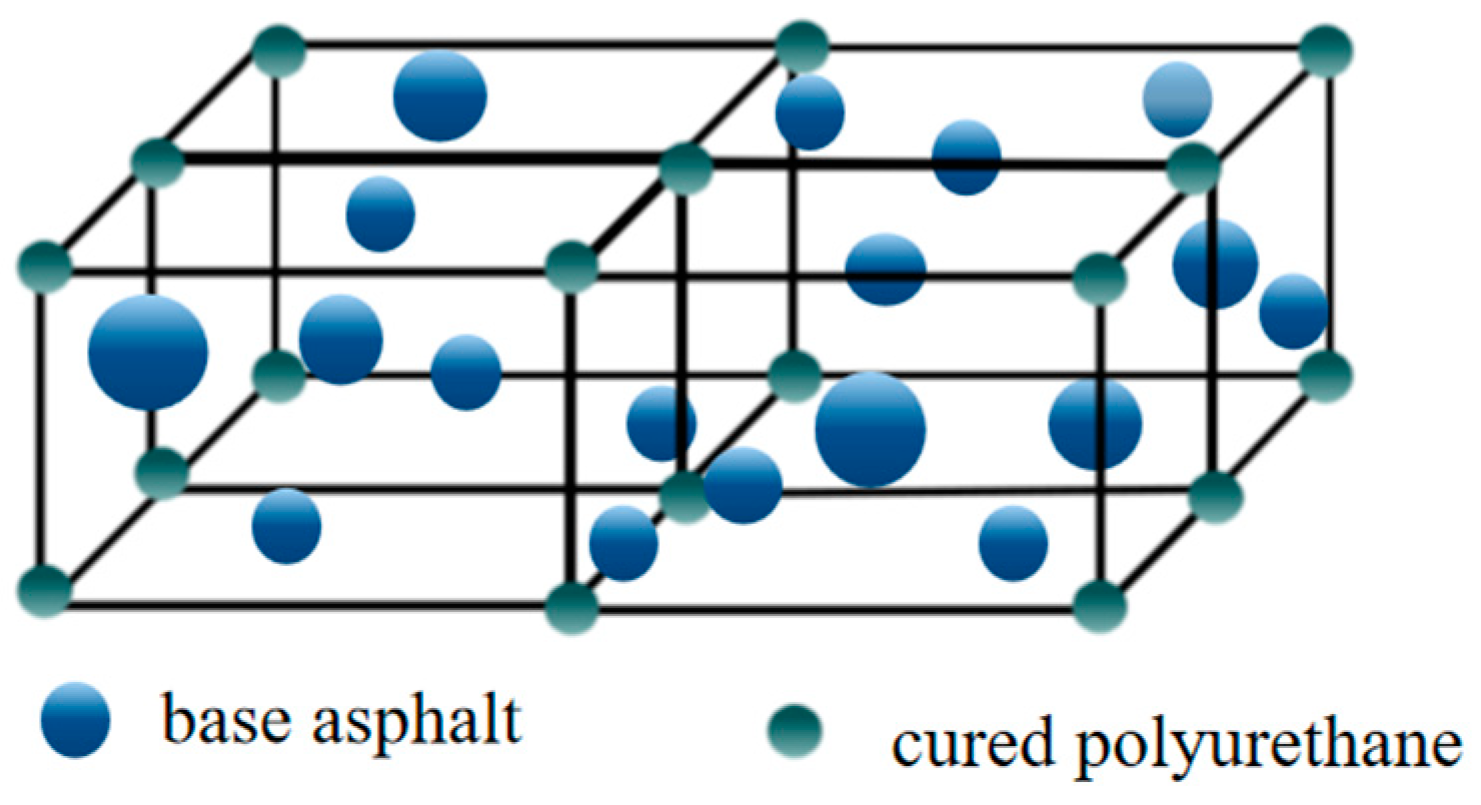
2.3.1. Composition and Strength Formation Mechanism of Ambient-Temperature Waterborne Polyurethane-Based Asphalt Binders
2.3.2. Mix Design of Ambient-Temperature Polyurethane-Based Asphalt Binders
3. Pavement Performance—Evaluation Methods for Ambient-Temperature Reactive Asphalt
3.1. Strength Evaluation
3.2. Water Stability Evaluation
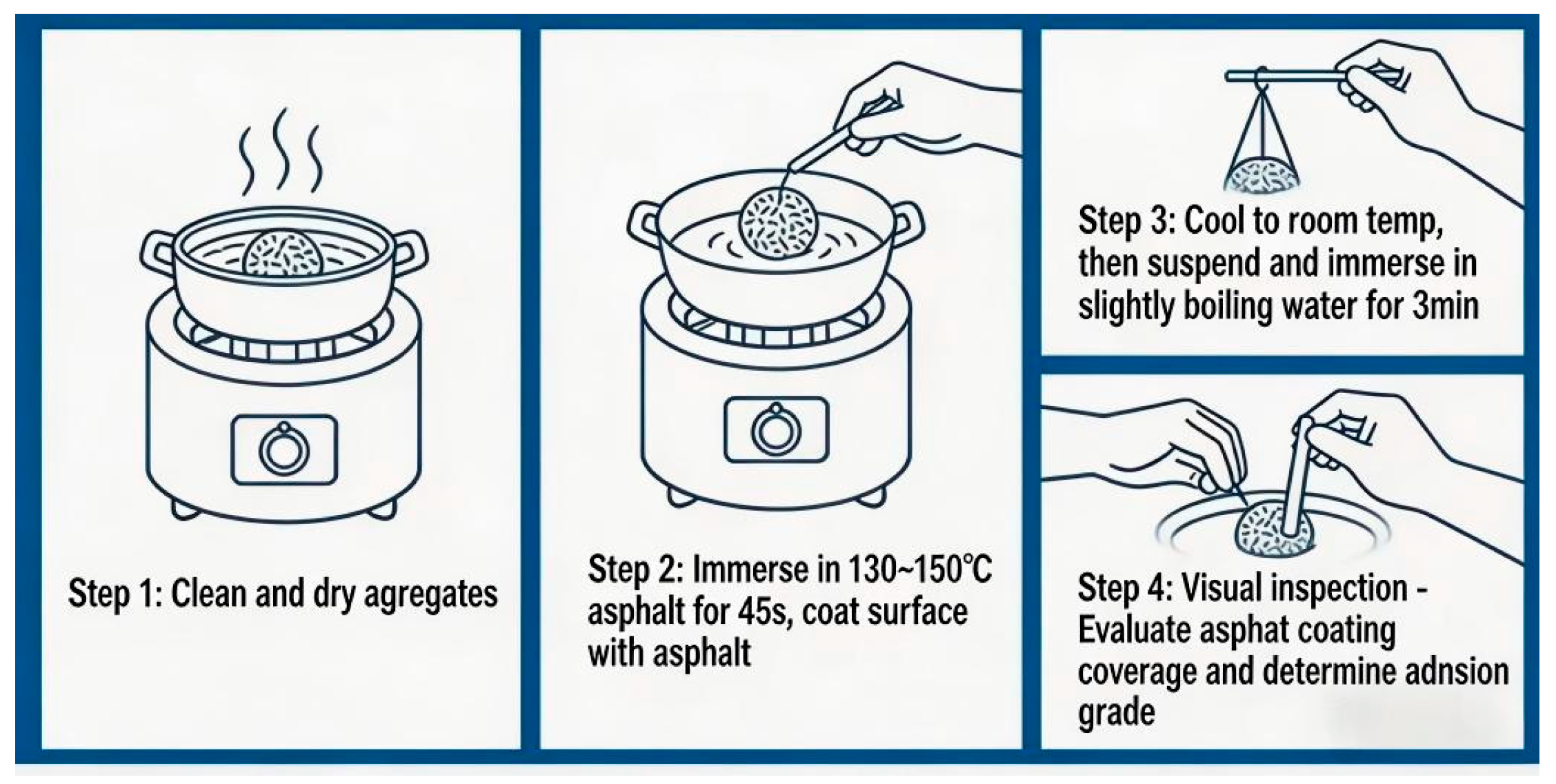
3.2.1. Boiling Water Test and Water Immersion Test
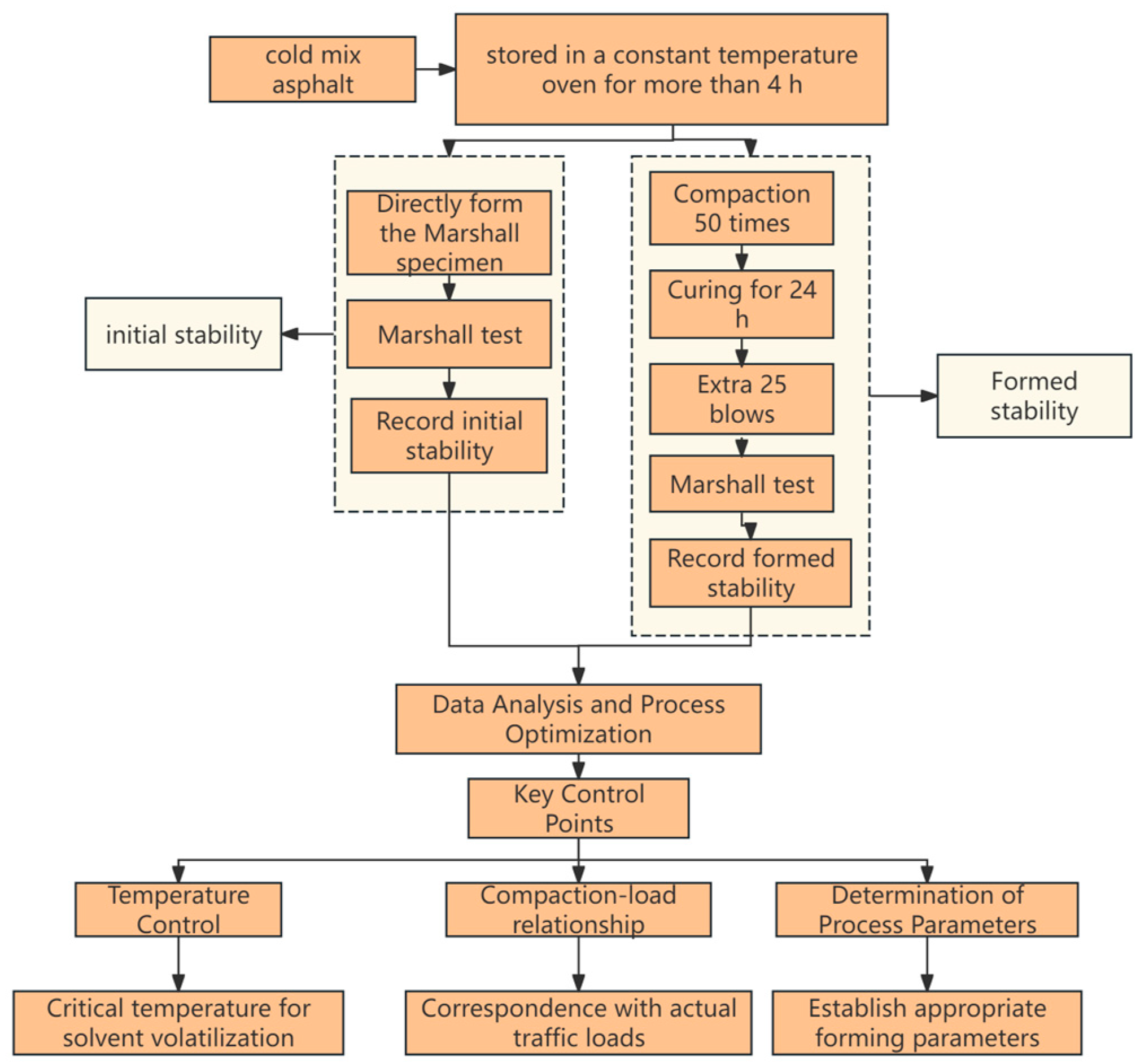
3.2.2. Immersion Marshall Test
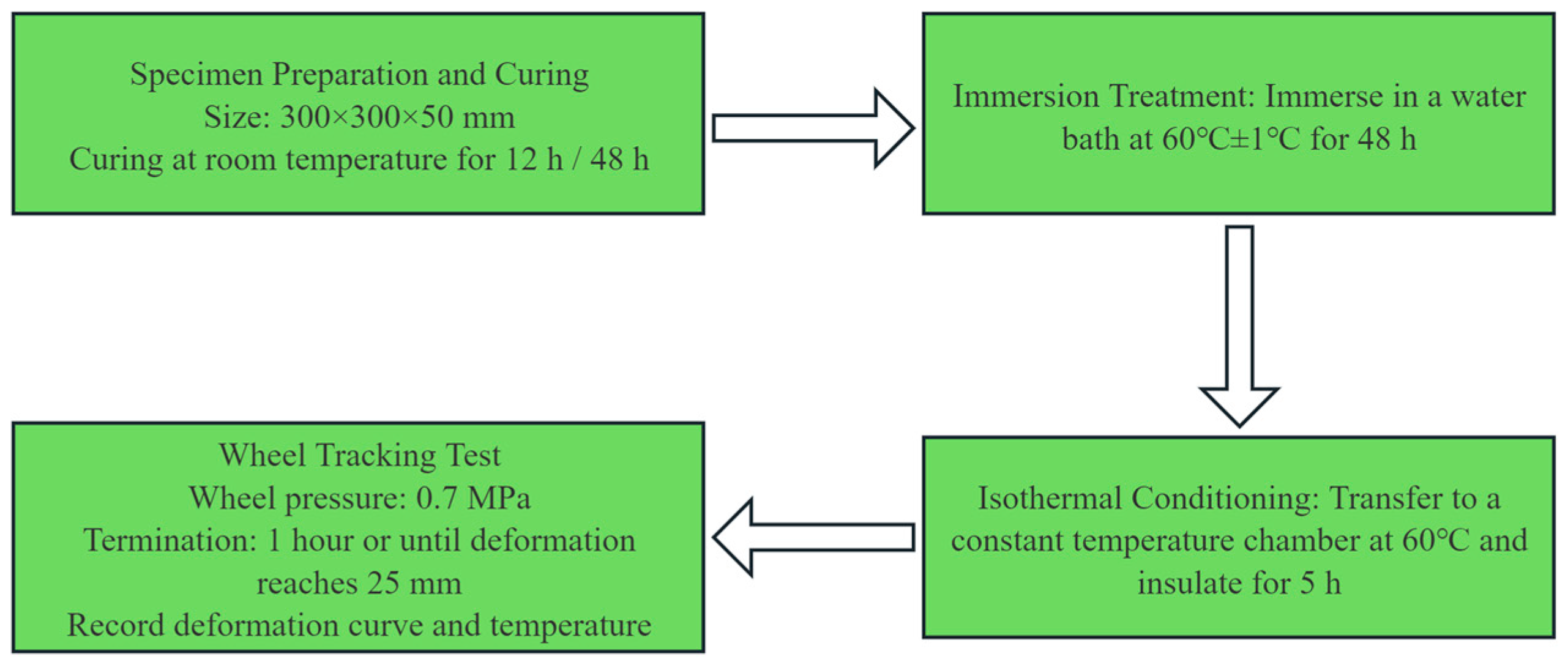
3.2.3. Immersion Wheel Tracking Test
3.2.4. Freeze–Thaw Splitting Test
3.3. High-Temperature Performance Evaluation
3.4. Comparative Analysis of Reactive Asphalt Binder Characteristics
4. Microscopic Performance Evaluation
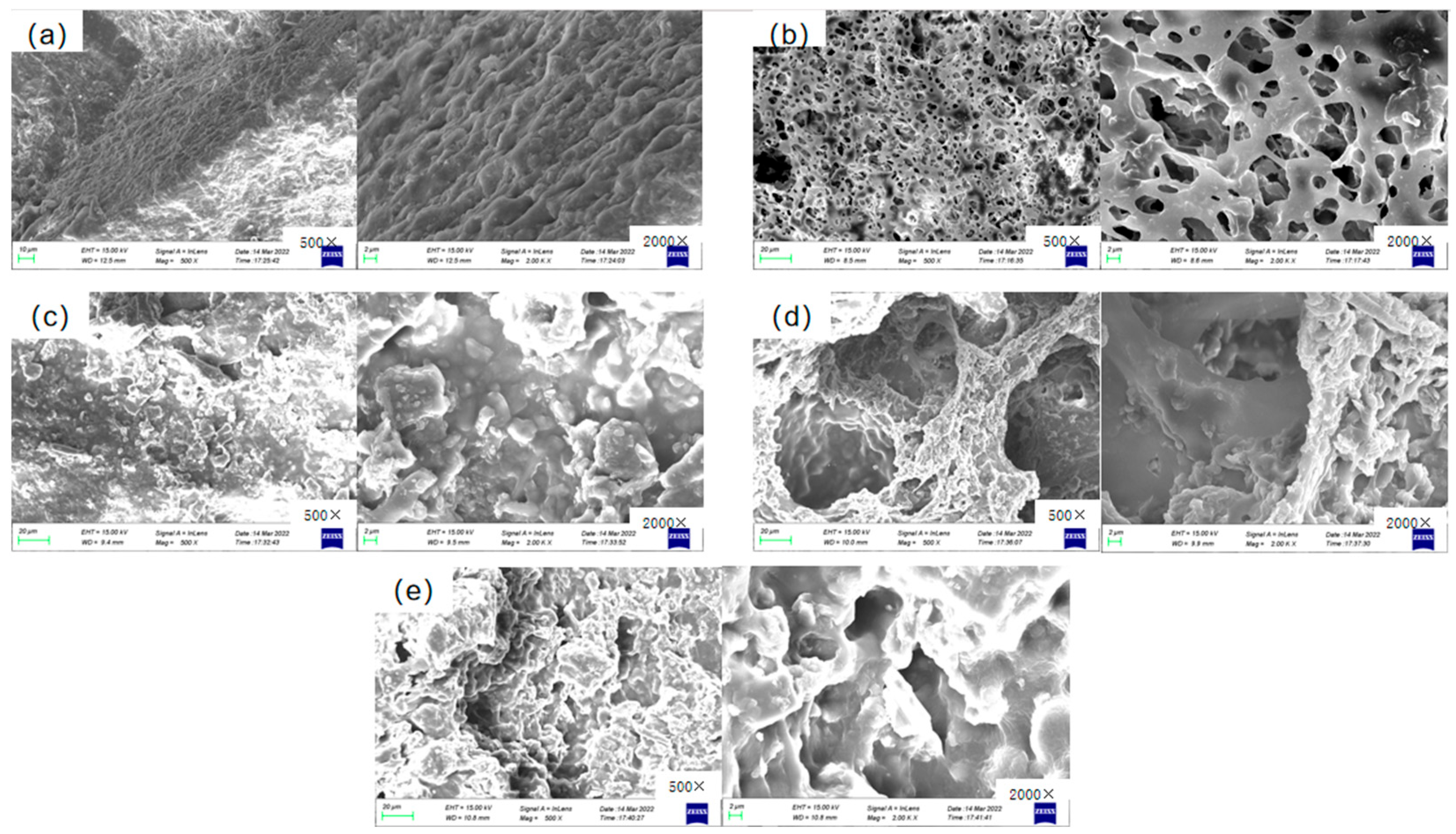
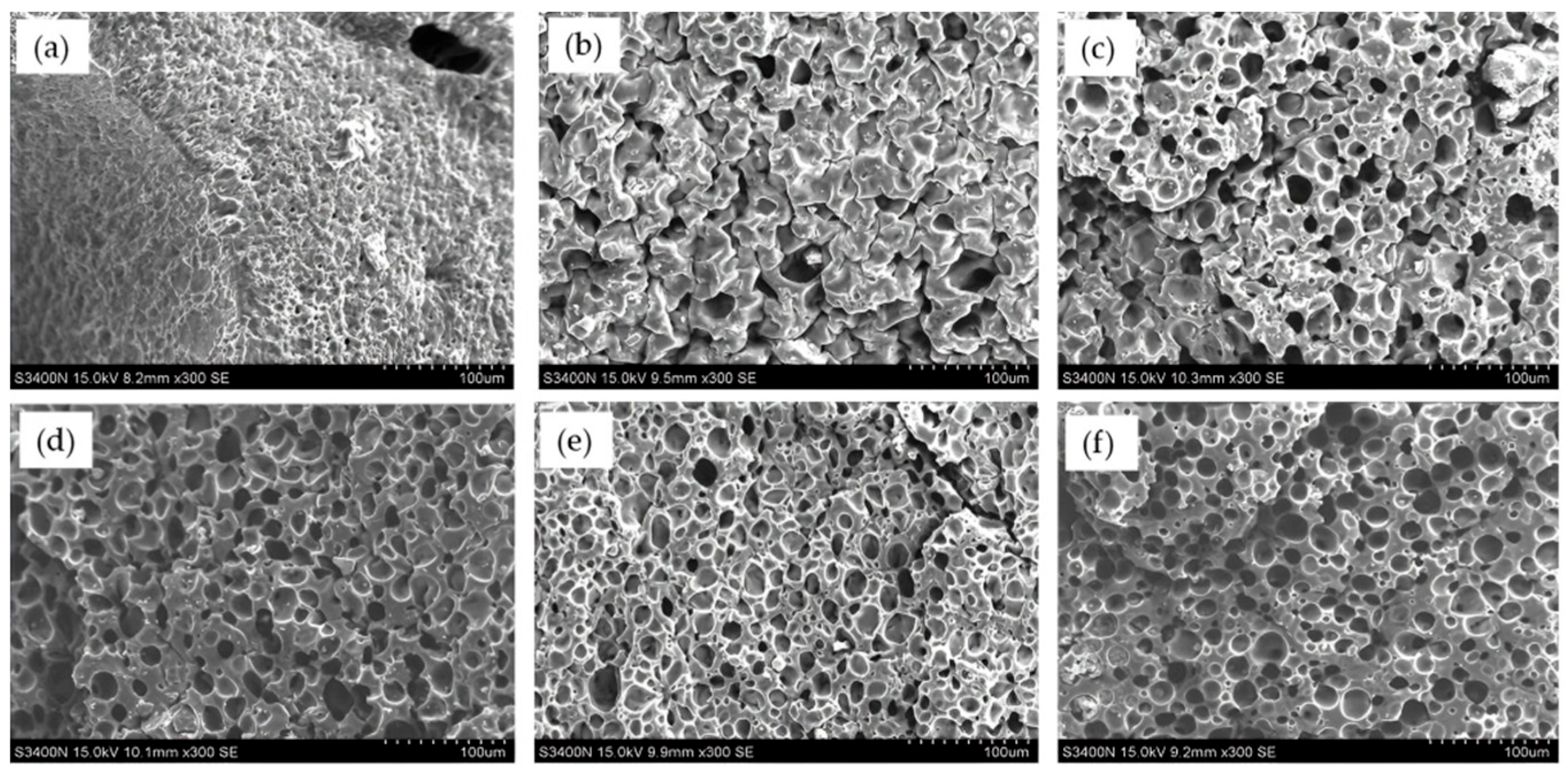
4.1. Scanning Electron Microscopy (SEM)
4.2. Fourier-Transform Infrared Spectroscopy (FTIR)
4.3. Differential Scanning Calorimetry (DSC)
4.4. Comparative Synthesis of Microscopic Evidence
5. Conclusions and Future Perspectives
5.1. Conclusions
- Well-established findings (supported by multiple independent studies with consistent results):
- (1)
- Epoxy-based ambient-temperature binders form a three-dimensional cross-linked network through curing reactions, which endows them with high stiffness, excellent high-temperature stability (dynamic stability often >10,000 cycles/mm), and strong adhesion. These binders are reliably applicable to steel deck pavements and heavy-load roads.
- (2)
- Waterborne epoxy emulsified asphalt binders undergo no chemical cross-linking between the epoxy and the asphalt; performance improvements arise from physical synergy and the intrinsic strength of the cured epoxy phase. This has been consistently shown by FTIR (no new peaks) and SEM (physical coating).
- (3)
- Polyurethane (PU) prepolymers react with active groups in aged asphalt (>OH, >COOH) to form urethane linkages, creating a three-dimensional elastomeric network that enhances fatigue resistance and low-temperature flexibility.
- Preliminary findings (supported by limited studies or with some contradictions):
- (1)
- The fatigue life of ambient-temperature reactive binders generally decreases with increasing stress ratio and temperature, and increases with loading frequency. However, quantitative models that incorporate all three factors (stress ratio, frequency, temperature) are still lacking for 100% RAP mixtures.
- (2)
- The addition of rejuvenators can partially restore the ductility of aged asphalt in 100% RAP, but the long-term stability of rejuvenated binders under field conditions has only been examined in a few short-term studies.
- Unresolved issues and knowledge gaps (requiring further research):
- (1)
- The long-term durability (≥5 years) of ambient-temperature reactive binders, especially under coupled thermal-mechanical-moisture loading, has not been systematically evaluated.
- (2)
- Standardized mix design methods and performance criteria (e.g., required curing time before trafficking, allowable air void content, moisture sensitivity thresholds) are absent. Most existing studies use arbitrary curing protocols, making direct comparison difficult.
- (3)
- Environmental lifecycle assessment (LCA) data are scarce; the lower production temperature does not automatically guarantee lower overall emissions when the upstream production of epoxy resins and PU prepolymers is considered.
5.2. Future Perspectives
- Innovation and mechanistic understanding of water-triggered curing systems: This entails developing highly moisture-sensitive prepolymers (e.g., modified polyurethanes, specialty epoxies) capable of rapid and controlled cross-linking upon exposure to ambient humidity, achieving “lay-and-strong” functionality. Systematic investigation is required to elucidate the dual role of water—both as a reactant and a plasticizer—in the curing process, clarifying its impact on reaction kinetics and the characteristics of the resultant polymer network to inform rational molecular design.
- Adaptive curing and internal humidity regulation technologies: Research should focus on developing intelligent materials with moisture-controlled-release or absorption functionalities (e.g., mineral-based water carriers, humidity-responsive microcapsules). The objective is to engineer an internally regulated humidity environment within the material matrix, mitigating the influence of fluctuating external conditions and ensuring uniform and stable strength development across diverse climatic zones.
- Functionally integrated water-activated smart materials. Future efforts should aim to synergistically integrate water-activated curing with other advanced functionalities, such as self-healing, anti-aging, and de-icing capabilities. This involves developing pavement materials with “sense–respond–repair” capabilities, for instance, through moisture-triggered microcapsule-based healing systems or the simultaneous activation of anti-ultraviolet components upon moisture exposure, thereby significantly extending pavement service life.
- Standardization system development and life-cycle assessment. A concerted effort is urgently needed to establish comprehensive technical standards for ambient-temperature reactive asphalt binders, including water-activated variants, encompassing specifications for design, construction, acceptance, and maintenance. Concurrently, integrated environmental and economic life-cycle assessments, spanning from material production to end-of-life recycling, must be conducted to provide a robust scientific basis for informed and sustainable application decisions.
Funding
Data Availability Statement
Acknowledgments
Conflicts of Interest
References
- GB/T 37383-2019; Terminology for Asphalt Mixture. Standardization Administration of China. Standards Press of China: Beijing, China, 2019.
- Xing, X. Preparation and Performance Study of Cold Patch Asphalt Mixture. Master’s Thesis, Southeast University, Nanjing, China, 2016. [Google Scholar]
- Guo, M.; Tan, Y.; Zhou, S. Multiscale test research on interfacial adhesion property of cold mix asphalt. Constr. Build. Mater. 2014, 68, 769–776. [Google Scholar] [CrossRef]
- Doyle, T.A.; McNally, C.; Gibney, A.; Tabaković, A. Developing a maturity method for the assessment of cold-mix bituminous materials. Constr. Build. Mater. 2013, 38, 524–529. [Google Scholar] [CrossRef]
- Diaz, L.G. Creep performance evaluation of Cold Mix Asphalt patching mixes. Int. J. Pavement Res. Technol. 2016, 9, 149–158. [Google Scholar] [CrossRef]
- Zhang, T. Research on Cold-Mix and Cold-Lay Asphalt Mixture. Ph.D. Dissertation, Chongqing University, Chongqing, China, 2007. [Google Scholar]
- El-Hawary, M.M.; Abdel-Fattah, H. Temperature effect on the mechanical behavior of resin concrete. Constr. Build. Mater. 2000, 14, 317–323. [Google Scholar] [CrossRef]
- Yang, Y.; Zhu, G.; Yang, Y. A review of material composition and performance evaluation of cold patch asphalt mixture. J. China Foreign Highw. 2023, 43, 221–229. [Google Scholar]
- Testa, S.M. Chemical aspects of cold-mix asphalt incorporating contaminated soil. J. Soil Contam. 1995, 4, 191–207. [Google Scholar] [CrossRef]
- Budziński, B.; Mieczkowski, P.; Słowik, M.; Mielczarek, M.; Bilski, M.; Fornalczyk, S. Assessment of the low-temperature performance of asphalt mixtures for bridge pavement. Road Mater. Pavement Des. 2023, 24, 409–423. [Google Scholar] [CrossRef]
- Lü, W. Key technologies and application prospects of emulsified asphalt cold recycling. Pet. Asph. 2009, 23, 29–34. [Google Scholar]
- Xu, S.; Huang, Y.; Cai, S.; Li, S.; Li, J. Technological progress of cold-mix and cold-lay asphalt mixture. Road Mach. Constr. Mech. 2018, 35, 34–36. [Google Scholar]
- Mao, W. Study on Pavement Performance of Cold Patch Material for Asphalt Pavement in Permafrost Regions. Master’s Thesis, Chang’an University, Xi’an, China, 2005. [Google Scholar]
- Zhao, D.B.; Li, P.H.; Luan, S.F. Quality control of epoxy asphalt concrete pavement construction on steel deck of rail-cum-road bridge. China Railw. 2020, 123–127. [Google Scholar]
- Si, J.; Jia, Z.; Wang, J.; Yu, X.; Li, Y.; Dong, F.; Jiang, R. Comparative analysis of cold-mixed epoxy and epoxy SBS-modified asphalts: Curing rheology, thermal, and mechanical properties. Constr. Build. Mater. 2018, 176, 165–171. [Google Scholar] [CrossRef]
- Liu, X.; Zhou, C.; Feng, D.; Tang, H.; Xu, Y.; Fan, X. Influence of moisture in aggregates on properties of cold-mixed resin asphalt mixture. Constr. Build. Mater. 2016, 120, 232–240. [Google Scholar] [CrossRef]
- Zhu, Y. Research on the Performance of Domestic Epoxy Asphalt Mixture. Master’s Thesis, Southeast University, Nanjing, China, 2006. [Google Scholar]
- Lü, W. Research and application of epoxy asphalt concrete materials at home and abroad. Pet. Asph. 1994, 11–15. [Google Scholar]
- Chen, D.; Wu, H.; Chen, X.; Zhan, Y.; Wada, S.A. Fabrication of high-performance asphalt mixture using waterborne epoxy-acrylate resin modified emulsified asphalt (WEREA). Polymers 2024, 16, 2743. [Google Scholar] [CrossRef] [PubMed]
- Sun, W.; Lü, X.; Zhang, L. Effect of construction factors on the performance of cold mix epoxy asphalt mixture. For. Eng. 2022, 38, 115–121. [Google Scholar]
- Chen, F.; Ma, R.; Sheng, J.X. Study and Application on Cold Blended Epoxy Asphalt Mixture for Steel Bridge Deck Pavement. Key Eng. Mater. 2017, 744, 190–195. [Google Scholar] [CrossRef]
- Bi, Y.; Li, R.; Han, S.; Pei, J.; Zhang, J. Development and performance evaluation of cold-patching materials using waterborne epoxy-emulsified asphalt mixtures. Materials 2020, 13, 1224. [Google Scholar] [CrossRef]
- Liu, H. Research on Waterborne Epoxy Resin Emulsified Asphalt Binder and Its Micro-Surfacing Performance. Master’s Thesis, Chang’an University, Xi’an, China, 2022. [Google Scholar]
- Hu, P.; Qu, X. Study on pavement performance of cold-mix epoxy asphalt mixture. Constr. Technol. 2018, 47, 1151–1154. [Google Scholar]
- Zhang, P. Performance Research and Analysis of Cold Recycled Waterborne Epoxy Emulsified Asphalt Mixture. Master’s Thesis, Chongqing Jiaotong University, Chongqing, China, 2020. [Google Scholar]
- Lai, C.X. Preparation and Performance of Wood Tar Modified Waterborne Epoxy Emulsified Asphalt Mixture. Master’s Thesis, Fujian Agriculture and Forestry University, Fuzhou, China, 2022. [Google Scholar]
- Kong, X.Y.; Wang, C.; Liu, X.; Yao, H.; Wang, D.; Zhang, Q. Study on mix design method of waterborne epoxy emulsified asphalt mixture. Thermosetting Resin. 2024, 39, 30–35. [Google Scholar]
- Tan, Y.; Sun, Z.; Gong, X.; Xu, H.; Zhang, L.; Bi, Y. Design parameter of low-temperature performance for asphalt mixtures in cold regions. Constr. Build. Mater. 2017, 155, 1179–1187. [Google Scholar] [CrossRef]
- Jin, X.; Li, D.; Fu, H.; Yang, Y.; Wang, F.; Yang, Y.; Zhang, J.; Guo, N. Research status and development trend of thermoplastic polyurethane (TPU) modified asphalt. Mater. Rep. 2024, 38, 621–632. [Google Scholar]
- Jing, S. Research on Properties of Polyurethane Modified Asphalt and Its Mixture. Master’s Thesis, Shandong Jianzhu University, Jinan, China, 2024. [Google Scholar]
- Li, C. Preparation of polyurethane modified asphalt and performance evaluation of its mixture. J. Wuhan Univ. Technol. 2017, 41, 958–963. [Google Scholar]
- Shu, R. Study on Performance of Polyurethane Modified Asphalt and Its Mixture. Master’s Thesis, Beijing University of Civil Engineering and Architecture, Beijing, China, 2016. [Google Scholar]
- Wang, G. Experimental study on properties of polyurethane modified asphalt and its mixture. J. Wuhan Univ. Technol. 2022, 44, 26–30. [Google Scholar]
- Huang, J. Research on performance evaluation indicators of cold-mix and cold-lay asphalt mixture. Sichuan Archit. 2015, 35, 266–267. [Google Scholar]
- Ma, R.; Li, Y.; Cheng, P.; Chen, X.; Cheng, A. Low-temperature cracking and improvement methods for asphalt pavement in cold regions: A review. Buildings 2024, 14, 3802. [Google Scholar] [CrossRef]
- Yang, W.; Jin, J.; Chan, Q.; Zheng, M.; Liu, G.; Yan, C. Quantitative evaluation method for low-temperature construction workability of solvent-based cold patch asphalt mixture. Sci. Technol. Eng. 2022, 22, 1226–1232. [Google Scholar]
- Zhao, X.; Shen, A.; Ma, B. Temperature response of asphalt pavement to low temperatures and large temperature differences. Int. J. Pavement Eng. 2020, 21, 49–62. [Google Scholar] [CrossRef]
- Fan, Z.; Xu, O.; Han, S.; Hu, C.; Wan, S.; Chen, C. Research progress on properties of polyurethane modified asphalt and its mixture. Thermosetting Resin 2025, 40, 64–68. [Google Scholar]
- Wang, H.P.; Guo, Y.X.; Wu, M.Y.; Xiang, K.; Sun, S.R. Review on structural damage rehabilitation and performance assessment of asphalt pavements. Rev. Adv. Mater. Sci. 2021, 60, 438–449. [Google Scholar] [CrossRef]
- Yi, J.; Cheng, P.; Wang, Z.; Abdukadir, A.; Pei, Z.; Yu, W.; Feng, D. Laboratory and field performance evaluation of cold-mix asphalt mixture with solvent-based liquid asphalt in winter pavement maintenance. J. Mater. Civ. Eng. 2025, 37, 04024531. [Google Scholar] [CrossRef]
- Liang, J. Study on Pavement Performance of Waterborne Epoxy Emulsified Asphalt Mixture Thin Overlay. Master’s Thesis, Guangzhou University, Guangzhou, China, 2019. [Google Scholar]
- Zhuang, W.; Yan, Z.; Sun, M. Study on performance of cold-mix and cold-lay polyurethane mixture. Shandong Chem. Ind. 2024, 53, 9–12. [Google Scholar]
- Xiang, H.; Zhu, H.; Zhong, W. A review of evaluation methods for water stability of asphalt mixtures. J. China Foreign Highw. 2016, 36, 278–283. [Google Scholar]
- JTG E20-2011; Standard Test Methods of Bitumen and Bituminous Mixtures for Highway Engineering. Ministry of Transport of the People’s Republic of China; China Communications Press: Beijing, China, 2011.
- Huang, X.; Xu, Z.; Dong, B. Current situation and development of premixed cold-lay asphalt mixture. Road. Mach. Constr. Mech. 2013, 30, 61–64. (In Chinese) [Google Scholar]
- Wang, J.; Li, Y.; Gu, F.; Yang, M.; Chen, D.; Gu, W. Laboratory test on pavement performance of cold-mix epoxy asphalt mixture. J. Mater. Sci. Eng. 2019, 37, 296–299, 338. [Google Scholar]
- Fang, M.; Tang, G.; Wang, H.; Gao, G.; Zhu, X. Preparation of polyurethane modified asphalt and study on pavement performance of its mixture. Polyurethane Ind. 2022, 37, 18–21. [Google Scholar]
- Xu, W.; Zhuang, G.; Chen, Z.; Wei, J. Experimental study on the micromorphology and strength formation mechanism of epoxy asphalt during the curing reaction. Appl. Sci. 2020, 10, 2610. [Google Scholar] [CrossRef]
- Kong, L.; Li, J.; Luo, Q.; Shen, Z.; He, Z. Preparation and performance study of waterborne epoxy resin emulsified asphalt. Appl. Chem. Ind. 2021, 50, 2076–2081. [Google Scholar]
- Shaolong, H.; Fan, J.; Dongdong, C.; Qiang, X.; Qingjun, D. Study on Modification Mechanism and Performance of Waterborne Epoxy Resin Micro-Surfacing. Coatings 2023, 13, 504. [Google Scholar] [CrossRef]
- Behnood, A.; Gharehveran, M.M. Morphology, rheology, and physical properties of polymer-modified asphalt binders. Eur. Polym. J. 2018, 112, 766–791. [Google Scholar] [CrossRef]
- Qiu, C.; Qin, R.; Qiu, D.; Wang, M. Study on pavement performance of polyurethane compounded SBS modified asphalt. J. Traffic Sci. Eng. 2023, 39, 74–83. [Google Scholar]
- Liu, H. Preparation and Performance Study of Polyurethane/Organic Montmorillonite Composite Modified Asphalt. Master’s Thesis, Chang’an University, Xi’an, China, 2018. [Google Scholar]
- Fan, Z. Fundamental Theoretical Study on Microscopic Characteristics of Asphalt Based on Asphalt Aging. Ph.D. Dissertation, South China University of Technology, Guangzhou, China, 2016. [Google Scholar]
- Xiao, P.; Kang, A.H.; Li, X.F. Blending mechanism of SBS modified asphalt based on infrared spectroscopy. J. Jiangsu Uni. Nat. Sci. 2005, 26, 529–532. [Google Scholar]
- Chen, Y.; Tu, J.; Zhang, B.; Ding, H. Discussion on influencing factors of SBS modified asphalt analysis by infrared spectroscopy. Pet. Asph. 2014, 28, 67–72. [Google Scholar]
- Luo, S.; Li, X.; Tian, J.; Yin, J. Rapid determination technology of SBS content in modified asphalt based on infrared spectroscopy analysis. J. Chang. Univ. 2019, 39, 10–18. [Google Scholar]
- Liu, W.; Zhang, J. Application research on SBS content detection technology in modified asphalt. Pet. Asph. 2017, 31, 68–72. [Google Scholar]
- Wei, J.; Zhang, Y. Study on the curing process of epoxy asphalt. In Abstracts of ISAP 2012 International Symposium on Heavy Duty Asphalt Pavements and Bridge Deck Pavements; International Society for Asphalt Pavements: Lino Lakes, MN, USA, 2012; pp. 56–57. [Google Scholar]
- Yu, J.; Cong, P.; Wu, S.; Cheng, S. Curing behavior of epoxy asphalt. J. Wuhan Univ. Technol.-Mater. Sci. Ed. 2009, 24, 462–465. [Google Scholar] [CrossRef]
- Chen, F.; Zhou, Y.; Xi, G.; Liang, X.; Zheng, S. Research on rapid analysis method and reliability of asphalt based on infrared spectroscopy. Technol. Highw. Transp. 2022, 38, 7–12. [Google Scholar]
- Fu, S.; Ji, Z.; Yu, H.; Wang, J.; Zhan, H. Study on the influence of preparation process on the compatibility of cold-mix epoxy asphalt. Highw. Eng. 2021, 46, 112–116, 163. [Google Scholar]
- Yao, K.; Zhang, Y.; Li, H.; Zang, W. Research progress on properties of cold-mix epoxy asphalt and its mixture. New Chem. Mater. 2024, 52, 51–57. [Google Scholar]
- Wang, X.; He, W.; Liu, Z.; Shi, L. Study on properties of waterborne epoxy emulsified asphalt residue. Appl. Chem. Ind. 2025, 54, 143–146. [Google Scholar]
- Hui, B.; Li, Y.; Zhang, Y.; Yang, X. Study on compatibility and curing mechanism analysis of waterborne epoxy emulsified asphalt. New Chem. Mater. 2022, 50, 281–285. [Google Scholar]
- Shi, J. Study on Properties and Mechanism of Waterborne Epoxy Emulsified Asphalt and Its Mixture. Master’s Thesis, Hunan University, Changsha, China, 2023. [Google Scholar]
- Tan, J.; Cheng, J.; Guo, J.; Zhang, J. Effect of several amine curing agents on curing behavior and properties of epoxy resin. CIESC J. 2011, 62, 1723–1729. [Google Scholar]
- Wang, L.; Zhang, Z.; Zhu, Y.; Liu, H.; Chen, L.; Ban, X. Properties and micro-mechanism of PAPI polyurethane modified asphalt. Bull. Chin. Ceram. Soc. 2021, 40, 4158–4166. [Google Scholar]
- Xia, L. Study on Properties of Polyurethane Modified Asphalt. Master’s Thesis, China University of Petroleum (East China), Qingdao, China, 2016. [Google Scholar]
- Sun, J.; Zhang, S.; Liu, Y.; Zhang, Z.; Liu, X.; Zhang, Z.; Ban, X. Construction technology and pavement performance of dry-mix polyurethane modified asphalt mixtures: A case study. Sustainability 2023, 15, 13675. [Google Scholar] [CrossRef]
- Zhou, L. Microscopic Characteristics of Polyurethane Modified Asphalt and Its Influence on Porous Mixture Performance. Master’s Thesis, Northeast Forestry University, Harbin, China, 2023. [Google Scholar]
- Jin, X.; Guo, N.; Yan, S.; Liu, T.; You, Z. Preparation and performance study of polyurethane composite modified asphalt. China J. Highw. Transp. 2021, 34, 80–94. [Google Scholar]
- Shen, Z. Study on Properties and Mechanism of Waterborne Epoxy Composite Modified Emulsified Asphalt. Master’s Thesis, Chongqing Jiaotong University, Chongqing, China, 2023. [Google Scholar]
- Yang, F. Research on Waterborne Epoxy Emulsified Asphalt Cold Patch Material and Its Pavement Performance. Master’s Thesis, Chongqing Jiaotong University, Chongqing, China, 2018. [Google Scholar]
- Liu, X.; Zheng, M.; Cao, M.; Liu, F.; Liu, C.; Fan, X. Toughness properties of waterborne epoxy resin (WER)-styrene butadiene rubber (SBR) composite modified emulsified asphalt. China Sci. 2023, 18, 630–636. [Google Scholar]
- Wang, K.; Liu, F.; Sun, T.; Zheng, M.; Dong, C.; Fan, X. High-temperature performance of waterborne epoxy resin-styrene butadiene rubber composite modified emulsified asphalt. Sci. Technol. Eng. 2022, 22, 359–366. [Google Scholar]
- Fernandez, C.E.; Bermudez, M.; Versteegen, R.M.; Meijer, E.W.; Muller, A.J.; Munoz-Guerra, S. Crystallization studies on linear aliphatic n-polyurethanes. J. Polym. Sci. Part B Polym. Phys. 2009, 47, 1368–1380. [Google Scholar] [CrossRef]
- Begenir, A.; Michielsen, S.; Pourdeyhimi, B. Crystallization behavior of elastomeric block copolymers: Thermoplastic polyurethane and polyether-block-amide. J. Appl. Polym. Sci. 2009, 111, 1246–1256. [Google Scholar] [CrossRef]
- Xu, G.; Shi, W.; Hu, P.; Mo, S. Crystallization kinetics of polypropylene with hyperbranched polyurethane acrylate being used as a toughening agent. Eur. Polym. J. 2005, 41, 1828–1837. [Google Scholar] [CrossRef]
- Jin, X. Rheological Properties and Internal Mechanism of TPU Modified Asphalt and Mastic. Ph.D. Dissertation, Dalian Maritime University, Dalian, China, 2021. [Google Scholar]
- Dong, L. Research on Cold-Mix and Cold-Lay Waterborne Epoxy Emulsified Asphalt Mixture. Master’s Thesis, Hebei University of Technology, Tianjin, China, 2018. [Google Scholar]
- Wu, F. Study on Preparation and Properties of Epoxy Asphalt. Master’s Thesis, Chang’an University, Xi’an, China, 2015. [Google Scholar]




| Gradation Type | Material Composition | Optimal Asphalt Content (%) | Reference |
|---|---|---|---|
| EA-10 | Epoxy resin, curing agent, asphalt, medium | 6.10 | [14] |
| CMEA-10 | Bisphenol A epoxy resin, aliphatic amine curing agent, base asphalt | 7.83 | [20] |
| RAO5 | E-44 epoxy resin, curing agent, toughening agent, viscosity modifier, etc. | 8.26 | [21] |
| Gradation Type | Percentage Passing by Sieve Size (mm) | ||||||||||
|---|---|---|---|---|---|---|---|---|---|---|---|
| 19 | 16 | 13.2 | 9.5 | 4.75 | 2.36 | 1.18 | 0.6 | 0.3 | 0.15 | 0.075 | |
| EA-10 | 100 | 97.5 | 75.0 | 60.0 | 47.0 | 34.0 | 26.5 | 18.5 | 10.5 | ||
| CMEA-10 | 100 | 100 | 95.0 | 65.0 | 59.6 | 47.8 | 36 | 25.4 | 19.8 | 11.5 | |
| RAO5 | 100 | 97.0 | 60.4 | 46.1 | 34.0 | 24.5 | 19.9 | 13.6 | |||
| Gradation Type | Material Composition | Optimal Emulsified Asphalt Content (%) | Reference |
|---|---|---|---|
| AC-20 | Waterborne epoxy emulsified asphalt, reclaimed asphalt pavement (RAP), virgin aggregate, cement | 15.8 | [25] |
| AC-10 | Wood tar, F0704 waterborne epoxy resin, triethylenetetramine curing agent, cationic, slow-setting emulsified asphalt, aggregate, mineral filler, cement | 8.5 | [26] |
| AC-16 | Self-emulsifying rigid epoxy resin, modified triethylenetetramine, cationic slow-setting emulsified asphalt | 8.6 | [27] |
| AC-13 | Cationic emulsified asphalt, waterborne epoxy resin, curing agent, aggregate | 8.5 | [28] |
| Gradation Type | Percentage Passing by Sieve Size (mm) | ||||||||||
|---|---|---|---|---|---|---|---|---|---|---|---|
| 19 | 16 | 13.2 | 9.5 | 4.75 | 2.36 | 1.18 | 0.6 | 0.3 | 0.15 | 0.075 | |
| AC-20 | 96.3 | 84.1 | 71.8 | 59.6 | 37.9 | 26.9 | 21.9 | 15.8 | 10.4 | 7.7 | 5.8 |
| AC-10 | 100 | 99.4 | 59.1 | 40.9 | 33.8 | 28.8 | 19.5 | 13.3 | 8.0 | ||
| AC-16 | 100 | 93.5 | 84.7 | 65.2 | 50.3 | 37.5 | 36.1 | 16.7 | 11.0 | 10.4 | 7.9 |
| AC-13 | 100 | 95.6 | 79.0 | 50.0 | 32.5 | 24.0 | 15.6 | 10.0 | 8.0 | 6.0 | |
| Gradation Type | Material Composition | Optimal Emulsified Asphalt Content (%) | Reference |
|---|---|---|---|
| AC-13 | 70# base asphalt, polyurethane | 4.9 | [31] |
| AC-13 | Qinhuangdao 70# base asphalt, one-component polyurethane | 5.4 | [32] |
| AC-13 | Donghai 70# Grade A paving asphalt, SBS-modified asphalt, polyurethane prepolymer | 5.4 | [33] |
| Gradation Type | Percentage Passing by Sieve Size (mm) | ||||||||||
|---|---|---|---|---|---|---|---|---|---|---|---|
| 19 | 16 | 13.2 | 9.5 | 4.75 | 2.36 | 1.18 | 0.6 | 0.3 | 0.15 | 0.075 | |
| AC-13 | 100 | 95.0 | 78.5 | 60.0 | 44.5 | 26.5 | 21.0 | 15.5 | 8.0 | 6.0 | |
| AC-13 | 100 | 98.0 | 80.5 | 61.0 | 42.0 | 28.5 | 21.0 | 14.5 | 9.5 | 6.0 | |
| AC-13 | 100 | 93.6 | 75.5 | 53.5 | 32.8 | 24.9 | 18.3 | 11.8 | 7.2 | 5.1 | |
| Type | Composition | Strength Formation | Advantages | Disadvantages | Performance Influencing Factors | Applications |
|---|---|---|---|---|---|---|
| Cold-Mix Epoxy | Epoxy resin, diluted asphalt, curing agent, additives, aggregate | Solvent volatilization, reaction between epoxy resin and curing agent | Excellent mechanical properties, superior adhesion, low temperature sensitivity | High cost, complex preparation procedure, relatively poor flexibility | Epoxy resin type, curing agent type, modifier and filler types | Pothole repair, steel deck paving, low-grade highway pavement construction |
| Waterborne Epoxy Emulsified | Waterborne epoxy resin, emulsified asphalt, curing agent, additives, aggregate | Water evaporation and demulsification, reaction between waterborne epoxy resin and curing agent | Excellent environmental performance, high construction convenience, good adhesion, balanced mechanical properties | Relatively high cost, curing rate substantially influenced by environmental conditions, poor low-temperature crack resistance, stringent process requirements | Waterborne epoxy resin type, curing agent type, toughening agent and stabilizer types, construction temperature and humidity | Pothole repair, light-traffic pavements, thin overlays |
| Polyurethane-Based | Polyurethane prepolymer, diluted asphalt, additives, aggregate | Solvent volatilization, reaction between polyurethane and curing agent | High strength, excellent mechanical properties, rapid curing, strong aging and moisture damage resistance, minimal environmental sensitivity | High cost, slightly inferior low-temperature toughness, greater difficulty in later-stage repairs | Raw material types and proportions, mixing time, compaction timing | Large void pavements, low-temperature and high-humidity regions, pavement rehabilitation |
| Property/Indicator | Cold-Mix Epoxy | Waterborne Epoxy Emulsified | Polyurethane-Based |
|---|---|---|---|
| Strength development rate | Fast (curing time 1–3 days to reach >80% of final strength) | Moderate (depends on water evaporation + epoxy curing; typically 3–7 days | Fast (rapid cross-linking; >70% of final strength within 1–2 days) |
| Early strength (typical range) | Marshall stability >3.5 kN within 24 h | Initial stability >2.5 kN (24 h) | Not reported in the reviewed studies; early strength qualitatively described as high |
| Ultimate stability (Marshall) | >7.0 kN (after complete curing) | >7.0 kN (after complete curing) | ~5–6 kN (estimated from similar studies; no exact value given) |
| Stiffness (indirect tensile modulus) | High (estimated >3000 MPa at 20 °C based on interface bond strength 8–10 MPa) | Moderate (estimated 1500–2500 MPa) | High but flexible (elastic modulus 2000–3000 MPa, data from similar PU-modified asphalts) |
| Fatigue resistance | Good under low strain; decreases at high strain (brittle failure) | Moderate; improves with epoxy content | Excellent (ductile tearing with energy dissipation) |
| Rutting resistance (dynamic stability) | >10,000 cycles/mm (dry) | 5000–8000 cycles/mm (after curing) | 3000–6000 cycles/mm (moisture-sensitive) |
| Water sensitivity (retained Marshall stability) | >85% (after full curing) | >85% (after full curing) | >85% but foams when uncured |
| Low-temperature behavior (bending strain) | 2500–6500 με (depends on cross-linking degree) | Poor (strain <2000 με at –10 °C) | Good for MDI-type (strain >4000 με at –20 °C) |
| Curing sensitivity | Low (cures at ambient, but slower below 10 °C) | High (strongly affected by humidity and temperature) | High (moisture interferes with –NCO reaction, causing foaming) |
| Environmental aspects | Uses organic solvents; VOC emissions | Water-based, low VOC; lower production temperature (100–130 °C) | Solvent-free systems possible; lower CO2 emissions |
| Cost (relative) | High (epoxy + curing agent + solvent) | High (waterborne epoxy + additives) | Very high (PU prepolymer) |
| Construction complexity | Complex (requires organic solvent, precise mixing) | Demanding (strict control of temperature and humidity) | Moderate (sensitive to moisture, but simple mixing) |
| Typical applications | Steel deck paving, heavy-duty road repairs, pothole repair | Thin overlays, preventive maintenance, light-traffic roads | Porous pavements, cold/wet regions, rapid-opening repairs |
Disclaimer/Publisher’s Note: The statements, opinions and data contained in all publications are solely those of the individual author(s) and contributor(s) and not of MDPI and/or the editor(s). MDPI and/or the editor(s) disclaim responsibility for any injury to people or property resulting from any ideas, methods, instructions or products referred to in the content. |
© 2026 by the authors. Licensee MDPI, Basel, Switzerland. This article is an open access article distributed under the terms and conditions of the Creative Commons Attribution (CC BY) license.
Share and Cite
Zhang, D.; Di, E.; Zhao, Y.; Yan, X.; Wang, Z.; Rui, Z. Research Status and Development Trends of Ambient-Temperature Reactive High-Performance Asphalt Binders. J. Compos. Sci. 2026, 10, 319. https://doi.org/10.3390/jcs10060319
Zhang D, Di E, Zhao Y, Yan X, Wang Z, Rui Z. Research Status and Development Trends of Ambient-Temperature Reactive High-Performance Asphalt Binders. Journal of Composites Science. 2026; 10(6):319. https://doi.org/10.3390/jcs10060319
Chicago/Turabian StyleZhang, Dingfeng, Enzhou Di, Yongfeng Zhao, Xiangpeng Yan, Zhiwen Wang, and Zhaocheng Rui. 2026. "Research Status and Development Trends of Ambient-Temperature Reactive High-Performance Asphalt Binders" Journal of Composites Science 10, no. 6: 319. https://doi.org/10.3390/jcs10060319
APA StyleZhang, D., Di, E., Zhao, Y., Yan, X., Wang, Z., & Rui, Z. (2026). Research Status and Development Trends of Ambient-Temperature Reactive High-Performance Asphalt Binders. Journal of Composites Science, 10(6), 319. https://doi.org/10.3390/jcs10060319