Article

Fabrication of Silicon Carbide–Aluminum Composites Using Binder Jetting Additive Manufacturing Followed by Sintering Without Infiltration: A Preliminary Study


1
Department of Industrial & Systems Engineering, Texas A&M University, College Station, TX 77843, USA
2
Product Development, CPS Technologies Corp., Norton, MA 02766, USA
*
Author to whom correspondence should be addressed.
J. Compos. Sci. 2026, 10(6), 318; https://doi.org/10.3390/jcs10060318 (registering DOI)
Submission received: 6 May 2026 / Revised: 8 June 2026 / Accepted: 11 June 2026 / Published: 13 June 2026
(This article belongs to the Section Composites Manufacturing and Processing)

Abstract

Silicon carbide–aluminum (SiC–Al) composites offer high hardness, wear resistance, thermal stability, and strength-to-weight ratio, making them suitable for advanced engineering applications. Fabricating these composites via powder metallurgy and infiltration methods has been reported. However, there is no reported study on fabricating SiC–Al composites using binder jetting additive manufacturing (BJAM) followed by sintering without infiltration. The present study aims to fill this gap. In this study, samples were printed by BJAM using SiC–Al mixed powders with two volumetric ratios (SiC:Al) of 60:40 and 80:20, respectively. These printed samples were then sintered at different temperatures (950 °C, 1200 °C, and 1400 °C). The results show that, using this new approach, the printed green samples retained structural integrity after sintering and that interparticle bonding was achieved. To the authors’ knowledge, this is the first study to fabricate a SiC–Al composite via binder jetting additive manufacturing using a mixed powder, followed by sintering without infiltration.

1. Introduction

Silicon carbide–aluminum (SiC–Al) composites have high hardness, wear resistance, thermal stability, chemical inertness, strength/weight ratio, and thermal conductivity [1,2,3]. They are suitable for high-performance applications such as aerospace, national defense, automobile, and electronic packaging [4,5,6]. However, the same properties also make SiC difficult to manufacture using methods such as powder metallurgy, hot pressing, and Laser Powder Bed Fusion, which often require high temperatures, high energy consumption, long processing times, and extensive post-processing for complex geometries [1,7].
In SiC–Al composites, liquid-phase formation of aluminum during sintering enhances the bonding of SiC particles and the densification of sintered samples [8]. In these composites, AlSi10Mg, an aluminum alloy containing approximately 10 wt% silicon and a small amount of magnesium, is commonly used due to its good wettability with SiC particles and reduced thermal expansion mismatch, while SiC primarily contributes to the wear resistance of the composites [8,9,10]. However, despite these advantages, the fabrication of SiC–Al composites presents several challenges, including poor wettability between SiC and molten aluminum, weak interfacial bonding, and difficulties in achieving uniform particle distribution and sufficient densification.
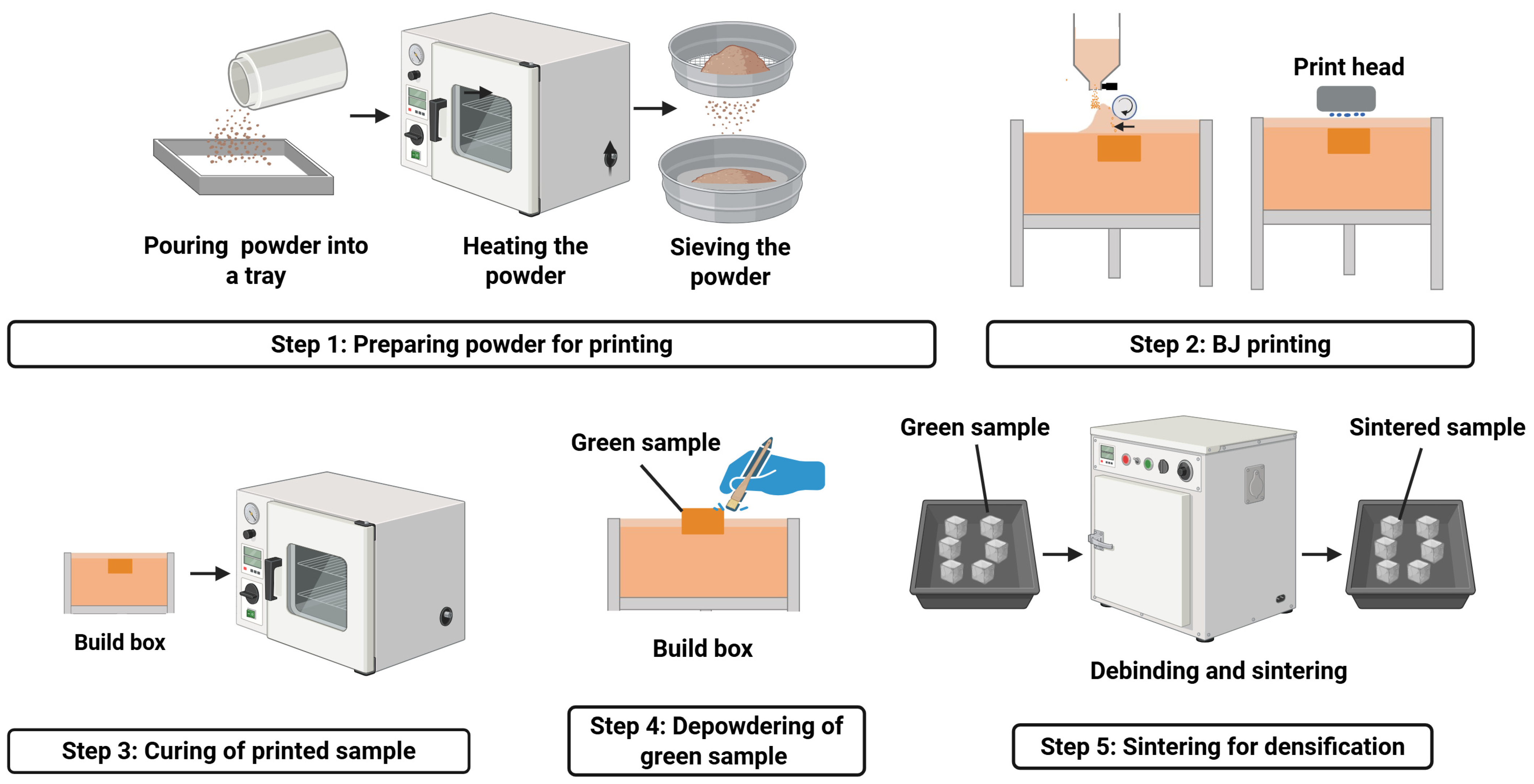
Fabricating SiC–Al composites via powder metallurgy and infiltration methods has been reported [5,11,12,13]. Binder jetting additive manufacturing (BJAM) does not need a high-energy heat source during printing [13]. In BJAM, a liquid binder is deposited onto selected regions of a powder bed to join powder particles layer by layer to produce printed samples, which become the green samples after curing. The green samples subsequently undergo post-processing, such as debinding and sintering, to densify the sintered samples [14,15,16]. Figure 1 shows the steps of fabricating samples using BJAM followed by sintering.
Table 1 summarizes several reported studies on the fabrication of different Al and SiC-based composite materials using BJAM combined with different post-processing techniques. Cramer et al. [7] fabricated SiC–Si composites through BJAM of SiC green samples followed by silicon melt infiltration. The fabricated composites exhibited high density, flexural strength, and thermal conductivity, with properties comparable to those of conventionally manufactured siliconized SiC. Feng et al. [17] fabricated Si–SiC composites through BJAM of SiC green samples followed by liquid silicon infiltration. The fabricated composites exhibited high flexural strength, good wear resistance, and reduced porosity. Khan et al. [16] fabricated SiC–Al composites through BJAM of SiC green samples followed by aluminum infiltration. They reported improved sintered density after infiltration. Li et al. [4] fabricated SiC–Al composites through BJAM of SiC green samples followed by aluminum infiltration. The fabricated composites exhibited good mechanical properties with a bending strength of 330.3 MPa. Li et al. [18] fabricated SiC–2024Al composites through BJAM of SiC green samples followed by 2024Al infiltration. The fabricated composites exhibited a high compressive strength of 741.59 MPa. Polozov et al. [19] fabricated SiC fiber-reinforced SiC (SiCf–SiC) composites through BJAM followed by polymer (SMP-10) infiltration. The fabricated composites exhibited high fracture toughness and hardness, with powder morphology significantly influencing the resulting mechanical properties. However, in these studies, premixed SiC and aluminum powders were not used during printing, and printed samples were infiltrated with metal. There is no reported study on BJAM using SiC and aluminum mixed powder followed by sintering without infiltration to fabricate SiC–Al composites.
The present study aims to fill this gap in the literature by using SiC–Al mixed powders as the feedstock to BJAM and relying on sintering (without infiltration) for densification. In this study, two SiC:Al ratios of the mixed powders and three sintering temperature levels were used to evaluate the feasibility of fabricating SiC–Al composites using BJAM followed by sintering (without infiltration).
This paper starts with an introduction, followed by Section 2, which outlines the materials and methods utilized in this study. Section 3 presents the results. Finally, Section 4 summarizes the key conclusions of this study.

2. Experimental Methods

2.1. Preparation of Mixed Powders for Printing

SiC–Al mixed powders with two volumetric SiC:Al ratios (60:40 and 80:20) were prepared. AlSi10Mg (represented by Al in this paper for simplicity) powder (instead of pure aluminum powder) was used in the mixed powders.
Table 2 shows the details of individual powders. The true density of a powder in Table 2 refers to the density of the solid material itself, excluding any void spaces (or pores) between particles [20]. The true density of these powders was measured using a gas pycnometer (Micromeritics, AccuPyc II 1345, Norcross, GA, USA). Particle size range was measured using a laser scattering particle size analyzer (Horiba LA-960, Kyoto, Japan).
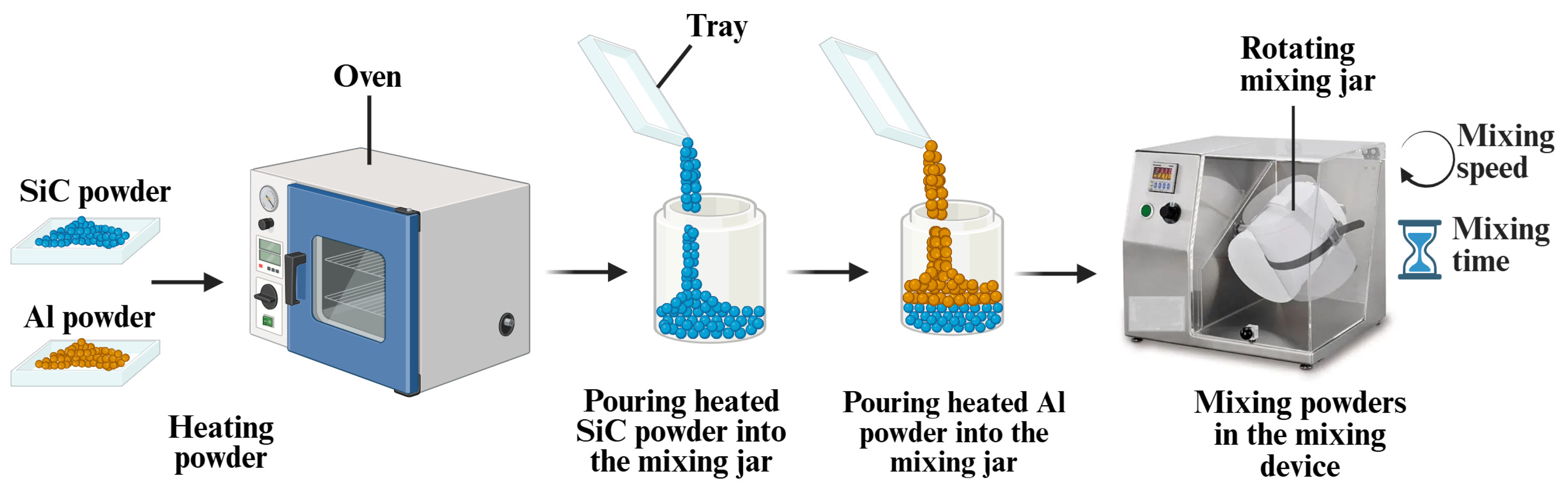
For each ratio of mixed powder, 500 g of the mixed powder was prepared. For the volumetric ratio (SiC–Al) of 60:40, 320.36 g of SiC powder was mixed with 179.64 g of Al powder. For the volumetric ratio of 80:20, 413.13 g of SiC powder was mixed with 86.87 g of Al powder. Figure 2 shows the procedure for preparing mixed powders. The nominal densities of the SiC–Al mixed powders with two volumetric ratios (SiC:Al) of 60:40 and 80:20 were 2.99 g/cm3 and 3.09 g/cm3, respectively.
First, before mixing, both individual powders in two separate trays were heated in an oven at 125 °C for 5 h to eliminate moisture. Then, specific volumetric amounts of SiC powder and Al powder were poured into the mixing jar of the mixing device (Drum blender, Mixomat mini, Fuchs Maschinen AG, Granges-Paccot, Switzerland). After that, these two powders were mixed in the mixing device at 8 RPM for 10 min.

2.2. Design of Experiments

The 3D model of the samples with dimensions of 10 mm (length) × 10 mm (width) × 3.5 mm (thickness) was designed using the CAD software (Creo Parametric v 9.0, Boston, MA, USA). The same CAD software was used to generate the STL file of the designed model. Then the STL file was processed to generate machine-readable instructions that direct the operation of the binder jetting 3D printer.
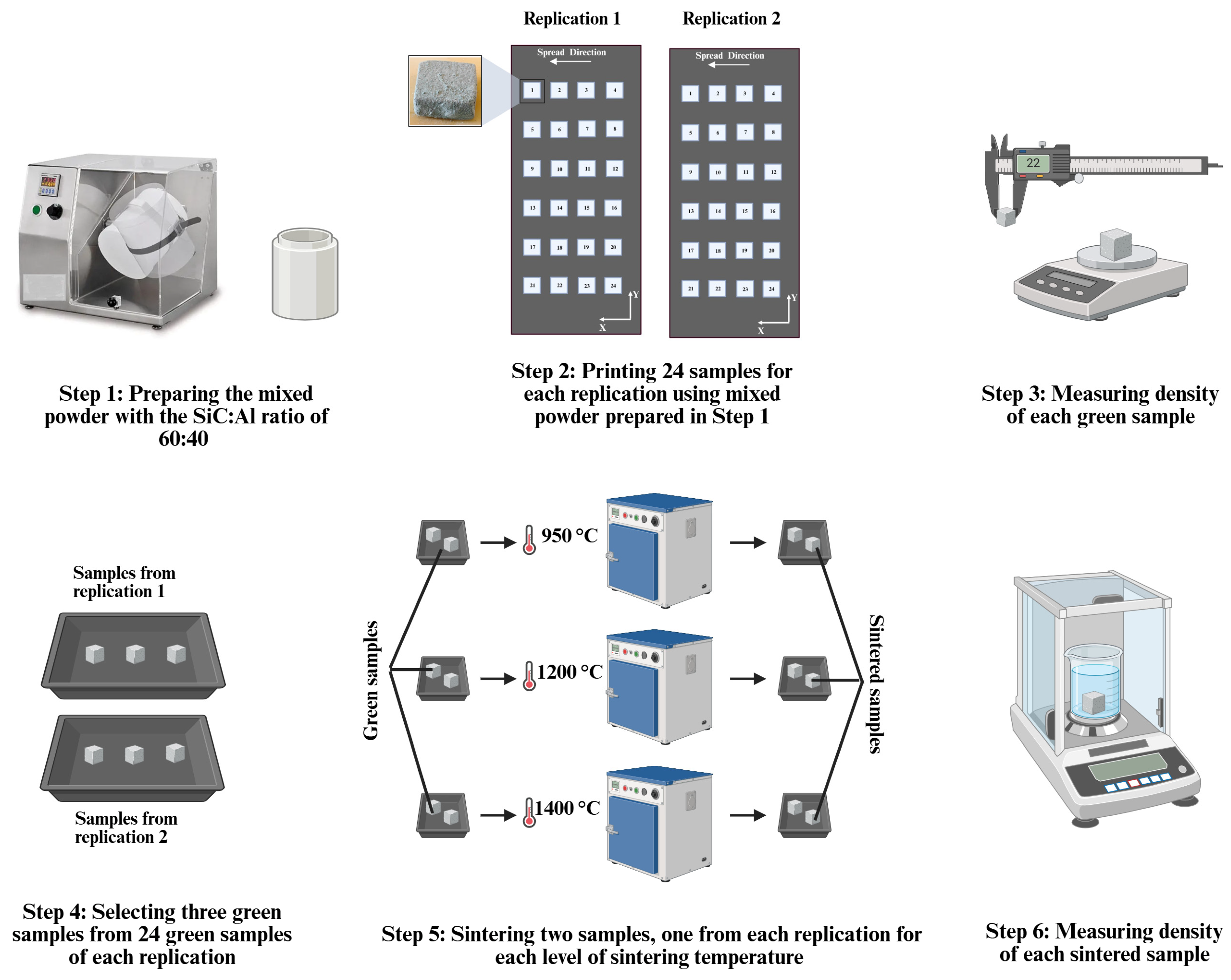
Figure 3 shows the overview of the experimental design for the mixed powder with the SiC:Al ratio of 60:40. The same design, except Step 1, was used for the mixed powder with the SiC:Al ratio of 80:20.
The experiment design used two replications. In each of the replications, 24 green samples were printed. Three green samples from these 24 green samples were selected for sintering. These three samples had density values within ±0.03 g/cm3 of the mean density of the 24 green samples. This selection criterion was used to ensure relatively consistent density among the selected samples.
Six green samples in total were selected from the 48 green samples in two replications. These six selected samples formed three pairs, with each pair consisting of one sample from each replication. The three pairs were assigned to three temperature levels (950 °C, 1200 °C, and 1400 °C), respectively.

2.3. Preparation of Green Samples

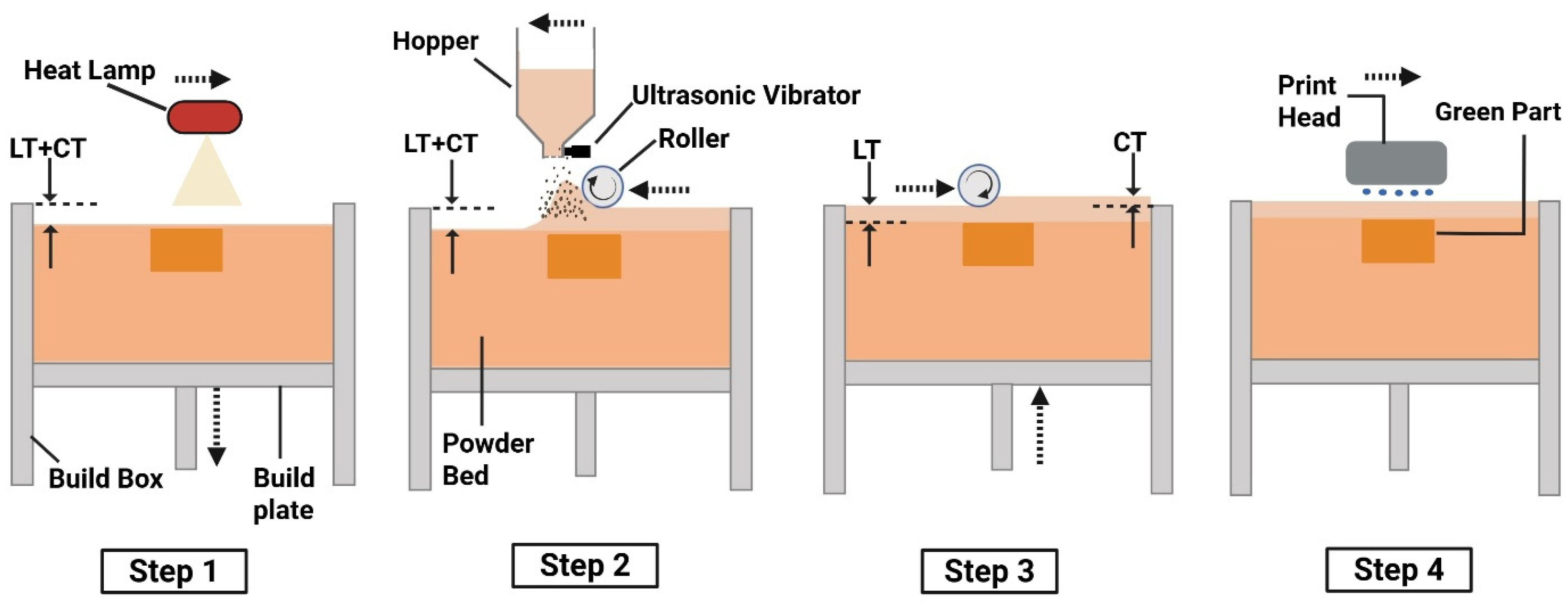
Figure 4 illustrates the major steps of binder jetting 3D printing with powder bed compaction [15]. In Step 1, the build plate lowers by a distance equal to the sum of the layer thickness (LT) and compaction thickness (CT), and a heat lamp moves across the powder bed from left to right to dry the newly printed layer. In Step 2, the powder is dispensed from the hopper to the powder bed as the hopper moves from right to left across the build plate, while a counter-rotating roller spreads the powder in the same direction. In Step 3, the build plate rises by a distance equal to CT, and the roller compacts the powder layer by moving from left to right. In Step 4, the print head deposits liquid binder onto selected regions of the powder bed based on a 3D model. These steps repeat until the entire sample is printed. A more detailed description can be found in the authors’ previously published papers [14,16].
The printing variables and their values used in this study are listed in Table 3. Definitions of these variables can be found in the literature [15,22]. These variable values were chosen after conducting preliminary trials, focusing on achieving good powder bed quality (e.g., minimal defects on powder bed surfaces) and ensuring that the printed samples had sufficient strength for subsequent processes (curing and debinding).
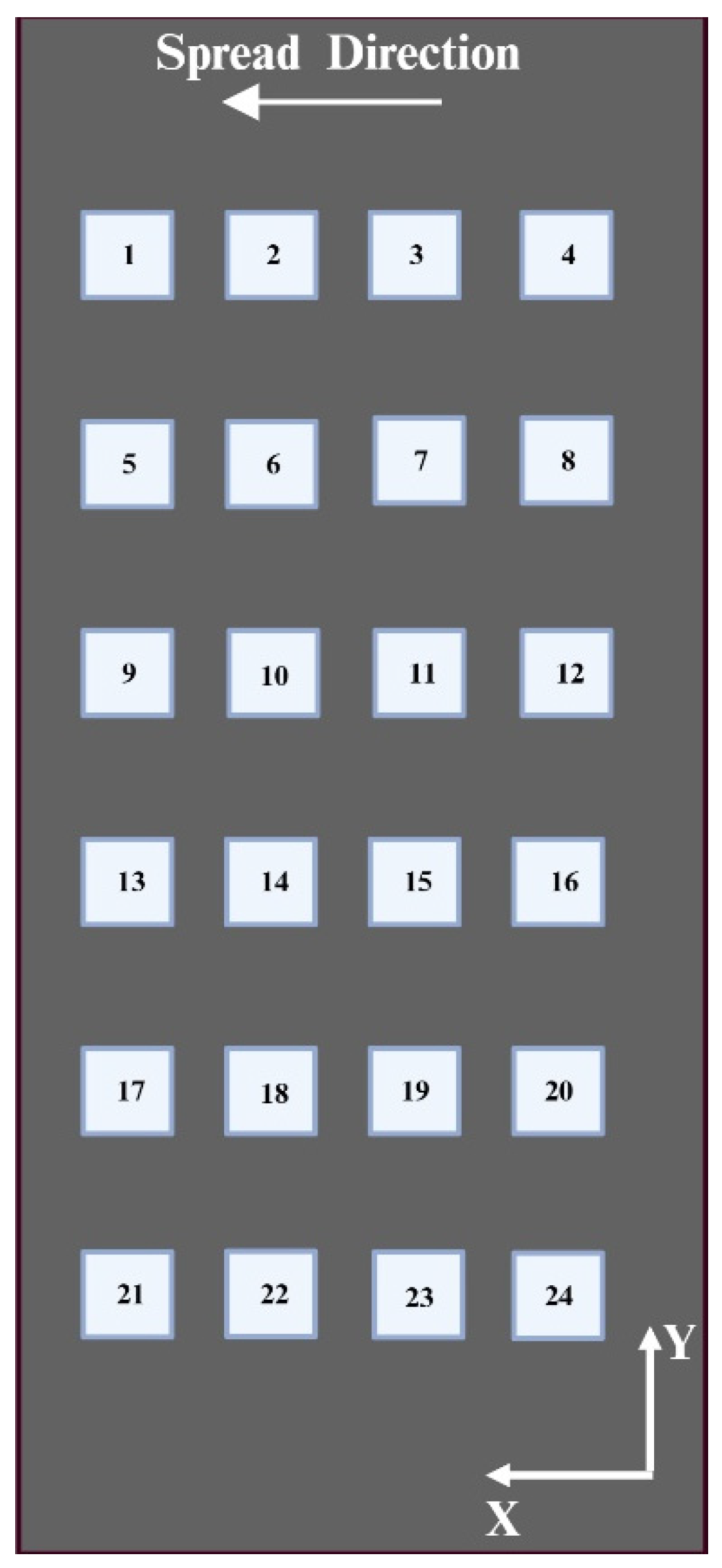
In each experimental run, which also refers to one printing batch, 24 samples were printed for each SiC–Al composition. Figure 5 shows the labels and locations of these 24 samples on the build plate. Their thickness was oriented along the build (Z) direction, and the X-direction (also known as the spread direction) was the direction in which the roller spread the dispensed powder from right to left during the dispensing and spreading step.
After printing, the build box, which contained both printed samples and unbound powder, was placed in an oven (DX402C, Yamato Scientific, Tokyo, Japan) for 5 h at 125 °C to cure the binder in the printed samples. This curing process was intended to improve the mechanical strength of the printed samples so they can withstand the handling and subsequent steps (depowdering and sintering). After curing, the printed samples were referred to as green samples.

2.4. Preparation of Sintered Samples

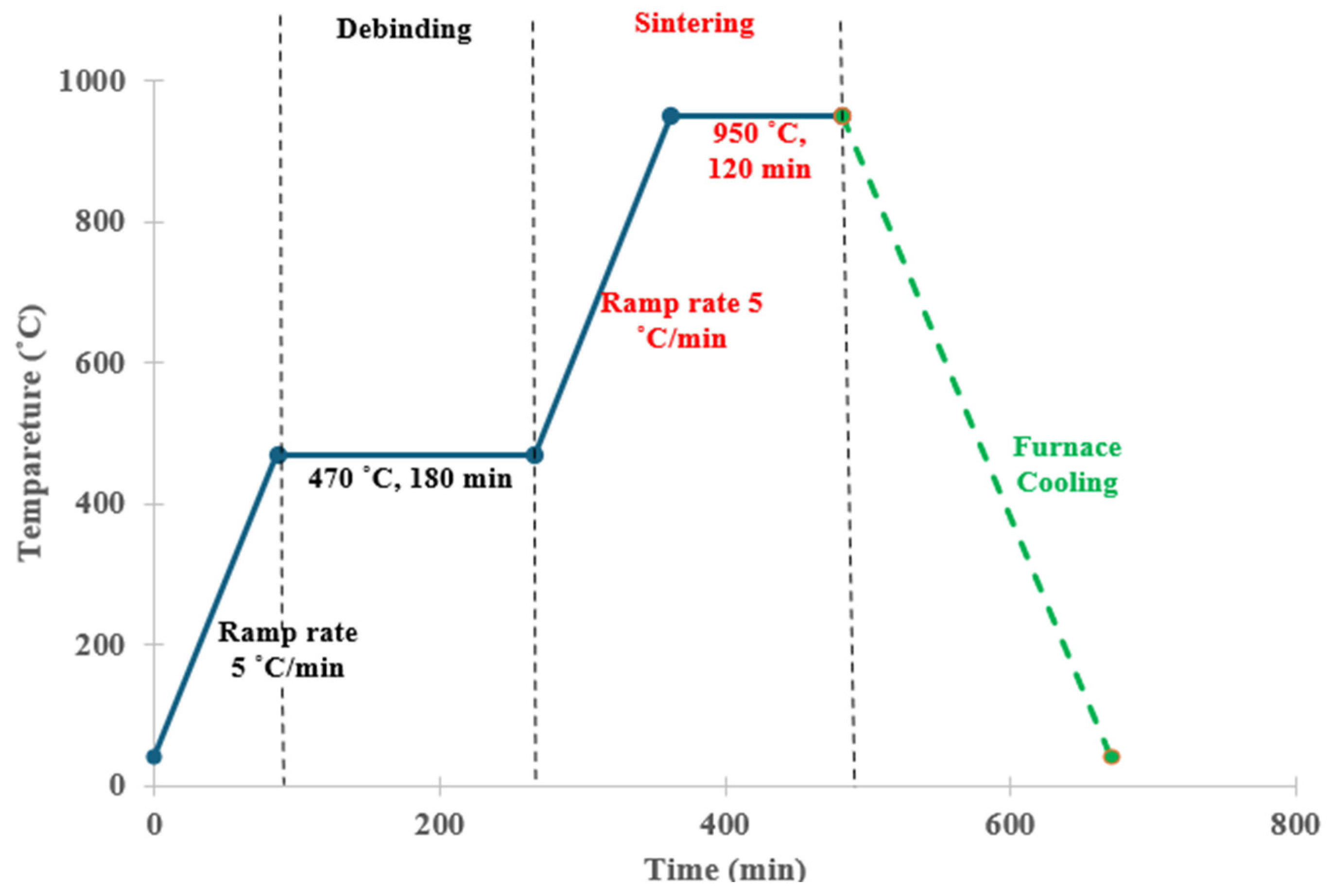
The debinding and sintering of green samples were conducted using a furnace (KSL1700X-A1-UL, MTI Corp., Richmond, CA, USA). Figure 6 shows the thermal profile for debinding and sintering of green samples for a sintering temperature of 950 °C. The furnace temperature initially increased from room temperature (20 °C) to 470 °C at a rate of 5 °C per minute. The temperature was then held at 470 °C for 180 min to ensure complete binder removal, referred to as debinding. Afterward, the furnace temperature was ramped up to sintering temperature at the rate of 5 °C per minute. The furnace was then maintained at the sintering temperature for 120 min to sinter the green samples. Upon completion of sintering, the furnace was cooled to room temperature at a rate of ~5 °C per minute. After sintering, the green samples become sintered samples.

2.5. Density Measurement Methods

The density of green samples, also known as green density, was determined by measuring the weight and the dimensions using Equation (1), where ρ g is the density of the green samples, m represents the mass, and l, w, and t denote the length, width, and thickness, respectively.
G r e e n   d e n s i t y   ρ g = m / ( l × w × t )
The density of the sintered samples, also known as sintered density, was measured using the Archimedes method according to the ISO-18754 standard [23]. It was calculated using Equation (2), where ρ s is the density of the sintered sample, ρ w is the density of water, md is the dry mass of the sintered sample, mw is the wet mass of the sintered sample, and ms is the mass of the sintered sample while submerged in water.
S i n t e r e d   d e n s i t y ( ρ s ) = ρ w m d m w m s

2.6. Characterization of Microstructure of Sintered Sample

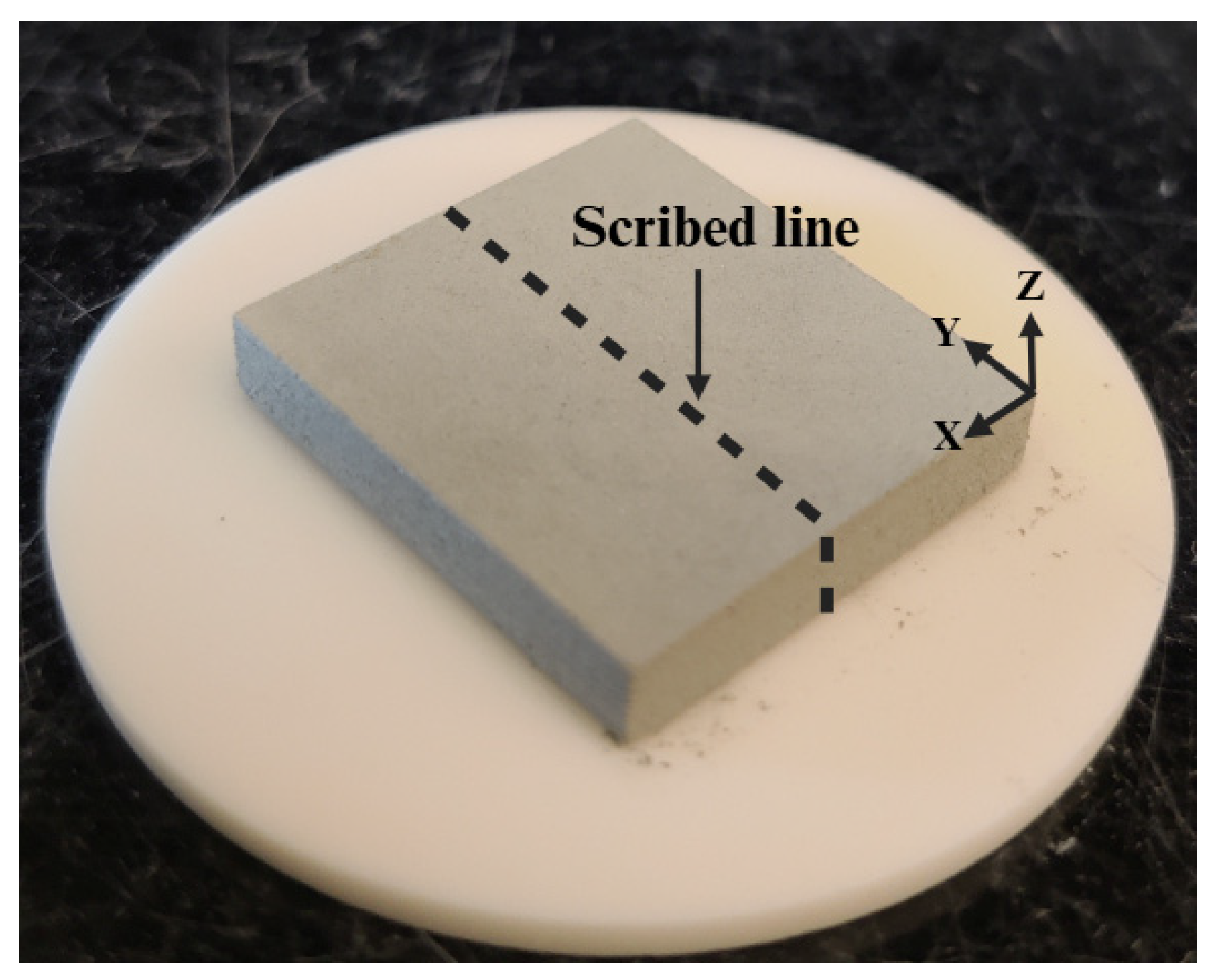
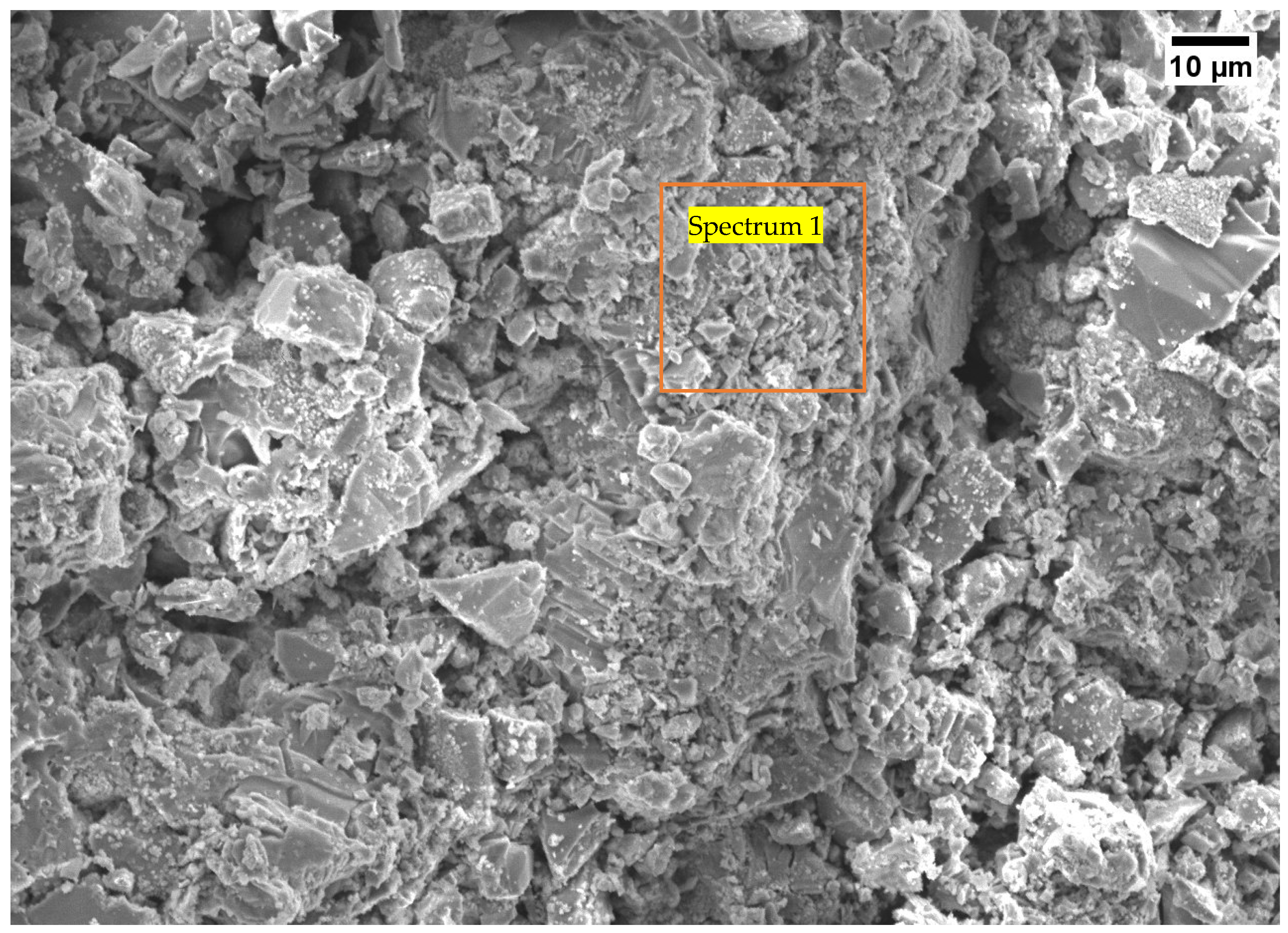
One of the sintered samples was fractured along a pre-scribed line using a diamond scriber to expose internal surfaces as shown in Figure 7, where the Z-axis is in the print direction (thickness), and the X-axis is in the powder spread direction. Care was taken to minimize excessive force during fracture to minimize damage to the fractured surfaces. To prepare the fractured surfaces for scanning electron microscope (SEM) imaging, a coating of platinum (Pt) (approximately 5 nm thick) was applied using a sputter coater (Cressington 208HRD High-Resolution, Cressington Scientific Instruments, Watford, UK). The sample was then imaged using a field emission scanning electron microscope (JEOL JSM-7500F, Tokyo, Japan). SEM images of the fractured surfaces were acquired at a magnification of 750×. The magnification of 750× was selected to provide an overall view of the microstructural features and pore distribution within the sintered samples.
On the fractured surface of the sintered sample, composition analysis was also conducted using an Oxford energy-dispersive X-ray spectroscopy (EDS) system integrated with a field emission scanning electron microscope (FE-SEM) (JEOL JSM-7500F, Tokyo, Japan).

3. Results and Discussion

Table 4 shows the density of selected green samples and sintered samples for mixed powder with the volumetric ratio (SiC–Al) of 60:40 and 80:20.

3.1. Density of Green Samples

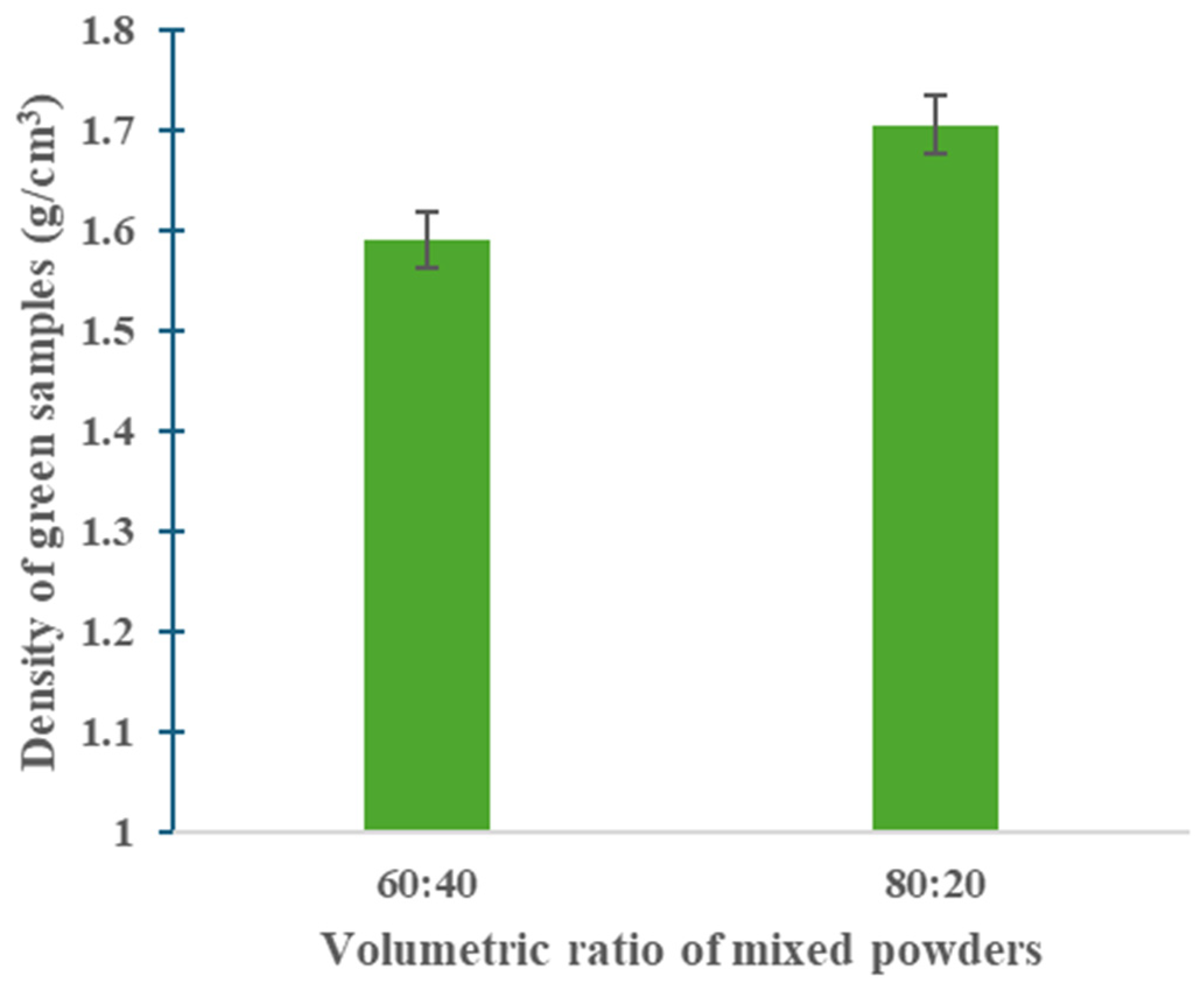
Figure 8 shows the density of green samples printed using mixed powders with the volumetric ratio (SiC–A) of 60:40 and 80:20. The samples printed from the 80:20 mixture show a higher average green density (~1.71 g/cm3) than the samples printed from the 60:40 mixture (~1.59 g/cm3). This increase in density of green samples is probably due to the larger fraction of SiC in the 80:20 mixture, since SiC has a higher true density (~3.21 g/cm3) than AlSi10Mg (~2.70 g/cm3). As a result, mixtures containing a greater amount of SiC yield printed samples with higher overall green density, even when processed under identical printing conditions.

3.2. Density of Sintered Samples from the Mixed Powder with the Volumetric Ratio (SiC–Al) of 60:40

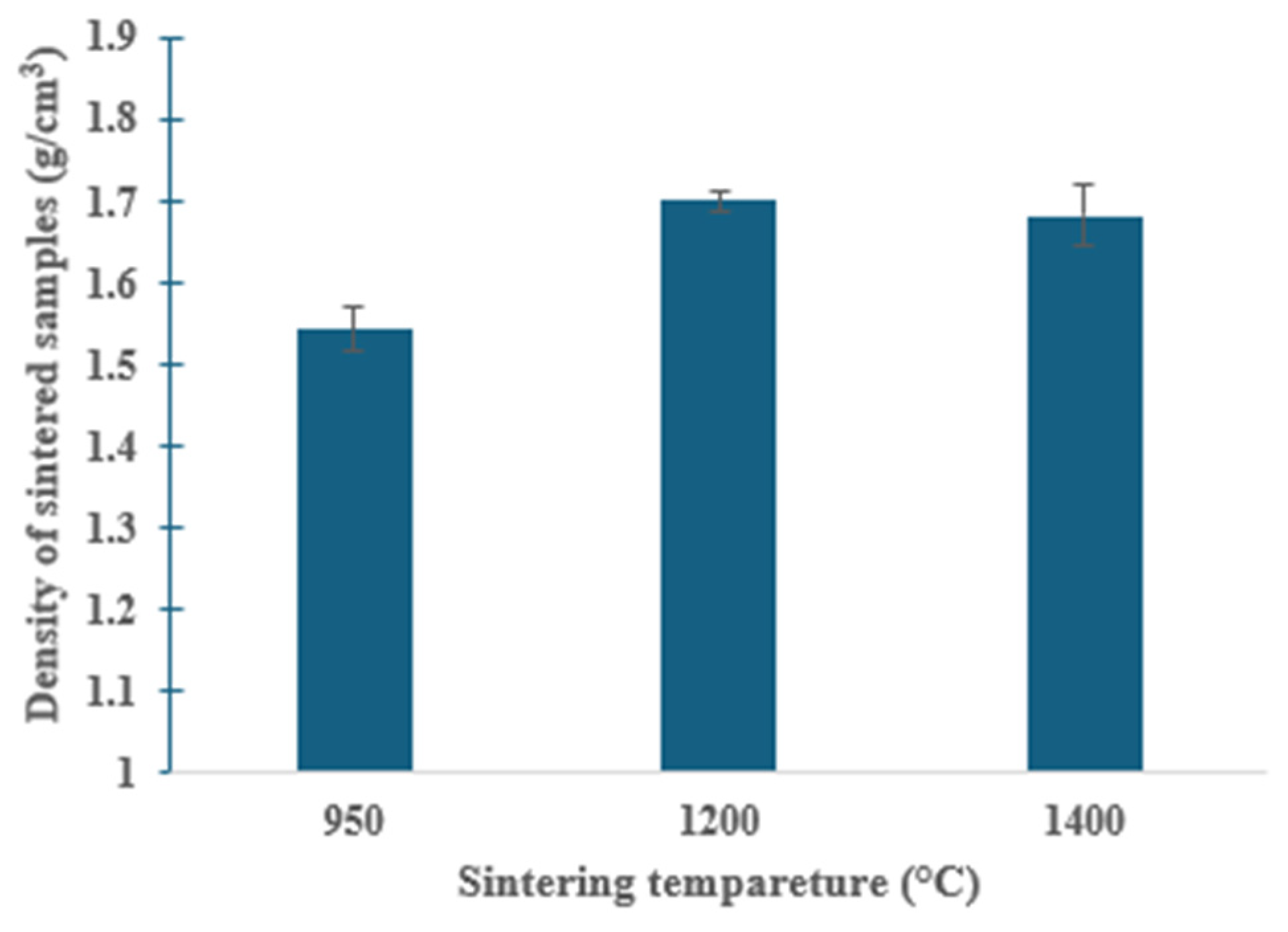
Figure 9 shows the density of sintered samples printed from mixed powders with the volumetric ratio (SiC–Al) of 60:40. The green samples printed from a 60:40 mixture (SiC–Al) were sintered at three sintering temperatures (950 °C, 1200 °C, and 1400 °C). The density of sintered samples increases from approximately 1.55 g/cm3 to around 1.70 g/cm3 when the sintering temperature increases from 950 °C to 1200 °C, which indicates enhanced densification with temperature, most probably due to liquid-phase formation, which enhances particle bonding and pore filling [8]. At 1400 °C, the density slightly decreases to around 1.68 g/cm3.

3.3. Density of Sintered Samples from the Mixed Powder with the Volumetric Ratio (SiC–Al) of 80:20

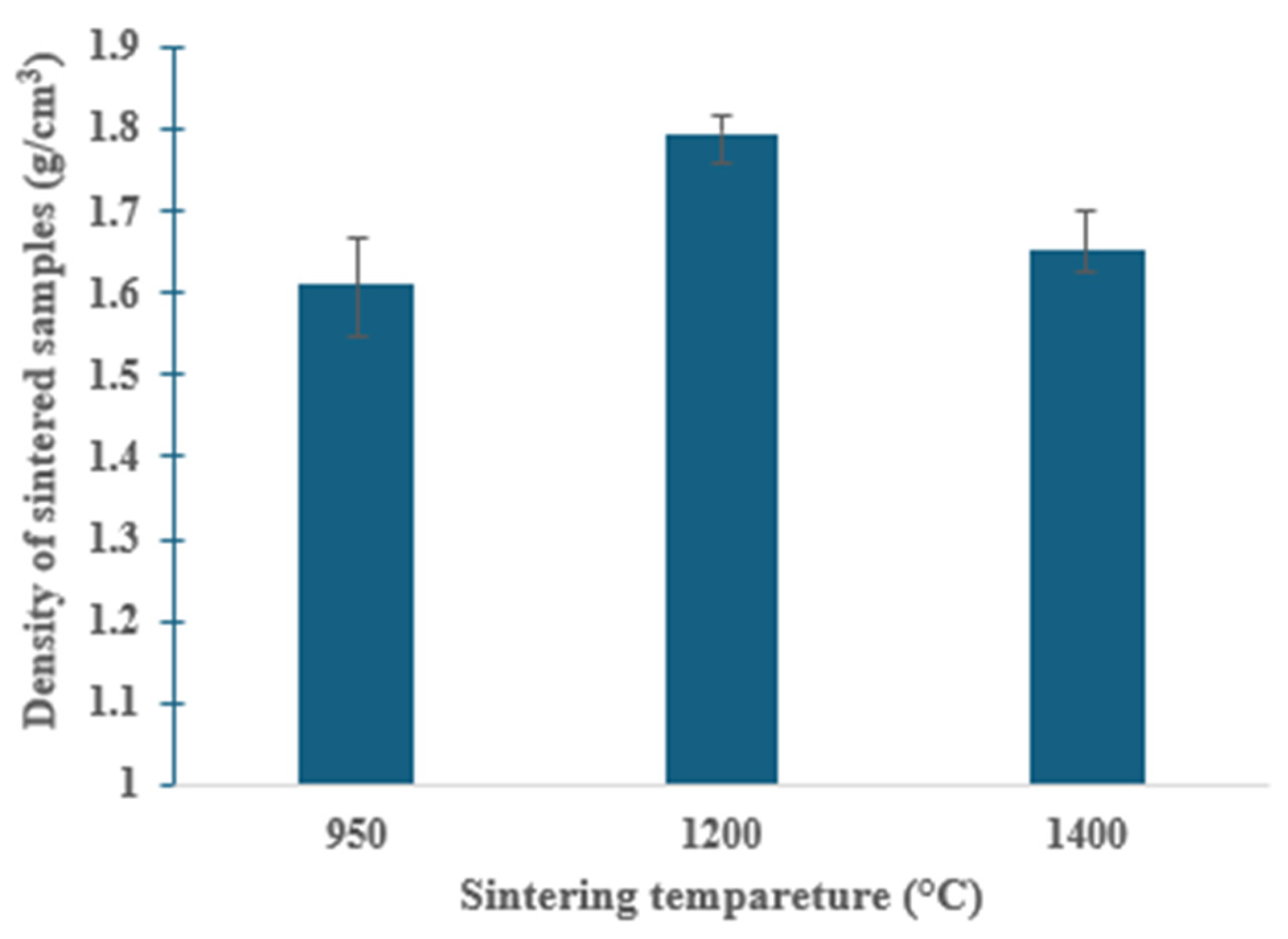
Figure 10 shows the density of sintered samples printed from mixed powders with the volumetric ratio (SiC–Al) of 80:20. In Figure 10, the density of sintered samples increased from approximately 1.62 g/cm3 at 950 °C to nearly 1.80 g/cm3 at 1200 °C, then decreased to around 1.66 g/cm3 at 1400 °C. Density of sintered samples increases from 950 °C to 1200 °C, most probably due to liquid-phase formation from the Al, which enhances particle bonding and pore filling [8]. In addition, SiC is the dominant phase in the mixture and does not significantly densify at the tested temperatures, which may limit further densification.

3.4. Microstructural Characterization of Sintered Sample

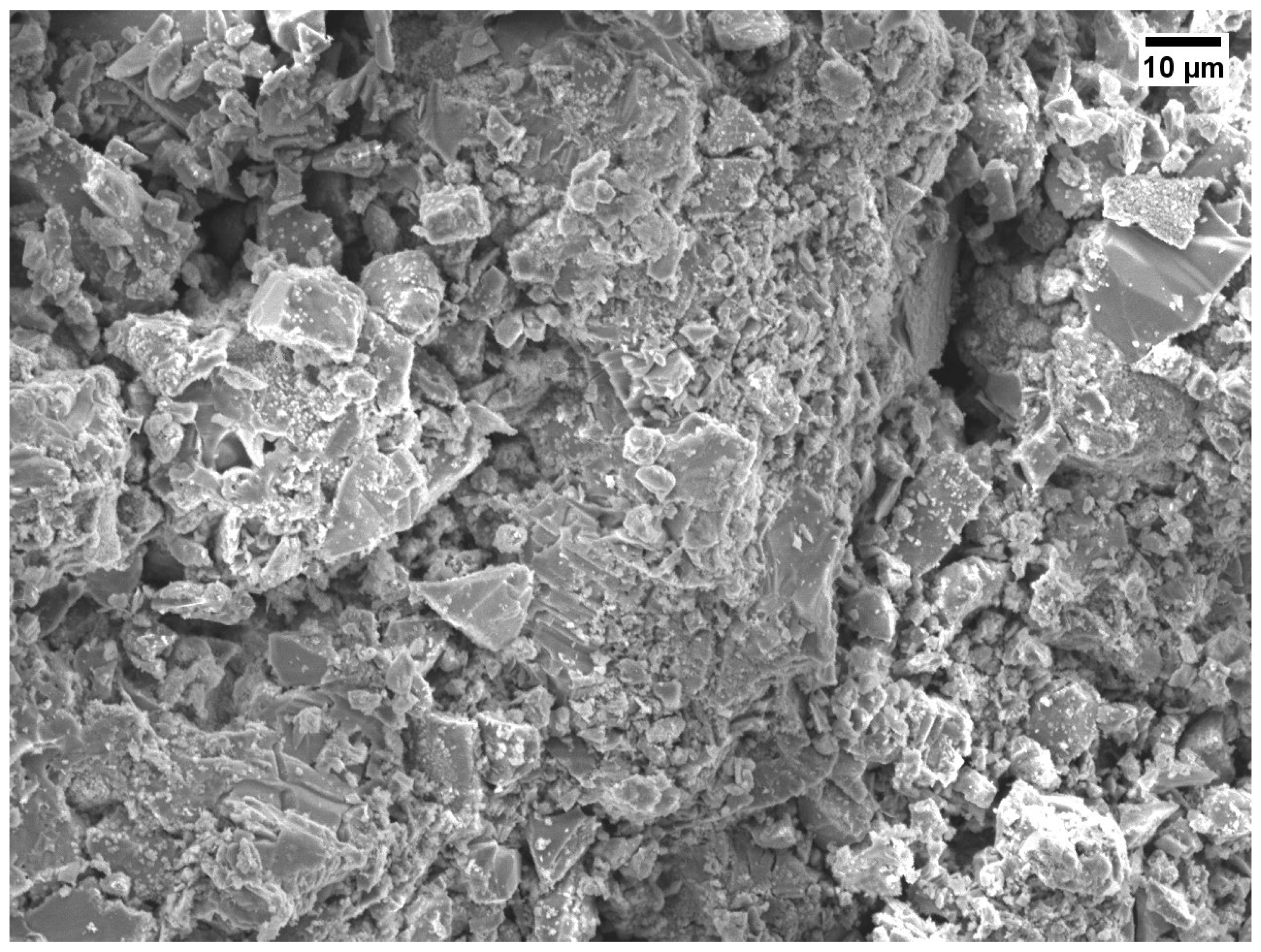
The SEM image in Figure 11 shows the microstructure of the SiC–Al composite sample. The sample was printed by binder jetting using mixed powders with a volumetric ratio (SiC–Al) of 60:40 and sintered at 1200 °C. This condition was selected as a representative case, as it exhibited relatively higher density among the tested conditions. Neck formation is observed at particle contact points in the central region, while limited bridging by the metallic phase is seen between adjacent SiC particles. However, residual porosity and particle agglomeration are also observed, suggesting that full densification has not been achieved.
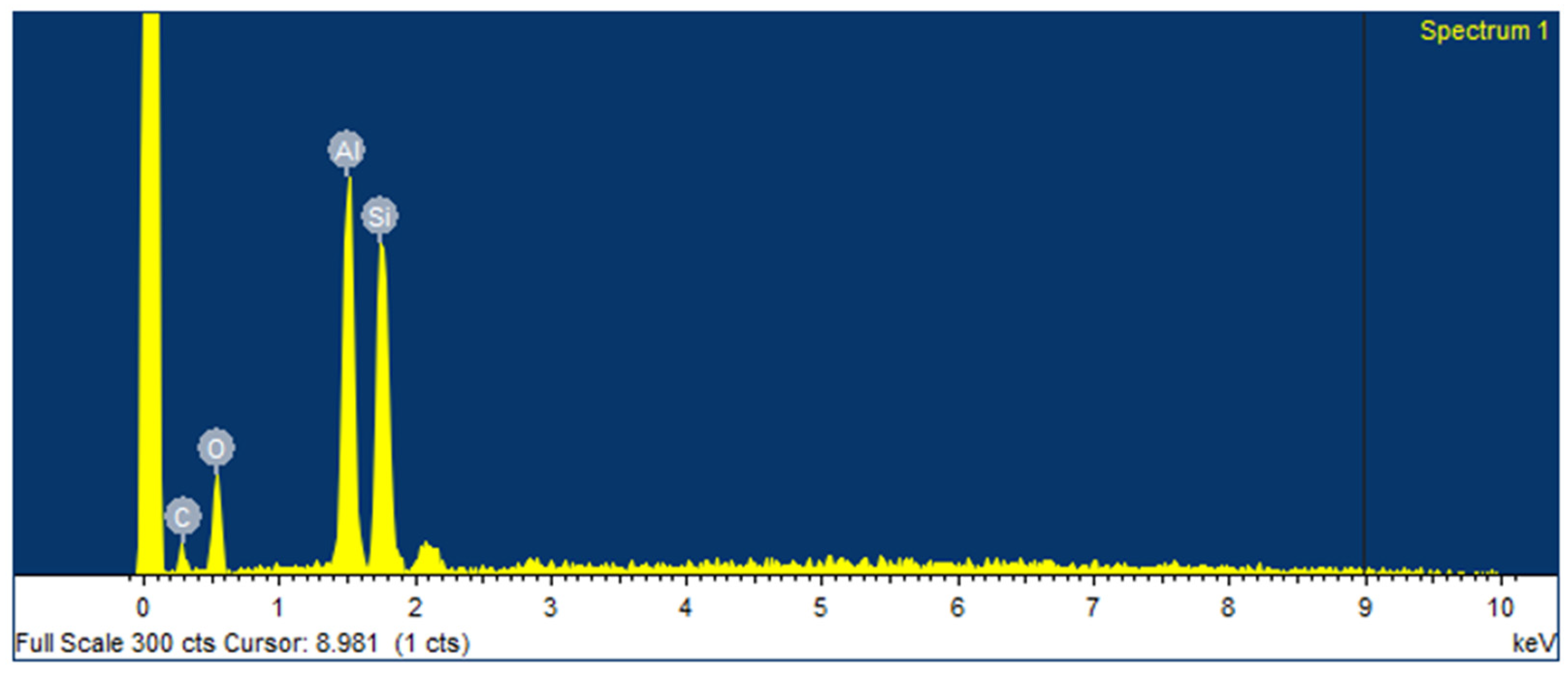
Figure 12 shows an EDS analysis of the fractured surface of the sintered sample that confirms the presence of Al, Si, C, and O elements in the selected region. The detected Al corresponds to the Al alloy, while the presence of C and Si indicates the formation of the SiC phase. Oxygen is also observed, which is attributed to surface oxidation of the aluminum phase. These results confirm the coexistence of SiC and Al phases within the composite.
The sintered density results indicated that densification occurred during sintering, as the density of the sintered samples increased compared with that of the green samples. For the samples printed from the mixed powder with the volumetric ratio (SiC–Al) of 60:40, the green density was approximately 1.59 g/cm3, while the sintered density increased to about 1.70 g/cm3. For the samples printed from mixed powders with the volumetric ratio (SiC–Al) of 80:20, the green density was approximately 1.70 g/cm3, and the sintered density reached about 1.79 g/cm3. However, the SEM microstructure image showed that residual pores were still present in the sintered samples, indicating that full densification was not achieved.
These results indicate that SiC–Al composite samples printed by binder jetting can be sintered without an additional infiltration step, but further optimization is required to reduce residual porosity in sintered samples.

4. Conclusions

This paper reports the first attempt at a new approach to fabricating SiC–Al composite material: binder jetting additive manufacturing using mixed powder, followed by sintering without infiltration. The results show that, with this new approach, SiC–Al composite samples were successfully fabricated. However, the quality of these samples was not satisfactory for many applications.
Future work will focus on optimizing key processing parameters, including binder saturation, debinding conditions, sintering temperature, and sintering atmosphere, to improve densification and microstructural uniformity. A wider range of SiC–Al compositions will be investigated to better understand the influence of material composition on densification behavior and phase connectivity.
Further studies will be conducted to evaluate powder segregation, mixed powder morphology, compaction thickness, powder packing behavior, build-direction anisotropy, and the relationship between green density and sintered density. In addition, thermodynamic and kinetic analyses will be performed to investigate phase stability, possible interfacial reactions during sintering, and the effects of oxide formation on interfacial bonding and densification behavior. Detailed characterization (polished cross-sectional microstructure and higher-magnification SEM) will also be performed to investigate pore distribution, phase evolution, oxide formation, wettability, interfacial reactions, bonding mechanisms, and structural stability through advanced microstructural analysis.
Finally, the mechanical performance and long-term reliability of the fabricated composites will be evaluated through hardness, compression, flexural, wear, and thermal stability testing. The performance of the proposed sintering-only approach will also be quantitatively compared with infiltration-assisted BJAM processing routes using quantitative image analysis.

Author Contributions

Conceptualization, M.M.P. and Z.P.; methodology, M.M.P. and Z.P.; data analysis, M.M.P.; experiment, M.M.P. and M.S.A.; resources, Z.P. and S.K.; data curation, M.M.P. and Z.P.; writing—original draft preparation, M.M.P.; writing—review and editing, Z.P., M.M.P., M.S.A. and S.K.; All authors have read and agreed to the published version of the manuscript.

Funding

This research received no external funding.

Data Availability Statement

The original contributions presented in this study are included in the article. Further inquiries can be directed to the corresponding author.

Acknowledgments

The authors would like to acknowledge that the characterization part of this work was performed at the Texas A&M University Materials Characterization Core Facility (RRID:SCR_022202). The authors extend their special thanks to Yordanos Bisrat for assistance with scanning electron microscopy (SEM). Furthermore, the authors thank Steven Kuntzendorf (Undergraduate student, Department of Industrial and Systems Engineering, Texas A&M University, College Station, TX 77843, USA) for his assistance in the experiment conducted in this paper.

Conflicts of Interest

Authors Mostafa Meraj Pasha, Md Shakil Arman, and Zhijian Pei are employed by Texas A&M University, College Station, and Stephen Kachur is employed by CPS Technologies Corp. The authors declare that the research was conducted in the absence of any commercial or financial relationships that could be construed as a potential conflict of interest.

References

  1. Boretti, A.; Castelletto, S. A perspective on 3D printing of silicon carbide. J. Eur. Ceram. Soc. 2024, 44, 1351–1360. [Google Scholar] [CrossRef]
  2. Eom, J.-H.; Kim, Y.-W.; Raju, S. Processing and properties of macroporous silicon carbide ceramics: A review. J. Asian Ceram. Soc. 2013, 1, 220–242. [Google Scholar] [CrossRef]
  3. Trevisan, F.; Calignano, F.; Lorusso, M.; Pakkanen, J.; Aversa, A.; Ambrosio, E.P.; Lombardi, M.; Fino, P.; Manfredi, D. On the selective laser melting (SLM) of the AlSi10Mg alloy: Process, microstructure, and mechanical properties. Materials 2017, 10, 76. [Google Scholar] [CrossRef]
  4. Li, S.; Li, Y.; Wang, Q.; Miao, K.; Liang, X.; Lu, Z.; Li, D. Fabrication of 3D-SiC/aluminum alloy interpenetrating composites by DIW and pressureless infiltration. Ceram. Int. 2021, 47, 24340–24347. [Google Scholar] [CrossRef]
  5. Ji, X.; Li, S.; Zhang, X.; Liu, L.; Li, S.; Gao, L.; Li, X.; Wang, S. Influence of characteristic parameters of SiC reinforcements on mechanical properties of AlSi10Mg matrix composites by powder metallurgy. J. Mater. Res. Technol. 2023, 24, 6843–6853. [Google Scholar] [CrossRef]
  6. Saravana Kumar, M.; Mohan, E.; Robinson, S.; Thivya Prasad, D. Comparative study on morphological, physical and mechanical characteristics of L-PBF based AlSi10Mg parts with conventional stir casted Al-10% SiC composites. Silicon 2022, 14, 2695–2706. [Google Scholar] [CrossRef]
  7. Cramer, C.L.; Elliott, A.M.; Lara-Curzio, E.; Flores-Betancourt, A.; Lance, M.J.; Han, L.; Blacker, J.; Trofimov, A.A.; Wang, H.; Cakmak, E. Properties of SiC-Si made via binder jet 3D printing of SiC powder, carbon addition, and silicon melt infiltration. J. Am. Ceram. Soc. 2021, 104, 5467–5478. [Google Scholar] [CrossRef]
  8. Chandradass, J.; Thirugnanasambandham, T.; Jawahar, P.; Kannan, T. Effect of silicon carbide and silicon carbide/alumina reinforced aluminum alloy (AA6061) metal matrix composite. Mater. Today Proc. 2021, 45, 7147–7150. [Google Scholar] [CrossRef]
  9. Liu, X.; Zhao, C.; Zhou, X.; Shen, Z.; Liu, W. Microstructure of selective laser melted AlSi10Mg alloy. Mater. Des. 2019, 168, 107677. [Google Scholar] [CrossRef]
  10. Wang, L.; Sun, J.; Yu, X.; Shi, Y.; Zhu, X.; Cheng, L.; Liang, H.; Yan, B.; Guo, L. Enhancement in mechanical properties of selectively laser-melted AlSi10Mg aluminum alloys by T6-like heat treatment. Mater. Sci. Eng. A 2018, 734, 299–310. [Google Scholar] [CrossRef]
  11. Li, Y.; Wang, Z.; Guo, Z. Preparation of SiC/Al composite material by supergravity infiltration method and its properties. Ceram. Int. 2024, 50, 28025–28036. [Google Scholar] [CrossRef]
  12. Shishkin, R.; Yuferov, Y. Fabrication of SiC matrix composite material by pressureless aluminum melt infiltration in air atmosphere. Compos. Commun. 2022, 32, 101176. [Google Scholar] [CrossRef]
  13. Khan, F.; Arman, M.S.; Sanders, J.; Pasha, M.M.; Rahman, A.M.; Pei, Z.; Dong, T. Binder Jetting 3D Printing Utilizing Waste Algae Powder: A Feasibility Study. Intell. Sustain. Manuf. 2024, 1, 10016. [Google Scholar] [CrossRef]
  14. Pasha, M.M.; Arman, M.S.; Khan, F.; Pei, Z.; Kachur, S. Effects of Layer Thickness and Compaction Thickness on Green Part Density in Binder Jetting Additive Manufacturing of Silicon Carbide: Designed Experiments. J. Manuf. Mater. Process. 2024, 8, 148. [Google Scholar] [CrossRef]
  15. Pasha, M.M.; Arman, M.S.; Pei, Z.; Khan, F.; Sanders, J.; Kachur, S. Effects of Compaction Thickness on Density, Integrity, and Microstructure of Green Parts in Binder Jetting Additive Manufacturing of Silicon Carbide. J. Manuf. Mater. Process. 2025, 9, 136. [Google Scholar] [CrossRef]
  16. Khan, F.; Sanders, J.; Arman, M.S.; Pasha, M.M.; Kachur, S.; Pei, Z. Fabrication of SiC–Aluminum Composites via Binder Jetting 3D Printing and Infiltration: A Feasibility Study. J. Compos. Sci. 2025, 9, 111. [Google Scholar] [CrossRef]
  17. Feng, K.; Hu, S.; Li, L.; Mao, Y.; Heng, Y.; Yuan, J.; Wu, J.; Wei, Q. Preparation of low residual silicon content Si-SiC ceramics by binder jetting additive manufacturing and liquid silicon infiltration. J. Eur. Ceram. Soc. 2023, 43, 5446–5457. [Google Scholar] [CrossRef]
  18. Li, Y.; Zhong, S.; Qian, M.; Zhang, X.; Jia, Z.; Geng, L. Design and fabrication of bionic Bouligand-structured SiC/2024Al composites via binder jetting additive manufacturing and pressure infiltration. Compos. Part B Eng. 2025, 301, 112526. [Google Scholar] [CrossRef]
  19. Polozov, I.; Razumov, N.; Masaylo, D.; Silin, A.; Lebedeva, Y.; Popovich, A. Fabrication of silicon carbide fiber-reinforced silicon carbide matrix composites using binder jetting additive manufacturing from irregularly-shaped and spherical powders. Materials 2020, 13, 1766. [Google Scholar] [CrossRef] [PubMed]
  20. Elsergany, R.N.; Vreeman, G.; Sun, C.C. An approach for predicting the true density of powders based on in-die compression data. Int. J. Pharm. 2023, 637, 122875. [Google Scholar] [CrossRef]
  21. Pasha, M.M.; Pei, Z.; Arman, M.S.; Gasdaska, C.J.; Kao, Y.-T. Effects of Mixing Speed and Mixing Time on Powder Segregation During Powder Mixing for Binder Jetting Additive Manufacturing: An Experimental Study. J. Manuf. Mater. Process. 2025, 9, 117. [Google Scholar] [CrossRef]
  22. Mostafaei, A.; Elliott, A.M.; Barnes, J.E.; Li, F.; Tan, W.; Cramer, C.L.; Nandwana, P.; Chmielus, M. Binder jet 3D printing—Process parameters, materials, properties, modeling, and challenges. Prog. Mater. Sci. 2021, 119, 100707. [Google Scholar] [CrossRef]
  23. ISO 18754:2020; Fine Ceramics (Advanced Ceramics, Advanced Technical Ceramics)-Determination of Density and Apparent Porosity. ISO: Geneva, Switzerland, 2003. Available online: https://www.iso.org/standard/69745.html (accessed on 5 December 2025).
Figure 1. Steps of fabricating samples using BJ followed by sintering.
Jcs 10 00318 g001
Figure 2. Procedure for preparing mixed powders [21].
Jcs 10 00318 g002
Figure 3. Overview of experimental design for the mixed powder with the SiC:Al ratio of 60:40 (the same design, except Step 1, was used for the mixed powder with the SiC:Al ratio of 80:20).
Jcs 10 00318 g003
Figure 4. Major steps of binder jetting 3D printing (layer thickness is represented by LT, and compaction thickness is represented by CT) [15].
Jcs 10 00318 g004
Figure 5. Labels and locations of the printed samples on the build plate.
Jcs 10 00318 g005
Figure 6. Thermal profile for debinding and sintering of green samples for sintering temperature of 950 °C.
Jcs 10 00318 g006
Figure 7. Scribed line along which the sintered sample was fractured for SEM analysis.
Jcs 10 00318 g007
Figure 8. Density of green samples printed from mixed powders with the volumetric ratio (SiC–Al) of 60:40 and 80:20.
Jcs 10 00318 g008
Figure 9. Density of sintered samples printed from mixed powders with the volumetric ratio (SiC–Al) of 60:40.
Jcs 10 00318 g009
Figure 10. Density of sintered samples printed from mixed powders with the volumetric ratio (SiC–Al) of 80:20.
Jcs 10 00318 g010
Figure 11. SEM image of the fractured surface of the sintered sample printed from mixed powders with the volumetric ratio (SiC–Al) of 60:40.
Jcs 10 00318 g011
Figure 12. EDS analysis of the fractured surface of the sintered sample printed from mixed powders with the volumetric ratio (SiC–Al) of 60:40, showing the presence of Al, Si, C, and O elements in the selected region.
Jcs 10 00318 g012aJcs 10 00318 g012b
Table 1. Reported studies on BJAM of different Al and SiC-based composite materials.
Composite MaterialFabrication
Method
Key
Finding
Reference
SiC–Si Binder jetting of SiC samples, followed by silicon melt infiltrationHigh density, flexural strength, and thermal conductivity[7]
Si–SiC Binder jetting of SiC samples, followed by liquid silicon infiltrationHigh flexural strength, good wear resistance, and reduced porosity[17]
SiC–AlBinder jetting of SiC samples, followed by sintering and aluminum infiltration, respectivelyDemonstrated the feasibility of fabricating SiC–Al composites[16]
SiC–AlBinder jetting of SiC samples, followed by aluminum infiltrationGood mechanical properties with a bending strength of 330.3 MPa[4]
SiC–2024Al Binder jetting of SiC samples, followed by sintering and 2024Al infiltration, respectivelyHigh compressive strength [18]
SiC fiber–SiC Binder jetting of SiC fiber–SiC samples, followed by polymer (SMP-10) infiltration High fracture toughness and hardness[19]
Table 2. Details of individual powders.
SiC PowderAl (AlSi10Mg) Powder
SupplierElectro Abrasives LLC, Buffalo, NY, USA.Carpenter Additive, Philadelphia, PA, USA.
Powder particle size range6 to 70 μm 20 to 63 µm
True density3.21 g/cm32.70 g/cm3
Table 3. Printing variables and their values used in binder jetting 3D printing.
Printing VariableValue
Layer thickness (µm)60
Ultrasonic intensity (%)100
Ultrasonic Operation ModeA
Roller rotation speed during spreading (rpm)300
Roller traverse speed during spreading (mm/s)15
Compaction thickness (µm)40
Number of compaction passes2
Roller traverse speed during compaction (mm/s)5
Binder saturation (%)80
Powder packing rate (%)50
Binder set time (s)30
Drying time (s)30
Bed temperature (°C)50
Table 4. Density values of green samples and sintered samples.
SiC–Al Volumetric RatioDensity of Selected Green Samples (g/cm3)Sintering Temperature (°C)Density of Sintered Samples (g/cm3)
Replication 1Replication 2 Replication 1Replication 2
60:401.570 1.5699501.5621.524
60:401.620 1.60912001.7131.692
60:401.5721.60314001.6551.709
80:201.6851.679 9501.6351.585
80:201.6911.73312001.7811.813
80:201.7451.71414001.684 1.623
Disclaimer/Publisher’s Note: The statements, opinions and data contained in all publications are solely those of the individual author(s) and contributor(s) and not of MDPI and/or the editor(s). MDPI and/or the editor(s) disclaim responsibility for any injury to people or property resulting from any ideas, methods, instructions or products referred to in the content.