
Optimization of Tribological Properties in Cement Dust and Rock Wool Reinforced Composites: Experimental Study and Decision-Making Analysis




Abstract
1. Introduction
2. Materials and Methods
2.1. Materials and Composite Preparation
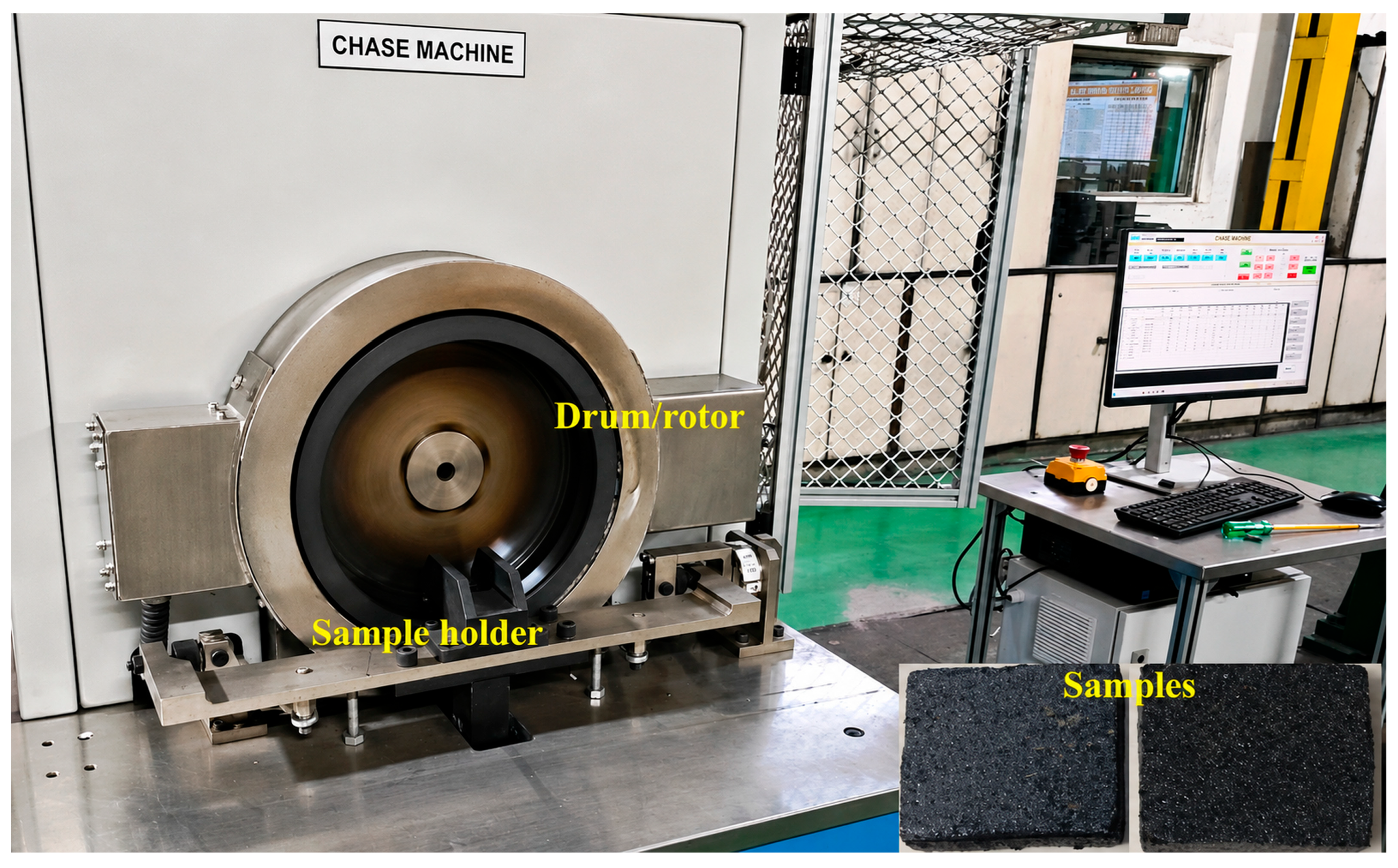
2.2. Friction and Wear Testing
2.3. Evaluation of Tribological Performance Parameters
2.4. MCDM Evaluation of Composites
3. Results
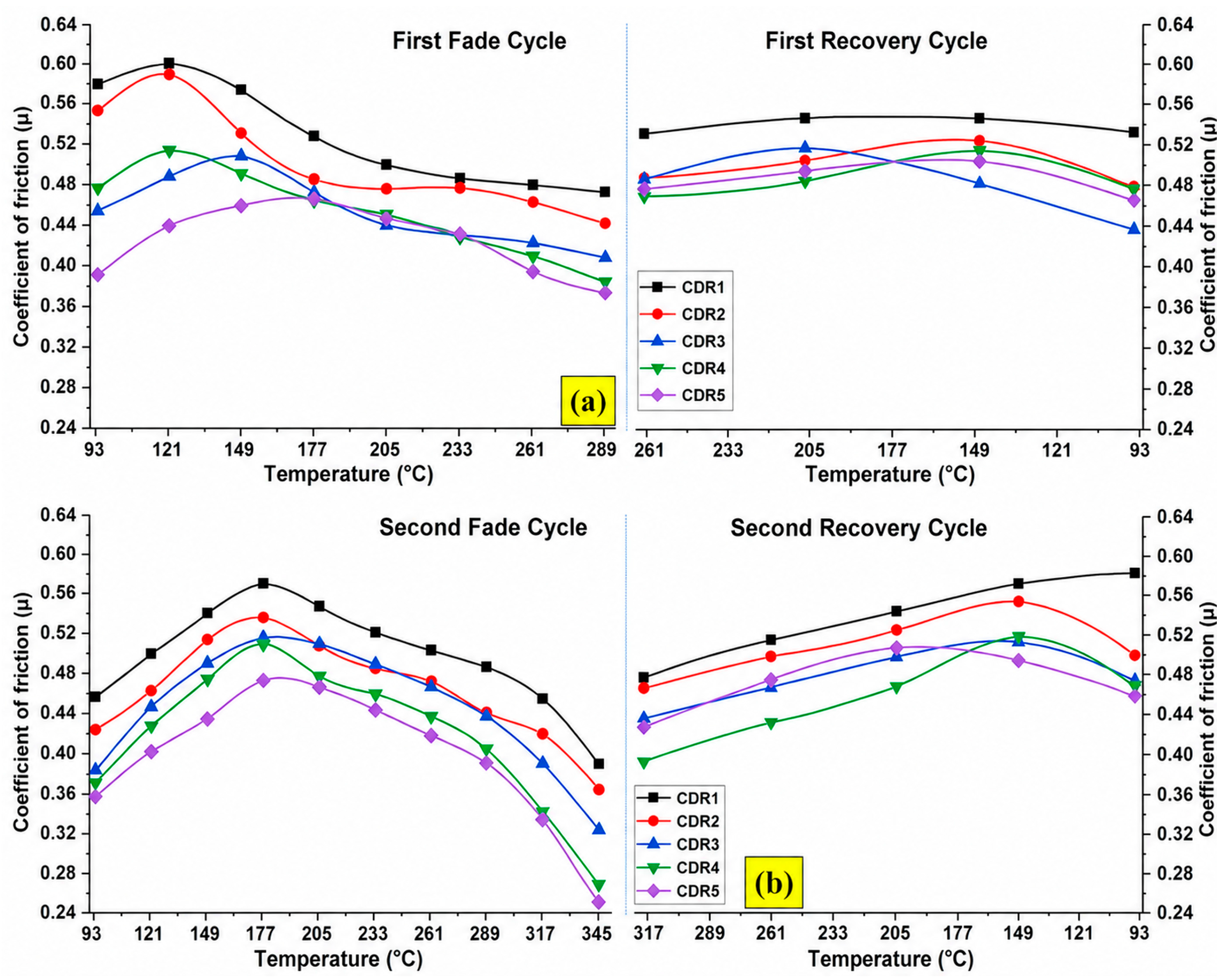
3.1. COF Behavior During Fade–Recovery Cycles
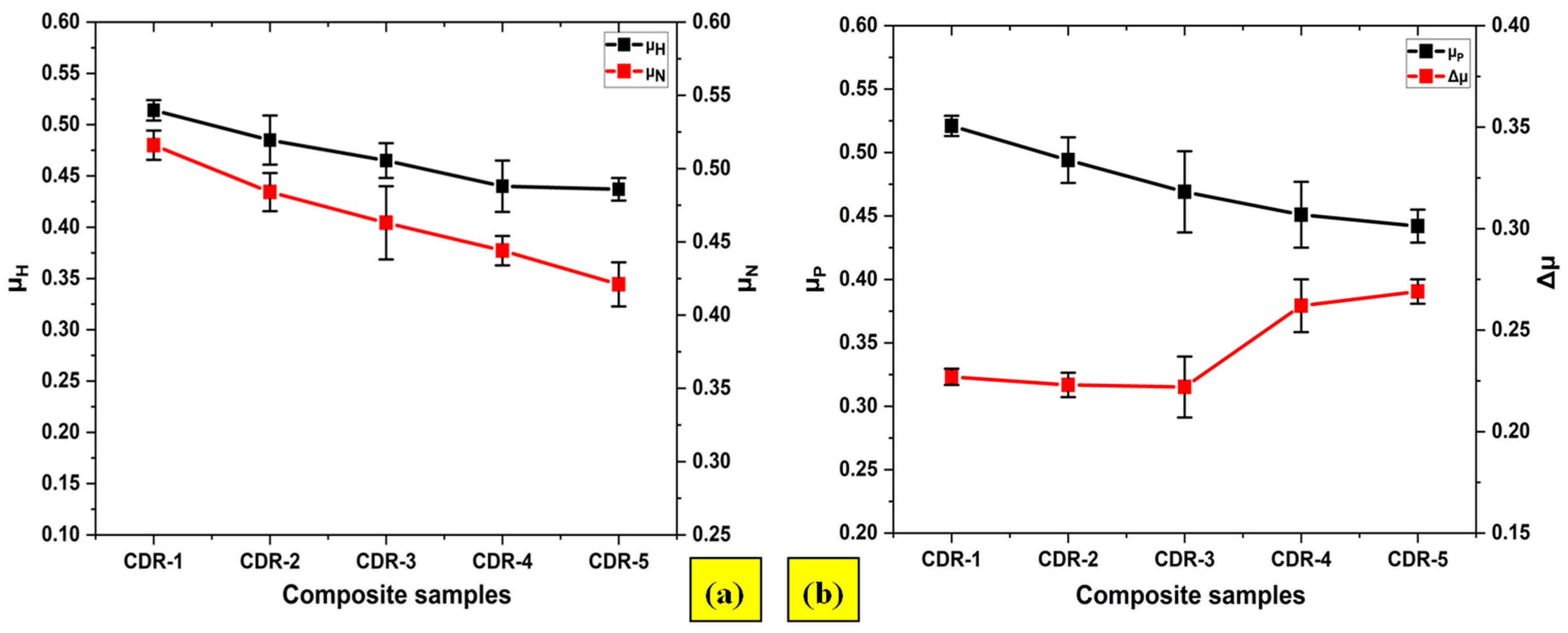
3.1.1. Frictional Attributes of the Composites
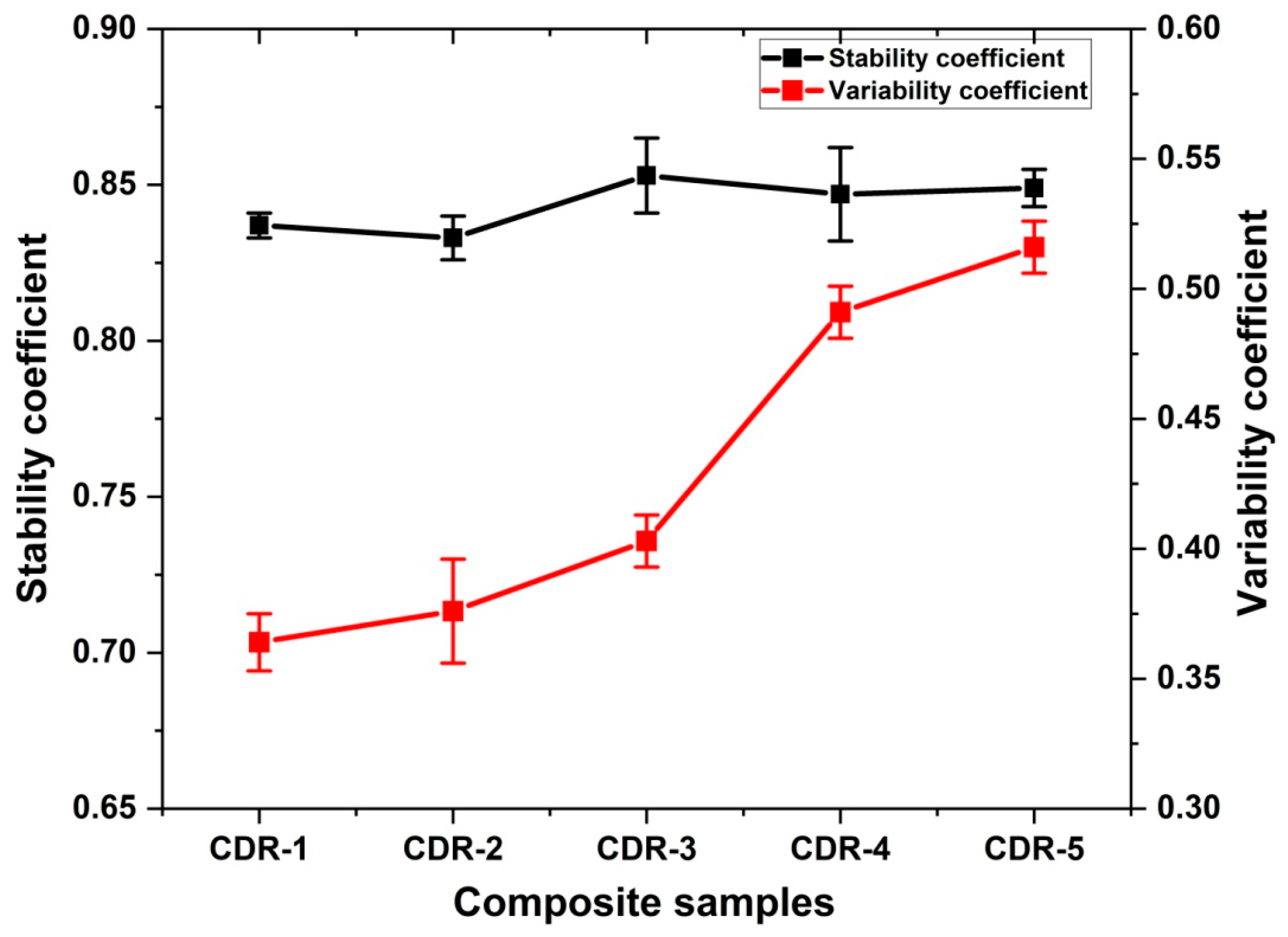
3.1.2. Stability and Variability Coefficients
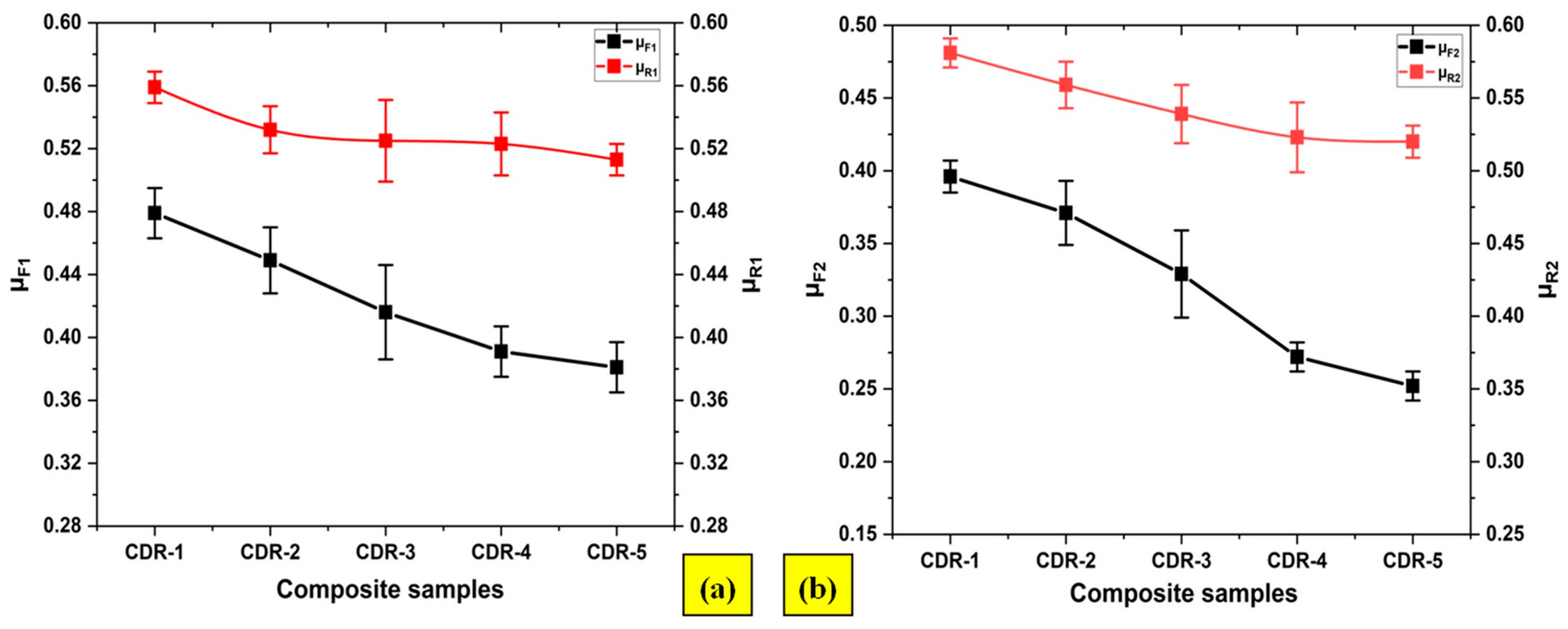
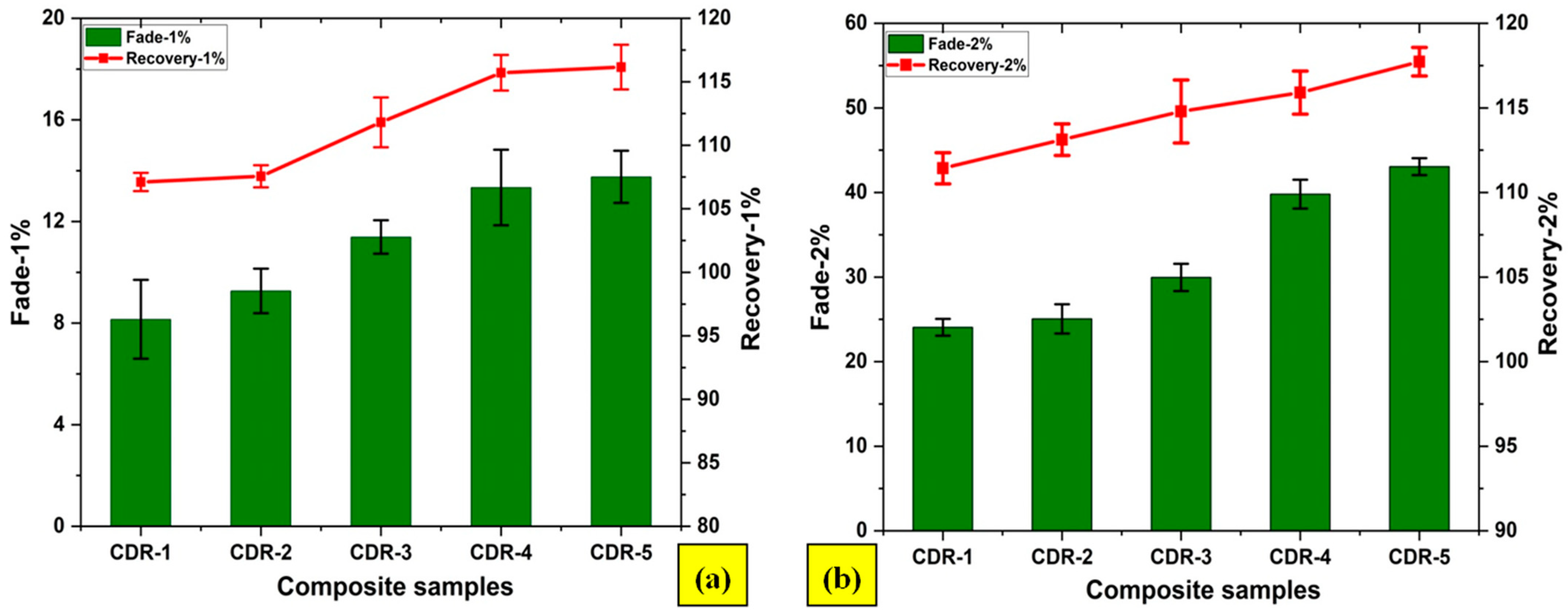
3.1.3. Fade–Recovery Aspects of the Composites
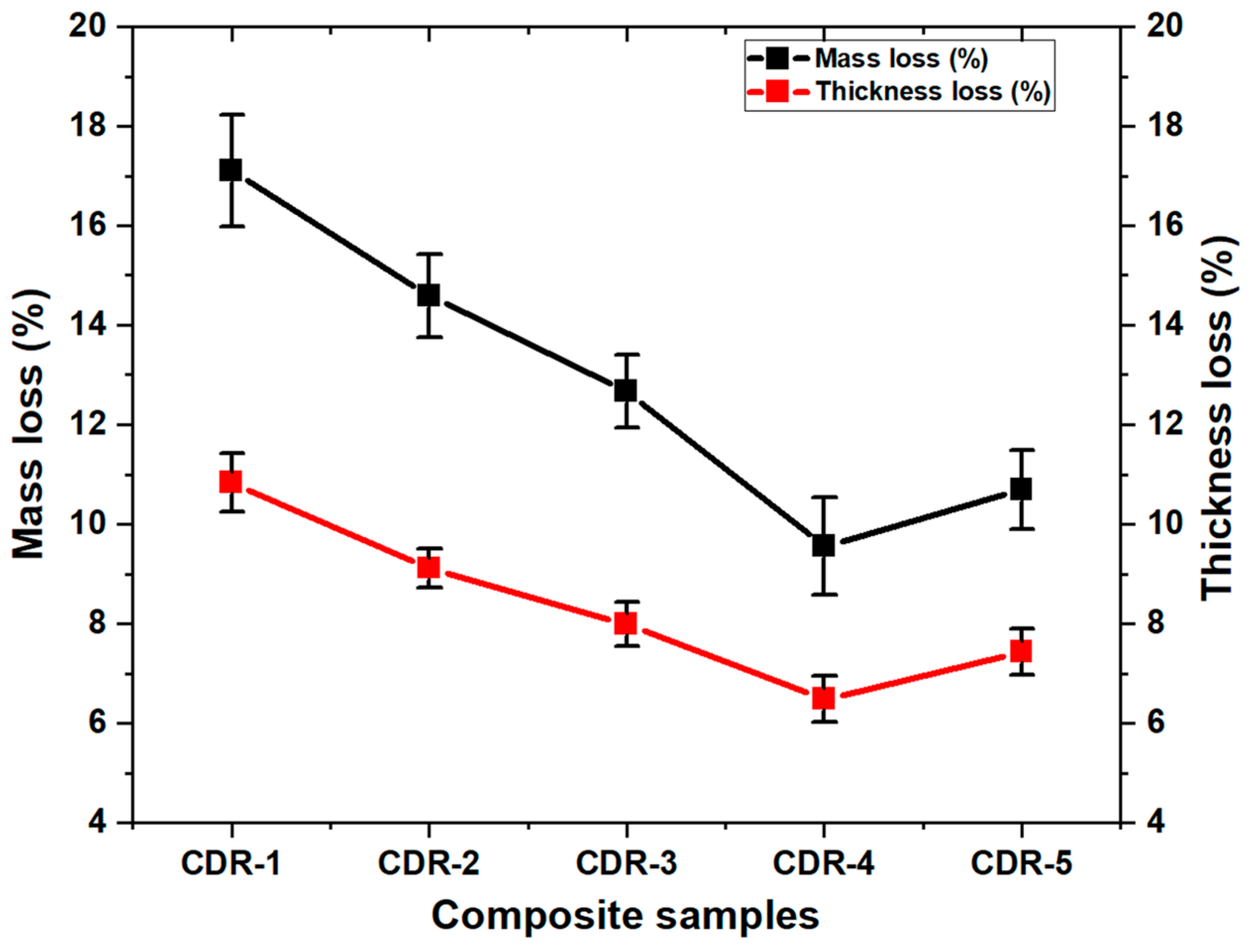
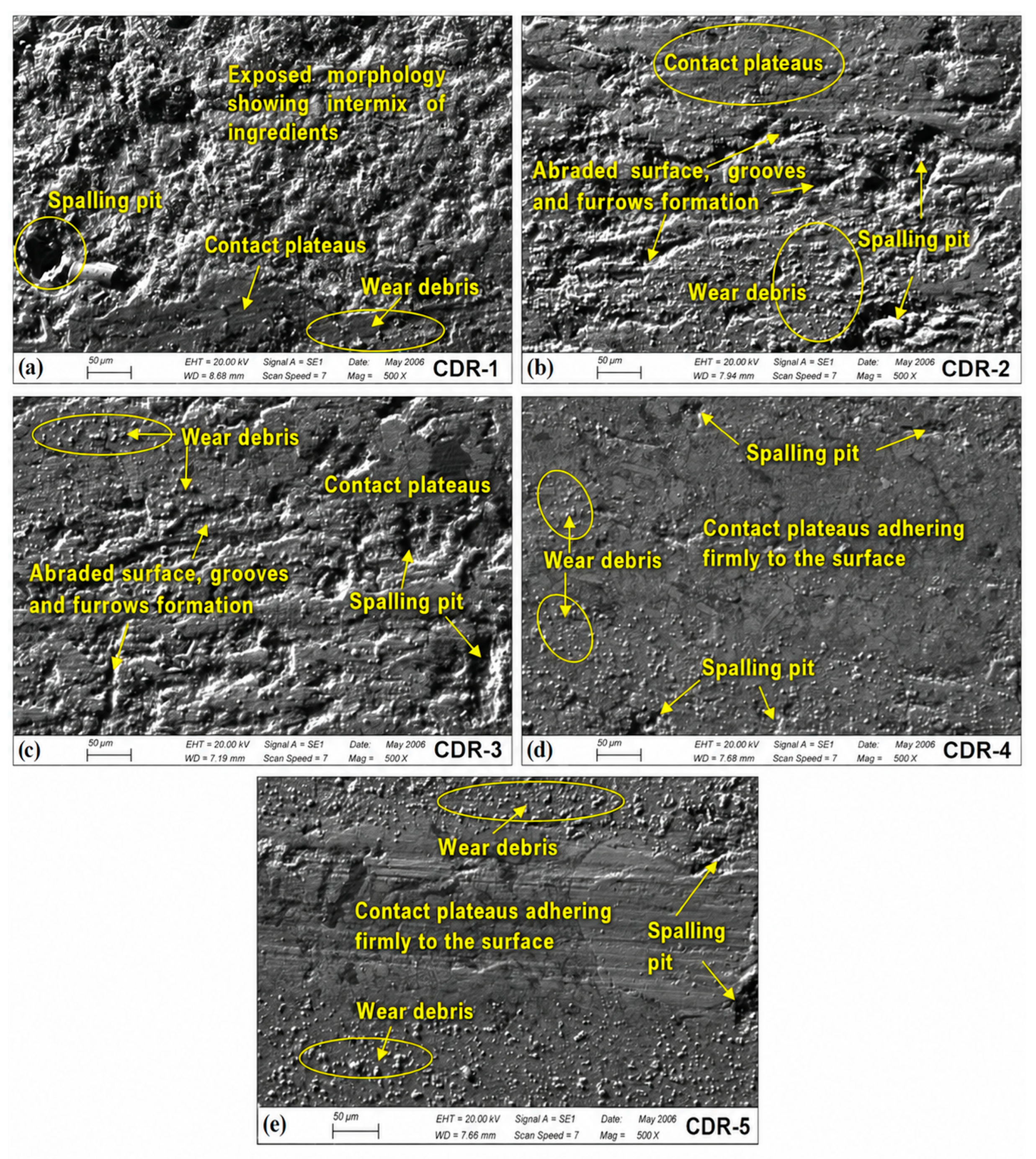
3.1.4. Wear Performance
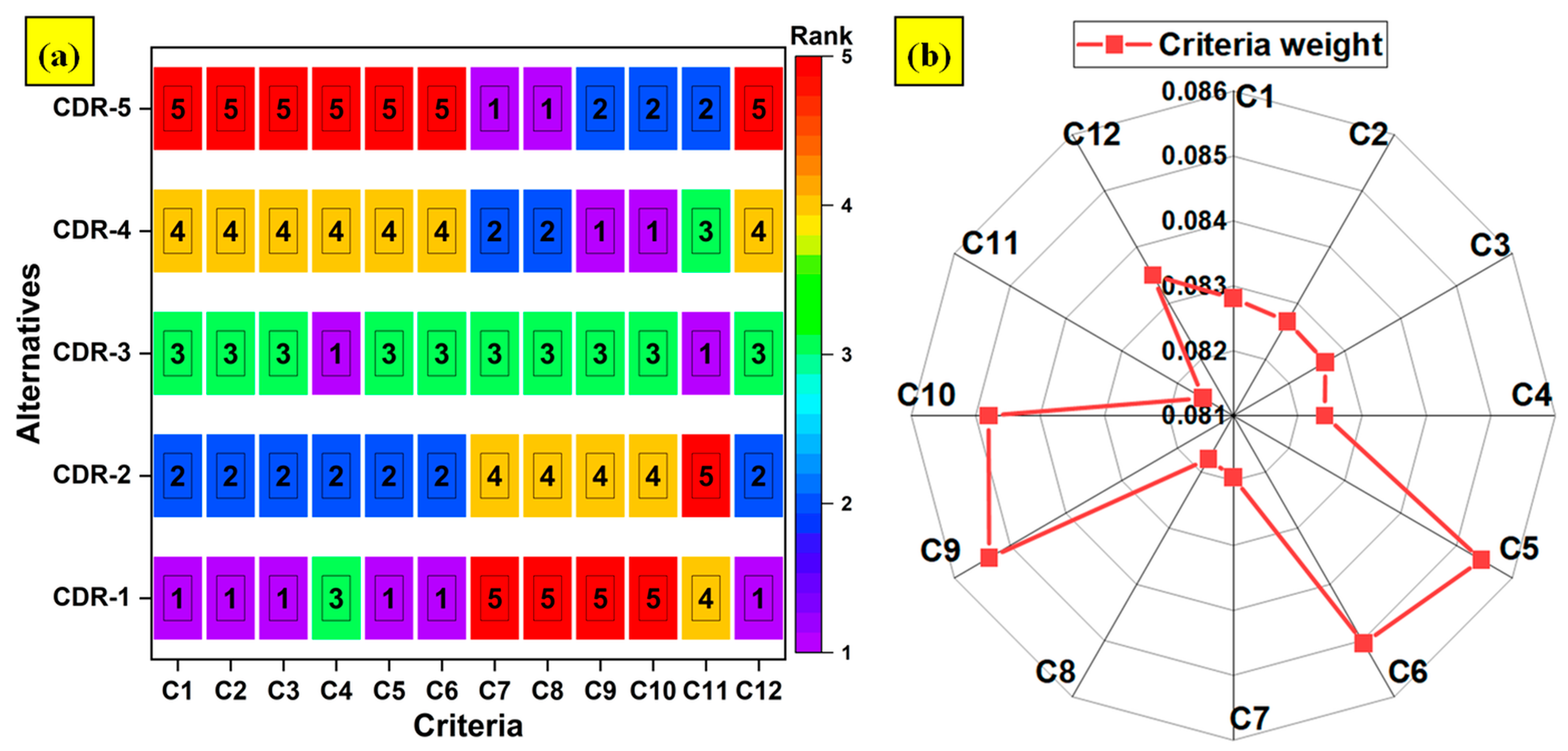
3.2. Ranking of the Composites
4. Conclusions
- The evaluation of friction performance indicated that composites containing a high proportion of cement dust and a lower amount of rock wool demonstrate superior friction performance along with reduced fluctuations in friction.
- The best fade resistance was observed in the composite sample with higher cement dust content. On the other hand, recovery and wear performance increased with increasing rock wool content.
- Based on the MEREC-weighted SRP comprehensive performance score, the overall ranking of the developed composites was obtained as CDR-3 > CDR-1 > CDR-2 > CDR-4 > CDR-5. The CDR-3 formulation, containing 55 wt.% CD and 15 wt.% RW fiber, offered the best compromise among friction performance, fade resistance, recovery, wear resistance, stability, and variability.
5. Limitations and Future Research Directions
Author Contributions
Funding
Data Availability Statement
Conflicts of Interest
References
- Essam, M.A.; Abdeltawab, N.M.; Fathy, A.; Elmahdy, M. Brake pads automotive industries, formulations, characteristics and testing: A review. Next Res. 2026, 3, 101153. [Google Scholar] [CrossRef]
- Borawski, A.; Szpica, D.; Mieczkowski, G. Polytetrafluoroethylene and aluminum powder as an alternative to copper in car brakes composite friction materials. Materials 2025, 18, 589. [Google Scholar] [CrossRef]
- Daimon, E.; Ito, Y. Effects of titanate on brake wear particle emission using a brake material friction test dynamometer. Lubricants 2024, 12, 387. [Google Scholar] [CrossRef]
- Bellini, C.; Di Cocco, V.; Iacoviello, D.; Iacoviello, F. Temperature Influence on Brake Pad Friction Coefficient Modelisation. Materials 2024, 17, 189. [Google Scholar] [CrossRef]
- Xin, H.; Shen, W.; Feng, L.; Wu, Y.; Wang, H.; Qin, F.; Peng, H.-X.; Xu, P. Efficient Prediction and Enhancement in Friction Wear Performance of Synthetic Brake Pads Using Machine Learning. J. Compos. Sci. 2026, 10, 193. [Google Scholar] [CrossRef]
- Guibert, R.; Thévenot, M.; Lemesle, J.; Coustenoble, L.; Brunel, J.-F.; Dufrénoy, P.; Bigerelle, M. Multiscale and Multiphysics Topographical Analysis of Brake Friction Material Related to Friction Performance. Lubricants 2026, 14, 139. [Google Scholar] [CrossRef]
- Pacino, A.; La Rocca, A.; Brookes, H.I.; Haffner-Staton, E.; Fay, M.W. Comparative Study of the Morphology and Chemical Composition of Airborne Brake Particulate Matter from a Light-Duty Automotive and a Rail Sample. Atmosphere 2026, 17, 34. [Google Scholar] [CrossRef]
- Al Wasif-Ruiz, T.; Sánchez-Martín, J.A.; Barrios-Sánchez, C.C.; Suárez-Bertoa, R. Particle Emissions Characterization from Non-Asbestos Organic Brake Pads During On-Road Harsh Braking. Sustainability 2026, 18, 4463. [Google Scholar] [CrossRef]
- Hoff, M.; Chen, Y.-M.; Meunier, L.; Bressot, C.; Morgeneyer, M. Effect of friction material on vehicle brake particle emissions. Atmosphere 2025, 16, 1075. [Google Scholar] [CrossRef]
- Hoff, M.; Bressot, C.; Chen, Y.-M.; Meunier, L.; Morgeneyer, M. Reduction in brake wear emissions with Cr2O3 and WC-CoCr coatings for cast iron discs. Environments 2025, 12, 341. [Google Scholar] [CrossRef]
- Anaya-Mancipe, J.M.; Cruz, R.D.O.S.D.; Caetano, D.G.; Costa, M.F.D.; Kotik, H.G. Recycling Expanded Polystyrene Waste into Microfibers by Air Jet Spinning Using a Partially Bio-Based D-Limonene Solvent System. Processes 2026, 14, 1106. [Google Scholar] [CrossRef]
- Jayashree, P.; Candeo, S.; Leonardi, M.; Fidelio, C.; Straffelini, G. Effect of the addition of waste generated during the plasma cutting of aluminum products on the friction and emission properties of a commercial friction material formulation. Atmosphere 2022, 13, 2056. [Google Scholar] [CrossRef]
- Wang, C.; Li, R.; Lin, H.; Yuan, S.; Wang, L.; Ma, Y. Preparation and properties of brake friction materials reinforced with coconut fiber and Dypsis Lutescens fiber. Materials 2024, 17, 3926. [Google Scholar] [CrossRef]
- Borawski, A.; Szpica, D.; Mieczkowski, G. The possibility of using components of plant origin as reinforcements in composite friction materials-A simulation-based braking process study. Materials 2024, 17, 5834. [Google Scholar] [CrossRef]
- Mehta, V.; Kumar, N.; Algahtani, A.; Tirth, V.; Al-Mughanam, T.; Chau, K.-W. Comparative study of chemically treated sugarcane and kevlar fiber to develop brake resistance composites. Molecules 2023, 28, 4861. [Google Scholar] [CrossRef]
- Confiengo, G.G.; Faga, M.G. Ecological transition in the field of brake pad manufacturing: An overview of the potential green constituents. Sustainability 2022, 14, 2508. [Google Scholar] [CrossRef]
- Zheng, K.; Lin, Y.; Lai, T.; Gao, C.; Liu, M.; Ren, Z. Replacing copper in composites with waste foundry sand: A novel approach for Cu-free resin-based braking material. Tribol. Int. 2024, 191, 109110. [Google Scholar]
- Straffelini, G.; Jayashree, P.; Barbieri, A.; Masciocchi, R. Tribological Behavior of Friction Materials Containing Aluminum Anodizing Waste Obtained by Different Industrial Drying Processes. Lubricants 2024, 12, 173. [Google Scholar] [CrossRef]
- Zheng, K.; Zheng, F.; Lin, J.; Ren, Z.; Lin, Y. Utilization of red mud as copper substitute in eco-friendly resin-based brake composites: Performance evaluation and machine learning prediction. Tribol. Int. 2026, 214, 111324. [Google Scholar]
- da Silva Gehlen, G.; Carlevaris, D.; Straffelini, G.; Gialanella, S. Clam shell waste as a filler ingredient for sustainable brake pad friction materials. Wear 2026, 586, 206465. [Google Scholar] [CrossRef]
- Jayashree, P.; Matějka, V.; Leonardi, M.; Straffelini, G. The influence of the addition of different kinds of slags on the friction and emission behavior of a commercially employed friction material formulation. Wear 2023, 522, 204705. [Google Scholar] [CrossRef]
- Raghunathan, V.; Sathyamoorthy, G.; Ayyappan, V.; Singaravelu, D.L.; Rangappa, S.M.; Siengchin, S. Effective utilization of surface-processed/untreated Cardiospermum halicababum agro-waste fiber for automobile brake pads and its tribological performance. Tribol. Int. 2024, 197, 109776. [Google Scholar]
- Kılıç, H. Performance assessment of agricultural waste based eco-friendly brake friction composites. Polym. Compos. 2024, 45, 16317–16334. [Google Scholar] [CrossRef]
- Adeyemi, O.I.; Kirwan, K.; Tuersley, I.; Coles, S.R. Comparative assessment of the performance of friction materials based on different agricultural wastes. Tribol. Int. 2024, 191, 109130. [Google Scholar] [CrossRef]
- Yavuz, H. Comparison of Performance Criteria of Vehicle Brake Pad Biopolymers Derived from Renewable Biomass. Polymers 2026, 18, 950. [Google Scholar] [CrossRef] [PubMed]
- Tian, Y.; Huang, K.; Xu, Z.; Zhuansun, Y.; Ma, Y. Synergistically Reinforced Copper-Free Friction Materials with Agricultural Wastes and Carbon Fibers: Evaluation of Tribological Performance. Materials 2026, 19, 1941. [Google Scholar] [CrossRef]
- Lim, J.; Yoo, Y.; Lee, J.; Park, J.; Kim, J.; Cho, H. Design of a cement kiln dust recovery process for CO2, SOx, and NOx capture and utilization using a microbubble scrubber. J. Environ. Chem. Eng. 2025, 13, 115983. [Google Scholar] [CrossRef]
- Global Cement Top 100 2026. Available online: https://www.globalcement.com/magazine/articles/1390-global-cement-top-100-2026 (accessed on 7 April 2026).
- Ahmed, H.M.; Hefni, M.A.; Ahmed, H.A.M.; Saleem, H.A. Cement kiln dust (CKD) as a partial substitute for cement in pozzolanic concrete blocks. Buildings 2023, 13, 568. [Google Scholar] [CrossRef]
- Akintayo, B.D.; Olanrewaju, O.A.; Olanrewaju, O.I. Life cycle assessment of ordinary portland cement production in South Africa: Mid-point and end-point approaches. Sustainability 2024, 16, 3001. [Google Scholar] [CrossRef]
- Ige, O.E.; Moloi, K.; Kabeya, M. Sustainability assessment of cement types via integrated life cycle assessment and multi-criteria decision-making methods. Sci 2025, 7, 85. [Google Scholar] [CrossRef]
- Hosen, K.; Bărbulescu, A. Cement industry pollution mitigation: A comprehensive review on reducing environmental and health impacts. Toxics 2026, 14, 138. [Google Scholar] [CrossRef]
- Pietrzak, A.; Ulewicz, M. The mechanical strength of ecological cement mortars based on fly ash from the combustion of municipal waste and cement kiln dust. Appl. Sci. 2025, 15, 3215. [Google Scholar] [CrossRef]
- Elmaadawy, K.; Hamed, M.R.; Al-Hazmi, H.; Hassan, G.K. Utilizing cement kiln dust as an efficient adsorbent for heavy metal removal in wastewater treatment. Water 2025, 17, 40. [Google Scholar] [CrossRef]
- Donkor, S.A.A.O.; Razavi, M.; Wilson, C.M.D.; Abankwa, B.; Otoo, R.; Armah, A. Long-term effects of cement kiln dust (CKD) on the permeability of a treated soil slope. Geotechnics 2025, 5, 87. [Google Scholar] [CrossRef]
- Dulaimi, A.; Kadhim, Y.N.; Issa, H.A.; Hashim, R.A.; Kashesh, G.J.; Andrade, J.M.D.A.; Bernardo, L.F.A. Effect of cement kiln dust on the mechanical and durability performance of asphalt composites. J. Compos. Sci. 2025, 9, 312. [Google Scholar] [CrossRef]
- Singh, T. An integrated multicriteria decision making framework for the selection of waste cement dust filled automotive brake friction composites. Sci. Rep. 2024, 14, 6817. [Google Scholar] [CrossRef]
- Dadkar, N.; Tomar, B.S.; Satapathy, B.K.; Patnaik, A. Performance assessment of hybrid composite friction materials based on flyash-rock fibre combination. Mater. Des. 2010, 31, 723–731. [Google Scholar] [CrossRef]
- Wang, N.; Liu, H.; Huang, F. Effects of hybrid rockwool-wood fiber on the performance of asbestos-free brake friction composites. Lubricants 2023, 11, 27. [Google Scholar] [CrossRef]
- Mineral Fibres for Automotive. Available online: https://coresolutions.rockwool.com/solutions-and-applications/mineral-fibres-for-automotive/ (accessed on 5 June 2026).
- Liu, Y.; Ma, Y.; Lv, X.; Yu, J.; Zhuang, J.; Tong, J. Mineral fibre reinforced friction composites: Effect of rockwool fibre on mechanical and tribological behavior. Mater. Res. Express 2018, 5, 095308. [Google Scholar] [CrossRef]
- IS 2742: Part 4; Automotive Vehicles—Brake Linings, Part 4: Co-efficient of Friction—Method of Test. Bureau of Indian Standards (BIS): New Delhi, India, 1994.
- Vijay, R.; Rajan, B.S.; Sathickbasha, K.; Hariharasakthisudhan, P.; Singaravelu, D.L.; Manoharan, S.; Balaji, P.; Ahmed, A.B.M.A.; Sethupathi, P.B. Influence of metal sulfide coated steel fibers on the friction and wear performance of brake friction composites. Tribol. Int. 2022, 176, 107924. [Google Scholar] [CrossRef]
- Keshavarz-Ghorabaee, M.; Amiri, M.; Zavadskas, E.K.; Turskis, Z.; Antucheviciene, J. Determination of objective weights using a new method based on the removal effects of criteria (MEREC). Symmetry 2021, 13, 525. [Google Scholar] [CrossRef]
- Zakeri, S.; Chatterjee, P.; Konstantas, D.; Ecer, F. A decision analysis model for material selection using simple ranking process. Sci. Rep. 2023, 13, 8631. [Google Scholar] [CrossRef]
- Mian, S.H.; Nasr, E.A.; Moiduddin, K.; Saleh, M.; Abidi, M.H.; Alkhalefah, H. Assessment of consolidative multi-criteria decision making (C-MCDM) algorithms for optimal mapping of polymer materials in additive manufacturing: A case study of orthotic application. Heliyon 2024, 10, e30867. [Google Scholar] [CrossRef]
- Öztürk, B.; Mutlu, T. Effects of zinc borate and fly ash on the mechanical and tribological characteristics of brake friction materials. Tribol. Trans. 2016, 59, 622–631. [Google Scholar] [CrossRef]
- Sugözü, B. Tribological properties of brake friction materials containing fly ash Available to Purchase. Ind. Lubr. Tribol. 2018, 70, 902–906. [Google Scholar] [CrossRef]
- Rajan, R.; Tyagi, Y.K.; Singh, S. Waste and natural fiber based automotive brake composite materials: Influence of slag and coir on tribological performance. Polym. Compos. 2022, 43, 1508–1517. [Google Scholar] [CrossRef]
- Singh, T. Tribological performance of volcanic rock (perlite)-filled phenolic-based brake friction composites. J. King Saud Univ.-Eng. Sci. 2024, 36, 638–645. [Google Scholar] [CrossRef]
- Binda, F.F.; Oliveira, V.A.; Fortulan, C.A.; Palhares, L.B.; Santos, C.G. Friction elements based on phenolic resin and slate powder. J. Mater. Res. Technol. 2020, 9, 3378–3383. [Google Scholar] [CrossRef]
- Jayashree, P.; Matějka, V.; Leonardi, M.; Straffelini, G. A novel path towards limiting non-exhaust particulate matter emissions of a commercial friction material through the addition of metallurgical slag. Sci. Rep. 2023, 13, 666. [Google Scholar] [CrossRef] [PubMed]
- Gehlen, G.S.; Neis, P.D.; Barros, L.Y.; Poletto, J.C.; Ferreira, N.F.; Amico, S.C. Tribological performance of eco-friendly friction materials with rice husk. Wear 2022, 500–501, 204374. [Google Scholar] [CrossRef]
- Verma, P.C.; Aswathi, P.; Straffelini, G.; Gialanella, S. Carbonaceous decomposition products at high temperatures and their interfacial role in the friction behaviour of composite brake material. Lubricants 2024, 12, 399. [Google Scholar] [CrossRef]
- Gehlen, G.S.; Nogueira, A.P.G.; Carlevaris, D.; Barros, L.Y.; Poletto, J.C.; Lasch, G.; Straffelini, G.; Ferreira, N.F.; Neis, P.D. Tribological assessment of rice husk ash in eco-friendly brake friction materials. Wear 2023, 516–517, 204613. [Google Scholar]






| Ingredients (wt.%) | Composite Designation | ||||
|---|---|---|---|---|---|
| CDR-1 | CDR-2 | CDR-3 | CDR-4 | CDR-5 | |
| Resin | 10 | 10 | 10 | 10 | 10 |
| Aramid fiber | 5 | 5 | 5 | 5 | 5 |
| Alumina | 5 | 5 | 5 | 5 | 5 |
| Graphite | 5 | 5 | 5 | 5 | 5 |
| Vermiculite | 5 | 5 | 5 | 5 | 5 |
| Rock wool | 5 | 10 | 15 | 20 | 25 |
| Cement dust | 65 | 60 | 55 | 50 | 45 |
| Test Cycle | Load (N) | Speed (RPM) | Temperature (°C) | Brake Appliations | On Time (s) | Cooling | Heating |
|---|---|---|---|---|---|---|---|
| Burnish | 440 | 308 | 93 | 1 | 1200 | Off | Off |
| Reset | 220 | 205 | 93 | 1 | 600 | Off | Off |
| Baseline-I | 660 | 411 | 82–104 | 20 | 10/brake | Off | Off |
| First fade | 660 | 411 | 82–289 | 1 | 600 | Off | On |
| First recovery | 660 | 411 | 261–93 | 4 | 10/brake | On | Off |
| Wear | 660 | 411 | 193–204 | 100 | 10/brake | Off | Off |
| Second fade | 660 | 411 | 82–345 | 1 | 600 | Off | On |
| Second recovery | 660 | 411 | 317–93 | 5 | 10/brake | On | Off |
| Baseline-II | 660 | 411 | 82–104 | 20 | 10/brake | Off | Off |
| C1 | C2 | C3 | C4 | C5 | C6 | C7 | C8 | C9 | C10 | C11 | C12 | |
|---|---|---|---|---|---|---|---|---|---|---|---|---|
| CDR-1 | 0.516 | 0.514 | 0.521 | 0.227 | 08.15 | 24.07 | 107.11 | 111.43 | 17.10 | 10.84 | 0.837 | 0.364 |
| CDR-2 | 0.484 | 0.485 | 0.494 | 0.223 | 09.25 | 25.05 | 107.58 | 113.15 | 14.59 | 9.11 | 0.836 | 0.373 |
| CDR-3 | 0.464 | 0.465 | 0.469 | 0.222 | 11.39 | 29.96 | 111.81 | 114.79 | 12.67 | 7.99 | 0.853 | 0.403 |
| CDR-4 | 0.444 | 0.440 | 0.451 | 0.262 | 13.34 | 39.80 | 115.71 | 115.90 | 09.56 | 6.48 | 0.847 | 0.491 |
| CDR-5 | 0.421 | 0.437 | 0.442 | 0.269 | 13.76 | 43.06 | 116.16 | 117.73 | 10.69 | 7.43 | 0.849 | 0.516 |
| CDR-1 | CDR-2 | CDR-3 | CDR-4 | CDR-5 | |
|---|---|---|---|---|---|
| ) | 2.25 | 2.08 | 2.33 | 1.92 | 1.42 |
| Rank | 2 | 3 | 1 | 4 | 5 |
Disclaimer/Publisher’s Note: The statements, opinions and data contained in all publications are solely those of the individual author(s) and contributor(s) and not of MDPI and/or the editor(s). MDPI and/or the editor(s) disclaim responsibility for any injury to people or property resulting from any ideas, methods, instructions or products referred to in the content. |
© 2026 by the authors. Licensee MDPI, Basel, Switzerland. This article is an open access article distributed under the terms and conditions of the Creative Commons Attribution (CC BY) license.
Share and Cite
Singh, T.; Singh, V.; Ali, S.; Wang, M.; Fekete, G. Optimization of Tribological Properties in Cement Dust and Rock Wool Reinforced Composites: Experimental Study and Decision-Making Analysis. J. Compos. Sci. 2026, 10, 317. https://doi.org/10.3390/jcs10060317
Singh T, Singh V, Ali S, Wang M, Fekete G. Optimization of Tribological Properties in Cement Dust and Rock Wool Reinforced Composites: Experimental Study and Decision-Making Analysis. Journal of Composites Science. 2026; 10(6):317. https://doi.org/10.3390/jcs10060317
Chicago/Turabian StyleSingh, Tej, Vedant Singh, Sharafat Ali, Meizi Wang, and Gusztáv Fekete. 2026. "Optimization of Tribological Properties in Cement Dust and Rock Wool Reinforced Composites: Experimental Study and Decision-Making Analysis" Journal of Composites Science 10, no. 6: 317. https://doi.org/10.3390/jcs10060317
APA StyleSingh, T., Singh, V., Ali, S., Wang, M., & Fekete, G. (2026). Optimization of Tribological Properties in Cement Dust and Rock Wool Reinforced Composites: Experimental Study and Decision-Making Analysis. Journal of Composites Science, 10(6), 317. https://doi.org/10.3390/jcs10060317