Article

Effect of Curing Techniques on Microleakage and Microhardness of Bulk-Fill and Conventional Resin-Based Composites: An In Vitro Study

by
Ako Abdalrahman Ahmed
* and
Bestoon Mohammed Faraj
Department of Operative Dentistry and Endodontics, College of Dentistry, University of Sulaimani, Sulaymaniyah 46001, Iraq
*
Author to whom correspondence should be addressed.
J. Compos. Sci. 2026, 10(6), 306; https://doi.org/10.3390/jcs10060306
Submission received: 20 April 2026 / Revised: 22 May 2026 / Accepted: 28 May 2026 / Published: 3 June 2026
(This article belongs to the Section Biocomposites)

Abstract

Adequate polymerization of resin-based composites is essential for marginal sealing and mechanical performance. This study evaluated the effects of different light-curing protocols on gingival microleakage and microhardness of a high-viscosity bulk-fill composite, Filtek™ One Bulk Fill Restorative (3M ESPE; AUDMA, AFM, UDMA, 1,12-dodecane-DMA; silica/zirconia fillers, 76.5 wt%, 58.4 vol%) and conventional nanohybrid composite, Filtek™ Z250 XT Universal Restorative (3M ESPE; Bis-EMA, UDMA; zirconia/silica fillers, 82 wt%, 68 vol%). Forty-eight extracted human second premolars and 48 cylindrical specimens were used for microleakage and Vickers microhardness testing, respectively. Specimens were cured using an O-Star LED unit in turbo mode (2700–3000 mW/cm2, 3 s) or soft-start mode (0–1200 mW/cm2, 20 s) at 2 mm and 5 mm distances. Data were analyzed using Kruskal–Wallis and Dunn’s tests (p < 0.05). Significant differences were found among groups. Soft-start curing at 2 mm produced the lowest microleakage, whereas turbo curing at 5 mm produced the highest. The conventional composite exhibited higher top and bottom microhardness values. Bottom-to-top hardness ratios were below 80% in most groups, except for the conventional composite cured with soft-start mode. Based on our findings, soft-start curing at short distances provides favorable outcomes, while turbo curing at 5 mm is not recommended.

1. Introduction

Resin-based composites (RBCs) have played an essential role in restorative dentistry for more than six decades due to their superior strength, esthetic properties, and adhesive strength, enabling less invasive restorations compared to amalgam [1,2]. The main RBC components include organic matrix resin, inorganic particles, coupling agents, and polymerization initiators, and they have been a staple in the development of dental biomaterials [3].
Strength, polishability, and wear resistance have improved with advances in composite materials. This evolution has developed from macrofilled and microfilled composites to nanofilled systems, primarily driven by advances in filler technology. A familiar problem in light-cured composites is the resin–filler interface, which scatters light and limits polymerization to depths of less than 2 mm. Because light penetration is limited, these materials are typically placed using a layering technique, with the composite added in thin increments. This approach increases the number of clinical steps and may raise the risk of technique-related mistakes during placement [4]. There have also been advances in restorative dentistry including the development of bulk-fill and bioactive composites designed to enhance depth of cure and biocompatibility [5,6].
The challenge of polymerization shrinkage persists despite advances in restorative materials, which generate interfacial stresses and microleakage, reducing the longevity of dental restorations [7,8]. Microleakage is the phenomenon in which bacteria, fluids, or ions pass between the tooth and the restoration. This can cause marginal discoloration, sensitivity, and secondary caries. Therefore, optimal polymerization is crucial to the long-term success of restorations [8,9].
To reduce the number of steps required to complete a restoration and the time associated with the incremental process, bulk-fill composites have been developed. High-viscosity bulk-fill composites are formulated for placement in thicker layers, typically up to 4–5 mm [10]. These materials have been modified with various combinations of monomers, sophisticated photoinitiators, and increased translucency, thereby enhancing light penetration and curing [11]. However, polymerization of bulk-fill resin-based composites differs fundamentally from that of micro- or nano-hybrid composites. This property, combined with the unique curing procedure, is a particularly crucial factor affecting the microhardness and marginal adaptability of bulk-fill composites [5,7,12].
Previously, light-curing units varied widely in the intensity of light delivered. While conventional light-curing units (LCUs) provide around 1000 mW/cm2, high-power ones exceed 2000 mW/cm2 [13]. Furthermore, numerous curing protocols have been developed that affect polymerization kinetics and shrinkage stress differently; some soft-start and pulse-delay methods may improve polymerization while undercuring, leading to poor outcomes, whereas overcuring may increase the stress associated with shrinkage and produce microleakage [14].
Microhardness testing provides an indirect measurement of the degree of conversion and mechanical integrity, and microleakage assesses the ability of restorations to seal and the adaptation of the margins. Investigating these two parameters together provides valuable insight into the balance among curing efficiency, mechanical performance, and marginal stability. Unfortunately, few studies have examined the effects of various curing protocols on both microhardness and microleakage in high-viscosity bulk-fill composites compared with conventional composites [11,12,15].
The purpose of this research is to assess the effects of different curing protocols on the microhardness and microleakage of high-viscosity bulk-fill composites and conventional composites. The null hypothesis is that the composite type and curing protocol will not affect the microhardness and microleakage.

2. Materials and Methods

2.1. Study Design

This research was designed as a randomized, experimental in vitro study. The study was conducted in accordance with the Checklist for Reporting In Vitro Studies (CRIS) guidelines. Ethical approval for this study was granted by the Ethical Research Committee of the Faculty of Dentistry, University of Sulaimani, Department of Conservative Dentistry (COD-EC-24–0063, 16 December 2024) [16].
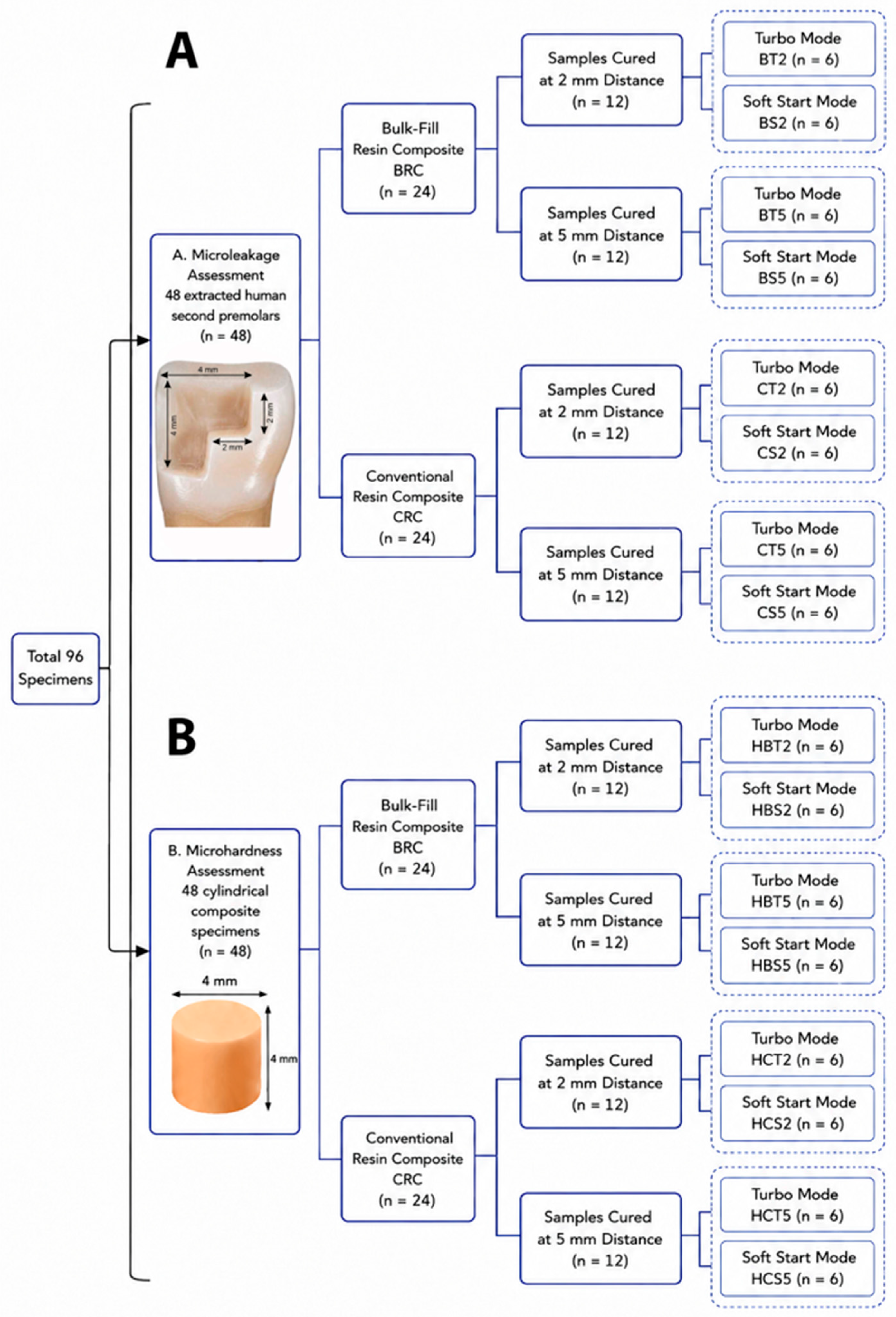
The study included two experimental arms: (1) microleakage assessment, performed on 48 restored human second premolar teeth, and (2) microhardness assessment, performed on 48 cylindrical composite specimens prepared using standardized molds. Both experimental arms followed the same curing parameters and subgroup allocation. In each arm, the samples were divided according to the type of resin-based composite used (conventional or bulk-fill), the curing mode (soft-start or turbo), and the curing distance (2 mm or 5 mm). Accordingly, each experimental arm consisted of eight subgroups, with six samples in each subgroup [Figure 1].
The required sample size was determined using G*Power software (version 3.1; Heinrich Heine University, Düsseldorf, Germany). The calculation was performed with a significance level of 0.05 and a statistical power of 80%, using effect size estimates derived from previously published studies.

2.2. Materials

Two resin-based composite materials (RBCs) in shade A2 and one universal adhesive were used in this study (Table 1). Etching was performed using 37% phosphoric acid gel (Super Etch; SDI Limited, Bayswater, Victoria, Australia). All materials were handled in accordance with the manufacturer’s instructions.
A light-curing procedure was performed using an O-Star LED curing unit with programmable modes and variable curing intensities (Table 2).

2.3. Operator Standardization, Examiner Calibration, and LCU Verification

To minimize variability due to operator technique, a single trained operator performed all cavity preparations, restorations, and cylindrical specimen preparations according to a standardized protocol. Before the main experiment, pilot preparations were conducted to confirm consistency in cavity dimensions, restoration placement, specimen preparation, and positioning of the curing light. Microleakage was evaluated using a predefined ordinal scoring system after examiner calibration. The irradiance output of the light-curing unit (LCU) was checked with the O-Star radiometer before specimen preparation and after every five specimens to ensure stable light output throughout the experiment.

2.4. First Experimental Arm: Microleakage

2.4.1. Tooth Selection and Storage

A total of 48 intact human maxillary second premolars (n = 48), extracted for orthodontic purposes, were collected after obtaining informed consent from the patients. Immediately after extraction, the teeth were mechanically debrided with a periodontal curette and stored in a 0.5% chloramine T solution for 1 week for disinfection. They were then thoroughly rinsed with distilled water and polished with a slow-speed handpiece to remove any remaining debris or organic deposit. The extracted teeth were examined under a stereomicroscope to confirm an intact crown and the absence of cracks, restorations, or developmental defects. Only teeth extracted within the previous six months were included. In addition, the distance from the distal marginal ridge to the cementoenamel junction (CEJ) was required to be ≥5 mm. The selected teeth were kept in distilled water at 5 °C in opaque containers, and the storage solution was replaced weekly. Before cavity preparation, the specimens were allowed to reach room temperature and were left for 24 h [17].

2.4.2. 3D Design and Specimen Preparation

A rectangular block (30 mm × 15 mm × 15 mm) was modeled using Meshmixer 3.5.474 (Autodesk Inc., San Rafael, CA, USA). Midpoint lines were added to each of the four sides to assist with the consistent centering of the extracted teeth. A supporting base (50 mm × 75 mm × 75 mm) was also designed to properly accommodate the printed components. Using Aqua Red-Clay resin, 48 blocks and one base were fabricated with a Sonic Mini 8K 3D printer (Phrozen Technology Co., Ltd., Hsinchu, Taiwan) [18].
Each tooth was embedded in a custom 3D-printed resin block lined with putty silicone to stabilize the tooth and ensure reproducible orientation. The small mold was mounted into a larger 3D-printed base holder during cavity preparation.
The occlusal and distal surfaces of the teeth were flattened using an electric handpiece with 170,000 RPM and diamond burs (No. 818.FG.045 from JOTTA, Rüthi, Switzerland) under continuous water cooling to prevent trauma to the gingival third of the distal surfaces. After flattening, the distal surface was checked under an operating microscope to confirm that the gingival third had not been damaged during preparation (SCM600-UL, Nanhai District, Foshan City 528,226 Guangdong, China). This step facilitated standardization of the distance between the light-curing unit tip and the composite surface.

2.4.3. Cavity Preparation Standardized

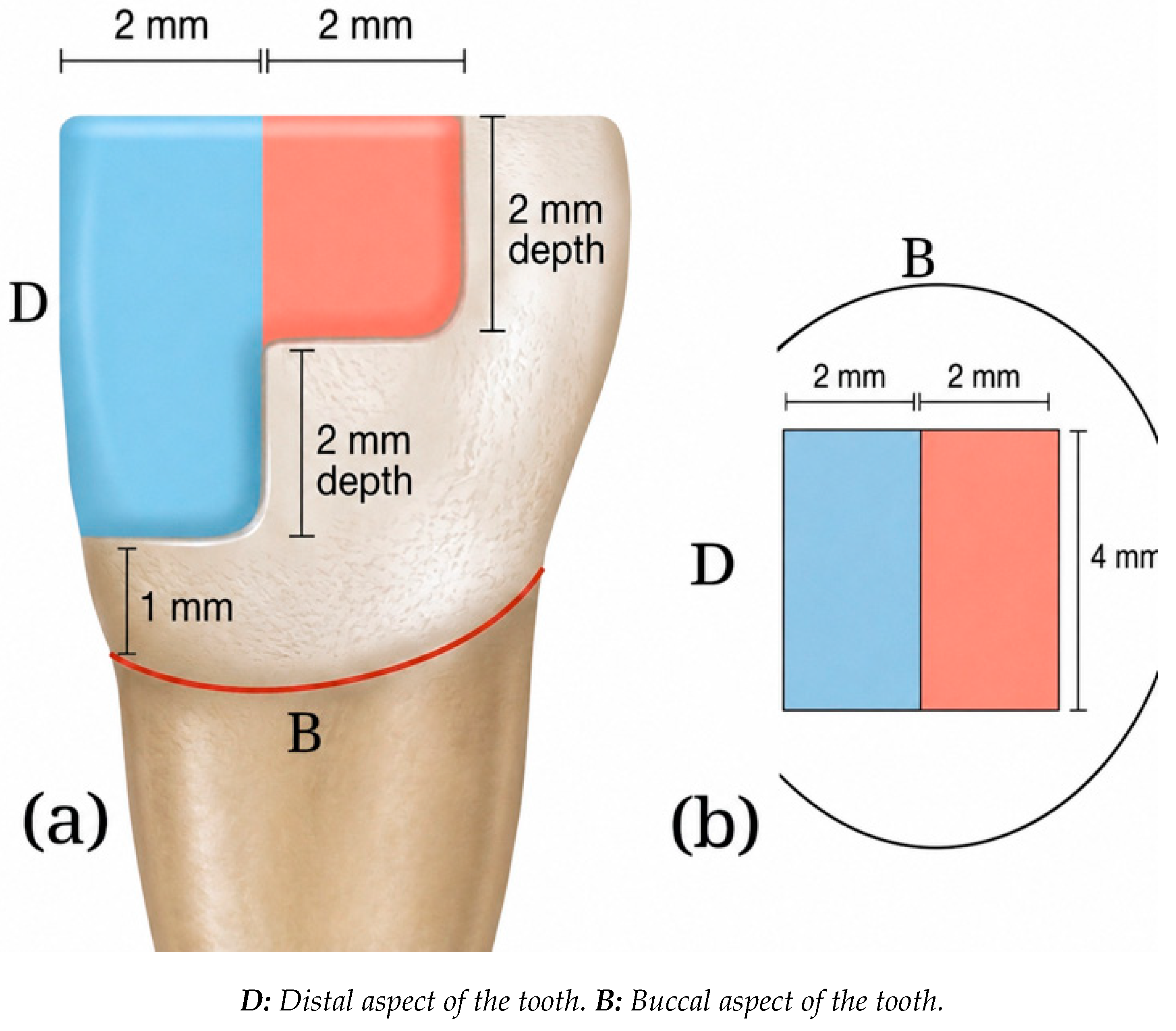
Class II cavities were prepared on the distal surfaces of extracted human premolars after establishing the cavity design on the flat tooth surfaces. A modified dental surveyor was used to hold the handpiece and guide it to move parallel to the cavity walls. Cavity preparation was performed using a high-speed handpiece with a diamond bur (No. 836-FG-014, JOTTA, Switzerland) under continuous water cooling. The cavity dimensions were set at 4 mm × 4 mm (occluso-gingival × bucco-palatal). The mesiodistal thickness of each gingival and pulpal wall was maintained at 2 mm, and the axial wall depth was likewise set at 2 mm [Figure 2]. The axiopulpal line angle was beveled to simulate clinical/oral situations. The specimens were randomly allocated into two basic groups, each consisting of four subgroups, with six teeth assigned to each subgroup (n = 6).

2.4.4. Cavity Conditioning and Restoration

Selective enamel etching was performed with SDI Super Etch (37% phosphoric acid gel; SDI Limited, Bayswater, Victoria, Australia). The gel was applied evenly to the prepared enamel for 15 s, then rinsed thoroughly and gently air-dried.
3M™ Scotchbond Universal Plus Adhesive was then applied and rubbed onto the surface with a microbrush for 20 s, air-thinned for 5 s, and light-cured in normal mode (1000–1200 mW/cm2) for 10 s. During adhesive curing, the light tip was positioned in direct contact with the cavo-surface margin.
For Filtek™ Z250 XT, cavities were restored using an incremental technique with two horizontal 2 mm layers, whereas Filtek™ One Bulk Fill was placed as a single 4 mm increment. A Tofflemire matrix band was used to achieve proper proximal contouring.
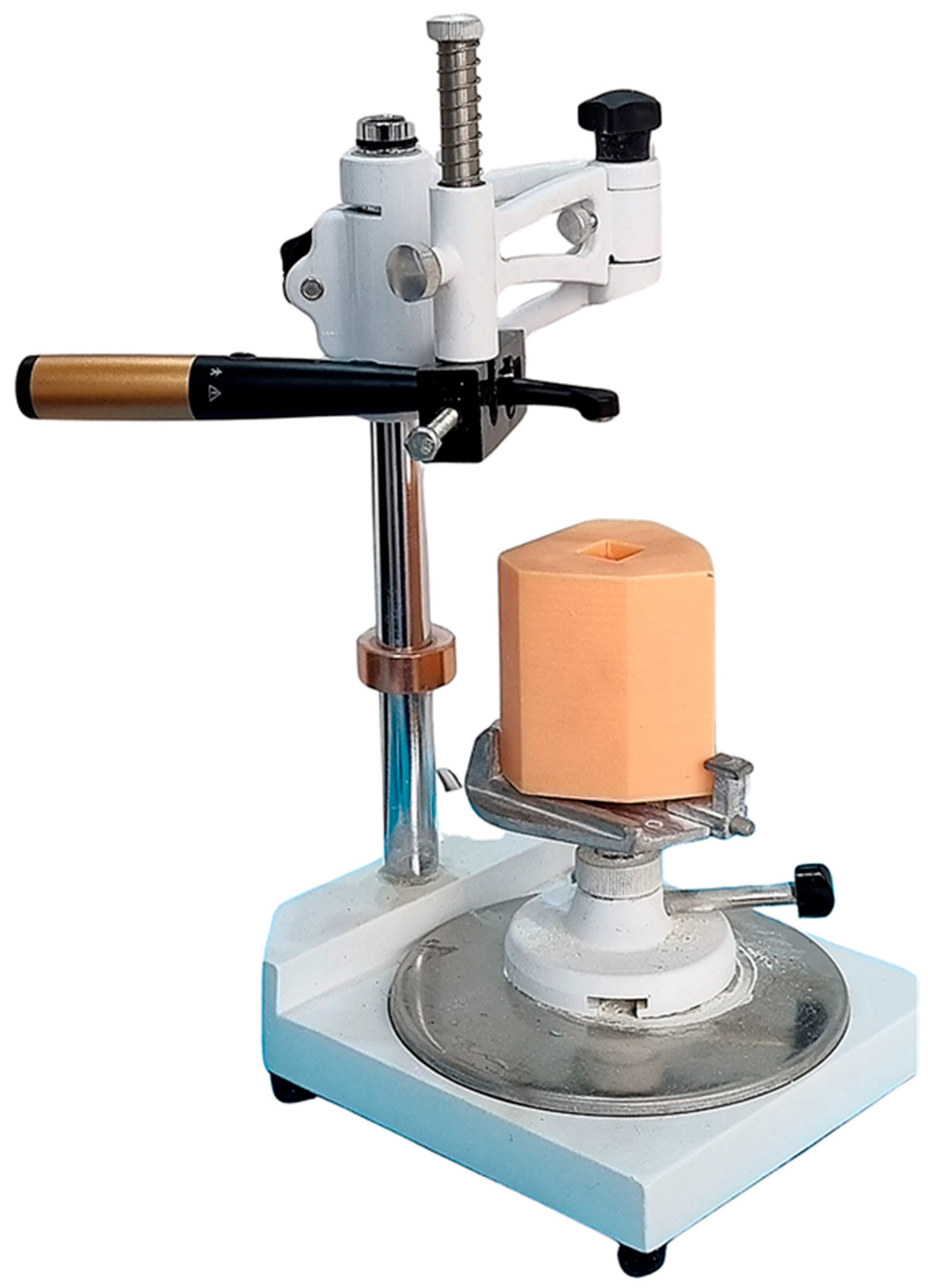
To ensure uniform and reproducible curing distances and standardized 90° perpendicular irradiation to the composite surface, custom-designed 3D-printed resin rings of 2 mm and 5 mm thickness were used, and the O-Star LED light-curing unit (LCU) was mounted on a modified dental surveyor (Figure 3).
The restorations were polished using the JOTA Professional Polishing Composite Kit (JOTA AG, Rüthi, Switzerland) after all excess material had been removed. The specimens were coded and marked with identifiers relating to the restoration material and curing protocol, and then the samples were assigned to the following study groups:
Category 1 included high-viscosity bulk-fill composites: BT2, turbo-intensity curing at a 2 mm distance; BS2, soft-start curing at a 2 mm distance; BT5, turbo-intensity curing at a 5 mm distance; and BS5, soft-start curing at a 5 mm distance. Category 2 included high-viscosity conventional resin composites: CT2, turbo-intensity curing at a 2 mm distance; CS2, soft-start curing at a 2 mm distance; CT5, turbo-intensity curing at a 5 mm distance; and CS5, soft-start curing at a 5 mm distance. In the group codes, “B” refers to the bulk-fill composite, “C” to the conventional composite, “T” to turbo-curing, “S” to soft-start curing, and the numbers “2” and “5” indicate the curing distance in millimeters.

2.4.5. Microleakage Assessment

All restored teeth underwent thermocycling for 500 cycles between 5 °C and 55 °C, with a 30-s dwell time in each bath and a 10-s transfer time. This procedure was performed to stimulate the thermal stresses occurring in the oral environment [19].
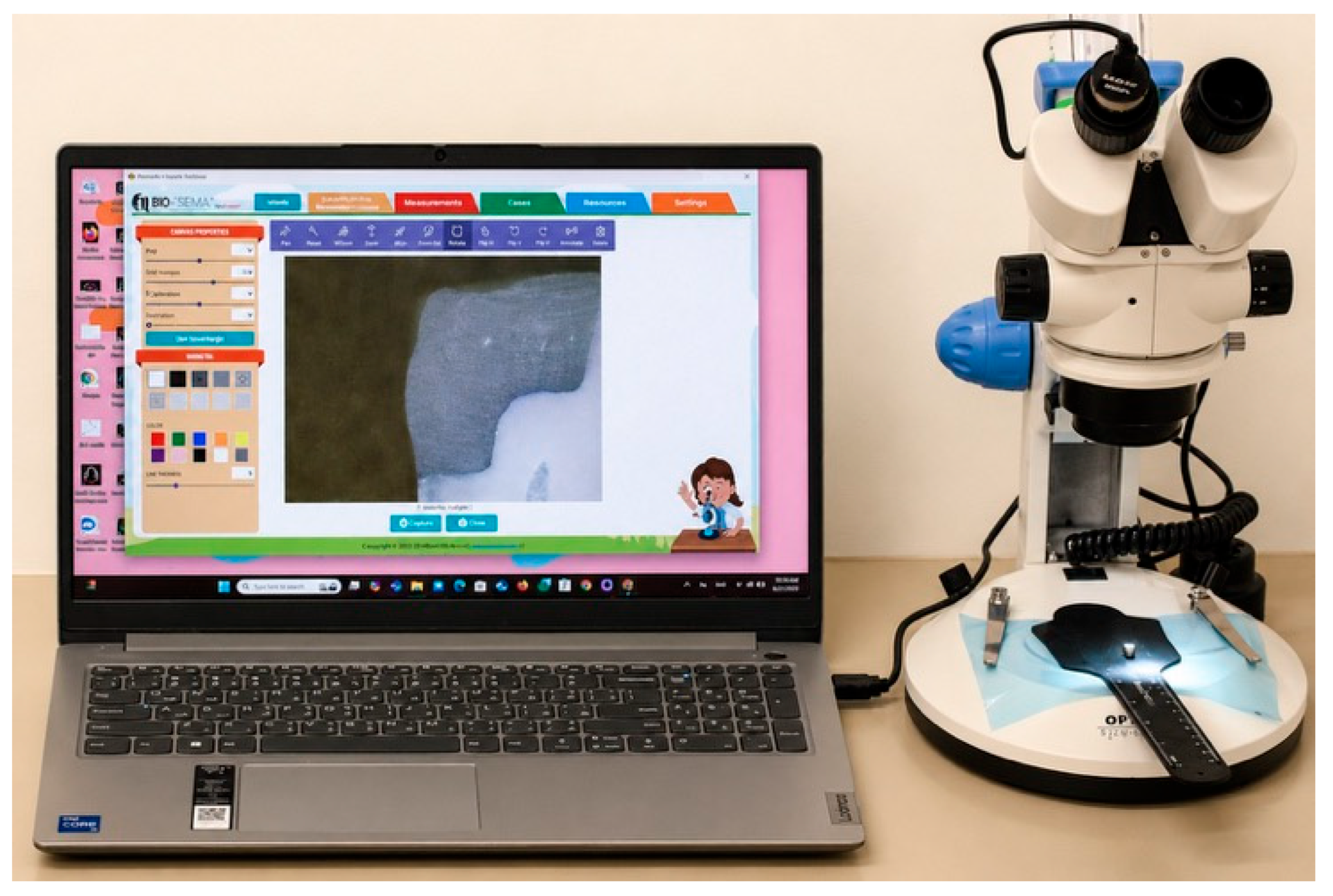
After completion of the procedure, the entire tooth surface was coated with two layers of nail varnish, except for a 1 mm margin surrounding the tooth–restoration interface. The specimens were then immersed in 2% methylene blue solution for 24 h, rinsed thoroughly, and sectioned mesiodistally using an orthodontic diamond disc. The sections were initially inspected under a stereomicroscope at 10× magnification (Figure 4). Dye penetration along the tooth–restoration interface was subsequently evaluated and scored on an ordinal scale (0–4) under 40× magnification [19,20].
Scoring was performed using a 0–4 ordinal scale [21].
Score 0: No penetration.
Score 1: Penetration up to one-third of the gingival wall.
Score 2: Penetration up to two-thirds of the gingival wall.
Score 3: Full-depth penetration without reaching the axial wall.
Score 4: Penetration through the entire depth, including the axial wall/pulp.

2.5. Second Experimental Arm: Microhardness

2.5.1. 3D Design and Mold Preparation

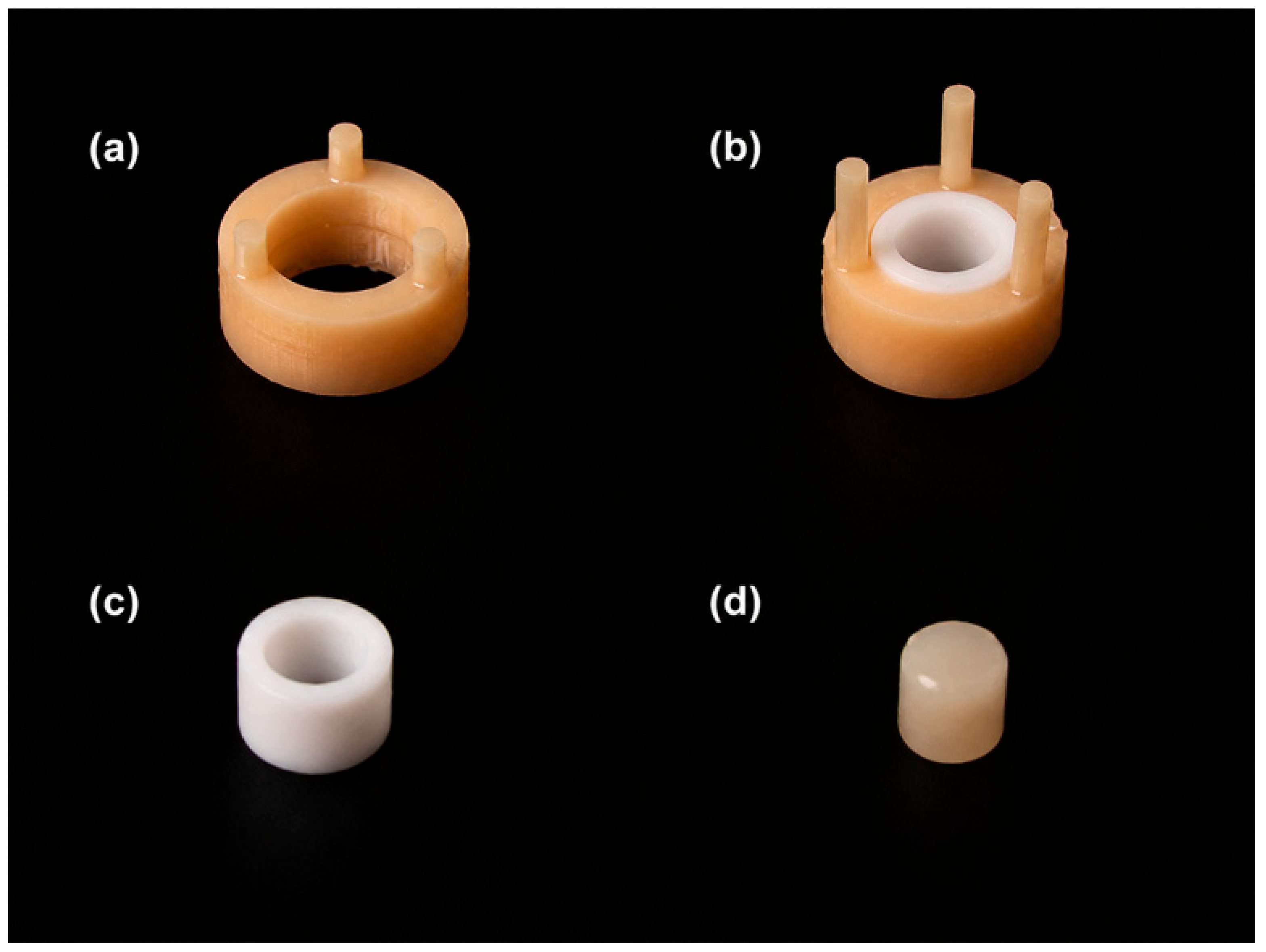
For the microhardness evaluation, forty-eight cylindrical composite specimens (n = 48) were fabricated using a two-part, custom-designed mold system. The outer mold consisted of two 3D-printed resin molds (internal diameter: 6 mm; depth: 4 mm), each with three integrated stopper projections. One resin mold design included 2-mm-long stoppers (Figure 5a), while the other included 5-mm-long stoppers (Figure 5b) to control the distance between the curing-light tip and the composite surface during polymerization. A smaller 3D-printed PTFE with a circular chamber (external diameter: 5.8 mm; internal diameter: 4 mm; depth: 4 mm) was seated inside the resin mold to determine the specimen dimensions (Figure 5c). A 3D-printed metallic tool was designed to standardize the thickness of the first composite increment at 2 mm. Prior to composite placement, the mold was positioned on a celluloid strip over the flat glass slab. Composite materials were then placed into the PTFE mold according to the assigned material group.

2.5.2. Specimen Preparation

After being assembled, the mold was placed on a flat glass slab. The PTFE mold was then filled with composite material corresponding to the assigned material groups. In the bulk-fill composite group, 3M ESPE Filtek One Bulk Fill was placed in a single 4-mm horizontal increment. In the conventional nanohybrid composite group, 3M ESPE Filtek Z250 XT was placed in two horizontal increments of 2 mm each. After the first layer of Z250 XT was placed, the custom-designed, 3D-printed metallic alignment tool was used to flatten the composite surface and standardize the first-layer thickness, while the final layer of both materials was applied using a gold-coated instrument.
The O-Star light device was secured to a dental surveyor. The material was then light-activated according to the selected mode, with the required distance maintained using the stopper projections incorporated into the resin mold.
After polymerization, the samples were removed from the mold (Figure 5d), and their dimensions were measured. The prepared specimens were coded according to the curing technique and RBC type, and the top and bottom sides were marked to distinguish them. The specimens were kept in opaque containers at 37 °C for 24 h before microhardness testing.
The experimental subgroups are named as follows:
Category 1: Bulk-fill composites
HBT2: Turbo-intensity curing at a 2 mm distance.
HBS2: Soft-start curing at a 2 mm distance.
HBT5: Turbo-intensity curing at a 5 mm distance.
HBS5: Soft-start curing at a distance of 5 mm.
Category 2: Conventional resin composites
HCT2: Turbo-intensity curing at a 2 mm distance.
HCS2: Soft-start curing at a 2 mm distance.
HCT5: Turbo-intensity curing at a 5 mm distance.
HCS5: Soft-start curing at a 5 mm distance.
In the group codes, “H” refers to microhardness, “B” to bulk-fill composite, “C” to conventional composite, “T” to turbo-curing, “S” to soft-start curing, and the numbers “2” and “5” indicate the curing distance in millimeters.

2.5.3. Microhardness Assessment

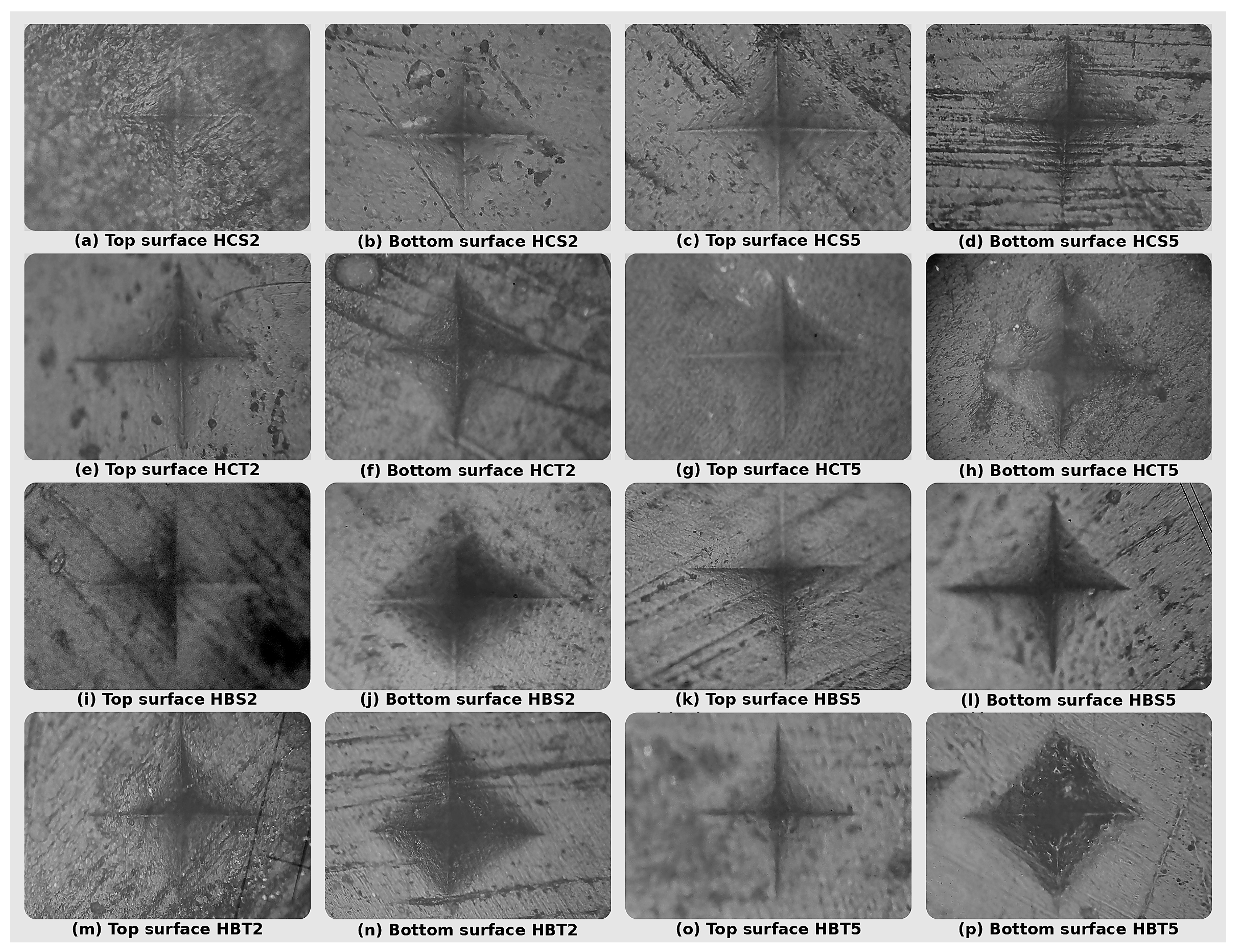
Microhardness was measured using a Vickers hardness tester with an integrated microscope (GT-TEST, Golden Time Technology Development Limited, Chengde, China). Three diamond-shaped indentations were made on both the top and bottom surfaces of each specimen under a 300 g load for 15 s [Figure 6]. The mean Vickers hardness number (VHN) was automatically recorded by the Vickers hardness machine for analysis [22].

2.6. Statistical Analysis

SPSS version 24 and Microsoft Excel were used for data entry and statistical analysis. The Shapiro–Wilk test showed that the data for both microleakage and microhardness were not normally distributed; therefore, nonparametric tests were applied. Overall comparisons among the eight groups were performed using the Kruskal–Wallis test, followed by Dunn’s post-hoc pairwise comparison test with adjusted p-values. A p-value < 0.05 was considered statistically significant.

3. Results

3.1. Microleakage

3.1.1. Descriptive Statistics

As shown in Table 3, the distribution of microleakage scores differed among the experimental groups. The highest median microleakage scores were observed in CS5 and CT5, both at 4, indicating greater microleakage in these groups. Notably, CT5 showed a uniform distribution, with all specimens assigned a score of 4. BS5 also demonstrated a relatively high median score of 3.5. Conversely, BS2 showed the lowest median microleakage score (1), and all specimens were distributed across scores 0–2. Intermediate median scores were recorded in CS2 and BT2, both at 2, followed by CT2 and BT5, both at 2.5. Overall, groups cured at 5 mm generally exhibited higher microleakage scores than their corresponding 2 mm groups.

3.1.2. Inferential Statistical Analysis

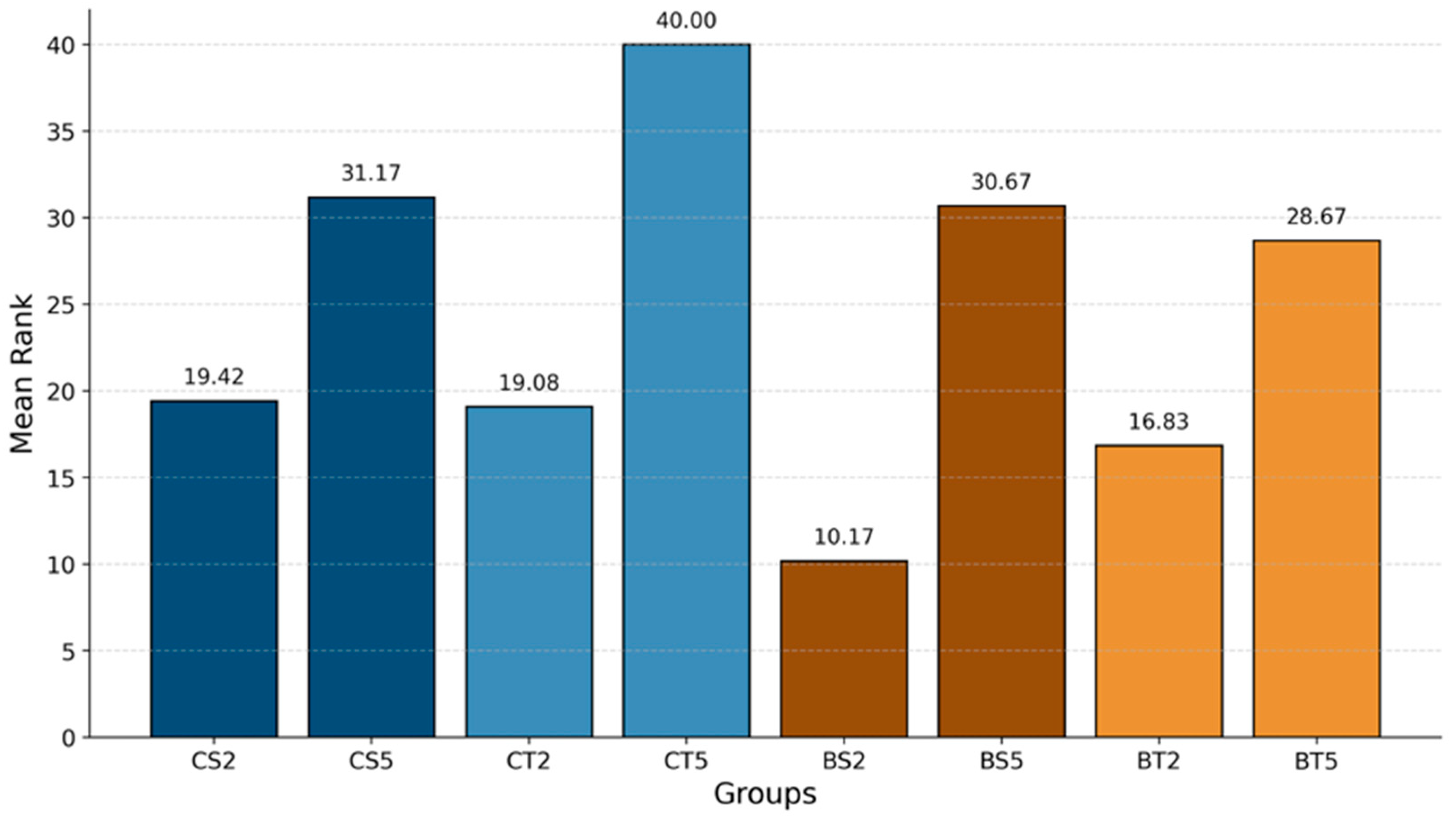
As shown in Table 4 and Figure 7, although the Kruskal–Wallis test revealed a significant overall difference in microleakage among the eight groups, the mean ranks ranged from 10.17 (BS2) to 40.00 (CT5) (p = 0.003). A higher mean rank indicates greater dye penetration, and consequently, higher microleakage. However, the Kruskal–Wallis test does not identify which groups are responsible for the difference. Therefore, Dunn’s post hoc pairwise test with Bonferroni correction was performed. The analysis showed a significant difference only between BS2 and CT5 (p = 0.004), with BS2 exhibiting the lowest microleakage score and CT5 the highest.

3.2. Microhardness

3.2.1. Descriptive Statistics

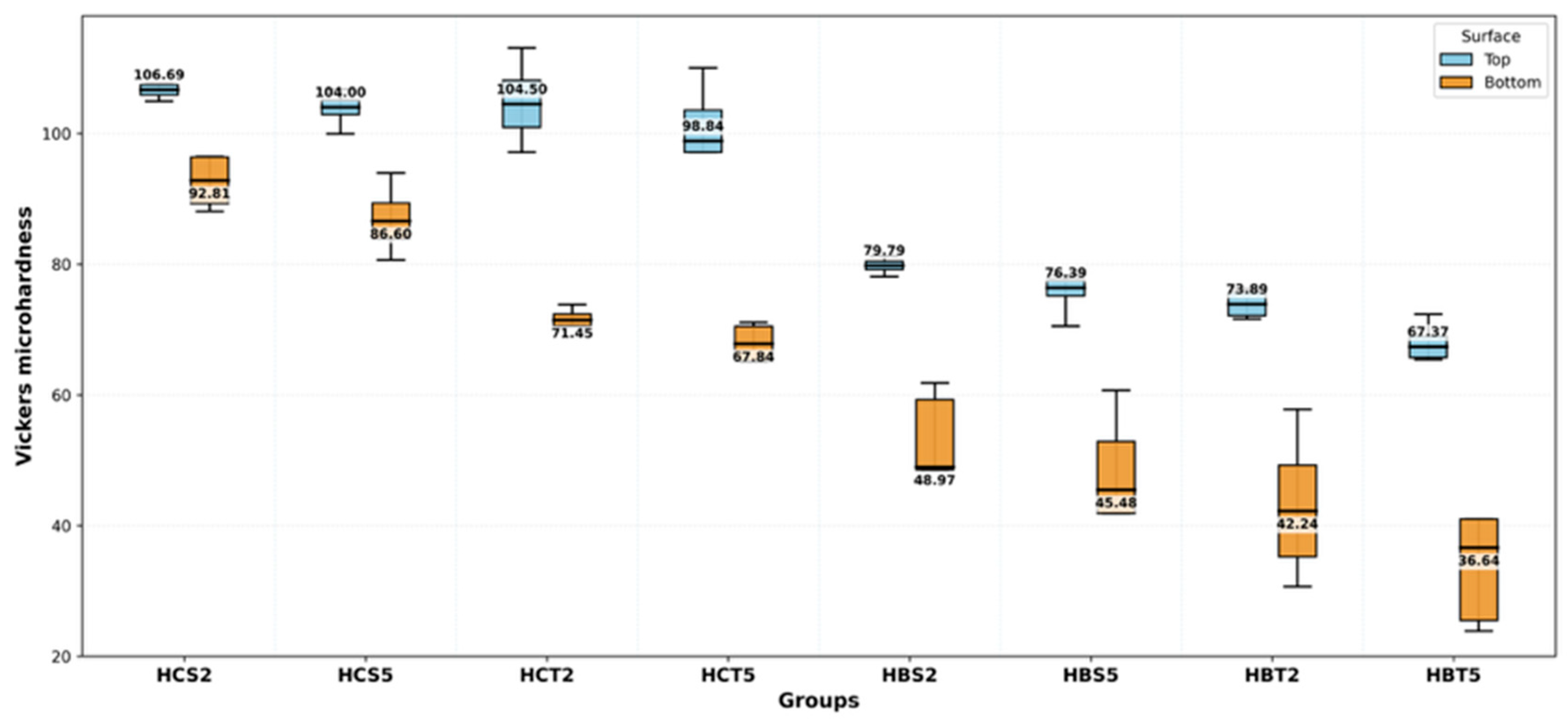
As shown in Table 5 and Figure 8, the descriptive statistics showed higher median microhardness values on the top surface than on the bottom surface across all experimental groups. The highest median values were recorded in HCS2 on both the top and bottom surfaces, 106.69 and 92.81, respectively, while the lowest values were observed in HBT5 of 67.37 and 36.64, respectively. Conventional composite groups generally demonstrated higher median values than bulk-fill groups on both surfaces. The effect of light-curing distance was also evident, with 2 mm groups showing higher median values than their corresponding 5 mm groups. Soft-start curing showed higher median values than turbo curing, particularly on the bottom surface. The interquartile ranges were wider in the bottom-surface bulk-fill groups, especially HBT5 and HBT2, indicating greater variability in bottom-surface microhardness.

3.2.2. Inferential Statistical Analysis

Top-Surface Microhardness
The Kruskal–Wallis test indicated a significant difference in top-surface microhardness among the experimental groups (p < 0.05). Therefore, pairwise comparisons were performed using Dunn’s post hoc test with Bonferroni adjustment.
As shown in Table 6, the conventional composite groups generally exhibited higher top-surface microhardness than the bulk-fill composite groups. Specifically, HCT5, HCS5, HCT2, and HCS2 showed significantly higher top-surface microhardness than HBT5. Similarly, HCT2 and HCS2 demonstrated significantly higher top-surface microhardness than HBT2. In addition, HCS2 exhibited significantly higher top-surface microhardness than HBS5.
Bottom-Surface Microhardness
For bottom-surface microhardness, the Kruskal–Wallis test also showed a significant difference among the experimental groups (p < 0.05). Dunn’s post hoc test with Bonferroni adjustment was then used to identify the significant pairwise differences.
Several conventional composite groups showed significantly higher bottom-surface microhardness than the bulk-fill composite groups. HCS2 was significantly higher than HBS2, HBS5, HBT2, and HBT5. In addition, HCS5 was significantly higher than HBT2 and HBT5. HCT2 also showed significantly higher bottom-surface microhardness than HBT5. These significant comparisons are summarized in Table 7.
Bottom-to-Top Microhardness Ratio
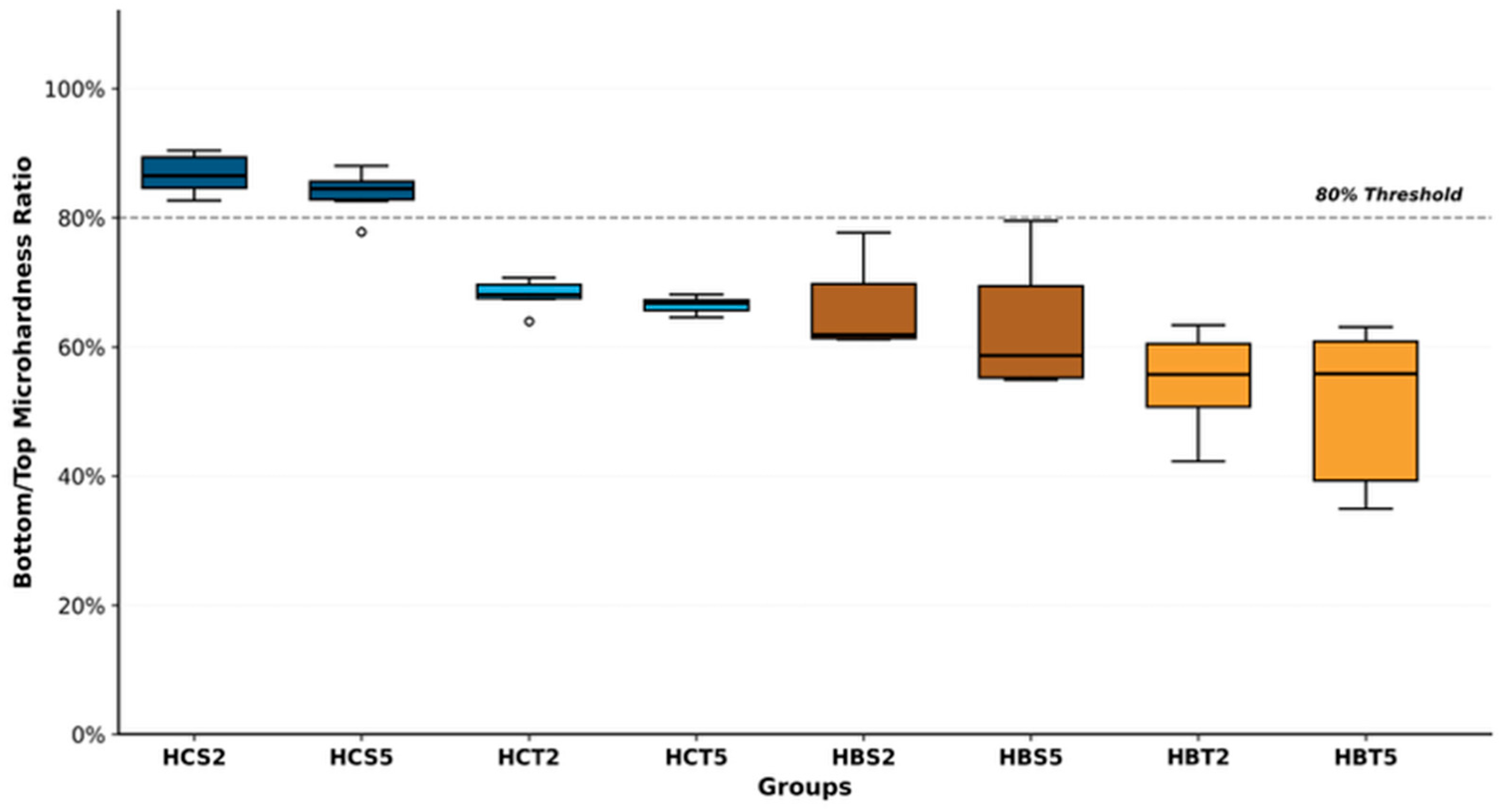
Bottom-to-top (B/S) microhardness ratios for all groups are summarized in Table 8 and illustrated in Figure 9. The highest B/S ratios were recorded in the HCS groups, with 86.47% for HCS2 and 84.45% for HCS5. The HCT groups showed lower ratios, with 68.09% for HCT2 and 66.73% for HCT5. Among the bulk-fill groups, the HBS groups demonstrated B/S ratios of 61.87% and 58.67% for HBS2 and HBS5, respectively, whereas the HBT groups showed the lowest ratios, with 55.76% for HBT2 and 55.86% for HBT5. Overall, the conventional composite groups showed higher B/S microhardness ratios than the bulk-fill groups. The 2 mm groups generally showed higher ratios than their corresponding 5 mm groups, except for the HBT groups, where the values were nearly similar. The HCS groups were the only groups with B/S ratios above the 80% reference threshold.

4. Discussion

This investigation examined how different light-curing approaches influence the microleakage and microhardness of sculptable bulk-fill and nanohybrid resin-based composites. The techniques evaluated in this study were curing mode (soft start vs. turbo) and curing distance (2 mm and 5 mm).

4.1. Microleakage

The Kruskal–Wallis test showed overall variation in microleakage across all experimental groups in the present investigation. Although the microleakage of the nanohybrid composite was higher than that of the bulk-fill composite, the difference was not significant when the two materials were tested under the same curing technique. This implies that there is no difference in marginal adaptation between conventional and bulk-fill composites when cured under the same curing method from the same distance. Furthermore, the post hoc Dunn’s test demonstrated that the significant difference was only between the bulk-fill composite when cured with soft start from a 2 mm distance (BS2) and the conventional composite when cured with turbo modes from a 5 mm distance (CT5) groups. The results suggest that curing distance and mode are critical to the marginal integrity of Class II restorations, thus affecting the longevity and long-term performance of the composite restorations [10]. Bulk-fill resin composites have been developed to address issues related to incremental filling and polymerization shrinkage, which were previously regarded as key factors affecting the longevity of restorations in earlier generations of composites. Monomers, including AFM and AUDMA, reduce polymerization stress and improve marginal stability [14]. Our results support Cayo-Rojas et al., García Marí et al. and Behery et al., who reported no significant differences in cervical microleakage between the bulk-fill composites and conventional composites following thermocycling [23,24,25], and the trend was validated in a systematic review that found little to no evidence to support a clinically meaningful difference in marginal adaptation between the two material categories [25].
Frank et al. [26] evaluated deep Class II restorations in primary molars by comparing a conventional with a bulk-fill composite, with the latter being cured with either standard irradiance (10 s at 1200 mW/cm2) or rapid high-irradiance curing (3 s at 3000 mW/cm2), and their study showed that there was a considerable difference between the bulk-fill and the conventional composite groups, with the bulk-fill having better marginal integrity, and that curing protocol had no effect on microleakage. The present study did not support these findings. Curing techniques and distances showed differences in microleakage. The photopolymerization method, along with the adhesive system, plays an important role clinically in composite restorations because it influences stresses caused by polymerization shrinkage and can affect marginal adaptation.
Clinically, these stressors may be transmitted to the restoration margins, thereby impacting marginal quality [27]. Several factors may account for the differences between our study and that of Frank et al. First, thermomechanical aging in our study included 500 cycles. In contrast, the Frank et al. study did not account for aging, which simulates temperature changes in the oral cavity that cause repeated expansions and contractions of both teeth and restorative materials. This artificial aging process will cause stress at the adhesive interface by creating microgaps, and microleakage will increase at the gingival margin, thereby negatively impacting the long-term clinical success of the restorations [28].
In significant pairs, the bulk-fill/soft-start/2 mm subgroup had what may have been the best sealing ability because of the soft-start process used to cure the bulk-fill RBC in this group. In contrast, the other group was subjected to high-irradiance curing. The soft-start polymerization technique reduces the initial polymerization rate, thereby enhancing adaptability and reducing the overall shrinkage attributable to polymer formation. In this study, this finding is consistent with prior studies reporting that soft-start polymerization reduces shrinkage stress by slowing the rate of polymer formation, thereby increasing flow and stress relaxation at the tooth–restoration interface [29,30,31]. In contrast, high-irradiance light-curing is used to reduce chair time in restorative dentistry. However, rapid polymerization under high-intensity light can increase polymerization shrinkage, potentially leading to microleakage at the restoration margins. Studies show that some high-intensity curing lights, especially when used for short durations, result in higher microleakage compared to conventional halogen lights. The effect of high irradiance is material-dependent; microhybrid and nanohybrid composites may respond differently to curing protocols. For nano-hybrid composites, rapid high-intensity curing may not always achieve the optimal depth of cure, increasing the risk of marginal gaps [32].
Another factor is that Frank et al. used fixed light-curing distances and did not investigate the effect of curing distance. According to several earlier studies, curing distance and curing modes (such as soft-start) play significant roles in reducing microleakage by affecting the degree of conversion (DC) of RBCs [8]. Curing distance also affects the depth of cure and gap formation, which, if not properly cured, leads to microleakage. We adjusted the curing distance in our study to 2 mm and 5 mm. Our results indicate that a 2 mm curing distance greatly improves marginal sealing, suggesting that curing distance is pivotal to microleakage. In contrast, Frank et al. used fixed curing distances [33,34]. The turbo curing at a distance used for curing the conventional composite (CT5) in significant pairs in the present study appears to compromise both the energy delivery and polymerization kinetics. This is likely to lead to suboptimal bonding and increased gap formation [8,12,23].
Although several researchers reported that composite type may not be the main factor affecting microleakage, the present study showed that the combination of several factors, including composite type, curing method, and distance of the curing light tip, affects the marginal seal in microleakage analysis. Because bulk-fill materials feature enhanced translucence and modern photo-initiators, they are less sensitive to curing condition inhomogeneities. When favorable material properties, such as enhanced translucence and modern photoinitiators, are combined with optimum curing protocols, for instance, soft-start mode with the tip at a close distance, margin integrity is likely the best [23,35,36,37].
The lower microleakage observed in the group of bulk-fill composite when cured at a 2 mm distance with soft-start mode in this study appears to result from multiple synergistic factors rather than a single factor. Conversely, the poorest performance among conventional RBCs when cured in turbo mode at a 5 mm distance can be due to both suboptimal energy delivery and excessively rapid polymerization, reinforcing that the curing distance and protocol are critical factors for achieving reliable marginal adaptation.

4.2. Microhardness

Microhardness is widely accepted as an indirect indicator of the degree of conversion and polymer network integrity of resin-based composites. In the present investigation, significant differences in top- and bottom-surface microhardness were identified among experimental groups, demonstrating that composite formulation, curing mode, and curing-light distance together influence polymerization effectiveness [3,38].
Across all curing conditions tested, the high-viscosity conventional nano-hybrid composite surpassed the bulk-fill one in microhardness at both the top and bottom surfaces. This can be caused mainly by the differences in composition of the two RBCs. The nano-hybrid composite, with higher filler loading and different resin matrix chemistry (Bis-EMA and UDMA-based), results in higher cross-link density and post-polymerization stiffness. The bulk-fill composite, on the other hand, contains cross-stress-relieving monomers such as AUDMA and AFM, which aim to reduce aggressive polymerization shrinkage stress rather than maximize mechanical hardness. Therefore, although bulk-fill composites may demonstrate better marginal adaptation, this may not result in better absolute hardness values than conventional composites. This correlates with the findings of Leprince et al. (2014) and Jakupović et al. (2023), who state that the RBC composition is more influential in determining microhardness than the light-curing technique employed [3,12,39,40].
A consistent reduction in microhardness was observed from the top surface to the bottom surface across all groups, highlighting the ongoing effect of light attenuation in composite materials. In most cases, light-curing procedures have the greatest impact on the microhardness of the bottom surface, where energy delivery is most deficient. In this study, bottom-surface microhardness was particularly low in the bulk-fill specimens cured in turbo mode and at extended light-tip distances, indicating insufficient polymerization at greater depths. These findings demonstrate that despite enhanced translucency, bulk-fill composites remain sensitive to curing parameters and cannot fully compensate for suboptimal curing conditions. The findings of the present study are consistent with those reported by Duratbegović et al. [41], who observed that top-surface microhardness in resin-based composites is comparatively less affected by changes in light intensity, curing-tip distance, and exposure duration than bottom-surface microhardness.
Multiple studies summarized by Duratbegović et al. also reported that longer exposure times consistently increased bottom microhardness and depth of cure, and that short, high-intensity curing can yield lower hardness than lower-intensity curing with longer time when total energy is similar. In the present study, the curing mode significantly affected the microhardness outcomes. Soft-start curing for 20 s generally produced higher microhardness values than turbo curing for 3 s, especially at the bottom surface. The gradual increase in irradiance characteristic of soft-start polymerization moderates early reaction kinetics, allowing greater monomer mobility and more homogeneous polymer network formation before gelation. In contrast, turbo curing delivers very high irradiance over a short duration, accelerating polymerization and rapidly restricting chain mobility. This quick vitrification may limit conversion, particularly when combined with lower irradiance at higher curing distances [34,37,41,42].
Moving the curing light farther away (from 2 mm to 5 mm) decreased the microhardness in both composite types. This indicates that increasing the distance from the curing light by 3 mm reduces microhardness in the surface and bottom layers of resin-based composites, reaffirming the need for an appropriate distance. The negative impact of increased distance was greatest in turbo-mode groups. In contrast, soft-start curing mitigated some of these effects by optimizing the polymerization process (not by peak irradiance) and thereby improving overall curing. This finding is consistent with other studies showing that as the tip distance increases, bottom hardness and the B/S microhardness ratio decrease significantly, even under high-irradiance LEDs [32,34].
Microhardness ratios of the bottom-to-top (B/S) provided further confirmation of these observations. The only sample that achieved a B/S ratio of 0.80, considered the minimum acceptable value for depth of cure, was the conventional composite cured in soft-start mode. More concerning, the turbo-mode-cured bulk-fill composites exhibited substantially lower B/S ratios, suggesting inadequate polymerization. Numerous studies of bulk-fills report B/S ratios of 80% or more at 4–6 mm with standard curing (≈1000–1300 mW/cm2, ≥20 s) with the light guide at a short distance. These results continue to challenge the accepted notion that in all circumstances, bulk-fill composites are impervious to curing techniques and that a specific curing technique is required [43].
From a clinical viewpoint, the results suggest that both material type and curing protocol together have a greater impact on polymerization quality and microhardness than composite type alone. However, conventional composites exhibited higher microhardness; curing under controlled conditions is required to obtain a great depth of cure. The bulk-fill composite also needs to be cured under optimal conditions to achieve favorable polymerization and hardness. Combinations of soft-start curing with short light-tip distances are recommended to optimize polymerization and mechanical performance.
In the present study, the experimental groups were analyzed as combined curing conditions rather than as isolated factors because each group represented a clinically relevant combination of composite type, curing mode, and curing distance.


5. Limitations

This was an in vitro study and could not fully reproduce clinical conditions such as saliva, occlusal loading, pH changes, and biofilm activity, which may influence composite performance. Although thermocycling was used, it does not represent long-term intraoral aging. Only one bulk-fill and one conventional nanohybrid composite were tested, limiting generalizability to other materials. In addition, only the A2 shade was evaluated because composite shade and translucency can affect light transmission and curing efficiency; the results may not apply to other shades. Finally, only microleakage and microhardness were assessed, while other outcomes (e.g., degree of conversion, shrinkage stress, bond strength, and wear resistance) were not evaluated.
Although the irradiance output of the light-curing unit (LCU) was periodically verified using the O-Star radiometer, spectral analysis of the emitted light was not performed because it was beyond the scope of the present study. Therefore, the detailed wavelength distribution of the LCU could not be evaluated. However, the same standardized LCU protocol was applied across all experimental groups, thereby maintaining consistency in the curing procedures.

6. Conclusions

Within the limitations of this in vitro study, the findings demonstrate that light-curing protocol and curing distance are critical factors influencing the marginal sealing ability and polymerization performance of resin-based composite restorations. Soft-start curing at a short light-tip distance produced the most favorable microleakage outcome, particularly for the high-viscosity bulk-fill composite, suggesting that controlled polymerization may help reduce interfacial stress and improve marginal adaptation. In contrast, turbo curing at a greater distance was associated with poorer marginal sealing, indicating that rapid, high-intensity curing may not compensate for reduced light delivery when the curing tip is positioned farther from the restoration surface.
The conventional nanohybrid composite exhibited higher top- and bottom-surface microhardness than the bulk-fill composite, reflecting the influence of material composition and filler loading on mechanical performance. However, both materials exhibited reduced bottom-surface microhardness and lower bottom-to-top hardness ratios when the curing distance was increased to 5 mm, underscoring the importance of adequate light transmission for effective polymerization at depth. Overall, soft-start curing, especially at a 2 mm curing distance, provided more reliable outcomes than turbo curing by improving the balance between marginal integrity and depth of cure. These results highlight the clinical relevance of selecting appropriate LCU protocols and maintaining a short curing distance to optimize the performance and longevity of resin-based composite restorations.

Author Contributions

A.A.A. contributed to drafting the original manuscript and was involved in conceptualization, methodology development, visualization, investigation, data curation, formal analysis, software utilization, validation, and securing funding. B.M.F. contributed to manuscript review and editing as well as conceptualization, methodology design, validation, formal analysis, and overall supervision of the project. All authors have read and agreed to the published version of the manuscript.

Funding

This research received no external funding.

Institutional Review Board Statement

Ethical clearance was obtained from the Ethics Committee of the College of Dentistry, University of Sulaimani (Approval No. COD-EC-24-0063; 16 December 2024).

Informed Consent Statement

Prior to the collection of extracted second premolar teeth, the orthodontic patients provided their consent.

Data Availability Statement

The data underlying the findings of this study are available from the corresponding author upon reasonable request.

Acknowledgments

I would like to express my sincere appreciation to all those who contributed to the successful completion of this project. I am particularly grateful to Rand Saman, Payam Othman, Bryar Abdulqadr, and Aras Jalal for their valuable guidance, assistance, and continued support throughout this work. AI-assisted applications, including ChatGPT (OpenAI; cloud-based service) and Grammarly Pro (Grammarly; cloud-based service), were utilized exclusively for linguistic editing to enhance the clarity, grammar, and readability of the manuscript. These tools were not involved in the study design, data acquisition, analysis, or interpretation of the findings. All suggestions generated by these applications were carefully evaluated and revised by the authors.

Conflicts of Interest

The authors report no conflicts of interest related to this study.

Abbreviations

RBCResin-Based Composite
LCULight-Curing Unit
VHNVickers hardness number
CRCConventional Resin Composite
BRCBulk-Fill Resin Composite

References

  1. Ferracane, J.L. Resin Composite—State of the Art. Dent. Mater. 2011, 27, 29–38. [Google Scholar] [CrossRef] [PubMed]
  2. Pratap, B.; Gupta, R.K.; Bhardwaj, B.; Nag, M. Resin Based Restorative Dental Materials: Characteristics and Future Perspectives. Jpn. Dent. Sci. Rev. 2019, 55, 126–138. [Google Scholar] [CrossRef]
  3. Jakupović, S.; Pervan, N.; Mešić, E.; Gavranović-Glamoč, A.; Bajsman, A.; Muratović, E.; Kazazić, L.; Kantardžić-Kovačević, A. Assessment of Microhardness of Conventional and Bulk-Fill Resin Composites Using Different Light-Curing Intensity. Polymers 2023, 15, 2250. [Google Scholar] [CrossRef]
  4. Haugen, H.J.; Marovic, D.; Par, M.; Khai Le Thieu, M.; Reseland, J.E.; Johnsen, G.F. Bulk Fill Composites Have Similar Performance to Conventional Dental Composites. Int. J. Mol. Sci. 2020, 21, 5136. [Google Scholar] [CrossRef] [PubMed]
  5. Elfakhri, F.; Alkahtani, R.; Li, C.; Khaliq, J. Influence of Filler Characteristics on the Performance of Dental Composites: A Comprehensive Review. Ceram. Int. 2022, 48, 27280–27294. [Google Scholar] [CrossRef]
  6. Colombo, M.; Gallo, S.; Padovan, S.; Chiesa, M.; Poggio, C.; Scribante, A. Influence of Different Surface Pretreatments on Shear Bond Strength of an Adhesive Resin Cement to Various Zirconia Ceramics. Materials 2020, 13, 652. [Google Scholar] [CrossRef]
  7. Turkistani, A.; Nasir, A.; Merdad, Y.; Jamleh, A.; Alshouibi, E.; Sadr, A.; Tagami, J.; Bakhsh, T.A. Evaluation of Microleakage in Class-II Bulk-Fill Composite Restorations. J. Dent. Sci. 2020, 15, 486–492. [Google Scholar] [CrossRef]
  8. Par, M.; Marovic, D.; Attin, T.; Tarle, Z.; Tauböck, T.T. Effect of Rapid High-Intensity Light-Curing on Polymerization Shrinkage Properties of Conventional and Bulk-Fill Composites. J. Dent. 2020, 101, 103448. [Google Scholar] [CrossRef] [PubMed]
  9. Neves, A.A.; Jaecques, S.; Van Ende, A.; Cardoso, M.V.; Coutinho, E.; Lührs, A.-K.; Zicari, F.; Van Meerbeek, B. 3D-Microleakage Assessment of Adhesive Interfaces: Exploratory Findings by μCT. Dent. Mater. 2014, 30, 799–807. [Google Scholar] [CrossRef]
  10. López-Torres, J.; Hernández-Caba, K.; Cervantes-Ganoza, L.; Ladera-Castañeda, M.; Martínez-Campos, R.; Solís-Dante, F.; Briceño-Vergel, G.; Cayo-Rojas, C. Microleakage of Class II Bulk-Fill Resin Composite Restorations Cured with Light-Emitting Diode versus Quartz Tungsten-Halogen Light: An In Vitro Study in Human Teeth. Biomedicines 2023, 11, 556. [Google Scholar] [CrossRef]
  11. Bardocz-Veres, Z.; Miklós, M.L.; Biró, E.-K.; Kántor, É.A.; Kántor, J.; Dudás, C.; Kerekes-Máthé, B. New Perspectives in Overcoming Bulk-Fill Composite Polymerization Shrinkage: The Impact of Curing Mode and Layering. Dent. J. 2024, 12, 171. [Google Scholar] [CrossRef]
  12. Hasanain, F.A.; Nassar, H.M.; Ajaj, R.A. Effect of Light Curing Distance on Microhardness Profiles of Bulk-Fill Resin Composites. Polymers 2022, 14, 528. [Google Scholar] [CrossRef] [PubMed]
  13. Jakupović, S.; Pervan, N.; Duratbegović, D.; Jakupović, V.; Muratović, E.; Kobašlija, S.; Jakupović, S.; Pervan, N.; Duratbegović, D.; Jakupović, V.; et al. Evaluation of the Effect of Different Light-Curing Protocols on the Microhardness of Contemporary Bulk-Fill Resin Composites. Polymers 2025, 17, 2889. [Google Scholar] [CrossRef]
  14. Langford, D.K.; Wells, M.H.; Vinall, C.V.; Tantbirojn, D.; Versluis, A. Using Bulk-Fill Composite and High-Intensity Curing When Light Tip Placement Is Compromised. Pediatr. Dent. 2024, 46, 271–276. [Google Scholar]
  15. Ozciftci, G.; Boyacioglu, H.; Turkun, L.S. Degree of Conversion and Microhardness of Different Composite Resins Polymerized with an Advanced LED-Curing Unit. BMC Oral Health 2025, 25, 1489. [Google Scholar] [CrossRef]
  16. Krithikadatta, J.; Gopikrishna, V.; Datta, M. CRIS Guidelines (Checklist for Reporting In-Vitro Studies): A Concept Note on the Need for Standardized Guidelines for Improving Quality and Transparency in Reporting in-Vitro Studies in Experimental Dental Research. J. Conserv. Dent. 2014, 17, 301–304. [Google Scholar] [CrossRef]
  17. Ahmad, S.; Noori, A. Effect of Enamel Surface Pre-Treatment with Titanium Dioxide Nanoparticles on the Microleakage, Shear Bond Strength, and Wettability of a Pit and Fissure Sealant Material (an in Vitro Study). Oxf. Open Mater. Sci. 2025, 5, itaf017. [Google Scholar] [CrossRef]
  18. Jadid, R.S.; Al-Zahawi, A.R.; Jadid, R.S.; Al-Zahawi, A.R. In Vitro Comparison of Monolithic Zirconia Crowns: Marginal/Internal Adaptation and 3D-Quantified Preparation Defects Using Air-Driven, Electric-Driven, and Piezoelectric Ultrasonic Handpieces. Prosthesis 2025, 7, 75. [Google Scholar] [CrossRef]
  19. Al Khowaiter, S.S.; Al-Bounni, R.S.; Binalrimal, S. Comparison of Dentinal Microleakage in Three Interim Dental Restorations: An In Vitro Study. J. Int. Soc. Prev. Community Dent. 2022, 12, 590–595. [Google Scholar] [CrossRef] [PubMed]
  20. Bilgrami, A.; Alam, M.K.; Qazi, F.U.R.; Maqsood, A.; Basha, S.; Ahmed, N.; Syed, K.A.; Mustafa, M.; Shrivastava, D.; Nagarajappa, A.K.; et al. An In-Vitro Evaluation of Microleakage in Resin-Based Restorative Materials at Different Time Intervals. Polymers 2022, 14, 466. [Google Scholar] [CrossRef] [PubMed]
  21. Bore Gowda, V.; Sreenivasa Murthy, B.V.; Hegde, S.; Venkataramanaswamy, S.D.; Pai, V.S.; Krishna, R. Evaluation of Gingival Microleakage in Class II Composite Restorations with Different Lining Techniques: An In Vitro Study. Scientifica 2015, 2015, 896507. [Google Scholar] [CrossRef]
  22. Ghavami-Lahiji, M.; Firouzmanesh, M.; Bagheri, H.; Jafarzadeh Kashi, T.S.; Razazpour, F.; Behroozibakhsh, M. The Effect of Thermocycling on the Degree of Conversion and Mechanical Properties of a Microhybrid Dental Resin Composite. Restor. Dent. Endod. 2018, 43, e26. [Google Scholar] [CrossRef]
  23. Cayo-Rojas, C.F.; Hernández-Caba, K.K.; Aliaga-Mariñas, A.S.; Ladera-Castañeda, M.I.; Cervantes-Ganoza, L.A. Microleakage in Class II Restorations of Two Bulk Fill Resin Composites and a Conventional Nanohybrid Resin Composite: An in Vitro Study at 10,000 Thermocycles. BMC Oral Health 2021, 21, 619. [Google Scholar] [CrossRef]
  24. García Marí, L.; Climent Gil, A.; LLena Puy, C. In Vitro Evaluation of Microleakage in Class II Composite Restorations: High-Viscosity Bulk-Fill vs Conventional Composites. Dent. Mater. J. 2019, 38, 721–727. [Google Scholar] [CrossRef]
  25. Behery, H.; El-Mowafy, O.; El-Badrawy, W.; Nabih, S.; Saleh, B. Gingival Microleakage of Class II Bulk-Fill Composite Resin Restorations. Dent. Med Probl. 2018, 55, 383–388. [Google Scholar] [CrossRef]
  26. Frank, J.; Tauböck, T.T.; Zimmermann, M.; Attin, T.; Hamza, B. Influence of High-Irradiance Light Curing on the Marginal Integrity of Composite Restorations in Primary Teeth. BMC Oral Health 2023, 23, 569. [Google Scholar] [CrossRef]
  27. Gamarra, V.S.S.; Borges, G.A.; Júnior, L.H.B.; Spohr, A.M. Marginal Adaptation and Microleakage of a Bulk-Fill Composite Resin Photopolymerized with Different Techniques. Odontology 2018, 106, 56–63. [Google Scholar] [CrossRef] [PubMed]
  28. Lima, A.F.; Soares, G.P.; Vasconcellos, P.H.; Ambrosano, G.M.; Marchi, G.M.; Lovadino, J.R.; Aguiar, F.H. Effect of Surface Sealants on Microleakage of Class II Restorations after Thermocycling and Long-Term Water Storage. J. Adhes. Dent. 2011, 13, 249–254. [Google Scholar] [CrossRef] [PubMed]
  29. Hussein, H.A.; Saeed, H.M.M. Effect of Shade and Light-Curing Intensity on Bulk-Fill Composite: Heat Generation and Chemo-Mechanical Properties (In Vitro Study). J. Compos. Sci. 2024, 8, 237. [Google Scholar] [CrossRef]
  30. Ernst, C.-P.; Brand, N.; Frommator, U.; Rippin, G.; Willershausen, B. Reduction of Polymerization Shrinkage Stress and Marginal Microleakage Using Soft-Start Polymerization. J. Esthet. Restor. Dent. 2003, 15, 93–103; discussion 104. [Google Scholar] [CrossRef]
  31. Münchow, E.A.; Meereis, C.T.W.; de Oliveira da Rosa, W.L.; da Silva, A.F.; Piva, E. Polymerization Shrinkage Stress of Resin-Based Dental Materials: A Systematic Review and Meta-Analyses of Technique Protocol and Photo-Activation Strategies. J. Mech. Behav. Biomed. Mater. 2018, 82, 77–86. [Google Scholar] [CrossRef] [PubMed]
  32. Par, M.; Marović, D.; Attin, T.; Tarle, Z.; Tauböck, T. The Effect of Rapid High-Intensity Light-Curing on Micromechanical Properties of Bulk-Fill and Conventional Resin Composites. Sci. Rep. 2020, 10, 10560. [Google Scholar] [CrossRef]
  33. Corciolani, G.; Vichi, A.; Davidson, C.L.; Ferrari, M. The Influence of Tip Geometry and Distance on Light-Curing Efficacy. Oper. Dent. 2008, 33, 325–331. [Google Scholar] [CrossRef]
  34. Barakah, H. Effect of Different Curing Times and Distances on the Microhardness of Nanofilled Resin-Based Composite Restoration Polymerized with High-Intensity LED Light Curing Units. Saudi Dent. J. 2021, 33, 1035–1041. [Google Scholar] [CrossRef] [PubMed]
  35. Rode, K.M.; Kawano, Y.; Turbino, M.L. Evaluation of Curing Light Distance on Resin Composite Microhardness and Polymerization. Oper. Dent. 2007, 32, 571–578. [Google Scholar] [CrossRef]
  36. Alomari, Q.D.; Barrieshi-Nusair, K.; Ali, M. Effect of C-Factor and LED Curing Mode on Microleakage of Class V Resin Composite Restorations. Eur. J. Dent. 2011, 5, 400–408. [Google Scholar] [CrossRef]
  37. Agarwal, R.S.; Hiremath, H.; Agarwal, J.; Garg, A. Evaluation of Cervical Marginal and Internal Adaptation Using Newer Bulk Fill Composites: An: In Vitro: Study. J. Conserv. Dent. Endod. 2015, 18, 56–61. [Google Scholar] [CrossRef]
  38. Lima, R.B.W.; Troconis, C.C.M.; Moreno, M.B.P.; Murillo-Gómez, F.; De Goes, M.F. Depth of Cure of Bulk Fill Resin Composites: A Systematic Review. J. Esthet. Restor. Dent. 2018, 30, 492–501. [Google Scholar] [CrossRef]
  39. Leprince, J.G.; Palin, W.M.; Vanacker, J.; Sabbagh, J.; Devaux, J.; Leloup, G. Physico-Mechanical Characteristics of Commercially Available Bulk-Fill Composites. J. Dent. 2014, 42, 993–1000. [Google Scholar] [CrossRef] [PubMed]
  40. Kim, H.J.; Kwon, J.; Kim, H.-J.; Kim, R.H.; Kim, D.-S.; Jang, J.-H. Comparison of Polymerization Behaviors, Microhardness and Compressive Strength between Bulk-Fill Resin and Dual-Cured Core Resin. BMC Oral Health 2025, 25, 972. [Google Scholar] [CrossRef]
  41. Duratbegović, D.; Pervan, N.; Jakupović, S.; Kobašlija, S. The Effects of Intensity, Exposure Time, and Distance of Polymerization Light on Vickers Microhardness and Temperature Rise of Conventional Resin-Based Composite. Polymers 2024, 16, 3175. [Google Scholar] [CrossRef] [PubMed]
  42. Lempel, E.; Szebeni, D.; Őri, Z.; Kiss, T.; Szalma, J.; Lovász, B.V.; Kunsági-Máté, S.; Böddi, K. The Effect of High-Irradiance Rapid Polymerization on Degree of Conversion, Monomer Elution, Polymerization Shrinkage and Porosity of Bulk-Fill Resin Composites. Dent. Mater. 2023, 39, 442–453. [Google Scholar] [CrossRef] [PubMed]
  43. Skrinjaric, T.; Gorseta, K.; Bagaric, J.; Sojcic, P.B.; Stojanovic, J.; Marks, L.A.M.; Skrinjaric, T.; Gorseta, K.; Bagaric, J.; Sojcic, P.B.; et al. Comparison of Microhardness and Depth of Cure of Six Bulk-Fill Resin Composites. J. Compos. Sci. 2025, 9, 418. [Google Scholar] [CrossRef]
Figure 1. Schematic flowchart of the experimental design and sample allocation. (A) Study design for microleakage evaluation. (B) Study design for microhardness evaluation.
Jcs 10 00306 g001
Figure 2. Schematic illustration of the standardized Class II cavity design prepared on the distal surfaces of extracted human second premolars. (a) Buccal view; (b) occlusal view.
Jcs 10 00306 g002
Figure 3. Modified dental surveyor with the mounted O-Star light-curing unit used to standardize the curing distance and angulation during specimen preparation.
Jcs 10 00306 g003
Figure 4. Microleakage assessment performed under a stereomicroscope.
Jcs 10 00306 g004
Figure 5. 3D-printed molds for specimen preparation and the prepared specimen: (a) a 3D-printed resin mold with 2 mm stopper projections, (b) a 3D-printed resin mold with 5 mm stopper projections and a PTFE insert mold seated inside, (c) a 3D-printed PTFE insert mold, and (d) a prepared composite specimen.
Jcs 10 00306 g005
Figure 6. Representative optical micrographs of Vickers microhardness indentations on the top and bottom surfaces of conventional and bulk-fill composite specimens cured with soft-start and turbo modes at 2 mm and 5 mm distances.
Jcs 10 00306 g006
Figure 7. Bar chart showing the mean ranks of microleakage scores among the eight experimental groups.
Jcs 10 00306 g007
Figure 8. Boxplot showing Vickers microhardness values for the top and bottom surfaces across the experimental groups.
Jcs 10 00306 g008
Figure 9. Box plot showing the bottom/top microhardness ratio of composite specimens across different curing modes and distances. The dashed line represents the 80% threshold, indicating adequate depth of cure. Groups above this line showed acceptable bottom-surface hardness relative to the top surface.
Jcs 10 00306 g009
Table 1. Restorative and adhesive materials used in the study.
MaterialCompositionManufacturer
Filtek™ One Bulk Fill RestorativeResin matrix: AUDMA, AFM, UDMA, 1,12-dodecane-DMA.
Filler: Silica/zirconia cluster fillers (76.5 wt%, 58.4 vol%)
3M ESPE (Saint Paul, MN, USA)
Filtek™ Z250 XT Universal RestorativeResin matrix: Bis-EMA, UDMA.
Filler: Zirconia/silica nanohybrid fillers (82 wt%, 68 vol%)
3M™ Scotchbond Universal AdhesiveFunctional monomers: MDP phosphate monomer, HEMA, Vitrebond™ copolymer, silane, ethanol/water solvent, filler ~10 wt%
Table 2. Curing light unit and modes used in the study.
Light-Curing Unit (LCU)Curing ModesIrradiance (mW/cm2)Manufacturer
O-Star Curing UnitNormal1000–1200Woodpecker (Information Industrial Park, Guilin National High-Tech Zone, Guilin, China)
Soft-Start 0 to 1200
Turbo2700–3000
Table 3. Descriptive statistics of microleakage scores according to composite type, curing distance, and curing mode.
GroupsScore 0Score 1Score 2Score 3Score 4Median Score
CS2112112
CS5011044
CT2111302.5
CT5000064
BS2222001
BS5002133.5
BT2203012
BT5003212.5
Table 4. Comparison of microleakage scores among the eight experimental groups using the Kruskal–Wallis nonparametric test followed by Dunn’s post hoc pairwise comparison with Bonferroni adjustment.
Kruskal–Wallis TestDunn’s Post Hoc Pairwise Comparison
Groups
Microlea-kageGroups NMean Rankp ValueCS2CS5CT2CT5BS2BS5BT2BT5
CS2619.420.003 N.S.N.S.N.S.N.S.N.S.N.S.N.S.
CS5631.17 N.S.N.S.N.S.N.S.N.S.N.S.
CT2619.08 N.S.N.S.N.S.N.S.N.S.
CT5640.00 S.N.S.N.S.N.S.
BS2610.17 N.S.N.S.N.S.
BS5630.67 N.S.N.S.
BT2616.83 N.S.
BT5628.67
Total48
S. Significant. N.S. Not significant.
Table 5. Descriptive statistics of Vickers microhardness values for the top and bottom surfaces of composite specimens according to curing mode and curing distance.
SurfaceGroupNQ1MedianQ3IQRMinimumMaximum
TopHCS26105.88106.69107.501.62104.94107.63
HCS56102.88104.00105.112.2399.93106.73
HCT26100.91104.50108.087.1797.13113.10
HCT5697.1398.84103.566.4397.13110.03
HBS2679.1779.7980.421.2578.0781.27
HBS5675.1576.3977.632.4870.5378.27
HBT2672.1073.8975.673.5771.6376.20
HBT5665.7467.3769.003.2665.4072.33
Total48
BottomHCS2689.2492.8196.377.1388.0796.47
HCS5683.8686.6089.345.4880.6393.93
HCT2670.5471.4572.351.8170.4773.83
HCT5665.1767.8470.515.3465.0371.07
HBS2648.5348.9759.2610.7348.5361.83
HBS5641.9045.4852.8710.9741.9060.70
HBT2635.2442.2449.2514.0130.6757.77
HBT5625.5036.6441.0015.5023.8741.00
Total48
Table 6. Dunn’s post hoc comparisons with adjusted p-values for top-surface microhardness.
ComparisonMean Rank DifferenceZ-ValueAdjusted p-Value
HCS2 vs. HBS528.333.510.013
HCS2 vs. HBT232.674.040.001
HCS2 vs. HBT538.834.81<0.001
HCS5 vs. HBT531.173.860.003
HCT2 vs. HBT226.423.270.030
HCT2 vs. HBT532.584.030.002
HCT5 vs. HBT527.423.390.019
Table 7. Dunn’s post hoc comparison of bottom-side microhardness.
ComparisonMean Rank DifferenceZ ValueAdjusted p-Value
HCS2 vs. HBS225.503.150.045
HCS2 vs. HBS529.673.670.007
HCS2 vs. HBT234.504.270.001
HCS2 vs. HBT539.674.90<0.001
HCS5 vs. HBT229.833.690.006
HCS5 vs. HBT535.004.33<0.001
HCT2 vs. HBT527.923.450.015
Table 8. Bottom-to-top surface microhardness ratio (%) according to the experimental groups.
GroupMedian Bottom/Top %Minimum %Maximum %
HCS286.4782.6290.35
HCS584.4577.7888.01
HCT268.0963.9570.72
HCT566.7364.5968.12
HBS261.8761.1677.68
HBS558.6754.9179.48
HBT255.7642.2663.37
HBT555.8634.9463.09
Disclaimer/Publisher’s Note: The statements, opinions and data contained in all publications are solely those of the individual author(s) and contributor(s) and not of MDPI and/or the editor(s). MDPI and/or the editor(s) disclaim responsibility for any injury to people or property resulting from any ideas, methods, instructions or products referred to in the content.