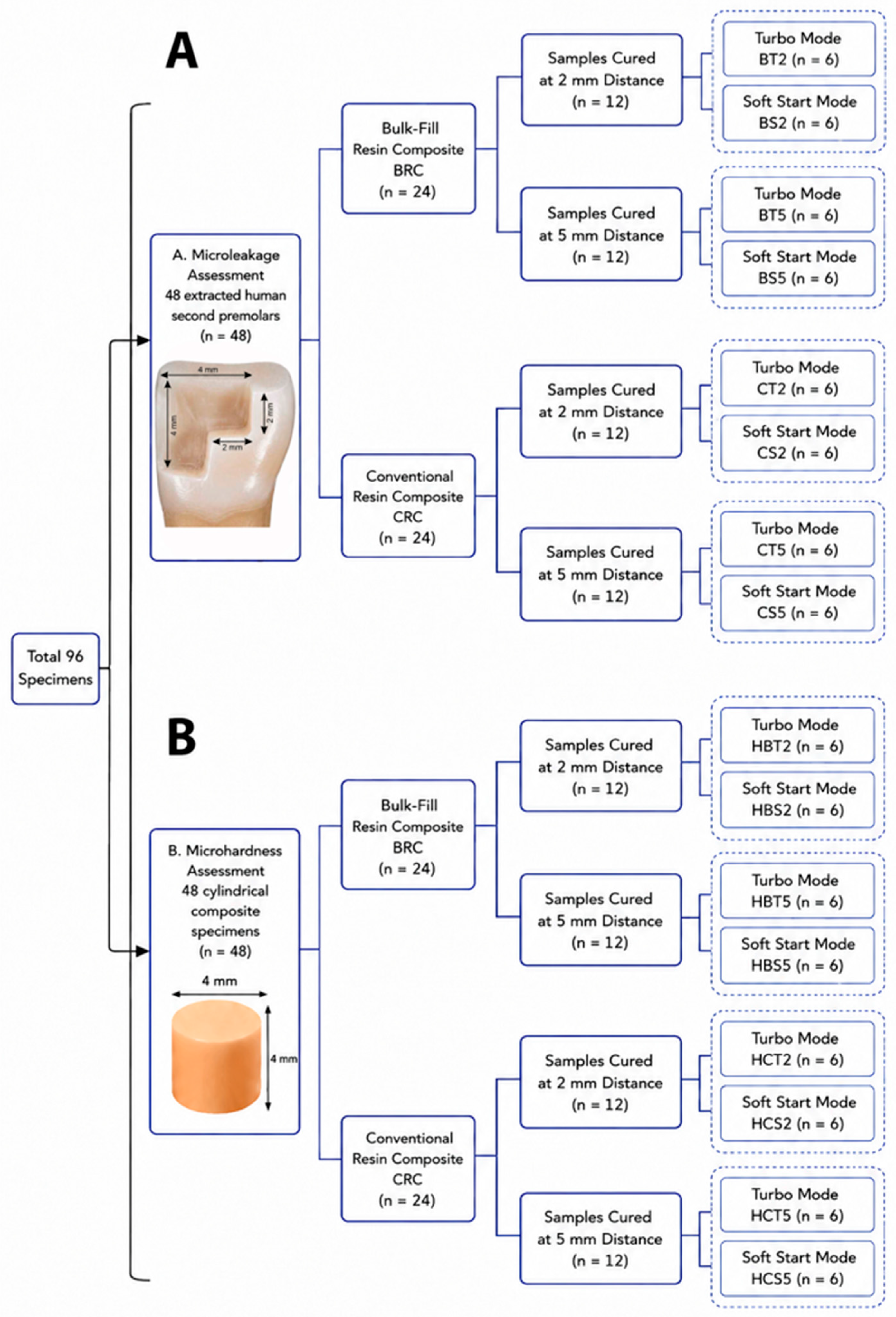
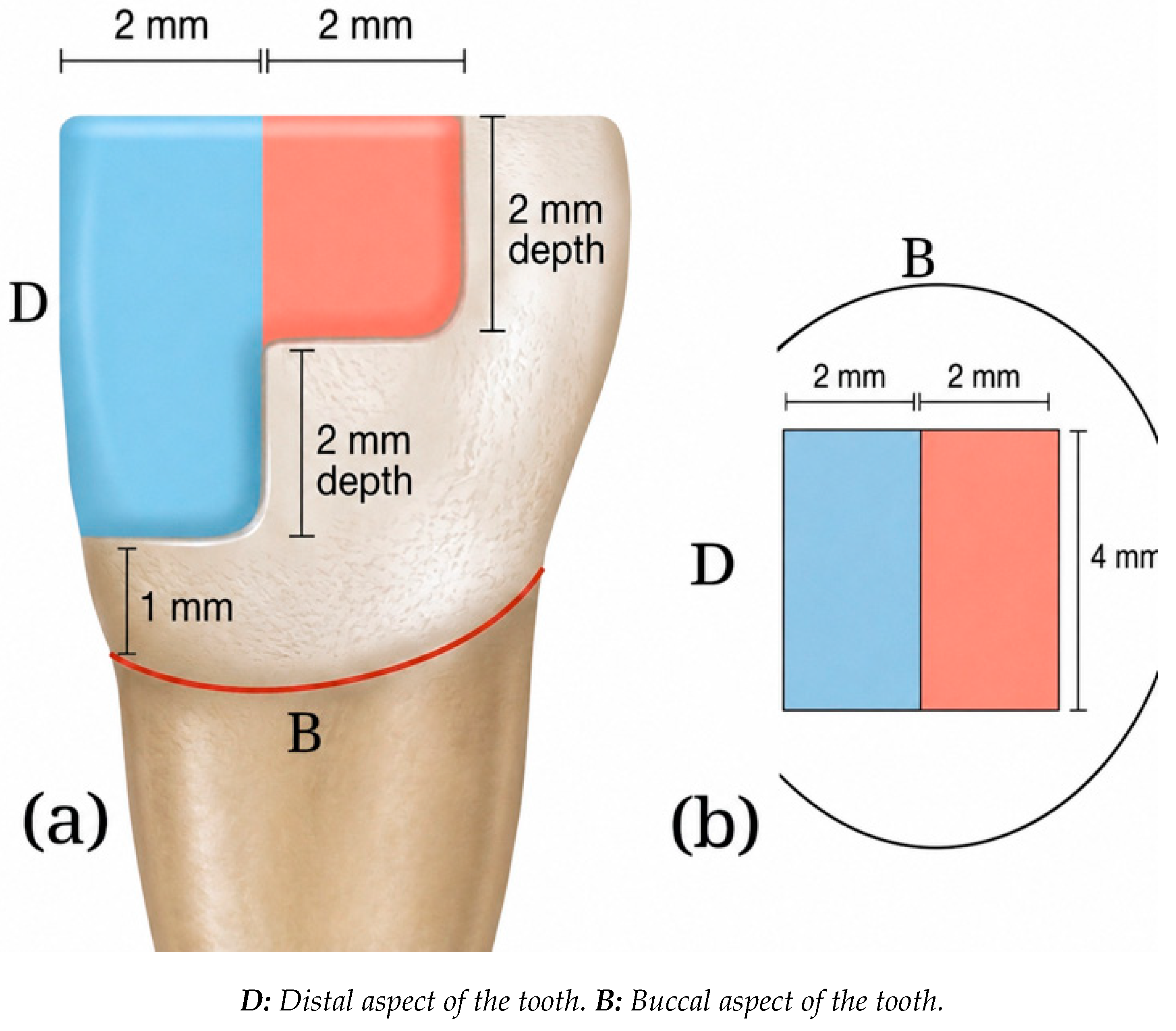
This investigation examined how different light-curing approaches influence the microleakage and microhardness of sculptable bulk-fill and nanohybrid resin-based composites. The techniques evaluated in this study were curing mode (soft start vs. turbo) and curing distance (2 mm and 5 mm).
4.1. Microleakage
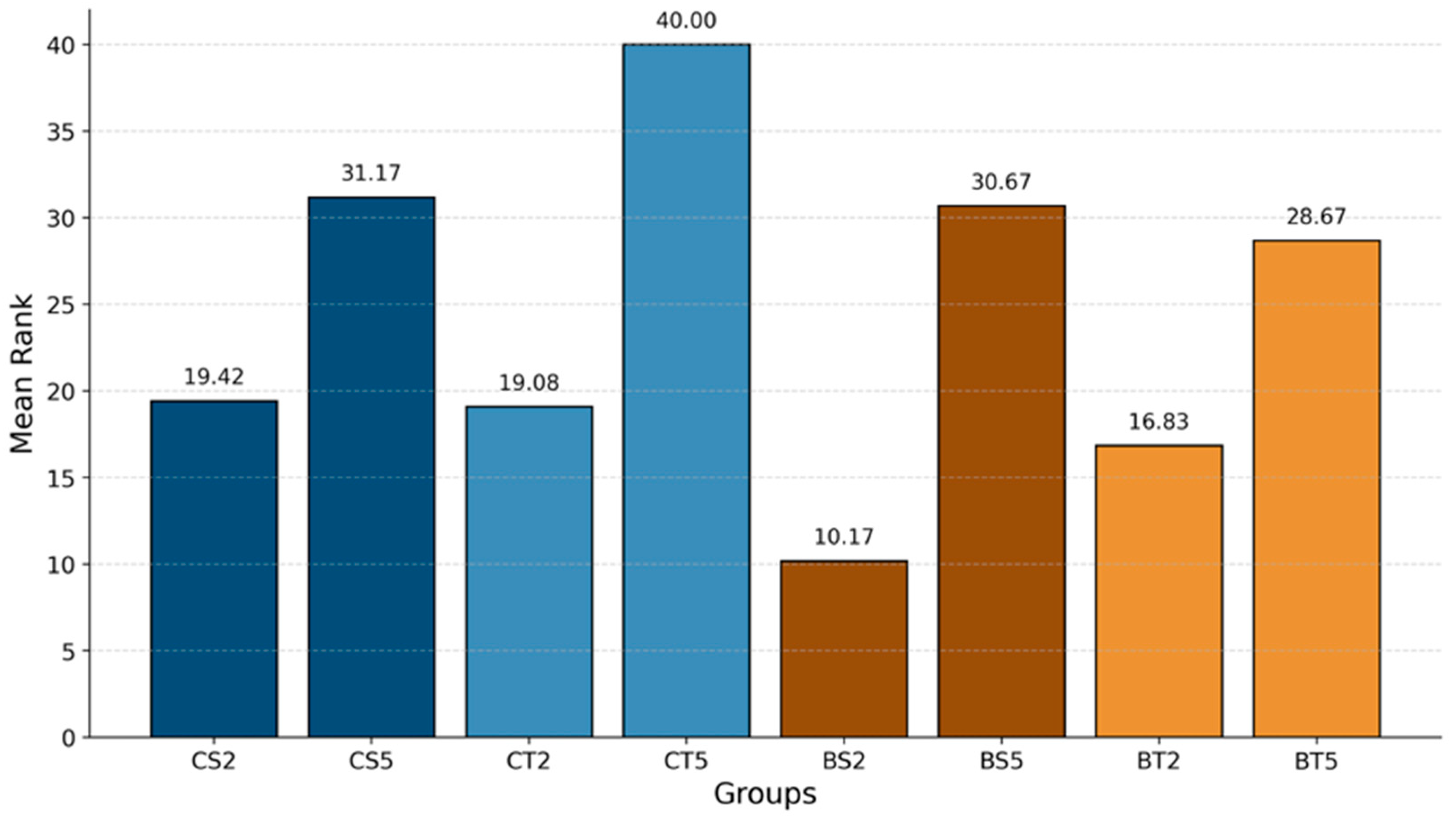
The Kruskal–Wallis test showed overall variation in microleakage across all experimental groups in the present investigation. Although the microleakage of the nanohybrid composite was higher than that of the bulk-fill composite, the difference was not significant when the two materials were tested under the same curing technique. This implies that there is no difference in marginal adaptation between conventional and bulk-fill composites when cured under the same curing method from the same distance. Furthermore, the post hoc Dunn’s test demonstrated that the significant difference was only between the bulk-fill composite when cured with soft start from a 2 mm distance (BS2) and the conventional composite when cured with turbo modes from a 5 mm distance (CT5) groups. The results suggest that curing distance and mode are critical to the marginal integrity of Class II restorations, thus affecting the longevity and long-term performance of the composite restorations [
10]. Bulk-fill resin composites have been developed to address issues related to incremental filling and polymerization shrinkage, which were previously regarded as key factors affecting the longevity of restorations in earlier generations of composites. Monomers, including AFM and AUDMA, reduce polymerization stress and improve marginal stability [
14]. Our results support Cayo-Rojas et al., García Marí et al. and Behery et al., who reported no significant differences in cervical microleakage between the bulk-fill composites and conventional composites following thermocycling [
23,
24,
25], and the trend was validated in a systematic review that found little to no evidence to support a clinically meaningful difference in marginal adaptation between the two material categories [
25].
Frank et al. [
26] evaluated deep Class II restorations in primary molars by comparing a conventional with a bulk-fill composite, with the latter being cured with either standard irradiance (10 s at 1200 mW/cm
2) or rapid high-irradiance curing (3 s at 3000 mW/cm
2), and their study showed that there was a considerable difference between the bulk-fill and the conventional composite groups, with the bulk-fill having better marginal integrity, and that curing protocol had no effect on microleakage. The present study did not support these findings. Curing techniques and distances showed differences in microleakage. The photopolymerization method, along with the adhesive system, plays an important role clinically in composite restorations because it influences stresses caused by polymerization shrinkage and can affect marginal adaptation.
Clinically, these stressors may be transmitted to the restoration margins, thereby impacting marginal quality [
27]. Several factors may account for the differences between our study and that of Frank et al. First, thermomechanical aging in our study included 500 cycles. In contrast, the Frank et al. study did not account for aging, which simulates temperature changes in the oral cavity that cause repeated expansions and contractions of both teeth and restorative materials. This artificial aging process will cause stress at the adhesive interface by creating microgaps, and microleakage will increase at the gingival margin, thereby negatively impacting the long-term clinical success of the restorations [
28].
In significant pairs, the bulk-fill/soft-start/2 mm subgroup had what may have been the best sealing ability because of the soft-start process used to cure the bulk-fill RBC in this group. In contrast, the other group was subjected to high-irradiance curing. The soft-start polymerization technique reduces the initial polymerization rate, thereby enhancing adaptability and reducing the overall shrinkage attributable to polymer formation. In this study, this finding is consistent with prior studies reporting that soft-start polymerization reduces shrinkage stress by slowing the rate of polymer formation, thereby increasing flow and stress relaxation at the tooth–restoration interface [
29,
30,
31]. In contrast, high-irradiance light-curing is used to reduce chair time in restorative dentistry. However, rapid polymerization under high-intensity light can increase polymerization shrinkage, potentially leading to microleakage at the restoration margins. Studies show that some high-intensity curing lights, especially when used for short durations, result in higher microleakage compared to conventional halogen lights. The effect of high irradiance is material-dependent; microhybrid and nanohybrid composites may respond differently to curing protocols. For nano-hybrid composites, rapid high-intensity curing may not always achieve the optimal depth of cure, increasing the risk of marginal gaps [
32].
Another factor is that Frank et al. used fixed light-curing distances and did not investigate the effect of curing distance. According to several earlier studies, curing distance and curing modes (such as soft-start) play significant roles in reducing microleakage by affecting the degree of conversion (DC) of RBCs [
8]. Curing distance also affects the depth of cure and gap formation, which, if not properly cured, leads to microleakage. We adjusted the curing distance in our study to 2 mm and 5 mm. Our results indicate that a 2 mm curing distance greatly improves marginal sealing, suggesting that curing distance is pivotal to microleakage. In contrast, Frank et al. used fixed curing distances [
33,
34]. The turbo curing at a distance used for curing the conventional composite (CT5) in significant pairs in the present study appears to compromise both the energy delivery and polymerization kinetics. This is likely to lead to suboptimal bonding and increased gap formation [
8,
12,
23].
Although several researchers reported that composite type may not be the main factor affecting microleakage, the present study showed that the combination of several factors, including composite type, curing method, and distance of the curing light tip, affects the marginal seal in microleakage analysis. Because bulk-fill materials feature enhanced translucence and modern photo-initiators, they are less sensitive to curing condition inhomogeneities. When favorable material properties, such as enhanced translucence and modern photoinitiators, are combined with optimum curing protocols, for instance, soft-start mode with the tip at a close distance, margin integrity is likely the best [
23,
35,
36,
37].
The lower microleakage observed in the group of bulk-fill composite when cured at a 2 mm distance with soft-start mode in this study appears to result from multiple synergistic factors rather than a single factor. Conversely, the poorest performance among conventional RBCs when cured in turbo mode at a 5 mm distance can be due to both suboptimal energy delivery and excessively rapid polymerization, reinforcing that the curing distance and protocol are critical factors for achieving reliable marginal adaptation.
4.2. Microhardness
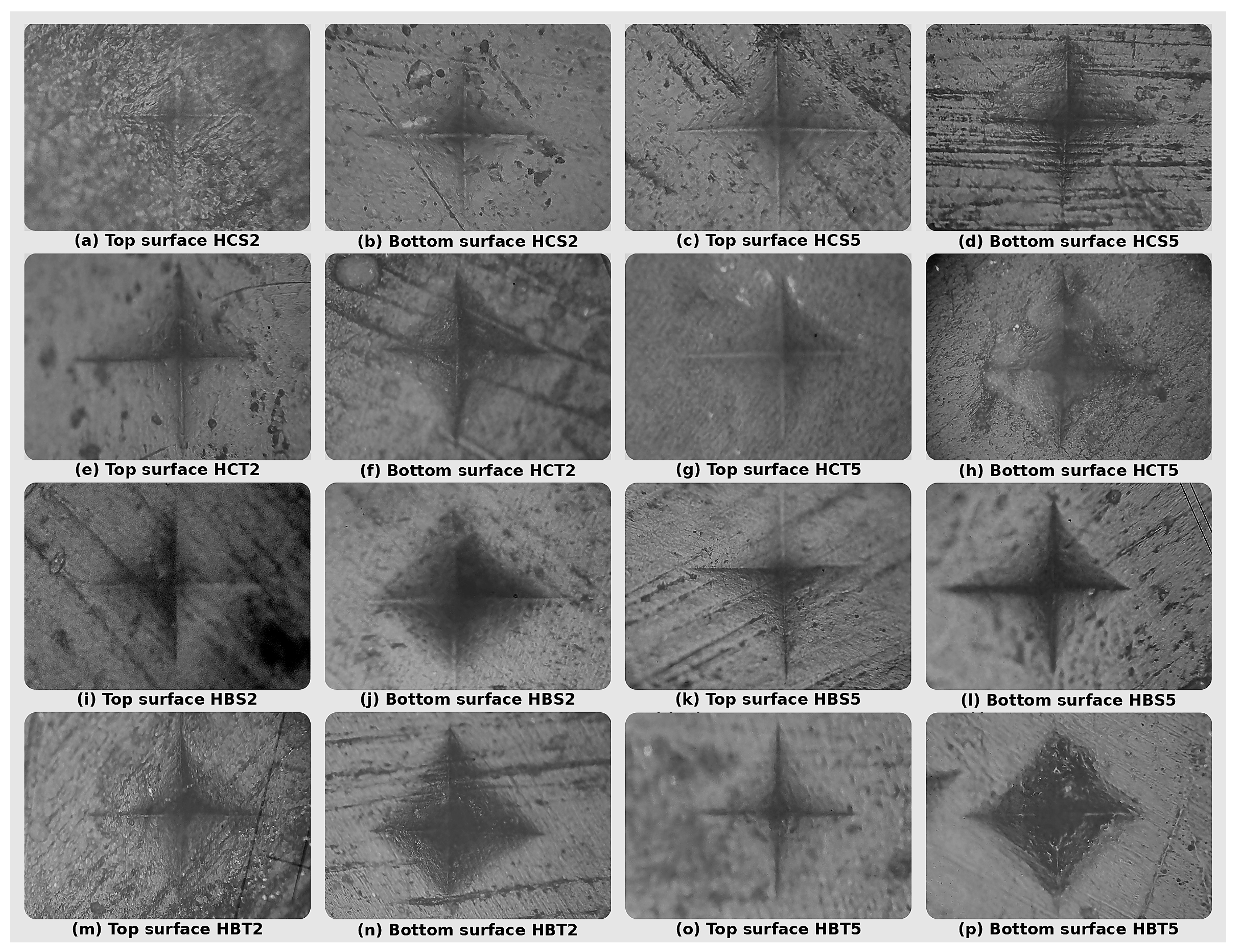
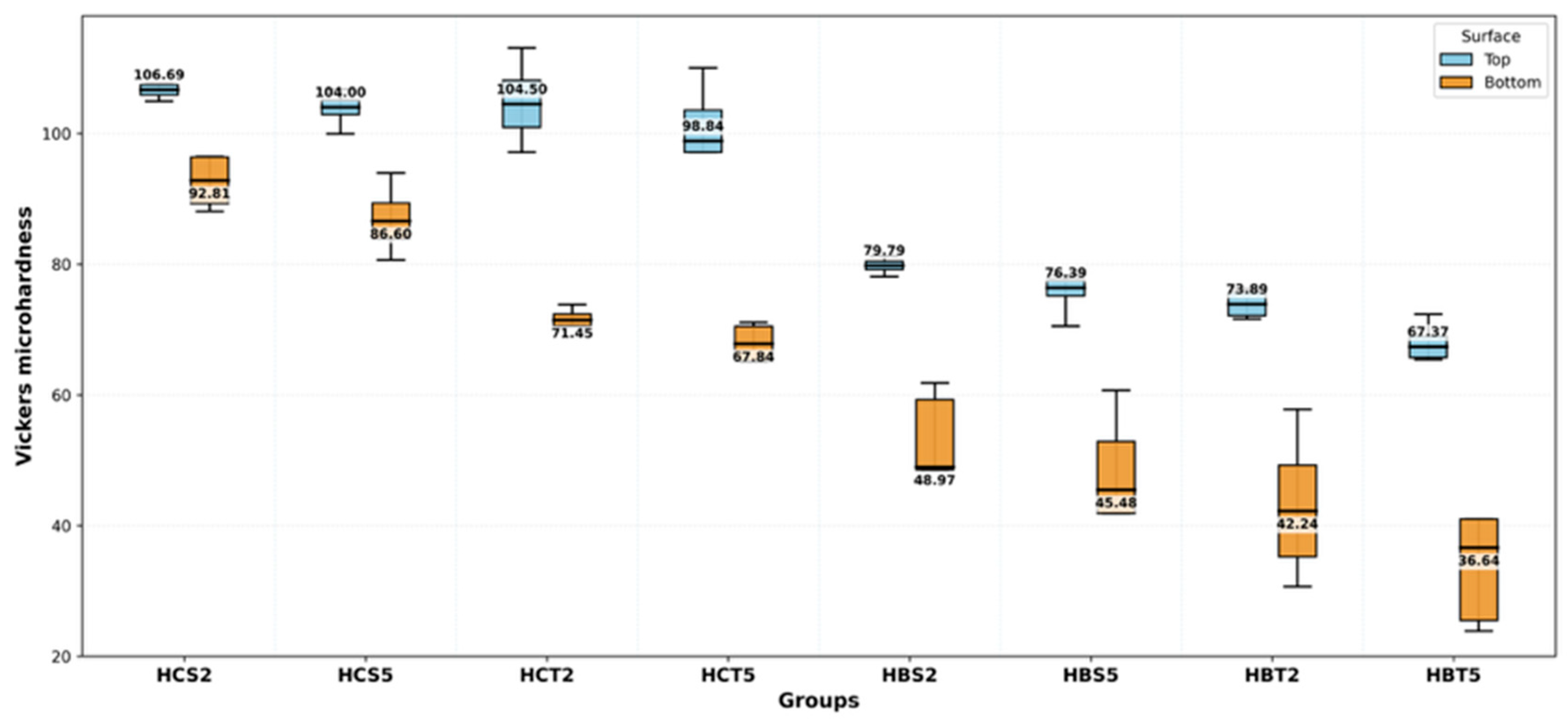
Microhardness is widely accepted as an indirect indicator of the degree of conversion and polymer network integrity of resin-based composites. In the present investigation, significant differences in top- and bottom-surface microhardness were identified among experimental groups, demonstrating that composite formulation, curing mode, and curing-light distance together influence polymerization effectiveness [
3,
38].
Across all curing conditions tested, the high-viscosity conventional nano-hybrid composite surpassed the bulk-fill one in microhardness at both the top and bottom surfaces. This can be caused mainly by the differences in composition of the two RBCs. The nano-hybrid composite, with higher filler loading and different resin matrix chemistry (Bis-EMA and UDMA-based), results in higher cross-link density and post-polymerization stiffness. The bulk-fill composite, on the other hand, contains cross-stress-relieving monomers such as AUDMA and AFM, which aim to reduce aggressive polymerization shrinkage stress rather than maximize mechanical hardness. Therefore, although bulk-fill composites may demonstrate better marginal adaptation, this may not result in better absolute hardness values than conventional composites. This correlates with the findings of Leprince et al. (2014) and Jakupović et al. (2023), who state that the RBC composition is more influential in determining microhardness than the light-curing technique employed [
3,
12,
39,
40].
A consistent reduction in microhardness was observed from the top surface to the bottom surface across all groups, highlighting the ongoing effect of light attenuation in composite materials. In most cases, light-curing procedures have the greatest impact on the microhardness of the bottom surface, where energy delivery is most deficient. In this study, bottom-surface microhardness was particularly low in the bulk-fill specimens cured in turbo mode and at extended light-tip distances, indicating insufficient polymerization at greater depths. These findings demonstrate that despite enhanced translucency, bulk-fill composites remain sensitive to curing parameters and cannot fully compensate for suboptimal curing conditions. The findings of the present study are consistent with those reported by Duratbegović et al. [
41], who observed that top-surface microhardness in resin-based composites is comparatively less affected by changes in light intensity, curing-tip distance, and exposure duration than bottom-surface microhardness.
Multiple studies summarized by Duratbegović et al. also reported that longer exposure times consistently increased bottom microhardness and depth of cure, and that short, high-intensity curing can yield lower hardness than lower-intensity curing with longer time when total energy is similar. In the present study, the curing mode significantly affected the microhardness outcomes. Soft-start curing for 20 s generally produced higher microhardness values than turbo curing for 3 s, especially at the bottom surface. The gradual increase in irradiance characteristic of soft-start polymerization moderates early reaction kinetics, allowing greater monomer mobility and more homogeneous polymer network formation before gelation. In contrast, turbo curing delivers very high irradiance over a short duration, accelerating polymerization and rapidly restricting chain mobility. This quick vitrification may limit conversion, particularly when combined with lower irradiance at higher curing distances [
34,
37,
41,
42].
Moving the curing light farther away (from 2 mm to 5 mm) decreased the microhardness in both composite types. This indicates that increasing the distance from the curing light by 3 mm reduces microhardness in the surface and bottom layers of resin-based composites, reaffirming the need for an appropriate distance. The negative impact of increased distance was greatest in turbo-mode groups. In contrast, soft-start curing mitigated some of these effects by optimizing the polymerization process (not by peak irradiance) and thereby improving overall curing. This finding is consistent with other studies showing that as the tip distance increases, bottom hardness and the B/S microhardness ratio decrease significantly, even under high-irradiance LEDs [
32,
34].
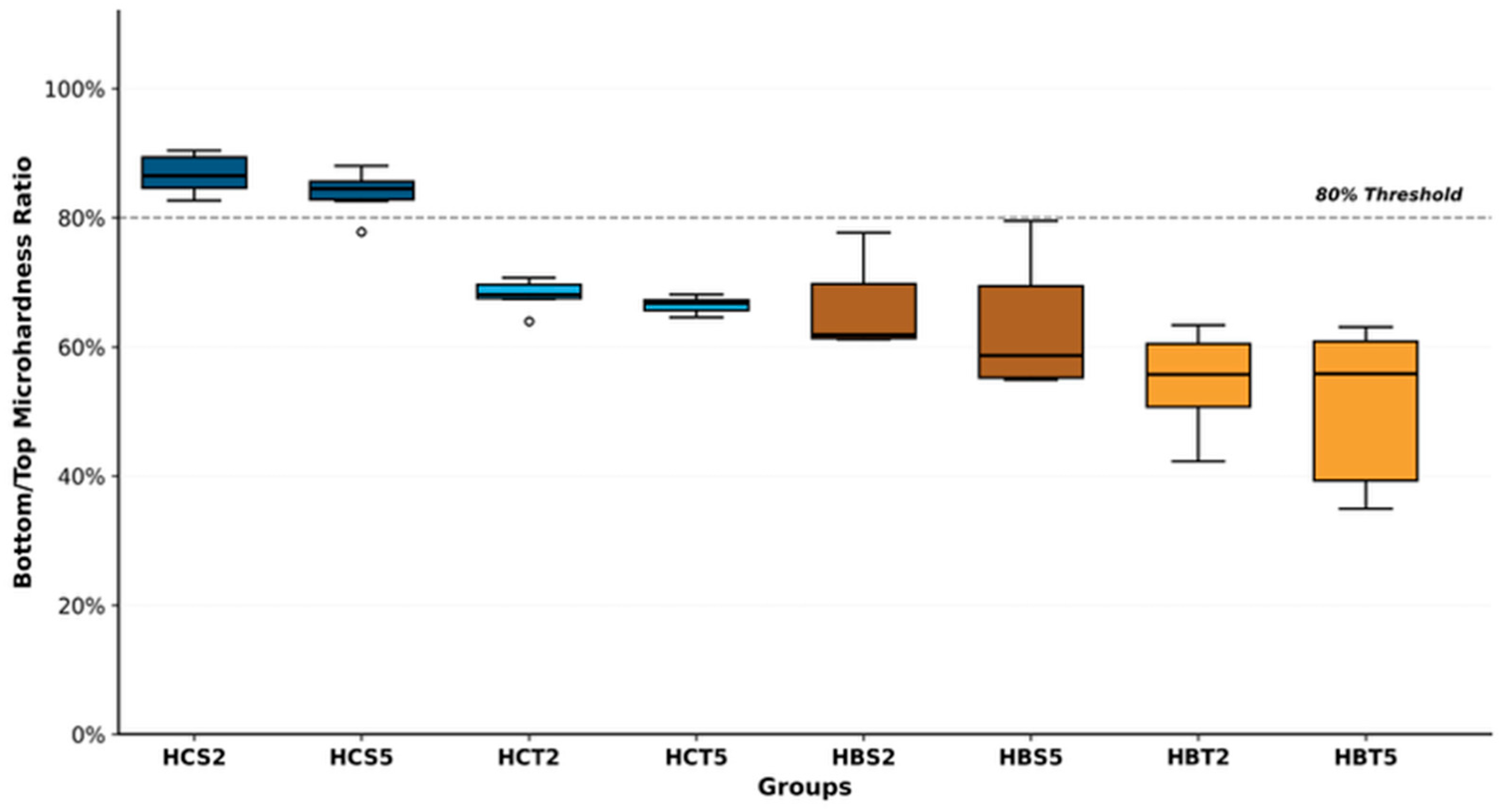
Microhardness ratios of the bottom-to-top (B/S) provided further confirmation of these observations. The only sample that achieved a B/S ratio of 0.80, considered the minimum acceptable value for depth of cure, was the conventional composite cured in soft-start mode. More concerning, the turbo-mode-cured bulk-fill composites exhibited substantially lower B/S ratios, suggesting inadequate polymerization. Numerous studies of bulk-fills report B/S ratios of 80% or more at 4–6 mm with standard curing (≈1000–1300 mW/cm
2, ≥20 s) with the light guide at a short distance. These results continue to challenge the accepted notion that in all circumstances, bulk-fill composites are impervious to curing techniques and that a specific curing technique is required [
43].
From a clinical viewpoint, the results suggest that both material type and curing protocol together have a greater impact on polymerization quality and microhardness than composite type alone. However, conventional composites exhibited higher microhardness; curing under controlled conditions is required to obtain a great depth of cure. The bulk-fill composite also needs to be cured under optimal conditions to achieve favorable polymerization and hardness. Combinations of soft-start curing with short light-tip distances are recommended to optimize polymerization and mechanical performance.
In the present study, the experimental groups were analyzed as combined curing conditions rather than as isolated factors because each group represented a clinically relevant combination of composite type, curing mode, and curing distance.