3.1. Characteristics of Composite Fire-Resistant Glass
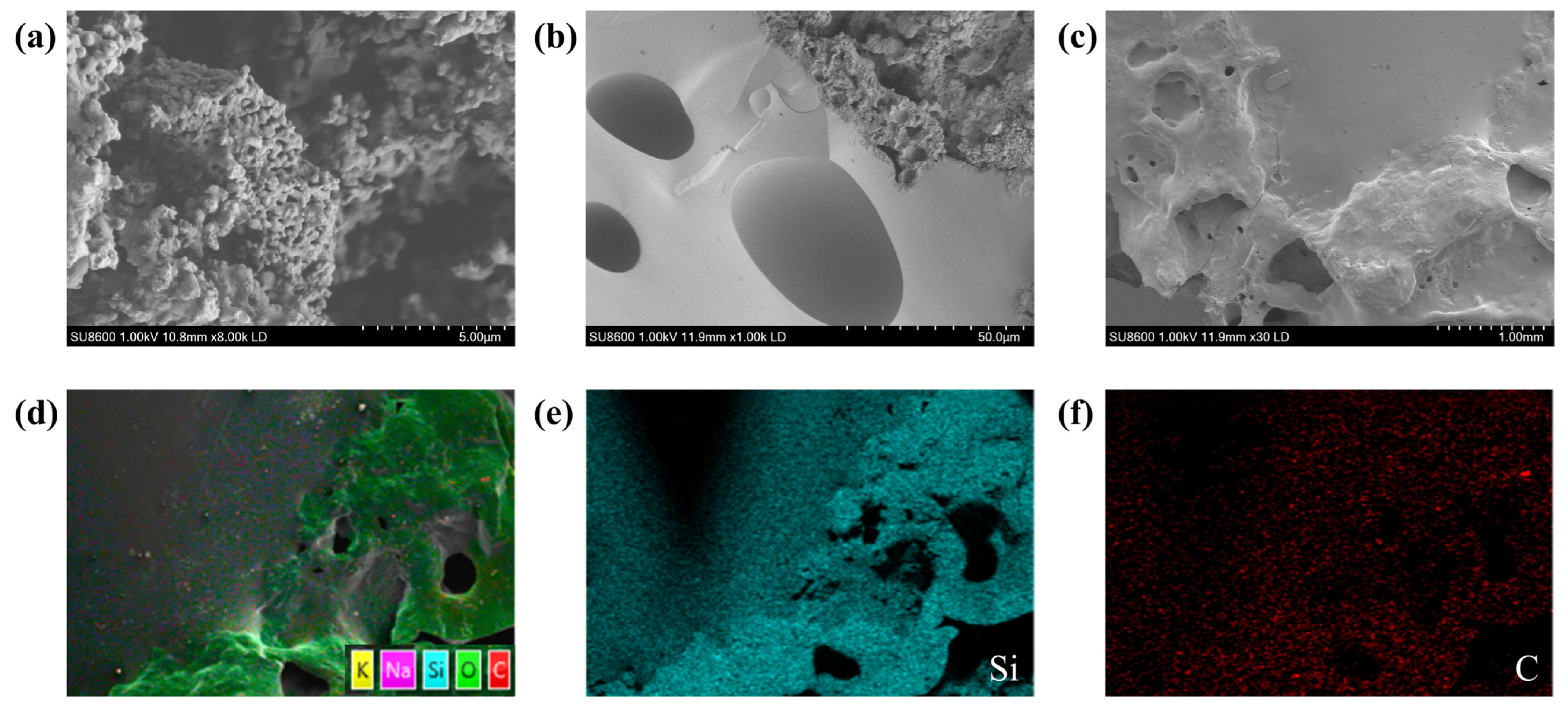
In this study, the core design concept centers on the multi-layer composite glass structure formed by infusing a fire-resistant liquid. Accordingly, the micromorphology of the composite fire-resistant glass was first examined. As shown in
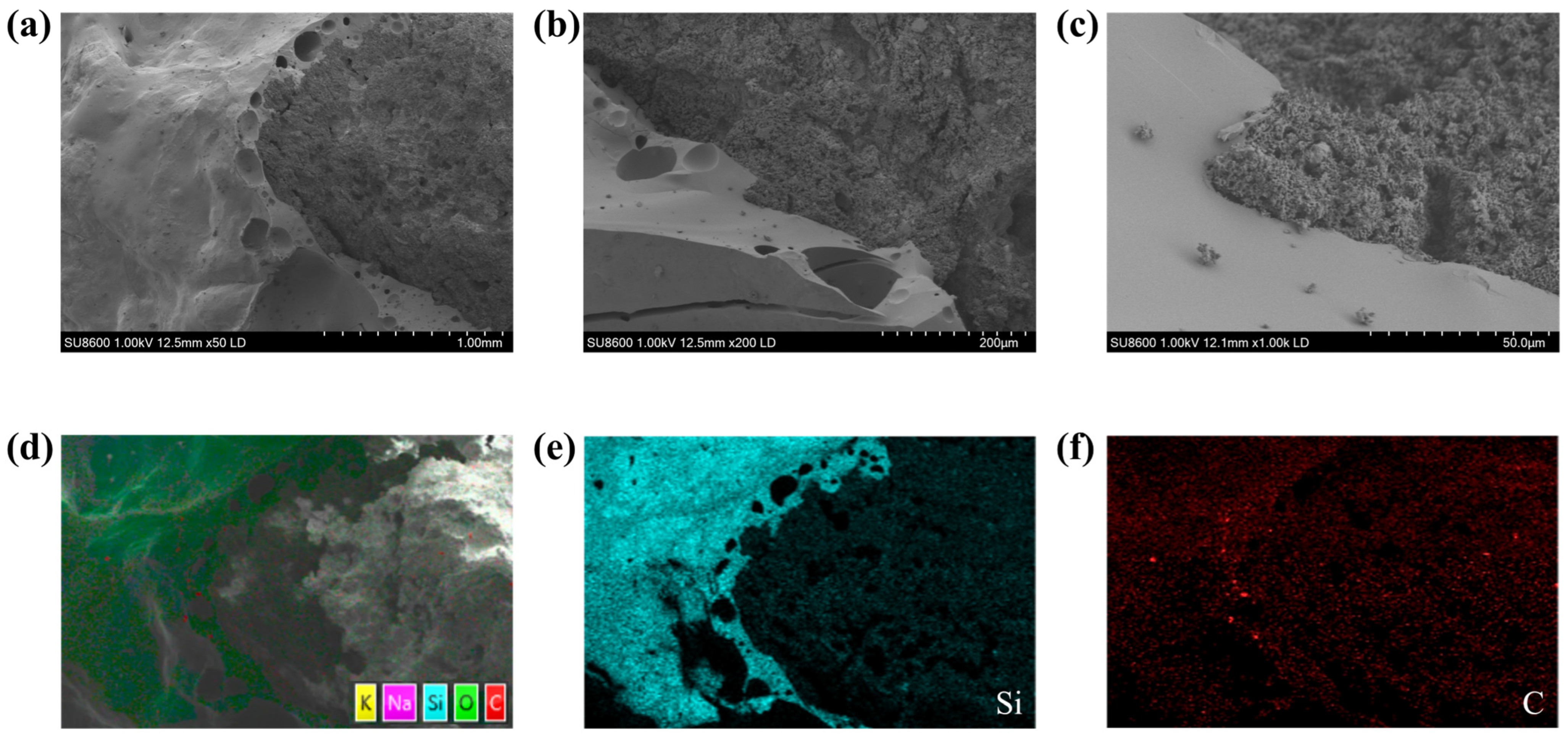
Figure 1a, the composite fire-resistant glass is observed to consist of outer glass layers and particulate powder derived from the fire-resistant liquid infused within the hollow cavity, forming a typical “sandwich” composite structure. The outer glass layers exhibit uniform thickness and continuous integrity, with some pores present on the cross-section. The fire-resistant liquid particles are compact and dense, completely filling the entire cavity without defects such as cracks or voids.
The interfacial bonding condition of the composite fire-resistant glass significantly influences mass and heat transfer during fire exposure, thereby playing a critical role in its fire resistance performance. Subsequently, the interfacial morphology between the glass layer and the fire-resistant liquid layer was examined using high-magnification SEM (
Figure 1b). It was observed that the glass layer and the fire-resistant liquid layer are tightly bonded, with no gaps or delamination. Upon further magnification, a thin and continuous transition zone was identified at the interface, indicating slight physical or chemical diffusion between the two materials during the fabrication process (
Figure 1c). This intimate interfacial bonding and the formation of a transition zone effectively facilitate stress transfer and dispersion, significantly enhancing interlaminar adhesion. Consequently, delamination or spalling of the fire-resistant liquid material under thermal shock at elevated temperatures is prevented, preserving the structural integrity of the composite fire-resistant glass.
Moreover, as shown in
Figure 1c, the micromorphology of the fire-resistant liquid layer is also observable. It consists of a large number of cross-linked and stacked nanoscale irregular particles, forming a three-dimensional network structure with numerous pores distributed both on the surface and within the interior. This continuous and interconnected porous architecture not only substantially reduces solid-state heat conduction but also effectively impedes thermal radiation and heat convection, thereby conferring excellent thermal insulation properties to the fire-resistant liquid layer. Collectively, these structural characteristics provide the primary structural assurance for the long-term fire resistance performance of the composite fire-resistant glass, demonstrating the feasibility of the fabrication approach and methodology adopted in this study.
It should be noted that the SEM observations in this study are qualitative. Numerical porosity, pore-size distribution, and specific surface area were not calculated from the SEM images because reliable quantification requires additional image analysis and porosimetry techniques. Future work will combine mercury intrusion porosimetry and Brunauer–Emmett–Teller analysis to quantify the porous structure formed at high temperatures.
To further validate the feasibility of the approach and methodology proposed in this study, elemental distribution analysis on the cross-section of the composite fire-resistant glass was conducted using EDS mapping.
Figure 1d presents an overlay of multiple elemental distributions, enabling simultaneous observation of the spatial distribution of various elements across the cross-section. It can be observed that distinct elemental regions correspond to different functional layers with well-defined boundaries. For instance, elements such as Si, O, Na, and K exhibit clear demarcation lines between the glass layer and the fire-resistant liquid layer and are predominantly enriched in the glass layers on both sides. This demonstrates that the distribution of the glass layer and the fire-resistant liquid layer governs the elemental distribution patterns. To more clearly visualize the respective distributions of the glass layer and the fire-resistant liquid layer, the spatial distributions of Si (corresponding to the SiO
2 component in the glass layer) and C (corresponding to the carbon black component in the fire-resistant liquid) were separately characterized, as shown in
Figure 1e and
Figure 1f, respectively. Consistent with the aforementioned analysis, Si is predominantly concentrated within the glass layers, with its distribution contour aligning precisely with that of the glass layers. In contrast, C is distributed across both the glass layers and the fire-resistant liquid layer. More importantly, within the interfacial transition zone, the distribution of C exhibits a concentration gradient, providing evidence of its diffusion behavior at the interface. This diffusion enhances the adhesion of the fire-resistant liquid layer to the glass substrate surface.
The elemental diffusion discussed here is inferred from EDS mapping rather than from EDS line-scan or depth-profile measurements. The mapping results are sufficient to identify the spatial distribution and interfacial transition trend, but quantitative diffusion profiles will require line-scan, depth-profiling, or related characterization in subsequent research.
In summary, the structural and compositional analysis results demonstrate, at the microscopic level, that the design approach and fabrication methodology employed in this study successfully yield an insulating composite fire-resistant glass characterized by a dense structure and excellent interfacial bonding. The unique porous architecture of the infused fire-resistant liquid layer endows the composite fire-resistant glass with highly efficient thermal insulation performance. Furthermore, the robust interfacial bonding formed through diffusion between the glass layer and the fire-resistant liquid layer lays a solid foundation for the stable fire resistance performance of the composite fire-resistant glass under elevated temperature fire exposure.
In addition, the interfacial adhesion between the glass layer and the fire-resistant liquid layer was evaluated qualitatively through SEM morphology. Quantitative adhesion strength, such as pull-off or shear strength, was not measured in this study and will be examined in future mechanical tests.
3.2. Fire-Resistant Properties of Composite Fire-Resistant Glass
Following the design and fabrication of the insulating composite fire-resistant glass, its core performance—fire resistance—was evaluated, and the influence of different fire-resistant liquids on fire resistance performance was investigated.
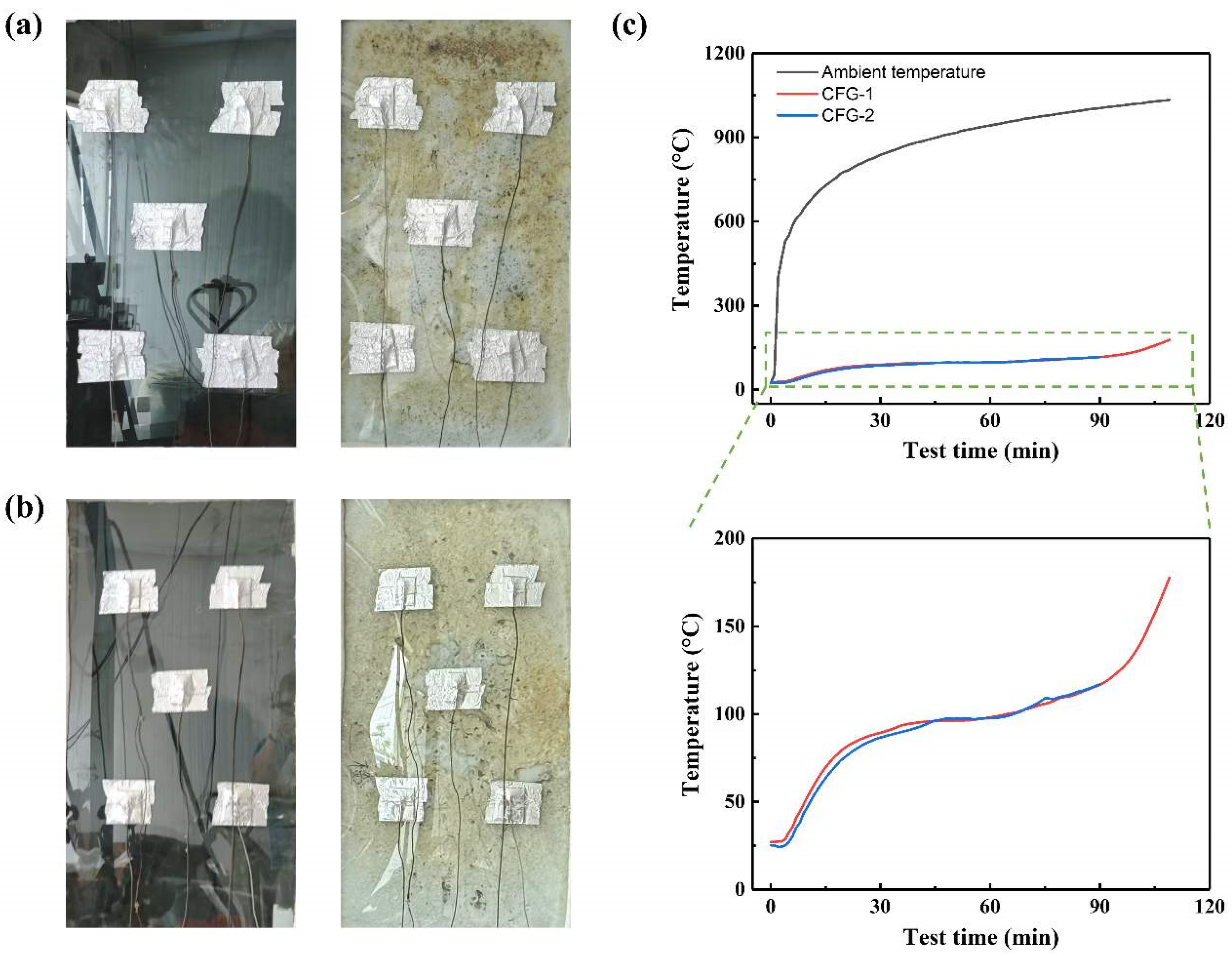
Figure 2a,b presents the macroscopic morphologies of the composite fire-resistant glasses fabricated using the fire-resistant liquid from Mingyi Company and Jianke Company, respectively, before and after standard fire resistance testing. It can be observed that both types of composite fire-resistant glass exhibit flat and smooth surfaces free of visible defects, along with high transparency comparable to that of commercial clear glass, thereby satisfying everyday application requirements. During the 90-min standard fire resistance test, the non-fire side surfaces of both composite fire-resistant glass specimens remained intact and smooth, with virtually no changes in macroscopic morphology. This indicates a fire resistance rating exceeding 90 min, demonstrating excellent fire resistance performance. Meanwhile, the composite fire-resistant glass transitioned from transparent to an opaque white state. This transformation is attributed to the oxidation and carbonization of both types of infused fire-resistant liquid under elevated temperature conditions, resulting in the formation of a carbon black/ash mixture, which lays the foundation for fire resistance and thermal insulation. Furthermore, it can be observed that the resulting carbon black/ash mixture is uniformly distributed throughout the entire cavity of the composite fire-resistant glass, confirming the complete and homogeneous filling of the fire-resistant liquid within the cavity, as well as its uniform oxidation/carbonization under high-temperature exposure.
As another core indicator for evaluating fire resistance performance, thermal insulation performance was quantitatively assessed by monitoring and recording the non-fire side surface temperatures of the two types of insulating composite fire-resistant glass during the standard fire resistance test. As shown in
Figure 2c, the furnace temperature rapidly increased to 750 °C within 15 min and further rose to 1100 °C within 120 min. In contrast, the non-fire side surface temperatures of both insulating composite fire-resistant glass specimens remained substantially lower than the furnace temperature, with a temperature difference of 700–950 °C, demonstrating excellent thermal insulation performance and providing enhanced safety for occupant evacuation and property protection. The inset enlarged view reveals that the temperature rise rates on the non-fire side of both insulating composite fire-resistant glass specimens were similarly extremely slow (~1 °C/min), with temperature increases ≤180 °C. However, the insulating composite fire-resistant glass fabricated with the fire-resistant liquid from Jianke Company fractured after 90 min of standard fire resistance testing, whereas the insulating composite fire-resistant glass fabricated with the fire-resistant liquid from Mingyi Company withstood nearly 120 min of standard fire resistance testing, thereby exhibiting superior fire insulation performance. In subsequent tests, the insulating composite fire-resistant glass fabricated with the fire-resistant liquid from Mingyi Company was used exclusively. After investigating the effect of fire-resistant liquid type on the fire resistance performance of the insulating composite fire-resistant glass, the influence of glass thickness—i.e., the number of fire-resistant liquid-infused layers—on fire resistance performance was further examined.
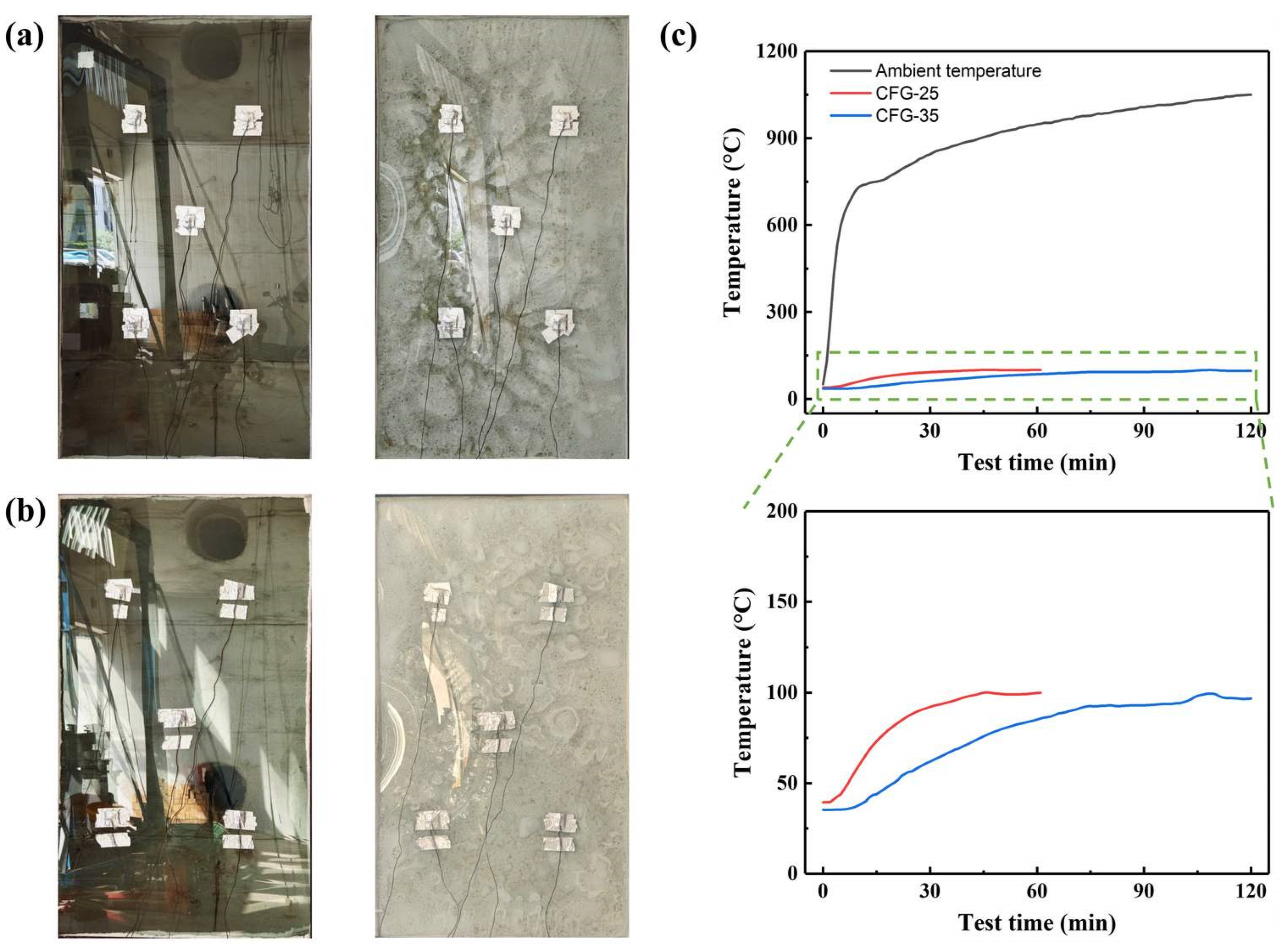
Figure 3a,b presents the macroscopic morphologies of composite fire-resistant glasses with thicknesses of 25 mm and 35 mm, respectively, (for detailed structural configurations, see Methods) before and after standard fire resistance testing.
The better performance of CFG-1 compared with CFG-2 is attributed mainly to differences in the proprietary formulations of the Mingyi and Jianke fire-resistant liquids. Although their detailed compositions were not available for direct comparison, the Mingyi fire-resistant liquid is inferred to possess higher thermal stability, more effective char-forming behavior, and stronger interfacial bonding with the glass layer. During fire exposure, these features are beneficial for forming a more compact and continuous porous insulating layer, thereby delaying cracking and maintaining integrity for a longer time. By contrast, the Jianke liquid may form a less compact carbonized layer or undergo earlier thermal degradation, leading to fracture after 90 min. Detailed FTIR, XRF, and TGA comparisons will be carried out in future work to verify this interpretation. Heat-flux density was not calculated in this study because the current experimental setup was not equipped with heat-flux sensors; therefore, the temperature difference is used here as a direct indicator of thermal insulation performance. The absence of sudden cracking or shattering during standard furnace exposure also indicates that the samples had good thermal shock resistance under the present test conditions, although dedicated thermal shock tests are still needed.
It can be observed that increasing the thickness from 25 mm to 35 mm does not affect the transparency of the composite fire-resistant glass, which remains comparable to that of commercial clear glass. Furthermore, the surface of the 35 mm thick composite fire-resistant glass remains flat and smooth, free of any visible defects. During the 60-min standard fire resistance test, both CFG-25 and CFG-35 maintained stable structural integrity without cracking or flame penetration, thereby satisfying the requirements for fire integrity. Meanwhile, the transparency transitioned to a uniformly opaque white state, consistent with the mechanism described above.
Subsequently, the temperature rise on the non-fire side of CFG-25 and CFG-35 was quantitatively measured (
Figure 3c). It was found that the non-fire side temperature of CFG-25 increased extremely slowly, with a maximum temperature of only 100 °C, well below the standard critical threshold of 180 °C. This demonstrates that CFG-25 satisfies and exceeds the 60-min requirement for both fire integrity and thermal insulation, and can therefore be classified as insulating fire-resistant glass (Class A). CFG-35 exhibited even superior thermal insulation performance. Its non-fire side temperature rise curve remained consistently lower than that of CFG-25, indicating a slower rate of temperature increase, with the temperature approaching 100 °C only after 120 min of testing. More importantly, its fire resistance duration was twice that of CFG-25 (120 min). Therefore, increasing the number of layers (i.e., thickness) of the composite fire-resistant glass structure significantly enhances both the fire insulation limit and thermal insulation performance. This improvement can be attributed to two main factors. On one hand, the increased composite structure directly extends the heat transfer path from the fire-exposed side to the non-fire side, thereby raising the thermal resistance—particularly due to the insulating effect of the porous structure of the fire-resistant liquid material. On the other hand, the buffering effect of the multi-layer composite structure allows the fire-resistant liquid layers near the non-fire side sufficient time to undergo carbonization and oxidation, forming a porous insulating structure. This enables the full utilization of the fire-resistant and insulating effects of the multi-layer fire-resistant liquid configuration.
The temperature rise values of CFG-25 and CFG-35 are reported as average values calculated from the monitoring points and repeated specimens, rather than as single-point data from an individual sample.
In summary, this work systematically regulated the type of fire-resistant liquid and the thickness of the composite fire-resistant glass and investigated their effects on fire resistance performance, thereby achieving excellent fire integrity and thermal insulation in the insulating composite fire-resistant glass. Compared with commercial non-insulating fire-resistant glass, which offers only fire integrity, the core advantage of the insulating composite fire-resistant glass lies in its superior thermal insulation performance. Furthermore, by tailoring these parameters, a series of composite fire-resistant glasses meeting various fire protection grades (e.g., from Class C 1 h to Class A 1.5 h) can be fabricated to accommodate diverse building fire safety requirements. This demonstrates that the design approach and fabrication methodology adopted in this study offer favorable design flexibility and tunability.
3.3. Fire-Resistant Mechanism of Composite Fire-Resistant Glass
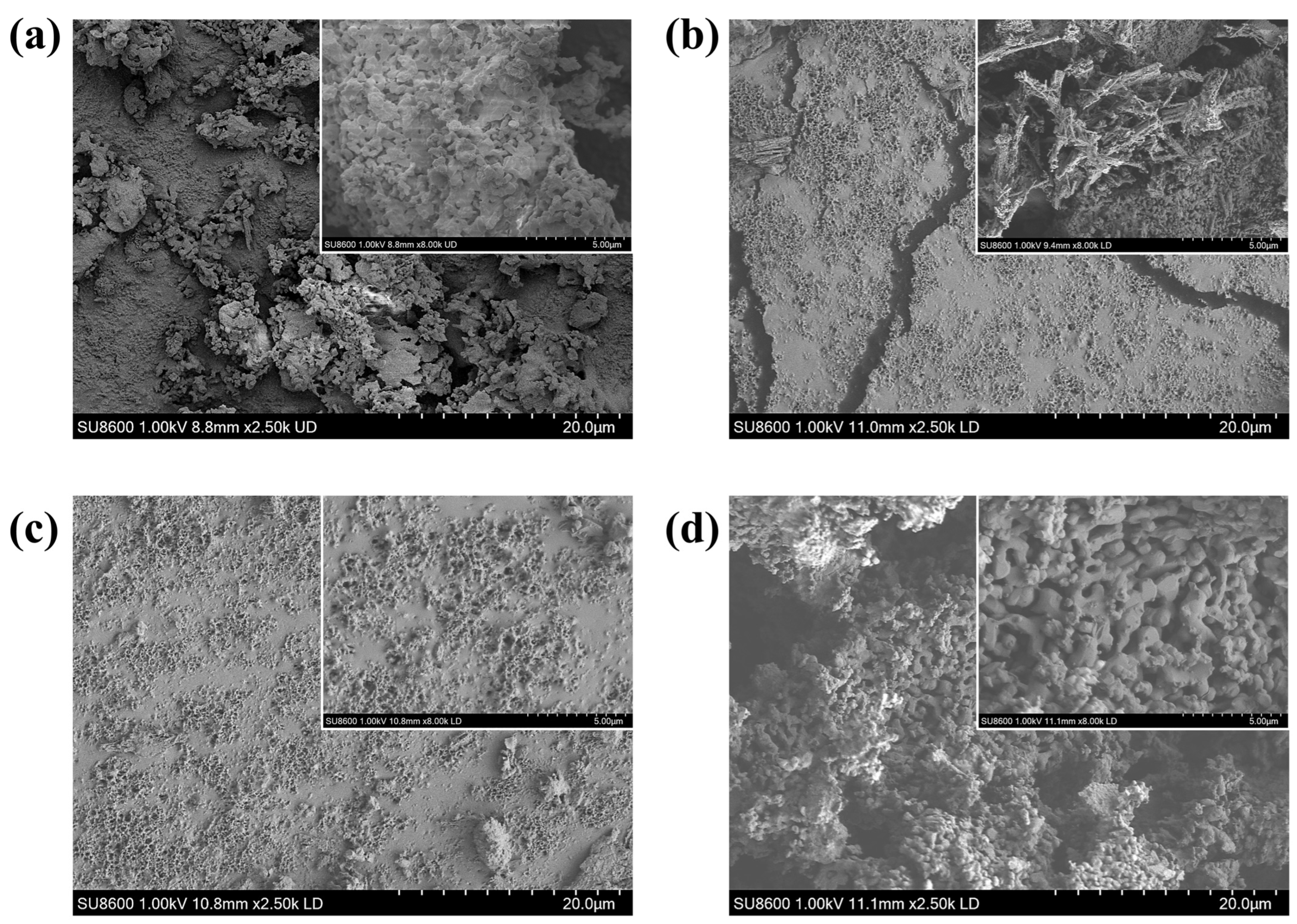
To elucidate the fire resistance mechanism of the insulating composite fire-resistant glass, the structural and compositional evolution of the material after exposure to various elevated temperatures was characterized and analyzed. As shown in
Figure 4a, after heat treatment at 400 °C, the liquid components in the gel-state fire-resistant liquid volatilized and underwent oxidation, transforming into irregularly shaped solid powders, including flaky particles, agglomerated blocks, and scattered granules. These solid powder structures were relatively loose and exhibited weak interfacial bonding. At this stage, the interfacial layer in direct contact with the glass retained a relatively flat and dense structure, rather than the porous architecture essential for fire insulation, indicating that this temperature was insufficient to induce complete oxidation and carbonization of the fire-resistant liquid. Subsequently, the temperature was increased to 500 °C (
Figure 4b). The initially irregular solid powders transformed into a flocculent structure resulting from oriented carbonization and crystallization of the fire-resistant liquid at elevated temperatures. However, these bundled flocculent structures still lacked a porous morphology. Meanwhile, thermal stress generated at this temperature induced microcracks in the fire-resistant liquid layer within the interfacial region, which not only compromised interfacial adhesion but also provided pathways for heat transfer. Consequently, the structural configuration at this temperature remained inadequate for achieving superior fire insulation performance. Upon further increasing the temperature to 600 °C (
Figure 4c), the fire-resistant liquid underwent not only oxidation and carbonization but also sintering of the resulting solid powders due to the excessively high temperature. This caused the fire-resistant liquid layer in the interfacial region to revert to a dense state. Concurrently, the coarse powder structures transformed into fine granular particles with significantly reduced surface roughness. Nevertheless, the porous structure critical for fire insulation performance had not yet developed. When the temperature was raised to 700 °C (
Figure 4d), partial sublimation of certain components within the solid powder occurred, leading to melting and structural reconstruction of the fire-resistant liquid layer, accompanied by pore formation. This substantially increased the surface roughness of the fire-resistant liquid layer and initiated preliminary fire insulation performance. However, due to the limited extent of sublimation, the number of pores formed remained relatively low, thereby restricting the degree of improvement in fire insulation performance.
Finally, the heating temperature was further elevated to 800 °C. At this temperature, the fire-resistant liquid layer underwent rapid melting and structural reconstruction, resulting in significantly refined particle sizes. More importantly, the volatilization of certain solid components intensified, thereby forming a highly porous structure with elevated porosity, which laid the foundation for fire insulation performance (
Figure 5a). Examination of the interfacial region between the fire-resistant liquid layer and the glass layer (
Figure 5b,c) revealed two key phenomena. On one hand, the elevated temperature induced pore formation within the glass layer itself, while the overall structure remained intact and continuous. On the other hand, due to high-temperature melting, reconstruction, and sintering, diffusion occurred between the fire-resistant liquid layer and the glass layer, forming a continuous and tightly bonded interfacial transition zone, which effectively enhanced interfacial adhesion. Corresponding EDS elemental mapping further confirmed these observations. Elements such as K, Na, O, Si (representing the glass component), and C (representing the fire-resistant liquid component) were distributed correspondingly throughout the entire interfacial layer, without distinct elemental boundaries demarcating different material layers. This demonstrates that the two materials diffused and fused together, forming a robust physicochemical bond (
Figure 5d–f). This tightly bonded interfacial porous structure not only significantly reduces solid-state heat conduction but also effectively impedes thermal radiation and heat convection, thereby endowing the insulating composite fire-resistant glass with excellent fire integrity and fire insulation performance.
Thus, the heat transfer mechanism proposed in this work is a qualitative interpretation based on morphology, elemental distribution, and temperature-rise behavior. The respective contributions of conduction, convection, and radiation were not quantitatively separated. A coupled heat transfer model and additional thermal-property measurements, such as laser flash analysis and heat-flux monitoring, will be developed in future work.
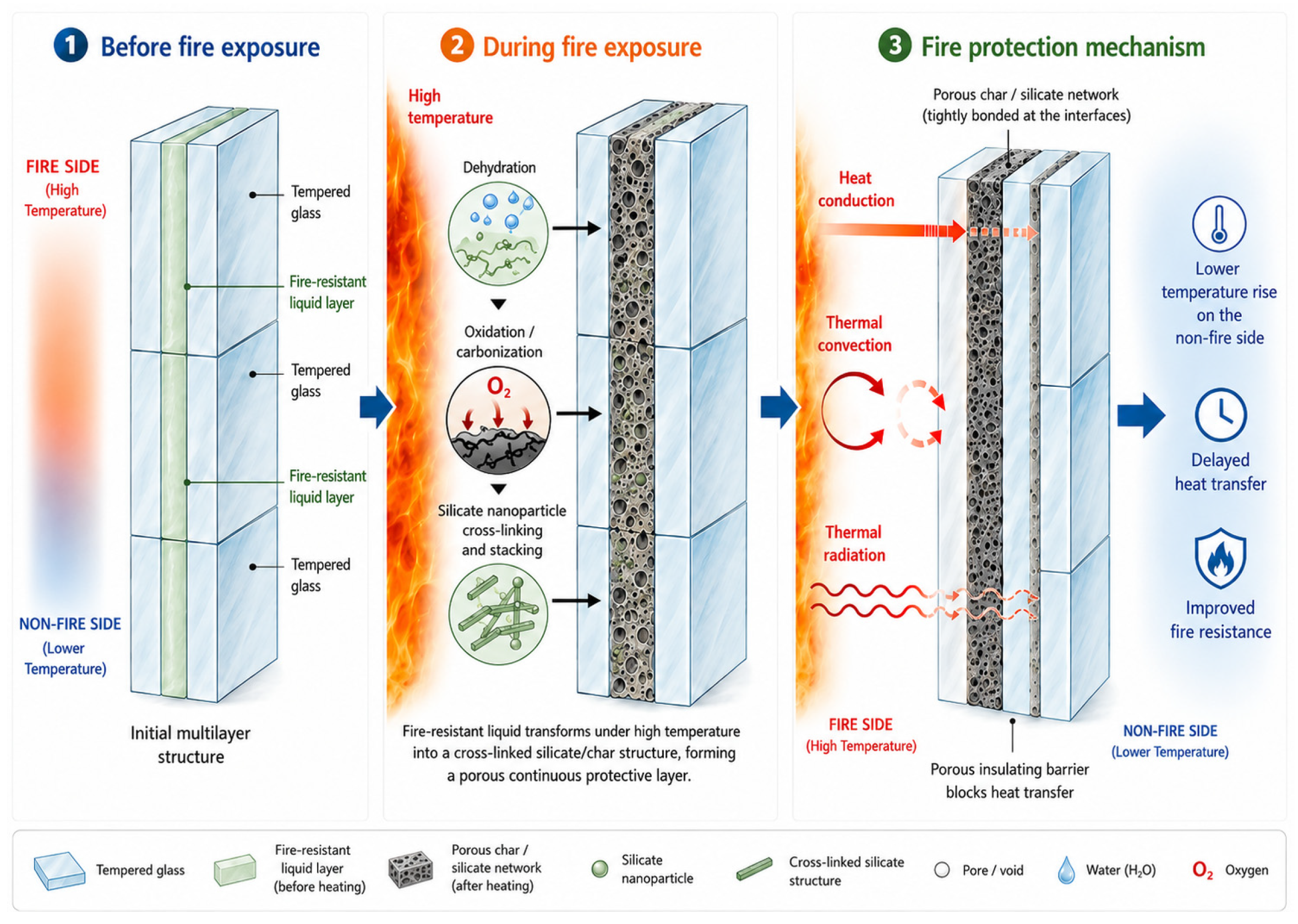
Figure 6 summarizes the proposed fire-retardant mechanism of the insulating composite fire-resistant glass. During fire exposure, the fire-resistant liquid layer undergoes dehydration, oxidation, carbonization, and thermal reconstruction, gradually forming a tightly bonded porous insulating layer between the glass sheets. This porous network lengthens the heat transfer path and suppresses solid-state conduction, while the multi-layer glass structure restricts convection and attenuates thermal radiation. At the same time, the fused interfacial transition zone strengthens the adhesion between the glass layer and the fire-resistant layer, helping the composite maintain structural integrity and sustain effective fire insulation under prolonged high-temperature exposure.