
Article

Load Capacity Evaluation of ECC and GFRP Strengthened RC Beams Under Combined Bending and Shear

by
Jagadesh Kannan Selvan
1,
Preethy Mary Arulanandam
2,
Sherine Stanly
1 and
Madappa V. R. Sivasubramanian
3,*
1
Department of Civil Engineering, National Institute of Technology Puducherry, Karaikal 609609, India
2
Department of Civil Engineering, Mohamed Sathak AJ College of Engineering, Chennai 603103, India
3
Advanced and Hybrid Structures Laboratory, Department of Civil Engineering, National Institute of Technology Puducherry, Karaikal 609609, India
*
Author to whom correspondence should be addressed.
J. Compos. Sci. 2026, 10(5), 276; https://doi.org/10.3390/jcs10050276
Submission received: 17 April 2026 / Revised: 9 May 2026 / Accepted: 14 May 2026 / Published: 19 May 2026
(This article belongs to the Special Issue Polymer Composites and Fibers, 4th Edition)

Abstract

This study presents a mechanics based analytical framework for predicting the flexural–shear capacity of reinforced concrete (RC) beams strengthened with Engineered Cementitious Composites (ECCs) and a hybrid ECC–GFRP near surface mounted (NSM) system. Building upon previously reported experimental observations, the present work aims to establish rational prediction models capable of capturing the interaction between flexural and shear mechanisms in strengthened beams. The analytical approach integrates sectional analysis for flexural capacity with a modified truss analogy for shear resistance, explicitly incorporating the strain hardening tensile contribution of ECC and the tensile and confinement effects of GFRP reinforcement. An interaction based failure criterion is subsequently employed to identify the governing failure mode under combined flexural shear actions. The proposed model is validated against experimental results obtained from twenty seven beam specimens with varying flexural and shear reinforcement ratios and strengthening configurations. The predicted ultimate loads show good agreement with experimental values, with an average deviation within ±10%. The analytical framework accurately captures the transition between flexural dominated, combined flexural–shear, and diagonal tension failures observed experimentally. Results demonstrate that ECC significantly enhances ductility and shear crack control, while the hybrid ECC–GFRP system provides substantial strength enhancement with a controlled shift in failure mode. Overall, the developed analytical models offer a reliable and computationally efficient tool for predicting the flexural–shear capacity and failure behavior of ECC and hybrid ECC–GFRP-strengthened RC beams, supporting performance based design and practical strengthening applications.

1. Introduction

Reinforced concrete (RC) beams in existing infrastructure frequently exhibit inadequate flexural and shear capacity due to aging, increased load demands, or design deficiencies. Strengthening interventions must therefore enhance not only strength but also deformation capacity and crack control, particularly under combined flexural–shear actions where brittle failure may govern. While several strengthening techniques have been proposed, the reliable prediction of ultimate capacity and failure mode remains a key challenge, limiting their broader adoption in performance based design. Engineered Cementitious Composites (ECCs) have demonstrated considerable potential for strengthening RC members due to their strain hardening behavior and ability to sustain tensile stresses beyond cracking through multiple microcracking [1,2,3]. Recent studies on FRP-strengthened RC systems have demonstrated that the long term durability and performance of FRP (fiber reinforced polymer) composites are strongly influenced by environmental exposure conditions, adhesive systems, and degradation mechanisms, highlighting the need for reliable predictive approaches including machine learning based durability assessment [4,5]. Also, recent studies have shown that FRP-based composite systems integrated with UHPC (ultra high performance concrete) and UHP-ECC significantly improve the flexural strength, axial capacity, confinement efficiency, and ductility of structural members. The use of FRP grids, FRP micro-bars, and FRP confinement provides lightweight, corrosion resistant, and durable alternatives to conventional steel reinforcement, particularly for aggressive environmental conditions. Furthermore, these studies highlighted the effectiveness of FRP-UHPC composite systems in strengthening and rehabilitation applications, while also emphasizing the need for improved analytical and stress–strain models for accurate prediction of structural behavior [6,7,8]. When applied as an overlay or as a partial replacement of concrete in tension and shear regions, ECC improves ductility and delays diagonal crack localization [9]. To further enhance flexural capacity, ECC has been combined with Near Surface Mounted (NSM) Fiber Reinforced Polymer (FRP) reinforcement, particularly glass FRP (GFRP), offering a cost effective and corrosion resistant solution [10]. The use of ECC as an epoxy free bonding medium for NSM GFRP bars has recently emerged as a promising hybrid strengthening technique [11].
In the authors’ earlier experimental study, RC beams strengthened with ECC overlays and hybrid ECC–GFRP NSM systems were tested under combined flexural and shear actions. The results revealed significant improvements in load carrying capacity, ductility, and crack control compared to control beams. ECC strengthened beams predominantly exhibited flexural or combined flexural–shear failure, whereas hybrid ECC–GFRP beams achieved higher strength but, in some cases, shifted toward shear dominated failure due to increased shear demand [12]. These observations highlight the importance of flexure–shear interaction in governing the ultimate response of strengthened beams [13]. Despite these experimental advances, existing analytical models are largely inadequate for predicting the behavior of ECC and hybrid ECC–GFRP-strengthened RC beams. Most available approaches treat flexure and shear independently and neglect the post-cracking tensile contribution of ECC and its influence on shear transfer mechanisms. Furthermore, the interaction between enhanced flexural capacity and shear resistance in hybrid systems is not explicitly addressed in current design-oriented models, resulting in limited ability to predict governing failure modes.
To address these limitations, the present study develops a mechanics-based analytical framework for predicting the flexural–shear capacity and failure behavior of RC beams strengthened with ECC and hybrid ECC–GFRP systems. The approach combines sectional analysis for flexural capacity with a modified truss analogy for shear resistance, explicitly incorporating the strain hardening tensile contribution of ECC and the elastic response of GFRP reinforcement. The studied models are validated against experimental results from twenty seven beam specimens covering a wide range of reinforcement ratios and strengthening configurations.
The present study introduces the following key advancements:
Explicit incorporation of ECC’s tensile strength contribution within both sectional analysis and truss analogy method with suitable material models and stress block parameters.
Upgrading of models to include ECC–GFRP composite action, accounting for multi-material interaction in the load-carrying mechanism
Capability to predict governing failure modes (flexural, shear or combined) within a single analytical framework in the case of the truss analogy method.
Existing models generally treat flexure and shear independently and do not explicitly account for ECC tensile behavior or hybrid strengthening effects.
The proposed load evaluation method demonstrates good agreement with experimental capacities and accurately captures the transition between flexural, combined flexural–shear, and shear dominated failure modes. Owing to its simplicity, transparency, and predictive capability, the model is well suited for performance based assessment and preliminary design of ECC and hybrid ECC–GFRP strengthened RC beams, consistent with the analytical and structural mechanics focus of Engineering Structures.

2. Overview of Experimental Study

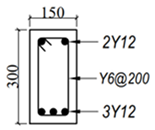
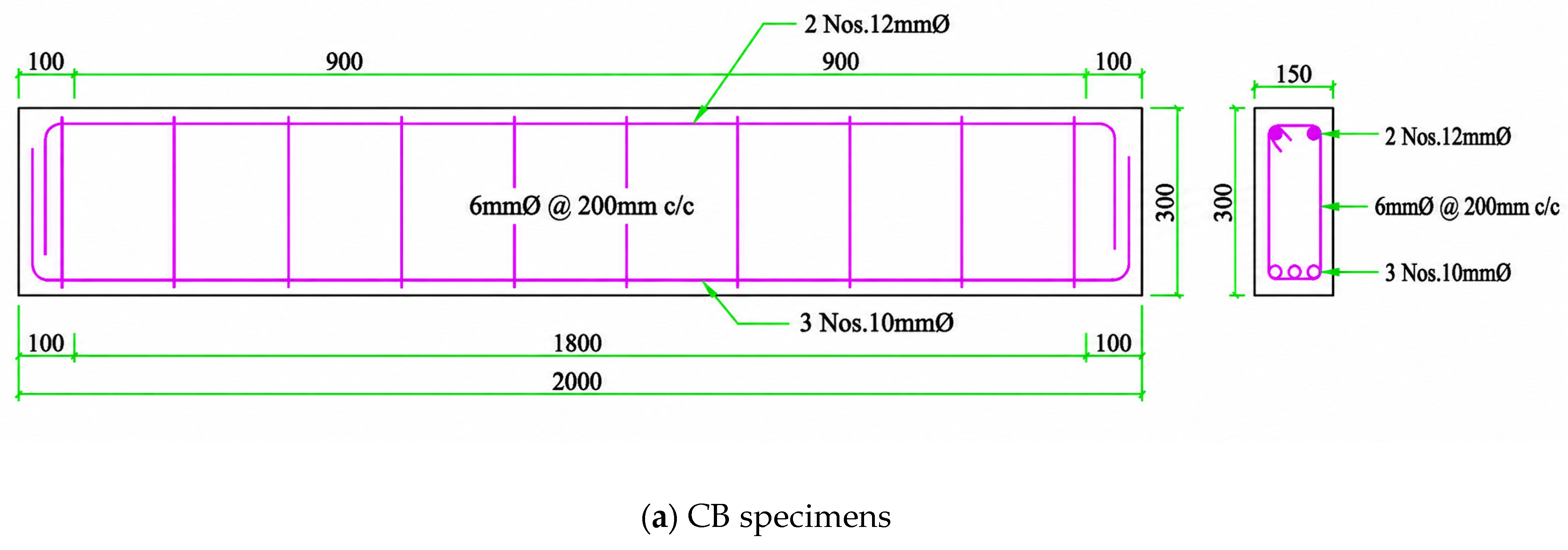
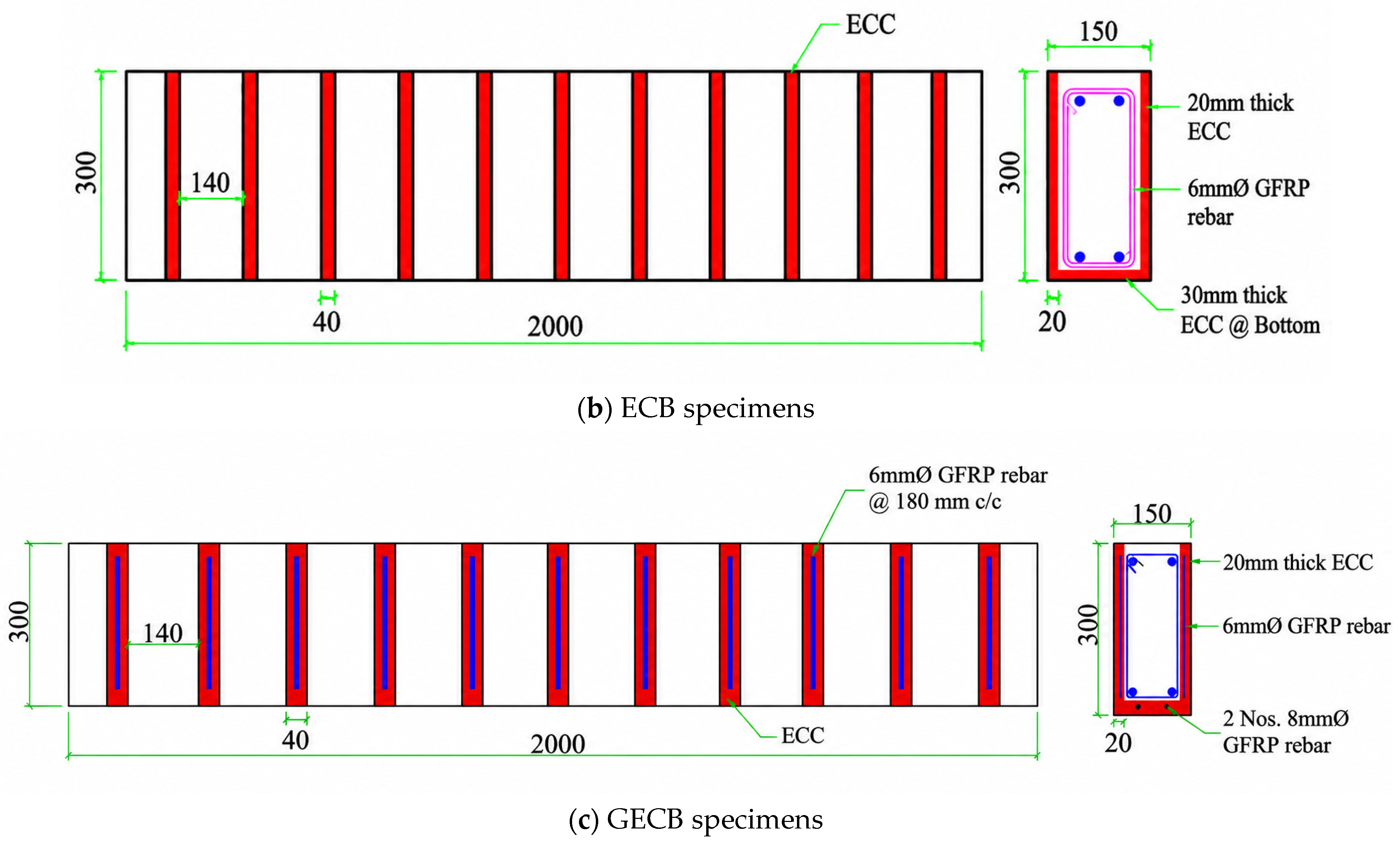
The present analytical study is based on an extensive experimental investigation previously conducted to evaluate the performance of RC beams strengthened using ECC and hybrid ECC–GFRP systems [14]. A total of twenty seven beam specimens were tested under three point bending, comprising nine control RC beams (CB), nine ECC strengthened beams (ECB), and nine hybrid GFRP + ECC strengthened beams (GECB). All beams were designed to fail in flexure, with identical span length, cross-sectional geometry, and internal steel reinforcement to ensure consistent comparison across strengthening schemes. The details and the geometry of the beam specimen are presented in Table 1 and Figure 1, respectively.
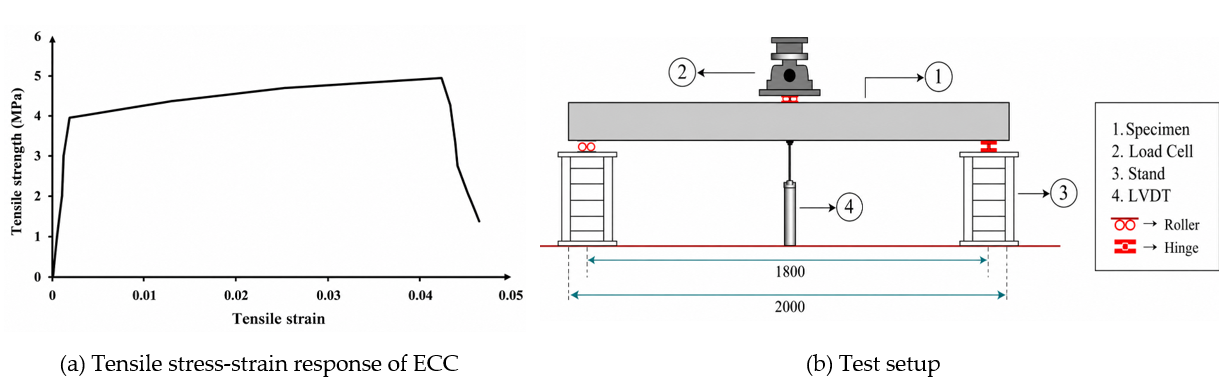
The tension and compression properties of concrete, ECC, steel and GFRP rod are presented in Table 2. The tensile stress–strain response of ECC and the three-point loading test setup of all beam specimens are shown in Figure 2.
Table 3 presents the summary of the experimental results from the authors’ previous study [14]. During testing, the load deflection behavior, crack initiation and propagation, stiffness degradation, ductility indices, and failure modes were recorded and analyzed. The experimental results demonstrated that the ECC strengthening significantly enhanced crack control, ductility, and energy absorption capacity, while the hybrid ECC–GFRP system provided substantial improvements in flexural–shear capacity with controlled failure mechanisms. These experimentally observed responses form the primary database for the development, calibration, and validation of the analytical models proposed in the present study.

3. Analytical Modeling and Section Analysis for Load Prediction

This section presents the analytical framework adopted to predict the flexural–shear capacity of all twenty seven beams, which includes RC beams strengthened with ECC and hybrid ECC + GFRP systems. The proposed framework is mechanics based and combines the sectional analysis for flexural resistance with a modified truss analogy for shear resistance, followed by a flexure–shear interaction criterion to identify the governing failure mode. The modeling approach is intentionally kept simple and transparent to facilitate the practical application while retaining the essential material and structural behavior observed experimentally.

3.1. General Modeling Assumptions

The following assumptions are adopted in the analytical development, consistent with experimental observations and established RC theory:
Plane sections remain plane after bending, and perfect composite action exists between concrete, ECC overlay, steel reinforcement, and GFRP bars [13]. This assumption is justified by the absence of debonding observed (during experimentation) in the strengthened specimens due to the use of ECC as a compatible bonding medium. The model is applicable primarily to cases with ECC as the bonding material, and future work will consider interface slip and debonding effects with more experimental evidence.
Tensile resistance of conventional concrete after cracking is neglected, whereas ECC is assumed to sustain tensile stress beyond first cracking due to its strain-hardening and multiple microcracking behavior [16,17].
Steel reinforcement is modeled as an elastic–perfectly plastic material, while GFRP reinforcement is assumed to behave linearly elastic up to failure [18,19].
Shear transfer is governed by the combined action of the concrete/ECC matrix, transverse steel reinforcement, and GFRP contribution, with crack bridging and confinement effects provided by ECC explicitly considered [20].
Failure is assumed to occur when either the flexural capacity or the shear capacity is reached, whichever governs, and the corresponding failure mode is identified through a flexure–shear interaction criterion.

3.2. Section Analysis for Flexural Capacity

The sectional analysis procedure adopted to predict the flexural capacity of RC beams strengthened with ECC and hybrid ECC–GFRP systems. The analysis is based on strain compatibility, internal force equilibrium, and material constitutive relationships, explicitly accounting for the tensile contribution of ECC and GFRP reinforcement. The procedure applies only to the beams (CB, ECB, GECB) that failed in flexure tension and compression; i.e., from twenty seven beams only fourteen beams are selected.

3.3. Assumed Strain Distribution at Ultimate Limit State

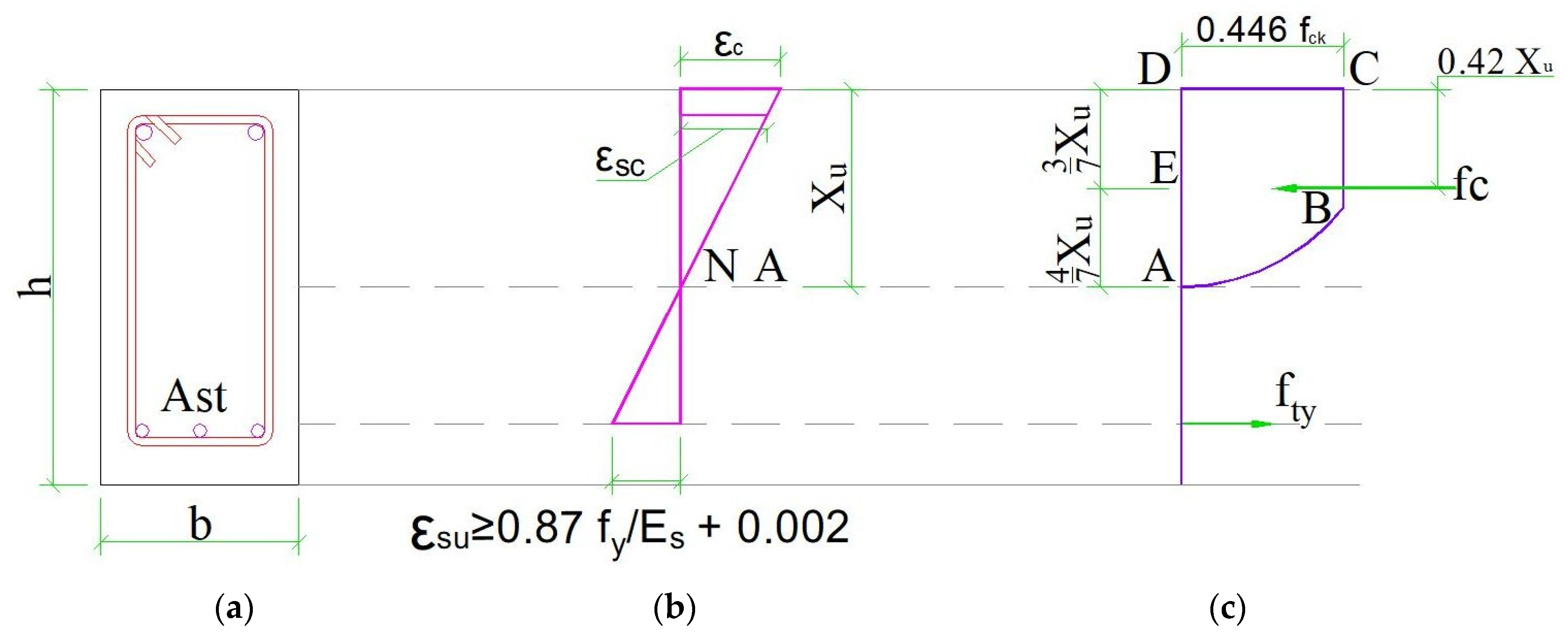
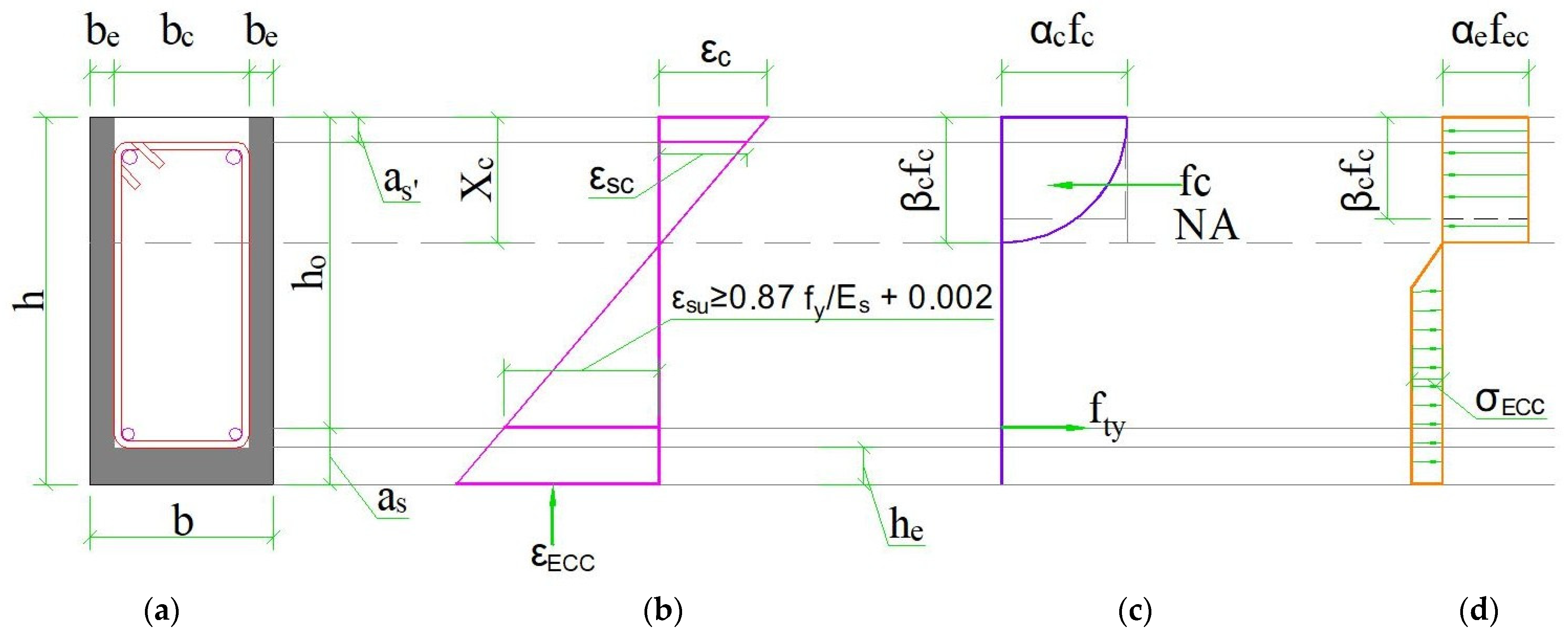
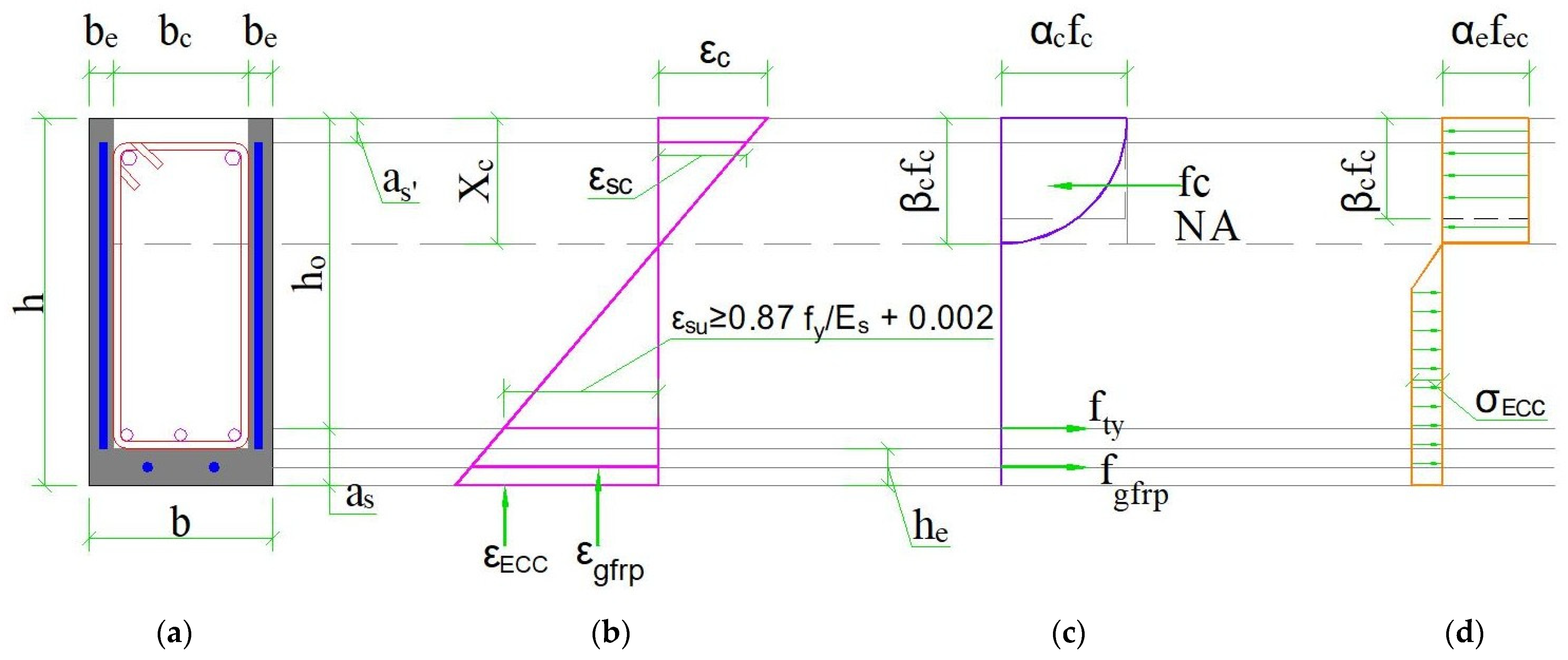
Stress–strain distributions of CB, ECB and GECB beam specimens are shown in Figure 3, Figure 4 and Figure 5, respectively.
At the ultimate limit state, a linear strain distribution is assumed across the depth of the strengthened beam section, in accordance with the plane section hypothesis. The maximum compressive strain at the extreme compression fiber of concrete is taken as given in Equation (1):
ε c = ε c u
The tensile strains in steel reinforcement, ECC overlay, and GFRP bars are computed based on their respective distances from the neutral axis using Equation (2):
ε i = ε c u d i c c
where ε c u = ultimate compressive strain of concrete; ε i = strain in the ith tensile component; d i = effective depth in the ith component; and c = depth of the neutral axis from the extreme compression fiber.

3.4. Stress Resultants of Constituent Materials

The compressive stress distribution in concrete is represented using an equivalent rectangular stress block as shown in Figure 3. The resultant compressive force ( C c ) is given by Equation (3) [21]:
C c = 0.85 f c b a
where C c = the line of action located at a distance a/2 from the extreme compression fiber; f c = compressive strength of concrete; b = width of the beam; and a = β 1 c ; β 1 = stress block parameter as per standard RC theory. Steel is assumed to behave as an elastic–perfectly plastic material. The tensile force in the steel reinforcement ( T s ) is calculated using Equation (4) [22]:
T s = A s f s
where A s = area of steel reinforcement; f s = stress in steel ( ε s f y ); ε s = strain in steel; and f y = yield strength of steel. Unlike conventional concrete, ECC is assumed to sustain tensile stress beyond cracking due to its strainhardening behavior. The tensile force contributed by ECC ( T E C C ) is calculated using Equation (5) [23]:
T E C C = A E C C σ E C C
where A E C C = effective tensile area of the ECC overlay; σ E C C = ECC tensile stress corresponding to ε E C C , obtained from the experimentally derived ECC tensile stress–strain relationship; and ε E C C = strain in ECC. For analytical simplicity, the ECC tensile stress may be idealized as a constant equivalent stress over the effective ECC tensile zone. The constant stress assumption is an analytical idealization for simplicity and practical applicability. It represents an equivalent average tensile stress over the effective ECC tensile zone.
For hybrid ECC–GFRP-strengthened beams, the tensile contribution of GFRP bars ( T g f r p ) is calculated assuming linear elastic behavior using Equation (6) [24]:
T g f r p = A g f r p E g f r p ε g f r p
where A g f r p = area of GFRP reinforcement; E g f r p = elastic modulus of GFRP; and ε g f r p = tensile strain in GFRP bars.

3.5. Force Equilibrium and Neutral Axis Depth

At flexural equilibrium, the sum of tensile forces must balance the compressive force, which is calculated using Equation (7) [25]:
C c = T s + T E C C + T g f r p
For ECC only strengthened beams, the term T g f r p is omitted. The neutral axis depth c is obtained iteratively by satisfying the above equilibrium condition using strain compatibility.

3.6. Flexural Moment Capacity

Once the neutral axis depth is determined, the ultimate flexural moment capacity ( M u ) is calculated using Equation (8):
M u = T i z i
where T i = tensile force contributed by steel, ECC, or GFRP; z i = corresponding lever arm measured from the line of action of the compressive force. The lever arm for each tensile component is defined in Equation (9):
z i = d i a 2
The total flexural moment carrying capacity of all beam specimens is given by Equation (10) [26]:
M u = A s f y d s β 1 c 2 + A E C C σ t E C C d E C C β 1 c 2 + A g f r p E g f r p ε g f r p d g f r p β 1 c 2
Based on Equation (10), the moment capacities of all beam specimens are calculated and presented in Table 4.
From Table 4, the experimental and predicted ultimate moment capacities show generally good agreement, with Mu, Exp./Mu, Pre. ratios mostly close to unity. Control and ECC-strengthened beams exhibit consistent predictions, typically within ±10% of experimental values. Larger discrepancies are observed in some GFRP + ECC-strengthened beams, where the model tends to underestimate the experimental capacity, indicating a stronger synergistic contribution than predicted. Overall, the prediction through sectional analysis is reasonably accurate, though refinement is needed for hybrid strengthening systems where combined failure mechanisms are witnessed. Hence, the following section proposes a truss analogy-based procedure for the analysis of strengthened beams.

4. Capacity Prediction Using Truss Analogy Method

This section presents a truss based analytical model for predicting the capacity of RC beams strengthened with ECC and hybrid ECC–GFRP systems. The truss analogy serves as a prevalent foundation for the majority of shear design methodologies applied to reinforced concrete (RC) beams [27,28,29,30] and can be used for predicting the capacity of RC beams strengthened with ECC and hybrid ECC–GFRP systems. The proposed approach is consistent with the observed diagonal cracking patterns and failure mechanisms from the experimental investigation.

4.1. General Modeling Assumptions

In formulating the current analysis procedure, the following assumptions were considered:
  • A truss structure in two dimensions (2D), with the ability of withstanding experiencing solely axial tension and compression, is employed to model the rectangular beam during analysis. The two dimensional model can effectively capture the primary stress state, particularly in shear of a beam, reducing computational complexity without significant loss of accuracy, especially for large-scale simulations [31].
  • Compression members (struts) symbolize concrete elements, while tension members (ties) represent steel reinforcement and ECC in the case of RC beams strengthened with ECC and steel reinforcement, or ECC and GFRP in the case of RC beams strengthened with hybrid ECC–GFRP systems. The ties are the elements in the lower portion and vertical portion of the truss that directly or indirectly represent the combined effect of longitudinal reinforcement, shear reinforcement, ECC and GFRP [32].
  • The compression members and node’s dimension adhere to the guidelines outlined by the American Concrete Institute (ACI) for specifying struts and nodes [33].

4.2. Analytical Approach

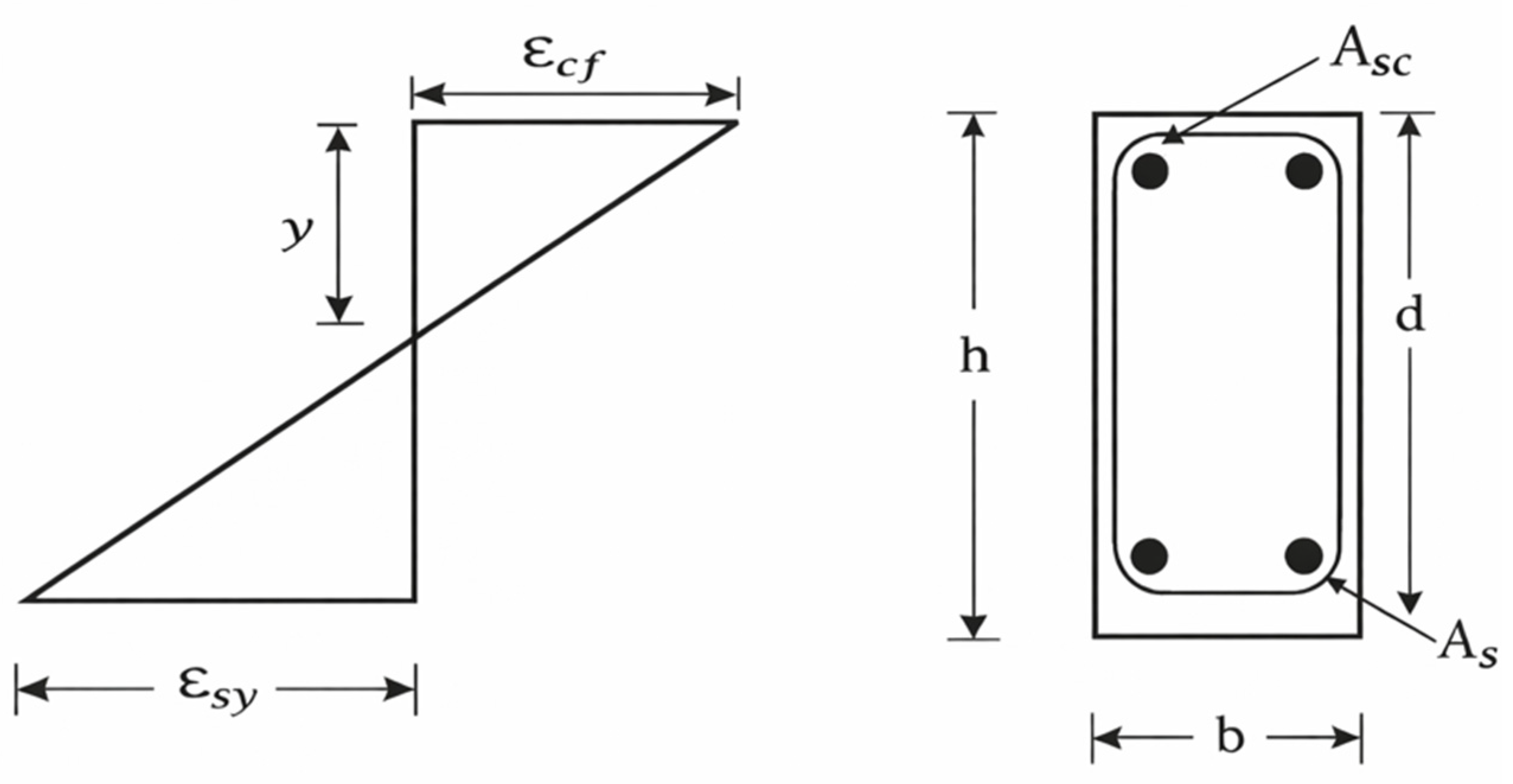
The analytical procedure incorporates the treatment of nonlinear strain distribution profiles in reinforced concrete beams while incorporating the influence of first-order shear deformation. Additionally, the formulation evaluates the structural response at two distinct loading stages, namely ultimate and yielding. For the purpose of estimating the depth of the neutral axis, the assumption is made that the mid-span section is fully cracked in flexure. Initially, application of conventional beam theory is employed to determine the compression zone depth. This provides a preliminary estimate of the neutral axis position. Subsequently, the strain in the extreme compression fiber due to bending (Ԑcf) is determined using the yield strain of the primary steel (Ԑsy) and neutral axis depth (y) [34]. The strain compatibility condition is used to relate the concrete and steel strains across the section depth. The nonlinear nature of the strain profile is incorporated to improve the accuracy of the response prediction. This approach enables a more realistic representation of the behavior of RC beams near yielding. The resulting strain distribution at the yielding stage is illustrated in Figure 6, highlighting the relationship between the neutral axis depth, steel yield strain, and extreme fiber compression strain.

4.3. Truss Model Considered for Control Beam and Strengthened Beam

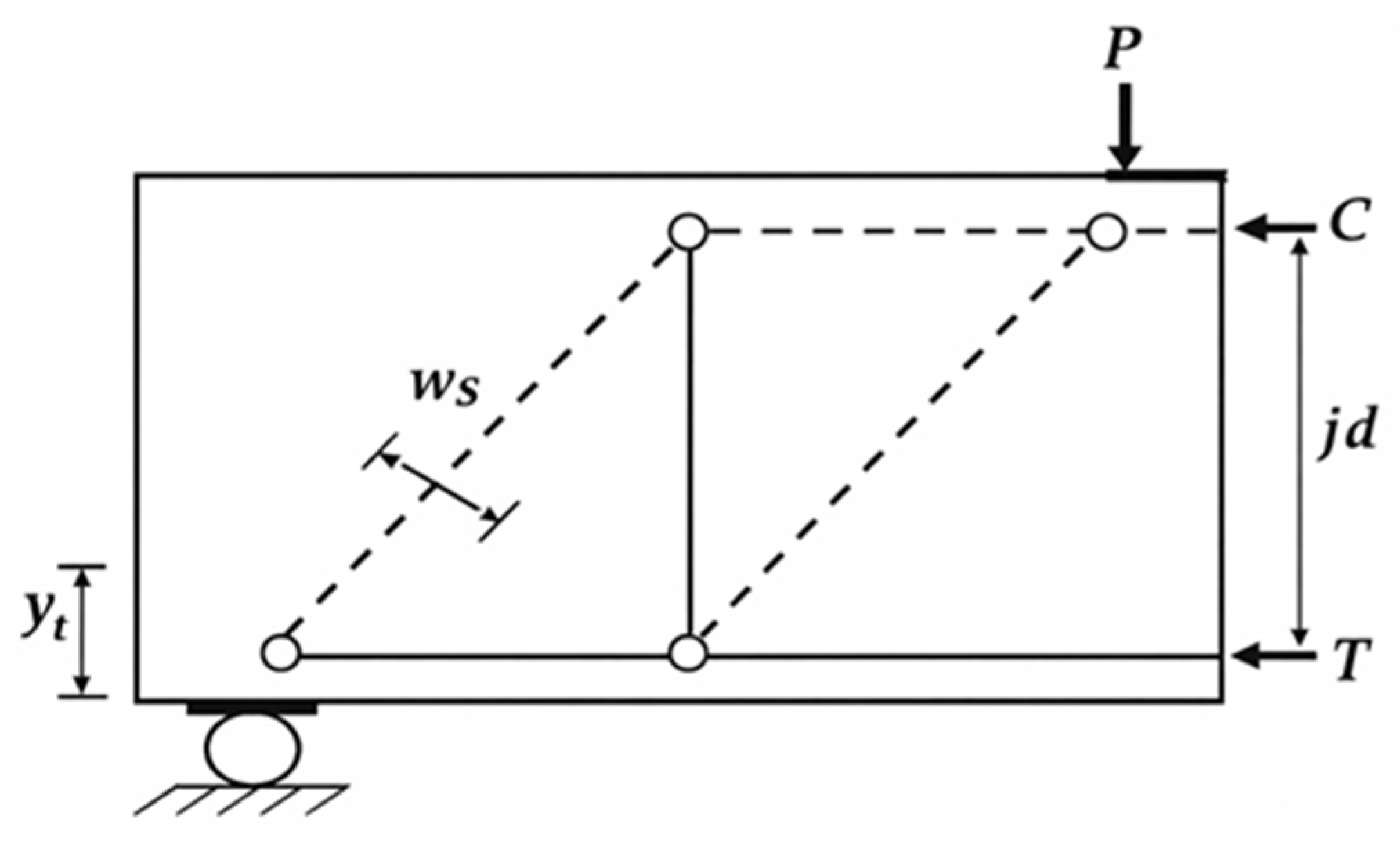
The reinforced concrete (RC) beam is modeled using a statically determinate parallel truss analogy to represent its internal force transfer mechanism. Within this framework, compressive stresses in the concrete are idealized as inclined compression struts, while tensile forces are resisted by tie elements. The longitudinal reinforcement functions as the primary horizontal tie, whereas the contribution of shear reinforcement may be represented either discretely or through an equivalent vertical-tie formulation. The truss model is established based on equilibrium and compatibility conditions, ensuring force transfer between compression and tension components. In the control beam, the resisting mechanism consists of the concrete compression zone, longitudinal tensile reinforcement, and transverse steel stirrups. These elements collectively form the load-carrying skeleton of the beam. For beams strengthened with Engineered Cementitious Composite (ECC), the ECC layer is incorporated into the truss system as an additional tensile- and shear-resisting component, thereby enhancing stress redistribution capacity. In hybrid-ECC–GFRP-strengthened beams, the glass fiber-reinforced polymer (GFRP) layer further contributes to tensile force resistance and confinement effects. Accordingly, the complete truss assembly for each configuration includes the concrete core, longitudinal reinforcement, transverse reinforcement, and strengthening materials where applicable. The idealized half-span truss model, including geometric parameters of the struts and ties, is shown in Figure 7.

4.4. Stage I—Yield Load

At this stage of loading, the horizontal compression strut located in the upper region of the truss reaches a maximum compressive strain equal to Ԑcf. This strain corresponds, through compatibility requirements, to the yield strain of the bottom tie element. Strain compatibility between the compression and tension components governs the internal deformation profile of the system. The inclined compression struts are assumed to behave in a linearly elastic manner up to the yield condition. At the onset of yielding, the strain in the diagonal strut is considered to correspond to a compressive stress level of approximately 0.7fc, representing the limit of the linear elastic range of concrete in compression. Beyond this stress level, nonlinear effects are expected to become significant. Simultaneously, the lower tie element, primarily composed of longitudinal reinforcement (and strengthening material where applicable), is assumed to have just reached its yield strain. The vertical tie elements, representing shear reinforcement, are considered to remain within the linear elastic range. The surrounding concrete within the core is also assumed to behave elastically at this stage. Based on these assumptions, equilibrium equations are formulated to determine the yield load (P) of the truss model. The analytical expressions account for different configurations, including the control beam (concrete core with steel ties), ECC strengthened beam, and hybrid ECC–GFRP-strengthened beam.
f c b y = f s y A s t
In the formulation, fc denotes the compressive strength of the reinforced concrete core, b represents the width of the beam section, and y corresponds to the neutral axis depth measured from the extreme compression fiber. The term Ast refers to the area of tensile reinforcement provided at the tension face of the section, while fsy indicates the corresponding stress developed in the steel reinforcement. By solving Equation (11), the neutral axis depth y, which defines the effective compression zone, can be determined. This depth governs the portion of the cross-section actively resisting compressive stresses. The effective depth associated with the tension zone is evaluated in accordance with the provisions of ACI 318-19 [33] and the corresponding expression is presented in Equation (12).
y t = 2 c l e a r   c o v e r + d i a m e t e r   o f   s t i r r u p s + ( d i a m e t e r   o f   l o n g i t u d i n a l   b a r 2 )
The vertical distance between the total compressive and tensile forces in Figure 7 can be determined using Equation (13).
j d = h 0.5 y 0.5 y t
A n g l e   o f   i n c l i n a t i o n , θ = t a n 1 j d w i d t h   o f   p a n e l
The tie reinforcement plays a crucial role in enhancing the shear capacity of strengthened beams by increasing the load-carrying capability and limiting crack propagation. In beams strengthened with ECC, the fibers dispersed within the matrix work synergistically with the tie reinforcement to establish an efficient crack bridging mechanism. This interaction improves shear resistance, delays the onset of critical shear cracking, and promotes a more ductile response, often shifting the failure mode toward flexural behavior rather than brittle shear failure. The inclination angle of the tie reinforcement significantly affects its contribution to shear resistance. Reinforcement placed at steeper angles is generally more effective because it aligns more closely with the principal tensile stress trajectories within the beam. Such orientation enhances the ability of the ties to intercept and control diagonal cracks. Moreover, steeper inclinations facilitate distributed cracking and gradual stiffness degradation, thereby supporting a more ductile and progressive failure mechanism. In the present analysis, the beams are designed with tie reinforcement inclined at angles greater than 25°, as reported in previous studies [32,33,34,35]. The force in the tie member of the control beam can be determined using Equation (15).
F t i e = σ s t . A s t = E s t × ε s t A s t
The force in the tie member of the ECC-strengthened beam can be determined using Equation (16).
F t i e = σ s t . A s t + σ E C C . A E C C = E s t × ε s t A s t + σ E C C . A E C C
The force in the tie member of the ECC-GFRP-strengthened beam can be determined using Equation (17).
F t i e = σ s t . A s t + σ E C C . A E C C + σ g f r p . A g f r p
The force in the inclined strut member can be determined using Equation (18).
F i s t r u t = σ c e . A i s t r u t = E c × ε c e . w s × b c o r e
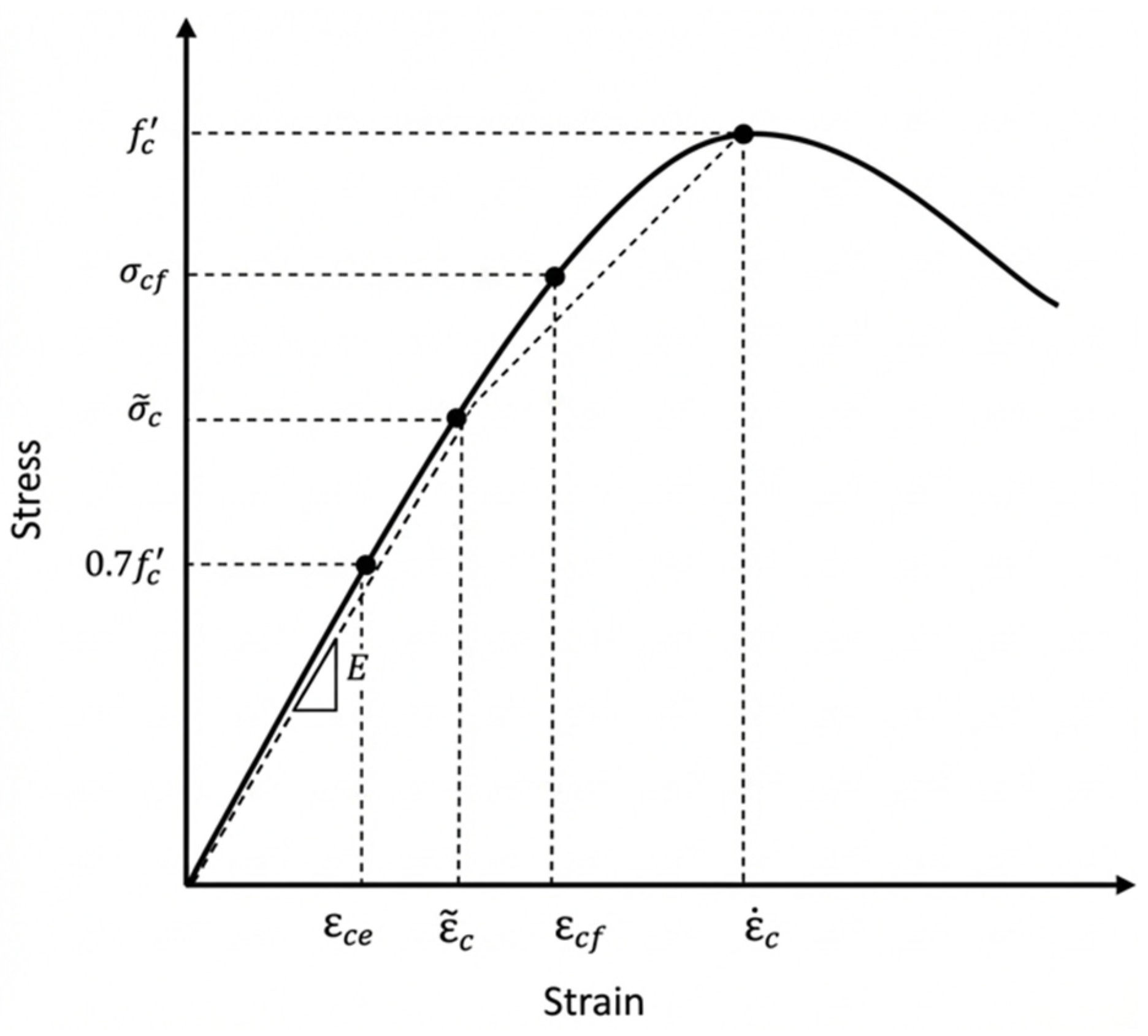
In this context, Ԑce denotes the compressive strain associated with a stress level of 0.7fc, as illustrated in Figure 8. The parameter ws represents the effective depth of the inclined compression strut shown in Figure 7. The depth of the diagonal strut is determined by considering the geometric constraints of the section. Specifically, it is taken as the smaller value between the inclined strut width at the top and that at the bottom. This ensures a conservative and realistic representation of the compression zone.
The force in the horizontal strut member can be determined using Equation (19).
F h s t r u t = σ c ~ . A b s t r u t = σ c ~ . y × b c o r e
The term σ c ~ represents the compressive stress at the centroid of the horizontal strut. It is assumed to correspond to the mean stress across the compression zone. Accordingly, σ c ~ is equivalent to the average of 0.7fc and the stress at the extreme fiber (σc), where stress at extreme fiber (σc) is determined using the nonlinear stress-strain relationship proposed by Hognestad. This approach provides a realistic estimation of the compressive stress distribution within the strut.
σ c = f c 2 . ε c f ε c ε c f ε c 2
Since Ԑcf represents the extreme compressive strain at the top fiber of the beam section, and the centroid of the horizontal compression strut is located at mid-depth of the compression zone, the internal force resultants within the truss analogy are established based on strain compatibility and sectional equilibrium. The forces in the horizontal strut (Fhstrut), inclined strut (Fistrut), and tie member (Ftie) are expressed as functions of the applied load P using classical truss relationships. The truss model represents the transformation of the beam’s internal stress field into discrete compression and tension trajectories aligned with principal stress directions. The diagonal compression struts correspond to principal compressive stress paths within the concrete core, while the tie members represent principal tensile stress trajectories intercepted by reinforcement and strengthening materials. The nodal zones formed at the intersection of struts and ties play a critical role in force transfer, as stress concentrations develop in these regions. Proper stress distribution within nodal zones ensures compatibility between compressive and tensile force components.
At the yield stage (Stage I), the tensile tie in the control RC beam consists solely of longitudinal steel reinforcement. Yielding of this steel defines the primary strain-based criterion for transition into Stage II. Once the tensile strain reaches the steel yield strain, plastic redistribution begins within the tie, while the compression struts continue to resist load through nonlinear stress–strain behavior. As a secondary strain-based indicator, the peak compressive strain in the horizontal strut may be considered, particularly when strain localization or measurement uncertainty exists. For beams strengthened with ECC, the tensile tie mechanism is fundamentally altered. The ECC layer provided at the bottom region contributes to tensile resistance through its strain-hardening behavior and multiple micro-cracking capacity. Unlike conventional concrete, ECC sustains increasing tensile stress beyond first cracking, allowing redistribution of principal tensile stresses and delaying strain localization. This modifies the internal force equilibrium of the truss and enhances ductility. In the hybrid ECC–GFRP configuration, the GFRP further contributes to the tie mechanism. Due to its high tensile strength and linear elastic behavior up to rupture, GFRP significantly increases tensile stiffness and ultimate tie capacity. The combined action of steel, ECC, and GFRP results in a composite tie system with improved crack control, reduced crack widths, and enhanced energy dissipation capacity.

4.5. Stage II—Ultimate Load

During Stage II, the beam continues to be represented by the same determinate truss framework; however, material nonlinearities become dominant. The incremental load between yield and ultimate stages, denoted as ΔPu, reflects additional capacity arising from strain-hardening of ECC, redistribution of stresses in steel after yielding, confinement effects within the compression zone, and progressive engagement of strengthening materials. In the compression region, confinement provided by transverse reinforcement enhances the effective compressive strength and strain capacity of the concrete core. This confinement delays crushing and increases the usable compressive strain in the horizontal and inclined struts. The stress state within the nodal zone transitions from predominantly elastic to nonlinear, and crushing may initiate if compressive strains exceed permissible limits. For the control RC beam, ultimate failure is typically governed by either crushing of the concrete core or rupture of the tensile steel. In ECC-strengthened beams, the strain-hardening and crack-bridging characteristics of ECC delay crack coalescence, thereby increasing the load corresponding to flexural or shear dominated failure. In hybrid ECC–GFRP-strengthened beams, rupture of GFRP or crushing of the confined concrete core may govern ultimate capacity, depending on the relative stiffness and strength of the components. The ultimate load may be determined using load-based criteria by identifying the governing failure mechanism through equilibrium of truss member forces. The incremental force in the tie member during Phase II is calculated using Equations (21) and (22), accounting for composite action of steel only (control beam), steel and ECC (ECC-strengthened beam), steel, or ECC and GFRP (hybrid strengthened beam). This enhanced two phase analytical framework integrates principal stress behavior, nodal zone mechanics, confinement effects, and material nonlinearities, thereby providing a comprehensive representation of load transfer and failure evolution in control and strengthened reinforced concrete beams. The force increment in the tie member of the ECC strengthened beam can be determined using Equation (21).
F t i e = σ s . A s t + σ E C C . A E C C = E s × ε s t . A s t + σ E C C . A E C C
The force increment in the tie member of the ECC-strengthened beam can be determined using Equation (22).
F t i e = E s × ε s t . A s t + σ E C C . A E C C + σ g f r p . A g f r p
E s is the hardening modulus of steel after yielding, assumed to be a percentage of the original steel modulus of elasticity Est [29]. The incremental force in the inclined strut can be computed using the following Equation (23).
F i s t r u t = σ c e . A i s t r u t = σ c σ c e . w s . b c o r e
The incremental force in the horizontal strut can be computed using Equation (24).
F h s t r u t = σ c ~ . A h s t r u t = σ c ~ . y × b c o r e
The three force increments mentioned (ΔFtie, ΔFistrut, and ΔFhstrut) are equated to their corresponding force increments obtained from conventional truss equilibrium analysis, expressed in terms of the load increment ΔPu. For each truss member, the relationship between internal-force increment and external load increment is established through compatibility and equilibrium conditions. The smallest computed value of ΔPu is adopted as the governing load increment corresponding to the transition from yield to ultimate stage. This ensures that the most critical member response controls the capacity of the truss system. The model considers different configurations, including the concrete core with a steel tie (control beam); steel and ECC tie (ECC-strengthened beam); and steel, ECC, and GFRP composite tie (hybrid-strengthened beam). The ultimate load is subsequently determined using Equation (25), which incorporates the evaluated load increment and the previously calculated yield load.
Pu = P + ΔPu
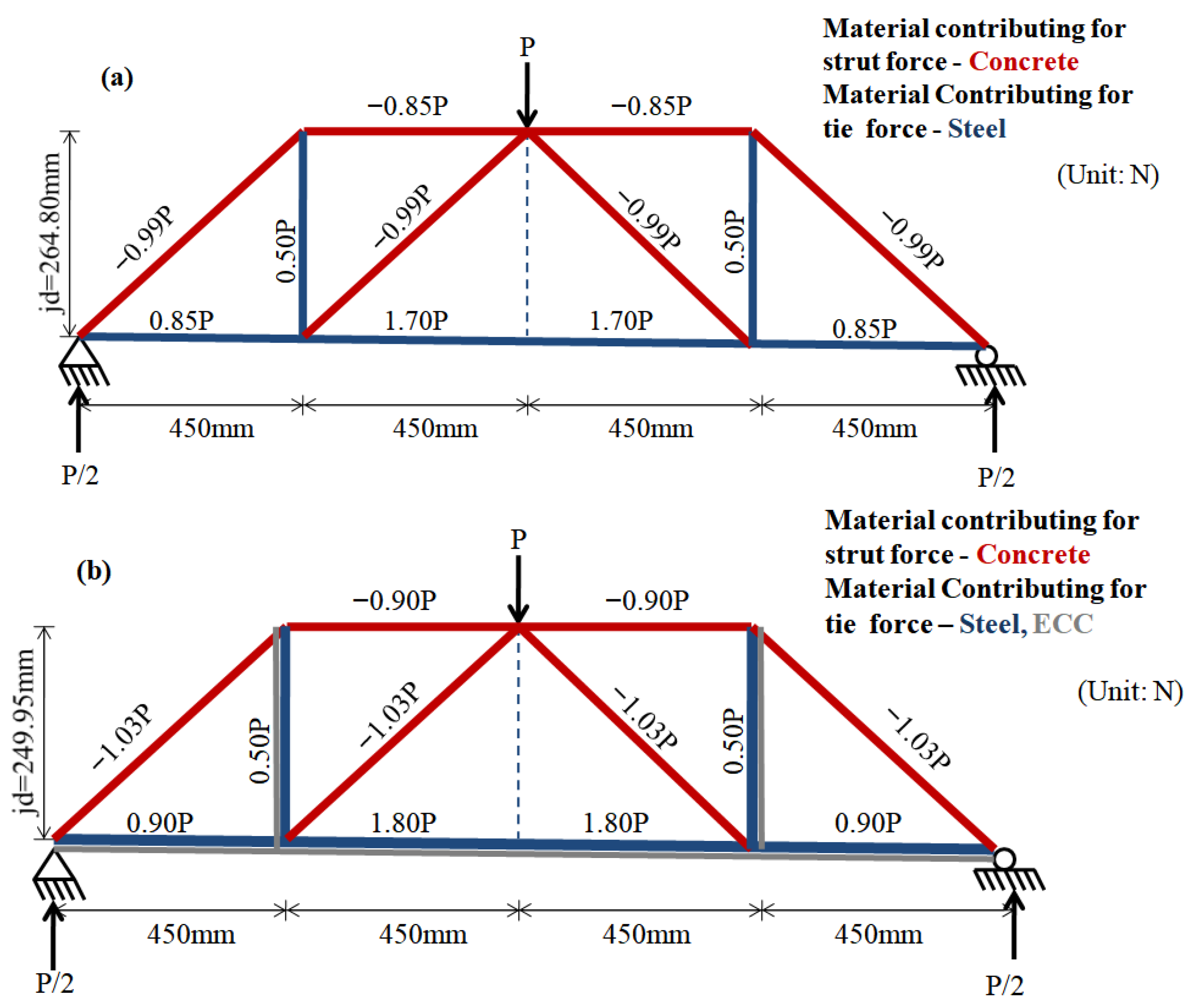
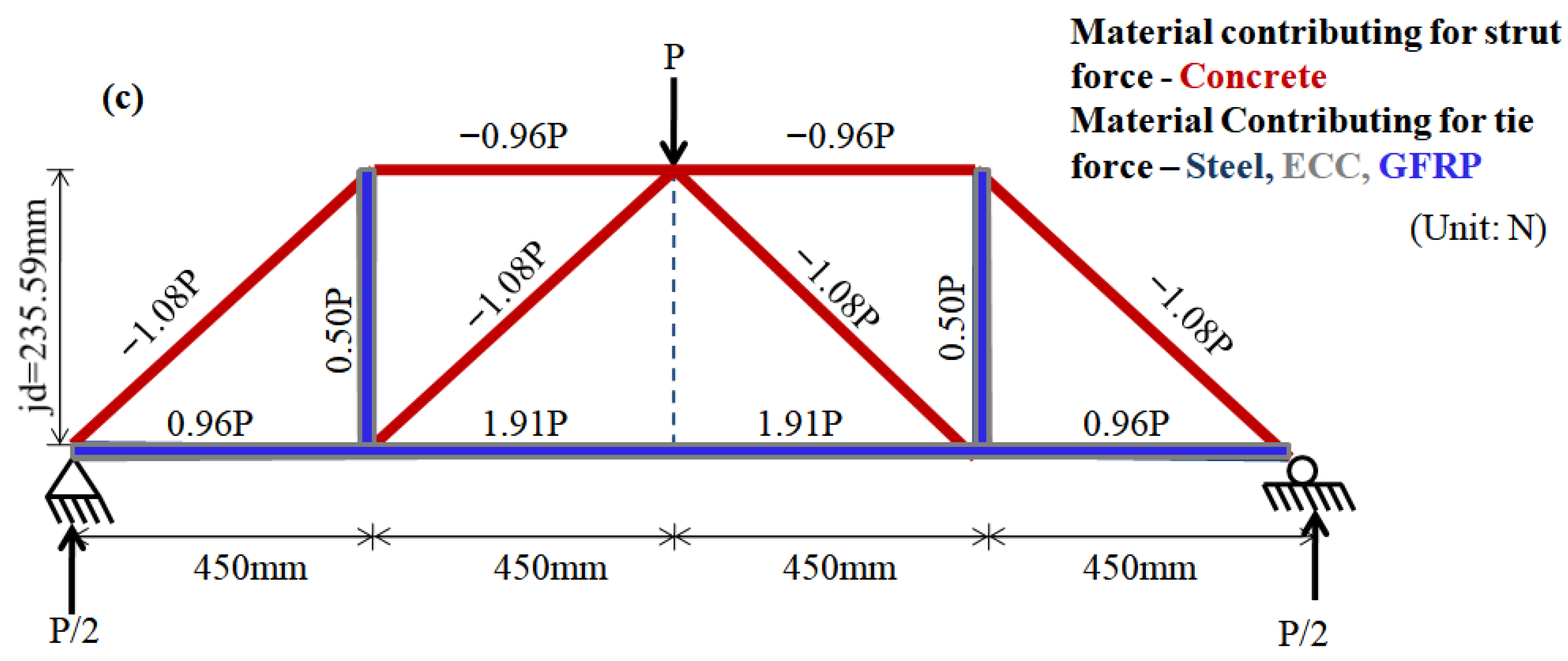
Based on Equation (25) the total shear capacity is calculated and presented in Table 5, which shows the comparison of experimental and predicted shear capacities of all beam specimens. Figure 9 illustrates the idealized sample truss model used for the analysis for the control specimen (CB1), ECC strengthened specimen (ECB1) and hybrid ECC-GFRP strengthened specimen (GECB1).
All beam categories exhibit mean Exp/Pred ratios very close to unity, demonstrating the absence of significant systematic bias in the proposed analytical model. The coefficient of variation for each group remains below 10%, indicating statistically acceptable accuracy and consistency for structural prediction purposes. The lowest variability is observed in the control RC beams, confirming that the model is highly reliable for conventional reinforced concrete behavior. In comparison, the ECC strengthened and hybrid ECC–GFRP strengthened beams show slightly higher dispersion, reflecting the increased analytical complexity associated with material nonlinearity, strain compatibility effects, and interaction between multiple strengthening components. Overall, while the model maintains good predictive capability across all configurations, the level of scatter increases with the complexity of the strengthening system.

5. Failure Prediction

Table 6 presents the comparison of experimental and predicted failure modes of all beam specimens. The predicted failure modes obtained using the proposed model show good agreement with experimental observations. Control beams predominantly exhibited flexural or brittle flexural–shear failure. ECC strengthened beams were accurately predicted to fail in flexural or combined flexural–shear modes, consistent with their multiple cracking patterns and high ductility. Hybrid ECC–GFRP strengthened beams were correctly identified as shear dominated or combined failure cases depending on reinforcement ratios and shear span. Minor discrepancies occurred only in specimens lying within the transition zone, where experimental behavior naturally exhibited mixed characteristics.

6. Validation of the Proposed Analytical Model

This section evaluates the accuracy and reliability of the proposed analytical framework by comparing the predicted flexural capacity, shear capacity, and governing failure modes with experimental results obtained from ECC and hybrid ECC–GFRP strengthened RC beams. The objective is to assess the predictive capability of the sectional analysis and truss analogy under combined flexural–shear actions.

6.1. Comparison of Predicted and Experimental Capacities

The analytically predicted ultimate flexural moment ( M u ,   p ) and shear capacity ( P u ,   p ) are compared with the experimentally measured values ( M u ,   e and P u ,   e ). The accuracy of the model is quantified using the prediction ratios (Equation (26)):
M u ,   p M u ,   e   a n d   P u ,   p P u ,   e
A prediction ratio close to unity indicates good agreement between analytical and experimental results. The results show that the proposed sectional analysis predicts flexural capacity with reasonable accuracy for both ECC and hybrid ECC–GFRP strengthened beams. Minor deviations are attributed to idealizations adopted for ECC tensile behavior and bond assumptions between ECC and the existing concrete substrate.

6.2. Statistical Assessment of Model Accuracy

To further quantify the model’s reliability, statistical indicators including the mean prediction ratio ( μ ) [36] and coefficient of variation (COV) [37] are evaluated as given by Equation (27) and Equation (23), respectively:
μ = 1 n i = 1 n X p X e i
C O V = σ μ
where X p and X e , represent predicted and experimental capacities, respectively. The proposed model demonstrates low scatter and acceptable variability, indicating stable predictive performance across different strengthening configurations and reinforcement ratios. Table 7 presents the calculated model accuracy using statistics.
The statistical evaluation of the prediction accuracy confirms that the proposed analytical framework is capable of reliably estimating both flexural and shear capacities. The mean ratios of predicted to experimental values for all beam categories are close to unity, indicating strong agreement with experimental observations. In the case of prediction of flexural capacity, beams strengthened with ECC and hybrid ECC–GFRP systems exhibit lower coefficients of variation than control specimens, highlighting the enhanced consistency resulting from ECC-induced crack control and the stable elastic response of GFRP reinforcement. Overall, the coefficients of variation remain within approximately 5–9% for both flexural and shear capacity predictions, demonstrating limited dispersion and robust predictive capability across a wide range of reinforcement ratios and strengthening configurations.

6.3. Validation of Failure Mode Prediction and Limitation of the Model

The predicted failure modes obtained from the flexural–shear interaction framework (Section 5) are compared with experimentally observed failure patterns. The analytical model successfully captures:
Flexural failure in ECC strengthened beams;
Combined flexural–shear failure in transition cases;
Shear-dominated failure in hybrid ECC–GFRP strengthened beams with high flexural strengthening and limited shear reinforcement.
Discrepancies are primarily observed in specimens close to the interaction boundary, where experimental failure naturally exhibits mixed characteristics. The proposed analytical framework is applicable to RC beams strengthened with ECC and hybrid ECC–GFRP systems subjected to combined flexural and shear actions within the following bounds:
Moderate ECC overlay thickness;
Proper bond between ECC and concrete substrate;
Linear elastic behavior of GFRP reinforcement.
The model does not explicitly account for long term effects, debonding failure, or cyclic loading conditions, which should be addressed in future studies.

7. Conclusions

An analytical framework was developed to predict the flexural and shear capacities of the RC beams strengthened with ECC and hybrid ECC–GFRP systems, explicitly accounting for the contributions of concrete, transverse steel reinforcement, ECC, and GFRP rebar.
The proposed models showed good agreement with the experimental results from 27 beam specimens, with mean predicted-to-experimental ratios close to unity and limited scatter for both flexural and shear capacity predictions.
ECC and ECC–GFRP strengthened beams exhibit lower coefficients of variation compared to control beams, indicating improved consistency and reliability of the proposed design methods.
The use of truss analogy successfully captured flexure controlled, shear controlled, and flexure–shear interaction governed failure mechanisms, achieving approximately 90% agreement with experimentally observed failure modes.
The analytical results confirmed that ECC and hybrid ECC–GFRP strengthening significantly enhance shear resistance and delay diagonal cracking, leading to a more ductile and predictable structural response.
Overall, the proposed analytical framework provides a reliable and rational tool for evaluating flexural–shear interaction and failure behavior in strengthened RC beams and offers practical applicability for the design and assessment of advanced cementitious and composite strengthening systems.

Author Contributions

Conceptualization, M.V.R.S.; Methodology, J.K.S. and P.M.A.; Formal analysis, J.K.S., P.M.A. and S.S.; Investigation, J.K.S. and S.S.; Resources, M.V.R.S.; Data curation, J.K.S.; Writing—original draft, J.K.S.; Writing—review & editing, P.M.A., S.S. and M.V.R.S.; Visualization, J.K.S., P.M.A. and S.S.; Supervision, M.V.R.S.; Project administration, M.V.R.S. All authors have read and agreed to the published version of the manuscript.

Funding

This research received no external funding.

Data Availability Statement

The data supporting the findings of this study are available from the corresponding author upon reasonable request.

Acknowledgments

This paper is part of the author’s PhD research. The study was conducted at the National Institute of Technology, Puducherry, India, under the supervision of the corresponding author.

Conflicts of Interest

The authors declare no conflict of interest.

References

  1. Li, V.C. On Engineered Cementitious Composites (ECC) A Review of the Material and Its Applications. J. Adv. Concr. Technol. 2003, 1, 215–230. [Google Scholar] [CrossRef]
  2. Arulanandam, P.M.; Singh, S.B.; Kanakubo, T.; Sivasubramania, M.V.R. Behavior of Engineered Cementitious Composite Structural Elements—A Review. Indian Concr. J. 2020, 94, 5–28. [Google Scholar]
  3. Maalej, M.; Quek, S.T.; Ahmed, S.F.U.; Zhang, J.; Lin, V.W.J.; Leong, K.S. Review of Potential Structural Applications of Hybrid Fiber Engineered Cementitious Composites. Constr. Build. Mater. 2012, 36, 216–227. [Google Scholar] [CrossRef]
  4. Hao, Z.H.; Zeng, J.J.; Chen, G.M.; Dai, J.G.; Chen, J.F. Durability of FRP-strengthened RC beams subjected to 110 months accelerated laboratory and field exposure. Eng. Struct. 2025, 325, 119386. [Google Scholar] [CrossRef]
  5. Hao, Z.H.; Feng, P.; Zhang, S.; Zhai, Y. Machine learning for predicting fiber-reinforced polymer durability: A critical review and future directions. Compos. Part B Eng. 2025, 303, 112587. [Google Scholar] [CrossRef]
  6. Zeng, J.J.; Zeng, W.B.; Ye, Y.Y.; Liao, J.; Zhuge, Y.; Fan, T.H. Flexural behavior of FRP grid reinforced ultra-high-performance concrete composite plates with different types of fibers. Eng. Struct. 2022, 272, 115020. [Google Scholar] [CrossRef]
  7. Zeng, J.J.; Chen, S.P.; Peng, K.D.; Dai, J.G. Novel FRP micro-bar reinforced UHPC permanent formwork for circular columns: Concept and compressive behavior. Compos. Struct. 2022, 285, 115268. [Google Scholar] [CrossRef]
  8. Zeng, J.J.; Liang, Q.J.; Cai, W.J.; Liao, J.; Zhou, J.K.; Zhu, J.Y.; Zhang, L. Strengthening RC square columns with UHP-ECC section curvilinearization and FRP confinement: Concept and axial compression tests. Eng. Struct. 2023, 280, 115666. [Google Scholar] [CrossRef]
  9. Arulanandam, P.M.; Kanakubo, T.; Singh, S.B.; Sivasubramanian, M.V.R. Effect of ECC Layer Thickness and Reinforcement Ratio on the Load Carrying Capacity of Steel-Reinforced Composite Beams. Struct. Concr. 2023, 24, 2280–2306. [Google Scholar] [CrossRef]
  10. Li, Y.; Xu, X.; Hou, Z.; Zhou, Y.; Tan, H. Case Studies in Construction Materials Experimental and Numerical Study on Tensile Performance of GFRP Bar Reinforced UHPC Members. Case Stud. Constr. Mater. 2023, 18, e02106. [Google Scholar] [CrossRef]
  11. Jeevan, N.; Keerthi Gowda, B.S.; Archana, D.P.; Razak, A. Experimental Study on Flexural Strengthening of RC Beams with NSM Technique by Different Orientation of CFRP Laminate. Ain Shams Eng. J. 2022, 14, 101823. [Google Scholar] [CrossRef]
  12. Shimizu, K.; Kaanakubo, T.; Kanda, T.; Nagai, S. Shear Behaviour of Steel Reinforced PVA-ECC Beams. In Proceedings of the 13th World Conference on Earthquake Engineering, Vancouver, BC, Canada, 1–6 August 2004; Volume 78. [Google Scholar]
  13. Ge, W.-J.; Ashour, A.F.; Yu, J.; Gao, P.; Cao, D.-F.; Cai, C.; Ji, X. Flexural Behavior of ECC–Concrete Hybrid Composite Beams Reinforced with FRP and Steel Bars. J. Compos. Constr. 2018, 23, 04018069. [Google Scholar] [CrossRef]
  14. Selvan, J.K.; Arulanandam, P.M.; Sivasubramanian, M.V.R. Performance assessment of ECC and GFRP strengthened RC beams under combined flexural and shear actions. Prog. Eng. Sci. 2026, 3, 100279. [Google Scholar] [CrossRef]
  15. Kannan, H.; Veerappan, S.K.; Sivasubramanian, M.V.R. Experimental and Numerical Investigation of Shear Performance of RC Deep Beams Strengthened with Engineered Cementitious Composites. Constr. Mater. 2025, 5, 51. [Google Scholar] [CrossRef]
  16. Arulanandam, P.M.; Singh, S.B.; Sivasubramanian, M.V.R. Numerical Analysis of Reinforced ECC Portal Frames. Indian Concr. J. 2020, 94, 44–54. [Google Scholar]
  17. Sivasubramanian, M.V.R.; Bahadur Singh, S.; Rajagopalan, N. Design Oriented Stress-Strain Models for Engineered Cementitious Composites. Rev. De La Constr. 2016, 15, 87–96. [Google Scholar] [CrossRef]
  18. Ge, W.; Song, W.; Ashour, A.F.; Lu, W.; Cao, D. Flexural Performance of FRP/Steel Hybrid Reinforced Engineered Cementitious Composite Beams. J. Build. Eng. 2020, 31, 101329. [Google Scholar] [CrossRef]
  19. Shao, Y.; Billington, S.L. Flexural Performance of Steel-Reinforced Engineered Cementitious Composites with Different Reinforcing Ratios and Steel Types. Constr. Build. Mater. 2020, 231, 117159. [Google Scholar] [CrossRef]
  20. Wu, C.; Pan, Z.; Mo, Y.L.; Li, M.; Meng, S. Modeling of Shear-Critical Reinforced Engineered Cementitious Composites Members under Reversed Cyclic Loading. Struct. Concr. 2018, 19, 1689–1701. [Google Scholar] [CrossRef]
  21. IS456-2000; Indian Standard Plain and Reinforced Concrete Code of Practice. Bureau of Indian Standards: New Delhi, India, 2000.
  22. Wu, C.; Su, Y.; Sun, Y.; Jin, C.; Pan, Z. Sectional Analysis of Reinforced Engineered Cementitious Composite Columns Subjected to Combined Lateral Load and Axial Compression. Front. Mater. 2022, 9, 869835. [Google Scholar] [CrossRef]
  23. Xia, J.; Chan, T.; Mackie, K.R.; Saleem, M.A.; Mirmiran, A. Sectional Analysis for Design of Ultra-High Performance Fiber Reinforced Concrete Beams with Passive Reinforcement. Eng. Struct. 2018, 160, 121–132. [Google Scholar] [CrossRef]
  24. Gao, P.; Cao, D.; Ashour, A.F.; Ji, X.; Lu, W.; Yu, J.; Cai, C.; Ge, W. Experimental Study on Flexural Behavior of ECC-Concrete Composite Beams Reinforced with FRP Bars. Compos. Struct. 2018, 208, 454–465. [Google Scholar] [CrossRef]
  25. Ge, W.; Ashour, A.F.; Lu, W.; Cao, D. Flexural Performance of Steel Reinforced ECC-Concrete Composite Beams Subjected to Freeze–Thaw Cycles. Int. J. Concr. Struct. Mater. 2020, 14, 11. [Google Scholar] [CrossRef]
  26. Suryanto, B.; Reynaud, R.; Cockburn, B. Sectional Analysis of Engineered Cementitious Composite Beams. Mag. Concr. Res. 2018, 70, 1135–1148. [Google Scholar] [CrossRef]
  27. Bresler, B.; Scordelis, A.C. Shear strength of reinforced concrete beams. ACI J. 1963, 60, 51–72. [Google Scholar]
  28. Collins, M.P.; Mitchell, D. Prestressed Concrete Structures; Prentice Hall: Englewood Cliffs, NJ, USA, 1991. [Google Scholar]
  29. Ramirez, J.A.; Breen, J.E. Evaluation of a modified truss-model approach for beams in shear. ACI Struct. J. 1991, 88, 562–571. [Google Scholar] [CrossRef]
  30. Li, B.; Tran, C.T.N. Reinforced concrete beam analysis supplementing concrete contribution in truss models. Eng. Struct. 2008, 30, 3285–3294. [Google Scholar] [CrossRef]
  31. Stanly, S.; Sivasubramanian, M.V.R.; Singh, S.B. Shear Strength Prediction of Reinforced Concrete Beams Using Truss Analogy Approach. In Proceedings of the 3rd International Conference on Advances in Concrete, Structural, and Geotechnical Engineering—Volume 2; Springer Proceedings in Materials; Springer: Singapore, 2025; Volume 30. [Google Scholar]
  32. Hayder, A.; Rasheed, F.; Raheem, M.M. Novel Truss Analogy Approach to Analyze Reinforced Concrete Deep Beams Strengthened with Externally Bonded FRP Systems. J. Struct. Eng. 2021, 147, 04021200. [Google Scholar] [CrossRef]
  33. ACI 318-19; Building Code Requirements for Structural Concrete and Commentary. American Concrete Institute (ACI): Farmington Hills, MI, USA, 2019.
  34. Park, R.; Paulay, T. Reinforced Concrete Structures; Wiley: Hoboken, NJ, USA, 1975. [Google Scholar]
  35. Colotti, V.; Spadea, G.; Swamy, R.N. Analytical model to evaluate failure behavior of plated reinforced concrete beams strengthened for shear. Struct. J. 2004, 101, 755–764. [Google Scholar]
  36. Collins, M.P.; Bentz, E.C.; Sherwood, E.G. Where Is Shear Reinforcement Required? Review of Research Results and Design Procedures. ACI Struct. J. 2008, 105, 591–600. [Google Scholar] [PubMed]
  37. Zsutty, T.C. Beam Shear Strength Prediction by Analysis of Existing Data. ACI Struct. J. 1986, 11, 945–951. [Google Scholar]
Figure 1. Strengthening pattern of beam specimens.
Jcs 10 00276 g001aJcs 10 00276 g001b
Figure 2. Tensile response (Kannan et al., 2025) [15] and test setup.
Jcs 10 00276 g002
Figure 3. Stress–strain block for concrete beams: (a) cross-section, (b) strain distribution, (c) stress distribution.
Jcs 10 00276 g003
Figure 4. Stress–strain block for ECC-strengthened RC beams: (a) cross-section, (b) strain distribution, (c) concrete and steel stress distribution, (d) concrete and ECC stress distribution.
Jcs 10 00276 g004
Figure 5. Stress–strain block for ECC + GFRP-strengthened RC beams: (a) cross-section, (b) strain distribution, (c) concrete, steel and GFRP stress distribution, (d) concrete and ECC stress distribution.
Jcs 10 00276 g005
Figure 6. Representation of strain distribution of RC beam.
Jcs 10 00276 g006
Figure 7. Idealized truss model for half beam.
Jcs 10 00276 g007
Figure 8. Stress–strain curve for struts experiencing axial compression up to the point of failure.
Jcs 10 00276 g008
Figure 9. Idealizedtrussmodelfor specimens—(a) CB1, (b) ECB1 and (c) GECB1.
Jcs 10 00276 g009aJcs 10 00276 g009b
Table 1. Details of beam specimens.
Sl. No. Series IdBeam IdFlexural
Reinforcement (%)
Shear
Reinforcement (%)
Cross-Section of Beams Strengthening
Material
1.Series 1CB10.400.15Jcs 10 00276 i001-
2.ECB1ECC
3.GECB1ECC + GFRP
4.Series 2CB20.61Jcs 10 00276 i002-
5.ECB2ECC
6.GECB2ECC + GFRP
7.Series 3CB30.88Jcs 10 00276 i003-
8.ECB3ECC
9.GECB3ECC + GFRP
10.Series 4CB40.400.19Jcs 10 00276 i004-
11.ECB4ECC
12.GECB4ECC + GFRP
13.Series 5CB50.61Jcs 10 00276 i005-
14.ECB5ECC
15.GECB5ECC + GFRP
16.Series 6CB60.88Jcs 10 00276 i006-
17.ECB6ECC
18.GECB6ECC + GFRP
19.Series 7CB70.400.25Jcs 10 00276 i007-
20.ECB7ECC
21.GECB7ECC + GFRP
22.Series 8CB80.61Jcs 10 00276 i008-
23.ECB8ECC
24.GECB8ECC + GFRP
25.Series 9CB90.88Jcs 10 00276 i009-
26.ECB9ECC
27.GECB9ECC + GFRP
Table 2. Details of material properties.
MaterialsDensity (kg/m3)Compressive Strength (MPa)Yield Strength (MPa)Tensile Strength (MPa)Modulus of
Elasticity (GPa)
Concrete240015.9--25
Steel rebar6 mm7850-467467200
10 mm7850-598567
12 mm7850-610558
GFRP rebar6 mm2022--1113.5652.114
8 mm1988--1052.5454.823
ECC240039.1-6.325
Table 3. Summary of experimental results.
Sl. No.Beam IdLoad (kN)Increase in Load (%)Deflection (mm)Ductility
Index
Failure Mode
1.CB155.8-21.832.04Flexural tension
2.ECB156.81.7656.583.33Flexural tension + diagonal tension
3.GECB114260.7036.61.98Diagonal tension
4.CB273.1-38.592.00Flexural tension
5.ECB274.11.3564.882.15Flexural tension + diagonal tension
6.GECB2115.736.8235.421.57Diagonal tension
7.CB395.1-201.71Flexural tension
8.ECB3105.29.6067.162.08Flexural tension + diagonal tension
9.GECB3125.123.9825.51.82Diagonal tension
10.CB453.8-20.882.33Flexure tension
11.ECB4563.9336.533.31Flexural tension
12.GECB49945.6630.856.64Flexural tension
13.CB581.1-24.053.63Flexural tension
14.ECB585.45.0436.573.65Flexural tension
15.GECB5114.128.9230.983.04Flexural tension
16.CB694.4-183.11Flexural tension
17.ECB6104.29.4034.464.01Flexural tension
18.GECB6125.925.0229.393.38Flexural tension
19.CB795.01-183.49Flexural compression
20.ECB71037.7635.263.53Flexural compression
21.GECB796.5642.918.872.33Flexural compression + diagonal tension
22.CB878-29.192.86Flexural compression + diagonal tension
23.ECB8847.1441.392.81Flexural compression + diagonal tension
24.GECB812135.5438.562.76Flexural compression + diagonal tension
25.CB9100.6-32.451.85Flexural compression + diagonal tension
26.ECB9110.79.1238.373.39Diagonal tension
27.GECB9128.521.7130.942.47Diagonal tension
Table 4. Summary of moment capacity results.
Sl. No. Beam IDDepth of Neutral Axis (mm)Exp. Moment (Mu,Exp.) (kN.m)Predicted Moment (Mu,Pre.) (kN.m)Mu,Exp./Mu,Pre.
1.CB15927.9023.31.20
2.CB29136.5534.81.05
3.CB313747.5551.60.92
4.CB46326.9024.31.11
5.ECB410228.0028.11.00
6.GECB410549.5032.91.50
7.CB59540.5537.01.10
8.ECB512642.7040.41.06
9.GECB512957.0544.61.28
10.CB613247.2049.80.95
11.ECB616452.1056.10.93
12.GECB616762.9561.41.03
13.CB75847.5126.91.77
14.ECB79851.5035.21.46
Table 5. Summary of predicted capacity.
Sl. No.Beam ID F T i e (kN) F i s t r u t
(kN)
F h s t r u t
( k N )
P M o d e l (kN)Exp. Capacity (Pu,Exp.) (kN)Predicted Capacity (Pu,Pre.) (kN)Pu,Exp./Pu,Pre.
1.CB155.2975.5562.1455.2955.8055.290.99
2.ECB160.4876.0161.5660.4856.8060.481.06
3.GECB1181.44154.78168.11154.78142.00154.781.09
4.CB269.8677.7587.7669.8673.1069.860.96
5.ECB277.8171.2985.4671.2974.1071.290.96
6.GECB2139.7123.78155.62123.78115.70123.781.07
7.CB3100.69106.49113.20100.6995.10100.691.06
8.ECB3112.12100.28119.38100.28105.20100.280.95
9.GECB3147.52141.36168.18141.36125.10141.361.13
10.CB452.8273.7768.9652.8253.8052.820.98
11.ECB458.8879.2761.0158.8856.0058.881.05
12.GECB4108.9121.87115.33108.9099.00108.901.10
13.CB579.8683.8490.3779.8681.1079.860.98
14.ECB588.8190.2295.0388.8185.4088.811.04
15.GECB5100.13114.42120.86100.13114.10100.130.88
16.CB6101.21105.22116.72101.2194.40101.211.07
17.ECB6117.03124.09130.14117.03104.20117.031.12
18.GECB6140.17147.53160.28140.17125.90140.171.11
19.CB797.42106.7690.8990.8995.0190.890.96
20.ECB7109.22110.3794.0594.05103.0094.050.91
21.GECB7124.402110.31112.46110.3196.56110.311.14
22.CB892.0579.3977.2577.2578.0077.250.99
23.ECB8100.5381.0174.7674.7684.0074.760.89
24.GECB8137.25109.31117.1109.31121.00109.310.90
25.CB9103.34101.1295.8295.82100.6095.820.95
26.ECB9120.28103.07121.63103.07110.70103.070.93
27.GECB9133.2125.20135.49125.20128.50125.200.97
Table 6. Comparison of failure mode.
Sl. No.Beam IDExp. Capacity (Pu, Exp.) (kN)Predicted Capacity (Pu, Pre.) (kN)Predicted Failure ModeExp. Failure Mode
1.CB155.8055.29Flexure tensionFlexure tension
2.ECB156.8060.48Flexure tensionFlexural tension + diagonal tension
3.GECB1142.00154.78Diagonal tensionDiagonal tension
4.CB273.1069.86Flexural tensionFlexural tension
5.ECB274.1071.29Diagonal tensionFlexural tension + diagonal tension
6.GECB2115.70123.78Diagonal tensionDiagonal tension
7.CB395.10100.69Flexural tensionFlexural tension
8.ECB3105.20100.28Diagonal tensionFlexural tension + diagonal tension
9.GECB3125.10141.36Diagonal tensionDiagonal tension
10.CB453.8052.82Flexural tensionFlexure tension
11.ECB456.0058.88Flexural tensionFlexural tension
12.GECB499.00108.90Flexural tensionFlexural tension
13.CB581.1079.86Flexural tensionFlexural tension
14.ECB585.4088.81Flexural tensionFlexural tension
15.GECB5114.10100.13Flexural tensionFlexural tension
16.CB694.40101.21Flexural tensionFlexural tension
17.ECB6104.20117.03Flexural tensionFlexural tension
18.GECB6125.90140.17Flexural tensionFlexural tension
19.CB795.0190.89Flexural compressionFlexural compression
20.ECB7103.0094.05Flexural compressionFlexural compression
21.GECB796.56110.31Diagonal tensionFlexural compression + diagonal tension
22.CB878.0077.25Flexural compressionFlexural compression + diagonal tension
23.ECB884.0074.76Flexural compressionFlexural compression + diagonal tension
24.GECB8121.00109.31Diagonal tensionFlexural compression + diagonal tension
25.CB9100.6095.82Flexural compressionFlexural compression + diagonal tension
26.ECB9110.70103.07Diagonal tensionDiagonal tension
27.GECB9128.50125.20Diagonal tensionDiagonal tension
Table 7. Statistical assessment of model accuracy.
Beam IDNo. of BeamsCapacity TypeMean Predicted
Ration ( μ )
Standard Deviation ( σ )Coefficient of
Variation ( C O V )
CB9Flexural capacity (Mu)1.050.080.076
Shear capacity (Pu)0.990.040.043
ECB9Flexural capacity (Mu)1.040.060.058
Shear capacity (Pu)0.990.070.080
GECB9Flexural capacity (Mu)1.050.050.048
Shear capacity (Pu)1.040.100.095
All beams 27Flexural capacity (Mu)1.050.060.057
Shear capacity (Pu)1.010.080.078
Disclaimer/Publisher’s Note: The statements, opinions and data contained in all publications are solely those of the individual author(s) and contributor(s) and not of MDPI and/or the editor(s). MDPI and/or the editor(s) disclaim responsibility for any injury to people or property resulting from any ideas, methods, instructions or products referred to in the content.