
The Effect of Solid-Phase and Melt Synthesis Methods on Dipole Ordering and Ion Conductivity of the Polar α-Phase of Na3Fe2(PO4)3 Polycrystals

 , , , , and
Abstract
1. Introduction
2. Materials and Methods
3. Results and Discussion
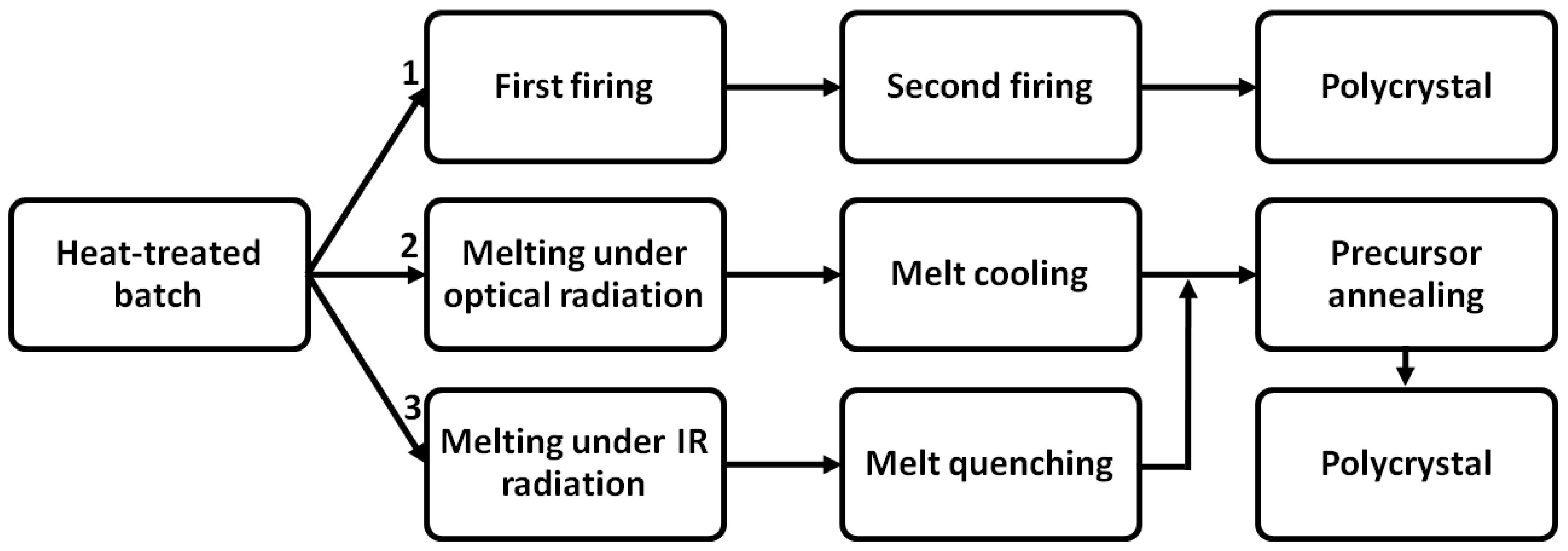
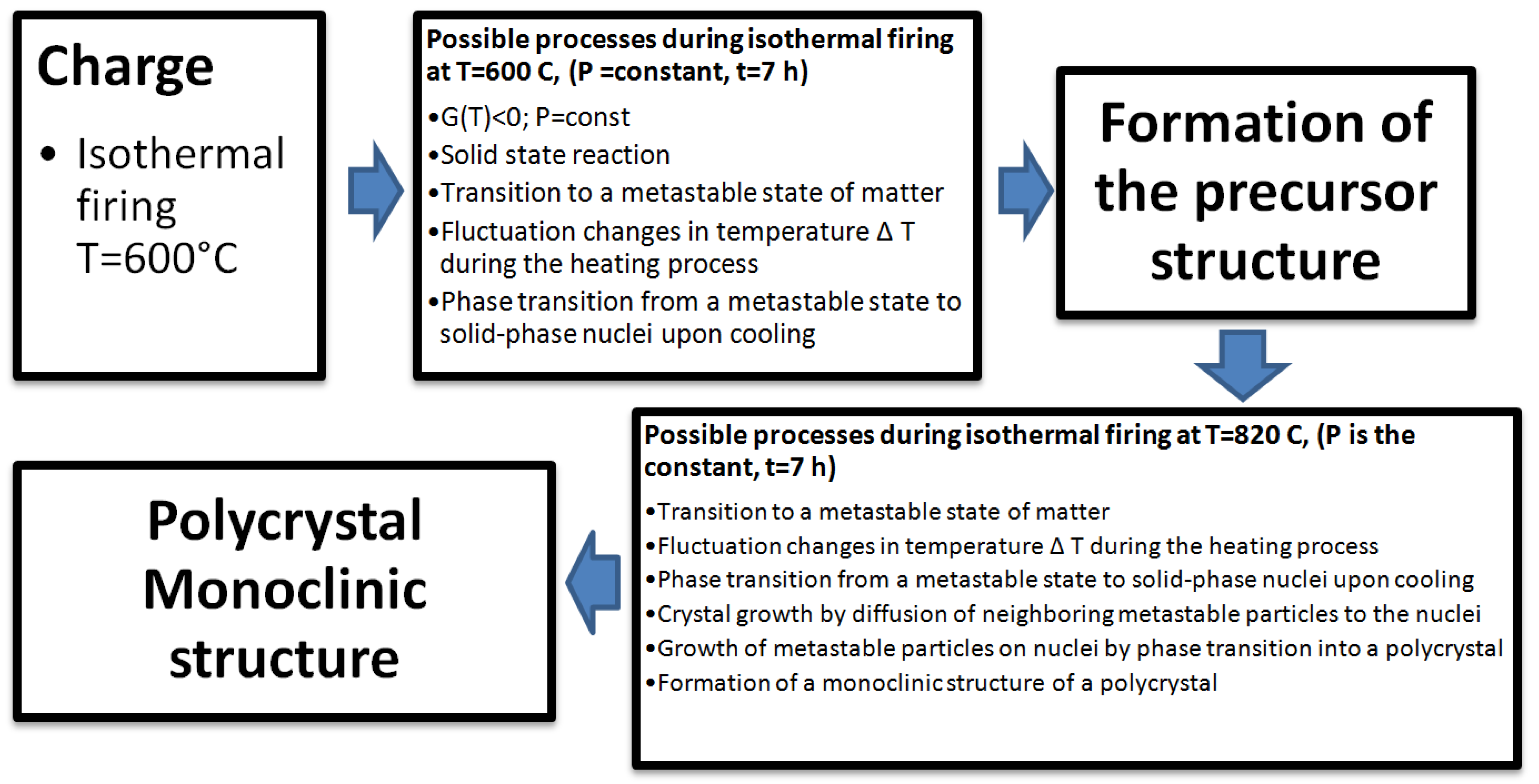
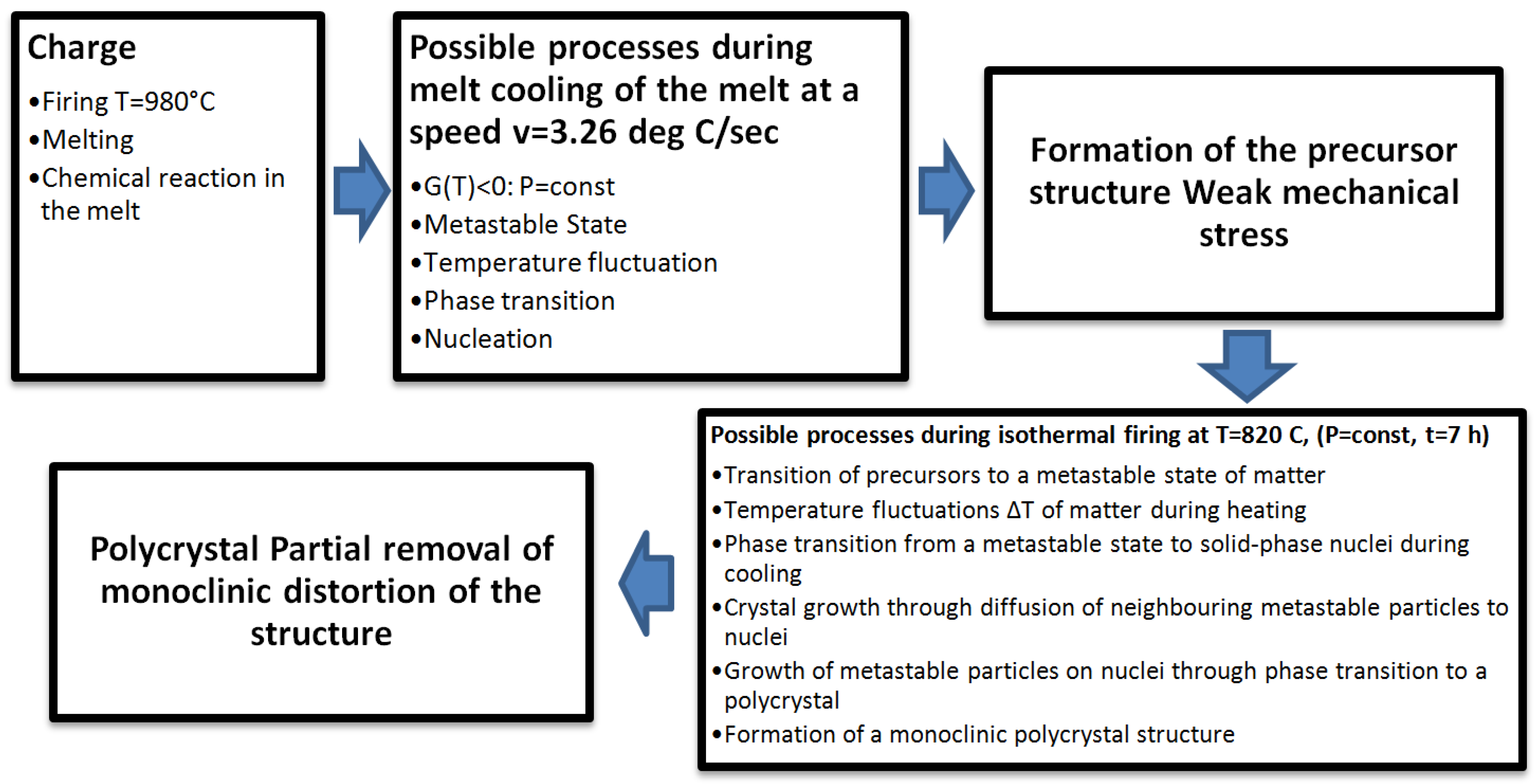
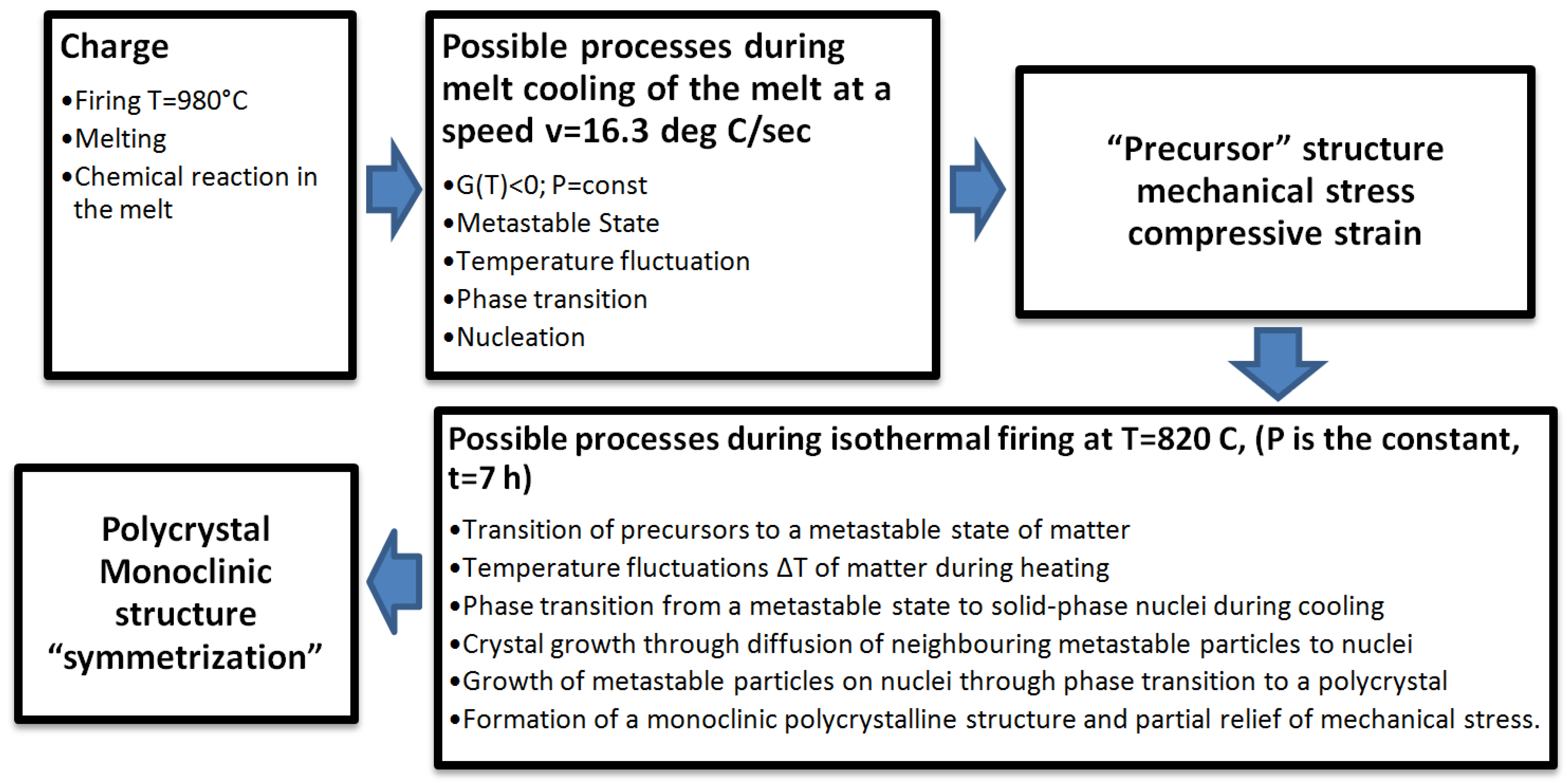
3.1. Synthesis of Samples
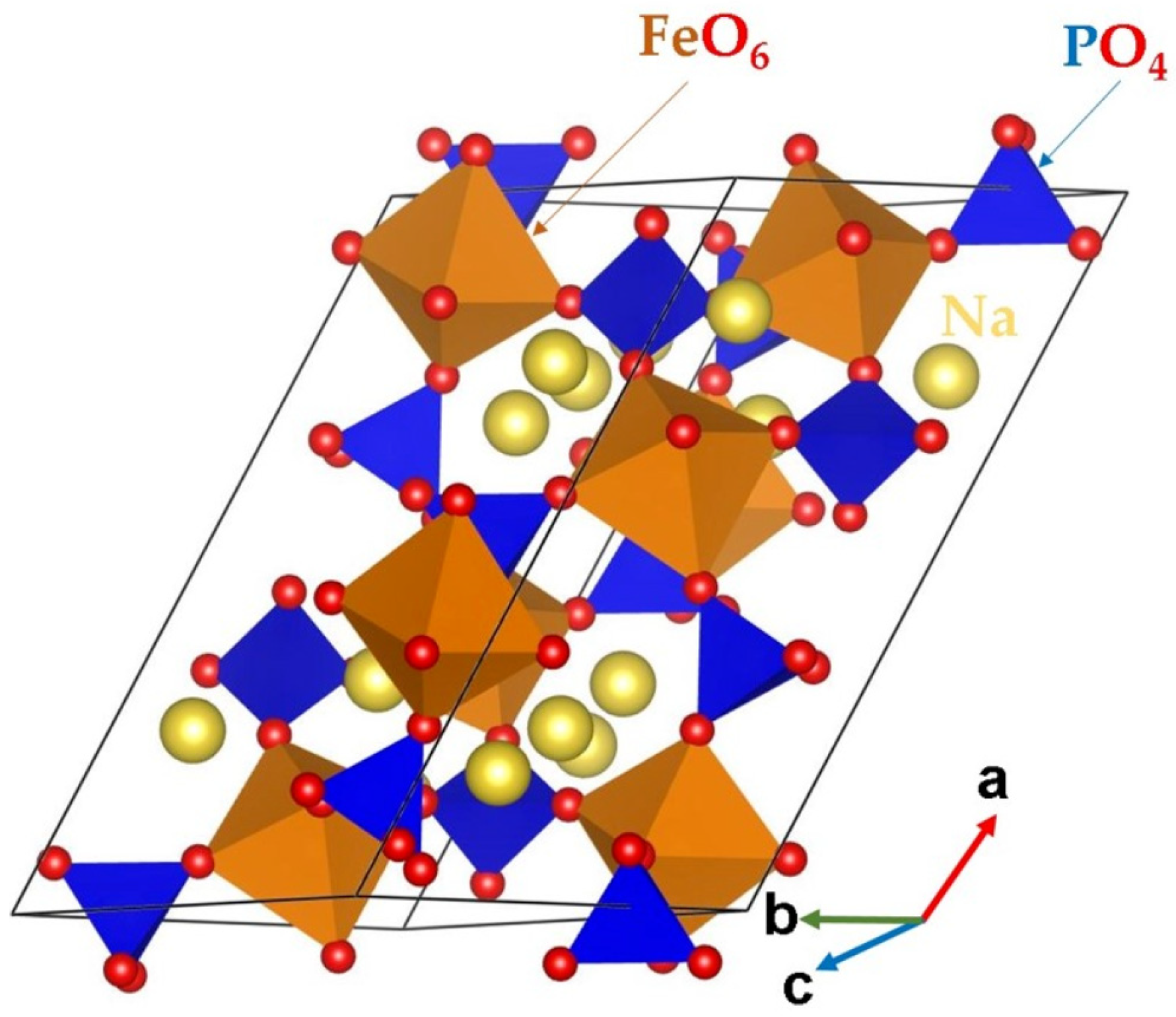
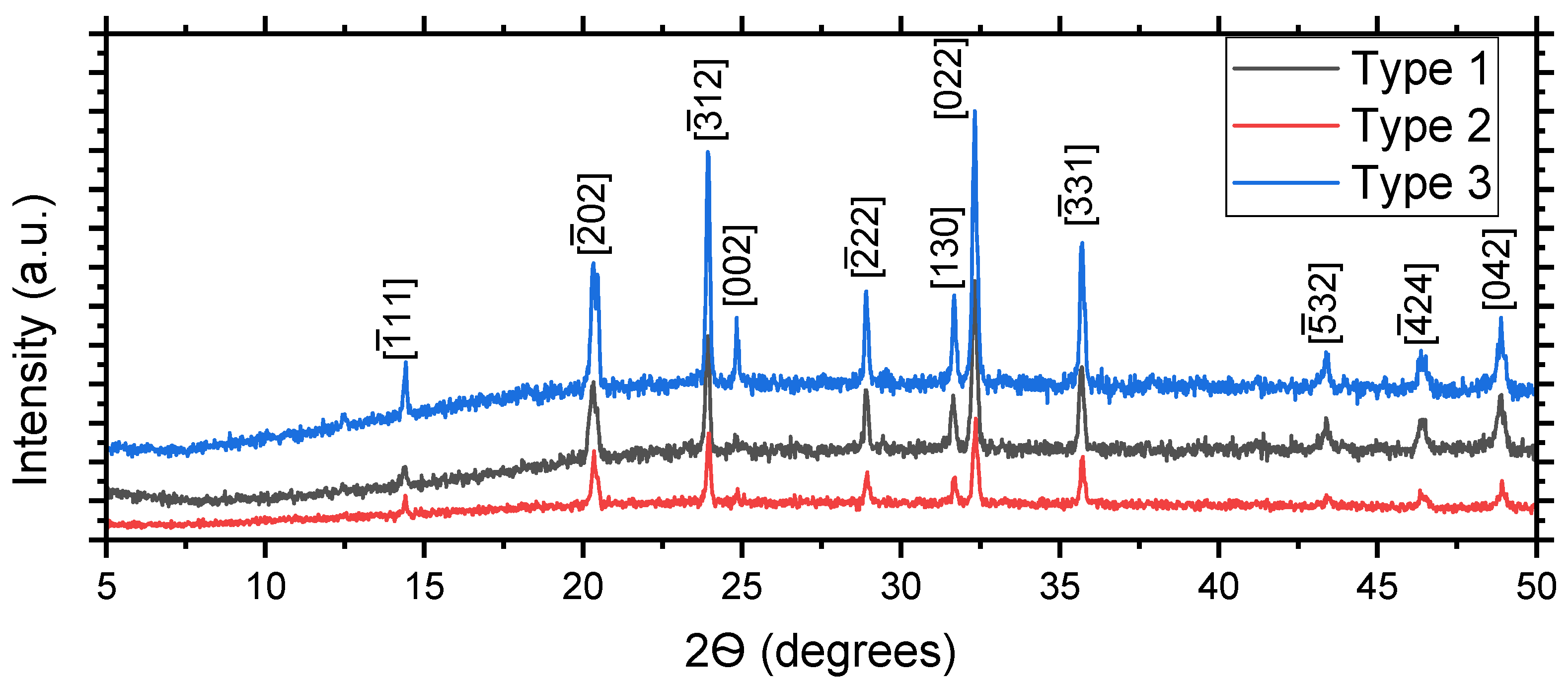
3.2. Results of Structural Studies of Na3Fe2(PO4)3 Polycrystals Obtained by Solid-Phase and Melt Methods
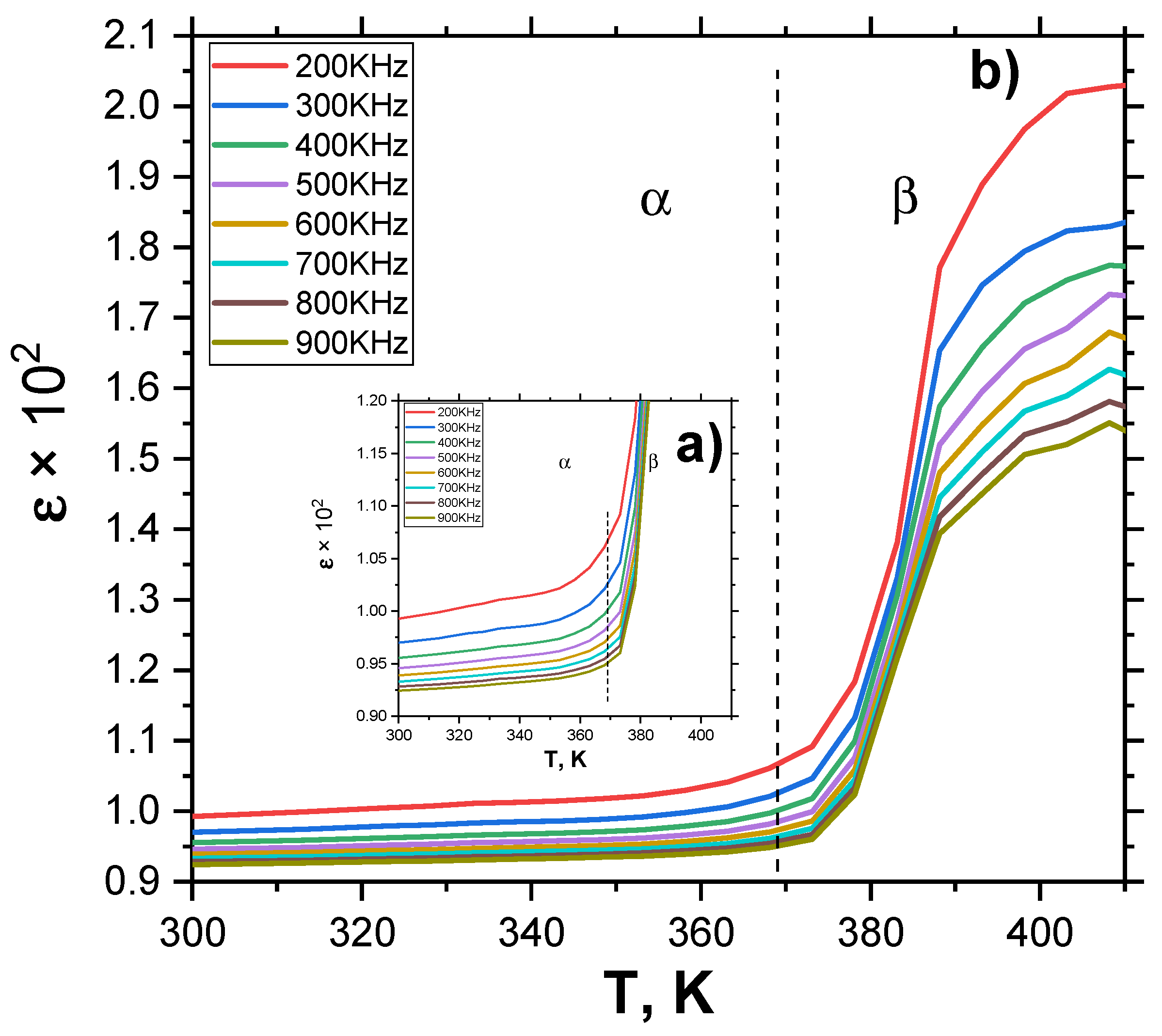
3.2.1. Dielectric Properties of Polycrystals of the α-Phase of Na3Fe2(PO4)3 Type 1
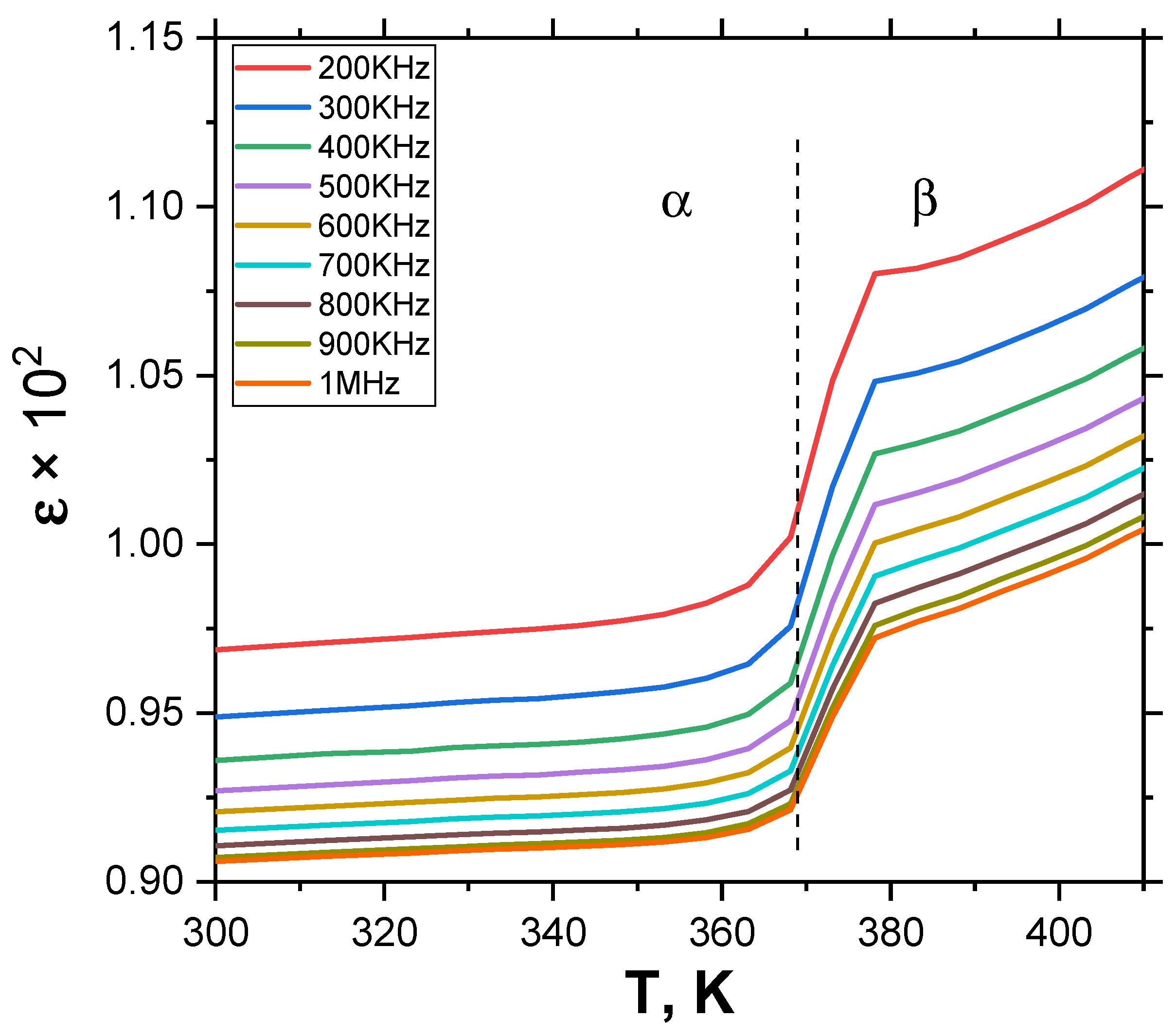
3.2.2. Dielectric Properties of Na3Fe2(PO4)3 Polycrystals of Type 2
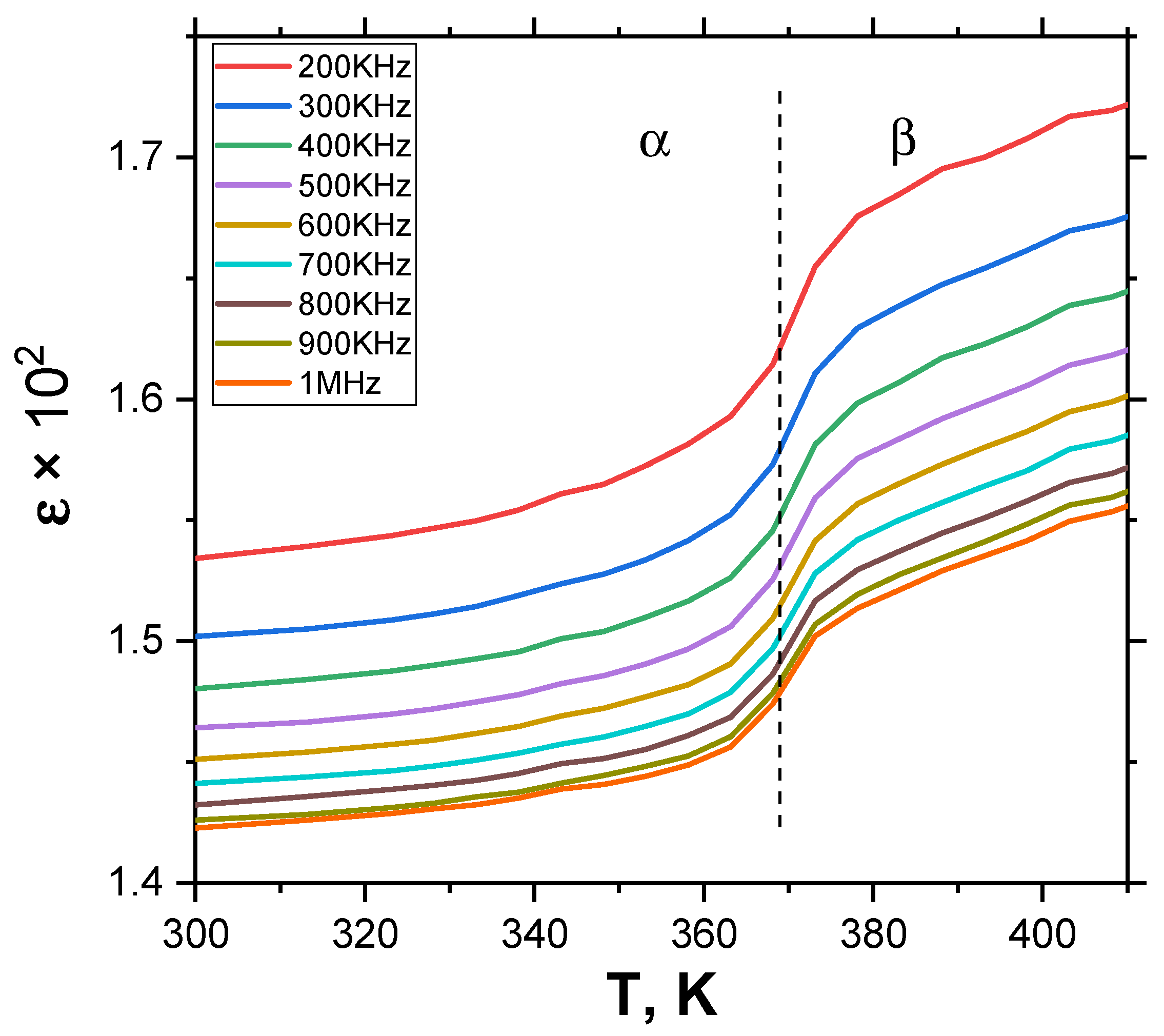
3.2.3. Dielectric Properties of Na3Fe2(PO4)3 Polycrystals Type 3
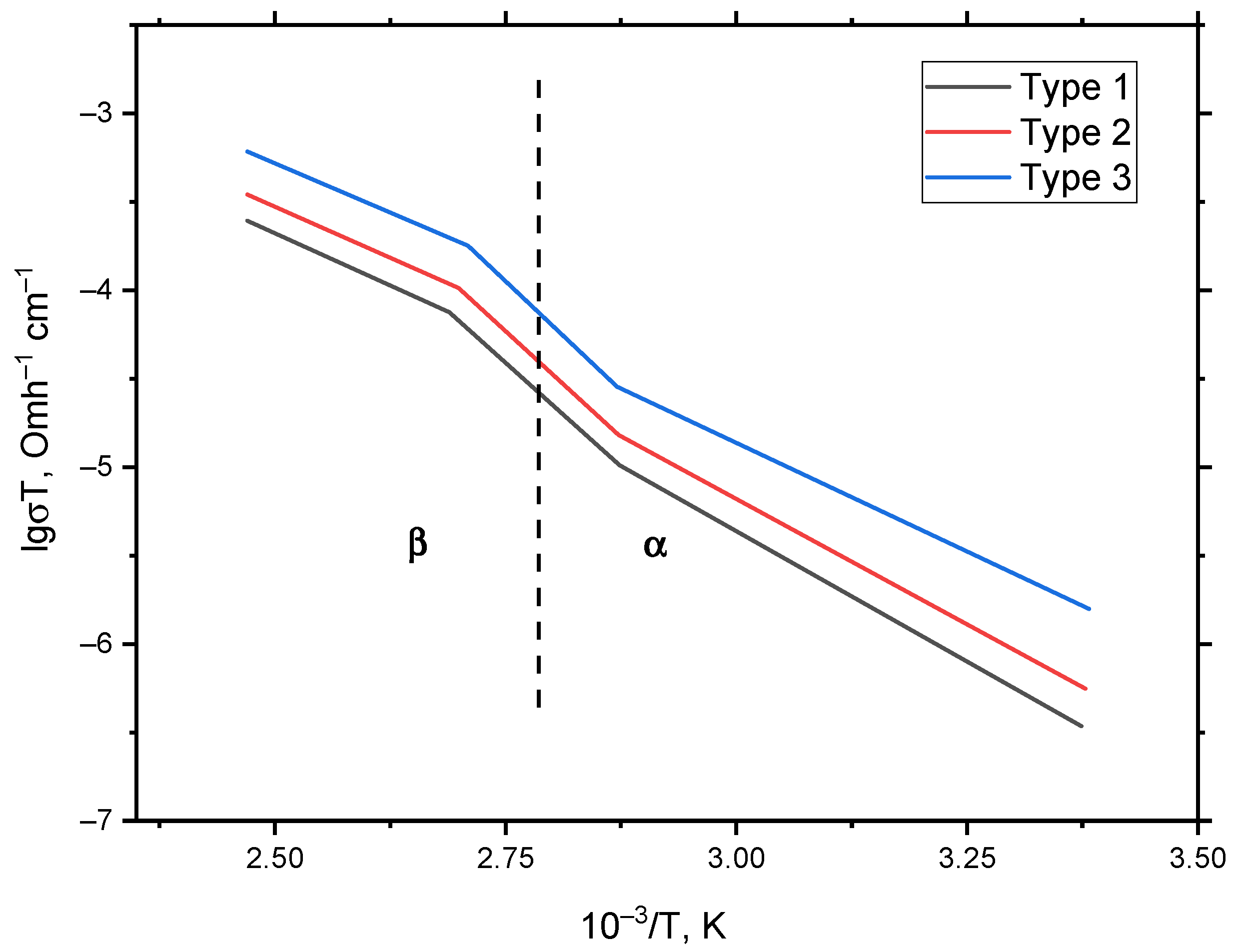
3.3. Conductive Properties of Na3Fe2(PO4)3 Polycrystals Obtained by Solid-Phase and Melt Methods
3.4. Influence of the Thermodynamic Synthesis Regime on Dipole Ordering and Ionic Conductivity of α-Na3Fe2(PO4)3 Polycrystals
4. Conclusions
- The solid-phase synthesis of Na3Fe2(PO4)3 polycrystals (Sample Type 1) proceeds over a prolonged period under isothermal conditions, leading to the formation of a polar α-phase with pronounced dielectric properties, characterized by low density and conductivity. The polar α-phase of Na3Fe2(PO4)3 is characterized by the presence of ‘large’ and ‘small’ polarized dipoles, and a small number of ‘free’ but ordered sodium cations, which possess low thermo-polarization mobility μTp(T, E(ω)), indicating strong interactions between the cationic and anionic parts of the crystal lattice, caused by significant distortion of the rhombohedral structure of Na3Fe2(PO4)3 polycrystals. The dielectric nature of the polar α-phase of Na3Fe2(PO4)3 is confirmed by a sharp increase in dielectric permeability during the phase transition to the ion-conducting β-phase.
- The melt synthesis method for Na3Fe2(PO4)3 polycrystals (Type 2 samples) is carried out by rapidly melting the charge and cooling it at a rate of 3.26 °C/s; consequently, the polycrystals of the polar α-phase exhibit a less monoclinically distorted structure, better faceting, and higher density than Type 1 samples. The synthesis time is reduced by a factor of 2 compared to solid-phase synthesis. It has been established that the polar α-phase is moderately dielectric, exhibits a higher μTp(T, E(ω)) than in Type 1 samples, and is characterized by the presence of both polarized and unpolarized sodium cations. These data may be associated with a partial reduction in the interaction between the cationic and anionic parts of the crystal lattice, resulting from a partial increase in the symmetry of the polycrystalline structure.
- The melt-quenching method for synthesizing Na3Fe2(PO4)3 polycrystals (3 sample types) involves rapidly melting the charge and quenching it at a rate of 16.3 °C/s. This method reduces the synthesis time by a factor of 7 compared to solid-state synthesis, yielding polycrystals of the polar α-phase with a more perfect grain structure, higher density, higher conductivity, and a less monoclinically distorted structure than type 2 samples. The polar phase of α-Na3Fe2(PO4)3 in type 3 samples is ion-conducting and is characterized by higher values of μTp(T, E(ω)) than in type 2 samples. These data indicate a weaker bond between the cationic and anionic parts of the crystal lattice, associated with greater ‘‘symmetrisation” of the structure than in type 2 samples.
- An investigation intothe dielectric properties of the polar phase in three types of polycrystals has enabled an assessment of the degree of interconnection between the cationic and anionic components of their crystal frameworks. The obtained data facilitate interpretation of the ionic conductivity properties of the samples; therefore, dielectric spectroscopy is recommended when investigating new cathode materials.
Author Contributions
Funding
Data Availability Statement
Conflicts of Interest
Correction Statement
References
- Qiao, H.; Wei, Q. Functional nano fibersin lithium-ion batteries. In Functional Nanofibers and Their Applications; Elsevier: Amsterdam, The Netherlands, 2012; pp. 197–208. [Google Scholar] [CrossRef]
- Song, B.; Lai, M.O.; Lu, L. Influence of Ru substitution on Li-rich 0.55Li2MnO3 · 0.45LiNi1/3Co1/3Mn1/3O2 cathode for Li-ion batteries. Trochim. Acta 2012, 80, 187–195. [Google Scholar] [CrossRef]
- Chen, H.; Hautier, G.; Jain, A.; Moore, S.; Kang, B.; Doe, R.; Wu, L.; Zhu, Y.; Tang, Y.; Ceder, G. Carbonophosphates: A newfamily of cathode materials for Li-ion batteries identified computationally. Chem. Mater. 2012, 24, 2009–2016. [Google Scholar] [CrossRef]
- Hautier, G.; Jain, A.; Chen, H.; Moore, S.C.; Ong, P.; Ceder, G. Novel mixed polyanions lithium-ion battery cathode materials predicted by high-through put ab initio computations. J. Mater. Chem. 2011, 21, 17147–17153. [Google Scholar] [CrossRef]
- Ngoy, K.R.; Lukong, V.T.; Yoro, K.O. Lithium-ion batteries and the future of sustainable energy: A comprehensive review. Renew. Sustain. Energy Rev. 2025, 223, 115971. [Google Scholar] [CrossRef]
- Gao, Z.-W.; Lan, T.; Yin, H.; Liu, Y. Development and Commercial Application of Lithium-Ion Batteries in Electric Vehicles: A Review. Process 2025, 13, 756. [Google Scholar] [CrossRef]
- Pan, H.; Hu, Y.S.; Chen, L. Room-temperature stationary sodium-ion batteries for large-scale electric energy storage. Energy Environ. Sci. 2013, 6, 2338–2360. [Google Scholar] [CrossRef]
- Komaba, S.; Hasegawa, T.; Dahbi, M.; Kubota, K. Potassium intercalation into graphite to realizehigh-voltage/high-power potassium-ion batteries and potassium-ion capacitors. Electrochem. Commun. 2015, 60, 172–175. [Google Scholar] [CrossRef]
- Skundin, A.M.; Kulova, T.L. From lithium-ion to sodium-ion batteries. Electrochem. Energy 2016, 16, 122–150. [Google Scholar]
- Liu, Y.; Zhou, Y.; Zhang, J.; Xia, Y.; Chen, T.; Zhang, S. Monoclinic Phase Na3Fe2(PO4)3: Synthesis, Structure, and Electrochemical Performance as Cathode Material in Sodium-Ion Batteries. ACS Sustain. Chem. Eng. 2017, 5, 1306–1314. [Google Scholar] [CrossRef]
- Ferrara, C.; Tealdi, C.; Dall’Asta, V.; Buchholz, D.; Chagas, L.G.; Quartarone, E.; Berbenni, V.; Passerini, S. High-Performance Na0.44MnO2 Slabs for Sodium-Ion Batteries Obtained through Urea-Based Solution Combustion Synthesis. Batteries 2018, 4, 8. [Google Scholar] [CrossRef]
- Hwang, J.-Y.; Myung, S.-T.; Su, Y.-K. Sodium-ion batteries: Present and future. Chem. Soc. Rev. 2017, 46, 3529. [Google Scholar] [CrossRef] [PubMed]
- Palomares, V.; Serras, P.; Villaluenga, I.; Hueso, K.B.; Carretero-Gonzalez, J.; Rojo, T. Na-ion batteries, recent advances and present challenges to become low-cost energy storage systems. Energy Environ. Sci. 2012, 5, 5884. [Google Scholar] [CrossRef]
- Hirsh, H.S.; Li, Y.; Tan, D.H.S.; Zhang, M.; Zhao, E.; Meng, Y.S. Sodium-Ion Batteries Paving the Way for Grid Energy Storage. Adv. Energy Mater. 2020, 10, 2001274. [Google Scholar] [CrossRef]
- Bača, P.; Libich, J.; Gazdošová, S.; Polkorab, J. Sodium-Ion Batteries: Applications and Properties. Batteries 2025, 11, 61. [Google Scholar] [CrossRef]
- Olabi, A.G.; Abbas, Q.; Shinde, P.A.; Abdelkareem, M.A. Recharge able batteries: Technological advancement, challenges, current and emerging applications. Energy 2023, 266, 126408. [Google Scholar] [CrossRef]
- Whittingham, M.S. Lithium batteries and cathode materials. Chem. Rev. 2004, 104, 4271–4301. [Google Scholar] [CrossRef]
- Goodenough, J.B.; Kim, Y. Challenges for Recharge able Li Batteries. Chem. Mater. 2010, 22, 587–603. [Google Scholar] [CrossRef]
- Rajagopalan, R.; Chen, B.; Zhang, Z.; Wu, X.L.; Du, Y.; Huang, Y.; Li, B.; Zong, Y.; Wang, J.; Nam, G.-H.; et al. Improved Reversibility of Fe3+/Fe4+ Redox Couple in Sodium Super Ion Conductor Type Na3Fe2(PO4)3 for Sodium-IonBatteries. Adv. Mater. 2017, 29, 1605694. [Google Scholar] [CrossRef] [PubMed]
- Cao, Y.; Liu, Y.; Chen, T.; Xia, X.; Zhang, L.-C.; Zhang, J.; Xia, Y. Sol-gel synthesis of porous Na3Fe2(PO4)3 with enhanced sodium ion storage capability. Ionics 2019, 25, 1083–1090. [Google Scholar] [CrossRef]
- Xia, X.; Cao, Y.; Yao, L.; Yang, H.; Zhang, J. MCNT-Reinforced Na3Fe2(PO4)3 as Cathode Material for Sodium-Ion Batteries. Arab. J. Sci. Eng. 2019, 45, 143–151. [Google Scholar] [CrossRef]
- Teoharov, L.; Penev, P.; Härmas, M.; Jänes, A. Synthesis of Na3Fe2(PO4)3 with NASICON-Type Structure from Ferrous Oxalate Precursor in the Presence of Colloidal Silicon Dioxide. J. Mater. Sci. Manufac. Res. 2023, 4, 1–6. [Google Scholar] [CrossRef]
- d’Yvoire, F.; Pintard-Screpel, M.; Bretey, E. Lee phosphate Na4M2(PO4)3: (M=Cr,Fe) et Na4Cr2(PO4)3: Données cristallographiques et conductivitétélonique. C. R. Acad. Sci. 1980, C290, 185–188. [Google Scholar]
- d’Yvoire, M.; Pintard-Screpell, E.B.; de la Rochsre, M. Phase transitions and ionic conduction in 3d skeleton phosphates A3M2(PO4)3: A=Li, Na, Ag, K; M=Cr,Fe. Solid State Ion. 1983, 10, 851–858. [Google Scholar] [CrossRef]
- Kalinin, V.B.; Lazoryak, B.I.; Stefanovich, S.Y. Phase transitions in Na3Sc2(PO4)3 and related compounds with {[M2(PO4)3]P−}3∞ frameworks. Crystallography 1983, 28, 264. [Google Scholar]
- Kravchenko, V.V.; Sigaryov, S.E. Structural features of the super ionic phase transitions in Na3Fe2(PO4)3. Solid State Commun. 1992, 83, 149–152. [Google Scholar] [CrossRef]
- Kalinin, V.B.; Stefanovich, S.Y.; Nogai, A. Crystal chemistry and properties of compounds with rhombohedral frameworks of the composition {[Fe2(PO4)3]3−}3∞ and solid solutions based onthem. Inorg. Mater. 1986, 22, 107–111. [Google Scholar]
- De la Rochere, M.; d’Yvoire, F.; Collin, G.; Comès, R.; Boilot, J.P. NASICONtypematerialsNa3M2(PO4)3 (M=Fe,Cr) Na+– Na+ correlation and phase transition. Solid State Ion. 1983, 9–10, 825–828. [Google Scholar] [CrossRef]
- Kuganathan, N.; Chroneos, A. Defect Chemistry and Na-Ion Diffusionin Na3Fe2(PO4)3 Cathode Material. Materials 2019, 12, 1348. [Google Scholar] [CrossRef]
- Nogai, A.A.; Nogai, A.S.; Stefanovich, S.Y.; Salikhodzha, J.M.; Uskenbayev, D.E. The Dipole Ordering and the Ionic Conductivity in the NASICON-Like Structures of the Na3Fe2(PO4)3 Type. Phys. Solid State 2020, 62, 1370–1379. [Google Scholar] [CrossRef]
- Lyubutin, I.; Melnikov, O.; Sigaryov, S.; Terziev, V. Phase transitions in Na3Fe2(PO4)3: An inside view. Solid State Ion. 1988, 31, 197–201. [Google Scholar] [CrossRef]
- Masquelier, C.; Wurm, C.; Rodríguez-Carvajal, J.; Gaubicher, J.; Nazar, L. A Powder Neutron Diffraction Investigation of the Two Rhombohedral NASICON Analogues: γ-Na3Fe2(PO4)3 and Li3Fe2(PO4)3. Chem. Mater. 2000, 12, 525–532. [Google Scholar] [CrossRef]
- Lazoryak, B.I.; Kalinin, V.B.; Stefanovich, S.Y.; Efremov, V.A. Crystal structure Na3Sc2(PO4)3 at 600C. Dokl. USSR 1980, 250, 861–864. [Google Scholar]
- Collin, G.; Comes, R.; Boilotand, J.P.; Colomban, P. Disorder of tetrahedral in nasicon-type structure-1. Na3Sc2(PO4)3: Structures and ion-ion correlations. J. Phys. Chem. Solids 1986, 47, 843–854. [Google Scholar] [CrossRef]
- Nogai, A.S.; Uskenbaev, D.E.; Utegulov, A.B.; Nogai, E.A.; Toleugulov, D.D. Features of Structures and Ionic Conductivity of Na3Fe2(PO4)3 Polycrystals Obtained by Solid Phase and Mellte Methods. Ceramics 2023, 6, 2295–2306. [Google Scholar] [CrossRef]
- Nogai, A.S.; Nogai, A.A.; Uskenbaev, D.E.; Nogai, E.A.; Utegulov, A.B.; Dunayev, P.A.; Tolegenova, A.S.; Bazarbekuly, B.A.-D.; Abikenova, A.A. Influence of Solid-Phase and Melt-Quenching Na3Fe2(PO4)3 Polycrystal Production Technology on TheirStructure and Ionic Conductivity. J. Compos. Sci. 2024, 8, 354. [Google Scholar] [CrossRef]
- Nogai, A.A.; Nogai, E.A.; Akimbaeva, D.D.; Nogai, A.S.; Bush, A.A.; Tatkeeva, G.G.; Uskenbaev, D.E. Electrocapacitive properties of cathode materials based on Na3Fe2(PO4)3 polycrystals synthesized by solid-phase andmelt-hardening methods. Eurasian J. Phys. Funct. Mater. 2025, 9, 104–109. [Google Scholar] [CrossRef]
- Bush, A.A. Physico-Chemical Foundations and Methods of Single Crystal Growth, Growing Al2O3 Crystals by Crucibleless Zone Melting; MSTUMIREA: Moscow, Russia, 2011; 36p, Available online: https://search.rsl.ru/ru/record/01005462157 (accessed on 7 March 2012).
- Boyce, J.B.; Hayes, T.M. Chapter 2, Structure and Its Influence on Super ionic Conduction: EXAFS Studies. In Physics of Superionic Conductors; Salamon, M.B., Ed.; Springer: Berlin/Heidelberg, Germany, 1979; pp. 5–16. [Google Scholar]
- Murashkevich, A.N.; Zharsky, I.M. Theory and Methods of Growing Single Crystals; BSTU: Minsk, Belarus, 2010; 214p. [Google Scholar]
- Struzhanov, V.V. Theory of Elasticity: Basic Principles: Textbook; Ural Federal University: Ekaterinburg, Russia, 2019; 204p. [Google Scholar]
- He, R.; Qu, Z.; Liang, D. Rapid heating thermal shock study of ultra high temperature ceramics using an in situ testing method. J. Adv. Ceram. 2017, 6, 279–287. [Google Scholar] [CrossRef]
- Spriggs, R.M. Inelastic Deformation of Oxide Ceramics. In Proceedings of the Mechanical and Thermal Properties of Ceramics Proceedings of a Symposium, Gaithersburg, MD, USA, 1–2 April 1968; Wachtman, J.B., Jr., Ed.; Institute for Materials Research National Bureau of Standards: Washington, DC, USA, 1968; pp. 189–200. [Google Scholar]




| Samples | 1 Type | 2 Type | 3 Type | |||
|---|---|---|---|---|---|---|
| Na3Fe2(PO4)3 | 1st annealing | 2nd annealing | Melting | Annealing | Melting | Annealing |
| Firing temperatures T, °C | 600 | 820 | 980 | 820 | 980 | 820 |
| Melting time, s | 180 | 50 | ||||
| Firing time t, h | 7 | 7 | 7 | 2 | ||
| Cooling time t, s to T = 25 °C | 0.5 | 300 | 60 | |||
| Temperature cooling rate v = T/t, °C/s | 48 | 3.26 | 16.3 | 48 | ||
| Polycrystals | Space Group | Relative Density | Unit Cell Parameters | |||||
|---|---|---|---|---|---|---|---|---|
| Types of Na3Fe2(PO4)3 Samples | % | a, Å | b, Å | c, Å | α0 | β0 | γ0 | |
| 1—type | C2/m | 82 | 15.1230 | 8.7168 | 21.5963 | 90.00 | 90.37 | 90.00 |
| 2—type | C2/m | 90 | 15.1287 | 8.7106 | 21.5534 | 90.00 | 90.25 | 90.00 |
| 3—type | C2/m | 96 | 15.1444 | 8.6840 | 21.5768 | 90.00 | 90.30 | 90.00 |
| Types of Samples | Circular Frequency ωi 103, Hz | Dielectric Permittivity εi 102 at Frequency ωi at T = 300 K | Dielectric Permittivity ε at Frequency ωi at T = 340 K | Thermal Polarization Mobilities of Charges μTp ((T,E(ω)), ms/VK | Comparative Coefficient | Absolute Change in Permittivity ∆ε at Tc |
|---|---|---|---|---|---|---|
| 1 Type | 2 | 0.99 | 1.25 | 0.012 | 1.0 | |
| 1 × 10³ | 0.925 | 0.927 | 0.010 | 1.08 × 10⁻² | 0.56 | |
| 2 Type | 2 | 0.97 | 0.975 | 0.023 | 0.032 | |
| 1 × 10³ | 0.91 | 0.9125 | 0.0138 | 1.09 × 10⁻² | 0.04 | |
| 3 Type | 2 | 1.53 | 1.55 | 0.032 | 0.09 | |
| 1 × 10³ | 1.425 | 1.430 | 0.024 | 6.91 × 10⁻³ | 0.02 |
| Parameters | Phases | Na3Fe2(PO4)3 | ||
|---|---|---|---|---|
| Type 1 | Type 2 | Type 3 | ||
| Ionic conductivity σ, (Ohm∙cm)−1 | α (300 K) | 4.5 × 10⁻⁷ | 5.5 × 10⁻⁷ | 1.4 × 10⁻⁶ |
| β (373 K) | 5.6 × 10⁻⁵ | 6.7 × 10⁻⁵ | 2.3 × 10⁻⁴ | |
| Activation energy ΔE, eV | α | 0.63 | 0.62 | 0.59 |
| β | 0.46 | 0.45 | 0.43 | |
Disclaimer/Publisher’s Note: The statements, opinions and data contained in all publications are solely those of the individual author(s) and contributor(s) and not of MDPI and/or the editor(s). MDPI and/or the editor(s) disclaim responsibility for any injury to people or property resulting from any ideas, methods, instructions or products referred to in the content. |
© 2026 by the authors. Licensee MDPI, Basel, Switzerland. This article is an open access article distributed under the terms and conditions of the Creative Commons Attribution (CC BY) license.
Share and Cite
Nogai, A.S.; Nogai, A.A.; Nogai, E.A.; Zikrillaev, N.F.; Uskenbaev, D.E.; Utegulov, A.B.; Muhamedrahimov, K.U. The Effect of Solid-Phase and Melt Synthesis Methods on Dipole Ordering and Ion Conductivity of the Polar α-Phase of Na3Fe2(PO4)3 Polycrystals. J. Compos. Sci. 2026, 10, 232. https://doi.org/10.3390/jcs10050232
Nogai AS, Nogai AA, Nogai EA, Zikrillaev NF, Uskenbaev DE, Utegulov AB, Muhamedrahimov KU. The Effect of Solid-Phase and Melt Synthesis Methods on Dipole Ordering and Ion Conductivity of the Polar α-Phase of Na3Fe2(PO4)3 Polycrystals. Journal of Composites Science. 2026; 10(5):232. https://doi.org/10.3390/jcs10050232
Chicago/Turabian StyleNogai, A. S., A. A. Nogai, E. A. Nogai, N. F. Zikrillaev, D. E. Uskenbaev, A. B. Utegulov, and K. U. Muhamedrahimov. 2026. "The Effect of Solid-Phase and Melt Synthesis Methods on Dipole Ordering and Ion Conductivity of the Polar α-Phase of Na3Fe2(PO4)3 Polycrystals" Journal of Composites Science 10, no. 5: 232. https://doi.org/10.3390/jcs10050232
APA StyleNogai, A. S., Nogai, A. A., Nogai, E. A., Zikrillaev, N. F., Uskenbaev, D. E., Utegulov, A. B., & Muhamedrahimov, K. U. (2026). The Effect of Solid-Phase and Melt Synthesis Methods on Dipole Ordering and Ion Conductivity of the Polar α-Phase of Na3Fe2(PO4)3 Polycrystals. Journal of Composites Science, 10(5), 232. https://doi.org/10.3390/jcs10050232