Review

Decarbonising the Cement and Concrete Industry—A Step Forward to a Sustainable Future

1
Faculty of Engineering and Digital Technologies, University of Bradford, Bradford BD7 1DP, UK
2
Department of Civil Engineering, Shri Jagdishprasad Jhabarmal Tibrewala University, Rajasthan 333001, India
*
Author to whom correspondence should be addressed.
J. Compos. Sci. 2026, 10(5), 226; https://doi.org/10.3390/jcs10050226
Submission received: 3 March 2026 / Revised: 6 April 2026 / Accepted: 15 April 2026 / Published: 23 April 2026
(This article belongs to the Special Issue Sustainable Composite Construction Materials, 3rd Edition)

Abstract

Despite being fundamental to modern infrastructure, the cement and concrete industry is a major contributor to global carbon emissions, necessitating urgent decarbonisation strategies to mitigate climate change and achieve net-zero targets by 2050. This review explores technological pathways and innovations essential for lowering carbon emissions, including low-carbon materials, energy-efficient processes, carbon capture, utilization and storage (CCUS), and advanced production technologies. It also highlights the importance of supportive policy frameworks, financial incentives, and international collaboration in accelerating the transition to a low-carbon industry. While challenges such as high initial costs, resistance to change, and knowledge gaps persist, these can be addressed through innovation, education, and robust financial mechanisms. Furthermore, circular economy principles, sustainable procurement practices, and continued research and development are emphasized as critical enablers of the industry’s transformation. The paper concludes with recommendations for future actions, highlighting the role of cross-sector cooperation, research funding, and knowledge sharing in achieving a sustainable and decarbonised cement and concrete sector that can “go green” for eco-constructions.

1. Introduction

Essentially, the cement and concrete industry is a cornerstone of modern infrastructure and construction, playing a pivotal role in the global economy. Concrete, using cement as a binder, is the second most consumed material on earth after water, with global cement production reaching approximately 4.3 billion tonnes in 2024, driven by rapid urbanisation and population growth. The Asia-Pacific region accounts for the majority of this production (~70%), followed by Europe, the Americas, and Africa. OPC serves as the primary binder in concrete manufacturing, underpinning the construction of infrastructure worldwide. Globally, the demand for cement and concrete is rising at a rocketing pace for urbanisation to keep up with the burgeoning global population [1].
However, the present OPC sector is one of the largest contributors to anthropogenic emissions of carbon dioxide (CO2)—a primary GHG [1]. Cement accounts for, more or less, 10% of global concrete volume, and the present production of OPC emits approximately 8% of total global CO2 emissions single-handedly [2,3,4], impacting the environment and contributing to the significant challenge of global warming [5]. The rising temperatures, sea-level rise, and ecological disruptions worldwide are the direct consequences of increasing carbon footprints, a substantial threat to ecosystems and human life. The demand for cement is expected to increase by 12–23% by 2050 [6], following a ten-fold increase in global consumption over the last 65 years [7]. Projections indicate that concrete usage could rise above 18 billion tons annually by 2050 [8]. Between 2010 and 2021, global cement production increased by 30% [9], and the sector’s GHG emissions escalated by 31% [10]. Cement production relies heavily on energy-intensive extraction of raw materials such as limestone and clay [9,10], and GHG emissions from cement production and the construction sector remain substantial [11]. Cement production requires 3.2–6.3 GJ of energy and ~1.7 tonnes of limestone per tonne [12], consuming about 4667 MJ per tonne of OPC [13]. Detailed statistics on emissions, energy use, and resource consumption are presented in Table 1.
Decarbonising the cement and concrete industry is crucial to meet international net-zero climate targets, such as those established under the Paris Agreement (COP21), which aims to limit global warming to 1.5–2 °C and achieve climate neutrality by mid-century [18]. Achieving pathways compatible with <2 °C warming requires simultaneous decarbonisation across all sectors. Global direct industrial emissions, including energy- and process-related sources, increased by 65% between 1990 and 2014, largely driven by rapid industrialisation in developing countries [18,19]. Transitioning to low-carbon industrial processes depends on cost-effective clean technologies, stricter regulations, and voluntary initiatives.
Quantitative scenario analyses, such as the Shell Sky Scenario (SSS), IEA 2-Degree (2DS) and Beyond 2-Degree (B2DS) scenarios, and the Energy Transitions Commission’s Mission Possible pathway, project industrial CO2 emissions, hydrogen adoption, and carbon capture deployment, offering diverse approaches to net-zero by 2050–2060 [20,21,22]. Exceeding 1.5 °C warming could trigger extreme heatwaves, floods, biodiversity loss, and ecosystem disruptions. With continued infrastructure growth, cement and concrete-related CO2 emissions could rise by ~40% by 2050 without mitigation [16]. In order to achieve these ambitious goals, a comprehensive approach that involves reducing carbon emissions at every stage of OPC production must be developed urgently.
Quite recently, decarbonisation and improved performance have been the most pressing drivers for research and innovation in the cement and concrete industry, leading to the development of numerous innovative technologies and strategies [17,23]. According to the GCCA Roadmap [24], implementing a range of emission reduction measures throughout the cement, as well as concrete, value chain can contribute to reaching net-zero CO2 emissions before 2050. Improved efficiency in concrete production will lead to reduced cement content in concrete. A noteworthy savings in concrete use is anticipated to play a key role in design optimisation, building construction site competences, and reuse as well as lifetime extension of building elements or buildings. Additionally, the key components include an optimized mix design, refinement of concrete constituents, and ongoing industrialization of concrete production accompanied by improved quality control measures. Additionally, maximizing the reduction of the clinker factor and the use of alternative fuels is essential [23]. Notably, carbon capture is a breakthrough technology that requires development for industrial-scale implementation and will demand significant investment along with supportive frameworks, such as infrastructure for CO2 or hydrogen (H2), with the latter relying on sufficient carbon-neutral electricity for its production. The discoveries of novel innovative technologies such as geopolymers or alkali-activated construction materials [1], nanotechnology, additive construction manufacturing, improved energy efficiency and fuel switch over, and CCUS as well as the manufacturing of low-carbon alternative cement are vital measures to attain net-zero targets [25,26]. The implementation of CCUS in cement manufacturing is expected to reach commercial-scale operation by 2030 [27,28].
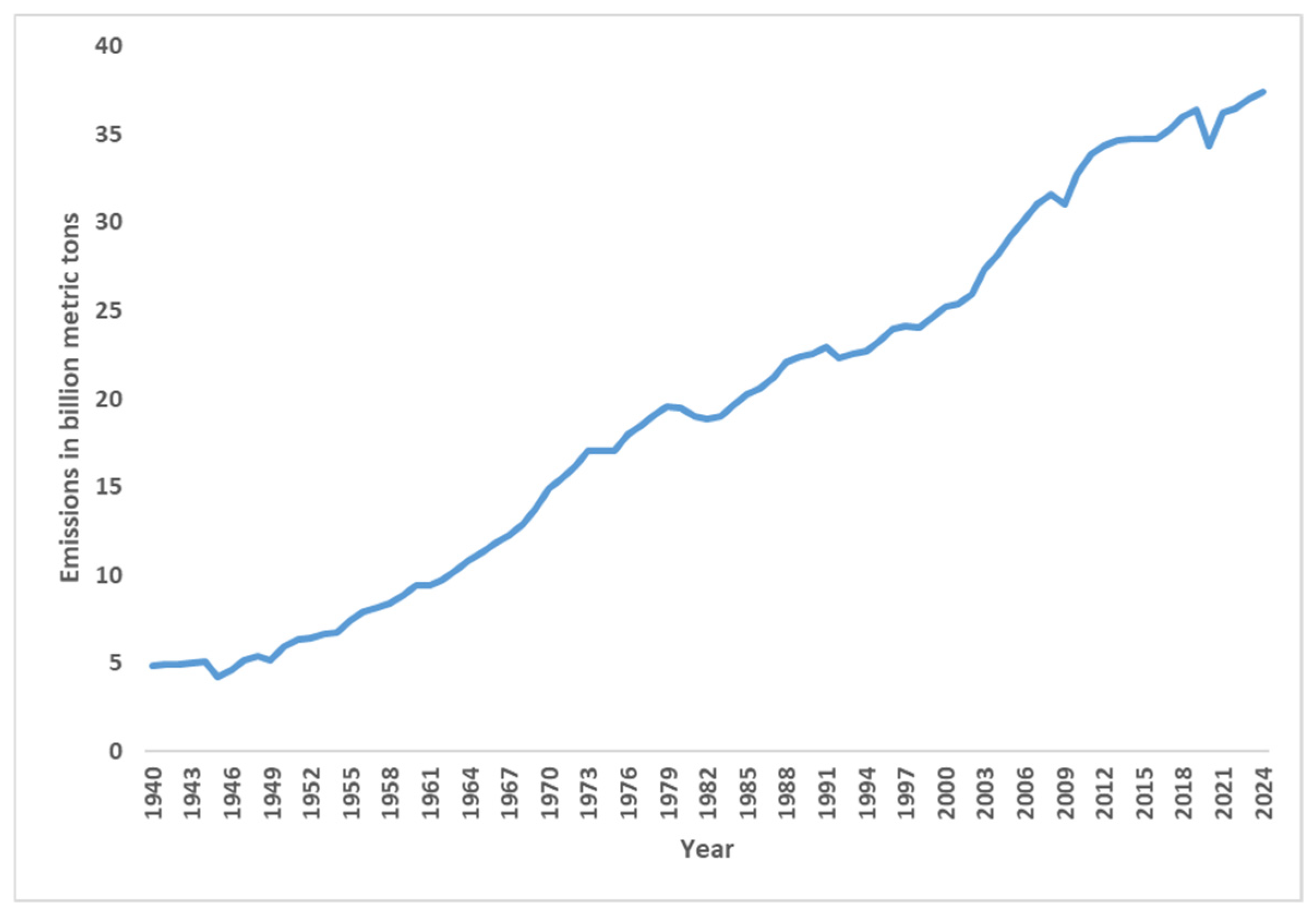
Internationally, the cement and concrete manufacturing sector is passing through its greatest revolution ever through decarbonising its production chain with net-zero carbon emissions by 2050 with the support of stakeholders and representatives from the cement and concrete industry, scientists, engineers, researchers, etc. To achieve this goal, diverse roadmaps and regional engagement plans [29,30,31,32,33,34,35] should be implemented, considering provincial conditions, to develop low-carbon solutions such as the use of SCMs, clinker factor reduction, renewable energy sources, clinker and cement substitution, alternative fuels, optimized concrete mixes, improved energy efficiency, recycled materials, CCUS [31,33,36], renewable electricity generation, clean vehicles, and energy-efficient buildings. Techno-innovations should focus on developing carbon-neutral binders as well as advanced manufacturing techniques, such as 3D printing, which reduce cement consumption and consequently lower GHG emissions [37]. The Carbon Leadership Forum (CLF) is actively promoting reductions in embodied carbon from cement and other construction materials through industry collaboration. Green building rating frameworks such as LEED, developed by the U.S. Green Building Council, and BREEAM, established by the Building Research Establishment, support the assessment of environmental impacts associated with cement-based materials [38,39]. The Global Cement and Concrete Association (GCCA) has introduced a bottom-up methodology segmenting the global cement and concrete market into nine regions to develop a roadmap toward net-zero CO2 emissions [36]. Policy measures such as the Buy Clean California Act further encourage reductions in embodied GHG emissions from construction materials [40]. International cooperation remains essential for deploying cleaner technologies, improving energy efficiency, and advancing sustainable cement production practices [41]. Given that global CO2 emissions from fossil fuels and industrial activities reached 37.01 Gt in 2023 and are projected to rise to 37.41 Gt in 2024—an increase of over 60% since 1990—accelerated decarbonisation of the cement sector is imperative [42] (Figure 1).
Despite extensive research on decarbonisation in the cement and concrete industry, existing studies often focus on individual technologies or isolated strategies. There is a lack of a comprehensive framework that integrates material innovations, process technologies, energy efficiency measures, and lifecycle assessment approaches. Furthermore, limited attention has been given to the combined techno-economic and policy-driven aspects required for large-scale implementation.
Therefore, the central research question of this review is as follows: How can integrated decarbonisation strategies across materials, production processes, and policy frameworks effectively reduce greenhouse gas emissions in the cement and concrete industry while supporting net-zero targets?
To address this, the present review provides a comprehensive and integrated assessment of current and emerging decarbonisation strategies in the cement and concrete industry. It systematically evaluates material-based approaches, alternative clinker technologies, energy efficiency improvements, and CCUS solutions. Unlike previous reviews, this study integrates technological, material perspectives into a unified framework, enabling a clearer comparison of their effectiveness and practical feasibility. The paper also identifies key research gaps and outlines future research directions to support the transition toward a sustainable and low-carbon cement and concrete sector. The present comprehensive and systematic review paper includes significant pathways to decarbonising the cement and concrete industry viz., the adoption of low-carbon technologies, advancements in material science for alternative materials, energy-efficient processes, and integration of CCUS solutions as well as advanced innovative manufacturing technologies. By synthesizing recent advancements (2000–2025) and identifying critical research gaps, this study contributes to the literature by presenting a holistic perspective that supports both academic research and industrial decision-making. This review is distinguished from existing studies by providing a unified and comparative evaluation of multiple decarbonisation strategies within a single framework.

1.1. Methodology of Literature Review

This study adopts a systematic approach to review the existing literature on decarbonisation strategies in the cement and concrete industry. A comparative framework was adopted to systematically evaluate different decarbonisation strategies based on their performance, feasibility, and carbon reduction potential. The objective is to ensure transparency, reproducibility, and comprehensive coverage of relevant research.

1.1.1. Data Sources and Search Strategy

The literature survey was conducted using major scientific databases, including Scopus, Web of Science, and Google Scholar. These databases were selected due to their extensive coverage of peer-reviewed journals and conference proceedings related to construction materials, sustainability, and energy systems. A combination of keywords was used to identify relevant studies, including: “cement decarbonisation”, “low-carbon cement”, “supplementary cementitious materials (SCMs)”, “carbon capture and storage (CCS)”, “alternative fuels in cement production”, and “sustainable concrete”. Boolean operators (AND, OR) were applied to refine the search results.

1.1.2. Inclusion and Exclusion Criteria

The inclusion criteria for selecting studies were as follows:
(i)
Peer-reviewed journal articles and high-quality conference papers;
(ii)
Studies focusing on cement, concrete, and construction-related emissions reduction;
(iii)
Publications addressing technological, environmental, or policy aspects of decarbonisation;
(iv)
Articles published primarily between 2000 and 2025 to ensure relevance and recency.
Studies were excluded if they met the following criteria:
(i)
Lacked sufficient technical or scientific rigor;
(ii)
Were not directly related to cement or concrete production;
(iii)
Focused on unrelated industrial sectors without clear applicability.

1.1.3. Data Analysis and Synthesis

The selected studies were systematically analysed and categorized into key thematic areas, including material substitution (e.g., SCMs), energy efficiency improvements, alternative fuels, carbon capture technologies, and emerging low-carbon binders. Comparative analysis was performed to evaluate the advantages, limitations, and carbon reduction potential of each approach, as highlighted in previous works. This structured methodology enables a comprehensive and balanced assessment of current advancements while identifying critical gaps for future research.

2. Challenges of Adverse Eco-Impacts and Intense Operational Energy Consumption in the Cement and Concrete Industry

Given the substantial scale of the cement and concrete industry, its GHG emissions and energy consumption are unfortunately ranking among the highest of all industrial sectors. In 2020, the CO2 emissions from cement and concrete production were estimated at approximately 3.4 Gt [43], accounting for nearly 8% of total global anthropogenic CO2 emissions, mainly from cement production. In 2010, cement production alone was responsible for 36% of all construction-related CO2 emissions [17]. Data from the GID Cement Emission Database (GCED) indicate that in 2019, there were 3620 cement production plants worldwide, with a cumulative production capacity of 6230 Mt cement/year [44]. The cement plant age directly impacts the energy and CO2 emissions performance of particular plants. A key distinction between older and modern cement production plants lies with process efficiency. Traditional wet-process cement manufacturing, which was widely used in the past, consumes significantly more energy due to higher moisture content in raw materials and the additional energy required for water evaporation. In contrast, modern cement plants predominantly adopt dry-process technologies, which are significantly more energy-efficient. This shift in technology has been a major driver of emissions reductions in newer facilities.

2.1. Eco-Challenges in Cement and Concrete Industry

Cement production alone is responsible for 77% to 95% of CO2 emissions within the construction materials sector, depending on the specific assumptions, functional requirements, and process parameters used to calculate emission intensity [11,45]. The variation in emission levels arises from factors such as local concrete formulations, the types of manufacturing technologies employed, the energy mix of the electricity grid, and the fuel types used in cement kilns. Additionally, the carbon intensity of supplementary cementitious materials (SCMs), additives, and aggregates further influences overall emissions. The functional requirements of concrete products—such as strength, durability, and setting time—also contribute to variability, leading to significant heterogeneity in GHG emissions per unit mass across different regions. The cement industry is inherently energy-intensive, consuming high amounts of thermal and electrical energy during clinker production, which further elevates its carbon footprint. Globally, conventional cement manufacturing contributes approximately 8% of total anthropogenic CO2 emissions, making it one of the most critical industrial sectors for targeted decarbonisation efforts [2,3,4]. The combination of high energy demand, reliance on fossil fuels, and process emissions underscores the urgency of implementing low-carbon technologies, alternative fuels, and carbon capture solutions to reduce the environmental impact of cement and concrete production.

2.1.1. Environmental Challenges of Cement Production

The eco-challenges of the colossal adverse eco-footprints from the cement and concrete industry, particularly the contemporary OPC production process, are primarily the result of being inherently carbon-intensive and consuming very high energy by using lots of natural restricted-mineral fuels during the production process. This involves two primary factors: the decarbonisation of limestone (CaCO3) and the energy consumption required to heat the raw materials in cement kilns. Approximately 0.83 tons of carbon emissions are generated per ton of conventional clinker produced [6,46]. These emissions primarily stem from limestone calcination and fossil fuel combustion. Calcination alone contributes to 60% to 65% of the total emissions from the process of clinker production. Initially, limestone, which is rich in calcium carbonate, is heated to produce clinker—lime, i.e., calcium oxide (CaO), a crucial component of the final cement product through calcination of limestone (CaCO3) at the very high temperatures of about 1400 °C [47,48]. This thermal decomposition releases a substantial quantity of CO2, about 60% to 70% of total GHG emissions during the cement process are generated from the decarbonisation of calcium carbonate (CaCO3) during clinker production, into the atmosphere. Table 2 provides an overview of CO2 emissions in cement production, including key chemical reactions, historical trends, datasets, and emission intensity variations.
Table 2. Overview of CO2 emissions in cement production: chemical reactions and historical trends ( ↑ indicate CO2 release during reactions).
DataDetailsRef.
Main CO2-Releasing Reactions(1) CaCO3 + Heat (1400 °C) → CaO + CO2
(2) C + O2 → CO2
(3) CH4 + 2O2 → 2H2O + CO2
Equations (1)–(3)
Historical Emissions38.3 ± 2.4 Gt CO2 (1928–2018); ~71% post-1990[49]
Updated Emission RangeDataset extended to 1880–2020[50]
Global Budget ContributionEmission data used in Global Carbon Budget (GCB) by Global Carbon Project (GCP)[51,52,53]
Data SourceCDIAC/CDIAC-FF using USGS cement production data[54]
Clinker Ratio AdjustmentsSCMs like GGBFS and FA lower clinker ratio, improving emission estimates[54]
Primary Clinker DataAvailable since 1990[54]
Recent Emission Range2.3–2.6 Gt CO2/year (2015–2019)[11,55]
Breakdown of Emissions~0.8 Gt (energy use) + ~1.5 Gt (process chemistry) + >0.4 Gt (indirect energy) = ~3.1 Gt total[11,55]
CO2 Intensity (Global)Increased from 0.54 to 0.59 tCO2/t cement (2015–2020), ~1.8% annual rise[14,15]
GCCA Plants EmissionsDropped from 0.614 to 0.604 tCO2/t (2015–2019); total: 0.544 Gt CO2 in 2019 from 0.85 Gt cement[24]
Emissions Variability (GCCA)0.623 ± 0.145 tCO2/t cement across 609 plants (2019)[24]
Granular Emission InsightsChen et al. provided detailed assessments for evaluating decarbonisation strategies[56]

2.1.2. CO2 Emissions from Concrete Production

Concrete production itself, and not merely the OPC industry, is answerable to a certain extent for GHG emissions, primarily CO2. The majority of emissions within the cement and concrete value chain are linked to cement-related activities, which include both direct and indirect energy-related emissions. Although clinker constitutes approximately 65% to 85% of cement’s mass, it only makes up about 10% to 15% of concrete’s total mass. However, the production of cement clinker including pyro-processing and calcination is responsible for 90% to 98% of the lifecycle GHG emissions associated with concrete production [45]. The widespread use of concrete overshadowed its sustainability benefits due to the substantial CO2 emissions and consumption of natural resources associated with its production. As a result, the concrete industry holds a critical responsibility in helping the world reach net-zero CO2 emissions by 2050. This responsibility stems from the fact that the concrete industry is one of the largest contributors to global anthropogenic CO2 emissions. The primary source of emissions in the concrete sector is the production of Portland cement, which serves as the key binder in concrete. However, various other constituents in concrete and their associated manufacturing processes also make notable contributions to global CO2 emissions. Among these, Portland cement exhibits the highest embodied carbon, with superplasticizers ranking next. Despite this, superplasticizers, which comprise approximately 1% of the binder in concrete, are not as significant a threat to sustainability as Portland cement. The CO2 emissions associated with the concrete sector could be categorized into two key sources: those arising from the raw material extraction and processing, and those from concrete construction. The largest portion of CO2 emissions originates from activities related to the extraction, mining, processing, and transportation of raw materials used in concrete production. To achieve net-zero CO2 emissions by 2050, the concrete industry must undergo substantial changes in both the materials and processes involved in concrete production. Concrete-specific CO2 emissions and lifecycle contributions are summarised in Table 3.
Table 3. Concrete-specific CO2 emissions and lifecycle contributions [43,57,58,59,60,61].
DataDetailsRef.
US Concrete Emissions (2003)Accounted for ~12% of total emissions from the cement and concrete industry (excluding cement phase)[57]
US Concrete Emissions (2022)Reduced to <8% of total lifecycle emissions from cement and concrete industry[58]
Scope 3 Emissions (WEF)0.7–0.8 Gt CO2 out of the total ~3.4 Gt CO2 in the cement value chain[43]
Scope 3—Downstream TransportContributes ~10–15% of Scope 3 emissions[43]
Scope 3—Processing Sold ProductsProcessing (including concrete use) accounts for ~35% of Scope 3 emissions[43]
China Concrete Output (2017)5.51 Gt concrete produced with 0.83 Gt CO2 emissions[59]
Carbon Intensity of Concrete~0.08–0.12 tCO2/t concrete[60]
Emissions FocusCement production phase is the dominant contributor to concrete’s overall CO2 impact[61]

2.2. Intense Operational Energy Consumption in Cement and Concrete Industry

The present cement and concrete industry is found to consume restricted natural geological resources to obtain very high energy as a prerequisite in the cement kiln.

2.2.1. Highly Energy-Intensive Contemporary Process of OPC

In current production process of the OPC industry, the second major source of CO2 emissions comes from the highly intense energy requirements of the cement clinkering process, which typically uses fossil energy sources like coal, petcoke, and natural gas to reach the extremely high temperatures needed to produce clinker. IEA estimated that 92% of the thermal energy for cement was obtained from the combustion of fossil fuels in 2020 [14]. The energy consumption patterns, fuel dependency, and decarbonisation potential in cement production are summarized in Table 4, highlighting the dominance of fossil fuels and the scope for efficiency improvements in modern kiln systems.
Table 4. Energy use, fuel sources, and decarbonisation approaches in cement production.
CategoryDetailsRef.
Fuel Dependency (2020)Fossil fuels dominate; biomass = 3% and waste-derived = 6% of total thermal energy[62]
GCCA Plants (2019)Fossil = 1.92 EJ (81.1%), biomass = 0.157 EJ (6.6%), waste = 0.291 EJ (12.3%)[24]
Theoretical Thermal Demand1.76 GJ/t clinker (ideal)
Best Actual Energy Use~2.8 GJ/t clinker (modern plants) due to heat losses[63]
Efficient Kiln Target2.07 GJ/t clinker (ideal modern dry kiln)[64]
Wet Process Kilns (Obsolete)5.86–6.28 GJ/t clinker[65]
Electricity Use (1990–2018)Reduced from ~120 to just over 100 kWh/t cement[11]
Best Electricity Efficiency<72 kWh/t cement
Electricity Use BreakdownRaw grinding: ~16 kWh/t
Pyroprocessing: ~47 kWh/t
Finish grinding: 20–63 kWh/t
Transport: ≤8 kWh/t
[65,66]
Direct Decarbonisation ApproachesLow-temp clinkers with fluxes/mineralisers (e.g., CaF2, AlF3); CSA, belite, celitement binders[67,68,69,70,71]
Indirect ApproachesBlended cements (e.g., PSC, PPC), production upgrades, waste heat recovery (WHR)[67,68,69,70,71]
Emerging InnovationsElectric clinkerization, hydrogen fuel use, renewable-powered calcination[72]
As such, any strategy to decarbonise the cement industry must address both the carbon emissions from the decarbonisation of limestone and the energy-intensive nature of clinker production. As a result of these challenges, various strategies have been proposed to reduce the carbon emission associated with the cement manufacturing process. Some of these pathways involve improvements to the material composition of cement, while others focus on optimizing the production process itself. Adopting circular economy strategies like optimizing material consumption, endorsing recycling–reuse of concrete and integrating recycled aggregates helps reduce the exigency for new types of cement as well as slimming down waste generation [73,74,75]. It is estimated that proper implementation of all these strategies could lower CO2 emissions by 0.43 tons per ton of cement production by 2050 [76]. The decarbonisation of the cement industry is not only essential for mitigating climate change but also for ensuring the long-term sustainability of the construction sector and that is why the abovementioned challenge of CO2 emissions must be overcome.

2.2.2. Energy Utilization in Concrete Manufacturing

While cement production is the most energy-intensive aspect of the cement and concrete industry, concrete manufacturing itself—excluding cement-related energy demands—accounts for approximately 20% of the total energy consumption in the sector [57]. Efforts to reduce energy intensity in concrete production include optimizing material proportions, improving transportation logistics, and integrating alternative or recycled aggregates. Additionally, on-site concrete mixing or the use of mobile batching plants can minimize transportation-related energy demands. A detailed overview of energy consumption in concrete production, including process-wise breakdown and influencing factors, is provided in Table 5.
Table 5. Energy use and influencing factors in concrete production.
CategoryDetailsRef.
Energy Use BreakdownMixing: <6%
Transportation: >11%
Quarrying & aggregate processing: ~3%
[66]
Embodied Energy (General Range)1–2.8 GJ/m3 (based on mix, strength, and materials)[66]
Embodied Energy (Concrete Products)450–850 MJ/m3 depending on application and material efficiency[77]
Key Influencing Factors1. Use of SCMs (e.g., FA, slag, and silica fume) reduces embodied energy
 2. Aggregate type & sourcing—local materials lower transport energy
 3. Efficient production (automated batching, advanced mixers) lowers operational energy
 4. Curing methods—energy-intensive methods (e.g., steam curing) raise total energy use
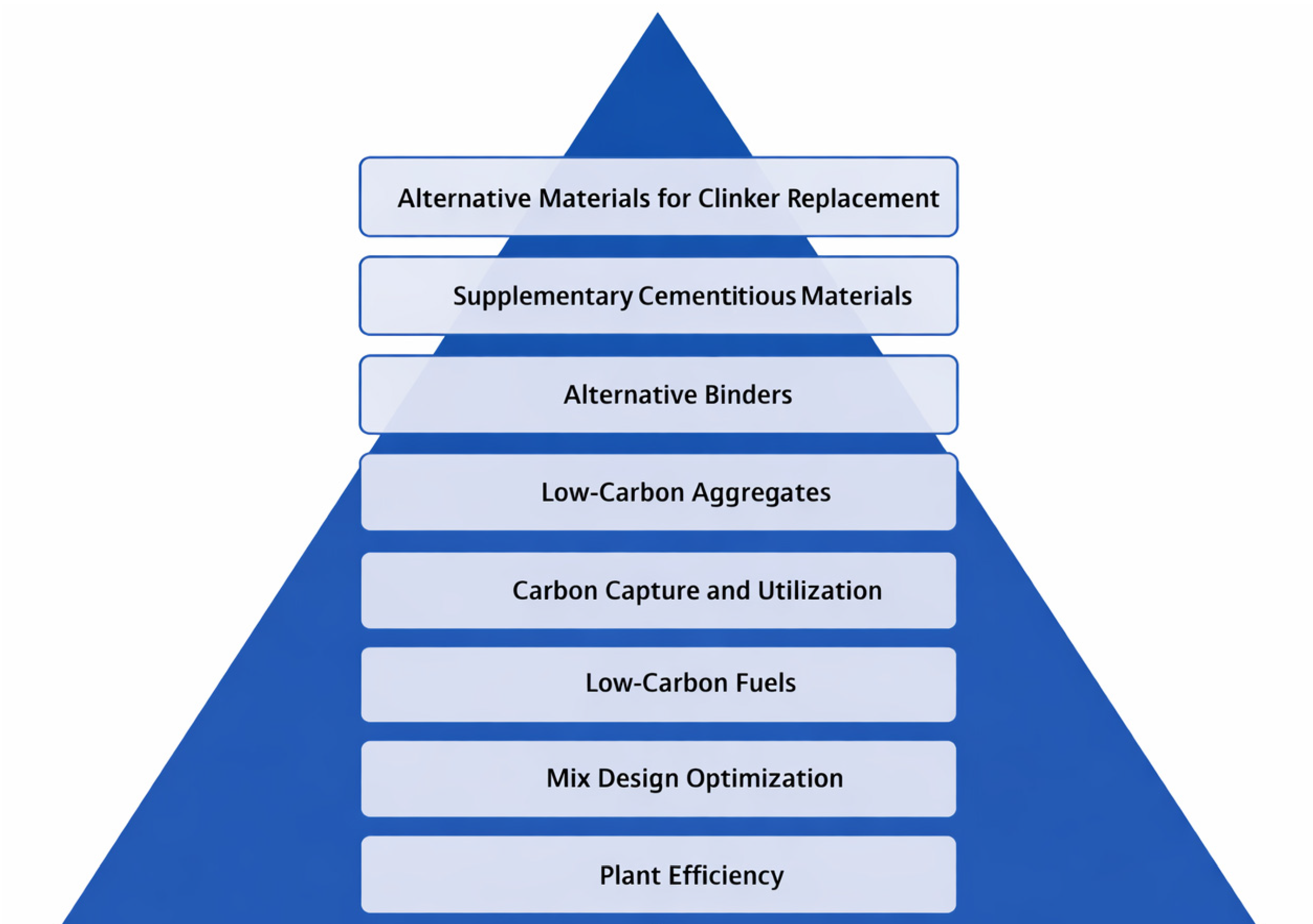
In order to address the abovementioned dilemmas of carbon footprints and intense energy consumption in the current cement and concrete industry, the following strategies, materials, alternative clinker technologies, alternative binders, and carbon capture technologies will be helpful as a step forward to reach net-zero carbon emission by 2050. Figure 2 presents innovative materials and advanced technologies for cement sector decarbonisation.
Figure 2. Innovative materials and cutting-edge technologies for decarbonisation.
Jcs 10 00226 g002

3. Material Incorporations, Efficiencies and Substitutions for Decarbonising the Cement and Concrete Sector

Reducing carbon emissions in cement manufacturing requires a multifaceted approach that focuses on lowering carbon dioxide emissions and enhancing sustainability. An effective method is the integration of substitute of cementitious materials, i.e., fly ash (FA), ground granulated blast furnace slag (GGBFS), and pozzolans, which can partially replace traditional clinker, thereby reducing the carbon footprint of cement. Since OPC and concrete production is associated with significant carbon emissions and higher energy consumption, several low-carbon and low-energy pathways for integration of the cement and concrete value chain with other industries, such as utilizing waste streams from iron and steel production, oil refining, and tire manufacturing, etc., offer promising decarbonisation opportunities. In the quest to reduce the carbon footprint of the cement and concrete industry, scientists have actively been investigating various alternate materials that can substitute or minimize the need for conventional OPC clinker. These materials offer considerable potential for reducing CO2 emissions in cement and concrete production processes. Following is an account of alternative materials which can be used for this purpose.

3.1. Integration of SCMs

Among the most promising avenues for reducing emissions in cement and concrete production is the incorporation of SCMs since they do not require clinkering. SCMs can be sourced from natural minerals (both raw and calcined), agricultural residues, and significantly, industrial by-products that can be used to partially replace the cement in concrete production. These materials can significantly reduce the OPC amount needed in concrete production, thereby lowering overall CO2 emissions. The adoption of SCMs has been recognized as one of the most effective strategies for mitigating emissions from cement production, particularly when these materials are used in combination with energy-efficient production processes [27,78]. SCMs, commonly derived as by-products from industrial operations, possess pozzolanic characteristics that enhance concrete’s strength, durability, and workability, while also helping to reduce CO2 emissions [79]. Common SCMs include FA, GGBFS, silica fumes (SF), rice husk ash (RHA), etc, and have gained significant attention as potential alternatives to Portland cement due to their lower carbon intensity and pozzolanic nature. An overview of commonly used SCMs, their replacement levels, and CO2 reduction potential is presented in Table 6. An integrated overview of SCMs, blended systems, clinker-free binders, and emerging low-carbon strategies is presented in Table 7.
Table 6. Overview of common SCMs.
SCMSourceMax ReplacementKey BenefitsCO2 Reduction PotentialRef.
Fly Ash (FA)Coal combustion by-productUp to 70% (HVFA)Pozzolanic activity, lowers heat, enhances durabilityUp to 30%[80,81,82,83]
Ground Granulated Blast Furnace Slag (GGBFS)Steel industry (blast furnace)Up to 50%Cementitious, enhances strength & durability22–40%[84,85,86,87]
Silica Fume (SF)Silicon/ferrosilicon industry~5%High strength, workability improvementNot specified[88,89]
Rice Husk Ash (RHA)Agro-waste (rice husk)Up to 30%Densifies matrix, improves durabilityModerate[90,91]
Bagasse Ash (BA)Sugarcane residue~20%Carbon footprint reductionModerate[91]
Natural PozzolansPerlite, pumiceUp to 30%Igneous origin, widespread availabilityNot specified[92]
Calcined ClayMetakaolin, kaoliniteUp to 50% (LC3)Early strength, low carbon calcination15–30%[93,94,95,96,97,98]
Table 7. Integrated overview of SCMs, blends, innovations, and industry insights.
CategoryMaterial/StrategySource/Process/IngredientsImpact/BenefitsCO2/GWP ReductionRemarks/NotesRef.
 Alternative SCMs Ye’elimite-based CSA cementsBauxite, limestone, sulphatesReduced clinker demand>20%Lower CaCO3 need; phase-sensitive blends[99,100]
 Calcined claysThermal treatment (<900 °C)Lower energy vs. OPC27–35%Efficient activation[101,102,103,104,105]
 ZeoliteNatural pozzolanHigh reactivityUp to 70% GWPOptimal at 10–30 wt%; calcination improves reactivity[106,107,108,109,110,111]
 Recycled glass powder (RGP)Glass wasteSuitable for UHPC42–53%Limited LCA studies[112,113]
 Iron/Copper tailingsMining wasteSCM potentialUnder studyNeeds chemical/thermal activation[114,115,116,117]
 MSW incineration ashWaste-to-energy ashWaste utilizationRegional (~125,000 tons/year)Reduces clinker use[118,119,120,121,122,123,124,125]
SCM Source CategoriesIndustrial by-productsFA, GGBFS, SF, calcined clayCost-effective, consistentWidely used[126,127,128,129,130,131]
 Raw & calcined mineralsKaolinite, zeolite, bentoniteModerate energy inputRequires calcination[101,102,103,104,132,133,134,135]
 Agricultural solid wasteCorn cob ash, eggshell powderSustainable potentialEarly stage research[136,137,138,139,140]
 Agricultural ashesRHA, SCBA, bamboo, palm oil ashHigh pozzolanic activity600–800 °C processing[137,141,142,143,144]
 MSW ashAPC residue, bottom ashClinker/aggregate useMay affect cement chemistry[118,119,120,121,122,123,124,125]
Blended Cement StrategiesFA + GGBFSBinary blendDurable, widely validated2.745 billion tons CO2 reductionEstablished approach[145,146]
 Limestone + SCMs (ternary)Multi-component blendsImproved rheology10–28% GHG; 20–38% GWPMaintains strength[130,131]
 Diatomaceous earth + limestoneHybrid blendHigh sustainability37% total; 56% (28-day GWP)Promising mix[109]
 Zeolite blends (10–30%)Pozzolanic substitutionOptimized at 20%Up to 70% GWPHigh efficiency[110,111]
Clinker-Free/Novel BindersBelite-rich cementLime sludge + sponge ironLower sintering tempEnergy reduction~1390 °C processing[147]
 Sulphur-activated binderFerrous + sulphur wasteCarbonation potentialCO2 capture (4.75 g/kg)Waste reuse[148]
 Wet-ground GGBFS blendPhosphogypsum + carbide slagHigh strength (45 MPa)12% CO2; 51% cost savingEfficient process[149]
 Clinker-free bindersPPW + ISWsLow-energy systemsNeeds activation/carbonation[149,150]
General Insights/ChallengesSCM substitutionOPC replacementResource efficiency12–20% (20% vol.); 6–28% (30 MPa)Proven emission reduction[151,152]
 Quarry dustMineral additionImproves microstructureFunctional SCM[153]
 Circular economyWaste-derived SCMsResource valorisationSustainability driver[154]
 Industry trendsLow-carbon bindersInnovation focusSCM shortages emerging
 Emerging researchDurability & performanceEnvironmental benefitsLimited carbon assessments[79,155,156,157]
 Industrial by-productsGGBFS, gypsum, kiln dustSCM potentialLogistics affect sustainability[147,158,159,160,161,162,163,164]
 Mining tailingsIron/Copper tailingsAlternative SCMRequires activation[165]
 Mechanical impactStrength–performance trade-offMay offset CO2 gains

3.2. Recycling of Materials

Recycling contributes to improved material efficiency by replacing primary materials with secondary ones. This encompasses a range of processing methods, from recycling into higher-value products such as SCMs to producing lower-value materials like aggregates. Downcycling, which denotes using secondary materials for less valuable applications than their original use, is a critical component of this process [166,167]. End-of-life concrete downcycling practices and their emission impacts are summarised in Table 8.
Table 8. End-of-life concrete downcycling and emission impact.
CategorySummaryRef.
Downcycling UseMostly secondary aggregates for non-structural use; some landfill[168]
Open vs. Closed LoopOpen loop common; closed loop (reuse in concrete) rare
Strength & EmissionsUnseparated aggregates lower strength, may increase cement use and emissions[169]
Transport InfluenceTransport mode/distance affects emissions slightly
Fines RecyclingBinder fines recycled as clinker/SCMs via separation or calcining[170,171,172]
Tech & StandardsNeed better quality control, sorting, standards, modular design
Limestone AggregatePossible direct kiln feed; impact unclear[173]
Utilization of Unprocessed Discarded Binder in a Cement Manufacturing Kiln Shown to produce clinker with a mineral composition comparable to that of PC clinker, while reducing pyro-processing emissions by around 33%[174]
Overall ImpactEmission reduction uncertain, no clear estimate

3.3. Construction Material Substitutions

Construction material substitutions refer to replacing one material with another that serves a similar function. This replacement may or may not result in a reduction of environmental impacts. In certain contexts, such as in structural components of buildings, cement and concrete can be replaced partially by alternative materials. When comparing embodied emissions, concrete typically has lower emissions per unit of mass and volume than materials like timber and steel [175]. However, constructing equivalent products with concrete often requires significantly larger quantities than timber [176]. Despite the relatively low embodied emissions of timber, its lower thermal mass leads to higher operational emissions compared to concrete [176]. Expanding the use of timber as a construction material raises concerns about ensuring its sustainability and managing conflicting requirements for timber as well as fertile land, particularly given the scale essential for substantially replacing concrete. Currently, timber makes up only about 3% of the total construction material mass, which would necessitate a large-scale increase in supply to enable moderate levels of timber substitution for concrete [177]. Furthermore, safety and performance standards could limit the extent of timber substitution, as current codes may not fully accommodate innovations like engineered wood products. Research scenarios that consider timber substitution for concrete often adopt conservative assumptions, such as a 5% substitution rate, and generally report only marginal reductions in emissions by 2050 [178,179]. Significant increases in the use of timber would require ambitious forest and land management strategies, alongside advancements in timber-based construction [180]. As a result, the potential reduction in construction materials cycle emissions from substituting timber for concrete is estimated to be less than 4%.

3.4. High-Performance Materials

High-performance materials aim to minimize the reliance on OPC clinker in cement-based products by enhancing the overall cement performance without altering the clinker proportion. Some of the key technologies include (i) refining the particle size distribution in fresh mortar and concrete, which can be accomplished through advanced grinding technologies, the use of dispersing agents like chemical admixtures, careful selection of high-grade aggregates, and the incorporation of fine fillers [181]; (ii) strength accelerators that enhance the initial compressive strength of cement-based binders, enabling cements with reduced PC clinker content to be used in a wider range of applications; and (iii) durability improvements, such as increasing concrete’s resistance to degradation from chlorides and sulphur, which support other material efficiency initiatives like more intensive product use, reuse, and SCM integration. The cumulative decarbonisation potential of these measures remains undetermined primarily due to the intricate nature of each method as well as their interconnections. Nevertheless, one effective method for enhancing performance is the use of CO2 injection in the batching and curing of ready-mix concrete to promote faster strength gain. This process has been reported to reduce the lifecycle emissions of concrete mixes by approximately 4% [182].

3.5. Material Efficiency

Achieving material efficiency plays a crucial role in advancing industrial decarbonisation by minimizing the rate, scale, and costs associated with implementing energy and emissions-saving strategies. Measures for improving material efficiency span influence the entire concrete materials cycle (CMC). These measures can be classified based on their type, technology, target material, and the stakeholders involved. These measures can be grouped in two main ways: by type (including material substitution, reducing PC clinker, and enhancing sustainability) as well as by their positions within the CMC. This second categorization ensures a consistent systems perspective. The positions in the cycle are defined as follows: (i) reducing emissions during cement production, such as by substituting PC binders with alternative binders exhibiting reduced cradle-to-gate CO2 emissions; (ii) minimizing the use of PC clinker in concrete, for example, through the reduction of over-specification and the use of SCMs; (iii) decreasing concrete use in products, for instance, by reducing over-specification and utilizing the most modern 3D printing technology and precast technology as well as technology for post-tensioning; (iv) enhancing the service life of products, such as by extending the service life of structures and elements via reuse and refurbishment; and (v) promoting recycling process, like converting construction and demolition waste (CDW) concrete powder.
Collectively, material efficiency measures are projected to potentially lower emissions throughout the cycle of concrete materials by approximately 38% [183,184].

3.6. Recycled OPC Powders (RCPs)

OPC paste waste can be treated and reused to manufacture new cement, a process with considerable potential given the substantial volumes of cement-based waste generated across different environments. These wastes can come from laboratory testing of materials as well as from CDW waste [185]. Typically, RCPs are commonly generated by thermally treating waste cement paste [171,186,187,188,189], though alternative methods such as grinding, sieving and crushing of hardened paste have been explored as viable production techniques [171]. Key production methods, reactivity mechanisms, and application performance of RCPs are summarised in Table 9.
Table 9. Key points on recycled cement powders (RCPs).
CategorySummaryRefs
ProductionThermal treatment (600–800 °C); crushing/grinding tested[171,171,186,187,188,189,190]
TechniquesTwo-step carbonation; mechanical + magnetic separation[186,190]
Reactivityα’H–C2S phase drives early hydration and microstructure[186,190]
Heat-treatment Effects450 °C - best strength; 650 °C - portlandite decomposes[188,191]
Concrete UseUp to 20% substitution maintains strength; >20% may affect workability; durability OK up to 50%[189,192]
Carbon Emissions94% lower CO2 at 450 °C vs. OPC; emissions 58–75% of clinker; ~13% without pre-treatment[63,193]

3.7. Integration of Eco-Friendly Aggregates to Develop Recycled Aggregate Concrete (RAC)

The recycling of diverse materials and industrial wastes to develop eco-friendly concrete has become an essential practice in sustainable construction. Initially, recycled concrete technology was used as a substitute for NA in concrete. Currently, recycled eco-friendly aggregates are being utilized for the production of RAC. Aggregates are essential constituents of concrete, forming the bulk of its volume and contributing to the overall structural integrity. They are generally categorized based on size into fine and coarse types. Conventionally, aggregates are obtained from natural sources such as riverbeds or by crushing stone. Rising concrete demand has intensified environmental impacts, primarily due to the high CO2 emissions associated with cement production, alongside additional emissions from raw material extraction and aggregate transportation.
The adoption of sustainable aggregates plays a crucial role in cutting CO2 emissions by reducing or eliminating the substantial embodied carbon linked to the extraction, processing, and transportation of traditional aggregates. These environmentally friendly alternatives also offer economic benefits, as they are often derived from low- or no-value waste materials. An exemplary application of such aggregates is seen in the construction of the Hoover Dam in the United States, where a significant amount of recycled concrete was utilized. In this case, the recycled aggregate originated from the demolished Stapleton Airport in Denver [194]. Utilizing waste materials such as CDW debris, glass waste, discarded tyre, ceramic and marble as aggregates presents an auspicious solution to reduce carbon emissions and achieve sustainable construction practices [195,196]. For example, the United Kingdom collects around 1.85 million tonnes of glass cullet each year [197], whereas Australia generates approximately 8.7 million tonnes of RCA along with 1 million tonnes of waste glass annually [198]. China’s rapid urbanization has contributed to a dramatic increase in CDW, with the country generating roughly nearly 30% of global MSW, with CDW making up around 40% of that total [199]. Recycling aggregates have been shown to result in a 22% to 46% decrease in CO2 emissions when compared with standard quarried materials, emitting roughly 4.0 kg of CO2 for every ton produced [200]. RAC was found to emit around 3.35 kg CO2 equivalent per ton, compared to 4.44 kg CO2 equivalent per ton for conventional concrete [201]. Using 50% recycled aggregates in road construction can lower the embodied energy and GHG emissions from materials by approximately 23% [202]. Integrating RA in concrete not only offers significant environmental advantages but also supports resource conservation, waste reduction, and a shift towards more sustainable construction. Realizing the full benefits of this strategy requires strong collaboration among researchers, industry leaders, policymakers, and society to address existing challenges and advance a more sustainable and resilient construction sector. Moreover, the potential for carbon savings can be significantly enhanced through the use of carbonated recycled aggregate concrete (CRAC) technology. This technology involves carbon mineralization of RCA, which can also contribute to carbon sequestration efforts. The authors of [202] reported that carbon conditioning of recycled aggregates (RAs) is an effective technique for enhancing the mechanical and durability performance of carbonated recycled aggregate concrete (CRAC). Further enhancement in carbon reduction can be achieved by integrating RAC and CRAC with other waste valorisation approaches, such as incorporating industrial by-products as SCMs or as precursors in GP and AAM systems [203,204]. The extensive research in the literature highlights the pivotal role of recycled concrete in lowering the carbon footprint of the cement and concrete sectors, positioning it as a key component in broader carbon-neutral strategies. Recent investigations have also explored the feasibility of repurposing waste cement paste for manufacturing recycled cement. A summary of recycled aggregates, including their types, benefits, challenges, and environmental impacts, is presented in Table 10.
Table 10. Summary of recycled aggregates in concrete.
DataKey PointsRefs
TypesFine/coarse; natural from river/crushed rock[205,206]
Environmental IssuesHigh CO2 from extraction/transport[205]
Recycled MaterialsCDW, glass, tires, bricks, asphalt[195,206,207,208]
BenefitsCuts raw extraction, landfill, CO2, and cost[200,201,202]
ChallengesHigh absorption, strength loss, energy use[207,208]
SolutionsSCMs, carbon mineralization (CRAC), treatments[202,203]
Global SupplyLarge CDW/glass availability[197,198,199,209,210]
Emissions Reduction22–46% less CO2 vs. natural aggregates[200,201]
Key FactorsTransport distances crucial[211,212]
Research & CollaborationOngoing studies; need cross-sector efforts[213]

4. Alternative Clinker/Binder Materials

With a view to addressing the carbon footprint of clinker production, one viable strategy for decarbonisation in the cement sector is the adoption of ACTs. Investigating ACTs represents a crucial approach to lowering the carbon emissions associated with cement manufacturing. These innovations are designed to reduce dependence on conventional clinker, which is a major source of CO2 output, thereby supporting the cement industry’s role in combating climate change and promoting sustainability. ACTs consist of artificial mineral materials ground into a fine powder that react either with water (H2O) (hydraulic), carbon dioxide (CO2) (carbonatable), or both (e.g., magnesium oxide derived from magnesium silicate clinker) to form a hardened binder suitable for mortar and concrete production. These materials can achieve rapid hardening, making them suitable for construction applications that traditionally rely on Portland cement clinker (PCC) binders. An overview of alternative clinker technologies and waste-based binder approaches for low-carbon cement is presented in Table 11.
Table 11. Alternative clinker technologies and waste-based binder approaches for low-carbon cement.
CategoryType/DescriptionKey Features & ChallengesRefs
A. Hydraulic Clinkers(i) Reactive belite-rich PC (RBPC)
(ii) Belite-ye’elimite-ferrite (BYF)
Harden with water only; suitable for reducing emissions in standard concrete applications
B. Carbonatable ClinkerCarbonatable calcium silicate clinker (CCSC)Harden by reacting with CO2; promotes carbon uptake
C. Dual-reacting ClinkerMagnesium oxides from magnesium silicates (MOMSs)   Undergo both hydration and carbonation reactions, enabling dual-reactivity for strength development and CO2 uptake      
Waste-based Hydraulic BindersDerived from municipal waste, CDW, industrial/agro by-productsEnables clinker-free production; dual benefit—emissions reduction & waste valorisation
Raw Material SubstitutionEarly research: partial clinker replacement with waste
Recent research: 100% waste-derived binders
Transition from partial to full waste substitution
CO2 Emission SourceEmissions from limestone calcination during clinker production Major contributor to CO2 emissions due to high-temperature decarbonation
Waste AlternativesGGBFS, pulverised fuel ash, residual foundry sandPotential substitutes but often low in CaO; cannot fully replace limestone
Adoption in Europe~5% high-CaO waste used in cement; only ~10% clinker replacement achievableLimited by strength loss and CaO content[204]
BenefitsLower CO2 emissions and energy demandReduction in limestone use and calcination energy
ChallengesEarly strength reduction; limitations in substituting limestone completelyTechnical performance barriers for full-scale implementation

4.1. Reactive Belite-Rich Portland Clinkers (RBPCs)

RBPCs have chemical compositions that are like those of PC, including compounds such as C2S, C3S, C3A, and C4AF. However, RBPCs contain more than 40% belite, compared to the approximately 35% of alite found in PC [214]. Due to the lower content of C3S, RBPCs require lower processing temperatures, which translate to reduced energy use and emission of CO2. The optimal clinkering temperature for producing RBPCs is about 1350 °C, which is nearly 100 °C lower than that required for OPC manufacturing. This temperature reduction makes it feasible to utilise lower-grade fuels [214]. Limestone remains the principal feedstock in RBPC production, supporting its feasibility for large-scale implementation. Additionally, RBPC can be produced in existing OPC plants with only minimal modifications to the raw material formulation and fuel input. Notably, China has already commenced RBPC production using dry-process rotary kilns equipped with preheaters. This innovative cement technology shows promise in supporting carbon neutrality within the cement sector. The study by [214] examined the overall performance of RBPC, including its physical, chemical, mechanical, and environmental characteristics. Despite this, limited research exists in the public domain regarding the carbon reduction potential of RBPC cement. According to [215], industrial-scale tests of low-energy belite cement demonstrated an energy saving of 500–540 kJ per kilogram of clinker relative to OPC production. A thermodynamic analysis conducted by [214] suggested that manufacturing RBPC with a composition of 62% belite and 16% alite could lower CO2 emissions by around 32 kg per tonne of clinker compared to OPC with 63% alite and 15% belite equating to a 6% decrease in emissions. Additionally, the energy savings from RBPC production could result in an extra 10% cut in total carbon emissions [214]. Research also indicates that the environmental performance of RBPC can be further enhanced by incorporating industrial by-products. Table 12 further highlights that advanced modification techniques can significantly enhance the reactivity and strength development of belite-rich systems.
Table 12. Summary of energy, emission, and performance characteristics of RBPCs.
Key PointDetailsRefs
Energy SavingsRBPC clinker production saves 500–540 kJ/kg clinker vs. OPC[215]
Carbon Emission Reduction~32 kg CO2/t clinker (6% reduction) with 62% belite, 16% alite RBPC vs. OPC; overall 10% reduction from energy savings[214]
Industrial By-product UseSubstituting limestone/clay with rock and calcium carbonate sludge allows firing at 1100 °C; ~24% CO2 reduction[216]
Historical Use & CompositionBelite-rich binders date back to Roman times; require ~10% less limestone; lower firing temp than alite clinkers[217]
AdvantagesLower heat of hydration, improved rheology, better long-term durability (compact structure, less Ca(OH)2)[217]
LimitationsLower early age strength due to slower hydration (4x less at 28 days); strength equalizes after 1 year[217]
Causes of Slow ReactivityDense structure limits water penetration; lower Ca2+ solubility attached to SiO4 tetrahedron[218]
Enhancement MethodsMetal oxide doping in belite lattice to increase water penetration and dissolution
 Novel dendritic belite + amorphous C-S phase clinker with C/S = 1.4, two-step cooling improves strength up to 4× traditional belite
ApplicationsSuited for low-heat, high-strength later-age concrete, large volume/high-performance structures[219]
Overall ImpactUp to 10% CO2 process emission reduction; insufficient alone to meet cement industry climate goals

4.2. Oil Shale Portland Clinker

Previous research has explored the potential of incorporating oil shale into cement clinker production, primarily to utilize the organic components of the shale—principally “Kerogen”, a solid product of bacterially altered animal and plant remains—as a fuel source and to manage shale waste more sustainably. According to [220], incorporating 16% oil shale ash (OSA) into the production of Portland cement clinker can lower the clinkering temperature by around 10%, while maintaining the essential properties of the resulting clinker. Further research has demonstrated that burning oil shale—particularly oil shale with higher organic matter—produces ash rich in silica, which possesses pozzolanic activity. Several investigations have explored the feasibility of using OSA as a partial cement replacement in mortar and concrete mixtures [221,222]. A thorough review by [223] examined the potential of OSA as a supplementary material in both Portland cement-based and geopolymer concretes. Oil shale that contains low organic content, often referred to as calcareous oil shale, typically has a high carbonate content and an oxide composition comparable to OPC clinker. Research by the authors of [224] found that calcareous oil shale could replace up to 76% of the raw materials required for the production of cement clinker of belite—an important industrial mineral primarily composed of dicalcium silicate, i.e., Ca2SiO4 or 2CaO·SiO2 in cement chemist notation, whereas the shorthand notation “C2S” is used in cement chemistry to represent “dicalcium silicate”. Belite (C2S) contains less CaO than alite (C3S), the principal phase in ordinary Portland cement (OPC), representing an impure form of tricalcium silicate (Ca3SiO₅ or 3CaO·SiO2). It can be produced at lower calcination temperatures, reducing carbon emissions by up to 10%. Moreover, the energy derived from oil shale combustion is sufficient to fuel the rotary kiln calcination process, substituting traditional combustion fuels and further reducing CO2 emissions. However, much of the existing literature primarily addresses the technical aspects of cement production, with limited focus on the environmental impact of the proposed technologies. Therefore, future studies should expand to include the evaluation of the embodied carbon footprint of oil shale-based clinkers to better assess their scalability.

4.3. Reduce Intensity of PC Clinker

4.3.1. Reduce Overdesign

Typically, more Portland cement (PC) clinker is used than necessary to meet specific performance criteria outlined in engineering standards. This overdesign largely stems from the application of safety factors and logistical optimization. Safety factors—commonly accounting for an additional 20% in material usage—are adopted by engineers to mitigate the risk of underperformance, especially due to potentially suboptimal site conditions [183]. Logistical optimization, on the other hand, aims to save time and reduce construction complexity by employing standardized product designs and generalized concrete classes across components, rather than developing project-specific mix designs or assigning distinct exposure classes. These practices are widespread in the construction industry, where simplicity and speed are often prioritized. However, such approaches result in the excessive use of PC clinker, cement, mortar, and concrete beyond what is technically required [225].
Reducing overdesign can be achieved through several strategies, including increased digitalization in construction (e.g., 3D printing), precise matching of concrete properties with exposure conditions and material specifications, improved monitoring of cement consumption and intensity, greater use of precast over ready-mix concrete, and the implementation of planning systems like Building Information Modelling (BIM) to optimize cost, constructability, and embodied emissions. In the UK, minimizing overdesign is estimated to reduce cementitious materials’ (CMs) life cycle emissions by up to 6% for PC in concrete and up to 13% for concrete used in products [184].

4.3.2. Clinker Factor Reduction

Lowering the clinker content in cement is considered one of the most impactful methods for cutting down CO2 emissions in cement manufacturing, as it tackles emissions from both raw material calcination and fuel combustion. As of 2014, the global average clinker ratio stood at 0.65 [6]. China also reported a similar clinker ratio of 0.65 in 2018, primarily attributed to the widespread incorporation of industrial by-products such as fly ash and slag [226]. In contrast, Germany reported an average clinker factor of 0.71 in 2017 [227], while the European average was approximately 0.74 in 2016 [228]. Notably, countries like Ireland and Denmark maintain higher clinker factors—around 0.90—whereas the Netherlands has managed to lower it significantly to about 0.46 [229]. Despite being technically achievable and environmentally advantageous, reducing the clinker content can be constrained by regional availability of suitable alternative binders. Moreover, the desired performance of cement in structural applications must be maintained in alignment with its exposure conditions and functional requirements. In addition to clinker reduction, the volume and type of supplementary materials used in the mix also influence the cement’s overall carbon footprint. Ground granulated blast furnace slag (GGBFS), a secondary product from pig iron production during steelmaking, offers considerable potential. Upon rapid cooling, it forms an amorphous structure (over 90%), giving it latent hydraulic properties enhanced by its basic nature. When blended into cement, GGBFS contributes to improved durability and other performance traits. Commonly referred to as slag cements, these formulations have been in use since the inception of industrial cement production in the 19th century. Although comprehensive global estimates of GGBFS availability are limited, the International Energy Agency (IEA) has proposed scenarios projecting its potential supply.

4.4. Low-Carbon Alternative Binders

Although Portland cement has served as the dominant binder in concrete for more than a hundred years, its manufacturing process is misaligned with the global objectives for achieving carbon neutrality or ‘net-zero’ emissions. Consequently, the development of alternative types of binders, particularly those that can be produced with lower CO2 emissions is the pressing need of the hour. For this reason, the development of novel innovative alternative binders, especially those that are low carbon, is perhaps one of the most promising solutions for achieving carbon neutrality in the cement and concrete industry. Alternative binders are materials that can potentially lower the embodied emissions as compared with PC binders, due to differences in their chemical composition, raw materials, and properties [230]. These binders include geopolymer cements that are typically a blend of aluminosilicate precursors with an alkaline solution. Other forms of alternative binders involve using non-Portland clinkers/cements, such as mixtures of carbonatable calcium and magnesium hydroxides and belite-ye’elimite-ferrite [214]. Although these materials have emissions reduction potential, their ability to do so, along with their technological readiness and performance, can vary significantly, and this limits their practical application. Concrete without reinforcements, in particular, tends to benefit more from these substitutions, as the risks associated with failure during service are less critical, given the lesser concern for issues like steel corrosion in reinforced concrete. Replacing conventional blended PC binders with alternative binders is estimated to reduce carbon emissions in the UK construction materials cycle by up to 28%. This estimate is based on the existing rate of PC clinker substitution in 2018 in Europe, around 25%. The alternative binders must provide long-term durability, ensuring that concrete structures remain stable when exposed to natural elements and environmental conditions. Meeting these performance requirements is challenging, but it is essential for the widespread adoption of alternative binders in the cement and concrete industry. As CO2 emissions from traditional OPC production continue to rise, the development of innovative binders that can meet these performance criteria while reducing carbon emissions is crucial for achieving the sector’s long-term sustainability goals. As outlined in the IEA CSI roadmap, global consumption of Portland cement, the main binding agent in concrete, is projected to grow by 23% by 2050, primarily due to rising urbanization and population expansion. This surge in demand is expected to place significant pressure on the natural resources used to produce Portland cement, in addition to contributing to higher CO2 emissions. To mitigate environmental impact while fulfilling future concrete needs, it is crucial to explore and utilize alternative binders sourced from waste materials in concrete manufacturing. Among emerging low-carbon binder technologies, rankinite-based cements have gained attention due to their ability to undergo CO2-driven hardening and offer potentially lower embodied emissions compared with conventional OPC. Rankinite (Ca3Si2O7), a non-Portland phase, can be formed through controlled thermal treatment of calcium silicate precursors and exhibits reactivity with CO2 during curing, forming stable carbonate phases such as calcite and aragonite that contribute to strength development. Research suggests that rankinite binders can achieve compressive strengths comparable to OPC at significantly reduced calcination temperatures, leading to lower thermal energy demand during manufacturing and reduced CO2 emissions. Additionally, rankinite cements show promise for utilisation of industrial by-products (e.g., slags and silica-rich wastes) as feedstock, further lowering the carbon footprint of binder production. While techno-economic and durability evaluations are ongoing, the incorporation of rankinite-based systems stands out as a promising pathway within the broader class of alternative binders and warrants further detailed investigation. Table 13 highlights that geopolymer systems can achieve up to 80–90% CO2 emission reductions compared to ordinary Portland cement (OPC) [1,231].
Table 13. Summary of innovative geopolymers/alkali-activated binders.
Key PointDetailsRefs
Definition & SustainabilityGP binders are alkali-activated industrial by-products (fly ash, slag, and clays) offering a sustainable alternative to OPC[232]
CO2 Emission ReductionUp to 80–90% CO2 reduction vs. OPC; e.g., 0.18 kg CO2/kg geopolymer cement (~1/5 of OPC emissions)[1,231]
Precursors & ActivatorsCommon precursors: Type F fly ash (low Ca) and blast furnace slag; activators: NaOH, sodium silicate, and potassium hydroxide[233,234,235]
Curing RequirementsAlkali-activated fly ash requires ~55 °C curing; lower temperatures reduce strength[234]
PerformanceSlag activated with NaOH/silicate shows improved mechanical properties; fast strength gain for repair materials[235]
GP TypesOne-part (“just add water”) and two-part binders; aluminosilicate precursors include fly ash, GGBFS, metakaolin, and clays[236]
Additional Sustainable PrecursorsRice husk ash, recycled glass powder, and lime kiln dust improve sustainability and reduce carbon footprint[237]
Commercial & Market PotentialGrowing commercial interest; market projected to reach $19 B by 2028; recognized for sustainability and performance[238,239,240]
Large-scale ApplicationsUniversity of Queensland GCI building (33% GPC in floors), Brisbane West Wellcamp Airport (~40,000 m3 GPC; 6600 tons CO2 saved)[241]
Environmental & Energy BenefitsGPC reduces carbon footprint by ~90%, operational energy by ~60%; supports circular economy and waste valorisation[1]

4.5. Portland Limestone Cement (PLC) Binder

PLC was initially developed and introduced during the late 1980s [242]. As awareness grew regarding the environmental advantages of blended cements, PLCs began to gain significant traction in the early 2000s [85,242]. This cement type is manufactured by inter-grinding OPC clinker, gypsum, and limestone, with limestone typically replacing 10% to 20% of the clinker content [243]. While initial research on PLC primarily focused on its mechanical and durability characteristics, its environmental advantages were often overlooked [244,245,246]. The realization of its reduced environmental impact led to increased adoption in the early 2000s [85,244]. Studies indicate that PLC production generates approximately 10% lower CO2 emissions compared to OPC [247]. Further reductions in clinker content and carbon emissions can be achieved by integrating SCMs [248]. Nonetheless, the sustainability potential of PLC could be further enhanced by incorporating calcined clay as a clinker substitute. Despite these advancements, limited research has evaluated the role of various PLC formulations in short-term decarbonisation strategies within the cement sector.

4.6. Limestone Calcined Clay Cement (LC3) Binder

The clinker proportion in PLC can be further lowered by integrating SCMs. LC3 has been developed as an innovative and effective solution in the form of a promising eco-friendly alternative to conventional Portland cement [98]. Limestone calcined clay cement (LC3) utilizes calcined clays to partially substitute OPC clinker in cement production. It combines calcined clay and limestone as its primary ingredients. This innovative binder significantly reduces the carbon emissions associated with cement production. The production of LC3 involves the calcination process that includes heating of a mixture of limestone and clay (rich in Kaolinite) at significantly lower temperatures of approximately 700° to 850 °C than those required for OPC clinker production. Clays rich in kaolinite can be calcined using roller hearth kilns, flash calcination units, or conventional rotary kilns because their calcination temperature is lower than that of OPC clinker [93,249]. During the calcination process, the heating of the clay causes the removal of chemically bound water and other volatile substances. Limestone mainly consists of calcium carbonate (CaCO3), whereas clay contains high levels of alumina and silica. The combination of these materials, coupled with the pozzolanic activity of calcined clay and the filler role of limestone, produces a synergistic effect that improves the characteristics of the resulting binder. Thus, the synergistic effect of calcined clay and limestone enables substantial clinker replacement in blended cements. A typical LC3 composition consists of 30% calcined clay, 15% limestone, and 5% gypsum, replacing 50% of OPC clinker while maintaining comparable engineering performance, such as in hydration kinetics and mechanical and durability performance, to conventional OPC [250]. This combination creates a cementitious material with properties comparable to Portland cement. The calcined clay is then finely ground into powder. The interaction of the calcium carbonate and alumina, together with the pozzolanic reaction from calcined clay, facilitates a dual effect that allows for a higher degree of clinker substitution. Table 14 shows that LC3 can reduce CO2 emissions by approximately 25–40% through partial clinker substitution with calcined clay and limestone blends.
Table 14. Summary of key technical, environmental, and economic insights on LC3.
Key PointDetailsRefs
CO2 Reduction PotentialSubstituting half of the clinker content with a blend of calcined clay and limestone can lower CO2 emissions by approximately 25% to 40%[251,252]
Clinker Substitution RangeLC3 can replace up to 60% of clinker; higher than traditional limestone (~15%) or calcined clay (~25%)[97]
Mechanical & Durability PropertiesMaintains or improves strength, chloride resistance, and durability[251,253]
Source & AvailabilityCalcined clay is often an industrial by-product; widely available and viable for global use
Calcination Method ImpactFlash calcination improves clay reactivity over static/rotary kilns
Hydration ChemistryAl from kaolinite forms C-A-S-H; interlayer water increases after early delay, enhancing long-term strength[254,255]
Environmental BenefitsEnergy efficiency, lower GHGs, waste valorisation; 16–38% CO2 footprint reduction shown in different regions[251,256]
Cost & Plant CompatibilityNo major plant changes needed; ball mills adequate; retrofitting old kilns is more cost-effective than new calcination tech[251,257]
Process OptimizationRequires adjustment in particle size distribution, inter-grinding for rheology and early strength[258]
Adoption & Scale-UpCommercial/pilot production in India, Brazil, Cuba; successful use of low-grade clays with alternative fuels[256,257]
Clay Source FlexibilityEnvironmental impact varies <7% between high vs. low kaolinite clays; supports use of waste-derived clays[256]
Underrepresented in LCALC3 is not yet fully captured in LCA studies for global decarbonisation targets
Strategic RolePromising for near- to mid-term cement decarbonisation; scalable with existing infrastructure

4.7. Belite Portland Cement (BPC) Binder

Belite Portland cement (BPC) is a type of low-emission, lower operational energy, higher performance cement enclosing chiefly belite and alite with calcium aluminate that exhibits parallel strength to Portland cement. This is why BPC has gained significant attention both in industry and academic research as a low-heat cement [215,259]. Recent research has investigated the incorporation of industrial residues like rice husk ash, cement kiln dust, and paper sludge as partial substitutes for conventional raw materials in belite clinker manufacturing. This replacement strategy not only eases the reliance on virgin raw materials but also supports energy savings and lower CO2 emissions during clinker manufacturing. BPC, often referred to as high-belite cement, is produced using a method akin to that of OPC, though it utilizes less limestone in the raw mix and is sintered at a notably lower temperature around 1350 °C, which is roughly 100 °C below the typical temperature used for OPC clinker production [260]. Typically, BPC consists of around 50% belite (2CaO·SiO2) and 35% alite (3CaO·SiO2) [214]. To improve belite’s reactivity, around 0.5% to 1% of sulphur trioxide (SO3) is added to the raw meal prior to clinker formation, with the process followed by rapid cooling. The lower sintering temperature of approximately 1350 °C not only minimizes the generation of nitrogen oxides (NOx) and sulphur oxides (SOx) [214], but also results in a CO2 emission reduction of about 10% to 12% in comparison with OPC [260]. Due to its lower heat of hydration, BPC shows delayed early-age strength development, achieving significant strength gain after approximately 28 days of hydration. The authors of [219] have reported more than 20% reduction in the heat of hydration for BPC when compared to OPC, with its 28-day compressive strength being almost similar to OPC; however, after 90 days of curing, it achieves a compressive strength exceeding that of OPC by over 10 MPa. Likewise, researchers [261] found that belite-rich Portland cement (BPC) achieves higher compressive strength than OPC over longer curing durations. They further reported that increasing the curing temperature enhances BPC hydration without negatively affecting its mechanical performance. For instance, the compressive strength of BPC rose from 58 MPa to 74 MPa over 28 days when the temperature was increased from 20 °C to 70 °C, whereas OPC strength declined from 58 MPa to 46 MPa under the same conditions [261].

5. Alternative/Emerging Technologies

5.1. Calcium Sulphoaluminate Cement (CSA) or Belite-Ye’elimite Binder

CSA cement, also known as belite-ye’elimite binder, is characterized by a high alumina and low calcium oxide content around 36.8% [262]. It can be synthesized by calcining a combination of limestone, clay, gypsum, and bauxite at lower temperatures, typically between 1200 °C and 1300 °C, about 100 °C to 150 °C less than that required for conventional cement production, leading to an estimated 15% reduction in coal usage [263]. CSA cement has a CO2 emission factor of approximately 0.54 kg CO2/kg, which is about 34% lower than that of OPC [264]. The main mineral phases in CSA include 20–45% ye’elimite, 45–75% belite, and gypsum [260]. While the ye’elimite phase is responsible for early strength gain, the belite (C2S) contributes to long-term mechanical performance [265]. Upon hydration, CSA forms ettringite (C63H32), a calcium aluminium sulphate hydrate, which governs the early setting behaviour of CSA-based concretes. Production levels of CSA cement have remained steady since 2004, averaging around 1.2 to 1.3 million tonnes annually [260], likely due to its high aluminium content, which makes it more expensive than OPC and restricts its widespread use to specialized applications such as fast-setting or self-stressing concretes. Despite this, CSA remains a viable alternative to traditional binders due to its higher belite content, excellent chemical durability, and reduced permeability [266]. In [267], CSA clinker was produced by incorporating fly ash and slag into the raw mix (consisting of limestone, clay, gypsum, and bauxite) and sintering at 1300 °C for 30 min [267]. Their findings revealed that a clinker mix containing 10% slag attained 42 MPa compressive strength, whereas a blend with 15% fly ash, 13% slag, and 5% gypsum reached 43 MPa. The highest compressive strength, 60.9 MPa, was observed for clinker made with only 5% gypsum after 28 days. Two emerging variants of CSA cement, belite-ye’elimite-ferrite (BYF) and alite-ye’elimite-ferrite (AYF), have been developed by increasing the incorporation of more iron-rich minerals into the raw material mix. BYF typically comprises 40% to 60% belite (C2S), 20% to 40% ye’elimite, and 5% to 45% ferrite (C4AF), while AYF contains a higher proportion of alite, similar to OPC, instead of belite [268]. Compared to OPC, BYF has the potential to reduce energy consumption by up to 25%, cut limestone usage by 60%, and lower carbon emissions by approximately 20% [269]. While these novel binders are still under development and not yet widely produced at an industrial scale, several cement manufacturers have begun pilot-scale production efforts.
Belite-ye’elimite-ferrite (BYF) cement primarily consists of belite (C2S), ye’elimite (CSA), and ferrite (C4AF), and shares similarities with conventional CSA cement. Nevertheless, the higher belite content contributes to lower raw material expenses. The authors of [270] highlighted progress in ye’elimite-based cements, which can be broadly classified into two categories: conventional fast-setting CSA cements characterized by low belite content, and low-carbon BYF cements distinguished by a higher belite composition. The industrial-scale development of BYF requires alternative, low-cost alumina and sulphate sources. Researchers have examined a variety of alternative materials for use in BYF and CSA clinker production. Alumina sources investigated include low-calcium fly ash (FA), waste from marble and ceramic processing, bauxite residues, kaolinite, and aluminium anodizing sludge. For sulphate content, materials like phosphogypsum, lignite-derived fly ash, and by-products from coal combustion have been explored. Although many studies [271,272,273,274] have evaluated the mechanical and performance characteristics of these alternative cements, their environmental advantages are particularly significant in aligning with global net-zero carbon objectives. Modelling studies indicate that BYF clinkers require less thermal energy to form than conventional OPC, which helps lower associated CO2 emissions. In addition, the reduced content of C3S and lower limestone requirements further contribute to emission reductions. As reported in [214], BYF clinkers need 20–30% less limestone than OPC, translating into notable cuts in CO2 released during calcination and fuel use. They estimated that a 20% drop in limestone use could yield a proportional 20% decrease in CO2 emissions per tonne of clinker. Further, the authors of [275] assessed the environmental profile of both low- and high-ye’elimite BYF clinkers, observing that their GHG emissions were notably lower than OPC. Unlike OPC—where most emissions are due to calcination—BYF clinker’s emissions are more energy-related, comprising 34–46% of the total. To improve the sustainability of BYF and CSA clinker even further, industrial by-products can serve as raw materials. For example, the authors of [276] demonstrated that incorporating fly ash and desulpho-gypsum from coal plants, along with red mud from aluminum production, into CSA clinker feedstock enables sintering at 1250 °C, offering a viable route for reducing CO2 emissions. A regional analysis by the authors of [277] estimated BYF clinker’s carbon intensity at 0.62–0.65 kg CO2/kg, which is roughly 28% lower than that of OPC clinker. While technical knowledge on these low-carbon binders has advanced significantly, additional studies are essential to fully quantify their environmental performance and lifecycle benefits. Low-carbon alternative clinkers and cement systems such as CSA, BYF, and Aerther clinker are summarised in Table 15, highlighting their compositions, advantages, and limitations.
Table 15. Low-carbon alternative clinkers and cements (CSA, BYF, and aerther).
Type of Cement/ClinkerKey Components/PhasesAdvantagesLimitations/ChallengesReferences
Aerther Clinker (Lafarge)High belite concentration, reduced lime contentReduces CO2 emissions by 20–30%; uses cost-effective raw materialsNot yet fully scaled up; different reactivity than OPC[278,279]
Calcium Sulphoaluminate (CSA) CementYe’elimite [Ca4(AlO2)6SO4], belite [Ca2SiO4], calcium sulphateLower sintering temperature (~1250 °C); early strength; low shrinkage; freeze–thaw resistanceLimited alumina-rich raw materials; carbonation susceptibility[276,280,281]
Belite-Ye’elimite-Ferrite (BYF) CementBelite, ye’elimite, ferrite [4CaO·Al2O3·Fe2O3]Lower cost; less aluminum dependency; similar strength to OPCSusceptible to carbonation; slower ferrite hydration[100,214,282]

5.2. Carbonatable Calcium Silicate and Alternative Binders

In recent years, carbonatable binders have garnered significant attention due to their ability to both carbonate and hydrate, which facilitates the hardening of raw materials [265]. Portland cement serves as a typical example of a binder that undergoes carbonation, as its hydration process generates calcium hydroxide [Ca(OH)2], which readily reacts with carbon dioxide. Despite this reactivity, the carbonation rate remains relatively slow under ambient conditions, given the low atmospheric CO2 concentration of approximately 0.04% (400 ppm)—a process referred to as “natural” or “mineral carbonation” [214]. Historically, lime-based binders, which were widely used in ancient construction, also rely on atmospheric carbonation for hardening. These materials continue to be applied in specific mortar formulations, setting and gaining strength through the interaction with CO2 present in the surrounding air.
Recently, carbonatable calcium silicate cements (CCSCs) have made significant progress, especially in accelerating the carbonation hardening process in industrial applications without excessive energy consumption. CCSC was developed by utilizing accelerated carbonation to harden calcium silicate. Cements derived from calcium silicate sources like mineral wollastonite can cure rapidly under CO2-rich environments when exposed to controlled temperature and humidity. Concrete products utilizing calcium silicate carbonate cement (CCSC) are typically cured in precast plants equipped with specialized CO2 curing chambers [214]. Research indicates that CCSC production emits approximately 30% less CO2 than traditional OPC clinker, primarily due to its reduced calcium content [283], and significantly lowers carbon emissions related to calcination and energy use compared to both OPC and blended Portland cements [275].
Beyond CCSC—which mainly consists of wollastonite and hardens via carbonation—numerous studies have examined the use of both natural and synthetic wollastonite either as a partial substitute for limestone in cement manufacturing or as an alternative binder in concrete [284,285]. For example, a novel clinker incorporating a 1% replacement of limestone with wollastonite can be produced at 1400 °C, reducing energy demand by 4 kcal/kg and cutting CO2 emissions by 0.013 tonnes per tonne of clinker [286].
Additionally, rankinite-based cements, which also harden through CO2 curing, represent a promising alternative within the broader class of carbonatable binders and warrant further investigation. In addition to accelerated carbonation strategies for calcium silicate cements, wollastonite-based binders represent a distinct class of carbonatable materials that can offer emissions benefits beyond traditional OPC. Wollastonite (CaSiO3) is a naturally occurring calcium silicate mineral that exhibits effective CO2 uptake during carbonation hardening, forming calcium carbonate and amorphous silica phases that contribute to mechanical performance. Recent studies have shown that materials incorporating wollastonite as a partial substitute for limestone or as a primary binder ingredient can lead to reduced calcination energy and modest CO2 emission reductions in clinker production without compromising early age strength. Furthermore, wollastonite-rich binders can be processed in controlled CO2 curing environments, which accelerates strength gain while capturing carbon that would otherwise contribute to atmospheric GHG loads. Although the practical deployment of wollastonite-based cements is still emerging, they are increasingly recognised for their potential to bridge the gap between conventional OPC and more radical carbon capture hardening approaches.
The concrete industry utilizes a range of alternative binders, from partially replacing conventional Portland cement with SCMs to fully substituting it with alkali-activated binders [287]. SCMs are typically by-products of various industrial processes and can be repurposed to replace up to 80% of Portland cement. SCMs are used in various applications, with five primary types currently in use: calcium sulphate (e.g., gypsum), limestone, natural pozzolans (e.g., volcanic ash), synthetic pozzolans such as calcined clay, and secondary by-products such as coal fly ash and GGBFS. In the United Kingdom, common cementitious materials include limestone, gypsum, and various secondary materials like coal fly ash and blast furnace slag, which together make up about 20% of the total cementitious content [184]. In Europe and globally, finely ground limestone is one of the most widely utilized materials. In 2018, the average clinker substitution rate for all types of Portland cement (CEM I-V) in Europe was around 25%. SCMs typically contribute much less embodied CO2 compared to PC clinker [230]. As such, reducing the clinker content by increasing the cementitious substitution rate can lower the carbon emissions associated with the cement manufacturing cycle. However, the extent of cementitious substitution is constrained by the availability and reactivity of SCMs, with reactivity being crucial for early strength development. It is estimated that the average substitution rate in Europe could potentially rise to 50%, particularly due to the advancements in technologies like limestone-LC3, which offers strong technical performance [93]. Increasing the use of such substitutes could potentially reduce carbon emissions in the UK’s cement production process by around 21%. Incorporating SCMs as partial replacements for Portland cement in concrete provides substantial sustainability advantages. These materials help reduce the heat of hydration, and their ability to refine the pore structure makes them particularly suited for mass concrete applications that require enhanced durability [288]. Glass powder, which is derived from recycled glass waste, is progressively being used as a partial substitute for PC in concrete. Multiple research efforts demonstrated the viability of using glass powder in cementitious composites without harmful effects on concrete [289]. One concern often associated with glass is the alkali-silica reaction, but research shows that when the glass powder is finely ground to below 300 µm, it does not negatively impact concrete performance [290,291]. Similar positive outcomes have been observed when using other SCMs, such as fly ash, slag, and silica fume, as partial replacements for cement, which also demonstrate no adverse effects on long-term durability. A key limitation associated with the use of SCMs is their tendency to delay the early age strength gain of concrete. Apart from enhancing sustainability by incorporating waste materials, SCMs improve concrete’s overall performance, especially by improving pore structure, attributed to their pozzolanic activity and filler effects. The optimal proportion of SCMs in concrete varies depending on the specific material. For example, silica fume is typically used at 10% to 15%, while slag and glass powder are used up to 20% and 10%, respectively [292]. In some cases, slag can replace PC by as much as 50% or more, substantially lowering the carbon footprint associated with concrete production. However, the variability in the physicochemical properties of SCMs, influenced by their sources, presents challenges for quality control. For example, the properties of slag can differ depending on the different metal production processes. Developing robust quality control measures tailored to the specific types of SCMs incorporated in concrete is essential for expanding their application. Recent developments in the concrete industry have contributed to significant developments in GPs or AABs, which have gained interest for their potential to serve as a full alternative to PC as a binding material in concrete [288]. GPs are produced by activating aluminosilicate precursors, often waste materials like slag and fly ash, using an alkaline solution. While these binders show great promise, they are still relatively new, and research is ongoing to better understand their strength and durability performance in different environments. GPs provide an opportunity to employ locally obtainable waste materials, thus enabling the development of sustainable concrete mixtures for diverse construction purposes [293]. However, several challenges persist, including the properties of the activators, variability in precursor composition, and fresh properties of the mixtures, which limit the widespread adoption of GPs in concrete production [293]. Ongoing research is anticipated to overcome current challenges, positioning geopolymers as a promising binder for next-generation concrete. Utilizing alternative binders not only supports environmental sustainability but also offers an efficient solution for the beneficial use of industrial by-products.

5.3. Emerging Clinker Technologies

5.3.1. Magnesium Oxides Derived from Magnesium Silicates (MOMSs) Clinkers

In recent years, a number of innovative clinker technologies have emerged, focusing on the production of cement with substantially lower carbon emissions. Among these is a cement formulation based on magnesium oxides (MgO), which are obtained from either magnesium silicate or, in some instances, magnesium carbonate sources. A notable advancement in this area is the patented magnesium hydroxy-carbonate cement developed by [294], which demonstrates the capacity to capture considerable amounts of CO2 within its hydration products. However, for this cement to qualify as a low-carbon alternative, it is essential that the MgO be extracted from naturally occurring magnesium deposits that are free of inherent CO2. Consequently, the development of energy-efficient techniques for producing MgO from magnesium silicate rocks is of paramount importance.

5.3.2. Solidia Clinker Technology

A non-hydraulic binder produced using Solidia clinker technology was patented in 2016 [295], possessing a clinker composition similar to that of PC clinker but with a lower CaCO3 content, retaining a kiln temperature around 1200 °C, reducing carbon emissions by up to 30% [296]. Additionally, the curing process for Solidia cement enables the sequestration of approximately 300 kg of CO2 per 1000 kg of binder, with the rate of CO2 uptake accelerating at elevated temperatures [296]. However, its application remains largely confined to precast concrete facilities, owing to the requirement for controlled carbon curing conditions.

5.3.3. Celitement Clinker

Another innovative binder, celitement, is a hydraulic cement patented by the Karlsruhe Institute of Technology in collaboration with SCHWENK Zement KG, Ulm, Baden-Württemberg, Germany [297]. It is produced by synthesising and stabilising a short-lived precursor of calcium silicate hydrate (CSH), a process that requires significantly less energy compared to conventional methods and consequently results in lower CO2 emissions.

5.3.4. X-Clinker

X-Clinker, a hydraulic binder developed and patented by CIMPOR and Técnico-Lisbon [298], is formulated using a raw mix that contains 33% less CaCO3 and a lower calcium-to-silicon ratio, leading to approximately 25% lower processing-related CO2 emissions compared to traditional OPC. However, its production requires pyro-processing the raw mixture at 1550 °C—around 100 °C higher than the temperature needed for OPC—necessitating technical modifications in industrial kilns to support the formation of a fully liquid phase during clinker production [299]. A key distinction among the various alternative cement technologies (ACTs) lies in their mineralogical phase composition. Most notably, alternative clinkers typically do not contain the alite phase, which is a major contributor to CO2 emissions in OPC production. While these emerging clinker technologies show significant potential, further research is needed to evaluate their mechanical performance, durability, and long-term behaviour. Moreover, comprehensive LCAs are essential to accurately quantify embodied carbon emissions and determine the overall contribution of these technologies to the decarbonisation of the cement industry.

5.4. Magnesia Cements

In response to climate change concerns and the need to reduce CO2 emissions from conventional cement production, cements with high magnesia (MgO) content have gained significant popularity in the past decade [300,301]. MgO-based cements have a higher capacity for CO2 sequestration compared to traditional cement. This type of cement also benefits from the ability to incorporate various industrial by-products, owing to its lower sensitivity to impurities. Magnesium oxide (MgO) can act as a standalone cementitious material through carbonation [302]. The earliest form of magnesium oxychloride cement, called Sorel cement, was developed by Stanislas Sorel in 1867 by reacting magnesium oxide (MgO) with magnesium chloride (MgCl2). Despite its limited use in construction, subsequent advancements have led to the development of other magnesia-based cements. Recently, the industry has shown increased interest in cements derived from magnesium carbonate (MgCO3) and magnesium silicate (MgSiO3) [303]. The production of MgO by calcining MgCO3 (see Equation (1)) at temperatures between 700 °C and 1000 °C carries a significant carbon footprint, emitting approximately 1.08 tons of CO2 per ton of magnesite processed [304]. In contrast, thermal treatment of magnesium silicates does not generate CO2 emissions, as these materials do not contain chemically bound carbon dioxide [214]. Cement based on MgSiO3 can be produced by blending MgO with amorphous silicate sources or silicate-rich industrial wastes such as silica fume, fly ash, glass, ceramic residues, and rice husk ash [302,305].
MgCO3·3H2O → MgO + CO2 + 3H2O
Magnesia cement is classified as a carbonatable binder capable of capturing and storing CO2 during carbonation curing within a cementitious structure [304]. The carbonation products formed by reactive magnesium cement include minerals such as nesquehonite (MgCO3·3H2O), artinite (Mg2(OH)2CO3·3H2O), and dypingite (Mg5(CO3)4(OH)2·5H2O), which contribute to improved compressive strength and chemical durability of the concrete [306]. Several studies have assessed the CO2 sequestration potential and performance of synthesized magnesium-silicate cements. For example, after 28 days of carbonation, these cements were found to absorb between 22% and 26% of CO2 by weight, indicating that one ton of magnesium-silicate cement can sequester approximately 220 to 260 kg of CO2 [302]. Nevertheless, challenges remain regarding the mechanical strength and durability of cementitious materials containing MgO [307]. Although magnesia cement is still in its developmental phase, several production-related issues need attention. These include concerns over load-bearing capacity, long-term dimensional stability, and resistance to freeze–thaw cycles, as well as fundamental properties such as heat of hydration, porosity, permeability, and fire resistance [266].

5.5. Solidia Cement

Founded in 2008 and based in Piscataway, New Jersey, USA, Solidia Technologies develops innovative environmentally friendly solutions that utilize CO2 in the production of sustainable building materials [308]. The company focuses on two main products designed to lower net CO2 emissions compared to conventional materials: Solidia Cement and Solidia Concrete. Solidia Cement, patented in 2016, is a non-hydraulic binder made from raw materials similar to those used in OPC but with less CaCO3 and manufactured at a reduced kiln temperature of around 1200 °C, achieving a 30% decrease in CO2 emissions [296]. This cement requires less energy and emits fewer pollutants than OPC. Solidia Concrete is a specialized product cured with CO2 instead of water, which enhances its performance relative to traditional concrete [296]. The binder features a molar ratio of calcium to silica close to one and mainly consists of wollastonite or pseudowollastonite, along with smaller amounts of rankinite (about 13% by weight) and belite (close to 3% by weight) [309]. The calcium silicate phases solidify through carbonation, eliminating the need for water in the curing reaction [296]. During production, granulated raw materials are processed in a natural gas-fired rotary kiln, forming clinker granules typically between 1 and 4 mm in size. This clinker is ground into a fine powder averaging about 12 μm in particle size. For concrete preparation, the powder is mixed with aggregates, sand, and water. The concrete is then cured in an environment containing high CO2 concentrations (60–90%), which drives the binder’s chemical reaction to form CaCO3 and SiO2. A significant advantage of this system is its capacity to sequester up to 300 kg of CO2 per ton of binder during curing, with the limitation primarily governed by the diffusion rate of CO2 into the binder particles [296]. To accelerate the curing, heat can be applied, with temperatures exceeding 60 °C if necessary, as there is no formation of ettringite [283]. The calcium carbonate produced during the curing fills the pores within the concrete, resulting in a denser internal structure, while silica (SiO2) forms a layer on the surface of the reacting cement particles [296]. Although Solidia Cement does not cure through traditional hydration, water remains essential in the process by ensuring proper workability and serving as a medium that allows curing through a counter-diffusion mechanism, where water molecules are gradually replaced by CO2 molecules. Because water is not chemically consumed, approximately 90% of it can be reclaimed, with the rest remaining embedded in the hardened concrete. The strength characteristics of Solidia concrete are on par with those of OPC but are achieved within a shorter curing duration [309]. Additionally, the carbonation reaction emits about 87 kJ/mol of heat, which is absorbed during the evaporation of the mixing water [283]. Compared to conventional concrete, which can absorb up to 48% of cement-related process emissions via carbonation over four decades, the Solidia method offers significant potential to lower overall CO2 emissions [76,204]. The technology is projected to save at least 1.5 Gt of CO2, to conserve 3 trillion litres of water, to reduce the cement sector’s coal consumption by 67 million tonnes, and to divert 100 million tonnes of concrete from landfills annually. Although Solidia Cement shows significant promise, its application is presently constrained because the curing process demands carefully controlled CO2 concentrations. This level of control is achievable only in specialized ready-mix concrete facilities [310], which limits its broader use as a practical substitute for OPC. However, In 2013 and 2015, Solidia Technologies, San Antonio, TX, USA entered into joint development and commercial agreements with Lafarge–Holcim, Zug, Switzerland to scale up the commercialization of their cement and concrete solutions. This collaboration resulted in the creation of an innovative concrete that utilizes a distinctive CO2 curing technique, reducing carbon emissions by as much as 70% relative to OPC [308]. The company is actively advancing solutions aimed at applications in paving and non-reinforced concrete structures, expanding its use for various construction purposes. Evaluations of CO2 footprint reduction were performed on two types of concrete products: concrete pavers and hollow-core slabs. The CO2 captured in Solidia cement-based concrete pavers reached 236 kg per ton, while hollow-core slabs sequestered 220 kg per ton. In total, the CO2 savings were approximately 59.4% for pavers and 57.4% for hollow-core slabs compared to OPC [296]. Additionally, Solidia Technologies secured $2.1 million in funding from the U.S. Department of Energy to develop carbonated SCMs through direct CO2 capture from flue gas. These novel carbonated SCMs demonstrate enhanced performance over conventional SCMs such as fly ash and GGBFS. Laboratory-scale experiments on concrete have revealed that this carbonation method could serve as a viable cement substitute, providing a low-carbon alternative to OPC [311]. Furthermore, Solidia has partnered with Air Liquide, a global leader in gases and engineering, to design CO2 curing machinery and to supply CO2 and related systems required for Solidia’s patented technologies. This partnership has facilitated the creation of a CO2 curing technology that not only improves product performance but also reduces environmental impact. Solidia and Air Liquide are working jointly to drive innovation and explore new market opportunities, providing sustainable alternatives for the global concrete sector, which is estimated to be worth $1 trillion [312].

5.6. Celitement or Calcium Hydrosilicate Cement

Celitement, known as calcium hydrosilicate cement, is a patented innovative family of hydraulic binders developed collaboratively by the Karlsruhe Institute of Technology (KIT), Germany, and SCHWENK Zement KG [313]. It is produced by calcining raw materials similar to those used in OPC, with a CaO/SiO2 ratio ranging between one and two [278]. The core innovation of celitement lies in generating and stabilizing a transient precursor to calcium silicate hydrate (C-S-H), thus forming a hydraulic binder [314]. The manufacturing process emphasizes the creation of an intermediate phase, called hydraulic calcium hydro silicate (hCHS), which structurally resembles C-S-H but differs slightly in chemical makeup [315]. This binder is characterized by its lower energy consumption during production, leading to decreased CO2 emissions [314]. The raw materials typically include CaO or Ca(OH)2, combined with quartz sand [316]. Celitement production involves two primary steps: initially, a calcination stage where CaCO3-rich materials are heated to around 1000 °C, followed by hydrothermal treatment in an autoclave at 200 °C under 12 bar of saturated steam. This autoclave step enables the full electrification of the process and results in α-C2SH, which, when mixed with silicate components, forms amorphous calcium hydrosilicates [317]. The product emerging from the autoclave is stabilized by strong hydrogen bonds, rendering it non-hydraulic. In the subsequent grinding phase, these hydrogen bonds are disrupted, facilitating the formation of a new amorphous hCHS phase around the silicate cores [316]. The final material is largely amorphous, with highly disordered phases and a high specific surface area, containing Q0 and Q1 silicate species [316]. Upon hydration over 17 to 20 h, the hCHS transforms into an organized C-S-H phase, releasing relatively low heat of hydration (120–150 J/g) and attaining early strength comparable to OPC [314]. A notable feature of celitement is its relatively low calcium oxide content (~43%), attributed to the absence of highly reactive calcium aluminates like C3A, which causes a slower hydration process. Celitement is highly resistant to sulphate attack and is well-regarded for its durability [314]. Studies [314,318] investigating its hydration behavior noted that after about 15 h, products such as AFm and C-S-H begin forming, with accelerated growth after 20–30 h. After 7 days, celitement emits around 200 J/g of heat, significantly less than OPC, while achieving compressive strengths of 61.1 N/mm2 after 28 days. Additionally, it demonstrates comparable performance to conventional cement in terms of creep, shrinkage, and freeze–thaw resistance. Due to its low lime content, celitement has a minimal pore structure, which makes it more resistant to carbonation. It has the potential to reduce CO2 emissions by up to 50% due to its lower lime content [265]. Although the celitement production process is fundamentally different from traditional Portland cement manufacturing, presenting a challenge for large-scale industrial application, the technology is progressing through demonstration phases.

6. Use of Alternative Fuels in the Cement–Concrete Industry

Essentially, the cement industry has explored alternative fuels as a means of reducing CO2 emissions from the clinkering process. Fuel switching offers several opportunities to reduce CO2 emissions in cement production, especially given that process emissions constitute nearly 60% of the CO2 released by the sector. Substituting fossil fuels with less carbon-intensive fuel sources, such as biomass and hydrogen, could significantly help in reducing emissions. Traditionally, cement kilns have been fuelled by fossil fuels such as coal, petcoke, and natural gas, which are responsible for a significant portion of the sector’s carbon footprints. In recent years, commonly used alternative fuels include alternative fuels, waste materials such as used oils, pretreated municipal or industrial waste, plastics, textiles, paper wastes, industrial fabrics, solvents, etc. The cement industry currently utilizes various biomass-derived fuels—such as end-of-life tires, rice husks, waste wood, waste oils, sewage sludge, and other organic residues—as partial substitutes for traditional fossil fuels during cement manufacturing. While the utilization of these optional fuels proved to be promising in reducing the carbon footprint of cement production, they have not yet achieved the level of impact required to meet the sector’s decarbonisation goals. Studies have shown that alternative fuels can reduce the overall CO2 emissions from cement production by up to 10%, depending on the fuel mix and the technology used. However, a more transformative solution lies in the electrification of cement production, particularly when the electricity is derived from low-carbon or renewable energy sources. According to CEMBUREAU (The European Cement Association), shifting from fossil fuels to non-recyclable waste and biomass, alongside incorporating alternative raw materials, has the potential to cut CO2 emissions in the cement sector by up to 15% by the year 2050. Nonetheless, full electrification of cement manufacturing remains challenging due to CO2 emissions from the limestone decarbonisation stage, which contributes significantly to overall sector emissions. Alternative fuels generally have a lower carbon footprint than traditional fossil fuels and natural gas due to their reduced carbon dioxide emission factor. A significant advantage of these fuels is that many originate from biomass or contain biomass fractions. In 2016, data from the GNR (covering 19% of global cement plants) indicated that alternative fuels contributed to approximately 10% of the cement industry’s total thermal energy consumption, with biomass making up about 6% of these fuels. Some regions, particularly Europe, have adopted alternative fuels at much higher rates, with an average substitution of 41%. Certain cement plants in Austria and Germany have even achieved complete fossil fuel substitution. A worldwide decrease in dependence on fossil fuels to 24% by 2050 may reduce CO2 emissions from thermal energy use from 0.088 t CO2/GJ down to 0.058 t CO2/GJ. Nevertheless, expanding the use of alternative fuels faces obstacles, mainly related to sourcing materials that have sufficient calorific value for effective combustion in cement kilns. Additionally, factors such as chlorine levels, trace contaminants, and the physical characteristics of these fuels play important roles. The adoption of these fuels necessitates specialized feeding and storage systems, as well as stringent quality control measures, including pre-treatment before feeding into kilns. Additionally, modifications to burners and the installation of bypass systems are sometimes required at high substitution levels to regulate chloride cycles within the kiln. The United Nations Environment Programme’s Global Waste Management Outlook emphasizes a strategy aimed at prioritizing waste reduction, recycling, and reuse by 2030, while significantly cutting down on landfill reliance, open burning, and uncontrolled waste dumping. According to a World Bank report, worldwide waste production is expected to surge by 70% compared to 2016, reaching 3.40 gigatons by 2050. In many low-income countries, more than 90% of waste continues to be managed through unregulated landfills or open burning, highlighting the urgent necessity for improved waste management and recovery systems. The future supply of alternative fuels for the cement sector will be closely tied to progress in waste collection and processing technologies. A 2012 study by ECOFYS and CEMBUREAU estimated that approximately 1.17% of all waste in EU countries was co-processed in cement kilns, with a significant portion of incinerated waste used for energy recovery. The proportion of waste sent to landfills in the EU was 29%, significantly lower than the global average of approximately 40% as per the World Bank. Moreover, approximately one-third of the world’s waste is still disposed of through open dumping. In addition to supplying thermal energy, alternative fuels also play a role in recycling resources during the clinker production phase. The ash residue from waste fuels often becomes an integral part of clinker composition, as observed in materials like sewage sludge and RDF (refuse-derived fuel) composed of plastics, paper, and fibres. However, it is essential to ensure that the use of alternative fuels does not compromise clinker quality or lead to undesirable emissions. Although process emissions account for about 60% of the overall CO2 output in cement manufacturing, shifting away from fossil fuels to alternative low-carbon energy sources can substantially reduce emissions associated with fuel combustion. One potential solution is substituting coal with waste-derived biomass in cement kilns. Research indicates that up to 20% of coal can be replaced by biomass in cement kilns as well as lime kilns without compromising product quality [319]. Increasing the proportion of biomass replacement often necessitates pretreatment through pyrolysis, a thermal decomposition process conducted in a low-oxygen environment that lowers moisture content and boosts the fixed carbon concentration. This method yields biochar, which when produced from materials like woody biomass, nutshells, or fruit pits has an energy density comparable to sub-bituminous coal. Biomass-based fuels are considered more sustainable because the carbon they release was originally captured from atmospheric CO2 during plant growth. Nevertheless, the fixed carbon present in biochar means that emissions from the kiln may still be similar to those generated in traditional cement manufacturing. A comprehensive cradle-to-grave LCA is necessary to quantify the net CO2 reductions, considering emissions from biomass collection, transportation, and processing. Another fuel-switching opportunity involves replacing natural gas with hydrogen to heat cement kilns. Hydrogen combustion produces only water vapour, thereby eliminating direct CO2 emissions from fuel combustion. However, effective implementation may require modifications to kiln burner designs and configurations to optimize combustion efficiency, heat transfer, and the longevity of kiln materials. To assess the true emission reduction potential of hydrogen as a fuel alternative, an LCA is required, considering various hydrogen production methods, including steam methane reforming (SMR), SMR with CCS, and electrolysis. Innovative approaches, such as those developed by Sublime Systems, Somerville, MA, USA, further redefine traditional cement manufacturing. Instead of using fossil-fuel-powered kilns, Sublime Systems employs an electrochemical method to produce calcium hydroxide [Ca(OH)2], eliminating conventional thermal limestone processing [320]. This calcium hydroxide is subsequently heated in an oxyfuel combustion kiln alongside aluminosilicates to form cement, offering a promising pathway toward reducing carbon emissions in cement production. Worldwide CO2 emissions from cement manufacturing range from approximately 563 to 831 kg of CO2 per ton of clinker produced. Process emissions, primarily from the calcination of limestone, contribute between 365 and 560 kg CO2 per ton of clinker, whereas emissions from energy use account for roughly 168 to 476 kg CO2 per ton [6,321,322]. According to [323], the cement sector was responsible for about 2.2 gigatonnes of CO2 emissions and consumed 11 exajoules of energy globally in 2016. Studies indicate that transitioning cement production facilities to zero-carbon fuels could lower emissions by 25% to 40% [322]. Various alternative fuel technologies (AFTs) have been introduced to reduce the carbon footprint related to energy consumption during clinker production, which can be broadly classified into three main groups. Alternative fuels and energy strategies for carbon emission reduction in cement production are summarised in Table 16, including conventional fuels, biomass, hydrogen, and waste-derived fuels.
Table 16. Alternative fuels and energy strategies in cement production for carbon emission reduction.
CategoryDetailsAdvantagesChallenges/LimitationsRefs
Conventional FuelsCoal was traditionally dominant; now partially replaced by natural gas in EU cement kilns.Natural gas offers lower CO2 emissions than coal.Fossil fuels remain high-carbon sources.[324,325]
Alternative Fuels (AFs)EU cement industry uses ~45% AFs; potential to increase to 90%. Include RDF, wood chips, and biomass.Reduce fossil fuel use and CO2 emissions; can reach 100% replacement theoretically.Temperature control and technical constraints limit full replacement.[324,326]
Biomass-based FuelsAgricultural/forest residues (e.g., wheat, rye, wood) with sustainability safeguards. Biomass emits CO2 equal to what plants absorb.Renewable, net-zero CO2; produces SCM-rich ash for cement.Limited availability; still causes pollution when combusted.[327]
Fuel Usage TrendsAF use rose ~9× from 1990–2017; now ~5% in developing vs. 20% in developed countries. Expected to reach 40% and 80% by 2050.Supports waste management, lowers landfill use, and reduces emissions.Infrastructure and policy adaptation required.[328]
Hydrogen as a FuelUsed for kiln heating or heat recovery. Co-produced oxygen helps in oxyfuel carbon capture.Zero emissions; 44–55% carbon reduction potential; high adaptability.Costly; still under development; dependent on electricity source.[72,329,330,331,332,333]
Hybrid Hydrogen SystemsOn-site hydrogen from waste gasification; potential integration with natural gas systems.Reduces costs; utilizes fuel ash in clinker; improves energy recovery (up to 55%).Technology still experimental.[333,334]
High-energy Waste FuelsIncludes waste plastics, tires (28–40 MJ/kg), industrial oils/solvents (29–36 MJ/kg), sewage sludge.Readily available; similar energy profile to fossil fuels; energy recovery possible.Pollutants during combustion; needs emissions control.[335,336]
Sustainability & CircularityUsing industrial/agri/municipal waste as AFs or SCMs. Promotes circular economy and decarbonisation.Reduces CO2, conserves resources, cuts energy demand.Availability, uniform quality, and emissions control.

6.1. Hydrogen (H2) as a Fuel for Cement Kilns

Hydrogen (H2) offers a viable alternative for minimizing carbon emissions in cement manufacturing. Substituting conventional fossil fuels with hydrogen can eliminate CO2 emissions from stationary combustion sources, as hydrogen combustion produces only water vapor (H2O). However, effective use of hydrogen in cement kilns requires modifications to burners and kiln geometry to ensure efficient combustion, heat transfer, and longevity of kiln materials, which may be affected by the high temperatures generated during hydrogen combustion.
Hydrogen can be produced through different routes, each with distinct implications for the cement value chain. Grey hydrogen, typically generated via steam methane reforming (SMR) without carbon capture, is associated with high CO2 emissions and thus does not significantly contribute to decarbonisation. Blue hydrogen is produced via SMR coupled with CCS, which reduces net emissions and can serve as a transitional solution for cement plants. Green hydrogen, generated via water electrolysis powered by renewable energy sources, provides near-zero emissions and represents the most sustainable option for decarbonizing cement production [337]. The environmental benefits of hydrogen therefore strongly depend on the chosen production route and its integration into the cement value chain.
The cement industry can utilize hydrogen in two main ways: as a direct combustion fuel for clinker production or indirectly via hydrogen production from heat recovery within cement plants. Studies indicate that replacing coal with hydrogen fuel can lead to significant reductions in carbon emissions: up to 44% reduction when used directly in clinker production [72], and 15–19.6% reduction when integrated into hydrogen-based energy mixes [332]. Pilot projects in Spain and the UK, led by companies such as Cemex, San Pedro Garza García, Nuevo León, Mexico and Heidelberg Cement, Heidelberg, Baden-Württemberg, Germany. are already exploring hydrogen integration into fuel systems. Additionally, hybrid systems combining waste gasification and hydrogen production, as well as the use of recovered waste heat for hydrogen generation, have been proposed to reduce costs and improve energy efficiency [333,334].
Despite its potential, hydrogen deployment in cement manufacturing faces technical and economic challenges, including retrofitting existing infrastructure, burner and kiln design adjustments, and reliable sourcing of low-carbon hydrogen. Discussions around hydrogen use often involve pre-combustion carbon capture, secondary fuel integration, and oxyfuel combustion strategies [338], as well as opportunities to reduce indirect emissions through hydrogen production via electrolysis to support oxyfuel CCS or flexible power systems [339]. Choosing the appropriate hydrogen route is therefore critical for achieving meaningful decarbonisation across the cement value chain.

6.2. Biomass and Waste as Optional Fuels

One of the main fuel-switching opportunities in cement production is replacing coal with biomass. According to [323], biomass and waste-derived fuels can be sourced from various sectors including agriculture, food processing, livestock, manufacturing, packaging, construction, households, communities, and transportation. Many investigations have evaluated the optimal substitution levels of these fuels based on their composition and lower heating values (LHVs). Agricultural by-products such as rice husks, coconut shells, and olive residues, which exhibit LHVs between 10.39 and 29.86 MJ/kg, have been effectively utilized to meet the thermal demands of cement kilns [335,336]. Although agricultural biomass generally contains less than 45% fixed carbon, it is often regarded as carbon-neutral due to the uptake of CO2 during plant growth. Biomass has successfully replaced up to 20% of traditional fossil fuels in cement manufacturing while sustaining combustion stability and clinker performance [340]. Companies such as Lafarge Canada, Holcim, Cemex, Heidelberg, and Italcementi have incorporated biomass into their production processes, replacing up to 25% of conventional fuels. Furthermore, the authors of [341] reported that biofuels have the potential to substitute up to 30% of conventional fossil fuels in cement manufacturing processes without requiring significant infrastructure upgrades. Improvements in operational efficiency can further increase this substitution rate. One notable example is the use of meat and bone meal (MBM) as an alternative energy source in cement kilns, particularly following its prohibition in cattle feed by the European Union. MBM combustion not only supplies thermal energy but also effectively eliminates pathogenic contaminants. Its heating value ranges from 14 to 28 MJ/kg, which is approximately half the energy content of coal [335]. MBM is used as fuel in various European countries at replacement levels ranging from 2% to 15%, with some plants in Australia using MBM to substitute up to 40% of fossil fuels [342]. Another waste fuel widely used in cement production is sewage sludge. It can either be incinerated and mixed with PC or co-combusted in the kiln to recover energy. According to findings by the authors of [343], sewage sludge offers a heating value of approximately 8.3 MJ/kg, making it suitable for use in cement kilns. Its application can replace up to 14% of the raw materials while decreasing fossil fuel dependency by as much as 70%. In addition, alternative fuels like solid recovered fuel (SRF) and refuse-derived fuel (RDF)—sourced from municipal solid waste—hold promise for significantly lowering greenhouse gas emissions. These fuels typically have lower heating values (LHVs) ranging from 15 to 21 MJ/kg and can substitute up to 30% of the conventional fuel used in cement manufacturing [344]. End-of-life tires and various plastic wastes, which possess higher LHVs between 28 and 40 MJ/kg, also represent efficient energy carriers in this context. Studies suggest that the use of tire- and plastic-derived fuels may reduce costs compared to coal and natural gas, though their carbon-saving potential requires further exploration. For instance, researchers [345] demonstrated that utilizing engineered fuels derived from non-recyclable plastics and paper waste could lead to a reduction of up to 3 tonnes of greenhouse gas emissions per tonne of fuel used. However, additional studies are required to fully evaluate their overall effectiveness in lowering emissions. Biomass has the potential to replace up to 20% of coal in cement and lime kilns without compromising the final product’s quality. This is feasible because the carbon present in biomass is of biogenic origin—absorbed from the atmosphere during plant growth. As a result, when burned, the CO2 emissions are considered to be part of the natural carbon cycle, effectively reducing the net emissions. However, if biomass is substituted at a rate greater than 20%, it typically needs to undergo pretreatment through pyrolysis. In this process, biomass is thermally treated under low-oxygen conditions, which lowers its moisture content and enhances its fixed carbon levels. The end product, known as biochar, possesses a higher energy density and can serve as a substitute for sub-bituminous coal in cement manufacturing. While biomass substitution helps reduce emissions, a cradle-to-grave LCA is required to fully evaluate the CO2 reduction. This LCA would consider all emissions associated with the collection, transportation, and pre-treatment of the biomass, ensuring that the net emissions reduction is accurately assessed. In Europe, biomass fuels supply roughly 14% of the thermal energy used in pyro-processing; however, expanding their use is hindered by factors such as land-use competition with food production and technical constraints, including their comparatively lower energy content, which often necessitates further treatment. Additionally, biomass can affect the chemistry of Portland clinker production [183]. Without considering supply limitations, biomass could contribute to an approximately 11% reduction in emissions from the UK’s cement production from 2012 to 2050. However, this optimistic estimate should be considered with watchfulness, as supply constraints could significantly limit its impact. Cement facilities can incorporate lower-grade biomass sources like agricultural waste into their fuel blends, contributing to both energy generation and effective waste management [335].

6.3. Oxyfuel and Oxyfuel Carbon Capture

Oxyfuel combustion systems, which burn fuels in an oxygen-enriched atmosphere combined with recycled flue gases instead of ambient air, are considered one of the leading strategies for carbon capture in cement manufacturing [346,347]. This technique produces flue gases mainly consisting of CO2 and water vapour, allowing for straightforward CO2 separation through condensation. In contrast, post-combustion capture requires energy-intensive chemical processes to isolate CO2. The enriched oxygen environment also supports the combustion of alternative fuels for thermal energy. Recirculating flue gas is essential in oxyfuel processes to maintain suitable kiln temperatures and gas flow dynamics [348]. Adopting oxyfuel systems in clinker production demands extra electricity for oxygen generation (approximately 0.2 kWh per kg of O2) and for purifying the CO2 stream (around 0.154 kWh per kg of CO2) to prepare it for transport and storage [349]. These modifications are included in the oxyfuel carbon capturing scenario. The full oxyfuel concept involves recycling combustion gases from the clinker cooler to regulate kiln temperatures and supply the required gas flow to the cyclones in the preheating tower. However, flue gas recirculation requires significant capital and operational investments. Second-generation oxyfuel technologies aim to improve efficiency by enabling combustion in nearly pure oxygen, removing the need for a flue gas recirculation circuit. This method enhances efficiency and lowers operational expenses when compared to earlier oxyfuel technologies [350]. Both experimental results and simulation data for first- and next-generation systems are incorporated into the uncertainty analysis. Captured CO2 from cement manufacturing can be repurposed to synthesize e-fuels—commercially viable alternatives used across industries such as transportation, chemical production, plastics, and food processing. In certain scenarios, this approach offers environmental benefits by offsetting emissions from conventional manufacturing pathways. In the Oxy-Efuel model, CO2 captured from oxyfuel-based cement production is combined with hydrogen to create syngas (a blend of H2 and CO), which is then catalytically converted into liquid fuels using the Fischer–Tropsch (FT) synthesis process. This conversion requires hydrogen obtained via electrolysis and CO generated from CO2 through a reverse water-gas shift reaction—an endothermic, equilibrium-based reaction requiring heat. The FT process yields hydrocarbons like naphtha, diesel, and jet fuel. To produce 1 kg of CO, approximately 1.57 kg of CO2 and 0.07 kg of hydrogen are required in the FT reactor [351]. Output yields depend on variables such as temperature, pressure, catalyst selection, and reaction kinetics [352]. The final fuel mix typically consists of varying ratios of naphtha, diesel, and jet fuel. However, around 23% of the carbon feedstock is not converted and is instead released into the atmosphere. Any unreacted hydrocarbons and steam are used to co-generate electricity, partially offsetting the energy demands of the electrolysis process.

6.4. Application of Electricity in Cement Production

Electrification is an evolving approach being explored to minimize the carbon emissions associated with cement manufacturing. Electrification of the clinkering process would require significant changes to both the technology used in cement kilns and the infrastructure required to support it. Converting the best available technology (BAT) used in OPC manufacturing to a fully electric process poses significant challenges, as it demands major alterations to the existing plant infrastructure and operational systems. Furthermore, as the decarbonisation stage accounts for more than 60% of the CO2 emissions in cement production, it is clear that addressing the material composition, rather than solely focusing on energy supply, will be critical to achieving a significant reduction in emissions. In this context, alternative binders and emerging technologies will play an essential role in the cement sector’s decarbonisation trajectory. The electrification of cement kilns, whether directly or indirectly as in case of H2 generation, has the potential to significantly alter the cement production process. However, electrification may require substantial investments and modifications to the clinker production process, and raise concerns regarding its effect on product quality and performance, especially for temperatures above 1000 °C, which are necessary for clinker production. This method encounters substantial hurdles because of the extremely high temperatures necessary for calcination. To address this, some cement producers have initiated pilot projects investigating electrification methods such as microwave heating, plasma torches, and electrically powered flash calcination. For instance, Sweden’s CemZero initiative is experimenting with thermal plasma systems for producing clinker. According to the authors of [353], the electrification of industries like cement, steel, and chemicals presents major challenges. Nevertheless, power-to-heat technologies offer potential for the cement industry, although scalability remains a critical obstacle. Nevertheless, electrification could eliminate direct combustion emissions which account for approximately 23% of cement production emissions, and with low electricity costs, could make direct CCS a cost-effective solution compared to that of combined CCS [354]. Thus, electrification offers substantial decarbonisation potential. If electricity is sourced from net-zero technologies, electrification measures could lead to reductions of up to 23% in cement production emissions. Lowering the environmental impact of cement production can be realized by substituting fossil fuel-based kiln heating with electrically powered systems. With ongoing reductions in the costs of solar PV, wind energy, and energy storage technologies, integrating electrification with renewable energy sources offers a viable route toward decarbonizing the cement industry [355]. Electrification has become an increasingly viable alternative to the traditional combustion method in cement production. Unlike gas furnaces, electric furnaces produce minimal direct emissions of CO2, NOx, and SOx, though they may have shorter operational lifespans compared to conventional furnaces. As noted by researchers [353], approximately 36% of cement manufacturing processes—primarily the calcination of limestone—can potentially be electrified. Nonetheless, the thermal energy demands of the clinker burning stage currently exceed the capabilities of available electrification technologies. The CemZero project [356], conducted in Sweden by Cementa and Vattenfall, explores the possibility of fully or partially electrifying the cement production process through innovative technologies such as plasma technology. The project’s 2018 report indicates that while electrified cement production costs are approximately double those of traditional methods, they could still be competitive in comparison to other radical emission reduction technologies [357]. One more operational plant that investigates electrification is the Low Emissions Intensity Lime And Cement (LEILAC) project, Belgium (EU), which is supported by a large consortium [358]. This project explores the feasibility of CO2 capture and storage using a direct separation method that generates a highly concentrated CO2 stream during the calcination stage. One promising development in this area is an electrochemical method that converts CaCO3 into Ca(OH)2, offering a potential solution to reduce CO2 emissions in the cement industry. This technology functions similarly to a battery, capturing excess energy and converting limestone into hydrated lime through electrolysis. Laboratory-scale tests have demonstrated the viability of this process, and it holds promise for large-scale, decentralized, and flexible cement plant operations. Tokheim et al. [359] also reviewed processes that combine calcination and CO2 capture using electricity.

6.5. Electrolysis to Produce Calcium Hydroxide

Another innovative approach to decarbonising cement production is electrolysis for processing limestone, which eliminates the need for fossil fuels in the thermal processing of limestone. A company called Sublime Systems is pioneering this method. Instead of using traditional high-temperature kilns that rely on fossil fuels, their process generates calcium hydroxide [Ca(OH)2] through electrolysis. The resulting calcium hydroxide is subsequently processed in an oxyfuel kiln alongside aluminosilicates to form cement. This method offers considerable emission reductions by avoiding the high-carbon thermal decomposition of limestone. In addition, it offers a potential pathway for the cement industry to become carbon-neutral, provided that renewable electricity is used in the electrolysis process.

6.6. Plasma and Microwave Technologies

Plasma technology, capable of reaching temperatures exceeding 2000 °C, is already applied in waste treatment and some steel production niches [360]. Plasma-based systems have shown the capability to achieve the elevated temperatures needed in specific cement manufacturing stages, operating at efficiencies between 85% and 90% [354]. Their potential use in cement manufacturing could enable the recycling of CO2 as plasma gas, contributing to the goal of CO2-free cement production [361]. Despite its potential, thermal plasma technology presents certain limitations, such as excessive heating of the reaction environment, which can affect clinker quality by altering the phase composition at ambient conditions. Additionally, the electrodes tend to have a limited operational lifespan [362]. In the CemZero project, laboratory-scale experiments using plasma gas as a heat source demonstrated that standard-quality cement clinker could be produced. However, further research at industrial scale is required, particularly to evaluate heat transfer dynamics within rotary kilns [356]. Although microwave technology has yet to be widely applied in full-scale industrial settings, it has shown success at lower temperature applications and could enhance energy efficiency in cement kiln operations by as much as 40% [354].

6.7. Electromagnetic Heating

Electromagnetic heating technologies use electromagnetic waves to generate high temperatures with efficiencies reaching up to 90%. These technologies have the advantage of rapidly heating the target material, offering significant energy efficiency [363].
The following are examples of technologies that use electromagnetic energy for heating.

6.7.1. Induction Heating

Induction heating takes place when an electrically conductive material is exposed to a fluctuating magnetic field, which causes internal molecular friction and generates heat within the material. To regulate temperature, induction furnaces are typically equipped with water-cooled coils, enabling swift heating and cooling of the calciner. Although this technique offers fast and efficient heating—commonly applied in metal melting—it may lead to overheating if the thermal energy supplied exceeds the requirements for the calcination process [364].

6.7.2. Microwave Heating

Microwave heating uses electromagnetic waves to deliver heat in the form of radiation, transferring energy directly into the material. The authors of [365] explored the use of microwave ovens for calcination, achieving a temperature of 1160 °C. They found that microwave heating was faster, energy-efficient and emitted fewer pollutants compared to traditional methods. The application of a copper oxide-coated refractory ceramic significantly reduced energy usage and doubled the processing speed. Although microwave heating has shown potential in converting biomass, processing by-products, and treating waste, its implementation remains largely confined to laboratory experiments [366]. Despite its capability to rapidly heat large volumes from within, its broader adoption is hindered by the high operating costs at industrial scales.

6.8. Resistive Electrical Heating

The ‘resistive electrical heating’ technique generates heat by passing an electric current through a resistive component, typically enclosed within a protective shroud. This heat is then transferred to the material via gas convection, radiation, or through direct conduction or radiation, which facilitates contact between the raw meal and the heating element. This method, already in use for glass melting, can either supplement gas-fired furnaces as a booster [367] or fully replace conventional heating systems. Electric glass furnaces often operate using a vertical melting configuration, where raw materials are introduced at the top and molten output is collected at the base. Heating is achieved with molybdenum electrodes, and their layout significantly influences operational efficiency [363]. According to the authors of [368], aligning the electrodes in a central longitudinal row optimizes space usage and maximizes melting performance. These furnaces can achieve efficiencies as high as 87% and are suitable for various high-temperature applications [363].

6.9. Enhancing Thermal Energy Efficiency

The combustion of fuel for clinker production accounts for approximately one-third of the total CO2 emissions in cement manufacturing. Consequently, optimizing thermal energy consumption in clinker burning is crucial. The endothermic reactions during cement production—primarily limestone calcination, clinker phase formation, and raw material drying—necessitate a minimum energy input ranging from 1850 to 2800 MJ per ton of clinker. This energy demand is highly dependent on raw material moisture content and the associated drying requirements. Given that energy expenses constitute a significant portion of total production costs, cement manufacturers continually seek to enhance kiln efficiency. As a result, the energy efficiency of clinker burning in cement plants is relatively high compared to other industrial processes, leaving limited room for further reductions [369]. There are currently no disruptive innovations expected to drastically improve thermal efficiency [370], and progress is mostly incremental. Possible enhancements must be assessed on a case-by-case basis and may include upgrading coolers, adding additional cyclone stages, or incorporating mineralizers to facilitate the use of raw material for igniting and burning. Precalciner kilns, which represent the most advanced and efficient technology available, achieve the lowest thermal energy consumption. While increasing kiln capacity can improve energy efficiency, replacing smaller kilns with larger units requires substantial capital investment. Additionally, site-specific factors, particularly raw material moisture levels, significantly influence energy consumption for drying. Since kilns have a lifespan of approximately 50 years, modernization rather than complete replacement has been the preferred industry approach. Nonetheless, if the cement industry continues to adopt cutting-edge technologies, the global average thermal energy consumption could decline by around 10% by 2050 [371]. Harnessing waste heat from preheater exhaust gases and cooler discharge air can further lower the overall thermal energy requirements of cement plants—especially in processes like drying raw materials, such as slag. However, WHR for electricity generation does not directly enhance clinker production’s thermal efficiency and, therefore, does not directly lower CO2 emissions from the clinker-making process. WHR systems are most widely adopted in countries like Japan and China, where they offer a cost-effective and reliable energy solution, particularly in areas facing electricity supply constraints [372]. Due to the generally low-grade nature of waste heat in cement production, the conversion efficiency to electricity remains modest—typically between 15% and 25%. Effective implementation involves integrating a heat recovery boiler and a turbine-based generation system. Among the available technologies, the steam Rankine cycle is the most prevalent globally. However, for recovering heat in the lower temperature range of 200–400 °C, alternative working fluids such as organic compounds or ammonia are employed, utilizing the organic Rankine cycle (ORC) or the Kalina cycle as more suitable options. Although initial investment costs are required, WHR implementation has the potential to reduce electricity consumption by 10–22 kWh per ton of clinker while indirectly lowering CO2 emissions by 5–11 kg per ton of clinker. Despite the low efficiency of WHR in power generation, its adoption in cement plants may increase due to rising electricity prices driven by growing energy demand [371].

6.10. Enhancing Electrical Energy Efficiency

In cement manufacturing, a significant portion of electrical energy is consumed during raw material processing and clinker production, as these stages account for the majority of the total energy demand. The power requirements of different grinding systems vary, and the selection of grinding technology must consider both energy consumption and the impact on cement quality for targeted markets [370]. Additionally, producing high-strength cement necessitates finer grinding, which in turn increases energy usage. In clinker production, implementing technologies such as grate coolers can help reduce thermal energy requirements; however, these advancements may lead to increased electricity consumption due to the need for enhanced processing equipment. It is projected that the average electrical energy demand in cement production could be lowered from the current 104–110 kWh per ton of cement to approximately 90–95 kWh per ton by 2050 [370]. Nonetheless, certain emission control measures, particularly those targeting nitrogen oxides and sulphur dioxides, have been found to elevate total electricity consumption. Furthermore, emerging carbon capture technologies are expected to require significant energy input. Although continuous efforts will be made to enhance energy efficiency in cement manufacturing, the potential for drastic reductions is constrained. Therefore, securing consistent access to renewable energy will be essential for the cement sector to effectively reduce its indirect carbon dioxide emissions.

6.11. Enhancing Energy and Feedstock Efficiency

A fundamental aspect of any decarbonisation strategy is improving system efficiency, as this can lead to lower fuel consumption, reduced operational costs, and decreased carbon emissions. Conventional cement manufacturing continues to be among the most thermally efficient industrial operations, reaching nearly 70% of the theoretical maximum thermal efficiency [17]. One potential avenue for further efficiency gains is integrating cement manufacturing with other industries that could utilize waste heat from cement plant exhaust, thereby enhancing overall industrial energy efficiency. Since cement is a key component of concrete, the demolition and recycling of concrete offer another opportunity for efficiency improvements. Advanced smart crushing technologies may enable the separation of hydrated and non-hydrated cementitious phases along with aggregates, facilitating greater reuse of materials. If these recycling methods become economically competitive with conventional cement production, they could help lower overall cement demand by increasing material recovery for future construction projects. Another strategy for reducing cement demand in concrete formulations is the incorporation of SCMs, as discussed in detail. Additionally, replacing fossil fuels in cement production with renewable electricity is a promising alternative. While rotary kilns at an industrial scale can be powered electrically, this method frequently leads to lower material processing rates because of inefficiencies in the electricity-to-heat conversion. An emerging innovation in feedstock replacement is being developed by Brimstone Energy, Oakland, CA, USA, which aims to substitute traditional limestone with alternative calcium-rich minerals [373]. This method involves extracting calcium from various minerals using an acid leaching process, producing calcium salts, which are subsequently thermally processed to create cementitious materials. If successfully commercialized, this technology could provide a novel pathway for lowering the greenhouse gas emissions associated with cement manufacturing.

6.12. Enhancing Energy Efficiency in Cement Production

The potential for further diminishing emissions through energy efficiency in industrial processes is constrained by the extensive improvements already achieved over past decades [183]. Since pyro-processing is the most energy-demanding phase in the production of Portland cement, energy efficiency improvements are mainly focused on the operation of cement kilns. The transition from wet to dry processing remains one of the most impactful upgrades; however, dry processing has already been adopted in approximately 86% of global PC clinker production [184]. Additional efficiency measures include the incorporation of pre-calciners, oxygen enrichment, preheaters, and the recovery of waste heat. It is estimated that these kiln-based measures could contribute to a further reduction of the UK’s cement manufacturing cycle emissions by approximately 2% [374]. Electrical energy efficiency measures, such as voltage regulation, power optimization, and the implementation of advanced equipment, offer cost-saving opportunities for cement plants while reducing cement cycle emissions by about 1% [374]. Beyond cement production, concrete itself can contribute to energy efficiency when incorporated into building designs. Its thermal mass properties allow for reduced heating and cooling requirements-potentially lowering energy demand for heating by up to 20% and cooling by up to 5% [375]. By functioning as a form of thermal energy storage, concrete can complement fluctuating renewable energy sources and enable their greater integration into power grids. While some studies suggest that leveraging concrete’s thermal mass could result in up to a 25% reduction in emissions per structure, the complex interactions between energy generation, storage, material selection, and building operation make it difficult to assign a definitive emissions reduction value to this strategy.
Boosting energy efficiency in cement production is crucial for minimizing the industry’s carbon footprint and progressing toward sustainability objectives. Cement manufacturing is an energy-intensive process, with substantial consumption occurring at key stages such as the preparation of raw materials, the formation of clinker, and the grinding processes. Implementing energy-efficient measures not only lowers GHG emissions but also enhances the overall economic viability and competitiveness of the sector.

7. Advanced Technologies for Decarbonising the Cement and Concrete Sector

“CCS” refers to the sequestration of CO2, whereas “CCUS” encompasses both the utilization and storage of captured CO2; in practice, CCUS is often used as an umbrella term for carbon capture, utilization, and storage. Aware of adverse impacts from cement and concrete productions, the GCCA has action measures such as energy efficiency, optional fuels, decarbonisation of raw materials and fuels, new-fangled materials and more competently designed OPC plants, etc. However, the single biggest piece of the carbon-neutral puzzle is CCUS, i.e., separating CO2 from emission stacks to reuse it in industrial processes or inject it profoundly below the earth’s surface wherein it can no longer impact the atmosphere. Presently, there is a pressing call for innovative, new-fangled technologies to trim down GHG emissions from the cement and concrete industry in the interest of tackling the great dilemma of climate change and reaching “net-zero” goals by 2050. A range of vital technologies are available to support these universal endeavours. These are discussed below.

7.1. Carbon Capturing

CCUS is becoming an increasingly critical solution for reaching carbon neutrality in cement and concrete manufacturing by 2050. This technology can be applied in various stages, including cement manufacturing, concrete curing processes, and the recycling of cement-based materials at the end of their service life [376,377,378]. CCUS is a key technology to cut-back GHG emissions. According to the IEA, carbon capture capacity must expand more than 20-fold to achieve the capture of 840 Mtpa of CO2 by 2030, in line with global emission reduction targets. The types of carbon capture technology using CO2 separation are: absorption; adsorption; gas separation membranes; and cryogenic distillation. The examples for integrated approaches are oxyfuel, integrated calcium-looping and indirect calcination. The cement sector is exploring carbon capture technologies for over 15 years [379,380,381]. These technologies have been evaluated considering the unique conditions of cement production, leading to the development of multiple CO2 capture techniques. Carbon capture involves the removal of CO2 from process streams and is generally classified into: (A) pre-combustion carbon capture (i.e., prior to fuel combustion), and (B) post-combustion carbon capture (i.e., after fuel combustion), which includes methods such as absorption, adsorption, cryogenic separation, and mineralization.
As outlined in the IPCC Special Report on CCUS [382], carbon dioxide capture methods are generally classified into four categories: industrial separation, pre-combustion, post-combustion, and oxyfuel combustion. Pre-combustion capture is frequently used alongside gasification technologies to generate hydrogen-based energy. Nevertheless, as noted by [378], there remains considerable potential within the cement sector for implementing CO2 capture methods such as direct separation, oxyfuel combustion, and post-combustion capture [383,384,385]. These techniques are capable of sequestering CO2 volumes ranging from 25,000 up to 2 million tonnes annually. A notable example is the Holcim Portland Cement facility in Colorado, USA, which is preparing to introduce a pilot system targeting the capture of up to 2 million tonnes of CO2 per year [378]. Following capture, the CO2 undergoes purification, compression, and is then transported to suitable long-term storage locations—typically saline aquifers or depleted oil and gas fields. Once injected into these underground reservoirs, the CO2 can remain securely stored for thousands of years [386]. Alternatively, the captured CO2 may be repurposed in industrial applications, contributing to circular economy practices [9,387,388]. However, the “CO2 capture” is characteristically the most costly and energy-intensive part of the chain. Frequently, it is tricky to apply pre-combustion capturing to industrial processes owing to the emission’s nature. CCUS is a strategy for mitigating CO2 emissions, involving the capture of CO2 produced by significant sources like industrial operations, followed by its permanent storage away from the atmosphere or conversion into various carbon-based products. Due to the high levels of carbon dioxide released during cement manufacturing, implementing carbon capture and either storage or utilization is crucial to achieving net-zero emission goals. Additionally, capturing CO2 produced from burning biomass or other alternative fuels—referred to as biogenic CO2—can result in net-negative emissions. This approach is commonly known as Bio-Energy with Carbon Capture and Storage (BECCS). Despite varying technical readiness levels, the feasibility of CO2 capture in cement production has been validated through prototype and demonstration tests, with large-scale industrial applications under development. The goal of carbon capture technologies is to separate CO2 from cement plant exhaust gases and purify it to over 95% by volume. A summary of CCS technologies for cement industry decarbonisation is presented in Table 17.
Table 17. Summary of CCS technologies for cement industry decarbonisation.
Key PointDetailsRefs
Role of CCSCritical for deep CO2 reductions in cement sector; needed to meet 2050 climate targets (552–707 Mt CO2/yr)
Post-combustion CaptureUses amine solvents; 95% capture rate, 99% purity; energy-intensive (3 MJ/t CO2); solvent degradation affected by kiln gases[370,389,390,391]
Membrane CaptureNo regeneration needed; ~80% capture yield; low TRL, not yet tested industrially in cement flue gases[370,392]
Calcium Looping (CaL)  Reversible CaO ↔ CaCO3 carbonation–calcination cycle; promising CO2 capture technology; requires high-temperature calciner (>900°C); under development[393]
Oxyfuel CombustionUses pure O2; CO2-rich exhaust allows 60–99% capture; requires plant retrofit, air separation, and gas recirculation[379,380,381,394,395,396]
Retrofit FeasibilityRetrofit needs 6-month plant stoppage; equipment upgrades required; energy-efficient if fully integrated[395]
Transport & StorageCO2 transported by pipeline or ship; stored in geological formations; costs: 1–15 €/t (transport), 1–20 €/t (storage)[382,397]
Existing Storage SitesSleipner gas field (North Sea) operational; >230 Mt CO2 injected globally; 18 CCS plants capture ~40 Mt CO2/year[398,399]
CO2 Utilization (CCU)CO2 can be used for chemicals/fuels (via hydrogenation); limited by market size and life-cycle CO2 release[389,400]
Algae-based CaptureSurface area constraints limit feasibility; may work at niche sites[370]
Policy & Infrastructure NeedsCO2 networks (e.g., North Sea) essential; EU funding and Market Maker model proposed for CCS infrastructure[401,402]
Cost OutlookCCS cost expected to drop (~40 €/t CO2); progress depends on industrial-scale deployment and political will[399]
Integration PotentialCCS complements renewables for deep decarbonisation; long-term policy support is essential[399]

7.2. Carbon Capture and Storage (CCS)

CCS involves three essential stages: the extraction of CO2, transportation, and storage. Generally, CO2 is more easily separated from other gases when its concentration is high, which reduces the cost of separation. This characteristic makes cement flue gas particularly suitable for CCS applications, as it contains approximately 30% CO2 by volume [403]. The capture costs for 90% and 98% CO2 capture are estimated at $56–60/tCO2 and $58–66/tCO2, respectively [404,405]. Cement plants benefit from this higher CO2 concentration due to process emissions, and they have the added advantage of a single stack for flue gas release, which simplifies connecting to a nearby carbon extraction facility compared to plants with multiple emission sources. For plants with several sources, it is recommended to focus CCS efforts on the feed with the maximum CO2 concentration. After being captured and pressurized, CO2 can be moved to sites for either use or storage. For quantities below 500,000 tonnes per year, transport by truck or rail remains cost-effective, whereas pipeline infrastructure becomes more practical and economical for volumes above 750,000 tonnes annually. This is particularly advantageous for industrial areas with multiple CO2 emitters that can benefit from shared infrastructure, reducing the economic burden of pipeline construction. Potential CO2 storage sites include geological reservoirs such as depleted oil and gas fields, saline aquifers, and basaltic formations. In well-regulated reservoirs, approximately 98% of CO2 is expected to be retained for over 10,000 years, with secondary trapping mechanisms further enhancing long-term storage stability and reducing leakage risk to a worst-case scenario of 78% [406]. Successful CO2 storage has been demonstrated in oil and gas fields through enhanced oil recovery (EOR) methods, particularly in the U.S. Permian Basin [405,407]. Large-scale CO2 storage in sedimentary rock formations has been operational since the Sleipner project in the North Sea [408]. Basalt formations have also proven effective, as seen in the Carbfix initiative in Iceland and the Wallula project in Washington [409,410]. One of the key obstacles to broader implementation of CO2 transport and storage is the limited pipeline infrastructure, which must be significantly expanded to enable access for industrial-scale deployment [411]. At present, a commercial-scale carbon capture and storage (CCS) demonstration is being implemented at a cement facility through the CO2MENT initiative. This project, supported by the U.S. Department of Energy and involving partners such as LafargeHolcimZug, Switzerland, Svante Burnaby, British Columbia, Canada, and Oxy Low Carbon Ventures Houston, TX, USA, has received $300 million in funding. By late 2022, the project achieved a significant milestone—completing 1000 h of operation while capturing CO2 at an efficiency of 85% and a purity level of 95%, utilizing Svante’s metal–organic framework (MOF) technology. Additionally, Heidelberg Materials’ plant in Gotland, Sweden, is advancing the Brevik initiative, which aims to achieve net-zero cement production by 2030 by installing a capture unit with a capacity of 1.8 million tonnes of CO2 per year [412]. Similarly, Lehigh Cement Allentown, PA, USA, in partnership with Mitsubishi Heavy Industries America Schaumburg, IL, USA and the International CCS Knowledge Centre, has trialled a capture system and intends to scale up the technology across 13 production sites globally [413]. As the technology matures, cost reductions are anticipated through improved system designs and economies of scale. An overview of CCUS technologies in the cement industry is presented in Table 18.
Table 18. Overview of CCUS technologies in the cement industry.
CategoryKey PointsReferences
CCS in Cement ProductionCCS is central to Portland cement (PC) clinker decarbonisation. Can target combined process + fuel emissions or process-only emissions.[386]
Integrated CCSExtracts CO2 from combined process and fuel emissions through the application of various techniques like amine scrubbing, calcium looping, or oxyfuel combustion to reduce non-CO2 gases.[374,386]
Direct CCSSeparates limestone calcination from fuel combustion; extracts high-purity CO2, typically sourced from units such as the preheater or precalciner.[414]
Flexible SystemsSome systems like pre-combustion CCS can act as combined or direct CCS, depending on use of H2 for combustion or indirect heating.[415]
Kiln ElectrificationPlasma/microwave heating technologies align with direct CCS by separating heat source from calcination.
Preferred CCS RouteFor producing Portland cement clinker, combined CCS using oxyfuel combustion is considered the most suitable option.[374]
Implementation ChallengesHigh cost is a major hurdle; currently, the European Union hosts just a single operational CCS demonstration facility.[354,416,417]
CCU for RevenueCCU improves financial feasibility by creating products from CO2; must match PC production scale and durability to be effective.[183,418]
CCS Impact PotentialCould contribute ~21% decarbonisation assuming 50% adoption rate in cement industry.[354,374]
Oxyfuel + BiomassCan reduce CO2 emissions to 24–169 g/kg clinker; climate impacts lowered by 74–91%.[419]
LCA & Emission EstimatesMore in-depth LCA studies needed to assess CCUS impact; methodologies emerging.[388]
CCUS Market GrowthUS market projected to reach USD 4.3–8.5 billion by 2027; promising but still in development.
CCU Process SummaryCO2 captured (via absorption/adsorption), activated chemically, then mixed in batching process to form stable carbonates in concrete.
Key Capture TechniquesAmine-based absorption, Ca-looping, oxygen-enriched combustion, and inherent separation processes.[420,421,422]
Amine ScrubbingCO2-selective solvent absorbs flue gases; solvent is regenerated and reused. Longstanding technology.[420]
Calcium LoopingUses CaO to form CaCO3; then calcined at 800–950 °C to release CO2. Challenges include sintering and high temperature.[421]
Oxy-combustionUses oxygen-enriched air to produce CO2-rich flue gas with minimal N2; facilitates easier capture.[422]
Concrete CO2 UtilizationMineral carbonation during concrete production can sequester CO2.[423]
CO2 Curing in ConcreteSince 1990s, accelerated carbonation improves strength, durability, and microstructure.[423,424,425,426]
Commercial ExamplesCarbon Cure (Canada) uses CO2 from power plants; Kajima (Japan) produces CO2-SUICOM with industrial by-product γ-C2S.[427,428]
Limitations & RisksNot a full substitute for renewables/efficiency; potential durability issues like steel corrosion in carbonated concrete due to lower pH.

7.3. Carbon Capture and Storage (CCS) in Cement Plants

CCS offers a viable pathway to significantly lower carbon emissions associated with cement manufacturing. Cement production involves fossil fuel combustion and limestone calcination, processes that release substantial quantities of CO2 into the atmosphere. The primary goal of CCS is to capture and store of carbon dioxide, preventing its emission and thereby contributing to climate change mitigation. In cement manufacturing, several strategies can be used to implement CCS. One of the most commonly employed methods is post-combustion capture, which targets CO2 removal from flue gases generated during cement production [429,430]. This approach generally relies on chemical solvents or sorbents that selectively bind CO2. The flue gas passes through an absorption unit where CO2 is chemically absorbed into the solvent, creating a CO2-rich solution. Subsequent heating regenerates the solvent, releasing the captured CO2, which is then purified, compressed, and prepared for transport and storage. The chilled ammonia process (CAP), as described by [346], is an effective variant of post-combustion capture tailored for cement plants. In CAP, chilled ammonia acts as the absorbent to selectively capture CO2 from the flue gas. Initially, the flue gas is cooled in a direct contact cooler (DCC) to reduce temperature and remove sulphur oxides (SOx) through ammonia scrubbing. The cooled gas then enters an absorption column where CO2 dissolves into the ammonia solution. The absorber temperature is maintained around 12–13 °C via a solvent circulation system. Ammonia is stripped from the flue gas in a water wash stage, releasing cleaned flue gas. Ammonia recovery occurs in a desorption column where the solvent is regenerated. CO2-rich ammonia solution undergoes regeneration at approximately 25 bar in a dedicated “CO2 desorber,” producing a CO2 stream ready for compression and transport. This process requires heat for solvent regeneration and ammonia recovery, alongside energy for cooling, pumping, and compression. Waste heat recovery can supply about 7–8% of the plant’s heat needs. Alternatively, pre-combustion capture extracts CO2 from fuel prior to combustion [431]. Cement plants can convert fossil fuels, such as coal or natural gas, into hydrogen-rich gas streams through processes like steam methane reforming or coal gasification. CO2 is separated from this syngas mixture via pressure swing adsorption or membrane technologies, yielding a concentrated CO2 stream for storage or utilization. This method applies to coal, oil, and natural gas, though coal and oil require additional cleanup to remove impurities like ash and sulphur compounds. Typically, the process includes key units: syngas generation, CO2 separation, compression, power generation, and in natural gas cases, oxygen supply. The fuel reacts with oxygen and/or steam to generate syngas, composed primarily of carbon monoxide (CO) and H2. CO is converted to CO2 and additional hydrogen in a shift converter, after which CO2 is removed via absorption techniques. The remaining hydrogen-rich gas is usable as a clean fuel. Both capture methods present unique advantages and limitations. Post-combustion capture can be retrofitted to existing cement facilities with minimal infrastructure overhaul [432], though it requires significant energy input for solvent regeneration, potentially impacting overall energy efficiency. Pre-combustion capture achieves higher CO2 removal rates and enables hydrogen production, which can serve diverse industrial needs [433]. However, this method involves additional processing units and may require modifications to fuel supply systems and combustion processes. An overview of CO2 capture, transport, storage, and CCS implementation strategies in the cement industry is presented in Table 19, highlighting key technological pathways such as oxy-combustion and electrochemical decarbonisation.
Table 19. CO2 capture, transport, storage, and CCS implementation in cement industry.
CategoryDescription/Key PointsReferences
Oxy-combustion• Replaces air with pure O2 in combustion, producing CO2- and H2O-rich flue gas.
• Enables high CO2 capture efficiency.
• High energy demand for oxygen production.
• Requires infrastructure for CO2 handling.
[422]
Electrochemical Decarbonisation• Novel ambient-temperature electrolyzer decomposes CaCO3.
• Produces solid Ca(OH)2 for calcium silicate synthesis.
• Generates H2 and O2 + CO2 gas streams for potential reuse.
[320]
CO2 Transport Methods• Pipelines for large volumes over long distances.
• Ships and trucks used for shorter distances.
• Pipelines offer secure, cost-effective transport.
[434,435,436]
Geological CO2 Storage• Depleted oil/gas reservoirs: reuse existing infrastructure.
• Saline aquifers: store CO2 in porous rock.
• Unmineable coal seams: enable enhanced methane recovery.
[437,438]
Site Characterization & Monitoring• Assess permeability, porosity, and leakage potential.
• Use seismic imaging, pressure monitoring, geochemical analysis.
[439]
CCS in Cement Industry• Reduces CO2 emissions.
• Lowers cement sector carbon footprint.
• Supports sustainable cement production.
[440,441,442]
Strategies for Cost Reduction• Capture process optimization.
• Improve solvent efficiency.
• Integrate waste heat recovery.
[440]
CO2 Utilization• Use in enhanced oil recovery or other industrial processes.
• Improves economic viability of CCS.
[440]
Benefits of CCS Adoption• Substantial CO2 emission reductions.
• Helps meet global climate targets.
• Enables low-carbon cement production.
• Promotes circular economy and offset markets.
• Enhances company reputation and stakeholder interest.
[441,442]
Challenges of CCS• High capital and operational costs.
• Complex infrastructure requirements.
• Transport/storage logistics and investment burdens.
• Requires secure and long-term storage solutions.
[443,444,445]
R&D Focus Areas• Improve solvent/sorbent performance.
• Reduce energy requirements for capture.
• Optimize regeneration and continuous operation.
• Innovate pipeline, compression, and storage technologies.
• Explore new financing models.
[446,447]

7.4. Oxy-Combustion with CCS

A promising strategy to enhance CCS efficiency is combining it with oxyfuel combustion. This process replaces the air used in combustion with an oxygen-enriched environment. The advantage is that in pure oxygen, the combustion of methane and limestone produces flue gases primarily consisting of CO2 and H2O, making CO2 separation more cost-effective since it can be easily condensed. This method lowers capital expenditures and benefits from a higher Technology Readiness Level (TRL) compared to flue gases emitted into an air environment, which are primarily composed of nitrogen (N2). The lack of N2 simplifies CO2 separation from other gas components, making the process more cost-effective. Cement kilns operating with oxyfuel combustion have been demonstrated at the pilot scale by Lafarge Holcim, Air Liquide and F.L. Smidth [448]. This study showed no safety concerns and no impact on cement quality. Moreover, current cement kilns can be modified to support oxyfuel combustion [448]. A significant hurdle is the expensive production of pure oxygen onsite, which could be alleviated by situating facilities near industrial air separation units or hydrogen electrolysis plants. Alongside these efforts, Heidelberg Cement as well as Thyssenkrupp are actively working on developing oxyfuel combustion technologies for cement kilns.
Oxyfuel technology [26] functions by employing pure oxygen in place of regular air during the combustion process. This change eliminates nitrogen from the combustion process, creating an environment in the kiln primarily composed of O2 and CO2. An air separation unit (ASU) positioned close to the plant or a dedicated oxygen pipeline is necessary to supply the required oxygen. Switching to oxygen combustion increases the CO2 concentration in the flue gas to over 80–90% by volume, thereby improving the efficiency of CO2 capture. The oxyfuel process contrasts with conventional operations, especially in terms of its energy balance and the interplay between the kiln gases’ enthalpy flow and the energy required for the chemical and mineralogical transformations within the kiln feed. The optimal oxygen supply, essential for clinker production, largely depends on the kiln design and whether the system is a retrofit or a new build. Oxyfuel technology can operate by recirculating a portion of the flue gases, which avoids changes to the plant’s structural layout and facilitates switching between traditional air and oxyfuel modes. A variant called “Pure Oxyfuel” [449], which operates without flue gas recirculation, uses lower gas volumes inside the kiln and thus allows for smaller kiln diameters compared to standard designs of equivalent capacity. This method is better suited for new plants and results in higher CO2 concentrations in the exhaust gas than the recirculated flue gas oxyfuel approach. Both configurations, however, require adjustments to the cooler system to handle distinct gas streams and to prevent mixing that could lead to air infiltration or CO2 leakage. For carbon capture purposes, the flue gas undergoes purification and compression processes to ensure the CO2 meets the specifications necessary for transport, storage, or further use. While air separation plays a key role, the purification step contributes significantly to increased electricity demand compared to traditional processes. The CO2 concentration in the flue gas is strongly influenced by the amount of false air entering the system, which can be minimized by enhancing maintenance practices and improving sealing technologies. Both configurations of oxyfuel combustion are capable of achieving carbon capture efficiencies between 90% and 95%. In the partial oxyfuel system, where the calciner operates with oxygen-enriched combustion, some equipment modifications are necessary, and the approach can capture approximately 75% of the CO2 emissions from the cement kiln. Over the past few years, substantial experimental work and small-scale trials have been conducted to advance oxyfuel solutions for cement manufacturing. Although full-scale demonstration is still pending, the technology leverages conventional machinery and readily available commercial components, making its adoption into current cement production lines more straightforward.

7.5. Direct Separation with CCS

A promising strategy to lower CO2 emissions in cement manufacturing is the use of a direct separation calciner, investigated through the LEILAC (Low Emissions Intensity Lime and Cement) project in Lixhe-les-Visé, Belgium. This technique involves indirectly heating calcium carbonate in a preheater before it enters a dedicated calcination chamber, where concentrated CO2 is released.
In this process, the raw material is initially warmed in an indirect heat exchanger and then moves into the inner section of the calciner, where it undergoes further heating without direct contact with combustion gases [450]. As the material progresses through the system, calcination takes place and a pure stream of CO2 is emitted. The separation of solids from gases allows for the capture of high-purity CO2, which can then be compressed for transportation and storage.
The outer shell of the calciner provides the necessary heat indirectly and can utilize a range of energy sources, including renewable electricity, natural gas, or other thermal inputs. When operated with clean energy, the system offers the potential for near-zero CO2 emissions.

7.6. CO2 Extraction After Combustion via Physical Techniques

Both cryogenic and adsorption methods for CO2 extraction are advancing quickly and may be commercially viable in the near future [451,452]. Adsorption-based capture of CO2 relies on “physisorption or physical adsorption”—a process wherein molecules or atoms shift from a bulky phase in solid, liquid or gaseous form onto the surfaces of solid or liquid materials such as zeolites, carbon-based materials, metal–organic frameworks (MOFs), alumino-phosphates, etc. Within the reactor, CO2 capture proceeds through alternating phases of adsorption and desorption. Adsorption is based on weak intermolecular interactions, known as van der Waals forces, through which neutral molecules adhere to surfaces in gases, liquefied gases, and condensed phases, including organic solids and liquids. Desorption is triggered either by increasing the temperature (Temperature Swing Adsorption, TSA) or by modifying the pressure (pressure swing adsorption, PSA, or vacuum swing adsorption, VSA). Overall, adsorption-based methods typically result in lower energy consumption than chemical post-combustion techniques such as amine-based scrubbing. However, readiness of this technology is heavily influenced by the sorbent materials used, which are being continuously improved for better sensitivity to impurities, higher CO2 capture rates, and attainable CO2 purity. Diverse reactor designs can be employed for adsorption processes. A notable example is Svante’s pilot TSA system, installed in 2019 with a CO2 capture capacity of 1 ton per day. Svante’s Veloxotherm rotary adsorber is capable of utilizing a range of solid sorbent materials. This approach generally results in a smaller carbon footprint compared to conventional chemical post-combustion capture techniques. Based on the successful demonstration at the pilot scale, the Temperature Swing Adsorption (TSA) system has achieved a Technology Readiness Level (TRL) of seven. The heat required for sorbent regeneration varies by material, typically ranging from 1.7 to 3.5 gigajoules per tonne of CO2 captured. Research continues to focus on lowering the energy demands of the process. Presently, the CO2 recovery efficiency of standalone pressure swing adsorption (PSA) systems is influenced by the number of beds arranged in sequence. Moreover, integrating PSA or membrane separation with cryogenic methods—which rely on the differing boiling points of gas constituents to condense CO2 while venting other gases—may help further reduce energy consumption compared to using single techniques alone. This technology has been demonstrated in other industrial sectors, such as H2 production. “FEED studies”, i.e., meaning Front End Engineering Design studies, basic engineering studies to be conducted subsequent to finishing the conceptual design or feasibility study, to be implemented in cement plants are in progress, though these studies have not exceeded a TRL of six so far.

7.7. Mineral Carbonation for CO2 Removal After Combustion

Mineral carbonation is a CO2 mitigation technique that involves the reaction of carbon dioxide with calcium- and magnesium-bearing silicate minerals—such as olivine, serpentine, and wollastonite—to form stable carbonates. This method can be executed either underground (in situ) or in controlled environments (ex situ) [453,454]. In the in situ technique, CO2 is injected into appropriate subsurface formations where it reacts naturally over time, whereas the ex situ method involves processing the reaction in above-ground reactors. The alkalinity necessary for these reactions typically comes from abundant naturally occurring silicate rocks rich in magnesium or calcium [455]. Industrial residues like cement kiln dust, fly ash, or blast furnace slag can also be utilized as reactants. A key advantage of mineral carbonation is that it can operate without requiring purified CO2, offering greater operational flexibility. The resulting carbonates are stable and can either be reused in construction materials or sequestered safely, reducing the chance of CO2 re-emission. In single-step direct carbonation, the reaction is enhanced under elevated pressures and may involve mechanical grinding or thermal treatment to improve reactivity. The process can take place in either dry or aqueous media, and is similar to natural weathering processes. Studies have shown that industrial by-products exhibit greater reactivity, allowing for the carbonation process to occur under milder conditions. Although still in the research and development phase, mineral carbonation has not yet been scaled up for industrial CO2 capture from flue gases. To bind 1 ton of CO2, between 1.8 and 3 tons of mineral is required when using relatively pure minerals. This suggests that large-scale mining would be necessary for cement plants to capture CO2 efficiently. The overall energy requirements significantly affect the LCA of mineral carbonation [456]. To bind one tonne of CO2, approximately 1.8 to 3 tonnes of relatively pure mineral feedstock are required. However, the overall effectiveness of mineral carbonation using alkaline materials is influenced by several constraints, including reaction kinetics, material availability, and the market viability of the carbonated products. A promising approach involves the carbonation of concrete fines, which aligns with circular economy practices while contributing to emissions reduction. Encouraging findings have been documented that support the feasibility of this method for industrial-scale implementation [457].

7.8. Adsorption-Based Post-Combustion CO2 Capture

Adsorption-based systems are commonly implemented as downstream strategies for CO2 reduction, with the capability to capture up to 95% of emitted carbon dioxide. After capture, the CO2 is purified to a concentration exceeding 99% and subsequently compressed for transport to designated storage or utilization facilities. One widely adopted method is chemical absorption involving alkanolamines—organic molecules featuring both hydroxyl and amine groups attached to an alkane chain. This approach is well-established in sectors such as chemical processing and natural gas treatment due to its proven efficiency. However, for the cement industry, adjustments are needed due to the larger flue gas volumes and absorbent cycles involved in clinker production compared to other sectors. In the chemical industry, mono ethano lamine (MEA) [390] is the most commonly used solvent for CO2 scrubbing, being the first amine solvent applied. There are now more advanced amines commercially available, designed to reduce energy consumption during solvent regeneration [458]. More efficient solvents, such as those based on activated potassium carbonate or ammonia, are currently being developed. The chilled ammonia process (CAP) offers an excellent solution but has not yet been tested in the clinker production context. Since the solvents are costly, once CO2 is absorbed, they must be regenerated and reused [346]. The so-called energy or CO2 penalty is determined using this highly energy-intensive regeneration process. SO2 and oxygen can accelerate the degradation of solvents, even though they are designed to be insensitive and stable. Therefore, it is necessary to lower the levels of SO2 and particulate matter in the flue gas before applying absorption-based CO2 capture, typically accomplished using wet scrubbers and advanced filtration systems. In addition, NOx emissions may also need to be controlled, as NO2—although usually contributing only 5–10% of total NOx in cement kiln emissions—can cause solvent degradation. Absorption-based CO2 capture has already been piloted in the power generation industry [459]. For instance, a notable example is the successful deployment of amine scrubbing at Anhui Conch’s Wuhu facility in China, operational since 2018 and capable of capturing up to 50,000 tonnes of CO2 annually [460]. A primary limitation to scaling this approach is the substantial thermal energy needed to regenerate the solvent. This energy can be sourced by generating steam on-site, which involves both capital and operational expenditures, or by purchasing it externally, incurring operating costs alone. To help lower capture expenses, the use of waste heat from the clinker production process has been proposed as a supplementary energy source for solvent regeneration. However, the amount of recoverable waste heat varies depending on local conditions such as the moisture content of raw materials, the configuration of the preheater system, and how much of the waste heat is already being allocated for other drying processes [461].

7.9. Membrane-Based Approaches for CO2 Capture After Combustion

Membranes are increasingly being considered as a potential solution for CO2 abatement at the end-of-pipe stage [462] with the ability to capture over 80% of CO2 emissions. After the capture process, the CO2 must undergo purification and compression before it can be moved to specified sites for storage or potential utilization. One of the main obstacles in this field is enhancing membrane selectivity for targeting gases such as CO2. Two major categories of membranes are currently being explored for carbon capture: gas separation membranes (gas/gas phase) and gas absorption membranes (gas/liquid interface). An emerging strategy under investigation involves integrating membrane-based separation with chemical absorption technologies, similar to amine scrubbing. Gas separation membranes function by exploiting the variations in physical and chemical affinities between different gases and the membrane material. This results in preferential permeation of certain gas species over others, enabling effective separation. This process leverages the diffusivity of gas molecules and differences in pressure across the membrane. Today, there are various types of gas separation membranes available, including ceramic, polymeric, and ceramic/polymeric hybrids. Most commercially viable membranes for CO2 capture are currently polymer-based. One more group, gas absorption membranes, on the other hand, are micro-porous solid membranes that facilitate contact between the gas flow and an absorptive liquid, which selectively attracts certain components of the flue gas. In this case, the absorption liquid, rather than the membrane itself, governs the selectivity. Membranes used in gas separation are typically manufactured as either flat sheets or hollow fibres. The flat sheets are commonly assembled into spiral-wound modules, while the hollow fibres are grouped into bundles similar to those used in shell as well as tube heat exchangers. Membrane components are compact, easy to operate, can be oriented vertically or horizontally, and necessitate minimal maintenance following commission. Moreover, they do not require energy for regeneration, nor do they produce waste streams. Despite the potential of membrane technologies, certain limitations persist, such as vulnerability to sulphur-containing compounds and trace contaminants, suboptimal separation performance in some scenarios (which might require multiple passes or recycling loops), and the inability of many polymer-based membranes to withstand elevated temperatures. Experiments using real cement kiln flue gases have already been undertaken on a laboratory scale. For instance, a single-stage module equipped with polyvinyl flat sheet membranes was trialled over a six-month period, achieving CO2 recovery efficiencies between 60% and 70% [417]. The findings confirmed the membrane’s resilience to cement kiln flue gases. In the framework of the MemCCC project, a pilot-scale membrane-based CO2 capture unit was assessed for its application to cement emissions. This pilot reported an energy demand of 1.2 GJ per tonne of CO2 captured, achieving 80% recovery at 95% purity. Additionally, the CEMCAP project explored a membrane-assisted CO2 liquefaction concept [462], where the net power requirement for capturing CO2 at a 90% recovery rate was approximately 1.5 GJ/t CO2.

7.10. Carbon Dioxide Removal via Solid Sorbents: Carbonate and Calcium Looping Approaches

Calcium looping (CaL), also referred to as carbonate looping, is a CO2 capture technique that utilizes calcium oxide-containing materials—such as limestone or raw cement feedstock—as solid sorbents to extract CO2 from cement kiln flue gases [26]. The process is governed by a reversible chemical equilibrium, in which calcium carbonate (CaCO3) decomposes into calcium oxide (CaO) and carbon dioxide (CO2) under specific thermal and pressure conditions:
CaCO3 ↔ CaO + CO2
Inside the carbonator unit, calcium oxide (CaO) reacts with CO2 present in the flue gases. These gases may originate either directly from the rotary kiln (integrated configuration) or from the broader cement production system (tail-end setup), resulting in the formation of calcium carbonate (CaCO3) via the reaction: CaO + CO2 → CaCO3. This carbonation step is exothermic and generally occurs at temperatures ranging between 600 °C and 700 °C. The CaCO3 formed is subsequently transferred to an oxyfuel-based calciner, where it is decomposed through an endothermic calcination process (CaCO3 → CaO + CO2) at temperatures above 900 °C, yielding a concentrated CO2 stream (greater than 95% by volume). The captured and pressurized CO2 can then be directed for either long-term storage or potential reuse. Part of the regenerated sorbent is recirculated back to the carbonator, thereby closing the reaction cycle. The calcination step requires additional fuel and oxygen, with the latter typically supplied by an air separation unit (ASU)—contributing further to the overall energy demand for both CO2 purification and the CaL process itself. Nonetheless, surplus thermal energy generated during the cycle can be harnessed for electricity production via a steam Rankine cycle (TP No. 9). In certain operational scenarios, the tail-end CaL system may even act as a net producer of electricity, depending on the energy balance. Facilities implementing this configuration generally use two calcination reactors—the original plant calciner and the CaL-specific oxyfuel calciner—thereby increasing the thermal energy requirements. Both units are typically designed as circulating fluidized bed (CFB) reactors. To ensure efficient fluidization, the limestone sorbent used has a coarser particle size (100 to 300 μm) than the typical particle size of 10 to 20 μm required for clinker production. Over time, calcium oxide (CaO) used in the process undergoes deactivation or decay, which gradually reduces its reactivity. As a result, a portion of the CaO-rich material must be purged from the oxyfuel calciner, ground, and then fed back into the clinker production line, partially substituting the limestone component in the raw feed. In 2013, Taiwan Cement, in collaboration with the Industrial Technology Research Institute (ITRI), initiated a pilot-scale calcium-looping project that successfully captured more than 1 tonne of CO2 per hour.
A more recent development is the integrated CaL configuration, which employs entrained flow reactors within the cement production system. This design offers a reduction in thermal energy requirements compared to the tail-end approach. In this configuration, the existing cement plant calciner serves the dual role of being both the primary calciner and the calciner for the CaL process. A portion of the calcined material produced in the oxyfuel calciner is sent directly to the rotary kiln, while the rest is directed to the carbonator, thereby closing the reaction loop. This integration eliminates the need for intermediate grinding to adjust the particle size of CaO from the oxyfuel calciner before reuse.
Currently, this CaL-integrated system is undergoing Technology Readiness Level 7 (TRL7) testing under the EU-funded CLEANKER project, taking place at a cement manufacturing facility in Vernasca, Italy.

7.11. Indirect Calcination as a Carbon Capture Strategy

Indirect calcination is a targeted approach aimed at isolating CO2 emissions from the calcination stage of cement production. While this method typically enables the capture of approximately 60% of total process-related CO2 emissions, the capture efficiency of the calcination stream itself can reach up to 95% [463]. To enhance overall CO2 mitigation, this technology can be integrated with other capture techniques—such as chemical absorption, physical adsorption, or oxyfuel combustion—to also address emissions generated from fuel combustion [463,464]. The system relies on an indirectly heated calciner that physically separates the combustion gases from the CO2-rich stream produced during the thermal decomposition of limestone. In this configuration, a conventional kiln calciner is replaced by a tubular reactor made from high-grade steel, which is heated externally while raw materials move through its core. The resulting gas stream contains a high concentration of CO2 (typically over 95% by volume), which can be further refined to meet standards required for downstream utilization, transportation, or storage. This concept has been demonstrated in a pilot facility designed by Calix Ltd., under the EU-funded LEILAC project, located at a cement plant in Lixhe, Belgium. The plant processed around 8–10 tonnes of material per hour, equating to roughly 70% of the reactor’s intended capacity. Trial operations conducted in 2019 and 2020 confirmed the feasibility of calcining both cement raw meal and limestone. Challenges such as particle clumping, material flow blockages, and stability of the heating tubes were encountered and addressed. Due to the dependence of heat transfer on the tube’s surface area, reactor scale-up is limited by tube diameter. To tackle this issue, the ongoing LEILAC 2 project is exploring a modular approach using multiple tubes inside a shared combustion zone.

8. Carbon Uptake in Concrete

Integrating carbon sequestration with concrete curing provides an opportunity to lower its carbon footprint by capturing CO2 and converting it into stable calcium carbonate. Initial research and applications have shown encouraging outcomes [465]. Numerous innovative CCUS approaches have been developed for application in the concrete sector, such as the use of carbonated recycled aggregates and the mineralization of CO2 within engineered cement-based materials. Although these emerging CCUS technologies demonstrate potential for carbon reduction, there are still challenges concerning their overall environmental impact and efficiency. For instance, the incorporation of GGBFS in cement can enhance CO2 absorption while maintaining compressive strength, yet issues related to water consumption and achieving complete carbonation throughout the material persist [466]. Some studies have even raised concerns about whether CCUS-enhanced concrete provides a net CO2 reduction, stressing the importance of ongoing investigations to improve energy efficiency and enhance the development of compressive strength during CO2 curing [467]. Thorough experimental evaluations and comprehensive LCA are essential to precisely determine the carbon mitigation effectiveness of various CCUS approaches in the concrete industry. Among these, biochar—derived from the pyrolysis of biomass—has emerged as a promising candidate due to its notable ability to lock in carbon, with sequestration capacities reaching up to 2.6 tonnes of CO2 per tonne of material [468]. Studies suggest that incorporating small amounts of biochar can enhance cement hydration and boost compressive strength. Although its impact on the mechanical and durability properties of concrete has been widely examined, its long-term role in carbon storage is still not fully understood and warrants further investigation. Nonetheless, incorporating biochar aligns with circular economy principles and contributes to lowering concrete’s carbon footprint [469,470]. The effectiveness of biochar in capturing CO2 depends on factors such as activation processes and production techniques [469,470]. Recent investigations indicate that incorporating biochar alongside SCMs has the potential to render concrete carbon negative. Nevertheless, further studies are required to evaluate the performance of these composite materials and to optimize their mix designs. While biochar holds significant promise in mitigating concrete’s environmental impact, comprehensive life cycle evaluations are essential to fully understand its effectiveness in carbon sequestration.

8.1. Carbon-Cured Concrete

Incorporating carbon sequestration into the concrete curing process is gaining attention as an effective method to lower the construction sector’s carbon emissions. Calcium-containing materials can capture CO2, transforming it into stable calcium carbonate (CaCO3) [471]. One of the pioneering uses of this method was in carbon curing for precast concrete elements. Research [465] demonstrated that precast concrete subjected to CO2 concentrations of 99% purity was able to absorb between 9% and 16% of CO2 relative to the binder mass. The concrete industry is actively investigating various CCUS innovations, such as carbonation of recycled aggregate concrete (CRAC), mineralization of CO2 in magnesium oxide (MgO) binders, carbon storage in industrial by-product fillers and SCMs, as well as CO2 dissolved in mixing water. Despite notable progress in the development of these technologies, the overall environmental benefits are still under discussion. For instance, studies [466] revealed that replacing 30 wt% of cement with ground granulated blast furnace slag (GGBFS) in ultra-high-performance concrete (UHPC) enabled carbon uptake of 80 kg CO2 per cubic meter without compromising compressive strength. Additionally, LCA conducted by other researchers [472] indicated that aqueous carbonation of industrial by-products like yellow phosphorus slag (YPS) and basic oxygen furnace slag (BOFS) reduced carbon emissions, although it raised concerns regarding water usage. However, challenges related to carbon sequestration in concrete persist. The authors of [377] reviewed carbonation curing technologies and noted that while low CO2 emission binders are a promising solution, incomplete carbonation of concrete depths remains a significant limitation. According to the findings of [467], between 56% and 68% of 99 experimental datasets indicated a negative net CO2 benefit for concrete incorporating carbon capture and utilization (CCU). The authors recommended that decreasing electricity consumption during carbon curing and improving compressive strength could enhance the overall CO2 savings achieved by CCU in concrete. Consequently, more extensive experimental studies and LCA are necessary to fully evaluate the effectiveness of CCUS technologies in lowering CO2 emissions associated with concrete manufacturing.

8.2. Biochar Concrete

Biochar, derived from the pyrolysis of biomass waste, is a carbon-dense substance that shows considerable promise for carbon sequestration, capable of capturing as much as 2.6 tons of CO2 per ton of biochar [468]. Researchers have shown that replacing a small amount of cement (around 5 wt%) with biochar can enhance the hydration process in concrete and improve compressive strength [473]. This improvement in hydration could lead to reduced cement consumption in concrete mixtures with low water-to-cement ratios, such as UHPC, leading to a reduction in the related carbon emissions. Use of biochar in concrete has been widely studied for its effects on engineering properties [474], with some researchers exploring its use as a carbon-capturing additional material in concrete production [469]. This approach holds the capability to lower the carbon footprint of concrete while contributing to circular economy practices by recycling waste [475]. The effectiveness of biochar in sequestering carbon depends on several factors, including the conditions during pyrolysis and the techniques used for activation used during its production. Studies have indicated that incorporating biochar into concrete has the potential to lower greenhouse gas emissions by as much as 25% [470]. LCA analysis has suggested that biochar inclusion can result in carbon-neutral or even carbon-negative concrete. For instance, the authors of [476] reported that incorporating 30 wt% biochar together with other SCMs can produce carbon-negative concrete, capturing approximately 59 kg of CO2 per tonne of concrete. Furthermore, blending biochar with calcium carbonate-based cement could potentially lead to carbon-neutral concrete production, though additional research is required to fully understand the mechanical and durability characteristics of these composites [477]. In summary, while biochar application in concrete shows considerable potential to lower the material’s carbon footprint, comprehensive LCAs are needed to accurately quantify its overall carbon mitigation benefits.

8.3. Enhanced Recarbonation

Cement-based materials have the ability to reabsorb atmospheric CO2 through a natural recarbonation process, which can offset approximately 7% of total emissions over their lifecycle [478,479]. While this phenomenon is acknowledged by organizations such as the IPCC, it has not yet been incorporated into national emissions inventories as of 2020 [33]. Optimizing structural design can enhance CO2 uptake during the service life of concrete. At the end-of-life phase, the extent of CO2 reabsorption is largely influenced by material processing methods. If disposed of in landfills, the recarbonation potential is minimal, capturing only about 1% of total cement-based materials emissions. However, when crushed and reused as a sub-base material, the absorption rate can increase up to approximately 10% [479]. By improving waste processing strategies to maximize recarbonation, the complete carbon dioxide emissions of cement-based materials can be significantly reduced.

9. Bio-Mineralized Cement and Engineered Living Building Materials (LBMs)

Bio-cement technology, which leverages microbial biomineralization processes, has emerged as a promising approach to improve the sustainability of innovative construction materials. In their review, the authors of [480] discussed various methods for inducing calcium carbonate biomineralization and their practical applications in construction. Among these methods, engineered living building materials (LBMs) stand out as a novel approach that harnesses biological activity to provide multifunctional properties to construction materials. LBMs employ microorganisms capable of microbially induced calcium carbonate precipitation (MICP), including strains such as Synechococcus sp. and Escherichia coli, to facilitate biomineralization within sand–gelatin scaffolds, resulting in the formation of living materials [481,482,483]. Significantly, LBMs gain mechanical strength without relying on conventional cement binders. This technology has attracted attention due to its potential for CO2 sequestration, where CO2 fixed during photosynthesis is converted into biomineral calcium carbonate through subsequent reactions with water. The authors of [482] highlighted that LBM technology enables the integration of sensing, adaptive, and self-regenerating features into construction materials through biological mechanisms. However, since LBM technology is still in early stages, extensive research is required to address challenges related to scalability and to explore further applications such as enhanced carbon capture. Other biomineralization uses include bacterial treatment of cementitious waste materials and boosting self-healing properties in cement composites. For instance, the authors of [484] studied the self-repair potential of LBMs using biomineralizing Synechococcus sp. PCC 7002 and Sporosarcina pasteurii, finding that damaged LBMs restored their full compressive strength within seven days due to physical re-crosslinking of the hydrogel scaffold. Overall, biomineralization offers substantial promise to reduce cement demand either by creating cement-free LBMs or by promoting biologically induced calcium carbonate precipitation to support self-healing, repair, and rehabilitation in cement-based composites. As this field is still developing, further investigation is needed to fully evaluate its potential to contribute to net-zero carbon concrete production in the future.

10. Grid Decarbonisation

In 2019, indirect emissions from electricity generation accounted for approximately 5% of the total emissions associated with cementitious materials [374]. However, as many decarbonisation strategies rely on increased electricity consumption, transitioning to a cleaner energy grid is essential to prevent a rise in indirect emissions. This underscores the need for a holistic approach that considers the interconnected nature of various industries when aiming to decarbonise the lifecycle of cement-based materials. In the UK, achieving a fully decarbonised power grid could contribute to a more or less 5% reduction in overall emissions from cement-based materials.

11. Cutting-Edge Technological Advancements for GHG Reductions

The carbon capture and storage (CCS) uptake is rising at an extraordinary rate. While initial CCS projects targeted easily accessible emission sources, future deployment within the energy transition must address more complex and costly GHG emissions. Technological advancements are essential to improve economic viability and enable CCS application in hard-to-abate emission sectors. Several innovative technologies are needed to address global warming—a colossal impasse. One of the key avant-garde advancements is the development of novel and improved techniques to capture CO2. Some of the new-fangled technologies are using calcium looping as well as MOFs, i.e., metal–organic frameworks. New technologies have shed light on the robust design and monitoring necessary to extend safer and optimized transportation and storage infrastructures to potential CCS projects worldwide in order to improve energy competence, cost-cutting, and infrastructural performance. All of humanity is looking forward to witnessing further development and advancements of CCS technologies in the days to come to achieve “net zero” by 2050 to fight against the frightening threat of climate change.
In recent years, multiple industrial initiatives have focused on reducing CO2 emissions from cement and concrete production through carbon utilization, alternative binders, and carbon capture, utilization, and storage (CCUS) technologies [485,486,487,488,489,490,491,492,493,494,495,496,497,498,499,500,501,502,503,504,505,506,507,508,509,510]. These approaches include direct CO2 injection into fresh concrete to enhance strength while lowering cement demand [485,486,487,488,489], development of low-clinker composite cements and belite–calcium sulphoaluminate–ternesite systems produced at reduced kiln temperatures [490,491,492,493,494], clinker optimization and renewable-energy-assisted calcination processes [495,496], magnesium-based and carbonation-reactive binders designed for potential carbon-neutral or carbon-negative performance [497,498,499,500,501,502,503,504], steel-slag-based carbonated concrete blocks produced via accelerated carbonation [505,506,507,508], and CO2-curing systems incorporating industrial by-products such as slag, fly ash, and γ-C2S [428,498,509,510]. While these technologies demonstrate promising reductions in embodied CO2 emissions under pilot or controlled conditions, further independent life-cycle assessment and large-scale validation are required to confirm their long-term durability, economic feasibility, and scalability.

12. Decarbonisation of Concrete Industry Through Innovative Technologies

12.1. Construction Technologies

Advancements in rapid construction methods are crucial for minimizing carbon emissions during the building process. One such technique, shotcrete, offers a cost-effective and efficient solution for various applications by spraying concrete or mortar onto surfaces using high-pressure equipment. This method accelerates construction while ensuring structural durability. Several other innovative construction technologies contribute to sustainability and carbon reduction, as outlined below.

12.2. Circular Economy for Prefabricated and Modular Construction

A circular economy emphasizes the “principles of four “R”—Reducing, Reusing, Recover, and Recycling of materials” in order to enhance efficiency and cost-effectiveness. Globally, countries like Australia are transitioning towards circular economy models to mitigate waste generation, emissions, pollution, and landfill dependency, while fostering environmentally positive economic development [511]. Modular construction enhances design flexibility, enabling innovative architectural solutions that optimize material selection and procurement. Additionally, this approach allows for controlled construction processes that minimize energy consumption and labour requirements. By designing modular components for reuse and recyclability, the industry can significantly reduce construction waste and enhance sustainability. Furthermore, on-site construction time is drastically minimized, leading to notable carbon emission reductions. The ARC Centre for Advanced Manufacturing of Prefabricated Housing (ARC CAMPH), under the leadership of Prof. Mendis, has pioneered novel approaches to modular construction, including the development of lightweight concrete to facilitate easier transportation and installation [512]. The authors of [513] have also contributed to the design of several modular structures, such as the 44-storey Latrobe Tower in Melbourne, integrating innovative construction techniques. The growing adoption of a circular economy in prefabricated and modular construction presents an opportunity to develop cost-effective, resource-efficient structures while minimizing environmental impact. Addressing regulatory challenges, an interim report by the Advanced Manufacturing Growth Centre has explored solutions to policy and implementation barriers in modular construction [513].

12.3. Utilization of Digital Technologies

The integration of digital technologies such as artificial intelligence (AI), virtual reality (VR), and augmented reality (AR) is transforming the construction industry across all phases, from design and construction to operation and end-of-life management. These technologies foster a more collaborative environment among stakeholders, allowing for faster and more effective decision-making. One of the most widely adopted digital tools in construction is Building Information Modelling (BIM), which facilitates collaborative project planning and design. BIM ensures accurate and efficient construction by reducing errors, minimizing costly rework, and preventing project delays. Challenges such as time and cost overruns—often caused by rework, inefficient planning, delays in document approvals, constructability concerns, resource limitations, and adverse weather conditions—are prevalent in the industry. A study conducted by the authors of [514] analyzed multiple construction case studies and highlighted that many of these issues could have been mitigated through the effective implementation of BIM. Moreover, advancements in automation and robotics are significantly enhancing efficiency, reducing costs, and improving accuracy in construction processes. These technologies have been increasingly adopted in Australia’s manufacturing and construction sectors, offering substantial benefits in terms of productivity and quality.

12.4. Alternative Mixing Solutions

The high water demand of the concrete industry has made it one of the largest consumers of freshwater worldwide, with an estimated one billion cubic meters of water used annually [515]. This excessive water consumption not only depletes freshwater resources but also leads to significant wastewater generation within the industry. In landlocked regions with limited freshwater availability, the transport of water from remote sources to construction sites contributes to CO2 emissions, further intensifying environmental impacts. One potential solution to reduce freshwater consumption and CO2 emissions is the reuse of greywater from concrete mixer washout operations [516]. It has been reported that washing concrete mixing trucks alone consumes approximately 1000 L of water per wash [517], leading to the annual generation of millions of cubic meters of treated greywater worldwide. This greywater could be repurposed as a mixing liquid in concrete production, thereby minimizing the need for transporting freshwater and reducing the industry’s carbon footprint. However, impurities in alternative mixing solutions can impact concrete performance, making it crucial to assess the chemical composition of greywater before its application in concrete [518]. In cases where contaminants are present, treatment processes can be employed to enhance greywater quality. The authors of [519] successfully replaced conventional freshwater with treated greywater in concrete mixing, demonstrating that properly treated greywater does not compromise concrete performance. By adopting alternative mixing solutions, such as greywater reuse, the concrete industry can contribute to water conservation, lower CO2 emissions, and improve environmental sustainability in construction practices.

12.5. Greener Construction Processes

The energy consumption associated with concrete production begins at the batching stage and continues through mixing and placement. These processes contribute significantly to CO2 emissions, as they rely on high-energy-intensive operations. In recent years, the concrete industry has prioritized sustainable solutions to optimize production and reduce its environmental footprint. One such advancement is the development of SCC, which eliminates the need for mechanical vibration during placement [520]. By removing the vibration step, SCC reduces energy consumption, minimizes labour requirements, and decreases noise pollution at construction sites. Although SCC technology originated in Japan more than six decades ago, its worldwide use has expanded as the construction industry places greater emphasis on sustainability. For example, by 2005, self-compacting concrete accounted for about 25% of the ready-mixed concrete market in Denmark [521]. Another transformative technology in sustainable construction is three-dimensional (3D) concrete printing, which falls under additive manufacturing. This technique, widely used in fields such as medicine and aerospace, is now gaining traction in the construction industry. Three-dimensional printing of concrete offers several environmental and economic benefits, including reduced material usage, minimal waste generation, and lower CO2 emissions [522]. Unlike conventional methods that require compaction, formwork, and extensive manual labour, 3D printing eliminates these energy-intensive processes, significantly reducing both costs and emissions [523,524]. As the demand for low-carbon construction grows, technologies like SCC and 3D printing can play a crucial role in enhancing sustainability, improving efficiency, and promoting resilient and flexible construction methods. The integration of these innovations into mainstream construction practices will contribute to the decarbonisation of the concrete industry and pave the way for greener, more sustainable infrastructure development.

12.6. Advances in High-Performance and Specialty Concrete

The development of high-performance and ultra-high-performance concrete (UHPC) is gaining momentum in the concrete industry as a means to reduce CO2 emissions. These advanced concrete types offer extended service lives, potentially reducing the need for reconstruction and material extraction. For instance, UHPC with a 150-year service life in marine environments can significantly lower the emissions and costs associated with replacing conventional concrete designed for a 50-year lifespan in aggressive settings. By optimizing concrete composition and incorporating materials like fibres and nanomaterials, high-performance concretes enhance durability, resilience, and sustainability [525,526]. Specialty concrete, designed with improved thermal performance, is also emerging as a solution for energy-efficient buildings. These concretes often integrate lightweight materials, frequently sourced from recycled or waste products, to enhance thermal insulation [527]. For example, expanded vermiculite has been used as a lightweight aggregate, reducing heat requirements by 5.6 kWh/m2 per year and cutting both energy demand and CO2 emissions [528]. Moreover, incorporating agricultural by-products like coconut fibres as reinforcement in concrete has demonstrated enhancements in thermal insulation and reductions in energy usage. Employing lightweight and recycled materials in concrete presents a valuable strategy for decreasing the environmental impact of the concrete sector.

12.7. Other Approaches

To enhance CO2 uptake during the usage and end-of-life stages, regulators could implement demolition waste management protocols aimed at accelerating the carbonation process and refining existing carbonation models [11]. Although Portland cement clinker will continue to dominate cement production, there are emerging alternatives that can partially replace conventional cement. Belite clinker, which consists primarily of belite (40–90%) and contains a minimal amount of alite, is manufactured in traditional cement kilns by modifying the kiln raw mix to maintain a low lime saturation factor, resulting in reduced CO2 emissions during production. Compared to OPC production, belite clinker can lead to a CO2 reduction of approximately 6% to 8% [529], though its lower grindability increases electricity consumption. Belite-rich cements are characterized by low heat of hydration and slower strength development, making them suitable for mass concrete applications where managing low heat of hydration is essential. Calcium sulphoaluminate (CSA) clinker, which mainly consists of ye’elimite (Ca4(AlO2)6SO3), belite, and gypsum, is another alternative binder. CSA cements are known for their rapid setting times and significant, rapid strength development [99]. However, the inclusion of novel raw material bauxite can drive up higher production costs. Despite this, CSA clinkers result in substantially lower CO2 emissions than PC clinker. In novel belite-based calcium sulphoaluminate (BCSA) cements, the ye’elimite is replaced with belite, leading to a reduction in CO2 emissions by 20% to 30% during production [99]. Currently, CSA cements are mostly utilized in niche applications requiring fast strength development and shrinkage control. The global production of CSA cements is approximately 2 million tons annually, with the majority of production occurring in China [370]. GP binders are created by activating reactive aluminosilicate sources with alkaline solutions [99]. These binders often use raw materials common to blended cements designed to reduce clinker content, such as natural pozzolans and GGBFS. To achieve meaningful reductions in worldwide CO2 emissions, it would be beneficial to explore alternative minerals that are not currently utilized as SCMs. Calcined clays [279] offer a promising option for alkali-activated binders, though they still require an alkaline activator like sodium silicate. To enable wider commercial adoption, further refinement of both raw materials and activators is needed. Currently, alkali-activated binders are produced and applied mainly for non-structural uses in countries such as Australia, Brazil, Canada, Russia, India, and China [371]. Additionally, two other categories of alternative binders—carbonated calcium silicates and pre-hydrated calcium silicates—remain at the pilot stage. Carbonated calcium silicates are formed by curing raw materials in CO2-enriched conditions under controlled pressure, temperature, and humidity, allowing CO2 reabsorption during curing [371]. Their raw material makeup resembles that of Portland cement clinker, but CO2 released during production is expected to be reabsorbed. Similar to CSA cements, carbonated calcium silicate cements do not provide corrosion protection for steel reinforcement; thus, their use is generally limited to non-reinforced applications or requires alternative reinforcement strategies. Pre-hydrated calcium silicates are produced at lower temperatures and are activated by inter-grinding with silica-rich additives [371]. These could replace a significant portion of Portland cement clinker, but large-scale production is hindered by the need for further research and considerable investment. These new binders are likely to remain in niche markets within the global cement sector. Greater investment in research, pilot initiatives, and the development of standards is essential to facilitate the adoption and thorough assessment of these emerging materials, enabling a clearer understanding of their CO2 reduction capabilities and overall effectiveness.

13. Key Advances in Reducing Carbon Emissions Within the Cement and Concrete Industry

Various industry-led efforts showcase how the cement and concrete fields are effectively lowering their carbon emissions and progressing toward sustainability. These examples emphasize the impact of cutting-edge technologies, collaborative ventures, and programs that have achieved significant reductions in emissions, highlighting the practical potential of decarbonisation.
  • The LEILAC (Low Emissions Intensity Lime and Cement) initiative, led by the European Cement Research Academy, represents a significant advancement in applying carbon capture technology to cement production [530]. This project employs Calix’s Direct Separation Process to selectively extract CO2 from kiln flue gases, which is then utilized to manufacture synthetic limestone via mineral carbonation [531]. This method not only lowers greenhouse gas emissions but also generates a valuable by-product, highlighting the importance of carbon capture and utilization (CCU) in driving decarbonisation efforts in the cement industry.
  • LafargeHolcim has actively involved sustainable practices by replacing fossil fuels with alternative energy sources [335]. The company incorporates waste-derived fuels and biomass, as well as non-recyclable plastics in its production. This strategy not only reduces reliance on fossil fuels but also removes waste plastics from landfills, supporting waste management principles. LafargeHolcim’s continued innovation and commitment to alternative fuel optimization demonstrate a significant step toward environmental sustainability in cement production.
  • The GCCA has played a critical role in uniting the cement and concrete sectors, encouraging collaborative efforts for sustainability and decarbonisation. Through initiatives such as “2050 Climate Ambition,” the GCCA is uniting stakeholders in lowering carbon dioxide emissions and working toward achieving global climate goals. This platform facilitates knowledge exchange, fosters the development of low-carbon technologies, and encourages the adoption of circular economy principles across the industry. By engaging with policymakers, the GCCA is helping shape regulations that promote decarbonisation and sustainable practices.
  • In 2021, leading cement manufacturers such as LafargeHolcim, HeidelbergCement as well as Cemex pledged their support to the Race to Zero campaign, a worldwide effort focused on reaching net-zero carbon emissions by 2050 [532]. This demonstrates the cement sector’s proactive approach to climate change mitigation. These companies are incorporating lower carbon methods, such as alternate fuels and innovative production techniques, to reduce emissions throughout the cement manufacturing process.
  • Certification systems such as LEED, BREEAM, and DGNB provide a structured framework to assess building sustainability [533]. These certifications emphasize energy efficiency and the use of low-carbon materials, thereby creating demand for eco-friendly cement and concrete. They encourage builders to choose sustainable materials, fostering awareness of carbon reduction strategies and waste management. These certifications help guide the industry toward more sustainable practices and increase the value of certified structures.
Ongoing investments in technology, research, and supportive policy frameworks will enable the industry to advance further toward a low-carbon future, proving that sustainability and innovation can successfully tackle environmental challenges.

14. Economic Aspects and Techno-Economic Feasibility of Decarbonisation Technologies

The economic feasibility of decarbonisation technologies remains one of the most decisive factors governing their large-scale deployment in the cement and concrete industry. While multiple technological pathways such as clinker substitution, waste heat recovery, alternative fuels, carbon capture, utilisation and storage (CCUS), and green hydrogen integration have demonstrated technical feasibility, their implementation is strongly constrained by capital intensity, operating costs, market volatility, and policy uncertainty. Recent techno-economic studies indicate that the cost-effectiveness of these pathways varies substantially across the cement value chain, depending on plant age, fuel availability, regional electricity prices, and carbon pricing mechanisms [534,535].
From a capital expenditure (CAPEX) perspective, near-term measures such as process optimisation, kiln upgrades, advanced grinding systems, and waste heat recovery are comparatively attractive because they provide direct fuel savings with shorter payback periods. In contrast, deep decarbonisation pathways including CCUS and hydrogen-based clinker production require significantly higher upfront investments in capture units, hydrogen production systems, storage infrastructure, and renewable electricity integration. The literature reports that carbon capture in cement plants may increase plant energy demand by 25–40%, substantially affecting CAPEX and OPEX [534].
The operational expenditure (OPEX) is equally critical, particularly for energy-intensive pathways. The economics of electrification and green hydrogen are highly sensitive to renewable electricity prices, electrolyser efficiency, and utilisation factor. A recent techno-economic assessment of zero-carbon clinker production reported that hydrogen-based cement production becomes economically competitive when the green hydrogen breakeven price approaches USD 2.407 kg−1 [536].
Similarly, coupling captured CO2 from cement kilns with green hydrogen for synthetic fuel production can improve overall process economics through product valorisation. Recent studies suggest that green H2 costs below 1 € kg−1 in optimal scenarios can make CO2-derived synthetic fuels economically attractive, creating an additional revenue stream for cement plants [537].
A value-chain perspective is essential for understanding where policy can positively or negatively influence decarbonisation economics. Upstream interventions include incentives for renewable electricity deployment, biomass and refuse-derived fuel logistics, and supplementary cementitious material supply chains. Midstream measures focus on kiln electrification, process integration, and CCUS retrofits, while downstream mechanisms include green public procurement, low-carbon cement certification, and carbon border adjustment measures. These interventions can significantly alter the cost competitiveness of decarbonisation pathways [535,538].
A highly relevant policy example is the promotion of green hydrogen industrial ecosystems in South Africa, where industrial decarbonisation policies are increasingly aligned with renewable electricity expansion, carbon taxation, hydrogen hubs, and electrolyser deployment. Such mechanisms can directly support hydrogen-fired cement kilns, CO2 utilisation, and synthetic fuel pathways, thereby improving the economic feasibility of deep decarbonisation technologies [539]. Similar policy-driven hydrogen cost reductions have also been reported globally, where subsidies and low-cost renewable electricity significantly reduce the levelised cost of hydrogen [540].
The techno-economic evidence suggests that no single pathway offers universal economic superiority. Instead, the most viable strategy is a portfolio-based phased transition, where low-cost efficiency measures and clinker factor reduction are prioritised in the short term, followed by CCUS and hydrogen integration as renewable electricity and carbon markets mature. Therefore, future industrial deployment should be guided by plant-specific techno-economic analysis, regional policy frameworks, and full value-chain optimisation, ensuring both decarbonisation targets and industrial competitiveness are simultaneously achieved [534,535,536,537,538,539,540].

15. Strategies for Achieving Deep Decarbonisation

Deep decarbonisation, which involves significantly reducing GHG emissions, necessitates a comprehensive, multi-sectoral approach encompassing energy, transportation, industry, and the built environment. One of the fundamental pathways is the transition to renewable energy sources such as solar, wind, hydro, and geothermal power, which helps mitigate emissions from electricity generation. Additionally, increasing the electrification of key sectors, such as electric heating systems and transportation and heating through the adoption of electric vehicles (EVs), can additionally decrease dependence on fossil fuels, provided that renewable energy capacity continues to expand. Enhancing energy efficiency is another critical aspect, requiring the deployment of advanced technologies and optimized operational practices across buildings, industries, and transport networks. The integration of decentralized energy solutions, including distributed solar panels, small-scale smart grid technologies and wind turbines, can also improve system resilience as well as efficiency of energy. Furthermore, CCS technologies will be essential for hard-to-abate industrial sectors where direct electrification is challenging. Beyond technological solutions, adopting sustainable land management practices, implementing circular economy principles, and fostering behavioural shifts toward more sustainable consumption patterns can significantly contribute to emission reductions. Achieving deep decarbonisation requires a context-specific combination of these strategies, tailored to the unique challenges and opportunities of different regions and industries. Effective implementation depends on coordinated efforts among governments, industries, research institutions, and communities, highlighting the necessity of a collaborative and systemic approach to advancing a low-carbon future.

16. Research and Innovation Priorities

Progressing toward sustainable cement and concrete manufacturing demands focused research and development efforts concentrated on alternative binding materials and low-emission technologies, as well as enhanced process efficiencies [541,542]. Emphasizing circular economy principles, such as recycling industrial by-products and utilizing secondary raw materials, can significantly contribute to reducing carbon emissions in the construction sector [543]. Additionally, enhancing life cycle assessment (LCA) methodologies is essential for accurately evaluating the environmental impact of cement and concrete throughout their entire life span, particularly for emerging low-carbon binders and electrified process routes [544].
The integration of digital technologies, including artificial intelligence (AI) and automation, presents new opportunities to optimize manufacturing processes, improve resource efficiency, and minimize waste through predictive control, intelligent mix design, and process optimization [545]. To accelerate innovation, knowledge-sharing platforms that foster collaboration among academic institutions, industry leaders, and policymakers should be expanded. Effective dissemination of research findings can bridge the gap between scientific advancements and practical applications in construction. Obtaining sufficient financial support from government bodies, academic institutions, and industry partners is vital for maintaining continuous research and development activities over the long term. Public–private partnerships can play a pivotal role in facilitating the commercialization of sustainable technologies, ensuring their scalability and widespread adoption [542,543].
The successful advancement of these research and innovation priorities is expected to generate multiple environmental, technical, and economic benefits for the cement and concrete industry. These include substantial CO2 emission reductions, enhanced durability and long-term structural performance, stronger alignment with net-zero and sustainability targets, improved circular economy integration through reduced waste generation, and potential lifecycle cost savings achieved via lower clinker consumption and sustainability-linked incentives [541,542,543,544,545].

17. Challenges and Barriers in Adoption of Diverse Pathways to Decarbonising the Cement and Concrete Sector

Reducing carbon emissions in cement and concrete manufacturing faces various challenges that slow the shift toward sustainable methods. Existing technological constraints and insufficient research create barriers to advancing and expanding novel approaches like carbon capture, alternative binders, and energy-saving techniques, highlighting the need for increased focus and funding in research and innovation. The key challenges standing in the path of reduced GHG emissions and increased energy savings can be accounted for as follows: (A) Despite loads of advantages to incorporating SCMs, their widespread adoption is not without its challenges. The use of high proportions of SCMs in cement formulations can lead to slower early age strength development, which can hinder the performance of concrete in construction projects that require fast-setting times. The substitution of clinker with SCMs [546] or non-lime-based binders [183] as alternatives can be made; however, their mitigation potential is restricted or niche. Additionally, the long-term durability of concrete made with high levels of SCMs remains a subject of debate, as the potential for issues such as reduced chemical stability and increased shrinkage may affect the longevity of concrete structures. Moreover, while SCMs offer substantial environmental benefits, their availability is often limited by the supply of raw materials, which can create logistical challenges for widespread implementation. (B) Limited Supply and Availability: Not all corners of the world have full access to alternative materials and/or SCMs from various sources used in concrete production, viz., industrial by-products such as FA, SF, GGBFS, etc. (C) Regulatory and Standardization Barriers: Existing rules may not fully support new materials. (D) Industry Resistance: Many companies hesitate to adopt new technologies. (E) Need for More Research and Pilot Projects: Further studies and testing are required for wider adoption of almost all of the routes mentioned above to save energy and trim down carbon footprints from the cement and concrete industry.

18. Future Trends and Recommendations

  • More Investment in Carbon Capture and Utilization (CCU): Expanding CCU technology to reduce emissions.
  • Wider Use of SCMs, Geopolymers, Nanotechnology, and 3D-printing Technologies: Increasing adoption of sustainable alternatives.
  • Policies and Incentives: Government encouragement for low-carbon materials.
  • Better Industry Collaboration: Sharing knowledge to drive innovation and adoption.
  • Ongoing Innovation in Sustainable Materials: Developing new eco-friendly solutions for construction.
The future of lowering the carbon emissions associated with cement and concrete manufacturing is promising but demands targeted strategies and collaborative efforts. Achieving substantial reductions in carbon emissions will require a multifaceted approach, integrating technological innovation, supportive policies, and industry-wide cooperation. Key recommendations for this transition include establishing ambitious emissions-lessening goals, employing carbon pricing policies, and providing incentives for the widespread adoption of low-carbon technologies and sustainable practices. To drive progress, research and advancement efforts should prioritize breakthroughs in alternative materials, energy-efficient production methods, and advanced carbon capture technologies. Additionally, fostering collaboration between industry leaders, research institutions, and policymakers will be critical in facilitating knowledge exchange, promoting best practices, and accelerating innovation. By implementing these measures, the cement and concrete sector can play a pivotal role in achieving global climate targets while contributing to the creation of a more sustainable and resilient built environment.

19. Conclusions

This review highlights that the decarbonisation of the cement and concrete industry requires a multi-dimensional and integrated approach. The findings indicate that supplementary cementitious materials (SCMs) represent the most practical and immediately deployable solution, with significant potential to reduce CO2 emissions through clinker substitution beyond current global utilization levels.
In addition, energy efficiency improvements and the use of alternative fuels contribute meaningfully to emission reduction; however, these strategies alone are insufficient to meet long-term climate targets. Carbon capture, utilization, and storage (CCUS) is therefore identified as a critical pathway for addressing process-related emissions, despite challenges associated with cost and large-scale implementation.
Emerging technologies such as geopolymer binders, LC3 systems, nanotechnology, and digital optimisation tools offer promising future alternatives, although their widespread adoption is currently limited by technical, economic, and standardisation barriers. The review also identifies key challenges, including raw material availability, high capital investment, and the need for stronger policy and regulatory support.
Overall, achieving net-zero emissions by 2050 will depend on the combined application of material innovations, process optimisation, and carbon management technologies. Future research should focus on scalable and region-specific solutions, lifecycle-based performance evaluation, and stronger integration between technological development and policy frameworks to accelerate the transition toward a sustainable and low-carbon cement industry and to “ Go Green, Live Green” in order to achieve “net-zero” emissions!

Author Contributions

Conceptualization, S.L., A.A. and I.L.; methodology, S.L.; validation, S.L., A.A. and I.L.; formal analysis, I.L. and A.A.; investigation, S.L. and I.L.; resources, I.L.; writing—original draft preparation, S.L. and I.L.; writing—review and editing, I.L. and A.A.; visualization, A.A., I.L. and S.L. All authors have read and agreed to the published version of the manuscript.

Funding

This research received no external funding.

Institutional Review Board Statement

Not applicable.

Informed Consent Statement

Not applicable.

Data Availability Statement

No new data were created or analyzed in this study. Data sharing is not applicable to this article.

Conflicts of Interest

The authors declare no conflicts of interest.

Abbreviations

Global Cement and Concrete Association (GCCA); Paris Climate Agreement (COP21); International Energy Agency (IEA); Carbon Leadership Forum (CLF); Leadership in Energy and Environmental Design (LEED); United States Geological Survey (USGS); U. S. Green Building Council and Building Research Establishment Environmental Assessment Method (BREEAM); Buy Clean California Act (BCCA); Energy Transitions Commission (ETC); Shell Sky Scenario (SSS); 2-Degree Scenario (2DS); Alternative Fuel Technologies (AFTs); Lower Heating Values (LHVs); Meat and Bone Meal (MBM); World Economic Forum (WEF); Solid Recovered Fuel (SRF); Bio-Energy Carbon Capture and Storage (BECCS); Beyond2-Degree Scenario (B2DS); Global Carbon Budget (GCB) Analysis; Global Carbon Project (GCP); Carbon Dioxide Information and Analysis Center (CDIAC); Low-emissions-intensity Lime And Cement (LEILAC) Project; Green House Gases (GHGs); Carbon Dioxide (CO2); Global Infrastructure Database (GID); Ground Granulated Blast Furnace Slag (GGBFS); Fly Ash (FA); Waste Heat Recovery (WHR); Refuse-derived Fuel (RDF); Steam Methane Reforming (SMR).

References

  1. Davidovits, J. Geopolymer Chemistry and Applications; Geopolymer Institute: Saint-Quentin, France, 2008. [Google Scholar]
  2. Wen, J.; Wang, B.; Dai, Z.; Shi, X.; Jin, Z.; Wang, H.; Jiang, X. New insights into the green cement composites with low carbon footprint: The role of biochar as cement additive/alternative. Resour. Conserv. Recycl. 2023, 197, 107081. [Google Scholar] [CrossRef] [Scilit]
  3. Luhar, S.; Chaudhary, S.; Luhar, I. Development of rubberized geopolymer concrete: Strength and durability studies. Constr. Build. Mater. 2019, 204, 740–753. [Google Scholar] [CrossRef] [Scilit]
  4. Luhar, S.; Chaudhary, S.; Luhar, I. Thermal resistance of fly ash based rubberized geopolymer concrete. J. Build. Eng. 2018, 19, 420–428. [Google Scholar] [CrossRef] [Scilit]
  5. Pearce, F. Can the World’s Most Polluting Heavy Industries Decarbonize? YaleEnronment360. Yale School of Environment. 2021. Available online: https://e360.yale.edu/features/can-the-worlds-most-polluting-heavy-industries-decarbonize (accessed on 1 December 2025).
  6. International Energy Agency; World Business Council for Sustainable Development. Technology Roadmap: Low-Carbon Transition in the Cement Industry; International Energy Agency: Paris, France, 2018. [Google Scholar]
  7. Monteiro, P.J.; Miller, S.A.; Horvath, A. Towards sustainable concrete. Nat. Mater. 2017, 16, 698–699. [Google Scholar] [CrossRef] [Scilit] [PubMed]
  8. International Energy Agency. Energy Technology Perspectives 2015: Mobilising Innovation to Accelerate Climate Action; International Energy Agency: Paris, France, 2014. [Google Scholar]
  9. Ali, M.B.; Saidur, R.; Hossain, M.S. A review on emission analysis in cement industries. Renew. Sustain. Energy Rev. 2011, 15, 2252–2261. [Google Scholar] [CrossRef] [Scilit]
  10. Ali, N.; Abbas, J.; Anwer, M.; Alwi, S.K.K.; Anjum, M.N.; Author, C.; Jaffar, A. The greenhouse gas emissions produced by cement production and its impact on environment: A review of global cement processing. Int. J. Res. 2015, 2, 488–500. [Google Scholar]
  11. Cao, Z.; Masanet, E.; Tiwari, A.; Akolawala, S. Decarbonizing Concrete Deep Decarbonization Pathways for the Cement and Concrete Cycle in the United States, India, and China; Northwestern University: Evanston, IL, USA, 2021. [Google Scholar]
  12. Van Oss, H.G.; Padovani, A.C. Cement manufacture and the environment, Part II: Environmental challenges and opportunities. J. Ind. Ecol. 2003, 7, 93–126. [Google Scholar] [CrossRef] [Scilit]
  13. Wächter, M.R.; Ionel, I.; Dan, D.; Negrea, A. Investigation of environmental leaching behavior of an innovative method for landfilling of waste incineration air pollution control residues. Energies 2021, 14, 1025. [Google Scholar] [CrossRef] [Scilit]
  14. International Energy Agency. Global Cement Production in the Net Zero Scenario, 2010–2030. Paris. 2021. Available online: https://www.iea.org/data-and-statistics/charts/global-cement-production-in-the-net-zero-scenario-2010-2030-5260 (accessed on 14 April 2026).
  15. International Energy Agency. Direct CO2 Emissions from Industry in the Net Zero Scenario, 2000–2030. Paris. 2021. Available online: https://www.iea.org/data-and-statistics/charts/direct-co2-emissions-from-industry-in-the-net-zero-scenario-2000-2030 (accessed on 14 April 2026).
  16. IPCC. Special Report: Global Warming of 1.5 °C; IPCC: Geneve, Switzerland, 2018. [Google Scholar]
  17. Habert, G. Habert, G., Miller, S. A., John, V. M., Provis, J. L., Favier, A., Horvath, A., & Scrivener, K. L. Environmental impacts and decarbonization strategies in the cement and concrete industries. Nat. Rev. Earth Environ. 2020, 1, 559–573. [Google Scholar] [CrossRef] [Scilit]
  18. World Resources Institute. Climate Watch. 2019. Available online: https://www.climatewatchdata.org/ (accessed on 14 April 2026).
  19. UN Industrial Development Organization. Advancing economic competitiveness. In UNIDO Annual Report; United Nations Industrial Development Organization: Vienna, Austria, 2019. [Google Scholar]
  20. Royal Dutch Shell. Sky Scenario; Royal Dutch Shell: The Hague, The Netherlands, 2018. [Google Scholar]
  21. International Energy Agency. Energy Technology Perspectives 2017; International Energy Agency: Paris, France, 2017. [Google Scholar]
  22. Energy Transitions Commission. Mission Possible: Reaching Net-Zero Carbon Emissions from Harder-to-Abate Sectors by Mid-Century; Energy Transitions Commission: London, UK, 2018. [Google Scholar]
  23. Schneider, M. The cement industry on the way to a low-carbon future. Cem. Concr. Res. 2019, 124, 105792. [Google Scholar] [CrossRef] [Scilit]
  24. Global Cement and Concrete Association. GNR Database. 2019. Available online: https://gccassociation.org/gnr/ (accessed on 14 April 2026).
  25. Leilac. LEILAC: Capturing Unavoidable CO2 Process Emissions in the Cement and Lime Industries. D3.6 Life Cycle Assessment. Low Emission Intensity Lime and Cement Project. 2021. Available online: https://ec.europa.eu/research/participants/documents/downloadPublic?documentIds=080166e5df29e8fc&appId=PPGMS (accessed on 14 April 2026).
  26. Voldsund, M.; Anantharaman, R.; Lena Ede Fu, C.; Gardarsdottir, S.; Jamali, A.; Pérez-Calvo, J.-F.; Romano, M.; Roussanaly, S.; Ruppert, J.; Stallmann, O.; et al. CEMCAP Comparative Techno-Economic Analysis of CO2 Capture in Cement Plants (D4.6); CEMCAP: Trondheim, Norway, 2019. [Google Scholar]
  27. Wasim, M.; Abadel, A.; Abu Bakar, B.; Alshaikh, I.M. Future directions for the application of zero carbon concrete in civil engineering—A review. Case Stud. Constr. Mater. 2022, 17. [Google Scholar] [CrossRef] [Scilit]
  28. Thonemann, N.; Zacharopoulos, L.; Fromme, F.; Nühlen, J. Environmental impacts of carbon capture and utilization by mineral carbonation: A systematic literature review and meta life cycle assessment. J. Clean. Prod. 2022, 332. [Google Scholar] [CrossRef] [Scilit]
  29. VDZ (Ed.) Decarbonisation Pathways for the Australian Cement and Concrete Sector; VDZ: Düsseldorf, Germany, 2021. [Google Scholar]
  30. Dekarbonisierung von Zement und Beton—Minderungspfade und Handlungsstrategien—Eine CO2-Roadmap für die Deutsche Zementindustrie; VDZ, Ed.; VZD: Düsseldorf, Germany, 2020; Summary in English. [Google Scholar]
  31. PCA (Ed.) Roadmap to Carbon Neutrality; PCA: Washington, DC, USA, 2021. [Google Scholar]
  32. SNIC; ABCP. Cement Technology Roadmap—Carbon Emissions Reduction Potential in the Brazilian Cement Industry by 2050; SNIC: Rio de Janeiro, Brazil; ABCP: Rio de Janeiro, Brazil, 2019. [Google Scholar]
  33. Cembureau (Ed.) Cementing the European Green Deal—Reaching Climate Neutrality Along the Cement and Concrete Value Chain by 2050; Cembureau: Brussels, Belgium, 2020. [Google Scholar]
  34. IEA (Ed.) Low-Carbon Technology for the Indian Cement Industry—Technology Roadmap; IEA: Paris, France, 2013. [Google Scholar]
  35. Vanderborght, B.; Koch, F.; Grimmeissen, L.; Wehner, S.; Heersche, P.; Degré, J.; Square, O. Low-Carbon Roadmap for the Egyptian Cement Industry; European Bank for Reconstruction and Development: London, UK, 2016. [Google Scholar]
  36. GCCA (Ed.) Concrete Future—The GCCA 2050 Cement and Concrete Industry Roadmap for Net Zero Concrete; Global Cement and Concrete Association: London, UK, 2021. [Google Scholar]
  37. Bhattacherjee, S.; Basavaraj, A.S.; Rahul, A.V.; Santhanam, M.; Gettu, R.; Panda, B.; Schlangen, E. Sustainable materials for 3D concrete printing. Cem. Concr. Compos. 2021, 122, 104156. [Google Scholar] [CrossRef] [Scilit]
  38. BRE Group. BREEAM—Building Research Establishment Environmental Assessment Method. 2022. Available online: https://www.breeam.com (accessed on 14 April 2026).
  39. Shan, M.; Hwang, B. Green building rating systems: Global reviews of practices and research efforts. Sustain. Cities Soc. 2018, 39, 172–180. [Google Scholar] [CrossRef] [Scilit]
  40. Dotson, G.; Maghamfar, D.J. The clean air act amendments of 2022: Clean air, climate change, and the inflation reduction act. Environ. Law Rep. 2023, 53, 10017. [Google Scholar]
  41. Holechek, J.L.; Geli, H.M.E.; Sawalhah, M.N.; Valdez, R. A global assessment: Can renewable energy replace fossil fuels by 2050? Sustainability 2022, 14, 4792. [Google Scholar] [CrossRef] [Scilit]
  42. Tiseo, I. Annual Carbon Dioxide (CO2) Emissions Worldwide from 1940 to 2024. Statista. 2025. Available online: https://www.statista.com/statistics/276629/global-co2-emissions/?srsltid=AfmBOooy0qtUjSILFvIPEs3tk6vFg2QgfhN6tQS5oKcuvr-ws49rfoZH (accessed on 14 April 2026).
  43. World Economic Forum. Net-Zero Industry Tracker—2022 Edition; World Economic Forum: Geneva, Switzerland, 2022. [Google Scholar]
  44. Global Infrastructure Emission Database. GID-Cement Emission Database. Available online: http://gidmodel.org.cn/?page_id=27 (accessed on 14 April 2026).
  45. Miller, S.A.; Horvath, A.; Monteiro, P.J.M. Readily implementable techniques can cut annual CO2 emissions from the production of concrete by over 20. Environ. Res. Lett. 2016, 11, 074029. [Google Scholar] [CrossRef] [Scilit]
  46. Prakasan, S.; Palaniappan, S.; Gettu, R. Study of energy use and CO2 emissions in the manufacturing of clinker and cement. J. Inst. Eng. Ser. A 2020, 101, 221–232. [Google Scholar] [CrossRef] [Scilit]
  47. Imbabi, M.S.; Carrigan, C.; McKenna, S. Trends and developments in green cement and concrete technology. Int. J. Sustain. Built Environ. 2012, 1, 194–216. [Google Scholar] [CrossRef] [Scilit]
  48. Antunes, M.; Santos, R.L.; Pereira, J.; Rocha, P.; Horta, R.B.; Colaço, R. Alternative clinker technologies for reducing carbon emissions in cement industry: A critical review. Materials 2021, 15, 209. [Google Scholar] [CrossRef] [Scilit]
  49. Andrew, R.M. Global CO2 emissions from cement production, 1928–2018. Earth Syst. Sci. Data 2019, 11, 1675–1710. [Google Scholar] [CrossRef] [Scilit]
  50. Andrew, R. Global CO2 emissions from cement production. Earth Syst. Sci. Data 2018, 10, 195–217. [Google Scholar] [CrossRef] [Scilit]
  51. Andrew, R.M.; Peters, G.P. The Global Carbon Project’s Fossil CO2 Emissions Dataset. 2021. Available online: https://cir.nii.ac.jp/crid/1883398392538407296 (accessed on 14 April 2026).
  52. Friedlingstein, P.; Jones, M.W.; O’Sullivan, M.; Andrew, R.M.; Bakker, D.C.E.; Hauck, J.; Le Quéré, C.; Peters, G.P.; Peters, W.; Pongratz, J.; et al. Global carbon Budget 2021. Earth Syst. Sci. Data 2022, 14, 1917–2005. [Google Scholar] [CrossRef] [Scilit]
  53. Global Carbon Project. Supplemental Data of Global Carbon Project 2021. 2021. Available online: https://meta.icos-cp.eu/objects/lApekzcmd4DRC34oGXQqOxbJ (accessed on 14 April 2026).
  54. Gilfillan, D.; Marland, G. CDIAC-FF: Global and national CO2 emissions from fossil fuel combustion and cement manufacture: 1751–2017. Earth Syst. Sci. Data 2021, 13, 1667–1680. [Google Scholar] [CrossRef] [Scilit]
  55. International Energy Agency. Direct CO2 Emissions from Selected Heavy Industry Sectors, 2019. 2020. Available online: https://www.iea.org/data-and-statistics/charts/direct-co2-emissions-from-selected-heavy-industry-sectors-2019 (accessed on 14 April 2026).
  56. Chen, C.; Xu, R.; Tong, D.; Qin, X.; Cheng, J.; Liu, J.; Zheng, B.; Yan, L.; Zhang, Q. A striking growth of CO2 emissions from the global cement industry driven by new facilities in emerging countries. Environ. Res. Lett. 2022, 17, 044007. [Google Scholar] [CrossRef] [Scilit]
  57. Choate, W.T. Energy and Emission Reduction Opportunities for the Cement Industry; BCS Inc.: Laurel, MD, USA, 2003. [Google Scholar]
  58. Hottle, T.; Hawkins, T.R.; Chiquelin, C.; Lange, B.; Young, B.; Sun, P.; Elgowainy, A.; Wang, M. Environmental life-cycle assessment of concrete produced in the United States. J. Clean. Prod. 2022, 363. [Google Scholar] [CrossRef] [Scilit]
  59. Guo, Z.; Jiang, T.; Zhang, J.; Kong, X.; Chen, C.; Lehman, D.E. Mechanical and durability properties of sustainable self-compacting concrete with recycled concrete aggregate and fly ash, slag and silica fume. Constr. Build. Mater. 2020, 231, 117115. [Google Scholar] [CrossRef] [Scilit]
  60. Gartner, E. Industrially interesting approaches to “low-CO2” cements. Cem. Concr. Res. 2004, 34, 1489–1498. [Google Scholar] [CrossRef] [Scilit]
  61. Concrete needs to lose its colossal carbon footprint. Nature 2021, 597, 593–594. [CrossRef] [Scilit]
  62. International Energy Agency. Global Thermal Energy Intensity and Fuel Consumption of Clinker Production in the Net Zero Scenario 2015–2030. 2021. Available online: https://www.iea.org/data-and-statistics/charts/global-thermal-energy-intensity-and-fuel-consumption-of-clinker-production-in-the-net-zero-scenario-2015-2030 (accessed on 14 April 2026).
  63. Sousa, V.; Bogas, J.A. Comparison of energy consumption and carbon emissions from clinker and recycled cement production. J. Clean. Prod. 2021, 306, 127277. [Google Scholar] [CrossRef] [Scilit]
  64. Summerbell, D.L.; Barlow, C.Y.; Cullen, J.M. Potential reduction of carbon emissions by performance improvement: A cement industry case study. J. Clean. Prod. 2016, 135, 1327–1339. [Google Scholar] [CrossRef] [Scilit]
  65. Taylor, M.; Tam, C.; Gielen, D. Energy Efficiency and CO2 Emissions from the Global Cement Industry; International Energy Agency: Paris, France, 2006. [Google Scholar]
  66. Visintin, P.; Xie, T.; Bennett, B. A large-scale life-cycle assessment of recycled aggregate concrete: The influence of functional unit, emissions allocation and carbon dioxide uptake. J. Clean. Prod. 2020, 248, 119243. [Google Scholar] [CrossRef] [Scilit]
  67. Atmaca, A.; Atmaca, N. Carbon footprint assessment of residential buildings, a review and a case study in Turkey. J. Clean. Prod. 2022, 340. [Google Scholar] [CrossRef] [Scilit]
  68. Chatziaras, N.; Psomopoulos, C.S.; Themelis, N.J. Use of alternative fuels in cement industry. In Proceedings of the 12th International Conference on Protection and Restoration of the Environment; Athens Institute for Education and Research (ATINER): Athens, Greece, 2014; ISBN 978-960-88490-6-8. [Google Scholar]
  69. Çimen, Ö. Construction and built environment in circular economy: A comprehensive literature review. J. Clean. Prod. 2021, 305. [Google Scholar] [CrossRef] [Scilit]
  70. International Energy Agency; World Business Council for Sustainable Development. Technology Roadmap Low-Carbon Transition in the Cement Industry; International Energy Agency: Paris, France; World Business Council for Sustainable Development: Geneva, Switzerland, 2009. [Google Scholar]
  71. Poerner, M.; Musgrove, G.; Beck, G.; Nolen, C.J. Waste Heat Recovery. In Fundamentals and Applications of Supercritical Carbon Dioxide (sCO2) Based Power Cycles; Brun, K., Friedman, P., Dennis, R., Eds.; Elsevier: Amsterdam, The Netherlands, 2017; pp. 255–267. [Google Scholar]
  72. Juangsa, F.B.; Cezeliano, A.S.; Darmanto, P.S.; Aziz, M. Thermodynamic Analysis of Hydrogen Utilization as Alternative Fuel in Cement Production. S. Afr. J. Chem. Eng. 2022, 42, 23–31. [Google Scholar] [CrossRef] [Scilit]
  73. Hossain, M.U.; Ng, S.T.; Antwi-Afari, P.; Amor, B. Circular economy and the construction industry: Existing trends, challenges and prospective framework for sustainable construction. Renew. Sustain. Energy Rev. 2020, 130, 109948. [Google Scholar] [CrossRef] [Scilit]
  74. Galvez-Martos, J.L.; Styles, D.; Schoenberger, H.; Zeschmar-Lahl, B. Construction and demolition waste best management practice in Europe. Resour. Conserv. Recycl. 2018, 136, 166–178. [Google Scholar] [CrossRef] [Scilit]
  75. Hasan, A.; Elmualim, A. Entire concrete waste reuse model. In Multi-Functional Concrete with Recycled Aggregates; Woodhead Publishing: Cambridge, UK, 2023; pp. 363–379. [Google Scholar]
  76. Hanifa, M.; Agarwal, R.; Sharma, U.; Thapliyal, P.C.; Singh, L.P. A Review on CO2 Capture and Sequestration in the Construction Industry: Emerging Approaches and Commercialised Technologies. J. CO2 Util. 2023, 67, 102292. [Google Scholar] [CrossRef] [Scilit]
  77. Cabeza, L.F.; Barreneche, C.; Miró, L.; Morera, J.M.; Bartolí, E.; Fernández, A.I. Low carbon and low embodied energy materials in buildings: A review. Renew. Sustain. Energy Rev. 2013, 23, 536–542. [Google Scholar] [CrossRef] [Scilit]
  78. Hussain, I.; Ali, B.; Rashid, M.U.; Amir, M.T.; Riaz, S.; Ali, A. Engineering properties of factory manufactured paving blocks utilizing steel slag as cement replacement. Case Stud. Constr. Mater. 2021, 15, e00755. [Google Scholar] [CrossRef] [Scilit]
  79. Juenger, M.C.G.; Snellings, R.; Bernal, S.A. Supplementary cementitious materials: New sources, characterization, and performance insights. Cem. Concr. Res. 2019, 122, 257–273. [Google Scholar] [CrossRef] [Scilit]
  80. Herath, C.; Gunasekara, C.; Law, D.W.; Setunge, S. Performance of High Volume Fly Ash Concrete Incorporating Additives: A Systematic Literature Review. Constr. Build. Mater. 2020, 258, 120606. [Google Scholar] [CrossRef] [Scilit]
  81. Sideris, K.; Justnes, H.; Soutsos, M.; Sui, T. Fly ash. In Properties of Fresh and Hardened Concrete Containing Supplementary Cementitious Materials; De Belie, N., Soutsos, M., Gruyaert, E., Eds.; State-Of-The-Art Report of the RILEM Technical Committee 238-SCM, Working Group; Springer International Publishing: Cham, Switzerland, 2018; Volume 4, pp. 55–98. [Google Scholar]
  82. Marinković, S.; Dragaš, J. 11—Fly ash. In Waste and Supplementary Cementitious Materials in Concrete; Siddique, R., Cachim, P., Eds.; Woodhead Publishing: Cambridge, UK, 2018; pp. 325–360. [Google Scholar]
  83. Lee, C.Y.; Lee, H.K.; Lee, K.M. Strength and microstructural characteristics of chemically activated fly ash—cement systems. Cem. Concr. Res. 2003, 33, 425–431. [Google Scholar] [CrossRef] [Scilit]
  84. Patra, R.K.; Mukharjee, B.B. Influence of Incorporation of Granulated Blast Furnace Slag as Replacement of Fine Aggregate on Properties of Concrete. J. Clean. Prod. 2017, 165, 468–476. [Google Scholar] [CrossRef] [Scilit]
  85. Huntzinger, D.N.; Eatmon, T.D. A life-cycle assessment of Portland cement manufacturing: Comparing the traditional process with alternative technologies. J. Clean. Prod. 2009, 17, 668–675. [Google Scholar] [CrossRef] [Scilit]
  86. Samad, S.; Shah, A. Role of binary cement including Supplementary Cementitious Material (SCM), in production of environmentally sustainable concrete: A critical review. Int. J. Sustain. Built Environ. 2017, 6, 663–674. [Google Scholar] [CrossRef] [Scilit]
  87. Higgins, D. Sustainable concrete: How can additions contribute. In Proceedings of the Institute of Concrete Technology Annual Technical Symposium; Institute of Concrete Technology: Camberley, UK, 2006. [Google Scholar]
  88. Adil, G.; Kevern, J.T.; Mann, D. Influence of Silica Fume on Mechanical and Durability of Pervious Concrete. Constr. Build. Mater. 2020, 247, 118453. [Google Scholar] [CrossRef] [Scilit]
  89. Van Oss, H. Iron and Steel Slag, Mineral Commodity Summaries; US Geological Survey: Reston, VA, USA, 2008.
  90. Siddika, A.; Al Mamun, M.A.; Alyousef, R.; Mohammad Hosseini, H. State-of-the-Art-Review on Rice Husk Ash: A Supplementary Cementitious Material in Concrete. J. King Saud Univ. Eng. Sci. 2021, 33, 294–307. [Google Scholar] [CrossRef] [Scilit]
  91. Gursel, A.P.; Maryman, H.; Ostertag, C. A life-cycle approach to environmental, mechanical, and durability properties of “green” concrete mixes with rice husk ash. J. Clean. Prod. 2016, 112, 823–836. [Google Scholar] [CrossRef] [Scilit]
  92. Diaz-Loya, I.; Juenger, M.; Seraj, S.; Minkara, R. Extending supplementary cementitious material resources: Reclaimed and remediated fly ash and natural pozzolans. Cem. Concr. Compos. 2019, 101, 44–51. [Google Scholar] [CrossRef] [Scilit]
  93. Scrivener, K.; Martirena, F.; Bishnoi, S.; Maity, S. Calcined clay limestone cements (LC3). Cem. Concr. Res. 2018, 114, 49–56. [Google Scholar] [CrossRef] [Scilit]
  94. Akindahunsi, A.A.; Avet, F.; Scrivener, K. The Influence of some calcined clays from Nigeria as clinker substitute in cementitious systems. Case Stud. Constr. Mater. 2020, 13, e00443. [Google Scholar] [CrossRef] [Scilit]
  95. Guan, J.; Wang, S.; Li, L.; Xie, C.; Khan, M.; Niu, L. Design of rock material parameters by cracked straight through Brazilian disc. Construct. Build. Mater. 2023, 402, 133049. [Google Scholar] [CrossRef] [Scilit]
  96. Trümer, A.; Ludwig, H.-M. Sulphate and ASR resistance of concrete made with calcined clay blended cements. In Calcined Clays for Sustainable Concrete: Proceedings of the 1st International Conference on Calcined Clays for Sustainable Concrete, Lausanne, Switzerland, 23–25 June 2015; Springer: Dordrecht, The Netherlands, 2015. [Google Scholar]
  97. Antoni, M.; Rossen, J.; Martirena, F.; Scrivener, K. Cement substitution by a combination of metakaolin and limestone. Cem. Concr. Res. 2012, 42, 1579–1589. [Google Scholar] [CrossRef] [Scilit]
  98. Scrivener, K.L. Options for the Future of Cement. Indian Concr. J. 2014, 88, 11–21. [Google Scholar]
  99. Nolting, U.; Dehn, F.; Haist, M.; Link, J. (Eds.) Betone der Zukunft-Herausforderungen und Chancen: 14. Symposium Baustoffe und Bauwerkserhaltung, Karlsruher Institut für Technologie (KIT), 21. März 2018; Karlsruhe Institute of Technology (KIT); Karlsruhe, Germany, 2018. [Google Scholar]
  100. Li, C.; Wu, M.; Yao, W. Eco-efficient cementitious system consisting of belite-ye’elimite-ferrite cement, limestone filler, and silica fume. ACS Sustain. Chem. Eng. 2019, 7, 7941–7950. [Google Scholar] [CrossRef] [Scilit]
  101. Zhou, D.; Wang, R.; Tyrer, M.; Wong, H.; Cheeseman, C. Sustainable infrastructure development through use of calcined excavated waste clay as a supplementary cementitious material. J. Clean. Prod. 2017, 168, 1180–1192. [Google Scholar] [CrossRef] [Scilit]
  102. Taylor-Lange, S.C.; Lamon, E.L.; Riding, K.A.; Juenger, M.C. Calcined kaolinite—bentonite clay blends as supplementary cementitious materials. Appl. Clay Sci. 2015, 108, 84–93. [Google Scholar] [CrossRef] [Scilit]
  103. Danner, T.; Norden, G.; Justnes, H. Characterisation of calcined raw clays suitable as supplementary cementitious materials. Appl. Clay Sci. 2018, 162, 391–402. [Google Scholar] [CrossRef] [Scilit]
  104. Mehsas, B.; Siline, M.; Zeghichi, L. Development of supplementary cementitious materials from Algerian kaolin: Elaboration of metakaolin and assessment of pozzolanicity. Innov. Infrastruct. Solut. 2021, 6, 50. [Google Scholar] [CrossRef] [Scilit]
  105. Bediako, M.; Valentini, L. Strength performance and life cycle assessment of high-volume low-grade kaolin clay pozzolan concrete: A Ghanaian scenario. Case Stud. Constr. Mater. 2022, 17, e01679. [Google Scholar] [CrossRef] [Scilit]
  106. Najimi, M.; Sobhani, J.; Ahmadi, B.; Shekarchi, M. An experimental study on durability properties of concrete containing zeolite as a highly reactive natural pozzolan. Constr. Build. Mater. 2012, 35, 1023–1033. [Google Scholar] [CrossRef] [Scilit]
  107. Ahmadi, B.; Shekarchi, M. Use of natural zeolite as a supplementary cementitious material. Cem. Concr. Compos. 2010, 32, 134–141. [Google Scholar] [CrossRef] [Scilit]
  108. Florez, C.; Restrepo-Baena, O.; Tobon, J.I. Effects of calcination and milling pre-treatments on natural zeolites as a supplementary cementitious material. Constr. Build. Mater. 2021, 310, 125220. [Google Scholar] [CrossRef] [Scilit]
  109. Li, J.; Zhang, W.; Li, C.; Monteiro, P.J. Green concrete containing diatomaceous earth and limestone: Workability, mechanical properties, and life-cycle assessment. J. Clean. Prod. 2019, 223, 662–679. [Google Scholar] [CrossRef] [Scilit]
  110. Valipour, M.; Yekkalar, M.; Shekarchi, M.; Panahi, S. Environmental assessment of green concrete containing natural zeolite on the global warming index in marine environments. J. Clean. Prod. 2014, 65, 418–423. [Google Scholar] [CrossRef] [Scilit]
  111. Shahmansouri, A.A.; Bengar, H.A.; AzariJafari, H. Life cycle assessment of eco-friendly concrete mixtures incorporating natural zeolite in sulfate-aggressive environment. Constr. Build. Mater. 2021, 268, 121136. [Google Scholar] [CrossRef] [Scilit]
  112. Jiang, X.; Xiao, R.; Bai, Y.; Huang, B.; Ma, Y. Influence of waste glass powder as a supplementary cementitious material (SCM) on physical and mechanical properties of cement paste under high temperatures. J. Clean. Prod. 2022, 340, 130778. [Google Scholar] [CrossRef] [Scilit]
  113. Deschamps, J.; Tagnit-Hamou, A.; Fournier, B.; Amor, B. Assessing the environmental benefits of using glass powder as a supplementary cementitious material in a context of open-loop recycling. In Life Cycle Assessment; Royal Society of Chemistry: London, UK, 2021; pp. 134–152. [Google Scholar]
  114. De Magalhaes, L.F.; França, S.; dos Santos Oliveira, M.; Peixoto, R.A.F.; Bessa, S.A.L.; da Silva Bezerra, A.C. Iron ore tailings as a supplementary cementitious material in the production of pigmented cements. J. Clean. Prod. 2020, 274, 123260. [Google Scholar] [CrossRef] [Scilit]
  115. Yao, G.; Wang, Q.; Wang, Z.; Wang, J.; Lyu, X. Activation of hydration properties of iron ore tailings and their application as supplementary cementitious materials in cement. Powder Technol. 2020, 360, 863–871. [Google Scholar] [CrossRef] [Scilit]
  116. Vargas, F.; Lopez, M. Development of a new supplementary cementitious material from the activation of copper tailings: Mechanical performance and analysis of factors. J. Clean. Prod. 2018, 182, 427–436. [Google Scholar] [CrossRef] [Scilit]
  117. Vargas, F.; Lopez, M.; Rigamonti, L. Environmental impacts evaluation of treated copper tailings as supplementary cementitious materials. Resour. Conserv. Recycl. 2020, 160, 104890. [Google Scholar] [CrossRef] [Scilit]
  118. Aubert, J.-E.; Husson, B.; Vaquier, A. Use of municipal solid waste incineration fly ash in concrete. Cem. Concr. Res. 2004, 34, 957–963. [Google Scholar] [CrossRef] [Scilit]
  119. Yin, K.; Ahamed, A.; Lisak, G. Environmental perspectives of recycling various combustion ashes in cement production—A review. Waste Manag. 2018, 78, 401–416. [Google Scholar] [CrossRef] [Scilit]
  120. Clavier, K.A.; Paris, J.M.; Ferraro, C.C.; Townsend, T.G. Opportunities and challenges associated with using municipal waste incineration ash as a raw ingredient in cement production–A review. Resour. Conserv. Recycl. 2020, 160, 104888. [Google Scholar] [CrossRef] [Scilit]
  121. Bogush, A.A.; Stegemann, J.A.; Zhou, Q.; Wang, Z.; Zhang, B.; Zhang, T.; Zhang, W.; Wei, J. Co-Processing of Raw and Washed Air Pollution Control Residues from Energy-from-Waste Facilities in the Cement Kiln. J. Clean. Prod. 2020, 254, 119924. [Google Scholar] [CrossRef] [Scilit]
  122. Quina, M.J.; Bontempi, E.; Bogush, A.; Schlumberger, S.; Weibel, G.; Braga, R.; Funari, V.; Hyks, J.; Rasmussen, E.; Lederer, J. Technologies for the Management of MSW Incineration Ashes from Gas Cleaning: New Perspectives on Recovery of Secondary Raw Materials and Circular Economy. Sci. Total Environ. 2018, 635, 526–542. [Google Scholar] [CrossRef] [Scilit]
  123. Jensen, P.E.; Kirkelund, G.M.; Parés Viader, R.; Magro, C.; Pedersen, K.B.; Ferreira, C.; Ottosen, L.M. Electrodialytic Upgrading of MSWI APC Residue from Hazardous Waste to Secondary Resource; Environmental Protection Agency: Odense, Denmark, 2016. [Google Scholar]
  124. Lam, C.H.K.; Barford, J.P.; McKay, G. Utilization of municipal solid waste incineration ash in Portland cement clinker. Clean Technol. Environ. Policy 2011, 13, 607–615. [Google Scholar] [CrossRef] [Scilit]
  125. Hashimoto, S.; Fujita, T.; Geng, Y.; Nagasawa, E. Realizing CO2 emission reduction through industrial symbiosis: A cement production case study for Kawasaki. Resour. Conserv. Recycl. 2010, 54, 704–710. [Google Scholar] [CrossRef] [Scilit]
  126. García-Gusano, D.; Herrera, I.; Garraín, D.; Lech´on, Y.; Cabal, H. Life cycle assessment of the Spanish cement industry: Implementation of environmental-friendly solutions. Clean Technol. Environ. Policy 2015, 17, 59–73. [Google Scholar] [CrossRef] [Scilit]
  127. Vargas, J.; Halog, A. Effective carbon emission reductions from using upgraded fly ash in the cement industry. J. Clean. Prod. 2015, 103, 948–959. [Google Scholar] [CrossRef] [Scilit]
  128. Al-Kutti, W.; Nasir, M.; Megat Johari, M.A.; Islam, A.B.M.S.; Manda, A.A.; Blaisi, N.I. An overview and experimental study on hybrid binders containing date palm ash, fly ash, OPC and activator composites. Construct. Build. Mater. 2018, 159, 567–577. [Google Scholar] [CrossRef] [Scilit]
  129. Shah, V.; Joseph, A.M.; Bishnoi, S. Durability characteristics of sustainable low clinker cements: A review. In Calcined Clays for Sustainable Concrete: Proceedings of the 1st International Conference on Calcined Clays for Sustainable Concrete, Lausanne, Switzerland, 23–25 June 2015; Springer: Dordrecht, The Netherlands, 2015; Volume 10, pp. 523–530. [Google Scholar]
  130. Shah, V.; Bishnoi, S. Use of marble dust as clinker replacement in cements. In Advances in Structural Engineering: Materials; Springer: New Delhi, India, 2015; pp. 1717–1724. [Google Scholar]
  131. Pal, A. Developing low-clinker ternary blends for Indian cement industry. J. Inst. Eng. Ser. A 2018, 99, 433–447. [Google Scholar] [CrossRef] [Scilit]
  132. Cao, Y.; Wang, Y.; Zhang, Z.; Ma, Y.; Wang, H. Turning sandstone clay into supplementary cementitious material: Activation and pozzolanic reactivity evaluation. Compos. B Eng. 2021, 223, 109137. [Google Scholar] [CrossRef] [Scilit]
  133. Nehdi, M. Clay in cement-based materials: Critical overview of state-of-the-art. Constr. Build. Mater. 2014, 51, 372–382. [Google Scholar] [CrossRef] [Scilit]
  134. Toledo Filho, R.; Gonçalves, J.; Americano, B.; Fairbairn, E. Potential for use of crushed waste calcined-clay brick as a supplementary cementitious material in Brazil. Cem. Concr. Res. 2007, 37, 1357–1365. [Google Scholar] [CrossRef] [Scilit]
  135. Jaskulski, R.; Jóźwiak-Niedźwiedzka, D.; Yakymechko, Y. Calcined clay as supplementary cementitious material. Materials 2020, 13, 4734. [Google Scholar] [CrossRef] [Scilit]
  136. He, J.; Kawasaki, S.; Achal, V. The utilization of agricultural waste as agro-cement in concrete: A review. Sustainability 2020, 12, 6971. [Google Scholar] [CrossRef] [Scilit]
  137. Martirena, F.; Monzó, J. Vegetable ashes as supplementary cementitious materials. Cem. Concr. Res. 2018, 114, 57–64. [Google Scholar] [CrossRef] [Scilit]
  138. Luhar, S.; Cheng, T.W.; Luhar, I. Incorporation of natural waste from agricultural and aquacultural farming as supplementary materials with green concrete: A review. Compos. Part. B Eng. 2019, 175, 107076. [Google Scholar] [CrossRef] [Scilit]
  139. Her, S.; Park, J.; Li, P.; Bae, S. Feasibility study on utilization of pulverized eggshell waste as an alternative to limestone in raw materials for Portland cement clinker production. Constr. Build. Mater. 2022, 324, 126589. [Google Scholar] [CrossRef] [Scilit]
  140. Adesanya, D.; Raheem, A. Development of corn cob ash blended cement. Constr. Build. Mater. 2009, 23, 347–352. [Google Scholar] [CrossRef] [Scilit]
  141. Yadav, A.L.; Sairam, V.; Muruganandam, L.; Srinivasan, K. An overview of the influences of mechanical and chemical processing on sugarcane bagasse ash characterisation as a supplementary cementitious material. J. Clean. Prod. 2020, 245, 118854. [Google Scholar] [CrossRef] [Scilit]
  142. Wang, H.; Qi, T.; Feng, G.; Wen, X.; Wang, Z.; Shi, X.; Du, X. Effect of Partial Substitution of Corn Straw Fly Ash for Fly Ash as Supplementary Cementitious Material on the Mechanical Properties of Cemented Coal Gangue Backfill. Constr. Build. Mater. 2021, 280, 122553. [Google Scholar] [CrossRef] [Scilit]
  143. Tekin, I.; Dirikolu, İ.; Gökçe, H.S. A regional supplementary cementitious material for the cement industry: Pistachio shell ash. J. Clean. Prod. 2021, 285, 124810. [Google Scholar] [CrossRef] [Scilit]
  144. Tosti, L.; van Zomeren, A.; Pels, J.R.; Damgaard, A.; Comans, R.N. Life cycle assessment of the reuse of fly ash from biomass combustion as secondary cementitious material in cement products. J. Clean. Prod. 2020, 245, 118937. [Google Scholar] [CrossRef] [Scilit]
  145. Tushar, Q.; Bhuiyan, M.A.; Zhang, G.; Maqsood, T.; Tasmin, T. Application of a harmonized life cycle assessment method for supplementary cementitious materials in structural concrete. Constr. Build. Mater. 2022, 316, 125850. [Google Scholar] [CrossRef] [Scilit]
  146. Hossain, M.U.; Poon, C.S.; Dong, Y.H.; Xuan, D. Evaluation of environmental impact distribution methods for supplementary cementitious materials. Renew. Sustain. Energy Rev. 2018, 82, 597–608. [Google Scholar] [CrossRef] [Scilit]
  147. Smirnova, O.; Kazanskaya, L.; Koplík, J.; Tan, H.; Gu, X. Concrete based on clinker-free cement: Selecting the functional unit for environmental assessment. Sustainability 2020, 13, 135. [Google Scholar] [CrossRef] [Scilit]
  148. Wang, H.; He, X.; Zhang, J.; Ju, C.; Wang, Y.; Hou, H. Green clinker-free binders: Simultaneous immobilization and carbonation of ferrous metallurgical residues activated by sulfur wastes. Constr. Build. Mater. 2022, 346, 128473. [Google Scholar] [CrossRef] [Scilit]
  149. Yang, J.; Zeng, J.; He, X.; Zhang, Y.; Su, Y.; Tan, H. Sustainable clinker-free solid waste binder produced from wet-ground granulated blast-furnace slag, phosphogypsum and carbide slag. Constr. Build. Mater. 2022, 330, 127218. [Google Scholar] [CrossRef] [Scilit]
  150. Buruberri, L.H.; Seabra, M.; Labrincha, J. Preparation of clinker from paper pulp industry wastes. J. Hazard. Mater. 2015, 286, 252–260. [Google Scholar] [CrossRef] [Scilit]
  151. Khan, M.; McNally, C. A holistic review on the contribution of civil engineers for driving sustainable concrete construction in the built environment. Dev. Built Environ. 2023, 16, 100273. [Google Scholar] [CrossRef] [Scilit]
  152. Knight, K.A.; Cunningham, P.R.; Miller, S.A. Optimizing supplementary cementitious material replacement to minimize the environmental impacts of concrete. Cem. Concr. Compos. 2023, 139, 105049. [Google Scholar] [CrossRef] [Scilit]
  153. Zhao, Y.; Qiu, J.; Xing, J.; Sun, X. Recycling of quarry dust for supplementary cementitious materials in low carbon cement. Construct. Build. Mater. 2020, 237, 117608. [Google Scholar] [CrossRef] [Scilit]
  154. Lothenbach, B.; Scrivener, K.; Hooton, R. Supplementary cementitious materials. Cem. Concr. Res. 2011, 41, 1244–1256. [Google Scholar] [CrossRef] [Scilit]
  155. Juenger, M.C.; Siddique, R. Recent advances in understanding the role of supplementary cementitious materials in concrete. Cem. Concr. Res. 2015, 78, 71–80. [Google Scholar] [CrossRef] [Scilit]
  156. Snellings, R.; Mertens, G.; Elsen, J. Supplementary cementitious materials. Rev. Mineral. Geochem. 2012, 74, 211–278. [Google Scholar] [CrossRef] [Scilit]
  157. Yang, K.-H.; Jung, Y.-B.; Cho, M.-S.; Tae, S.-H. Effect of supplementary cementitious materials on reduction of CO2 emissions from concrete. J. Clean. Prod. 2015, 103, 774–783. [Google Scholar] [CrossRef] [Scilit]
  158. Zhang, Y.; Zhang, J.; Luo, W.; Wang, J.; Shi, J.; Zhuang, H.; Li, Z. Effect of Compressive Strength and Chloride Diffusion on Life Cycle CO2 Assessment of Concrete Containing Supplementary Cementitious Materials. J. Clean. Prod. 2019, 218, 450–458. [Google Scholar] [CrossRef] [Scilit]
  159. Lee, J.; Lee, T.; Jeong, J.; Jeong, J. Sustainability and performance assessment of binary blended low-carbon concrete using supplementary cementitious materials. J. Clean. Prod. 2021, 280, 124373. [Google Scholar] [CrossRef] [Scilit]
  160. Caldas, L.R.; Da Gloria, M.H.Y.E.; Pittau, F.; Andreola, V.M.; Habert, G.; Toledo Filho, R.D. Environmental impact assessment of wood bio-concretes: Evaluation of the influence of different supplementary cementitious materials. Constr. Build. Mater. 2021, 268, 121146. [Google Scholar] [CrossRef] [Scilit]
  161. Miller, S.A. Supplementary cementitious materials to mitigate greenhouse gas emissions from concrete: Can there be too much of a good thing? J. Clean. Prod. 2018, 178, 587–598. [Google Scholar] [CrossRef] [Scilit]
  162. Arrigoni, A.; Panesar, D.K.; Duhamel, M.; Opher, T.; Saxe, S.; Posen, I.D.; MacLean, H.L. Life Cycle Greenhouse Gas Emissions of Concrete Containing Supplementary Cementitious Materials: Cut‑Off vs. Substitution. J. Clean. Prod. 2020, 263, 121465. [Google Scholar] [CrossRef] [Scilit]
  163. Singh, G.B.; Subramaniam, K.V. Production and characterization of low-energy Portland composite cement from post-industrial waste. J. Clean. Prod. 2019, 239, 118024. [Google Scholar] [CrossRef] [Scilit]
  164. Kolesnikov, A.; Fediuk, R.; Kolesnikova, O.; Zhanikulov, N.; Zhakipbayev, B.; Kuraev, R.; Akhmetova, E.; Shal, A. Processing of Waste from Enrichment with the Production of Cement Clinker and the Extraction of Zinc. Materials 2022, 15, 324. [Google Scholar] [CrossRef] [Scilit]
  165. Simonsen, A.M.T.; Solismaa, S.; Hansen, H.K.; Jensen, P.E. Evaluation of mine tailings’ potential as supplementary cementitious materials based on chemical, mineralogical and physical characteristics. Waste Manag. 2020, 102, 710–721. [Google Scholar] [CrossRef] [Scilit]
  166. Allwood, J.M. Chapter 30—Squaring the circular economy: The role of recycling within a hierarchy of material management strategies. In Handbook of Recycling; Worrell, E., Reuter, M.A., Eds.; Elsevier: Amsterdam, The Netherlands, 2014; pp. 445–477. [Google Scholar]
  167. Graedel, T.E.; Allwood, J.; Birat, J.-P.; Buchert, M.; Hagelüken, C.; Reck, B.K.; Sibley, S.F.; Sonnemann, G. What do we know about metal recycling rates. J. Ind. Ecol. 2011, 15, 355–366. [Google Scholar] [CrossRef] [Scilit]
  168. Mineral Products Association (MPA). MPA Cement Greenhouse Gas Reduction Strategy. 2015. Available online: https://cement.mineralproducts.org (accessed on 14 April 2026).
  169. Yazdanbakhsh, A.; Bank, L.C.; Baez, T.; Wernick, I. Comparative LCA of concrete with natural and recycled coarse aggregate in the New York City area. Int. J. Life Cycle Assess. 2018, 23, 1163–1173. [Google Scholar] [CrossRef] [Scilit]
  170. Oksri-Nelfia, L.; Mahieux, P.Y.; Amiri, O.; Turcry, P.; Lux, J. Reuse of recycled crushed concrete fines as mineral addition in cementitious materials. Mater. Struct. 2016, 49, 3239–3251. [Google Scholar] [CrossRef] [Scilit]
  171. Bordy, A.; Younsi, A.; Aggoun, S.; Fiorio, B. Cement substitution by a recycled cement paste fine: Role of the residual anhydrous clinker. Constr. Build. Mater. 2017, 132, 1–8. [Google Scholar] [CrossRef] [Scilit]
  172. Florea, M.V.A.; Ning, Z.; Brouwers, H.J.H. Activation of liberated concrete fines and their application in mortars. Constr. Build. Mater. 2014, 50, 1–12. [Google Scholar] [CrossRef] [Scilit]
  173. De Schepper, M.; Van den Heede, P.; Van Driessche, I.; De Belie, N. Life cycle assessment of completely recyclable concrete. Materials 2014, 7, 6010–6027. [Google Scholar] [CrossRef] [Scilit] [PubMed]
  174. Gastaldi, D.; Canonico, F.; Capelli, L.; Buzzi, L.; Boccaleri, E.; Irico, S. An investigation on the recycling of hydrated cement from concrete demolition waste. Cem. Concr. Compos. 2015, 61, 29–35. [Google Scholar] [CrossRef] [Scilit]
  175. Purnell, P. Material nature versus structural nurture: The embodied carbon of fundamental structural elements. Environ. Sci. Technol. 2012, 46, 454–461. [Google Scholar] [CrossRef] [Scilit]
  176. Hertwich, E.G.; Ali, S.; Ciacci, L.; Fishman, T.; Heeren, N.; Masanet, E.; Asghari, F.N.; Olivetti, E.; Puliuk, S.; Tu, Q.; et al. Material efficiency strategies to reducing greenhouse gas emissions associated with buildings, vehicles, and electronics—A review. Environ. Res. Lett. 2019, 14, 043004. [Google Scholar] [CrossRef] [Scilit]
  177. Oliver, C.D.; Nassar, N.T.; Lippke, B.R.; McCarter, J.B. Carbon, fossil fuel, and biodiversity mitigation with wood and forests. J. Sustain. For. 2014, 33, 248–275. [Google Scholar] [CrossRef] [Scilit]
  178. Heeren, N.; Hellweg, S. Tracking construction material over space and time: Prospective and geo-referenced modeling of building stocks and construction material flows. J. Ind. Ecol. 2019, 23, 253–267. [Google Scholar] [CrossRef] [Scilit]
  179. Göswein, V.; Krones, J.; Celentano, G.; Fernández, J.E.; Habert, G. Embodied GHGs in a fast growing city: Looking at the evolution of a dwelling stock using structural element breakdown and policy scenarios. J. Ind. Ecol. 2018, 22, 1339–1351. [Google Scholar] [CrossRef] [Scilit]
  180. Churkina, G.; Organschi, A.; Reyer, C.P.O.; Ruff, A.; Vinke, K.; Reck, B.K.; Graedel, T.E.; Schellnhuber, H.J. Buildings as a global carbon sink. Nat. Sustain. 2020, 3, 269–276. [Google Scholar] [CrossRef] [Scilit]
  181. John, V.M.; Damineli, B.L.; Quattrone, M.; Pileggi, R.G. Fillers in cementitious materials—Experience, recent advances and future potential. Cem. Concr. Res. 2018, 114, 65–78. [Google Scholar] [CrossRef] [Scilit]
  182. Monkman, S.; MacDonald, M. On carbon dioxide utilization as a means to improve the sustainability of ready-mixed concrete. J. Clean. Prod. 2017, 167, 365–375. [Google Scholar] [CrossRef] [Scilit]
  183. Favier, A.; DeWolf, C.; Scrivener, K.; Habert, G. A Sustainable Future for the European Cement and Concrete Industry: Technology Assessment for Full Decarbonisation of the Industry by 2050; ETH: Zurich, Switzerland, 2018. [Google Scholar]
  184. Shanks, W.; Dunant, C.F.; Drewniok, M.P.; Lupton, R.C.; Serrenho, A.; Allwood, J.M. How much cement can we do without? Lessons from cement material flows in the UK. Resour. Conserv. Recycl. 2019, 141, 441–454. [Google Scholar] [CrossRef] [Scilit]
  185. Yu, R.; Shui, Z. Influence of agglomeration of a recycled cement additive on the hydration and microstructure development of cement based materials. Constr. Build. Mater. 2013, 49, 841–851. [Google Scholar] [CrossRef] [Scilit]
  186. Bogas, J.A.; Carriço, A.; Tenza-Abril, A.J. Microstructure of thermoactivated recycled cement pastes. Cem. Concr. Res. 2020, 138, 106226. [Google Scholar] [CrossRef] [Scilit]
  187. Real, S.; Carriço, A.; Bogas, J.A.; Guedes, M. Influence of the treatment temperature on the microstructure and hydration behavior of thermoactivated recycled cement. Materials 2020, 13, 3937. [Google Scholar] [CrossRef] [Scilit]
  188. Wang, J.; Mu, M.; Liu, Y. Recycled cement. Constr. Build. Mater. 2018, 190, 1124–1132. [Google Scholar] [CrossRef] [Scilit]
  189. Bogas, J.; Carriço, A.; Pereira, M. Mechanical characterization of thermal activated low-carbon recycled cement mortars. J. Clean. Prod. 2019, 218, 377–389. [Google Scholar] [CrossRef] [Scilit]
  190. Bogas, J.A.; Real, S.; Carriço, A.; Abrantes, J.; Guedes, M. Hydration and phase development of recycled cement. Cem. Concr. Compos. 2022, 127, 104405. [Google Scholar] [CrossRef] [Scilit]
  191. Kalinowska-Wichrowska, K.; Kosior-Kazberuk, M.; Pawluczuk, E. The properties of composites with recycled cement mortar used as a supplementary cementitious material. Materials 2019, 13, 64. [Google Scholar] [CrossRef] [Scilit]
  192. Carriço, A.; Real, S.; Bogas, J.A.; Pereira, M.F.C. Mortars with thermo activated recycled cement: Fresh and mechanical characterisation. Constr. Build. Mater. 2020, 256, 119502. [Google Scholar] [CrossRef] [Scilit]
  193. He, Z.; Zhu, X.; Wang, J.; Mu, M.; Wang, Y. Comparison of CO2 emissions from OPC and recycled cement production. Constr. Build. Mater. 2019, 211, 965–973. [Google Scholar] [CrossRef] [Scilit]
  194. Yelton, R. Concrete recycling takes off: The renewal of Denver’s Stapleton Airport showcases concrete’s place as a sustainable material. Concr. Prod. 2004, 22, 28–31. [Google Scholar]
  195. Essam, A.; Mostafa, S.A.; Khan, M.; Tahwia, A.M. Modified particle packing approach for optimizing waste marble powder as a cement substitute in high-performance concrete. Construct. Build. Mater. 2023, 409, 133845. [Google Scholar] [CrossRef] [Scilit]
  196. Başaran, B.; Aksoylu, C.; Özkılıç, Y.O.; Karalar, M.; Hakamy, A. Shear behaviour of reinforced concrete beams utilizing waste marble powder. Structures 2023, 54, 1090–1100. [Google Scholar] [CrossRef] [Scilit]
  197. Bostanci, S.C.; Limbachiya, M.; Kew, H. Use of recycled aggregates for low carbon and cost effective concrete construction. J. Clean. Prod. 2018, 189, 176–196. [Google Scholar] [CrossRef] [Scilit]
  198. Arulrajah, A.; Imteaz, M.; Horpibulsuk, S.; Du, Y.-J.; Shen, J.S.-L. Recycled concrete aggregate/municipal glass blends as a low-carbon resource material for footpaths. Road Mater. Pavement Des. 2018, 19, 727–740. [Google Scholar] [CrossRef] [Scilit]
  199. Yang, H.; Xia, J.; Thompson, J.R.; Flower, R.J. Urban construction and demolition waste and landfill failure in Shenzhen, China. Waste Manag. 2017, 63, 393–396. [Google Scholar] [CrossRef] [Scilit]
  200. Sustainable Aggregates South Australia. Recycled Aggregates Bring Carbon Reduction Benefits—Info Sheet; Sustainable Aggregates South Australia: Adelaide, Australia, 2010. [Google Scholar]
  201. Wijayasundara, M.; Crawford, R.H.; Mendis, P. Comparative assessment of embodied energy of recycled aggregate concrete. J. Clean. Prod. 2017, 152, 406–419. [Google Scholar] [CrossRef] [Scilit]
  202. Tam, V.W.; Soomro, M.; Evangelista, A.C.J. A review of recycled aggregate in concrete applications (2000–2017). Construct. Build. Mater. 2018, 172, 272–292. [Google Scholar] [CrossRef] [Scilit]
  203. Nanayakkara, O.; Gunasekara, C.; Sandanayake, M.; Law, D.W.; Nguyen, K.; Xia, J.; Setunge, S. Alkali Activated Slag Concrete Incorporating Recycled Aggregate Concrete: Long Term Performance and Sustainability Aspect. Constr. Build. Mater. 2021, 271, 121512. [Google Scholar] [CrossRef] [Scilit]
  204. CEMBUREAU. The Role of Cement in the 2050 Low Carbon Economy; CEMBUREAU: Brussels, Belgium, 2013. [Google Scholar]
  205. Sharifi, Y.; Afshoon, I.; Asad-Abadi, S.; Aslani, F. Environmental protection by using waste copper slag as a coarse aggregate in self-compacting concrete. J. Environ. Manag. 2020, 271, 111013. [Google Scholar] [CrossRef] [Scilit]
  206. Roychand, R.; Gravina, R.J.; Zhuge, Y.; Ma, X.; Youssf, O.; Mills, J.E. A comprehensive review on the mechanical properties of waste tire rubber concrete. Constr. Build. Mater. 2020, 237, 117651. [Google Scholar] [CrossRef] [Scilit]
  207. Hansen, T.C. Recycling of Demolished Concrete and Masonry; Taylor and Francis Group: London, UK, 2014. [Google Scholar]
  208. Khan, M.N.N.; Sarker, P.K. Effect of waste glass fine aggregate on the strength, durability and high temperature resistance of alkali-activated fly ash and GGBFS blended mortar. Constr. Build. Mater. 2020, 263, 120177. [Google Scholar] [CrossRef] [Scilit]
  209. Özkılıç, Y.O.; Başaran, B.; Aksoylu, C.; Karalar, M.; Martins, C.H. Mechanical behavior in terms of shear and bending performance of reinforced concrete beam using waste fire clay as replacement of aggregate. Case Stud. Constr. Mater. 2023, 18, e02104. [Google Scholar] [CrossRef] [Scilit]
  210. Özkılıç, Y.O.; Karalar, M.; Aksoylu, C.; Beskopylny, A.N.; Stel’makh, S.A.; Shcherban, E.M.; Qaidi, S.; da Sa Pereira, I.; Monteiro, S.N.; Azevedo, A.R. Shear performance of reinforced expansive concrete beams utilizing aluminium waste. J. Mater. Res. Technol. 2023, 24, 5433–5448. [Google Scholar] [CrossRef] [Scilit]
  211. Yazdanbakhsh, A.; Lagouin, M. The effect of geographic boundaries on the results of a regional life cycle assessment of using recycled aggregate in concrete. Resour. Conserv. Recycl. 2019, 143, 201–209. [Google Scholar] [CrossRef] [Scilit]
  212. Mah, C.M.; Fujiwara, T.; Ho, C.S. Life cycle assessment and life cycle costing toward eco-efficiency concrete waste management in Malaysia. J. Clean. Prod. 2018, 172, 3415–3427. [Google Scholar] [CrossRef] [Scilit]
  213. Xing, W.; Tam, V.W.; Le, K.N.; Hao, J.L.; Wang, J. Life cycle assessment of recycled aggregate concrete on its environmental impacts: A critical review. Constr. Build. Mater. 2022, 317, 125950. [Google Scholar] [CrossRef] [Scilit]
  214. Gartner, E.; Sui, T. Alternative cement clinkers. Cem. Concr. Res. 2018, 114, 27–39. [Google Scholar] [CrossRef] [Scilit]
  215. Popescu, C.; Muntean, M.; Sharp, J. Industrial trial production of low energy belite cement. Cem. Concr. Compos. 2003, 25, 689–693. [Google Scholar] [CrossRef] [Scilit]
  216. Ribeiro, F.R.C.; Modolo, R.C.E.; Kulakowski, M.P.; Brehm, F.A.; Moraes, C.A.M.; Ferreira, V.M.; Bernardin, A.M.; Novaes de Oliveira, A.P.; Hotza, D. Production of Belite Based Clinker from Ornamental Stone Processing Sludge and Calcium Carbonate Sludge with Lower CO2 Emissions. Materials 2022, 15, 2352. [Google Scholar] [CrossRef] [Scilit]
  217. Kotsay, G.; Jaskulski, R. Belite Cement as an Ecological Alternative to Portland Cement—A Review. Mater. Struct. Technol. 2020, 2, 70–76. [Google Scholar]
  218. Chi, L.; Zhang, A.; Qiu, Z.; Zhang, L.; Wang, Z.; Lu, S.; Zhao, D. Hydration Activity, Crystal Structural, and Electronic Properties Studies of Ba—Doped Dicalcium Silicate. Nanotechnol. Rev. 2020, 9, 1027–1033. [Google Scholar] [CrossRef] [Scilit]
  219. Sui, T.; Fan, L.; Wen, Z.; Wang, J. Properties of Belite-Rich Portland Cement and Concrete in China. J. Civ. Eng. Archit. 2015, 9, 384–392. [Google Scholar]
  220. Al-Otoom, A.Y. Utilization of oil shale in the production of Portland clinker. Cem. Concr. Compos. 2006, 28, 3–11. [Google Scholar] [CrossRef] [Scilit]
  221. Khedaywi, T.; Yeginobali, A.; Smadi, M.; Cabrera, J. Pozzolanic activity of Jordanian oil shale ash. Cem. Concr. Res. 1990, 20, 843–852. [Google Scholar] [CrossRef] [Scilit]
  222. Smadi, M.M.; Haddad, R.H. The use of oil shale ash in Portland cement concrete. Cem. Concr. Compos. 2003, 25, 43–50. [Google Scholar] [CrossRef] [Scilit]
  223. Alaloul, W.S.; Al Salaheen, M.; Malkawi, A.B.; Alzubi, K.; Al-Sabaeei, A.M.; Musarat, M.A. Utilizing of oil shale ash as a construction material: A systematic review. Constr. Build. Mater. 2021, 299, 123844. [Google Scholar] [CrossRef] [Scilit]
  224. Goncharov, A.; Zhutovsky, S. Eco-friendly belite cement from crude calcareous oil shale with low calorific value. Cem. Concr. Res. 2022, 159, 106874. [Google Scholar] [CrossRef] [Scilit]
  225. Roe, D.C. Methods for Suppressing Cement Clinker Dust Emissions. U.S. Patent 4,780,143, 25 October 1988. [Google Scholar]
  226. Wei, J.; Cen, K.; Geng, Y. Evaluation and Mitigation of Cement CO2 Emissions: Projection of Emission Scenarios Toward 2030 in China and Proposal of the Roadmap to a Low-carbon World by 2050. Mitig. Adapt. Strateg. Glob. Change 2019, 24, 301–328. [Google Scholar] [CrossRef] [Scilit]
  227. Verein Deutscher Zementwerke. Zahlen und Daten, Stand: August 2018. Zementindustrie in Deutschland; Verein Deutscher Zementwerke, VDZ: Dusseldorf, Germany, 2018. [Google Scholar]
  228. World Business Council for Sustainable Development (WBCSD). Cement Sustainability Initiative (CSI) (2016) Getting the Numbers Right (GNR) Database: CO2 and Energy Performance of the Cement Industry. Available online: https://www.wbcsd.org (accessed on 14 April 2026).
  229. CEMBUREAU. Domestic Deliveries of Cement Types and Strength: Cembureau Countries—Synthesis; CEMBUREAU: Brussels, Belgium, 2016. [Google Scholar]
  230. Habert, G.; Ouellet-Plamondon, C. Recent update on the environmental impact of geopolymers. RILEM Tech. Lett. 2016, 1, 17–23. [Google Scholar] [CrossRef]
  231. Davidovits, J. Environmentally driven geopolymer cement applications. In Proceedings of the 2002 Geopolymer Conference, Melbourne, Australia, 28–29 October 2002. [Google Scholar]
  232. Awoyera, P.; Adesina, A. A critical review on application of alkali activated slag as a sustainable composite binder. Case Stud. Constr. Mater. 2019, 11, e00268. [Google Scholar] [CrossRef] [Scilit]
  233. Awoyera, P.O.; Adesina, A.; Sivakrishna, A.; Gobinath, R.; Kumar, K.R.; Srinivas, A. Alkali activated binders: Challenges and opportunities. Mater. Today Proc. 2020, 27, 40–43. [Google Scholar] [CrossRef] [Scilit]
  234. Xie, Z.; Xi, Y. Hardening mechanisms of an alkaline-activated class F fly ash. Cem. Concr. Res. 2001, 31, 1245–1249. [Google Scholar] [CrossRef] [Scilit]
  235. Laskar, S.M.; Talukdar, S. Preparation and tests for workability, compressive and bond strength of ultra-fine slag based geopolymer as concrete repairing agent. Construct. Build. Mater. 2017, 154, 176–190. [Google Scholar] [CrossRef] [Scilit]
  236. Luukkonen, T.; Abdollahnejad, Z.; Yliniemi, J.; Kinnunen, P.; Illikainen, M. One-part alkali-activated materials: A review. Cem. Concr. Res. 2018, 103, 21–34. [Google Scholar] [CrossRef] [Scilit]
  237. Samarakoon, M.; Ranjith, P.; Duan, W.H.; Haque, A.; Chen, B.K. Extensive use of waste glass in one-part alkaliactivated materials: Towards sustainable construction practices. Waste Manag. 2021, 130, 1–11. [Google Scholar] [CrossRef] [Scilit] [PubMed]
  238. Azad, N.M.; Samarakoon, S.M.S.M.K. Utilization of Industrial By-Products/Waste to Manufacture Geopolymer Cement/Concrete. Sustainability 2021, 13, 873. [Google Scholar] [CrossRef] [Scilit]
  239. Kumar, S.; Kumar, R. Geopolymer: Cement for Low Carbon Economy. Indian Concr. J. 2014, 88, 29–37. [Google Scholar]
  240. Waqas, R.M.; Butt, F. Behavior of Quarry Rock Dust, Fly Ash and Slag Based Geopolymer Concrete Columns Reinforced with Steel Fibers under Eccentric Loading. Appl. Sci. 2021, 11, 6740. [Google Scholar] [CrossRef] [Scilit]
  241. Madhavi, T.C.; Rameshwaran, P.M. Geopolymer Concrete—The Eco‑Friendly Alternate to Concrete. NBMCW. Available online: https://www.nbmcw.com/product-technology/construction-chemicals-waterproofing/concrete-admixtures/geopolymer-concrete-the-eco-friendly-alternate-to-concrete.html (accessed on 14 April 2026).
  242. Tsivilis, S.; Chaniotakis, E.; Badogiannis, E.; Pahoulas, G.; Ilias, A. A study on the parameters affecting the properties of Portland limestone cements. Cem. Concr. Compos. 1999, 21, 107–116. [Google Scholar] [CrossRef] [Scilit]
  243. Tsivilis, S.; Tsantilas, J.; Kakali, G.; Chaniotakis, E.; Sakellariou, A. The permeability of Portland limestone cement concrete. Cem. Concr. Res. 2003, 33, 1465–1471. [Google Scholar] [CrossRef] [Scilit]
  244. Barrett, T.J.; Sun, H.; Nantung, T.; Weiss, W.J. Performance of Portland limestone cements. Transp. Res. Record. 2014, 2441, 112–120. [Google Scholar] [CrossRef] [Scilit]
  245. Nadelman, E.; Kurtis, K. Durability of Portland-limestone cement-based materials to physical salt attack. Cem. Concr. Res. 2019, 125, 105859. [Google Scholar] [CrossRef] [Scilit]
  246. Voglis, N.; Kakali, G.; Chaniotakis, E.; Tsivilis, S. Portland-limestone cements. Their properties and hydration compared to those of other composite cements. Cem. Concr. Compos. 2005, 27, 191–196. [Google Scholar] [CrossRef] [Scilit]
  247. Bushi, L.; Meil, J. An Environmental Life Cycle Assessment of Portland-Limestone and Ordinary Portland Cements in Concrete; Cement Association of Canada: Ottawa, ON, Canada, 2014; 10p. [Google Scholar]
  248. Gupta, S.; Mohapatra, B.; Bansal, M. A review on development of Portland limestone cement: A step towards low carbon economy for Indian cement industry. Curr. Res. Green Sustain. Chem. 2020, 3, 100019. [Google Scholar] [CrossRef] [Scilit]
  249. Reddy, S.S.; Reddy, M.A.K. Lime calcined clay cement (LC3): A review. In IOP Conference Series: Earth and Environmental Science; IOP Publishing: Bristol, UK, 2021; Volume 796, p. 012037. [Google Scholar]
  250. Sharma, M.; Bishnoi, S.; Martirena, F.; Scrivener, K. Limestone calcined clay cement and concrete: A state-of-the-art review. Cem. Concr. Res. 2021, 149, 106564. [Google Scholar] [CrossRef] [Scilit]
  251. Sánchez Berriel, S.; Favier, A.; Domínguez, E.R.; Sánchez Machado, I.R.; Heierli, U.; Scrivener, K.; Martirena Hernández, J.F. Assessing the Environmental and Economic Potential of Limestone Calcined Clay Cement in Cuba. J. Clean. Prod. 2016, 124, 361–369. [Google Scholar] [CrossRef] [Scilit]
  252. Cancio Díaz, Y.; Sánchez Berriel, S.; Heierli, U.; Favier, A.R.; Sánchez Machado, I.R.; Scrivener, K.L.; Martirena Hernández, J.F.; Habert, G. Limestone Calcined Clay Cement as a Low‑Carbon Solution to Meet Expanding Cement Demand in Emerging Economies. Dev. Eng. 2017, 2, 82–91. [Google Scholar] [CrossRef] [Scilit]
  253. Pillai, R.G.; Gettu, R.; Santhanam, M.; Rengaraju, S.; Dhandapani, Y.; Rathnarajan, S.; Basavaraj, A.S. Service Life and Life Cycle Assessment of Reinforced Concrete Systems with Limestone Calcined Clay Cement (LC3). Cem. Concr. Res. 2019, 118, 111–119. [Google Scholar] [CrossRef] [Scilit]
  254. L’Hopital, E.; Lothenbach, B.; Le Saout, G.; Kulik, D.; Scrivener, K. Incorporation of aluminium in calcium-silicate-hydrates. Cem. Concr. Res. 2015, 75, 91–103. [Google Scholar] [CrossRef] [Scilit]
  255. Avet, F.; Boehm-Courjault, E.; Scrivener, K. Investigation of C-A-S-H composition, morphology and density in limestone calcined clay cement (LC3). Cem. Concr. Res. 2019, 115, 70–79. [Google Scholar] [CrossRef] [Scilit]
  256. Malacarne, C.S.; da Silva, M.R.C.; Danieli, S.; Maciel, V.G.; Kirchheim, A.P. Environmental and technical assessment to support sustainable strategies for limestone calcined clay cement production in Brazil. Constr. Build. Mater. 2021, 310, 125261. [Google Scholar] [CrossRef] [Scilit]
  257. Bishnoi, S.; Maity, S.; Kumar, M.; Saxena, S.; Wali, S. Pilot scale production of limestone calcined clay cement. In Calcined Clays for Sustainable Concrete; Springer: Dordrecht, The Netherlands, 2018; pp. 69–74. [Google Scholar]
  258. Perez, A.; Favier, A.; Martirena, F.; Scrivener, K. Influence of the manufacturing process on the performance of low clinker, calcined clay-limestone Portland cement. In Calcined Clays for Sustainable Concrete; Springer: Dordrecht, The Netherlands, 2015; pp. 283–289. [Google Scholar]
  259. Dahhou, M.; El Hamidi, A.; El Moussaouiti, M.; Arshad, M.A. Synthesis and Characterization of Belite Clinker by Sustainable Utilization of Alumina Sludge and Natural Fluorite (CaF2). Materialia 2021, 20, 101204. [Google Scholar] [CrossRef] [Scilit]
  260. Naqi, A.; Jang, J.G. Recent Progress in Green Cement Technology Utilizing Low-Carbon Emission Fuels and Raw Materials: A Review. Sustainability 2019, 11, 537. [Google Scholar] [CrossRef] [Scilit]
  261. Cuesta, A.; Ayuela, A.; Aranda, M.A.G. Belite Cements and Their Activation. Cem. Concr. Res. 2021, 140, 106319. [Google Scholar] [CrossRef] [Scilit]
  262. Glasser, F.P.; Zhang, L. High-Performance Cement Matrices Based on Calcium Sulfoaluminate—Belite Compositions. Cem. Concr. Res. 2001, 31, 1881–1886. [Google Scholar] [CrossRef] [Scilit]
  263. Coppola, L.; Bellezze, T.; Belli, A.; Bignozzi, M.C.; Bolzoni, F.; Brenna, A.; Cabrini, M.; Candamano, S.; Cappai, M.; Caputo, D.; et al. Binders Alternative to Portland Cement and Waste Management for Sustainable Construction—Part 1. J. Appl. Biomater. Funct. Mater. 2018, 16, 186–202. [Google Scholar] [CrossRef] [Scilit]
  264. Nie, S.; Zhou, J.; Yang, F.; Lan, M.; Li, J.; Zhang, Z.; Chen, Z.; Xu, M.; Li, H.; Sanjayan, J.G. Analysis of Theoretical Carbon Dioxide Emissions from Cement Production: Methodology and Application. J. Clean. Prod. 2022, 334, 130270. [Google Scholar] [CrossRef] [Scilit]
  265. Kumar, R. Recent progress in newer cementitious binders as an alternative to Portland cement: Need for the 21st century. In Recent Advances in Structural Engineering and Construction Management; Springer: Singapore, 2023; pp. 797–812. [Google Scholar]
  266. Phair, J.W. Green chemistry for sustainable cement production and use. Green Chem. 2006, 8, 763–780. [Google Scholar] [CrossRef] [Scilit]
  267. Marin, B.-C.; Kempler, K.; Winnefeld, F.; Lothenbach, B.; Haha, M.B.; Scrivener, K.; Matthes, J.; Gluth, G.; Stabler, C.; Bullerjahn, F.; et al. Synthesis of High-Performance CSA Cements as Low-Carbon OPC Alternative. Materials 2021, 14, 7057. [Google Scholar] [CrossRef] [Scilit]
  268. Yao, X.; Wang, K.; Chen, Y.; Zhang, Y.; Li, Q.; Guo, Y.; Liu, Z.; Wang, Q.; Zhang, Z.; Cao, Z.; et al. Effect of CaO Content in Raw Material on the Mineral Composition of Ferric-Rich Sulfoaluminate Clinker. Constr. Build. Mater. 2020, 263, 120431. [Google Scholar] [CrossRef] [Scilit]
  269. Taylor, M.G. Novel Cements: Low Energy, Low Carbon Cements; MPA Cement; Mineral Products Association: London, UK, 2013. [Google Scholar]
  270. Haha, M.B.; Winnefeld, F.; Pisch, A. Advances in understanding ye’elimite-rich cements. Cem. Concr. Res. 2019, 123, 105778. [Google Scholar] [CrossRef] [Scilit]
  271. Julphunthong, P.; Joyklad, P. Utilization of several industrial wastes as raw material for calcium sulfoaluminate cement. Materials 2019, 12, 3319. [Google Scholar] [CrossRef] [Scilit]
  272. Shen, Y.; Qian, J.; Huang, Y.; Yang, D. Synthesis of belite sulfoaluminate-ternesite cements with phosphogypsum. Cem. Concr. Compos. 2015, 63, 67–75. [Google Scholar] [CrossRef] [Scilit]
  273. Galluccio, S.; Beirau, T.; Pöllmann, H. Maximization of the reuse of industrial residues for the production of eco-friendly CSA-belite clinker. Constr. Build. Mater. 2019, 208, 250–257. [Google Scholar] [CrossRef] [Scilit]
  274. Rungchet, A.; Poon, C.S.; Chindaprasirt, P.; Pimraksa, K. Synthesis of low-temperature calcium sulfoaluminate-belite cements from industrial wastes and their hydration: Comparative studies between lignite fly ash and bottom ash. Cem. Concr. Compos. 2017, 83, 10–19. [Google Scholar] [CrossRef] [Scilit]
  275. Miller, S.A.; Myers, R.J. Environmental impacts of alternative cement binders. Environ. Sci. Technol. 2019, 54, 677–686. [Google Scholar] [CrossRef] [Scilit]
  276. Canbek, O.; Shakouri, S.; Erdoğan, S.T. Laboratory production of calcium sulfoaluminate cements with high industrial waste content. Cem. Concr. Compos. 2020, 106, 103475. [Google Scholar] [CrossRef] [Scilit]
  277. Miller, S.A.; John, V.M.; Pacca, S.A.; Horvath, A. Carbon dioxide reduction potential in the global cement industry by 2050. Cem. Concr Res 2018, 114, 115–124. [Google Scholar] [CrossRef] [Scilit]
  278. Habert, G. Assessing the Environmental Impact of Conventional and ‘green’ In cement Production. In Eco-Efficient Construction and Building Materials; Woodhead Publishing: Cambridge, UK, 2014; pp. 199–238. [Google Scholar]
  279. Scrivener, K.L.; John, V.M.; Gartner, E.M. Eco‑Efficient Cements: Potential Economically Viable Solutions for a Low‑CO2 Cement‑Based Materials Industry. Cem. Concr. Res. 2018, 114, 2–26. [Google Scholar] [CrossRef] [Scilit]
  280. Tan, B.; Okoronkwo, M.U.; Kumar, A.; Ma, H. Durability of Calcium Sulfoaluminate Cement Concrete. J. Zhejiang Univ. Sci. A 2020, 21, 118–128. [Google Scholar] [CrossRef] [Scilit]
  281. Aranda, M.A.G. Optimisation and Advanced Characterisation of Ye’elimite Based Ecocements; Woodhead Publishing Limited: Malaga, Spain, 2013; ISBN 9780857098993. [Google Scholar]
  282. Zajac, M.; Skocek, J.; Stabler, C.; Bullerjahn, F.; Ben Haha, M. Hydration and Performance Evolution of Belite-Ye’elimite-Ferrite Cement. Adv. Cem. Res. 2019, 31, 124–137. [Google Scholar] [CrossRef] [Scilit]
  283. Atakan, V.; Sahu, S.; Quinn, S.; Hu, X.; DeCristofaro, N. Why CO2 matters-advances in a new class of cement. ZKG Int. 2014, 3, 60–63. [Google Scholar]
  284. Kalkan, ŞO.; Yavaş, A.; Güler, S.; Kayalar, M.T.; Sütçü, M.; Gündüz, L. An experimental approach to a cementitious lightweight composite mortar using synthetic wollastonite. Constr. Build. Mater. 2022, 341, 127911. [Google Scholar] [CrossRef] [Scilit]
  285. Nair, N.A.; Sairam, V. Research initiatives on the influence of wollastonite in cement-based construction material-A review. J. Clean. Prod. 2021, 283, 124665. [Google Scholar] [CrossRef] [Scilit]
  286. Saxena, S.; Kumar, M.; Chundawat, D.; Singh, N. Utilization of wollastonite in cement manufacturing. Mater. Today Proc. 2020, 29, 733–737. [Google Scholar] [CrossRef] [Scilit]
  287. Nuaklong, P.; Jongvivatsakul, P.; Pothisiri, T.; Sata, V.; Chindaprasirt, P. Influence of rice husk ash on mechanical properties and fire resistance of recycled aggregate high-calcium fly ash geopolymer concrete. J. Clean. Prod. 2020, 252, 119797. [Google Scholar] [CrossRef] [Scilit]
  288. Huseien, G.F.; Shah, K.W. Durability and life cycle evaluation of self-compacting concrete containing fly ash as GBFS replacement with alkali activation. Constr. Build. Mater. 2020, 235, 117458. [Google Scholar] [CrossRef] [Scilit]
  289. Jiang, Y.; Ling, T.C.; Mo, K.H.; Shi, C. A critical review of waste glass powder multiple roles of utilization in cement-based materials and construction products. J. Environ. Manag. 2019, 242, 440–449. [Google Scholar] [CrossRef] [Scilit]
  290. Shayan, A.; Xu, A. Value-added utilisation of waste glass in concrete. Cem. Concr. Res. 2004, 34, 81–89. [Google Scholar] [CrossRef] [Scilit]
  291. Shayan, A.; Xu, A. Performance of glass powder as a pozzolanic material in concrete: A field trial on concrete slabs. Cem. Concr. Res. 2006, 36, 457–468. [Google Scholar] [CrossRef] [Scilit]
  292. Mastali, M.; Dalvand, A. Use of silica fume and recycled steel fibers self-compacting concrete (SCC). Constr. Build. Mater. 2016, 125, 196–209. [Google Scholar] [CrossRef] [Scilit]
  293. Abdulkareem, M.; Havukainen, J.; Horttanainen, M. How environmentally sustainable are fibre reinforced alkali-activated concretes? J. Clean. Prod. 2019, 236, 117601. [Google Scholar] [CrossRef] [Scilit]
  294. Vlasopoulos, N.; Cheeseman, C. Binder Composition. WO2009156740, 2009. [Google Scholar]
  295. Quinn, S.; Sahu, S. Compositions and Methods for Controling Setting of Carbonatable Calcium Silicate Cements Containing Hydrating Materials. U.S. Patent US20160096773A1, 2019. [Google Scholar]
  296. Meyer, V.; de Cristofaro, N.; Bryant, J.; Sahu, S. Solidia cement an example of carbon capture and utilization. Key Eng. Mater. 2018, 761, 197–203. [Google Scholar] [CrossRef] [Scilit]
  297. Beuchle, G.; Stemmermann, P.; Schweike, U.; Garbev, K. Single-Phase Hydraulic Binder, Methods for the Production Thereof and Building Material Produced Therewith. U.S. Patent US8382892B2, 2013. [Google Scholar]
  298. Horta, R.S.B.; Colaco, R.A.C.; Lopes, J.N.A.C.; Dos Santos, R.L.; Pereira, J.C.; Lebreiro, S.M.M. Amorphous Low-Calcium Content Silicate Hydraulic Binders and Methods for Their Manufacturing. US10414690B2, 2019. [Google Scholar]
  299. Santos, R.L.; Horta, R.B.; Pereira, J.; Nunes, T.G.; Rocha, P.; Colaço, R. Alkali activation of a novel calcium-silicate hydraulic binder with CaO/SiO2= 1.1. J. Am. Ceram. Soc. 2018, 101, 4158–4170. [Google Scholar] [CrossRef] [Scilit]
  300. Gomes, C.M.; Santos, S.F.; Rodrigues, M.S.; Silva, A.S.; Faria, P.; Camões, A.; Labrincha, J.A.; Hotza, D.; Gonçalves, M.R.F.; Ferreira, V.M.; et al. Chemical Phases and Microstructural Analysis of Pastes Based on Magnesia Cement. Constr. Build. Mater. 2018, 188, 615–620. [Google Scholar] [CrossRef] [Scilit]
  301. Walling, S.A.; Provis, J.L. Magnesia-Based Cements: A Journey of 150 Years, and Cements for the Future? Chem. Rev. 2016, 116, 4170–4204. [Google Scholar] [CrossRef] [Scilit]
  302. Abdel-Gawwad, H.A.; Heikal, M.; Mohamed, M.S.; El-Didamony, H.; Abo-El-Enein, S.A.; Abdeen, M.N.; Rashad, A.M.; El-Sayed, M.A.; Abd Elrahman, E.; Hussein, A.; et al. Towards a Clean Environment: The Potential Application of Eco-Friendly Magnesia—Silicate Cement in CO2 Sequestration. J. Clean. Prod. 2020, 252, 119875. [Google Scholar] [CrossRef] [Scilit]
  303. Singh, A.; Sharma, A.; Kumar, V.; Chaudhary, S.; Singh, S.; Kothari, A.; Singh, B.; Sharma, R.; Kumar, P.; Saini, B.; et al. Factors Influencing Strength of Magnesium Oxychloride Cement. Constr. Build. Mater. 2021, 303, 124571. [Google Scholar] [CrossRef] [Scilit]
  304. Soares, E.G.; Oliveira, L.A.; Borges, P.H.R.; Santos, S.F.; Gomes, C.M.; Diniz, A.N.; Faria, P.; Camões, A.; Labrincha, J.A.; Gonçalves, M.R.F.; et al. Carbonation Curing Influencing Factors of Carbonated Reactive Magnesia Cements (CRMC)—A Review. J. Clean. Prod. 2021, 305, 127210. [Google Scholar] [CrossRef] [Scilit]
  305. Zhang, T.; Cheeseman, C.R.; Vandeperre, L.J.; Maggs, S.; Lin, K.; Wang, D.; Li, S.; Shao, Y.; Qiu, J.; Pan, Z.; et al. Characterization of Magnesium Silicate Hydrate (MSH) Gel Formed by Reacting MgO and Silica Fume. Materials 2018, 11, 909. [Google Scholar] [CrossRef] [Scilit]
  306. Wang, D.; Li, S.; Shao, Y.; Zhang, T.; Zeng, X.; Pan, Z.; Liu, Y.; Qiu, J.; Lin, K.; Zhang, L.; et al. CO2 Carbonation-Induced Improvement in Strength and Microstructure of Reactive MgO–CaO–Fly Ash–Solidified Soils. Constr. Build. Mater. 2019, 229, 116914. [Google Scholar] [CrossRef] [Scilit]
  307. Nobre, J.; Gayo, A.; Faria, P.; Camões, A.; Fernandes, C.; Labrincha, J.A.; Ferreira, V.M.; Dinis, P.; Santos Silva, A.; Gomes, C.M.; et al. Magnesia (MgO) Production and Characterization, and Its Influence on the Performance of Cementitious Materials: A Review. Materials 2020, 13, 4752. [Google Scholar] [CrossRef] [Scilit]
  308. Holcim (formerly LafargeHolcim). LafargeHolcim Ramps Up Partnership to Capture CO2 in Building Materials. Media Release, 20 May 2020, Zug, Switzerland. Available online: https://www.holcim.com (accessed on 14 April 2026).
  309. Sahu, S.; Meininger, R.C. Sustainability and Durability of Solidia Cement Concrete. Concr. Int. 2020, 42, 29–34. [Google Scholar]
  310. Lehne, J. Making Concrete Change Innovation in Low-Carbon; The Royal Institute of International Affairs: London, UK, 2018. [Google Scholar]
  311. Solidia Technologies. The U.S. Department of Energy Awards $2.1 Million to Solidia Technologies to Develop CO2 Capture and Utilization Technologies for Building Materials; 2022; Business Wire: San Francisco, CA, USA. [Google Scholar]
  312. Solidia Technologies. Air Liquide Renews Its Collaboration with Solidia Technologies. 2020. Available online: https://www.airliquide.com/group/press-releases-news/2020-01-27/air-liquide-renews-its-collaboration-solidia-technologiesr (accessed on 14 April 2026).
  313. Beuchle, G.; Stemmermann, P.; Schweike, U.; Garbev, K. Single-Phase Hydraulic Binder, Methods for the Production Thereof and Structural Material Produced. U.S. Patent US 2010/0186634A1, 16 July 2008. [Google Scholar]
  314. Moller, H. Celitement—A Novel Cement Based on Hydraulic Calcium Hydrosilicates (HCHS)). Celitement.de. 2009. Available online: https://celitement.de/wp-content/uploads/2023/04/2023_04_27_Description_Celitement_MOE.pdf (accessed on 14 April 2026).
  315. Stemmermann, P.; Beuchle, G.; Garbev, K.; Schweike, U. Celitement—A New Sustainable Hydraulic Binder Based on Calcium Hydrosilicates. In Proceedings of the 13th International Congress on the Chemistry of Cement, Madrid, Spain, 3–8 July 2011; pp. 1–7. [Google Scholar]
  316. Garbev, K.; Beuchle, G.; Schweike, U.; Stemmermann, P. Hydration Behavior of Celitement: Kinetics, Phase Composition, Microstructure and Mechanical Properties. In Celitement; Karlsruhe Institute of Technology (KIT): Karlsruhe, Germany, 2016; pp. 41–50. [Google Scholar]
  317. Schneider, M.; Romer, M.; Tschudin, M.; Bolio, H. Sustainable cement production—Present and future. Cem. Concr. Res. 2011, 41, 642–650. [Google Scholar] [CrossRef] [Scilit]
  318. Garbev, K.; Beuchle, G.; Schwarz, T.; Stemmermann, P.; Black, L.; Neithalath, N.; Gilmour, R.; Scrivener, K.; Glasser, F.P. Hydration Behavior of Celitement: Kinetics, Phase Composition, Microstructure and Mechanical Properties. In Proceedings of the 13th International Congress on the Chemistry of Cement (ICCC), Madrid, Spain.
  319. Murray, A.; Price, L. Use of Alternative Fuels in Cement Manufacture: Analysis of Fuel Characteristics and Feasibility for Use in the Chinese Cement Sector; Lawrence Berkeley National Laboratory: Berkeley, CA, USA, 2008. [Google Scholar]
  320. Ellis, L.D.; Badel, A.F.; Chiang, M.L.; Park, R.J.-Y.; Chiang, Y.-M. Toward electrochemical synthesis of cement—An electrolyzer-based process for decarbonating CaCO3 while producing useful gas streams. Proc. Natl. Acad. Sci. USA 2020, 117, 12584–12591. [Google Scholar] [CrossRef] [Scilit] [PubMed]
  321. Gao, T.; Shen, L.; Shen, M.; Chen, F.; Liu, L.; Gao, L. Analysis on differences of carbon dioxide emission from cement production and their major determinants. J. Clean. Prod. 2015, 103, 160–170. [Google Scholar] [CrossRef] [Scilit]
  322. Nhuchhen, D.R.; Sit, S.P.; Layzell, D.B. Alternative fuels co-fired with natural gas in the pre-calciner of a cement plant: Energy and material flows. Fuel 2021, 295, 120544. [Google Scholar] [CrossRef] [Scilit]
  323. Chatterjee, A.; Sui, T. Alternative fuels—effects on clinker process and properties. Cem. Concr. Res. 2019, 123, 105777. [Google Scholar] [CrossRef] [Scilit]
  324. De Beer, J.; Cihlar, J.; Hensing, I.; Zabeti, M. Status and Prospects of Co-Processing of Waste in EU Cement Plants; Ecofys Publication: Utrecht, The Netherlands, 2017. [Google Scholar]
  325. Akhtar, S.S.; Ervin, E.; Raza, S.; Abbas, T. From coal to natural gas: Its impact on kiln production, clinker quality, and emissions. IEEE Trans. Ind. Appl. 2015, 52, 1913–1924. [Google Scholar] [CrossRef] [Scilit]
  326. Scarlat, N.; Fahl, F.; Lugato, E.; Monforti-Ferrario, F.; Dallemand, J.F. Integrated and spatially explicit assessment of sustainable crop residues potential in Europe. Biomass Bioenergy 2019, 122, 257–269. [Google Scholar] [CrossRef] [Scilit]
  327. Adesina, A.; Awoyera, P. Utilization of biomass energy in cement production: A pathway towards sustainable infrastructure. In Renewable Energy and Sustainable Buildings; Innovative Renewable Energy; Sayigh, A., Ed.; Springer: Cham, Switzerland, 2020. [Google Scholar]
  328. International Energy Agency. Technology Roadmap: Carbon Capture and Storage; International Energy Agency: Paris, France, 2009. [Google Scholar]
  329. HeidelbergCement Researches Use of Climate-Neutral Fuels in the United Kingdom. Heidelberg Materials. 2020. Available online: https://www.heidelbergmaterials.com/en/pr-26-02-2020 (accessed on 14 April 2026).
  330. Hoenig, V. Carbon dioxide control technologies for the cement industry. In Proceedings of the GCEP Workshop “Carbon Management in Manufacturing Industries”; ECRA: Düsseldorf, Germany, 2015; pp. 1–28. [Google Scholar]
  331. Nhuchhen, D.R.; Sit, S.P.; Layzell, D.B. Decarbonization of cement production in a hydrogen economy. Appl. Energy 2022, 317, 119180. [Google Scholar] [CrossRef] [Scilit]
  332. El-Emam, R.S.; Gabriel, K.S. Synergizing hydrogen and cement industries for Canada’s climate plan—case study. Energy Sources Part A Recovery Util. Environ. Effic. 2021, 43, 3151–3165. [Google Scholar]
  333. Ozturk, M.; Dincer, I. Utilization of waste heat from cement plant to generate hydrogen and blend it with natural gas. Int. J. Hydrogen Energy 2022, 47, 20695–20704. [Google Scholar] [CrossRef] [Scilit]
  334. Weil, S.; Hamel, S.; Krumm, W. Hydrogen energy from coupled waste gasification and cement production—A thermochemical concept study. Int. J. Hydrogen Energy 2006, 31, 1674–1689. [Google Scholar] [CrossRef] [Scilit]
  335. Rahman, A.; Rasul, M.; Khan, M.M.K.; Sharma, S. Recent development on the uses of alternative fuels in cement manufacturing process. Fuel 2015, 145, 84–99. [Google Scholar] [CrossRef] [Scilit]
  336. Chuah, T.; Wan Azlina, A.; Robiah, Y.; Omar, R. Biomass as the renewable energy sources in Malaysia: An overview. Int. J. Green Energy 2006, 3, 323–346. [Google Scholar] [CrossRef] [Scilit]
  337. Qazi, U.Y. Future of hydrogen as an alternative fuel for next-generation industrial applications; Challenges and expected opportunities. Energies 2022, 15, 4741. [Google Scholar] [CrossRef] [Scilit]
  338. Farfan, J.; Fasihi, M.; Breyer, C. Trends in the global cement industry and opportunities for long-term sustainable CCU potential for power-to-x. J. Clean. Prod. 2019, 217, 821–835. [Google Scholar] [CrossRef] [Scilit]
  339. Bataille, C.; Åhman, M.; Neuhoff, K.; Nilsson, L.J.; Fischedick, M.; Lechtenböhmer, S.; Solano-Rodriquez, B.; Denis-Ryan, A.; Stiebert, S.; Waisman, H.; et al. A review of technology and policy deep decarbonization pathway options for making energy-intensive industry production consistent with the paris agreement. J. Clean. Prod. 2018, 187, 960–973. [Google Scholar] [CrossRef] [Scilit]
  340. Demirbaş, A. Sustainable cofiring of biomass with coal. Energy Convers. Manag. 2003, 44, 1465–1479. [Google Scholar] [CrossRef] [Scilit]
  341. Kusuma, R.T.; Hiremath, R.B.; Rajesh, P.; Kumar, B.; Renukappa, S. Sustainable transition towards biomass-based cement industry: A review. Renew. Sustain. Energy Rev. 2022, 163, 112503. [Google Scholar] [CrossRef] [Scilit]
  342. Rahman, A.; Rasul, M.; Khan, M.M.K.; Sharma, S. Impact of alternative fuels on the cement manufacturing plant performance: An overview. Procedia Eng. 2013, 56, 393–400. [Google Scholar] [CrossRef] [Scilit]
  343. Rodríguez, N.H.; Martínez‑Ramírez, S.; Blanco‑Varela, M.T.; Donatello, S.; Guillem, M.; Puig, J.; Fos, C.; Larrotcha, E.; Flores, J. The Effect of Using Thermally Dried Sewage Sludge as an Alternative Fuel on Portland Cement Clinker Production. J. Clean. Prod. 2013, 52, 94–102. [Google Scholar] [CrossRef] [Scilit]
  344. Garg, A.; Smith, R.; Hill, D.; Longhurst, P.; Pollard, S.; Simms, N. An integrated appraisal of energy recovery options in the United Kingdom using solid recovered fuel derived from municipal solid waste. Waste Manag. 2009, 29, 2289–2297. [Google Scholar] [CrossRef] [Scilit] [PubMed]
  345. Bourtsalas, A.T.; Zhang, J.; Castaldi, M.; Themelis, N.; Karaiskakis, A.N. Use of non-recycled plastics and paper as alternative fuel in cement production. J. Clean. Prod. 2018, 181, 8–16. [Google Scholar] [CrossRef] [Scilit]
  346. Voldsund, M.; Gardarsdottir, S.O.; De Lena, E.; Pérez-Calvo, J.-F.; Jamali, A.; Berstad, D.; Fu, C.; Romano, M.; Roussanaly, S.; Anantharaman, R.; et al. Comparison of Technologies for CO2 Capture from Cement Production—Part 1: Technical Evaluation. Energies 2019, 12, 559. [Google Scholar] [CrossRef] [Scilit]
  347. Gardarsdottir, S.O.; De Lena, E.; Romano, M.; Roussanaly, S.; Voldsund, M.; Pérez-Calvo, J.-F.; Berstad, D.; Fu, C.; Anantharaman, R.; Sutter, D.; et al. Comparison of Technologies for CO2 Capture from Cement Production—Part 2: Cost Analysis. Energies 2019, 12, 542. [Google Scholar] [CrossRef] [Scilit]
  348. Carrasco-Maldonado, F.; Spörl, R.; Fleiger, K.; Hoenig, V.; Maier, J.; Scheffknecht, G. Oxy-Fuel Combustion Technology for Cement Production—State of the Art Research and Technology Development. Int. J. Greenh. Gas Control 2016, 45, 189–199. [Google Scholar] [CrossRef] [Scilit]
  349. Zhang, C.-Y.; Yu, B.; Chen, J.-M.; Wei, Y.-M. Green transition pathways for cement industry in China. Resour. Conserv. Recycl. 2021, 166, 105355. [Google Scholar] [CrossRef] [Scilit]
  350. Kroumian, C.; Fleiger, K.; Veckenstedt, I.; Voldsund, M.; Cavalett, O.; Roussanaly, S.; Maier, J.; Hoenig, V.; Peloriadi, K.; Scheffknecht, G.; et al. Description of the Work and Preliminary Results of the AC2OCEM Project in Facilitating Carbon Capture Technology in the Cement Industry Using Oxyfuel Combustion. In Proceedings of the TCCS‑11—Trondheim Conference on CO2 Capture, Transport and Storage; SINTEF: Trondheim, Norway, 2021; pp. 237–244. [Google Scholar]
  351. Van Der Giesen, C.; Kleijn, R.; Kramer, G.J. Energy and climate impacts of producing synthetic hydrocarbon fuels from CO2. Environ. Sci. Technol. 2014, 48, 7111–7121. [Google Scholar] [CrossRef] [Scilit]
  352. Swanson, R.M.; Platon, A.; Satrio, J.A.; Brown, R.C. Techno-economic analysis of biomass-to-liquids production based on gasification. Fuel 2010, 89, S11–S19. [Google Scholar] [CrossRef] [Scilit]
  353. Madeddu, S.; Ueckerdt, F.; Pehl, M.; Peterseim, J.; Lord, M.; Kumar, K.A.; Krüger, C.; Luderer, G. The CO2 Reduction Potential for the European Industry via Direct Electrification of Heat Supply (Power‑to‑Heat). Environ. Res. Lett. 2020, 15, 124004. [Google Scholar] [CrossRef] [Scilit]
  354. Material Economics. Industrial Transformation 2050—Pathways to Net-Zero Emissions from EU Heavy Industry; Material Economics: Stockholm, Sweden, 2019. [Google Scholar]
  355. Wei, M.; McMillan, C.A. Electrification of Industry: Potential, Challenges and Outlook. Curr. Sustain. Renew. Energy Rep. 2019, 6, 140–148. [Google Scholar] [CrossRef] [Scilit]
  356. Wilhelmsson, B.; Kollberg, C.; Larsson, J.; Eriksson, J.; Eriksson, M. CemZero—A Feasibility Study Evaluating Ways to Reach Sustainable Cement Production via the Use of Electricity; Vattenfall: Solna, Sweden; Cementa: Stokholm, Sweden, 2018. [Google Scholar]
  357. Cementa. Aims for Zero Emissions with Vattenfall; Vattenfall Press Office: Solna, Sweden, 2018. [Google Scholar]
  358. Low Emissions Intensity Lime & Cement—LEILAC. Available online: https://cordis.europa.eu/project/id/654465 (accessed on 14 April 2026).
  359. Tokheim, L.-A.; Mathisen, A.; Øi, L.E.; Jayarathna, C.; Eldrup, N.; Gautestad, T. Combined Calcination and CO2 Capture in Cement Clinker Production by Use of Electrical Energy. In Proceedings of the 10th International Trondheim CCS Conference, Trondheim, Norway, 17–19 June 2019; Volume 17. [Google Scholar]
  360. Lechtenböhmer, S.; Nilsson, L.J.; Åhman, M.; Schneider, C. Decarbonising the Energy Intensive Basic Materials Industry through Electrification—Implications for Future EU Electricity Demand. Energy 2016, 115, 1623–1631. [Google Scholar] [CrossRef] [Scilit]
  361. Bogaerts, A.; Berthelot, A.; Heijkers, S.; Kolev, S.; Snoeckx, R.; Sun, S.; Trenchev, G.; van Laer, K.; Wang, W. CO2 Conversion by Plasma Technology: Insights from Modeling the Plasma Chemistry and Plasma Reactor Design. Plasma Sources Sci. Technol. 2017, 26, 063001. [Google Scholar] [CrossRef] [Scilit]
  362. Shuanghui, H.; Baowei, W.; Yijun, L. Syngas Production via Methane Steam Reformingwith Oxygen: Plasma Reactors versus Chemicalreactors. J. Phys. D Appl. Phys. 2001, 34, 2798. [Google Scholar]
  363. Lord, M. Electrifying Industry, 2018—Zero Carbon Industry Plan; Technical Report; Beyond Zero Emissions: Melbourne, VIC, Australia, 2018. [Google Scholar]
  364. Wheeler, M.B.R.; Buckham, J.A.; Mcbride, J.A. A Comparison of Various Calcination Process for Processing High-Level Radioactive Wastes; U.S Atomic Energy Commission: Idaho Falls, ID, USA, 1964.
  365. Corrêa, B.H.B.C.; Neto, J.C.B.; França, A.B.; Cordeiro, A.C.C. New Process to Obtain Unslaked Lime through Microwave Hybrid Heating and Its Fluid Dynamics Computational Modeling. J. Eng. Exact Sci. 2021, 7, 12300–12301. [Google Scholar] [CrossRef] [Scilit]
  366. Priecel, P.; Lopez-Sanchez, J.A. Advantages and Limitations of Microwave Reactors: From Chemical Synthesis to the Catalytic Valorization of Biobased Chemicals. ACS Sustain. Chem. Eng. 2019, 7, 3–21. [Google Scholar] [CrossRef] [Scilit]
  367. Seo, K.; Edgar, T.F.; Baldea, M. Optimal Demand Response Operation of Electric Boosting Glass Furnaces. Appl. Energy 2020, 269, 115077. [Google Scholar] [CrossRef] [Scilit]
  368. Jebavá, M.; Hrbek, L.; Cincibusová, P.; Němec, L. Energy Distribution and Melting Efficiency in Glass Melting Channel: Effect of Configuration of Heating Barriers and Vertical Energy Distribution. J. Non-Cryst. Solids 2021, 562, 120776. [Google Scholar] [CrossRef] [Scilit]
  369. Hoenig, V.; Koring, K.; Fleiger, P.; Muller, C.; Palm, S. Energy efficiency in cement production part 1 and 2. Cem. Int. 2013, 11, 50–67. [Google Scholar]
  370. ECRA. Development of State of the Art-Techniques in Cement Manufacturing: Trying to Look Ahead; CSI/ECRA-Technology Papers 2017, A-2016/2305; European Cement Research Academy, ECRA: Dusseldorf, Germany, 2017. [Google Scholar]
  371. OECD; IEA; CSI. Low-Carbon Transition in the Cement Industry: Technology Roadmap; IEA: Paris, France, 2018. [Google Scholar]
  372. Harder, J. Onestone-consulting. Developments in the Global Cement Market. Cem. Int. 2014, 12, 34–41. [Google Scholar]
  373. Finke, C.E.; Leandri, H.F. Process to Make Calcium Oxide or Ordinary Portland Cement from Calcium Bearing Rocks and Minerals. U.S. Patent US20210070656A1, 2022. [Google Scholar]
  374. DECC. Industry Decarbonisation & Energy Efficiency Roadmaps to 2050: Cement. 2015. Available online: https://www.gov.uk/government/publications/industrial-decarbonisation-and-energy-efficiency-roadmaps-to-2050 (accessed on 14 April 2026).
  375. Hacker, J.N.; De Saulles, T.P.; Minson, A.J.; Holmes, M.J. Embodied and operational carbon dioxide emissions from housing: A case study on the effects of thermal mass and climate change. Energy Build. 2008, 40, 375–384. [Google Scholar] [CrossRef] [Scilit]
  376. Zajac, M.; Skocek, J.; Skibsted, J.; Haha, M.B. CO2 mineralization of demolished concrete wastes into a supplementary cementitious material—A new CCU approach for the cement industry. RILEM Tech. Lett. 2021, 6, 53–60. [Google Scholar] [CrossRef] [Scilit]
  377. Zhang, D.; Ghouleh, Z.; Shao, Y. Review on carbonation curing of cement-based materials. J. CO2 Util. 2017, 21, 119–131. [Google Scholar] [CrossRef] [Scilit]
  378. Plaza, M.G.; Martínez, S.; Rubiera, F. CO2 capture, use, and storage in the cement industry: State of the art and expectations. Energies 2020, 13, 5692. [Google Scholar] [CrossRef] [Scilit]
  379. The European Cement Research Academy; ECRA. ECRA CCS Project—Report About Phase II: TR 106/2009; ECRA: Düsseldorf, Germany, 2009. [Google Scholar]
  380. ECRA (Ed.) ECRA CCS Project—Report on Phase IV.A; ECRA: Düsseldorf, Germany, 2016. [Google Scholar]
  381. ECRA (Ed.) ECRA CCS Project—Report on Phase III; ECRA: Düsseldorf, Germany, 2012. [Google Scholar]
  382. Metz, B.; Davidson, O.; De Coninck, H.; Loos, M.; Meyer, L. IPCC Special Report on Carbon Dioxide Capture and Storage; Cambridge University Press: Cambridge, UK, 2005. [Google Scholar]
  383. Faria, D.G.; Carvalho, M.M.; Neto, M.R.; de Paula, E.C.; Cardoso, M.; Vakkilainen, E.K. Integrating oxyfuel combustion and power-to-gas in the cement industry: A process modeling and simulation study. Int. J. Greenh. Gas Control 2022, 114, 103602. [Google Scholar] [CrossRef] [Scilit]
  384. Hills, T.P.; Sceats, M.; Rennie, D.; Fennell, P. LEILAC: Low-cost CO2 capture for the cement and lime industries. Energy Proc. 2017, 114, 6166–6170. [Google Scholar] [CrossRef] [Scilit]
  385. Majchrzak‑Kucęba, I.; Wawrzyńczak, D.; Ściubidło, A. Experimental Investigation into CO2 Capture from the Cement Plant by VPSA Technology Using Zeolite 13X and Activated Carbon. J. CO2 Util. 2022, 61, 102027. [Google Scholar] [CrossRef] [Scilit]
  386. Boot-Handford, M.E.; Abanades, J.C.; Anthony, E.J.; Blunt, M.J.; Brandani, S.; Dowell, N.M.; Fernandez, J.R.; Ferrari, M.-C.; Gross, R.; Hallett, J.P.; et al. Carbon capture and storage update. Energy Environ. Sci. 2013, 7, 130–189. [Google Scholar] [CrossRef] [Scilit]
  387. Benson, S.M.; Orr, F.M. Carbon dioxide capture and storage. MRS Bull. 2008, 33, 303–305. [Google Scholar] [CrossRef] [Scilit]
  388. Izumi, Y.; Iizuka, A.; Ho, H.J. Calculation of greenhouse gas emissions for a carbon recycling system using mineral carbon capture and utilization technology in the cement industry. J. Clean. Prod. 2021, 312, 127618. [Google Scholar] [CrossRef] [Scilit]
  389. Chauvy, R.; Meunier, N.; Thomas, D.; De Weireld, G. Selecting emerging CO2 utilization products for short-to mid-term deployment. Appl. Energy 2019, 236, 662–680. [Google Scholar] [CrossRef] [Scilit]
  390. Knudsen, J.N.; Bade, O.M.; Askestad, I.; Gorset, O.; Mejdell, T. Pilot plant demonstration of CO2 capture from cement plant with advanced amine technology. Energy Procedia 2014, 63, 6464–6475 S. [Google Scholar] [CrossRef] [Scilit]
  391. Abanades, C.; Cinti, G.; Berstad, D.; Hoenig, V.; Hornberger, M.; Jordal, K. D2.11 CEMCAP Strategic Conclusions—Progressing CO2 Capture from Cement Towards Demonstration: WP2 WP Dissemination and Exploitation; CEMCAP 641185; CEMCAP: Trondheim, Norway, 2018. [Google Scholar]
  392. Lindqvist, K.; Roussanaly, S.; Anantharaman, R. Multi-stage membrane processes for CO2 capture from cement industry. Energy Procedia 2014, 63, 6476–6483. [Google Scholar] [CrossRef] [Scilit]
  393. De Lena, E.; Spinelli, M.; Romano, M.C. CO2 capture in cement plants by “Tail-End” calcium looping process. Energy Procedia 2018, 148, 186–193. [Google Scholar] [CrossRef] [Scilit]
  394. Jamali, A.; Fleiger, K.; Ruppert, J.; Hoenig, V.; Anantharaman, R. CO2 Capture from Cement Production, Optimised Operation of an Oxyfuel Cement Plant; CEMCAP: Trondheim, Norway, 2018. [Google Scholar]
  395. Hoppe, H.; Hoenig, V.; Ruppert, J.; Berstad, D.; Romano, M.; Sutter, D.; Voldsund, M. Cemcap CO2 Capture from Cement Production. Retrofitability Study for CO2 Capture Technologies in Cement Plants; CEMCAP: Trondheim, Norway, 2018. [Google Scholar]
  396. ECRA CCS Project. Cement Industry Launches an Industrial-Scale Carbon Capture Project. 2018. Available online: https://www.zkg.de/en/artikel/zkg_Cement_industry_launches_an_industrial-scale_carbon_capture_project_3129798.html (accessed on 14 April 2026).
  397. Advisory Council of the European Technology Platform for Zero Emission Fossil Fuel Power Plants. The Costs of CO2 Capture, Transport and Storage: Post-Demonstration CCS in the EU; ZEP: Brussels, Belgium, 2011. [Google Scholar]
  398. Chadwick, A. Chapter 10: Offshore CO2 Storage: Sleipner Natural Gas Field Beneath the North Sea. In Geological Storage of Carbon Dioxide (CO2): Geoscience, Technologies, Environmental Aspects and Legal Frameworks; Woodhead Publishing: Cambridge, UK, 2013. [Google Scholar]
  399. Consoli, C. CCS Storage Indicator (CCS-SI); Global CCS Institute: Melbourne, Australia, 2018. [Google Scholar]
  400. SAPEA, O.J. Novel Carbon Capture and Utilisation Technologies: Research and Climate Aspects; SAPEA: Berlin, Germany, 2018. [Google Scholar]
  401. Andreas, J.J.; Serdoner, A.; Whiriskey, K. An Industry’s Guide to Climate Action; The Bellona Foundation: Brussels, Belgium, 2018. [Google Scholar]
  402. Neele, F.; Mikunda, T.; Seebregts, A.; Santen, S.; van der Burgt, A.; Stiff, S.; Hustad, C. A roadmap towards a European CO2 transport infrastructure. Energy Procedia 2013, 37, 7774–7782. [Google Scholar] [CrossRef] [Scilit]
  403. Bains, P.; Psarras, P.; Wilcox, J. CO2 capture from the industry sector. Prog. Energy Combust. Sci. 2017, 63, 146–172. [Google Scholar] [CrossRef] [Scilit]
  404. Brandl, P.; Bui, M.; Hallett, J.P.; Mac Dowell, N. Beyond 90% capture: Possible, but at what cost? Int. J. Greenh. Gas Control 2021, 105, 103239. [Google Scholar] [CrossRef] [Scilit]
  405. Pilorgé, H.; McQueen, N.; Maynard, D.; Psarras, P.; He, J.; Rufael, T.; Wilcox, J. Cost Analysis of Carbon Capture and Storage of Process Emissions from the U.S. Industrial Sector. Environ. Sci. Technol. 2020, 54, 7524–7532. [Google Scholar] [CrossRef] [Scilit]
  406. Alcalde, J.; Flude, S.; Wilkinson, M.; Johnson, G.; Edlmann, K.; Bond, C.E.; Scott, V.; Gilfillan, S.M.V.; Ogaya, X.; Haszeldine, R.S. Estimating Geological CO2 Storage Security to Deliver on Climate Mitigation. Nat. Commun. 2018, 9, 2201. [Google Scholar] [CrossRef] [Scilit]
  407. Psarras, P.C.; He, J.; Pilorgé, H.; McQueen, N.; Jensen-Fellows, A.; Kian, K.; Wilcox, J. Cost Analysis of Carbon Capture and Sequestration from U.S. Natural Gas-Fired Power Plants. Environ. Sci. Technol. 2020, 54, 6272–6280. [Google Scholar] [CrossRef] [Scilit]
  408. Eiken, O.; Ringrose, P.; Hermanrud, C.; Nazarian, B.; Torp, T.A.; Høier, L. Lessons learned from 14 years of CCS operations: Sleipner, In Salah and Snøhvit. Energy Procedia 2011, 4, 5541–5548. [Google Scholar] [CrossRef] [Scilit]
  409. Snæbjörnsdóttir, S.Ó; Sigfússon, B.; Marieni, C.; Goldberg, D.; Gislason, S.R.; Oelkers, E.H. Carbon Dioxide Storage through Mineral Carbonation. Nat. Rev. Earth Environ. 2020, 1, 90–102. [Google Scholar] [CrossRef] [Scilit]
  410. Gíslason, S.R.; Sigurdard´ottir, H.; Arad´ottir, E.S.; Oelkers, E.H. A brief history of CarbFix: Challenges and victories of the project’s pilot phase. Energy Proc. 2018, 146, 103–114. [Google Scholar] [CrossRef] [Scilit]
  411. Abramson, E.; Thornley, E.; McFarlane, D. An Atlas of Carbon and Hydrogen Hubs for United States Decarbonization; Great Plains Institute: Minneapolis, MN, USA, 2022. [Google Scholar]
  412. HeidelbergCement to Install the World’s First Full-Scale CCS Facility in a Cement Plant. Available online: https://www.heidelbergmaterials.com/en/pr-15-12-2020.
  413. Mitsubishi Heavy Industries (MHI). Low Carbon on Cement Possible with CCS. News Release, 21 January 2021. 2021. Available online: https://www.mhi.com/news/21012102.html (accessed on 14 April 2026).
  414. Hills, T.; Leeson, D.; Florin, N.; Fennell, P. Carbon capture in the cement industry: Technologies, progress, and retrofitting. Environ. Sci. Technol. 2016, 50, 368–377. [Google Scholar] [CrossRef] [Scilit]
  415. Leung, D.Y.C.; Caramanna, G.; Maroto-Valer, M.M. An overview of current status of carbon dioxide capture and storage technologies. Renew. Sustain. Energy Rev. 2014, 39, 426–443. [Google Scholar] [CrossRef] [Scilit]
  416. Liang, X.; Li, J. Assessing the value of retrofitting cement plants for carbon capture: A case study of a cement plant in guangdong, China. Energy Convers. Manag. 2012, 64, 454–465. [Google Scholar] [CrossRef] [Scilit]
  417. Bjerge, L.-M.; Brevik, P. CO2 capture in the cement industry, Norcem CO2 capture project (Norway). Energy Procedia 2014, 63, 6455–6463. [Google Scholar] [CrossRef] [Scilit]
  418. Schneider, J. Decarbonizing construction through carbonation. Proc. Natl. Acad. Sci. USA 2020, 117, 12515–12517. [Google Scholar] [CrossRef] [Scilit]
  419. Cavalett, O.; Watanabe, M.D.; Fleiger, K.; Hoenig, V.; Cherubini, F. LCA and negative emission potential of retrofitted cement plants under oxyfuel conditions at high biogenic fuel shares. Sci. Rep. 2022, 12, 8924. [Google Scholar] [CrossRef] [Scilit]
  420. Gibbins, J.; Chalmers, H. Carbon capture and storage. Energy Pol. 2008, 36, 4317–4322. [Google Scholar] [CrossRef] [Scilit]
  421. Hornberger, M.; Spörl, R.; Scheffknecht, G. Calcium looping for CO2 capture in cement plants—Pilot scale test. Energy Proc. 2017, 114, 6171–6174. [Google Scholar] [CrossRef] [Scilit]
  422. Gopan, A.; Kumfer, B.M.; Phillips, J.; Thimsen, D.; Smith, R.; Axelbaum, R.L. Process design and performance analysis of a Staged, Pressurized Oxy-Combustion (SPOC) power plant for carbon capture. Appl. Energy 2014, 125, 179–188. [Google Scholar] [CrossRef] [Scilit]
  423. Ashraf, W. Carbonation of cement-based materials: Challenges and opportunities. Construct. Build. Mater. 2016, 120, 558–570. [Google Scholar] [CrossRef] [Scilit]
  424. Liu, B.; Qin, J.; Shi, J.; Jiang, J.; Wu, X.; He, Z. New perspectives on utilization of CO2 sequestration technologies in cement-based materials. Construct. Build. Mater. 2021, 272, 121660. [Google Scholar] [CrossRef] [Scilit]
  425. Ahmad, S.; Assaggaf, R.A.; Maslehuddin, M.; Al-Amoudi, O.S.B.; Adekunle, S.K.; Ali, S.I. Effects of carbonation pressure and duration on strength evolution of concrete subjected to accelerated carbonation curing. Construct. Build. Mater. 2017, 136, 565–573. [Google Scholar] [CrossRef] [Scilit]
  426. Zhang, D.; Shao, Y. Effect of early carbonation curing on chloride penetration and weathering carbonation in concrete. Construct. Build. Mater. 2016, 123, 516–526. [Google Scholar] [CrossRef] [Scilit]
  427. Monkman, S.; MacDonald, M. Carbon dioxide upcycling into industrially produced concrete blocks. Construct. Build. Mater. 2016, 124, 127–132. [Google Scholar] [CrossRef] [Scilit]
  428. Higuchi, T.; Morioka, M.; Yoshioka, I.; Yokozeki, K. Development of a new ecological concrete with CO2 emissions below zero. Construct. Build. Mater. 2014, 67, 338–343. [Google Scholar] [CrossRef] [Scilit]
  429. Cloete, S.; Giuffrida, A.; Romano, M.C.; Zaabout, A. The swing adsorption reactor cluster for post-combustion CO2 capture from cement plants. J. Clean. Prod. 2019, 223, 692–703. [Google Scholar] [CrossRef] [Scilit]
  430. Laribi, S.; Dubois, L.; De Weireld, G.; Thomas, D. Study of the post-combustion CO2 capture process by absorption-regeneration using amine solvents applied to cement plant flue gases with high CO2 contents. Int. J. Greenh. Gas Control 2019, 90, 102799. [Google Scholar] [CrossRef] [Scilit]
  431. Park, S.; Lee, S.; Lee, Y.; Lee, Y.; Seo, Y. Hydrate-based pre-combustion capture of carbon dioxide in the presence of a thermodynamic promoter and porous silica gels. Int. J. Greenh. Gas Control 2013, 14, 193–199. [Google Scholar] [CrossRef] [Scilit]
  432. Raganati, F.; Miccio, F.; Ammendola, P. Adsorption of carbon dioxide for post combustion capture: A review. Energy Fuels 2021, 35, 12845–12868. [Google Scholar] [CrossRef] [Scilit]
  433. Moon, D.K.; Park, Y.; Oh, H.T.; Kim, S.H.; Oh, M.; Lee, C.H. Performance analysis of an eight-layered bed PSA process for H2 recovery from IGCC with precombustion carbon capture. Energy Convers. Manag. 2018, 156, 202–214. [Google Scholar] [CrossRef] [Scilit]
  434. McCoy, S.T.; Rubin, E.S. An engineering-economic model of pipeline transport of CO2 with application to carbon capture and storage. Int. J. Greenh. Gas Control 2008, 2, 219–229. [Google Scholar] [CrossRef] [Scilit]
  435. Svensson, R.; Odenberger, M.; Johnsson, F.; Stromberg, L. Transportation systems for CO2—Application to carbon capture and storage. Energy Convers. Manag. 2004, 45, 2343–2353. [Google Scholar] [CrossRef]
  436. Onyebuchi, V.E.; Kolios, A.; Hanak, D.P.; Biliyok, C.; Manovic, V. A systematic review of key challenges of CO2 transport via pipelines. Renew. Sustain. Energy Rev. 2018, 81, 2563–2583. [Google Scholar] [CrossRef] [Scilit]
  437. War, K.; Arnepalli, D.N. A review on coupled phenomena in aquifers from the perspective of geological storage of carbon dioxide with ecological significance. In Building Materials for Sustainable and Ecological Environment; Spinger: Singapore, 2021; pp. 135–149. [Google Scholar]
  438. Yang, D.; Koukouzas, N.; Green, M.; Sheng, Y. Recent development on underground coal gasification and subsequent CO2 storage. J. Energy Inst. 2016, 89, 469–484. [Google Scholar] [CrossRef] [Scilit]
  439. Gholami, R.; Raza, A.; Iglauer, S. Leakage risk assessment of a CO2 storage site: A review. Earth Sci. Rev. 2021, 223, 103849. [Google Scholar] [CrossRef] [Scilit]
  440. Biermann, M.; Ali, H.; Sundqvist, M.; Larsson, M.; Normann, F.; Johnsson, F. Excess heat-driven carbon capture at an integrated steel mill—Considerations for capture cost optimization. Int. J. Greenh. Gas Control 2019, 91, 102833. [Google Scholar] [CrossRef] [Scilit]
  441. Wennersten, R.; Sun, Q.; Li, H. The future potential for Carbon Capture and Storage in climate change mitigation—An overview from perspectives of technology, economy and risk. J. Clean. Prod. 2015, 103, 724–736. [Google Scholar] [CrossRef] [Scilit]
  442. Bahman, A.M.; Abdal, A. Enhancing Energy Efficiency of Air-Conditioning Systems in Hot Climates through Refrigerant Vapor Injection: A Study of Kuwait and GCC Countries. Int. J. Energy Res. 2023, 2023, 8868546. [Google Scholar] [CrossRef] [Scilit]
  443. Budinis, S.; Krevor, S.; Mac Dowell, N.; Brandon, N.; Hawkes, A. An assessment of CCS costs, barriers and potential. Energy Strategy Rev. 2018, 22, 61–81. [Google Scholar] [CrossRef] [Scilit]
  444. Wilberforce, T.; Baroutaji, A.; Soudan, B.; Al-Alami, A.H.; Olabi, A.G. Outlook of carbon capture technology and challenges. Sci. Total Environ. 2019, 657, 56–72. [Google Scholar] [CrossRef] [Scilit]
  445. Bachu, S. CO2 storage in geological media: Role, means, status and barriers to deployment. Prog. Energy Combust. Sci. 2008, 34, 254–273. [Google Scholar] [CrossRef] [Scilit]
  446. Akinola, T.E.; Prado, P.L.B.; Wang, M. Experimental studies, molecular simulation and process modelling\simulation of adsorption-based post-combustion carbon capture for power plants: A state-of-the-art review. Appl. Energy 2022, 317, 119156. [Google Scholar] [CrossRef] [Scilit]
  447. Becattini, V.; Gabrielli, P.; Antonini, C.; Campos, J.; Acquilino, A.; Sansavini, G.; Mazzotti, M. Carbon dioxide capture, transport and storage supply chains: Optimal economic and environmental performance of infrastructure rollout. Int. J. Greenh. Gas Control 2022, 117, 103635. [Google Scholar] [CrossRef] [Scilit]
  448. Gimenez, M. CCUS Projects at LafargeHolcim Focusing on Oxy-Combustion, Industry presentation/report, LafargeHolcim. 2015.
  449. Lemke, J.; Willms, E. Clinker Production with Oxyfuel Process Without Recirculation of the Preheater Exhaust Gases. European Patent EP3752780B1, 17 February 2021. [Google Scholar]
  450. LEILAC. Public Leilac Feed Summary Report Project LEILAC, Low Emission Intensity Lime and Cement Project Public LEILAC Feed Summary Report; LEILAC: Lixhe, Belgium, 2017. [Google Scholar]
  451. Hovington, P.; Ghaffari-Nik, O.; Mariac, L.; Liu, A.; Henkel, B.; Marx, S. Rapid cycle temperature swing adsorption process using solid structured sorbent for CO2 capture from cement flue gas. In Proceedings of the 16th Greenhouse Gas Control Technologies Conference, Lyon, France, 23–27 October 2022. [Google Scholar]
  452. Rodrigues, G. Cryocap FG—A combination of cryo and adsorption technologies. In Update on Carbon Capture Technology; ECRA: Düsseldorf, Germany, 2021. [Google Scholar]
  453. Prigiobbe, V.; Hänchen, M.; Werner, M.; Baciocchi, R.; Mazzotti, M. Mineral carbonation process for CO2 sequestration. Energy Procedia 2009, 1, 4885–4890. [Google Scholar] [CrossRef] [Scilit]
  454. Mun, M.; Cho, H. Mineral carbonation for carbon sequestration with industrial waste. Energy Procedia 2013, 37, 6999–7005. [Google Scholar] [CrossRef] [Scilit]
  455. Scott, A.; Oze, C.; Shah, V.; Yang, N.; Shanks, B.; Cheeseman, C.; Marshall, A.; Watson, M. Transformation of abundant magnesium silicate minerals for enhanced CO2 sequestration. Commun. Earth Environ. 2021, 2, 25. [Google Scholar] [CrossRef] [Scilit]
  456. Di Maria, A.; Snellings, R.; Alaerts, L.; Quaghebeur, M.; Van Acker, K. Environmental assessment of CO2 mineralisation for sustainable construction materials. Int. J. Greenh. Gas Control 2020, 93, 102882. [Google Scholar] [CrossRef] [Scilit]
  457. Skocek, J.; Zajac, M.; Haha, M.B. Carbon capture and utilization by mineralization of cement pastes derived from recycled concrete. Nat. Sci. Rep. 2020, 10, 2. [Google Scholar] [CrossRef] [Scilit]
  458. Mouhoubi, S.; Dubois, L.; Fosbøl, P.L.; De Weireld, G.; Thomas, D. Thermodynamic modeling of CO2 absorption in aqueous solutions of N,N-diethylethanolamine (DEEA) and N-methyl-1,3-propanediamine (MAPA) and their mixtures for carbon capture process simulation. Chem. Eng. Res. Des. 2020, 158, 46–63. [Google Scholar] [CrossRef] [Scilit]
  459. Stéphenne, K. Start-up of world’s first commercial post-combustion coal fired CCS project. Energy Procedia 2014, 63, 6106–6110. [Google Scholar] [CrossRef] [Scilit]
  460. Carbon Capture is a Loss-Maker for Anhui Conch. 2019. Available online: https://www.cemnet.com/News/story/167315/carbon-capture-is-a-loss-maker-for-anhui-conch.html (accessed on 14 April 2026).
  461. Hägg, M.-B.; Lindbrathen, A.; He, X.; Nodeland, S.G.; Cantero, T. Pilot demonstration-reporting on CO2 capture from a cement plant using hollow fiber process. Energy Procedia 2017, 114, 6150–6165. [Google Scholar] [CrossRef] [Scilit]
  462. Berstad, D.; Traedal, S. D11.3 Membrane-Assisted CO2 Liquefaction for CO2 Capture from Cement Plants—WP11 Membrane-Assisted CO2 Liquefaction; SINTEF Energy Research: Trondheim, Norway, 2018. [Google Scholar]
  463. LEILAC. D2.5 Techno-Economics Report Summary—A Cost-Effective Path to Carbon Neutral Industrial Production; LEILAC: Lixhe, Belgium, 2021. [Google Scholar]
  464. Rennie, D. Update on the progress of the LEILAC projects. In Update on Carbon Capture Technology; Ecra, Ed.; Ecra: Düsseldorf, Germany, 2021. [Google Scholar]
  465. Shao, Y.; Mirza, M.S.; Wu, X. CO2 sequestration using calcium-silicate concrete. Can. J. Civ. Eng. 2006, 33, 776–784. [Google Scholar] [CrossRef] [Scilit]
  466. Dixit, A.; Du, H.; Dai, P.S. Carbon capture in ultra-high-performance concrete using pressurized CO2 curing. Constr. Build. Mater. 2021, 288, 123076. [Google Scholar] [CrossRef] [Scilit]
  467. Ravikumar, D.; Zhang, D.; Keoleian, G.; Miller, S.; Sick, V.; Li, V. Carbon dioxide utilization in concrete curing or mixing might not produce a net climate benefit. Nat. Commun. 2021, 12, 1–13. [Google Scholar] [CrossRef] [Scilit]
  468. Azzi, E.S.; Karltun, E.; Sundberg, C. Prospective life cycle assessment of large-scale biochar production and use for negative emissions in Stockholm. Environ. Sci. Technol. 2019, 53, 8466–8476. [Google Scholar] [CrossRef] [Scilit] [PubMed]
  469. Gupta, S.; Kua, H.W.; Low, C.Y. Use of biochar as carbon sequestering additive in cement mortar. Cem. Concr. Compos. 2018, 87, 110–129. [Google Scholar] [CrossRef] [Scilit]
  470. Gupta, S.; Kua, H.W. Factors determining the potential of biochar as a carbon capturing and sequestering construction material: Critical review. J. Mater. Civ. Eng. 2017, 29, 04017086. [Google Scholar] [CrossRef] [Scilit]
  471. Shao, Y.; Monkman, S.; Boyd, A. Recycling carbon dioxide into concrete: A feasibility study. In Proceedings of the 2010 Concrete Sustainability Conference, Tempe, AZ, USA, 13–15 April 2010. [Google Scholar]
  472. Shao, X.; Mehdizadeh, H.; Li, L.; Ling, T.-C. Life cycle assessment of upcycling waste slag via CO2 pre-treatment: Comparative study of carbonation routes. J. Clean. Prod. 2022, 378, 134115. [Google Scholar] [CrossRef] [Scilit]
  473. Aman, A.M.N.; Selvarajoo, A.; Lau, T.L.; Chen, W.-H. Biochar as cement replacement to enhance concrete composite properties: A review. Energies 2022, 15, 7662. [Google Scholar] [CrossRef] [Scilit]
  474. Tan, K.-H.; Wang, T.-Y.; Zhou, Z.-H.; Qin, Y.-H. Biochar as a partial cement replacement material for developing sustainable concrete: An overview. J. Mater. Civ. Eng. 2021, 33, 03121001. [Google Scholar] [CrossRef] [Scilit]
  475. Gupta, S.; Kua, H.W.; Koh, H.J. Application of biochar from food and wood waste as green admixture for cement mortar. Sci. Total Environ. 2018, 619, 419–435. [Google Scholar] [CrossRef] [Scilit]
  476. Chen, L.; Zhang, Y.; Wang, L.; Ruan, S.; Chen, J.; Li, H.; Yang, J.; Mechtcherine, V.; Tsang, D.C.W. Biochar‑Augmented Carbon‑Negative Concrete. Chem. Eng. J. 2022, 431, 133946. [Google Scholar] [CrossRef] [Scilit]
  477. Winters, D.; Boakye, K.; Simske, S. Toward carbon-neutral concrete through biochar—cement—calcium carbonate composites: A critical review. Sustainability 2022, 14, 4633. [Google Scholar] [CrossRef] [Scilit]
  478. Cao, Z.; Myers, R.J.; Lupton, R.C.; Duan, H.; Sacchi, R.; Zhou, T.; Miller, T.R.; Cullen, J.M.; Ge, Q.; Liu, G. The sponge effect and carbon emission mitigation potentials of the global cement cycle. Nat. Commun. 2020, 11, 3777. [Google Scholar] [CrossRef] [Scilit] [PubMed]
  479. Pade, C.; Guimaraes, M. The CO2 uptake of concrete in a 100 year perspective. Cem. Concr. Res. 2007, 37, 1348–1356. [Google Scholar] [CrossRef] [Scilit]
  480. Beatty, D.N.; Williams, S.L.; Srubar, W.V., III. Biomineralized materials for sustainable and durable construction. Annu. Rev. Mater. Res. 2022, 52, 411–439. [Google Scholar] [CrossRef] [Scilit]
  481. Qiu, J.; Artier, J.; Cook, S.; Srubar, W.V., III; Cameron, J.C.; Hubler, M.H. Engineering living building materials for enhanced bacterial viability and mechanical properties. iScience 2021, 24, 102083. [Google Scholar] [CrossRef] [Scilit] [PubMed]
  482. Heveran, C.M.; Williams, S.L.; Qiu, J.; Artier, J.; Hubler, M.H.; Cook, S.M.; Cameron, J.C.; Srubar, W.V. Biomineralization and Successive Regeneration of Engineered Living Building Materials. Matter 2020, 2, 481–494. [Google Scholar] [CrossRef] [Scilit]
  483. Srubar, W.V., III. Engineered living materials: Taxonomies and emerging trends. Trends Biotechnol. 2021, 39, 574–583. [Google Scholar] [CrossRef] [Scilit]
  484. Delesky, E.; Jones, R.; Cook, S.; Cameron, J.; Hubler, M.; Srubar, W., III. Hydrogel-assisted self-healing of biomineralized living building materials. J. Clean. Prod. 2023, 418, 138178. [Google Scholar] [CrossRef] [Scilit]
  485. Forgeron, P. Methods for Delivery of Carbon Dioxide to a Flowable Concrete Mix. U.S. Patent US9376345B2, 5 July 2016. [Google Scholar]
  486. Wagner, J.; Monkman, S.; MacDonald, J.; Rostami, V.; Kurdowski, W. Making an Impact: Sustainable Success Stories: CarbonCure. In How to Commercialize Chemical Technologies for a Sustainable Future; Platias, S., Ed.; Wiley: Hoboken, NJ, USA, 2021; pp. 255–262. [Google Scholar]
  487. Monkman, S.; MacDonald, J.; Rostami, V. Integrated Carbon Dioxide Capture. U.S. Patent 10,570,064 B2, 25 February 2020. [Google Scholar]
  488. Monkman, S. CarbonCure and Pore Solution pH Technical Note. SVP Technology Development, CarbonCure Technologies; CarbonCure Technologies Inc.: Dartmouth, NS, Canada, 2021. [Google Scholar]
  489. CarbonCure Technologies Inc. Carbon Dioxide Utilization in Concrete; Technical Report. CarbonCure Technologies Inc.: Dartmouth, Canada, 2021. Available online: https://www.carboncure.com (accessed on 14 April 2026).
  490. Heidelberg Cement. Sustainability Report 2021; Heidelberg Cement: Heidelberg, Germany, 2022. [Google Scholar]
  491. Heidelberg Cement. Leading the Way to Carbon Neutrality; Heidelberg Cement: Heidelberg, Germany, 2016. [Google Scholar]
  492. Heidelberg Cement. Sustainability Report 2016; Heidelberg Cement: Heidelberg, Germany, 2016. [Google Scholar]
  493. Heidelberg Cement. Sustainability Development Goals 2030; Heidelberg Cement: Heidelberg, Germany, 2023. [Google Scholar]
  494. Dienemann, W. Progress in the Development of Ternocem: A Belite Ye’elimite Ferrite Cement; Heidelberg Cement: Heidelberg, Germany, 2018. [Google Scholar]
  495. CEMEX S.A.B. de C.V. CEMEX Integrated Report: Innovating for a Better World. Monterrey, Mexico: CEMEX. 2019. Available online: https://www.cemex.com (accessed on 14 April 2026).
  496. Sustainalytics. Future of Cement: Low-Carbon Technologies and Sustainable Alternatives. 2020. Available online: https://www.sustainalytics.com/esg-research/resource/investors-esg-blog/future-of-cement-low-carbon-technologies-and-sustainable-alternatives (accessed on 14 April 2026).
  497. Vlasopoulos, N. Novacem Carbon Negative Cement. Low Carbon Cements: Recent Research and Developments on Alternatives to Portland Cements. In Proceedings of the Society of Chemistry and Industry Conference, London, UK, 3–4 November 2010. [Google Scholar]
  498. Hasanbeigi, A.; Price, L.; Lin, E. Emerging Energy-Efficiency and CO2 Emission-Reduction Technologies for Cement and Concrete Production. Renew. Sustain. Energy Rev. 2012, 16, 6220–6238. [Google Scholar]
  499. TecEco. TecEco Cements; TecEco Pty Ltd.: Glenorchy, TAS, Australia, 2013. [Google Scholar]
  500. Harrison, A.J.W. TecEco eco-cement masonry product update—carbonation= sequestration. In Proceedings of the 10th Canadian Masonry Conference, Banff, AB, Canada, 8–12 June 2005. [Google Scholar]
  501. Harrison, A.J.W. Practical Use of Tec and Eco-Cements; TecEco Pty Ltd.: Glenorchy TAS, Australia, 2015. [Google Scholar]
  502. Harrison, A.J.W. Reactive Magnesium Oxide Cements. U.S. Patent US20030041785A1, 2003. [Google Scholar]
  503. Harrison, A.J.W. New Cements Based on the Addition of Reactive Magnesia to Portland Cement with or without Added Pozzolan. In Proceedings of the CIA Conference: Concrete in the Third Millennium, Brisbane, QLD, Australia, 17–19 July 2003. [Google Scholar]
  504. Ojan, M.; Montenegro, p.; Borsa, M.; Altert, C.; Fielding, R. Development of New Types of Low Carbon Cement; Cement Sustainability Initiative (CSI), World Business Council for Sustainable Development (WBCSD): Geneva, Switzerland, 2016; Available online: https://www.wbcsd.org/Sector-Projects/Cement-Sustainability-Initiative/News/CSI-climate-and-energy-workshop (accessed on 14 April 2026).
  505. IEA. Carbon Capture, Utilisation and Storage; OECD Publishing: Paris, France, 2021. [Google Scholar]
  506. Mikhelkis, L.; Govindarajan, V. Techno-Economic and Partial Environmental Analysis of Carbon Capture and Storage (CCS) and Carbon Capture, Utilization, and Storage (CCU/S): Case Study from Proposed Waste-Fed District-Heating Incinerator in Sweden. Sustainability 2020, 12, 5922. [Google Scholar] [CrossRef] [Scilit]
  507. Li, N.; Mo, L.; Unluer, C. Emerging CO2 Utilization Technologies for Construction Materials: A Review. J. CO2 Util. 2022, 65, 102237. [Google Scholar] [CrossRef] [Scilit]
  508. Hahn, J. Carbicrete: Carbon-Capturing Concrete Company Is Taking CO2 Out of the System. Dezeen, 2021.
  509. Yoshioka, I.; Obata, D.; Nanjo, H.; Yokozeki, K.; Torichigai, T.; Morioka, M.; Higuchi, T. New Ecological Concrete that Reduces CO2 Emissions below Zero Level—New Method for CO2 Capture and Storage. Energy Procedia 2013, 37, 6018–6025. [Google Scholar] [CrossRef] [Scilit]
  510. Takeshi, T. Carbon Negative Concrete “CO2-SUICOM”; Kajima Corporation: Tokyo, Japan, 2021. [Google Scholar]
  511. DCCEEW. Transitioning to a More Circular Economy; Department of Climate Change, Energy, the Environment and Water (DCCEEW): Canberra, Australia, 2023.
  512. Asian Institute of Technology (AIT). Meet the Expert International Series: Prefabricated Modular Construction—Lecture by Prof. Priyan Mendis. Bangkok, Thailand. 2021; Available online: https://www.ait.ac.th (accessed on 1 December 2025).
  513. Gad, E.; Kumar, S. Interim Report: Regulatory Barriers Associated with Prefabricated and Modular Construction; Advanced Manufacturing Growth Centre Ltd.: Sydney, NSW, Australia, 2022. [Google Scholar]
  514. Vimonsatit, V.; Foo, A.C.M. Benefits of BIM In Construction Projects. In Implementing Innovative Ideas in Structural Engineering and Project Management; Saha, S., Zhang, Y., Yazdani, S., Singh, A., Eds.; ISEC Press: Fargo, ND, USA, 2015. [Google Scholar]
  515. Asadollahfardi, G.; Delnavaz, M.; Rashnoiee, V.; Ghonabadi, N. Use of treated domestic wastewater before chlorination to produce and cure concrete. Constr. Build. Mater. 2016, 105, 253–261. [Google Scholar] [CrossRef] [Scilit]
  516. Liu, Y.; Zhuge, Y.; Chow, C.W.K.; Keegan, A.; Li, D.; Pham, P.N.; Huang, J.; Siddique, R. Utilization of drinking water treatment sludge in concrete paving blocks: Microstructural analysis, durability and leaching properties. J. Environ. Manag. 2020, 262, 110352. [Google Scholar] [CrossRef] [Scilit]
  517. Borger, J.; Carrasquillo, R.L.; Fowler, D.W. Use of recycled wash water and returned plastic concrete in the production of fresh concrete. Adv. Cem. Based Mater. 1994, 1, 267–274. [Google Scholar] [CrossRef] [Scilit]
  518. Neville, A. Properties of Concrete, 5th ed.; Pearson Education Limited: London, UK, 2012. [Google Scholar]
  519. Mahasneh, B.Z. Assessment of replacing wastewater and treated water with tap water in making concrete mix. Electron. J. Geotech. Eng. 2014, 19, 2379–2386. [Google Scholar]
  520. Zeyad, A.M. Effect of fibers types on fresh properties and flexural toughness of self-compacting concrete. J. Mater. Res. Technol. 2020, 9, 4147–4158. [Google Scholar] [CrossRef] [Scilit]
  521. EFNARC. The European Guidelines for Self-Compacting Concrete: Specification, Production and Use; The European Guidelines for Self Compacting Concrete 68; EFNARC: Farnham, UK, 2005. [Google Scholar]
  522. Wu, P.; Wang, J.; Wang, X. A critical review of the use of 3-D printing in the construction industry. Autom. Constr. 2016, 68, 21–31. [Google Scholar] [CrossRef] [Scilit]
  523. Marchment, T.; Sanjayan, J. Mesh reinforcing method for 3D concrete printing. Autom. Constr. 2020, 109, 102992. [Google Scholar] [CrossRef] [Scilit]
  524. Khan, M.A. Mix suitable for concrete 3D printing: A review. Mater. Today Proc. 2020, 32, 831–837. [Google Scholar] [CrossRef] [Scilit]
  525. Adesina, A. Overview of workability and mechanical performance of cement-based composites incorporating nanomaterials. Silicon 2022, 14, 135–144. [Google Scholar] [CrossRef] [Scilit]
  526. Shaikh, F.U.A.; Luhar, S.; Arel, H.Ş.; Luhar, I. Performance evaluation of ultrahigh performance fibre reinforced concrete—A review. Constr. Build. Mater. 2020, 232, 117152. [Google Scholar] [CrossRef] [Scilit]
  527. Adesina, A. Sustainable application of cenospheres in cementitious materials—overview of performance. Dev. Built Environ. 2020, 4, 100029. [Google Scholar] [CrossRef] [Scilit]
  528. Ustaoglu, A.; Kurtoglu, K.; Gencel, O.; Kocyigit, F. Impact of a low thermal conductive lightweight concrete in building: Energy and fuel performance evaluation for different climate region. J. Environ. Manag. 2020, 268, 110732. [Google Scholar] [CrossRef] [Scilit]
  529. Wolter, A. Belite cements and low-energy clinker. Cem. Int. 2005, 3, 107–117. [Google Scholar]
  530. Guo, Y.; Luo, L.; Liu, T.; Hao, L.; Li, Y.; Liu, P.; Zhu, T. A review of low-carbon technologies and projects for the global cement industry. J. Environ. Sci. 2023, 136, 682–697. [Google Scholar] [CrossRef] [Scilit]
  531. Simoni, M.; Wilkes, M.D.; Brown, S.; Provis, J.L.; Kinoshita, H.; Hanein, T. Decarbonising the lime industry: State-of-the-art. Renew. Sustain. Energy Rev. 2022, 168, 112765. [Google Scholar] [CrossRef] [Scilit]
  532. Sevil, A.; Muñoz, G.; Godoy-Faúndez, A. Aligning global efforts for a carbon neutral world: The Race to zero campaign. J. Appl. Behav. Sci. 2022, 58, 779–783. [Google Scholar] [CrossRef] [Scilit]
  533. Doan, D.T.; Ghaffarianhoseini, A.; Naismith, N.; Zhang, T.; Ghaffarianhoseini, A.; Tookey, J. A critical comparison of green building rating systems. Build. Environ. 2017, 123, 243–260. [Google Scholar] [CrossRef] [Scilit]
  534. Sherif, Z.; Sarfraz, S.; Jolly, M.; Salonitis, K. Decarbonizing the Cement Industry: Technological, Economic, and Policy Barriers to CO2 Mitigation Adoption. Clean Technol. 2025, 7, 85. [Google Scholar]
  535. Sherif, Z.; Sarfraz, S.; Jolly, M.; Salonitis, K. A Critical Review of the Decarbonisation Potential in the U.K. Cement Industry. Materials 2025, 18, 292. [Google Scholar] [CrossRef] [Scilit]
  536. Zhang, X.; Liu, Y.; Wang, H. Techno-economic assessment of zero-carbon cement clinker production process based on limestone hydrogenation. Energy Convers. Manag. 2025, 341, 120022. [Google Scholar]
  537. Martínez, J.; Gomez, P.; Alvarez, R. Techno-economic analysis of the production of synthetic fuels using CO2 generated by the cement industry and green hydrogen. Int. J. Hydrogen Energy 2024, 80, 406–417. [Google Scholar]
  538. O’Riain, D. How Europe can turn cement into a quick win for climate. Reuters, 2026 February 16.
  539. Curcio, E. Techno-Economic Analysis of Hydrogen Production: Costs, Policies, and Scalability in the Transition to Net-Zero. arXiv 2025, arXiv:2502.12211. [Google Scholar] [CrossRef] [Scilit]
  540. Andoni, M.; Couraud, B.; Robu, V.; Blanche, J.; Norbu, S.; Chen, S.; Kanugrahan, S.P.; Flynn, D. Comparative Techno-Economic Assessment of Wind-Powered Green Hydrogen Pathways. arXiv 2025, arXiv:2509.00136. [Google Scholar] [CrossRef] [Scilit]
  541. Kumar, A.; Neithalath, N. Towards decarbonization of cement industry: A critical review of electrification technologies for sustainable cement production. npj Mater. Sustain. 2025, 3, 23. [Google Scholar] [CrossRef] [Scilit]
  542. Ali, M.; Hassan, S.; Gupta, R. Decarbonising cement and concrete production: Strategies, challenges and pathways for sustainable development. J. Build. Eng. 2024, 86, 108861. [Google Scholar] [CrossRef] [Scilit]
  543. Chen, Y.; Li, P.; Wang, J. A comprehensive review on integrating sustainable practices and circular economy principles in concrete industry. J. Environ. Manag. 2024, 370, 122702. [Google Scholar] [CrossRef] [Scilit]
  544. Rossi, F.; Moretti, L. A review of current practice for life cycle assessment of cement and concrete. Resour. Conserv. Recycl. 2024, 206, 107619. [Google Scholar] [CrossRef] [Scilit]
  545. Ramesh, V.; Muthramu, B.; Rebekhal, D. A review of sustainability assessment of geopolymer concrete through AI-based life cycle analysis. AI Civ. Eng. 2025, 4, 3. [Google Scholar] [CrossRef] [Scilit]
  546. Kermeli, K.; Edelenbosch, O.Y.; Crijns-Graus, W.; van Ruijven, B.J.; Mima, S.; van Vuuren, D.P.; Worrell, E. The scope for better industry representation in long-term energy models: Modeling the cement industry. Appl. Energy 2019, 240, 964–985. [Google Scholar] [CrossRef] [Scilit]
Figure 1. Global emissions of carbon dioxide related to cement, 1940–2024 Adapted from [42].
Jcs 10 00226 g001
Table 1. Key statistics on cement and concrete industry emissions and energy use [2,3,4,6,12,13,14,15,16].
ParameterValueReference
Cement’s share in global CO2 emissions~8%[2,3,4]
Projected cement demand increase by 205012–23%[6]
Global cement production increase (2010–2021)30%[14]
Sector GHG emissions escalation (2010–2021)31%[15]
Energy for 1-ton OPC production~4667 MJ[12,13]
Electrical energy for OPC~397 MJ[12,13]
Heat energy for OPC~4270 MJ[12,13]
Fossil fuel share in OPC energy use78.6%[13]
GHG emissions from construction sector~37%[17
Projected CO2 emissions increase by 2050 without mitigation~40%[16]
Disclaimer/Publisher’s Note: The statements, opinions and data contained in all publications are solely those of the individual author(s) and contributor(s) and not of MDPI and/or the editor(s). MDPI and/or the editor(s) disclaim responsibility for any injury to people or property resulting from any ideas, methods, instructions or products referred to in the content.