
Correlation Between the Morphological Characteristics by Atomic Force Microscopy and the Biological Properties of Bioactive Zirconia/Polyethylene Glycol (ZrO2/PEG) Hybrids

 ,
, 
 ,
,  ,
, 

Abstract
1. Introduction
2. Materials and Methods
2.1. Materials
2.2. Methods
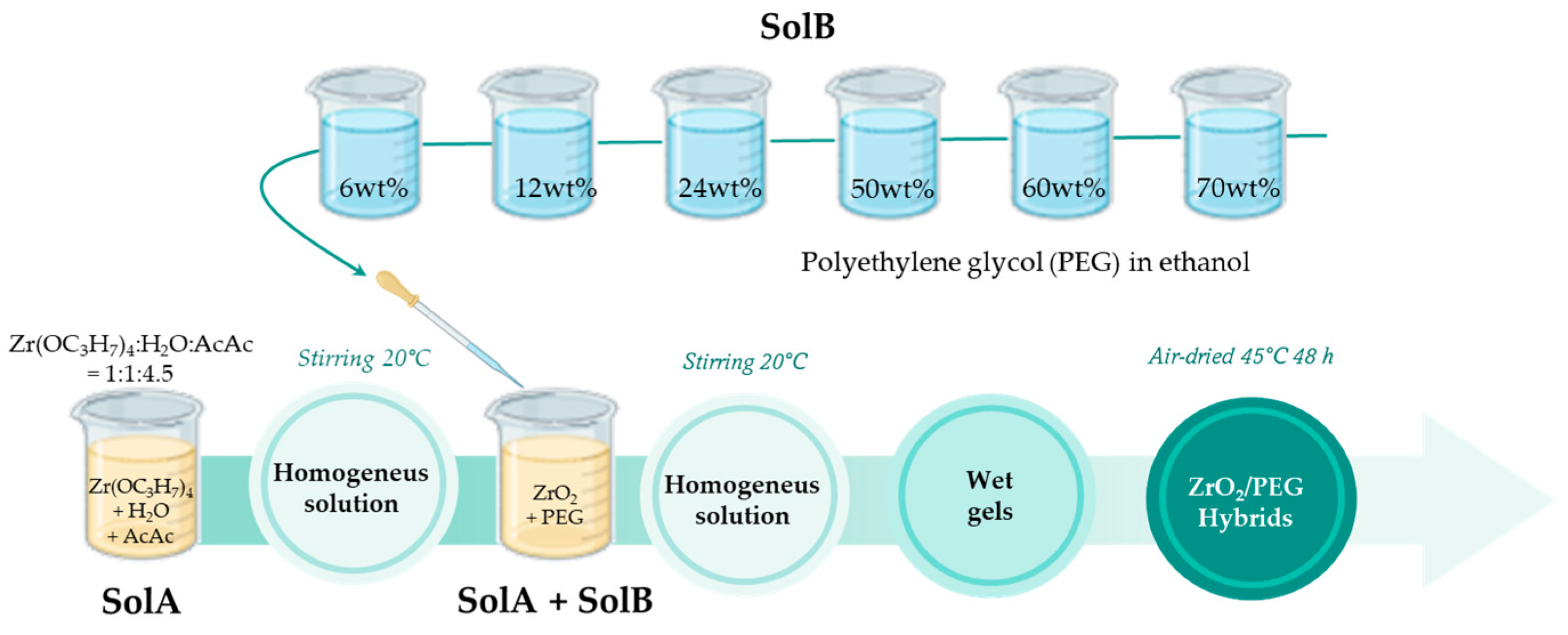
2.2.1. The Sol–Gel Synthesis
2.2.2. Atomic Force Microscopy (AFM)
2.2.3. Fourier-Transform Infrared Spectroscopy (FT-IR)
2.2.4. Biocompatibility Characterization of ZrO2/PEG Hybrids
2.2.5. Antibacterial Activity
3. Results
3.1. AFM Morphological Characterization and Surface Roughness Evaluation
3.2. FT-IR Spectroscopy
3.3. Biocompatibility Characterization
4. Conclusions
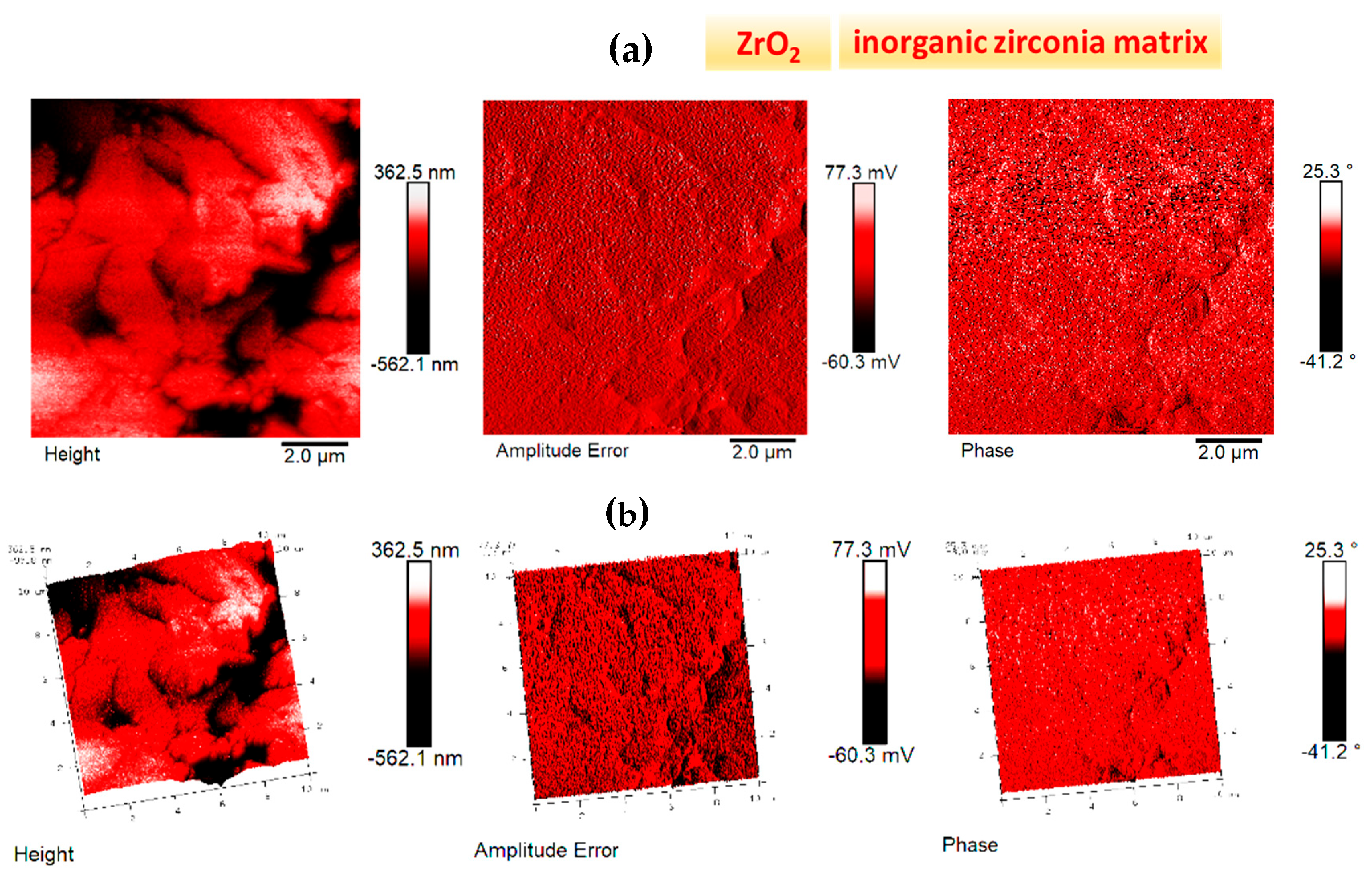
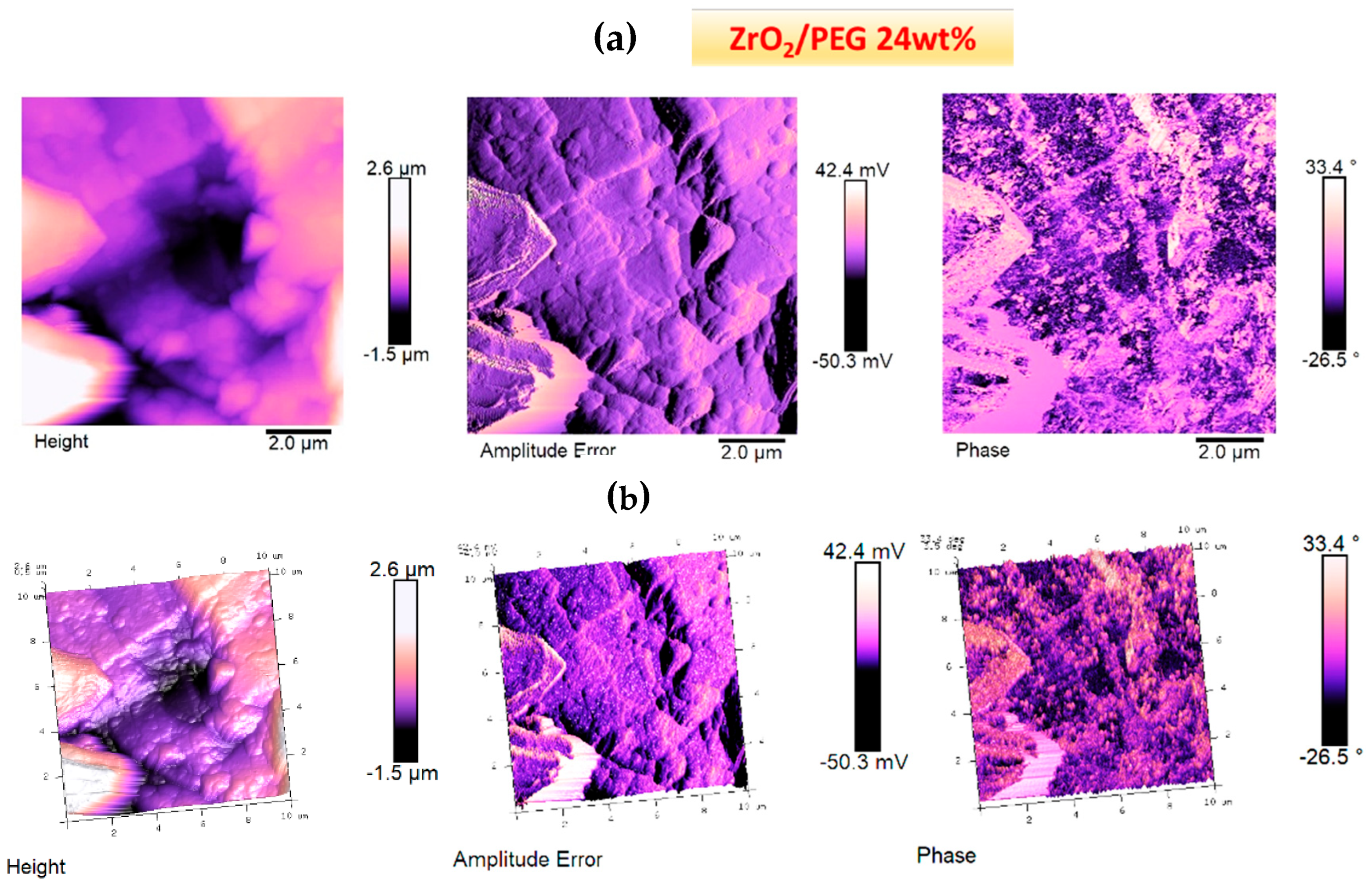
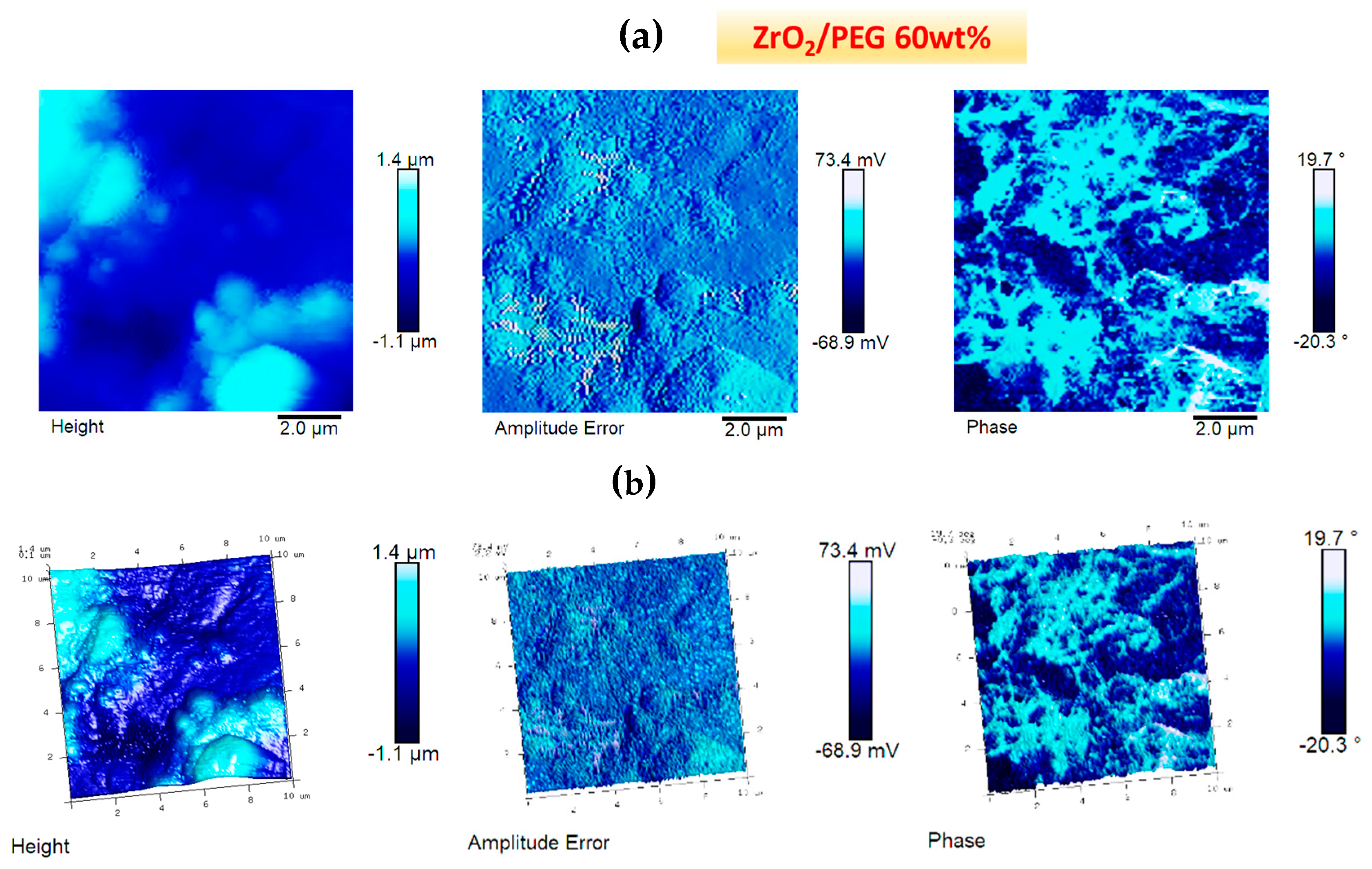
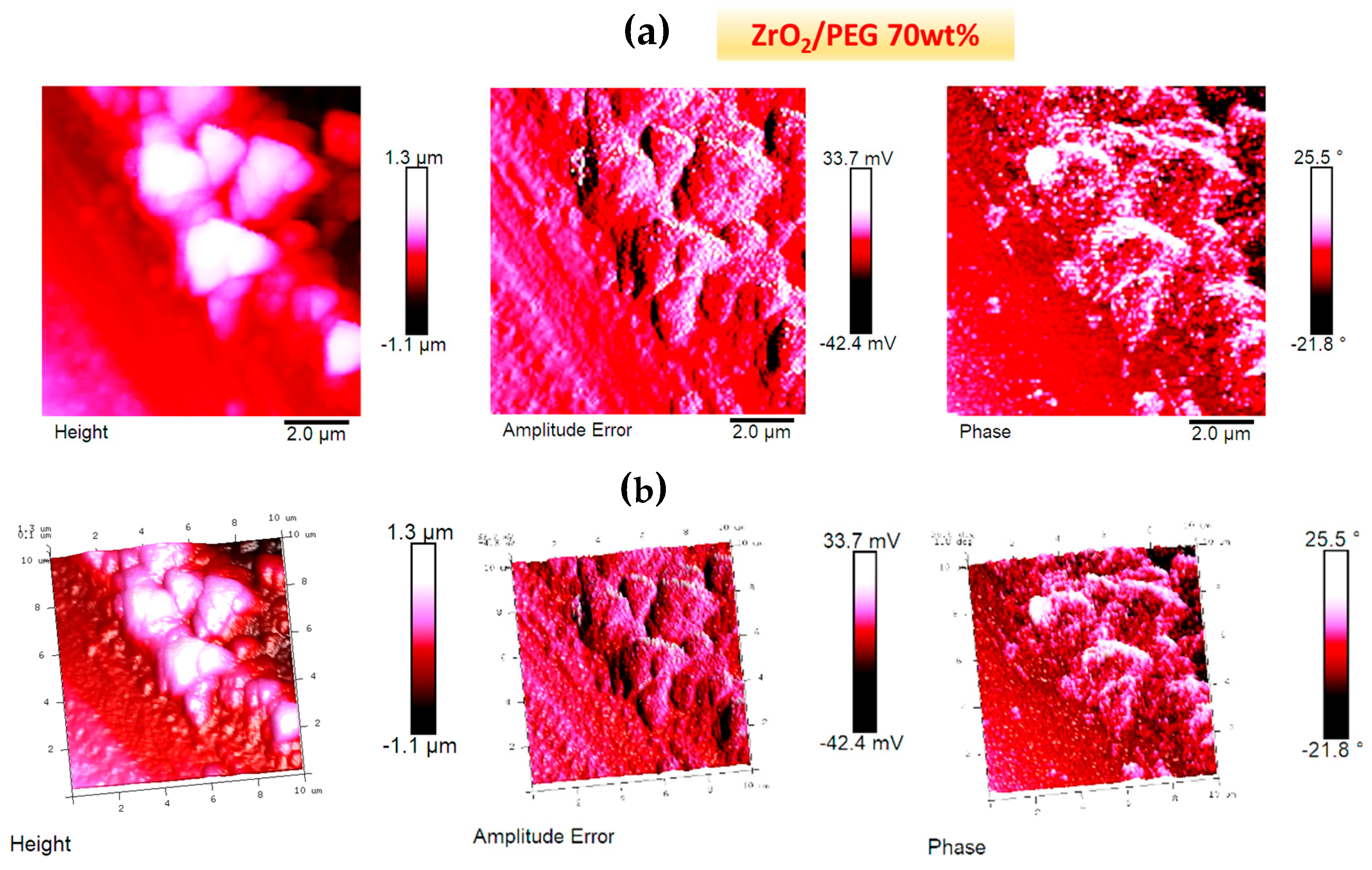
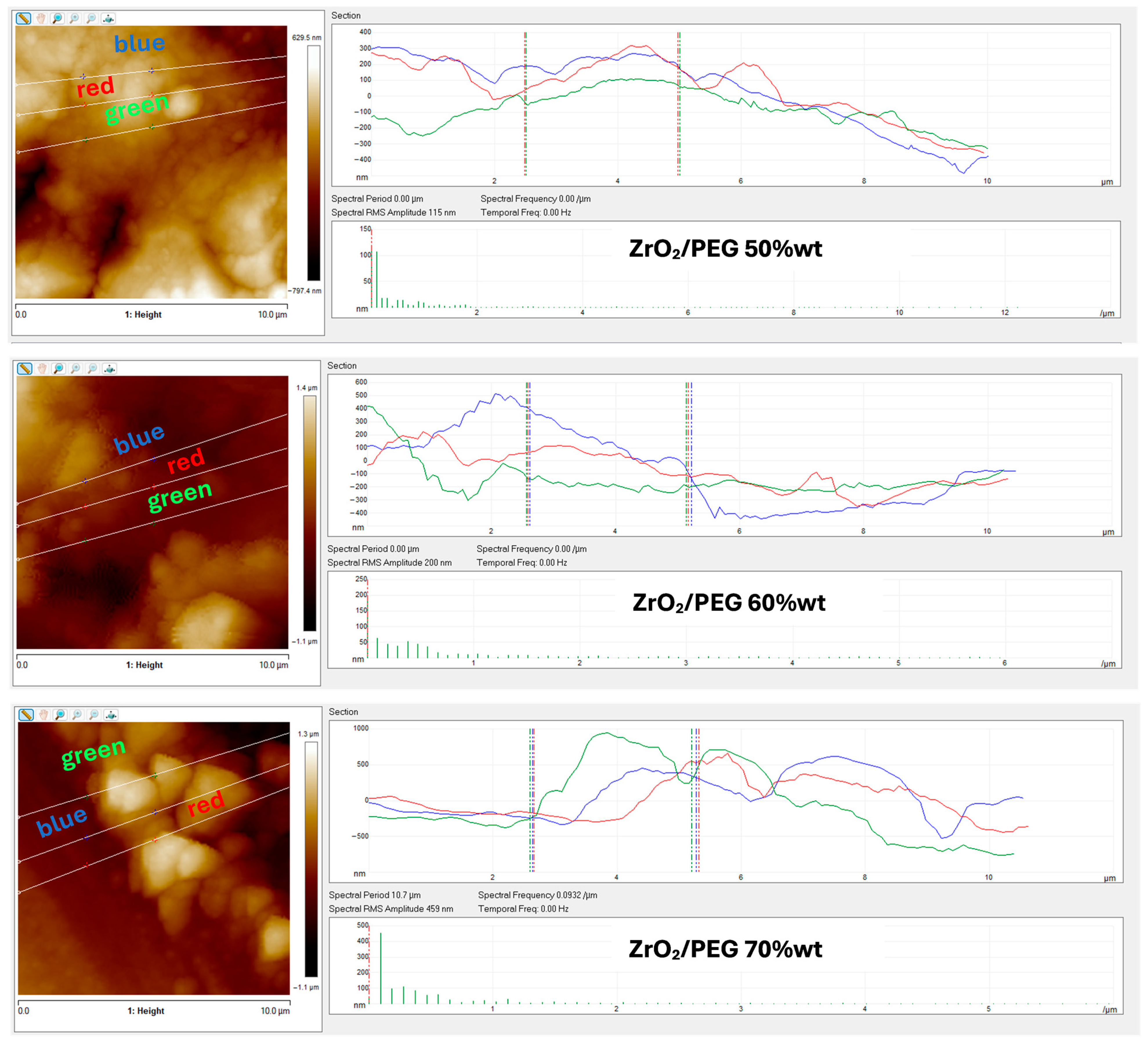
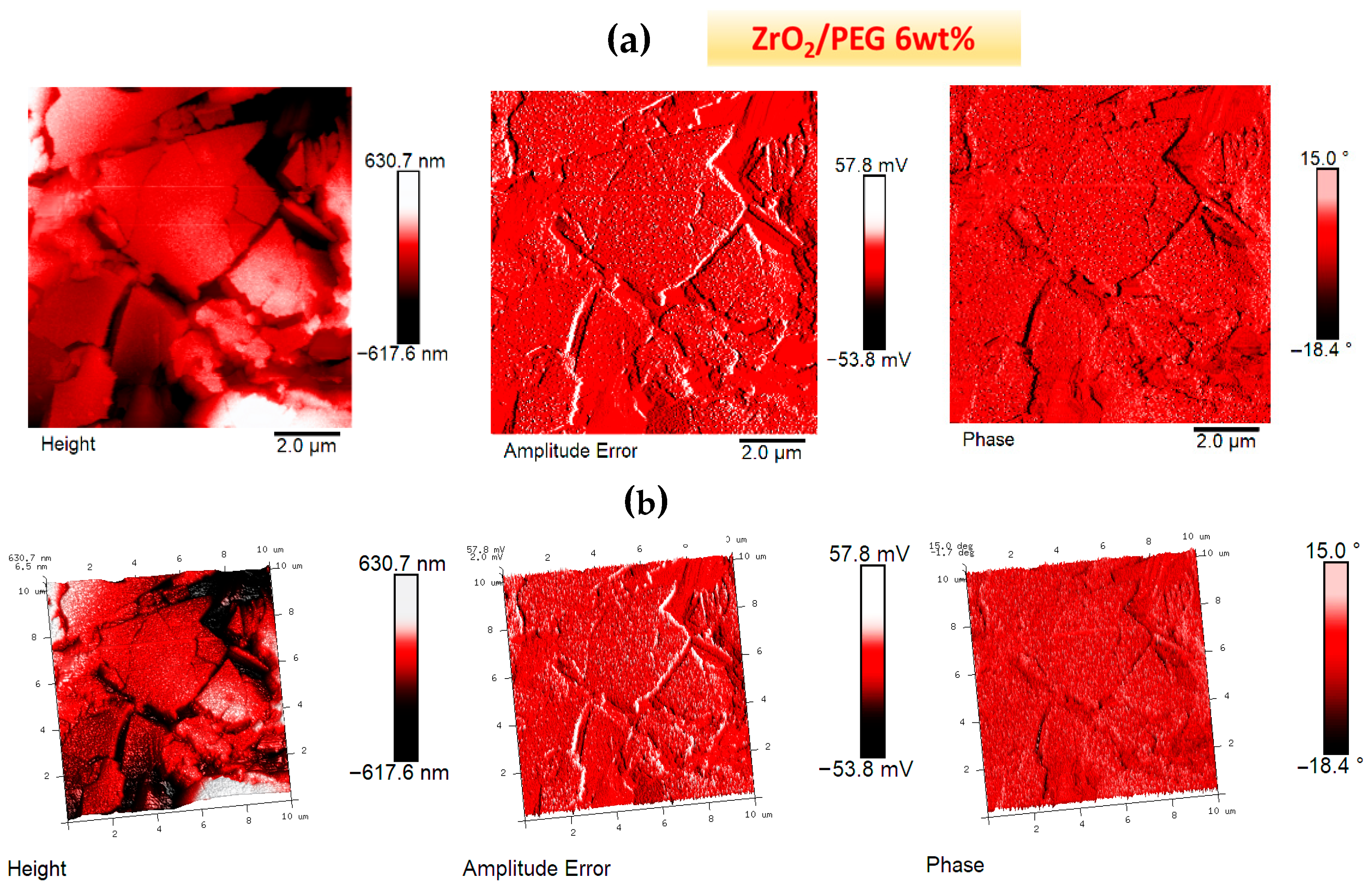
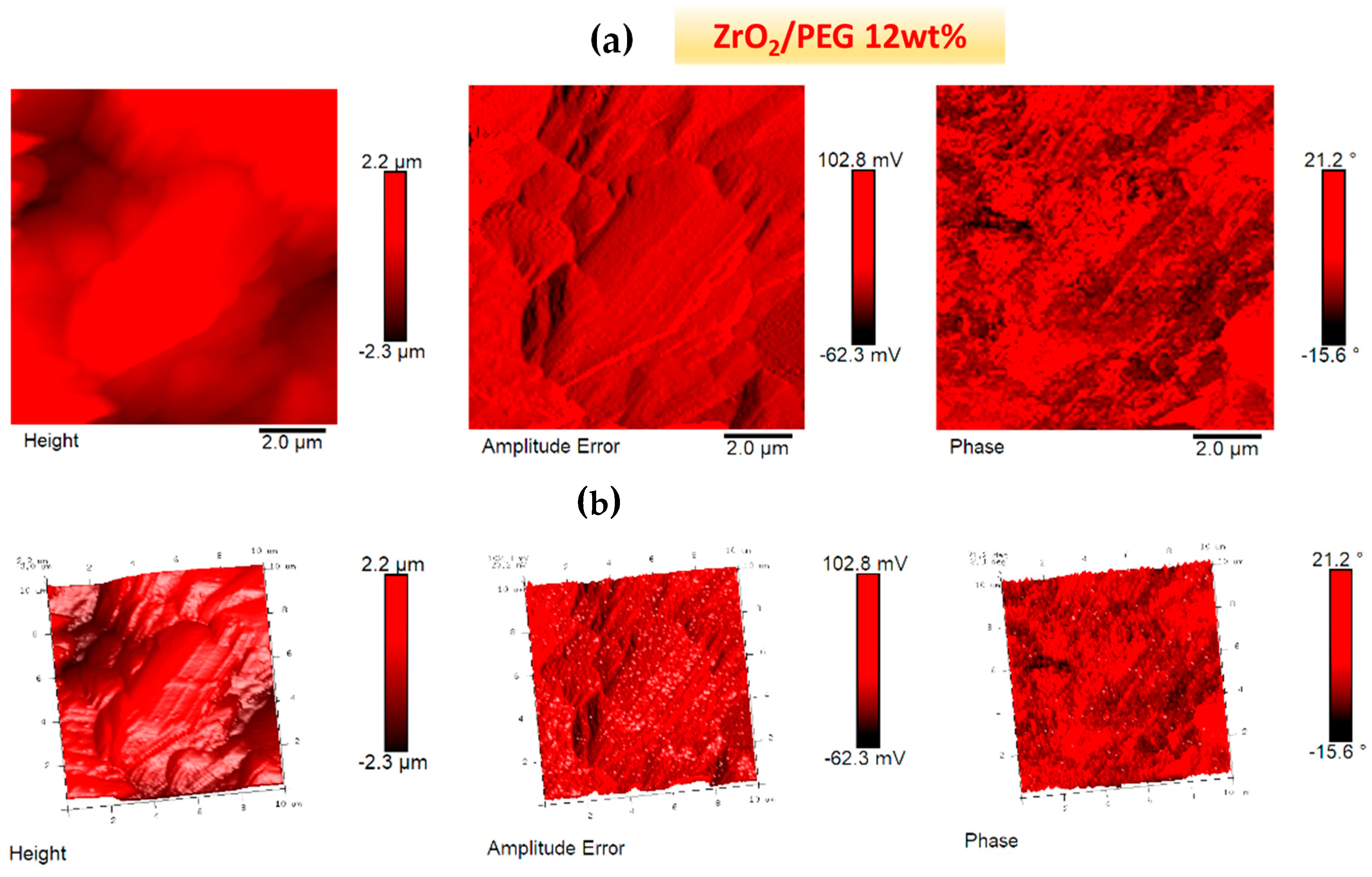
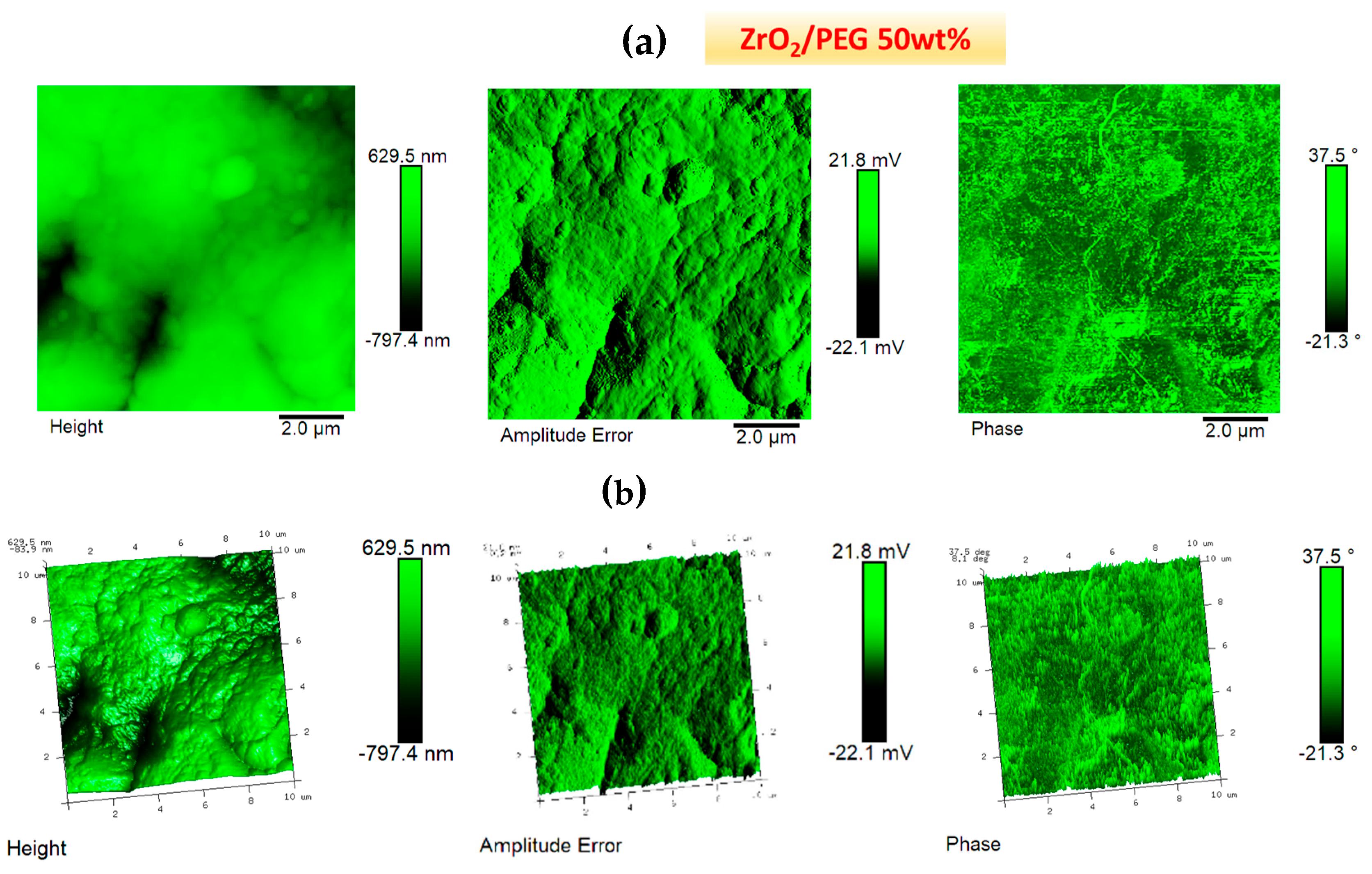
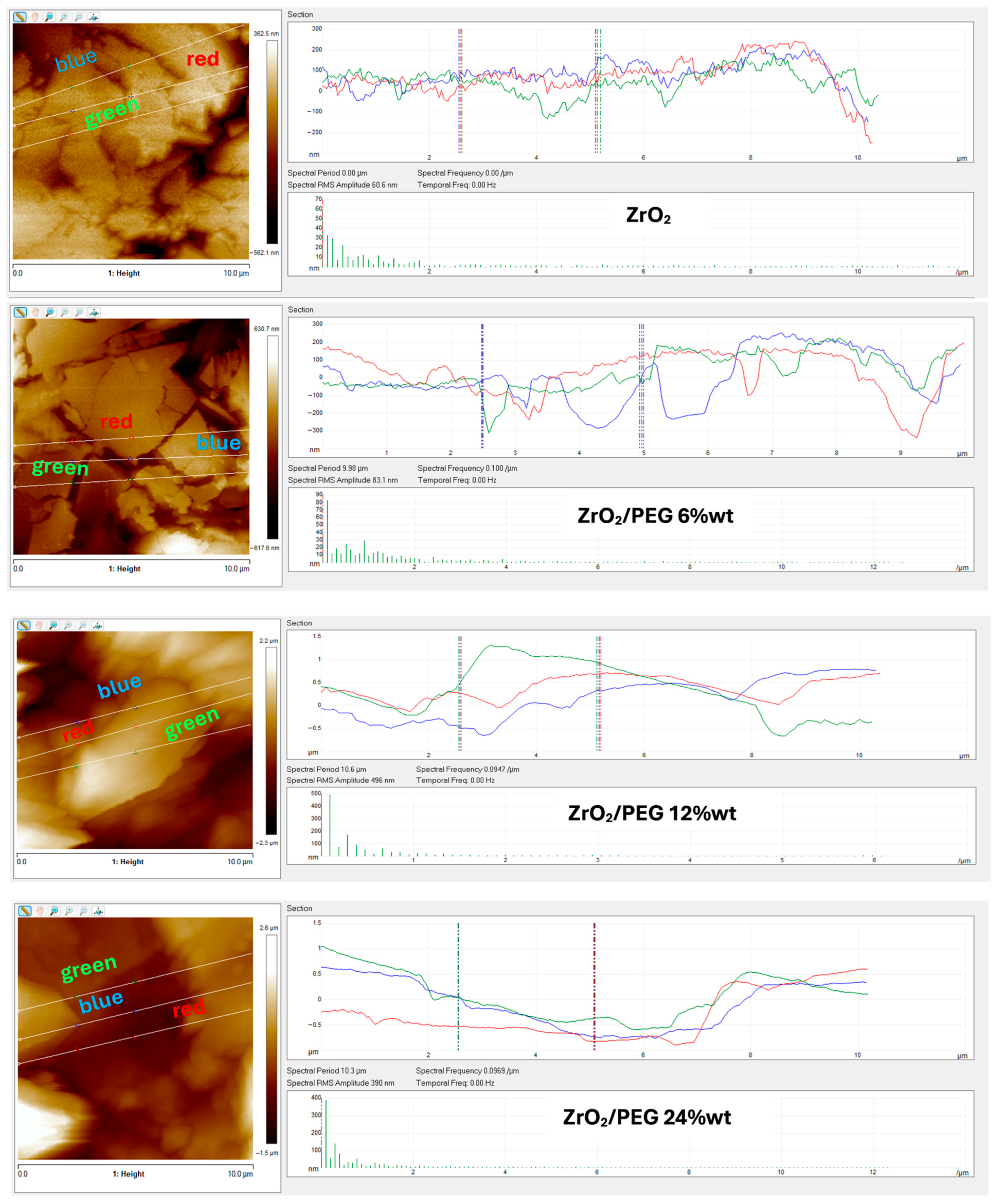
- Atomic force microscopy (AFM) revealed an increase in porosity and surface roughness with increasing PEG content. As PEG concentration rises, it disrupts the Zr–O–Zr bridging network, leading to a more complex and rougher surface morphology. This increased surface roughness is indicative of the morphological changes that occur as the organic phase (PEG) interacts with the inorganic phase (ZrO2).
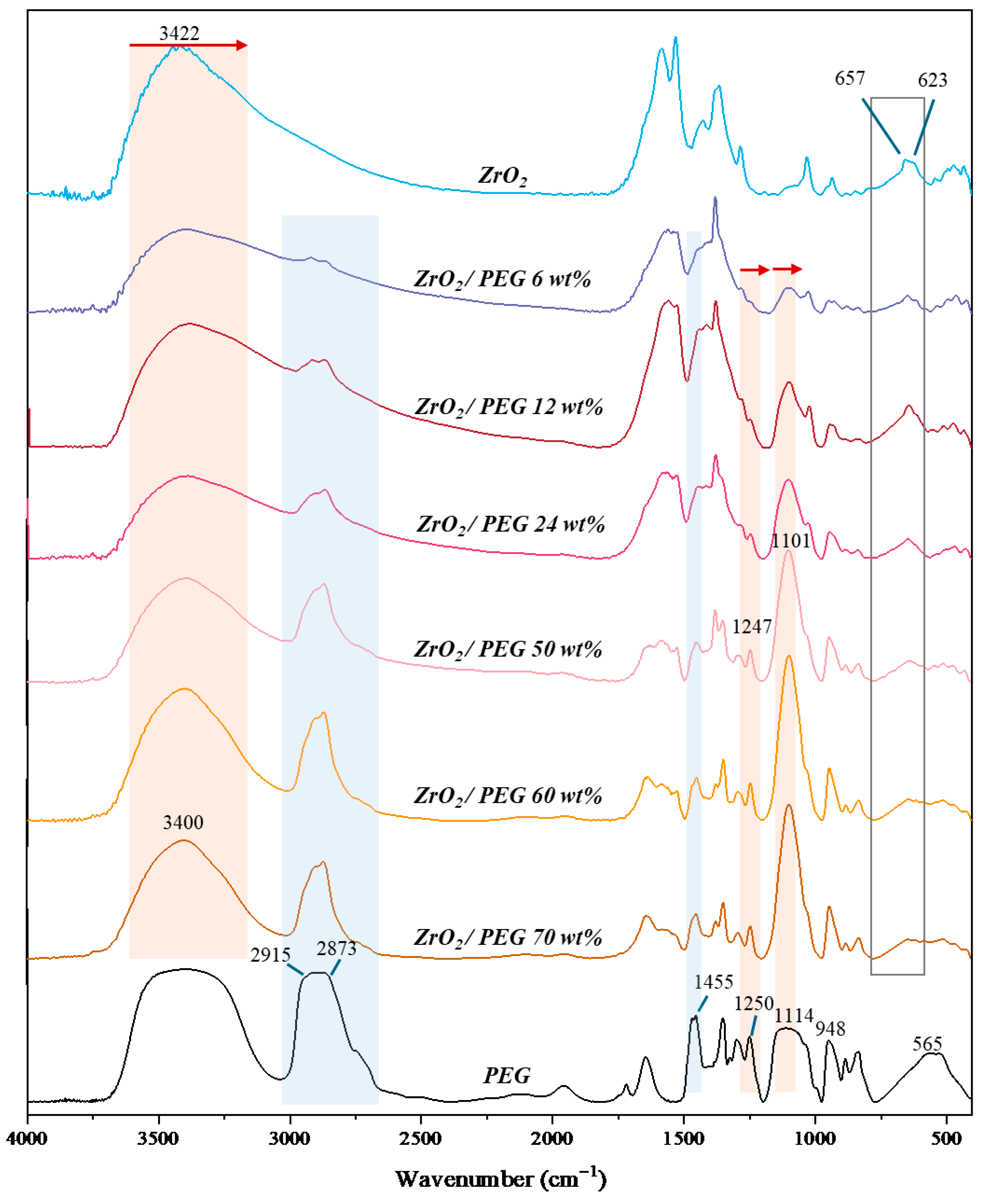
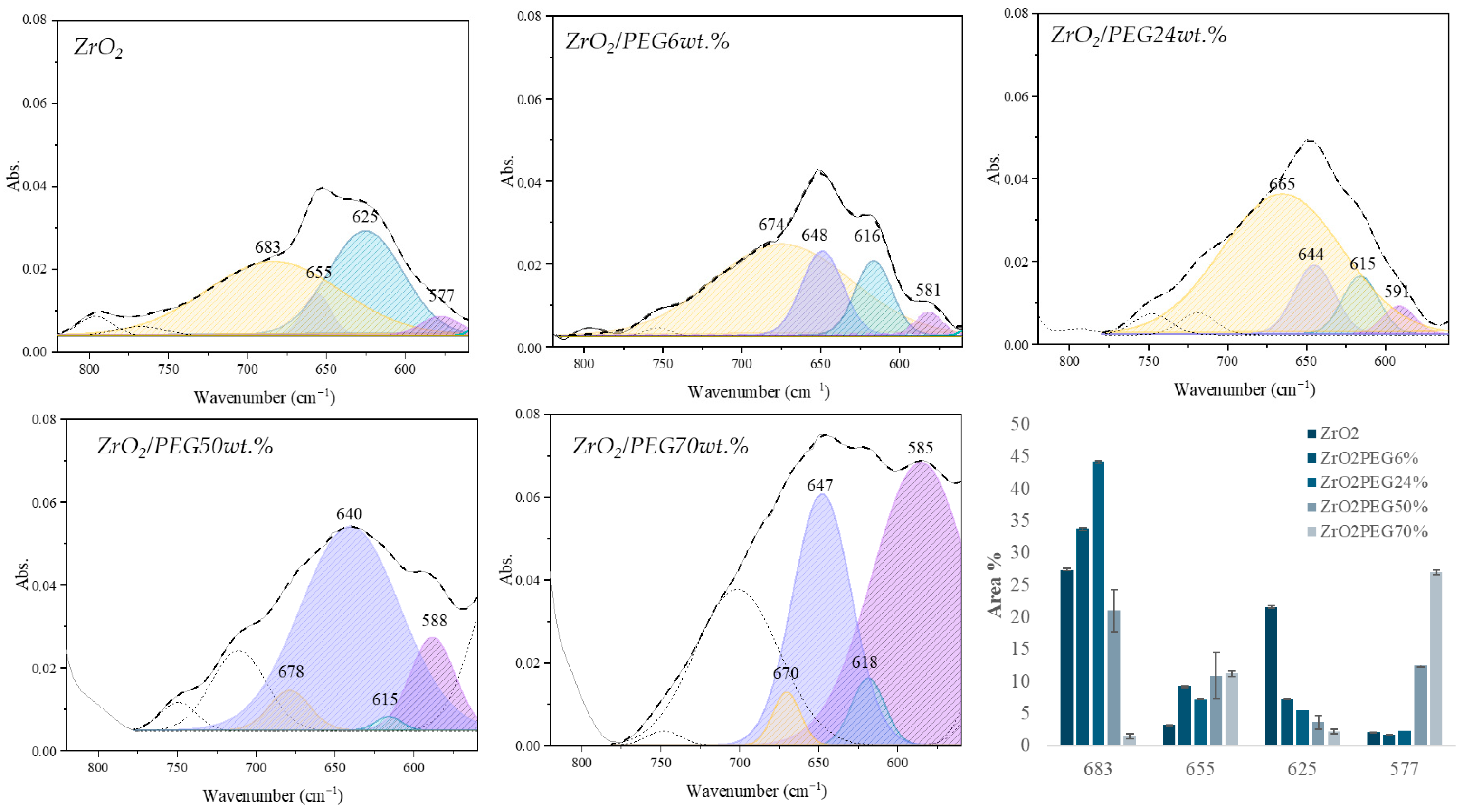
- FT-IR spectroscopy confirmed the interaction between the inorganic and organic phases. In particular, FT-IR deconvolution in the 850–550 cm−1 region indicates that PEG incorporation progressively perturbs the Zr–O–Zr network. As PEG content increases, the inorganic framework becomes more disordered and develops more flexible domains, suggesting reduced crosslinking within the zirconia matrix.
- Biocompatibility increased with increasing PEG content, reaching 92% cell viability for the 70 wt% ZrO2/PEG hybrid. This improvement is attributed to the low immunogenicity and toxicity of PEG, which promotes cell adhesion and migration. In fact, biological assays reveal that higher PEG amounts enhance the viability of NIH-3T3 fibroblasts, likely due to increased hydrophilicity and reduced surface rigidity.
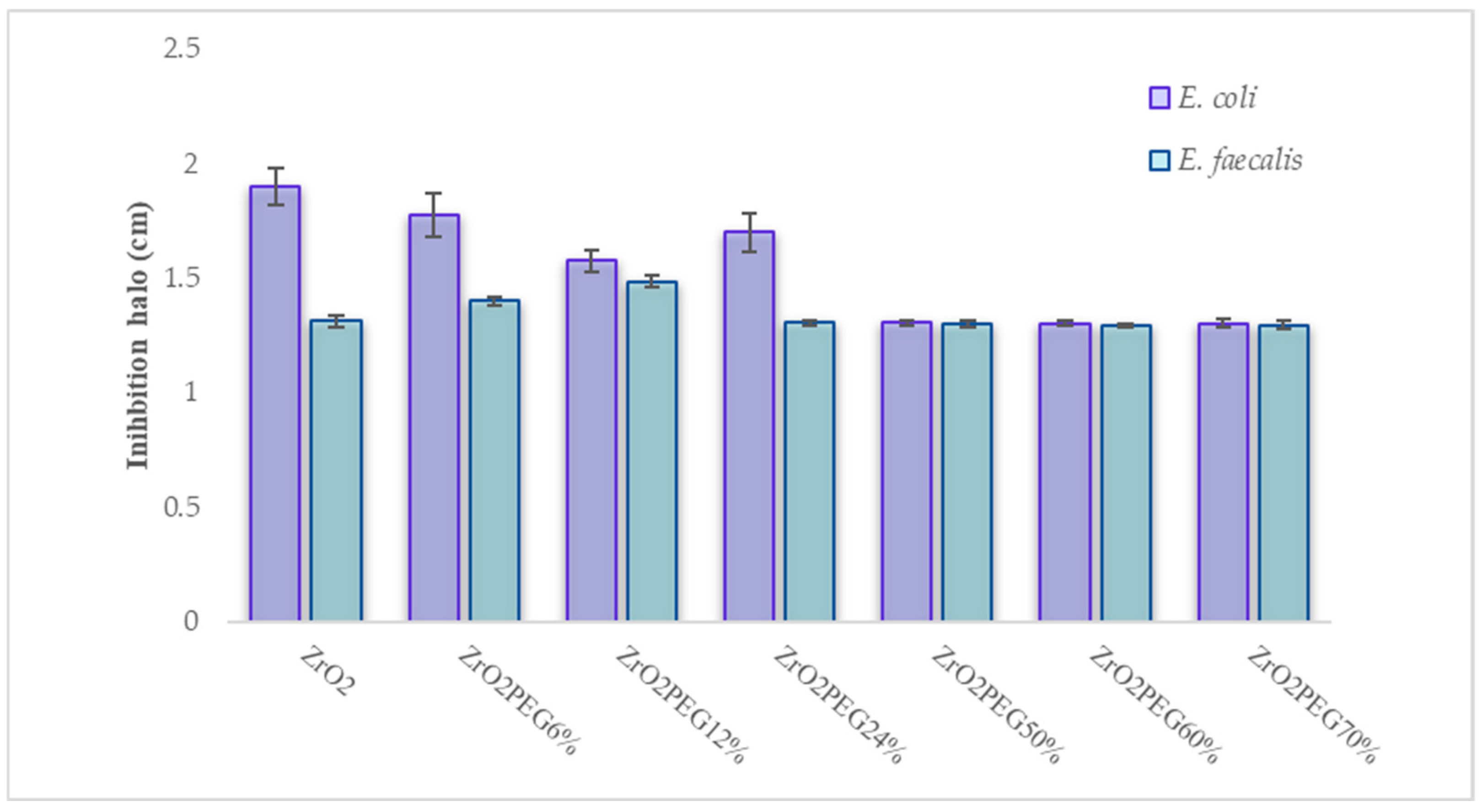
- The antibacterial activity of ZrO2 decreased with increasing PEG content, highlighting the lack of intrinsic PEG activity, with pure ZrO2 exhibiting the strongest inhibitory effect against E. coli. This trend suggests that PEG softens or shields the inorganic surface, diminishing its bactericidal efficiency.
- The PEG content significantly affects the surface roughness of ZrO2/PEG hybrids, with an increase in roughness (Ra and Rq) proportional to the amount of PEG. For example, the roughness Ra increases from 105 nm for pure ZrO2 to 645 nm for the 70 wt% ZrO2/PEG hybrid. This increase in roughness facilitates cell adhesion and proliferation, improving the material’s biocompatibility.
- AFM reveals that PEG in zirconia blends functions as a structure-directing agent, enhancing surface roughness through its role as a pore-former, and facilitating the creations of organic-inorganic hybrids.
- This work stands out for its in-depth analysis, which combines morphological observations with biological performance assessments, offering new insights into the field of biomaterials. Therefore, the research significantly contributes to the understanding of the interactions between structure and functionality in these hybrid systems.
Supplementary Materials
Author Contributions
Funding
Data Availability Statement
Conflicts of Interest
References
- Catauro, M.; Papale, F.; Bollino, F.; Gallicchio, M.; Pacifico, S. Biological evaluation of zirconia/PEG hybrid materials synthesized via sol–gel technique. Mater. Sci. Eng. C 2014, 40, 253–259. [Google Scholar] [CrossRef] [PubMed]
- Catauro, M.; Papale, F.; Piccirillo, G.; Bollino, F. PEG-based organic–inorganic hybrid coatings prepared by the sol–gel dip-coating process for biomedical applications. Polym. Eng. Sci. 2017, 57, 478–484. [Google Scholar] [CrossRef]
- Li, A.; Shen, H.; Ren, H.; Wang, C.; Wu, D.; Martin, R.A.; Qiu, D. Bioactive organic/inorganic hybrids with improved mechanical performance. J. Mater. Chem. B 2015, 3, 1379–1390. [Google Scholar] [CrossRef]
- Cui, Y.; Chen, Z.; Liu, X. Preparation of UV-curing polymer-ZrO2 hybrid nanocomposites via auto-hydrolysis sol-gel process using zirconium oxychloride octahydrate coordinated with organic amine. Prog. Org. Coat. 2016, 100, 178–187. [Google Scholar] [CrossRef]
- Catauro, M.; Tranquillo, E.; Illiano, M.; Sapio, L.; Spina, A.; Naviglio, S. The Influence of the Polymer Amount on the Biological Properties of PCL/ZrO2 Hybrid Materials Synthesized via Sol-Gel Technique. Materials 2017, 10, 1186. [Google Scholar] [CrossRef]
- Chang, H.; Wei, H.; Qi, Y.; Ding, S.; Li, H.; Si, S. Advances in hybrid hydrogel design for biomedical applications: Innovations in drug delivery and tissue engineering for gynecological cancers. Cell Biol. Toxicol. 2025, 41, 115. [Google Scholar] [CrossRef]
- Liang, Q.; Xiang, H.; Li, X.; Luo, C.; Ma, X.; Zhao, W.; Chen, J.; Tian, Z.; Li, X.; Song, X. Development of Rifapentine-Loaded PLGA-Based Nanoparticles: In vitro Characterisation and in vivo Study in Mice. Int. J. Nanomed. 2020, 15, 7491–7507. [Google Scholar] [CrossRef]
- Jeba, R.; Radhika, S.; Padma, C.M.; Ascar Davix, X. Antimicrobial and photocatalytic activities of strontium doped zirconium oxide nanoparticles. Mater. Lett. 2022, 311, 131559. [Google Scholar] [CrossRef]
- Pratap, S.; Kumar, S.; Kumar, H. Improved antimicrobial efficacy of copper-engineered zirconium oxide nanoparticles against some foodborne bacterial strains, synthesised via a facile hydrothermal method. Surf. Interfaces 2025, 58, 105878. [Google Scholar] [CrossRef]
- Tabassum, M.; Kumar, D.; Verma, D.; Bohara, R.A.; Singh, M.P. Zirconium oxide (ZrO2) nanoparticles from antibacterial activity to cytotoxicity: A next-generation of multifunctional nanoparticles. Mater. Today Commun. 2021, 26, 102156. [Google Scholar] [CrossRef]
- Bahammam, H.A.; Bahammam, L.A.; Baghdadi, A.M.; Saddiq, A.; Algamal, Y. Antimicrobial Activity of Nanozirconium Oxide. ACS Omega 2024, 9, 2945–2952. [Google Scholar] [CrossRef] [PubMed]
- Ziąbka, M.; Wojteczko, A.; Klesiewicz, K.; Menaszek, E.; Komarek, S.; Kwaśniewski, P.; Chrzanowski, W. Antimicrobial properties and bioactivity of zirconia-based biocomposites. Artif. Cells Nanomed. Biotechnol. 2025, 53, 361–378. [Google Scholar] [CrossRef]
- Li, W.; Thian, E.S.; Wang, M.; Wang, Z.; Ren, L. Surface Design for Antibacterial Materials: From Fundamentals to Advanced Strategies. Adv. Sci. 2021, 8, 2100368. [Google Scholar] [CrossRef]
- Chen, X.; Zhou, J.; Qian, Y.; Zhao, L. Antibacterial coatings on orthopedic implants. Mater. Today Bio 2023, 19, 100586. [Google Scholar] [CrossRef]
- Lu, A.; Gao, Y.; Jin, T.; Luo, X.; Zeng, Q.; Shang, Z. Effects of surface roughness and texture on the bacterial adhesion on the bearing surface of bio-ceramic joint implants: An in vitro study. Ceram. Int. 2020, 46, 6550–6559. [Google Scholar] [CrossRef]
- Agarwal, M.; Ganesan, R.; Ray Dutta, J. Functional nanomaterials in combating antimicrobial resistance: Innovations in wound dressings and biomedical implants. Nano Trends 2026, 13, 100174. [Google Scholar] [CrossRef]
- Marrese, M.; Guarino, V.; Ambrosio, L. Atomic Force Microscopy: A Powerful Tool to Address Scaffold Design in Tissue Engineering. J. Funct. Biomater. 2017, 8, 7. [Google Scholar] [CrossRef]
- da Silva, V.A.; Bobotis, B.C.; Correia, F.F.; Lima-Vasconcellos, T.H.; Chiarantin, G.M.D.; De La Vega, L.; Lombello, C.B.; Willerth, S.M.; Malmonge, S.M.; Paschon, V. The Impact of Biomaterial Surface Properties on Engineering Neural Tissue for Spinal Cord Regeneration. Int. J. Mol. Sci. 2023, 24, 13642. [Google Scholar] [CrossRef]
- Zeng, H.; Sun, W.; Tang, H.; Jiang, F.; Wang, L. Surface Roughness and Its Role in Flotation Behavior, Wettability, and Bubble–Particle Interactions: A Systematic Review. Appl. Sci. 2025, 15, 4557. [Google Scholar] [CrossRef]
- Gambardella, A.; Marchiori, G.; Maglio, M.; Boi, M.; Montesissa, M.; Bertacchini, J.; Biressi, S.; Baldini, N.; Giavaresi, G.; Bontempi, M. On the Interplay Between Roughness and Elastic Modulus at the Nanoscale: A Methodology Study with Bone as Model Material. J. Funct. Biomater. 2025, 16, 276. [Google Scholar] [CrossRef] [PubMed]
- Georgakopoulos-Soares, I.; Papazoglou, E.L.; Karmiris-Obratański, P.; Karkalos, N.E.; Markopoulos, A.P. Surface antibacterial properties enhanced through engineered textures and surface roughness: A review. Colloids Surf. B 2023, 231, 113584. [Google Scholar] [CrossRef]
- Uzorka, A.; Mukhokosi, E.P. Atomic Force Microscopy in Structural and Functional Studies of Biomolecules. Biophys. Rev. Lett. 2025, 20, 117–138. [Google Scholar] [CrossRef]
- Joo, S.; Eom, S.; Choi, Y.; Jeong, U.; Cho, Y.; Yu, W.; Park, K.; Hong, S. Atomic Force Microscopy for Cross-Disciplinary Materials Research. Small Methods 2025, 9, 2500514. [Google Scholar] [CrossRef]
- Harjumäki, R.; Zhang, X.; Nugroho, R.W.N.; Farooq, M.; Lou, Y.R.; Yliperttula, M.; Valle-Delgado, J.J.; Österberg, M. AFM Force Spectroscopy Reveals the Role of Integrins and Their Activation in Cell–Biomaterial Interactions. ACS Appl. Bio Mater. 2020, 3, 1406–1417. [Google Scholar] [CrossRef]
- Nguyen-Tri, P.; Ghassemi, P.; Carriere, P.; Nanda, S.; Assadi, A.A.; Nguyen, D.D. Recent Applications of Advanced Atomic Force Microscopy in Polymer Science: A Review. Polymers 2020, 12, 1142. [Google Scholar] [CrossRef] [PubMed]
- Nobile, M.R.; Raimondo, M.; Naddeo, C.; Guadagno, L. Rheological and Morphological Properties of Non-Covalently Functionalized Graphene-Based Structural Epoxy Resins with Intrinsic Electrical Conductivity and Thermal Stability. Nanomaterials 2020, 10, 1310. [Google Scholar] [CrossRef] [PubMed]
- Pinto, D.; Amaro, A.M.; Bernardo, L. Experimental study on the surface properties of nanoalumina-filled epoxy resin nanocomposites. Appl. Sci. 2020, 10, 733. [Google Scholar] [CrossRef]
- Catauro, M.; Raimondo, M.; Vertuccio, L.; Guadagno, L.; D’Angelo, A. The pivotal role of the polyethylene glycol amount as compatibilizing on the morphological features of silica-based blends. J. Thermoplast. Compos. Mater. 2024, 38, 188–208. [Google Scholar] [CrossRef]
- Piccolella, S.; Fiorentino, M.; Cimmino, G.; Esposito, A.; Pacifico, S. Cilentan Cichorium intybus L. organs: UHPLC-QqTOF-MS/MS analysis for new antioxidant scenario, exploitable locally and beyond. Future Foods 2024, 9, 100379. [Google Scholar] [CrossRef]
- Catauro, M.; Bollino, F.; Papale, F.; Mozzati, M.C.; Ferrara, C.; Mustarelli, P. ZrO2/PEG hybrid nanocomposites synthesized via sol–gel: Characterization and evaluation of the magnetic properties. J. Non-Cryst. Solids 2015, 413, 1–7. [Google Scholar] [CrossRef]
- Vecchio Ciprioti, S.; Bollino, F.; Tranquillo, E.; Catauro, M. Synthesis, thermal behavior and physicochemical characterization of ZrO2/PEG inorganic/organic hybrid materials via sol–gel technique. J. Therm. Anal. Calorim. 2017, 130, 535–540. [Google Scholar] [CrossRef]
- Fiorentino, M.; D’Angelo, A.; Comune, L.; Vertuccio, L.; Blanco, I.; Catauro, M. Thermal, chemical, and biological characterization of a bioactive zirconia material embedded with orange peel extract. J. Therm. Anal. Calorim. 2025, 1–13. [Google Scholar] [CrossRef]
- Georgieva, I.; Danchova, N.; Gutzov, S.; Trendafilova, N. DFT modeling, UV-Vis and IR spectroscopic study of acetylacetone-modified zirconia sol-gel materials. J. Mol. Model. 2012, 18, 2409–2422. [Google Scholar] [CrossRef]
- Dimitrov, O.; Stambolova, I.; Vassilev, S.; Lazarova, K.; Babeva, T.; Mladenova, R. Surface and Morphological Features of ZrO2 Sol-Gel Coatings Obtained by Polymer Modified Solution. Mater. Proc. 2020, 2, 6. [Google Scholar] [CrossRef]
- Chitoria, A.K.; Mir, A.; Shah, M.A. A review of ZrO2 nanoparticles applications and recent advancements. Ceram. Int. 2023, 49, 32343–32358. [Google Scholar] [CrossRef]
- Štefanić, G.; Musić, S.; Popović, S.; Furić, K. Formation of ZrO2 by the Thermal Decomposition of Zirconium Salts. Croat. Chem. Acta 1996, 69, 223–239. [Google Scholar]
- He, X.; Zhang, H.X.; Li, Y.; Hong, C. Characterization of Nano-Porous Silica-Zirconia Aerogels. Solid. State Phenom. 2007, 121–123, 1289–1292. [Google Scholar] [CrossRef]
- Maresz, K.; Ciemięga, A.; Bezkosty, P.; Kornaus, K.; Sitarz, M.; Krzywiecki, M.; Mrowiec-Białon, J. Insight into Structural and Physicochemical Properties of ZrO2-SiO2 Monolithic Catalysts with Hierarchical Pore Structure: Effect of Zirconium Precursor. Catalysts 2023, 13, 1516. [Google Scholar] [CrossRef]
- Silverstein, R.M.; Webster, F.X.; Kiemle, D. Spectrometric Identification of Organic Compounds, 8th ed.; Wiley: Hoboken, NJ, USA, 2014. [Google Scholar]
- D’Angelo, A.; Mortalò, C.; Comune, L.; Raffaini, G.; Fiorentino, M.; Catauro, M. Sol–Gel Synthesized Silica/Sodium Alginate Hybrids: Comprehensive Physico-Chemical and Biological Characterization. Molecules 2025, 30, 3481. [Google Scholar] [CrossRef]
- Paneer Selvam, S.; Ayyappan, S.; I Jamir, S.; Sellappan, L.K.; Manoharan, S. Recent advancements of hydroxyapatite and polyethylene glycol (PEG) composites for tissue engineering applications—A comprehensive review. Eur. Polym. J. 2024, 215, 113226. [Google Scholar] [CrossRef]
- Jahani, A.; Nassira, H. Polyethylene Glycol-Based Materials: Transformative Applications in Biomedicine and the Food Industry. Mater. Chem. Horizons 2024, 3, 1074. [Google Scholar] [CrossRef]
- Al-Ibraheemi, Z.; Hanoon, Z.; Al-Hmedat, S.; Ibrahim, S.; Ahmed, A.; Aljdaimi, A. An Evaluation of Bacterial Inhibition on E-max and Zirconia Disks after Different Surface Treatments: A Comparative In vitro Study. Open Microbiol. J. 2025, 19, e18742858379055. [Google Scholar] [CrossRef]
- Nalawade, T.M.; Bhat, K.; Sogi, S.H. Bactericidal activity of propylene glycol, glycerine, polyethylene glycol 400, and polyethylene glycol 1000 against selected microorganisms. J. Int. Soc. Prev. Community Dent. 2015, 5, 114–119. [Google Scholar] [CrossRef]
- Radulescu, D.-E.; Vasile, B.S.; Vasile, O.R.; Neacsu, I.A.; Trusca, R.D.; Surdu, V.-A.; Birca, A.C.; Dolete, G.; Ilie, C.-I.; Andronescu, E. Microwave-Assisted Hydrothermal Synthesis of Cu/Sr-Doped Hydroxyapatite with Prospective Applications for Bone Tissue Engineering. J. Compos. Sci. 2025, 9, 427. [Google Scholar] [CrossRef]
- Burunkova, J.A.; Semykina, V.V.; Sitnikova, V.E.; Dolgintsev, D.M.; Zaripova, F.F.; Ponomareva, A.A.; Mizina, D.R.; Csick, A.; Kokenyesi, S.; Zhilenkov, A. Antibacterial UV-Curable Gel with Hydroxyapatite Nanoparticles for Regenerative Medicine in the Field of Orthopedics. J. Compos. Sci. 2025, 9, 65. [Google Scholar] [CrossRef]
- Dorozhkin, S.V. Calcium Orthophosphate (CaPO4) Containing Composites for Biomedical Applications: Formulations, Properties, and Applications. J. Compos. Sci. 2024, 8, 218. [Google Scholar] [CrossRef]
- Crãciun, C.A.; Ungureanu, C.; Brîncoveanu, O.; Bîru, E.I.; Pîrvu, C.; Dumitriu, C. Development of Nanostructured Composite Coating with Antibacterial Properties on Anodized Stainless Steel. J. Compos. Sci. 2026, 10, 23. [Google Scholar] [CrossRef]
- Kozlovskiy, A.L.; Konuhova, M.; Borgekov, D.B.; Anatoli, P. Study of irradiation temperature effect on radiation-induced polymorphic transformation mechanisms in ZrO2 ceramics. Opt. Mater. 2024, 156, 115994. [Google Scholar] [CrossRef]
- Bandarenka, H.; Burko, A.; Laputsko, D.; Dronina, L.; Kovalchuk, N.; Podelinska, A.; Shapel, U.; Popov, A.I.; Bocharov, D. Ultraviolet Exposure Improves SERS Activity of Graphene-Coated Ag/ZrO2 Substrates. Crystals 2023, 13, 1570. [Google Scholar] [CrossRef]
- Smits, K.; Grigorjeva, L.; Millers, D.; Kundzins, K.; Ignatans, R.; Grabis, J.; Monty, C. Luminescence properties of zirconia nanocrystals prepared by solar physical vapor deposition. Opt. Mater. 2014, 37, 251–256. [Google Scholar] [CrossRef]








| Sample | Ra (nm) | Rq (nm) |
|---|---|---|
| ZrO2 | 105 | 134 |
| ZrO2/PEG 6 wt% | 133 | 167 |
| ZrO2/PEG 12 wt% | 175 | 212 |
| ZrO2/PEG 24 wt% | 279 | 351 |
| ZrO2/PEG 50 wt% | 480 | 592 |
| ZrO2/PEG 60 wt% | 562 | 685 |
| ZrO2/PEG 70 wt% | 645 | 768 |
| Sample | 24 h CV % | 48 h CV % | 72 h CV % |
|---|---|---|---|
| ZrO2 | 78.20 ± 1.80 | 77.30 ± 1.50 | 76.10 ± 1.20 |
| ZrO2/PEG 6 wt% | 82.40 ± 1.60 | 80.50 ± 1.20 | 78.90 ± 1.00 |
| ZrO2/PEG 12 wt% | 85.10 ± 1.00 | 82.60 ± 0.80 | 80.40 ± 0.70 |
| ZrO2/PEG 24 wt% | 87.30 ± 1.30 | 84.20 ± 1.00 | 82.50 ± 0.90 |
| ZrO2/PEG 50 wt% | 90.10 ± 1.50 | 86.30 ± 1.20 | 84.70 ± 1.00 |
| ZrO2/PEG 60 wt% | 91.20 ± 1.00 | 87.40 ± 0.90 | 85.30 ± 0.80 |
| ZrO2/PEG 70 wt% | 92.00 ± 2.50 | 88.10 ± 2.00 | 86.20 ± 1.00 |
Disclaimer/Publisher’s Note: The statements, opinions and data contained in all publications are solely those of the individual author(s) and contributor(s) and not of MDPI and/or the editor(s). MDPI and/or the editor(s) disclaim responsibility for any injury to people or property resulting from any ideas, methods, instructions or products referred to in the content. |
© 2026 by the authors. Licensee MDPI, Basel, Switzerland. This article is an open access article distributed under the terms and conditions of the Creative Commons Attribution (CC BY) license.
Share and Cite
D’Angelo, A.; Fiorentino, M.; Raimondo, M.; Longo, R.; Vertuccio, L.; Catauro, M. Correlation Between the Morphological Characteristics by Atomic Force Microscopy and the Biological Properties of Bioactive Zirconia/Polyethylene Glycol (ZrO2/PEG) Hybrids. J. Compos. Sci. 2026, 10, 187. https://doi.org/10.3390/jcs10040187
D’Angelo A, Fiorentino M, Raimondo M, Longo R, Vertuccio L, Catauro M. Correlation Between the Morphological Characteristics by Atomic Force Microscopy and the Biological Properties of Bioactive Zirconia/Polyethylene Glycol (ZrO2/PEG) Hybrids. Journal of Composites Science. 2026; 10(4):187. https://doi.org/10.3390/jcs10040187
Chicago/Turabian StyleD’Angelo, Antonio, Marika Fiorentino, Marialuigia Raimondo, Raffaele Longo, Luigi Vertuccio, and Michelina Catauro. 2026. "Correlation Between the Morphological Characteristics by Atomic Force Microscopy and the Biological Properties of Bioactive Zirconia/Polyethylene Glycol (ZrO2/PEG) Hybrids" Journal of Composites Science 10, no. 4: 187. https://doi.org/10.3390/jcs10040187
APA StyleD’Angelo, A., Fiorentino, M., Raimondo, M., Longo, R., Vertuccio, L., & Catauro, M. (2026). Correlation Between the Morphological Characteristics by Atomic Force Microscopy and the Biological Properties of Bioactive Zirconia/Polyethylene Glycol (ZrO2/PEG) Hybrids. Journal of Composites Science, 10(4), 187. https://doi.org/10.3390/jcs10040187