Review

A Review on Mechanical Performance of Concrete Containing Walnut Shells as Aggregate Replacement


by
Yasin Onuralp Özkılıç
1,2,3,*,
Cemil Alperen Çelik
1 and
Evgenii M. Shcherban’
4
1
Department of Civil Engineering, Necmettin Erbakan University, Konya 42060, Turkey
2
Department of Unique Buildings and Constructions Engineering, Don State Technical University, Gagarin Sq. 1, 344003 Rostov-on-Don, Russia
3
Department of Technical Sciences, Western Caspian University, Baku 1001, Azerbaijan
4
Department of Engineering Geometry and Computer Graphics, Don State Technical University, Gagarin Sq. 1, 344000 Rostov-on-Don, Russia
*
Author to whom correspondence should be addressed.
J. Compos. Sci. 2026, 10(3), 164; https://doi.org/10.3390/jcs10030164
Submission received: 14 February 2026 / Revised: 12 March 2026 / Accepted: 16 March 2026 / Published: 18 March 2026
(This article belongs to the Section Composites Applications)

Abstract

The growing consumption of natural aggregates in concrete production has raised significant environmental and sustainability concerns, motivating the search for alternative and waste-based materials. Walnut shells (WSs), an abundant agricultural by-product, have attracted increasing attention as a potential partial replacement for fine and coarse aggregates in concrete. This study presents a comprehensive review and comparative analysis of published experimental data examining the influence of WS incorporation on the fresh and hardened properties of concrete. Data from the literature covering WS replacement ratios ranging from 1% to 50% were systematically compiled and evaluated with respect to compressive strength, splitting tensile strength, flexural strength, slump, and density. The results indicate that low WS replacement levels (generally ≤10%) may preserve acceptable mechanical performance while contributing to sustainability objectives, whereas higher replacement ratios lead to pronounced reductions in strength, particularly in splitting tensile and flexural capacities. Workability consistently decreases with increasing WS content due to the porous structure and high water absorption of the shells, while density reductions suggest the potential for producing lightweight concrete. Overall, the findings demonstrate that WSs can be effectively utilized in concrete at limited replacement levels, provided that mix design parameters and performance requirements are carefully balanced. The study also highlights the need for further research focusing on durability, long-term behavior, and optimization strategies to enhance the practical applicability of WS-based sustainable concrete.

1. Introduction

Concrete production requires significant amounts of natural resources [1], like fine and coarse aggregate, which contributes to the depletion of natural resources and causes major environmental problems. Oikonomou [2] indicated that the construction sector is responsible for the use of 50% of raw materials from nature. Worldwide, more than 30 billion tons of natural aggregate are consumed annually for concrete production, and this amount is projected to reach 66.3 billion tons in 2022, with an approximate annual increase of 5% [3,4]. Considering that approximately 70–80% of the concrete volume consists of fine and coarse aggregates, this high aggregate demand leads to the continuous depletion of natural resources [3]. Therefore, reducing these aggregates or partially replacing them with alternative materials could lead to more sustainable and environmentally friendly construction practices [5,6]. In the construction sector—responsible for nearly one third of global greenhouse gas emissions—the implementation of circular economy strategies together with low-carbon technologies is critically important [7]. Comprehensive studies have also shown that incorporating waste materials into concrete can be an effective way to recycle industrial and agricultural by-products and reduce the excessive use of raw aggregates [8,9,10]. Investigating barriers and solutions for waste-related improvements in the construction industry [11,12], the effect of using agricultural waste as an aggregate in concrete technology for environmental sustainability [13,14] and its effect on concrete durability [15,16], its use in cement composites and the partial replacement of cement with agricultural–construction waste [17,18], the applicability of agricultural waste materials for building construction [19,20], and the use of these agricultural wastes in road construction [21] have been examined in different studies. The effect of these agricultural wastes on thermal and acoustic insulation [22,23], heating resistance [24], and extreme conditions [25] have provided detailed information.
In the construction industry, the use of rubber tree seed shells [26], crushed peanut shells [27], processed coconut shells [28,29], peach and apricot shells [30], the use of nut shells such as macadamia [31], pistachios, walnuts, and hazelnuts [32], almond and hazelnut [33] and partial substitution with sugarcane bagasse [34], the use of pineapple leaf fiber waste as fiber [35], the use as sugarcane [36], the use of palm kernel shells [37], the use of oil palm ash [38], the use of rice husk ash [39,40], the use of corn cob ash [41,42], the use of banana farming waste [43,44], the use of coffee grounds biochar waste [45], and the use of date seed shells [46] and rosaceae nut shells [47] have all been studied.
One such agricultural by-product is walnut shells (WSs), which are widely available as waste, especially in areas where walnut farming is widespread [48]. Large quantities of WSs are often disposed of in landfills, leading to environmental concerns. In order to avoid waste and considering the recent developments in the application of walnut processing by-products [49], it was envisioned to partially utilize it as an inclusion in concrete for different applications [50,51,52,53,54,55,56,57]. Substitution as a replacement of the aggregate was carried out at different incremental levels and different ranges.
Recent studies have focused on combining the use of waste materials such as WSs, tire rubber fibers, and plastic fibers in concrete to enhance sustainability while maintaining mechanical performance. The findings of [58] indicate that low replacement levels of WSs and tire rubber fibers can improve compressive and flexural strengths, whereas plastic fibers generally lead to strength reductions. However, reduced workability and decreased splitting tensile strength remain common challenges, highlighting the need for optimized mix design and material selection in recent concrete research. In this context, further investigations have examined concrete containing ground granulated blast furnace slag combined with WSs and mineral additives and evaluated their effects on strength properties [59], the development of cement composites incorporating WSs reinforced with bacterial nanocellulose gel [60], and comparative assessments of pond ash and WS utilization in concrete [61]. Additionally, the mechanical performance of fiber-reinforced WS ash mortar has been experimentally studied, providing further insight into the potential and limitations of WS-based cementitious composites [62]. It was indicated that WS can be utilized in civil engineering applications with proper strength [63]. For example, the results showed that WS can be utilized in cement boards as non-structural applications [52]. Farhan et al. [64] shows that WS can be utilized in reinforced concrete beams.
In some cases, WSs were replaced with cement. In the study carried out by the authors [65], the compressive strength of concrete mixtures containing powder WSs as the replacement of cement was tested. WSs were ground to powder in order to increase pozzolanic reactivity. WS powders were replaced with the ratios of 5%, 10%, 15% and 20% of cement. The compressive strength capacity decreased with increasing WS powder ratio. In the study of [66], 300 micron-sized WSs were added to concrete mixtures at 0%, 5%, 10% and 15% rates as a replacement of cement and the compressive strengths of the samples were investigated. The data showed that there is a significant decrease in compressive strength as the WS rate increases. While 5% walnut shell admixture caused a 10.6% decrease in compressive strength, this decrease reached 18.4% at 10% admixture. At the highest level of 15%, the compressive strength decreased by 53.2% compared to the control group. WS ash was also utilized as cement replacement by [67]. It was suggested to utilize less than 20% WS ash to have satisfactory pozzalanic reactions.
Recent studies indicate that walnut shells can be utilized in various construction materials due to their low density and their availability as agricultural waste. In particular, WS particles have been investigated as partial replacements for fine or coarse aggregates in lightweight concrete, self-compacting concrete, and mortar mixtures. Additionally, research has explored their use in cement-bonded boards and pervious concrete systems, highlighting their potential in non-structural building components. Some experimental studies have also examined reinforced concrete beams incorporating WS aggregates at low replacement ratios, demonstrating that acceptable mechanical performance may be achieved under controlled conditions. However, the inclusion of WSs generally reduces compressive strength at higher replacement levels; therefore, additional emphasis is needed on the variability of experimental results arising from differences in WS properties on the comparison of the mechanical results. This article, based on the results of the published studies, substantiates the degree and rate of strength change in concrete (compressive strength, flexural strength, and splitting tensile strength) when using WSs instead of aggregate in specific ratios. Thus, the comprehensive comparison of mechanical properties and their relationships in all the studies conducted in this article allowed us to clarify and obtain generalized dependencies in the same context, the same ratio, and the same size.
The literature used in this review was collected through a systematic search of major scientific databases including Scopus, Web of Science, and Google Scholar. The search focused on peer-reviewed journal articles published between 2015 and 2025 that investigated the use of walnut shells as a partial replacement for aggregate or cement in concrete and mortar mixtures. Keywords such as “walnut shell concrete,” “bio-aggregate concrete,” “agricultural waste concrete,” and “walnut shell aggregate” were used during the search process. Studies were included if they reported quantitative experimental results related to mechanical or fresh properties of concrete, such as compressive strength, splitting tensile strength, flexural strength, slump, or density. Studies that did not provide measurable experimental data or that focused solely on non-cementitious applications were excluded from the analysis.

2. Mechanical Properties

In this section, hardened properties such as compressive strength, splitting tensile test and flexural strength are investigated. Along with hardened properties, slump values are also examined. These properties may be influenced by the size of WSs. In the studies, WSs are utilized in both fine and coarse aggregate replacement. Table 1 demonstrates the maximum size of WSs reported in each study in the literature.

2.1. Slump

One of the most important indicators of the workability of fresh concrete is the slump value. Since slump directly indicates the consistency of the mixture and the ease of placement, it is considered an important factor in evaluating the usability of alternative aggregate materials. In general, as shown in Figure 1, WS addition significantly limits the workability of concrete, even causing slump values to remain low even when a high water-to-cement ratio is used. The decrease in slump values depending on the WS ratio shows a more gradual trend at low additive ratios and a more abrupt trend at high additive ratios.
In the study conducted [73], the effects of WS additive on the workability of fresh concrete were investigated using a slump test, with an aggregate size of 2.36 mm and a water/cement ratio of 0.50. According to the data obtained, while the slump value was 250 mm in the control mixture (0% WS), it decreased to 200 mm at 10% WS and to 150 mm at 20% WS. These results reveal a clear and gradual decrease in slump values as the WS ratio increases. This consistent decrease can be attributed to the walnut shell’s high water absorption capacity and rough surface structure negatively affecting workability.
The slump flow test is another method used to measure the workability properties of fresh concrete, playing a particularly important role in the evaluation of concrete with low viscosity and high workability. This test evaluates the concrete’s spreading capacity in a specific area, i.e., its ability to change shape, by assessing the concrete’s expansion distance rather than its slump height. Figure 1 demonstrates the slump flow results collected from the concrete with walnut shells.
When the slump flow values obtained in the study conducted by [70] were examined, a significant decrease in workability was observed with increasing WS content. The slump value of the control mixture containing 0% WS was 770 mm, while this value decreased to 750 mm with a 5% addition, 730 mm with a 10% addition, and 710 mm with a 15% addition. When transitioning from 15% to 20%, the slump value decreased from 710 mm to 680 mm, with the decrease amounting to 30 mm. In the study conducted [72], the effects of WS on concrete workability were investigated using the slump flow test, while maintaining a maximum aggregate size of 12.5 mm and a water/cement ratio of 0.38. According to the results, a regular decrease in slump values was observed as the WS ratio increased. In the control mixture (0% WS), the slump value was measured as 800 mm, decreasing to 780 mm at 5% WS, 770 mm at 10% WS, 750 mm at 15% WS, 630 mm at 20% WS, and 610 mm at 25% WS. This gradual decrease can be explained by the higher water absorption capacity and rough surface texture of WS compared to natural aggregate, which consumes the mixture’s free water and limits its flowability. However, after 15% (in the 15–20% range), a sudden and significant loss of 120 mm in slump value was observed, indicating that workability loss accelerates beyond critical contribution ratios. In the study conducted by the author [69], the effect of WS additive on workability was investigated using the slump test in concrete mixtures prepared with a maximum size of 2.36 mm aggregate size and a water/cement ratio of 0.35. According to the results obtained, a regular decrease in slump values was observed as the WS ratio increased. The slump value of 800 mm in the control mixture (0% WS) decreased to 740 mm at 8% WS, 700 mm at 16% WS, 670 mm at 24% WS, 620 mm at 32% WS, and 600 mm at 40% WS. The small particle size creates a larger surface area in the concrete mixture, leading to the existing water coming into contact with a broader surface. This situation, especially when combined with WSs, which have a high water absorption capacity, has led to a more rapid decline in slump values. On the other hand, the use of a water/cement ratio of 0.35 represents a relatively low level in terms of workability. Therefore, as the WS ratio increased, the amount of free water became insufficient, and slump losses became noticeable.
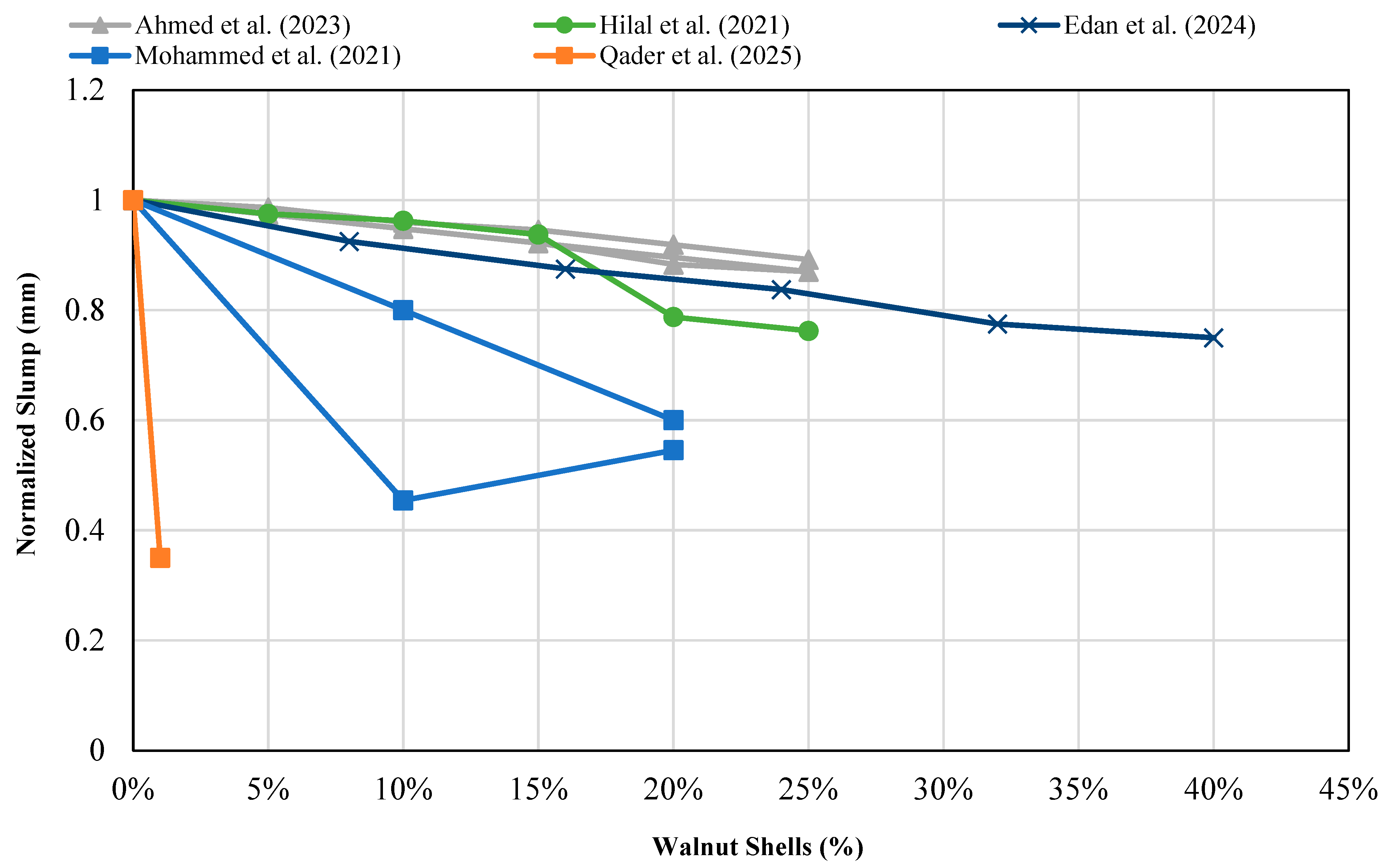
Figure 2 shows the change in slump value in normalized terms. When the results are compared, a general downward trend in slump values is observed as the walnut shell ratio increases. When the WS ratio of 10% was utilized, the decrease of 16% in slump value was detected. Furthermore, the decrease of 24% in slump value was observed when the WS ratio of 20% was utilized.
Concrete with WSs exhibits a reduction in slump with increasing replacement levels due to the irregular shape, rough surface texture, and high water absorption capacity of WSs. A similar trend has been reported for concretes incorporating agricultural shell wastes such as coconut shell, peach shell and apricot shell aggregates, where workability decreases as shell content increases [80,81].

2.2. Compressive Strength Comparison

The inclusion of WSs in the concrete mix has been investigated as a potential factor that can change the strength properties of concrete. The literature review revealed significant variations in the compressive strength of concrete mixtures containing WSs. In some studies, positive improvements in the strength of concrete were observed with the use of WSs at certain ratios, while other studies showed that this effect was more limited or had a negative effect on the compressive strength.
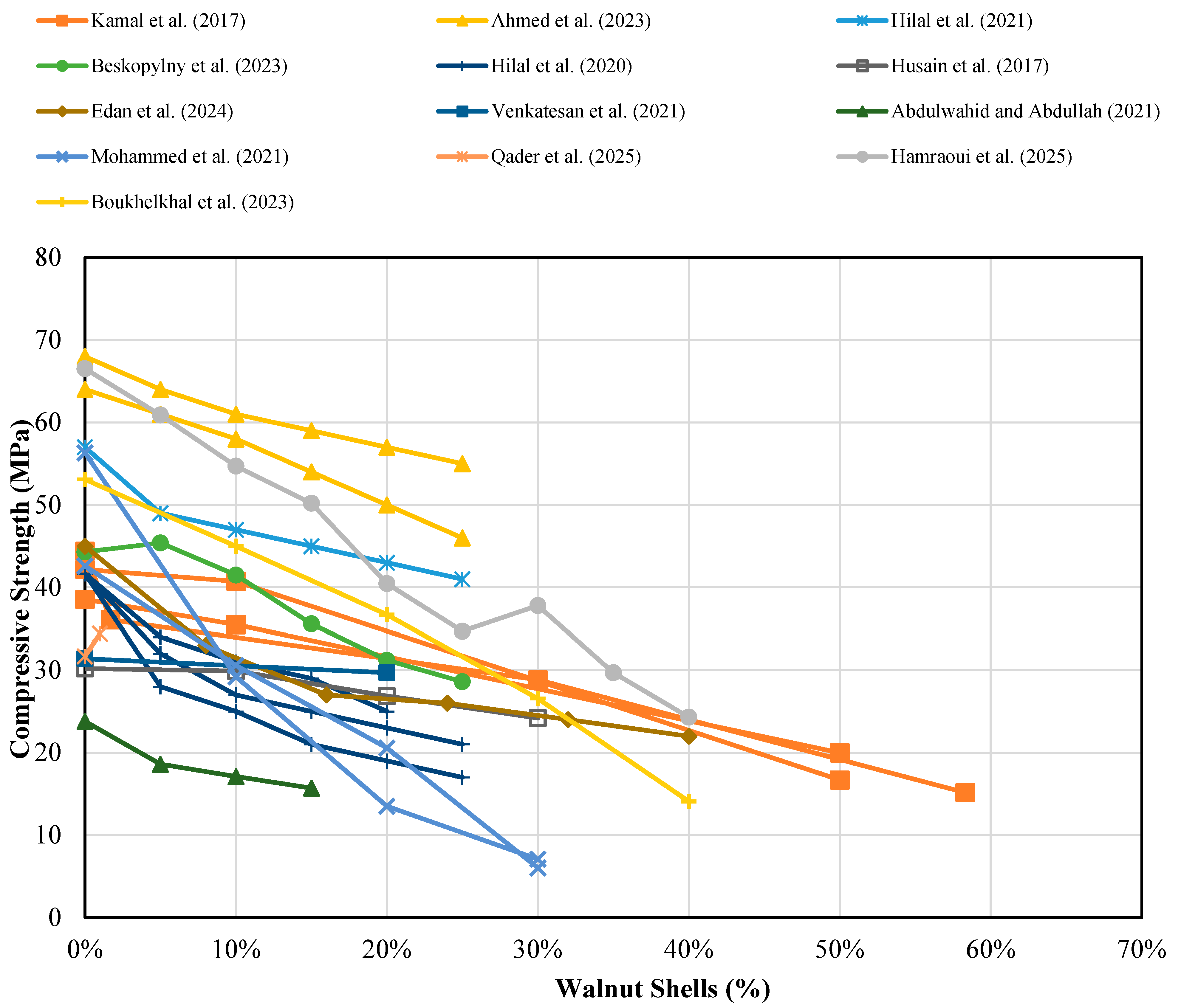
The findings of the studies on the effects of WSs in concrete mixtures on compressive strength have been compiled and put into Figure 3. In the studies, a WS of 0% was taken as the control sample, and compressive strengths have been reported over a wide range in different studies. The lowest control strength was 23.8 MPa in the study by Abdulwahid & Abdullah [71], while the highest control strength was 68.0 MPa in the study by Ahmed et al. [70]. The overall average strength value is approximately 45 MPa, indicating that the initial strengths of walnut-free concretes can vary significantly depending on the materials used, the types of binders, and the mix ratios. According to the literature review within the scope of the study, a decrease in the compressive strength of concrete is generally observed as the walnut shell ratio increases. However, the rate of this decrease varies according to the physical properties, size, shape and inclusion of the WSs.
In the experiments carried out by the authors [69], WSs with a water/cement ratio of 0.35 and a size of 2.36 mm were added to concrete at different ratios (0%, 8%, 16%, 24%, 32%, 40%) and compressive strength values were measured. The data show that there is a significant decrease in the compressive strength of the concrete as the WS content increases. While there is a 27% decrease in strength with 8% WS usage, this decrease increases up to 51% with 40% WS usage. In the study carried out by the authors [71], WS pieces of 2.36 mm in size were added to the concrete mix at different ratios (0%, 5%, 10%, 15%) with a water/cement ratio of 0.7 and compressive strength values were measured. A 12.2% increase in compressive strength was observed with 5% walnut shell admixture with a treatment of soaking in boiled water for half an hour. Without treatment, a 22% decrease in the compressive strength of the samples was detected. However, when the admixture rate was increased to 10% and 15%, the strength decreased by 29% and 34% compared to the control specimen, respectively. In the study of [75], WS with a grain size of 3.15 mm was added to concrete mixtures with a water/cement ratio of 0.43 and at different ratios (between 0% and 40%) and tested for compressive strength. According to the results of the study, a significant decrease in compressive strength was observed as the WS content increased. While the strength decreased by 8.4% with 5% WS, this loss reached 24.5% with 15% admixture. The most dramatic decrease occurred at 40% WS, at which point the strength decreased by more than 63% compared to the reference mix.
The mechanical properties of concrete were investigated by [68] using WS as a substitute for conventional aggregate. Different water/cement ratios were investigated. The use of 10% WS decreased the compressive strength by approximately 8% and 4% compared to the reference mixture with water cement ratios of 0.5 and 0.4, respectively. These ratios change to 48% and 60% decreases when 50% WS was utilized. Another study was completed by [72]. The compressive strength data obtained by adding walnut shells with a water/cement ratio of 0.38 and a grain size of 12.5 mm to concrete mixtures at different ratios show that there is a gradual decrease in the compressive strength of concrete with increasing WS ratio. While the reference specimen of concrete with 0% walnut shell admixture showed a strength of 57 MPa, this value decreased to 49 MPa with 5% WS and a decrease of approximately 14% was observed. When the admixture rate reached 25%, the compressive strength was measured as 41 MPa, indicating a 28.1% decrease compared to the control mix.
In the study of [74], WS fragments with a grain size of 5–20 mm were added to concrete mixtures prepared with a water/cement ratio of 0.38 at ratios ranging from 0% to 25% and the effect of WS on compressive strength was investigated. It was observed that low-level admixtures (especially at 5% level) can slightly increase the compressive strength, but the strength decreases steadily when the WS ratio increases above 10%. The 5% WS admixture resulted in an increase of 2.5% compared to the control mix. This increase may be attributed to the fact that the WSs partially fill the pores in the concrete matrix, show a homogeneous distribution and contribute to the adherence between aggregates. However, as the WS rate increases, especially after 15%, the decrease in strength is remarkable. For example, at 25% WS content, the compressive strength of concrete decreased from 44.3 MPa to 28.6 MPa, which means a loss of approximately 35.4%.
In the study of [76], a maximum of 9.4 mm walnut shell fragments were added to concrete mixtures with a water/cement ratio of 0.55 at different ratios (0–25%) and compressive strength tests were carried out. A regular and significant decrease in the compressive strength of the concrete was observed as the walnut shell admixture ratio increased. The compressive strength was decreased by approximately 23% (fine aggregate replacement), 33% (coarse aggregate replacement) and 18% (fine and coarse aggregate replacement) compared to the reference sample, with only 5% WS depending on the size of WS. In the experiments carried out by the authors [77], 12.5 mm WS was added to concrete mixtures with a water/cement ratio of 0.44 at different ratios (0%, 10%, 20%, 30%) and compressive strength tests were performed. At the 10% WS, there is only a very small decrease in strength of around 1%, which is practically similar to the control specimen. This indicates that WS at low proportions does not significantly affect the mechanical integrity of the concrete mix. The use of 20% and 30% WS resulted in significant reductions in strength of 11% and 20%, respectively.
In the study carried out by the authors [73], WSs were added to the concrete with a water/cement ratio of 0.40 and 0.5 at certain ratios (0%, 10%, 20%, 30%). The data obtained show that there is a significant decrease in the compressive strength of concrete with increasing WS ratio. In particular, a 28% and 48% decrease in strength was observed with 10% WS for concrete with a water/cement ratio of 0.5 and 0.4, respectively. This loss reached 51% and 76% with 20% WS and a dramatic decrease exceeding 85% and 87% was observed with 30% WS for concrete with a water/cement ratio of 0.5 and 0.4, respectively. In the study carried out by the authors [79], the 28-day compressive strength of concrete mixtures prepared using walnut shells with a water/cement ratio of 0.43 and a maximum WS size of 5 mm was evaluated. It shows that there is a significant and continuous decrease in the compressive strength of concrete with increasing WS ratio. A 10% WS resulted in a strength loss of approximately 15% compared to the reference concrete. This reduction became more dramatic at 20% with the reduction of 31%. On the other hand, at 40% WS, exceeding 73% reduction was detected.
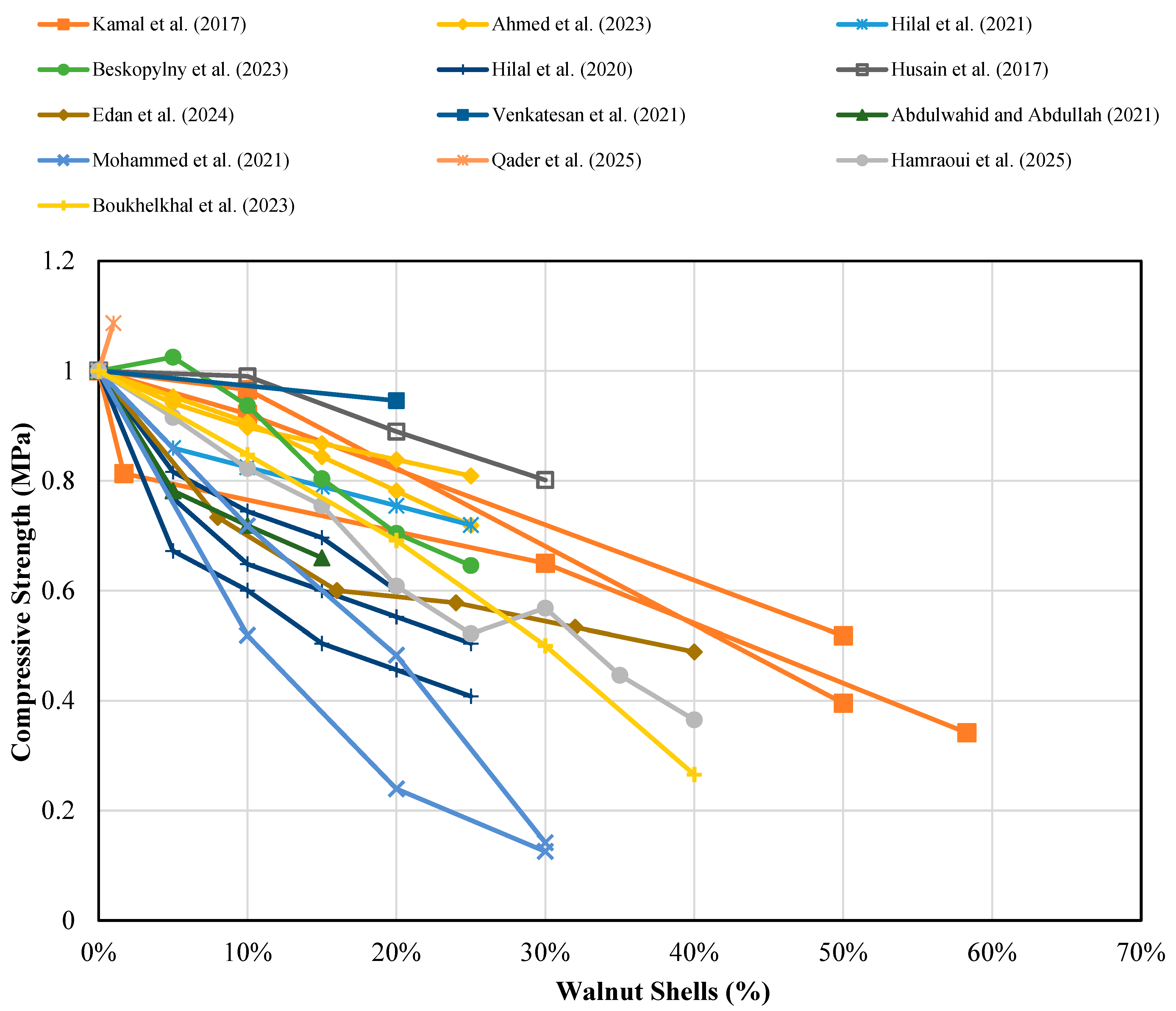
Figure 4 demonstrates the normalized compressive strength values. Except for a few cases, a gradual decrease in compressive strength was observed. While the average strength loss was 11.6% at a 5% walnut content, this value increased to 17.8% when the ratio was increased to 10%. A decrease of 23.9% was recorded at a 15% WS ratio, and a decrease of 31.5% was recorded at a 20% WS ratio. Losses became more pronounced at higher ratios, with a 36.0% decrease at a 25% ratio, 53.6% at a 30% ratio, and 62.7% at a 40% ratio. At the highest WS of 50%, the loss was 54.3%. The results seems to be higher than that of the 40% ratio. This is due to the fact that the reviewed studies are different for 40% and 50% WS.
This trend in compressive strength was also reported in different studies of agricultural shells. Wu et al. [82] reported a 44% reduction in compressive strength when 100% peach shell was utilized. Zievie et al. [83] reported a 16% reduction in compressive strength at 40% shea nut shell particles. It was indicated in [84] that using a coconut shell ratio of 40% as an aggregate replacement of concrete resulted in a 21.5% decrease in compressive strength. Reductions in compressive strength of concrete with cashew shells were reported as 8%, 17.9% and 23.7% for a 10%, 20% and 30% replacement of cashew shells, respectively [85]. Horma et al. [27] utilized peanut shell as both a fine and coarse aggregate replacement. They found that 6% coarse and fine aggregate replacement resulted in a reduction in compressive strength by 18% and 51%, respectively. Agbenyeku and Okonta [86] conducted a study to investigate the use of palm nut shell as replacement. The compressive strength of concrete was decreased by 18%, 30%, 34%, 46% and 52% for 10%, 20%, 30%, 40% and 50% palm nut shell replacement. Tangadagi et al. [87] replaced coconut shell with coarse aggregate at different rates. The compressive strength was reduced by 1.7%, 5.4%, 10.6%, 21.3%, 23.9% and 32.6% for the replacement of coconut shell with a rate of 5%, 10%, 15%, 20%, 25% and 30%.

2.3. Splitting Tensile Strength Comparison

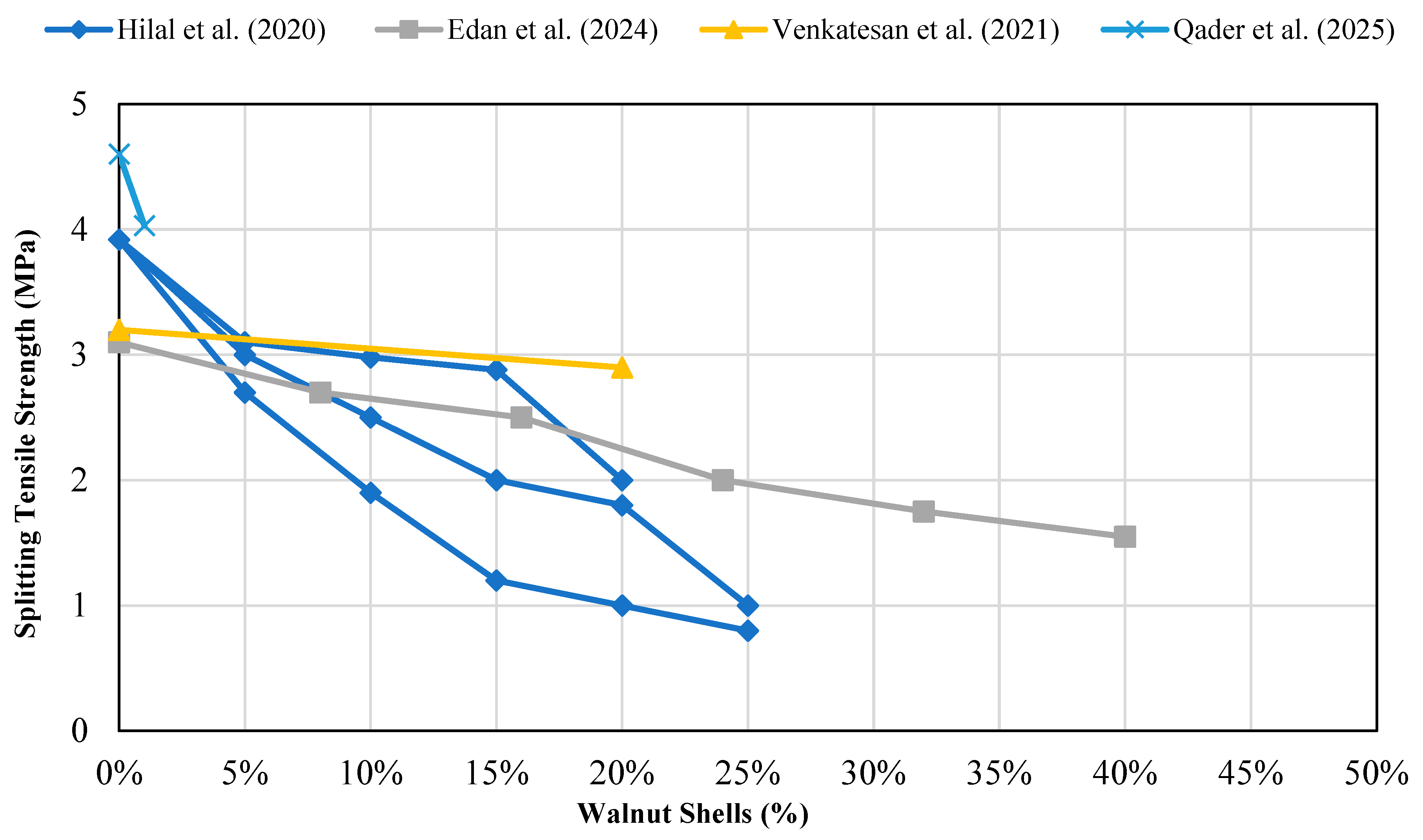
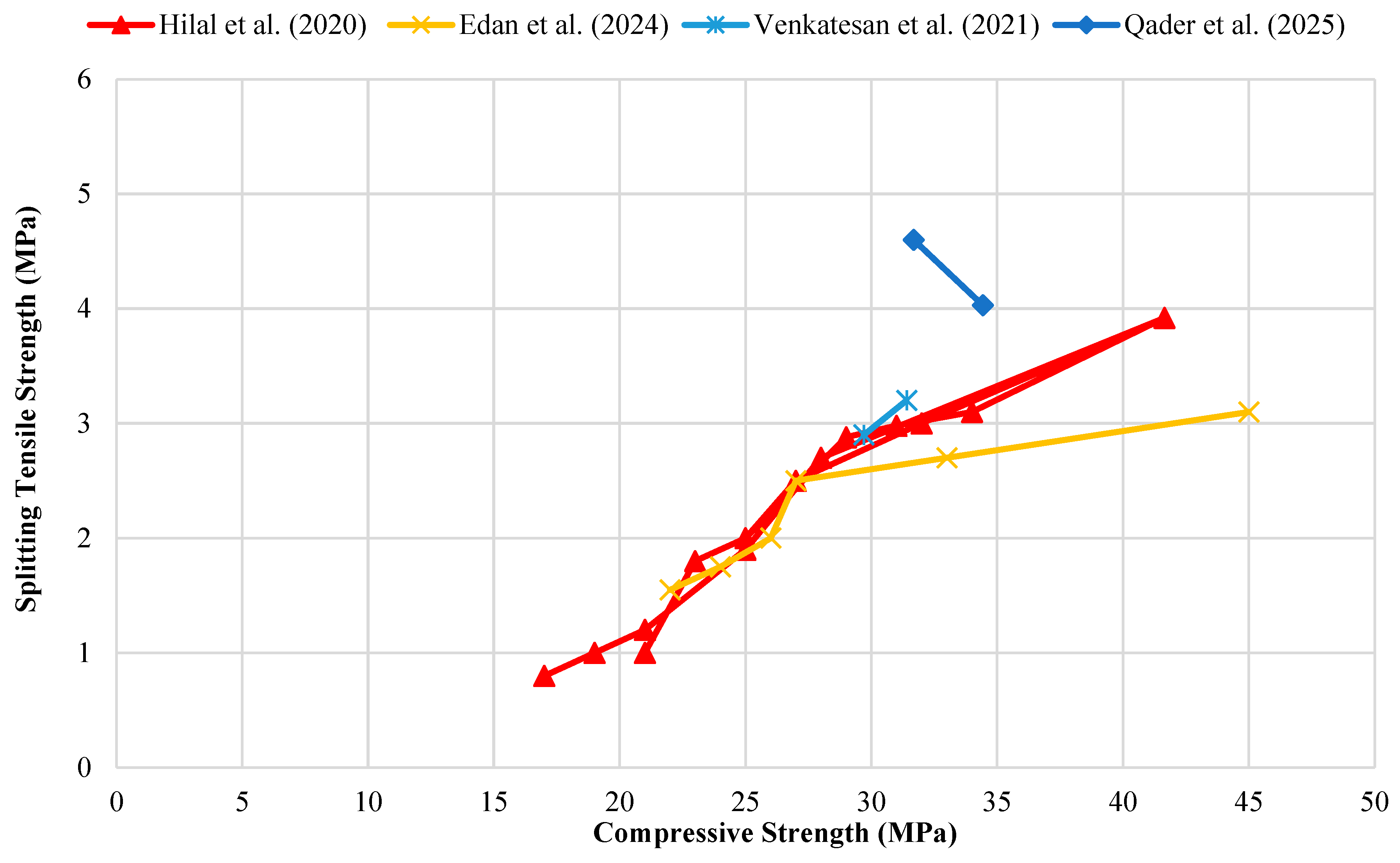
In this section, the literature on the effects of WS on the splitting tensile strength of concrete mixtures is reviewed and the results are presented in Figure 5. This graph presents a comparison of the splitting tensile strength values of WS-admixed concretes at different ratios. In the studies, a WS of 0% was taken as the control sample, and splitting tensile strengths have been reported over a wide range in different studies. The lowest control strength was 3.1 MPa, while the highest control strength was 4.6 MPa. The overall average strength value is approximately 3.6 MPa.
In the study of [76], the 28-day splitting (tensile) strengths of concrete mixtures with a water/cement ratio of 0.55 were tested. Three different sizes of WS were investigated. The experimental results show that there is a significant decrease in splitting strength as the WS admixture ratio increases. While the splitting strength of the reference concrete with 0% admixture was 3.919 MPa, this value decreased by 23.4% to 3.0 MPa with 5% WS, by 36.2% to 2.5 MPa with 10% WS, and by 48.9% to 2.0 MPa with 15% WS for fine WS replacement. At 20% and 25% WS rates, the strength was measured as 1.8 MPa (54.1% decrease) and 1.0 MPa (74.5% decrease), respectively. These ratios change depending on the size of WS aggregate. The splitting tensile strength results for coarse WS aggregate were less than that of fine WS aggregate.
In the study of [69], the splitting tensile strengths of concrete mixtures containing WS aggregate with a water/cement ratio of 0.35 and a maximum size of 2.36 mm were investigated. The data obtained show that there is a steady tendency of decrease in splitting strength as the WS ratio increases. While the splitting strength of the reference concrete obtained with 0% WS ratio was 3.1 MPa, this value decreased by 12.9% to 2.7 MPa at 8% WS, by 19.3% to 2.5 MPa at 16% WS, and by 35.4% to 2.0 MPa at 24% WS. This decrease is even more pronounced at higher ratios: a 43.5% reduction with 32% WS and a 50% reduction with 40% WS were reported.
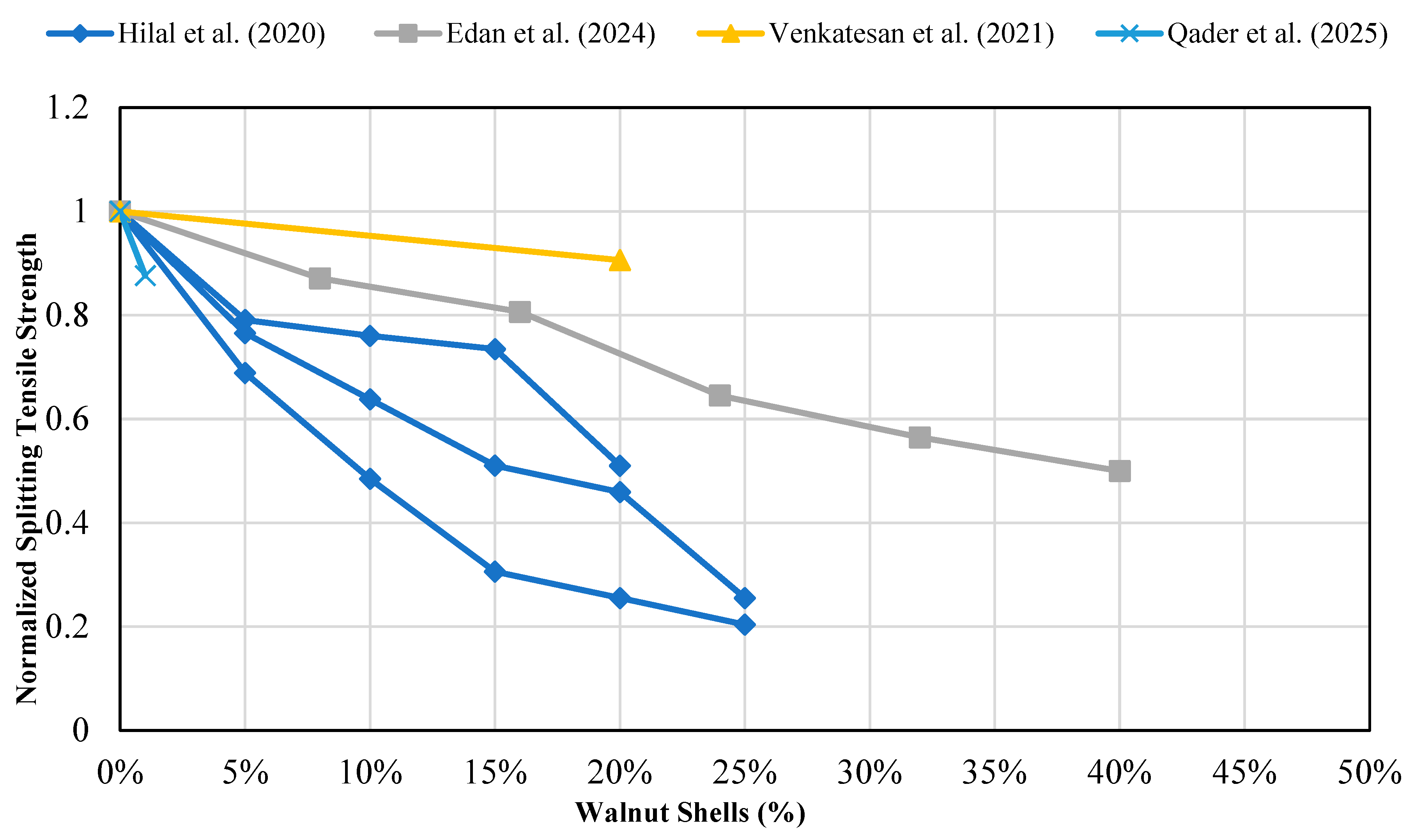
Figure 6 shows the normalized splitting tensile strength. According to the average values, WS caused a steady decrease in the splitting tensile strength of concrete. At a 5% WS ratio, strength decreased by approximately 25%, while at a 10% level, the loss increased to around 37%. When the WS was 15%, the decrease was around 41%. At higher ratios, the losses became much more pronounced.
The reduction in splitting tensile strength was also reported in different studies of agricultural shells. Wu et al. [82] tested the splitting tensile strength of concrete with peach shell as a replacement of aggregate. A decrease of 34.5% in splitting tensile strength was observed when 100% peach shell was utilized. Zievie et al. [83] reported a 15% reduction in splitting tensile strength at 40% shea nut shell particles. Tangadagi et al. [87] utilized coconut shell as a replacement of coarse aggregate up to a 30% ratio. Splitting tensile strength was reduced by 2.3%, 6.7%, 14.7%, 20.2%, 30.6% and 35.7% for the replacement of coconut shell with a rate of 5%, 10%, 15%, 20%, 25% and 30%.

2.4. Flexural Strength Comparison

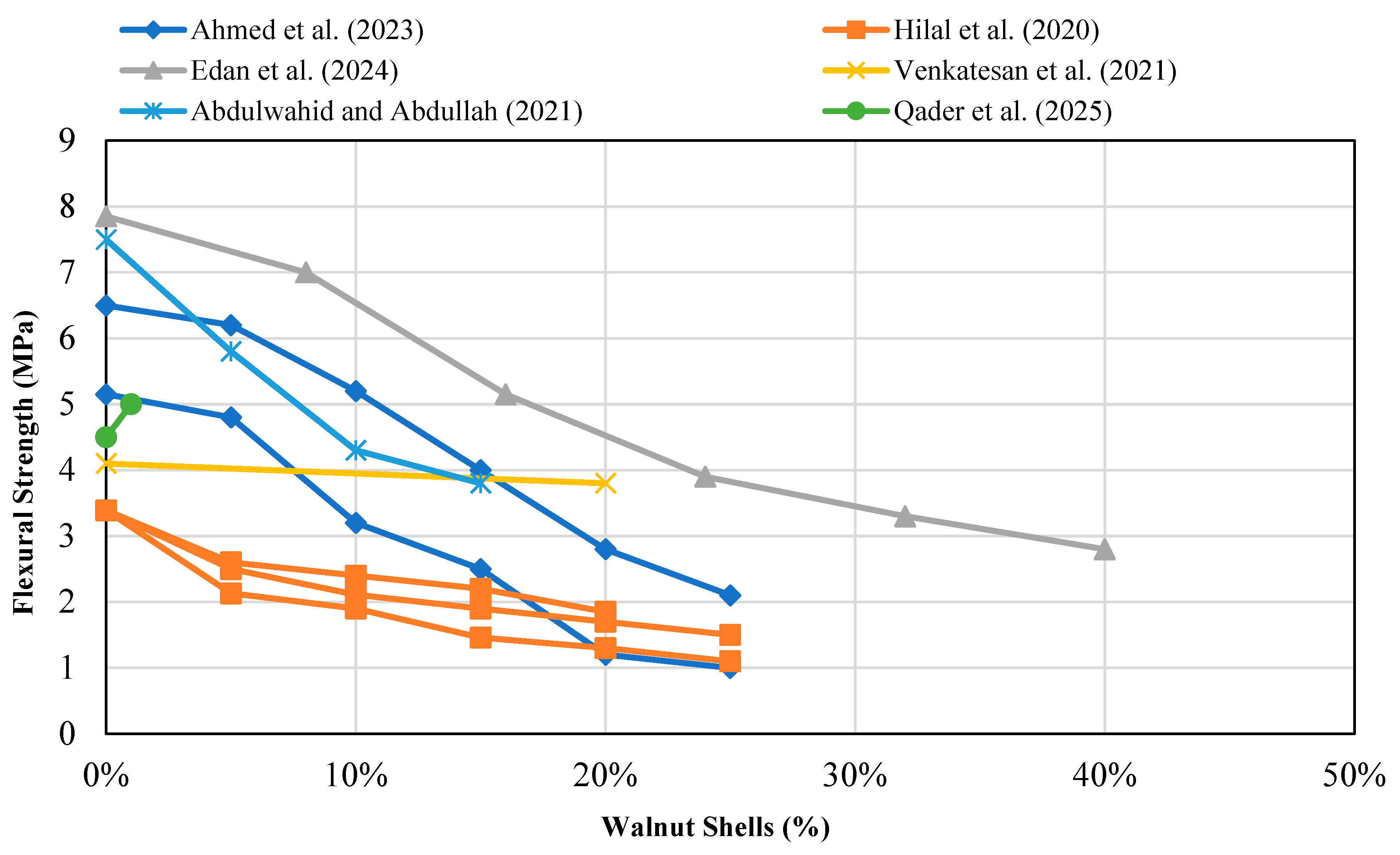
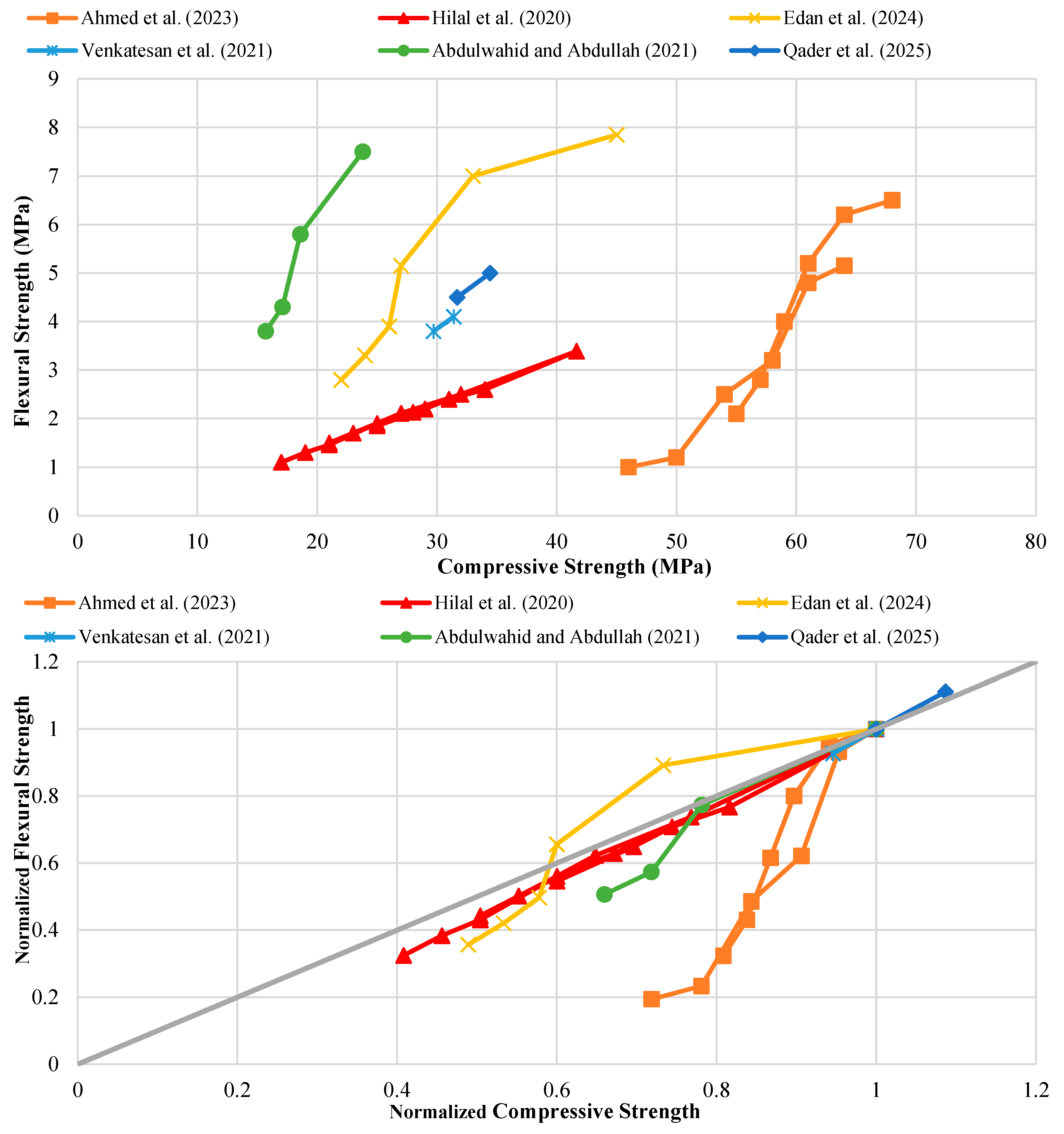
The effects of WS on the flexural strength of concrete mixtures are collected and the results are presented in Figure 7. In most of the studies, a significant decrease in flexural strength was observed as the WS content increased. However, it has also been observed that WS in certain proportions, especially in small proportions, provides slight changes on the flexural strength of concrete.
When control samples with a 0% walnut content are considered in all studies, the flexural strength values show a fairly wide distribution. The lowest control strength was reported as 3.39 MPa in the study by Hilal et al. [76], while the highest value was measured as 7.85 MPa in the study by Edan et al. [69]. Other studies reported control sample values ranging from 4.1 to 7.5 MPa. The overall average strength value was calculated to be approximately 5.3 MPa. These findings reveal that the initial flexural strengths obtained without WS addition vary significantly depending on the type of binder used, the mixing ratios, and the experimental conditions.
In the study of [70], flexural strength tests on concrete specimens prepared using walnut shell aggregate with a water/cement ratio of 0.34 were performed and revealed that there was a significant decrease in the flexural strength of concrete with increasing walnut shell admixture ratio. While the flexural strength of the control specimen was 5.15 MPa, this value decreased by 6.8% at a 5% WS rate. When the WS rate was increased to 10%, a 37.9% decrease in strength was observed. Similarly, the flexural strength decreased by 51.5% with 15% WS, 76.7% with 20% WS, and 80.6% with 25% WS. In the study of [76], the effects of WS on flexural strength were investigated in concrete specimens prepared with a water/cement ratio of 0.55 and maximum of 9.4 mm WS aggregate. In terms of flexural strength, compared to the reference value of 3.39 MPa obtained with 0% WS, 2.5 MPa was reached with a 26.3% decrease with 5% WS, 2.11 MPa with a 37.8% decrease with 10% WS, 1.9 MPa with a 44% decrease with 15% WS, 1.7 MPa with a 49.8% decrease with 20% WS and finally 1.5 MPa with a 55.7% decrease with 25% WS for fine WS aggregate replacement. On the other hand, the decrease is more pronounced in coarse WS aggregate replacement. In the study of [69], 28-day flexural strength tests on concrete specimens prepared using walnut shell aggregate with a water/cement ratio of 0.35 and a maximum size of 2.36 mm showed a systematic decrease in strength values with increasing walnut shell admixture. In terms of flexural strength, the value obtained as 7.85 MPa in the control specimen (concrete without walnut shell) decreased by 10.8% to 7 MPa with 8% WS. When the admixture rate was increased to 16%, the strength decreased by 34.4% to 5.15 MPa, and at 24%, the strength decreased by 50.3% to 3.9 MPa. At a 32% WS rate, the flexural strength decreased by 57.9% to 3.3 MPa, and at a 40% WS rate, the flexural strength decreased by 64.3% to 2.8 MPa. In the study of [71], the effect of WS aggregate with a water/cement ratio of 0.70 and a maximum size of 2.36 mm on concrete was evaluated by flexural strength tests. The flexural strength of the control concrete was 7.5 MPa. A 23% decrease in flexural strength was observed with 5% WS without treatment. However, when the WS rate was increased to 10% and 15%, the strength decreased by 43% and 49% compared to the control specimen, respectively.
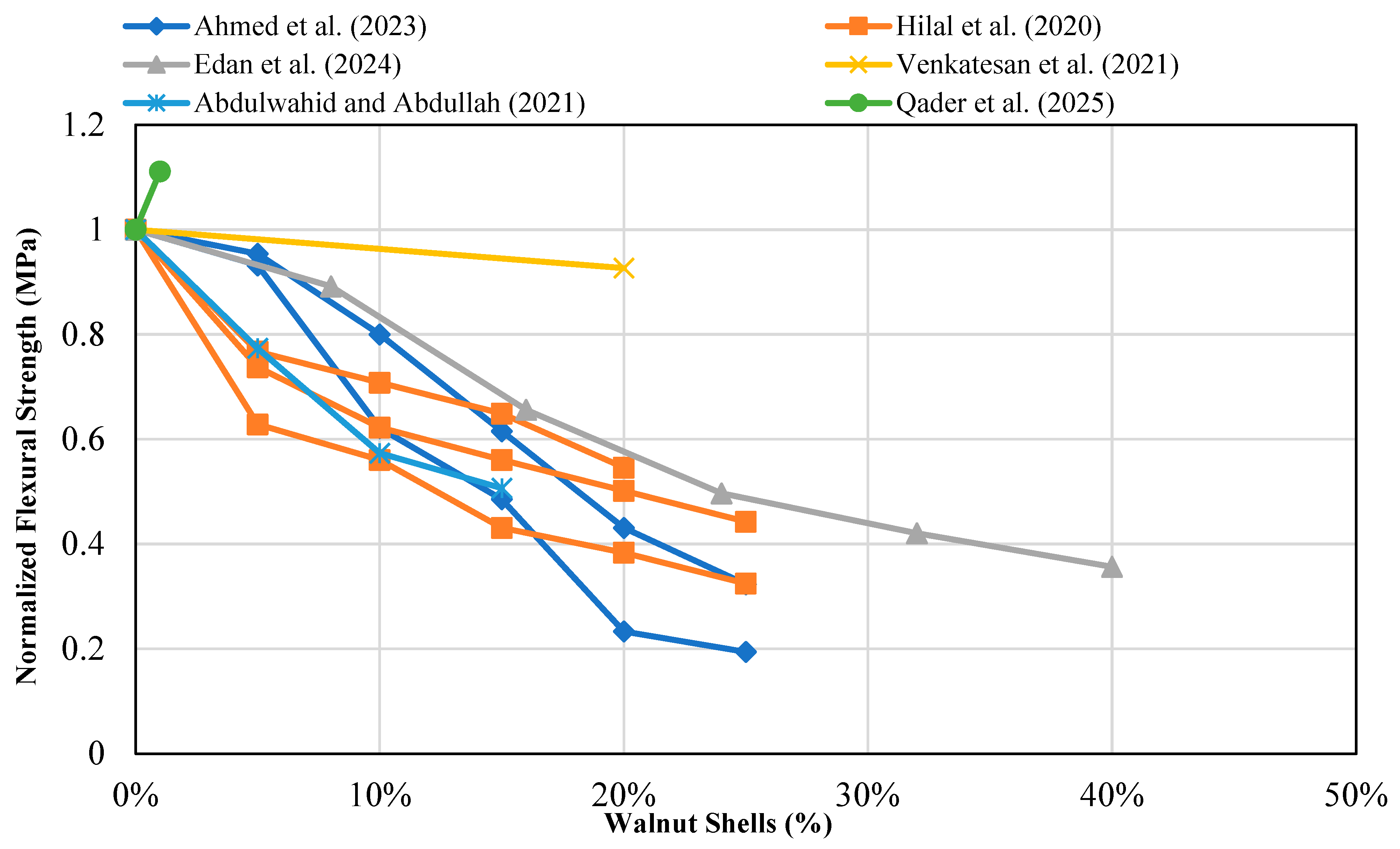
Figure 8 shows the effects of increasing WS content on normalized flexural strength. The flexural strength tends to decrease in a similar way. However, some studies have observed small increases in flexural strength at low WS contents (e.g., around 1%), possibly due to the fiber-like structure of the walnut shell partially limiting microcrack propagation. However, this positive effect was reversed at higher ratios and a significant decrease in flexural strength was observed. According to normalized values, WS has caused significant decreases in the flexural strength of concrete. While the average strength loss was 21% at 5% walnut addition, this rate increased to 34% at 10% addition. At walnut ratios of 15% and 20%, decreases of 47% and 48% were recorded, respectively. The reductions became much more pronounced at higher additions; strength decreased by 68% at a 25% WS. The general trend shows that flexural strength gradually decreases as the WS increases, with significant losses occurring at high levels.
The flexural strength results of concretes incorporating different agricultural shells were consistent with those reported in the present study. Wu et al. [82] utilized peach shell as a substitute for normal aggregate. Flexural strength was reduced by 46.5% when 100% peach shells were utilized. Priyadharshini et al. [85] reported a 10% reduction in the flexural strength of concrete when 20% cashew shells were used. When the macadamia nut shell rate was 5%, the flexural strength of the concrete was reduced by 5.3% compared to the macadamia nut shell replacement rate of 1% [31]. Tangadagi et al. [87] used coconut shell as a coarse aggregate replacement. Flexural strength was reduced by 3.7%, 11.7%, 14.6%, 22.5%, 29.6% and 38.3% for the replacement of coconut shell with a rate of 5%, 10%, 15%, 20%, 25% and 30%.

3. Relation Between Mechanical Properties

3.1. Relation Between Compression and Splitting Tensile Strength

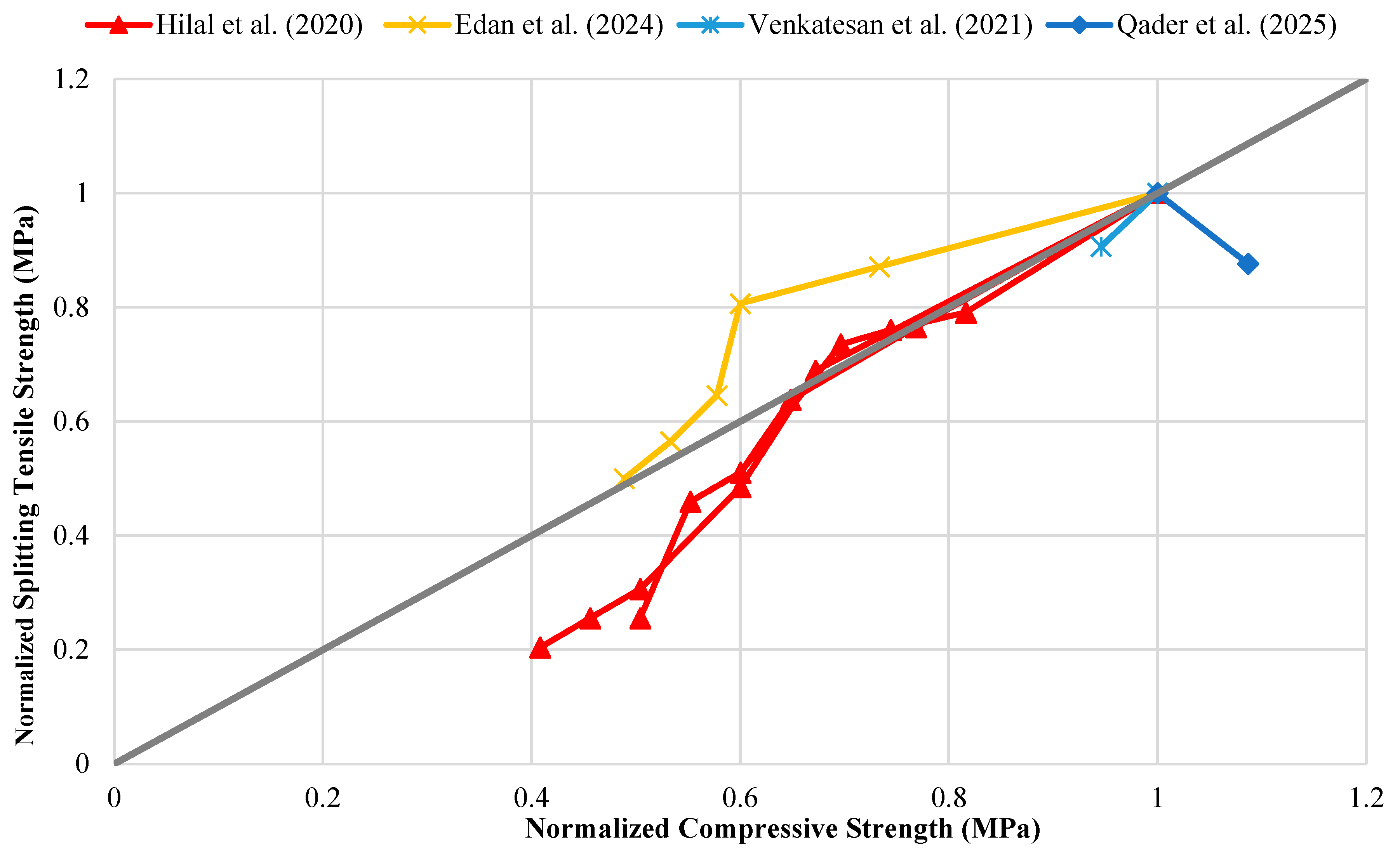
When the effect of WS is examined, a decrease is observed in both compressive strength (CS) and splitting tensile strength values; however, the rates of decrease differ. Figure 9 demonstrates the relation between compressive strength and splitting tensile strength. According to the studies given in Figure 9, at low content ratios of 5% WS, compressive strength decreases by an average of 25%, while STS losses reach 22% at the same ratios. At medium content ratios of 15% WS, compressive strength decreases by 40%, while the decrease in splitting tensile reaches around 41%. At high walnut shells (25% and above), significant decreases are observed in both strengths. The loss in splitting tensile strength can reach levels of 59%, while the loss is 51% for compressive strength. This can be explained by the WS accelerating crack propagation within the microstructure of the concrete and weakening the bond strength. In conclusion, while WS content negatively affects both strengths, its impact is much more severe at high ratios.
Similar results were obtained from the literature which studied different types of agricultural shell aggregates. According to the study of Wu et al. [82], compressive strength was reduced by 44%, while splitting tensile strength was reduced by 34% when 100% peach shell was utilized. On the other hand, according to Zievie et al. [83], compressive and splitting tensile strength were respectively decreased by 16% and 15% when 40% shea nut shells were used. According to the study of Tangadagi et al. [87], compressive strength was reduced by 1.7%, 5.4%, 10.6%, 21.3%, 23.9% and 32.6% and splitting tensile strength was reduced by 2.3%, 6.7%, 14.7%, 20.2%, 30.6% and 35.7% for the replacement of coconut shell with a rate of 5%, 10%, 15%, 20%, 25% and 30%.

3.2. Relation Between Compression and Flexural Strength

The effect of WS is observed to be negative on both compressive strength (CS) and flexural strength (FS); however, the severity of the strength losses differs. Figure 10 demonstrates the relation between compressive strength and flexural strength. Compressive strength shows a gradual decrease as the WS increases, while flexural strength decreases rapidly, even at lower contents. According to the studies given in Figure 10, at a 5% walnut content, the loss in CS and FS is approximately 15%. At a 10% content, CS losses remain at around 25%, while the decrease in FS reaches 32%. At 20% WS, CS decreases by approximately 33%, while losses in FS exceed 48%. At higher walnut ratios (25% and above), significant decreases are recorded in both properties, with FS losses reaching around 66%, becoming much more dramatic compared to CS (43% loss). Consequently, although walnut content negatively affects both mechanical properties, flexural strength suffers much more at a higher rate compared to compressive strength.
The studies in the literature which investigate different types of agricultural shell aggregates reported similar results. Wu et al. [82] reported a 44% reduction in compressive strength while flexural strength was reduced by 46.5% when 100% peach shell was utilized. According to the study of Priyadharshini et al. [85], reductions in the compressive and flexural strength of concrete with a 10% replacement of cashew shells were reported as 8% and 10%, respectively. According to study of Tangadagi et al. [87], compressive strength was reduced by 1.7%, 5.4%, 10.6%, 21.3%, 23.9% and 32.6% and flexural strength was reduced by 3.7%, 11.7%, 14.6%, 22.5%, 29.6% and 38.3% for the replacement of coconut shell with a rate of 5%, 10%, 15%, 20%, 25% and 30%.

3.3. Relation Between Compression Strength and Density

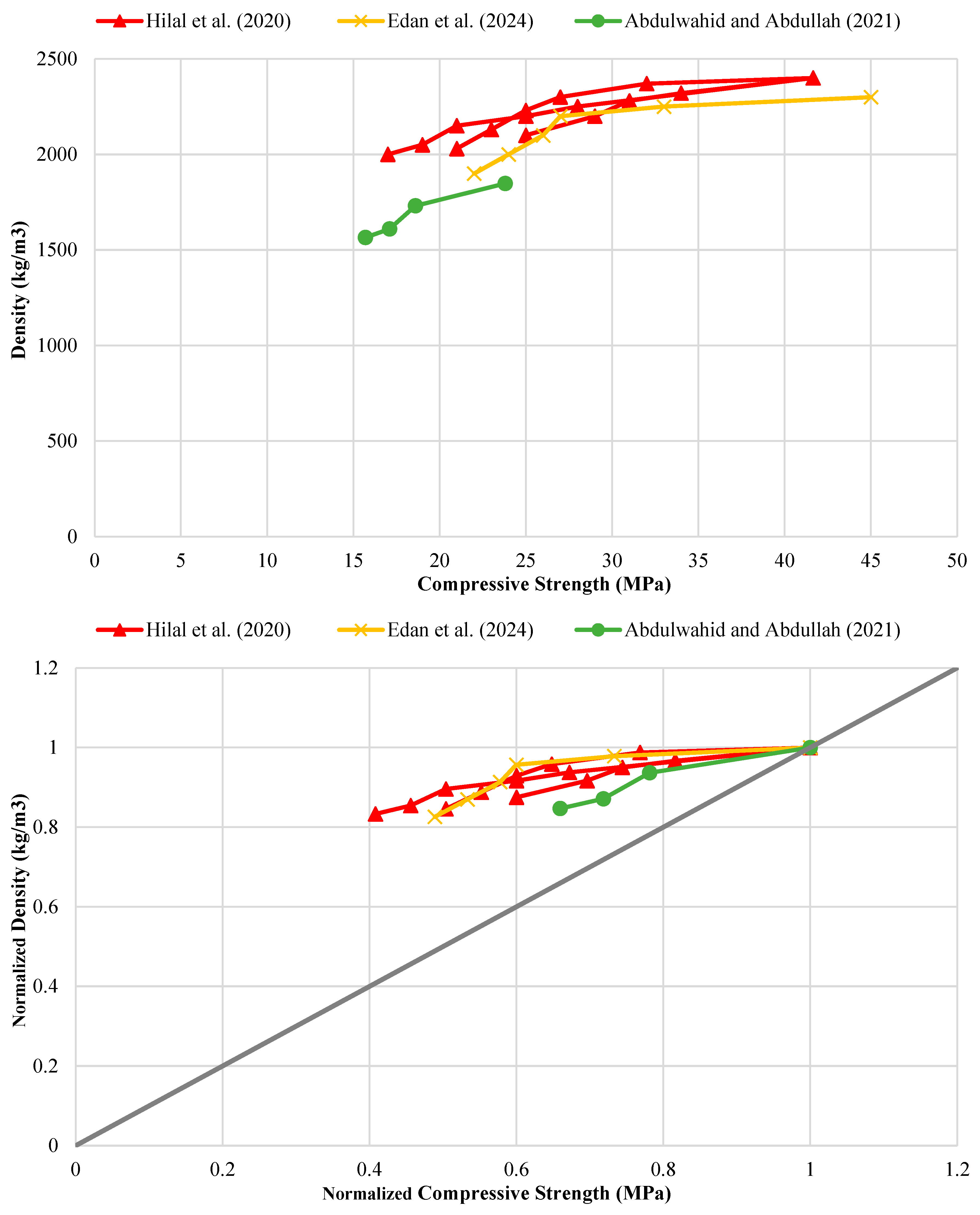
The increase in walnut content has significant effects on both the compressive strength (CS) and density of concrete. Figure 11 demonstrates the relation between compressive strength and density. According to the studies given in Figure 11, at low ratios of 5% WS, density losses remain around 4%; at the same ratios, compressive strength losses reach around 24%. At medium ratios of 15%, density losses occur around 10%, while compressive strength losses are more pronounced, reaching around 39%. At high walnut ratios (25% and above), a decrease in density of around 16% is observed, while losses in compressive strength increase much more dramatically, reaching around 52%. This situation can be explained by the fact that, although the walnut additive partially reduces the density of the concrete, its main critical effect is on compressive strength. In other words, while density decreases remain relatively limited, mechanical properties weaken significantly, especially at high ratios. This shows that concrete with high WS can be utilized for lightweight concrete with non-structural elements.

4. Conclusions

Considering the limited availability of natural aggregate sources and the environmental damage caused during their extraction, the utilization of agricultural waste offers an important approach for sustainable construction materials. This study comprehensively examined the feasibility of using walnut shells (WSs), an agricultural by-product, as an aggregate substitute in concrete production within the framework of seeking alternative materials to reduce the environmental impacts of the rapidly increasing demand for concrete. The dataset used in this study was compiled from experimental results reported in previous studies focusing on concrete with WS. The primary variables considered include WS replacement ratio (%), compressive strength, splitting tensile strength, flexural strength, slump value, and concrete density. In all comparisons, mixtures with 0% WS content were considered as control samples. Differences in reported values reflect variations in mix design parameters, WS characteristics and particle sizes adopted in the original studies. In this context, numerous experimental studies in the literature were analyzed, and the effects of WS on the mechanical and physical properties of concrete at different replacement ratios were comparatively presented. The following results are obtained from this study:
The use of WS has influence on workability. A reduction of 16% and 24% in the slump values was reported when the WS ratios of 10% and 20% were utilized, respectively.
WS replacement has caused significant losses in terms of compressive strength. A decrease of 11.6% at 5% replacement, 17.8% at 10% replacement, 31.5% at 20% replacement, and 62.7% at 40% replacement has been reported. It was found that strength losses increased rapidly at rates above 20% and that the porous structure of WS negatively affected the load-bearing capacity of concrete.
Splitting tensile strength was one of the parameters most sensitive to WS replacement. There was a decrease of 25% at 5% substitution, 37% at 10% substitution, 41% at 15% substitution, and 62% at 25% and higher substitution rates. This may be related to the fact that tensile strength is directly dependent on microcrack formation and interfacial bond strength, and the porous structure of WSs facilitates crack propagation.
Flexural strength results also showed a similar decrease. According to the data, a decrease of 21% was determined at 5% substitution, 34% at 10% substitution, 48% at 20% substitution, and 68% at 25% and higher substitution rates.
While compressive strength decreased by 18% at the rates of 10% WS, a tensile strength loss of up to 37% was observed at the same rate. The general trend shows that tensile strength deteriorates much faster than compressive strength.
With 10% WS substitution, compressive strength decreased by 15–20%, while the decrease in flexural strength reached 30–35%. This reveals that flexural strength is more sensitive than compressive strength.
When 10% and 15% WS ratios were utilized, 7% and 10% reductions in the density were reported. These values modified to 12% and 25% when 25% and 40% WS ratios were utilized.
Based on the compiled results from the literature, the practical applicability of walnut shell (WS) in concrete depends strongly on the replacement ratio and the performance requirements of the intended application. At low replacement levels (generally ≤10%), the reduction in compressive strength remains relatively limited, suggesting that WS may be used in certain structural or semi-structural applications where moderate strength reduction can be tolerated. At moderate replacement levels (approximately 10–20%), the mechanical performance decreases more noticeably, and the use of WS is more suitable for non-structural elements, such as partition walls, blocks, and precast panels. At higher replacement ratios (>20%), the significant reduction in density indicates the potential for producing lightweight concrete materials, which may be advantageous in applications where thermal insulation, reduced dead load, or sustainability considerations are prioritized. Therefore, selecting the appropriate WS content should involve balancing mechanical performance requirements with the desired sustainability and lightweight characteristics of the concrete.

5. Future Studies

Future studies should move beyond reporting empirical strength trends and focus on the fundamental mechanisms governing the behavior of concrete containing walnut shells. In particular, the microstructural characteristics of the interfacial transition zone (ITZ) between walnut shell particles and the cement matrix should be investigated using advanced techniques such as SEM, micro-CT, and nanoindentation. Another important research direction involves understanding how the high porosity and water absorption capacity of walnut shells influence internal moisture transport, shrinkage behavior, and crack initiation under mechanical loading. Furthermore, the effects of particle size distribution, surface treatment methods, and preconditioning techniques on the bonding performance and mechanical stability of walnut shell aggregates require systematic investigation. Finally, future studies should explore multiscale modeling approaches to predict the mechanical performance of bio-aggregate concrete by linking the material properties of walnut shells with macroscopic concrete behavior.

6. Declaration of Generative AI and AI-Assisted Technologies in the Writing Process

During the preparation of this work, the authors used ChatGPT (GPT-5) in order to improve several important aspects of writing, such as the readability, grammar, spelling, and tone of the text. After using this tool, the authors reviewed and edited the content as needed and take full responsibility for the content of the publication.

Author Contributions

Y.O.Ö.: Conceptualization, Methodology, Data Curation, Writing—original draft, Writing—review and editing, Funding Acquisition; C.A.Ç.: Writing—original draft, Writing—review and editing, Data Curation; E.M.S.: Writing—original draft, Writing—review and editing, Data Curation, Formal analysis. All authors have read and agreed to the published version of the manuscript.

Funding

This study was supported by the grant of the Russian Science Foundation No. 25-79-32007, https://rscf.ru/project/25-79-32007/ (accessed on 15 March 2026).

Data Availability Statement

Not applicable. This manuscript does not report data generation or analysis.

Conflicts of Interest

The authors confirm that there are no known conflicts of interest associated with this publication and there has been no significant financial support for this work that could have influenced its outcome.

References

  1. Souza, A.B.; Ferreira, H.S.; Vilela, A.P.; Viana, Q.S.; Mendes, J.F.; Mendes, R.F. Study on the feasibility of using agricultural waste in the production of concrete blocks. J. Build. Eng. 2021, 42, 102491. [Google Scholar] [CrossRef]
  2. Oikonomou, N.D. Recycled concrete aggregates. Cem. Concr. Compos. 2005, 27, 315–318. [Google Scholar] [CrossRef]
  3. Mohammed, M.S.; ElKady, H.; Abdel-Gawwad, H.A. Utilization of construction and demolition waste and synthetic aggregates. J. Build. Eng. 2021, 43, 103207. [Google Scholar] [CrossRef]
  4. Hafez, H.; Kurda, R.; Kurda, R.; Al-Hadad, B.; Mustafa, R.; Ali, B. A Critical Review on the Influence of Fine Recycled Aggregates on Technical Performance, Environmental Impact and Cost of Concrete. Appl. Sci. 2020, 10, 1018. [Google Scholar] [CrossRef]
  5. Ajayi, S.O.; Oyedele, L.O.; Bilal, M.; Akinade, O.O.; Alaka, H.A.; Owolabi, H.A.; Kadiri, K.O. Waste effectiveness of the construction industry: Understanding the impediments and requisites for improvements. Resour. Conserv. Recycl. 2015, 102, 101–112. [Google Scholar] [CrossRef]
  6. Alsharari, F. Utilization of Industrial, Agricultural, and Construction Waste in Cementitious Composites: A Comprehensive Review of their Impact on Concrete Properties and Sustainable Construction Practices. Mater. Today Sustain. 2025, 29, 101080. [Google Scholar] [CrossRef]
  7. Yu, Y.; Pacheco-Torgal, F.; Zhao, X.-Y.; Wang, X.-L. Cleaner production of the precast concrete industry: Comparative life cycle analysis of concrete using recycled aggregates from crushed precast rejects. Eur. J. Environ. Civ. Eng. 2024, 28, 1014–1038. [Google Scholar] [CrossRef]
  8. Batayneh, M.; Marie, I.; Asi, I. Use of selected waste materials in concrete mixes. Waste Manag. 2007, 27, 1870–1876. [Google Scholar] [CrossRef]
  9. He, J.; Kawasaki, S.; Achal, V. The utilization of agricultural waste as agro-cement in concrete: A review. Sustainability 2020, 12, 6971. [Google Scholar] [CrossRef]
  10. Özkılıç, S.Y.; Madenci, A.B.; Arslan, D.; Yılmaz, F.; Madenci, E.; Özkılıç, Y.O. Food Industry Waste as Bio-Modifiers for Sustainable Concrete: Effects of Roasting Pretreatments and Oilseed Cake Types. J. Compos. Sci. 2025, 9, 699. [Google Scholar] [CrossRef]
  11. Alyami, M.; Hakeem, I.Y.; Amin, M.; Zeyad, A.M.; Tayeh, B.A.; Agwa, I.S. Effect of agricultural olive, rice husk and sugarcane leaf waste ashes on sustainable ultra-high-performance concrete. J. Build. Eng. 2023, 72, 106689. [Google Scholar] [CrossRef]
  12. Shafigh, P.; Mahmud, H.B.; Jumaat, M.Z.; Zargar, M. Agricultural wastes as aggregate in concrete mixtures–A review. Constr. Build. Mater. 2014, 53, 110–117. [Google Scholar] [CrossRef]
  13. Khalife, E.; Sabouri, M.; Kaveh, M.; Szymanek, M. Recent Advances in the Application of Agricultural Waste in Construction. Appl. Sci. 2024, 14, 2355. [Google Scholar] [CrossRef]
  14. Bhoj, S.; Manoj, A.; Bhaskar, S. Usage potential and benefits of processed coconut shells in concrete as coarse aggregates. Mater. Today Proc. 2023. In press. [Google Scholar] [CrossRef]
  15. Lawanwadeekul, S.; Jun-On, N.; Kongthavorn, P.; Sangkas, T.; Daothong, S. Chemical-free thermal-acoustic panels from agricultural waste for sustainable building materials. Clean. Mater. 2024, 12, 100245. [Google Scholar] [CrossRef]
  16. Mo, K.H.; Thomas, B.S.; Yap, S.P.; Abutaha, F.; Tan, C.G. Viability of agricultural wastes as substitute of natural aggregate in concrete: A review on the durability-related properties. J. Clean. Prod. 2020, 275, 123062. [Google Scholar] [CrossRef]
  17. Srivani, G.; Mohan, U.V. Study on strength properties of concrete by partial replacement of cement with sugarcane bagasse ash and coarse aggregate with coconut shells. Mater. Today Proc. 2023. In press. [Google Scholar] [CrossRef]
  18. Mydin, M.A.O.; Sor, N.H.; Althoey, F.; Özkılıç, Y.O.; Abdullah, M.M.A.B.; Isleem, H.F.; Deifalla, A.F.; Tawfik, T.A. Performance of lightweight foamed concrete partially replacing cement with industrial and agricultural wastes: Microstructure characteristics, thermal conductivity, and hardened properties. Ain Shams Eng. J. 2023, 14, 102546. [Google Scholar] [CrossRef]
  19. de Azevedo, A.R.G.; Amin, M.; Hadzima-Nyarko, M.; Agwa, I.S.; Zeyad, A.M.; Tayeh, B.A.; Adesina, A. Possibilities for the application of agro-industrial wastes in cementitious materials: A brief review of the Brazilian perspective. Clean. Mater. 2022, 3, 100040. [Google Scholar] [CrossRef]
  20. Kumbasaroglu, H.; Kumbasaroglu, A. Applicability of Agro-Waste Materials in Structural Systems for Building Construction: A Scoping Review. Appl. Sci. 2024, 15, 71. [Google Scholar] [CrossRef]
  21. Anupam, A.K.; Kumar, P.; Ransinchung, G.D. Use of various agricultural and industrial waste materials in road construction. Procedia-Soc. Behav. Sci. 2013, 104, 264–273. [Google Scholar] [CrossRef]
  22. Oancea, I.; Bujoreanu, C.; Budescu, M.; Benchea, M.; Grădinaru, C.M. Considerations on sound absorption coefficient of sustainable concrete with different waste replacements. J. Clean. Prod. 2018, 203, 301–312. [Google Scholar] [CrossRef]
  23. Massoudinejad, M.; Amanidaz, N.; Santos, R.M.; Bakhshoodeh, R. Use of municipal, agricultural, industrial, construction and demolition waste in thermal and sound building insulation materials: A review article. J. Environ. Health Sci. Eng. 2019, 17, 1227–1242. [Google Scholar] [CrossRef]
  24. Ahmed, T.I.; El-Shafai, N.M.; El-Mehasseb, I.M.; Sharshir, S.W.; Tobbala, D.E. Recent advances in the heating resistance, thermal gravimetric analysis, and microstructure of green concrete incorporating palm-leaf and cotton-stalk nanoparticles. J. Build. Eng. 2022, 61, 105252. [Google Scholar] [CrossRef]
  25. Nassar, R.-U.-D.; Singh, N.; Varsha, S.; Sai, A.R.; Sufyan-Ud-Din, M. Strength, electrical resistivity and sulfate attack resistance of blended mortars produced with agriculture waste ashes. Case Stud. Constr. Mater. 2022, 16, e00944. [Google Scholar] [CrossRef]
  26. Beskopylny, A.N.; Shcherban’, E.M.; Stel’makh, S.A.; Meskhi, B.; Shilov, A.A.; Varavka, V.; Evtushenko, A.; Özkılıç, Y.O.; Aksoylu, C.; Karalar, M. Composition component influence on concrete properties with the additive of rubber tree seed shells. Appl. Sci. 2022, 12, 11744. [Google Scholar] [CrossRef]
  27. Horma, O.; Channouf, S.; El Hammouti, A.; El Hassani, S.; Miri, H.; Moussaoui, M.A.; Mezrhab, A. Enhancing concrete sustainability using crushed peanut shells: An analysis of thermophysical properties, durability, and application potential in construction. J. Build. Eng. 2024, 90, 109434. [Google Scholar] [CrossRef]
  28. Ünal, M.T.; Bin Hashim, H.; Gökçe, H.S.; Ayough, P.; Köksal, F.; El-Shafie, A.; Şimşek, O.; Pordesari, A. Development and Characterization of Basalt Fiber-Reinforced Green Concrete Utilizing Coconut Shell Aggregates. Sustainability 2024, 16, 7306. [Google Scholar] [CrossRef]
  29. Shcherban’, E.M.; Stel’makh, S.A.; Beskopylny, A.N.; Mailyan, L.R.; Meskhi, B.; Shilov, A.A.; Chernil’nik, A.; Özkılıç, Y.O.; Aksoylu, C. Normal-weight concrete with improved stress–strain characteristics reinforced with dispersed coconut fibers. Appl. Sci. 2022, 12, 11734. [Google Scholar] [CrossRef]
  30. Wu, F.; Liu, C.; Zhang, L.; Lu, Y.; Ma, Y. Comparative study of carbonized peach shell and carbonized apricot shell to improve the performance of lightweight concrete. Constr. Build. Mater. 2018, 188, 758–771. [Google Scholar] [CrossRef]
  31. Liu, Y.; Wu, H.; Gao, Y.; Wang, W.; Wang, Z. Influence of macadamia nutshell particles on the apparent density and mechanical behavior of cement-based mortars. Constr. Build. Mater. 2024, 411, 134600. [Google Scholar] [CrossRef]
  32. Noaman, A.T.; Abed, M.S.; Al-Gebory, L.; Al-Zubaidi, A.B.; Al-Tabbakh, A.A. Production of agro-waste cement composites: Influence of nutshells on mechanical and hardened properties. Constr. Build. Mater. 2023, 394, 132137. [Google Scholar] [CrossRef]
  33. Ollani, S.; Peano, C.; Sottile, F. Recent innovations on the reuse of almond and hazelnut by-products: A review. Sustainability 2024, 16, 2577. [Google Scholar] [CrossRef]
  34. Shaban, W.M.; Heniegal, A.M.; Amin, M.; Zeyad, A.M.; Agwa, I.S.; Hassan, H.H. Effect of agricultural wastes as sugar beet ash, sugarcane leaf ash, and sugarcane bagasse ash on UHPC properties. J. Build. Eng. 2024, 98, 111359. [Google Scholar] [CrossRef]
  35. Karolina, R.; Tandika, W.; Hasibuan, A.; Putra, M.A.; Fahreza, D. Pineapple leaf fiber (PALF) waste as an alternative fiber in making concrete. J. Phys. Conf. Ser. 2022, 2193, 012061. [Google Scholar] [CrossRef]
  36. Hussien, N.T.; Oan, A.F. The use of sugarcane wastes in concrete. J. Eng. Appl. Sci. 2022, 69, 31. [Google Scholar] [CrossRef]
  37. Okpala, D.C. Palm kernel shell as a lightweight aggregate in concrete. Build. Environ. 1990, 25, 291–296. [Google Scholar] [CrossRef]
  38. Foo, K.Y.; Hameed, B.H. Value-added utilization of oil palm ash: A superior recycling of the industrial agricultural waste. J. Hazard. Mater. 2009, 172, 523–531. [Google Scholar] [CrossRef]
  39. Adesina, P.A.; Olutoge, F.A. Structural properties of sustainable concrete developed using rice husk ash and hydrated lime. J. Build. Eng. 2019, 25, 100804. [Google Scholar] [CrossRef]
  40. Muhammad, A.; Thienel, K.-C. Properties of self-compacting concrete produced with optimized volumes of calcined clay and rice husk ash—Emphasis on rheology, flowability retention and durability. Materials 2023, 16, 5513. [Google Scholar] [CrossRef]
  41. Bheel, N.; Ali, M.O.; Liu, Y.; Tafsirojjaman, T.; Awoyera, P.; Sor, N.H.; Bendezu Romero, L.M. Utilization of Corn Cob Ash as Fine Aggregate and Ground Granulated Blast Furnace Slag as Cementitious Material in Concrete. Buildings 2021, 11, 422. [Google Scholar] [CrossRef]
  42. Stel’makh, S.A.; Beskopylny, A.N.; Shcherban, E.M.; Mavzolevsky, D.; Drukarenko, S.; Chernil’nik, A.; Elshaeva, D.; Shilov, A.A. Influence of corn cob ash additive on the structure and properties of cement concrete. Constr. Mater. Prod. 2024, 7, 2. [Google Scholar] [CrossRef]
  43. Olaiya, B.C.; Lawan, M.M.; Olonade, K.A.; Abubakar, S.A. Banana leaf ash as sustainable alternative raw material for the production of concrete: A review. Discov. Mater. 2025, 5, 100. [Google Scholar] [CrossRef]
  44. Islam, M.H.; Law, D.W.; Gunasekara, C.; Sobuz, M.H.R.; Rahman, M.N.; Habib, M.A.; Sabbir, A.K. Assessing the influence of banana leaf ash as pozzolanic material for the production of green concrete: A mechanical and microstructural evaluation. Materials 2024, 17, 720. [Google Scholar] [CrossRef] [PubMed]
  45. Beskopylny, A.N.; Stel’makh, S.A.; Shcherban’, E.M.; Ananova, O.; Chernil’nik, A.; El’shaeva, D.; Pogrebnyak, A.; Dubinkin, I.; Madenci, E.; Aksoylu, C. Performance Assessment of a Novel Green Concrete Using Coffee Grounds Biochar Waste. Recycling 2024, 9, 94. [Google Scholar] [CrossRef]
  46. Padavala, S.S.A.B.; Dey, S.; Veerendra, G.T.N.; Manoj, A.V.P. Experimental study on concrete by partial replacement of cement with fly ash and coarse aggregates with palm kernel shells (Pks) and with addition of hybrid fibers. Chem. Inorg. Mater. 2024, 2, 100033. [Google Scholar] [CrossRef]
  47. D’Eusanio, V.; Bertacchini, L.; Marchetti, A.; Mariani, M.; Pastorelli, S.; Silvestri, M.; Tassi, L. Rosaceae Nut-Shells as Sustainable Aggregate for Potential Use in Non-Structural Lightweight Concrete. Waste 2023, 1, 549–568. [Google Scholar] [CrossRef]
  48. Maulood, P.; Darwesh, D. Soil Quality Index Models for Assessing Walnut Orchards in Northern Erbil Province, Iraq. Pol. J. Environ. Stud. 2020, 29, 1275–1285. [Google Scholar] [CrossRef]
  49. Fordos, S.; Abid, N.; Gulzar, M.; Pasha, I.; Oz, F.; Shahid, A.; Khan, M.K.I.; Mousavi Khaneghah, A.; Aadil, R.M. Recent development in the application of walnut processing by-products (walnut shell and walnut husk). Biomass Convers. Biorefinery 2023, 13, 14389–14411. [Google Scholar] [CrossRef]
  50. Hamraoui, S.; Boukhelkhal, D.; Guendouz, M.; Ahmedi, Y. Development of a lightweight self-compacting mortar based on an agricultural by-product (walnut shells) as fine aggregates. Stud. Eng. Exact Sci. 2025, 6, e13725. [Google Scholar] [CrossRef]
  51. Ren, G.; Su, A.; Gao, X. Recycling waste walnut shells as a sustainable internal curing material for ultra-high performance concrete matrix. J. Build. Eng. 2025, 114, 114369. [Google Scholar] [CrossRef]
  52. El Hamri, A.; Mouhib, Y.; Chkala, H.; Oulhakem, O.; Chigr, M.; El Mansouri, N.-E. Investigating the Potential of Using Walnut Shell Particles for Manufacturing Cement-Bonded Particle Boards. J. Compos. Sci. 2025, 9, 183. [Google Scholar] [CrossRef]
  53. Chilmon, K.; Kalinowski, M.; Bogacki, J.; Woyciechowski, P. From waste to function: Ground walnut shells as a reactive additive for heavy metal removal in pervious concrete. Constr. Build. Mater. 2025, 498, 144035. [Google Scholar] [CrossRef]
  54. Sánchez Mirón, B.W.; Roux Gutiérrez, R.S.; Molar Orozco, M.E. Alternative Material for Load-Bearing Wall with Addition of Walnut Shell. Waste Reduction. In Proceedings of the 3rd International Congress on Sustainable Construction and Eco-Efficient Solutions; Universidad de Sevilla, Departamento de Construcciones Arquitectónicas: Seville, Spain, 2017. [Google Scholar]
  55. Cheng, W.; Liu, G.; Chen, L. Pet fiber reinforced wet-mix shotcrete with walnut shell as replaced aggregate. Appl. Sci. 2017, 7, 345. [Google Scholar] [CrossRef]
  56. Hama, S.M.; Mohana, M.H.; Yousif, L.A.; Sulaiman, H.A.; Ahmed, H.A.S. The Effect of the Particle Size of Walnut Shell on the Properties of Structural Concrete. In Current Trends in Civil Engineering and Engineering Sciences 2024; Springer: Singapore, 2024; pp. 124–136. [Google Scholar]
  57. Hamah Sor, N.; Hilal, N.; Alabdulhady, M.Y.; Jagadesh, P.; Naser, K.Z. SEM analysis, durability and hardened characteristics of eco-friendly self-compacting concrete partially contained bentonite and waste walnut shells. Eur. J. Environ. Civ. Eng. 2025, 29, 1214–1243. [Google Scholar] [CrossRef]
  58. Qader, D.N.; Merie, H.D.; Abdulhaleem, K.N. Impact of Incorporating Plastic Fibers, Walnut Shells, and Tire Rubber Fibers on the Mechanical Properties of Concrete. Electron. J. Struct. Eng. 2025, 25, 19–24. [Google Scholar] [CrossRef]
  59. Pradeep, A.; Anima, P. Experimental Study On Flexural Behaviour Of Light Weight Self-Compacting Concrete With Walnut Shell And Ggbfs As Mineral Admixture. Int. Res. J. Eng. Technol. 2022, 9, 1841–1846. [Google Scholar]
  60. Tichi, A.H.; Razavi, M. Construction of Cement Composite Using Walnut Shell Reinforced with Bacterial Nanocellulose Gel. BioResources 2023, 18, 8362–8373. [Google Scholar] [CrossRef]
  61. Sarathe, P.; Agrawal, R.; Gour, P.; Kumar, V. Experimental Study on the Use of Pond Ash and Walnut Shell in Concrete. In Latest Developments in Civil Engineering; Springer: Singapore, 2022; pp. 115–127. [Google Scholar]
  62. Ren, Y.; Shi, J.; Zhou, L.; Peng, S. Experimental study on flexural fatigue resistance of fiber-reinforced sustainable walnut shell ash mortar. Discov. Appl. Sci. 2024, 6, 600. [Google Scholar] [CrossRef]
  63. Abdulwahid, M.Y.; Akinwande, A.A.; Kamarou, M.; Romanovski, V.; Al-Qasem, I.A. The production of environmentally friendly building materials out of recycling walnut shell waste: A brief review. Biomass Convers. Biorefinery 2024, 14, 24963–24972. [Google Scholar] [CrossRef]
  64. Farhan, O.S.; Hama, S.M.; Fayadh, O.K. Flexural and Shear Behavior of Reinforced Sustainable Concrete Beams Incorporating Waste Walnut Shells as Lightweight Aggregate. Int. J. Adv. Sci. Eng. Inf. Technol. 2025, 15, 952–959. [Google Scholar] [CrossRef]
  65. Aadi, A.S.; Mohammed, A.A.; Ali, T.K.M.; Hilal, N.N. Ultra-fine treated and untreated walnut shell ash incorporated cement mortar: Properties and environmental impact assessments. Ann. Chim. Sci. Matériaux 2022, 46, 313–321. [Google Scholar] [CrossRef]
  66. Shebli, A.; Khatib, J.; Elkordi, A. The effect of walnut shell ash on the properties of cement paste and mortar: A study on partial replacement of cement. BAU J.-Sci. Technol. 2023, 5, 10. [Google Scholar] [CrossRef]
  67. Chen, H.; Yang, J. A new supplementary cementitious material: Walnut shell ash. Constr. Build. Mater. 2023, 408, 133852. [Google Scholar] [CrossRef]
  68. Kamal, I.; Sherwani, A.F.; Ali, A.; Khalid, A.; Saadi, I.; Harbi, A. Walnut shell for partial replacement of fine aggregate in concrete: Modeling and optimization. J. Civ. Eng. Res. 2017, 7, 109–119. [Google Scholar]
  69. Edan, H.H.; Hilal, N.; Sor, N.H.; Tawfik, T.A. Durability and hardened characteristics with SEM analysis of eco-efficient self-compacting concrete partially contained waste walnut shell particles as fine aggregate. Iran. J. Sci. Technol. Trans. Civ. Eng. 2024, 48, 745–761. [Google Scholar] [CrossRef]
  70. Ahmed, M.A.; Ibrahim, A.K.; Hilal, N.; Aadi, A.S.; Sor, N.H. Effects of coal ash and walnut shell on the impact resistance and mechanical properties of eco-efficient self-compacting concrete. Ann. De Chim. Sci. Des Matériaux 2023, 47, 201–208. [Google Scholar] [CrossRef]
  71. Abdulwahid, M.Y.; Abdullah, S.F. The utilization of walnut shells as a partial replacement of sand in mortar mixes. Struct. Concr. 2021, 22, E300–E307. [Google Scholar] [CrossRef]
  72. Hilal, N.N.; Sahab, M.F.; Ali, T.K.M. Fresh and hardened properties of lightweight self-compacting concrete containing walnut shells as coarse aggregate. J. King Saud Univ.-Eng. Sci. 2021, 33, 364–372. [Google Scholar] [CrossRef]
  73. Mohammed, A.S.; Hilal, N.N.; Ali, T.K.M.; Sor, N.H. An investigation of the effect of walnut shell as sand replacement on the performance of cement mortar subjected to elevated temperatures. J. Phys. Conf. Ser. 2021, 1973, 012034. [Google Scholar] [CrossRef]
  74. Beskopylny, A.N.; Stel’makh, S.A.; Shcherban’, E.M.; Mailyan, L.R.; Meskhi, B.; Shilov, A.A.; Chernil’nik, A.; El’shaeva, D. Effect of walnut-shell additive on the structure and characteristics of concrete. Materials 2023, 16, 1752. [Google Scholar] [CrossRef]
  75. Hamraoui, S.; Guendouz, M.; Boukhelkhal, D.; Hadjadj, M.; Benrekia, I.; Bouldoum, A.E. Reinforcing the properties of self-compacting mortar based on agro-waste fine (walnut shell) aggregates by alkaline treatment. Stud. Eng. Exact Sci. 2025, 6, e13724. [Google Scholar] [CrossRef]
  76. Hilal, N.; Mohammed Ali, T.K.; Tayeh, B.A. Properties of environmental concrete that contains crushed walnut shell as partial replacement for aggregates. Arab. J. Geosci. 2020, 13, 812. [Google Scholar] [CrossRef]
  77. Husain, M.S.; Ahmad, A.; Huda, S.; Asim, M. Cost optimization of concrete by replacing fine aggregate with walnut shell powder. Int. J. Civ. Eng. Technol. 2017, 8, 82–89. [Google Scholar]
  78. Venkatesan, B.; Lijina, V.J.; Kannan, V.; Dhevasenaa, P.R. Partial replacement of fine aggregate by steel slag and coarse aggregate by walnut shell in concrete. Mater. Today Proc. 2021, 37, 1761–1766. [Google Scholar] [CrossRef]
  79. Boukhelkhal, D.; Guendouz, M.; Triki, Z. Physical and thermal properties of lightweight self-compacting mortar made with recycled walnut shells as fine agreggrates. Alger. J. Environ. Sci. Technol. 2023, 9, 3. [Google Scholar]
  80. Tomar, R.; Kishore, K.; Singh Parihar, H.; Gupta, N. A comprehensive study of waste coconut shell aggregate as raw material in concrete. Mater. Today Proc. 2021, 44, 437–443. [Google Scholar] [CrossRef]
  81. Wu, F.; Liu, C.; Sun, W.; Zhang, L. Mechanical properties of bio-based concrete containing blended peach shell and apricot shell waste. Mater. Tehnol. 2018, 52, 645–651. [Google Scholar]
  82. Wu, F.; Liu, C.; Sun, W.; Ma, Y.; Zhang, L. Effect of peach shell as lightweight aggregate on mechanics and creep properties of concrete. Eur. J. Environ. Civ. Eng. 2020, 24, 2534–2552. [Google Scholar] [CrossRef]
  83. Zievie, P.; Yalley, P.P.K.; Danso, H.; Antwi, K. Assessing the strength and durability behaviour of concrete enhanced with kaolin clay and Shea nut shell particles. Cogent Eng. 2024, 11, 2321384. [Google Scholar] [CrossRef]
  84. Kanojia, A.; Jain, S.K. Performance of coconut shell as coarse aggregate in concrete. Constr. Build. Mater. 2017, 140, 150–156. [Google Scholar] [CrossRef]
  85. Priyadharshini, B.; Nirmala, R.; Eshanthini; Manoj Kumaar, C. Experimental Study on Concrete With Partial Replacement of Coarse Aggregate with Cashew Shells. J. Phys. Conf. Ser. 2021, 1770, 012036. [Google Scholar] [CrossRef]
  86. Agbenyeku, E.-O.E.; Okonta, F.N. Mechanical properties of green concrete with Palm Nut Shell as low cost aggregate. In Construction Materials and Structures; IOS Press: Amsterdam, The Netherlands, 2014; pp. 427–435. [Google Scholar]
  87. Tangadagi, R.B.; Manjunatha, M.; Preethi, S.; Bharath, A.; Reshma, T.V. Strength characteristics of concrete using coconut shell as a coarse aggregate–A sustainable approach. Mater. Today Proc. 2021, 47, 3845–3851. [Google Scholar] [CrossRef]
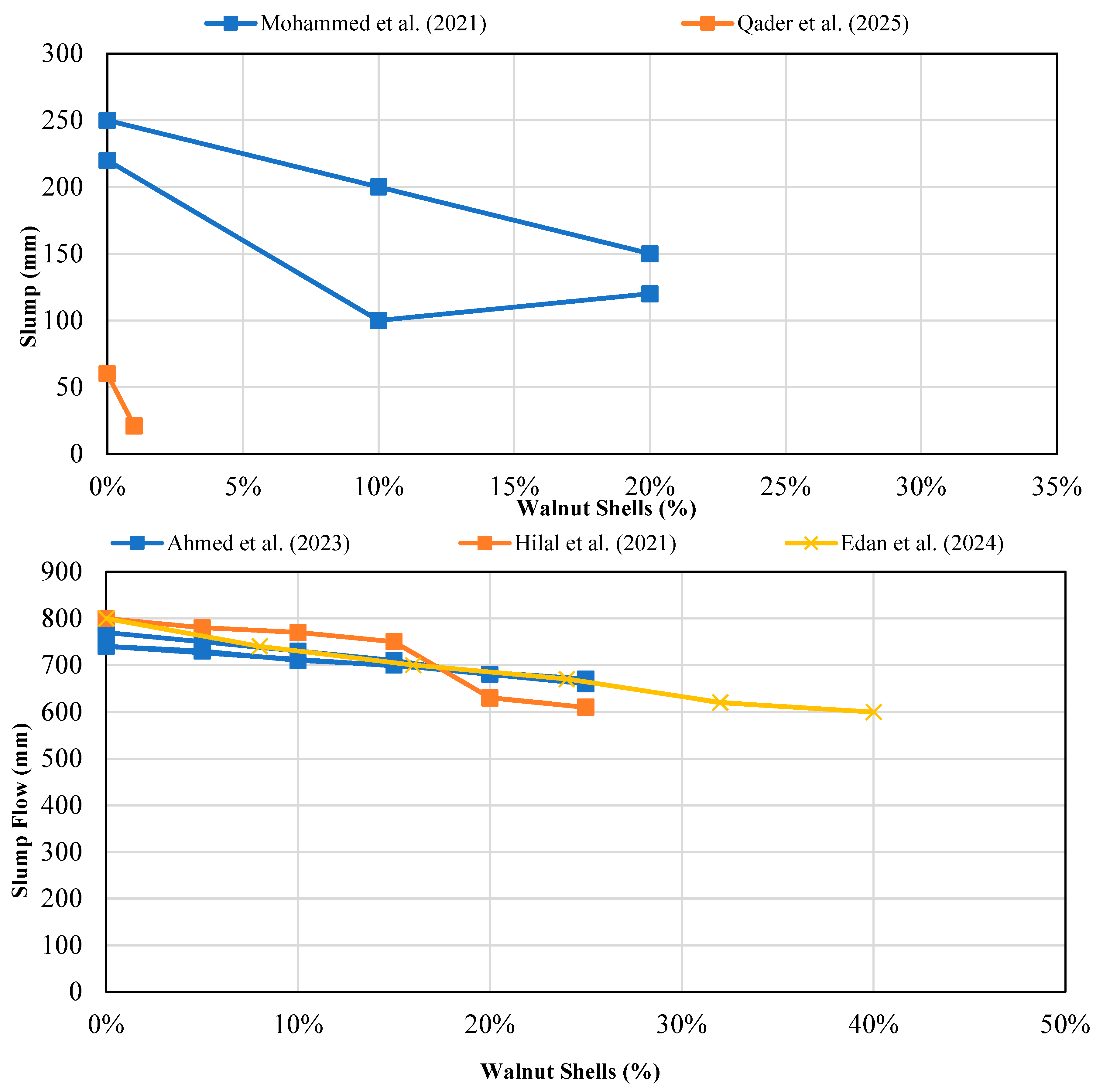
Figure 1. Slump test comparison chart [3,58,69,70,72].
Jcs 10 00164 g001
Figure 2. Normalized slump test [3,58,69,70,72].
Jcs 10 00164 g002
Figure 3. Compressive strength comparison graph [3,58,68,69,70,71,72,74,75,76,77,78,79].
Jcs 10 00164 g003
Figure 4. Normalized compressive strength comparison graph [3,58,68,69,70,71,72,74,75,76,77,78,79].
Jcs 10 00164 g004
Figure 5. Splitting tensile strength comparison graph [58,69,76,78].
Jcs 10 00164 g005
Figure 6. Normalized splitting tensile strength comparison graph [58,69,76,78].
Jcs 10 00164 g006
Figure 7. Flexural strength comparison graph [58,69,70,71,76,78].
Jcs 10 00164 g007
Figure 8. Normalized flexural strength comparison graph [58,69,70,71,76,78].
Jcs 10 00164 g008
Figure 9. The relation between compressive and splitting tensile strength [58,69,76,78].
Jcs 10 00164 g009aJcs 10 00164 g009b
Figure 10. The relation between compressive and flexural strength [58,69,70,71,76,78].
Jcs 10 00164 g010
Figure 11. The relation between compressive strength and density [69,71,76].
Jcs 10 00164 g011
Table 1. Size of the WSs.
0–4 mm5–22 mm
 12.5 mm Kamal et al. [68]
2.36 mm Edan et al. [69]9.55 mm Ahmed et al. [70]
2.36 mm Abdulwahid and Abdullah [71]12.5 mm Hilal et al. [72]
2.36 mm Mohammed et al. [73]5–20 mm Beskopylny et al. [74]
3.15 mm Hamraoui et al. [75]9.4 mm Hilal et al. [76]
 12.5 mm Husain et al. [77]
 12 mm Venkatesan et al. [78]
 5–10 mm Qader et al. [58]
 12.5 mm Pradeep and Anima [59]
 5.00 mm Boukhelkhal et al. [79]
Disclaimer/Publisher’s Note: The statements, opinions and data contained in all publications are solely those of the individual author(s) and contributor(s) and not of MDPI and/or the editor(s). MDPI and/or the editor(s) disclaim responsibility for any injury to people or property resulting from any ideas, methods, instructions or products referred to in the content.