
A Review on Mechanical Performance of Concrete Containing Walnut Shells as Aggregate Replacement




Abstract
1. Introduction
2. Mechanical Properties
2.1. Slump
2.2. Compressive Strength Comparison
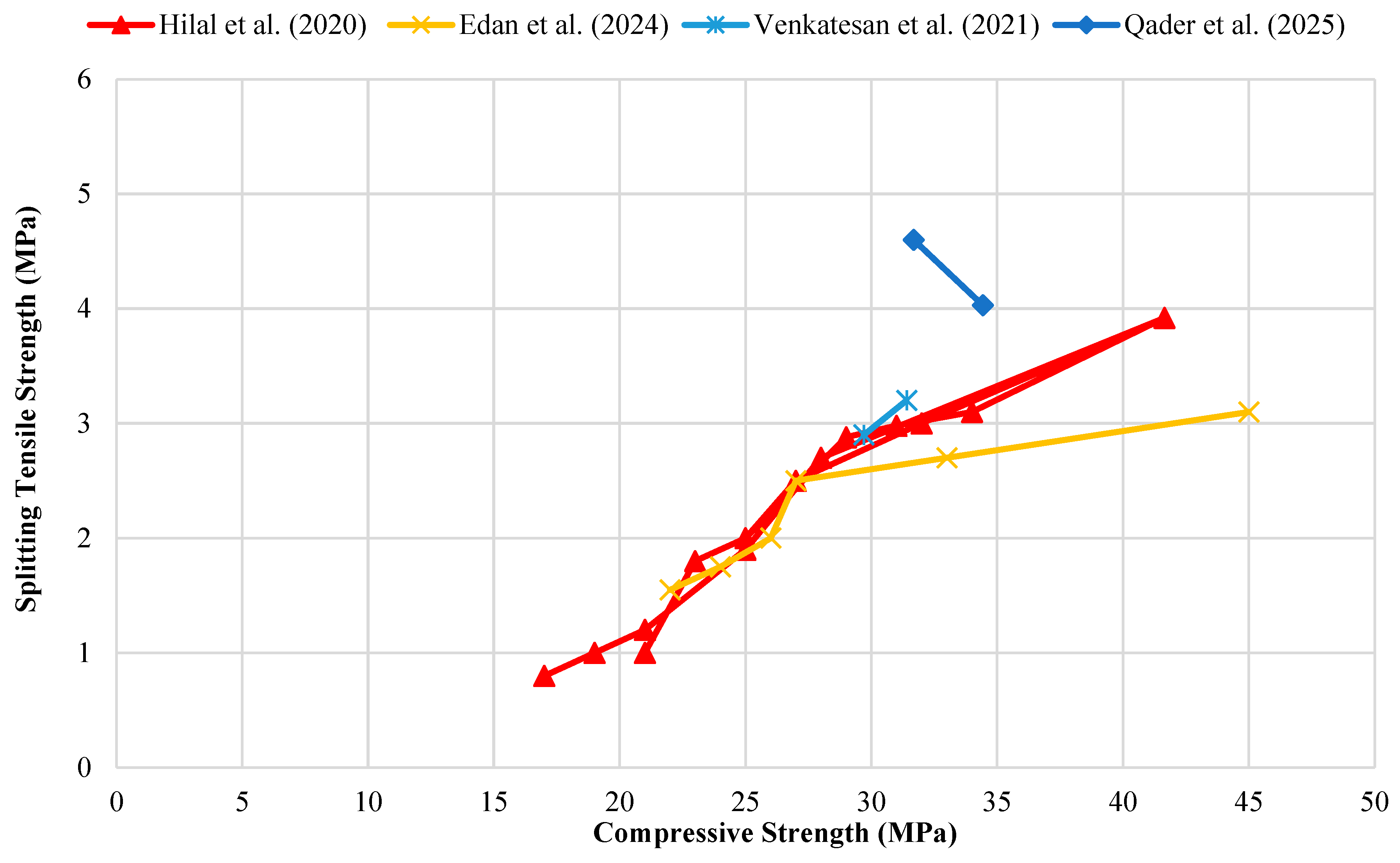
2.3. Splitting Tensile Strength Comparison
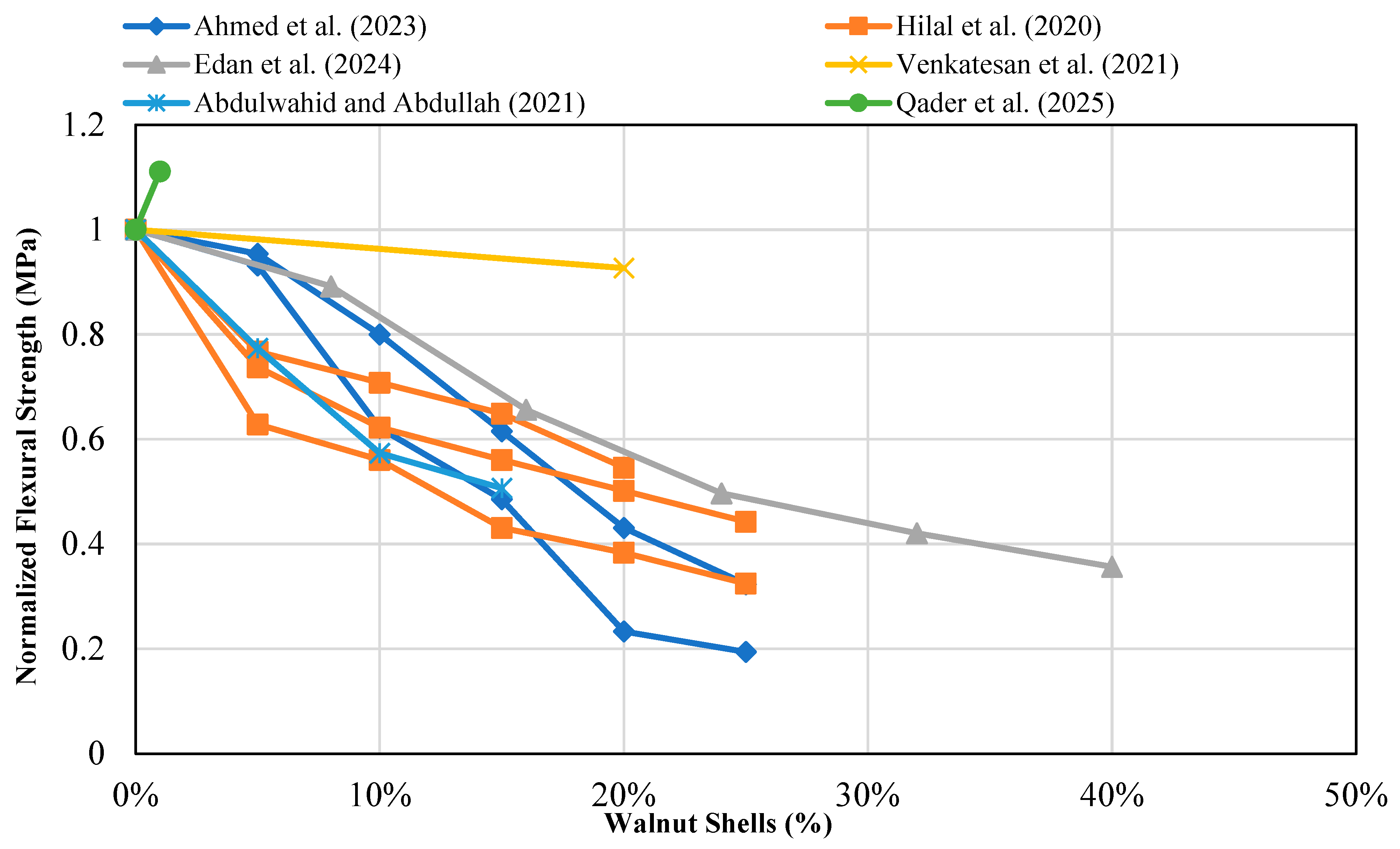
2.4. Flexural Strength Comparison
3. Relation Between Mechanical Properties
3.1. Relation Between Compression and Splitting Tensile Strength
3.2. Relation Between Compression and Flexural Strength
3.3. Relation Between Compression Strength and Density
4. Conclusions
- ✓
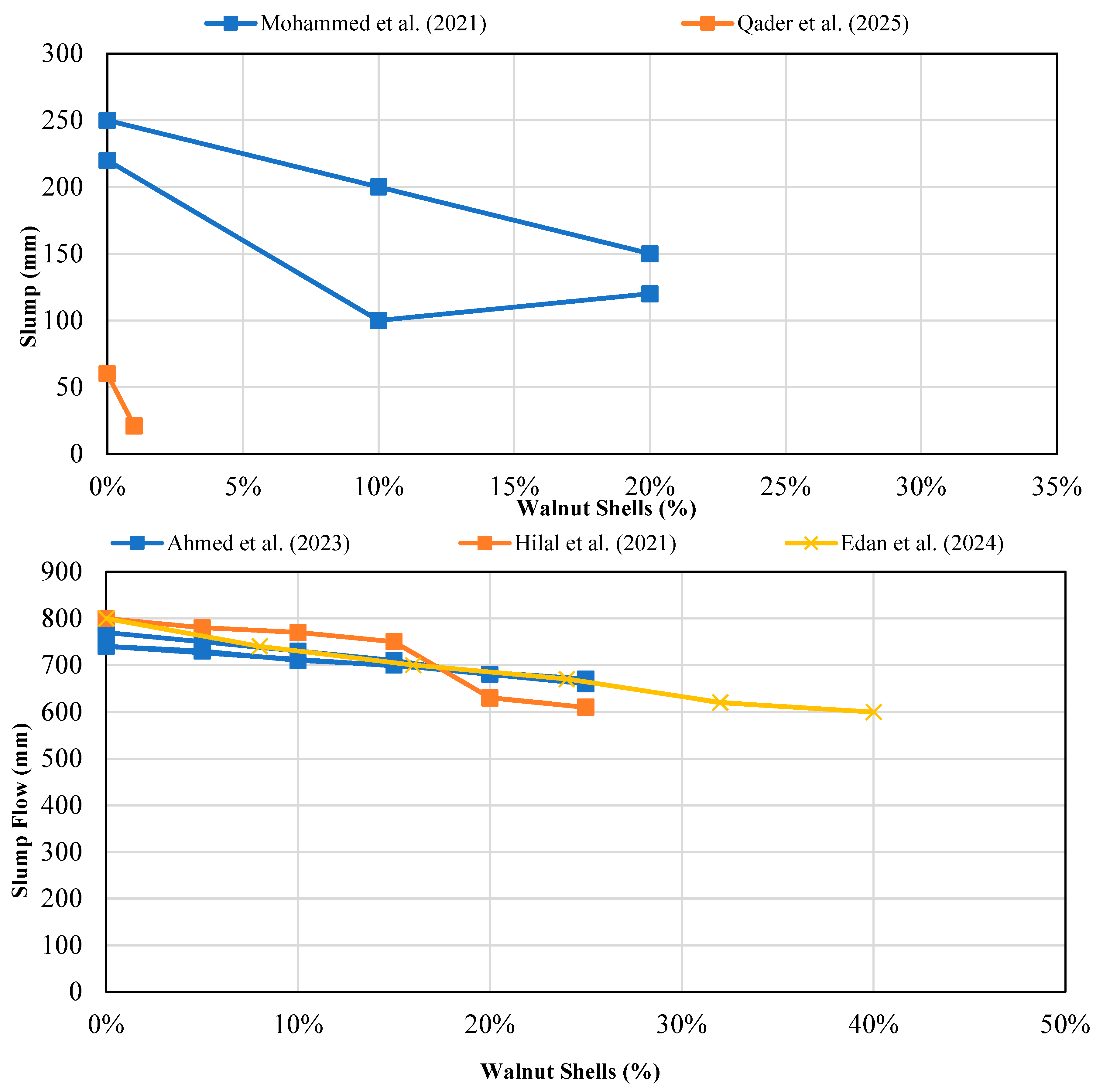
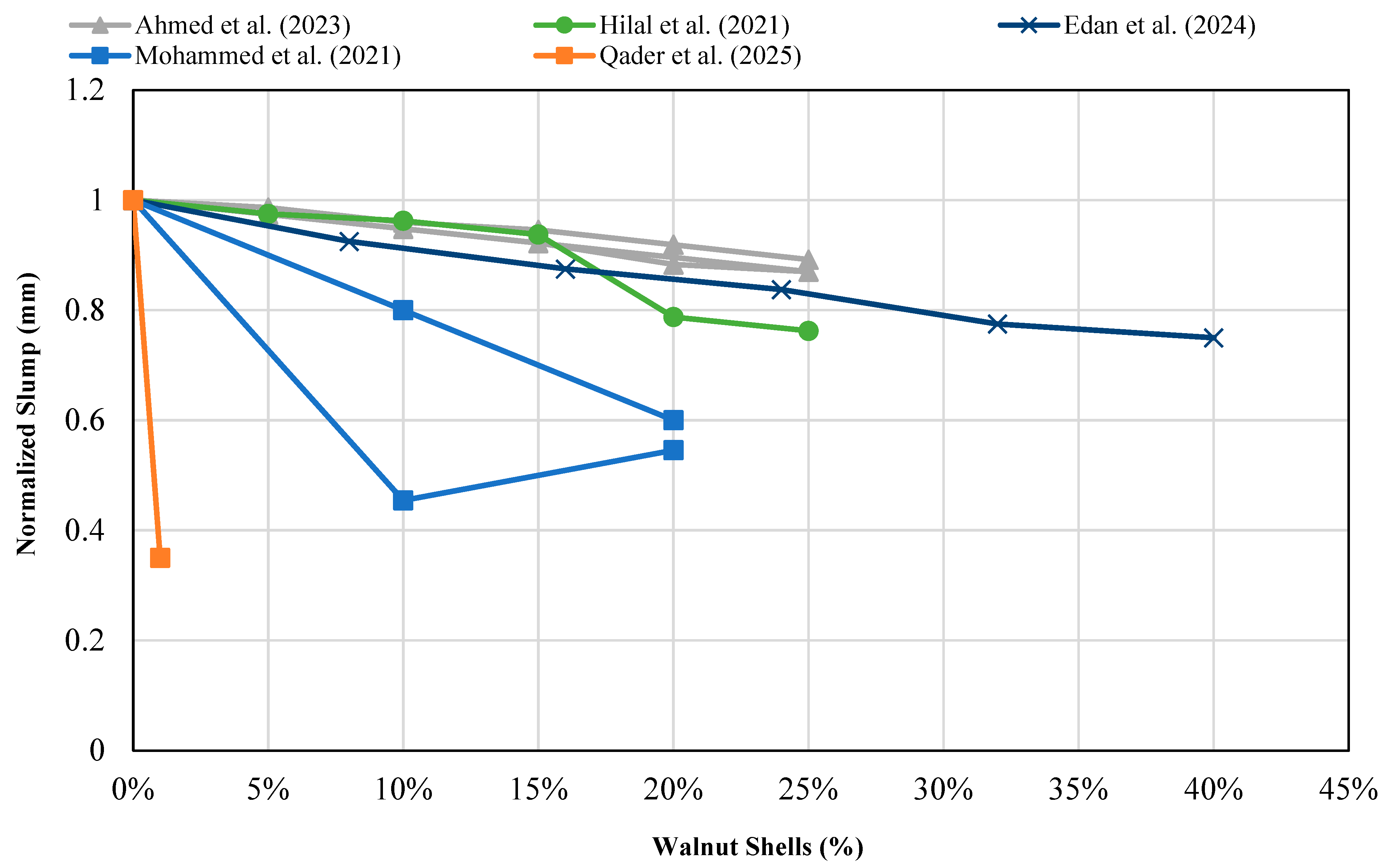
- The use of WS has influence on workability. A reduction of 16% and 24% in the slump values was reported when the WS ratios of 10% and 20% were utilized, respectively.
- ✓
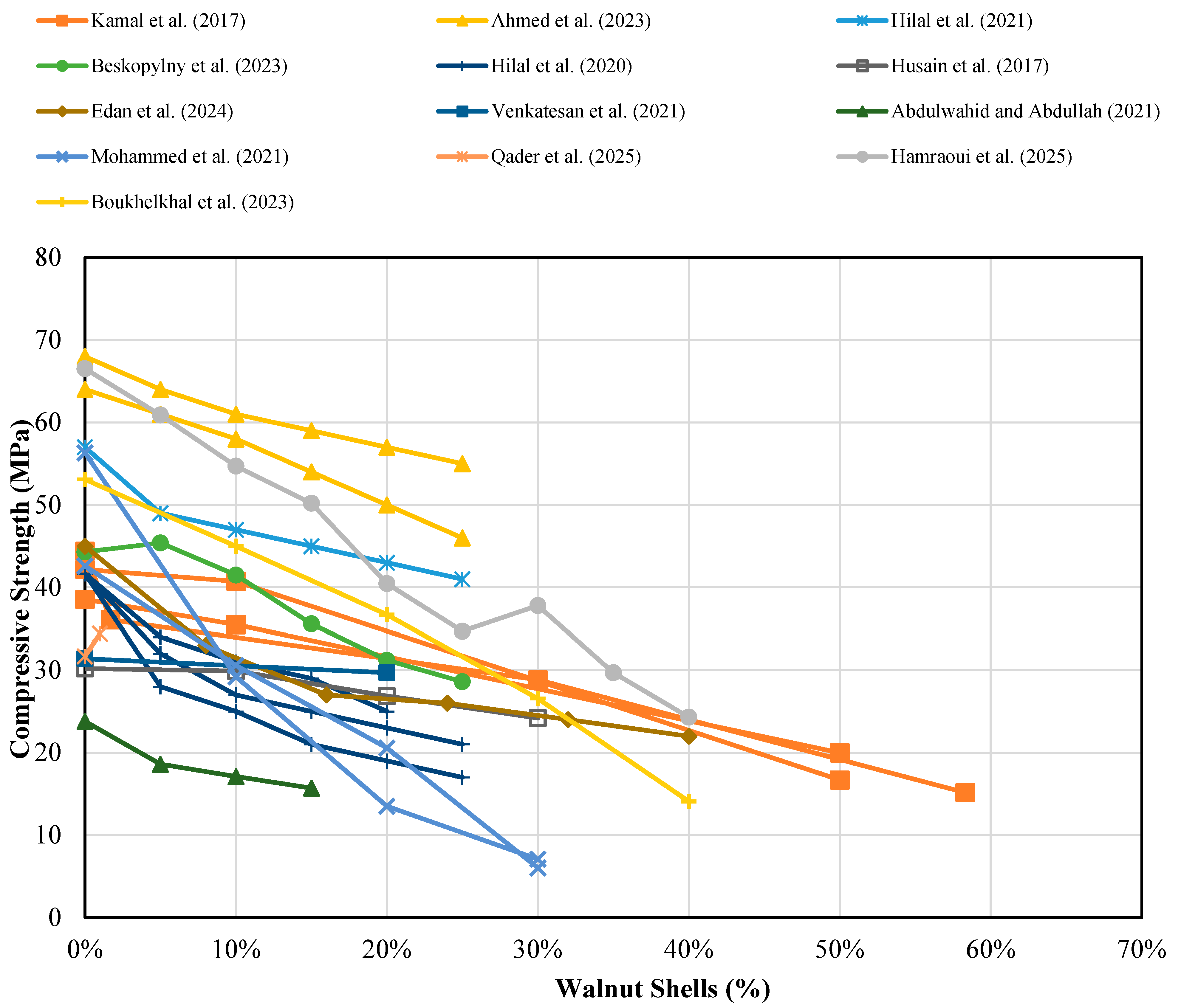
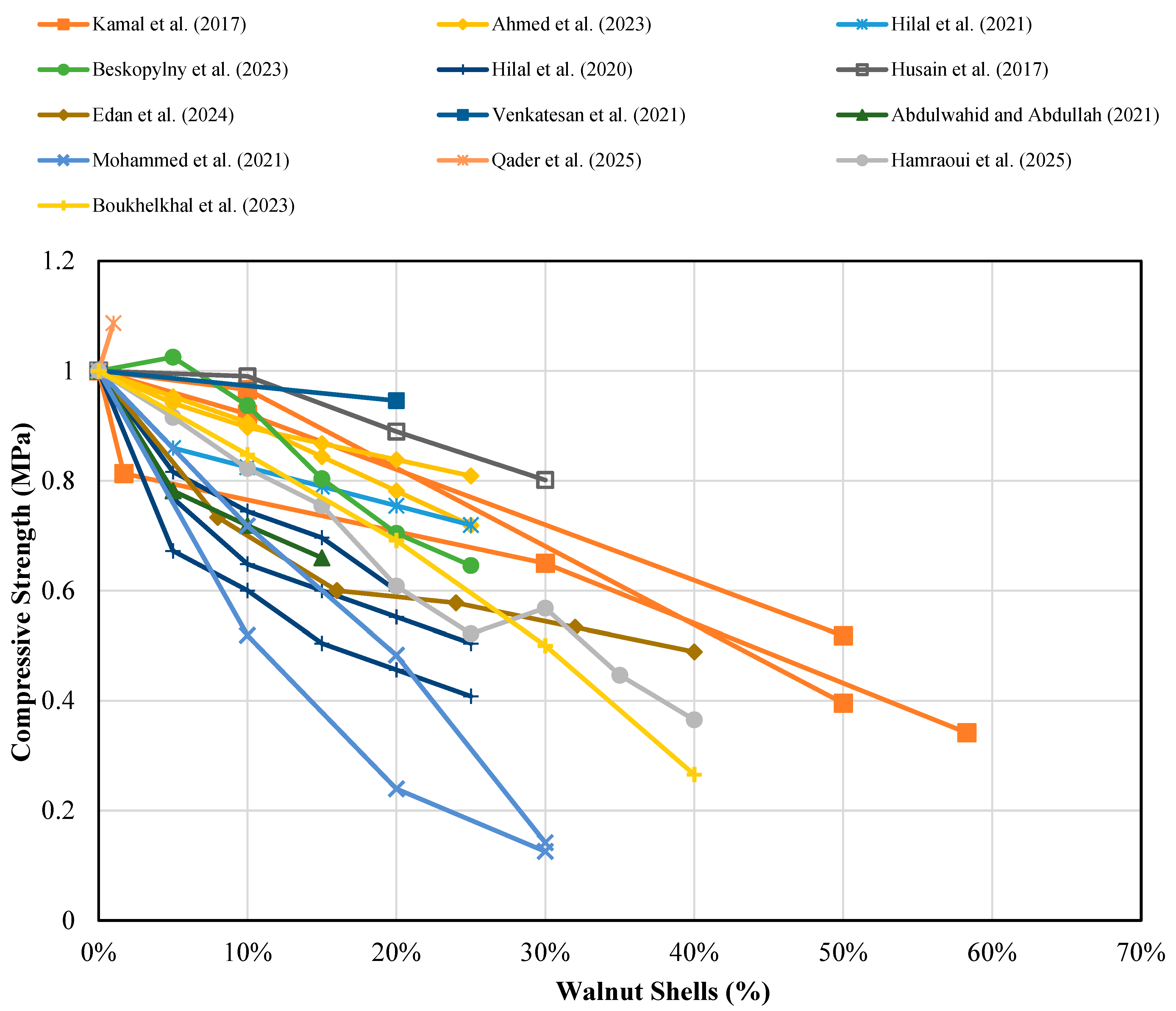
- WS replacement has caused significant losses in terms of compressive strength. A decrease of 11.6% at 5% replacement, 17.8% at 10% replacement, 31.5% at 20% replacement, and 62.7% at 40% replacement has been reported. It was found that strength losses increased rapidly at rates above 20% and that the porous structure of WS negatively affected the load-bearing capacity of concrete.
- ✓
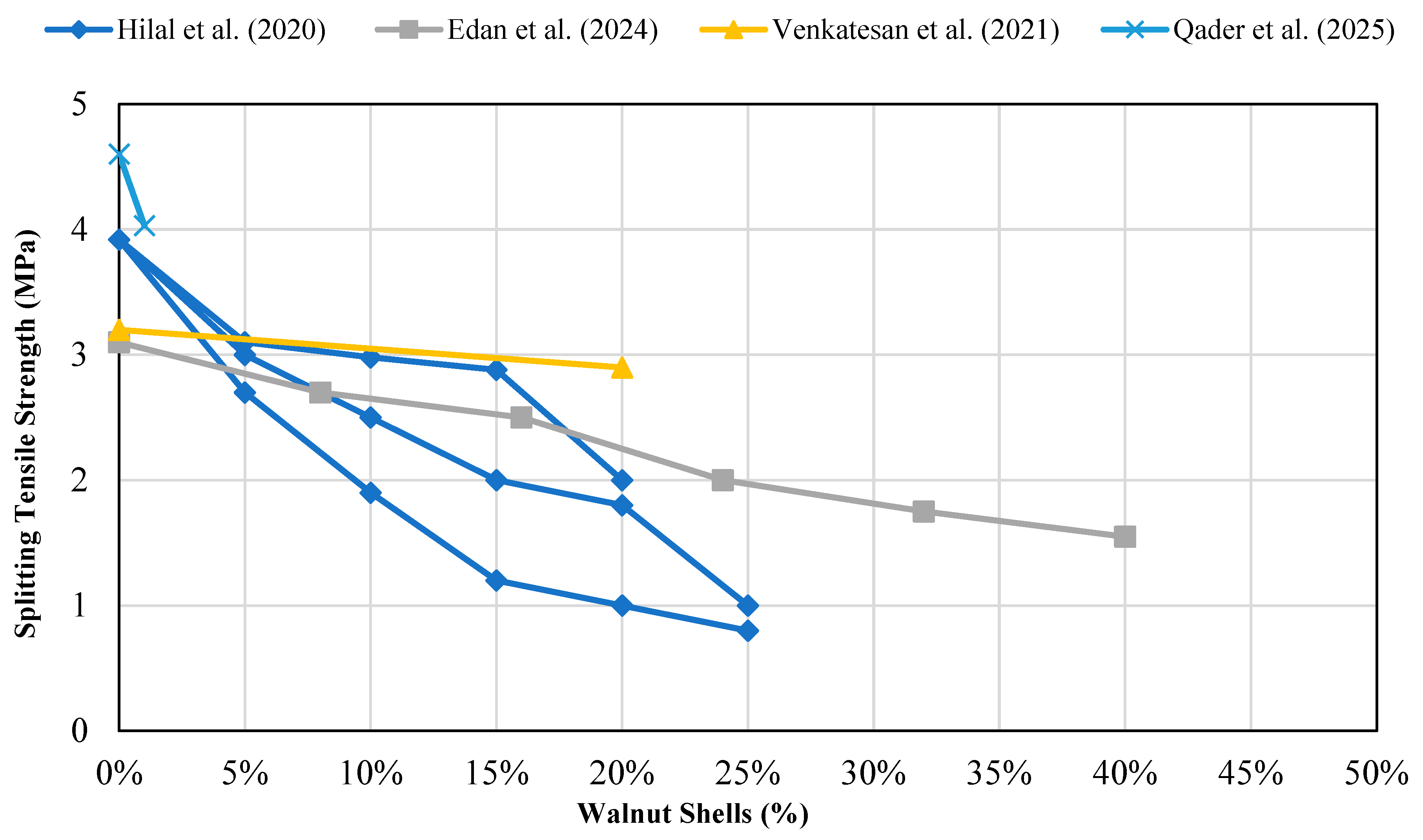
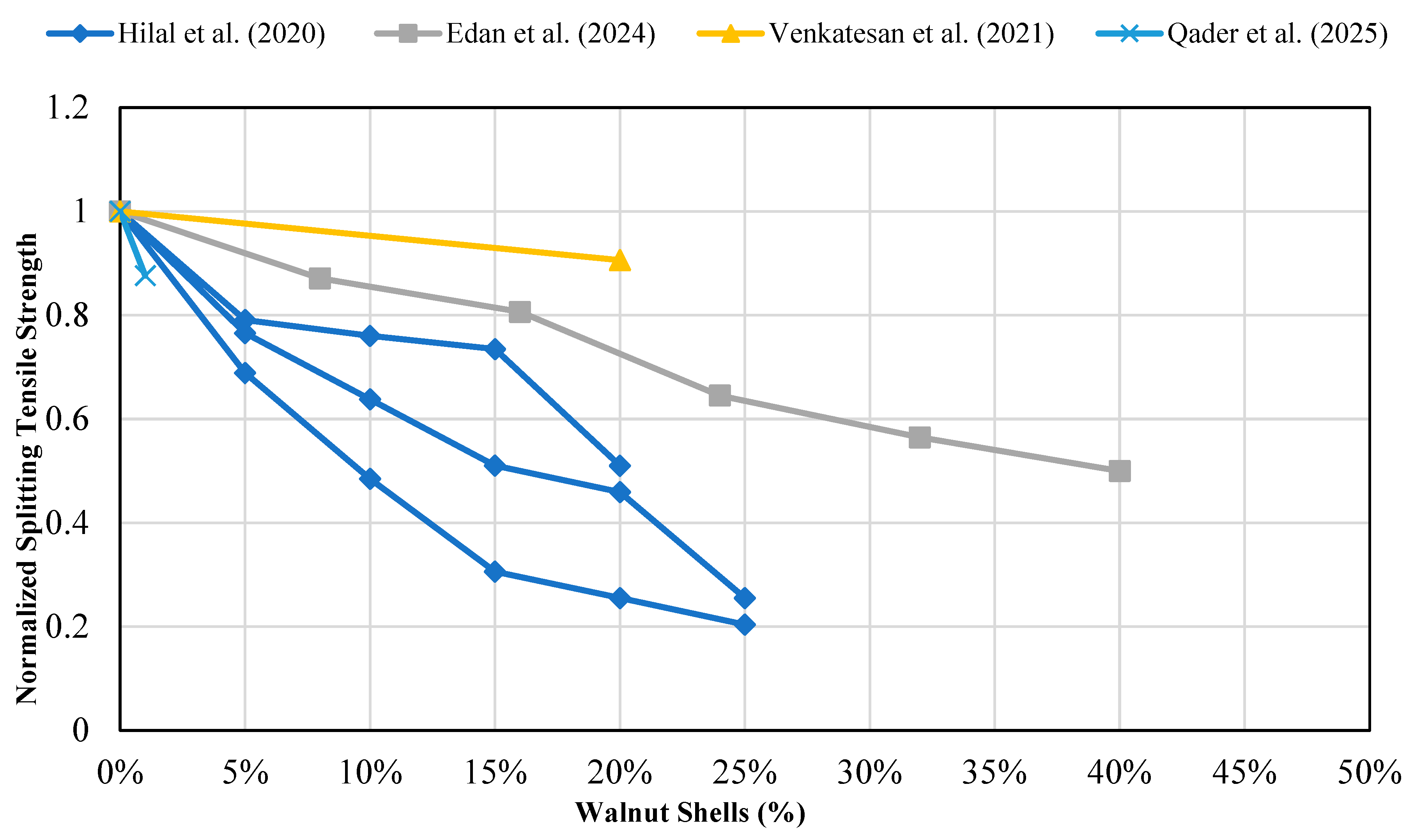
- Splitting tensile strength was one of the parameters most sensitive to WS replacement. There was a decrease of 25% at 5% substitution, 37% at 10% substitution, 41% at 15% substitution, and 62% at 25% and higher substitution rates. This may be related to the fact that tensile strength is directly dependent on microcrack formation and interfacial bond strength, and the porous structure of WSs facilitates crack propagation.
- ✓
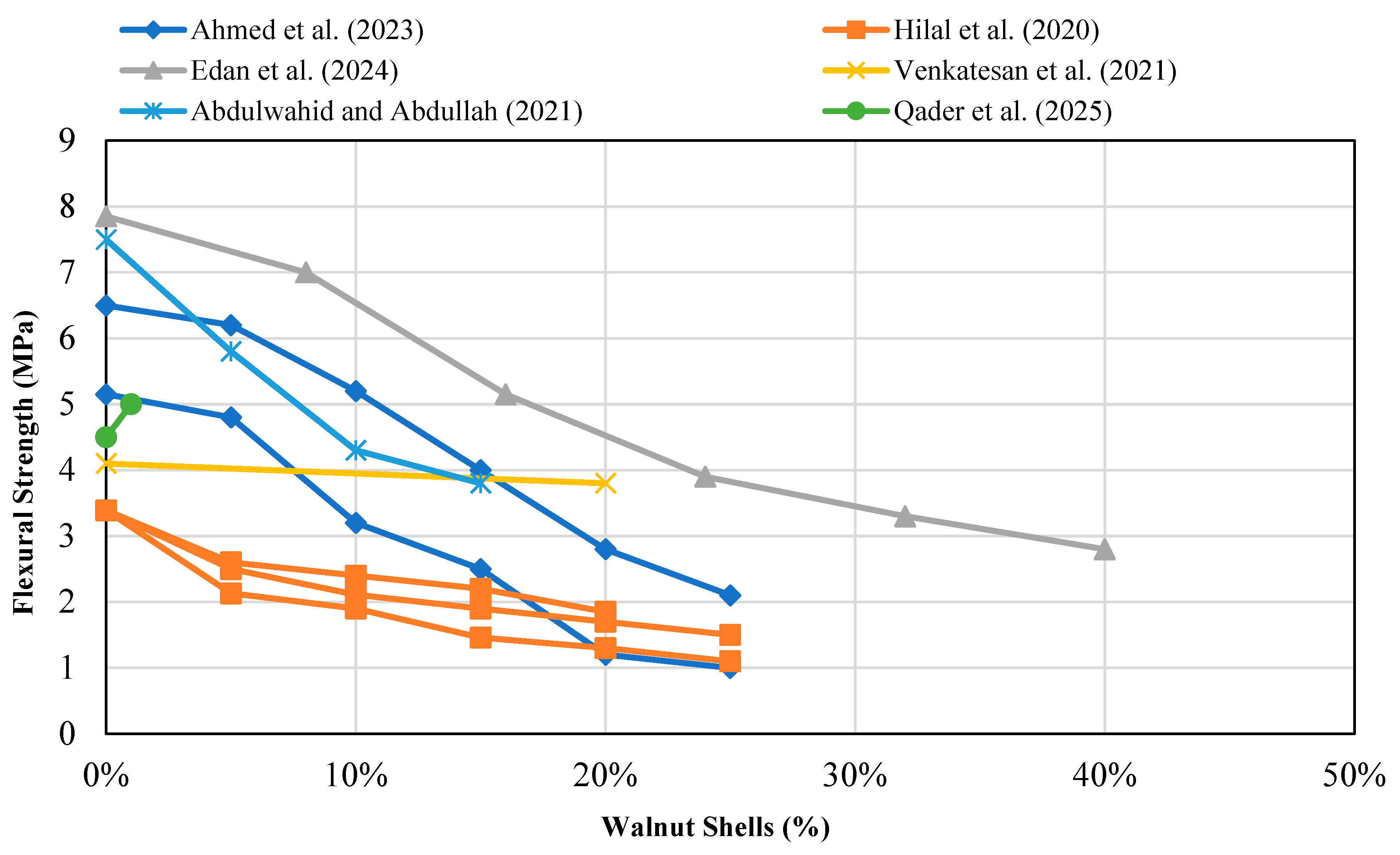
- Flexural strength results also showed a similar decrease. According to the data, a decrease of 21% was determined at 5% substitution, 34% at 10% substitution, 48% at 20% substitution, and 68% at 25% and higher substitution rates.
- ✓
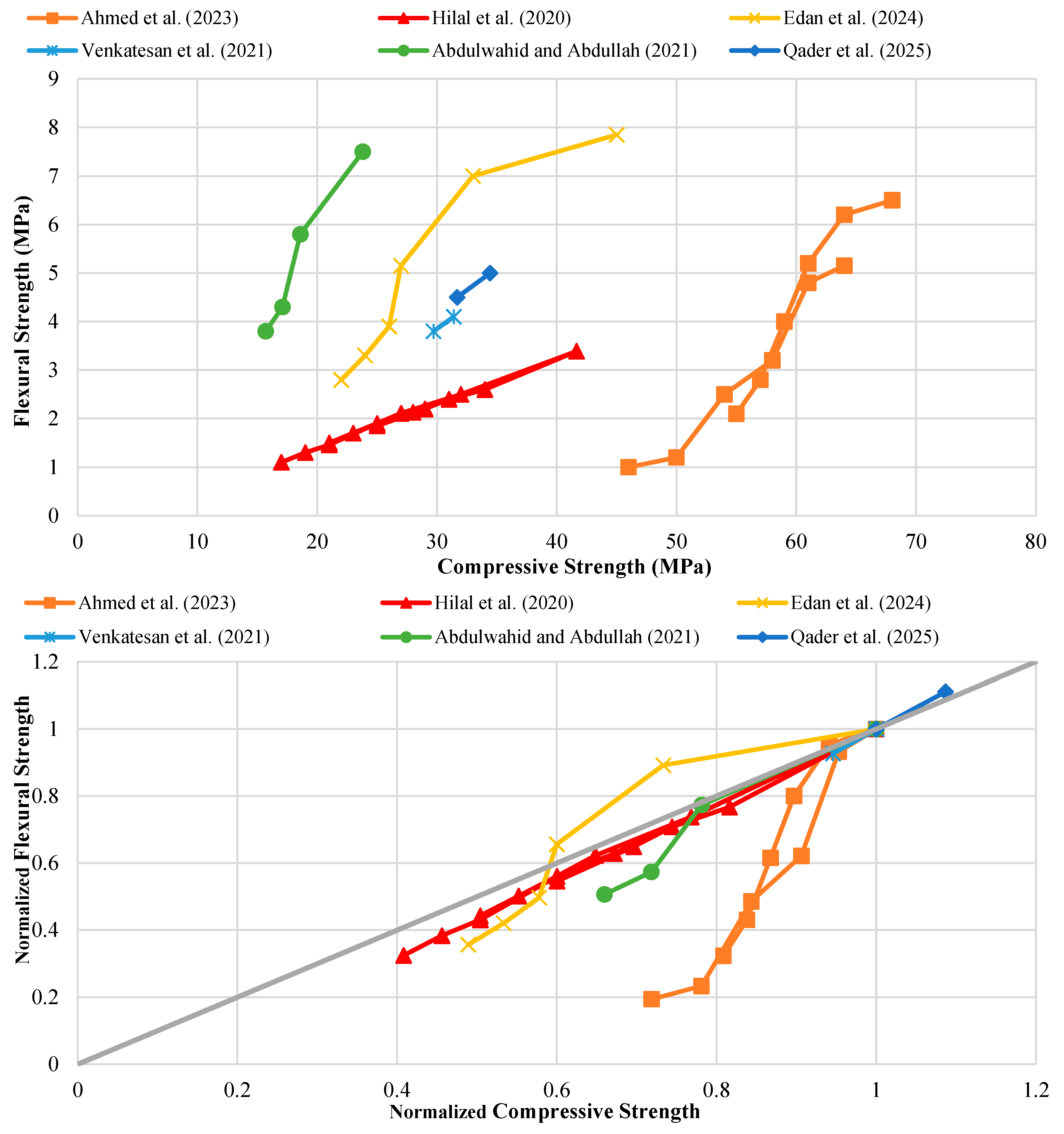
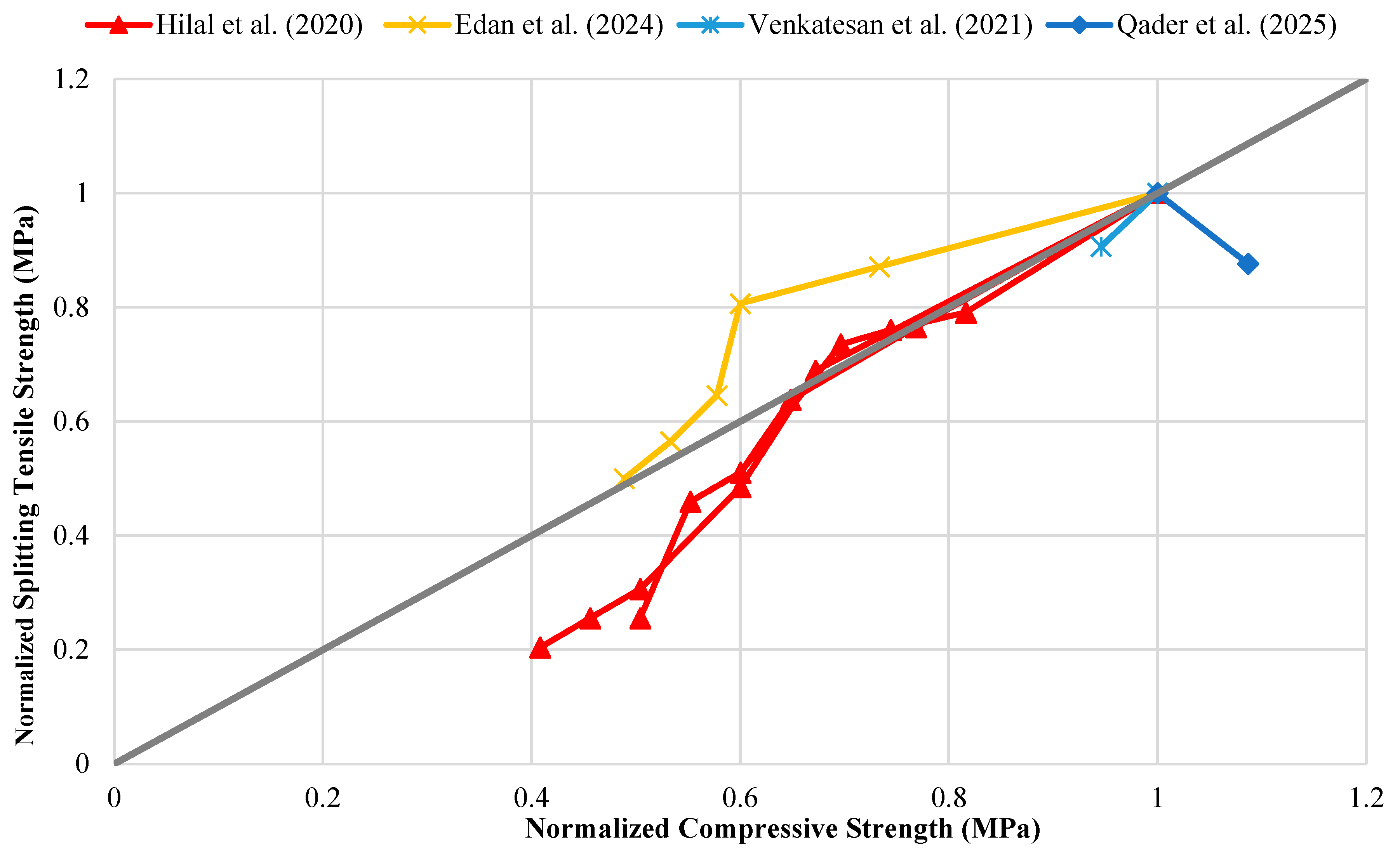
- While compressive strength decreased by 18% at the rates of 10% WS, a tensile strength loss of up to 37% was observed at the same rate. The general trend shows that tensile strength deteriorates much faster than compressive strength.
- ✓
- With 10% WS substitution, compressive strength decreased by 15–20%, while the decrease in flexural strength reached 30–35%. This reveals that flexural strength is more sensitive than compressive strength.
- ✓
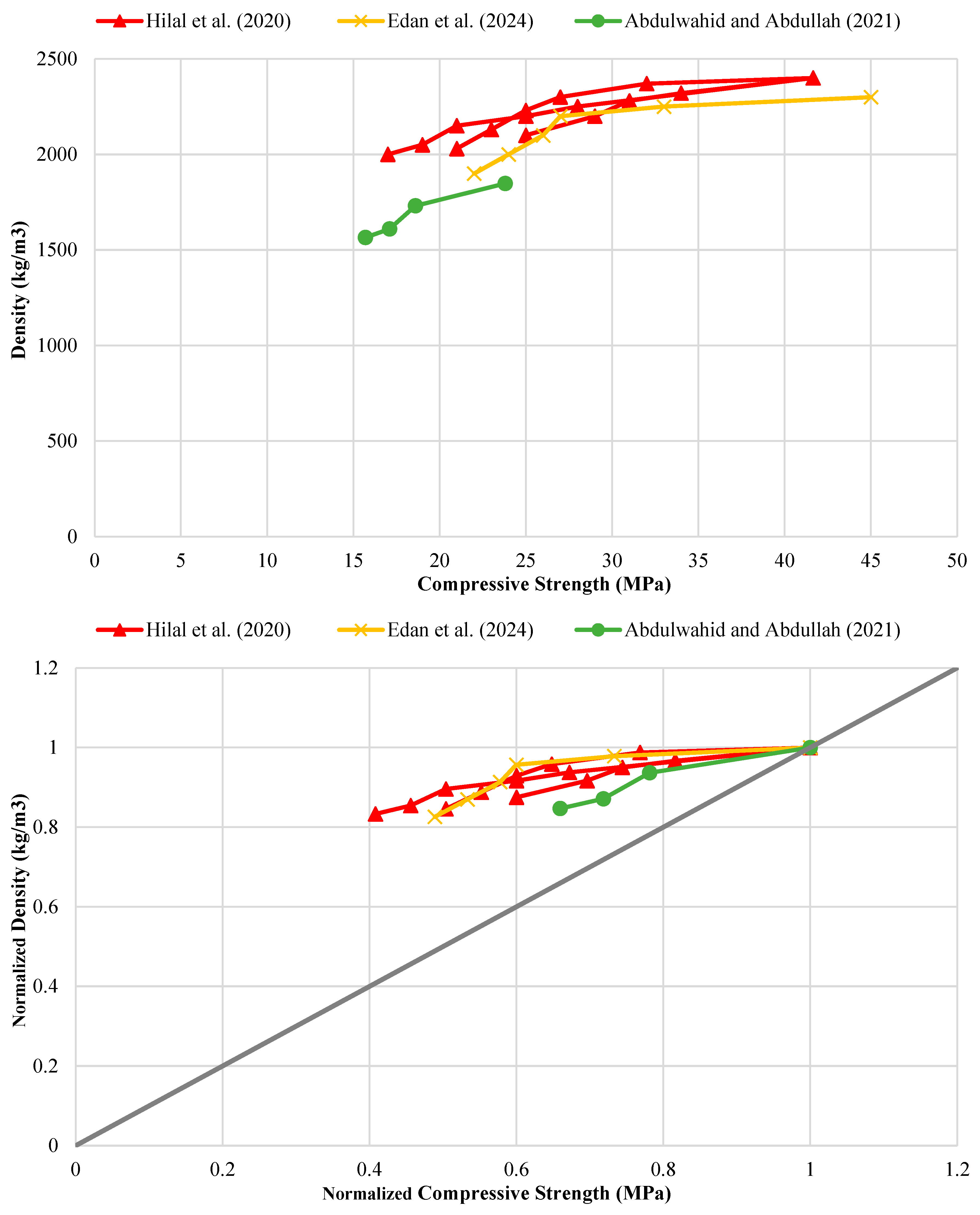
- When 10% and 15% WS ratios were utilized, 7% and 10% reductions in the density were reported. These values modified to 12% and 25% when 25% and 40% WS ratios were utilized.
5. Future Studies
6. Declaration of Generative AI and AI-Assisted Technologies in the Writing Process
Author Contributions
Funding
Data Availability Statement
Conflicts of Interest
References
- Souza, A.B.; Ferreira, H.S.; Vilela, A.P.; Viana, Q.S.; Mendes, J.F.; Mendes, R.F. Study on the feasibility of using agricultural waste in the production of concrete blocks. J. Build. Eng. 2021, 42, 102491. [Google Scholar] [CrossRef]
- Oikonomou, N.D. Recycled concrete aggregates. Cem. Concr. Compos. 2005, 27, 315–318. [Google Scholar] [CrossRef]
- Mohammed, M.S.; ElKady, H.; Abdel-Gawwad, H.A. Utilization of construction and demolition waste and synthetic aggregates. J. Build. Eng. 2021, 43, 103207. [Google Scholar] [CrossRef]
- Hafez, H.; Kurda, R.; Kurda, R.; Al-Hadad, B.; Mustafa, R.; Ali, B. A Critical Review on the Influence of Fine Recycled Aggregates on Technical Performance, Environmental Impact and Cost of Concrete. Appl. Sci. 2020, 10, 1018. [Google Scholar] [CrossRef]
- Ajayi, S.O.; Oyedele, L.O.; Bilal, M.; Akinade, O.O.; Alaka, H.A.; Owolabi, H.A.; Kadiri, K.O. Waste effectiveness of the construction industry: Understanding the impediments and requisites for improvements. Resour. Conserv. Recycl. 2015, 102, 101–112. [Google Scholar] [CrossRef]
- Alsharari, F. Utilization of Industrial, Agricultural, and Construction Waste in Cementitious Composites: A Comprehensive Review of their Impact on Concrete Properties and Sustainable Construction Practices. Mater. Today Sustain. 2025, 29, 101080. [Google Scholar] [CrossRef]
- Yu, Y.; Pacheco-Torgal, F.; Zhao, X.-Y.; Wang, X.-L. Cleaner production of the precast concrete industry: Comparative life cycle analysis of concrete using recycled aggregates from crushed precast rejects. Eur. J. Environ. Civ. Eng. 2024, 28, 1014–1038. [Google Scholar] [CrossRef]
- Batayneh, M.; Marie, I.; Asi, I. Use of selected waste materials in concrete mixes. Waste Manag. 2007, 27, 1870–1876. [Google Scholar] [CrossRef]
- He, J.; Kawasaki, S.; Achal, V. The utilization of agricultural waste as agro-cement in concrete: A review. Sustainability 2020, 12, 6971. [Google Scholar] [CrossRef]
- Özkılıç, S.Y.; Madenci, A.B.; Arslan, D.; Yılmaz, F.; Madenci, E.; Özkılıç, Y.O. Food Industry Waste as Bio-Modifiers for Sustainable Concrete: Effects of Roasting Pretreatments and Oilseed Cake Types. J. Compos. Sci. 2025, 9, 699. [Google Scholar] [CrossRef]
- Alyami, M.; Hakeem, I.Y.; Amin, M.; Zeyad, A.M.; Tayeh, B.A.; Agwa, I.S. Effect of agricultural olive, rice husk and sugarcane leaf waste ashes on sustainable ultra-high-performance concrete. J. Build. Eng. 2023, 72, 106689. [Google Scholar] [CrossRef]
- Shafigh, P.; Mahmud, H.B.; Jumaat, M.Z.; Zargar, M. Agricultural wastes as aggregate in concrete mixtures–A review. Constr. Build. Mater. 2014, 53, 110–117. [Google Scholar] [CrossRef]
- Khalife, E.; Sabouri, M.; Kaveh, M.; Szymanek, M. Recent Advances in the Application of Agricultural Waste in Construction. Appl. Sci. 2024, 14, 2355. [Google Scholar] [CrossRef]
- Bhoj, S.; Manoj, A.; Bhaskar, S. Usage potential and benefits of processed coconut shells in concrete as coarse aggregates. Mater. Today Proc. 2023. In press. [Google Scholar] [CrossRef]
- Lawanwadeekul, S.; Jun-On, N.; Kongthavorn, P.; Sangkas, T.; Daothong, S. Chemical-free thermal-acoustic panels from agricultural waste for sustainable building materials. Clean. Mater. 2024, 12, 100245. [Google Scholar] [CrossRef]
- Mo, K.H.; Thomas, B.S.; Yap, S.P.; Abutaha, F.; Tan, C.G. Viability of agricultural wastes as substitute of natural aggregate in concrete: A review on the durability-related properties. J. Clean. Prod. 2020, 275, 123062. [Google Scholar] [CrossRef]
- Srivani, G.; Mohan, U.V. Study on strength properties of concrete by partial replacement of cement with sugarcane bagasse ash and coarse aggregate with coconut shells. Mater. Today Proc. 2023. In press. [Google Scholar] [CrossRef]
- Mydin, M.A.O.; Sor, N.H.; Althoey, F.; Özkılıç, Y.O.; Abdullah, M.M.A.B.; Isleem, H.F.; Deifalla, A.F.; Tawfik, T.A. Performance of lightweight foamed concrete partially replacing cement with industrial and agricultural wastes: Microstructure characteristics, thermal conductivity, and hardened properties. Ain Shams Eng. J. 2023, 14, 102546. [Google Scholar] [CrossRef]
- de Azevedo, A.R.G.; Amin, M.; Hadzima-Nyarko, M.; Agwa, I.S.; Zeyad, A.M.; Tayeh, B.A.; Adesina, A. Possibilities for the application of agro-industrial wastes in cementitious materials: A brief review of the Brazilian perspective. Clean. Mater. 2022, 3, 100040. [Google Scholar] [CrossRef]
- Kumbasaroglu, H.; Kumbasaroglu, A. Applicability of Agro-Waste Materials in Structural Systems for Building Construction: A Scoping Review. Appl. Sci. 2024, 15, 71. [Google Scholar] [CrossRef]
- Anupam, A.K.; Kumar, P.; Ransinchung, G.D. Use of various agricultural and industrial waste materials in road construction. Procedia-Soc. Behav. Sci. 2013, 104, 264–273. [Google Scholar] [CrossRef]
- Oancea, I.; Bujoreanu, C.; Budescu, M.; Benchea, M.; Grădinaru, C.M. Considerations on sound absorption coefficient of sustainable concrete with different waste replacements. J. Clean. Prod. 2018, 203, 301–312. [Google Scholar] [CrossRef]
- Massoudinejad, M.; Amanidaz, N.; Santos, R.M.; Bakhshoodeh, R. Use of municipal, agricultural, industrial, construction and demolition waste in thermal and sound building insulation materials: A review article. J. Environ. Health Sci. Eng. 2019, 17, 1227–1242. [Google Scholar] [CrossRef]
- Ahmed, T.I.; El-Shafai, N.M.; El-Mehasseb, I.M.; Sharshir, S.W.; Tobbala, D.E. Recent advances in the heating resistance, thermal gravimetric analysis, and microstructure of green concrete incorporating palm-leaf and cotton-stalk nanoparticles. J. Build. Eng. 2022, 61, 105252. [Google Scholar] [CrossRef]
- Nassar, R.-U.-D.; Singh, N.; Varsha, S.; Sai, A.R.; Sufyan-Ud-Din, M. Strength, electrical resistivity and sulfate attack resistance of blended mortars produced with agriculture waste ashes. Case Stud. Constr. Mater. 2022, 16, e00944. [Google Scholar] [CrossRef]
- Beskopylny, A.N.; Shcherban’, E.M.; Stel’makh, S.A.; Meskhi, B.; Shilov, A.A.; Varavka, V.; Evtushenko, A.; Özkılıç, Y.O.; Aksoylu, C.; Karalar, M. Composition component influence on concrete properties with the additive of rubber tree seed shells. Appl. Sci. 2022, 12, 11744. [Google Scholar] [CrossRef]
- Horma, O.; Channouf, S.; El Hammouti, A.; El Hassani, S.; Miri, H.; Moussaoui, M.A.; Mezrhab, A. Enhancing concrete sustainability using crushed peanut shells: An analysis of thermophysical properties, durability, and application potential in construction. J. Build. Eng. 2024, 90, 109434. [Google Scholar] [CrossRef]
- Ünal, M.T.; Bin Hashim, H.; Gökçe, H.S.; Ayough, P.; Köksal, F.; El-Shafie, A.; Şimşek, O.; Pordesari, A. Development and Characterization of Basalt Fiber-Reinforced Green Concrete Utilizing Coconut Shell Aggregates. Sustainability 2024, 16, 7306. [Google Scholar] [CrossRef]
- Shcherban’, E.M.; Stel’makh, S.A.; Beskopylny, A.N.; Mailyan, L.R.; Meskhi, B.; Shilov, A.A.; Chernil’nik, A.; Özkılıç, Y.O.; Aksoylu, C. Normal-weight concrete with improved stress–strain characteristics reinforced with dispersed coconut fibers. Appl. Sci. 2022, 12, 11734. [Google Scholar] [CrossRef]
- Wu, F.; Liu, C.; Zhang, L.; Lu, Y.; Ma, Y. Comparative study of carbonized peach shell and carbonized apricot shell to improve the performance of lightweight concrete. Constr. Build. Mater. 2018, 188, 758–771. [Google Scholar] [CrossRef]
- Liu, Y.; Wu, H.; Gao, Y.; Wang, W.; Wang, Z. Influence of macadamia nutshell particles on the apparent density and mechanical behavior of cement-based mortars. Constr. Build. Mater. 2024, 411, 134600. [Google Scholar] [CrossRef]
- Noaman, A.T.; Abed, M.S.; Al-Gebory, L.; Al-Zubaidi, A.B.; Al-Tabbakh, A.A. Production of agro-waste cement composites: Influence of nutshells on mechanical and hardened properties. Constr. Build. Mater. 2023, 394, 132137. [Google Scholar] [CrossRef]
- Ollani, S.; Peano, C.; Sottile, F. Recent innovations on the reuse of almond and hazelnut by-products: A review. Sustainability 2024, 16, 2577. [Google Scholar] [CrossRef]
- Shaban, W.M.; Heniegal, A.M.; Amin, M.; Zeyad, A.M.; Agwa, I.S.; Hassan, H.H. Effect of agricultural wastes as sugar beet ash, sugarcane leaf ash, and sugarcane bagasse ash on UHPC properties. J. Build. Eng. 2024, 98, 111359. [Google Scholar] [CrossRef]
- Karolina, R.; Tandika, W.; Hasibuan, A.; Putra, M.A.; Fahreza, D. Pineapple leaf fiber (PALF) waste as an alternative fiber in making concrete. J. Phys. Conf. Ser. 2022, 2193, 012061. [Google Scholar] [CrossRef]
- Hussien, N.T.; Oan, A.F. The use of sugarcane wastes in concrete. J. Eng. Appl. Sci. 2022, 69, 31. [Google Scholar] [CrossRef]
- Okpala, D.C. Palm kernel shell as a lightweight aggregate in concrete. Build. Environ. 1990, 25, 291–296. [Google Scholar] [CrossRef]
- Foo, K.Y.; Hameed, B.H. Value-added utilization of oil palm ash: A superior recycling of the industrial agricultural waste. J. Hazard. Mater. 2009, 172, 523–531. [Google Scholar] [CrossRef]
- Adesina, P.A.; Olutoge, F.A. Structural properties of sustainable concrete developed using rice husk ash and hydrated lime. J. Build. Eng. 2019, 25, 100804. [Google Scholar] [CrossRef]
- Muhammad, A.; Thienel, K.-C. Properties of self-compacting concrete produced with optimized volumes of calcined clay and rice husk ash—Emphasis on rheology, flowability retention and durability. Materials 2023, 16, 5513. [Google Scholar] [CrossRef]
- Bheel, N.; Ali, M.O.; Liu, Y.; Tafsirojjaman, T.; Awoyera, P.; Sor, N.H.; Bendezu Romero, L.M. Utilization of Corn Cob Ash as Fine Aggregate and Ground Granulated Blast Furnace Slag as Cementitious Material in Concrete. Buildings 2021, 11, 422. [Google Scholar] [CrossRef]
- Stel’makh, S.A.; Beskopylny, A.N.; Shcherban, E.M.; Mavzolevsky, D.; Drukarenko, S.; Chernil’nik, A.; Elshaeva, D.; Shilov, A.A. Influence of corn cob ash additive on the structure and properties of cement concrete. Constr. Mater. Prod. 2024, 7, 2. [Google Scholar] [CrossRef]
- Olaiya, B.C.; Lawan, M.M.; Olonade, K.A.; Abubakar, S.A. Banana leaf ash as sustainable alternative raw material for the production of concrete: A review. Discov. Mater. 2025, 5, 100. [Google Scholar] [CrossRef]
- Islam, M.H.; Law, D.W.; Gunasekara, C.; Sobuz, M.H.R.; Rahman, M.N.; Habib, M.A.; Sabbir, A.K. Assessing the influence of banana leaf ash as pozzolanic material for the production of green concrete: A mechanical and microstructural evaluation. Materials 2024, 17, 720. [Google Scholar] [CrossRef] [PubMed]
- Beskopylny, A.N.; Stel’makh, S.A.; Shcherban’, E.M.; Ananova, O.; Chernil’nik, A.; El’shaeva, D.; Pogrebnyak, A.; Dubinkin, I.; Madenci, E.; Aksoylu, C. Performance Assessment of a Novel Green Concrete Using Coffee Grounds Biochar Waste. Recycling 2024, 9, 94. [Google Scholar] [CrossRef]
- Padavala, S.S.A.B.; Dey, S.; Veerendra, G.T.N.; Manoj, A.V.P. Experimental study on concrete by partial replacement of cement with fly ash and coarse aggregates with palm kernel shells (Pks) and with addition of hybrid fibers. Chem. Inorg. Mater. 2024, 2, 100033. [Google Scholar] [CrossRef]
- D’Eusanio, V.; Bertacchini, L.; Marchetti, A.; Mariani, M.; Pastorelli, S.; Silvestri, M.; Tassi, L. Rosaceae Nut-Shells as Sustainable Aggregate for Potential Use in Non-Structural Lightweight Concrete. Waste 2023, 1, 549–568. [Google Scholar] [CrossRef]
- Maulood, P.; Darwesh, D. Soil Quality Index Models for Assessing Walnut Orchards in Northern Erbil Province, Iraq. Pol. J. Environ. Stud. 2020, 29, 1275–1285. [Google Scholar] [CrossRef]
- Fordos, S.; Abid, N.; Gulzar, M.; Pasha, I.; Oz, F.; Shahid, A.; Khan, M.K.I.; Mousavi Khaneghah, A.; Aadil, R.M. Recent development in the application of walnut processing by-products (walnut shell and walnut husk). Biomass Convers. Biorefinery 2023, 13, 14389–14411. [Google Scholar] [CrossRef]
- Hamraoui, S.; Boukhelkhal, D.; Guendouz, M.; Ahmedi, Y. Development of a lightweight self-compacting mortar based on an agricultural by-product (walnut shells) as fine aggregates. Stud. Eng. Exact Sci. 2025, 6, e13725. [Google Scholar] [CrossRef]
- Ren, G.; Su, A.; Gao, X. Recycling waste walnut shells as a sustainable internal curing material for ultra-high performance concrete matrix. J. Build. Eng. 2025, 114, 114369. [Google Scholar] [CrossRef]
- El Hamri, A.; Mouhib, Y.; Chkala, H.; Oulhakem, O.; Chigr, M.; El Mansouri, N.-E. Investigating the Potential of Using Walnut Shell Particles for Manufacturing Cement-Bonded Particle Boards. J. Compos. Sci. 2025, 9, 183. [Google Scholar] [CrossRef]
- Chilmon, K.; Kalinowski, M.; Bogacki, J.; Woyciechowski, P. From waste to function: Ground walnut shells as a reactive additive for heavy metal removal in pervious concrete. Constr. Build. Mater. 2025, 498, 144035. [Google Scholar] [CrossRef]
- Sánchez Mirón, B.W.; Roux Gutiérrez, R.S.; Molar Orozco, M.E. Alternative Material for Load-Bearing Wall with Addition of Walnut Shell. Waste Reduction. In Proceedings of the 3rd International Congress on Sustainable Construction and Eco-Efficient Solutions; Universidad de Sevilla, Departamento de Construcciones Arquitectónicas: Seville, Spain, 2017. [Google Scholar]
- Cheng, W.; Liu, G.; Chen, L. Pet fiber reinforced wet-mix shotcrete with walnut shell as replaced aggregate. Appl. Sci. 2017, 7, 345. [Google Scholar] [CrossRef]
- Hama, S.M.; Mohana, M.H.; Yousif, L.A.; Sulaiman, H.A.; Ahmed, H.A.S. The Effect of the Particle Size of Walnut Shell on the Properties of Structural Concrete. In Current Trends in Civil Engineering and Engineering Sciences 2024; Springer: Singapore, 2024; pp. 124–136. [Google Scholar]
- Hamah Sor, N.; Hilal, N.; Alabdulhady, M.Y.; Jagadesh, P.; Naser, K.Z. SEM analysis, durability and hardened characteristics of eco-friendly self-compacting concrete partially contained bentonite and waste walnut shells. Eur. J. Environ. Civ. Eng. 2025, 29, 1214–1243. [Google Scholar] [CrossRef]
- Qader, D.N.; Merie, H.D.; Abdulhaleem, K.N. Impact of Incorporating Plastic Fibers, Walnut Shells, and Tire Rubber Fibers on the Mechanical Properties of Concrete. Electron. J. Struct. Eng. 2025, 25, 19–24. [Google Scholar] [CrossRef]
- Pradeep, A.; Anima, P. Experimental Study On Flexural Behaviour Of Light Weight Self-Compacting Concrete With Walnut Shell And Ggbfs As Mineral Admixture. Int. Res. J. Eng. Technol. 2022, 9, 1841–1846. [Google Scholar]
- Tichi, A.H.; Razavi, M. Construction of Cement Composite Using Walnut Shell Reinforced with Bacterial Nanocellulose Gel. BioResources 2023, 18, 8362–8373. [Google Scholar] [CrossRef]
- Sarathe, P.; Agrawal, R.; Gour, P.; Kumar, V. Experimental Study on the Use of Pond Ash and Walnut Shell in Concrete. In Latest Developments in Civil Engineering; Springer: Singapore, 2022; pp. 115–127. [Google Scholar]
- Ren, Y.; Shi, J.; Zhou, L.; Peng, S. Experimental study on flexural fatigue resistance of fiber-reinforced sustainable walnut shell ash mortar. Discov. Appl. Sci. 2024, 6, 600. [Google Scholar] [CrossRef]
- Abdulwahid, M.Y.; Akinwande, A.A.; Kamarou, M.; Romanovski, V.; Al-Qasem, I.A. The production of environmentally friendly building materials out of recycling walnut shell waste: A brief review. Biomass Convers. Biorefinery 2024, 14, 24963–24972. [Google Scholar] [CrossRef]
- Farhan, O.S.; Hama, S.M.; Fayadh, O.K. Flexural and Shear Behavior of Reinforced Sustainable Concrete Beams Incorporating Waste Walnut Shells as Lightweight Aggregate. Int. J. Adv. Sci. Eng. Inf. Technol. 2025, 15, 952–959. [Google Scholar] [CrossRef]
- Aadi, A.S.; Mohammed, A.A.; Ali, T.K.M.; Hilal, N.N. Ultra-fine treated and untreated walnut shell ash incorporated cement mortar: Properties and environmental impact assessments. Ann. Chim. Sci. Matériaux 2022, 46, 313–321. [Google Scholar] [CrossRef]
- Shebli, A.; Khatib, J.; Elkordi, A. The effect of walnut shell ash on the properties of cement paste and mortar: A study on partial replacement of cement. BAU J.-Sci. Technol. 2023, 5, 10. [Google Scholar] [CrossRef]
- Chen, H.; Yang, J. A new supplementary cementitious material: Walnut shell ash. Constr. Build. Mater. 2023, 408, 133852. [Google Scholar] [CrossRef]
- Kamal, I.; Sherwani, A.F.; Ali, A.; Khalid, A.; Saadi, I.; Harbi, A. Walnut shell for partial replacement of fine aggregate in concrete: Modeling and optimization. J. Civ. Eng. Res. 2017, 7, 109–119. [Google Scholar]
- Edan, H.H.; Hilal, N.; Sor, N.H.; Tawfik, T.A. Durability and hardened characteristics with SEM analysis of eco-efficient self-compacting concrete partially contained waste walnut shell particles as fine aggregate. Iran. J. Sci. Technol. Trans. Civ. Eng. 2024, 48, 745–761. [Google Scholar] [CrossRef]
- Ahmed, M.A.; Ibrahim, A.K.; Hilal, N.; Aadi, A.S.; Sor, N.H. Effects of coal ash and walnut shell on the impact resistance and mechanical properties of eco-efficient self-compacting concrete. Ann. De Chim. Sci. Des Matériaux 2023, 47, 201–208. [Google Scholar] [CrossRef]
- Abdulwahid, M.Y.; Abdullah, S.F. The utilization of walnut shells as a partial replacement of sand in mortar mixes. Struct. Concr. 2021, 22, E300–E307. [Google Scholar] [CrossRef]
- Hilal, N.N.; Sahab, M.F.; Ali, T.K.M. Fresh and hardened properties of lightweight self-compacting concrete containing walnut shells as coarse aggregate. J. King Saud Univ.-Eng. Sci. 2021, 33, 364–372. [Google Scholar] [CrossRef]
- Mohammed, A.S.; Hilal, N.N.; Ali, T.K.M.; Sor, N.H. An investigation of the effect of walnut shell as sand replacement on the performance of cement mortar subjected to elevated temperatures. J. Phys. Conf. Ser. 2021, 1973, 012034. [Google Scholar] [CrossRef]
- Beskopylny, A.N.; Stel’makh, S.A.; Shcherban’, E.M.; Mailyan, L.R.; Meskhi, B.; Shilov, A.A.; Chernil’nik, A.; El’shaeva, D. Effect of walnut-shell additive on the structure and characteristics of concrete. Materials 2023, 16, 1752. [Google Scholar] [CrossRef]
- Hamraoui, S.; Guendouz, M.; Boukhelkhal, D.; Hadjadj, M.; Benrekia, I.; Bouldoum, A.E. Reinforcing the properties of self-compacting mortar based on agro-waste fine (walnut shell) aggregates by alkaline treatment. Stud. Eng. Exact Sci. 2025, 6, e13724. [Google Scholar] [CrossRef]
- Hilal, N.; Mohammed Ali, T.K.; Tayeh, B.A. Properties of environmental concrete that contains crushed walnut shell as partial replacement for aggregates. Arab. J. Geosci. 2020, 13, 812. [Google Scholar] [CrossRef]
- Husain, M.S.; Ahmad, A.; Huda, S.; Asim, M. Cost optimization of concrete by replacing fine aggregate with walnut shell powder. Int. J. Civ. Eng. Technol. 2017, 8, 82–89. [Google Scholar]
- Venkatesan, B.; Lijina, V.J.; Kannan, V.; Dhevasenaa, P.R. Partial replacement of fine aggregate by steel slag and coarse aggregate by walnut shell in concrete. Mater. Today Proc. 2021, 37, 1761–1766. [Google Scholar] [CrossRef]
- Boukhelkhal, D.; Guendouz, M.; Triki, Z. Physical and thermal properties of lightweight self-compacting mortar made with recycled walnut shells as fine agreggrates. Alger. J. Environ. Sci. Technol. 2023, 9, 3. [Google Scholar]
- Tomar, R.; Kishore, K.; Singh Parihar, H.; Gupta, N. A comprehensive study of waste coconut shell aggregate as raw material in concrete. Mater. Today Proc. 2021, 44, 437–443. [Google Scholar] [CrossRef]
- Wu, F.; Liu, C.; Sun, W.; Zhang, L. Mechanical properties of bio-based concrete containing blended peach shell and apricot shell waste. Mater. Tehnol. 2018, 52, 645–651. [Google Scholar]
- Wu, F.; Liu, C.; Sun, W.; Ma, Y.; Zhang, L. Effect of peach shell as lightweight aggregate on mechanics and creep properties of concrete. Eur. J. Environ. Civ. Eng. 2020, 24, 2534–2552. [Google Scholar] [CrossRef]
- Zievie, P.; Yalley, P.P.K.; Danso, H.; Antwi, K. Assessing the strength and durability behaviour of concrete enhanced with kaolin clay and Shea nut shell particles. Cogent Eng. 2024, 11, 2321384. [Google Scholar] [CrossRef]
- Kanojia, A.; Jain, S.K. Performance of coconut shell as coarse aggregate in concrete. Constr. Build. Mater. 2017, 140, 150–156. [Google Scholar] [CrossRef]
- Priyadharshini, B.; Nirmala, R.; Eshanthini; Manoj Kumaar, C. Experimental Study on Concrete With Partial Replacement of Coarse Aggregate with Cashew Shells. J. Phys. Conf. Ser. 2021, 1770, 012036. [Google Scholar] [CrossRef]
- Agbenyeku, E.-O.E.; Okonta, F.N. Mechanical properties of green concrete with Palm Nut Shell as low cost aggregate. In Construction Materials and Structures; IOS Press: Amsterdam, The Netherlands, 2014; pp. 427–435. [Google Scholar]
- Tangadagi, R.B.; Manjunatha, M.; Preethi, S.; Bharath, A.; Reshma, T.V. Strength characteristics of concrete using coconut shell as a coarse aggregate–A sustainable approach. Mater. Today Proc. 2021, 47, 3845–3851. [Google Scholar] [CrossRef]






| 0–4 mm | 5–22 mm |
|---|---|
| 12.5 mm Kamal et al. [68] | |
| 2.36 mm Edan et al. [69] | 9.55 mm Ahmed et al. [70] |
| 2.36 mm Abdulwahid and Abdullah [71] | 12.5 mm Hilal et al. [72] |
| 2.36 mm Mohammed et al. [73] | 5–20 mm Beskopylny et al. [74] |
| 3.15 mm Hamraoui et al. [75] | 9.4 mm Hilal et al. [76] |
| 12.5 mm Husain et al. [77] | |
| 12 mm Venkatesan et al. [78] | |
| 5–10 mm Qader et al. [58] | |
| 12.5 mm Pradeep and Anima [59] | |
| 5.00 mm Boukhelkhal et al. [79] |
Disclaimer/Publisher’s Note: The statements, opinions and data contained in all publications are solely those of the individual author(s) and contributor(s) and not of MDPI and/or the editor(s). MDPI and/or the editor(s) disclaim responsibility for any injury to people or property resulting from any ideas, methods, instructions or products referred to in the content. |
© 2026 by the authors. Licensee MDPI, Basel, Switzerland. This article is an open access article distributed under the terms and conditions of the Creative Commons Attribution (CC BY) license.
Share and Cite
Özkılıç, Y.O.; Çelik, C.A.; Shcherban’, E.M. A Review on Mechanical Performance of Concrete Containing Walnut Shells as Aggregate Replacement. J. Compos. Sci. 2026, 10, 164. https://doi.org/10.3390/jcs10030164
Özkılıç YO, Çelik CA, Shcherban’ EM. A Review on Mechanical Performance of Concrete Containing Walnut Shells as Aggregate Replacement. Journal of Composites Science. 2026; 10(3):164. https://doi.org/10.3390/jcs10030164
Chicago/Turabian StyleÖzkılıç, Yasin Onuralp, Cemil Alperen Çelik, and Evgenii M. Shcherban’. 2026. "A Review on Mechanical Performance of Concrete Containing Walnut Shells as Aggregate Replacement" Journal of Composites Science 10, no. 3: 164. https://doi.org/10.3390/jcs10030164
APA StyleÖzkılıç, Y. O., Çelik, C. A., & Shcherban’, E. M. (2026). A Review on Mechanical Performance of Concrete Containing Walnut Shells as Aggregate Replacement. Journal of Composites Science, 10(3), 164. https://doi.org/10.3390/jcs10030164