

Bond–Slip Performance of GFRP Rebars in Concrete Under Alkaline and Thermal Conditioning





Abstract
1. Introduction
2. Available Experimental Evidence
2.1. Database Definition
2.2. Insights from the Dataset Analysis
- The surface configuration of the bars strongly affects bond strength, indicating that different surface treatments activate different bond mechanisms governing the GFRP bar–concrete interaction. Specifically, the highest bond strength values are observed for the HW configuration, both with and without the sand-coated treatment.
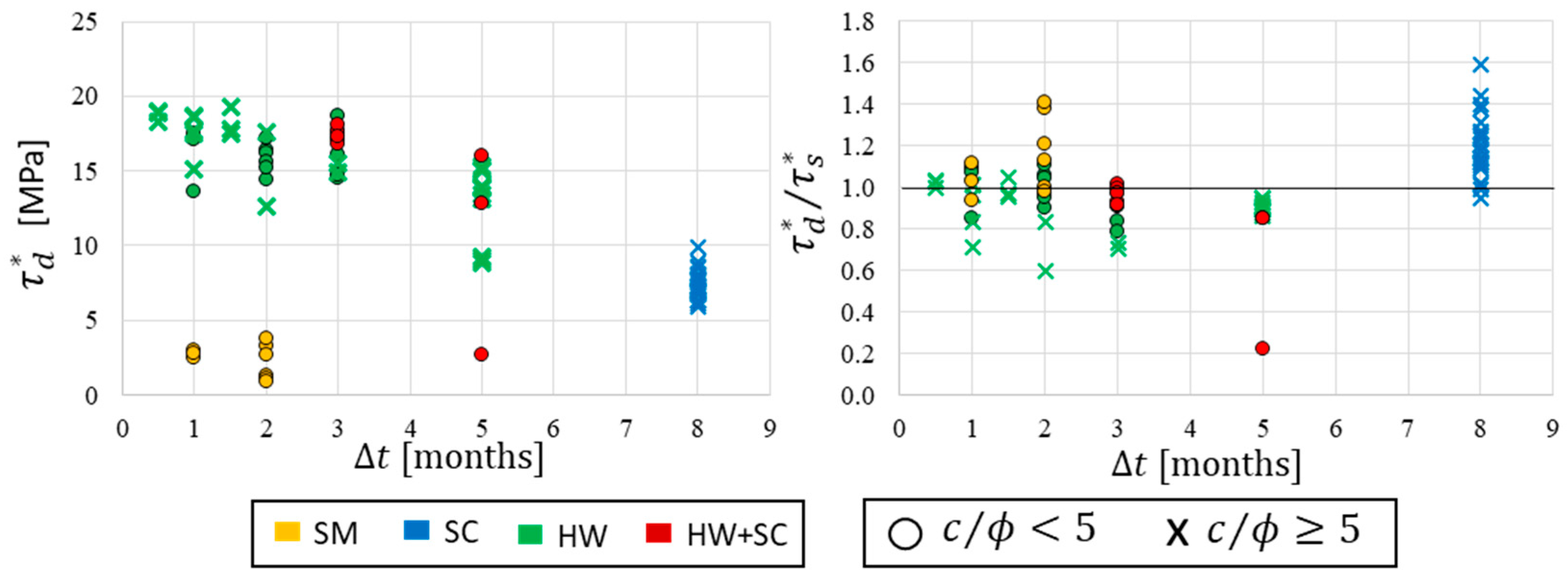
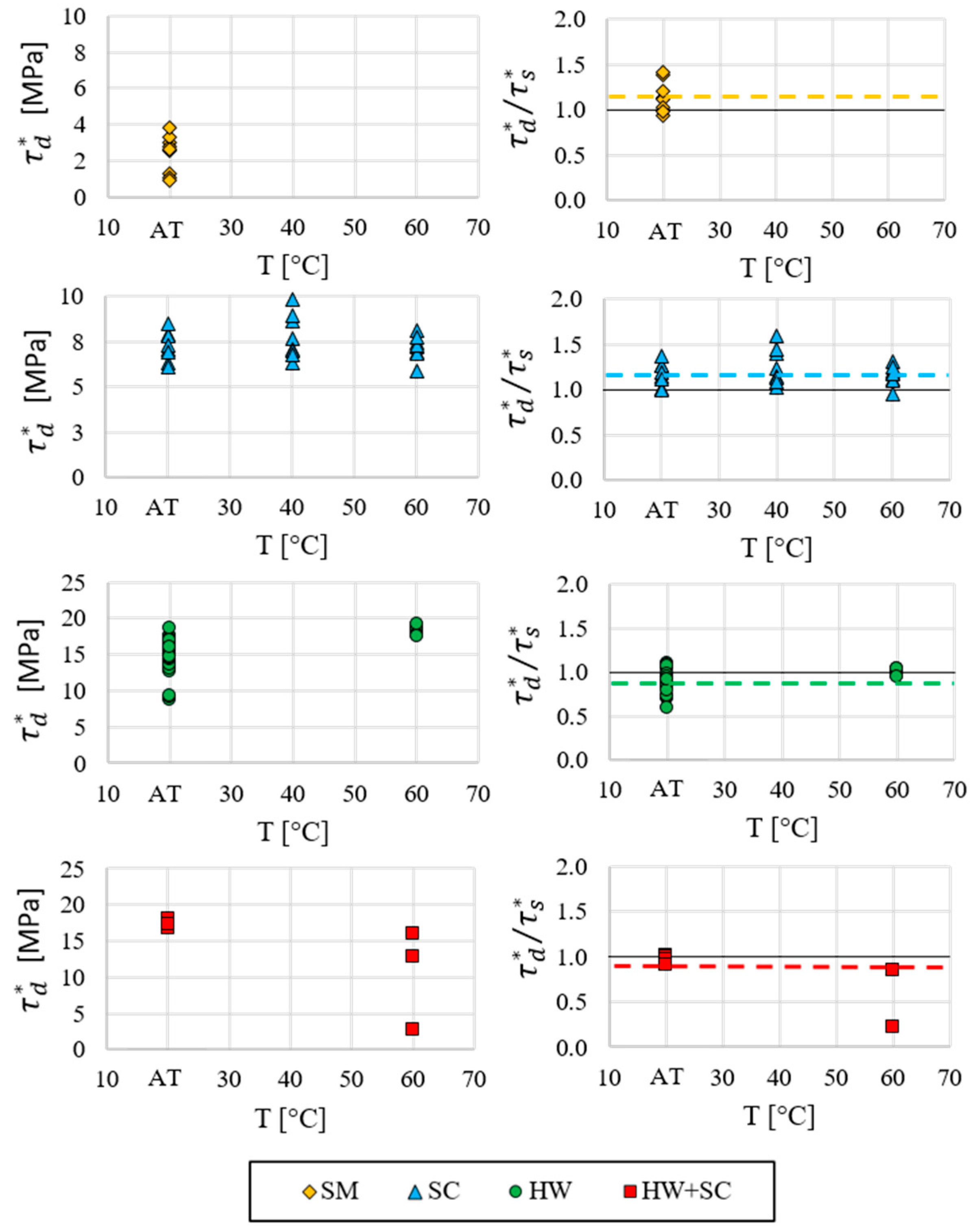
- The available dataset does not provide evidence regarding the influence of exposure duration for sand-coated GFRP bars (and, conversely, the influence of exposure temperature for smooth GFRP bars), since in these cases, data are limited to a single exposure period (or to ambient temperature only). For the remaining clusters, the analyzed results show that increasing the exposure period generally leads to a proportional reduction in the average bond strength within each class of data. For instance, in the HW case (and similarly for HW + SC), the bond strength ranges from about 18–19 MPa at Δt = 0.5 months (and 17–19 MPa at Δt = 3 months) to about 9–15 MPa at Δt = 5 months (and 3–16 MPa at Δt = 5 months), corresponding to a reduction of approximately 17–52% (and 1–84%, respectively). It is worth noting that the HW + SC data point showing a bond strength of about 3 MPa at 5 months corresponds to a specimen cast with fiber-reinforced concrete.
- The analysis of the ratio suggests that exposure to alkaline solution tends to increase the mean bond strength relative to non-conditioned samples by up to 40% (under ambient temperature and two months of exposure, with an average increase of 13%) for SM bars and by up to 60% (under temperatures from ambient to 60 °C and eight months of exposure, with an average increase of 19%) for SC bars. Conversely, an opposite trend is observed for helically wrapped bars: the longer the conditioning period, the more pronounced the mean bond strength degradation compared with non-conditioned specimens (average reductions of approximately 8% and 6% for HW and HW + SC bars, respectively). These opposite trends between smooth/sand-coated and helically wrapped bars could be justified by the different mechanisms through which the bond is mobilized. For smooth and sand-coated GFRP bars, alkaline conditioning might induce slight surface etching or micro-roughening of the outer resin layer, thereby enhancing frictional resistance and mechanical interlock with concrete. This effect could be enhanced in sand-coated bars, where the chemical interactions promoted by alkaline exposure could improve friction-based load-transfer mechanisms, leading to more pronounced increases in bond efficiency compared with smooth bars. In contrast, helically wrapped bars rely primarily on the mechanical contribution of their external ribs for stress transfer. Alkaline exposure may deteriorate the polymeric matrix at rib surfaces or weaken the interface between the helical wrap and the bar core, compromising rib integrity and thus reducing the efficiency of mechanical interlock. As a result, conditioned specimens with helically wrapped bars generally exhibit lower bond strength than their unconditioned counterparts.
- As demonstrated in Figure 1, the differentiation of the data with respect to the ratio indicates a certain correlation between the bond strength of the degraded samples and the magnitude of this ratio. However, it should be noted that this statement can only be made for the HW class, for which a comparison between data with different ratios is available. In particular, such a trend can be reasonably interpreted by considering that the ratio is a proxy measure of the confinement level provided by the surrounding concrete, which affects the competition between pull-out and splitting mechanisms and, in turn, the residual bond capacity. Nevertheless, since the present dataset is assembled from independent experimental campaigns, this evidence should be considered as a qualitative indication rather than a strict cause–effect relationship, as other parameters (e.g., concrete strength and testing setup) may contribute to the observed dispersion.
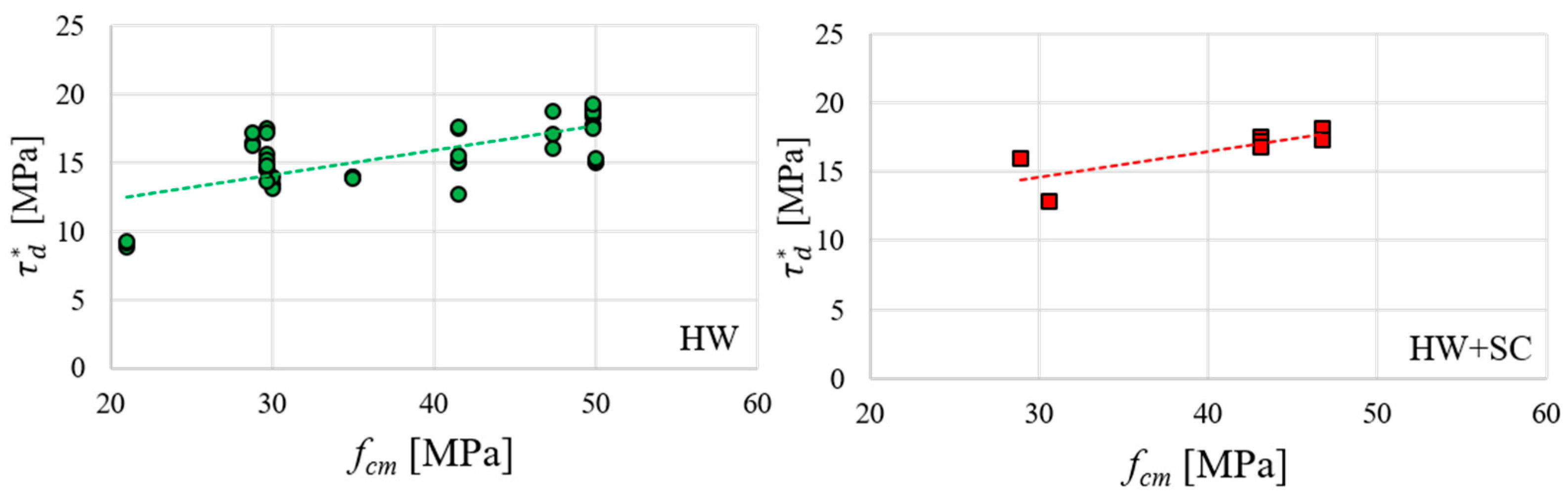
- Considering the HW and HW + SC clusters (those for which data variability is more pronounced), Figure 3 reports the relationship between the bond strength of degraded specimens and the mean concrete compressive strength. The graphs show a clear correlation between concrete mechanical performance and the resulting bond strength: higher concrete strength generally translates into higher bond strength. Specifically, for HW bars (and, respectively, for HW + SC bars), an increase of approximately 67% (respectively, 50%) in the mean concrete compressive strength results in an increase of about 25% (respectively, 17%) in the mean bond strength . It is worth noting that variations in fcm across different experimental campaigns may partly contribute to the scatter observed within each cluster, thus acting as a potential confounding factor in the interpretation of temperature- and duration-related trends.
3. Experimental Bond Tests
3.1. Materials, Specimens and Testing Conditions
3.2. Pull-Out Bond Tests
- The specimens tested in [14] (see Table 2) differ substantially from those examined here in terms of geometry (Lb/ϕ approximately 20% larger; c/ϕ about 58% larger; ϕ = 12.7 mm) and mechanical properties. In particular, the GFRP bars used in the present study exhibit an axial elastic modulus Ef about 31% lower than those in [14], while the mean cylindrical concrete compressive strength fcm is about 21% higher. These differences imply distinct load-transfer and slip mechanisms. In particular, the higher compliance of the reinforcement (due to the lower Ef), the greater concrete strength (higher fcm), the smaller bonded area (reduced by about 26% due to lower Lb/ϕ and ϕ), and the higher expected stress gradient at the interface (associated with the smaller c/ϕ) can synergistically affect the bond strength performance, leading to a more abrupt slip behavior and promoting the reduction in peak stress and frictional resistance when alkaline conditioning is present.
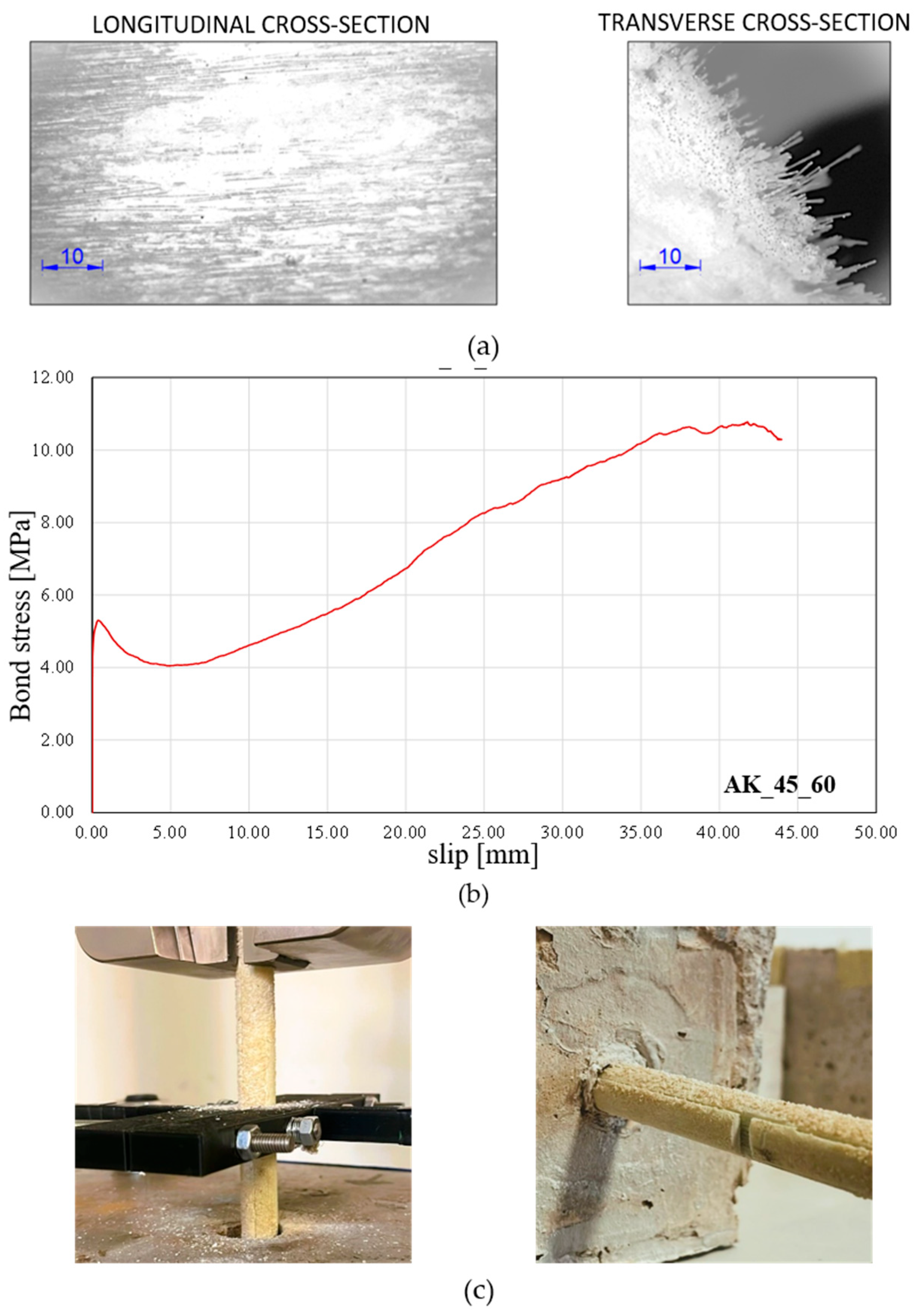
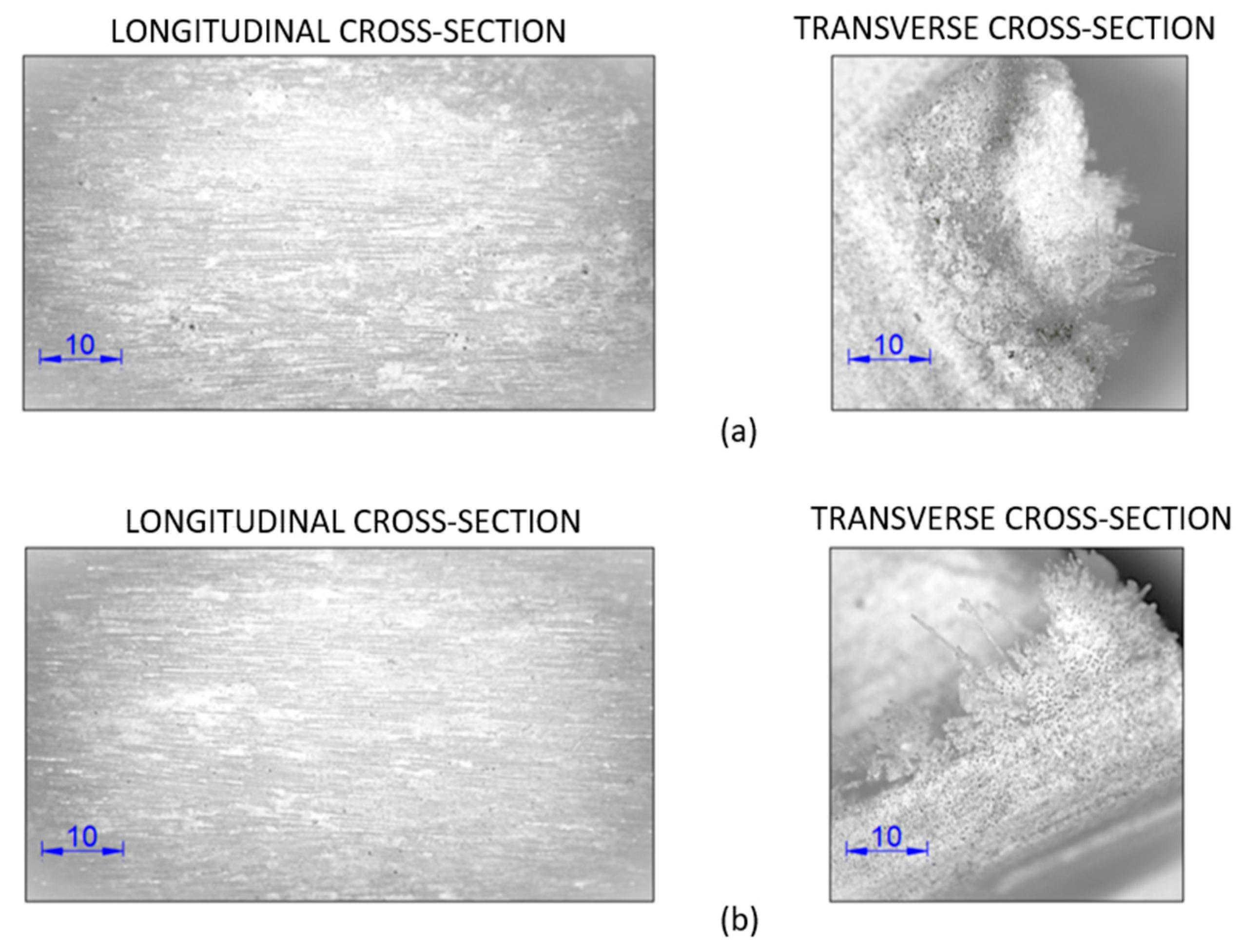
- The study in [14] refers to a conditioning duration far longer than that adopted here (8 months versus 1.5 months). Such a discrepancy may result in significantly different chemical interactions at the bond interface, influencing adhesion mechanisms and altering the friction-driven bond–slip response of sand-coated bars. To clarify these effects, a microscopic analysis of the post-test interfacial region is presented in the following section.
3.3. Microscopic Bond Interface Analysis and Degradation Mechanisms
4. Modeling the Local GFRP Bar–Concrete Interface Law
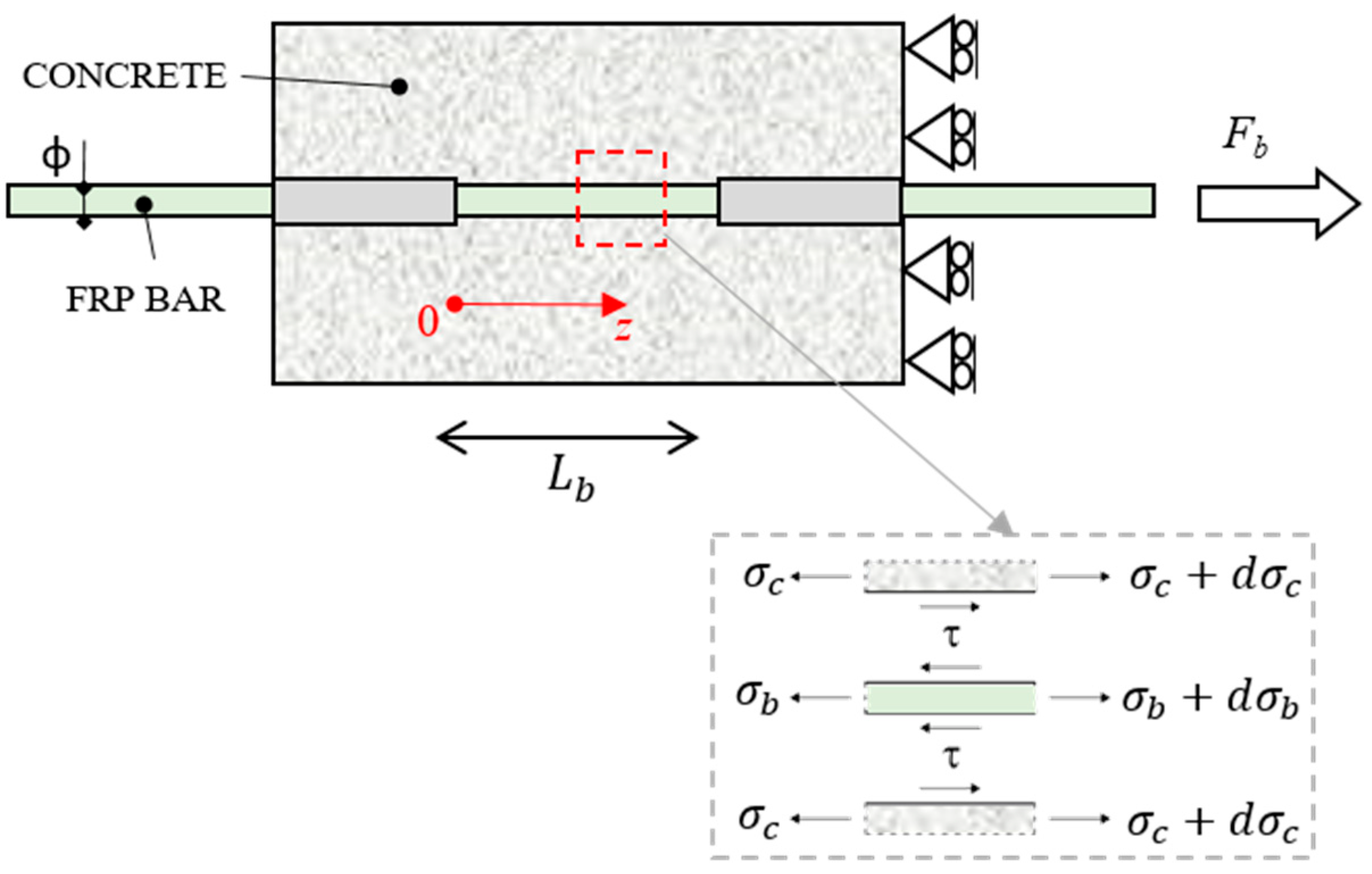
4.1. Analytical Local Bond–Slip Model
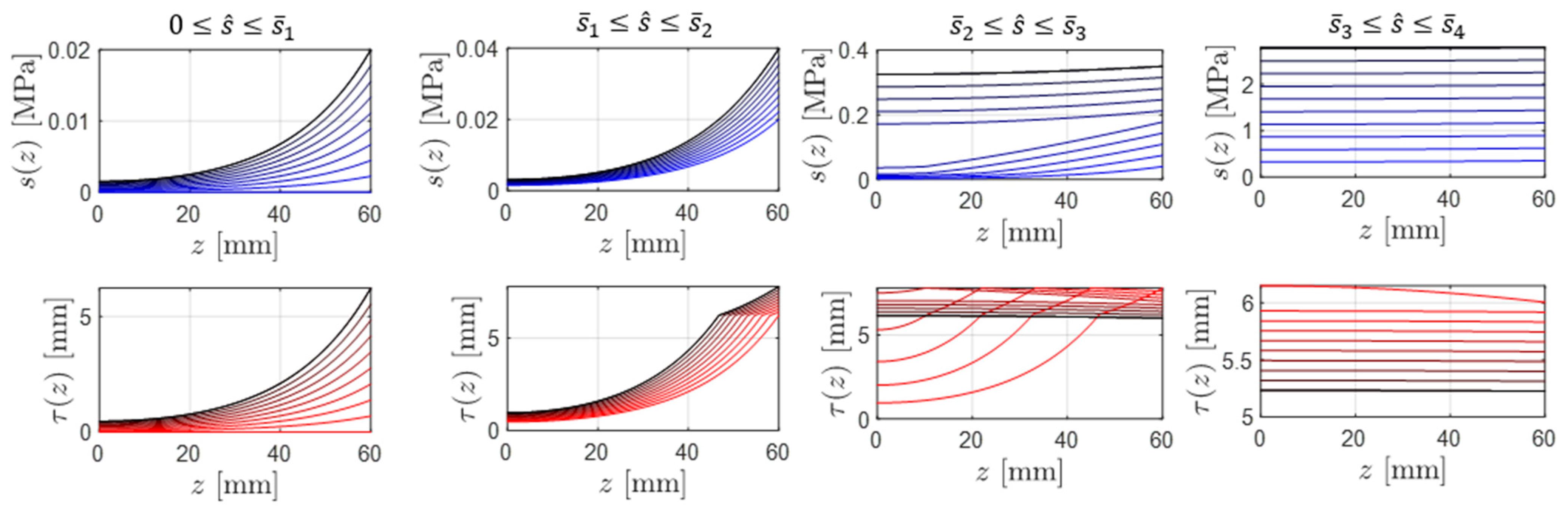
- N slip regimes, and thus the N characteristic slip values , for (with );
- A set of attempt stiffness parameter for each slip regime , such that at the macroscopic level for .
4.2. Assessment of the Local GFRP Bar–Concrete Interface Law
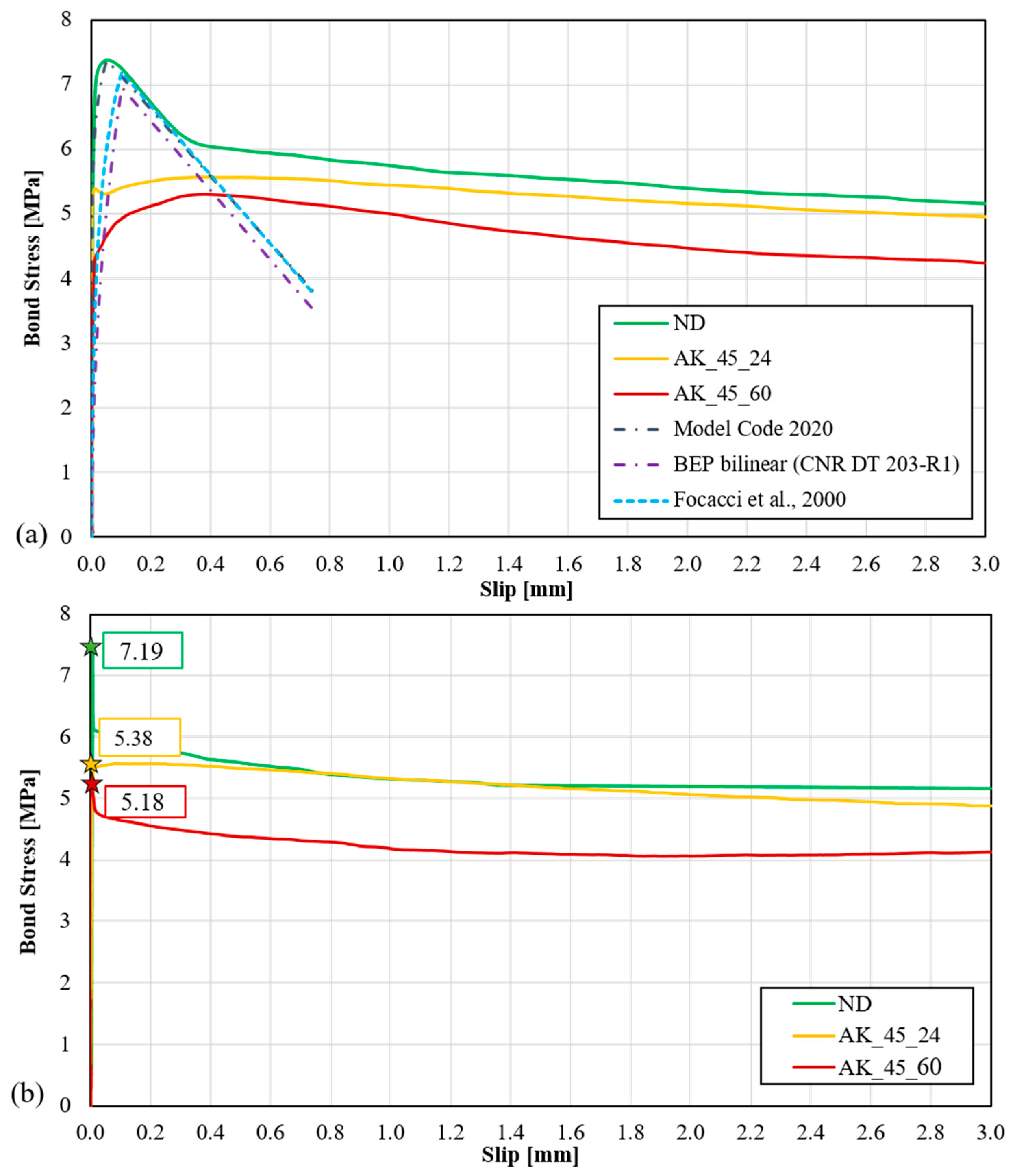
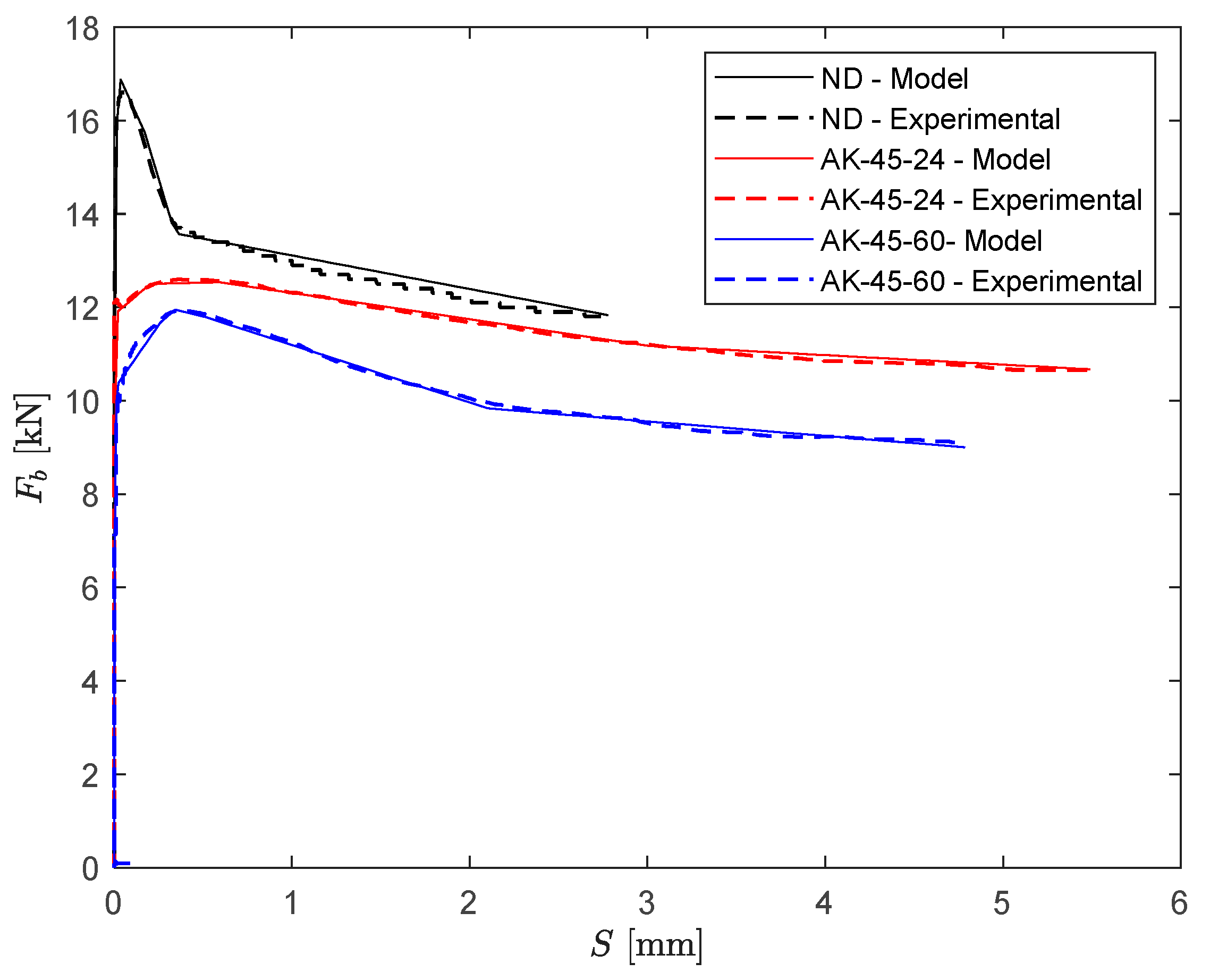
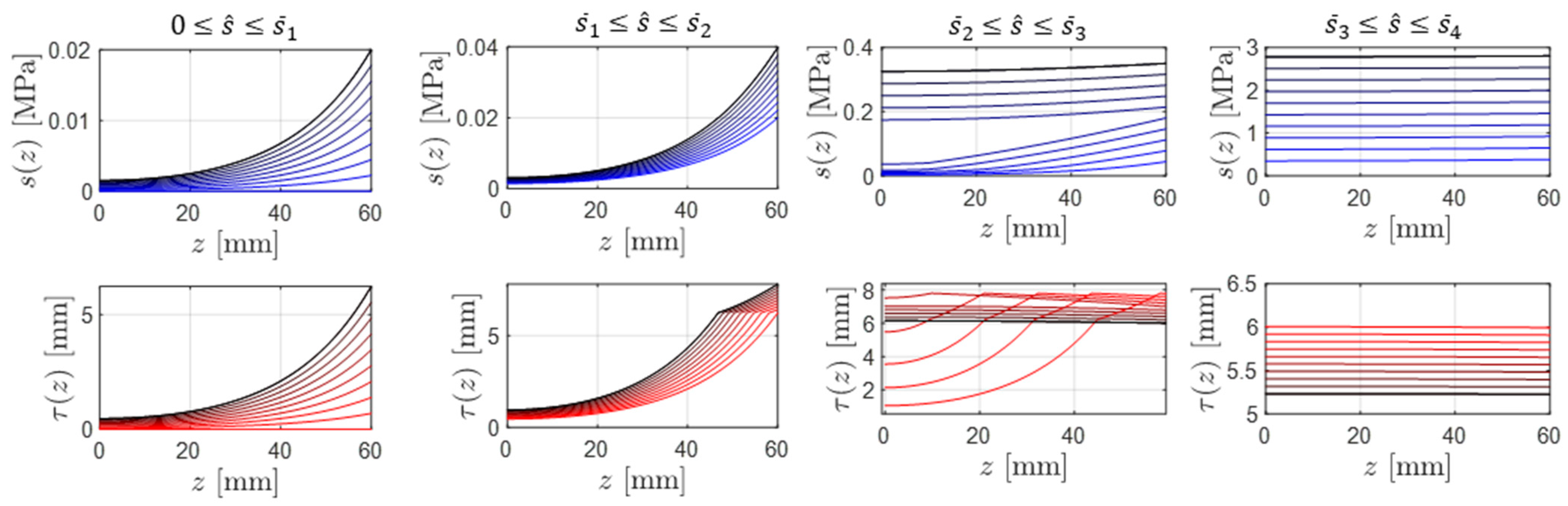
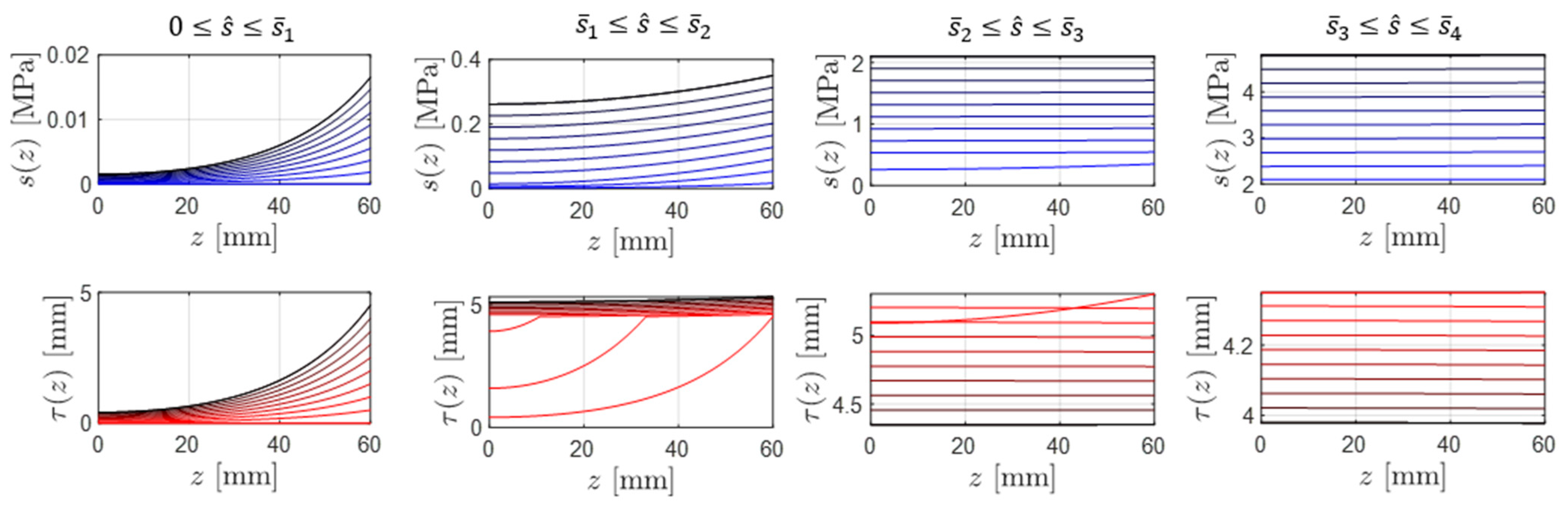
- marks the end of the elastic regime and is identified by assuming the same stiffness for all specimens ( kN/mm);
- corresponds to the measured peak force, that is ;
- identifies the knee point in the post-peak softening branch;
- is the largest reference slip value.
5. Concluding Remarks
Author Contributions
Funding
Data Availability Statement
Acknowledgments
Conflicts of Interest
References
- Aiello, M.A.; Leone, M.; Pecce, M. Bond Performances of FRP Rebars-Reinforced Concrete. J. Mater. Civ. Eng. 2007, 19, 205–213. [Google Scholar] [CrossRef]
- Imperatore, S. Mechanical properties decay of corroded reinforcement in concrete—An overview. Corros. Mater. Degrad. 2022, 3, 210–220. [Google Scholar] [CrossRef]
- Spagnuolo, S.; Rinaldi, Z.; Donnini, J.; Nanni, A. Physical, Mechanical and Durability Properties of GFRP Bars with Modified Acrylic Resin (Modar) Matrix. Compos. Struct. 2021, 262, 113557. [Google Scholar] [CrossRef]
- Duo, Y.; Liu, X.; Liu, Y.; Tafsirojjaman, T.; Sabbrojjaman, M. Environmental Impact on the Durability of FRP Reinforcing Bars. J. Build. Eng. 2021, 43, 102909. [Google Scholar] [CrossRef]
- Lakhiar, M.T.; Kong, S.Y.; Bai, Y.; Miah, M.J.; Syamsir, A. Web crippling performance of pultruded GFRP C sections strengthened by fibre-reinforced epoxy composite. Compos. Struct. 2023, 316, 117047. [Google Scholar] [CrossRef]
- Yıldız, M.; Yapıcı, A. Dual-Modified GFRP Composites: Synergistic Self-Healing and Toughening via HDPE Powder and Electrospun PAN Nanofiber Interleaves. Appl. Sci. 2025, 15, 8795. [Google Scholar] [CrossRef]
- Li, J.; Gravina, R.J.; Smith, S.T.; Visintin, P. Bond Strength and Bond Stress-Slip Analysis of FRP Bar to Concrete Incorporating Environmental Durability. Constr. Build. Mater. 2020, 261, 119860. [Google Scholar] [CrossRef]
- Gravina, R.J.; Li, J.; Smith, S.T.; Visintin, P. Environmental Durability of FRP Bar-to-Concrete Bond: Critical Review. J. Compos. Constr. 2020, 24, 03120001. [Google Scholar] [CrossRef]
- Hadigheh, S.A.; Gravina, R.J.; Setunge, S.; Kim, S.J. Experimental Study on the Bondline Behavior between Concrete and FRP Materials. In Proceedings of the Australian Conference on the Mechanics of Structures and Materials (ACMSM 22), Sydney, Australia, 11–14 December 2012; Samali, B., Attard, M.M., Song, C., Eds.; Taylor & Francis Group: Sydney, Australia, 2012; pp. 505–511. [Google Scholar]
- Nepomuceno, E.; Sena-Cruz, J.; Correia, L.; D’Antino, T. Review on the Bond Behavior and Durability of FRP Bars to Concrete. Constr. Build. Mater. 2021, 287, 123042. [Google Scholar] [CrossRef]
- Ceroni, F.; Cosenza, E.; Gaetano, M.; Pecce, M. Durability Issues of FRP Rebars in Reinforced Concrete Members. Cem. Concr. Compos. 2006, 28, 857–868. [Google Scholar] [CrossRef]
- Nerilli, F.; Ahmadi, H.M.; Imperatore, S.; Vairo, G. Experimental Investigation of Bond-Slip Response of GFRP Bars in Concrete Exposed to High Temperature in Alkaline Solution. Lect. Notes Civ. Eng. 2025, 746, 54–67. [Google Scholar]
- Wu, L.; Wang, H.; Xu, X.; Lin, Z. Investigation on Bond Durability of GFRP Bar/Engineered Cementitious Composite under Alkaline-Saline Environments. J. Build. Eng. 2023, 77, 107343. [Google Scholar] [CrossRef]
- Rolland, A.; Benzarti, K.; Quiertant, M.; Chataigner, S. Accelerated aging behavior in alkaline environments of GFRP reinforcing bars and their bond with concrete. Materials 2021, 14, 5700. [Google Scholar] [CrossRef] [PubMed]
- Abedi, S. Evaluation of the Bond and Tensile Strength of GFRP Bars Exposed to Harsh Environment. Ph.D. Thesis, American University of Sharjah, Sharjah, United Arab Emirates, 2014. [Google Scholar]
- Altalmas, A.; El Refai, A.; Abed, F. Bond Degradation of Basalt Fiber-Reinforced Polymer (BFRP) Bars Exposed to Accelerated Aging Conditions. Constr. Build. Mater. 2015, 81, 162–171. [Google Scholar] [CrossRef]
- Bazli, M.; Ashrafi, H.; Oskouei, A.V. Experiments and Probabilistic Models of Bond Strength between GFRP Bar and Different Types of Concrete under Aggressive Environments. Constr. Build. Mater. 2017, 148, 429–443. [Google Scholar] [CrossRef]
- Yan, F.; Lin, Z.; Zhang, D.; Gao, Z.; Li, M. Experimental Study on Bond Durability of Glass Fiber Reinforced Polymer Bars in Concrete Exposed to Harsh Environmental Agents: Freeze-Thaw Cycles and Alkaline-Saline Solution. Compos. Part B: Eng. 2017, 116, 406–421. [Google Scholar] [CrossRef]
- Shakiba, M.; Bazli, M.; Karamloo, M.; Doostmohamadi, A. Bond between Sand-Coated GFRP Bars and Normal-Strength, Self-Compacting, and Fiber-Reinforced Concrete under Seawater and Alkaline Solution. J. Compos. Constr. 2023, 27, 04022098. [Google Scholar] [CrossRef]
- EN 1992-1-1:2004; Eurocode 2: Design of Concrete Structures—Part 1-1: General rules and Rules for Buildings. European Committee for Standardization: Brussels, Belgium, 2004.
- Comité Euro-International Du Beton–RILEM/CEB/FIB. RC 6: Bond Test Reinforcement Steel—Pull Out Test; Georgi Publishing Company: London, UK, 1983. [Google Scholar]
- EN 12390-3; Testing Hardened Concrete-Part 3: Compressive Strength of Test Specimens. European Committee for Standardization: Brussels, Belgium, 2009.
- CNR-DT 203/2006; Guide for the Design and Construction of Concrete Structures Reinforced with Fiber-Reinforced Polymer Bars. National Research Council: Rome, Italy, 2006.
- International Federation for Structural Concrete. Fib Model Code For Concrete Structures; FIB: Lausanne, Switzerland, 2020. [Google Scholar]
- Focacci, F.; Nanni, A.; Bakis, C.E. Local bond-slip relationship for FRP reinforcement in concrete. J. Compos. Constr. 2020, 4, 24–31. [Google Scholar] [CrossRef]
- Zeng, J.J.; Liao, J.; Zhuge, Y.; Guo, Y.C.; Zhou, J.K.; Huang, Z.H.; Zhang, L. Bond behavior between GFRP bars and seawater sea-sand fiber-reinforced ultra-high strength concrete. Eng. Struct. 2022, 254, 113787. [Google Scholar] [CrossRef]
- Zeng, J.J.; Sun, H.Q.; Deng, R.B.; Yan, Z.T.; Zhuge, Y. Bond performance between FRP bars and 3D-printed high-performance concrete. Structures 2025, 73, 108377. [Google Scholar] [CrossRef]
- Roscini, F.; Nerilli, F.; Ferracuti, B.; Guadagnini, M. Experimental and numerical investigation of the bond interface between basalt fibre and mortar in TRM system. Constr. Build. Mater. 2025, 487, 142064. [Google Scholar] [CrossRef]
- Gaziano, P.; Zoboli, L.; Monaldo, E.; Vairo, G. Effective mechanical response of biomimetic staggered composites: Closed-form estimates via a micromechanical variational formulation. J. Mech. Phys. Solids 2025, 200, 106137. [Google Scholar] [CrossRef]
- Monaldo, E.; Brach, S.; Kondo, D.; Vairo, G. Effective mechanical response of non-linear heterogeneous materials comprising bimodular phases. Eur. J. Mech. A/Solids 2020, 81, 103962. [Google Scholar] [CrossRef]
- Brach, S.; Dormieux, L.; Kondo, D.; Vairo, G. Strength properties of nanoporous materials: A 3-layered based non-linear homogenization approach with interface effects. Int. J. Eng. Sci. 2017, 115, 28–42. [Google Scholar] [CrossRef]
- Gaziano, P.; Marino, M.; Vairo, G.; Wriggers, P. A novel virtual element formulation for geometrically exact three-dimensional beams. Comput. Methods Appl. Mech. Eng. 2026, 449, 118553. [Google Scholar] [CrossRef]
- Gaziano, P.; Zoboli, L.; Marino, M.; Gizzi, A.; Vairo, G. Modeling the Degradation of Bio-absorbable Bone Implants: A Computational Approach. Adv. Struct. Mater. 2025, 231, 153–165. [Google Scholar]
- Gaziano, P.; Monaldo, E.; Falcinelli, C.; Vairo, G. Elasto-damage mechanics of osteons: A bottom-up multiscale approach. J. Mech. Phys. Solids 2022, 167, 104962. [Google Scholar] [CrossRef]
- Nerilli, F.; Vairo, G. Progressive damage in composite bolted joints via a computational micromechanical approach. Compos. Part B: Eng. 2017, 111, 357–371. [Google Scholar] [CrossRef]
- Raffa, M.L.; Lebon, F.; Vairo, G. Normal and tangential stiffnesses of rough surfaces in contact via an imperfect interface model. Int. J. Solids Struct. 2016, 87, 245–253. [Google Scholar] [CrossRef]
- Monaldo, E.; Nerilli, F.; Vairo, G. Effectiveness of some technical standards for debonding analysis in FRP-concrete systems. Compos. Part B Eng. 2019, 160, 254–267. [Google Scholar] [CrossRef]





| Ref. | Specimen | c/ϕ | Lb/ϕ | Ef [GPa] | ftb [MPa] | fcm (* Rcm) [MPa] | T [°C] | Δt [Months] |
|---|---|---|---|---|---|---|---|---|
| Wu et al. [13] | N30-A60-G-1 | 3.67 | 5 | 48.54 | 1105.0 | 34.7 * | AT | 2 |
| N30-A60-G-2 | 3.67 | 5 | 48.54 | 1105.0 | 34.7 * | AT | 2 | |
| N30-A60-G-3 | 3.67 | 5 | 48.54 | 1105.0 | 34.7 * | AT | 2 | |
| E30-A30-G-1 | 3.67 | 5 | 48.54 | 1105.0 | 35.72 * | AT | 1 | |
| E30-A30-G-2 | 3.67 | 5 | 48.54 | 1105.0 | 35.72 * | AT | 1 | |
| E30-A30-G-3 | 3.67 | 5 | 48.54 | 1105.0 | 35.72 * | AT | 1 | |
| E30-A60-G-1 | 3.67 | 5 | 48.54 | 1105.0 | 35.72 * | AT | 2 | |
| E30-A60-G-2 | 3.67 | 5 | 48.54 | 1105.0 | 35.72 * | AT | 2 | |
| E30-A60-G-3 | 3.67 | 5 | 48.54 | 1105.0 | 35.72 * | AT | 2 |
| Ref. | Specimen | c/ϕ | Lb/ϕ | Ef [GPa] | ftb [MPa] | fcm (* Rcm) [MPa] | T [°C] | Δt [Months] |
|---|---|---|---|---|---|---|---|---|
| Rolland et al. [14] | 20-AK-120-1 | 5.80 | 6 | 51.0 | 1240.0 | 29.4 | AT | 8 |
| 20-AK-120-2 | 5.80 | 6 | 51.0 | 1240.0 | 29.4 | AT | 8 | |
| 20-AK-120-3 | 5.80 | 6 | 51.0 | 1240.0 | 29.4 | AT | 8 | |
| 20-AK-120-4 | 5.80 | 6 | 51.0 | 1240.0 | 29.4 | AT | 8 | |
| 20-AK-240-1 | 5.80 | 6 | 51.0 | 1240.0 | 29.4 | AT | 8 | |
| 20-AK-240-2 | 5.80 | 6 | 51.0 | 1240.0 | 29.4 | AT | 8 | |
| 20-AK-240-3 | 5.80 | 6 | 51.0 | 1240.0 | 29.4 | AT | 8 | |
| 20-AK-240-4 | 5.80 | 6 | 51.0 | 1240.0 | 29.4 | AT | 8 | |
| 40-AK-120-1 | 5.80 | 6 | 51.0 | 1240.0 | 29.4 | 40 | 8 | |
| 40-AK-120-2 | 5.80 | 6 | 51.0 | 1240.0 | 29.4 | 40 | 8 | |
| 40-AK-120-3 | 5.80 | 6 | 51.0 | 1240.0 | 29.4 | 40 | 8 | |
| 40-AK-120-4 | 5.80 | 6 | 51.0 | 1240.0 | 29.4 | 40 | 8 | |
| 40-AK-240-1 | 5.80 | 6 | 51.0 | 1240.0 | 29.4 | 40 | 8 | |
| 40-AK-240-2 | 5.80 | 6 | 51.0 | 1240.0 | 29.4 | 40 | 8 | |
| 40-AK-240-3 | 5.80 | 6 | 51.0 | 1240.0 | 29.4 | 40 | 8 | |
| 40-AK-240-4 | 5.80 | 6 | 51.0 | 1240.0 | 29.4 | 40 | 8 | |
| 60-AK-120-1 | 5.80 | 6 | 51.0 | 1240.0 | 29.4 | 60 | 8 | |
| 60-AK-120-2 | 5.80 | 6 | 51.0 | 1240.0 | 29.4 | 60 | 8 | |
| 60-AK-120-3 | 5.80 | 6 | 51.0 | 1240.0 | 29.4 | 60 | 8 | |
| 60-AK-120-4 | 5.80 | 6 | 51.0 | 1240.0 | 29.4 | 60 | 8 | |
| 60-AK-240-1 | 5.80 | 6 | 51.0 | 1240.0 | 29.4 | 60 | 8 | |
| 60-AK-240-2 | 5.80 | 6 | 51.0 | 1240.0 | 29.4 | 60 | 8 | |
| 60-AK-240-3 | 5.80 | 6 | 51.0 | 1240.0 | 29.4 | 60 | 8 | |
| 60-AK-240-4 | 5.80 | 6 | 51.0 | 1240.0 | 29.4 | 60 | 8 |
| Ref. | Specimen | c/ϕ | Lb/ϕ | Ef [GPa] | ftb [MPa] | fcm (* Rcm) [MPa] | T [°C] | Δt [Months] |
|---|---|---|---|---|---|---|---|---|
| Abedi, [15] | Alkaline 30-1 | 5.75 | 5 | 54.5 | 1000.0 | 50.0 * | AT | 1 |
| Alkaline 30-2 | 5.75 | 5 | 54.5 | 1000.0 | 50.0 * | AT | 2 | |
| Alkaline 60-1 | 5.75 | 5 | 54.5 | 1000.0 | 50.0 * | AT | 3 | |
| Alkaline 60-2 | 5.75 | 5 | 54.5 | 1000.0 | 50.0 * | AT | 1 | |
| Alkaline 90-1 | 5.75 | 5 | 54.5 | 1000.0 | 50.0 * | AT | 2 | |
| Alkaline 90-2 | 5.75 | 5 | 54.5 | 1000.0 | 50.0 * | AT | 3 | |
| Altalmas et al. [16] | GK30-1 | 8.12 | 5 | 46.0 | 964.0 | 60.0 * | 60 | 0.5 |
| GK30-2 | 8.12 | 5 | 46.0 | 964.0 | 60.0 * | 60 | 0.5 | |
| GK30-3 | 8.12 | 5 | 46.0 | 964.0 | 60.0 * | 60 | 0.5 | |
| GK60-1 | 8.12 | 5 | 46.0 | 964.0 | 60.0 * | 60 | 1 | |
| GK60-2 | 8.12 | 5 | 46.0 | 964.0 | 60.0 * | 60 | 1 | |
| GK60-3 | 8.12 | 5 | 46.0 | 964.0 | 60.0 * | 60 | 1 | |
| GK90-1 | 8.12 | 5 | 46.0 | 964.0 | 60.0 * | 60 | 1.5 | |
| GK90-2 | 8.12 | 5 | 46.0 | 964.0 | 60.0 * | 60 | 1.5 | |
| GK90-3 | 8.12 | 5 | 46.0 | 964.0 | 60.0 * | 60 | 1.5 | |
| Bazli et al. [17] | L-ALK1 | 5.75 | 10 | 55.0 | 950.0 | 21.0 | AT | 5 |
| L-ALK2 | 5.75 | 10 | 55.0 | 950.0 | 21.0 | AT | 5 | |
| L-ALK3 | 5.75 | 10 | 55.0 | 950.0 | 21.0 | AT | 5 | |
| N-ALK1 | 5.75 | 10 | 55.0 | 950.0 | 30.0 | AT | 5 | |
| N-ALK2 | 5.75 | 10 | 55.0 | 950.0 | 30.0 | AT | 5 | |
| N-ALK3 | 5.75 | 10 | 55.0 | 950.0 | 30.0 | AT | 5 | |
| H-ALK1 | 5.75 | 10 | 55.0 | 950.0 | 50.0 | AT | 5 | |
| H-ALK2 | 5.75 | 10 | 55.0 | 950.0 | 50.0 | AT | 5 | |
| H-ALK3 | 5.75 | 10 | 55.0 | 950.0 | 50.0 | AT | 5 | |
| S-ALK1 | 5.75 | 10 | 55.0 | 950.0 | 35.0 | AT | 5 | |
| S-ALK2 | 5.75 | 10 | 55.0 | 950.0 | 35.0 | AT | 5 | |
| S-ALK3 | 5.75 | 10 | 55.0 | 950.0 | 35.0 | AT | 5 | |
| Wu et al. [13] | N30-A60-L-1 | 3.67 | 5 | 48.54 | 1105.0 | 34.7 * | AT | 2 |
| N30-A60-L-2 | 3.67 | 5 | 48.54 | 1105.0 | 34.7 * | AT | 2 | |
| N30-A60-L-3 | 3.67 | 5 | 48.54 | 1105.0 | 34.7 * | AT | 2 | |
| E30-A30-L-1 | 3.67 | 5 | 48.54 | 1105.0 | 35.72 * | AT | 1 | |
| E30-A30-L-2 | 3.67 | 5 | 48.54 | 1105.0 | 35.72 * | AT | 1 | |
| E30-A30-L-3 | 3.67 | 5 | 48.54 | 1105.0 | 35.72 * | AT | 1 | |
| E30-A60-L-1 | 3.67 | 5 | 48.54 | 1105.0 | 35.72 * | AT | 2 | |
| E30-A60-L-2 | 3.67 | 5 | 48.54 | 1105.0 | 35.72 * | AT | 2 | |
| E30-A60-L-3 | 3.67 | 5 | 48.54 | 1105.0 | 35.72 * | AT | 2 | |
| E30-A90-L-1 | 3.67 | 5 | 48.54 | 1105.0 | 35.72 * | AT | 3 | |
| E30-A90-L-2 | 3.67 | 5 | 48.54 | 1105.0 | 35.72 * | AT | 3 | |
| E30-A90-L-3 | 3.67 | 5 | 48.54 | 1105.0 | 35.72 * | AT | 3 | |
| E50-A90-L-1 | 3.67 | 5 | 48.54 | 1105.0 | 57.03 * | AT | 3 | |
| E50-A90-L-2 | 3.67 | 5 | 48.54 | 1105.0 | 57.03 * | AT | 3 | |
| E50-A90-L-3 | 3.67 | 5 | 48.54 | 1105.0 | 57.03 * | AT | 3 |
| Ref. | Specimen | c/ϕ | Lb/ϕ | Ef [GPa] | ftb [MPa] | fcm (* Rcm) [MPa] | T [°C] | Δt [Months] |
|---|---|---|---|---|---|---|---|---|
| Yan et al. [18] | M2-C-3.0-1 | 4.50 | 5 | 46.0 | 758.0 | 43.09 | AT | 3 |
| M2-C-3.0-2 | 4.50 | 5 | 46.0 | 758.0 | 43.09 | AT | 3 | |
| M2-C-3.0-3 | 4.50 | 5 | 46.0 | 758.0 | 43.09 | AT | 3 | |
| M3-C-4.5-1 | 4.50 | 5 | 46.0 | 758.0 | 46.73 | AT | 3 | |
| M3-C-4.5-2 | 4.50 | 5 | 46.0 | 758.0 | 46.73 | AT | 3 | |
| M3-C-4.5-3 | 4.50 | 5 | 46.0 | 758.0 | 46.73 | AT | 3 | |
| Shakiba et al. [19] | A-NC-G | 4.50 | 10 | 60.0 | 1050.0 | 28.9 | 60 | 5 |
| A-SCC-G | 4.50 | 10 | 60.0 | 1050.0 | 30.6 | 60 | 5 | |
| A-FRC-G | 4.50 | 10 | 60.0 | 1050.0 | 31.6 | 60 | 5 |
| Specimen | [mm] | [kN] | [mm] | [kN] | [mm] | [kN] | [mm] | [kN] |
|---|---|---|---|---|---|---|---|---|
| ND | 2.0 × 10⁻² | 12.4 | 4.0 × 10⁻² | 17.6 | 3.5 × 10⁻¹ | 13.6 | 2.8 | 11.8 |
| AK_45_24 | 1.9 × 10⁻² | 11.8 | 3.0 × 10⁻¹ | 12.7 | 3.0 × 10⁻¹ | 11.2 | 5.5 | 10.6 |
| AK_45_60 | 1.6 × 10⁻³ | 10.2 | 3.5 × 10⁻¹ | 12.0 | 3.5 × 10⁻¹ | 9.8 | 4.8 | 9.0 |
| Specimen | [MPa/mm] | [MPa] | [MPa/mm] | [MPa] | [MPa/mm] | [MPa] | [MPa/mm] | [MPa] |
|---|---|---|---|---|---|---|---|---|
| ND | 312.0 | 78.00 | −5.78 | 6.00 | −0.32 | 5.22 | ||
| AK_45_24 | 274.7 | 5.22 | 1.40 | −0.25 | 4.94 | −0.09 | 4.71 | |
| AK_45_60 | 273.6 | 4.50 | 2.38 | −0.54 | 4.34 | −0.14 | 3.98 |
Disclaimer/Publisher’s Note: The statements, opinions and data contained in all publications are solely those of the individual author(s) and contributor(s) and not of MDPI and/or the editor(s). MDPI and/or the editor(s) disclaim responsibility for any injury to people or property resulting from any ideas, methods, instructions or products referred to in the content. |
© 2026 by the authors. Licensee MDPI, Basel, Switzerland. This article is an open access article distributed under the terms and conditions of the Creative Commons Attribution (CC BY) license.
Share and Cite
Nerilli, F.; Ahmadi, H.M.; Imperatore, S.; Vairo, G. Bond–Slip Performance of GFRP Rebars in Concrete Under Alkaline and Thermal Conditioning. J. Compos. Sci. 2026, 10, 131. https://doi.org/10.3390/jcs10030131
Nerilli F, Ahmadi HM, Imperatore S, Vairo G. Bond–Slip Performance of GFRP Rebars in Concrete Under Alkaline and Thermal Conditioning. Journal of Composites Science. 2026; 10(3):131. https://doi.org/10.3390/jcs10030131
Chicago/Turabian StyleNerilli, Francesca, Hadi Monsef Ahmadi, Stefania Imperatore, and Giuseppe Vairo. 2026. "Bond–Slip Performance of GFRP Rebars in Concrete Under Alkaline and Thermal Conditioning" Journal of Composites Science 10, no. 3: 131. https://doi.org/10.3390/jcs10030131
APA StyleNerilli, F., Ahmadi, H. M., Imperatore, S., & Vairo, G. (2026). Bond–Slip Performance of GFRP Rebars in Concrete Under Alkaline and Thermal Conditioning. Journal of Composites Science, 10(3), 131. https://doi.org/10.3390/jcs10030131