Article

Rheological and Thermal Properties of Recycled Petroleum-Based Polyesters MWCNT Nanocomposite: Sustainable Materials

by
Kashif Ullah Khan
1,2,
Zoltan Weltsch
3,* and
Andrea Adamne Major
1
1
Department of Innovative Vehicles and Materials, GAMF Faculty of Engineering and Computer Science, John von Neumann University, H-6000 Kecskemet, Hungary
2
Doctoral School of Materials Sciences and Technologies, Obuda University, H-1034 Budapest, Hungary
3
Department of Vehicle Maintenance and Diagnostics, Zalaegerszeg Innovation Park, Széchenyi István University, Egyetem tér 1., H-9026 Győr, Hungary
*
Author to whom correspondence should be addressed.
J. Compos. Sci. 2026, 10(2), 88; https://doi.org/10.3390/jcs10020088
Submission received: 4 January 2026 / Revised: 1 February 2026 / Accepted: 5 February 2026 / Published: 7 February 2026
(This article belongs to the Section Nanocomposites)

Abstract

This work investigates the effect of recycling on the rheological and thermal properties of petroleum-based polyester nanocomposites. PET and PBT are used widely in the automobile and packaging industries, and there is a growing need for effective ways to utilize recycled polyesters. The melt mixing method was used to prepare the nanocomposites using a twin-screw extruder. After recycling, the rheological properties of the PBT nanocomposite remained stable, as the degradation of PBT chain was low due to the presence of MWCNT and molecular chain flexibility. In contrast, the complex viscosity of PET recycled nanocomposite decreases significantly because the high processing temperature of 280 °C led to substantial polymer chain scission and network breakdown. Due to the presence of MWCNT, PET and PBT nanocomposites show higher thermal stability than pure and recycled nanocomposites. The recycling of PET and PBT nanocomposites demonstrated potent thermal stability under inert and air/oxidative atmospheres. These results indicate that the effect of recycling strongly depends on the polymer matrix: while PET-based nanocomposites exhibit notable reductions in rheological properties after recycling, PBT-based nanocomposites retain stable rheological and thermal performance due to MWCNT reinforcement. The enhancement in this research could make the recycled materials valuable for the automotive industry.

1. Introduction

The increasing environmental burden due to plastic waste, particularly the significant use of petroleum-based polyesters such as polyethylene terephthalate (PET) and polybutylene terephthalate (PBT), requires the progress of sustainable planning for their valuation [1,2]. They are widely used thermoplastic polyesters in the automotive industry, packaging, and electrical applications. PET is prepared by a chemical reaction between terephthalic acid and diols (ethylene glycol). The removal of a water molecule from the acid and alcohol produces the ester. The ester then links to another ester unit by a covalent bond created through another dehydration synthesis process [3]. Through these, repetitive dehydration synthesis processes, a long and linear chain polymer is produced. PBT is prepared by a chemical reaction between, terephthalic acid and diols (butylene glycol). PBT is structurally very similar to PET, but it has a longer alkyl chain in between two terephthalate moieties that makes the polymer more flexible. The mechanical properties of the two materials are also similar to each other. However, PBT has a lower melting point (225 °C) than PET (250 °C), so it can be processed at lower temperatures [4]. They are widely used in the world because they provide excellent mechanical strength, good chemical resistance, and thermal resistance. However, recycling induces structural degradation in the form of scission, oxidation, and reduced molecular weight, which in turn compromises their rheological behavior, thermal stability, and melt processability [5,6].
The use of nanoscale reinforcement like multi-walled carbon nanotubes (MWCNT) is gaining attention to mitigate these limitations and enable high-performance reuse. The MWCNT increases the thermal stability, stiffness and conductivity of nanocomposites [7]. In addition, it also plays an important role in modifying the rheological behavior of the polymer melt by creating a tangled network that changes the flow behavior, viscoelastic parameters, and processability [6,7,8,9,10].
The Recycling of petroleum-based polyesters has been extensively studied; while several studies have investigated nanocomposites prepared from recycled PET and carbon nanotubes, the recycling behavior of already-formed PET/PBT–MWCNT nanocomposite systems remains insufficiently explored. According to the literature [11,12,13], the optimal amount of MWCNT for the polyester nanocomposite was 1 wt% to reach the rheological and thermal percolation thresholds. The small amount of MWCNT addition (1 wt%) provides high thermal stability under an oxidative environment. Chowreddy et al. [14] investigated the recycled PET-CNT composite’s rheological and thermal properties and ease of processability. In this study, a low amount of content filler and the melt mixing method were used to maintain the flexibility of the PET chain even after recycling. According to S.A. Awad et al. [15], the inclusion of MWCNT into pure PET somewhat increases thermal stability because interfaces between multi-functionalized MWCNT and pure PET reduce brittle behavior while increasing stability due to the high crosslinking of pure PET. The higher the proportion of MWCNT fillers in pure PET, the greater the thermal stability because of the high crosslink density between pure PET and MWCNT. For concentrations below 1 wt% nanotubes, the influence of the nanotubes on thermal stability is minimal, with just a modest increase observed in the composite with the highest amount of MWCNT produced. The recycling of PET and PBT polyesters limits the production of existing products. In the previous studies the researchers found that after recycling of PET and PBT, the viscoelastic properties were significantly affected due to the random chain scission induced by thermal degradation [16,17]. The thermal degradation of PET lowers the molecular weight and consequently affects the melt and intrinsic viscosities. According to the literature [18,19], in both inert and oxidative atmosphere the viscoelastic properties decreased. PBT after recycling shows low processability, decreased strength and decreased rigidity due to the chain degradation and the presence of degraded impurities. To overcome the issue many researchers added recycled PBT with PET to reduce the brittleness of PBT and PET provide easy processability [20,21].
Rheology provides critical insight into the microstructure and filler matrix interactions of the nanocomposites [22,23]. The investigation of key rheological parameters enables the information on viscoelastic transition, nanofiller dispersion, and network formation within the melt. In the nanocomposites containing MWCNT, the frequency-dependent behavior often shows a pseudo-solid like behavior, which influences process design and application [5,24]. Regardless of progress in neat polymer properties, focused studies on rheological and thermal properties of PET- and PBT-recycled nanocomposites remain largely uninvestigated [1]. Recycled materials produce complexes that can affect the dispersion of MWCNT, interfacial bonding, rheological and thermal properties of the final product. The information about the alteration of viscoelastic properties of these recycled nanocomposites is important to optimize the effects of melting during extrusion and injection molding, where the distribution of nanotubes plays an important role [9,25].
Thermal stability is another property where MWCNT demonstrate synergistic benefits [26]. According to the literature [27], the incorporation of MWCNT delays thermal degradation temperature by acting as a physical barrier. This barrier lowered the volatile diffusion, enhancing char yield and catalyzing crosslinking reactions. The addition of MWCNT is valuable for recycled PET and PBT because the thermal degradation onset temperature was compromised due to the shortened chain and reduced crystallinity [28,29]. Thermogravimetric analysis (TGA) allows accurate quantification of weight loss, onset degradation temperatures (T1%), maximum degradation (Tmax), and char residue under an inert atmosphere, which indicate the thermal stability of the nanocomposite before and after recycling under high-temperature environments [14,30].
This study systematically investigates the rheological and thermal properties of pure PET and PBT, its nanocomposites before and after recycling. Using strain and frequency sweep experiments in an oscillatory rotational rheometer, we examine the evolution of complex viscosity, storage modulus, and loss modulus as functions of angular frequency before and after recycling of nanocomposite. The focus is placed on identifying the rheological parameters, pseudo-solid transitions, and effect of recycling. Furthermore, this study also quantifies the thermal stability of nanocomposite provided by MWCNT during recycling of nanocomposites and correlates these effects with rheological features [31]. The aim is to deepen understanding of flow and heat relationships in recycled polyester nanocomposites and unfold sustainable materials for next-generation circular manufacturing. Therefore, this study focuses on the rheological and thermal response of PET- and PBT-based MWCNT nanocomposites before and after recycling, providing a polymer-specific assessment of network stability and degradation mechanisms.

2. Materials and Methods

2.1. Materials

PBT under trade name Pocan B1305 was purchased from Lanxess (Pittsburgh, PA, USA). The melt flow parameters were 250 °C/2.16 kg and melt flow index (MFI) was 47 cm3/10 min. The viscosity number of PBT was 105 cm3/g (test method: ISO 307, 1157, 1628 [32,33,34]). PET (NEOPET 80) was purchased from Neogroup (Klaipėda, Lithuania). It is a food-grade PET copolyester designed for general purposes with 0.80 ± 0.02 dL/g intrinsic viscosity (IV). It has a MFI 21 g/10 min under 260 °C/1.2 kg. MWCNT were purchased from NANOCYL®, series NC7000™; thin MWCNT from Nanocyl SA, Sambreville, Belgium, were produced via the catalytic chemical vapor deposition process. The surface area of MWCNTs was 250–300 m2/g, carbon purity was 90%, average diameter was about 9.5 nm, and length was approximately 1.5 µm.

2.2. Preparations

The nanocomposites were prepared by the dilution of masterbatch containing 5 wt% MWCNT by melt mixing process using the (LTE 26-48, Labtech Scientific, Changwat Samut Prakan, Thailand) twin-screw extruder with a 26 mm screw diameter and 48 L/D ratio. The indirect technique was applied for mixing, and polyester and MWCNT were stirred manually before they were blended in the extruder [27]. Before processing PET and PBT were dried at 160 °C and 120 °C for 4 h, respectively [35]. The pure PET and pristine MWCNT were mixed (95/5 weight ratio) to produce 5 wt% masterbatches. These masterbatches were diluted with pure PET in the weight ratio of 20/80 to manufacture 1 wt% MWCNT nanocomposites. The extruder temperature and screw speed were 270–280 °C and 55 rpm, respectively. Similarly, PBT nanocomposites were fabricated, and the extruder temperature and screw speed for PBT nanocomposites were 250–260 °C and 55 rpm, respectively. The final product ready for investigations was indicated as PET/1%MWCNT and PBT/1%MWCNT. The nanocomposites were recycled by using the Wittmann M1-W2905 granulator (Torbágy utca 28. 2045 Törökbálint, Hungary). The nanocomposite shreds by using the granulator with the rotation speed of 27 rpm and the output sample sizes were 4–6 mm. Before extrusion, the shreds granulate of PET and PBT were dried at 160 °C and 120 °C for 4 h, respectively. Recycled nanocomposites were prepared by melt mixing of shredded nanocomposites (dried) using the same twin-screw extruder and similar parameters. Final products were represented as R(PET/1%MWCNT) and R(PBT/1%MWCNT).

2.3. Characterization Methods

Rheological properties were investigated by using the TA instruments ARES-G2 oscillatory rheometer with 25 mm parallel plate (stainless steel) geometry. The strain was 5.0%, logarithm sweep, angular frequency from 0.5 to 500.0 rad/s, with 8 points per decade. The complex viscosity, storage modulus, and loss modulus were analyzed with respect to the angular frequencies.
TGA were used to determine the thermal properties of polyesters and its nanocomposites by Q500 from the TA instruments. The measurements were performed under nitrogen and air atmosphere with a flow rate of 50 mL/min. About 10–15 mg of samples were used for investigation, and samples were heated from room temperature to 800 °C at the rate of 10 °C/min. The intersection of tangents method was used to determine the thermal stability (onset temperature) of the nanocomposite before and after recycling.

3. Results and Discussion

3.1. Rheological Properties

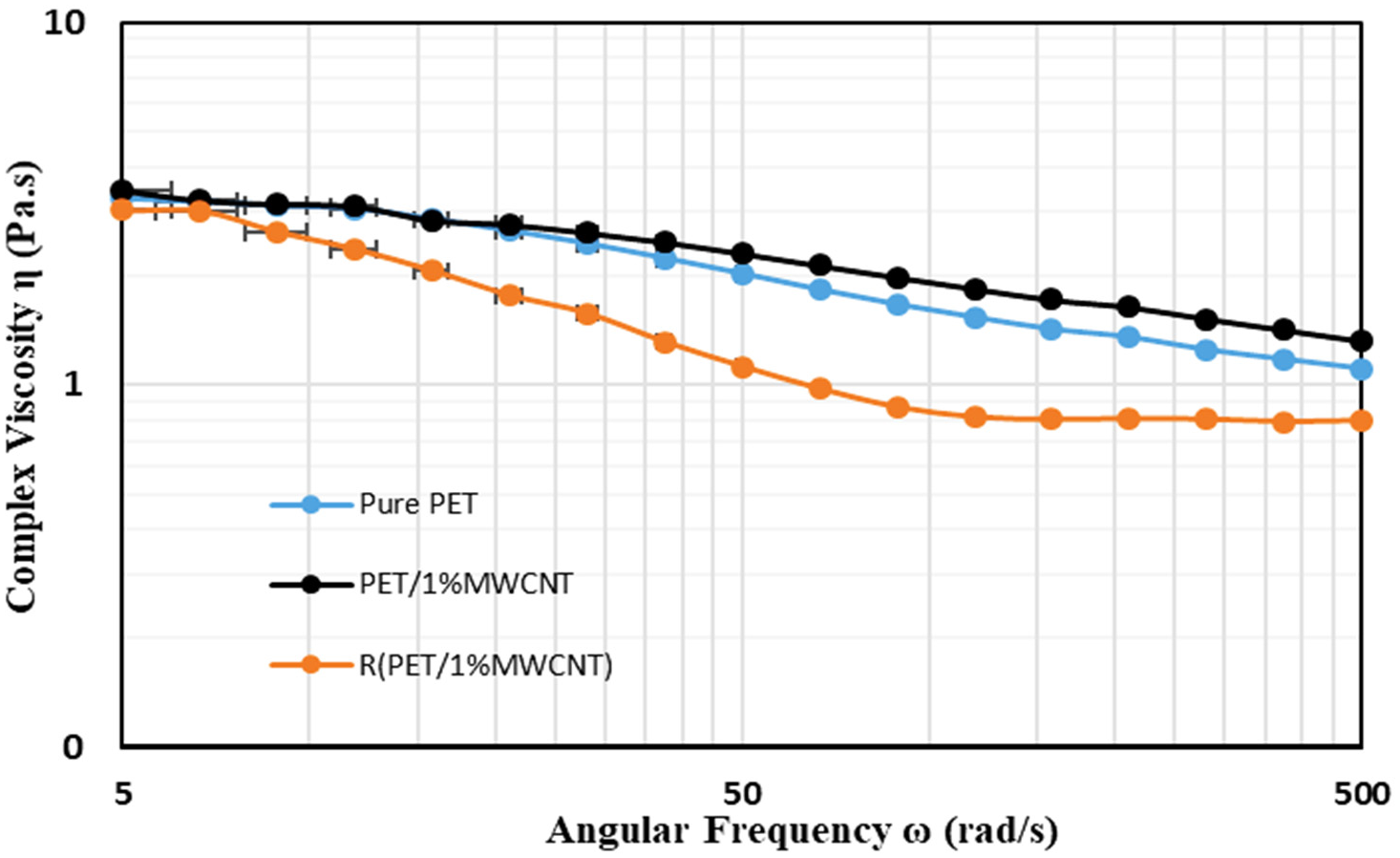
The complex viscosity (η) of pure polyester and polyester/MWCNT nanocomposites as a function of angular frequency (ω) are shown in Figure 1. It is clear from the figure that the addition of MWCNT affects the complex viscosity of pure polyesters. After PET recycling, the molecular weight was reduced due to the chain scission, which consequently decreased the melt viscosity [5]. At low angular frequency, there is a little difference in the complex viscosity of neat PET and R(PET/1%MWCNT) nanocomposite, which may be because of the matrix–particle and particle–particle interactions. In addition, with the increase in angular frequency, complex viscosity decreases, which shows the non-Newtonian behavior of the samples. It is evident that addition of MWCNT in the PET matrix shows the stronger shear thinning behavior, and at high frequency, shear-thinning behavior is higher because of the breakdown of network structure [36]. The enhanced shear-thinning behavior observed in the nanocomposites at high frequencies is primarily associated with the deformation and partial breakdown of the percolated MWCNT network under shear, accompanied by the progressive orientation of nanotubes in the flow direction. These changes reduce nanotube–nanotube interactions and disrupt the transient network structure, leading to a decrease in viscosity with increasing frequency.
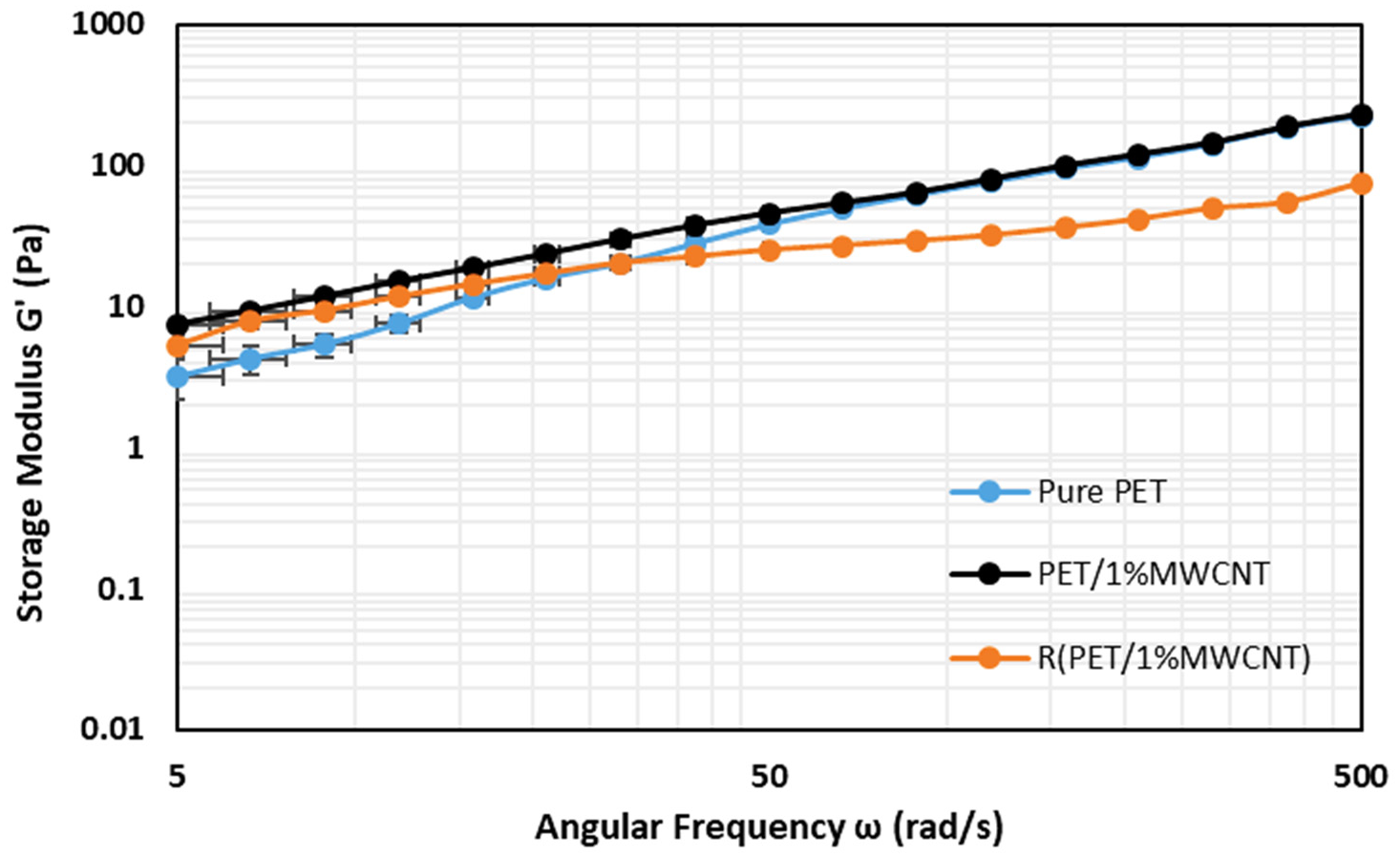
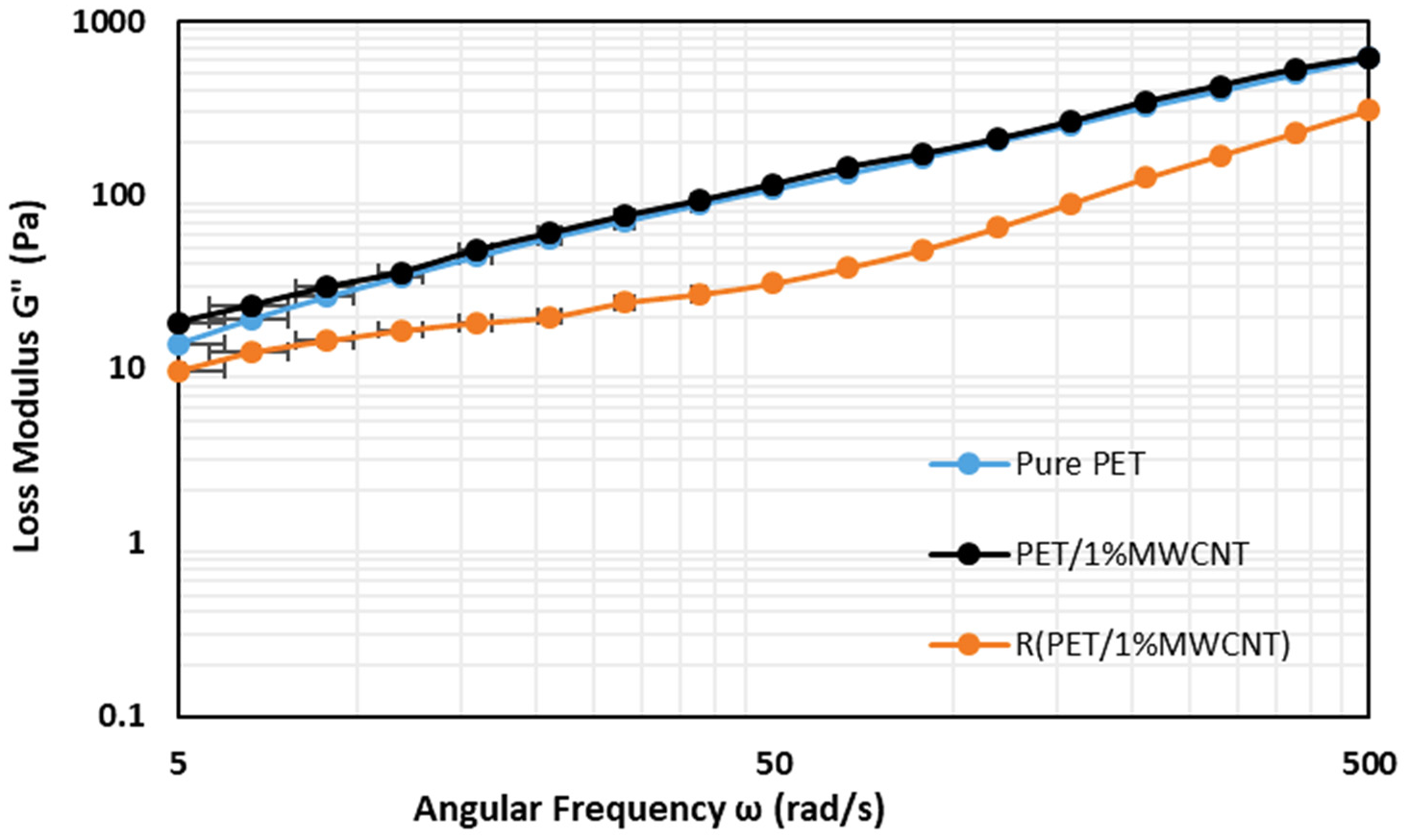
According to Figure 2 and Figure 3, the values of storage modulus (G′) and loss modulus (G″) of pure PET and PET/MWCNT nanocomposites increases with the increase in angular frequency and is more obvious at the low-frequency region. This relaxation behavior is similar to typical filled-polymer nanocomposites. At low frequency, the stiffness of PET/1%MWCNT nanocomposites caused an increase in melt elasticity. At higher frequency the values of G′ and G″ of pure PET and PET/1%MWCNT nanocomposites are similar or a little higher because of the structure breakdown under high shear rate. The values of G′ and G″ of nanocomposites are higher than the pure polyester due to the MWCNT-MWCNT and MWCNT-polyesters interactions that lead to more elasticity than the pure polyesters, but after recycling the G′ and G″ show a significant difference at high angular frequency due to structure breakdown of polymer chain. Moreover, the values of G′ and G″ of R(PET/1%MWCNT) nanocomposite are lower than the PET/1%MWCNT and pure PET because the processing temperature of PET is relatively high (about 280 °C). So, after recycling the chain structure is significantly degraded, causing low G′ and G″.
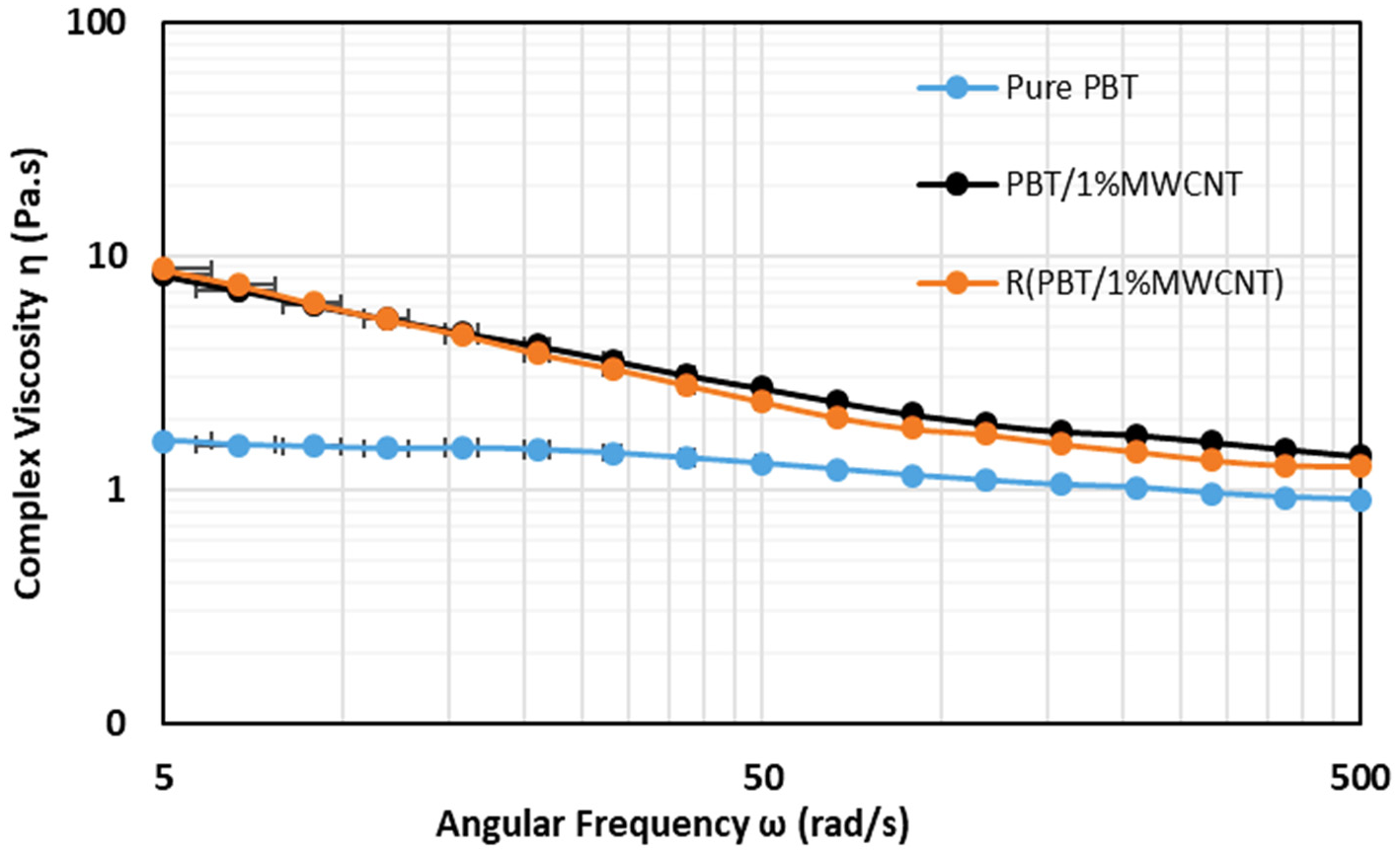
The incorporation of MWCNT into PBT matrix leads to a major improvement in complex viscosity of nanocomposites before and after recycling (Figure 4). The differences are more evident at low angular frequency. This increase can be attributed to the formation of interconnected network of MWCNT within PBT matrix. With the addition of small amounts of MWCNT content, the material behaves more like a pseudo-solid, performing a high resistance to the flow due to the entanglement and percolation of the nanotube. The R(PBT/1%MWCNT) nanocomposite shows slightly lower viscosity than the original nanocomposite by virtue of structure breakdown at high angular frequency. In comparison to PET, the PBT-recycled MWCNT nanocomposite shows strong resistance against chain breakdown because of the difference in the processing parameter and molecular differences between PET and PBT. During the PBT recycling process, the polymer–polymer and polymer–MWCNT network break down less than the PET due to the flexibility and low processing temperature of PBT. The increase in viscosity may reduce the processability but improve mechanical and thermal properties.
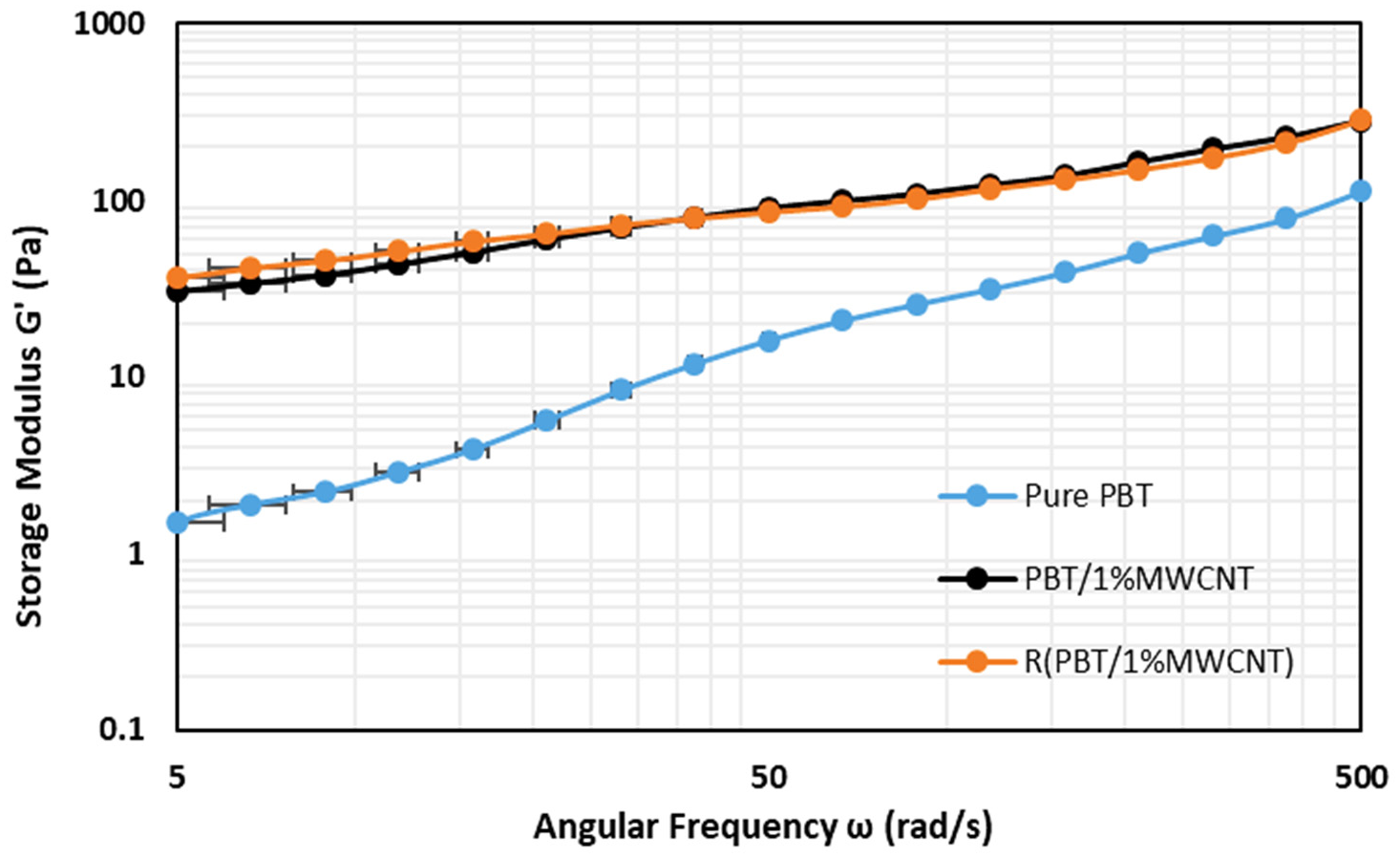
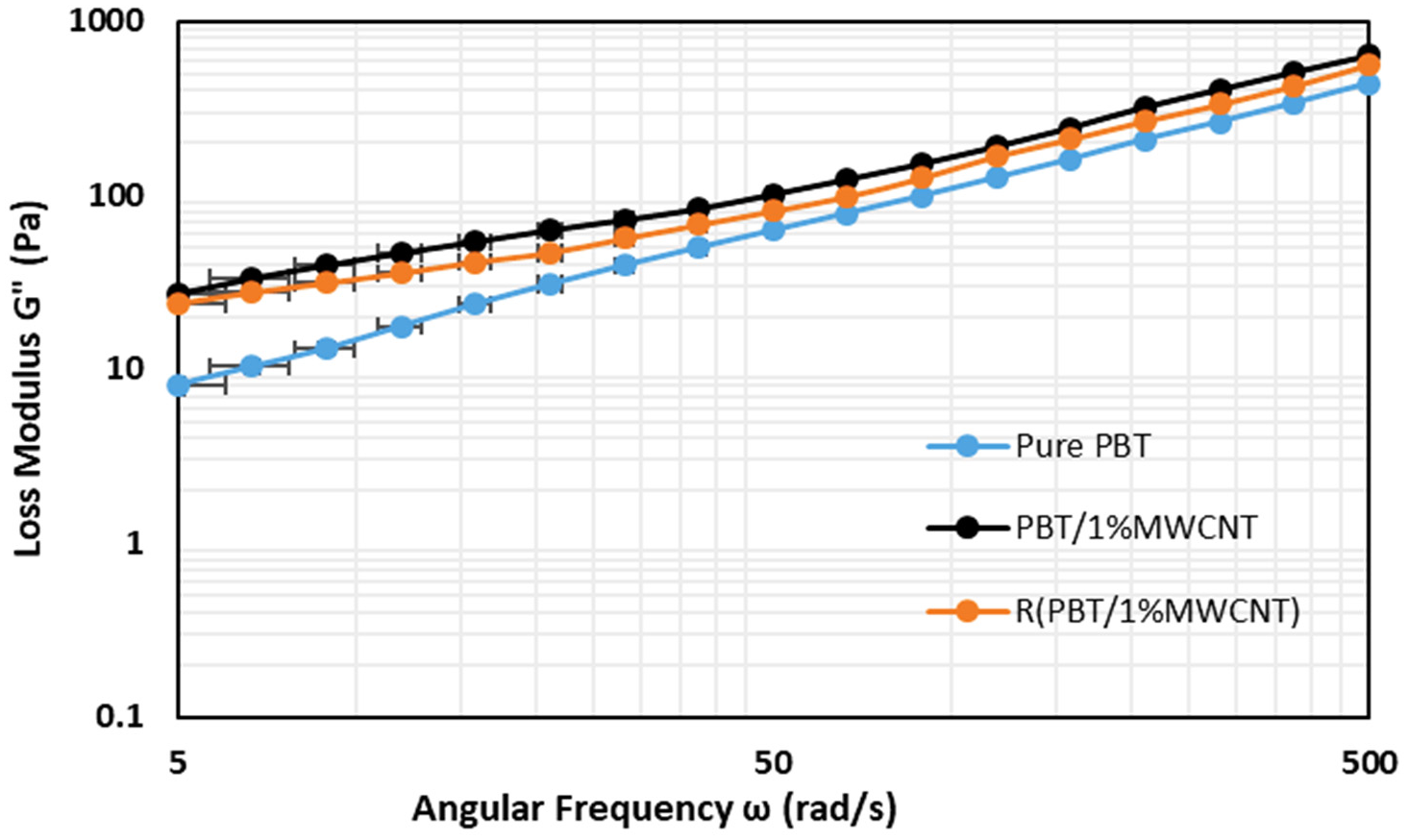
Pure PBT exhibits a lower storage modulus (G′) than the R(PBT/1%MWCNT) nanocomposite due to the inherent brittleness of pure PBT (Figure 5). After MWCNT addition into the PBT matrix, the storage modulus of the PBT nanocomposite increases, especially at low frequency. There are not significant changes after recycling of the nanocomposite. Small amounts of MWCNT (1 wt%) improved the brittleness of pure PBT, causing a stiffened nanocomposite material. The MWCNT forms a network structure within the matrix, leading to an increase in mechanical strength. The loss modulus (G″) represents the material’s ability to dissipate energy as heat, reflecting its viscous behavior. The R(PBT/1%MWCNT) nanocomposite show a decrease in loss modulus at high frequency, indicating a decrease in viscous response as the frequency increases (Figure 6). The decrease in loss modulus (G″) at high frequencies reflects a reduction in viscous energy dissipation in the molten state, which can be attributed to shear-induced orientation of polymer chains and nanotubes, as well as partial weakening of the transient filler network. This behavior characterizes melt dynamics during processing and should not be directly interpreted as improved thermal or mechanical stability in the solid state. After recycling the nanocomposite shows higher G′ and G″ values than the pure PBT at low frequency, but at high frequency the differences were small.

3.2. Thermal Stability

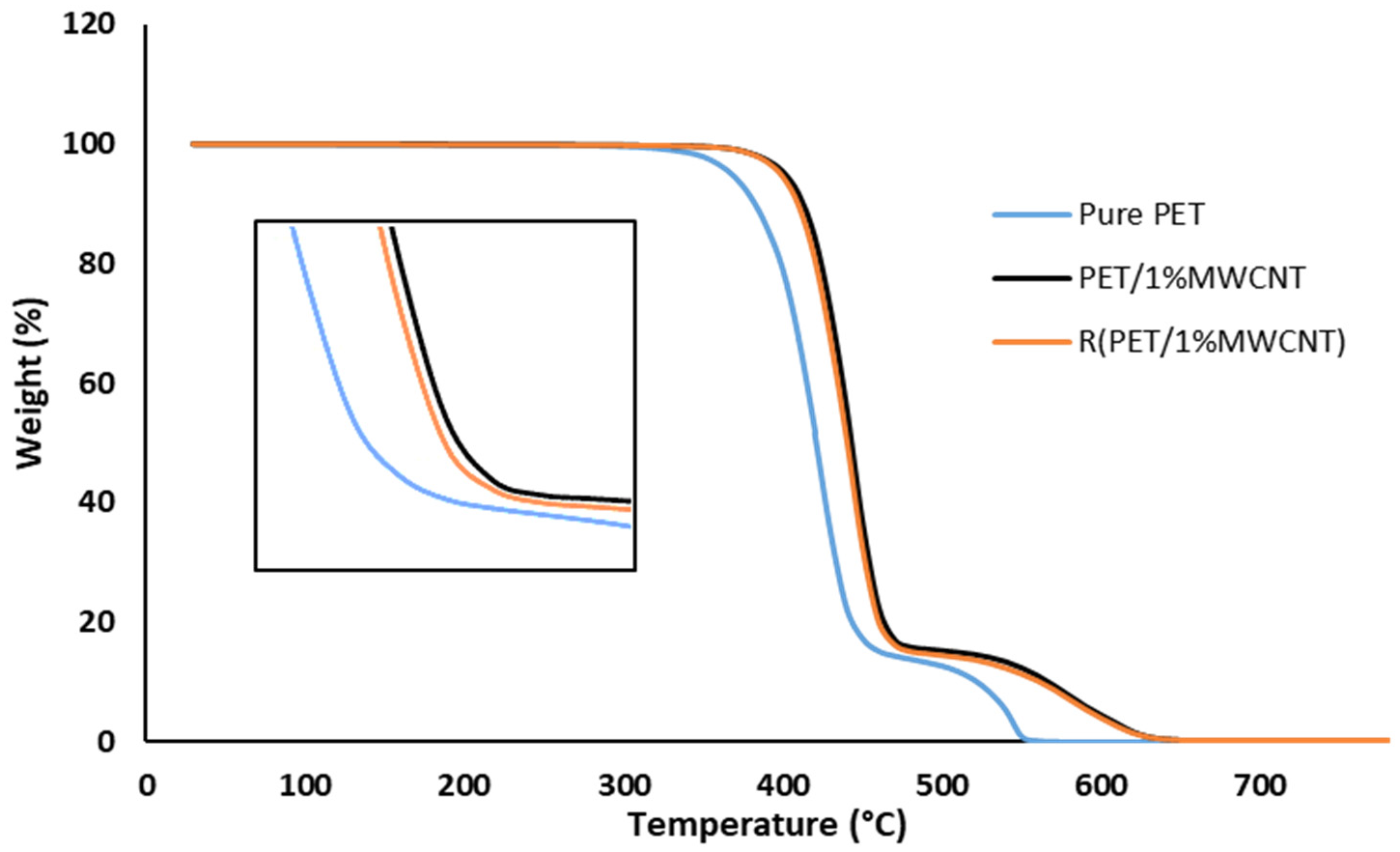
The thermal stability of PET was affected after the addition of MWCNT (Figure 7 and Figure 8). It provides the delays in onset degradation, promotes uniform heat dissipation, and slows the diffusion of volatile degradation materials [14,30]. The thermal stability of PET and its nanocomposites were investigated under air and inert atmosphere. Figure 7 shows the TGA weight loss curve and derivative curves of pure PET, PET/1%MWCNT, and R(PET/1%MWCNT) under the air atmosphere. In Figure 7, the TGA thermogram of weight loss shows that the decomposition of PET and its nanocomposites is a two-step process. In the first step, there is a degradation of the polymer chain, and in the second step, the thermal degradation of first step’s decomposition product. After the addition of MWCNT, the thermal degradation shifts to a higher temperature (Table 1) because MWCNT act as a physical barrier and hinders the transport of volatile products during decomposition [29]. This physical barrier effect can be explained by the formation of a tortuous diffusion pathway (labyrinth effect) in which the high aspect ratio and networked structure of MWCNTs hinders the transport of volatile degradation products and restricts oxygen diffusion into the polymer matrix. As a result, thermo-oxidative degradation is delayed, and higher char yields are observed during thermal decomposition. This mechanism is widely reported for CNT-reinforced polymer nanocomposites and depends strongly on nanotube dispersion and network connectivity.
Furthermore, during the first step’s decomposition there is formation of a carbonaceous structure, which delays the second step’s thermal degradation due to higher temperature [14]. After recycling, the nanocomposite shows similar or slightly lower thermal stability than before recycling. After the recycling, the PET chain structure breaks down (See Section 3.1), but the nanocomposites show good thermal stability due to the presence of MWCNT. The onset degradation temperature of pure PET was 363 °C, and after addition of MWCNT, the onset temperature significantly increase to 385 °C with a derivative thermogravimetry (DTG) peak temperature of 445 °C. The PET-recycled nanocomposite shows similar thermal stability as the nanocomposite.
The onset (extrapolated), T1 (temperature at 1% weight loss), T50 (temperature at 50% weight loss), and DTG first and second decomposition peak temperatures are abridged in Table 1. In the inert environment, there is only one step to the process of decomposition. The degradation of the polymer chain and the thermal degradation of carbonaceous products are combined in one process due to the inert atmospheres.
There is not significant difference in the thermal degradation temperatures between PET nanocomposites before and after recycling. After recycling the nanocomposites show better thermal stability under inert environment (Figure 8). The recycled nanocomposite shows higher DTG peak temperature, which shows resistance to thermal degradation induced by oxygen. Oxygen accelerates chain scission, so the onset temperature of PET decreases, but after MWCNT addition the differences between inert and air onsets were lowered (Table 1).
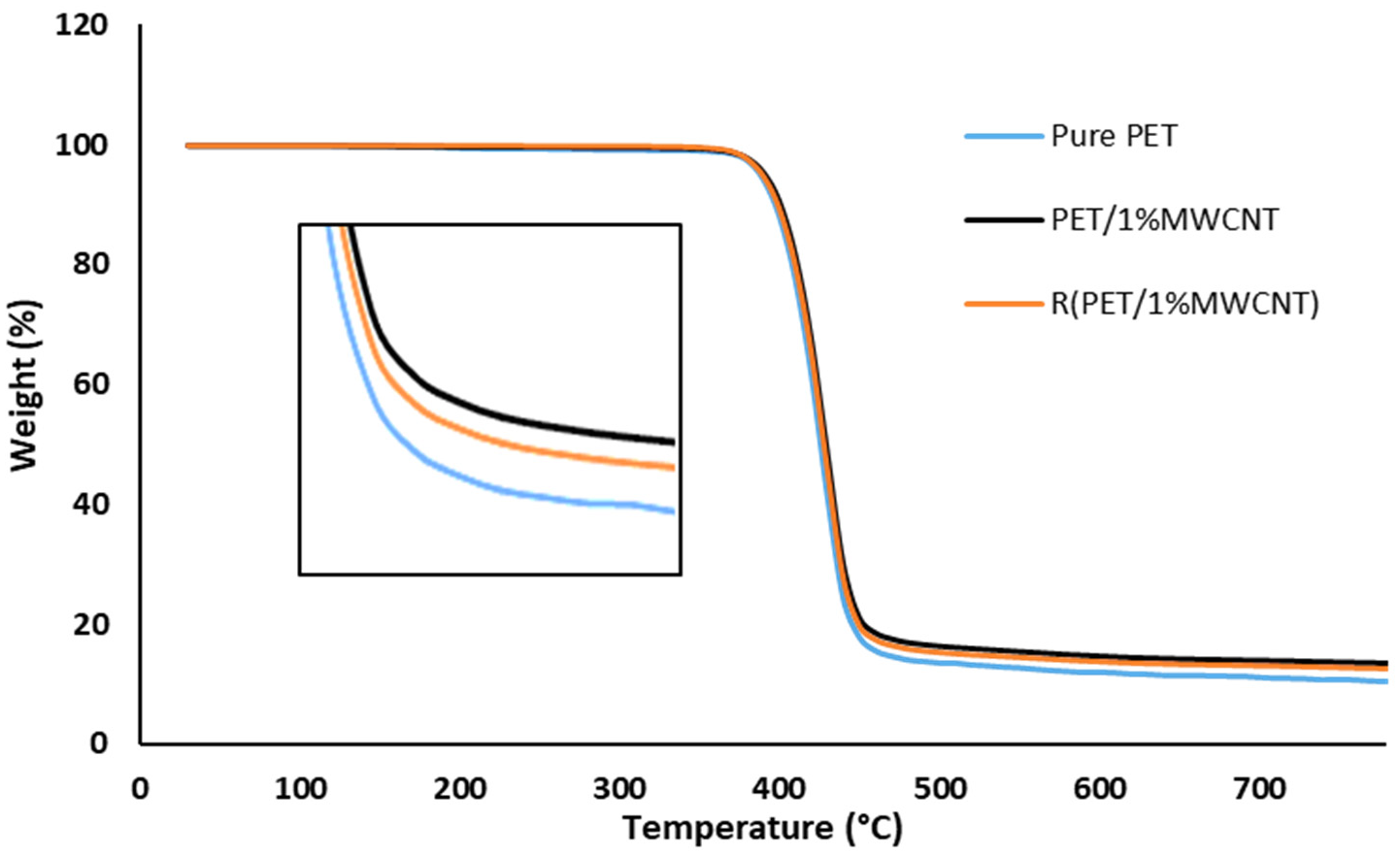
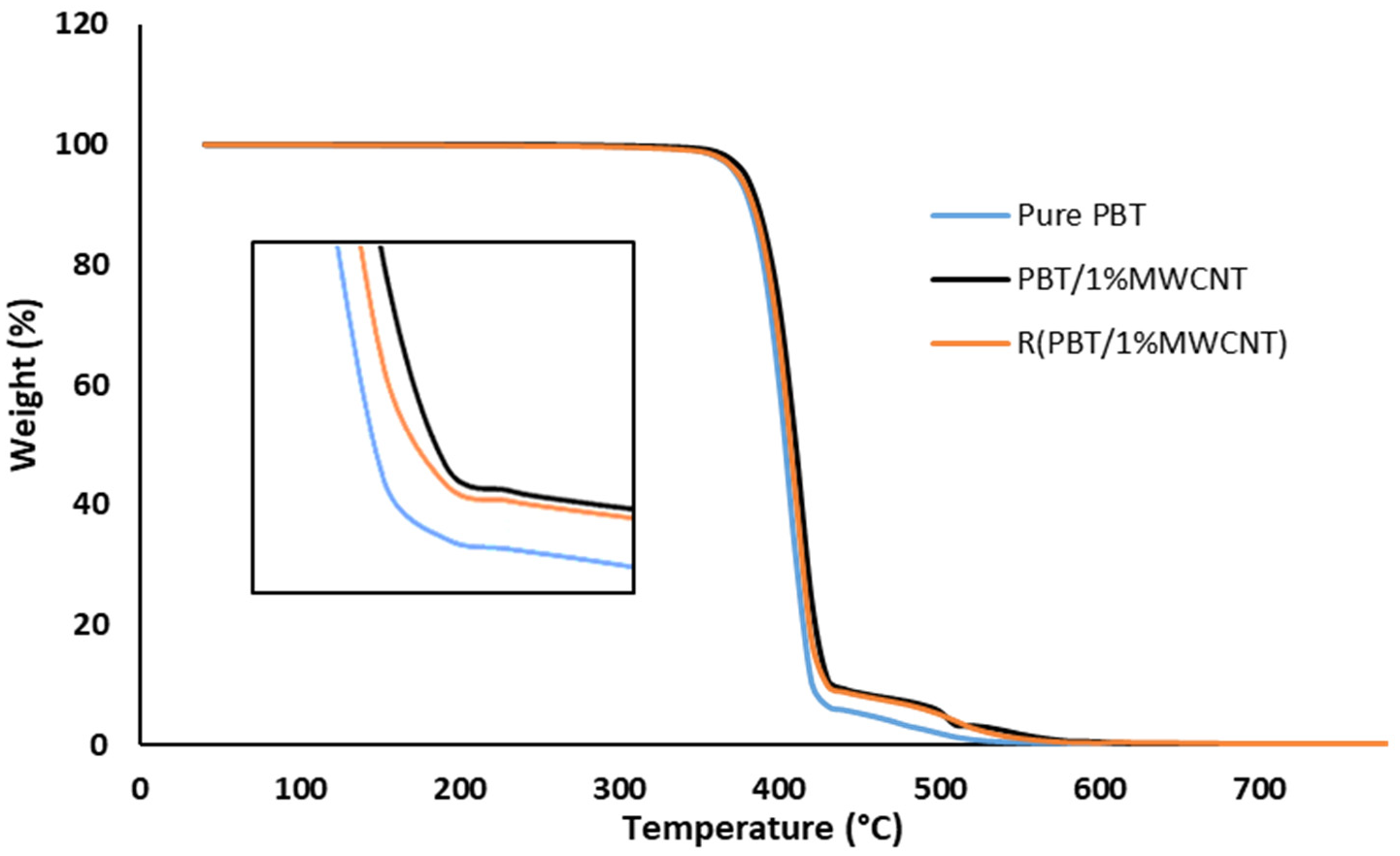
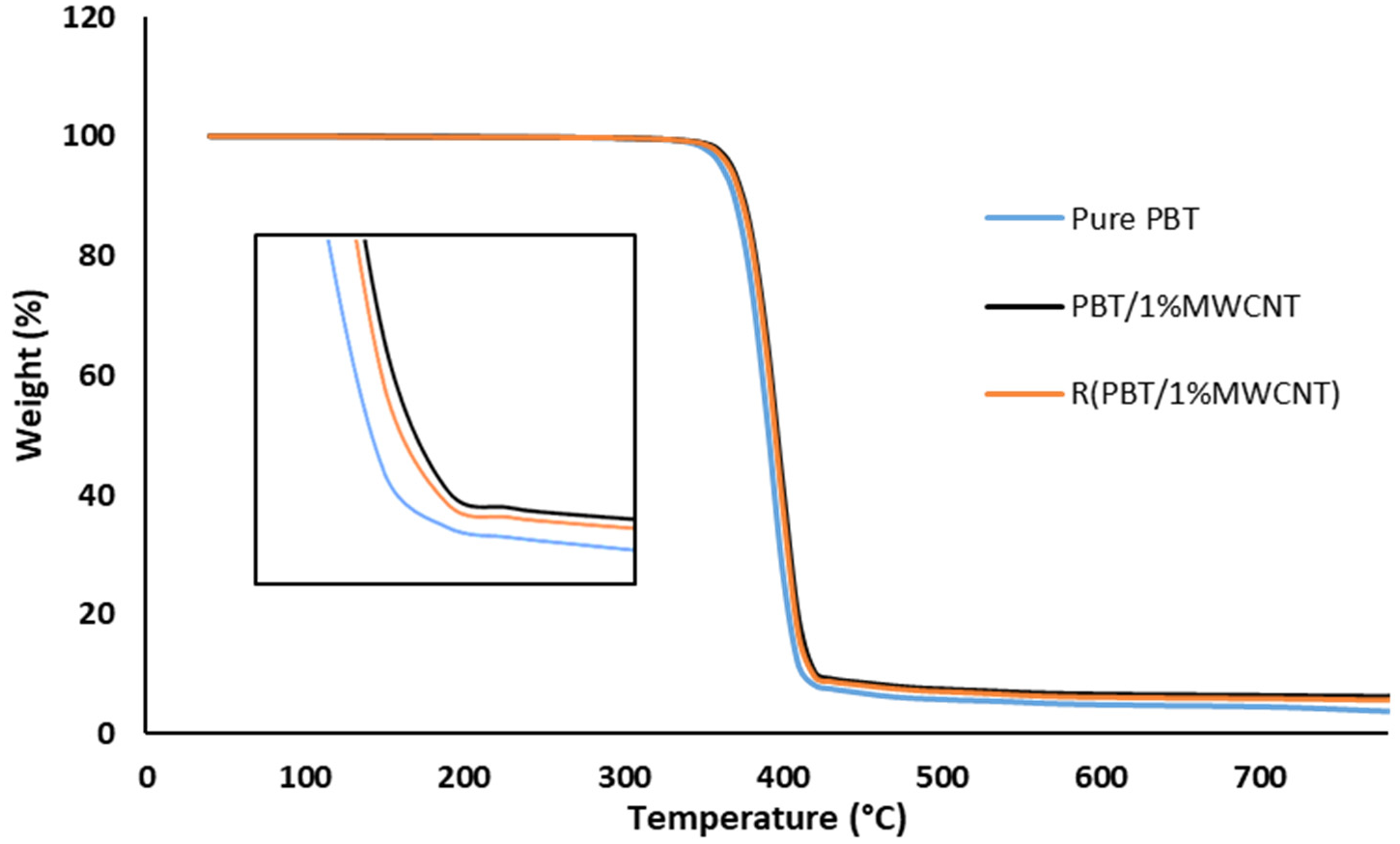
The thermal degradation behavior and stability of pure PBT and its nanocomposite before and after recycling were analyzed with the help of TGA. Pure PBT has good thermal stability, but it degrades thermally at high temperature primarily through random chain scission [27]. Under air atmosphere, pure PBT shows two-step decomposition (Figure 9 and Figure 10). Unlike the PET, the PBT does not show significant second-step degradation. The TGA onset and DTG peak temperature clearly show that the nanocomposite shows higher thermal stability than pure PBT under air atmosphere due to the polymer–filler interactions (Table 1).
The pure PBT had an onset temperature of 346 °C, with a 405 °C peak temperature under air atmospheres. However, in pure PBT under air atmospheric conditions, the degradation started earlier because the oxygen accelerated the thermal degradation, and no residue remains (Figure 9). The addition of MWCNT into the PBT matrix provided the nucleation and structural reinforcement, barrier effect, thermal conductivity and char-forming ability [37]. After addition of MWCNT, the onset temperature of the nanocomposite is 376 °C with a peak of 415 °C (Table 1). After recycling, the nanocomposite’s thermal properties are slightly lowered but remain more stable than pure PBT (Figure 9). The PBT nanocomposite shows high thermal stability under inert atmosphere, delaying the thermal degradation temperature by 15–20 °C (Figure 10), and high char residue, which is useful in flame retardant applications. After recycling, the nanocomposite is still more thermally stable than pure PBT but less than the original nanocomposite under inert atmosphere. The detailed TGA and DTG peak temperatures are mentioned in Table 1, such as T1, T50, and onset temperature.
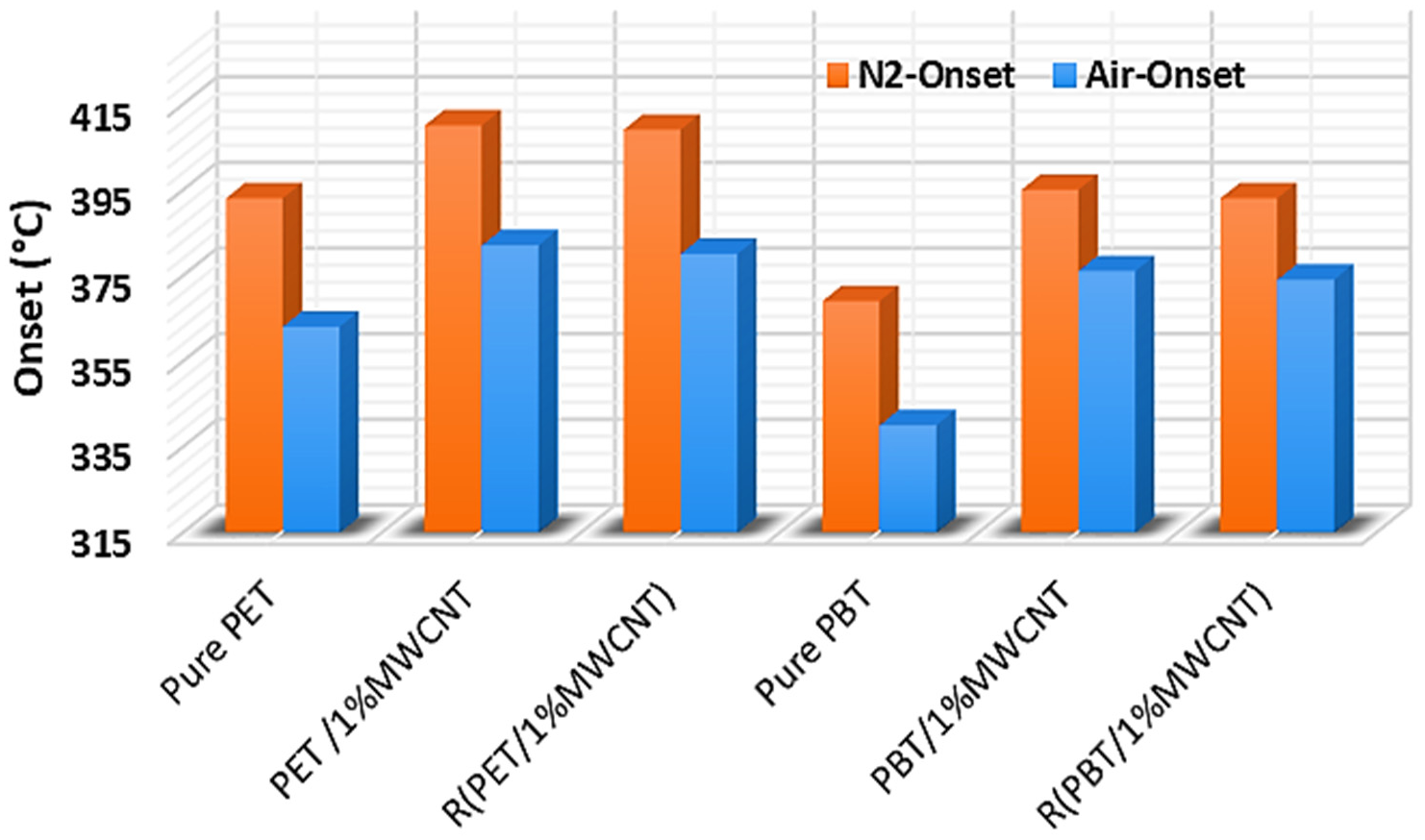
The thermal degradation of pure PBT starts at a lower temperature than pure PET (Table 1) due to the presence of butylene segments, which are more susceptible to thermal and oxidative chain scission [38]. The char formation also plays a significant role in the thermo-oxidative stability of PET. The pure PBT demostrated lower oxidative stablity than pure PET. However, after the MWCNT addition, the differences between PET and PBT become minimal (Figure 11).
Figure 11. Onset temperatures of PET, PBT, and its nanocomposites.
Jcs 10 00088 g011
It should be noted that molecular weight changes were assessed indirectly through rheological indicators, and no direct measurements (e.g., GPC) were performed in this study, which represents a limitation and a direction for future work.The PET nanocomposite before and after recycling shows higher oxidative stability than pure PET due to the presence of MWCNT and high char residue (Figure 11).

4. Conclusions

The investigations emphasize that the rheological and thermal properties of recycled nanocomposites exhibit synergistic effects, with a strong dependence on the type of polyester matrix. The complex viscosity of PET-recycled nanocomposites significantly decreases due to the chain scission, structure breakdown, and high-temperature processing of PET under recycling. However, PBT-recycled nanocomposites show resistance under recycling and display similar rheological and thermal properties as PBT nanocomposites. Furthermore, after the degradation of PET chain, the recycled nanocomposite shows higher onset temperature (20–30 °C) and high thermo-oxidative stability due to the presence of MWCNT and high char formations during degradation. Additionally, the thermal degradation stability of PET-recycled nanocomposite remains higher than pure PET. The recycled PBT nanocomposites show higher rheological and thermal properties than the recycled PET nanocomposites. After recycling, the PBT nanocomposites containing a small amount of MWCNT (1 wt%) show a great potential for next-generation materials and empower the circular manufacturing economy.
Overall, the results demonstrate that MWCNTs effectively mitigate recycling-induced degradation, particularly in PBT-based systems, whereas PET-based nanocomposites remain more sensitive to thermo-mechanical degradation but still benefit from enhanced thermal stability due to nanotube reinforcement.

Author Contributions

K.U.K.: Investigation, Conceptualization, Visualization, Methodology, and Writing—Original Draft; A.A.M.: Writing—Review and Editing, Resources, and Supervision; Z.W.: Writing—Review and Editing, Resources, and Supervision. All authors have read and agreed to the published version of the manuscript.

Funding

This research received no external funding.

Institutional Review Board Statement

Not applicable.

Informed Consent Statement

Not applicable.

Data Availability Statement

Data available upon request from corresponding author.

Conflicts of Interest

The authors declare no conflicts of interest.

Abbreviations

The following abbreviations are used in this manuscript:
IVIntrinsic viscosity
PETPolyethylene terephthalate
PBTPolybutylene terephthalate
MWCNTMulti-walled carbon nanotubes 
TGAThermogravimetric analysis
DTGDerivative thermogravimetry

References

  1. Al-Sabagh, A.M.; Yehia, F.Z.; Eshaq, G.; Rabie, A.M.; ElMetwally, A.E. Greener routes for recycling of polyethylene terephthalate. Egypt. J. Pet. 2016, 25, 53–64. [Google Scholar] [CrossRef]
  2. Awaja, F.; Pavel, D. Recycling of PET. Eur. Polym. J. 2005, 41, 1453–1477. [Google Scholar] [CrossRef]
  3. Benyathiar, P.; Kumar, P.; Carpenter, G.; Brace, J.; Mishra, D.K. Polyethylene Terephthalate (PET) Bottle-to-Bottle Recycling for the Beverage Industry: A Review. Polymers 2022, 14, 2366. [Google Scholar] [CrossRef] [PubMed]
  4. Hajiraissi, R.; Parvinzadeh, M. Preparation of polybutylene terephthalate/silica nanocomposites by melt compounding: Evaluation of surface properties. Appl. Surf. Sci. 2011, 257, 8443–8450. [Google Scholar] [CrossRef]
  5. Cusano, I.; Campagnolo, L.; Aurilia, M.; Costanzo, S.; Grizzuti, N. Rheology of Recycled PET. Materials 2023, 16, 3358. [Google Scholar] [CrossRef]
  6. Zaman, I.; Manshoor, B.; Khalid, A.; Araby, S. From clay to graphene for polymer nanocomposites—A survey. J. Polym. Res. 2014, 21, 429. [Google Scholar] [CrossRef]
  7. Saligheh, O.; Forouharshad, M.; Arasteh, R.; Eslami-Farsani, R.; Khajavi, R.; Roudbari, B.Y. The effect of multi-walled carbon nanotubes on morphology, crystallinity and mechanical properties of PBT/MWCNT composite nanofibers. J. Polym. Res. 2013, 20, 65. [Google Scholar] [CrossRef]
  8. Ghanbari, A.; Heuzey, M.C.; Carreau, P.J.; Ton-That, M.T. Morphological and rheological properties of PET/clay nanocomposites. Rheol. Acta 2013, 52, 59–74. [Google Scholar] [CrossRef]
  9. Bai, J.; Goodridge, R.D.; Hague, R.J.M.; Song, M.; Okamoto, M. Influence of carbon nanotubes on the rheology and dynamic mechanical properties of polyamide-12 for laser sintering. Polym. Test. 2014, 36, 95–100. [Google Scholar] [CrossRef]
  10. Moniruzzaman, M.; Winey, K.I. Polymer nanocomposites containing carbon nanotubes. Macromolecules 2006, 39, 5194–5205. [Google Scholar] [CrossRef]
  11. Bitenieks, J.; Meri, R.M.; Zicans, J.; Buks, K. Dynamic Mechanical, Dielectrical, and Rheological Analysis of Polyethylene Terephthalate/Carbon Nanotube Nanocomposites Prepared by Melt Processing. Int. J. Polym. Sci. 2020, 2020, 5715463. [Google Scholar] [CrossRef]
  12. Yoo, H.J.; Kim, K.H.; Yadav, S.K.; Cho, J.W. Effects of carbon nanotube functionalization and annealing on crystallization and mechanical properties of melt-spun carbon nanotubes/poly(ethylene terephthalate) fibers. Compos. Sci. Technol. 2012, 72, 1834–1840. [Google Scholar] [CrossRef]
  13. Vassiliou, A.A.; Chrissafis, K.; Bikiaris, D.N. Thermal degradation kinetics of in situ prepared PET nanocomposites with acid-treated multi-walled carbon nanotubes. J. Therm. Anal. Calorim. 2010, 100, 1063–1071. [Google Scholar] [CrossRef]
  14. Chowreddy, R.R.; Nord-Varhaug, K.; Rapp, F. Recycled polyethylene terephthalate/carbon nanotube composites with improved processability and performance. J. Mater. Sci. 2018, 53, 7017–7029. [Google Scholar] [CrossRef]
  15. Khalaf, E.M. Improvement of Chemical and Thermal Properties of Polyethylene Terephthalate (PET) by Using Multi-walled Carbon Nanotubes (MWCNTs). Int. J. Mater. Sci. Appl. 2016, 5, 297. [Google Scholar] [CrossRef]
  16. Marshall, I.; Todd, A. The thermal degradation of polyethylene terephthalate. Trans. Faraday Soc. 1953, 49, 67–78. [Google Scholar] [CrossRef]
  17. Buxbaum, L.H. The Degradation of Poly(ethylene terephthalate). Angew. Chem. Int. Ed. Engl. 1968, 7, 182–190. [Google Scholar] [CrossRef]
  18. Tharmapuram, S.R.; Jabarin, S.A. Processing characteristics of PET/PEN blends, part 2: Rheology and degradation kinetics. Adv. Polym. Technol. 2003, 22, 147–154. [Google Scholar] [CrossRef]
  19. Dhavalikar, R.; Yamaguchi, M.; Xanthos, M. Molecular and structural analysis of a triepoxide-modified poly(ethylene terephthalate) from rheological data. J. Polym. Sci. Part A Polym. Chem. 2003, 41, 958–969. [Google Scholar] [CrossRef]
  20. Guclu, M.; Göksu, Y.A.; Özdemir, B.; Ghanbari, A.; Nofar, M. Thermal Stabilization of Recycled PET Through Chain Extension and Blending with PBT. J. Polym. Environ. 2021, 30, 719–727. [Google Scholar] [CrossRef]
  21. Pham, N.T.H. A Study of Recycled Poly(butylene terephthalate) and Low-Density Polyethylene Blend. Polym. Sci. Ser. A 2021, 63, 800–803. [Google Scholar] [CrossRef]
  22. Wong, M.; Paramsothy, M.; Xu, X.J.; Ren, Y.; Li, S.; Liao, K. Physical interactions at carbon nanotube-polymer interface. Polymer 2003, 44, 7757–7764. [Google Scholar] [CrossRef]
  23. Hejazi, I.; Seyfi, J.; Sadeghi, G.M.M.; Davachi, S.M. Assessment of rheological and mechanical properties of nanostructured materials based on thermoplastic olefin blend and organoclay. Mater. Des. 2011, 32, 649–655. [Google Scholar] [CrossRef]
  24. Jin, S.H.; Park, Y.B.; Yoon, K.H. Rheological and mechanical properties of surface modified multi-walled carbon nanotube-filled PET composite. Compos. Sci. Technol. 2007, 67, 3434–3441. [Google Scholar] [CrossRef]
  25. Chopra, S.; Deshmukh, K.A.; Peshwe, D. Theoretical prediction of interfacial properties of PBT/CNT nanocomposites and its experimental evaluation. Mech. Mater. 2017, 109, 11–17. [Google Scholar] [CrossRef]
  26. Sonawane, S.; Thakur, P.; Paul, R. Study on thermal property enhancement of MWCNT based polypropylene (PP) nanocomposites. Mater. Today Proc. 2020, 27, 550–555. [Google Scholar] [CrossRef]
  27. Kim, J.Y. The effect of carbon nanotube on the physical properties of poly (butylene terephthalate) nanocomposite by simple melt blending. J. Appl. Polym. Sci. 2009, 112, 2589–2600. [Google Scholar] [CrossRef]
  28. Jiang, Z.; Zhang, H.; Han, J.; Liu, Z.; Liu, Y.; Tang, L. Percolation model of reinforcement efficiency for carbon nanotubes dispersed in thermoplastics. Compos. Part A Appl. Sci. Manuf. 2016, 86, 49–56. [Google Scholar] [CrossRef]
  29. Kim, J.Y.; Choi, H.J.; Kang, C.S.; Kim, S.H. Influence of modified carbon nanotube on physical properties and crystallization behavior of poly(ethylene terephthalate) nanocomposite. Polym. Compos. 2010, 31, 858–869. [Google Scholar] [CrossRef]
  30. Corcione, C.E.; Frigione, M. Characterization of Nanocomposites by Thermal Analysis. Materials 2012, 5, 2960–2980. [Google Scholar] [CrossRef]
  31. Bata, A.; Nagy, D.; Weltsch, Z. Effect of Recycling on the Mechanical, Thermal and Rheological Properties of Polypropylene/Carbon Nanotube Composites. Polymers 2022, 14, 5257. [Google Scholar] [CrossRef]
  32. ISO 307; Plastics—Polyamides—Determination of viscosity number. International Organization for Standardization: Geneva, Switzerland, 2007.
  33. ISO 1157; Plastics—Poly(vinyl chloride)—Determination of the K-value. International Organization for Standardization: Geneva, Switzerland, 2010.
  34. ISO 1628; Plastics—Determination of the viscosity of polymers in dilute solution using capillary viscometers. International Organization for Standardization: Geneva, Switzerland, 2000.
  35. Taha, Z.T.; Bata, A.; Molnár, B.; Ronkay, F. Impact of montmorillonite reinforcement on the physical recyclability of biobased and petroleum-based polyesters. Heliyon 2025, 11, e43022. [Google Scholar] [CrossRef]
  36. Kim, J.Y.; Park, H.S.; Kim, S.H. Multiwall-carbon-nanotube-reinforced poly(ethylene terephthalate) nanocomposites by melt compounding. J. Appl. Polym. Sci. 2007, 103, 1450–1457. [Google Scholar] [CrossRef]
  37. Zhang, Y.; Liu, H.; Wang, X.; Chen, Z. Comparative Thermal Degradation Behavior of Poly(ethylene terephthalate) and Poly(butylene terephthalate). Polymers 2025, 17, 156. [Google Scholar] [CrossRef]
  38. De Vos, L.; Van de Voorde, B.; Van Daele, L.; Dubruel, P.; Van Vlierberghe, S. Poly(alkylene terephthalate)s: From current developments in synthetic strategies towards applications. Eur. Polym. J. 2021, 161, 110840. [Google Scholar] [CrossRef]
Figure 1. Complex viscosity of pure PET and its nanocomposites.
Jcs 10 00088 g001
Figure 2. Storage modulus of pure PET and its nanocomposites.
Jcs 10 00088 g002
Figure 3. Loss modulus of pure PET and its nanocomposites.
Jcs 10 00088 g003
Figure 4. Complex viscosity of pure PBT and its nanocomposites.
Jcs 10 00088 g004
Figure 5. Storage modulus of pure PBT and its nanocomposites.
Jcs 10 00088 g005
Figure 6. Loss modulus of pure PBT and its nanocomposites.
Jcs 10 00088 g006
Figure 7. TGA curve of pure PET and its nanocomposites under air atmosphere.
Jcs 10 00088 g007
Figure 8. TGA curve of PET and its nanocomposites under N2 environemnt.
Jcs 10 00088 g008
Figure 9. TGA curve of pure PBT and its nanocomposites under air atmosphere.
Jcs 10 00088 g009
Figure 10. TGA curve of pure PBT and its nanocomposites under N2 environemnt.
Jcs 10 00088 g010
Table 1. Breakdown temperature of PET, PBT and its nanocomposites.
SampleAir-Onset (°C)N2-Onset (°C)Air-T1 (°C)Air-T50 (°C)DTG I-II Peak (°C)N2-Residue (%)
Pure PET363393357426425–54510.12
PET/1%MWCNT385410369429445–58511.13
R(PET/1%MWCNT)382409368428445–58511.10
Pure PBT346369340391405–4953.74
PBT/1%MWCNT376395347397415–5104.76
R(PBT/1%MWCNT)374393344396410–5054.72
Disclaimer/Publisher’s Note: The statements, opinions and data contained in all publications are solely those of the individual author(s) and contributor(s) and not of MDPI and/or the editor(s). MDPI and/or the editor(s) disclaim responsibility for any injury to people or property resulting from any ideas, methods, instructions or products referred to in the content.