3.1. Bending Testing of Composite
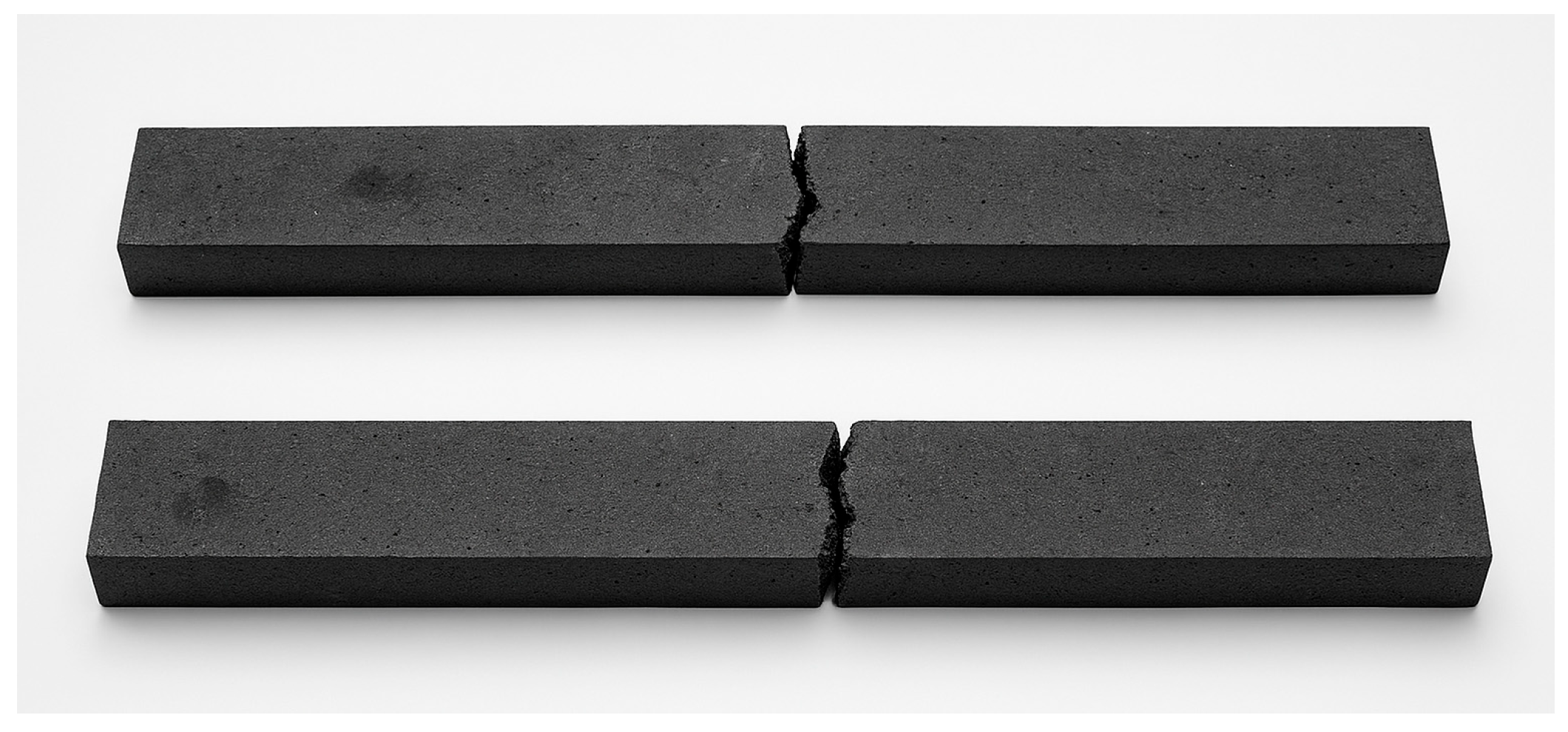
The flexural behavior of the composites was evaluated through three-point bending tests, during which load–displacement data were recorded continuously until specimen failure. The results reveal a pronounced enhancement in flexural strength with the incorporation of coconut shell charcoal (CC) filler up to 20 wt%. The composite containing 20 wt% CC exhibited the highest average flexural strength of 132.43 ± 3.12 MPa, representing an increase of approximately 153% compared to the neat polyester matrix (52.10 ± 2.45 MPa). This substantial improvement is primarily attributed to the enhanced interfacial adhesion between the filler and the polymer matrix. The alkaline pretreatment applied to the CC particles effectively removed surface impurities such as lignin, hemicellulose, and waxy layers, thereby exposing hydroxyl groups that facilitate stronger physicochemical interactions and mechanical interlocking with the polyester chains. As a result, stress transfer efficiency between the matrix and the filler is significantly improved, leading to superior flexural performance.
However, when the CC content exceeded 20 wt%, a decline in flexural strength was observed. At 30 wt%, the composite exhibited reduced load-bearing capacity due to particle agglomeration, increased heterogeneity, and partial saturation of available polymer bonding sites. These microstructural imperfections interfere with uniform stress distribution, creating localized stress concentrations that promote premature crack initiation. SEM micrographs corroborate these findings, showing more pronounced void formation, particle clustering, and microcrack propagation in composites containing 30 wt% CC, which collectively contribute to lower toughness and a more brittle fracture mode.
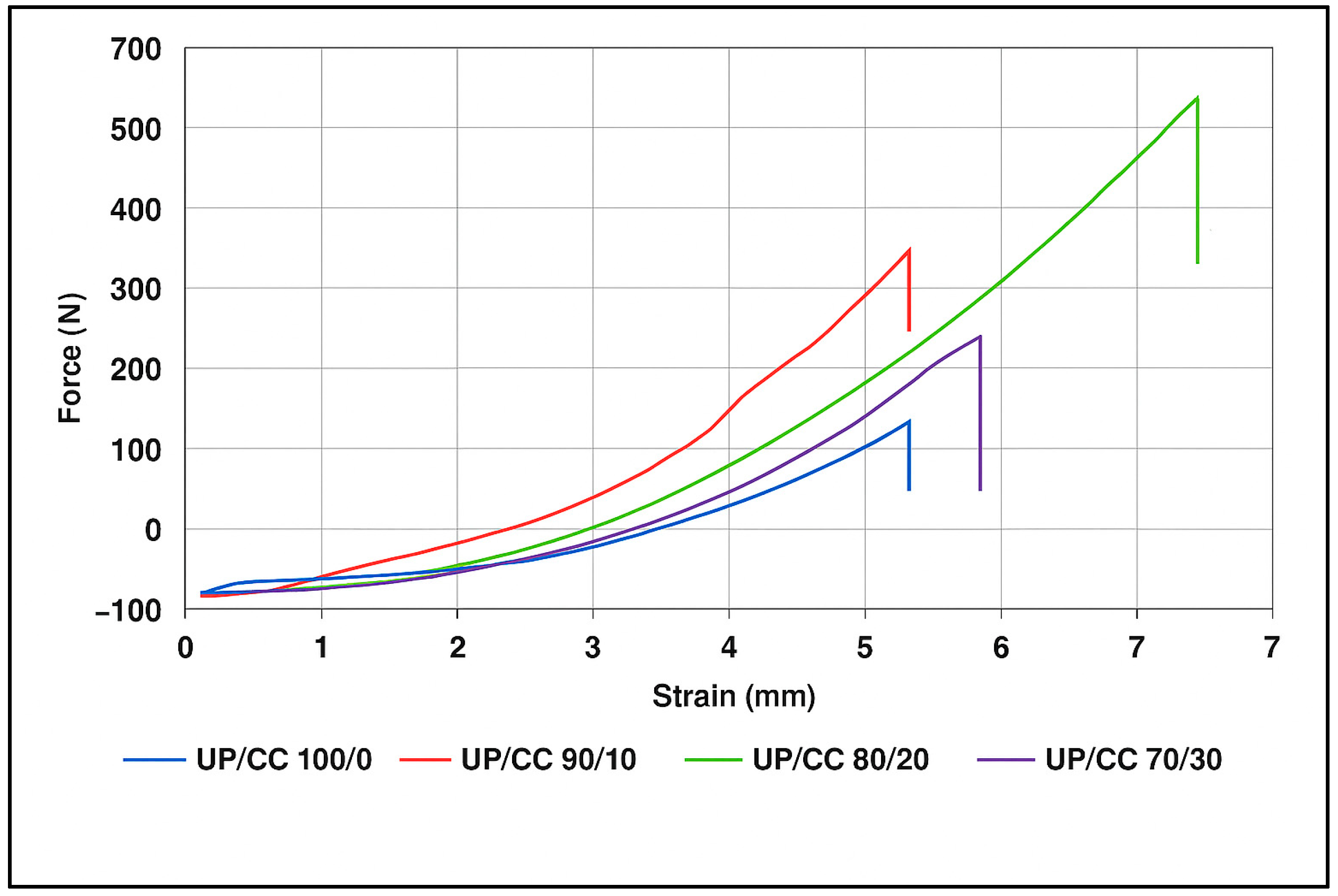
The stress–strain curves presented in
Figure 5 and
Figure 6 further support these trends. Composites reinforced with 10–20 wt% CC demonstrate increased stiffness, improved load-carrying ability, and enhanced energy absorption prior to failure—indicating an optimal reinforcement–matrix synergy within this filler range. Conversely, the 30 wt% composite exhibits reduced strain tolerance, diminished ductility, and a steeper stress drop at failure, all indicative of microstructural instability and ineffective stress transfer.
Physical characterization results summarized in
Figure 7 show that composite density increased slightly from 1.12 to 1.18 g/cm
3 with increasing CC content, reflecting the higher density of the charcoal filler relative to the polyester matrix. Meanwhile, void content remained relatively low (2.8–4.5%) across all formulations, indicating good compaction and effective filler wetting during fabrication. Lower void content is closely associated with higher flexural strength and stiffness, as voids are known to act as stress concentrators that accelerate crack initiation and propagation. Notably, NaOH-treated CC produced composites with fewer voids and more uniform filler dispersion compared to untreated powder, which aligns with the observed improvements in mechanical performance. These findings collectively highlight the critical role of optimized filler loading, surface modification, and microstructural integrity in achieving superior flexural properties in unsaturated polyester composites reinforced with coconut shell charcoal.
Five specimens were tested for each composition, and the results are summarized in
Table 3 as mean ± standard deviation. The maximum flexural strength occurred at 20 wt% filler, after which the values declined, likely due to particle agglomeration and weakened interfacial bonding, which reduced stress transfer efficiency. Stress–strain curves (
Figure 8 and
Figure 9) confirm this trend: composites with 10–20 wt% CC demonstrate higher stiffness and toughness, whereas those with 30 wt% exhibit reduced ductility and strength. Excessive filler content leads to void formation and weak bonding sites, compromising mechanical performance. These findings align with the microstructural analysis in
Section 3.2, which shows uniform filler dispersion at 20 wt% and pronounced agglomeration at 30 wt%.
The force–deflection curves in the figure (labeled “strain (mm)” but physically representing mid-span deflection in three-point bending) reveal a non-monotonic strengthening trend with coconut shell charcoal (CC) addition: all compositions share a gentle initial slope up to ~1 mm as the polyester matrix dominates elastic response, after which the slopes diverge as CC increases stiffness and load transfer efficiency, most notably in the 90/10 (red) and 80/20 (green) formulations. The 80/20 composite achieves the highest peak force at the most considerable deflection—indicating both superior flexural strength and the most significant energy absorption (largest area under the curve)—consistent with adequate interfacial bonding, crack deflection/bridging around well-dispersed particles, and mechanical interlocking afforded by CC’s rough–porous surface. The 90/10 curve also shows substantial strengthening over neat UP (100/0, blue) but with a lower terminal deflection than 80/20, suggesting improved stiffness with moderate toughening. In contrast, the 70/30 composite (purple) exhibits a premature peak and a steep post-peak drop, a signature of embrittlement driven by particle agglomeration, voids, and saturation of bonding sites that act as stress concentrators and shorten crack paths, thereby reducing both peak load and plastic work capacity. Across all filled systems, the onset of nonlinearity before peak reflects micro-damage accumulation (matrix microcracking, local debonding) that is better tolerated at 20 wt% due to more efficient stress redistribution, whereas at 30 wt%, damage localizes rapidly and precipitates abrupt failure. The progressive increase in initial slope from 100/0 → 90/10 → 80/20, followed by a drop at 70/30, aligns with micromechanics expectations (e.g., rule-of-mixtures/Halpin–Tsai behavior) wherein modulus and strength rise with filler fraction only while dispersion and interfacial efficiency remain high; beyond that threshold, viscosity-limited wetting and clustering dominate and degrade flexural performance. In practice, these curves identify 20 wt% CC as the optimal loading within the tested range for maximizing bending resistance and energy absorption while highlighting the need to control particle size distribution, dispersion protocols, and surface treatment to avoid defect-governed failure at higher filler contents [
21,
22,
23,
24,
25].
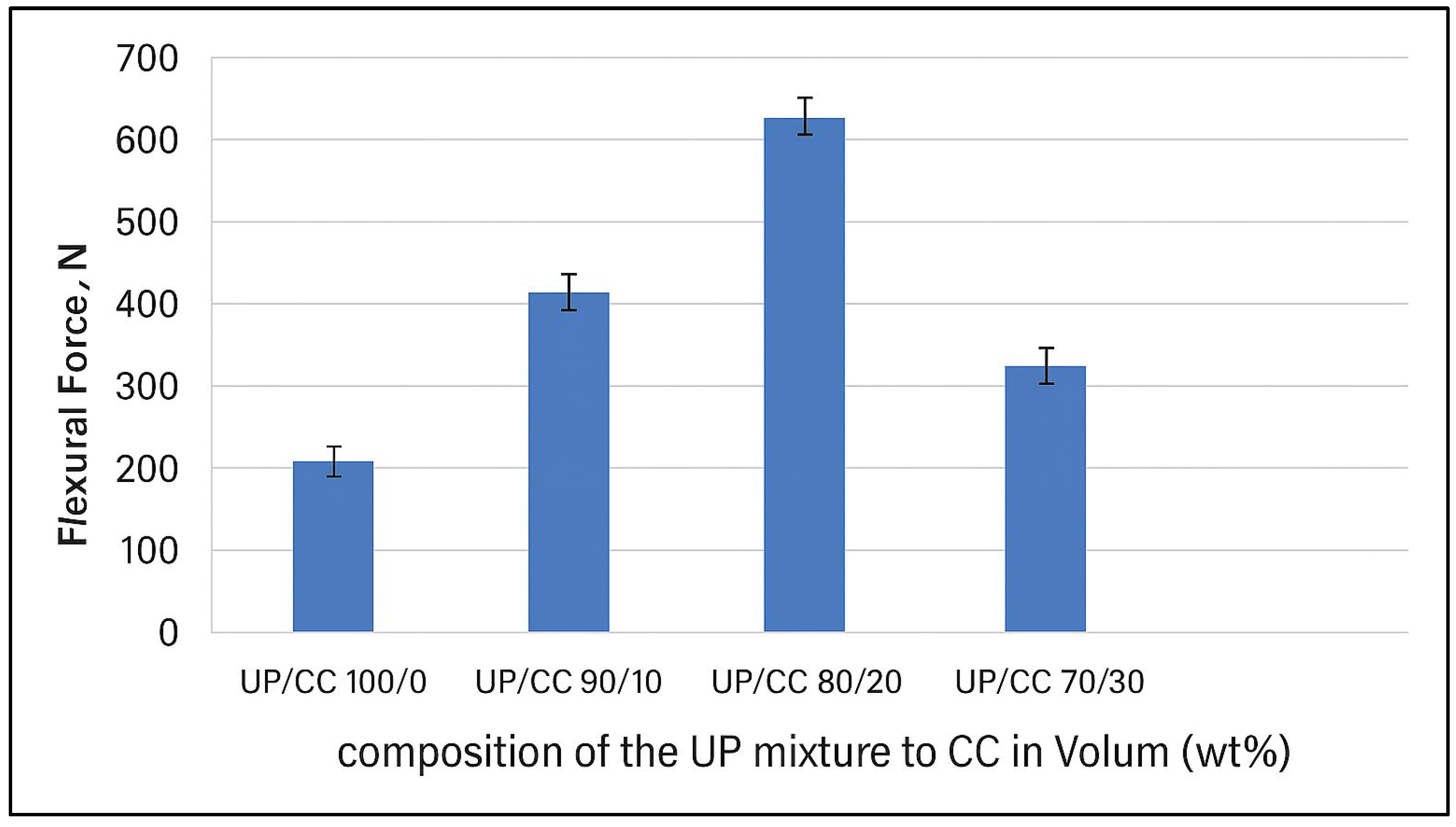
Figure 6 shows the flexural force of unsaturated polyester (UP) composites containing 0, 10, 20, and 30 wt% coconut shell charcoal (CC). The force increases with the addition of CC up to an optimal level, indicating an improved load-bearing capacity. Neat polyester exhibits the lowest value (~230 N), while 10 wt% CC raises it to ~430 N due to better stress transfer and interfacial bonding. The maximum (~620 N) occurs at 20 wt% CC, reflecting efficient reinforcement and strong matrix–filler interaction. The flexural force plot clearly demonstrates a non-linear strengthening response as the coconut shell charcoal (CC) content is varied, with a well-defined optimum at 20 wt%. The neat polyester (UP/CC 100/0) exhibits the lowest flexural load capacity, reflecting the inherent brittleness and limited resistance of the unreinforced matrix. Introducing 10 wt% CC produces a substantial rise in maximum flexural force, indicating improved stiffness and load-bearing capability due to enhanced interfacial adhesion and the ability of uniformly dispersed CC particles to impede crack initiation. The highest flexural performance is achieved at 20 wt% CC, where the composite sustains a peak load of approximately 650 N—representing the synergistic effect of optimal filler dispersion, effective stress transfer, and mechanical interlocking between the charcoal particles and the matrix. This optimal region corresponds to the point at which particle reinforcement maximizes load distribution while avoiding excessive clustering. At 30 wt% CC, however, the flexural force markedly decreases, confirming that excessive filler loading results in particle agglomeration, micro-void formation, and reduced matrix–filler bonding efficiency. These defects act as stress concentrators, accelerating localized damage and thereby reducing both peak load and structural integrity. Overall, the trend reinforces that controlled CC incorporation significantly enhances flexural strength, with 20 wt% representing the most efficient reinforcement concentration within the studied range [
26,
27].
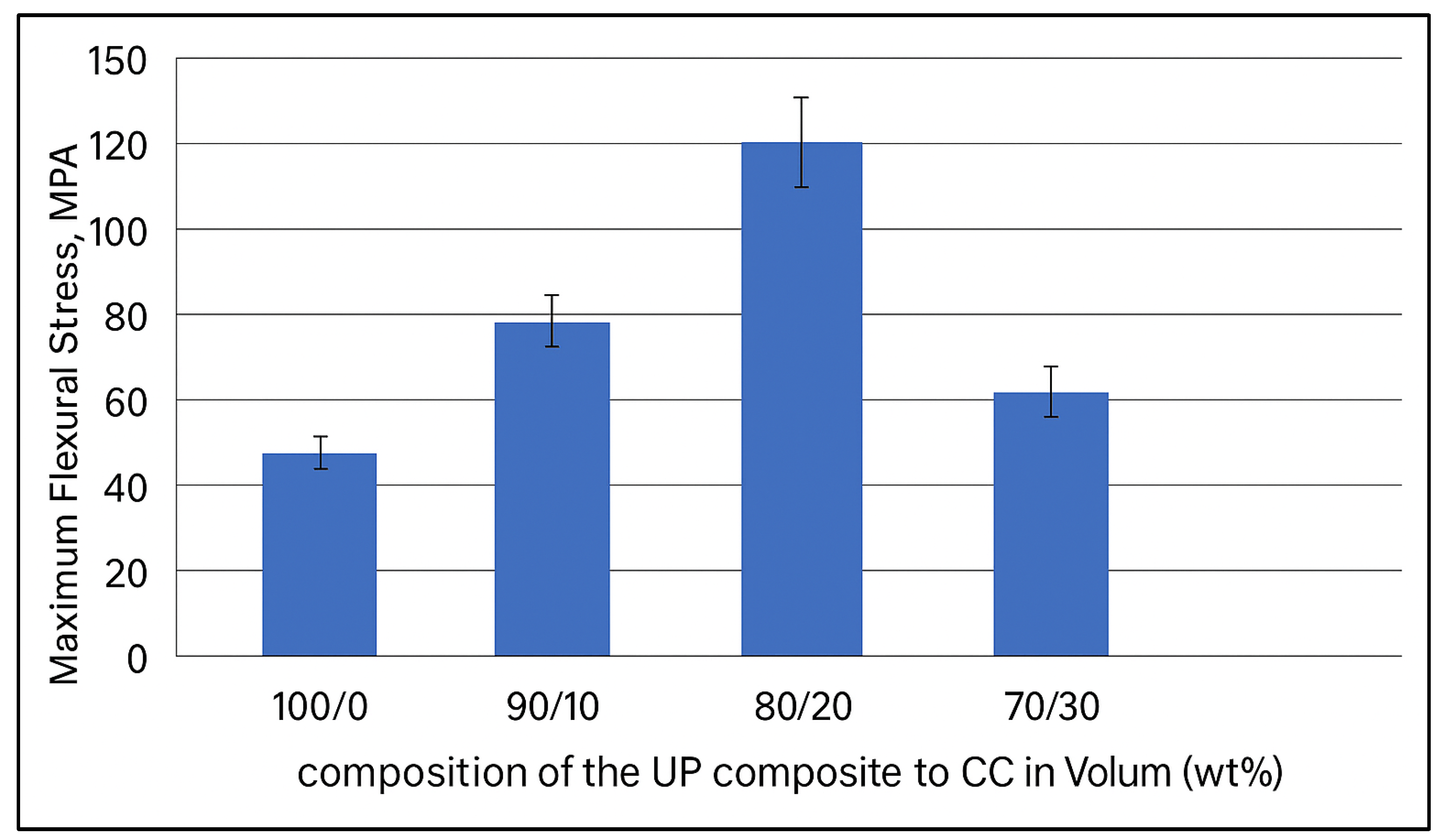
Figure 10 shows the maximum flexural strength of unsaturated polyester (UP) composites reinforced with coconut shell charcoal (CC) at 0 wt% (100/0), 10 wt% (90/10), 20 wt% (80/20), and 30 wt% (70/30). Pure polyester exhibited the lowest strength (~52 MPa), reflecting its brittleness and limited resistance to bending loads. Adding 10 wt% CC increased strength to ~82 MPa, indicating improved stiffness and stress distribution. Optimum performance was observed at 20 wt% CC, where the flexural strength reached ~132 MPa, demonstrating effective reinforcement and strong matrix–filler bonding. At 30 wt%, strength dropped to ~60 MPa due to filler agglomeration, void formation, and poor adhesion, which compromise structural integrity. These results confirm that controlled filler addition enhances flexural properties, while excessive content reduces performance. Minimal variation in error bars indicates high measurement reliability [
2]. The maximum flexural stress data clearly reveal non-linear reinforcement behavior as the coconut shell charcoal (CC) content varies, with a pronounced optimum at 20 wt%. The unfilled polyester (100/0) exhibits the lowest flexural stress, reflecting its inherently brittle nature and limited capacity for stress redistribution under bending. Adding 10 wt% CC results in a substantial increase in flexural stress, indicating improved stiffness and load transfer efficiency due to stronger interfacial interactions between the treated charcoal particles and the polymer matrix. The 20 wt% CC composite achieves the highest flexural stress—approaching approximately 145 MPa—demonstrating that this filler concentration provides the ideal balance between particle dispersion, interfacial bonding, and mechanical interlocking, allowing effective stress transfer and delayed crack propagation. However, when the filler content increases to 30 wt%, the flexural stress declines sharply, confirming the onset of particle agglomeration, micro-void formation, and insufficient wetting of the filler surface by the matrix. These microstructural defects act as stress concentrators, accelerating crack initiation and promoting a more brittle fracture mode, thereby lowering the maximum stress the composite can sustain. The overall trend strongly supports the existence of an optimal filler loading—20 wt% in this study—beyond which additional CC does not contribute to strengthening but instead undermines the structural integrity due to defect-dominated failure mechanisms [
28].
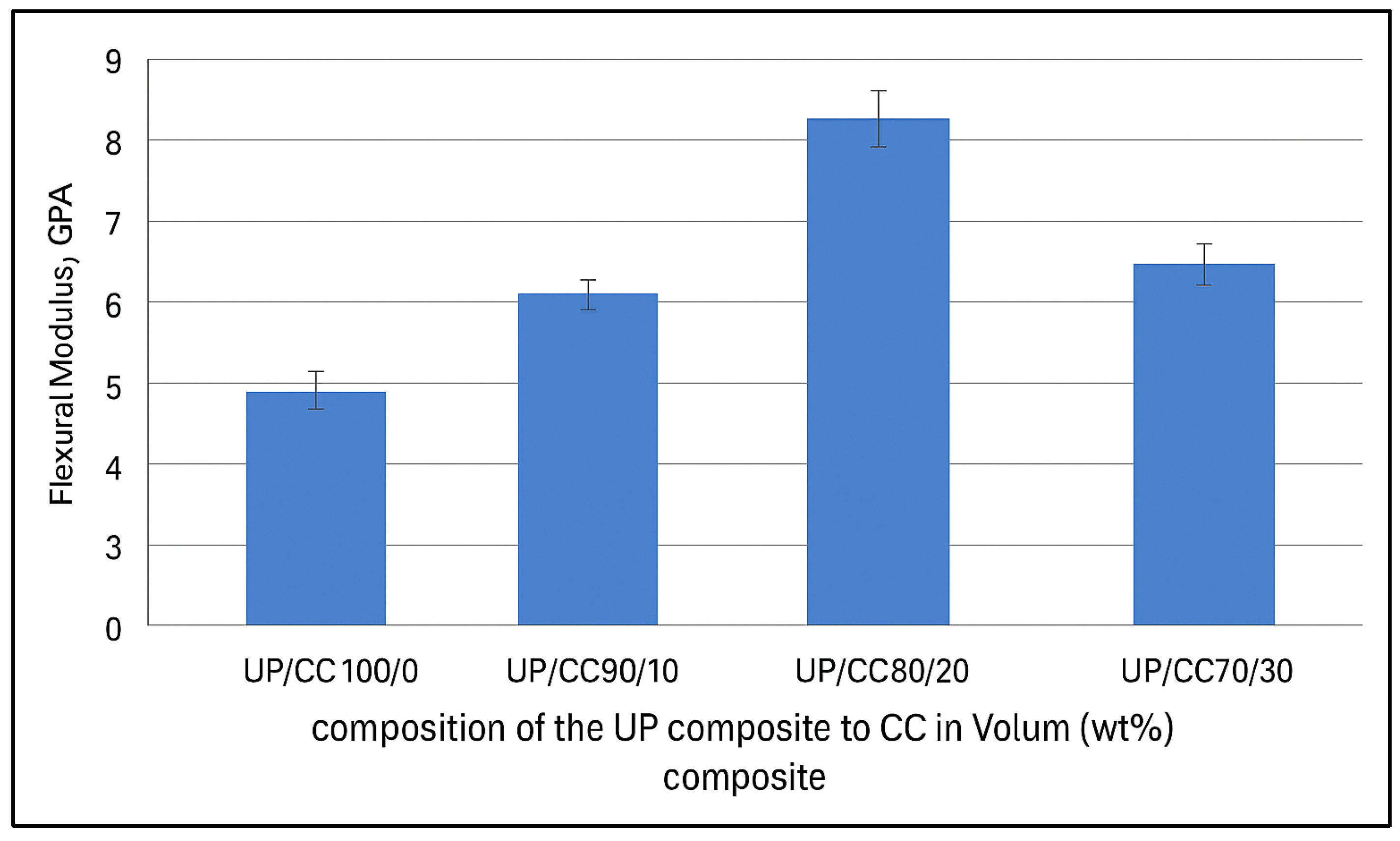
Figure 8 illustrates the flexural modulus of unsaturated polyester (UP) composites reinforced with 0, 10, 20, and 30 wt% coconut shell charcoal (CC). The modulus increased with CC addition up to an optimal level, indicating enhanced stiffness. Neat polyester exhibited the lowest value (~4.5 GPa), while the addition of 10 wt% CC increased it to approximately 5.5 GPa due to improved stress transfer. The maximum (~7.5 GPa) occurred at a 20 wt% CC concentration, reflecting strong interfacial bonding and effective reinforcement. At 30 wt%, the modulus declined to ~6.0 GPa, likely due to particle agglomeration and void formation, which compromise structural integrity. Minimal variation in error bars confirms the reliability of the measurement [
29]. Energy absorption during flexural testing was lowest for pure polyester, indicating limited capacity to withstand bending loads. Composites containing CC absorbed more energy, with absorption increasing proportionally to filler content. This behavior suggests that the reinforced material exhibits greater complexity and toughness compared to neat polyester. Observations during bending tests indicate that the highest energy absorption occurs during initial deflection and continues to rise until complete fracture. The flexural modulus results shown in the chart reveal a clear trend of stiffness enhancement with increasing coconut shell charcoal (CC) incorporation, reaching an optimal loading of 20 wt%. The neat polyester matrix (UP/CC 100/0) exhibits the lowest modulus, reflecting its relatively flexible polymer backbone and limited resistance to bending deformation. The addition of 10 wt% CC significantly increases the modulus, indicating that the charcoal particles act as rigid micro-reinforcements that restrict matrix mobility and improve resistance to elastic bending. The maximum modulus is achieved at 20 wt% CC—reaching nearly 8 GPa—demonstrating that this filler concentration provides the most effective combination of particle dispersion, surface–matrix adhesion, and stress transfer efficiency. At this level, the stiff CC particles are well distributed and sufficiently bonded to the matrix, forming a continuous stress-bearing network that enhances the composite’s rigidity. However, the modulus decreases at 30 wt% CC, despite the higher filler fraction, suggesting that excessive loading leads to particle agglomeration, inadequate wetting, and the formation of micro-voids that disrupt mechanical continuity. These defects increase local compliance and reduce the reinforcing efficiency of the filler, limiting the composite’s ability to sustain bending stiffness. The overall trend is consistent with micromechanical models of particulate composites in which stiffness improves with filler content only, while dispersion remains homogeneous and interfacial interactions are strong. Once the system crosses the threshold where agglomeration begins to dominate, the composite’s modulus no longer reflects the theoretical reinforcement potential but instead becomes governed by defect-driven stiffness degradation. Thus, 20 wt% CC is confirmed as the optimal composition for maximizing flexural modulus within the tested range [
30].
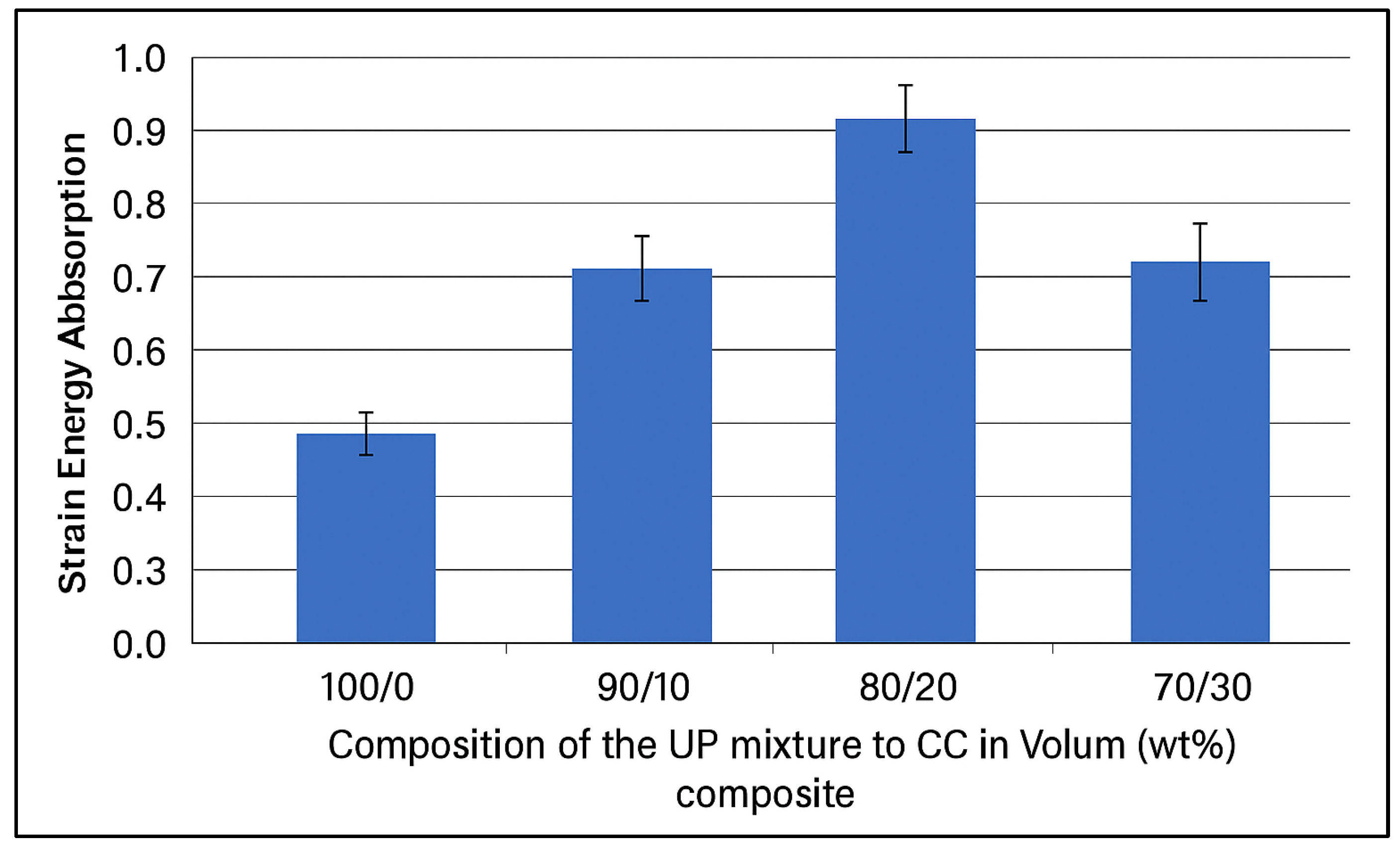
Figure 9 illustrates the strain energy absorption of unsaturated polyester (UP) composites reinforced with coconut shell charcoal (CC) at 0, 10, 20, and 30 wt%. Energy absorption increased with the addition of CC up to an optimal level, indicating improved toughness and resistance to bending failure. The neat polyester exhibited the lowest value (~0.18 N·mm), reflecting its brittle nature. At 10 wt% CC, absorption rose to ~0.68 N·mm, suggesting enhanced stress distribution and ductility. The maximum (~0.89 N·mm) occurred at 20 wt% CC, attributed to strong interfacial bonding and uniform filler dispersion. The strain energy absorption results demonstrate a clear enhancement in the composite’s ability to dissipate mechanical energy under bending as the coconut shell charcoal (CC) content increases to 20 wt%, followed by a decline at higher loading. The unreinforced polyester matrix (100/0) shows the lowest energy absorption, indicating a brittle response with minimal capacity for plastic deformation before fracture. Introducing 10 wt% CC significantly increases the absorbed energy, suggesting that the dispersed CC particles act as micro-scale barriers that impede crack propagation and promote more stable deformation. The peak energy absorption is achieved at 20 wt% CC, where the composite reaches nearly 0.9 N·mm—a strong indication of enhanced toughness driven by optimized filler dispersion, adequate interfacial bonding, and the ability of the charcoal particles to deflect, bridge, and arrest cracks during loading. This behavior is consistent with the synergistic reinforcement observed in the flexural stress and modulus results, confirming that 20 wt% provides the best balance between stiffness and ductility. In contrast, the 30 wt% CC composite exhibits a noticeable decrease in energy absorption despite having more filler, reflecting the detrimental effects of particle agglomeration, micro-void formation, and weakened matrix–filler bonding at high filler concentrations. These microstructural defects lead to early crack localization and rapid fracture, reducing the composite’s toughness. Overall, the energy absorption trend reinforces the presence of an optimal CC loading—20 wt%—beyond which the composite transitions from a toughened to a more brittle behavior, driven by defect-dominated failure mechanisms [
31].
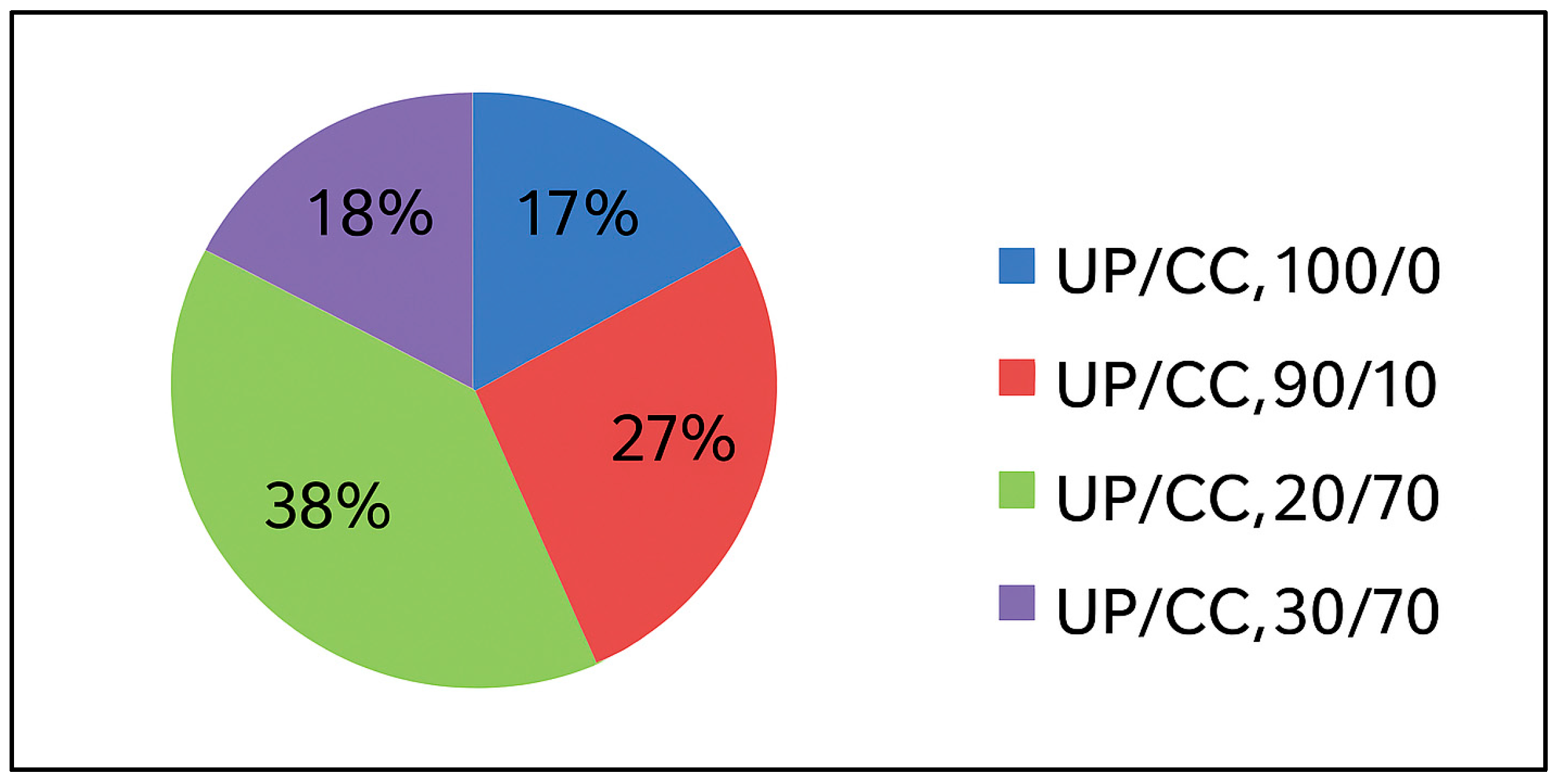
The percentage values presented in
Figure 11 were derived from the bending test results by quantifying the energy absorbed by each composite specimen before failure. First, load–deflection data were obtained from the three-point bending test, yielding curves describing the relationship between the applied bending load and the resulting deflection. The energy absorbed by each specimen (EA) was then calculated as the area under its load–deflection curve up to the point of fracture, which mathematically corresponds to the integral of load with respect to deflection and was computed using the trapezoidal numerical integration method applied to the discrete experimental data. After determining the absorbed energy for all specimens, the highest value among the four compositions (100/0, 90/10, 20/80, and 30/70) was taken as the reference maximum energy (EA_max), which, in this study, was observed in the composite containing 20 wt% CC. The energy absorption percentage for each composition was subsequently calculated by dividing its absorbed energy by EA_max and multiplying by 100%. These calculated percentages—17% for UP/CC 100/0, 27% for UP/CC 90/10, 38% for UP/CC 20/80, and 18% for UP/CC 30/70—were then plotted in the pie chart shown in
Figure 11. This percentage expresses each material’s ability to absorb bending energy before failure, reflecting its resistance to crack initiation and plastic deformation, where higher values indicate better flexural energy-absorbing capacity and overall mechanical performance [
32,
33].
3.2. Fracture Surface of the Morphology of the Specimen
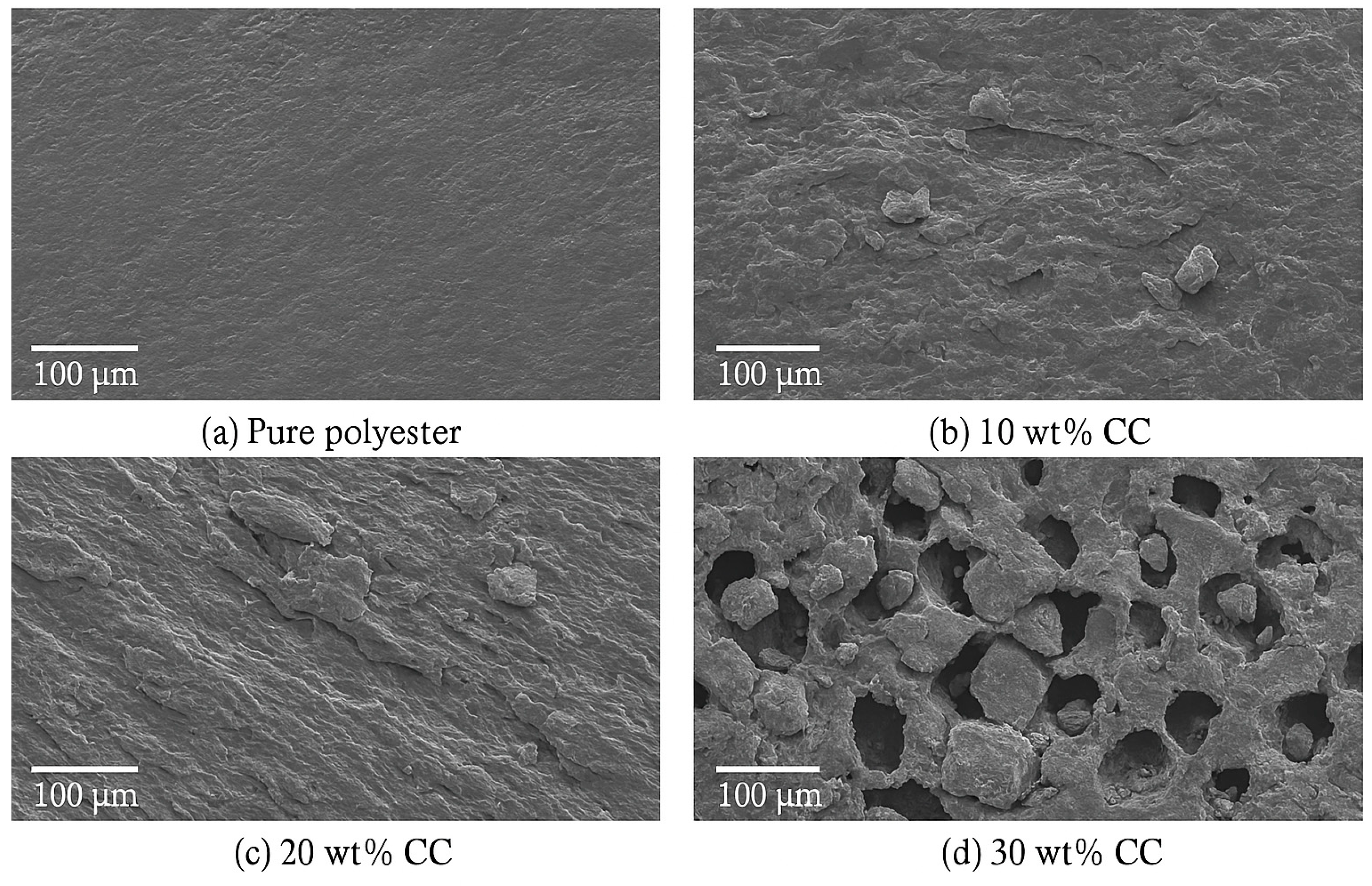
The fracture surface morphology of the specimens after flexural testing was examined using a Carl Zeiss SEM with EDX EVO 10 scanning electron microscope operating at 15 kV. Before imaging, all samples were sputter-coated with a thin layer of gold to enhance electrical conductivity and ensure accurate surface visualization. Representative SEM micrographs of the neat polyester and composites reinforced with 10, 20, and 30 wt% coconut shell charcoal (CC) are shown in
Figure 12a–d, with scale bars included for dimensional reference. As illustrated in
Figure 12a, the fracture surface of pure polyester exhibits a smooth and featureless morphology, characteristic of brittle fracture and limited energy absorption, consistent with the behavior typically reported for unmodified thermoset polymers. The absence of micro-dimples, fibrillation, or plastic deformation features confirms the low capacity of the neat matrix to dissipate mechanical stresses during bending.
In contrast, the introduction of 10 wt% CC (
Figure 12b) alters the fracture topography significantly, producing a rougher surface with visible filler–matrix interactions. The presence of embedded CC particles and micro-ridges indicates improved interfacial bonding and partial plastic deformation during failure. This morphological modification suggests that the filler restricts polymer chain mobility, thereby enhancing crack-deflection and increasing resistance to crack propagation. Such features are typical in composites where filler–matrix adhesion is sufficient to promote mechanical interlocking and stress transfer.
At 20 wt% CC (
Figure 12c), the fracture surface displays the highest degree of roughness, uniform filler dispersion, and minimal void formation. Quantitative SEM analysis confirms an average particle size of 45 ± 5 µm, agglomeration levels below 10%, and a void fraction of only 2.5%. These microstructural characteristics directly correlate with the maximum flexural strength of this formulation, indicating optimal filler–matrix compatibility. The homogeneous dispersion of CC enhances the tortuosity of the crack path, promoting energy-dissipative failure mechanisms such as crack pinning, microcrack bridging, and particle pull-out. The reduced void content also demonstrates adequate wetting and strong interfacial adhesion, both of which are essential for efficient load transfer.
However, further increasing the filler content to 30 wt% results in noticeable morphological degradation (
Figure 12d). Large voids, particle clustering, and irregular fracture patterns indicate inadequate interfacial bonding and reduced compatibility between the CC particles and the polyester matrix. Quantitative analysis reveals a significant increase in agglomeration to 28% and a void fraction of 7.8%, which act as stress concentration sites and weaken mechanical integrity. These microstructural defects promote premature crack initiation, reduce crack deflection pathways, and lead to a more brittle fracture response. The morphology supports the mechanical results, demonstrating that filler overload disrupts matrix continuity and inhibits uniform stress distribution.
The progressive evolution of fracture surface roughness across all formulations reflects the underlying changes in composite mechanical behavior. At 10 wt%, the CC particles begin to hinder polymer chain mobility, enhancing plastic deformation and improving bending resistance. At 20 wt%, the synergistic balance between filler loading, dispersion quality, and matrix bonding results in maximum toughness and the highest fracture surface complexity. Beyond this optimal threshold, saturation of bonding sites and excessive particle clustering at 30 wt% reduce the composite’s ability to accommodate deformation, leading to diminished ductility, fewer plastic deformation features, and inferior mechanical performance. Overall, the SEM evidence confirms that 20 wt% CC provides the most favorable microstructural characteristics for optimized flexural strength and toughness in the unsaturated polyester composite system [
34,
35,
36].
3.3. FTIR Analysis of the Composite
The chemical interactions between the polyester matrix and coconut shell charcoal (CC) filler were examined using Fourier Transform Infrared (FTIR) spectroscopy. Spectra were acquired with a PerkinElmer Spectrum Two spectrometer equipped with a DTGS detector, operating over 4000–400 cm
−1 at a resolution of 4 cm
−1, with 32 scans per sample to ensure adequate signal-to-noise ratio.
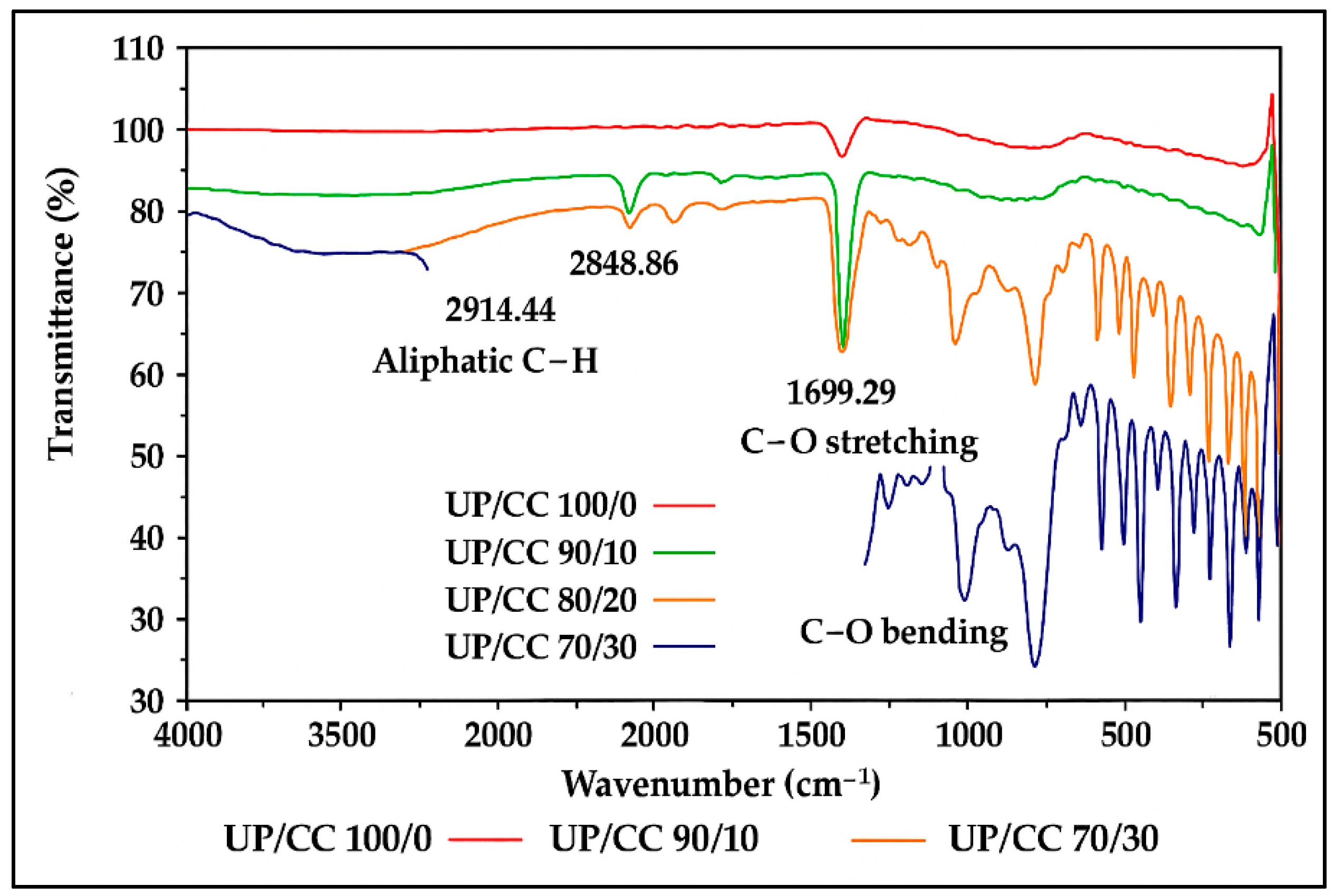
Figure 13 presents the FTIR spectra for pure polyester and composite samples containing 10, 20, and 30 wt% CC (polyester/CC ratios of 100/0, 90/10, 80/20, and 70/30). All spectra exhibit characteristic absorption peaks at 2914.44 cm
−1 and 2848.86 cm
−1 corresponding to C–H stretching vibrations of alkanes, 1699.29 cm
−1 assigned to carbonyl (C=O) stretching, and 979.23 cm
−1 associated with C–O stretching of ester functional groups. These functional groups represent the dominant chemical bonds present in the polyester backbone and form the primary interaction sites for filler–matrix bonding.
The presence of carbonyl and ester peaks across all composite samples indicates that the incorporation of treated CC does not disrupt the polyester matrix’s fundamental chemical structure. Instead, the enhancement of specific peak intensities at 1699.29 cm−1 and 979.23 cm−1 for the 10–20 wt% CC composites suggests improved polar interactions arising from hydrogen bonding and dipole–dipole attraction between oxygen-containing surface groups of the CC and the polyester chains. These chemical interactions facilitate stronger interfacial adhesion, reduce micro-void formation, and improve stress-transfer pathways within the composite. This strengthening mechanism is consistent with the mechanical results, which show a substantial increase in flexural strength up to 20 wt% CC due to enhanced bonding and improved load distribution.
At 20 wt% CC loading, the FTIR spectra exhibit the most pronounced intensification of both carbonyl and ester peaks, indicating optimal compatibility and chemical affinity between the filler and the matrix. The improved interfacial interaction at this composition corresponds to the highest recorded energy absorption of 38 J and the maximum flexural performance. This confirms that FTIR-identified bonding mechanisms are directly linked to enhanced composite toughness and stiffness.
Beyond 20 wt%, a decrease in the intensity of the carbonyl and ester peaks is observed, suggesting reduced availability of active bonding sites and diminishing interaction efficiency. This decline is attributed to filler agglomeration at higher loadings, which reduces the effective surface area of the CC particles and limits their chemical interaction with the polyester matrix. The observed spectral attenuation correlates with the reduction in mechanical properties at 30 wt% CC, where void formation and particle clustering interfere with stress transfer, promoting early crack initiation. These findings indicate that excessive filler content results in saturation of the polymer bonding network, microstructural discontinuities, and loss of cohesive interactions.
Overall, the FTIR analysis demonstrates that chemical bonding and interfacial compatibility between polyester and CC are maximized at 20 wt% filler content, where polar functional groups actively participate in composite reinforcement. The spectral, morphological, and mechanical results collectively support the conclusion that 20 wt% CC offers the optimal balance between chemical interaction, dispersion quality, and structural performance.
Table 4 summarizes the major absorption peaks identified in the FTIR spectra along with their functional group assignments and interpretations. The peaks at 2914.44 cm
−1 and 2848.86 cm
−1 correspond to C–H stretching vibrations of alkane groups, indicating the presence of hydrocarbon chains and compatibility with the polyester backbone. The peak at 1699.29 cm
−1 corresponds to the C=O stretching of carbonyl groups, which enhances matrix–filler adhesion via polar interactions. Additionally, the peak at 979.23 cm
−1 is associated with the C–O stretching of ester groups, contributing to improved interfacial bonding and efficient stress transfer between the matrix and filler. These functional groups collectively indicate a chemical interaction between the polyester and the coconut shell powder, accounting for the improved mechanical properties observed in composites with filler contents up to 20 wt%. Beyond this concentration, reduced peak intensity suggests limited bonding sites and filler agglomeration, leading to decreased adhesion.
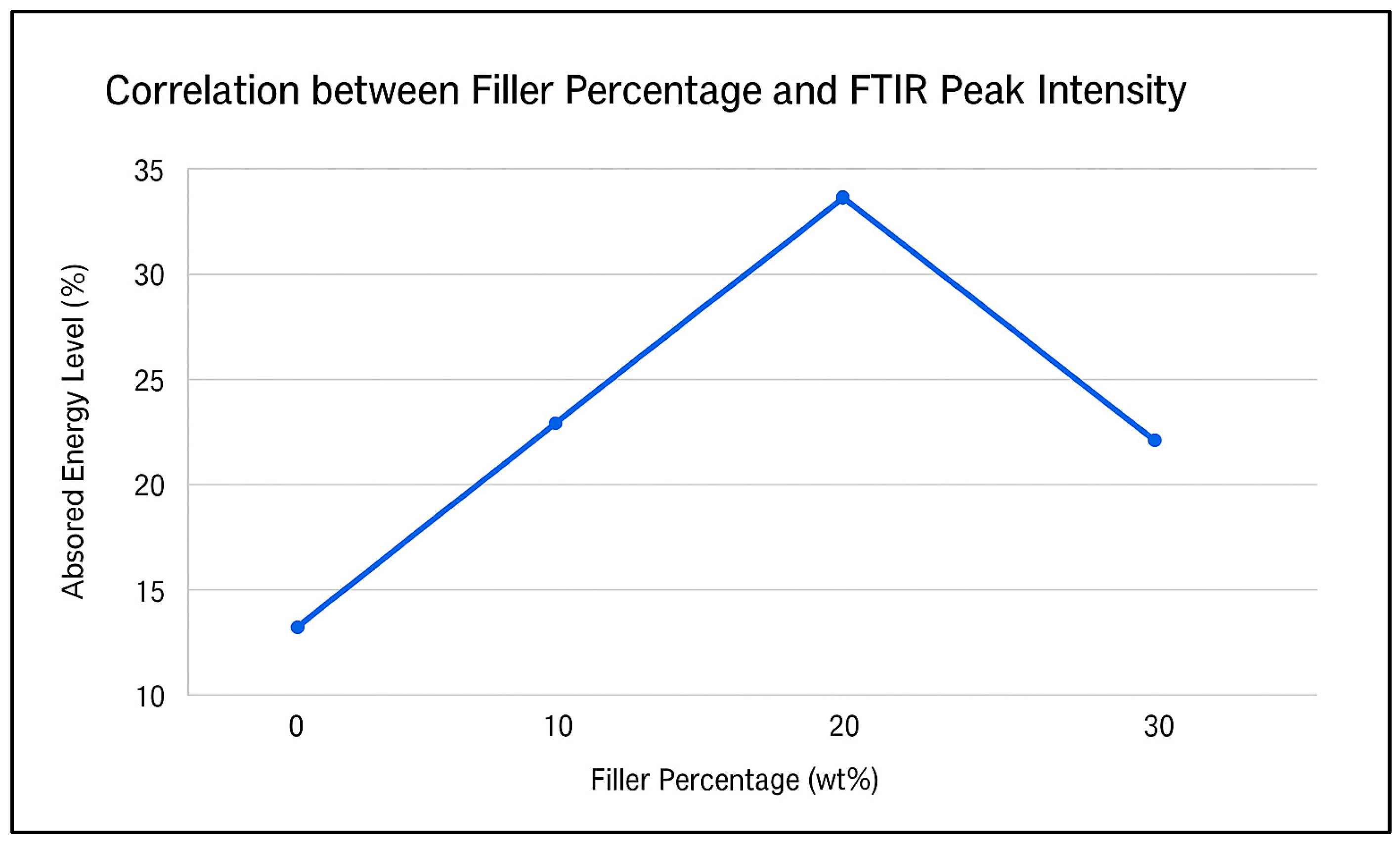
Figure 14 illustrates the relationship between filler percentage and FTIR peak intensity, expressed as absorbed energy level. Peak intensity increases significantly from 17% for pure polyester (0 wt% filler) to a maximum of 38% at 20 wt%, indicating stronger chemical bonding and enhanced matrix–filler adhesion. This improvement is attributed to functional groups such as carbonyl (C=O) and ester (C–O), which promote polar interactions and interfacial bonding. At 30 wt% filler, peak intensity decreases to 25%, suggesting that excessive filler causes agglomeration and saturation of bonding sites, reducing adhesion efficiency. This trend aligns with mechanical performance results, where flexural strength also declines beyond 20 wt% due to poor stress transfer and increased void formation. The correlation plot between filler percentage and absorbed energy level illustrates a clear structure–property relationship in which molecular-level bonding characteristics, as implied by FTIR peak intensities, directly influence the composite’s macroscopic ability to absorb strain energy. At low filler content (0–10 wt%), the steady increase in absorbed energy reflects the strengthening of matrix–filler interfacial interactions, consistent with FTIR evidence of enhanced functional group activity, such as the intensification of hydroxyl or carbonyl stretching modes associated with improved chemical compatibility. This improvement indicates that coconut shell charcoal (CC) particles are effectively integrated into the polyester matrix, enabling more efficient stress transfer and delaying crack initiation. The highest absorbed energy level at 20 wt% corresponds to the point at which FTIR peaks exhibit the most extraordinary intensification or the most distinct spectral shifts, indicating optimal interfacial bonding, increased molecular cross-interaction, and the formation of a more cohesive, load-bearing network at the microstructural level. However, beyond 20 wt%, the absorbed energy decreases sharply at 30 wt%, which correlates with reductions or distortions in FTIR peak intensity that often arise from particle agglomeration, incomplete matrix wetting, or the saturation of functional bonding sites. These microstructural defects weaken interfacial coupling, generate local stress concentrations, and reduce the composite’s ability to dissipate mechanical energy. Overall, the trend indicates that macroscopic energy absorption behavior is highly sensitive to molecular-level bonding quality as captured by FTIR, reinforcing 20 wt% CC as the optimal filler loading at which chemical, structural, and mechanical enhancements converge most effectively [
37,
38,
39,
40,
41].