1. Introduction
Methane possesses a substantially stronger heat-trapping capability than carbon dioxide, resulting in a significantly higher global warming potential [
1]. Consequently, the development of efficient catalysts for rapid methane abatement has become a critical challenge for climate change mitigation. Current research efforts primarily focus on catalytic pathways that convert methane into less harmful products, such as carbon dioxide and water via oxidation, or into value-added products, including hydrogen and solid carbon through catalytic decomposition. The conversion of methane to synthesis gas can be achieved through three principal routes: partial oxidation of methane (POM), dry reforming of methane (DRM), and steam reforming of methane (SRM) [
2,
3,
4]. Among these processes, SRM is highly endothermic, leading to substantial energy consumption and increased operational costs [
5]. In contrast, POM has emerged as a promising and cost-effective alternative due to its high energy efficiency and its ability to produce an optimal H
2/CO ratio suitable for downstream chemical synthesis [
6].
The design of catalysts for the controlled oxidation of methane to generate hydrogen-rich synthesis gas with an H
2/CO ratio exceeding 3 has attracted increasing attention, as it enables the efficient transformation of a potent greenhouse gas into a valuable feedstock for chemical synthesis. This process, commonly referred to as the partial oxidation of methane (POM), relies on the catalytic activation of methane in the presence of oxygen [
7]. A high H
2/CO ratio is particularly desirable for clean energy applications, as it enhances hydrogen production, a key energy carrier in low-carbon energy systems. From a stoichiometric perspective, the direct POM reaction (CH
4 + ½O
2 ⟶ 2H
2 + CO) yields an H
2/CO ratio of 2. However, in practical catalytic systems, especially over Ni-based catalysts, H
2/CO ratios significantly higher than 2 are frequently observed. This deviation from stoichiometric predictions indicates that POM does not proceed exclusively through a direct oxidation pathway but instead involves indirect reaction routes. In the indirect POM mechanism, methane initially undergoes complete oxidation to CO
2 and H
2O. These oxidation products subsequently participate in secondary reforming reactions with additional methane, namely dry reforming (CH
4 + CO
2) and steam reforming (CH
4 + H
2O), leading to the formation of synthesis gas composed of CO and H
2. Furthermore, at relatively low reaction temperatures, the water–gas shift (WGS) reaction becomes increasingly important in enhancing hydrogen selectivity. Owing to its exothermic nature, the WGS reaction (CO + H
2O ⟶ H
2 + CO
2) is thermodynamically favored at lower temperatures, shifting the equilibrium toward increased hydrogen and carbon dioxide formation [
8]. Achieving high catalytic activity under these conditions therefore requires the development of highly active and well-designed catalysts capable of efficiently driving these coupled reaction pathways.
Partial oxidation of methane is generally carried out in the presence of heterogeneous catalysts [
5,
9]. Noble metal-based catalysts, including Pt, Pd, Rh, and Ru, exhibit excellent catalytic activity for POM; however, their high cost and limited natural abundance severely restrict their large-scale industrial application [
5,
10]. As a result, supported Ni-based catalysts have been widely adopted in industrial processes due to their favorable catalytic performance combined with significantly lower cost. Despite these advantages, Ni catalysts are prone to deactivation caused by carbon deposition and particle sintering under POM operating conditions. To address these challenges, various strategies have been employed to enhance the activity and durability of Ni-based catalysts, including modification of the catalyst support, incorporation of secondary metals to form bimetallic systems, and the use of suitable promoters [
11]. Among the available supports, ceria and doped ceria have attracted considerable attention because of their high oxygen storage capacity and excellent redox properties, which facilitate oxygen transfer and suppress coke formation in oxidation and reforming reactions [
12,
13]. Notably, gadolinium-doped ceria (GDC) has been reported to exhibit significantly lower carbon deposition compared to undoped ceria supports. This improved coke resistance is primarily attributed to the enhanced oxide ion conductivity induced by Gd doping, which promotes lattice oxygen mobility and facilitates the continuous removal of surface carbon species during reaction [
14]. In general, the water–gas shift (WGS) reaction is widely employed to adjust the composition of product gas streams for downstream applications by increasing the hydrogen content [
14,
15]. In our previous studies, the WGS reaction was investigated as an effective route to enhance the H
2/CO ratio using Cu-based catalysts supported on CeO
2 and gadolinium-doped ceria (GDC). The results demonstrated that the 5%Cu/GDC catalyst exhibited the highest catalytic performance, achieving approximately 80% CO conversion at 400 °C. Furthermore, the introduction of a Re promoter was found to significantly enhance the catalytic activity of Cu-based catalysts, highlighting the beneficial role of promoter addition in improving WGS performance [
14].
The scope of this work is to establish design principles for high-performance Ni-based bimetallic catalysts for hydrogen-rich syngas production via the partial oxidation of methane. Rather than optimizing reaction conditions or screening catalysts empirically, this study focuses on engineering metal–support and metal–metal interactions through the use of gadolinium-doped ceria (GDC) as an advanced support. The redox flexibility and defect-rich structure of GDC are intentionally exploited to stabilize Ni active sites and to modulate oxygen mobility and reaction pathways under POM conditions.
A key objective of this work is to elucidate how the controlled incorporation of secondary metals (Cu and Re) alters the electronic and structural environment of Ni, leading to enhanced hydrogen selectivity, suppression of undesired parallel reactions, and improved resistance to carbon deposition. The novelty of this study lies in demonstrating that bimetallic synergy coupled with GDC-induced defect chemistry enables simultaneous achievement of high methane conversion and elevated H2/CO ratios.
3. Results and Discussion
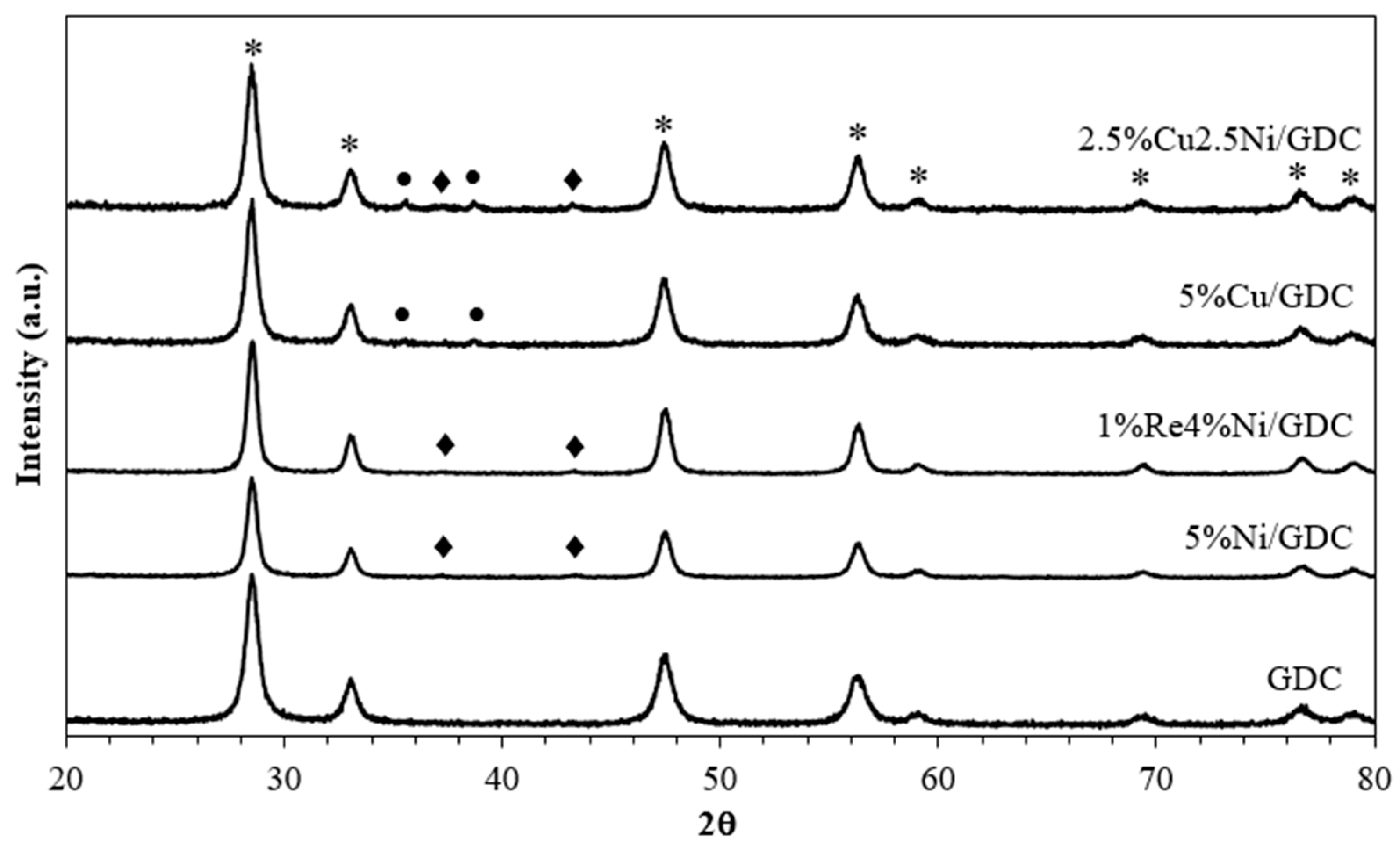
The XRD patterns of the commercial GDC support and the Ni- and Cu-based catalysts are shown in
Figure 1. All diffraction peaks can be indexed to the fluorite cubic structure of CeO
2 (JCPDS No. 43-1002), indicating that the crystal structure of the GDC support remains unchanged after metal impregnation and calcination. No additional diffraction peaks associated with crystalline impurity phases were observed in the GDC support, confirming the phase purity of the commercial material. Upon Cu loading, additional diffraction peaks appear at 2θ values of approximately 35.3° and 38.5°, which can be assigned to monoclinic CuO (JCPDS No. 05-0661). Similarly, Ni-loaded catalysts exhibit diffraction peaks at around 37.3° and 43.4°, characteristic of NiO (JCPDS No. 47-1049). These reflections indicate the presence of crystalline NiO and CuO phases on the GDC surface following calcination at 650 °C. In contrast, no distinct diffraction peaks attributable to rhenium oxide species (e.g., ReO
3 or Re
2O
7) were detected in the Re-containing catalysts because of the low Re loading (1 wt%), whose weak diffraction signals are likely masked by the intense reflections of the GDC support.
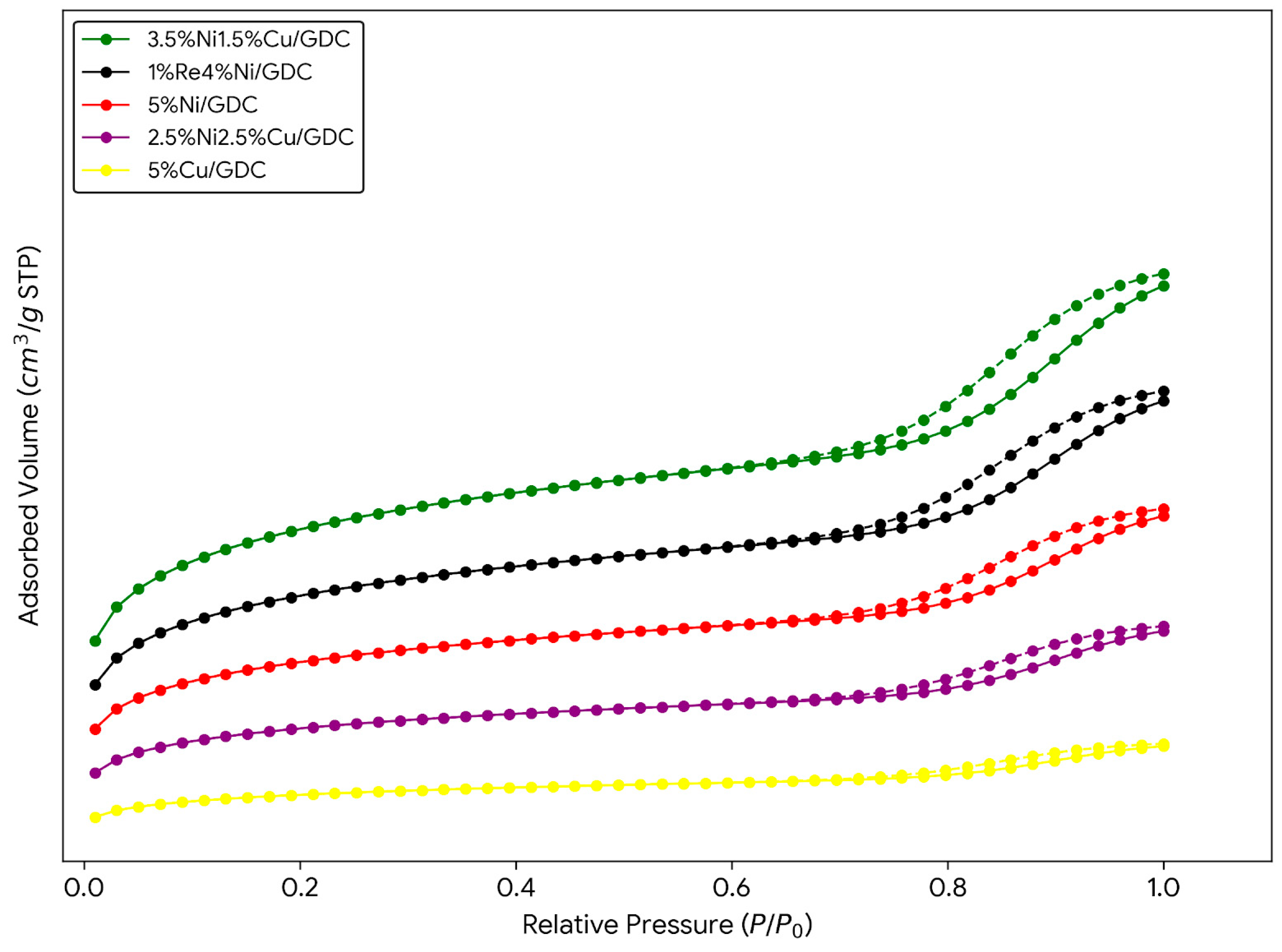
The N
2 adsorption–desorption isotherms for the GDC support and the modified Ni- and Cu-based catalysts are depicted in
Figure 2, where all samples exhibit IUPAC Type IV isotherms featuring H
3-type hysteresis loops, confirming a mesoporous architecture characterized by slit-shaped interparticle voids within the GDC-metal framework [
16]. The corresponding textural properties, including BET surface areas (S
BET) and crystallite sizes, are summarized in
Table 1. The bare GDC support demonstrates a specific surface area of 85.5 m
2/g with a CeO
2 crystallite size of 12.3 nm. Following the impregnation of Ni and Cu and subsequent calcination at 650 °C, a significant reduction in S
BET to 37.9–45.6 m
2/g is observed. This loss in surface area is strongly correlated with the structural changes identified via XRD analysis, which revealed that the calcination process promoted the thermally induced growth of CeO
2 crystallites to 13.5–14.8 nm due to crystallite coalescence. Furthermore, XRD patterns confirmed the presence of crystalline NiO (at 37.3° and 43.4°) and CuO (at 35.3° and 38.5°) phases on the GDC surface. The deposition of these metal oxide crystallites further accounts for the decrease in S
BET through the partial blockage of the support’s pore network and the inherently higher density of these metallic phases compared to the GDC support. Interestingly, despite the overall reduction in surface area after metal loading, the 3.5%Ni1.5%Cu/GDC catalyst maintained a relatively stable S
BET of 41.2 m
2/g and exhibited the highest adsorption volume among the modified samples, suggesting that the optimized Ni–Cu composition preserves a more accessible mesoporous architecture. In contrast, increasing the Cu loading (2.5%Ni2.5%Cu/GDC) resulted in the largest CeO
2 crystallite size (14.7 nm) and the lowest S
BET (37.9 m
2/g), indicating more pronounced pore blockage and crystallite growth.
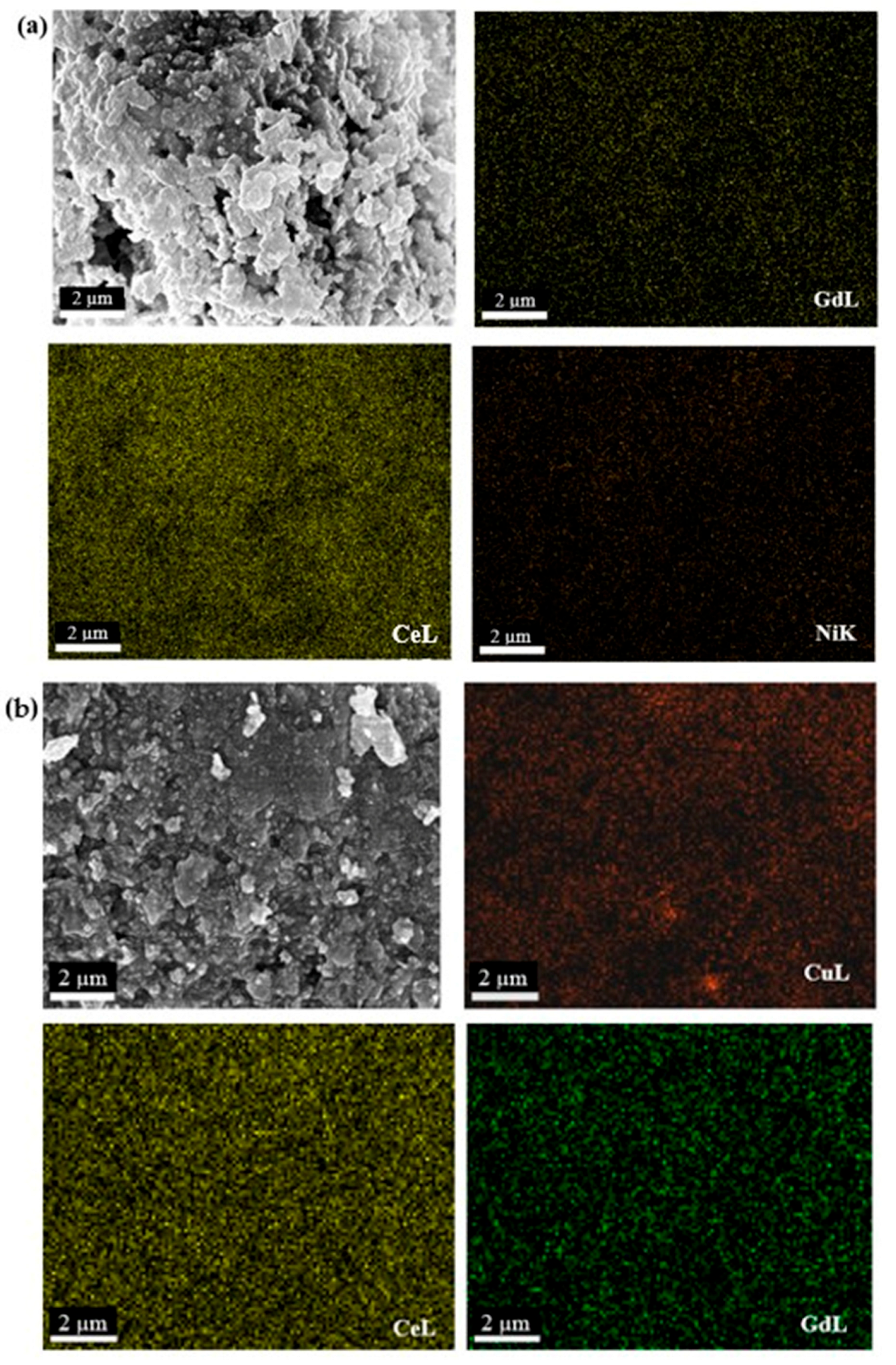
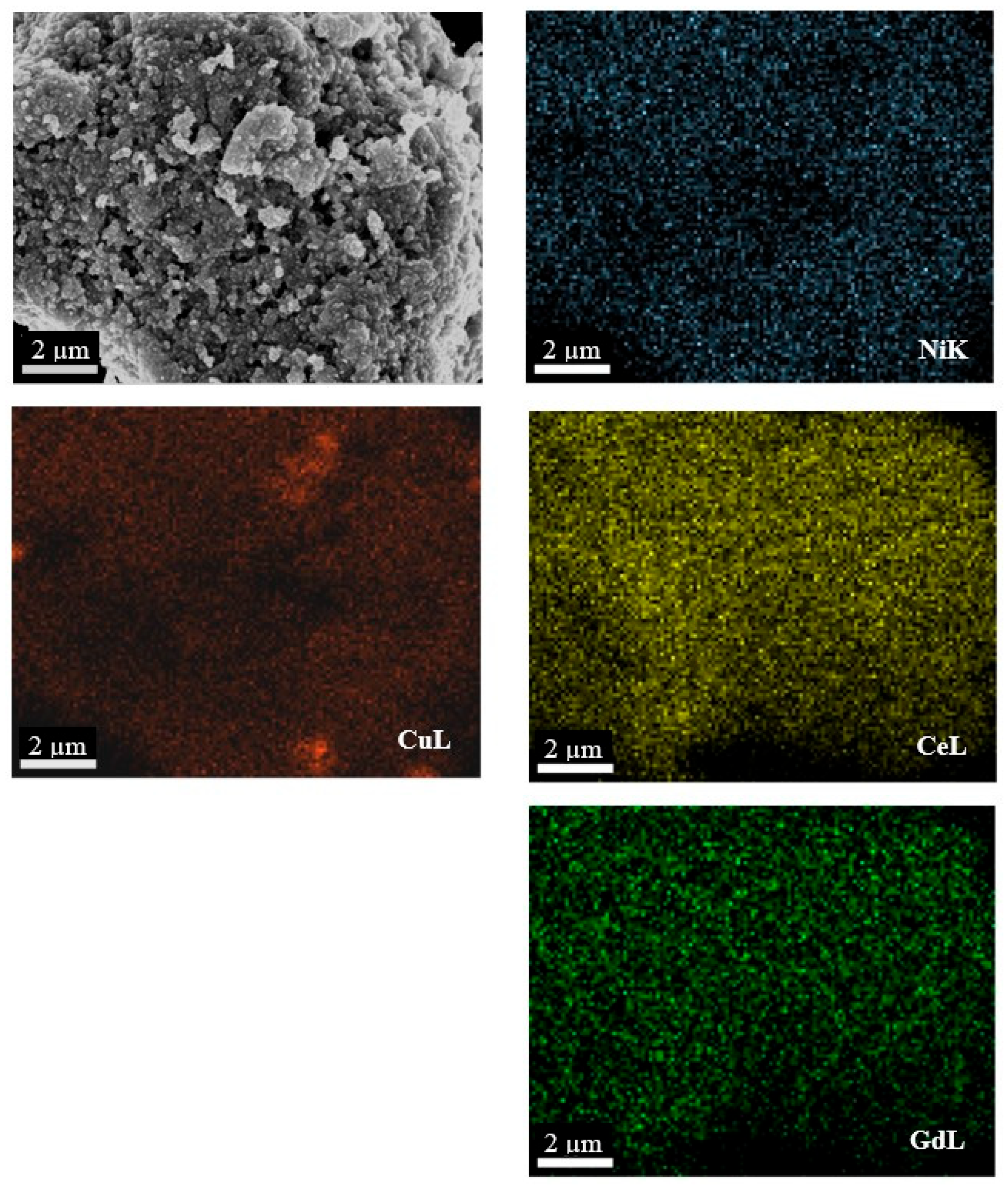
The SEM micrographs of 5%Ni/GDC, 5%Cu/GDC and 3.5%Ni–1.5%Cu/GDC (
Figure 3) reveal noticeable differences in surface morphology and particle aggregation at 10,000× magnification. For 5%Ni/GDC, the surface appears rough and irregular, composed of unevenly sized particles that tend to form agglomerated clusters. This suggests that Ni particles are not uniformly distributed across the GDC surface. In contrast, the 5%Cu/GDC sample exhibits a comparatively smoother texture, with smaller, plate-like crystallites and reduced particle agglomeration, indicating a more uniform dispersion of Cu species. Meanwhile, the 3.5%Ni–1.5%Cu/GDC catalyst shows a relatively fine and homogeneous surface morphology. The particle boundaries appear less pronounced, and no distinct aggregation regions are observed, implying a more even particle distribution throughout the GDC support. Overall, the observed morphological variation suggests that introducing Cu tends to refine particle texture and enhance overall surface uniformity relative to Ni-only samples.
Elemental mapping images were obtained to confirm the spatial distribution of active metals (Ni, Cu) and the support elements (Ce, Gd) for each catalyst (
Figure 3). In 5%Ni/GDC (
Figure 3a), the elemental maps of Ni (NiK), Ce (CeL) and Gd (GdL) display a uniform signal intensity across the entire surface, suggesting that Ni species are evenly distributed and well dispersed on the GDC matrix without obvious localized enrichment. For 5%Cu/GDC (
Figure 3b), the distribution maps of Cu (CuL), Ce (CeL) and Gd (GdL) show homogeneous elemental dispersion. No visible Cu clusters or phase segregation are detected, indicating that Cu species are well spread across the GDC surface and that the structural integrity of the support remains preserved. In the 3.5%Ni–1.5%Cu/GDC (
Figure 3c) catalyst, the mapping results for Ni (NiK), Cu (CuL), Ce (CeL) and Gd (GdL) reveal that both Ni and Cu are distributed uniformly throughout the sample. The absence of distinct intensity variations or isolated bright spots suggests co-dispersion of the two metals on the GDC support. These observations confirm that the introduction of both Ni and Cu leads to a more homogeneous surface composition compared to the monometallic samples.
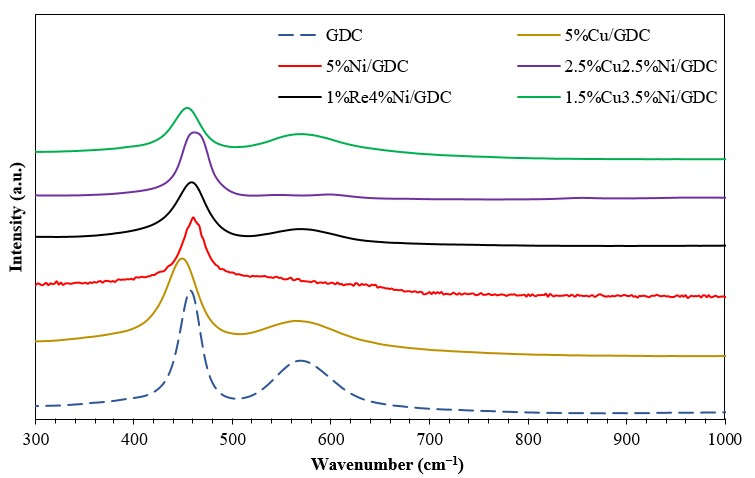
Figure 4 shows the Raman spectra of GDC supported mono- and bimetallic Ni- and Cu-based catalysts recorded in the range of 300–1000 cm
−1. All samples exhibit a dominant Raman band centered at approximately 460 cm
−1, corresponding to the F
2g vibrational mode of fluorite-structured CeO
2. This confirms that the cubic fluorite lattice of GDC remains structurally intact after metal incorporation. No additional Raman features associated with secondary cerium oxide phases were detected, indicating good structural stability of the support. A broad defect-related band in the range of 570–600 cm
−1 is observed for all samples, which is commonly attributed to oxygen vacancies, lattice distortions, and the presence of reduced Ce
3+ species [
17]. The intensity ratio of this defect band to the F
2g mode (I
570/I
460) was employed as a semi-quantitative descriptor of Raman-active oxygen vacancies [
18] and the obtained values are summarized in
Table 1. The bare GDC support exhibits a relatively high I
570/I
460 ratio of 0.41, indicating a significant concentration of intrinsic oxygen vacancies associated with the doped ceria lattice. Upon metal loading, the Raman features are markedly modified, reflecting strong metal–support interactions and changes in the defect chemistry of GDC. For the monometallic 5%Ni/GDC catalyst, the defect-related band is strongly suppressed, resulting in a very low I
570/I
460 ratio of 0.06. This pronounced decrease suggests that Ni incorporation leads to either vacancy delocalization or electronic screening of Raman-active defects, likely due to strong Ni–CeO
2 interactions and enhanced reducibility of the support [
19]. A similar suppression is observed for the 2.5%Cu–2.5%Ni/GDC catalyst, which exhibits the lowest I
570/I
460 ratio (0.05). This behavior implies that the balanced Ni–Cu composition effectively stabilizes the fluorite lattice and minimizes detectable oxygen vacancy signatures, possibly through electronic compensation effects or the formation of highly dispersed bimetallic species. In contrast, the 5%Cu/GDC catalyst displays a higher I
570/I
460 ratio of 0.27, indicating that Cu incorporation induces a greater degree of lattice distortion and oxygen vacancy formation compared to Ni. This can be attributed to the weaker redox interaction between Cu species and ceria, which favors the generation of localized defects rather than their delocalization [
20]. However, despite the higher defect signal, Cu/GDC shows inferior catalytic performance, suggesting that oxygen vacancies alone are insufficient to promote efficient methane activation in the absence of highly active metal sites. The bimetallic 4%Ni–1%Re/GDC catalyst exhibits an intermediate I
570/I
460 value of 0.25. The presence of Re is known to enhance metal dispersion and stabilize the ceria lattice through strong electronic and redox interactions [
21]. As a result, oxygen vacancy formation is moderated rather than maximized, leading to a controlled defect environment that balances lattice stability with oxygen mobility. Notably, the Ni-rich bimetallic 1.5%Cu–3.5%Ni/GDC catalyst shows the highest I
570/I
460 ratio (0.42), exceeding even that of bare GDC. This indicates a synergistic effect between Ni and Cu in promoting the formation of Raman-active oxygen vacancies [
22]. The combination of Ni-induced redox activity and Cu-induced lattice strain appears to facilitate vacancy generation and stabilization within the GDC lattice. Such a high concentration of oxygen vacancies is expected to enhance oxygen mobility and improve resistance to carbon accumulation under reaction conditions.
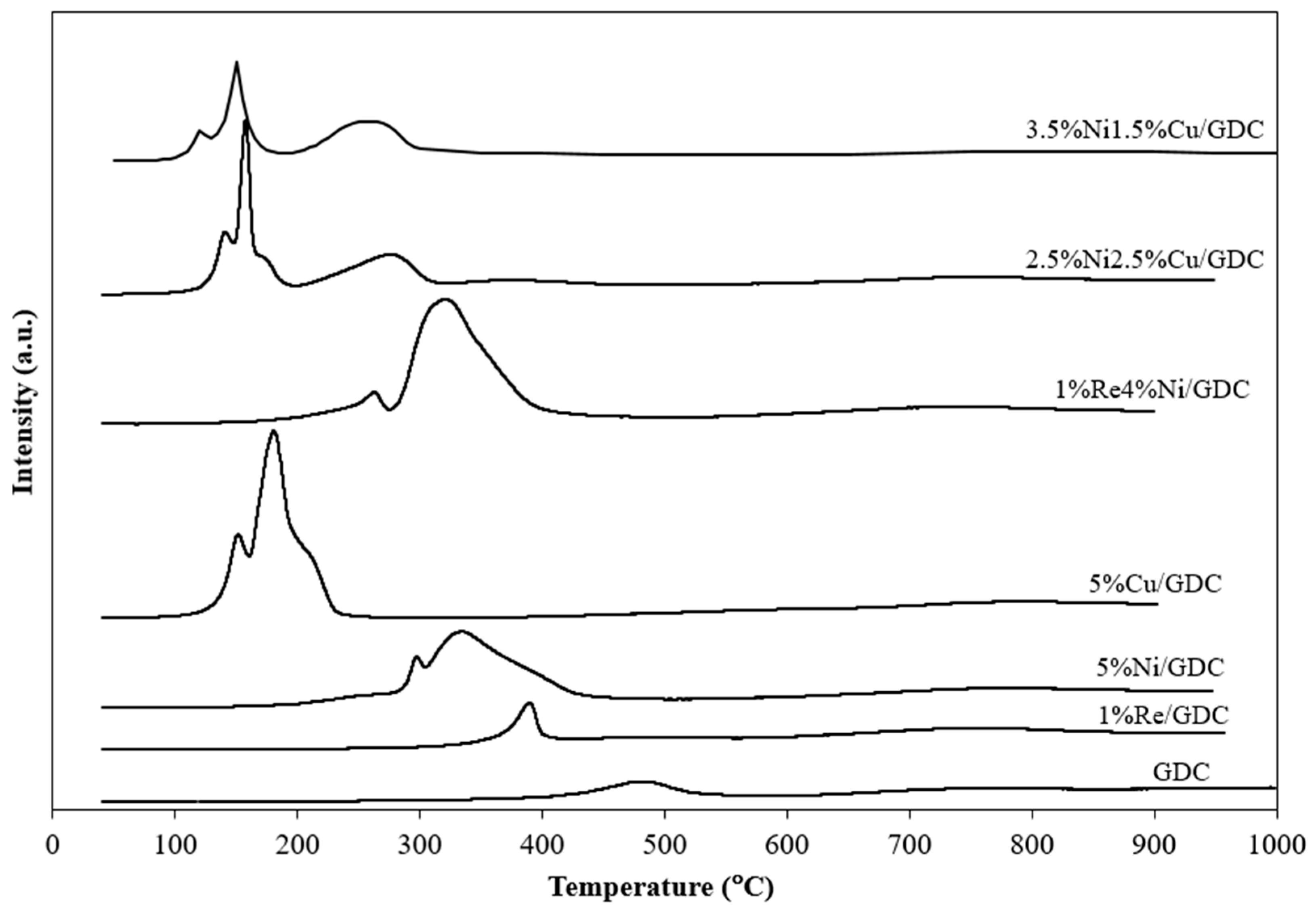
Figure 5 presents the H
2-TPR profiles of GDC-supported mono- and bimetallic Ni-, Cu-, and Re-based catalysts, providing insight into the reducibility of metal species and metal–support interactions. The bare GDC support exhibits a broad and weak reduction feature above 500 °C, which is attributed to the reduction of surface and subsurface oxygen species of CeO
2, consistent with the high oxygen storage capacity of doped ceria [
23,
24]. For the monometallic 5%Ni/GDC catalyst, a distinct reduction peak appears in the temperature range of 300–400 °C. This peak is assigned to the reduction of NiO species interacting with the GDC support. The relatively low reduction temperature indicates strong metal–support interactions and high reducibility of Ni species, which are favorable for methane activation during partial oxidation of methane (POM). In contrast, the 5%Cu/GDC catalyst displays reduction peaks at lower temperatures, typically below 250 °C, corresponding to the stepwise reduction of CuO to Cu
0. Despite the facile reducibility of Cu species, the absence of significant high-temperature reduction features suggests weak interaction with the ceria lattice [
20]. The 1%Re/GDC catalyst shows a minor reduction feature at relatively high temperatures, reflecting the high dispersion and low reducibility of ReOx species. The presence of Re alone does not significantly enhance hydrogen consumption, indicating its limited direct contribution to methane activation. For the bimetallic 4%Ni–1%Re/GDC catalyst, the main NiO reduction peak shifts to lower temperatures compared to monometallic Ni/GDC. This shift indicates that Re acts as a promoter, facilitating hydrogen spillover and enhancing the reducibility of Ni species. Additionally, the reduction profile becomes narrower, suggesting improved dispersion of Ni particles and more uniform metal–support interactions [
21]. The 2.5%Cu–2.5%Ni/GDC catalyst exhibits multiple overlapping reduction peaks, reflecting the coexistence of NiO and CuO species with different degrees of interaction with the GDC support. Notably, the reduction of Ni species occurs at lower temperatures than in monometallic Ni/GDC, implying a synergistic effect between Ni and Cu. The presence of Cu promotes hydrogen activation and accelerates the reduction of adjacent NiO species through hydrogen spillover [
22]. The Ni-rich bimetallic 1.5%Cu–3.5%Ni/GDC catalyst shows the most pronounced low-temperature reduction behavior among all Ni-containing samples. The main reduction peak is shifted further toward lower temperatures, indicating enhanced reducibility of Ni species due to strong Ni–Cu interactions and improved metal dispersion. This enhanced reducibility is consistent with the higher concentration of oxygen vacancies observed in Raman analysis.
The formation of synthesis gas directly from methane in the presence of oxygen is commonly referred to as the direct partial oxidation of methane (POM) pathway [
10]. Alternatively, syngas can be produced via an indirect POM pathway, in which methane first undergoes total oxidation (TOM; CH
4 +2O
2 ⟶ CO
2 + 2H
2O), followed by subsequent reforming reactions, including dry reforming of methane (DRM; CH
4 + CO
2 ⟶ 2CO + 2H
2) and/or steam reforming of methane (SRM; CH
4 + H
2O ⟶ CO + 3H
2). In the indirect POM route, predominance of the SRM reaction over DRM leads to an increase in the H
2/CO ratio, allowing values greater than two to be achieved. Furthermore, the involvement of the water–gas shift (WGS) reaction (CO + H
2O ⟶ CO
2 +H
2) further enhances hydrogen production at the expense of CO, resulting in hydrogen-rich syngas [
10,
25].
The CO
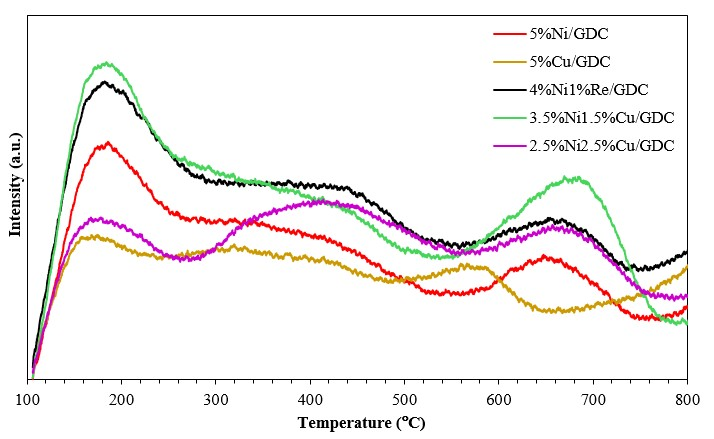
2-TPD profiles of reduced mono- and bimetallic Ni- and Cu-based catalysts supported on GDC are presented in
Figure 6, providing insights into the surface basicity and CO
2 adsorption strength of the catalysts. The desorption profiles can be divided into three temperature regions: low-temperature (<250 °C), medium-temperature (250–500 °C), and high-temperature (>500 °C) regions, corresponding to weak, moderate, and strong basic sites, respectively [
26]. The monometallic 5%Cu/GDC catalyst exhibits relatively weak CO
2 desorption signals, with a dominant low-temperature peak below 250 °C and minimal contribution at higher temperatures. This behavior indicates the presence of mainly weak basic sites associated with surface hydroxyl groups or weakly bound carbonate species on Cu-modified ceria. The scarcity of medium- and high-temperature desorption features suggests limited strong CO
2 adsorption capability, which is consistent with the poor CO
2 activation and inferior syngas formation performance of Cu-based catalysts [
27]. In contrast, the 5%Ni/GDC catalyst displays broader and more intense CO
2 desorption features extending into the medium- and high-temperature regions. The presence of a pronounced desorption peak above 500 °C indicates the formation of strong basic sites. These strong basic sites enhance CO
2 adsorption and activation, facilitating carbon removal through surface oxidation pathways during methane partial oxidation [
28]. The incorporation of Re as a promoter in the 4%Ni–1%Re/GDC catalyst leads to a noticeable increase in CO
2 desorption intensity across the medium-temperature region. This suggests that Re promotes the formation of moderately strong basic sites by enhancing metal dispersion and stabilizing interfacial Ni–CeO
2 sites. The balanced distribution of basic sites is favorable for CO
2 activation while avoiding excessive strong adsorption that could hinder desorption kinetics. Bimetallic Ni–Cu catalysts exhibit distinct CO
2-TPD behaviors depending on composition. The 2.5%Ni–2.5%Cu/GDC catalyst shows enhanced CO
2 desorption in the medium-temperature range compared to monometallic Cu/GDC, indicating synergistic effects between Ni and Cu in generating accessible basic sites. However, the high-temperature desorption intensity remains moderate, suggesting limited formation of excessively strong basic sites. Notably, the Ni-rich 3.5%Ni–1.5%Cu/GDC catalyst exhibits the strongest overall CO
2 desorption, particularly in the high-temperature region above 600 °C. This indicates a high density of strong basic sites, likely associated with abundant oxygen vacancies and Ni–Cu–Ce interfacial structures. Such strong CO
2 adsorption is beneficial for gasifying surface carbon species and enhancing catalyst stability under POM conditions [
22].
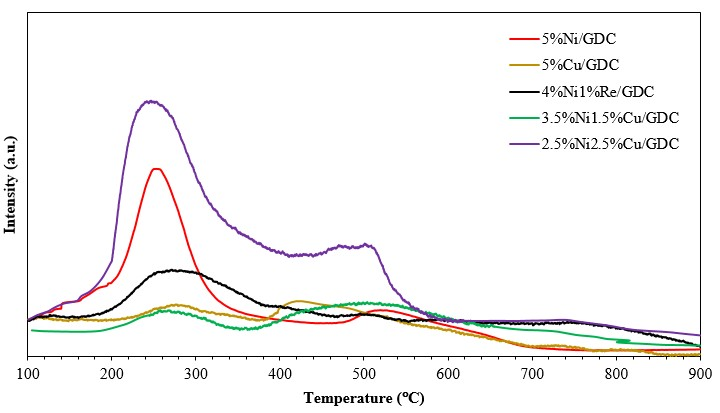
The nature and reactivity of the carbonaceous deposits on the spent catalysts were investigated using O
2-TPO (
Figure 7). The profiles reveal distinct oxidation features that vary significantly with the metal composition. In the O
2-TPO profiles, oxidation peaks observed at low (~300 °C) and intermediate (400–500 °C) temperatures are attributed to highly reactive carbon species (C
α) and less reactive carbon species (C
β), respectively [
29]. These carbon species are generally associated with amorphous carbon deposits [
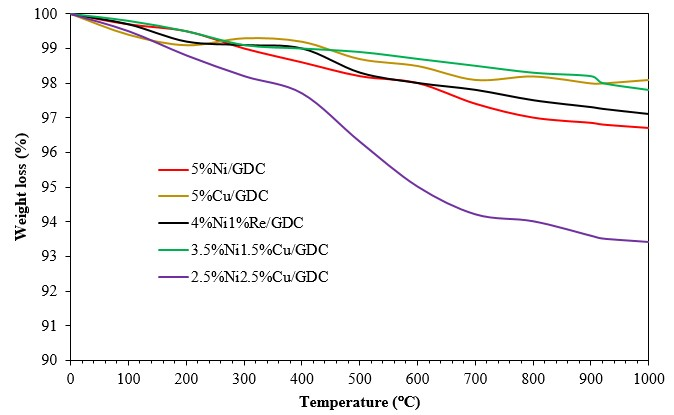
30]. In contrast, oxidation peaks appearing at high temperatures (~800 °C) are indicative of inert carbon species, commonly referred to as graphitic carbon, which is known to be detrimental to catalytic performance due to its resistance to oxidation and its tendency to block active sites. The 2.5%Ni2.5%Cu/GDC and 5%Ni/GDC catalysts show a dominant oxidation peak centered around 250–260 °C, which is attributed to the combustion of highly reactive amorphous carbon species. Notably, the 2.5%Ni2.5%Cu/GDC catalyst also exhibits a secondary broad shoulder extending towards 500 °C, suggesting a higher degree of carbon accumulation or the formation of more ordered carbon structures compared to others. Interestingly, the 3.5%Ni1.5%Cu/GDC and 5%Cu/GDC samples display significantly lower intensities in the TPO profiles. For 3.5%Ni1.5%Cu/GDC, this correlates well with the Raman analysis, where a high concentration of oxygen vacancies was observed. These vacancies facilitate oxygen mobility from the GDC lattice to the metal-support interface, promoting the continuous gasification of carbon precursors and thus suppressing coke buildup. To quantify the amount of carbon deposited during the reaction, TGA was performed (
Figure 8). The total weight loss follows the order: 2.5%Ni2.5%Cu/GDC (6.6%) > 5%Ni/GDC (3.3%) > 4%Ni1%Re/GDC (2.9%) > 3.5%Ni1.5%Cu/GDC (2.2%)~5%Cu/GDC (2.0%). The 2.5%Ni2.5%Cu/GDC catalyst suffered the most significant weight loss, indicating that an equal ratio of Ni and Cu may lead to larger alloy particles or reduced oxygen mobility, hindering carbon gasification [
31]. Whereas the 5%Cu/GDC catalyst exhibited the lowest carbon accumulation among the tested samples, as evidenced by the minimal weight loss (~2.0%) in TGA and the negligible oxidation features in O
2-TPO. However, this low coking rate is not indicative of superior stability but rather reflects the poor catalytic activity of Cu-species for methane activation. The CO
2-TPD profiles further reveal a lack of strong basic sites on the Cu/GDC surface, hindering the essential gasification pathways. Combined with the weak metal-support interactions observed in H
2-TPR, it can be concluded that monometallic Cu lacks the necessary redox and electronic properties to facilitate efficient syngas production compared to its Ni-based counterparts. In contrast, the 3.5%Ni1.5%Cu/GDC catalyst demonstrated superior coking resistance. This result highlights the synergistic effect of the Ni-rich bimetallic composition, where the presence of a specific amount of Cu (1.5%) enhances Ni dispersion and increases Raman-active oxygen vacancies, effectively balancing the rate of methane activation and carbon removal.
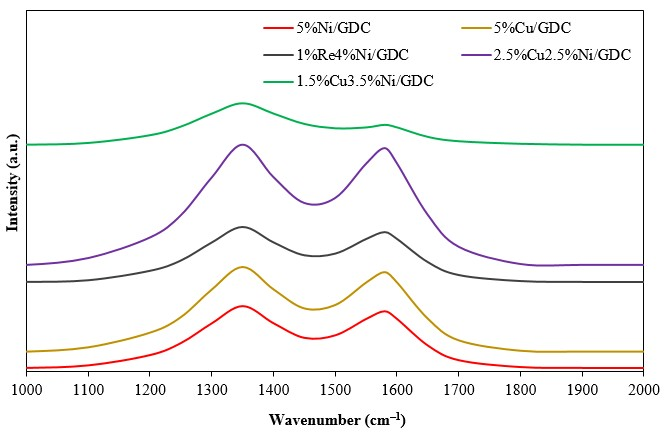
The structural evolution and carbon deposition characteristics of the spent catalysts were further scrutinized using Raman spectroscopy (
Figure 9). Two distinct bands observed at ~1350 cm
−1 (D-band) and ~1580
−1 (G-band) correspond to the A
1g breathing mode of disordered carbon and the E
2g stretching mode of sp
2 hybridized graphitic carbon, respectively. The 3.5%Ni–1.5%Cu/GDC catalyst exhibited significantly lower D and G band intensities compared to other samples. Crucially, the absence of a sharp, intense G-band confirms that this specific Ni/Cu ratio effectively suppresses the formation of inert, graphitic carbon. This result is in excellent agreement with TPO data, which showed no high-temperature oxidation peaks for this sample. In contrast, the 2.5%Cu–2.5%Ni/GDC sample displayed the most intense carbon signals, correlating with the highest weight loss (6.6%) observed in TGA. This indicates that an equal ratio of Ni and Cu may lead to larger metal ensembles or reduced metal-support interaction, which accelerates carbon nucleation. While the 1%Re–4%Ni/GDC, 5%Ni/GDC and 5%Cu/GDC catalysts showed moderate carbon bands, their G-band intensities were noticeably higher than the 3.5%Ni–1.5%Cu/GDC catalyst, suggesting a higher degree of carbon crystallinity (graphitization) which can lead to long-term deactivation. In summary, the Raman analysis reveals that the 3.5%Ni–1.5%Cu/GDC catalyst superior performance is twofold: (i) it preserves a high density of oxygen vacancies (I
570), and (ii) it minimizes the formation of graphitic carbon. The integration of 1.5% Cu with 3.5% Ni optimizes the surface basicity and defect concentration, creating a surface environment where carbon precursors are oxidized more rapidly than they can polymerize into graphitic structures.
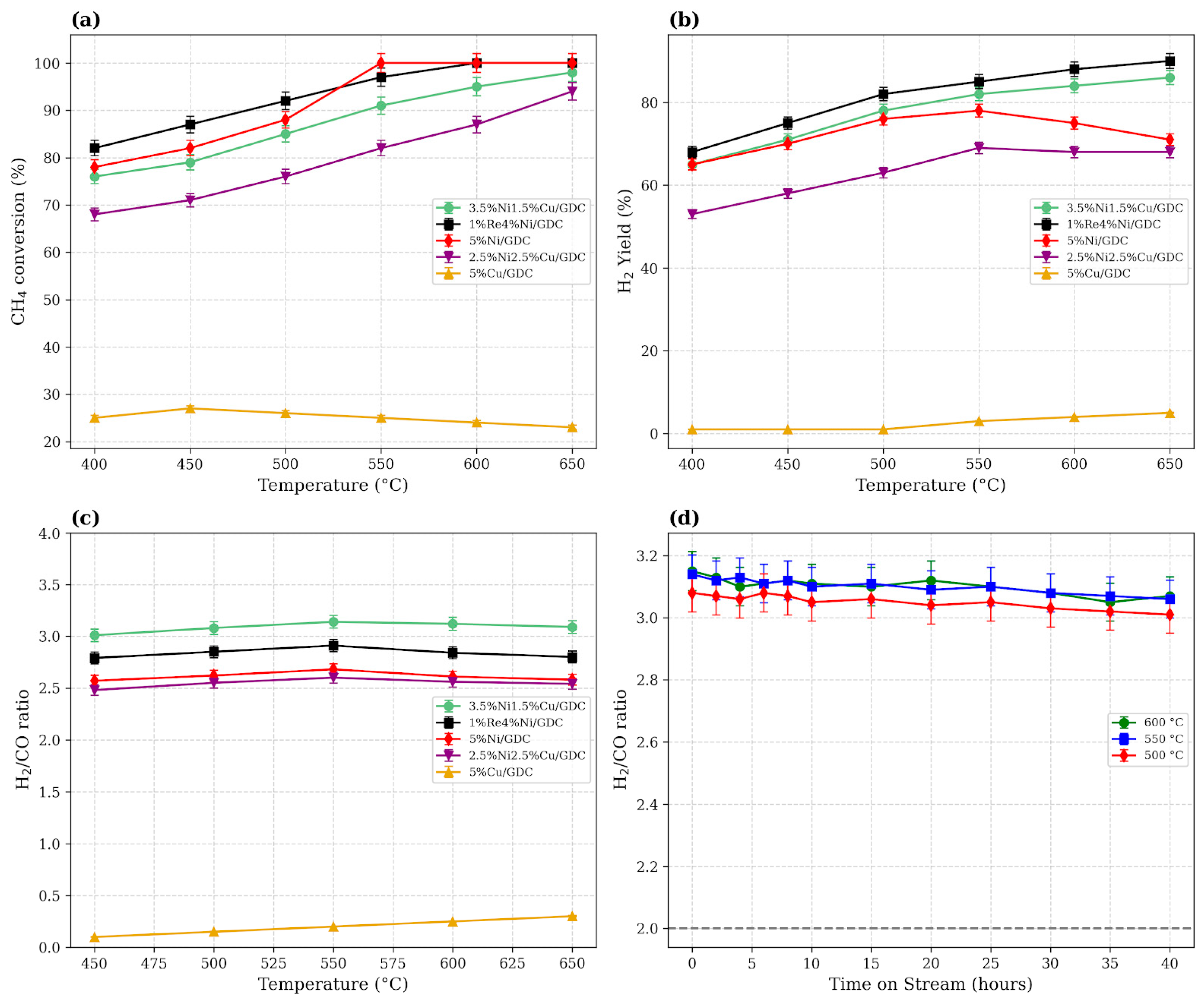
Blank experiments for the partial oxidation of methane were conducted in the temperature range of 600–650 °C to evaluate the contribution of non-catalytic reactions. At 600 °C, a low methane conversion of 2.5% was observed without any detectable syngas formation. Even at 650 °C, although methane conversion slightly increased to 4.3%, syngas was still not detected. These results clearly indicate that methane partial oxidation to syngas proceeds only in the presence of an active catalyst under the investigated conditions. The catalytic performances of the prepared catalysts in terms of CH
4 conversion, H
2 yield, and H
2/CO ratio are summarized in
Figure 10a–d. The effect of reaction temperature on catalytic activity was systematically investigated over Ni- and Cu-based catalysts. For the Ni/GDC catalyst, increasing the reaction temperature from 400 to 650 °C led to a sharp increase in CH
4 conversion from 78% to complete conversion, accompanied by an increase in H
2 yield from 66% to 78%. Overall, Ni/GDC, NiRe/GDC, and NiCu/GDC catalysts exhibited significantly higher methane conversion and hydrogen yield compared to Cu/GDC catalysts, highlighting the superior methane activation capability of Ni-based systems. At 600 °C, the 5%Ni/GDC catalyst achieved 100% CH
4 conversion with a hydrogen yield of 75% and an H
2/CO ratio of 2.60. An H
2/CO ratio greater than 2 indicates that syngas formation proceeds predominantly through an indirect POM pathway, involving total oxidation of methane (CH
4 + 2O
2 ⟶ CO
2 + 2H
2O), followed by secondary reforming reactions such as dry reforming and steam reforming. Oxygen vacancies and surface basic sites act as adsorption and activation centers for CO
2 and H
2O, enabling their subsequent reaction with methane to form CO and H
2 [
32,
33]. In contrast, the Cu-only catalyst (5%Cu/GDC) showed a drastic decline in catalytic activity at 600 °C, with CH
4 conversion and H
2 yield dropping to 24% and 4%, respectively, indicating insufficient methane activation over Cu sites. Interestingly, the introduction of a small amount of Cu into the Ni-based system significantly altered the reaction selectivity. The 3.5%Ni1.5%Cu/GDC catalyst achieved a markedly higher H
2/CO ratio of 3.11 compared to 5%Ni/GDC, while maintaining high methane conversion. This enhancement suggests that hydrogen-producing and CO-consuming reactions, particularly the water–gas shift (CO + H
2O ⟶ H
2 + CO
2), are favored over hydrogen-consuming reactions such as the reverse WGS under POM conditions. These reactions are expected to occur in parallel with POM within the same temperature window. To achieve the target of a high H
2/CO ratio combined with high methane conversion, the Ni–Cu composition was optimized by incorporating 1.5%Cu with 3.5%Ni on the GDC support. As evidenced by Raman and CO
2-TPD analyses, the 3.5%Ni1.5%Cu/GDC catalyst exhibits the highest concentration of oxygen vacancies and surface basic sites, which facilitate the adsorption and activation of CO
2 and H
2O generated during methane oxidation. These species subsequently participate in reforming reactions via the indirect POM route, thereby enhancing hydrogen production [
34]. Additionally, the presence of Cu likely promotes WGS-like reactions, further increasing hydrogen yield and suppressing CO concentration. As a result, the 3.5%Ni–1.5%Cu/GDC catalyst achieved 95% CH
4 conversion, 84% H
2 yield, and an H
2/CO ratio of 3.11 at 600 °C, representing the best overall performance among the investigated catalysts. In contrast, the 2.5%Ni–2.5%Cu/GDC catalyst exhibited a lower population of oxygen vacancies and basic sites, along with increased carbon deposition, leading to inferior catalytic performance (87% CH
4 conversion, 68% H
2 yield, and an H
2/CO ratio of 2.55 at 600 °C). The long-term stability of the optimal 3.5%Ni–1.5%Cu/GDC catalyst was further evaluated over a 40 h time-on-stream test (
Figure 10d). The catalyst maintained a stable H
2/CO ratio in the range of 3.05–3.15 throughout the entire testing period, demonstrating excellent catalytic stability and sustained hydrogen-rich syngas production under POM conditions.
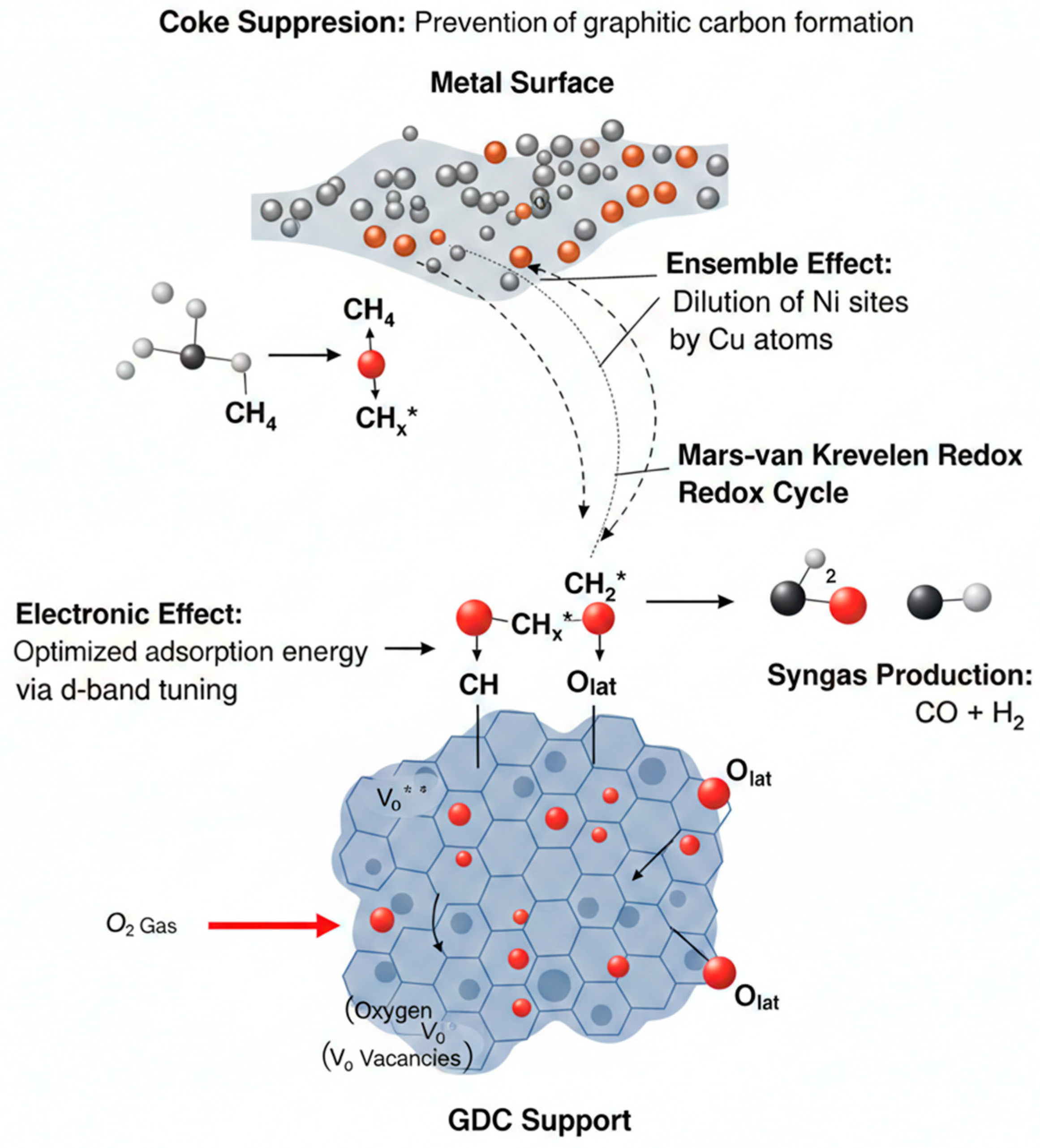
The superior performance of the 3.5%Ni–1.5%Cu/GDC catalyst can be traced back to the “Ensemble Effect” and the “Electronic Effect” of the bimetallic architecture (
Figure 11). According to the ensemble effect, the addition of a small amount of Cu (1.5%) effectively dilutes the surface Nickel clusters, breaking up large Ni ensembles that are responsible for the cracking of methane into graphitic carbon. Smaller Ni clusters have been theoretically and experimentally shown to favor the formation of CO over graphitic carbon filaments. From an electronic perspective, the interaction between Ni and Cu atoms at the GDC interface modulates the d-band center of the active metal sites, optimizing the adsorption energy of methane fragments. This electronic tuning, combined with the hydrogen spillover effects observed in TPR, ensures that the metallic state of Ni is maintained under the oxidizing POM environment, preventing the formation of inactive Ni
2+ ions [
35,
36].
The role of the GDC support is equally vital. The high concentration of intrinsic and extrinsic oxygen vacancies (I
570/I
460 = 0.42) acts as an “oxygen reservoir”. During the reaction, surface lattice oxygen reacts with adsorbed carbonaceous species (CH
x*) to form syngas, while gas-phase oxygen refills the vacancies, maintaining a continuous redox cycle. This cycle is significantly more efficient on GDC than on pure CeO
2 or CeO
2-ZrO
2 supports due to the enhanced ionic conductivity provided by Gadolinium doping [
37].
The 3.5%Ni–1.5%Cu/GDC catalyst developed in this study exhibits a superior combination of activity and stability compared to several reported benchmarks (
Table 2). Most notably, achieving 95% CH
4 conversion and 84% H
2 yield at 600 °C while remaining stable for 40 h is a significant technical achievement. In contrast, monometallic 5% Ni/CeO
2 has been reported to reach only 50% conversion at 600 °C and shows signs of deactivation over a shorter 15-h period. The incorporation of 1.5% Cu induces a pronounced synergistic effect, effectively doubling the methane conversion and substantially extending catalyst lifetime. This enhancement is closely associated with optimized surface basicity and an increased density of oxygen vacancies. Furthermore, the transition metal bimetallics such as Ni-Ga/DSZ95 demonstrate high structural stability and resistance to sintering, however they often require higher operating temperatures (700 °C) to reach conversions that the 3.5/1.5 Ni-Cu catalyst achieves at 600 °C. When benchmarked against noble metal catalysts, the Ni-Cu/GDC system remains highly competitive. For example, while Rh/Al
2O
3 catalysts are known for excellent coke resistance at 800 °C, the GDC-supported system achieves high conversion levels (95%) at a much lower temperature (600 °C) without utilizing precious metals. Similarly, it outperforms Ru-promoted systems in terms of hydrogen yield (84% vs. 80% for Ru-Ni/CeO
2). This high low-temperature activity is vital for industrial applications as it reduces the thermal stress on reactor components and lowers energy consumption. Furthermore, the stability profile of the Ni-Cu/GDC catalyst is more robust than hydrotalcite-derived (HT) systems, which achieved only 48% yield over 15 h, and Sr-promoted systems that, while showing high initial yields, are often tested for shorter periods. The low TGA weight loss (2.2 wt%) after 40 h confirms that the GDC support successfully facilitates the continuous gasification of carbon filaments, a mechanism that is often missing in non-reducible supports like Al
2O
3 or MgO.