Article

Functional Nanocomposites with a Positive Temperature Coefficient of Resistance Based on Carbon Nanotubes Synthesized by Laser Ablation


by
Alexandr V. Shchegolkov
1,*,
Aleksei V. Shchegolkov
2,*,
Ivan D. Parfimovich
3,
Vladimir V. Kaminskii
4,5 and
Mariya Y. Putyrskaya
6
1
Institute of Power Engineering, Instrumentation and Radioelectronics, Tambov State Technical University, Tambov 392000, Russia
2
Center for Project Activities, Scientific Research Sector, Advanced Engineering School of Electric Transport, Moscow Polytechnic University, Moscow 107023, Russia
3
Anton Nikiforovich Sevchenko Institute of Applied Physical Problems, Belarusian State University, 220045 Minsk, Belarus
4
Institute of Advanced Data Transfer Systems, ITMO University, St. Petersburg 197101, Russia
5
Laboratory of Diffraction Methods for Investigation of Real Crystal-Structures, Ioffe Institute, Politekhnicheskaya 26, St. Petersburg 194021, Russia
6
Peoples’ Friendship University of Russia (RUDN), 6 Miklukho-Maklaya St., Moscow 117198, Russia
*
Authors to whom correspondence should be addressed.
J. Compos. Sci. 2026, 10(1), 19; https://doi.org/10.3390/jcs10010019
Submission received: 15 November 2025 / Revised: 8 December 2025 / Accepted: 25 December 2025 / Published: 4 January 2026
(This article belongs to the Section Nanocomposites)

Abstract

This study presents the development of high-performance polymer composites designed for operation under extreme conditions. The research aimed to investigate the influence of laser ablation parameters on the synthesis of carbon nanotubes (CNTs) and to evaluate their efficacy as electrically conductive fillers. CNTs were synthesized using a 200 W laser ablation setup, with the graphite-to-ferrocene ratio in the target varied from 3:1 to 8:1 at a constant pulse duration of 0.1 s. Comprehensive analysis by Raman spectroscopy and scanning electron microscopy (SEM) demonstrated that this method enables the production of nanotubes with controlled morphology and diameters ranging from 20 to 70 nm. It was established that varying the target composition serves as an effective tool for managing the specific surface area and structure of the synthesized CNTs. The obtained nanotubes exhibited high efficiency in forming conductive networks within polymer matrices (exemplified by silicone), thereby imparting the composites with tailored electrophysical properties. A key finding of the work is the identified dependence of the positive temperature coefficient of resistance (PTCR) of the composites on the morphology and composition of the carbon filler. This property opens prospects for creating “smart” self-regulating heating elements based on the developed materials, including for anti-icing systems. Thus, the study results confirm that the targeted synthesis of CNTs via laser ablation and their subsequent incorporation into polymer matrices constitutes an effective strategy for expanding the functional capabilities of composite materials in modern technical applications.

1. Introduction

Polymer composite materials play a key role in industries such as aerospace, automotive and electronics, thanks to their combination of high specific strength, light weight and outstanding chemical stability [1]. One of the most promising directions in materials science is the development of polymer nanocomposites with hybrid fillers, which enables targeted control over their structure and functional properties [2].
Typically, polymers serve as the matrix, while dispersed fillers include carbon nanomaterials such as carbon nanotubes (CNTs), graphene, and graphene oxide (GO) [3,4]. Such nanocomposites demonstrate a range of improved electrophysical characteristics, including high electrical and thermal conductivity, as well as thermal stability [5]. Among carbon fillers, one- and two-dimensional structures stand out, which differ in geometry and number of layers [6,7].
Catalytic chemical vapour deposition (CCVD) [8] and plasma-enhanced chemical vapour deposition (PECVD) [9] methods are widely used for the synthesis of CNTs. The key difference between them is the mechanism of gas activation: in CCVD, it is high temperature, and in PECVD, it is electrical discharge. There are also alternative methods, such as electric arc discharge [10] and laser ablation [11], which allow CNTs to be obtained with a wider range of structural and morphological characteristics, which is currently being adapted for the scalable production of graphene and other carbon nanomaterials [12].
Despite the high theoretical electrical conductivity of CNTs [13], their practical application in polymer matrices such as polypropylene [14] often faces the problem of agglomeration, which reduces the efficiency of conducting network formation [15]. Interestingly, increasing the size of carbon nanotube agglomerates can reduce the percolation threshold—the minimum filler fraction required for conductivity to occur—from 1.32% to 0.44% as the particle size increases from 20 to 1200 μm [16]. This indicates that in a matrix with larger agglomerates, fewer nanotubes are required to create a conductive network.
A promising approach to mitigating agglomeration and enhancing composite properties is the synergistic use of hybrid fillers. For instance, combining multi-walled carbon nanotubes (MWCNTs) with graphene oxide (GO) promotes more uniform filler distribution and significantly increases electrical conductivity compared to systems with a single filler type [17,18]. In such hybrid systems, SWCNTs (Single-Walled Carbon Nanotubes) can act as ‘bridges’ between graphene planes, forming a more efficient three-dimensional conductive network in a polymer matrix, for example, in polydimethylsiloxane (PDMS) [19].
The formation of conductive networks in polymers under the influence of external fields determines not only electrical conductivity, but also a complex of functional properties, including thermal conductivity [20] and the manifestation of electret [21] and thermoelastic effects [22]. Interphase interaction between the polymer and filler in elastomers leads to a limitation of molecular mobility and a sharp increase in the elastic modulus [23].
At the same time, the efficiency of reinforcement is determined by the ability of the polymer macromolecules to adapt to the anisotropy of the filler [24].
One of the key functional properties of such composites is the positive temperature coefficient of resistance (PTC), which opens prospects for creating self-regulating electric heaters. For example, a hybrid AgNP/CNT composite demonstrates higher heating efficiency (118.6 °C at 8 V) than its counterpart with only CNTs (95.0 °C) [25]. The PTC effect is also observed in thermoplastic elastomers filled with graphene, with a switching temperature of up to 200 °C [26]. Targeted regulation of the temperature coefficient of resistance (TCR) can be achieved using combined methods related to dielectrophoretic structuring,, allowing the TCR to be varied in the range from –1.5 to +1.0% °C−1 [27]. The realization of the PTC effect is closely related to interfacial interactions and the specific characteristics of the polymer matrix. Highly crystalline polymers (HDPE, PVDF), upon melting, exhibit significant thermal expansion, providing a low percolation threshold and an intense PTC effect. At the same time, elastomers (silicones, polyurethanes) impart flexibility, an extended temperature range, and increased thermal stability to the composites [28,29]. Thus, employing CNTs, including those synthesised by laser ablation [30], is an effective way to create polymer nanocomposites with positive temperature coefficient of resistance (PTCR) effect. Laser ablation not only allows the synthesis of CNTs with specified parameters but can also be used for their subsequent modification and functionalisation through the targeted creation of defects [31]. This opens up opportunities for fine-tuning functional properties such as thermal conductivity, electrical conductivity, and pyro-resistive response, which is critical for the development of self-regulating systems and flexible electronics.
Femtosecond laser processing provides precise control over the synthesis, structure, and functional properties of CNTs. This method facilitates not only position-selective growth but also targeted surface modification. The choice of catalyst is crucial: metallic catalysts control morphology, while non-metallic ones can enhance material purity and functionality. Precision laser processing induces covalent and non-covalent surface changes, effectively adjusting its properties to expand the application areas of nanotubes [32].
The laser ablation (LA) method is considered a promising technology for reducing the cost of CNT synthesis, which is a critically important factor for their broad industrial implementation, despite existing technological and economic barriers [33]. The application of laser methods for producing CNTs and carbon nanocomposites demonstrates high versatility and enables the synthesis of complex structures, such as one-step production of nanocomposites like SnO2 nanoparticles decorated with multi-walled CNTs [34], or Au/CNT hybrid materials [35]. Property control involves changing the physical and functional characteristics of synthesized carbon nanoparticles through the choice of liquid medium (e.g., chitosan for increased colloidal stability) [36]. Selective modification and purification via controlled nanosecond laser treatment allows for cleaning CNT networks without damaging their structure (at intensity < 1 MW/m2) or purposefully thinning them [37]. Device integration: Laser technology is used to create thick electrodes with complex architecture (e.g., Mn compounds on graphene foam with a CNT conductive network) for high-efficiency batteries [38], as well as for the precise deposition of catalysts followed by the growth of CNTs of a predetermined geometry [39]. Improvement of functional material characteristics through the integration of LA-synthesized CNTs into lithium batteries contributes to reducing overpotential and increasing electrode stability during ultra-fast charging [40].
Thus, laser ablation is a universal tool [41] for advanced materials science, applicable to tasks ranging from fundamental synthesis to the engineering integration of functional nanomaterials.
It should be noted that the laser ablation method possesses a whole set of unique properties, such as ultrafast heating and cooling, localized energy delivery, and special reaction kinetics. In addition, the mechanisms of laser-induced synthesis make it possible to obtain hybrids based on graphene and CNTs and to intercalate various nanoparticles into graphene [42,43,44,45,46,47,48,49]. The special reaction kinetics is not a side effect, but a key tool of laser synthesis that allows us to control the material at the atomic level, bypassing the limitations of other methods for synthesizing CNTs [49,50,51,52,53].
Table 1 below presents the key features, advantages, and mechanism of the laser ablation method for synthesizing carbon nanomaterials.
Despite the successes achieved, the problem of CNTs agglomeration and their inefficient distribution in the polymer matrix remains relevant [54,55]. Therefore, the aim of this study is to investigate the potential of CNTs, including those synthesised by laser ablation, as the sole or main filler for achieving an intense PTC effect in polymer composites, with the prospect of subsequent optimisation of properties through hybridisation with other carbon nanomaterials or mechanical activation.
Thus, this work involved the synthesis and investigation of various types of CNTs for use as fillers in conductive polymer nanocomposites. The laser ablation method with a variable graphite-to-ferrocene ratio successfully yielded CNTs with controlled geometric and morphological characteristics. The influence of the precursor ratio on nanotube morphology was established. The assessment of thermal stability and Raman spectroscopy data confirmed a clear correlation between synthesis conditions and CNTs properties, enabling targeted control over their morphology and specific surface area.
The synthesized CNTs demonstrated high effectiveness as an electrically conductive filler for polymer composites, providing the nanocomposite with a pronounced and stable positive temperature coefficient of resistance. This property opens prospects for creating “intelligent” and energy-efficient electric heating systems capable of self-regulating temperature without the need for external automation.

2. Materials and Methods

2.1. Synthesis of Carbon Nanotubes by Laser Ablation

Carbon nanotubes (CNTs) were synthesized using a laser ablation setup, a schematic of which is presented in Figure 1. The primary components are a pulsed Nd:YAG laser (1) and a reaction chamber (4). The synthesis process comprises three main stages: target preparation, where the target (5) was a compacted mixture of high-purity graphite and a catalytic additive, ferrocene (Fe(C5H5)2, and to ensure uniformity, the components were pre-mixed mechanically and mechanically activated in a vortex layer apparatus (VLA); ablation, during which the target was placed in a sealed reaction chamber filled with inert gas and exposed to laser radiation with a wavelength of 1064 nm, a power of up to 1 kW and a pulse duration of up to 5 min with a discreteness of 0.1 s; formation of CNTs as a result of evaporation of graphite and catalyst from the target surface, followed by condensation of carbon vapour in the cooling zone of the reaction chamber, after which the resulting soot product containing CNTs was collected from the chamber walls for subsequent purification and analysis.
The main feature is the preparation of a catalytic target by mechanically activating a mixture of graphite and ferrocene (Fe(C5H5)2) in VLA (Vortex Layer Apparatus), which ensures a homogeneous distribution of catalytic centres and the formation of defects in the graphite structure. During the synthesis process, focused laser radiation with a power density in the range of about 100 W/cm2 causes pulsed evaporation of the target with the formation of carbon-saturated plasma, where, upon subsequent cooling in a controlled inert gas atmosphere, the mechanism of nanotube growth is realised according to the ‘vapor–liquid–solid’ with the formation of predominantly single-walled carbon nanotubes with the possibility of controlling morphological parameters depending on the ratio of Fe(C5H5)2 and graphite. In Table 2, the parameters of synthesis using laser radiation and the ratio of ferrocene to graphite (mass ratio) are presented.
To investigate the effect of the laser on the structure and properties of the target (ferrocene/graphite), samples (S1–S6) were treated with a defocused laser beam with a power of 200 W for a short exposure time of 0.1 s. Subsequent comprehensive analysis included surface morphology studies, spectroscopic evaluation of molecular interactions, and X-ray phase analysis to establish correlations between laser exposure parameters and induced changes in the structure and phase composition of the materials.

2.2. Manufacture of Conductive Nanocomposite

A two-component silicone compound, “Silagerm 8030” (Element 14, LLC, Moscow, Russia), served as the polymer matrix. The composite was prepared as follows:
The first component of the compound was mixed with carbon nanotubes (CNTs) (at concentrations ranging from 1 to 3 wt.%) using a WiseStir HT 120DX mechanical stirrer (WiseStir, Seoul, Republic of Korea) at 300 rpm for 5 min.
The second component (hardener) was introduced into the resulting mixture in a 1:1 mass ratio and stirred for 2 min at a temperature of 22 °C. This duration was determined as optimal for the initiation of polymerization in preliminary experiments. The fabricated samples were parallelepipeds with dimensions of 5 × 5 × 0.2 cm. Aluminum plates were attached to opposite faces of the samples to apply the supply voltage.

2.3. Characterization

The filler particle distribution was analyzed by static and dynamic light scattering using a NICOMP 380 ZLS analyzer (PSS.Nicomp, Port Richey, FL, USA). Scanning electron microscopy (SEM) was performed using a MIRA 3 TESCAN electron microscope (TESCAN ORSAY HOLDING, Brno, Czech Republic). Imaging was conducted in secondary electron (SE) detection mode at an accelerating voltage of 10.0 kV and a working distance of 7.70 mm. Standard preparation procedures established for non-conductive polymer composites were employed to ensure image quality and prevent surface charging. The morphology of the CNTs was examined using a Hitachi H-800 microscope (Hitachi, Ltd., Tokyo, Japan) (SEM, TEM). For the TG and DSC studies, a NETZSCH STA 449F3 (NETZSCH-Gerätebau GmbH, Selb, Germany) instrument was used. The X-ray structural analysis of CNTs was conducted on a Bruker D8 Advance diffractometer, manufactured by Bruker AXS GmbH (Bruker AXS SE, Karlsruhe, Germany).

2.4. Specific Surface Area Measurement and Identification of Synthesized CNTs

The specific surface area of the synthesized CNTs was determined using the Brunauer–Emmett–Teller (BET) method on a Quantachrome Nova 1200e analyzer (Anton Paar QuantaTec Inc., Boynton Beach, FL, USA). Raman spectra were investigated using a spectrometer based on a confocal microscope (“Spectra”, NT-MDT SI (NT-MDT Spectrum Instruments, Zelenograd, Moscow, Russia)). A 100× objective with a numerical aperture (NA) of 0.7 and a semiconductor laser (λ = 532 nm, excitation power of approximately 50 mW) were used.

2.5. Non-Contact Temperature Investigation Methodology

The temperature field on the heating element surface was studied using a “Testo-875-1” thermal imager with a 32 × 23° optical lens (SE & Co. KGaA, Testo, Lenzkirch, Germany). The measurements were performed in a darkened room to eliminate the influence of solar radiation. The temperature of the polymer composites was also measured via a contact method using a two-channel thermometer “Testo 992” (SE & Co. KGaA, Testo, Lenzkirch, Germany). The data obtained from both methods were compared. Furthermore, the emissivity coefficients (surface emissive power) of the polymer composite were determined. The thermal images of the polymer composites were processed using the IRSoft v 5.2 SP1 software.

3. Results and Discussion

3.1. Analysis of the Morphology and Microstructure of Synthesized CNTs

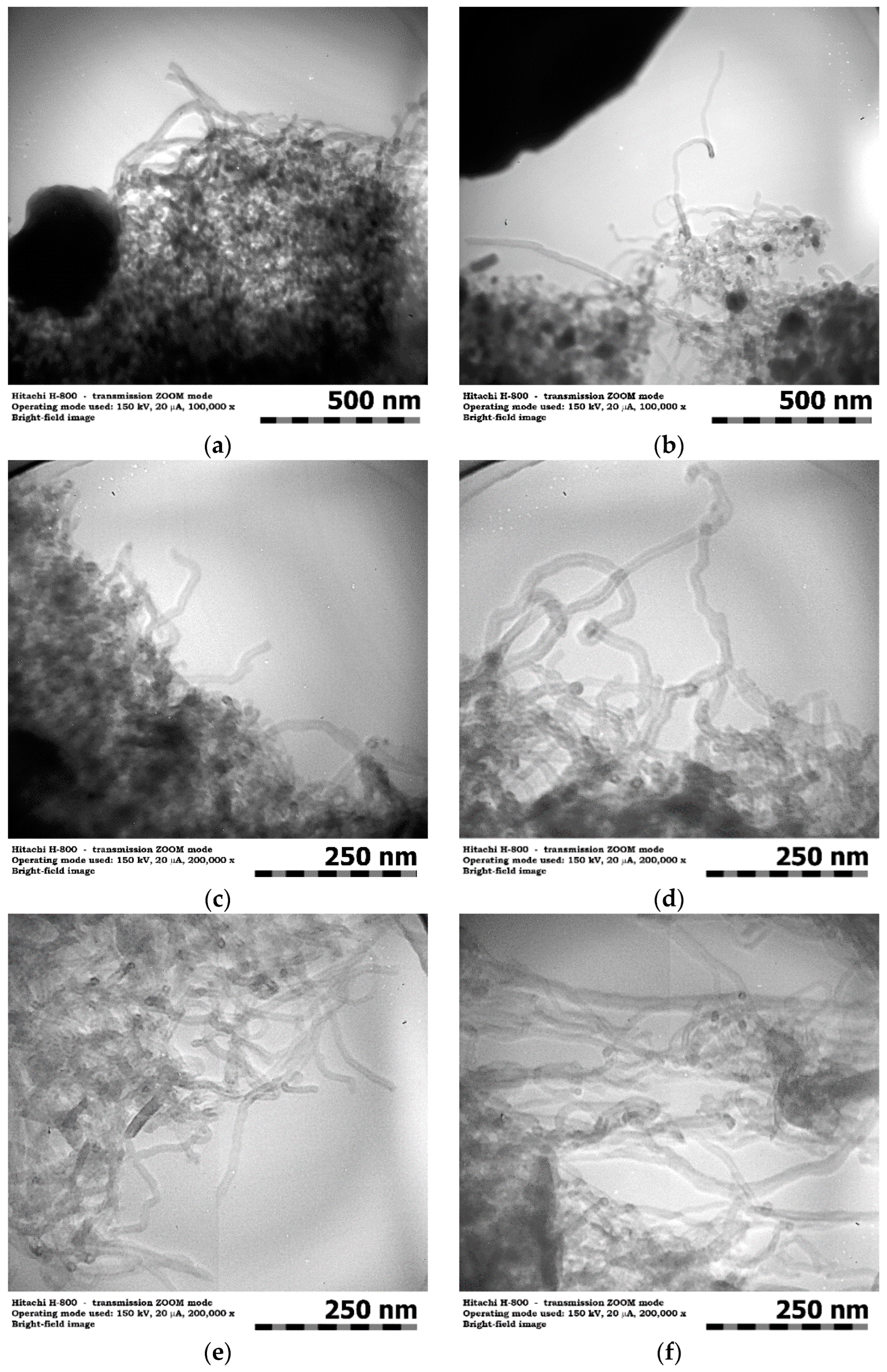
The morphology of the laser-ablated CNTs is shown in Figure 2a–f.
The microstructural analysis of the synthesized materials revealed a characteristic heterogeneity in the morphological characteristics of the CNTs. According to the SEM data (Figure 2), a significant distribution of nanotube diameters in the range of 15–30 nm is observed. Micrographs with a resolution of 0.8–1.8 µm (Figure 2a,b) demonstrate the formation of entangled CNT agglomerates, assembled into individual bundles. This structural organization is characteristic of both the macro- and nanoscale organization of the material.
Of particular interest is the morphology of individual CNTs, where numerous structural defects in the form of kinks and bends with varying angles of curvature are observed (Figure 2e,f). These morphological features indicate the presence of significant mechanical stresses during the nanotube growth process. It is important to note that the CNTs form a complex three-dimensional network through mutual entanglement (Figure 2a), which facilitates the formation of an developed electrically conductive system capable of efficient charge transport via a tunneling conduction mechanism.
Comparative analysis of the samples (Figure 2a–f) confirms the predominance of thin nanotube structures, characteristic of the laser ablation method and consistent with literature [56]. This entangled spatial network is highly advantageous for conductive polymer composites, as it contributes to a lower percolation threshold and stable conductive properties under mechanical deformation.

3.2. Thermal Analysis of Synthesized CNTs

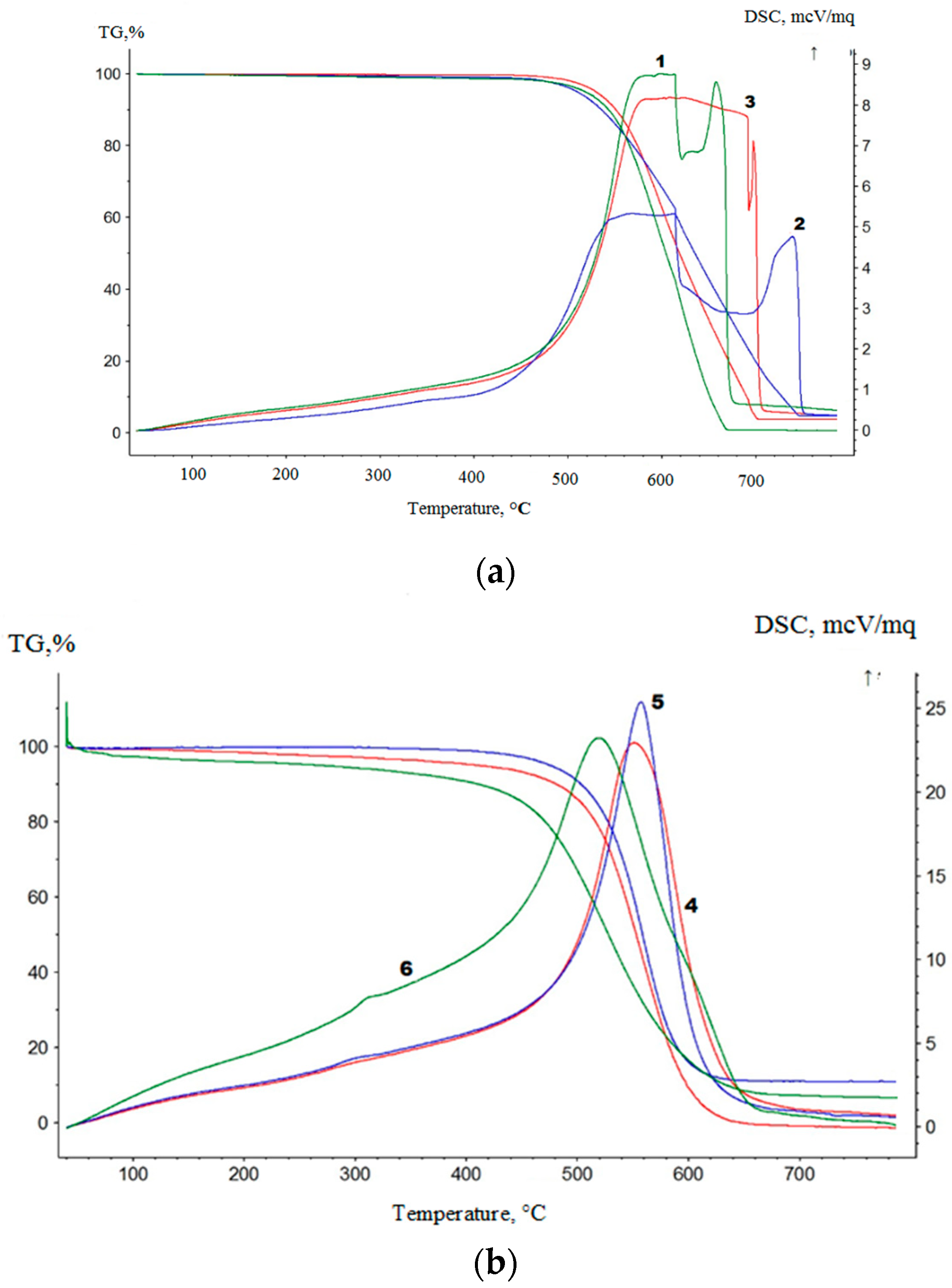
Differential scanning calorimetry (DSC) revealed a pronounced dependence of the DSC curve profiles on the ferrocene-to-graphite ratio in the initial target (Figure 3a,b). For CNT samples synthesized at ratios of 1, 2, and 3, the thermal decomposition process is characterized by at least two distinct stages, corresponding to the extrema on the DSC curves. In contrast, for samples with ratios of 4, 5, and 6, only one broad exothermic maximum is observed, indicating a lower content of amorphous carbon and a higher degree of structural ordering in the nanotubes [57,58].
It is important to note that while a single maximum is retained on the DSC curves for some samples with different graphite/ferrocene combinations, its intensity decreases significantly upon changing the graphite/ferrocene composition. This can be explained by the partial oxidation of the carbon framework occurring during the laser ablation process under limited oxygen access.
The obtained data are consistent with the electron microscopy results and indicate a substantial influence of the catalytic system composition (graphite/ferrocene) on the structural properties. The presence of multiple thermal decomposition peaks in samples 1–3 may be associated with the coagulation of catalytic particles during synthesis, leading to the formation of CNTs with varying degrees of defectiveness and a broad diameter distribution.
The thermogravimetric analysis (TGA) curves also differ in character for all samples, which is a feature of their specific structural and morphological properties [59].
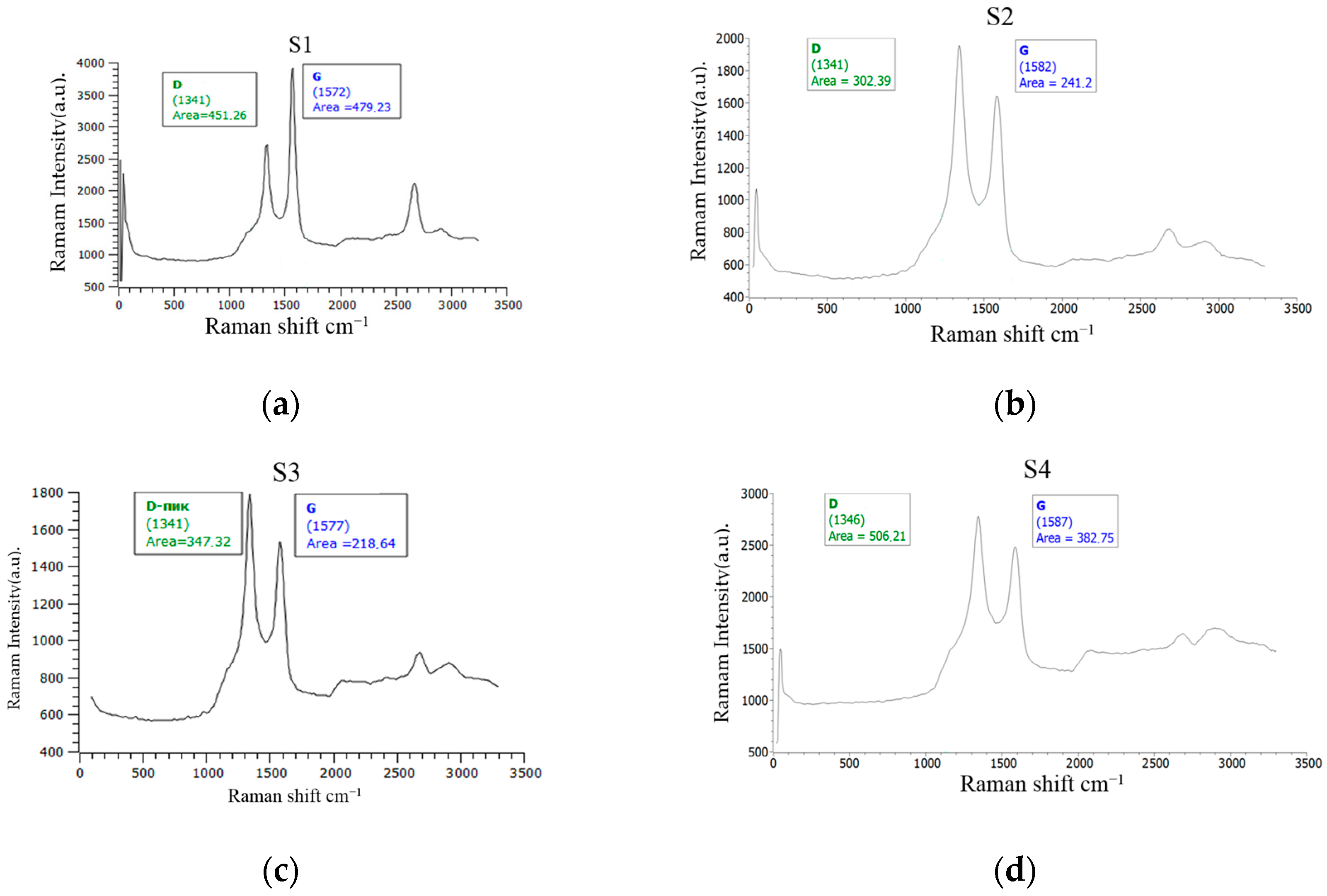
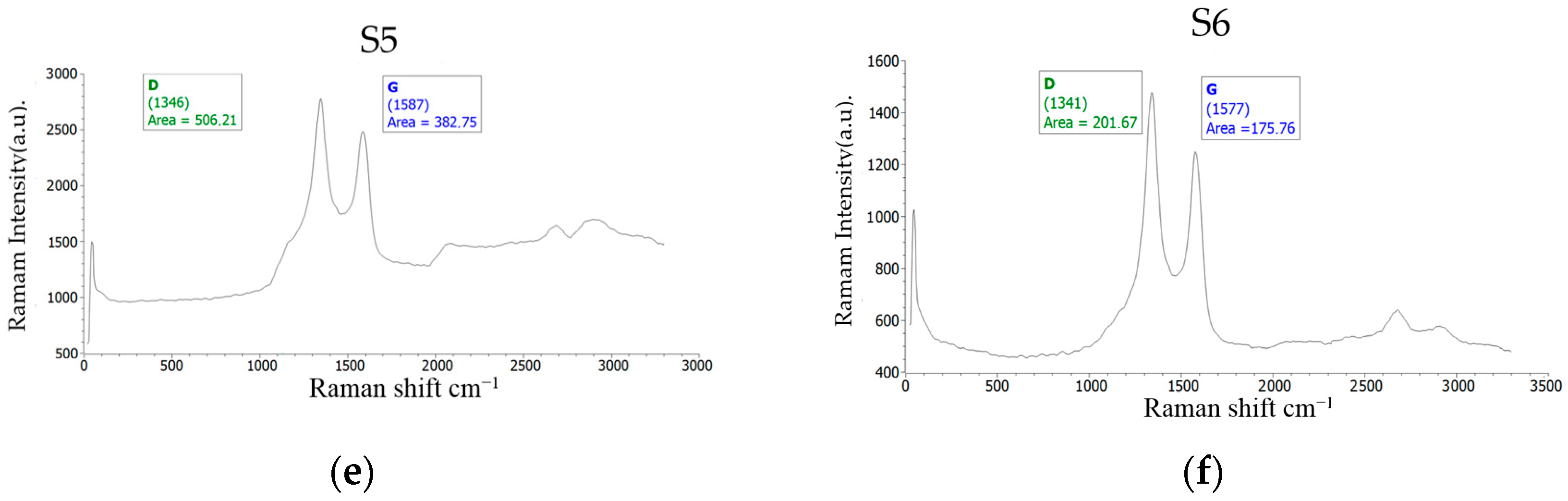
Table 3 summarizes the data on the degree of structural defectiveness, determined by Raman scattering parameters, and the specific surface area values of the synthesized CNTs. The qualitative and quantitative assessment of the structural defectiveness is further confirmed by the analysis of the Raman spectra presented in Figure 4a–f.
The Raman spectra recorded for a series of hybrid materials of different compositions after the freeze-drying of the suspensions exhibit characteristic features (Figure 4). The most intense D and G bands, located at approximately 1350 cm−1 and 1570 cm−1, respectively, are identified in all spectra.
The G band is attributed to the vibrations of carbon atoms in the sp2-hybridized lattice of graphene planes, while the D band is associated with the presence of structural defects and vibrations in sp3-hybridized domains. The integrated intensity ratio of the D to G bands (ID/IG) is widely used for the semi-quantitative characterization of the defect density in carbon materials and correlates with the specific surface area data of the investigated samples.
The structural characterization of the graphene layers in the carbon nanotubes was performed by Raman spectroscopy with an analysis of the intensity of the characteristic D (1250–1450 cm−1) and G (1500–1600 cm−1) bands, which correspond to carbon atom vibrations in sp3- and sp2-hybridized states, respectively. The results indicated that increasing the mass fraction of ferrocene relative to graphite in the initial target does not lead to significant changes in the ID/IG ratios for the synthesized CNTs.
For the evaluation of the Raman spectral parameters, attention should be paid to the 2D band (~2700 cm−1) [60], which is related to the sensitivity of the π-band in the electronic structure. Changes in its position and intensity correlate with the presence and localization of oxygen-containing groups in the basal plane [61,62]. The D′ (~1620 cm−1), D″ (~1500 cm−1), and D* (~1150 cm−1) bands also characterize the presence of structural defects and oxygen-containing functional groups [63,64]. The D + G band (~2920 cm−1), present in some spectra, indicates the presence of a disordered carbon structure [65,66].
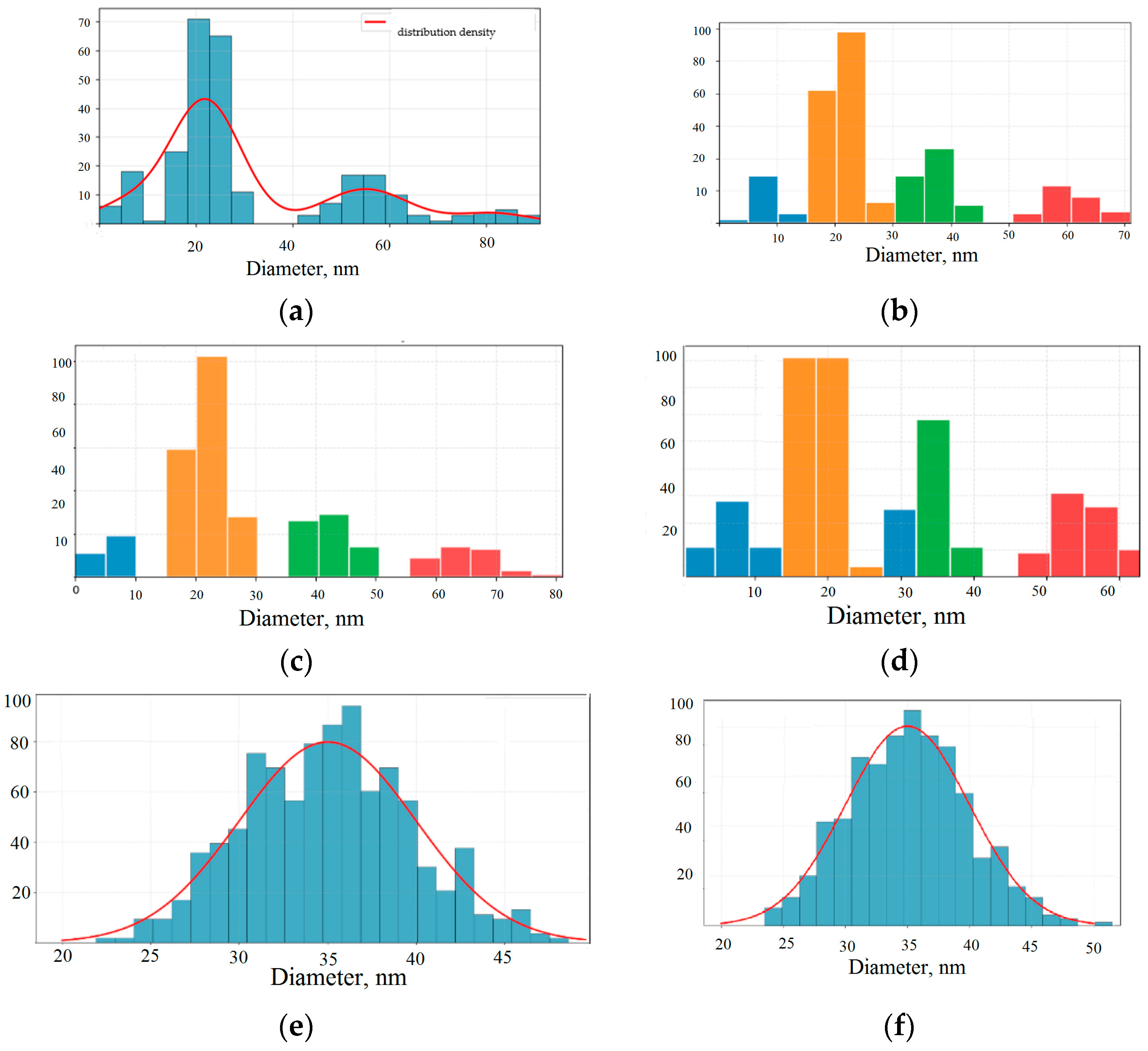
Figure 5a–f shows the CNT particle size distribution, demonstrating a broad dispersed composition. Analysis of the particle size (diameter) distribution diagram of the dispersed phase (Figure 5) revealed that the largest agglomerates, exceeding 3.5 μm, are observed in the initial CNT suspension (Figure 5a), which is explained by the well-known tendency of CNTs to aggregate.
The resulting polymodal particle system facilitates the formation of multi-level conductive networks in composite materials through conductive channels of varying scales, potentially leading to a synergistic improvement in the composite’s electrophysical and thermophysical properties. The varying dispersed composition indicates specific features of the laser ablation process, where the synthesis depends on the effective ratio between the ferrocene–graphite mixture exposed to the laser radiation.
According to the data in Table 2, the specific surface area (SSA) of the synthesized CNTs exhibits a pronounced dependence on the ferrocene concentration in the initial mixture. A clear trend is observed: sample S1 with a graphite-to-ferrocene ratio of 3:1 is characterized by the lowest SSA (215 m2/g), whereas an increase in the catalyst proportion in samples S2 (4:1) and S3 (5:1) sequentially raises this parameter to 242 and 275 m2/g, respectively.
The established dependence is explained by the increase in the number of active catalytic centers at higher ferrocene content, which leads to the formation of CNTs with a smaller average diameter and a more developed hierarchical porous structure. However, a further increase in the catalyst concentration in sample S4 (6:1), resulting in an SSA of 255 m2/g, indicates a reduction in the catalytic system’s efficiency. This is attributed to a deviation from the optimal graphite-to-ferrocene ratio. The values for samples S5 (243 m2/g) and S6 (240 m2/g) lead to a similar conclusion.
A comparative analysis of the SEM data and the specific surface area values allows us to conclude that the optimal ratio is 5:1 (sample S3), which ensures the synthesis of structurally superior CNTs with high specific surface area and minimal content of amorphous carbon phases.
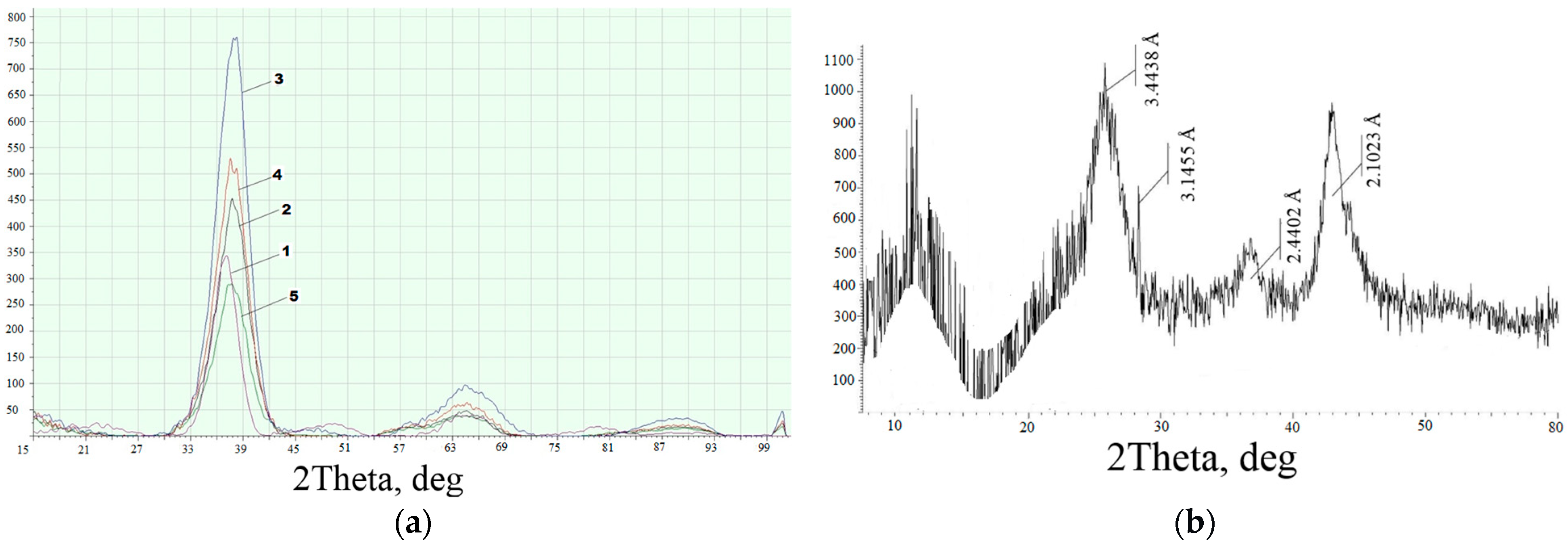
The results of X-ray diffraction analysis are presented in Figure 6a,b.
The change in the structural parameters of CNTs during the experiment was monitored by the dynamics of the (002) peak. The initial stability of the interplanar spacing (d~ 3.538–3.539 Å) confirms the preservation of the original crystal structure of the material. The subsequent increase in d to values exceeding 3.539 Å indicates the initiation of pronounced structural changes, which can be interpreted as a consequence of lattice deformation, the onset of a phase transformation, or thermal expansion. In parallel, the analysis of the full width at half maximum (FWHM) of the (002) peak, which correlates with the size of the coherent scattering regions (crystallites) in the direction perpendicular to the layers, revealed its change. This dynamics of the FWHM indicates the evolution of the size of crystalline domains and confirms the restructuring of the nanocrystalline phase of CNTs. The shift in the (002) peak may indicate interlayer deformation (tension/compression) caused by thermal effects associated with laser irradiation.
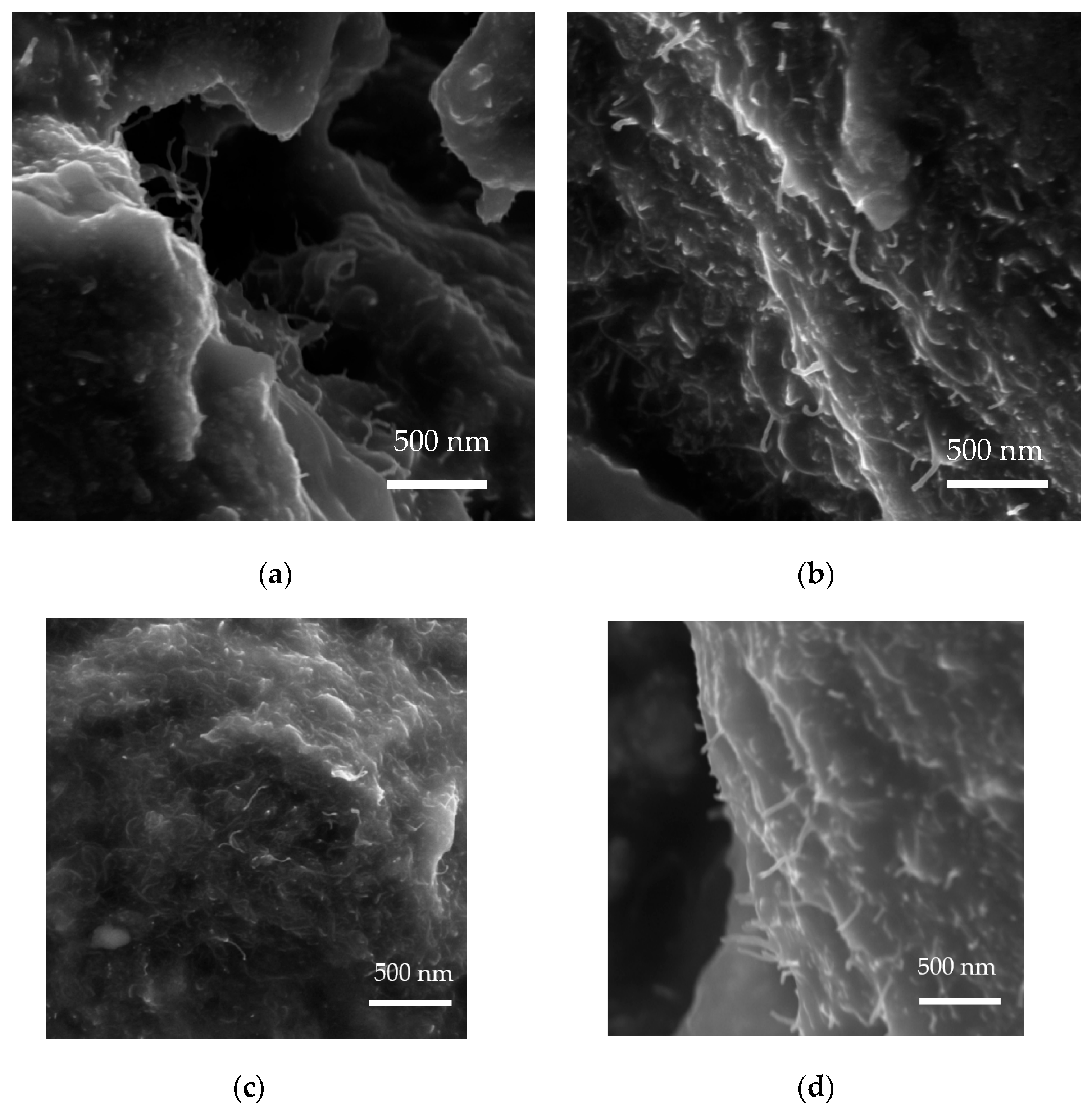
Scanning electron microscopy (SEM) results of the polymer composite filled with carbon nanotubes demonstrate the distribution features of the nanofiller (S2–S4) within the polymer matrix (Figure 7a–d). The micrographs show the formation of a developed three-dimensional CNT network, uniformly distributed throughout the composite volume.
A critically important observation is the pronounced adhesion at the polymer–filler interface. Multiple regions show zones of intensive polymer matrix penetration into the CNT structure, indicating the development of efficient interfacial bonding. This morphological feature is fundamental to the reinforcement mechanism, as it ensures optimal transfer of mechanical stress from the matrix to the filler under external load.
Of particular interest is the analysis of the nanofiller’s spatial distribution. According to the data presented in Figure 7, samples S2 and S3 exhibit a statistically uniform distribution of CNTs within the polymer matrix volume. The absence of pronounced agglomerates and sedimentation effects attests to the effectiveness of the dispersion methodology used and the optimal rheological parameters of the molding process.
The formation of such a morphological structure directly correlates with the composite’s performance characteristics: the uniform nanotube distribution enables the formation of a three-dimensional reinforcing network, while the developed interfacial interaction promotes efficient mechanical energy dissipation and enhances the material’s strength properties.
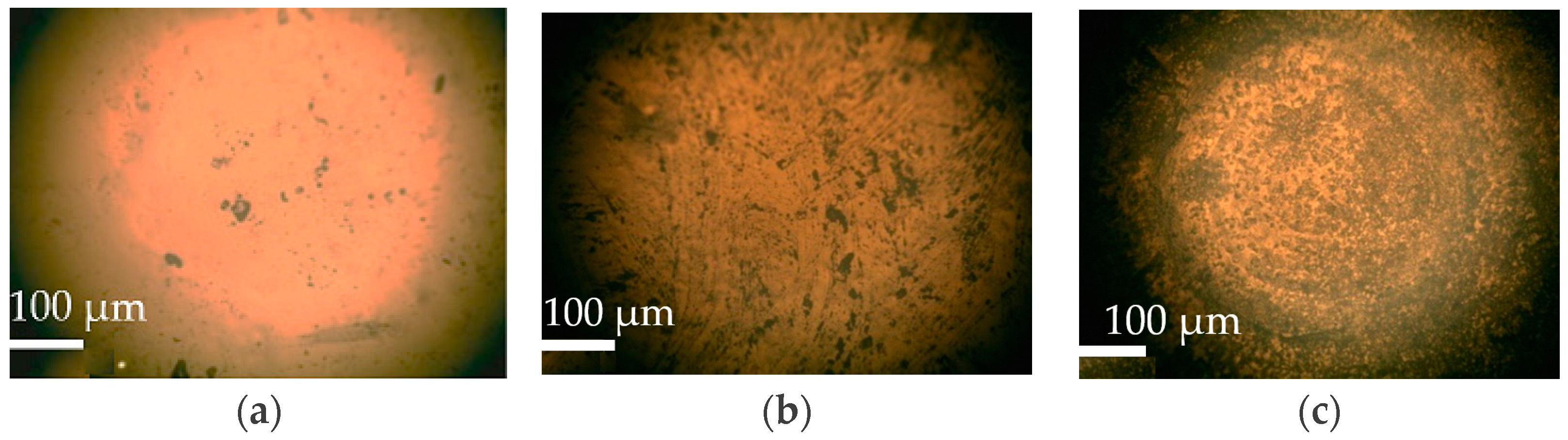
Figure 8a–c present optical micrographs of cross-sections of polymer composites with different mass fractions of carbon nanotubes (1, 2, and 3 wt.%), illustrating the features of filler distribution within the polymer matrix.
At the minimum CNT concentration (1 wt.%, Figure 8a), the composite structure exhibits isolated, large agglomerates of irregular shape, reaching sizes of several hundred micrometers. A characteristic feature of this sample is the significant distance between individual agglomerates (approximately 30 μm), indicating insufficient filler density to form a continuous conductive network. When the concentration increases to 2 wt.% (Figure 8b), a substantial change in morphology is noted: the number of agglomerates increases while their size decreases to 20–30 μm. The interparticle distances between agglomerates are reduced, creating prerequisites for the formation of percolation conduction pathways.
The densest filler packing is observed at a concentration of 3 wt.% (Figure 8c). This sample is characterized by the formation of numerous heterogeneous agglomerates 10–20 μm in diameter, creating closely spaced clusters while maintaining inter-agglomerate gaps. This morphological organization indicates that the critical concentration required for establishing a continuous conductive network has been reached, while the preserved gaps between particles help maintain the composite material’s elasticity.

3.3. Analysis of the Thermal Behavior of an MWCNTs/Elastomer Under Mechanical Deformation

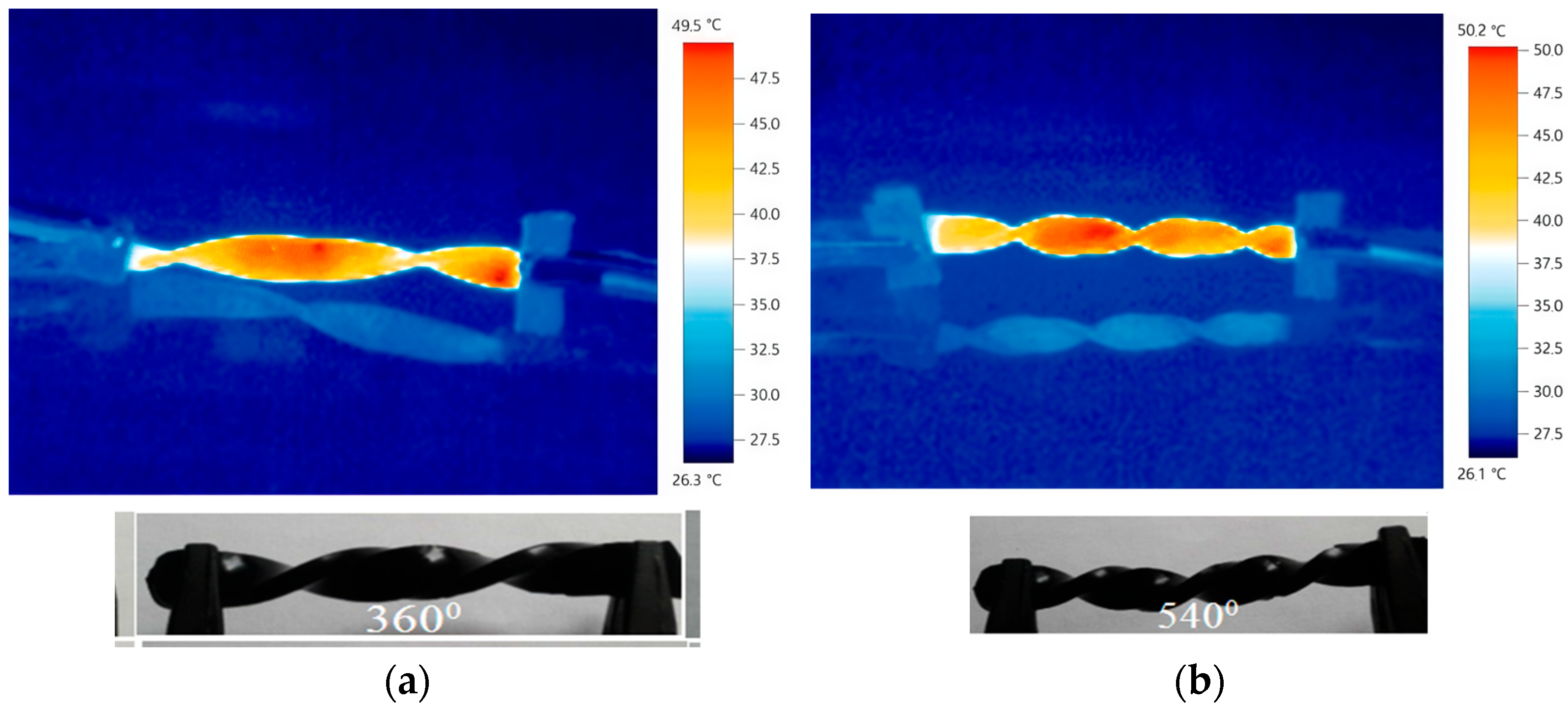
The conducted studies revealed specific features of the temperature field distribution on the surface of an elastomer filled with MWCNTs under various types of mechanical loads. When the sample was twisted by 360°, zones with elevated temperature (49.5 °C) formed in the right and central parts. Increasing the torsion angle to 540° led to a further temperature rise in the deformation zone, reaching 50.2 °C (Figure 9a,b). Upon reaching a twist angle of 1080°, the thermal anomaly shifted towards the right current-supplying clamp. The observed differences in the temperature field distribution under tensile and torsional strains are explained by changes in local electrical resistance within the deformed regions of the material. This effect is attributed to a combination of two factors: the geometric distortion of the dielectric polymer matrix and the structural deformation of the conductive CNT network. Furthermore, stretching of the elastomer causes a reduction in heat generation intensity due to the disruption of contacts within the conductive network formed by individual nanotubes and their agglomerates.

3.4. Performance Evaluation of Heating Elements Under Ice Accretion Conditions

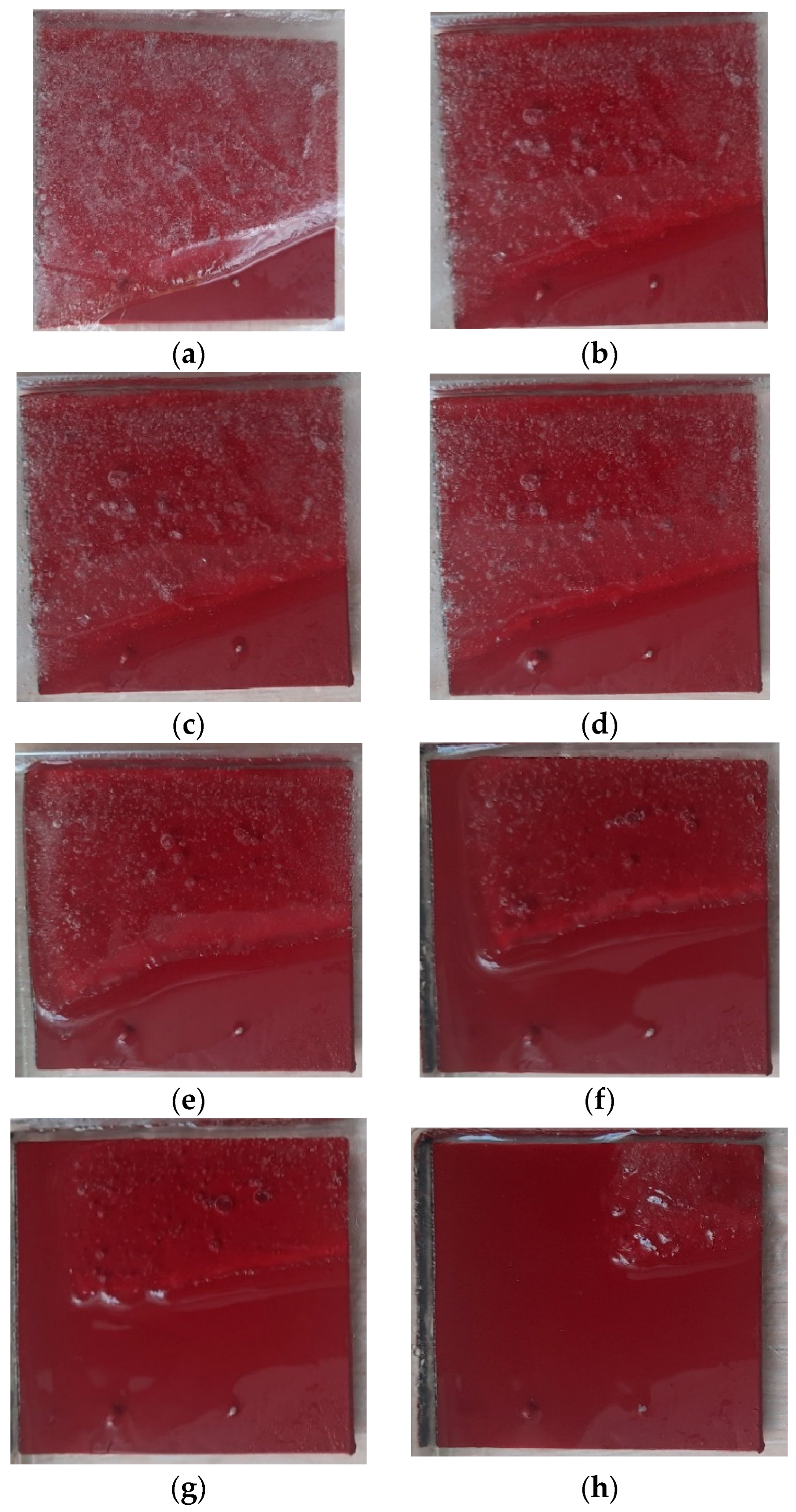
Experimental studies confirmed the effectiveness of the developed nanocomposite-based heating elements. When electrical voltage is applied to the heating elements, a progressive increase in their surface temperature is observed, leading to intensive melting of the ice layer (Figure 10a–h). According to the data in Figure 10, the boundary of the iced surface progressively recedes (Figure 10a–f), which is associated with the heater reaching a steady-state thermal regime.
In a control experiment, a 5 mm thick ice layer with an area of 25 mm2 (5 × 5 mm), formed on the heating element surface, was completely melted within 210 s. It is important to note that when the heater operates in standby mode (pre-heating), ice formation is almost entirely prevented.
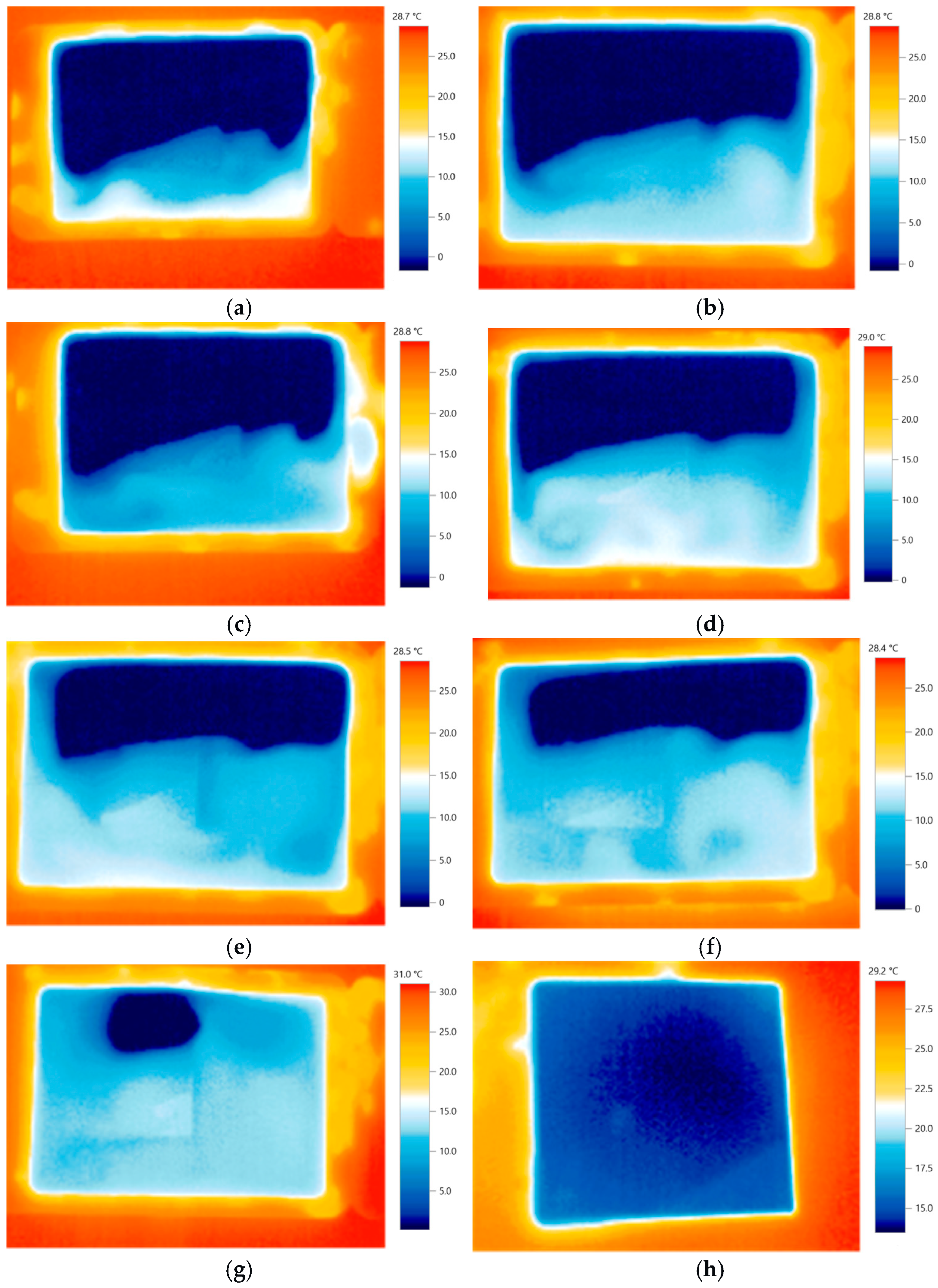
During cyclic heating, the formation of thawed water at 2 °C was observed on the investigated surface (Figure 11g–h), indicating a dynamic thermal regime. This regime is caused by the change in the electrophysical state of the MWCNT network in response to the transformation of the polymer composite’s temperature field (Figure 11), demonstrating the complex interrelationship between the mechanical, electrical, and thermal properties of the developed material.
Figure 11 shows the temperature fields of the heating elements (flat plates).
Experimental studies confirmed the operational capability of the heating elements based on nanocomposites. Upon application of the supply voltage, a progressive increase in the heater surface temperature is observed, leading to active melting of the ice layer (Figure 10a–h). According to the data in Figure 11, the boundary of the iced surface progressively recedes (Figure 11a–f) due to the heating element reaching a steady-state thermal regime.
Quantitative measurements showed that an initial ice layer with a thickness of 5 mm and an area of 25 mm2 (5 × 5 mm) was completely melted within 210 s. Significantly, when the heater operated in a pre-activation mode (standby mode), ice formation was almost entirely prevented.
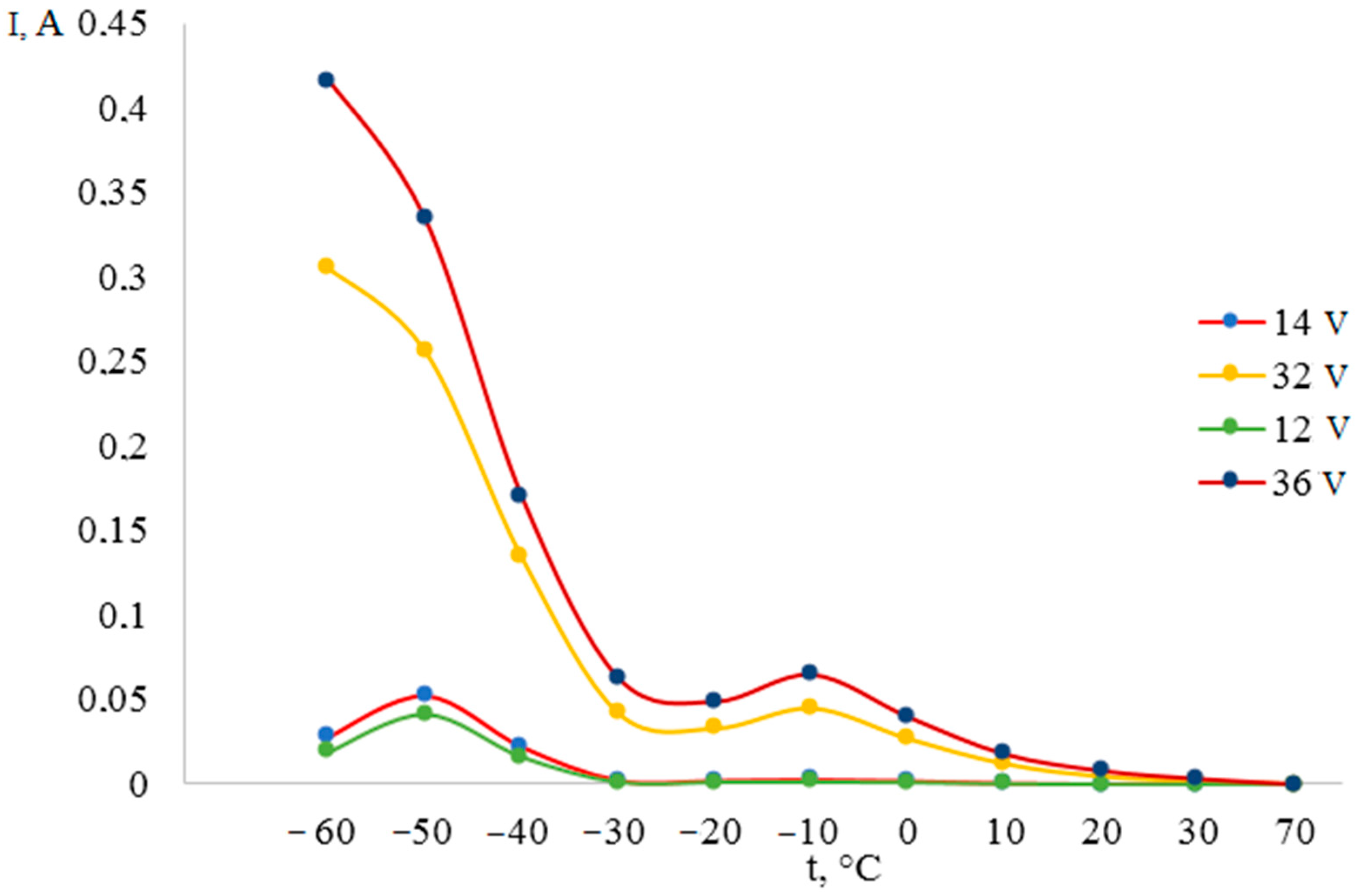
The heat generation intensity demonstrated a direct correlation with the electrical power of the heater, which was regulated by varying the AC voltage (0–36 V) from the power supply, resulting in a corresponding change in the current consumption. Figure 12 presents the results of a comprehensive study of the current-voltage (I–V) characteristics of the nanocomposite over a broad temperature range from −60 to +60 °C, reflecting the dependence of the current consumption on the applied voltage under different temperature conditions.

3.5. Analysis of Self-Regulating Properties and Comparative Characteristics of Heating Elements

As can be seen from the data in Figure 12, a decrease in the external temperature leads to an increase in the current consumed by the nanocomposite, confirming the manifestation of the self-regulating temperature effect. In the voltage range of 32–36 V, a steady current increase is observed, ensuring sufficient heat generation across the entire investigated temperature range.
The graph (Figure 12) shows a current drop at temperatures from 0 to −30 °C within the same voltage range (32–36 V). At lower voltage values (12–14 V), a decrease in current is observed at a temperature of −50 °C. In the positive temperature range (20–60 °C), the nanocomposite demonstrates minimal current consumption, which further confirms the self-regulating effect.
Table 4 presents a comparative study of various types of MWCNT-based heaters. The analysis shows that the performance of the heating elements is determined by the type of polymer matrix, the operating voltage values, and the sample fabrication technology. The developed elastomer-based heater with MWCNTs demonstrates the capability to operate in a significantly wider voltage range (14–36 V) with a self-regulating temperature mode and optimal heat generation compared to known analogues: MWCNT/PDMS—35 V [67], aramid fiber with MWCNTs—10 V [68], polyurethane with MWCNTs—10 V [69], polydimethylsiloxane (PDMS) with MWCNTs—35 V [70], polyurethane with MWCNTs—100 V [71], and PDMS with MWCNTs—110 V [72] and 5 V [73].
The advantage of the developed system lies in its extended operating voltage range while maintaining the self-regulating effect, which is particularly important for practical applications in anti-icing systems.

4. Discussion

CNTs with diverse geometric and morphological characteristics were successfully synthesized via laser ablation by varying the graphite/ferrocene ratio in the target (samples S1–S6) at a fixed exposure time of 0.1 s. Comprehensive characterization using scanning electron microscopy and Raman spectroscopy confirmed the formation of diverse CNT morphologies and the presence of developed surface graphene layers.
A clear correlation was established between synthesis conditions and the properties of the final product: varying the target composition while maintaining a constant laser pulse duration allows for control over the CNT morphology and specific surface area at different dispersion levels. The obtained results demonstrate the promise of using laser-synthesized CNTs as a conductive filler in polymer composites for creating functional materials with tailored electrophysical properties, particularly with a tunable positive temperature coefficient (PTC) of resistance.
CNTs have proven highly effective as fillers for creating composites with a strong, stable, and reproducible PTC effect, owing to synergistic interactions and conductive network formation within the polymer matrix. Developing flexible heating elements enables the design of efficient electric heating systems for HVAC equipment, where optimizing heater placement in accordance with airflows can significantly enhance heat exchange efficiency.
Notably, the developed CNT-elastomer composites show potential as sensing elements in strain gauges, capable of monitoring physical and chemical parameters by measuring changes in electrical resistance induced by stretching, compression, and torsion. The synthesized CNTs with controlled morphological and structural characteristics demonstrated high efficiency as modifiers of polymer matrices, facilitating the formation of extensive conductive networks throughout the polymer volume, which promotes a regulated positive temperature coefficient of electrical resistance.
The resulting conductive polymer composite based on the synthesized CNTs operates in a self-regulating heating mode with feedback from environmental parameters, meeting the criteria for “intelligent” materials. This characteristic opens prospects for creating energy-efficient heating systems with adaptive capabilities, automatically maintaining set temperature regimes under changing external factors. Future research should focus on optimizing synthesis parameters for scalable production and integrating these smart composites into advanced thermal management systems and sensor applications in aerospace, automotive, and smart textiles.
The structural and morphological characteristics of carbon nanotubes (CNTs) synthesized by laser ablation differ from those of nanotubes produced by chemical vapor deposition (CVD) [74] and microwave-assisted methods [75]. These differences stem from the unique features of laser processing, such as ultra-fast heating and cooling cycles, localized energy input, and high reaction rates.
Unlike the CVD method, which typically yields CNTs with larger diameters [76], laser ablation enables the formation of nanotubes with smaller and more controllable diameters. Under many laser ablation regimes, CNTs form without inclusions of catalyst particles. This is a significant advantage, as achieving similar purity for CVD-synthesized CNTs often requires complex and multi-stage post-synthesis purification processes [77].
CNT synthesis via CVD involves substantial energy consumption due to the need to maintain high temperature throughout the entire reaction volume [78]. Despite the high power density of laser radiation, the ablation synthesis process occurs over extremely short time intervals, resulting in significantly lower overall energy consumption. Furthermore, laser irradiation can be used to heal defects in the graphene layers, improving the G/D peak ratio in Raman spectra [79]. The method of CNT synthesis using laser ablation has broad development prospects, as with different target compositions, lasers with different wavelengths can be used [80,81], and various equipment can be applied to design the technological synthesis process.

5. Conclusions

The laser ablation method with variable graphite/ferrocene ratio enabled the synthesis of carbon nanotubes (CNTs) with controlled geometric and morphological characteristics. A clear relationship between the synthesis conditions and CNT properties was established, opening the possibility for targeted control of their morphology and specific surface area.
The synthesized CNTs proved highly effective as an electrically conductive filler in polymer composites. Key advantages and applications include:
Self-regulating heating elements: The composites exhibit a pronounced and stable positive temperature coefficient of resistance (PTCR) effect, enabling the creation of “intelligent,” energy-efficient heating systems for industrial applications (heating, ventilation, and air conditioning—HVAC) with adaptation to external conditions.
Sensitive sensing elements: The materials are promising for use in strain gauges capable of detecting deformation (tension, compression, torsion) through changes in electrical resistance.
The formation of an extensive three-dimensional conductive CNT network within the polymer matrix underpins these functional properties.
Future research should focus on optimizing the synthesis process for scaled-up production and integrating intelligent CNT-based composites into advanced thermal management systems and sensor devices for aerospace, automotive, and smart textile applications.

Author Contributions

Conceptualization, A.V.S. (Alexandr V. Shchegolkov); methodology, A.V.S. (Alexandr V. Shchegolkov) and A.V.S. (Aleksei V. Shchegolkov); software, A.V.S. (Aleksei V. Shchegolkov); validation, A.V.S. (Aleksei V. Shchegolkov).; formal analysis, M.Y.P.; investigation, V.V.K.; resources, I.D.P.; data curation, M.Y.P.; writing—original draft preparation, A.V.S. (Alexandr V. Shchegolkov); writing—review and editing, A.V.S. (Aleksei V. Shchegolkov); visualization, I.D.P.; supervision, A.V.S. (Alexandr V. Shchegolkov); project administration, A.V.S. (Alexandr V. Shchegolkov); funding acquisition, A.V.S. (Alexandr V. Shchegolkov). All authors have read and agreed to the published version of the manuscript.

Funding

This research was funded by the Russian Science Foundation (Grant No. 24-29-00855), https://rscf.ru/project/24-29-00855/ (accessed on 15 November 2025).

Data Availability Statement

The data presented in this study are available on request from the first author.

Acknowledgments

This research was funded by the Russian Science Foundation (Grant No. 24-29-00855), https://rscf.ru/project/24-29-00855/ (accessed on 15 November 2025).

Conflicts of Interest

The authors declare no conflicts of interest.

Abbreviations

The following abbreviations are used in this manuscript:
CNM carbon nanomaterials
CNT carbon nanotubes
DSC differential scanning calorimetry
MWCNT multi-walled carbon nanotubes
SEM scanning electron microscopy
TG thermally expandable graphite

References

  1. Alsulami, Q.A.; Rajeh, A. Modification and development in the microstructure of PVA/CMC-GO/Fe3O4 nanocomposites films as an application in energy storage devices and magnetic electronics industry. Ceram. Int. 2023, 49, 14399–14407. [Google Scholar] [CrossRef]
  2. Goodson, A.D.; Rick, M.S.; Troxler, J.E.; Ashbaugh, H.S.; Albert, J.N.L. Blending linear and cyclic block copolymers to manipulate nanolithographic feature dimensions. ACS Appl. Polym. Mater. 2021, 4, 327–337. [Google Scholar] [CrossRef] [PubMed]
  3. Tazwar, H.T.; Antora, M.F.; Nowroj, I.; Rashid, A.B. Conductive polymer composites in soft robotics, flexible sensors and energy storage: Fabrication, applications and challenges. Biosens. Bioelectron. X 2025, 24, 100597. [Google Scholar] [CrossRef]
  4. Díez-Pascual, A.M. Carbon-Based Polymer Nanocomposites for High-Performance applications. Polymers 2020, 12, 872. [Google Scholar] [CrossRef]
  5. Shchegolkov, A.V.; Shchegolkov, A.V.; Kaminskii, V.V.; Iturralde, P.; Chumak, M.A. Advances in electrically and thermally conductive functional nanocomposites based on carbon nanotubes. Polymers 2024, 17, 71. [Google Scholar] [CrossRef]
  6. Xu, M.; Liang, T.; Shi, M.; Chen, H. Graphene-Like Two-Dimensional Materials. Chem. Rev. 2013, 113, 3766–3798. [Google Scholar] [CrossRef]
  7. Khan, Z.U.; Kausar, A.; Ullah, H. A review on Composite Papers of graphene oxide, carbon nanotube, Polymer/GO, and Polymer/CNT: Processing Strategies, Properties, and Relevance. Polym.-Plast. Technol. Eng. 2015, 55, 559–581. [Google Scholar] [CrossRef]
  8. Colomer, J.-F.; Stephan, C.; Lefrant, S.; Van Tendeloo, G.; Willems, I.; Kónya, Z.; Fonseca, A.; Laurent, C.; Nagy, J.B. Large-scale synthesis of single-wall carbon nanotubes by catalytic chemical vapor deposition (CCVD) method. Chem. Phys. Lett. 2000, 317, 83–89. [Google Scholar] [CrossRef]
  9. Khavrus, V.O.; Lemesh, N.V.; Gordijchuk, S.V.; Tripolsky, A.I.; Ivashchenko, T.S.; Biliy, M.M.; Strizhak, P.E. Chemical catalytic vapor deposition (CCVD) synthesis of carbon nanotubes by decomposition of ethylene on metal (Ni, Co, Fe) nanoparticles. React. Kinet. Catal. Lett. 2008, 93, 295–303. [Google Scholar] [CrossRef]
  10. Zhou, G.; Wu, H.; Deng, Y.; Miao, R.; Lai, D.; Deng, J.; Zhang, J.; Chen, Q.; Shao, Q.; Shao, C. Synthesis of high-quality multi-walled carbon nanotubes by arc discharge in nitrogen atmosphere. Vacuum 2024, 225, 113198. [Google Scholar] [CrossRef]
  11. Das, R.; Shahnavaz, Z.; Ali, M.E.; Islam, M.M.; Hamid, S.B.A. Can we optimize arc discharge and laser ablation for Well-Controlled Carbon Nanotube synthesis? Nanoscale Res. Lett. 2016, 11, 510. [Google Scholar] [CrossRef] [PubMed]
  12. Shukla, P.; Saxena, P. Polymer Nanocomposites in Sensor Applications: A Review on Present Trends and Future Scope. Chin. J. Polym. Sci. 2021, 39, 665–691. [Google Scholar] [CrossRef]
  13. Du, J.; Zhao, L.; Zeng, Y.; Zhang, L.; Li, F.; Liu, P.; Liu, C. Comparison of electrical properties between multi-walled carbon nanotube and graphene nanosheet/high density polyethylene composites with a segregated network structure. Carbon 2010, 49, 1094–1100. [Google Scholar] [CrossRef]
  14. Hossain, M.T.; Shahid, M.A.; Mahmud, N.; Habib, A.; Rana, M.M.; Khan, S.A.; Hossain, M.D. Research and application of polypropylene: A review. Discov. Nano 2024, 19, 2. [Google Scholar] [CrossRef]
  15. Pan, J.; Bian, L. Influence of agglomeration parameters on carbon nanotube composites. Acta Mech. 2017, 228, 2207–2217. [Google Scholar] [CrossRef]
  16. Li, G.; Hu, C.; Zhai, W.; Zhao, S.; Zheng, G.; Dai, K.; Liu, C.; Shen, C. Particle size induced tunable positive temperature coefficient characteristics in electrically conductive carbon nanotubes/polypropylene composites. Mater. Lett. 2016, 182, 314–317. [Google Scholar] [CrossRef]
  17. Shiyanova, K.A.; Gudkov, M.V.; Torkunov, M.K.; Goncharuk, G.P.; Gulin, A.A.; Sysa, A.V.; Ryvkina, N.G.; Bazhenov, S.L.; Melnikov, V.P. Effect of reduced graphene oxide, multi-walled carbon nanotubes and their mixtures on the electrical conductivity and mechanical properties of a polymer composite with a segregated structure. J. Compos. Mater. 2022, 57, 111–119. [Google Scholar] [CrossRef]
  18. Taib, N.-A.A.B.; Rahman, M.R.; Matin, M.M.; Uddin, J.; Bakri, M.K.B.; Khan, A. A Review on Carbon Nanotubes (CNT): Structure, Synthesis, Purification and Properties for Modern day Applications. Res. Sq. 2021. [Google Scholar] [CrossRef]
  19. Jian, M.; Xia, K.; Wang, Q.; Yin, Z.; Wang, H.; Wang, C.; Xie, H.; Zhang, M.; Zhang, Y. Flexible and highly sensitive pressure sensors based on bionic hierarchical structures. Adv. Funct. Mater. 2017, 27, 1606066. [Google Scholar] [CrossRef]
  20. Huang, X.; Zhi, C.; Lin, Y.; Bao, H.; Wu, G.; Jiang, P.; Mai, Y.-W. Thermal conductivity of graphene-based polymer nanocomposites. Mater. Sci. Eng. R Rep. 2020, 142, 100577. [Google Scholar] [CrossRef]
  21. Yablokov, M.Y.; Kuznetsov, A.A. Electret properties and wettability of polymer materials treated by DC glow discharge. Phys. Complex Syst. 2024, 5, 202–204. [Google Scholar] [CrossRef]
  22. Harmatiy, G.Y.; Kalynyak, B.M.; Kutniv, M.V. Uncoupled quasistatic problem of thermoelasticity for a Two-Layer hollow thermally sensitive cylinder under the conditions of convective heat exchange. J. Math. Sci. 2021, 256, 439–454. [Google Scholar] [CrossRef]
  23. Bokobza, L. Elastomer nanocomposites: Effect of Filler–Matrix and Filler–Filler interactions. Polymers 2023, 15, 2900. [Google Scholar] [CrossRef]
  24. Martone, A.; Faiella, G.; Antonucci, V.; Giordano, M.; Zarrelli, M. The effect of the aspect ratio of carbon nanotubes on their effective reinforcement modulus in an epoxy matrix. Compos. Sci. Technol. 2011, 71, 1117–1123. [Google Scholar] [CrossRef]
  25. Anusak, N.; Virtanen, J.; Kangas, V.; Promarak, V.; Yotprayoonsak, P. Enhanced Joule heating performance of flexible transparent conductive double-walled carbon nanotube films on sparked Ag nanoparticles. Thin Solid Film. 2022, 750, 139201. [Google Scholar] [CrossRef]
  26. Das, B.; Yu, X.; Wang, Y.; Porwal, H.; Evans, J.; Newton, M.; Papageorgiou, D.; Zhang, H.; Bilotti, E. High temperature co-polyester thermoplastic elastomer nanocomposites for flexible self-regulating heating devices. Mater. Des. 2024, 242, 113000. [Google Scholar] [CrossRef]
  27. Abdulhameed, A.; Halin, I.A.; Mohtar, M.N.; Hamidon, M.N. Airflow-assisted dielectrophoresis to reduce the resistance mismatch in carbon nanotube-based temperature sensors. RSC Adv. 2021, 11, 39311–39318. [Google Scholar] [CrossRef]
  28. Gao, J.; Yan, D.; Huang, H.; Dai, K.; Li, Z. Positive temperature coefficient and time-dependent resistivity of carbon nanotubes (CNTs)/ultrahigh molecular weight polyethylene (UHMWPE) composite. J. Appl. Polym. Sci. 2009, 114, 1002–1010. [Google Scholar] [CrossRef]
  29. Shchegolkov, A.; Shchegolkov, A.; Zemtsova, N.; Vetcher, A.; Stanishevskiy, Y. Properties of Organosilicon Elastomers Modified with Multilayer Carbon Nanotubes and Metallic (Cu or Ni) Microparticles. Polymers 2024, 16, 774. [Google Scholar] [CrossRef]
  30. Yudasaka, M.; Kokai, F.; Takahashi, K.; Yamada, R.; Sensui, N.; Ichihashi, T.; Iijima, S. Formation of Single-Wall carbon nanotubes: Comparison of CO2 laser ablation and ND:YAG laser ablation. J. Phys. Chem. B 1999, 103, 3576–3581. [Google Scholar] [CrossRef]
  31. Danilov, P.A.; Ionin, A.A.; Kudryashov, S.I.; Makarov, S.V.; Mel’nik, N.N.; Rudenko, A.A.; Yurovskikh, V.I.; Zayarny, D.V.; Lednev, V.N.; Obraztsova, E.D.; et al. Femtosecond laser ablation of single-wall carbon nanotube-based material. Laser Phys. Lett. 2014, 11, 106101. [Google Scholar] [CrossRef]
  32. Lv, L.; Zuo, P.; Li, F.; Wang, G.; Zhang, K.; Tian, H.; Han, W.; Liu, S.; Xu, R.; Huo, Y.; et al. Femtosecond laser processing of carbon nanotubes: Synthesis, surface modification, and cutting. Nanoscale 2025, 17, 19590–19612. [Google Scholar] [CrossRef]
  33. Habeeb, N.F.D.; Khashan, N.K.S.; Hadi, N.A.A.; Sadia, N.H. A review of carbon nanotubes and alloys synthesized by the laser ablation technique. Int. J. Nanoelectron. Mater. (IJNeaM) 2025, 18, 153–164. [Google Scholar] [CrossRef]
  34. Baroot, A.A.; Elsayed, K.A.; Haladu, S.A.; Magami, S.M.; Alheshibri, M.; Ercan, F.; Çevik, E.; Akhtar, S.; AManda, A.; Kayed, T.S.; et al. One-pot synthesis of SnO2 nanoparticles decorated multi-walled carbon nanotubes using pulsed laser ablation for photocatalytic applications. Opt. Laser Technol. 2022, 157, 108734. [Google Scholar] [CrossRef]
  35. Baroot, A.A.; Elsayed, K.A.; Khan, F.A.; Haladu, S.A.; Ercan, F.; Çevik, E.; Drmosh, Q.A.; Almessiere, M.A. Anticancer activity of AU/CNT nanocomposite fabricated by nanosecond pulsed laser ablation method on colon and cervical cancer. Micromachines 2023, 14, 1455. [Google Scholar] [CrossRef]
  36. Jonathan, F.; Ahmad, H.Z.; Nida, K.; Khumaeni, A. Characteristics and antibacterial properties of carbon nanoparticles synthesized by the pulsed laser ablation method in various liquid media. Environ. Nanotechnol. Monit. Manag. 2023, 21, 100909. [Google Scholar] [CrossRef]
  37. García-Merino, J.A.; Villarroel, R.; Chávez-Ángel, E.; Hevia, S.A. Laser ablation fingerprint in low crystalline carbon nanotubes: A structural and photothermal analysis. Opt. Laser Technol. 2024, 178, 111255. [Google Scholar] [CrossRef]
  38. Song, Y.; Li, N.; Kang, J.; Li, Z.; Hong, N.; Han, S.; Chen, L.; Zhang, S.; Liu, C.; Song, C.; et al. Heterostructure-anchored 3D CNT-bridged graphene architecture via layer-by-layer structural engineering for thick electrodes of supercapacitors. Chem. Eng. J. 2024, 497, 154557. [Google Scholar] [CrossRef]
  39. Tsai, H.-Y.; Chen, Y.-H.; Wang, K.-C.; Leu, P.W.; Leu, M.C. Study on field emission characteristics of carbon nanotube arrays patterned via laser welding of dissimilar materials. CIRP Ann. 2025, 74, 275–279. [Google Scholar] [CrossRef]
  40. Vennam, G.; Singh, A.; Dunlop, A.R.; Islam, S.; Weddle, P.J.; Mak, B.W.; Tancin, R.; Evans, M.C.; Trask, S.E.; Dufek, E.J.; et al. Fast-charging lithium-ion batteries: Synergy of carbon nanotubes and laser ablation. J. Power Sources 2025, 636, 236566. [Google Scholar] [CrossRef]
  41. Shaheen, M.E.; Abdelwahab, A.Y.E. Laser ablation in liquids: A versatile technique for nanoparticle generation. Opt. Laser Technol. 2025, 186, 112705. [Google Scholar] [CrossRef]
  42. Kazemizadeh, F.; Bellah, S.M.; Malekfar, R. Optimization of cooling devices used in laser ablation setups for carbon nanotube synthesis. J. Laser Appl. 2017, 29, 042004. [Google Scholar] [CrossRef]
  43. Eason, R. Pulsed Laser Deposition of Thin Films; John Wiley & Sons, Inc.: Hoboken, NJ, USA, 2006. [Google Scholar] [CrossRef]
  44. Yogesh, G.K.; Shukla, S.; Sastikumar, D.; Koinkar, P. Progress in pulsed laser ablation in liquid (PLAL) technique for the synthesis of carbon nanomaterials: A review. Appl. Phys. A 2021, 127, 810. [Google Scholar] [CrossRef]
  45. Escobar-Alarcón, L.; Espinosa-Pesqueira, M.E.; Solis-Casados, D.A.; Gonzalo, J.; Solis, J.; Martinez-Orts, M.; Haro-Poniatowski, E. Two-dimensional carbon nanostructures obtained by laser ablation in liquid: Effect of an ultrasonic field. Appl. Phys. A 2018, 124, 141. [Google Scholar] [CrossRef]
  46. Gerasimenko, A.Y.; Kitsyuk, E.P.; Kuksin, A.V.; Ryazanov, R.M.; Savitskiy, A.I.; Savelyev, M.S.; Pavlov, A.A. Influence of laser structuring and barium nitrate treatment on morphology and electrophysical characteristics of vertically aligned carbon nanotube arrays. Diam. Relat. Mater. 2019, 96, 104–111. [Google Scholar] [CrossRef]
  47. Kichambare, P.D.; Chen, L.C.; Wang, C.T.; Ma, K.J.; Wu, C.T.; Chen, K.H. Laser irradiation of carbon nanotubes. Mater. Chem. Phys. 2001, 72, 218–222. [Google Scholar] [CrossRef]
  48. Gerasimenko, A.Y.; Kuksin, A.V.; Shaman, Y.P.; Kitsyuk, E.P.; Fedorova, Y.O.; Sysa, A.V.; Pavlov, A.A.; Glukhova, O.E. Electrically Conductive Networks from Hybrids of Carbon Nanotubes and Graphene Created by Laser Radiation. Nanomaterials 2021, 11, 1875. [Google Scholar] [CrossRef] [PubMed]
  49. Bystrzejewski, M.; Rümmeli, M.H.; Lange, H.; Huczko, A.; Baranowski, P.; Gemming, T.; Pichler, T. Single-Walled carbon Nanotubes Synthesis: A direct comparison of laser ablation and carbon arc routes. J. Nanosci. Nanotechnol. 2008, 8, 6178–6186. [Google Scholar] [CrossRef]
  50. Gorbunov, A.A.; Graff, A.; Jost, O.; Pompe, W. Mechanism of carbon nanotube synthesis by laser ablation. Proc. SPIE Int. Soc. Opt. Eng. 2001, 4423, 212–217. [Google Scholar] [CrossRef]
  51. Bal’makov, M.D.; Muradova, G.M. Control of the synthesis of nanostructured materials under laser and microwave irradiation. Glass Phys. Chem. 2010, 36, 116–119. [Google Scholar] [CrossRef]
  52. Kozlov, G.I.; Assovskii, I.G. Synthesis of single-walled carbon nanotubes in an expanding vapor-gas flow produced by laser ablation of a graphite-catalyst mixture. Tech. Phys. 2003, 48, 1436–1441. [Google Scholar] [CrossRef]
  53. Ou, Q.; Tanaka, T.; Mesko, M.; Ogino, A.; Nagatsu, M. Characteristics of graphene-layer encapsulated nanoparticles fabricated using laser ablation method. Diam. Relat. Mater. 2007, 17, 664–668. [Google Scholar] [CrossRef]
  54. Dai, L.; Sun, J. Mechanical Properties of Carbon Nanotubes-Polymer Composites; InTechOpen: London, UK, 2016. [Google Scholar] [CrossRef]
  55. Huang, B. Carbon nanotubes and their polymeric composites: The applications in tissue engineering. Biomanuf. Rev. 2020, 5, 3. [Google Scholar] [CrossRef]
  56. Arepalli, S. Laser ablation process for Single-Walled carbon nanotube production. J. Nanosci. Nanotechnol. 2004, 4, 317–325. [Google Scholar] [CrossRef] [PubMed]
  57. Kazakova, M.A.; Selyutin, A.G.; Semikolenova, N.V.; Ishchenko, A.V.; Moseenkov, S.I.; Matsko, M.A.; Zakharov, V.A.; Kuznetsov, V.L. Structure of the in situ produced polyethylene based composites modified with multi-walled carbon nanotubes: In situ synchrotron X-ray diffraction and differential scanning calorimetry study. Compos. Sci. Technol. 2018, 167, 148–154. [Google Scholar] [CrossRef]
  58. Schawe, J.E.K.; Pötschke, P.; Alig, I. Nucleation efficiency of fillers in polymer crystallization studied by fast scanning calorimetry: Carbon nanotubes in polypropylene. Polymer 2017, 116, 160–172. [Google Scholar] [CrossRef]
  59. Sadegh, H.; Shahryari-Ghoshekandi, R.; Kazemi, M. Study in synthesis and characterization of carbon nanotubes decorated by magnetic iron oxide nanoparticles. Int. Nano Lett. 2014, 4, 129–135. [Google Scholar] [CrossRef]
  60. Hároz, E.H.; Duque, J.G.; Rice, W.D.; Densmore, C.G.; Kono, J.; Doorn, S.K. Resonant Raman spectroscopy of armchair carbon nanotubes: Absence of broadG−feature. Phys. Rev. B 2011, 84, 121403. [Google Scholar] [CrossRef]
  61. Moura, L.G.; Moutinho, M.V.O.; Venezuela, P.; Mauri, F.; Righi, A.; Strano, M.S.; Fantini, C.; Pimenta, M.A. The double-resonance Raman spectra in single-chirality (n, m) carbon nanotubes. Carbon 2017, 117, 41–45. [Google Scholar] [CrossRef]
  62. Bolotov, V.V.; Kan, V.E.; Knyazev, E.V.; Korusenko, P.M.; Nesov, S.N.; Sten’kin, Y.A.; Sachkov, V.A.; Ponomareva, I.V. An observation of the radial breathing mode in the Raman spectra of CVD-grown multi-wall carbon nanotubes. New Carbon Mater. 2015, 30, 385–390. [Google Scholar] [CrossRef]
  63. Zhang, H.; Chen, K.; He, Y.; Zhu, Y.; Chen, Y.; Wu, C.; Wang, J.; Liao, J.H.; Liu, S.H. Formation and Raman spectroscopy of single wall carbon nanotubes synthesized by CO2 continuous laser vaporization. J. Phys. Chem. Solids 2001, 62, 2007–2010. [Google Scholar] [CrossRef]
  64. Saranya, M.; Kekkonen, J.; Pitkänen, O.; Talala, T.; Nissinen, I.; Schmid, R.; Lorite, G.S. Carbon nanotube profiling in biological media via advanced Raman spectroscopy techniques. Spectrochim. Acta Part A Mol. Biomol. Spectrosc. 2025, 349, 127357. [Google Scholar] [CrossRef]
  65. Yan, X.; Kitahama, Y.; Sato, H.; Suzuki, T.; Han, X.; Itoh, T.; Bokobza, L.; Ozaki, Y. Laser heating effect on Raman spectra of styrene–butadiene rubber/multiwalled carbon nanotube nanocomposites. Chem. Phys. Lett. 2011, 523, 87–91. [Google Scholar] [CrossRef]
  66. Rai, P.; Mohapatra, D.R.; Hazra, K.S.; Misra, D.S.; Ghatak, J.; Satyam, P.V. Appearance of radial breathing modes in Raman spectra of multi-walled carbon nanotubes upon laser illumination. Chem. Phys. Lett. 2008, 455, 83–87. [Google Scholar] [CrossRef]
  67. Yan, J.; Kim, B.; Jeong, Y.G. Thermomechanical and electrical properties of PDMS/MWCNT composite films crosslinked by electron beam irradiation. J. Mater. Sci. 2015, 50, 5599–5608. [Google Scholar] [CrossRef]
  68. Jeong, Y.G.; Jeon, G.W. Microstructure and performance of multiwalled carbon Nanotube/M-Aramid composite films as electric heating elements. ACS Appl. Mater. Interfaces 2013, 5, 6527–6534. [Google Scholar] [CrossRef] [PubMed]
  69. Yan, J.; Jeong, Y.G. Multiwalled carbon nanotube/polydimethylsiloxane composite films as high performance flexible electric heating elements. Appl. Phys. Lett. 2014, 105, 051907. [Google Scholar] [CrossRef]
  70. Yan, J.; Jeong, Y.G. Highly elastic and transparent multiwalled carbon nanotube/polydimethylsiloxane bilayer films as electric heating materials. Mater. Des. 2015, 86, 72–79. [Google Scholar] [CrossRef]
  71. Luo, J.; Lu, H.; Zhang, Q.; Yao, Y.; Chen, M.; Li, Q. Flexible carbon nanotube/polyurethane electrothermal films. Carbon 2016, 110, 343–349. [Google Scholar] [CrossRef]
  72. Lee, T.-W.; Lee, S.-E.; Jeong, Y.G. Carbon nanotube/cellulose papers with high performance in electric heating and electromagnetic interference shielding. Compos. Sci. Technol. 2016, 131, 77–87. [Google Scholar] [CrossRef]
  73. Jang, D.; Yoon, H.N.; Seo, J.; Park, S.; Kil, T.; Lee, H.K. Improved electric heating characteristics of CNT-embedded polymeric composites with an addition of silica aerogel. Compos. Sci. Technol. 2021, 212, 108866. [Google Scholar] [CrossRef]
  74. Hoecker, C.; Smail, F.; Pick, M.; Boies, A. The influence of carbon source and catalyst nanoparticles on CVD synthesis of CNT aerogel. Chem. Eng. J. 2016, 314, 388–395. [Google Scholar] [CrossRef]
  75. Shchegolkov, A.V.; Babaev, A.A.; Shchegolkov, A.V.; Chumak, M.A. Synthesis of carbon nanotubes by Microwave Method: Mathematical modeling and Practical implementation. Theor. Found. Chem. Eng. 2024, 58, 929–935. [Google Scholar] [CrossRef]
  76. Shchegolkov, A.V.; Nachtane, M.; Stanishevskiy, Y.M.; Dodina, E.P.; Rejepov, D.T.; Vetcher, A.A. The effect of Multi-Walled carbon nanotubes on the Heat-Release properties of elastic nanocomposites. J. Compos. Sci. 2022, 6, 333. [Google Scholar] [CrossRef]
  77. Colomer, J.-F.; Piedigrosso, P.; Fonseca, A.; Nagy, J.B. Different purification methods of carbon nanotubes produced by catalytic synthesis. Synth. Met. 1999, 103, 2482–2483. [Google Scholar] [CrossRef]
  78. Abdelghany, I.A.H.; Lu, P.; Ummethala, R.; Saif, O.; Ohlckers, P.; Soltani, N. Enhanced CNT electrode production via optimized roll-to-roll CVD reactor geometry and gas flow rate: A pathway to cost-effective supercapacitors. Mater. Chem. Phys. 2025, 347, 131441. [Google Scholar] [CrossRef]
  79. Sain, S.; Chowdhury, S.; Maity, S.; Maity, G.; Roy, S.S. Sputtered thin film deposited laser induced graphene based novel micro-supercapacitor device for energy storage application. Sci. Rep. 2024, 14, 16289. [Google Scholar] [CrossRef] [PubMed]
  80. Chrzanowska, J.; Hoffman, J.; Małolepszy, A.; Mazurkiewicz, M.; Kowalewski, T.A.; Szymanski, Z.; Stobinski, L. Synthesis of carbon nanotubes by the laser ablation method: Effect of laser wavelength. Phys. Status Solidi B 2015, 252, 1860–1867. [Google Scholar] [CrossRef]
  81. Thongpool, V.; Denchitcharoen, S.; Asanithi, P.; Limsuwan, P. Preparation of Carbon Nanoparticles by Long Pulsed Laser Ablation in Water with Different Laser Energies. Adv. Mater. Res. 2011, 214, 402–405. [Google Scholar] [CrossRef]
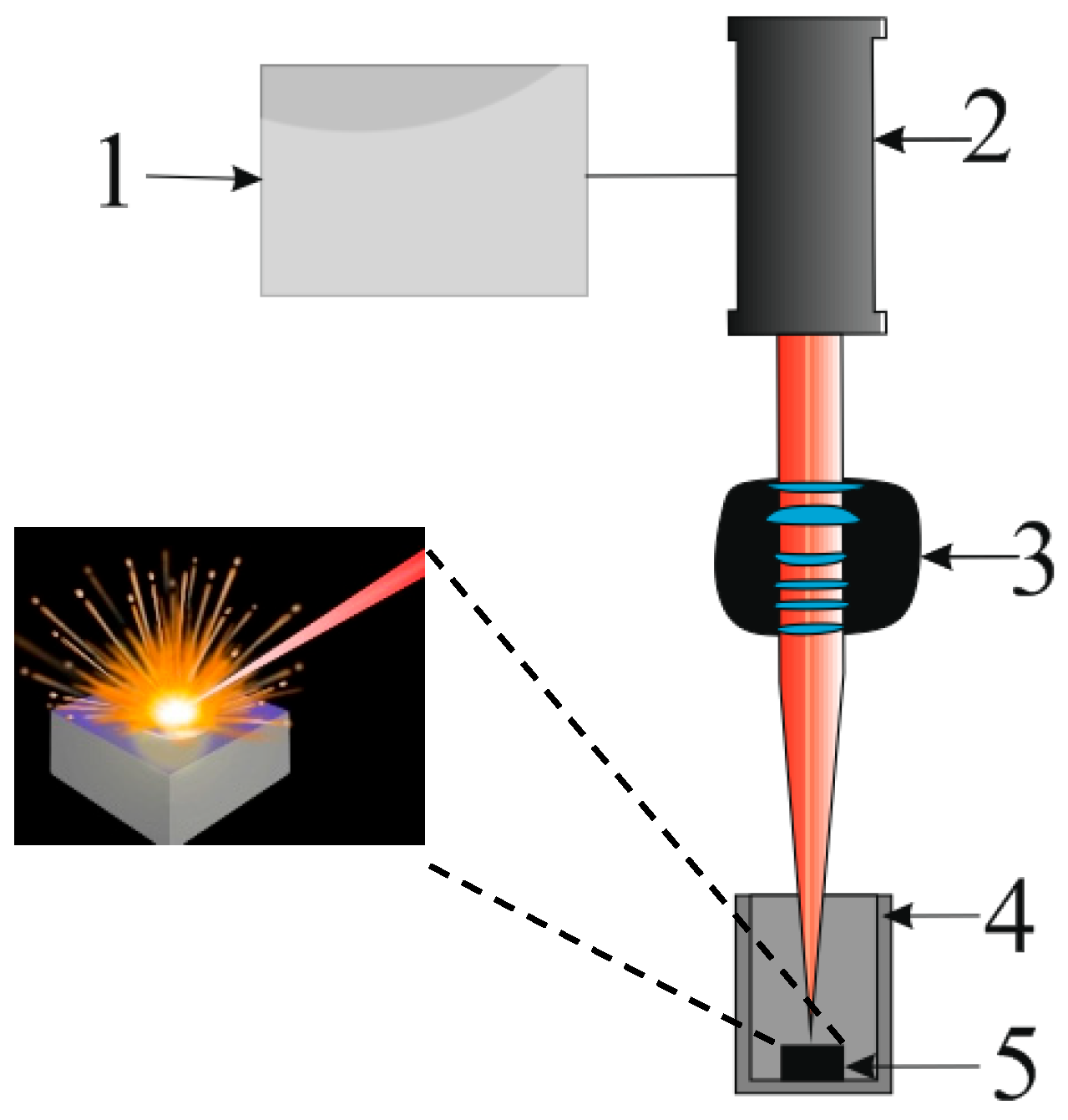
Figure 1. Simplified diagram of laser ablation for CNTs synthesis: 1—power source; 2—power laser; 3—focusing lens of the power laser; 4—reactor; 5—target (mixture of ferrocene and graphite).
Jcs 10 00019 g001
Figure 2. SEM images of CNTs: (a) 3:1 (0.1 s); (b) 4:1 (0.1 s); (c) 5:1 (0.1 s); (d) 6:1; (0.1 s); (e) 7:1 (0.1 s); (f) 8:1 (0.1 s).
Jcs 10 00019 g002
Figure 3. DSC curves of CNTs (a): 1—3:1 (0.1 s); 2—4:1 (0.1 s); 3—5:1 (0.1 s); (b): 4—6:1; (0,1 s); 5—7:1 (0.1 s); 6—8:1 (0.1 s).
Jcs 10 00019 g003
Figure 4. Raman spectra of CNTs: (a) 3:1 (0.1 s); (b) 4:1 (0.1 s); (c) 5:1 (0.1 s); (d) 6:1; (0.1 s) (e) 7:1 (0.1 s); (f) 8:1 (0.1 s).
Jcs 10 00019 g004aJcs 10 00019 g004b
Figure 5. Size Distribution Histograms of Carbon Nanotubes: (a) 3:1 (0.1 s); (b) 4:1 (0.1 s); (c) 5:1 (0.1 s); (d) 6:1; (0.1 s); (e) 7:1 (0.1 s); (f) 8:1 (0.1 s).
Jcs 10 00019 g005
Figure 6. X-ray diffraction—(a): 1—3:1 (0.1 s); 2—4:1 (0.1 s); 3—5:1 (0.1 s); 4—6:1 (0.1 s); 5—7:1 (0.1 s); (b)—8:1 (0.1 s).
Jcs 10 00019 g006
Figure 7. SEM images of nanocomposites with CNT additives: (a)—S2, (b)—S3, (c)—S4, (d)—S5.
Jcs 10 00019 g007
Figure 8. Micrographs of the CNT/polymer composite: (a) CNT content in the polymer 1 wt.%; (b) CNT content in the polymer 2 wt.%; (c) CNT content in the polymer 3 wt.%.
Jcs 10 00019 g008
Figure 9. Thermograms of the MWCNT/elastomer sample surface under torsion: (a)—sample twisted at 360°; (b)—sample twisted at 540°.
Jcs 10 00019 g009
Figure 10. Ice melting progression over time: (a) initial state (t = 0 s); (b) 30 s; (c) 60 s; (d) 90 s; (e) 120 s; (f) 150 s; (g) 180 s; (h) 210 s.
Jcs 10 00019 g010
Figure 11. Thermograms of the heater surface with ice: (a) activation; (b) 30 s; (c) 60 s; (d) 90 s; (e) 120 s; (f) 150 s; (g) 180 s; (h) 210 s.
Jcs 10 00019 g011
Figure 12. Dependence of the electric current consumed by the nanocomposite on voltage when the temperature regime changes.
Jcs 10 00019 g012
Table 1. Key features, advantages, and mechanism of the laser ablation method.
Aspect of SynthesisPhysical EssenceRole in the Synthesis of Carbon NanostructuresExamples/Effects in Materials
Ultrafast Heating and Cooling
  • Instantaneous delivery of concentrated energy (up to ~106 °C/s) [42].
  • Creation of metastable phases, activation of surface reactions [43].
  • Synthesis of CNTs in Liquid (Liquid-Phase Pulsed Laser Ablation, LPLA) [44].
  • CNT growth during ablation: Carbon vapor containing a catalyst (Co/Ni), upon rapid cooling, condenses not into soot but forms nanotubes on the surface of the catalytic nanoparticle [45].
Localized Energy DeliveryNon-contact action by a focused beam on micro-areas [46]Spatially selective modification of structure [47]Laser “welding” of CNTs with graphene [48]
Special Reaction Kinetics
  • Reactions under strong temperature gradients and within extremely short time intervals [49,50]
Controlled synthesis of nanostructures under non-equilibrium conditions [51,52]Encapsulation of nanoparticles in a graphene layer
[53]
Table 2. Synthesis parameters and ratio of ferrocene to graphite.
SampleSynthesis Time, sRatio of Fe(C5H5)2 to Graphite
1S10.13:1
2S20.14:1
3S30.15:1
4S40.16:1
5S50.17:1
6S60.18:1
Table 3. Assessment of CNT Defect Density from Raman Spectra and Specific Surface Area Values.
SampleRatio of Ferrocene to Graphite ID/IG Ratio Values for CNTs S, m2/g
S13:10.853215
S24:10.847242
S35:10.85275
S46:10.848255
S57:10.848243
S68:10.850240
Table 4. Comparative Characteristics of MWCNT-Based Materials for Heaters.
MaterialsMethod of ProductionSize, mmVoltage, VTensile StrengthLiterary Source
MWCNT/PDMSCasting mortar20 × 535Changes[67]
MWCNT/M-AramidCasting mortar40 × 510Non-stretchable[68]
MWCNT/TPUCasting mortar30 × 1010Changes[69]
MWCNT/PDMSCasting mortar and electron beam radiation20 × 535Changes[70]
carbon nanotube/polyurethaneCasting mortar20 × 510Changes[71]
MWCNT/PDMSSpray coating20 × 0.5110Changes[72]
MWCNT/PDMSCasting mortar -5Changes[73]
MWCNT/elastomerMould casting5 × 514–36ChangesAt work
Disclaimer/Publisher’s Note: The statements, opinions and data contained in all publications are solely those of the individual author(s) and contributor(s) and not of MDPI and/or the editor(s). MDPI and/or the editor(s) disclaim responsibility for any injury to people or property resulting from any ideas, methods, instructions or products referred to in the content.