Article

Additive Manufacturing of Carbon Fiber Cores for Sandwich Structures: Optimization of Infill Patterns and Fiber Orientation for Improved Impact Resistance


1
Department of Civil Engineering and Architecture, University of Catania, Via Santa Sofia 64, 95125 Catania, Italy
2
UdR-Catania-National Interuniversity Consortium of Materials Science and Technology (INSTM), Viale Andrea Doria 6, 95125 Catania, Italy
3
Amal Jyothi College of Engineering, Koovappally P.O. Kottayam Dt., Kanjirappally 686518, Kerala, India
4
Department of Chemical Engineering Materials Environment, Sapienza University of Rome, Via Eudossiana 18, 00184 Rome, Italy
*
Authors to whom correspondence should be addressed.
J. Manuf. Mater. Process. 2025, 9(9), 299; https://doi.org/10.3390/jmmp9090299
Submission received: 28 July 2025 / Revised: 17 August 2025 / Accepted: 20 August 2025 / Published: 1 September 2025

Abstract

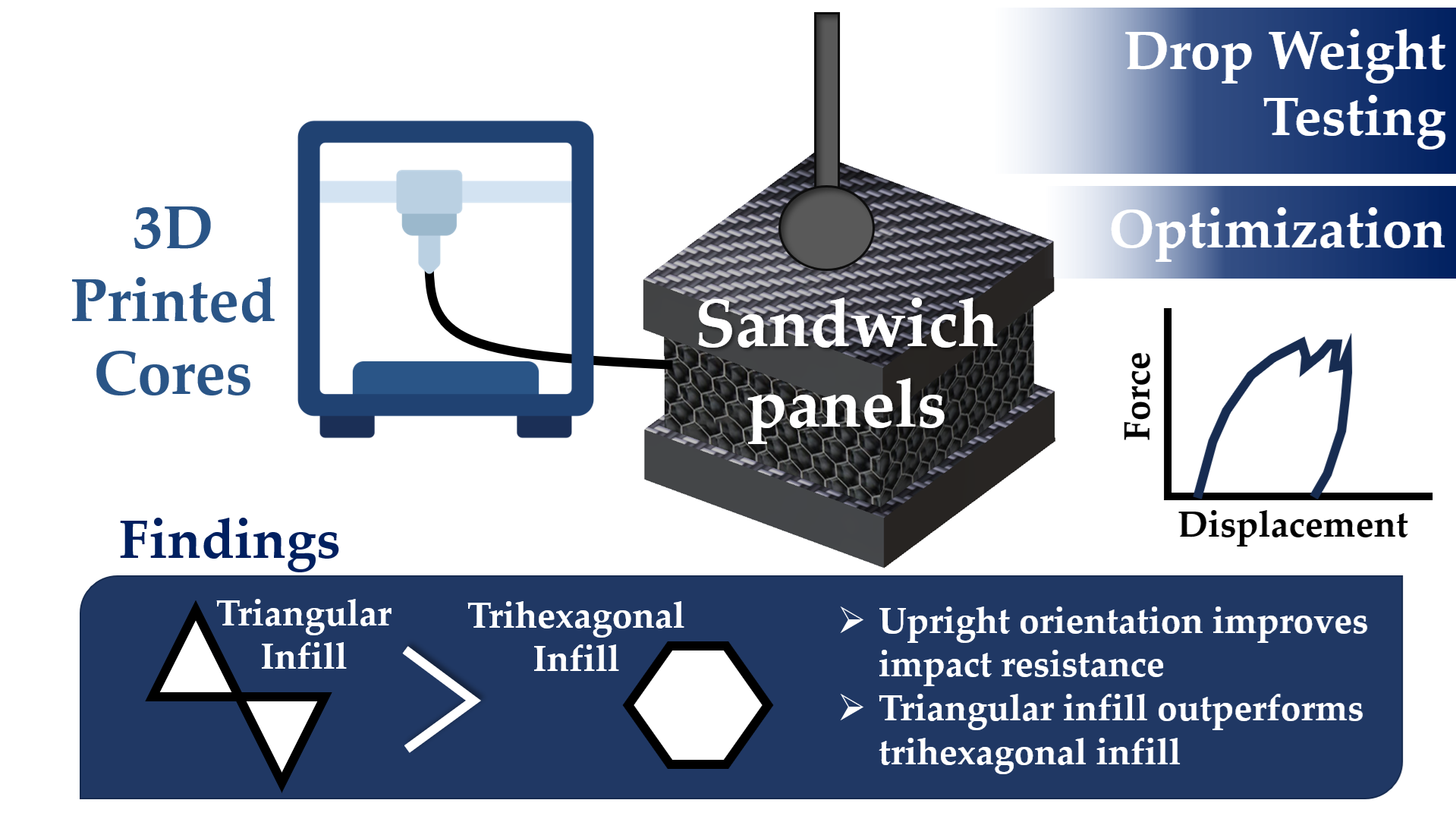
Carbon fiber-reinforced composites (CFRCs) are widely used in aerospace, automotive, and defense applications due to their high strength-to-weight ratio and excellent mechanical performance. In this study, cores and sandwich panels were fabricated via fused filament fabrication (FFF) using co-polyester filaments reinforced with 20 wt.% short carbon fibers. The mechanical response of the structures was evaluated under low-velocity impact (LVI) conditions using instrumented drop weight testing at energy levels ranging from 2 to 20 J. A three-factor, three-level full factorial experimental design was employed, considering build orientation (flat vs. upright), infill pattern (trihexagonal vs. triangular), and impact energy as factors. The maximum contact force was selected as the primary response variable. The results revealed that upright-printed specimens exhibited significantly improved impact resistance compared to flat-printed ones, with increases in peak force of up to 28% for cores and over 68% for sandwich structures. Among the tested infill geometries, the triangular pattern outperformed the trihexagonal one across all configurations and energy levels. The combination of upright orientation and triangular infill proved to be the most effective, providing enhanced energy absorption and reduced rear-side damage, especially under higher impact energies. These findings offer valuable insights into the design of lightweight, impact-resistant structures produced by additive manufacturing, with direct implications for structural components in demanding engineering environments.

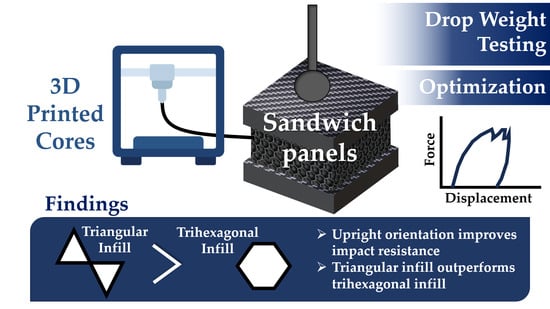
Graphical Abstract

1. Introduction

The development of additive manufacturing (AM), commonly known as 3D printing, is a game changer, revolutionizing the aerospace [1], defense [2], and other engineering industries such as robotics, biomedical, electronics, textiles, and sports [3] by enabling the fabrication of high-performance, lightweight components. The overall performance, especially the surface finish and mechanical properties of the 3D-printed part, are profoundly influenced by the layer and fiber orientation [4], infill density [5,6] of the core, and other process parameters, such as the cooling rate, extrusion temperature, print speed, and nozzle temperature [7].
The continuous pursuit of lightweight and high-performance structures remains a critical challenge in numerous industrial sectors, and sandwich structures, composed of rigid outer face sheets and a lightweight core, offer an exceptional strength-to-weight ratio and superior impact energy absorption capabilities, making them highly desirable for these demanding applications [8,9]. The advent of AM, particularly fused filament fabrication (FFF), has revolutionized the design and fabrication of such structures, enabling the creation of complex core geometries with unprecedented design freedom and customization that are difficult to achieve with conventional manufacturing methods [9,10,11,12,13,14].
This study advances the state of the art by systematically investigating the low-velocity impact response of novel 3D-printed sandwich structures incorporating triangular and trihexagonal cellular core patterns, fabricated using a co-polyester filament reinforced with 20 wt.% short carbon fibers. While previous research has explored various cellular core topologies, such as honeycomb [14,15], auxetic [8,9,12], gyroid [10,13], or truss structures [9,16], our work introduces and investigates, using statistical tools such as Design of Experiments (DoE), specific infill patterns, like triangular and trihexagonal, to expand the space for optimized energy absorption.
Polyamide 12 reinforced with carbon fibers (Nylon 12CF) was used to create a re-entrant hexagonal honeycomb sandwich assembly [17]. The Nylon 12 (unreinforced) and Nylon 12CF (reinforced) samples were fabricated through AM and were tested for their quasi-static behavior. The results demonstrated that the negative Poisson’s ratio structure reinforced with CF exhibited improved failure stress and energy absorption efficiency compared to the unreinforced structure. The results from the finite element simulations were found to be consistent with the experimental outcomes.
The beetle’s forewing trabecular structure inspired the implementation of the study [18]. The core material was responsible for the rate dependence observed in the force–displacement graphs.
It is important to cite another study inspired by the same structure, which focuses on the effect of various design parameters on the impact performance of fully 3D-printed sandwich panels [19]. In that study, an asymmetric panel, with a thicker face sheet at the back and a variating cell wall thickness core, showed maximum impact energy dissipation.
In the study by Guerra Silva et al. [20], a honeycomb structure was fabricated completely using an FFF printer, and the carbon fiber-reinforced sandwich panels exhibited higher stiffness than those reinforced with glass fiber. As predicted by the theoretical models, a higher fiber content led to higher values of flexural modulus.
Arslan et al. [21] characterized the flexural properties of sandwich panels fabricated using filament extrusion additive manufacturing technology with composites of polyphenylene sulfide (PPS) and polyetherimide (PEI). A digital image correlation setup was used to evaluate crack propagation and full-field strain during the flexural test, revealing crack initiation due to strain concentrations in the core region.
The response of materials to the dynamic application of load can be investigated by referring to different tests, including Charpy [22], Izod [23], drop weight [24,25], high-speed ballistic test [26], and explosion/shock wave tests [27].
A central and distinctive element of our research lies in its comprehensive investigation into the effect of printing orientation (upright versus flat) on the impact performance of these 3D-printed cellular sandwich structures. Anisotropy is a well-known characteristic of 3D-printed parts produced via FFF, especially when using composite materials, where fiber alignment along the extrusion direction can significantly influence mechanical properties [28,29,30]. Despite this, the relationship between the printing orientation during material characterization and its direct effect on accurate modeling of the impact response of 3D-printed cellular structures is not yet fully understood, and many studies tend to use a single printing orientation for their main structures [30]. It is crucial that recent works, such as that by Fisher et al. [30], have highlighted that material models derived from default printing orientations (e.g., ±45°) can under-predict maximum impact forces and over-predict impact duration, potentially leading to an underestimation of impact severity and greater damage in real-world applications.
Our research directly addresses this gap by exploring the impact behavior across different printing orientations for the sandwich core itself, moving beyond material characterization to the structural level, as increasingly required in real-world 3D-printed composite sandwich applications such as energy-absorbing liners for bicycle and motorcycle helmets [31,32], lattice-reinforced crash boxes in automotive structures [33], and lightweight protective shells in civil and military applications [34].
In summary, this work provides novel insights into the mechanical behavior of 3D-printed sandwich structures with specifically designed cellular cores under low-velocity impact, with a unique focus on the critical role of printing orientation.

2. Materials and Methods

2.1. Materials

ColorFabb XT-CF20 is a high-performance Eastman Amphora AM1800 co-polyester-based 3D printing filament filled with short carbon fibers [35]. It is basically composed of co-polyester matrix and 20 wt.% carbon fibers. The polymer matrix acts as a binder for the reinforcing carbon fibers, offers high toughness, thermal resistance, and flexibility, and is perfect for components which demand high stiffness.
The skins of the sandwich structures were fabricated using HexPly® M79 carbon fiber prepreg (Hexcel Corporation, Stamford, CT, USA), specifically designed for out-of-autoclave processing. The material consists of a 210 gsm 3K carbon fiber fabric in a 2 × 2 twill weave, pre-impregnated with a low temperature curing epoxy resin matrix. Curing was performed in an ECP Industrial OVEN301-NL (Easy Composites, Stoke-on-Trent, UK) following the manufacturer’s recommended low-temperature cure cycle: a heating rate of 5 °C/min up to 90 °C, followed by an isothermal dwell of 300 min at 90 °C.

2.2. Methods

The specimens for the impact tests were fabricated into two separate categories: cores alone and sandwich panels, using FFF with the Ultimaker S5 3D printer (Utrecht, The Netherlands), with dimensions of 70 × 70 × 10 mm3 for cores and 70 × 70 × 12 mm3 for sandwiches.
The 3D printing parameters considered for the present work are summarized in Table 1.
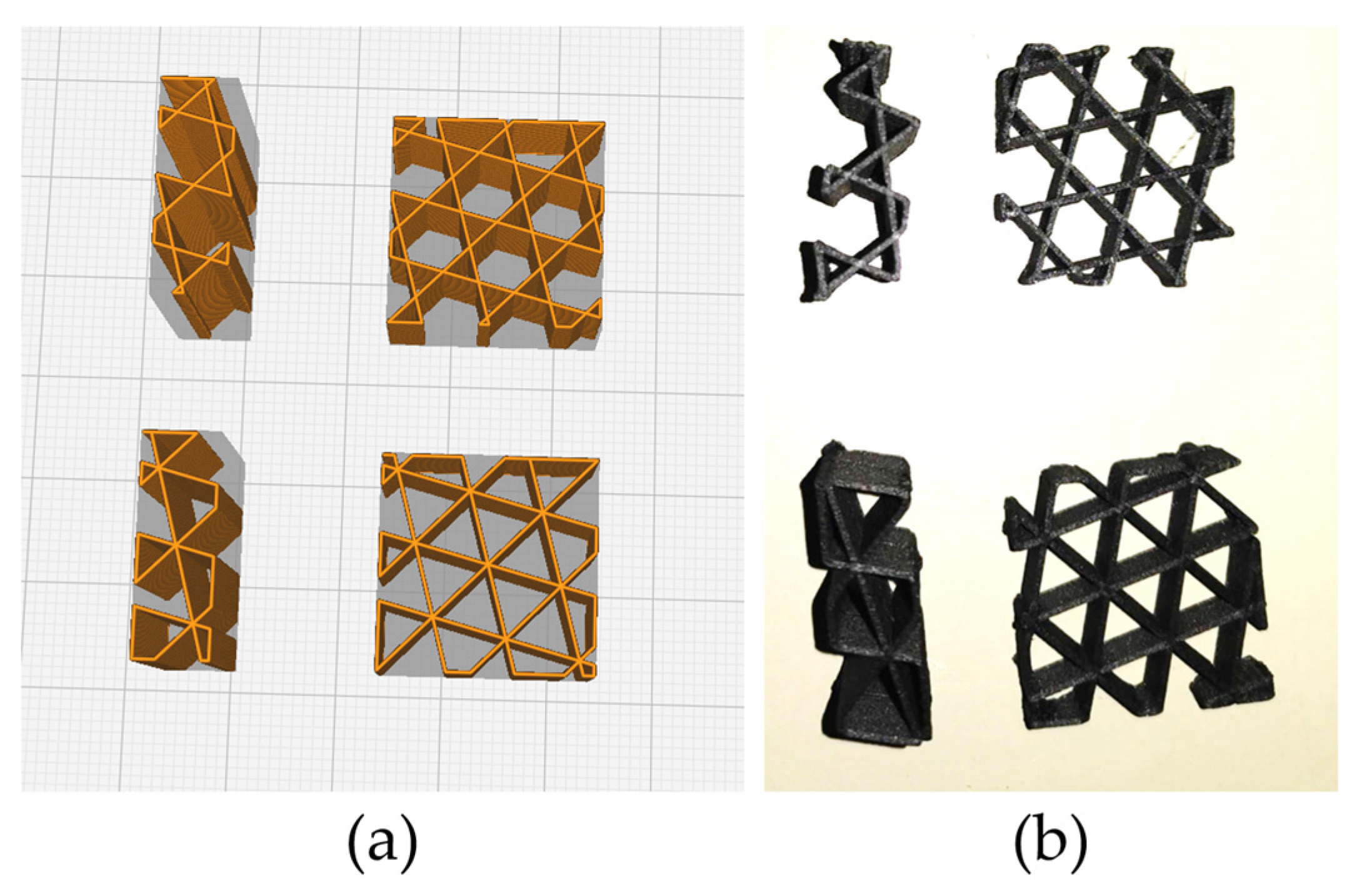
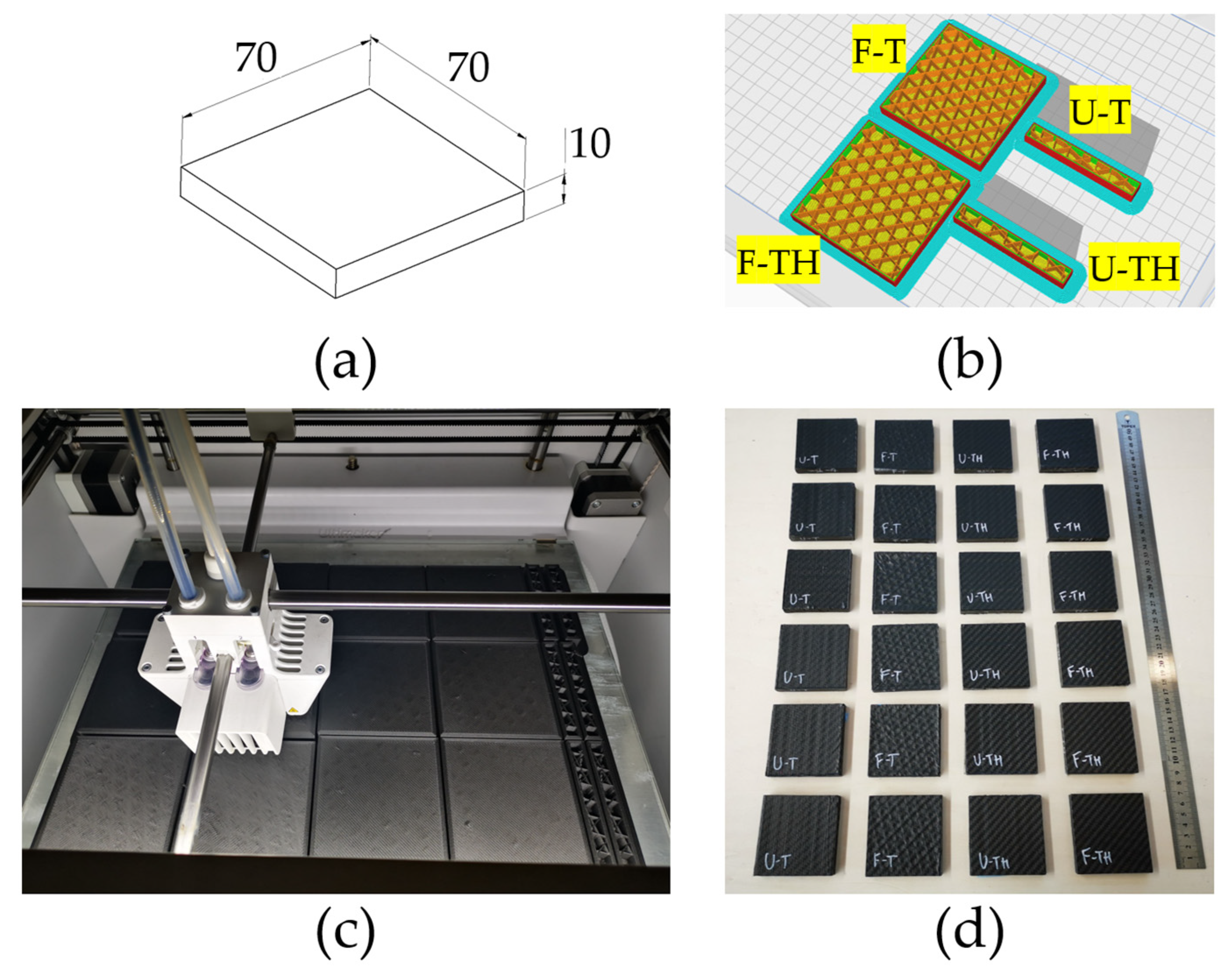
The 3D printing orientations of the core were varied as ‘upright’ and ‘flat’. To study the effect of infill pattern on the impact resistance, ‘trihexagonal’ and ‘triangular’ designs were analyzed. The trihexagonal infill pattern combines triangles and hexagons, generating a 2D mesh that provides balanced material efficiency and strength (Figure 1). On the other hand, the triangular infill pattern consists of a web of equilateral triangles, known for their ability to distribute loads evenly and their integral rigidity. A 20% moderate infill density confirmed a balance between strength and weight reduction, allowing a comparative study of the impact responses under different loading situations. The fabricated structures and their corresponding labels are listed in Table 2. The printed parts and manufactured sandwiches are shown in Figure 2.
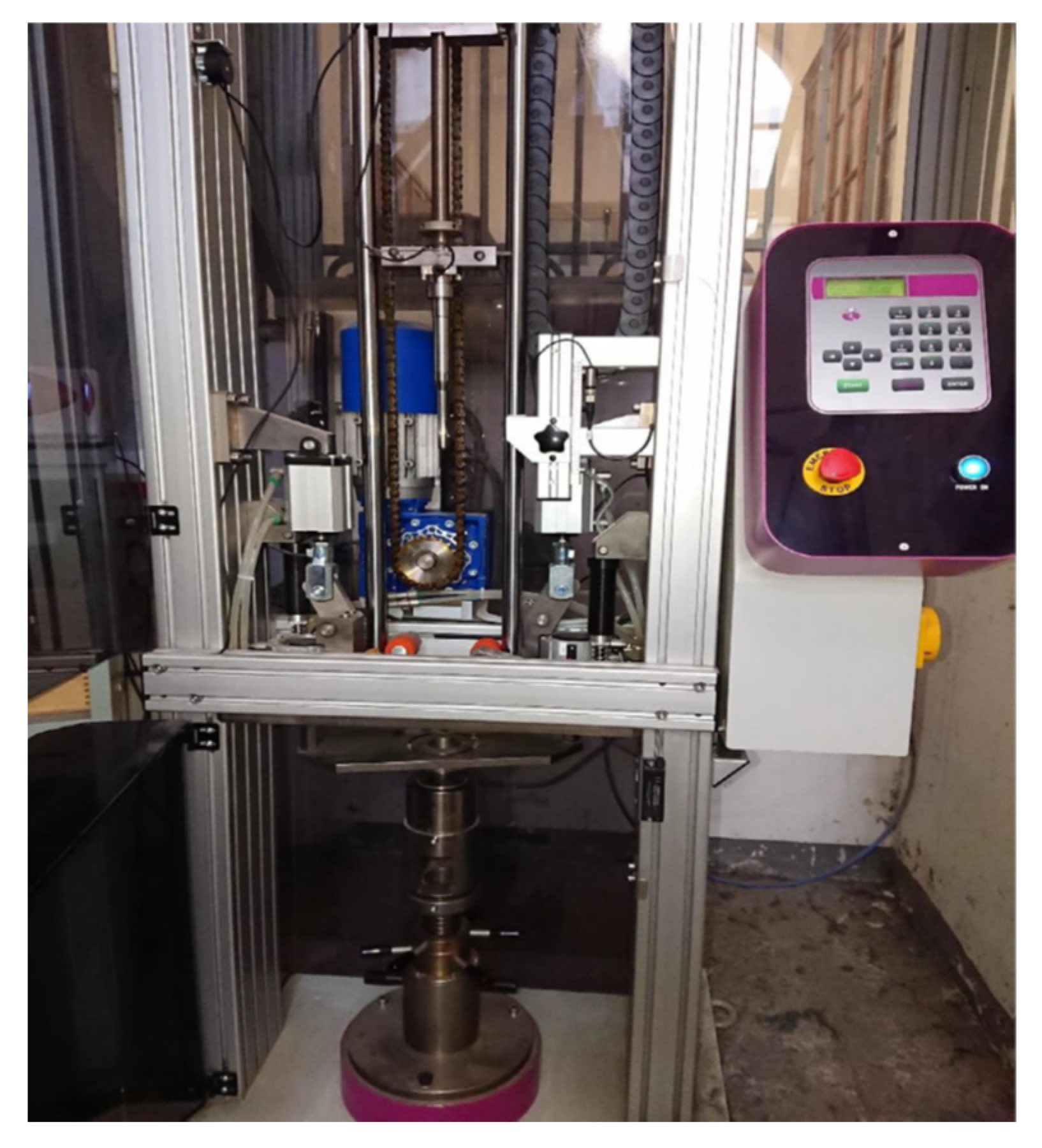
The dynamic impact characterizations were carried out using the Instron/Ceast 9340 instrument tower (Figure 3). The tests were conducted at room temperature, utilizing a mass of 3.055 kg and three different energy levels (2, 5, and 10 J for the cores only, and 2, 10, and 20 J for the sandwiches) by varying the release height of the striker. The impactor head used for the study was hemispherical with a diameter of 12.7 mm. Preliminary testing indicated that an impact energy of 10 J was sufficient to induce perforation in the cores alone. This value was therefore established as the upper limit, with two additional energy levels selected to ensure substantial separation between test conditions while maintaining an impact velocity above 1 m/s. For the sandwich configurations, the same minimum and maximum energies defined for the cores were retained; however, the upper limit was increased to 20 J to account for their greater structural resistance. All tests were performed in accordance with the ASTM 5420 standard.

Design of Experiments (DoE)

To investigate the impact behavior, expressed in terms of peak force, for both the cores and the sandwiches, two replicated general factorial designs were considered, respectively. In detail, for the cores, the factors investigated (independent variables) in the experimental design were:
  • Orientation (factor A)—Categorical factor varied at two levels (a = 2) corresponding to {upright, flat};
  • Infill Pattern (factor B)—Categorical factor varied at two levels (b = 2) corresponding to {trihexagonal, triangular};
  • Energy (factor C)—Numerical factor varied at three levels (c = 3) corresponding to {2, 5, 10} J.
While, for the sandwiches, the factors investigated (independent variables) in the experimental design were:
  • Orientation (factor A)—Categorical factor varied at two levels (a = 2) corresponding to {upright, flat};
  • Infill Pattern (factor B)—Categorical factor varied at two levels (b = 2) corresponding to {trihexagonal, triangular};
  • Energy (factor C)—Numerical factor varied at three levels (c = 3) corresponding to {2, 10, 20} J.
The two experimental plans are summarized in Table 3 and Table 4 for the cores and sandwiches, respectively. Furthermore, the statistical significance for the investigated factors and their possible interaction were examined through an analysis of variance (ANOVA) as soon as the values for the investigated response were collected for each experimental scenario.
For both experimental designs, the number of replications was set to n = 3, resulting in a total of N = a × b × c × n = 36 experimental runs.
To determine the most effective combination of the factors investigated on the response variable, i.e., the peak force, an optimization process was conducted using the desirability function method. This technique involved converting each response yi into a corresponding desirability function di, which ranged between 0 and 1. A desirability value of di = 1 indicated that the response met its desired target, whereas di = 0 meant that the response fell outside the acceptable limits. The goal was to adjust the design parameters in a way that maximized the overall desirability. For this analysis, specific constraints were defined to optimize the values of peak force, while the factors were varied within the range of the experimental design, covering all examined levels. A summary of the constraints used in the optimization process is provided in Table 5.

3. Results and Discussion

3.1. Impact Performance of Core Specimens

3.1.1. Experimental LVI Test Results for Core Specimens

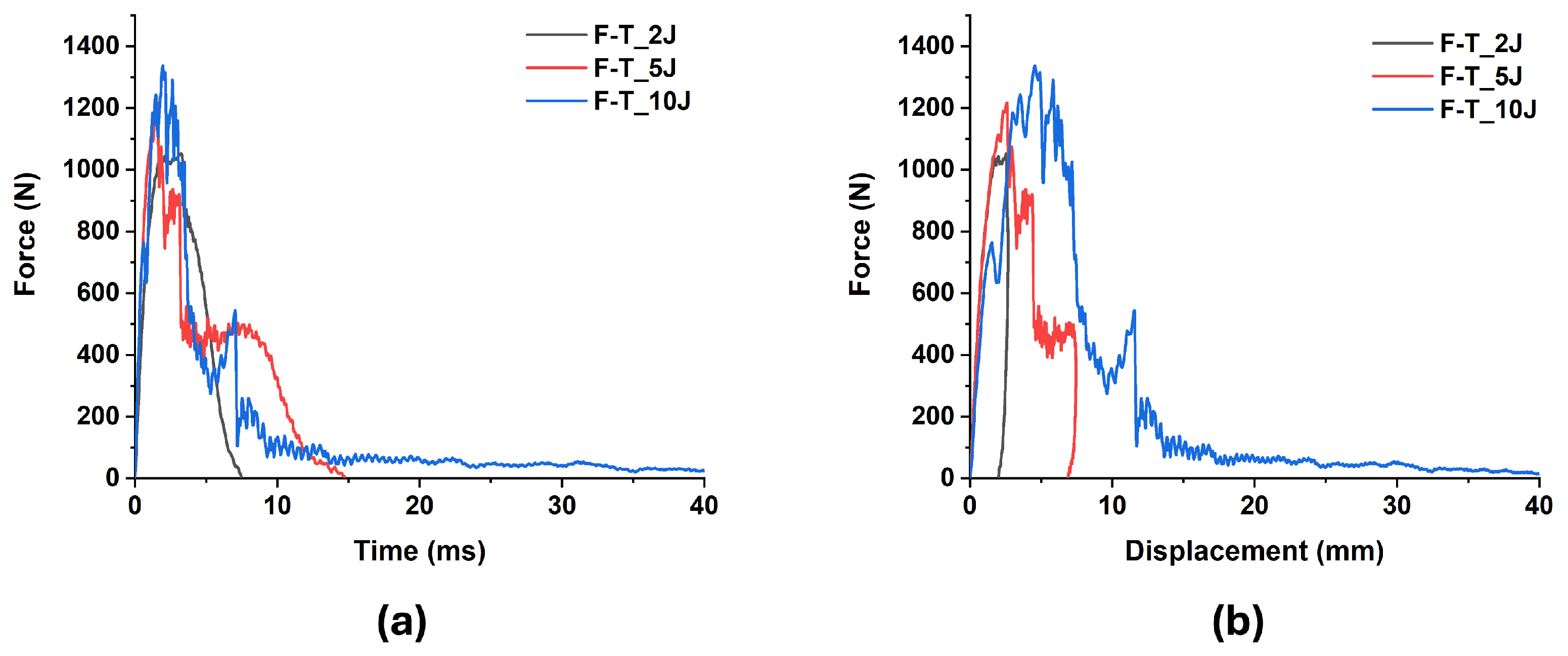
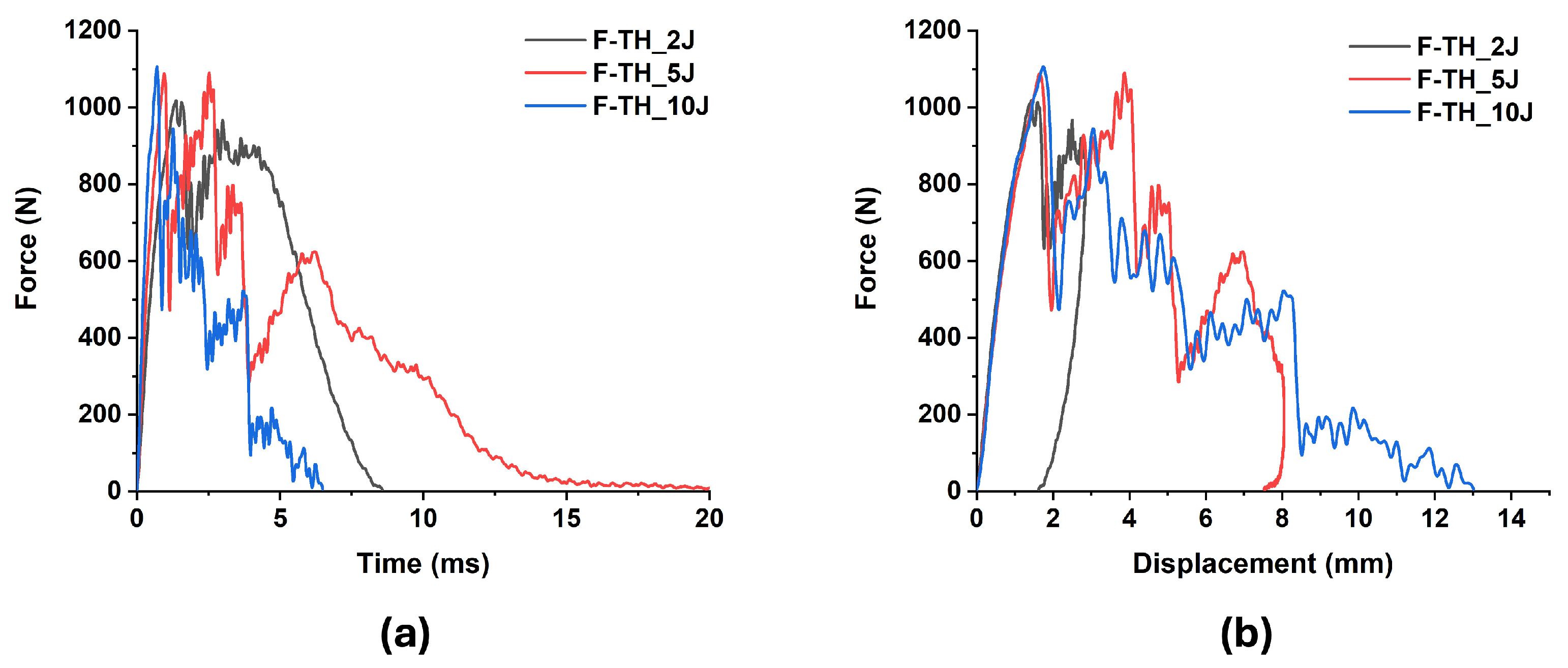
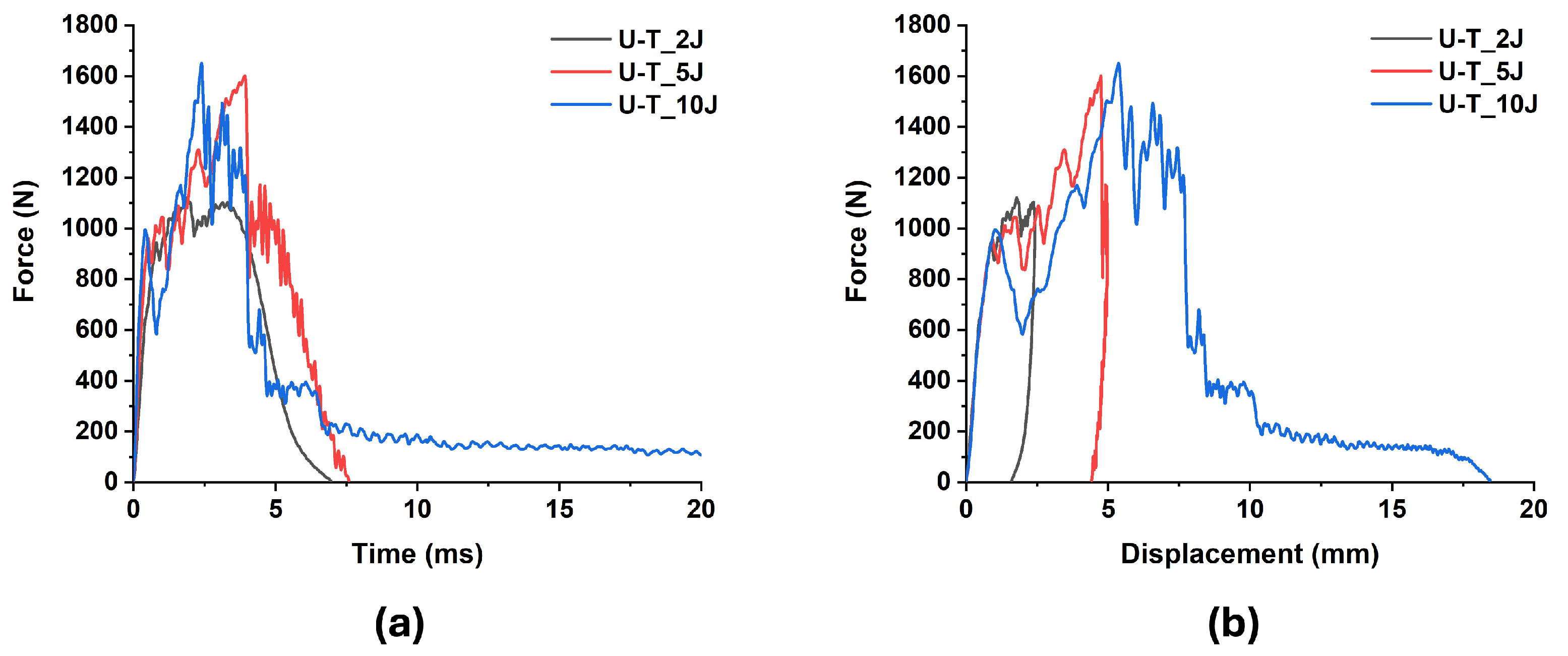
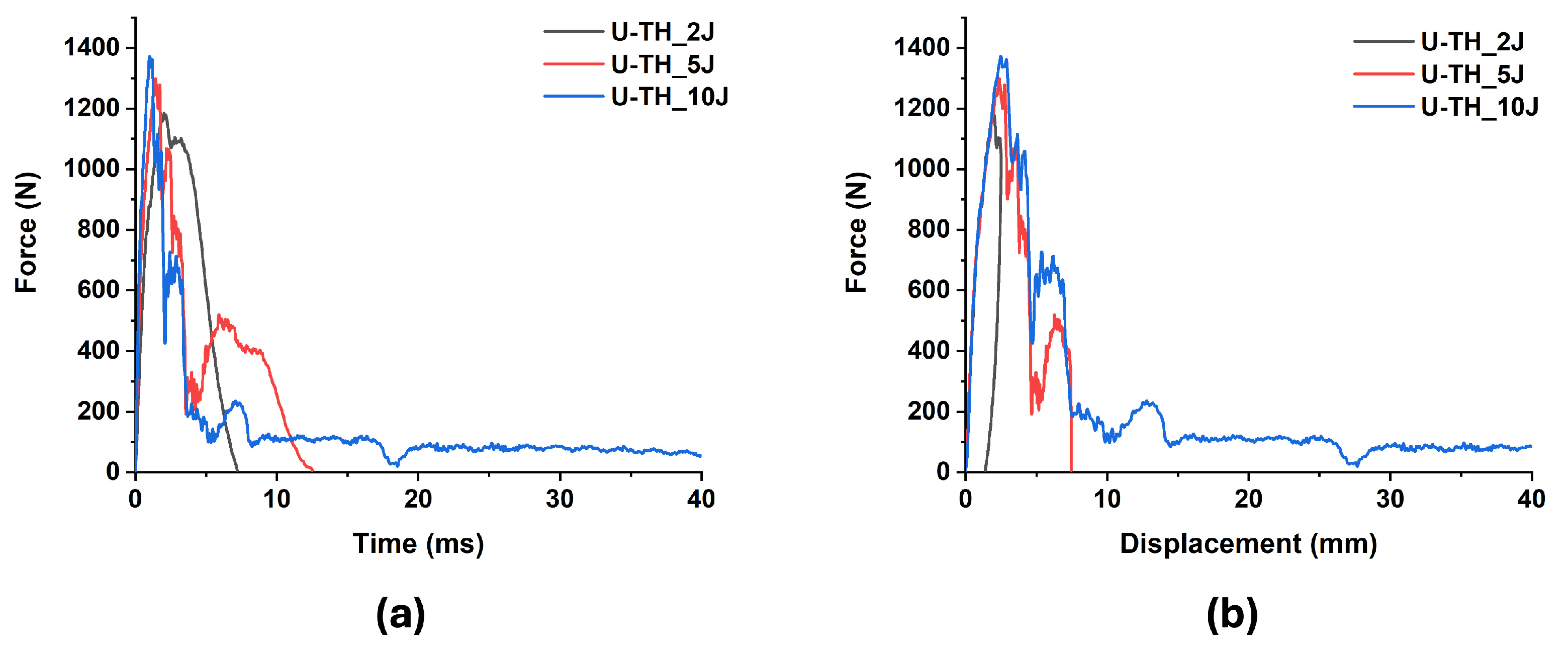
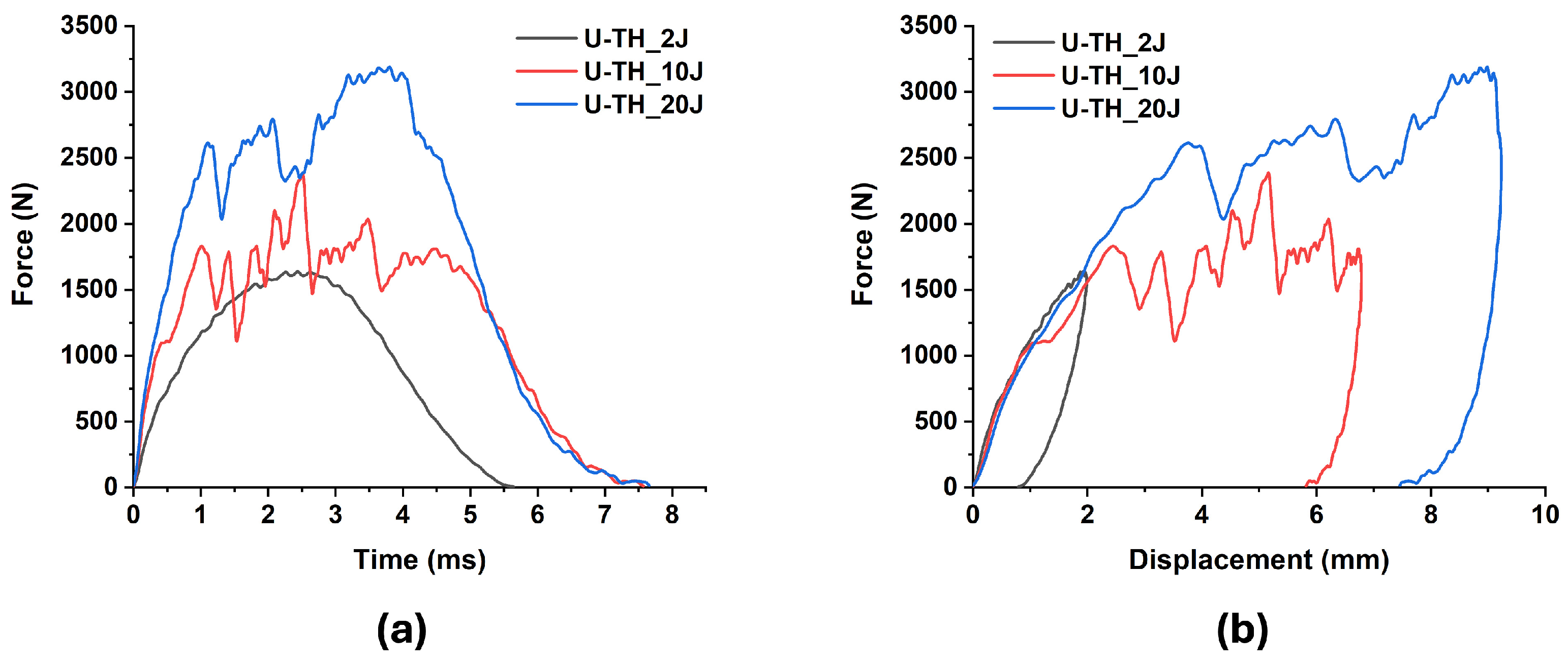
The force–time and force–displacement curves for the 3D-printed cores as a function of infill pattern and impact energy are shown in Figure 4, Figure 5, Figure 6 and Figure 7.
The curves show the presence of extensive damage due to impact with energies greater than 2 J, as evidenced by the long contact time and a marked drop in the load after reaching the maximum load. The damage degree (ratio between absorbed energy and impact energy) was in fact found to be close to unity already at 5 J, while complete perforation was reached at 10 J, as evidenced by the open force–displacement curves. The two printing configurations, flat and upright, showed different behaviors with the same type of infill: the upright configuration was the best in terms of impact resistance (lower damage degree and better maximum contact force) than the flat one. As far as the type of infill is concerned, the architecture based on “triangles” showed a higher maximum contact force than that based on “trihexagons.”
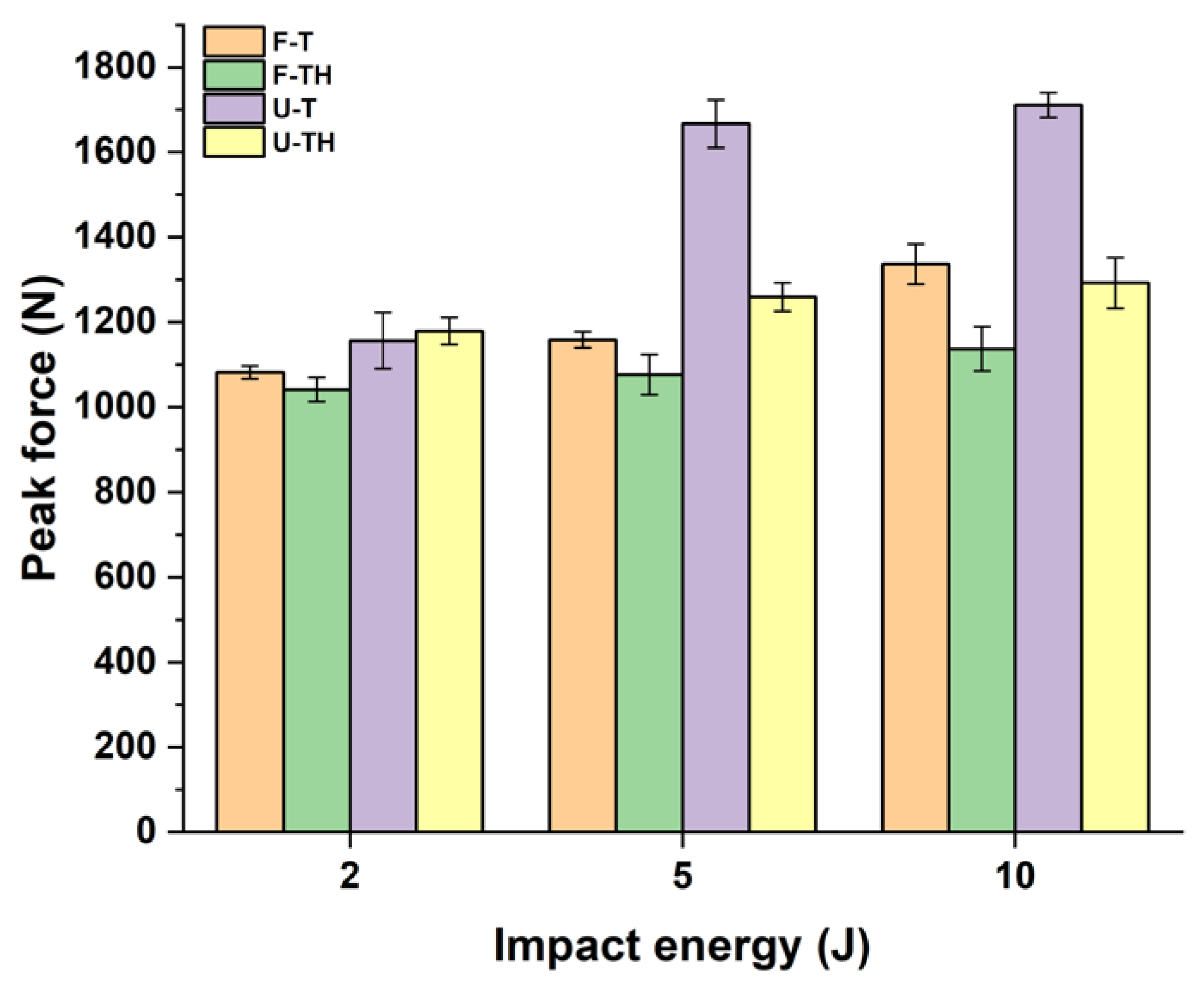
Peak force (Fmax) is the extreme force the test specimen can withstand before a maximum deformation or failure. The shorter the time to peak force, the more brittle the failure. As evident from Figure 8, all four tested specimens (F-T, F-TH, U-T, and U-TH) exhibited a progressive response as the impact energy increased from 2 J to 10 J, i.e., the peak force increased with increasing impact energy. This behavior indicated an increase in impact resistance and reflected the material’s strength.
The 3D-printed core specimens with an upright orientation performed well compared to the flat ones, showing only slight deviations under higher impact energy (10 J). Various studies have found that the upright orientation is superior and highly effective for short CF-reinforced additive manufacturing. As an example, Becerra et al. [36], studied the effect of build orientation on 3D printing using short carbon fiber-filled nylon. Upright orientations showed good agreement and accuracy with theoretical 3D printing models.
The triangular infill pattern was found to be superior to the trihexagonal pattern. A similar positive outcome for the triangular infill pattern was reported by peer researchers who conducted extensive studies on the crashworthiness of 3D-printed parts [37]. Another recent study on the dynamic and mechanical performance of 3D-printed continuous carbon fiber-based onyx composites also proves the prominent role of the triangular infill pattern under tensile and drop weight impact loadings [38].
The aforementioned two studies strongly support the capability of the triangular infill pattern considered in the present work.
But the response of the ‘flat’ oriented cores is noteworthy. Although they did not exhibit a sudden spike in peak loads (as observed in the upright specimens), they maintained their performance progressively up to higher impact energy levels (10 J). This trend was evident in both the ‘flat-triangular (F-T)’ and ‘flat-trihexagonal (F-TH)’ specimens.

3.1.2. DoE-Based Analysis and Optimization for Core Specimens

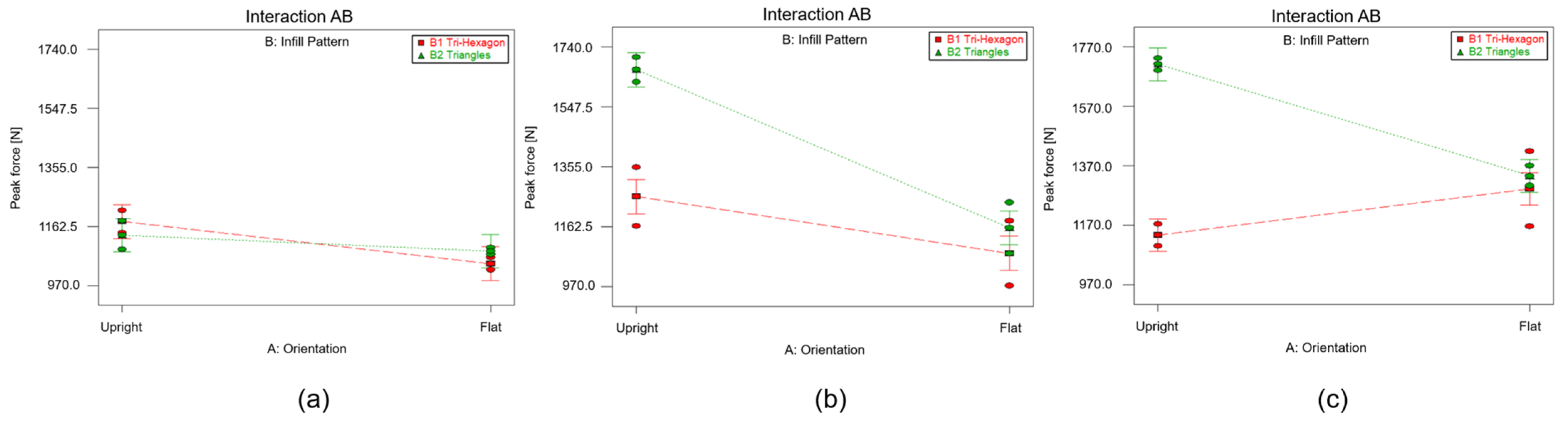
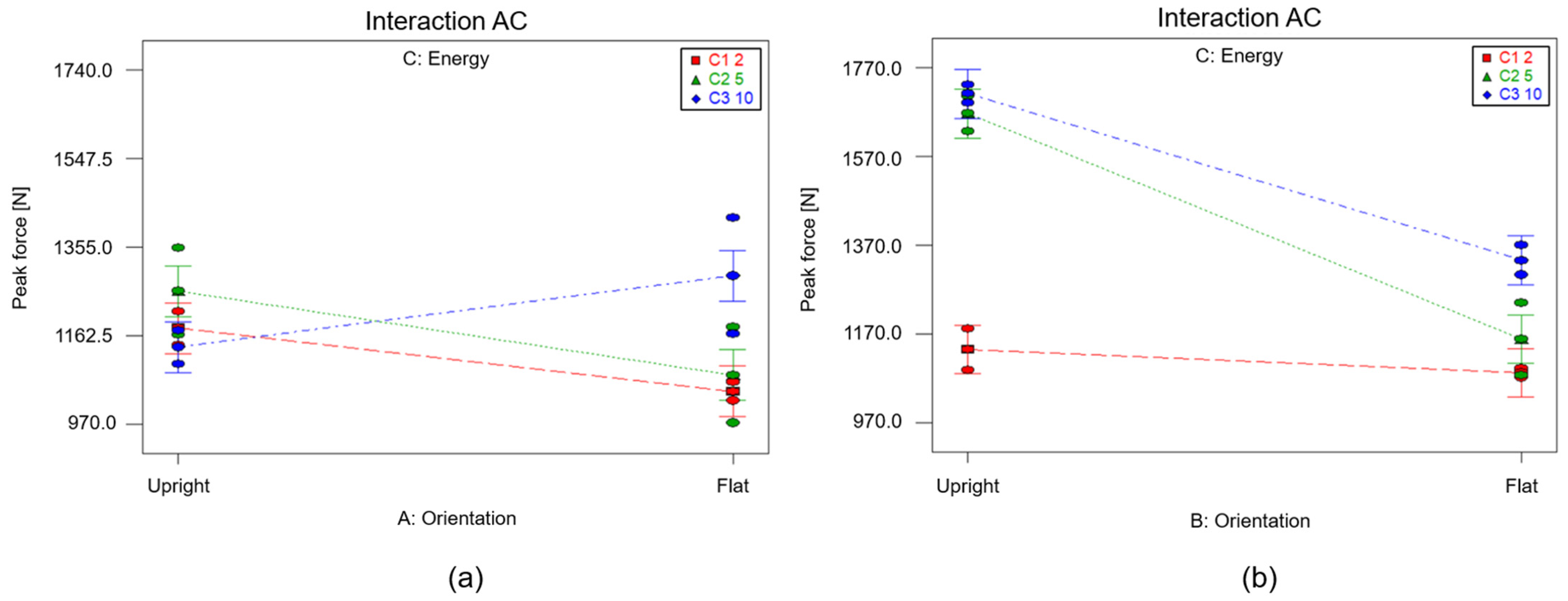
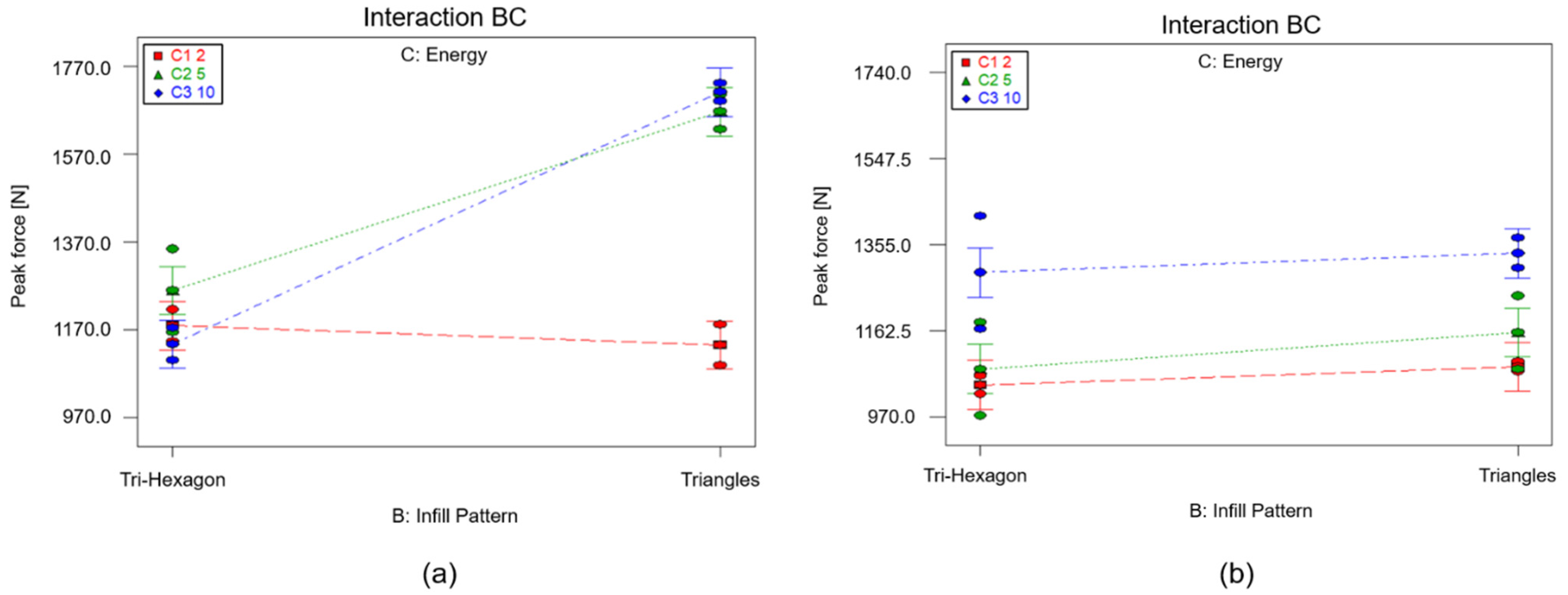
These findings for the tested cores were also confirmed by the effects diagrams reported in Figure 9, Figure 10 and Figure 11 for the interactions AB, AC, and BC, respectively. In detail, it is worth noting that, while at 2 J all of the tested configurations exhibited comparable behaviors in terms of the investigated response (i.e., peak force), as the impact energy (factor C) increased, the Upright configuration demonstrated higher impact resistance when combined with the triangular infill pattern compared to the trihexagonal pattern. Conversely, when the cores were fabricated in the flat configuration, they all behaved similarly regardless of the type of infill pattern used. Furthermore, from the interaction BC effects diagram (see Figure 11), greater variability in the investigated response can be observed for the {flat; trihexagonal} configuration, particularly at impact energies of 5 or 10 J.
These results were also analyzed using ANOVA, and the findings are summarized in Table 6.
Indeed, according to the ANOVA results, all of the investigated factors, i.e., A, B, and C, were influential (p-value < 0.0001) for the investigated response. Furthermore, all the interactions AB, AC, BC, and ABC were statistically significant (p-value < 0.0001). In addition, no anomalies were observed from the model adequacy check on the residuals. In the end, the high R2 value of 0.9404 confirmed that most of the variability observed in the investigated response, peak force, was due to the variations in the aforementioned significant factors and their interactions.
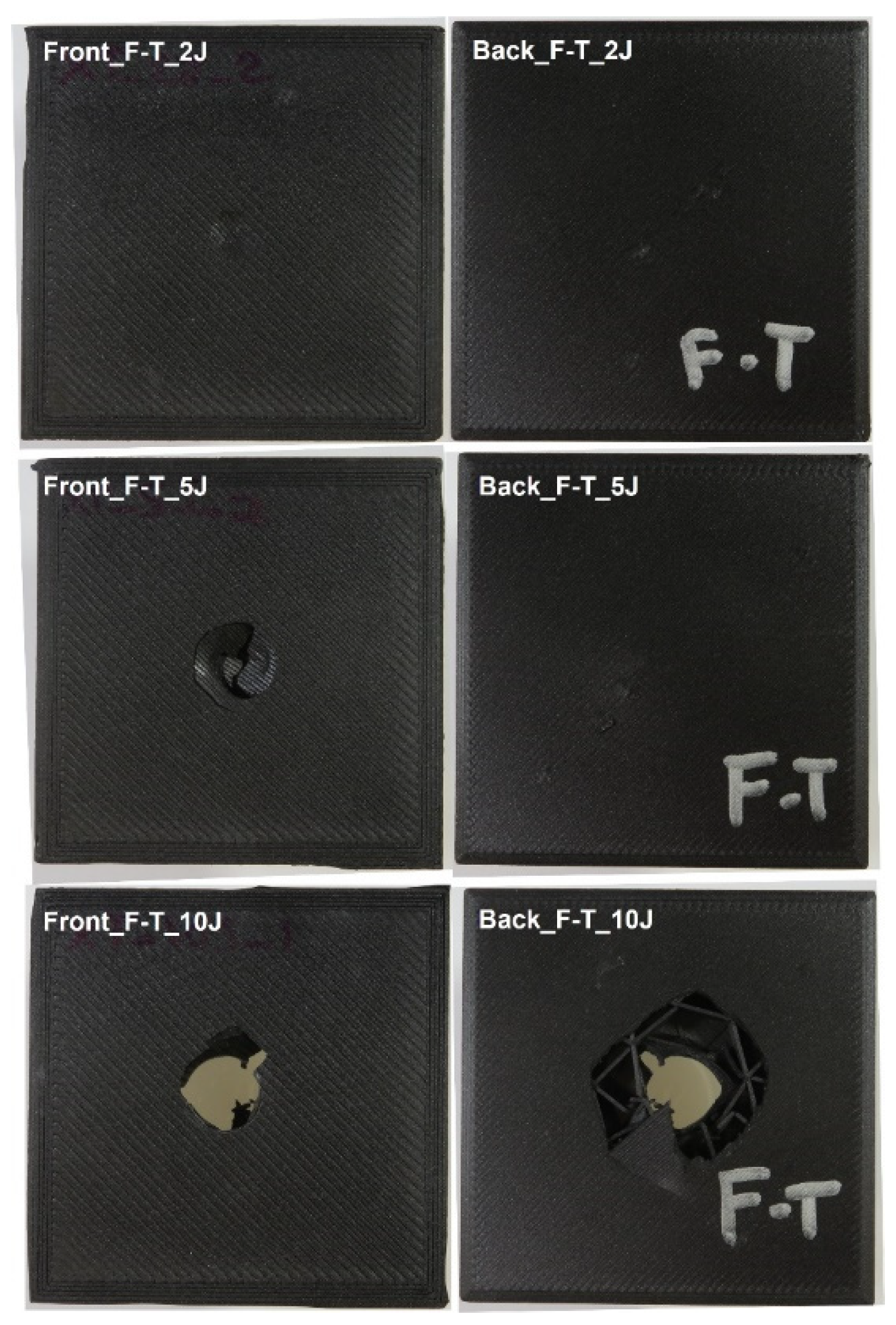
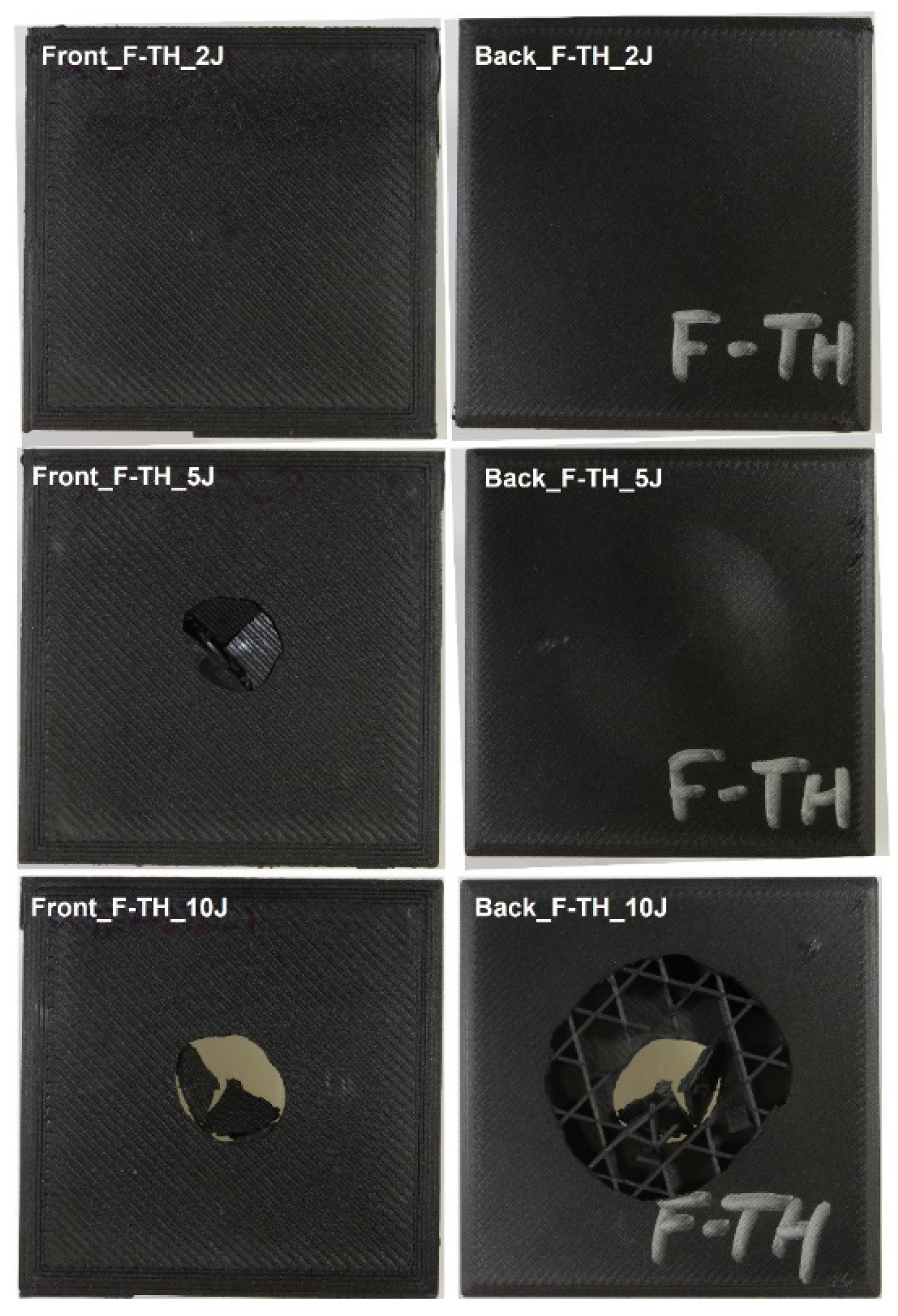
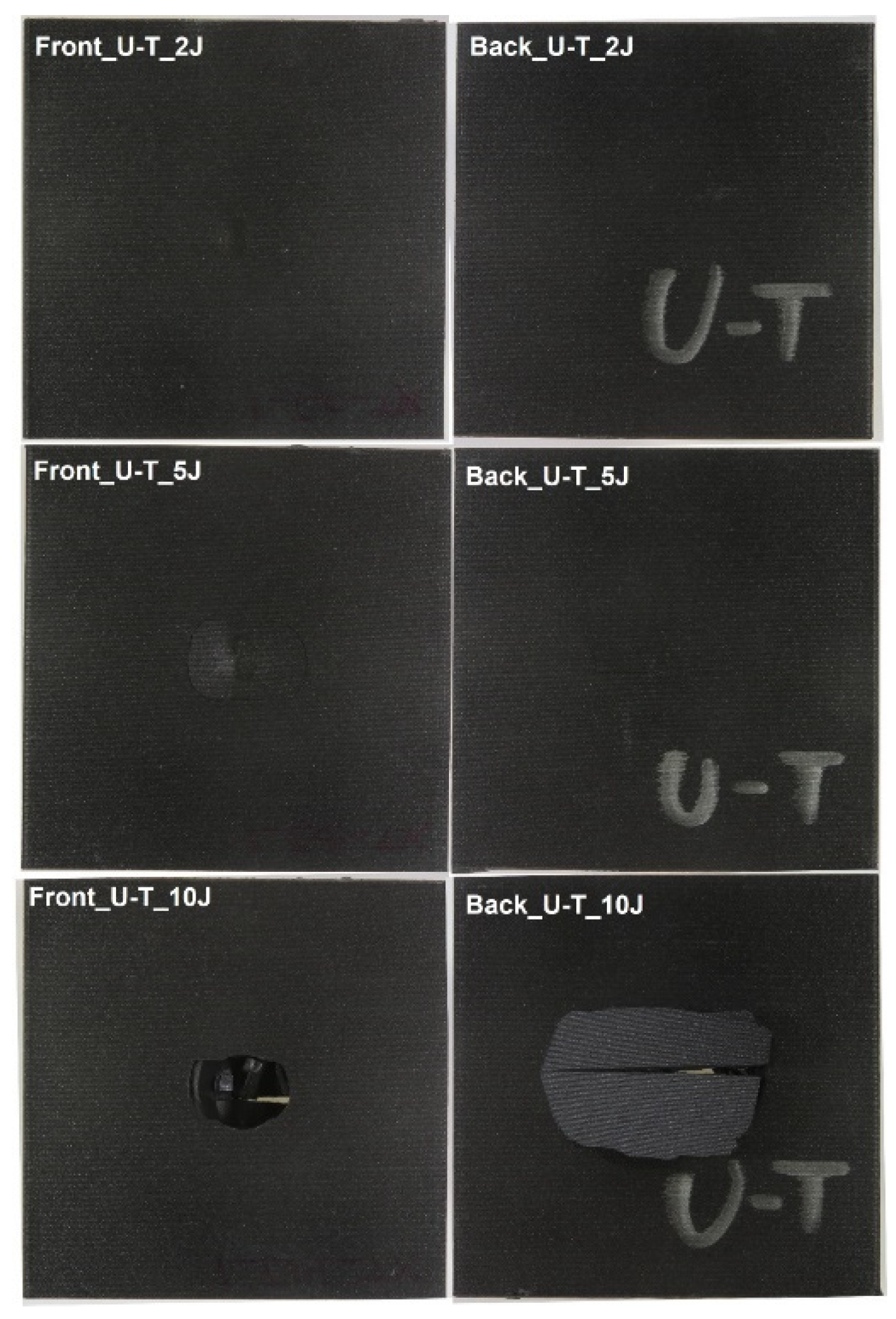
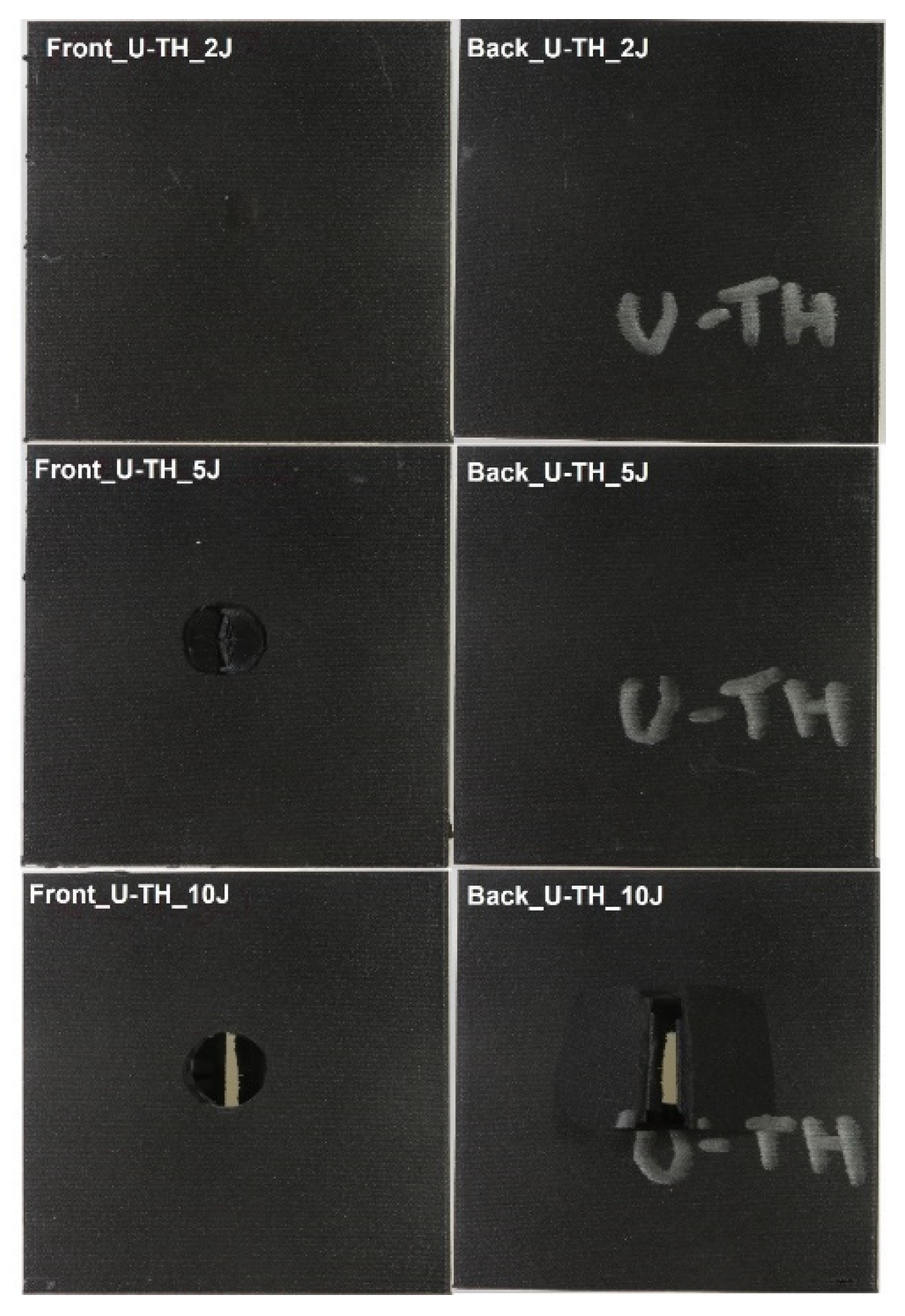
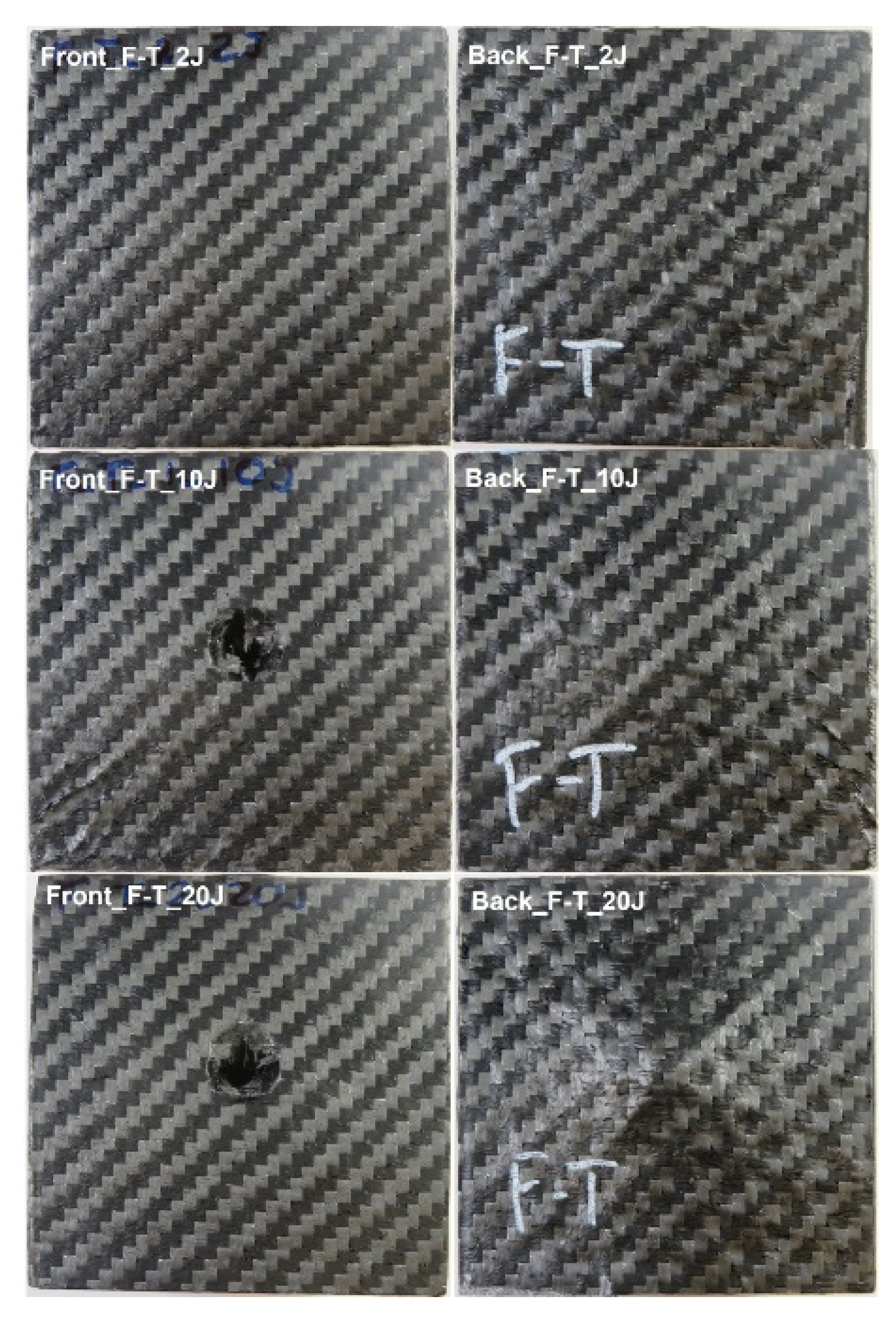
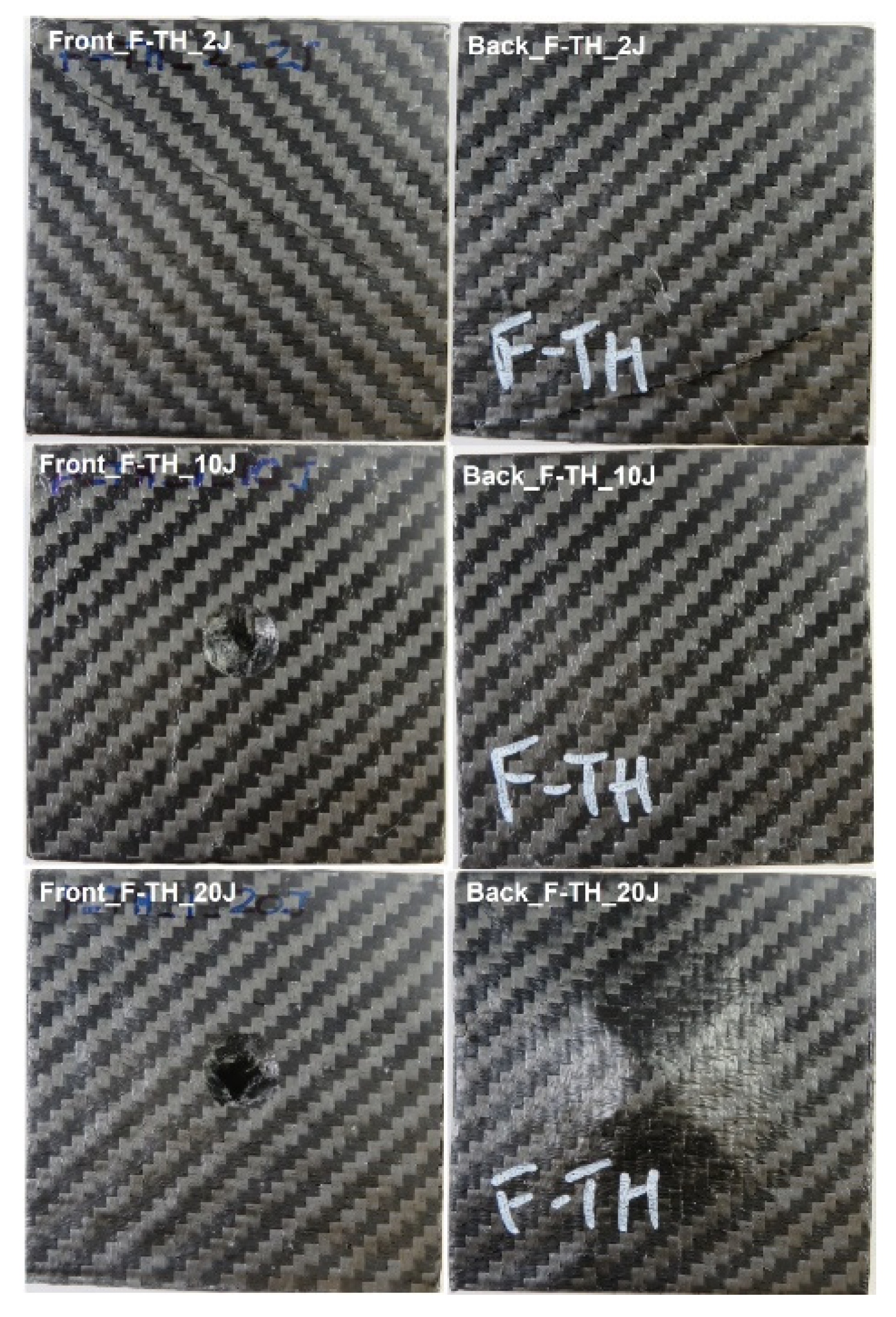
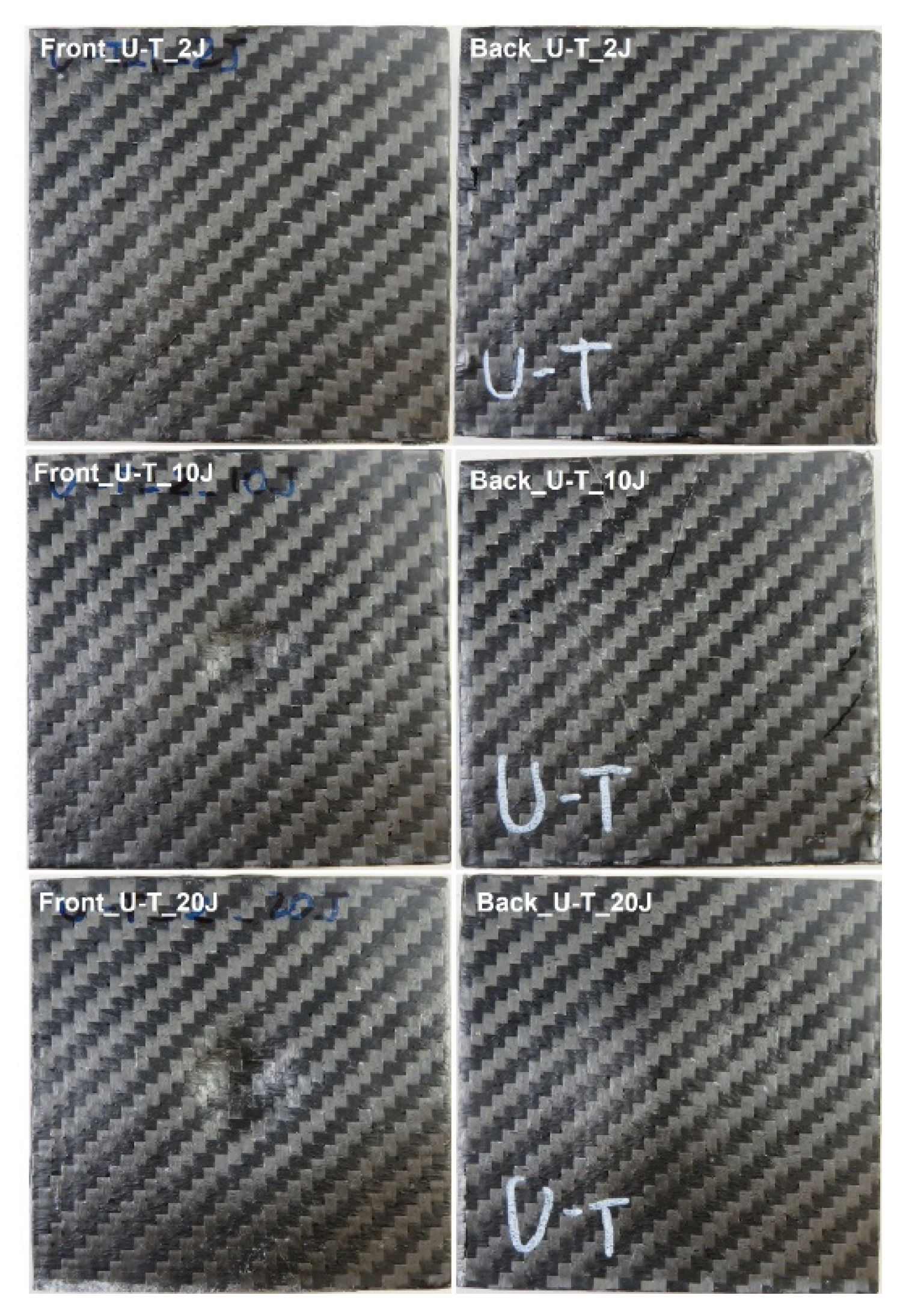
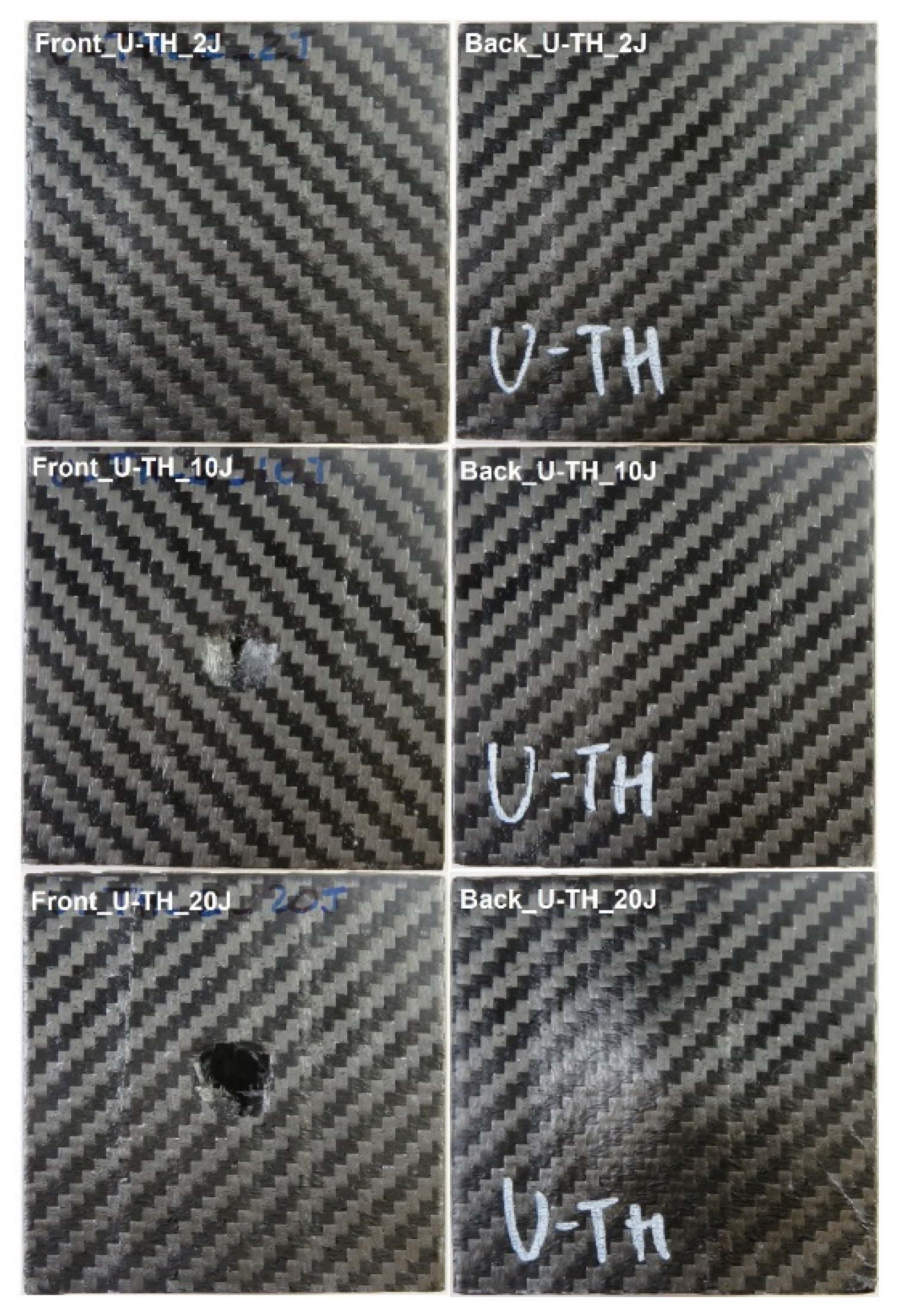
Figure 12, Figure 13, Figure 14 and Figure 15 illustrate the development of damage on both surfaces (front and rear) of the 3D-printed cores as the impact energy increases.
As mentioned above, the improved impact resistance of the upright configuration was evident, particularly with a triangular-type infill. In general, the trihexagonal infill could reduce the extent of damage even in the flat configuration by absorbing the impact energy and limiting the delamination of the top layer on the surface opposite the point of impact. This was particularly evident in the flat-trihexagonal core. Damage on the non-impacted side was not present up to 5 J for upright configurations. In the case of the flat printing orientation, only a bulge could be noticed at the non-impacted side up to 5 J with the trihexagonal infill.
The sandwich structures, fabricated in two different configurations, flat and upright, were impacted at three different energy levels (2, 10, and 20 J), highlighting the differences in behavior attributable to the core lattice structures.

3.2. Impact Performance of Sandwich Panels

3.2.1. Experimental LVI Test Results for Sandwich Panels

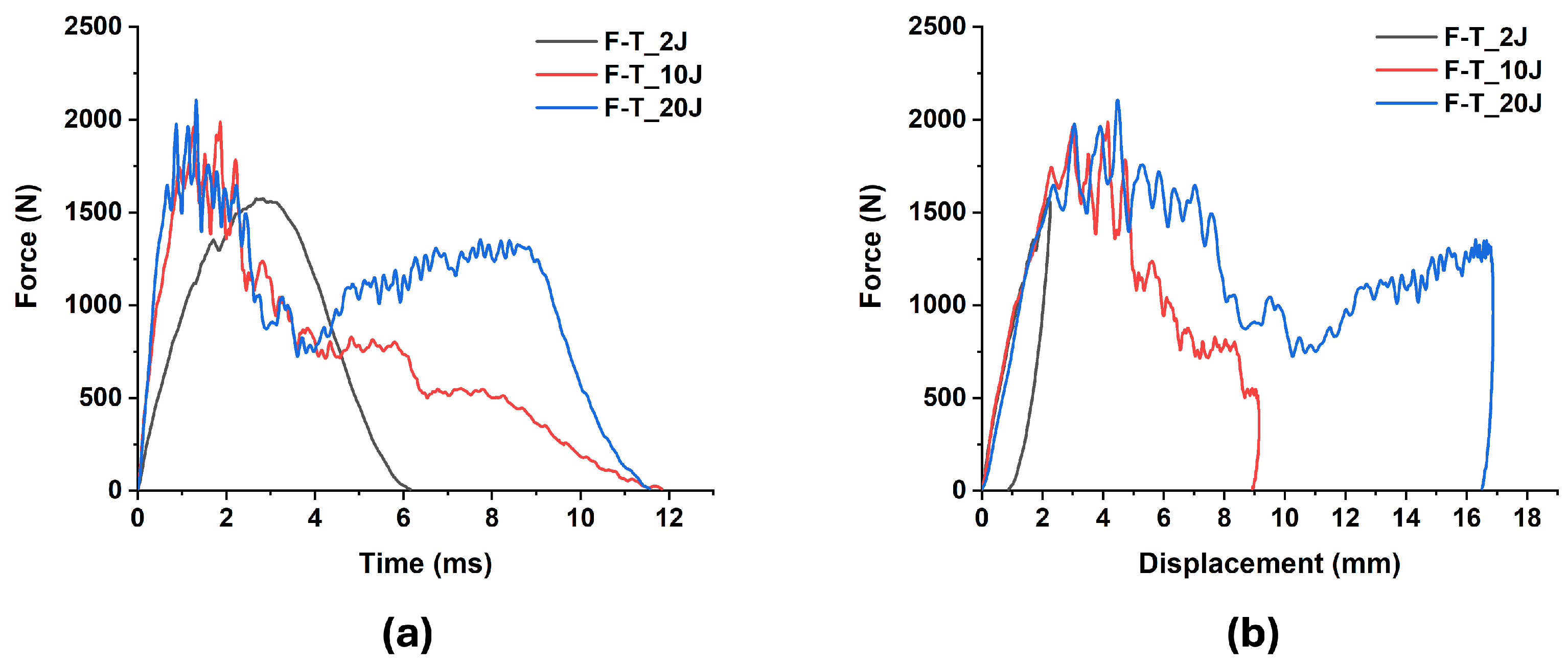
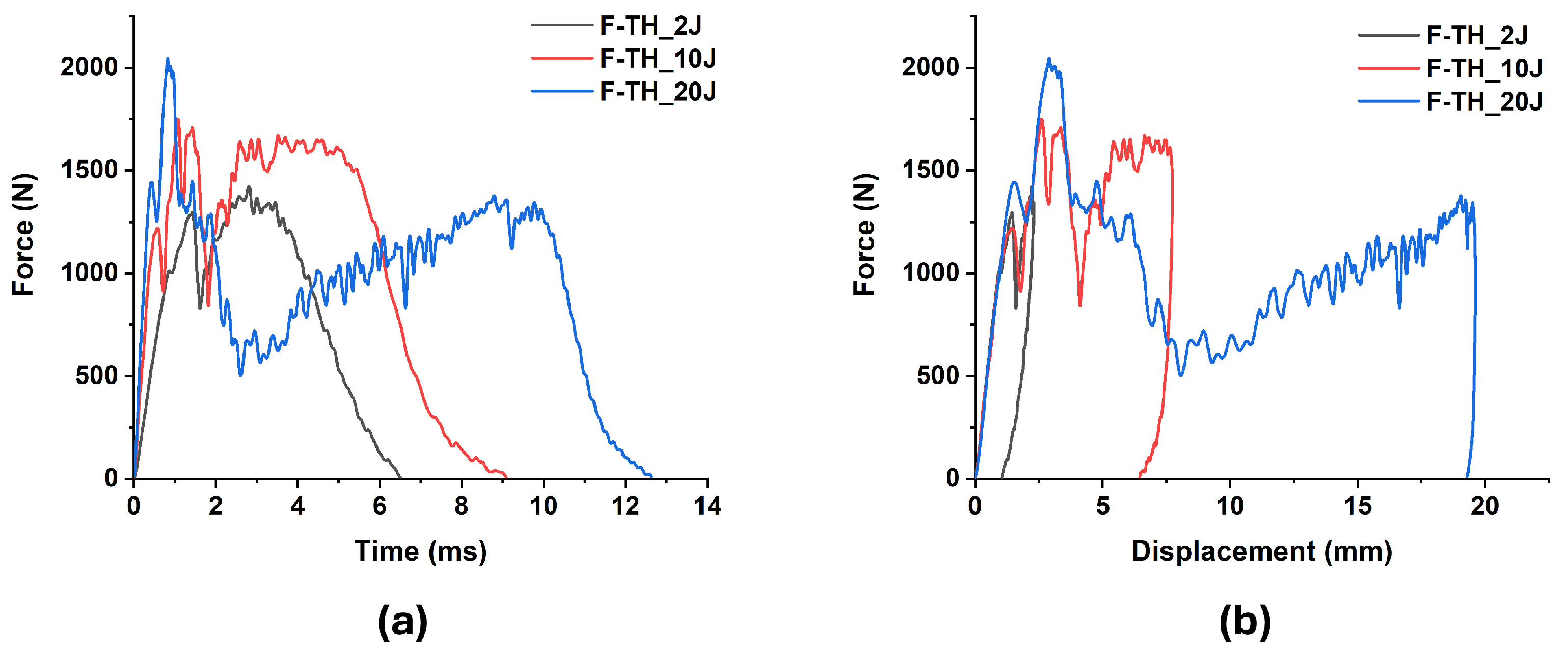
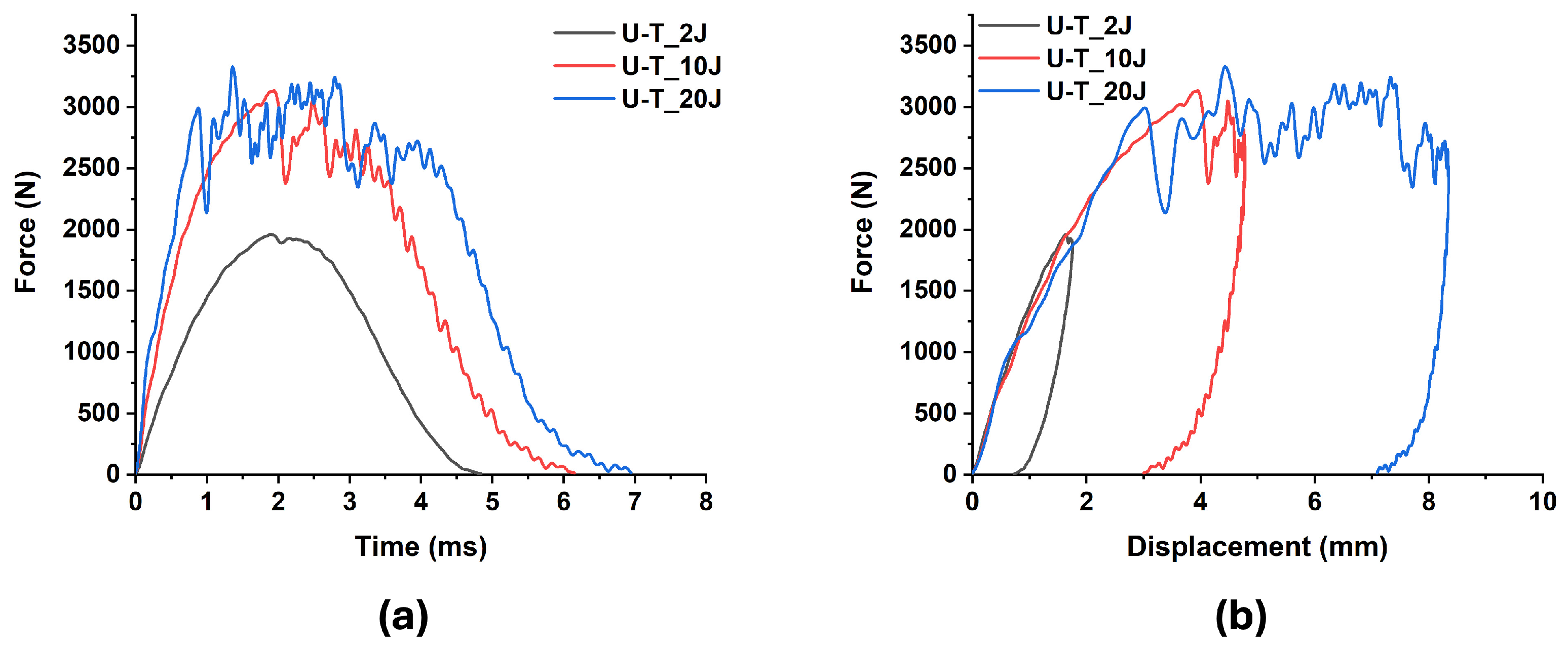
The force–time and force–displacement curves for the two configurations as a function of infill pattern and impact energy are shown in Figure 16, Figure 17, Figure 18 and Figure 19.
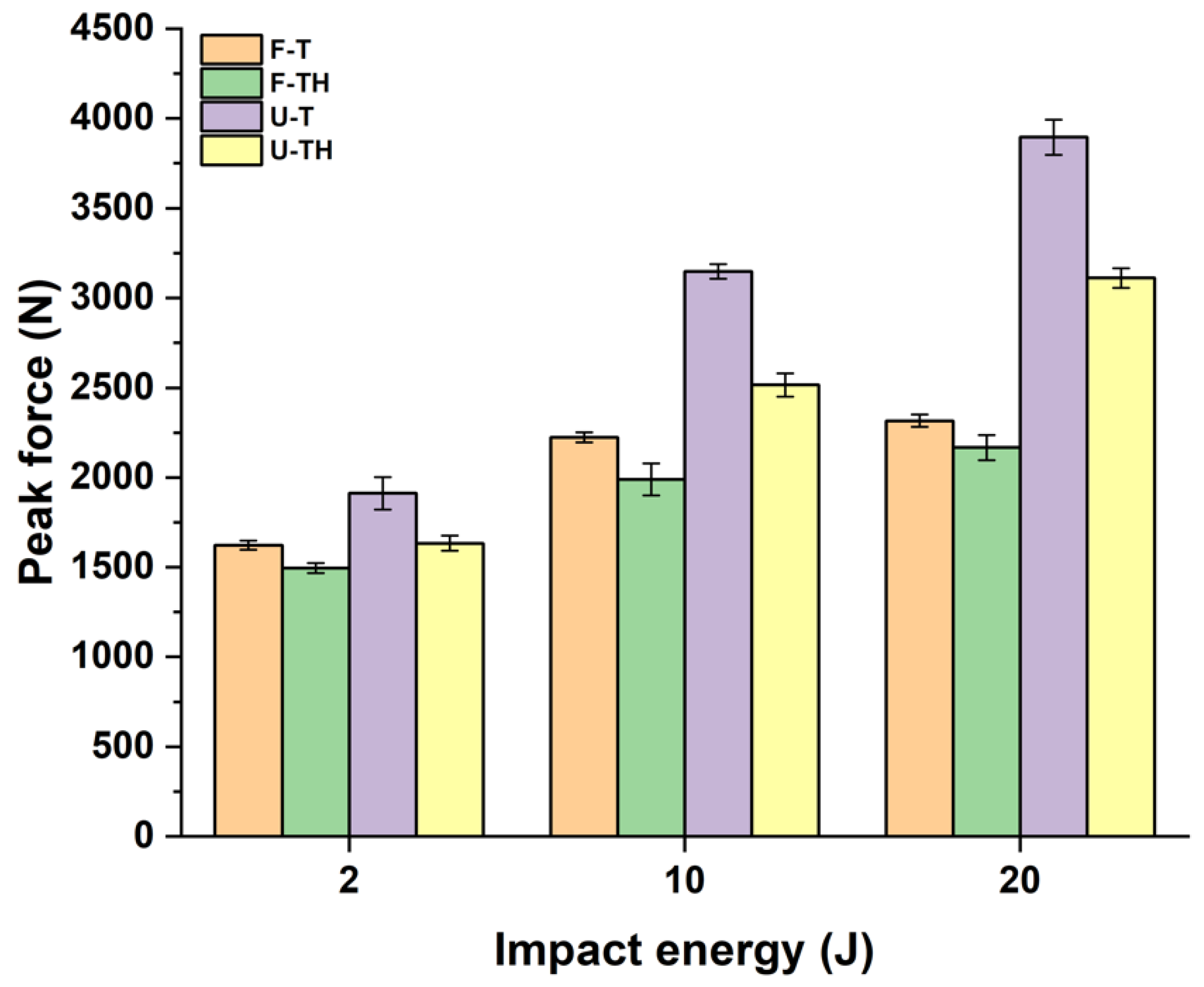
Figure 20 summarizes the peak force of the different configurations, while Figure 21 illustrates the trends in maximum contact force, comparing different configurations at the lowest and highest tested energy levels (2 and 20 J).

3.2.2. DoE-Based Analysis and Optimization for Sandwich Panels

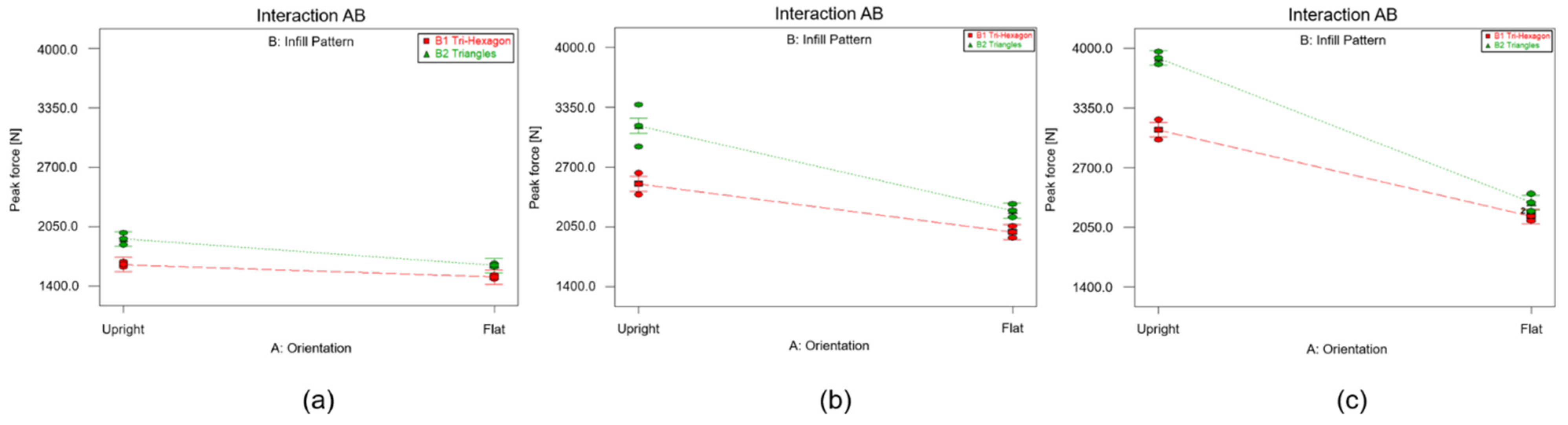
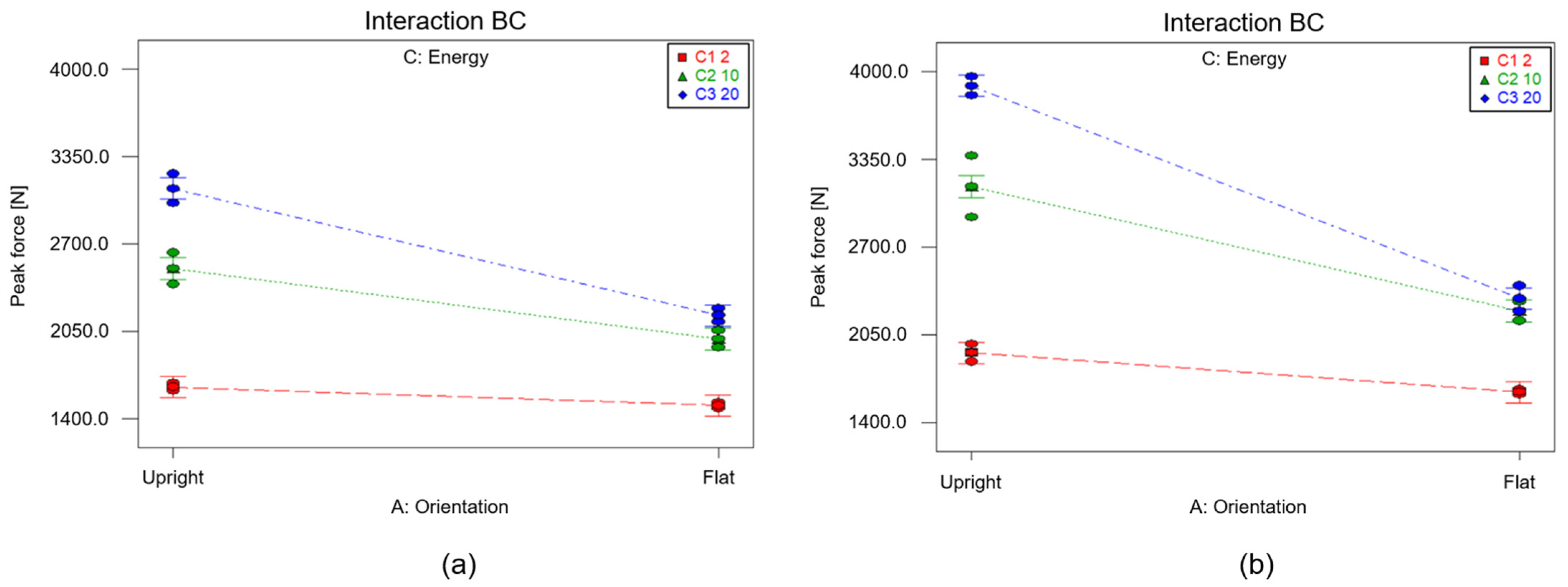
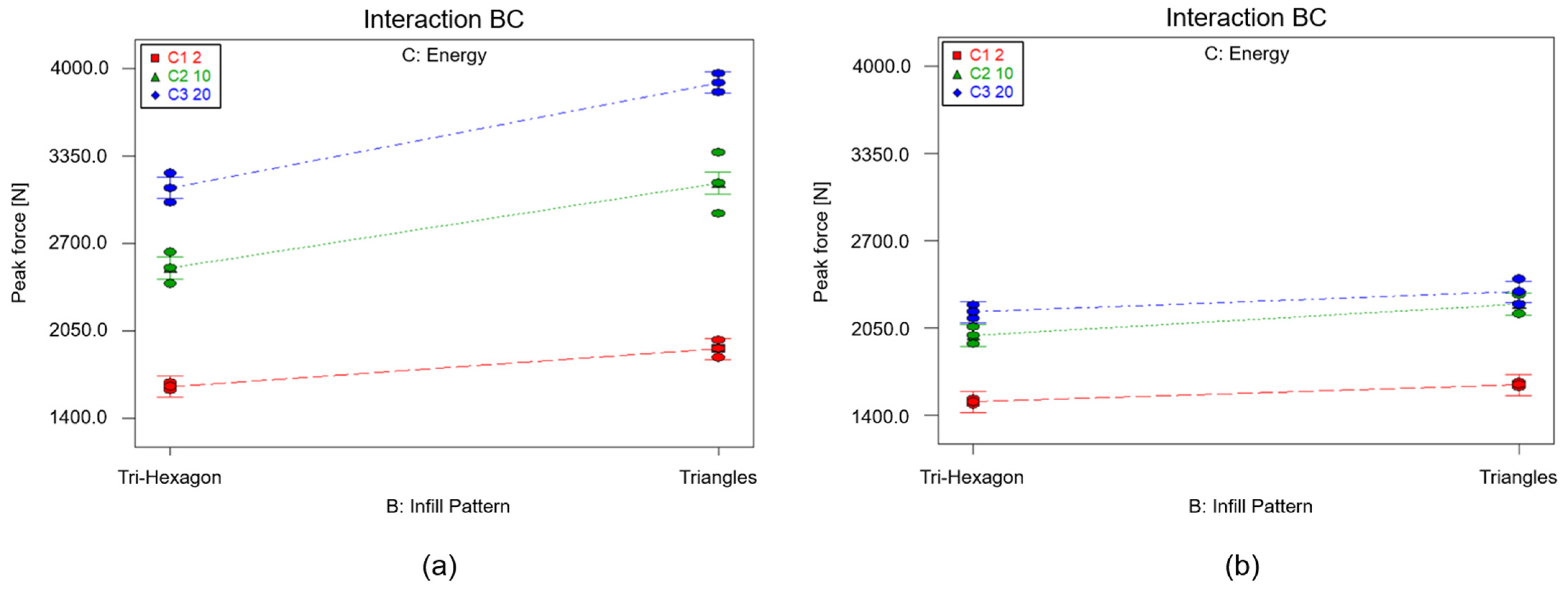
The results from the sandwich structures confirmed the same behavior observed in the case of the 3D-printed cores without sandwiching. These results were also consistent, once again, with the ANOVA analysis carried out for the sandwiches. The results obtained are summarized in Table 7.
Even in this case, the factors A, B, and C were statistically significant (p-value < 0.0001) for the investigated response. Furthermore, all the interactions AB, AC, BC, and ABC were also influential (p-value < 0.0001). Once again, no anomalies were detected from the model adequacy check on the residuals. Eventually, even in this case, most of the variability observed in the investigated response, peak force, could be attributed to the changes in the significant factors and interactions, as R2 = 0.9828 was very high.
The effects diagrams for the investigated response, i.e., peak force, from the impact tests performed on the sandwiches are reported in Figure 22, Figure 23 and Figure 24. This confirmed the same trend described for the cores.
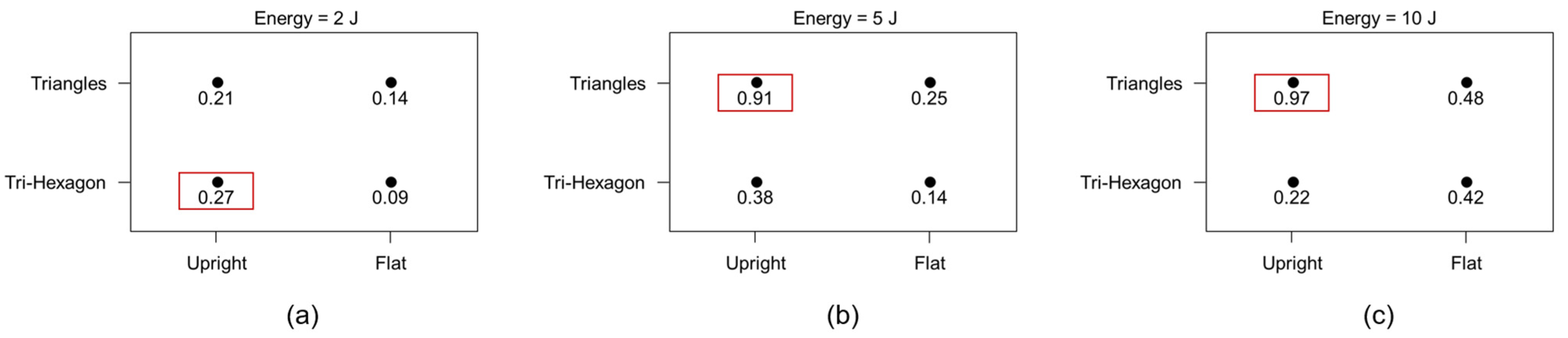
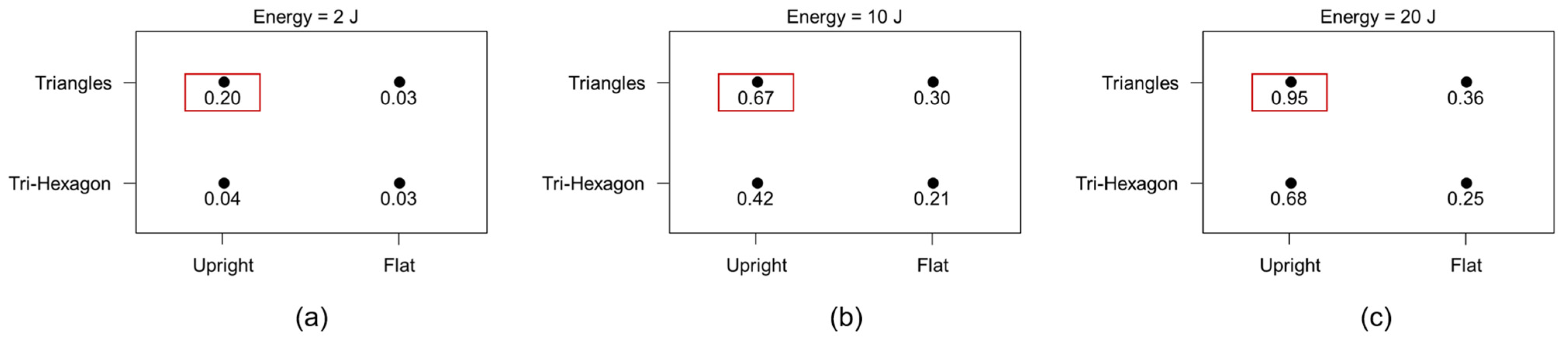
In the end, Figure 25 and Figure 26 present the results obtained from the optimization process, which was performed using desirability functions with the purpose of identifying the best performing combination of the investigated factors. It turned out to be {upright; triangular} for both cores and sandwiches. The only exception was for the cores tested at 2 J. Indeed, in this case, the best performing solution was the {upright; trihegaxonal} one. However, it must be highlighted that the desirability function value was quite similar to the {upright; triangular} configuration. This result was consistent with the previously discussed findings, i.e., that at 2 J, all of the tested core configurations exhibited comparable behaviors in terms of peak force (see Figure 9a).
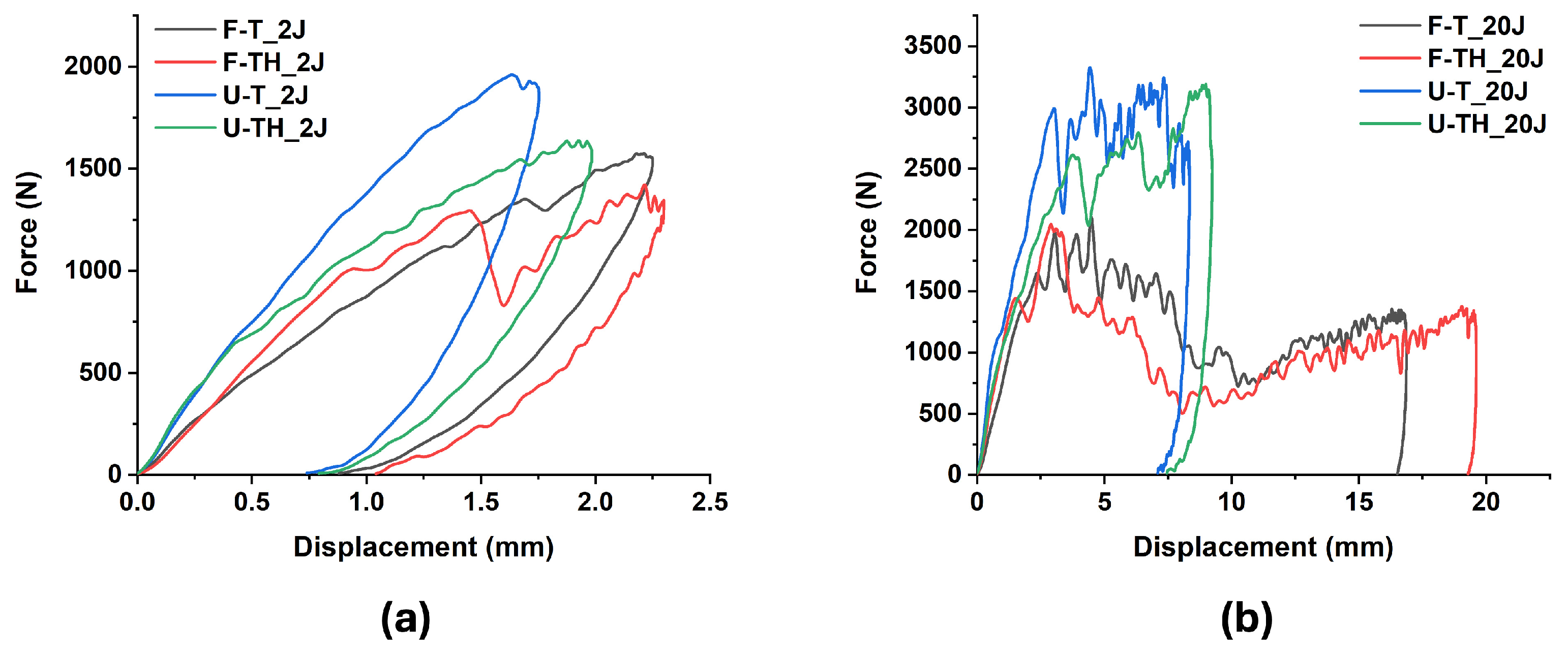
For all configurations, an impact energy of 2 J was insufficient to cause appreciable damage, as evidenced by the symmetrical force–time curves without load drops and by the observations of the impact surfaces (Figure 16, Figure 17, Figure 18 and Figure 19). The upright printing orientation exhibited superior linear stiffness and peak force compared to the flat orientation (Figure 16 and Table 8). As the impact energy increased, the difference in stiffness became less pronounced due to the onset of progressive damage on the impacted surface (Figure 27, Figure 28, Figure 29 and Figure 30). This held true for both the cores and the sandwich structures. With the exception of the F-TH core, for which a significant decrease in linear stiffness (defined as the average slope of the impact curve until the first load drop takes place [39]) was observed with increasing impact energy, the other cores did not exhibit a marked variation. This was indicative of superior resistance to impact damage, despite failure of the top face sheet at impact energies of at least 5 J (Figure 12, Figure 13, Figure 14 and Figure 15). This trend was also evident in Figure 5, where several peaks were visible already at 5 J, denoting progressive core damage with alternating load drops and recoveries. It is further worth noting that both flat configurations showed the presence of debonding between the core and the bottom face sheet on the surface opposite to the impact, which was more marked in F-TH.
Conversely, the upright configurations displayed better impact resistance, also in terms of linear stiffness, with the triangular infill offering the best performance, without progressive degradation as a function of impact energy. The trihexagonal infill, on the other hand, exhibited a force–displacement curve (Figure 7) that already at 5 J presented a double peak, an indication of progressive core cracking and reduced impact resistance. These behaviors were also observed in the sandwich structures, highlighting, however, that a large fraction of the impact energy during low-velocity impact was absorbed by fracture of the top face sheet, as no damage was observed on the back face sheet up to an impact energy of 20 J, especially in the flat configuration. This behavior explains the marked reduction, already at 10 J, in linear stiffness for the sandwich structures (Table 8). This was also evident from the different shapes of the force–displacement curves at 20 J (Figure 21b), where only the flat configurations, for both infill types, exhibited two peaks, suggesting contact of the impactor with the top and bottom face sheets, respectively—a feature not recorded for sandwich structures with the upright configuration [40]. Another noteworthy observation is that the second peak had a lower magnitude than the first. The deformation characteristics of the 3D-printed cores under compressive loading were likely to be the main cause of this behavior, which occurred in the form of core cracking/breaking rather than cell collapse, typically observed in cork cores compared to synthetic foams [41]. In this case, at higher strains, the core structure exhibits reduced energy absorption due to the breaking of individual cells, with densification not taking place, thus failing to resist further penetration of the impactor [42]. The fracture of the face sheet is governed by the extent of localized bending that can be accommodated due to indentation-induced deformation [43]. It is therefore reasonable to assume that the different energies required to break the core allowed tailoring of the damage extent in the core material, which was found to be lower in the upright configuration (Figure 29 and Figure 30). This damage was more extensive in the flat configuration and led to increased energy absorption and a higher degree of damage. This energy absorption in both upright configurations (triangular and trihexagonal) was limited to the upper skin, affecting the core at 20 J and causing delamination of the rear skin opposite the impact.
The damage in flat configurations was greater and affected the core, even at an impact energy of 10 J. This contrasted with the behavior observed in ‘upright’ configurations, highlighting a key factor in the mechanical response related to the 3D printing orientation. The impact energy was absorbed through brittle failure of both the fibers and the matrix. This damage was most evident and was localized around the contact area with the hemispherical drop weight. It is important to note that the best configuration was the upright orientation combined with a triangular infill.
The comparative analysis of data from low-velocity impact tests remains inherently challenging due to the wide range of variables influencing the measured response. As reported in several studies [44,45,46,47], these variables include the size, shape, and mass of the impactor; the boundary and support conditions of the test specimens; the geometric configuration of the sandwich panels—particularly the core and face sheet thicknesses—and, most importantly, the material systems employed in their manufacture [42,48]. Consequently, direct comparison between experimental campaigns is often limited unless these parameters are strictly controlled or properly normalized. Despite these challenges, a commonly employed parameter for comparing the energy absorption capacity of different structures is the specific absorbed energy (SAE), defined as the ratio of the total energy absorbed to the mass of the sandwich panel [49]. In this study, the most pronounced weight differences were observed between cores printed in upright and flat orientations, independent of the infill pattern. The upright configuration consistently exhibited a higher mass than its flat counterpart. Specific energy absorption (SEA) values were evaluated for both cores—excluding the 10 J energy level due to penetration—and for the corresponding sandwich structures, with the 20 J energy level similarly omitted.
At the lower impact energy (2 J), cores displayed no statistically significant differences, with SEA values ranging from 50 to 55 J/kg. At 10 J, however, the upright cores exhibited lower SEA values than the flat cores across both infill types, as summarized below:
  • U-TH = 146 ± 2 J/kg, F-TH = 174 ± 1 J/kg
  • U-T = 132 ± 1 J/kg, F-T = 171 ± 1 J/kg
Since the laminated face sheets were identical across sandwich specimens, these trends were preserved at the sandwich level, with SEA values substantially higher at 10 J:
  • U-TH = 262 ± 1 J/kg, F-TH = 317 ± 3 J/kg
  • U-T = 229 ± 5 J/kg, F-T = 313 ± 2 J/kg
These findings indicated that the core printing orientation exerts a stronger influence on energy absorption than the infill pattern. Nevertheless, the trihexagonal infill configuration achieved higher SEA values compared to the triangular pattern.
Despite the challenges in direct comparisons, these values aligned with literature reports. Indres et al. [50] fabricated three PLA-based sandwich panels using fused deposition modeling, one with a regular hexagonal core and two with re-entrant cores at 0° and 90°, and subjected them to low-velocity impacts of 10 and 15 J. The SEA values at 10 J ranged from 27 to 37 J/kg depending on the core type.
Similarly, Karami et al. [51] developed a cost-effective method for integrated PLA sandwich panels with glass fiber-reinforced face sheets. Under 18 J impact, the SEA values ranged from 228 to 601 J/kg, with the highest values observed in the integrated structure without adhesive between the core and face sheet.

4. Conclusions

This study systematically investigated the influence of printing orientation and infill pattern on the impact resistance of CFRP cores and sandwich panels fabricated via FFF 3D printing. The quantitative results clearly demonstrated that both orientation and internal geometry significantly affect performance under low-velocity impact. For the core samples, specimens printed in an upright orientation consistently performed better than the flat ones. At 10 J impact energy, the upright-triangular (U-T) configuration exhibited a peak force of 1711.3 N ± 29.1, compared to 1335.9 N ± 47.0 for flat-triangular (F-T) and 1136.7 N ± 52.1 for flat-trihexagonal (F-TH). This corresponded to relative improvements of approximately 28% over F-T and 50% over F-TH. The triangular infill also demonstrated superior performance across all orientations; for instance, at 5 J, the U-T cores reached 1666.7 N ± 56.2, whereas the U-TH configuration reached only 1258.5 N ± 133.6. These differences are attributed to the more efficient load distribution and rigidity inherent to triangular architectures.
The same trends were confirmed in the sandwich structures. At 20 J, the upright-triangular sandwich (SU-T) achieved a peak force of 3895.0 N ± 98.4, significantly outperforming the flat-triangular (SF-T, 2316.7 N ± 33.9) and flat-trihexagonal (SF-TH, 2166.8 N ± 70.4) specimens. Even at lower energies, the advantage of upright-triangular designs was evident: at 2 J, SU-T reached 1913.1 N ± 90.3, compared to 1621.8 N ± 26.4 for SF-T and 1494.8 N ± 27.8 for SF-TH. On average, the upright-triangular sandwich structure exhibited up to 68% higher peak force than the worst-performing flat-trihexagonal counterpart at the highest energy level tested.
Statistical analysis through ANOVA confirmed the high significance (p < 0.0001) of all main factors (orientation, infill pattern, and impact energy) as well as their interactions, with R2 values of 0.94 for core samples and 0.98 for sandwich panels, indicating excellent model accuracy. The optimization via desirability functions further identified the {upright; triangular} combination as the most effective configuration in terms of impact resistance across most energy levels.
These findings offer strong, data-driven guidance for designing lightweight, AM structures capable of resisting LVI. They highlight the critical importance of combining optimal internal architectures with strategic build orientations to exploit the full potential of CF-reinforced FFF composites.
Future research should explore fatigue performance, the potential of hybrid infill architectures, and the long-term environmental durability of the printed components.

Author Contributions

Conceptualization, C.T., I.B. (Irene Bavasso), and L.S.; methodology, C.T., L.S., and I.B. (Irene Bavasso); software, C.T., L.S., A.P., and I.B. (Irene Bavasso); validation, C.T., G.F., L.S., A.P., and I.B. (Irene Bavasso); formal analysis, C.T., L.S., A.P., and I.B. (Irene Bavasso); investigation, C.T., L.S., A.P., and I.B. (Irene Bavasso); resources, M.E., A.P., and J.J.; data curation, C.T., G.F., L.S., A.P., and I.B. (Irene Bavasso); writing—original draft preparation, C.T., L.S., and I.B. (Irene Bavasso); writing—review and editing, all authors; visualization, all authors; supervision, C.T., L.S., I.B. (Irene Bavasso), and I.B. (Ignazio Blanco). All authors have read and agreed to the published version of the manuscript.

Funding

This research was partially supported by the MIMIT-funded project “Sistemi innovativi di fabbricazione flessibile per materiali compositi ecocompatibili totalmente riciclabili” (RE-COMP), CUP: B69J24001400005, and by the MIUR-funded PRIN PNRR project “3D Printing TeChnology for Innovative Recyclable and natural Composites with high LifetimE” (3D-CIRCLE), CUP: E53D23017770001.

Data Availability Statement

The original contributions presented in this study are included in the article. Further inquiries can be directed to the corresponding authors.

Conflicts of Interest

The authors declare no conflicts of interest.

Abbreviations

The following abbreviations are used in this manuscript:
AMAdditive Manufacturing
ANOVAAnalysis of Variance
CFCarbon Fiber
CFRCCarbon Fiber-Reinforced Composite
DLPDigital Light Processing
DoEDesign of Experiments
DWTDrop Weight Test
FFFFused Filament Fabrication
FDMFused Deposition Modeling
GFRPGlass Fiber-Reinforced Polymer
LVILow-Velocity Impact
PEIPolyetherimide
PPSPolyphenylene Sulfide
SLAStereolithography
SLMSelective Laser Melting
SLSSelective Laser Sintering
UHMWPEUltra-High-Molecular-Weight Polyethylene

References

  1. Peng, L.; Benavidez, E.; Mukherjee, S.; Morales, R.E.; Tringe, J.W.; Stobbe, D.; Deng, Y. In-Situ 3D Temperature Field Modeling and Characterization Using Eddy Current for Metal Additive Manufacturing Process Monitoring. Sci. Rep. 2025, 15, 9999. [Google Scholar] [CrossRef]
  2. Mallikarjuna, B.; Bhargav, P.; Hiremath, S.; Jayachristiyan, K.G.; Jayanth, N. A Review on the Melt Extrusion-Based Fused Deposition Modeling (FDM): Background, Materials, Process Parameters and Military Applications. Int. J. Interact. Des. Manuf. (IJIDeM) 2025, 19, 651–665. [Google Scholar] [CrossRef]
  3. Ku, J.; Lee, J.; Kim, E.; Kim, Y.G.; Park, E.S.; Jeon, C. The Effect of Process Conditions on Mechanical Properties of IN718 Material Fabricated by L-PBF (Laser Powder Bed Fusion). J. Jpn. Soc. Powder Powder Metall. 2025, 72, S461–S466. [Google Scholar] [CrossRef]
  4. Safi Jahanshahi, A.; Akhoundi, B.; Quagliato, L. Investigation of Compressive Strength of 3D-Printed PLA/Continuous Glass Fibers Composites Manufactured by Simultaneous Impregnation Extrusion-Based Additive Manufacturing. Eng. Res. Express 2025, 7, 015403. [Google Scholar] [CrossRef]
  5. Gallup, L.; Trabia, M.; O’Toole, B.; Fahmy, Y. Influence of Fused Deposition Modeling Process Parameters on Constitutive Model of Hyperelastic Thermoplastic Polyurethane. Polymers 2024, 17, 26. [Google Scholar] [CrossRef]
  6. Shenbagapandiyan, B.; Shankar, E.; Devanathan, C.; Prakash, R. Effect of Infill Parameters on Mechanical Properties of Poly Lactic Acid Material in 3D Printing: A Review. In Recent Innovations in Sciences and Humanities; CRC Press: London, UK, 2025; pp. 170–175. [Google Scholar]
  7. Anerao, P.; Kulkarni, A.; Munde, Y.; Kharate, N. A Comparative Study of Machine Learning Techniques for Predicting Mechanical Properties of Fused Deposition Modelling (FDM)-Based 3D-Printed Wood/PLA Biocomposite. Mech. Adv. Compos. Struct. 2025, 12, 261–270. [Google Scholar] [CrossRef]
  8. Mallek, H.; Mellouli, H.; Allouch, M.; Wali, M.; Dammak, F. Energy Absorption of 3D-Printed PETG and PETG/CF Sandwich Structures with Cellular Cores Subjected to Low-Velocity Impact: Experimental and Numerical Analysis. Eng. Struct. 2025, 327, 119653. [Google Scholar] [CrossRef]
  9. Charkaoui, A.; Hassan, N.M.; Bahroun, Z.; Ibrahim, M. Low-Velocity Impact Response of Hybrid Core Sandwich Panels with Spring and Strut Cores Filled with Resin, Silicone, and Foam. J. Mater. Sci. Mater. Eng. 2024, 19, 20. [Google Scholar] [CrossRef]
  10. Marabello, G.; Chairi, M.; Di Bella, G. Optimizing Additive Manufacturing of Sandwich Structures: Effect of TPMS Cores on Flexural Properties. In Proceedings of the Materials Research Proceedings, Yokohama, Japan, 8–13 December 2025; Association of American Publishers: Washington, DC, USA, 2025; Volume 54, pp. 124–134. [Google Scholar]
  11. Dhalait, J.; Jatti, V.K.; Tamboli, S.; Motgi, R. Tensile, Flexural, and Impact Strength Analysis of a 3D Printed Car-bon Fiber Reinforced Nylon Filament. Mech. Adv. Compos. Struct. 2025, 12, 615–627. [Google Scholar] [CrossRef]
  12. Kausar, A.; Ahmad, I.; Rakha, S.A.; Eisa, M.H.; Diallo, A. State-of-the-Art of Sandwich Composite Structures: Manufacturing—To—High Performance Applications. J. Compos. Sci. 2023, 7, 102. [Google Scholar] [CrossRef]
  13. Calabrese, L.; Marabello, G.; Chairi, M.; Di Bella, G. Optimization of Deposition Temperature and Gyroid Infill to Improve Flexural Performance of PLA and PLA–Flax Fiber Composite Sandwich Structures. J. Manuf. Mater. Process. 2025, 9, 31. [Google Scholar] [CrossRef]
  14. Zaharia, S.M.; Enescu, L.A.; Pop, M.A. Mechanical Performances of Lightweight Sandwich Structures Produced by Material Extrusion-Based Additive Manufacturing. Polymers 2020, 12, 1740. [Google Scholar] [CrossRef] [PubMed]
  15. Acanfora, V.; Sellitto, A.; Russo, A.; Zarrelli, M.; Riccio, A. Experimental Investigation on 3D Printed Lightweight Sandwich Structures for Energy Absorption Aerospace Applications. Aerosp. Sci. Technol. 2023, 137, 108276. [Google Scholar] [CrossRef]
  16. Zhai, Z.; Wang, S.; Yang, G.; Guo, A.; Qu, P.; Song, Y.; Shao, S.; Zang, J. Novel Sandwich Structures with Double-Row and Crossed Pyramidal Lattice Cores: Design, Fabrication and Bending Behavior. Eng. Fail. Anal. 2025, 170, 109267. [Google Scholar] [CrossRef]
  17. Liu, H.; Li, D. Study on the Energy Absorption Effect and Impact Resistance of a Composite Sandwich Panel with Carbon Fiber Reinforced Re-Entrant Hexagonal Honeycomb Core with Negative Poisson’s Ratio. Eur. J. Mech.-A/Solids 2025, 109, 105447. [Google Scholar] [CrossRef]
  18. Sukia, I.; Morales, U.; Esnaola, A.; Aurrekoetxea, J.; Erice, B. Low-Velocity Impact Performance of Integrally-3D Printed Continuous Carbon Fibre Composite Sandwich Panels. Mater. Lett. 2024, 354, 135374. [Google Scholar] [CrossRef]
  19. Sukia, I.; Esnaola, A.; Erice, B.; Aurrekoetxea, J. Impact Behaviour of Bio-Inspired Sandwich Panels Integrally Manufactured from 3D Printed Continuous Carbon Fibre Reinforced Polyamide. Compos. Sci. Technol. 2024, 250, 110515. [Google Scholar] [CrossRef]
  20. Guerra Silva, R.; Morales Pavez, G. Flexural Characteristics of Additively Manufactured Continuous Fiber-Reinforced Honeycomb Sandwich Structures. Compos. Part C Open Access 2025, 16, 100563. [Google Scholar] [CrossRef]
  21. Arslan, D.; Mihai, M.; Therriault, D.; Lévesque, M. Flexural Properties of Sandwich Panels Fabricated by Filament-Extrusion of High-Temperature Thermoplastic Composites. Compos. Sci. Technol. 2025, 263, 111106. [Google Scholar] [CrossRef]
  22. Hwang, S.-K.; Tran, M.T.; Dang, C.H.; Heo, J.-M.; Lee, H.W.; Jung, K.-H.; Kim, D.-K. Exceptional Cryogenic Impact and Fatigue Properties of Additively Manufactured CrCoNi Medium Entropy Alloy. Int. J. Fatigue 2025, 193, 108767. [Google Scholar] [CrossRef]
  23. Sanchez Ramirez, A.; D’Amato, R.; Islán Marcos, M.E.; Juanes Méndez, J.A.; Blaya Haro, F. Mechanical Characterization of New Bi-Material Generated by Additive Manufacturing: IZOD Test–Puncture Impact Behaviour. Rapid Prototyp. J. 2025, 31, 298–315. [Google Scholar] [CrossRef]
  24. Wang, X.; Li, Z.; Sun, H.; Xie, Y.; Kang, Z.; Su, X. Enhancement of a Dual-Directional Graded Honeycomb under Dynamic Crushing Velocity. Eur. J. Mech.-A/Solids 2025, 111, 105562. [Google Scholar] [CrossRef]
  25. Zhang, Y.; Feng, J.; Yan, J.; Guo, Q.; Sun, Z.; Zhang, D.; Guo, J.; An, L.; Wu, X.; Chen, L. Effect of Weave Pattern on the Low-Velocity Impact Properties of 3D Woven Composites. Thin-Walled Struct. 2025, 209, 112969. [Google Scholar] [CrossRef]
  26. Palani, S.; Karthik, S.; Rajaravi, C.; Ganapathy Srinivasan, R. Analysis of Impact Strength on Polymer Matrix Composites Using Projectile Parameters for Combat Vehicle Application. In Materials, Design and Manufacturing for Sustainable Environment; Springer: Singapore, 2023; pp. 271–281. [Google Scholar]
  27. Gaugelhofer, L.; John, J.; Hajek, M.; Yavrucuk, I. Lightning Strike Experiments and Their Direct Effects on Flax Fiber-Reinforced Polymer Panels for Rotorcraft Components. In Proceedings of the Vertical Flight Society 80th Annual Forum and Technology Display, Montreal, QC, Canada, 7–9 May 2024. [Google Scholar]
  28. Fisher, T.; Almeida Jr, J.H.S.; Falzon, B.G.; Kazancı, Z. Tension and Compression Properties of 3D-Printed Composites: Print Orientation and Strain Rate Effects. Polymers 2023, 15, 1708. [Google Scholar] [CrossRef]
  29. Cicala, G.; Tosto, C. Optimization of Fused Deposition Modeling for Short Fiber Reinforced Composites. In Additive Manufacturing of Polymer-Based Composite Materials; Elsevier: Amsterdam, The Netherlands, 2024; pp. 37–79. [Google Scholar]
  30. Fisher, T.; Kazancı, Z.; Almeida, J.H.S. The Importance of Print Orientation in Numerical Modelling of 3D Printed Structures under Impact Loading. Mater. Res. Express 2024, 11, 065303. [Google Scholar] [CrossRef]
  31. Hexr. Available online: www.hexr.com (accessed on 15 August 2025).
  32. Riddell Diamond Technology. Available online: www.riddell.com (accessed on 15 August 2025).
  33. Jimenez-Martinez, M.; Narvaez, G.; Diaz-Montiel, P. Low Cycle Fatigue of Thin-Wall Printed Onyx in Energy Absorption. Heliyon 2025, 11, e42120. [Google Scholar] [CrossRef] [PubMed]
  34. Crea 3D Kapsula. Available online: https://projects.crea3d.com/en/kapsula (accessed on 15 August 2025).
  35. Colorfabb XTCF20. Available online: https://colorfabb.com/media/datasheets/tds/colorfabb/TDS_E_ColorFabb_XT_CF20.pdf (accessed on 10 February 2025).
  36. León-Becerra, J.; Hidalgo-Salazar, M.Á.; Correa-Aguirre, J.P.; González-Estrada, O.A.; Pertuz, A.D. Additive Manufacturing of Short Carbon Filled Fiber Nylon: Effect of Build Orientation on Surface Roughness and Viscoelastic Behavior. Int. J. Adv. Manuf. Technol. 2024, 130, 425–435. [Google Scholar] [CrossRef]
  37. Awd Allah, M.M.; Abbas, M.A.; Almuflih, A.S.; Mahmoud, S.F.; Abd El-baky, M.A. On the Influence of Different Infill Pattern Structures on the Crashworthiness Performance of 3D Printed Tubes Subjected to Lateral Loading Condition. Fibers Polym. 2024, 25, 4437–4451. [Google Scholar] [CrossRef]
  38. Nguyen-Van, V.; Peng, C.; Tran, P.; Wickramasinghe, S.; Do, T.; Ruan, D. Mechanical and Dynamic Performance of 3D-Printed Continuous Carbon Fibre Onyx Composites. Thin-Walled Struct. 2024, 201, 111979. [Google Scholar] [CrossRef]
  39. Belingardi, G.; Cavatorta, M.P.; Salvatore Paolino, D. Repeated Impact Response of Hand Lay-up and Vacuum Infusion Thick Glass Reinforced Laminates. Int. J. Impact Eng. 2008, 35, 609–619. [Google Scholar] [CrossRef]
  40. Sarasini, F.; Tirillò, J.; Lampani, L.; Barbero, E.; Sanchez-Saez, S.; Valente, T.; Gaudenzi, P.; Scarponi, C. Impact Behavior of Sandwich Structures Made of Flax/Epoxy Face Sheets and Agglomerated Cork. J. Nat. Fibers 2020, 17, 168–188. [Google Scholar] [CrossRef]
  41. Sarasini, F.; Tirillò, J.; Lampani, L.; Sasso, M.; Mancini, E.; Burgstaller, C.; Calzolari, A. Static and Dynamic Characterization of Agglomerated Cork and Related Sandwich Structures. Compos. Struct. 2019, 212, 439–451. [Google Scholar] [CrossRef]
  42. Özen, İ.; Çava, K.; Gedikli, H.; Alver, Ü.; Aslan, M. Low-Energy Impact Response of Composite Sandwich Panels with Thermoplastic Honeycomb and Reentrant Cores. Thin-Walled Struct. 2020, 156, 106989. [Google Scholar] [CrossRef]
  43. Chai, G.B.; Zhu, S. A Review of Low-Velocity Impact on Sandwich Structures. Proc. Inst. Mech. Eng. Part L J. Mater. Des. Appl. 2011, 225, 207–230. [Google Scholar] [CrossRef]
  44. Kaware, K.; Kotambkar, M. Low Velocity Impact Response and Influence of Parameters to Improve the Damage Resistance of Composite Structures/Materials: A Critical Review. Int. J. Crashworthiness 2022, 27, 1232–1256. [Google Scholar] [CrossRef]
  45. Etri, H.E.L.; Polat, M.Z.; Özyılmaz, E.B. Classification, Applications, and Impact Behavior of Composite Materials: A Review. Mech. Adv. Mater. Struct. 2024, 31, 12592–12635. [Google Scholar] [CrossRef]
  46. Tarlochan, F. Sandwich Structures for Energy Absorption Applications: A Review. Materials 2021, 14, 4731. [Google Scholar] [CrossRef] [PubMed]
  47. Karsandik, Y.; Sabuncuoglu, B.; Yildirim, B.; Silberschmidt, V.V. Impact Behavior of Sandwich Composites for Aviation Applications: A Review. Compos. Struct. 2023, 314, 116941. [Google Scholar] [CrossRef]
  48. Charekhli-Inanllo, M.; Mohammadimehr, M. The Effect of Various Shape Core Materials by FDM on Low Velocity Impact Behavior of a Sandwich Composite Plate. Eng. Struct. 2023, 294, 116721. [Google Scholar] [CrossRef]
  49. Turner, A.J.; Al Rifaie, M.; Mian, A.; Srinivasan, R. Low-Velocity Impact Behavior of Sandwich Structures with Additively Manufactured Polymer Lattice Cores. J. Mater. Eng. Perform. 2018, 27, 2505–2512. [Google Scholar] [CrossRef]
  50. Indreș, A.I.; Constantinescu, D.M.; Mocian, O.A.; Sorohan, Ș. Particularities on the Low-Velocity Impact Be-havior of 3D-Printed Sandwich Panels with Re-Entrant and Honeycomb Core Topologies. J. Compos. Sci. 2024, 8, 426. [Google Scholar] [CrossRef]
  51. Karami, S.; Haghighi-Yazdi, M.; Safarabadi, M. Low-Velocity Impact Behavior of 3D-Printed Sandwich Panels with Integrated Composite Face Sheets. Adv. Eng. Mater. 2025, 27, 2401923. [Google Scholar] [CrossRef]
Figure 1. (a) Infill patterns as visualized in Ultimaker Cura slicing software (version 5.9.0): trihexagonal (top) and triangular (bottom); (b) corresponding printed infill samples without outer walls, used for demonstration purposes, showing both flat (left) and upright (right) orientations for each infill type.
Jmmp 09 00299 g001
Figure 2. Samples design and fabrication: (a) core geometry with dimensions (mm); (b) flat and upright 3D printing layout on the build plate for the four investigated configurations (F-T, U-T, F-TH, and U-TH); (c) FFF 3D printing of the cores; (d) final sandwich panels.
Jmmp 09 00299 g002
Figure 3. Drop weight impact testing machine.
Jmmp 09 00299 g003
Figure 4. Typical force–time (a) and force–displacement (b) curves for flat-triangular infill (F-T) cores impacted at 2 J, 5 J, and 10 J.
Jmmp 09 00299 g004
Figure 5. Typical force–time (a) and force–displacement (b) curves for flat-trihexagonal infill (F-TH) cores impacted at 2 J, 5 J, and 10 J.
Jmmp 09 00299 g005
Figure 6. Typical force–time (a) and force–displacement (b) curves for upright-triangular infill (U-T) cores impacted at 2 J, 5 J, and 10 J.
Jmmp 09 00299 g006
Figure 7. Typical force–time (a) and force–displacement (b) curves for upright-trihexagonal infill (U-TH) cores impacted at 2 J, 5 J, and 10 J.
Jmmp 09 00299 g007
Figure 8. Variation in the maximum force as a function of the impact energy and the 3D printing architecture of the cores.
Jmmp 09 00299 g008
Figure 9. Effects diagrams for the interaction AB of the tested cores with impact energies of 2 (a), 5 (b), and 10 (c) J.
Jmmp 09 00299 g009
Figure 10. Effects diagram for the interaction AC of the tested cores with trihexagonal (a) and triangular (b) infill patterns.
Jmmp 09 00299 g010
Figure 11. Effects diagram for the interaction BC of the tested cores with upright (a) and flat (b) orientations.
Jmmp 09 00299 g011
Figure 12. Damage progression on both sides of the flat-triangular cores as a function of impact energy.
Jmmp 09 00299 g012
Figure 13. Damage progression on both sides of the flat-trihexagonal cores as a function of impact energy.
Jmmp 09 00299 g013
Figure 14. Damage progression on both sides of upright-triangular cores as a function of impact energy.
Jmmp 09 00299 g014
Figure 15. Progression of damage on both sides of the upright-trihexagonal cores as a function of impact energy.
Jmmp 09 00299 g015
Figure 16. Typical force–time (a) and force–displacement (b) curves for sandwich structures with flat-triangular infill (F-T) cores impacted at 2 J, 10 J, and 20 J.
Jmmp 09 00299 g016
Figure 17. Typical force–time (a) and force–displacement (b) curves for sandwich structures with flat-trihexagonal infill (F-TH) cores impacted at 2 J, 10 J, and 20 J.
Jmmp 09 00299 g017
Figure 18. Typical force–time (a) and force–displacement (b) curves for sandwich structures with upright-triangular infill (U-T) cores impacted at 2 J, 10 J, and 20 J.
Jmmp 09 00299 g018
Figure 19. Typical force–time (a) and force–displacement (b) curves for sandwich structures with upright-trihexagonal infill (U-TH) cores impacted at 2 J, 10 J, and 20 J.
Jmmp 09 00299 g019
Figure 20. Variation in maximum force as a function of impact energy and 3D printing architecture of the cores for sandwich panels.
Jmmp 09 00299 g020
Figure 21. Comparison of sandwich configurations as a function of impact energy: (a) 2 J and (b) 20 J.
Jmmp 09 00299 g021
Figure 22. Effects diagram for the interaction AB of the tested sandwiches with impact energies of 2 (a), 10 (b), and 20 (c) J.
Jmmp 09 00299 g022
Figure 23. Effects diagram for the interaction BC of the tested sandwiches with trihexagonal (a) and triangular (b) infill patterns.
Jmmp 09 00299 g023
Figure 24. Effects diagram for the interaction BC of the tested sandwiches with upright (a) and flat (b) orientations.
Jmmp 09 00299 g024
Figure 25. Desirability function value obtained for each investigated scenario of cores. The red box identifies the optimum configuration in terms of peak force for impact energies of 2 J (a), 5 J (b), and 10 J (c).
Jmmp 09 00299 g025
Figure 26. Desirability function value obtained for each investigated scenario of sandwiches. The red box identifies the optimum configuration in terms of peak force for impact energies of 2 J (a), 10 J (b), and 20 J (c).
Jmmp 09 00299 g026
Figure 27. Progression of damage on both sides of sandwich structures with flat-triangular cores as a function of impact energy.
Jmmp 09 00299 g027
Figure 28. Progression of damage on both sides of sandwich structures with flat-trihexagonal cores as a function of impact energy.
Jmmp 09 00299 g028
Figure 29. Progression of damage on both sides of sandwich structures with upright-triangular cores as a function of impact energy.
Jmmp 09 00299 g029
Figure 30. Progression of damage on both sides of sandwich structures with upright-trihexagonal cores as a function of impact energy.
Jmmp 09 00299 g030
Table 1. Printing parameters for the manufacturing of the specimens.
ParametersValues
Bed temperature70 °C
Layer height0.15 mm
Nozzle diameter0.4 mm
Print speed40–70 mm/s
Temperature of nozzle250 °C
Infill density20%
Infill patternTriangular/Trihexagonal
Table 2. Details of the fabricated specimens for the drop weight test.
Specimen TypeMaterialOrientationInfill PatternSpecimen ID
CoreXT-CF20UprightTrihexagonalU-TH
CoreXT-CF20FlatTrihexagonalF-TH
CoreXT-CF20UprightTriangularU-T
CoreXT-CF20FlatTriangularF-T
SandwichXT-CF20UprightTrihexagonalSU-TH
SandwichXT-CF20FlatTrihexagonalSF-TH
SandwichXT-CF20UprightTriangularSU-T
SandwichXT-CF20FlatTriangularSF-T
Table 3. Experimental plan for cores characterization: factors and levels.
FactorSymbolTypeUnitLevelsLow Level
(−1)
Center Level
(0)
High Level
(+1)
OrientationACategorical[-]a = 2Upright-Flat
Infill PatternBCategorical[-]b = 2Trihexagonal-Triangular
EnergyCNumerical[J]c = 32510
Table 4. Experimental plan for sandwiches characterization: factors and levels.
FactorSymbolTypeUnitLevelsLow Level
(−1)
Center Level
(0)
High Level
(+1)
OrientationACategorical[-]a = 2Upright-Flat
Infill PatternBCategorical[-]b = 2Trihexagonal-Triangular
EnergyCNumerical[J]c = 321020
Table 5. Set constraints for the optimization process based on the desirability functions.
ParameterGoalLower LimitUpper LimitLower WeightUpper WeightImportance
OrientationIn rangeUprightFlat113
Infill PatternIn rangeTrihexagonalTriangular113
EnergyIn range220113
Peak ForceMaximizeLowest value collectedHighest value collected113
Table 6. ANOVA table for the impact tests of the cores (investigated response: peak force).
SourceSum of SquaresdfMean SquareF-Valuep-Value
Model1.612E6111.466E534.42<0.0001Significant
A—3D Printing Orientation3.033E513.033E571.22<0.0001Significant
B—Infill Pattern3.094E513.049E571.59<0.0001Significant
C—Impact Energy4.271E522.135E550.14<0.0001Significant
AB1.490E511.490E534.99<0.0001Significant
AC1.185E5259247.1113.91<0.0001Significant
BC1.619E5280933.8919.00<0.0001Significant
ABC1.476E5273820.4217.33<0.0001Significant
Pure Error1.022E5244259.01
Cor Total1.715E635
Mean65.26R20.9404
St. Dev1255.78Adj-R20.9131
Table 7. ANOVA table for the impact tests of the sandwiches (investigated response: Peak Force).
SourceSum of SquaresDfMean SquareF-Valuep-Value
Model1.732E7111.575E6175.27<0.0001Significant
A—3D Printing Orientation4.845E614.845E6539.18<0.0001Significant
B—Infill Pattern1.216E611.216E6135.39<0.0001Significant
C—Impact Energy9.058E624.529E6504.04<0.0001Significant
AB3.507E513.507E539.04<0.0001Significant
AC1.643E628.217E591.45<0.0001Significant
BC1.231E5261570.406.850.0044Significant
ABC86740.77243370.384.830.0173Significant
Pure Error2.156E5248985.09
Cor Total1.754E735
Mean107.84R20.9828
St. Dev2335.84Adj-R20.9768
Table 8. Average values and standard deviations of linear stiffness for impacted cores and sandwich structures.
Specimen IDLinear Stiffness
(N/mm)
Core
F-T_2J1018.4 ± 9.8
F-T_5J1094.2 ± 48.9
F-T_10J1103.4 ± 3.7
F-TH_2J881.4 ± 76.7
F-TH_5J820.9 ± 90.9
F-TH_10J586.9 ± 43.8
U-T_2J1588.2 ± 8.4
U-T_5J1613.5 ± 31.8
U-T_10J1626.2 ± 54.1
U-TH_2J1253.8 ± 72.2
U-TH_5J1357.4 ± 88.7
U-TH_10J1304.5 ± 83.2
Sandwich
F-T_2J1148.5 ± 54.7
F-T_10J1221.4 ± 66.0
F-T_20J1015.2 ± 60.6
F-TH_2J1169.3 ± 28.8
F-TH_10J1025.3 ± 20.7
F-TH_20J832.5 ± 63.3
U-T_2J1828.1 ± 54.2
U-T_10J1371.8 ± 65.4
U-T_20J1386.0 ± 58.1
U-TH_2J1750.4 ± 17.5
U-TH_10J1360.5 ± 41.0
U-TH_20J1318.9 ± 35.4
Disclaimer/Publisher’s Note: The statements, opinions and data contained in all publications are solely those of the individual author(s) and contributor(s) and not of MDPI and/or the editor(s). MDPI and/or the editor(s) disclaim responsibility for any injury to people or property resulting from any ideas, methods, instructions or products referred to in the content.