1. Introduction
Nickel–aluminum intermetallic compounds, and Ni
3Al in particular, constitute a unique class of structural materials distinguished by their elevated mechanical strength, high-temperature oxidation resistance, and corrosion stability [
1,
2]. The γ′-Ni
3Al phase is the principal strengthening constituent of nickel-based superalloys, where the volume fraction of γ′ precipitates reaches 70–80% [
1,
3]. These characteristics have driven growing demand for bulk Ni
3Al and Ni
3Al-based coatings in aerospace [
2,
4], power-generation, and turbine-blade applications [
5] operating under aggressive chemical environments, high mechanical loads, and thermal cycling [
6].
Fabrication of dense, near-stoichiometric Ni
3Al compacts is, however, associated with a number of process-specific difficulties. Conventional casting inevitably produces a coarse-grained dendritic microstructure (grain size > 50 µm) accompanied by elemental segregation, which reduces mechanical properties by 20–30% [
7]. Powder-metallurgical routes hot isostatic pressing (HIP) and spark plasma sintering (SPS) require prolonged consolidation cycles (2–4 h at 1100–1200 °C) that promote grain coarsening and the formation of secondary phases (NiAl, Ni
2Al
3) whenever the stoichiometry deviates slightly from the ideal 3:1 Ni-to-Al ratio [
8,
9,
10]. Additive manufacturing techniques such as selective laser melting, electron-beam deposition and wire-arc additive manufacturing have attracted considerable attention in recent years [
11], but are associated with anisotropic columnar microstructures, residual porosities of up to 5–8% and high production costs [
12]. A further intrinsic limitation of Ni
3Al is its low room-temperature ductility (elongation < 2%), caused by susceptibility to intergranular brittle fracture. Boron additions of 0.1–0.5 at.% can raise the elongation to 5–8% by segregating at grain boundaries and enhancing cohesion [
13,
14,
15], but this approach adds process complexity and increases material cost.
An attractive alternative for producing near-stoichiometric intermetallics with fine-grained microstructures is self-propagating high-temperature synthesis (SHS) [
16], particularly when combined with simultaneous pressure application (SHS-compaction) [
17,
18,
19] or extrusion [
20], and performed in the thermal-explosion mode [
21]. Unlike classical combustion-wave SHS, thermal explosion provides a quasi-volumetric exothermic reaction 3Ni + Al → Ni
3Al with the simultaneous nucleation of multiple crystallization centers throughout the entire compact. This significantly reduces the melt residence time in the reaction zone, minimizing diffusive redistribution of components and suppressing secondary-phase formation. Concurrent pressurization enhances interparticle contact, reduces residual porosity to < 2%, and produces fully dense compacts without the need for subsequent post-densification operations [
19,
22]. A key role in initiating the thermal-explosion mode is played by the staged pre-heating schedule: in the temperature range 350–400 °C, the intermediate phases NiAl
3, Ni
2Al
3, and NiAl form sequentially, and their complete conversion to the target γ′-Ni
3Al phase requires strict compliance with the kinetic heating conditions [
23].
Compaction pressure is one of the critical process parameters of SHS-compaction, exerting a multi-factor influence on crystallization kinetics and grain-structure development. Pressure applied during solidification reduces the solid–liquid interfacial energy, decreasing the critical nucleus radius and increasing the nucleation site density; simultaneously, it enhances heat exchange between the reacting mixture and the die wall, accelerating cooling and promoting grain refinement [
22,
24]. Excessive pressure (“over-pressing”), however, may produce the opposite effect: uniaxial confinement generates pressure gradients within the cylindrical billet, retards local reaction fronts, and can ultimately lead to grain coarsening and degradation of mechanical properties [
18].
Of separate interest is the influence of applied pressure on the synthesis reaction kinetics. It has been established that increasing pressure in an SHS system can reduce the combustion-front propagation velocity [
25,
26], thereby extending the crystallization time and favoring grain growth. Despite the quasi-volumetric nature of thermal explosion, the propagation rate of local reaction fronts from the nucleation sites formed throughout the compact volume has a significant influence on the final grain structure. Determining the optimum process window therefore remains a pressing scientific problem.
Despite progress in understanding the mechanisms of intermetallic SHS, systematic quantitative relationships between the preliminary compaction pressure, reaction kinetics, grain-structure parameters, and the resulting complex of mechanical properties of Ni
3Al over a wide pressure range remain insufficiently studied. The structure–property-process correlations required to develop a scientifically grounded optimization methodology for the SHS-compaction of Ni
3Al have been established only in a limited number of works [
18,
24,
27]. A more detailed investigation of these dependencies constitutes a fundamental problem for the development of production technologies for high-temperature structural materials and the extension of their application in aerospace, power engineering, and protective-coating manufacture.
The aim of the present work is therefore to establish quantitative relationships between the preliminary pressure applied to the powder mixture prior to the onset of the synthesis reaction and the resulting grain-structure parameters and mechanical properties of the Ni3Al intermetallic compound produced by SHS-compaction in the thermal-explosion mode.
2. Materials and Methods
Ni
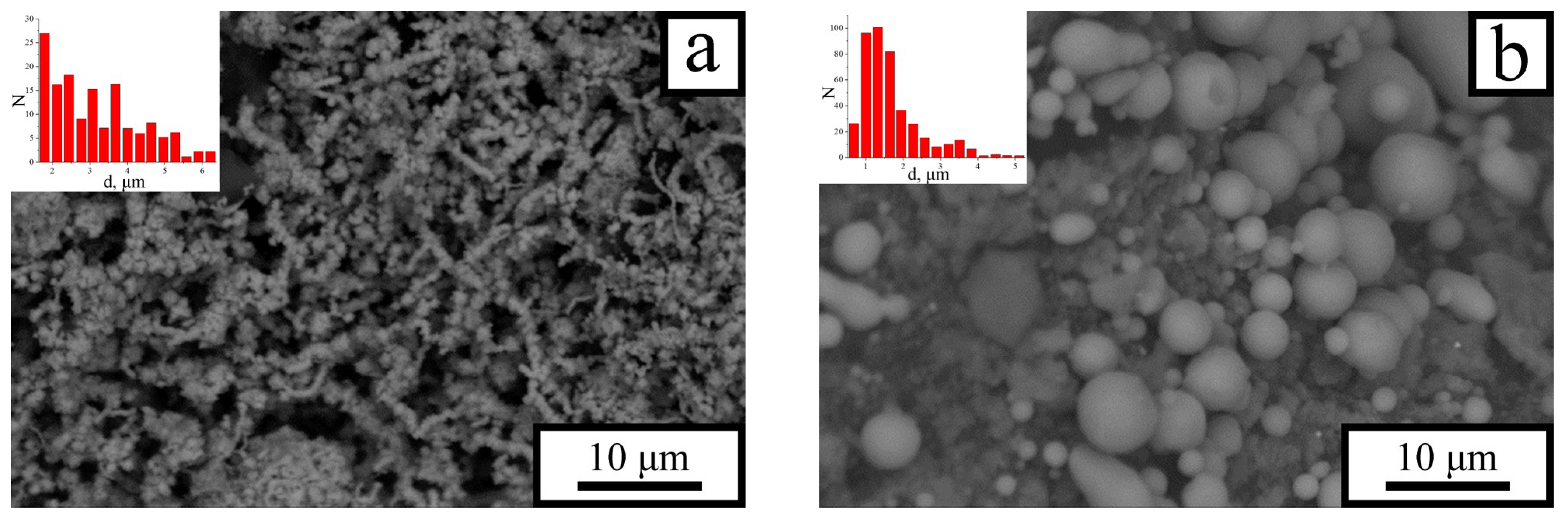
3Al intermetallic compacts were prepared by SHS-compaction and SHS-extrusion from a stoichiometric powder mixture of nickel (grade PNK-1L8, purity ≥ 99.7 wt.%, CAS: 7440-02-0, particle size ~ 20 um, Nornickel, Monchegorsk, Russia) and aluminum (grade ASD-4, purity ≥ 99.7 wt.%, CAS: 7429-90-5, particle size < 20 um, RUSAL, Shelekhov, Russia) (
Figure 1).
Prior to SHS, a 400 g powder mixture was mixed in a vibratory mixer for 8 h. After mixing, additional mechanical homogenization was performed in acetone for 10–15 min. Following homogenization, drying was conducted in a vacuum oven at a residual pressure of <1.33 mbar for 4 h at 130 °C to remove moisture and solvent residues. The prepared powder mixture was loaded into a steel die with an inner diameter of 58 mm. To minimize heat loss through the die walls, asbestos paper insulation was applied. Pre-pressing was performed to achieve a residual porosity of 30%. The heating temperature of the powder compact was monitored using a K-type thermocouple with an accuracy of ±0.0075 × T, placed in a dedicated technical hole inside the steel die.
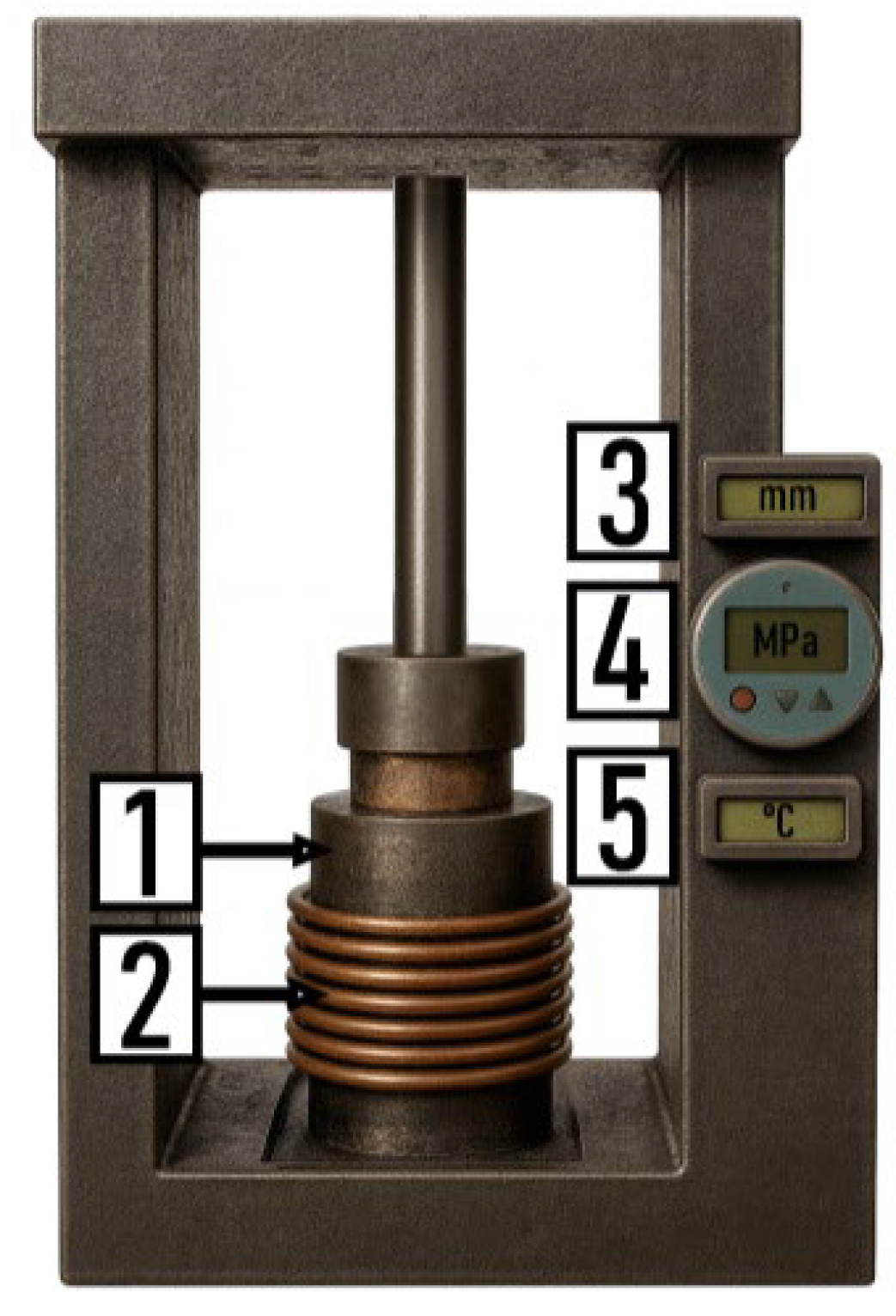
The experimental setup was equipped with programmable controllers enabling real-time monitoring of synthesis parameters, including temperature, pressure, and press plunger displacement (
Figure 2).
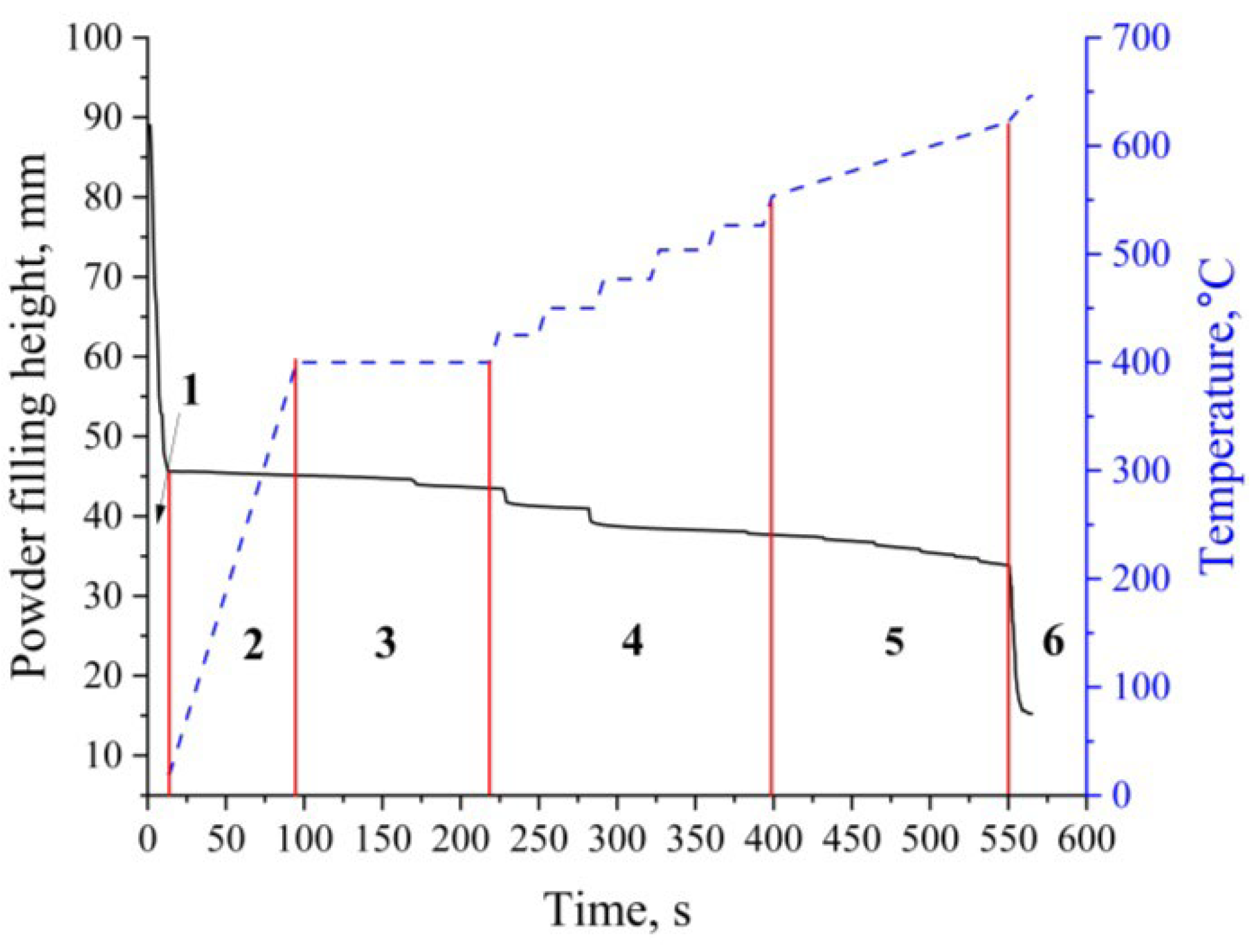
The mixture was heated according to the profile shown in
Figure 3.
Stages (3) and (4) are necessary to ensure uniform heating of the powder compact and to prevent the formation of secondary phases [
28]. In the region of 350 °C, the NiAl
3 phase forms from the solid solution of Al in Ni, which then reacts with Ni at 375 °C to transform into Ni
2Al
3, followed by conversion to NiAl at 400 °C. During heating up to the onset of the synthesis reaction, a preliminary pressure (P
0) was maintained on the compact, calculated from the hydraulic press system pressure (P
hydr) (
Table 1).
Due to the application of preliminary pressure during combustion synthesis, all synthesized Ni3Al compacts across the entire pressure range (P0 = 33–136 MPa) were obtained in a practically pore-free, fully dense state, with relative densities exceeding 99.5% (residual porosity < 0.5%). Specimens with a cross-section of 10 × 10 mm2 were cut from the synthesized compacts. Metallographic sections were prepared by grinding with abrasive paper of decreasing grit size, followed by polishing on cloth with diamond paste, and a final polish with oxide suspension. Surface microstructure of the samples after SHS-compaction and fracture surfaces, along with energy-dispersive X-ray spectroscopy (EDX) and electron backscatter diffraction (EBSD) analysis of selected regions, were investigated using a Carl Zeiss EVO-50 (Carl Zeiss, Oberkochen, Germany) scanning electron microscope at an accelerating voltage of 20 kV. EBSD mapping was performed using the HKL Channel 5 system (Oxford Instruments/HKL, High Wycombe, UK). The angular resolution of the orientation measurements was ~2°. The scanning area was 250 × 250 µm with a step size of 1 µm. The fraction of non-indexed points, localized mainly near grain boundaries, did not exceed 10%. Non-indexed points were cleaned using the nearest-neighbor method. A grain was defined as a region with a misorientation between neighboring points not exceeding 15°.
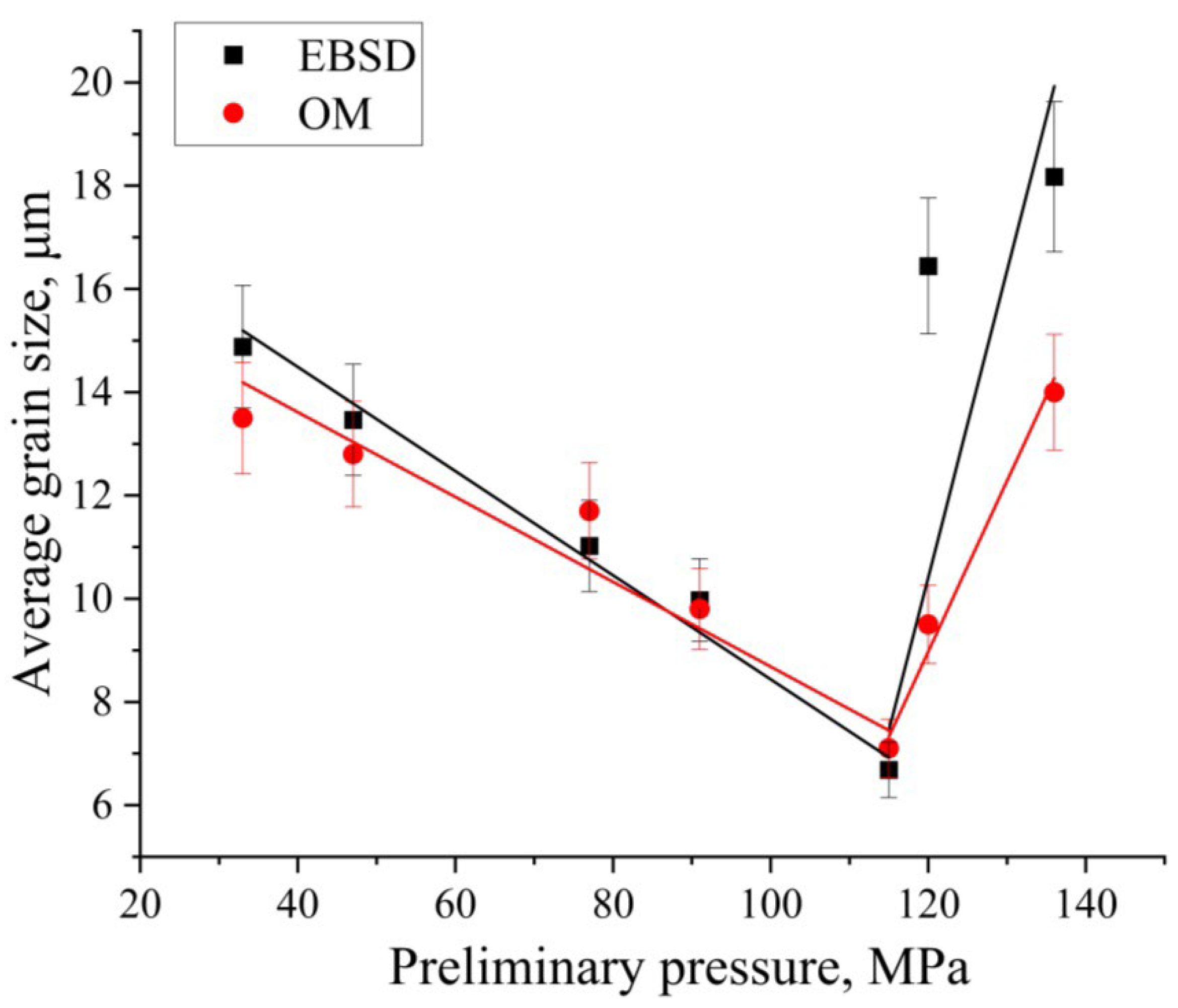
Metallographic studies were carried out using an AXIOVERT-200MAT optical microscope (Carl Zeiss, Oberkochen, Germany). The average grain size of the synthesized intermetallic compound was determined by the linear intercept method with a minimum of 150 intercepts. The grain structure for optical microscopy (OM) was revealed by ion etching in an argon atmosphere.
Microstructural analysis via transmission electron microscopy was performed on a JEM 2100 (JEOL, Tokyo, Japan) TEM at an accelerating voltage of 200 kV. The scalar dislocation density was estimated using the formula:
where M is the magnification, t is the foil thickness (200 nm), N
1 and N
2 are the numbers of dislocation intersections with vertical and horizontal grid lines drawn on the image at 10 mm intervals, and L
1 and L
2 are the total lengths of the vertical and horizontal grid lines.
The phase composition was determined by X-ray diffraction (XRD) using a DRON-8 diffractometer (Innovation Center Burevestnik, Saint Petersburg, Russia) with Cu-Ka radiation (λ = 1.54186 Å) in the 2θ range from 20° to 110°.
Microhardness measurements were performed using a semi-automatic ITV 1-I-MC hardness tester (Metrotest, Neftekamsk, Russia) with a load of 100 g according to the Vickers method. Tensile properties were evaluated using dog-bone specimens with a gauge section of 1.7 × 3.1 × 9 mm (thickness × width × length). The specimens were cut by electrical discharge machining (EDM). The specimen surfaces were mechanically ground and polished to a mirror finish. Uniaxial tensile tests were performed on an LFM-125 universal testing machine (Walter + Bai AG, Löhningen, Switzerland) in the temperature range of 20–1000 °C at an initial strain rate of 8.8 × 10⁻⁴ s−1.
For quantitative microrelief analysis of the fracture surfaces, texture analysis of SEM images was conducted using the gray-level co-occurrence matrix (GLCM) method [
29,
30]. Prior to calculations, all SEM fractographs underwent brightness and contrast normalization to eliminate the influence of subjective microscope detector adjustments.
3. Results and Discussion
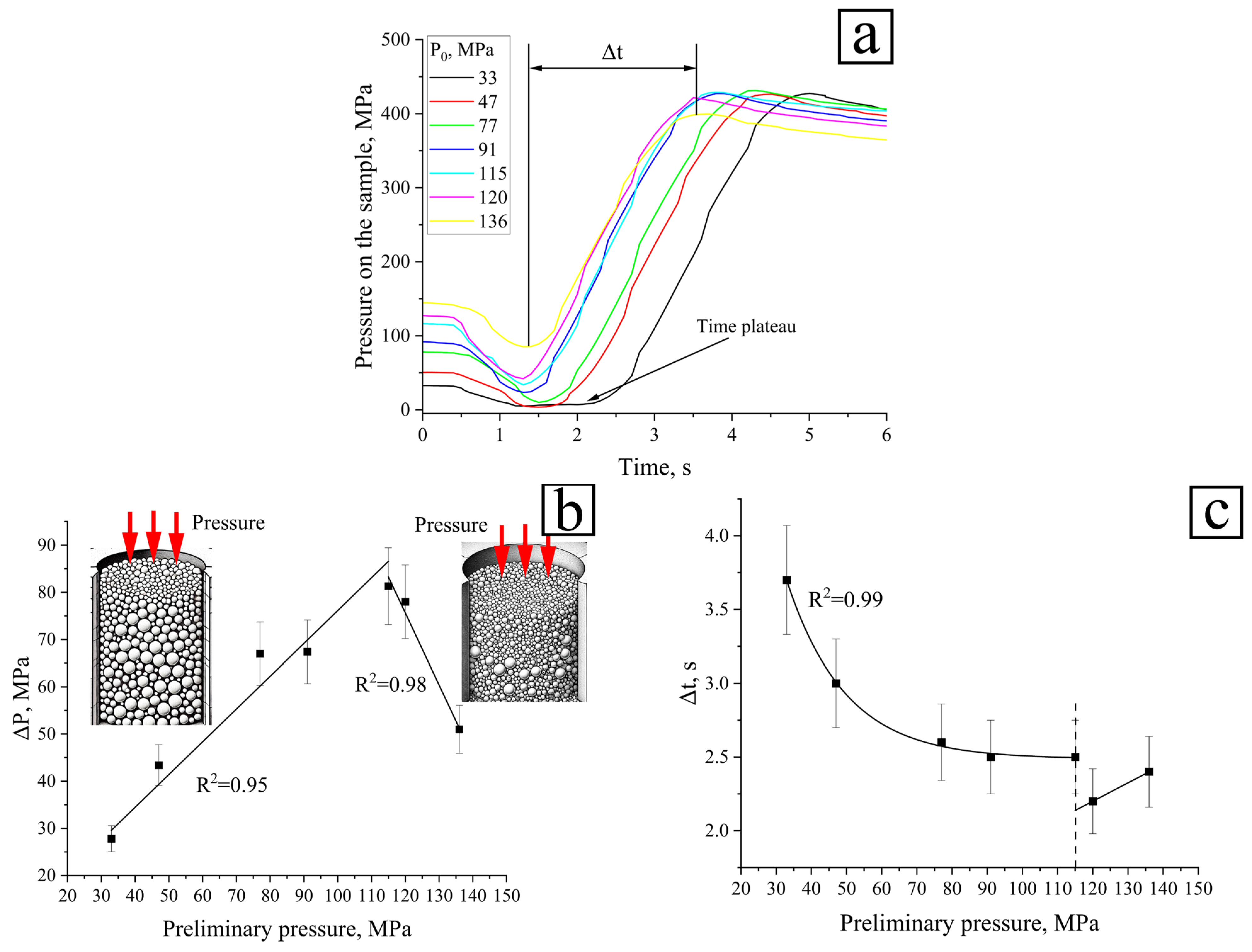
Figure 4 shows the pressure–time curves of the intermetallic SHS under pressure during continuous heating of the green powder compact, reflecting the reaction progress.
An analysis of the pressure drops (ΔP) and its rise time to the maximum value (Δt) showed that, at low values of P
0 pressures (33–47 MPa), ΔP (
Figure 4b) is minimal. This behavior is attributed to the loose structure of the green compact, in which powder particles easily rearrange and redistribute the load. Under minimal pressure,
Figure 4a reveals a temporary plateau lasting about 0.5–1 s, and Δt (
Figure 4c) reaches its maximum, confirming high compact porosity. Consequently, the formation of coarser grains is expected due to the prolonged exposure of the system to low pressure, which subsequent compaction will affect insignificantly. As P
0 increases to 90–115 MPa, the residual porosity decreases, increasing the contact area between powder particles. Consequently, the Ni
3Al synthesis reaction proceeds more actively and to completion. A further increase in P
0 to 136 MPa results in a decrease in ΔP and an increase in Δt, thereby reducing the positive effect of the preliminary pressure. This is likely due to the “over-pressing” effect, which creates a pressure gradient along the volume of the cylindrical compact under uniaxial die compression. In this case, aluminum agglomerates may form, and their breakdown during heating is hindered by the limited mobility of the material. Such phase separation leads to regions with delayed reactions. This can cause the formation of secondary phases, such as NiAl in nickel-rich regions, and Ni
5Al
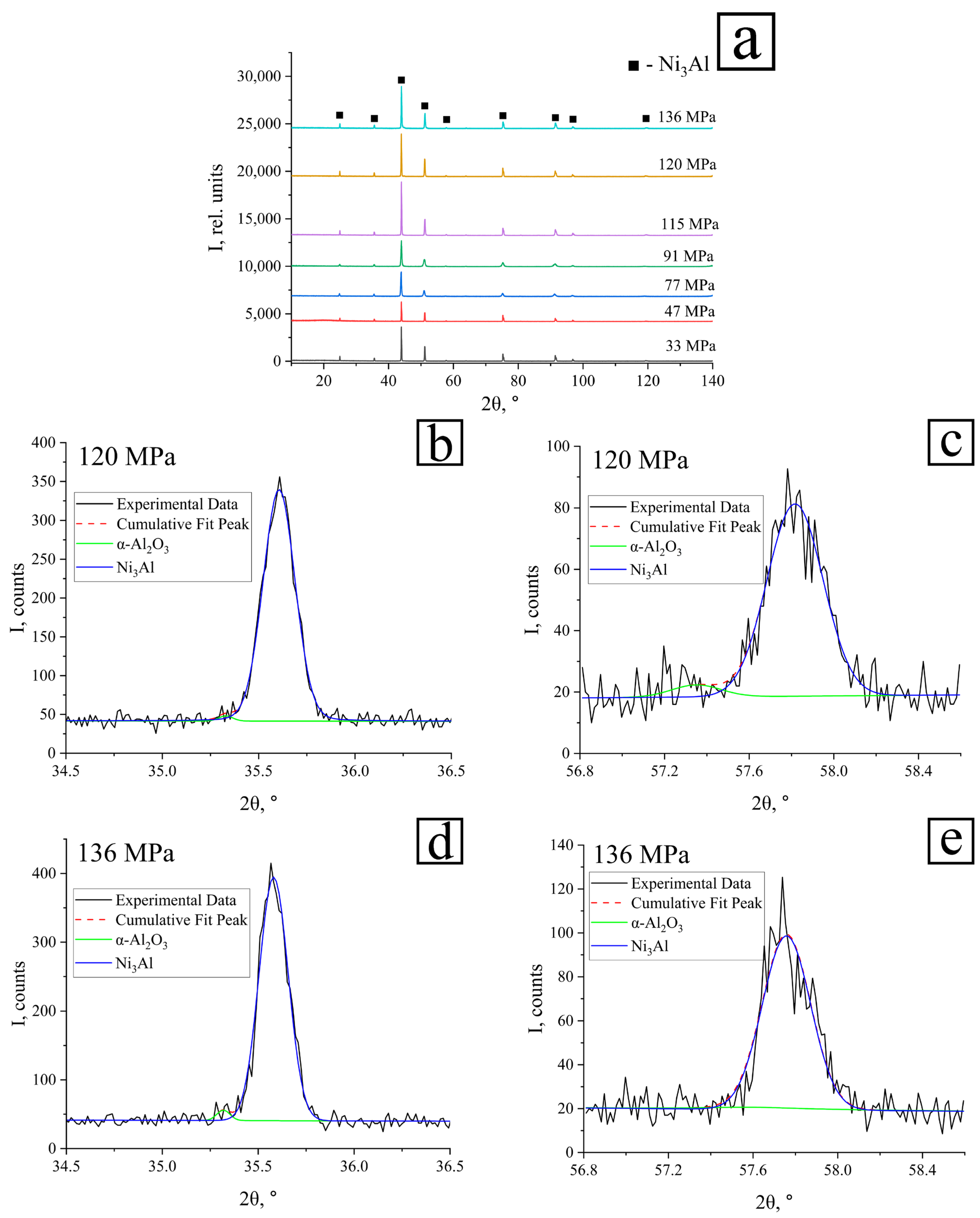
3 under insufficient diffusion of aluminum into nickel. To verify these assumptions, XRD analysis of the synthesized intermetallic compacts was performed (
Figure 5).
For samples produced at compaction pressures P
0 ≤ 115 MPa, the XRD patterns correspond to an almost single-phase ordered Ni
3Al intermetallic with an L1
2 superstructure. Reflections of secondary phases are absent within the sensitivity limit of the method. However, at pressures P
0 > 115 MPa, weak peaks corresponding to the Al
2O
3 phase are detected. Peak deconvolution for over-pressed samples (P
0 = 120 and 136 MPa) in the 2θ = 34.4–36.6° and 56.8–58.6° ranges resolved the weak α-Al
2O
3 reflections from adjacent Ni
3Al peaks (
Figure 5b–e). This confirms that over-pressing promotes the agglomeration of nanodispersed oxide particles into larger clusters sufficient for XRD detection, whereas at P
0 ≤ 115 MPa, they remain below the detection limit. The presence of the oxide phase is in good agreement with the change in the lattice parameter of Ni
3Al. The average experimental value of the lattice parameter is a = 3.569 Å, which is lower than the reference value for the stoichiometric intermetallic (a = 3.572 Å). This reduction in the lattice parameter is apparently due to aluminum deficiency in the Ni
3Al phase. Since the atomic radius of nickel is smaller than that of aluminum, depletion of aluminum leads to contraction of the unit cell. The aluminum deficiency is caused by its partial oxidation to Al
2O
3 during synthesis.
Using the Williamson–Hall method, it was established that across the entire investigated pressure range, the lattice microstrain of Ni
3Al varies insignificantly, remaining within a narrow range from 1.8 × 10
−3 to 3.4 × 10
−3. The dislocation density calculated from these values is also low, ranging from 0.2 × 10
14 to 3.6 × 10
14 m
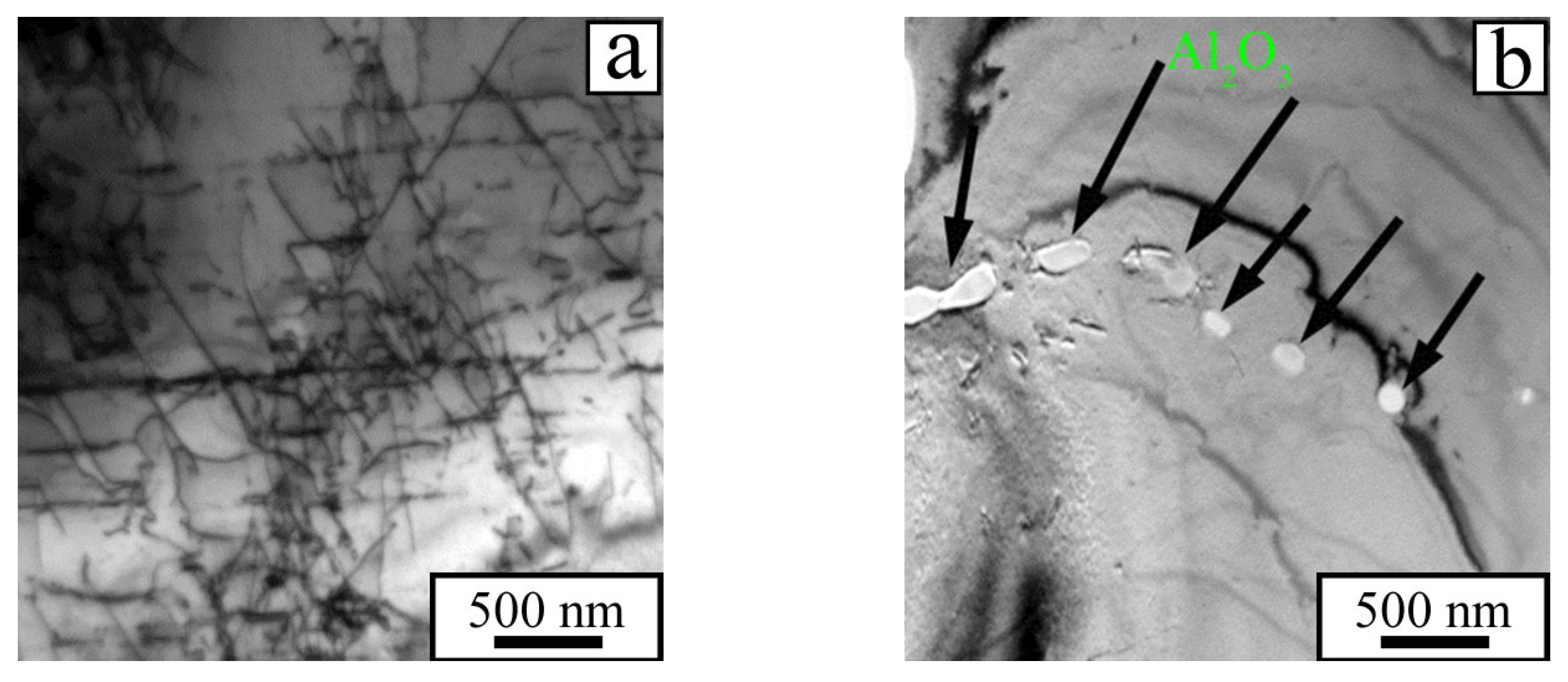
−2. To directly confirm the low defect density of the structure and examine the distribution of the oxide phase, transmission electron microscopy (TEM) was performed on the sample synthesized at
p = 115 MPa (
Figure 6).
Quantitative analysis of the bright-field TEM images (
Figure 6a) is in agreement with the XRD line broadening analysis. The average dislocation density estimated from 10 TEM micrographs using the linear intercept method was (0.35 ± 0.07) × 10
14 m
−2, which closely confirms the Williamson–Hall calculation for this sample (0.33 × 10
14 m
−2). In addition to the dislocation structure, the distribution of alumina was analyzed by TEM (
Figure 6b). Dispersed spherical Al
2O
3 particles were observed at grain boundaries and triple junctions. The nanoscale size of these particles and their preferential localization at grain boundaries indicate that they act as effective obstacles to boundary migration, maintaining the fine-grained structure via grain boundary pinning.
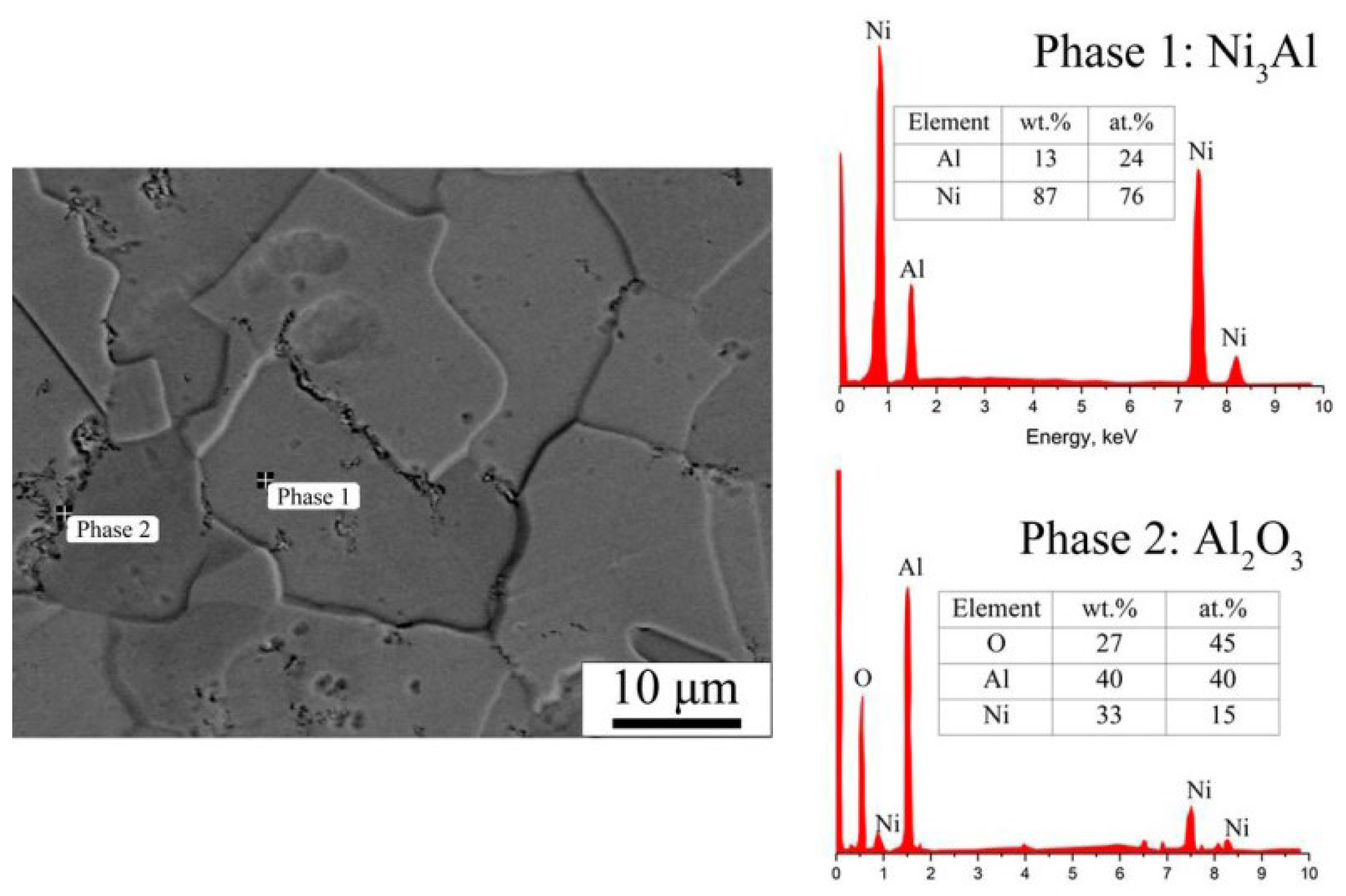
These local TEM observations are in good agreement with microstructure investigations over larger areas using SEM. Specifically, SEM energy-dispersive X-ray spectroscopy (EDX) analysis confirmed the presence of Al
2O
3 particles in the synthesized intermetallic structure, visible as characteristic dark inclusions in the backscattered electron (BSE) mode (
Figure 7).
Based on the EDX data, no regions differing in contrast from the Ni3Al matrix that could correspond to secondary phases such as NiAl or Ni5Al3 were detected, indicating the completeness of the synthesis reaction under the specified SHS-compaction parameters. Since the phase composition after SHS-compaction does not depend on P0 in the investigated range, the main effect of over-pressing is the increase in the average grain size of Ni3Al due to the deceleration of local reaction fronts, which provides more time for grain growth.
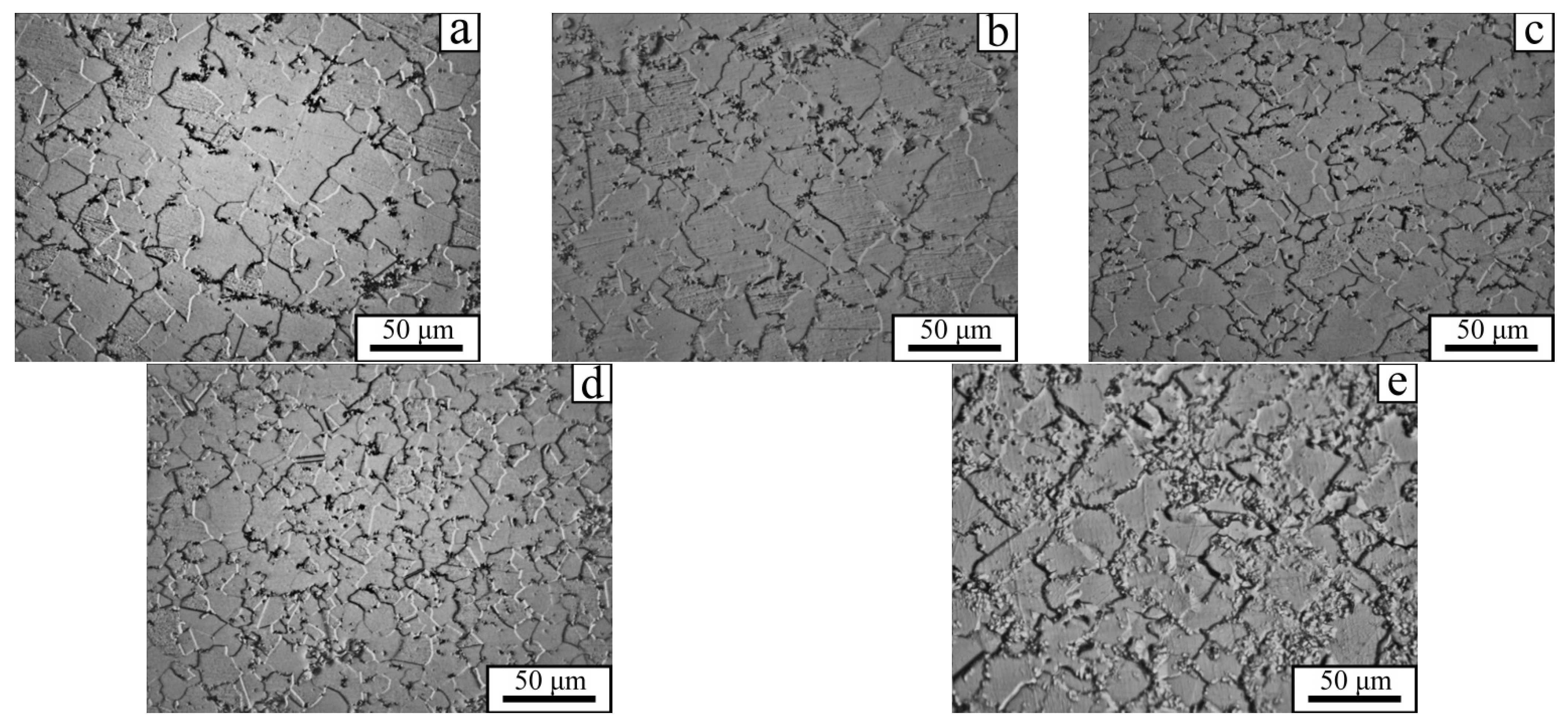
Figure 8 shows the OM structures of Ni
3Al synthesized at different P
0 values.
It can be seen that the structure of the synthesized intermetallic compound consists of equiaxed grains, with Al
2O
3 particles observed along their boundaries. As P
0 increases to 115 MPa, grain refinement is observed. However, a further increase in P
0 to 136 MPa leads to the opposite effect. Based on previous studies on other pressurized SHS systems, increasing the pressure on the reacting system can reduce the reaction propagation rate [
23,
24], thereby allowing more time for grain growth. For a more detailed analysis, the Ni
3Al microstructure was investigated by EBSD.
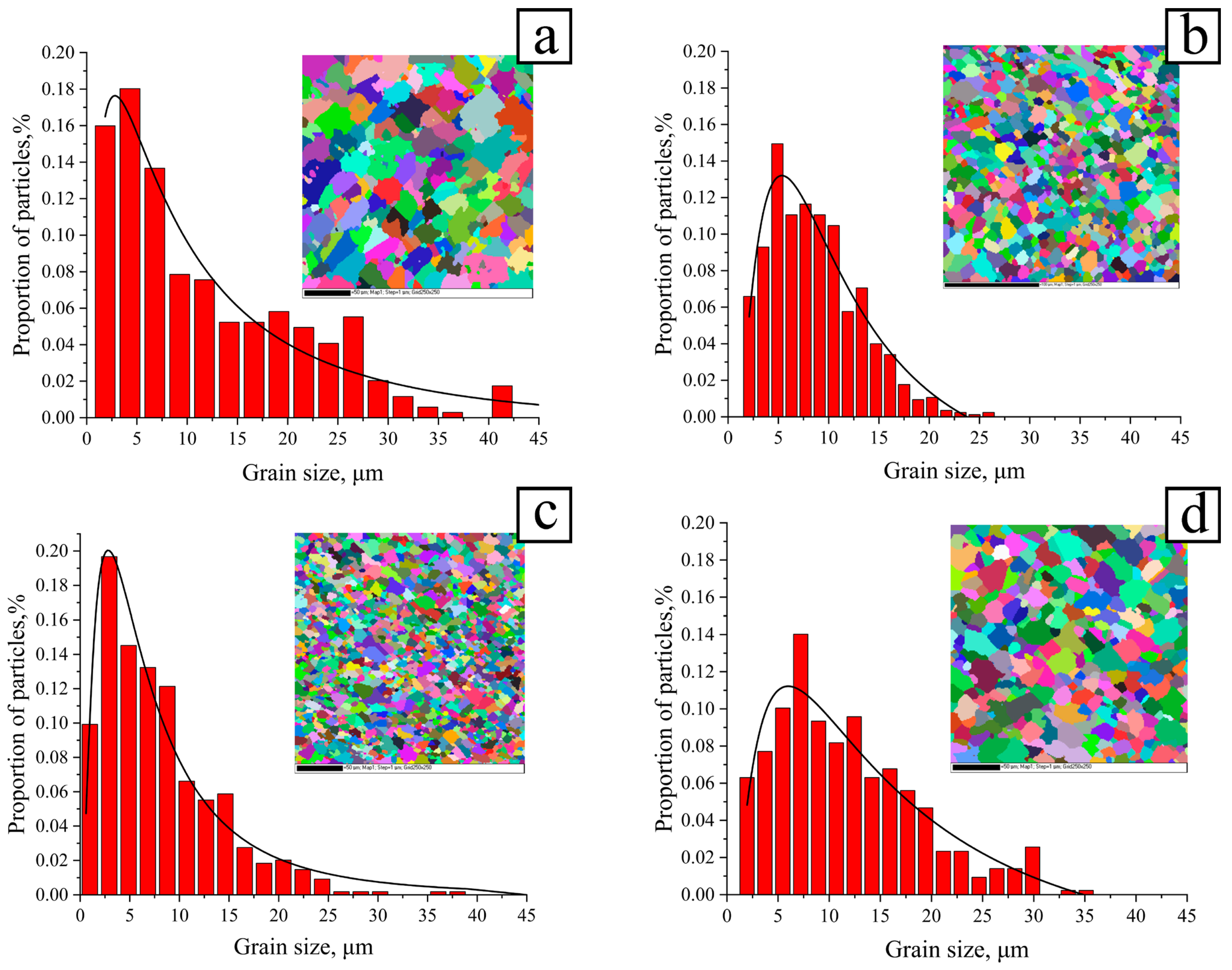
Figure 9 shows EBSD maps (250 × 250 µm
2) and corresponding grain size distributions in the central parts of the billets as a function of the P
0 value.
The grain size distributions obtained from EBSD analysis are satisfactorily fitted by a lognormal distribution:
where d is the grain size, and A, σ, and μ are the distribution parameters. The parameters for each distribution are listed in
Table 2.
EBSD analysis reveals that at low P
0 values (33–47 MPa), the microstructure is predominantly coarse-grained, with average size ~15 µm. Increasing the preliminary pressure to 77–115 MPa reduces the average grain size (μ ≈ 1.9–2.4, which corresponds to d ≈ 7–11 µm) and narrows the distribution (σ ≈ 0.84–0.9), producing a more uniform and fine-grained structure. A particularly pronounced grain refinement is observed at P
0 = 115 MPa, which is in good agreement with the OM results (
Figure 10). Applying pressure during solidification can reduce the solid–liquid interfacial energy, decreasing the critical nucleus size and increasing the number of nucleation sites. Additionally, increased pressure enhances heat transfer between the reacting mixture and the die, accelerating cooling and promoting the formation of a finer microstructure.
A further pressure increase (120–136 MPa) is accompanied by an increase in the average grain size (μ ≈ 2.8–2.9, d ≈ 16–18 µm) and broadening of the distributions. This indicates the development of secondary recrystallization, driven by the retardation of local reaction fronts and thermal field inhomogeneity due to over-pressing.
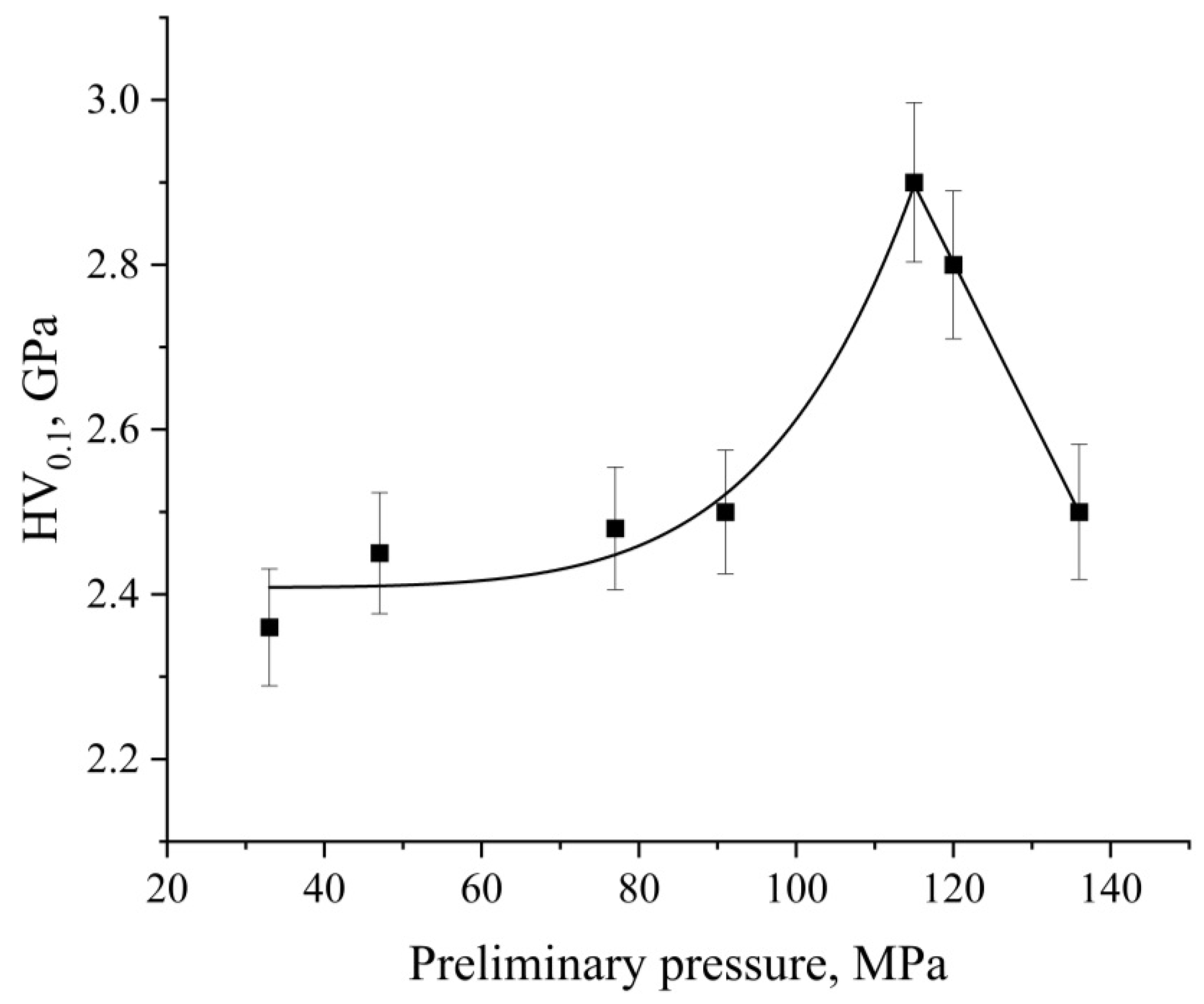
Figure 11 shows the microhardness of the Ni
3Al intermetallic compound as a function of the preliminary pressure applied to the initial powder compact. It is clear that the variation in Ni
3Al microhardness with pressure correlates with the average grain size trend.
Increasing the preliminary pressure to P0 = 115 MPa yields a 1.4-fold increase in the microhardness of the intermetallic compound. A further pressure increase leads to a 1.2-fold decrease in microhardness. The microhardness drops above 115 MPa is associated with grain coarsening resulting from over-pressing.
The influence of preliminary pressure on the strength properties of the SHS-synthesized Ni
3Al intermetallic compound was evaluated by tensile testing of specimens cut from billets produced at different pressures.
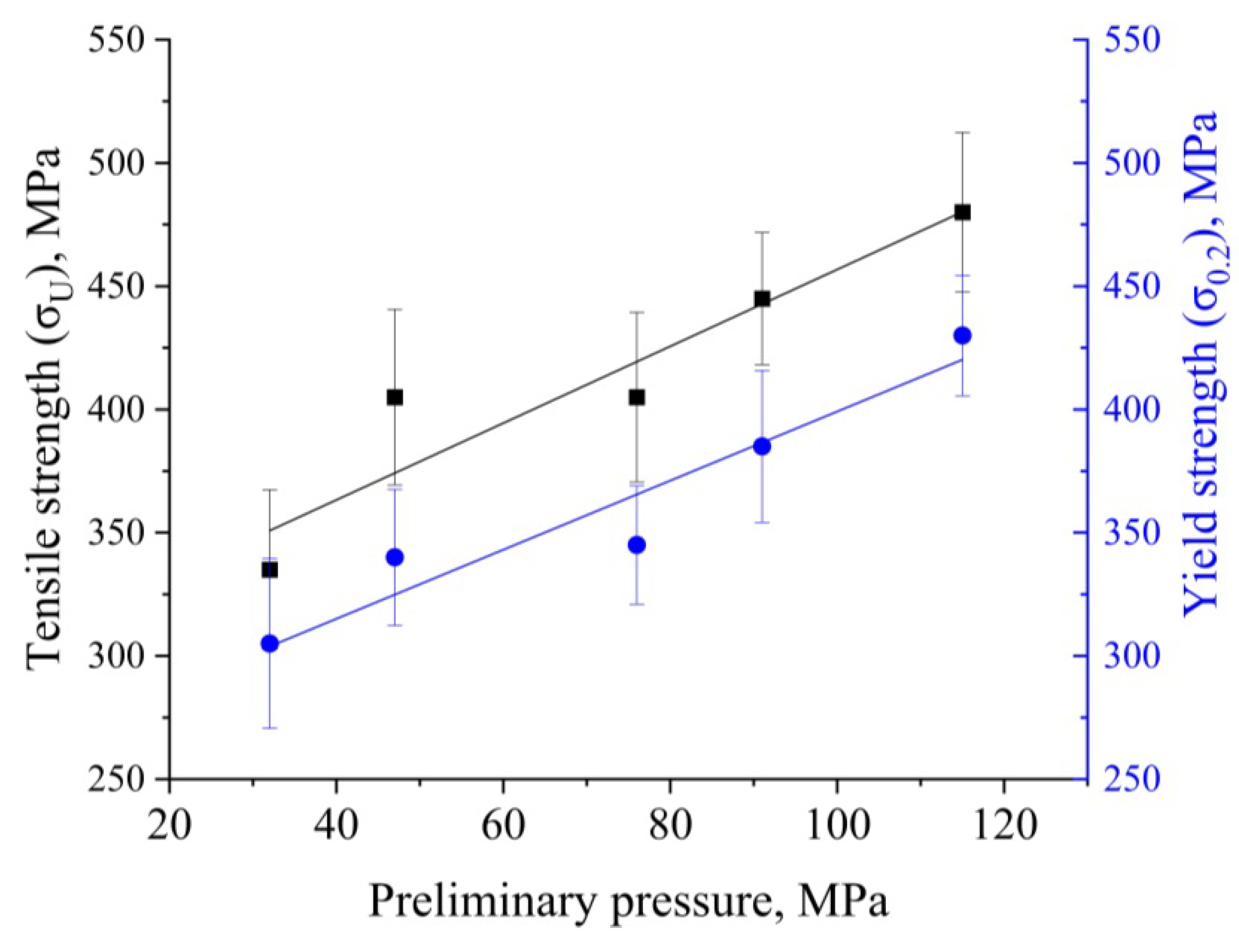
Figure 12 shows the ultimate tensile strength and yield strength at room temperature for Ni
3Al samples synthesized at preliminary pressures ranging from 33 MPa to 115 MPa. The selection of tested specimens was based on the grain size analysis.
The plots show that increasing the preliminary pressure, which leads to grain refinement, yields a corresponding 50% increase in both the ultimate tensile strength and yield strength at room temperature. These results are in agreement with [
31], where it was shown that grain refinement in the Ni
3Al intermetallic compound increases the tensile strength. The highest grain boundary strengthening efficiency is observed at grain sizes below 10 µm.
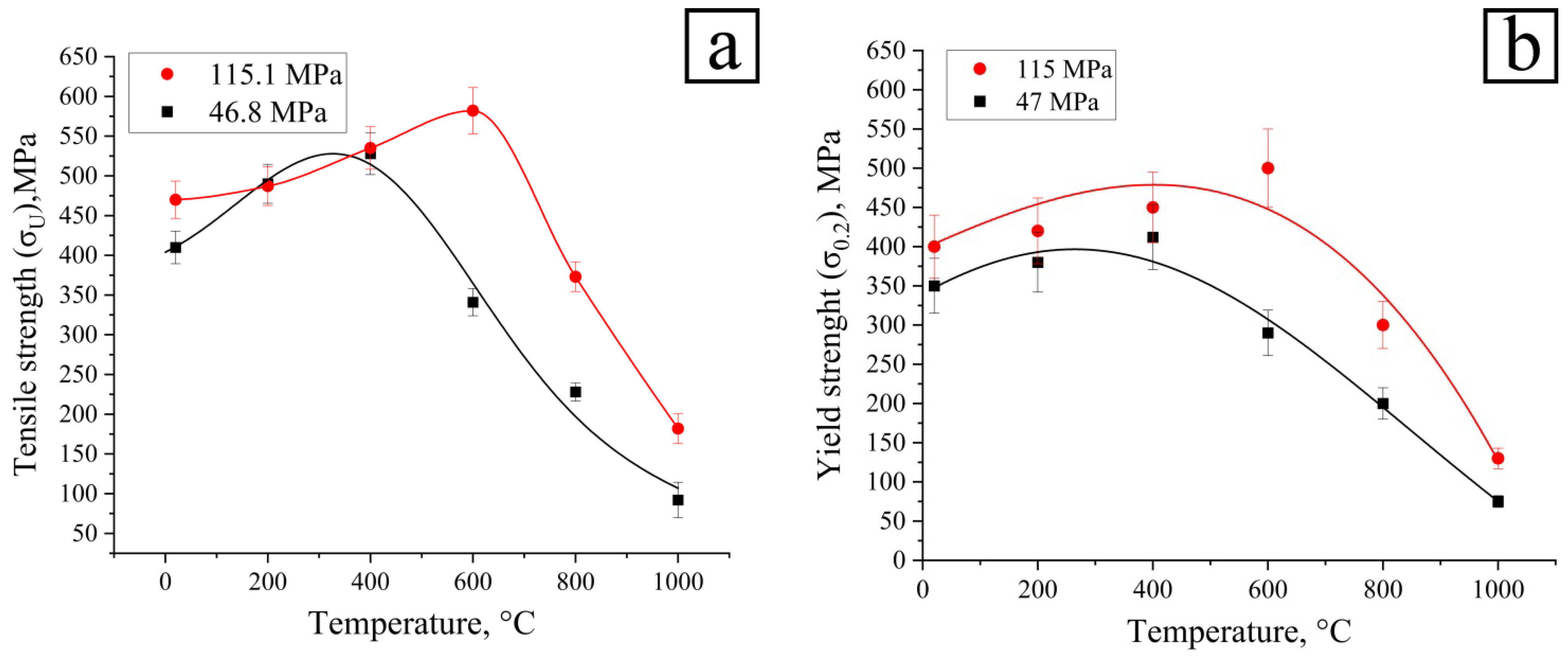
Figure 13 shows the temperature dependences of the ultimate tensile strength (a) and yield strength (b) for the Ni
3Al intermetallic synthesized at preliminary pressures of 47 MPa and 115 MPa.
Increasing the preliminary pressure also shifts the strength maxima (both ultimate tensile strength and yield strength) toward higher temperatures, and increases their peak values from 530 MPa and 397 MPa at 400 °C to 583 MPa and 600 MPa at 600 °C, respectively. At 1000 °C, the ultimate tensile strength increased from 90.3 MPa to 178 MPa as the preliminary pressure increased from 47 MPa to 115 MPa. Similarly, the yield strength at 1000 °C increased from 74 MPa to 132 MPa. It is worth noting that the increase in strength with temperature is characteristic of intermetallic alloys with an L12 superstructure and is determined by the activation of Kear–Wilsdorf barriers. These results confirm the important role of preliminary pressure in controlling the mechanical response of the synthesized intermetallic.
The tensile mechanical properties and elongation to failure (ε) across various preliminary compaction pressures and testing temperatures are summarized in
Table 3.
At room temperature (20 °C), increasing the preliminary pressure from 47 MPa to 115 MPa enhances ductility from ε = 1.01 ± 0.17% to ε = 1.74 ± 0.44% due to grain refinement and pore elimination. With increasing test temperature for the samples synthesized with P
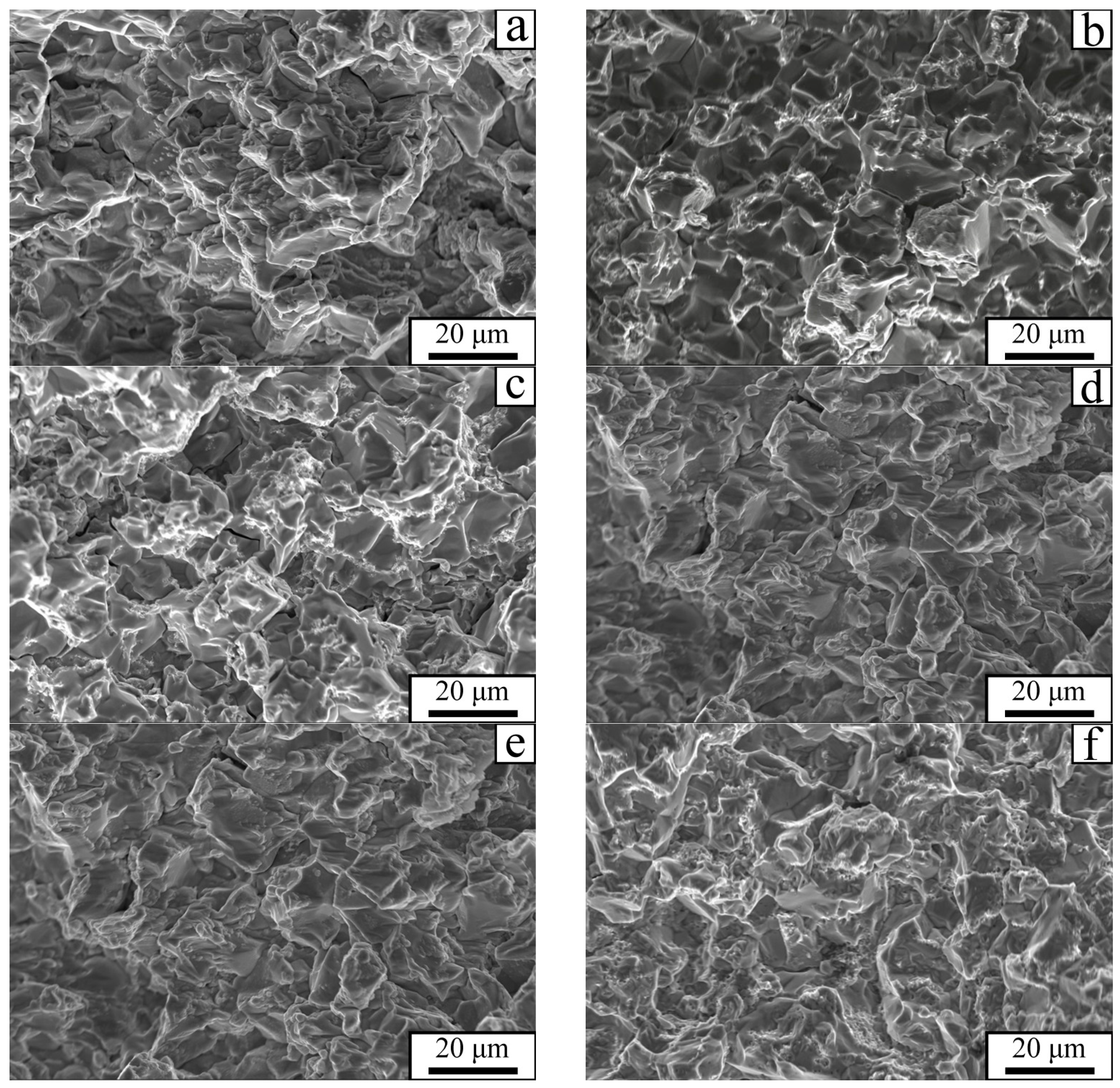
0 = 115 MPa, the ductility exhibits a local minimum at 600 °C (ε = 1.52 ± 0.20%) corresponding to the peak of the yield strength anomaly, followed by a dramatic surge to ε = 9.58 ± 1.94% at 1000 °C driven by thermally activated slip. To reveal the fracture mechanisms accompanying these deformation changes, SEM fractographic analysis was conducted (
Figure 14).
SEM analysis revealed a transition in fracture mechanisms with increasing testing temperature, from room temperature to 1000 °C. At room temperature, the fracture is predominantly brittle and intergranular. The fracture surface exhibits smooth cleavage facets that trace the grain shape and boundaries, typical of polycrystalline stoichiometric Ni
3Al. In the range from room temperature to 600 °C (
Figure 14a–d), the fracture is predominantly brittle and intergranular. The fracture surface exhibits smooth cleavage facets that trace the grain shape and boundaries, typical of polycrystalline stoichiometric Ni
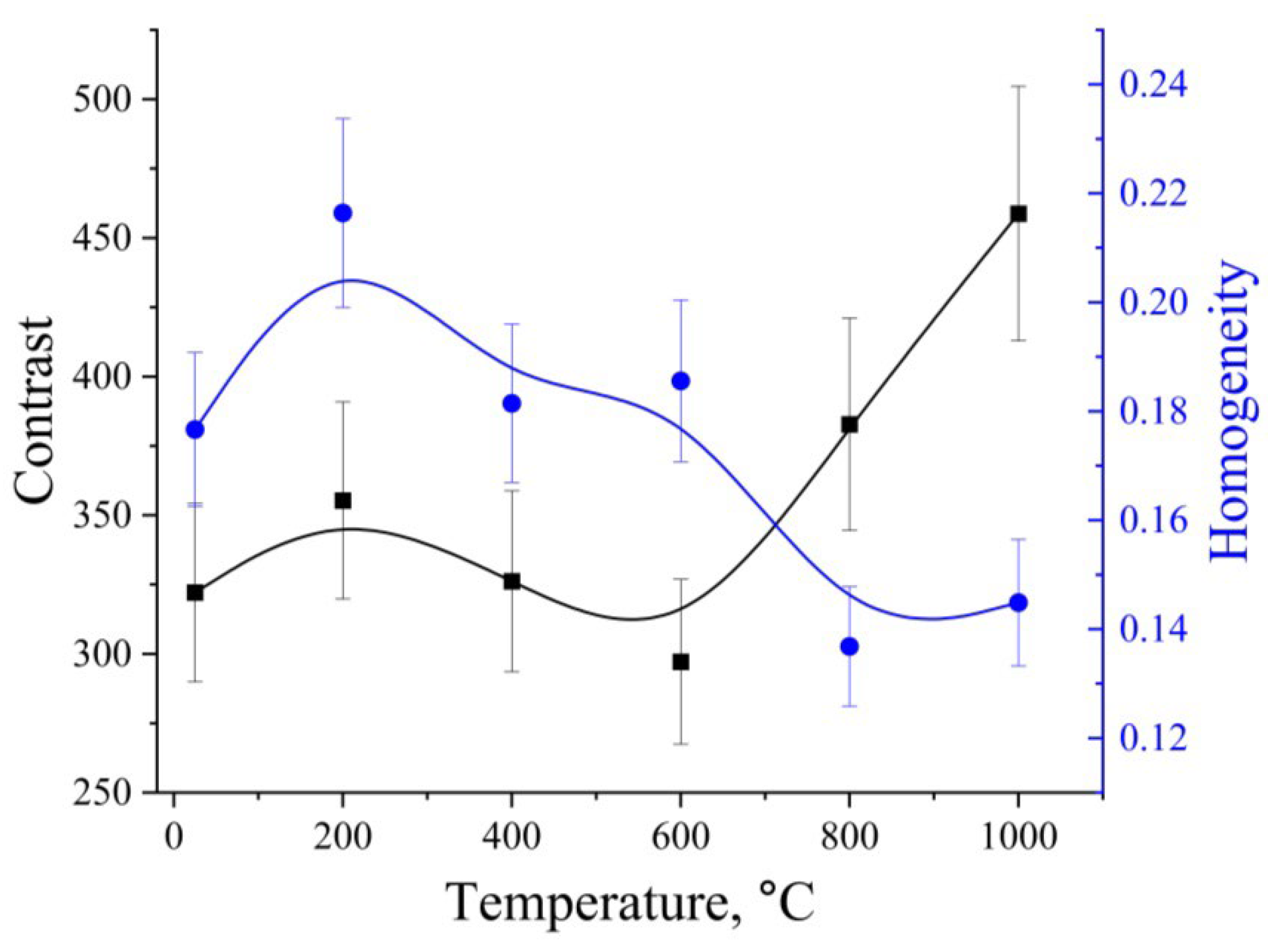
3Al. With increasing temperature to 800–1000 °C, a transition to a mixed ductile–brittle fracture mechanism occurs, accompanied by significant plastic deformation. Characteristic ductile dimples are formed on the fracture surfaces. Since a mixed fracture mode is still observed at elevated temperatures, GLCM texture analysis of the fracture surfaces was performed (
Figure 15).
The plots show that the Contrast and Homogeneity parameters exhibit a mirror relationship across the entire temperature range, reflecting the transition in fracture mechanisms. At room temperature, brittle intergranular fracture with smooth facets leads to a relatively low Contrast (322) and high Homogeneity (0.177) due to the flat microrelief. At 200 °C, a local rise in both parameters is observed (Contrast increases to 355, Homogeneity to 0.216); however, the confidence intervals for 25 °C and 200 °C overlap almost completely, indicating that these fluctuations are statistically insignificant and the fracture remains brittle. At 600 °C, Contrast drops to its minimum (297) while Homogeneity shows a local peak (0.186). This behavior is associated with the activation of Kear–Wilsdorf barriers, which cause the yield strength anomaly peaking at 600 °C. The suppression of plastic slip within the grains facilitates flat brittle separation along boundaries, making the fracture surface flatter and more uniform, which is mathematically registered as a decrease in Contrast (roughness) and an increase in Homogeneity. With further heating to 800–1000 °C, a transition to ductile fracture with dimpled microrelief occurs. The dimples create sharp shadows and brightness gradients in SEM images, leading to a sharp increase in Contrast to its maximum (459 at 1000 °C) and a drop in Homogeneity to its minimum (0.137–0.145). Thus, quantitative texture analysis of fracture surfaces objectively confirms the ductile-to-brittle transition temperature range and the strength anomaly of the Ni3Al intermetallic, eliminating subjectivity from visual fractography.