Article

Synergistic Strengthening of Copper by In Situ Graphene Growth and Severe Plastic Deformation

1
School of Mechanical, Industrial and Manufacturing Engineering, Oregon State University, Corvallis, OR 97331, USA
2
Advanced Technology and Manufacturing Institute (ATAMI), Corvallis, OR 97330, USA
3
Materials Science Program, Oregon State University, Corvallis, OR 97331, USA
4
Department of Wood Science and Engineering, Oregon State University, Corvallis, OR 97331, USA
*
Author to whom correspondence should be addressed.
J. Manuf. Mater. Process. 2026, 10(6), 196; https://doi.org/10.3390/jmmp10060196
Submission received: 12 May 2026 / Revised: 28 May 2026 / Accepted: 30 May 2026 / Published: 2 June 2026

Abstract

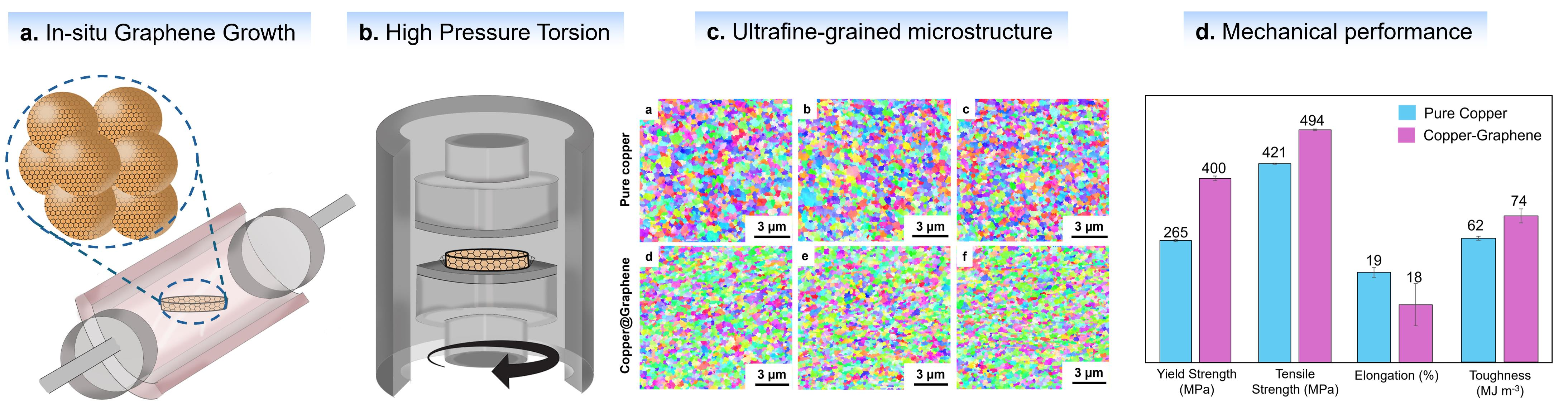
High-purity copper features excellent electrical conductivity but generally low mechanical properties. Adding a three-dimensional graphene network as reinforcement to make a copper–graphene metal matrix composite is promising for a wide range of applications with better mechanical performance and functional capabilities. However, direct application in a metal matrix is difficult due to unfavorable wetting, which causes poor dispersion and weak interfacial bonding in the graphene–metal system. Here, the powder metallurgy method was used to construct a three-dimensional continuous graphene network in the copper matrix combined with high-pressure torsion. Optimized deformation/thermomechanical treatment enhanced the microstructural development processed by the severe plastic deformation method of high-pressure torsion. The primary advantage of this hybrid process is that it enables us to achieve grains with a size in the ultra-fine or even nanoscale. A homogeneous equiaxed nanostructure without segregation was observed during microstructural characterization, with a grain size of ~300 nm. This study investigated structural development during progressive deformation, and the samples were evaluated from the viewpoint of grain size and grain boundaries. The process significantly increased the microhardness of the copper–graphene composite. The tensile strength reached ~500 MPa at room temperature. The interpenetrating structural feature of graphene promoted interfacial shear stress to a high level, whereas plastic deformation increased the dislocation density and grain boundaries, thus resulting in significantly enhanced load transfer strengthening and crack-bridging toughness simultaneously.

Graphical Abstract

1. Introduction

Seven thousand years in service, copper is still extensively employed in various applications and stands out as the predominant choice for the manufacturing of engineering components due to its excellent electrical conductivity (5.8 × 10⁷ S/m) and low electrical resistivity (1.72 × 10⁻⁸ Ω·m) [1,2,3]. These properties are primarily desired for power electronics, cooling channels, heating coils, heat exchangers and radiators [4,5]. However, the modern industry places an increasing demand on multifunctional materials, where high mechanical strength is required along with good electrical and thermal conductivity, so that new approaches to material development are a pressing requirement [6,7,8]. Although copper is indispensable in thermal management and electronics, its strength–conductivity trade-off limits deployment in weight- and reliability-critical components, with pure copper having a yield strength of only 10 MPa to 20 MPa [9]. This provides an incentive for researchers to improve its mechanical properties by creating composite materials that may fulfill these unmet needs.
Introducing low-volume, high-modulus carbon phases is a promising route to decouple this trade-off, with graphene offering exceptional stiffness, strength, and thermal/electrical transport, and an atomically sharp, potentially low-resistance interface to copper [10,11]. However, conventional ex situ routes (e.g., blending graphene oxide or flakes) struggle with agglomeration, interfacial contamination, and damage during mixing, which diminish load transfer and often compromise the conductivity of metal–graphene composites (MGCs) [12,13]. These difficulties thereby result in only moderate enhancement efficiency in the mechanical, electrical, and/or thermal properties of MGCs [14]. In situ strategies directly form graphene from a carbon source, creating tight, conformal interfaces and improved dispersion at scale. Early demonstrations of 3D continuous graphene from polymeric carbon sources on copper powder used CVD-like treatments, yielding improved interfacial bonding and mechanical/functional properties after consolidation [15,16,17]. Recent work has refined these ideas, including thermal treatments that generate graphene-like carbon on copper particles and architectures that promote three-dimensional percolation of graphitic phases without sacrificing bulk processability [18,19,20,21]. Many promising results have been obtained, though attempts to scale up and obtain bulk MGCs for practical use have shown that the mechanical properties and thermal conductivity of consolidated samples, in general, are lower than expected [22].
With the growing focus on producing bulk parts, ultrafine-grained (UFG) materials are manufactured for superior mechanical and physical properties compared with coarse-grained counterparts [23,24,25]. Novel fabrication techniques of solid-state bonding use thermomechanical treatment that allows combined properties and provides potential for new functionalities. Severe plastic deformation (SPD) methods are especially attractive as they open new opportunities to produce bulk nanostructured materials at an industrial scale and allow the creation of UFG structures at various length scales [26,27]. SPD can favorably strengthen the processed materials as it induces the generation of dislocations, which, in turn, create dislocation walls and cells and, ultimately, sub-grains with low-angle grain boundaries (LAGBs). High-angle grain boundaries (HAGBs) indicate the eventual development of these sub-grains into individual grains. The main governing factors for strengthening are the distances between deformation-induced boundaries and their angles of misorientation. However, the ratio of the individual contributions of dislocation strengthening by the presence of LAGBs and Hall–Petch strengthening by the presence of HAGBs is strongly dependent on the overall applied shear strain and grain orientations [28].
High-pressure torsion (HPT), which is one of the most widely used SPD methods, is based on deforming the material between two anvils via shear strain under high pressure (typically in GPa), routinely producing ultrafine to nanocrystalline grains with pronounced strength [29]. High shear strain promotes the formation of localized shear bands in the processed material; however, this effect is counterbalanced by the application of high pressure, which facilitates structural homogenization. Applying SPD to copper–graphene systems by consolidating graphene-coated powders reports concurrent increases in strength and acceptable conductivity, highlighting the role of refined grains, high dislocation density, and improved interface quality [30]. Emerging HPT studies on copper–graphene powder point to the thermal stability of refined microstructures and evolving textures, but systematic links between in situ graphene formation on copper powders and subsequent HPT-induced microstructure–property synergy remain limited [31,32].
Mechanistically, in situ graphene, as a discrete second phase, and HPT, as a processing route, are expected to act synergistically. Graphene at grain boundaries (GBs) and within grains can (i) impede dislocation glide (Orowan looping/pinning), (ii) increase geometrically necessary dislocations via hetero-strain and modulus mismatch, and (iii) enable effective load transfer when interfaces are clean and conformal [33,34,35]. HPT then adds (iv) Hall–Petch strengthening through grain refinement into the ultrafine/nanocrystalline regime and (v) a high density of statistically stored dislocations [28]. Molecular-scale simulations further suggest that strong adhesion and small spacing in copper–graphene enhance shear transfer and can even aid electronic transport, underscoring the importance of interface engineering during growth and deformation [36,37]. However, these studies lack experimental validations. Although copper–graphene composites are frequently evaluated in terms of both mechanical and functional performance, the present study specifically focuses on the microstructural evolution and mechanical strengthening mechanisms induced by in situ graphene growth and high-pressure torsion processing.
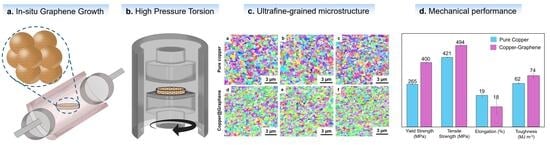
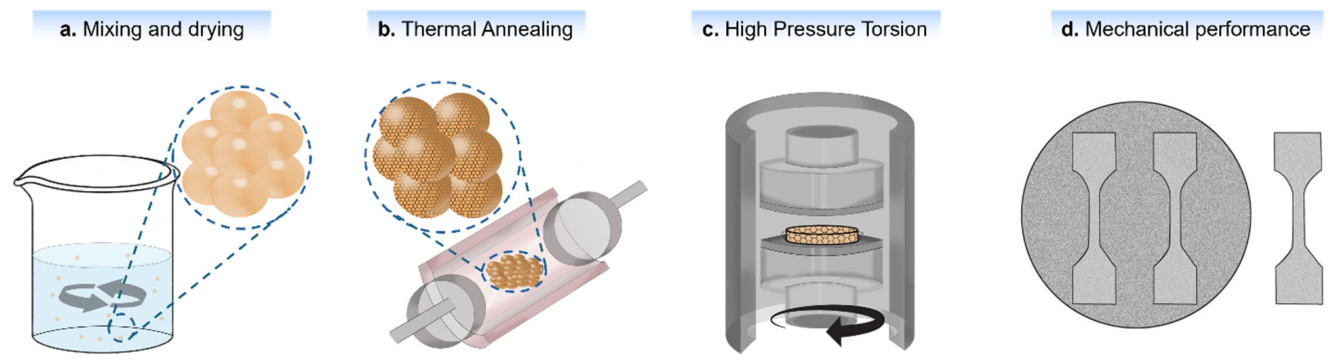
Here, in situ graphene growth on copper powders was integrated with subsequent HPT deformation. First, sucrose, used as a carbon precursor, was coated on copper powder. Then, graphene was in situ-grown during rapid thermal annealing (RTA). Graphene-like nanosheets (GLNs) on copper powder were consolidated into a disk during reactive vacuum hot pressing (VHP) to anchor graphene on copper powder and form a 3D continuous network. These 3D copper–graphene composite (3D-CGC) disks were then plastically deformed during HPT for substantial grain fragmentation and substructure development (Figure 1). By growing graphene directly on the powder surface prior to HPT, the aim was to (1) uniformly coat the copper powder to get a 3D continuous structure during RTA, (2) maximize the interfacial contact area, and (3) exploit HPT’s large shear strains to refine the copper matrix and further optimize the graphene–copper interface. The hypothesis that this “grow-then-shear” approach yields a composite with superior mechanical performance relative to either strategy alone was tested. The microstructure–property relationships were correlated with the underlying strengthening mechanisms, including grain refinement, dislocation density, load transfer, and geometric necessary dislocations. In doing so, the earlier demonstrations of in situ growth on copper powders and SPD processing were extended to a unified, mechanistically grounded route for scalable, high-performance 3D-CGCs. While CGCs are often evaluated in terms of combined mechanical and functional performance, the present study focused specifically on the mechanistic origins of mechanical strengthening induced by in situ graphene growth and severe plastic deformation.

2. Materials and Methods

Materials: The commercially available copper powders (99.99%) with a particle size of 15–45 µm (D10: 23.11 µm, D50: 33.71 µm, and D90: 46.10 µm) were purchased from MATEXCEL Inc., Shirley, NY, USA. Sucrose was purchased from Sigma-Aldrich, St. Louis, MO, USA. All reagents were used without further purification and treatment.
Rapid thermal annealing: First, 0.2 g of sucrose was dissolved in 50 mL of a water and ethanol mixture (66 vol.% and 33 vol.%) and stirred using a magnetic stirrer at 500 rpm for 15 min to obtain a uniform and transparent solution. Afterwards, 25 g of copper powder was added to the solution, heated at 80 °C under constant mechanical stirring until the solution was vaporized completely. Subsequently, the precursor powder was dried at 75 °C for 4 h.
The prepared copper–graphene precursor powder was put in the corundum boat and transferred to a CVD quartz tube for RTA. The quartz tube with the sucrose/copper precursor in it was put into the heating zone, which was heated to 700 °C, and the annealing process was maintained for 10 min under an argon–hydrogen atmosphere (5% hydrogen) at a 150 sccm flow rate. Finally, the powder was cooled down to room temperature by rapid-cooling treatment. This method resulted in GLNs on copper powder (GLNs-Cu).
Three-dimensional continuous graphene structure: The GLNs-Cu composite powders were then placed in a graphite mold and consolidated into bulk composites with a pressure of 20 MPa at 400 °C for 60 min under a vacuum of 10−4 Pa. The heating rate of VHP was kept at 5 °C/min. During the VHP process, GLNs were welded into a 3D continuous graphene network and anchored on the copper surface, resulting in 3D copper–graphene matrix composites (3D-CGCs). The consolidated 3D-CGC disk was 8 mm in thickness and 25 mm in diameter.
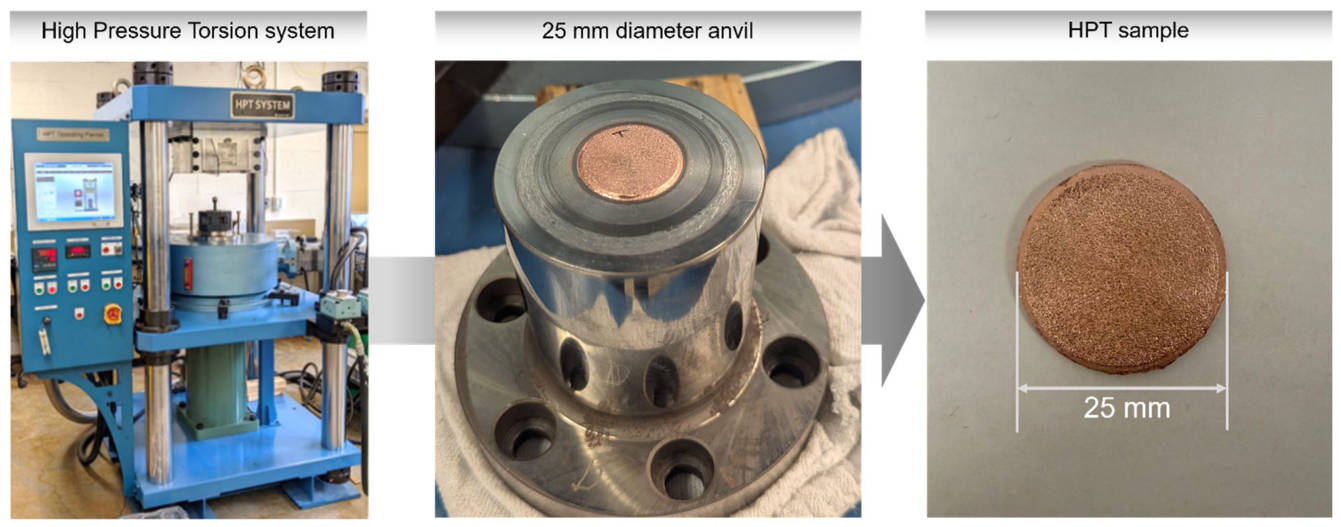
Grain refinement via HPT: A 100-ton torsion press unit from Moinsys Co. Ltd., Bucheon-si, South Korea, was used for HPT processing (Figure 2). The bulk 3D-CGC sample was placed on the lower anvil (25 mm in diameter), and SPD was carried out under quasi-constrained conditions at room temperature under a hydrostatic pressure of 1.0 GPa for 15 turns in a clockwise direction at a rotational speed of 0.4 rpm. The final thickness of the HPT-processed samples was around 2.25 mm. The relative density of the consolidated samples was measured using the Archimedes method. After HPT processing, the relative density exceeded 99%, indicating near-full densification with minimal residual porosity. Planes in the HPT samples were defined in three directions: Z—compression or surface normal direction, R—radial direction, and ϕ—rotation direction.
Characterization techniques: Graphene quality was characterized by Raman spectroscopy using an AIRsight Raman microscope (Shimadzu corporation, Kyoto, Japan) with a 532 nm Ar+ laser. Scanning electron microscopy (SEM), with an FEI Helios Nanolab 650 (FEI Technologies Inc., Hillsboro, OR, USA), was utilized to observe the microstructure of the pure copper powder and the graphene-coated copper powder. A transmission electron microscope (TEM), an FEI Titan 80–200 (FEI Technologies Inc., OR, USA), with 80 keV, was used to observe the graphene layers after etching, using an FeCl3/HCl solution. Electron backscattered diffraction (EBSD) analysis with field-emission scanning electron microscopy (FE-SEM) was carried out using an FEI Quanta 3D Dual Beam to evaluate the grain size, misorientation angles and geometrically necessary dislocations (GNDs). The microstructural analysis focused on positions 4 mm, 6 mm, and 10 mm from the disk center, where the first two locations fell within the gauge width of the tensile specimens. The acquired data were analyzed using TSL orientation imaging microscopy (OIM Analysis 9) software using EDAX “digi view” attached to the SEM. Scans were performed using an accelerating voltage of 10 kV and a working distance of 10 mm. The scanned area was 10 × 10 µm2, with a step size of 0.09 µm. Focused-ion-beam (FIB) milling was used to perform FIB tomography (FEI Helios Nanolab 650).
Vickers hardness measurement: The Vickers microhardness of the HPT samples was recorded along the vertical and horizontal cross-section across the disk. The cross-section was polished in the same way to prepare for EBSD. Microhardness values, HV, were taken using a bench-top hardness tester from Swiss precision instruments, with an applied load of 300 gf and a dwell time of 15 s.
Mechanical properties measurements: For static tensile testing, the miniature dog-bone-shaped tensile samples were prepared using a wire electrical discharge machine (W-EDM) according to ASTM E8/E8M [38]. Consistent tensile test sample dimensions, with a gauge length of 4.0 mm, a gauge width of 1.0 mm and a thickness of 0.5 mm, were machined. Tensile experiments were performed by a standard tabletop universal testing machine (TestResources, Shakopee, MN, USA), with a strain rate of 0.1 mm/min. All samples were pulled to failure at room temperature.

3. Results

3.1. In Situ 3D Graphene Synthesis

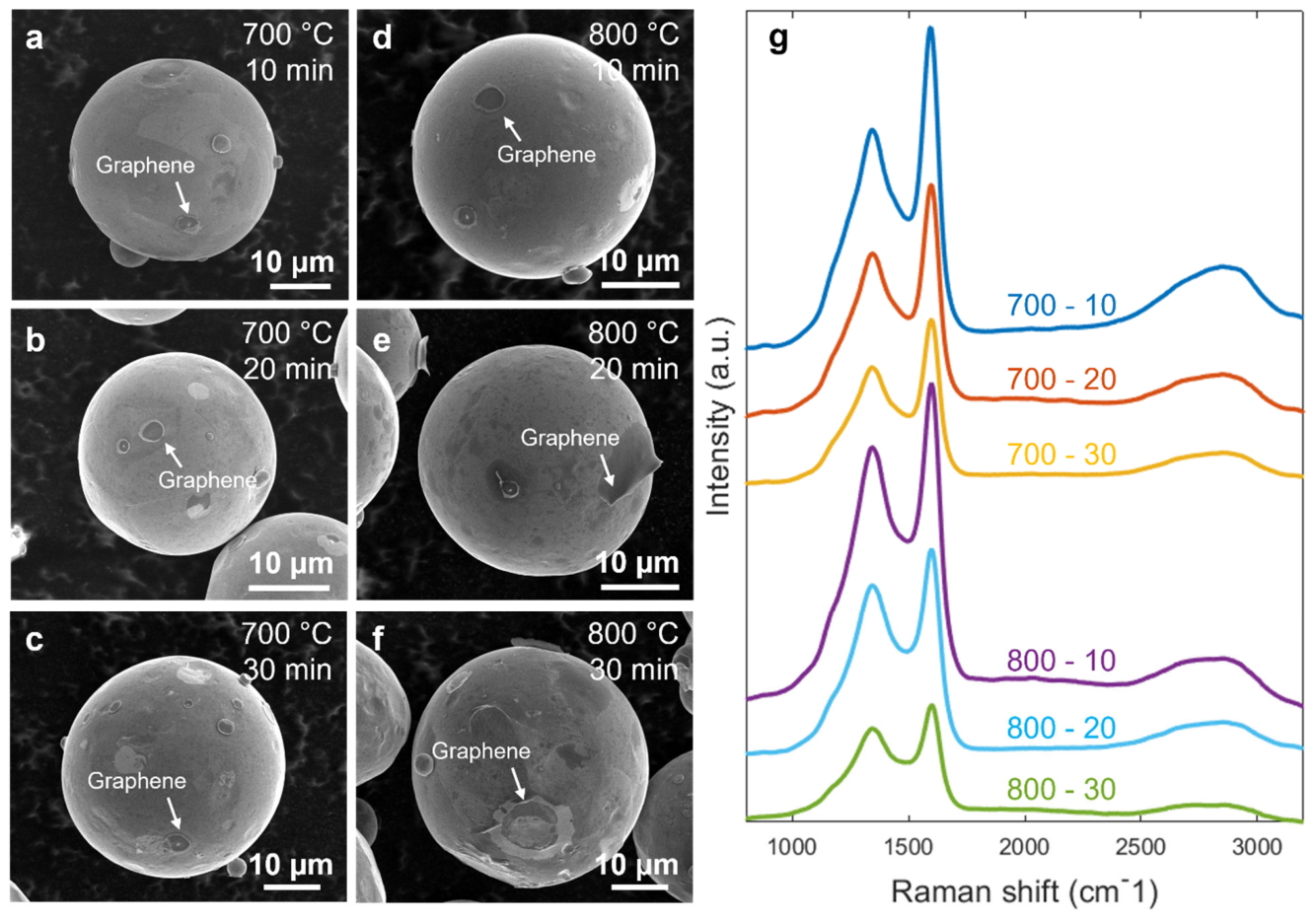
To achieve uniform and continuous 3D-CGCs, the first step was to uniformly grow GLNs on the copper powder surface, which served as a building block of network design. We proposed an in situ approach, which started with the controllable synthesis of GLNs on copper powders by using the ambient pressure RTA method. The overall fabrication process can be primarily divided into three steps. For the first step, sucrose was mixed in a water/ethanol solution, which acted as a carbon precursor to grow graphene. Ethanol was added to increase the wettability of the copper powder. The uniform coating of sucrose on the copper powder was achieved by thorough stirring at an elevated temperature until the solution dried, followed by drying in a furnace to completely remove moisture. In the second step, a uniform coating of GLNs was in situ-grown on the copper powder by the typical RTA process, which involved the decomposition of carbon feedstock with the aid of heat and a metal catalyst. In our approach, copper itself acted as a catalyst [39]. The annealing temperature was 700 °C, at which temperature the sintering between copper powder had not started, and a loosely packed spherical structure could be maintained well. The temperature was maintained for 10 min in an argon and hydrogen (5%) mixture environment (150 sccm) and then cooled down to room temperature. Temperature was the critical parameter for the decomposition of the carbon precursor and for the activation of the catalyst. Generally, a lower temperature favored the formation of high-density and small-area graphene, whereas a high temperature formed low-density and large-area graphene. This was attributed to the higher adsorption of hydrocarbon onto the copper powder surface, which caused denser nucleation at a relatively low temperature [39]. For the solid carbon precursor (sucrose), graphene synthesis involved complicated chemical reactions and processes. Particularly, a lower annealing temperature in the RTA process not only led to an incomplete decomposition of sucrose and, thus, a high ratio of amorphous carbon but also residual oxygen functional groups on the surface. Otherwise, if the RTA temperature rose to 900 °C, copper powders were severely sintered together and lost their powder characteristics because of their elemental diffusion [18]. Here, two different temperatures (700 °C and 800 °C) were used to grow graphene sheets. With time, the graphene growth speed decreased until, finally, it terminated. Figure 3a–f shows the graphene growth for different temperatures and times. The crystallinity and quality of graphene were evaluated using Raman spectroscopy, which is viewed as one of the most important non-destructive characterization tools in graphene research. Carbon allotropes possess unique Raman characteristic peaks at around 1350 (D-band peak), 1600 (G-band peak) and 2800 (2D-band peak) cm−1 [40]. The Raman results in Figure 3g indicate the structural disorder of carbon species, which could be determined by the intensity ratios of the D-band to the G-band (ID/IG). Among all the annealing temperatures and times, thermal annealing at 700 °C for 10 min gave the lowest intensity ratio of 0.64, with minimum defects. The lower relative intensity of the D-band peak and the high 2D-band revealed the relatively high crystallinity of few-layered graphene. After termination of the graphene growth process, the furnace was rapidly cooled down to room temperature, while the flow of the inert gas mixture was kept constant (150 sccm). The cooling rate had no influence on the uniformity of the graphene layer [41].
After successfully synthesizing GLNs around copper powder, the composite was subsequently processed in reactive VHP. Parameters such as pressure, dwell time and holding temperature had a significant influence on the formation of a 3D continuous GLN network. A sufficient pressure of 20 MPa and a holding temperature of 400 °C could not only ensure the full sintering of the copper powders in the copper–copper contact area but could also facilitate intimate contact between the 3D GLNs and the adjacent copper powder. During VHP, GLNs grown on copper powders are directly welded and, therefore, construct a 3D interconnected graphene network in the copper matrix. The coefficient of thermal expansion (CTE) mismatch-related thermal stress between newly grown GLNs and the copper powder may contribute to the interfacial stabilization and anchoring of the GLNs on the copper surface. The high CTEs of metallic materials endow them with high thermal–elastic properties, which dramatically influence the synthesis and phase transformation process. The huge gap in CTEs between the Cu matrix (~16 × 10−6 °C−1) and the graphene reinforcement (~−3.26 × 10⁻⁶ °C−1) causes high internal stress in the composites during the rapid cooling after hot processing [42,43,44].
Based on the thermal–elastic mechanism, the peak thermal stress (σth) of the 2D film–substrate model could be calculated as [45]
σ th = E c 1 υ ( α s α c ) ( T T 0 )
where Ec and υ are the elastic modulus and the Poisson ratio of the film, respectively. α s and α c represent the CTEs of the substrate and film. T T 0 is the temperature gradient. Taking copper–graphene as an example, the instantaneous peak thermal stress on the interface could exceed 10 TPa for an 800 °C temperature gradient.
In the constructed composites, the highly interconnected feature of the 3D-GLN network endows it with high interfacial shear stress for achieving better load transfer and a high strengthening capability, which has the potential to satisfy many applications where lightweight, high-strength materials are required. The resulting composite was identified with a uniform coating structure (Figure 4b) around pure copper powder (Figure 4a), thanks to the ultrathin and uniform coating of sucrose as a carbon source. The template-dependent morphology of the GLNs could be clearly spotted after etching the copper powder out (Figure 4c,d). From the magnified image of the edge area in Figure 4d, the GLNs demonstrated a few layered graphene-like features, resulting in an ultra-low loading content of GLNs in the 3D continuous network (Figure 4e). An intact network structure of 3D continuous GLNs was exposed after etching the superficial copper matrix. The average pore size of the carbon skeleton matched well with the particle size of the copper powder template.
The composite then underwent severe plastic deformation using HPT with quasi-constrained conditions at room temperature under a hydrostatic pressure of 1.0 GPa for 15 turns at a rotational speed of 0.4 rpm to produce bulk parts and further refinement. However, the microstructural refinement can vary across the processed sample as the equivalent shear strain (γ) in the HPT process depends on the number of turns (N) and the radius of the disk (r) and is given below [46]:
γ =   2 π N r h
where h is the thickness of the disk. The subsequent section discusses the hardness distribution to show the symmetrical variation in hardness, followed by microstructural uniformity in the HPT-processed sample.

3.2. Hardness Profile

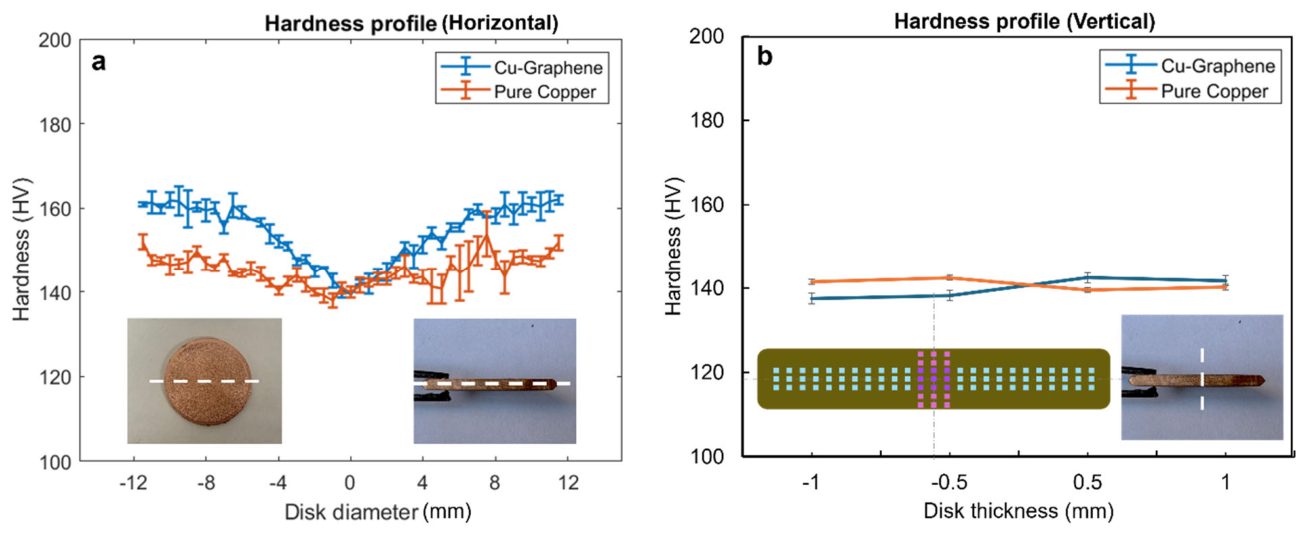
Graphene increased the hardness of the pure copper, with the 3D-CGCs having a hardness of ~160 Hv compared with that of pure copper of ~145 Hv. Figure 5 shows the hardness distributions of the vertical cross-sections (Z-R plane) of the HPT-processed 3D-CGCs and pure copper samples with a 25 mm diameter after 15 turns. The hardness distributions in Figure 5a demonstrate a radially symmetrical variation in hardness for both the pure copper and composite, where the insets show the full disk and the cross-section, with the white dot lines indicating the measurement locations across the disk. Figure 5b represents the variation along the disk thickness (Z-plane); the inset shows the cross-section and the points where measurements were taken. Considering Figure 5a, the hardness of the 3D-CGCs in the center of the disk was lowest (Hv ≈ 140) in the middle, gradually increased in the radial direction of the disk and homogenized after r = 4 mm, with Hv ≈ 160. This is because of the equivalent shear strain (γ) distribution, as discussed in the previous section. The increase in the number of turns can further give a uniform hardness profile [47,48], but copper, being a ductile and malleable material, started sticking to the anvil when N increased to more than 15. Height also inversely affects the shear strain during HPT; however, if the aspect ratio (thickness/disk diameter (h/D)) is close to 1/13 [49,50], the hardness gradation becomes minimum, as shown in Figure 5b.

3.3. Microstructural Characterization

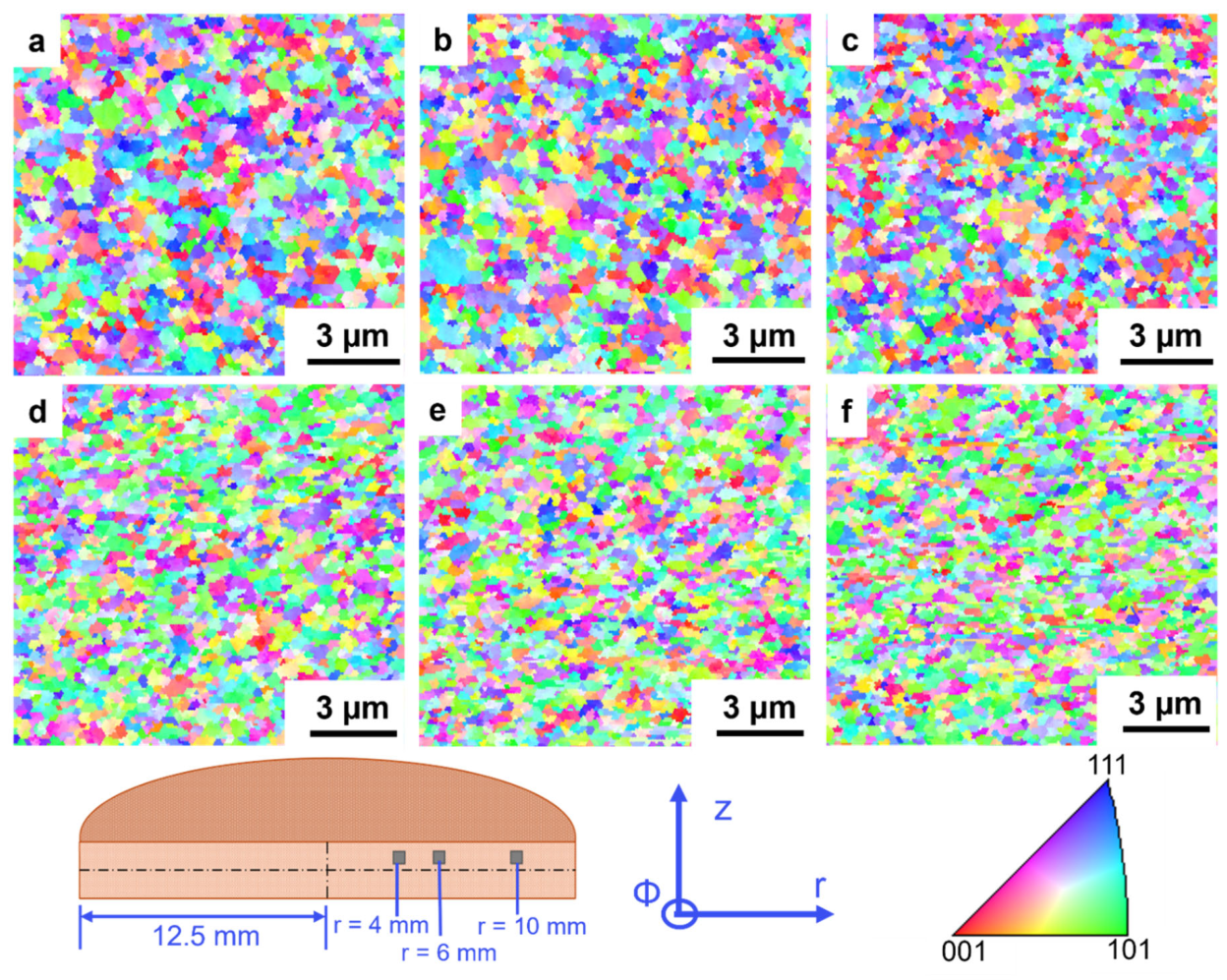
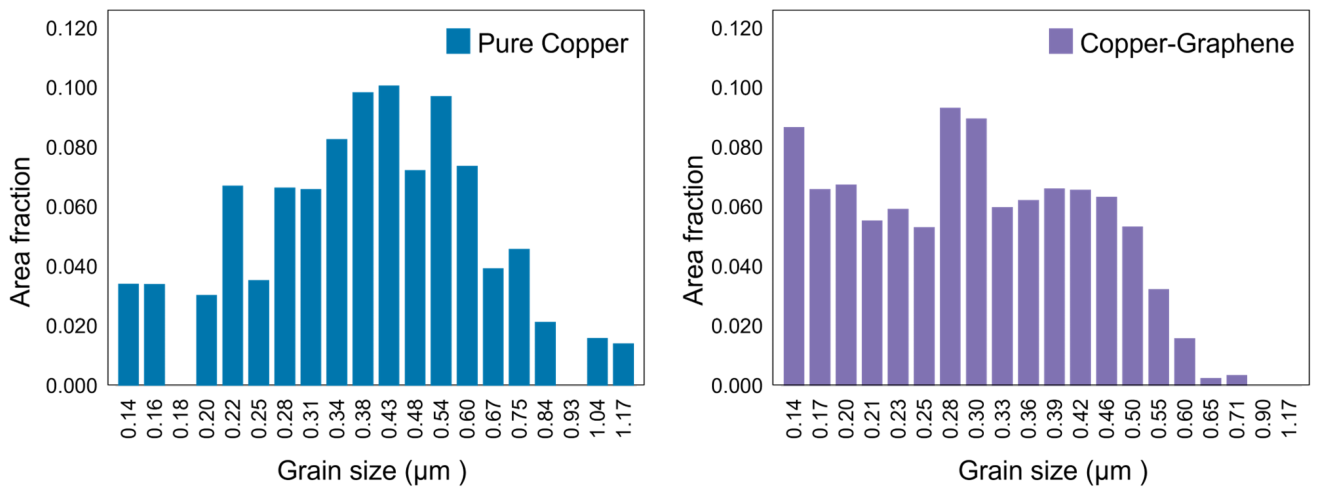
Since the gauge lengths of the tensile samples were taken between a radius of 4 mm and 6 mm, it was important to examine the microstructural homogeneity across the cross-section, especially within the cross-section of the tensile specimen, as the higher shear strain was induced closer to the disk periphery (Equation (1)). Figure 6 presents the OIM micrographs of the samples taken at radii of 4 mm, 6 mm, and 10 mm on the Z-R plane and 0.5 mm from the disk surface (R-Φ plane) of the HPT-processed sample through 15 turns. The schematic drawing, showing the vertical disk surface indicating the microstructural locations and the color code of the crystallographic orientation for the OIM images, is given at the bottom of Figure 6. Figure 6a–c show the OIM images for pure copper, while Figure 6d–e show those for 3D-CGCs. All the images at the respective locations (r = 4 mm, 6 mm, and 10 mm) for each sample depict the equiaxed grain morphology with consistently sized areas, indicating, therefore, a reasonably homogeneous microstructure across the cross-section. Grain size analysis was performed using EBSD maps collected over an analyzed area of approximately 100 µm2 for each sample condition. Grain sizes were calculated using the equivalent circle diameter (ECD) method based on grain area measurements obtained from the EBSD data. Grain boundaries were identified using a minimum misorientation angle. The detailed average grain sizes (µm) were found to be 0.42 ± 0.18, 0.43 ± 0.20, and 0.39 ± 0.14 at radial distances of 4 mm, 6 mm and 10 mm, respectively, for copper. For 3D-CGCs, the grain sizes were relatively smaller, with values of 0.35 ± 0.14, 0.31 ± 0.12, and 0.30 ± 0.12 at r = 4 mm, 6 mm and 10 mm, respectively. The significantly small grains in the micrographs were less accurate and were not considered for the average grain size estimation because of the limitations of the present EBSD technology. Nevertheless, the presented grain size values are reasonably consistent with the earlier reported literature [32].
The continuous 3D GLN architecture had a significant impact on the multi-scale microstructure of the copper matrix, as shown in Figure 6. Macroscopically, the average copper grain size area matrix was limited to 0.31 µm due to the grain constraint of 3D-GLNs, while a noticeable grain growth effect with an average grain size of 0.43 µm was identified in the pure copper (Figure 7). EBDS images also confirmed that the grain structure was maintained well, with no obvious texture after HPT processing, which shows the flexible nature of the 3D-GLNs, which could deform simultaneously with the matrix and remain bound to the matrix grains [18,51]. This result suggests that our 3D GN is apparently effective in refining the matrix grains, which benefits from its uniform distribution in the copper matrix. It is well-known that the uniform dispersion of graphene or graphene-like nanosheets and robust interfacial bonding in metal matrix composites are very difficult to achieve due to the bad interfacial wettability induced by their large difference in surface tension [52]. In this work, taking advantage of the in situ growth route, GLNs encapsulated and anchored on the copper surface facilitated the 3D continuous graphene network architecture.

3.4. Mechanical Performance

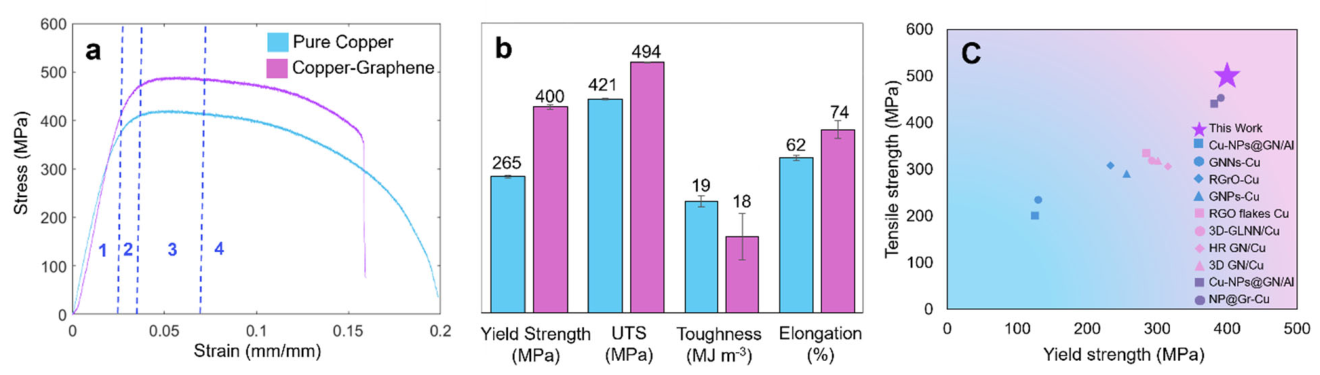
The tensile tests show that 3D-CGCs exhibited exceptional strength and toughness. Figure 8a demonstrates the tensile response of the pure copper and 3D-CGCs after HPT processing, where the tensile samples were taken from the R-Φ plane. The results reveal that only one principal crack extended through the sample, with no obvious secondary cracks, indicating that ductile fracture happened in the pure copper and 3D-CGCs [53]. Encouragingly, the 3D-CGCs delivered a yield strength (YS) of 400 ± 5 MPa and an ultimate tensile strength (UTS) of 494 ± 4 MPa, which was markedly superior to pure copper, with a YS of 265 ± 5 MPa and a UTS of 421 ± 2 MPa. The substantially high YS of the 3D-CGCs confirms that more plastic work is needed for plastic deformation due to the increased obstacles for the movement of more slip systems [54]. Benefiting from the interlocking network structure, the 3D-CGCs bridged between the cracked matrices, postponing the extension of cracks [55]. To achieve effective interaction with cracks, the geometric size of the reinforcement should be large enough to match the crack size [56]. In our case, a 3D graphene network interconnected by GLNs enlarged the effective size to react with cracks. Besides this, regarding ductility, it can be disclosed that although the fracture strain was 17.89 ± 0.9%, which was only a 5.2% reduction compared with pure copper, the combination of the high UTS and moderate fracture strain of the 3D-CGCs resulted in a 16.2% increase in toughness. Toughness was measured by integrating the area under the stress–strain curve. The overall mechanical performance is summarized in Figure 8b. As shown in Figure 8c, the mechanical properties achieved in the present study surpass the previously reported copper–graphene composites using alternative routes. The engineering stress–strain curve of the 3D-CGCs can be divided into four distinct regimes: (1) elastic loading up to the yield point (0.2% offset); (2) strain hardening from the yield point to 4% strain, during which the dislocation interaction occurred and led to dislocation pile-up inside copper grains; (3) steady flow at a constant stress, which indicates that the dislocation in regime 2 may be quickly balanced by dislocation annihilation at the graphene–copper interface; and (4) elongation after UTS until fracture, which is dominated by the 3D graphene network and micro-crack interactions. Meanwhile, the stress–strain curve for pure copper depicts different features, with only three typical processes without regime 3, but a larger regime 2, reflecting a typical strain-hardening feature of recrystallized copper with coarse grains (as shown in Figure 6 and Figure 7).
The synergistic effect of in situ-grown graphene and severe plastic deformation through HPT enhanced the load transfer, grain refinement, Orowan strengthening and thermal mismatch, which are regarded as strengthening mechanisms for graphene-reinforced metals [57]. It is noteworthy that the pile-up of dislocations caused by HPT also played a crucial role in strengthening the composite.

4. Discussion

4.1. Fracture Analysis

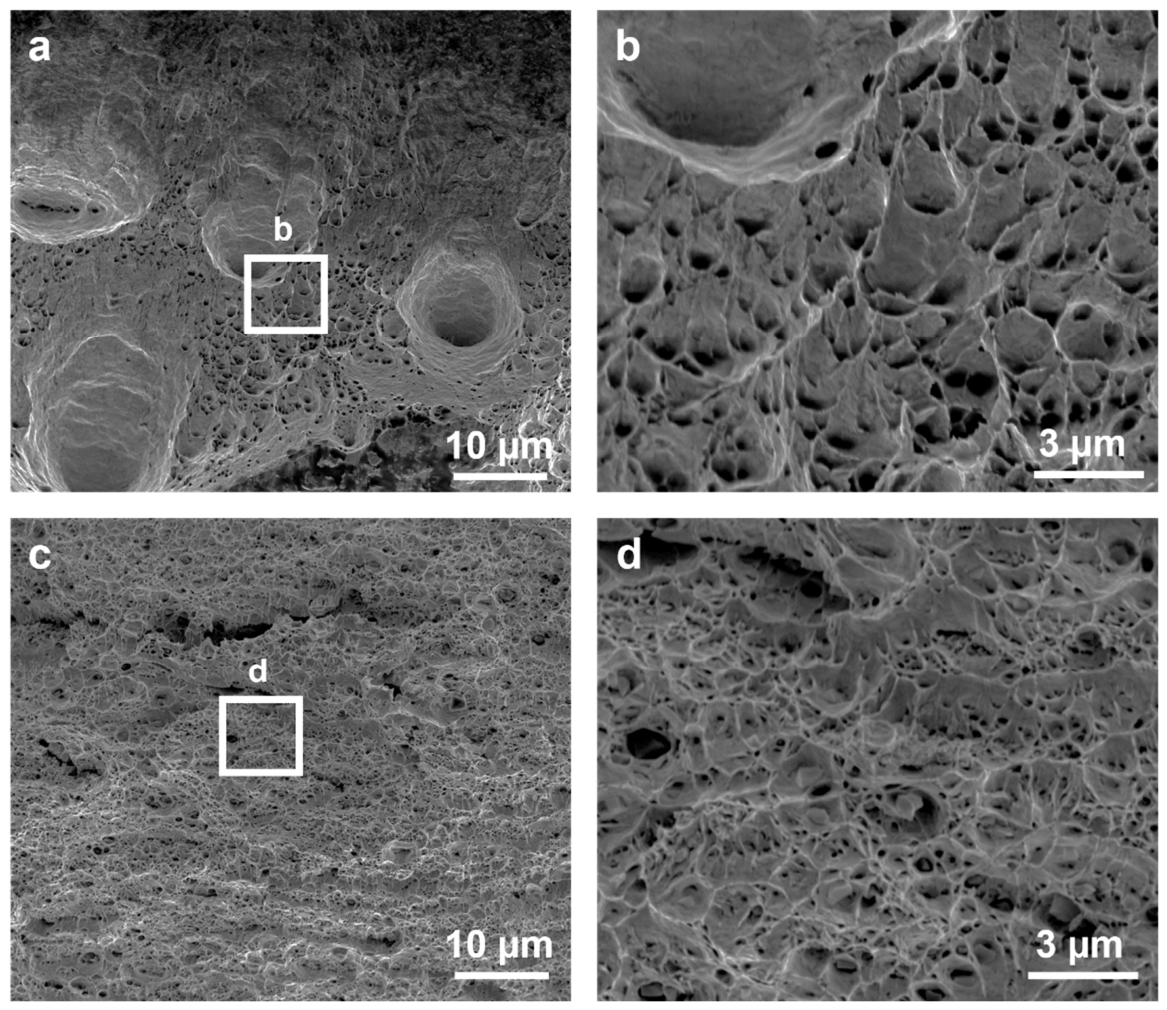
It is standard practice to look at fracture tips to assess any discernible microstructural characteristics following material elongation to failure after tensile testing. Therefore, fractography was conducted at the fracture tips of each sample. The SEM micrographs presented in Figure 9 are oriented perpendicular to the tensile direction and consistent with the Z-R plane for the HPT samples. In general, both samples showed dimples across the gauge width, implying, therefore, a ductile mode of failure with plastic deformation. It can be clearly seen that the pure copper possessed deep and broadened dimples with large sizes after tensile fracture (Figure 9a,b). Compared with the former mentioned, the 3D-CGCs (Figure 9c,d) showed a shallow and narrow dimple fracture morphology, which was consistent with the ductility variations (Figure 8). The introduction of graphene did not change the original fracture mechanism of copper [58]. During the crack propagation process, it was hard to spot graphene in the side positions of cracks due to their random and fine distribution in the matrix. The mechanism of the fracture of the GLNs, rather than pull-out, showed that the effective interfacial bonding between the GLNs and the copper matrix facilitated load transfer from the copper matrix to the GLNs [63].
These results show that the overall mechanical performance of the composites was improved by in situ growing graphene followed by HPT. As the in situ route gave a uniform dispersion of the reinforcing phases, the good interfacial bonding between the GLNs and the copper matrix was obtained by VHP, which could effectively transfer stress from the matrix to the reinforcing phases and significantly improve the strength and impact toughness of the composites. In addition, GLNs can effectively inhibit dislocation migration, significantly reduce the propagation of small cracks in composite materials and digest destructive energy. Moreover, HPT helps reduce the grain size substantially, increasing the misorientation angle and GND density, which is discussed in the following sections.

4.2. Grain Boundary Misorientation Angle

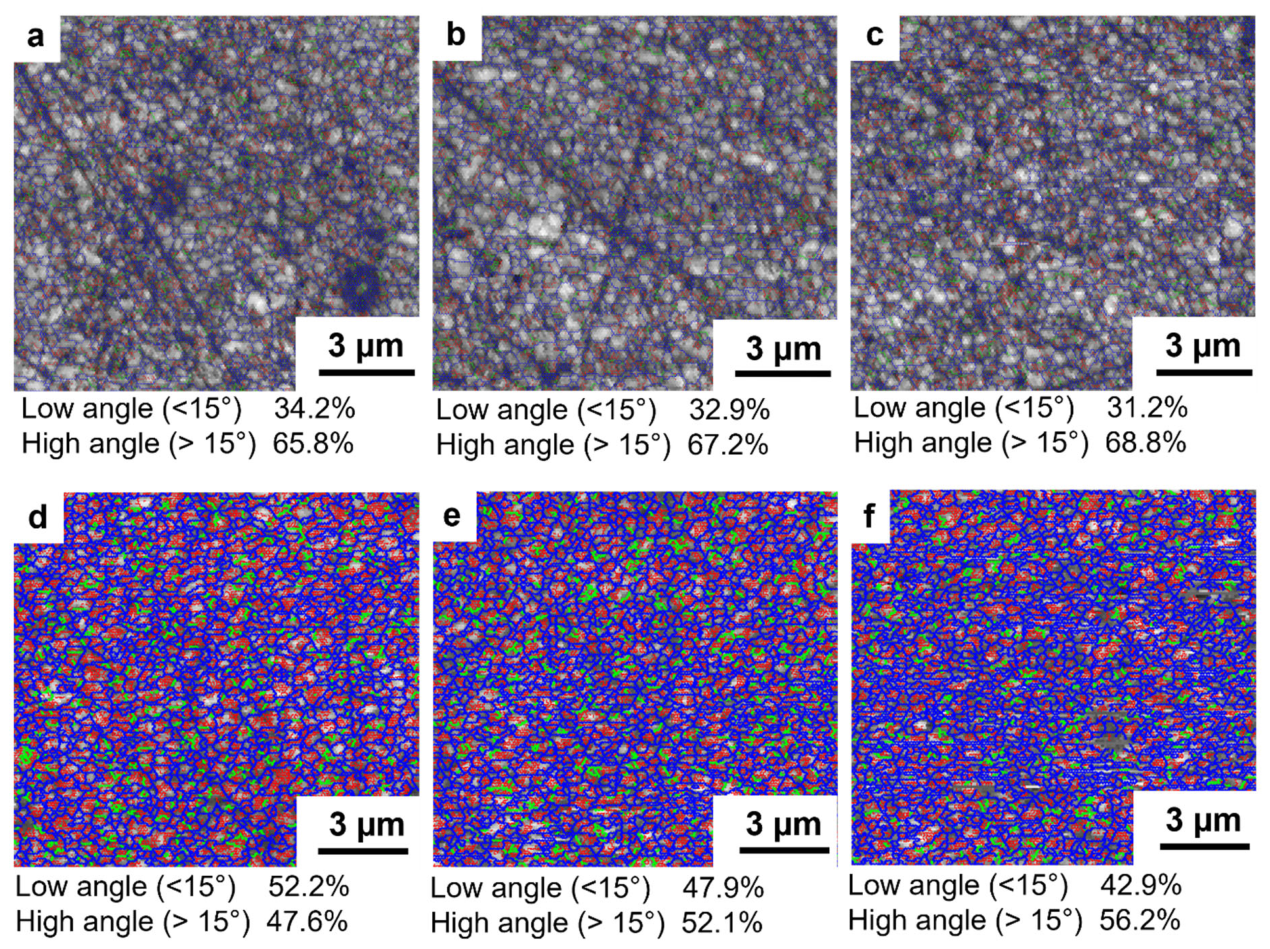
Grain boundaries (GBs) generally exhibit complex structural and compositional features and serve as the interface between adjacent grains. As one of the most prevalent defects, GBs play a pivotal role in determining several properties, such as mechanical strength and fracture toughness, that significantly affect material hardness [64,65]. Misorientation angles are generally considered to be related to grain boundary energy. GB energy is related to the structural properties of GBs, such as grain boundary mobility and atomic diffusion [66,67]. Misorientation angle boundaries of >15° (HAGBs) are generally considered high-energy boundaries with higher mobility than general grain boundaries, while low-misorientation-angle boundaries (<15°) (LAGBs) are considered to have low grain boundary energy and low mobility [68]. Equiaxed grains are surrounded by high-angle boundaries and contain an interior substructure in the form of a network of low-angle boundaries. Generally, in polycrystalline structures, the dislocations have a dense concentration on the GBs (HAGBs) compared with the interior of the grain (LAGBs), and the dislocation distribution between the GBs is not homogeneous because of the distinctness in structure and orientation of GBs [69,70,71]. LAGBs are essentially dislocation walls formed by an array of dislocations and serve as a reservoir for future slip activities and enhance strain-hardening capacity. Figure 10 shows the misorientation angles for pure copper (Figure 10a–c) and 3D-CGCs (Figure 10d–f). The prevalence of HAGBs in the highly deformed state highlights the efficiency of HPT in producing stable UFG microstructures. Notably, the copper–graphene composites exhibited a greater heterogeneity in their boundary character distribution, with a higher fraction of LAGBs compared with pure copper. The LAGBs increased from 34.2% to 52.2%, 32.9% to 47.9% and 31.2% to 42.9% at the radial locations of 4 mm, 6 mm and 10 mm, respectively. This behavior can be attributed to the pinning effect of graphene sheets, which act as barriers to dislocation motion and grain boundary migration, thereby promoting localized dislocation accumulation. The higher fraction of LAGBs in 3D-CGCs also confirms the strain hardening during the tensile test results, as discussed in the earlier section. Therefore, the in situ-grown graphene in the copper matrix processed by HPT combined the Hall–Petch strengthening effect from refined grains with additional strengthening from dislocation–graphene interactions and boundary stabilization. These observations are consistent with previous reports on reinforced copper systems processed by severe plastic deformation, where additional carbon phases were found to refine the microstructure, impede dynamic recovery, and stabilize the ultrafine grains under extreme strain conditions [72].

4.3. Dislocation Density

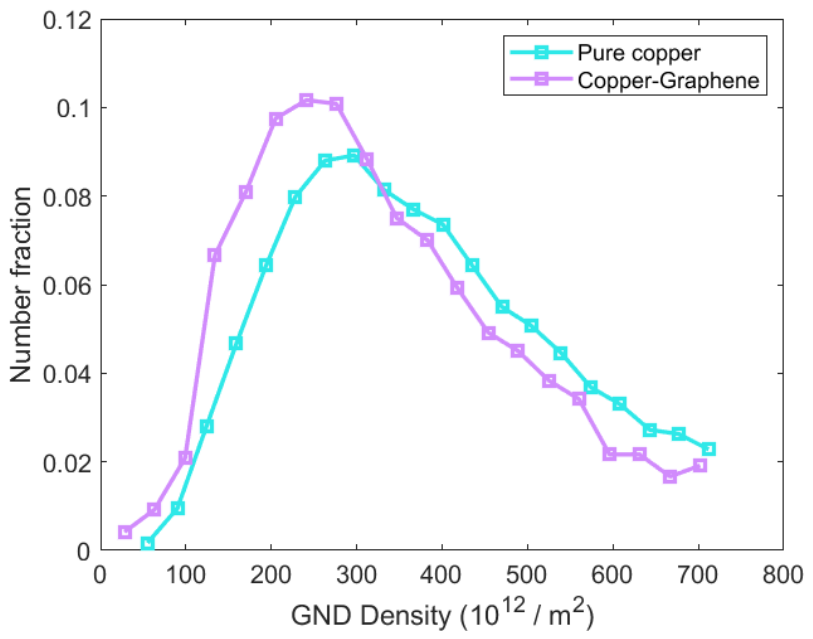
The fragmentation of coarse grains during the hybrid process promoted the formation of non-equilibrium grain boundaries and increased dislocation nucleation and accumulation. Simultaneously, the graphene-derived reinforcement became fragmented and mechanically embedded within the evolving ultrafine-grained matrix, where it interacted with dislocations and grain boundaries through interfacial shear transfer and pinning effects. Figure 11 shows the GND density in pure copper and the copper–graphene composite, which highlights the profound influence of graphene on dislocation storage and accommodation mechanisms. In both cases, most grains exhibited dislocation densities of the order 1014 m−2, confirming that HPT imposed intense plastic strain and generated a high density of lattice defects. The 3D-CGCs displayed a slightly higher peak number fraction within low and intermediate GND densities, along with broader distribution in this range. This contrasts with pure copper, which exhibited a lower peak number fraction in this regime, instead exhibiting a higher peak number fraction from intermediate to high GND densities, along with a longer tail toward the high-GND regime. This suggests that graphene acts as an effective barrier to dislocation glide and multiplication. The graphene interfaces promote localized dislocation accumulation while simultaneously impeding long-range dislocation motion, resulting in a heterogeneous dislocation density distribution. This slight heterogeneity in the composite, characterized by both low- and high-GND regions, suggests that graphene fundamentally alters how dislocations accumulate and distribute under SPD. The heterogeneous strain fields in 3D-CGCs act as a dislocation barrier, trapping dislocations and inducing pileups (contributing to Orowan and load-transfer strengthening), while also facilitating localized annihilation near interfaces, leading to low-GND zones. Such heterogeneity is advantageous for mechanical performance, as it enhances strain-hardening capacity and stabilizes the UFG structure by retarding recovery and grain boundary migration. In pure copper, the relatively uniform and peak GND density reflected consistent accumulation throughout the material, typical of traditional HPT-driven refinement. This dual behavior aligns closely with recent findings in copper–graphene composites processed via HPT, where graphene-coated copper yielded nanocrystalline microstructures and significantly enhanced tensile strength and hardness [59,63,73]. This exceptional performance is attributed to the synergistic effects of heterogeneous grain structures and graphene networks that promote both dislocation accumulation and efficient load distribution. Mechanistically, these observations reinforce a model where graphene acts as a local modulator of plasticity, refining dislocation structures by both accumulating and relieving them in distinct microregions. The broader GND density spectrum in 3D-CGCs is a clear signature of this effect.
Further studies also reported that orientation and refinement of graphene led to simultaneous improvements in mechanical performance, thanks to graphene arrangement and matrix grain refinement [74]. The key takeaway of this study is the reinforcement ability to both pin dislocations and raise dislocation density, where graphene blocks plasticity and enables enhanced recovery or redistribution, and where interfaces facilitate dislocation annihilation during HPT.

5. Conclusions

In summary, taking advantage of the in situ growth route of graphene, a three-dimensional graphene network–copper composite was fabricated. The thermal stress induced by the mismatch of CTEs between the copper matrix and reinforcement anchored the GLNs to the copper powder surface. The resultant composite has a regular and interconnected graphene architecture, significantly improving interfacial shear stress, thus promoting load transfer strengthening. The dual-purpose HPT technique was applied, first, for bulk characterization purposes, and second, to serve as a severe plastic deformation technique to introduce dislocations. Pure copper and 3D-CGCs underwent solid-state welding using HPT. After characterizing the quality of in situ-grown graphene, the mechanical properties and deformation behavior of the resultant composite were contrasted with those of pure copper. This study highlights the following findings: (1) The in situ route of rapid thermal annealing, with a temperature of 700 °C and an annealing time of 10 min, gives the best quality of homogeneous dispersed graphene from the selected parameters. There is a potential to exhibit further improvement for better-quality graphene, as there was a restriction on using pure hydrogen during RTA, which catalyzes graphene growth. (2) Increased hardness and augmented strengths were observed while maintaining reasonable levels of ductility in the HPT-bonded samples, with copper–graphene composite giving higher values compared with pure copper. (3) Fractographic analysis identified diffuse and local necking during plastic deformation. The HPT process exhibited a tendency to postpone local necking by prolonging diffuse necking, suggesting a potential alternative strategy for enhancing the ductility of UFG materials. The detailed depiction of the microstructure shows the development of the substructure with a grain size as small as 0.31 µm for the HPT-processed 3D-CGCs and a high density of dislocations. Enhanced grain boundaries and misorientation angles, in turn, increased the strength of the material. Although electrical and thermal properties were not explicitly evaluated in this work, the use of in situ-grown graphene and HPT processing is expected to be advantageous for preserving functional performance by promoting clean, well-bonded interfaces and suppressing graphene agglomeration. The microstructural insights provided here, therefore, serve as a foundation for future studies aimed at achieving an optimal balance between mechanical and functional properties in copper–graphene composites.
Future work should focus on optimizing the graphene content and network architecture to achieve an improved balance between mechanical strength and functional properties, including electrical and thermal conductivity. Further investigation of Cu–graphene interface engineering and deformation behavior under different loading conditions is also necessary to better understand the strengthening and failure mechanisms of the composite. In addition, the scalability of the hybrid in situ graphene growth and high-pressure torsion processing route should be explored for large-scale manufacturing. These developments could enable potential applications in aerospace structures, electronic packaging, thermal management systems, and advanced electrical components.

Author Contributions

Conceptualization, J.D. and D.L.; methodology, J.D. and L.B.; formal analysis, J.D. and L.B.; investigation, J.D.; resources, M.K. and I.H.; data curation, J.D.; writing—original draft preparation, J.D.; writing—review and editing, D.L., M.K. and I.H.; visualization, J.D.; funding acquisition, D.L. All authors have read and agreed to the published version of the manuscript.

Funding

The authors acknowledge financial support from the National Science Foundation (NSF No. 2309995).

Data Availability Statement

The raw data supporting the conclusions of this article will be made available by the authors on request.

Conflicts of Interest

The authors declare no conflict of interest.

References

  1. Radetzki, M. Seven Thousand Years in the Service of Humanity—The History of Copper, the Red Metal. Resour. Policy 2009, 34, 176–184. [Google Scholar] [CrossRef]
  2. Morshed-Behbahani, K.; Aliyu, A.; Bishop, D.P.; Nasiri, A. Additive Manufacturing of Copper-Based Alloys for High-Temperature Aerospace Applications: A Review. Mater. Today Commun. 2024, 38, 108395. [Google Scholar] [CrossRef]
  3. Vahedi Nemani, A.; Ghaffari, M.; Sabet Bokati, K.; Valizade, N.; Afshari, E.; Nasiri, A. Advancements in Additive Manufacturing for Copper-Based Alloys and Composites: A Comprehensive Review. J. Manuf. Mater. Process. 2024, 8, 54. [Google Scholar] [CrossRef]
  4. Malý, M.; Koutný, D.; Pantělejev, L.; Pambaguian, L.; Paloušek, D. Effect of High-Temperature Preheating on Pure Copper Thick-Walled Samples Processed by Laser Powder Bed Fusion. J. Manuf. Process. 2022, 73, 924–938. [Google Scholar] [CrossRef]
  5. Alqsair, U.F.; Abdullah, A.S.; Omara, Z.M.; Essa, F.A. Enhanced Solar Still Operation Using a Copper Coil Heat Exchanger and Phase Change Material Integration. J. Energy Storage 2025, 113, 115557. [Google Scholar] [CrossRef]
  6. Yue, X.; Yang, H.-B.; Han, Z.-M.; Lu, Y.-X.; Yin, C.-H.; Zhao, X.; Liu, Z.-X.; Guan, Q.-F.; Yu, S.-H. Tough and Moldable Sustainable Cellulose-Based Structural Materials via Multiscale Interface Engineering. Adv. Mater. 2024, 36, 2306451. [Google Scholar] [CrossRef]
  7. Tang, Y.; Wang, H.; Ouyang, X.; Wang, C.; Huang, Q.; Zhao, Q.; Liu, X.; Zhu, Q.; Hou, Z.; Wu, J.; et al. Overcoming Strength-Ductility Tradeoff with High Pressure Thermal Treatment. Nat. Commun. 2024, 15, 3932. [Google Scholar] [CrossRef] [PubMed]
  8. Yeung, H.; Weaver, J.; Ponsot, A.; Dar, J.; Zhang, Y.; Lin, D.; Chuang, A.; Gao, M.C.; Zhang, F. Laser Stirring with Elliptical Scanning Enables On-Demand Alloying in Additive Manufacturing. Addit. Manuf. 2026, 118, 105101. [Google Scholar] [CrossRef]
  9. Zhang, B.; Xu, P.; Wang, J.; Hong, Z.; Wang, W.; Dai, F. Overcoming the Trade-off between Conductivity and Strength in Copper Alloys through Undercooling. Nat. Commun. 2025, 16, 4978. [Google Scholar] [CrossRef] [PubMed]
  10. Zhou, K.; Jia, Y.; Jia, D.; Wang, J.; Sun, W.; Wang, Y.; Kong, X.; Zhang, R.; Fu, Y. Progress of Highly Conductive Graphene-Reinforced Copper Matrix Composites: A Review. J. Mater. Res. Technol. 2024, 33, 7546–7571. [Google Scholar] [CrossRef]
  11. Hidalgo-Manrique, P.; Lei, X.; Xu, R.; Zhou, M.; Kinloch, I.A.; Young, R.J. Copper/Graphene Composites: A Review. J. Mater. Sci. 2019, 54, 12236–12289. [Google Scholar] [CrossRef]
  12. Hu, Z.; Tong, G.; Lin, D.; Chen, C.; Guo, H.; Xu, J.; Zhou, L. Graphene-Reinforced Metal Matrix Nanocomposites—A Review. Mater. Sci. Technol. 2016, 32, 930–953. [Google Scholar] [CrossRef]
  13. Shahil, K.M.F.; Balandin, A.A. Graphene–Multilayer Graphene Nanocomposites as Highly Efficient Thermal Interface Materials. Nano Lett. 2012, 12, 861–867. [Google Scholar] [CrossRef]
  14. Hwang, J.; Yoon, T.; Jin, S.H.; Lee, J.; Kim, T.-S.; Hong, S.H.; Jeon, S. Enhanced Mechanical Properties of Graphene/Copper Nanocomposites Using a Molecular-Level Mixing Process. Adv. Mater. 2013, 25, 6724–6729. [Google Scholar] [CrossRef]
  15. Chen, Y.; Zhang, X.; Liu, E.; He, C.; Shi, C.; Li, J.; Nash, P.; Zhao, N. Fabrication of In-Situ Grown Graphene Reinforced Cu Matrix Composites. Sci. Rep. 2016, 6, 19363. [Google Scholar] [CrossRef]
  16. Shu, S.; Yuan, Q.; Dai, W.; Wu, M.; Dai, D.; Yang, K.; Wang, B.; Lin, C.-T.; Wuebben, T.; Degenhardt, J.; et al. In-Situ Synthesis of Graphene-like Carbon Encapsulated Copper Particles for Reinforcing Copper Matrix Composites. Mater. Des. 2021, 203, 109586. [Google Scholar] [CrossRef]
  17. Xiao, Q.; Yi, X.; Jiang, B.; Qin, Z.; Hu, J.; Jiang, Y.; Liu, H.; Wang, B.; Yi, D. In-Situ Synthesis of Graphene on Surface of Copper Powder by Rotary CVD and Its Application in Fabrication of Reinforced Cu-Matrix Composites. Adv. Mater. Sci. 2017, 2. [Google Scholar] [CrossRef]
  18. Zhang, X.; Xu, Y.; Wang, M.; Liu, E.; Zhao, N.; Shi, C.; Lin, D.; Zhu, F.; He, C. A Powder-Metallurgy-Based Strategy toward Three-Dimensional Graphene-like Network for Reinforcing Copper Matrix Composites. Nat. Commun. 2020, 11, 2775. [Google Scholar] [CrossRef]
  19. Shu, S.; Li, Y.; Yan, Z.; Yang, Y.; Zhang, X.; Li, X.; Zheng, L.; Chai, H.; Jiang, B.; Ren, W.; et al. Graphene-Reinforced Copper Matrix Composites as Electrical Contacts. ACS Appl. Nano Mater. 2024, 7, 8685–8691. [Google Scholar] [CrossRef]
  20. Kazakov, A.M.; Korznikova, G.F.; Semenov, A.S.; Korznikova, E.A. Recent Advances in Copper-Graphene Composites: Enhancing Thermal Conductivity through Material Engineering. Procedia Struct. Integr. 2024, 65, 114–120. [Google Scholar] [CrossRef]
  21. Genna, S.; Salvi, D.; Ucciardello, N. Copper-Graphene Coatings for Improving Thermal Shielding of CFRPs through Electrodeposition Techniques. Polym. Compos. 2025, 46, 2030–2046. [Google Scholar] [CrossRef]
  22. Wejrzanowski, T.; Grybczuk, M.; Chmielewski, M.; Pietrzak, K.; Kurzydlowski, K.J.; Strojny-Nedza, A. Thermal Conductivity of Metal-Graphene Composites. Mater. Des. 2016, 99, 163–173. [Google Scholar] [CrossRef]
  23. Dar, J.; Ponsot, A.G.; Jolma, C.J.; Lin, D. A Review on Scan Strategies in Laser-Based Metal Additive Manufacturing. J. Mater. Res. Technol. 2025, 36, 5425–5467. [Google Scholar] [CrossRef]
  24. Liang, Y.; Liu, J.; Zhang, X.; Weng, Y.; Zhong, S.; Li, T.; Zhang, P.; Yang, C.; Xing, Y.; Fu, J.; et al. Additively Manufactured Ultrafine Grained Aermet100 with Superior Mechanical Property. J. Mater. Res. Technol. 2025, 34, 1817–1831. [Google Scholar] [CrossRef]
  25. Dar, J.; Ravimal, D.; Lee, C.; Lee, S.-K. Field Surface Roughness Levelling of the Lapping Metal Surface Using Specular White Light. Int. J. Adv. Manuf. Technol. 2022, 119, 2895–2909. [Google Scholar] [CrossRef]
  26. Bazarnik, P.; Emerla, M.; Huang, Y.; Wojciechowska, A.; Ciemiorek, M.; Bednarczyk, W.; Jastrzębska, A.; Lewandowska, M.; Langdon, T.G. Enhanced Thermal Stability of Nanocrystalline Cu Composites Processed by High-Pressure Torsion: The Pinning Effect of Al2O3, GO, and rGO/Al2O3 Nanoparticles. J. Alloys Compd. 2025, 1033, 181283. [Google Scholar] [CrossRef]
  27. Wu, Y.-H.; Bhatta, L.; Lee, I.; Figueiredo, R.B.; Kawasaki, M.; Santala, M.K. Multi-Scale Characterization of Supersaturated and Intermetallic Nanoscale Phases in Alloys Produced by High-Pressure Torsion Processing of Al and Mg Sheets. JOM 2025, 77, 1233–1240. [Google Scholar] [CrossRef]
  28. Kocich, R.; Kopeček, J.; Marek, M. Correlation of Structure Development and Electric Characteristics within High Pressure Torsion Processed Copper. Mater. Werkst. 2024, 55, 579–587. [Google Scholar] [CrossRef]
  29. Zhilyaev, A.P.; Langdon, T.G. Using High-Pressure Torsion for Metal Processing: Fundamentals and Applications. Prog. Mater. Sci. 2008, 53, 893–979. [Google Scholar] [CrossRef]
  30. Li, T.; Wang, Y.; Yang, M.; Hou, H.; Wu, S. High Strength and Conductivity Copper/Graphene Composites Prepared by Severe Plastic Deformation of Graphene Coated Copper Powder. Mater. Sci. Eng. A 2021, 826, 141983. [Google Scholar] [CrossRef]
  31. Zhang, X.; Liu, Y.; Zhang, Y.; Zhou, M.; Geng, Y.; Song, X.; Xiong, D.-B. Deformation Behavior and Microstructure Evolution of Graphene/Copper Laminated Composites. Mater. Sci. Eng. A 2024, 911, 146936. [Google Scholar] [CrossRef]
  32. Emerla, M.; Bazarnik, P.; Huang, Y.; Wojciechowska, A.; Ciemiorek, M.; Pura, J.; Wieczorek-Czarnocka, M.; Kenichi, P.M.A.; Jastrzębska, A.; Lewandowska, M.; et al. The Influence of Graphene Oxide on the Microstructure and Properties of Ultrafine-Grained Copper Processed by High-Pressure Torsion. J. Alloys Compd. 2024, 1005, 176208. [Google Scholar] [CrossRef]
  33. Li, D.; Liu, Y.; Liu, Q. Study on Interface Mechanical Properties of Graphene/Copper Matrix Composites. Appl. Sci. 2023, 13, 3559. [Google Scholar] [CrossRef]
  34. Fu, X.; Jiang, J.; Jiang, X. Research Progress in Interfacial Characteristics and Strengthening Mechanisms of Rare Earth Metal Oxide-Reinforced Copper Matrix Composites. Materials 2022, 15, 5350. [Google Scholar] [CrossRef] [PubMed]
  35. Jalali, M.; Hassanzadeh, N.; Alizadeh, R.; Langdon, T.G. Graphene-Reinforced Metal Matrix Composites Produced by High-Pressure Torsion: A Review. J. Mater. Sci. 2024, 59, 20900–20928. [Google Scholar] [CrossRef]
  36. Subedi, K.N.; Nepal, K.; Ugwumadu, C.; Kappagantula, K.; Drabold, D.A. Electronic Transport in Copper-Graphene Composites. Appl. Phys. Lett. 2023, 122, 031903. [Google Scholar] [CrossRef]
  37. Weng, S.; Ning, H.; Fu, T.; Hu, N.; Zhao, Y.; Huang, C.; Peng, X. Molecular Dynamics Study of Strengthening Mechanism of Nanolaminated Graphene/Cu Composites under Compression. Sci. Rep. 2018, 8, 3089. [Google Scholar] [CrossRef] [PubMed]
  38. Standard Test Methods for Tension Testing of Metallic Materials. Available online: https://store.astm.org/e0008_e0008m-25.html (accessed on 29 May 2026).
  39. Seah, C.-M.; Chai, S.-P.; Mohamed, A.R. Mechanisms of Graphene Growth by Chemical Vapour Deposition on Transition Metals. Carbon 2014, 70, 1–21. [Google Scholar] [CrossRef]
  40. Lee, H.C.; Liu, W.-W.; Chai, S.-P.; Mohamed, A.R.; Aziz, A.; Khe, C.-S.; Hidayah, N.M.S.; Hashim, U. Review of the Synthesis, Transfer, Characterization and Growth Mechanisms of Single and Multilayer Graphene. RSC Adv. 2017, 7, 15644–15693. [Google Scholar] [CrossRef]
  41. Orofeo, C.M.; Ago, H.; Hu, B.; Tsuji, M. Synthesis of Large Area, Homogeneous, Single Layer Graphene Films by Annealing Amorphous Carbon on Co and Ni. Nano Res. 2011, 4, 531–540. [Google Scholar] [CrossRef]
  42. Dadbakhsh, S.; Speirs, M.; Van Humbeeck, J.; Kruth, J.-P. Laser Additive Manufacturing of Bulk and Porous Shape-Memory NiTi Alloys: From Processes to Potential Biomedical Applications. MRS Bull. 2016, 41, 765–774. [Google Scholar] [CrossRef]
  43. Wang, X.; Liu, Y.; Wang, X.; Wang, Y.; Lai, T.; Ren, G. Tuning Thermal Expansion Coefficient of Copper-Multilayer Graphene Thermal Management Materials through Tailoring Interfacial Microstructure. J. Alloys Compd. 2021, 862, 158709. [Google Scholar] [CrossRef]
  44. An, Z.; Li, J.; Kikuchi, A.; Wang, Z.; Jiang, Y.; Ono, T. Mechanically Strengthened Graphene-Cu Composite with Reduced Thermal Expansion towards Interconnect Applications. Microsyst. Nanoeng. 2019, 5, 20. [Google Scholar] [CrossRef]
  45. Daniel, R.; Holec, D.; Bartosik, M.; Keckes, J.; Mitterer, C. Size Effect of Thermal Expansion and Thermal/Intrinsic Stresses in Nanostructured Thin Films: Experiment and Model. Acta Mater. 2011, 59, 6631–6645. [Google Scholar] [CrossRef]
  46. Valiev, R.Z.; Estrin, Y.; Horita, Z.; Langdon, T.G.; Zehetbauer, M.J.; Zhu, Y.T. Fundamentals of Superior Properties in Bulk NanoSPD Materials. Mater. Res. Lett. 2016, 4, 1–21. [Google Scholar] [CrossRef]
  47. Xu, C.; Horita, Z.; Langdon, T.G. The Evolution of Homogeneity in Processing by High-Pressure Torsion. Acta Mater. 2007, 55, 203–212. [Google Scholar] [CrossRef]
  48. Kawasaki, M. Different Models of Hardness Evolution in Ultrafine-Grained Materials Processed by High-Pressure Torsion. J. Mater. Sci. 2014, 49, 18–34. [Google Scholar] [CrossRef]
  49. Reis, L.M.; Hohenwarter, A.; Kawasaki, M.; Figueiredo, R.B. Evaluating High-Pressure Torsion Scale-Up. Adv. Eng. Mater. 2024, 26, 2400175. [Google Scholar] [CrossRef]
  50. Hohenwarter, A.; Taylor, A.; Stock, R.; Pippan, R. Effect of Large Shear Deformations on the Fracture Behavior of a Fully Pearlitic Steel. Metall. Mater. Trans. A 2010, 42, 1609–1618. [Google Scholar] [CrossRef]
  51. Zhang, Y.; Wang, Y.; Zhang, F.; Yang, S.; Gu, T.; Liu, F. Construct a 3D Skeleton by Bridging Graphene Nanosheets with Soft Liquid Metal to Enhance Thermal Conductivity of Flexible PDMS Matrix Composites. Chem. Eng. J. 2025, 515, 163651. [Google Scholar] [CrossRef]
  52. Zhang, X.; Shi, C.; Liu, E.; He, F.; Ma, L.; Li, Q.; Li, J.; Bacsa, W.; Zhao, N.; He, C. Achieving High Strength and High Ductility in Metal Matrix Composites Reinforced with a Discontinuous Three-Dimensional Graphene-like Network. Nanoscale 2017, 9, 11929–11938. [Google Scholar] [CrossRef] [PubMed]
  53. Vehoff, H.; Neumann, P. In Situ Sem Experiments Concerning the Mechanism of Ductile Crack Growth. Acta Metall. 1979, 27, 915–920. [Google Scholar] [CrossRef]
  54. Mehta, R.; Chugh, S.; Chen, Z. Enhanced Electrical and Thermal Conduction in Graphene-Encapsulated Copper Nanowires. Nano Lett. 2015, 15, 2024–2030. [Google Scholar] [CrossRef] [PubMed]
  55. Picot, O.T.; Rocha, V.G.; Ferraro, C.; Ni, N.; D’Elia, E.; Meille, S.; Chevalier, J.; Saunders, T.; Peijs, T.; Reece, M.J.; et al. Using Graphene Networks to Build Bioinspired Self-Monitoring Ceramics. Nat. Commun. 2017, 8, 14425. [Google Scholar] [CrossRef] [PubMed]
  56. Ritchie, R.O. The Conflicts between Strength and Toughness. Nat. Mater. 2011, 10, 817–822. [Google Scholar] [CrossRef]
  57. Wang, J.; Zhang, X.; Zhao, N.; He, C. In Situ Synthesis of Copper-Modified Graphene-Reinforced Aluminum Nanocomposites with Balanced Strength and Ductility. J. Mater. Sci. 2019, 54, 5498–5512. [Google Scholar] [CrossRef]
  58. Guo, S.; Zhang, X.; Shi, C.; Liu, E.; He, C.; He, F.; Zhao, N. In Situ Synthesis of High Content Graphene Nanoplatelets Reinforced Cu Matrix Composites with Enhanced Thermal Conductivity and Tensile Strength. Powder Technol. 2020, 362, 126–134. [Google Scholar] [CrossRef]
  59. Wu, B.; Kang, J.; Zhang, X.; Zhao, N. Enhanced Mechanical Properties of Copper Composites with High Conductivity by Intragranular Graphene Network. Compos. Commun. 2025, 53, 102191. [Google Scholar] [CrossRef]
  60. Yue, H.; Yao, L.; Gao, X.; Zhang, S.; Guo, E.; Zhang, H.; Lin, X.; Wang, B. Effect of Ball-Milling and Graphene Contents on the Mechanical Properties and Fracture Mechanisms of Graphene Nanosheets Reinforced Copper Matrix Composites. J. Alloys Compd. 2017, 691, 755–762. [Google Scholar] [CrossRef]
  61. Xiong, D.-B.; Cao, M.; Guo, Q.; Tan, Z.; Fan, G.; Li, Z.; Zhang, D. Graphene-and-Copper Artificial Nacre Fabricated by a Preform Impregnation Process: Bioinspired Strategy for Strengthening-Toughening of Metal Matrix Composite. ACS Nano 2015, 9, 6934–6943. [Google Scholar] [CrossRef]
  62. Liu, J.; Huang, J.; Zhang, Y.; Sun, X.; Yang, X.; Du, S.; Li, T.; Wang, T. A Novel Strategy of Dual In-Situ Synthesis for Graphene/Cu Composites with High Strength and High Electrical Conductivity. Carbon 2025, 244, 120645. [Google Scholar] [CrossRef]
  63. Korznikova, G.; Aletdinov, A.; Khalikova, G.; Korznikova, E. Achieving High Strength in Cu/Graphene Composite Produced by High Pressure Torsion. Russ. Metall. 2023, 2023, 1696–1699. [Google Scholar] [CrossRef]
  64. Hussein, A.; Krom, A.H.M.; Dey, P.; Sunnardianto, G.K.; Moultos, O.A.; Walters, C.L. The Effect of Hydrogen Content and Yield Strength on the Distribution of Hydrogen in Steel: A Diffusion Coupled Micromechanical FEM Study. Acta Mater. 2021, 209, 116799. [Google Scholar] [CrossRef]
  65. Chen, H.; Zhou, H.; Cui, X.; Czettl, C.; Weirather, T.; Pachlhofer, J.; Mueller, P.; Teppernegg, T.; Useldinger, R.; Primig, S.; et al. Effect of WC/WC Grain Boundary Misorientation Angle on the Local Hardness in WC–Co Cemented Carbides. Scr. Mater. 2025, 259, 116525. [Google Scholar] [CrossRef]
  66. Rajmohan, N.; Szpunar, J.A.; Hayakawa, Y. A Role of Fractions of Mobile Grain Boundaries in Secondary Recrystallization of Fe–Si Steels. Acta Mater. 1999, 47, 2999–3008. [Google Scholar] [CrossRef]
  67. Dunn, C.G.; Daniels, F.W.; Bolton, M.J. Relative Energies of Grain Boundaries in Silicon Iron. JOM 1950, 2, 1245–1248. [Google Scholar] [CrossRef]
  68. Zou, X.; Liu, Q.; Qiu, S. Electron Backscatter Diffraction Analysis of Low-Misorientation-Angle Boundary and High-Energy Boundary in the Hot-Rolled Plate of Grain-Orientated Silicon Steel. Metals 2024, 14, 1170. [Google Scholar] [CrossRef]
  69. Doan, D.-Q.; Fang, T.-H.; Chen, T.-H. Microstructure and Composition Dependence of Mechanical Characteristics of Nanoimprinted AlCoCrFeNi High-Entropy Alloys. Sci. Rep. 2021, 11, 13680. [Google Scholar] [CrossRef] [PubMed]
  70. Ivanisenko, Y.; Valiev, R.Z.; Fecht, H.-J. Grain Boundary Statistics in Nano-Structured Iron Produced by High Pressure Torsion. Mater. Sci. Eng. A 2005, 390, 159–165. [Google Scholar] [CrossRef]
  71. Feng, M.; Jin, S.; Wu, Q.; Wang, Z.; An, X.; Liao, X.; Li, J.; Sha, G. Effect of Cu Content on HPT-Induced Grain Boundary Evolution, Decomposition, Segregation, and Grain Refinement in Al-xCu Alloys. J. Alloys Compd. 2025, 1016, 178930. [Google Scholar] [CrossRef]
  72. Yang, K.M.; Li, Q.; Zhang, Q.; Liu, G.S.; Wang, J.J.; Yang, Y.F.; Guo, C.X.; Ni, J.M.; Song, J.; Zhang, J.; et al. Synergistically Enhanced Interface Stability by Graphene Assisted Copper Surface Reconstruction. Acta Mater. 2022, 226, 117638. [Google Scholar] [CrossRef]
  73. Li, T.; Lu, R.; Cao, Y.; Liu, B.; Fu, A.; Liu, B. Hot Deformation Behavior and Microstructure Evolution of a Graphene/Copper Composite. Materials 2024, 17, 4010. [Google Scholar] [CrossRef] [PubMed]
  74. Yang, Z.; Deng, F.; Tao, Z.; Yan, S.; Ma, H.; Qian, M.; He, W.; Zhang, Z.; Liu, Y.; Wang, L. Effects on the Microstructure Evolution and Properties of Graphene/Copper Composite during Rolling Process. Materials 2023, 16, 5534. [Google Scholar] [CrossRef]
Figure 1. Schematic illustration of copper–graphene composites via hot pressure torsion. (a) Copper powders were first coated with sucrose as a hybrid precursor. (b) The hybrid precursor was then subjected to the RTA process for growing GLNs. (c) The GLNs were interconnected into a continuous network structure in the copper matrix by using HPT. (d) Test specimen for mechanical properties.
Jmmp 10 00196 g001
Figure 2. Moinsys HPT machine and processed sample.
Jmmp 10 00196 g002
Figure 3. (af) SEM images of graphene reinforcement morphology on the copper surface for different RTA parameters. (g) Raman spectra of GLNs on copper powders.
Jmmp 10 00196 g003
Figure 4. Characterization of copper–graphene composite. (a) SEM image of as-received pure copper powder. (b) Uniform morphology of graphene structure around copper powder. (c) SEM image of the graphene structure after etching copper. (d) TEM image of the edge area. (e) HR-TEM image showing 3–5 graphene layers.
Jmmp 10 00196 g004
Figure 5. Vickers microhardness values of the cross-sections of pure copper and 3D-CGCs after HPT: (a) horizontal hardness profile along disk radius and (b) vertical hardness profile along disk thickness.
Jmmp 10 00196 g005
Figure 6. Microstructural characterization. OIM micrographs of HPT-processed (ac) pure copper; (df) 3D-CGCs at r = 4 mm, 6 mm, and 10 mm on a Z-R plane with schematic illustration of the disk vertical surface, indicating the location of the micrographs and the color-coded crystallographic orientation.
Jmmp 10 00196 g006
Figure 7. Grain size distributions of pure copper and copper–graphene composite after HPT.
Jmmp 10 00196 g007
Figure 8. Mechanical performance of HPT-processed pure copper and 3D-CGCs. (a) Tensile stress–strain curves of pure copper and 3D-CGCs. (b) Comparative bar chart of the mechanical properties of pure Cu and 3D-CGCs. (c) Comparison of mechanical properties (tensile strength vs. yield strength) of 3D-MGCs with some reported copper–graphene composites [14,18,52,57,58,59,60,61,62].
Jmmp 10 00196 g008
Figure 9. SEM images of the fracture surface, with micrographs oriented perpendicular to the tensile direction, with gauge width along the horizontal axis and thickness along the vertical direction. (a,b) Fracture tips of HPT-processed pure copper; (c,d) HPT-processed 3D-CGCs.
Jmmp 10 00196 g009
Figure 10. Grain boundary misorientation angles for (ac) pure copper and (df) 3D-CGCs at radial distances of 4 mm, 6 mm, and 10 mm.
Jmmp 10 00196 g010
Figure 11. Plot of the fraction of the density of geometrically necessary dislocations in pure copper and 3D-CGCs.
Jmmp 10 00196 g011
Disclaimer/Publisher’s Note: The statements, opinions and data contained in all publications are solely those of the individual author(s) and contributor(s) and not of MDPI and/or the editor(s). MDPI and/or the editor(s) disclaim responsibility for any injury to people or property resulting from any ideas, methods, instructions or products referred to in the content.