Article

In Situ Fabrication of FexNiyCrzCoaTibMoc High-Entropy Alloy Coating by Rotating Arc Cladding

1
School of Shipping and Maritime Studies, Guangzhou Maritime University, Guangzhou 510725, China
2
National Engineering Research Center for Remanufacturing, PLA Army Services University, Beijing 100072, China
3
College of Mechanical and Electrical Engineering, Anhui University of Science and Technology, Huainan 232001, China
4
Fujian Key Laboratory of Special Energy Manufacturing, School of Electromechanical and Automation, Huaqiao University, Xiamen 361021, China
*
Author to whom correspondence should be addressed.
J. Manuf. Mater. Process. 2026, 10(5), 177; https://doi.org/10.3390/jmmp10050177
Submission received: 5 April 2026 / Revised: 15 May 2026 / Accepted: 15 May 2026 / Published: 18 May 2026

Abstract

This study utilized a twisted wire rotating arc cladding method to in situ fabricate a Fe-containing multi-principal element alloy (HPEA) coating derived from NiCrCoTiMo stranded wire on 45 steel (equivalent to AISI 1045 steel). The macroscopic morphology, microstructure, mechanical properties, and electrochemical corrosion behavior of the prepared coatings were examined. The coating exhibited no visible cracks or pores and displayed a dual-phase face-centered cubic (FCC) + body-centered cubic (BCC) structure, with an average grain size of 78 μm for the FCC phase and 1 μm for the BCC phase. The microhardness of the coating is approximately 381.3 HV0.1. Compared to 45 steel, the coating’s coefficient of friction (COF) decreased from 0.6265 to 0.5125, representing an 18.2% reduction. The calculated wear rate of the coating was 1.47 × 10⁻⁵ mm3/N·m, approximately six times lower than that of 45 steel (8.93 × 10⁻⁵ mm3/N·m). Electrochemical testing revealed that the coating’s open-circuit potential (OCP) was −0.405 V vs. the saturated calomel electrode (SCE), with a corrosion potential (Ecorr) of −0.556 V vs. SCE and a corrosion current density (Icorr) of 4.458 × 10⁻⁶ A/cm2. In comparison, 45 steel exhibited an OCP of −0.582 V vs. SCE, with corrosion parameters of Ecorr = −0.840 V vs. SCE and Icorr = 1.302 × 10⁻⁵ A/cm2. These results demonstrate the superior corrosion resistance and wear performance of the coating, underscoring its potential for applications in challenging environments that demand enhanced material durability.

1. Introduction

In recent years, HEA coatings have garnered increasing attention in surface engineering for their remarkable blend of mechanical strength, thermal stability, and corrosion resistance [1,2,3,4,5,6,7,8]. Unlike conventional alloys based on one or two principal elements, HEAs contain multiple principal elements (typically 5–7) in equimolar or near-equimolar ratios, leading to high configurational entropy that stabilizes simple solid solution phases and imparts unique properties.
Studies have reported the fabrication of HEA coatings using conventional tungsten inert gas (TIG) cladding [7,9,10,11,12,13,14,15,16]. However, most existing studies rely on pre-mixed metal powders. Compared with metal powders, metal wires offer distinct advantages—including near-100% material utilization, reduced oxidation propensity, enhanced operational safety, simplified storage requirements, and lower overall cost [17,18]. Consequently, wire-fed additive manufacturing (WFAM) represents a highly promising fabrication process for HEA components. However, the absence of mature, industrially viable HEA wire production technologies that result from elemental segregation and insufficient ductility has emerged as a critical bottleneck hindering the advancement of wire-based additive manufacturing for HEAs. Stranded wire offers a viable engineering solution to this challenge, thereby enabling the practical implementation of HEA wire in additive manufacturing processes.
Systematic investigations into stranded wire arc cladding of HEA coatings have been conducted over the past several years in our group [17,19,20]. Recent findings indicate that, in contrast to TIG cladding, rotating arc cladding introduces supplementary electromagnetic stirring, thereby mitigating elemental segregation and promoting grain refinement. Building upon this insight, a NiCrCoTiMo multi-strand wire was specifically designed for this study. Using rotating arc cladding, an FexNiyCrzCoaTibMoc high-entropy coating was successfully fabricated in situ on a 45 steel substrate. Comprehensive microstructural characterization was performed, and the coating’s performances including friction coefficient, wear resistance and electrochemical corrosion resistance were systematically evaluated.

2. Materials and Methods

2.1. Materials and Equipment

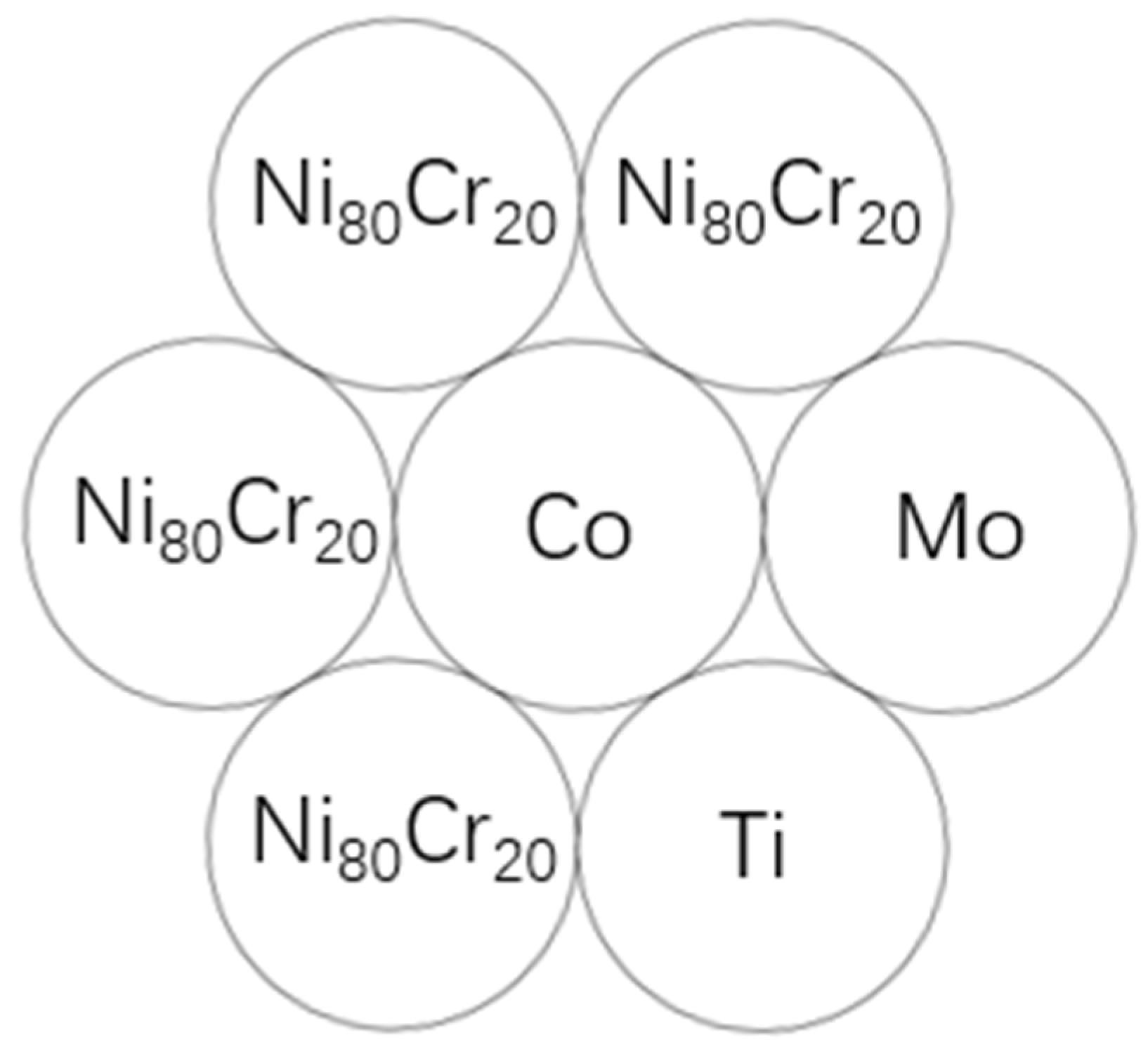
The NiCrCoTiMo stranded wire used in this investigation consists of four 0.5 mm diameter Ni80Cr20 alloy wires, one 0.5 mm diameter Co wire, one 0.5 mm diameter Ti wire, and one 0.5 mm diameter Mo wire, all twisted together. During the twisting process, the Co wire functions as the core wire while the other wires are arranged as peripheral strands, as depicted in Figure 1. The resulting stranded wire forms a single cable with a diameter of 1.6 mm, and its cross-sectional view is shown in Figure 1, with the theoretical compositional percentages of each component outlined in Table 1. The substrate used in this work is 200 mm × 200 mm × 10 mm 45 steel plates.
The experimental setup utilized a self-developed rotary TIG arc cladding system created by the research group. Prior to processing, the substrate was ground and cleaned with anhydrous ethanol. The parameters for the TIG cladding process included a current of 180 A, cladding speed of 120 mm/min, wire feed speed of 6 mm/s, tungsten electrode rotation speed of 200 r/min, argon flow rate of 20 L/h, and a weld overlap ratio of 60%.
The cladding parameters were optimized through a series of preliminary trials. A current of 180 A was selected to ensure complete melting of all wire components (melting points: Ni 1455 °C, Co 1495 °C, Ti 1668 °C, Mo 2623 °C) while avoiding excessive substrate dilution (Fe > 75% at I > 220 A). The rotation speed of 200 r/min was determined as the minimum speed required to achieve homogeneous elemental distribution. The 60% overlap ratio was chosen to minimize porosity based on overlapping bead tests.
The heat input (HI) was calculated as HI = (η × U × I)/v = (0.7 × 18 V × 180 A)/(2 mm/s) = 11.34 kJ/cm, where η is the TIG process efficiency (0.7), U is arc voltage, I is current, and v is cladding speed.

2.2. Characterization

A wire-cutting device (HQ-800F3) was utilized to cut the coated samples into dimensions of 10 mm × 10 mm × 5 mm. Following grinding and polishing, the samples were etched with aqua regia for 5 s. Phase identification of the coating was performed by high-resolution X-ray diffraction (XRD) using a PANalytical X’Pert Pro diffractometer (Malvern Panalytical, Almelo, The Netherlands) (Co Kα source, λ = 1.78901 Å, 36 kV, 24 mA). Diffraction patterns were recorded over a 2θ range of 20–90° at a scanning rate of 5°/min with a step size of 0.02°. Microstructural and elemental analyses of the coating cross-sections were performed using a Flexsem1000 scanning electron microscope (SEM) (Hitachi, Tokyo, Japan), which was equipped with an energy-dispersive spectroscopy (EDS) analyzer, at an accelerating voltage of 15 kV. The phase distribution and grain size of the coatings were assessed through electron backscatter diffraction (EBSD). The crystal structure of the samples was examined with a FEI TECNAI F30 transmission electron microscope (TEM) (FEI Company, Hillsboro, OR, USA).
The Vickers microhardness of the polished samples was measured using an HVS-1000A hardness tester (Potai Testing Instrument Co., Ltd., Guangzhou, China) under a load of 100 gf (0.98 N) with a dwell time of 15 s. Indentations were spaced at 0.25 mm intervals along the direction perpendicular to the coating surface.
Friction and wear tests were performed using a multifunctional friction and wear tester (Model MGG-02) (Jinan Yihua Tribology Testing Technology Co., Ltd., Jinan, China) with a tungsten carbide ball (6 mm in diameter) serving as the friction pair. The tests were conducted at a reciprocating frequency of 1 Hz, an applied load of 100 N, a reciprocating stroke of 6.0 mm, and a test duration of 30 min.
Following the wear tests, the three-dimensional morphology of the wear tracks was characterized with a LEXT-OLS4000 three-dimensional profilometer (Olympus Corporation, Tokyo, Japan). The morphology and elemental composition of the worn surfaces were examined by SEM.
The corrosion resistance of the coatings was investigated using a Shanghai Chenhua CHI760E electrochemical workstation (Shanghai Chenhua Instrument Co., Ltd., Shanghai, China). The experiments were performed in a 3.5 wt% NaCl solution at 20 °C. A saturated calomel electrode was utilized as the reference electrode, while a platinum sheet served as the counter electrode. For OCP measurements, the duration of testing was 1800 s. Electrochemical impedance spectroscopy (EIS) was conducted at the average open-circuit potential across a frequency range of 0.01 Hz to 100 kHz. Potentiodynamic polarization curves were obtained from −1.5 V to 1.5 V at a scan rate of 1 mV/s. All electrochemical measurements were performed in triplicate to assess reproducibility.

3. Results

3.1. Surface Quality of the Coating

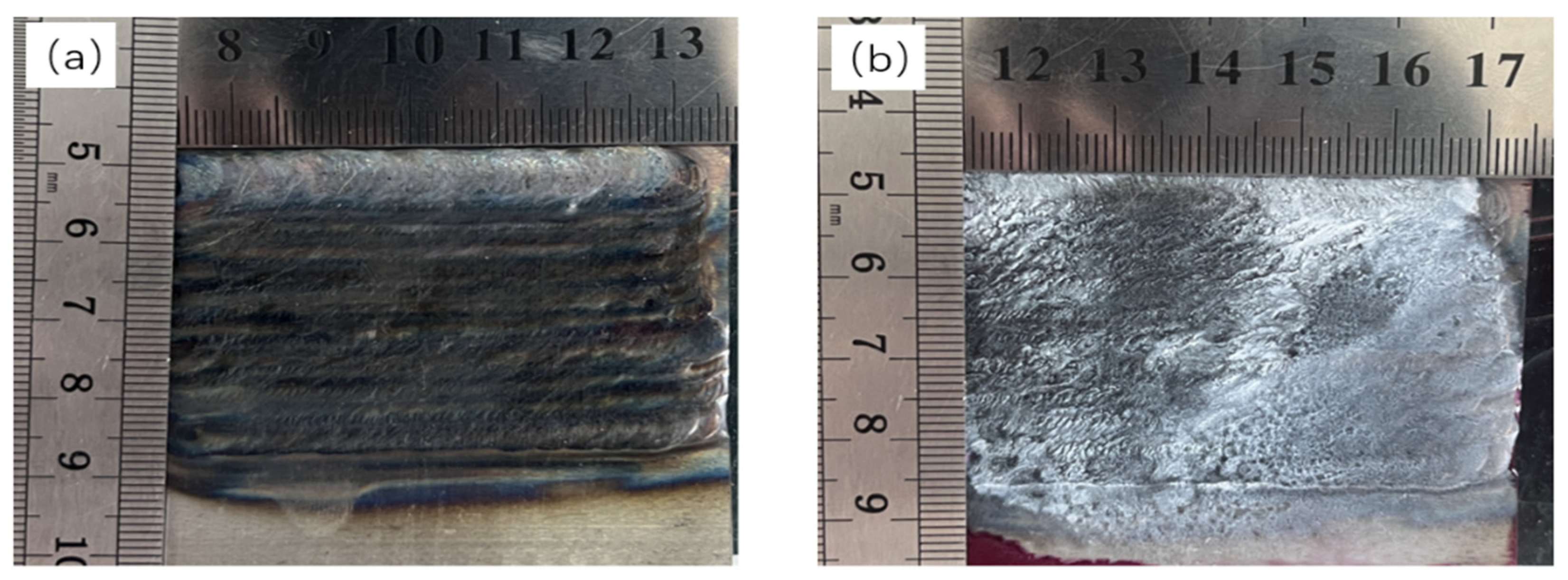
The macroscopic morphology of the coating and the morphology following application of the developer are presented in Figure 2a,b, respectively. As shown in Figure 2a, surface oxidation is evident. Figure 2b shows the coating surface after dye penetrant testing, a non-destructive crack detection method. The absence of red penetrant lines confirms that the fabricated coating is free of visible cracks.

3.2. Phase Structure and Microstructure of the Coating

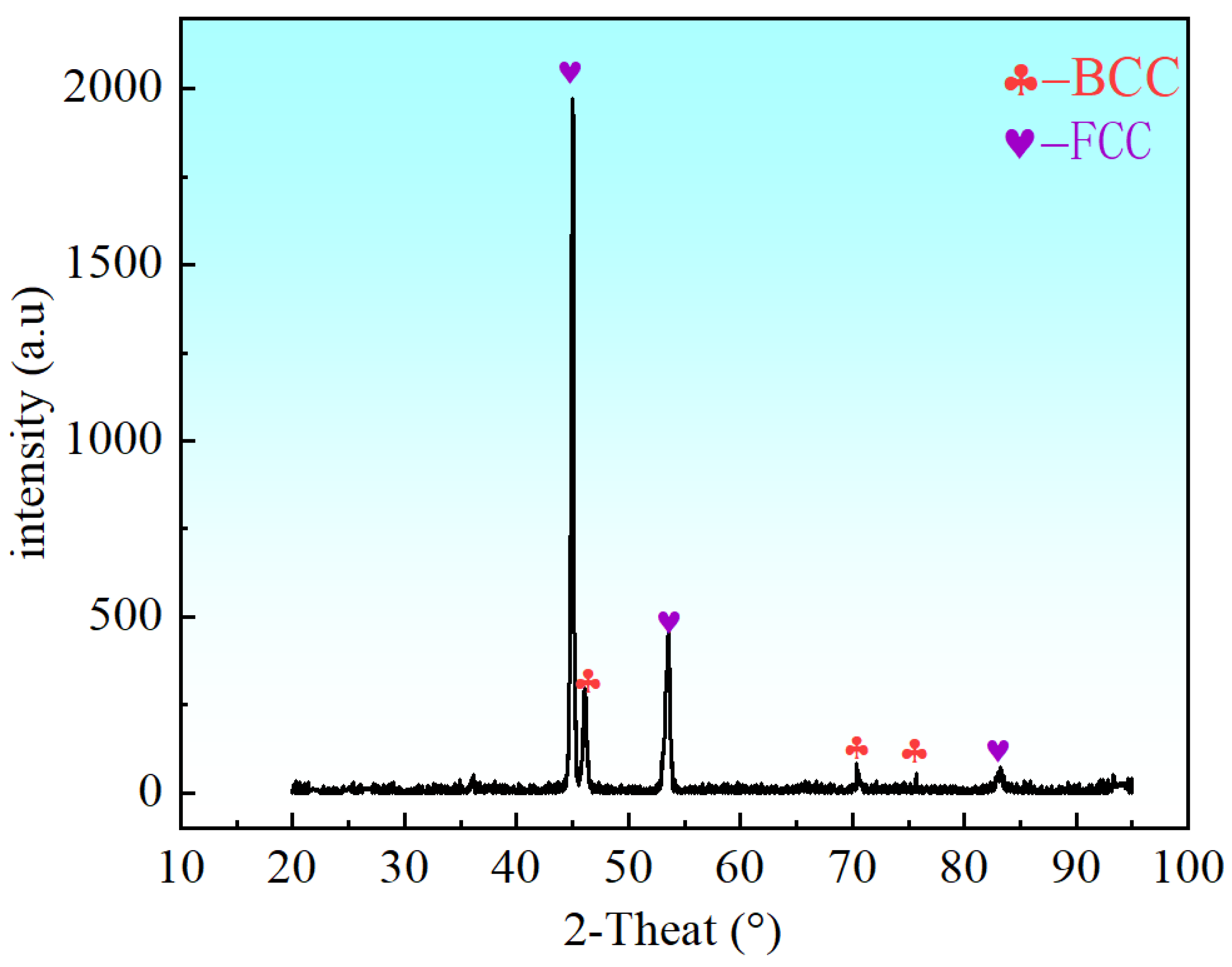
Figure 3 shows the XRD pattern obtained from the coating surface. The pattern indicates that the coating consists of an FCC phase (austenite) and a BCC phase (ferrite).
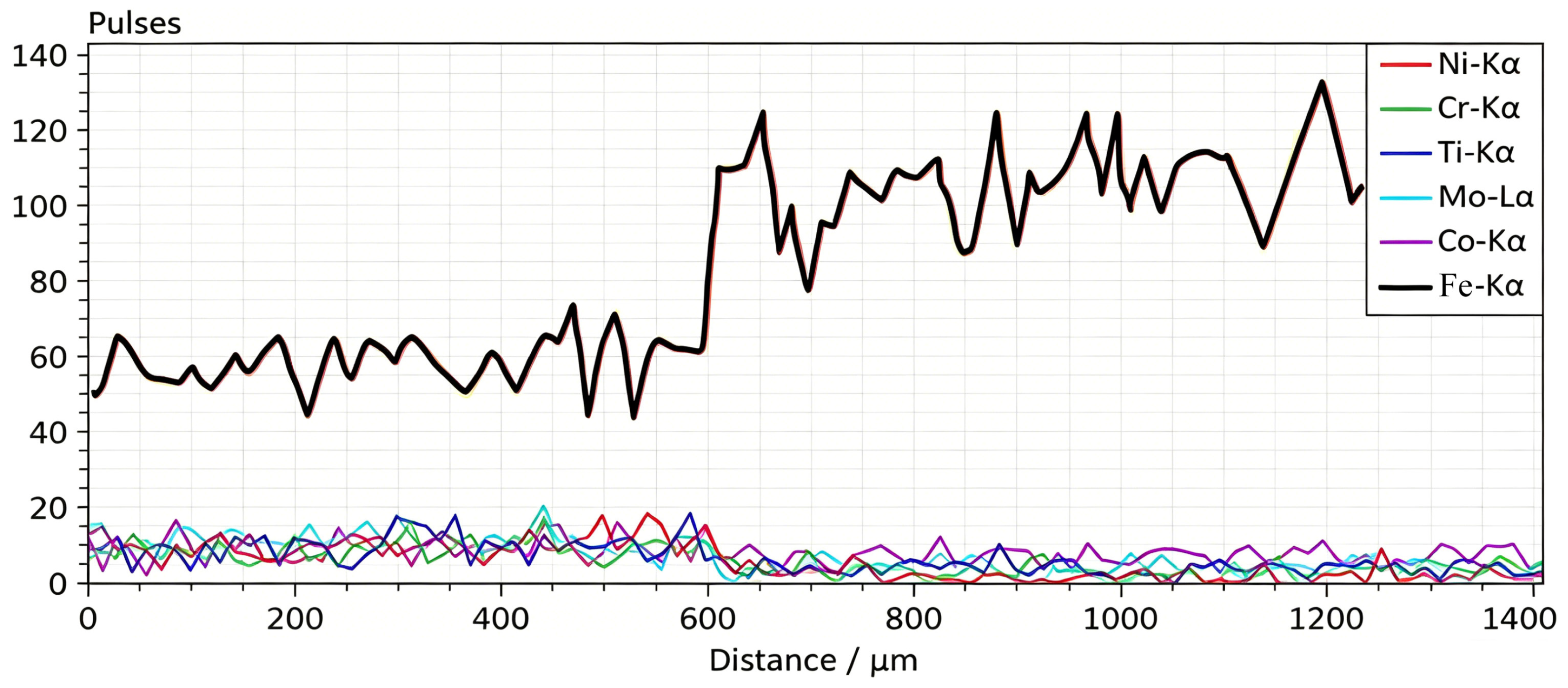
Figure 4 presents the EDS line-scanning of the coating. The results reveal a relatively uniform distribution of Fe throughout the coating, with a significantly higher concentration compared to other elements. This discrepancy is primarily ascribed to the substantial current utilized during the cladding procedure, which promotes extensive migration of Fe from the substrate into the coating. Meanwhile, elements such as Ni, Cr, Co, Ti, and Mo are also evenly distributed within the molten pool, indicating that the stirring effect generated by the rotating arc effectively enhances elemental homogeneity.
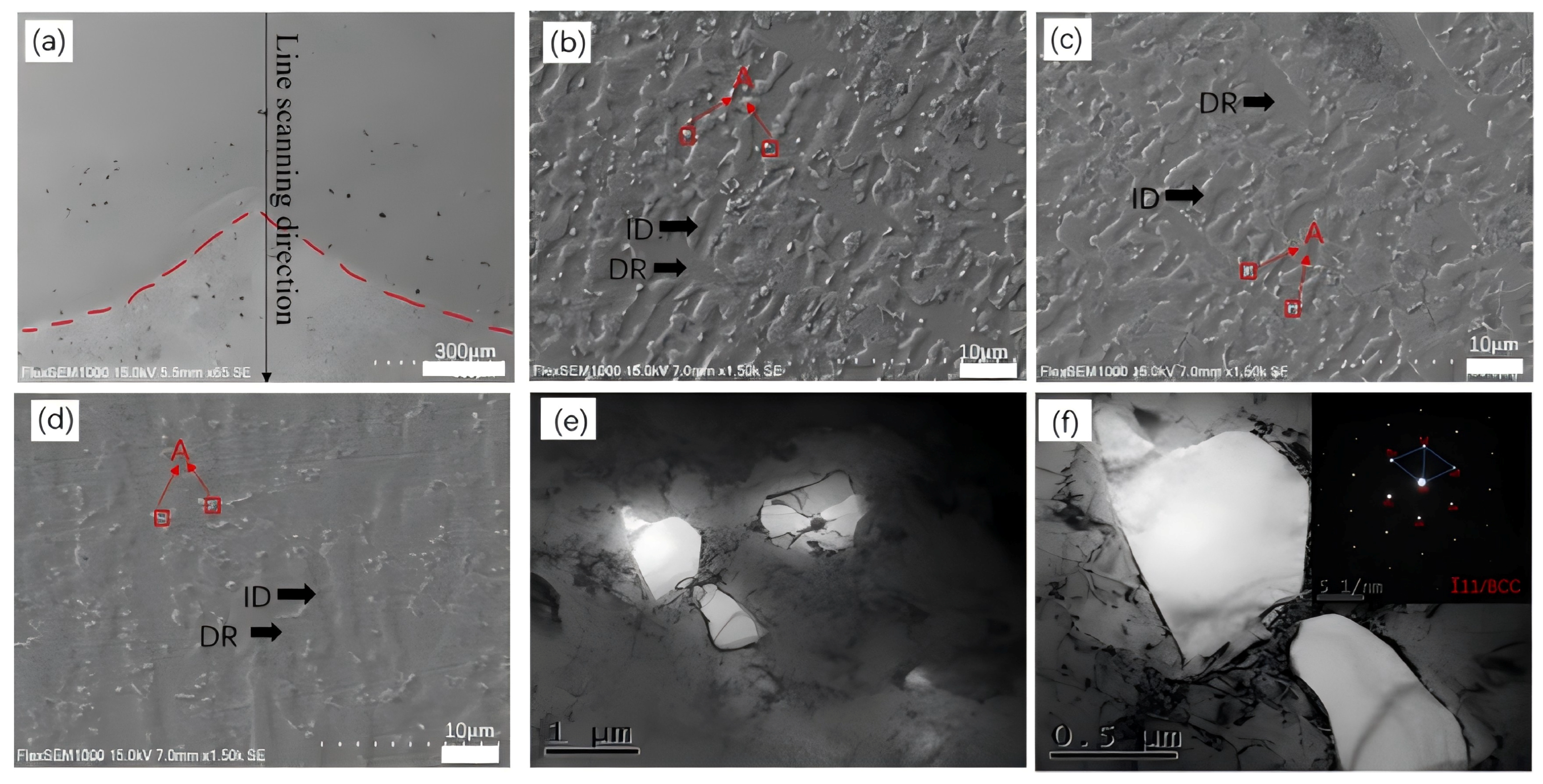
Figure 5 shows SEM images of the top, middle, and bottom cross-sections of the coating. No defects, such as cracks or pores, are observed within the coating. A higher-magnification SEM image (Figure 5a) clearly shows the coating–substrate interface, where a gradual compositional transition occurs over approximately 20–30 μm. In the SEM images, the gray regions correspond to the FCC phase. Additionally, a small number of white precipitates can be seen in Figure 5b–d. These fine, granular precipitates are homogeneously distributed along the grain boundaries. Figure 5e,f present TEM images of the white precipitates observed in the SEM. Selected area electron diffraction results indicate that these precipitates have a BCC structure.
The in situ fabrication using a stranded wire offers three specific advantages over conventional pre-placed powder or solid wire feeding. First, the stranded design (central Co wire surrounded by Ni80Cr20, Ti, and Mo wires) allows differential melting: the outer wires melt faster, creating localized compositional gradients that promote heterogeneous nucleation of the BCC phase. Second, the 200 r/min electrode rotation generates a swirling motion in the melt pool, reducing the boundary layer thickness and enhancing mixing of Fe from the substrate with the wire-fed elements. Third, compared to solid wire feeding where alloying elements are pre-mixed and cannot be adjusted independently, the stranded wire allows flexible tuning of individual elemental contributions. Ultimately, a coating microstructure containing fine ferrite precipitates is formed, which is beneficial for enhancing the overall properties of the coating.
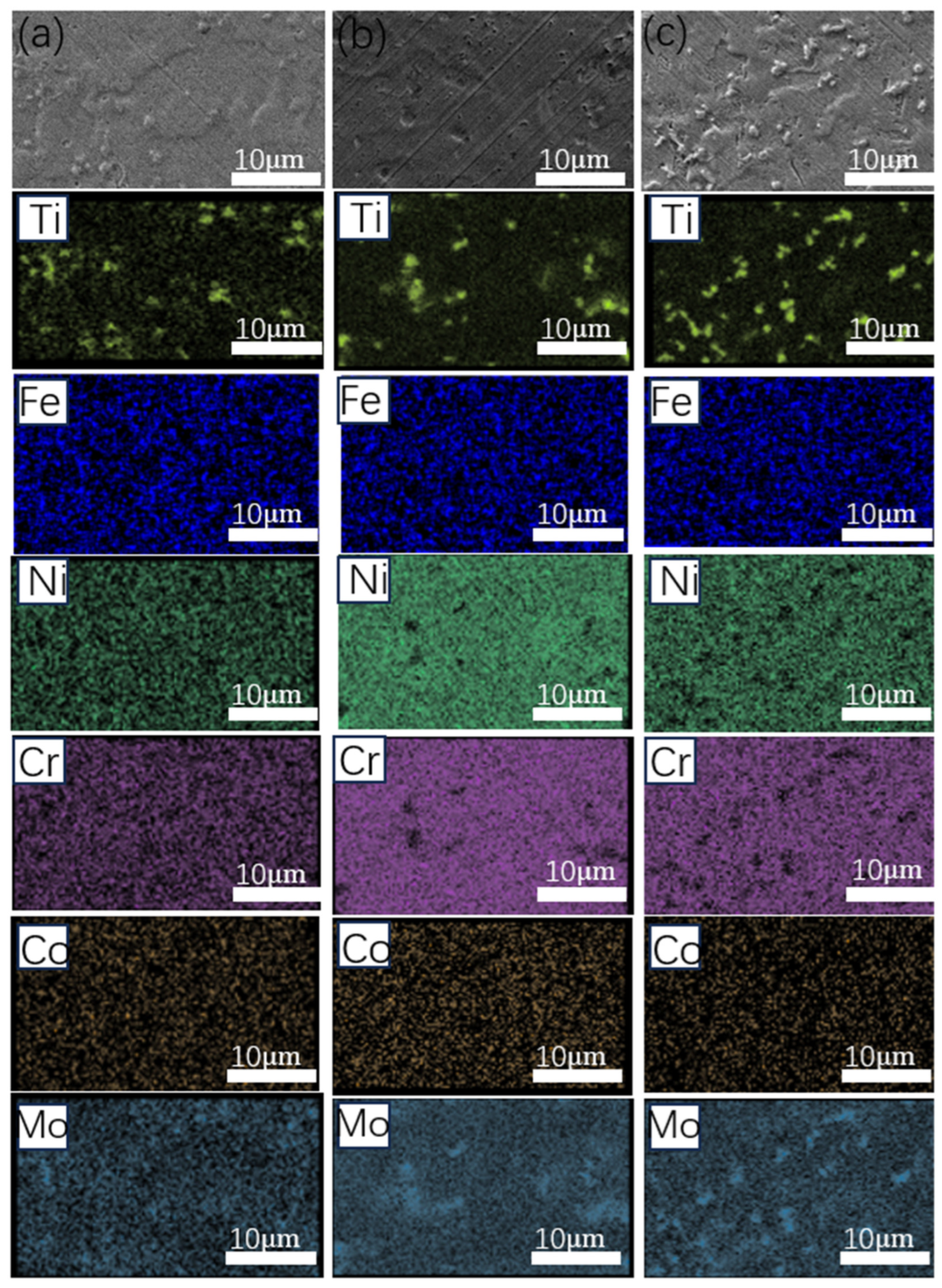
Figure 6 presents the EDS surface scanning results of the coating. The top region, as shown in Figure 6a, refers to the near-surface area of the coating (within 100 μm of the free surface), the middle region, as shown in Figure 6b, is the central portion (≈600 μm from surface), and the bottom region, as shown in Figure 6c, is adjacent to the coating-substrate interface (within 100 μm of the interface). Table 2 provides the detailed elemental compositions of the intra-granular (DR), inter-granular (ID), and white-precipitate (A) regions within these three zones. The figures indicate that elements such as Ni, Cr, and Co are distributed relatively homogeneously. In contrast, the EDS maps of Ti and Mo reveal distinct bright regions, which correspond precisely to the white areas in the SEM images of the scanned sites, consistent with the EDS point scanning results. Due to Mo’s relatively large atomic radius and high chemical stability, its diffusion rate within the metallic matrix is comparatively slow. During the cooling of the molten pool, Mo cannot disperse uniformly throughout the crystal structure in time; instead, it tends to accumulate in specific regions, such as grain boundaries or precipitate sites, ultimately leading to the formation of precipitated phases. Due to the low mixing enthalpy (−4 kJ/mol) between Ti and Mo, the two elements exhibit strong mutual bonding and consistently coexist. Fe dilutes from the coating surface (Fe ≈ 43 wt.%) to the substrate (Fe ≈ 100 wt.%). The dilution ratio increases approximately linearly through the coating thickness.
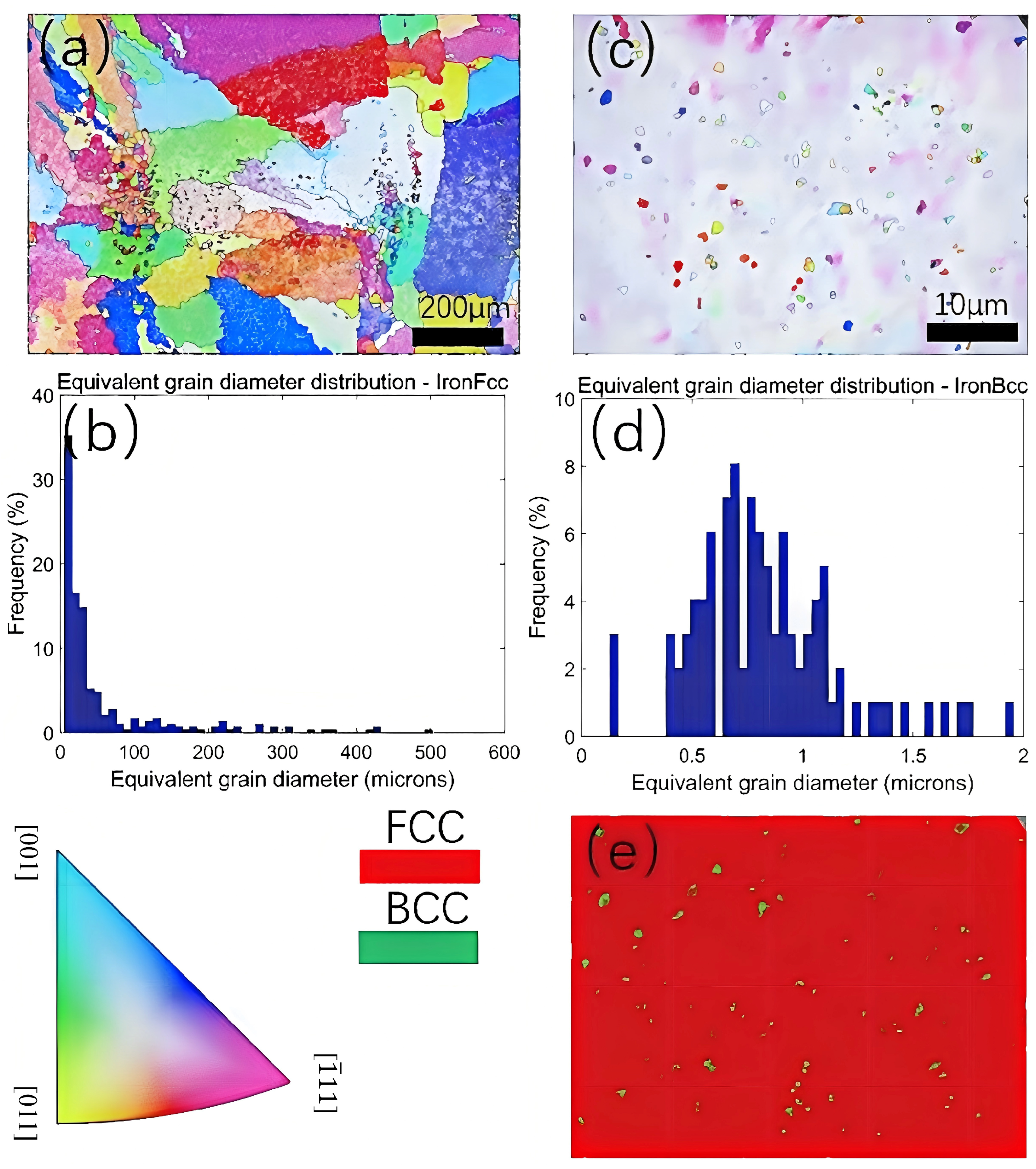
Electron Backscatter Diffraction was used to analyze the microstructure of the coating, revealing the phase distribution, grain size, and grain orientation. In Figure 7e, a detailed phase distribution map indicates that the coating consists of FCC + BCC phases, consistent with the XRD findings. Figure 7b shows the grain size distribution of the FCC phase, with an average grain size of approximately 78 μm. Similarly, Figure 7d presents the grain size distribution of the BCC phase, where the average grain size is approximately 1 μm. Significantly, a substantial disparity exists between the grain sizes of the FCC and BCC phases. The incorporation of Mo induces significant lattice distortion within the high-entropy alloy, modifying atomic spacing and resulting in stress concentration and energy instability in localized regions. To minimize the system’s total energy, an increased number of grain boundaries form, effectively restricting grain growth and ultimately resulting in grain refinement. The relatively large atomic radius of Mo contributes to this refinement primarily through the solute effect and heterogeneous nucleation. The solute effect is a critical mechanism for refining high-entropy alloy (HEA) grains via alloying elements. As Mo atoms infiltrate the solid solution as solutes, they promote compositional undercooling ahead of the solid–liquid interface. Additionally, Mo atoms serve as heterogeneous nucleation sites, significantly lowering the nucleation energy and critical undercooling. This process facilitates the formation of fine grains following rapid cooling and solidification during the rotating arc cladding process [21]. Furthermore, extensive lattice distortion induces local fluctuations in the Peierls potential of dislocations and enhances inherent lattice friction, which can contribute to dislocation strengthening. In the inverse pole figure, distinct colors represent various grain orientations. As observed in Figure 7a,c, the grain orientations within the coating are random. In conclusion, the incorporation of Mo into the high-entropy alloy coating results in solid solution strengthening and fine-grain strengthening, improving the coating’s overall performance.

3.3. Microhardness of the Coating

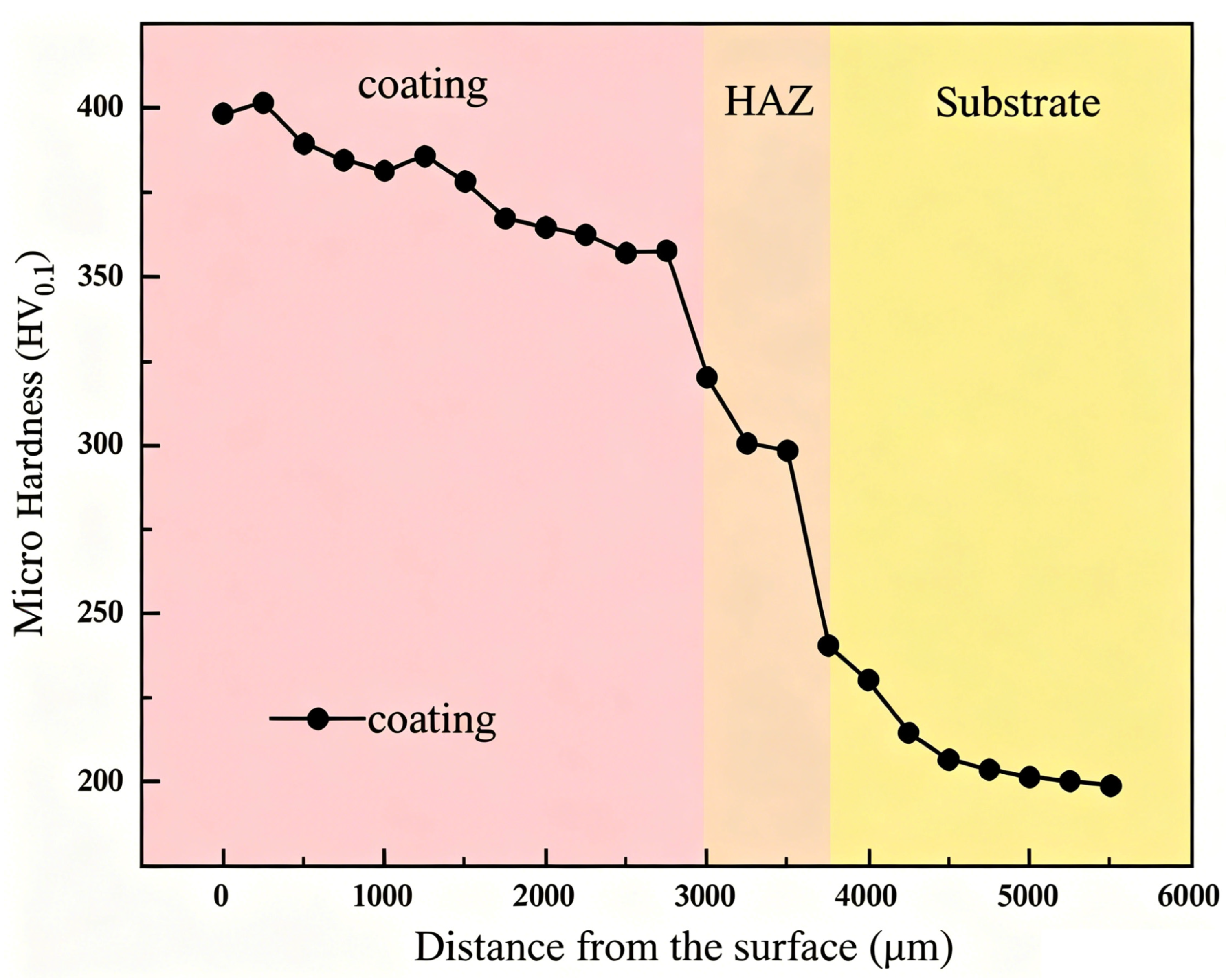
Figure 8 illustrates the cross-sectional hardness profile of the coating from the surface to the 45 steel substrate. Based on variations in micro-hardness values, the cross-section can be categorized into three main regions: the coating, the heat-affected zone (HAZ), and the 45 steel matrix. The maximum microhardness near the coating surface peaks at 401.5 HV0.1, with an average microhardness of 381.3 HV0.1 for the coating and 204.2 HV0.1 for the 45 steel. Clearly, the coating’s hardness is approximately double that of the 45 steel.
The introduction of Fe atoms into the coating disrupts the arrangement of Ni, Cr, Co, Ti, and Mo elements, causing a disordered structure that induces lattice distortion effects within the high-entropy alloy. This distortion significantly contributes to enhancing solid-solution strengthening in the coating, thereby improving its mechanical properties [22].

3.4. Wear Resistance of the Coating

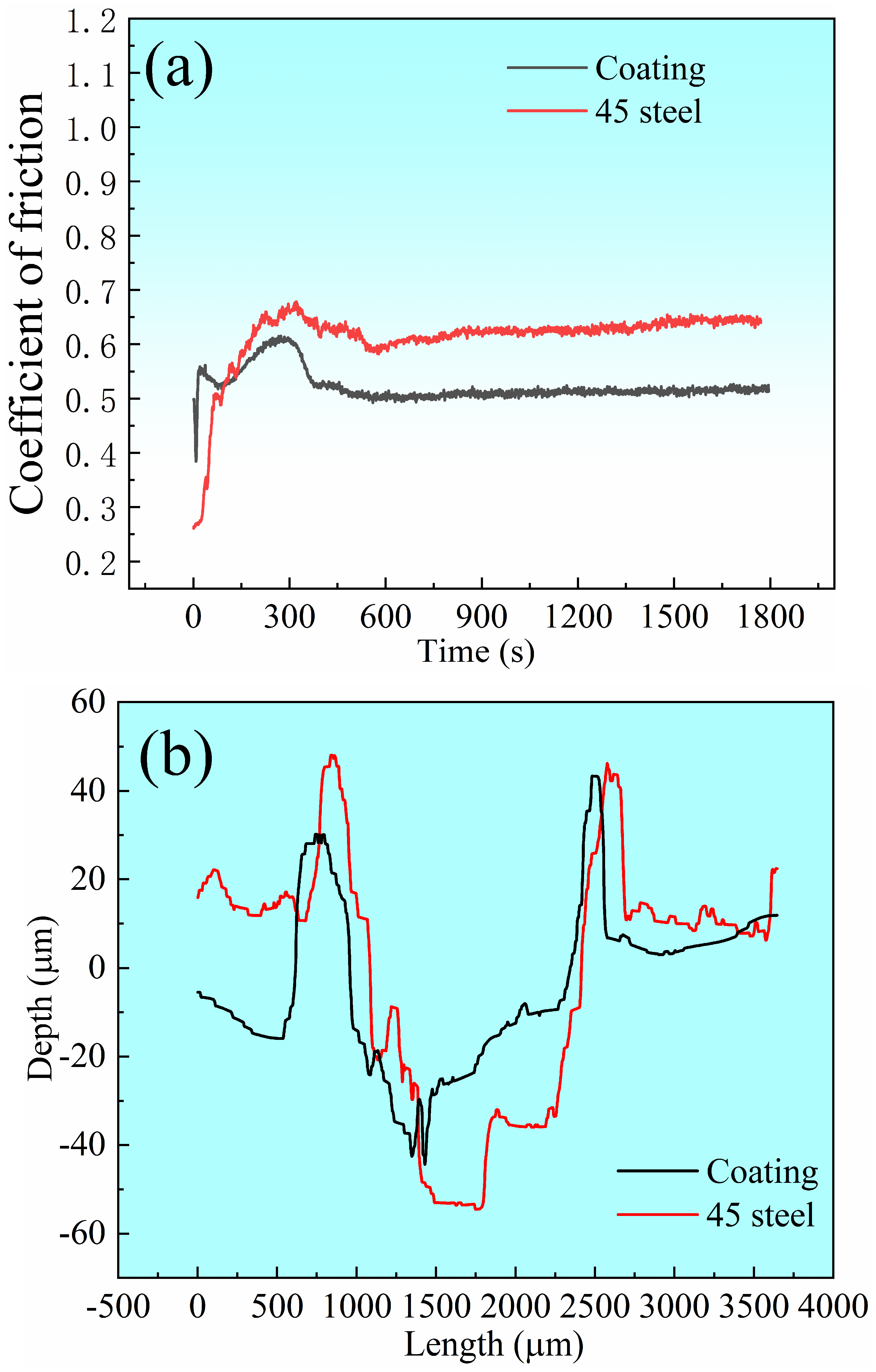
Figure 9a illustrates the COF curves of the coating and 45 steel. The COF of the coating exhibits notable fluctuations before 400 s, followed by a gradual stabilization, indicating a transition from severe wear to a stable wear stage. Similarly, 45 steel shows significant COF fluctuations before 500 s, reaching stability thereafter, and also entering a stable wear phase. The average COF values for the coating and 45 steel are 0.5125 and 0.6265, respectively, with the coating demonstrating a reduction in COF of approximately 18.2% compared to 45 steel. Figure 9b displays the wear cross-sectional profiles of the coating and 45 steel, revealing a wear scar depth of 40 μm for the coating and 67 μm for 45 steel. Consequently, the wear scar depth of the coating is reduced by approximately 40.3% relative to that of 45 steel.
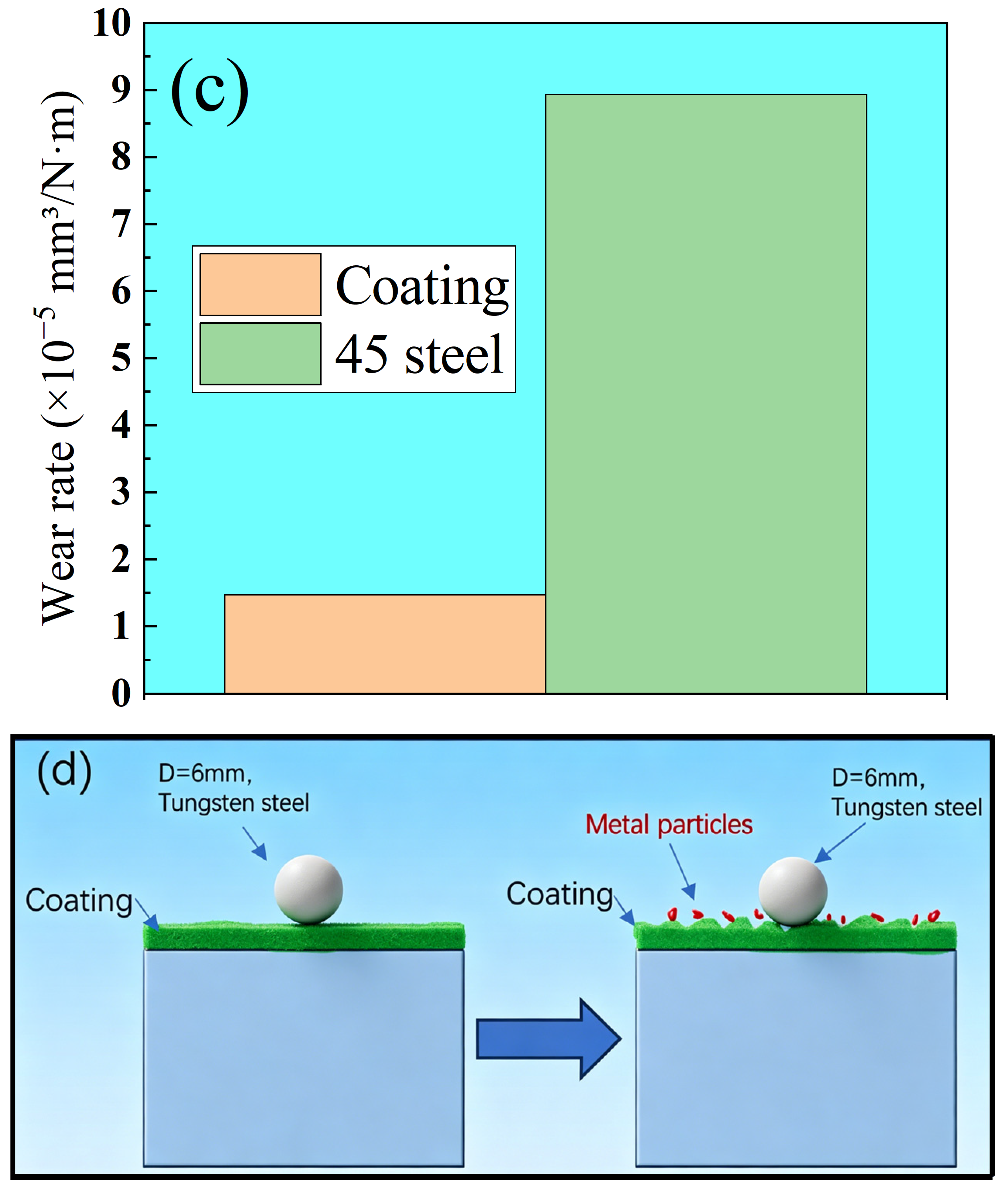
The wear rate was calculated as (wear volume loss)/(load × sliding distance). Volume loss measurements were performed once per condition, yielding values of 0.5 mg for the coating and 3.0 mg for the 45 steel. The sliding distance was 21.6 m (1 Hz × 0.006 m/stroke × 3600 strokes). The wear track volume was determined from 3D profilometry. The coating exhibited an average wear rate of 1.47 × 10⁻⁵ mm3/N·m, compared to 8.93 × 10⁻⁵ mm3/N·m for 45 steel, representing a sixfold reduction.
The wear mechanism of the coating is a combination of abrasive and oxidative wear (Figure 9d). Abrasive wear dominates in the initial stage, where hard asperities on the WC ball create micro-cutting grooves on the coating surface. As the test progresses, frictional heating (estimated peak temperature ~200 °C based on thermal simulation) promotes oxidation of Ti and Fe, forming TiO2 and Fe2O3 particles. These oxide particles accumulate within the wear track and serve as a protective tribo-layer, reducing direct metal-to-metal contact. This dual mechanism explains both the moderate COF (0.5125) and the low wear rate.
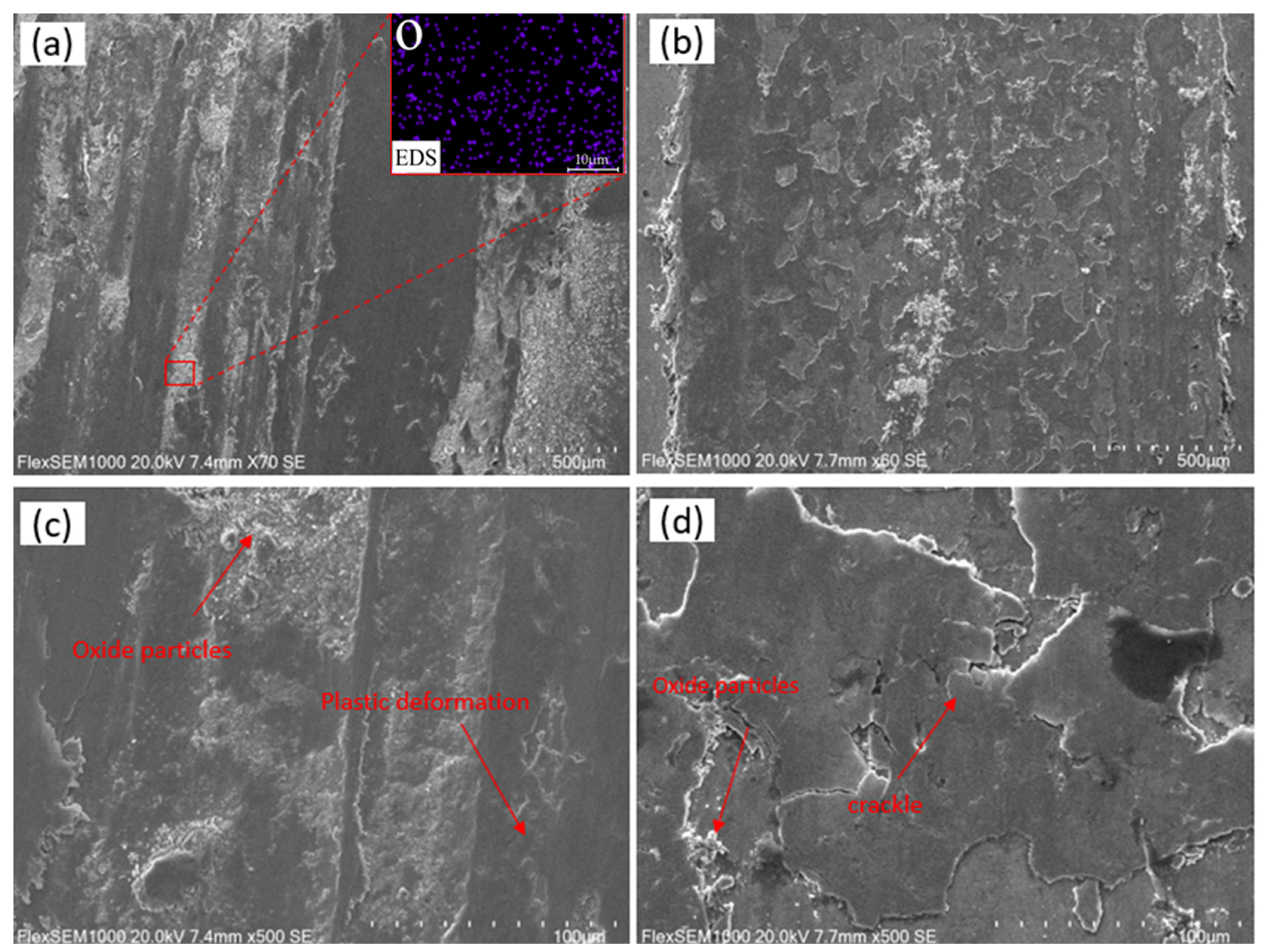
Figure 10 presents the SEM images illustrating the friction and wear of the coating and 45 steel. These images facilitate a detailed analysis of the behaviors and mechanistic characteristics of the two materials during the friction-wear process. According to Hertz’s theory [23], the interaction between the friction pair and the coating surface does not occur as a simple point contact. Rather, it involves a more complex multi-point or surface-contact process. This contact pattern results in strip-shaped wear marks on the coating surface, which vary in width and depth, thereby exhibiting non-uniform wear characteristics. Figure 10a,c exhibit the wear track morphologies of the coating, revealing no significant ploughing. However, a notable accumulation of white oxide particles is evident, as indicated by the arrow in Figure 10c. The formation of these oxide particles primarily results from continuous heat accumulation during friction and wear. Elevated temperatures in the contact region initiate the oxidation of Ti and Fe elements, leading to the production of oxides such as TiO2 and Fe2O3. This phenomenon has been conclusively confirmed by EDS surface-scanning results. As noted above, the wear mechanism is a combination of abrasive and oxidative wear, where the oxide particles subsequently act as a protective tribo-layer. This characteristic is crucial for extending the coating’s service life and enhancing its wear resistance. Additionally, a slight degree of plastic deformation is observable in the wear track of the coating. This deformation arises from the high plasticity and ductility of the FCC phase within the coating. When subjected to normal loading, the material experiences minor plastic flow, thereby exhibiting this characteristic. Such properties confer superior wear-resistance performance on the coating, enabling it to maintain structural integrity under demanding friction conditions. In contrast, the SEM images of the wear track on 45 steel, as shown in Figure 10b,d, exhibit markedly different wear behaviors compared to the coating. The wear track surface of 45 steel is characterized by numerous grooves and a slight accumulation of white oxide particles. This observation indicates that adhesive wear is the predominant wear mechanism for 45 steel. During the friction and wear process, the surface material of 45 steel tends to adhere and subsequently peel due to the combined effects of contact stress and frictional force, resulting in the generation of a significant quantity of surface fragments. The material peeling acted as the primary wear mechanism for the 45 steel, resulting in substantial mass loss that aligns with the measured data. Additionally, minor cracks are observed in the wear marks of 45 steel. The formation of these cracks is generally associated with the high-hardness friction pair and the repeated compression and friction of the fragments produced during the friction process. Cracks initiate in areas of stress concentration and gradually propagate as friction continues, potentially resulting in further material degradation. Clearly, 45 steel exhibits lower durability and crack-propagation resistance under frictional conditions, which is intrinsically linked to its material properties and structural characteristics.
In conclusion, detailed SEM analysis of the worn surfaces reveals distinct differences in the wear behaviors and mechanisms between the coating and 45 steel. Owing to its superior wear resistance and plastic deformation capacity, the coating exhibits a substantially lower wear rate and an extended service life. In contrast, 45 steel experiences substantial material loss, primarily attributed to adhesive wear and crack propagation.

3.5. Corrosion Resistance of the Coating

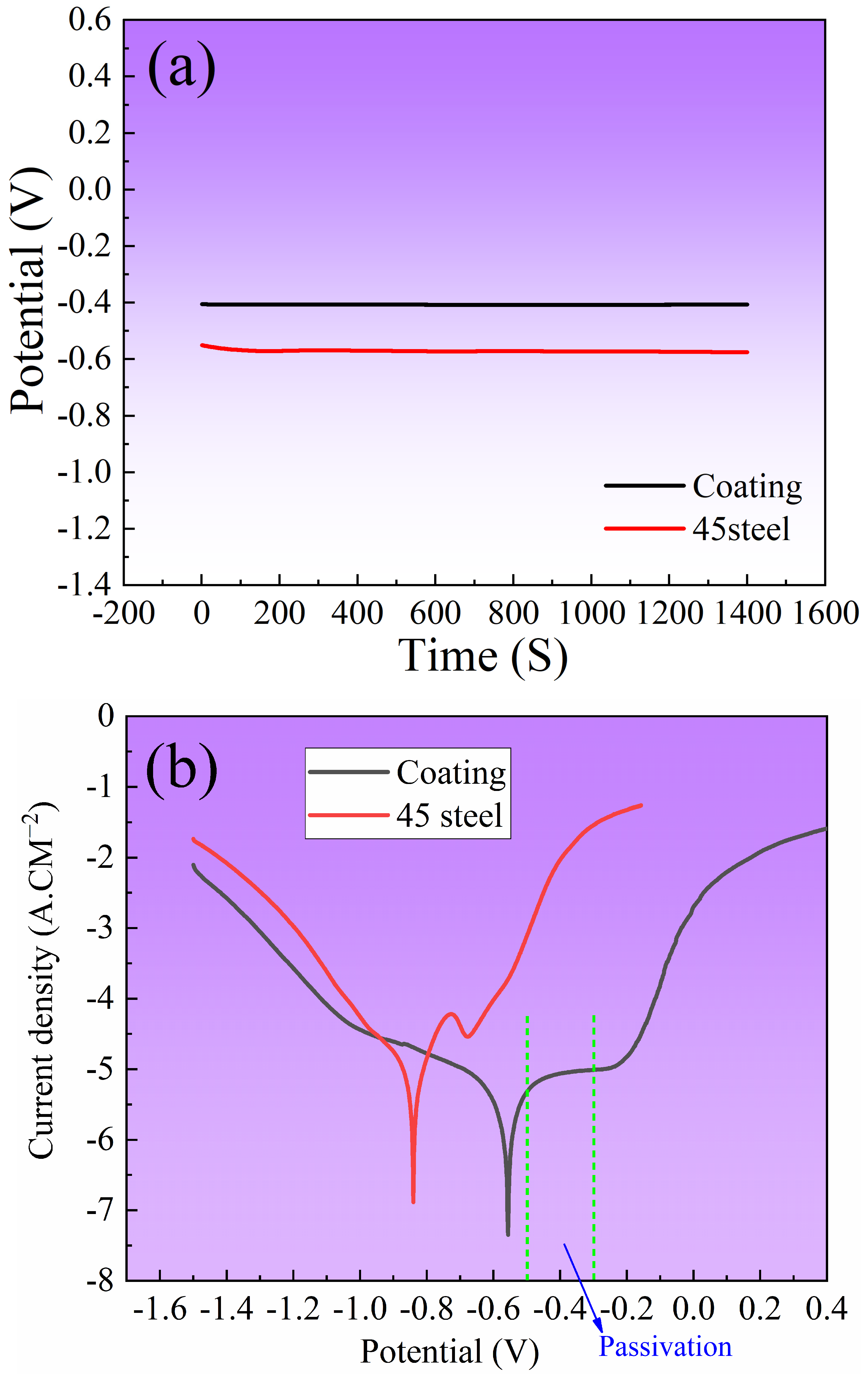
Figure 11a presents the OCP curves for the coating and 45 steel. In corrosion studies, a higher OCP generally signifies enhanced corrosion resistance. The OCP of the coating is −0.405 V vs. SCE, while that of 45 steel is −0.582 V vs. SCE. The significantly higher OCP of the coating suggests its superior corrosion resistance in comparison to 45 steel. Figure 11b presents the polarization curves for the coating and 45 steel. The polarization curve of the coating can be categorized into four distinct regions: cathodic polarization, passivation, active dissolution, and anodic polarization. In the cathodic polarization region, the coating transitions from an initial strong-polarization regime to the passivation region, accompanied by spontaneous passivation of the coating surface and the formation of a dense passivation film. In contrast, the polarization curve for 45 steel does not exhibit a distinct passivation region, reflecting its limited capacity to form a stable passivation film. As a result, Cl ions in the solution can readily penetrate the nascent passivation film on 45 steel. Moreover, the overall corrosion process for 45 steel initiates directly from the active dissolution region.
The electrochemical parameters obtained from fitting the polarization curves are detailed in Table 3. The coating exhibits an Ecorr of −0.556 V vs. SCE and an Icorr of 4.458 × 10⁻⁶ A/cm2, while the corresponding values for 45 steel are −0.840 V vs. SCE and 1.302 × 10⁻⁵ A/cm2, respectively. Both parameters for the coating are more favorable than those for 45 steel, providing compelling evidence of its enhanced corrosion resistance. Notably, the polarization curve of the coating reveals a distinct passivation region, likely due to the presence of Cr. Due to its high affinity for oxygen, Cr can react readily with oxygen in corrosive environments (e.g., air, aqueous solutions, or acidic conditions) to form chromium oxide (Cr2O3). The extremely low solubility of Cr2O3 may contribute to suppressing the infiltration of corrosive ions such as Cl [13,24].
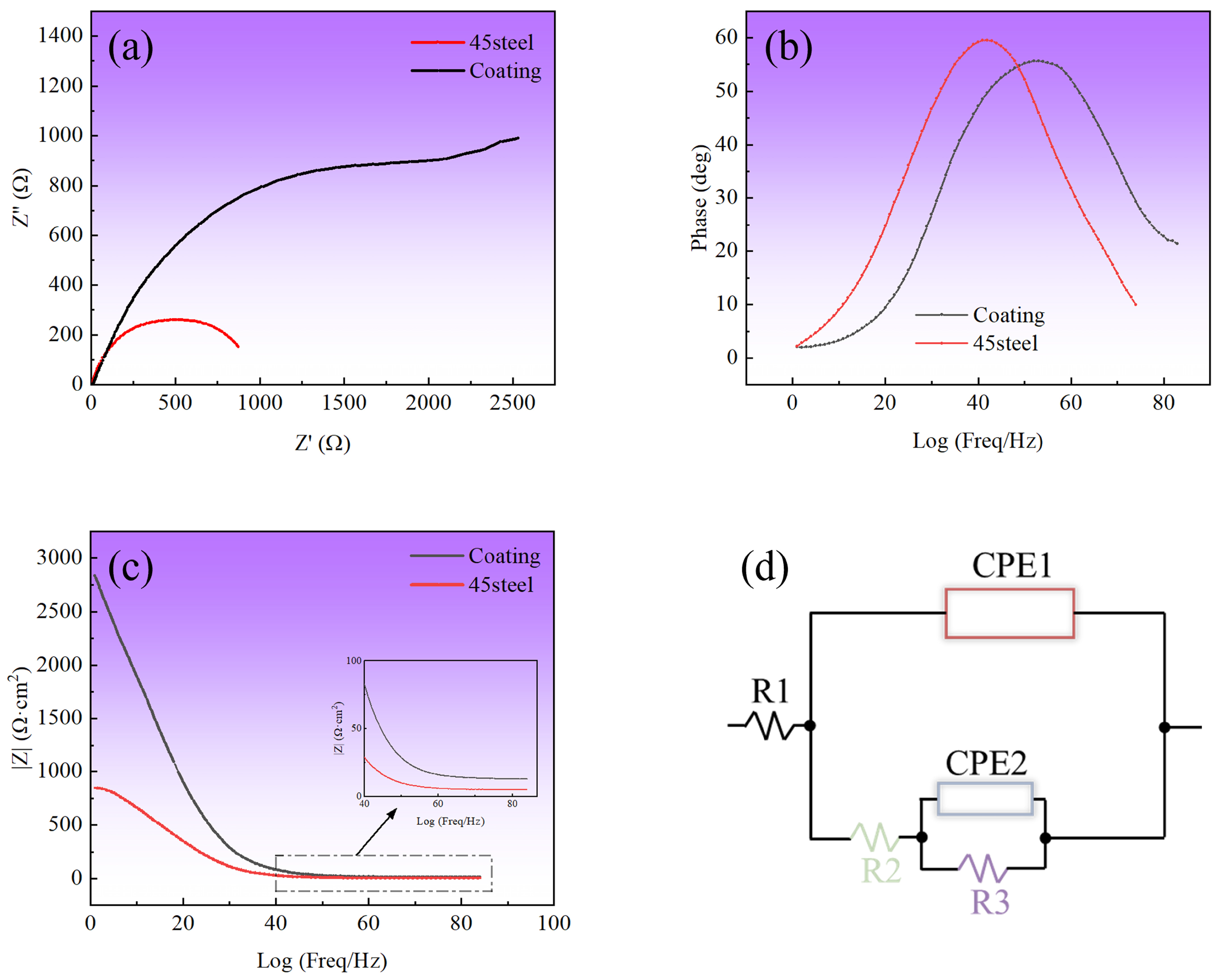
EIS was performed to comprehensively assess and compare the corrosion resistance of the coating and 45 steel, with the results presented in Figure 12 and Table 4. The Nyquist plot (Figure 12a) reveals that the impedance spectra for both the coating and 45 steel exhibit characteristic curves resembling circular arcs. This arc-shaped pattern implies that the tested surface is not an ideal smooth plane but possesses a certain degree of roughness. Additionally, it reflects the capacitive behavior and corrosion propensity within the electrochemical system. In the context of Nyquist plots, a larger arc radius generally corresponds to enhanced corrosion resistance. A comparison of the curves in the figure demonstrates that the arc radius of the coating is significantly larger than that of 45 steel. This finding suggests that the coating exhibits significantly better corrosion resistance than 45 steel, corroborating the conclusions drawn from the polarization curve and OCP tests. To quantitatively analyze the corrosion behaviors of the coating and 45 steel, an equivalent circuit model, specifically (R(Q(R(QR)))) [25,26], was employed for fitting analysis, taking into account the characteristics of the Bode plot and phase plot (Figure 12d). This equivalent circuit comprises solution resistance (R1), passive film resistance (R2), charge-transfer resistance (R3), and two constant phase elements (CPEs). The CPEs correspond to the capacitive behaviors of the passive layer (CPE1) and the double layer (CPE2), respectively. The fitting analysis revealed that the fitting X2 values for both the coating and 45 steel ranged from 10−3 to 10−4 [27], indicating the reliability and accuracy of the fitting results.
The CPE1 n1 value of 0.794 (coating) indicates near-ideal capacitive behavior (n = 1 for an ideal capacitor), suggesting a relatively compact and low-defect passive film. The lower n2 value (0.624) for the double-layer CPE reflects surface heterogeneity and roughness. The higher n values for the coating compared to 45 steel (n1 = 0.654, n2 = 0.744) indicate a more homogeneous surface and a more protective passive layer.
A closer examination of the corrosion resistance of the coating revealed that its passive film resistance (R2) was significantly higher than that of 45 steel. This finding suggests a reduced density of active sites on the surface of the coating’s passive film, thereby inhibiting the initiation of pitting corrosion. The parameter n of the constant phase elements (CPEs) ranges from 0 to 1, with a higher n value corresponding to a smaller equivalent capacitance (C) and a more compact passive film structure [27]. An n value close to 1 indicates a highly compact passive film, which enhances resistance to the penetration of corrosive species. Analysis of the Bode and phase angle plots reveals increased impedance modulus (∣Z∣) and elevated phase angles across both low and high frequencies, indicating pronounced capacitive behavior and superior corrosion resistance of the coating. Notably, in the low-frequency range, the coating exhibits substantially higher impedance than 45 steel, underscoring its exceptional long-term durability in corrosive environments.
In conclusion, the enhanced corrosion resistance of the coating can be primarily attributed to two factors: (i) the formation of a denser passive film with higher resistance, which effectively reduces active site exposure and corrosive media infiltration; and (ii) the high impedance modulus and elevated phase angles, which indicate reliable protection under diverse corrosive conditions. In contrast, the relatively porous passive film on 45 steel leads to diminished corrosion resistance, as evidenced by its lower impedance values and higher corrosion rates.
A key distinction between this work and most prior studies is the degree of Fe dilution. Many previous studies intentionally minimize dilution by using buffer layers or low heat inputs. In contrast, we leverage a moderate Fe content (≈43–73 wt.%) as an economical alloying element while still maintaining HEA entropy-favorable properties. This approach reduces raw material costs and improves industrial applicability, as the coating can be applied directly to steel substrates without intermediate layers. The present coating exhibits a competitive combination of wear resistance and corrosion resistance. The improvement may be attributed to the combined effects of (i) Mo-induced grain refinement (BCC grain size reduced to 1 μm), (ii) the rotating arc’s enhanced mixing reducing elemental segregation, and (iii) the protective tribo-layer formed by Ti and Fe oxides during wear testing.

4. Conclusions

In this study, a FexNiyCrzCoaTibMoc high-entropy alloy coating was in situ fabricated on the surface of 45 steel using the rotating arc cladding technique. A comprehensive analysis of the coating’s microstructure and properties was subsequently performed.
The phase structure of the coating comprises FCC and BCC. The average grain sizes of the FCC and BCC phases are 78 μm and 1 μm, respectively. The average hardness of the coating was measured at 381.3 HV0.1, which is approximately double that of the substrate. The average COF of the coating and 45 steel were 0.5125 and 0.6265, respectively. Compared to 45 steel, the COF of the coating demonstrated a reduction of approximately 18.2%. The calculated wear rate of the coating is 1.47 × 10⁻⁵ mm3/N·m, approximately six times lower than that of 45 steel (8.93 × 10⁻⁵ mm3/N·m). The primary wear mechanism for the coating is a combination of abrasive and oxidative wear, with oxide particles forming a protective tribo-layer. In the electrochemical tests, the corrosion potential of the coating was measured at −0.556 V vs. SCE, and the corrosion current density was 4.458 × 10⁻⁶ A/cm2. For 45 steel, the corresponding values were −0.840 V vs. SCE and 1.302 × 10⁻⁵ A/cm2. These results suggest that the coating exhibited a reduced corrosion rate and enhanced corrosion resistance. The EIS measurements further confirmed that the impedance of the coating in the low-frequency range was significantly higher than that of 45 steel, thereby underscoring the coating’s superior corrosion resistance.
In conclusion, the high-entropy alloy coating fabricated in situ using the rotating arc cladding method in this study exhibited advantageous comprehensive properties. This research introduces a novel approach for the fabrication of high-entropy alloy coatings. Future investigations may incorporate auxiliary techniques, such as ultrasonic impact treatment and ultrasonic rolling, to enhance the overall performance of high-entropy alloy coatings.

Author Contributions

X.G.: Writing—original draft, Conceptualization, Methodology. X.D.: Investigation, Resources, Visualization. J.L. (Jian Liu): Methodology, Writing—review & editing, Supervision. S.H.: Investigation, Resources, Visualization. J.L. (Jun Liu): Investigation, Software, Data curation. J.L. (Jing Li): Resources, Visualization. Z.C.: Investigation, Resources, Visualization. B.Y.: Writing—review & editing, Validation. All authors have read and agreed to the published version of the manuscript.

Funding

This work was funded by the National Natural Science Foundation of China (52275228), Industrial Guiding Key Projects of Fujian Province (2024H0013), National Natural Science Foundation of China Young Scientists Fund (52205242), and Joint Funds of the Ministry of Education Equipment Advance Research Program (8091B032110).

Data Availability Statement

Data will be made available upon request.

Acknowledgments

AI tools are used for language correction only.

Conflicts of Interest

The authors declare that they have no known competing financial interests or personal relationships that could have appeared to influence the work reported in this paper.

Abbreviations

The following abbreviations are used in this manuscript:
HEAHigh-entropy alloy
FCCFace-centered cubic
BCCBody-centered cubic
COFCoefficient of friction
OCPOpen-circuit potential
EcorrCorrosion potential
IcorrCorrosion current density
XRDX-ray diffraction
EDSEnergy-dispersive spectroscopy
EISElectrochemical impedance spectroscopy
HAZHeat-affected zone
SEMScanning electron microscope
TEMTransmission electron microscope
CPEConstant phase element
SCESaturated calomel electrode

References

  1. Yeh, J.; Chen, S.; Lin, S.; Gan, J.; Chin, T.; Shun, T.; Tsau, C.; Chang, S. Nanostructured high-entropy alloys with multiple principal elements Novel alloy design concepts and outcomes. Adv. Eng. Mater. 2004, 6, 299–303. [Google Scholar] [CrossRef]
  2. Miracle, D.; Senkov, O. A critical review of high entropy alloys and related concepts. Acta Mater. 2017, 122, 448–511. [Google Scholar] [CrossRef]
  3. Zhang, Y.; Zuo, T.; Tang, Z.; Gao, M.; Dahmen, K.; Liaw, P.; Lu, Z. Microstructures and properties of high-entropy alloys. Prog. Mate Sci. 2014, 61, 1–93. [Google Scholar] [CrossRef]
  4. George, E.; Raabe, D.; Ritchie, R. High-entropy alloys. Nat. Rev. Mater. 2019, 4, 515–534. [Google Scholar] [CrossRef]
  5. Liu, H.; Li, D.; Wu, D.; Wang, W.; Pan, S.; Chen, P.; He, X.; Yu, G.; Zhang, T. Improve wear resistance CoCrFeMnNiTix/WC high entropy alloy-ceramic composite coatings with hybrid ex/in-situ multi-scale reinforcement phase fabricating by laser cladding. Ceram. Int. 2025, 51, 40335–40348. [Google Scholar] [CrossRef]
  6. Li, J.; Su, Y.; Li, J.; Fu, H.; Lee, S.; Tang, J. Microstructure and corrosive-wear properties of CoCrFeNiZrx high entropy alloy coating fabricated on Ti6Al4V by laser cladding. J. Alloys Compd. 2025, 1010, 177932. [Google Scholar] [CrossRef]
  7. Cai, H.; Xu, L.; Zhao, L.; Han, Y.; Guo, X. Microstructure and mechanical properties of 9Cr-3Co-2.9 W-CuNbV steel welded joints processed by different tungsten inert gas (TIG) welding. Mater. Charact. 2023, 199, 112840. [Google Scholar] [CrossRef]
  8. Jiang, W.; Cui, W.; Zhang, A.; Liu, Y.; Wang, E.; Zhao, F.; Wang, Z.; Dai, H. Synergistic effects of Mo doping on the mechanical properties and multi-environment corrosion behavior of CoCrNiTiMo high-entropy alloy films. Appl. Surf. Sci. 2026, 728, 166107. [Google Scholar] [CrossRef]
  9. Khan, A.; Chatterjee, S.; Madhukar, Y. TIG assisted surface finish enhancement in MIG-based wire arc additive manufacturing. Manuf. Lett. 2024, 40, 26–30. [Google Scholar] [CrossRef]
  10. Huo, W.; Shi, H.; Ren, X.; Zhang, J. Microstructure and Wear Behavior of CoCrFeMnNbNi High-Entropy Alloy Coating by TIG Cladding. Adv. Mater. Sci. Eng. 2015, 2015, 647351. [Google Scholar] [CrossRef]
  11. Haque, S. Investigation on welding defects of alloys using TIG and MIG welding. Hybrid Adv. 2023, 3, 100066. [Google Scholar] [CrossRef]
  12. Chandel, D.; Thakur, L.; Kumar, V. An investigation on the tribological behaviour of AlCrCuNiFe high entropy alloy optimized TIG weld cladding in room temperature conditions. Tribol. Int. 2023, 189, 108982. [Google Scholar] [CrossRef]
  13. Moazzen, P.; Toroghinejad, M.; Zargar, T.; Cavaliere, P. Investigation of hardness, wear and magnetic properties of NiCoCrFeZr HEA prepared through mechanical alloying and spark plasma sintering. J. Alloys Compd. 2022, 892, 161924. [Google Scholar] [CrossRef]
  14. Mirazizi, P.; Khorrami, M.; Sohi, H. Fabrication of FexCoCrAlNi medium and high entropy layers on a carbon steel through TIG cladding. Mater. Chem. Phys. 2022, 290, 126616. [Google Scholar] [CrossRef]
  15. Khan, S.; Khadija; Junaid, M.; Shehbaz, T.; Khan, F.; Naveed, N. Evaluation of nano indentation behavior of TIG, MIG and diffusion bonded Inconel 718 and austenitic Stainless Steel 316L joint interface. Mater. Lett. 2024, 371, 136952. [Google Scholar] [CrossRef]
  16. Dharmik, B.Y.; Lautre, N.K. Assessment of intelligent CMT with TIG welding on stacked thin sheets of CRNGO electrical steel. Mater. Today Proc. 2023, 90, 145–149. [Google Scholar] [CrossRef]
  17. Huang, S.; Zeng, X.; Du, X.; Peng, Z.; Li, J.; Wang, R.; Liu, J.; Yan, B.; Liu, J.; Cai, Z.; et al. Microstructure and mechanical properties of the Nb37.7Mo14.5Ta12.6Ni28.16Cr7.04 multi-principal alloys fabricated by gas tungsten wire arc welding additive manufacturing. Vacuum 2023, 210, 111900. [Google Scholar] [CrossRef]
  18. Liu, W.; Jiang, K.; Yan, B.; Liu, J.; Lu, X.; Cai, Z.; Chen, Y.; Mou, H. Cable-stranded wire-fed laser cladding of high-aluminum lightweight high-entropy alloys. Mater. Today Commun. 2024, 39, 108835. [Google Scholar] [CrossRef]
  19. Liu, J.; Li, J.; Du, X.; Tong, Y.; Wang, R.; He, D.; Cai, Z.; Wang, H. Microstructure and Mechanical Properties of Wire Arc Additively Manufactured MoNbTaWTi High Entropy Alloys. Materials 2021, 14, 4512. [Google Scholar] [CrossRef]
  20. Pereira, H.; Echeverri, E.; Centeno, D.; de Souza, S.; Bauri, L.; Manfrinato, M.; Masoumi, M.; Alves, L.; Goldenstein, H. Original Effect of pearlitic and bainitic initial microstructure on cementite spheroidization in rail steels. J. Mater. Res. Technol. 2023, 23, 1903–1918. [Google Scholar] [CrossRef]
  21. Wu, Y.; Wang, L.; Sun, W.; Styles, M.; Studer, A.; Bréchet, Y.; Arlazarov, A.; Hutchinson, C. Austenite formation kinetics from multicomponent cementite-ferrite aggregates. Acta Mater. 2020, 196, 470–487. [Google Scholar] [CrossRef]
  22. Chen, B.; Li, S.; Ding, J.; Ding, X.; Sun, J.; Ma, E. Trade-off between local chemical order and lattice distortion in affecting dislocation motion in NbTiZr multi-principal element alloys. Acta Mater. 2024, 272, 119910. [Google Scholar] [CrossRef]
  23. Chen, W.; Li, X. Microstructure, wear and corrosion resistance mechanism of as-cast lightweight refractory NbMoZrTiX (X = al, V) high-entropy alloys. J. Mater. Res. Technol. 2024, 31, 1215–1228. [Google Scholar] [CrossRef]
  24. Guo, Q.; Liu, B.; Li, Q.; Xie, J. Effect of 0.3 at. % Ce on the corrosion resistance of Fe40Ni20Co20Cr20 40 Ni 20 Co 20 Cr 20 high-entropy alloy in 3.5 wt% NaCl solution. Mater. Lett. 2024, 364, 136310. [Google Scholar] [CrossRef]
  25. Pan, B.; Xu, X.; Yang, J.; Zhan, H.; Feng, L.; Long, Q.; Yao, Q.; Deng, J.; Cheng, L.; Lu, Z.; et al. Effect of Nb, Ti, and V on wear resistance and electrochemical corrosion resistance of AlCoCrNiM (M = Nb, Ti, V) high-entropy alloys. Mater. Today Commun. 2024, 39, 109314. [Google Scholar] [CrossRef]
  26. Mansfeld, F. Tafel slopes and corrosion rates obtained in the pre-Tafel region of polarization curves. Corros. Sci. 2005, 47, 3178–3186. [Google Scholar] [CrossRef]
  27. Cheng, H.; Liu, Z.; Luo, H.; Pan, Z.; Wang, X.; Zhao, Q.; Qi, X.; Li, X. Tuning the microstructure to improve corrosion resistance of additive manufacturing high-entropy alloy in proton exchange membrane fuel cells environment. Corros. Sci. 2023, 213, 110969. [Google Scholar] [CrossRef]
Figure 1. Schematic diagram of the cross-section of the wire.
Jmmp 10 00177 g001
Figure 2. (a) Macroscopic morphology of the coating; (b) Morphology of the coating after dye penetrant testing.
Jmmp 10 00177 g002
Figure 3. XRD patterns of the coating.
Jmmp 10 00177 g003
Figure 4. EDS line scan results of the coating.
Jmmp 10 00177 g004
Figure 5. Cross-sectional views of the coating: (a) Overall view; (b) Top section; (c) Middle section; (d) Bottom section; (e,f) TEM images of Region A.
Jmmp 10 00177 g005
Figure 6. EDS surface scanning images of the vertical cross-section of the coating: (a) top, (b) middle, and (c) bottom regions of the coating cross-section, respectively.
Jmmp 10 00177 g006
Figure 7. (a) Inverse pole figure of the coating; (b) Grain size distribution of the FCC phase; (c) High-magnification inverse pole figure; (d) Grain size distribution of the BCC phase; (e) High-magnification phase distribution map showing FCC + BCC phases.
Jmmp 10 00177 g007
Figure 8. Microhardness distribution from the coating to the substrate.
Jmmp 10 00177 g008
Figure 9. Friction and wear plots: (a) COF curves; (b) Friction cross-sectional profiles; (c) Wear rate; (d) Schematic representation of the wear mechanism (abrasive + oxidative).
Jmmp 10 00177 g009aJmmp 10 00177 g009b
Figure 10. Morphology of wear tracks: (a) Coating; (b) 45 steel; (c) Magnified view of the coating (white oxide particles indicated); (d) Magnified view of 45 steel.
Jmmp 10 00177 g010
Figure 11. (a) Open-Circuit Potential Curves; (b) Polarization Curves.
Jmmp 10 00177 g011
Figure 12. Impedance Spectra: (a) Nyquist Diagram, (b) Phase Angle Diagram, (c) Bode Plot, (d) Equivalent Circuit Diagram.
Jmmp 10 00177 g012
Table 1. Theoretical composition of the wire.
ElementNiCrCoTiMo
Content (wt.%)45.218.0814.205.8326.67
Table 2. Results of EDS Scanning (wt.%).
SpotRegionComposition (wt.%)
CrCoNiTiMoFe
TopID4.4005.70019.0003.3008.20059.400
DR4.4185.32116.5661.5065.52266.667
A3.8115.31610.03022.56816.04842.227
MiddleID4.5055.90619.7203.8049.51056.557
DR4.7195.62217.5701.6065.82364.659
A3.8085.81212.62518.93814.42944.389
BottomID4.1003.79815.7022.2046.88667.300
DR3.8153.11213.7551.1044.51873.695
A3.3205.20811.19020.40216.67043.210
Table 3. Electrochemical Parameters of the Coating and 45 steel.
SampleEcorr (V)Icorr (A/cm2)ΔEp (V)
Coating−0.5564.458 × 10−60.1938
Substrate−0.8401.302 × 10−50
Table 4. Parameters of the equivalent circuit for fitting the impedance spectrum.
SampleR1
(Ω⋅cm2)
R2
(Ω⋅cm2)
R3
(Ω⋅cm2)
CPE1 ParametersCPE2 ParametersX2
−1⋅cm2⋅sn)n1 n2
Coating13.832.44 × 1034.89 × 1030.467 × 10−30.7940.454 × 10−30.6242.86 × 10−4
Substrate6.936.15 × 1023.62 × 1020.956 × 10−20.6540.703 × 10−20.7444.03 × 10−4
Disclaimer/Publisher’s Note: The statements, opinions and data contained in all publications are solely those of the individual author(s) and contributor(s) and not of MDPI and/or the editor(s). MDPI and/or the editor(s) disclaim responsibility for any injury to people or property resulting from any ideas, methods, instructions or products referred to in the content.