
Geometry-Aware Neural Network for Generalized Temperature Prediction in Microwave Heating of PET Preforms †



Abstract
1. Introduction
- Case Study 1: Generalization across variations in PET heat capacity, motivated by the incorporation of recycled materials.
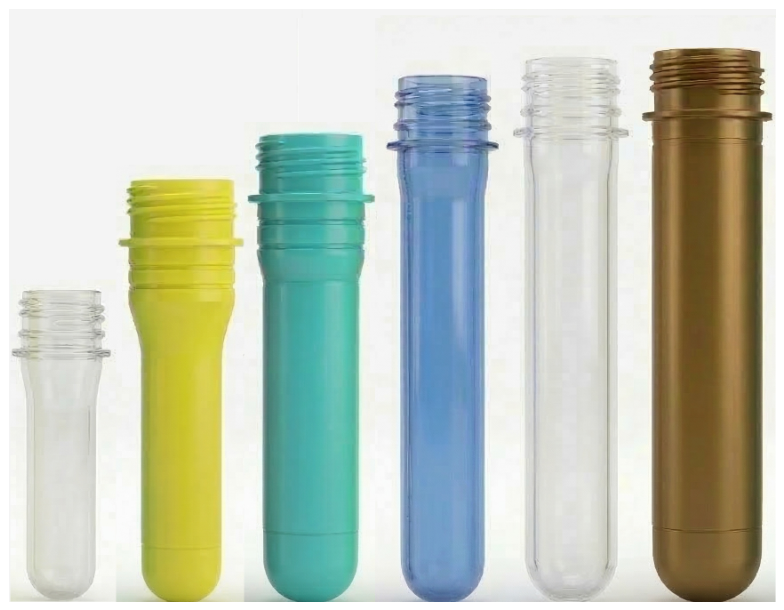
- Case Study 2: Generalization across multiple preform geometries using a conventional training strategy, serving as a baseline that exposes the extrapolation limitation.
- Case Study 3: Geometry-bounded generalization using extreme feasible preform configurations, demonstrating that reliable prediction of intermediate geometries can be achieved through interpolation.
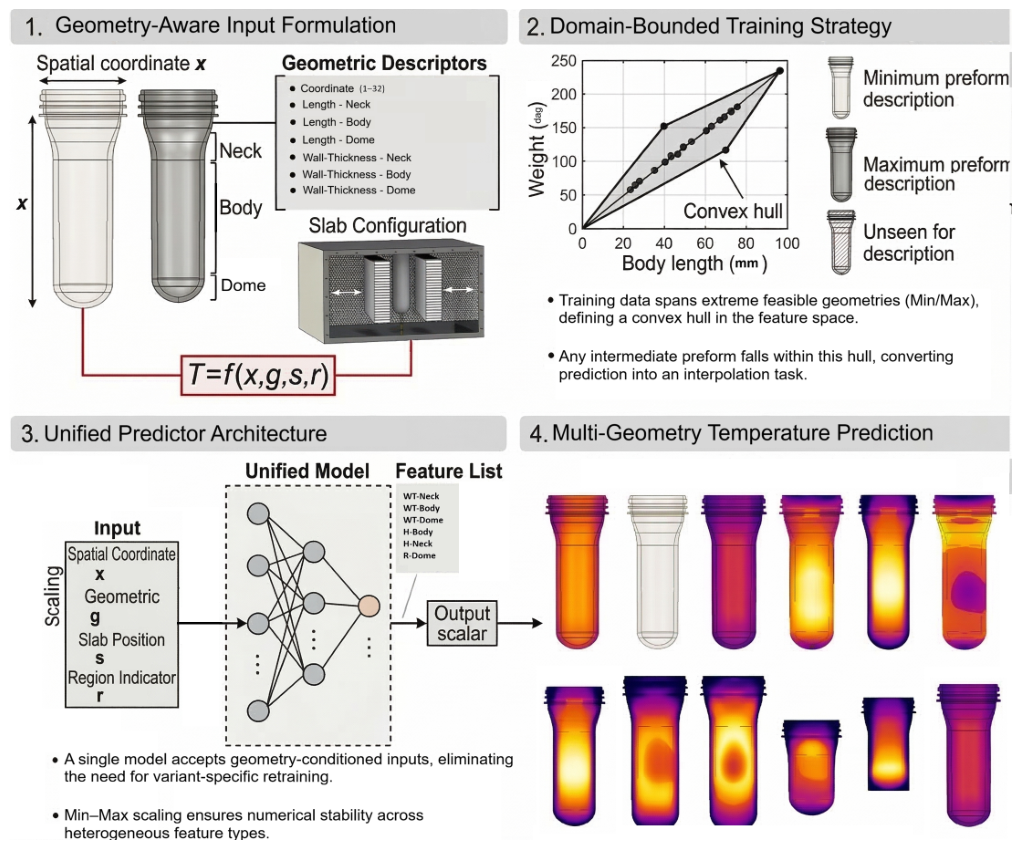
- A geometry-aware and region-aware problem formulation conditioning temperature prediction on spatial coordinates, geometric descriptors, and structural region labels (Section 3.2).
- A domain-bounded training strategy constructing datasets from extreme feasible geometries to convert geometric extrapolation into interpolation (Section 3.3).
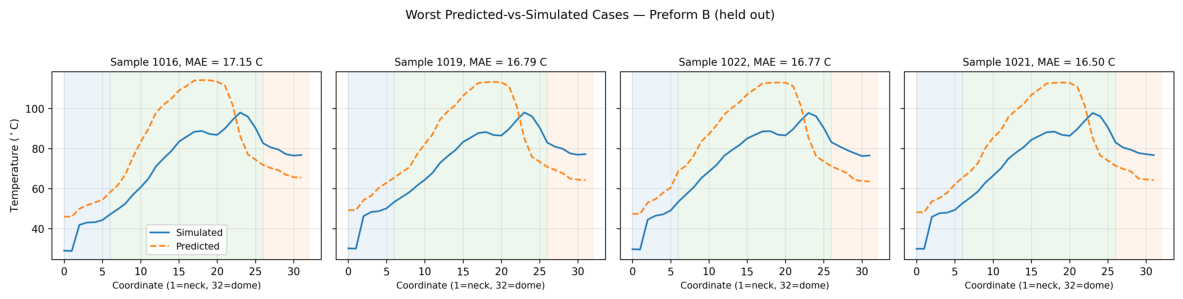
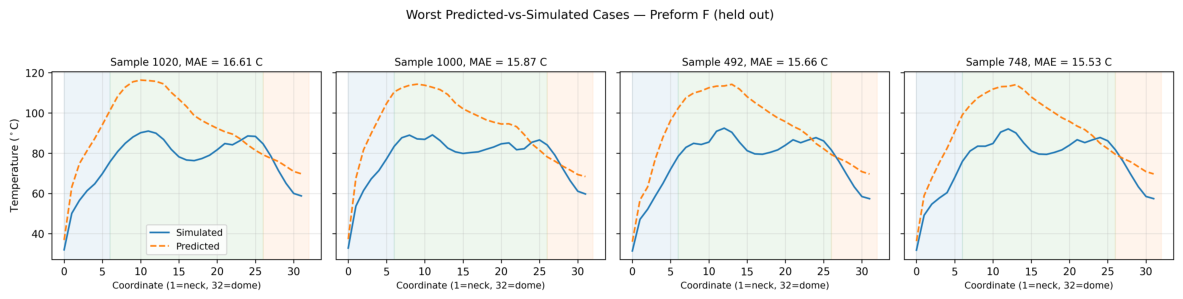
- An expanded experimental evaluation on six preform geometries with systematic hold-out testing, assessing both interpolation and extrapolation behavior (Section 4.5).
- A geometric feature space and correlation analysis characterizing the distribution of preform designs and the nonlinear relationship between input features and the temperature field (Section 4.3).
- A physical analysis of extrapolation difficulty revealing that spatial and structural features pose greater generalization challenges than wall thickness parameters (Section 4.7).
- A substantially extended review of related work covering geometry-aware surrogate modeling and neural network extrapolation limitations (Section 2).
2. Related Work
2.1. Physics-Based Modeling of Preform Heating
2.2. Machine Learning for Thermal Process Modeling
2.3. Geometry-Aware Surrogate Modeling and Neural Network Extrapolation
2.3.1. Parametric Descriptor-Based Surrogates
2.3.2. Latent-Encoded Geometry Representations
2.3.3. Graph and Mesh-Based Surrogates
2.3.4. Physics-Informed Neural Networks
2.4. Positioning of This Work
3. Methodology
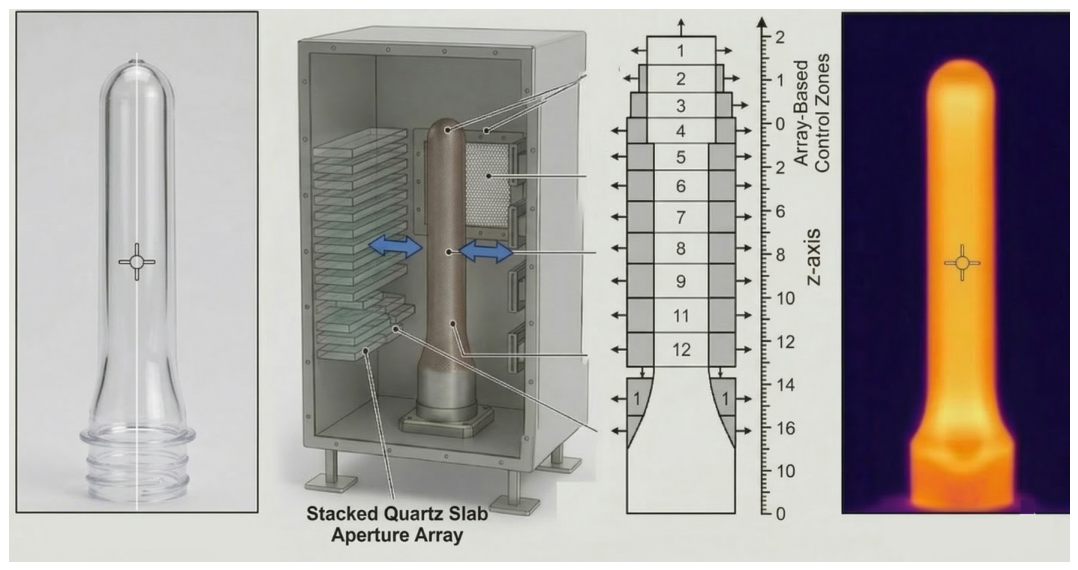
3.1. Microwave Applicator Configuration and Simulation Model
Reduced-Dimensional Simulation Model
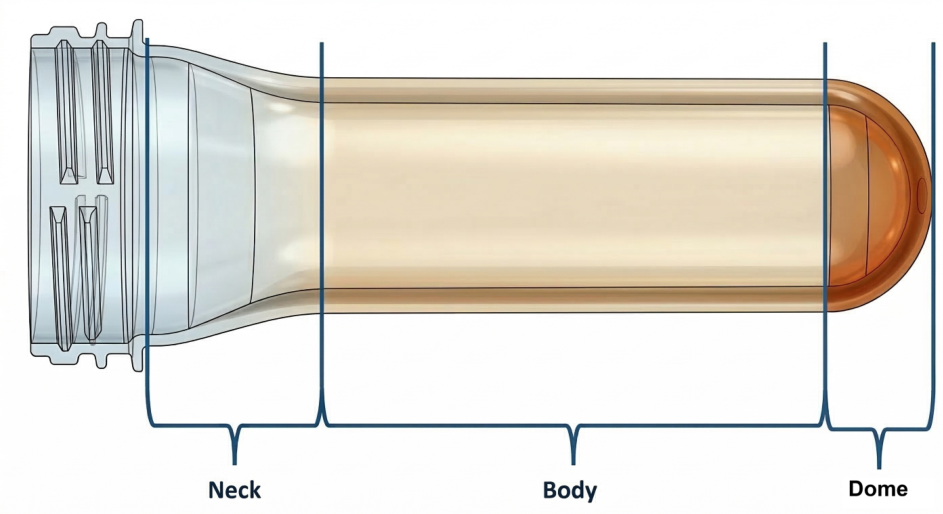
3.2. Geometry-Aware and Region-Aware Temperature Prediction Formulation
3.3. Domain-Bounded Geometry Training Strategy
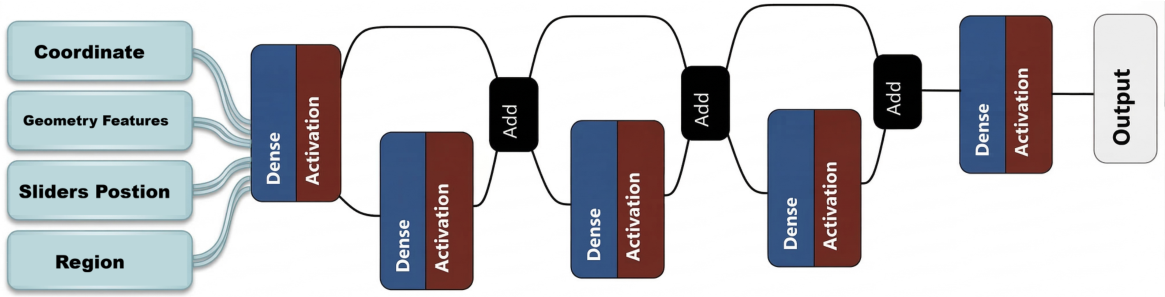
3.4. Neural Network Architecture
3.5. Training and Evaluation Protocol
4. Experimental Design and Case Studies
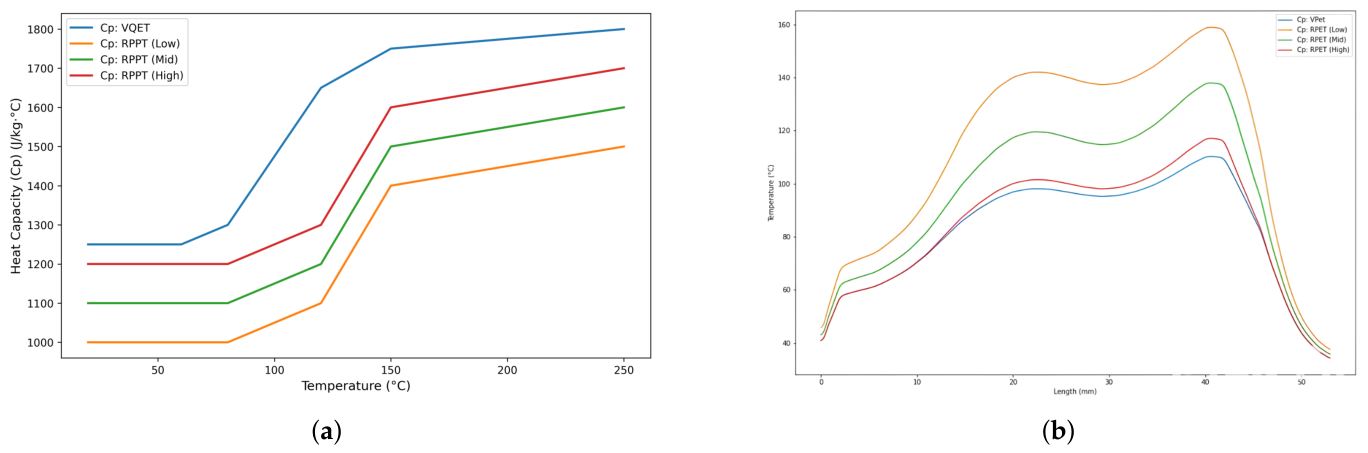
4.1. Case Study 1: Material Property Generalization
4.2. Case Study 2: Geometry Generalization with Conventional Training
4.3. Geometric Feature Space and Correlation Analysis
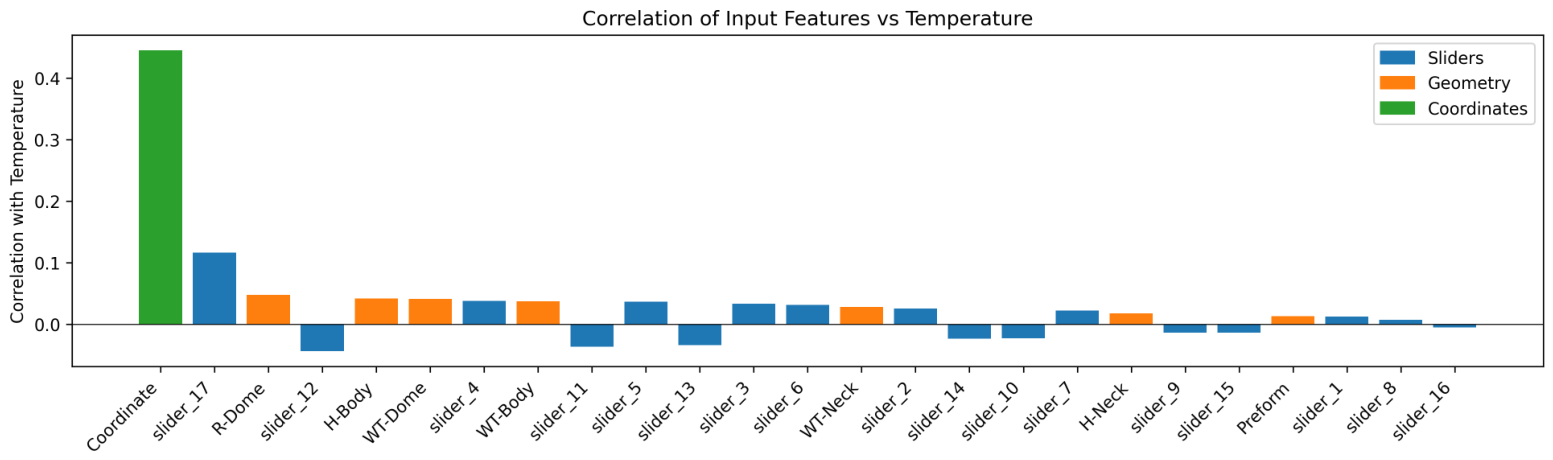
4.3.1. Aggregated Correlation Analysis
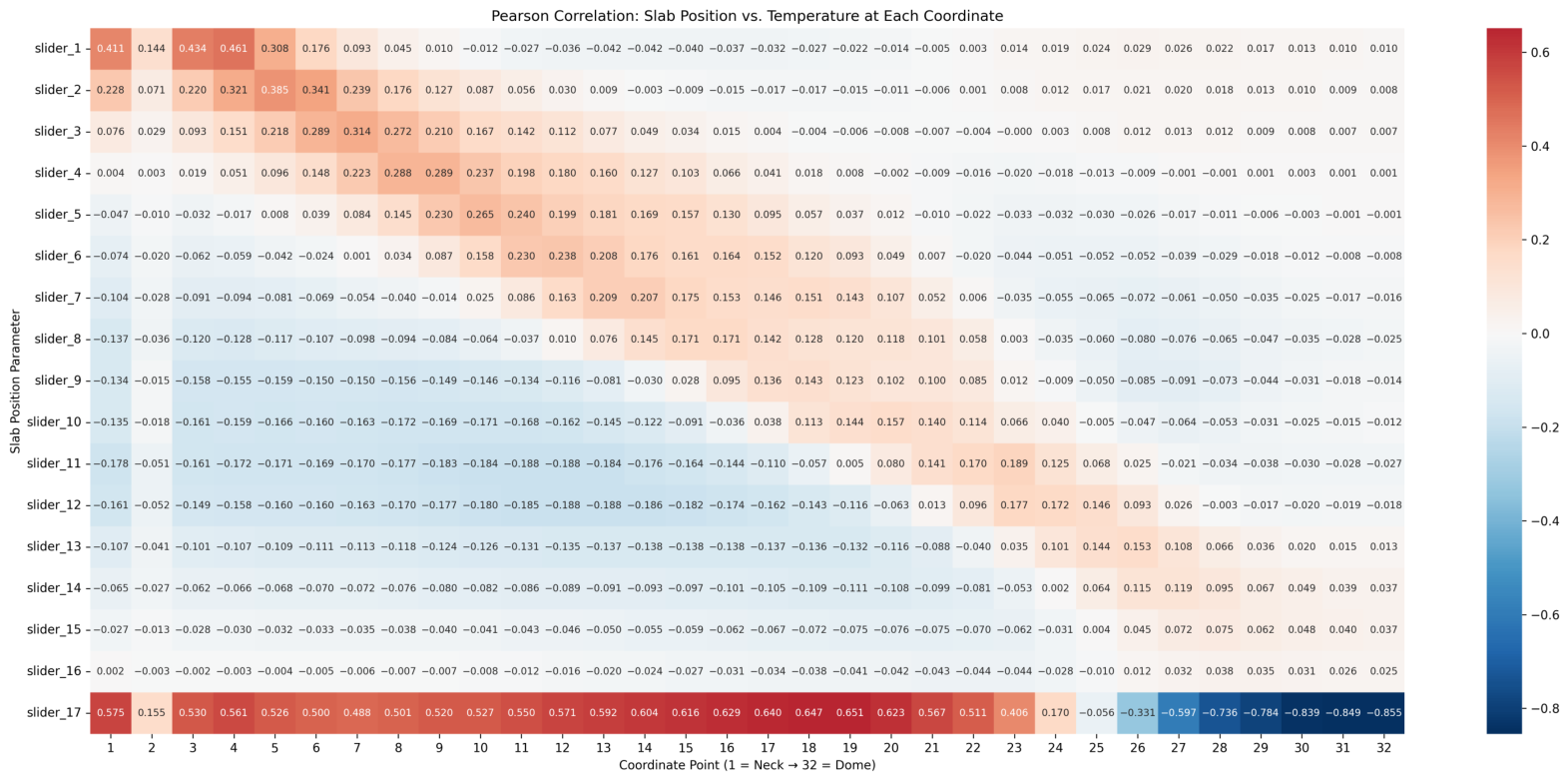
4.3.2. Spatially Resolved Slab–Temperature Correlation
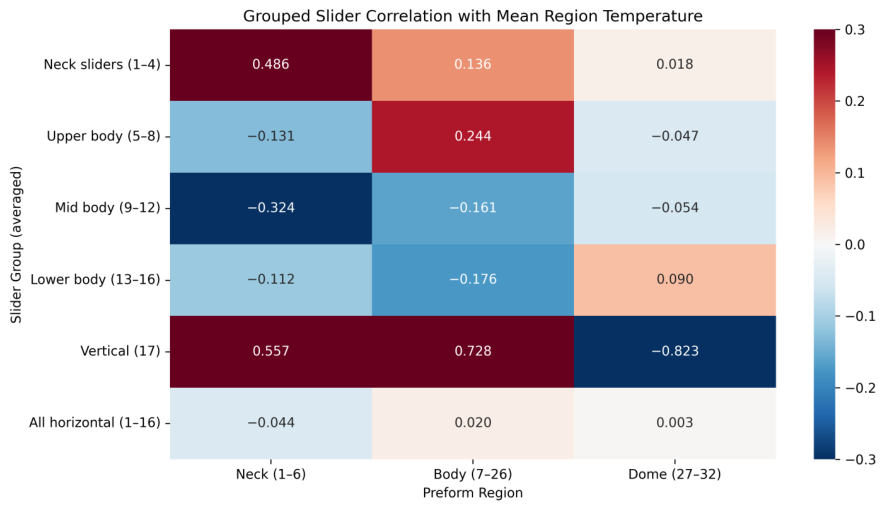
4.3.3. Grouped Slab Correlation by Structural Region
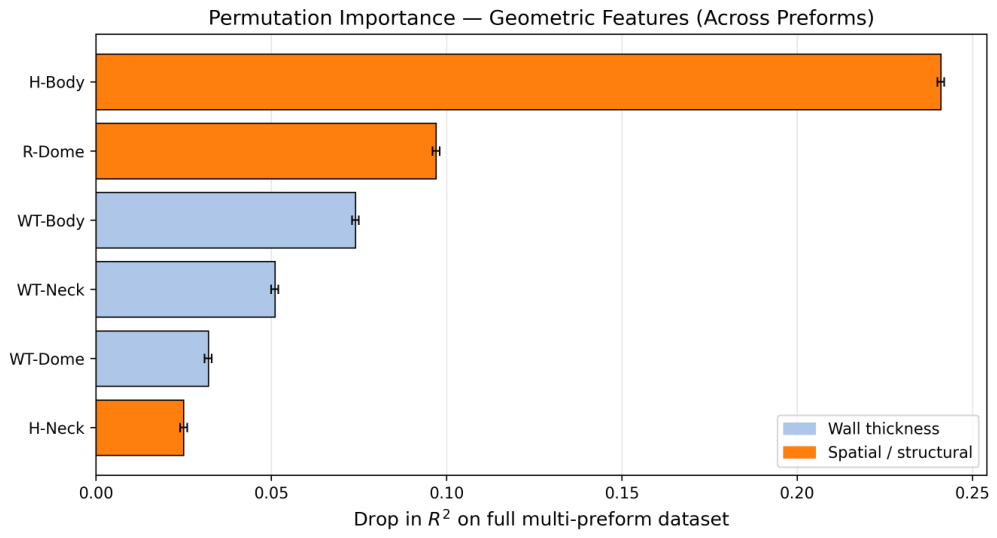
4.4. Permutation Feature Importance
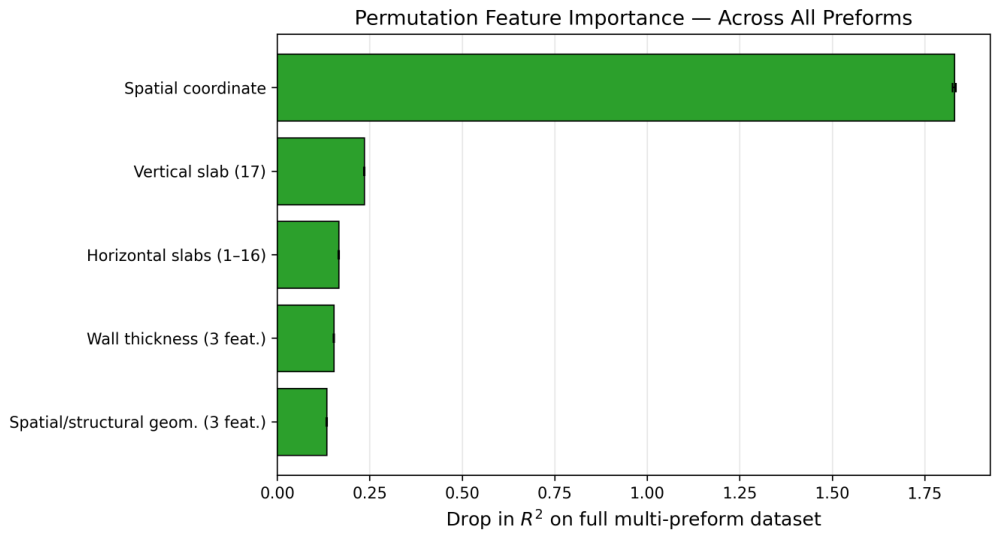
4.4.1. Group-Level Importance
4.4.2. Fine-Grained Geometric Importance
4.4.3. Implications
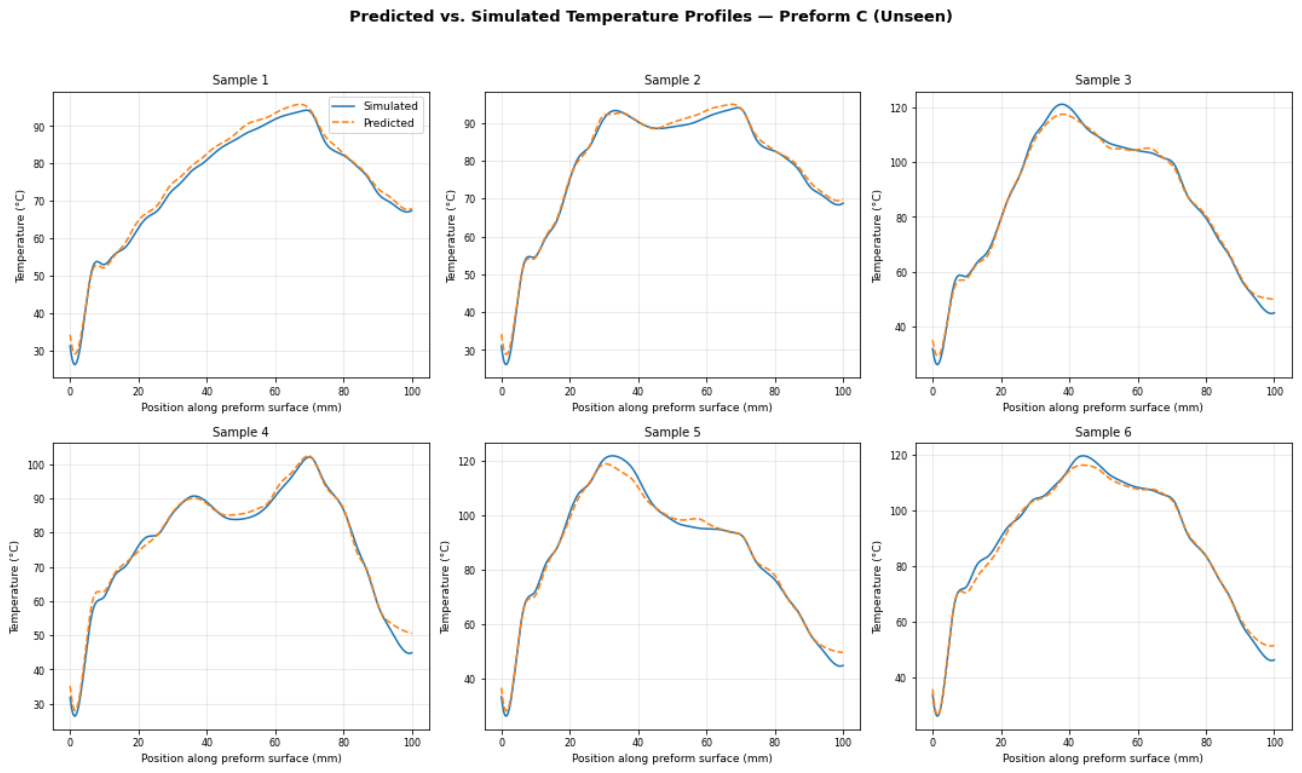
4.5. Generalization Across Preforms
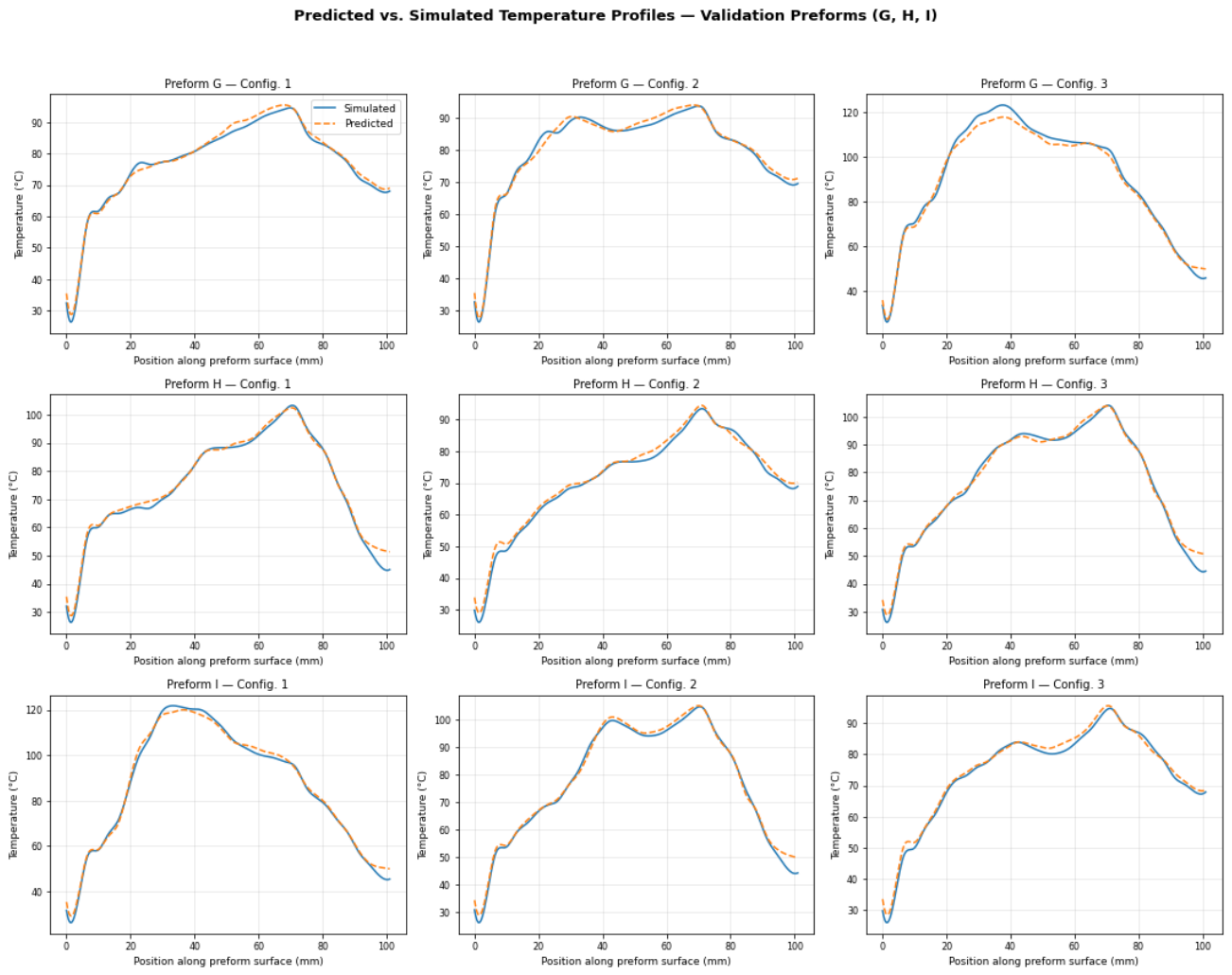
4.6. Validation on Additional Intermediate Preforms
4.7. Discussion
5. Conclusions and Future Work
Author Contributions
Funding
Data Availability Statement
Acknowledgments
Conflicts of Interest
Abbreviations
| PET | Polyethylene Terephthalate |
| MW | Microwave |
| IR | Infrared |
| rPET | Recycled Polyethylene Terephthalate |
| DOE | Design of Experiments |
| LHS | Latin Hypercube Sampling |
| MLP | Multilayer Perceptron |
| MSE | Mean Squared Error |
| RMSE | Root Mean Squared Error |
| MAE | Mean Absolute Error |
| PTFE | Polytetrafluoroethylene |
| HFSS | High-Frequency Structure Simulator |
References
- Wawrzyniak, P.; Karaszewski, W. A literature survey of the influence of preform reheating and stretch blow molding with hot mold process parameters on the properties of PET containers part ii. Polimery 2020, 65, 437–448. [Google Scholar] [CrossRef]
- Estel, L.; Ph, L.; Ledoux, A.; Bonnet, C.; Delmotte, M. Microwave assisted blow molding of polyethylene-terephthalate (PET) bottles. In Proceedings of the AIChE Annual Meeting, Austin, TX, USA, 7–12 November 2004. [Google Scholar]
- Luo, Y.-M.; Chevalier, L.; Nguyen, T.T. Optimization of the temperature profile of PET preform via a 3D modelling of the infrared heating and ventilation. In Material Forming—ESAFORM 2024; Materials Research Forum: Lancaster County, PA, USA, 2024; Volume 41, pp. 2584–2594. [Google Scholar]
- Alsheikh, A.; Fischer, A. Fusion-based neural generalization for predicting temperature fields in industrial PET preform heating. arXiv 2025, arXiv:2510.05394. [Google Scholar] [CrossRef]
- Yang, Z.; Naeem, W.; Menary, G.; Deng, J.; Li, K. Advanced modelling and optimization of infrared oven in injection stretch blow-moulding for energy saving. IFAC Proc. Vol. 2014, 47, 766–771. [Google Scholar]
- Monteix, S.; Schmidt, F.; Le Maoult, Y.; Denis, G.; Vigny, M. Recent issues in preform radiative heating modelling. In Proceedings of the International Conference of Polymer Processing Society (PPS), Montréal, QC, Canada, 21–24 May 2001; pp. 1–6. [Google Scholar]
- García-Baños, B.; Plaza-Gonzalez, P.; Sánchez, J.; Steger, S.; Feigl, A.; Penaranda-Foix, F.; Catalá-Civera, J. Focusing dielectric slabs for the optimization of heating patterns in single mode microwave applicators. Appl. Therm. Eng. 2022, 201, 117845. [Google Scholar] [CrossRef]
- Baker-Jarvis, J.; Kim, S. The interaction of radio-frequency fields with dielectric materials at macroscopic to mesoscopic scales. J. Res. Natl. Inst. Stand. Technol. 2012, 117, 1. [Google Scholar] [CrossRef] [PubMed]
- Sun, Y.; Sengupta, U.; Juniper, M. Physics-informed deep learning for simultaneous surrogate modeling and PDE-constrained optimization of an airfoil geometry. Comput. Methods Appl. Mech. Eng. 2023, 411, 116042. [Google Scholar] [CrossRef]
- Hsieh, P. Intelligent temperature control of a stretch blow molding machine using deep reinforcement learning. Processes 2023, 11, 1872. [Google Scholar] [CrossRef]
- Zhai, N.; Zhou, X. Temperature prediction of heating furnace based on deep transfer learning. Sensors 2020, 20, 4676. [Google Scholar] [CrossRef] [PubMed]
- Barba, P.D.; Dughiero, F.; Forzan, M.; Lowther, D.; Marconi, A.; Mognaschi, M.; Sykulski, J. Neural metamodels and transfer learning for induction heating processes (TEAM 36 problem). Int. J. Appl. Electromagn. Mech. 2023, 73, 389–398. [Google Scholar] [CrossRef]
- Liu, W.; Ouyang, H.; Liu, Q.; Cai, S.; Wang, C.; Xie, J.; Hu, W. Image recognition for garbage classification based on transfer learning and model fusion. Math. Probl. Eng. 2022, 2022, 4793555. [Google Scholar] [CrossRef]
- Zhou, J.; Li, Z.; Zhi, W.; Liang, B.; Moses, D.; Dawes, L. Using convolutional neural networks and transfer learning for bone age classification. In Proceedings of the 2017 International Conference on Digital Image Computing: Techniques and Applications (DICTA), Sydney, NSW, Australia, 27–29 November 2017; pp. 1–6. [Google Scholar]
- Ghazi, M.; Yanikoglu, B.; Aptoula, E. Plant identification using deep neural networks via optimization of transfer learning parameters. Neurocomputing 2017, 235, 228–235. [Google Scholar] [CrossRef]
- Chakraborty, S.; Mondal, R.; Singh, P.; Sarkar, R.; Bhattacharjee, D. Transfer learning with fine tuning for human action recognition from still images. Multimed. Tools Appl. 2021, 80, 20547–20578. [Google Scholar] [CrossRef]
- Whitney, H.; Li, H.; Ji, Y.; Liu, P.; Giger, M. Comparison of breast MRI tumor classification using human-engineered radiomics, transfer learning from deep convolutional neural networks, and fusion methods. Proc. IEEE 2019, 108, 163–177. [Google Scholar] [CrossRef]
- Korzh, O.; Joaristi, M.; Serra, E. Convolutional neural network ensemble fine-tuning for extended transfer learning. In Big Data—BigData 2018. Lecture Notes in Computer Science; Chin, F., Chen, C., Khan, L., Lee, K., Zhang, L.-J., Eds.; Springer: Cham, Switzerland, 2018; Volume 10968, pp. 110–123. [Google Scholar]
- Geyer, R.; Corinzia, L.; Wegmayr, V. Transfer learning by adaptive merging of multiple models. In Proceedings of the 2nd International Conference on Medical Imaging with Deep Learning (MIDL 2019), London, UK, 8–10 July 2019; Volume 102, pp. 185–196. [Google Scholar]
- Pfeiffer, J.; Kamath, A.; Rücklé, A.; Cho, K.; Gurevych, I. Adapterfusion: Non-destructive task composition for transfer learning. arXiv 2020, arXiv:2005.00247. [Google Scholar]
- Pastore, A. Extrapolating from neural network models: A cautionary tale. arXiv 2020, arXiv:2012.06605. [Google Scholar] [CrossRef]
- Cao, J.; Li, Q.; Xu, L.; Yang, R.; Dai, Y. Non-parametric surrogate model method based on machine learning with application on low-pressure steam turbine exhaust system. J. Glob. Power Propuls. Soc. 2022, 6, 165–180. [Google Scholar] [CrossRef] [PubMed]
- Oldenburg, J.; Borowski, F.; Öner, A.; Schmitz, K.-P.; Stiehm, M. Geometry aware physics informed neural network surrogate for solving Navier–Stokes equation (GAPINN). Adv. Model. Simul. Eng. Sci. 2022, 9, 8. [Google Scholar] [CrossRef]
- Wong, J.C.; Ooi, C.C.; Chattoraj, J.; Lestandi, L.; Dong, G.; Kizhakkinan, U.; Rosen, D.W.; Jhon, M.H.; Dao, M.H. Graph neural network based surrogate model of physics simulations for geometry design. arXiv 2023, arXiv:2302.00557. [Google Scholar] [CrossRef]
- Franco, N.R.; Fresca, S.; Tombari, F.; Manzoni, A. Deep learning-based surrogate models for parametrized PDEs: Handling geometric variability through graph neural networks. Chaos 2023, 33, 123121. [Google Scholar] [CrossRef] [PubMed]
- He, K.; Zhang, X.; Ren, S.; Sun, J. Deep residual learning for image recognition. arXiv 2015, arXiv:1512.03385. [Google Scholar] [CrossRef]
- Venkatachalam, S.; Nayak, S.G.; Labde, J.V.; Gharal, P.R.; Rao, K.; Kelkar, A.K. Degradation and recyclability of poly(ethylene terephthalate). In Polyester; Saleh, H.E.-D.M., Ed.; IntechOpen: Rijeka, Croatia, 2012; pp. 75–98. [Google Scholar]





| Heat Capacity Category | Heat Capacity Array [J/kg·°C] | Temperature Array [°C] | Dataset Size |
|---|---|---|---|
| Low Cp | [1000, 1050, 1100, 1350, 1450] | [80, 100, 120, 150, 250] | 550 |
| Mid Cp | [1100, 1150, 1200, 1500, 1600] | [80, 100, 120, 150, 250] | 450 |
| High Cp | [1250, 1300, 1650, 1750, 1800] | [80, 100, 120, 150, 250] | 450 |
| Preform | WT-Neck | WT-Body | WT-Dome | H-Body | H-Neck | R-Dome |
|---|---|---|---|---|---|---|
| A | 0.75 | 1.75 | 1.65 | 57.42 | 10.62 | 16.83 |
| B | 1.27 | 3.19 | 2.00 | 51.98 | 7.92 | 15.77 |
| C | 1.40 | 2.34 | 2.00 | 67.40 | 16.00 | 19.00 |
| D | 1.93 | 3.36 | 2.49 | 69.67 | 17.00 | 20.47 |
| E | 1.93 | 3.16 | 2.77 | 70.00 | 14.50 | 22.20 |
| F | 1.98 | 3.10 | 2.33 | 76.00 | 11.00 | 23.73 |
| Test Preform | Test Set | Training Set | ||||
|---|---|---|---|---|---|---|
| MSE | MAE | MSE | MAE | |||
| A | 0.00552 | 0.880 | 0.0580 | 0.00028 | 0.9922 | 0.0132 |
| B | 0.00963 | 0.7733 | 0.0808 | 0.00032 | 0.9917 | 0.0143 |
| C | 0.00055 | 0.9865 | 0.0183 | 0.00021 | 0.9948 | 0.0114 |
| D | 0.00437 | 0.8646 | 0.0486 | 0.00021 | 0.9948 | 0.0111 |
| E | 0.00509 | 0.8607 | 0.0528 | 0.00021 | 0.9947 | 0.0116 |
| F | 0.00622 | 0.7498 | 0.0660 | 0.00025 | 0.9943 | 0.0119 |
| Preform | WT-Neck | WT-Body | WT-Dome | H-Body | H-Neck | R-Dome |
|---|---|---|---|---|---|---|
| G | 1.45 | 2.53 | 2.00 | 65.40 | 16.00 | 17.67 |
| H | 1.72 | 2.74 | 1.92 | 68.32 | 16.80 | 16.12 |
| I | 1.35 | 2.26 | 2.24 | 72.43 | 9.62 | 19.91 |
| Validation Preform | MSE | MAE | |
|---|---|---|---|
| G | 0.00054 | 0.9882 | 0.0178 |
| H | 0.00056 | 0.9832 | 0.0187 |
| I | 0.00051 | 0.9901 | 0.0143 |
Disclaimer/Publisher’s Note: The statements, opinions and data contained in all publications are solely those of the individual author(s) and contributor(s) and not of MDPI and/or the editor(s). MDPI and/or the editor(s) disclaim responsibility for any injury to people or property resulting from any ideas, methods, instructions or products referred to in the content. |
© 2026 by the authors. Licensee MDPI, Basel, Switzerland. This article is an open access article distributed under the terms and conditions of the Creative Commons Attribution (CC BY) license.
Share and Cite
Alsheikh, A.; Fischer, A. Geometry-Aware Neural Network for Generalized Temperature Prediction in Microwave Heating of PET Preforms. J. Manuf. Mater. Process. 2026, 10, 138. https://doi.org/10.3390/jmmp10040138
Alsheikh A, Fischer A. Geometry-Aware Neural Network for Generalized Temperature Prediction in Microwave Heating of PET Preforms. Journal of Manufacturing and Materials Processing. 2026; 10(4):138. https://doi.org/10.3390/jmmp10040138
Chicago/Turabian StyleAlsheikh, Ahmad, and Andreas Fischer. 2026. "Geometry-Aware Neural Network for Generalized Temperature Prediction in Microwave Heating of PET Preforms" Journal of Manufacturing and Materials Processing 10, no. 4: 138. https://doi.org/10.3390/jmmp10040138
APA StyleAlsheikh, A., & Fischer, A. (2026). Geometry-Aware Neural Network for Generalized Temperature Prediction in Microwave Heating of PET Preforms. Journal of Manufacturing and Materials Processing, 10(4), 138. https://doi.org/10.3390/jmmp10040138