


Abstract
The current study offers a deeper understanding of the thermal behavior of AISI 420 stainless-steel drill bits during titanium alloy machining. It utilizes non-linear simulations with the finite element method (FEM) to analyze heat generation, accumulation, and dissipation. The FEM formulation displays the time-dependent temperatures for the tool and hole during the drilling process. The simulation was examined during drilling and subsequent stages, up to room temperature. The study explored a wide range of drill bit lengths (60–160 mm) and tool diameters (2–10 mm). Significant convergence of 4.1% was achieved when compared to infrared thermography data. Furthermore, increasing the tool length beyond 120 mm did not significantly increase the thermal effect. Moreover, increasing the tool diameter up to 10 mm also did not significantly increase the thermal efficiency compared to tool diameters between 2 and 5 mm based on a constant tool length. An exploratory data analysis (EDA) heatmap correlation matrix was used to examine the most efficient variables and the optimum tool geometry. The results obtained provide a clear understanding of the optimal geometry choice for steel drilling tools when used in drilling titanium alloys.
Keywords:
FEM; tool geometry; computation mechanics; thermal behavior; drilling; fracture; titanium alloy 1. Introduction
The last decade has seen the widespread use of titanium alloys, particularly Ti-6Al-4V, in many industries. The widespread use of these alloys is due to their unique performance-to-weight ratio [1,2]. Moreover, they possess fracture toughness, oxidation resistance, and high compressive and tensile strength [3]. However, machining operations face limitations related to thermal behavior at high temperatures. Often, the low thermal conductivity of titanium alloys leads to heat buildup. This heat buildup is concentrated in the contact area between the workpiece and the tool [4,5]. Heat buildup problems affect the quality of the final product and dimensional accuracy [6]. Heat buildup no longer affects only the workpiece but also the tool itself, which is often composed of steel. The most significant problem facing the tool due to heat buildup is rapid wear. Rapid wear leads to tool life reduction [7,8]. In all manufacturing and forming processes, the application of complex mathematical models and simulation principles can significantly help. Moreover, it clarifies the mechanisms of heat transfer across the treated surface and helps to ensure high efficiency and quality [9,10].
Drilling is no longer a traditional process limited to drilling workpieces. It has expanded to include various non-traditional applications. Nowadays, drilling processes include solid-state welding processes like friction stir welding and friction stir spot welding [11,12]. In addition, it has been expanded to specific applications, such as form drilling. Form drilling utilizes a rotating, conical, non-cutting tool to soften and displace material through friction, thereby forming bushings or extrusions without removing material. Ultrasonic-assisted drilling (UAD) combines traditional drilling with ultrasonic vibration [13]. Moreover, the non-contact form of electrical discharge machining (EDM) is adopted for drilling tiny holes in conductive materials [14,15]. Understanding the drilling process and its thermal behavior is no longer limited to drilling itself but extends to other related processes. Examining the varying thermal properties of the tool and workpiece can offer a deeper understanding of heat generation mechanisms and heat distribution. Studying how the tool geometry, particularly the drill diameter and length, affects performance can provide a clearer image of the optimal operating conditions.
Among the earliest studies by E. F. Smart and E. M. Trent in 1975 (republished online in 2010) on iron, titanium, and nickel, it is shown that each of these three metals produces a distinct and markedly different pattern of temperature distribution within the tool during cutting operations [16]. Zhaoju Zhu et al. [17] conducted a comprehensive review of over 200 studies on advances in drilling tool temperatures and concluded that understanding the temperature characteristics of the drilling process is critical for improving drill bit performance and process efficiency. However, they also found that research on the thermal behavior of titanium alloys still exhibits gaps. Krzysztof Szwajka et al. [18] noted that variations in material formability necessitate that manufacturers adjust the cutting parameters in real time during the punching process, and they emphasized that analyzing force signals and the magnitudes of their derivatives can contribute to this.
The study of variables related to the perforation of titanium alloys has received considerable attention in recent years. Various experimental, simulation, and combined studies, particularly concerning thermal behavior, have been performed. P. F. Zhang et al. [19] concluded, through a comprehensive literature review, that titanium alloys can be classified as hard-to-machine materials. This conclusion was based on data from previous studies that covered many aspects. These aspects included conventional and unconventional drilling processes and various types of forming methods. Rui Li and Albert J. Shih [20] studied the mechanical behavior and its effect on frictional heat generation during the drilling process of pure titanium using the FEM. They compared it with the temperatures measured by thermocouples and concluded that increasing the peripheral cutting speed of the drill bit can lead to heat generation exceeding 1000 °C. Later, they compared the measured and calculated temperatures under specific conditions and demonstrated that the drill peak temperature can be reduced by approximately 50% when the cutting fluid is supplied through the drill body [21].
Hemant S. Patne et al. [22] compared the temperatures generated using the FEM with those obtained experimentally when studying the effects of high tool rotation speeds (1200, 1600, and 2400 rpm) on the heat generated at different drilling depths in the annealed titanium alloy Ti-6Al-4V, and they showed good convergence in the results. Kiyoshi Okamura and Hiroyuki Sasahara [23] focused on low-frequency vibratory drilling by attempting to calculate temperatures during both drilling and non-drilling periods. The study was supported by experimental results obtained using a thermocouple at the cutting edge, which yielded results similar to those of the simulation for titanium alloy. R. P. Zeilmann and W. L. Weingaertner [24] studied the effect of the tool coating process on the thermal behavior of titanium alloys when using minimum quantity lubrication (MQL). They concluded that the highest temperatures could be achieved with uncoated tools. The effect of MQL on effective cooling and reducing the drilling tool and workpiece temperatures has been observed in other studies, such as those involving the drilling processes of intermetallic titanium aluminide alloys [25]. Ankit Kumar et al. [26] achieved suitable agreement of 5.41% in their studies of the heat trapped in a hole in a titanium alloy using the FEM and a thermal camera, focusing on heat generation from shear force. Ismail Lazoglu et al. [27] studied torque prediction and temperature distribution in the carbide tool body and drill cutting edge using the FEM and thermocouples placed at the corner and lip points at low and moderate tool rotational speeds (266 and 796 rpm, respectively). Vitalii Kolesnyk et al. [28] concluded that an artificial neural network (ANN) approach combined with the Taguchi method was practical in demonstrating the sensitivity of the drilling temperature to changes in machining conditions (feed rate, cutting speed, time delay) in drilling carbon fiber-reinforced plastic/titanium alloy (CFRP/Ti) stacks. Later, they more closely investigated the relationship between the drilling accuracy, the coefficient of thermal expansion, and the heat generated using the numerical finite element method and thermocouples. They demonstrated that thermal expansion significantly contributed to deviations in the hole diameter [29]. Işik and Kentli [30] used regression analysis based on monitoring the thermal behavior of titanium alloys using a thermal camera, and they demonstrated that the results provided an effective indication of the relationship between the generated heat and the drilling process conditions (cutting speed, feed rate, and depth of cut). Riaz Muhammad et al. [31] developed a three-dimensional simulation to study the non-linear thermal behavior in the titanium drilling process, which contributed to reducing the torque and cutting force required by an external heat source. The study by Zhaoju Zhu et al. [32] focused on the temperatures associated with chip formation during the drilling of Ti6Al4V alloy, using a three-dimensional model supported by experimental results. They demonstrated a good correlation between the temperatures in the two models, which contributed to a deeper understanding of chip formation.
Previous studies can be summarized as having highlighted the challenges of drilling Ti-6Al-4V (Ref. [19]). They also offer information about the effectiveness of using an internal coolant in reducing temperatures (Refs. [20,21]) and demonstrate the minimum coolant quantities (Refs. [24,25]). References [22,23,26,27,31] focused on finite element methods and experimental approaches to modeling and measuring drilling temperatures. The final group of references applied data-driven methods for prediction (Refs. [28,30]).
The current study focuses on a concentrated thermal analysis based on the tool geometry (diameter and body length) and its relationship with the resulting holes using the finite element method (FEM). This research seeks to enhance the existing literature by examining temperature dynamics during the drilling process through the FEM and the data-driven analysis approach EDA. On the other hand, the Ti6Al4V alloy under study is classified as a difficult-to-machine alloy. Although there are good studies on drilling operations with it, there is a limitation in the time development analysis of temperature data using a systematic, data-driven exploratory framework.
Furthermore, most related studies rely on common simplifications of previous simulations, employing constant thermal properties. This study modeled the thermal conductivity and specific heat of AISI 420 tool steel as a function of the process temperature, resulting in greater physical accuracy. In addition to simulation, a novel approach was used based on exploratory data analysis (EDA). EDA relies on correlation matrix heatmaps. Adopting this principle provides a deeper understanding of the complex and time-varying thermal relationship between the drill bit and the workpiece hole surface at different stages of the process (start, stop, and post-drilling).
2. Analytical and Numerical Modeling
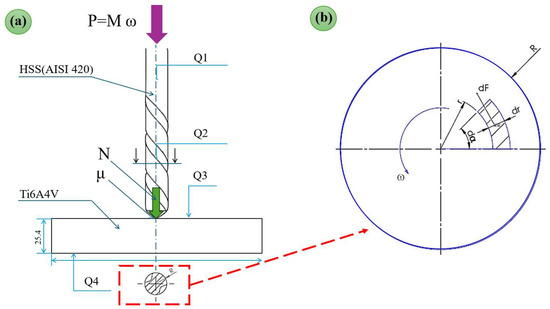
In mechanical drilling operations, mechanical energy is a fundamental component. A portion of the mechanical energy is converted into heat. The main heat sources are direct friction and plastic deformation at the point of tool–workpiece contact. The mechanical power input P is a function of the applied torque and tool angular velocity (P = M⋅ω). In this study, it is assumed that the total heat generated during the drilling process is equal to the mechanical power supplied to the system (Q = P). The drilling tool is subdivided into two portions: the body and shank. The body is the helical (spiral) portion of the drill bit. The body is responsible for cutting and chip removal. The second portion (shank) is the straight, non-cutting part of the drill. Q1 denotes the heat generated in the shank portion, while Q2 is the heat generated in the tool body portion. Regarding the workpiece, the heat generated in the upper part is denoted by Q3, while Q4 represents the heat generated in the lower part, as shown in Figure 1. The total heat generated is the sum of the heat generated in both parts of the tool and the workpiece (Q = Q1 + Q2 + Q3 + Q4), which equals the mechanical energy supplied during the process. Moreover, Figure 1 illustrates the thermal–mechanical model and the factors involved in changing the mechanical energy (P) from the drill’s drive system into the heat energy (Q) produced by cutting and friction during the drilling process.
Figure 1.
Drilling operation process. (a) Thermo-mechanical model of heat; (b) infinitesimal area model due to the mechanical friction surface.
Although the drill bit diameter and length are design parameters that remain constant throughout the drilling process, they were chosen as variables in this study based on several criteria. Table 1 shows the manufacturer’s drill bit geometry, which includes eight variations based on the bit diameter, length, and effective length. By examining the thermal effects of these geometry parameters, this study can support drill bit designers. It offers optimal diameter–length combinations for minimizing thermal damage. This is particularly important when working with high-value alloys such as titanium alloy Ti-6Al-4V. Furthermore, heat generation increases when increasing the drill bit diameter (Equation (1)). The ability of a drill bit length to absorb and dissipate heat depends on its surface area. Heat absorption and dissipation are directly proportional to both the length and diameter (Q1 and Q2).
Table 1.
Thermal energy (Q) calculation for drilling tool.
In the drilling process, the differential mechanical power is a function of the shear force (F), angular velocity (ω), and radial position (r) [33,34]. It can be expressed—for the infinitesimal area shown in Figure 1b—as
The differential cutting force dF acting on an infinitesimal elemental area of the cutting edge can be expressed in terms of the shear stress τ, the radial increment dr, and the angular increment dα as follows:
By substituting Equation (2) into Equation (1), with some rearrangements, we can obtain
After removing and (high-order infinitesimal) and performing suitable integration, the equation becomes
In this context, R represents the drilling tool diameter, and τ represents the shear stress acting at the interface between the drill tool and the workpiece, which can be estimated using the following relation:
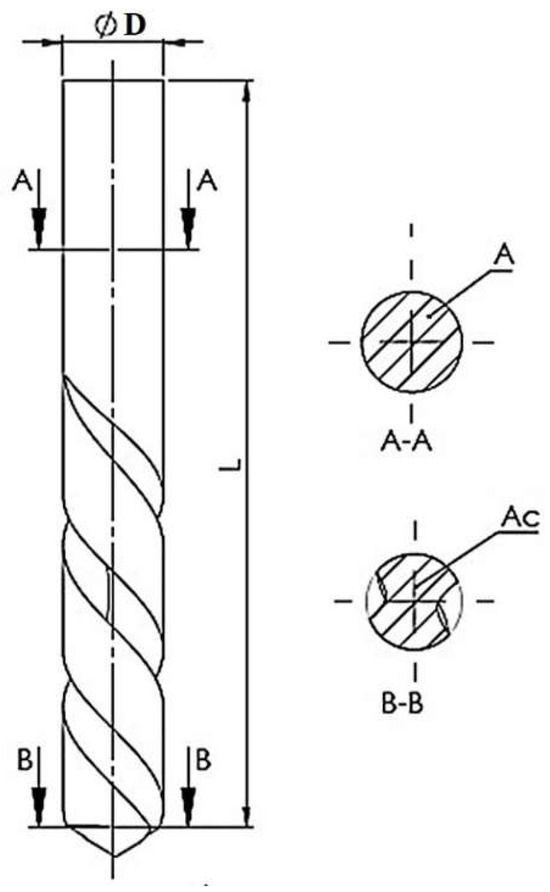
In Equation (5), N is the normal force acting on the contact surface, μ is Coulomb’s coefficient of friction between the tool and the workpiece, and Ac is the drill’s thermally effective contact cross-sectional area, which is proportional to the whole cross-sectional area of the drill tip (A = πR2) via a constant called the ratio of the tip profile area kA (kA = Ac/A). Figure 2 indicates Ac and A in the drilling tool. The drills used in the test and FEM models have a tip angle of 120° and two flutes. Figure 2 also shows the drills’ total cross-sectional area (A) and effective cutting cross-sectional area (Ac). The drill geometry, which includes the two cutting lips and the cutting-edge region, determines the effective cutting cross-sectional area that is used during the drilling process. This directly affects how much heat is generated and how much material is removed. The kAKA ratio established in this study directly corresponds to this. The tangential shear force in Equation (6) can also be expressed as μN = Ft. The proposed formulation expresses the tangential force as Ft = μN. Thus, the estimated tangential force depends on the coefficient of friction in a straight line. A nominal value of μ = 0.5 was used for the drilling conditions with a coolant that were examined in this study. To assess the impact of this parameter, a sensitivity analysis was conducted by adjusting μ within the range of 0.4 to 0.6. The results indicated that the computed tangential force and the associated friction energy terms varied proportionally with μ, whereas the overarching trends across the examined cases remained constant.
Figure 2.
Cross-sectional view of the drill, showing the total cross-sectional area (A) and the active cutting area (Ac) used in the definition of the cross-sectional area ratio kA.
By substituting the values of τ, kA, Ac, and A, along with the previously mentioned fact that the supplied mechanical energy P is equal to the frictional heat source at the tool–workpiece interface ( = P), the form of Equation (4) can be re-expressed as follows:
In metal cutting, heat is not only generated by friction but also by plastic shear deformation in the primary shear zone. This is often approximated as . Here, is the shear stress in the shear plane, and is the shear strain in the shear plane. represent the plastic work per unit volume in the shear zone. This term is multiplied by 0.9 to account for the fact that roughly 90% of this plastic work is converted into heat. Therefore, the total heat should be expressed as .
Generally, the thermal input is directly proportional to the rotation speed (ω) of the stirrer tip, the pressure force (N), the friction factor (μ), and the radius of the stirrer tip (R) [35,36,37]. As the thermal capacity of the composite materials Q3 and Q4 increases, the drill (Q1 and Q2) also releases heat into the environment. While it is desired that the heat (Q3) generated in the drill and the sample (contact surface) be rapidly removed (Q1), it is desired that the heat (Q4) be generated quickly in the material to be drilled, and the heat generated (Q2) should be preserved [38]. The heat energy constitutes the input parameter of the thermal field, which is solved numerically by the finite element method. In this study, the mechanical energy generated by the drive system and the heat produced were solved numerically using the finite element method.
The average friction factor (μ = 0.5) depends on the temperature until the material flows and was determined from the literature [39]. N is the normal pressure or thrust force, which occurs directly upwards from the drilling surface; it has an average value of N = 900 N according to studies using a 6.8 mm drill and low feed rates [40]. R is the drill radius, which is selected as R = 4 mm. P is the mechanical power applied from the drive system [W], and M is the mechanical moment applied from the drive system [J]. According to previous studies, the tool rotational speed is selected as 300 rpm [41], and ω represents the angular velocity of the tool.
The kA ratio used in this study was kept constant at 0.745. The analytically developed thermal formation Equation (6) is also compatible with the equation developed by Schmidt et al. [42]. With the data obtained so far and Equation (6), the thermal field heat input value (Q) was calculated, as shown in Table 1.
The drilling tool cools rapidly due to heat convection into the environment, which depends on the total surface area of the tool (A1 + A2). The thermal transfer coefficient α for the lateral surfaces is considered constant at α1 = α2 = 30 W/m2 °C and α3 = α4 = 15 W/m2 °C, as per the previous literature [43,44]. Referring to Figure 1, according to the principle of heat transfer by convection, the heat fluxes Q1, Q2, Q3, and Q2 are represented as , , , respectively, where ∆T1 and ∆T2 represent the temperature difference between the drill and ambient temperature. AISI 420 martensitic stainless steel was chosen as the tool metal due to its growing use in cutting tools for light metals. Its high hardness, reaching 460 HB, makes it more economical compared to high-speed steel (HSS) and coated carbide tools [45]. The chemical compositions of the AISI 420 stainless-steel tool and Ti-6Al-4V titanium alloy that are examined in this study are indicated in Table 2 and Table 3, as obtained using Spectro Ametek (Kleve, Germany).
Table 2.
Chemical composition of Ti-6Al-4V titanium alloy (wt.%).
Table 3.
Chemical composition of AISI 420 steel alloy (wt.%).
The experimental procedures and the number of repetitions are described in detail in [46]. For clarity, parameter-dependent tests were repeated 7–10 times. In the drilling process tests, 5% CIMCOOL CIMPERIAL 806 semi-synthetic emulsion was applied to the cutting zone as the cutting fluid [46]. Four measurements were taken for each drilled hole, and the analysis used the average of these measurements. To ensure the accuracy of the measurements, the roughness of the surface was measured three times in different parts of the hole, and the averages were used, according to [46].
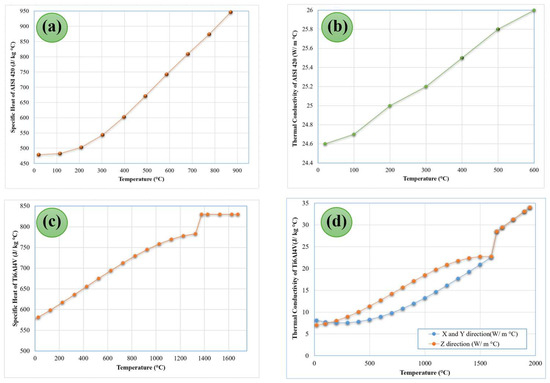
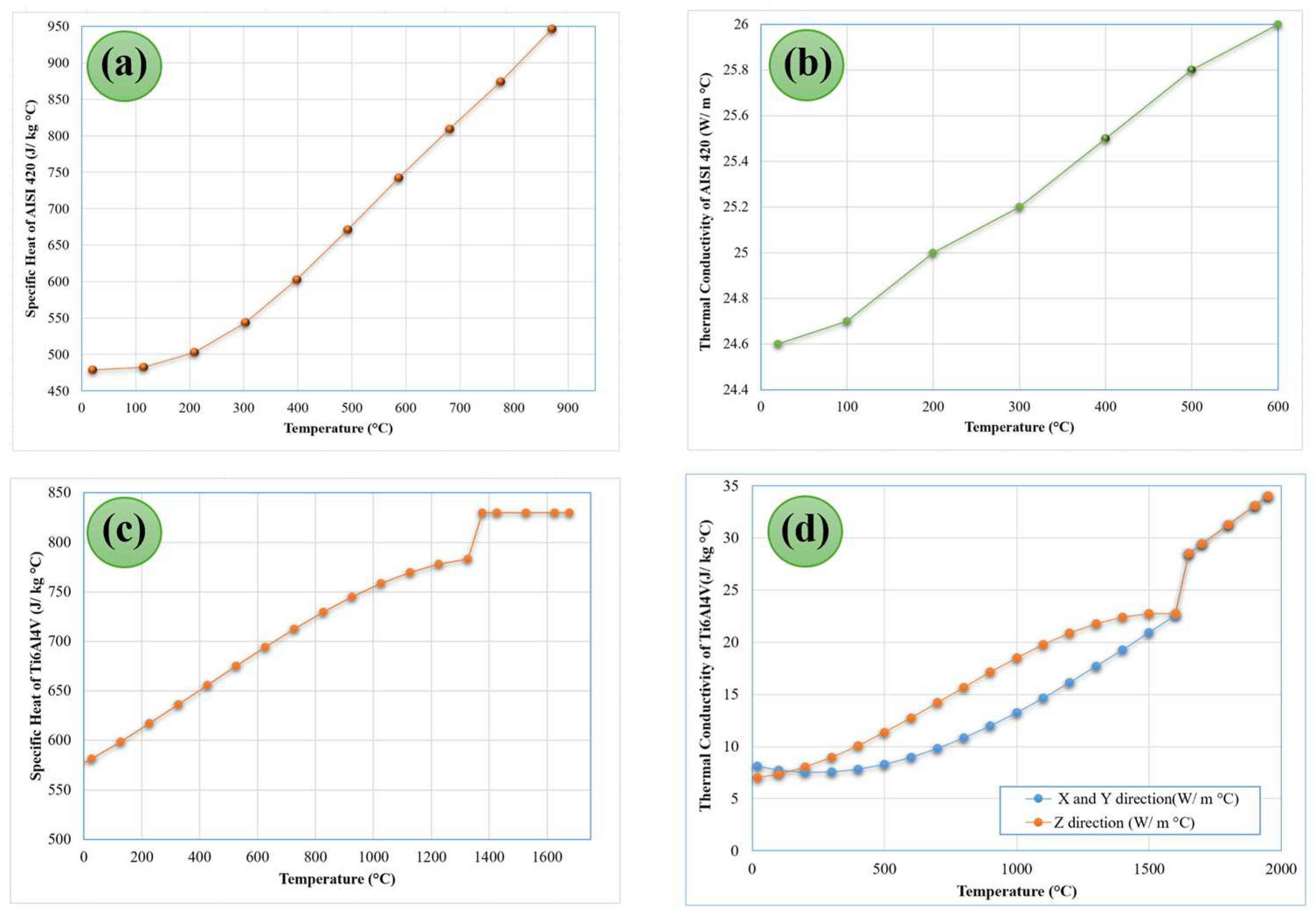
The temperature data shown in Figure 3 were derived from the FEM model analyses performed in this study and are shown as graphs of the numerical analysis results. In the FEM formulation in this study, the specific heat and thermal conductivity for AISI 420 and Ti6Al4V were treated as temperature-dependent, as shown in Figure 3a–d.
Figure 3.
Graphical representation of temperature values obtained from FEM analysis results. (a) Specific heat of AISI 420, (b) thermal conductivity of AISI 420, (c) specific heat of Ti-6Al-4V, and (d) thermal conductivity of Ti-6Al-4V.
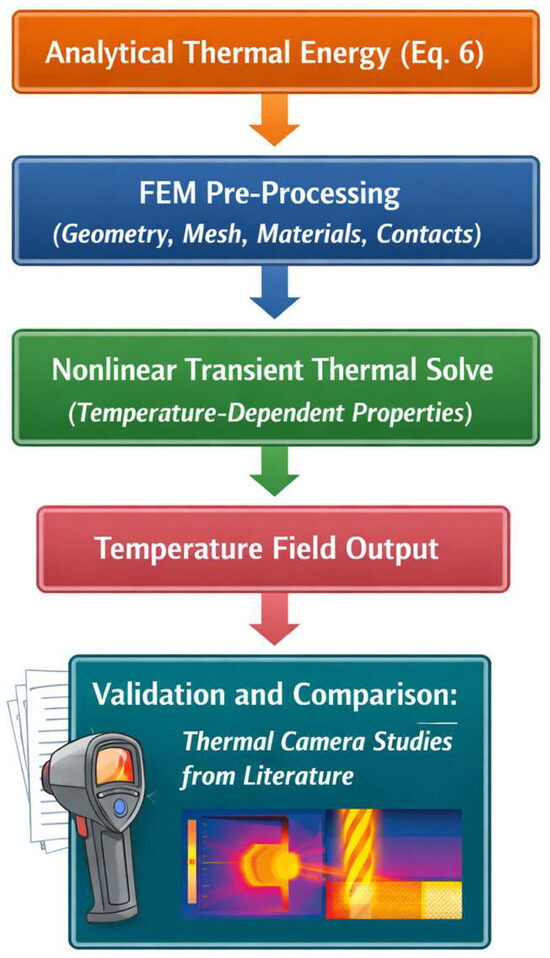
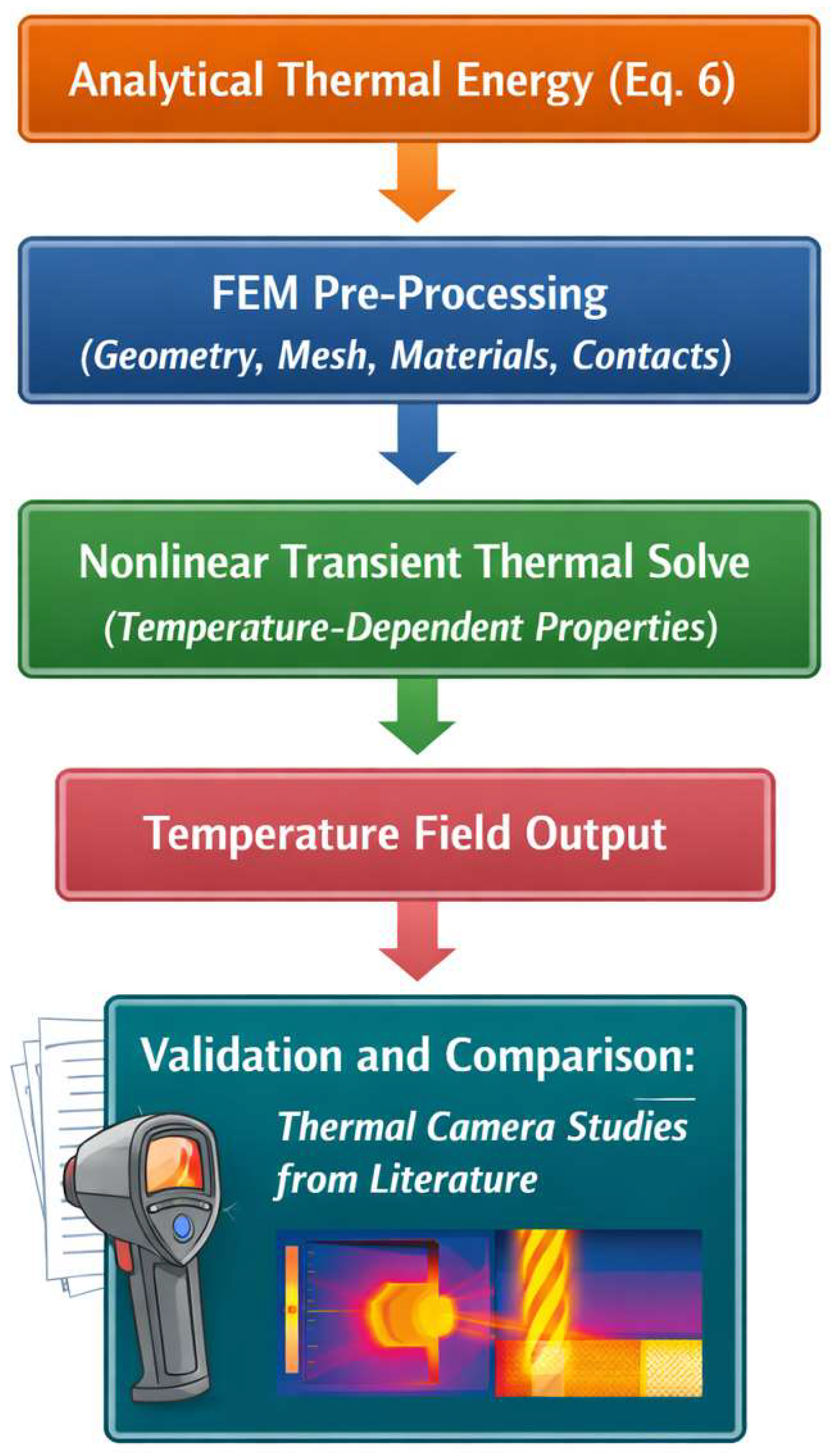
The FEM formulation in this study aims to display time-dependent temperatures. It solves the time-dependent non-linear thermal energy field (heat transfer field) during drilling. Equation (6) calculates the heat generated at the tool–workpiece interface. This value is not used as a final result—it is the initial condition for the FEM. The output of Equation (6) is passed directly to the FEM solver as a surface heat flux boundary condition applied to the drill cutting geometry. Equation (6) is used to perform thermal field calculation in the FEM using a non-linear method. Moreover, the methodology compares the resulting output temperature with experimental results based on thermal camera data from the literature. Figure 4 indicates the thermal analysis workflow in titanium machining.
Figure 4.
Thermal analysis workflow in titanium machining process.
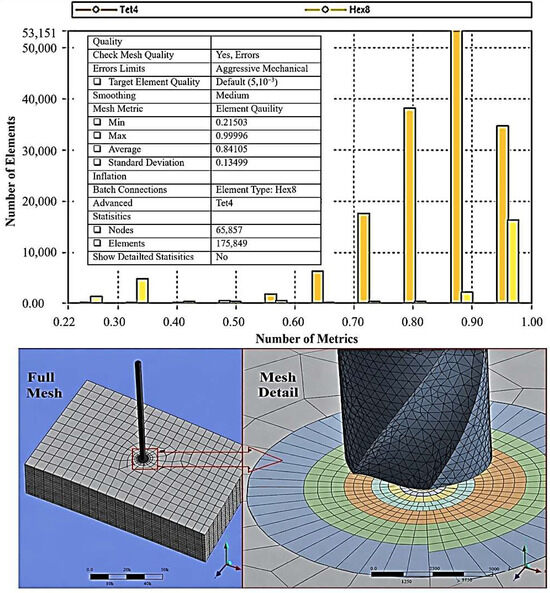
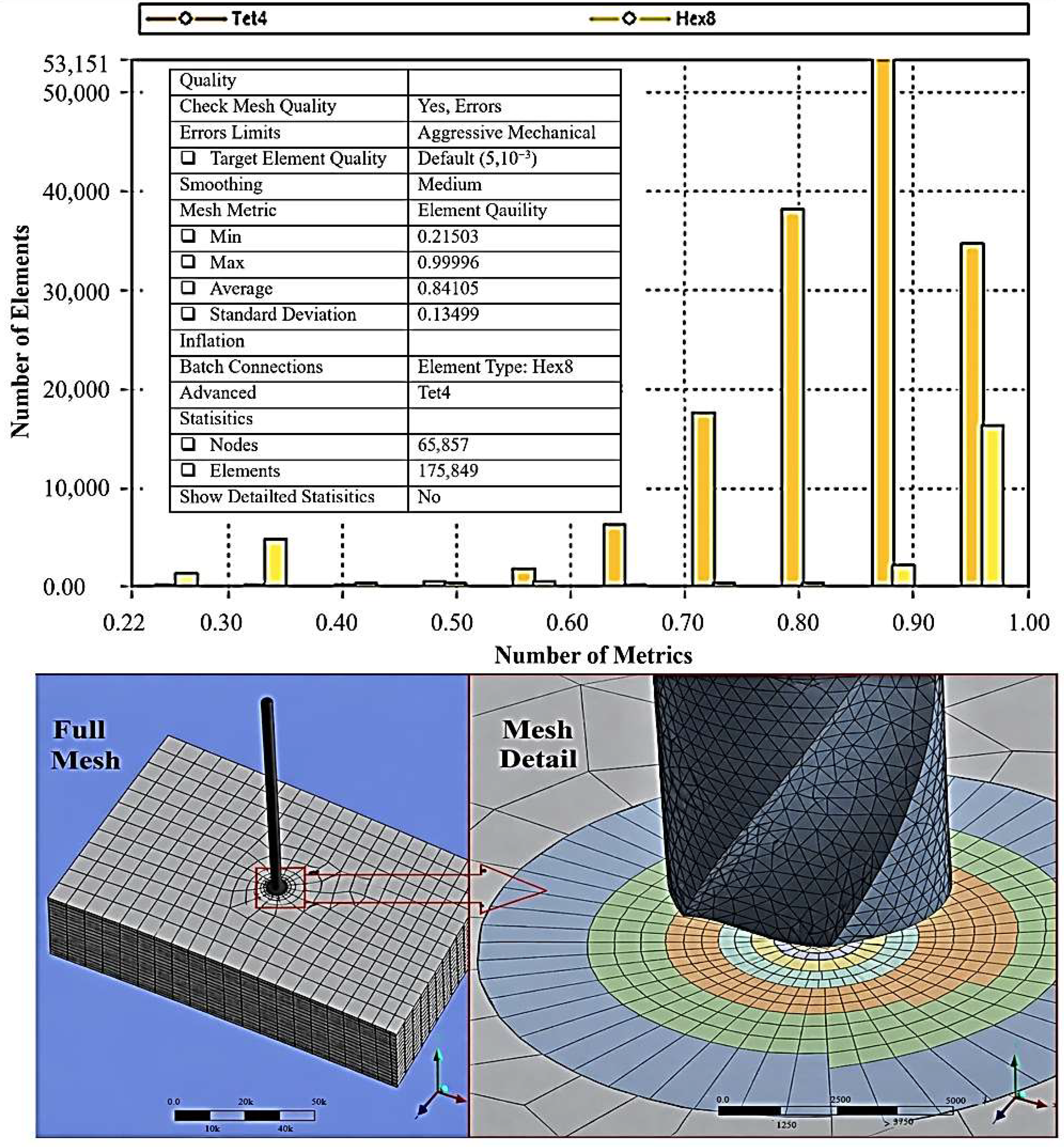
Moreover, a time-dependent non-linear solution of the thermal field model was derived using the FEM. The results are based on using a drilling rotational speed of n = 300 rpm (5 rev/s), a cutting speed of 0.05 mm/rev, and a feed rate of Vz = 0.25 mm/s. The selected sample’s thickness was 24.5 mm, and the drilling time was 102 s, at a constant speed. Ansys WB 2024-R2® was used in the FEM solution process. The initial temperature value was 25 °C at the start of the non-linear solution. In the heat zone, the minimum mesh size was 0.5 mm. All mesh elements were hexagonal types (none are tetragonal) for optimal results. The number of iterations, the mesh types, and the node configuration are indicated in Figure 5.
Figure 5.
Details of mesh types and iterations used in FEM analysis of drilling process.
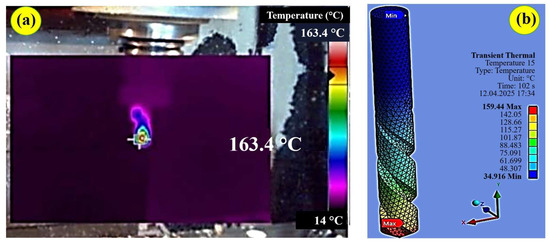
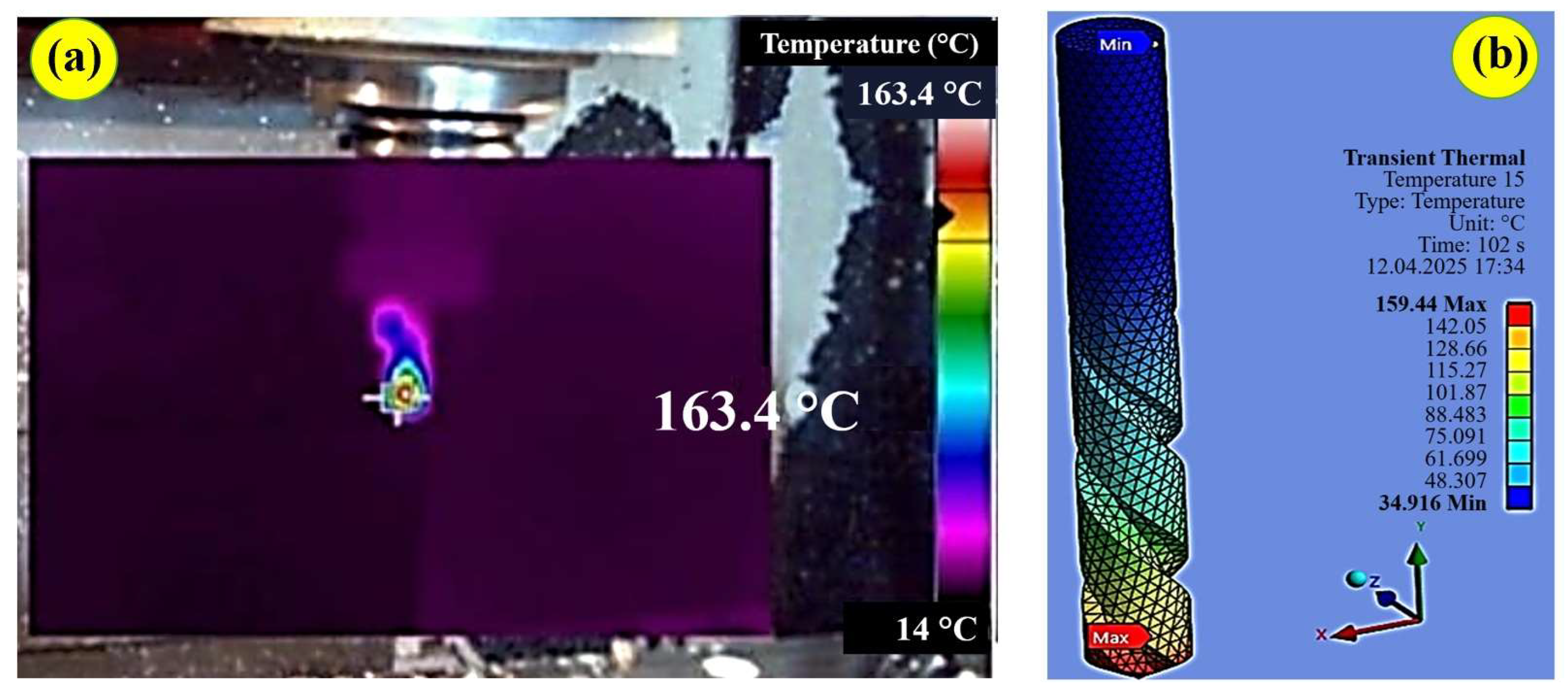
To validate the current model, the FEM solution was compared with the results reported by Kemal Yaman and Nuri Bıçakçı [46]. In their study, an experimental investigation of the effect of the drilling tool clamping length on the temperature was conducted. The drills were operated on Ti6Al4V alloys in one hole each without coolant application, and the temperatures were observed using a thermal camera. The D8 × L60 drill bit tool was removed approximately 20 mm from the workpiece, and the measurements were taken at approximately 1 m. Under the same operating conditions, the current model achieved a maximum temperature of 159.44 °C, which corresponds to 163.4 °C, as shown in Figure 6. The current model achieved a 2.4% error compared with [46], indicating its suitability for validation.
Figure 6.
Validation between (a) previous thermal camera results [46] and (b) the current simulation.
3. Results and Discussion
3.1. Maximum Temperature Profile
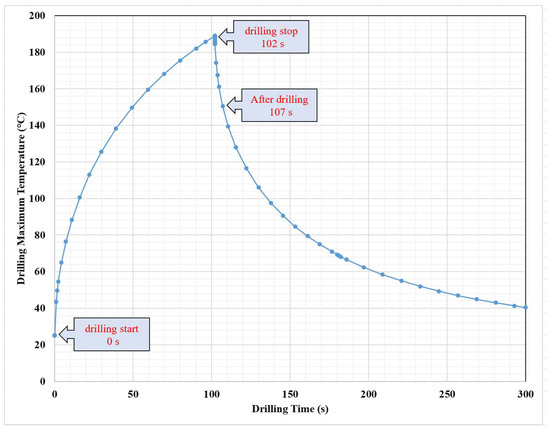
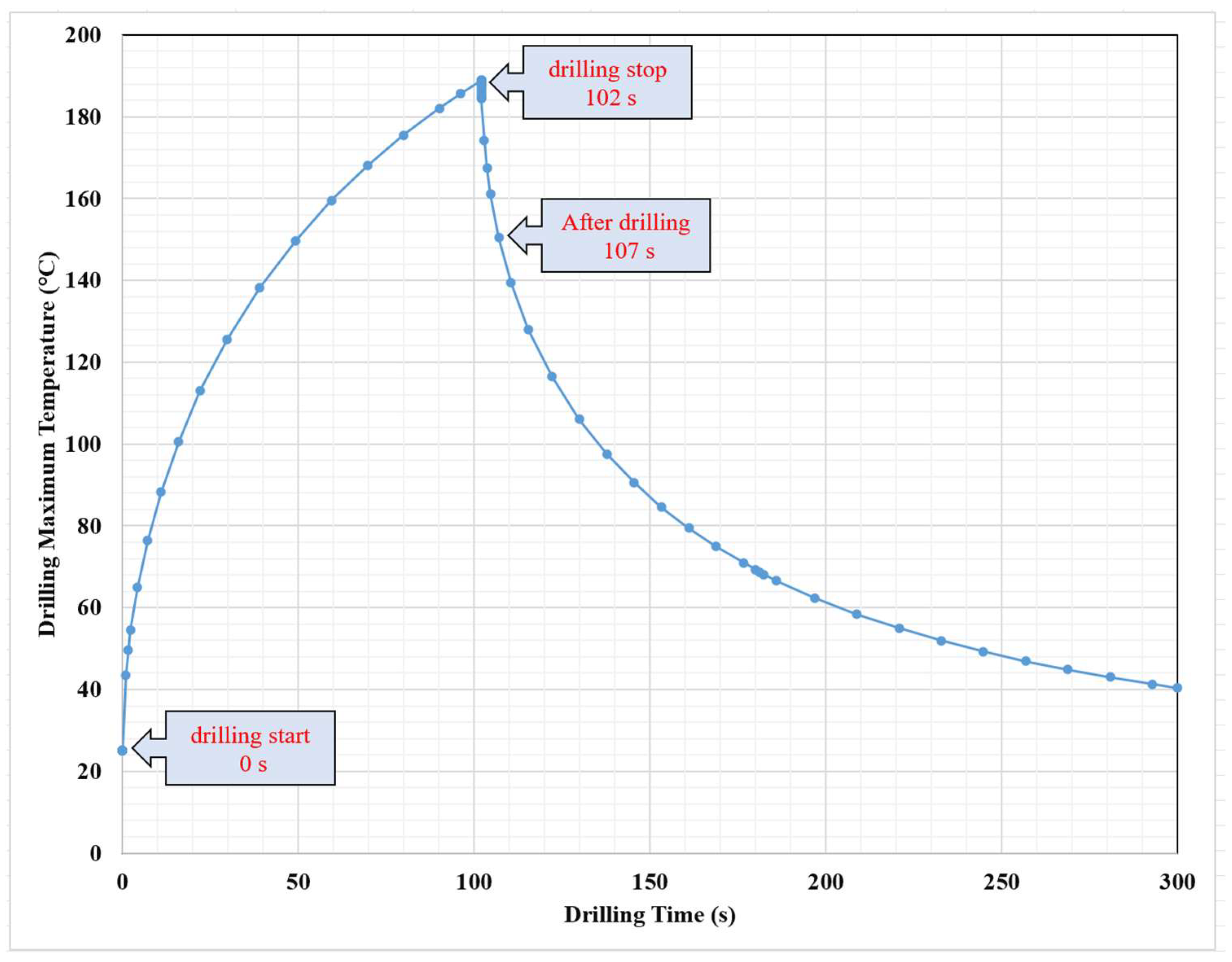
The finite element method (FEM) was used to simulate the temperature distribution over the surface of a D8 × L60 drill bit and the surrounding workpiece during and after the drilling process. For clarity, four key moments in the drilling process were focused on. The start time (0 s) was the beginning of the drilling process. The end time (102 s) signified the completion of the drilling process. The time at which the drilling tool left the workpiece (assuming 5 s) was 107 s. This period indicates the start of the cooling process. Finally, the time taken for the drilling tool’s temperature to reach a steady state before cooling to room temperature was approximately 300 s. Figure 7 indicates the main key moments in the drilling process. From the simulation of the drill bit and workpiece, where the thermal field distributions were captured at different time intervals (102 s, 107 s, and 300 s), it could be observed that the maximum temperatures were concentrated at the drill cone and cutting edges at the end of the drilling process at 102 s. A significant drop in temperature was also evident on the surface of the crater at 107 s. The apparent flattening of the temperature field then occurred as a result of uniform cooling, and no localized hot spots were observed until 300 s was reached.
Figure 7.
Simulated maximum temperature profile on D8 × L60 drill bit surface (FEM analysis).
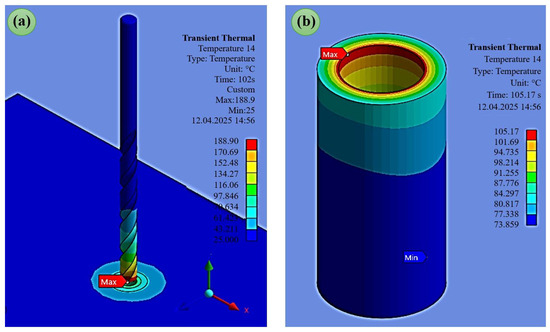
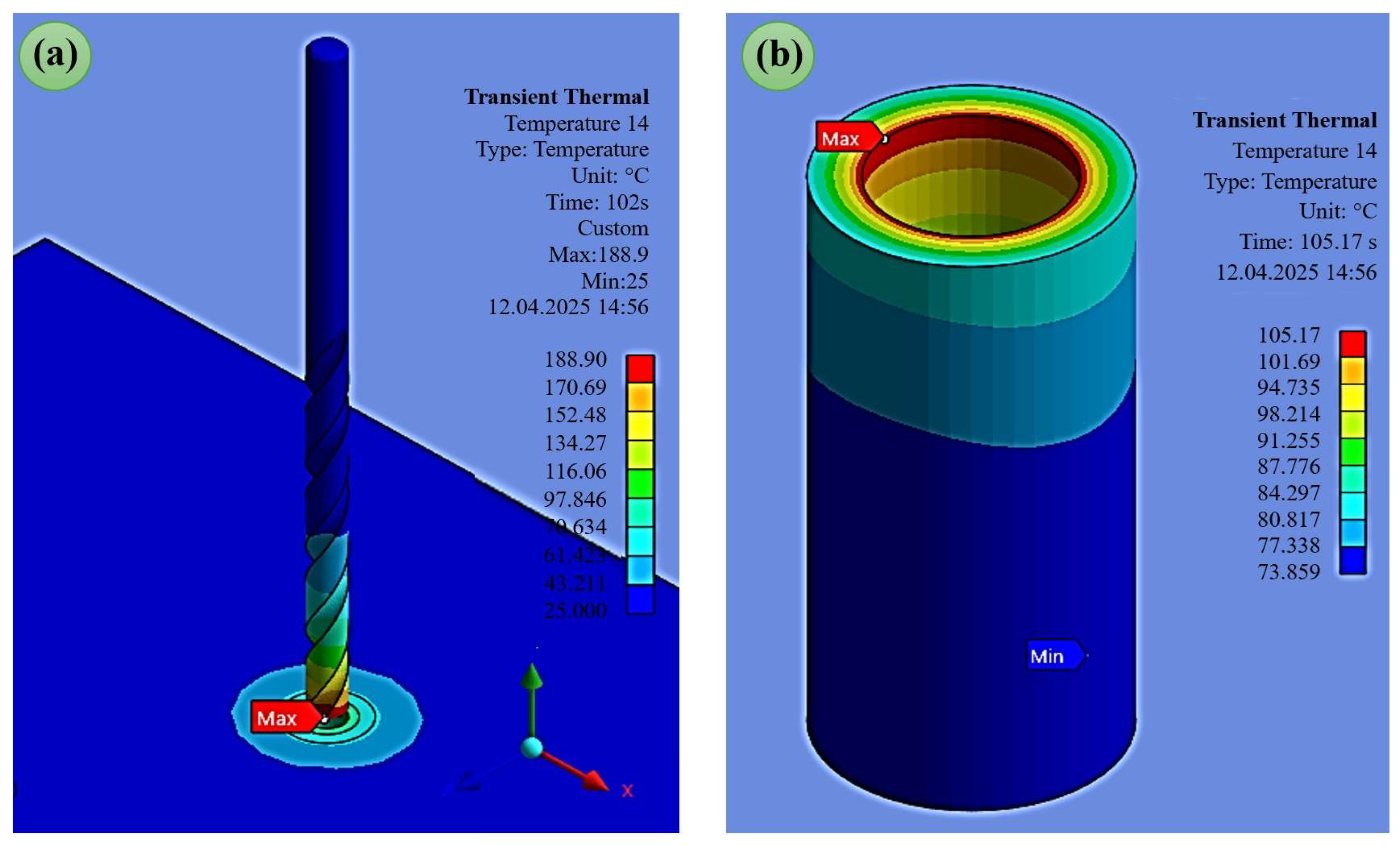
In the first stage of the drilling process, the simulation results showed a significant, rapid increase between the start time (0 s) and the end time (102 s), with the temperature reaching 188.9 °C at the conical surface of the drill bit, as shown in Figure 8a. The conical region of the drill bit is the area of the tool that experiences the most friction. This friction is accompanied by significant plastic deformation on the workpiece, which accounts for this significant temperature increase [37,38,47,48].
Figure 8.
Numerical temperature distribution at 102 s (during drilling) for (a) D8 × L60 drill surface and (b) sample hole.
Meanwhile, the maximum temperature inside the drilled hole of the workpiece was recorded at 105.17 °C at 102 s (Figure 8b). The significant temperature difference between the drilling tool and the workpiece is due to their lower thermal conductivity and lower heat input compared to the drill bit [39,40,49,50]. It can be concluded that the thermal conductivity is approximately 25 W/m°C for AISI 420 (the drilling tool) and about 7 W/m°C for Ti-6Al-4V (the workpiece), corresponding to temperatures of 188.9 °C and 105.17 °C, respectively, as shown in Figure 3b,d.
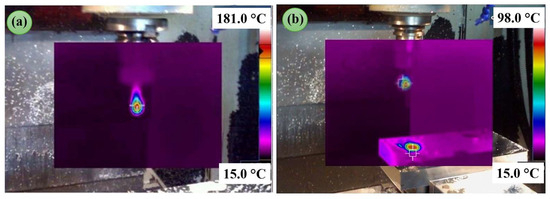
The results achieved were close to those described by Kemal Yaman and Nuri Bıçakçı [46] when they used a thermal camera, similar operating conditions, and an HSS drill without a coolant (dry). Figure 9a indicates the maximum temperature of the HSS drill bit recorded by the thermal camera after drilling without a coolant (dry). In contrast, Figure 8b indicates the corresponding maximum temperature of the workpiece surface. When comparing Figure 7 and Figure 8, it can be seen that the achieved maximum temperature for the FEM model was 188.9 °C (at 102 s), while the thermal camera recorded 181.0 °C, which indicates an error of around 4.1%. The difference of approximately 4.1% indicates excellent agreement and validates the accuracy of the FEM model in capturing the heat generation and distribution at the drill tip. The agreement between the FEM results and thermal camera results supports the selected FEM, indicating the correct selection of material properties, contact mechanics, boundary conditions, mesh refinement, and thermal load application used in the FEM simulation compared with the realistic thermal camera. The error achieved may not be attributed to the FEM model. Rather, it may be due to the difference in the drilling tool material, where AISI 420 has lower thermal conductivity than HSS, especially at elevated temperatures. Moreover, HSS tools conduct more heat away from the cutting zone, reducing the local temperature rise on the workpiece surface [42,43,51,52]. Furthermore, the error may reflect certain measurement limitations, particularly in metal drilling environments.
Figure 9.
Thermal camera temperature distribution at end of drilling for (a) AISI 420 drill surface and (b) sample hole.
In contrast, the FEM’s maximum temperature was 105.17 °C, compared with 98.0 °C recorded by the thermal camera, where the error is around 6.8%. The high error rate here may be attributed to thermal camera limitations, as previously noted. By tracking the images taken by the thermal camera during the drilling process (Figure 9b), it can be found that the thermal camera was oriented similarly to the thermal camera used when measuring the temperature of the drill tip (Figure 8a). This renders the actual temperature inside the hole less reliable compared to that at the drill tip. Therefore, the recorded temperature was 98 °C, which was lower than expected.
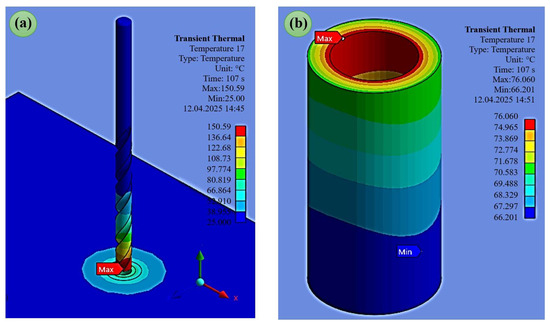
In the subsequent stage, the drilling tool is withdrawn from the drilled area in a hypothetical period of approximately 5 s. During this period, friction between the drilling tool and the workpiece is almost non-existent, leading to partial heat dissipation, primarily through conduction within the drill body and convection to the surrounding air (Q1 + Q2) [44,45,53,54]. The workpiece also begins to gradually decrease in temperature (Q3 + Q4). As a result, the drill temperature dropped to 150.59 °C in 107 s (Figure 9a). As in the drilling stage, the temperature in the workpiece was also lower than in the drill, reaching a maximum temperature of 76.06 °C (Figure 10b).
Figure 10.
Numerical temperature distribution at 107 s (after drilling) for (a) D8 × L60 drill surface and (b) sample hole.
Comparing the difference between the maximum temperatures of the drill surface and the hole surface for the first stage (drilling process) and the second stage (after drilling), it is noted that the maximum temperature of the drill surface decreased by 20%. In comparison, the maximum temperature of the hole surface decreased by a further 27% as the drilling tool was composed of AISI 420, which is a martensitic stainless steel known for its moderate thermal conductivity and high hardness [46,47,55,56]. After the tool retracts from the hole, the drill loses its heat source (cutting friction and plastic deformation), and the heat begins to dissipate via conduction within the drill body and natural convection to the air. Due to its higher mass and larger geometry, the drill retains heat for a longer period, resulting in a moderate decrease (20%) in the maximum surface temperature within 5 s. Regarding the whole surface, it is composed of Ti-6Al-4V, which is a titanium alloy with low thermal conductivity (see Figure 3); this leads to rapid local heating but limited heat dissipation through the bulk material.
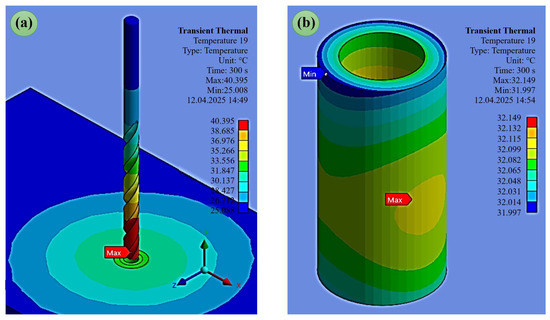
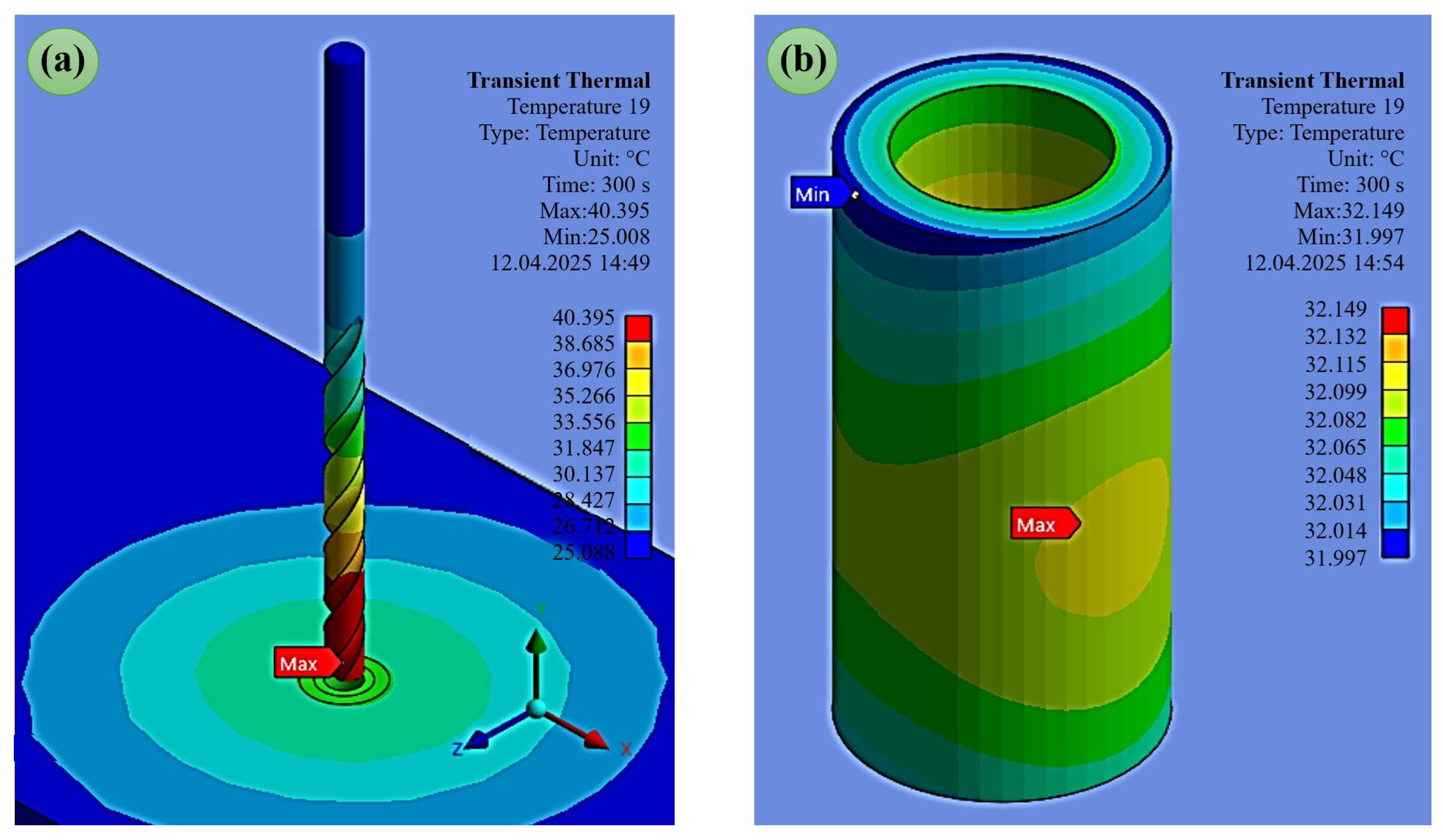
In the subsequent stage, the drill bit undergoes natural cooling between 107 s and approximately 300 s. This cooling is the result of free convection in the surrounding environment [57]. After approximately 300 s from the start of the drilling process, the temperatures are observed to approach stability and slightly decrease, especially after reaching 40 °C, approaching room temperature (Figure 10a and Figure 11b). As is well known, the distinguishing feature of the free convection cooling process is that the temperature decreases slowly over time, requiring a long time to reach room temperature, even though the recorded temperature is close to it [58].
Figure 11.
Numerical temperature distribution at 300 s (after cooling) for (a) D8 × L60 drill surface and (b) sample hole.
To further confirm the accuracy of the thermal model, additional experimental measurements were taken and compared with the numerical simulation results under the same drilling conditions. The temperature distribution was examined at three different times during the drilling process: while the process took place (102 s), immediately after the process (107 s), and after the cooling period (300 s). The highest temperatures from the simulation were compared with the same values acquired with a thermal camera at the sample hole and the D8 × L60 drill surface. The results show that the numerical predictions and the experimental measurements are very close, with differences of about 4% to 7%. This strong correlation shows that the proposed thermal model is accurate and reliable in predicting how the temperature will change during drilling and the cooling stage that follows. Table 4 compares the maximum temperatures obtained from the simulation and the thermal camera, along with the corresponding error percentages.
Table 4.
Maximum temperature comparison between simulation and thermal camera.
3.2. Effect of Drill Length on Thermal Response
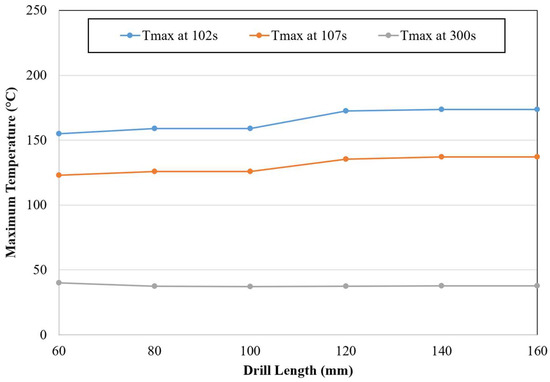
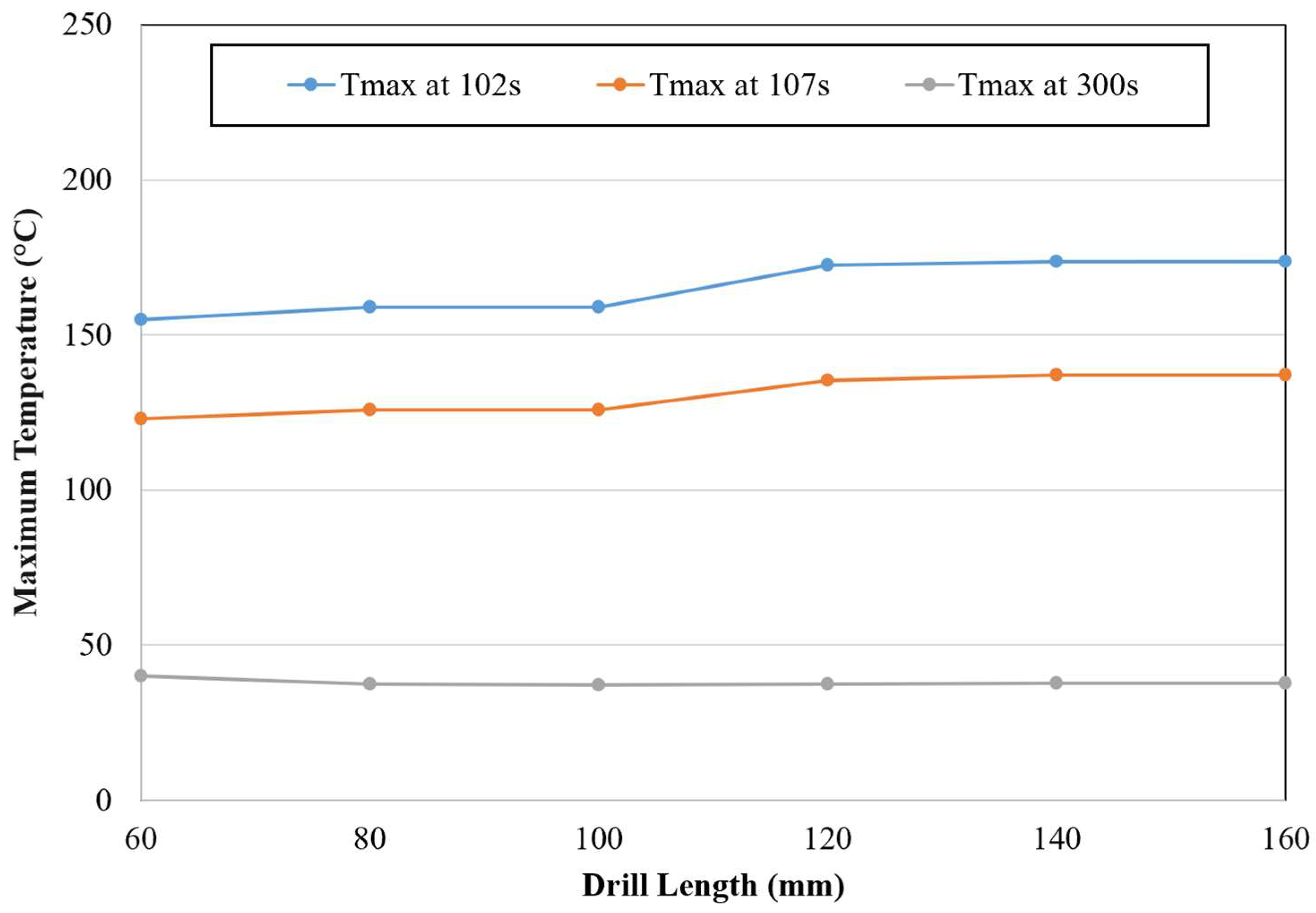
To study the effect of the drill length on the maximum generated temperatures, an FEM simulation was performed, varying the length from 60 mm to 160 mm in increments of 20 mm. The drill diameter was kept constant at 8 mm, and the tool material used was AISI 420, a martensitic stainless steel with temperature-dependent thermal conductivity and specific heat capacity. Temperatures were also tested at three times: 102 s (end of drilling), 107 s (5 s after tool withdrawal), and 300 s (cooling). The tool’s thermal behavior varied depending on its length, as shown in Figure 12. A slight increase in the maximum temperature was observed between the lengths of 60 mm and 100 mm. Then, this slight increase was followed by a significant increase in the maximum temperature between the lengths of 100 mm and 120 mm. It was also observed that an increase in length greater than 120 mm did not significantly affect the maximum temperature. It remained nearly constant, even as the tool length increased to 160 mm. Therefore, when the drill is short, its surface area and mass are small, leading to faster heat conduction toward the drill chuck and tool holder [59]. The increased length introduces greater thermal resistance, slowing heat transfer away from the cutting area and the tool holder, resulting in greater heat buildup and impeded heat flow, leading to a significant temperature increase. Despite the longer-than-usual tool length (greater than 120 mm), this increase is insignificant, and thermal throttling remains at the cutting area, as the increased thermal path does not necessarily lead to a significant temperature increase. Therefore, the temperature stabilizes, despite the increased drill length, when the system reaches near-constant thermal saturation, where the rate of heat generation equals the rate of heat loss through convection and internal conduction.
Figure 12.
Effect of drill length on thermal response during drilling (at 102 s), after drilling (at 107 s), and after cooling (at 300 s).
In addition, the simulation results show that the highest temperature of the drill bit stabilizes at approximately 40 °C, regardless of the drilling length (L = 60–160 mm), at the end of the natural cooling phase (300 s). This nearly constant temperature behavior can be explained by the decreasing temperature differential between the drilling surface and the surrounding air, which leads to thermal equilibrium [60]. Furthermore, after a sufficient cooling period (300 s), the drill bit body (regardless of its length) approaches the temperature of the surrounding air as the small residual heat trapped in the bits gradually dissipates. From 107 s onwards, the drill bit is not exposed to any heat input (friction or plastic deformation).
3.3. Effect of Drill Diameter on Thermal Response
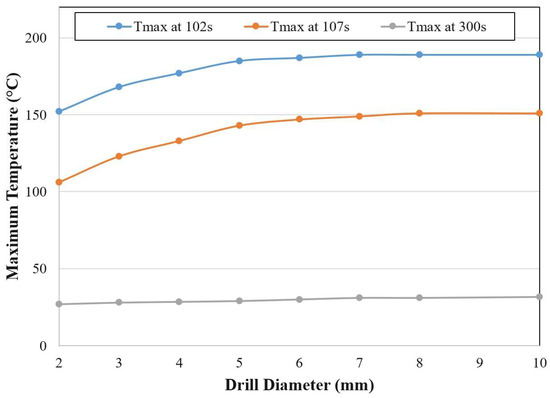
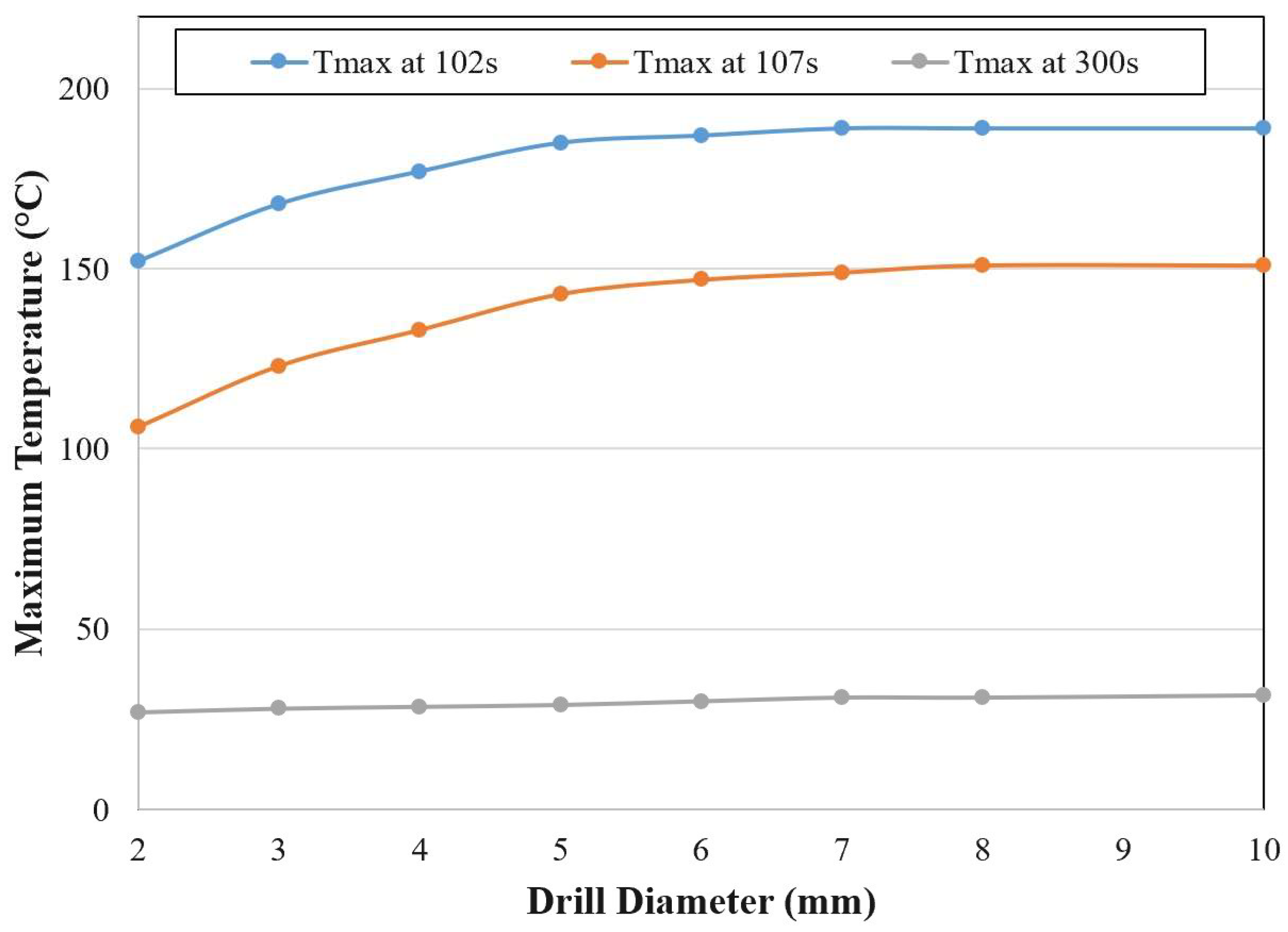
In this study, the drill diameter was varied from small to large sizes (up to 10 mm), while the drill material was kept constant as AISI 420 stainless steel, and the workpiece was composed of Ti-6Al-4V titanium alloy. Figure 13 shows the FEM’s maximum temperature values for the drill tips according to the drill diameter variation. The effect of the drill diameter on the maximum achieved temperature development can be described as parabolic behavior up to Ø5 mm. The maximum temperature becomes nearly constant despite further increases in the diameter of the drill up to 10 mm. This behavior can be explained by the fact that, when the diameter increases, the contact surface area between the drill and the workpiece increases due to higher frictional heat generation, which leads to a parabolic temperature rise. Despite increasing the diameter by more than 5 mm, the volume of the drill increases significantly, offering more mass to absorb and dissipate heat, which leads to delaying and dampening further temperature rises.
Figure 13.
Effect of drill diameter on thermal response during drilling (at 102 s), after drilling (at 107 s), and after cooling (at 300 s).
3.4. Optimum Tool Geometry
During the FEM thermal analysis, the temperatures in the drill bit and sample hole as a function of the drill length and diameter at different times were calculated, as shown in Table 5.
Table 5.
Time-dependent temperature distribution for various drill diameters (FEM).
In this study, the heatmap correlation matrix obtained from EDA was used to investigate the most efficient parameters and optimum tool geometry. The EDA reveals how the drill diameter and length affect the maximum temperatures at different stages of the drilling process. All EDA calculations were conducted using Python (v3.x) on the Google Colab platform.
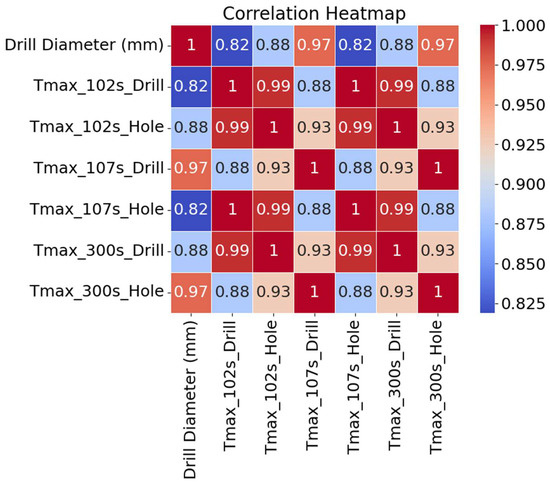
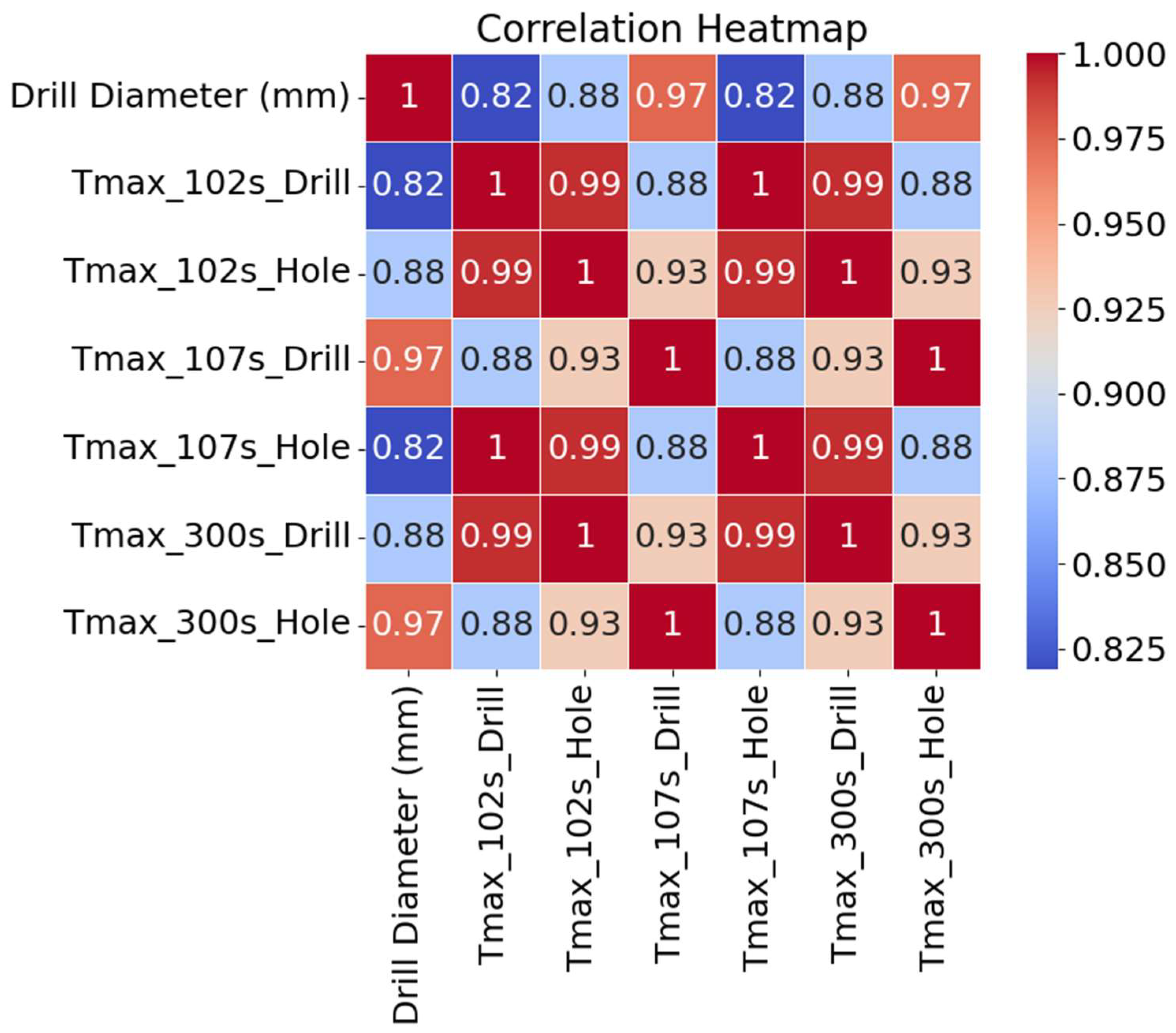
The variables included in the correlation matrix are the drill diameter, the drill length, and the maximum temperatures of the drill and hole. The maximum temperature includes Tmax_102s_Drill/Hole (at the end of drilling), Tmax_107s_Drill/Hole (after withdrawal), and Tmax_300s_Drill/Hole (after cooling), as shown in Figure 14. The interpretation of the correlations from the EDA heatmap (0 to 1) is as follows: the correlation is graded as very weak (0.00–0.29), weak (0.30–0.49), moderate (0.50–0.69), strong (0.70–0.89), or very strong (0.90–1.00). In the current results, the correlation varied between strong and very strong, where the values ranged between 0.82 and 1.00. Thus, the heatmap shows that the temperatures calculated by the simulation on the drilling tool and the hole have very strong, positive correlations. This generally indicates that, as the drilling tool temperature increases, the hole temperature also rises approximately in proportion. This strong correlation persists, being most evident at 107 and 300 s. Regarding the correlation between the drill diameter and temperature, this correlation was similar to the previous one and was also strong, especially at the time points of 102 and 107 s. Furthermore, the correlation values with Tmax_102s_Drill and Tmax_107s_Drill were 0.82 and 0.97, respectively, indicating that larger drill diameters are associated with higher tool temperatures. The drill diameter was also significantly, although the correlation was slightly weaker than for the effect of the drill length (values for Tmax_102s_Drill and Tmax_107s_Drill were 0.82 and 0.97). This effect also extended to the correlations with the drill temperature, which were generally weaker than for the tool temperature. The strength of the correlations at the 300 s mark indicates that heat is retained in both the tool and the hole. This could influence cooling strategies and thermal management post-drilling. According to Table 4 and the corresponding EDA heatmap correlation matrix (Figure 14), the optimum geometry at 102 s is Ø8 × L160—with the highest temperature at the drill and hole without thermal drop-off.
Figure 14.
Exploratory data analysis (EDA) heatmap correlation matrix for drill bit and sample hole at 102 s, 107 s, and 300 s.
Despite the optimum geometry at 300 s being indicated as Ø10 × L200 (resulting in slightly better residual heat in the hole), Ø8 × L160 remains comparable and more thermally efficient overall.
4. Conclusions
Despite the widespread desire to use metals with a high strength-to-weight ratio, such as titanium, this type of alloy often has poor thermal properties. The low thermal conductivity of titanium alloys makes machining difficult due to heat buildup at the contact area between the tool and the workpiece, especially in drilling operations. In this study, titanium alloy Ti-6Al-4V was chosen as the workpiece, and the drill bit was composed of AISI 420 stainless steel. This study examined in depth the peak temperatures generated in the drill and workpiece over successive time points: at the end of the drilling process (time: 102 s), at the time at which the drill was withdrawn from the workpiece (time: 107 s), and at the final stage, i.e., the period during which the temperature can approach laboratory temperatures (time: 300 s). A non-linear finite element simulation was used, and the results were verified by comparison with temperatures obtained using a thermal imaging camera. The most important conclusions from this study are as follows:
- The simulation model used achieved suitable convergence with the temperatures from the thermal camera, reaching approximately 95%. This reflects the accuracy of the model and the appropriate selection of physical and mechanical properties for both the tool metal (AISI 420 stainless steel) and the workpiece (Ti-6Al-4V titanium alloy).
- Although a wide range of drill tool lengths (60–160 mm) was explored, increasing the tool length beyond 120 mm did not have a significant thermal effect at any stage of the study, from the end of the drilling process until it approached the laboratory temperature. The situation was also similar for the temperature recorded in the drilled workpiece but at relatively lower temperatures.
- When exploring the effect of the tool diameter on the maximum temperatures generated, smaller diameters, up to 5 mm, had a greater thermal effect. However, increasing the diameter was not significantly effective. With continued increases up to 10 mm, the thermal growth becomes negligible and the process can be considered quasi-stationary.
- The exploratory data analysis (EDA) heatmap correlation matrix is a valuable tool for determining the most efficient variables and the optimal tool geometry. The optimum geometry at 102 s is Ø8 × L160—with the highest temperature at the drill and hole without thermal drop-off—and provides greater overall thermal efficiency.
Finally, despite the findings of this study, it should be noted that the coefficient of friction was assumed to be a nominal value (μ = 0.5) and was not experimentally measured during the drilling process. Furthermore, the heat generated in this study was solely due to friction, neglecting the heat generated by plastic shear deformation in the primary shear zone. Future studies can address these concerns.
Author Contributions
Conceptualization, H.K. and H.I.K.; methodology, A.A. and R.A.-S.; software, H.K. and H.I.K.; validation, R.A.-S. and M.A.; formal analysis, M.A. and H.I.K.; investigation, H.K.; resources, A.A. and H.I.K.; data curation, B.K.K.; writing—original draft preparation, A.A. and R.A.-S.; writing—review and editing, A.A. and B.K.K.; visualization, B.K.K. and R.A.-S.; supervision, R.A.-S.; project administration, R.A.-S. All authors have read and agreed to the published version of the manuscript.
Funding
No funding for this study.
Institutional Review Board Statement
Not applicable.
Informed Consent Statement
Not applicable.
Data Availability Statement
The data presented in this study are available on request.
Conflicts of Interest
The authors declare no conflicts of interest.
References
- Efa, D.A.; Gutema, E.M.; Lemu, H.G.; Gopal, M. Optimization of Titanium Alloy-Ti-6Al-4V to Minimize Mass, Maximize Stiffness and Frequency in Additive Manufacturing. Key Eng. Mater. 2024, 980, 3–13. [Google Scholar] [CrossRef] [Scilit]
- Tandecka, K.; Kacalak, W.; Wieczorowski, M.; Mathia, T.G. Evaluation of Surface Finishing Efficiency of Titanium Alloy Grade 5 (Ti–6Al–4V) After Superfinishing Using Abrasive Films. Materials 2024, 17, 5198. [Google Scholar] [CrossRef] [Scilit] [PubMed]
- Yuan, C.G.; Pramanik, A.; Basak, A.K.; Prakash, C.; Shankar, S. Drilling of titanium alloy (Ti6Al4V)—A review. Mach. Sci. Technol. 2021, 25, 637–702. [Google Scholar] [CrossRef] [Scilit]
- Kumar, A.; Bhardwaj, R.; Joshi, S.S. A thermal model of drilling a titanium alloy (Ti-6Al-4V) under different cooling techniques. J. Micromanufactur. 2023, 6, 93–100. [Google Scholar] [CrossRef] [Scilit]
- Masar, A.; Mahmood, A. Strategic analysis of limitations in high-performance machining systems. Results Eng. 2025, 27, 105991. [Google Scholar] [CrossRef] [Scilit]
- Alhafadhi, M.; Alsigar, M.; Zahraa A, O.; Bézi, Z.; Sahm, A.A.A.; Reddy, P.R. Influence of heat input and preheating on residual stresses in pipe weld. Pollack Period. 2024, 19, 42–47. [Google Scholar] [CrossRef] [Scilit]
- Matuszak, J.; Zaleski, K.; Zyśko, A. Investigation of the Impact of High-Speed Machining in the Milling Process of Titanium Alloy on Tool Wear, Surface Layer Properties, and Fatigue Life of the Machined Object. Materials 2023, 16, 5361. [Google Scholar] [CrossRef] [Scilit]
- Ramulu, M.; Branson, T.; Kim, D. A study on the drilling of composite and titanium stacks. Compos. Struct. 2001, 54, 67–77. [Google Scholar] [CrossRef] [Scilit]
- Alsigar, M.; Alhafadhi, M.; Pereverzev, P. Developing Optimal Automated Cycles for Achieving Maximum Efficiency Using Dynamic Programming. In Proceedings of the 10th International Conference on Industrial Engineering; Springer: Berlin/Heidelberg, Germany, 2024; pp. 542–554. [Google Scholar] [CrossRef] [Scilit]
- Bahedh, A.S.; Kheioon, I.A.; Munahi, B.S.; Al-Sabur, R. Modelling and controlling of modified robotic gripper mechanism using intelligent technique scheme. In Proceedings of the 2022 Iraqi International Conference on Communication and Information Technologies IICCIT 2022, Basrah, Iraq, 7–8 September 2022. [Google Scholar] [CrossRef] [Scilit]
- Al-Sabur, R.; Serier, M. Material Sustainability During Friction Stir Joining. In Sustainable Machining and Green Manufacturing; Wiley Online Library: Hoboken, NJ, USA, 2024. [Google Scholar] [CrossRef] [Scilit]
- Khalaf, H.I.; Al-Sabur, R. Friction Stir Techniques Exploring Fracture and Fatigue Behavior in Hybrid Composite Joints. In Utilizing Friction Stir Techniques for Composite Hybridization; IGI Global: Hershey, PA, USA, 2024; Chapter 7; pp. 108–134. [Google Scholar] [CrossRef] [Scilit]
- Saffar, S.; Abdullah, A. Experimental investigation on Ultrasonic Assisted Drilling (UAD). J. Braz. Soc. Mech. Sci. Eng. 2021, 43, 351. [Google Scholar] [CrossRef] [Scilit]
- Mao, X.; Almeida, S.; Mo, J.; Ding, S. The state of the art of electrical discharge drilling: A review. Int. J. Adv. Manuf. Technol. 2022, 121, 2947–2969. [Google Scholar] [CrossRef] [Scilit]
- Roldan-Jimenez, L.; Bañon, F.; Valerga, A.P.; Fernandez-Vidal, S.R. Design and Analysis of CFRP Drilling by Electrical Discharge Machining. Polymers 2022, 14, 1340. [Google Scholar] [CrossRef] [Scilit]
- Smart, E.F.; Trent, E.M. Temperature distribution in tools used for cutting iron, titanium and nickel. Int. J. Prod. Res. 1975, 13, 265–290. [Google Scholar] [CrossRef] [Scilit]
- Zhu, Z.; Sun, X.; Guo, K.; Sun, J.; Li, J. Recent Advances in Drilling Tool Temperature: A State-of-the-Art Review. Chin. J. Mech. Eng. 2022, 35, 148. [Google Scholar] [CrossRef] [Scilit]
- Szwajka, K.; Zielińska-Szwajka, J.; Trzepieciński, T. Experimental Analysis of Smart Drilling for the Furniture Industry in the Era of Industry 4.0. Materials 2024, 17, 2033. [Google Scholar] [CrossRef] [Scilit]
- Zhang, P.F.; Churi, N.J.; Pei, Z.J.; Treadwell, C. Mechanical drilling processes for titanium alloys: A literature review. Mach. Sci. Technol. 2008, 12, 417–444. [Google Scholar] [CrossRef] [Scilit]
- Li, R.; Shih, A.J. Tool temperature in titanium drilling. J. Manuf. Sci. Eng. 2007, 129, 740–749. [Google Scholar] [CrossRef] [Scilit]
- Li, R.; Shih, A.J. Spiral point drill temperature and stress in high-throughput drilling of titanium. Int. J. Mach. Tools Manuf. 2007, 47, 2005–2017. [Google Scholar] [CrossRef] [Scilit]
- Patne, H.S.; Kumar, A.; Karagadde, S.; Joshi, S.S. Modeling of temperature distribution in drilling of titanium. Int. J. Mech. Sci. 2017, 133, 598–610. [Google Scholar] [CrossRef] [Scilit]
- Okamura, K.; Sasahara, H. Prediction of drilling temperature during low-frequency vibration drilling of titanium alloy. J. Adv. Mech. Des. Syst. Manuf. 2017, 11, JAMDSM0036. [Google Scholar] [CrossRef] [Scilit]
- Zeilmann, R.P.; Weingaertner, W.L. Analysis of temperature during drilling of Ti6Al4V with minimal quantity of lubricant. J. Mater. Process. Technol. 2006, 179, 124–127. [Google Scholar] [CrossRef] [Scilit]
- Mathew, N.T.; Laxmanan, V. Temperature rise in workpiece and cutting tool during drilling of titanium aluminide under sustainable environment. Mater. Manuf. Process. 2018, 33, 1765–1774. [Google Scholar] [CrossRef] [Scilit]
- Kumar, A.; Bhardwaj, R.; Joshi, S.S. Thermal modeling of drilling process in titanium alloy (Ti-6Al-4V). Mach. Sci. Technol. 2020, 24, 341–365. [Google Scholar] [CrossRef] [Scilit]
- Lazoglu, I.; Poulachon, G.; Ramirez, C.; Akmal, M.; Marcon, B.; Rossi, F.; Outeiro, J.C.; Krebs, M. Thermal analysis in Ti-6Al-4V drilling. CIRP Ann. Manuf. Technol. 2017, 66, 105–108. [Google Scholar] [CrossRef] [Scilit]
- Kolesnyk, V.; Peterka, J.; Alekseev, O.; Neshta, A.; Xu, J.; Lysenko, B.; Sahul, M.; Martinovič, J.; Hrbal, J. Application of ANN for Analysis of Hole Accuracy and Drilling Temperature When Drilling CFRP/Ti Alloy Stacks. Materials 2022, 15, 1940. [Google Scholar] [CrossRef] [Scilit]
- Kolesnyk, V.; Peterka, J.; Kuruc, M.; Šimna, V.; Moravčíková, J.; Vopát, T.; Lisovenko, D. Experimental study of drilling temperature, geometrical errors and thermal expansion of drill on hole accuracy when drilling cfrp/ti alloy stacks. Materials 2020, 13, 3232. [Google Scholar] [CrossRef] [Scilit]
- Işik, B.; Kentli, A. The prediction of surface temperature in drilling of Ti6Al4V. Arch. Metall. Mater. 2014, 59, 467–471. [Google Scholar] [CrossRef] [Scilit]
- Muhammad, R.; Ahmed, N.; Shariff, Y.M.; Silberschmidt, V.V. Finite-Element Analysis of Forces in Drilling of Ti-Alloys at Elevated Temperature. Solid State Phenom. 2012, 188, 250–255. [Google Scholar] [CrossRef] [Scilit]
- Zhu, Z.; Zhu, Y.; Sun, X.; Gao, C.; Lin, Z.; He, B. 3D finite element simulation for tool temperature distribution and chip formation during drilling of Ti6Al4V alloy. Int. J. Adv. Manuf. Technol. 2022, 121, 5155–5169. [Google Scholar] [CrossRef] [Scilit]
- Chang, X.; Zhou, J.; Guo, Y.; He, S.; Wang, L.; Chen, Y.; Tang, M.; Jian, R. Heat transfer behaviors in horizontal wells considering the effects of drill pipe rotation, and hydraulic and mechanical frictions during drilling procedures. Energies 2018, 11, 2414. [Google Scholar] [CrossRef] [Scilit]
- Miller, S.F.; Li, R.; Wang, H.; Shih, A.J. Experimental and numerical analysis of the friction drilling process. J. Manuf. Sci. Eng. 2006, 128, 802–810. [Google Scholar] [CrossRef] [Scilit]
- Aarsnes, U.J.F.; Auriol, J.; Di Meglio, F.; Shor, R.J. Estimating friction factors while drilling. J. Pet. Sci. Eng. 2019, 179, 80–91. [Google Scholar] [CrossRef] [Scilit]
- Serier, M.; Jassim, R.J.; Al-Sabur, R.; Siddiquee, A.N. Thermal Diffusivity Modeling for Aluminum AA6060 Plates During Friction Stir Welding. AIP Conf. Proc. 2024, 3051, 070004. [Google Scholar] [CrossRef] [Scilit]
- Chikh, A.; Serier, M.; Al-Sabur, R.; Siddiquee, A.N.; Gangil, N. Thermal Modeling of Tool-Work Interface during Friction Stir Welding Process. Russ. J. Non-Ferr. Met. 2022, 63, 690–700. [Google Scholar] [CrossRef] [Scilit]
- Li, C.; Zhao, H.; Ma, H.; Hou, Y.; Zhang, Y.; Yang, M.; Zhang, X. Simulation study on effect of cutting parameters and cooling mode on bone-drilling temperature field of superhard drill. Int. J. Adv. Manuf. Technol. 2015, 81, 2027–2038. [Google Scholar] [CrossRef] [Scilit]
- Bakavos, D.; Chen, Y.; Babout, L.; Prangnell, P. Material interactions in a novel pinless tool approach to friction stir spot welding thin aluminum sheet. Metall. Mater. Trans. A Phys. Metall. Mater. Sci. 2011, 42, 1266–1282. [Google Scholar] [CrossRef] [Scilit]
- Cheung, F.Y.; Zhou, Z.F.; Geddam, A.; Li, K.Y. Cutting edge preparation using magnetic polishing and its influence on the performance of high-speed steel drills. J. Mater. Process. Technol. 2008, 208, 196–204. [Google Scholar] [CrossRef] [Scilit]
- Yaman, K.; Bıçakçı, N.; Özgedik, A. Matkap Boyunun Delik Toleranslarına Etkisinin İncelenmesi. J. Polytech. 2017, 20, 765–775. [Google Scholar] [CrossRef] [Scilit]
- Schmidt, H.; Hattel, J.; Wert, J. An analytical model for the heat generation in friction stir welding. Model. Simul. Mat. Sci. Eng. 2004, 12, 143–157. [Google Scholar] [CrossRef] [Scilit]
- Klobčar, D.; Tušek, J.; Smolej, A.; Simončič, S. Parametric study of FSSW of aluminium alloy 5754 using a pinless tool. Weld. World 2015, 59, 269–281. [Google Scholar] [CrossRef] [Scilit]
- Chen, C.; Kovacevic, R. Thermomechanical modelling and force analysis of friction stir welding by the finite element method. Proc. Inst. Mech. Eng. C J. Mech. Eng. Sci. 2004, 218, 509–519. [Google Scholar] [CrossRef] [Scilit]
- Ishfaq, K.; Anjum, I.; Pruncu, C.I.; Amjad, M.; Kumar, M.S.; Maqsood, M.A. Progressing towards sustainable machining of steels: A detailed review. Materials 2021, 14, 5162. [Google Scholar] [CrossRef] [Scilit]
- Yaman, K.; Bıçakçı, N. Experimental investigation of the effect of tool clamping length on tool wear, hole tolerances and temperature increase on the tool in drilling operation. In Proceedings of the 4th International Eurasian Conference on Science, Engineering and Technology (EurasianSciEnTech 2022), Ankara, Turkey, 14–16 December 2022; Doğan, M., Ed.; EurasianSciEnTec: Ankara, Turkey, 2022; pp. 498–513. Available online: www.EurasianSciEnTech.org (accessed on 12 March 2026).
- Panagopoulos, G.S.; Panagopoulou, M.S.; Nikolakopoulos, P.G. Friction-wear modeling in drilling process of H-13 tool steel. IOP Conf. Ser. Mater. Sci. Eng. 2021, 1037, 012013. [Google Scholar] [CrossRef] [Scilit]
- Kim, G.; Kim, T.G.; Lee, S.W.; Min, B.K. Effect of workpiece preheating on tool wear and delamination at the hole exit in high feed drilling of carbon fiber reinforced plastics with diamond-coated tools. J. Manuf. Process. 2022, 74, 233–243. [Google Scholar] [CrossRef] [Scilit]
- Festas, A.; Ramos, A.; Davim, J.P. Machining of titanium alloys for medical application—A review. Proc. Inst. Mech. Eng. Part B J. Eng. Manuf. 2022, 236, 309–318. [Google Scholar] [CrossRef] [Scilit]
- Akula, S.; Nayak, S.N.; Bolar, G.; Managuli, V. Comparison of conventional drilling and helical milling for hole making in Ti6Al4V titanium alloy under sustainable dry condition. Manuf. Rev. 2021, 8, 12. [Google Scholar] [CrossRef] [Scilit]
- Grzesik, W. Advanced Machining Processes of Metallic Materials: Theory, Modelling and Applications; Elsevier: Amsterdam, The Netherlands, 2008. [Google Scholar] [CrossRef] [Scilit]
- Rahman, A.Z.; Jauhari, K.; Al Huda, M.; Untariyati, N.A.; Azka, M.; Rusnaldy, R.; Widodo, A. Correlation Analysis of Vibration Signal Frequency with Tool Wear During the Milling Process on Martensitic Stainless Steel Material. Arab. J. Sci. Eng. 2024, 49, 10573–10586. [Google Scholar] [CrossRef] [Scilit]
- Hou, G.; Luo, B.; Zhang, K.; Luo, Y.; Liu, P.; Cao, S.; Li, Y. Effects of heat accumulation on the characteristics of hole wall temperature and damages in drilling of UD CFRP. Int. J. Adv. Manuf. Technol. 2021, 115, 1529–1546. [Google Scholar] [CrossRef] [Scilit]
- Yu, J.; Pan, Z.; Ye, W.; Li, Q.; Wu, Z. Dynamic temperature field and drilling damage mechanism of plain woven carbon/glass hybrid composites. Compos. Struct. 2023, 304, 116375. [Google Scholar] [CrossRef] [Scilit]
- Cunha, A.; Marques, A.; Gasik, M.; Trindade, B. Influence of temperature processing on the microstructure and hardness of the 420 stainless steel produced by hot pressing. Mater. Manuf. Process. 2023, 38, 333–340. [Google Scholar] [CrossRef] [Scilit]
- Cunha, A.; Pinto, J.; Cerqueira, M.F.; Silva, F.S.; Trindade, B.; Carvalho, O. Development and production of a CNC machined 420 stainless steel reinforced with Cu by hot pressing. J. Mater. Sci. 2023, 58, 5048–5060. [Google Scholar] [CrossRef] [Scilit]
- Srivathsan, B.; G, T.; Ram, K.V.; R, H. Multiphase simulation of sustainable nanoenhanced ionic liquid coolants for improved thermal performance in Ti–6Al–4V alloy drilling. Heliyon 2023, 9, e23020. [Google Scholar] [CrossRef] [Scilit]
- Ding, B.; Feng, W.C.; Fang, J.; Li, S.Z.; Gong, L. How natural convection affect cooling performance of PCM heat sink. Int. J. Heat Mass Transf. 2022, 184, 122272. [Google Scholar] [CrossRef] [Scilit]
- Khomenko, V.L.; Ratov, B.T.; Pashchenko, O.A.; Davydenko, O.M.; Borash, B.R. Justification of drilling parameters of a typical well in the conditions of the Samskoye field. IOP Conf. Ser. Earth Environ. Sci. 2023, 1254, 012052. [Google Scholar] [CrossRef] [Scilit]
- Ma, D.; Zhu, S.; Zhang, K.; Zhu, L.; Zhou, Y. Application and research of titanium alloy oil drill pipes. J. Phys. Conf. Ser. 2023, 2639, 012059. [Google Scholar] [CrossRef] [Scilit]

Disclaimer/Publisher’s Note: The statements, opinions and data contained in all publications are solely those of the individual author(s) and contributor(s) and not of MDPI and/or the editor(s). MDPI and/or the editor(s) disclaim responsibility for any injury to people or property resulting from any ideas, methods, instructions or products referred to in the content. |
© 2026 by the authors. Licensee MDPI, Basel, Switzerland. This article is an open access article distributed under the terms and conditions of the Creative Commons Attribution (CC BY) license.