
Mechanical Response of FDM-Fabricated PEEK and Glass Fiber-Reinforced PEEK Under Varying Process Conditions

 ,
,  and
and
Abstract
1. Introduction
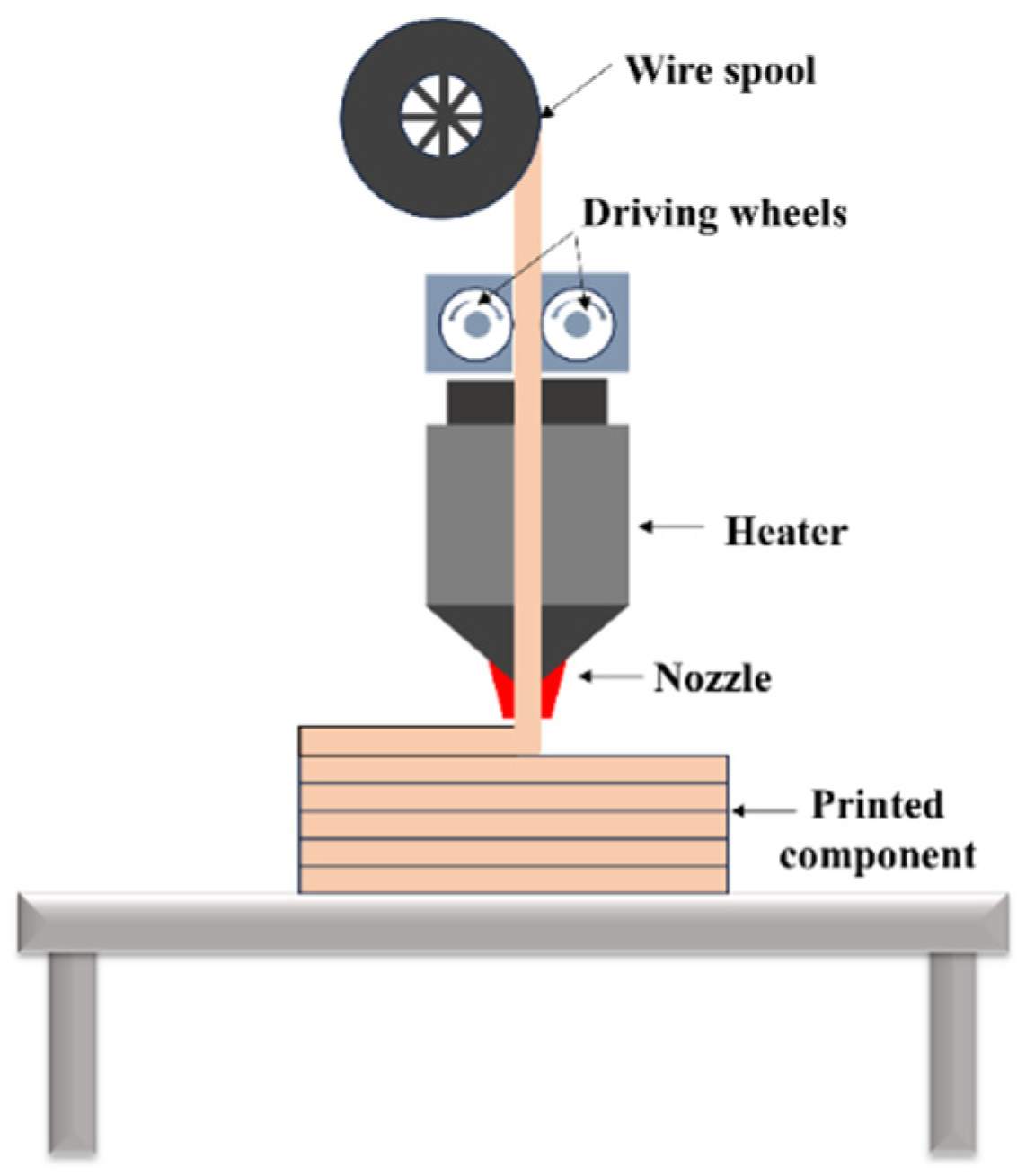
2. Materials and Methods
2.1. Materials
2.2. Physical and Mechanical Characterization
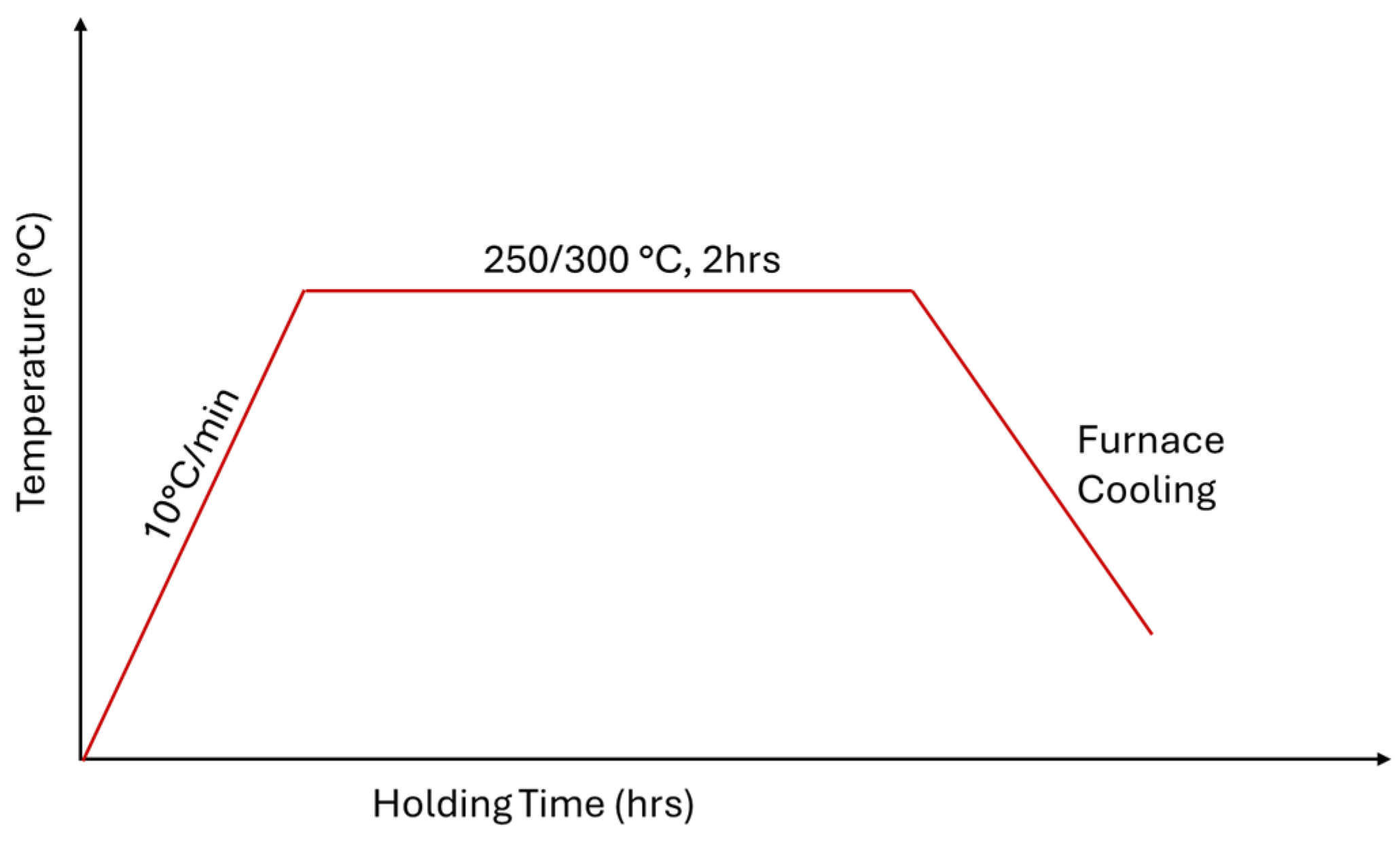
2.2.1. Deformation Due to Heat Treatment
2.2.2. Hardness
2.2.3. Tensile Strength
3. Results and Discussion
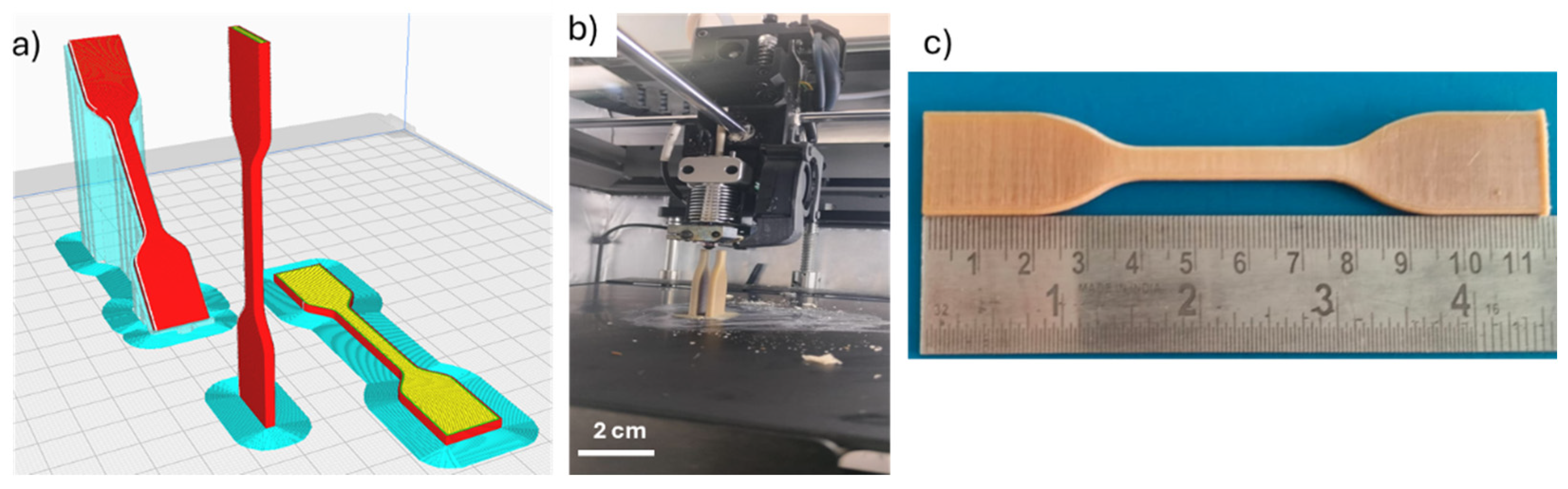
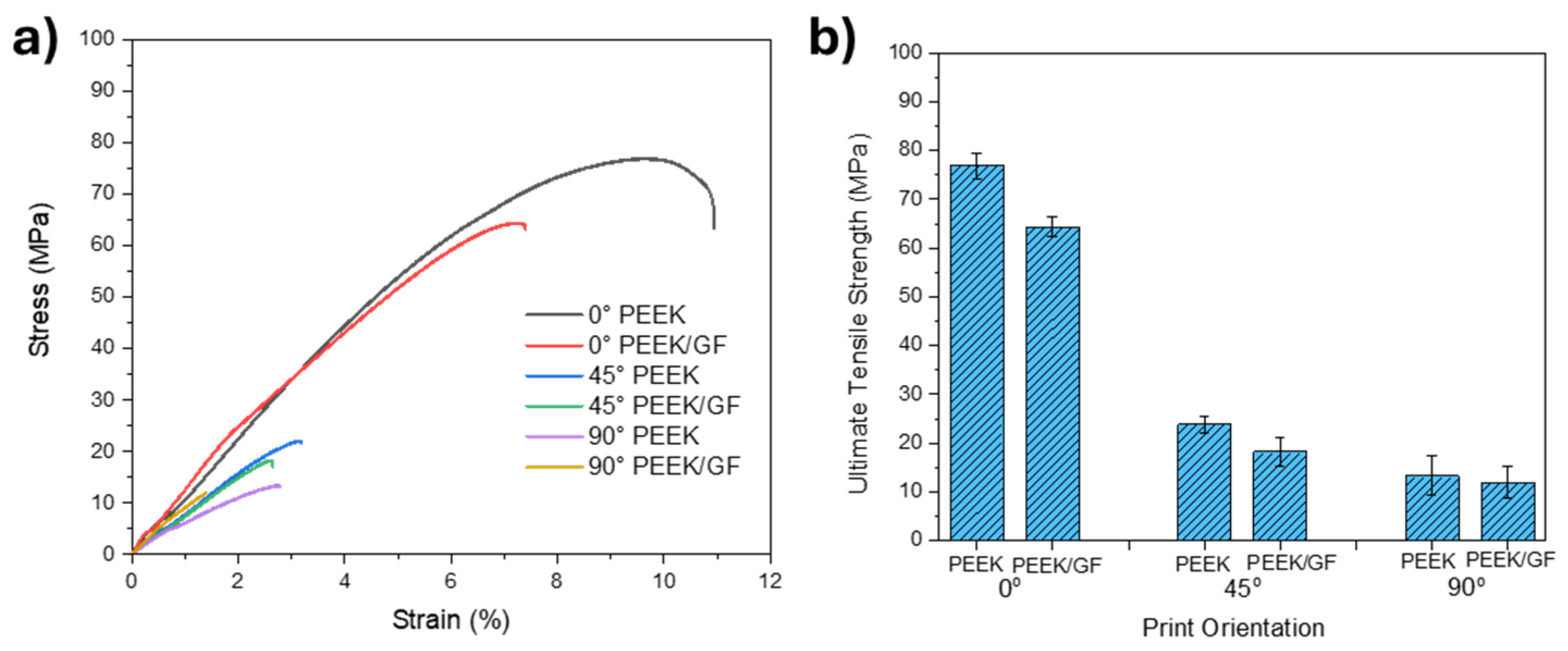
3.1. Effect of Print Orientation
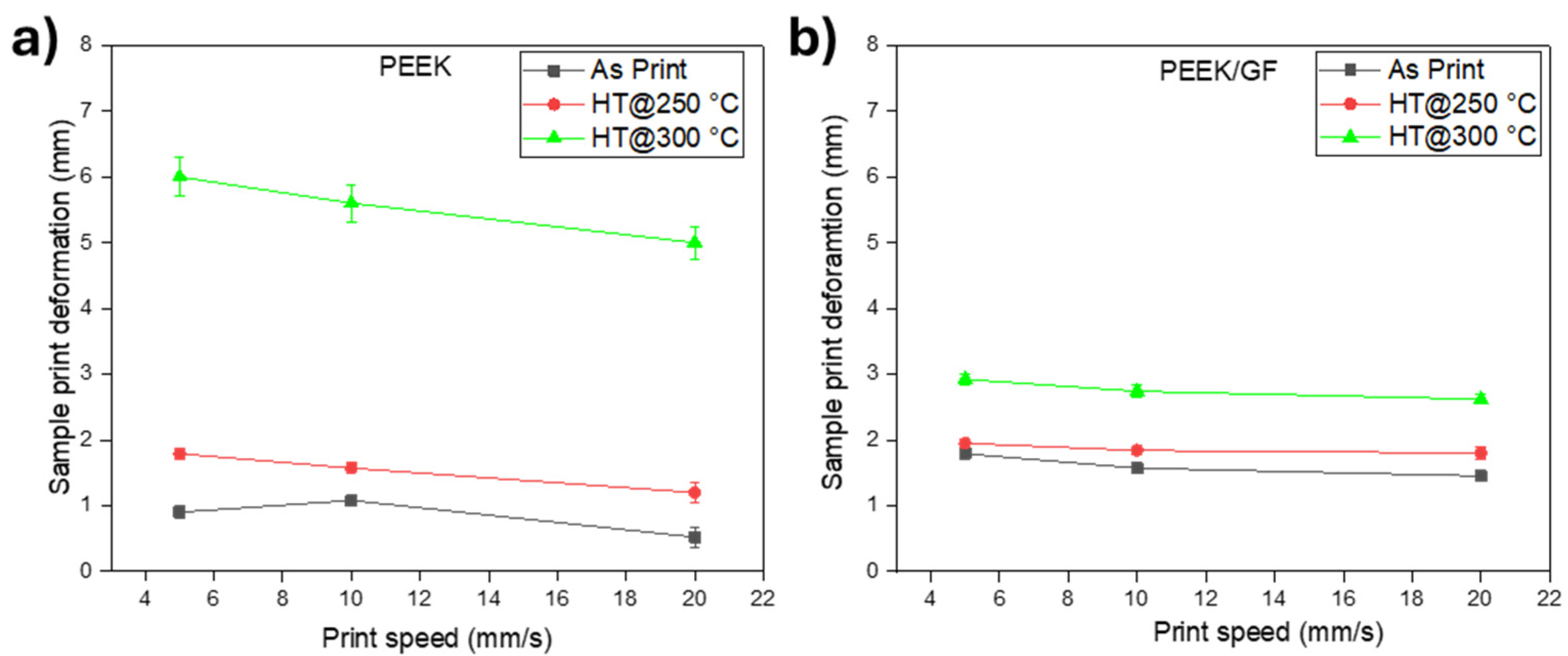
3.2. Deformation of 3D-Printed PEEK, PEEK/GF Samples
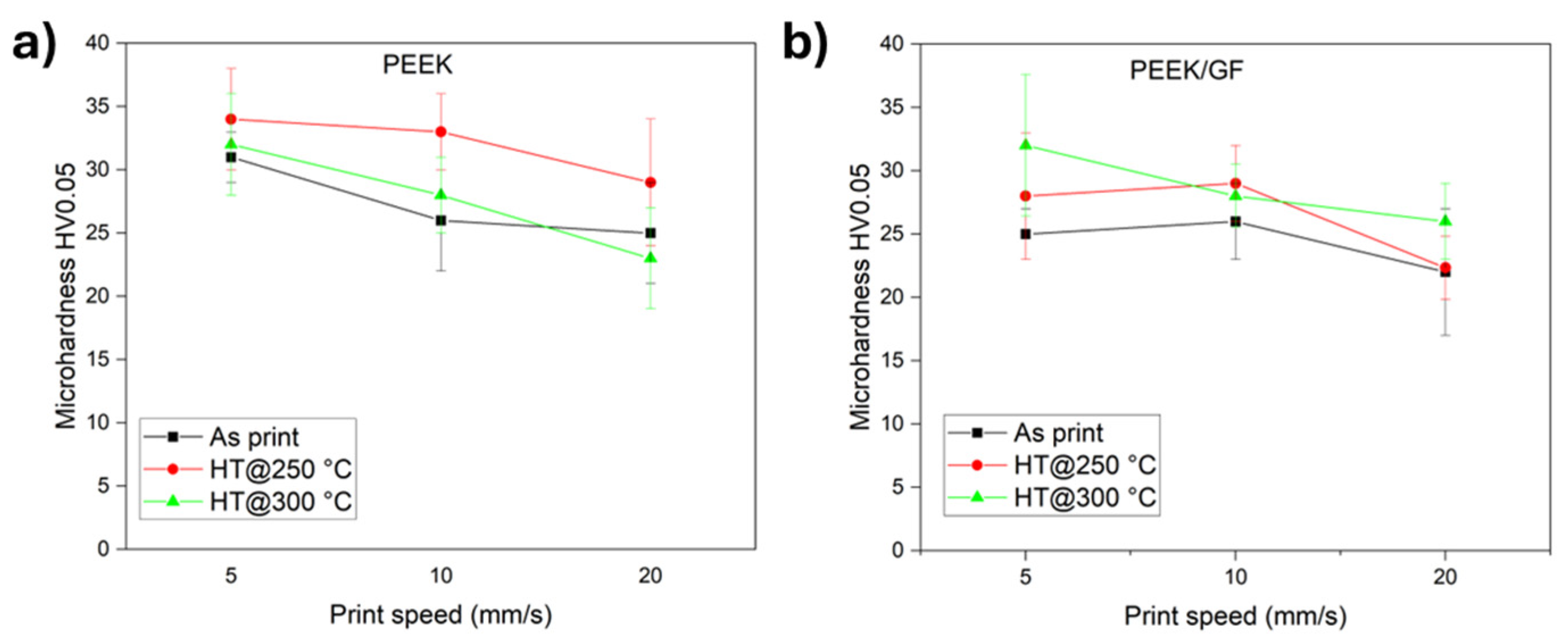
3.3. Hardness of PEEK and PEEK + GF
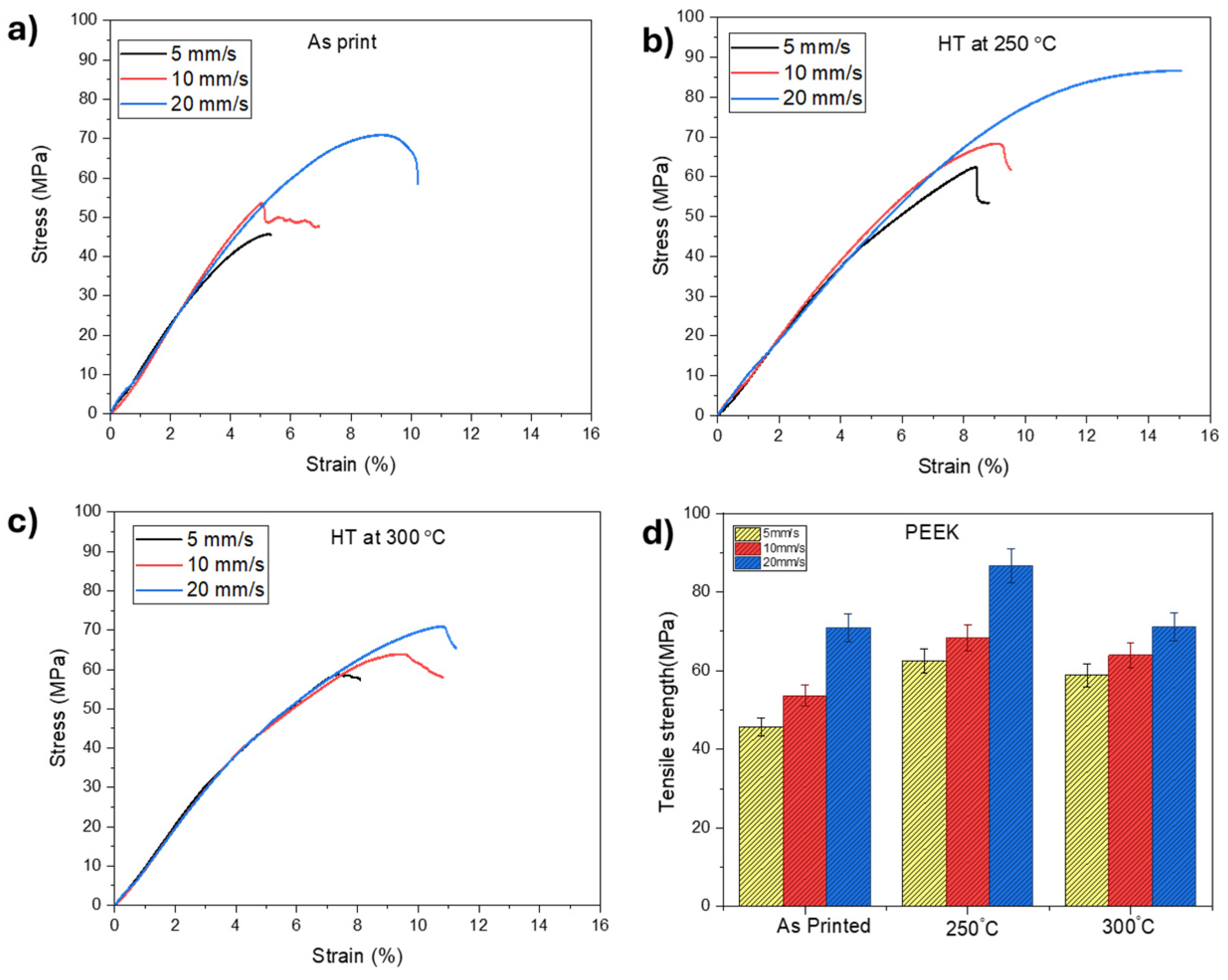
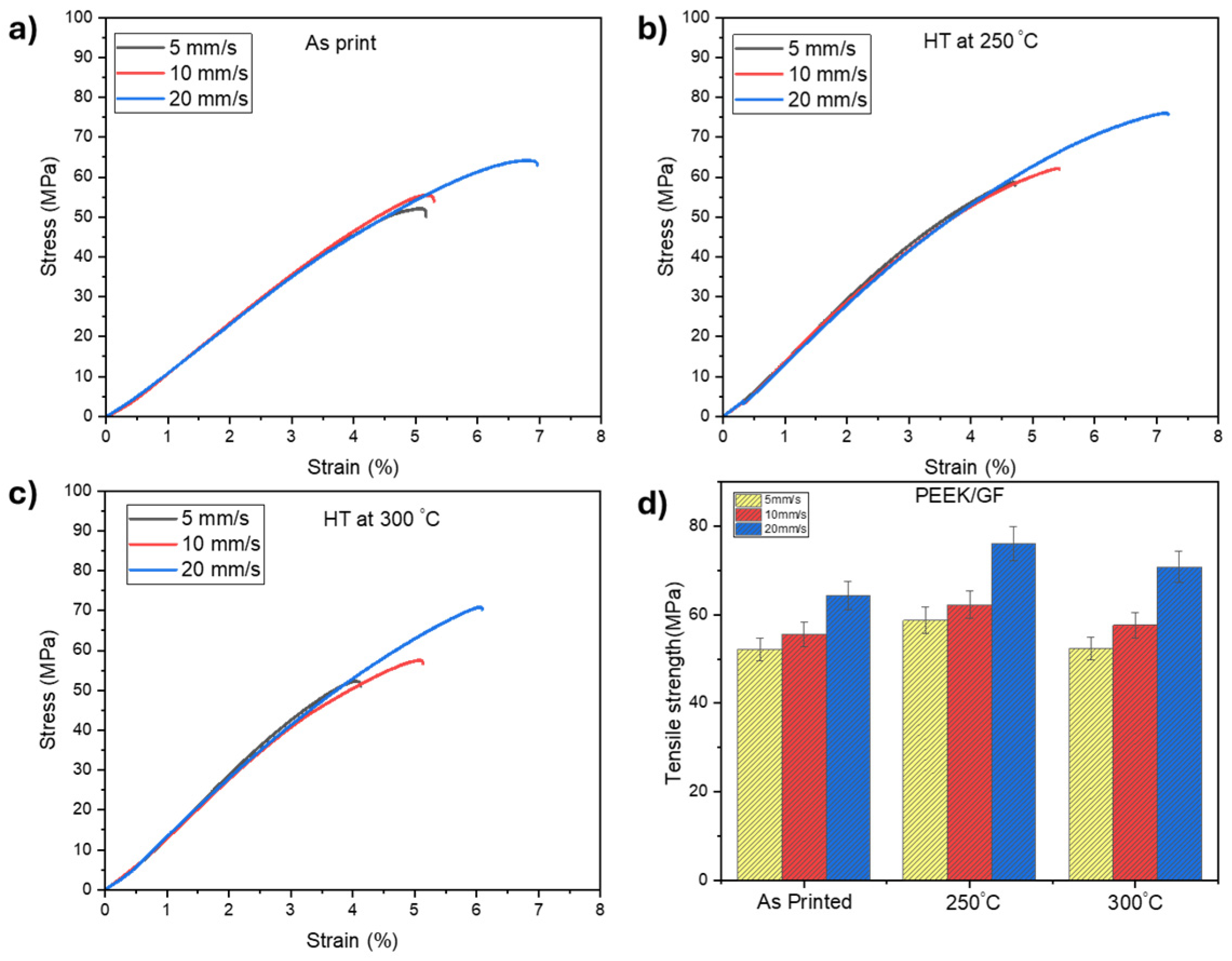
3.4. Tensile Strength of PEEK and PEEK + GF
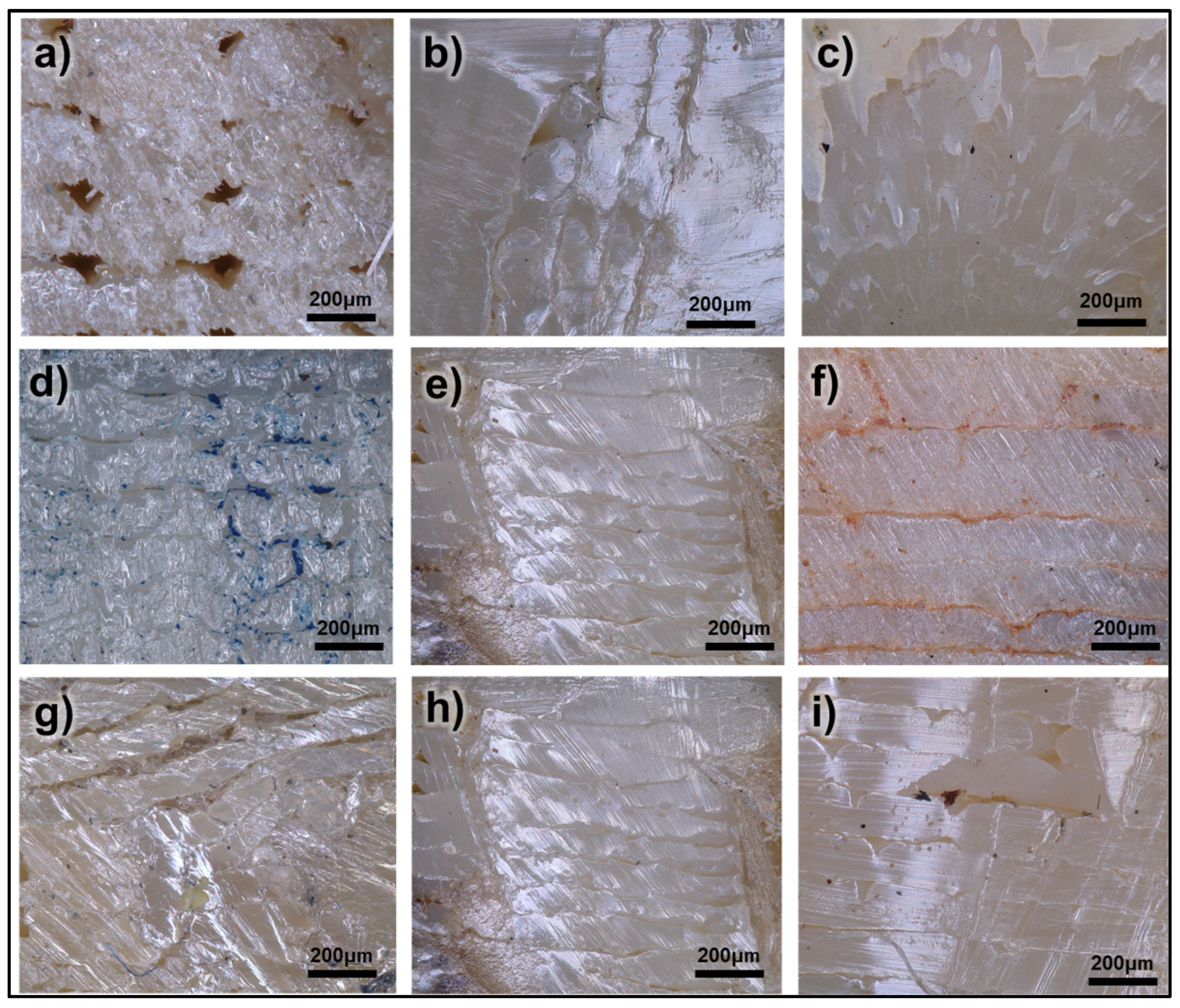
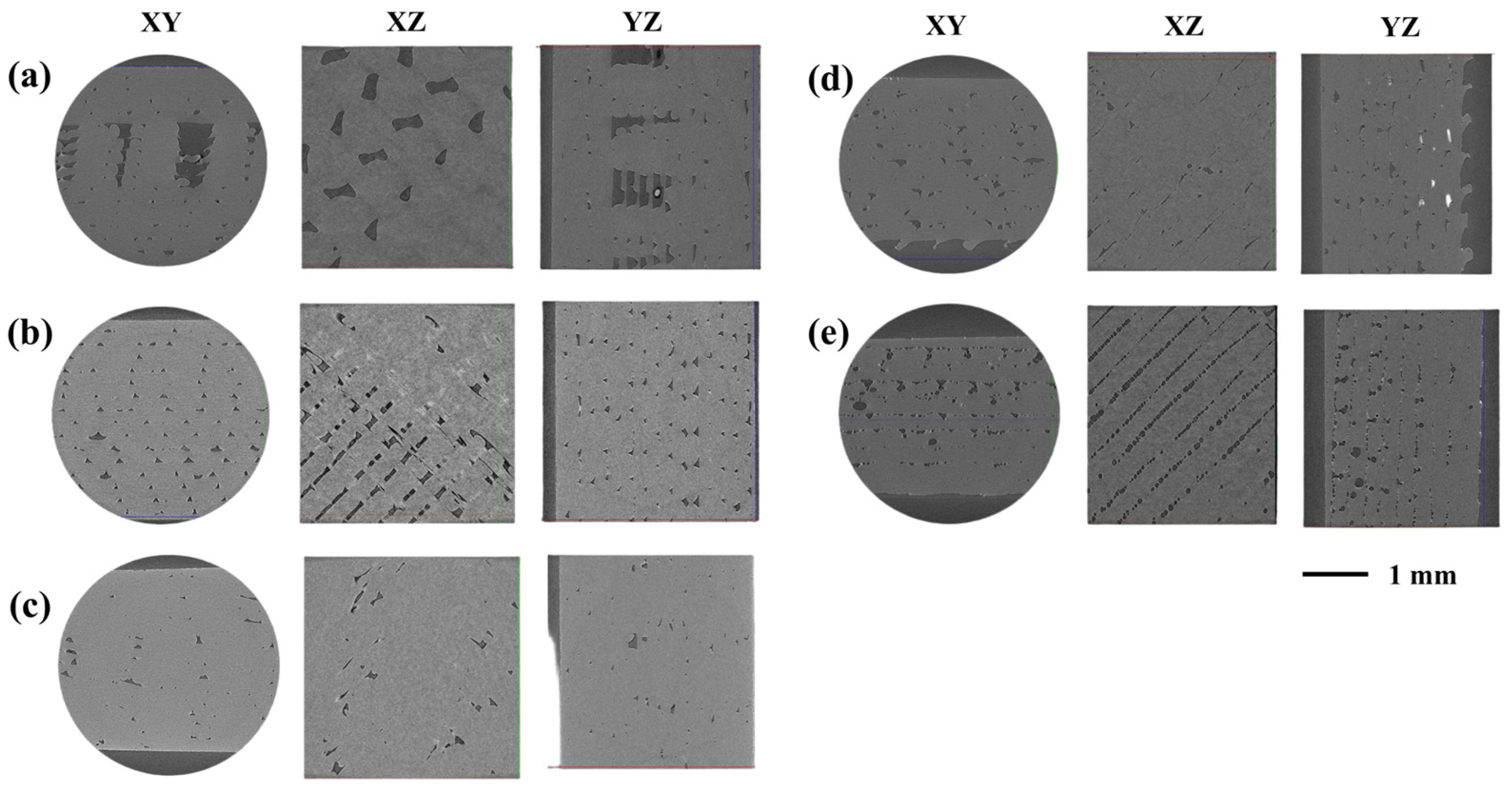
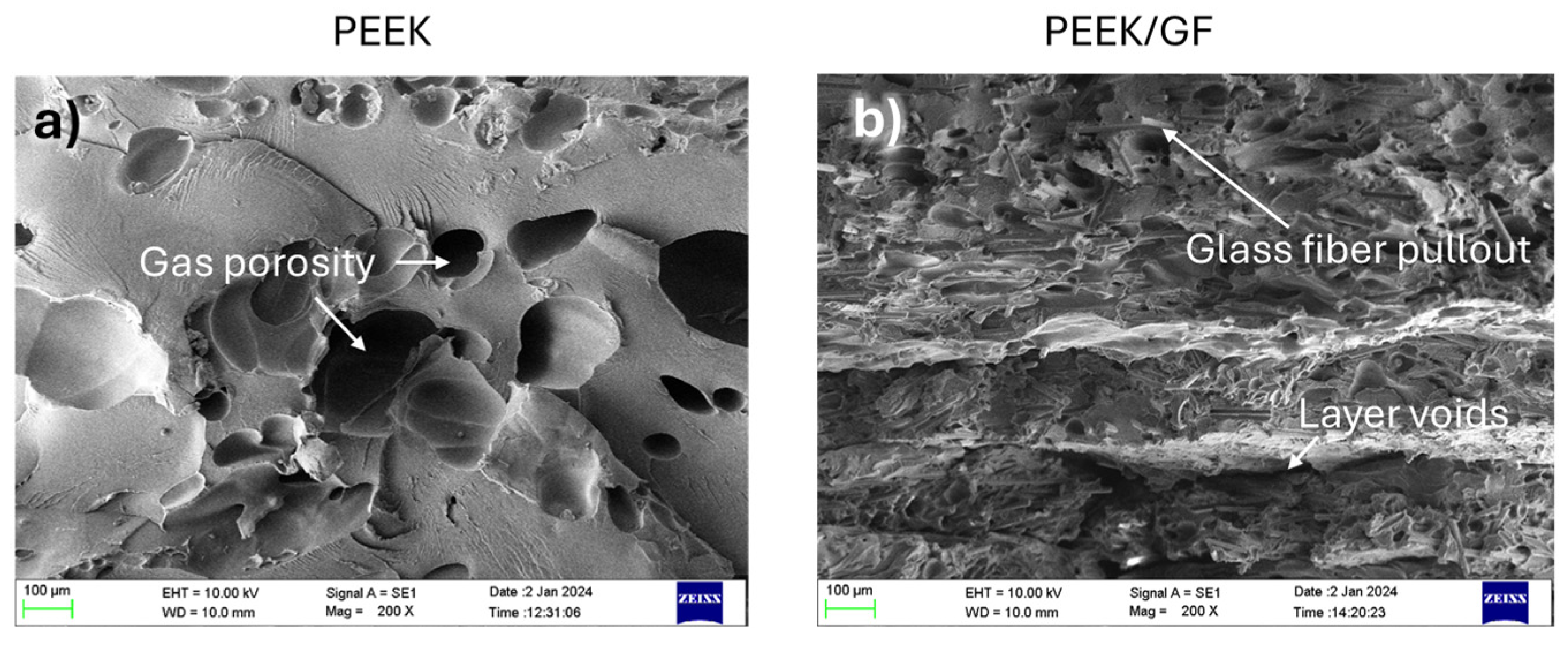
3.5. Fractographic Analysis
4. Conclusions
- Print speed and post-heat treatment (HT) significantly influenced the mechanical and structural behavior of both neat PEEK and PEEK/GF composites fabricated using FDM.
- Among the investigated conditions, heat treatment at 250 °C combined with the highest tested print speed (20 mm/s) showed comparatively improved mechanical performance for both materials.
- For neat PEEK, specimens treated at 250 °C exhibited better tensile properties, whereas treatment at 300 °C resulted in reduced performance, which may be associated with the formation of gas-induced porosity during heat treatment.
- For PEEK/GF composites, heat treatment at 250 °C appeared to enhance fiber–matrix load transfer, whereas a higher treatment temperature of 300 °C showed indications of microstructural degradation.
- The effectiveness of post-heat treatment was also influenced by the degree of interlayer fusion achieved during printing; lower print speeds tended to result in weaker interlayer bonding, thereby limiting the improvements attainable through heat treatment.
- Overall, the results indicate that controlled post-processing temperatures, particularly around 250 °C can positively influence the mechanical response of FDM-printed PEEK-based materials while maintaining structural stability under the investigated conditions.
5. Future Work
Author Contributions
Funding
Data Availability Statement
Acknowledgments
Conflicts of Interest
Abbreviations
| PEEK | Polyether Ether Ketone |
| GF | Glass fiber |
| FDM | Fused deposition modeling |
| MPa | Mega pascal |
| UTS | Ultimate tensile strength |
| 3D | 3-dimensional |
| AM | Additive manufacturing |
| ILSS | Interlaminar shear strength |
| ASTM | American society for testing and materials |
| CAD | Computer aided design |
| CT | Computed tomography |
| HT | Heat treatment |
| SEM | Scanning electron microscopy |
References
- Rajak, D.K.; Wagh, P.H.; Linul, E. Manufacturing Technologies of Carbon/Glass Fiber-Reinforced Polymer Composites and Their Properties: A Review. Polymers 2021, 13, 3721. [Google Scholar] [CrossRef]
- Lyu, H.; Jiang, N.; Li, Y.; Lee, H.; Zhang, D. Enhanced interfacial and mechanical properties of carbon fiber/PEEK composites by hydroxylated PEEK and carbon nanotubes. Compos. Part A Appl. Sci. Manuf. 2021, 145, 106364. [Google Scholar] [CrossRef]
- Kurtz, S.M.; Devine, J.N. PEEK biomaterials in trauma, orthopedic, and spinal implants. Biomaterials 2007, 28, 4845–4869. [Google Scholar] [CrossRef] [PubMed]
- Gain, A.K.; Zhang, L. Design and Characterization of Durable Glass Fibre (GF)-Reinforced PLA and PEEK Biomaterials. Polymers 2025, 17, 2536. [Google Scholar] [CrossRef] [PubMed]
- Haleem, A.; Javaid, M. Polyether ether ketone (PEEK) and its manufacturing of customised 3D printed dentistry parts using additive manufacturing. Clin. Epidemiol. Glob. Health 2019, 7, 654–660. [Google Scholar] [CrossRef]
- Banerjee, K.; Debroy, M.; Balla, V.K.; Bodhak, S. Recent progress in 3D-printed polyaryletherketone (PAEK)-based high-performance polymeric implants for musculoskeletal reconstructions. J. Mater. Res. 2021, 36, 3877–3893. [Google Scholar] [CrossRef]
- Zhao, N.Y.; Lian, J.Y.; Wang, P.F.; Xu, Z.B. Recent progress in minimizing the warpage and shrinkage deformations by the optimization of process parameters in plastic injection molding: A review. Int. J. Adv. Manuf. Technol. 2022, 120, 85–101. [Google Scholar] [CrossRef]
- Vaezi, M.; Yang, S. Extrusion-based additive manufacturing of PEEK for biomedical applications. Virtual Phys. Prototyp. 2015, 10, 123–135. [Google Scholar] [CrossRef]
- Geng, P.; Zhao, J.; Wu, W.; Ye, W.; Wang, Y.; Wang, S.; Zhang, S. Effects of extrusion speed and printing speed on the 3D printing stability of extruded PEEK filament. J. Manuf. Process. 2019, 37, 266–273. [Google Scholar] [CrossRef]
- Chang, D.Y.; Lin, C.H.; Wu, X.Y.; Yang, C.C.; Chou, S.C. Cutting force, Vibration, and Temperature in Drilling on a Thermoplastic Material of PEEK. J. Thermoplast. Compos. Mater. 2023, 36, 1088–1112. [Google Scholar] [CrossRef]
- Lannunziata, E.; Colucci, G.; Minetola, P.; Giubilini, A. Effect of annealing treatment and infill percentage on 3D-printed PEEK samples by Fused Filament Fabrication. Int. J. Adv. Manuf. Technol. 2024, 131, 5209–5222. [Google Scholar] [CrossRef]
- Tuli, N.T.; Khatun, S.; Rashid, A.B. Unlocking the future of precision manufacturing: A comprehensive exploration of 3D printing with fiber-reinforced composites in aerospace, automotive, medical, and consumer industries. Heliyon 2024, 10, e27328. [Google Scholar] [CrossRef]
- Jiang, C.P.; Cheng, Y.C.; Lin, H.W.; Chang, Y.L.; Pasang, T.; Lee, S.Y. Optimization of FDM 3D printing parameters for high strength PEEK using the Taguchi method and experimental validation. Rapid Prototyp. J. 2022, 28, 1260–1271. [Google Scholar] [CrossRef]
- Gokuldoss, P.K.; Kolla, S.; Eckert, J. Additive manufacturing processes: Selective laser melting, electron beam melting and binder jetting—Selection guidelines. Materials 2017, 10, 672. [Google Scholar] [CrossRef] [PubMed]
- Abrantes, S.; Castro, I.; Lima, P.S.; da Silva, S.M.; Oliveira, J.M. Sustainable tannery waste-based materials for additive manufacturing. Mater. Today Commun. 2026, 51, 114843. [Google Scholar] [CrossRef]
- Prashanth, K.G.; Löber, L.; Klauss, H.-J.; Kühn, U.; Eckert, J. Characterization of 316L steel cellular dodecahedron structures produced by selective laser melting. Technologies 2016, 4, 34. [Google Scholar] [CrossRef]
- Javaid, M.; Haleem, A.; Singh, R.P.; Suman, R.; Rab, S. Role of additive manufacturing applications towards environmental sustainability. Adv. Ind. Eng. Polym. Res. 2021, 4, 312–322. [Google Scholar] [CrossRef]
- Ebrahimi, M.; Shaikh, H.; Sichani, H.R.; Ramachandran, R.A.; Paramasivan, M.; Alam, M.F.; Mezzomo, L.; Dubey, N.; Mathew, M.T. Additive manufacturing for dentistry: A comprehensive review of techniques and applications. Prog. Mater. Sci. 2026, 157, 101613. [Google Scholar] [CrossRef]
- Raheem, A.A.; Hameed, P.; Whenish, R.; Elsen, R.S.; G, A.; Jaiswal, A.K.; Prashanth, K.G.; Manivasagam, G. A review on development of bio-inspired implants using 3D printing. Biomimetics 2021, 6, 65. [Google Scholar] [CrossRef]
- Salvi, D.; Ucciardello, N.; Vesco, S. Multi-head MEX 3D printing of self-recoverable joule-heating-based shape memory polymeric components. Arab. J. Sci. Eng. 2025, 1–15. [Google Scholar] [CrossRef]
- Wawryniuk, Z.; Brancewicz-Steinmetz, E.; Sawicki, J. Revolutionizing transportation: An overview of 3D printing in aviation, automotive, and space industries. Int. J. Adv. Manuf. Technol. 2024, 134, 3083–3105. [Google Scholar] [CrossRef]
- Yadav, M.K.; Shukla, R.; Xi, L.; Wang, Z.; Prashanth, K.G. Metallic multimaterials fabricated by combining additive manufacturing and powder metallurgy. J. Compos. Sci. 2025, 9, 80. [Google Scholar] [CrossRef]
- Shukla, R.; Yadav, M.K.; Madruga, L.Y.C.; Jayaraj, J.; Popat, K.; Wang, Z.; Xi, L.; Prashanth, K.G. A novel Ti-eggshell-based composite fabricated by combined additive manufacturing-powder metallurgical routes as bioimplants. Ceram. Int. 2025, 51, 6281–6291. [Google Scholar] [CrossRef]
- Plocher, J.; Panesar, A. Review on design and structural optimisation in additive manufacturing: Towards next-generation lightweight structures. Mater. Des. 2019, 183, 108164. [Google Scholar] [CrossRef]
- Bernatas, R.; Dagreou, S.; Despax-Ferreres, A.; Barasinski, A. Recycling of fiber reinforced composites with a focus on thermoplastic composites. Clean. Eng. Technol. 2021, 5, 100272. [Google Scholar] [CrossRef]
- Kwon, D.J.; Kim, N.S.R.; Jang, Y.J.; Choi, H.H.; Kim, K.; Kim, G.-H.; Kong, J.; Nam, S.Y. Impacts of thermoplastics content on mechanical properties of continuous fiber-reinforced thermoplastic composites. Compos. Part B Eng. 2021, 216, 108859. [Google Scholar] [CrossRef]
- Yu, X.; Song, W.; Zheng, J.H.; Shan, Z.; Chen, Y.; Fan, C.; Sun, L.; Tian, A. Improving interlaminar shear strength of continuous carbon fiber reinforced PEEK via laser directed energy deposition: Experimental study and physically based modelling. Compos. Part B Eng. 2025, 297, 112213. [Google Scholar] [CrossRef]
- Barış Vatandaş, B.; Uşun, A.; Yıldız, N.; Şimşek, C.; Cora, Ö.N.; Aslan, M.; Gümrük, R. Additive manufacturing of PEEK-based continuous fiber reinforced thermoplastic composites with high mechanical properties. Compos. Part A Appl. Sci. Manuf. 2023, 167, 107434. [Google Scholar] [CrossRef]
- Zhang, H.; Chen, Y.; Song, W.; Zheng, J.; Fan, C.; Shan, Z.; Wen, Y.; Wang, X. Preparation of continuous glass fiber reinforced PEEK filaments and high-temperature performance for additive manufacturing. Compos. Part B Eng. 2025, 292, 112078. [Google Scholar] [CrossRef]
- Wang, P.; Zou, B. Improvement of Heat Treatment Process on Mechanical Properties of FDM 3D-Printed Short- and Continuous-Fiber-Reinforced PEEK Composites. Coatings 2022, 12, 827. [Google Scholar] [CrossRef]
- Hu, B.; Xing, Z.; Wu, W.; Zhang, X.; Zhou, H.; Du, C.; Shan, B. Enhancing the mechanical properties of SCF/PEEK composites in FDM via process-parameter optimization. High Perform. Polym. 2021, 33, 914–923. [Google Scholar] [CrossRef]
- ASTM D638-01; Standard Test Method for Tensile Properties of Plastics. American Society for Testing and Materials: West Conshohocken, PA, USA, 1998.
- Li, Y.; Lou, Y. Tensile and Bending Strength Improvements in PEEK Parts Using Fused Deposition Modelling 3D Printing Considering Multi-Factor Coupling. Polymers 2020, 12, 2497. [Google Scholar] [CrossRef]
- Miranda Cid, A.; Pérez Mendoza, G.J.; Corro Valdez, N.; López Perrusquia, N.; Doñu Ruiz, M.A.; Rebattú y González, A.G.; Hernández Acosta, H.Y. Study of mechanical properties of heat-treated peek for medical devices through additive manufacturing. Prog. Addit. Manuf. 2025, 10, 3129–3144. [Google Scholar] [CrossRef]
- Sikder, P.; Challa, B.T.; Gummadi, S.K. A comprehensive analysis on the processing-structure-property relationships of FDM-based 3-D printed polyetheretherketone (PEEK) structures. Materialia 2022, 22, 101427. [Google Scholar] [CrossRef]
- Zarean, P.; Malgaroli, P.; Zarean, P.; Seiler, D.; de Wild, M.; Thieringer, F.M.; Sharma, N. Effect of Printing Parameters on Mechanical Performance of Material-Extrusion 3D-Printed PEEK Specimens at the Point-of-Care. Appl. Sci. 2023, 13, 1230. [Google Scholar] [CrossRef]



| Materials | Density (g/cc) | Melting Point (℃) | Tensile Strength (MPa) | Glass Transition Temperature (℃) | Elastic Modulus (GPa) | Elongation (%) |
|---|---|---|---|---|---|---|
| PEEK | 1.2 | 343 | 70–80 | 143 | 3.8 | 6 |
| PEEK + GF-20 | 1.46 | 363 | 105–120 | 143 | 5.3 | 2.5 |
| Parameters | ||
|---|---|---|
| Structure | Print orientation | 0°, 45°, 90° |
| Infill density | 100% | |
| Layer thickness | 0.3 mm | |
| Raster width | 1.75 mm | |
| Temperature | Nozzle temperature | 405 °C |
| Platform Temperature | 150 °C | |
| Chamber Temperature | 90 °C | |
| Speed | Printing speed | 5 mm/s, 10 mm/s, 20 mm/s |
| Extrusion speed | 10 mm/s | |
Disclaimer/Publisher’s Note: The statements, opinions and data contained in all publications are solely those of the individual author(s) and contributor(s) and not of MDPI and/or the editor(s). MDPI and/or the editor(s) disclaim responsibility for any injury to people or property resulting from any ideas, methods, instructions or products referred to in the content. |
© 2026 by the authors. Licensee MDPI, Basel, Switzerland. This article is an open access article distributed under the terms and conditions of the Creative Commons Attribution (CC BY) license.
Share and Cite
Puli, A.B.; Manjaiah, M.; Selvaraj, N.; Gokuldoss, P.K.; Joshi, A.G. Mechanical Response of FDM-Fabricated PEEK and Glass Fiber-Reinforced PEEK Under Varying Process Conditions. J. Manuf. Mater. Process. 2026, 10, 110. https://doi.org/10.3390/jmmp10030110
Puli AB, Manjaiah M, Selvaraj N, Gokuldoss PK, Joshi AG. Mechanical Response of FDM-Fabricated PEEK and Glass Fiber-Reinforced PEEK Under Varying Process Conditions. Journal of Manufacturing and Materials Processing. 2026; 10(3):110. https://doi.org/10.3390/jmmp10030110
Chicago/Turabian StylePuli, Anil Babu, Mallaiah Manjaiah, Nagamuthu Selvaraj, Prashanth Konda Gokuldoss, and Ajith Gopal Joshi. 2026. "Mechanical Response of FDM-Fabricated PEEK and Glass Fiber-Reinforced PEEK Under Varying Process Conditions" Journal of Manufacturing and Materials Processing 10, no. 3: 110. https://doi.org/10.3390/jmmp10030110
APA StylePuli, A. B., Manjaiah, M., Selvaraj, N., Gokuldoss, P. K., & Joshi, A. G. (2026). Mechanical Response of FDM-Fabricated PEEK and Glass Fiber-Reinforced PEEK Under Varying Process Conditions. Journal of Manufacturing and Materials Processing, 10(3), 110. https://doi.org/10.3390/jmmp10030110