3.2. Microstructural Analysis
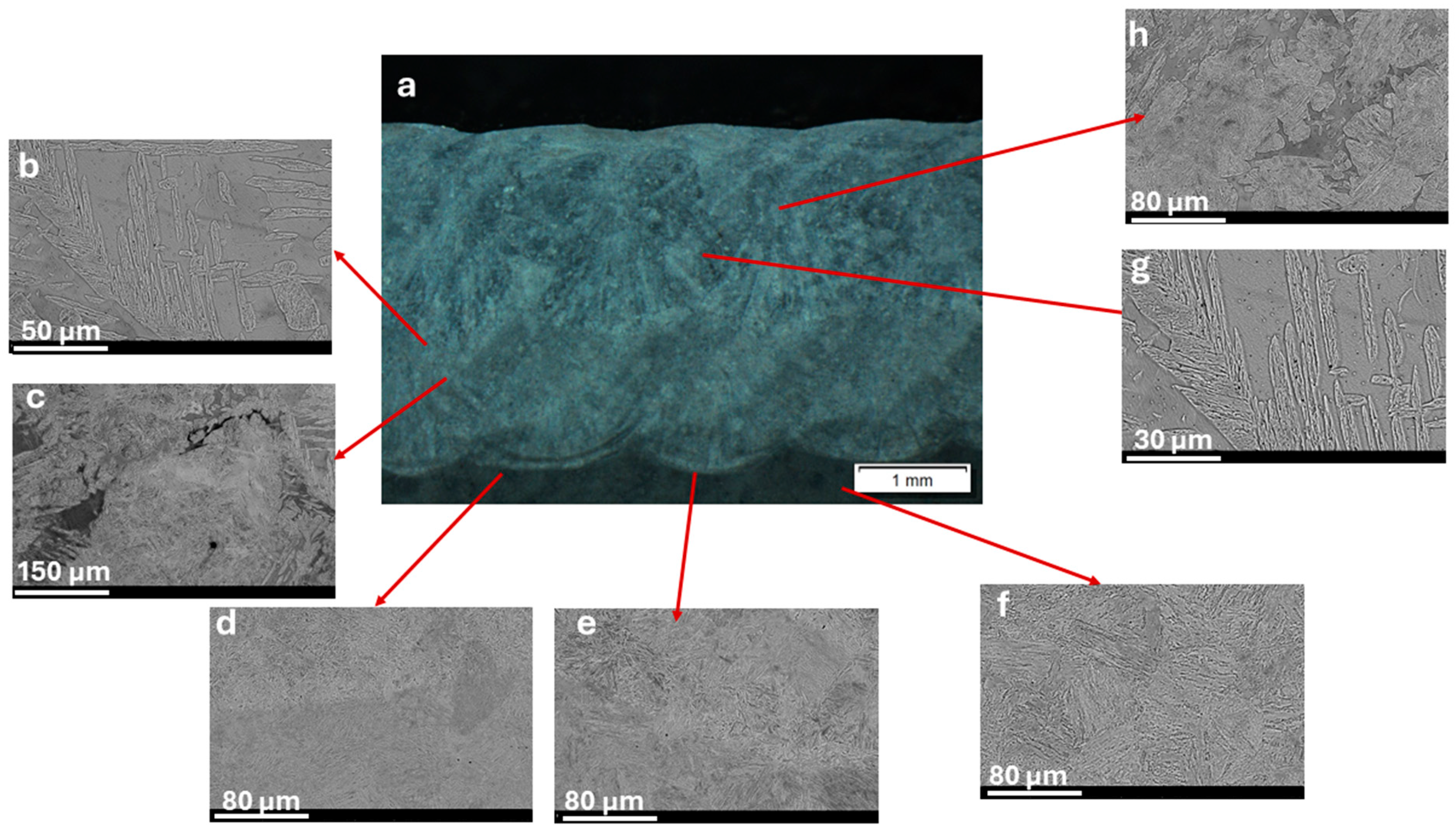
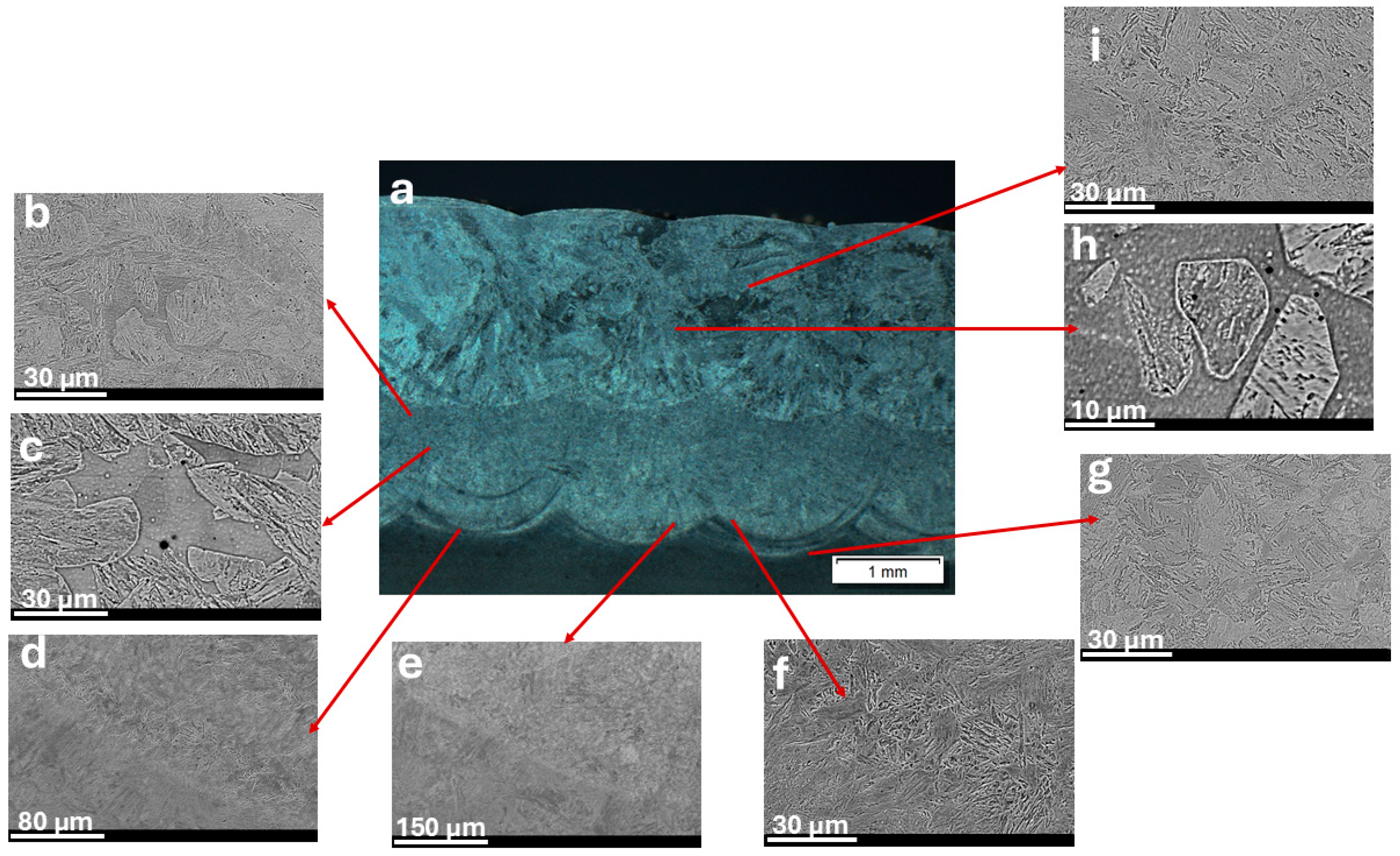
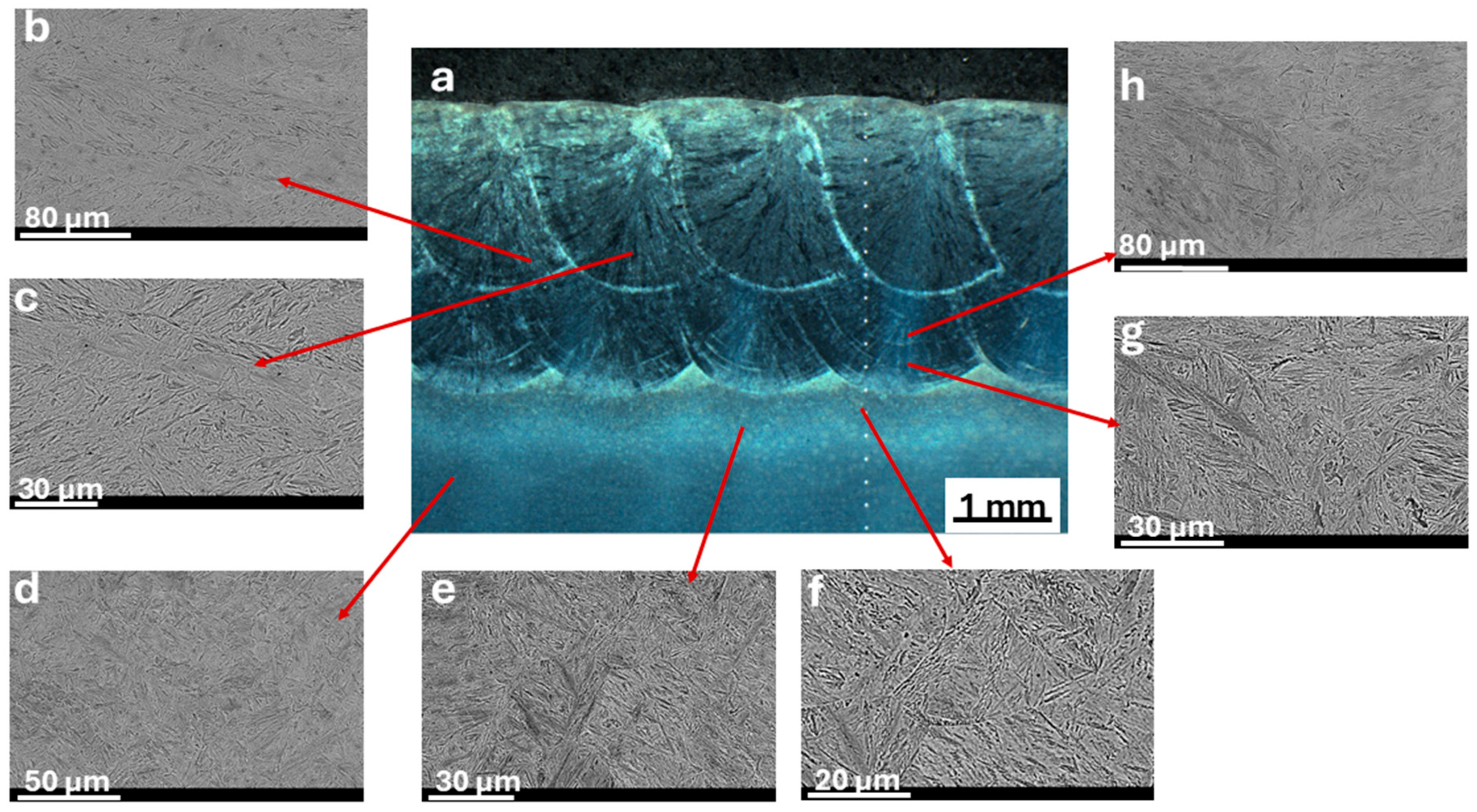
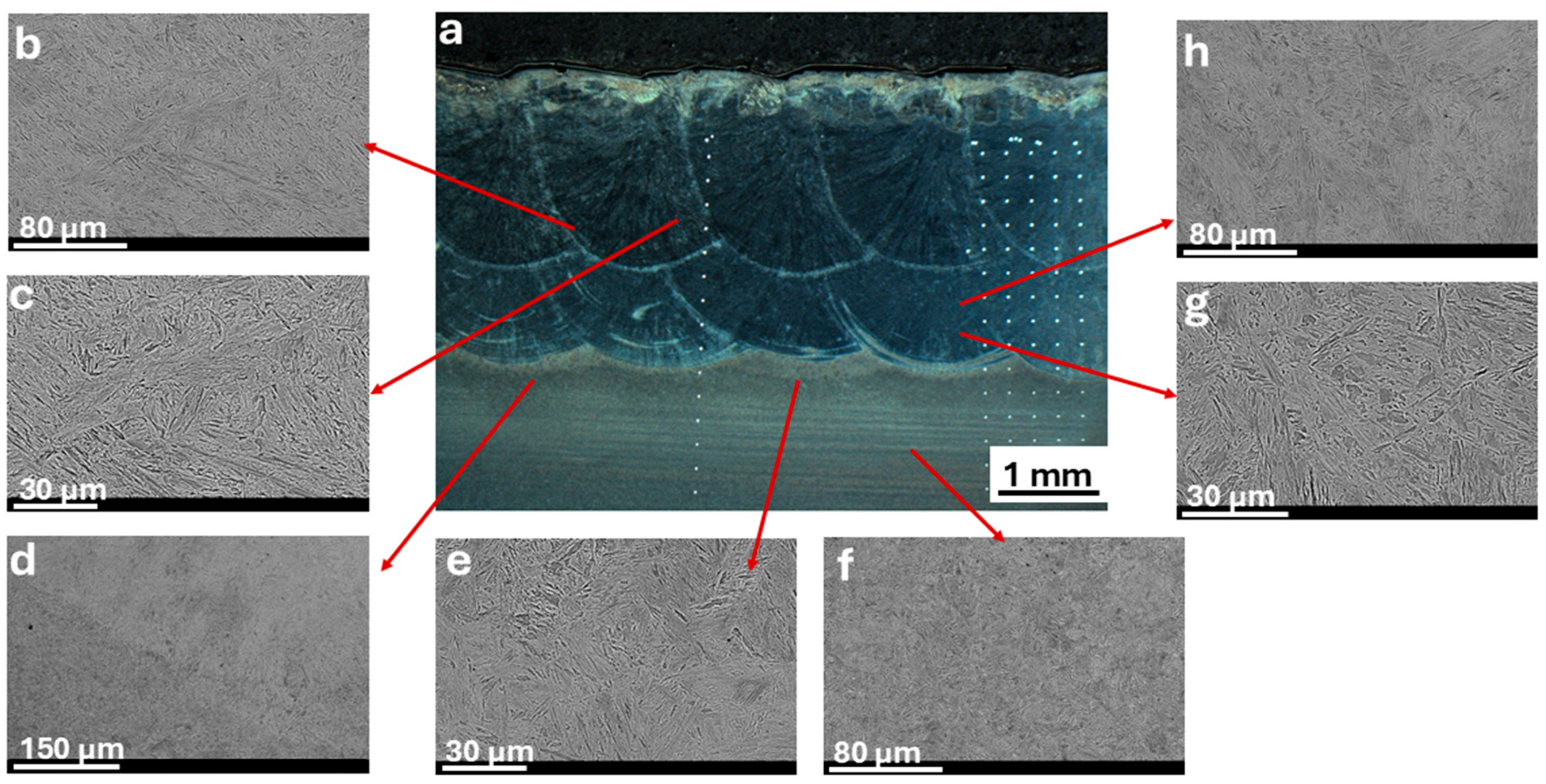
Microstructural characterization of the laser-cladded coatings revealed distinct morphological features across the substrate, interface, and deposited layers, consistent with the previously reported microstructural trends [
14]. The base metal exhibited the typical tempered-martensitic or bainitic microstructure of EN 42CrMo4 steel, with uniformly distributed carbides and no alteration attributable to the cladding process.
At the interface between the first layer and the substrate, a partially mixed zone (PMZ) was observed in all coating conditions, consistent with the dilution-driven compositional gradients described in [
14]. This region exhibited a refined dendritic morphology and a harder martensitic–ferritic mixture arising from rapid cooling and localised reheating. In the NHT coatings (both 410L (
Figure 3) and MIX (
Figure 4)), the PMZ displayed needle-like martensite with higher contrast carbide clusters, indicating strong thermal gradients and faster solidification rates. After heat treatment, this interface became more homogeneous: the martensitic needles were partially tempered, and the etched contrast decreased, suggesting reduced residual stresses and a more stable microstructure (HT 410L and HT MIX).
The first clad layer exhibited the most pronounced solidification structures. In the NHT 410L coating, the microstructure consisted predominantly of fine cellular and columnar ferritic dendrites, with evidence of Widmanstätten ferrite, matching observations from the original study. The NHT MIX coating displayed a more complex dendritic network enriched in alloying elements from the 4140 fraction, producing locally harder martensitic regions embedded within a ferritic matrix. In HT specimens, both 410L (
Figure 5) and MIX (
Figure 6) coatings showed tempered microstructures with reduced dendrite contrast and partially decomposed martensite, indicating that the stress-relief heat treatment effectively softened the as-cladded deposits and improved structural stability.
In the second layer, the morphology transitioned toward coarser dendrites, a characteristic attributed to the lower cooling rate away from the substrate. The NHT MIX coating exhibited more pronounced interdendritic carbide precipitation compared with 410L, reflecting differences in carbon content and solidification behaviour. Heat-treated specimens again demonstrated a more uniform microstructure, with coarsened but tempered dendritic regions and reduced segregation contrast.
Overall, the microstructural evolution across layers reflects the combined effects of melt pool dilution, thermal gradients, alloy composition, and post-heat treatment. The NHT coatings—especially the MIX variant—exhibited sharper dendritic features, higher martensite content, and more pronounced segregation, suggesting elevated hardness but lower toughness. Conversely, heat-treated coatings showed tempered martensite and homogenized dendritic structures, indicating reduced residual stresses and improved ductility. These microstructural distinctions play a central role in the subsequent tribological behaviour, influencing wear mechanisms, friction stability, and degradation resistance under sliding conditions.
The microstructural trends observed in the present coatings are consistent with the broader laser cladding literature on Fe-based martensitic systems, where rapid solidification promotes cellular/columnar morphologies and strong layer-to-layer gradients driven by cooling-rate changes and dilution. In particular, the mixed-alloy (410L/4140) condition exhibited increased martensitic fraction and more pronounced interdendritic strengthening features, which is expected when carbon and strong carbide-forming alloying elements are locally enriched during solidification. Similar microstructure–hardness linkages have been reported for martensitic stainless steel coatings deposited on 42CrMo4-type substrates via laser-based deposition, where the combination of solidification refinement and martensitic transformation yields marked hardness increments relative to the base steel [
19].
From a comparative standpoint, the present hardness levels for the mixed coatings (first and second layer >500 HV) fall within the range commonly reported for laser-deposited martensitic stainless/low-alloy hybrid systems and mixed-powder strategies aimed at simultaneously increasing hardness and maintaining coating integrity. Studies investigating mixed 410L/4140-type powder systems report that compositional tuning is an effective route for increasing hardness while avoiding excessive brittleness associated with high-carbon deposits [
9].
3.3. Microhardness Analysis
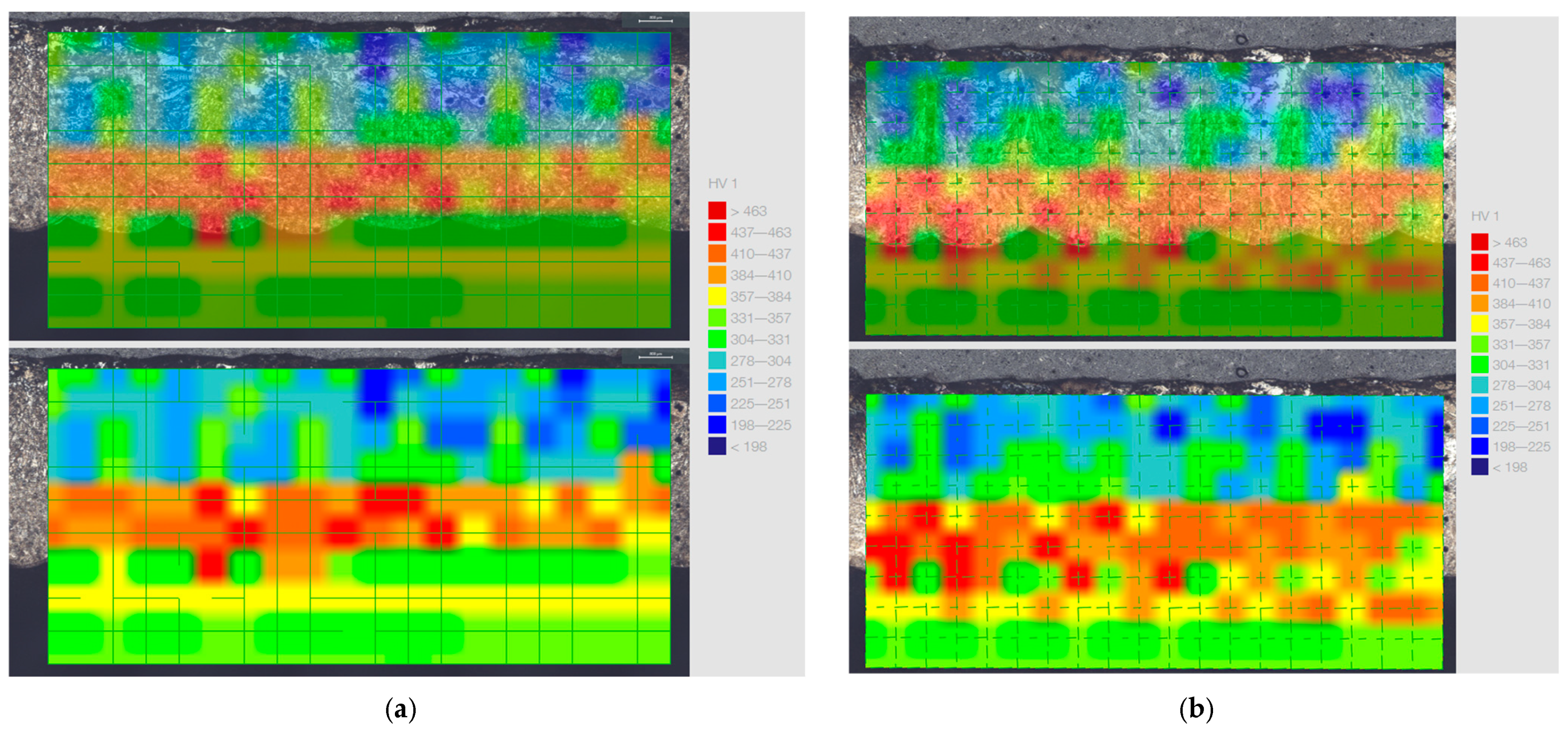
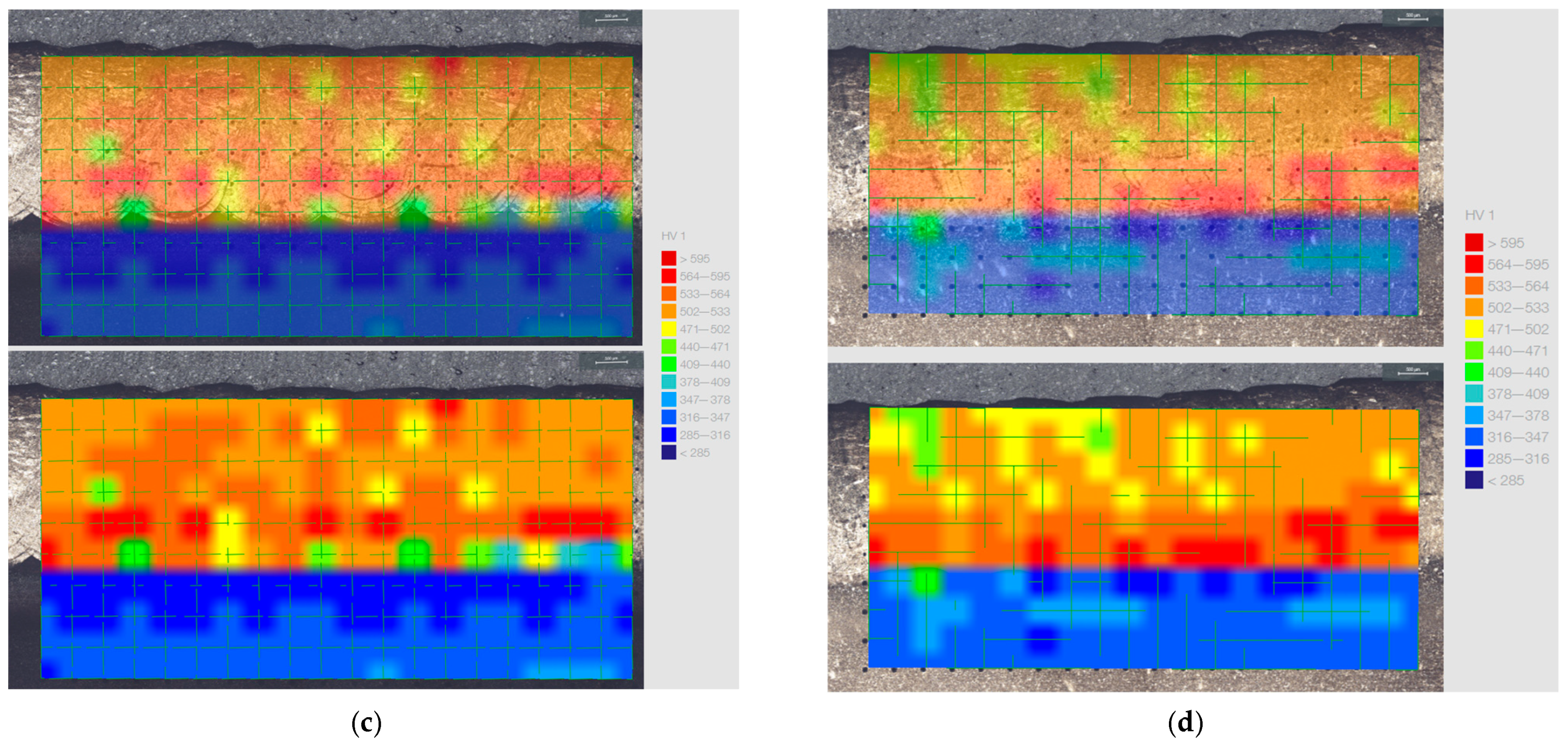
The microhardness profiles of the laser-cladded coatings for the four conditions—NHT 410L, HT 410L, NHT MIX, and HT MIX—are shown in
Figure 7a–d, while
Table 4 presents the average microhardness values, reported with associated measurement uncertainty, of distinct regions of specimens (substrate, HAZ + PMZ, first layer, and second layer of the four coating conditions—NHT 410L, HT 410L, NHT MIX, and HT MIX). All coatings exhibit higher hardness than the EN 42CrMo4 substrate, reflecting the formation of refined dendritic structures and martensitic transformations during rapid solidification, as described in detail in [
14]. For the 410L coatings, the NHT and HT conditions display similar hardness in both the substrate region (≈332–338 HV) and the HAZ + PMZ (≈351 HV), suggesting that the stress-relief treatment induces only mild tempering in these zones. The most pronounced hardness difference occurs in the clad layers. In the first layer, hardness increases slightly after heat treatment (from 410.75 HV to 418.25 HV), suggesting that the heat-treatment cycle relieved residual stresses while preserving a predominantly martensitic structure. The second layer shows the opposite trend, with hardness decreasing from 327 HV in the NHT state to 306.75 HV after tempering, demonstrating that the upper region—subjected to lower cooling rates—responds more strongly to the tempering effect.
The MIX coatings exhibit markedly higher hardness values compared to the 410L coatings, due to the higher carbon content and carbide-forming elements introduced by the 4140 fraction. In the NHT MIX, the first layer reaches 555.25 HV, significantly exceeding the NHT 410L first layer, while the second layer maintains a similarly high hardness of 537.5 HV. These elevated values reflect the presence of harder martensitic phases and increased carbide precipitation, as observed in the microstructural analysis. After heat treatment, both clad layers experience a moderate reduction in hardness—531.5 HV in the first layer and 511.5 HV in the second layer—indicating effective tempering of martensite and partial homogenization of microsegregated phases. The HAZ + PMZ of the MIX coatings shows lower hardness values (318–324.75 HV) than the 410L coatings, suggesting that dilution effects and alloying interactions play a dominant role in this transition region.
Overall, the microhardness behaviour reveals three key trends: (i) MIX coatings are significantly harder than 410L coatings due to compositional enrichment and carbide formation; (ii) heat treatment reduces hardness more effectively in regions solidified at slower cooling rates, particularly the upper layer of the 410L coating; and (iii) the preserved high hardness of the MIX coating, even after tempering, suggests superior load-bearing capacity and potential improvements in wear resistance. These hardness gradients are expected to directly influence the tribological performance of the coatings, with the MIX clads likely exhibiting enhanced resistance to plastic deformation and abrasive wear during sliding contact.
The relatively modest hardness decrease after stress-relief heat treatment in the mixed coating, alongside improved frictional stability, is consistent with the role of tempering in reducing residual stresses and decreasing susceptibility to local brittle microfracture during repeated sliding. In laser cladding, residual stress magnitude and distribution are strongly governed by steep thermal gradients and transformation strains; post-processing strategies are routinely reported to stabilize near-surface response even when the average hardness reduction is limited [
20].
Although XRD analysis was not conducted, the presence of martensitic structures and carbide-strengthened regions is supported by the observed dendritic and lath morphologies, hardness levels exceeding 500 HV in the mixed coatings, and the characteristic hardness gradients across the coating and HAZ, in agreement with previously reported laser-cladded 410L- and 4140-based systems.
3.4. Friction Coefficient
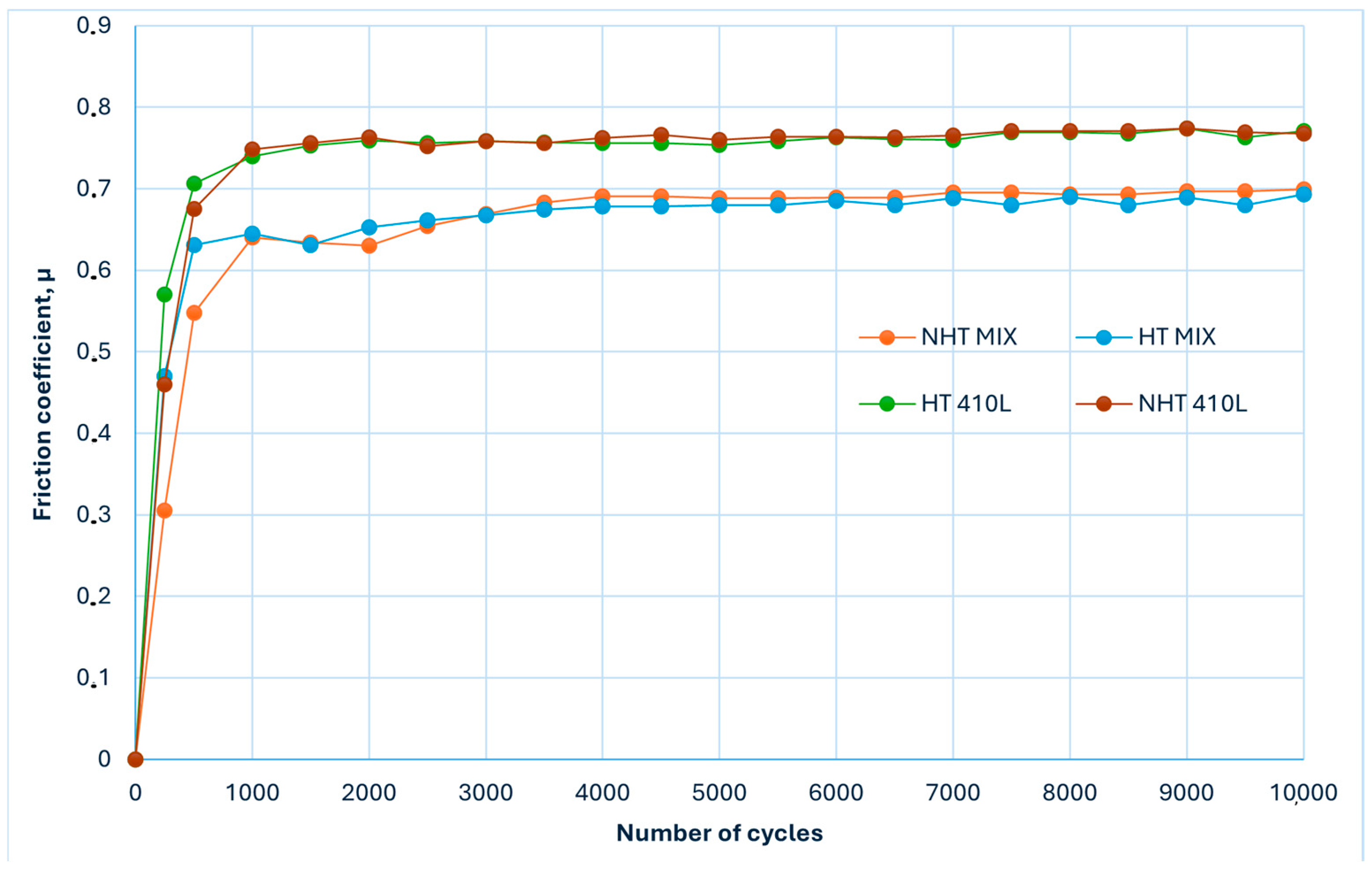
The evolution of the friction coefficient (μ) during dry sliding reflects the combined effects of surface roughness, real contact area, oxide formation, subsurface deformation, and microstructural stability of the cladded layers. As shown in
Figure 8, all coatings exhibit a characteristic running-in stage during the first ~500 cycles, followed by a transition toward a steady-state friction regime. This behaviour is typical of metallic systems under dry sliding, where initial asperity interactions and debris generation progressively modify the contact conditions. During the initial sliding stage, a rapid increase in μ is observed for all coatings. This behaviour is associated with asperity fracture and plastic deformation in the near-surface region [
21,
22,
23]. In the 410L coatings (NHT and HT), the relatively lower hardness and ferritic–martensitic matrix promote a larger real contact area, accelerating adhesive junction formation and increasing friction. The sharper rise in μ for HT 410L, which briefly exceeds 0.7, suggests enhanced adhesive interactions resulting from tempered martensite with reduced residual stresses but increased local ductility.
In contrast, both MIX coatings (NHT MIX and HT MIX) exhibit lower initial friction coefficients, with an average value of 0.62 ± 0.03, indicating reduced adhesive contribution during running-in. This behaviour is primarily associated with the higher hardness and the presence of uniformly distributed carbides and hard martensitic regions introduced by the AISI 4140 fraction. These phases act as effective load-bearing constituents, limiting asperity deformation and suppressing early-stage adhesive junction growth.
After the running-in period, all coatings reach a stable friction regime, although the plateau values differ significantly. The 410L coatings stabilize at higher friction coefficients, with an average value of 0.72 ± 0.03, while the MIX coatings stabilize at lower average value of 0.67 ± 0.03. This distinction is closely correlated with microhardness gradients and microstructural constitution. According to classical tribological models, such as the Bowden–Tabor adhesion theory, friction under dry sliding conditions is proportional to the real contact area and the shear strength of junctions formed at asperity contacts. In the present case, this framework explains the higher friction levels observed for the 410L coatings, where lower hardness promotes increased plastic deformation and enlargement of the real contact area. Conversely, the higher hardness of the MIX coatings restricts asperity flattening, reducing the effective contact area and limiting adhesive shear resistance. The friction behaviour is also influenced by the formation and stability of tribo-oxidative layers. SEM/EDS analysis of the wear tracks indicates mild oxidation in all coatings; however, its role differs between systems. In the 410L coatings, oxide fragments appear to be repeatedly fractured and removed, likely due to insufficient mechanical support from the softer matrix. This process promotes unstable third-body abrasion and contributes to sustained high friction levels. The friction levels measured here (μ ~0.65–0.75 in steady-state dry sliding) are comparable to those reported for laser-cladded steel systems where adhesion–abrasion competition and tribo-oxide stability dominate the steady regime. In general, harder cladded layers tend to reduce the real area of contact and suppress adhesive junction growth, thereby lowering μ and stabilizing friction, provided that brittle fracture and debris generation are not dominant. This behaviour is consistent with published observations on laser-cladded carbon steels and martensitic stainless coatings where microstructural refinement and increased hardness promote lower and more stable friction under dry sliding [
1].
In contrast, the MIX coatings appear to promote the formation of thinner and more stable oxide films during steady-state sliding. Wear track morphology and SEM/EDS observations suggest that these oxide layers may act as solid lubricating films. The harder martensitic–carbide matrix provides improved mechanical support, which helps to limit premature oxide spallation and reduce direct metal-to-metal contact. Collectively, these effects contribute to lower friction coefficients and enhanced wear resistance.
Although post-cladding heat treatment significantly affects wear resistance, its influence on steady-state friction is comparatively modest. The friction curves of HT and NHT specimens for both 410L and MIX coatings converge toward similar plateau values, indicating that friction is less sensitive to residual stress relief than to intrinsic microstructural hardness and phase distribution. However, the HT MIX coating exhibits a smoother transition to steady-state friction, suggesting that stress relief and tempered martensite improve frictional stability by minimizing localised plasticity and micro-fracture events during sliding.
Overall, the friction behaviour of the laser-cladded coatings is governed by a synergistic interaction between microhardness, phase constitution, and tribo-layer stability. The mixed AISI 410L/AISI 4140 coatings demonstrate superior frictional performance due to their enhanced load-bearing capacity, reduced adhesive interaction, and more stable oxide-assisted sliding regime. These findings reinforce the conclusion that microstructural refinement and compositional tailoring are effective strategies for controlling frictional response in laser-cladded marine shaft coatings.
3.6. Wear Mechanisms
The dominant wear mechanisms observed in the laser-cladded coatings are strongly influenced by microstructural constitution, hardness distribution, and subsurface load-bearing capacity. SEM examination of the wear tracks, combined with microhardness data, reveals clear mechanistic differences between 410L and MIX coatings.
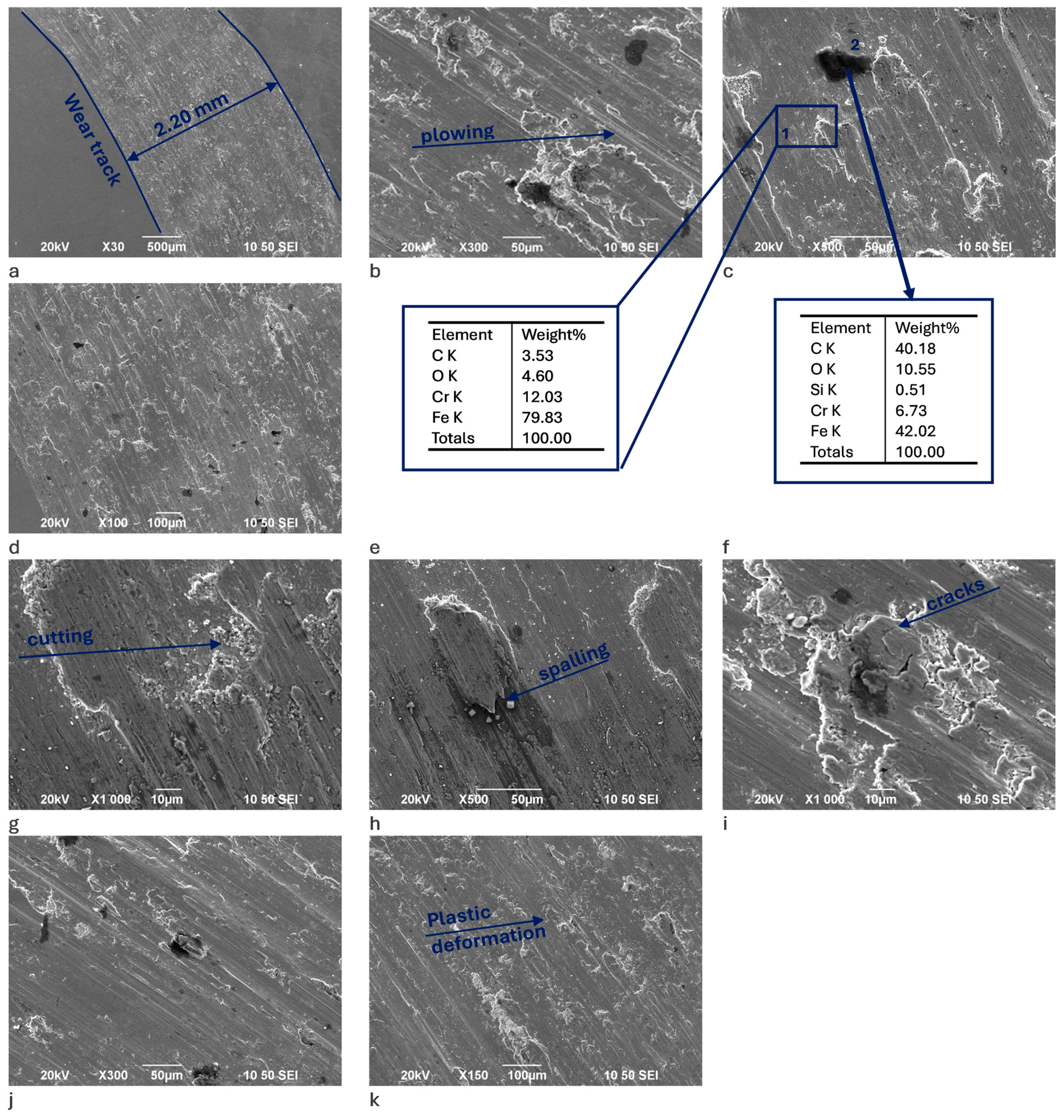
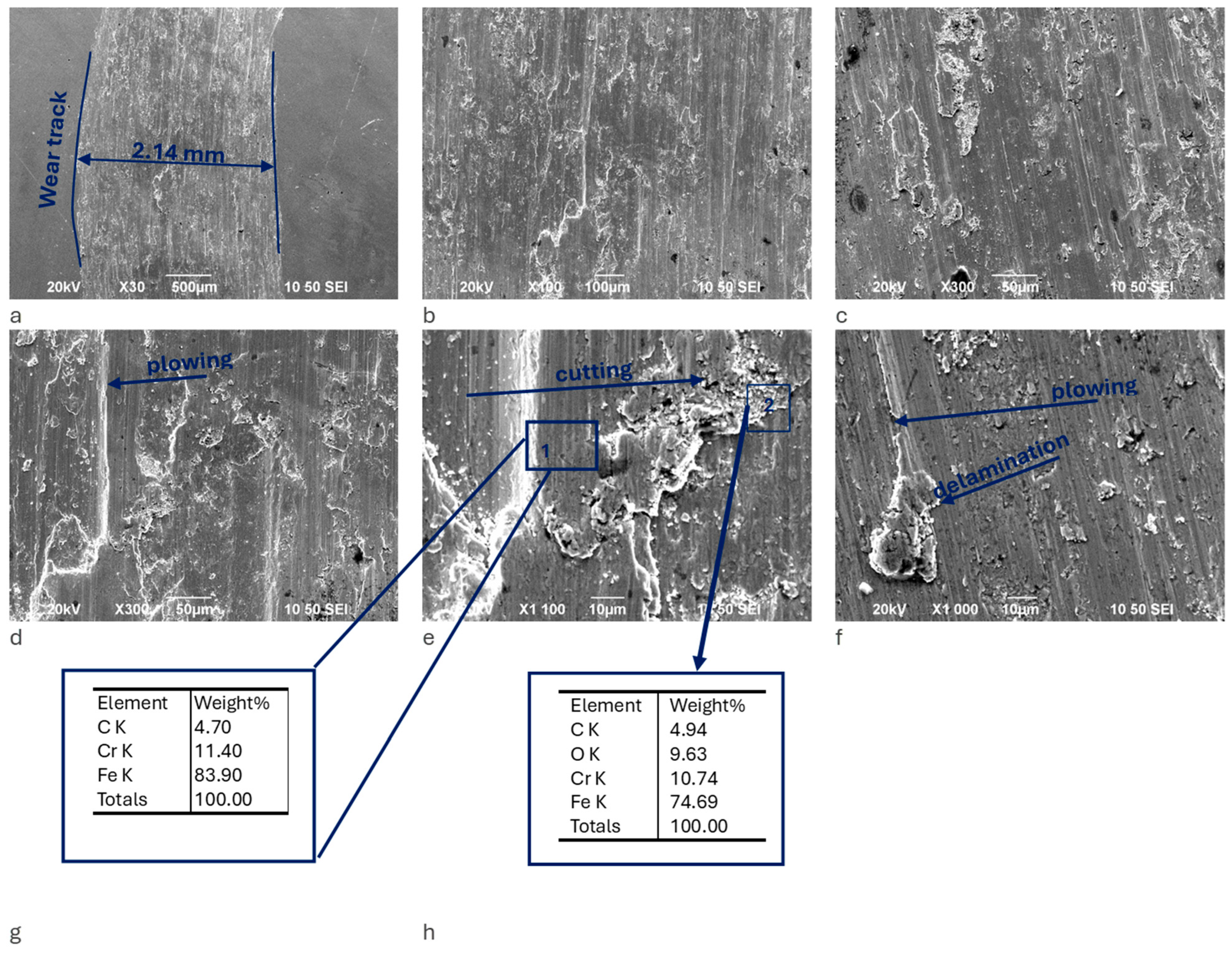
Both NHT 410L and HT 410L coatings (
Figure 10 and
Figure 11, respectively) exhibit wide wear tracks (≈2.1–2.2 mm) characterized by deep longitudinal grooves (
Figure 10b), surface cracking, and localised delamination. These features indicate a wear regime dominated by abrasive wear accompanied by fatigue-assisted delamination. The ferritic–martensitic microstructure of the 410L coatings, together with their comparatively lower microhardness, limits their resistance to plastic deformation under sliding contact. During pin-on-disk testing, asperity interactions lead to repeated subsurface plastic strain accumulation, particularly within the upper cladded layer where hardness decreases toward the surface. This promotes the initiation of microcracks at dendrite boundaries and at the interface between softer ferritic regions and harder martensitic laths.
Crack propagation parallel to the sliding direction, as observed in SEM micrographs, is consistent with fatigue-controlled delamination. The presence of a partially mixed zone (PMZ) with steep hardness gradients further exacerbates stress localization, facilitating crack nucleation and spallation. Once detached, hard debris particles act as third-body abrasives, intensifying abrasion and ploughing and accelerating material removal.
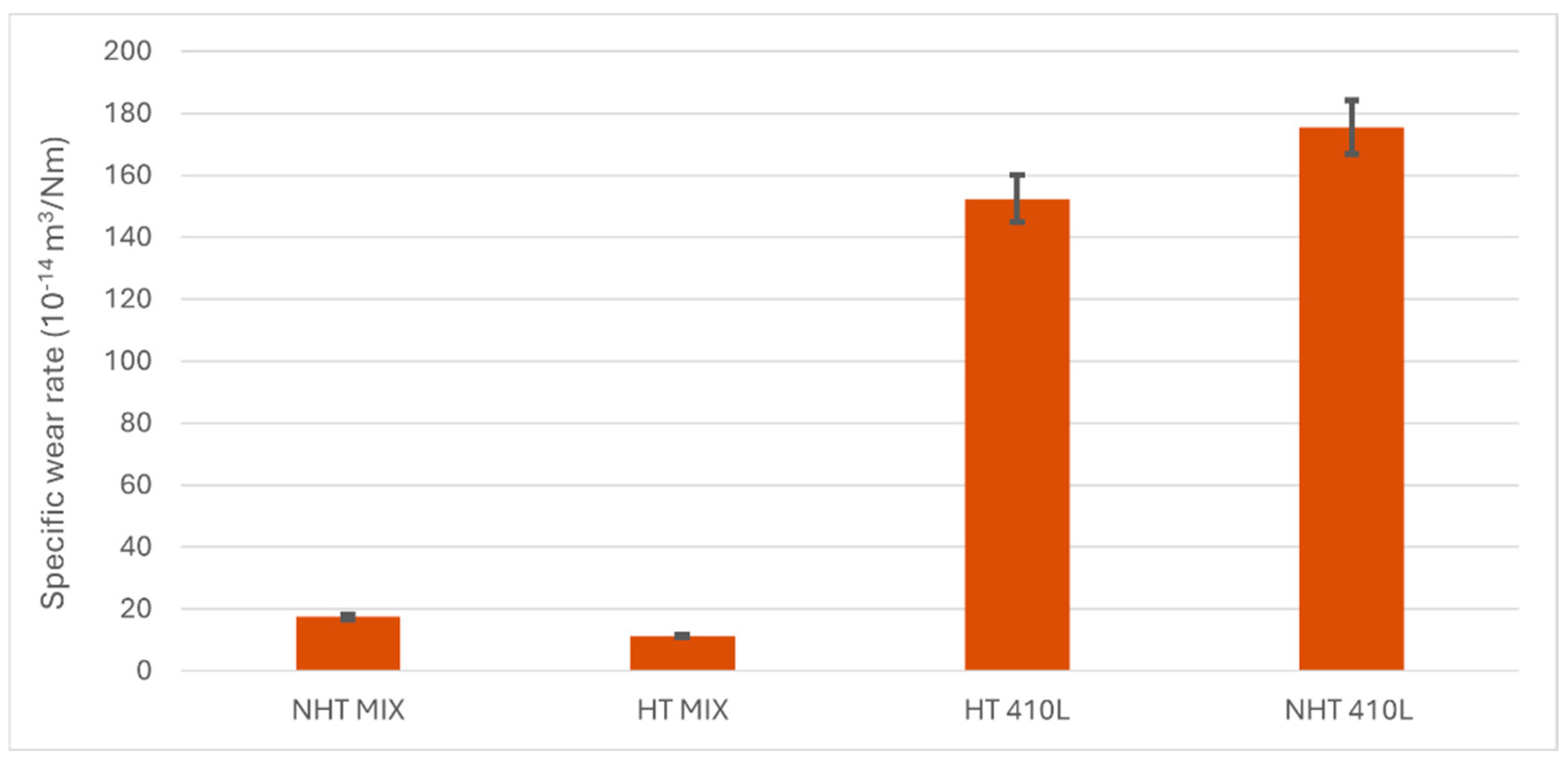
Although post-cladding heat treatment reduces residual stresses and partially tempers martensite, it does not fundamentally alter the phase balance or hardness of the 410L coatings. As a result, the dominant wear mechanisms remain largely unchanged, explaining the relatively high wear rates measured for both NHT and HT 410L specimens as confirmed by the wear rate diagram (
Figure 9). A thorough examination of the surface revealed a significant number of cracks (
Figure 10f), most likely caused by surface fatigue. In the case of contact in the running-in state, fatigue fracture is assumed to occur after multiple friction cycles. Material removal is governed by deformation and fracture in the contact region, which indicates fatigue fracture. Such deformation and fracture are caused by mechanically induced strains and residual tensile stresses in the coating. Repeated sliding leads to accumulation of subsurface plastic strain at stress concentration sites, promoting crack initiation after multiple friction cycles. In such a case, the mechanism of crack initiation and propagation is fatigue fracture, which is a rate process controlled by the inhomogeneity of a material’s microstructure [
15]. Furthermore, localized spallation occurred as fragmented material (
Figure 10f,g and
Figure 11) was removed from the surface by micro-cutting processes. In addition, mild oxidation was observed in both coatings, as confirmed by EDS analysis (
Figure 10e,f and
Figure 11g,h). The dominant wear mechanism is that of abrasion, but also adhesion and surface fatigue occurred in a synergistic manner, producing a greater rate of wear.
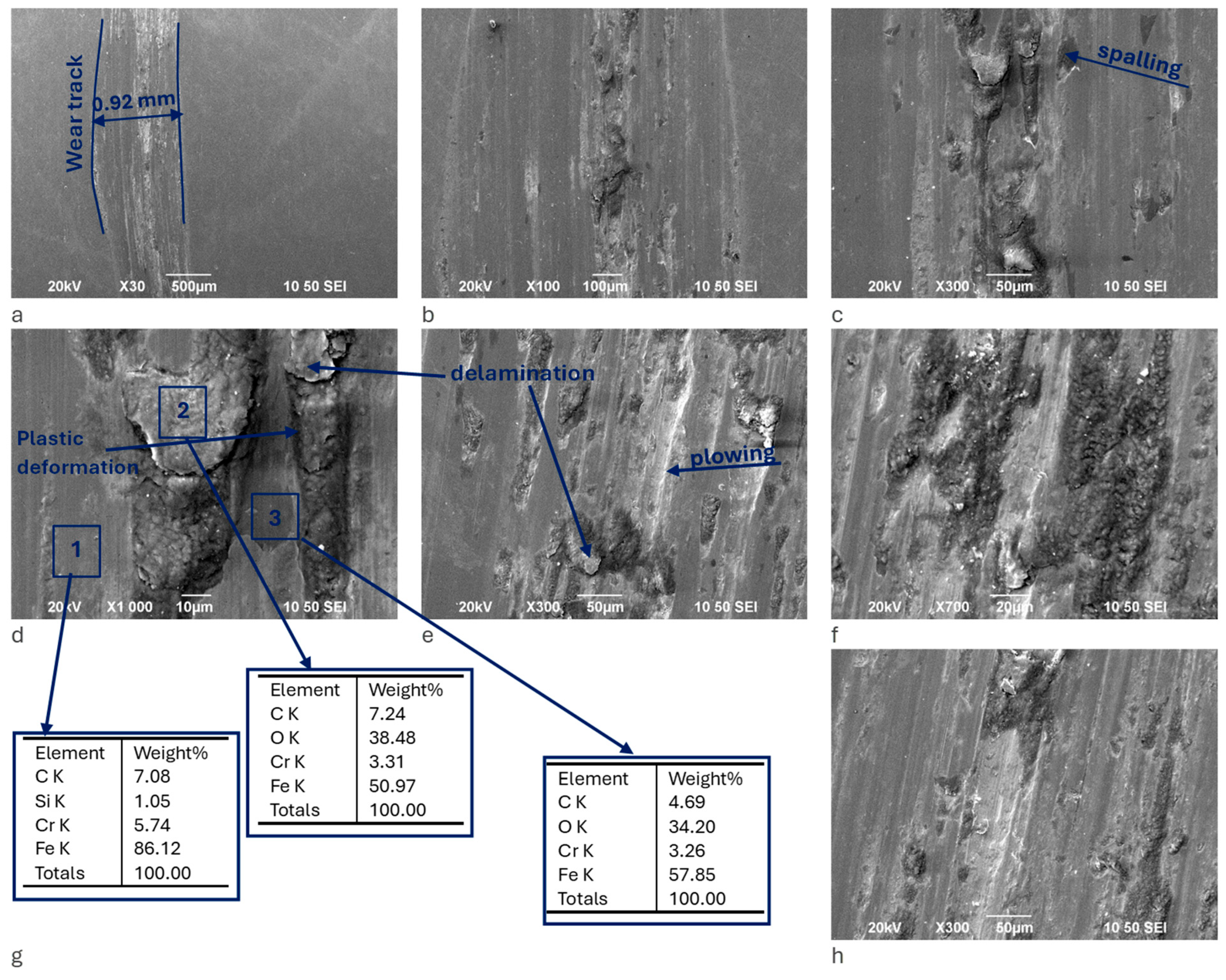
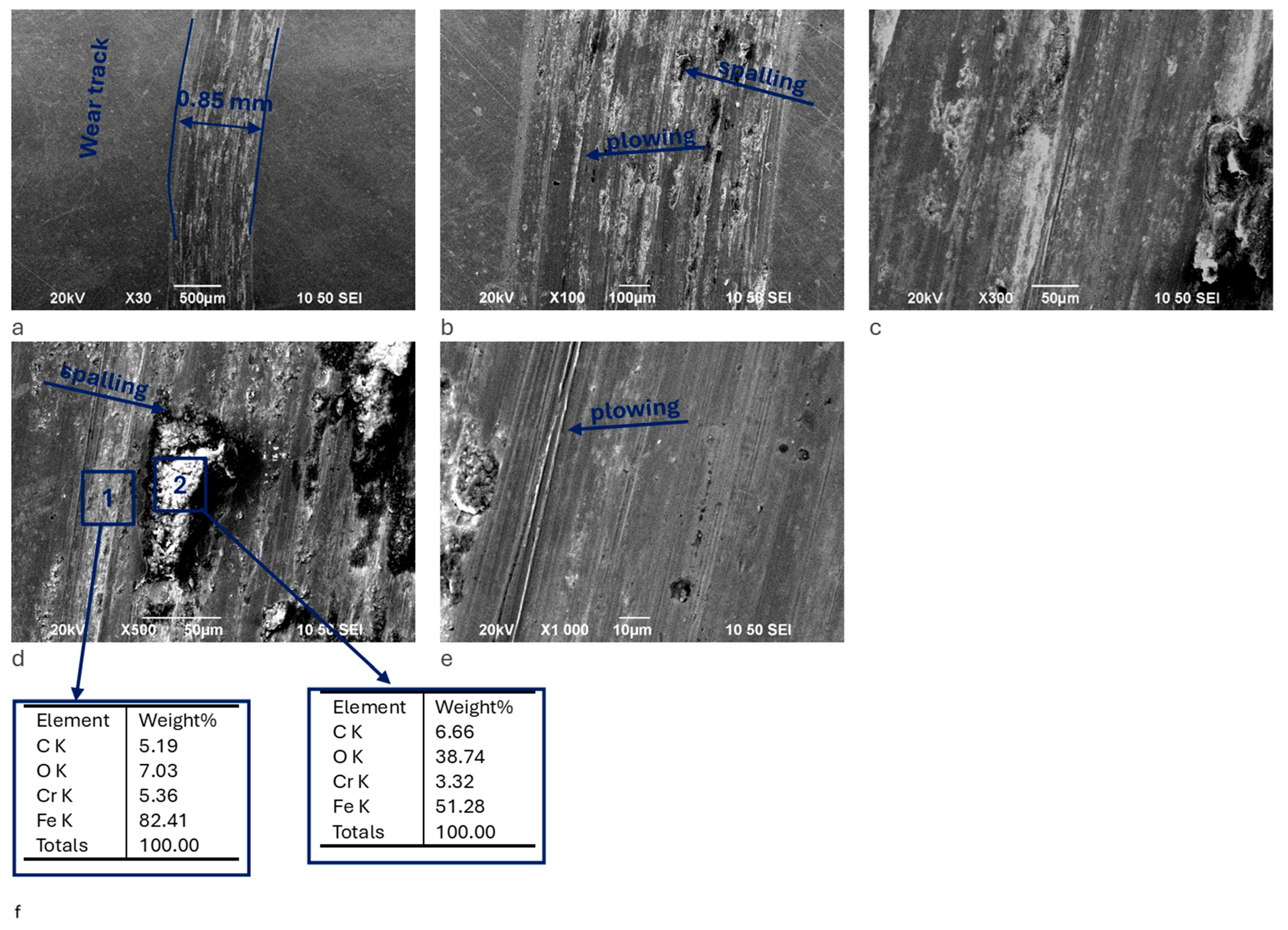
In contrast, the MIX coatings display substantially narrower wear tracks (≈0.85–0.92 mm) with smoother morphologies and significantly reduced material removal (
Figure 12 and
Figure 13). SEM analysis reveals shallow grooves aligned with the sliding direction (
Figure 12h and
Figure 13b,e), limited delamination, and localised plastic deformation, indicating a transition toward mild abrasive wear.
The superior wear resistance of the MIX coatings is directly linked to their refined martensitic microstructure and elevated hardness as described previously. The presence of uniformly distributed carbides and hard martensitic regions enhances the load-bearing capacity of the surface, restricting asperity penetration and minimizing subsurface plastic deformation.
Furthermore, the more homogeneous hardness profile across the cladded layers reduces stress concentration at microstructural interfaces, suppressing crack initiation and propagation. Localised delamination observed in the MIX coatings (
Figure 12c and
Figure 13b,d) is limited in extent and primarily associated with isolated microstructural heterogeneities rather than widespread fatigue damage.
EDS analysis confirms the presence of oxygen-rich regions within the wear tracks of all coatings, indicating mild oxidative wear (
Figure 12g and
Figure 13f). However, the mechanical role of oxide layers differs markedly between coating systems. In the 410L coatings, oxide fragments are repeatedly fractured due to insufficient substrate support, contributing to unstable third-body abrasion and accelerated wear.
Conversely, in the MIX coatings, the harder martensitic–carbide matrix provides adequate support for thin oxide tribo-layers, allowing them to persist and act as protective barriers between the sliding surfaces. This stabilizes the wear process, reduces direct metal-to-metal contact, and limits adhesive transfer, contributing to the observed reduction in wear rate, as can be confirmed by the wear rate diagram (
Figure 9).
Post-cladding heat treatment leads to a modest refinement of wear behaviour, particularly in the MIX coatings. Stress relief and martensite tempering reduce localised brittleness and improve microstructural stability, thereby limiting crack initiation during cyclic sliding. This effect is reflected in the slightly lower wear rate of HT MIX compared to NHT MIX.
In contrast, heat treatment has a limited influence on the wear mechanisms of the 410L coatings, as the fundamental microstructural characteristics governing wear—namely lower hardness and heterogeneous phase distribution—remain largely unchanged.
Overall, the dominant wear response transitions from severe abrasion with fatigue-assisted delamination in the 410L coatings to mild abrasion with limited plastic deformation in the MIX coatings. This transition is driven by increased hardness, refined microstructure, and improved hardness homogeneity in the mixed-alloy system. The results clearly demonstrate that microstructural engineering through alloy blending is an effective strategy for suppressing deleterious wear mechanisms and enhancing the durability of laser-cladded coatings for marine shaft applications.
The wear-track morphology of the 410L coatings—deep grooves, cracking, and local delamination—corresponds to a mixed regime of abrasive wear and fatigue-assisted material removal, which has been frequently reported for comparatively softer or heterogeneous cladded layers where subsurface plastic strain accumulation leads to crack nucleation at microstructural interfaces. Conversely, the mixed coatings exhibit narrower tracks and shallow grooves consistent with mild abrasion and improved tribo-layer support, indicating that higher hardness and improved load support reduced both penetration depth and the severity of debris-driven microcutting. This mechanism shift is consistent with reports on laser-cladded martensitic/carbide-strengthened coatings where increasing hardness and strengthening the matrix changes the dominant wear mode from severe ploughing and delamination toward mild abrasion and polishing-like smoothing [
24].
Table 6 summarizes dominant wear characteristics for 410L and MIX coatings.
3.7. Wear Mechanism Model
Based on the combined analysis of friction behaviour, wear rates, microstructural observations, and hardness profiles, distinct wear mechanisms can be proposed for the investigated coatings. The proposed wear mechanism model is consistent with the quantitative results presented in
Section 3.4,
Section 3.5 and
Section 3.6, where the 410L coatings exhibit higher friction coefficients and wear rates, whereas the MIX coatings show both lower friction levels and an order-of-magnitude reduction in wear rate.
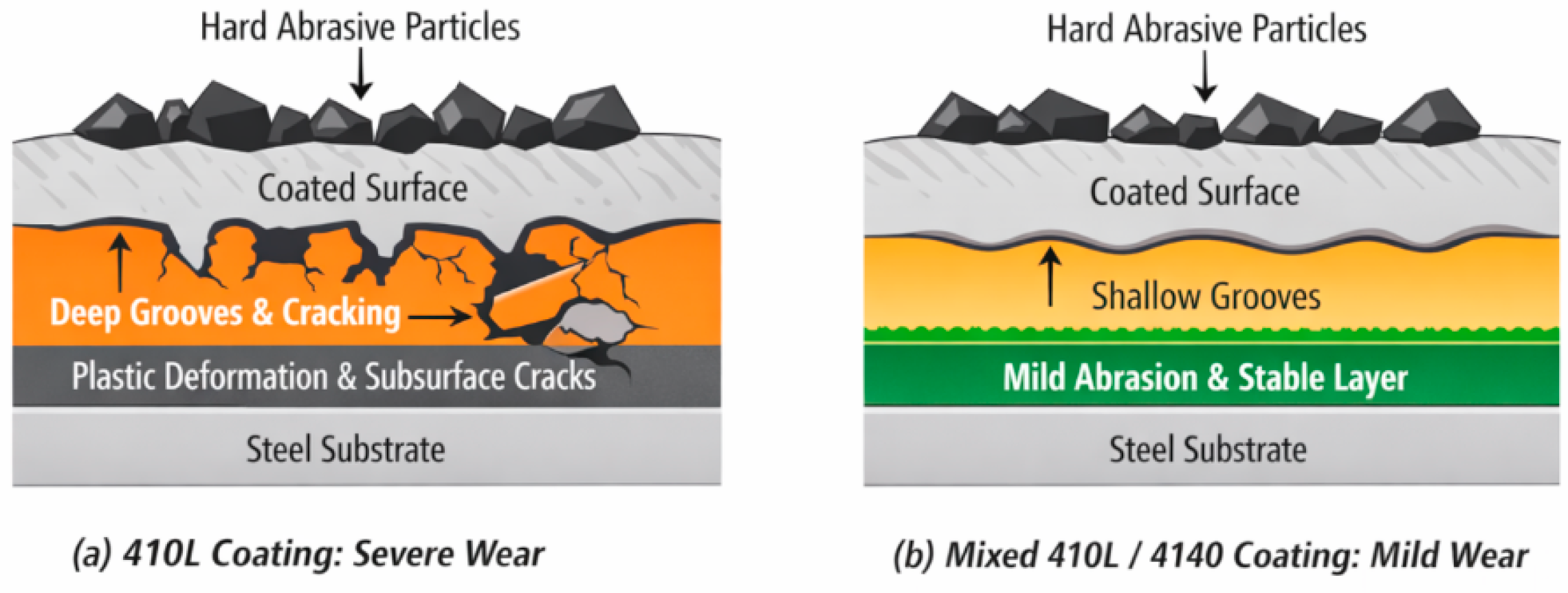
For the AISI 410L coatings, the relatively lower hardness and heterogeneous microstructure promote a wear regime dominated by severe abrasive wear accompanied by subsurface plastic deformation and fatigue-assisted delamination. During sliding, repeated asperity interactions lead to localized plastic strain accumulation beneath the contact surface, resulting in crack initiation parallel to the surface and subsequent material removal in the form of delaminated fragments. This mechanism is consistent with the observed wide wear tracks, deep grooves, and unstable friction behaviour.
In contrast, the mixed AISI 410L/AISI 4140 coatings exhibit a transition toward a milder wear regime. The higher hardness and improved load-bearing capacity of the mixed microstructure reduce asperity penetration depth and suppress extensive plastic deformation. Wear is therefore dominated by mild abrasion with shallow grooves and limited material removal, resulting in significantly lower wear rates and more stable friction coefficients.
Post-cladding heat treatment further modifies the wear response by tempering the martensitic microstructure and relieving residual stresses. This treatment reduces crack susceptibility at the near-surface region and enhances tribological stability, leading to a reduction in fatigue-related damage and a more uniform wear track morphology.
The proposed wear model (
Figure 14 and
Table 7) highlights the role of microstructural strengthening and residual stress mitigation in shifting the dominant wear mechanism from severe abrasive and delamination-controlled wear to mild abrasion with improved surface durability.