1. Introduction
Grinding is one of the most critical methods for achieving ultra-high-precision machining. Traditional analysis holds that the formation of round shapes in internal and external cylindrical grinding is achieved through multiple grinding cycles, during which the initial errors of the workpiece blank are gradually corrected, ultimately resulting in a high-precision geometrical surface. However, due to the complexity of the grinding process system, the roundness error in internal and external cylindrical grinding is not only related to the initial error of the workpiece, but also closely influenced by the dynamic characteristics of the grinding system and the grinding process parameters. In particular, for ultra-high-precision grinding processes, the dynamic characteristics of the system play a decisive role in determining the grinding accuracy and the formation of surface quality [
1]. Simulation and prediction of the entire manufacturing system to obtain high-quality products have become increasingly important in the process of process formulation [
2].
As the excitation source of the process system, the grinding force serves as the fundamental basis for predicting dynamic errors in grinding. It is one of the most important physical quantities in the description of the grinding process. The establishment of the theoretical model is based on a deep understanding of the grinding mechanism and involves a physical analysis of the grinding process. Therefore, the derived formulas for chip thickness and grinding force are analytical expressions, each carrying specific physical significance. Generally, the relationship between grinding process parameters and machining conditions is established, and theoretical formulas are derived based on physical relationships. The parameters in these theoretical formulas are then determined through experiments [
3]. Li et al. [
4] conducted research on ultra-precision grinding of YAG single crystals. Taking into account crystal slip, dislocations, stacking faults, and distortions caused by atomic planes, they established for the first time a plastic grinding force prediction model that considers factors such as strain rate, random distribution of abrasive grain radii, and the depth of elastoplastic transition. Xie et al. [
5], in the empirical formula calculation of grinding forces during high-speed grinding of engineering ceramics, took into account the complex machining motions of grinding and separately calculated plastic removal and brittle removal. By analyzing the interaction between a single abrasive grain and the workpiece material, they used the contact arc length in the grinding zone to understand the maximum undeformed chip thickness. Subsequent analysis showed that when the maximum undeformed chip thickness is below the critical depth for ductile removal, material removal is dominated by microplastic deformation, and the grinding force is mainly influenced by the microhardness. Conversely, when the chip thickness exceeds this critical depth, material removal occurs through brittle fracture, and the grinding force is affected by both microhardness and fracture toughness.
Sun et al. [
6] simplified the diamond grains on the grinding wheel as octahedrons and cones, and performed finite element analyses of single-grain and multi-grain continuous grinding of ceramic workpieces. They investigated the effects of grinding parameters on grinding forces and compared the differences between the two simulation methods under the same parameters. The results showed that the multi-grain continuous grinding simulation was closer to experimental results than the single-grain grinding of ceramic workpieces. Duan et al. [
7] selected octahedrons, triangular prisms, and square pyramids to simulate ideal diamond grain shapes, while triangular pyramids, spheres, and cones were used to represent worn diamond shapes. Using groove length and the groove width-to-depth ratio as parameters, they conducted finite element simulations to analyze the grinding forces of different diamond abrasive grains. Zhao et al. [
8] and colleagues considered the effects of abrasive grain rotation angle, wear height, cutting depth, grinding speed, and rake angle on grinding forces. They established a grinding force model for triangular pyramidal abrasive grains based on the oblique cutting theory.
Process system errors include geometric errors, errors caused by force-induced deformation of the process system, errors arising from dynamic characteristics, and errors due to residual internal stresses in the workpiece. In grinding, errors within the grinding process system are a significant factor affecting machining accuracy, with various errors influencing precision to different extents. Cui et al. [
9] considered the workpiece’s geometric motion, contact and wear effects, as well as grinding constraints, and established a time-domain dynamic model for the workpiece, grinding wheel, and regulating wheel during the machining process. Meng et al. [
10] developed a model for the instantaneous undeformed chip thickness considering phase deviation caused by vibration, time accuracy, and wheel-workpiece separation based on a realistic stochastic abrasive grain model. They then established a dynamic model of a weakly stiff grinding system by integrating the principles of system discretization and dynamic parameters. Yan et al. [
11] considered the tangential and torsional deformation of the workpiece in the contact region and established a four-degree-of-freedom dynamic system. They calculated the grinding stability diagram through eigenvalue analysis. Yang et al. [
12,
13] introduced radial displacement of the workpiece and established a three-degree-of-freedom nonlinear dynamic model. They proposed a control method combining nonlinear velocity feedback and chaotic perturbation to suppress chatter during the grinding process. Wu et al. [
14] further considered the axial displacement between the grinding wheel and the workpiece, establishing a four-degree-of-freedom dynamic model. They concluded that the long spindle structure of the grinding wheel is one of the main causes of grinding chatter. Yan et al. [
15] explored the influence of process parameters on roundness error from the perspective of contour evolution in centerless grinding and electrochemical mechanical machining processes. Experiments demonstrated that the combined processing technique of “centerless grinding + electrochemical mechanical machining” provides an effective method for achieving precision machining of parts. Zeng et al. [
16,
17] proposed an iterative algorithm for the “instantaneous grinding depth based on grinding force” and established a vibration coupling model for the external cylindrical grinding process.
At present, the research on grinding dynamics is insufficient, and the related work is mainly focused on the horizontal longitudinal grinding system, with the aim of optimizing process parameters and improving grinding accuracy. Most scholars mainly consider the dynamic characteristics of weakly rigid workpieces. Only a few scholars take into account the dynamic characteristics of both grinding wheels and workpieces, and the weakly rigid structural models they have established are all limited to the grinding wheels and workpieces themselves. The difference in this paper’s work lies in taking the vertical model system as the object and establishing a more detailed vibration structure model, with a focus on the dynamic characteristics of the machine tool structure itself. The further established grinding vibration analysis model, apart from guiding the selection of process parameters, more importantly, provides a theoretical basis for the structural design and optimization of high-precision grinding machines. The main work of the thesis includes vibration structure modeling, grinding force derivation, and dynamic modeling. Among them, dynamic modeling is divided into solving vibration differential equations and predicting roundness errors. Finally, simulation and experimental cases were arranged, with a focus on discussing the influence law of dynamic parameters of machine tools on grinding accuracy.
2. Vibration Structural Model of the Grinding System
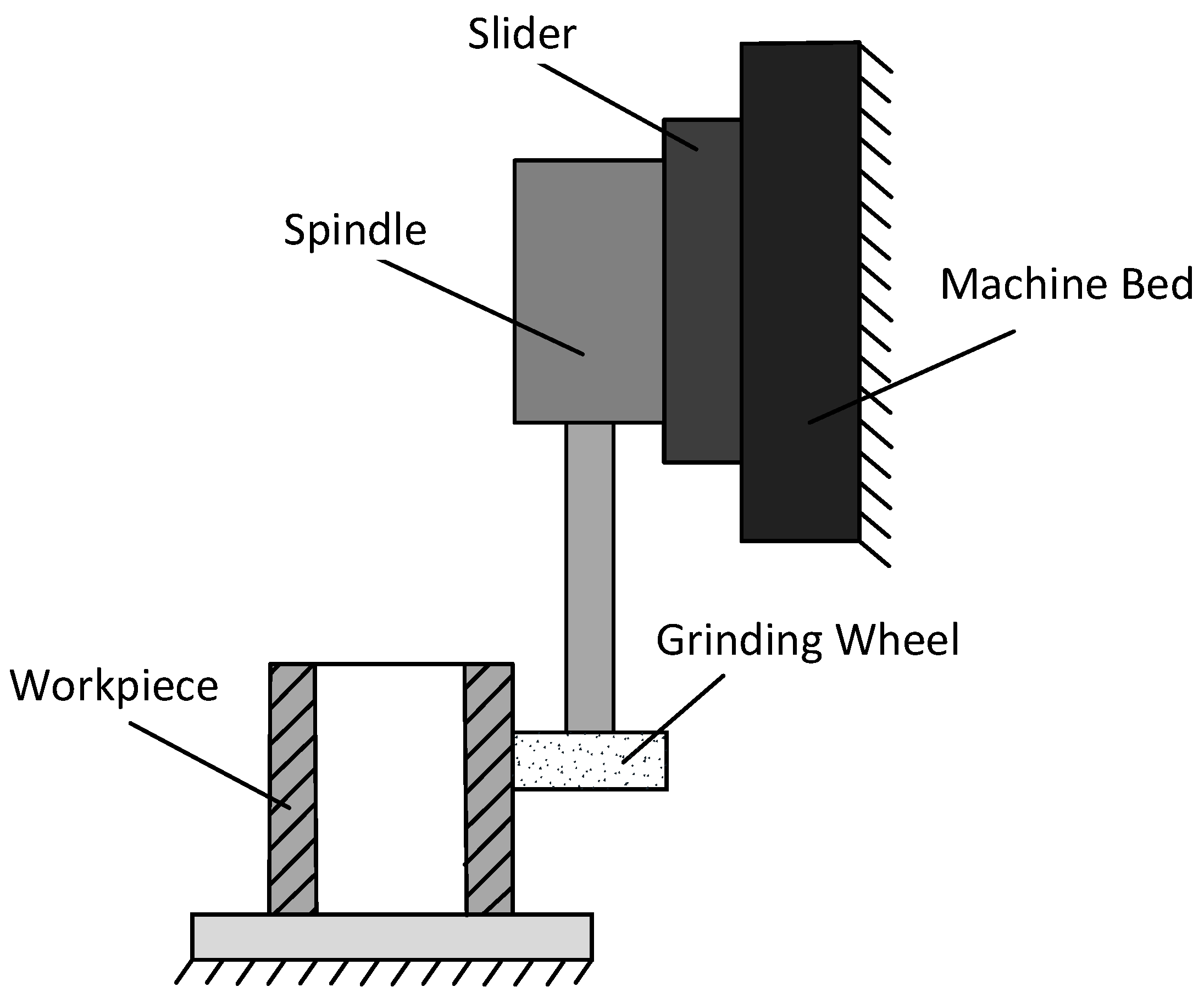
Establishing a reasonable vibration structural model is the foundation for studying the formation mechanism and variation patterns of roundness error in grinding process systems. Taking the vertical grinding process system independently developed by the Mechanical Manufacturing Technology Research Institute (
Figure 1) as the object, establishment of the Vibration Structural Model of the Grinding Process System.
Due to the complexity of the grinding system, its vibration structural model needs to take into account the workpiece system, grinding wheel system, hydrostatic bearing, linear motor, rigid joints, grinding wheel spindle flexibility, and so on. To reduce system complexity, this study focuses on exploring the influence of the hydrostatic bearing on the grinding process system and makes the following assumptions for the system:
(1) Compared with the hydrostatic bearing, the stiffness of the process system components and their joints is relatively high. Therefore, all components are assumed to be rigid bodies, with consideration given to their rigid displacement and deflection.
(2) Due to the large overhang of the grinding wheel, the deformation of the grinding wheel spindle is considered.
(3) As the CBN grinding wheel has high hardness and experiences minimal wear during short grinding durations, wheel wear is neglected.
(4) Geometric errors of the grinding wheel spindle are also neglected.
(5) In ultra-precision grinding, the heat generation is minimal, and cutting fluid is used for cooling. As a result, the temperature variation in the workpiece is small, and the temperature field changes uniformly along the circumferential direction, having negligible impact on roundness. Therefore, the thermal effects of the grinding process on roundness are not considered.
2.1. Tool System
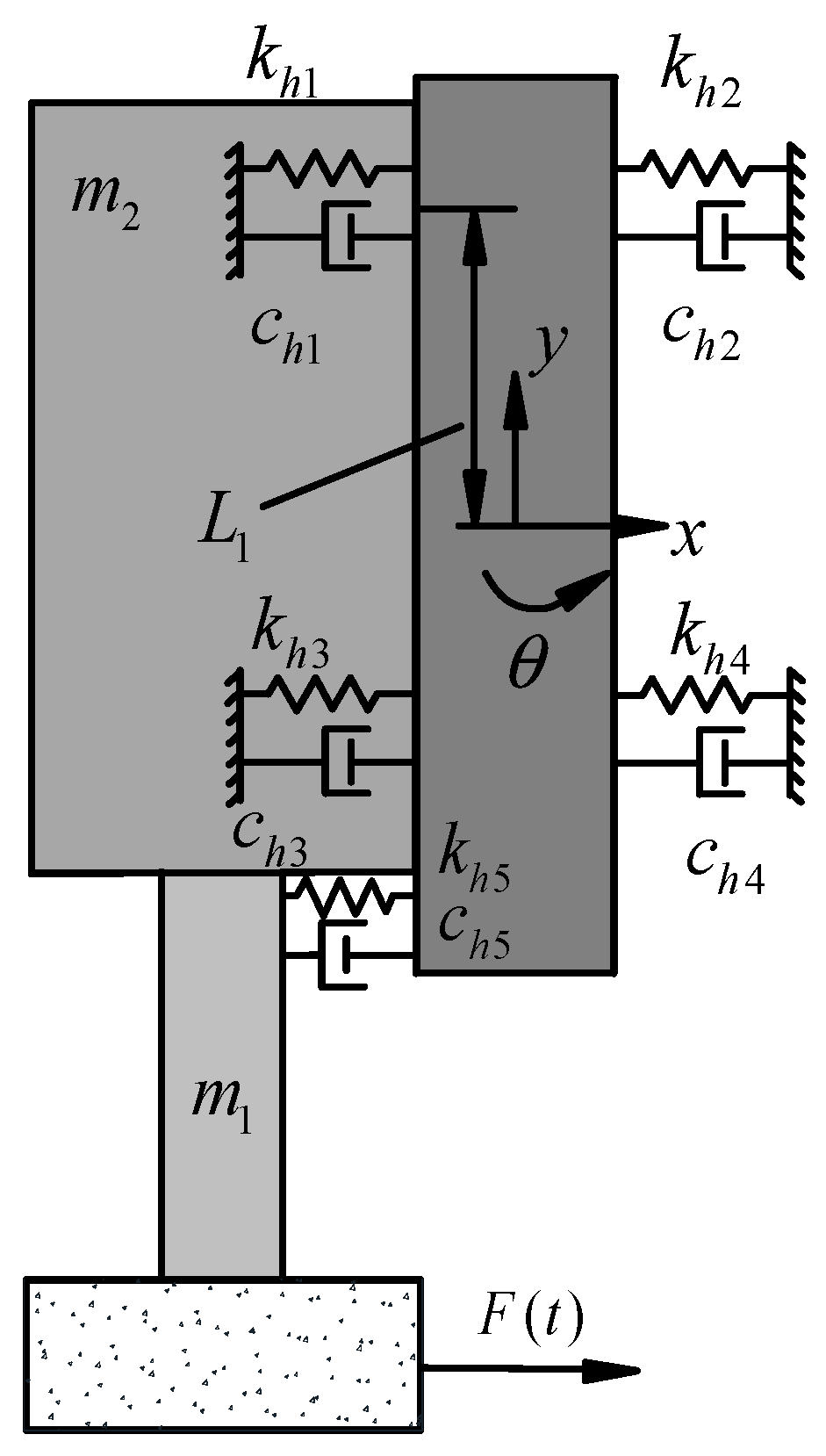
Based on the structural characteristics of the tool part in the grinding system, the system is divided into a three-degree-of-freedom spring-damping system. The hydrostatic oil film between the tool system and the machine bed fixed part is equivalently represented by spring-damping units, and the vibration deformation of the grinding wheel spindle is equivalently represented as the position variation in a single spring-damping element, as shown in
Figure 2.
The dynamic equation of the tool part in the grinding process system based on the hydrostatic bearing is established as shown in Equation (1):
In the equation, x1 represents the displacement of the slider in the x-direction (m), x2 is the displacement of the grinding wheel in the x-direction (m), and θ is the rotation angle of the slider (rad). m1 is the modal mass of the spindle and slider parts in the tool system (kg), and m2 is the modal mass of the grinding wheel and spindle shaft parts (kg). J1 is the moment of inertia of the tool system (kg·m2). kh1, kh2, kh3, kh4 represent the stiffness of the four hydrostatic bearing pads (N/m), and kh5 is the stiffness of the equivalent spring-damping element of the grinding wheel spindle. Ch1, Ch2, Ch3, Ch4 denote the damping coefficients of the four hydrostatic bearing pads (N·s/m), and Ch5 is the damping coefficient of the equivalent spring-damping element of the grinding wheel spindle. L1 is the y-direction distance from the center of the hydrostatic bearing pad to the coordinate origin (m), LF is the y-direction distance from the grinding force application point to the coordinate origin (m), and F is the grinding force applied on the grinding wheel.
2.2. Worktable System
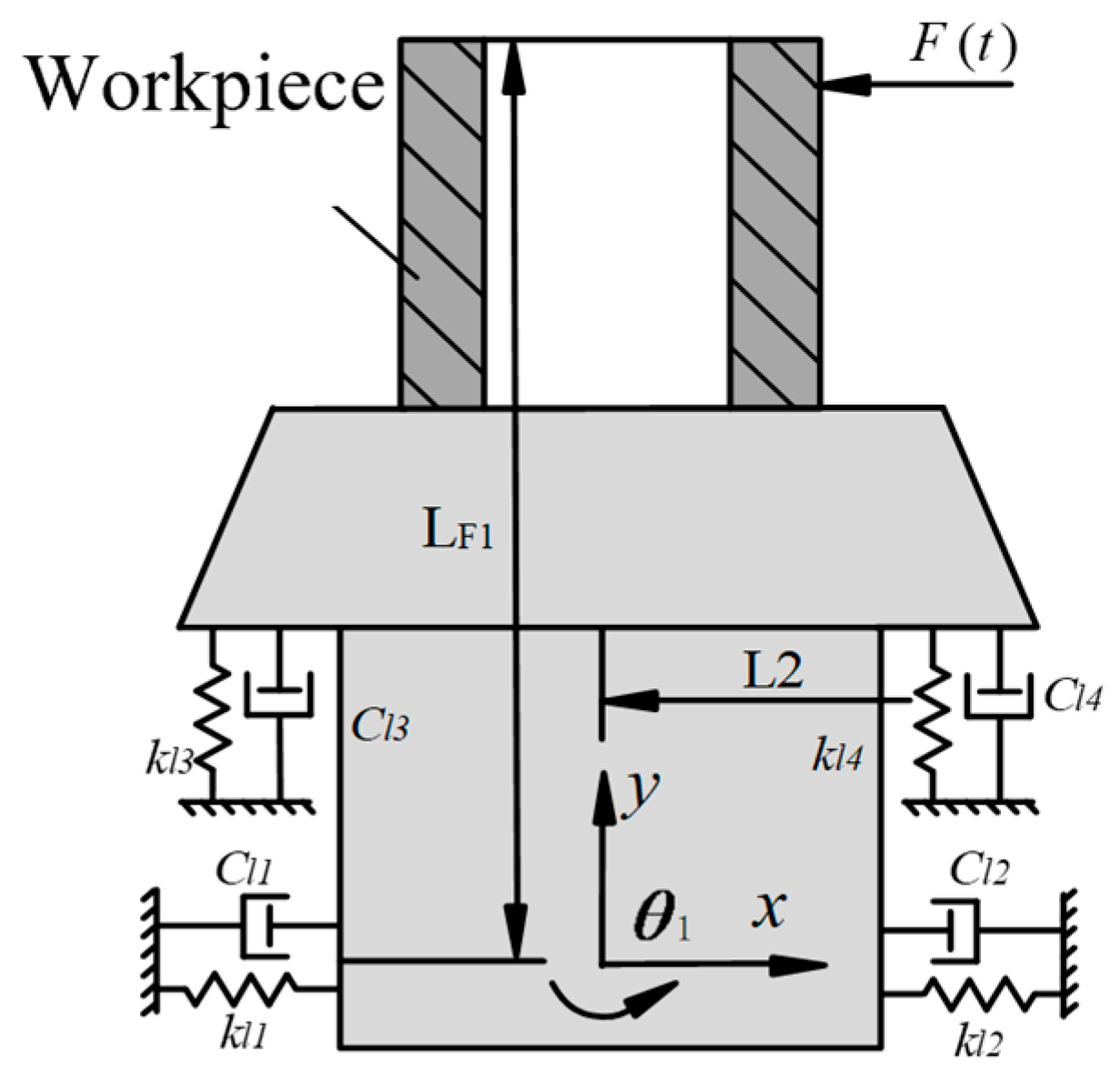
Based on the structural characteristics of the worktable part in the grinding system, the system is divided into a three-degree-of-freedom spring-damping system. The hydraulic support surface and bending-resistant bearings of the worktable are equivalently represented as spring-damping units, as shown in
Figure 3.
Taking the radial direction of the bending-resistant bearing as the
x-axis and the rotational direction as the
y-axis, the dynamic equation of the worktable part in the grinding process system based on hydrostatic bearing support is established as shown in Equation (2):
In the equation, x is the displacement of the worktable in the x-direction (m), y is the displacement of the worktable in the y-direction (m), θ is the rotational angle of the worktable (rad), m is the modal mass of the worktable system (kg), J is the rotational inertia of the worktable system (kg·m2); Cl1, Cl2 are the damping values (N·s/m) of the equivalent spring-damping units of the hydraulic support surface, Cl3, Cl4 are the damping values (N·s/m) of the equivalent spring-damping units of the bending-resistant bearings, kl1, kl2 are the stiffness values (N/m) of the equivalent spring-damping units of the hydraulic support surface, kl3, kl4 are the stiffness values (N/m) of the equivalent spring-damping units of the bending-resistant bearings, L2 is the distance in the x-direction from the equivalent spring-damping unit of the bending-resistant bearing to the coordinate origin (m), LF1 is the distance in the y-direction from the equivalent spring-damping unit of the bending-resistant bearing to the coordinate origin (m), F is the grinding force applied to the workpiece.
3. Derivation of Grinding Force
The grinding force is generated during the grinding process as a result of elastic deformation, plastic deformation, chip formation, and friction between the abrasive grains and bonding material of the grinding wheel and the surface of the workpiece. It has a significant impact on surface machining quality, workpiece form and positional tolerances, as well as deformation of the machining system. Therefore, the accurate calculation of grinding force serves as the foundation and prerequisite for predicting the dynamic errors of the grinding system. It provides a theoretical basis for the optimal design of ultra-high-precision grinding systems and the optimization of grinding process parameters.
Assuming the abrasive grains on the grinding wheel are conical in shape with an average apex angle of 2
θ [
18], and their protrusion heights follow a Rayleigh distribution, with all grains participating in cutting and material removal during the grinding process, then the probability density function (PDF) of the grain protrusion height
h, which follows a Rayleigh distribution, is given by:
In the equation, h represents the height of the abrasive grain, and σ is the parameter of the Rayleigh distribution.
The chip cross-sectional area
Am removed by a single abrasive grain is related to the grain height h by
Am =
h2tan
θ. Then, the expected value of the area
Am, denoted as
E(
Am) is:
The expected total chip cross-sectional area
AN of all abrasive grains involved in cutting is:
In the equation,
Nd is the number of effective abrasive grains participating in cutting, given by
Nd =
blcC; where
C is the number of effective abrasive grains per unit area on the grinding wheel; and
[
19] is the contact length between the grinding wheel and the workpiece.
ap is the cutting depth;
ds is the diameter of the grinding wheel;
b is the grinding contact width.
The microscopic removal volume rate of the grinding chips should be equal to the macroscopic material removal rate of the grinding process, that is:
In the equation, vs. is the grinding wheel speed; vw is the workpiece feed speed.
By combining Equations (3)–(6), the parameter
σ can be determined:
The average protrusion height of the abrasive grains, which is the undeformed chip thickness
E(
h) is:
By dividing the grinding force into chip deformation force and friction force, the grinding force equation is established as:
In the equation, Fn′ is the normal force; Ft′ is the tangential force; Fns′ is the normal force caused by friction; Ftc′ is the tangential force caused by grinding deformation; Fts′ is the tangential force caused by friction.
For a single abrasive grain, the tangential grinding force caused by grinding deformation is:
In the equation, Fp is the unit grinding force, ag is equal to the undeformed average chip thickness E(h).
The tangential grinding force caused by grinding deformation can be obtained by multiplying the tangential grinding force acting on a single abrasive grain by the total number of abrasive grains in the grinding contact zone:
In surface grinding, there is a proportional relationship between the tangential grinding force and the normal grinding force caused by grinding deformation, expressed as
F′
tc =
φF′
nc,
φ =
π/(4tan
θ), Therefore, the normal grinding force is:
In the surface grinding process, the grinding force caused by friction is:
δ is the top area of a single active abrasive grain, the actual contact area between the workpiece and the working abrasive grain; μ is the coefficient of friction; is the average contact pressure between the worn surface of the abrasive grain and the workpiece, which can be calculated using the formula: . P0 is a constant that can be determined experimentally; represents the difference between the radius of curvature of the cutting trajectory—approximated by a parabolic function—and the radius of the grinding wheel.
The coefficient of friction is determined by the friction binomial theorem:
α and β are constants determined by the physical and mechanical properties of the friction surface; A0 is the contact area; W is the normal load.
By combining Equations (13) and (14), we can obtain:
The mathematical expression of the grinding force is:
4. Grinding Dynamics Analysis
Grinding dynamics analysis forms the basis for calculating dynamic errors and other dynamic studies. Currently, the grinding dynamics equations are established based on spring-damping systems. After solving the grinding forces, system modal parameters are obtained through experimental modal analysis, and roundness error prediction is achieved by solving the vibration differential equations.
4.1. Solution of the Vibration Differential Equation
The grinding dynamics equation is expressed in differential form. Currently, the existing mathematical methods for solving differential equations are quite limited, and since the equations describing the grinding process are generally complex, obtaining an exact analytical solution is difficult. In practical engineering problems, the differential equations involved are generally solved using numerical methods, which approximate the exact solution with an approximate one.
Based on the fully discrete algorithm [
20] to solve the vibration differential equation, that is, to determine the variation in the coordinates of the tool system and workpiece system under the action of grinding forces. The tool system dynamics equation established in
Section 2 can be simplified as:
In the equation, the first term on the right-hand side represents the dynamic force component, whose value is related to the profile generated in the previous grinding cycle T, while the second term represents the static force component.
Let the dynamic Equation (17) be transformed into:
According to the fully discrete algorithm, the model is processed by first discretizing the grinding period of the tool. Let , where the period T is divided into m equal parts, each with a time interval of .
In the equation, let
Au(
t) +
Bu(
t −
T) +
F(
t) =
h(
t,
x), where matrices
A and
B are averaged over the periodic matrix in the
k-th time interval (
tk,
tk+1). The time-domain functions
u(
t) and
u(
t −
T) are replaced by linear interpolation over the intervals (
tk,
tk+1) and (
tk−m,
tk−m+1), respectively.
For the differential part
, the forward difference method from the Euler method is applied for discretization:
By combining Equations (19) and (20), we obtain:
Construct a 6(m + 6)-dimensional state column vector, denoted as:
Then, the iterative formula can be expressed in matrix form as:
The state transition relationship is obtained from the iterative Formula (24) as:
4.2. Roundness Error Prediction
Grinding to form a round shape is a complex process. During grinding, the workpiece rotates around its axis on a rotary table, while the spindle controls the high-speed rotation of the grinding wheel. A linear feed mechanism controls the grinding wheel’s lateral feed perpendicular to the workpiece’s generatrix, and simultaneously controls the grinding wheel’s periodic reciprocating motion parallel to the workpiece’s generatrix. Through continuous contact between the grinding wheel and the workpiece surface, the interfering portions are gradually removed, completing the main cutting motion and forming the ground surface.
Before grinding, the workpiece already has an initial roundness error. The actual circular contour is a complex closed curve that can be regarded as continuously varying with a period of 2
π [
21]. The initial circular contour of the workpiece can be expressed as:
In the equation, P is the highest order of the roundness error harmonic components; θ is the angular variable of the roundness error in radians; Ai and Bi are the coefficients of the sine and cosine terms of the i-th order harmonic component, respectively.
During the grinding process, the interaction between the grinding wheel and the workpiece generates grinding forces. Due to the presence of the initial circular contour, the actual grinding depth
ap(
t) varies with time:
ap0 is the nominal feed depth of the grinding wheel, n is the rotational speed of the workpiece.
As indicated by the mathematical expression of the grinding force, variations in the grinding depth cause the grinding force
F(
t) to change over time. By substituting the grinding force into the dynamic equations of the tool system and the worktable system, the displacements
x,
x1 and rotational angles
θ,
θ1 of the tool and worktable can be obtained. The grinding point offset under the action of the grinding force is expressed as:
The instantaneous grinding depth during the first grinding pass is:
The workpiece profile after the first grinding pass is expressed as:
By analogy, the workpiece profile after the
q-th grinding pass is:
where
ωw is the angular velocity of the workpiece (rad/s), and
q is the number of revolutions the workpiece has completed. In Equation (28), the first term represents the initial circular contour, and the second term represents the cumulative material removal at each grinding stage.
5. Simulation Example
In actual grinding processes, various parameters of the grinding system significantly affect the roundness error of the machined workpiece. These include the dynamic characteristics of the hydrostatic bearing, the speed ratio between the grinding wheel and the workpiece, the grinding wheel feed rate and grinding time, the properties of the grinding wheel, the radial feed speed, the rotational accuracy of the rotary table, and the linearity of the
z-axis motion. All these factors play important roles in influencing the final roundness error. Using MATLAB software R2023b to calculate the influence of the dynamic characteristics of hydrostatic bearings on roundness error, the variation patterns of roundness error are predicted, providing a theoretical basis for improving product machining accuracy [
22].
The grinding wheel model is 53A80H15V from Winterthur Technologies Group (WTG) of Switzerland Winterthur, with a diameter ds = 500 mm, a grinding width b = 50 mm, the workpiece material is FV520B martensitic stainless steel, and the cutting fluid is 10% emulsion. The grinding force testing and modal hamming test equipment includes: YDCB-I II05 force gauge, INV3018 data acquisition instrument, YE5850 charge amplifier, 086C03 impact hammer, 3035B acceleration sensor, and DASP-V10 data processing software.
In Equation (16): , , , , , Based on the experimental data k1 = 145,236.8, k2 = 25,063.29, k3 = 56,500.41, k4 = 0.0104, k5 = 16.8644.
In
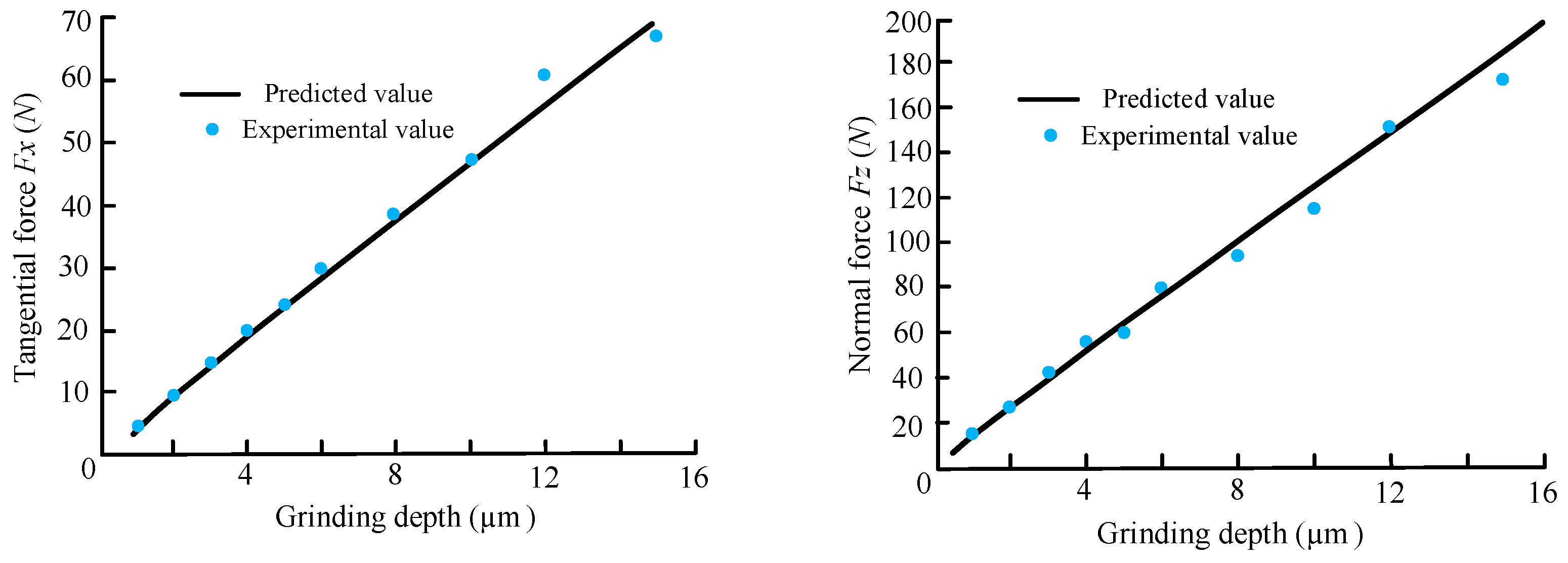
Figure 4, the maximum relative error between the predicted value and the experimental value of the grinding tangential force
Fx is 8.9%, and the average relative error is 4.98%. The maximum relative error between the predicted value and the experimental value of the grinding radial force
Fz is 7.7%, and the average relative error is 5.44%.
Using the grinding force expression and dynamic equations, the grinding-to-round process is simulated through the fully discrete algorithm. The key initial parameters for the grinding process simulation are listed in
Table 1.
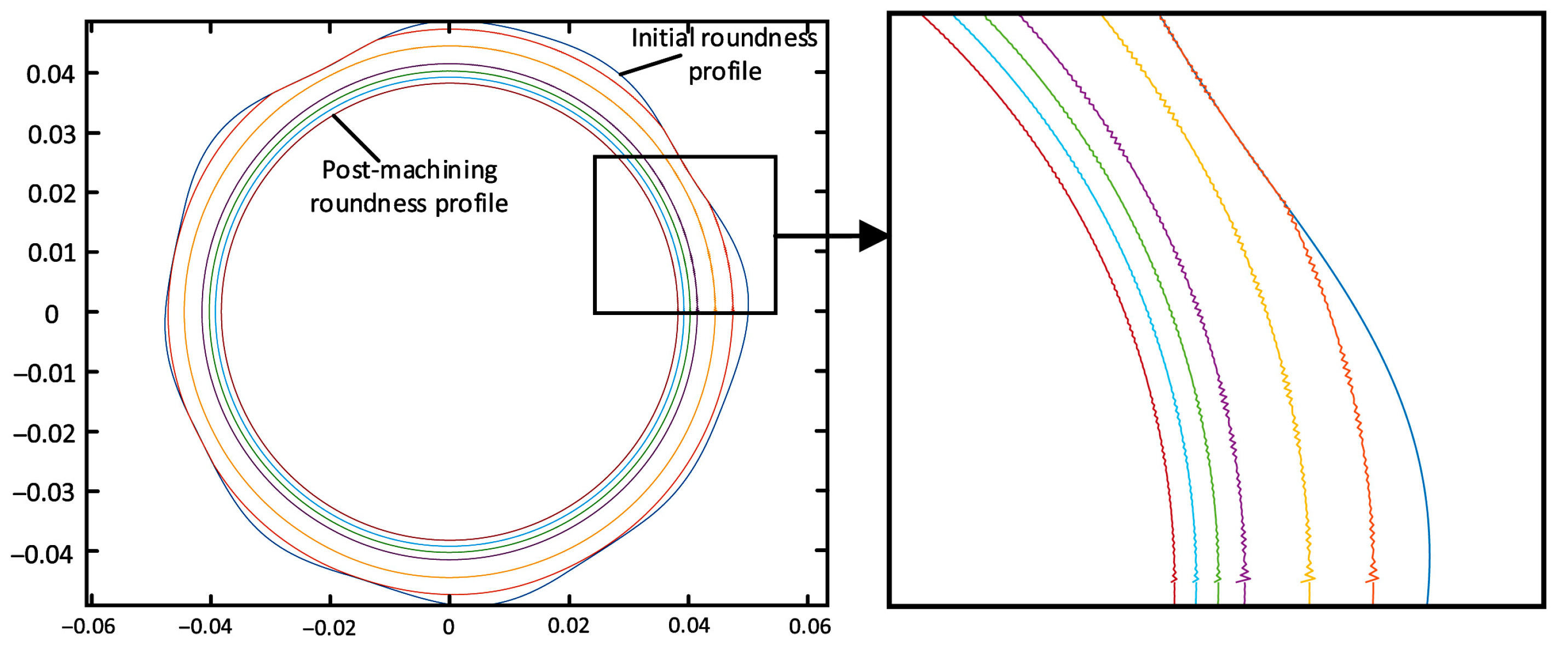
The grinding process is divided into rough grinding and fine grinding. During rough grinding, the grinding wheel feeds three times, with a depth of 3 μm per pass. During fine grinding, the wheel also feeds three times, with a depth of 1 μm per pass. The variation in roundness profile is shown in
Table 2. The profile is shown as in
Figure 5.
5.1. Influence of System Dynamic Characteristics
In actual grinding processes, the parameters of the grinding system have a significant impact on the roundness error of the machined workpiece. Factors such as the dynamic characteristics of the hydrostatic bearing, the speed ratio between the grinding wheel and the workpiece, the location of the grinding force application, the radial feed rate, the rotary accuracy of the worktable, and the linearity of z-axis motion all play important roles in influencing the roundness error. Based on the established dynamic equations of the grinding process system and the grinding simulation model, the influence of various parameters—such as the dynamic characteristics of the hydrostatic bearing, the speed ratio between the grinding wheel and the workpiece, and the position of grinding force application—on the roundness error of the machined workpiece is investigated. Through computer simulation, the workpiece profile after grinding is reconstructed, and the roundness error is calculated using the least squares method. This provides a theoretical basis for optimizing the grinding system parameters and improving the roundness accuracy of ground components.
(1) Influence of the tool system shim stiffness on roundness error
The tool system’s hydraulic support consists of four shims with modal stiffness values denoted as
kh1,
kh2,
kh3,
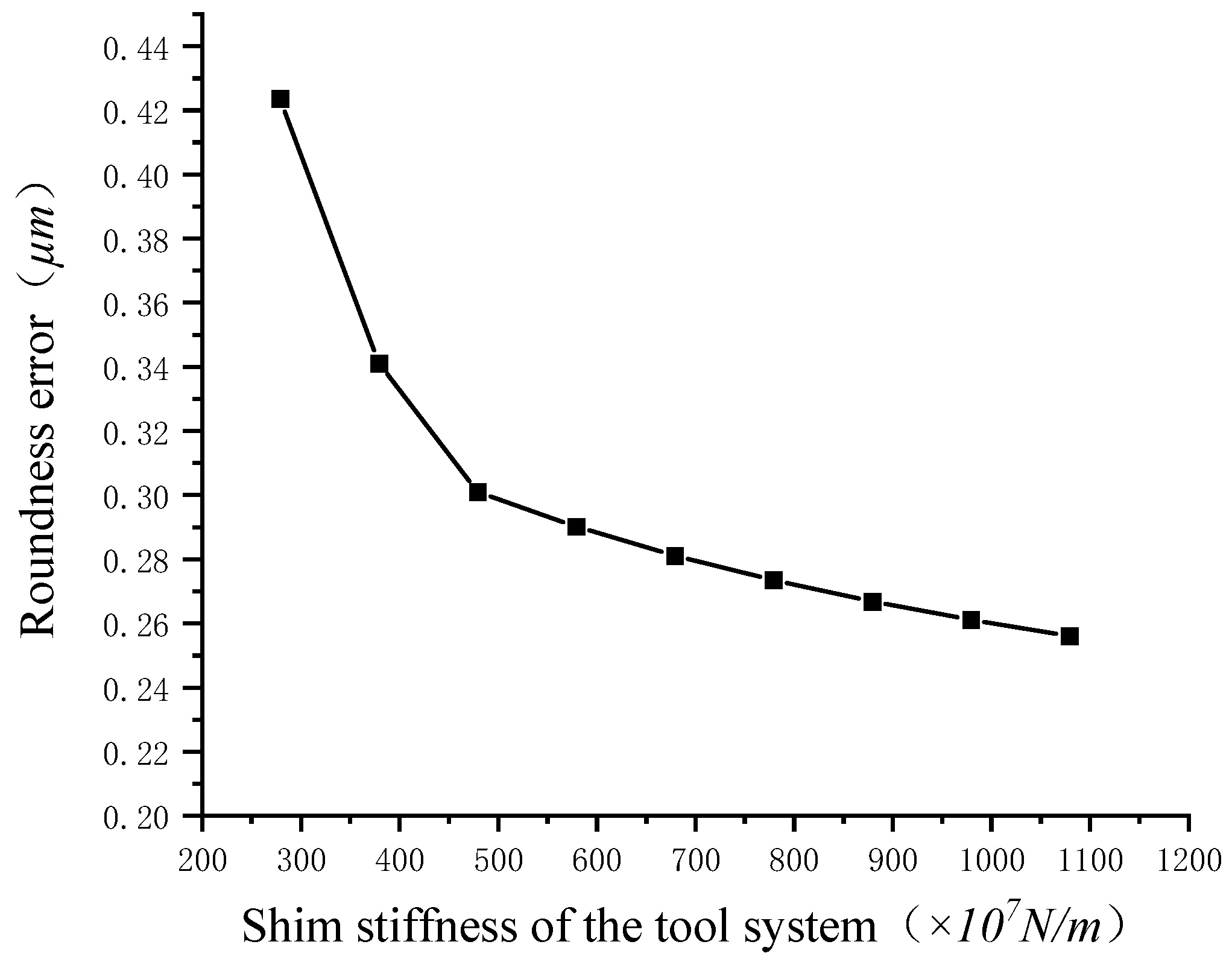
kh4. The modal stiffness of all four shims simultaneously increases from 2.79 × 10⁹ N/m to 10.79 × 10⁹ N/m. The simulation results of the roundness error during grinding are shown in
Figure 6. The roundness error decreases from 0.466 μm to 0.301 μm. As the shim stiffness increases, the roundness error continuously decreases but the rate of reduction slows down and eventually levels off. When the stiffness reaches a certain threshold, the influence of the tool system shim stiffness on the roundness error in the grinding process becomes negligible.
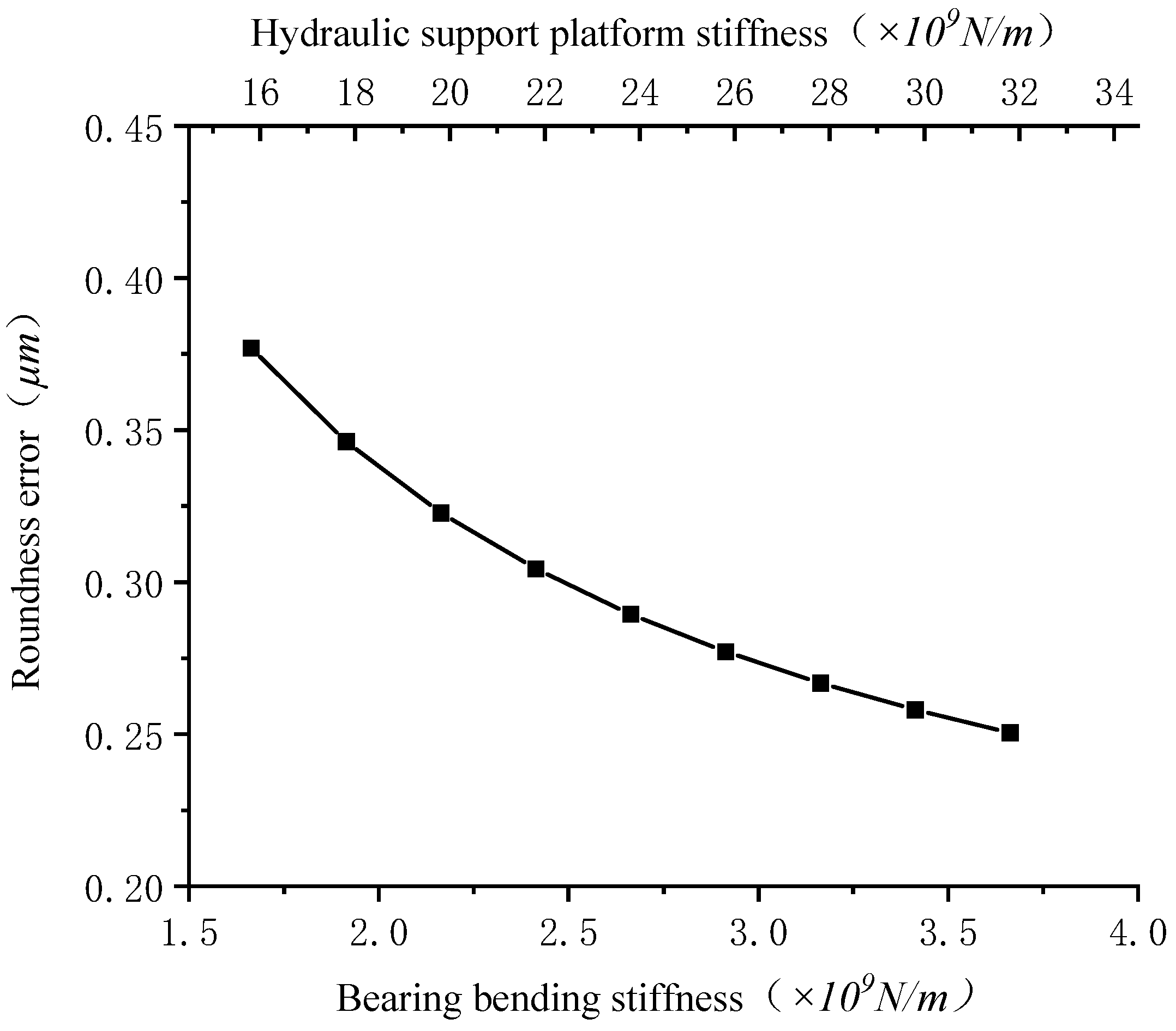
(2) Influence of the workpiece system’s hydraulic support stiffness and bearing stiffness on roundness error
The equivalent modal stiffnesses of the workpiece system’s anti-bending bearings are denoted as
kl1,
kl2, while the equivalent modal stiffnesses of the hydraulic support table are denoted as
kl3,
kl4. The values of
kl1 and
kl2 simultaneously increase from 1.663 × 10⁹ N/m to 3.663 × 10⁹ N/m, and
kl3,
kl4 simultaneously increase from 15.771 × 10⁹ N/m to 31.771 × 10⁹ N/m. The simulation results of the roundness error during grinding are shown in
Figure 7, and the variation trend is consistent with that of the tool system.
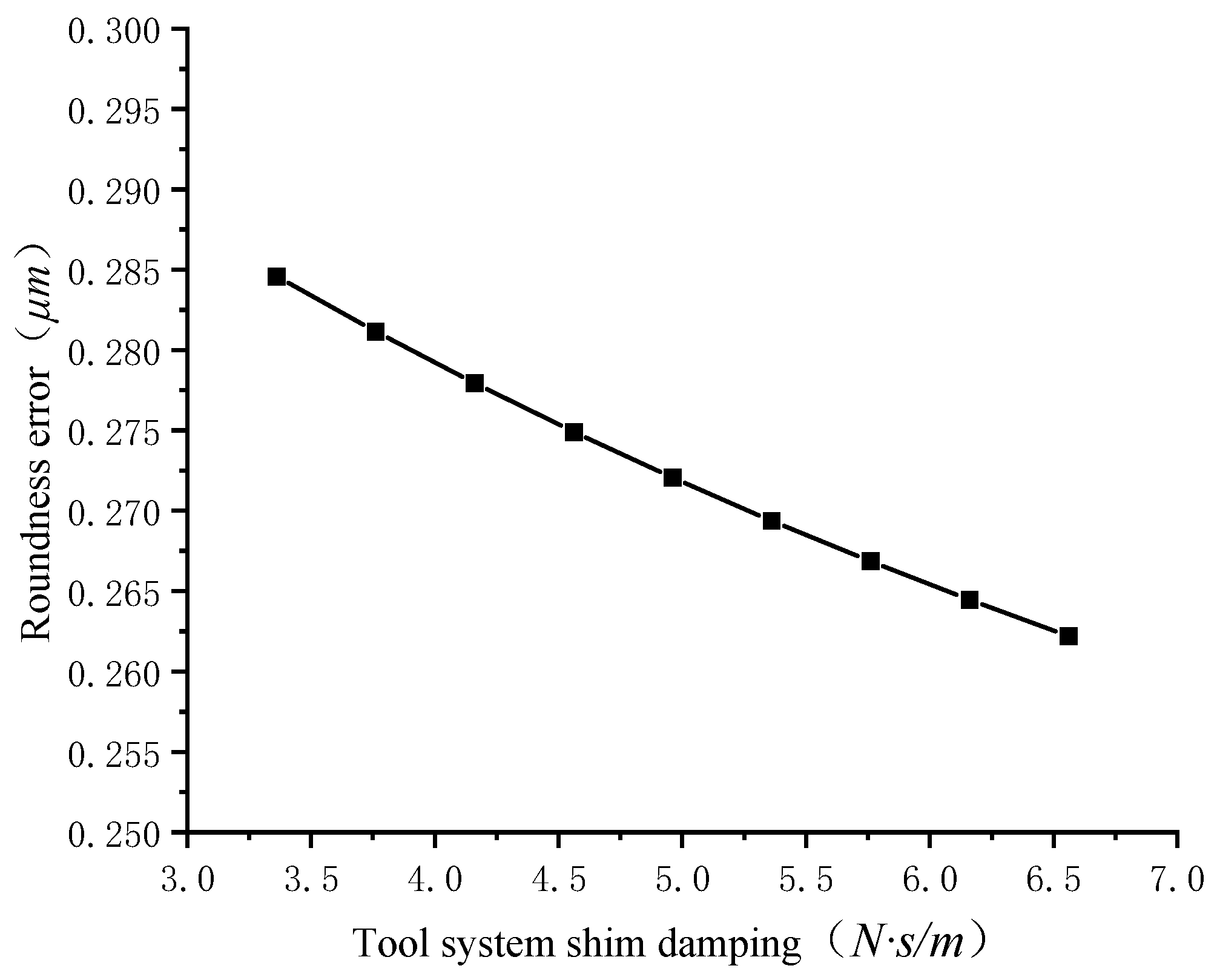
(3) Influence of the tool system shim damping on roundness error
Damping refers to the ability of the machine tool structure to dissipate energy. As one of the three factors influencing the dynamic characteristics of machine tools, damping is often neglected due to the complexity of its effects. However, damping plays an important role in the dynamic performance of machine tools; it can absorb energy to reduce vibration amplitude, thereby improving machining quality.
Figure 8 shows the simulation results of the roundness error during grinding as the shim damping coefficients
Ch1,
Ch2,
Ch3 and
Ch4 increase from 3.36 × 10
6 N·s/m to 3.36 × 10
6 N·s/m. It can be seen from the figure that the simulated roundness error decreases slightly with the increase in oil film damping, but the effect is minimal.
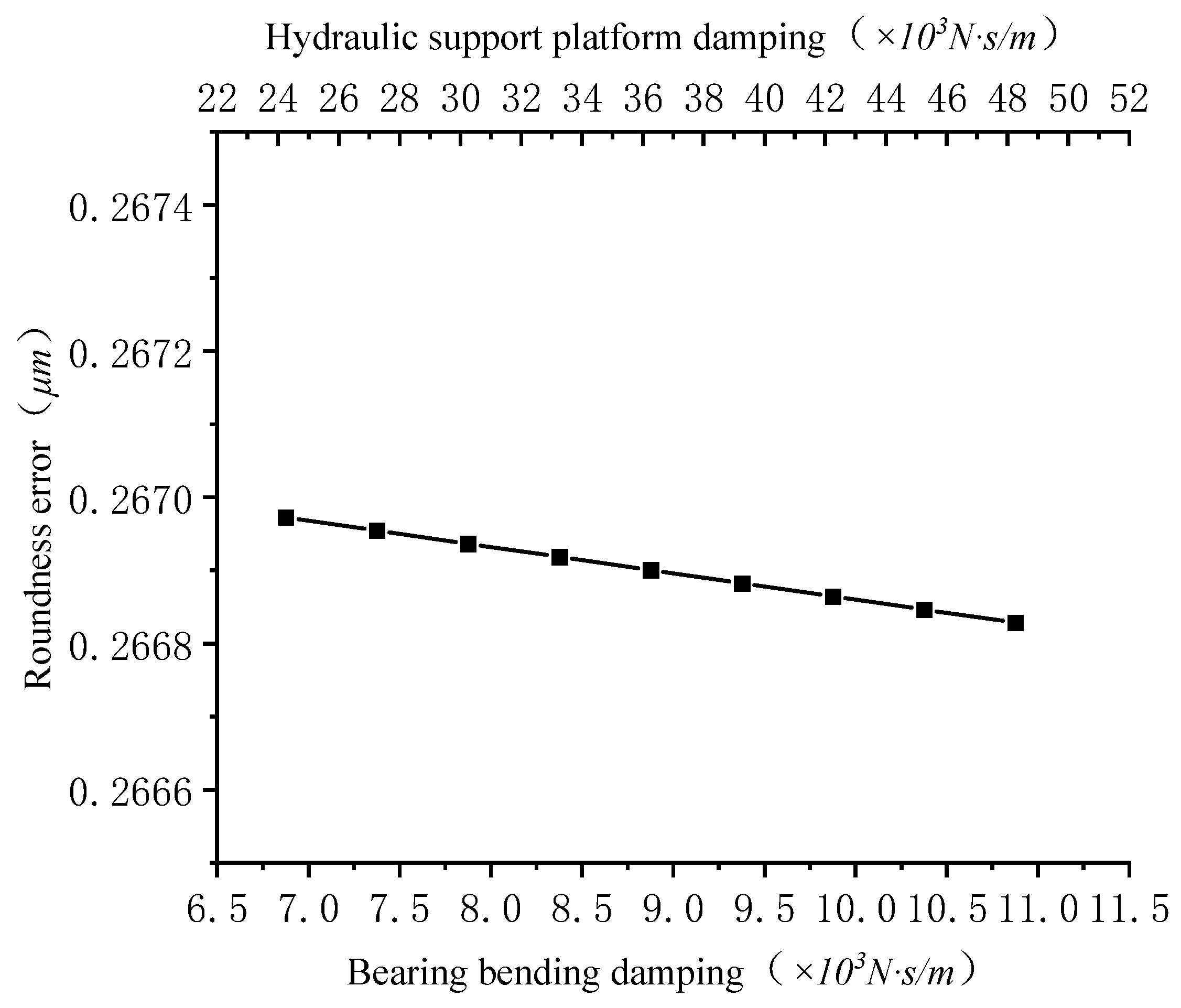
(4) Influence of the hydraulic support table damping and bearing damping of the workpiece system on roundness error
The modal damping coefficients of the hydraulic support table,
Cl1 and
Cl2, increase from 2.41 × 10
4 N·s/m to 4.81 × 10
4 N·s/m, while the bearing damping coefficients of the workpiece system,
Cl3 and
Cl4, increase from 0.688 × 10
4 N·s/m to 1.088 × 10
4 N·s/m. The simulation results of the roundness error during grinding are shown in
Figure 9. The variation trend is consistent with that of the tool system.
5.2. Influence of Machining Parameters
(1) Influence of speed ratio on roundness error
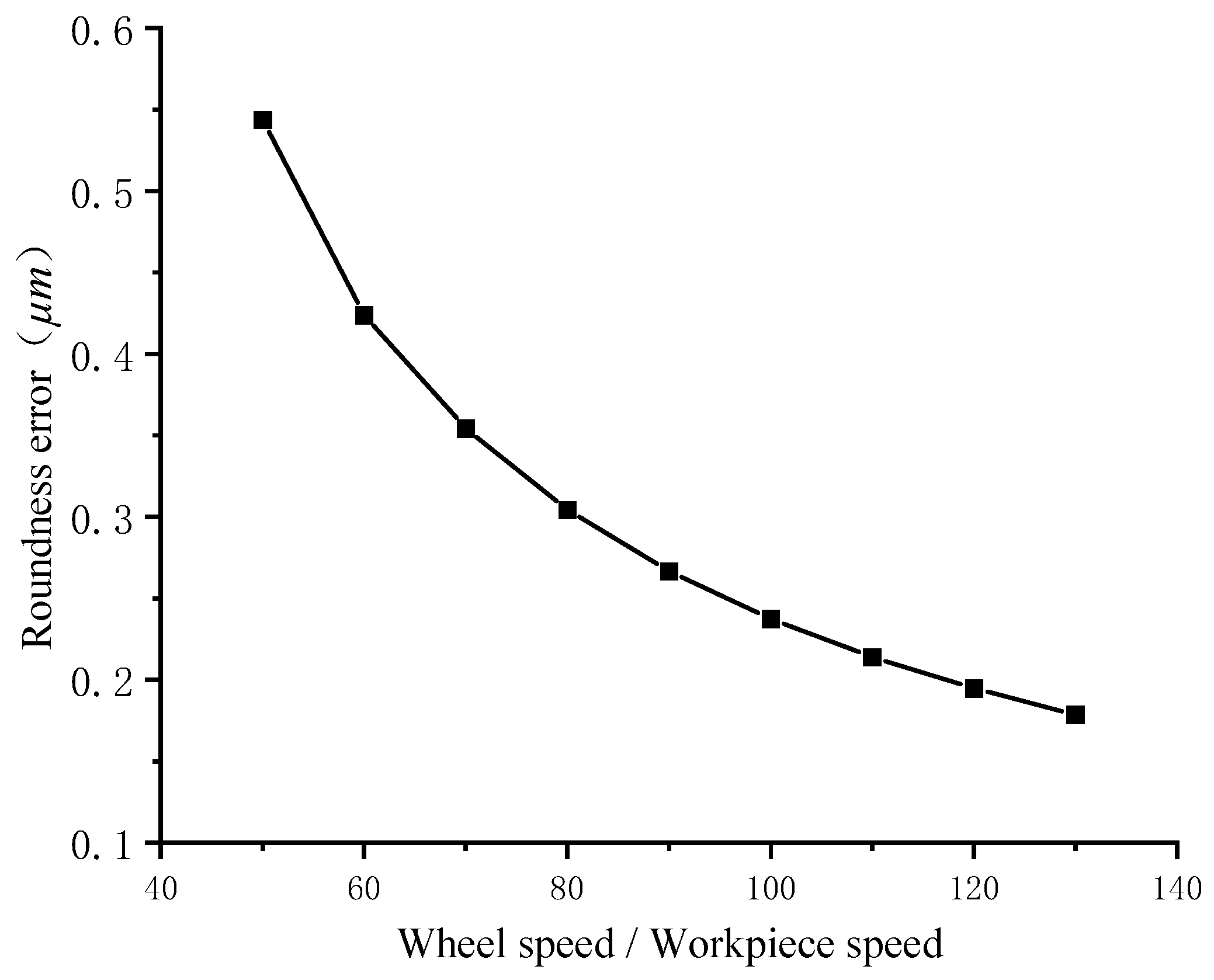
The study of the effect of the speed ratio between the grinding wheel and the workpiece on the roundness error of the workpiece surface holds significant guidance for engineering practice. By maintaining the workpiece speed at 20 r/min and varying the grinding wheel speed to change the speed ratio, the influence on machining roundness is shown in
Figure 10.
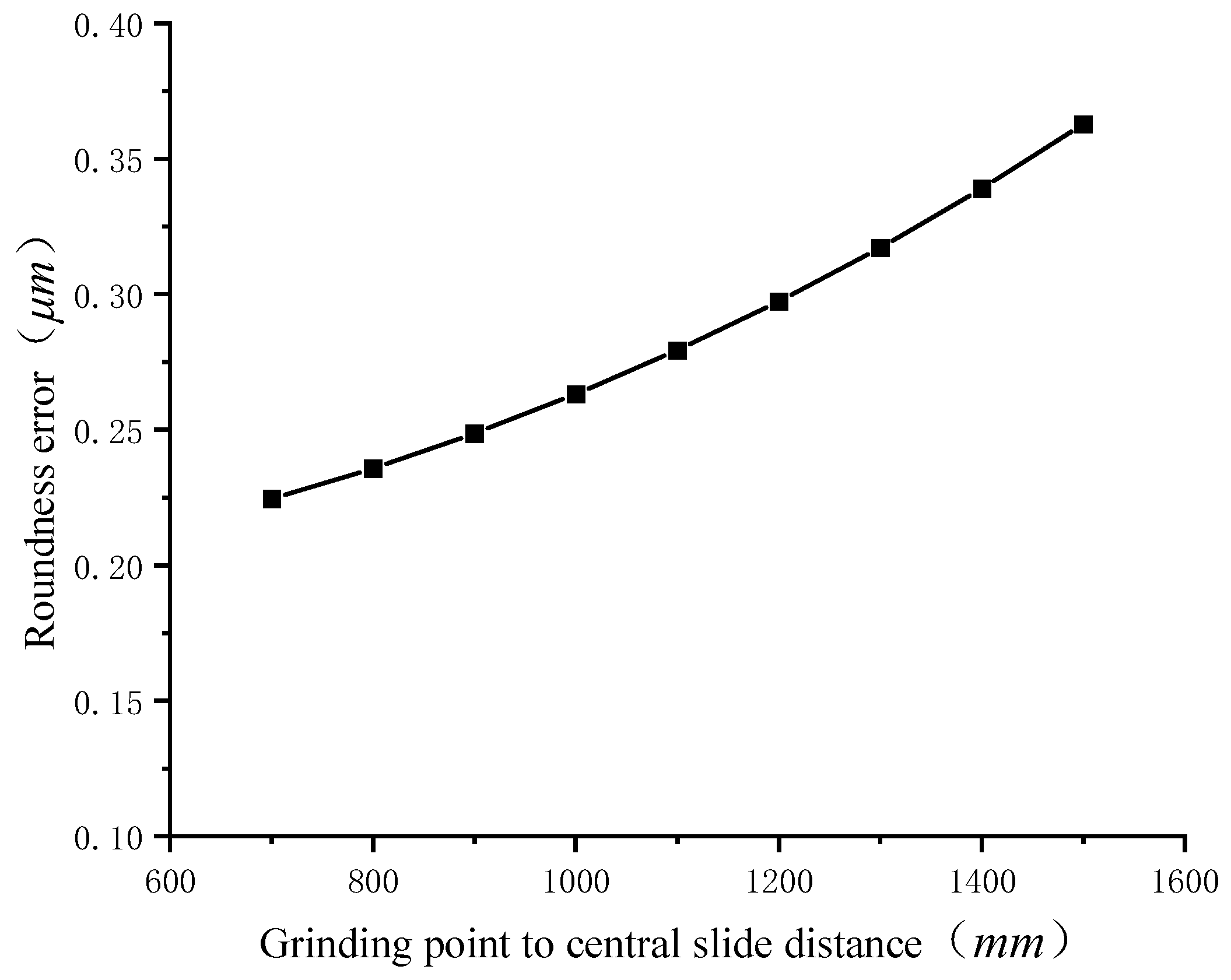
(2) Influence of the distance between the grinding point and the slider center on roundness error
The distance between the grinding point and the slider center refers to the distance from the center of the grinding wheel in the tool system to the center of the slider. This parameter significantly affects the static and dynamic characteristics of the spindle. Its influence on roundness error is shown in
Figure 11. The farther the grinding force application point is from the slider center, the greater the roundness error. Therefore, to minimize roundness error, a shorter grinding wheel extension rod should be selected, provided that the machining range requirements are met.
6. Conclusions
To investigate the mechanism of form error propagation and precision loop iteration in ultra-precision grinding, this study established a dynamic model of a grinding system supported by hydrostatic bearings. Based on this model, the formation mechanism and evolution of roundness error during the grinding process were further analyzed.
Taking into account the combined effects of hydraulic support in the vertical grinding system, tool overhang, and grinding force-induced overturning, the dynamic equations for both the tool and workpiece subsystems were derived. Based on the grinding mechanism of a single abrasive grain, analytical expressions for the tangential and normal grinding forces were obtained, enabling accurate prediction of grinding forces.
Within the dynamic framework, a differential-form dynamic equation with a time-delay term was established to describe the ultra-precision grinding process. By incorporating modal parameters and the grinding force equations, the surface profile of the workpiece was computed using a fully discrete algorithm. Guided by the grinding process parameters, the roundness error of the workpiece profile during machining was predicted.
From the perspective of optimizing grinding process parameters and the localization of precision grinding equipment, grinding dynamics will be one of the key research directions in the future. Next, based on the work of this paper, the dynamic characteristics of the grinding machine will be continuously optimized to improve its performance. At the same time, the dynamic characteristics of the weakly rigid workpiece itself will be taken into account simultaneously to construct a more accurate grinding dynamic error prediction model to guide the optimization of process parameters.